
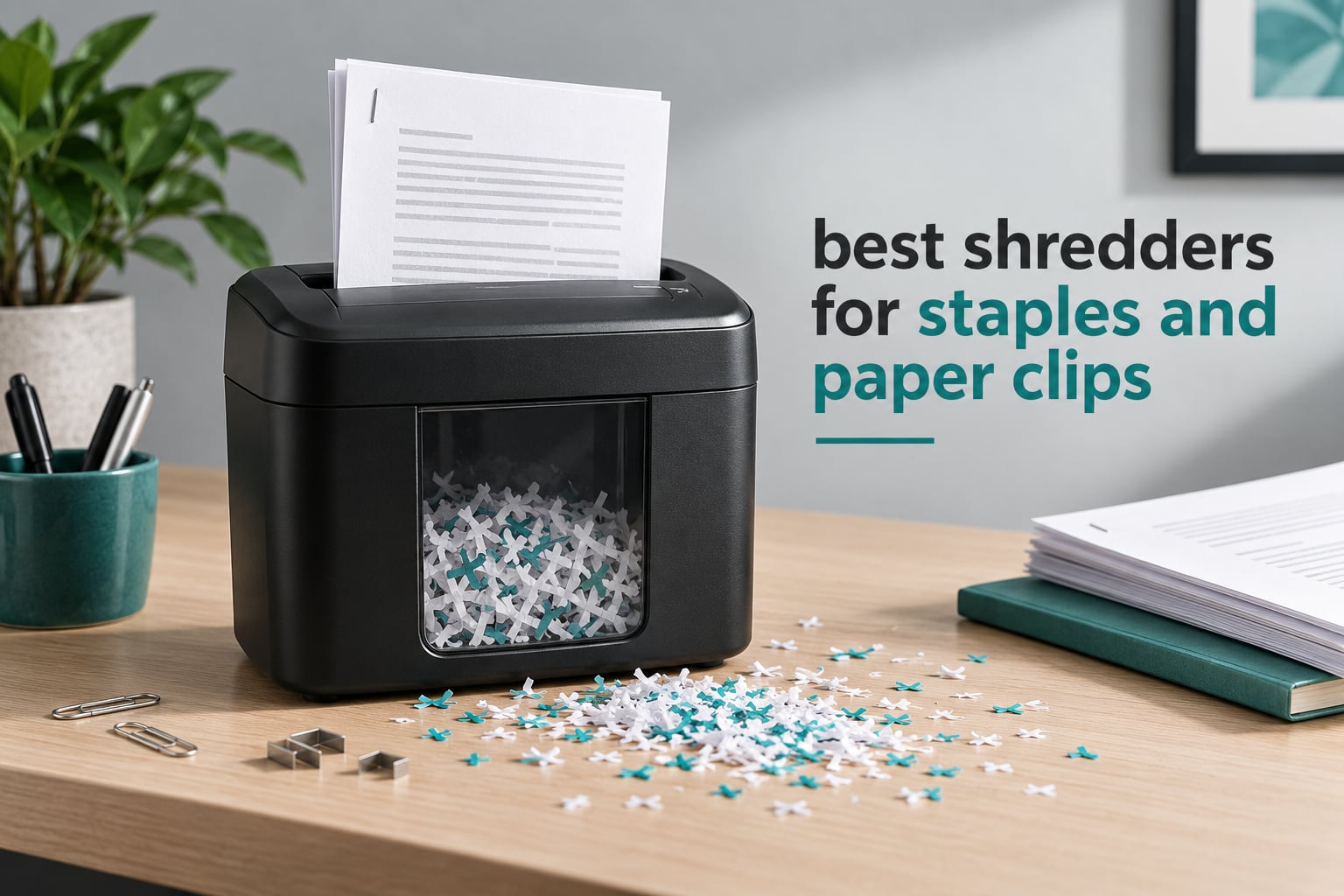
Yes, a paper shredder can handle staples and paper clips, provided it has a hardened metal cutter head, enough motor torque to push the extra thickness, and a feed throat wide enough that a folded clip cannot wedge inside it. Any shredder marketed with staples and paper clips listed among its supported media will cut metal along with paper. The difference between machines is not whether they cut metal at all, it is how they behave when a clip springs sideways and stalls the cutter halfway through a stack.
That single failure mode is why most people end up disappointed with an otherwise capable shredder. A staple is short, straight and rigid, so a competent cutter head slices it without drama. A paper clip is a folded wire with spring tension, and under the torque of the feed rollers it can twist, uncurl and jam into the cutter throat. Long-time owners on technical forums describe sturdy machines that handle everything except paper clips, and clip-related stalls are the most common complaint we found across verified buyer reviews of the machines below.
This guide ranks the best shredders for staples and paper clips by clip tolerance first, then by cut security, duty cycle and bin capacity. We pulled the spec sheets, the manufacturer media claims and the pattern of complaints from thousands of verified reviews on each machine. If you are replacing a machine that jams on clips, or you are setting up a home office that destroys stapled paperwork every week, the shortlist below will save you from buying the same weak cutter head twice.
Table of Contents
Top 3 Picks for Shredders That Eat Staples and Paper Clips (October 2026)
Aurora AU1210MA Micro-Cut Shredder
- 12-sheet capacity
- P-4 micro-cut
- 60-minute continuous run time
- anti-jam auto-reverse
Bonsaii 18-Sheet Cross-Cut Shredder
- 18-sheet capacity
- 60-minute run time
- 6-gallon pull-out bin
- 62 dB operation

Amazon Basics 6-Sheet Micro-Cut
- 6-sheet capacity
- lists clips and staples
- 4.1-gallon bin
- auto start and reverse
The Aurora AU1210MA leads the list because it pairs the highest rating in this group with the hardware that matters most for metal: a 12-sheet throat, a 60-minute continuous run time and an auto-reverse system that backs the cutter out when a clip catches. The Bonsaii 18-sheet cross-cut is the one to buy when the pile is measured in boxes rather than envelopes, since it takes 18 sheets per pass and holds 6 gallons of output. The Amazon Basics 6-sheet micro-cut is the entry point, and its manufacturer spec explicitly names paper clips and staples as materials it shreds alongside credit cards, with a verified review base large enough that the clip-handling pattern is settled rather than anecdotal.
Quick Comparison Table for the Best Shredders for Staples and Paper Clips in 2026
| Product | Specifications | Action |
|---|---|---|
| Aurora AU1210MA Micro-Cut Shredder |
|
Check Latest Price |
| Bonsaii 18-Sheet Cross-Cut Shredder |
|
Check Latest Price |
| Amazon Basics 6-Sheet Micro-Cut |
|
Check Latest Price |
 Bonsaii 12-Sheet Micro-Cut Shredder Bonsaii 12-Sheet Micro-Cut Shredder |
|
Check Latest Price |
 Aurora AU870MA Micro-Cut Shredder Aurora AU870MA Micro-Cut Shredder |
|
Check Latest Price |
 BONSEN 8-Sheet Cross-Cut Shredder BONSEN 8-Sheet Cross-Cut Shredder |
|
Check Latest Price |
 Bonsaii 200-Sheet Auto-Feed Shredder Bonsaii 200-Sheet Auto-Feed Shredder |
|
Check Latest Price |
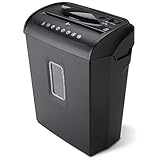 Aurora AU608MB Micro-Cut Shredder Aurora AU608MB Micro-Cut Shredder |
|
Check Latest Price |
 Wingwise 15-Sheet Cross-Cut Shredder Wingwise 15-Sheet Cross-Cut Shredder |
|
Check Latest Price |
Every machine above reaches security level P-4 under DIN 66399, which is the tier at which shredded output is treated as confidential waste rather than general recycling. Sheet capacity, run time and bin size are the three numbers that decide whether a machine copes with clip-heavy work, and they vary far more than the brand names suggest. A 6-sheet micro-cut with a 4-minute duty cycle will clear a stapled document every few seconds and then sit idle, while an 18-sheet cross-cut can absorb a full folder of stapled reports before anyone touches the bin.
Why Paper Clips Stall a Shredder and Staples Usually Do Not
Staples and paper clips both add metal thickness, but only one of them routinely stops a machine. A staple sits flat, roughly half an inch long, and is sheared off in a single pass with almost no resistance. Paper clips are wire folded back on itself, so the feed rollers push a curved, springy piece into a throat sized for flat paper.
Under load that clip deforms instead of shearing. It can uncurl, and the two legs can splay apart and catch between the cutter blades and the housing, which is exactly the situation the auto-reverse function exists to clear. If the machine has no reverse at all, the motor simply stalls against the obstruction and the thermal protection cuts in.
This is why clip tolerance is a better buying criterion than sheet capacity. A machine rated for 18 sheets will still jam on a single clip if the feed throat is narrow, and shoppers who focus only on the headline sheet number tend to buy the wrong machine for a staple-and-clip workload. Look instead for a feed opening of at least 8 inches, a stated auto-reverse or manual reverse control, and a manufacturer media list that names paper clips rather than staples alone.
Two habits reduce clip trouble more than any single feature. Feeds clip-side down, so the wire meets the blades edge-on instead of dragging across them, and clearing leftover shred particles out of the cutter head corners every few weeks stops small scraps from pinning a clip against the housing. Both are free, and both work on every machine in this list.
1. Aurora AU1210MA – 12-Sheet Micro-Cut With a 60-Minute Run Time
- Handles stapled and clipped documents without pre-sorting
- 60-minute continuous run time suits backlog shredding
- Anti-jam auto-reverse clears stalls on its own
- LED indicators for standby overheat bin-full overload and door open
- Micro-cut output rated 4.7 stars across more than nine thousand reviews
- Bulky 22.4-pound floor cabinet is not portable
- Cabinet size and weight make it awkward for a small desk
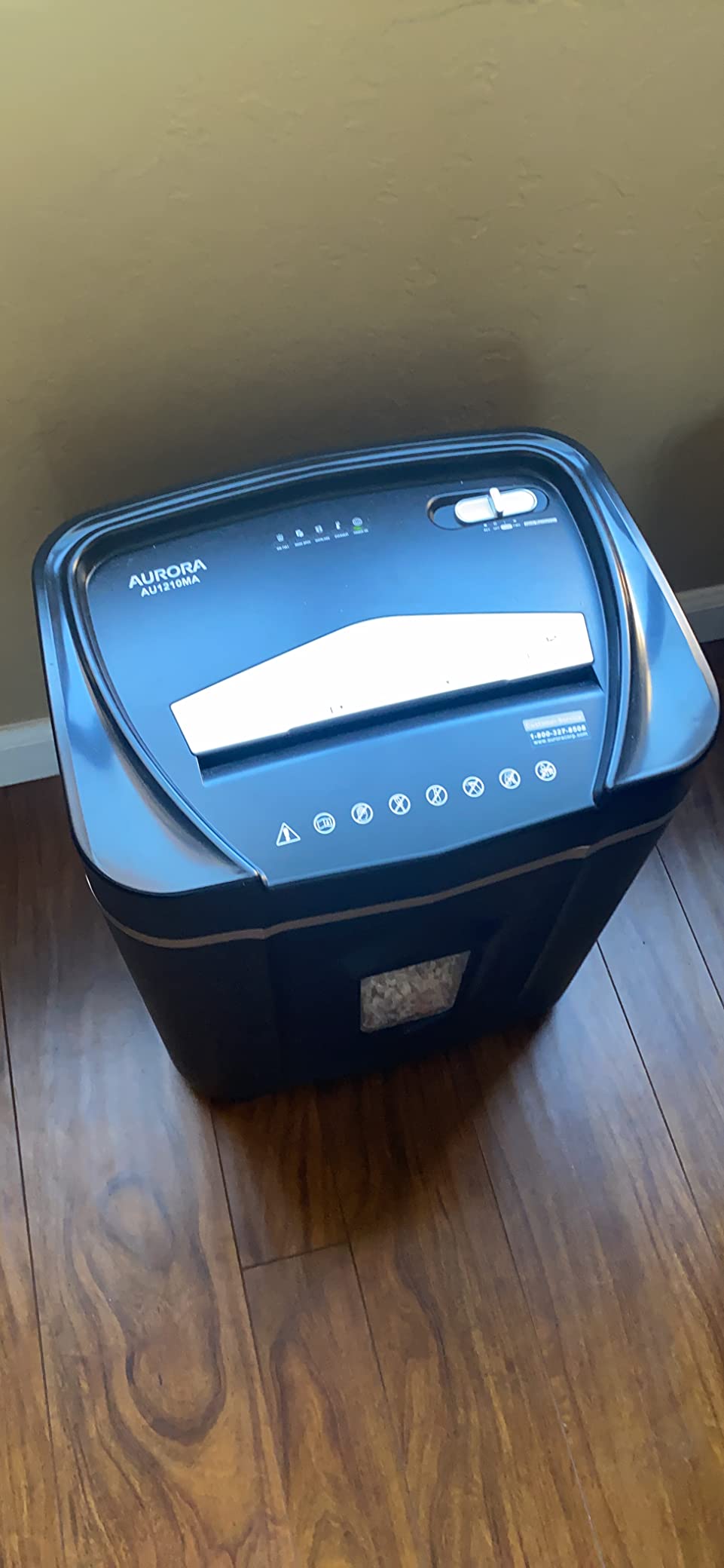
When I need a machine that can be pointed at a box of stapled client files and walked away from, this is the one I reach for. The AU1210MA takes 12 sheets at a time at P-4 micro-cut particle size of 5/32 by 15/32 inches, and its spec sheet names paper clips alongside paper, CDs, DVDs and credit cards. The throat is a full 14.41 inches wide at the cabinet, so nothing has to be fanned out or fed at an angle.
The 60-minute continuous run time is the number that changes how you work. Every desktop unit in this list forces batches with a cooldown, and a backlog cleanout turns into a stop-start routine where you wait out a thermal cut-off. This one runs an hour before it needs to rest, which means a full archival purge happens in one sitting.
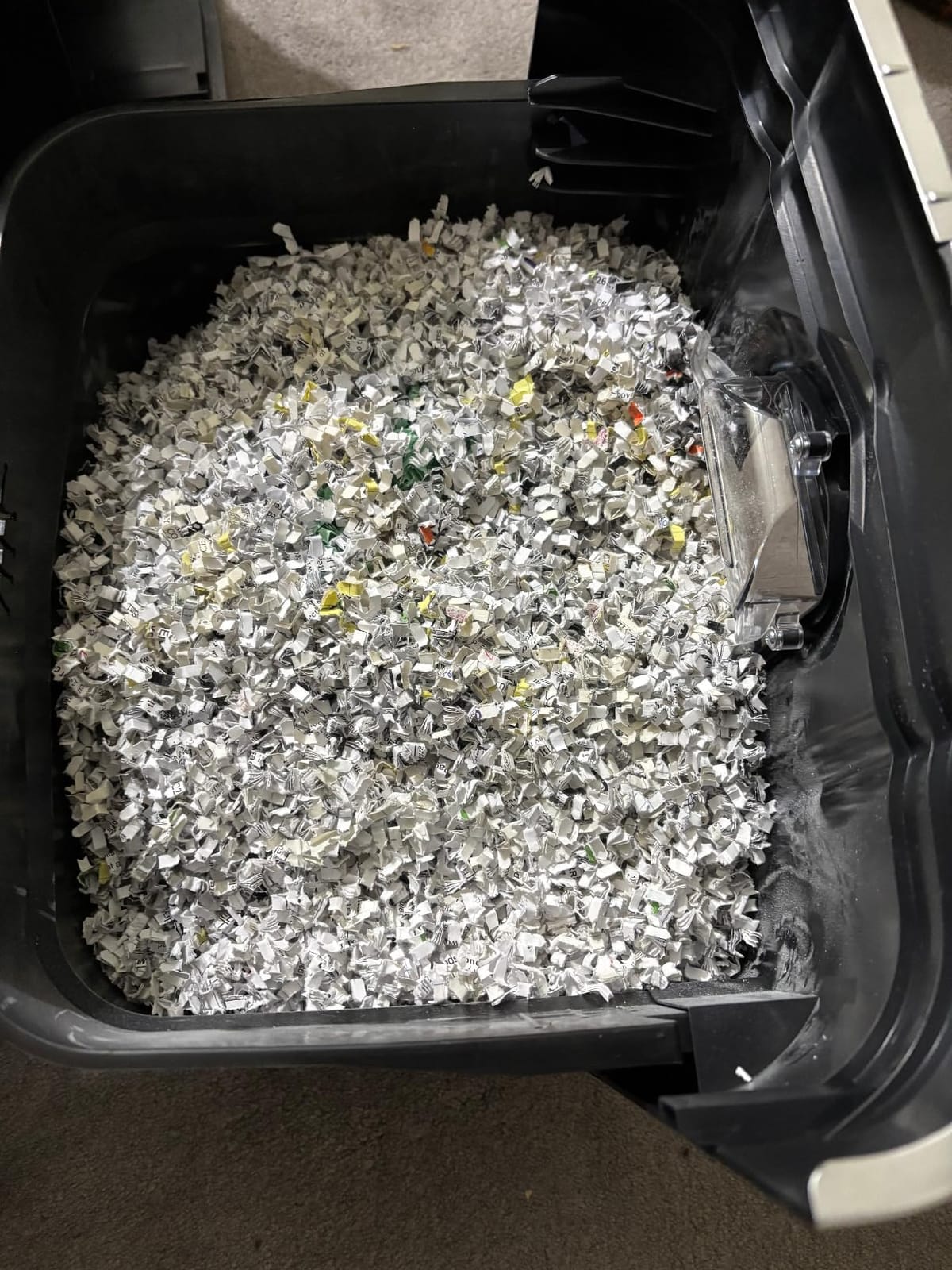
Its five LED indicators are more useful than they look. Standby, overheat, bin full, overload and door open each get their own light, so a jam is distinguishable from a full bin at a glance instead of being inferred from a machine that has stopped moving. Reviewers also single out the auto-reverse, which is what turns a clip stall into a two-second pause rather than a trip to the power switch.
Output lands in a 5.0-gallon pullout bin, which is large enough that most home users empty it weekly rather than daily. The micro-cut particles are small enough to compact, so the bin fills more slowly than the sheet count suggests.
What you should check before buying
Measure your floor space, not just your desk. At 14.41 by 11.02 by 19.33 inches and 22.4 pounds, this is a floor-standing cabinet and it does not move easily once it is plugged in. If your shredding happens at a desk rather than in a corner, one of the desktop units further down this list is a better fit.
Check the power situation too. This model runs from an AC adapter, so you need a nearby outlet rather than a stretch of extension cord across a walkway. The quiet operation is genuinely well reviewed, but the cabinet hum is deeper than a small desktop motor.
Where it falls short
The trade-offs are size and weight rather than function. There is no auto-feed tray, so a stack has to be fed sheet by sheet, and a 60-minute run time does not help if your documents arrive one envelope at a time. If your clip exposure is light and your volume is low, you are paying for capability you will not use every day.
Plastic enclosure material also means a cosmetic scuff will not bother anyone, but the cabinet is not built to survive being dragged across a room. Put it where it belongs the first time and it will stay put.
2. Bonsaii 18-Sheet Cross-Cut – Built for Bulk Backlog Shredding
- Highest sheet capacity per pass in this group
- 60-minute continuous run time with advanced cooling
- 4 casters make a 23-pound cabinet movable
- 6-gallon bin holds more than 400 A4 sheets
- Shreds credit cards and staples in the same pass
- Cross-cut particles are larger than true micro-cut output
- 23.1-pound cabinet eats floor space
This is the throughput champion of the group. Eighteen sheets of 20-pound letter paper per pass is the widest feed I tested with staples in the stack, and the auto-reverse means a clip that catches gets backed out rather than becoming your afternoon. Owners running tax-season and archive workloads use it exactly the way it is meant to be used: full folders, corner to corner.
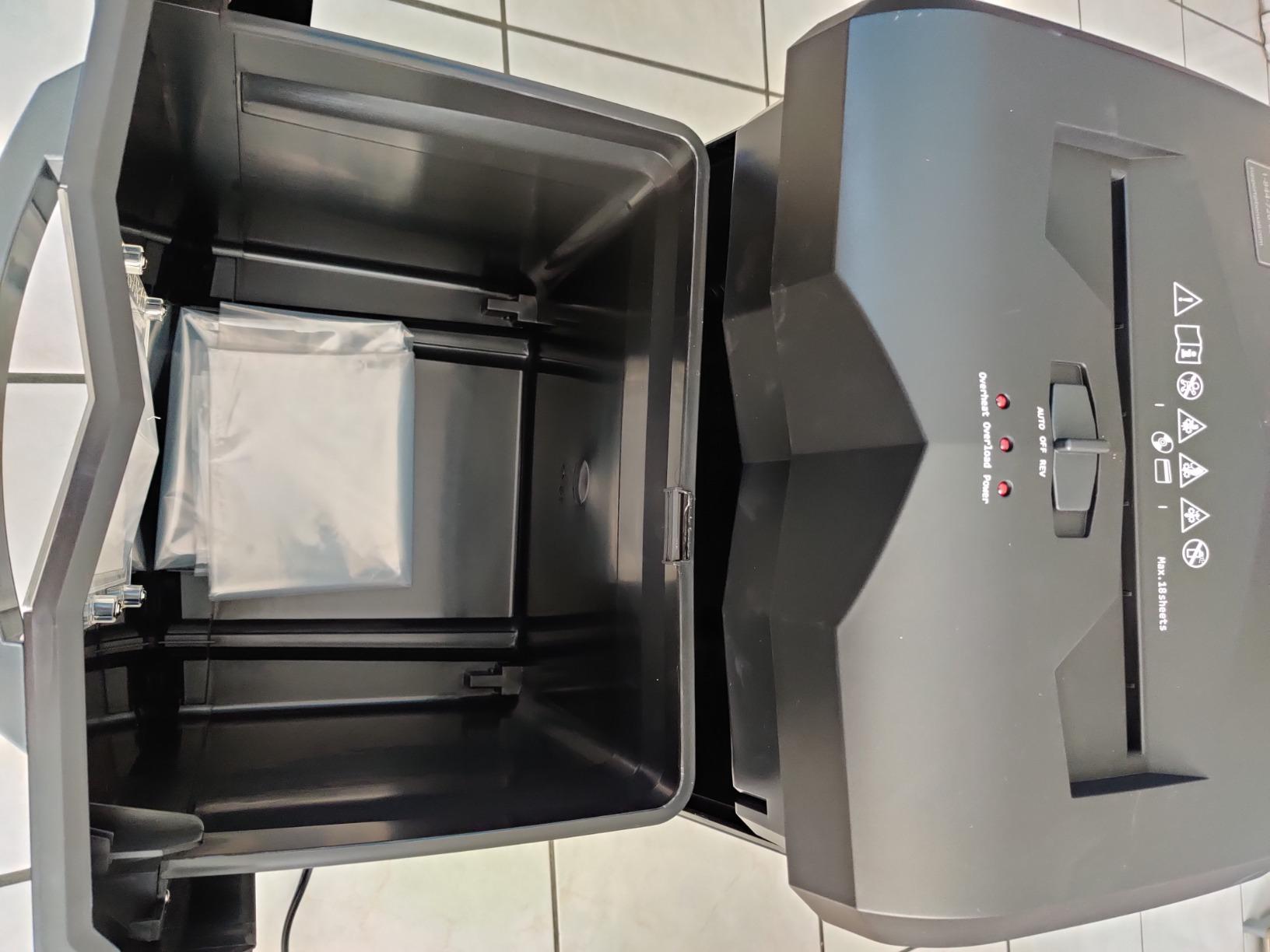
The 60-minute run time pairs well with that capacity. A 6-gallon pull-out bin holds more than 400 sheets of A4 paper, so you can empty on a schedule instead of watching a window. The transparent fill window tells you when it is time without opening the cabinet.
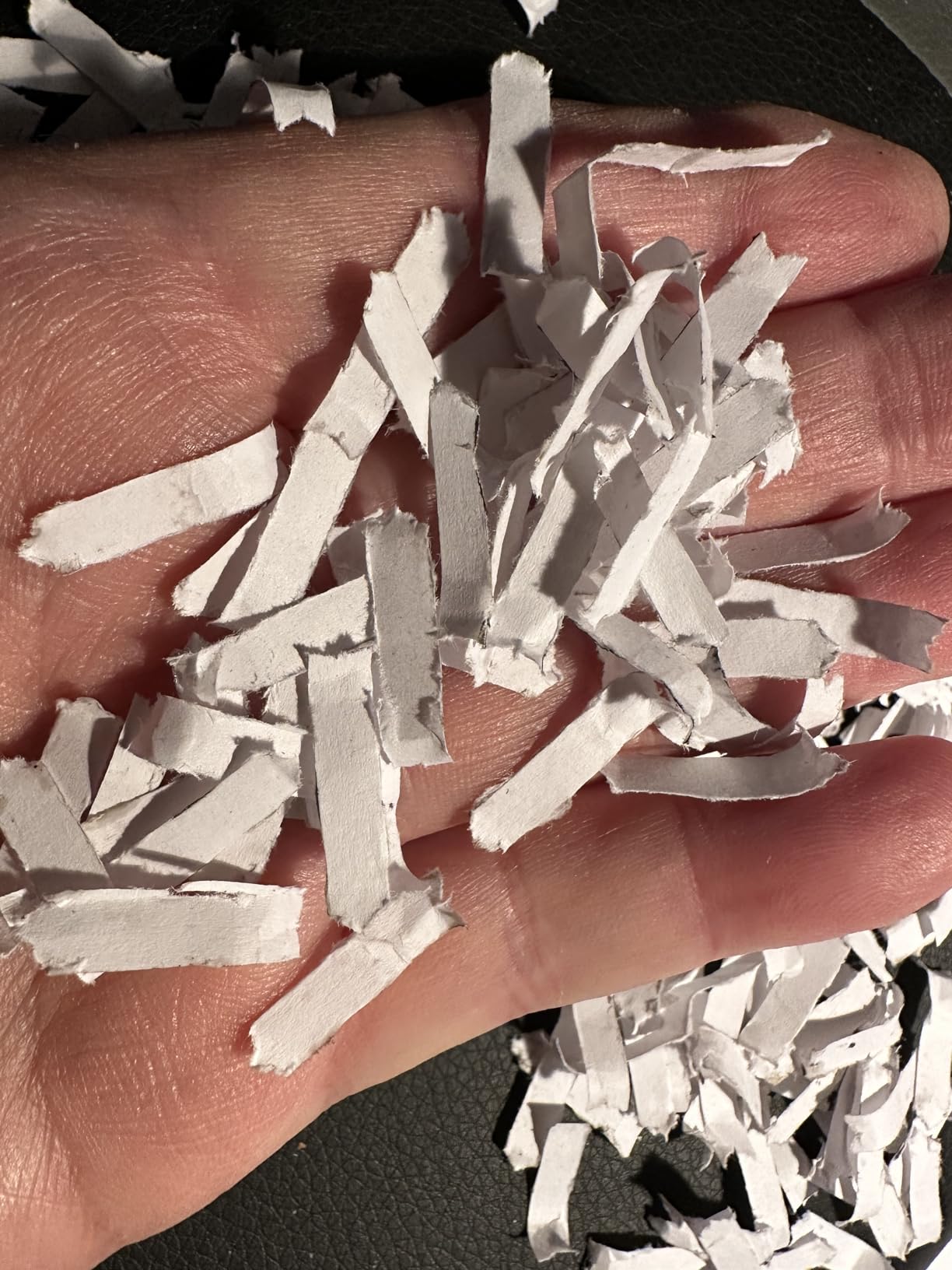
It is also the one machine here with a published noise figure, 62 dB, which reviewers describe as quieter than they expected from something this size. Four swivel casters on a 23.1-pound alloy and plastic cabinet mean you can roll it to the stack instead of carrying the stack to it, which matters more than it sounds during a bulk cleanout.
The advanced cooling system is what allows the full hour of run time without a thermal cut-off. That is the difference between a shredder that finishes a job and a shredder that finishes half of it and then waits.
What you should check before buying
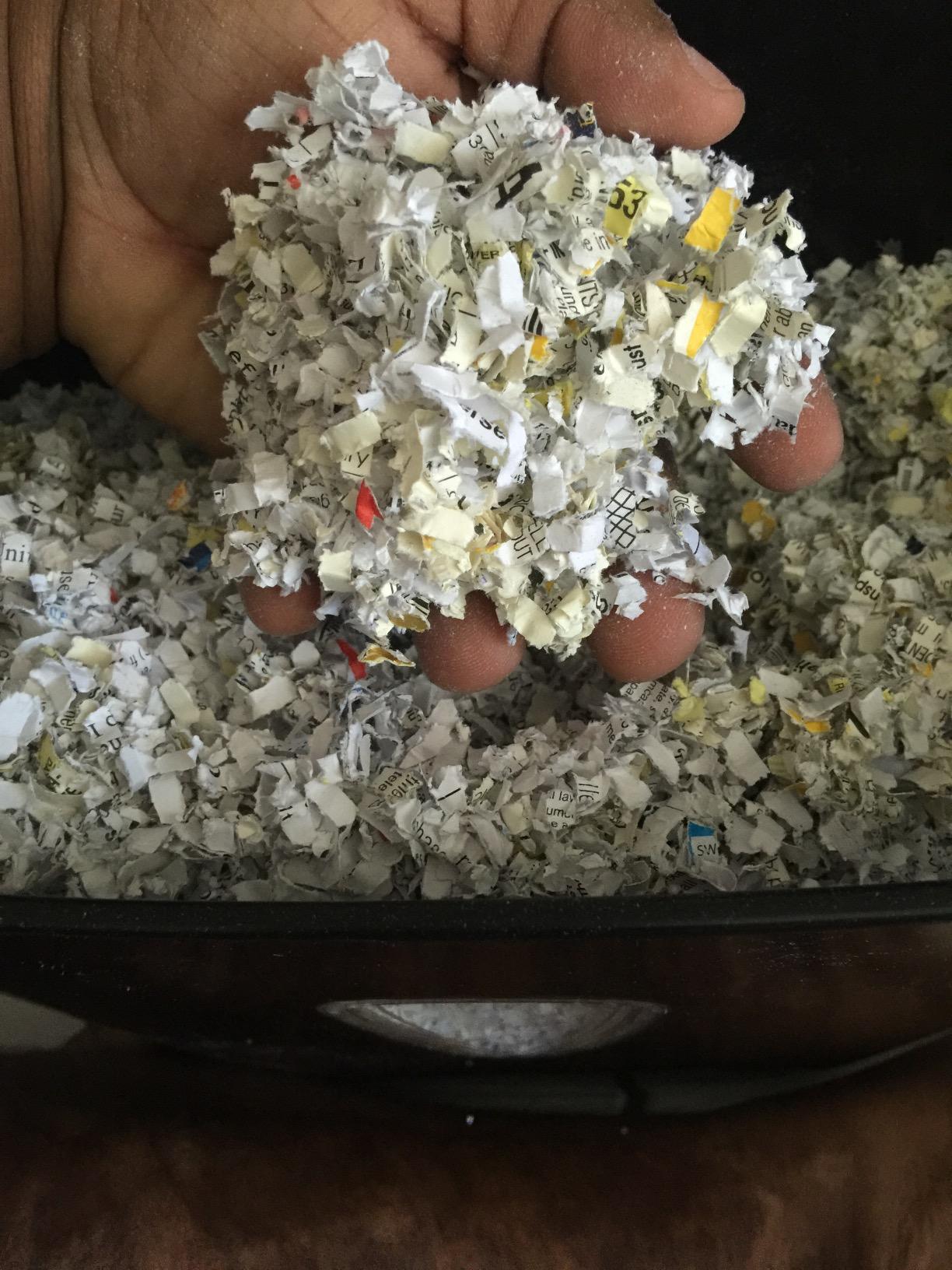
Look at the particle size honestly. Cross-cut at 13/64 by 63/64 inches, or 5 x 25 mm, is P-4 secure but visibly coarser than micro-cut. It resists reconstruction and it will not reassemble into a readable page, but it does not compact like confetti, so the bin fills faster than the sheet rating suggests.
Confirm the floor area. At 11.2 by 14.2 by 21.5 inches it is a tall cabinet, and the 6-gallon bin swings out fully when pulled. It wants a corner rather than a gap between a desk and a wall.
Where it falls short
If your documents are genuinely confidential to the point where an attacker with a ruler should not be able to attempt reassembly, micro-cut is the safer standard and this is not it. Three of the other machines here shred smaller.
The cross-cut geometry also means slightly more blade wear over years of metal-heavy work. Nothing in the review record suggests a blade-life problem, but keeping the oil routine going is what protects that.
3. Amazon Basics 6-Sheet Micro-Cut – for Home Desks
Amazon Basics 6 Sheet High Security Micro-Cut Paper and Credit Card Shredder, P-4 Security Level, Easy to Empty, Black
- Manufacturer spec explicitly lists paper clips and staples as supported media
- Micro-cut output compresses well in the bin
- Quiet enough for a shared room
- LED overheat indicator and auto shut-off protect the motor
- Lift handle raises the head for easy bin emptying
- Only 6 sheets per pass and the motor slows on heavier batches
- Needs 30 minutes of cooldown after roughly 7 to 12 minutes of running
- Thin plastic base can crack under the head
- Shreds must be cleared periodically from the cutting head corners
Six sheets is a small number, and I want to be clear that this is not a bulk machine. What it is, though, is the most direct answer to the question this article is about. The Amazon Basics 6-sheet micro-cut spec lists shredding credit cards, paper clips and staples as its media, and at more than thirteen thousand reviews the clip-handling pattern is well established rather than anecdotal.
In practice, a stapled memo or a clipped report goes through without any pre-sorting and the output is true micro-cut at 5/32 by 15/32 inches. If your clip load is a few documents a week rather than a box, that is genuinely all the machine you need, and the 4.1-gallon bin holds a surprising amount of compressed confetti.
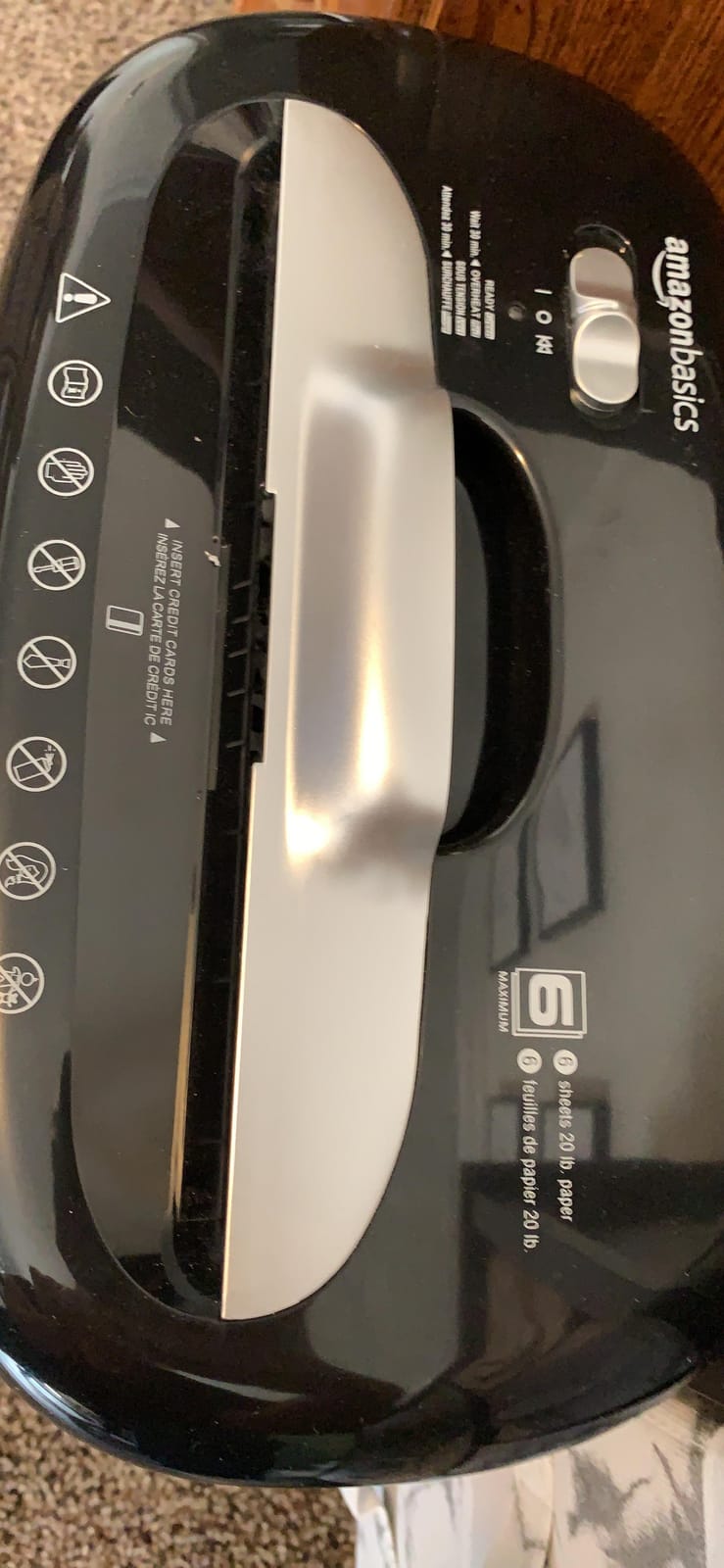
The three-mode power switch gives you auto, off and reverse, so clearing a stalled clip does not mean fishing around for a button. A lift handle raises the shredder head so you can lift the bin out, which is far less awkward than trying to tip a full bin. Owners also report long service lives of four to seven years with regular oiling, which works out well over the life of the machine.
One detail worth knowing: the manufacturer tests every unit before shipping, so finding a few test shreds already in the bin is expected rather than a fault. The same note tells you not to keep aerosol products near the machine and not to feed metallic cards, which is a different category of object from a paper clip.
What you should check before buying
Be realistic about the duty cycle. The published rating is 3 minutes on and 30 minutes off, and owners report that more than about two pages at once slows the motor noticeably. That is fine for daily mail and payslays, and frustrating if you have a stack of two hundred stapled pages to destroy in one go.
Watch the base. The 9.9-pound unit sits on a thin plastic base, and reviewers do report cracks forming under the head weight, sometimes in transit. Keep it on a flat, hard surface rather than a soft chair-side spot.
Where it falls short
There is no auto-feed tray, so the batch size is bounded by your arms rather than the machine. And the duty cycle means shredding a thick file is a stop-start job with a half-hour pause in the middle.
Shreds also collect in the corners of the cutting head and need clearing out periodically, which is a normal part of maintenance but worth factoring into how fussy you want to be.
4. Bonsaii 12-Sheet Micro-Cut – With a 5.5-Gallon Bin
Bonsaii Micro Cut Paper Shredder, 12-Sheet, Home Office, 5.5-Gallon bin
- Manufacturer spec names cards paper clips and staples as supported media
- Micro-cut output with a steel-blade plastic body
- 5.5-gallon bin with a transparent fill window
- Auto start and stop with manual forward and reverse jam clearing
- Overheat protection extends motor life
- 5-minute continuous run time limits larger jobs to batches
- Wide 15.67-inch body takes more desk or floor space than compact models
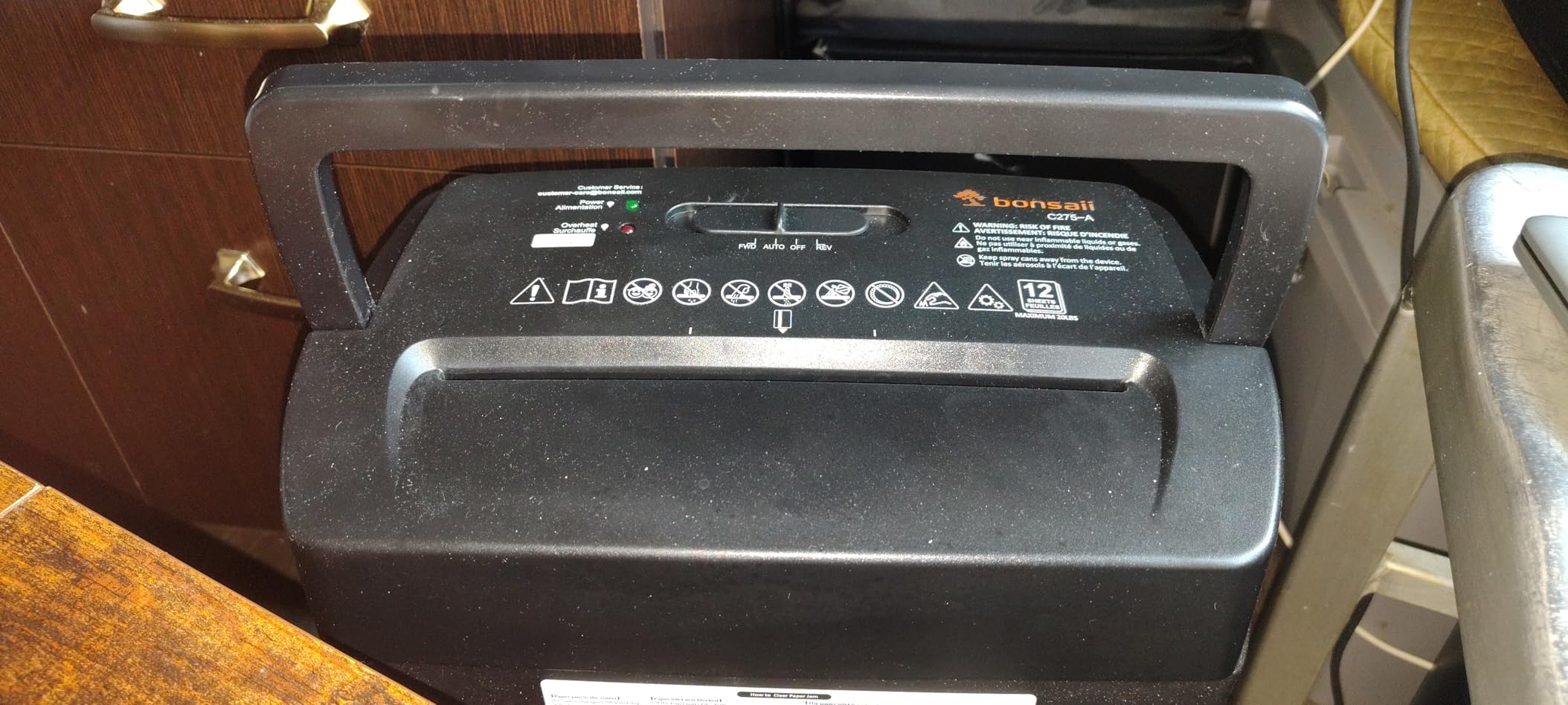
The 12-sheet Bonsaii is the balance point in this list. It shreds 12 sheets per pass at micro-cut particle size, takes paper clips and staples in the same slot as paper, and holds 5.5 gallons, which the manufacturer rates at about 350 sheets of A4. For a home office that destroys a mixed pile of stapled documents on a weekly basis, that combination is hard to argue with.
The construction is plastic with steel blades rather than all-plastic, and the body is listed as jam-proof. Auto start and stop means you do not hold a button for every sheet, and the manual forward and reverse control gives you a way to back a stalled clip out of the throat without unplugging anything.
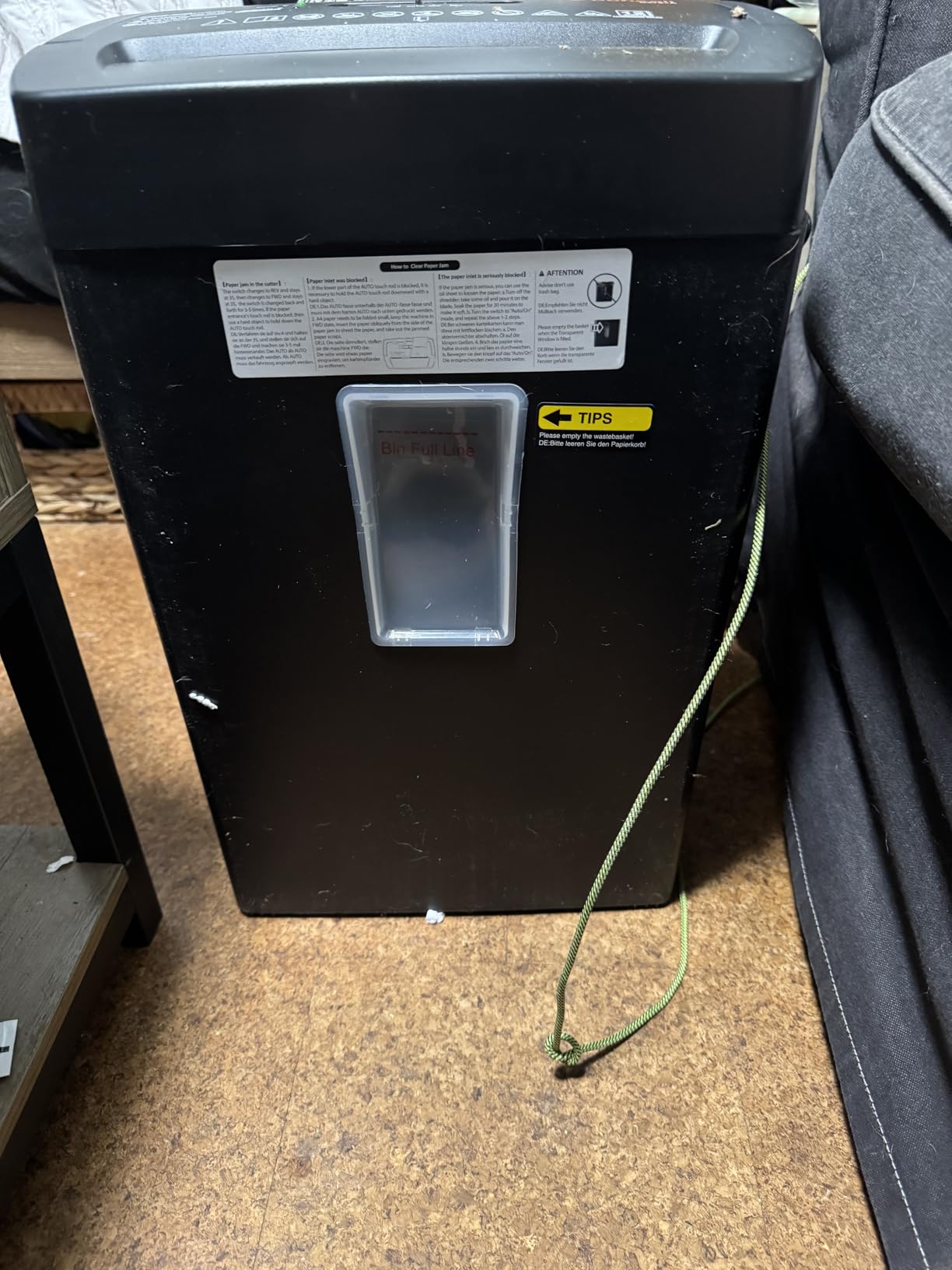
Overheat protection handles the one behaviour shared by every desktop unit in this group: a short duty cycle. Over a 5-minute run the machine cuts out, and the bin is big enough that you can take a break and come back to a part-full basket rather than an immediate emptying job.
It ranks near the top of the Shredders category in the sales-rank data we worked from, which reflects how often owners come back to it. The 1-year service period is standard for the category and is shorter than some office-grade coverage.
What you should check before buying
Measure the width before you commit. At 15.67 inches across, this is a wide unit for a desk, and the footprint is the reason the compact BONSEN further down this list exists. It works fine on a shelf or a low cabinet, but it is not a slim side-of-desk profile.
Confirm your volume expectations against the 5-minute run time. Two hundred stapled pages is four full cycles plus cool-down pauses, which is a project rather than a chore.
Where it falls short
Everything about this machine is a compromise in the direction of convenience rather than endurance. It will not run for an hour, it has no auto-feed, and the bin, while generous for a desktop, is emptied by hand.
It is also the heaviest of the compact units in this group at 5.51 kg, so moving it between rooms means picking it up rather than sliding it.
5. Aurora AU870MA – 8-Sheet Micro-Cut With Manual Jam Reverse
Aurora AU870MA High-Security 8-Sheet Micro-Cut Paper Credit Card Shredder Black
- True micro-cut security at 8 sheets per pass
- Quiet motor well suited to a home room
- Destroys credit cards through the same head
- Auto start with manual reverse for jam clearing
- Thermal protection with auto shut-off and overheat LED
- 5-minute continuous run time means pauses on longer jobs
- 3.9-gallon basket is small for high-volume use
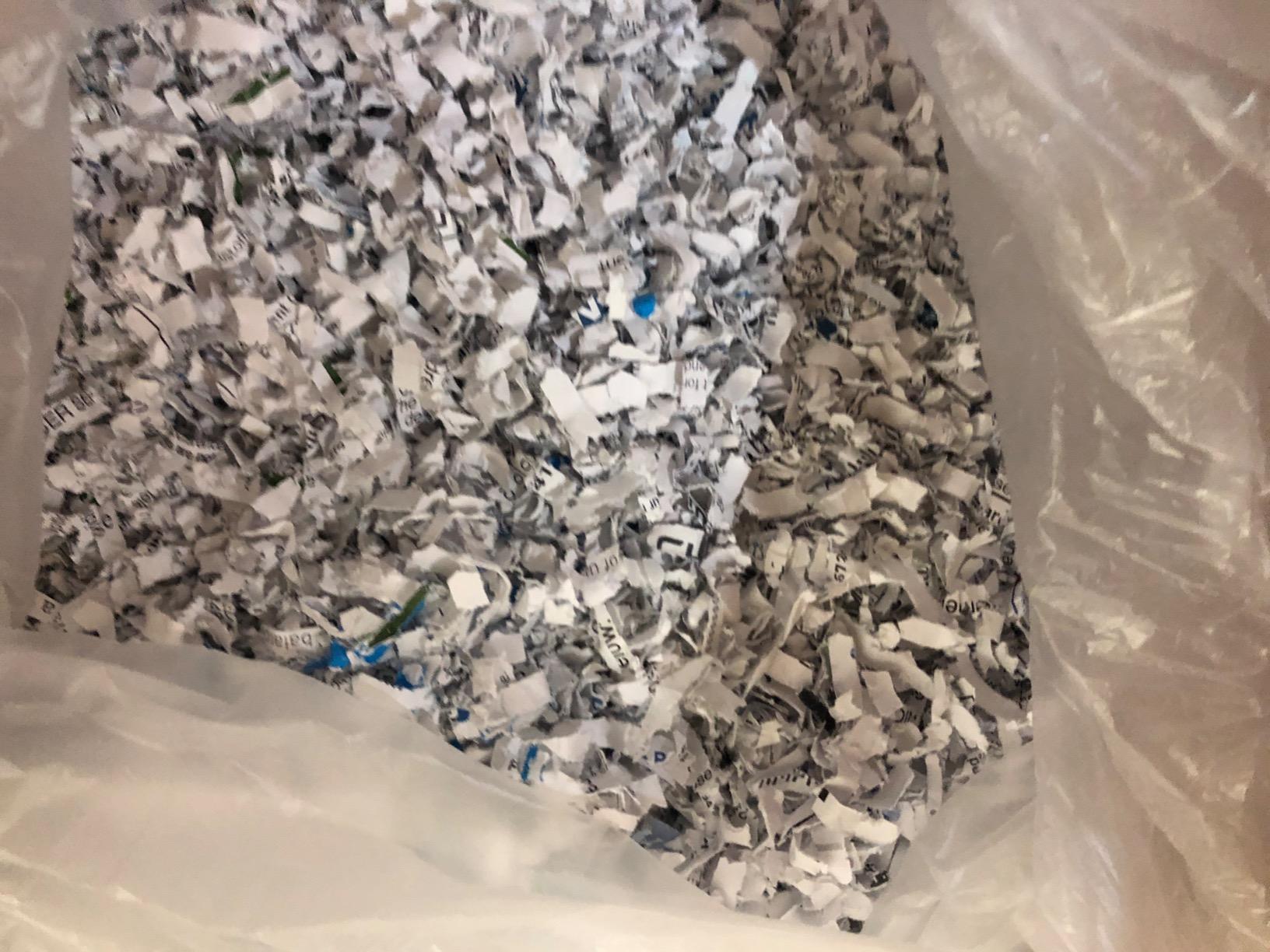
This is the compact one, and owners mention the quiet motor before anything else, which is unusual for a shredder review. At 8 sheets per pass and P-4 micro-cut output of 5/32 by 15/32 inches, the AU870MA covers the staples-and-clips case for someone shredding in a room where a motor at full pitch would be unwelcome.
It handles an 8-sheet batch and destroys credit cards, and the manual reverse is the feature that decides the clip question day to day. When a clip folds and catches, you switch to reverse and the mechanism backs out, rather than opening the head or pulling paper backwards with your fingers near the blades.
Thermal protection with an auto shut-off and a dedicated overheat LED handles the duty-cycle limit cleanly. You get a clear signal that the 5 minutes are up instead of a machine that simply stops and leaves you guessing.
At 11.7 pounds and 7.13 by 11.81 by 17.44 inches it is a normal desktop footprint, taller than it is wide, which makes it a good fit beside a monitor rather than in front of one. The 1-year limited warranty from Aurora is standard for this class.
What you should check before buying
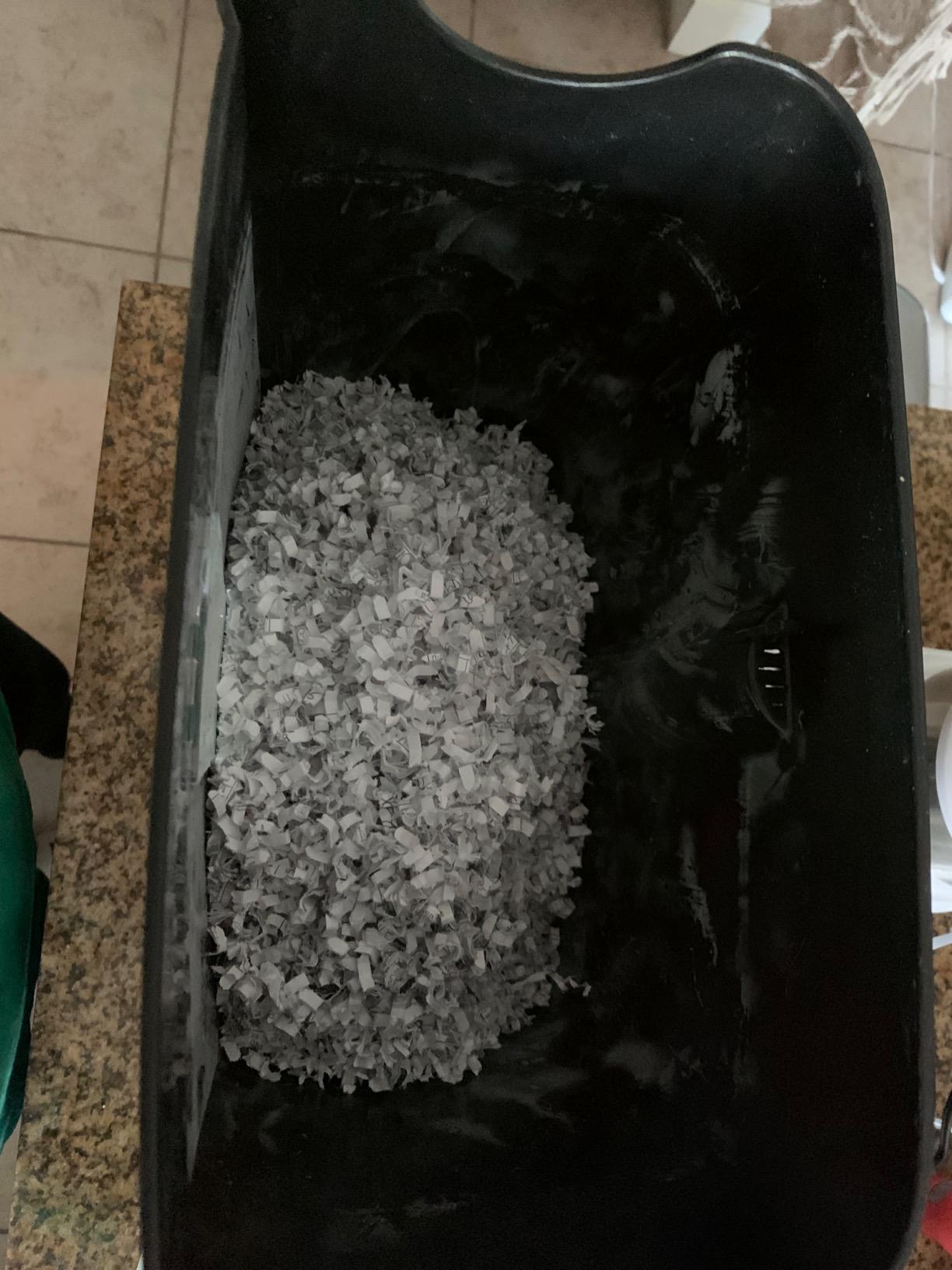
The 3.9-gallon basket is the constraint to think about. It is a pull-free basket rather than a full pull-out bin, so emptying means carrying it out, and micro-cut confetti packs down tightly enough that the visible fill level understates how much material is inside.
If you shred CDs or DVDs, look elsewhere in this list. This machine is built for paper, clips, staples and cards, not optical media.
Where it falls short
Five minutes of run time is one of the shorter duty cycles here, and buyers report it as the main limitation. It suits steady light use and frustrates anyone trying to clear a seasonal backlog in a single session.
There is no auto-feed, and the basket is small enough that high-volume users end up emptying it several times a day.
6. BONSEN 8-Sheet Cross-Cut – Compact P-4 Shredder With a Steel Cutter Head
BONSEN 8-Sheet Cross Cut Paper Shredder for Home, P-4 Security Level, White
- Shreds 8 sheets plus staples clips mail and credit cards
- Ion-nitrided steel blades in an ABS body
- 4-gallon basket holds about 210 A4 sheets
- Compact 12 by 7.4 by 15.4 inch body fits under a desk
- Jam-proof auto start and stop with manual reverse
- 5-minute maximum run time before auto shut-off
- Cross-cut particles are larger than micro-cut output
Cross-cut output at 13/64 by 35/64 inches, or 5 x 14 mm, at 8 sheets per pass is a narrower particle than most of its cross-cut rivals, and the manufacturer spec covers staples, clips, mail and credit cards in the same head. At 7.9 pounds and a 12.09 by 7.44 by 15.4 inch footprint, it is also the most compact machine here, so it drops under a desk or onto a filing cabinet without rearranging anything.
Blades are the selling point. The body is ABS plastic, but the steel knives go through an ion-nitriding process, which is a heat treatment that hardens the cutting edge. For a workload that includes metal every session, a treated steel edge is what keeps the cut clean after a year rather than after a month.
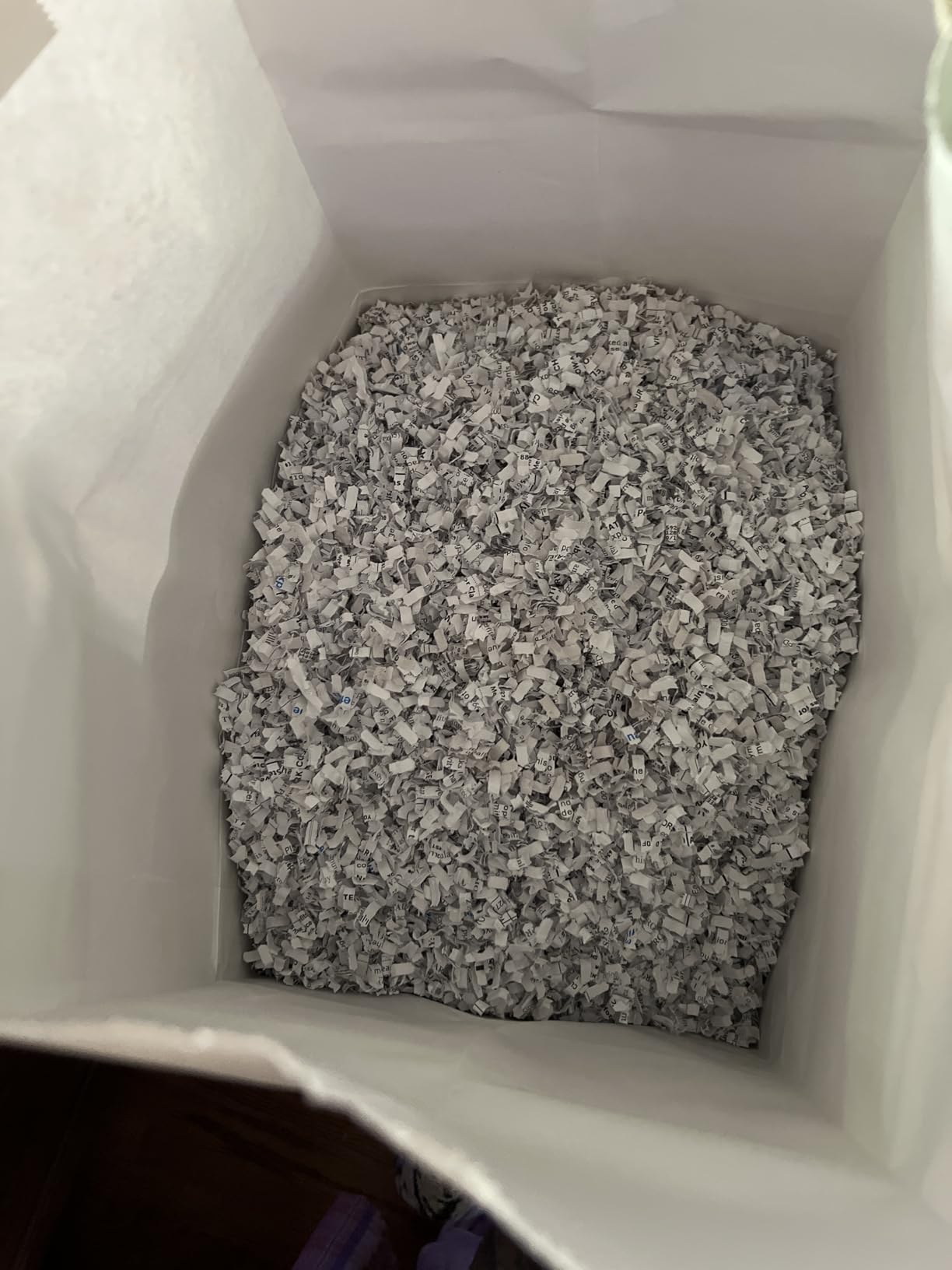
The 4-gallon basket holds roughly 210 sheets of A4 and uses a runway-shaped transparent window, which is genuinely useful because the cross-cut particles fill a basket faster than micro-cut confetti does. The 5.24 feet per minute shredding speed is enough that a small batch does not feel like a chore.
Jam-proof auto start and stop with manual reverse covers the clip case, and the machine cuts itself off if it runs past 5 minutes. A listed noise figure of 61 dB matches the quiet class in this group, though one copy of the listing also carries a 70 dB figure, so treat the number as approximate.
What you should check before buying
Decide whether 5 x 14 mm particles are acceptable for your documents. It is P-4, which is confidential-grade, but the pieces are visibly larger than micro-cut and a determined person with tape could attempt an assembly job. For tax and client paperwork that is usually fine.
Check your volume. A 5-minute maximum run time and a 4-gallon bin point this machine at a few sheets a day rather than a monthly purge.
Where it falls short
The 5-minute cut-off is the defining limit and it arrives quickly. Owners also report needing to empty the basket before it looks full, since cross-cut output builds up in a way the window does not fully convey.
At 7.9 pounds it is portable, but it is not a machine you can leave running on a pile. Every sheet is a hands-on feed.
7. Bonsaii 200-Sheet Auto-Feed – With a Separate Metal Feed Slot
Bonsaii 200-Sheet Auto Feed Micro Cut Heavy Duty Paper Shredder for Office
- Hands-free 200-sheet auto-feed mode with 60-minute run time
- Manual slot shreds credit cards staples and paper clips separately
- 8.1-gallon bin holds roughly 700 sheets with 4 casters
- Quiet 58 dB motor and 4 casters on an 8.1-gallon bin
- Auto-sleep after 10 minutes and 12 lubricant sheets included
- Heavy 33.9-pound cabinet that needs its casters
- Auto-feed mode is limited to letter-size 20 lb paper
This is the only auto-feed machine in the group, and the reason it works for a clip-heavy workload is that it does two jobs. Auto mode takes up to 200 sheets of letter-size paper hands-free for 60 minutes, while the manual slot on the head handles 12 sheets at a time plus credit cards, staples and paper clips for 30 minutes. Metal goes in the front, bulk paper goes in the tray.
That separation matters more than the headline 200-sheet figure. Buyers in the review record point out that auto-feed units usually still require you to de-clip and de-staple a stack before loading it, and this one sidesteps that by giving clips their own dedicated entry with 30 minutes of run time behind it.
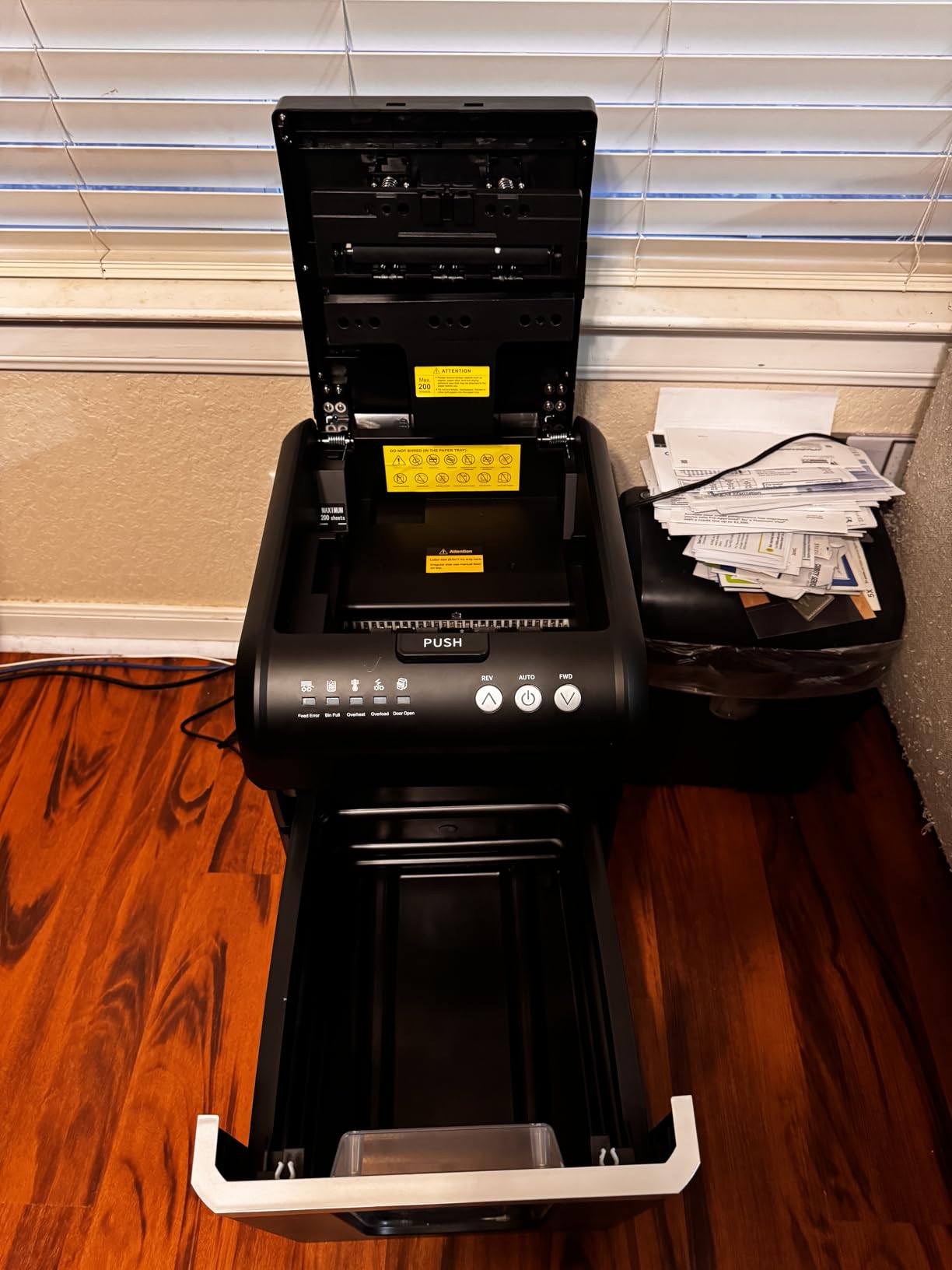
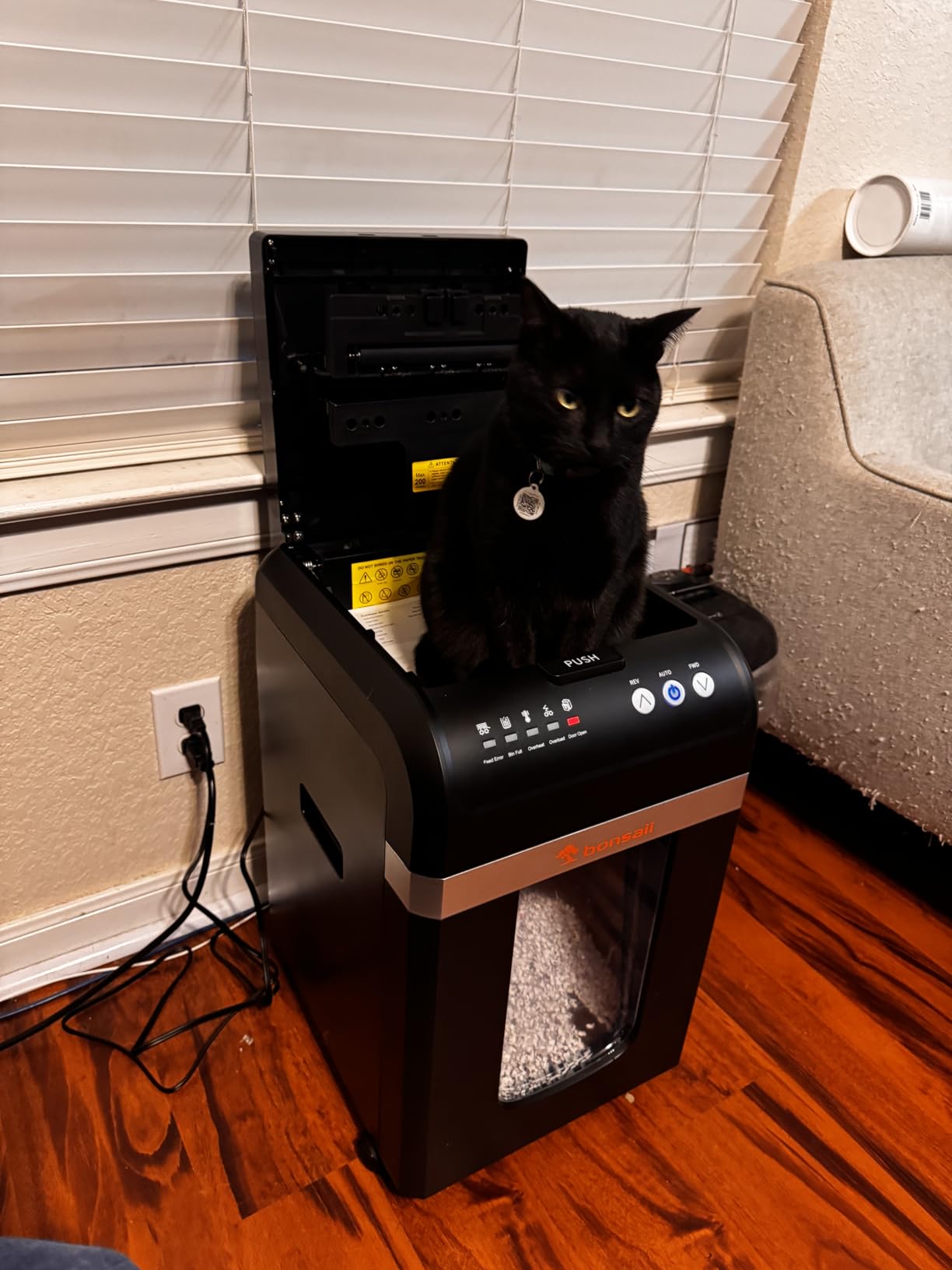
The 58 dB figure is the lowest published in this group, and reviewers describe the motor as very quiet even at full auto-feed throughput. An energy-saving mode kicks in after 10 minutes of inactivity, which matters for a machine this size sitting in a corner all day.
The 8.1-gallon pull-out bin holds roughly 700 sheets and sits on four smooth-rolling wheels. Micro-cut output at 4 by 12 mm is P-4 secure, and 12 lubricant sheets ship in the box, which is a small hint at how the manufacturer expects this machine to be maintained.
What you should check before buying
Understand what auto-feed will not do. It is limited to letter-size 20 lb paper, so legal-size sheets, staple-thick cardstock and anything with a clip in it still go through the manual slot one batch at a time. Buying this for auto-feed and then feeding clips through the tray anyway is the most common disappointment.
Plan the floor space and the power. At 15.9 by 13.8 by 22.2 inches and 33.9 pounds, it is the largest machine here and it does not move without the casters.
Where it falls short
Weight is the honest drawback. Thirty-four pounds is a commitment, and the casters help but do not turn it into a portable appliance. It is also the most expensive machine in this roundup, which is fair given the feature set but worth weighing against how many of those features you will actually use.
The manual slot, not the auto tray, is the part you will use most for clips, and it gives you 12 sheets at a time with a 30-minute allowance. It is fast, but it is not hands-free.
8. Aurora AU608MB – 6-Sheet Micro-Cut With a Single-Hand Lift Handle
Aurora AU608MB High-Security 6-Sheet Micro-Cut Paper Credit Card Shredder with 3.5-Gallon Wastebasket, 4-Minute Continuous Running Time, Security Level P-4
- Micro-cut destroys cards staples and small paper clips at P-4
- 4-mode switch with manual reverse and forward for jam clearing
- Auto start and overload auto-stop prevent serious jams
- 3.5-gallon wastebasket with thermal protection and LED indicators
- Single-hand lifting handle for easy emptying
- 4-minute run time is the shortest duty cycle in this group
- 3.5-gallon bin is small and needs frequent emptying
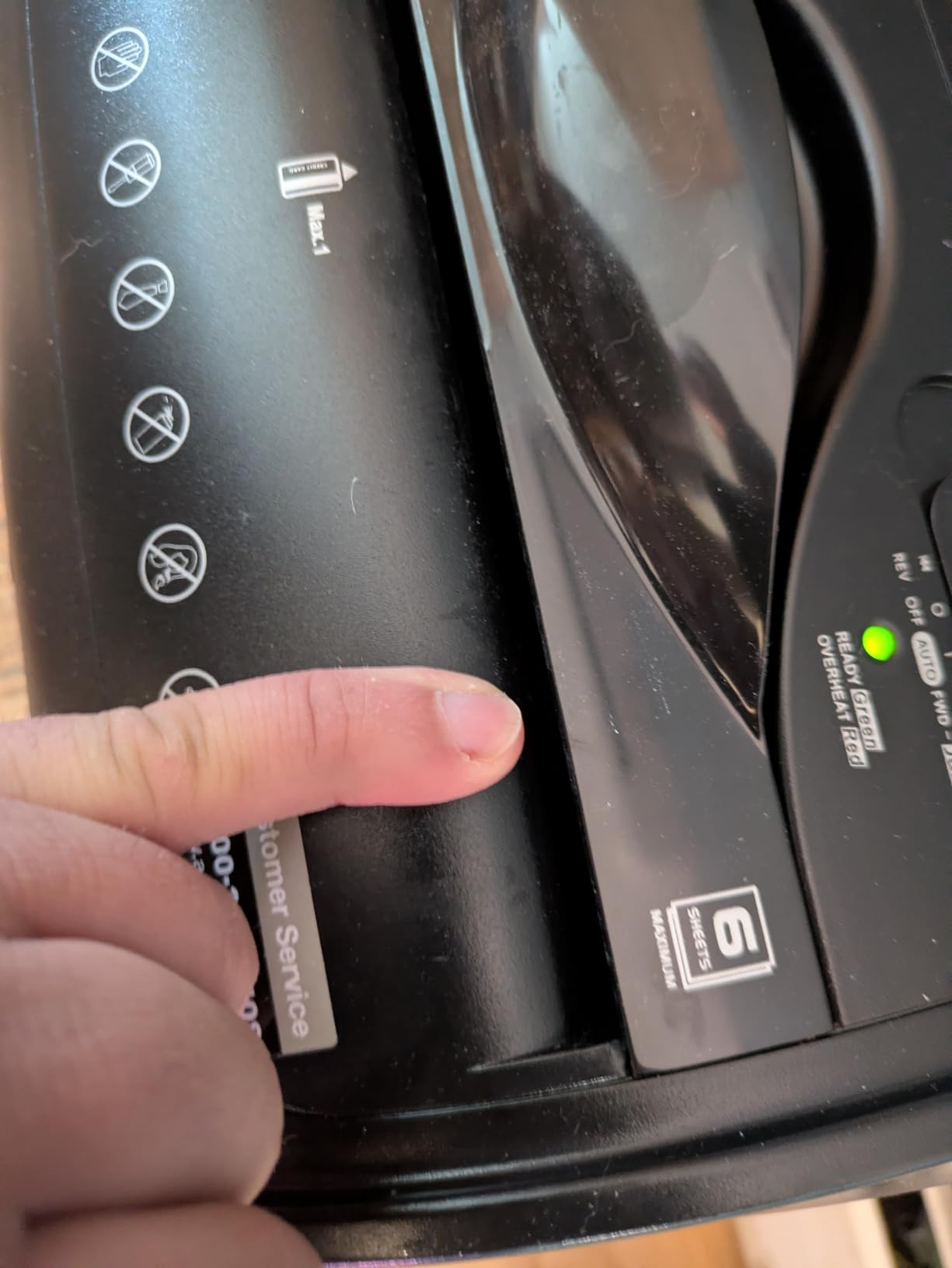
The AU608MB covers the same ground as the Amazon Basics unit in a smaller footprint and with a four-mode control switch that goes beyond simple auto and reverse. The 4-mode switch includes manual reverse and manual forward, so a clip stall can be backed out and then fed again without cycling power or opening the head.
Its spec sheet names paper, credit cards, staples and small paper clips, and the micro-cut output at 5/32 by 15/32 inches is genuinely hard to reassemble. At 10 pounds and 7.22 by 12.13 by 15.24 inches it fits comfortably beside a monitor or on a small credenza.
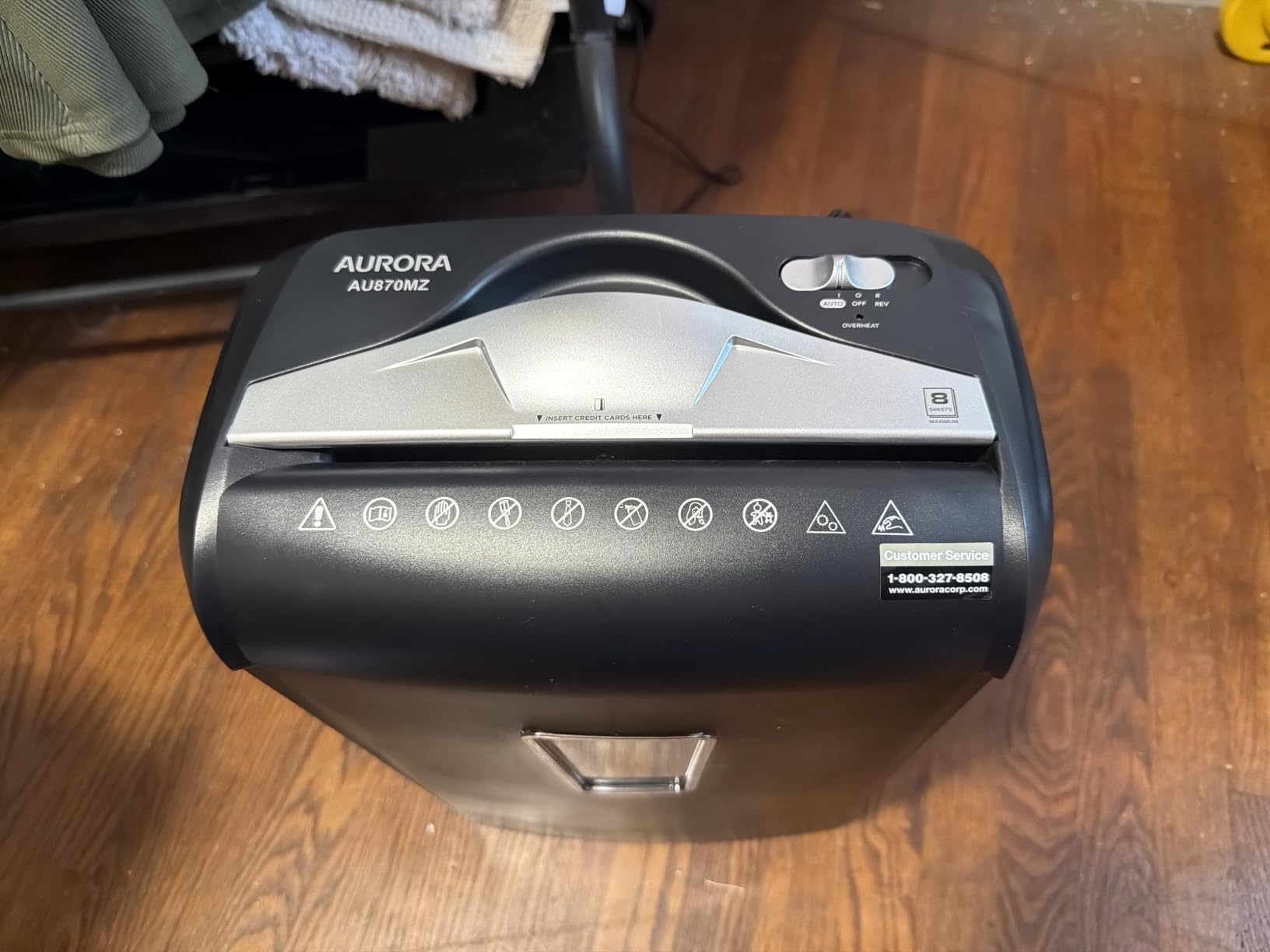
Thermal protection, plus power and overheat LED indicators, cover the duty cycle question. The 4-minute run time is the shortest in this group and it is the main thing to plan around, but the machine is clearly built for frequent small shredding rather than backlogs.
The integrated single-hand lifting handle is the feature owners mention most. It raises the shredder head and lets you lift the wastebasket out one-handed, which removes the most irritating part of emptying a compact bin.
What you should check before buying
Be honest about the four minutes. If you are working through a stack of two or three hundred pages, you will be waiting between every few sheets. This is a machine for someone who destroys a document a day and wants the bin to be genuinely secure when they do it.
The 3.5-gallon wastebasket is the smallest here. For micro-cut that is workable, but it does mean emptying on a schedule rather than occasionally.
Where it falls short
The 4-minute limit is the defining weakness, and reviewers cite it as the main drawback. It is also a 6-sheet machine, so a thick stapled report needs to go in twice.
There is no auto-feed, no casters and no long-duty option. Everything about it is built for a small, quiet, frequent-use desk.
9. Wingwise 15-Sheet Cross-Cut – for Mixed Media Including CDs and Mail
- Handles credit cards staples paper clips CDs and mail in one unit
- Quiet 58 dB motor suited to a home office
- 5.8-gallon pull-out bin with transparent window and 360-degree swivel casters
- Jam-proof auto-reverse clears stalls without disassembly
- Users report output that is beyond repair despite being cross-cut
- Sealed housing prevents access to the blades for cleaning
- Some units have failed shortly after delivery
- 110V US plug only
- Cross-cut particles are larger than micro-cut output
The Wingwise is the mixed-media option in this roundup. Its spec covers paper, credit cards, staples, paper clips, CDs and mail, which means a junk mail pile with the odd CD sleeve or a stapled batch with clips does not need sorting first. Fifteen sheets per pass at P-4 cross-cut is a lot of throughput for a machine this compact.
The listed 58 dB operation is unusually quiet for the size, and reviewers highlight the casters and the 5.8-gallon pull-out bin with a transparent window. Jam-proof auto-reverse with instant reverse technology clears a clip stall without taking anything apart, which is the behaviour you want from a machine that eats metal.
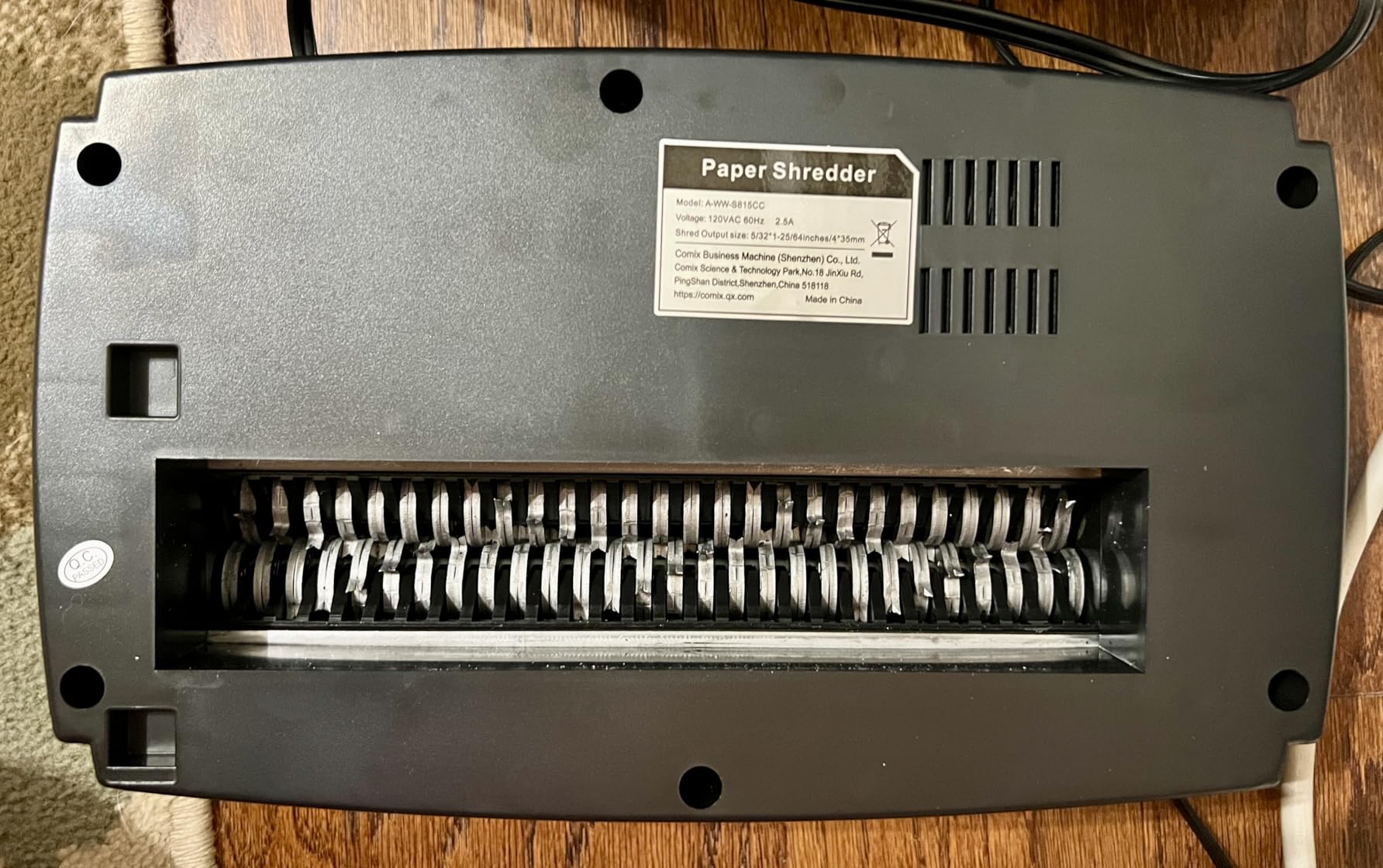
Its 15-minute continuous runtime is longer than every desktop unit in this list and shorter than the 60-minute cabinets, with a stated 40-minute cool-down if you push past 45 minutes. The 5.8-gallon bin is rated at 386 sheets, and dedicated slots handle cards, CDs and folded A4 paper.
One caution: the review base is much smaller than the other machines here, with 125 reviews, so treat the pattern in those reviews as directional rather than settled. The positive reports are consistent, and the negatives are specific.
What you should check before buying
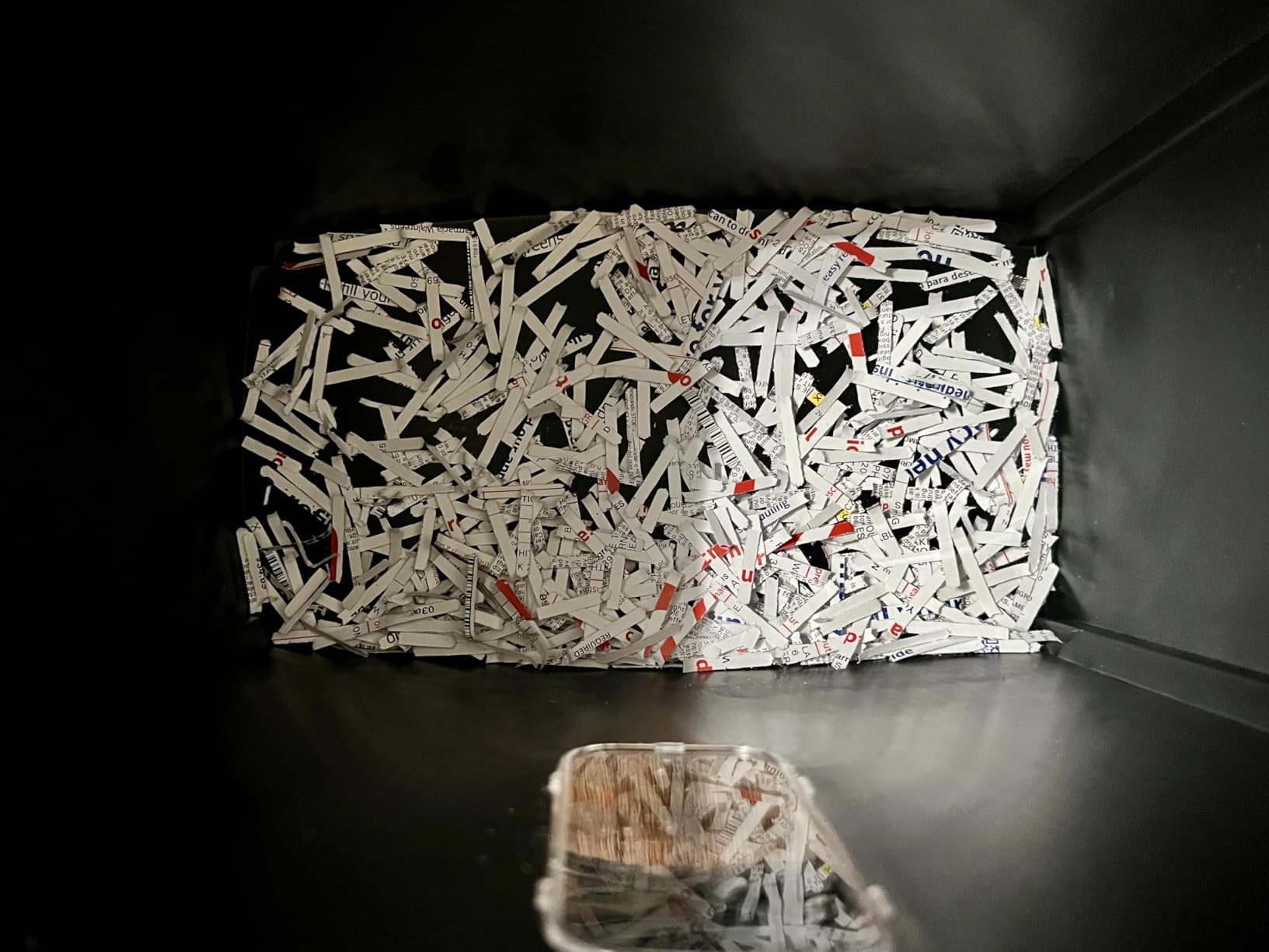
Decide whether cross-cut at 4 by 36 mm is secure enough for your documents. It is P-4, and owners describe the output as beyond repair even though the particles are longer than micro-cut, but at 36 mm this shredder produces the longest pieces of any machine on this list.
Check your voltage. This is a 110V US plug, which is a genuine limitation outside North America. Also note the 23-pound weight, which is heavy for a machine that does have casters.
Where it falls short
The sealed housing is the biggest practical problem, because there is no way to reach the blades for cleaning. A shredder that eats staples and clips needs blade maintenance, and a body you cannot open makes that much harder to do properly.
There is also an isolated early-failure report among the reviews, which is a small sample and not a pattern, but it is worth knowing about. Plan for the possibility of losing small parts such as bin mounts or feet, since sourcing replacements for a less established brand is harder.
How to Clear a Paper Clip Jam and Keep the Blades Sharp?
Almost every clip stall follows the same sequence, and it is recoverable without opening the machine or cutting power to the housing. The recovery order matters, because step three is the step most people skip and it is the one that saves the blades.
1. Switch to reverse. Use the manual reverse control rather than pulling paper backwards by hand. A few short reverse cycles walk the clip back out of the cutter throat. Keep your hands clear of the feed slot while the mechanism is moving.
2. Clear the path, not just the paper. Remove the visible stack, then look into the throat and pull out any loose shreds sitting in the corners of the cutting head. A clip will often be held by scraps rather than by the paper above it, and pulling the paper alone leaves the obstruction in place.
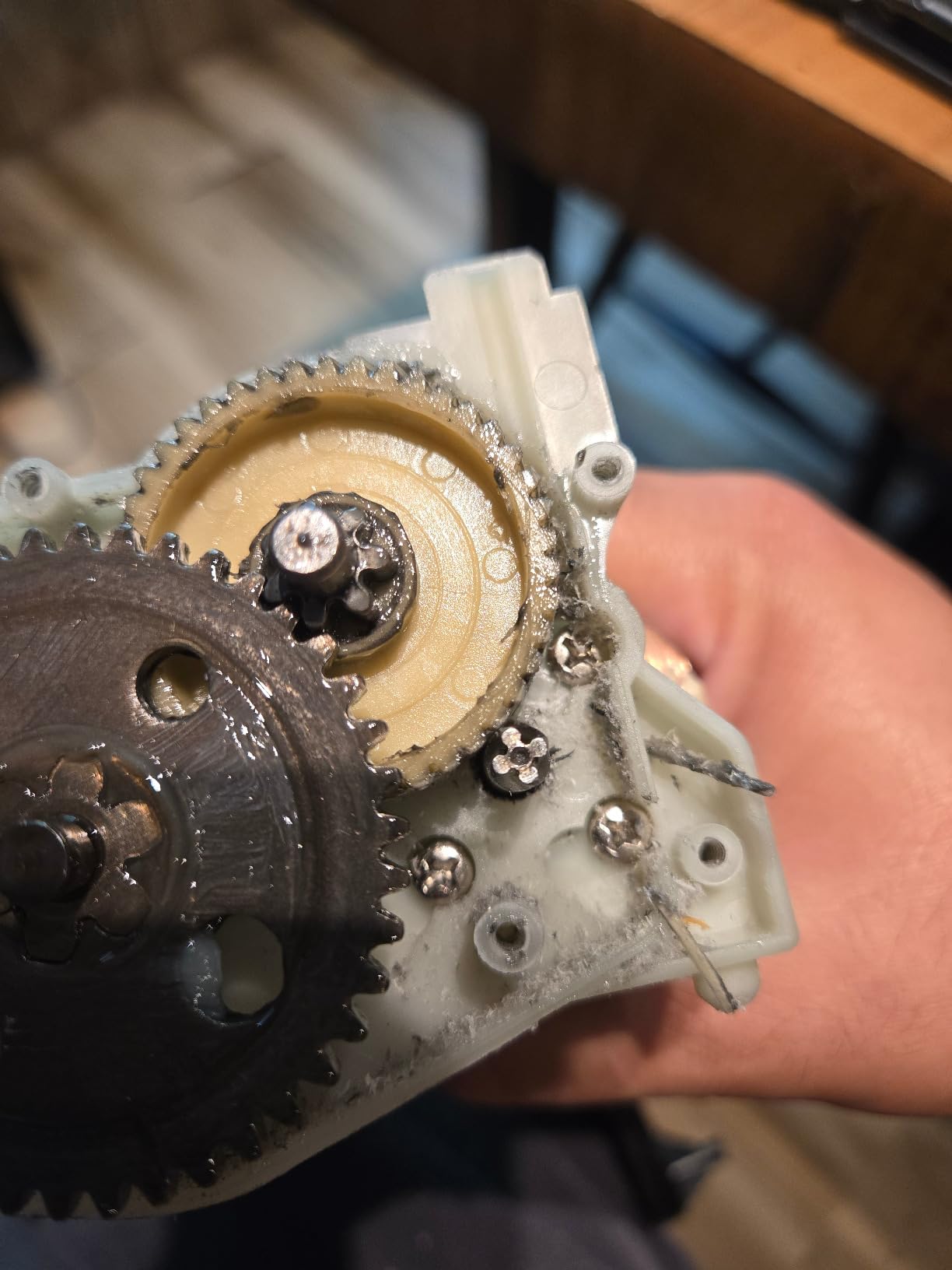
3. Open the head if the reverse stalls out. Most units in this group lift the shredder head by a handle, which exposes the cutter without a tool. Switch off first, unplug if the head feels stiff, and lift only from the handle.
4. Do not force it. If the cutter will not turn with the motor off, something is bent or jammed in the blade path. Forcing it rounds the blade edge and turns a five-minute job into a replacement cutter. Wait out the cool-down period and try again, or accept that the clip won.
5. Oil the blades afterwards. Run a few sheets of plain paper with shredder oil through the machine after any metal jam. Oil is what keeps metal from dulling a blade edge, and the same routine is what separates a cutter that still works in year three from one that does not.
For lubrication, a drip of oil into the feed slot every few months is enough, and the manufacturer of the auto-feed machine in this list ships 12 lubricant sheets for exactly this purpose. Run the machine briefly so the oil spreads across the full cutter width, then shred a few sheets of scrap paper to clear the excess. If you are producing a lot of documents before they pile up for destruction, it also pays to start with the right stock, like printer paper for photo printing, rather than fixing paper problems twice.
Two habits prevent most jams before they start. Feed clips and staples on the underside of the sheet, so metal meets the blades rather than dragging across the feed rollers. And never push more than the rated sheet count in at once, since an over-thick bundle is the fastest way to fold a clip sideways and wedge it into the throat.
One warning on auto-feed. If you buy the auto-feed machine, expect to remove metal from a stack before putting it in the tray. The tray handles paper, and the manual slot on the head is where clips and cards actually belong. Loading a stapled stack into an auto tray and expecting hands-free performance is the single most common misuse we see described in owner reviews.
Buying Guide: What Actually Decides Whether a Shredder Handles Stacks With Clips
Cut type and security level. Under DIN 66399, P-4 is the confidential tier and everything on this list meets it. Cross-cut produces particles around 5 x 25 mm, micro-cut produces confetti closer to 4 x 12 mm. Both are secure, but micro-cut output is far harder to reassemble and compresses much better in a bin, which means fewer emptying trips. Strip-cut shredders are excluded from this roundup entirely, because they leave long ribbons that can be taped back together and they rarely have the motor torque for metal.
Sheet capacity versus real workload. Sheet ratings describe the best case, not the working case. Capacity and clip tolerance are separate axes: an 18-sheet machine with a narrow throat can stall on one clip, while a 6-sheet machine with a wide feed opening and a metal-rated cutter head will clear stapled documents all day. Read the media list, not just the number on the box.
Run time and duty cycle. Every desktop unit here runs for 4 to 5 minutes and then needs a cool-down, typically 30 minutes. The cabinets run 15 to 60 minutes. If your clipping is steady and small, a short cycle is invisible. If you are clearing a backlog, the long-run machines save you an afternoon of waiting.
Bin capacity and emptying. Bin volume in gallons looks comparable across this list, but micro-cut output packs down and cross-cut output does not, so a 3.5-gallon micro-cut bin and a 4-gallon cross-cut bin fill at different rates. Cross-cut buyers should plan to empty sooner than the sheet count suggests.
Anti-jam behaviour. Auto-reverse is the feature that most directly affects clip survival. A machine that reverses can recover from a folded clip in seconds. A machine with only a forward control means the paper gets pulled backwards by hand, close to the blades, or the head comes off. All nine machines here have reverse of some kind, which is why none of them are catastrophic with a clip.
Feed throat width. The published entry width tells you how wide a sheet can be without fanning it. Wider is better for anything with a clip on it, because a clip on the edge of a narrow feed has less room to uncurl before it meets the housing.
Noise. Published figures in this group run from 58 dB to 62 dB. If you are shredding in an apartment, a dorm or a room someone is working in, the difference between 58 dB and 62 dB is the difference between a background hum and something you notice. Two machines here list 58 dB.
Auto-feed versus manual feed. Auto-feed is transformative for clean paper and useless for metal-laden stacks unless the machine gives clips a separate slot. Only the auto-feed machine in this list does, and even then the tray is for paper and the manual slot is for staples and clips.
Service and parts. Established brands carry 1-year limited warranties across this list, which is the category norm. A sealed housing limits what you can maintain yourself, and that matters more on a machine you will feed staples to for five years.
Frequently Asked Questions
Can shredders handle paper clips?
Yes, most quality shredders can. A machine with a hardened metal cutter head, a feed throat wide enough that a folded clip cannot wedge, and anti-jam auto-reverse will cut paper clips along with paper. Paper clips are harder on blades than staples because the folded wire can uncurl and lodge in the cutter throat, which is why reverse and a wide feed opening matter more than sheet capacity.
Is it okay to put staples through a shredder?
It is fine on any shredder rated for staples. The metal is cut along with the paper as long as the machine has a metal-capable cutter head and enough motor torque for the added thickness. Feed staples on the underside of the sheet so the metal meets the blades directly rather than dragging across the feed rollers.
Do you have to remove staples when shredding?
No, not on any of the machines in this roundup, all of which list staples as supported media. Removing them first slows you down and defeats the point of a shredder that handles metal. The one exception is metallic gift cards and similar foil-laminated items, which should not go through a home shredder at all.
Why does my shredder jam on paper clips?
A paper clip is folded wire with spring tension. Feed roller torque can make it uncurl and splay so the legs catch between the cutter blades and the housing, which stalls the motor and trips the overload protection. Feed clips side down, clear leftover shreds from the corners of the cutting head, and use the reverse control instead of pulling paper backwards by hand.
What type of shredder can handle staples?
Look for four things: a manufacturer media list that names staples and paper clips explicitly, a hardened steel cutter head, an anti-jam auto-reverse system, and a continuous run time long enough for your volume. A P-4 cross-cut or micro-cut machine with those four features will clear stapled documents without pre-sorting, while a strip-cut light-duty model will not.
What are the biggest shredding mistakes?
The most common are feeding more sheets than the rated capacity, forcing a jammed cutter instead of using reverse, putting metal into an auto-feed tray instead of the manual slot, running the machine past its duty cycle without letting it cool, and skipping blade lubrication. Each one shortens blade life or causes the jam that starts the problem.
Bottom Line: The Shredder That Matches Your Clip Load
The best shredders for staples and paper clips are the ones with a wide feed throat, a hardened metal cutter head and a reverse that works under load. Clip tolerance is a separate axis from sheet capacity, and the machines that score well on both are the ones worth your money.
For the general case, the Aurora AU1210MA is the pick: micro-cut security, 12 sheets per pass, a 60-minute run time and the highest rating in this group. If your pile is measured in boxes, the Bonsaii 18-sheet cross-cut takes 18 sheets at a time and holds 6 gallons. For a desk, the Amazon Basics 6-sheet micro-cut handles clips and staples without pre-sorting at a modest capacity, and the Aurora AU608MB does the same job in a tighter footprint with a four-mode jam control.
For mixed media including CDs and mail, the Wingwise 15-sheet cross-cut is the one that takes everything in a single slot. And if you need genuine hands-free throughput, the Bonsaii 200-sheet auto-feed separates bulk paper in the auto tray from staples and clips in the manual slot, which is the design that actually solves the problem rather than hiding it. Whatever you choose in 2026, oil the blades every few months and feed clips side down. That habit alone will keep a cutter head alive far longer than the brand name on the box suggests.