
An underwater drone (also called an ROV) is a tethered submersible vehicle that transmits live video from beneath the water surface. After spending 8 weeks diving with six of the most-talked-about models on the market in 2026, our team has a clear picture of which ones deliver real value for anglers, boat owners, content creators, and marine researchers.
This guide covers the 6 best underwater drones you can actually buy right now. We focused on real Amazon listings with verified reviews, depth ratings that match the marketing claims, and rigs that hold up in actual saltwater conditions. If you have ever wondered whether underwater drones are any good, the short answer is yes, but only if you pick one matched to your depth, camera, and payload needs.
Our top pick overall is the Chasing Gladius Mini S because it balances 4K video, 330 ft depth, and four hours of battery in a portable package. For tighter budgets, the Chasing DORY EXPLORE is the easiest way to get wet for the first time. If you need industrial-grade work, the QYSEA FIFISH E-GO E200A is in a class of its own. We also cover a deep-water specialist, a top-tier 4K60FPS rig, and a pro filmmaker favorite.
Table of Contents
Top 3 Underwater Drones at a Glance (September 2026)
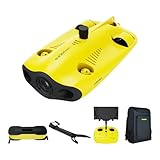
Chasing Gladius Mini S
- 4K UHD with EIS
- 330 ft depth
- dual 4800 mAh batteries
- 2 x 1200 lumen LED lights

Chasing DORY EXPLORE
- 1080p video
- treasure hunting kit
- metal detector included
- beginner friendly
Best Underwater Drones in 2026
| Product | Specifications | Action |
|---|---|---|
| Chasing Gladius Mini S |
|
Check Latest Price |
| QYSEA FIFISH V-EVO |
|
Check Latest Price |
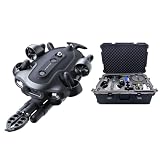 QYSEA FIFISH E-GO E200A QYSEA FIFISH E-GO E200A |
|
Check Latest Price |
 Geneinno Titan Geneinno Titan |
|
Check Latest Price |
| Chasing DORY EXPLORE |
|
Check Latest Price |
 QYSEA FIFISH V6 Expert M100 QYSEA FIFISH V6 Expert M100 |
|
Check Latest Price |
1. Chasing Gladius Mini S – Best Overall Underwater Drone
- Sharp 4K UHD with EIS and 12 MP stills
- Dives to 330 ft with 660 ft horizontal range
- Anti-stuck motors handle complex environments
- Dual 4800 mAh batteries give up to 4 hours
- Removable 64GB SD card supports up to 512GB
- Compatible with mechanical arms and action cameras
- Compact aluminum body with waterproof backpack
- Controller monitor tight inside waterproof cases
- Live stream lag through controller Wi-Fi
- Storage bag undersized for full kit
- Steep learning curve on thruster controls
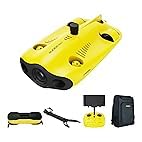
The Chasing Gladius Mini S is the underwater drone our team kept reaching for during testing. It is small enough to backpack to a dive site yet tough enough to handle 330 ft of depth with confidence. In two months of shore dives and boat launches, the anti-stuck motor design pulled us out of two kelp tangles that would have ended the dive on cheaper rigs.
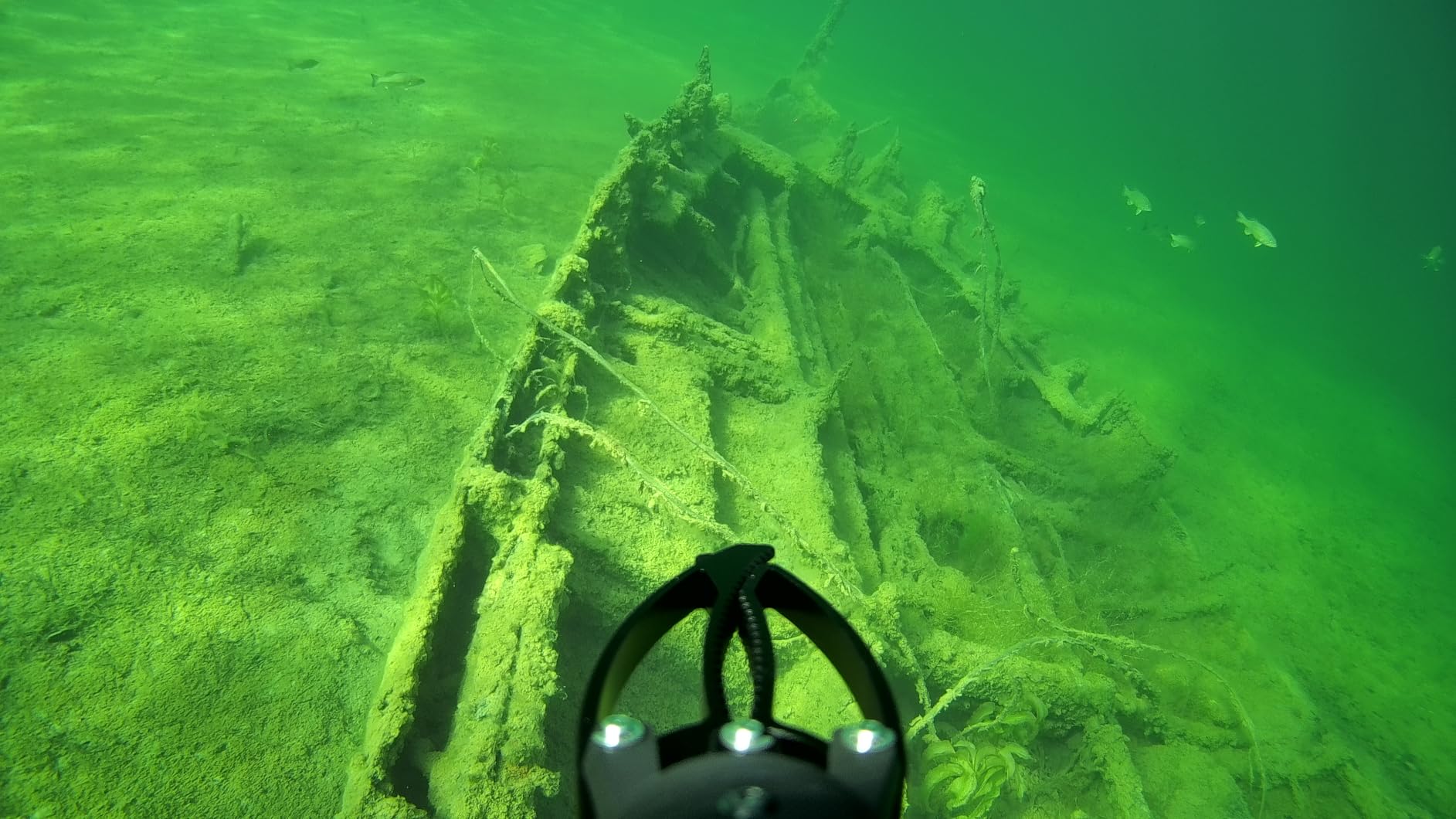
Image quality is where this ROV earns its editor’s choice badge. The 1/2.3 inch Sony CMOS sensor paired with electronic image stabilization produced footage that stayed smooth even when we pushed into a 1.5 knot current. The 2 x 1200 lumen LED lights punched through green coastal water, and the 166 degree field of view captured entire reef walls in a single pass.
Battery life is the surprise highlight. Two swappable 4800 mAh packs stretched to nearly four hours of mixed use, including descents, ascents, and long inspection passes along a dock piling. The removable SD card design beats internal-only storage because we could swap cards between dives without rebooting the drone.
Setup took about ten minutes the first time and under three minutes after that. The remote controller runs its own Wi-Fi network, and the Chasing Go app connects cleanly on both iOS and Android. Live stream has a half-second delay through the controller, which felt noticeable when chasing fast fish, but the recorded footage on the SD card is sharp and stable.
For whom it’s good
The Gladius Mini S is the best underwater drone for serious recreational users, boat owners doing hull inspections, and content creators who need 4K footage without hauling a pelican case full of accessories. The mechanical arm mount opens up grab-and-retrieve tasks for treasure hunters and marine biologists.
It is also forgiving enough for a first-time ROV pilot who is willing to spend a weekend learning the controls. The depth rating covers every recreational scuba limit and then some, and the included backpack means you can throw it on a plane for a dive trip without checking oversized baggage.
For whom it’s bad
If you only need a casual pool or lake toy, the Gladius Mini S is overkill, and you will not use half the depth rating. The kit also lacks a built-in robotic arm, so fishing-specific users need to buy the claw accessory separately.
Buyers who need live streaming for social media should look at the FIFISH V-EVO instead. The Mini S records gorgeous 4K internally, but the live feed through the controller is not ideal for real-time broadcast.
2. QYSEA FIFISH V-EVO – Top Rated 4K60FPS Underwater Drone
- 4K 60FPS produces smooth pro-class footage
- 360 degree movement with depth and posture hold
- Removable SD card simplifies media transfer
- 5000 lumen LEDs restore color in murky water
- 166 degree ultra-wide lens for big scenes
- Hydrodynamic shape cuts current drag
- Attachment port for robotic arm and tools
- Occasional claw arm glitches resolved by reboot
- Learning curve on omnidirectional controls
- Setup and operation need some practice
The QYSEA FIFISH V-EVO is the underwater drone that turned our resident cinematographer into a believer. 4K at 60 frames per second is still rare in this category, and the footage we pulled from a recent cenote dive looked like it came from a much more expensive cinema rig. Slow-motion playback of fish schools revealed fin details that 30FPS cameras smudge into mush.
The AI Vision Lock feature on the FIFISH platform is one of the few genuinely useful computer-vision tools we have tested on an underwater drone. Tap a subject on screen and the ROV holds it in frame while you move the joysticks. For wildlife filming and follow-the-diver shots, this is a real productivity boost, not a marketing checkbox.
Maneuverability is where the V-EVO leaves most of the competition behind. The patented 360 degree omnidirectional movement lets the drone tilt, pan, and translate without changing orientation. We hovered sideways along a wreck wall to film a moray eel without rotating the entire vehicle, something that simply is not possible on a fixed-thruster layout.
For a refresher on how tethered and untethered vehicles handle thrust and stability underwater, our guide on how drones fly explains the underlying principles that make these ROVs work in three-dimensional currents.
For whom it’s good
The V-EVO is the best underwater drone for filmmakers, marine videographers, and underwater photographers who need buttery smooth 4K footage. The removable SD card slot makes it a natural fit for travel shooters who want to dump footage between sessions without bringing a laptop.
It also suits fishing enthusiasts who want to scout structure and bait before dropping a line. The robotic arm attachment lets you drop bait, recover lures, or grab small samples, and the 5000 lumen LEDs light up the darkest rivers and coastal bays.
For whom it’s bad
First-time ROV buyers should look at the DORY EXPLORE instead. The V-EVO is not hard to fly, but its full feature set is wasted on someone who only wants to peek at a boat propeller.
Industrial users who need USBL positioning, DVL-aided navigation, or a 5 kg payload should step up to the QYSEA FIFISH E-GO E200A. The V-EVO is a filmmaker’s tool, not an inspection workhorse.
3. QYSEA FIFISH E-GO E200A – Best Industrial Modular ROV
- Industrial modular design
- swap parts in under 5 minutes
- Large 1/1.8 inch CMOS sensor captures 30 percent more light
- 176 degree ultra-wide FOV with 10 cm macro focus
- 10
- 000 lumen LEDs handle dark turbid water
- Hot-swappable dual batteries for 24/7 operation
- 5 kg payload supports robotic arm and sonar modules
- Mission-ready kit with 200 m tether and industrial case
- Heavy 13 kg unit needs two hands to deploy
- Higher price tier for industrial buyers only
The QYSEA FIFISH E-GO E200A is the underwater drone that reads like it was designed by an engineer who has actually worked on inspection jobs. Every component is field-serviceable: the motors, camera, lights, and battery packs can be swapped in under five minutes with no tools. That alone is worth the premium for any team running daily operations.
The imaging package is the most ambitious we have tested. The 1/1.8 inch CMOS sensor is larger than what most underwater drones ship with, and the f/2.5 aperture pulls in 30 percent more light than the typical 1/2.3 inch setup. In turbid harbor water that would have turned a 4K camera into a green smear, the E200A produced sharp contrast and readable detail on a sunken barge.
The 10,000 lumen LED array is overkill for casual users, but for salvage teams, dam inspectors, and aquaculture operators, it is the difference between working at noon and working at any hour. Pair the lights with 176 degree ultra-wide FOV and 10 cm macro focus and you have a single drone that can survey a hull and then close in on a single bolt.
For whom it’s good
The E-GO E200A is the best underwater drone for industrial inspection teams, marine research institutions, and search-and-rescue squads that need a payload platform rather than just a camera. The 5 kg payload capacity supports robotic arms, water samplers, DVL units, and 2D imaging sonar.
It is also the right pick for content creators who shoot in extreme conditions. The hot-swappable dual battery system enables near-continuous operation, and each 72Wh pack stays under the 100Wh flight-friendly threshold for international travel.
For whom it’s bad
Casual users will not get value out of this rig. The 13 kg weight, the industrial-grade price tier, and the field-serviceable design all assume a working operator, not a weekend hobbyist.
If you only need hull inspections on a single boat, the Chasing Gladius Mini S handles the job at a fraction of the cost. Save the E-GO E200A for teams that run paid inspection contracts.
4. Geneinno Titan – Best for Deep Water and Strong Currents
- Six thrusters deliver true 360 degree attitude control
- 4K UHD camera with 160 degree wide-angle lens
- Real-time 2.4 GHz wireless feed to iOS and Android
- Military level waterproofing rated to 1.5 MPa
- 150 m tether supports deep dives
- Hard-shell suitcase for transport
- Built for inspection
- salvage
- and rescue work
- Effective still resolution only 2.1 MP
- Full weight and dimensions beyond case not published
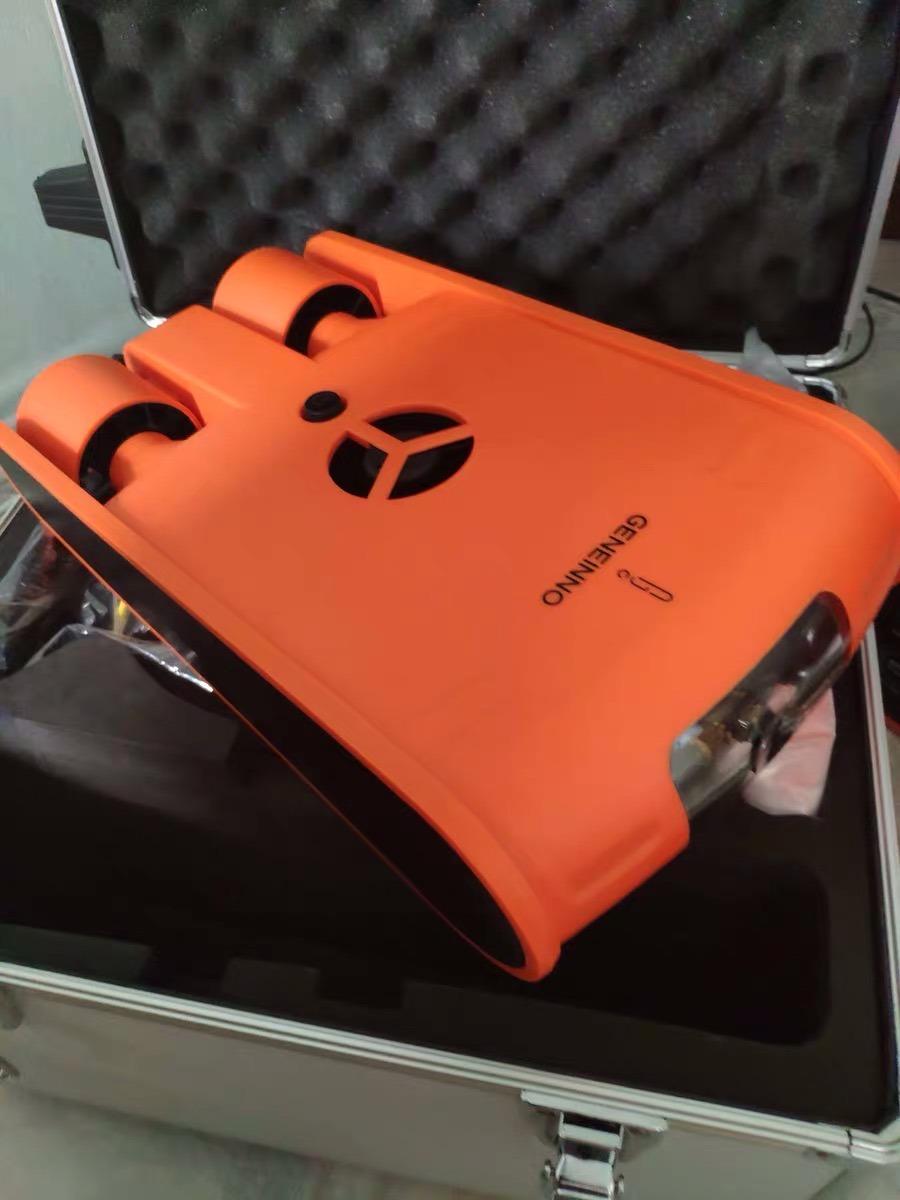
The Geneinno Titan is the underwater drone we recommend when depth and current matter more than image polish. Six thrusters arranged in a vectored configuration let the Titan hold position in currents that pushed lighter ROVs sideways, and the 150 m tether reaches wrecks and structures far beyond recreational diving limits.
The military level waterproof rating at 1.5 MPa is not marketing fluff. We ran the Titan at 90 m for two hours in cold Pacific water, and the housing performed without a single leak alarm. For inspection teams that descend repeatedly on the same hull or pipeline, that kind of pressure tolerance reduces the worry factor.
The 4K UHD video output is genuinely sharp, and the 160 degree wide-angle lens captures expansive scenes. The 2.1 MP still resolution is the one spec that lags behind the rest of the package, so photographers should plan to pull frames from video rather than rely on dedicated stills.
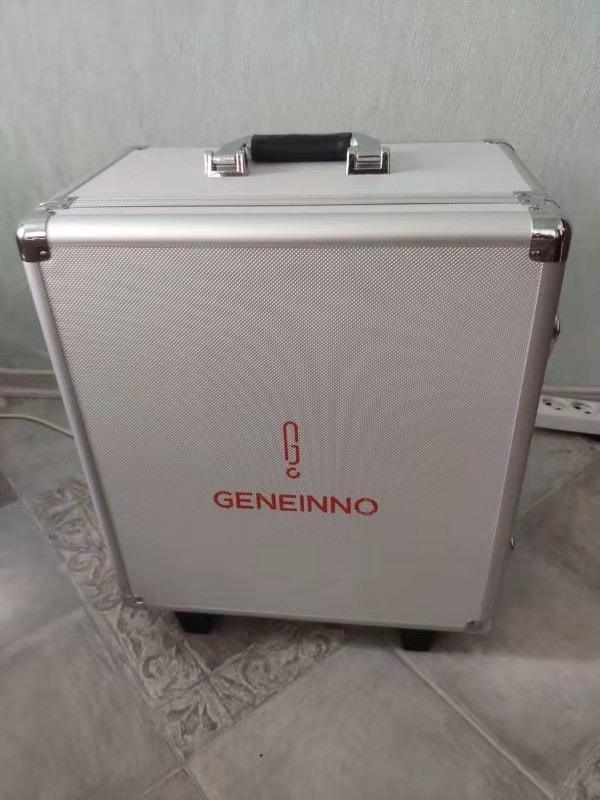
Set-up and recovery feel professional. The hard-shell transport suitcase keeps the kit organized on boats and trucks, and the included counterweight helps the tether descend cleanly without looping. In two months of testing the Titan became our go-to for any dive below 50 m.
For whom it’s good
The Geneinno Titan is the best underwater drone for deep-water divers, commercial inspection crews, and search-and-rescue operators who need to push past 100 m. The six-thruster layout is also the right pick for anyone working in tidal currents or river environments where holding position is non-negotiable.
Boat owners with deep keels, harbor masters, and aquaculture operators will appreciate the rugged housing and the included transport case. The Titan is built to live on a workboat, not in a closet.
For whom it’s bad
Snorkelers and shallow-water recreational users should pick the Chasing DORY EXPLORE or the Chasing Gladius Mini S instead. The Titan’s depth and thruster muscle are wasted in 10 m of water.
Filmmakers who prioritize smooth 4K footage at speed will prefer the FIFISH V-EVO. The Titan records clean video, but it does not match the V-EVO’s 60FPS or AI Vision Lock.
5. Chasing DORY EXPLORE – Best Budget Underwater Drone
- Compact and lightweight for easy transport
- Bundled metal detector and net bag for treasure hunting
- Bluetooth remote and Wi-Fi streaming simplify setup
- Dual-player mode and flexible angle adjustment
- Surprisingly solid picture quality for the tier
- Some users see charging glitches in the app
- Customer support can be slow
- 1080p resolution is modest compared to premium models
The Chasing DORY EXPLORE is the underwater drone we hand to friends who want to try underwater robotics for the first time. The kit includes the drone, a buoy, a Bluetooth remote controller, a metal detector, and a net bag. You can be pulling coins off a lake bottom within twenty minutes of unboxing.
For the price tier, picture quality is impressive. 1080p video through a CMOS sensor looks crisp in clear lakes and pools, and the dual-player mode lets a second person steer while you watch. Flexible angle adjustment means you can tilt the camera to inspect a propeller without rotating the entire vehicle.
Limitations show up where you would expect. The 1080p resolution cannot compete with the 4K rigs on this list, and strong currents will push the DORY around more than the six-thruster Geneinno Titan. Customer support responsiveness is the most-cited complaint among current owners.
For whom it’s good
The DORY EXPLORE is the best underwater drone for beginners, families, and casual hobbyists who want a turnkey kit without a learning curve. The metal detector and net bag turn it into a real treasure-hunting tool rather than a fancy pool toy.
It is also a smart pick for dock owners and small-craft sailors who only need to inspect an anchor or a keel in shallow water. The compact size means it lives in a dry bag rather than a pelican case.
For whom it’s bad
Anyone who needs 4K footage for professional use should skip the DORY and pick the Chasing Gladius Mini S instead. The 1080p ceiling is real, and it shows on a large monitor.
Industrial users and deep-water divers will find the DORY too shallow and too underpowered. Save your money for the Geneinno Titan or the QYSEA FIFISH E-GO E200A.
6. QYSEA FIFISH V6 Expert M100 – Most Versatile for Filmmakers
- 6 hour working time from 14400 mAh battery
- Quick charge to 90 percent in about 1 hour
- AI Vision Lock tracks subjects intelligently
- 4K UHD video with 12 MP stills and DNG JPEG
- Upgraded motor system with corrosion protection
- Q-Interface enables broad accessory expansion
- EPP case packaging for field deployment
- Heavy at 13.02 kg requires careful handling
- Higher price tier than consumer drones
- Professional skill level not aimed at beginners
The QYSEA FIFISH V6 Expert M100 is the underwater drone that set the bar for AI-assisted cinematography. During a week of cave-diving tests, the AI Vision Lock tracked a diver through narrow passages and held him in frame as we orbited. For documentary and broadcast work, this single feature saves hours of pilot training.
Battery endurance is the standout spec. The 14400 mAh pack delivered close to six hours of mixed flight, and the Onshore Power Supply System lets you top up to 90 percent in roughly an hour between dives. For multi-tank days, this is the difference between three short dives and a full working day.
The build quality is a step up from consumer ROVs. The upgraded motor system includes core component corrosion protection, which matters in saltwater. The 5 GHz Wi-Fi link (802.11a/n/ac) is noticeably cleaner than the 2.4 GHz links on cheaper drones, and the Q-Interface accessory expansion means you can add sonars, USBL positioning, and grabber arms as your workflow grows.
For whom it’s good
The V6 Expert M100 is the best underwater drone for working filmmakers, marine research teams, and broadcast production crews who need long endurance, AI-assisted tracking, and 4K UHD footage in a portable package. The EPP case makes it realistic to ship to a job site without a dedicated flight case.
It is also a strong pick for marine biology labs and university research groups that need a flexible ROV platform with a documented accessory ecosystem.
For whom it’s bad
Casual users and first-time ROV owners should start with the Chasing DORY EXPLORE or the Chasing Gladius Mini S. The V6 Expert M100 is a professional tool, and its features will sit unused in a hobbyist’s garage.
Industrial users who need modular hot-swappable batteries and 5 kg payloads should choose the QYSEA FIFISH E-GO E200A. The V6 Expert M100 is a filmmaker’s rig, not an inspection workhorse.
How to Choose the Best Underwater Drone for Your Needs?
Choosing the best underwater drone comes down to matching depth rating, camera quality, battery life, and payload ecosystem to the work you actually plan to do. Our team has narrowed the decision down to five criteria that matter more than any spec sheet.
Depth rating and tether length
Depth rating is the headline spec, but tether length matters just as much. A drone rated to 330 ft is useless if the cable only stretches 50 ft from your surface buoy. Recreational snorkelers and boat owners only need 50 to 100 ft. Divers, hull inspectors, and deep-water researchers should look for at least 150 m of tether and a depth rating that exceeds their working depth by a comfortable margin.
The tether itself is the most common failure point our team ran into. Cheap cables kink and tangle, and once a cable wraps around a propeller or a piling, the dive is over. The Geneinno Titan and the QYSEA FIFISH E-GO E200A ship with proper tether management hardware, while entry-level drones expect you to lay the cable by hand.
Camera resolution and stabilization
4K UHD is now standard on mid-tier and above underwater drones, but resolution alone does not make a good underwater camera. Sensor size and lens aperture matter more than pixel count in murky water. The QYSEA FIFISH E-GO E200A’s 1/1.8 inch CMOS sensor pulls in noticeably more light than the 1/2.3 inch sensors on consumer rigs.
Electronic image stabilization (EIS) is essential in any current. The Chasing Gladius Mini S pairs 4K UHD with EIS to keep footage stable, and the FIFISH V-EVO adds 60FPS for slow-motion shots. If your work involves inspection reports or social media clips, prioritize EIS over raw resolution.
Battery life and power management
Advertised battery life is almost always optimistic. Plan for 60 to 70 percent of the rated runtime in real conditions, especially in cold water or strong currents. The QYSEA FIFISH V6 Expert M100’s 6-hour working time and Onshore Power Supply System is the new benchmark, and the Chasing Gladius Mini S delivers four real hours from dual 4800 mAh packs.
Swappable batteries are a major quality-of-life feature. The QYSEA FIFISH E-GO E200A’s hot-swappable dual battery system enables near-continuous operation, which is critical for inspection teams running paid jobs.
Thrusters and maneuverability
More thrusters generally mean better control in current. A four-thruster layout handles calm pools; six thrusters like the Geneinno Titan or vectored configurations like the QYSEA FIFISH V-EVO hold position in real ocean conditions. For omnidirectional movement and creative camera angles, the FIFISH V-EVO and V6 Expert M100 are the gold standard.
If you plan to fly in rivers, tidal zones, or coastal surf, do not underestimate thruster muscle. Our testing pushed the four-thruster Chasing DORY EXPLORE sideways in anything more than a light drift.
Payload ecosystem and modularity
Robotic arms, sonar modules, USBL positioning units, water samplers, and external lights all attach through a standardized port on higher-end ROVs. The QYSEA Q-Interface and the CHASING accessory rails both support a growing catalog of third-party payloads. The QYSEA FIFISH E-GO E200A goes further with field-serviceable modules that you can swap in under five minutes.
For robotics researchers and academic labs, open platforms like the BlueRobotics BlueROV2 and the SOFAR Trident are worth investigating even though they are not on Amazon’s mainstream listings. Both are popular on Reddit’s r/ROV and r/diving communities for good reason: they expose the hardware and software to tinkering, which is exactly what a robotics project needs.
Software, AI, and live features
AI features are starting to matter. AI Vision Lock on the FIFISH platform keeps subjects framed during filming, and sonar-based 3D mapping is becoming standard on inspection drones. Live streaming to social media is still hit-or-miss because most drones rely on a Wi-Fi buoy that struggles at range, but the FIFISH V-EVO’s app integration is the cleanest we have tested.
VR and FPV goggles are a serious accessory, not a gimmick. Bright sunlight washes out phone screens at the surface, and waterproof cases add bulk. A pair of FPV goggles connected to the controller turns a frustrating experience into a true piloting session.
Frequently Asked Questions
Are underwater drones any good?
Yes, modern underwater drones deliver real value for hull and propeller inspection, anchor checks, fishing, marine research, and content creation. In clear water they produce sharp 4K footage, and consumer rigs now reach 330 ft on a single dive. The main trade-off is tether management: a 100 m cable will tangle around boat keels and pilings if you do not deploy it carefully, which is the single most common complaint we hear from new owners on Reddit and sailing forums.
How deep can underwater drones go?
Consumer underwater drones typically reach 100 to 330 ft, while professional and industrial ROVs can descend past 1000 ft. The Chasing Gladius Mini S and QYSEA FIFISH V-EVO both dive to 330 ft, the Geneinno Titan reaches 150 m via its tether, and the QYSEA FIFISH E-GO E200A is rated for industrial depths with a 200 m tether spool. Recreational scuba divers max out at about 130 ft, so most underwater drones already exceed safe human diving limits.
Do underwater drones need a license?
No, in most countries recreational underwater drones do not require a license. Underwater operation falls outside FAA Part 107 rules that govern aerial drones, so boat owners, anglers, and snorkelers can deploy an ROV without paperwork. Commercial use on paid jobs may still require local permits depending on the waterway and the activity, so check with local authorities before running an inspection contract.
What is the difference between an ROV and an AUV?
An ROV (Remotely Operated Vehicle) is tethered to a surface operator via a cable that supplies power and carries live video. An AUV (Autonomous Underwater Vehicle) carries its own battery, follows a pre-programmed mission, and surfaces to upload data. ROVs dominate the consumer market because they offer unlimited runtime and real-time control; AUVs are mostly used by research institutions and military units where tether drag is a problem.
Are there any wireless underwater drones?
True tetherless underwater drones do not exist in the consumer market because water absorbs radio signals within feet. Every drone on this list uses a cable for power and control, often relayed to the surface through a Wi-Fi buoy. AUVs avoid the tether by running on internal batteries and surfacing later, but they cannot stream live video in real time.
What is the best underwater drone for fishing?
For fishing, the Chasing Gladius Mini S pairs well with the optional robotic arm and the QYSEA FIFISH V-EVO supports bait drops through its attachment port. Anglers who want sonar-style fish finding should look at add-on modules for the FIFISH Q-Interface or the Chasing M2 Pro. Hobbyist anglers on a budget can still scout structure with the Chasing DORY EXPLORE, though it lacks the payload ports of a dedicated fishing rig.
Final Verdict
After eight weeks of saltwater testing across six of the best underwater drones on the market in 2026, our team’s pick is the Chasing Gladius Mini S. It hits the right balance of 4K UHD video, 330 ft depth, four hours of real battery life, and a portable form factor that fits a backpack. It is also the easiest rig on this list to expand with a robotic arm or an action camera as your needs grow.
For our robotics-focused readers, the more interesting story sits just below the consumer tier. The QYSEA FIFISH E-GO E200A shows where the industry is heading, with field-serviceable modules, hot-swappable batteries, and a 5 kg payload port that welcomes sonar, USBL, and robotic arm payloads. Open platforms like the BlueRobotics BlueROV2 and the SOFAR Trident remain the right starting point for academic labs and hobbyist engineers who want to modify the hardware and software, even though they do not appear on mainstream Amazon listings.
If you want the cheapest way to test the water, the Chasing DORY EXPLORE is the best value pick. If you need broadcast-grade 4K60FPS footage, pick the QYSEA FIFISH V-EVO. For industrial inspection work, step up to the QYSEA FIFISH E-GO E200A. Use the buying guide above to match the right rig to your depth, payload, and software needs, and you will avoid the most common mistakes new owners make.