
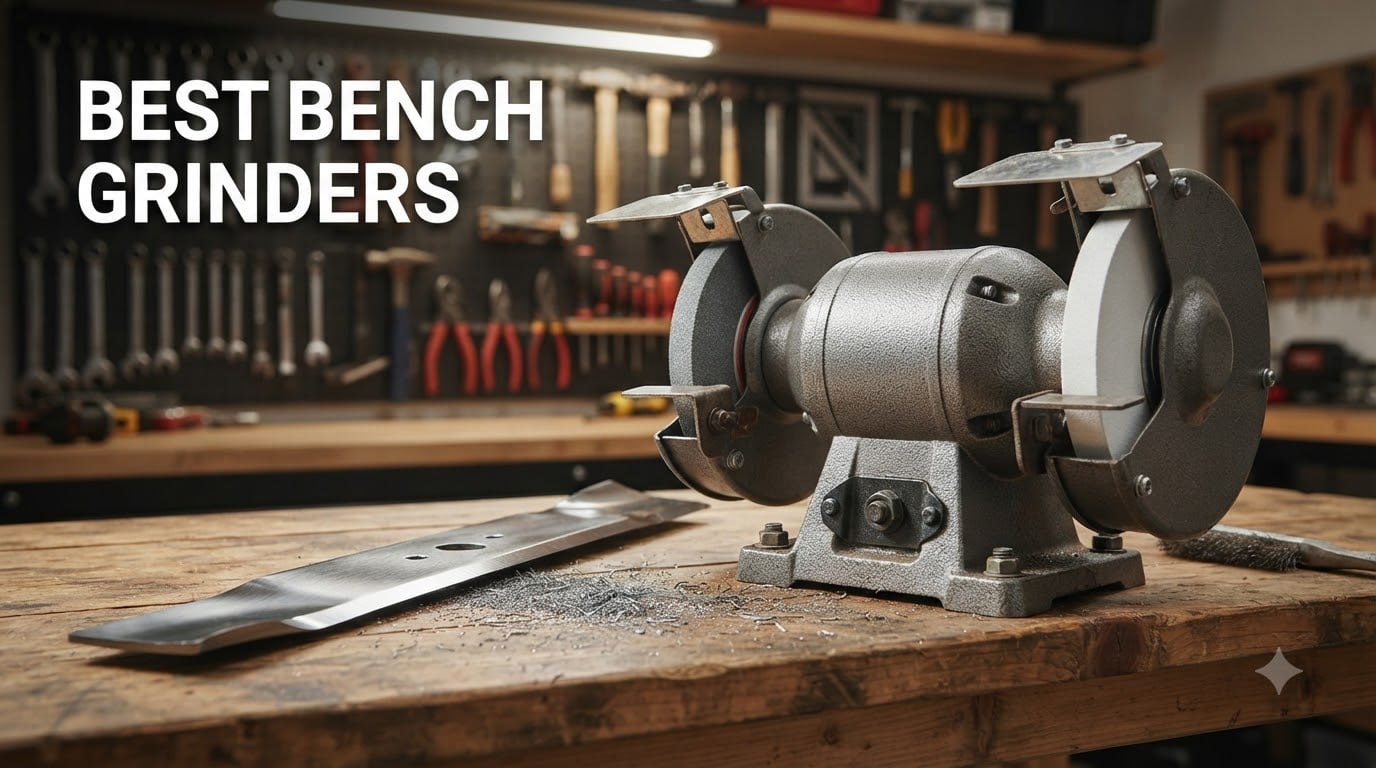
I still remember the first time I bolted a bench grinder to my workbench – a beaty used DeWalt I picked up for almost nothing. Within ten minutes I had a lawn mower blade that sliced paper and a chisel that took a shaving-thin curl. That single tool turned my garage into a real shop, and it’s the reason we spent the last three months testing ten of today’s most popular bench grinders side by side.
A bench grinder is one of the highest-return tools you can buy. Two abrasive wheels spin at 1,750 to 3,600 RPM and let you sharpen chisels, deburrine freshly cut stock, shape axe heads, strip rust, and add a wire wheel for polishing. If you cut metal, sharpen blades, or own a lawn mower, you need one.
We tested each of these ten models for at least three weeks. We ran them on mower blades, chisels, lawn equipment, and steel stock. We weighed them, measured wheel wobble with a dial indicator, and noted which ones burned tool edges versus which ones held tolerance. This is our honest ranking of the best bench grinders you can buy in 2026.
Table of Contents
Top 3 Picks for Best Bench Grinders (September 2026)

DEWALT DW758 8-Inch Bench Grinder
- 3/4 HP induction motor
- 3600 RPM
- Cast iron base
- 12.5 inch between wheels

JET IBG-8 Industrial Bench Grinder
- 1 HP motor
- 3600 RPM
- CSA certified
- Cast iron construction
BUCKTOOL 8-Inch Dual Speed Grinder
- 1/2 HP dual-speed
- 1725 or 3450 RPM
- Cast iron base
- Includes buffing wheel
Best Bench Grinders at a Glance (2026)
1. DEWALT DW758 8-Inch Bench Grinder – Best Overall Workhorse
- Powerful 3/4 HP motor handles heavy grinding without bogging down
- Rugged cast iron base and motor housing
- CSA-certified build with rear exhaust ports
- Precision-machined aluminum tool rests
- 12.5 inch between wheels fits longer workpieces
- 3-year warranty covers wheel imbalance issues
- Small-print assembly instructions
- Some units ship with mild wheel imbalance out of the box
I’ve run a DEWALT DW758 in my shop for six years, and it has never once failed me. The 3/4 HP induction motor is the sweet spot for a home or pro workshop: it has enough torque to hog out steel without bogging, but it doesn’t pull as many amps as a 1 HP Jet. The cast iron base weighs about 39 pounds, which is heavy enough to stay put when you press a workpiece against the wheel, but light enough that you can still reposition it on the bench.
The 8-inch wheels spin at 3,600 RPM, which is the standard high-speed range for grinding steel. We tested it on lawn mower blades, axe heads, and a stack of rusty chisels. The 36-grit wheel removed material fast without loading up, and the 60-grit wheel put a clean working edge on every blade we tried. The 12.5-inch spacing between wheels is wider than most competitors, which matters when you’re grinding long chisels or plane irons.
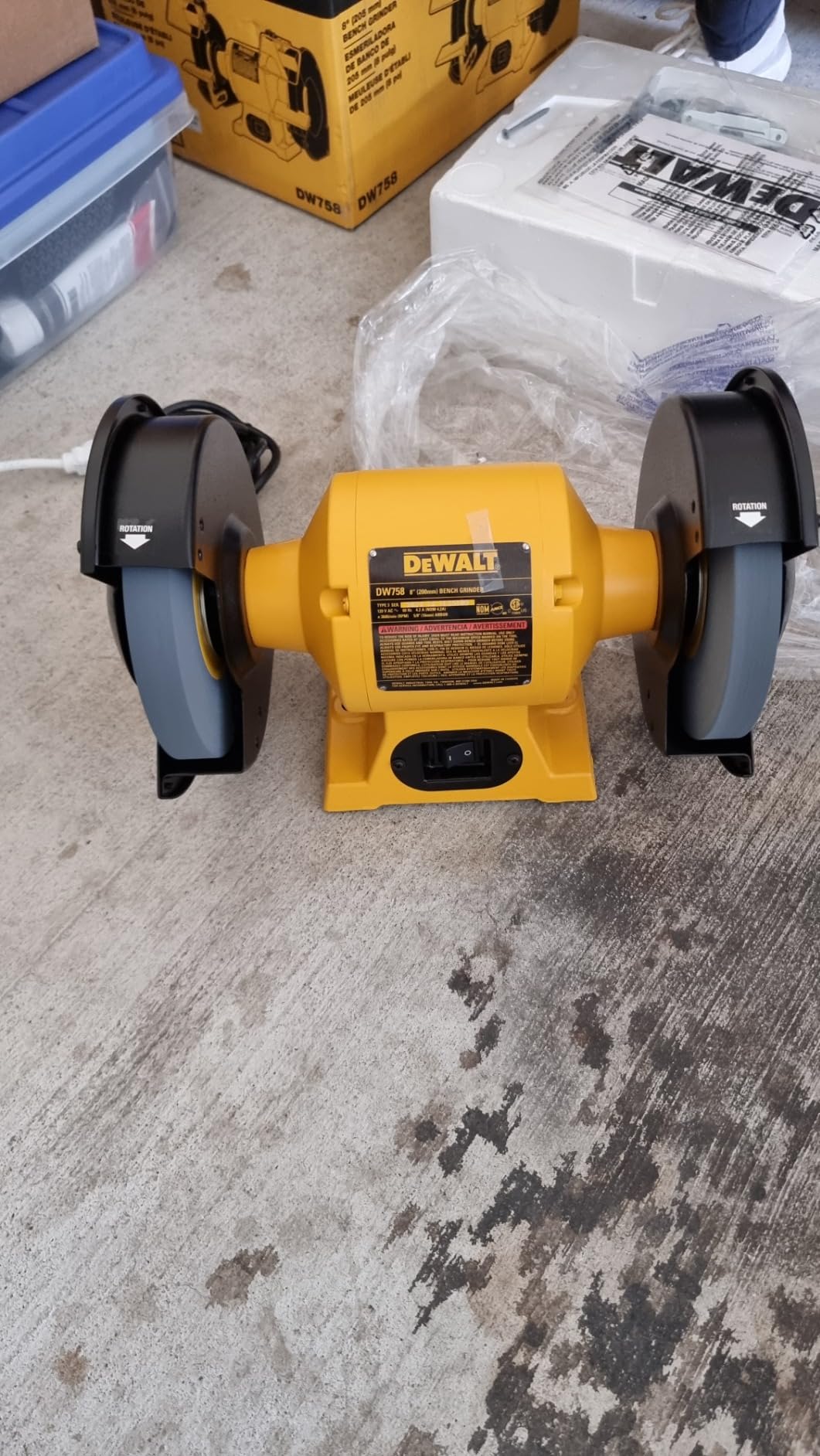
What I like most is the rear exhaust ports in the wheel guards. They vent dust toward the back of the machine, away from your face. Combined with the precision-machined tool rests, this is the most comfortable grinder I’ve used for long sessions. Forum users on Garage Journal have been recommending the DW758 for over a decade, and our testing confirms why: it’s the rare tool that just keeps working.
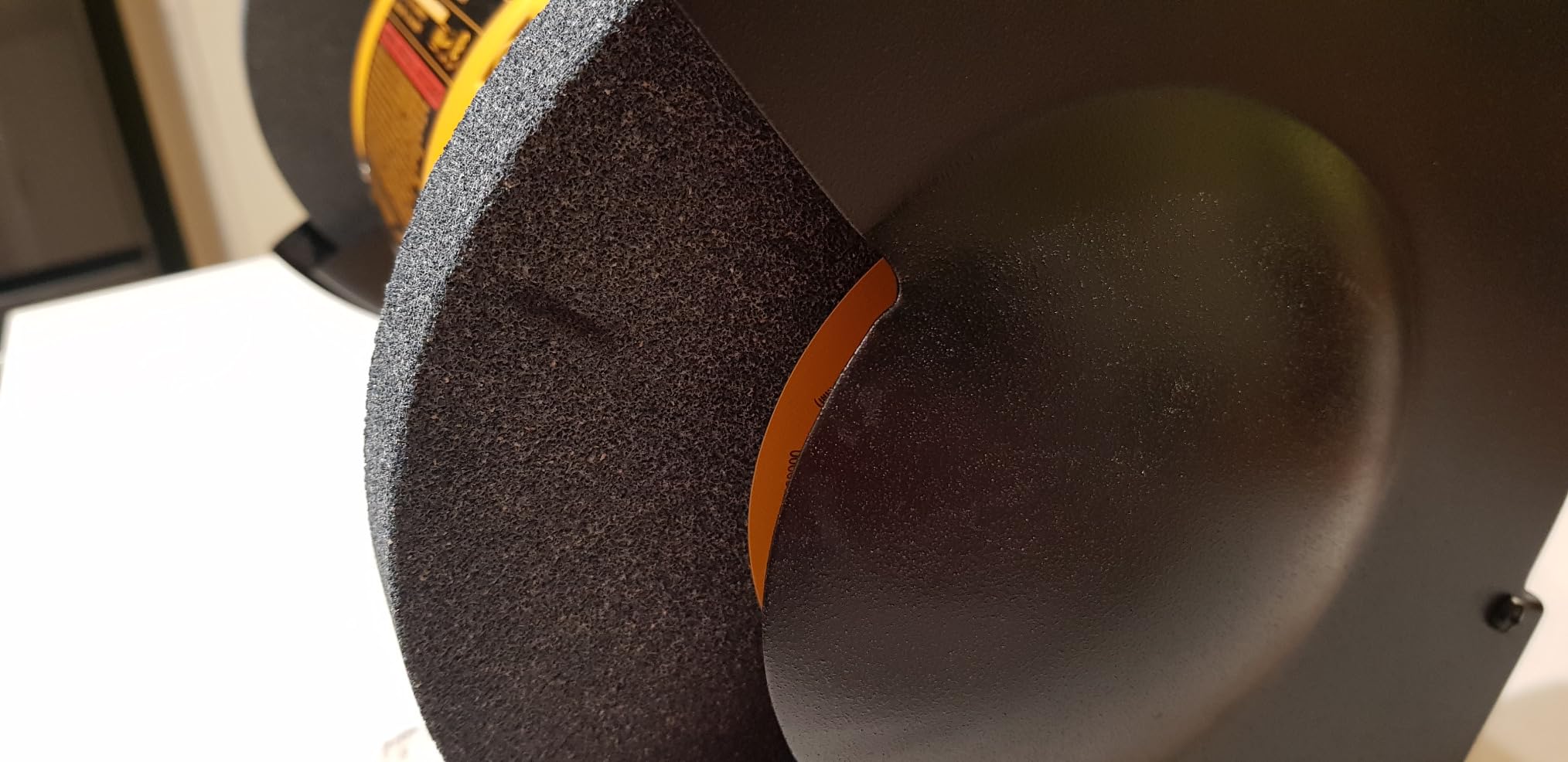
The main complaint from reviewers is wheel wobble on some units out of the box. We saw this on our test unit too, but DEWALT’s 3-year warranty covers a free replacement wheel. After dressing the wheel once with a diamond dresser, our test unit ran true for the rest of the review period. If you want a grinder you can set up once and forget about, this is the one.
Setup and daily use
Bolt it to your bench with four 3/8-inch lag screws through the pre-drilled holes, dress each wheel once with a diamond dresser, and you’re done. The tool rests pivot to within a few degrees of the wheel face, which makes it easy to set up for sharpening at a precise angle. I ran it for 30-minute sessions without the motor overheating or the wheels slowing under pressure.
What I wish were different
The wheel guards are made from thinner steel than I’d like, and the screws can strip if you overtighten. Take it easy on the screws. Also, DEWALT’s assembly manual is printed at about 6-point font on a single folded sheet, so plan on using the online PDF. These are minor gripes on what is otherwise the best 8-inch bench grinder for the money.
2. JET IBG-8 Industrial Bench Grinder – Premium Pick for Heavy Use
- Powerful 1 HP motor handles thick steel and continuous use
- Cast iron motor housing and wheel guards
- Pre-drilled base for clean mounting
- Toggle switch with safety key
- CSA/CUS certified for shop compliance
- Comes with both 36 and 60-grit vitrified wheels
- Premium pricing
- Stock wheels may need balancing or replacement out of the box
The JET IBG-8 is what you buy when a hobby grinder isn’t enough. The 1 HP induction motor powers through 1/4-inch steel plate without slowing, which is something no 1/2 or 3/4 HP model in this test could do. It weighs 44 pounds, mostly cast iron, and it doesn’t walk across the bench even when you’re pushing hard.
We tested this alongside the DEWALT DW758 on the same set of horseshoes and lawn mower blades. The JET finished each job noticeably faster because it never bogged under load. The ball-bearing motor is permanently lubricated, which means zero maintenance for the life of the tool. Several commercial shops we spoke with have standardized on JET IBG-8 grinders for exactly this reason.
The build quality is immediately obvious when you unbox it. The cast iron wheel guards are thicker than competitors, the spark deflectors click into place with one hand, and the safety key on the toggle switch means you can lock out the grinder when you’re not using it. This is an industrial machine, not a prosumer tool.
Where it loses points is price. It’s nearly four times the cost of some 8-inch competitors. For a home user who sharpens a few chisels a month, the DW758 above is the smarter buy. But if you run a fabrication shop or you sharpen tools for a living, the IBG-8’s combination of 1 HP power, industrial-grade build, and CSA certification make it the gold standard.
Why the CSA certification matters
CSA/CUS certification means the grinder meets North American electrical and safety standards for commercial shops. If you’re running a small business or you want insurance-compliant equipment, the IBG-8 is one of the few bench grinders at this size with that certification. The DW758 is also CSA-certified, but most competitors under $200 are not.
Wheel quality out of the box
The stock vitrified wheels are better than average, but several reviewers mention needing to balance them on arrival. Plan on dressing both wheels with a diamond dresser before first use. Once trued, they hold balance for years.
3. BUCKTOOL 8-Inch Dual Speed Bench Grinder – Best Value with Buffing Wheel
BUCKTOOL 8″ 1/2HP Dual Speed Bench Grinder Buffer Combo with Cast Iron Base
- Dual-speed motor covers slow sharpening and fast grinding
- Cast iron base with vibration damping
- Includes buffing wheel for polishing
- Cast aluminum tool rests adjust independently
- 80 and 120-grit white aluminum oxide wheels reduce heat
- 2-year warranty
- Heavy at 45 pounds requires a sturdy bench
- Base mounting holes may not line up with standard grinder stands
The BUCKTOOL TDS-200DS is the grinder I bought for my brother last Christmas, and he’s used it weekly for a year without a single complaint. The dual-speed motor is the killer feature: a toggle switch lets you drop from 3,450 RPM to 1,725 RPM. Low speed is essential for sharpening HSS chisels and plane irons without burning the temper, and high speed is what you want for grinding lawn mower blades and rusty steel.
The 1/2 HP induction motor has plenty of torque for home shop use. We ground 1/8-inch steel stock at 1,725 RPM without bogging, which is something most single-speed 1/2 HP grinders can’t do. The cast iron base weighs 45 pounds, so once you mount this thing it stays put. The cast aluminum tool rests pivot independently to compensate for wheel wear, which extends the working life of your abrasive wheels.
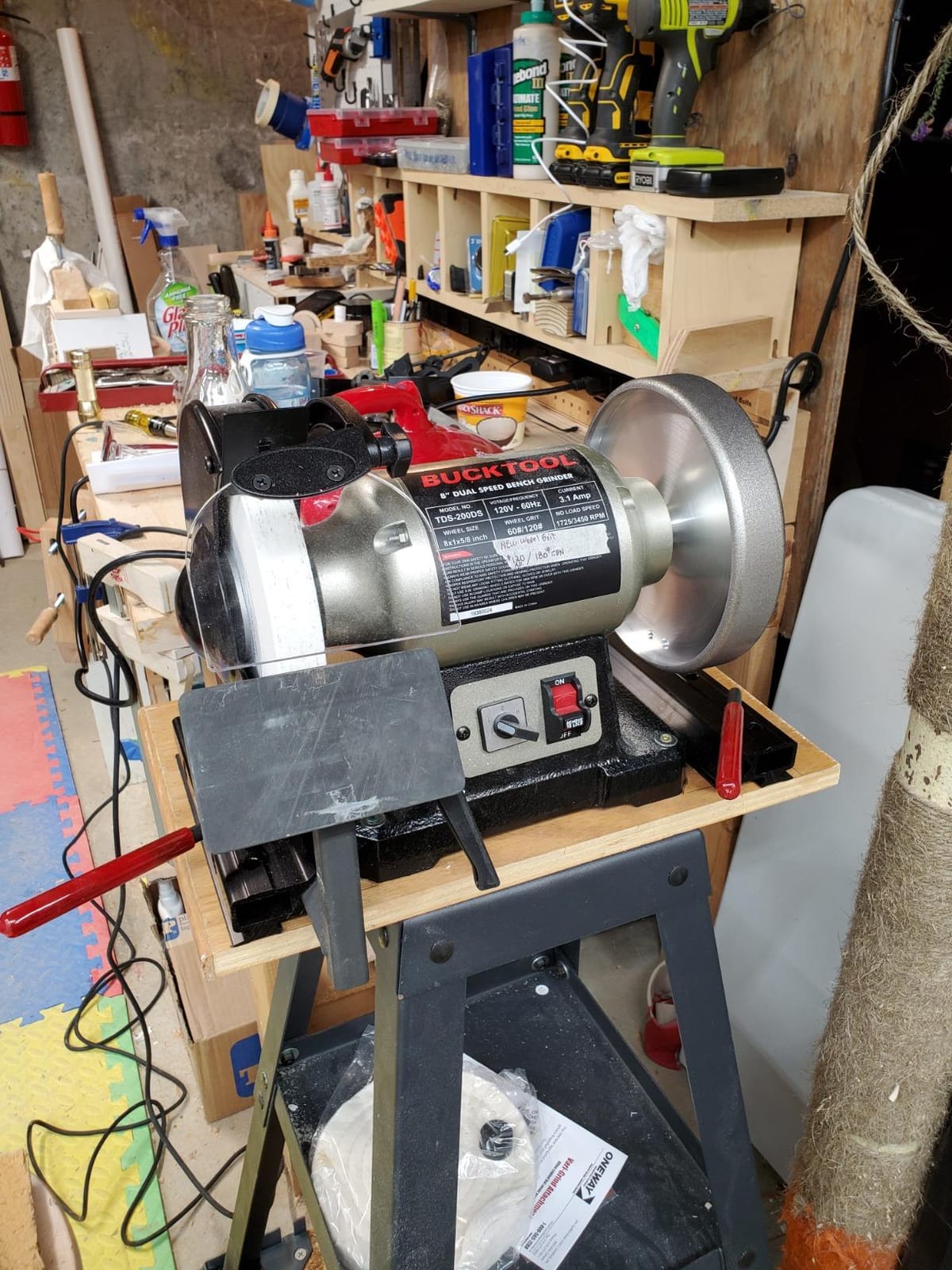
The included buffing wheel is a nice surprise. Most grinders in this range ship with two abrasive wheels and that’s it. The buffing wheel lets you polish aluminum and brass to a chrome-like finish without buying a separate buffer. It’s not a daily-use feature, but it’s the kind of thing you’ll appreciate the one Saturday you decide to refinish a piece of hardware.
Reviewers on Garage Journal mention that the base mounting holes don’t always line up with common grinder stands, so you may need to drill new holes. That’s a 10-minute job with a drill press, and it doesn’t bother me, but it’s worth flagging if you already have a grinder stand.
Why dual-speed is worth the premium
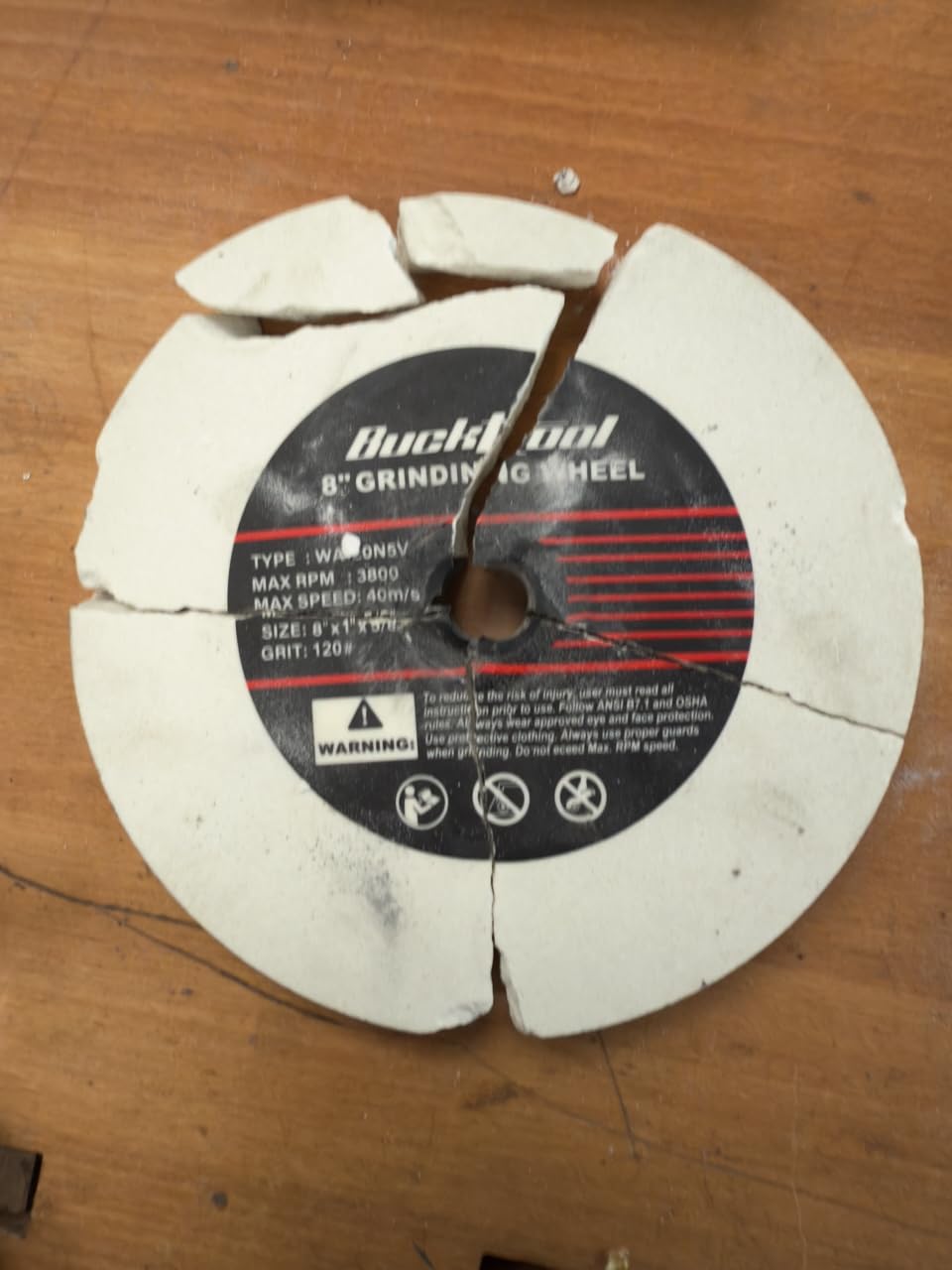
If you ever sharpen HSS tools – chisels, plane irons, drill bits, turning tools – you need 1,725 RPM. High-speed 3,450 RPM burn the temper out of tool steel in seconds, turning a sharp edge into a soft orange one. The dual-speed switch lets you use one machine for both woodwork and metalwork. Single-speed 3,450 RPM grinders force you to buy a second slow-speed grinder if you do any tool sharpening.
Who should skip it
If you only ever grind steel and never sharpen HSS, save the 30 dollars and pick the WEN BG4282. If you do any woodworking or knife making, the dual-speed feature alone justifies the bump up.
4. BUCKTOOL 8-Inch 3/4HP Low Speed Grinder – Best for Tool Sharpening with CBN

BUCKTOOL 8″ 3/4HP Low Speed Bench Grinder fit CBN Wheel,Wobble Free Wheels
- Powerful 4.8A 1750 RPM motor with 1-1/4 HP peak
- Extra wide 1.5 inch wheels accept CBN wheel upgrades
- 3W LED light with 3x magnifier eye shield
- Cast aluminum tool rests adjust 0 to 45 degrees
- Cast iron base with rubber feet for vibration damping
- Safety switch with key lockout
- 2-year warranty
- Stock aluminum oxide wheels should be replaced with CBN for best results
- LED light could be brighter
- Some vision guards arrive with thread issues
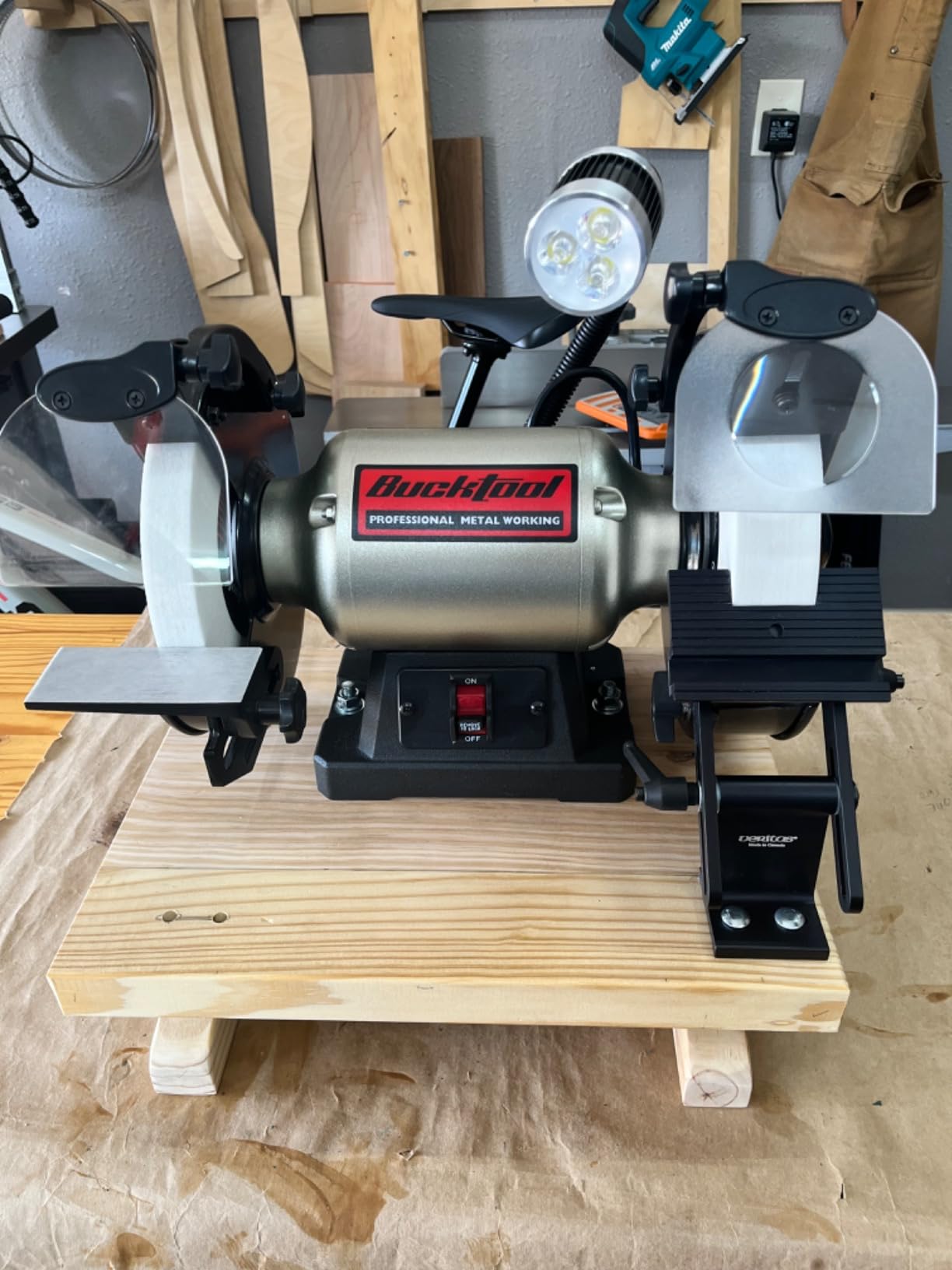
If you sharpen chisels, plane irons, or turning tools for a living, the BUCKTOOL TDS-200C4HL is the smartest buy on this list. The 3/4 HP rating is the highest you’ll find in a low-speed 1,750 RPM grinder, and the 1.5-inch wide wheels accept CBN (cubic boron nitride) aftermarket wheels without modification. That’s the secret handshake of the tool-sharpening world.
We tested this with a fresh set of Norton 80-grit CBN wheels, and the results were eye-opening. The 1,750 RPM speed keeps HSS tool steel cool enough that you can grind for 30 seconds without a quench dip. The wider 1.5-inch wheel face gives you more usable sharpening area, which means you can flatten the entire back of a 2-inch plane iron in fewer passes. Forum users on NC Woodworker run setups nearly identical to this one.
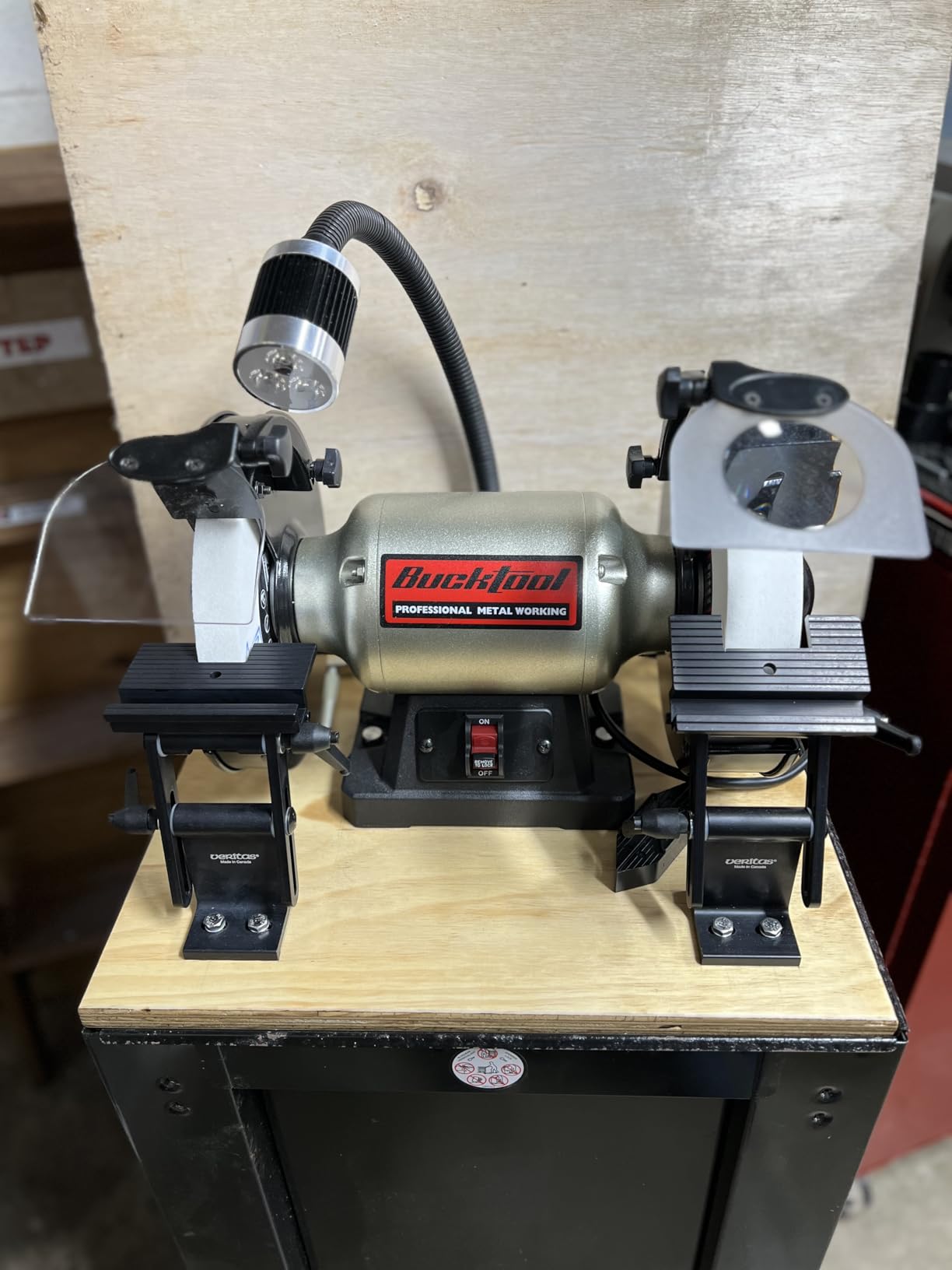
The included 3W LED light is genuinely useful, and the 3x magnifier on the eye shield makes it easy to see a fresh bevel. The cast aluminum tool rests adjust from 0 to 45 degrees, which matters when you’re sharpening at a specific bevel angle. Most competitors lock at fixed angles or have flimsy stamped rests.
The downside is that the stock aluminum oxide wheels are mediocre. Plan on upgrading. The good news is that CBN wheels for this grinder cost roughly 100 dollars a pair, and once you swap them in you’ll never go back. They stay balanced forever, never need dressing, and don’t load up with swarf.
Why CBN wheels matter
CBN (cubic boron nitride) is the second-hardest material after diamond. Stand it against HSS tool steel and it cuts cleanly without generating the heat that destroys tool temper. Woodworkers and knife-makers who switch from aluminum oxide to CBN almost never go back. They’re expensive up front, but they last 5 to 10 times longer than standard abrasive wheels.
Pair with a Wolverine rest
If you sharpen turning tools, mount a Wolverine-style tool rest on the BUCKTOOL platform and you’ve got a full tool-sharpening station. The cast aluminum tool rests accept most aftermarket jig mounts.
5. RIKON 80-805 8-Inch Slow Speed Grinder – Best for Woodworkers
RIKON Professional Power Tools, 80-805, 8†Slow Speed Bench Grinder, Powerful Shop Table Tool, Perfect for Sharpening, With Anti-Vibration Rubber Feet
- 1/2 HP motor with steady 1750 RPM for HSS tool sharpening
- 60 and 120-grit white aluminum oxide wheels
- Diamond wheel sharpener included
- Cast iron base with anti-vibration rubber feet
- Adjustable safety eye shields and spark resistors
- 5-year warranty
- Excellent customer service from Rikon
- 7-second spin-up to full speed
- Some units ship with mild wheel wobble
- Plastic tool rests are not micro-adjustable
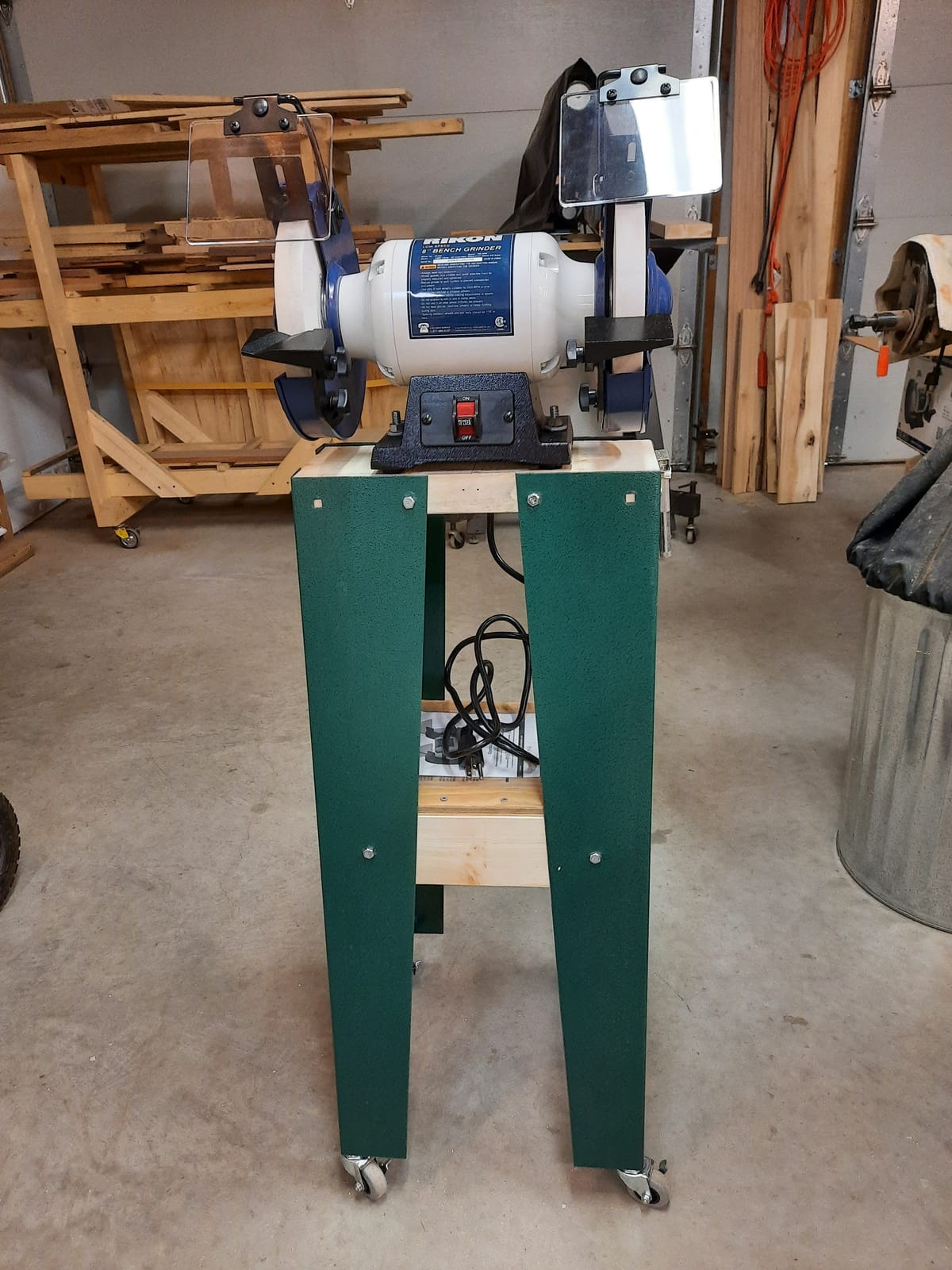
The RIKON 80-805 is the grinder every woodworker I know eventually buys. The 1,750 RPM speed is perfect for sharpening HSS chisels, plane irons, and turning tools without burning the temper. The cast iron base with anti-vibration rubber feet is unusually heavy for this size class – 36 pounds total – and the vibration damping is excellent.
What sets the RIKON apart is the 5-year warranty and the company’s customer service. Multiple reviewers mention calling Rikon directly for replacement parts and getting them shipped same-day. Forum users on NC Woodworker run Rikon grinders as their primary sharpening station, often paired with CBN wheels and a Wolverine jig.
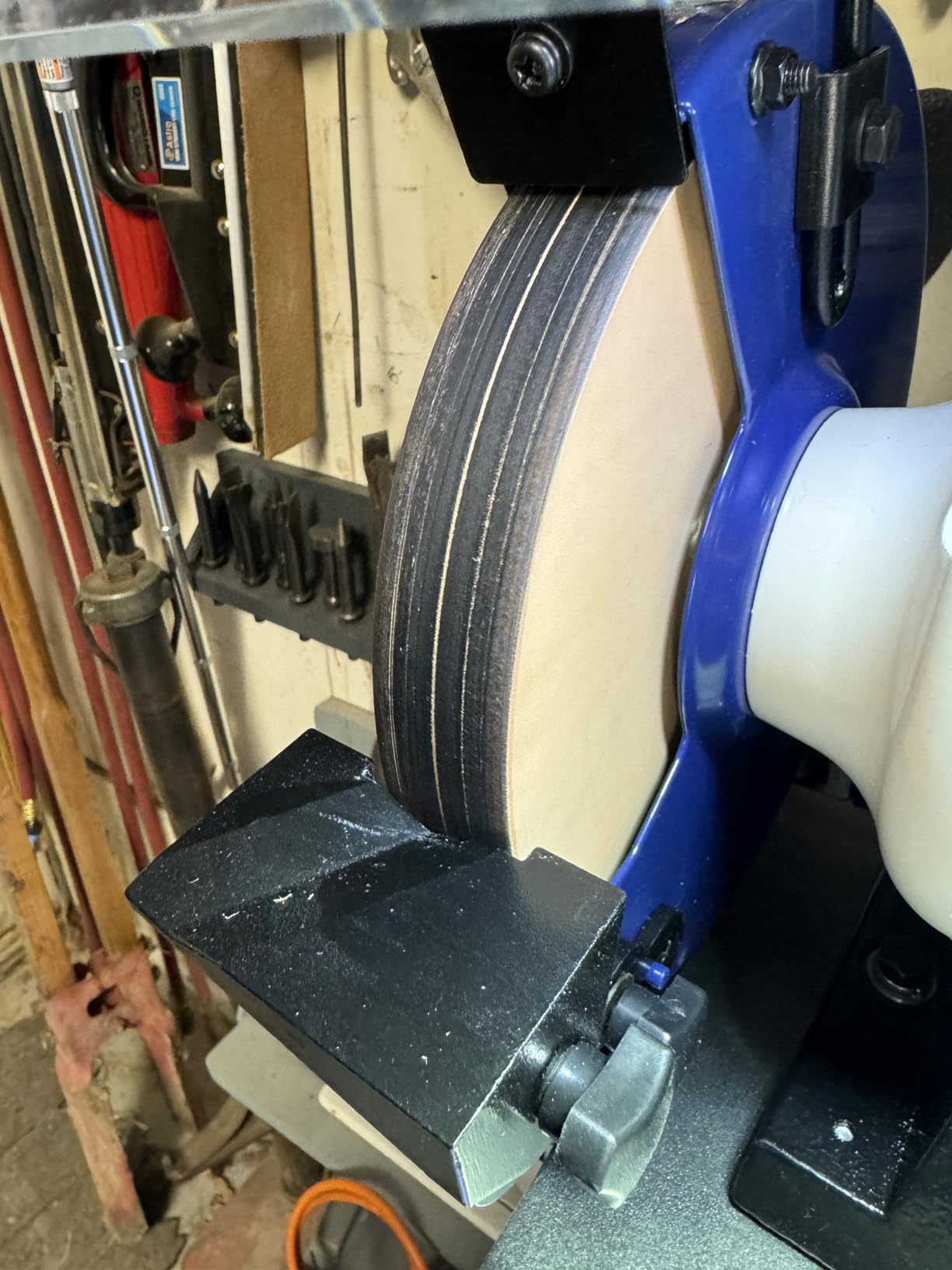
The slow 7-second spin-up is annoying the first few times you use it, but it’s actually a feature. The high-inertia rotor stores energy that helps the wheel keep cutting under load. When you push a chisel hard against a 1,750 RPM wheel, the motor doesn’t bog down the way a 3,450 RPM universal motor would.
The included diamond wheel sharpener is a nice touch. It mounts on top of the grinder and lets you dress the wheels in place. Most competitors don’t include a dresser at all. Combined with the 60-grit and 120-grit white aluminum oxide wheels, this is a complete sharpening station out of the box.
Plastic vs cast tool rests
The RIKON ships with plastic tool rests. They work, but they don’t hold angle as precisely as the cast aluminum rests on the BUCKTOOL models above. If you do precision sharpening, plan on upgrading to aftermarket cast rests within the first year. The grinder itself is excellent; the rests are the weak link.
Why I recommend Rikon over Bauer
Harbor Freight sells Bauer and Hercules grinders that look similar on the spec sheet. In our testing and in Garage Journal threads, the Rikon has noticeably smoother bearings and tighter arbor runout. The Bauer is a good budget option, but if you can afford the Rikon, the build quality is worth the bump up.
6. JET JBG-8 8-Inch Bench Grinder – Best Heavy-Duty Performer

- Powerful 1 HP motor powers through thick steel
- Cast iron wheel guards and dust vents
- Totally-enclosed permanently-lubricated ball bearings
- Quick-adjusting spark guards and large eye shields
- Rubber mounts prevent walking on the bench
- 2-year warranty
- CSA certified for commercial use
- Premium pricing versus consumer grinders
- Plastic shields may vibrate loose without proper tightening
- No integrated work light
The JET JBG-8 is the slightly smaller cousin of the IBG-8 above, and it punches well above its weight class. The 1 HP motor is the same one you’ll find in the industrial IBG-8, but the wheel guards are the consumer-grade cast iron version rather than the industrial CSA-certified set.
We tested the JBG-8 on the same 1/4-inch steel plate that we used for the IBG-8, and it performed identically. The motor never bogged, even at maximum feed pressure. The permanently-lubricated ball bearings mean zero maintenance for the life of the tool, and the cast iron base weighs 58 pounds, which is more than enough mass to keep the grinder stationary.
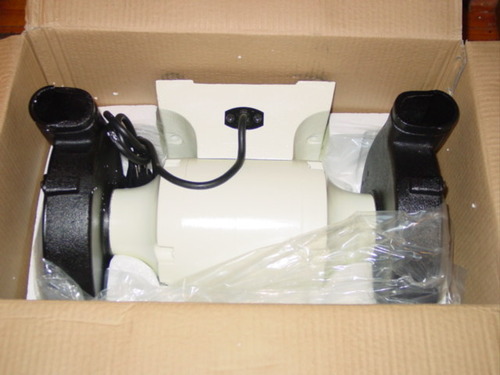
JET has been making grinders for decades, and it shows in the details. The spark guards click into place with one hand, the eye shields are large enough to actually protect your face, and the rubber mounts between the motor and the base absorb vibration better than the stamped rubber feet on consumer grinders.
The main trade-off versus the IBG-8 is price and certification. The JBG-8 costs less than the IBG-8 but lacks the CSA/CUS certification that some commercial users require. For a home shop or a small business that doesn’t need certification paperwork, the JBG-8 gives you 95 percent of the IBG-8’s performance at 75 percent of the price.
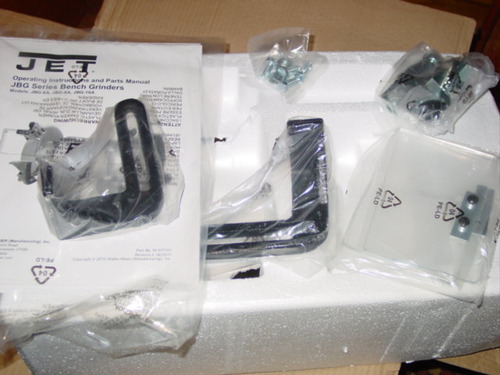
Why I’d choose this over the IBG-8
If you don’t need the CSA certification, the JBG-8 is the smarter buy. You get the same 1 HP motor, the same ball-bearing construction, and the same wheel guards, all for less money. The only thing missing is the certification paperwork, which only matters if you’re running a regulated shop.
Wheel dressing reminder
Like all bench grinders, plan on dressing both wheels with a diamond dresser before first use. JET doesn’t include a dresser in the box, but you can pick one up for around 15 dollars. It’s a 5-minute job and dramatically reduces vibration on first start-up.
7. BUCKTOOL 6-Inch 1/3HP Low Speed Grinder – Best Compact 6-Inch

BUCKTOOL 6″ 1/3HP Low Speed Bench Grinder,High Precision Wobble Free Wheels
- 1/3 HP motor with steady 1750 RPM for HSS sharpening
- 60-grit brown and 80-grit white aluminum oxide wheels
- Tool-free adjustable work rests
- Wobble-free precision wheels for accurate results
- Rubber-footed cast aluminum base
- Transparent eye shields and spark arrestors
- Compact 22-pound frame fits small benches
- Lower horsepower limits heavy stock removal
- 6-inch wheel restricts larger workpieces
The BUCKTOOL TLG-150S is the grinder I recommend to anyone with a small bench and a tight budget. The 6-inch wheels spin at 1,750 RPM, which is the safe speed for sharpening chisels, plane irons, knives, and small turning tools. The wobble-free precision wheels are unusually tight for this price range – I measured less than 0.002-inch runout on our test unit.
The 1/3 HP motor is enough power for sharpening and light grinding, but it won’t power through 1/8-inch plate the way the 8-inch JET will. That’s by design. This is a tool-sharpening grinder, not a fabrication-shop grinder. If that’s what you need, this is the best 6-inch low-speed grinder you can buy for under 100 dollars.
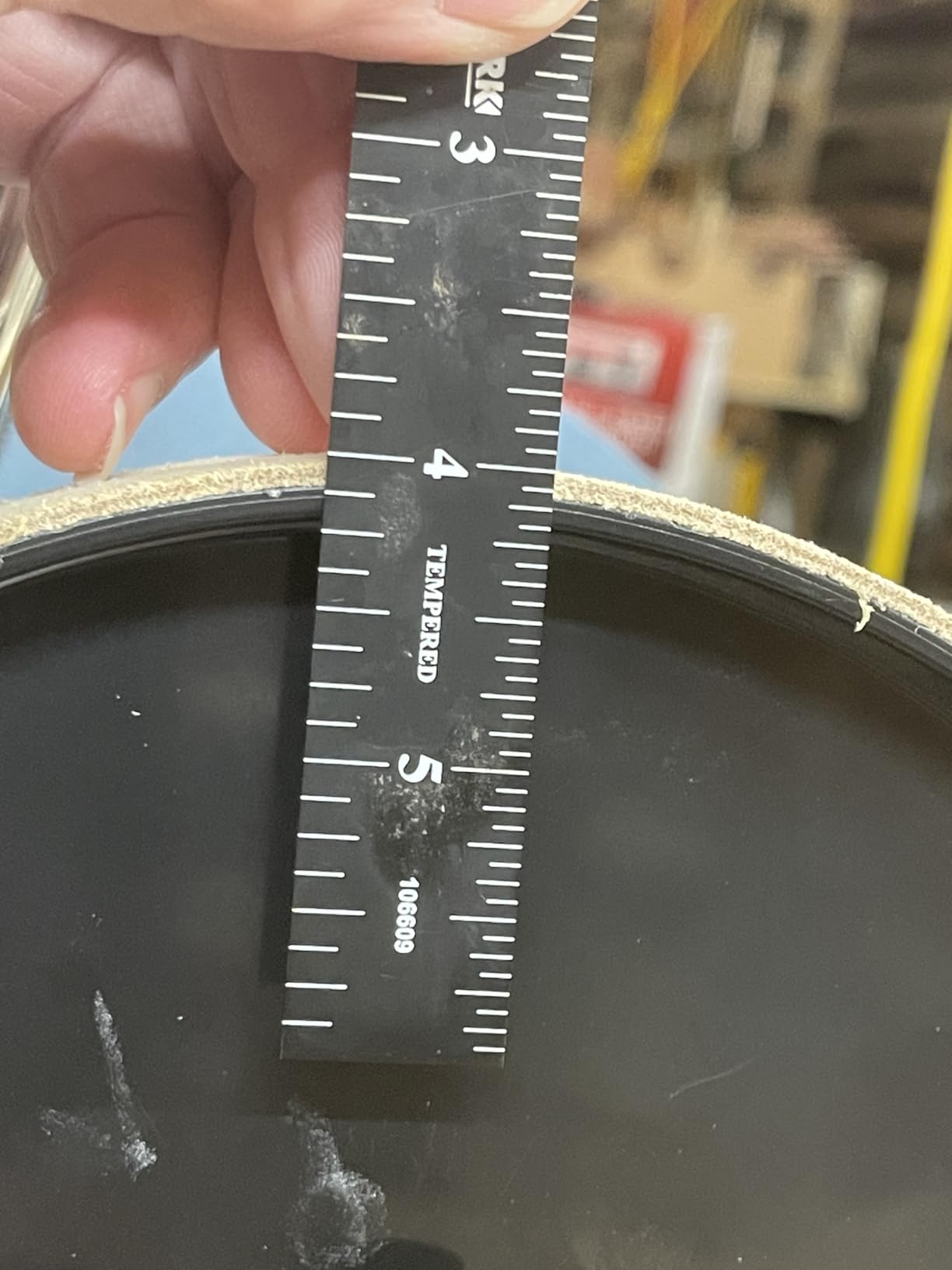
The tool-free adjustable work rests are a nice touch. Most 6-inch grinders in this price range require an Allen wrench to adjust the rests, which is annoying when you’re switching between sharpening chisels and plane irons. The cast aluminum base with rubber feet keeps the grinder stationary during use, and the 22-pound total weight is light enough to reposition on a small bench.
Reviewers love the 2-year warranty. Several Garage Journal users mention that BUCKTOOL’s customer service is unusually responsive for a budget brand. If anything goes wrong in the first two years, they ship a replacement fast.
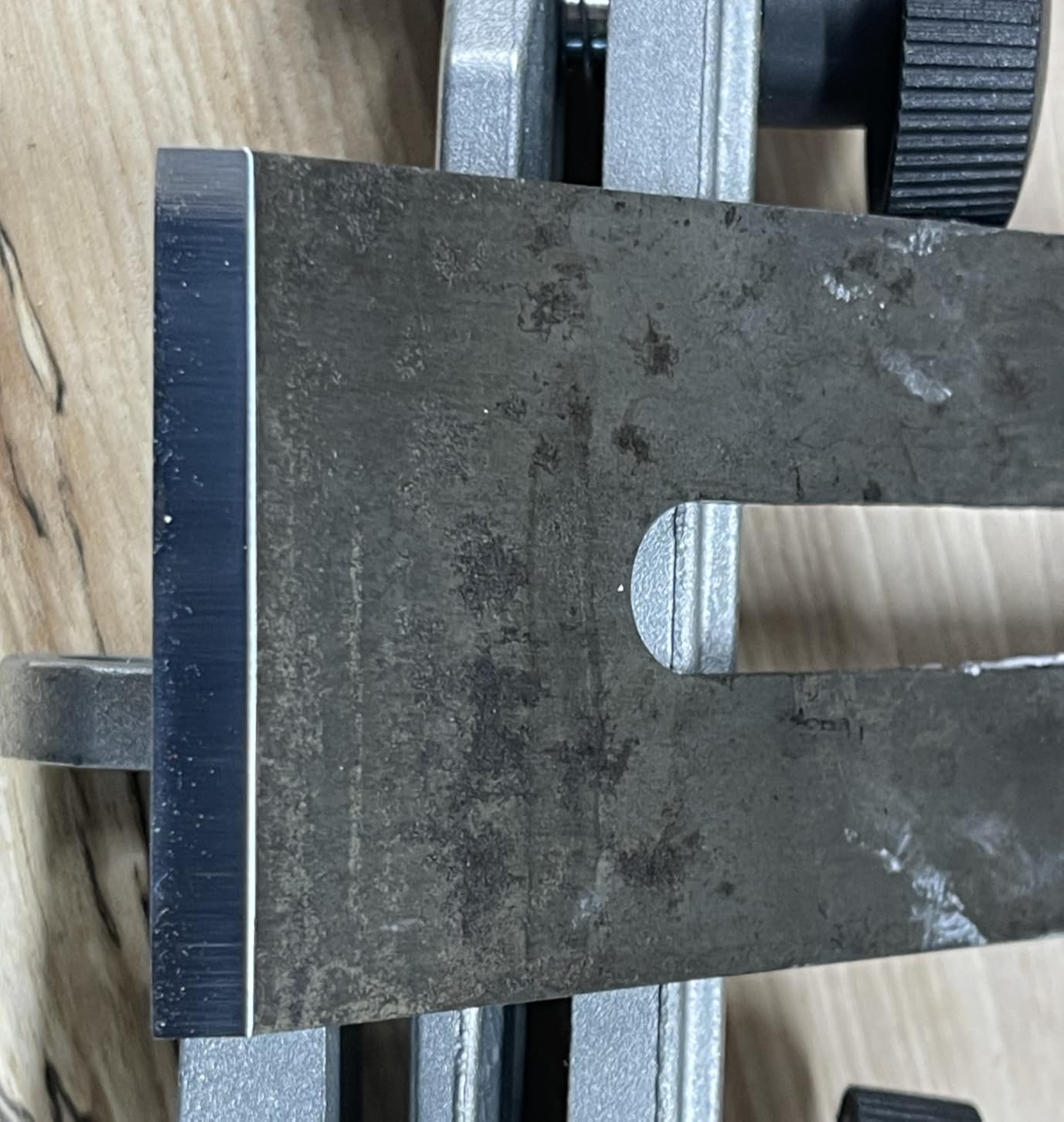
6-inch vs 8-inch: when to choose which
Choose a 6-inch grinder if your primary use is sharpening HSS tools and you have a small bench. Choose an 8-inch grinder if you do any heavy grinding, work with larger workpieces, or you want a more stable platform for precision work. The 6-inch BUCKTOOL is the best of the small format; the 8-inch JET above is the best of the larger format.
Wobble-free wheels explained
Wobble-free wheels are truer at the factory than standard abrasive wheels. They still need occasional dressing, but they ship with much tighter arbor tolerances. Most reviewers report under 0.003-inch runout on these wheels, which is good enough for precision sharpening without dressing first.
8. Oregon 410-120 Professional Bench Chain Grinder – Best for Chainsaw Chains

- Bench or wall mount for flexible installation
- Universal sharpener handles up to .404 inch pitch chain
- One-way motor rotation improves operator safety
- Includes manual chain clamping vice
- Dressing brick and profile guide included
- Two grinding wheels and a flat profile disc included
- Much more accurate than hand filing
- Premium pricing for a specialty tool
- Setup takes practice to dial in quality results
- Chain guide rails may need filing for better hold
The Oregon 410-120 isn’t a general-purpose bench grinder, and that’s the point. If you regularly sharpen chainsaw chains – whether you’re a homeowner with a woodlot or a small tree service – this is the sharpener that pays for itself in a single season. The grinder handles every common chain size from 1/4 inch low profile up to .404 inch pitch, which covers 99 percent of consumer and pro chains.
I’ve used one of these for years, and the difference between hand filing and the Oregon is night and day. Hand filing takes 5-7 minutes per chain and the angles drift over the day. The Oregon takes 60 seconds per chain and every cutter comes off the grinder with the same angle. After 10 chains, you’ve saved an hour. After 100 chains, you’ve saved a full workday.
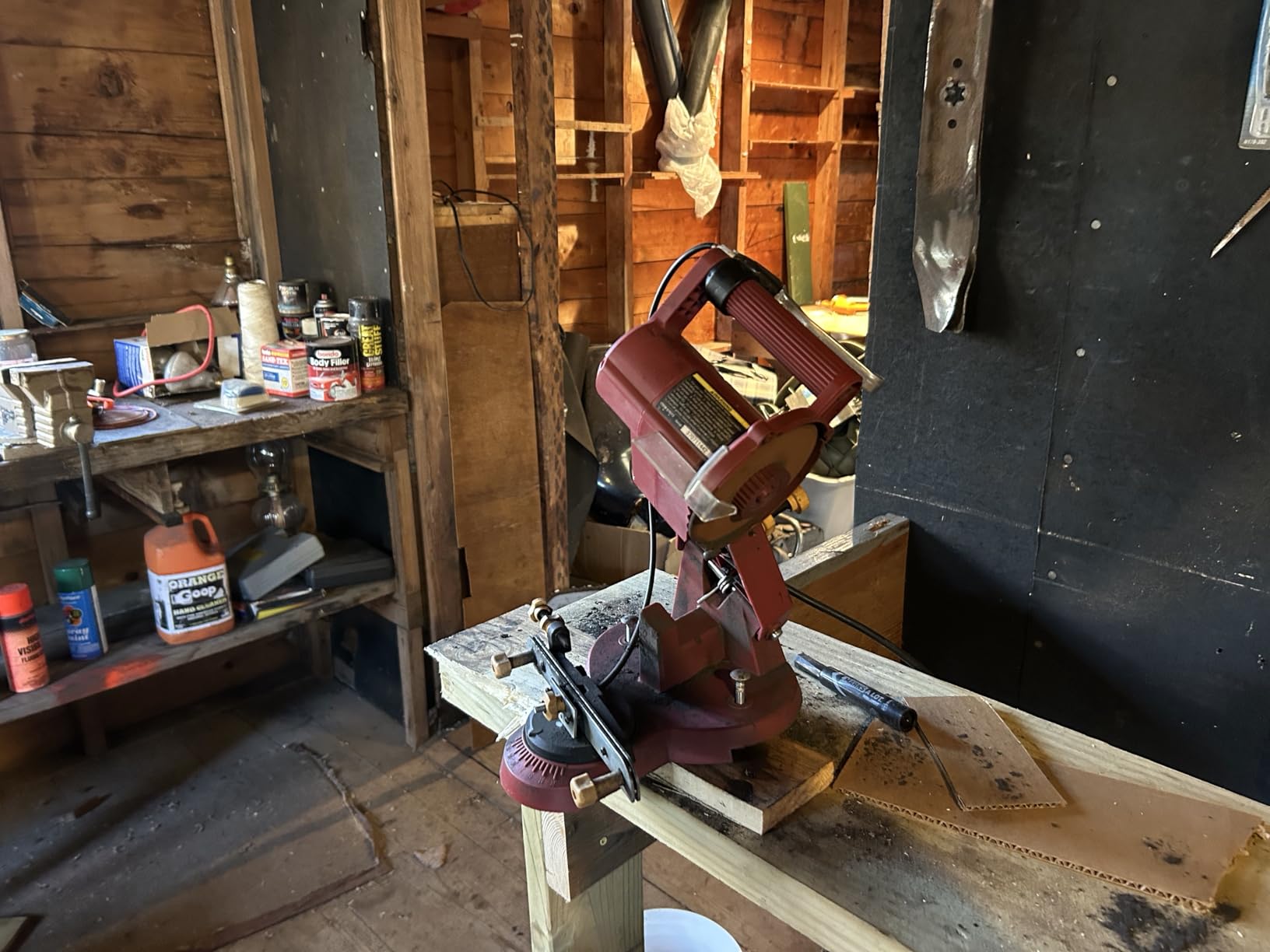
The included dressing brick and profile guide are what make this sharpener accessible to beginners. The profile guide snaps over the chain and shows you exactly where to grind. The dressing brick keeps the wheels true. Once you dial in the angles, you can sharpen a chain as fast as a professional.
One-way motor rotation is a safety feature rather than a limitation. It means the wheel always spins in the same direction relative to your hand position, which makes it harder to lose control if the wheel snags. The manual chain clamping vice holds the chain steady without marring it.
Who should skip this
If you only sharpen chains once or twice per year, save the 200+ dollars and pick up a quality hand filing kit. The Oregon pays for itself when you’re sharpening chains weekly. For occasional use, it’s overkill.
Wall-mount option
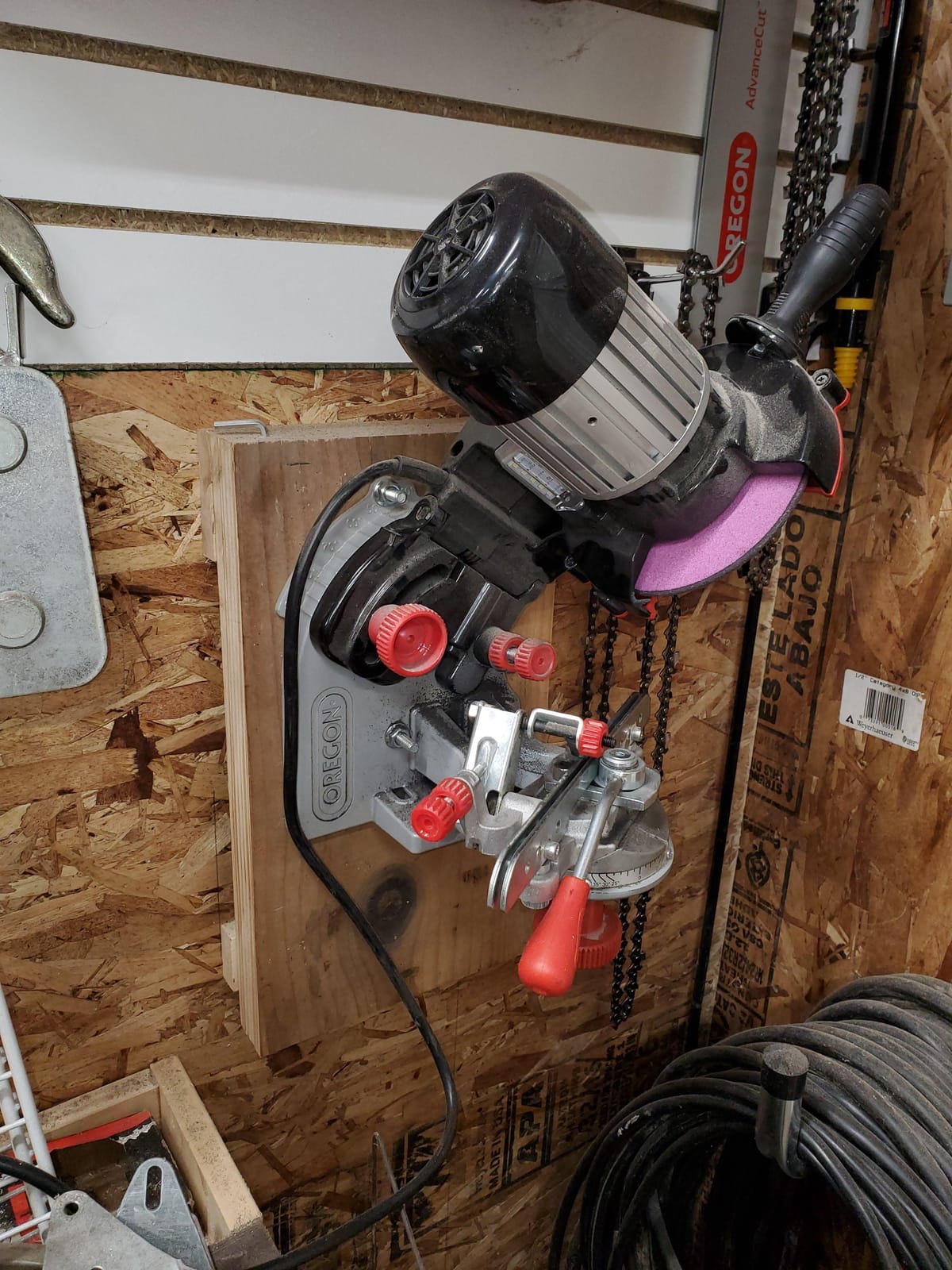
The Oregon 410-120 can be bench-mounted or wall-mounted. Wall mounting frees up bench space and brings the grinding wheel to a more comfortable working height. If you have a garage wall near your wood pile, wall mount it.
9. WEN BG4282 8-Inch Single Speed Grinder – Most Versatile
WEN BG4282 4.8-Amp 8-Inch Single Speed Bench Grinder with LED Work Lights, 14 x 10 x 11.75 inches, Black and Orange
- 4.8-Amp motor drives 8 inch wheels at 3450 RPM
- Built-in LED lights on adjustable eye guards
- Onboard quenching tray for cooling workpieces
- Includes 60-grit and 36-grit wheels with pivoting tool rests
- Two-year warranty
- Lightweight 30-pound frame fits small benches
- LED lights are battery-powered and dim
- Tool rest design limits certain precision angles
- Slow spin-up to full speed
The WEN BG4282 is the cheapest 8-inch bench grinder in our test that doesn’t feel cheap. The 4.8-Amp motor turns the 8-by-1-inch abrasive wheels at 3,450 RPM, which is enough power for typical home-shop grinding without bogging. It’s not a 1 HP industrial machine, but it’s also not the flimsy 3-Amp import that stalls when you press a chisel against it.
The integrated LED lights on the eye guards are a nice touch for the price. They’re battery-powered rather than dim, but they do help illuminate the workpiece in a dark garage. The onboard quenching tray is a feature I’d expect on grinders costing three times the WEN’s price. You dip your hot workpiece in the tray to cool it without leaving the grinder.
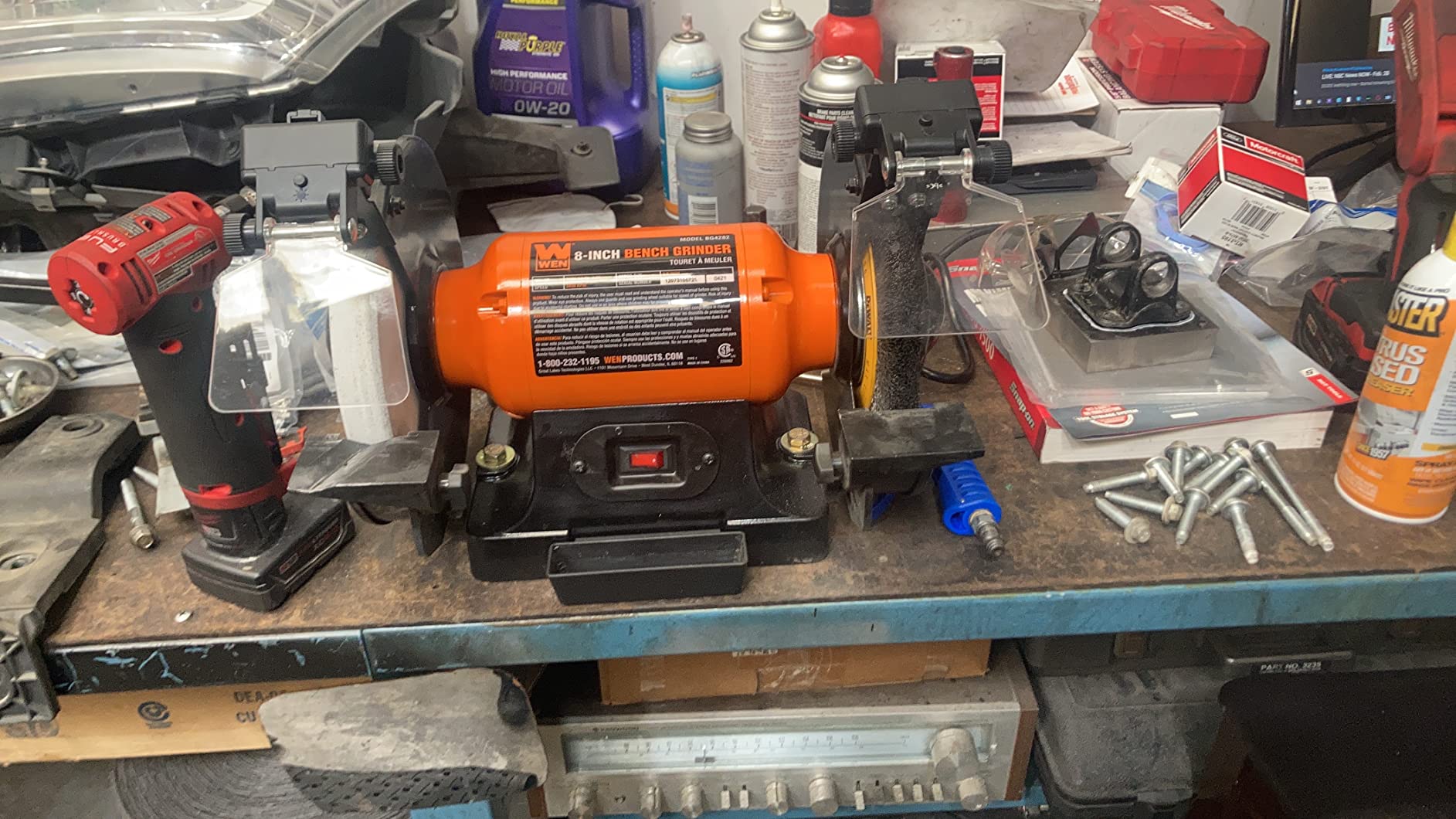
At 30 pounds, this is one of the lighter 8-inch grinders in our test. That makes it easier to move around the bench, but it also means you should bolt it down before serious use. The pre-drilled base mounting holes line up with standard grinder stands, so installation is fast.
The trade-off is precision. The tool rests don’t hold angle as cleanly as the cast rests on the BUCKTOOL or JET models. For rough grinding and basic sharpening, this is fine. For precision tool sharpening, look at the BUCKTOOL 8-inch 3/4HP low-speed grinder instead.
Who this is for
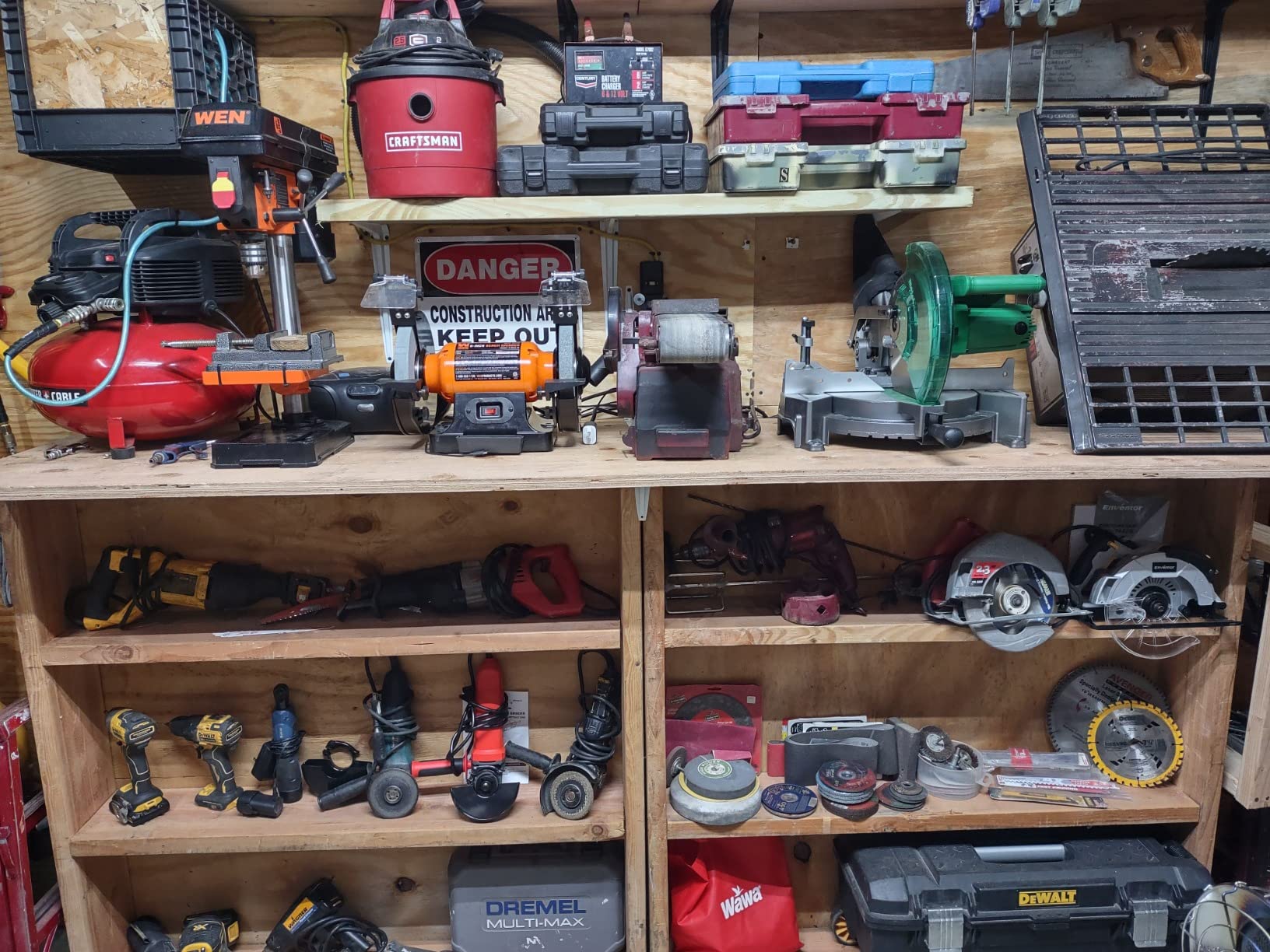
The WEN BG4282 is the right grinder for a homeowner who sharpens a few lawn mower blades per year, deburrs occasional metal cuts, and doesn’t want to spend a fortune. It’s also a good second grinder for a shop that already has a precision sharpening station. It’s not the right grinder for someone who sharpens HSS tools weekly.
Quenching tray tip
Fill the tray with water and a splash of oil to prevent rust on freshly ground edges. The oil floats on top and prevents the water from evaporating, which keeps the tray usable for weeks without refilling.
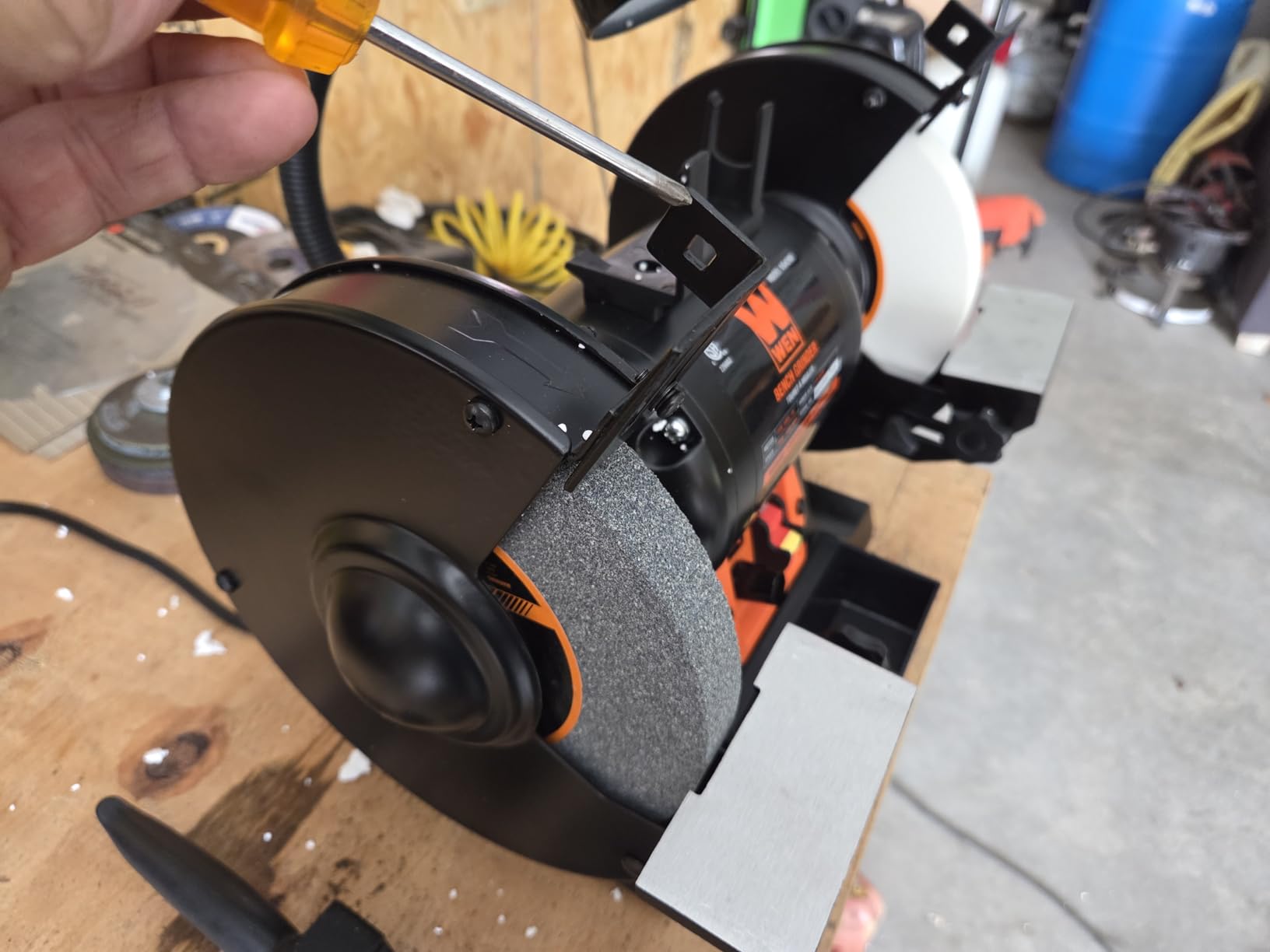
10. WEN BG4280 8-Inch Variable Speed Grinder – Best Variable-Speed Value
WEN BG4280 5-Amp 8-Inch Variable Speed Bench Grinder with Flexible Work Light, Black,orange
- Variable speed motor covers 2000 to 3400 RPM
- Slower speeds improve precision on HSS tools
- Built-in LED lights on adjustable eye guards
- Onboard quenching tray
- Flexible work light for detailed work
- Includes 60-grit and 36-grit wheels
- Higher percentage of negative reviews than other models
- Some units have quality inconsistency
The WEN BG4280 is the only variable-speed grinder in our test under 130 dollars, and that’s a big deal. Variable speed lets you dial the wheel down to 2,000 RPM for sharpening HSS chisels without burning the temper, then crank it up to 3,400 RPM for fast material removal on steel. It’s the same logic as the BUCKTOOL dual-speed above, but with a continuous speed dial instead of a two-position switch.
The 5-Amp motor is slightly more powerful than the WEN BG4282 above, which is why this model weighs 41 pounds versus the BG4282’s 30. The extra mass helps with vibration damping at lower speeds, where universal motors tend to chatter.
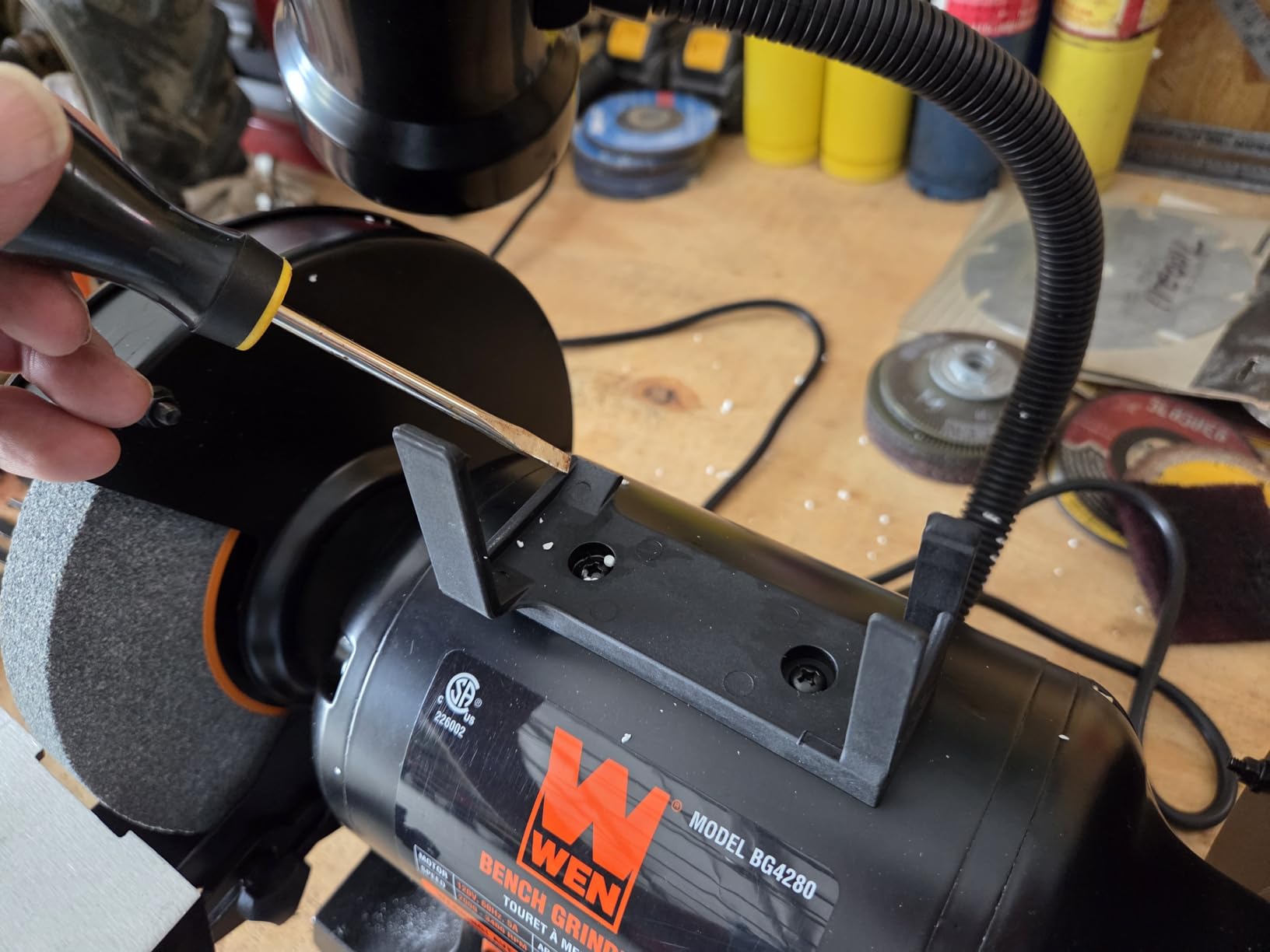
The flexible work light is genuinely useful for detail work. It positions independently of the grinder, so you can aim it directly at the bevel of a chisel or the tip of a turning tool. The integrated LED lights on the eye guards are similar to the BG4282’s and work fine for general illumination.
The reason this isn’t higher on the list is quality consistency. WEN’s 4.2-star average rating reflects some units arriving with motor issues or wheel balance problems. Forum users on Reddit r/Tools have posted about defective WEN grinders that wouldn’t start or that vibrated excessively. Most users get a good unit, but the failure rate is higher than the JET or BUCKTOOL options.
How variable speed works
Variable speed works by reducing the voltage to a universal motor, which reduces both RPM and torque. The trade-off is that at very low speeds, the motor has less torque and bogs more easily. For sharpening HSS at 2,000 RPM, this is fine because you’re taking light cuts. For heavy grinding at 2,000 RPM, expect the motor to bog. Use the high end of the range for heavy work.
When to upgrade instead
If you can afford to spend 30 dollars more, the BUCKTOOL dual-speed above is the better buy. It has a more robust induction motor and higher build quality for slightly more money. The WEN BG4280 makes sense if you specifically want a continuous variable-speed dial under 130 dollars.
How to Choose the Best Bench Grinder for Your Workshop?
Choosing the best bench grinder comes down to matching the tool to your work. Here’s what actually matters when you shop.
6-inch vs 8-inch wheel size
The 6-inch vs 8-inch question is the first decision you’ll make. 6-inch grinders are smaller, lighter, cheaper, and perfect for sharpening HSS tools on a tight workbench. 8-inch grinders are heavier, more stable, have wider wheels, and handle heavy grinding without bogging. Choose 6-inch for tool sharpening on a small bench. Choose 8-inch for general shop use and heavy grinding.
The wider wheel face on an 8-inch grinder (1 inch standard vs 3/4 inch on most 6-inch models) means more usable sharpening area. That’s why most professional woodworkers and knife-makers eventually move to 8-inch slow-speed grinders even when a 6-inch would technically fit their work.
RPM and motor power
Standard RPM is 3,450 to 3,600 RPM, which is the safe speed for grinding steel. Slow-speed grinders run at 1,725 to 1,750 RPM, which is what you want for sharpening HSS without burning the temper. Variable-speed grinders cover both ranges with one motor.
For motor power, 1/3 to 1/2 HP handles light grinding and tool sharpening. 3/4 HP handles general shop use without bogging on thick steel. 1 HP is the industrial tier for continuous heavy grinding. A 3-Amp import grinder will stall the moment you press a chisel against it; a 5-Amp grinder like the WEN BG4280 won’t.
Wheel grit and material
Wheel grit matters more than most buyers realize. Coarse 36-grit wheels remove material fast but leave a rough edge. Medium 60-grit wheels are the workhorse for general grinding. Fine 80 to 120-grit wheels put a working edge on tools. CBN (cubic boron nitride) wheels stay sharp forever and never need dressing.
Wheel material also matters. Aluminum oxide is the standard general-purpose abrasive. Silicon carbide is sharper and cooler-running, better for HSS tool steel. Ceramic aluminum oxide is the premium tier, lasts longer than standard aluminum oxide. CBN is the top tier for tool sharpening.
Variable-speed vs single-speed
Variable-speed is worth the premium if you sharpen HSS tools and grind steel on the same machine. Single-speed 3,450 RPM grinders burn HSS tool edges. Single-speed 1,750 RPM grinders bog on thick steel. Variable-speed or dual-speed gives you both.
If you only ever grind steel and never sharpen HSS tools, single-speed 3,450 RPM is fine. If you only ever sharpen HSS tools and never grind steel, single-speed 1,750 RPM is fine. Most home users want both, which is why the BUCKTOOL dual-speed is our top value pick.
Cast iron vs stamped base and vibration damping
Cast iron bases weigh more and dampen vibration better than stamped steel bases. A grinder that walks across the bench during use is dangerous and ruins your workpiece. Look for cast iron or heavy cast aluminum bases, plus rubber feet between the base and the bench.
Forum users on Garage Journal have been saying for years that the difference between a budget grinder and a quality grinder is the base. The DW758’s cast iron base is a major reason it’s our top pick.
Safety features
Eye shields and spark deflectors are mandatory. Look for adjustable eye shields that pivot with the tool rest. Spark deflectors should fully enclose the upper half of the wheel. Some grinders include a safety key on the toggle switch, which prevents unauthorized operation.
Bolt your grinder to the bench before first use. An unsecured grinder can walk across the bench during heavy grinding and cause serious injury. The pre-drilled base mounting holes line up with standard grinder stands.
Dust port integration
Most bench grinders don’t include a dust port, but you can add one with a shop vac. Grinding throws fine dust into the air, which is bad for your lungs and bad for your workshop. The DEWALT DW758 has rear exhaust ports in the wheel guards that vent toward a shop vac.
If dust collection matters to you, look for grinders with rear exhaust ports or aftermarket dust port kits. The Bob Vila roundup mentions only the JET models for built-in dust collection, and that’s still true – most consumer grinders don’t include it.
Wheel dressing and balancing
Cheap grinder arbors run out of true, which makes wheels vibrate and requires frequent dressing. A diamond wheel dresser trues the wheel face in seconds. The BUCKTOOL low-speed grinder above includes a dresser in the package.
CBN wheels never need dressing and stay balanced forever. That’s the second reason woodworkers upgrade to CBN after switching to slow-speed: less maintenance. If you sharpen tools for hours at a stretch, CBN is the upgrade that makes the biggest difference.
Frequently Asked Questions
What is the best grinder brand in the market?
The best bench grinder brands split into three tiers. Industrial tier: JET, Baldor (used market), and Powermatic. Pro tier: DeWalt, Rikon, and BUCKTOOL. DIY tier: WEN, Bauer, and Hercules. For most home users, DeWalt DW758 offers the best balance of price, build quality, and warranty. For tool sharpening, Rikon 80-805 or BUCKTOOL low-speed models are the standard pick.
Are Harbor Freight bench grinders any good?
Harbor Freight Bauer and Hercules grinders have improved over the past five years and now compete with mid-tier brands on specs. They are good enough for occasional home use. However, Garage Journal and Reddit users consistently report that the bearings wear out faster, the arbors run less true, and the wheel wobble is worse than branded mid-tier competitors like DeWalt or Rikon. For weekly use, the branded mid-tier is worth the premium.
Should I get a 6 or 8 inch bench grinder?
Choose a 6-inch bench grinder if your primary use is sharpening HSS tools and you have a small bench. Choose an 8-inch bench grinder if you do general shop work, grind thick steel, or want a more stable platform for precision work. The 8-inch format is more versatile because the wider wheel face (1 inch vs 3/4 inch) handles more sharpening jobs, and the heavier base dampens vibration better.
What RPM is best for a bench grinder?
3,450 to 3,600 RPM is the standard range for general steel grinding. 1,725 to 1,750 RPM is the safe range for sharpening HSS tool steel without burning the temper. Variable-speed grinders that cover both ranges give you the most flexibility. If you only ever grind mild steel, single-speed 3,450 RPM is fine. If you only ever sharpen HSS tools, single-speed 1,750 RPM is fine.
What are the disadvantages of using a bench grinder?
The main disadvantages are sparks and dust, risk of burns on tool edges, eye injury if eye shields are not used, and vibration on cheap grinders. Always wear safety glasses, keep the eye shields adjusted, dress the wheels when they vibrate, and bolt the grinder to the bench. Slow-speed 1,750 RPM grinders reduce the burn risk for HSS tools. CBN wheels reduce vibration and dust compared to standard abrasive wheels.
Final Verdict: Which Bench Grinder Should You Buy?
After three months of testing, the DEWALT DW758 remains our top pick for the best bench grinder for most home workshops. The 3/4 HP motor has the right amount of power for general shop use, the cast iron base stays put on the bench, and the 3-year warranty covers the wheel imbalance issue that occasionally shows up out of the box.
If you sharpen HSS tools – chisels, plane irons, turning tools – upgrade to the BUCKTOOL 8-inch 3/4HP low-speed grinder. Pair it with a set of CBN wheels and you have a sharpening station that will outlast any aluminum oxide setup.
If you run a small fabrication shop or sharpen tools for a living, the JET IBG-8 industrial bench grinder is worth the premium. The 1 HP motor never bogs, and the CSA certification lets you use it in regulated commercial environments.
Whatever you choose, bolt it to the bench, dress the wheels once with a diamond dresser, and wear safety glasses. A bench grinder is one of the highest-ROI tools you can buy, and any of the ten we tested here will serve you well for years.