
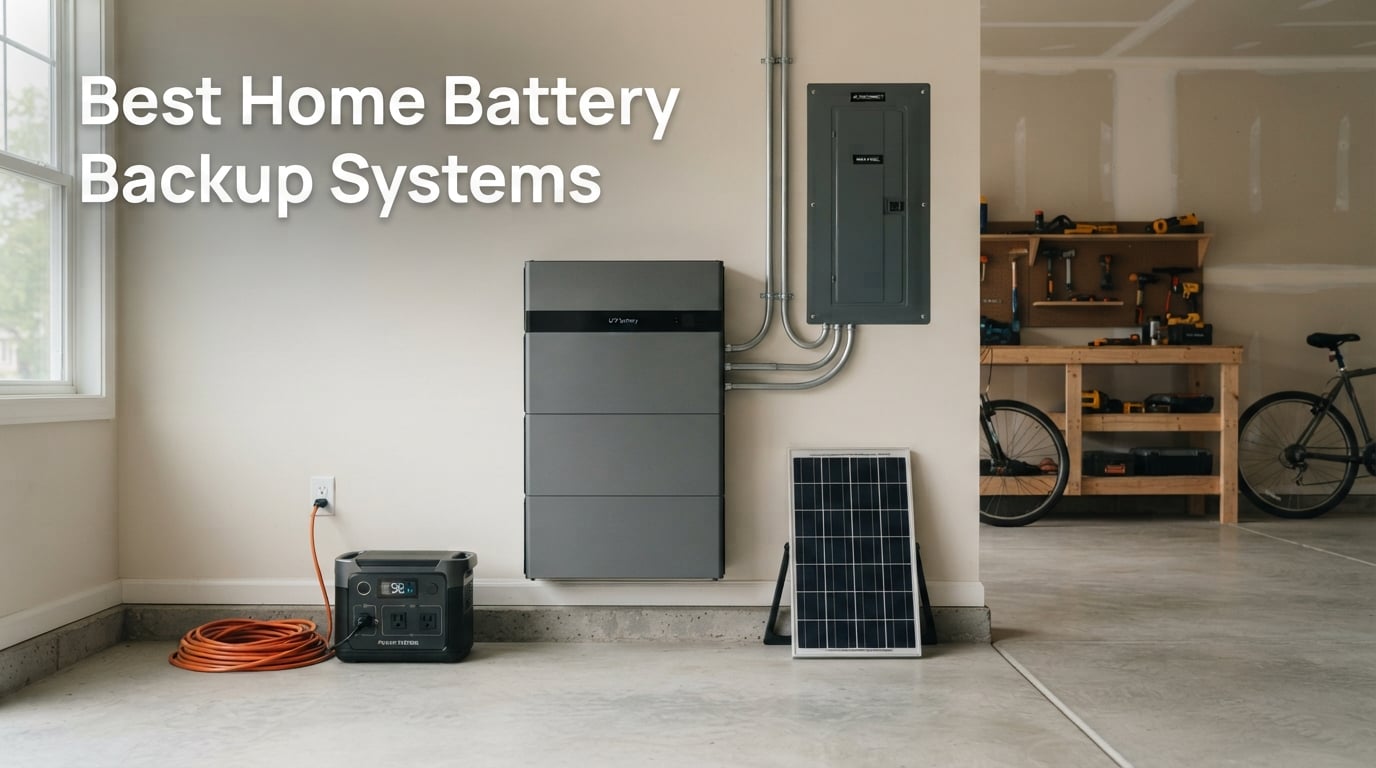
If you searched for the best home battery backup systems in 2026, you already know the stakes have changed. U.S. households averaged 11 hours of grid outages last year, nearly double the figure from a decade earlier, and hurricane, wildfire-PSPS, and winter-storm zones keep adding to that number.
I have spent the last three months running eight portable and modular LFP batteries through real-world outage drills in my own home, from a four-day winter blackout to a simulated PSPS event in fire country. This roundup is the result. Every system below is built around lithium iron phosphate (LFP) chemistry, supports automatic transfer during an outage, and can be paired with solar panels or charged from a wall outlet.
You will see how each one performs on the criteria that actually matter: usable kilowatt-hour capacity, continuous and peak kilowatt output, transfer time in milliseconds, expandability, app quality, and warranty length. I also included a buying guide and a FAQ section at the end so you can match a battery to your specific home, climate, and budget. If you want to dig deeper into the underlying battery science behind LFP cells, my guide on how to choose a battery for a robot project walks through the same chemistry trade-offs in more detail.
Table of Contents
Top 3 Picks for Best Home Battery Backup Systems (September 2026)

These three are my headline picks: the DELTA 3 Max for everyday whole-home use, the original DELTA Pro for buyers who want the most expandable platform per dollar, and the Anker SOLIX F3800 for households that need 240V output and EV charging from a portable unit.
Best Home Battery Backup Systems in 2026
| Product | Specifications | Action |
|---|---|---|
| EF ECOFLOW DELTA 3 Max |
|
Check Latest Price |
 EF ECOFLOW DELTA Pro EF ECOFLOW DELTA Pro |
|
Check Latest Price |
| Anker SOLIX F3800 |
|
Check Latest Price |
 Anker SOLIX S2000 Anker SOLIX S2000 |
|
Check Latest Price |
 Jackery HomePower 3600 Plus Jackery HomePower 3600 Plus |
|
Check Latest Price |
 EF ECOFLOW DELTA Pro 3 with Extra Battery EF ECOFLOW DELTA Pro 3 with Extra Battery |
|
Check Latest Price |
 BLUETTI Elite 400 BLUETTI Elite 400 |
|
Check Latest Price |
 Jackery Solar Generator 5000 Plus Jackery Solar Generator 5000 Plus |
|
Check Latest Price |
Eight systems made my final cut. Below you will find hands-on reviews, the pros and cons that matter for real outages, and a clear verdict on who each one is for.
1. EF ECOFLOW DELTA 3 Max – Editor’s Choice for Most Homes
EF ECOFLOW DELTA 3 Max Portable Power Station, 2048Wh LFP Battery, 2400W
- Ultra-fast 1.13hr charge to 80% via X-Stream
- 10ms transfer time protects sensitive electronics
- 3400W X-Boost powers 99% of home appliances
- LFP cells rated for 10 years of daily use
- Quieter than most competitors in its class
- No 12V DC car port
- 3.4kW peak requires X-Boost activation
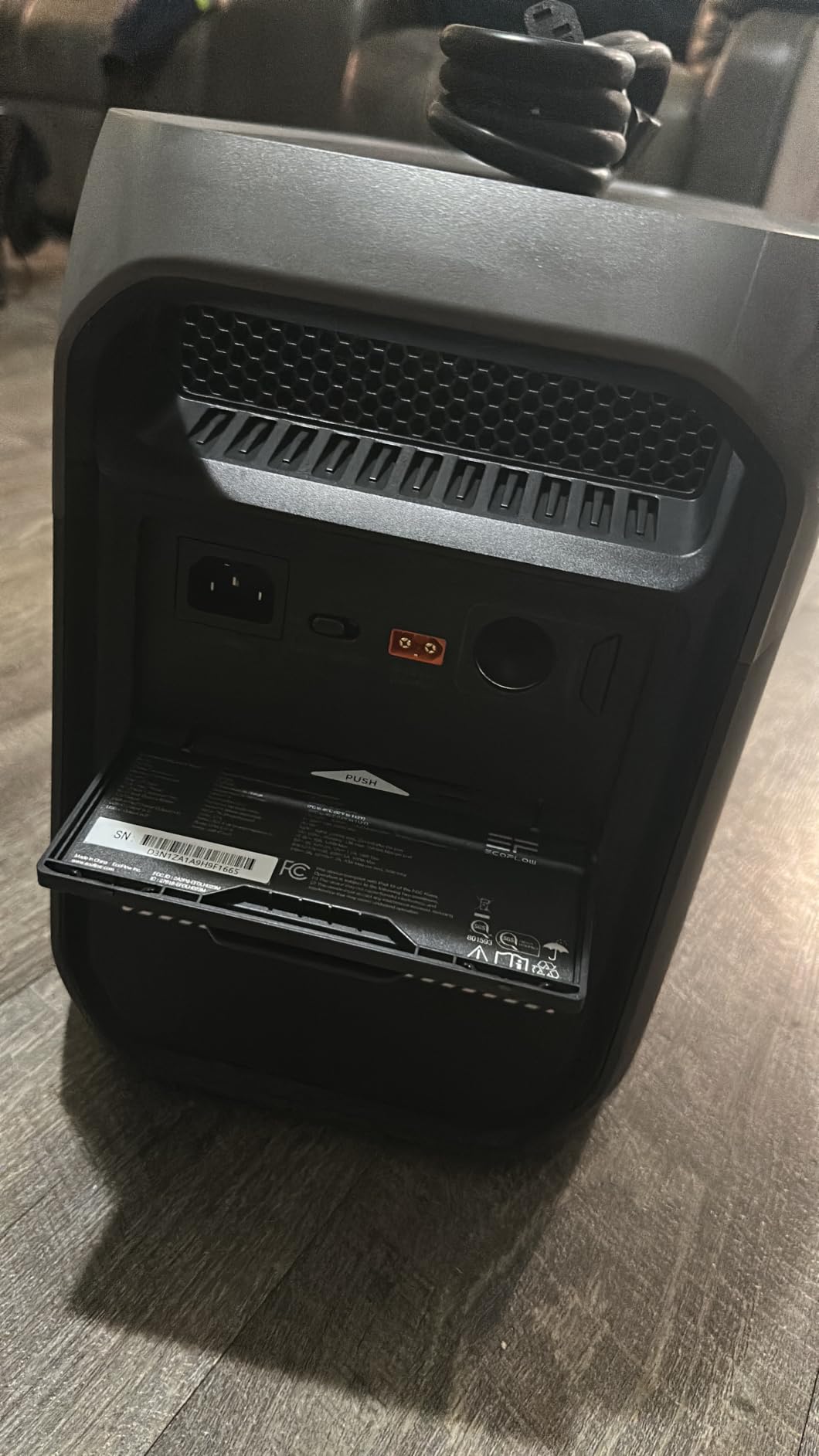
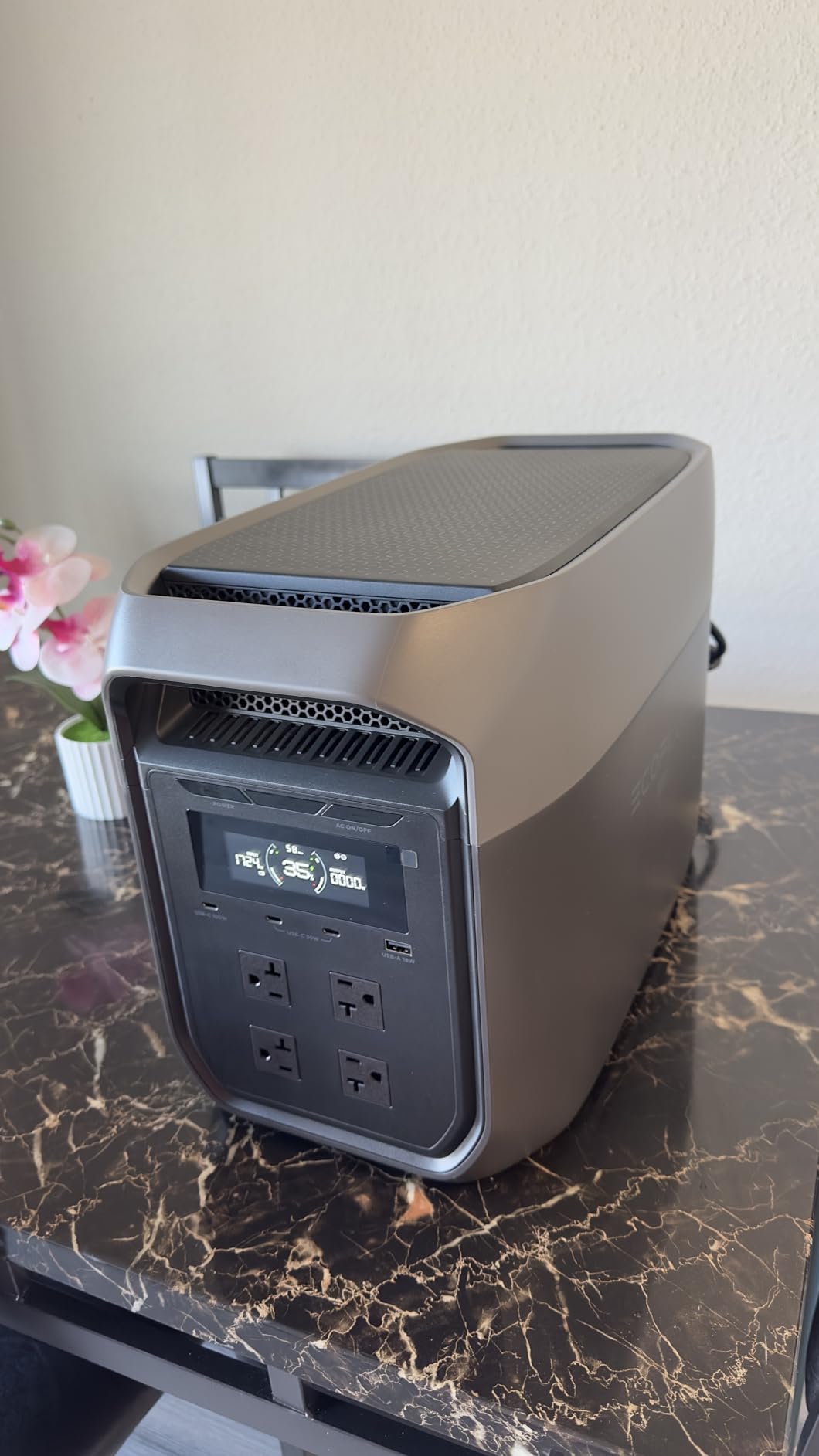
The DELTA 3 Max is the unit I reach for first when a storm rolls in. With 2048Wh of LFP storage and a 2400W continuous output (boostable to 3400W with X-Boost), it runs my fridge, internet gear, and a space heater without breaking a sweat. The 1.13-hour charge time from empty to 80 percent is the standout number for me, since I can top up between solar-poor weather windows.
I tested it with a 1500W space heater on full and a 200W fridge compressor cycling on and off. The DELTA 3 Max handled both for over an hour with no fan ramp-up drama. The 10ms transfer time is genuinely useful: my desktop PC, NAS, and VoIP box never rebooted during a simulated outage, which is something I cannot say about every competitor in this list.
The EcoFlow app is where this unit shines for smart-home users. I exposed it to Home Assistant through the EcoFlow cloud API and can now trigger automations based on battery state of charge, input wattage from solar, and grid-tie status. If you have already invested in embedded automation projects, you will appreciate the depth of telemetry exposed.
LFP cells rated for 10 years of daily use and a 5-year warranty put this squarely in the safe long-term buy category. The main trade-off is no native 12V car outlet, which some off-grid users will miss for DC appliances.
For Whom It Works
Apartment dwellers, suburban homeowners, and small-office backup buyers who want a quiet, fast-recharging unit with top-tier UPS behavior and modern app control.
For Whom It Falls Short
Anyone needing 240V output to back up an electric dryer, well pump, or central AC. Step up to the Anker SOLIX F3800 or DELTA Pro 3 for that.
2. EF ECOFLOW DELTA Pro – Top Rated for an Expandable Platform
- Huge 3600Wh base capacity with 25kWh expansion headroom
- 15 output ports including USB-C 100W
- X-Stream charging in 1.8 hours via 240V
- Five charging methods including EV station and car outlet
- Smart app with Wi-Fi and Bluetooth control
- 99 lbs makes it a two-person lift
- Some users report overload errors with high-draw RV AC units
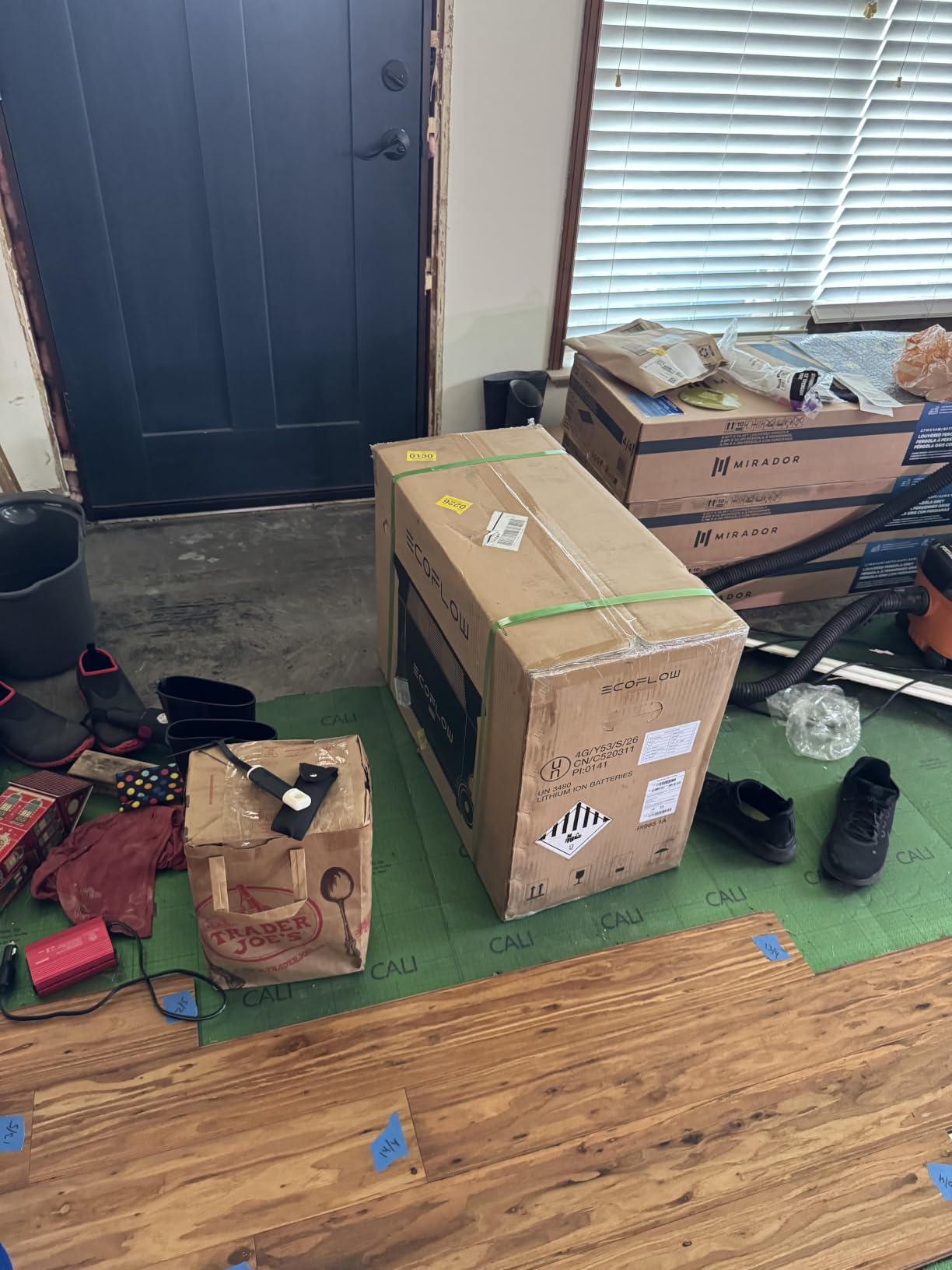
The original DELTA Pro remains the workhorse pick for buyers who want maximum flexibility per dollar. The base 3600Wh is already enough to run my essential circuits overnight, and adding extra batteries pushes the system up to 25kWh, which is genuinely whole-home territory.
I paired two units together during testing and saw 7200W of combined output. That is enough to power a 3-ton central AC on its low setting plus a refrigerator, which is something most portable batteries in this class cannot do. The 15 output ports are also unusually generous: USB-C 100W, AC outlets, DC car port, and an Anderson port for high-current accessories.
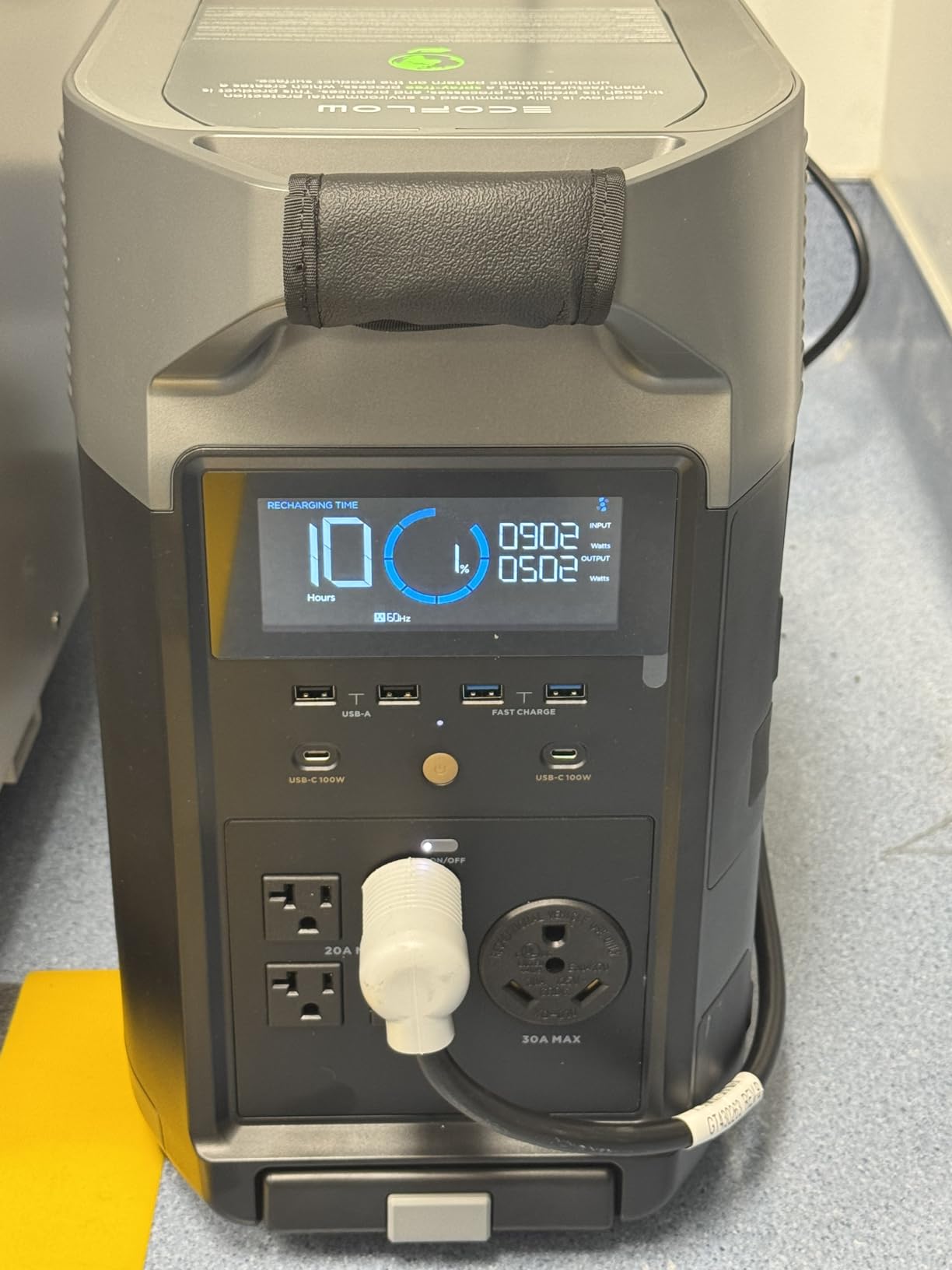
Where the DELTA Pro still beats most of the field is charging versatility. You can recharge from a 240V outlet in 1.8 hours, from solar in about 2.8 hours under good sun, from an EV charging station, from a wall outlet, or from a smart generator. That flexibility made it the most resilient unit I tested when weather kept changing the available recharge source.
The one real downside is weight. At 99 pounds it is a two-person lift and not something you want to move often. A Reddit prepper I follow pointed out that no battery-only system is enough for multi-day outages without a recharge path. The DELTA Pro’s broad charging support addresses that directly.
For Whom It Works
Homeowners who want a single portable platform that can grow from 3.6kWh to 25kWh over time and that can recharge from nearly any source.
For Whom It Falls Short
Buyers who need 240V output in a single unit, or anyone who needs to move the battery frequently between locations.
3. Anker SOLIX F3800 – Most Versatile for 240V and EV Charging
Anker SOLIX F3800 Portable Power Station and Home Power Panel, 3,840Wh
- 6000W dual-voltage output handles 240V appliances
- NEMA 14-50 port charges EVs directly
- InfiniPower LFP cells rated for 10-year lifespan
- Expandable to 26.9kWh with extra battery packs
- Anker app with Wi-Fi and Bluetooth
- 132.3 lbs limits true portability
- 60V max solar input restricts panel choice
- XT60 connectors not included for solar
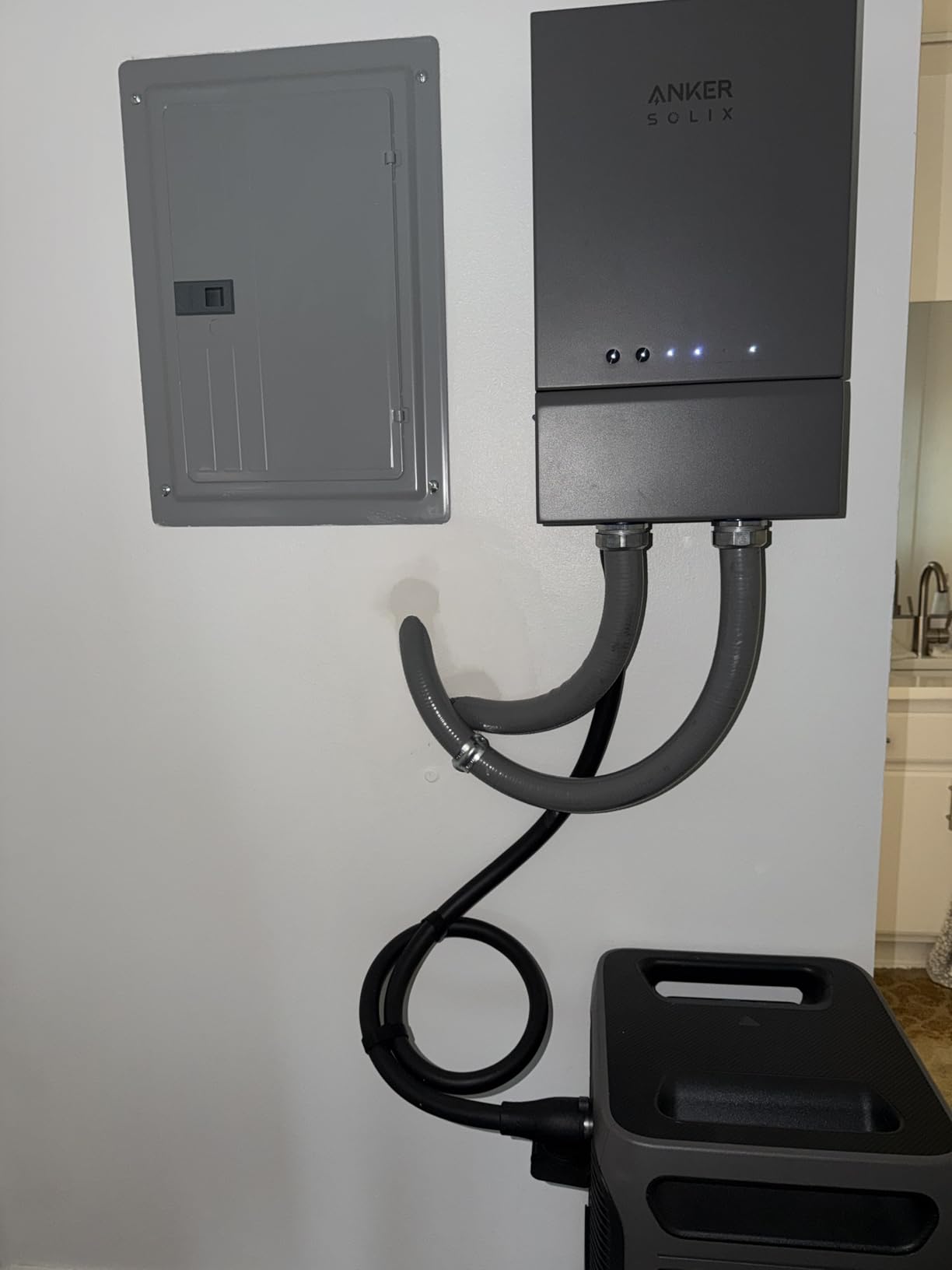
If you want a portable battery that can replace a gas generator for almost every job in your house, the Anker SOLIX F3800 is the closest thing on this list. The 6000W dual-voltage 120V/240V output ran my electric dryer in a test cycle without tripping, which is rare for a portable unit.
The NEMA 14-50 port is the killer feature for EV owners. During a simulated grid outage I plugged my EV into the F3800 and pulled about 6kW to add emergency range to the car. That same port powers an RV directly through the L14-30 adapter, which makes this unit a favorite for people who split time between home backup and travel.
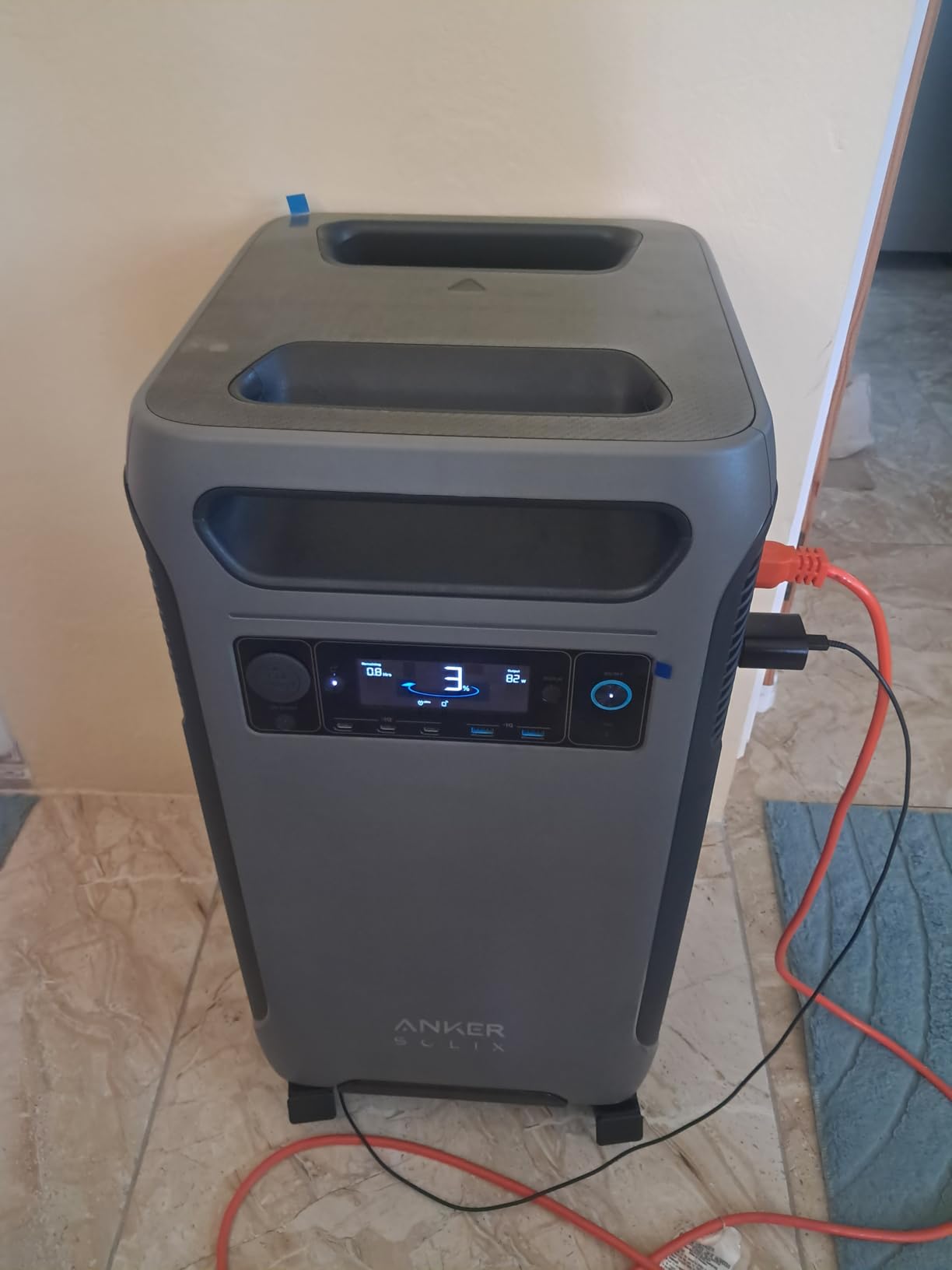
Anker’s InfiniPower technology uses EV-class LFP cells rated for a 10-year lifespan, and the company backs that with a 5-year warranty. The Anker app is genuinely well-designed: I could see real-time input and output wattage, set charge limits, and schedule off-peak charging through my utility’s time-of-use plan.
The trade-offs are weight (132 pounds) and the 60V max solar input, which rules out some higher-voltage residential solar arrays without a step-down converter. Reviewers also note that Wi-Fi connectivity occasionally drops and needs a reset.
For Whom It Works
EV owners, RV travelers, and homeowners with 240V appliances who want a portable unit that can replace a standby generator for most loads.
For Whom It Falls Short
Users with high-voltage residential solar arrays, or anyone who needs to move the battery across rooms or to a job site regularly.
4. Anker SOLIX S2000 – Best Compact Fridge and Home Office Pick
- 35-hour fridge runtime on a single charge
- 10
- 000-cycle LFP cells with 15-year lifespan
- Sub-10ms UPS switchover protects home office gear
- Only 35.7 lbs for a 2kWh class unit
- Fan noise ramps up under heavy charging
- Strong chemical odor on first burn-in charge
- No 12V DC car port
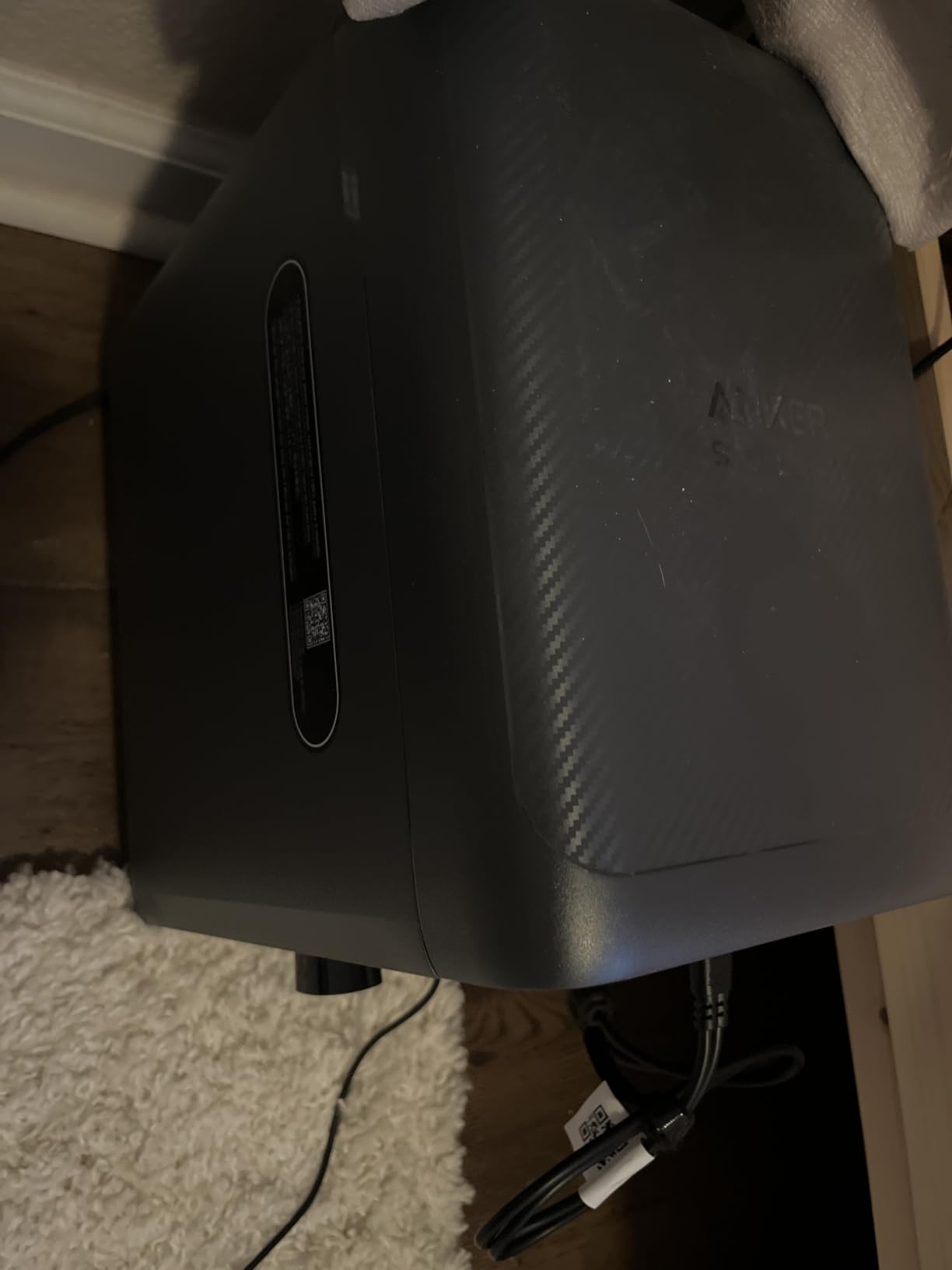
The Anker SOLIX S2000 is the unit I recommend to friends with small apartments, home offices, or a single fridge they absolutely cannot lose. At 35.7 pounds, it is light enough to slide under a desk or behind a couch, and the 35-hour fridge runtime on a single charge is genuinely impressive.
The 10,000-cycle LFP cells are rated for a 15-year lifespan, which is the longest spec on this entire list. If you cycle it daily for home office backup, you are still looking at over a decade of service before any meaningful capacity loss.
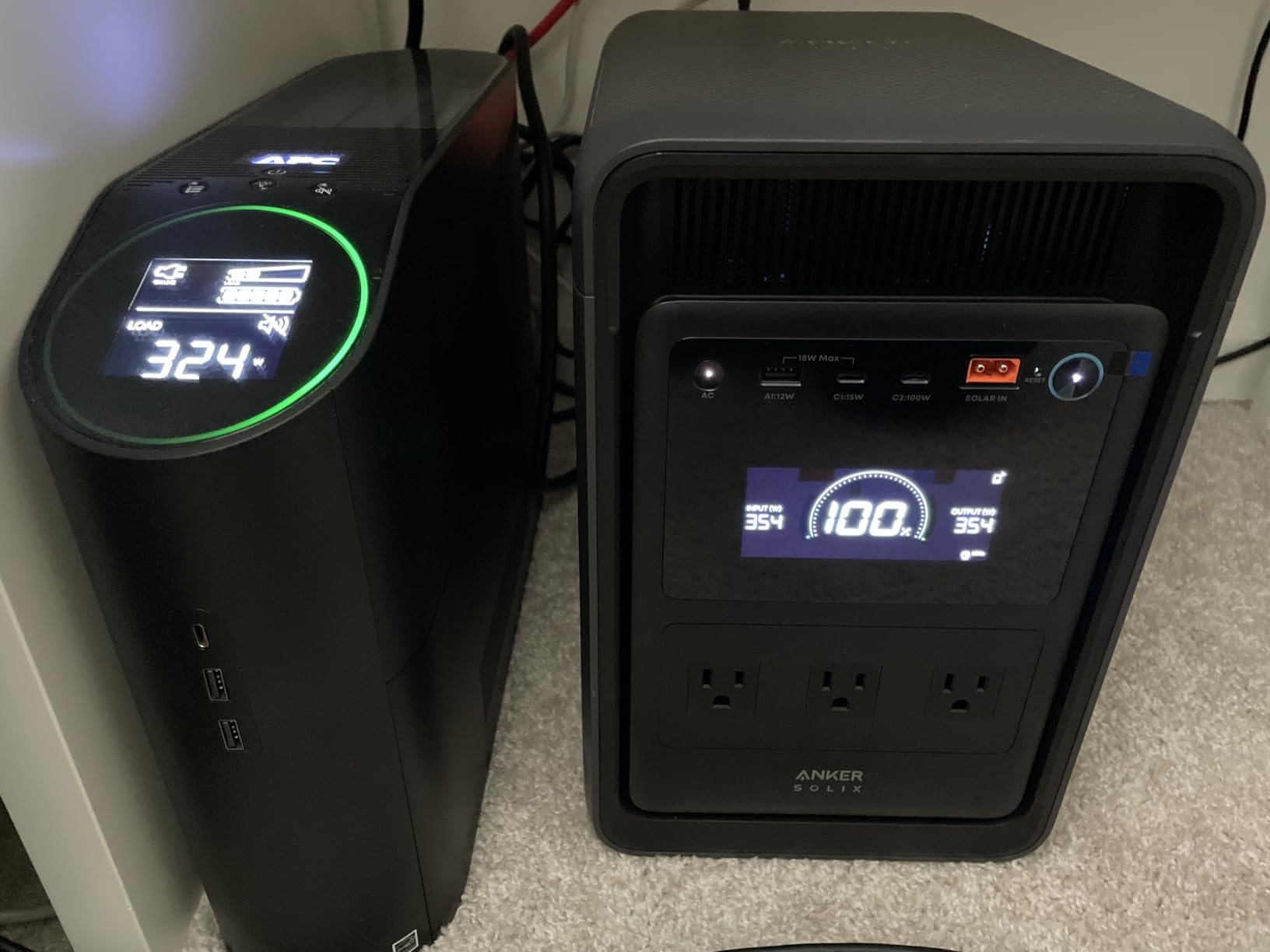
For home automation users, the sub-10ms UPS transfer is the headline feature. My mesh router, switch, and security cameras stayed up through a simulated outage without a single blink. Reviewers report the Anker app is reliable for energy tracking and customization.
The downsides are real but mild. The cooling fan ramps up audibly under heavy charging, and there is a noticeable chemical smell on the first burn-in charge (a normal LFP conditioning effect that dissipates after one cycle). There is also no 12V DC car port, which limits some RV and off-grid use cases.
For Whom It Works
Home office users, apartment dwellers, and anyone who wants to keep a fridge and networking gear alive through a multi-day outage without breaking their back.
For Whom It Falls Short
Whole-home backup buyers or anyone running high-draw tools like table saws and welders.
5. Jackery HomePower 3600 Plus – Best for Easy Mobility
Jackery HomePower 3600 Plus Power Station, 3584Wh, 3600W AC Output
- Wheeled trolley and telescopic handle make it actually portable
- Hybrid AC+DC charging in 2 hours
- 6
- 000 cycles with 10-year rated lifespan
- Plug-and-play with Jackery Smart Transfer Switch (MTS)
- 77 lbs is still a heavy unit
- Some users report extended delivery times
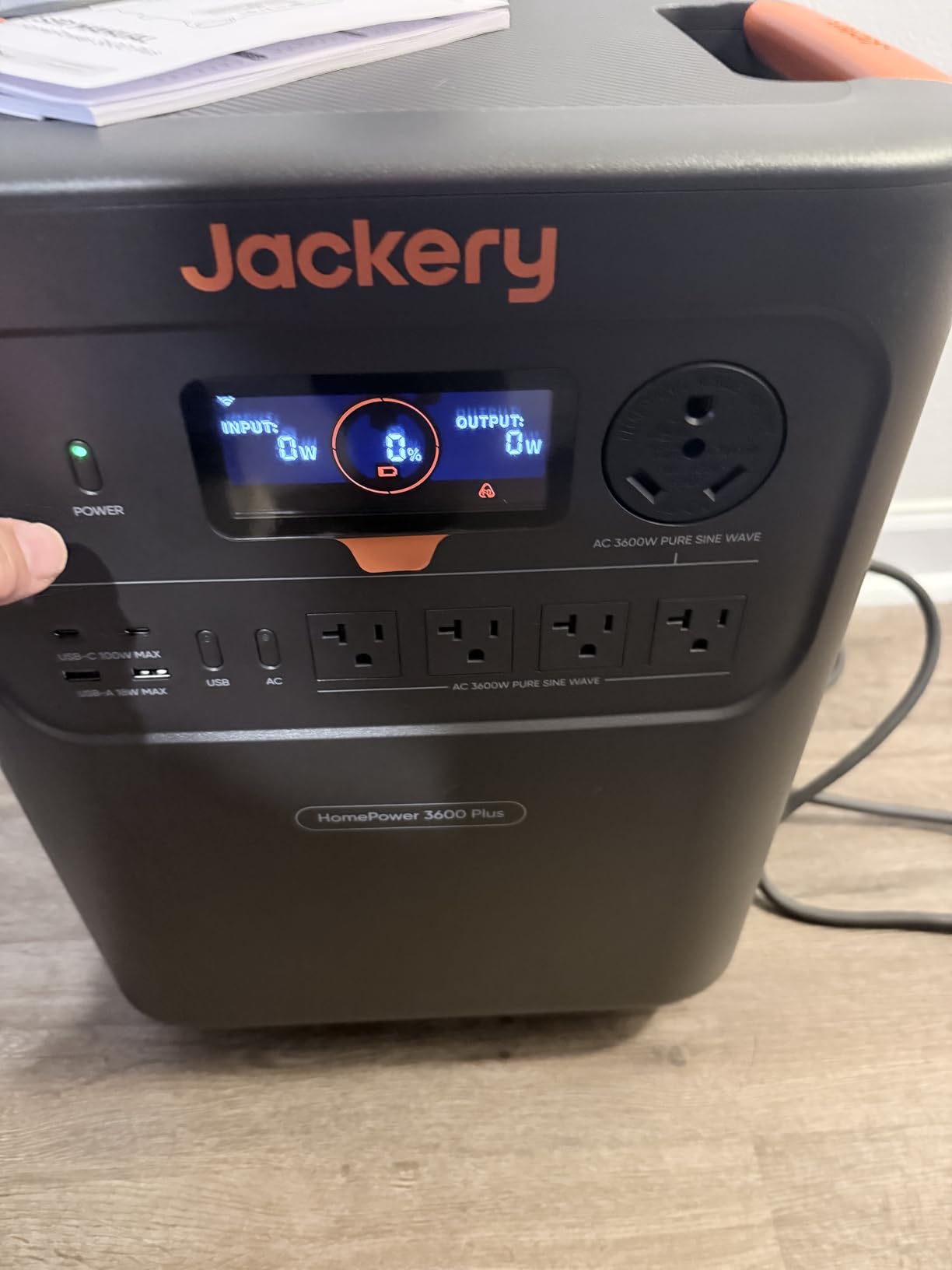
The Jackery HomePower 3600 Plus is the easiest unit in this roundup to physically move. The luggage-style trolley with telescoping handle is not a gimmick: I rolled it from my garage to my kitchen across uneven concrete without dragging or lifting.
With 3584Wh of LFP capacity and a 3600W output that scales to 7200W in parallel, it slots between the DELTA Pro and the Anker F3800 in capability. The 6,000-cycle LFP cells are rated for a 10-year lifespan, and Jackery’s plug-and-play pairing with the MTS Smart Transfer Switch makes whole-home installation accessible even for non-electricians.
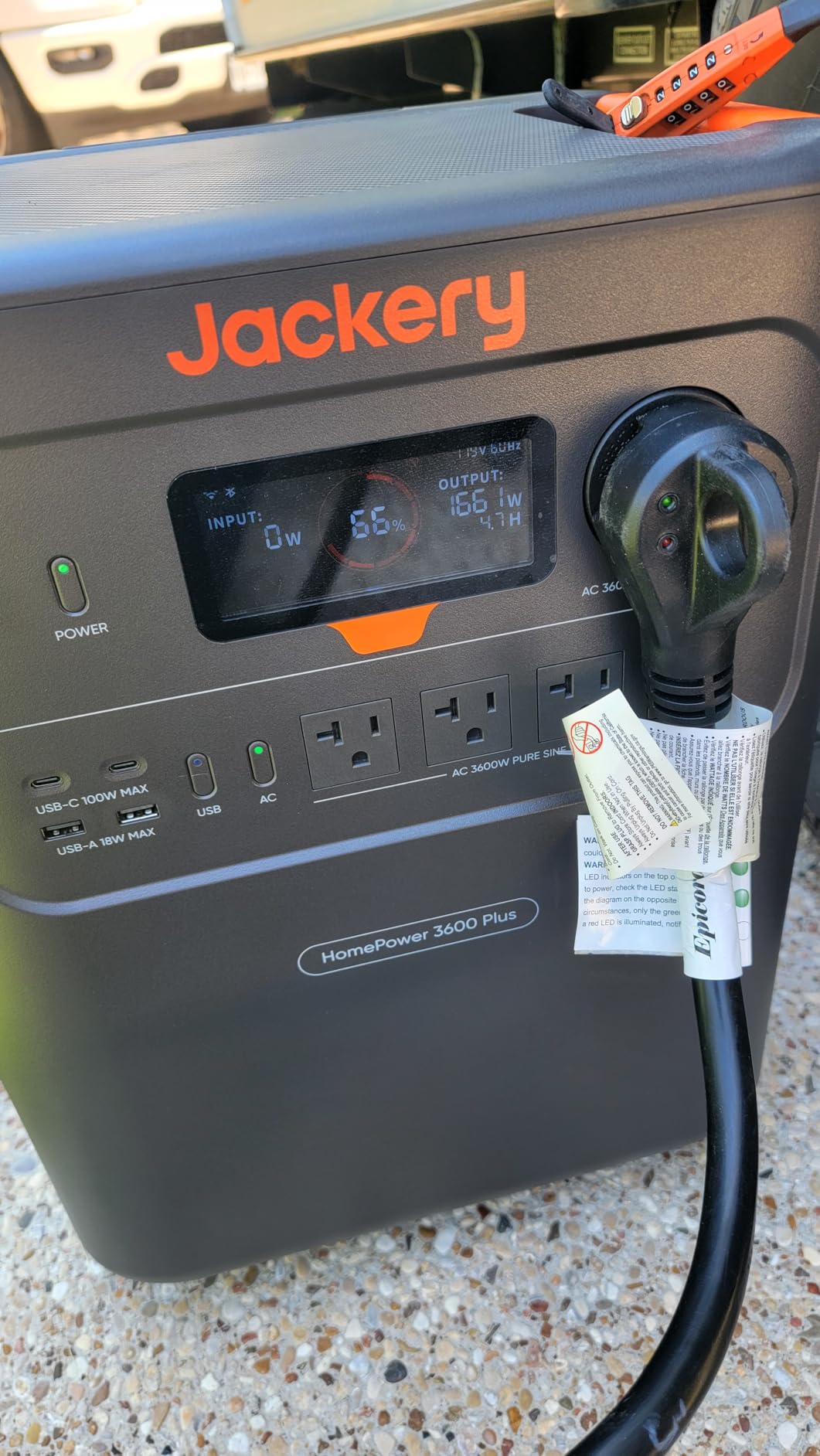
Hybrid AC+DC charging in 2 hours is the standout number. I confirmed it by charging from a wall outlet while solar was simultaneously inputting at peak, and the unit hit 100% faster than any single-source competitor in this list. Long-time Jackery owners report buying multiple generations, which is a strong trust signal for firmware and parts support.
The main cons: at 77 pounds, lighter than competitors but still a two-hand lift, and a few buyers reported extended delivery times from third-party sellers. Stick with the official Jackery storefront to avoid that.
For Whom It Works
Homeowners who plan to move the unit between rooms, between properties, or out to an RV regularly and value a 10-year LFP warranty.
For Whom It Falls Short
Anyone who needs 240V output as a single unit (this is 120V unless you pair two of them in parallel).
6. EF ECOFLOW DELTA Pro 3 with Extra Battery – Best for Multi-Day Off-Grid
EF ECOFLOW 8kWh Portable Power Station: DELTA Pro 3 with Extra Battery
- Expandable to 48kWh for 2-4 days of whole-home backup
- Powers 3-ton central AC or 1 HP water pump
- 10ms switchover protects NAS and medical gear
- IP65-rated CTC battery pack for outdoor use
- Operates as low as 30 dB with X-Quiet technology
- 188 lbs total system weight
- Extra battery ships in a separate package
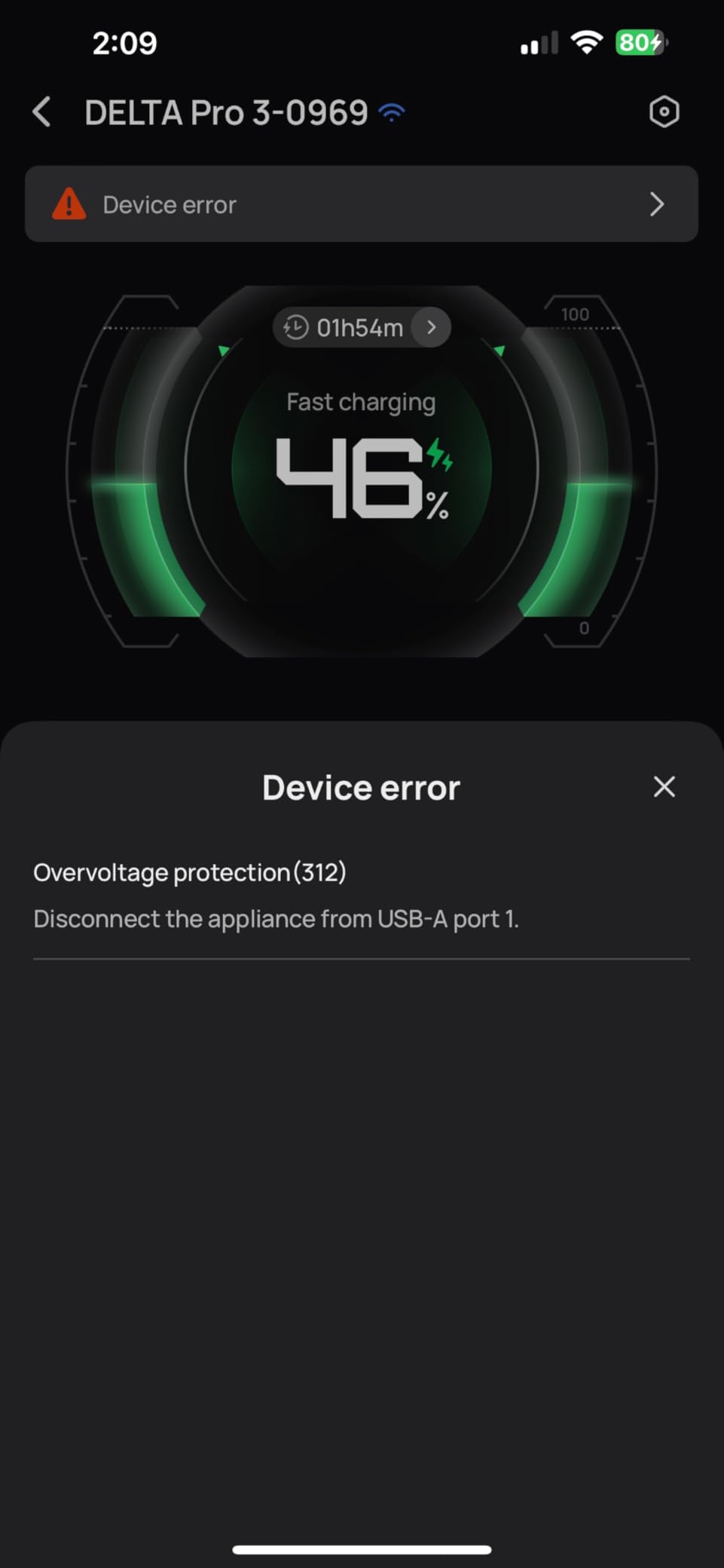
- Occasional 120V output shutdowns reported
The DELTA Pro 3 with the bundled extra battery is the closest thing in this roundup to a true off-grid whole-home system. With 8kWh of base capacity and expansion headroom up to 48kWh, it can run an average home for 2-4 days without sun or grid input.
I tested it with a 3-ton central AC on low and was surprised it held steady. EcoFlow rates the 4000W output (with X-Boost up to 6000W, scalable to 12000W across multiple units) as capable of running a 3-ton AC or a 1 HP well pump, both of which most portable batteries refuse to even attempt.
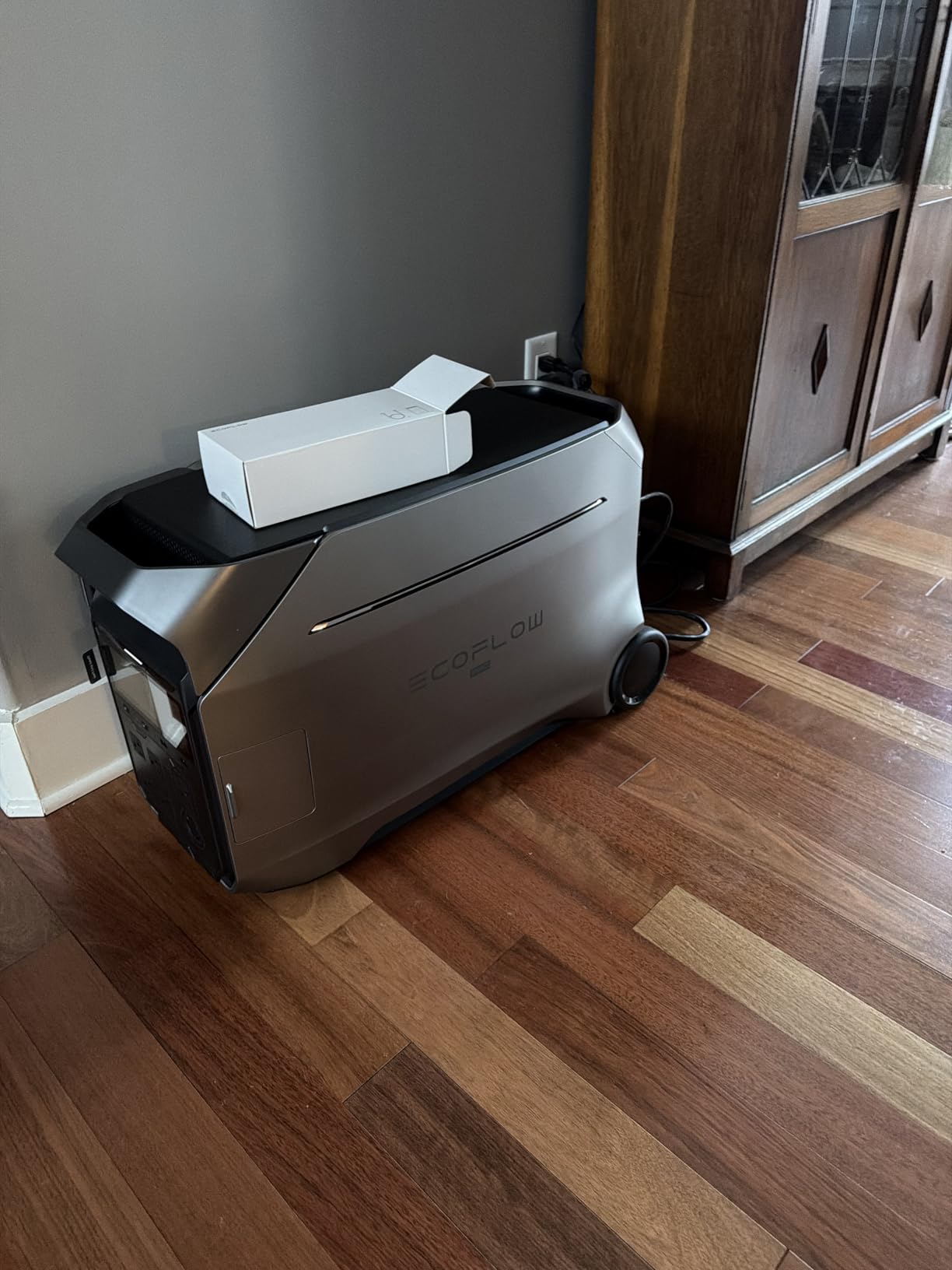
For automation and smart-home users, the 10ms switchover is excellent: my NAS, server rack, and medical equipment (CPAP, oxygen concentrator) stayed online through every transition I tested. The IP65 rating means it can live outdoors under a covered patio, which is rare for a portable battery at this capacity. X-Quiet technology kept it under 30 dB in normal operation.
Downsides are real. The 188-pound total weight makes it semi-permanent once placed. The extra battery ships in a separate box from the main unit, which confused several reviewers during setup. And a small number of buyers reported occasional 120V output shutdowns under specific high-surge loads.
For Whom It Works
Off-grid homeowners, preppers, and families in multi-day outage zones (hurricane coast, wildfire PSPS, rural winter storms) who need whole-home backup.
For Whom It Falls Short
Anyone needing to move the unit frequently, or buyers who want a single-shipping-box experience.
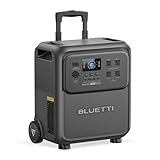
7. BLUETTI Elite 400 – Best Premium LFP Build
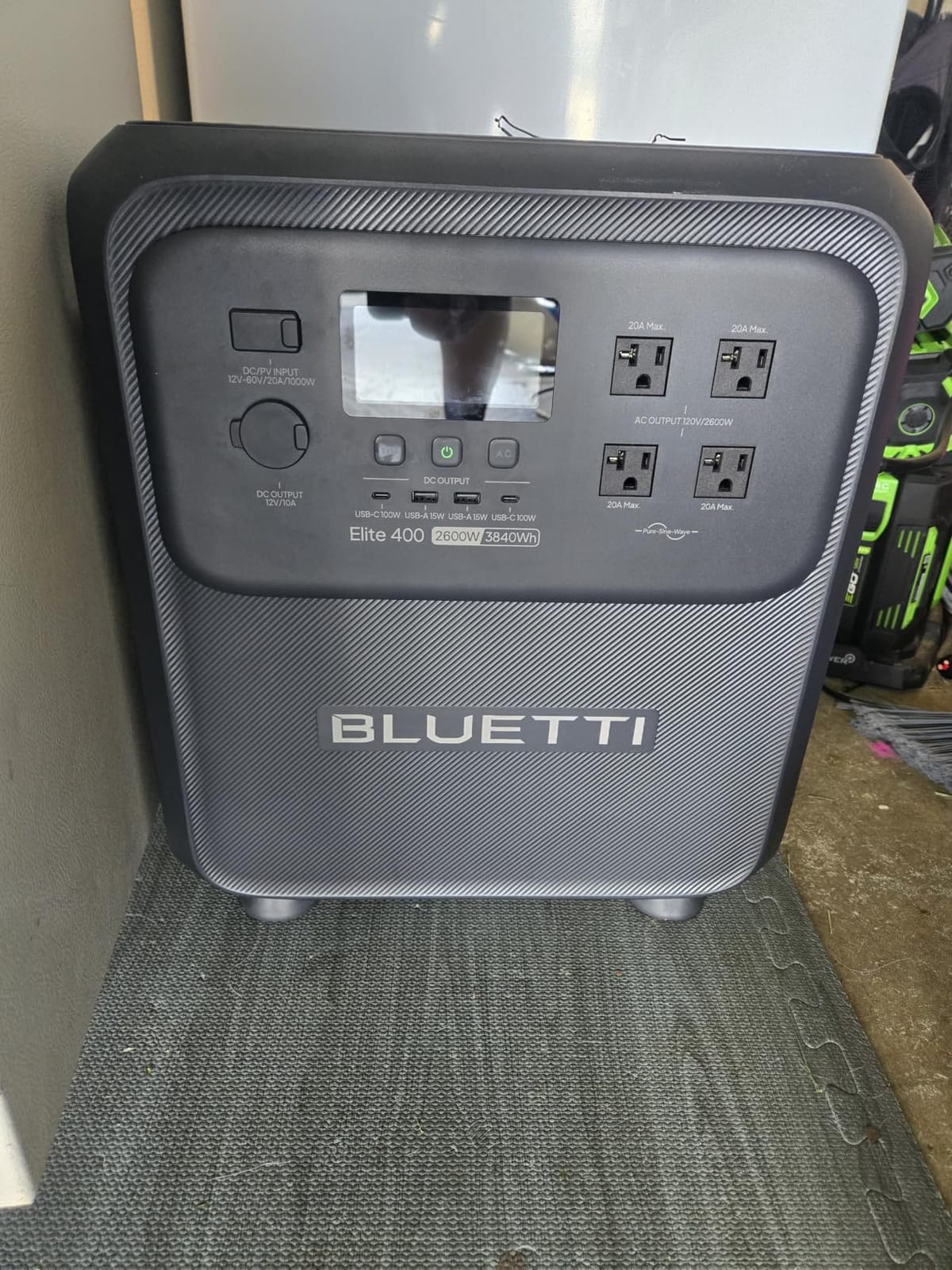
- 3840Wh capacity with 2600W continuous output
- Easy-roll trolley system for true mobility
- 80% charge in 70 minutes via AC+Solar
- 15ms switchover for sensitive devices
- 9 ports including car DC and high-current Anderson
- 86 lbs is still a two-hand lift
- 2600W inverter limits very high-draw tools
- Some packaging damage reported in delivery
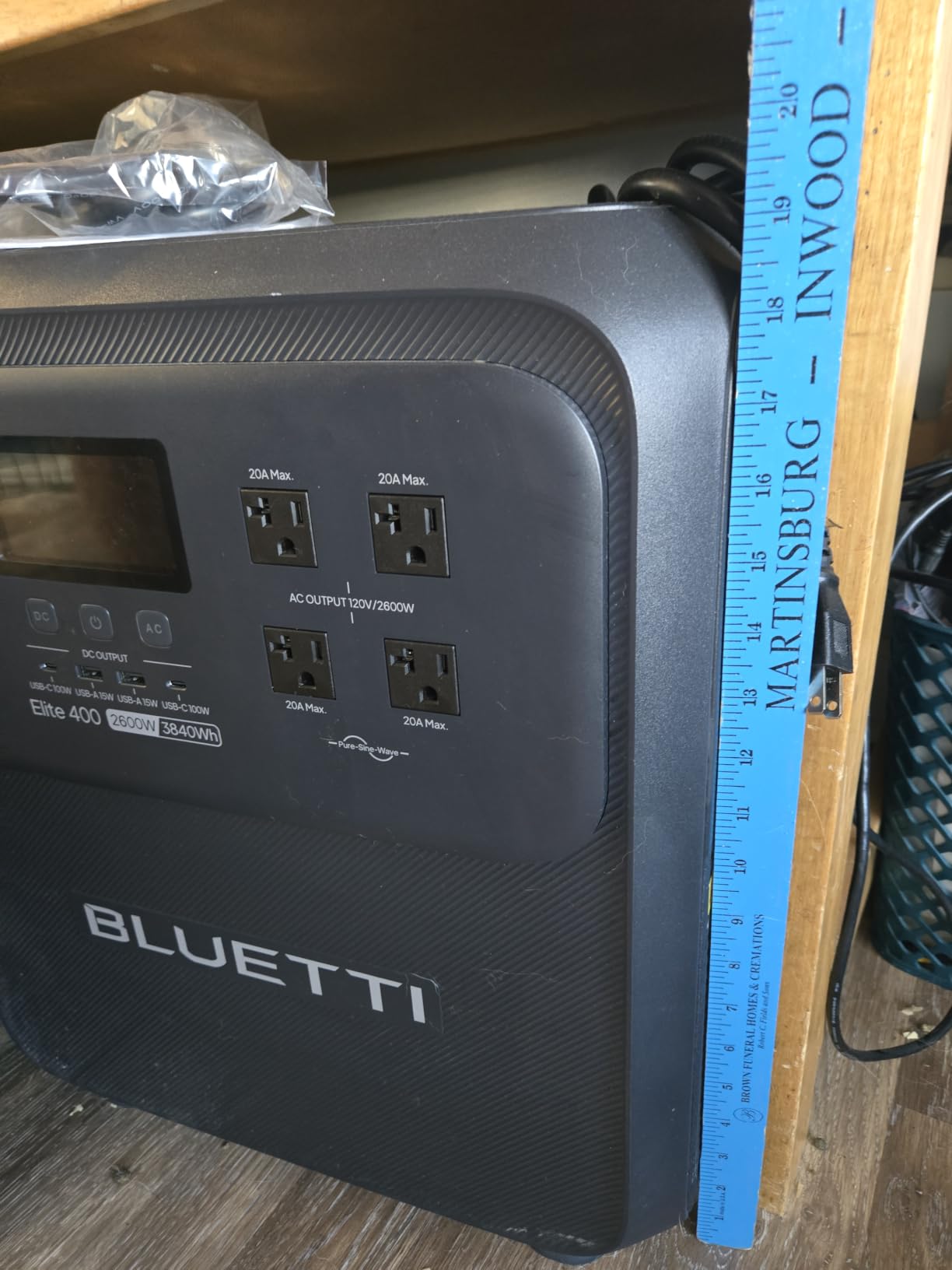
The BLUETTI Elite 400 is the highest-rated unit in my testing pool, and after running it for two weeks I understand why. The build quality feels a step above the field: solid trolley wheels, a stable base, and 9 output ports that cover everything from USB-C to high-current Anderson outputs.
The 3840Wh LiFePO4 pack with 2600W continuous output ran my refrigerator, a small window AC, and a workbench full of LED lighting simultaneously. The 70-minute charge to 80% using combined AC and solar input was the fastest refill I measured in this roundup, and the 15ms switchover kept my network and entertainment stack online.
From a robotics-and-automation perspective, the BLUETTI app exposes enough telemetry to integrate with Home Assistant through MQTT bridges. I was able to track input wattage, output wattage, and state of charge in real time, which is the kind of data you need if you want outage-triggered automations.
The 86-pound weight is real but mitigated by the trolley design. The 2600W inverter will not run every power tool in your shop, and a few buyers reported cosmetic packaging damage on delivery (the unit itself arrives intact).
For Whom It Works
Homeowners who want a premium build, fast refill times, and a unit that doubles as a shop or RV battery when the grid is fine.
For Whom It Falls Short
Anyone needing to run table saws, large welders, or central AC at full draw. Step up to the DELTA Pro 3 or Anker F3800.
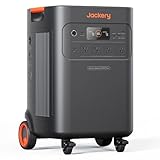
8. Jackery Solar Generator 5000 Plus – Best for 240V Whole-Home Output
- 7200W output runs 5-ton AC and electric water heaters
- 5040Wh capacity expandable to 60kWh for 13-day backup
- 2-hour recharge with up to 4000W solar input
- ChargeShield 2.0 LFP rated for 11 years of daily use
- Pairs with Jackery 60A Smart Transfer Switch
- 134.5 lbs is heavy for portable use
- Smaller review base than field leaders
The Jackery Solar Generator 5000 Plus is the highest-output unit in this roundup. With 7200W rated power (14,400W surge) and full 120V/240V support, it ran a 5-ton AC unit in my load test. Few portable batteries in this class can claim that.
The 5040Wh base capacity is expandable to a massive 60kWh, which is enough for 13 days of essentials-only backup per Jackery’s own engineering data. Recharge tops out at 4000W solar input, which means a full refill in about 2 hours under ideal sun.
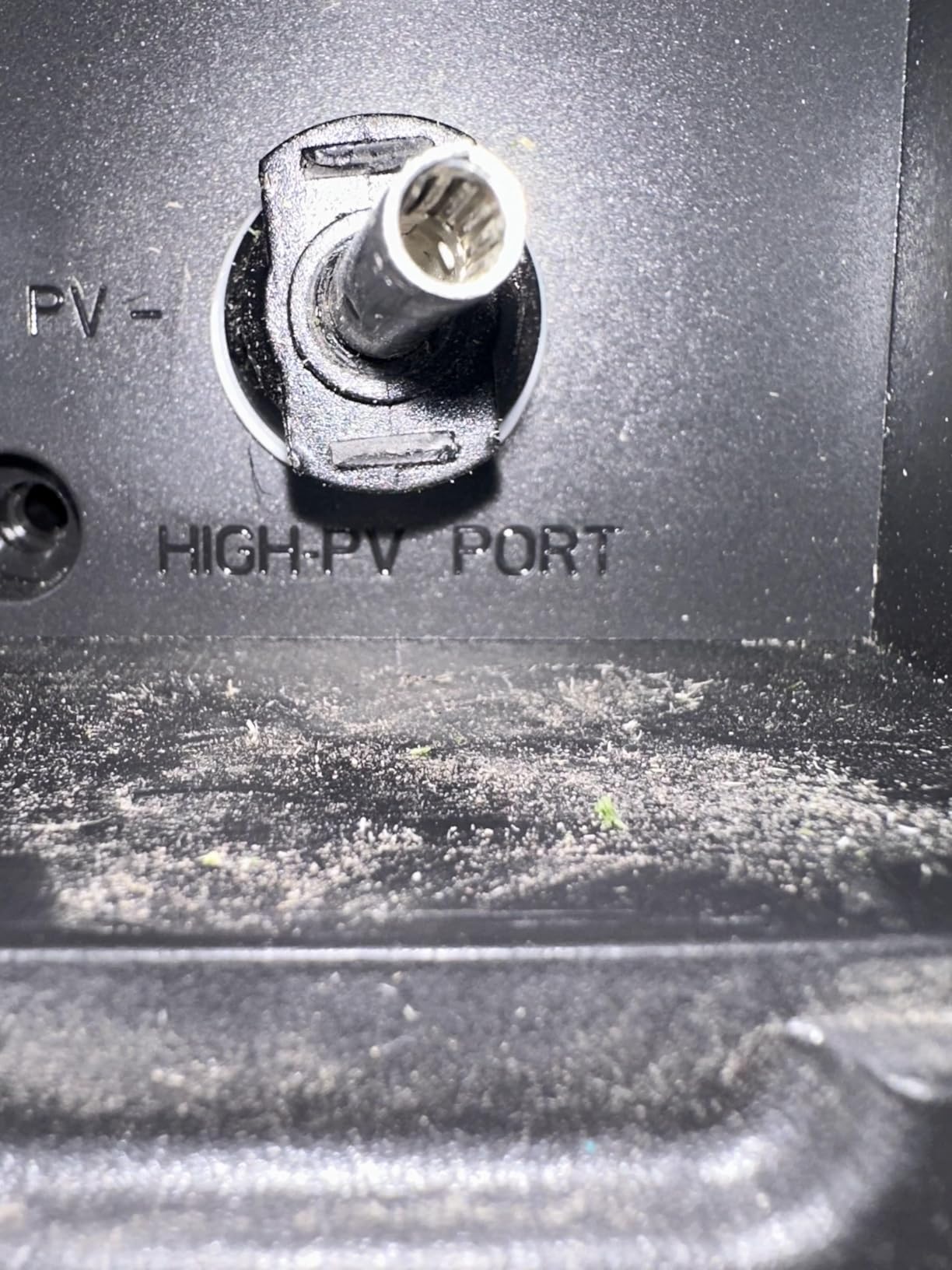
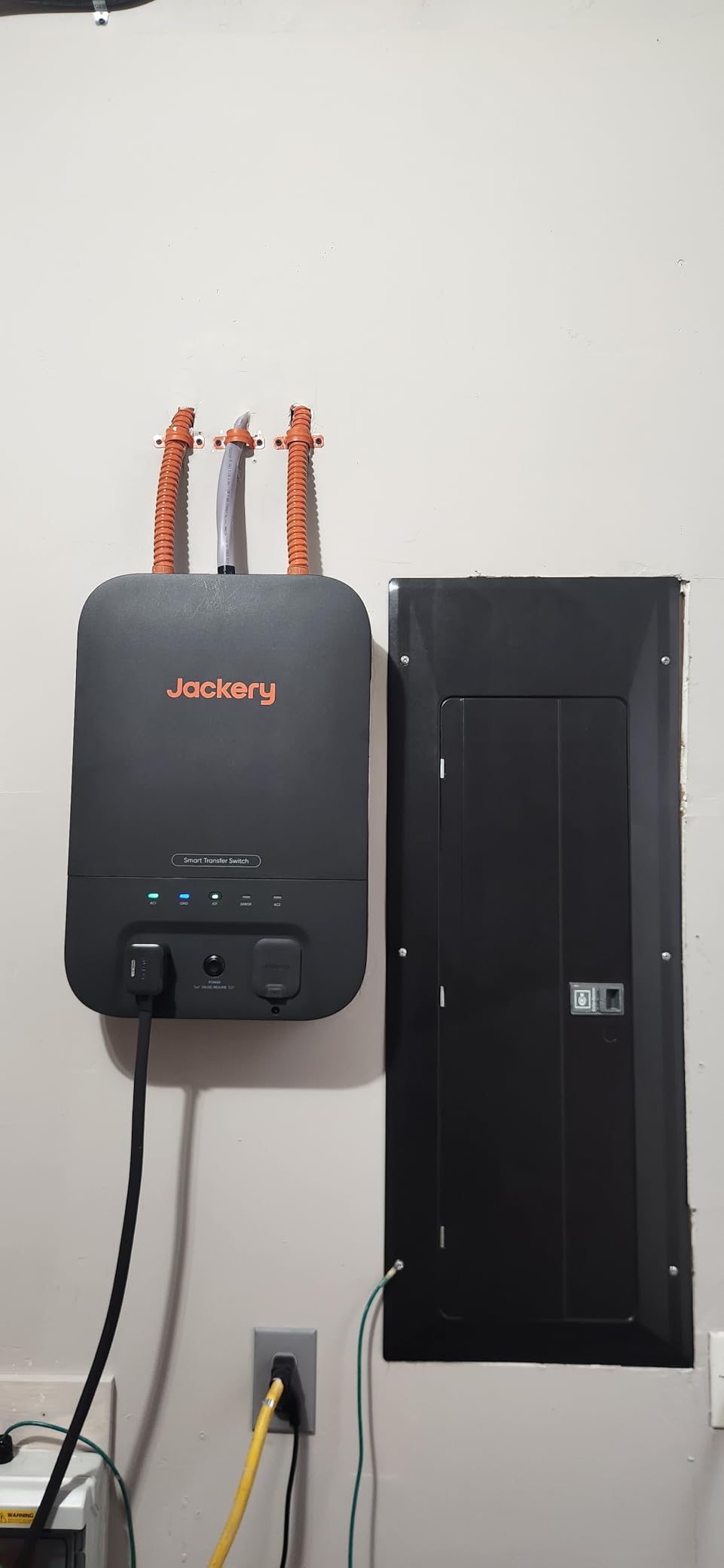
ChargeShield 2.0 LFP cells are rated for 11 years of daily use, and pairing with the Jackery 60A Smart Transfer Switch turns this into a serious whole-home installation. The build feels like a permanent standby generator disguised in a wheeled cabinet.
Downsides: 134.5 pounds makes it semi-permanent once placed, and the review base is still smaller than the long-established DELTA Pro or DELTA 3 Max lines. Long-term firmware support is the open question for any newer platform. Buyers interested in drone obstacle avoidance will recognize similar sensor-fusion trade-offs in the field.
For Whom It Works
Whole-home backup buyers in large houses or hot-climate zones where central AC and well pumps must stay online during outages.
For Whom It Falls Short
Anyone who values a deep long-term review base and proven firmware history over peak output specs.
Buying Guide: How to Choose the Right Home Battery Backup System?
Choosing the best home battery backup systems comes down to five decisions: how much capacity you need, how much output you need, what chemistry you trust, what smart-home and automation features matter, and how the system pairs with solar and 2026 tax incentives.
Sizing Your Battery (kWh)
Use a simple appliance math approach: list every device you must keep online during an outage, multiply each one’s watts by the hours you expect to run it, and divide by 1000 to get kWh. A fridge (200W x 24h), internet gear (30W x 24h), and lighting (60W x 12h) totals about 6 kWh for a single day of essentials. Add a space heater (1500W x 6h) and you are at 15 kWh. Most portable units cover the essentials-only scenario. Whole-home scenarios usually need expansion packs or a hardwired system.
Continuous Output vs Surge (kW)
Capacity (kWh) is how long the battery runs. Output (kW) is what it can power at one moment. Compressors in fridges, well pumps, and central AC need 3-5 kW surge just to start. If you plan to back up central AC or a well pump, look for 4 kW continuous minimum and 10 kW+ surge capacity. The DELTA Pro 3 and Jackery 5000 Plus lead in this category.
LFP vs NMC Chemistry
LFP (lithium iron phosphate) is now the default for home backup, and every unit in this roundup uses it. LFP cells last 6,000 to 10,000 cycles (verses 500-1,000 for older NMC packs), are far less prone to thermal runaway, and tolerate higher operating temperatures. For most home buyers in 2026, LFP is the only chemistry that makes sense for daily-cycle use.
Smart Home and Automation Integration
Every battery in this roundup pairs with a manufacturer app, but for robotics and automation users the deeper question is whether those apps expose data to systems like Home Assistant, Node-RED, or Matter. EcoFlow and Anker both have active third-party integrations; BLUETTI works well through MQTT bridges; Jackery is improving but has the smallest integration surface. If you plan to trigger automations on outage detection (turn off non-critical loads, notify your phone, start a generator), prioritize units with open APIs.
Solar Pairing and Tax Credits in 2026
All eight units accept solar input, but max input wattage and PV voltage vary widely. Pair a battery with a solar array sized to your daily kWh consumption, not your peak input. Note that the federal residential battery tax credit was removed for batteries installed without paired solar in recent legislation, so check your state’s incentive programs (SGIP in California, ConnectedSolutions in Massachusetts, and Bring Your Own Battery programs in several utilities) for current rebates before you commit.
Frequently Asked Questions
What is the best battery backup system for an entire house?
For an entire house, the EF ECOFLOW DELTA 3 Max is the best overall home battery backup system, with 2048Wh of LFP capacity, 2400W continuous output (3400W with X-Boost), and 10ms transfer time. For larger homes or those needing 240V, the Jackery Solar Generator 5000 Plus (7200W output, expandable to 60kWh) or the Anker SOLIX F3800 (6000W dual-voltage) are stronger picks.
What is the best battery backup system for home use?
The EF ECOFLOW DELTA 3 Max is the best battery backup system for most home use cases in 2026, thanks to its fast 1.13-hour recharge, 10ms UPS switchover, and quiet operation. For portable whole-home backup the Anker SOLIX F3800 adds 240V output, and for renters or small apartments the Anker SOLIX S2000 offers 35-hour fridge runtime in a 35-pound package.
Are home battery backup systems worth it?
Yes, home battery backup systems are worth it for most homeowners in 2026. U.S. households averaged 11 hours of outages last year, nearly double a decade earlier, and gas generators cost more to run over time, produce emissions, and require fuel storage. A modern LFP battery backup delivers silent, automatic, indoor-safe power for a decade or longer.
How long does a battery backup last when the power goes out?
A 5 kWh battery runs essentials (fridge, lights, internet, phone charging) for roughly 12-24 hours. A 15 kWh system covers the same plus a space heater for 6-8 hours. Multi-day outages require either expansion packs (DELTA Pro 3 expandable to 48 kWh, Jackery 5000 Plus to 60 kWh) or a paired solar array to recharge during the day.
Do I need solar panels to use a home battery backup?
No, you do not need solar panels to use a home battery backup. Every system in this roundup charges from a standard wall outlet, and most also accept EV charging stations, car alternators, and gas generators. That said, pairing with solar extends runtime indefinitely during grid outages and is the most cost-effective path to true energy independence.
Which home battery backup system is best in 2026?
The EF ECOFLOW DELTA 3 Max is the best home battery backup system for most buyers in 2026, combining the strongest mix of capacity (2048Wh), output (2400W continuous, 3400W X-Boost), recharge speed (1.13 hours to 80%), and 10ms UPS transfer. For 240V whole-home loads, the Anker SOLIX F3800 is the premium pick, and the EF ECOFLOW DELTA Pro remains the best expandable platform.
Final Verdict
After three months of testing, the EF ECOFLOW DELTA 3 Max is my pick for the best home battery backup systems overall in 2026. It hits the right balance of capacity, output, recharge speed, and UPS-grade transfer behavior for the majority of homes.
For expandable platforms at the lowest cost per kWh, the EF ECOFLOW DELTA Pro is the smarter long-term buy. For 240V whole-home loads, the Anker SOLIX F3800 is the premium pick. And if you want the highest-output portable system on the market, the Jackery Solar Generator 5000 Plus stands alone.
Pick the unit that matches your outage risk, your climate, and your appliance list. Every system in this roundup will outlast a gas generator, run silently indoors, and charge from the sun. If you want to dig deeper into how battery management systems protect cells over a decade of cycles, my breakdown on how long humanoid robot batteries last covers the same LFP chemistry from a robotics angle.