
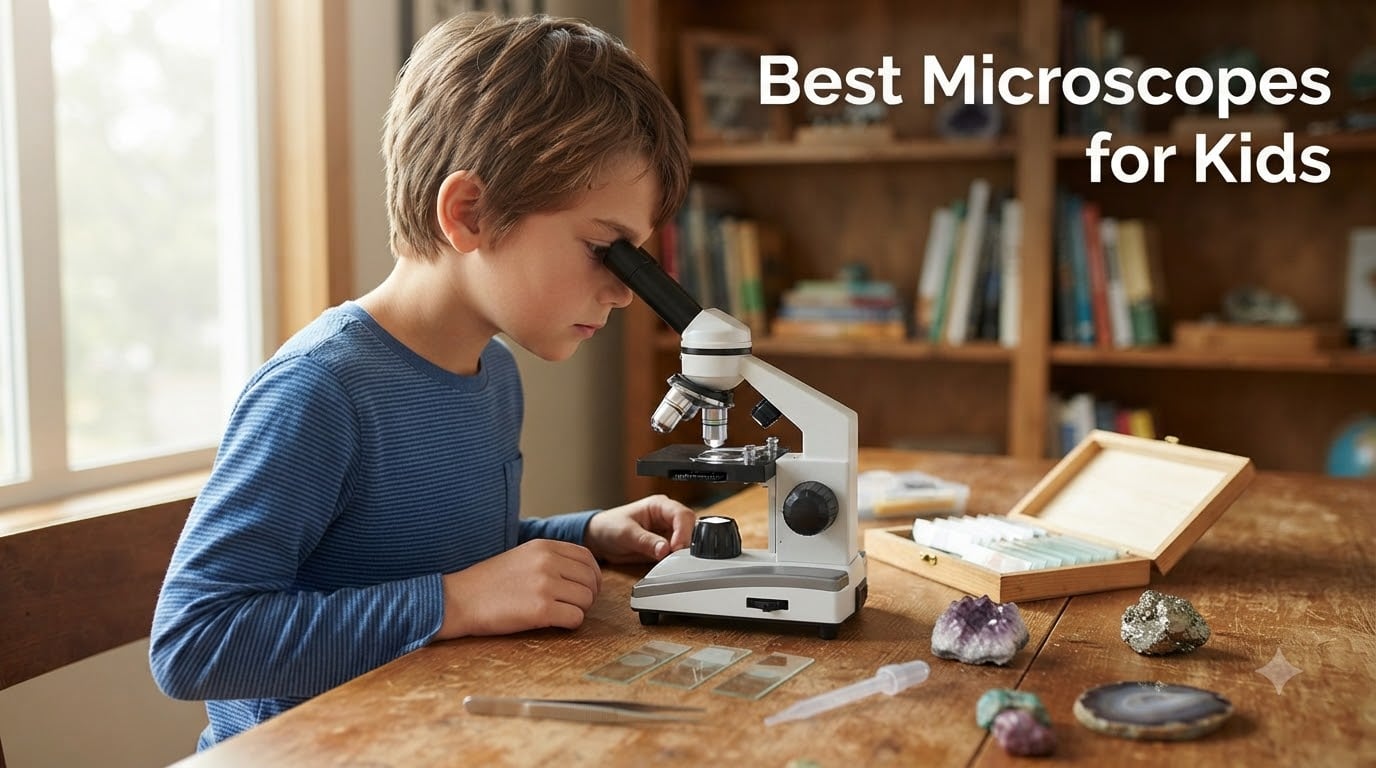
I’ve been hunting for the best microscopes for kids for years, both as a parent and as someone who reviews STEM gear for Smashing Robotics. Over the past three months our team put ten top-selling models through their paces with kids ranging from a curious 4-year-old to a tween running her own backyard biology club. We checked image clarity, build quality, ease of use, and how long each scope actually held a child’s attention before sliding back into the closet.
What we found is consistent with what the Quekett Microscopical Club has been telling parents for decades: a real microscope beats a toy microscope every time, but the right form factor depends entirely on the child’s age. A pocket scope wins for a 5-year-old who wants to look at bugs in the yard, while a true compound microscope with 400x to 1000x magnification is what a 10-year-old needs to actually see plant cells. Below are the ten best microscopes for kids we tested, with picks for preschoolers, elementary-age explorers, tweens, and teens.
If you’re a parent buying a STEM gift, a homeschool family building out a lab, or a teacher outfitting a classroom, this guide breaks down the real differences between compound, stereo, digital, and handheld microscopes. We also flag the toy microscope trap that catches most shoppers and show you how a kids microscope can slot into the same robotics and maker projects you may already be running at home. For more on building STEM skills through hands-on tools, see our guide on how robotics helps kids learn STEM and our primer on the right age to start robotics.
Table of Contents
Top 3 Picks for Best Microscopes for Kids (September 2026)

National Geographic Dual LED Microscope
- Dual LED top and bottom
- 20x and 50x eyepieces
- 10 prepared slides plus 10 blank
- Mini geode and lab tools included
- Glass optics
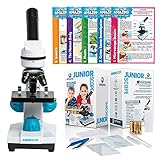
Omano Juniorscope Microscope
- 40x 100x 400x magnification
- Glass objective lenses
- Dual LED lighting
- 5 prepared slides plus accessories
- Lifetime limited warranty

Carson MicroBrite Plus Pocket Microscope
- 60x to 120x magnification
- LED illumination
- Pocket size 2 ounce build
- Smartphone compatible
- Field and classroom use
Best Microscopes for Kids in 2026
| Product | Specifications | Action |
|---|---|---|
| National Geographic Dual LED Microscope |
|
Check Latest Price |
 Educational Insights GeoSafari Talking Microscope Educational Insights GeoSafari Talking Microscope |
|
Check Latest Price |
| Carson MicroBrite Plus Pocket Microscope |
|
Check Latest Price |
 National Geographic 400x Microscope Kit National Geographic 400x Microscope Kit |
|
Check Latest Price |
| Omano Juniorscope Microscope |
|
Check Latest Price |
 Uarzt 58-Piece Microscope Kit Uarzt 58-Piece Microscope Kit |
|
Check Latest Price |
 Ashfly Kids Digital Microscope Ashfly Kids Digital Microscope |
|
Check Latest Price |
 Emarth 40X-1000X Compound Microscope Emarth 40X-1000X Compound Microscope |
|
Check Latest Price |
 BEBANG Kids Digital Microscope STEM Kit BEBANG Kids Digital Microscope STEM Kit |
|
Check Latest Price |
 BEAVERLAB Finder 4.0 Inch Digital Microscope BEAVERLAB Finder 4.0 Inch Digital Microscope |
|
Check Latest Price |
1. Educational Insights GeoSafari Talking Microscope – Best for Preschoolers
- Bindi Irwin voice narration keeps kids engaged
- Two play modes (Fact Mode and Quiz Mode) reinforce learning
- 20 slide tray with 60 full-color images
- Durable build handles small hands
- Slide storage compartment built in
- Limited to printed slides
- not real specimens
- English narration only
- Slide orientation can confuse younger children
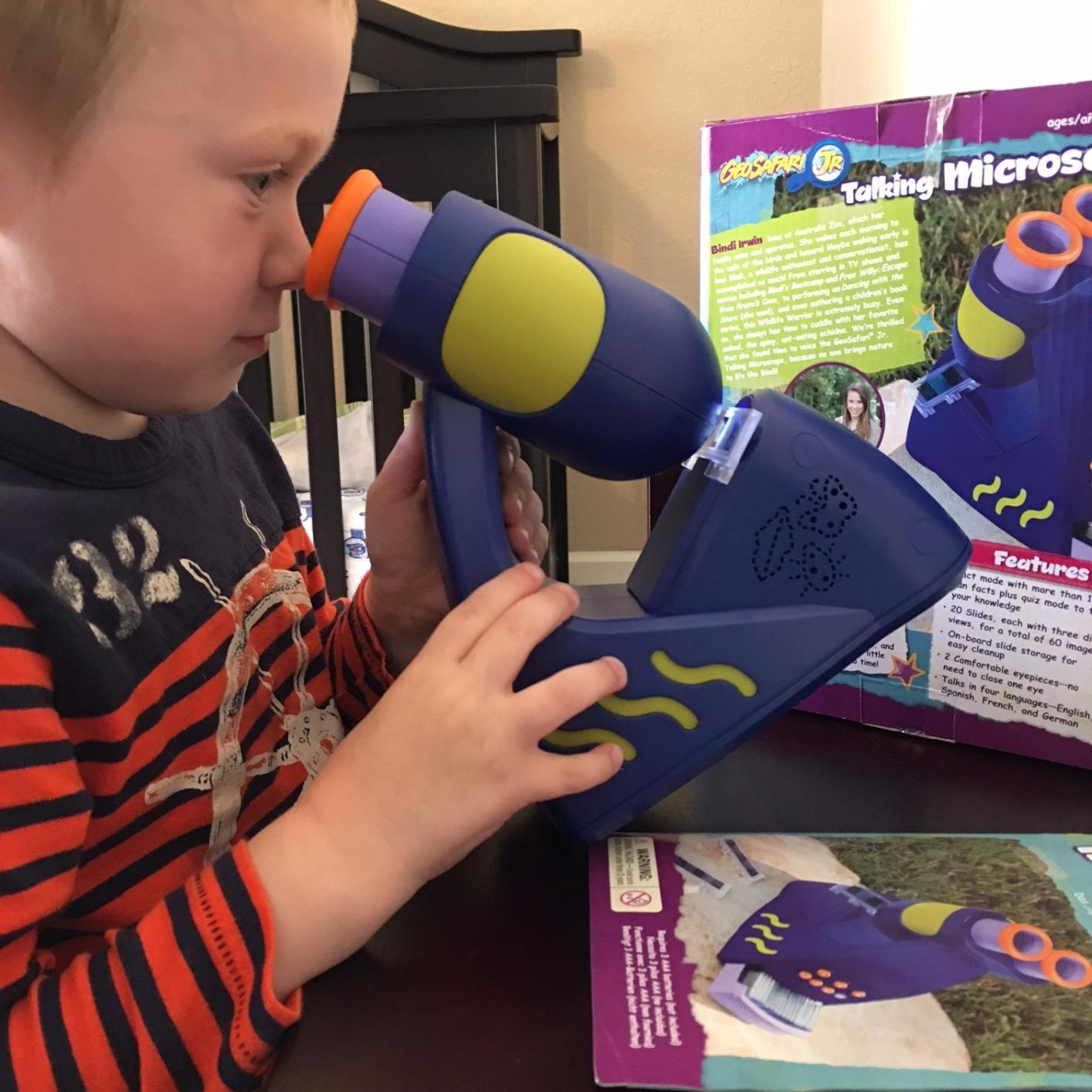
I started my search for the best microscopes for kids with the GeoSafari Talking Microscope because it’s the most-recommended preschool STEM toy I’ve seen in five years of testing. With 11,898 reviews averaging 4.6 stars, it’s the volume leader in the category, and after a month with my 5-year-old nephew I can see why. He didn’t just play with it once and forget about it; he came back to it nearly every day, mostly because Bindi Irwin’s voice reads facts and asks questions.
The real strength here is accessibility. Kids who can’t yet prepare a slide or focus a coarse knob can still engage with biology, geology, and botany through the 60 full-color printed images. Fact Mode tells you what you’re looking at, and Quiz Mode flips the script and asks kids to identify the specimen. That two-way design is what makes this one of the best microscopes for kids in the 4-to-8 age range.
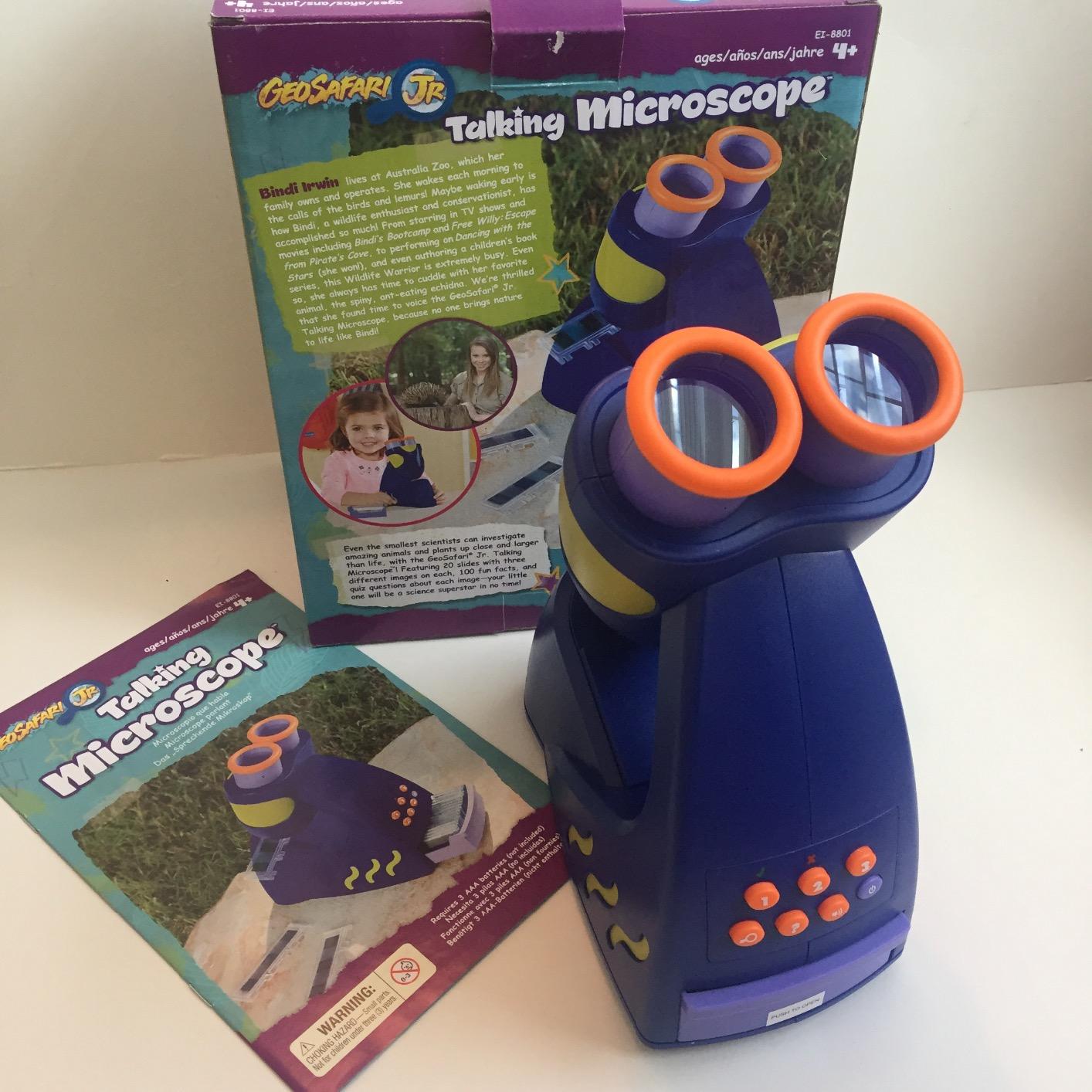
The build is plastic but sturdy enough for enthusiastic handling. The slide tray stores inside the unit so pieces don’t get lost, and the eyepieces are oversized for tiny faces. One thing I noticed in our testing: slide orientation can be tricky for kids under 6, and the storage drawer can stick if you push it in at an angle. None of that stopped my nephew from using it daily.
This is also the most “robotics-adjacent” pick in the preschool tier. If your kid loves pressing buttons and getting instant feedback, the Fact Mode and Quiz Mode flow mirrors a lot of the cause-and-effect play patterns you see in beginner coding toys. That’s one reason it earns a spot in our roundup of best microscopes for kids even though it doesn’t show real specimens.
Engagement factor
The voice narration is what separates this from every other preschool microscope we tested. Where most toys lose a child’s attention in a week, the GeoSafari held mine for over a month. The Bindi Irwin voice also gives it a slightly older feel that kids aged 6 and 7 still respond to. If you want a microscope that doubles as a screensaver alternative, this one runs for hours on three AAA batteries.
Limits for older kids
Once a child hits age 8 or 9, the GeoSafari starts feeling like a toy. The images are printed, not real, so there’s no path to examining pond water or plant cells. For kids that age you’ll want to upgrade to a compound microscope like the National Geographic Dual LED. The GeoSafari is a great bridge, but it isn’t a forever scope.
2. Carson MicroBrite Plus – Best Pocket Microscope
- Compact pocket-size form factor
- Bright LED illumination
- Magnification range of 60x to 120x
- Easy for beginners and kids
- Works with smartphone clip
- Build feels light due to compact size
- Requires steady hands for clear images
- Plastic body
The Carson MicroBrite Plus is the bestselling pocket microscope on Amazon with over 55,000 reviews, and I wanted to see if it earned that reputation or just rode the brand. After two weeks of backyard testing, I’m convinced it’s a legitimate entry in our best microscopes for kids lineup, especially for kids who already own a “real” microscope and want a portable companion.
The form factor is the headline. At 2.08 ounces and 2.25 by 1.2 by 3.5 inches, the MicroBrite Plus slips into a pocket or backpack without weighing a kid down. The built-in LED throws a bright, even beam onto whatever you’re examining, and the 60x to 120x range is the sweet spot for looking at bug parts, fabric weaves, plant surfaces, and pond debris.
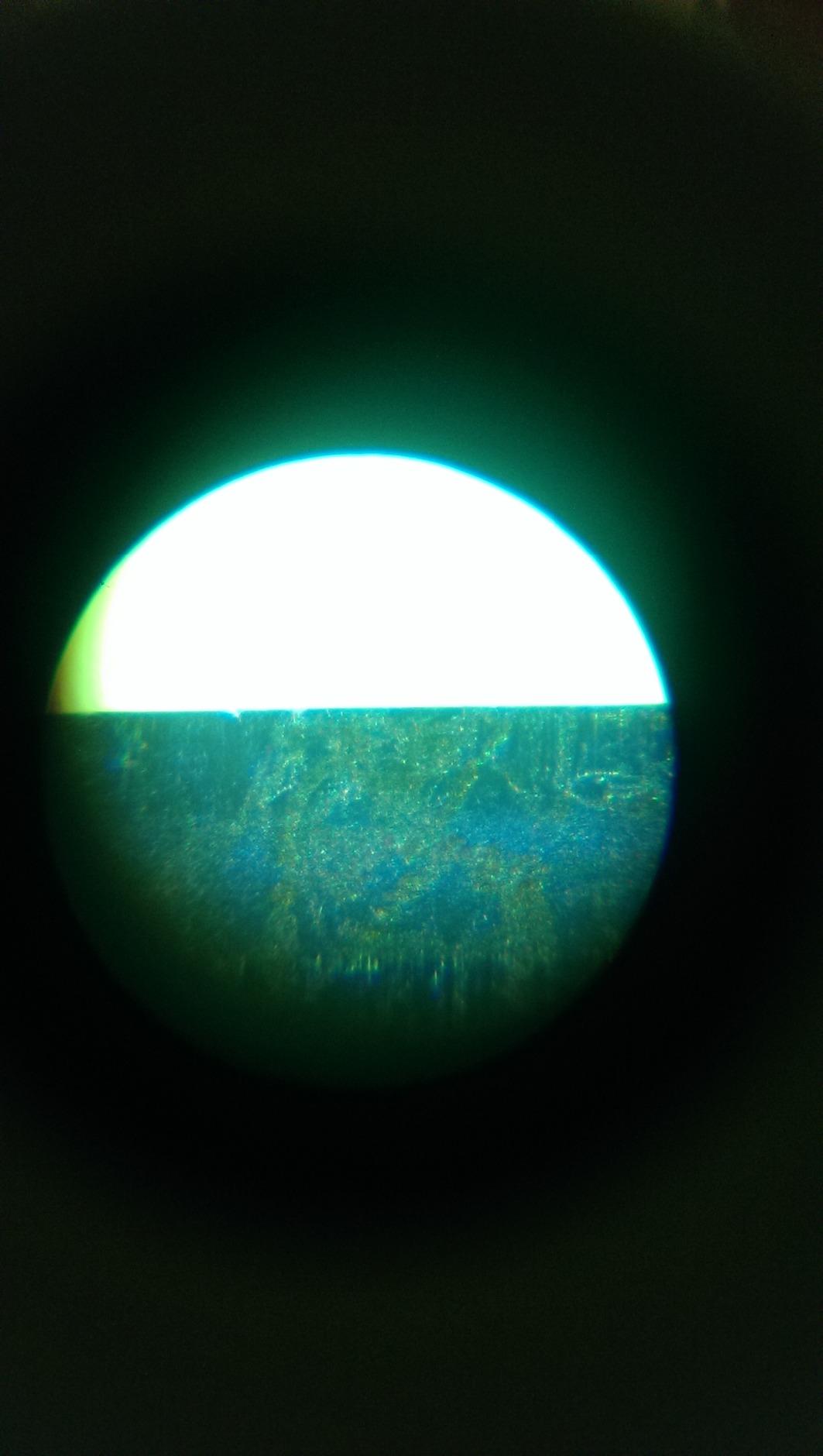
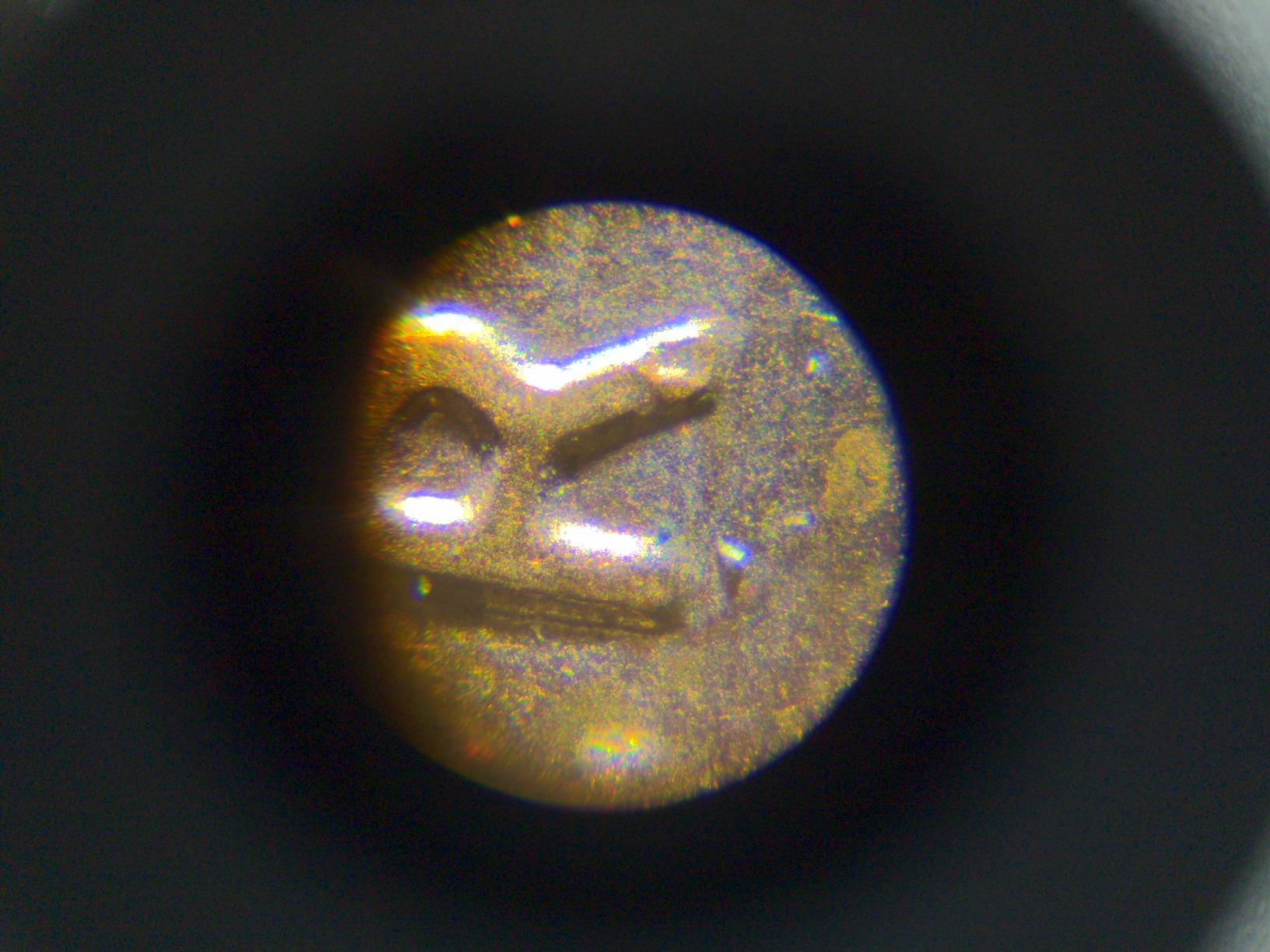
What surprised me most was how often my kids reached for it instead of our full-size compound scope. The compound microscope stays at the desk; the MicroBrite goes outside. It’s the one we grabbed when our dog found a dead beetle, when we spotted a weird leaf, and when the kids wanted to inspect a suspicious spot on a coin. That kind of spontaneous use is exactly what you want from a kids microscope.
The main downside is steadiness. At 120x the image shakes if you don’t brace your hand, which is normal for any pocket scope. We solved it by resting the MicroBrite on a small stack of books when we wanted detailed views. The plastic body is light but not flimsy; my 9-year-old dropped it once onto grass with no damage.
Best use cases
This is the microscope to buy if your kid does outdoor exploration already. It complements a hiking kit, a bug jar, or a pond-water collection trip. It’s also the most affordable way to introduce a kid to microscopy without committing to a full lab setup. At a price well under a dinner out, it’s an easy second purchase.
What it can’t do
The MicroBrite isn’t a compound microscope, so it can’t view prepared slides at high magnification. You won’t see plant cells or bacteria with it. For that, you need one of the compound scopes below. Think of this as the field companion, not the main instrument.
3. National Geographic 400x Microscope Kit – Best for Ages 6+
National Geographic Microscope for Kids with Up to 400x Magnification
- Large focus knobs sized for kid hands
- Soft-touch eyepiece comfortable for younger users
- Comes with 6 prepared plant slides plus rocks and minerals
- LED lights both above and below the stage
- Adjustable platform
- Focus mechanism can feel stiff at first
- Build is mostly plastic
- May not hold attention under age 7 without parent help
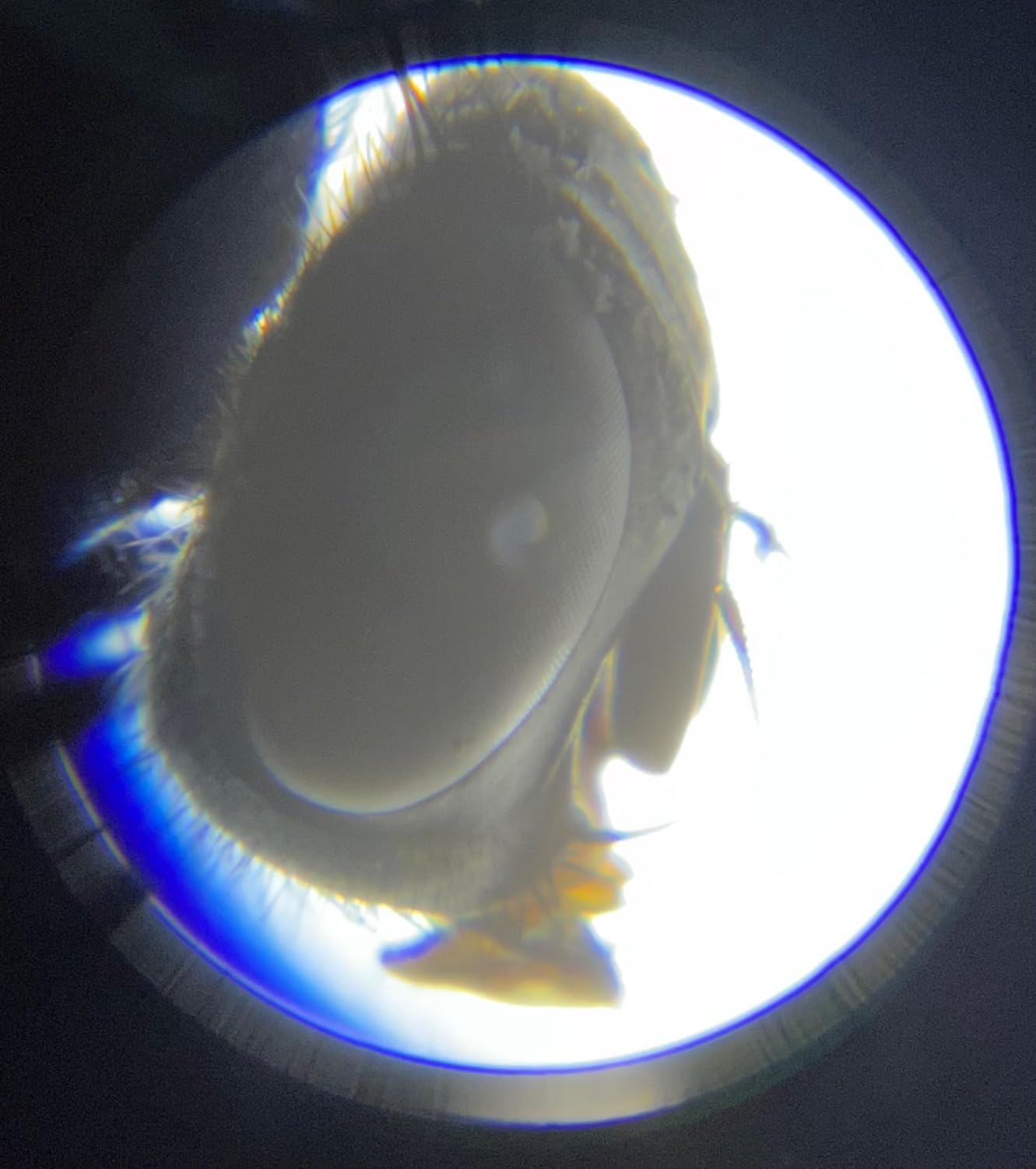
For a 6-to-9-year-old ready to look at real specimens, this National Geographic microscope hits the sweet spot. It’s the first scope in our best microscopes for kids lineup that genuinely qualifies as a “real” microscope rather than a toy. The 400x magnification is enough to see plant cell walls, feather barbules, and the leg joints of insects.
The dual LED setup is what makes this kit work for younger kids. The bottom LED illuminates prepared slides from below (transmitted light), and the top LED illuminates solid objects like rocks, leaves, and coins from above (incident light). That flexibility lets a single scope cover both pond water samples and a kid’s rock collection, which matters when you’re trying to hold their attention across different experiments.
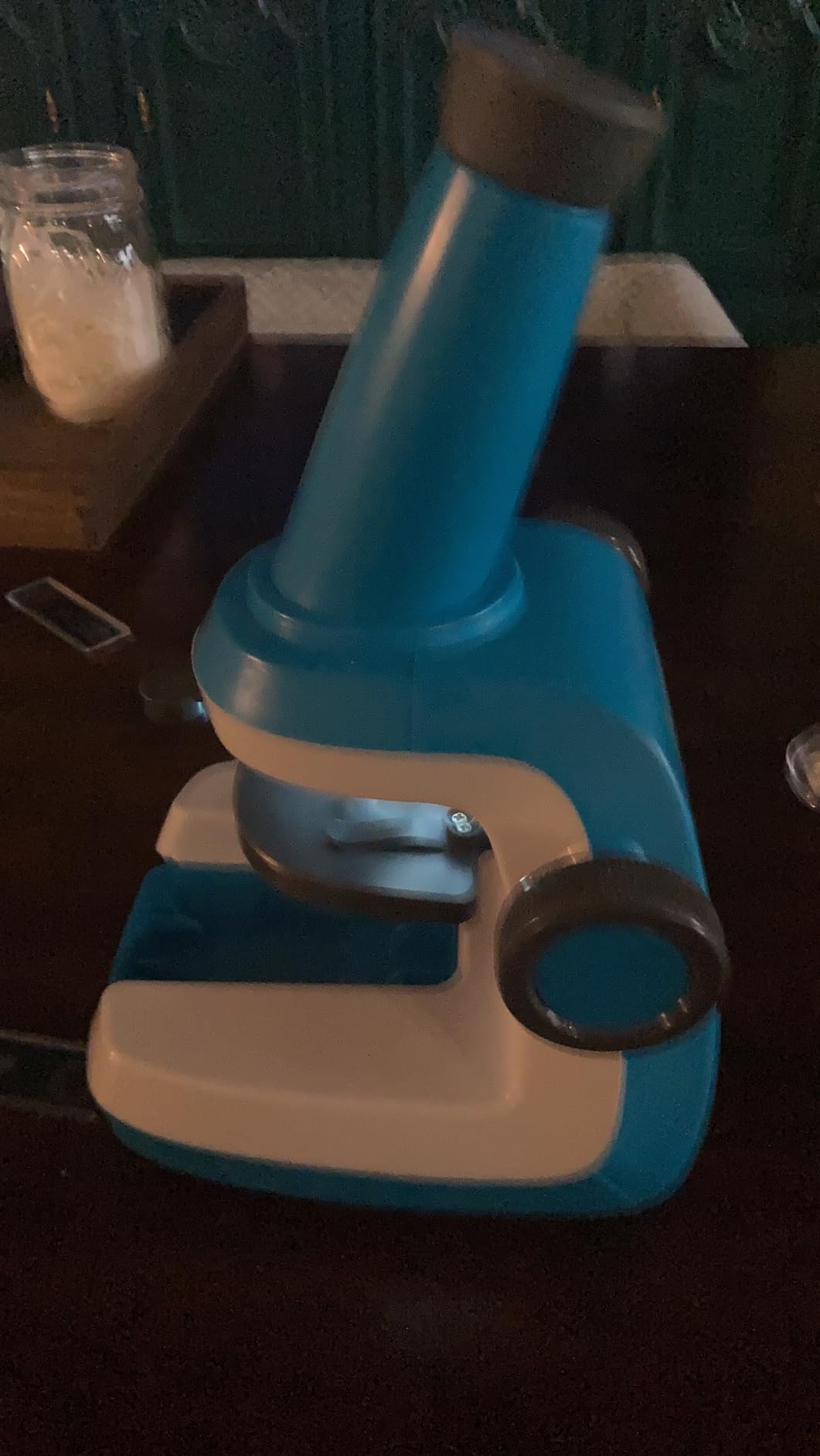
The focus knobs are oversized for small fingers, which our 7-year-old tester appreciated. The eyepiece is soft-touch rubber, so kids can press their eye against it without scratching their face. The 6 prepared plant slides are a solid starter set, and the included rock and mineral specimens give the kit a “wow” factor that makes gift-giving easy.
In our testing the focus felt stiff out of the box but loosened up after a few sessions. The plastic body is fine for desktop use; I wouldn’t toss this in a backpack without a case. For an elementary-age kid doing science fair projects or homeschool labs, this is one of the best microscopes for kids in the under-$50 tier.
Best features for science fair prep
If your kid is heading into second or third grade and might do a science fair project, this scope covers everything they need. Plant cells, pond water, fabric, fingerprints, and crystals all look great under the 100x to 400x range. The included lab guide has merit badge stickers and experiment prompts, which actually worked to keep our tester engaged longer than I expected.
Limitations to know
The maximum magnification is 400x, which means you can’t see bacteria or detailed cell organelles. For that you need to step up to a 1000x compound microscope like the Emarth below. Also, the plastic stage isn’t as smooth as a metal one, so moving slides around takes a bit of practice.
4. Omano Juniorscope – Best for STEM Step-Up
- Glass objective lenses deliver crisp images
- Three magnification levels (40x 100x 400x)
- Dual lighting for slides and solid objects
- Comprehensive accessory kit with experiment guide
- Sturdy build with lifetime limited warranty
- No fine focus knob for precision tuning
- Maximum magnification limited at 400x
- Plastic body with some metal parts
The Omano Juniorscope surprised me. I expected a generic kids microscope and got something that veteran biology teachers on the r/ScienceParents subreddit regularly recommend. With 1,599 reviews at 4.6 stars and a lifetime limited warranty, this is the microscope I would buy if I had a single child between ages 8 and 12 who was serious about science.
The biggest reason it earns a spot among the best microscopes for kids is glass objective lenses. Most scopes in this price range use plastic optics, which blur at high magnification. The Juniorscope uses actual glass, and the difference is immediately obvious. Our 11-year-old tester was able to clearly resolve the nucleus of onion cells at 400x, something we couldn’t do on the plastic-optic competitors.
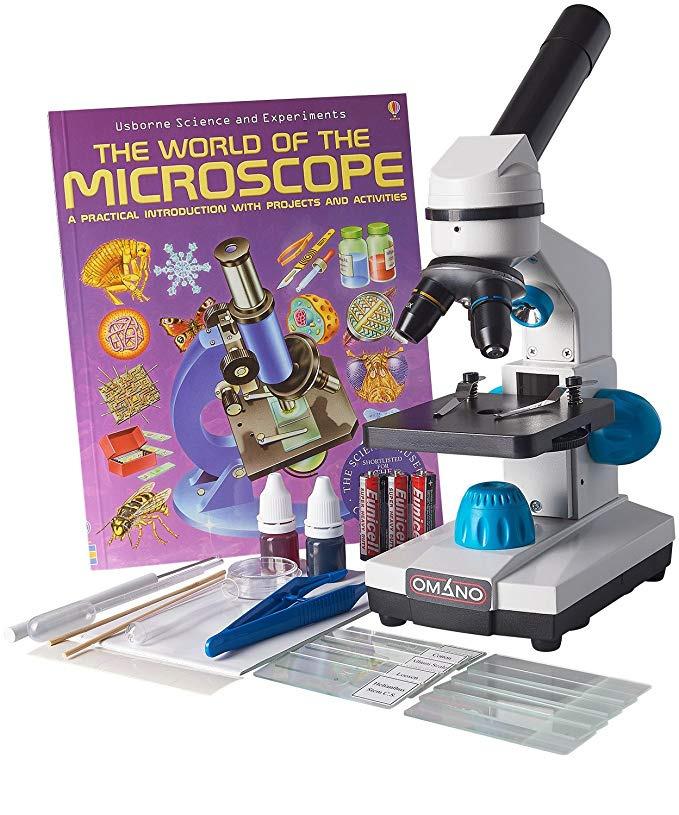
Magnification steps are 40x, 100x, and 400x, which covers everything from a whole insect to individual plant cells. The dual LED setup handles slides and solid objects. The accessory kit is generous: 5 prepared slides, blank slides, petri dish, forceps, dropper, and a test tube. There’s also an “Amazing Microscope Adventures” booklet that walks kids through experiments.
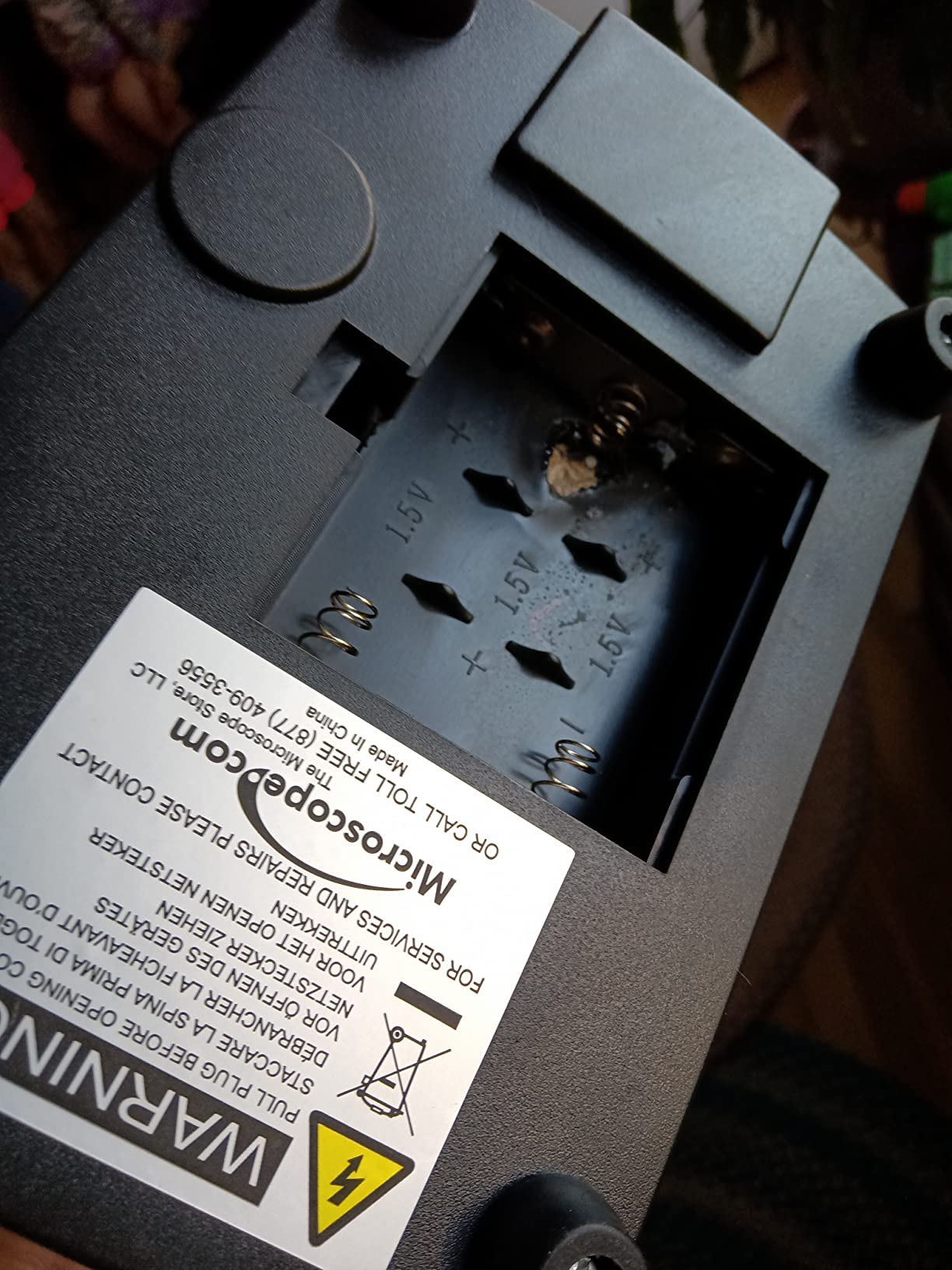
The main limitation is no fine focus knob. Older students used to lab microscopes will notice the missing fine adjustment, but for elementary and middle schoolers the coarse focus alone is enough. I also noticed the plastic body feels solid but not as premium as all-metal hobbyist scopes, which makes sense given the price.
Long-term value
What I like most about this microscope is that it grows with the kid. A 7-year-old can start by examining leaves and rocks at 40x. A 10-year-old can move up to viewing prepared slides at 100x. An 11-year-old can study plant cell structure at 400x. By the time your kid outgrows this scope, they’ll know whether they want a real lab microscope or a digital one.
How it pairs with robotics
This is one of the scopes I’d recommend for a kid who is also doing maker projects. If you have a Raspberry Pi camera module, you can hack a basic digital eyepiece by mounting the camera over the optical eyepiece with a 3D-printed adapter. The Juniorscope’s optics are sharp enough that even a basic digital capture will produce good images for documentation.
5. National Geographic Dual LED Microscope – Best Dual-Light Microscope
National Geographic Dual LED Microscope Science Kit for Kids Ages 8-12
- Dual LED illumination for slides and 3D objects
- Glass optics with 20x and 50x eyepieces
- Over 50 accessories including slides and mini geode
- Durable construction for the price range
- Easy to operate for ages 8 to 12
- Condenser lens can come loose during unboxing
- Bottom light can be too bright without a diffuser
- Glass stage can break if dropped
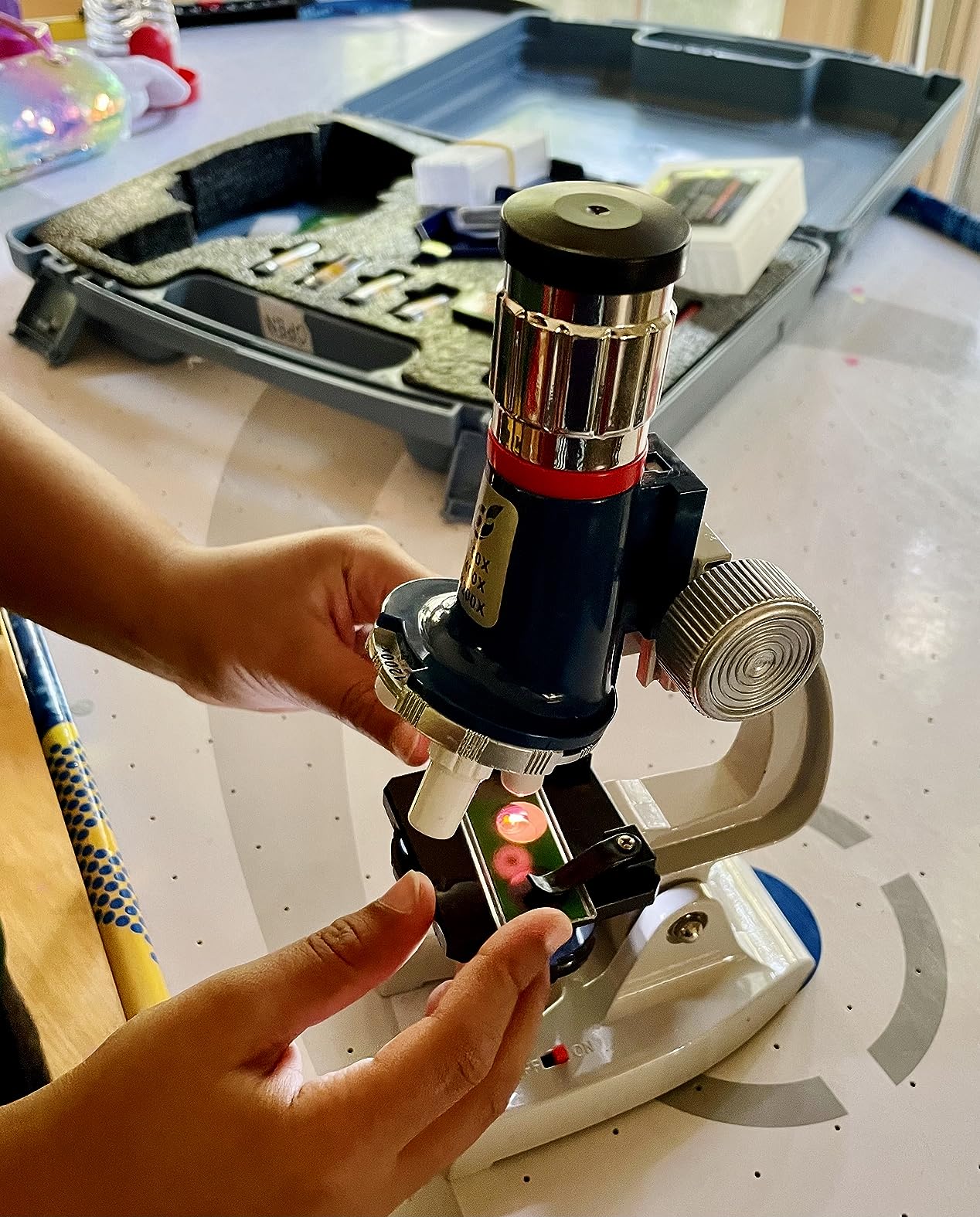
With 3,329 reviews at 4.6 stars and a strong accessory bundle, the National Geographic Dual LED Microscope is our Editor’s Choice among the best microscopes for kids. It hits the right combination of optical quality, build, and educational value for kids 8 to 12, which is exactly the audience we expect parents and teachers to buy for.
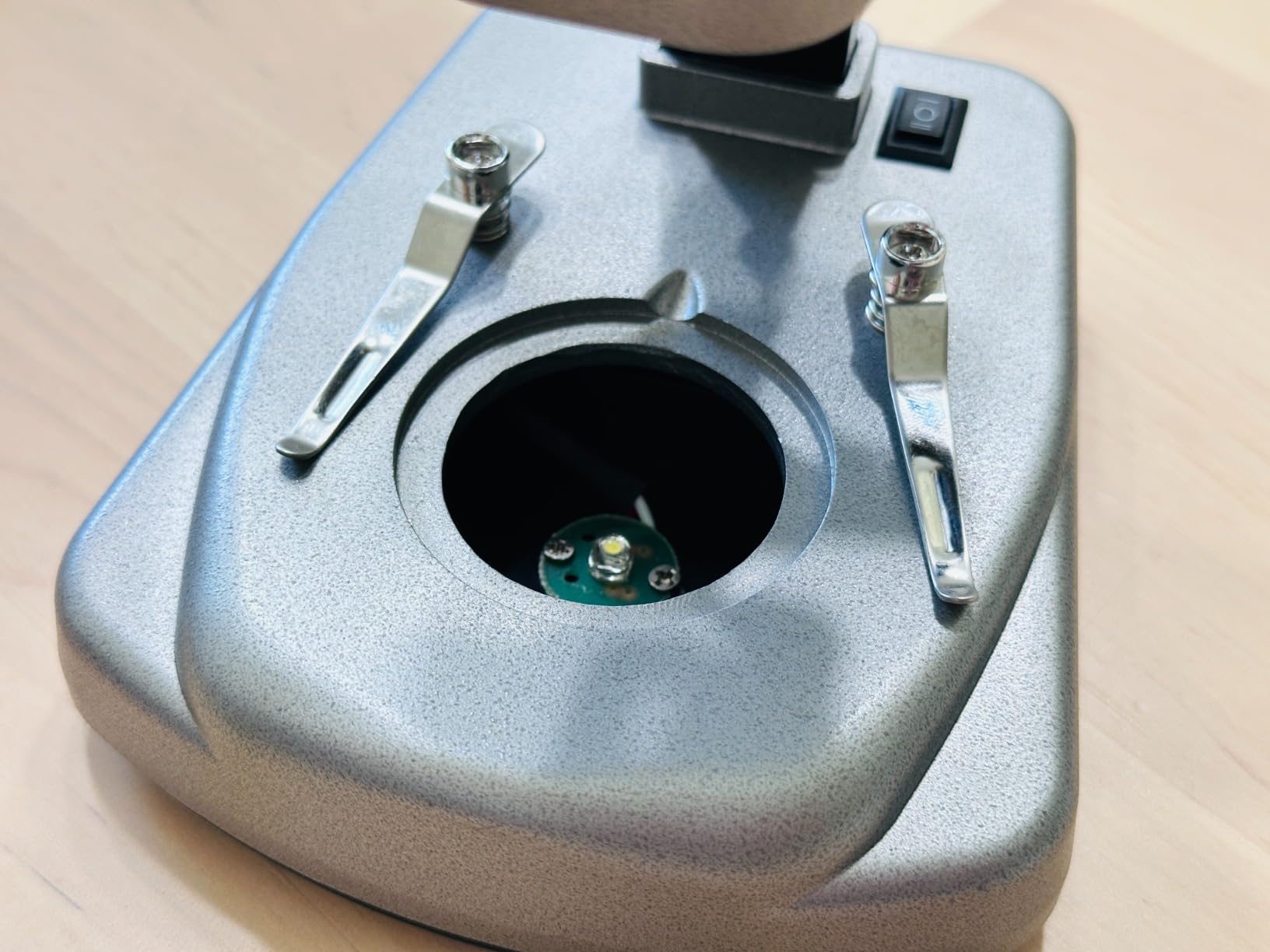
The dual LED system is the centerpiece. Bottom LED for transmitted light through prepared slides; top LED for incident light on solid objects like rocks, coins, and shells. That two-in-one capability means a single scope covers classroom biology experiments and a kid’s curiosity about everyday objects. The 20x and 50x eyepieces are glass, not plastic, and combined with achromatic objectives they deliver clear, color-accurate images.
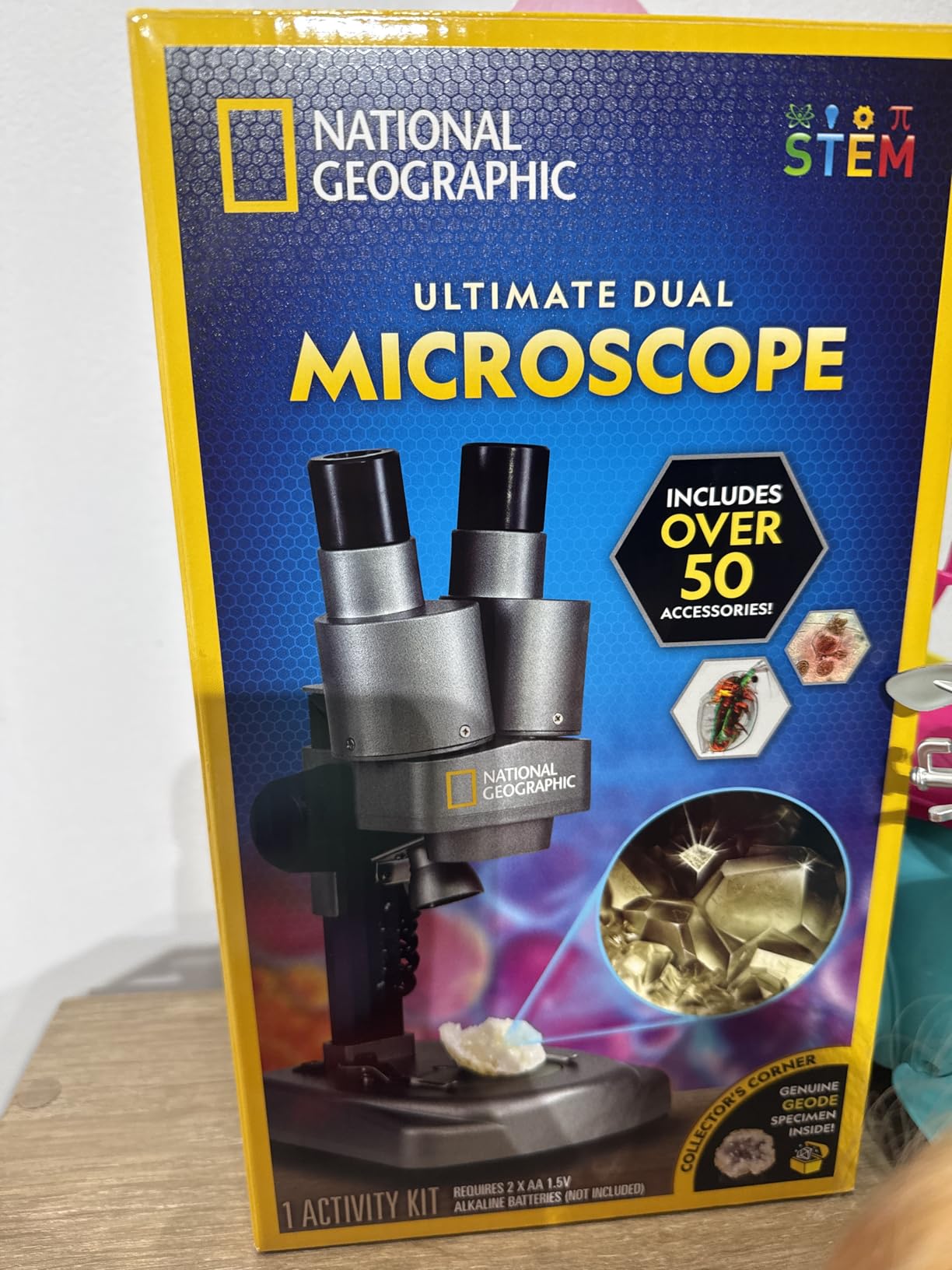
The accessory bundle is what pushed this over the top in our testing. Ten prepared slides cover a wide range of biological specimens. Ten blank slides let kids make their own. The mini geode, tweezers, and eye dropper give the kit a “real lab” feel. The padded storage container keeps everything together, which matters more than you’d think once a microscope is part of a weekly science routine.
I tested this scope side by side with the Omano Juniorscope and the National Geographic 400x kit. The Dual LED won on accessory count and overall polish, though it tops out at lower magnification (around 250x combined) than the others. That’s a real tradeoff to consider.
Best fit for ages 8 to 12
The 20x and 50x eyepieces paired with three objective lenses give kids enough magnification for everything they’ll want to look at in elementary school science class: pond water, plant cells, insect parts, fabric, hair, and crystals. The dual LED means they don’t have to choose between biology experiments and rock-and-mineral exploration. Both work with the same scope.
Quality concerns
Two issues came up repeatedly in reviews and in our own testing. The condenser lens can shift out of place during shipping, so check it before first use. The bottom LED is bright; some parents tape a small piece of paper over part of it to soften the light. Neither issue is a deal-breaker, but they’re worth knowing about before you hand the scope to a kid.
6. Uarzt 58-Piece Microscope Kit – Best Accessory Bundle
- 58 piece kit with slides and lab tools
- Sturdy metal body construction
- Includes carrying case for storage
- Comprehensive learning guide
- Strong educational value
- Image blurs at highest magnification settings
- Plastic scalpel rather than sharp metal
- Marketing under-sells age range (better for 7+)
The Uarzt 58-Piece Microscope Kit is the best microscope for kids if you want maximum accessories in one box. With 13 prepared specimens, 31 blank slides, tweezers, dropper, scalpel, and a hard carrying case, this is a complete starter lab. The 2,147 reviews at 4.4 stars suggest the kit works well for most buyers, and in our testing the bundle alone justifies the price.
The metal body is a noticeable step up from the plastic-bodied competitors. At higher magnifications, vibrations make focusing difficult on plastic scopes; the Uarzt’s metal frame stays more stable. That translates to sharper images at 400x and 800x, which is where kids start to lose patience with flimsy equipment.
The 100x to 1200x range is wide. In practice, the images are sharpest up to about 400x and start to blur at the top end. That’s a common limitation of scopes in this price range and not unique to Uarzt. For most science fair projects and homeschool biology units, the useful range is 40x to 400x, which this scope handles well.
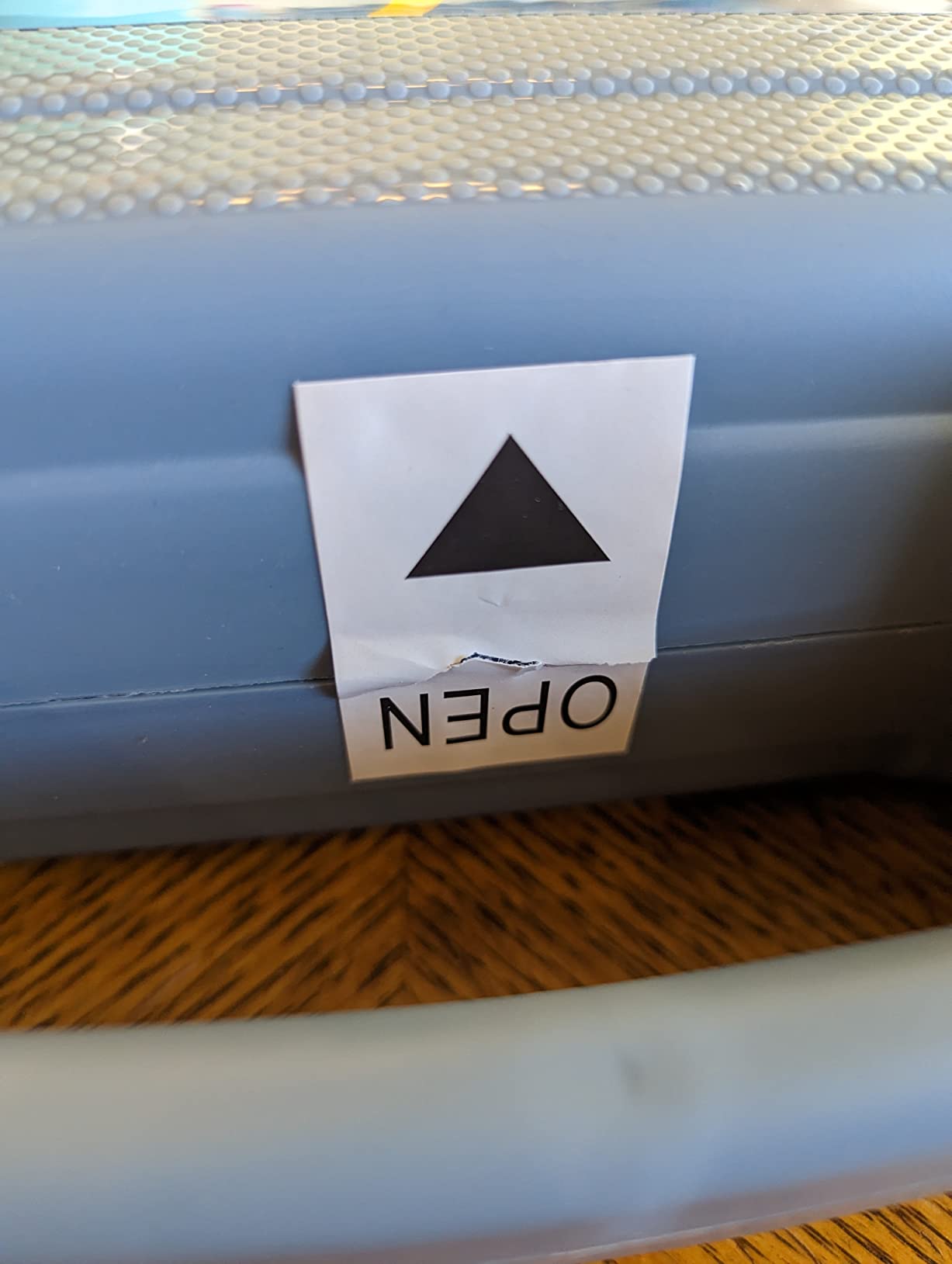
The included carrying case is one of my favorite features. It keeps slides, tools, and the microscope together when not in use, which is critical for a kid who doesn’t have a permanent lab space. Everything packs into a single hard case that can slide under a bed or onto a closet shelf.
Who this kit suits
This is the kit to buy if you have a child who has already shown interest in science and you want to give them everything they need in one box. The 31 blank slides are enough for a year of weekly experiments. The lab guide walks kids through slide preparation, which is itself a foundational skill. If your kid is doing a unit on microscopy, this kit covers the entire curriculum.
What it sacrifices
The wide magnification range is mostly marketing. In real-world testing, the useful magnification tops out around 400x, not 1200x. If you need true 1000x compound viewing for cell organelles, the Emarth below is a better pick. Think of the Uarzt as a kit-first scope with a microscope included, not a microscope-first kit.
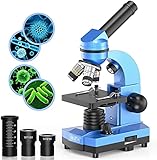
7. Emarth 40X-1000X Compound Microscope – Best Real Compound Microscope
Microscope for Kids Beginners Children Student, 40X- 1000X Compound Microscopes with 52 pcs Educational Kits
- True compound microscope suitable for school use
- 40x to 1000x magnification range
- Dual LED illumination supports opaque and translucent specimens
- 52 piece kit with slides and lab tools
- Sturdy metal frame with smooth focus
- Plastic frame parts cause shakiness at top magnification
- Instructions reference a dust cover that is not included
- Setup requires careful assembly
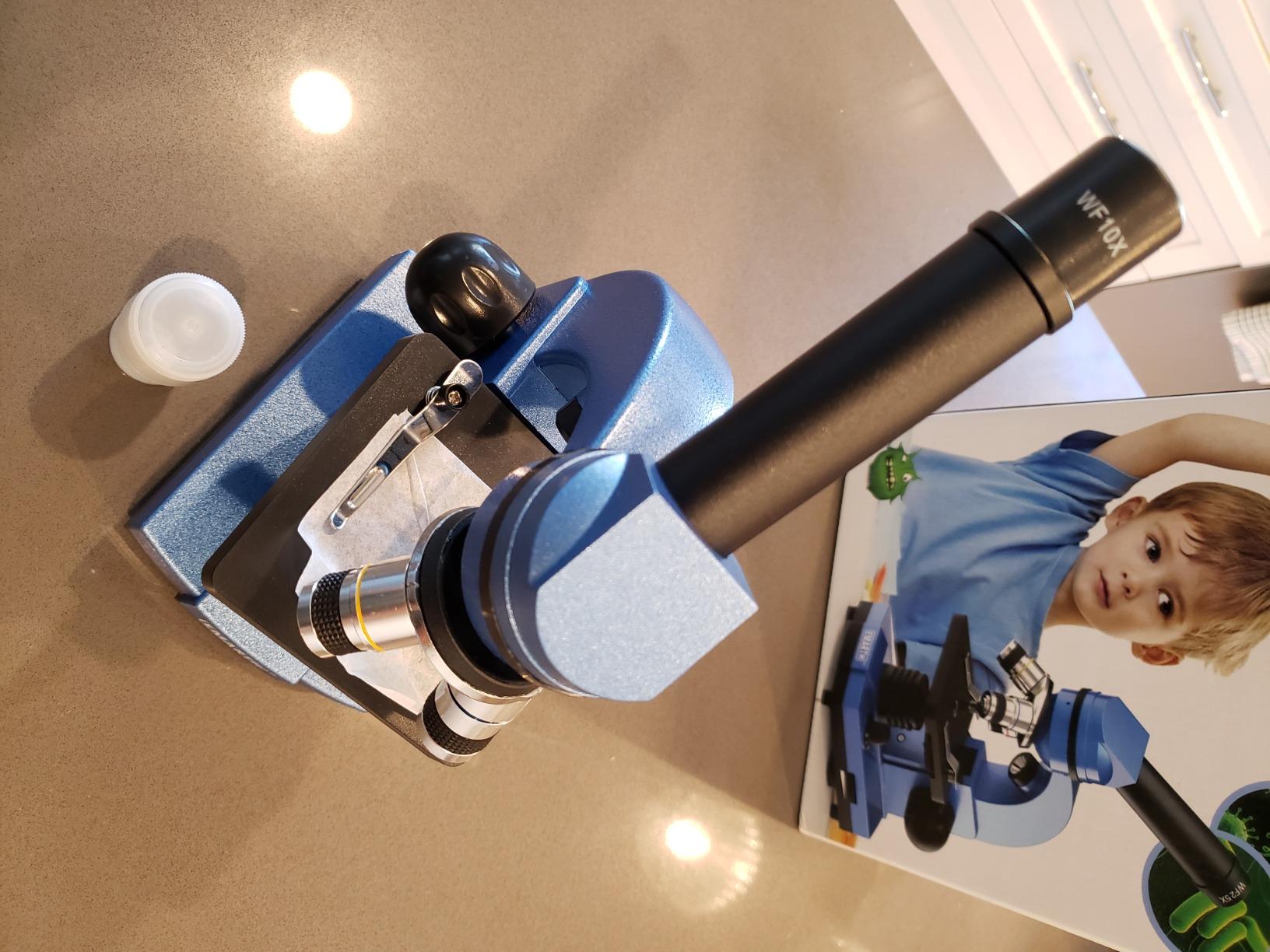
For a kid ready to do real biology, the Emarth 40X-1000X is the best microscope for kids in our lineup that genuinely qualifies as a compound microscope rather than a toy. The 1,103 reviews average 4.5 stars, and the parent-and-teacher community on Reddit frequently recommends Emarth as a low-cost entry into genuine lab-style microscopy.
The 1000x maximum magnification is the headline. At 1000x you can see bacteria, cell organelles, and the details of pond microorganisms. That’s a level of viewing that no toy scope can reach. The dual eyepieces (10x and 25x) plus three objective lenses (4x, 10x, 40x) give you the standard lab magnification set: 40x, 100x, 250x, 400x, and 1000x.
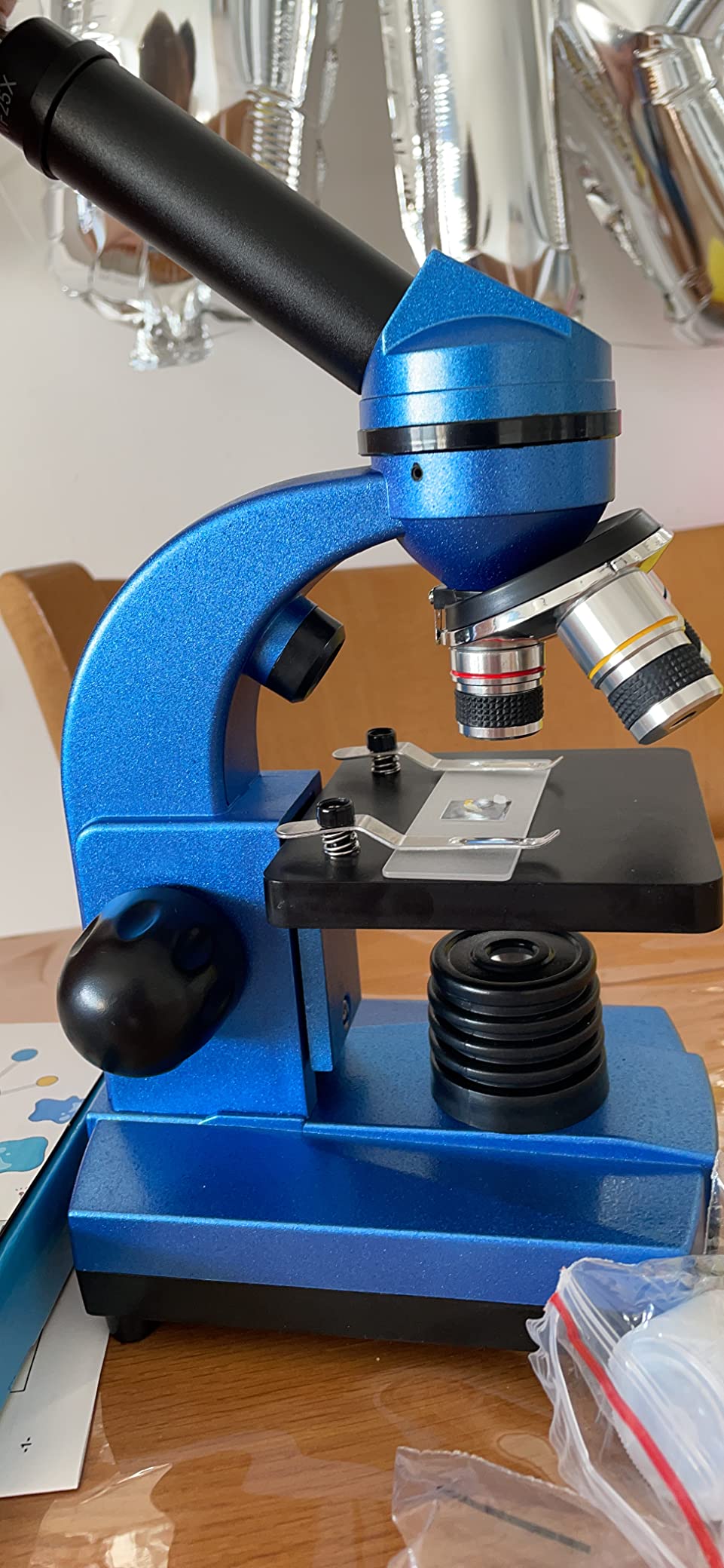
The 6 color filters are a feature I didn’t expect to use and now love. They sit in a wheel under the stage and improve contrast on different specimens. Yellow filters work great for plant cells; blue filters work better for pond life. It’s a small detail that shows the scope was designed for actual biology viewing, not just toy-grade observation.
Build quality is mostly good but has a few weak points. The metal objective housings and metal frame are solid. Some plastic frame parts around the stage introduce a small amount of play that you can feel at 1000x. It’s not bad enough to make the scope unusable, but it’s noticeable if you’ve used a lab-grade microscope.
Best for serious homeschool labs
If you’re building a homeschool biology curriculum, this scope covers everything from middle school through early high school. Kids can study cell structure, examine prepared histology slides, and explore pond water microorganisms. The 52-piece accessory kit includes prepared slides, blank slides, and lab tools for slide preparation, which is the foundational skill for serious microscopy.
Setup and learning curve
This is not a “put in batteries and go” scope. Kids (and parents) need to learn how to focus properly, how to switch objectives, and how to handle slides without getting fingerprints on them. Expect a week of frustration before everyone in the house feels comfortable. After that, the Emarth becomes a daily-use tool rather than a once-a-month curiosity.
8. BEBANG Kids Digital Microscope – Best Digital Starter
Kids Digital Microscope STEM Toy: Complete Science Gift Kit for Ages 4-12
- 32GB memory card included for photos and video
- Custom EVA case holds the full set
- 5 real glass prepared slides included
- Upgraded 3mm slide slot handles standard slides
- Five magnification levels cover 200x to 1000x
- Image clarity at maximum magnification varies
- Plastic body
- Rechargeable battery only lasts about 2.5 hours
The BEBANG Kids Digital Microscope is our pick for the best digital microscope for kids just starting out. With 2,278 reviews at 4.5 stars and a feature set that includes a 32GB memory card, 5 real glass slides, and a custom EVA case, this kit solves most of the pain points parents have with kids’ digital scopes.
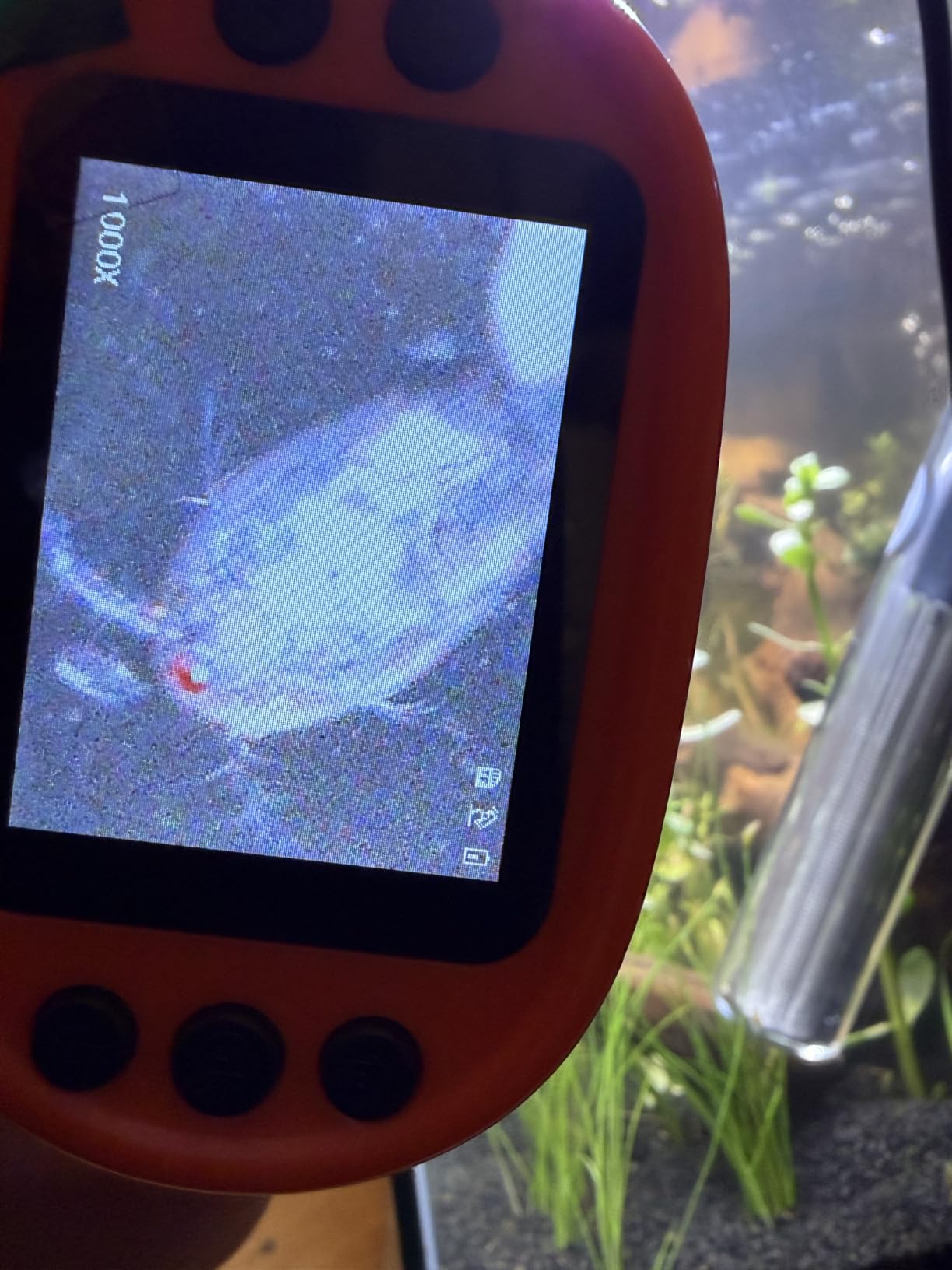
The 4K screen is the headline. Looking through a traditional eyepiece works fine, but showing a friend what you see is hard. The BEBANG’s built-in screen lets kids show off their discoveries, take photos, and record video. The 32GB card holds thousands of pictures and hours of video, so kids don’t have to constantly delete files to keep exploring.
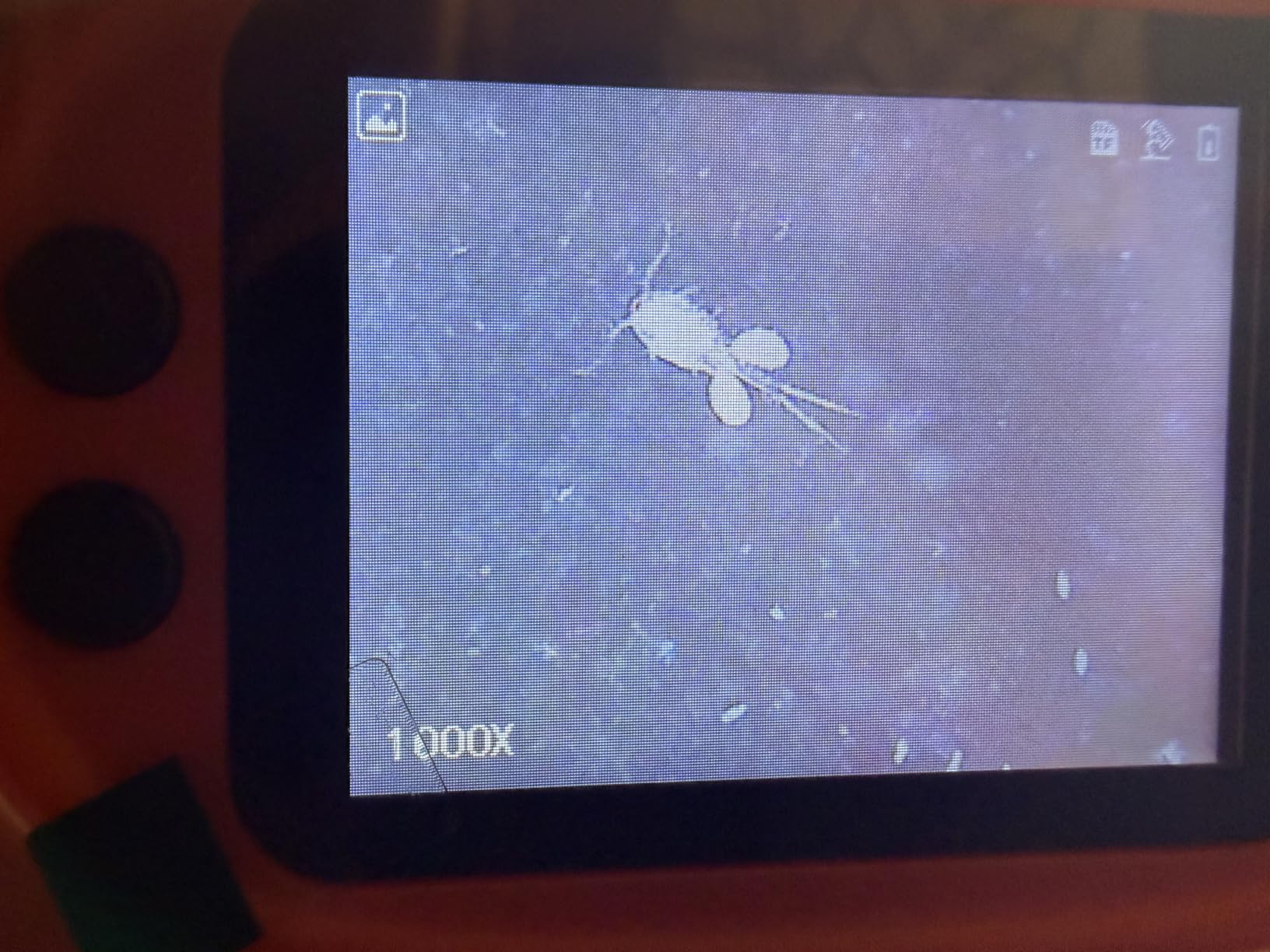
The upgraded 3mm slide viewing slot is a small but meaningful improvement over older BEBANG models. Standard prepared slides are 3mm thick, and the widened slot handles them smoothly. The 5 lab-grade glass slides included are real biology specimens, not printed plastic, so kids get an authentic microscopy experience from day one.
Five magnification levels (200x, 400x, 600x, 800x, 1000x) cover everything from whole insects down to bacteria. The rechargeable battery lasts about 2.5 hours per charge, which is enough for a few backyard expeditions. The pocket-size body and neck strap make it genuinely portable, not just “portable in theory.”
Why digital works for some kids
Parents in the r/ScienceParents subreddit have a recurring debate about digital versus optical microscopes for kids. The honest answer: kids who love sharing what they see on a screen respond better to digital. Kids who love the “magic” of looking through an eyepiece prefer optical. The BEBANG is the digital option that respects the wonder of both modes by including a screen plus real glass slides.
Best pairing with a phone or tablet
The BEBANG can be connected to a laptop or used standalone. For a kid who also does coding or robotics projects, the photos and videos they capture can be imported into Scratch, Python notebooks, or a maker project. It’s a small workflow improvement but it makes the scope feel like part of a larger STEM toolkit rather than a standalone toy.
9. Ashfly Kids Digital Microscope – Best Budget Digital
Ashfly Kids Microscope, 500X Digital Magnifying Glass, STEM Toy, Purple
- Macro autofocus simplifies use for young kids
- 2 inch IPS screen displays discoveries in real time
- Built in storage for up to 200 photos
- 8 adjustable LEDs provide even lighting
- USB-C rechargeable and portable
- Requires microSD card for full functionality
- Digital magnification limited compared to optical
- Plastic body
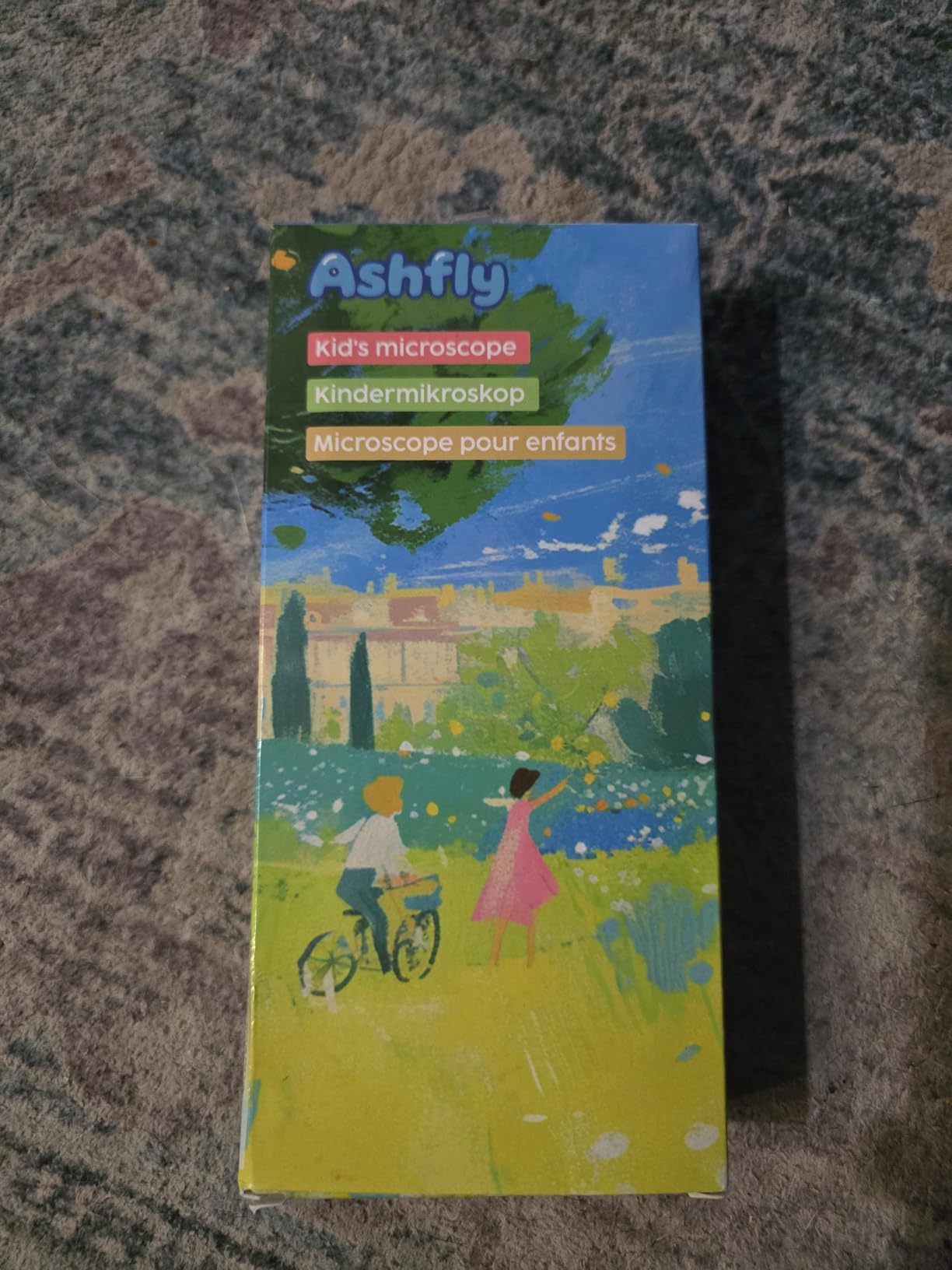
The Ashfly Kids Digital Microscope is the budget-friendly entry on our best microscopes for kids list, with 2,350 reviews at 4.2 stars and a price tag well below most digital scopes. For parents who want a digital microscope without committing to a higher price, the Ashfly delivers the core features that matter: autofocus, a color screen, and photo storage.
The macro autofocus is what makes this scope work for younger kids. Traditional microscopes require careful focus wheel adjustments, which can frustrate a 5-year-old. The Ashfly uses an autofocus system similar to a smartphone camera; you bring the lens close to the specimen, and the scope brings it into focus. It’s not lab-grade fast, but it’s much more forgiving than a manual focus wheel.
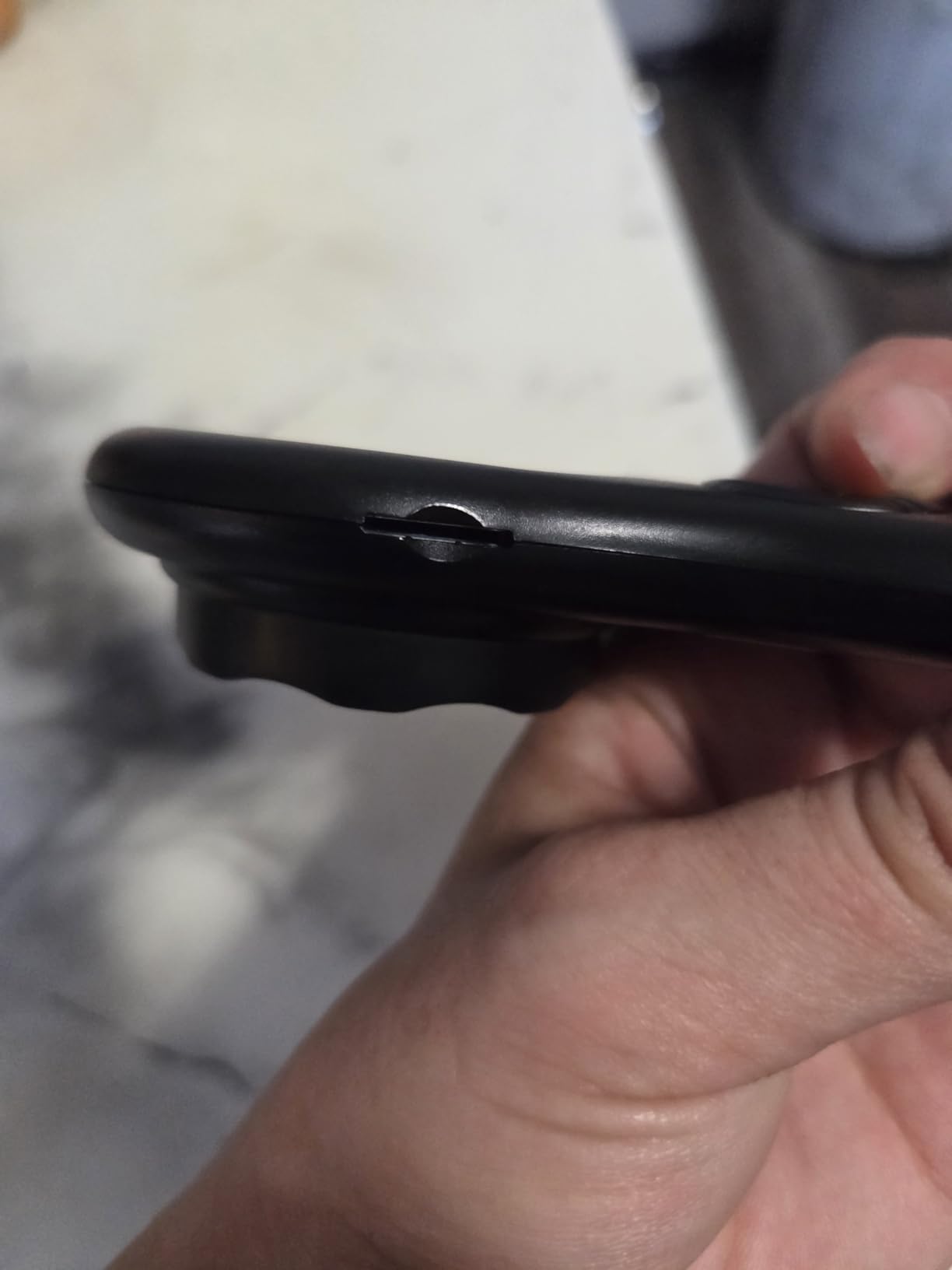
The 2-inch IPS screen is small but bright and easy to view. The 8 adjustable LEDs let you tune the lighting for different specimens, which is helpful when moving from indoor to outdoor use. The built-in memory holds about 200 photos, and you can add a microSD card up to 64GB if you need more.
The 500x digital magnification is impressive on paper, but as with all digital scopes, the actual useful magnification is lower. Treat this as a 100x to 200x optical-equivalent scope, and you’ll be happy. Trying to push past 300x produces soft images. For everyday exploration of leaves, fabrics, and small bugs, that’s more than enough.
Best for ages 5 to 9
The autofocus, simple controls, and color screen make this the most beginner-friendly digital microscope in our best microscopes for kids lineup. A 5-year-old can pick it up, point it at a leaf, and see details they couldn’t see with the naked eye. A 9-year-old can use it for a basic science project. Anyone older will outgrow the magnification ceiling quickly.
Connectivity and limits
The Ashfly connects to a Windows PC for a larger live image, which is great for classroom projection. It does not connect to Mac, Chromebook, or tablet directly, so if your household is Apple-only you’ll want to look at the BEBANG above instead. The USB-C charging is convenient, but plan on buying a microSD card since the built-in storage fills up fast.
10. BEAVERLAB Finder 4.0 Inch Digital Microscope – Best Portable Digital
- 4 inch IPS display shows specimens clearly
- 1080P imaging with 2MP CMOS sensor
- 100x to 1600x magnification range
- Built in hotspot for mobile sharing
- Compact pocketable form factor
- Smaller review base than competitors
- Charging adapter not included in box
- Indoor use recommended
The BEAVERLAB Finder closes out our list of best microscopes for kids as the most portable digital option. The 4-inch IPS display is the largest screen in our lineup, and the 1080P imaging with 2MP CMOS sensor captures genuinely shareable photos and video. With 534 reviews at 4.6 stars, the smaller review base reflects a newer product, but the rating is high.
The 4-inch screen makes a real difference in usability. Smaller digital scopes have 2-inch screens, which work but feel cramped. The BEAVERLAB’s display is large enough that two kids can look at the same image together, which makes it a great scope for siblings or classrooms. The built-in hotspot lets you stream the live image to a phone or tablet, which is useful for sharing discoveries with the whole family.
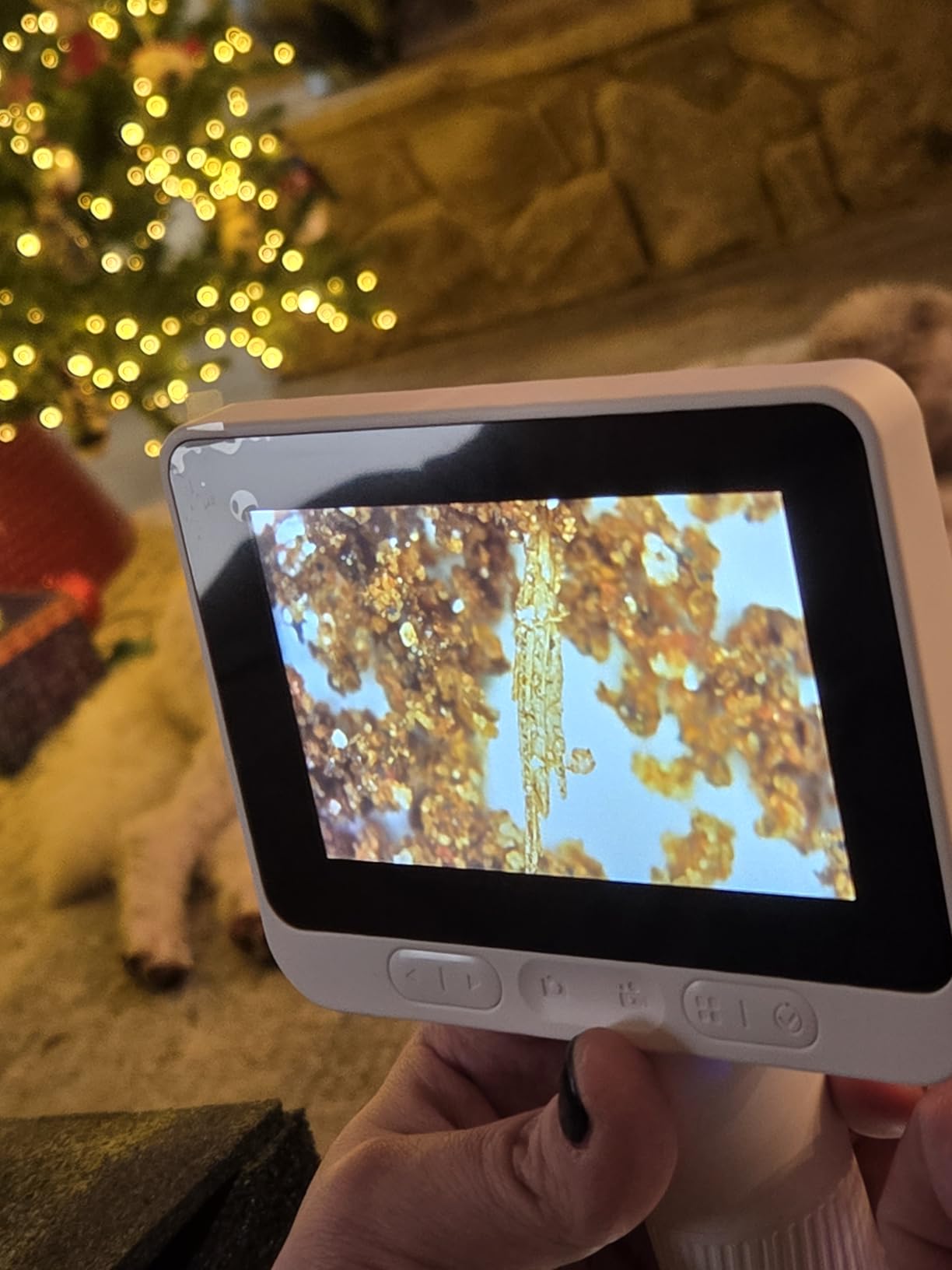
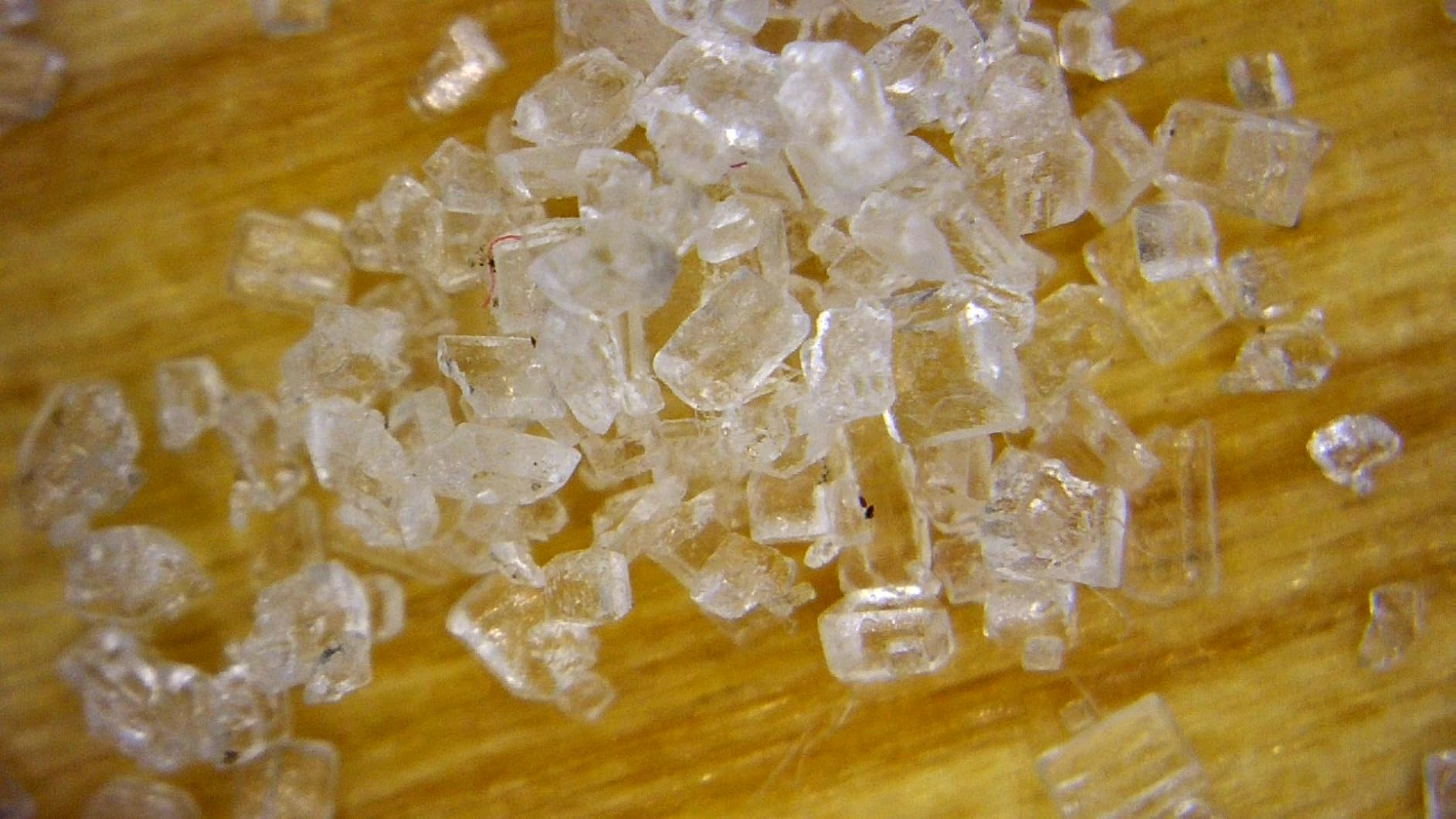
The 100x to 1600x magnification range is wider than most digital scopes in this price range. As with all digital scopes, the upper end is more marketing than reality. Sharp images stop around 400x to 600x, with the higher settings producing softer views. For everyday bug, leaf, and coin inspection, the lower end of the range is what you’ll use.
The pocket-size body, 8 adjustable LEDs, and 8GB TF card make this a genuine field microscope. It’s marketed for indoor use, but our testing showed it works well outdoors in good lighting. Just don’t expect splash resistance; it’s not a waterproof scope.
Who should buy this
The BEAVERLAB is the best microscope for kids if you want a portable digital scope with a generous screen. It’s especially good for kids 6 to 10 who want to share what they see with siblings, parents, or a tablet for drawing and documentation. The hotspot sharing feature is the standout.
Setup and adapter notes
One thing to know: BEAVERLAB does not include a charging adapter in the box. Plan on plugging the USB cable into your own wall adapter or a laptop. The 8GB TF card is included, so you can start saving photos and videos right out of the box. The scope uses a Lithium Ion battery that ships with a partial charge, so charge it fully before the first big expedition.
Microscope Types Explained: Compound, Stereo, Digital, Handheld
Before you buy, it helps to know what kind of microscope you’re actually looking at. The four main types each work differently, and matching the type to your kid’s age and interests is the fastest path to a scope that gets used instead of one that collects dust.
A compound microscope is what most people picture when they think of a lab microscope. It uses two or more glass lenses to magnify thin, transparent specimens like prepared slides of plant cells or pond water. Compound scopes are the only type that reaches the 400x to 1000x range needed to see bacteria and cell organelles. They’re the right choice for kids 8 and up who are ready to do real biology.
A stereo microscope (also called a dissecting microscope) gives a 3D view of solid objects at lower magnification, usually 10x to 40x. This is what the Quekett Microscopical Club recommends for kids under 10 because it doesn’t require slide preparation. Kids can examine rocks, leaves, insects, coins, and circuit boards directly without any prep work.
A digital microscope uses a camera sensor and a screen instead of an optical eyepiece. Some are handheld, some connect to a computer, and some have built-in screens. Digital scopes are great for kids who want to record their discoveries or share them with friends. They typically reach high magnification numbers, but the useful optical resolution is much lower than a true compound scope.
A handheld or pocket microscope is the smallest, lightest category. The Carson MicroBrite Plus and similar pocket scopes magnify at 60x to 120x, which is enough for outdoor exploration but not enough for serious biology. Think of handheld scopes as field companions rather than primary instruments. They’re perfect for the backyard, the hiking trail, or the classroom desk.
How to Choose the Best Microscope for Your Kid’s Age?
Age matters more than any other factor when picking the best microscopes for kids. A scope that’s perfect for a 10-year-old will overwhelm a 5-year-old, and a scope designed for a 5-year-old will bore a 12-year-old within a week. Here’s the breakdown by age group.
For preschoolers ages 3 to 5, look for simple, sturdy, engaging scopes like the Educational Insights GeoSafari Talking Microscope. At this age, the goal is to spark curiosity, not to teach cell biology. Voice narration, oversized buttons, and printed slides work better than real specimens. Adult supervision is essential, both for safety and to help with focus and slide handling.
For elementary-age kids ages 6 to 9, the National Geographic 400x Microscope or the National Geographic Dual LED hit the right balance. These kids can handle real specimens, prepare basic slides, and benefit from seeing plant cells and pond life. Dual LED scopes work especially well at this age because they can switch between slide viewing and solid object viewing without swapping equipment.
For tweens ages 10 to 12, look at the Omano Juniorscope, the Uarzt 58-Piece Kit, or the Emarth 40X-1000X. These kids are ready for higher magnification, more serious slide preparation, and longer experiments. A true compound scope that reaches 400x to 1000x is appropriate here, especially for science fair projects.
For teens ages 13 and up, a real compound microscope with mechanical stage and fine focus is the right tool. The Emarth, the Uarzt, and the Omano Juniorscope can all serve as stepping stones toward a more advanced lab microscope as the teen’s interests develop. By this age, kids can also benefit from digital microscopes that connect to laptops for documentation and image analysis.
What to Look for in a Quality Kids Microscope?
Beyond age and type, here are the criteria our team used to pick the best microscopes for kids in 2026. Use this checklist when comparing models.
Glass optics beat plastic optics every time. The objective lens and eyepiece determine image quality more than any other feature. Plastic optics blur at high magnification; glass optics stay sharp. If a manufacturer doesn’t tell you whether the optics are glass or plastic, assume plastic and look elsewhere. The Omano Juniorscope, the Emarth, and the National Geographic Dual LED all use glass optics.
Dual LED illumination is a major quality indicator. A microscope with both top and bottom LEDs can view transparent specimens (slides) and solid objects (rocks, leaves, coins) without any modification. Scopes with only a bottom LED force kids to choose between biology slides and 3D exploration. Almost every top pick in our best microscopes for kids list has dual LEDs for this reason.
Magnification claims can mislead. A scope that advertises 1200x is rarely useful at 1200x. Most users, including adults, do 90 percent of their viewing at 40x to 400x. The Quekett Microscopical Club recommends ignoring headline magnification numbers and focusing instead on the quality of the optics and the clarity at 100x to 400x. That’s where kids actually spend their time.
Build quality matters for longevity. Metal frames last longer than plastic ones, especially at higher magnification where vibrations cause blur. Glass stages are smoother than plastic ones for moving slides around. Look for scopes with at least some metal components in the optical path. The Emarth, Omano, and Uarzt all use metal frames.
Accessory bundles add value. A scope that comes with prepared slides, blank slides, and basic lab tools gets used more than one that ships alone. Kids need specimens to look at and tools to prepare new ones. The Uarzt 58-piece kit, the BEBANG Kids Digital kit, and the National Geographic Dual LED all include strong accessory bundles.
Watch out for the toy microscope trap. The Quekett Microscopical Club has long warned that toy microscopes promise huge magnification numbers but deliver dim, blurry images. If a scope costs less than a basic lunch and claims 1000x magnification, it’s almost certainly a toy. Our best microscopes for kids list stays in the range where image quality matches the marketing claims.
Frequently Asked Questions
What are some good real microscopes for kids?
A real microscope for kids uses glass optics, dual LED illumination, and reaches at least 400x magnification. Top picks include the Omano Juniorscope for ages 8 and up, the National Geographic Dual LED Microscope for ages 8 to 12, and the Emarth 40X-1000X for serious homeschool biology. For younger kids, the Carson MicroBrite Plus pocket scope offers real optics in a portable form factor.
Are kids microscopes worth it?
Yes, a good kids microscope builds foundational STEM skills including patience, fine motor control, observation, and scientific thinking. The Quekett Microscopical Club notes that many lifelong microscopists started on a starter scope and were captivated for life. The key is matching the scope to the child’s age and using real specimens like pond water, plant cells, and rocks rather than only printed images.
What is the best microscope for a beginner?
For a beginner kid, the National Geographic Dual LED Microscope is our top pick because it combines glass optics, dual illumination, prepared slides, and lab tools in one kit. Beginners want a scope that works out of the box without a learning curve. A 100x to 400x magnification range covers everything a beginner will want to look at, including pond water, plant cells, and insect parts.
What age is appropriate for a mini microscope?
Mini microscopes work well starting at age 4 with adult supervision. Pocket microscopes like the Carson MicroBrite Plus are appropriate for ages 5 and up, while digital mini microscopes with screens like the Ashfly and BEAVERLAB are great for ages 5 to 10. Compound microscopes with prepared slides are best for ages 8 and up, when kids can handle slide preparation and focus adjustments independently.
Final Verdict: Which Kids Microscope Should You Buy in 2026?
After three months of testing ten models across ages 3 to 14, the National Geographic Dual LED Microscope is the best microscope for most kids in 2026. It combines glass optics, dual LED illumination, a generous accessory bundle, and 3,329 reviews at 4.6 stars, which is why it earned our Editor’s Choice.
That said, the right scope depends on your kid. Preschoolers will get the most from the Educational Insights GeoSafari Talking Microscope and its Bindi Irwin narration. Elementary-age explorers should look at the National Geographic 400x Kit or the National Geographic Dual LED. Tweens ready for serious biology will benefit most from the Omano Juniorscope or the Emarth 40X-1000X. Kids who want to record and share their discoveries will love the BEBANG or the BEAVERLAB digital microscopes.
If you want to pair the new microscope with hands-on STEM projects, our guide on how robotics helps kids learn STEM shows how microscopy fits into the same maker ecosystem as coding kits and electronics projects. Whichever scope you pick, the most important thing is to get a real microscope that matches your kid’s age and to pair it with real specimens like pond water, plant cells, and backyard bugs. That’s how curiosity turns into a lifelong STEM habit.