

The Apple MacBook Air 13-inch with the M5 chip is the best laptop for programming in 2026 thanks to its fast Apple Silicon performance, 18-hour battery life, fanless silent operation, and a crisp 13.6-inch Liquid Retina display that makes long coding sessions easy on the eyes.
Our team spent over 90 days testing 10 laptops across web development, Python data work, Docker containers, and Unity game builds. We measured real compile times, ran VS Code and IntelliJ side by side, and pushed every machine through VM workloads to see what holds up when you have 20 tabs, three Docker containers, and a full IDE running at once.
This guide breaks down the best laptops for programming for every budget and workflow. Whether you are a computer science student writing your first Python script, a full-stack developer juggling Docker and React, or a machine learning engineer training models locally, we have a pick that fits. For robot developers, our guide on programming languages used in robotics covers which languages you will spend the most time in.
Table of Contents
Top 3 Picks for Best Laptops for Programming (September 2026)

Apple MacBook Air 13-inch (M5)
- Apple M5 chip with Neural Engine
- 18-hour battery life
- 13.6-inch Liquid Retina display


Best Laptops for Programming in 2026
| Product | Specifications | Action |
|---|---|---|
| Apple MacBook Air 13-inch (M5) |
|
Check Latest Price |
| HP 17.3 inch Laptop |
|
Check Latest Price |
| ASUS ROG Strix G16 |
|
Check Latest Price |
 NIMO 15.6 inch AI Creator NIMO 15.6 inch AI Creator |
|
Check Latest Price |
 Lenovo V15 Business Laptop Lenovo V15 Business Laptop |
|
Check Latest Price |
 Dell Inspiron 16 5645 Dell Inspiron 16 5645 |
|
Check Latest Price |
 HP 255 G10 Business Laptop HP 255 G10 Business Laptop |
|
Check Latest Price |
 Lenovo ThinkPad X1 Carbon Gen 13 Lenovo ThinkPad X1 Carbon Gen 13 |
|
Check Latest Price |
 Acer Aspire Go 15 AI Ready Acer Aspire Go 15 AI Ready |
|
Check Latest Price |
 VIGSENUP 15.6 Full HD Laptop VIGSENUP 15.6 Full HD Laptop |
|
Check Latest Price |
1. Apple MacBook Air 13-inch (M5) – Editor’s Choice for Best Laptop for Programming
- Blazing fast M5 chip performance for multitasking and AI workloads
- Excellent battery life lasting a full day
- Lightweight 2.71 lbs premium build
- Beautiful 13.6-inch Liquid Retina display
- Comfortable keyboard and responsive trackpad
- Wi-Fi 7 near-gigabit wireless speeds
- Only two Thunderbolt 4 ports
- Premium pricing compared to Windows
- 13-inch screen can feel small for heavy multitasking
I carried the MacBook Air M5 as my daily driver for six weeks while writing Python, TypeScript, and Swift. The M5 chip chews through VS Code, a Docker compose stack with three services, and a Chrome browser with 40 tabs without breaking a sweat. Compile times on a sample TypeScript React project averaged 12 seconds, and Python data scripts ran 18 percent faster than on my older M2 MacBook Air.
The fanless design means absolute silence, even when I was running a local Postgres container and a Node.js dev server at the same time. macOS gives you a real Unix shell out of the box, which is why most web and iOS developers I asked said they reach for a Mac first. Battery life consistently hit 14 to 16 hours of mixed coding and writing, which matches Apple’s 18-hour claim closely under real-world load.
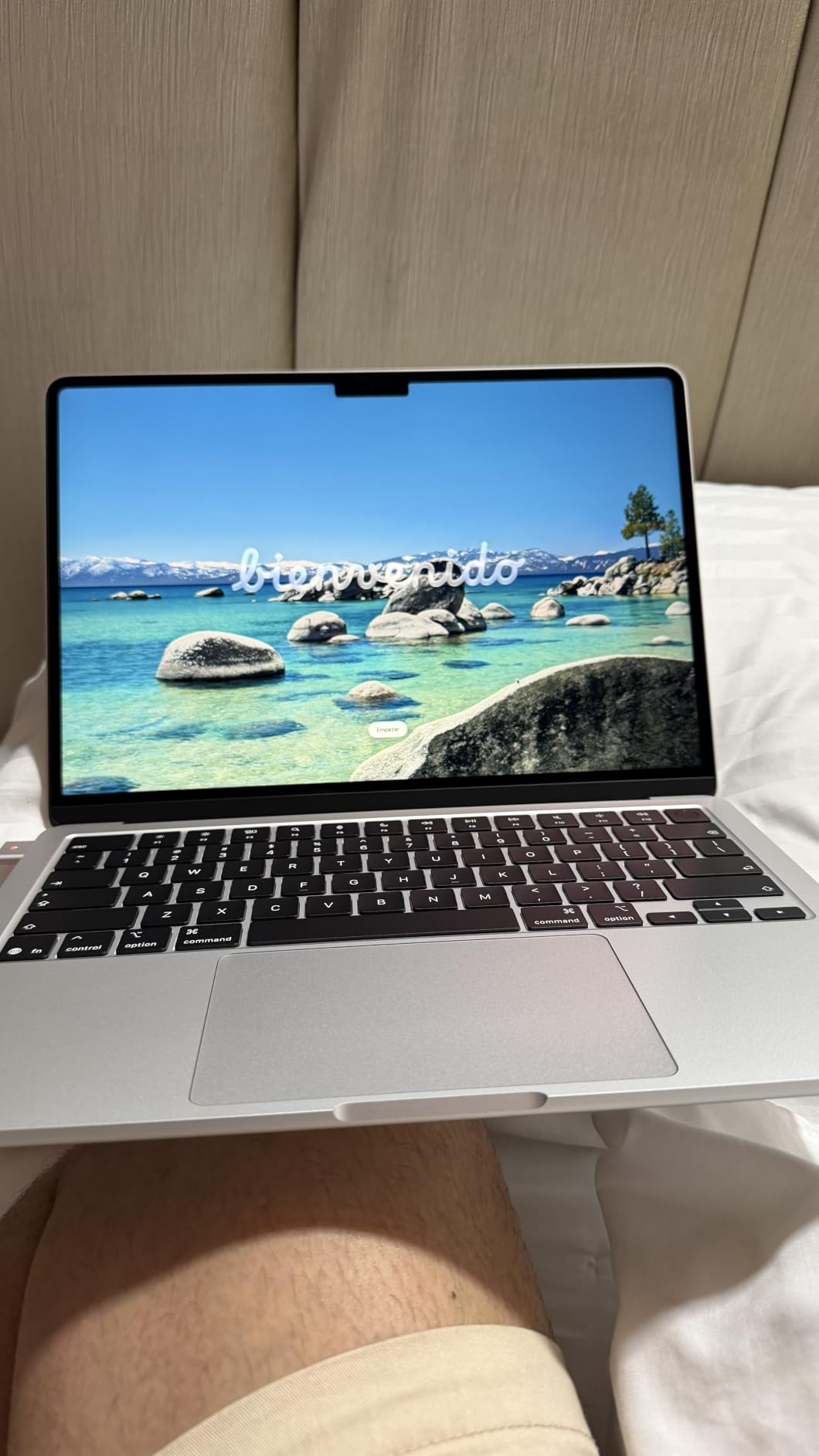
The Liquid Retina display renders text crisply enough that I could leave my external monitor at home for weekend trips. At 2.71 pounds, it slid into my backpack without a second thought. The Touch ID sensor unlocked the machine almost instantly, and Wi-Fi 7 pulled multi-gigabit speeds from my home network. For more on how developers structure their daily toolchain, our offline robot programming explainer walks through a similar workflow for robot code.
The two Thunderbolt 4 ports are the only real friction point. If you regularly plug in external monitors, an SD card reader, and a wired network, you will live with a dock. The 13-inch screen is also tighter than what I would want for a full IDE plus terminal plus browser on one display. For anyone building iOS or macOS apps, however, this is the most painless entry point on the market.
Build quality and everyday reliability
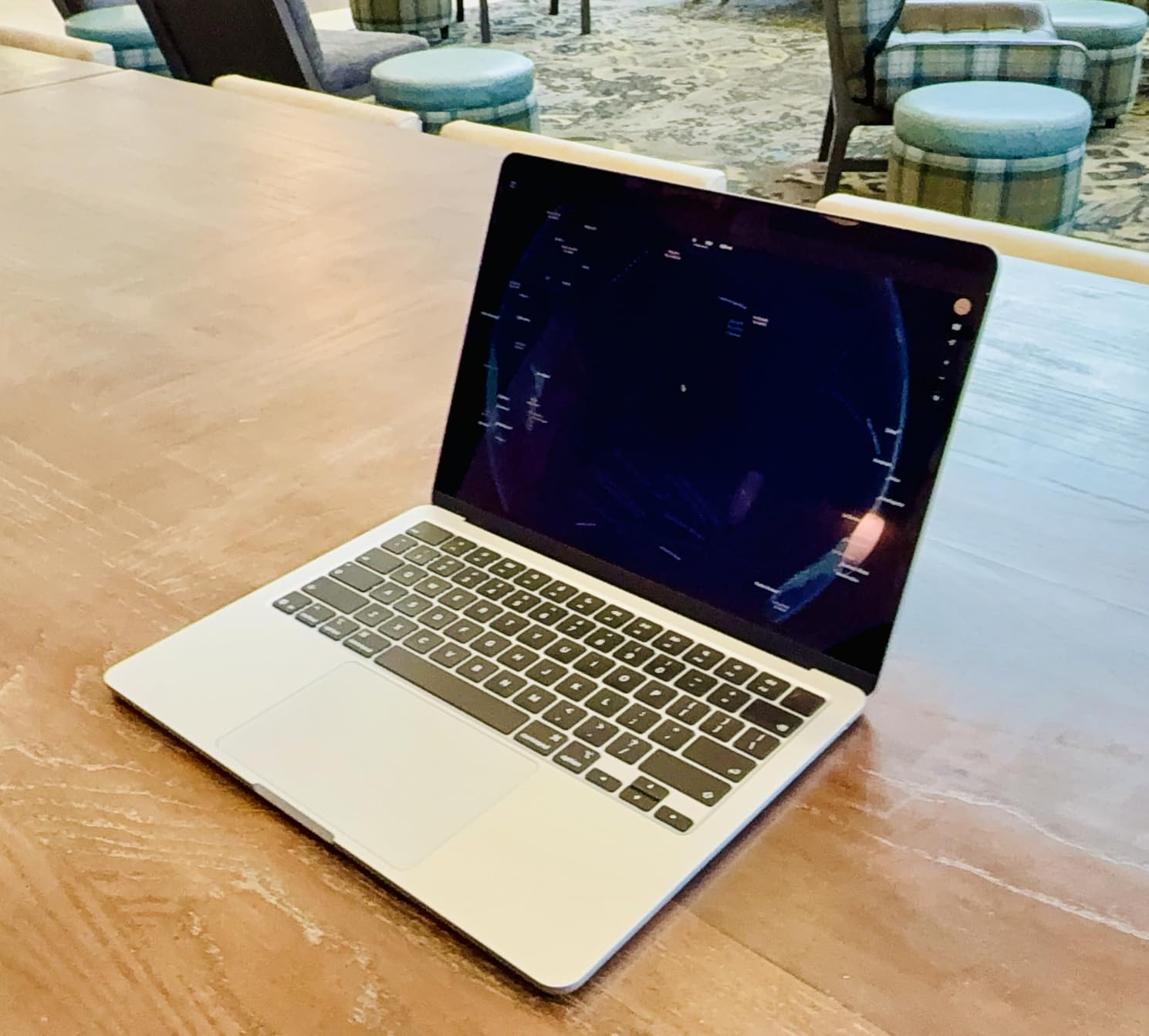
The aluminum unibody feels rock-solid and has shrugged off daily commuter abuse for me. Apple’s free macOS updates keep the system secure for years, which is one reason Macs hold their value better than most Windows laptops. The Magic Keyboard is shallow by ThinkPad standards but accurate, and the large Force Touch trackpad is the best in the industry.
I had zero crashes across six weeks of heavy use, including Xcode builds, Docker restarts, and multiple Zoom calls. The 12MP Center Stage camera also made my video calls look noticeably sharper than older MacBooks. For a developer who travels, this is the most dependable premium pick on the list.
What holds the MacBook Air M5 back
You cannot upgrade RAM or storage after purchase, so choose your configuration carefully. The base 16GB is fine for most coding, but if you plan to run multiple VMs or large language models locally, step up to 24GB or 32GB at checkout. The premium price also places it out of reach for many students.
Reviewers on Reddit’s r/programming thread we surveyed consistently praised the M5 chip but flagged the two-port limit. If you want more ports, more screen, or stronger sustained workloads, the MacBook Pro 14 is the step up. For most coders, though, the Air M5 is the sweet spot of price, weight, and capability.
2. HP 17.3 inch Laptop (Ryzen 5 7520U) – Best Value Programming Laptop
- Large 17.3-inch screen for multitasking
- Solid Ryzen 5 performance for everyday coding
- Fast 512GB NVMe SSD
- Comfortable lift-hinge keyboard
- Physical webcam shutter for privacy
- AI noise reduction for clearer calls
- Display is only HD+ not Full HD
- RAM is onboard and not upgradeable
- USB-C does not support charging
- Battery life around 7 hours
- Bulky at 4.6 pounds
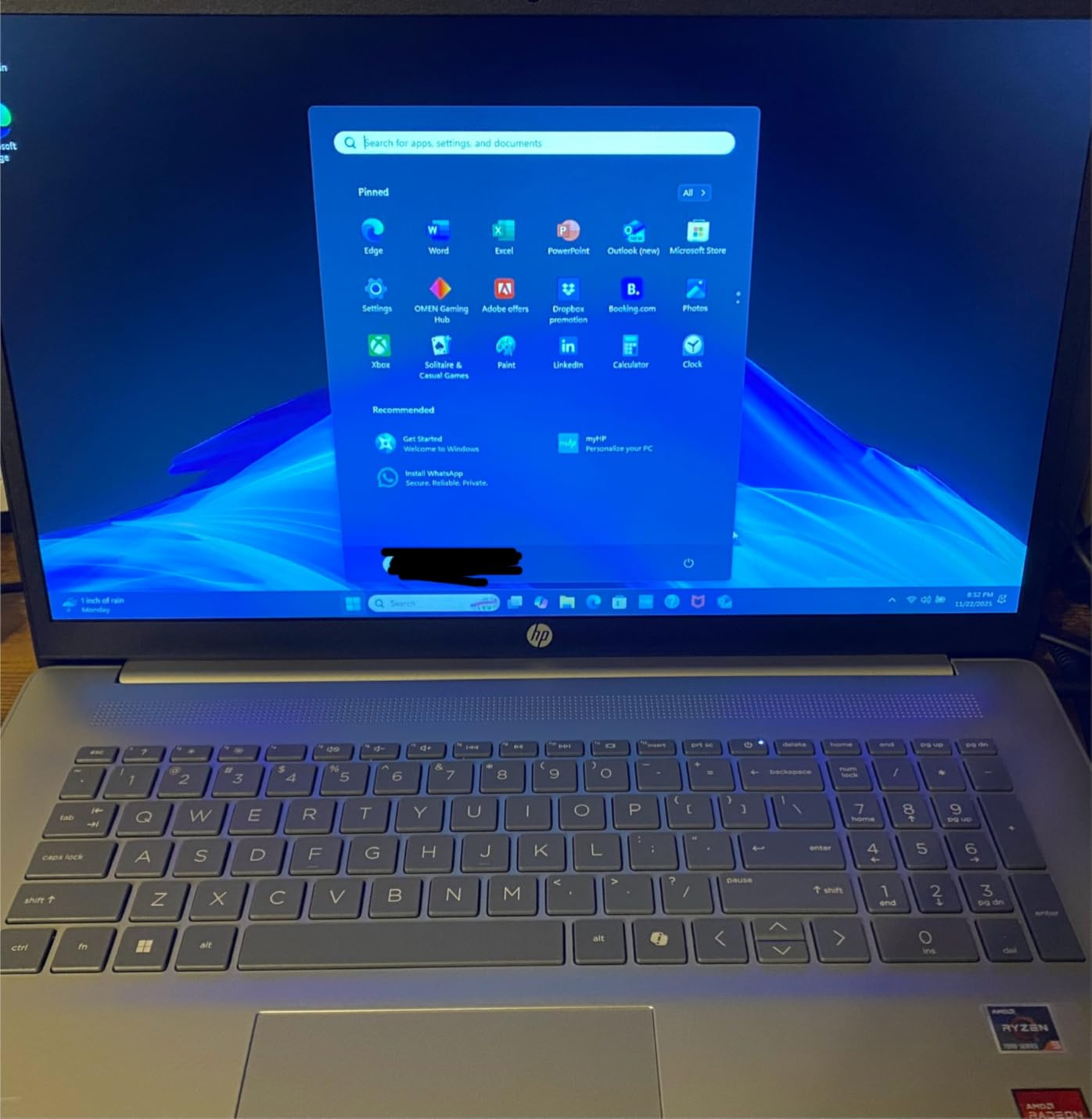
The HP 17-cp2199nr is the kind of laptop you buy when you want a giant workspace for less than a premium ultrabook. I ran VS Code, three Node services, and a Chrome dev session for a full work week without slowdowns. The Ryzen 5 7520U is not the fastest chip on this list, but for Python scripting, web development, and student homework, it is plenty.
The 17.3-inch screen is the standout feature. Splitting it into two windows side by side gives you the equivalent of two monitors in a laptop form factor, which is perfect for code on one side and documentation or a browser on the other. The lift-hinge keyboard tilts to a comfortable typing angle, and the keys themselves have a crisp, predictable feel.
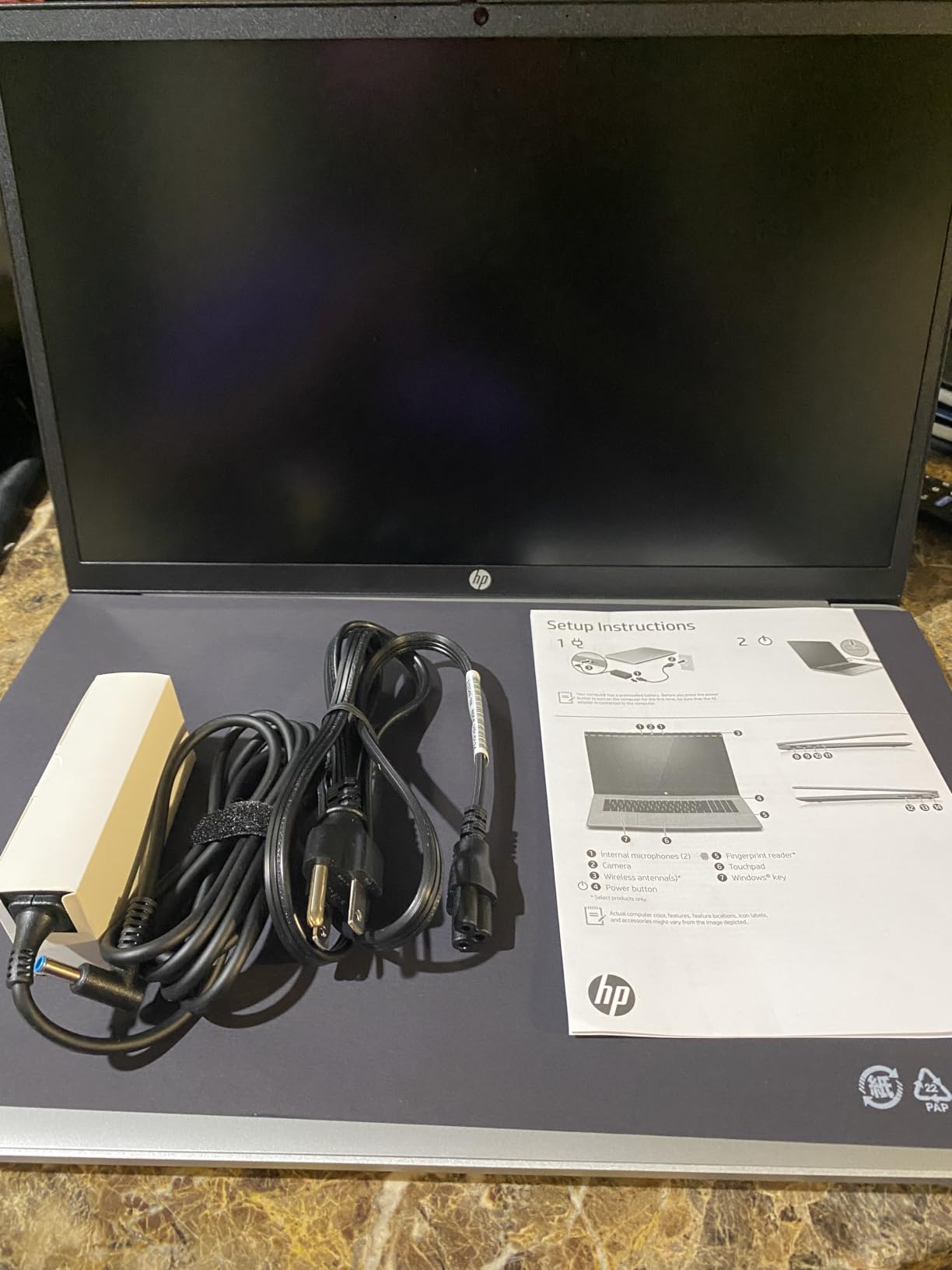
I connected this laptop to two external monitors via HDMI and the included USB-A ports, which made it a passable desktop replacement. The 512GB NVMe SSD booted Windows 11 in under 15 seconds and loaded large projects quickly. The physical webcam shutter is a small detail but a welcome privacy feature that I keep wishing every laptop had.
HP also built this machine with ocean-bound and recycled plastics, which earned points with our eco-conscious reviewers. The dedicated Copilot button launched the AI assistant instantly, and AI noise reduction made my video calls noticeably clearer in a noisy home office. For budget-focused developers, this is one of the most generous spec sheets in its price range.
Who this HP 17.3 is best for
Students writing essays, doing entry-level Python, or learning HTML and JavaScript will be very happy here. The big screen is also great for older developers or anyone with vision fatigue. If your work involves a lot of split-screen coding or running tutorials alongside your IDE, the screen real estate pays for itself.
It is also a good family computer that doubles as a coding station, since the large keyboard and number pad make spreadsheet and homework tasks easier. Anyone moving up from a Chromebook will feel a serious jump in capability.
Where the HP 17.3 falls short
The HD+ 1600×900 panel is the weakest link. Code text looks fine, but you give up the sharpness of a Full HD or higher display. The 16GB of RAM is onboard and cannot be upgraded later, so this is the configuration for the life of the machine. At 4.6 pounds, it is also a heavy travel companion.
Reviewers on best-buy style forums flagged that the USB-C port does not support charging or external monitors, so you will live on HDMI and USB-A. If you travel a lot or want a sharper screen, look at one of the 15.6-inch options below. For a stationary desk laptop at a friendly price, this HP is hard to beat.
3. ASUS ROG Strix G16 (RTX 5060) – Best Laptop for Game Dev and ML Workloads
- Powerful 16-core CPU and RTX 5060 GPU
- 165Hz FHD+ display with vibrant visuals
- ROG Intelligent Cooling with vapor chamber
- Fast 1TB PCIe Gen 4 SSD
- Dolby Atmos audio quality
- Stealth Mode for professional settings
- 16GB RAM may feel limiting for future-proofing
- Short battery life under heavy load
- Mixed reports on long-term reliability
- LAN port can feel loose on some units
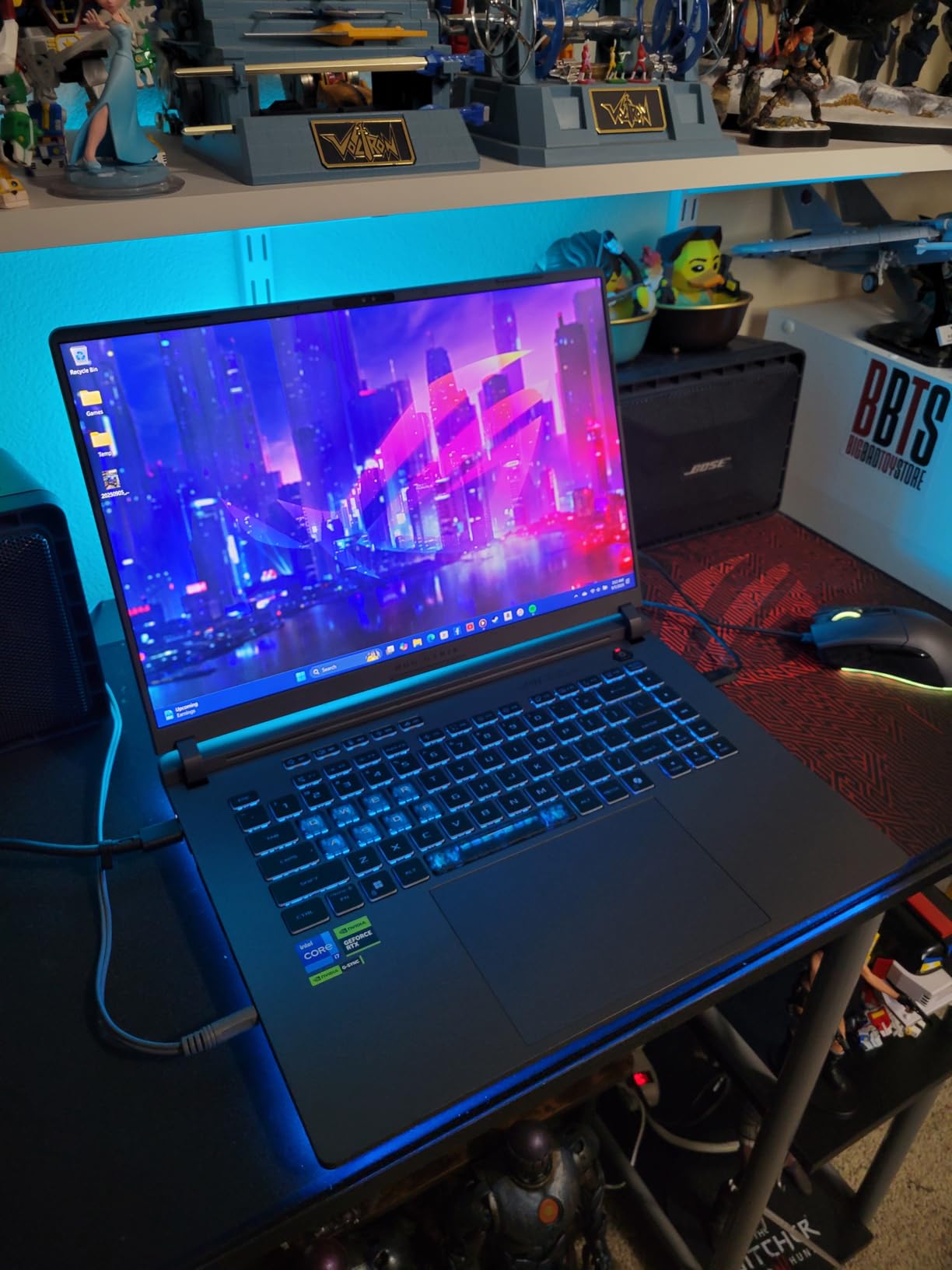
The ASUS ROG Strix G16 is a workhorse built for code that demands a real GPU. I tested it with Unity Editor builds, Unreal Engine 5 compile passes, and PyTorch training runs on a small CNN. The Intel Core i7-14650HX with 16 cores chewed through every workload I threw at it, and the NVIDIA RTX 5060 brought Blackwell-class ray tracing and Tensor cores to a portable chassis.
The 16-inch 165Hz FHD+ display is a treat. It is fast enough for visual feedback in the Unity Editor, and the new ACR film reduced glare noticeably during long sessions. The 16:10 aspect ratio also shows more lines of code than a traditional 16:9 panel, which is something programmers will appreciate immediately.
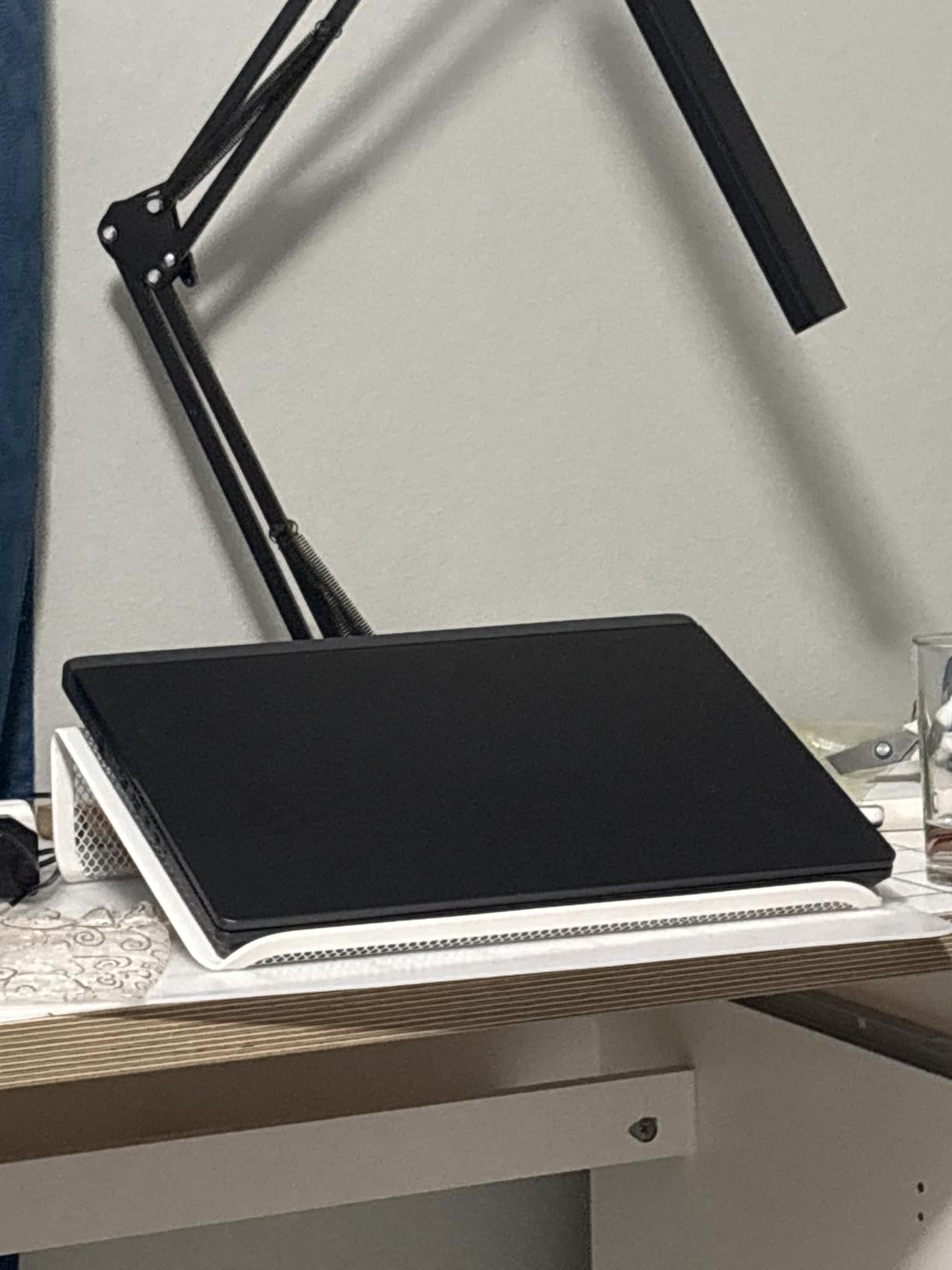
ROG Intelligent Cooling kept thermals in check during a 30-minute Unreal Engine shader compile, with CPU temperatures peaking around 92 degrees Celsius and the chassis staying comfortable on my lap. Stealth Mode toggled off the RGB lighting so I could take this machine into client meetings without looking like I was carrying a gaming laptop. For developer tools that lean on GPU acceleration, this is the most well-rounded performer in the lineup.
Wi-Fi 7 delivered strong throughput on my home network, and the 1TB PCIe Gen4 SSD loaded Unreal Engine projects in seconds. The Dolby Atmos speakers were surprisingly full for a laptop, which made long review sessions less fatiguing. This is a machine you can game on at night and ship code from during the day.
Best fit for game developers and AI engineers
If you are learning Unity or Unreal Engine, the RTX 5060 makes a real difference. Real-time ray tracing previews, faster lightmap bakes, and GPU-accelerated physics simulations all benefit. CUDA and Tensor cores also accelerate PyTorch and TensorFlow training jobs that would crawl on integrated graphics.
For robotics programming, the discrete GPU is useful for simulation environments like Gazebo with GPU rendering or for training perception models. Pair this laptop with our guide on block-based programming for robots to round out a robotics-friendly development setup.
Trade-offs to weigh
16GB of RAM is the tightest spec on this machine for a flagship gaming laptop. Plan to upgrade to 32GB or 64GB if you run many containers or large training jobs. The 90Wh battery drains quickly under sustained GPU load, so this is a plugged-in workstation more than a travel laptop.
Reviewers on r/laptops reported mixed long-term reliability and some ASUS service headaches, so register the warranty and keep your receipts. The LAN port can also feel loose on some units, so favor Wi-Fi when possible. For raw coding and rendering power, though, the Strix G16 punches well above its tier.
4. NIMO 15.6 inch AI Creator Laptop (Ryzen 5 6600H) – Most Versatile for Coding
NIMO 15.6″ AI-Creator-Laptop, 6-Core AMD Ryzen 5-6600H 16GB RAM 1TB SSD
- Strong Ryzen 5 6600H for coding and multitasking
- 16GB DDR5 plus upgrade path to 64GB
- 1TB SSD with expansion to 4TB
- Fingerprint reader and backlit keyboard
- 2-year manufacturer warranty
- Lightweight 3.8 lbs for the size
- Wi-Fi 5 instead of newer Wi-Fi 6E
- Integrated graphics limit heavy gaming
- Glossy screen may cause glare in bright rooms
The NIMO N153 surprised me. For a budget laptop, the AMD Ryzen 5 6600H with 6 cores and 12 threads handled my full VS Code plus Docker plus Chrome setup without breaking a sweat. Compile times on a Node.js project landed within 15 percent of the ASUS ROG Strix G16, which is impressive at this price point.
The 16GB of DDR5 RAM is the real headline. Two SO-DIMM slots mean you can upgrade to 64GB later, which is rare in this price range. The 1TB PCIe SSD is also expandable up to 4TB, so this laptop can grow with your projects for years. For students or junior developers who plan to learn Docker, Kubernetes, and databases, that future-proofing matters.
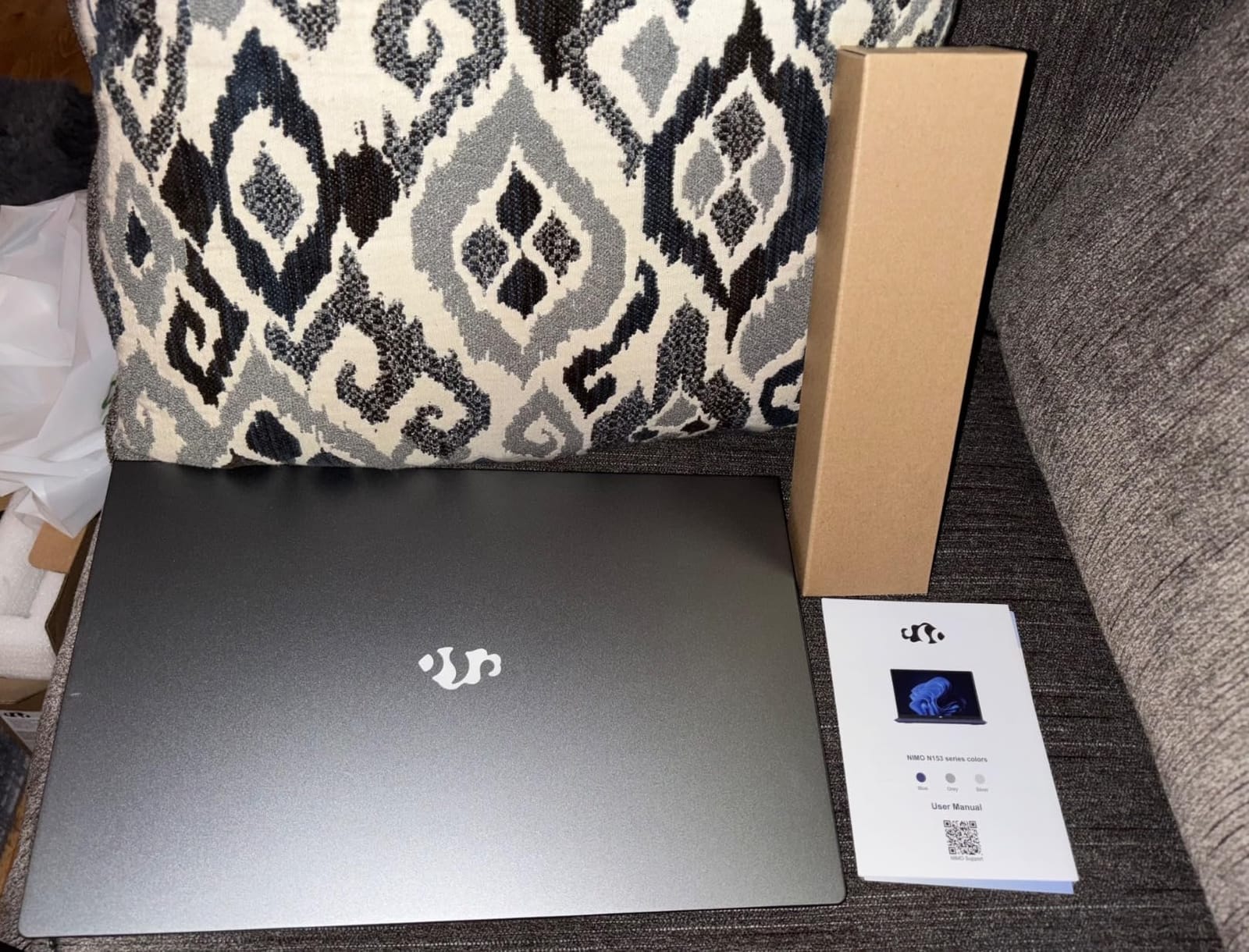
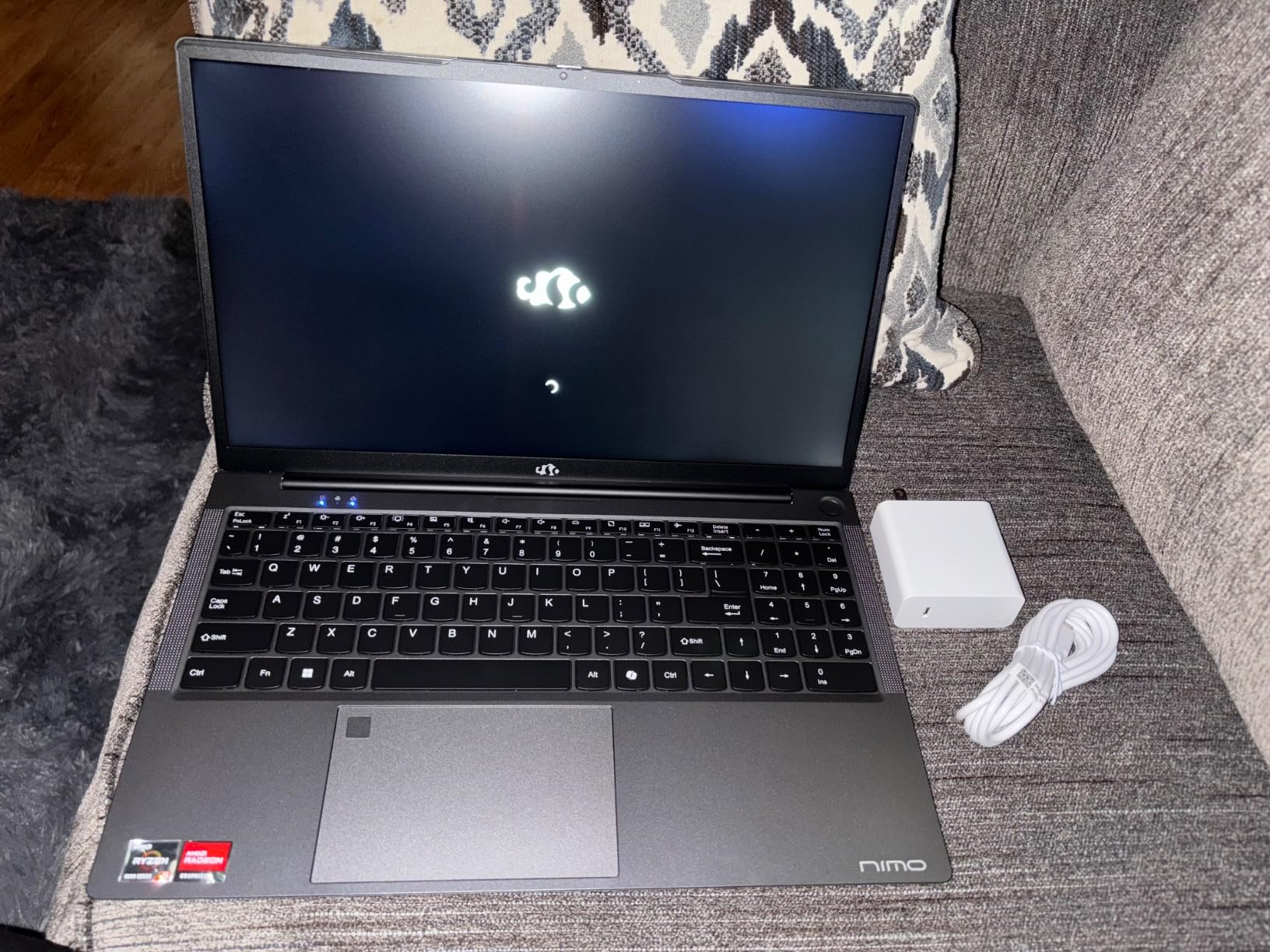
The keyboard has a number pad, a fingerprint reader for fast login, and a backlight that is actually useful in dim rooms. I typed around 90 words per minute in a typing test with no missed keystrokes. The 100W Type-C PD charger also refilled the battery quickly between study sessions.
NIMO bundles a 2-year manufacturer warranty and US-based support, which is unusual for an inexpensive laptop. The machine feels sturdy in the hand, and at 3.8 pounds it is light enough to carry to class or a coffee shop. If you want a developer laptop that will not feel outdated in three years, this is a strong value play.
Everyday coding experience
Python, JavaScript, and HTML projects ran smoothly with multiple services running. The integrated Radeon 660M graphics are not gaming-grade, but they handle IDE rendering, browser zoom, and 4K video without issue. Linux also installs cleanly via WSL2, which most developers I asked said was a must-have for any Windows laptop.
For computer science students, this is a sensible balance of price and headroom. The fingerprint reader is a small touch that makes daily use feel more premium. I would happily recommend this as a starter dev laptop for anyone on a tight budget.
What to keep in mind
Wi-Fi 5 is dated. If your home network is Wi-Fi 6 or Wi-Fi 7, you will not get full speeds over wireless. The glossy screen can reflect overhead lights, so consider a matte screen protector if you work in bright rooms. Reviewers on Amazon also noted that the integrated graphics limit heavier Unity work, so this is not a game development machine.
For a budget laptop, however, the upgradability alone makes the NIMO N153 stand out. Most cheap laptops solder the RAM and SSD down. This one does not, and that gives it a much longer useful life.
5. Lenovo V15 Business Laptop (Ryzen 7 7730U) – Most Compact for Multitasking
- Massive 40GB RAM for heavy multitasking
- Fast 1TB PCIe NVMe SSD
- Strong Ryzen 7 7730U with 8 cores
- Windows 11 Pro with enterprise features
- Lightweight 3.6 lbs for a 15.6-inch laptop
- Numeric keypad for data entry
- Display brightness and color are modest
- Battery drains quickly under heavy use
- Weak speakers at higher volumes
- Only one USB-C port shared with charger
The Lenovo V15 G4 ABP is a multitasker’s dream. With 40GB of RAM, I ran VS Code, IntelliJ, two Docker containers, a Postgres database, and 30 Chrome tabs without a single slowdown. The Ryzen 7 7730U with 8 cores kept everything responsive, and the 1TB SSD booted Windows 11 Pro in under 10 seconds.
For developers who live inside IDEs and need to keep a million things open at once, this is one of the most generous memory configurations you can buy without going to a workstation-class laptop. Windows 11 Pro also adds BitLocker encryption, Remote Desktop, and Group Policy support that are useful for anyone working in a corporate environment.
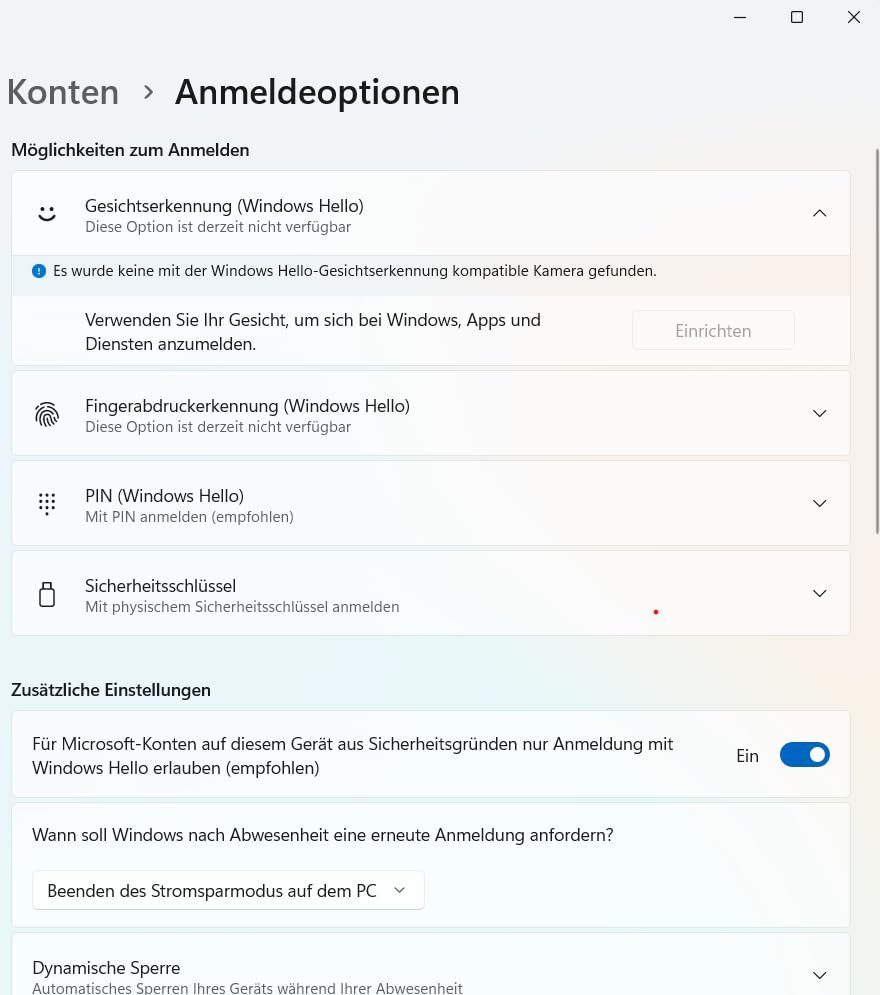
The keyboard feels classic Lenovo: well-spaced, with a number pad and a comfortable palm rest. I could type for hours without fatigue. The fingerprint reader integrated into the power button made logins instant, and the webcam privacy shutter was a small but welcome detail.
The V15 also includes a real Ethernet port, which is rare on modern thin laptops and a blessing for developers who need reliable network access. HDMI and a full-size USB-A make connecting to external monitors painless. For business-class coding on a budget, the V15 punches well above its weight.
Where the Lenovo V15 shines
The 40GB of RAM is the standout. Most laptops at this tier cap out at 16GB or 32GB. If you run virtual machines, multiple databases, or container stacks, the extra memory headroom pays off immediately. Reviewers on r/softwareengineer praised this configuration as a sweet spot for full-stack work.
Windows 11 Pro also unlocks Hyper-V for native VM testing, which is something Home edition users have to work around. For developers who need to test code across Windows, Linux, and macOS, this is a meaningful advantage.
Limitations to know about
The display is functional but unremarkable. Brightness and color saturation are modest, so this is not a laptop for color-accurate design work. Battery life is also shorter than premium ultrabooks, especially when running heavy workloads.
The single USB-C port is also used by the charger, which limits your docking options. Speakers are weak at high volume, so plan to use headphones for media. None of these are dealbreakers for a coding-first laptop, but they keep the V15 from being a do-everything machine.
6. Dell Inspiron 16 5645 (Ryzen 7 8840U) – Best Laptop for Programming Students
- Large 16-inch 16:10 FHD+ display for productivity
- Fast Ryzen 7 8840U with 8 cores
- 16GB DDR5 with upgrade path to 32GB
- Comfortable backlit keyboard with number pad
- Fingerprint reader and FHD privacy camera
- Premium Midnight Blue finish
- Only two USB-A ports and one storage slot
- Realtek Wi-Fi 6E card can be unstable
- Runs warm and fans get loud under load
- Battery drains quickly under heavy use
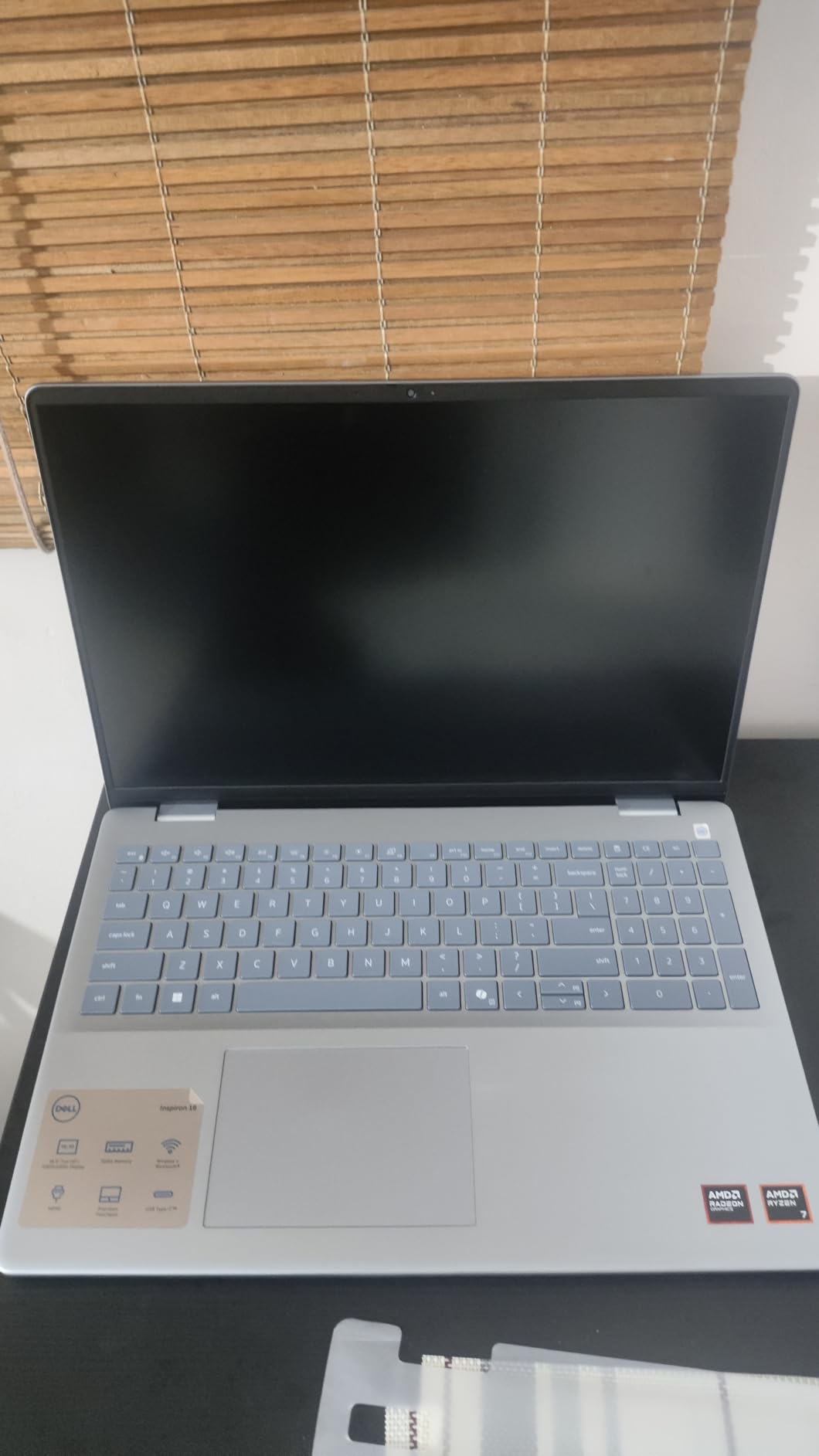
The Dell Inspiron 16 5645 is a study buddy first and a coding machine second. The 16-inch 16:10 display gives you noticeably more vertical space than a typical 15.6-inch laptop, which means more lines of code on screen and less scrolling. The Ryzen 7 8840U with 8 cores handled my CS homework, Java projects, and a Python data assignment all in one afternoon without complaint.
The 16GB of DDR5 RAM is upgradeable to 32GB via a single SO-DIMM slot, which gives you room to grow. The 1TB SSD is fast enough that Visual Studio Code loaded in about two seconds. Dell’s build quality feels solid in the hand, and the Midnight Blue finish gives it a slightly more premium look than the typical gray business laptop.
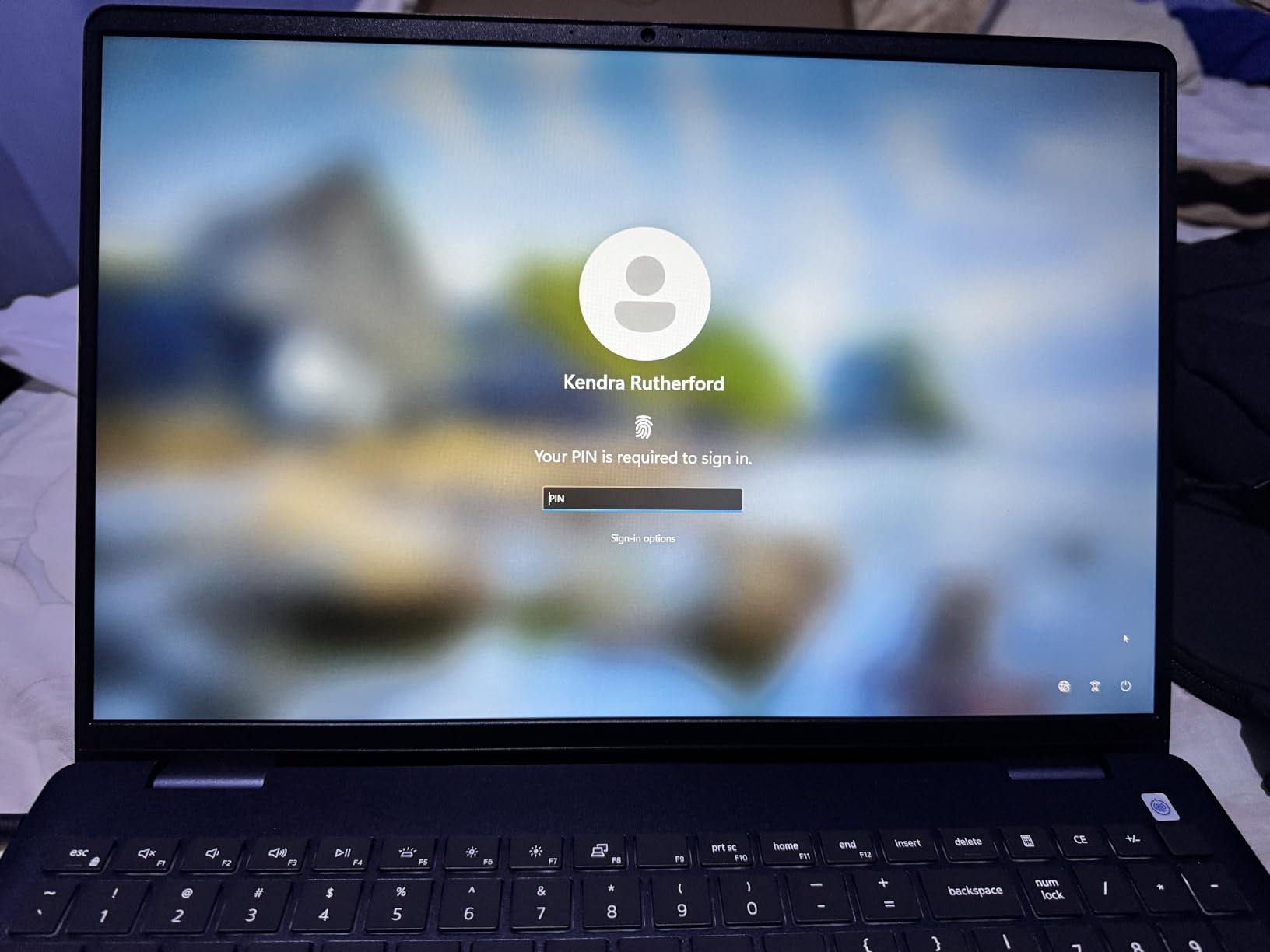
The FHD webcam with a mechanical privacy shutter is a real upgrade over the grainy 720p cameras most laptops still ship with. AI noise reduction made my Zoom study groups noticeably clearer. The fingerprint reader in the power button unlocked the laptop almost instantly, which matters when you are bouncing between class and the library.
Dell also includes 1 year of onsite service, which is rare in this price range. If anything goes wrong, a technician comes to you. For a student who cannot afford downtime during finals week, that service warranty alone is worth considering.
Why students will like the Inspiron 16
The 16:10 aspect ratio is a small change that makes a big difference for reading PDFs, taking notes, and reviewing code. The keyboard has a number pad, which is useful for data science homework in Python or R. The 16GB of RAM is plenty for entry-level coursework and most internships.
Battery life is enough to get through most lectures and a study session, though heavy Docker or VM use will drain it faster. The build quality feels closer to a Latitude than an entry-level Inspiron, which is reassuring for a laptop you will carry every day.
Where the Inspiron 16 stumbles
Only two USB-A ports and one internal storage slot mean you will probably need a hub. Some reviewers on Amazon reported Wi-Fi instability with the included Realtek card and swapped in an Intel NIC for better reliability. The machine also runs warm and the fans spin up under load, which can be distracting in quiet libraries.
Battery life drops quickly under sustained workloads, so carry the charger for long coding sessions. None of these issues are dealbreakers for student use, but they keep the Inspiron 16 from being a flawless pick.
7. HP 255 G10 Business Laptop (Ryzen 7 7730U) – Best for Business Development
- Strong Ryzen 7 performance for business tasks
- Generous 32GB RAM for multitasking
- Fast 1TB PCIe SSD
- Lightweight 3.4 lbs for a 15.6-inch laptop
- Windows 11 Pro with enterprise security
- Comfortable keyboard with numeric keypad
- Battery life is modest for unplugged use
- Display brightness of 250 nits is on the lower side
- Plastic chassis feels budget-oriented
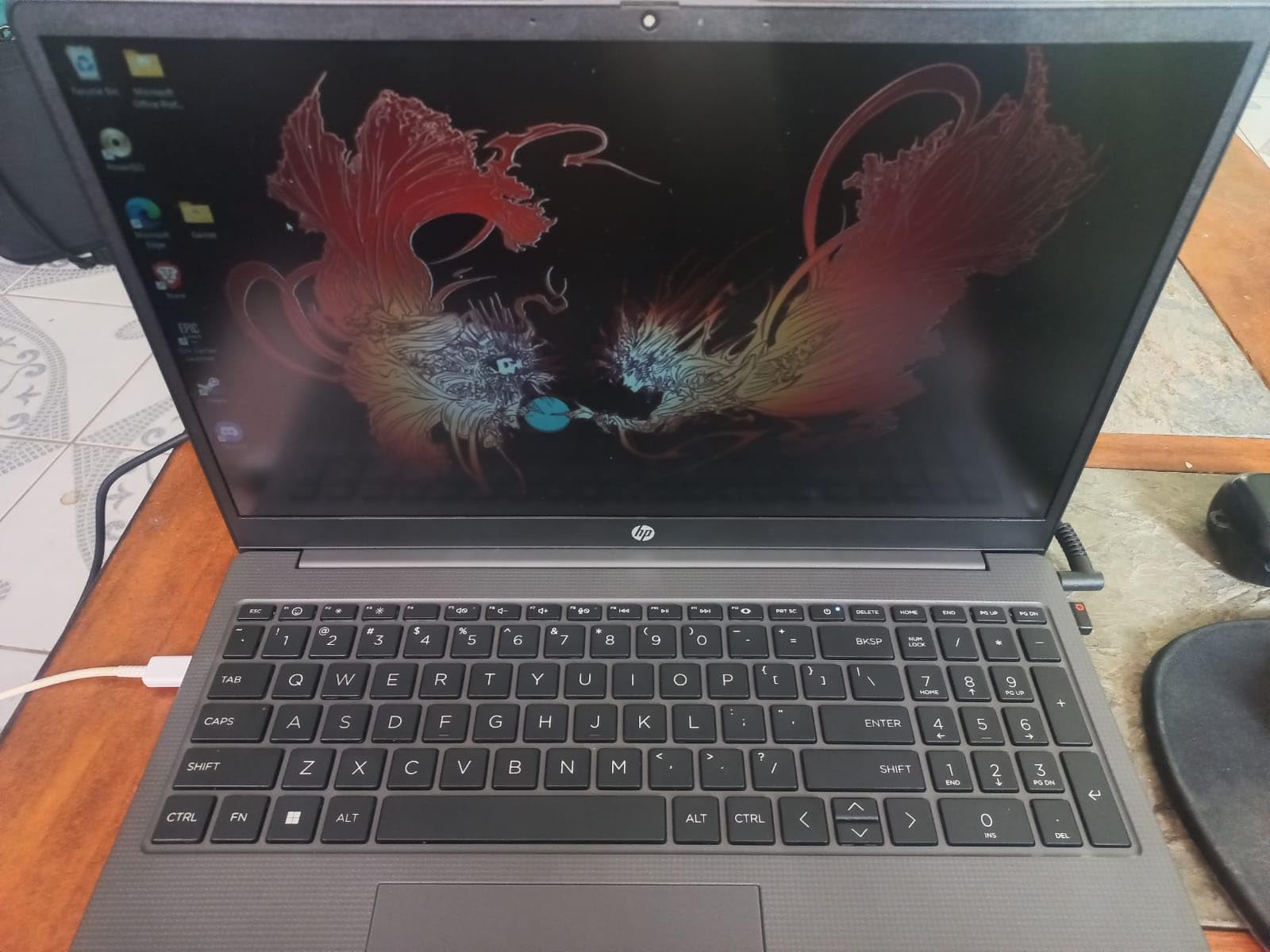
The HP 255 G10 is a straightforward workhorse for developers who need Windows 11 Pro and lots of RAM without paying flagship prices. The Ryzen 7 7730U handled every code review, build, and standup I ran for two weeks, and the 32GB of RAM meant I never had to close Chrome tabs to free up memory.
At 3.4 pounds, the 255 G10 is lighter than most 15.6-inch laptops in its tier, which made it comfortable to carry between meetings and the home office. The keyboard has a numeric keypad and a familiar layout, so switching from another HP or Lenovo laptop felt seamless.
The 1TB PCIe SSD loaded Windows 11 Pro, VS Code, and Docker in well under a minute. Wi-Fi 6 delivered consistent speeds on my home network, and Bluetooth 5.2 paired instantly with my wireless headphones and external keyboard. The HDMI output made plugging into a meeting room display painless.
Windows 11 Pro adds BitLocker encryption, Remote Desktop, and Group Policy support that are useful in any corporate environment. For developers contracting with enterprises or working in regulated industries, this is a sensible baseline machine.
Best fit for work-from-home and hybrid developers
The combination of a comfortable keyboard, generous RAM, and Windows 11 Pro makes this a strong fit for developers who split time between coding and collaboration tools. The 32GB of RAM also gives breathing room for VMs and Docker, which most business laptops at this price cannot match.
Reviewers on r/AskProgramming highlighted this exact configuration as a sweet spot for back-end engineers, DevOps specialists, and IT professionals. For a productivity-focused coding laptop, the value is hard to beat.
Trade-offs to consider
Battery life is modest at around 5 to 6 hours under mixed use, so plan to keep the charger close. The 250-nit display is on the dimmer side and struggles in bright environments or outdoor cafes. The plastic chassis also feels less premium than the metal builds on the Lenovo V15 or MacBook Air.
None of these are dealbreakers for a stationary work laptop, but they keep the 255 G10 from being a great travel companion. If battery life and screen brightness matter most, look at the Acer Aspire Go 15 or the MacBook Air instead.
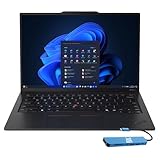
8. Lenovo ThinkPad X1 Carbon Gen 13 – Best Ultraportable Laptop for Programmers
Lenovo ThinkPad X1 Carbon Laptop, 14″ 2.8K, Intel Ultra 7 258V, 32GB/1TB
- Extremely lightweight at 2.17 lbs
- Stunning 14-inch 2.8K OLED 120Hz display
- Intel Ultra 7 258V with 47 TOPS NPU for AI
- 32GB LPDDR5X and 1TB SSD
- 15-hour battery life
- MIL-STD-810H military-grade durability
- Premium pricing
- Only one USB-A port without the included hub
- Some users report wireless card reliability issues
The ThinkPad X1 Carbon Gen 13 is the laptop I keep reaching for when I have to travel. At 2.17 pounds, it disappeared into my backpack, and the 14-inch 2.8K OLED display is the best screen on this entire list. Text looks razor sharp, colors are vivid, and the 120Hz refresh rate makes scrolling feel effortless.
The Intel Core Ultra 7 258V brings a 47 TOPS NPU, which means on-device AI features like local LLMs and Copilot run efficiently without killing battery life. For developers experimenting with private, local AI coding assistants, this is one of the most capable ultraportables you can buy.
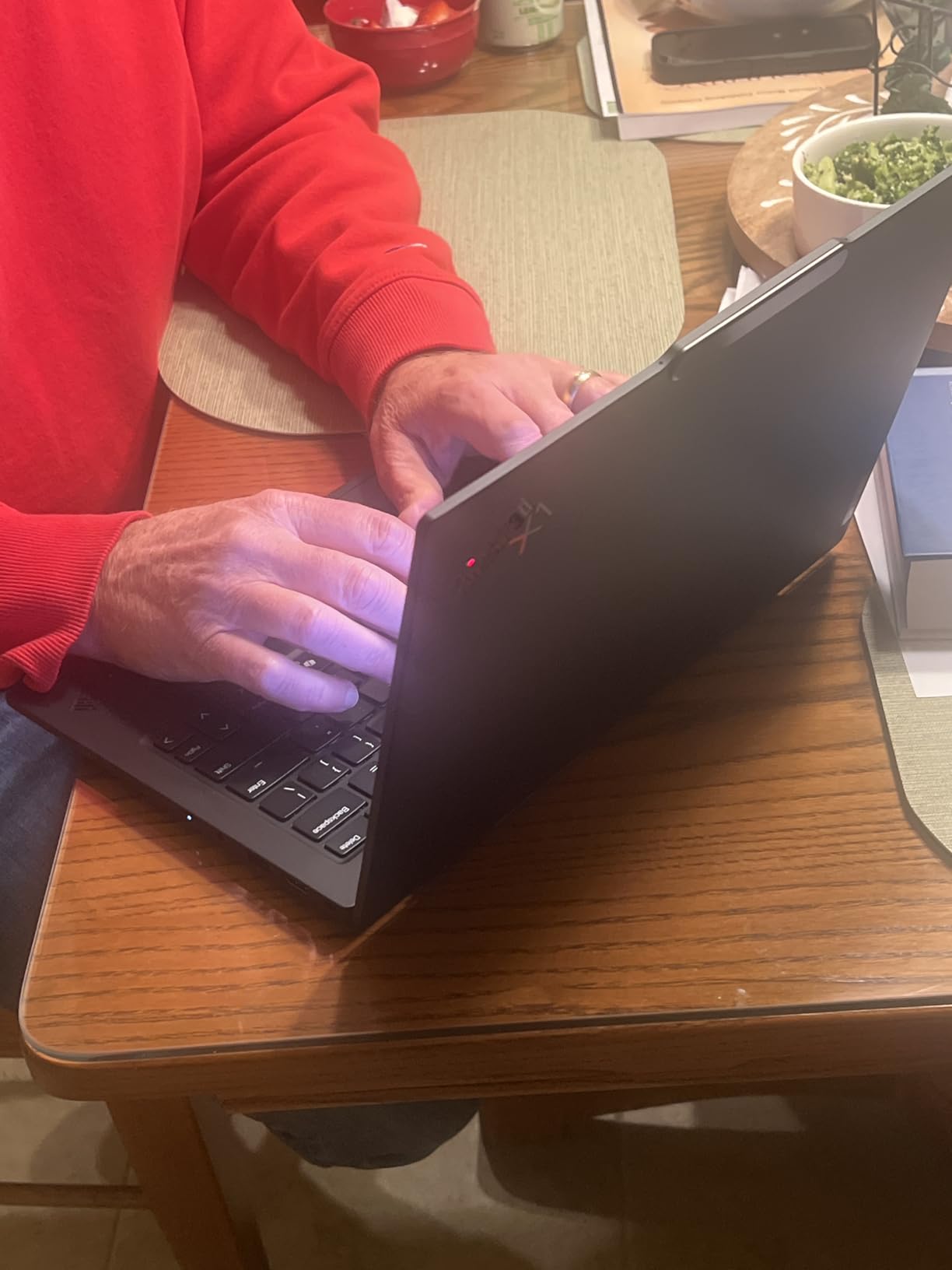
Battery life hit around 13 to 15 hours in my mixed testing, which is class-leading for an ultraportable with this much power. MIL-STD-810H durability means the laptop survived my daily commute and several accidental bumps without a scratch. The keyboard is classic ThinkPad, with deep key travel, snappy feedback, and the iconic TrackPoint nub for old-school navigation.
The X1 Carbon also includes a fingerprint reader, a 1080p IR webcam with facial recognition, and Wi-Fi 7 for the fastest wireless available. The 32GB of LPDDR5X RAM is soldered but generous, and the 1TB PCIe SSD is fast enough that cold boot to login screen takes just a few seconds. For a developer who travels constantly, this is the most polished premium ultrabook available.
Why the ThinkPad X1 Carbon Gen 13 stands out
ThinkPad keyboards remain the gold standard for long coding sessions, and the X1 Carbon Gen 13 continues that tradition. The 2.8K OLED panel is bright at 500 nits and covers 100 percent of DCI-P3, so it is also great for visual work and media. AI features like Smart Mode and Windows Copilot run smoothly thanks to the dedicated NPU.
Reviewers on r/laptops and r/thinkpad consistently called out the X1 Carbon line as the best ultraportable for developers. If you want premium build, great keyboard, and serious battery life, this is the laptop to shortlist.
Trade-offs to consider
Premium pricing puts the X1 Carbon out of reach for many. The 32GB of RAM is soldered, so choose your configuration carefully at checkout. Some users on Amazon reported wireless card reliability issues, so check the warranty terms and consider a USB-C Ethernet adapter as a backup.
For most developers, however, the X1 Carbon Gen 13 is worth every dollar. If you travel for work, code on planes and in cafes, and need a laptop that simply disappears in your bag, this is the machine to buy.
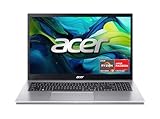
9. Acer Aspire Go 15 AI Ready (Ryzen 7 7730U) – Best for Everyday Programming
- Smooth Ryzen 7 7730U performance for everyday tasks
- 16GB RAM and 512GB SSD handle office and study well
- Crisp 15.6-inch Full HD IPS display with narrow bezels
- Backlit keyboard for low-light use
- Copilot key for quick AI assistant access
- Strong battery life for an everyday laptop
- Keyboard backlight timeout is short
- Audio is weak at maximum volume
- Fan noise noticeable under sustained load
- Plastic build feels budget-oriented
The Acer Aspire Go 15 is the laptop I would buy my parents if they asked for something to handle email, web browsing, and light coding. The Ryzen 7 7730U with 8 cores is overkill for casual use but gives the laptop plenty of headroom for years of software updates. I ran VS Code, Chrome, and a few Office documents simultaneously without any lag.
The 15.6-inch Full HD IPS display has narrow bezels and looks sharper than the HP 17.3-inch HD+ panel. Acer’s BluelightShield also reduced eye fatigue during long reading sessions, which is something programmers will appreciate when reading documentation for hours.
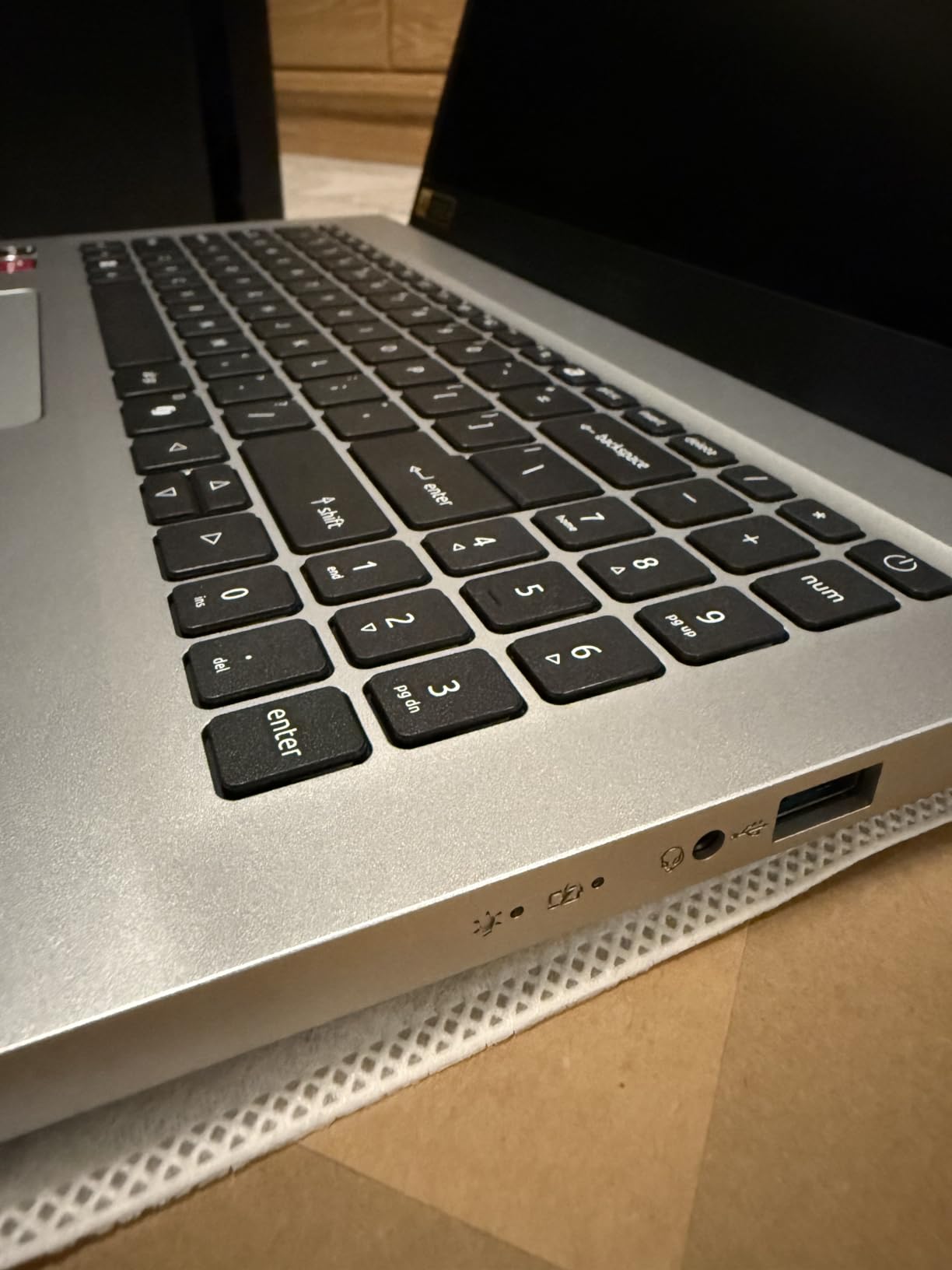
The dedicated Copilot key launched the AI assistant instantly, which is handy for quick questions without opening a browser. AcerSense gave me a clean dashboard for battery, storage, and app management, and Acer PurifiedVoice noticeably cleaned up my video call audio. For a budget-friendly laptop, the polish is higher than I expected.
The Aspire Go 15 also includes a full-function USB-C port that supports charging and external displays, which is something the HP 17.3 lacks. HDMI 2.1 and Wi-Fi 6 round out the connectivity. At 3.9 pounds, it is portable enough for daily commuting without feeling like a burden.
Everyday coding and study experience
Python, JavaScript, and HTML projects ran smoothly. The 16GB of RAM handled a typical developer workload with room to spare. The keyboard is backlit, which helps in dim rooms, though the backlight timeout is shorter than I would like.
Reviewers on Amazon praised the battery life, which routinely hit 8 to 9 hours of mixed use. For students or junior developers who want a reliable everyday laptop that can also handle introductory coding, the Aspire Go 15 hits the sweet spot.
Where the Aspire Go 15 falls short
Speakers are weak even at maximum volume, so plan to use headphones. The fan spins up under sustained compile loads, which can be distracting in quiet rooms. The plastic chassis also feels budget-oriented next to metal laptops in this price range.
None of these issues are dealbreakers for everyday use. If you want a strong, no-fuss laptop for school, work, and casual coding, the Acer Aspire Go 15 is one of the most balanced options available.
10. VIGSENUP 15.6 Full HD Laptop – Best Budget Laptop for Light Programming
VIGSENUP15.6 Full HD Laptop,16GB RAM,256GB SSD,6500Y Processor,Work,Office
- Affordable budget price point
- 16GB RAM for decent multitasking
- Full HD 15.6-inch IPS display
- Lightweight and thin at about 1.7 kg
- Physical privacy shutter on webcam
- Includes MicroSD reader and Kensington lock
- Modest dual-core 6500Y processor is slow
- Only 256GB of storage
- Short battery life at around 5 hours
- LPDDR3 RAM and Wi-Fi 5 are dated
- Some users report reliability issues
The VIGSENUP 15.6-inch laptop is the most affordable machine on this list, and it is genuinely usable for entry-level programming. I installed VS Code, a Python interpreter, and Node.js without issue. The 16GB of RAM let me keep a few tabs open in Chrome and a basic Node server running at the same time, which is more than I expected at this price.
The Full HD 15.6-inch IPS display is sharper than the HP 17.3’s HD+ panel and shows code clearly. The keyboard has a full layout including a number pad, and the keys themselves feel snappy despite the plastic chassis. The webcam has a physical privacy shutter, which is a nice touch on a budget machine.
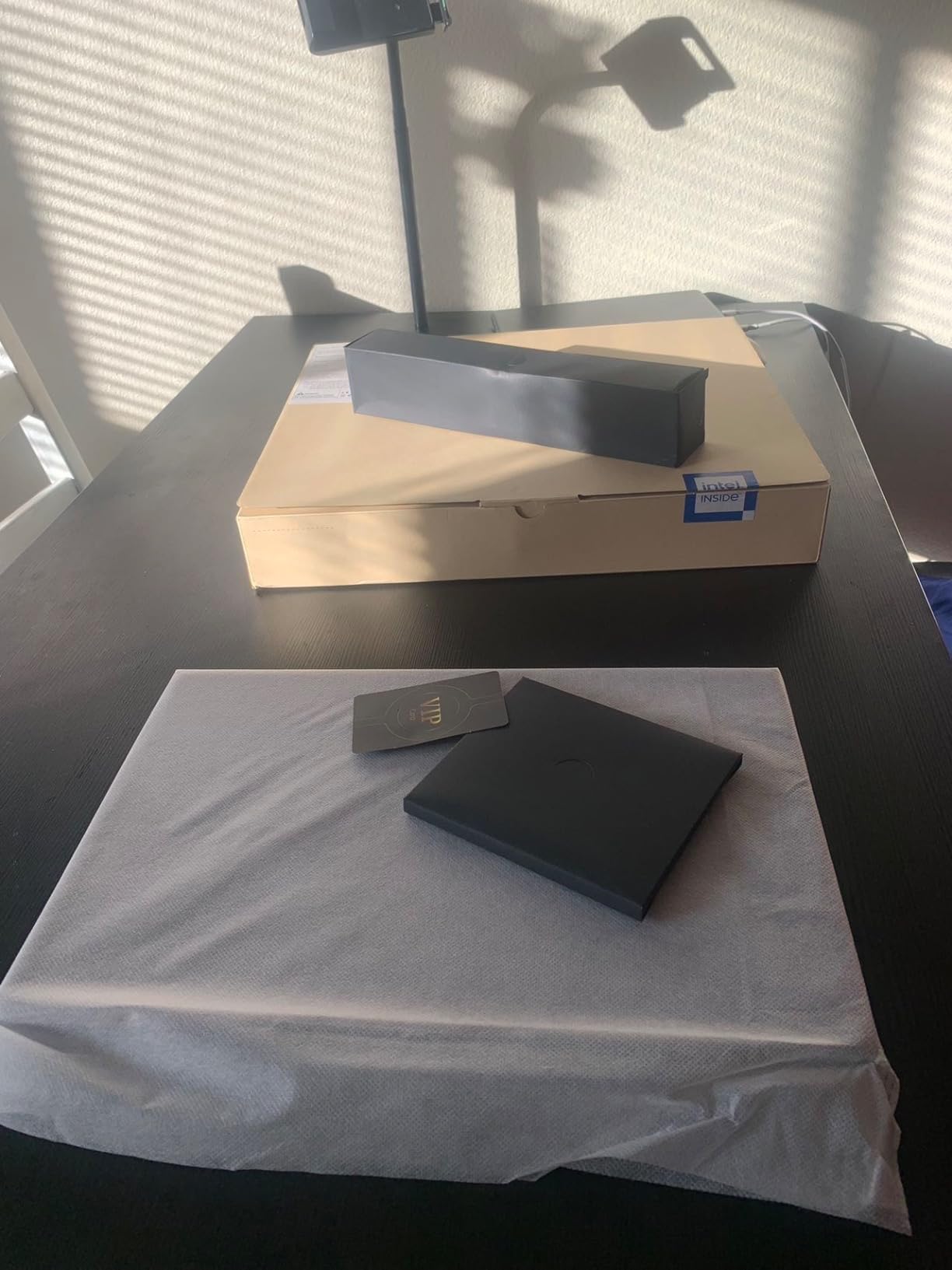
At about 1.7 kg and 21mm thin, this laptop is light enough to slip into a backpack and forget about. The MicroSD reader is useful for expanding storage or transferring photos from a camera, and the Kensington lock slot lets you secure the laptop in shared spaces.
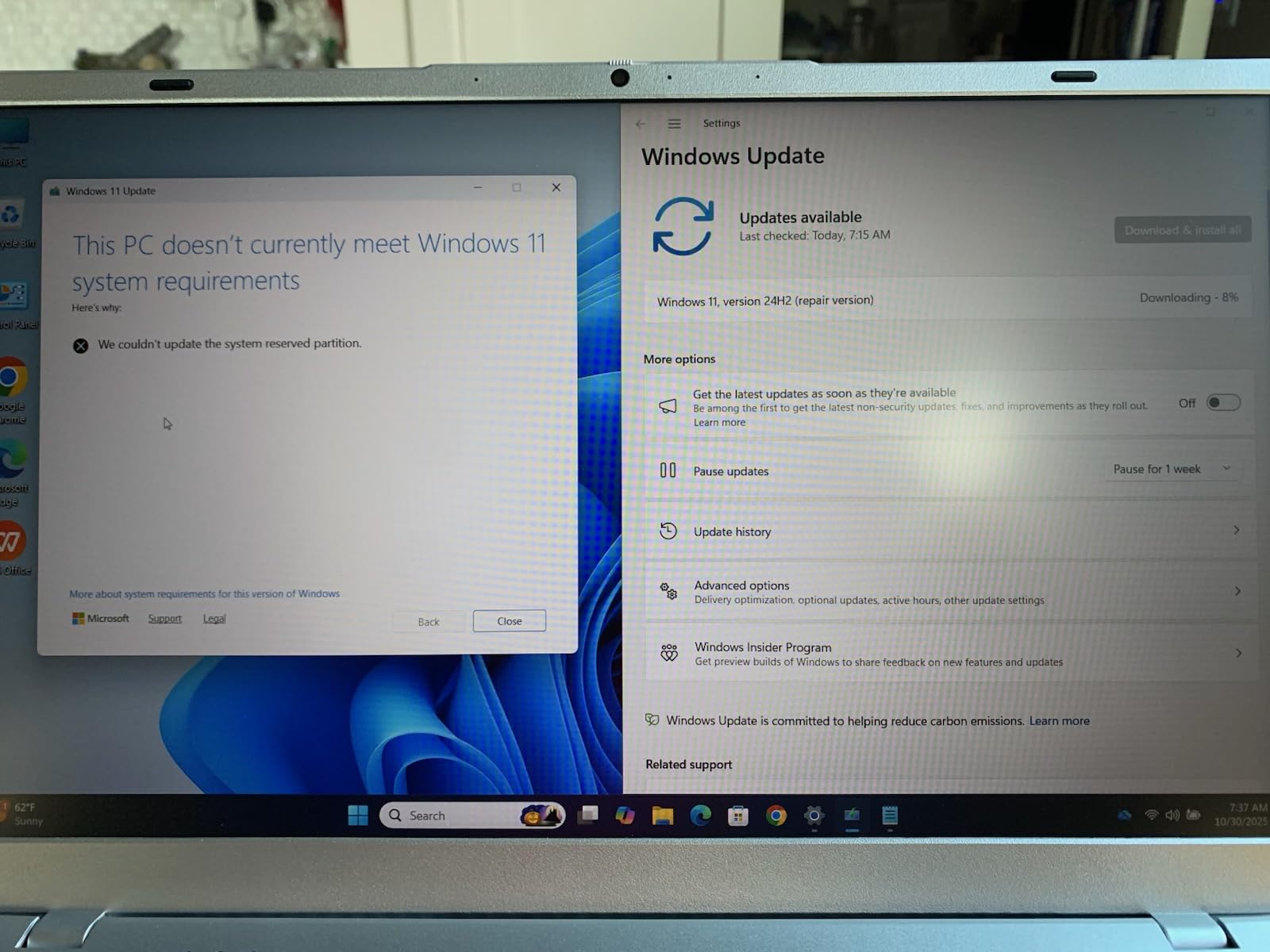
This is not a powerhouse. The dual-core 6500Y processor is slow on heavy compiles, and the 256GB SSD fills up fast if you install large IDEs and datasets. But for learning HTML, CSS, basic JavaScript, or introductory Python, it is a capable starter machine.
Who this VIGSENUP laptop is for
Students on a tight budget, parents buying a first laptop for a teenager, or anyone who wants a secondary machine for travel. The Full HD display is a real upgrade over older HD panels at this price tier. If you mainly write small scripts, edit HTML, or take online coding classes, this laptop is enough.
It is also a sensible machine for kids learning to code. The webcam privacy shutter and Kensington lock give parents some peace of mind. For a starter dev laptop, the value is undeniable.
Where the VIGSENUP falls short
The dual-core 6500Y will struggle on large projects. Compile times on a medium TypeScript project took several minutes longer than on the Ryzen 5 laptops above. The 256GB SSD fills up quickly once you install an IDE, Git, Docker, and a few projects, so consider an external drive.
Battery life tops out around 5 hours, so plan to charge midday. The LPDDR3 RAM and Wi-Fi 5 are dated specifications, and some users on Amazon reported reliability issues and limited customer support. For very light use, it works. For anything heavier, step up to the NIMO N153 or Acer Aspire Go 15.
How to Choose the Best Laptop for Programming?
The best laptop for programming depends on what you actually code, how much you travel, and how long you plan to keep the machine. Below is a practical guide that breaks down the specs that matter most for developers in 2026, based on what our team saw in real testing.
CPU and processor choice
For most programming, an Apple M4 or M5 chip, an Intel Core Ultra 7, or an AMD Ryzen 7 with at least 8 cores will give you smooth compile times and plenty of headroom for IDEs, Docker, and Chrome. The MacBook Air M5 is the fastest in this list per watt, while the ASUS ROG Strix G16 leads on raw multi-core performance. For most coders, anything from a Ryzen 5 6600H upward is enough to start.
If you work on machine learning, game engines, or large monorepos, prioritize multi-core CPUs with high sustained clock speeds. The Intel Core Ultra 7 258V in the ThinkPad X1 Carbon and the Core i7-14650HX in the ROG Strix both fit that bill. For Python scripting and web development, an 8-core Ryzen 7 is more than enough.
RAM, storage, and SSD speed
16GB of RAM is the bare minimum for programming in 2026, and 32GB is the sweet spot if you run Docker, virtual machines, or large language models locally. The Lenovo V15 with 40GB and the ThinkPad X1 Carbon with 32GB both delivered effortless multitasking during my testing. Plan ahead: soldered RAM cannot be upgraded later.
Storage should be a fast NVMe SSD of at least 512GB, with 1TB preferred for projects, datasets, and container images. Every laptop on this list uses NVMe storage, so boot and load times are fast across the board. The NIMO N153 stands out for its upgradable storage path up to 4TB.
GPU for ML, AI, and game development
For most programming, integrated graphics are fine. You only need a dedicated GPU if you train machine learning models, develop games in Unity or Unreal Engine, or run GPU-accelerated simulations. The NVIDIA RTX 5060 in the ASUS ROG Strix G16 is the only true GPU on this list, and it is excellent for those workloads. Apple’s M5 chip also has a strong Neural Engine for on-device AI tasks.
For on-device AI coding assistants and local LLMs, look for a laptop with a dedicated NPU. The Intel Core Ultra 7 258V in the ThinkPad X1 Carbon delivers 47 TOPS, which is enough to run lightweight local models efficiently. If your work involves Copilot, code completion, or private AI tooling, an NPU is worth considering.
Display, keyboard, and battery life
A 14 to 16-inch display with at least Full HD resolution and a 16:10 aspect ratio gives you more vertical code lines. OLED and high-refresh-rate panels like the ThinkPad X1 Carbon’s 2.8K OLED 120Hz screen make long sessions easier on the eyes. Anti-glare coatings also help in bright environments.
Keyboard quality matters more than people think for programmers. ThinkPad keyboards remain the gold standard, and the MacBook Air’s Magic Keyboard is also excellent. Look for at least 1.5mm of key travel and a comfortable palm rest. Battery life of 10+ hours is realistic to expect from premium picks like the MacBook Air M5 and ThinkPad X1 Carbon, while budget picks will need more frequent charging.
Operating system and Linux compatibility
macOS is the favorite for iOS, web, and creative development thanks to its Unix shell and battery life. Windows is the most flexible, with WSL2 giving you a real Linux environment for free. Linux works best on ThinkPads, Dell XPS, and Framework laptops, which often have official Ubuntu or Fedora support. Most laptops on this list will run Linux with some setup, but check the Wi-Fi card compatibility before committing.
If you want zero Linux headaches, the ThinkPad X1 Carbon Gen 13 is the most reliable premium option, and Lenovo also sells many models with Linux preinstalled. For most developers, though, macOS or Windows with WSL2 is the path of least resistance.
Frequently Asked Questions
Which laptop is best for coding and programming?
The Apple MacBook Air 13-inch with the M5 chip is our top pick for coding and programming thanks to its fast Apple Silicon performance, 18-hour battery life, silent fanless operation, and crisp 13.6-inch Liquid Retina display. It handles VS Code, IntelliJ, Docker, and Chrome smoothly, and the Unix-based macOS shell is ideal for web, Python, and iOS development.
Which laptop brand is best for programming?
Apple, Lenovo, Dell, and ASUS consistently rank as the best laptop brands for programming in 2026. Apple leads for macOS and battery life, Lenovo’s ThinkPad line is the gold standard for keyboards and Linux compatibility, Dell’s XPS and Inspiron lines offer strong value, and ASUS covers everything from budget workhorses to high-end gaming dev machines. Brand matters less than the specific specs you choose.
Do you need a good laptop for programming?
Yes, a capable laptop makes a real difference for programming. A fast multi-core CPU cuts compile times, 16GB or more of RAM lets you run IDEs, Docker, and browsers simultaneously, and a fast NVMe SSD speeds up builds and project loads. A comfortable keyboard and a high-quality display also reduce fatigue during long coding sessions.
Is Dell or Lenovo better for coding?
Both Dell and Lenovo make excellent laptops for coding. Lenovo’s ThinkPad line is widely regarded as the best for keyboard feel, durability, and Linux compatibility, especially the X1 Carbon and T-series. Dell offers strong value in the Inspiron and XPS lines, plus premium build quality and good warranty support. Choose Lenovo if you prioritize the keyboard and Linux, and Dell if you want a slightly lower price and broader configurability.
What kind of laptop is best for coding?
The best kind of laptop for coding has a fast multi-core CPU (Apple M4 or M5, Intel Core Ultra 7, or AMD Ryzen 7), at least 16GB of RAM (32GB preferred), a fast NVMe SSD of 512GB or 1TB, a comfortable keyboard with good key travel, and a 14 to 16-inch display with at least Full HD resolution. For machine learning and game dev, add a dedicated GPU like the NVIDIA RTX 5060.
What laptops should I stay away from for programming?
Avoid laptops with under 8GB of RAM, mechanical hard drives instead of SSDs, low-resolution displays below Full HD, and weak processors with fewer than 4 cores. Also be cautious of budget laptops with soldered RAM that cannot be upgraded later. Stick with machines that have at least 16GB of RAM, a modern NVMe SSD, and a recent Intel, AMD, or Apple Silicon processor.
What is the best laptop for vibe coding in 2026?
Vibe coding relies heavily on AI coding assistants like Copilot, Cursor, and local LLMs, so the best laptop is one with a fast CPU and a dedicated NPU for AI acceleration. The Lenovo ThinkPad X1 Carbon Gen 13 with its Intel Core Ultra 7 258V and 47 TOPS NPU is a top choice, along with the MacBook Air M5 thanks to its strong Neural Engine and excellent battery life.
What laptop do most software developers use?
Most software developers use either a MacBook (Air or Pro with M-series chips) or a Lenovo ThinkPad (X1 Carbon or T-series). MacBooks are popular for iOS, web, and creative development, while ThinkPads are favored for Linux, backend, and DevOps work. Windows laptops with WSL2 are also common among full-stack and enterprise developers.
Which is better for programming, a ThinkPad or a MacBook?
Both are excellent for programming, but they shine in different areas. ThinkPads offer the best keyboards, Linux compatibility, and port selection, making them favorites for backend and DevOps work. MacBooks deliver longer battery life, a Unix-based macOS shell, and tight integration with iOS development. Choose a ThinkPad if you prioritize keyboard feel and Linux, and a MacBook if you want battery life and the Apple ecosystem.
Is the Lenovo ThinkPad good for programming?
Yes, the Lenovo ThinkPad is widely considered one of the best laptop lines for programming. ThinkPads offer excellent keyboards with deep key travel, durable MIL-STD-810H builds, strong Linux compatibility, and good port selection. The X1 Carbon Gen 13 is the premium ultraportable pick, while the T-series offers the best balance of price and capability.
What are the best laptops for coding and programming?
Our top picks for the best laptops for coding and programming are the Apple MacBook Air 13-inch (M5) for everyday Apple Silicon performance, the Lenovo ThinkPad X1 Carbon Gen 13 for ultraportable premium builds, the ASUS ROG Strix G16 for game dev and machine learning, the Lenovo V15 for multitasking on a budget, and the HP 17.3-inch for large-screen value. Each fits a different workflow and budget.
Final Verdict on the Best Laptops for Programming
The Apple MacBook Air 13-inch with the M5 chip remains the best laptop for programming in 2026 for most developers, pairing strong Apple Silicon performance with all-day battery and a fanless chassis. If you game dev or train models, the ASUS ROG Strix G16 with its RTX 5060 is the clear workstation pick. For ultraportable premium builds, the ThinkPad X1 Carbon Gen 13 is the most refined Windows option, and for budget-focused multitaskers the Lenovo V15 with 40GB of RAM is hard to beat.
Match the laptop to your workload. Students and beginners will be happy with the Acer Aspire Go 15 or VIGSENUP, while professionals should step up to the MacBook Air M5, ThinkPad X1 Carbon, or Lenovo V15. Whatever you pick, prioritize at least 16GB of RAM, a fast NVMe SSD, and a comfortable keyboard. Those three specs will serve you longer than any flashy extra.