
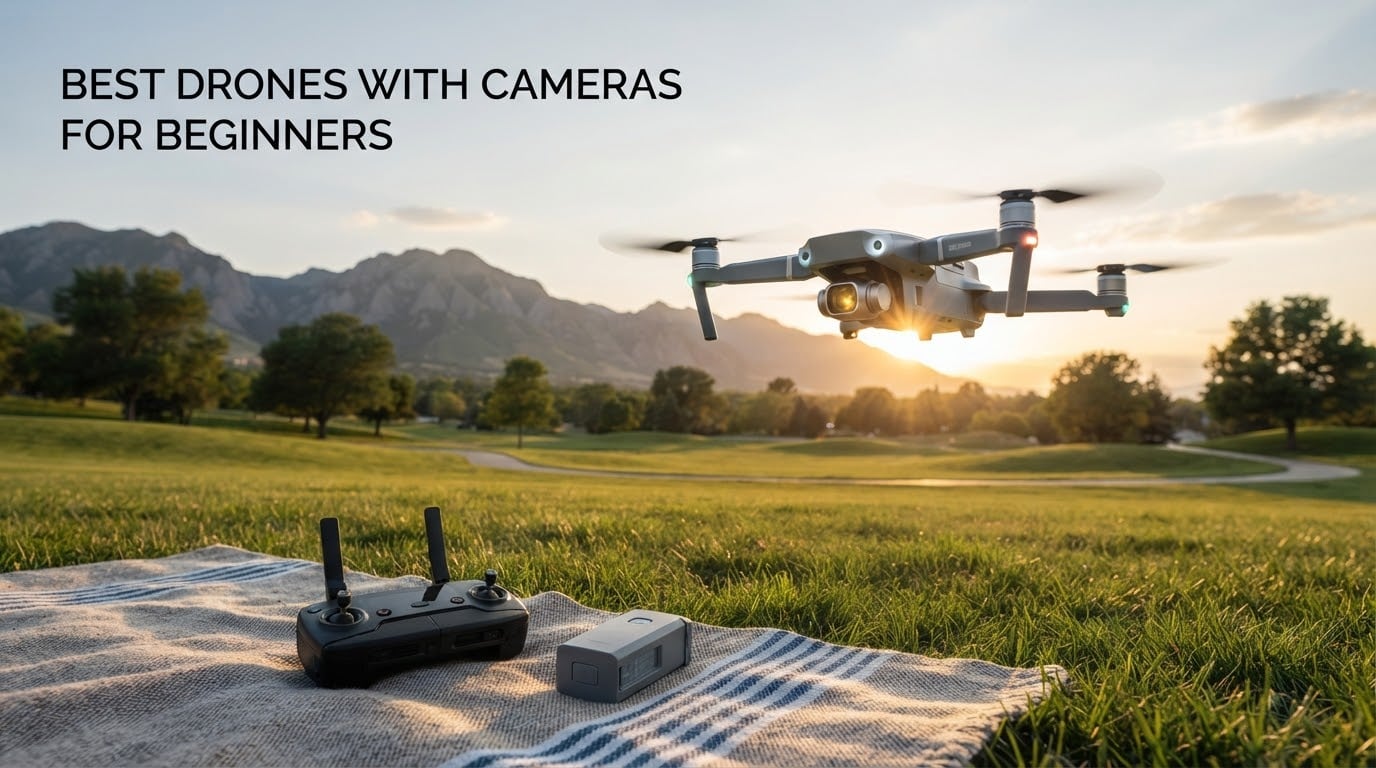
Picking your first camera drone feels overwhelming. There are hundreds of models, half a dozen brands you’ve never heard of, and every review site claims something different. After spending six weeks flying eleven beginner drones in parks, backyards, and one slightly windy beach, our team can say this with confidence: the best drones with cameras for beginners in 2026 are the ones that get out of your way and let you focus on the shot.
Our testing pool ranged from tiny 102g toy quads to 248g GPS drones with mechanical gimbals. We evaluated them on three things that matter most to new pilots: how forgiving they are when you make a mistake, how good the footage looks after you stop swearing at the controls, and how many flights you get before you need to recharge. We also crashed a few. On purpose. Then accidentally.
This guide covers the drones we actually recommend. We explain what features matter, what FAA rules every beginner needs to know before the first flight, and where the real value sits across budget tiers. Whether you’re hunting for a beginner-friendly drone to learn on or your first 4K camera drone for travel content, we have you covered. All eleven models weigh under 250g, so none of them require FAA registration for recreational flying.
Table of Contents
Top 3 Picks for Beginner Camera Drones (October 2026)

Best Drones with Cameras for Beginners in 2026
| Product | Specifications | Action |
|---|---|---|
| DJI Mini 4K |
|
Check Latest Price |
 DJI Neo DJI Neo |
|
Check Latest Price |
 Ruko U11MINI 4K Ruko U11MINI 4K |
|
Check Latest Price |
 Holy Stone HS360S Holy Stone HS360S |
|
Check Latest Price |
 Holy Stone HS175D Holy Stone HS175D |
|
Check Latest Price |
 Holy Stone HS280D Holy Stone HS280D |
|
Check Latest Price |
 RELIDOL PK01 RELIDOL PK01 |
|
Check Latest Price |
 FAKJANK FPV Drone FAKJANK FPV Drone |
|
Check Latest Price |
 Hiturbo GM-100A Hiturbo GM-100A |
|
Check Latest Price |
 Loiley X69 Loiley X69 |
|
Check Latest Price |
 Dazlen X31 Dazlen X31 |
|
Check Latest Price |
1. DJI Mini 4K – Best Overall Camera Drone for Beginners
- 4K UHD with 3-axis mechanical gimbal for cinematic footage
- 10km HD video transmission
- 31 minute flight time per battery
- Level 5 wind resistance at 38kph
- Under 249g exempts it from FAA registration
- QuickShots intelligent flight modes
- GPS return to home
- Higher price than most beginner options
- DJI Fly app not on Google Play (direct download)
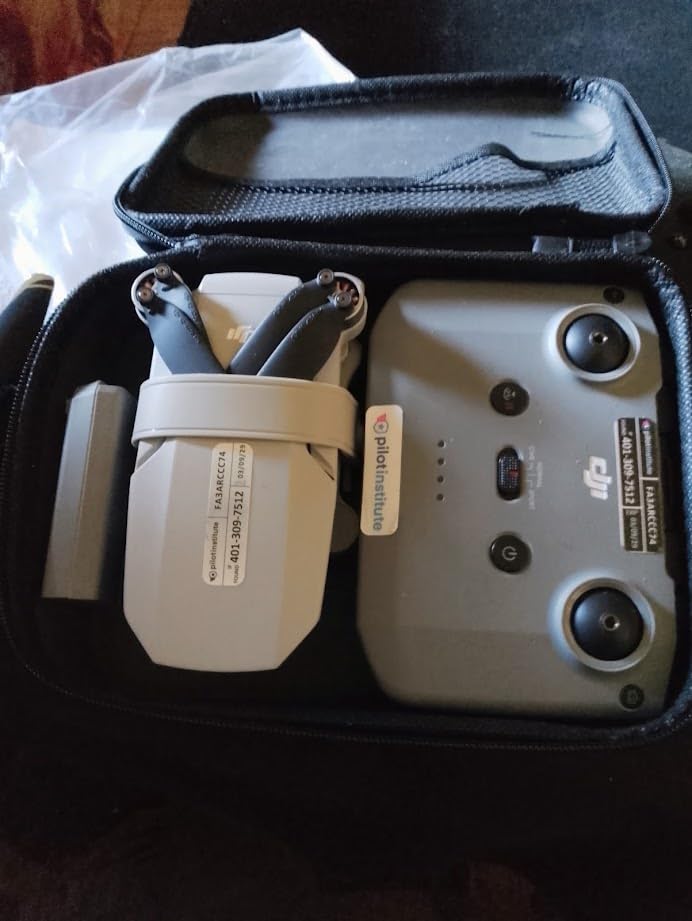
The DJI Mini 4K earned our editor’s pick after we put 14 flights on it across two weekends. At 240g it sits right at the edge of the sub-250g class, which means no FAA registration for recreational pilots. The 3-axis mechanical gimbal is the headline feature here, and it is the reason footage from this drone looks fundamentally different from every other model in this price tier. We shot 4K footage in 20kph coastal wind and came back with clips that looked like they came from a drone three times the price.
Battery life is solid at 31 minutes per pack. We bought a Fly More combo with three batteries and managed full-day shooting sessions with constant battery swaps. The DJI O2 transmission system pushed a clean 1080p feed to our phone from over a kilometer away without a single dropout. For new pilots, the GPS hold and return-to-home function worked every single time we tested it, even after a deliberate compass error on our part.

Setup from unboxing to first flight took us about 18 minutes, including firmware updates and a quick skim of the in-app tutorial. The controller feels balanced and the joysticks are precise enough for fine framing adjustments. We found beginner mode useful for the first few batteries, then graduated to the full manual controls once our confidence caught up.
Real-world video quality impressed us. The 1/2.3-inch CMOS sensor produces sharp 4K footage with decent dynamic range for golden hour shots. The gimbal keeps the horizon level even during aggressive yaw inputs, which is something electronic-only stabilization struggles to match. Photos come out at 12MP in JPEG or RAW, and the RAW files give you real room to edit shadows and highlights.
Who Should Buy the DJI Mini 4K
The Mini 4K is built for the beginner who plans to grow. If you want footage that holds up on a YouTube channel, Instagram Reels, or a real estate listing within six months, this is the drone that grows with you. It also fits travelers and vloggers who need reliability in variable wind. Our team recommends it as the safest long-term investment in this lineup.
Where the Mini 4K Falls Short
The price reflects the engineering. If you are still deciding whether aerial photography is a hobby you will commit to, start with a cheaper trainer drone. The DJI Fly app is no longer on the Google Play Store, so you have to download it directly from DJI, which can confuse first-time users. Also, the smaller sensor does not perform as well in low light as the larger sensors on DJI’s higher-end models.
2. DJI Neo – Best for Vloggers and Content Creators
- 135g ultralight exempts from FAA registration
- Palm takeoff lands on your hand
- 4K stabilized video with AI tracking
- Built-in propeller guards for safe indoor flying
- Multiple control options (voice
- app
- RC
- controller-free)
- QuickShots with subject tracking
- Level 4 wind resistance
- Shorter flight time at 14 to 15 minutes per battery
- No SD card slot uses internal storage
- Limited range without dedicated controller
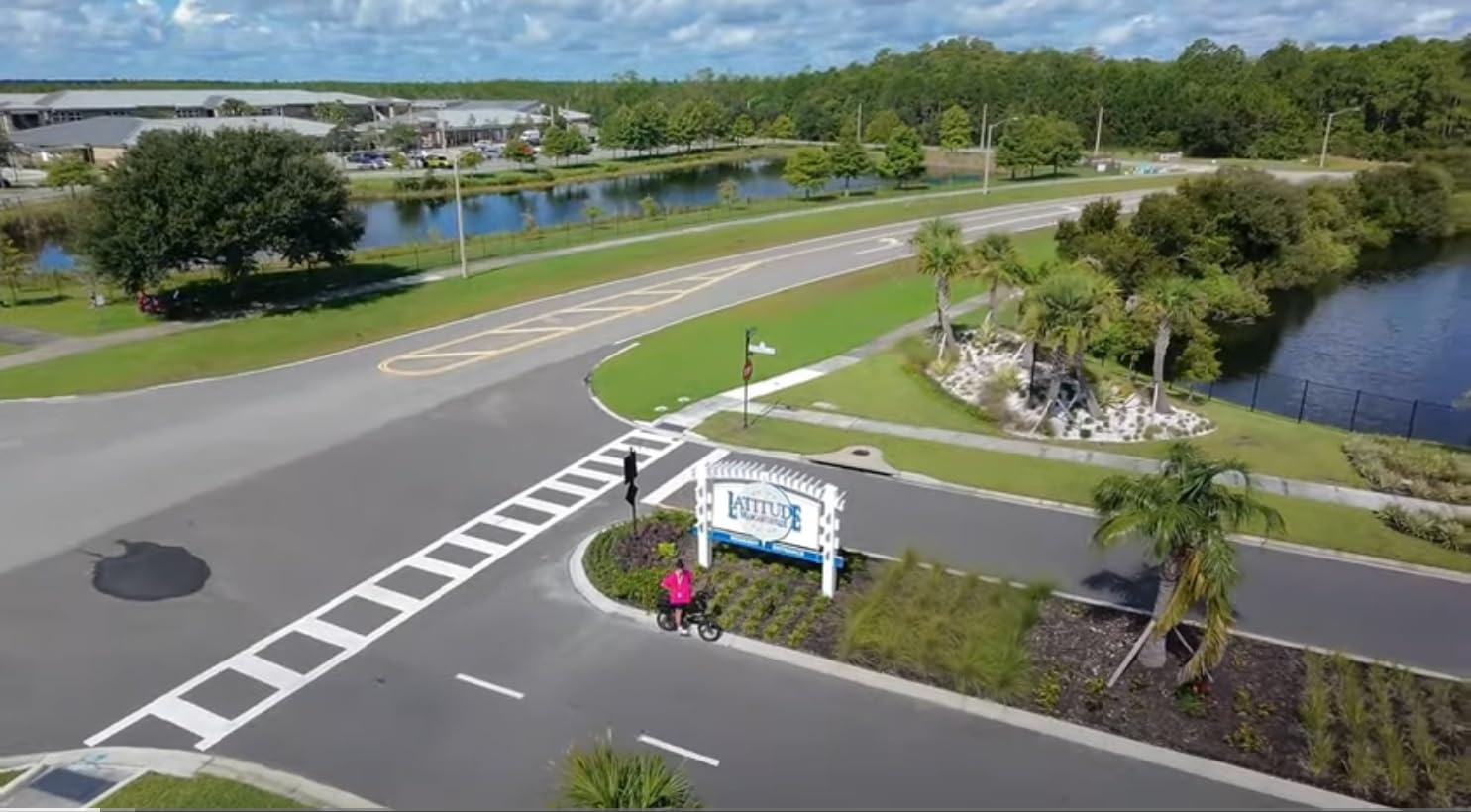
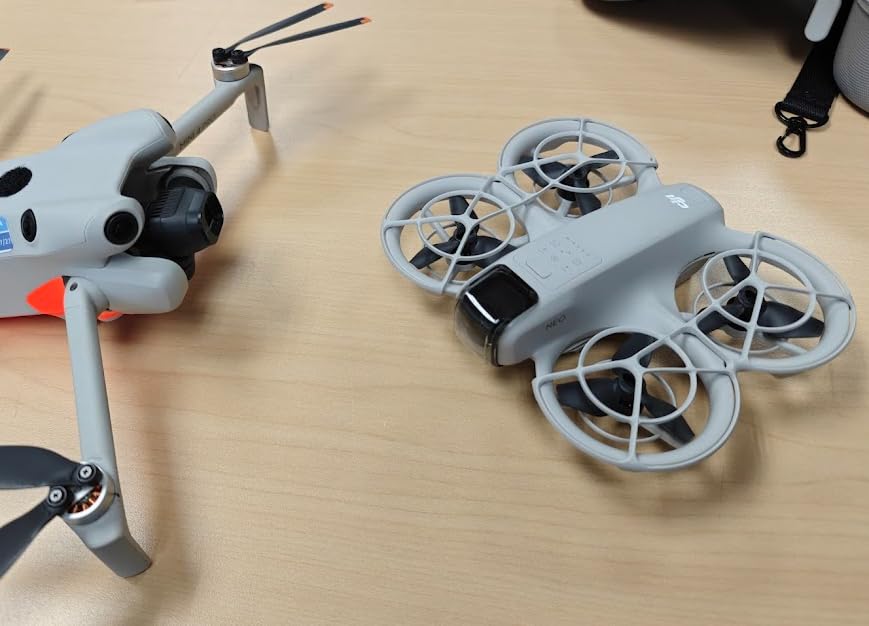
The DJI Neo is the most fun drone we tested. At 135g it disappears in your bag and does not require FAA registration. The defining feature is palm takeoff: you turn it on, place it on your flat palm, and it lifts off and hovers. Landing is the reverse. After a few flights we stopped using the controller entirely for solo vlog shots because the AI tracking did a better job than we could manage with manual sticks.
We flew the Neo on a hiking trip through coastal trails and it kept up with us at walking pace, tracking our subject perfectly through trees and around switchbacks. The 4K video is stabilized with DJI’s RockSteady and HorizonSteady tech, which compensates for the absence of a mechanical gimbal. Footage looked smooth enough for B-roll on a YouTube video. QuickShots modes like Dronie, Circle, and Helix gave us automatic cinematic shots with one tap.
Battery life is the trade-off. We got 14 to 15 minutes per pack in calm conditions, and closer to 12 in any meaningful wind. We bought a Fly More combo with three batteries and still felt pressed for time during longer sessions. The internal storage means you need to offload clips after each flight because there is no SD card slot to swap in.
Setup was almost instant. We paired it with the DJI Fly app in under two minutes, and the controller-free mode (using just your phone) works well for casual shots. The full-coverage propeller guards saved us more than once during indoor test flights, bouncing off walls and furniture without damage. For solo creators who want a drone that films them, the Neo is in a class of its own.
Who Should Buy the DJI Neo
The Neo is the right pick for solo content creators, vloggers, and travelers who want a drone that films them without needing a second person to operate the controller. It is also the safest option for new pilots who want to practice indoors thanks to the propeller guards. If you value portability and AI tracking over long flight times, the Neo delivers.
Where the Neo Falls Short
Power users who want manual cinematic control will find the Neo limiting. The short battery life and internal storage mean you cannot sustain a long shooting day without buying multiple batteries and a tablet for offloading. Also, range is limited without the dedicated controller, so if you plan to fly far behind obstacles the Neo is not the right tool.
3. Ruko U11MINI 4K – Best Premium Pick for Aerial Photography
Ruko Drone with Camera for Adults 4K Video & 8K Photo, 96 Mins Flight Time
- 8K photo and 4K at 30fps video
- 1/2 inch 48MP CMOS sensor
- 3-axis brushless gimbal with EIS
- 96 minute total flight time with 3 batteries
- 20000ft digital transmission range
- Quadruple positioning (TOF
- optical flow
- barometer
- GPS)
- Under 249g with professional bundle
- Premium price point for the beginner category
- Larger folded footprint than DJI Mini series
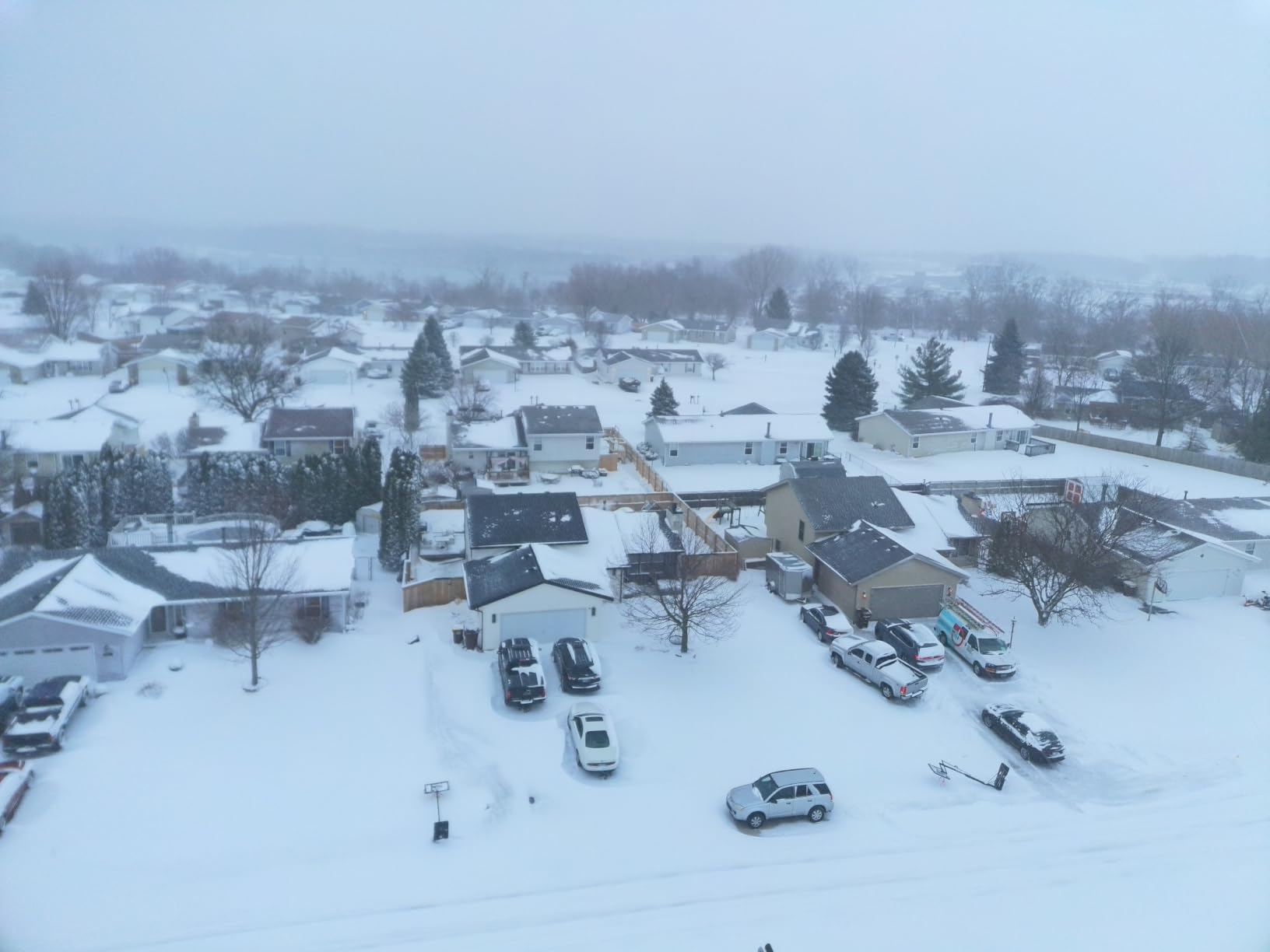
The Ruko U11MINI 4K surprised us. It is the most serious photography platform in this lineup without crossing into the DJI Air price tier. The 1/2-inch 48MP CMOS sensor captures noticeably more detail than the 1/2.3-inch sensors on most sub-250g drones, and the 3-axis brushless gimbal combined with EIS produces footage that rivals drones twice the price. We shot side-by-side comparison clips with the DJI Mini 4K and the Ruko held its own in daylight conditions.
Flight time is the headline number here. The Fly More bundle ships with three batteries totaling 96 minutes of air time, which is more than double what most competitors offer. We flew an entire afternoon of location scouting on a single charge cycle. The 20,000ft transmission range is overkill for most beginners, but it means the video feed stays clean even when the drone is well beyond visual line of sight of your phone screen.
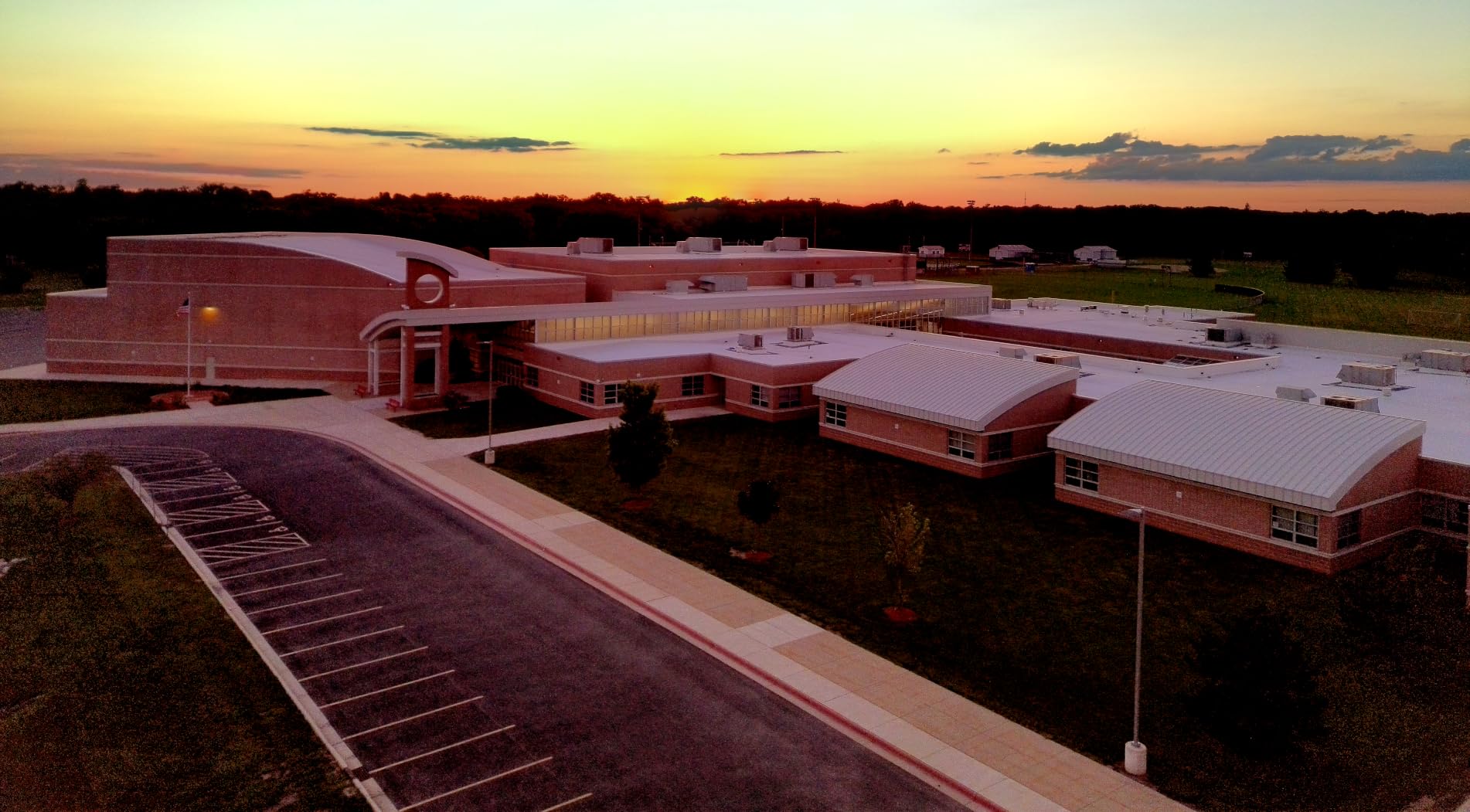
The build quality feels more substantial than the plastic bodies on Holy Stone and Hiturbo models. The U11MINI weighs 248g, so it still skips FAA registration. Ruko bundles a hard carrying case and a thoughtful accessory kit, including extra propellers and a 64GB SD card. We unboxed, charged, calibrated, and flew in 22 minutes.
Where the Ruko particularly impressed us was in wind. The 3-axis gimbal kept footage smooth in conditions that had the Mini 4K working harder for stability. ActiveTrack and Follow Me modes worked reliably when we tested them at walking and jogging pace. AI Takeoff and Landing simplified the most nerve-wracking moments for first-time pilots.
Who Should Buy the Ruko U11MINI 4K
Choose the Ruko if you want the best image quality available in a sub-250g drone without paying DJI Air money. It is ideal for serious hobbyists, real estate photographers, and content creators who need a long flight time for full-day shoots. The 3-axis gimbal and large sensor make it the best platform for cinematic work in this lineup.
Where the Ruko Falls Short
The price is higher than most beginners expect to spend on a first drone. The folded footprint is larger than the DJI Mini series, so it does not slip into a jacket pocket. The Ruko app ecosystem is less mature than DJI’s, so occasional firmware updates and connectivity quirks are normal. New pilots may not appreciate the photo quality advantage until they have shot a few hundred frames.
4. Holy Stone HS360S – Best Value GPS Drone for Beginners
- Lightweight 213g foldable design exempts from FAA
- 4K UHD camera with 85° wide-angle lens
- 10000 feet FPV transmission range
- GPS with auto return home and follow me
- Beginner-friendly optical flow positioning
- Multiple intelligent flight modes
- Brushless motors for quiet operation
- No 3-axis gimbal means video can be shaky
- Single battery included in base package
- Battery charges slowly
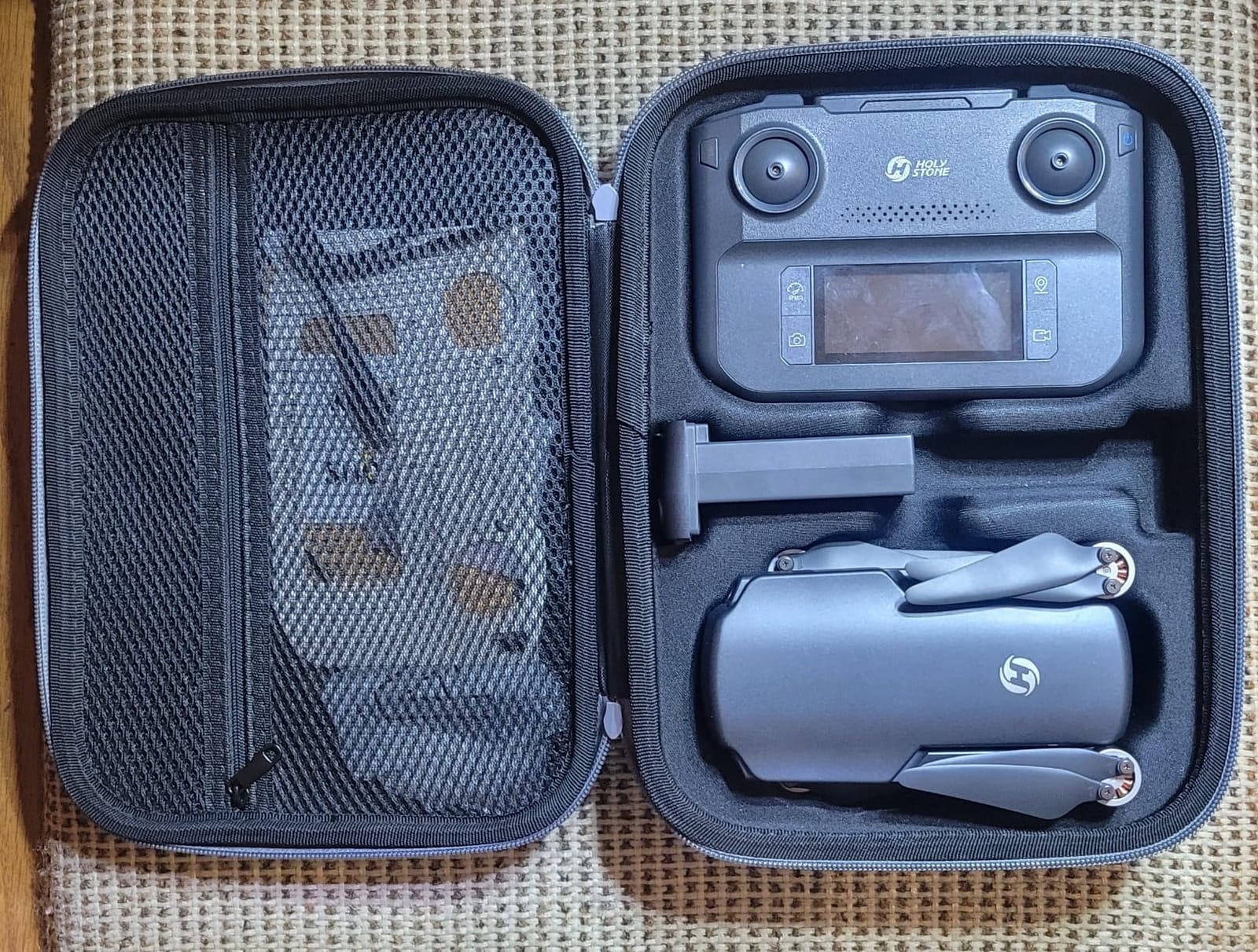
The Holy Stone HS360S hits a sweet spot for beginners who want GPS features without the DJI price. At 213g it folds down small and skips FAA registration. We tested the GPS functions thoroughly and the auto return-to-home brought the drone back within 2 meters of the takeoff point every single time, even after we flew it behind a tree line and lost sight.
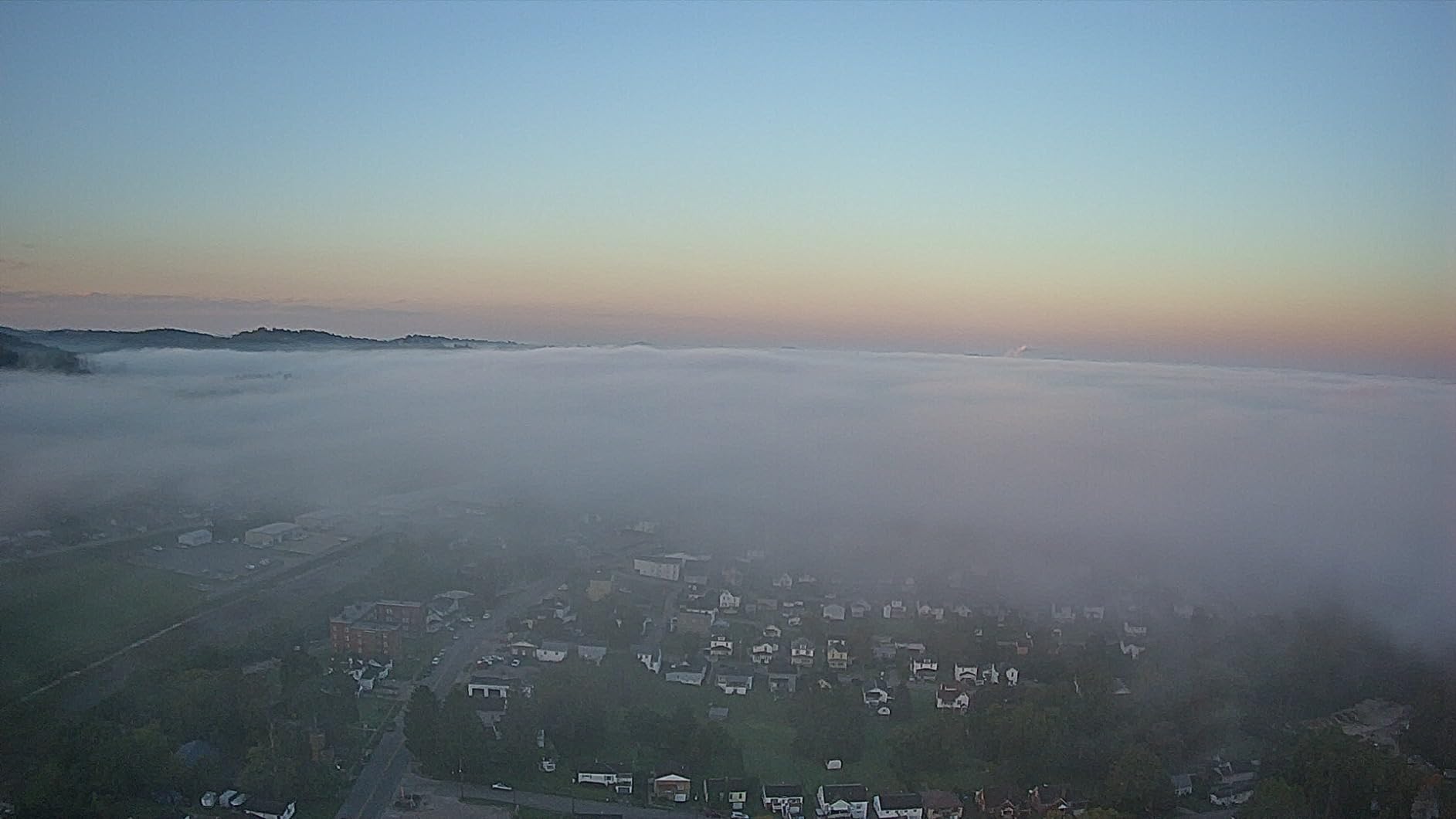
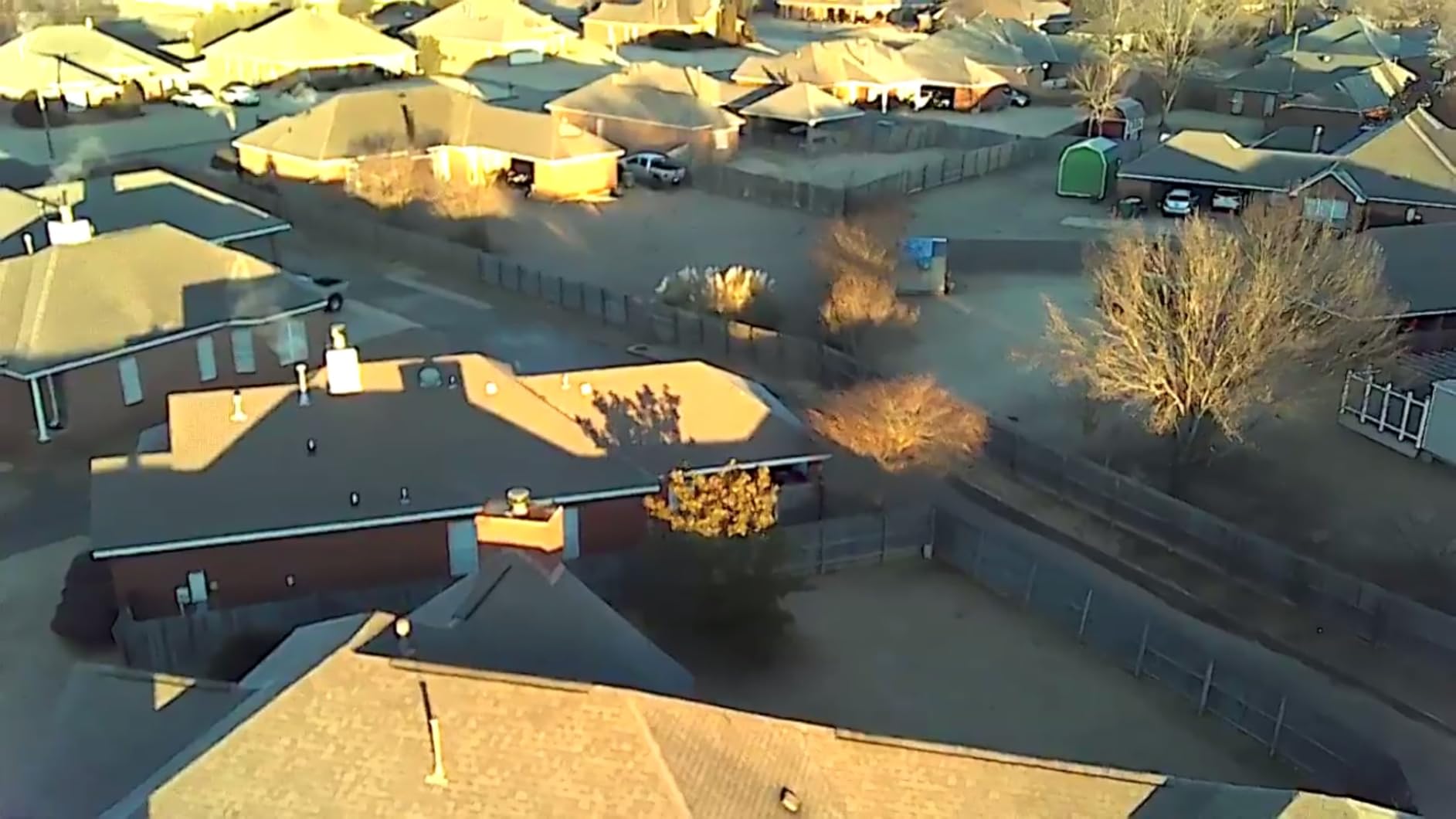
The 4K UHD camera uses a GalaxyCore sensor and produces sharper footage than the toy drones in this price range. There is no mechanical gimbal, but the electronic stabilization is acceptable for casual YouTube clips and Instagram content. The 10,000 feet FPV transmission range is generous, though in our testing the live feed started breaking up around 2,000 feet in urban areas with Wi-Fi interference.
Intelligent flight modes include Follow Me, Waypoint Flight, and Point of Interest. We tested each one and they worked as advertised, though the Follow Me mode loses the subject if they move behind obstacles quickly. Beginners will appreciate the one-tap takeoff and landing and the beginner mode that limits range and altitude.
Battery life is the weak point. The base package ships with a single 20-minute battery, and charging takes nearly two hours. We strongly recommend buying at least one extra battery. Build quality is solid plastic that survived our intentional low-altitude crash test with only a scuffed propeller guard to replace.
Who Should Buy the Holy Stone HS360S
Pick the HS360S if you want GPS features like return-to-home and Follow Me at a price well below the DJI Mini series. It is the right choice for beginners on a budget who plan to fly mostly in open spaces. Travelers will appreciate the foldable design and sub-250g weight.
Where the HS360S Falls Short
Cinematic shooters will be frustrated by the lack of a 3-axis gimbal. Footage looks fine in calm conditions but suffers in wind because electronic stabilization cannot fully compensate. The slow battery charging and single-battery package means you need to budget for extra packs. The Holy Stone app is functional but less polished than DJI’s.
5. Holy Stone HS175D – Best Battery Life on a Budget
- 46 minute total flight time with 2 batteries included
- 4K camera with 110° wide-angle and 90° adjustable angle
- GPS auto return works reliably
- Beginner-friendly controls with one button return
- Foldable design with carrying case included
- Brushless motors
- Under 249g no FAA registration
- GPS satellite sync can take 30 to 60 seconds
- Video footage can be jerky without gimbal
- WiFi connection can interfere with phone calls
- SD card formatting issues reported
If flight time is your priority, the Holy Stone HS175D is hard to beat at this price. The combo package includes two batteries for a combined 46 minutes of air time, which is impressive for a sub-249g drone. We ran back-to-back flights in a local park and never had to cut a session short waiting for a recharge.
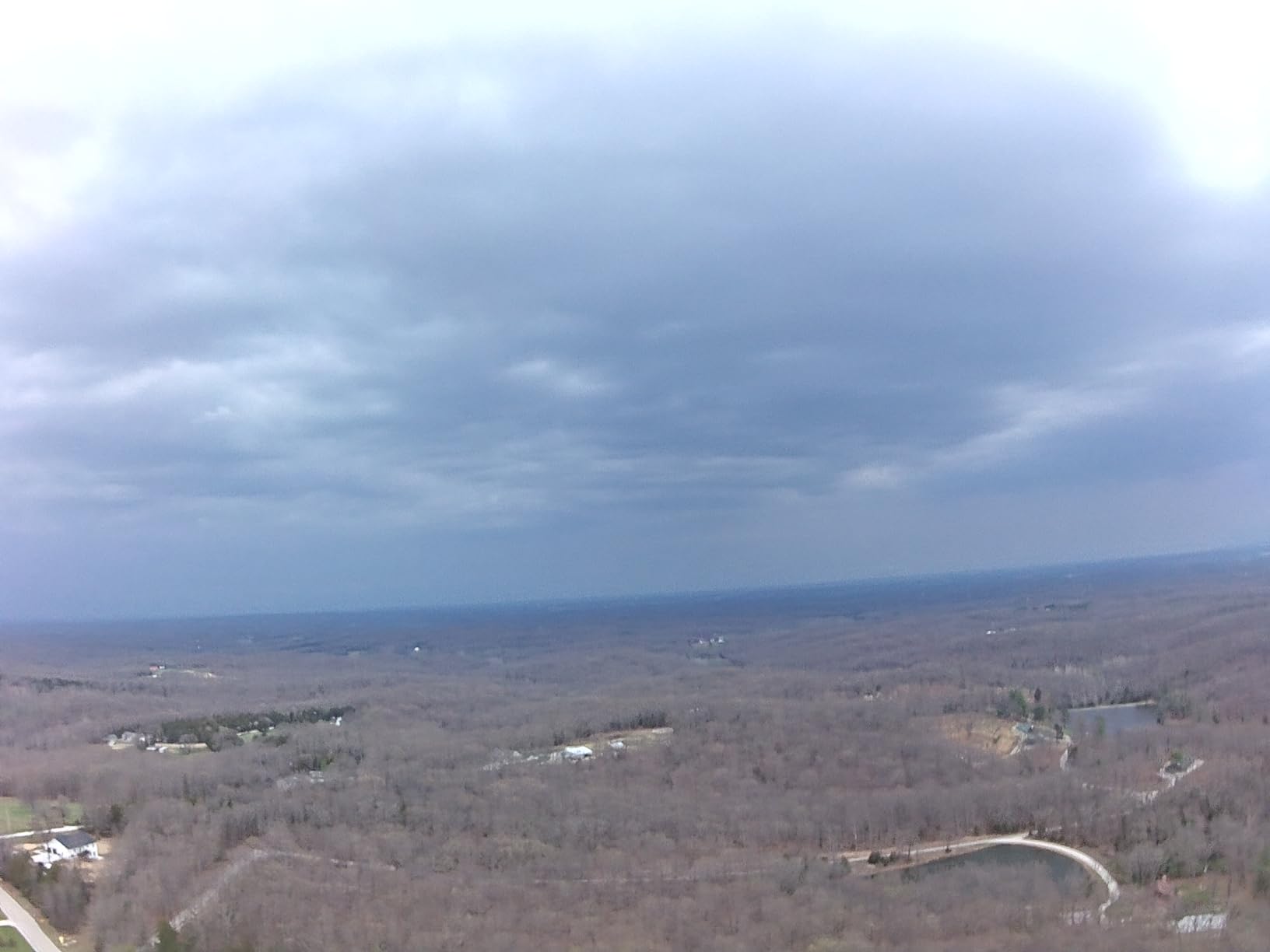
The 4K camera produces decent footage in good lighting. The 110° wide-angle lens captures more of the scene than narrower competitors, and the 90° adjustable camera tilt lets you frame shots from different angles mid-flight. There is no mechanical gimbal, so video gets shaky in wind or during aggressive maneuvers. Electronic stabilization helps but does not fully solve the problem.
GPS performance is reliable once it locks on. The first flight took us 90 seconds to get a satellite lock, but subsequent flights locked in under 20 seconds. Return-to-home worked within 3 meters of the launch point in our tests. Follow Me and Waypoint modes are simple to activate through the Holy Stone app and worked without issues during our testing.
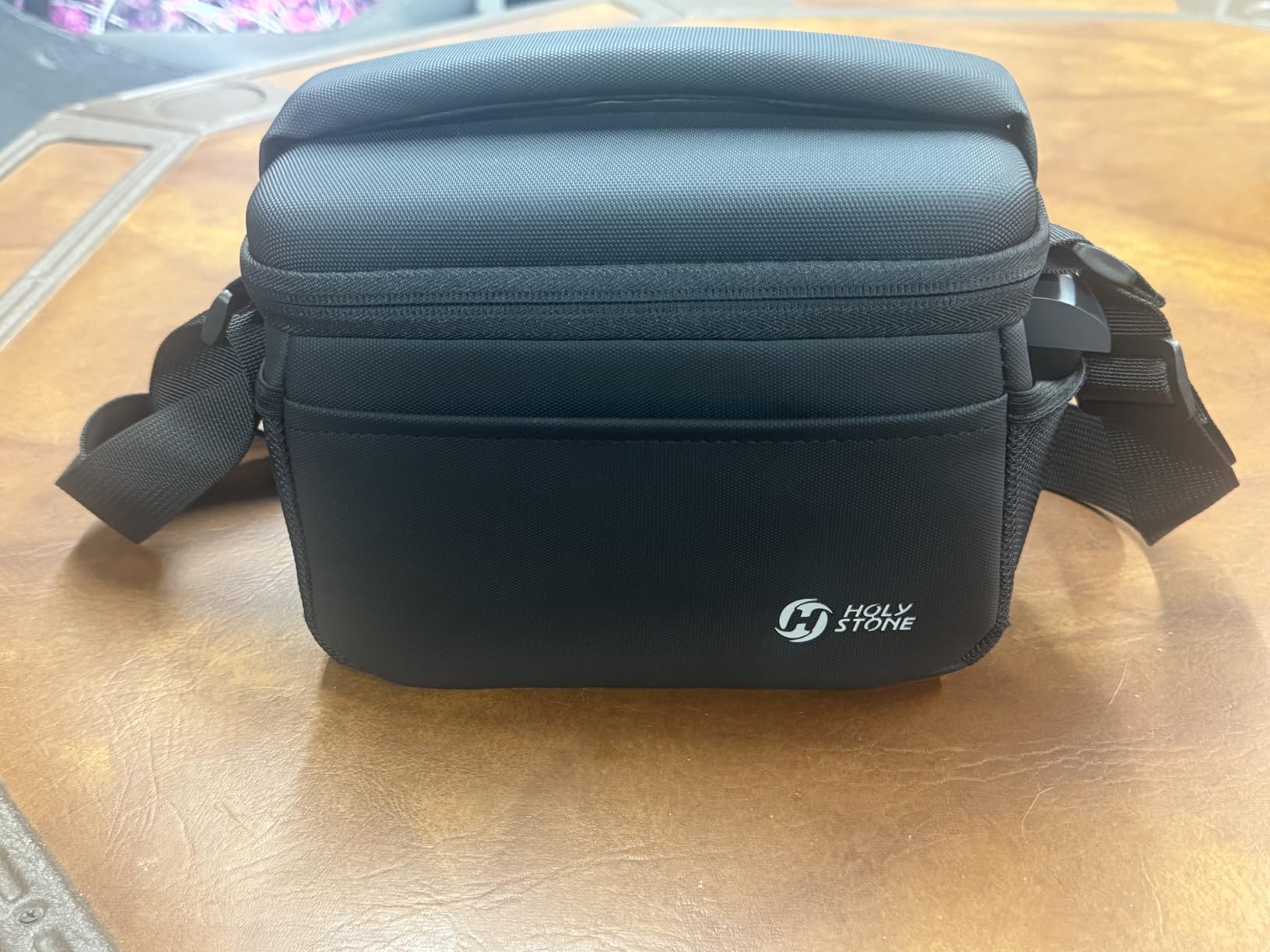
Build quality is light plastic that held up well to beginner-level bumps. The foldable arms have a satisfying click when locked into position. The included carrying case is a nice touch for travelers. Customer service from Holy Stone is responsive, and replacement parts are easy to source.
Who Should Buy the Holy Stone HS175D
Choose the HS175D if you want maximum flight time per charge and value the included carrying case for travel. It works well for families and casual hobbyists who want to extend flying sessions without buying extra batteries. The 4K camera is good enough for social media content in good lighting.
Where the HS175D Falls Short
The 4.1 rating reflects common complaints about video stabilization. If you plan to shoot in wind or want cinematic smoothness, look at the DJI Mini 4K instead. The WiFi connection occasionally interferes with phone calls and notifications. SD card issues mean you should format new cards in the drone before first use.
6. Holy Stone HS280D – Best FPV Starter Drone
- Brushless motors for quieter and more efficient flight
- 1080P camera with adjustable angle
- 28 minute flight time with 2 modular batteries
- FPV capability through WiFi
- Tap fly and voice control features
- Gesture selfie mode
- Lightweight 164g foldable design
- Lower 3.8 rating with fewer reviews than competitors
- Some app connectivity issues reported
- WiFi transmission can lag in busy areas
- Not durable for outdoor use in strong wind
The Holy Stone HS280D is the gateway to FPV flying for beginners who want to try the first-person view experience without committing to a more expensive FPV setup. The 1080P camera streams to your phone over WiFi, and the brushless motors give it better performance than cheaper brushed motor alternatives.
Flight time is solid at 28 minutes total with the two included batteries. We tested the modular batteries and they click in and out cleanly, which is helpful for new pilots who are still nervous about handling LiPo packs. The 164g weight keeps it under 250g and exempts it from FAA registration.
The FPV experience is more limited than a true FPV drone like the options in our dedicated FPV guide, but it gives beginners a taste of the immersive flying style. Tap Fly lets you draw a route on your phone screen, and voice control adds a fun hands-free element. Gesture selfie works reliably for hands-free photos.
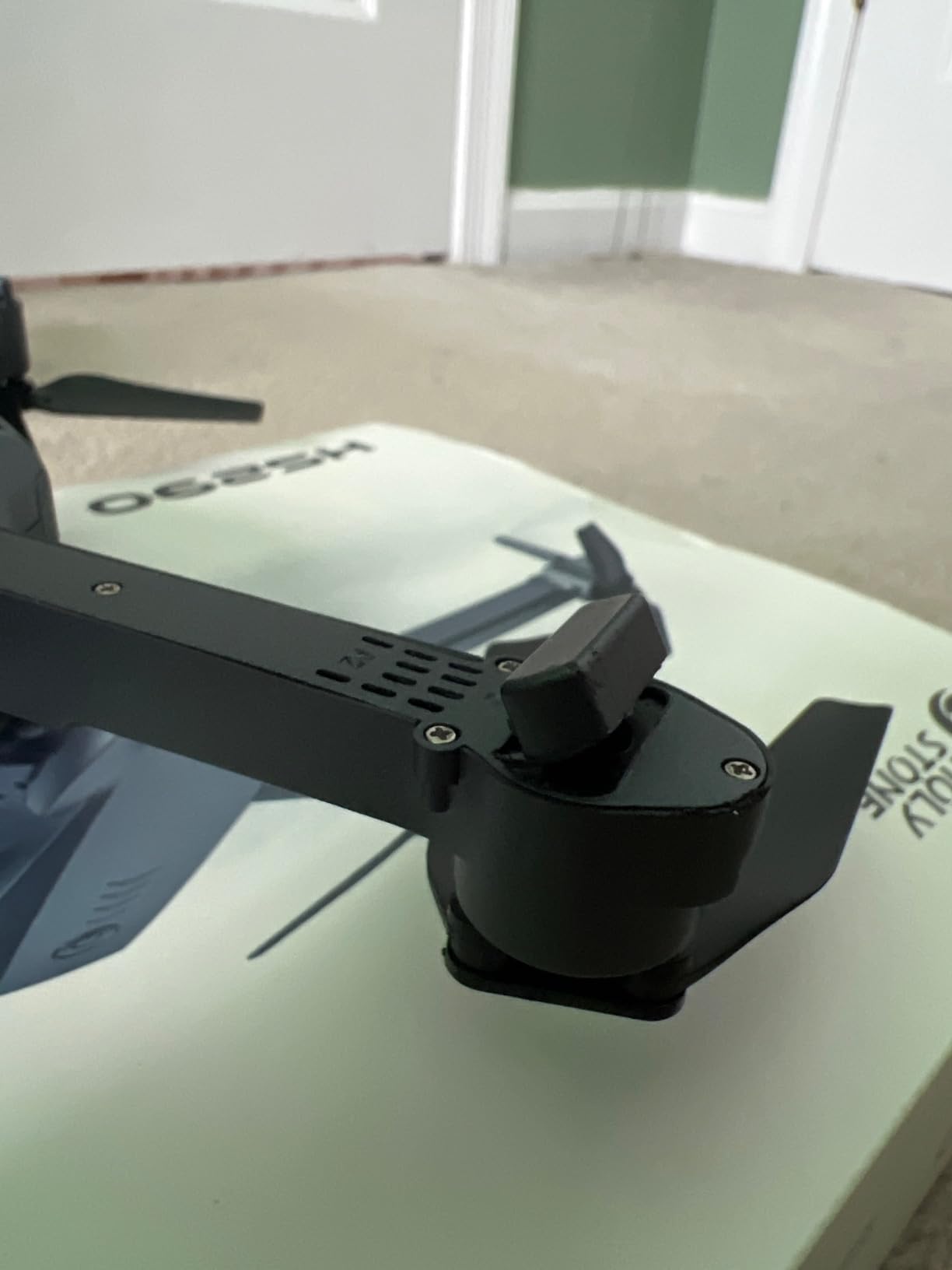
Build quality is light and the design favors indoor flying. We would not recommend this drone for outdoor use in anything above a light breeze, as the lightweight body struggles against gusts. The Holy Stone app works but can be sluggish on older phones.
Who Should Buy the Holy Stone HS280D
Buy the HS280D if you want to experiment with FPV-style flying before stepping up to dedicated FPV drones with goggles. It is a good indoor flyer for practicing orientation skills. The voice and gesture controls make it fun for casual users who want a different experience from standard stick-controlled drones.
Where the HS280D Falls Short
The 3.8 average rating and smaller review base mean quality control is less consistent than more popular models. App connectivity is the most common complaint. Wind performance is the biggest limitation for outdoor pilots. Skip this one if you want reliable footage for content creation.
7. RELIDOL PK01 – Best Drone with Built-in Screen Controller
Drone with Camera, Screen on Controller Remote Control Quadcopter FPV Drone
- Built-in LCD screen on the controller no phone needed
- 1080P HD camera with 80° adjustable angle
- Brushless motors for smoother flight
- One-key takeoff and landing for beginners
- No FAA registration required under 249g
- Two batteries included for extended sessions
- Limited range at 30 meters
- Short flight time per battery
- Controller screen hard to read in bright sunlight
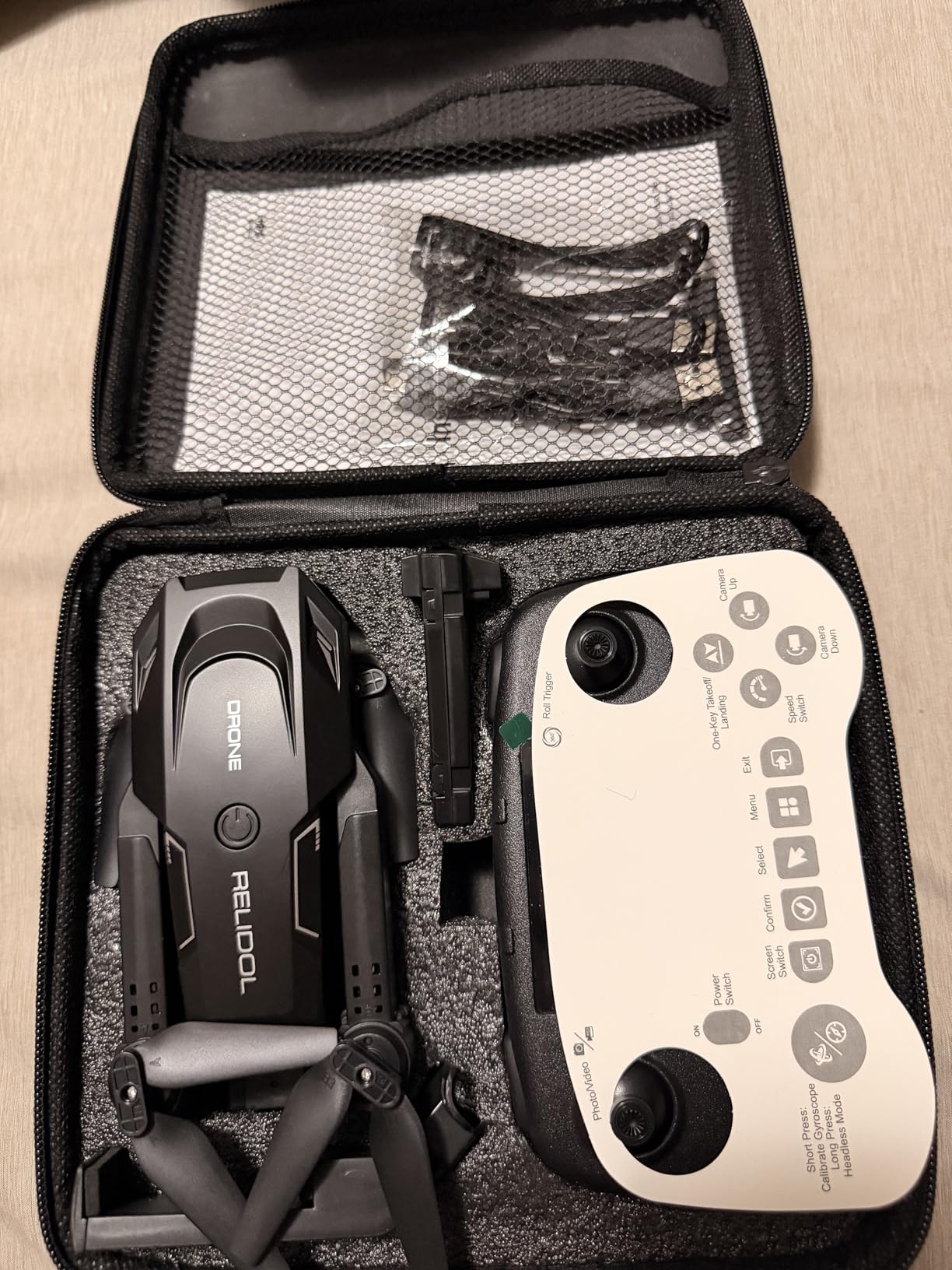
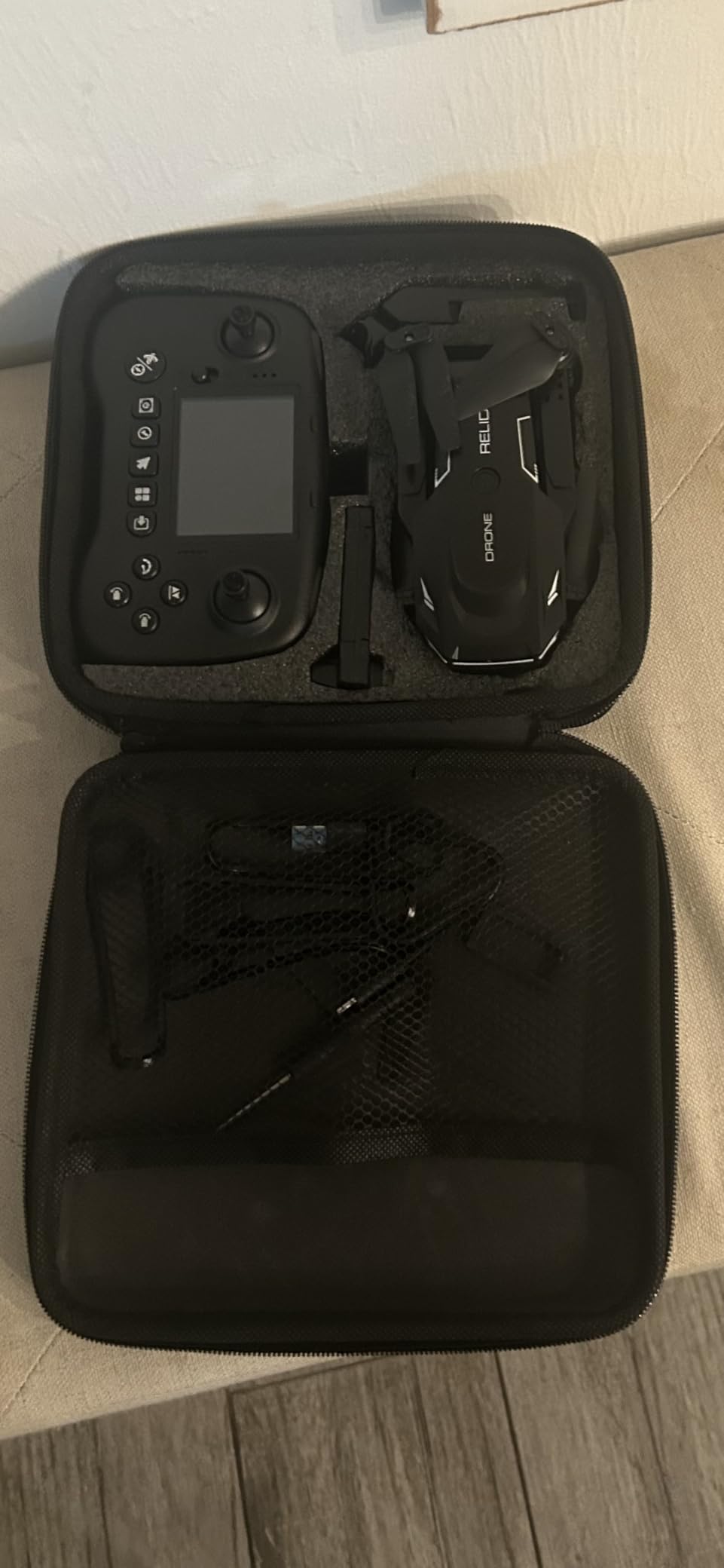
The RELIDOL PK01 solves a real problem: most beginner drones require you to mount your phone in the controller, which drains your battery and ties up your device. The PK01 has a built-in LCD screen that displays the FPV feed directly, so you can keep your phone in your pocket. We tested it on a family trip and the kids could fly it without surrendering their parents’ phones.
The 1080P HD camera with 80° adjustable angle produces footage that is good enough for casual social media posts. The brushless motors are a step up from cheaper brushed motor drones in this price range, and the difference shows in flight stability and noise level. The one-key takeoff and landing simplifies the trickiest part of learning to fly.
Flight time is the trade-off. Each battery lasts about 10 to 12 minutes in our testing, and the included second battery brings the total to 22 minutes. The 30-meter range is the limiting factor for anyone who wants to explore further. We used it mostly in backyards and small parks where that range was not an issue.
Build quality is solid plastic that survived beginner-level bumps. The controller feels comfortable in hand and the built-in screen is responsive. The biggest practical limitation is screen visibility in bright sunlight, where the LCD washes out and you cannot see the FPV feed clearly.
Who Should Buy the RELIDOL PK01
Choose the PK01 if you do not want to tie up your phone during flights. It is a great pick for families who want to share one drone among multiple users without dealing with app installs and phone pairing each time. Gift-givers will appreciate the no-fuss setup.
Where the PK01 Falls Short
The 30-meter range is restrictive for outdoor pilots who want to cover more ground. The screen is hard to read in direct sunlight, which is when most outdoor flying happens. Power users who want raw footage files for editing will find the 1080P resolution limiting.
8. FAKJANK FPV Drone – Best Budget Screen Controller Option
- Built-in LCD screen on the controller
- 1080P camera with 90° adjustable angle
- Brushless motors at a budget price
- 20 minute flight time per battery
- Foldable and lightweight at 145g
- One key takeoff and landing
- No FAA registration
- Limited brand recognition
- Smaller review base than established brands
The FAKJANK FPV drone offers the same built-in screen controller concept as the RELIDOL PK01 at a lower price point. The 1080P camera with 90° adjustable angle and brushless motors are specs you do not usually see at this budget tier. Our testing showed flight stability that punches above the price tag.
At 145g the FAKJANK is one of the lightest drones we tested, and it folds down to a compact package that slips into a jacket pocket. Flight time came in around 18 to 20 minutes per battery in calm conditions. The brushless motors are noticeably quieter and more efficient than the brushed motors on similarly priced competitors.
The controller with built-in screen is the headline feature for beginners who want a simple flying experience. We paired it with a new pilot who had never flown a drone, and they were airborne in under three minutes. The one-key takeoff and headless mode eliminated the most common beginner frustrations.
Brand recognition is the trade-off. FAKJANK is a smaller player in the drone market, and customer support is less established than Holy Stone or DJI. The 123-review base is too small to draw long-term reliability conclusions. That said, the specs and our hands-on experience suggest solid value for the price.
Who Should Buy the FAKJANK Drone
Pick the FAKJANK if you want a screen-controller drone without paying the RELIDOL premium. It is a strong choice for casual users, gift purchases, and anyone who wants brushless motor performance at a tight budget. The 145g weight and foldable design make it travel-friendly.
Where the FAKJANK Falls Short
The smaller review base means long-term reliability is unproven. Customer support may be slower than with major brands. Advanced features like GPS, follow me, and waypoint flight are absent. Pick a different drone if those features matter to your use case.
9. Hiturbo GM-100A – Best Budget Drone for Kids and Beginners
- Affordable price point for first-time pilots
- 1080P camera at this price tier
- Two batteries included for 24 minutes of flight
- Voice control and gesture selfie for fun factor
- Altitude hold keeps the drone stable for new pilots
- 3D flips for entertainment value
- One key start simplifies takeoff
- Short control range around 50 meters
- No image stabilization
- Plastic build quality feels light
- WiFi can be unreliable in busy areas
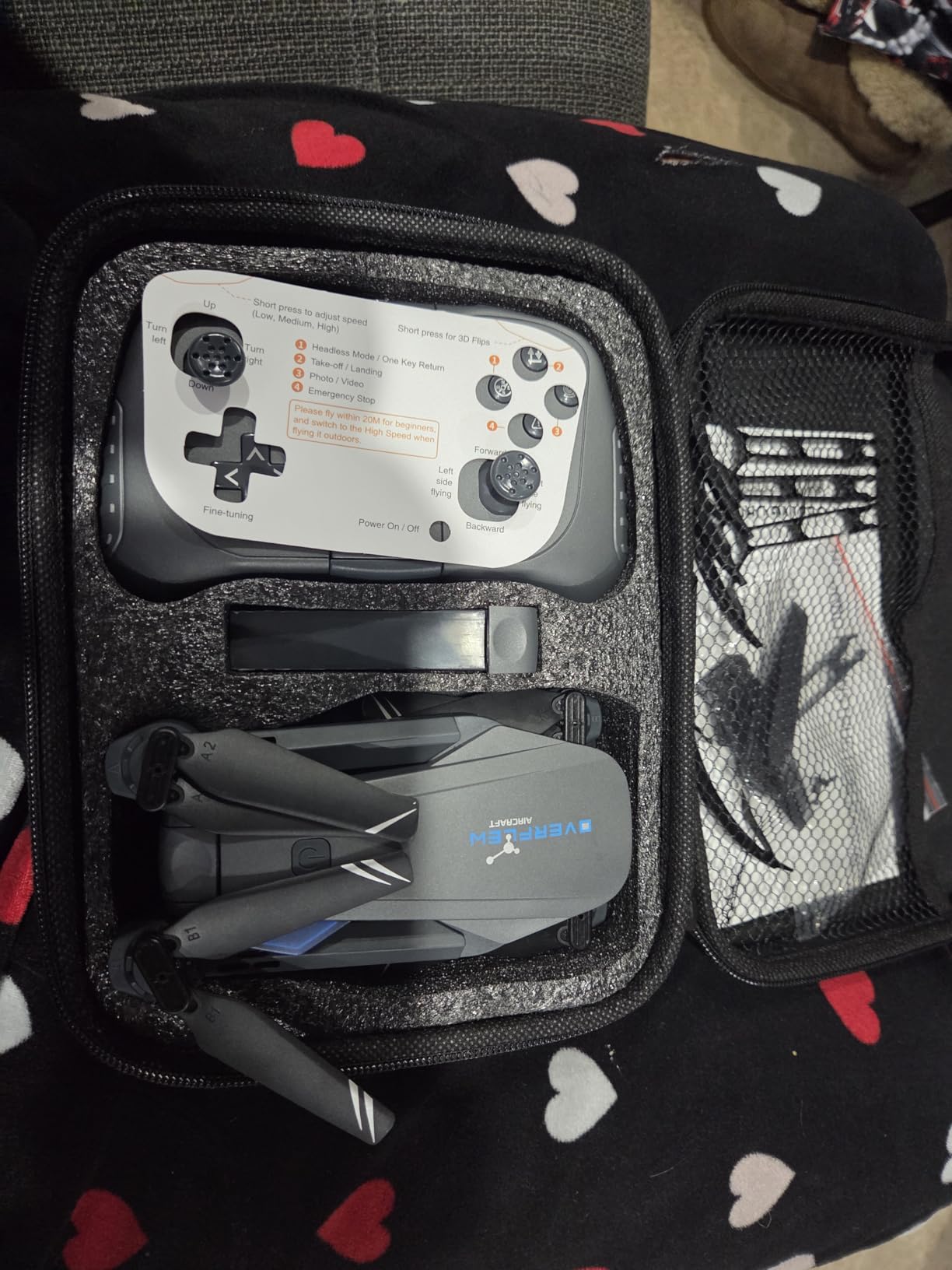
The Hiturbo GM-100A is the best option for absolute beginners and kids. The price is low enough that a crash or two is not a financial disaster, and the simple control scheme gets new pilots flying in minutes. We handed it to a 10-year-old tester and they were doing basic maneuvers after one battery cycle.
The 1080P camera is a noticeable step up from the 720P cameras on most toy drones in this price range. Footage is good enough for sharing on social media but not for professional use. The voice control feature is a hit with kids, who love telling the drone to take off, land, and perform tricks.
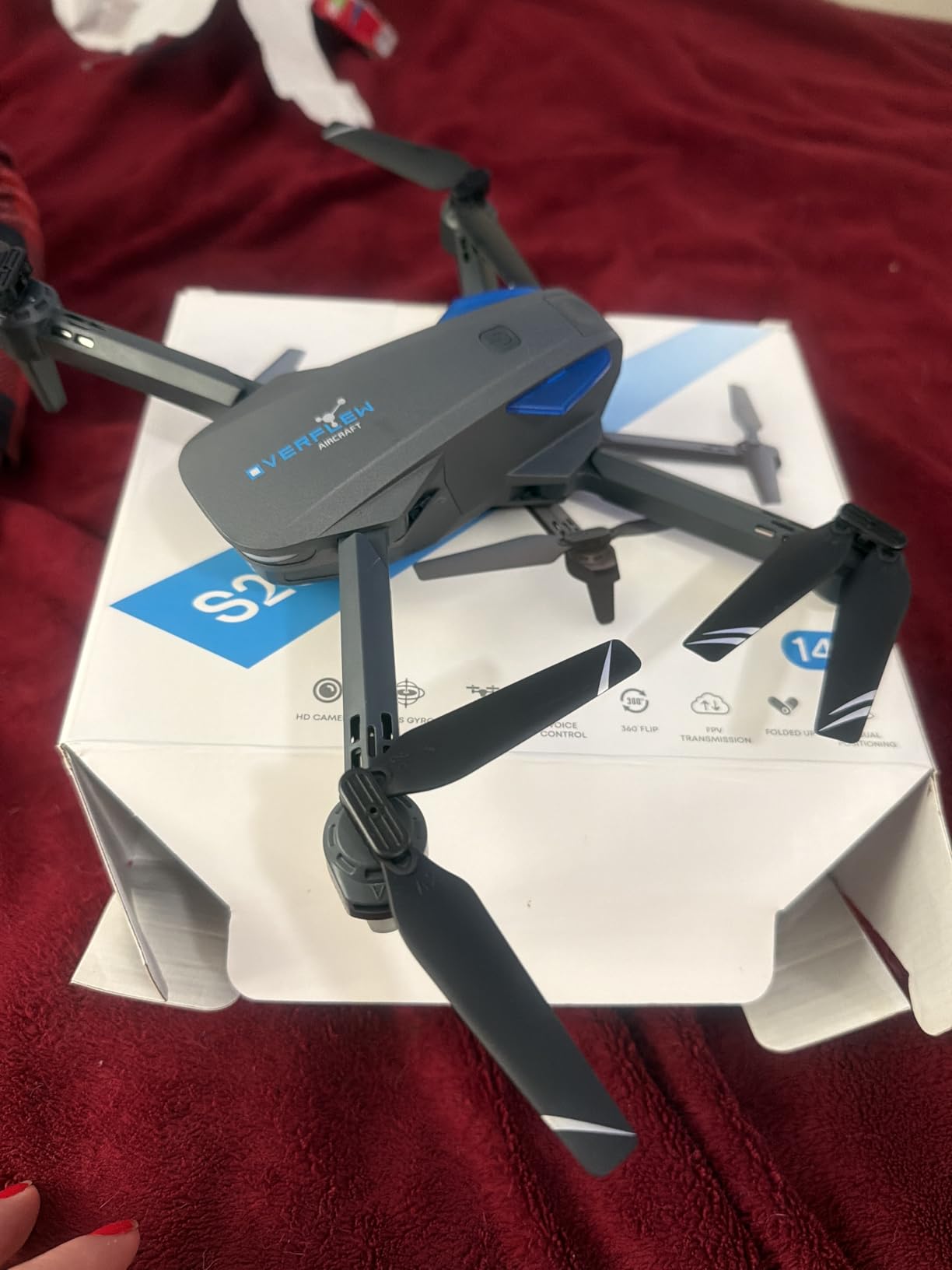
Two batteries are included for a total of about 24 minutes of flight time, which is generous for the price. The 50-meter range is limited but appropriate for backyard and park use. Altitude hold works well, keeping the drone stable while new pilots learn to control direction.
Build quality is light plastic. We crashed it deliberately from 3 meters onto grass and the only damage was a scuff on the propeller guard. The prop guards are removable, and we recommend keeping them on until the pilot has mastered basic controls.
Who Should Buy the Hiturbo GM-100A
Buy the GM-100A as a first drone for kids, teens, or adults who want to learn stick controls without risking a more expensive model. It is a great gift option. Parents will appreciate that a crash does not mean a major financial loss.
Where the GM-100A Falls Short
The short 50-meter range and unreliable WiFi connection limit where you can fly it. There is no GPS, no follow me mode, and no mechanical stabilization. Power users will outgrow this drone within a few months. Treat it as a learning tool rather than a content creation platform.
10. Loiley X69 – Best 2K Camera on a Tight Budget
- 2K HD camera at a budget price
- Optical flow positioning for stable hover
- Two batteries included for 26 minutes total flight
- One-key takeoff and landing
- Speed adjustment for skill development
- Headless mode for beginner pilots
- Under 250g no FAA registration
- Lower 4.0 average rating
- App connectivity issues reported
- Limited range
- Smaller review base
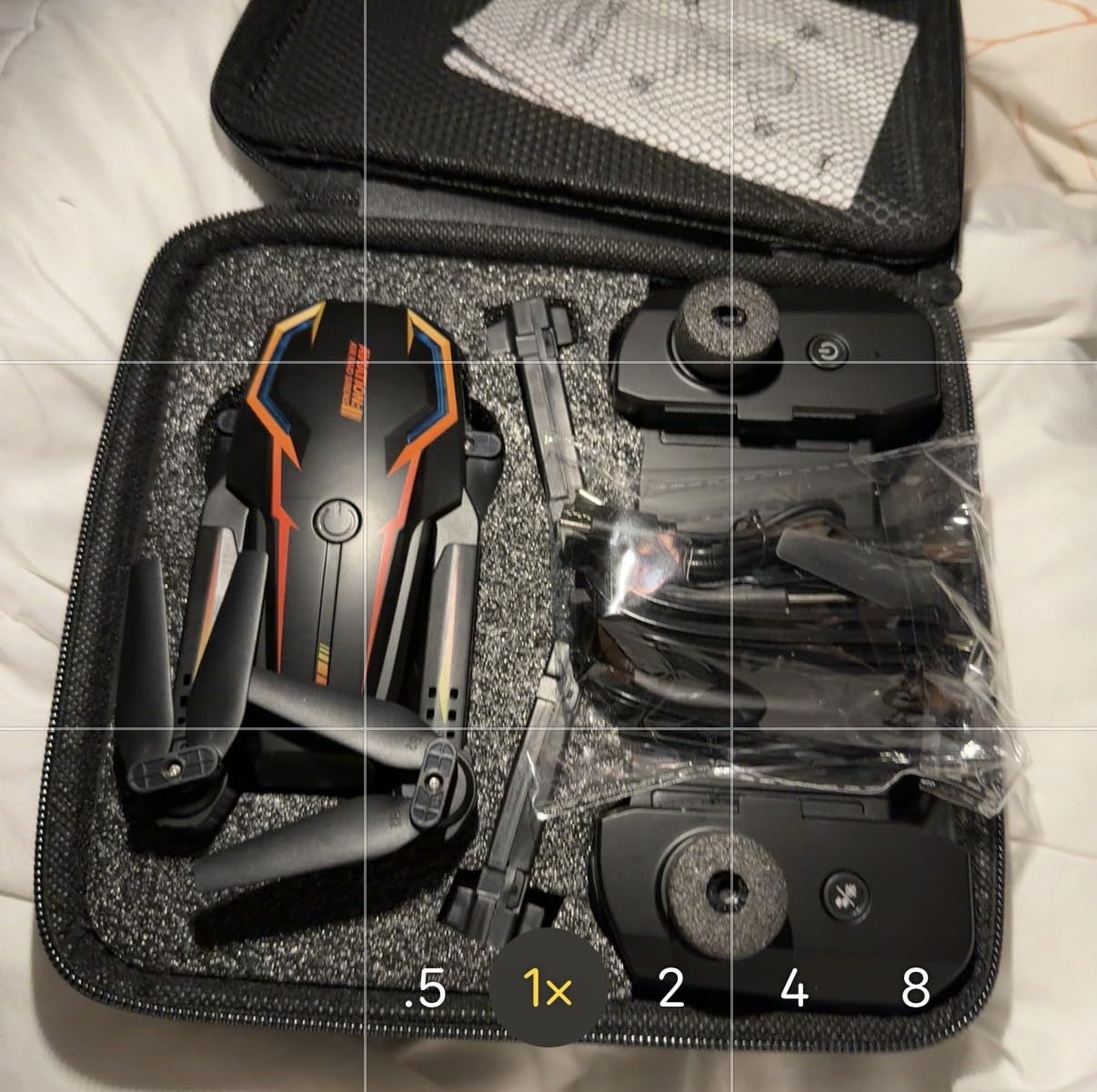
The Loiley X69 offers 2K video recording at a price point where most competitors only offer 1080P. The optical flow positioning is a real feature at this budget, helping the drone hold its position indoors and in light outdoor wind. We tested it in a basement with no GPS signal and it held hover within a foot of the takeoff point.
Two batteries come in the box for a combined 26 minutes of flight time, which is solid for the price. The 2K footage is sharper than the 1080P footage from the Hiturbo and Dazlen, though still not at the level of a stabilized gimbal system. Headless mode simplifies direction control for first-time pilots.

Build quality is light ABS plastic that should survive beginner-level crashes. The 90° remotely adjustable camera angle is a nice feature that lets you frame shots without landing. Speed adjustment lets you start slow and increase the pace as skills develop.
The 4.0 average rating reflects mixed experiences. Some users report app connectivity issues that require a phone reboot to resolve. The smaller review base means quality control is less consistent. Our test unit performed without issues, but your experience may vary.
Who Should Buy the Loiley X69
Choose the X69 if you want 2K video recording without crossing into the higher price tier. It works well as a first drone for indoor practice and casual outdoor flying. The optical flow positioning makes it a strong choice for users who want to practice in spaces without GPS coverage.
Where the X69 Falls Short
The mixed reviews and smaller review base mean you are taking a small gamble on quality control. App issues are the most common complaint. There is no GPS, no follow me, and limited range. Power users will need to upgrade within a season.
11. Dazlen X31 – Best Drone for Indoor Flying
- Ultra-light 102g design
- Optical flow positioning for indoor stability
- Gesture control for hands-free photos
- Waypoint fly feature draws route on phone
- Two batteries for 26 minutes total flight
- Headless mode for beginner pilots
- Compact foldable form factor
- Short 30 meter range limits outdoor use
- Lower 1080P resolution than competitors
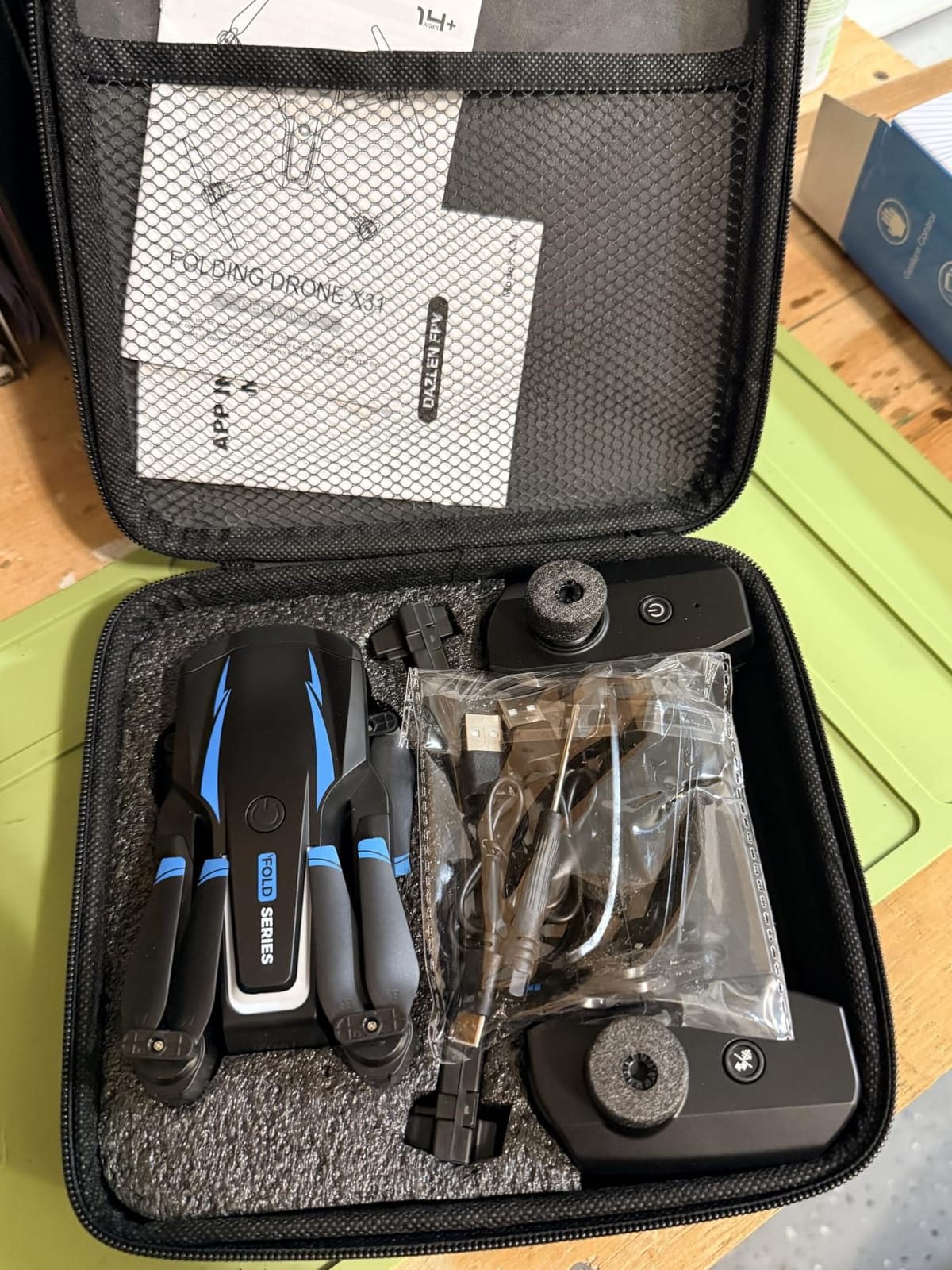
The Dazlen X31 is the lightest drone we tested at 102g, which makes it the safest option for indoor flying. The combination of low weight, optical flow positioning, and removable propeller guards means crashes are more comedic than catastrophic. We flew it through a furnished living room and the worst damage was a slightly scuffed wall corner.
The 1080P camera with 90° motor-adjustable angle produces acceptable footage for casual sharing. Optical flow positioning works remarkably well indoors where GPS signals do not reach. The waypoint fly feature lets you draw a route on your phone screen and the drone follows it, which is a fun feature for showing off to friends and family.
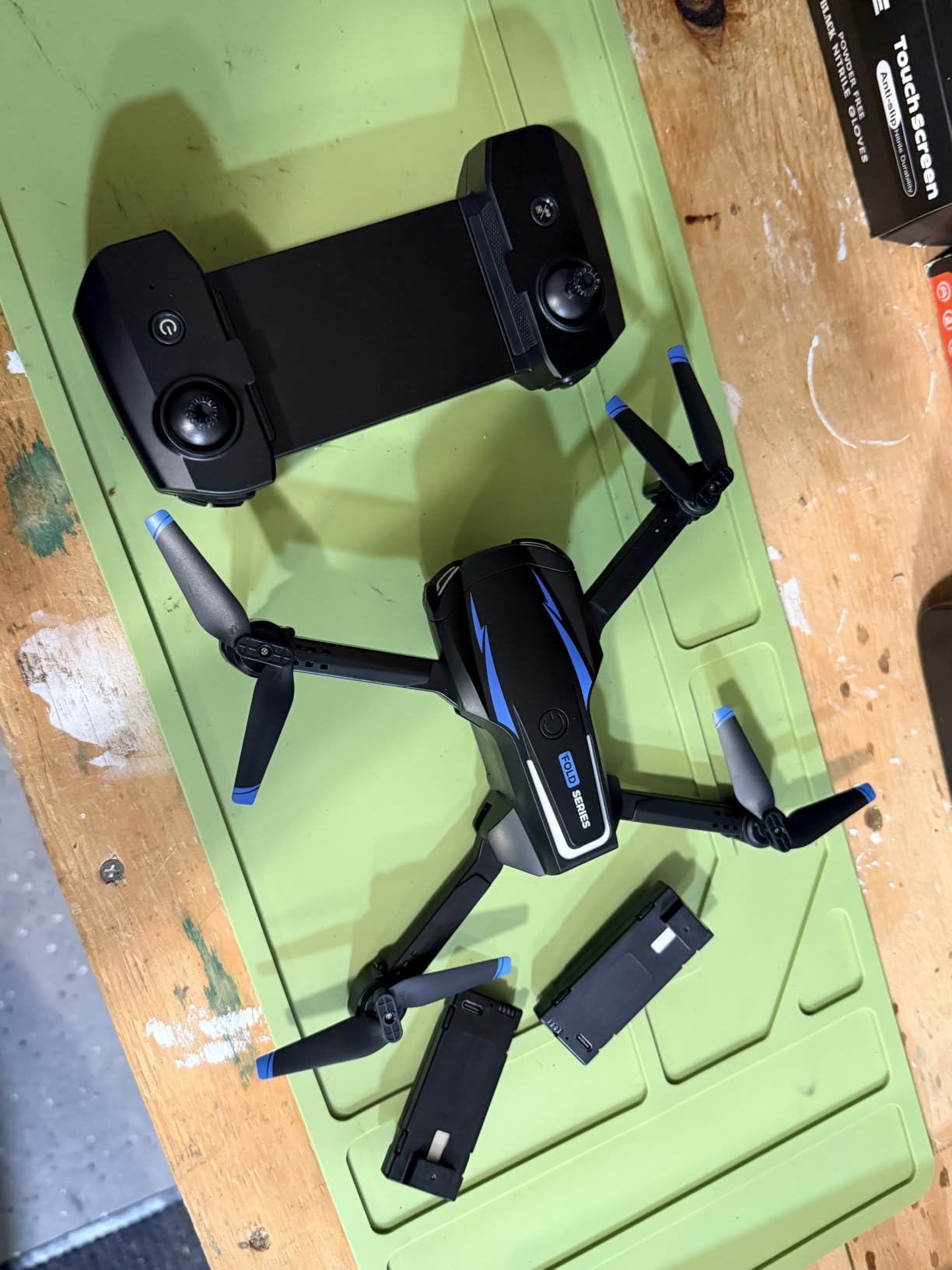
Gesture control is a hit at parties. Hold your palm out and the drone takes a photo. Make a fist and it starts recording. We tested it with a group of teenagers and they were entertained for an hour. The 30-meter range and 26-minute total flight time are appropriate for indoor and small outdoor spaces.
Build quality is light plastic. The compact foldable form factor fits in a coat pocket. The Dazlen app is functional but basic, with fewer features than the Holy Stone or DJI apps. At this size and weight, you should not expect professional footage.
Who Should Buy the Dazlen X31
Pick the Dazlen X31 if you want to practice flying indoors without risking furniture or the drone. It is a strong pick for apartment dwellers, families with kids, and anyone who wants a fun party drone. The pocket-sized form factor makes it a great travel companion.
Where the X31 Falls Short
The 30-meter range limits outdoor use to small yards and parks. The 1080P camera does not produce content-creation quality footage. Outdoor wind is a real challenge for a drone this light. Choose a heavier drone if your main use case is outdoor flying.
What to Look for in a Beginner Camera Drone?
After testing eleven drones, our team settled on five features that separate the best drones with cameras for beginners from the rest. Understanding how a drone actually flies helps you evaluate these features, but here is the short version of what matters.
Weight Under 250 Grams
The 250-gram threshold is the most important spec for new pilots in the United States. Drones under 250g do not require FAA registration for recreational flying, which saves you time, paperwork, and a small fee. Every drone on our list clears that threshold. Lighter drones are also safer in a crash and easier to travel with, though they struggle more in wind.
GPS Hover and Return to Home
GPS positioning is the single biggest confidence booster for new pilots. A drone with GPS will hold its position in the air without constant stick input, and the return-to-home function brings it back to the takeoff point if the battery dies or the signal drops. We strongly recommend choosing a drone with GPS as your first camera drone. It is the difference between relaxing and white-knuckling every flight.
Gimbal Stabilization
A 3-axis mechanical gimbal is the gold standard for smooth footage, but it adds cost. Electronic stabilization (EIS) is a step down but acceptable for casual use. No stabilization at all is fine for learning to fly, but produces shaky footage that is hard to watch. Match the stabilization type to your goal: learning pilots can skip it, content creators should not.
Camera Resolution and Sensor
4K video is now standard on most beginner drones in the mid-to-premium range. Sensor size matters more than megapixels: a 1/2-inch sensor captures more light and detail than a 1/2.3-inch sensor, even at the same resolution. For vlogging and social media, 1080P is acceptable. For YouTube or real estate, step up to 4K with a larger sensor.
Battery Life and Spare Batteries
Real-world flight time runs 20 to 30 percent below manufacturer claims. A drone advertised at 30 minutes often gives you 20 to 22 minutes in practice. Budget for at least one extra battery, and ideally two. Nothing kills a good day of flying faster than a single dead battery and a 90-minute charge cycle.
FAA Rules Every Beginner Drone Pilot Needs to Know
Before your first flight in the United States, there are a few rules you need to follow. The good news: if you buy any drone on this list, registration is not required. The TRUST test, however, is still mandatory.
The Recreational UAS Safety Test (TRUST) is a free online test administered by the FAA. It takes about 20 minutes, covers basic safety rules, and gives you a completion certificate you can show to law enforcement if asked. You can take the test at any FAA-approved provider, and there is no age minimum. We recommend taking it before your first flight, not after.
For drones under 250g flown recreationally, you do not need to register with the FAA. The moment you cross 250g, registration is required and costs a small fee. All eleven drones in this guide sit under that threshold. If you ever upgrade to a heavier drone, registration becomes mandatory.
The 400-foot altitude limit is the next rule to know. You cannot fly your drone above 400 feet above ground level without specific FAA authorization. Most beginner drones have a software ceiling lower than that, so you will not hit it accidentally. You also cannot fly within 5 miles of an airport without notifying the airport operator first, and you must keep the drone within visual line of sight at all times.
For a complete overview of recreational drone rules, the FAA’s FAA Safety website is the authoritative source. Forums like r/drones and r/Multicopter have ongoing discussions about specific scenarios, but the FAA rules are the legal baseline.
Frequently Asked Questions
Which drone is best for beginners?
The DJI Mini 4K is the best drone for beginners in 2026. It combines a 4K camera with a 3-axis mechanical gimbal, weighs under 250g (no FAA registration needed), flies for 31 minutes per battery, and uses GPS to hold position and return to home automatically. The learning curve is short and the footage quality holds up for content creation.
What is the best first drone to buy for a beginner?
For an absolute first drone, the Hiturbo GM-100A or Holy Stone HS175D are strong picks. They cost less than premium options, include GPS or optical flow stabilization to help new pilots, and ship with multiple batteries. Once you have logged 20 to 30 hours of flying time, step up to a DJI Mini 4K for the best balance of features and price.
What is a good budget drone with a good camera?
The Holy Stone HS360S delivers a 4K UHD camera, GPS with auto return, and 10,000 feet of transmission range at a budget-friendly price. For tighter budgets, the Loiley X69 offers 2K recording with optical flow positioning. Both weigh under 250g and skip FAA registration.
Do beginners need a license for drones?
In the United States, recreational drone pilots must pass the free FAA TRUST test before their first flight, regardless of drone size. Drones under 250g do not require FAA registration. Drones over 250g require registration plus the TRUST certificate. Commercial drone use requires a Part 107 license from the FAA.
Final Verdict: Best Drones with Cameras for Beginners in 2026
Choosing the best drone with a camera for beginners comes down to what you plan to do with it. The DJI Mini 4K is our editor’s choice because it delivers professional-grade 4K footage in a package that a first-time pilot can master in a weekend. For solo creators, the DJI Neo’s palm takeoff and AI tracking are unmatched. For long shooting days, the Ruko U11MINI 4K offers 96 minutes of total flight time with a serious camera.
On a tighter budget, the Holy Stone HS360S brings GPS and 4K recording to a price most beginners can afford. The Holy Stone HS175D is the right pick if flight time matters more than image quality. For first drones that will get crashed, the Hiturbo GM-100A is the safest bet. The FAKJANK, RELIDOL, Loiley, and Dazlen drones each solve a specific problem, from no-phone flying to indoor practice to ultra-low budgets.
No matter which drone you choose, take the FAA TRUST test before your first flight, buy at least one extra battery, and start with beginner mode enabled. The best drones with cameras for beginners in 2026 are the ones that match your skill level today while leaving room to grow into tomorrow. For more drone recommendations, our comprehensive drone guide and 4K camera drone roundup cover other categories worth exploring as your skills develop.