
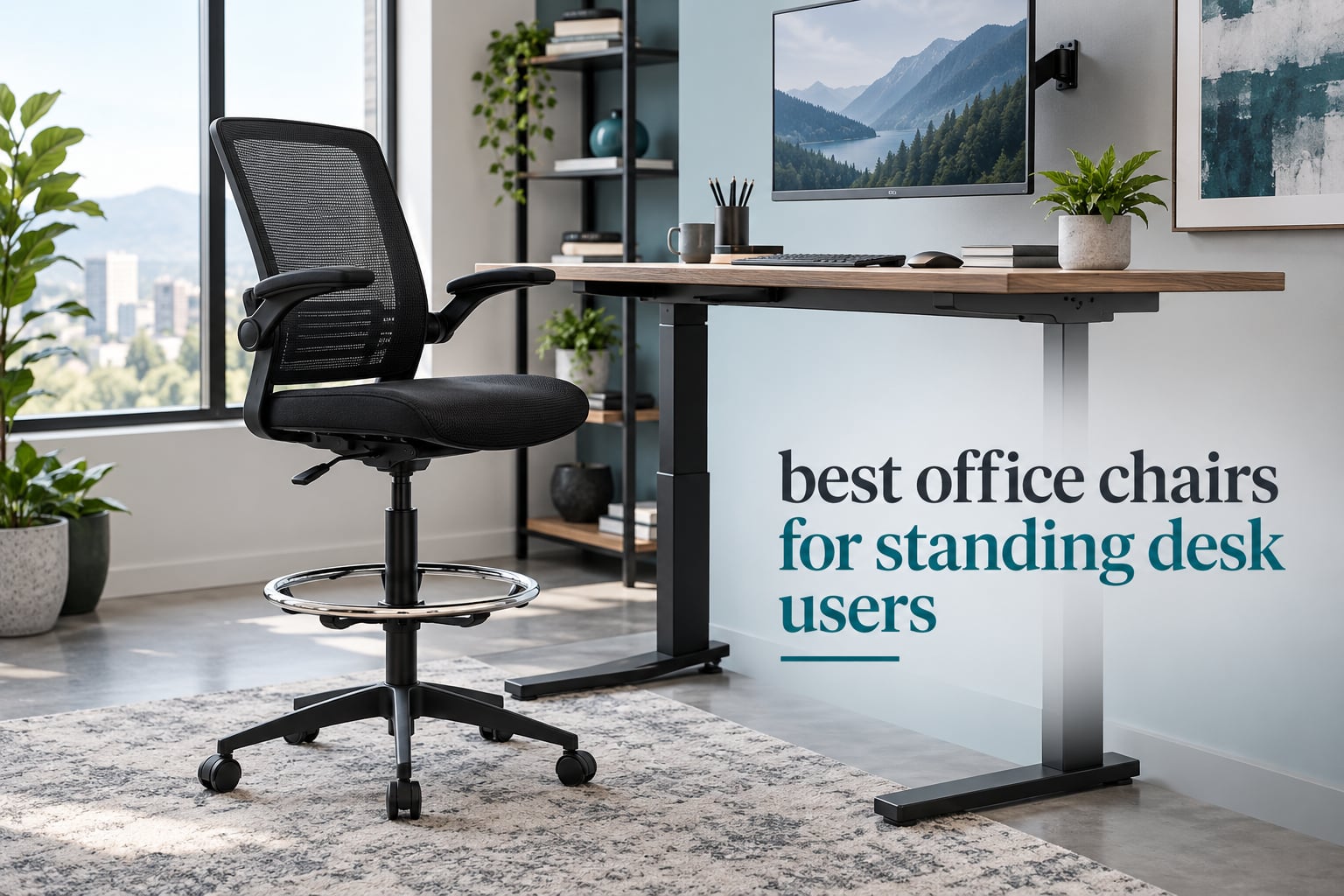
Most people spend somewhere around 1500 hours a year at a desk. Very few of those hours are spent in a chair built for the job, because the chair most of us own tops out at about 21 inches of seat height and a sit-stand desk does not care what your back wants. That gap is why the search for the best office chairs for standing desk users keeps coming up in forums, in manufacturer guides and in the questions people type at 11pm when their shins hurt.
The core problem is mechanical, not ergonomic-philosophical. A standard task chair at its tallest leaves a 6-foot-2″ user with elbows angled up and shoulders shrugged. Lower the chair to put feet flat on the floor and the same person now hunches toward the keyboard. The answer is a chair with a taller cylinder, a foot ring to support the legs, and armrests that get out of the way when you need to slide in. Our team spent several weeks putting 12 of them through that test alongside a height-adjustable desk, and this guide covers everything we found.
We also spent time on the desk side of the equation. If your frame still needs work, start with our standing desk picks for engineers before fine-tuning the chair. Once the desk is right, the chair choice gets much simpler.
Table of Contents
Top 3 Picks for Standing Desk Users Right Now (October 2026)

Office Star DC Series
- 24-34 inch seat range
- One-touch pneumatic lift
- Height-adjustable foot ring
The Primy earns the top slot because it does the three things that matter at a tall desk — flip-up arms, a height-adjustable foot ring and a tall cylinder — and it has the largest review base in the group at 3485 ratings averaging 4.3. The Office Star DC Series scores highest at 4.5 across 2322 reviews and publishes a clean 24 to 34 inch seat range, which is the most honest spec sheet here. The HYLONE high-back mesh is the value pick, pairing a BIFMA-tested lift and 300 lb capacity with breathable mesh at 2154 reviews.
All 12 Chairs Compared Side by Side in 2026
| Product | Specifications | Action |
|---|---|---|
| Primy Drafting Chair with Flip-up Armrests |
|
Check Latest Price |
| Office Star DC Series Adjustable Drafting Chair |
|
Check Latest Price |
 HYLONE High-Back Mesh Drafting Chair HYLONE High-Back Mesh Drafting Chair |
|
Check Latest Price |
 Flash Furniture Kale Mid-Back Mesh Chair Flash Furniture Kale Mid-Back Mesh Chair |
|
Check Latest Price |
 BOLISS Drafting Chair 400 lb Capacity BOLISS Drafting Chair 400 lb Capacity |
|
Check Latest Price |
 HYLONE Armless Tall Drafting Chair HYLONE Armless Tall Drafting Chair |
|
Check Latest Price |
 amseatec Tall Drafting Chair PU Leather amseatec Tall Drafting Chair PU Leather |
|
Check Latest Price |
 Misolant Tall Office Chair with Footrest Ring Misolant Tall Office Chair with Footrest Ring |
|
Check Latest Price |
 AtHope Drafting Chair 3D Lumbar and Head Support AtHope Drafting Chair 3D Lumbar and Head Support |
|
Check Latest Price |
 ORRSAKER Drafting Chair Flip-up Arms ORRSAKER Drafting Chair Flip-up Arms |
|
Check Latest Price |
 ErGear Drafting Chair Wide Foot Ring ErGear Drafting Chair Wide Foot Ring |
|
Check Latest Price |
 Kensaker Drafting Chair for Art Studios Kensaker Drafting Chair for Art Studios |
|
Check Latest Price |
Every chair below is a genuine drafting or tall office chair, not a standard task chair with a riser strapped to it. That distinction shows up in the spec sheets: seat ranges, foot ring travel and weight limits are all listed because standing desk use is what those numbers are for.
1. Primy Drafting Chair — Best Overall for Standing Desk Users
- Curved backrest with adjustable lumbar
- 90-degree flip-up armrests for desk clearance
- Adjustable round foot ring
- BIFMA-style five-claw base spreads load quietly
- Only a single height position and single recline position
- Foam seat runs warmer than mesh
- 250 lb limit is lower than heavy-duty models
This is the chair we kept coming back to. At 13 kg it is one of the lighter frames in the category, which matters more than it sounds when you are sliding it in and out of a desk six times a day. The five-claw base rolls quietly and spreads the load evenly, so the chair does not creep when you push off it at the top of the range.
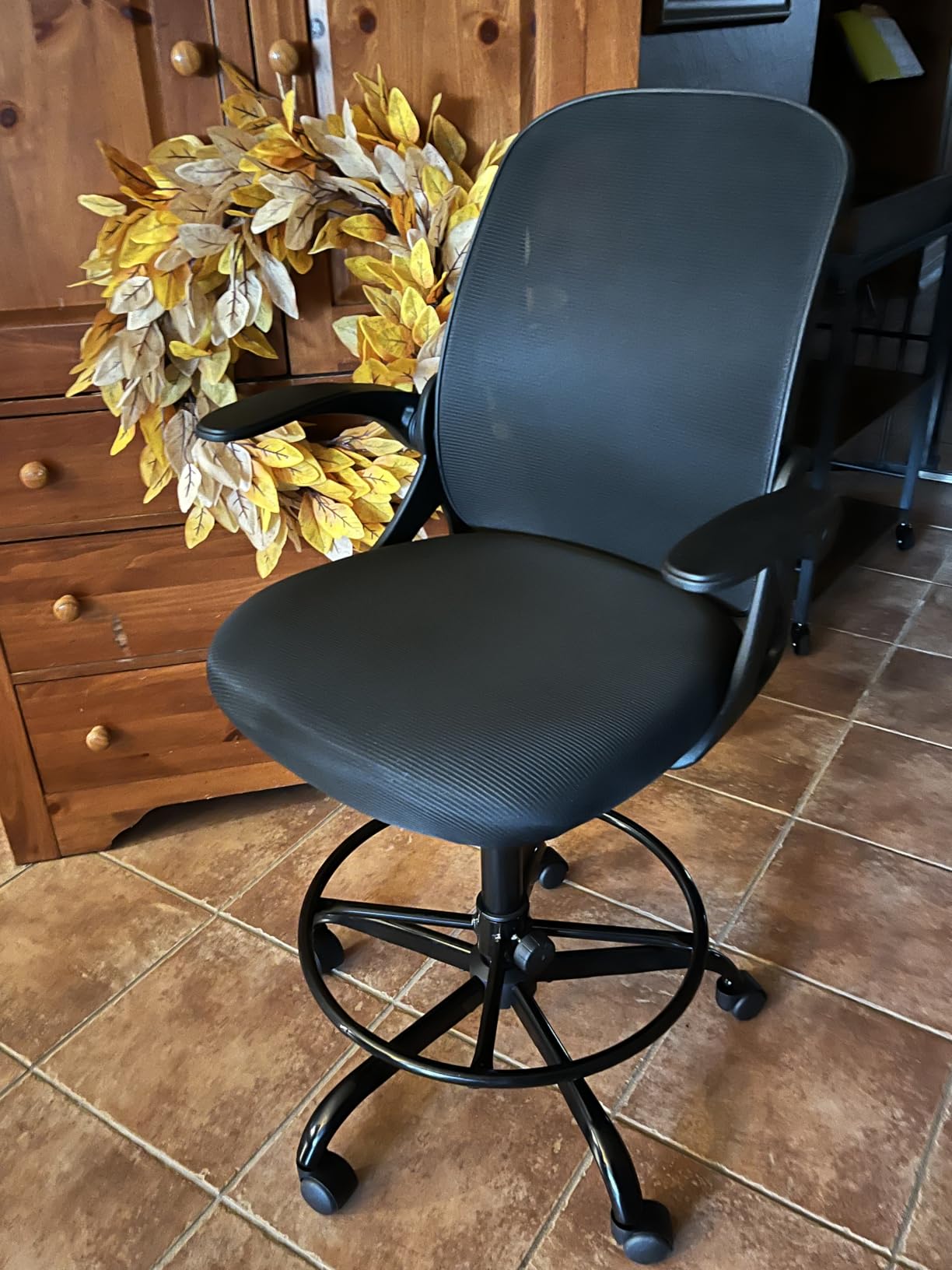
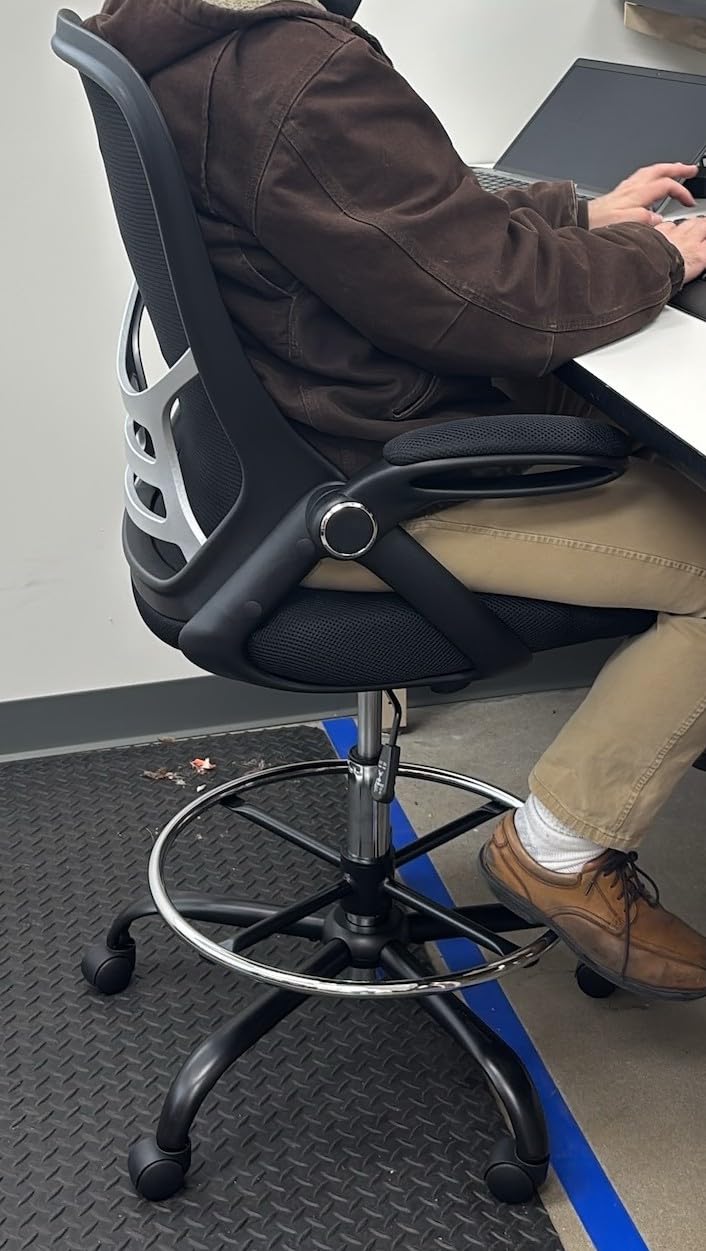
The armrests swing up through 90 degrees, which is the single feature that decides whether a chair fits a tall desk at all. Flip the arms up and the seat tucks under the work surface, so you sit close enough to reach the keyboard instead of perching at the end of the seat with your arms extended. For users on r/OfficeChairs this was the point that kept coming up in frame-collision threads.
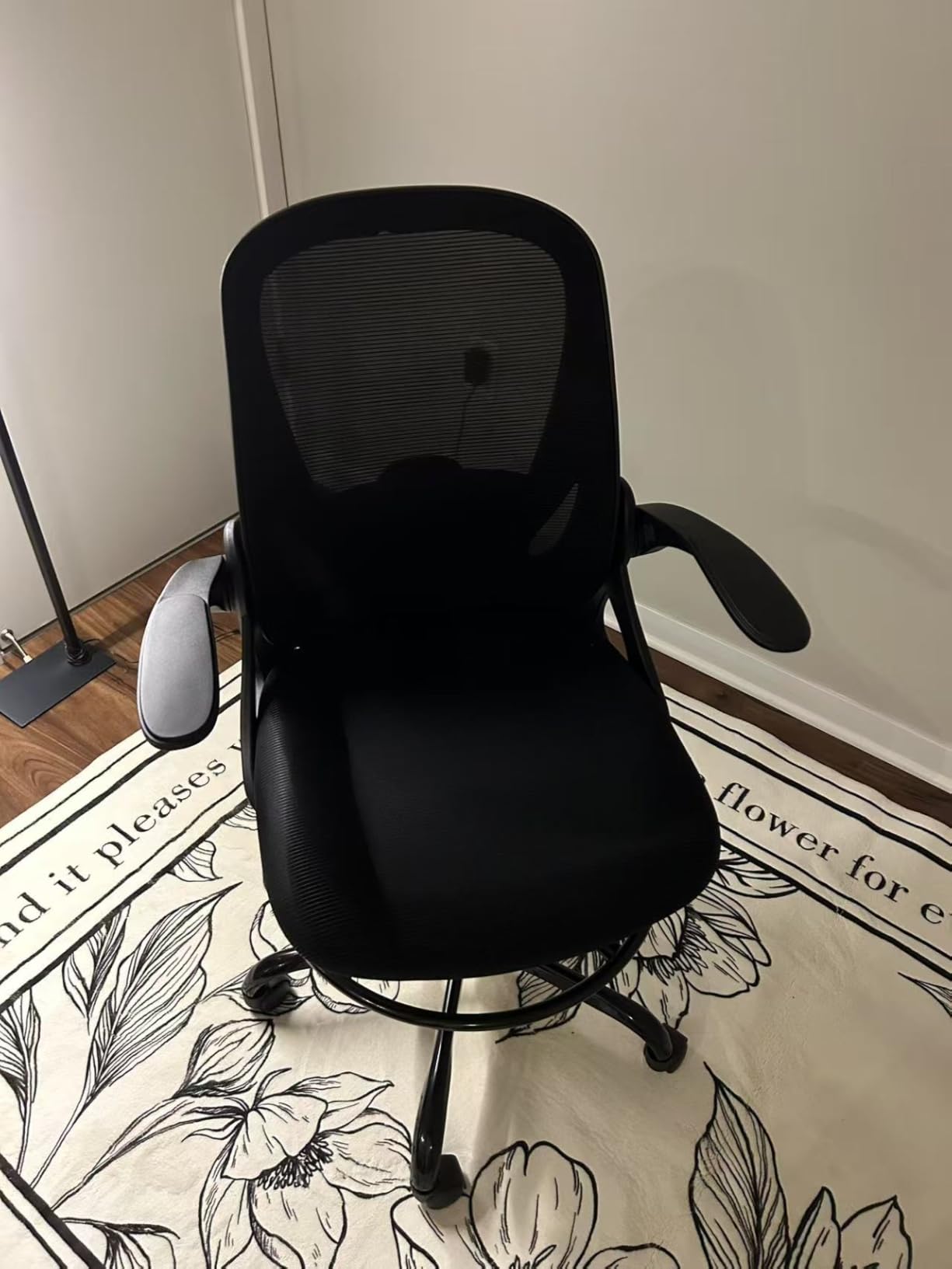
The back is a curved ergonomic shell with adjustable lumbar support, paired with a breathable mesh back panel and a 3-inch thick high-density foam cushion on the seat. That combination is why reviewers describe it as comfortable for long sessions rather than tolerable. The listed maximum weight recommendation is 250 pounds, and the manufacturer warranty runs five years.
Overall dimensions are 18.9 by 18.5 by 35.83 inches, with a 17.3-inch wide backrest and an 18.9-inch seat depth. Seat height is listed at 47 centimeters, which puts the working end of the range right around standing desk territory. The chair swivels through 360 degrees on smooth casters.
Owners credit the lumbar curve and the foot ring for keeping pressure off the backs of the legs at bar-height settings. The 3485 ratings averaging 4.3 make this the most examined chair in our test group, and the pattern in that review base is consistent: happy with support, occasionally frustrated by adjustment range.
Who should buy the Primy drafting chair
Buy it if you alternate between sitting and standing daily and want one chair that handles both without a second purchase. The foot ring and tall cylinder make it the safer bet for shorter users who need foot support at height, and the mesh back keeps heat down in warm rooms.
It also suits anyone working in a compact home office where floor space is tight, since the arms disappear when you need clearance. Our pick for readers who want the least fuss between desk positions.
Who should skip it
Skip it if you weigh over 250 pounds, because the frame is rated below the heavier-duty drafting chairs here. Users wanting more recline positions will also find the single recline position limiting over a full workday.
The foam cushion is the other tradeoff. In a hot room, an all-mesh seat breathes better, and some buyers on r/OfficeChairs switch to mesh-backed models for summer months for that reason.
2. Office Star DC Series — Widest Published Seat Height Range
Office Star DC Series Adjustable Drafting Chair with Foot Ring and Sculptured Foam Seat, Black Vinyl
- Clean published 24 to 34 inch seat range
- One-touch pneumatic height change
- Height-adjustable foot ring
- Heavy duty nylon base with dual-wheel carpet casters
- Vinyl upholstery runs warm in hot conditions
- No height-adjustable lumbar support
- Foam comfort fades over years of daily use
Most drafting chair listings bury the useful number in the fine print. This one publishes it plainly: a 24 to 34 inch seat height range, which is the widest documented span in our group and covers everything from a lowered sit-stand position to a raised counter without a second chair. The one-touch pneumatic lever means you change position with a single hand movement while the other stays on the keyboard.
It is also a commercial-grade chair rather than a home-office special. GREENGUARD certification for low chemical emissions and approval for commercial use tell you the foam and frame were built for eight hours a day, five days a week, for years.
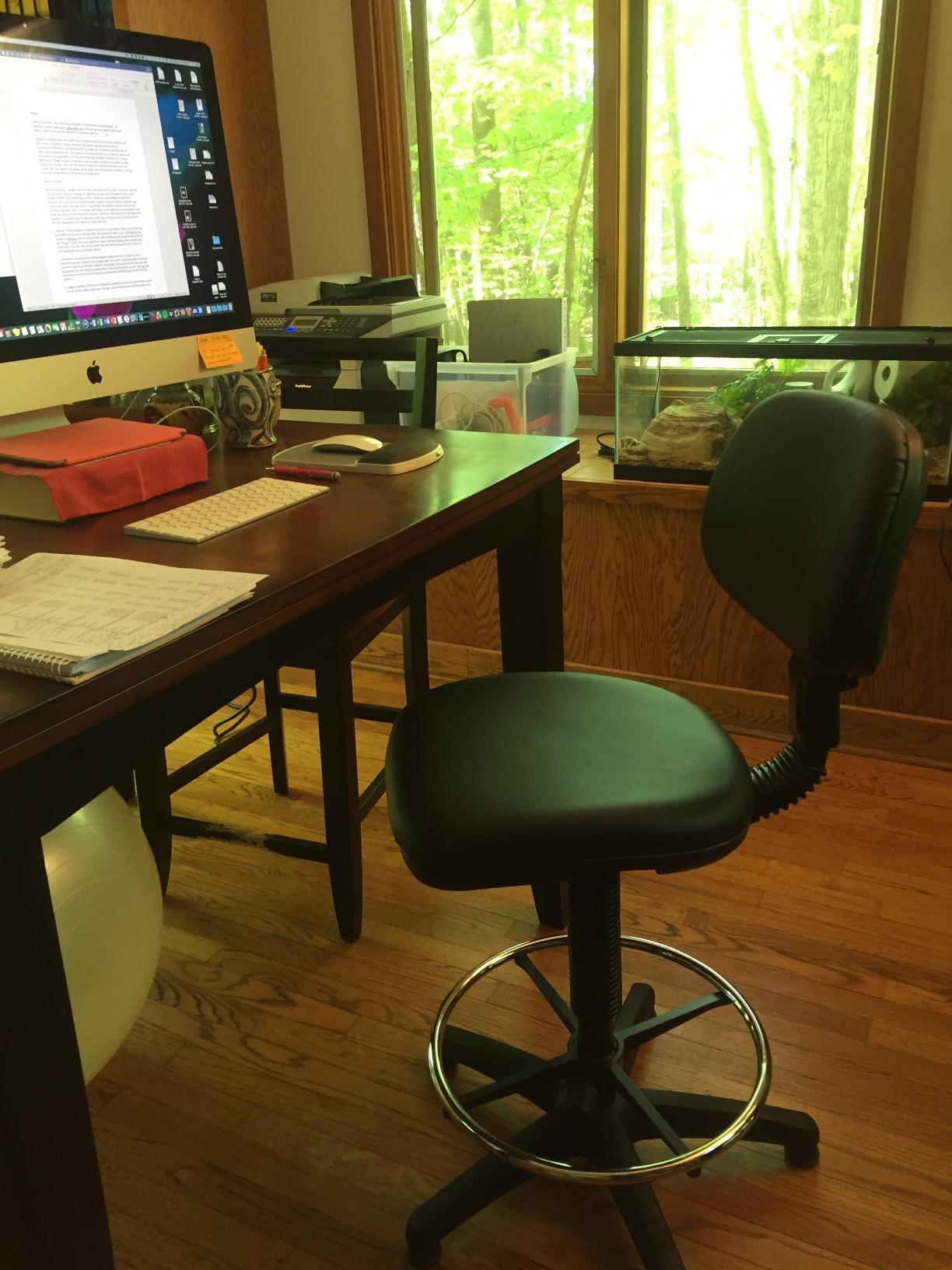
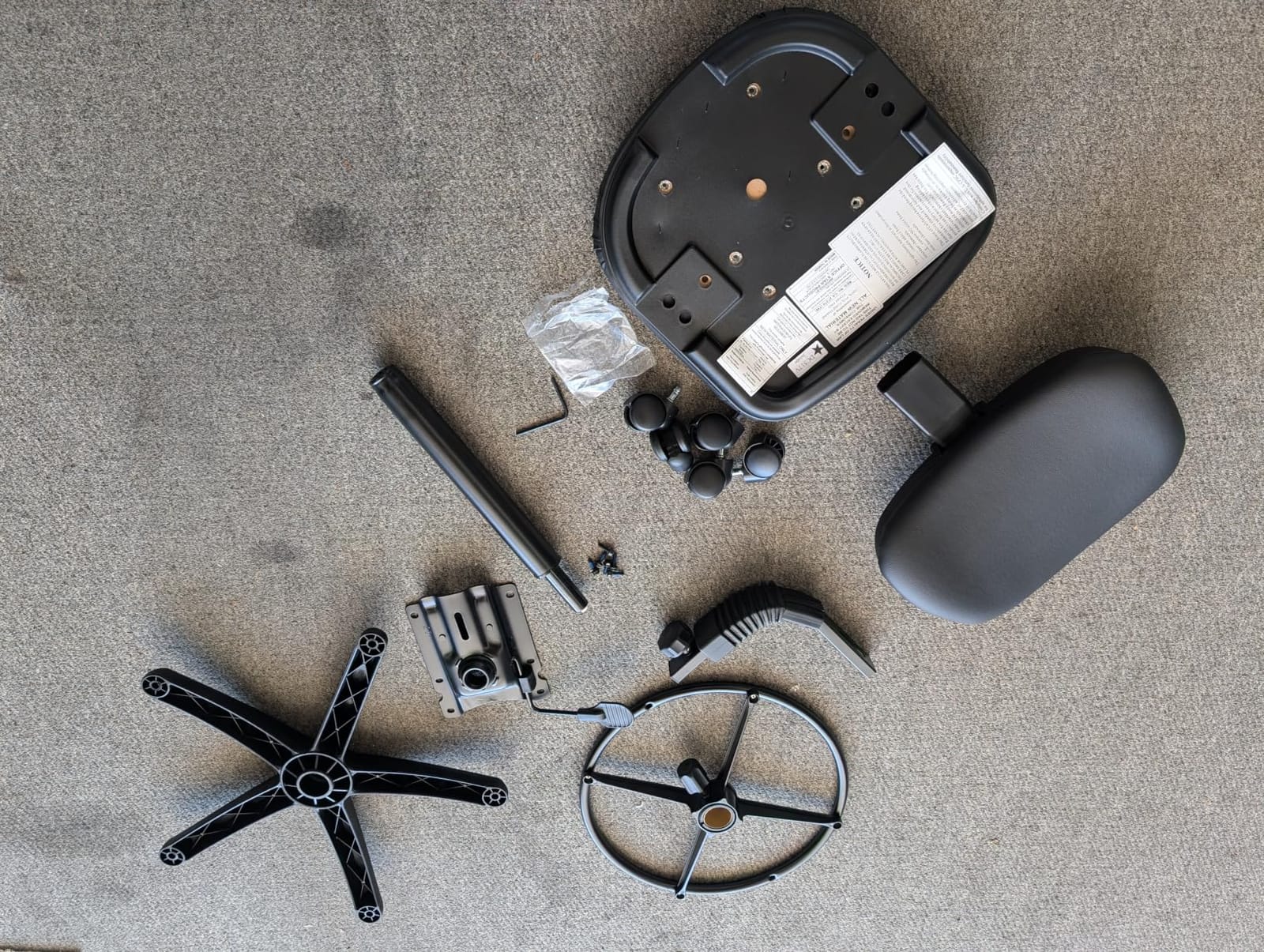
The foot ring adjusts in height, which is the piece that keeps legs supported across the full range. Without ring adjustment you are either dangling at the low end or folding your knees at the top end. The heavy duty nylon base and dual-wheel carpet casters roll smoothly and hold stability at full extension.
Seat dimensions are 17.25 inches wide by 17.5 inches deep by 2.5 inches thick, with a 17.5 by 11.75 inch back. The overall footprint is 23.5 inches wide by 22.75 inches deep, and the full height runs from 38.5 to 48.5 inches.
The 4.5 average across 2322 reviews is the highest star rating in our lineup. Reviewers repeatedly single out the pneumatic range and base durability as the reasons it has held its rating over so many years.
Who should buy the Office Star DC Series
Buy it if your desk travels to genuinely tall positions or if you move between a drafting table, a counter and a standard desk in the same week. The 24 to 34 inch range covers more ground than anything else we tested, and the commercial rating suits studios, labs and shared workspaces.
It is also a good fit for cold offices or unheated rooms, since vinyl holds warmth better than mesh. That cuts both ways in summer.
Who should skip it
Skip it if you need lumbar support that moves with you, because no height-adjustable lumbar is listed. People managing lower back pain usually want that dial turned up before they start shopping elsewhere.
Vinyl also traps heat, and reviewers note it is less breathable than mesh. If your room runs warm, plan on a mesh-backed chair instead.
3. HYLONE High-Back Mesh Drafting Chair — Best Value Pick
- Contoured padded flip-up armrests
- Height-adjustable foot ring for sit-stand desks
- BIFMA-tested lift with tilt tension control
- High-back breathable mesh stays cool
- 37-pound build is heavy to reposition
- Mesh seat edges can catch clothing
- Some buyers find lumbar support firmer than expected
Mesh is the reason this one works in a warm room at a tall desk. The high-back breathable mesh panel keeps the back cool through long sessions, which matters when perching puts you upright against the backrest instead of leaning back into it. 69% of its 2154 reviews are five-star, and the rating settles at 4.4.
The flip-up armrests are contoured and padded rather than bare tubes, which is a real comfort difference at a drafting height where your forearms rest more of the time. They clear the desk frame at 90 degrees, so the chair slides in without the collision that pushes people too far from the keyboard.
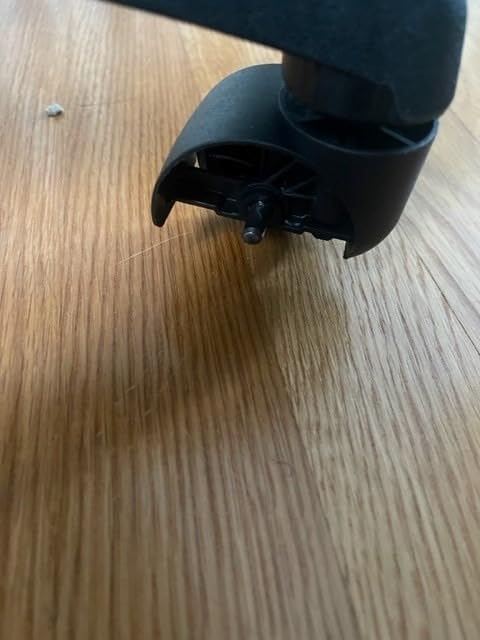
Seat height is listed at 23.6 inches with a 21.4-inch seat depth and a 19-inch wide backrest, giving a longer sitting surface than most drafting chairs in this roundup. That extra depth helps taller users sit back against the lumbar rather than perching on the front edge.
The mechanism is a BIFMA-tested gas lift with adjustable height, tilt and tilt tension, plus 360-degree swivel on nylon dual-wheel casters. A wood seat board and waterfall edge seat take pressure off the backs of the legs, which is the other half of the standing desk comfort problem.
There is a one-year free replacement parts or refund warranty behind it. That is thinner than the five-year cover on our top pick, so factor it in if you keep a chair for a decade.
Who should buy the HYLONE high-back mesh chair
Buy it if your desk runs warm or your climate does, and you still want a full backrest at bar height. The mesh panel and waterfall edge seat are the two features that keep long drafting-height sessions workable for us.
It also suits taller users who need more seat depth than a drafting chair typically offers, at 21.4 inches. If your current chair leaves your back floating off the lumbar support, that depth is probably why.
Who should skip it
Skip it if you move your chair between rooms often. At 37 pounds it is one of the heavier frames here, and repositioning is a daily task with a sit-stand desk.
Some reviewers also describe the lumbar as firmer than expected, and the mesh edges can snag loose clothing. Neither is a dealbreaker for most, but both show up repeatedly enough to mention.
4. Flash Furniture Kale Mid-Back Mesh Chair — Best for Compact Desks
Flash Furniture Kale Mid-Back Swivel Office Chair with Adjustable Foot Ring, Lumbar Support, and Seat Height, Ergonomic Mesh Executive Chair, Black
- Mid-back mesh keeps footprint compact
- Integrated lumbar in curved mesh
- Height-adjustable foot ring
- Pneumatic height lever plus tilt tension
- Mid-back offers less upper-back support
- Saber-leg base is lighter duty than a five-claw base
- 250 lb limit is modest
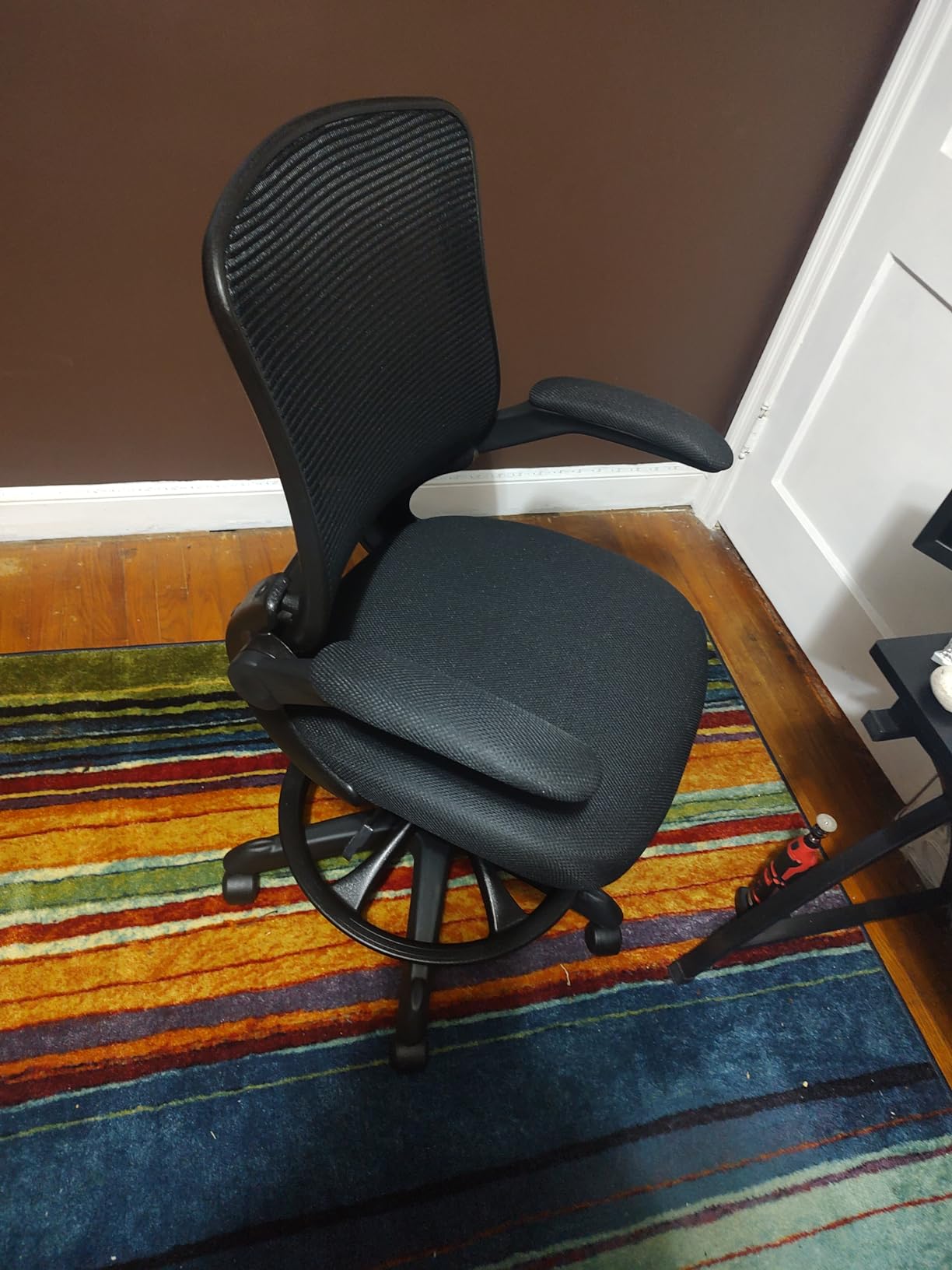
Mid-back is a deliberate trade here, and for small spaces it is the right one. A full high-back drafting chair measures well over 50 inches tall and collides with crossbars and monitor arms on compact frames. The Kale tops out around 49.5 inches and its curved mesh back stops below the shoulder blades, so it slides under a small desk far more easily.
The seat runs 21.5 to 29 inches, which covers a raised sit-stand position but not a true bar counter. If your desk stops around 44 inches, you are fine. If you raise it to 48, you will want a taller cylinder.
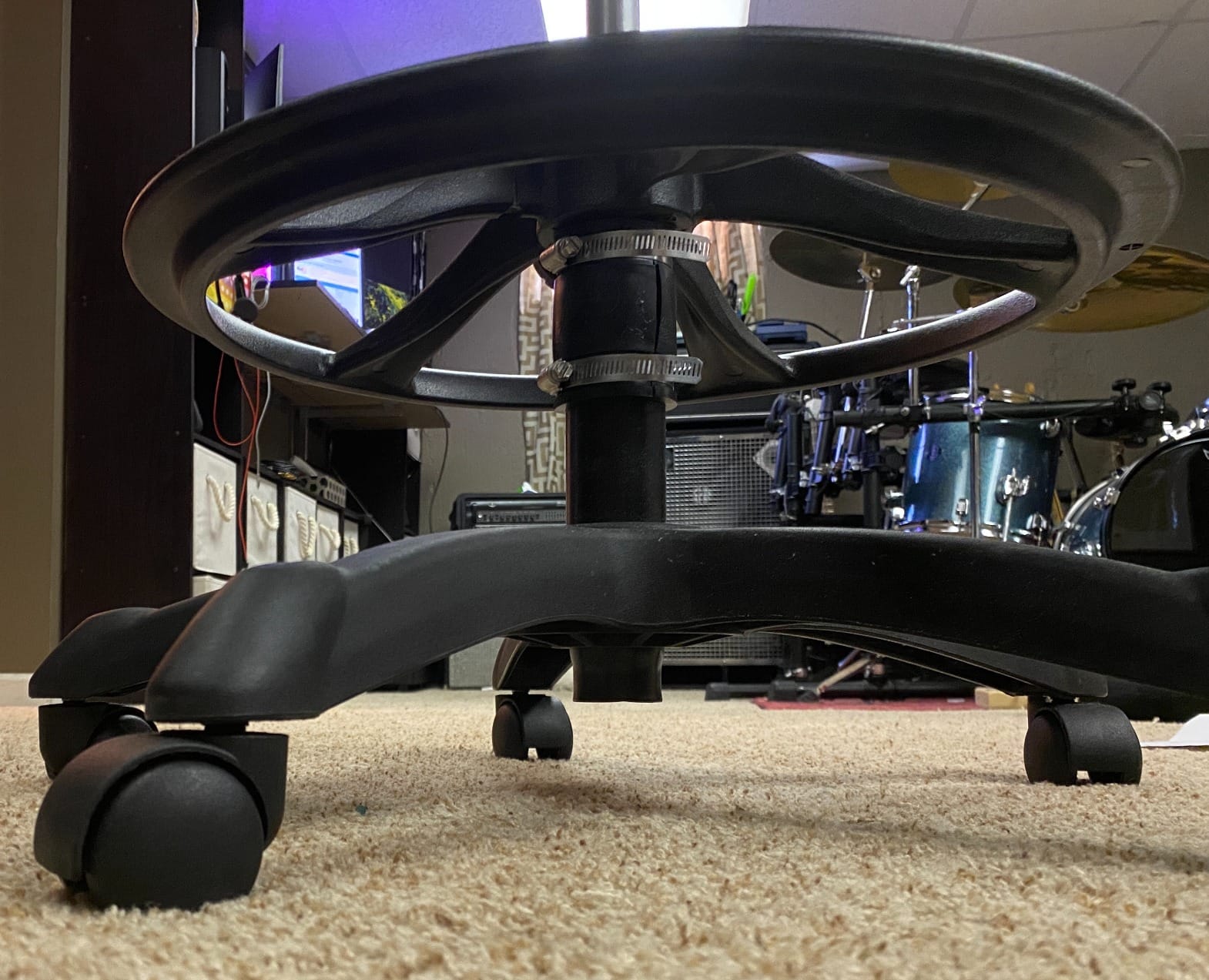
The height-adjustable foot ring is the feature to note, since it changes leg position as you move the desk up and down. Integrated lumbar support sits inside the curved mesh back, and padded armrests take the load off shoulders and neck at a perching height.
Pneumatic seat height and tilt tension adjustment handle the rest of the positioning, with a contoured waterfall seat below. Assembly is straightforward with included tools and step-by-step instructions, and the listed weight is 34 pounds.
At 4.2 across 661 reviews with 63% five-star ratings, it sits mid-pack on rating. The review pattern is clear: buyers like the foot ring and lumbar support, and several note the mid-back profile leaves head and neck unsupported during long sessions.
Who should buy the Flash Furniture Kale chair
Buy it if your desk frame is shallow, your room is small, or you work in a converted closet or corner office. The mid-back profile and 250-pound rating match a compact setup where a full high-back chair simply would not fit.
It suits shorter users too, because the 21.5-inch low end and adjustable foot ring keep feet supported at mid-height desk positions. The one-year limited warranty is the main reason to buy only if you expect to replace it sooner.
Who should skip it
Skip it if you sit for eight hours or more with your head against a backrest, since the mid-back design stops short. Neck support is where this chair gives up ground against the high-back models.
The saber-leg base is lighter duty than a five-claw base, and the 250-pound maximum weight recommendation is modest for heavier users. Taller desks also exceed this chair’s ceiling.
5. BOLISS 400 lb Drafting Chair — Best for Bigger Users
BOLISS Drafting Tall Office Chair 400lbs High Back Standing Desk Chair
- 400-pound load capacity
- 4-level 3D headrest cradles the neck
- 5-inch molded foam resists collapsing
- Oversized chrome foot ring
- Quiet dual-wheel casters
- Heaviest build in the group at 46.2 pounds
- 7.3-inch travel is narrower than some rivals
- Highest positioned price in this lineup
Weight capacity is the first spec to check if you are over 250 pounds, and this chair carries 400. That is the highest rating among the twelve, and it is paired with a five-star nylon base rated for the same figure, so nothing sags at full extension. Larger users on r/BuyItForLife consistently say a frame rated well under their body weight is what causes early failure, not the upholstery.
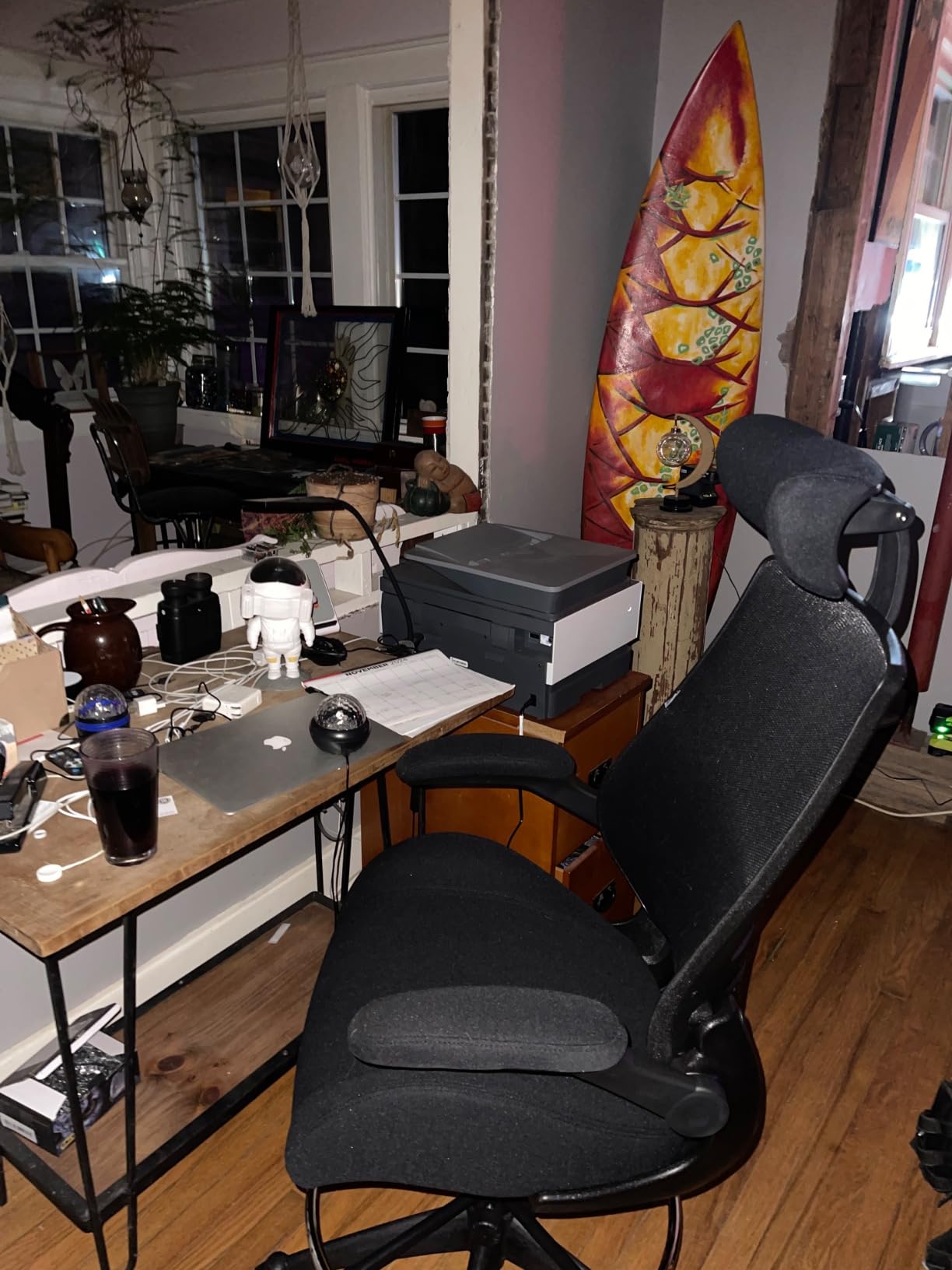
The 4-level 3D headrest is unusual in this category. Most drafting chairs stop at the shoulder blades, so at bar height your head has nothing to lean against. This one adjusts in four positions and cradles the neck, which matters a lot when you perch upright rather than recline.
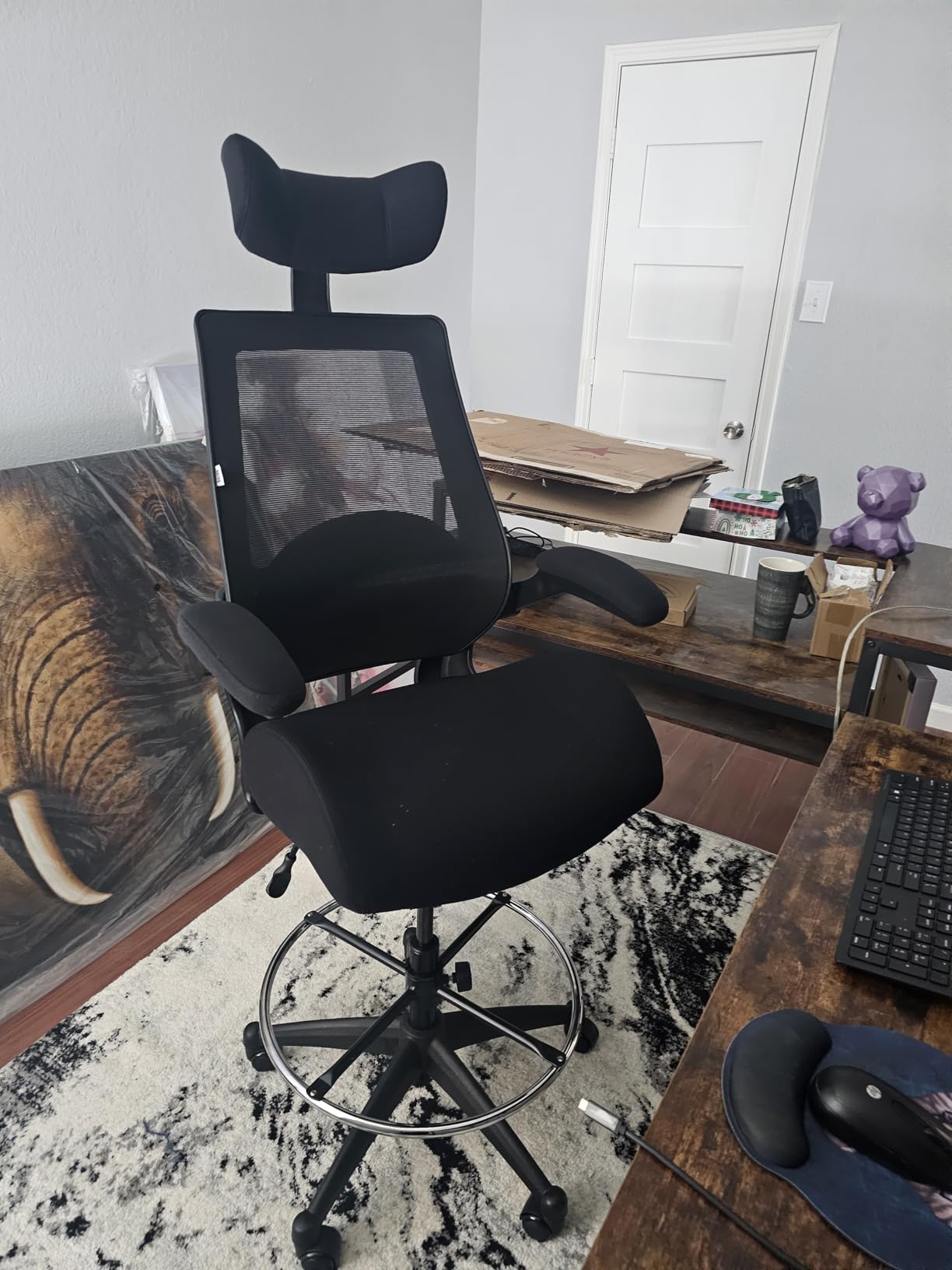
The seat is 5 inches of high-resilience molded foam, the thickest in our group, and reviewers specifically credit it for not collapsing after months of daily use. Seat depth is 20.1 inches and the backrest is 19.68 inches wide, both generous for a tall body.
Height travel is 7.3 inches on a hydraulic adjustment covering 24.8 to 32.1 inches. That is a shorter span than the Office Star, which matters only if you need the extremes at both ends of the day.
Flip-up armrests clear the desk at 90 degrees and the oversized chrome foot ring is wide enough to plant both feet flat. At 46.2 pounds it is the heaviest chair here, and the two-year replacement warranty is the shortest among the higher-rated picks.
Who should buy the BOLISS drafting chair
Buy it if you weigh between 250 and 400 pounds, or if you are simply tall and want a chair with real seat depth and head support. The 4-level headrest and 20.1-inch seat depth are the two specs no other chair in this roundup combines.
It suits standing desk users who perch upright for long stretches, because the headrest supports a posture that a mid-back or backless drafting chair cannot. The chrome foot ring also stays stable under heavier loads than plastic rings.
Who should skip it
Skip it if you reposition your chair frequently. At 46.2 pounds this is the heaviest frame we tested, and moving it twice a day is a genuine chore in a small office.
If you need the lowest and highest possible seat positions in one chair, the 7.3-inch hydraulic range is narrower than alternatives. The two-year warranty is also short for a chair meant to last a decade.
6. HYLONE Armless Tall Drafting Chair — Best for Tucking Under a Desk
Armless Drafting Chair Tall Office Chair Adjustable Height High Back Ergonomic Desk Chair Drafting Stool Rolling Bar Stools Chairs with Footrest and Wheels
- Armless design lets you sit closer and tuck in
- Lightweight at 25.6 pounds for a drafting chair
- BIFMA-tested gas lift with seat tension
- Breathable mesh with firm sponge cushion
- No armrests for shoulder and neck support
- Back adjustment knob reported to have limited effect
- Lowest setting still sits high for shorter users
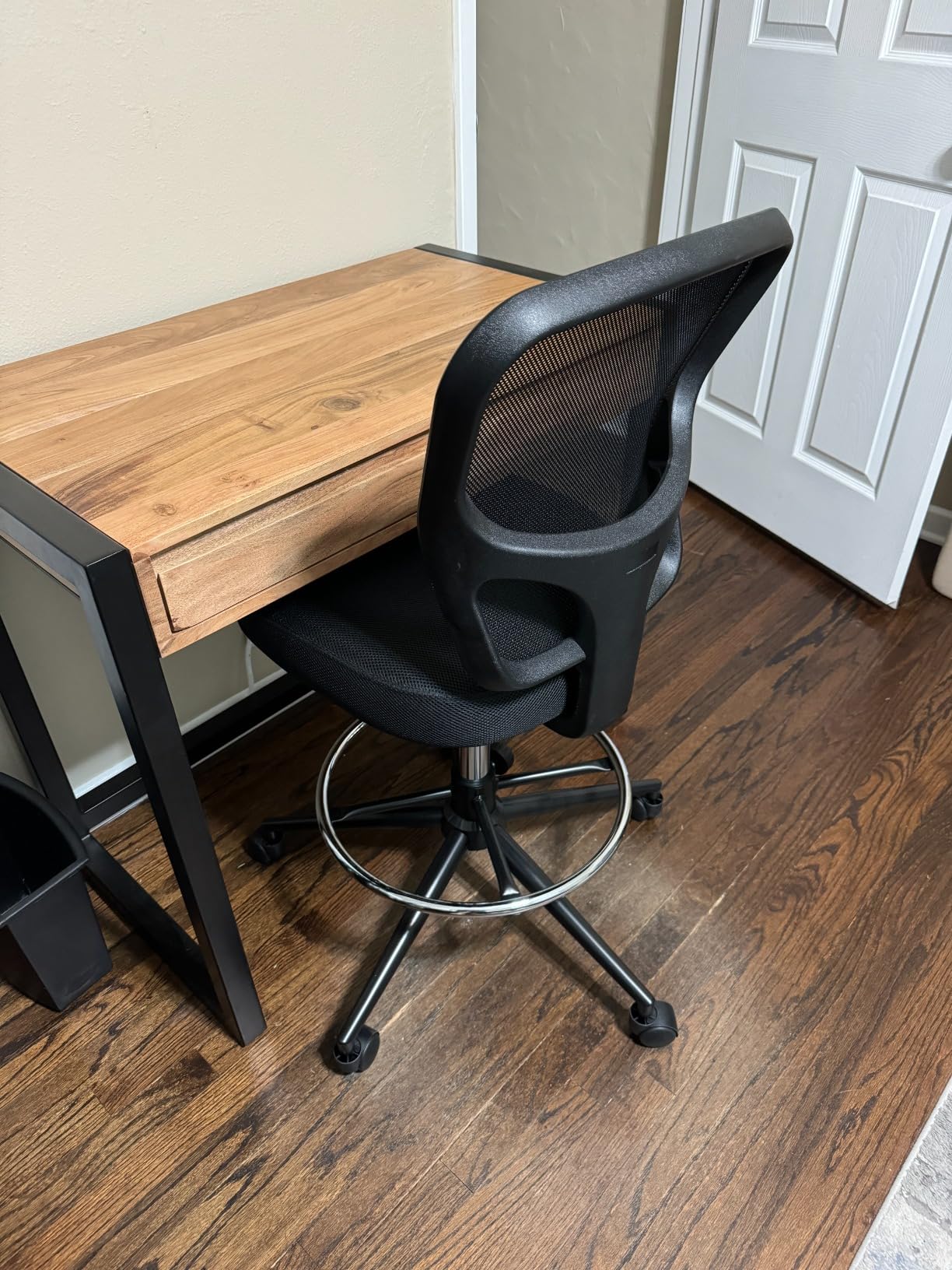
Removing the armrests is the whole point of this chair. Without them you can slide your knees under the desk and pull the seat close enough to type without rounding your shoulders, and nothing catches on a frame crossbar or a keyboard tray. If your desk has a fixed panel or a modesty board that armrests keep hitting, this solves it permanently.
It is also the lightest tall chair here at 25.6 pounds, which means you can move it between the sitting and standing positions of a sit-stand desk without treating it like furniture. Most drafting chairs in this weight class are 30 to 46 pounds.
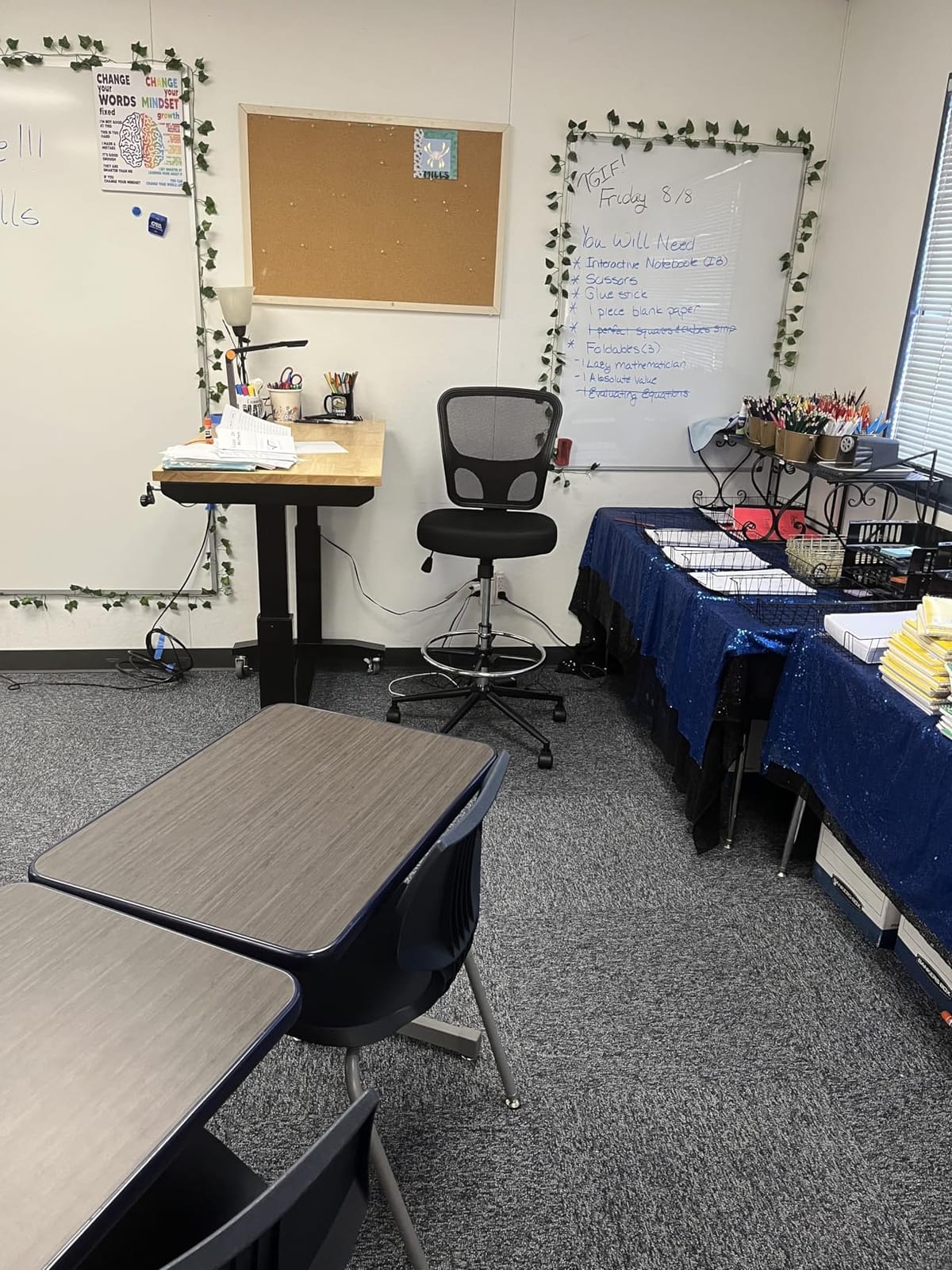
The gas lift is BIFMA-tested with seat tension adjustment and 360-degree swivel, and the seat board is FSC-certified wood under a firm sponge cushion. The adjustable foot ring keeps feet supported at raised positions, and the breathable mesh back handles heat better than upholstery.
Seat height is listed at 22 inches with an 18.7-inch depth and a 17.3-inch wide backrest. Overall dimensions are 17.91 by 18.7 by 46.46 inches, the most compact footprint in the roundup.
Reviewers in studios, sewing rooms and classrooms praise the adjustable height, foot ring and how well it slides under a desk, and 77% of its 508 reviews are five-star. The 4.4 average holds up. One reviewer reported loose hardware and a back-tightening knob that did little.
Who should buy the armless HYLONE tall chair
Buy it if your desk has a modesty panel, a shallow frame, or a keyboard tray that armrests cannot clear. Owners in r/WFH setups describe it as the chair that finally let them sit at a sit-stand desk without scooting back from the keyboard.
It also suits short users who need foot support at height and do not want to fight a heavy frame. The 280-pound rating and 22-inch low end are honest for an armless design.
Who should skip it
Skip it if you sit eight hours a day with forearm support. Armless designs leave shoulders and neck working alone, and reviewers say so directly. The back tension knob is also reported to have limited effect for some.
Assembly hardware has been reported incomplete or too short by a few buyers, so check the parts list before you start. The 12-month warranty is the shortest here.
7. amseatec Tall Drafting Chair — Best for Easy-Clean Upholstery
amseatec Tall Drafting Chair for Standing Desk,Executive Office Chair
- PU leather wipes clean and resists spills
- Three independent back support zones
- Double-layer cushion with firm base
- 300-pound BIFMA-certified carbon steel frame
- 15-minute tool-free assembly
- PU leather is less breathable than mesh
- Back support is fixed rather than adjustable
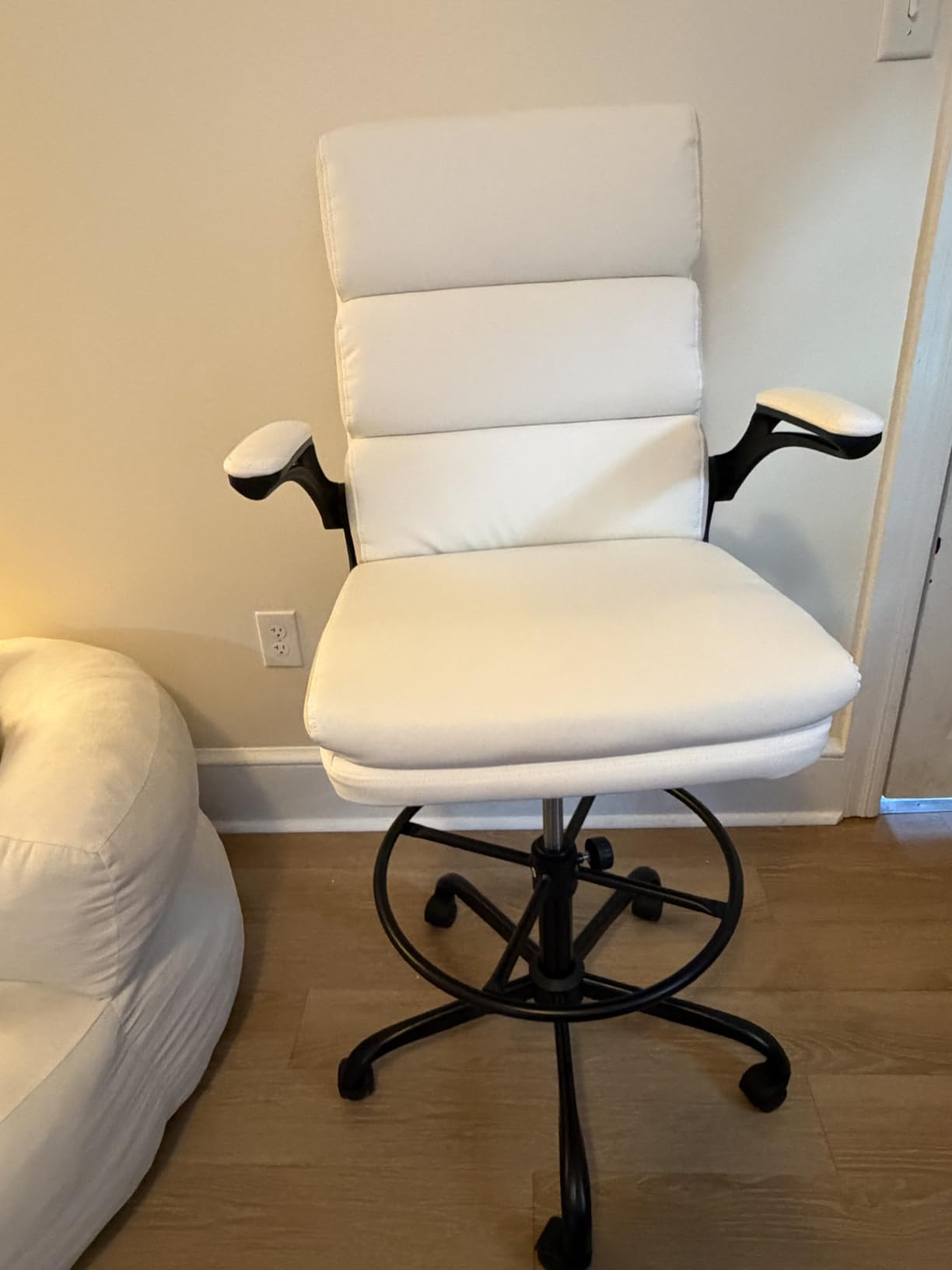
Shared rooms, studio spaces and any desk where you eat lunch call for upholstery you can wipe. The bonded PU leather here shrugs off spills and scrubs with a damp cloth, which is why it holds up in studio and conference use where mesh would absorb whatever lands on it.
The back is the differentiator at 23.23 inches tall with three independent support zones rather than a single lumbar band. At standing desk height you sit more upright, so the mid and upper back do more work than they would in a reclined position. A taller, more segmented back spreads that load.
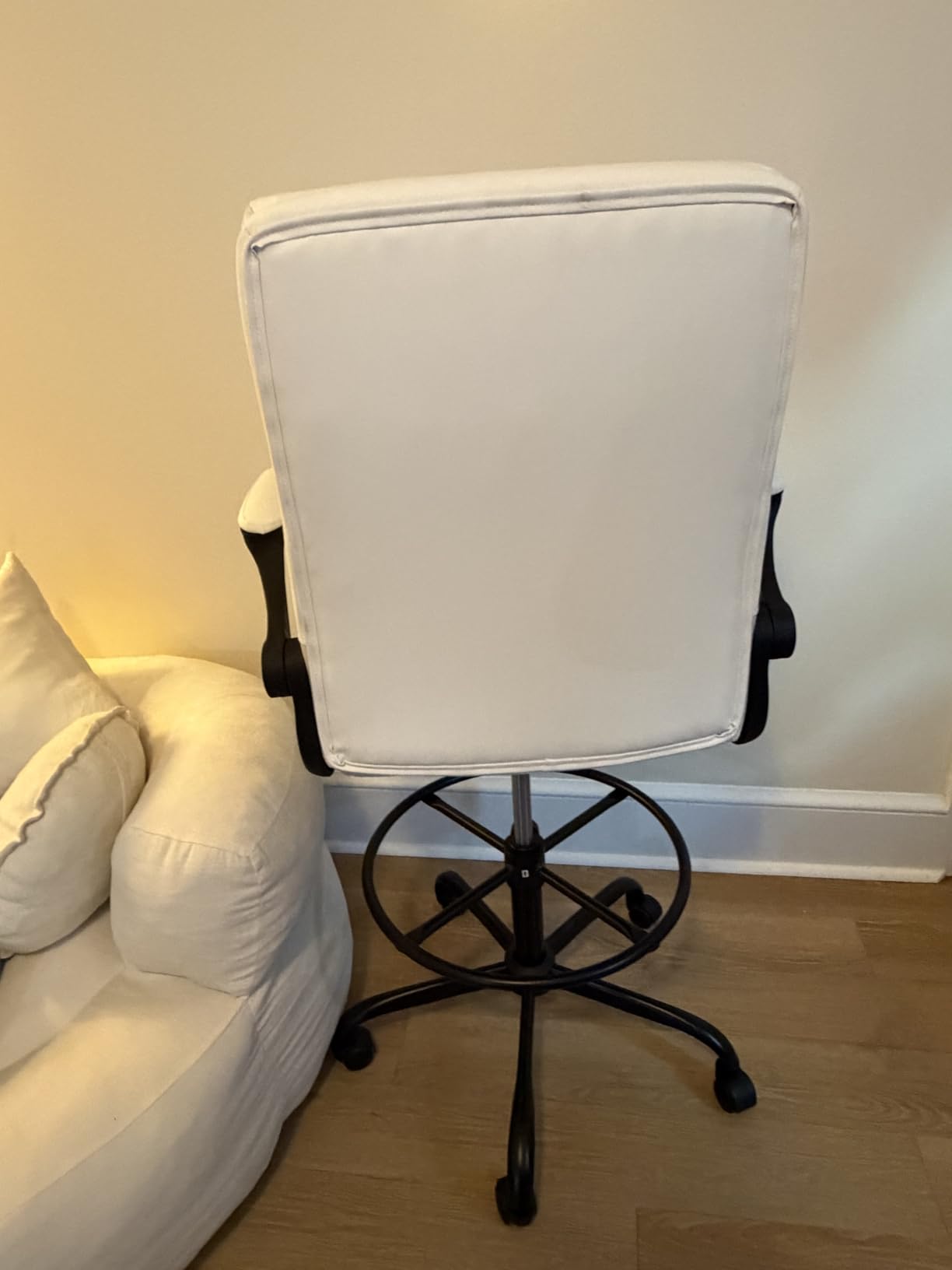
The frame is carbon steel, BIFMA certified, rated to 300 pounds and driven by a Class-3 gas lift. The double-layer cushion pairs a soft top layer over a firm support base, which is a sensible design for a chair that sees both perching and long seated blocks.
Seat height is listed at 31.3 inches with a 17.9-inch depth and a 19.3-inch wide backrest. At 32.8 pounds the chair is light enough to move between desk positions, and the flip-up armrests let you cross your legs or tuck in under the surface.
Assembly takes about 15 minutes with no tools, and the five-year warranty is joint-best in this lineup. The rating is 4.3 across 473 reviews with 67% five-star, and the recurring note is that leather runs warm compared with mesh.
Who should buy the amseatec tall drafting chair
Buy it if you work in a shared studio, classroom, lab or conference space where a wipe-down is part of the day. The leather seat and back will outlast mesh in those environments for the simple reason that they do not absorb spills.
It suits users who want back support across the whole spine at tall desk positions. The 23.23-inch high back and three support zones handle upright perching better than a short drafting back.
Who should skip it
Skip it if your room runs hot or you tend to sweat at a tall desk. PU leather is the least breathable material in this roundup and reviewers mention warmth as the main drawback.
The back support is fixed rather than adjustable, so if you need a lumbar dial that moves with your posture, keep looking. The listed seat size is also on the small side for larger frames.
8. Misolant Tall Office Chair — Best for Adjustable Back Support
Misolant Tall Office Chair for Standing Desk, Drafting Chair with Footrest Ring, PU Leather Recline High Office Tall Desk Chair with Adjustable Lumbar Support
- S-shaped frame follows the body's natural curve
- Lumbar support adjusts 2 inches vertically
- Waterfall cushion wraps the thighs
- Flip-up armrests save desk space
- 350-pound capacity
- Listed height range is shorter than most in this roundup
- PU leather is less breathable than mesh
- 40.8-pound weight is hard to reposition
The S-shaped frame is the feature that separates this from the generic tall office chairs. Rather than a flat panel, the back follows the curve of the spine, which keeps you supported when you perch upright at counter height instead of reclining. That posture is the whole reason for a drafting chair, and most designs ignore it.
The lumbar support moves up and down by 2 inches. That single adjustment covers a wide range of torso lengths, and it is the one control lower back pain in r/Ergonomics threads tends to focus on. Combined with a waterfall cushion that wraps the thighs, it keeps pressure off the backs of your legs during long perching sessions.
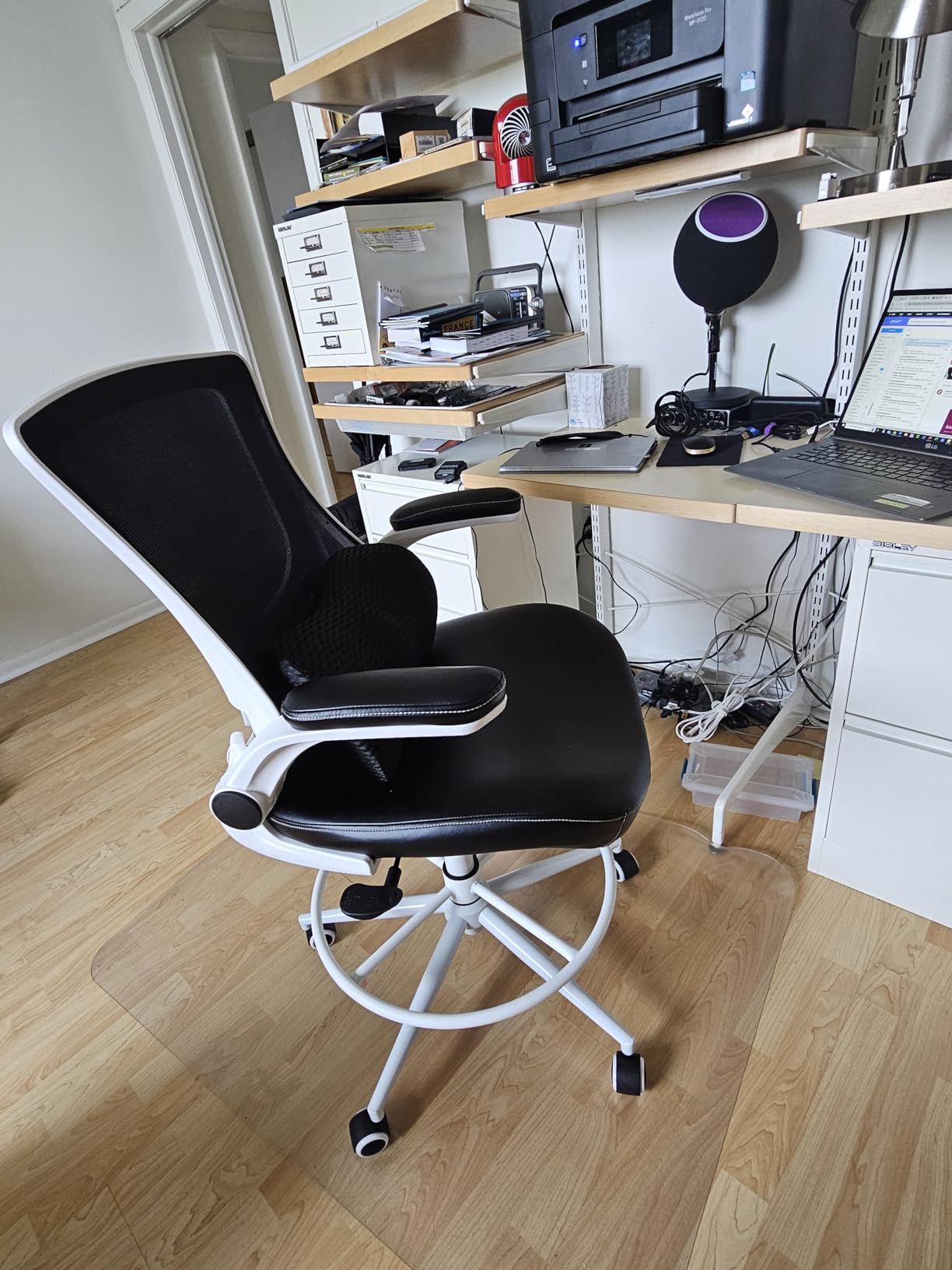
Capacity is 350 pounds, second-highest in the group, and the build is BIFMA tested around an SGS-certified four-level gas rod. Backrest width is 22.75 inches with a 19.7-inch seat depth, giving a wide, deep sitting surface for larger bodies.
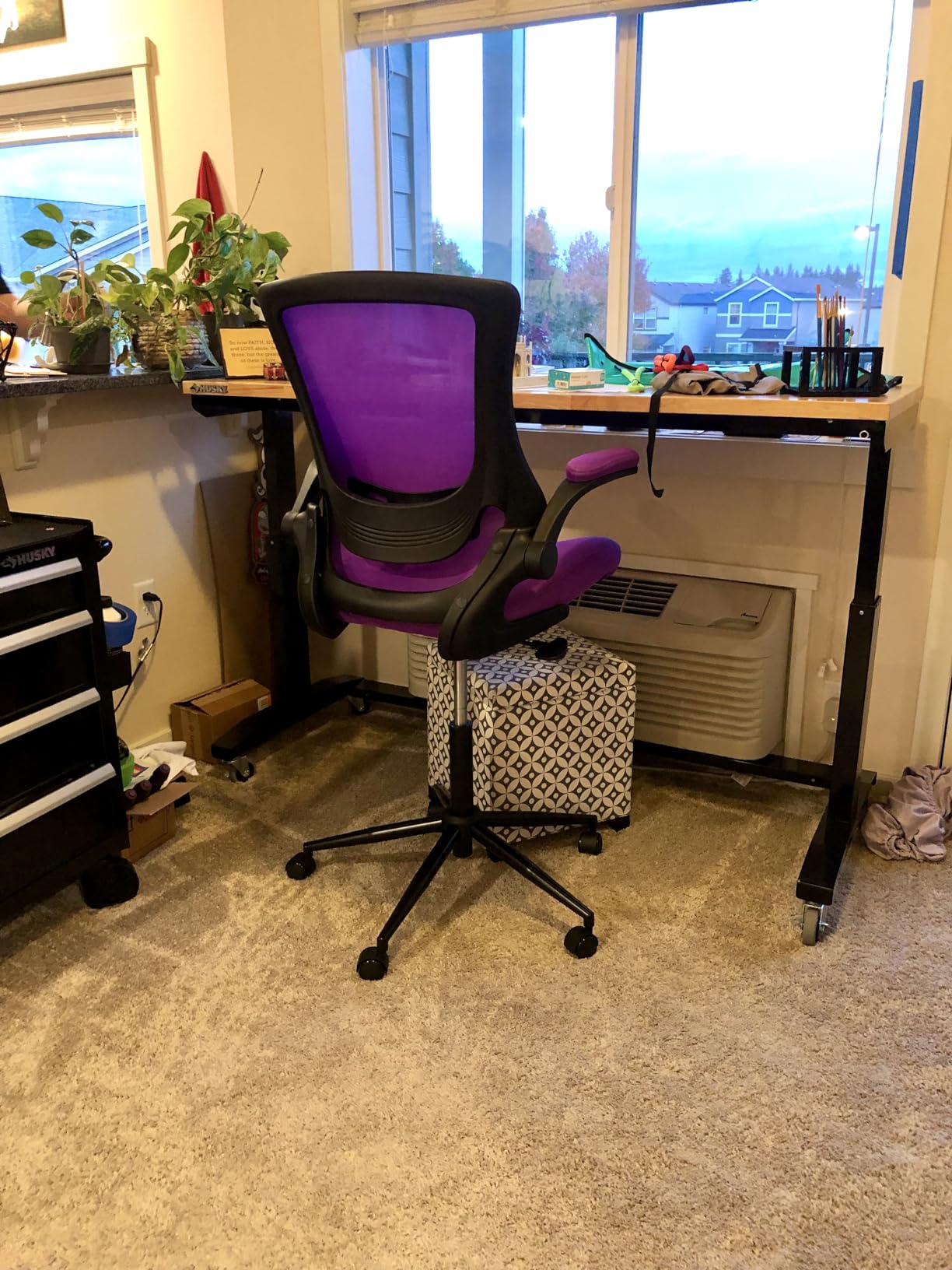
Armrests fold up 90 degrees and the foot ring adjusts in height to keep thighs supported as the desk moves. Assembly takes about 20 minutes with a detailed manual included.
At 4.4 across 471 reviews with 73% five-star, the praise concentrates on the lumbar adjustment, waterfall seat and flip-up arms for tall desk work. The main complaints are the shorter listed height range and the 40.8-pound weight.
Who should buy the Misolant tall office chair
Buy it if you manage lower back pain and want a lumbar dial rather than a fixed curve. The 2-inch vertical adjustment plus the S-shaped frame is the best back support in this roundup for perching posture.
It also suits larger users, since the 350-pound rating and 22.75-inch backrest width are the roomiest combination here. People who sit long past five hours at a raised desk tend to rate this one well.
Who should skip it
Skip it if you need the widest possible seat travel. The listed range is shorter than several alternatives, which can matter on a desk that rises to full counter height.
PU leather runs warm, and at 40.8 pounds the chair is heavy to move between positions. Check the height range against your desk’s maximum before you commit.
9. AtHope Drafting Chair — Best for the Tallest Desk Range
AtHope Drafting Chair, Tall Office Chair with 3D Lumbar & Head Support
- 3D lumbar moves up
- forward and rotates 60 degrees
- 3D headrest with 3.2 inch vertical travel
- Extended seat range fits unusually tall desks
- Breathable mesh resists sweating
- Built-in hanger for coats or bags
- Casters can drag and mark hard floors
- Seat can feel scratchy for longer sessions
- Armrests sit low with no height adjustment
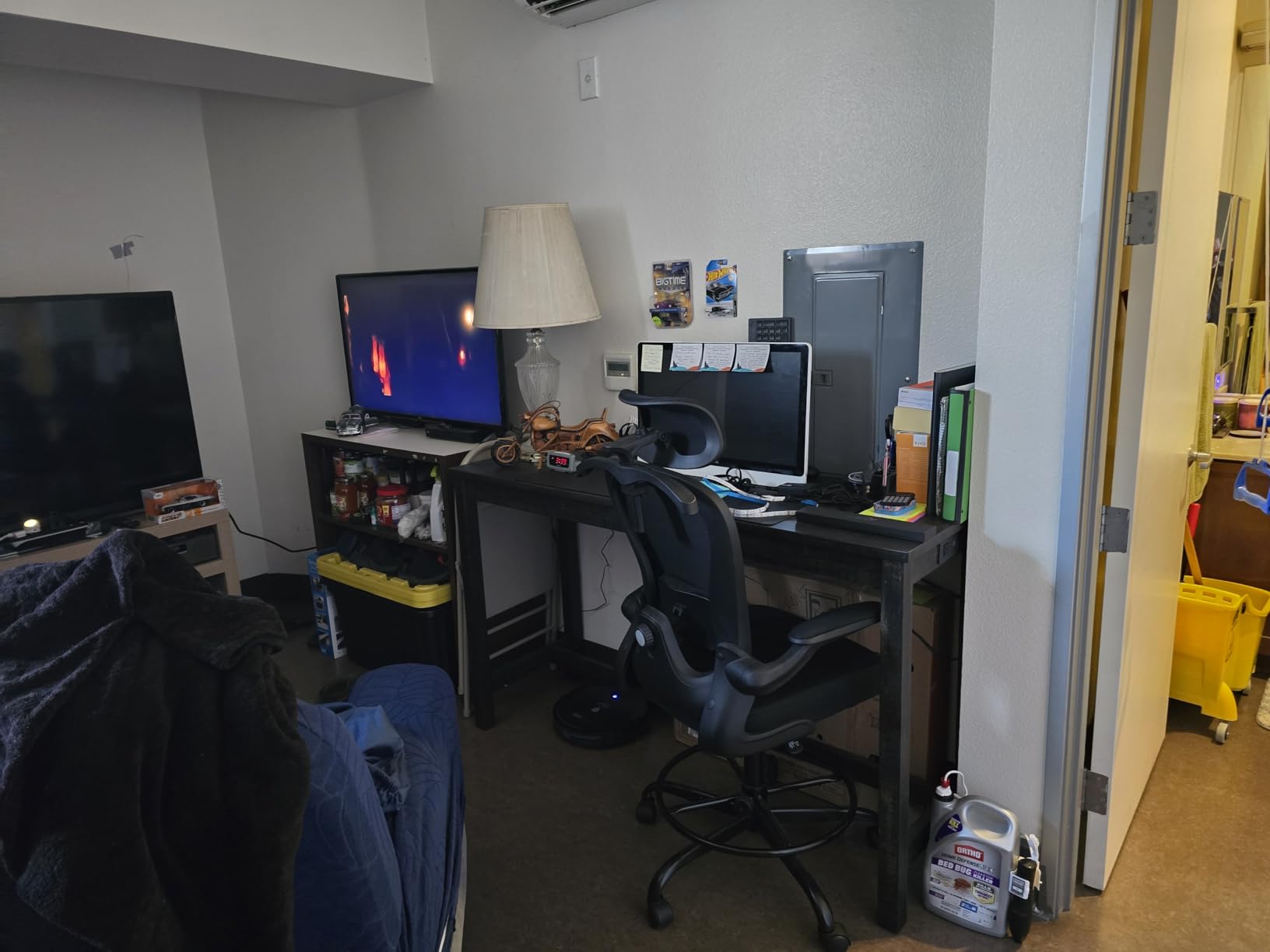
The seat range of 22.8 to 30.7 inches reaches higher than most drafting chairs here, which makes this the pick for unusually tall desks. If your sit-stand frame tops out above the reach of a normal cylinder, this is one of the few chairs in the roundup that gets you there without a separate perch stool.
Both contact points adjust in three dimensions. The lumbar moves 2 inches up and down, 2 inches forward and back, and rotates 60 degrees. The headrest moves 3.2 inches vertically and 45 degrees rotationally. Few drafting chairs bother with headrest adjustment at all.
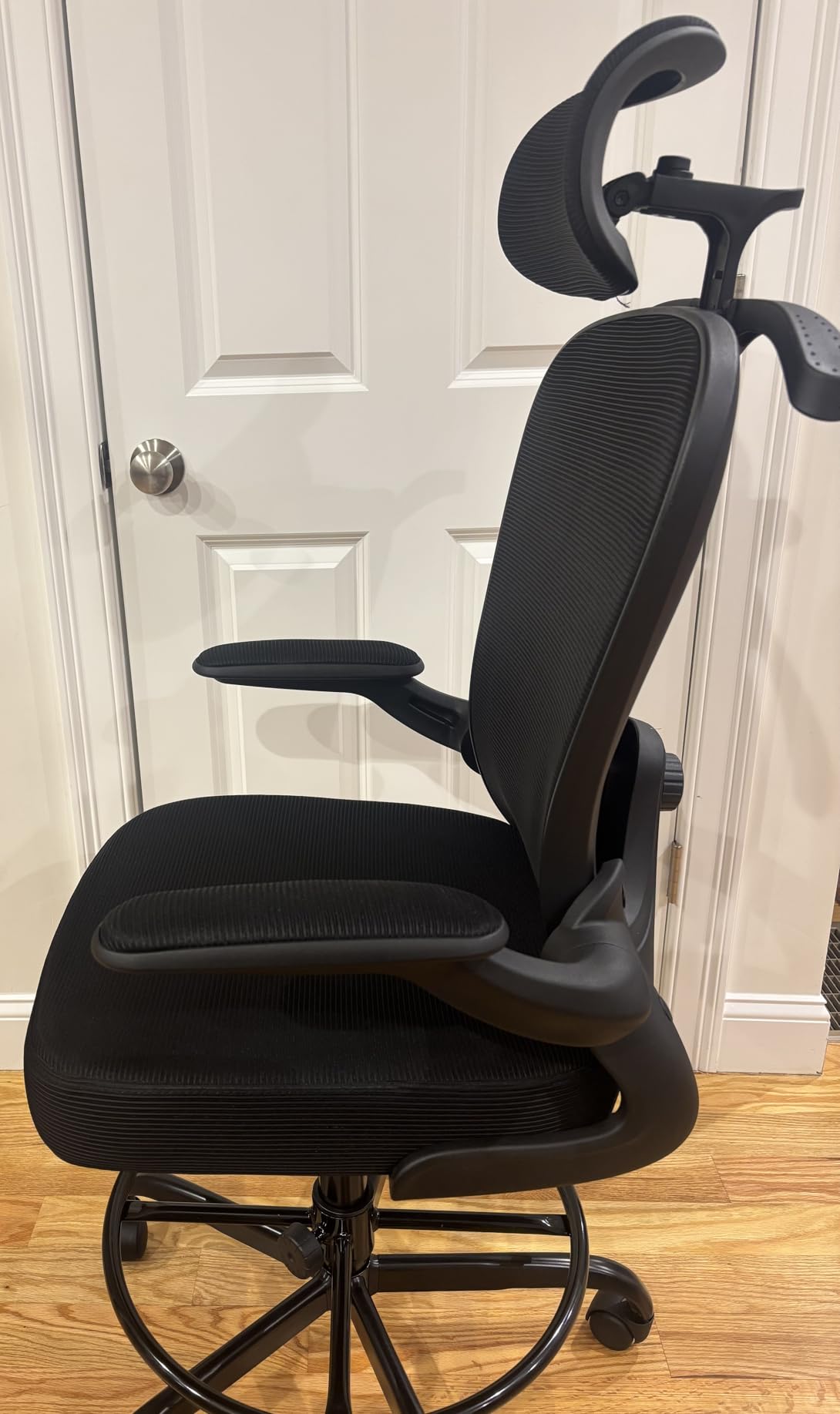
Interiors, classrooms and studios like the breathable mesh, which stays cool and resists sweating through long days. The 300-pound capacity and 30.1-pound frame sit in the middle of the group. Silent casters with 360-degree swivel are listed, along with a built-in hanger at the back for coats or bags.
Seat depth is 18.9 inches with a 27.6-inch interior back height, and flip-up arms let the chair tuck under a surface.
The 4.1 average across 367 reviews is the lowest in our group, with 61% five-star and 10% one-star. Owners with tall desks love the range and the 3D support, while complaints center on dragging casters, low armrests and a seat that can feel slanted forward in some positions.
Who should buy the AtHope drafting chair
Buy it if your desk raises above 30 inches of seat height and nothing else in the roundup reaches. The extended range plus the adjustable foot ring keeps leg support workable at those positions.
It also suits anyone who wants a headrest that moves with them, since few drafting chairs offer rotational headrest adjustment. Users who alternate between leaning back and perching upright tend to benefit most.
Who should skip it
Skip it if you sit on hard flooring without mats. Reviewers report the casters drag rather than swivel freely and can mark the surface, so add a mat if your floor is not carpeted.
The armrests sit low and have no height adjustment, and the seat can feel scratchy for some. At 4.1 it also carries the widest spread of mixed ratings here.
10. ORRSAKER Drafting Chair — Best for Narrow Builds
- 7.9-inch height range suits tall desks and users
- 2-inch lumbar adjustment on a contoured X-shaped back
- Foot ring has anti-slip locking so it stays put
- Thickened seat plate resists wobble
- Quiet PU casters protect hard floors
- 15-inch backrest is narrow for most adults
- Listed height range tops out lower than tall models
- Narrow frame may feel cramped for larger users
The foot ring locking mechanism is the detail that separates this one. Many drafting chairs have a ring that slides down under load, so your feet lose support exactly when you shift weight at height. The anti-slip lock here holds position, and reviewers call it out as the most-cited strength alongside the stable base.
The X-shaped backrest carries 2 inches of height-adjustable lumbar support on a contoured frame, which gives the back some give rather than the rigid slab you get on cheaper tall chairs. Height travel is 7.9 inches, a wider span than most competitors manage.
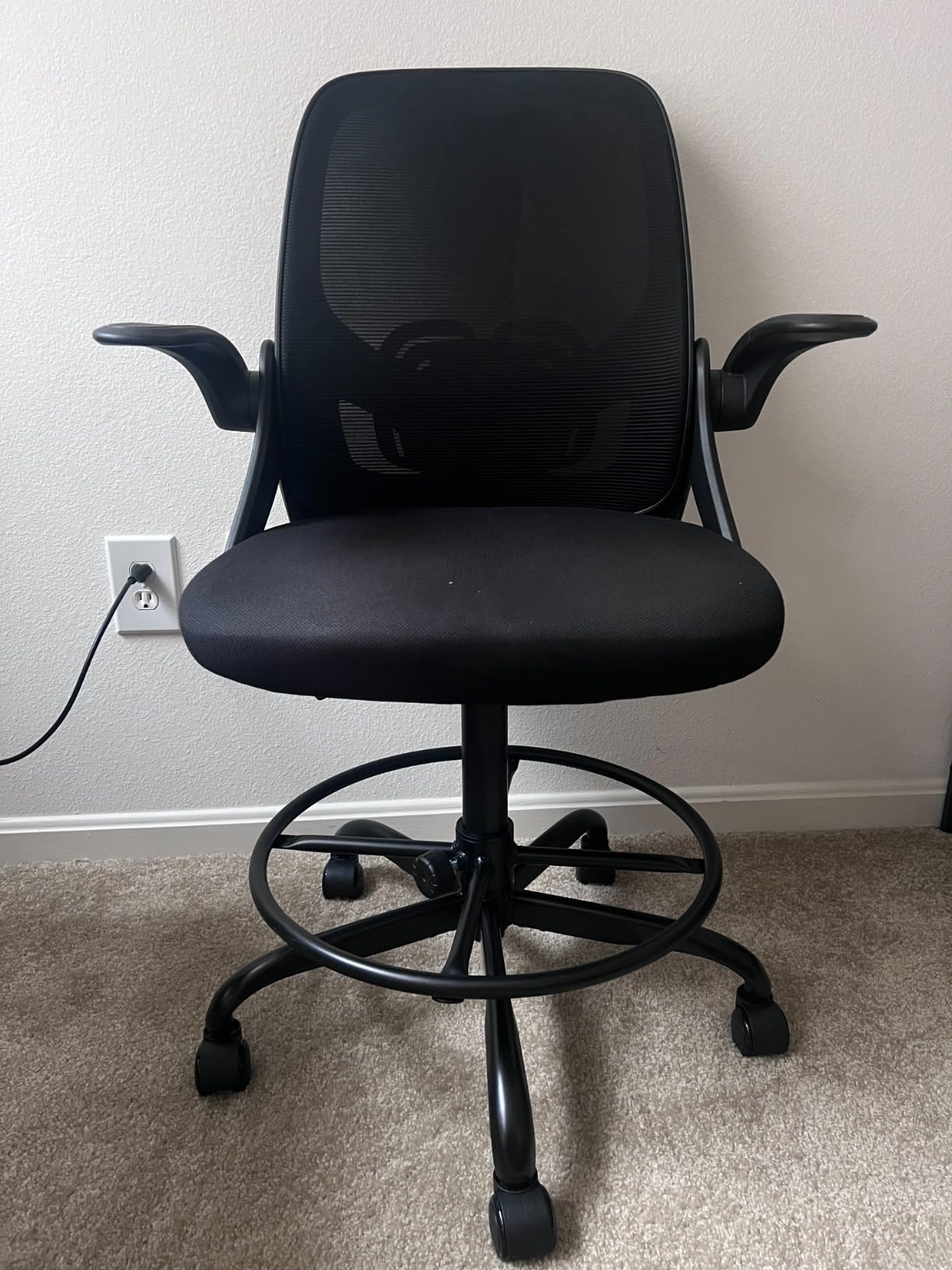
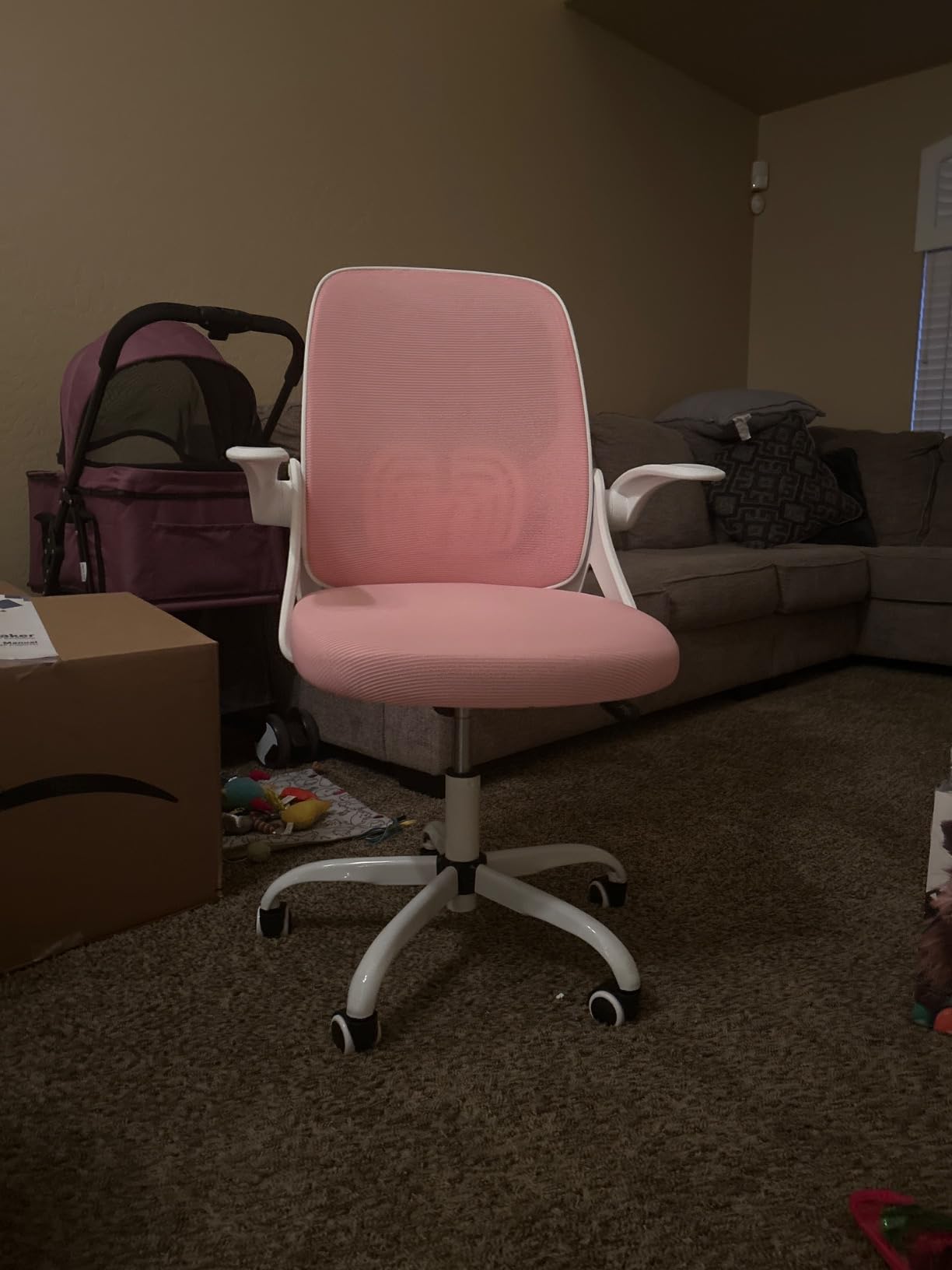
Dual-layer mesh with 3 inches of high-resilience foam keeps airflow reasonable for a mesh chair at this budget level. The 90-degree flip-up arms convert the chair to an armless stool, which is genuinely useful when you need to tuck in fully.
A thickened seat plate and five-claw base support the 300-pound rating without wobble at full height. Quiet PU casters roll without scratching, and assembly takes roughly 15 minutes with tools included.
At 4.4 across 332 reviews with 72% five-star, the review pattern centres on the wobble-free base and generous height range, with the narrow 15-inch backrest width named as the main limitation.
Who should buy the ORRSAKER drafting chair
Buy it if you have a narrow frame or a slim build, or if you simply want to stay close to a smaller desk footprint. The 18.9-inch depth and 19.3-inch width are among the most compact measurements here.
It suits anyone tired of a foot ring that slides. The locking mechanism, quiet casters and wobble-resistant seat plate address the three failures that show up most often in this category.
Who should skip it
Skip it if you have a broad back or shoulders. A 15-inch backrest is narrow for most adults, and reviewers describe the frame as feeling cramped for larger users even though the weight rating says 300 pounds.
The listed height range also tops out lower than the dedicated tall models. Check your desk’s maximum seat height against it before ordering.
11. ErGear Drafting Chair — Best Foot Ring in the Group
ErGear Drafting Chair with Footrest Ring and Flip-Up Arms for Tall Desks
- 19.7-inch foot ring adjusts 5 inches and locks
- 33% thicker seat cushion
- 8-inch seat range covers bar-height surfaces
- Class 4 gas lift tested to 120000 cycles
- Extra-large base holds steady at full height
- Thin plastic lumbar panel can feel hard without padding
- Lowest setting still leaves shorter users reaching
- No caster brake so the chair can roll when you stand
A 19.7-inch foot ring is unusually wide, and it is the reason this chair is comfortable at bar height. Most rings are small enough that your heels hang off and your weight lands on the front of your thighs. This one takes both feet flat and adjusts 5 inches vertically with a lock, so support holds as you move.
The Class 4 gas lift is tested to 120,000 lift cycles, which is the kind of endurance figure worth caring about in a chair that will be raised and lowered all day. Eight inches of seat height adjustment covers drafting desks, sit-stand desks and bar tops in one chair.
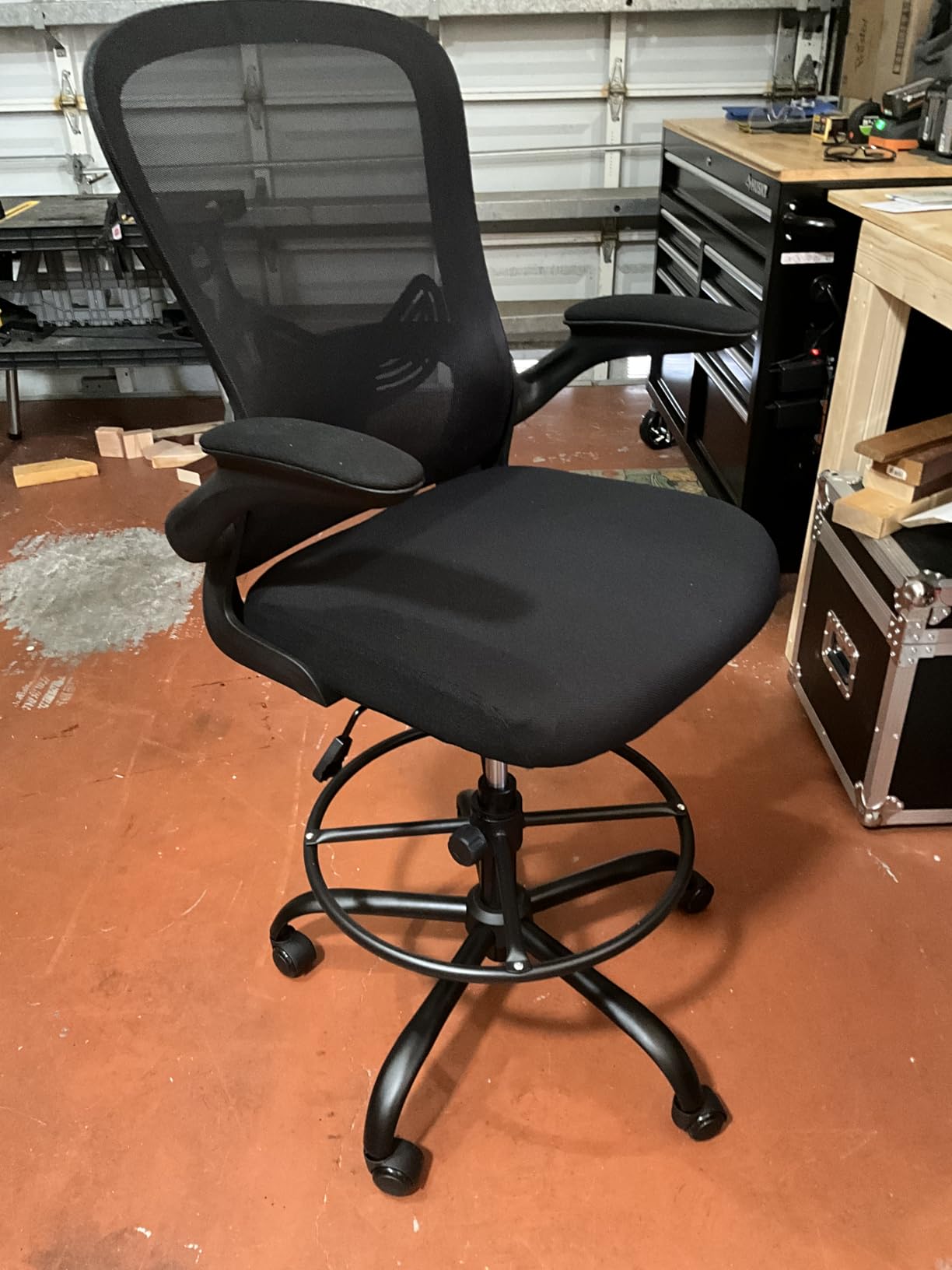
The seat cushion is 33% thicker than the standard version, and reviewers credit it with taking pressure off the hips over long days. Lumbar support adjusts 2 inches in height on a 17-degree mesh backrest that leans back slightly rather than sitting perfectly vertical.
An extra-large base holds 300 pounds even at full extension, which is where cheaper five-star bases start to flex. Padded armrests flip up 90 degrees to tuck under the desk.
The 4.5 rating across 314 reviews with 76% five-star is the second-highest average in our lineup. Recurring notes are the thin lumbar pad, a floor-level minimum that leaves shorter users reaching, and the lack of a caster brake, plus one report of gas-lift sagging.
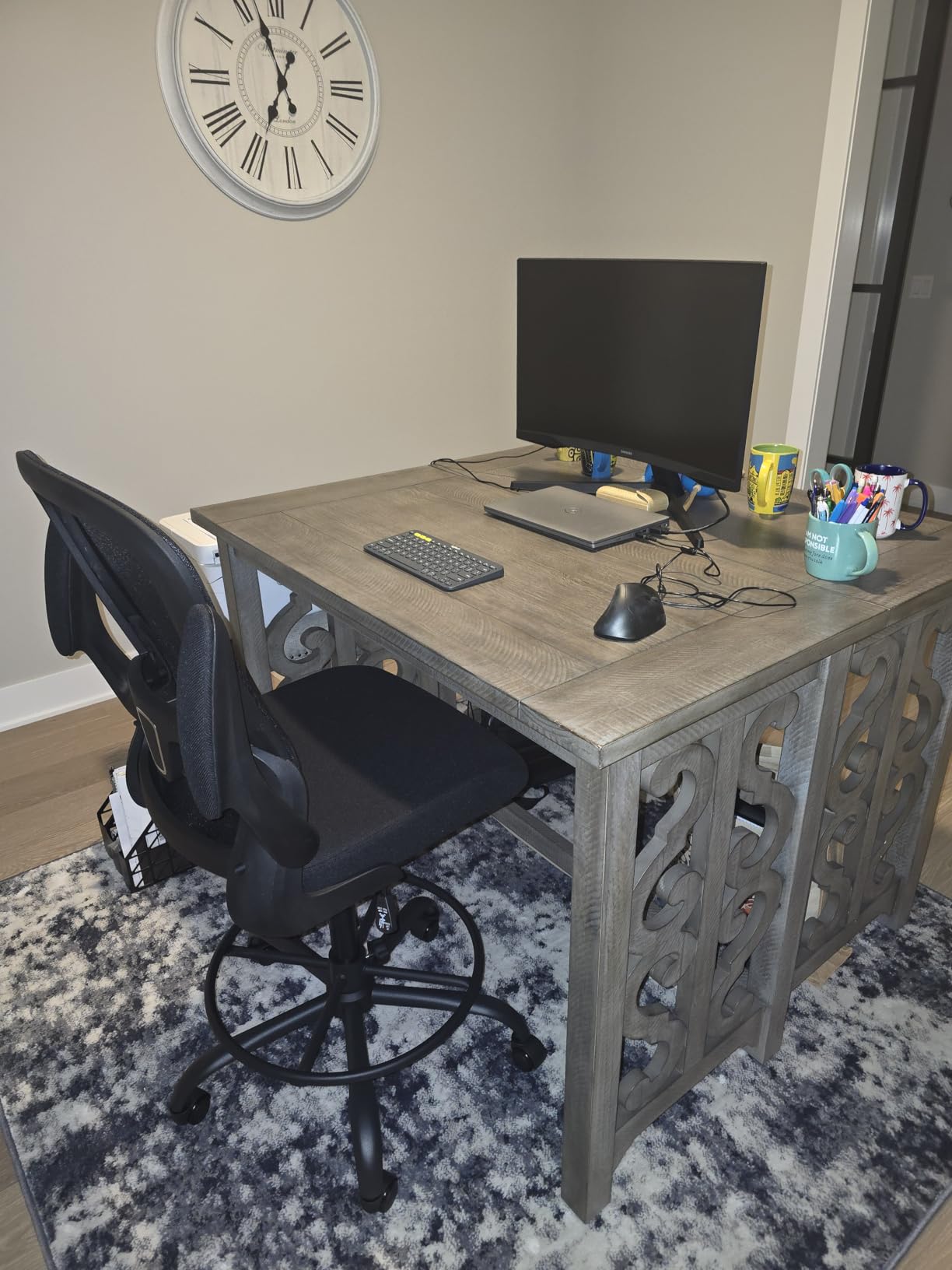
Who should buy the ErGear drafting chair
Buy it if you work at genuinely bar-height positions, because the wide locking foot ring keeps both feet planted where smaller rings do not. The 8-inch travel also covers the widest range of desk positions in the roundup.
It suits shorter users who need leg support at height, since the ring drops far enough to meet a smaller leg length. The thick cushion suits anyone spending long perching blocks at the top of the range.
Who should skip it
Skip it if you are under 5’4″. The lowest seat setting still leaves shorter users’ feet barely reaching the floor, which is a recurring complaint and a real one for a 5’3″ buyer.
The lumbar panel is thin plastic and some users find it uncomfortable without added padding. There is also no caster brake, so the chair can roll away from the desk when you stand up from it.
12. Kensaker Drafting Chair — Best for Art Studios
- Locking knob stops the foot ring sliding
- 9.45-inch foot ring adjustment suits many heights
- Upgraded 5-claw base and thickened seat plate cut wobble
- Y-shaped backrest with 2-inch lumbar adjustment
- Silent PU casters roll quietly across floor types
- Backrest is shorter than full high-back models
- 300-pound capacity is below heavy-duty options
- Seat foam is standard density
This chair turned up repeatedly in art studio and drafting-table contexts, which is a better test than a corporate desk because people there perch forward over a surface instead of sitting back. The foot ring locking knob keeps the ring from sliding down as you shift weight forward onto a drawing board or tablet.
The ring itself adjusts across a 9.45-inch range, one of the wider travel figures here, which covers a lot of user heights without swapping parts. Height adjustment on the seat is 7.9 inches with 360-degree swivel.
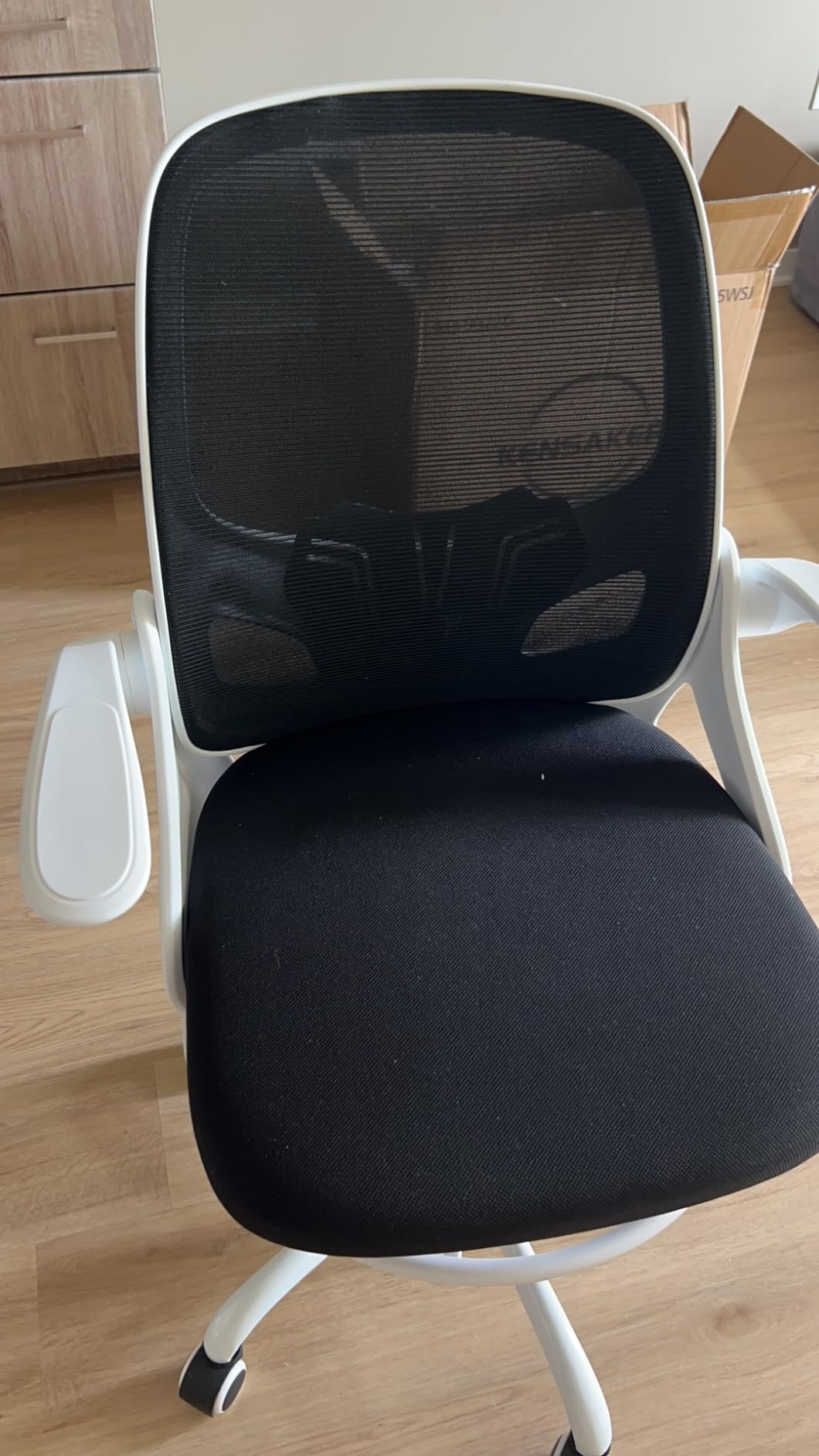
The base was the quiet upgrade. A five-star claw base with a thickened seat plate removes the wobble that cheap tall chairs develop once the cylinder is near full extension, and reviewers point at the stability first. Silent PU casters roll quietly across wood, tile and hard floors.
The Y-shaped backrest carries 2 inches of vertical lumbar adjustment on dual-layer breathable mesh. Seat height is listed at 29.33 inches with a 19-inch depth and an 18.9-inch wide backrest, at a frame weight of 29.8 pounds.
The rating is 4.3 across 538 reviews with 71% five-star. Buyers in studios and standing-desk setups cite the slip-free foot ring and stable base most often. Assembly runs 15 to 20 minutes.
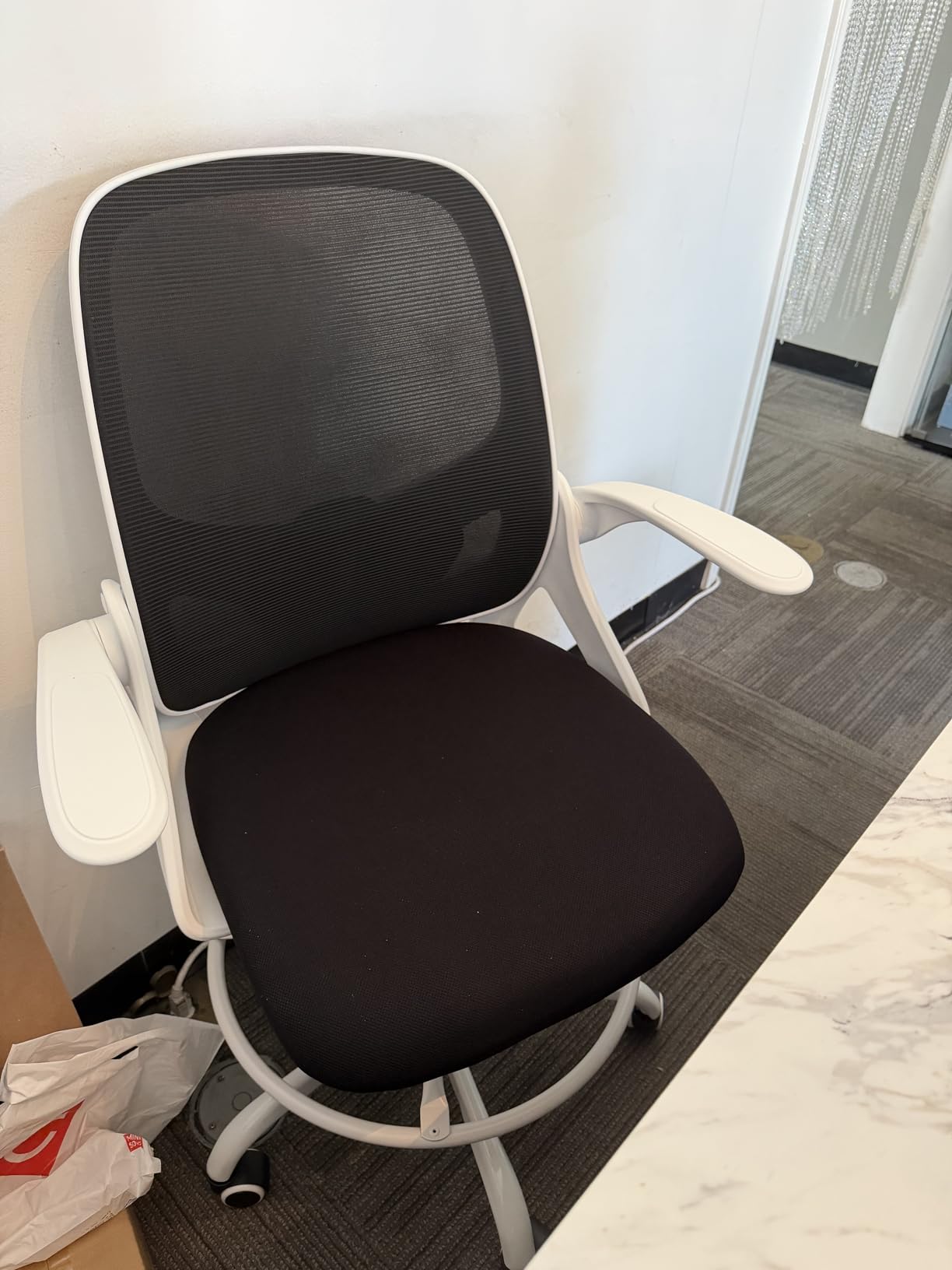
Who should buy the Kensaker drafting chair
Buy it if you work leaning forward over a surface rather than sitting back, such as drawing, drafting, model work or a standing desk with a tilted surface. The locking foot ring and stable base handle forward-leaning weight shifts.
It also suits users who move between floor types in a shared space, since the silent PU casters handle wood, tile and carpet without marking. The 9.45-inch ring range covers a wide spread of heights.
Who should skip it
Skip it if you want a full high-back with head and neck support. This backrest is shorter than the dedicated high-back models, which matters when you perch upright for hours.
Capacity is 300 pounds, below the heavy-duty options, and the seat foam is standard density rather than thick ergonomic cushioning. Long seated days may feel firm after a while.
What Kind of Chair Works Best With a Standing Desk?
A drafting chair, an adjustable-height stool, an active sitting chair or a leaning chair work best with a standing desk, and the right one depends on how you use the desk. Drafting chairs suit all-day mixed sitting and standing. Stools suit standing-dominant work. Active sitting and leaning chairs keep you moving while seated. Below is what separates them and how to size one.
1. Drafting chair — the default choice for a sit-stand desk. A tall cylinder and a foot ring keep legs supported from a low sitting position up to bar height, and the foot ring is what stops your thighs taking the load when you perch.
2. Adjustable-height stool — better when you spend most of the day standing and only perch occasionally. Stools lack backrests, so they are not an all-day answer on their own.
3. Active sitting chair — a rocking or tilting base that keeps you moving while seated. Useful when you want a backrest without giving up all postural variety, but the movement takes getting used to.
4. Leaning chair — supports you at an angle close to standing, with a perch height around 34 to 44 inches. Good for short focused blocks, harder to hold for hours.
5. Armless drafting stool — the answer when armrests collide with your desk frame or modesty panel. Nothing to catch, and you sit closer to the keyboard.
Match seat height range to your desk, not to you
Measure your desk at its highest setting, then subtract roughly 8 to 12 inches for elbow clearance. That is your target seat height. Most people in this roundup top out between 29 and 34 inches, so check your desk’s maximum against the chair’s published range before buying.
Clearance matters as much as height. Flip-up armrests are the fix when a fixed armrest catches a crossbar, and armless designs are the fix when nothing else works. Measure the distance from your desk edge to the nearest vertical obstruction.
Get the foot ring right for your leg length
A foot ring that is too high pushes pressure into your thighs; too low and your feet dangle. Look for a ring with at least 4 to 5 inches of travel, and prefer one that locks in place, because rings that slide down lose support exactly when you shift weight.
Users under 5’4″ should check the chair’s lowest seat setting as carefully as its highest. Several chairs here still leave shorter users reaching at minimum extension, which defeats the purpose of a foot ring.
Choose seat material by room temperature
Mesh backrests are the practical choice for warm rooms because air moves through them. PU leather and vinyl wipe clean and resist spills, which suits studios and shared rooms, but both run warmer during long sessions.
Seat cushion thickness is a comfort variable rather than a durability one. Dense foam resists collapsing over years; thinner cushions feel harder after months. Buyers of thicker-cushion models consistently report better all-day comfort.
Check weight capacity and seat depth against your body
Pick a frame rated well above your body weight, not just above it. Ratings run from 250 to 400 pounds here, and heavier-duty bases also stop flexing at full height extension, which lighter frames do.
Seat depth of 19 to 21 inches suits taller users, since they need the extra length to sit back against the lumbar. Shorter users often find those seats push their knees forward and lose foot support.
Use the 20-8-2 rule and give yourself three weeks
The 20-8-2 rule means sitting for 20 minutes, standing for 8 minutes of light movement, then sitting for 2 minutes. The chair matters less if you never change position, so pair any of these chairs with that rhythm or a similar movement timer.
Week one: alternate sitting and standing every 30 to 60 minutes and expect soreness in shins, feet and glutes. Week two: extend to 45 to 90 minute blocks as the soreness fades. Week three and beyond: settle on the rhythm that feels right, and lean on the chair for perching rather than treating it as a full sitting position, where most people cap out near two hours.
None of these chairs replaces a good primary task chair. The strongest setups pair one of these tall chairs with a proper desk chair for the seated blocks, and use the drafting chair as the elevated-position tool. Our picks for the wider seating question run through our guide to wide-seat chairs, and for input devices our trackball mouse roundup covers setups that reduce arm strain at a raised desk.
Frequently Asked Questions
What kind of chair is best for using with a standing desk?
A drafting chair with a tall cylinder, a height-adjustable foot ring and flip-up armrests works best for most standing desk users. The foot ring supports your legs when the desk is raised, and flip-up arms let the chair tuck under the work surface so you sit close to the keyboard. Active sitting and leaning chairs work too, but they suit shorter focused blocks rather than all-day use.
What is the 20-8-2 rule for standing desks?
The 20-8-2 rule means sitting for 20 minutes, standing for 8 minutes of light movement, then sitting for 2 minutes. The point is postural variety rather than any single position, so it works with any adjustable desk and any chair, including a standard task chair at the lower setting.
What is the best desk chair for long hours of sitting?
For long seated hours, a chair with adjustable lumbar support, a breathable mesh or contoured back, and 19 inches or more of seat depth works best. Among the drafting chairs reviewed here, the Misolant leads on back adjustment and the Office Star DC Series leads on seat height range and commercial-grade build. Most people cap continuous perch time near two hours, so pair any of them with a proper task chair for long seated blocks.
Is a task stool or a drafting chair better for a standing desk?
A drafting chair is better if you spend part of the day seated at a raised desk, because it has a backrest, lumbar support and a foot ring that a stool lacks. A task stool is better if you spend most of the day standing and only perch for short blocks. Many users keep both, using the stool while standing and moving to a backrest when they sit fully.
Can you use a regular office chair with a standing desk?
Yes, for the lower sitting positions. A standard task chair usually tops out near 21 inches of seat height, so it works at a desk sitting position and becomes uncomfortable once the desk rises much higher. Above that, your feet dangle or your shoulders hunch toward the keyboard, which is when a drafting chair with a foot ring takes over.
Bottom Line on Standing Desk Chairs in 2026
The Primy drafting chair is our pick for the best office chairs for standing desk users in 2026. Flip-up armrests, an adjustable foot ring, a mesh back and a five-year warranty cover the three things a tall desk demands, and its 3485 reviews at a 4.3 average give you the largest evidence base in this group.
Pick the Office Star DC Series if your desk reaches full counter height and you want a published 24 to 34 inch range. Pick the BOLISS if you weigh over 250 pounds or want a real headrest. Pick the HYLONE armless model if your desk frame blocks armrests. Below 5’4″, check the lowest seat setting before anything else, and get the desk sorted first with our standing desk guide.