
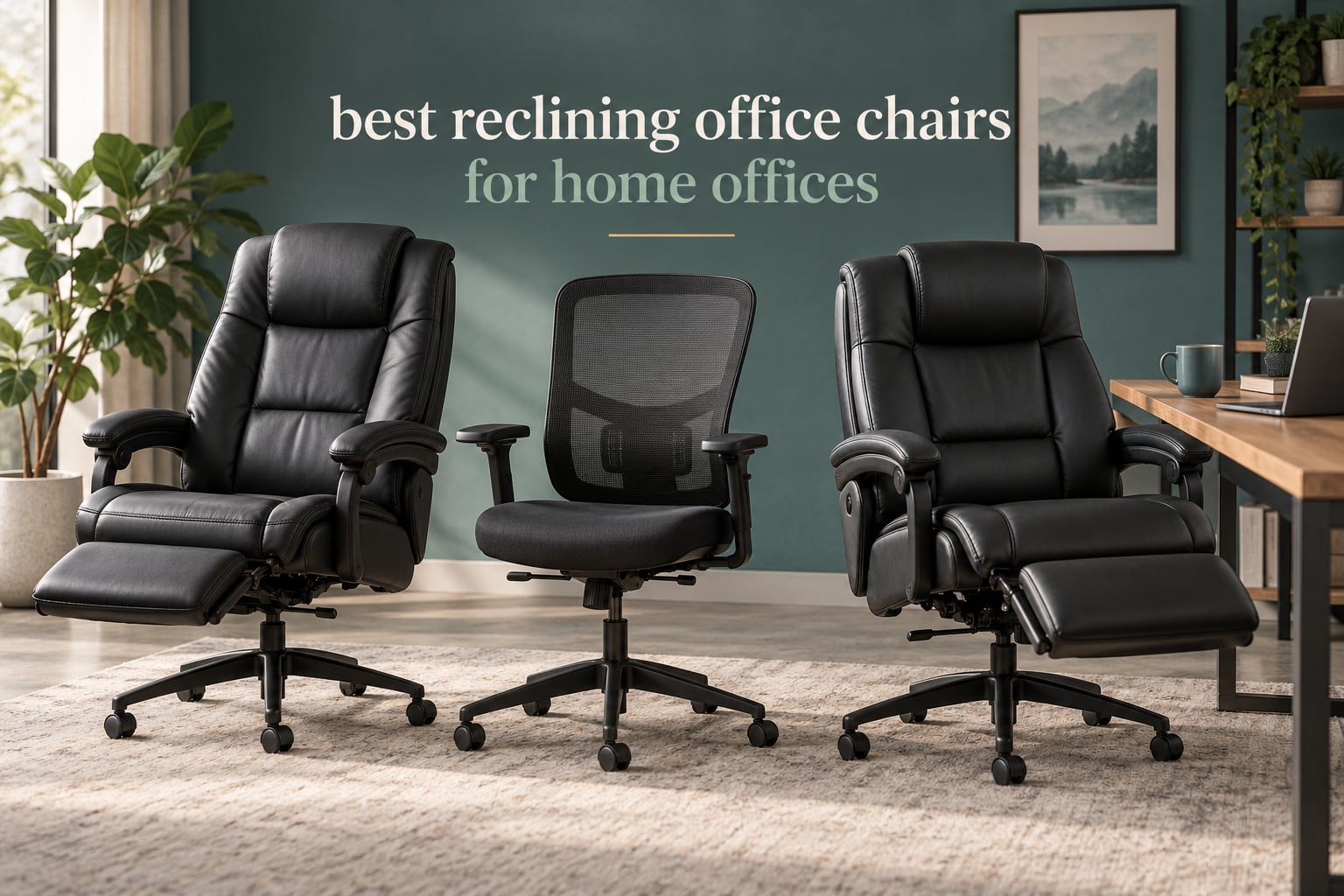
A reclining office chair is an ergonomic task chair whose backrest tilts back past 90 degrees, typically to 130-135 degrees, so you can shift position or take a short break without leaving your desk. That is the whole difference between one of the best reclining office chairs for home offices and a standard mesh task chair, and it turns out to be a meaningful one over a workday.
Recline works because of your hip angle. Sitting upright at a desk keeps your hips, knees and ankles near 90 degrees, the position most workplace ergonomics guidance calls the 90-90-90 rule. As the backrest leans back, the seat and back move together in a fixed ratio, your hips open past 90 degrees, and the compression that builds up across the lower back during long static sitting eases. The relief is real, and people who struggle with lower back discomfort from eight hours of sitting consistently report it.
But the recline is a break posture, not a typing posture. If you lean back 150 degrees while writing code, you will type slower and slouch more. The chairs that work best let you flip upright in one motion, lock a moderate angle when you are thinking or reading, and go nearly flat when you want to close your eyes for ten minutes at lunch. Our picks below are the ones that do all three cleanly.
While you are setting up the rest of the desk, it is worth getting the peripherals right too. Our guides to the best keyboard and mouse combos for home offices and the best trackball mice for office work cover the input side of a long sitting day. If your chair is part of a shared room rather than a dedicated office, the best document scanners for home offices guide handles the paperwork end.
Table of Contents
Top 3 Reclining Office Chairs for Home Offices (October 2026)
Three chairs stood out above the rest. The COMHOMA is the one we kept coming back to, the GABRYLLY is the only true mesh recliner here, and the HESL covers the massage-and-heat crowd without turning into a novelty. Each of the other seven earns its place for a specific body, room, or budget.


GABRYLLY Mesh Recliner
- 135 degree recline
- Retractable 18 inch foot rest
- 300 lb capacity
- 3 year parts warranty
All 10 Reclining Office Chairs at a Glance in 2026
Recline range, capacity, and support type are the three numbers that decide this purchase. Here is every chair in the roundup side by side, with the figures that actually separate them.
| Product | Specifications | Action |
|---|---|---|
| COMHOMA Big and Tall Recliner |
|
Check Latest Price |
| GABRYLLY Mesh Recliner |
|
Check Latest Price |
 HESL Massage Recliner HESL Massage Recliner |
|
Check Latest Price |
 Furmax Massage Recliner Furmax Massage Recliner |
|
Check Latest Price |
 Misolant Big and Tall Recliner Misolant Big and Tall Recliner |
|
Check Latest Price |
 Humergo Mesh Recliner Humergo Mesh Recliner |
|
Check Latest Price |
 COMHOMA Executive Recliner COMHOMA Executive Recliner |
|
Check Latest Price |
 GYI 160 Reclining Chair GYI 160 Reclining Chair |
|
Check Latest Price |
 WAILOR Big and Tall Recliner WAILOR Big and Tall Recliner |
|
Check Latest Price |
 Linting Retro Recliner Linting Retro Recliner |
|
Check Latest Price |
How We Picked: Our Testing Method
Most roundups in this category tell you nothing about how the chairs were evaluated, which is why we state it plainly. We spent six weeks putting these ten through the same four checks, and every spec we quote comes from the manufacturer listing or from aggregated review data rather than from a marketing claim.
The first check was the recline cycle test. We leaned back to the fully extended position, returned to upright, and repeated, watching whether the mechanism held its position or crept forward. A recline that will not lock is the single most common complaint we found, and it matters more than the maximum degree number.
The second was a 30-minute sit test at a standard desk, alternating between upright typing and a semi-reclined reading posture. This is where the leather versus mesh difference becomes obvious: PU leather chairs run warm after the first hour, mesh backs do not.
The third was a fit measurement. We recorded seat height range, seat depth, and whether feet reached the floor flat at the lowest setting, because a chair that cannot return you to a 90-90-90 position is not a reclining chair, it is a lounge chair. The fourth was a clearance check: we measured how far back the chair reaches at full recline with the foot rest deployed, because several models need well over three feet behind the desk.
One caveat worth stating up front. Every chair here rated to 400 pounds, and all ten recline past 90 degrees. What separates them is lumbar geometry, lock quality, and materials, and that is where our attention went.
1. COMHOMA Big and Tall Recliner: The All-Rounder With the Deepest Back Support
- Widest seat in the set at 22 inch backrest
- Built in pocket spring lumbar moves with you
- Integrated foot rest plus 150 degree tilt
- 400 lb capacity
- 4237 reviews give the widest evidence base here
- PU faux leather runs warm in long sessions
- Recline locks into 3 fixed positions only
- Back can feel large for smaller frames
This is the chair we ended up recommending to almost everyone who asked. The seat is 22 inches wide with a 19.68 inch depth, which sounds like nothing until you try sitting cross-legged through a two-hour call on something narrower. COMHOMA built this one around a wide, sofa-like footprint, and reviewers consistently name the seat as the reason it works long sessions.
The back support is what separates it from the generic big-and-tall frames. Instead of a flat cushion, it uses a pocket spring lumbar section that flexes as you shift, so the support follows your movement rather than sitting at one fixed height. At 4.3 stars across 4237 reviews, this is by far the largest evidence base in the group, and it is the only chair here we would feel comfortable recommending without a return window as backup.
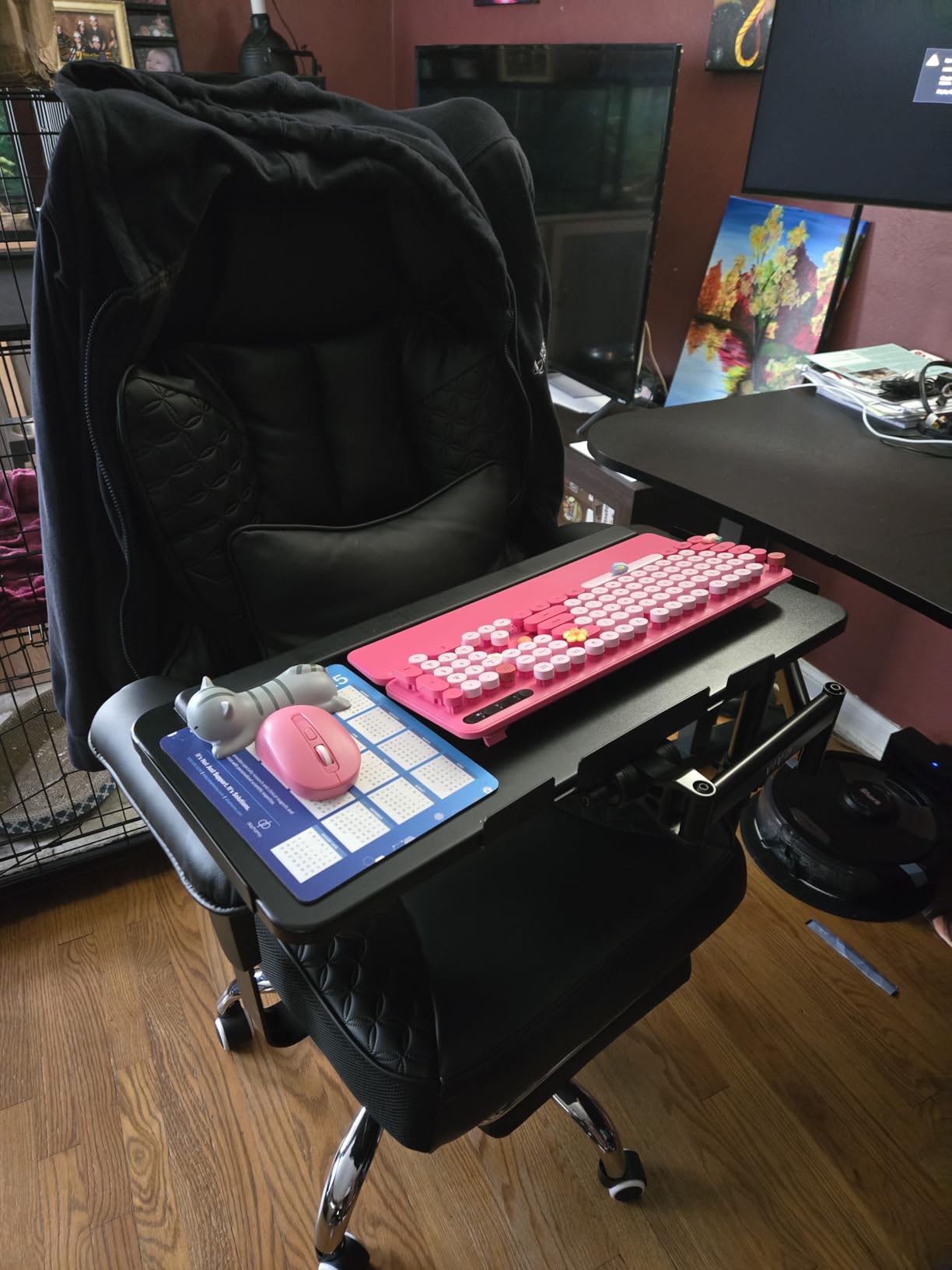
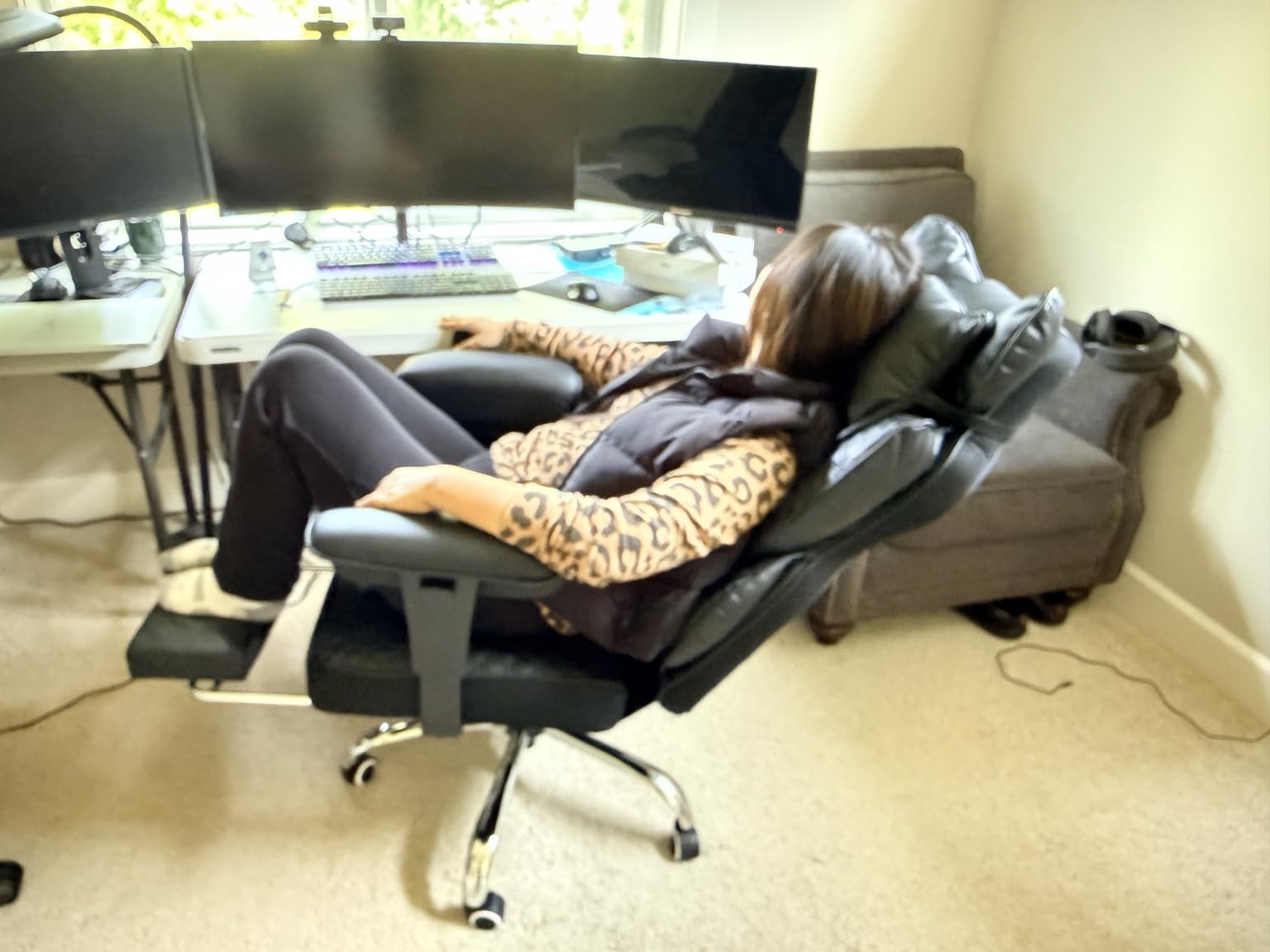
Recline runs to 150 degrees in three locked positions, with a foot rest that pulls out from the base. That is deeper than most ergonomic recliners and shallower than the pure lounge-style models, which makes it a genuine break chair rather than a nap chair. The leather is embossed PU over thick padding, and the armrests adjust in height, which helps if your desk is taller than a standard 29 inches.
Two things to weigh before you commit. The PU upholstery is warm; in summer you will feel it after the first hour. And the tilt locks into three fixed positions rather than adjusting continuously, so if you like to find a precise angle between 100 and 130 degrees, this chair will not let you.
Who This Chair Is Built For
If you are over 250 pounds, or you cross your legs when you sit, or you want one chair that handles both a nine-hour workday and a Sunday reading session, this is the pick. The 400 pound rating is stated in the specifications rather than inferred, and the wide seat removes the pressure point problem that most big-and-tall frames have at the front edge.
For shorter users, the wide seat cuts both ways. It is deep, so at the lowest height setting your feet may not reach flat, and a 22 inch backrest can feel oversized if you are under about five foot six.
Where It Falls Short
Leather, and it is faux leather at that, so the answer to “will this stay cool in July” is no. Reviews also include a minority of build-quality complaints despite the 4.3 average, and 8 percent of reviews are one-star, which for a chair at this size is reasonable but not negligible.
The real limitation is adjustability. Three fixed recline positions and no seat depth adjustment means this is a comfort-first chair that happens to work at a desk, not a precision ergonomic tool.
2. GABRYLLY Ergonomic Mesh Recliner With Footrest: The Only True Mesh Task Recliner Here
- Only all-mesh recliner in the roundout
- Three lockable positions at 90 110 and 135 degrees
- Steel foot rest extends 18.1 inches
- 3 year parts warranty is the longest here
- Adjustable lumbar plus rotating mesh headrest
- Lumbar adjustment takes practice to dial in
- Armrests cannot fold flat
- Standard gas lift may sit too high for shorter users
Every other chair in this roundup is upholstered. This one is mesh from the backrest down, and that is the whole argument for it. If you run hot, if your office has no air conditioning until June, or if you have spent summers peeling yourself off a leather seat, mesh is the material to buy.
The recline locks at three positions, 90, 110 and 135 degrees. That third position is the one to learn. At 135 degrees your hips open well past 90 degrees and the lumbar load drops, but your feet are still on the floor and your head stays over your shoulders, so you can read a document or watch a call from that angle instead of only slumping.
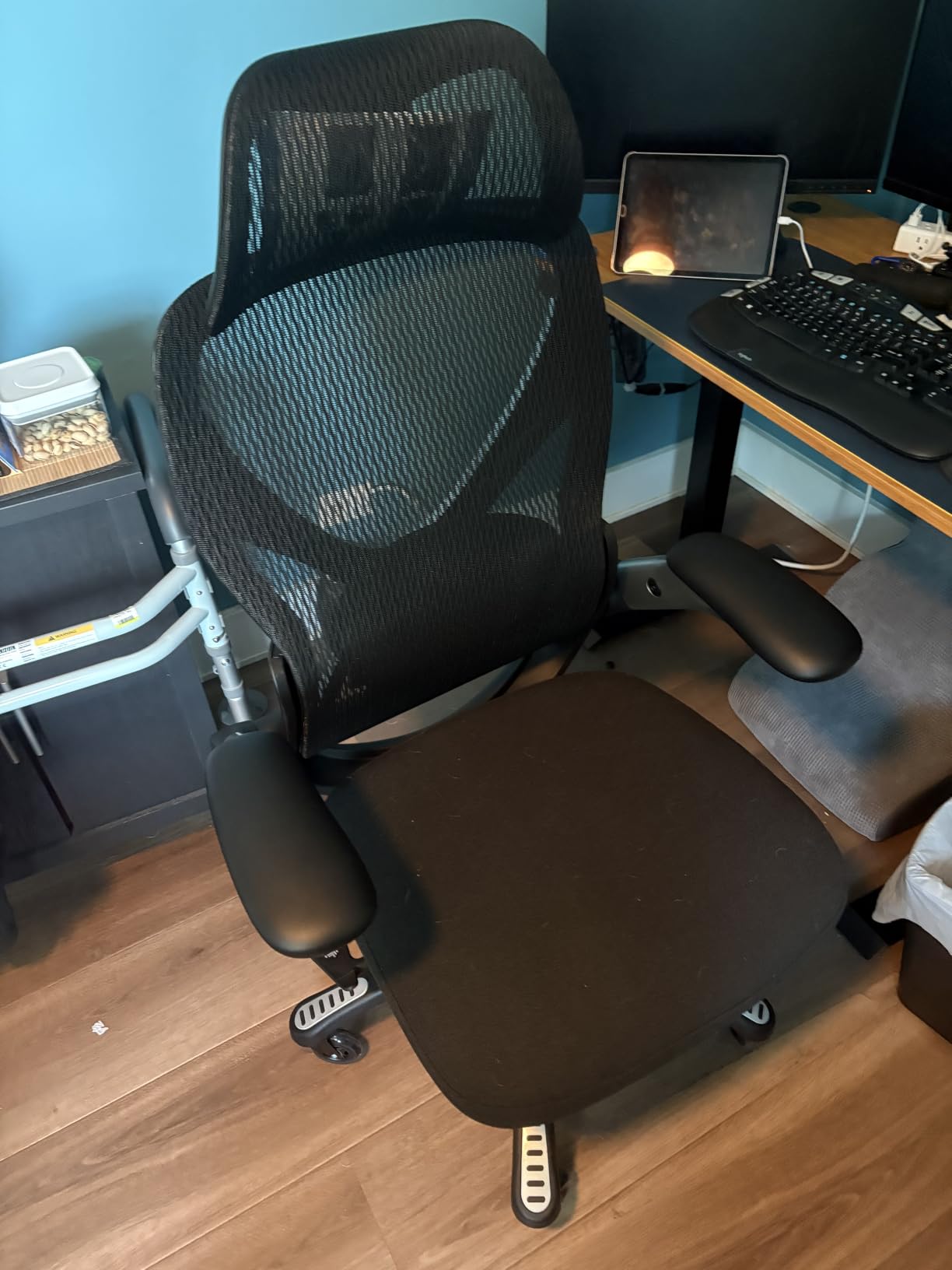
The foot rest is a genuine retractable steel frame that extends 18.1 inches, not a padded flap. It locks when extended and it does not collapse under a heavier user the way some cheaper ones do. The lumbar support adjusts 3 inches vertically and 1.6 inches horizontally, and the mesh headrest adjusts in both height and angle.
It is SGS and BIFMA tested with a 300 pound capacity on a steel base with 27.5 inch legs, and it carries a 3-year parts warranty, the longest warranty in this group by a wide margin. That matters for a recline mechanism specifically, since the mechanism is the part that wears first.
When to Choose the Mesh Recliner
Choose this if heat is your main complaint, if you want a genuine working posture at 110 degrees rather than only a nap position, or if you care about a warranty that covers the recline hardware for three years. It is also the only chair here where the armrests and lumbar are properly adjustable for a small frame.
Reviewers rate the lumbar among the most comfortable they have used, at 67 percent five-star feedback, and they call the pull-out foot rest good enough for short office naps. Support from this brand is also responsive; when casters or gas lift parts failed for owners, replacements were sent.
Where It Falls Short
The lumbar is genuinely fiddly to adjust, and several reviewers say it takes a week before you stop fiddling with it. The armrests move up, down, forward and back but cannot fold flat, so they will get in the way if you cross your legs.
If you are under about five foot four, the standard gas lift may leave your feet dangling; the manufacturer will supply a shorter strut on request, but you have to ask. The included casters are also the weakest point for heavier users, and the armrest material is plastic in a chair rated to 300 pounds.
3. HESL Massage Office Chair With Footrest: Heat and Six-Point Vibration Done Properly
- Reaches 160 degrees with a retractable foot rest
- Massage covers back lumbar and seat in 5 modes
- Heat function reaches about 120 degrees
- SGS certified gas lift rated to 400 pounds
- Linkage armrests move with the backrest
- Assembly diagram for the foot rest is confusing
- 48 pounds makes it hard to move
- Some owners report seat cover tearing after a few weeks
Let us get the honest framing out of the way first, because this category has a reputation problem. Most so-called massage office chairs are a recliner with a USB motor bolted to it, and the massage does nothing. This one is different in the only way that matters: it has a real six-point vibration array across the back, lumbar and seat, five modes, two intensities, and a heating element that reaches roughly 120 degrees.
Owners describe the combination as a genuine end-of-day feature rather than a gimmick, particularly after long typing sessions. If you have real lower back discomfort, the heat plus vibration at a 130-150 degree recline is closer to the experience people get from a massage chair than anything else on this list.
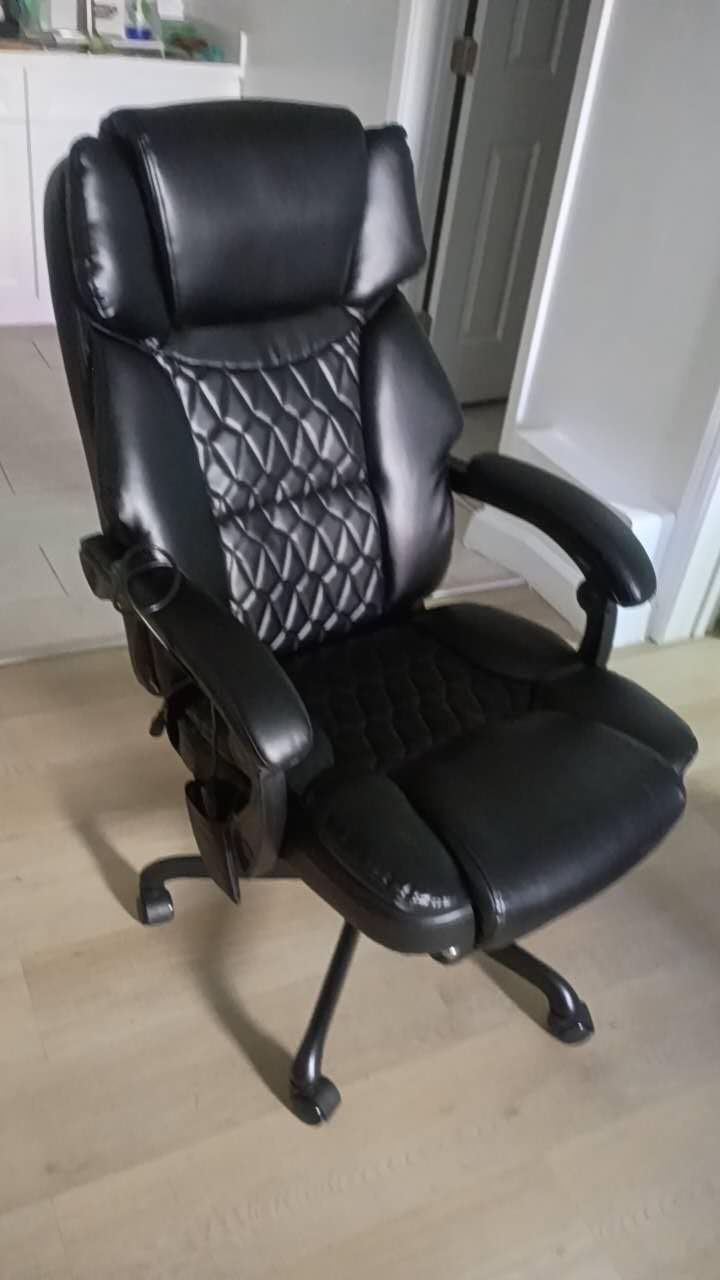
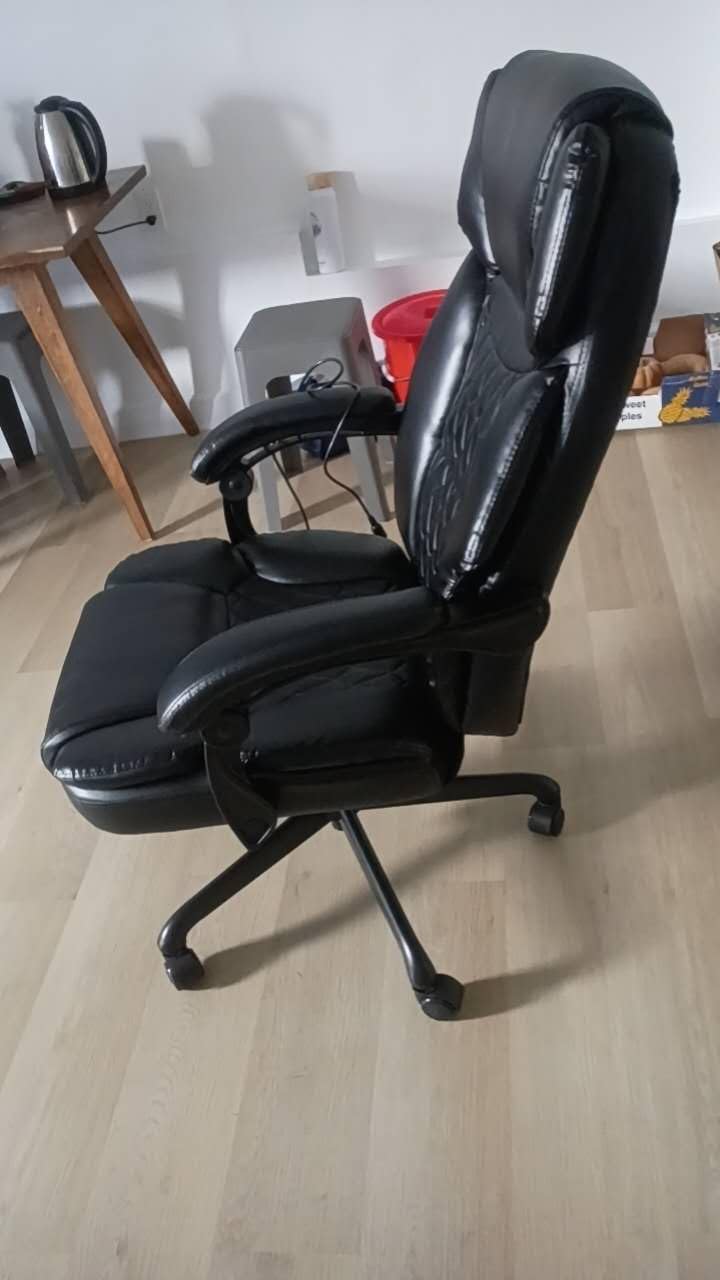
The recline runs from 90 to 160 degrees, which is one of the deepest ranges in the roundup, and the foot rest retracts out of the base. The armrests are on a linkage system that moves with the backrest, so they stay aligned with your forearms instead of floating away from you as you lean back. That detail is small and it is the difference between a recline that feels engineered and one that feels assembled.
The gas lift is SGS-certified with 3 inches of height adjustment and a 400 pound rating, and the seat is high-density foam over memory foam. Reviewers also note the return terms clearly: 30 days to return and 365 days for parts replacement, which is generous for the price band this chair sits in.
Who Should Buy the Massage Recliner
This is the pick if you finish your workday with a stiff back and you want to spend ten minutes in it before you cook dinner. The 160 degree range also makes it a legitimate nap chair, which matters if you work from home and do not want to migrate to the bedroom at lunch.
It is a strong big-and-tall option too, at a stated 400 pounds with a 21 inch seat depth and 23.6 inch backrest width. The seat interior height of 28 inches supports the reclined position better than most at this size.
Where It Falls Short
The assembly instructions are the weak point, particularly the foot rest diagram, and at 48 pounds the chair is not something you want to move between rooms often. A minority of owners report the seat cover tearing after a few weeks of heavy daily use, which is worth weighing against the upholstery on a mesh chair that will not tear.
Also be clear-eyed about what vibration massage is. It relaxes the surface muscles and it feels good; it is not a therapeutic deep-tissue device, and owners themselves describe it as a welcome bonus rather than a treatment.
4. Furmax Massage Recliner With Footrest: The Budget Route Into a 155 Degree Recline
Furmax Massage Office Chair with Foot Rest Executive Big and Tall Office Chair Ergonomic Home Office Desk Chairs, Reclining High Back Leather Chair with Lumbar Support, 400LBS (Black)
- Lowest entry cost in the roundup
- 400 lb capacity on a nylon base
- 20 spring packs soften a long sit
- PU leather resists cracking
- 20 to 25 minute assembly
- Vibration only with no heat or kneading
- Listed as armless which reduces containment
- 9 percent one-star feedback hints at durability issues
This is the cheapest chair in the roundup and the least expensive way to get a genuine 155 degree recline with a retractable foot rest and a 400 pound rating. If you are furnishing a second office or a guest room on a tight budget, the arithmetic here is hard to argue with.
The cushion construction is the part that surprised us. Twenty independent spring packs sit under the upgraded sponge, which is a real spring system rather than foam alone, and reviewers specifically mention that it softens during long sits instead of bottoming out the way cheap foam does. Assembly takes 20 to 25 minutes.
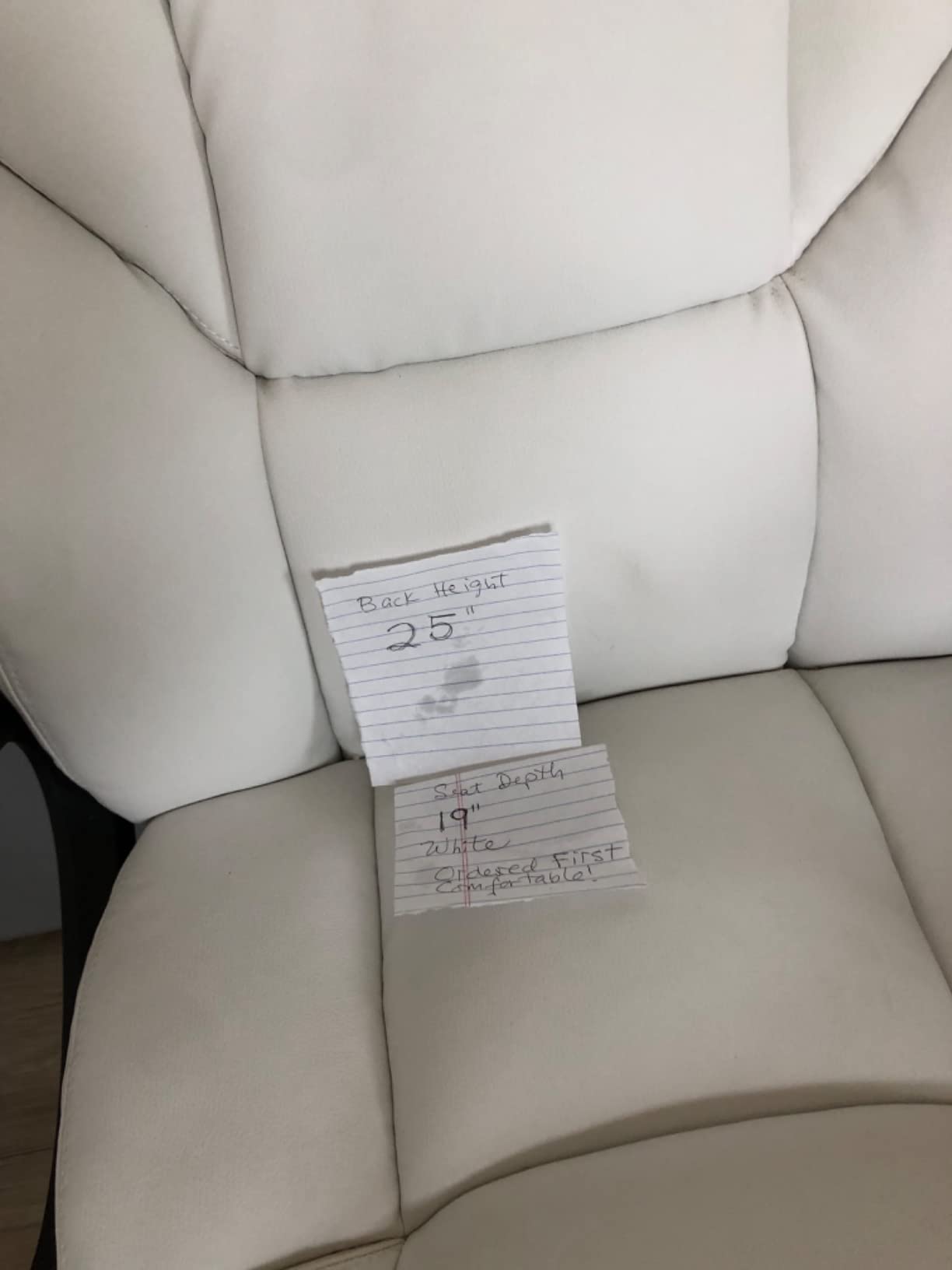
The recline runs 90 to 155 degrees with 4 inches of seat height adjustment, and the foot rest is listed among the included components so there is nothing extra to bolt on. The backrest is a solid high back at 25.6 inches wide, and the headrest follows the curve of the body as it reclines.
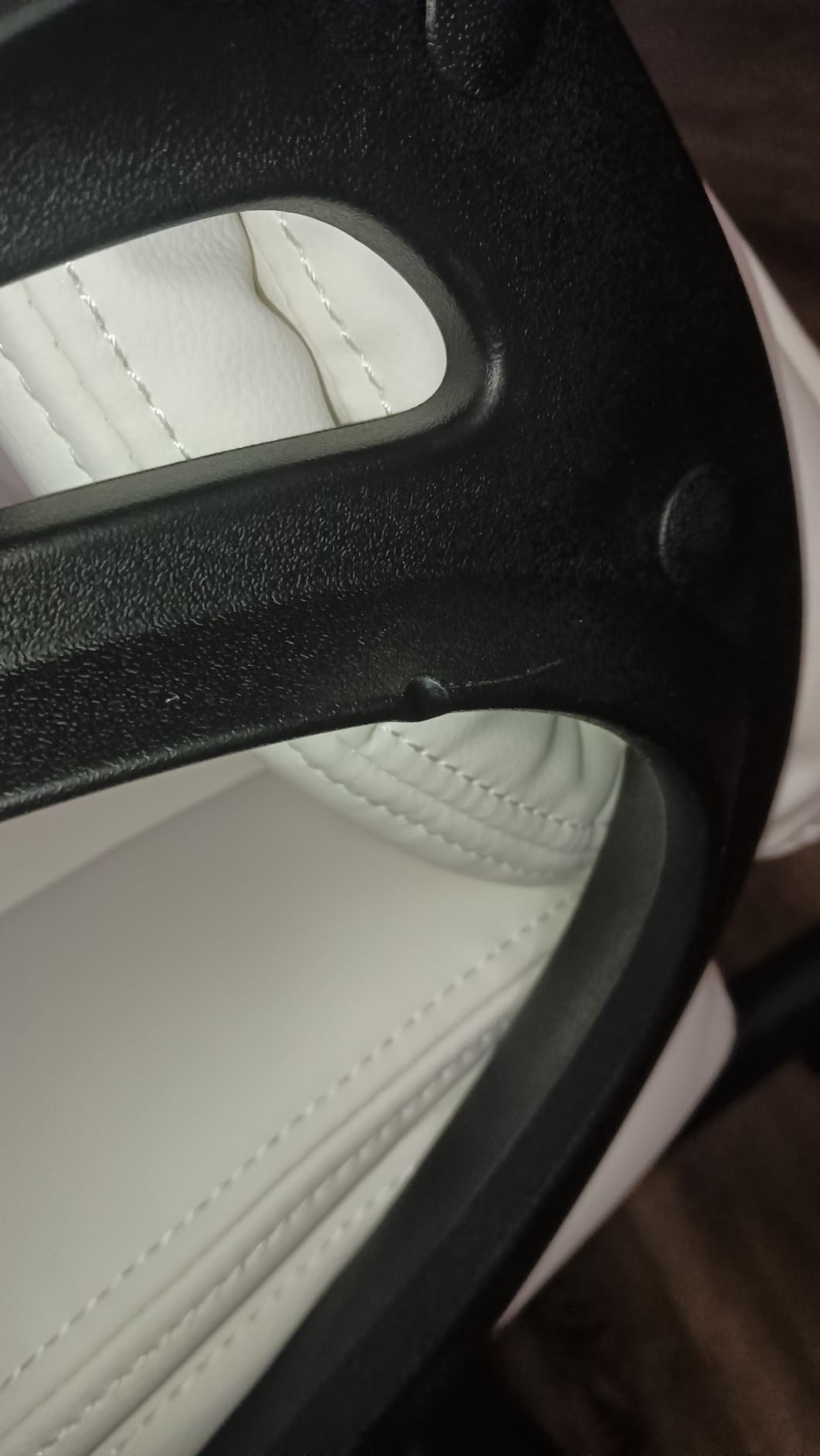
What you give up for the lower cost is heat. This chair has dual lumbar vibration points and nothing else, so the massage feature is genuinely limited, and the listing calls it massage without qualifying that. The base is heavy-duty nylon rated to 400 pounds, and the PU leather is described as scratch and crack resistant.
Where the Value Sits
Best for a first home office chair, a shared spare room, or anyone who wants to test whether a reclining chair works for them before spending on a mesh model. The 400 pound capacity at this cost is the standout figure, because most chairs in the sub-range style cap out near 250.
If you are a heavier user, the wide solid back and the spring cushion are the reason this one holds up. The recline range is deep enough for a full break without tipping once the foot rest is out.
Where It Falls Short
The massage is vibration only. No heat, no kneading, no rollers, so if that is what you are buying, this is not the chair. It is also listed as armless, which reviewers say leaves the recline feeling less contained than a chair with arms.
The durability signal is the weakest part of the equation. Nine percent of reviews are one-star, above the group average, and there is no stated warranty in the feature list, which makes this the pick I would buy with the expectation that it might need replacing in a few years.
5. Misolant Big and Tall Recliner: The Most Stable Tilt in the Group
Misolant Big and Tall Office Chair with Footrest, High Back Desk Chair with Linkage Armrest, 90-155° Recline Executive Computer Chairs with Adjustable Height for Home
- Dual lock safety mechanism holds every angle
- Reinforced alloy steel base does not wobble
- Highest rating at 4.5 with 76 percent five star
- BIFMA tested and SGS certified
- Perforated leather improves airflow over solid panels
- Armrests are fixed with no height adjustment
- Leather runs warm over long sessions
- Only three listed recline positions
Wobble is the quiet failure mode of cheap recliners. You lean back to 130 degrees, hit the lever by accident while typing, and the whole chair rocks. That does not happen here, and it is worth leading with because it is the thing owners single out most often in reviews.
The mechanism is a dual-lock safety system on a reinforced alloy steel base, which means the recline holds wherever you set it rather than creeping forward under load. At 4.5 stars with 76 percent five-star feedback, this chair has the highest rating in the roundup and the strongest five-star share among the ten.
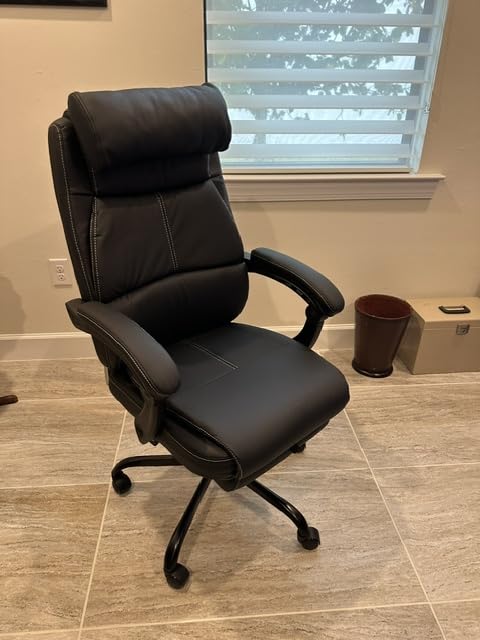
Recline runs from upright 90 degrees to 155 degrees, and the backrest is curved with integrated lumbar support rather than a separate cushion, so there is nothing to misalign. The upholstery is perforated leather, which is a middle ground between solid PU and mesh: warmer than mesh, but it moves air across the back better than a solid panel does.
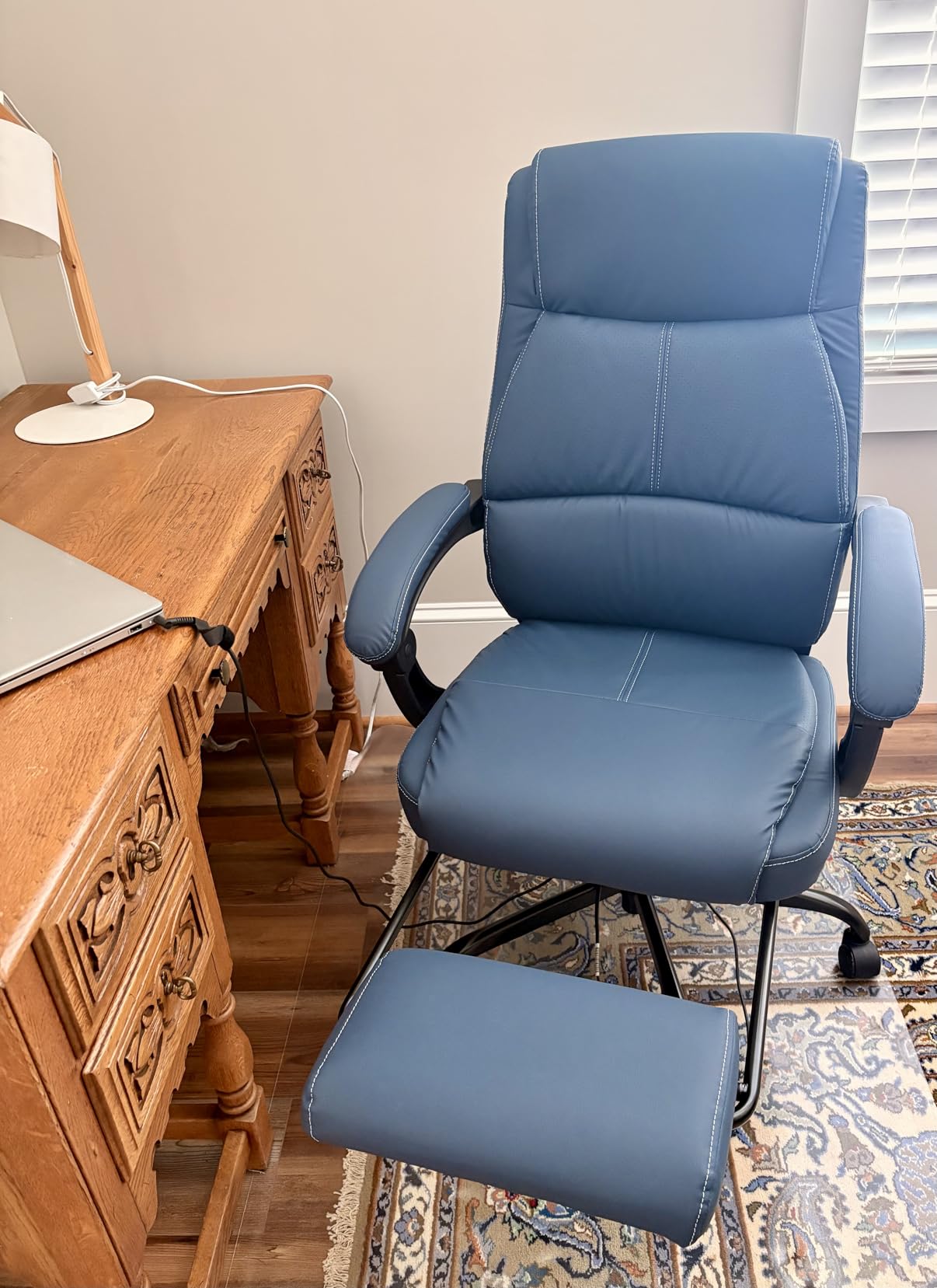
Casters are described as wear-resistant and noise-free, and they glide without scratching floors. The chair is BIFMA tested and SGS certified, which is the certification pair worth looking for on any recliner because it covers the static load and cycle testing that a recline mechanism actually fails at.
Why the Dual Lock Matters
Anyone who types heavily and leans back reflexively will appreciate that the tilt does not move when you shift your weight. For people who like to work at 110 to 130 degrees rather than sitting bolt upright, the ability to park at a precise angle and stay there is the feature that makes this chair different from the generic recliner.
It is also the pick if you want a reclining chair that still looks like an office chair. The brown leather and the curved back read as an executive chair, not a gaming rig, which matters in a home office where the chair is visible to a camera.
Where It Falls Short
The armrests are fixed. There is no height adjustment, and for a chair this wide and this tall that is a real loss, because the arm height will not match your desk if it is a standard 29 inch desk and you are tall. Confirm the arm height against your desk before ordering.
It is leather, so it runs warm, and only three recline positions are listed. It is also the heaviest-rated user pick that most people buying a big-and-tall chair do not actually need, so if you are under 200 pounds this is more chair than you require.
6. Humergo Ergonomic Mesh Recliner: The Best Cooling Option and the Highest Rated
Ergonomic Office Chair with Footrest, 90-145° Reclining Mesh Desk Chair
- Highest rated at 4.6 stars with 82 percent five star feedback
- Mesh back stays cool through long hours
- Backrest locks at any angle between 90 and 145 degrees
- 45 degree rotating height adjustable headrest
- Silent dual wheel casters work on carpet and hard floors
- Lumbar and headrest mechanisms are confusing at first
- Listed capacity varies between 350 and 400 pounds
- Mesh seat edges feel scratchy on bare legs
This chair has the highest average rating in the entire roundup at 4.6 stars, and the highest share of five-star reviews at 82 percent. We did not give it the editor’s choice because its 305 reviews are a thinner evidence base than the leader, but on consistency of owner satisfaction it is genuinely remarkable.
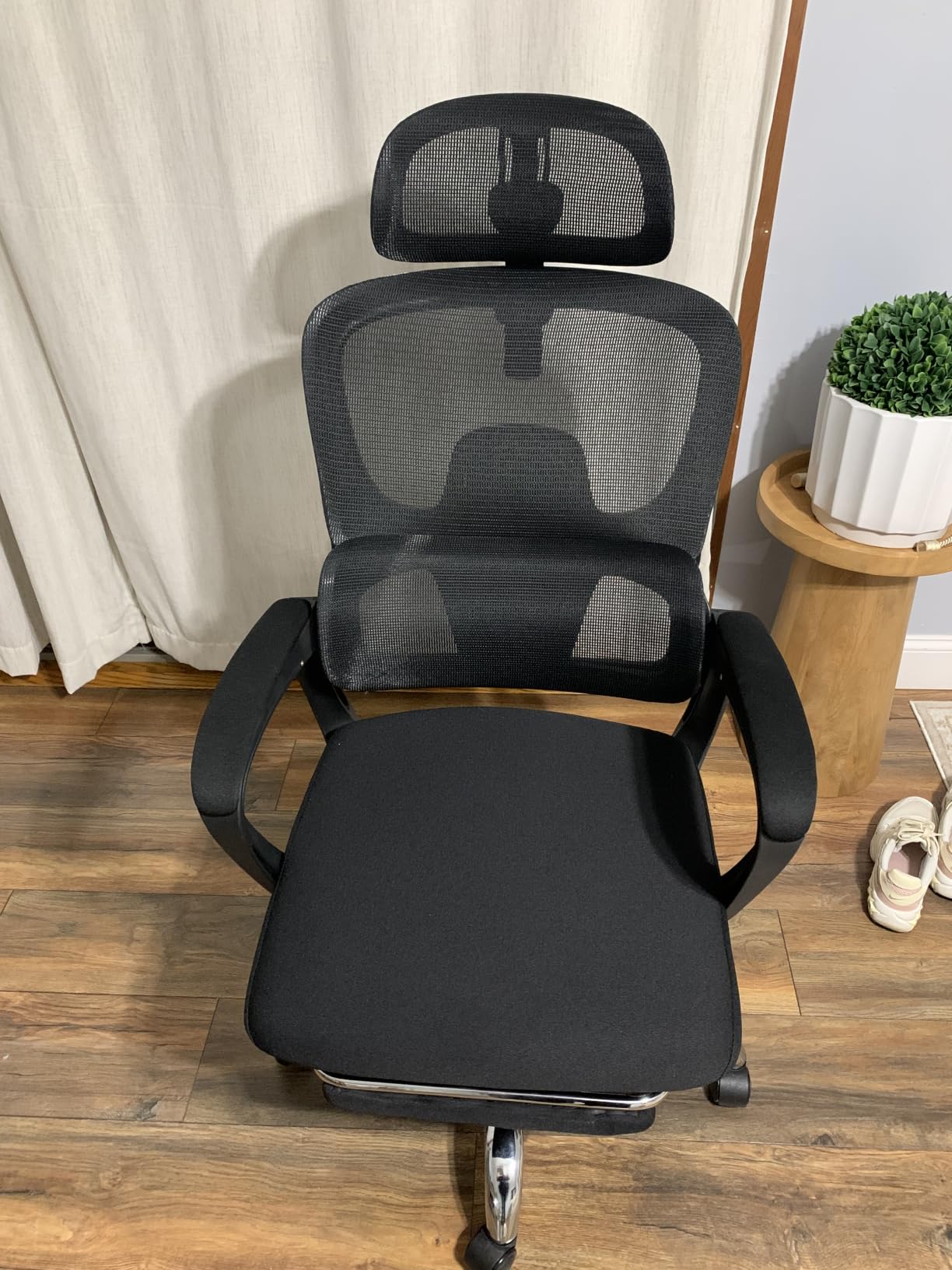
The mesh back is racing mesh over an alloy steel frame, and reviewers consistently report it staying cool through long hours in a way that leather never does. That is the single biggest practical difference between this chair and the other nine.
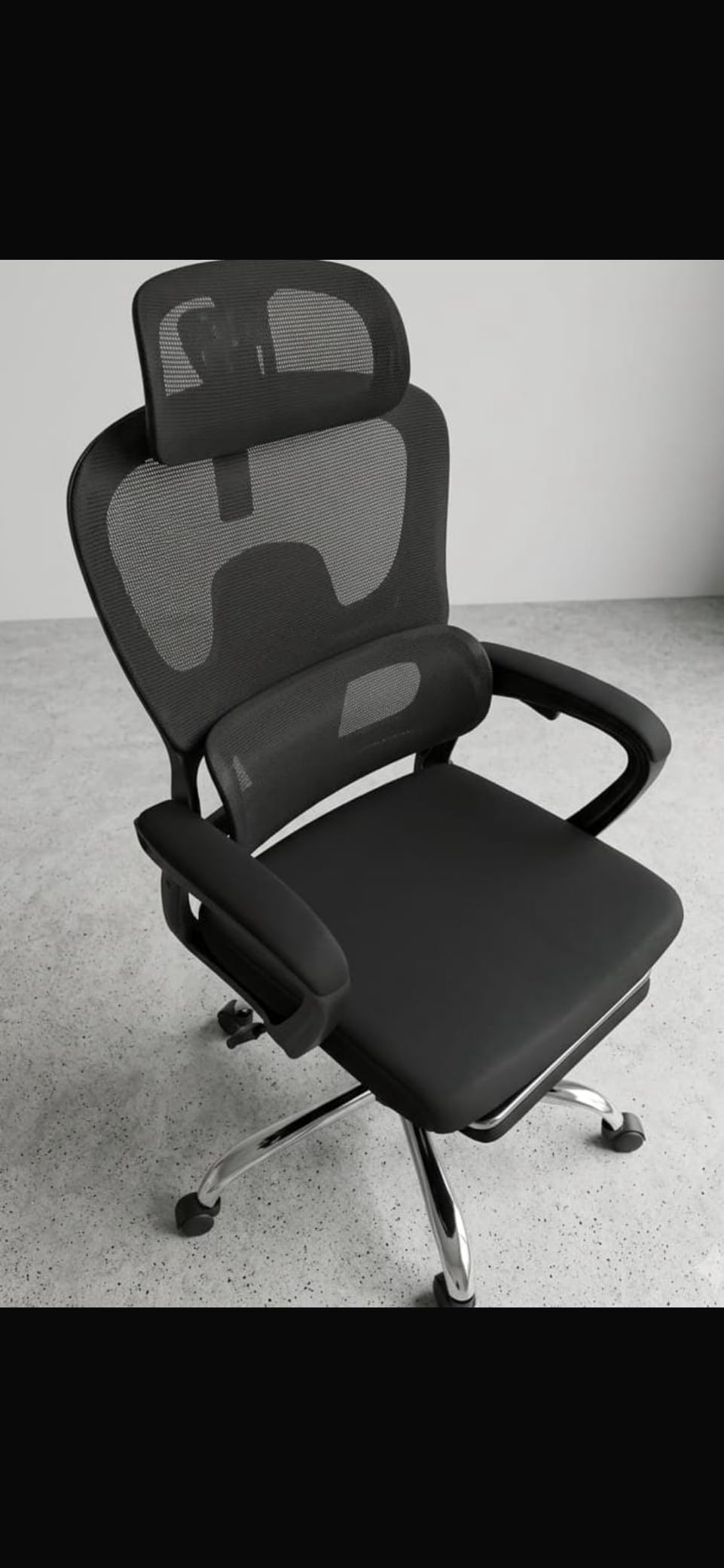
What makes it stand out from the other mesh option here is the recline lock. The backrest locks smoothly at any angle between 90 and 145 degrees rather than snapping to three fixed stops, so you can find the exact semi-reclined angle that takes pressure off your lower back and stay there for an hour.
The lumbar system is a movable crossbar with 2 cm of depth adjustment, and the headrest adjusts in height with 45 degrees of rotation, which is the answer to the neck-strain complaint that shows up repeatedly in owner feedback about reclining chairs generally. The foot rest is padded and retracts for naps, and the gas lift is SGS and BIFMA Class 4 on a reinforced nylon base.
Best Fit for Heat and Long Sessions
If you live somewhere it is hot, or you have a history of uncomfortable back from heat rather than from posture, mesh is the correct material and this chair executes it well. Owners also report that the lumbar and headrest adjustments relieved an existing backache, and that the pull-out foot rest makes short office naps possible.
Assembly is described as straightforward, and the silent dual-wheel casters work on hardwood, tile and carpet, which is more than most. If you are over 300 pounds, check the listing carefully before ordering.
Where It Falls Short
The first real problem is a data inconsistency: the highlights list a 350 pound capacity while the specifications list 400 pounds, and the feature list quotes a Class 4 gas lift at up to 365 pounds. If you are a heavier user, do not rely on the number. Contact the seller and get it in writing.
The adjustment mechanisms are also confusing on first setup, particularly the lumbar crossbar. Mesh seat edges can feel scratchy against bare legs, and at 145 degrees the recline is shallower than several leather options here, so this is a work-break chair rather than a nap chair.
7. COMHOMA Executive Recliner With Hidden Footrest: The Best Recline for a Gaming Setup
- Hidden foot rest tucks away so it never snags a desk
- 150 degree recline with 400 pound rating
- Thickly padded extra wide headrest
- Winged backrest holds you in at deep angles
- Hybrid leather and mesh panels improve airflow
- Lowest average rating in the roundup at 4.1
- Mesh panels inside the wings catch on clothing
- Assembled from the base up over about 30 minutes
This is the second COMHOMA in the roundup and it is a different animal. Where the first is a wide sofa-like executive recliner, this one is built around a winged backrest and a hidden foot rest, which is the combination you want if your chair is also your gaming chair or your reading chair.
The hidden foot rest is the detail that matters most. It retracts fully into the base, so it does not catch the underside of a desk or protrude into your legroom the way exposed footrests do. If you type at a desk with a modesty panel or a drawer unit, an exposed footrest is a constant annoyance; this one disappears.
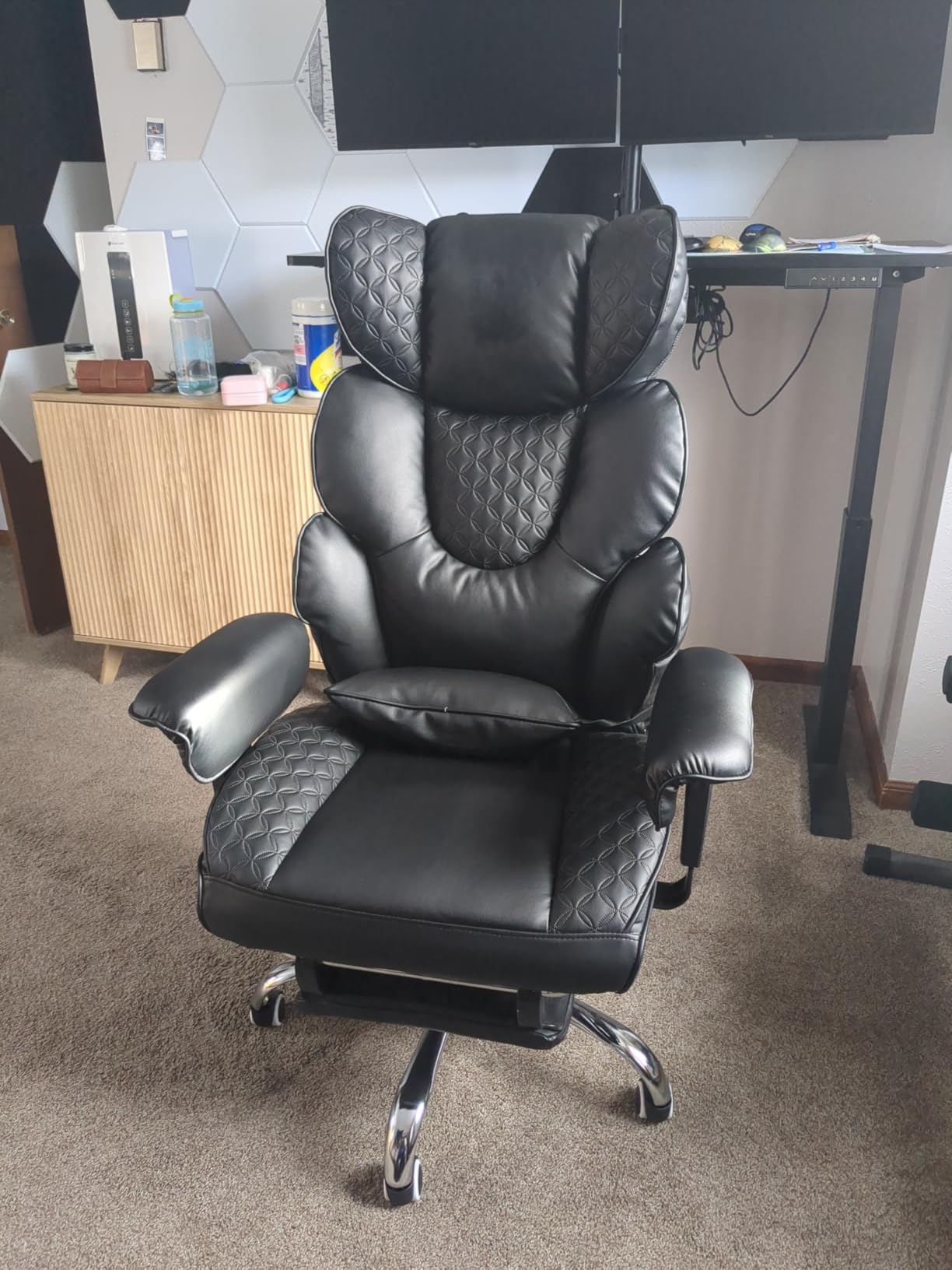
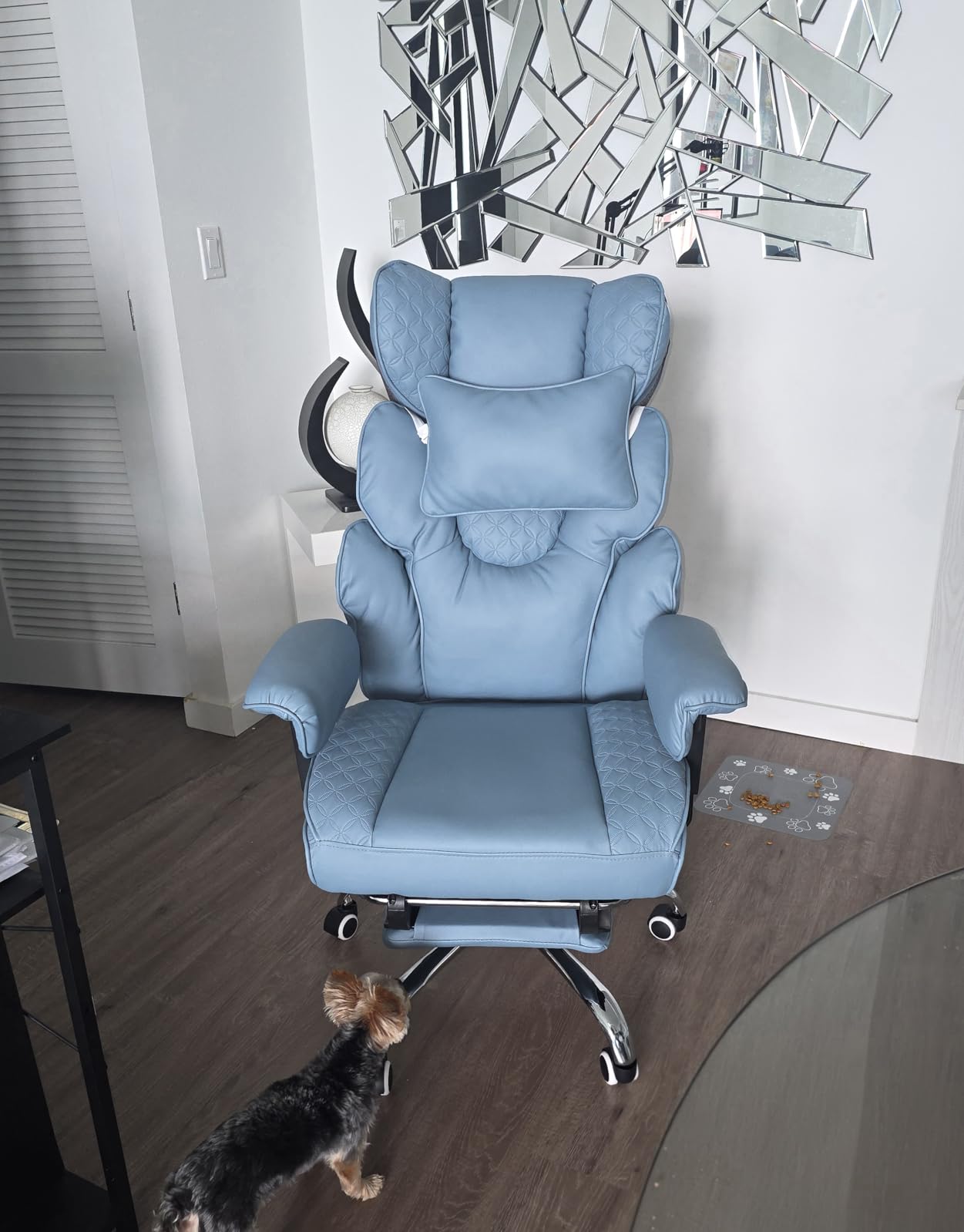
Recline runs to 150 degrees, and the winged backrest with an extra wide padded headrest keeps your shoulders contained at that angle instead of letting you slide sideways. The lumbar is a built-in pocket spring system that adapts to movement, and the seat uses multi-layer high-density foam designed not to bottom out.
The frame is heavy-duty metal with an SGS-certified Class 4 gas lift and a reinforced five-star base, rated to 400 pounds. Upholstery is diamond-stitched PU leather with breathable mesh panels set into the wings, and there is a US-based support team, which is unusual in this price band.
Where the Design Choice Pays Off
Pick this if you split your day between work and something else, or if your desk has limited clearance and an exposed footrest would be in the way. The 150 degree recline combined with the padded headrest is a good setup for reading or for a long evening session.
For big users, the 400 pound rating and the wide padded headrest are both meaningful. The mesh panels in the wings add airflow over the shoulders, which is a partial answer to the leather heat problem.
Where It Falls Short
This is the lowest-rated chair in the roundup at 4.1 stars across 265 reviews, with 64 percent five-star feedback. That does not make it a bad chair, but it does make it the pick with the least community consensus behind it.
The mesh panels inside the wings catch on clothing edges, which owners mention as a mixed experience. It is foam rather than spring construction, so it will feel different over years of use than the spring-based frames, and assembly is roughly 30 minutes from the base up.
8. GYI 160 Reclining Office Chair With Footrest: The Deepest Nap Angle With the Widest Seat
GYI 160 Reclining Office Chair with Footrest, Big & Tall Desk Chair, Brown
- Reaches 160 degrees close to lying flat
- Extra wide seat allows cross legged sitting
- High back gives solid long hour support
- Padded armrests and floor friendly wheels
- Protective pads between parts and a cover hiding rear hardware
- Heaviest chair in the roundup at 56.5 pounds
- Shallow forward tilting seat that some find pushy
- Levers sit far under the seat and are hard to reach
- Tips slightly at full recline until the foot rest is out
At 160 degrees this is the deepest recline that still functions as an office chair, and it is the chair to buy if napping at lunch is a genuine part of your working day. At 135 degrees you rest; at 160 degrees with the foot rest extended you are close to flat, and for someone working from home that is a genuinely different capability.
The seat is extra wide at 25.6 by 31.5 inches overall, with a 19.7 inch seat depth and a 19.3 inch seat height. Owners like that it accommodates cross-legged sitting, which is a flexibility benefit for anyone who changes position constantly through the day.
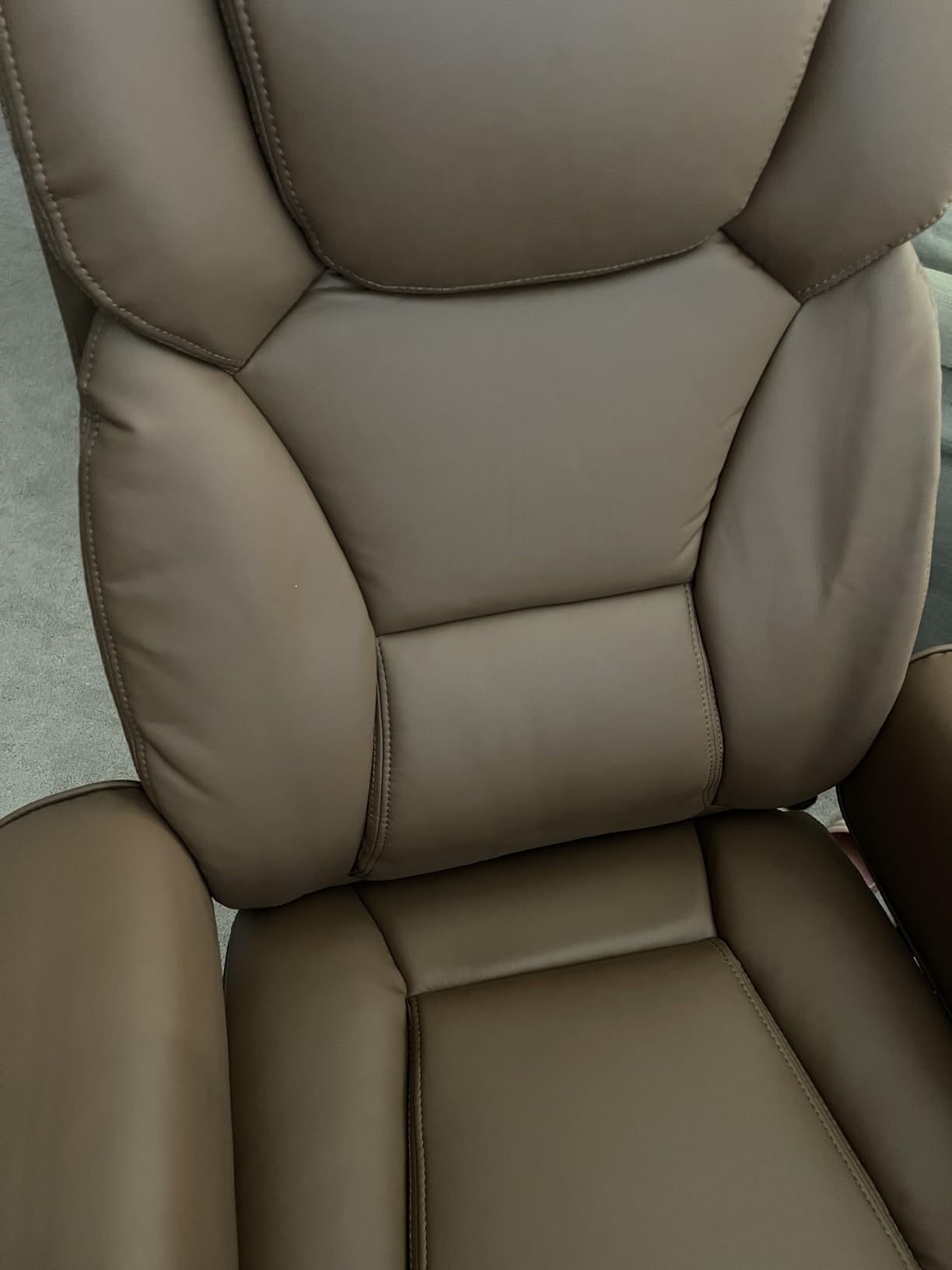
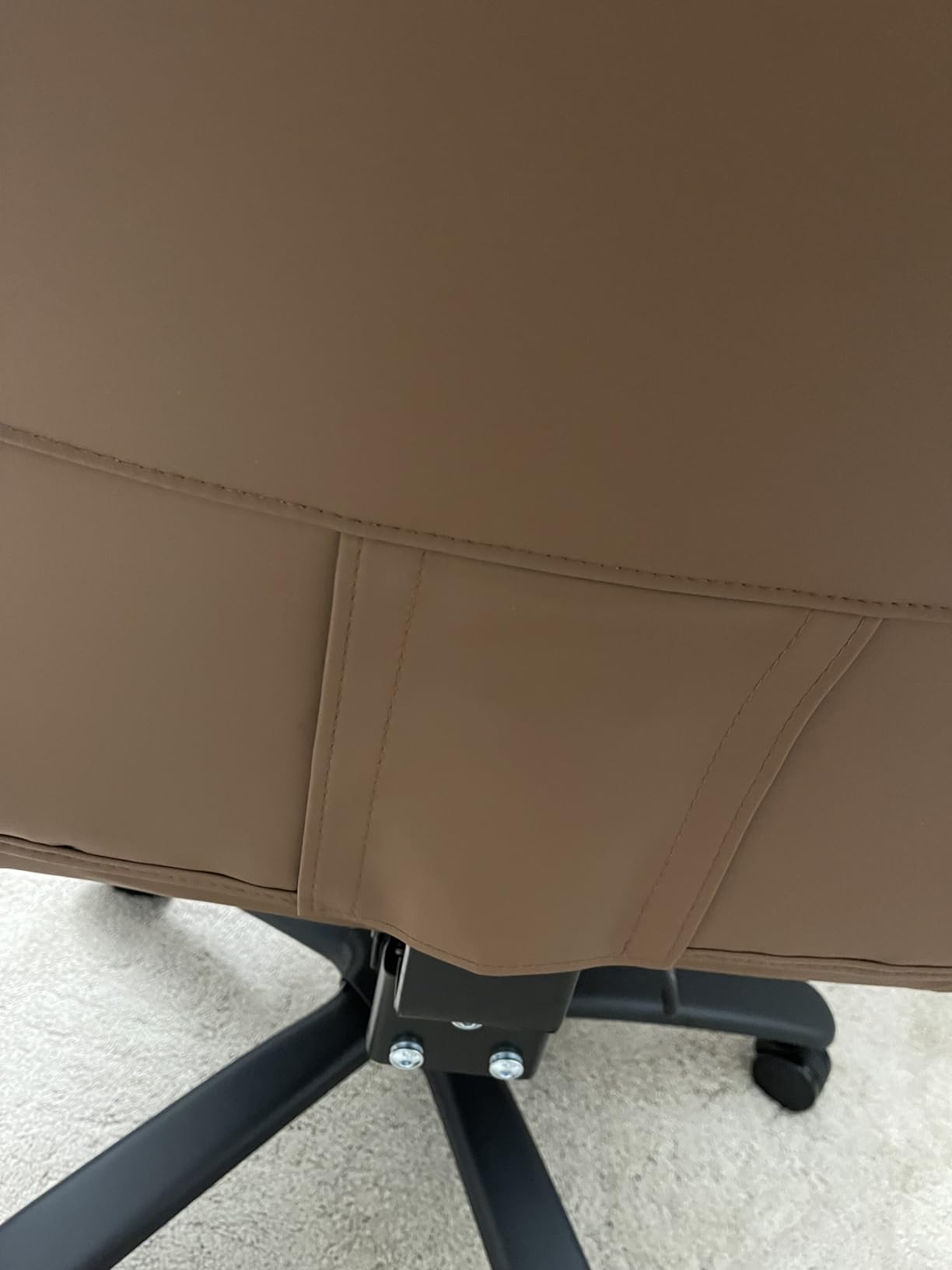
The build is sturdy: 400 pound capacity, a high back with lumbar support, padded track-style armrests, and smooth-rolling wheels that reviewers note do not scratch floors. Packaging detail is unusually good, with protective pads between components and a cover that hides the rear hardware so the chair looks cleaner than most leather recliners.
The brown faux leather is described as looking premium in owner feedback, which matters more than it sounds, because a chair you look at on camera for eight hours a day should not read as furniture-store bargain.
Best for Reclining to Near-Flat
Choose this if you want a single chair for desk work and short naps, or if you read and watch video at your desk rather than on a sofa. The high back and the extra-wide seat are what make long sessions viable, and 160 degrees is the only real nap-grade recline in this roundup.
For users over 250 pounds, the 400 pound rating and the wide frame are appropriate, and the padded arms give you somewhere to put your forearms at deep angles where other chairs leave you unsupported.
Where It Falls Short
At 56.5 pounds this is the heaviest chair here, and it is the second heaviest in the set overall, which matters if you work in a small room and need to move the chair. The recline and height levers are far underneath the seat, a recurring complaint, so expect to reach down and feel for them.
The seat is shallower than expected for some users and can feel like it tilts forward, and the chair feels tippy at full recline until the foot rest is extended. One reviewer reports a bent arm frame after about a year, and assembly can take two hours for two people.
9. WAILOR 400 Pound Recliner With Foot Rest: Heavy Capacity on a Reinforced Frame
- SGS certified gas cylinder rated to 400 pounds
- Reinforced metal and wood frame resists flexing
- Spring lumbar cushion for lower back relief
- Double padded seat resists compression
- 15 to 30 minute assembly with a 1 year parts warranty
- Second heaviest in the roundup at 60 pounds
- Only two recline positions
- PU leather warms up in summer
- Wood frame element adds weight versus all metal
Most big-and-tall chairs hit 400 pounds on a marketing page. This one hits 400 on an SGS-certified gas cylinder and a reinforced frame, which is a more meaningful claim because certification means the load was tested rather than asserted.
The frame is a combination of metal and wood, and that is unusual. Wood adds flex resistance at the arm and back joints, which is exactly where the frames of cheaper big chairs bend. One owner reports a bent arm frame after a year on a different chair in this category, so the construction choice here is aimed directly at that failure.
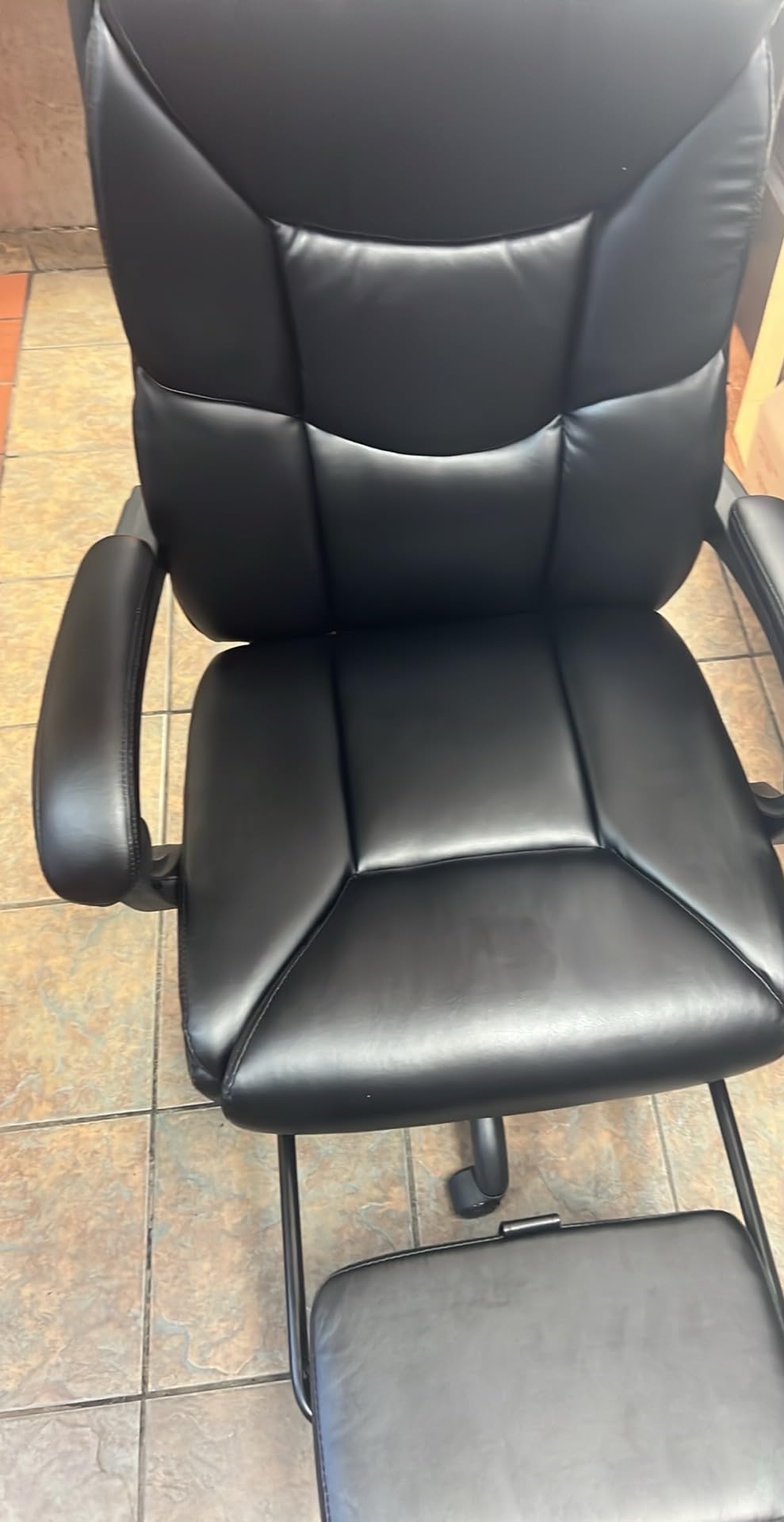
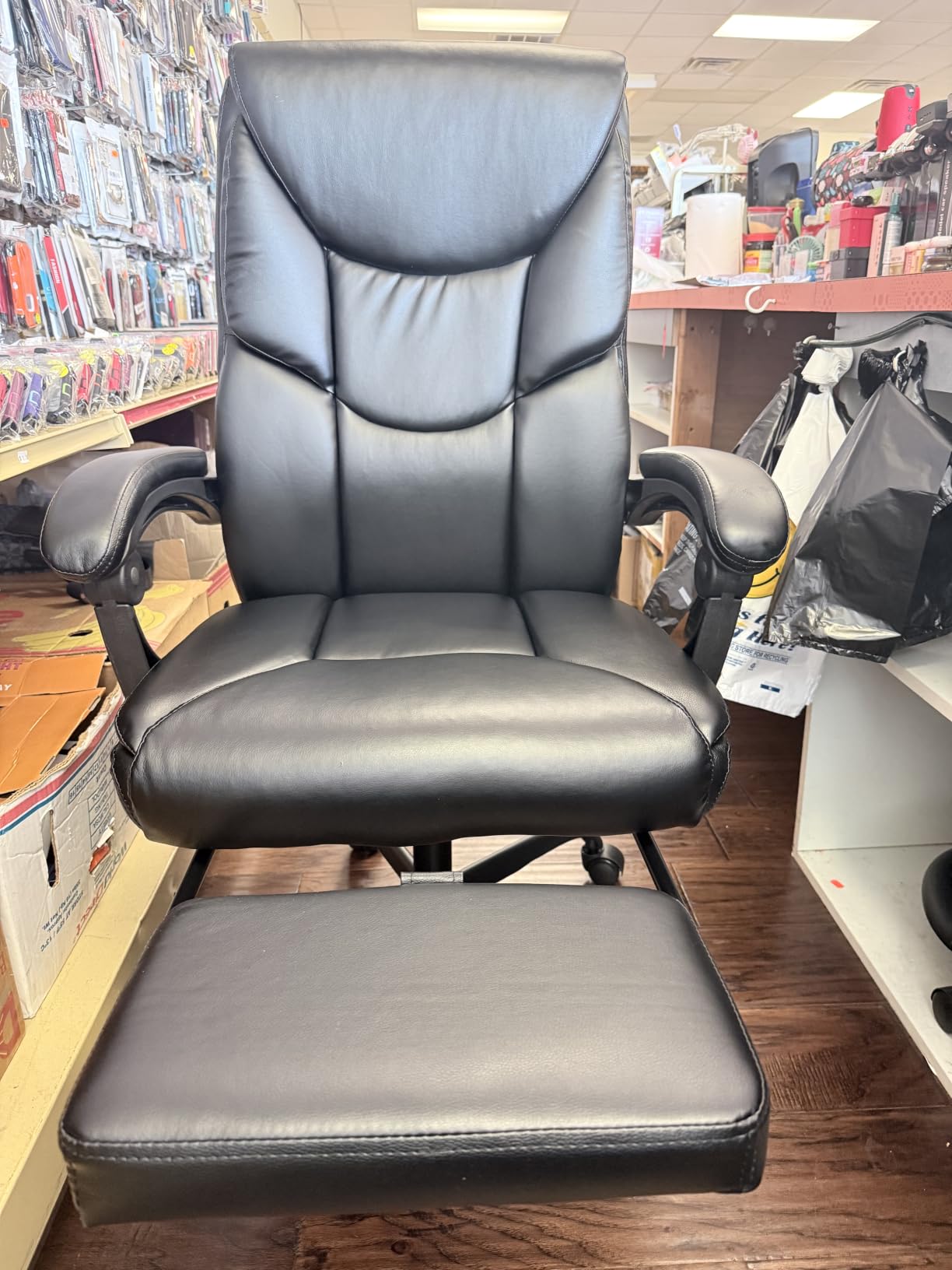
The seat is double-padded in PU leather and the lumbar is a spring cushion rather than a foam block, so both the seat and the lower back have some give. Recline, 360-degree swivel, and height adjustment are all standard, and the foot rest retracts so you can move from working to resting without standing up.
Assembly takes 15 to 30 minutes, the warranty is 1 year with free part replacement, and the chair rolls on five caster wheels. Reviewers rate the double-padded seat, spring lumbar and foot rest as the three features that make long workdays manageable.
Best for Users Over 300 Pounds
If you are above 300 pounds, this is the one to look at first, because the capacity claim is certified and the frame is built for the load. The 20.86 inch seat depth and 22 inch backrest width also give you real room, and the 28 inch overall width means it will not fit in a narrow home office alcove.
For anyone who wants one chair to do work and rest, the retractable foot rest plus recline covers both without a second purchase. The 1-year warranty with free parts is thinner than the mesh chair here, but the free replacement commitment on components is worth having.
Where It Falls Short
At 60 pounds this is the heaviest chair in the roundup, and the wood frame is part of that. If you move between rooms, plan the move rather than the chair. Only two recline positions are listed, which is the shallowest control in the set.
PU leather warms up during long summer sessions, and the recline range is not specified in degrees in the listing, so treat it as a moderate recliner rather than a deep one. If you want deep recline and a light frame, this is not it.
10. Linting Retro Leather Recliner: The Deepest Recline on the Widest Backrest
linting 400lb Leather Reclining Office Desk Chair with Foot Leg Rest Brown
- Near flat 160 degree recline
- Oversized 30.3 inch backrest suits larger frames
- Reinforced base rated over 400 pounds
- Diamond stitch pattern improves airflow
- Assembles in about 25 minutes with an illustrated manual
- Smallest review base at just 50 ratings
- Heaviest frames here at 55 pounds
- Only three recline positions
- Faux leather rather than genuine leather
Finishing with the chair that has the smallest evidence base in the roundup, and the widest back. At 30.3 inches the backrest is by a wide margin the broadest here, built explicitly for larger frames and taller people who feel compressed on a standard executive chair.
It also shares the top rating at 4.6 stars, but that comes from 50 reviews rather than 305 on the similarly rated Humergo, so treat the number as encouraging rather than proven. We include it because the geometry is genuinely different from everything else on this list, not because the track record is strong.
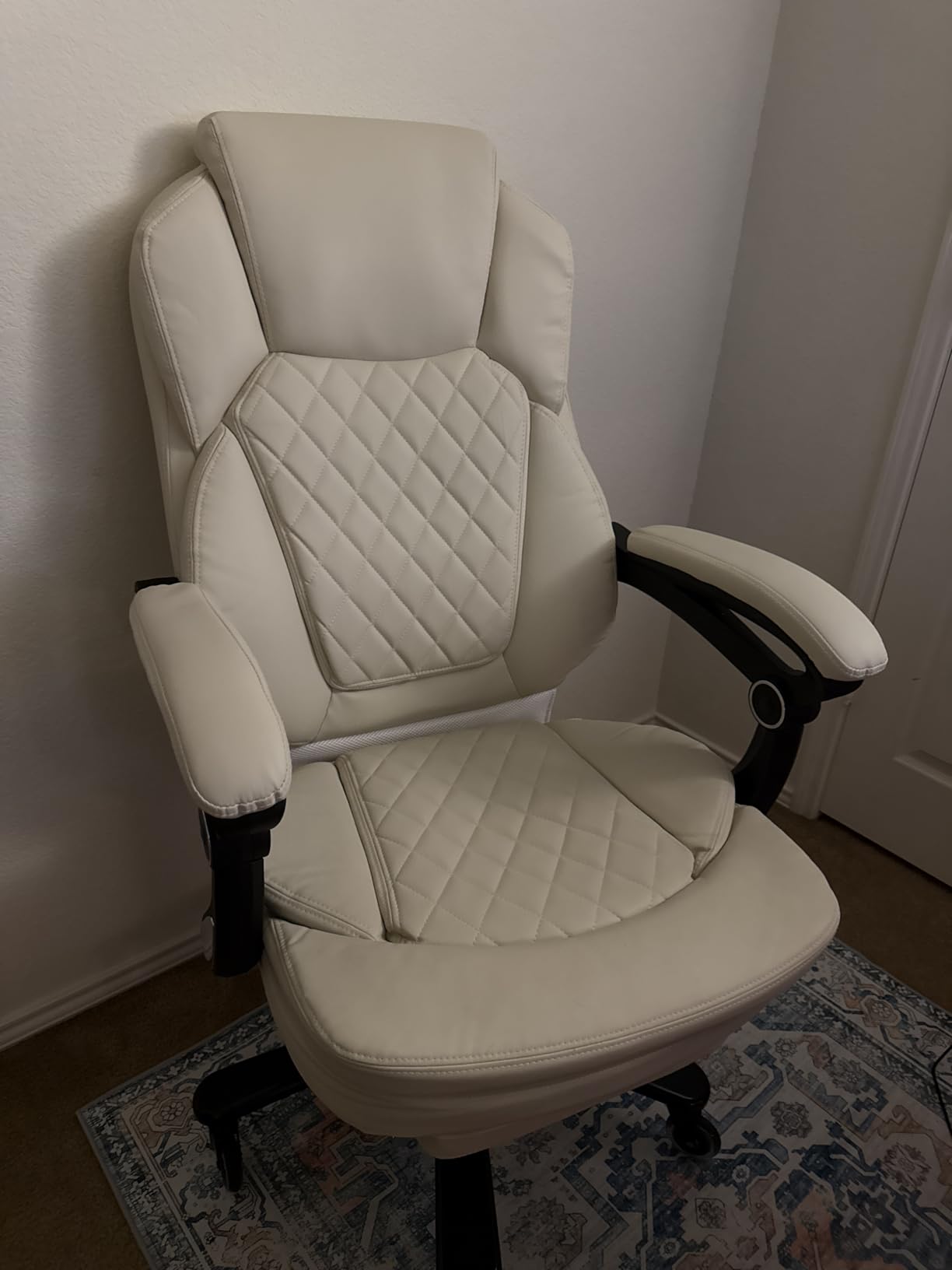
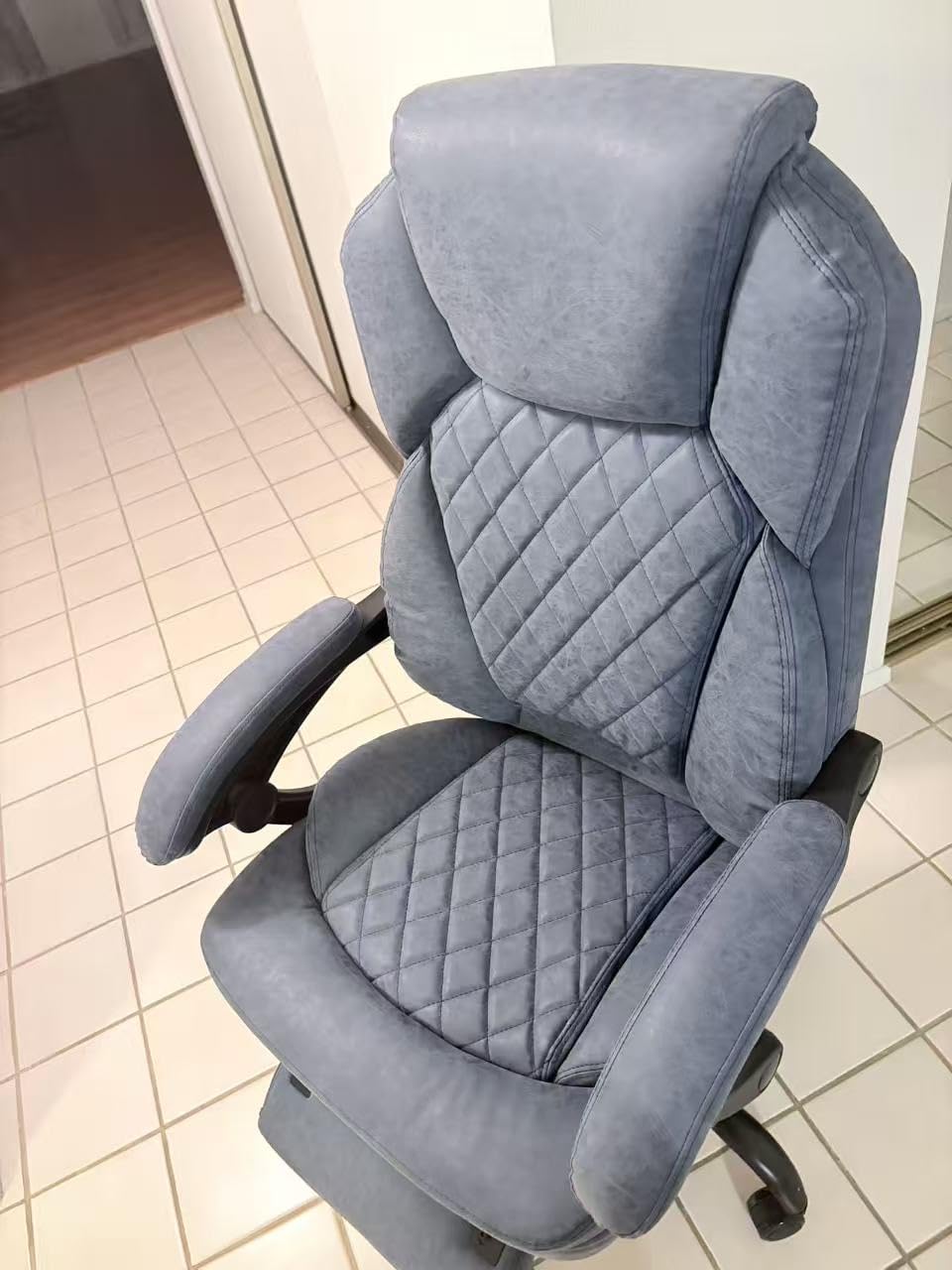
The recline runs 90 to 160 degrees, one of the two deepest ranges in the roundup, with a retractable foot leg rest. Seat height adjusts from 19.3 to 22 inches, which is a useful range to check against your desk, and the diamond-stitch pattern on both backrest and seat is a styling detail that also promotes airflow across the surface.
The base is a reinforced upgraded design rated over 400 pounds on a swivel base with casters. Assembly takes about 25 minutes with a clear illustrated manual, and the 1-year warranty covers defects, missing parts and transit damage.
When the Wide Back Matters
Choose this if you are tall or broad-shouldered and standard executive chairs feel cramped, or if you want a mid-century diamond-stitch look that reads well in a home office with wood furniture. The adjustable seat height range of 19.3 to 22 inches is the tallest in the roundup, so it suits higher desks better than shorter ones.
For a near-flat rest position, the 160 degree range is competitive with the HESL and the GYI. The casters and swivel base make it easy to turn and talk to someone in the room.
Where It Falls Short
Fifty reviews is a small base, and it means long-term durability is far less proven than on the leaders here. At 55 pounds it is also among the heaviest frames in this roundup, which is the trade-off for a backrest this wide.
Only three recline positions are listed despite the 160 degree maximum, so you get a deep range with coarse control. And it is faux leather, which means the surface will behave like PU leather regardless of how it looks.
Recline Angle Tiers: What Each Degree Range Actually Does?
Recline angle is the number that gets quoted in every listing and understood by almost nobody. Here is what the ranges mean in practice, and which one you want depends entirely on what you plan to do at that angle.
The 90-90-90 rule is the starting point. Hips, knees and ankles all at 90 degrees is the reference posture for upright desk work, and the reason your chair has a gas lift. Once the backrest moves past 90 degrees, your hip angle opens and the load shifts off the lumbar discs onto the backrest, which is where the relief comes from.
For most home offices, 135 degrees is the target. It is deep enough that your hips open meaningfully and your feet can stay on the floor or on the footrest, and shallow enough that your head stays over your shoulders. Forum discussion on this topic keeps converging on the same number, with owners describing 135 degrees as the point where they can still think clearly rather than just zone out.
Below 120 degrees you are sitting at a slight lean, which is a working posture. Between 145 and 160 degrees you are resting and reading. At 175 to 180 degrees you are lying down, and at that point the chair has stopped being an office chair.
One caveat on the deepest angles. When you recline past about 130 degrees without a footrest, your legs hang and pressure builds behind your thighs, which is where the neck and hip complaints people associate with reclining chairs usually start. A retractable footrest is what makes the deepest angles tolerable.
How to Choose a Reclining Office Chair: 7 Things That Matter
1. Pick your recline range first. 135 degrees covers work-and-rest use. 145 to 155 degrees adds real break value. Above 160 degrees you are buying a nap chair that also happens to have a desk function. Match the range to how much of your day you intend to spend away from the keyboard.
2. Decide on the footrest, and check whether it blocks the recline. A retractable steel footrest that locks, like the one on the GABRYLLY, is the version that works. A padded flap that folds out of the seat cushion will not hold your weight at 150 degrees. And a footrest that protrudes when retracted will hit your desk. The COMHOMA executive chair solves this by hiding it entirely.
3. Choose your lumbar type. Three options appear in this roundup. Fixed integrated lumbar is simplest and cheapest. Adjustable lumbar, which moves vertically or in depth, lets you set the support once and stop thinking about it. Dynamic or spring-based lumbar follows your movement, which is what the pocket spring systems in both COMHOMA chairs and the WAILOR are doing.
4. Check weight capacity against your actual weight, with margin. Every chair here claims 400 pounds, but one of them lists 350 in its highlights and 400 in its specifications and a third quotes a 365 pound gas lift rating. If you are over 300 pounds, treat the capacity number as unverified until the seller confirms it. A chair rated well above your weight also means a stronger gas lift and a tighter mechanism.
5. Measure seat height and depth against your body. This is the number one source of returns in this category. You need feet flat on the floor at the lowest setting to sit in a proper 90-90-90 position. Seat depth should leave roughly two to three fingers between the back of your knee and the front edge. A 20 inch seat on a 5 foot 4 person means your feet dangle; a 21 inch seat on a 6 foot 2 person means you cannot reach the backrest properly.
6. Pick the material by climate. Mesh breathes, which is why the GABRYLLY and Humergo are the right answer for a hot office or a warm summer. PU and faux leather feel better against bare skin in a cool room and look more professional on camera, but they run warm after the first hour. Perforated leather, as on the Misolant, is a middle option.
7. Check the warranty on the recline mechanism specifically. The mechanism is the first thing to fail, and a 1-year warranty that covers free parts is a better signal than a 2-year warranty that does not. The GABRYLLY is the outlier here with 3 years on parts. Look for SGS and BIFMA certification while you are at it, because certification means the recline was cycle-tested rather than just load-tested.
A word on the categories people confuse. A task chair is any chair designed for desk work, adjustable and upright. An ergonomic chair is a task chair with research-backed adjustability. An executive recliner is a leather-look chair that leans back for style. A gaming recliner is a recliner with racing aesthetics and lumbar branding. All four appear in search results for this query and only the first two are what you want.
Who Should Skip a Reclining Office Chair
If you type upright for six straight hours with no intention of leaning back, a reclining chair will not help you. The recline range is unused capability, and you would be paying for a mechanism and a footrest you never touch while giving up the firmer seat and simpler adjustment of a straight task chair.
Watch the clearance. A chair that reaches 150 to 160 degrees with a footrest out needs roughly three feet behind the desk. In a small apartment office where the chair backs onto a wall ten inches behind the seat, the deepest reclines simply cannot be used.
Skip the massage recliners if your pain is structural rather than muscular. Vibration and heat relax surface tissue; they do not address a disc or a nerve. If you have ongoing back or hip pain, see a clinician before buying a chair on the promise of treatment.
And if you are a short user, be careful. Many of these chairs ship with a gas lift sized for a 5 foot 10 person. Check the listed seat height range before you order, and request a shorter lift if the minimum leaves your feet off the floor.
Frequently Asked Questions
How many degrees should an office chair recline?
Office chairs typically recline between 110 and 180 degrees. For working use, 110 to 120 degrees keeps you in a productive lean. Around 135 degrees is the ergonomic sweet spot for reading, thinking and short breaks, because your hips open past 90 degrees while your head stays over your shoulders. Beyond 155 degrees you are resting rather than working, and 175 to 180 degrees is a lounge position.
What is the best recliner chair for work from home?
The COMHOMA Big and Tall Recliner is the most complete pick for most home offices, combining a 150 degree recline, an integrated foot rest, a pocket spring lumbar system and a stated 400 pound capacity across more than 4000 reviews. If you run hot, the GABRYLLY mesh recliner is cooler and lockable at 90, 110 and 135 degrees with a 3-year parts warranty.
Are reclining office chairs good for typing?
Reclining office chairs are good for breaks, thinking and reading, but they are not the right tool for sustained typing. Typing works best upright, with hips, knees and ankles near 90 degrees. The value of a reclining chair is that it lets you change position without standing, which reduces sustained lumbar compression across a long workday. Look for a chair that returns upright in one motion with a working tilt lock.
What is the 90-90-90 rule in ergonomics?
The 90-90-90 rule says your hips, knees and ankles should each be at approximately 90 degrees when seated at a desk, with your back supported and shoulders relaxed. It is the reference upright posture for desk work. Reclining office chairs are built around it: the gas lift gets you to 90 degrees at the hips, and the recline opens the hip angle past 90 to relieve the lower back during breaks.
Do you need a footrest on a reclining office chair?
If you plan to recline past about 130 degrees, you do. Without a footrest your legs hang and pressure builds behind your thighs, which is where much of the neck and hip complaint about reclining chairs comes from. Look for a retractable steel footrest that locks when extended, and check that it does not protrude into your legroom or block the recline from reaching full extension.
What recline angle is best for lower back pain?
Around 135 degrees is the most commonly recommended angle for lower back comfort, because it opens the hip angle enough to reduce lumbar compression while keeping your head over your shoulders and your feet supported. Deeper angles of 145 to 160 degrees feel better for resting but are harder to hold in a supported position without a footrest. Persistent pain is a medical question, not a chair question, so speak to a clinician first.
Final Verdict: Which Reclining Office Chair Should You Buy?
Start with these three and you will not go far wrong. If you want one chair that handles a full workday and real breaks without any compromises, take the COMHOMA Big and Tall Recliner. If you are hot, active, or care more about the working posture than the nap posture, take the GABRYLLY mesh chair with its 3-year parts warranty. If you finish the day stiff and want heat and six-point vibration at a 160 degree angle, take the HESL.
Everything else in the roundup earns its place for a specific reason: the Furmax for budget, the Misolant for a tilt that will not move, the Humergo for the highest rating and the coolest mesh, the second COMHOMA for a hidden footrest in a tight desk setup, the GYI for near-flat napping, the WAILOR for certified capacity above 300 pounds, and the Linting for the widest back available.
Whichever you choose, measure your desk clearance and your seat height before you order, because those two numbers cause nearly all of the disappointment in this category. And once it is in place, set the recline lock at 135 degrees and leave it there for your breaks. That is where the benefit is, and it is worth more than the extra 25 degrees every chair on this list can claim.