
If you want one answer, take the Perception Flash 9.5 as the best all-round ocean fishing kayak in this group. At 41 lb it is the easiest hull here to carry across a beach solo, it holds up to 325 lb, and it carries rod holders and rear storage for coastal bays and protected surf lines. For hands-free positioning, the Reel Yaks Raptor 9.5 is the pick, since it is the only pedal-drive boat we tested and it holds a 380 lb rating.
There is a caveat worth stating up front. Every kayak on this list is a coastal and nearshore angling boat, meaning one built for bays, sounds, estuaries, protected inlets and surf launches on a manageable day. None of them is a bluewater sea kayak built to paddle ten miles offshore in a two-foot swell. Treat the distance and wave limits in this guide as the real constraint on how far you go, not the marketing language on the hull.
We spent 2026 season comparing these nine hulls on the things that actually decide whether a trip ends well: carry weight, hull behavior in chop and wake, tracking, storage that survives spray, and the hardware that corrodes first. We also read what owners say after a season or two in salt water rather than after an afternoon on a calm lake. If you are still deciding between a boat and a small power skiff for spotting fish, our guide to drones for fishing covers the aerial side of the same trip.
One thing the fishing-kayak lists we studied consistently miss is maintenance. Forum threads on r/kayakfishing and forums.paddling.com keep circling back to the same complaint: hardware, pedal linkages and rod holders deteriorate after a few seasons of salt exposure, and the fix is a rinse routine, not a better boat. We cover that at the end of the buying guide.
Table of Contents
Top 3 Ocean Fishing Kayaks (October 2026)
Perception Flash 9.5
- 41 lb polyethylene hull
- 325 lb capacity
- Rod holders and rear storage
- 5 year hull warranty

Reel Yaks Raptor 9.5
- Fin pedal drive for hands-free positioning
- 380 lb capacity
- Modular two-piece hull
- Flush rod holders and T-track rails

Pelican Catch Mode 110
- Tunnel hull with wide flat casting deck
- 375 lb capacity
- ERGOBOOST seat raises 6 inches
- Built-in ABYC flotation
The Flash 9.5 wins on the combination that matters most offshore, which is a hull light enough to launch from a rough beach paired with enough capacity and gear capacity for a full day. The Raptor wins on propulsion, since fins let you hold position and free your hands without the drag of a paddle stroke. The Catch Mode 110 wins on casting platform, and its 34.5 inch beam and flat deck do more for an angler working a structure than any other hull here.
All Nine Picks at a Glance (October 2026)
| Product | Specifications | Action |
|---|---|---|
| Perception Flash 9.5 |
|
Check Latest Price |
| Reel Yaks Raptor 9.5 |
|
Check Latest Price |
| Pelican Catch Mode 110 |
|
Check Latest Price |
 Perception Pescador Pro 12 Perception Pescador Pro 12 |
|
Check Latest Price |
 Pelican Catch Classic 100 Pelican Catch Classic 100 |
|
Check Latest Price |
 Lifetime Tamarack Pro 103 Lifetime Tamarack Pro 103 |
|
Check Latest Price |
 Lifetime Triton Angler 100 Lifetime Triton Angler 100 |
|
Check Latest Price |
 Wilderness Systems Tarpon 105 Wilderness Systems Tarpon 105 |
|
Check Latest Price |
 Lifetime Lockport 94 Lifetime Lockport 94 |
|
Check Latest Price |
Two numbers matter more than the rest when you read that table. Beam width tells you how much of the hull is fighting back when the boat is tilted in a wave, and capacity tells you how much you can carry before the boat rides low and stops feeling predictable. Length mostly buys tracking and speed, which is why the longest hull here is also the one most owners use on longer water days.
1. Perception Flash 9.5 – the Best Overall Ocean Fishing Kayak in This Group
Perception Flash 9.5 | Sit Inside Kayak for Fishing and Fun | Two Rod Holders | Multi-Function Dash | 9′ 6″ | Earth (9331900190)
- Lightest hull here at 41 lb so one person can carry it to the waterline
- 325 lb capacity with usable cockpit room
- Built-in rod holders plus rear storage for tackle
- Quick handling and stable tracking in coastal bays
- Sit-inside cockpit is awkward for casting
- Modest storage compared with fishing-specific hulls
- Snug for larger paddlers
The number that made this our first choice is not a feature, it is 41 pounds. Nearly every forum thread about solo fishing from a beach eventually turns into a conversation about carry weight, because a 90 lb hull across loose sand at an outgoing tide is a genuinely hard problem. The Flash 9.5 takes that problem off the table while still giving you rod holders and a rear storage compartment that most sit-inside boats omit.
Owners describe it as predictable in calm coastal water and in the wake of a passing boat, and they like the quick, nimble handling that comes with a 9 ft 5 in hull. Adjustable foot braces let you set leg length properly, which matters more on a half-day paddle than people expect.
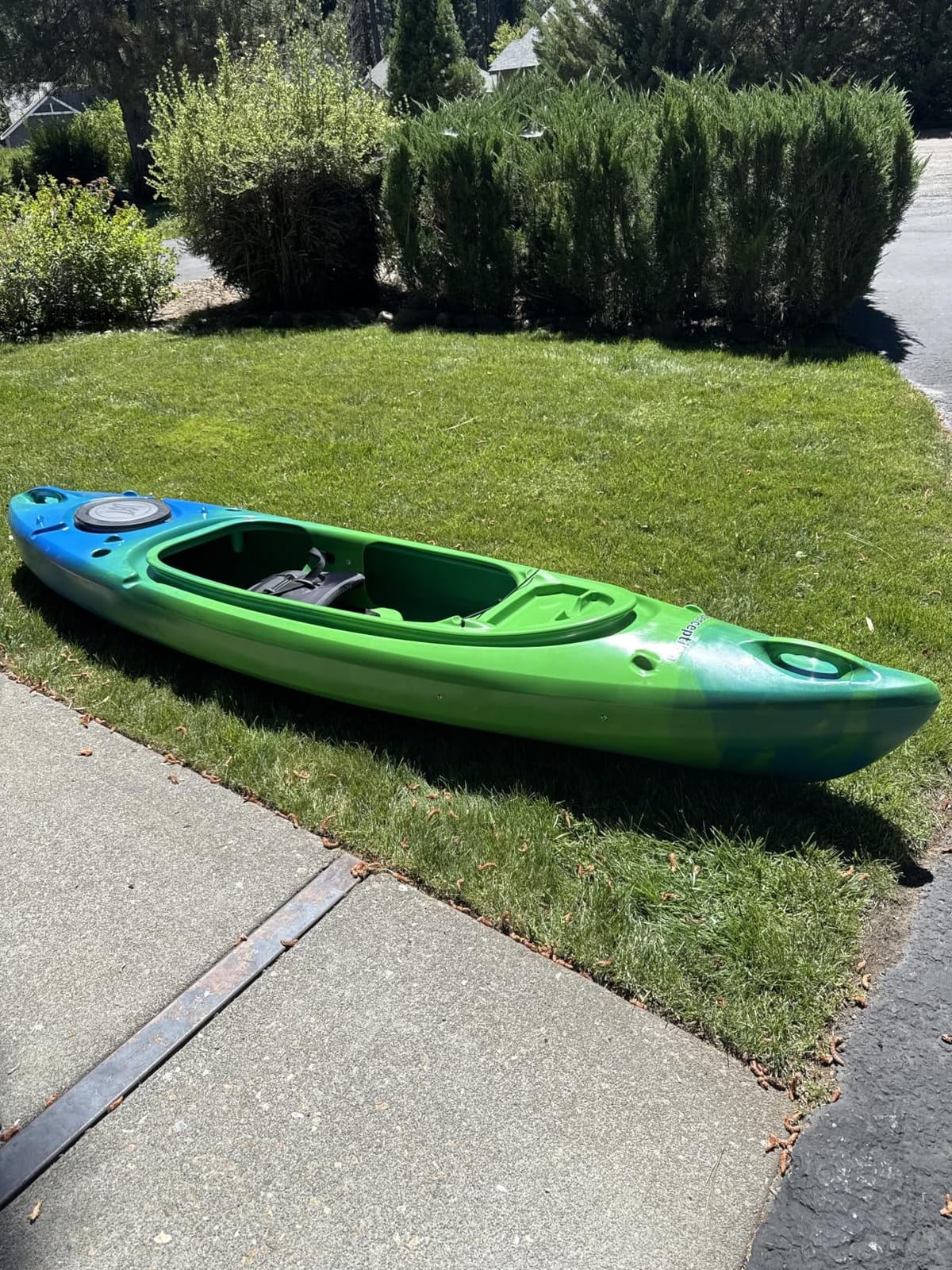
Two things limit it offshore. This is a sit-inside, so casting means working around a cockpit coaming rather than standing on a deck, and the enclosed design fills with water if you take a solid splash. The other limit is storage. Owners who run electronics or a full tackle spread report that the rear compartment is enough for a day but not enough for an overnight.
The polyethylene hull is the same material used on heavier boats like the Catch Mode 110, and Perception backs the hull and deck with a five-year limited warranty. For coastal bays, sounds and a surf line on a settled day, that combination of weight, warranty and angler features is the strongest all-round package we looked at.
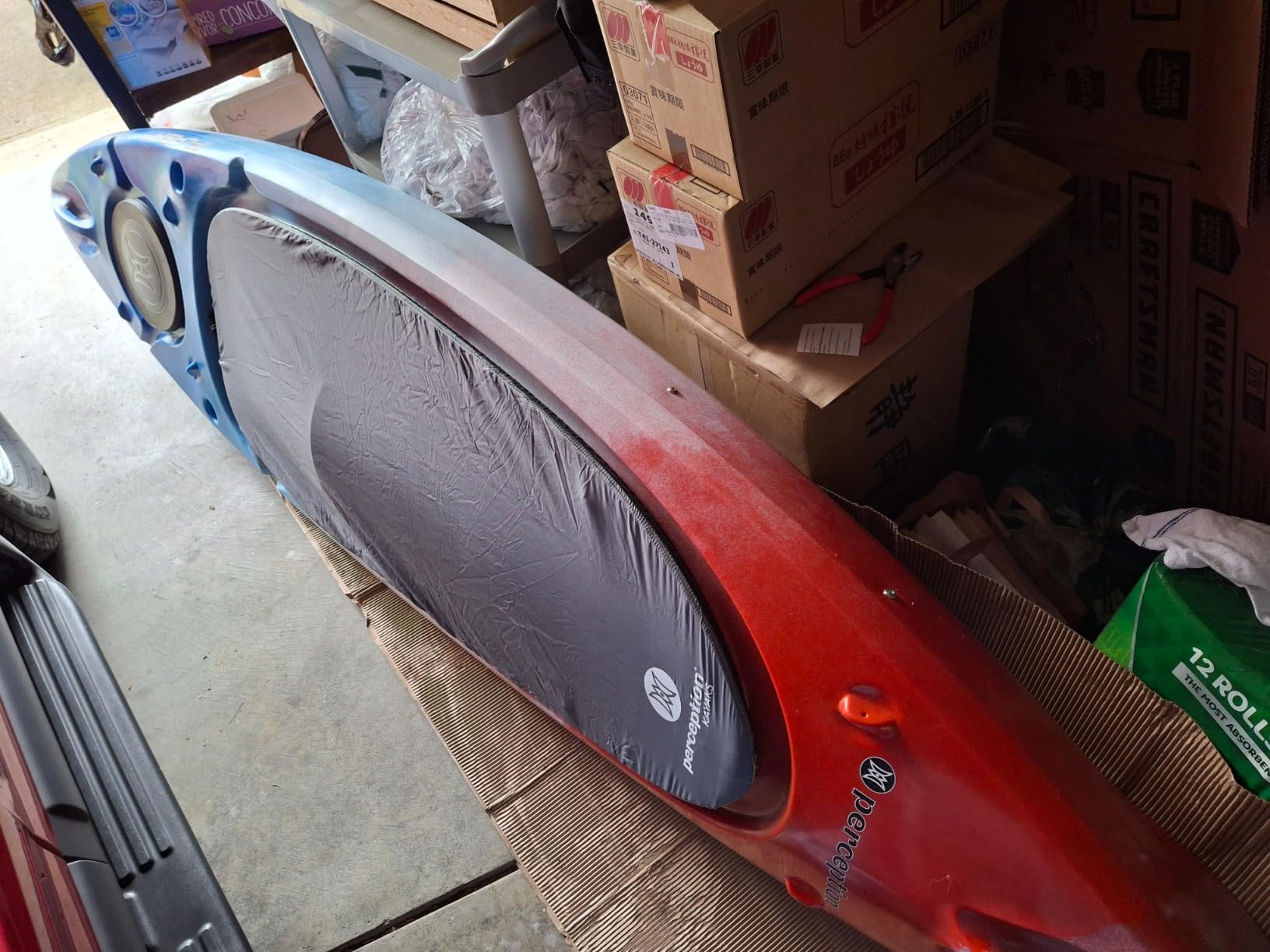
Who the Flash 9.5 suits
This is the boat for the angler fishing nearshore structure on a sheltered coast, the person who wants rods in hand without a trailer or a second person at the beach. It also suits anyone who has been quoted a 90 to 150 lb offshore hull and quietly decided against it because of the walk across the sand.
It works well for a first salt-water season because the handling is forgiving and the boat is easy to reposition when you drift onto a shoal. Reviewers consistently call it stable and quick to handle for coastal bays.
Where it falls short
If your plan is to stand and cast into breaking water, buy a tunnel-hull boat instead. The sit-inside layout makes a standing cast awkward, and spray comes aboard faster than it does on an open deck.
It is also not the boat to load with heavy gear. At 325 lb of rated capacity it leaves less margin once you add a battery, a crate and an electric motor for a long paddle, so heavy offshore outfits push past what this hull was designed to carry comfortably.
2. Reel Yaks Raptor 9.5 – Best Pedal Drive for Coastal Water
Reel Yaks Raptor Modular Fishing Kayak, Fin Drive 9.5ft, 380 lbs Capacity
- Only pedal drive in the group
- so you can fish hands-free
- 380 lb capacity is the highest rating here
- Modular two-piece hull fits an SUV or a closet
- Flush rod holders plus track rails and storage hatches
- Rudder control wires and ferrules are a recurring weak point
- Low seat with little under-seat storage
- Optional accessories add significant cost
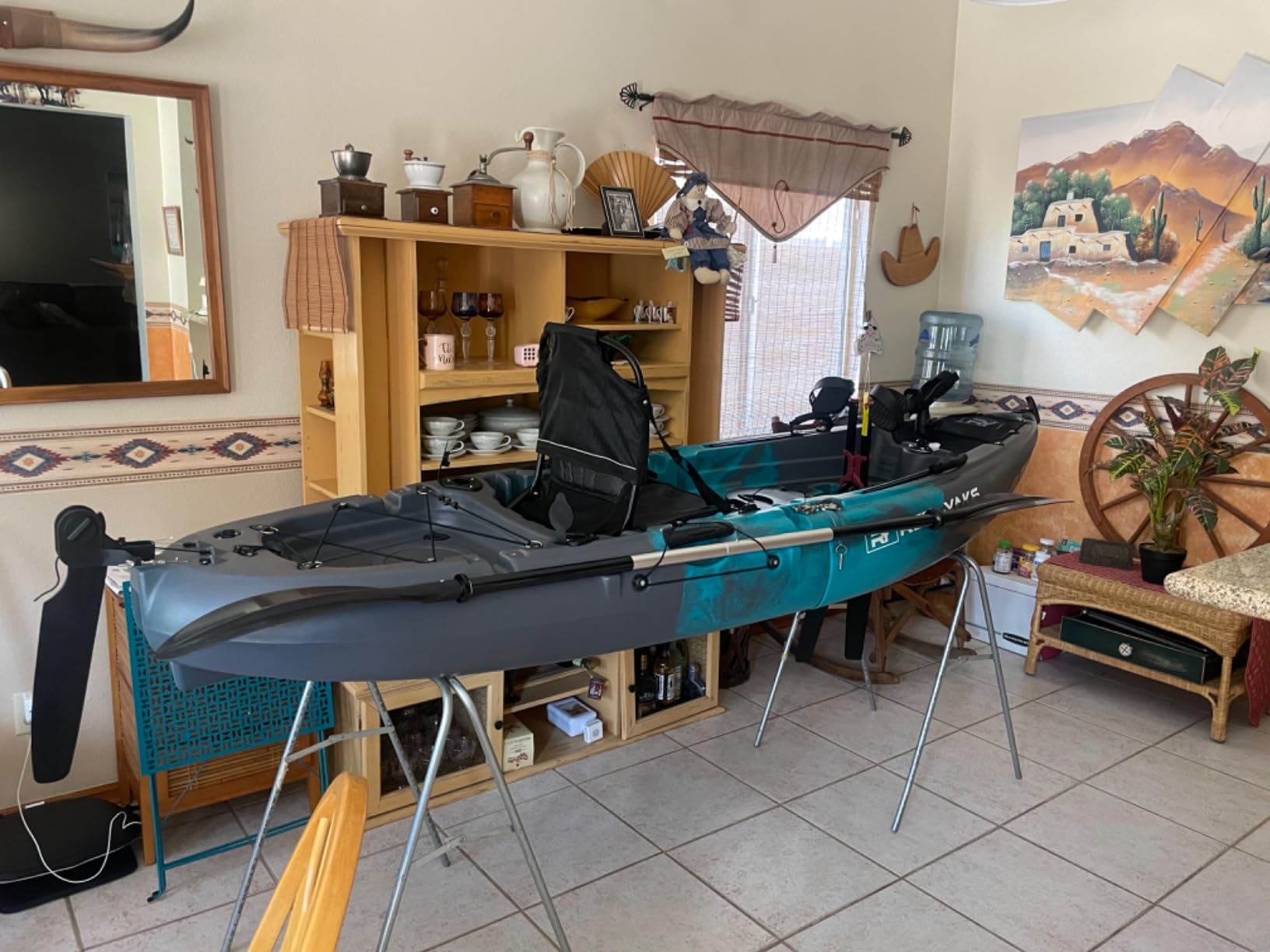
Fins change how a fishing trip works. Once you can hold a spot with your legs, your hands belong to the rod, and drifting while you work a tide line stops being a fight. The Raptor is the only hull in this roundup built around that idea, and community consensus on paddling forums is fairly clear that fin drives handle surf and obstacles better than propeller drives, because the fins fold up when they touch something.
The modular two-piece design is the other half of the appeal. Each section loads into a vehicle without a roof rack, which also means a person without a trailer can reach an inlet that is not next to a boat ramp.
The wide W-hull gives a stable platform while you cast, and the 380 lb rating is the highest in the group, so there is real margin for a battery, a crate and an angler in heavier clothing. Flush rod holders, T-track rails and storage hatches come standard, which removes most of the accessory spending usually needed to rig a boat up.
Reviewers frequently compare the pedal efficiency favorably against far more expensive pedal boats. What comes back most often as a complaint is the rudder linkage. The control wires and ferrules are the part most likely to need attention after a season of salt, and owners who have had failures report that customer service responds quickly with repair videos and parts.
Who the Raptor suits
This suits the angler who wants hands-free positioning but does not want to spend pedal-tandem money or own a roof-rack-ready boat. It also suits anyone fishing a current line or a structure where drifting costs more than it saves.
The 380 lb rating makes it a good fit for larger anglers who want pedal power, and the low mass per section means a single person can load it without a second pair of hands.
Where it falls short
The rudder linkage is the weak point, and in surf that is the part you cannot afford to have go soft. Rinse it after every salt session and check the ferrules before you rely on it in a following sea.
The seat sits low with limited under-seat storage and no height extender, so sight lines over an oncoming wave are worse than they would be in a raised-seat boat. The optional center section and motor plug also raise the total cost quickly if you want the full setup.
3. Pelican Catch Mode 110 – Best for Standing Casts
Pelican Catch Mode 110 – Angler Fishing Kayak with Lawnchair seat – 10.5 ft
- Tunnel hull with a wide flat deck for standing casts
- ERGOBOOST seat raises 6 inches for sight lines
- Three flush-mount rod holders
- Extra flotation built in to ABYC standards
- Lifetime limited warranty
- Heaviest hull here at 67 lb
- No rudder on the transom mount variant
- 34.5 inch beam cuts cockpit room and stowage
Initial stability is the first thing a wide tunnel hull buys you, and it is exactly what you want when you are standing to cast at a breaking edge. At 34.5 inches of beam this is the widest boat we tested, and the flat deck is a real platform rather than a marketing term.
The ERGOBOOST seating system is the detail that separates it from the rest. Folded, it adds six inches of height, which lifts your sight line over an oncoming wave and gives you a better view of the water in front of you. Owners highlight the seat and the easy entry and exit as the two main reasons they bought it.
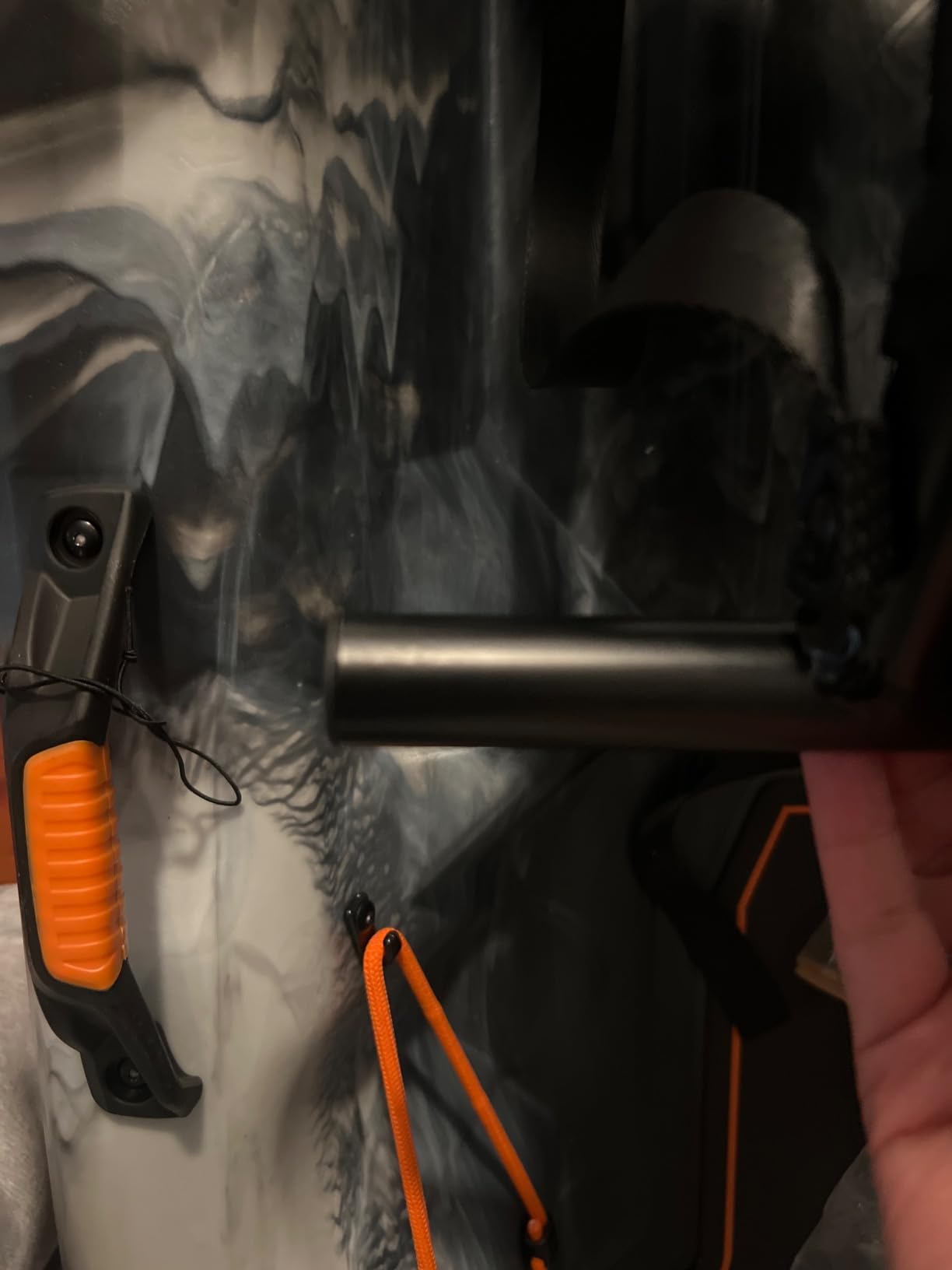
Pelican builds additional flotation into the hull to meet or surpass ABYC standards, which matters more offshore than the marketing language suggests, because buoyancy is what keeps you up when you are wet and cold. Three flush-mount rod holders keep rods clear of the deck and within reach.
The weight is the honest drawback. At 67 lb this is the heaviest hull in the group, and it is the single most common complaint in reviews. Solo handling across a soft beach is the practical problem, and a cart or a second pair of hands solves it.
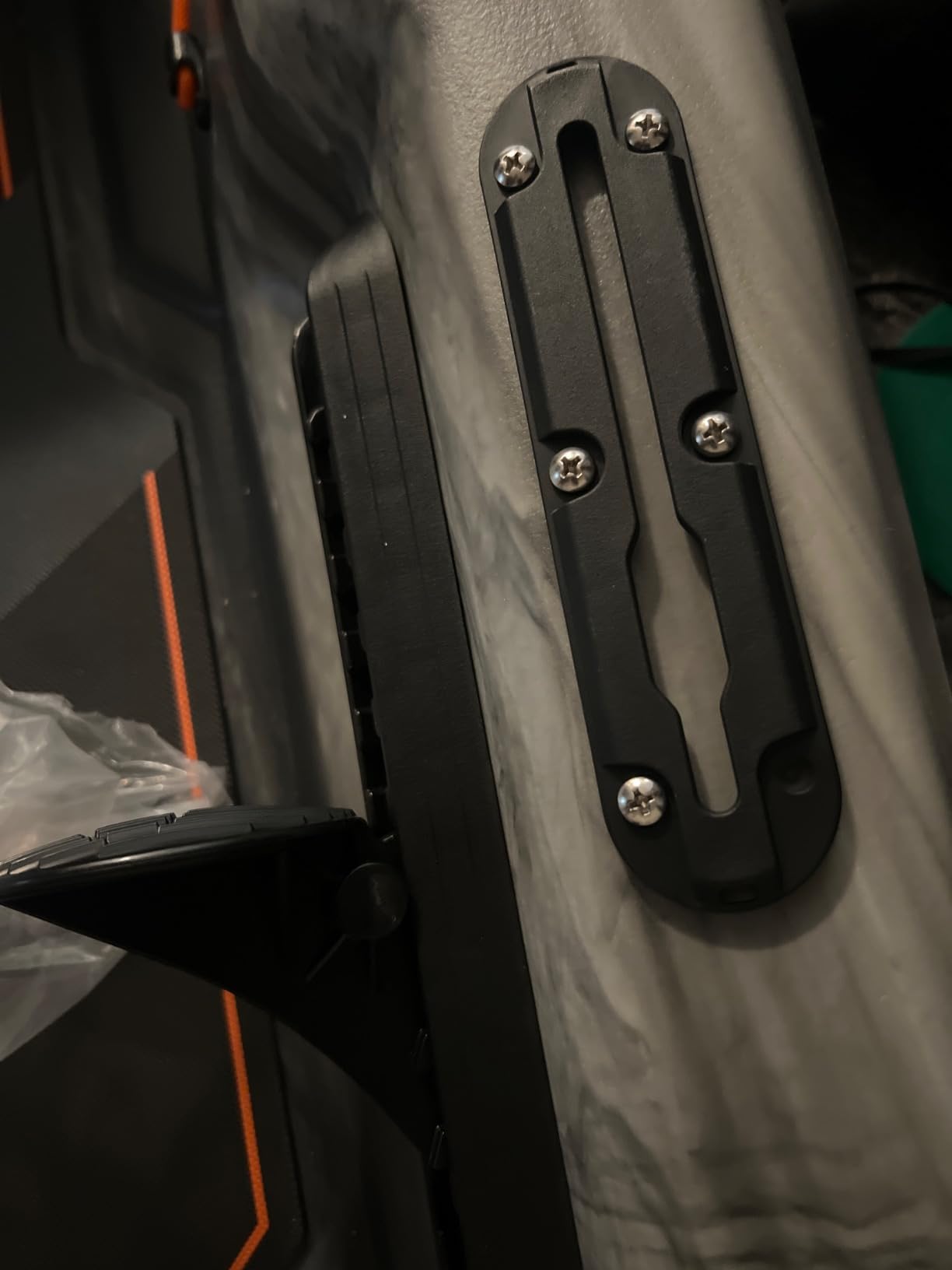
Who the Catch Mode 110 suits
It is built for the angler who stands to cast, works close to structure, and wants a wide flat platform more than they want a narrow fast hull. The raised seat also helps anyone with a back who finds a low cockpit painful over a long day.
For anyone fishing nearshore rock or a jetty line in mild chop, the stability here buys tolerance for mistakes that a narrower hull would not forgive.
Where it falls short
The 67 lb weight makes it the hardest boat here to solo-carry, and this is the category where carry weight decides whether you actually make it to the water. Budget for a cart if you fish alone.
The transom mount variant does not include a rudder, and adding one costs extra. The wide beam also trims cockpit room, so gear stowage is tighter than on narrower hulls of similar length.
4. Perception Pescador Pro 12 – Best for Long Days on the Water
perception Pescador Pro 12 | Sit on Top Fishing Kayak with Adjustable Lawn Chair Seat | Large Front and Rear Storage | 12′ | Dapper
- 12 ft length tracks straight and holds course
- 375 lb capacity for heavy gear and larger anglers
- Large front and rear storage plus accessory tracks
- Lawn chair seat stays comfortable on long outings
- Unaffected by boat wake
- Second heaviest hull here at 64 lb
- Seat sits lower than some buyers expect
- Paddle not included
Length is the whole story on this one. At 12 feet the Pescador Pro 12 holds a straight line without constant corrective steering, and long-term owners specifically call out how it stays on heading when boat wake crosses it. That matters on a return trip in building chop, where a hull that wanders turns a short fish into a long paddle home.
The storage is the other reason. Large front and rear compartments hold a full day of tackle, a cooler and electronics, and accessory tracks let you move things around as the light changes rather than living with one layout.
Owners report the adjustable lawn chair seat staying comfortable across three-hour-plus outings, which is where shorter boats tend to become tiring. The 375 lb rating gives real margin for a heavier angler plus a loaded deck.
Many reviewers describe it as the strongest value in its class for a full-size sit-on-top, and several add scupper plugs to keep water out of the cockpit during a spray-over launch. Perception again backs the hull and deck with a five-year limited warranty.
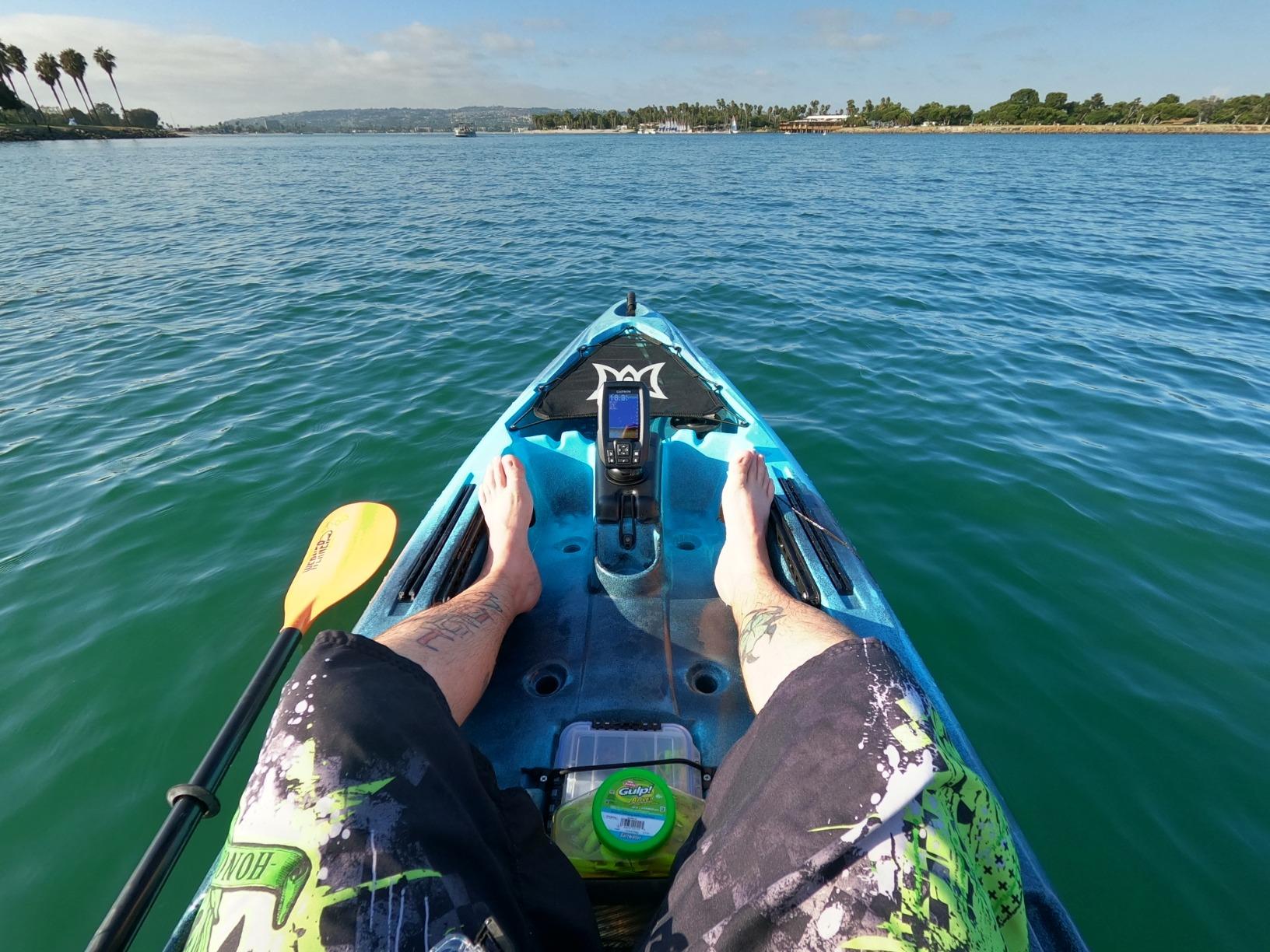
Who the Pescador Pro 12 suits
This suits anglers who spend full days on the water, run more gear than fits in a small stern well, or want a hull that does not fight them on the paddle home. The 12 ft length also gives taller paddlers room to stretch out, which short hulls never do.
It is a good match for someone fishing a bay or sound and drifting a long line rather than working one spot.
Where it falls short
At 64 lb it is nearly as heavy as the Catch Mode 110, and solo roof-loading is genuinely difficult. Long hulls also turn slowly in close quarters, so it is the wrong boat for working tight along rocks or a shallow shoreline.
The seat sits lower than some buyers expect, and the paddle is not included. Reviewers who stand to cast at larger body sizes report that the standing platform is not their strong suit.
5. Pelican Catch Classic 100 – Best Deck Rigging in the Mid Tier
Pelican Catch Classic 100 Angler – Sit-on-Top Fishing Kayak – Ergocast Dual Position Seating System – 10 ft – Outback
- Quick-lock front hatch plus rear tank well with bungees
- Two rigging tracks and accessory eyelets
- Dual position seat adjusts high or low
- Tunnel hull with a flat casting deck
- 57 lb hull with carry handles
- 350 lb capacity is the lowest of the Pelicans here
- Only two flush rod holders
- Dual position seat lacks the raised sight line
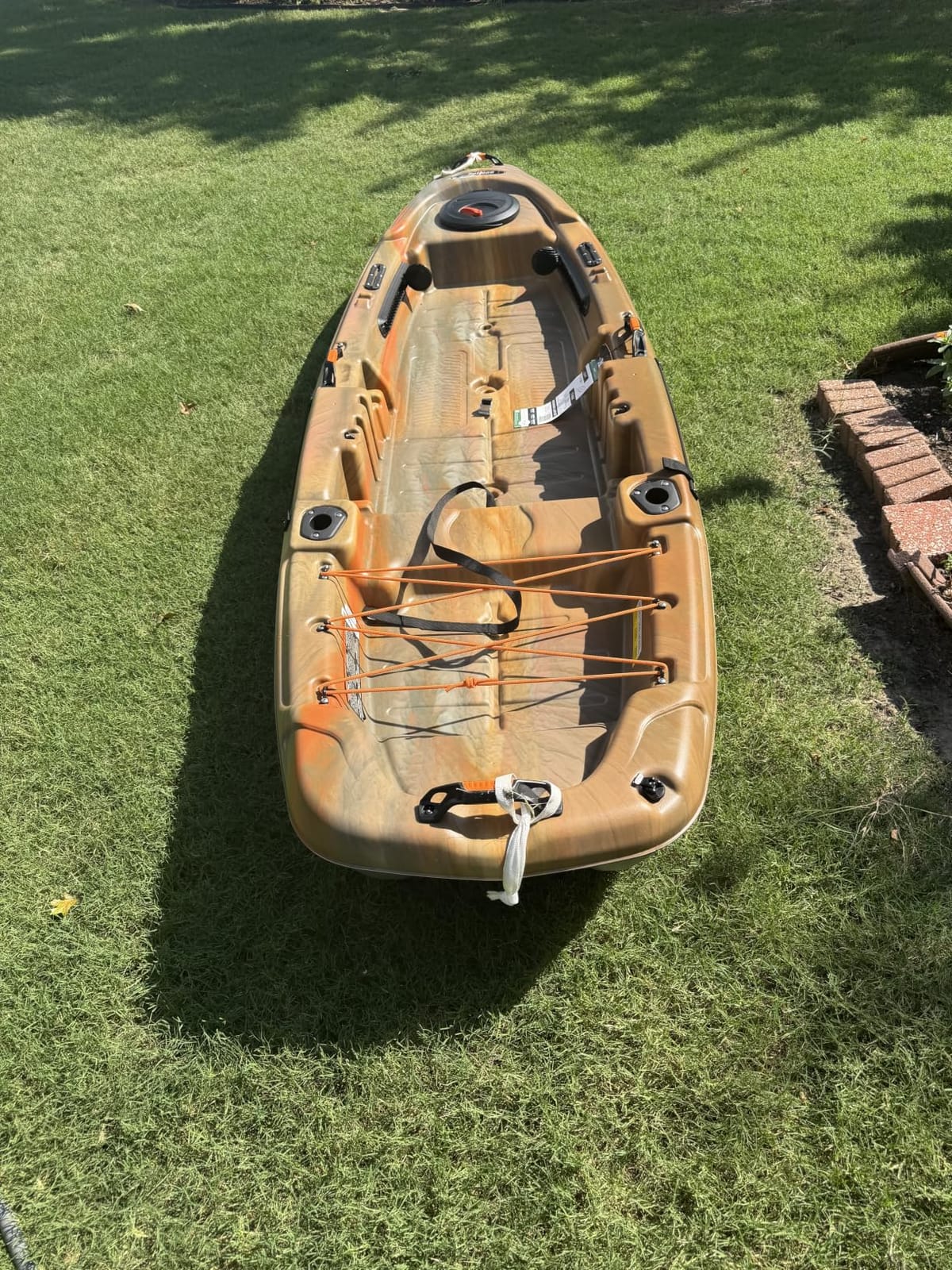
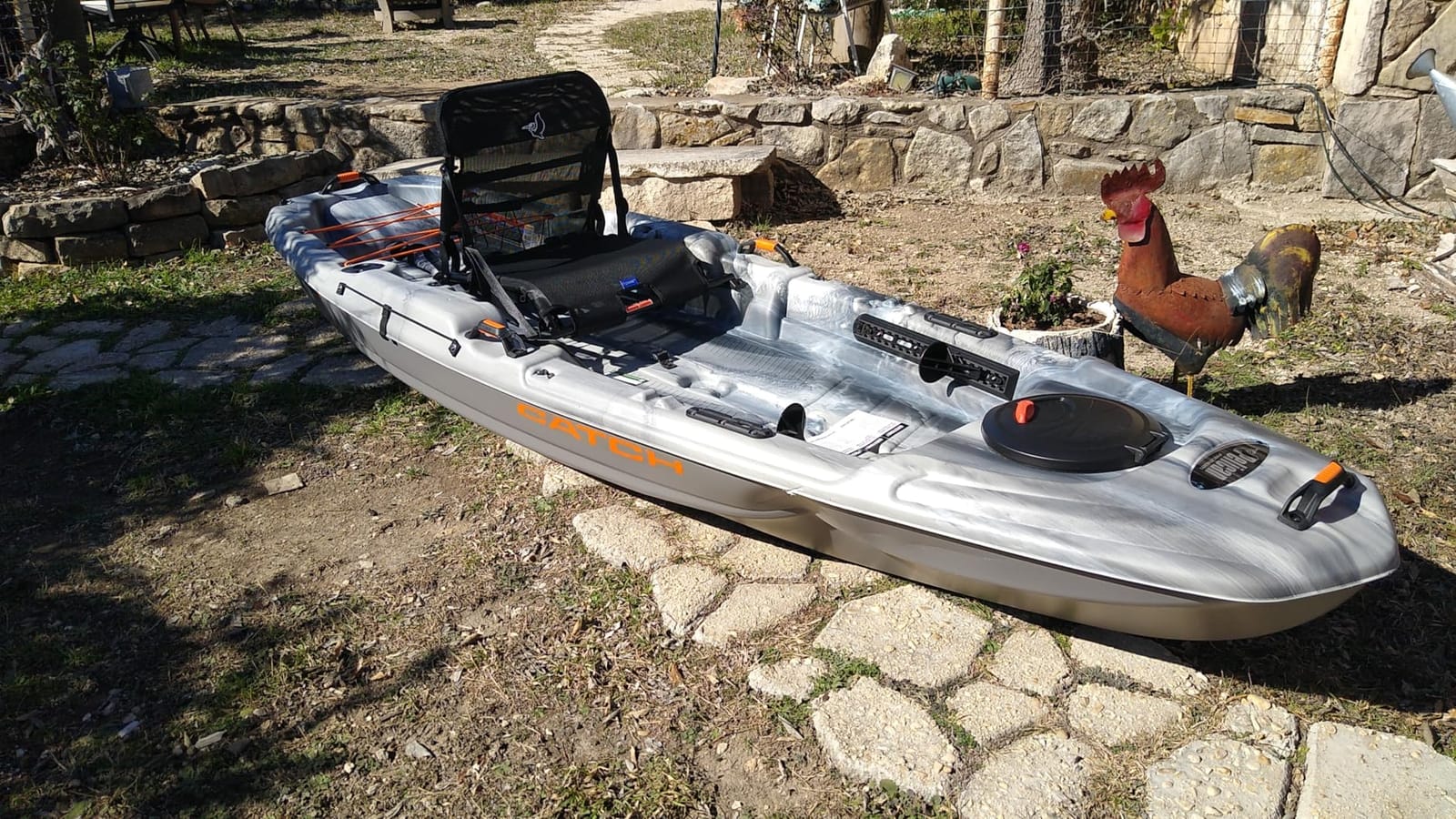
The Catch Classic 100 is the boat for an angler who wants to customize a deck rather than accept a fixed layout. Two accessory tracks, a quick-lock front hatch, a rear tank well with bungee lacing and accessory eyelets give you somewhere to put a fish finder, a crate and a tackle bag, and to reconfigure all of it.
You get the same tunnel-hull platform as the bigger Catch Mode 110 in a lighter 57 lb package. Owners report stable tracking, easy entry and exit, and a seat that adjusts between a high and a low position for different support needs across a long day.
Pelican again builds in extra flotation to meet or surpass ABYC standards and backs the hull with a lifetime limited warranty, which matters to anyone who intends to keep a boat in salt water for years.
The critical reviews are a minority, and they cluster around durability and condition on arrival rather than on-water performance. On the water, the feedback is consistently positive about stability and a well-equipped deck.
Who the Catch Classic 100 suits
It suits the angler who plans to add electronics and rigging over time and wants a boat that accepts accessories rather than fighting them. It is also a fit for anyone who wants tunnel-hull standing stability below the weight of the 110.
The dual position seat works well for sessions that start upright on a flat water and end with casting from a lower, more relaxed position.
Where it falls short
The 350 lb capacity leaves less margin than the 375 lb boats, which matters if you carry a battery and a loaded crate. Two rod holders are fewer than most competing rigs in this group.
Unlike the ERGOBOOST system on the Catch Mode 110, the dual position seat does not raise your sight line over a wave, so it is the weaker choice if your fishing depends on seeing the water ahead of the bow.
6. Lifetime Tamarack Pro 103 – Best Chine Rail Stability Per Dollar
Lifetime Tamarack Pro 103 Sit-On-Top Kayak, Lightning Fusion, 10 ft. 3 in.
- Chine rails plus deep hull channels add secondary stability in chop
- Complete fishing rig with one adjustable and two flush rod holders
- Center storage hatch with a bucket included
- Adjustable framed seat and footrests
- Front and rear bungee cords and a paddle keeper
- 300 lb capacity is modest for a heavy gear load
- Integrated catch ruler is a novelty
- No rudder or pedal drive so tracking relies on paddling
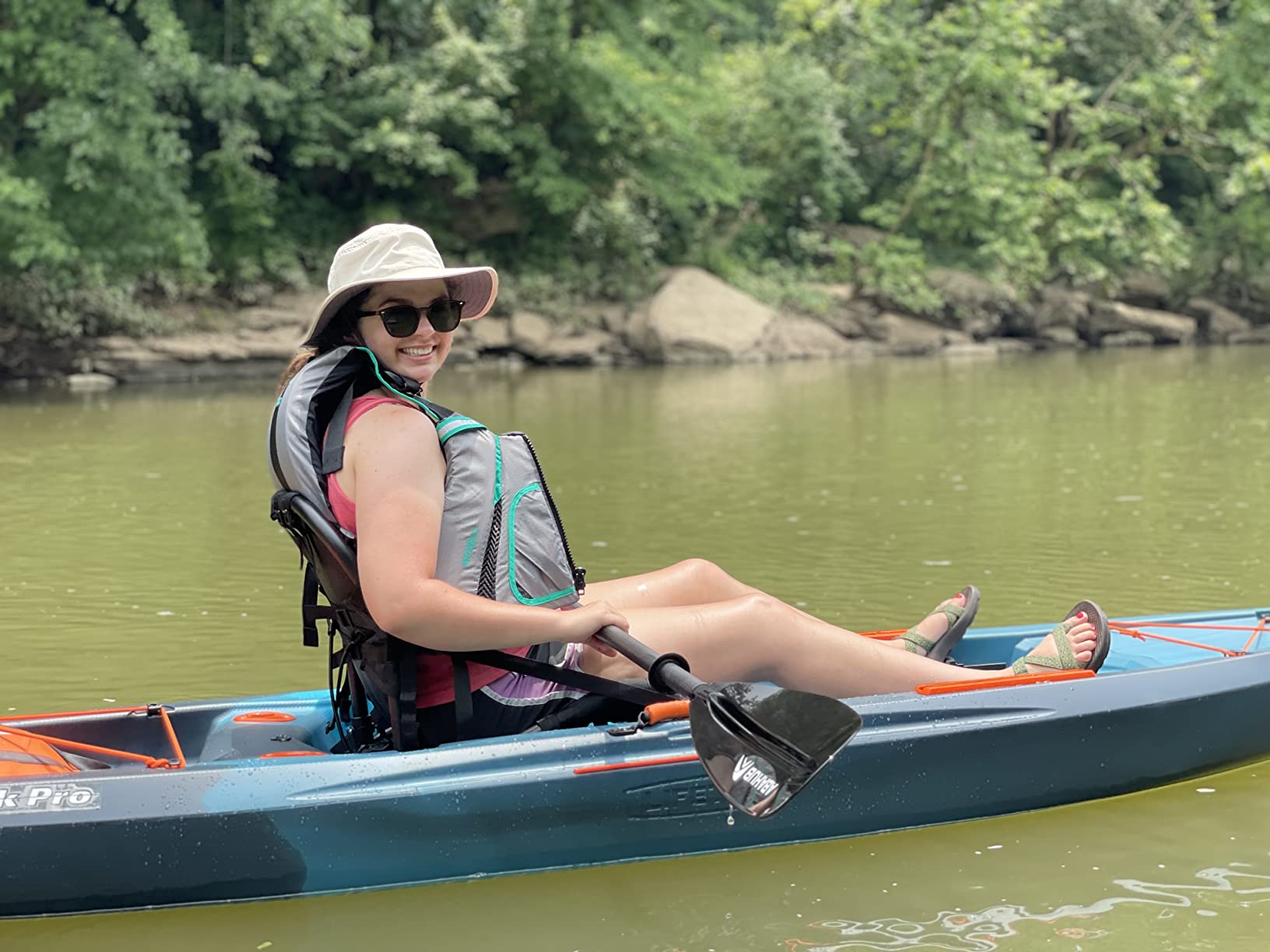
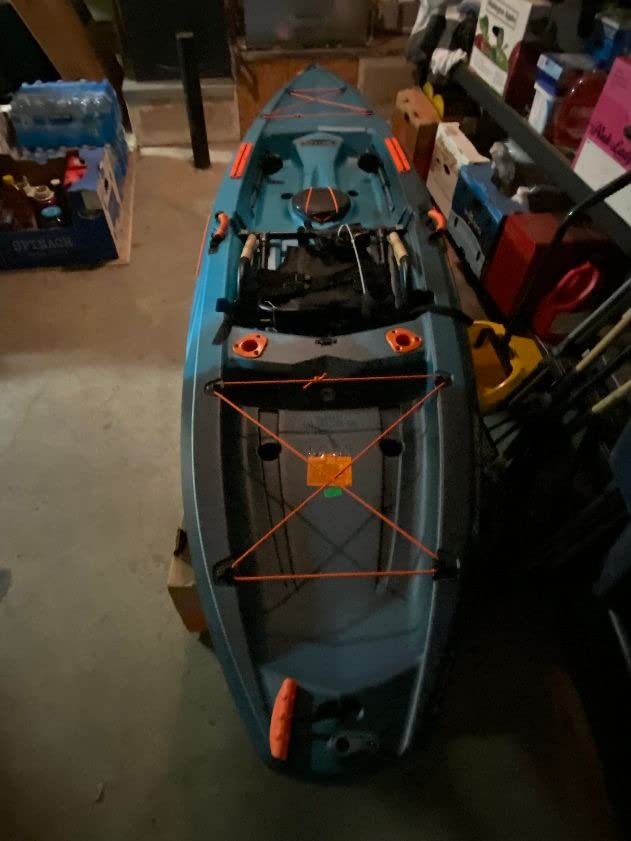
This is the hull that gets the stability conversation right. It does not rely on a very wide beam, which would make it heavy and slow, and instead uses deep hull channels for tracking and chine rails for secondary stability, the resistance to rolling once the boat is tilted in a wave. Buyers single out both of those as the reasons it feels settled in chop.
For a first salt-water kayak, the included rig is unusually complete: one adjustable and two flush-mounted rod holders, accessory mounting points, a center storage hatch with a bucket, front and rear bungee cords and a paddle keeper. Few boats at this tier ship that much angler hardware.
Most of the rating is very positive, and the reservations people keep come down to the 300 lb capacity and the absence of a rudder. Since chine rails also help secondary stability, this hull still feels planted when you are working wind or a wake.
It is one of the few in this group where the accessory budget after purchase is close to zero, which matters when you are also buying a safety kit and a cart.
Who the Tamarack Pro 103 suits
It fits an angler who wants a stable, fully equipped sit-on-top for bays, rivers and calm coastal water without carrying a premium price, and it is a common first fishing kayak for a reason.
The chine rails make it a better choice than its narrow 31 inch beam suggests, particularly for anyone who has felt unsettled in a small boat on a windy day.
Where it falls short
With no rudder, every course correction is a paddle stroke, which costs you energy on a long crossing and makes holding a line in a crosswind harder. That is the main limit on this hull for open-water fishing.
The 300 lb capacity is modest for a larger angler carrying a full tackle load, and the built-in catch ruler is a novelty rather than a practical fishing feature.
7. Lifetime Triton Angler 100 – Budget Pick for Calm Coastal Water
- Lightest and easiest hull here to carry alone
- Integrated skeg gives real tracking for the class
- Self-bailing scupper holes drain the cockpit
- Tank well with bungee lacing
- Multiple footrest positions
- 275 lb capacity is the lowest in the group
- Sits high and gets pushed around by wind
- Thin seat cushion and backstrap
- Replacement parts are hard to source
The Triton Angler 100 wins on one number that changes how often you get on the water: 49 pounds, and a hull shape one person can control from a tailgate to the waterline. Owners call it a great starter kayak that is stable, easy to handle and good for fishing on calm water.
The integrated skeg is the part that helps most offshore relative to the price. Owners credit it with tracking performance that a shorter boat of this size would not normally have, and the self-bailing scupper holes drain the cockpit and tank well after a spray-over.
It scores a 4.5 average across 93 reviews, which is a strong showing for an entry-level hull.
Honest limits before you go past the surf line
This hull sits high on the water, and owners report it gets pushed around by wind. On a rising breeze that is exactly the condition where you want a low hull with lots of wetted surface, so plan to stay inside protected water on a windy day.
The 275 lb capacity is the lowest in the group, which leaves very little margin once you add a battery and gear. The seat cushion and back strap are thin and cause lower-back discomfort on longer outings, and buyers report difficulty obtaining replacement parts or support from the manufacturer.
Who the Triton Angler 100 suits
It suits a first-time angler working ponds, rivers and sheltered bays, and it is one of the easier boats here to store in a small garage or carry over a soft shoreline.
If you want to explore coastal structure later and want a hull with a rudder and more margin, plan an upgrade rather than loading this one past its rating.
Where it falls short
Wind sensitivity and a high seating position are the two real constraints. On open water with a following swell, that combination is tiring and less predictable than a lower, heavier hull.
Long outings will test the thin seat, and the parts situation means a failed hardware piece can sideline the boat for a while.
8. Wilderness Systems Tarpon 105 – Best for Crates, Coolers and Long Trips
- Fast efficient straight tracking
- Phase 3 air Pro seat stays cool and adjusts easily
- Large rear well fits crates coolers and full dive kits
- Dry front hatch keeps electronics safe
- Accessory rails and magnetic bottle strap
- Premium price for a 10 ft 6 in hull
- Rear well is open so gear needs a dry bag in spray
- Included Dry Tec box is small
The Tarpon 105 is built around a Premiere hull that owners describe as fast and straight-tracking, and that is the trait that pays off on a long water day. Three-quarters of its reviews are five-star, and the most common theme is a boat that holds its line and stays comfortable long past the point where shorter hulls get tiring.
Storage is the standout. The rear well is sized for crates, coolers, fishing equipment and even scuba tanks, and the front hatch gives you genuine dry storage for electronics. That combination is what you want on an all-day trip where you are not paddling back to a truck in an hour.
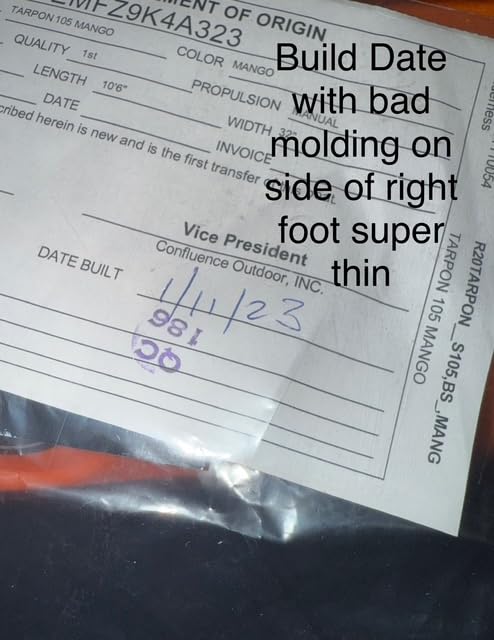
The Phase 3 air Pro seating system is highly adjustable with a cool-touch surface, so it stays workable in full sun, and the large padded footrests adjust with a locking lever to fit different heights of paddler.
Reviewers note it suits longer outings and heavier gear loads, which lines up with the 325 lb rating and the extra hull volume on this model.
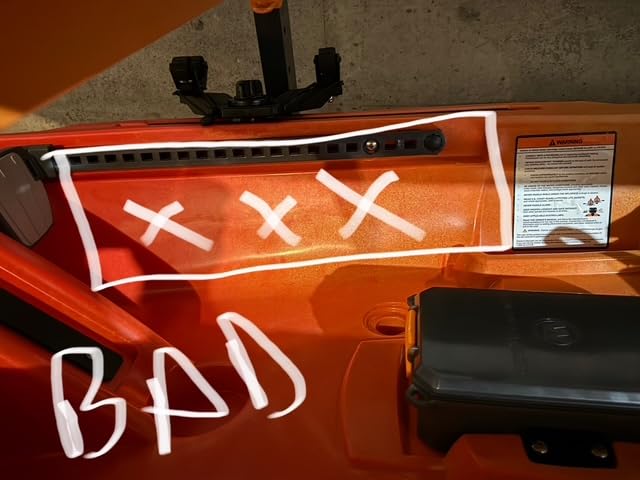
Who the Tarpon 105 suits
It suits the angler running a full day of gear, a cooler and electronics, and the paddler who wants one boat for both the trip out and the trip back without a support boat. The dry front hatch keeps a fish finder and a phone safe from spray.
It is also a comfortable fit for taller paddlers, because the adjustable footrests and air seat spread out over a longer hull.
Where it falls short
The price is high for a 10 ft 6 in hull, and the value case depends on using the storage. If you fish close to a launch and carry a small bag, you are paying for capacity you will not use.
The rear well is open, so in a spray-over you need a dry bag or a well cover for anything you cannot afford to get wet. The included Dry Tec box is small and best reserved for wallets, phones and keys.
9. Lifetime Lockport 94 – Best for Car Top Transport
Lifetime Lockport 94 Modular Sit-on-Top Kayak with Paddle, Two-Piece Design with SlideLock System, Rod Holders, Adjustable Seat
- Highest rating in the group at 4.6 across 31 reviews
- Two-piece SlideLock halves nest and fit in an SUV
- Center carry handles on each half
- Two flush rod holders plus bungee tank well
- Very few moving parts
- 250 lb capacity is the lowest here
- No rudder so turns are slow
- Molded-in footrests are not adjustable
- Unpadded seat
Transport is the reason this boat exists. The SlideLock tongue-and-groove joint connects two hull halves, each with center carry handles, so one person can carry the whole kayak in two trips and stow the pieces in a back seat. Owners consistently confirm the latch holds firm on the water, including through boat wakes.
At 4.6 across 31 reviews it carries the highest average rating in this group, and the simple high density polyethylene design has few moving parts, which is why owners describe it as hard to break.
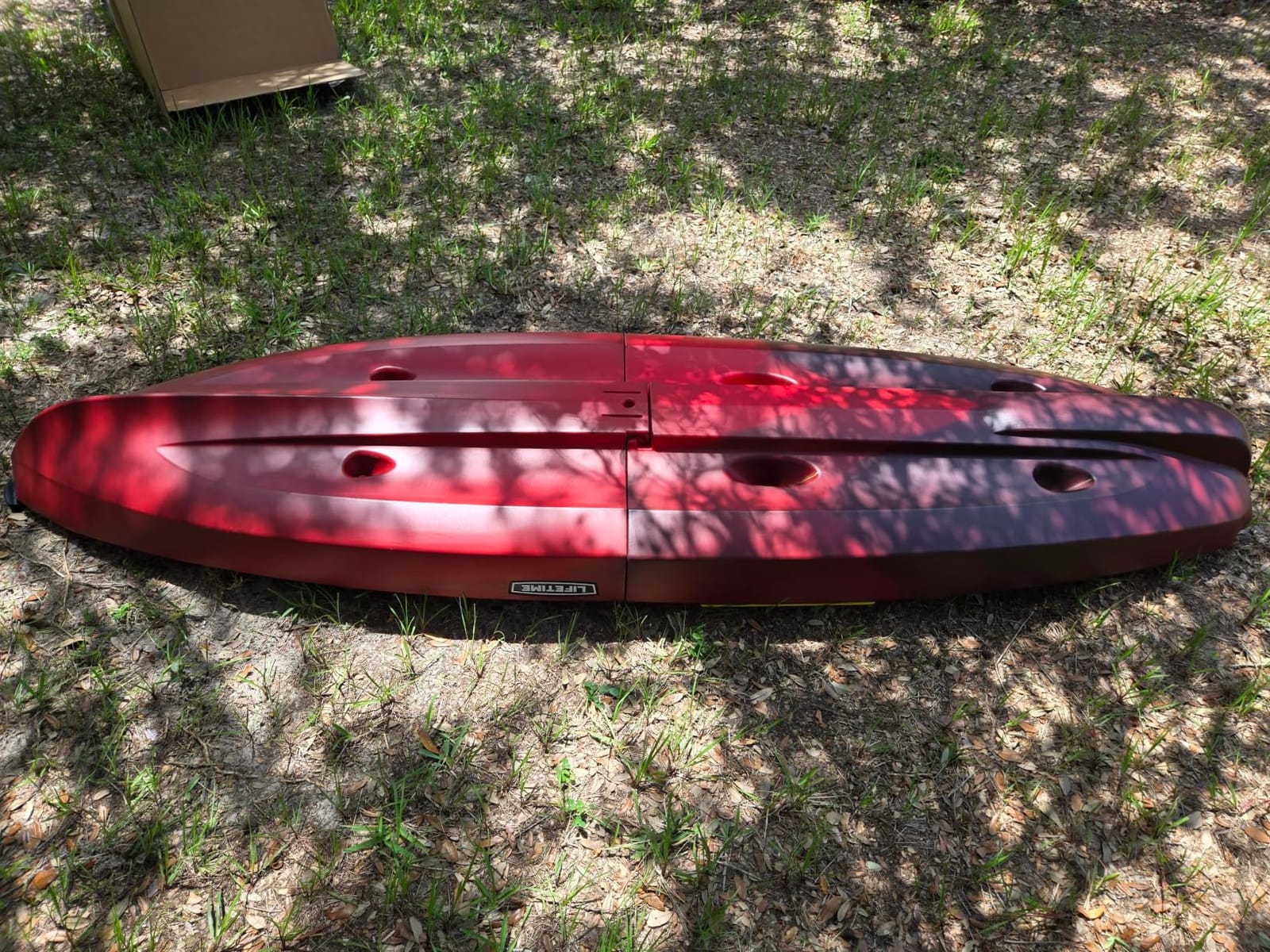
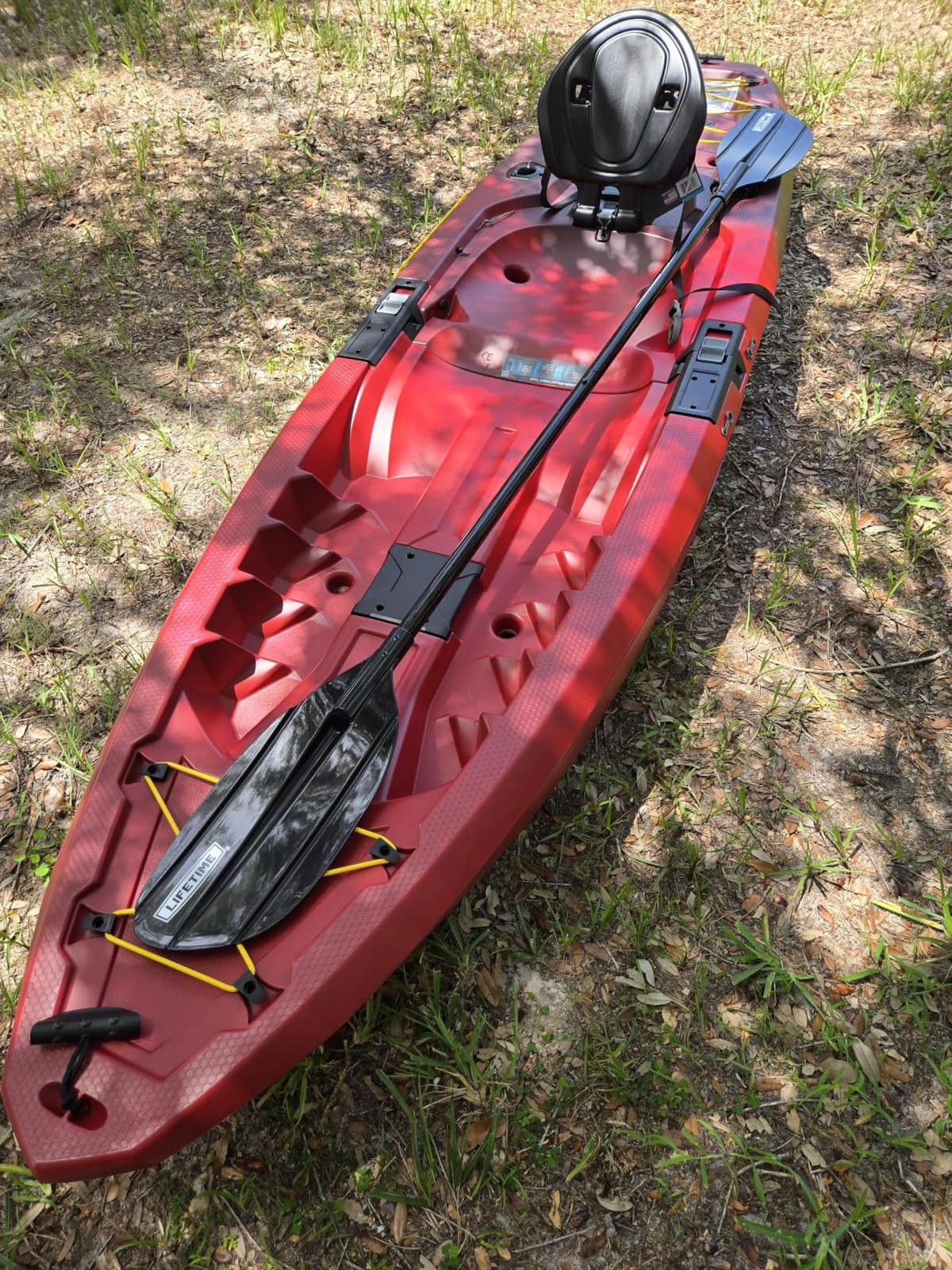
A paddle, two flush-mounted rod holders, a bungee tank well and a bottle holder are included, so a first angler needs very little to get started. Deep hull channels aid tracking and chine rails add stability, which is unusual in a boat this short.
Be clear-eyed about the trade-off though: this is a 9 ft 4 in hull with a 250 lb rating. It is a transport solution that happens to fish well in calm and moderate water, not a boat for heavy offshore loads.
Who the Lockport 94 suits
It suits anyone without a roof rack, a trailer or a second set of hands, and anyone who fishes a spread of small water bodies where carrying the boat a short distance is part of every trip.
For a first salt-water season on protected water, the two-piece design removes the biggest practical objection to fishing alone.
Where it falls short
There is no rudder, so turns are slow and every heading change is a paddle stroke. On chop that is real work, and it makes this a poor choice for a long return against a wind.
The 250 lb capacity leaves almost no margin for gear, the molded-in footrests are fixed, and the unpadded seat is an easy upgrade if you plan long sessions.
What to Look for in an Ocean Fishing Kayak
Start with the difference between a regular fishing kayak and an ocean-capable one. Regular fishing kayaks are built for ponds, calm lakes and slow rivers. In ocean chop they broach, take on water and become hard to recover. An angling hull built for coastal water pairs a wider beam for initial stability with a longer, rockered keel that adds secondary stability against rolling, and it adds sealed or covered storage, corrosion-resistant hardware and extra flotation so you stay up when you are wet.
Initial stability and secondary stability
Initial stability is how the boat feels sitting still, and a wide flat beam delivers it. Secondary stability is what happens after the boat is tilted, and it is the number that matters in a wave. Chine rails, a rockered keel and hull depth all buy secondary stability without forcing you to carry a wide, heavy hull. That is why the 31 inch beam Tamarack Pro 103 feels steadier in chop than its width suggests, and why the 34.5 inch Catch Mode 110 feels planted when you stand up.
Paddle, pedal or motor
Paddling is the lightest option and the simplest to maintain, and it costs you steering attention on a long crossing. Pedal drive frees your hands to fish and adds reverse, which is the difference between holding a spot and drifting off it. Paddle forums broadly favor fin drives with kick-up retractable fins over prop drives offshore, because retractable fins fold away from rocks, sandbars and kelp instead of taking the hit.
A saltwater-rated trolling motor adds thrust and lets you run autopilot, and spot-lock on a compatible GPS unit holds position so you can fish without drifting. The costs are weight on the stern, a battery to charge and store, and hardware in the waterline that needs rinsing.
Length, tracking and turning
Longer hulls track straight and move faster, which shortens the trip home and reduces fatigue. They also turn more slowly, so a 12 ft hull is awkward working tight along rocks or a shallow point. Ten feet is the sweet spot for most coastal anglers, and 12 ft makes sense when you carry heavy gear or spend full days out. Anything under nine feet is a sheltered-water boat that will feel nervous in a following sea.
Load capacity and how high you sit
Rated capacity covers angler plus gear, so a 300 lb boat with a battery, a crate and an electric motor leaves a smaller angler with very little margin. Load the boat too heavily and it rides low, takes spray, and feels unpredictable. Note how high the hull sits above the water too, since a high-sitting boat catches more wind and more spray.
Surf launch, swell limits and the trip home
Every hull here has a realistic ceiling, and it is much lower than the marketing implies. Plan to stay inside protected water when the surf line is running two to three feet, and stay well inside the breaking line in anything larger. A tunnel hull with a wide beam tolerates confused chop better; a narrower hull with chine rails handles waves more cleanly but demands a drier seat and an experienced paddle stroke.
Surf launch technique matters more than hull choice. Wait for a lull, paddle straight through the impact zone rather than turning to face the waves, and avoid ever turning your back on a breaking crest close to the boat. On the return, paddle into the wave rather than broadside to it.
Safety kit that is not optional offshore
A properly fitted marine PFD with a crotch strap comes first, and it should be worn while you paddle, not stowed under a deck hatch. Add a VHF radio in a waterproof housing, a whistle on a tether, a bilge pump or bailer for a tunnel hull that takes water, sun protection, and a way to get back in from an upside-down boat.
Finally, tell someone your route and expected return time, and treat your distance from shore as a comfort and daylight limit rather than a target. The forum consensus is clear that the biggest risks offshore are not capsizing, they are cold, fatigue and being unseen.
Saltwater prep and maintenance
Rinse with fresh water after every salt session, and pay attention to the parts other people skip: pedal linkages and rudder wires, rod holder screws, seat hardware, the transducer well, drain plugs and any trolling motor mount. Salt crystallizes in crevices, and the failure that ruins a boat is almost always a seized or pitted fitting in a place that never got rinsed.
Flush the deck and cockpit, let the hull air dry in the shade rather than in direct sun, and check drain plugs quarterly. For battery-powered setups, rinse the connector, keep terminals dry and store the battery part-charged. If you fish through winter or leave the boat on a beach rack, a freshwater rinse every month matters more than a good one after the last trip of the season.
Frequently Asked Questions
Which kayak is best for the sea?
For coastal bays, sounds and protected surf lines, the Perception Flash 9.5 is the best all-round choice because it weighs only 41 lb and one person can carry it to the waterline. For standing casts and a wide casting deck, the Pelican Catch Mode 110 is better. For hands-free positioning, the Reel Yaks Raptor 9.5 is the only pedal-drive option. None of these are bluewater sea kayaks.
What’s the difference between a regular kayak and an ocean kayak?
A regular fishing kayak is built for ponds and calm lakes and will broach and take on water in ocean chop. An ocean-capable angling hull adds beam for initial stability, a rockered keel or chine rails for secondary stability, sealed dry storage, corrosion-resistant hardware and extra flotation, plus a higher rated capacity to absorb heavier gear loads.
What is the best kayak for surf fishing?
For surf fishing, pick a hull you can control in confused water rather than the lightest one you can find. The Perception Flash 9.5 launches and paddles easily from a beach, while the Pelican Catch Mode 110 gives a wide flat deck for standing casts behind the break. Add a rudder or pedal drive so you are not correcting course by paddle stroke during the launch.
What color kayak is best for fishing?
Visibility beats camouflage on the water. A light or high-contrast hull is easier for rescuers, other boaters and a car spotter to find in glare and spray, and it also helps you see your own bow in a following sea. Muted colors spook fewer fish, but safety should win every time. Rod holders and a deck cover the rest of the fish-spooking concern.
What is the best ocean fishing kayak with pedals?
The Reel Yaks Raptor 9.5 is the best pedal option in this group. Its fin pedal drive gives hands-free positioning and quiet movement, the wide W-hull is stable while casting, and the 380 lb rating is the highest here. Paddling forums favor fin drives with kick-up retractable fins over prop drives offshore because the fins fold away from rocks and sandbars.
What is the best motorized kayak for fishing?
None of these nine hulls ships with a motor, so a motorized setup means adding a saltwater-rated trolling motor and a battery to a hull you already own. The 325 lb and 375 lb rated hulls handle the added stern weight best, while the 250 lb and 275 lb boats leave too little margin. Budget for autopilot and a spot-lock capable of holding position over structure.
The Best Ocean Fishing Kayak for the Way You Fish
There is no single best fishing kayak for ocean fishing, because the honest answer depends on your water and your shoulders. If you want the best balance of coastal capability and solo portability, the Perception Flash 9.5 is the pick. If you plan to stand and cast, take the Pelican Catch Mode 110 and budget for a cart. If you want to hold a spot with fins rather than paddle strokes, the Reel Yaks Raptor 9.5 is the only boat here built that way.
For full days with heavy gear, the Perception Pescador Pro 12 and the Wilderness Systems Tarpon 105 carry the most. If you carry your boat alone and your storage is a problem, the Lifetime Lockport 94 solves the transport problem better than anything else in the group. Whatever you choose in 2026, treat the surf line and the distance from shore as limits set by the conditions on the day, and buy the safety kit before the first trip.