
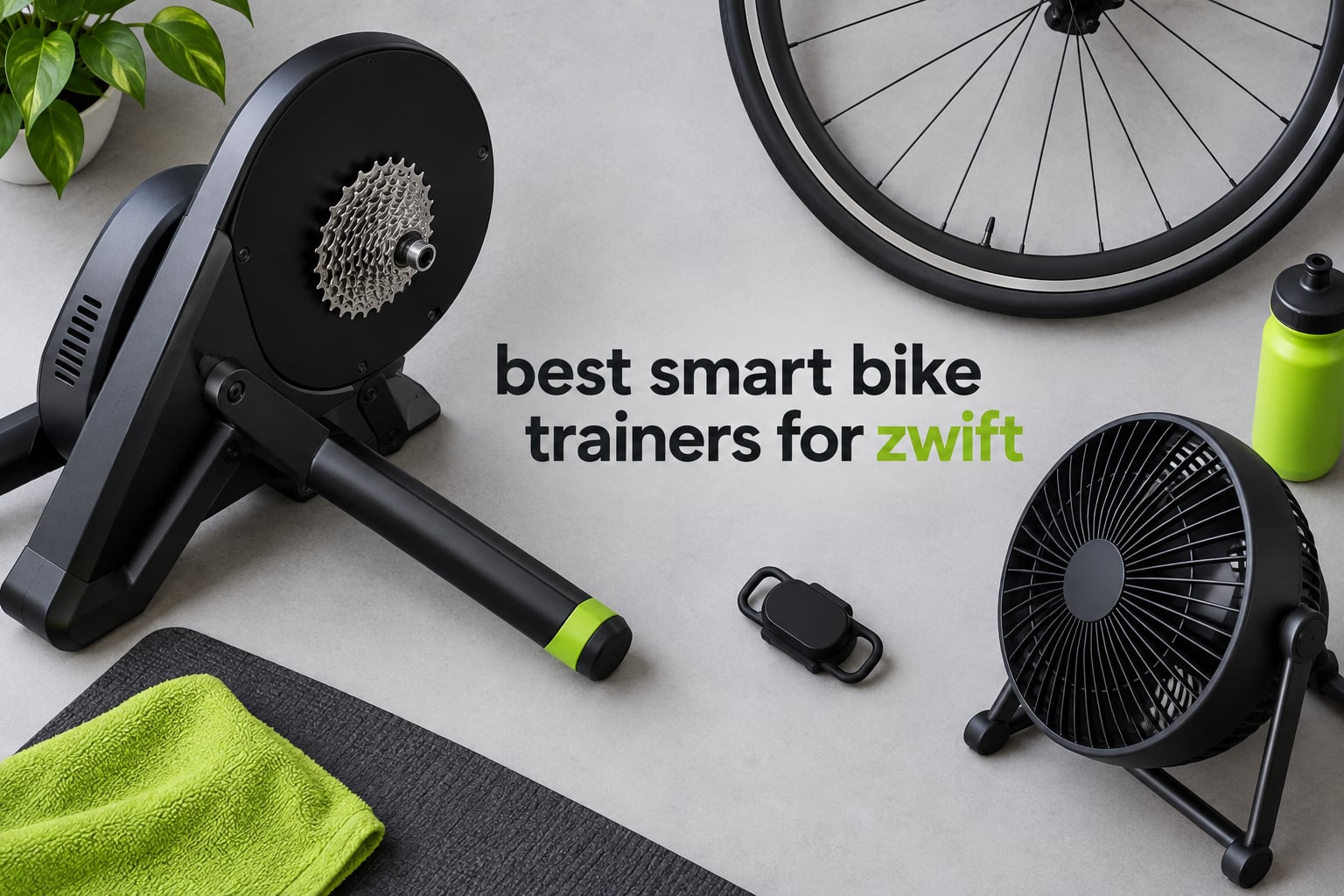
Finding the best smart bike trainers for Zwift comes down to three things: how accurate the power reading is, how quietly the unit runs, and whether it fits the bike you already own. The trainer is the one piece of hardware that decides whether your Zwift power profile, your race results and your FTP work mean anything.
Our short answer first. The Garmin Tacx Neo 2T is the best smart bike trainer for Zwift overall, with a 4.7 rating across 472 reviews, direct drive, magnetic resistance, ANT+ and Bluetooth, and a foldable frame. Riders on a tight budget who want a first Zwift setup should look at the Saris Fluid2 Smart Equipped, which pairs with Zwift through an included speed and cadence sensor. Riders who want the quietest possible direct drive with strong simulated climbs should step up to the ThinkRider XXPRO, rated 4.6 from 110 reviews with 2500W and a 25% gradient ceiling.
That is the short version. The rest of this guide walks through all twelve trainers we looked at, what each one is genuinely good for, and the compatibility checks that decide whether a given model works with your bike. We also cover the used market, the drivetrain questions that trip people up, and the smart bike versus smart trainer decision for households with no spare bike.
Table of Contents
Top 3 Smart Bike Trainers for Zwift in 2026

Garmin Tacx Neo 2T
- Direct drive
- 32 neodymium magnets
- 2200W load capacity
- ANT+ and Bluetooth
- foldable

ThinkRider XXPRO
- 2500W max resistance
- 25% gradient
- +/- 1% accuracy
- self-powered
- no calibration
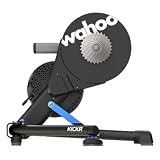
The Neo 2T takes the top slot on the strength of its review volume, not just its rating. At 472 reviews it carries far more long-term owner feedback than anything else in this roundup, and the consensus in that feedback is unusually consistent.
The XXPRO is the spec-sheet winner, with the highest wattage figure, the steepest gradient claim and self-power generation that lets it run away from a wall socket. The KICKR V6 wins on connection stability, where built-in 2.4 GHz Wi-Fi removes the dongles and dropouts that frustrate racers.
All 12 Smart Bike Trainers for Zwift Compared (October 2026)
| Product | Specifications | Action |
|---|---|---|
| Garmin Tacx Neo 2T Smart Trainer |
|
Check Latest Price |
 Saris M2 Smart Electromagnetic Trainer Saris M2 Smart Electromagnetic Trainer |
|
Check Latest Price |
 Tacx Flux S Smart Bike Trainer Tacx Flux S Smart Bike Trainer |
|
Check Latest Price |
 Saris Fluid2 Smart Equipped Trainer Saris Fluid2 Smart Equipped Trainer |
|
Check Latest Price |
 Wahoo KICKR ROLLR Indoor Trainer Wahoo KICKR ROLLR Indoor Trainer |
|
Check Latest Price |
 ThinkRider X2Max Smart Trainer ThinkRider X2Max Smart Trainer |
|
Check Latest Price |
| ThinkRider XXPRO Smart Trainer |
|
Check Latest Price |
 Elite Direto XR Interactive Smart Trainer Elite Direto XR Interactive Smart Trainer |
|
Check Latest Price |
| Wahoo KICKR V6 Smart Indoor Trainer |
|
Check Latest Price |
 Wahoo KICKR MOVE Smart Indoor Trainer Wahoo KICKR MOVE Smart Indoor Trainer |
|
Check Latest Price |
 XPLOVA NOZA V Smart Direct Drive Trainer XPLOVA NOZA V Smart Direct Drive Trainer |
|
Check Latest Price |
 Garmin Tacx NEO 3M Smart Trainer Garmin Tacx NEO 3M Smart Trainer |
|
Check Latest Price |
Two things stand out in that table. Only the Saris M2 and Fluid2 are wheel-on, which means every other entry gives you true power measurement rather than a speed-derived estimate.
The second pattern is gradient ceiling. Several trainers stop at 10% or 18%, while the XXPRO, NEO 3M and Direto XR reach 24% to 25%, which is what you want if your Zwift training is climbing-heavy.
1. Garmin Tacx Neo 2T – Best Overall Smart Trainer for Zwift
- Realistic direct-drive feel with true drivetrain inertia
- Exceptionally quiet for early or late sessions
- Convincing on steep climbs and descents
- Power output closely matches external meter pedals
- Simple setup with no calibration
- No cassette included so you buy and fit your own
- Thru-axle conversion instructions are hard to follow
- Some riders report unreliable cadence data
- Post-purchase setup support is weak
The Neo 2T is the trainer I recommend to anyone asking which single unit to buy for Zwift. It is a direct drive machine with 32 neodymium magnets and a 2200 watt load capacity, and that combination produces the most convincing road feel of anything in this list without the price of the newest flagships.
Owners consistently describe it as quiet, which matters more in a shared home than any spec sheet suggests. The 85% five-star share in its review pool reflects a machine that simply works, and the absence of a calibration step means you can go from unpacked to riding in minutes.
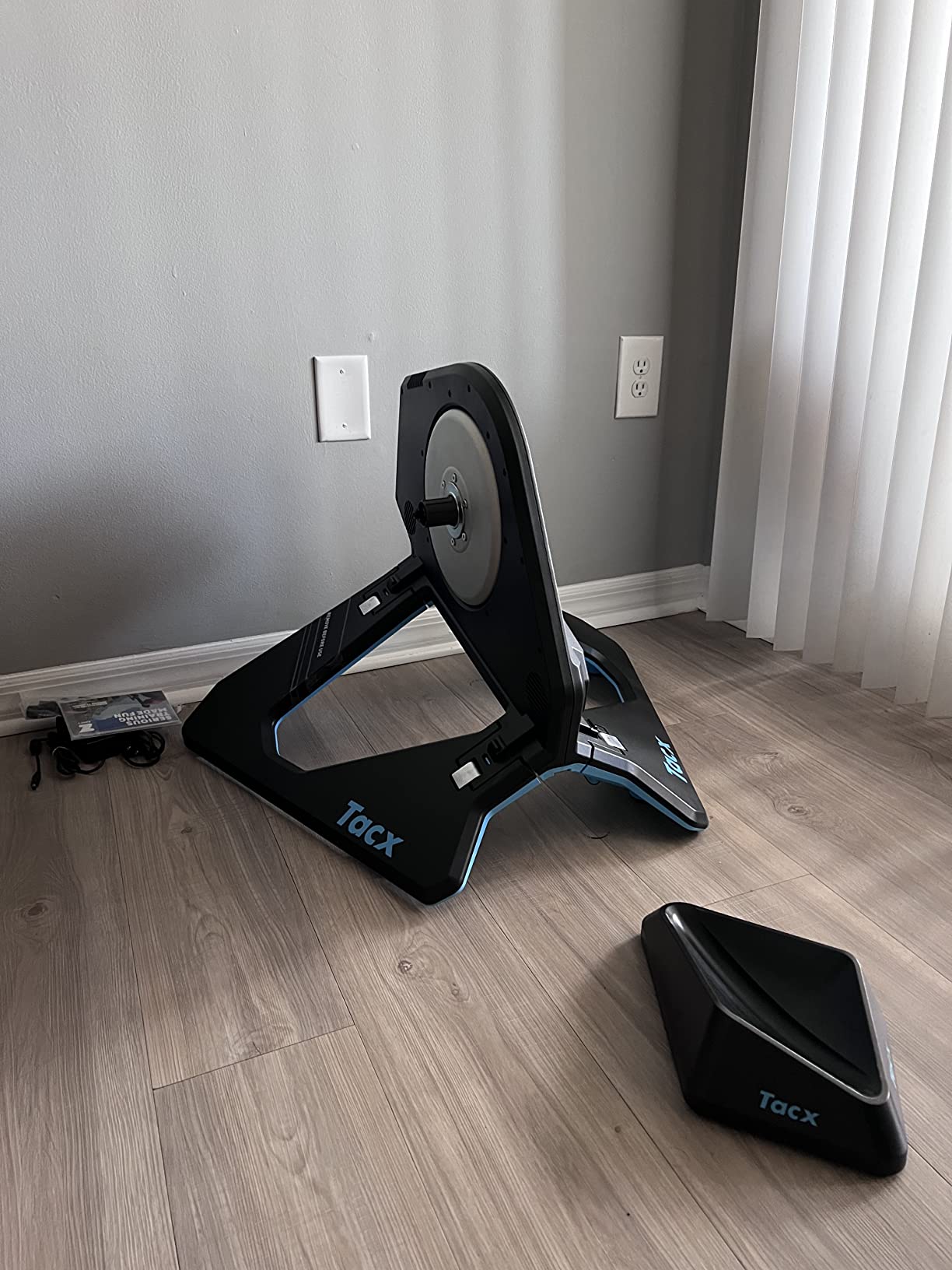
The honest caveat is the cassette. The Neo 2T ships without one, so you need to buy a cassette that matches your drivetrain and install it with tools, and the thru-axle conversion instructions are the part reviewers complain about most.
That is worth knowing before you commit, but it is a one-time cost and a one-time job. A few riders also report cadence data that reads erratically, and post-purchase setup support is described as weak, so budget time for the axle adapter work yourself rather than expecting a quick answer from support.
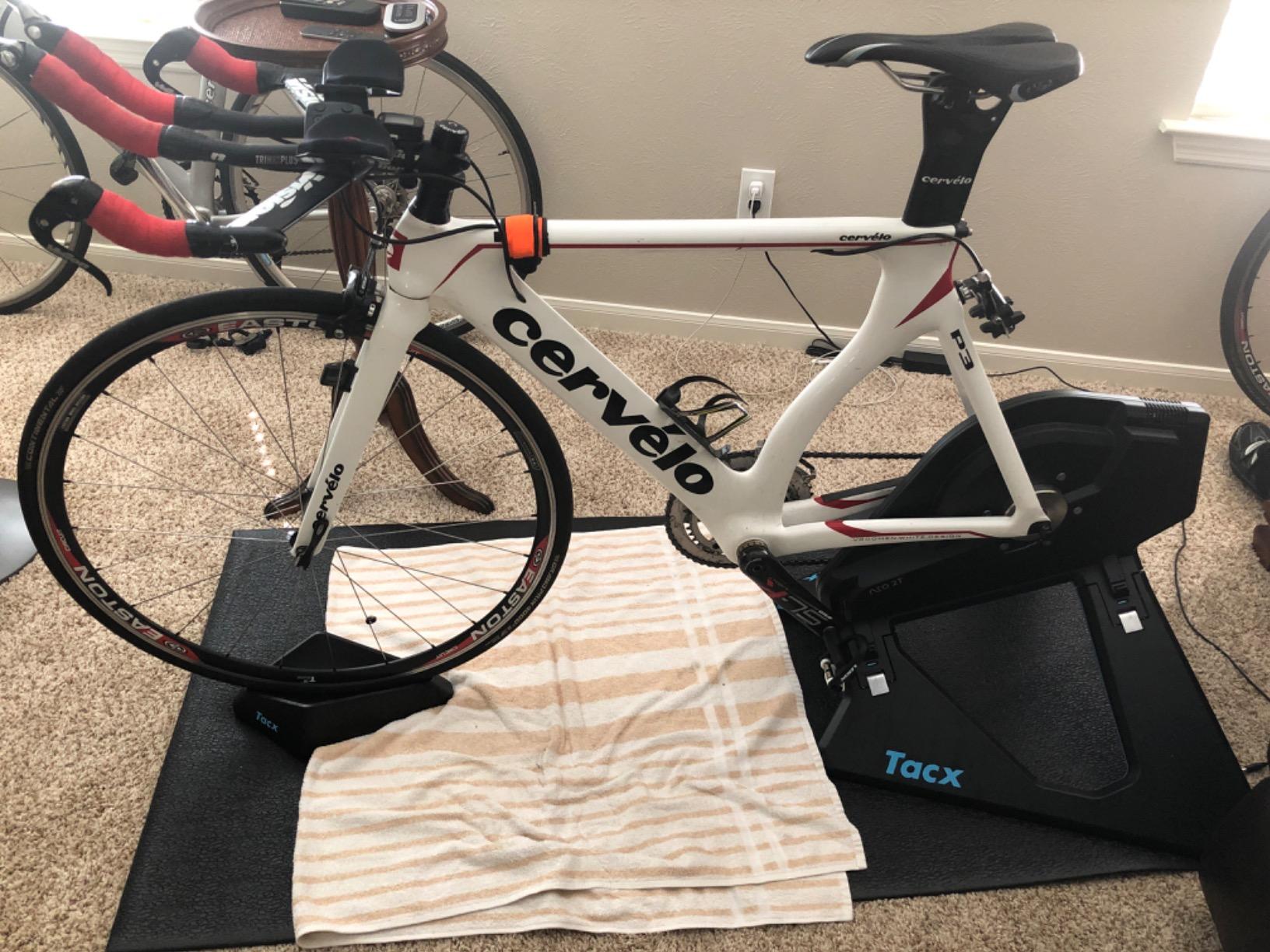
Is the Tacx Neo 2T accurate enough for racing?
Yes, and reviewers who compared it against external power meter pedals report that the readings line up closely. That accuracy is the reason it holds up in Zwift events where a drifting power number changes your result.
With 2200 watts of load capacity and a heavy flywheel, it also absorbs the surges that make cheaper direct drives feel abrupt when you stand up out of the saddle.
Who should not buy the Tacx Neo 2T?
Do not buy it if you need a trainer that arrives with a cassette, or if you want front and back movement that mimics real cornering. The KICKR V6 and KICKR MOVE add that side-to-side and fore-aft motion, and the NEO 3M goes further still.
It is also not the right pick for a household swapping two different groupsets, because the cassette swap is manual and you will be doing it every session.
2. Saris M2 Smart Electromagnetic Trainer – Best Zwift-Certified Wheel-On Pick
Saris M2 Smart Indoor Bike Trainer, Compatible with Zwift App, Black, Made in the USA
- Very affordable route into Zwift-certified smart training
- Wheel-on means no wheel or cassette removal
- Electromagnetic resistance gives consistent controlled workouts
- Reads as a simple top-tier trainer
- Dual ANT+ FE-C and Bluetooth pairs readily
- Accuracy of about +/- 5% trails direct drive units
- Noticeable whirring noise at speed
- Power control depends on wheel speed rather than measured power
- Thru-axle bikes need an extra adapter
The Saris M2 is the trainer I suggest when someone wants to try Zwift this winter without taking their drivetrain apart. It clamps onto the rear wheel, so nothing has to come off the bike, and the whole setup takes about as long as inflating a tyre.
It is Zwift-certified and broadcasts over both ANT+ FE-C and Bluetooth, with one month of Rouvy included as a trial. The 20-pound alloy steel frame and the limited lifetime warranty give it more long-term confidence than its rating of 4.1 from 471 reviews would initially suggest.
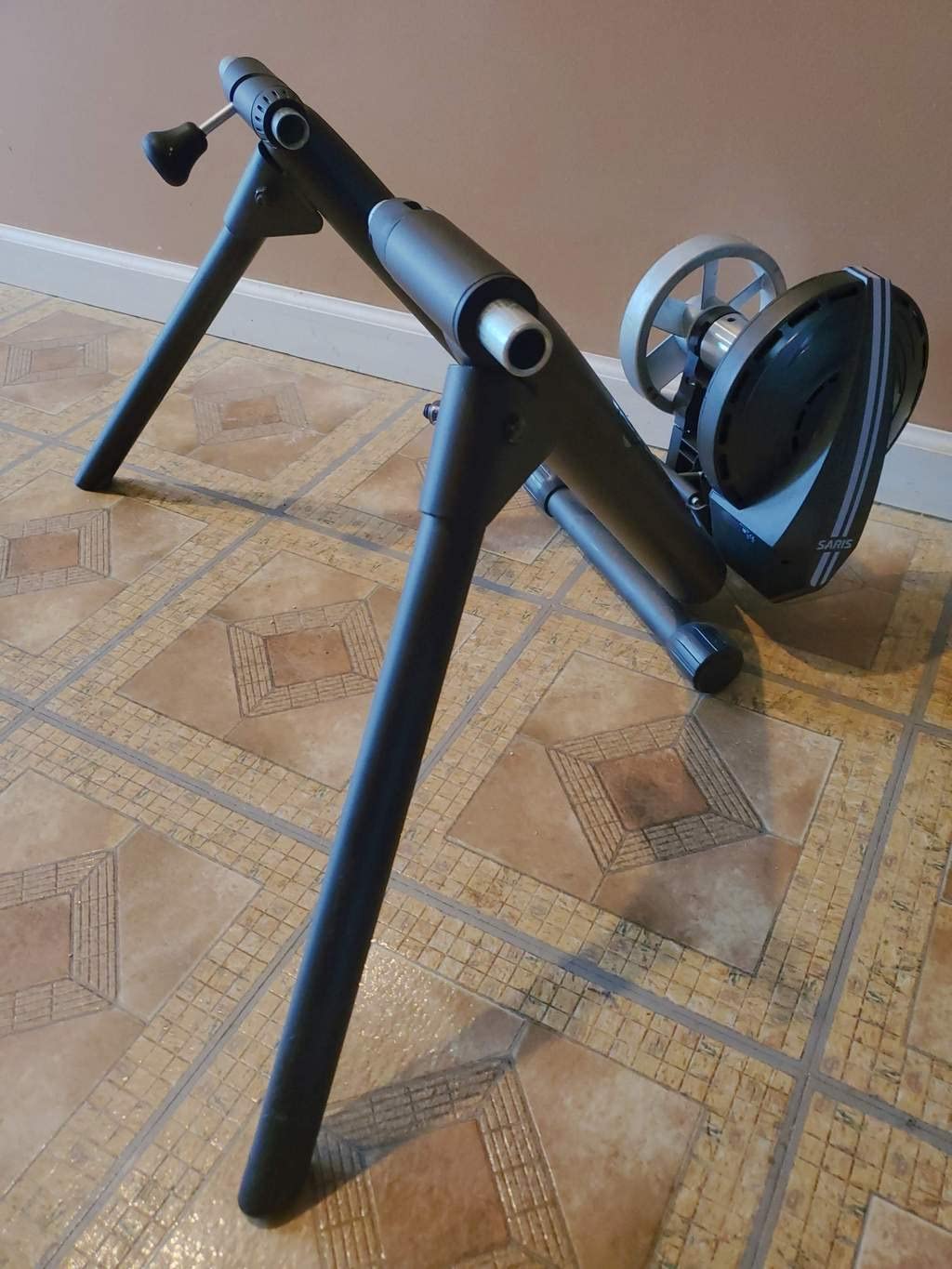
Where it gives ground is measurement. At roughly plus or minus 5% accuracy it reads noticeably less precise than a direct drive, and the resistance is inferred from wheel speed rather than measured at the axle, so Zwift has to work harder to hold a target power.
Owners also mention a whirring noise at speed, and thru-axle bikes need a separate adapter. If you ride a modern disc road bike or a mountain bike with a 12 mm axle, check that adapter before ordering.
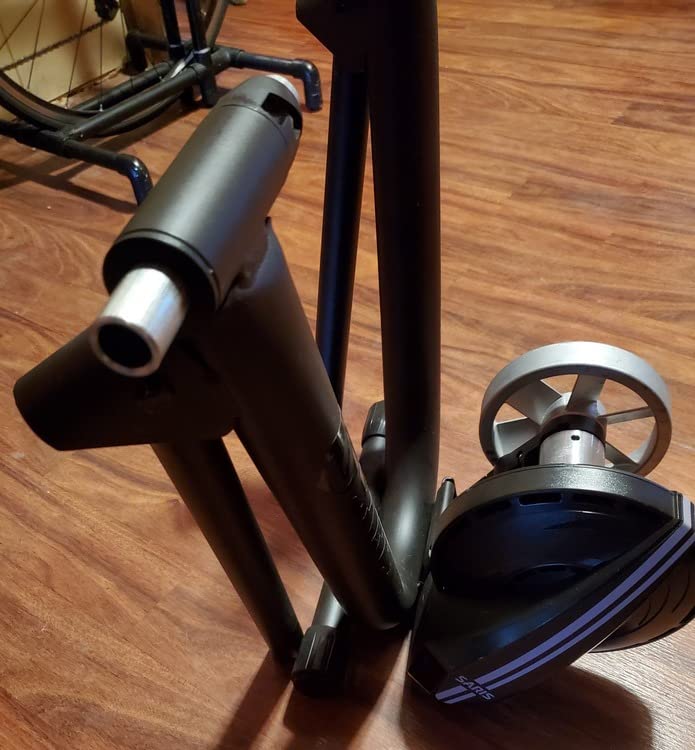
Is a wheel-on trainer good enough for Zwift racing?
It is good enough for group rides, endurance sessions and casual racing. It is not good enough if you care about your Zwift power profile being precise, because the plus or minus 5% error band is wide enough to change your category.
Treat the M2 as a gateway unit. Riders who later want structured FTP work with tight wattage targets should move up to a direct drive.
Who should look elsewhere?
Racers chasing a personal best, riders who train in a quiet apartment at odd hours, and anyone whose accuracy expectations are set by a power meter on their bike should skip this and go direct drive.
It also makes no sense as a shared trainer for two riders on different drivetrains, because the rear wheel has to be swapped each time rather than a cassette.
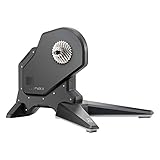
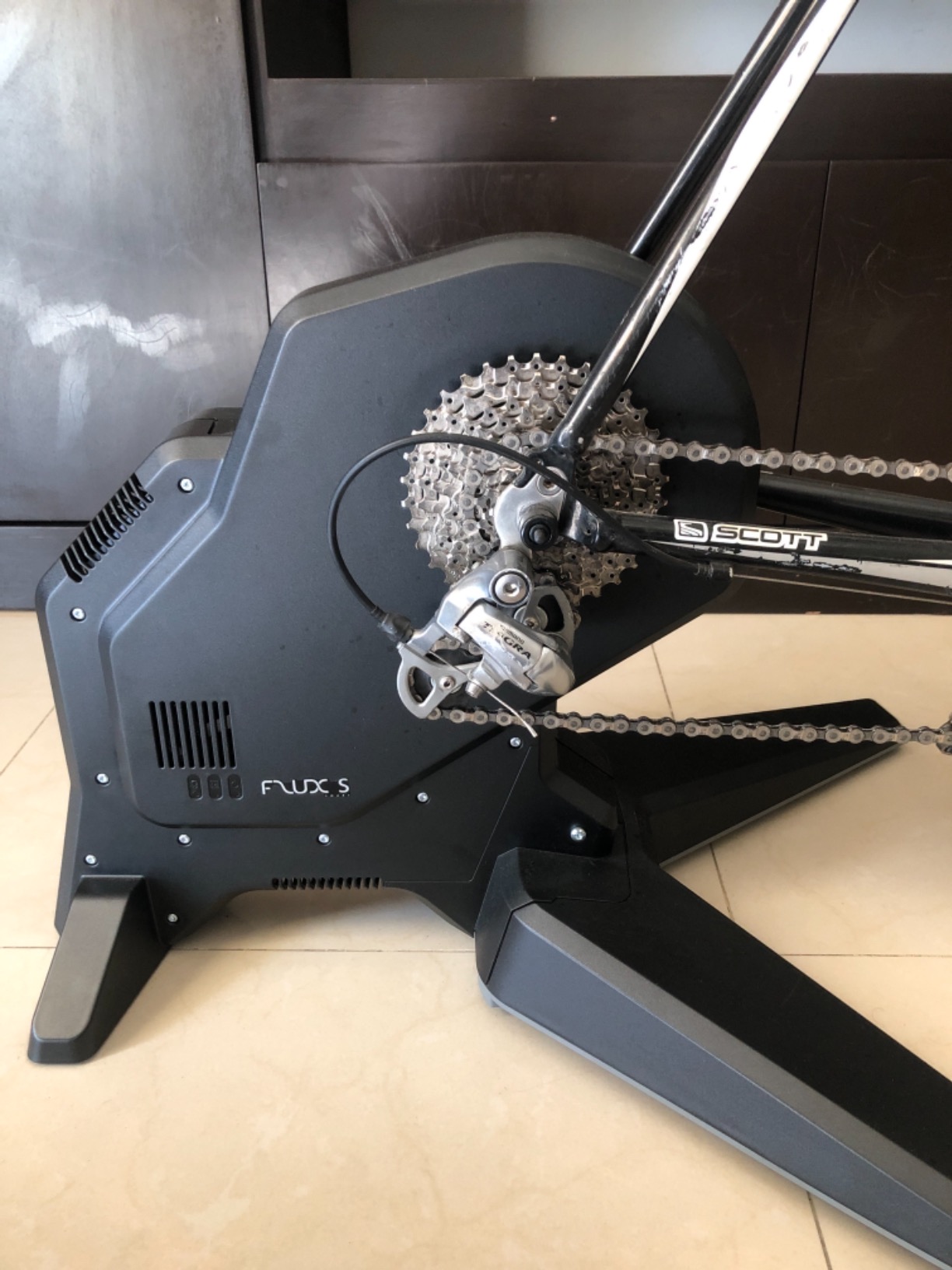
3. Tacx Flux S – Best Legacy Direct Drive for Quiet Structured Training
- Near-silent direct drive operation
- Power measurement accurate to within 3%
- Stable enough to stand and sprint on the pedals
- Widely compatible with Zwift and Tacx apps
- Gradient simulation tops out at 10%
- Heavy at 50 pounds and hard to move between rooms
- Less refined lateral feel than current Neo hardware
- Older design against the newer Neo generation
The Flux S is the trainer I would buy if quiet structured intervals matter more to you than simulating a mountain road. It is described in its own spec sheet as next-to-silent, and that has a real effect on whether anyone else in your home can sleep while you train.
Power measurement within 3% accuracy is close enough to a direct-drive benchmark that most riders will not notice the gap in day-to-day workouts, and 275 reviews at 4.3 show a well-established ownership record.
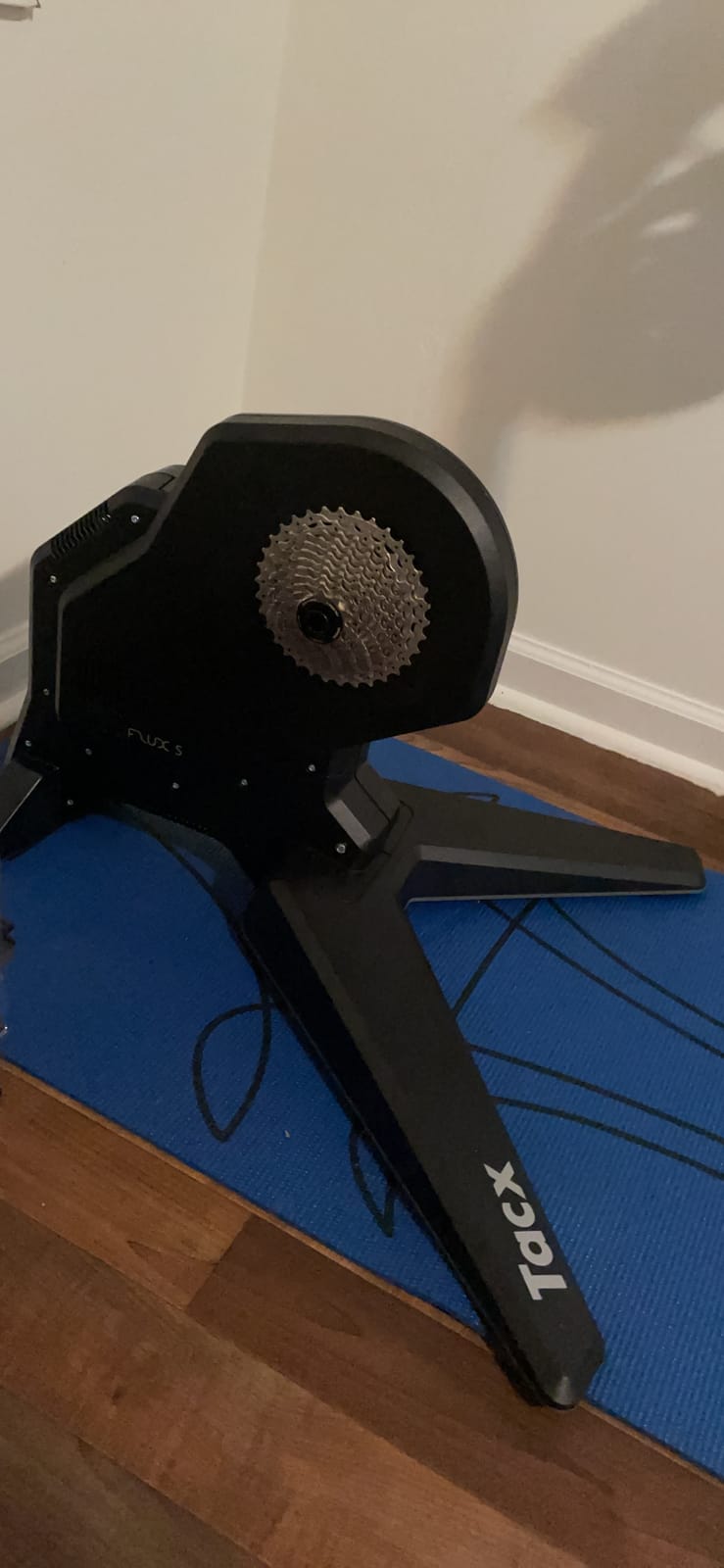
The limitation that decides the purchase is the 10% gradient ceiling. Zwift routes that climb harder than that will not be reproduced faithfully, and for a rider whose training is built around climbing that is a genuine gap.
It also weighs 50 pounds, which makes moving it between rooms a two-person job, and reviewers consistently prefer the lateral movement feel of the newer 2T.
How much gradient do I actually need for Zwift?
Under 10% covers most flat and rolling Zwift routes, and plenty of group riding. Above 10% is where the difference starts to matter for anyone training specifically for climbing.
If you follow the Alpe du Zwift or spend your sessions on long ramp climbs, treat 10% as the floor rather than the target.
Who should not buy the Flux S?
Climbers, racers on the steepest Zwift segments, and anyone in a small flat without help lifting heavy equipment. The 50-pound frame is the practical blocker more often than the specs.
A newer direct drive with a deeper gradient ceiling and a lighter frame will serve almost everyone else better.
4. Saris Fluid2 Smart Equipped – Best Budget Way Into Zwift
Saris Fluid2 Smart Equipped Indoor Bike Trainer, Includes Speed Sensor, Made in The USA
- Low-cost reliable way to connect a bike to Zwift
- Fluid resistance gives a wide range and road-like feel
- Folds flat for storage and travel
- Sturdy and leak-free over long distances
- Quiet enough to watch a film while riding
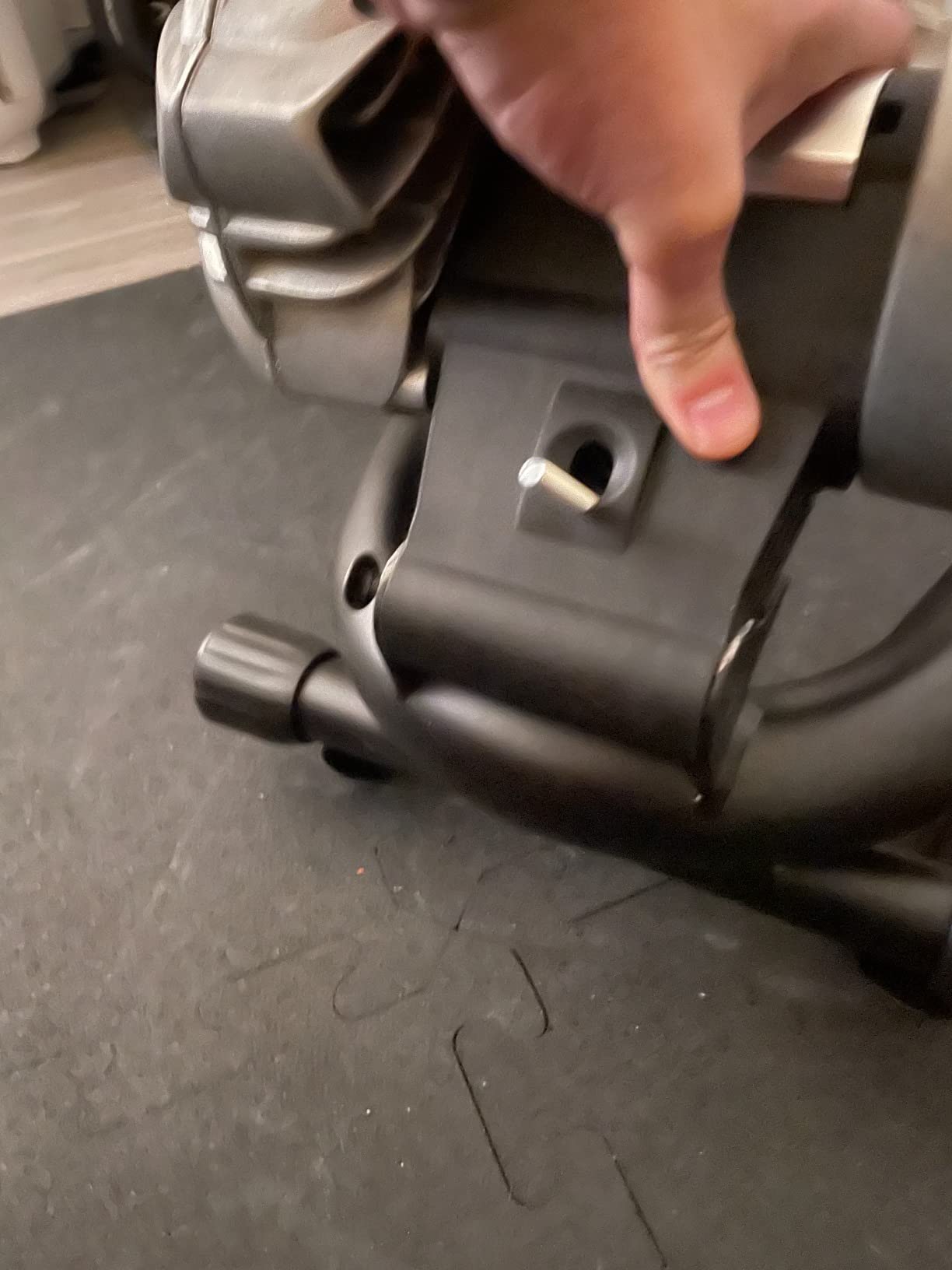
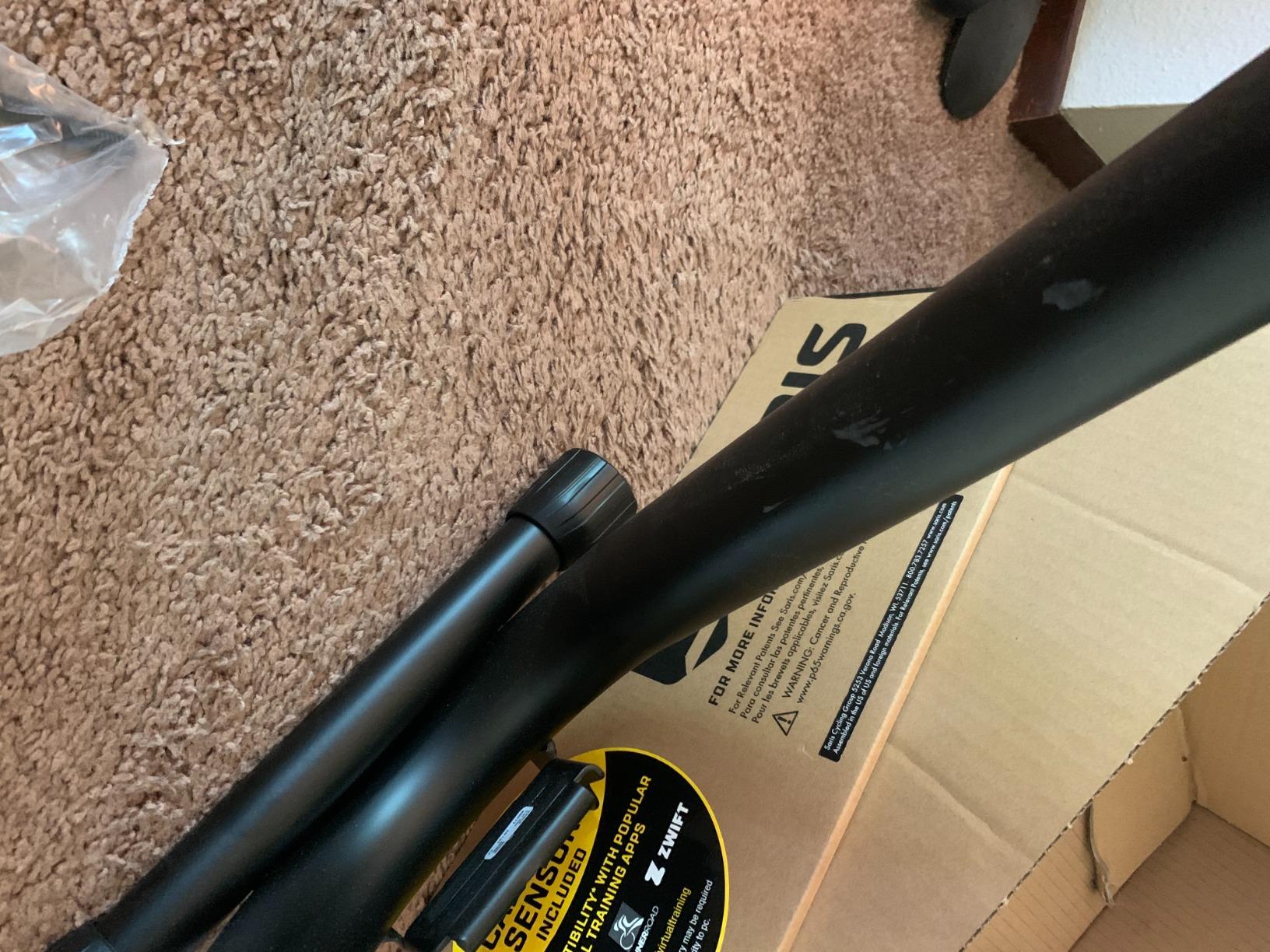
- Assembly is fiddly with parts that need a mallet to seat
- Only tracks speed and cadence rather than true power
- The front wheel block is low and can strain wrists
- Thru-axle bikes need a separately sold adapter
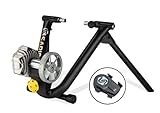
The Fluid2 Smart Equipped is the trainer I point people at when the question is whether Zwift is worth getting into at all. You add the included speed and cadence sensor, connect it in the app, and you are riding that evening, which no other entry on this list makes quite so cheap.
It is also the most portable unit here at 7.3 pounds, and it folds flat enough to live in a cupboard or travel in a car. The fluid resistance gives a naturally progressive feel that reviewers describe as road-like.
The compromise is real and you should hear it before buying. Without a power meter, Zwift can only control this trainer by reading your wheel speed, so climbs and resistance targets are approximations rather than measurements.
Assembly is the other stumbling block, with owners reporting pieces that need lubricant or a mallet to seat properly, and a few units arriving without the sensor components. The low front wheel block is the quiet sleeper issue, since it can leave your wrists and forearms aching on longer rides.
Can you use Zwift with a regular bike and a basic trainer?
Yes. The Fluid2 is exactly that combination, and it will run Zwift routes, group rides and most training blocks. What you lose is power-based control, structured intervals in watts, and any accurate power reading.
It is a good first step, and a good seasonal trainer for a rider who already knows their own effort by feel.
Who should skip the Fluid2?
Anyone chasing FTP numbers, anyone training toward a race, and anyone whose bike has a thru-axle and who does not want to buy an adapter separately. Disc and mountain bike riders fall into that last group.
Riders in shared flats should also weigh the 69 dB figure at 20 mph, which is audible well beyond the room.
5. Wahoo KICKR ROLLR – Best Trainer for Riders Who Prefer Rollers
- Simplest Wahoo setup with the bike riding on top
- Feels familiar to anyone who already trains on rollers
- Compact and stable footprint for an apartment
- Plugs into the Wahoo app ecosystem
- A roller cannot simulate gradients or control resistance
- Heaviest item in its class at 25 kg
- Provides no power measurement for structured training
- Not a substitute for a smart trainer in Zwift workouts
I want to be straight about where the KICKR ROLLR fits, because it is the odd one out in this roundup. It is a magnetic roller rather than a resistance unit, so the bike sits on top and moves freely instead of clamping to a controlled motor.
If you trained on rollers before and know that feel, that familiarity is the entire appeal. Reviews at 4.0 from 118 owners describe a stable, uncomplicated machine that disappears under you.
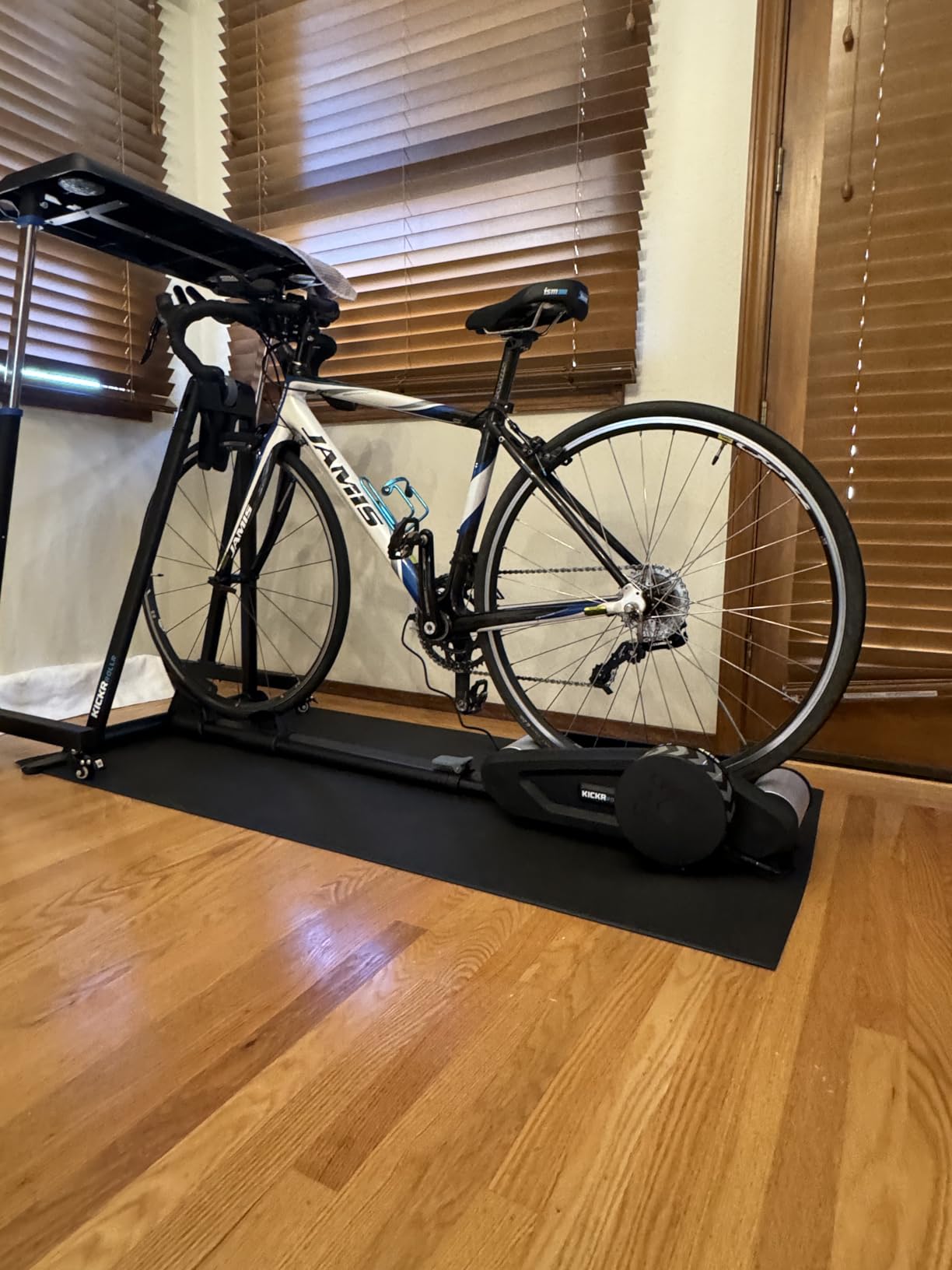
What it cannot do is the thing Zwift needs most. With no resistance control and no gradient simulation, Zwift cannot hold a target power or take you up a simulated climb, and there is no power measurement for structured training.
At 25 kg it is also the heaviest item here despite being the simplest mechanism, so the small-footprint argument comes with a catch if you need to move it between rooms.
Is the KICKR ROLLR a smart trainer for Zwift?
No. It connects to the Wahoo app, but it is not a controllable resistance unit and it does not deliver the power data that Zwift training needs. It suits riding and cadence work, not intervals or racing.
If your goal is structured FTP training, choose a direct drive instead and accept the larger footprint.
Who should buy it anyway?
Riders who want to keep the sensation of rollers, work on cadence and pedal form, or train technique without a motor fighting their legs. It also works for anyone swapping bikes constantly because nothing has to be unclamped.
It pairs sensibly with a power meter on the bike if you want numbers from another source.
6. ThinkRider X2Max – Best Budget Direct Drive for Zwift
ThinkRider X2Max Smart Bike Trainer,2000w,Simulates 18% Slope,ANT + & BLE
- Power reads accurate to about 2% of stated wattage
- Very quiet at roughly 58 dB so you can ride with audio
- Quick painless Bluetooth and ANT+ pairing with Zwift and Rouvy
- Convincing 18% gradient simulation
- Carrying handle makes it easy to move between rooms
- Cassette is not included and must be matched to your bike
- Short feet can feel tippy when standing and applying power
- Some chain noise from a hub that may not spin true
- Hub spacer documentation is thin
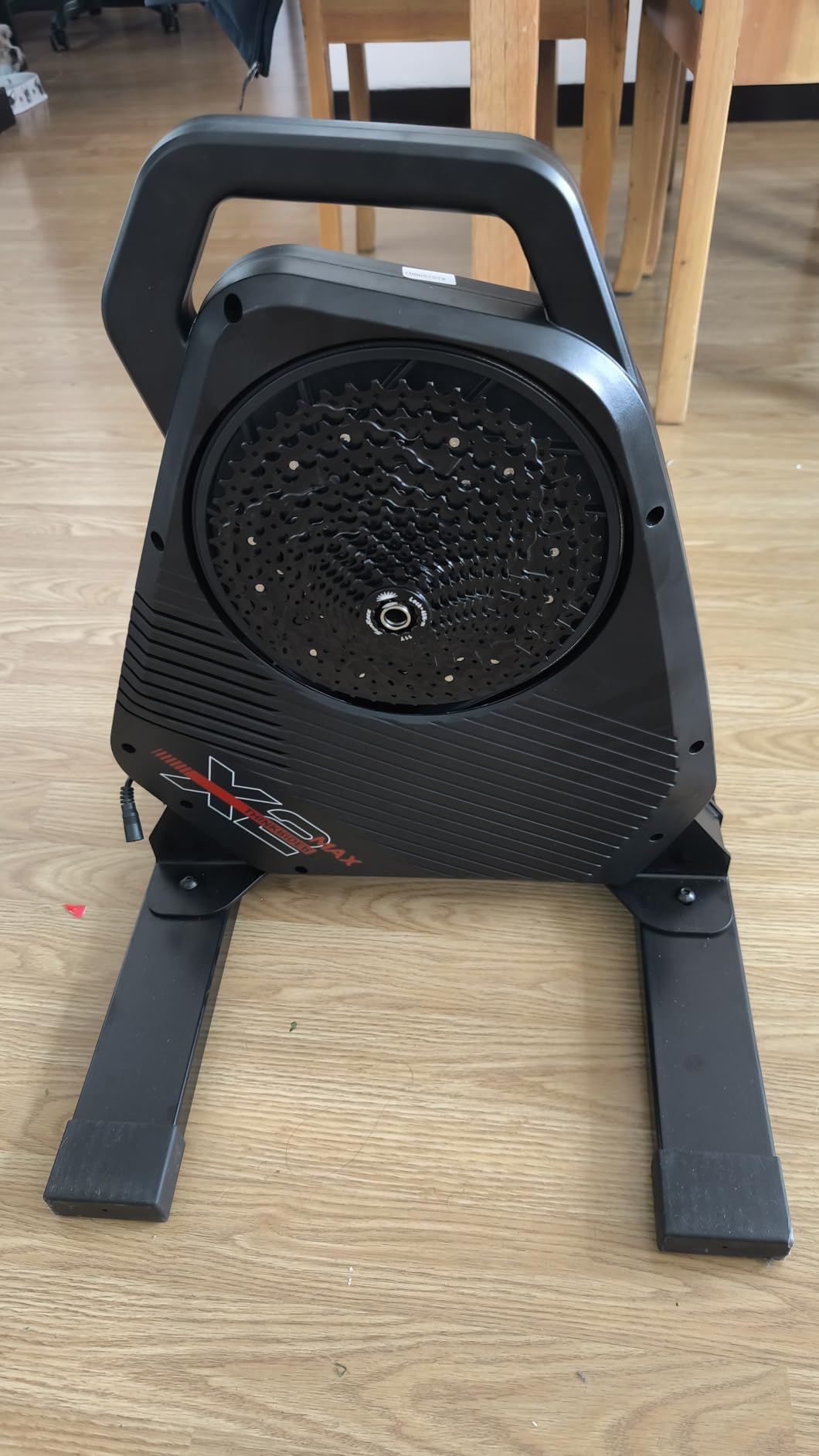
The X2Max is the trainer I recommend to riders moving up from a wheel-on unit without spending flagship money. It is direct drive, electromagnetic, and reads within about 2% using a torque-based sensor, which is a genuine step change from the plus or minus 5% world of wheel-on trainers.
It simulates up to an 18% gradient, handles 2000 watts, and pairs over both Bluetooth and ANT+ with Zwift, Rouvy and MyWhoosh almost instantly. Owners call it the best smart trainer at its price point, and the 4.5 average from 114 reviews backs that up.
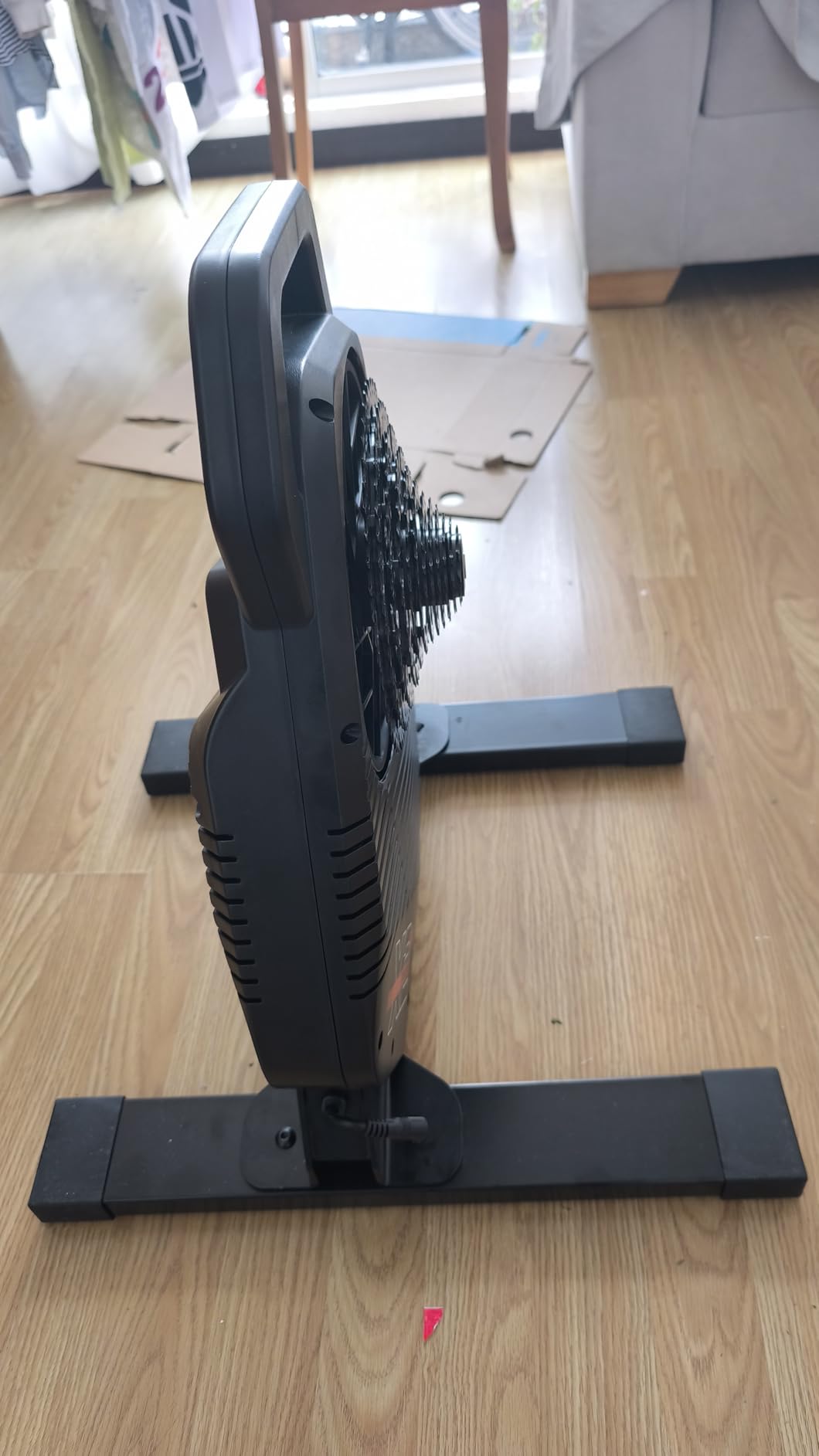
Two practical notes. The cassette is sold separately and has to match your bike, and the short feet can feel tippy when you stand up and put real power through the cranks, which matters during sprints.
Some owners also report chain noise from a hub that does not spin perfectly true, and the instructions for fitting hub spacers are described as thin, so allow yourself an evening.
Is the X2Max accurate enough for Zwift training?
Yes for steady-state and threshold work, which is where most FTP sessions live. At roughly 2% error it is inside the band where trainers are considered accurate.
If you are chasing a personal best in a race where a couple of watts decide the placing, check that figure against your own reference meter before you trust it.
Who should not buy the X2Max?
Riders who want the deepest climbs. An 18% ceiling is respectable, but it is shallower than the 24% and 25% units, and the short feet are a real drawback for anyone who trains out of the saddle regularly.
Very tall riders should also weigh the load capacity against your all-in bike weight.
7. ThinkRider XXPRO – Best Direct Drive for Steep Zwift Climbs
ThinkRider XXPRO Smart Bike Trainer,2500W,25% Gradient,ANT + & BLE(Black)
- Self-generating power means it works without a power cord
- Excellent +/- 1% power accuracy with no calibration step
- Very quiet
- quieter than the chain alone
- Freewheels like a real bike when you stop pedalling
- Handles 25% gradients and stable standing climbs
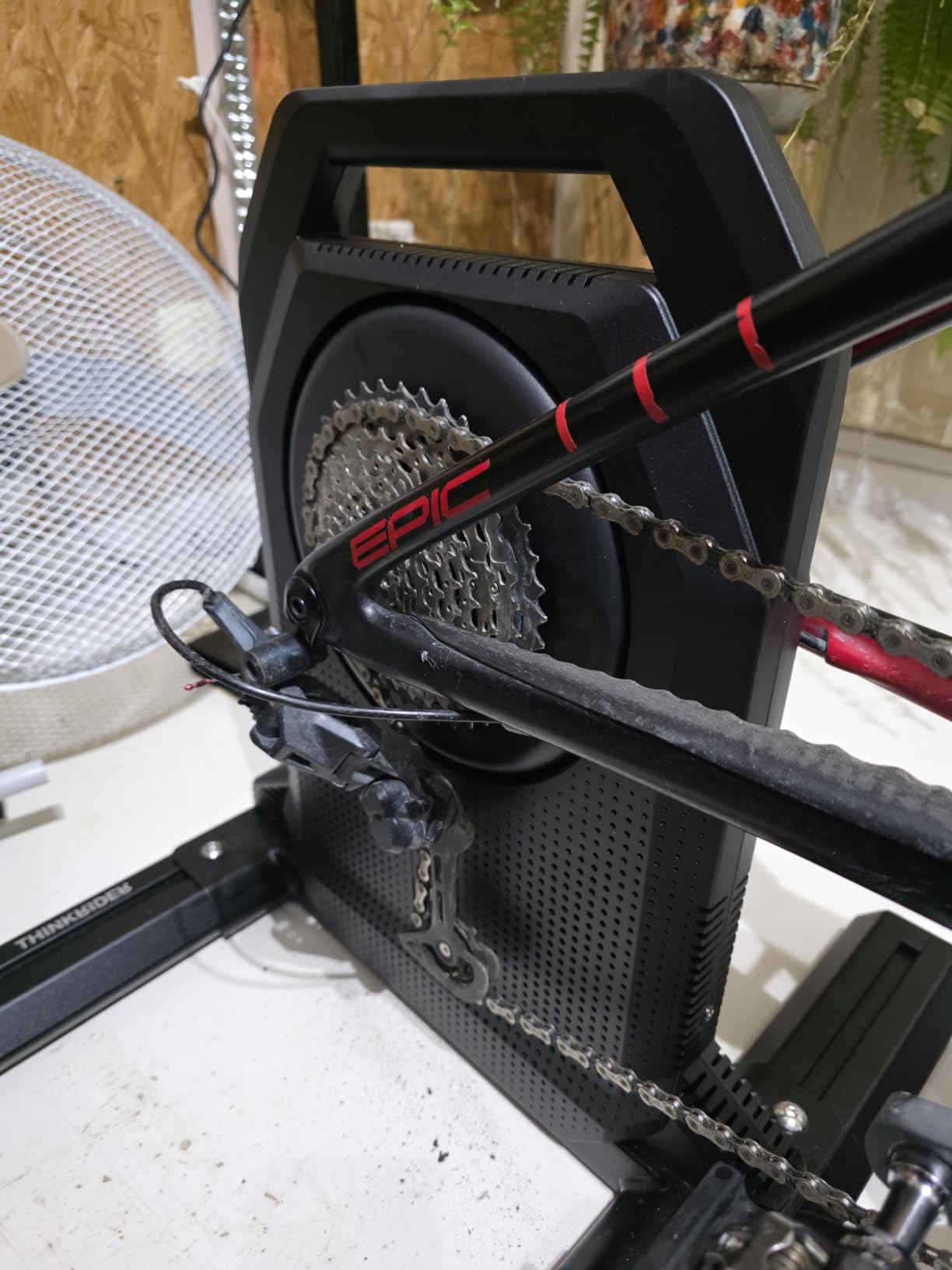
- Cassette and the 7-speed cassette spacer are not supplied
- No virtual shifting support in Zwift
- Supplied cross-rail screws can be too short to thread fully
- Can feel like it slips at low speeds under heavy load
The XXPRO is the spec-sheet leader of this group, and the difference it makes is most obvious on long climbs. At 2500 watts of resistance and a 25% gradient ceiling with downhill simulation, it is the trainer I would pick for Zwift riders chasing the Alpe or any of the long ramp segments.
Power accuracy is stated at plus or minus 1% with no calibration needed, and owners describe it as quieter than the chain alone, which is a remarkable result. The self-power generation means you can position it anywhere without thinking about a socket.
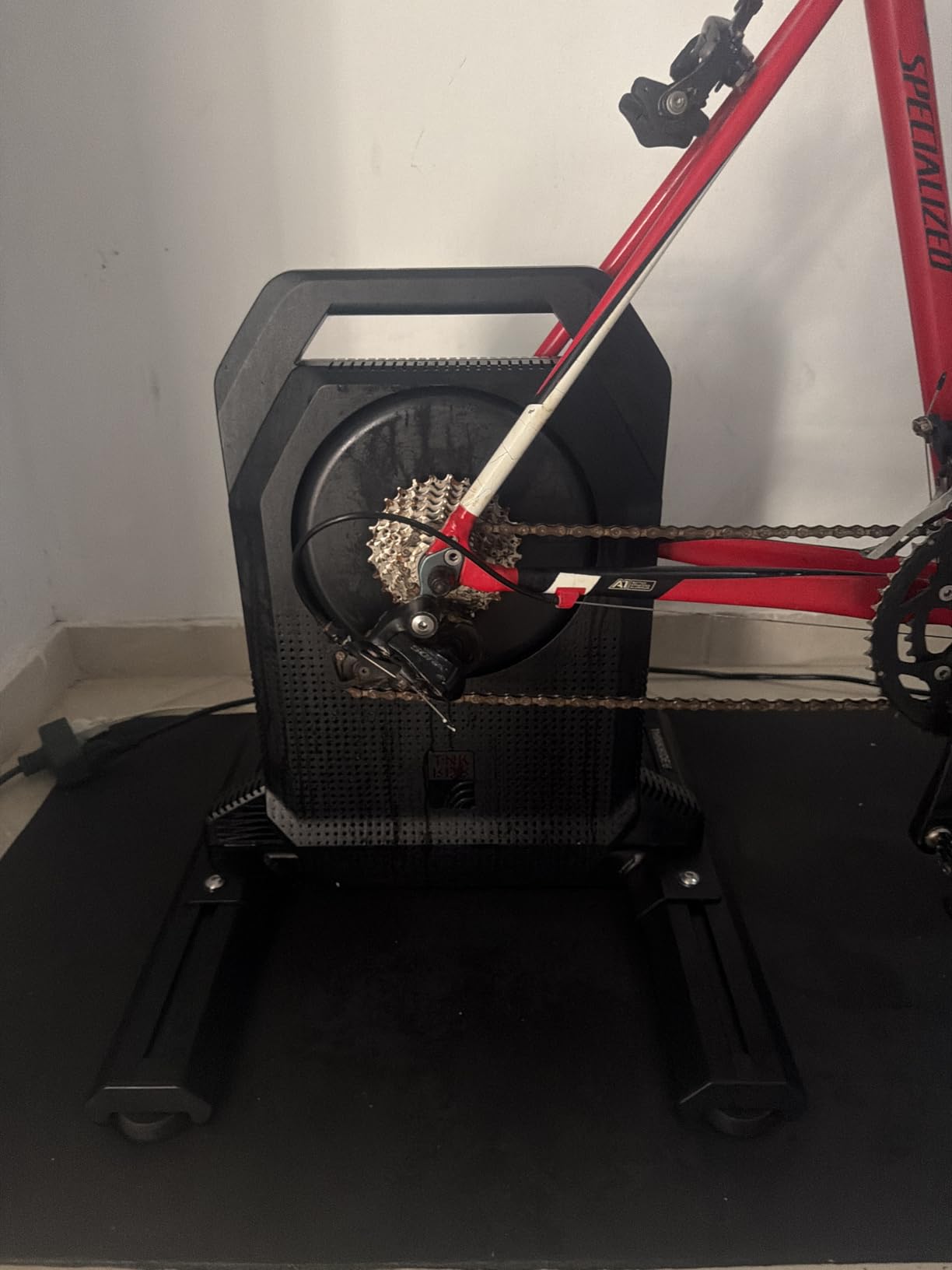
The headline feature also carries the main limitation: without a power cable, some units occasionally fail to connect over PC Bluetooth without an external adapter, so test pairing on your actual computer before you commit to it.
You also have to buy a cassette and possibly a cassette spacer, and some owners report a slipping sensation at low speeds under heavy load. The cross-rail screws supplied can be too short to thread fully, which is a small fix with better hardware.
Does the XXPRO support virtual shifting in Zwift?
No, and this is worth knowing before you buy. Reviewers specifically flag the lack of virtual shifting support, so you will be physically shifting your own cassette rather than letting Zwift shift for you.
That is a genuine downgrade in feel for racers, and it is the main reason this trainer sits below our top pick despite the stronger headline numbers.
Who should buy the XXPRO?
Climbers, triathletes running brick sessions on a steep gradient profile, and anyone training in a room where the power cable would be in the way. The 25% ceiling covers essentially every Zwift climb you would want to replicate.
Racers who want on-bike shifting in Zwift should look at a trainer with a compatible freehub and a Zwift Cog setup instead.
8. Elite Direto XR – Best Trainer for 9 to 12 Speed Bikes
ELITE SRL Direto XR Black Bike Trainer, Interactive, 24% Simulated Gradient, Electronic Resistance, Compatible with Gravel, Mountain, City Bikes
- High precision optical torque sensor with +/- 1.5% accuracy
- Handles very steep simulated climbs up to 24%
- Broad drivetrain compatibility across road gravel and mountain bikes
- Connects over both ANT+ FE-C and Bluetooth
- Includes a 12-month Elite training subscription
- Bulky 40-pound frame with a large storage footprint
- Additional axle adapters and 12-speed freehubs sold separately
- Sits above the price of comparable direct-drive rivals
- Some users report grinding noise when pedalling out of the saddle
The Direto XR earns its place through cassette compatibility more than headline specs. It accepts 9 to 11 speed Shimano and SRAM, 12 speed Shimano road, and SRAM NX and SX Eagle, which makes it the safest choice in this roundup for a household with more than one bike.
The built-in optical torque sensor reads within plus or minus 1.5%, climbs simulate up to 24%, and it broadcasts over both ANT+ FE-C and Bluetooth to Zwift and TrainerRoad. A 12-month Elite training subscription is included.
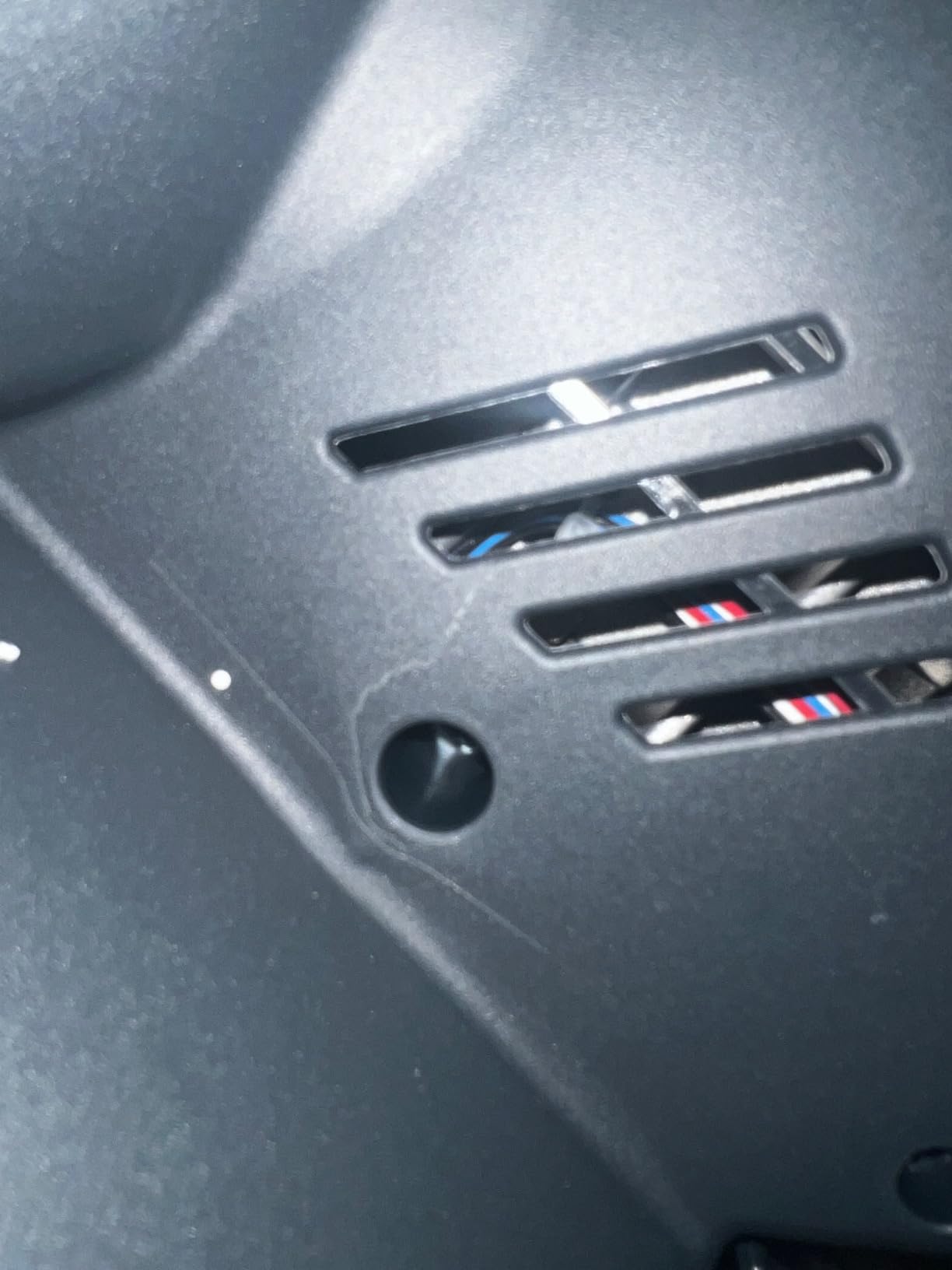
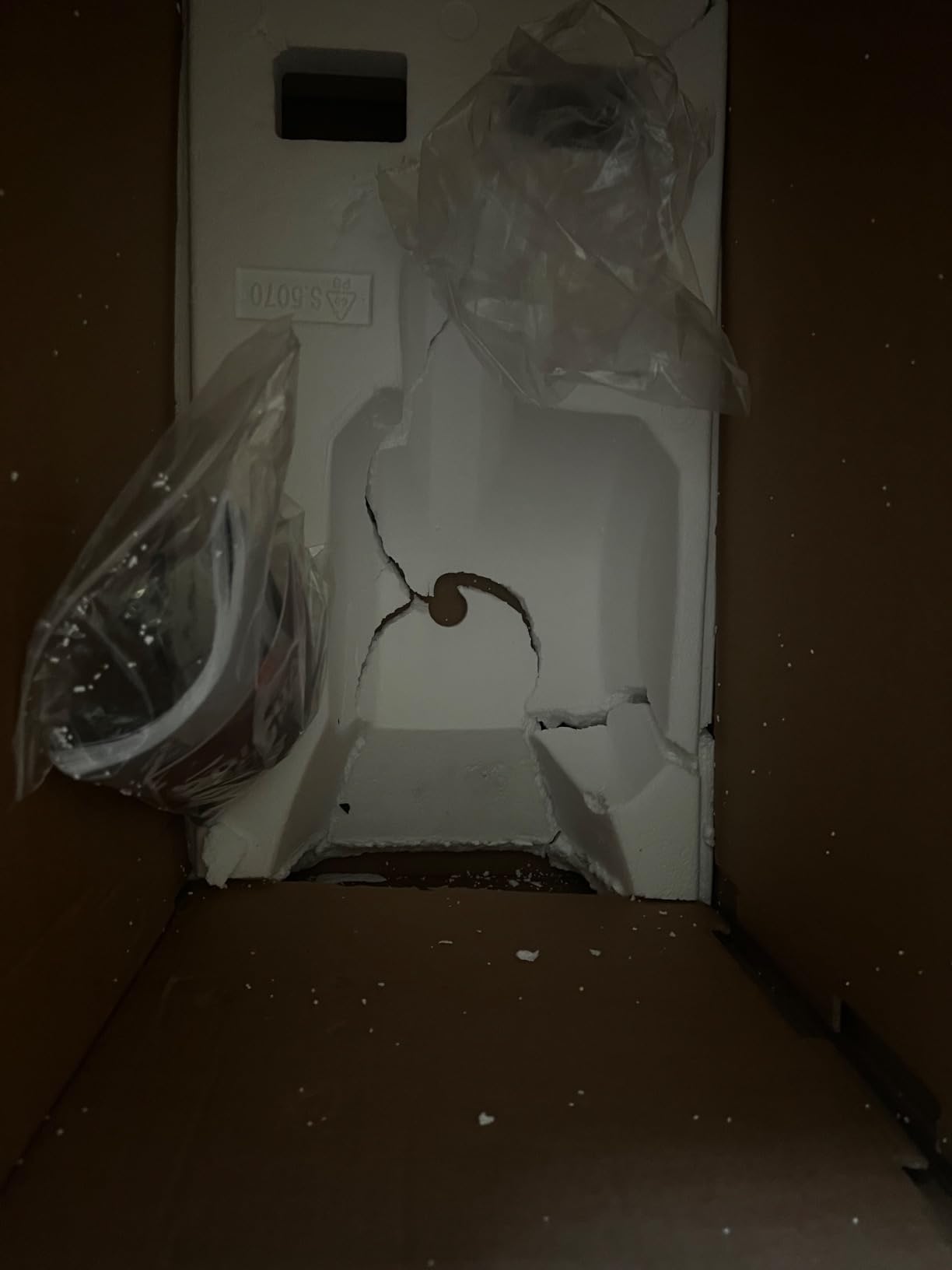
The 40-pound frame is the drawback that shows up in a small room, and the box measures large enough that storage is worth thinking about before it arrives. Some adapters and 12-speed freehubs are sold separately, so a 12-speed bike may still need an extra purchase.
A small minority of users also report grinding or resistance noise when pedalling out of the saddle, and several reviewers note it sits above the price of newer direct-drive rivals for similar measured accuracy.
Will my drivetrain fit the Elite Direto XR?
Almost certainly. Quick-release 130 mm and 135 mm and 142 by 12 mm thru-axle are supported, and the included freehubs cover Shimano and SRAM 9 to 11 speed plus 12 speed Shimano road and SRAM Eagle.
Check the freehub body for an unusual groupset, because that is the one case where a separate purchase may be needed.
Who should not buy the Direto XR?
Riders with limited floor space or anyone who needs to carry the trainer between rooms. At 40 pounds in a large frame, it is one of the hardest here to move and one of the biggest to store.
If you ride one bike and want the most refined ride feel per pound spent, a lighter, more compact trainer is the better buy.
9. Wahoo KICKR V6 – Best for Dropout-Free Race Data
- Stable 2.4 GHz Wi-Fi connection with no dropouts
- Power accuracy within +/- 1% across 2200W
- AXIS feet add natural side-to-side movement
- Automatic calibration with no manual steps
- Well regarded ride feel from the high-inertia flywheel
- One of the more expensive smart trainers available
- Heavy at 22 kg and awkward to carry between rooms
- Substantial floor space once the bike is on it
- Only a one-year manufacturer warranty
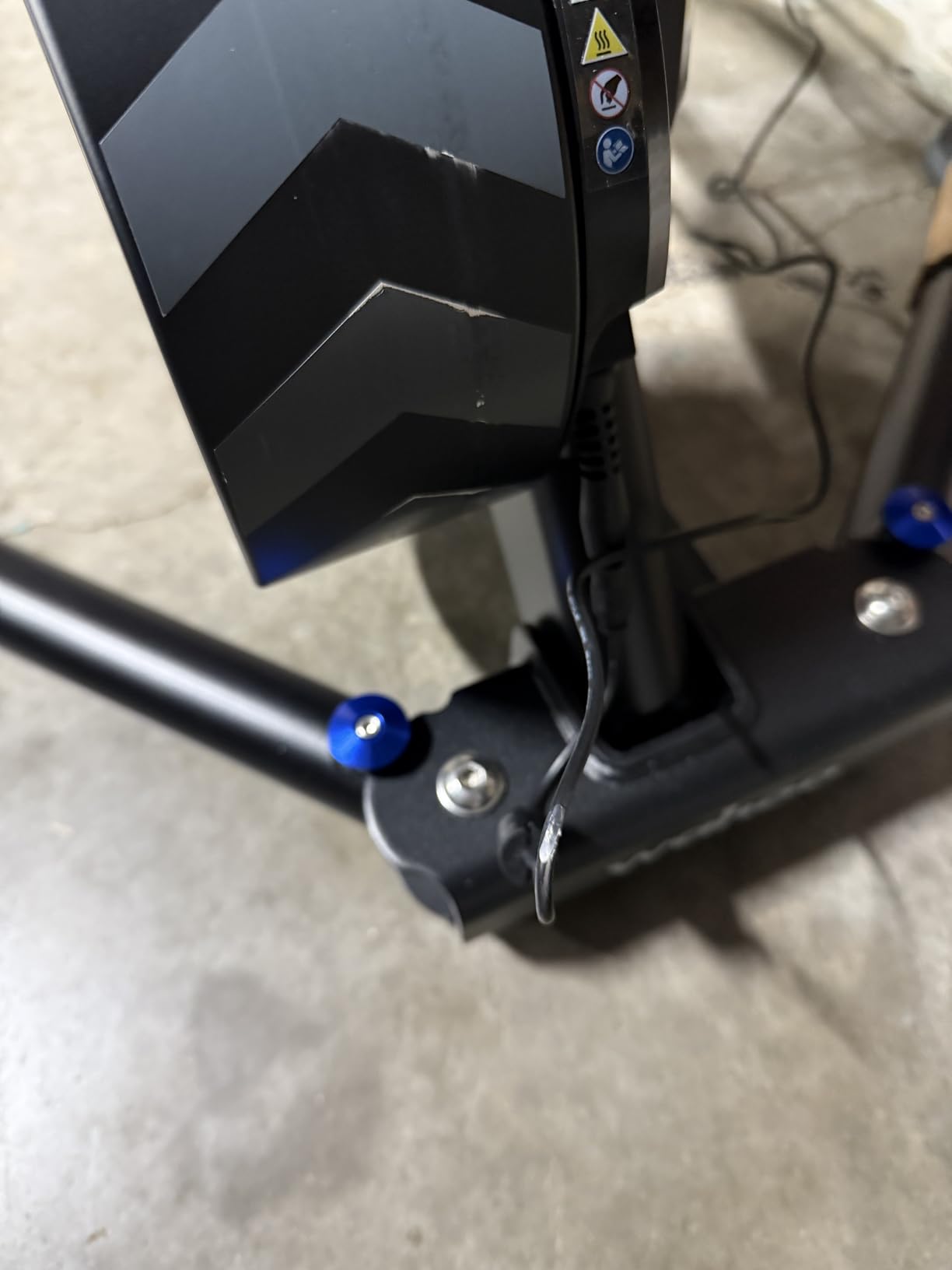
The KICKR V6 is the trainer I recommend to racers whose result depends on the data link. It uses 2.4 GHz Wi-Fi rather than relying on Bluetooth, and reviewers single out the stable connection and the absence of dropouts as the thing that makes it different in a race.
The accuracy figure is 2200 watts of resistance within plus or minus 1%, with automatic continual calibration so there is no manual step, and the adapter kit covers quick-release, 12 by 142 mm and 12 by 148 mm thru-axle out of the box.
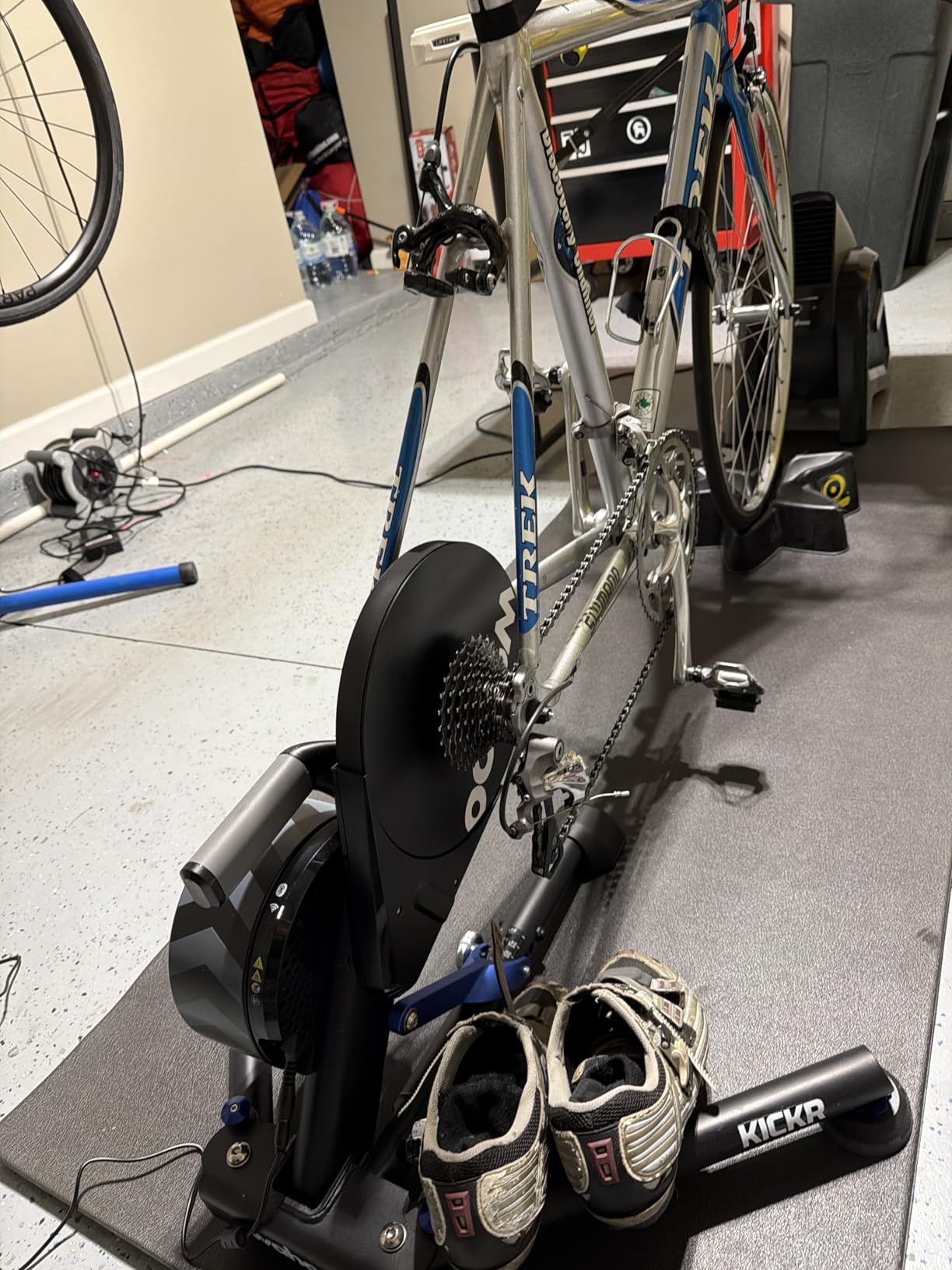
The AXIS feet add side-to-side movement that mimics real riding and eases lower back fatigue on long sessions, which riders consistently single out as a comfort feature rather than a gimmick.
What you give up is floor space and handling. At 22 kg it is heavy and awkward to move, and the high-inertia flywheel plus the frame together take up a real footprint once your bike is mounted.
Why does the KICKR V6 use Wi-Fi instead of Bluetooth?
Because a dedicated 2.4 GHz link carries your power and cadence data more reliably, and in Zwift racing a dropout during an effort is worse than a slightly slower average speed. It is the same reasoning behind multi-channel broadcasts on other trainers.
If your setup is a laptop across the room from the trainer, that reliability argument matters a great deal.
Who should not buy the KICKR V6?
Riders on a budget, and riders in small spaces. The footprint and the 22 kg weight are the reasons, and the one-year manufacturer warranty is shorter than the two-year terms offered by some rivals here.
If your sessions are short and mostly structured, a lighter mid-range direct drive gives you most of the benefit.
10. Wahoo KICKR MOVE – Best Trainer for Long-Ride Comfort
- Fore-aft movement makes long sessions noticeably more comfortable
- Lock-out mode gives a stable position for focused efforts
- ERG Easy Ramp avoids a leg-busting surge when pausing
- Wi-Fi plus up to three Bluetooth channels and ANT+ FE-C
- Most expensive trainer in this roundup
- Heaviest unit at 29 kg with a very large footprint
- Fore-aft movement needs extra clearance front and back
- Only a one-year manufacturer warranty
The KICKR MOVE is the trainer I recommend to someone whose endurance riding is limited by discomfort rather than fitness. Its dual-axis fore-aft movement lets the bike travel towards and away from you, which owners say noticeably reduces fatigue over long sessions.
The lock-out mode disables that movement when you want a rock-solid base for intervals, and the ERG Easy Ramp returns you to target power gradually instead of dumping your target watts on you the moment a workout resumes.
There is a caveat on the review base. At 32 ratings there is very little long-term ownership data, so you are buying on specification and early feedback rather than years of owner history.
It is also the heaviest unit in this roundup at 29 kg and needs the most floor clearance, because it has to travel in both directions to do its job.
Is fore-aft movement worth it for Zwift training?
For long steady rides and endurance blocks, owners say yes, because the movement spreads load across the session rather than fixing you in one position. For short sharp intervals it matters much less, which is why the lock-out exists.
If you already have back trouble from long indoor sessions, this is the feature that addresses it directly.
Who should not buy the KICKR MOVE?
Anyone in a small room, and anyone buying on a tight budget. At 29 kg with an 88-inch footprint, this is the least practical trainer here, and the one-year warranty is thin for the outlay.
With only 32 reviews, we would also want more owner history before recommending it as a first trainer.
11. XPLOVA NOZA V – Best Trainer for Reducing Vibration Transfer
XPLOVA, NOZA V, ZWIFT Compatible, Smart Trainer, Direct Drive
- High 2200W maximum output for demanding interval work
- Power measurement accurate to within +/- 2%
- Vibration absorption feet and stabilisers ease load on bike and rider
- Folding front leg makes storage easier
- Cadence function added over earlier models
- 18% maximum tilt is shallower than 25% class competitors
- Higher cost than most mid-range smart trainers
- Small review base of around 30 ratings
- Long-term reliability is not well documented
The NOZA V is the trainer I recommend for an upstairs flat where vibration matters more than raw climbing depth. Four rubber feet plus front and rear stabilisers absorb the shake that would otherwise travel through the floor, and the larger electromagnetic motor smooths out the load fluctuation on climbs and descents.
It is a Zwift-compatible direct drive with 2200 watts of output, power measurement within plus or minus 2%, and cadence and vibration suppression functions across 10 resistance settings. At 18 kg it is also lighter than most of the premium trainers here.
The honest limitation is the review count. Around 30 ratings is the thinnest evidence base in this roundup, and long-term reliability is essentially undocumented, which is why we would not put it at the top of anyone’s list.
The 18% maximum tilt is also shallower than the 24% and 25% units, and the cost sits above most mid-range direct drives, which makes the value case harder to argue than the feature list suggests.
Does the NOZA V reduce floor vibration enough for an apartment?
The stabilising feet and rubber pads are designed for exactly that, and they are the reason to consider this unit. We would still put a mat under any trainer before committing, since no trainer is silent through a concrete floor.
For a wooden floor in a house rather than a flat, the benefit is likely smaller than the marketing implies.
Who should buy the NOZA V?
Riders in flats or shared buildings, and anyone who trains intervals at high intensity and wants a motor that smooths the load change. The cadence function is a useful addition for pedalling form work.
Climbers should look at a deeper gradient ceiling, and cautious buyers should wait for more owner history.
12. Garmin Tacx NEO 3M – Best Trainer for Simulated Terrain
Garmin TacX NEO 3M Smart Trainer, Multidirectional Movement, Realistic Ride Fee
- Multidirectional movement plates deliver the most natural ride feel here
- Handles 25% gradients and descent simulation convincingly
- Power accuracy within 1% across a wide range
- Stable during explosive sprints up to 2200W
- Ready out of the box with a pre-installed 11-speed cassette
- Most expensive trainer available
- Heaviest unit here at 52 pounds with a large footprint
- Only a one-year limited warranty
- Around 32 reviews so long-term data is limited
The NEO 3M is the trainer I recommend to someone who has decided ride feel is the thing they care about most. The built-in integrated motion plates give multidirectional movement that can be toggled on and off, and reviewers describe the result as the most natural feel in the category.
The virtual flywheel simulates cobblestone and gravel surfaces rather than just road, it climbs to 25% with descent simulation, and it holds power accuracy within 1% up to 2200 watts while staying stable through explosive sprints.
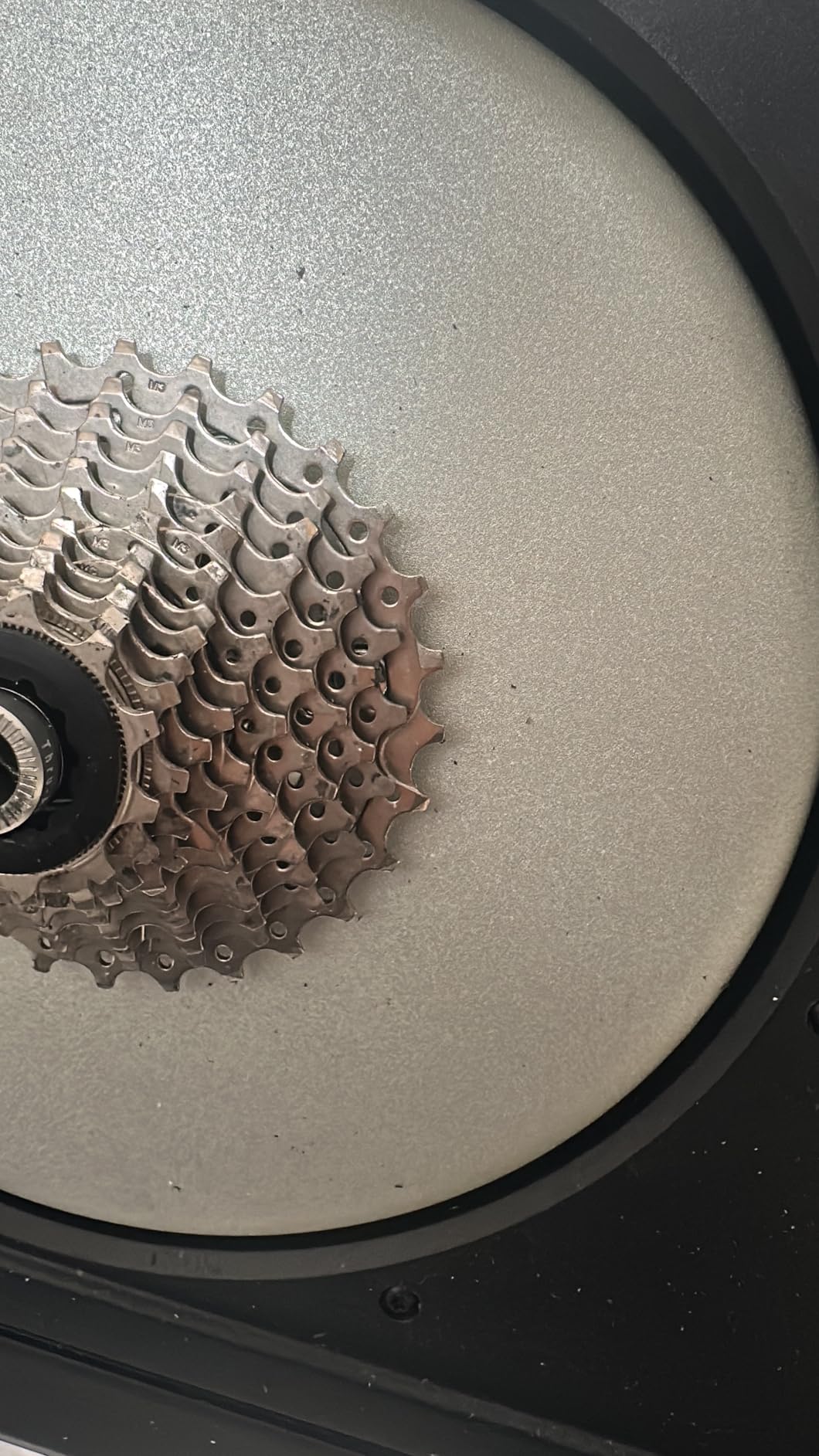
It is also the most convenient to set up here. A pre-installed 11-speed cassette means no drivetrain work, no calibration step, and the LED power indicator plus Ethernet or Wi-Fi network adapter support multi-trainer virtual races.
The price is the highest in this roundup and the 52-pound weight is the heaviest, with a footprint that needs real planning in a small room. A one-year limited warranty and roughly 32 reviews also mean limited long-term evidence.
What do the NEO 3M motion plates actually do?
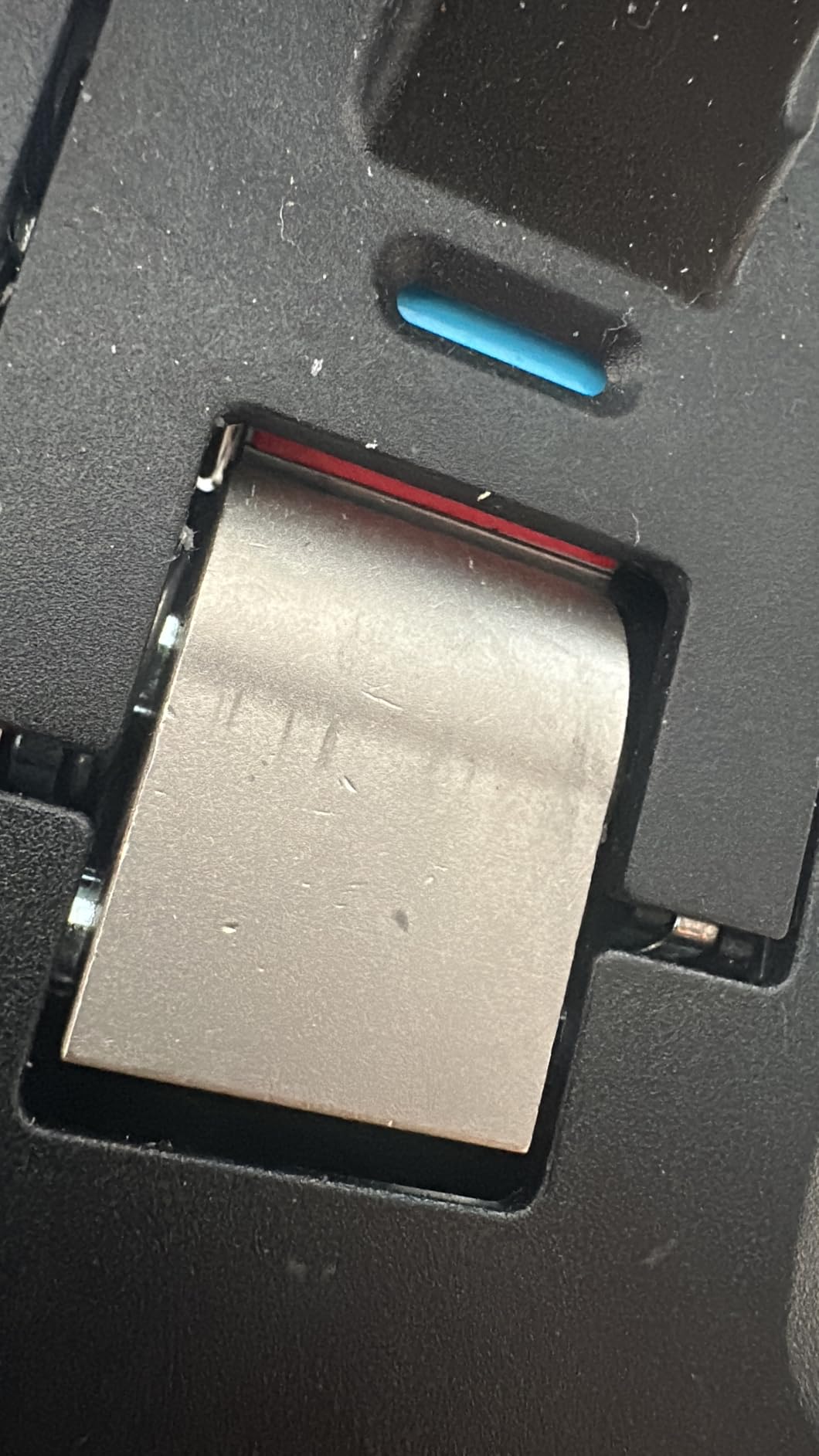
They add side-to-side and fore-aft movement so the bike reacts to your input the way it does on real roads, and they can be switched off when you want a fixed base. Combined with the virtual flywheel surface simulation, it is the closest thing to outdoor feel here.
Turn them on for endurance and exploration, and off for a locked-in interval block.
Who should not buy the NEO 3M?
Anyone on a budget, and anyone short on floor space or unable to move 52 pounds of equipment. The cost-to-benefit case is difficult when a 4.7-rated direct drive delivers most of the data quality for far less.
Riders who want guaranteed long-term parts support should note the one-year warranty and the small review pool before committing.
How to Choose a Zwift Trainer?
The right trainer is the one whose limits match your riding. A rider doing two social rides a week and a rider doing threshold work six days a week need very different machines, and the gap between them is mostly about measurement accuracy and gradient range.
Start with the questions Zwift itself asks when you set it up, and work outward from there. Budget, whether you race, and how many speeds are on your current drivetrain decide most of the shortlist before you look at a single wattage figure.
Direct Drive vs Wheel-On: Which Trainer Type Suits Zwift
Direct drive clamps to the axle and uses a motor to control resistance, measuring power at the axle itself, so readings are accurate and climbs are reproduced faithfully. Wheel-on units press your tyre against a roller and infer power from wheel speed, which is cheaper, quieter to install and less precise.
Community consensus is close to unanimous that direct drive gives more accurate power data than wheel-on, and that fluid resistance is quieter than electric. The two wheel-on entries here are the Fluid2 and the Saris M2, and both make sense as a first Zwift setup or a seasonal trainer.
Upgrade from wheel-on to direct drive when your training becomes power-based, when you start racing, or when you want a Zwift power profile you can trust.
What a Zwift Cog and Zwift Clicks Actually Change
Virtual shifting lets Zwift change your gear ratio electronically, so you keep pedalling smoothly while the game selects a gear. It requires a trainer with a compatible cassette carrier and a Zwift Cog, plus Clicks or another Zwift-controlled shifting device at the bars.
The practical consequence is drivetrain compatibility. If your trainer ships with a fixed 11-speed cassette, you are limited to that ratio set, and one product here is specifically flagged by owners as having no virtual shifting support at all.
Check that the trainer’s freehub accepts your speed count before you plan around virtual shifting, because a 12-speed bike and a 9-speed bike need different carriers.
Thru-Axle vs Quick Release and Drivetrain Speed Counts
Modern disc road bikes and most mountain bikes use 12 mm thru-axles, and many older frames use quick release. Every trainer here ships with some combination of adapters, but the budget wheel-on models frequently require a separate thru-axle adapter that is not in the box.
Look for three numbers before ordering: 130 mm and 135 mm quick release, 12 by 142 mm, and 12 by 148 mm Boost. If your frame is Boost, the 148 mm adapter is the one people miss.
Then match your cassette speed count to the trainer’s included freehub, and if it does not match, plan on replacing the freehub body rather than forcing a cassette.
Smart Trainer vs Smart Bike: What You Give Up Without a Spare Bike
A smart bike is a complete stationary platform with its own frame, cranks and resistance, so there is no bike to carry indoors, nothing to maintain and no drivetrain compatibility to solve. A smart trainer keeps your real bike, which means your own saddle, fit and gearing, but it also means floor space, adapters and cassette changes.
Two-user households hit this hardest. Swapping groupsets between partners is the most repeated complaint in the TrainerRoad 2026 smart trainer discussion, and the common workaround is an open frame that accepts standard parts, which is exactly the route riders take when they want to avoid single-manufacturer dependency.
If your household shares one trainer, check the freehub coverage and budget for the adapter swaps before you buy.
Red Flags to Check on a Used Trainer
Used direct-drive trainers are a sensible way into Zwift, but the failure modes are predictable and worth checking in person. A buyer on the r/Zwift used-trainer thread specifically named internal bearing failure, fragile freehub pawls and Bluetooth dropouts as the reasons to walk away from a Zwift Hub, and those are sensible things to test on any used unit.
Spin the flywheel by hand and listen for grinding or roughness, which points at the bearings. Shift through every gear and check that the pawls engage cleanly without skipping, and confirm the trainer pairs reliably over Bluetooth from your actual computer rather than a phone.
Then check whether the model is still supported, whether firmware updates still arrive, and whether non-proprietary replacement parts exist. Design dates matter too, because a trainer first designed years ago may carry dated electronics even when the body looks new.
Noise, Floor Space and Apartment Living
Noise figures in this category are measured at speed, so compare them only against each other. The wheel-on fluid units sit around 69 dB at 20 mph, the ThinkRider X2Max is stated at roughly 58 dB at 30 km/h, and the direct drive units are generally described as the quiet option by owners.
Floor space is the constraint most people underestimate. The lightest direct drive here is 18 kg, while the heaviest reach 52 pounds and the KICKR MOVE needs clearance both in front of and behind the bike because of its fore-aft travel.
Whatever you choose, a mat under the trainer protects your floor and softens the transfer into the room below, and a fan pointed at your torso is the cheapest comfort upgrade in indoor cycling. If you are turning a spare bedroom into a training space, our smart blinds roundup keeps glare and heat in check while you ride.
If the rest of your setup is already connected rather than manual, our smart plug roundup covers the connectivity habits that help when a trainer and a fan are on the same circuit, and our smart thermostat picks are useful for keeping a spare room usable while you ride.
Frequently Asked Questions
Which smart trainers are compatible with Zwift?
Every trainer in this roundup connects to Zwift, but the quality of that connection varies. The direct drive units broadcast over Bluetooth, ANT+ or built-in Wi-Fi and send true measured power, while the Saris M2 and Saris Fluid2 pair through an included speed and cadence sensor. Check that your drivetrain speed count matches the trainer’s freehub before you buy, especially if you plan to use virtual shifting.
Do I need a smart trainer for Zwift?
No. Zwift runs with a basic trainer paired to a speed and cadence sensor, which is how the Saris Fluid2 Smart Equipped works and is a perfectly good way to start. What you give up is power-based resistance control, accurate wattage readings and any meaningful Zwift power profile, so upgrade to a direct drive when you move to structured training or racing.
Which smart bike trainer is the most reliable?
Reliability tends to follow warranty length, review volume and how long the design has been in production. The Tacx Direto XR carries a two-year manufacturer warranty and the Saris Fluid2 and Saris M2 both carry a limited lifetime warranty, while several premium trainers in this roundup offer only one year. The Tacx Neo 2T stands out for the largest body of long-term owner feedback, with 472 reviews.
Are fluid or magnetic trainers better for Zwift?
Neither suits Zwift as well as a direct drive, because both rely on wheel speed rather than measured axle power. Fluid resistance gives a wider, more progressive range and is quieter at speed, while electromagnetic and magnetic units give more consistent control. For racing and structured training, choose direct drive; for casual riding on a budget, a fluid wheel-on unit is the more natural feel.
What is the best trainer to use with Zwift?
The Garmin Tacx Neo 2T is our pick, combining a 4.7 rating across 472 reviews, direct drive resistance, 2200W load capacity, Bluetooth and ANT+ connectivity and a foldable frame. It is quiet, accurate against external power meter pedals, and needs no calibration. If you are on a tight budget, the Saris Fluid2 is the cheapest credible way to start.
Is a smart bike better than a smart trainer for Zwift?
It depends on whether you have a bike worth keeping indoors. A smart trainer preserves your own bike, fit, saddle and gearing, which most riders prefer for comfort and flexibility, but it needs floor space and adapter changes. A smart bike needs no bike, no maintenance and no compatibility work, but sizing is the risk, and riders near five foot or shorter have reported crank length problems even with an adjustable crank.
Final Verdict: Which Smart Bike Trainer for Zwift Should You Buy?
The best smart bike trainers for Zwift come down to one clear winner and two situational picks. The Garmin Tacx Neo 2T takes the top spot because it pairs 2200 watts of direct-drive resistance with the largest base of long-term owner feedback in the category, a 4.7 rating across 472 reviews, and a footprint that folds away when you are done.
If money is the deciding factor, the Saris Fluid2 Smart Equipped gets you riding in Zwift tonight for a fraction of the outlay, accepting wheel-speed accuracy and a lower front wheel block as the trade. If you have the budget and you ride, the Wahoo KICKR V6 is the one to buy for race-day data, with built-in 2.4 GHz Wi-Fi that keeps power streaming through a hard effort.
Whichever you choose, check your axle standard and cassette speed count before you order, budget a mat and a fan, and give the trainer a full weekend before you judge it.