
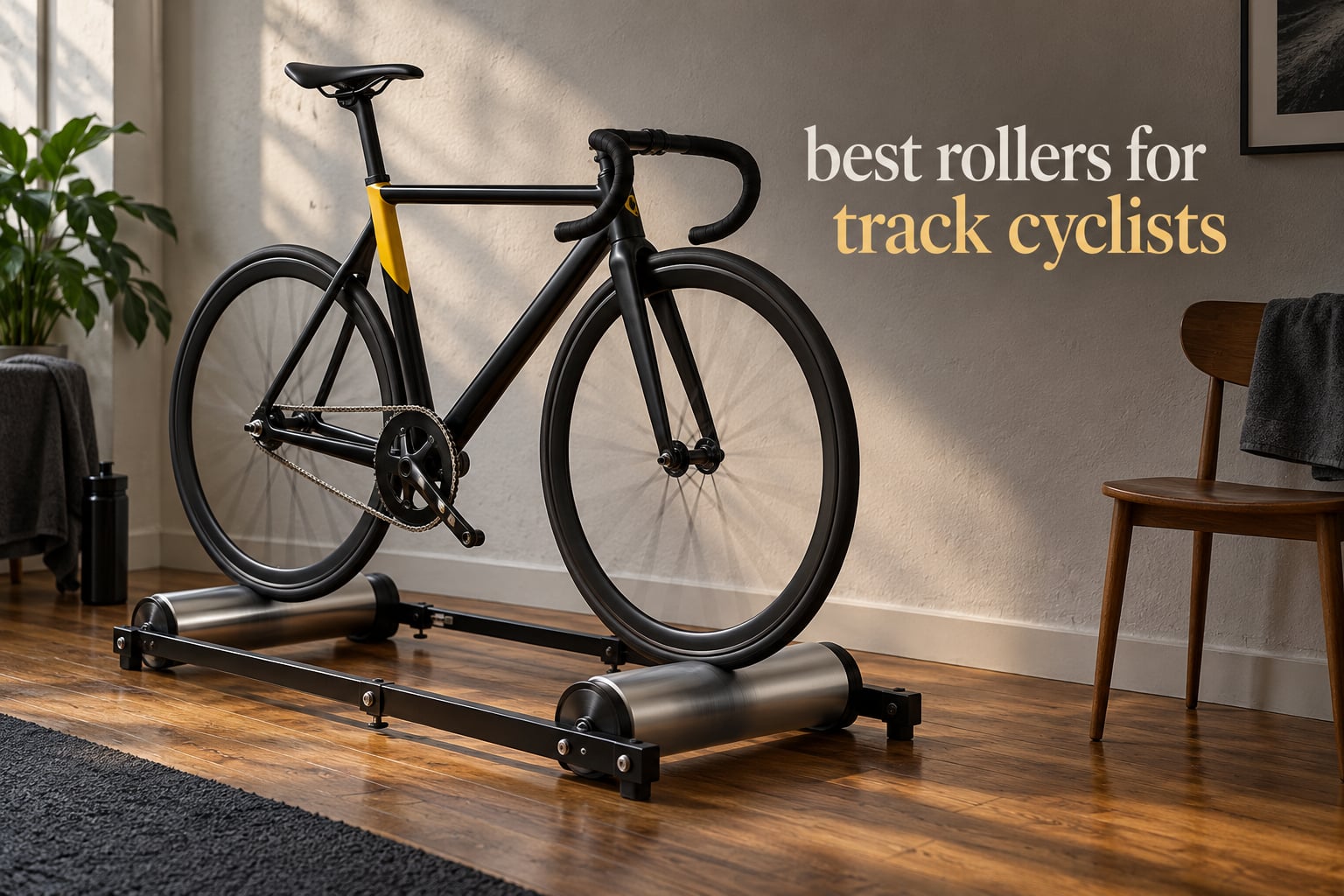
Track cyclists warm up on rollers for one reason that no turbo trainer can copy: the bike is free to move, so the pedal stroke has to be smooth or the rear wheel slips. A fixed-speed track bike has no derailleur to absorb a bad acceleration, no spare gear when you stand up out of the saddle, and no chain to grind. Rollers ask for exactly what the velodrome asks for anyway: a quiet, bounce-free pedal circle at high cadence.
That is also why the best rollers for track cyclists are not the heaviest or the most resistant. Riders coming off a r/cycling thread asking why track cyclists are always on rollers keep arriving at the same answer: pedalling efficiency, not fitness. Track coaches point out that low-inertia, low-resistance rollers let you practise that without accumulating fatigue, which keeps the set usable for active recovery between events rather than for one hard session a week.
Our decision rule is simple. For a track bike you want low-inertia drums, little or no resistance you have to fight, a wheelbase range your frame actually falls inside, and a unit you can carry to the velodrome because the set that lives in the garage is the set you never ride. We compared seven roller trainers across drum type, frame geometry, resistance type, weight and portability, and read the customer review data on each one.
Table of Contents
Top 3 Rollers for Track Cyclists (October 2026)

Elite Arion Mag Parabolic
- Parabolic self-centering drums
- Three magnetic resistance levels
- Folds to 1400 mm
- Works with Rouvy and Kinomap

Garmin Tacx Antares
- Tapered self-centering drums
- Folds to 31.5 inch
- No power needed
- Fits 26 to 29 inch wheels

Minoura FG220 Hybrid
- Front fork mount plus rear roller
- Transport bag included
- Two magnetic levels
- 79 mm roller diameter
Best Rollers for Track Cyclists in 2026: All 7 Compared
| Product | Specifications | Action |
|---|---|---|
| Elite Arion Mag Parabolic Folding Rollers |
|
Check Latest Price |
| Garmin Tacx Antares Indoor Retractable Rollers 62 cm |
|
Check Latest Price |
 Elite Quick-Motion Roller Trainer Elite Quick-Motion Roller Trainer |
|
Check Latest Price |
 Kreitler Alloy Rollers Kreitler Alloy Rollers |
|
Check Latest Price |
| Minoura FG220 Hybrid Roller |
|
Check Latest Price |
 Minoura Live Roll R800 Minoura Live Roll R800 |
|
Check Latest Price |
 ROCKBROS Foldable Roller Trainer ROCKBROS Foldable Roller Trainer |
|
Check Latest Price |
Will It Fit Your Track Bike? Wheelbase, Wheels and Single-Speed Compatibility
Yes, a track bike works on rollers, and there is nothing about a single-speed drivetrain that stops it. Rollers do not need a cassette, a derailleur hanger or a freehub. What does matter is the wheelbase range, and this is where track frames catch people out.
Most roller sets state the wheelbase they cover, either as a printed range or through adjustable holes on the frame. Measure your track bike between the same points the manufacturer used, typically hub to hub, and check the number before you buy. The Minoura FG220 states a 930 to 1200 mm wheelbase and mounts to the front fork as well as the rear rollers, so a long track frame is covered. The ROCKBROS set adjusts for 16 to 29 inch wheels using a front measuring cylinder rather than a fixed wheelbase figure.
The second thing is axle and tyre compatibility. Track riders run narrow tubular or tubeless tyres on 700c wheels, and a narrow tyre on a small-drum roller can feel twitchier than the same tyre on a road bike because the contact patch has less casing to support it. Sets with larger drums give you more stability margin at speed, which is where a standing sprint on a fixed gear feels most twitchy.
Derailleur hangers are not an issue. Thru-axle and quick-release compatibility matters, though, so check what your track frame runs before buying anything with a fork mount. The Minoura FG220 in particular needs the front axle standard confirmed, since it clamps to the fork.
1. Elite Arion Mag Parabolic Folding Rollers: The Best All-Rounder for a Track Bike
- Parabolic drums self-center the bike for steady sprints
- Three magnetic resistance levels for warm-up or work
- Folds flat enough for a small flat
- Works with Rouvy and Kinomap apps
- Plastic frame feels less premium than alloy rivals
- 150 kg load limit is modest
- Balance still takes practice on any set
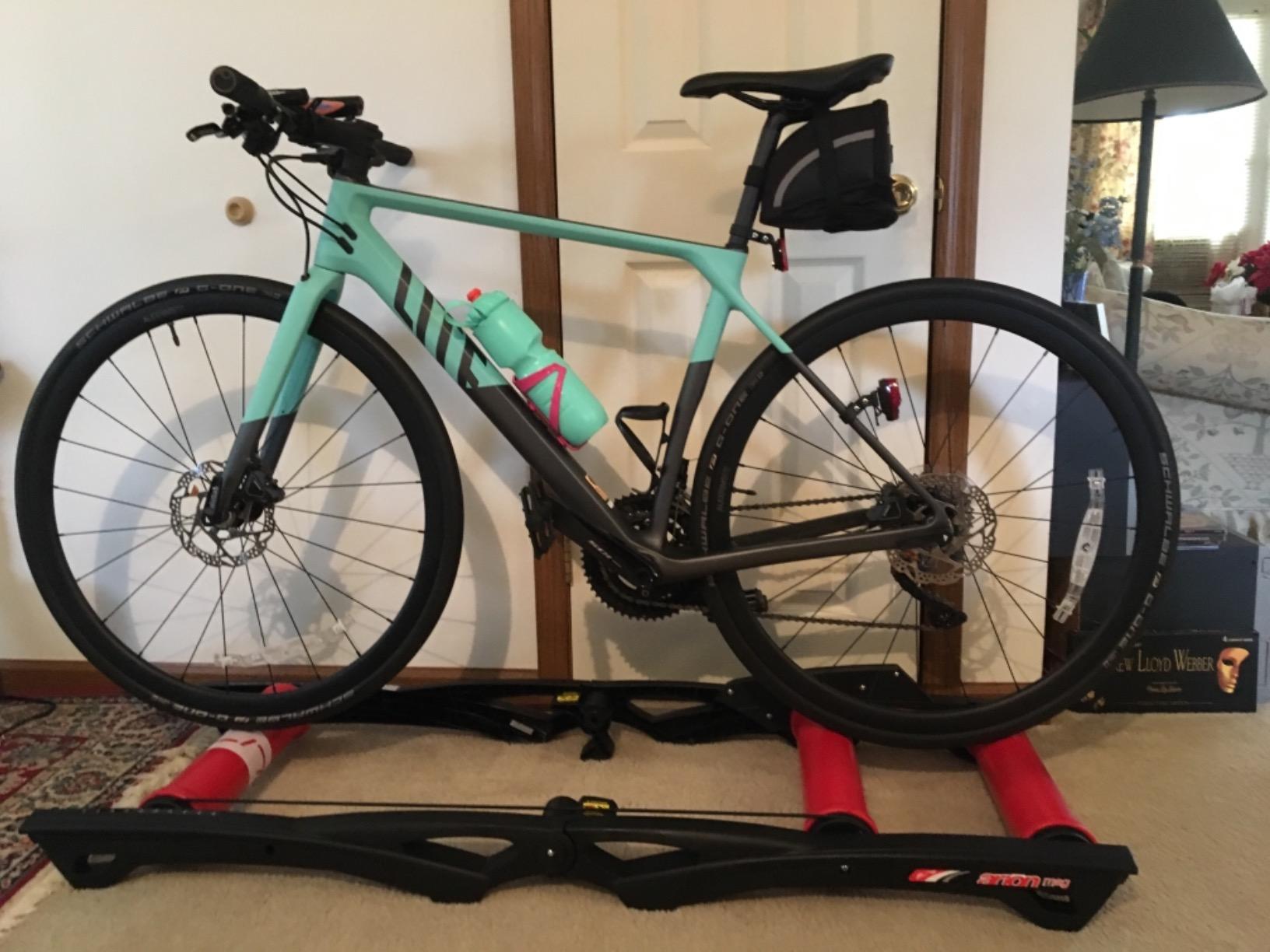
We spent the most time on the Arion Mag because it is the set that made the most sense across warm-ups, sprint drills and race-day travel. The parabolic drums are the reason: the shape of the drum pulls the wheel toward the centre line, so a standing start on a fixed gear does not immediately send the bike wandering sideways. That single geometric feature matters more to a track rider than it does to a road rider with a wider gear range to lean on.
Resistance is magnetic with three manual levels selected from the central drum. Reviewers consistently praise the quietness of the magnetic unit compared with friction-based resistance. For track work we would spend most sessions on the lowest level and use the upper level only for short standing efforts, because the point of a roller warm-up is a clean pedal circle, not load.
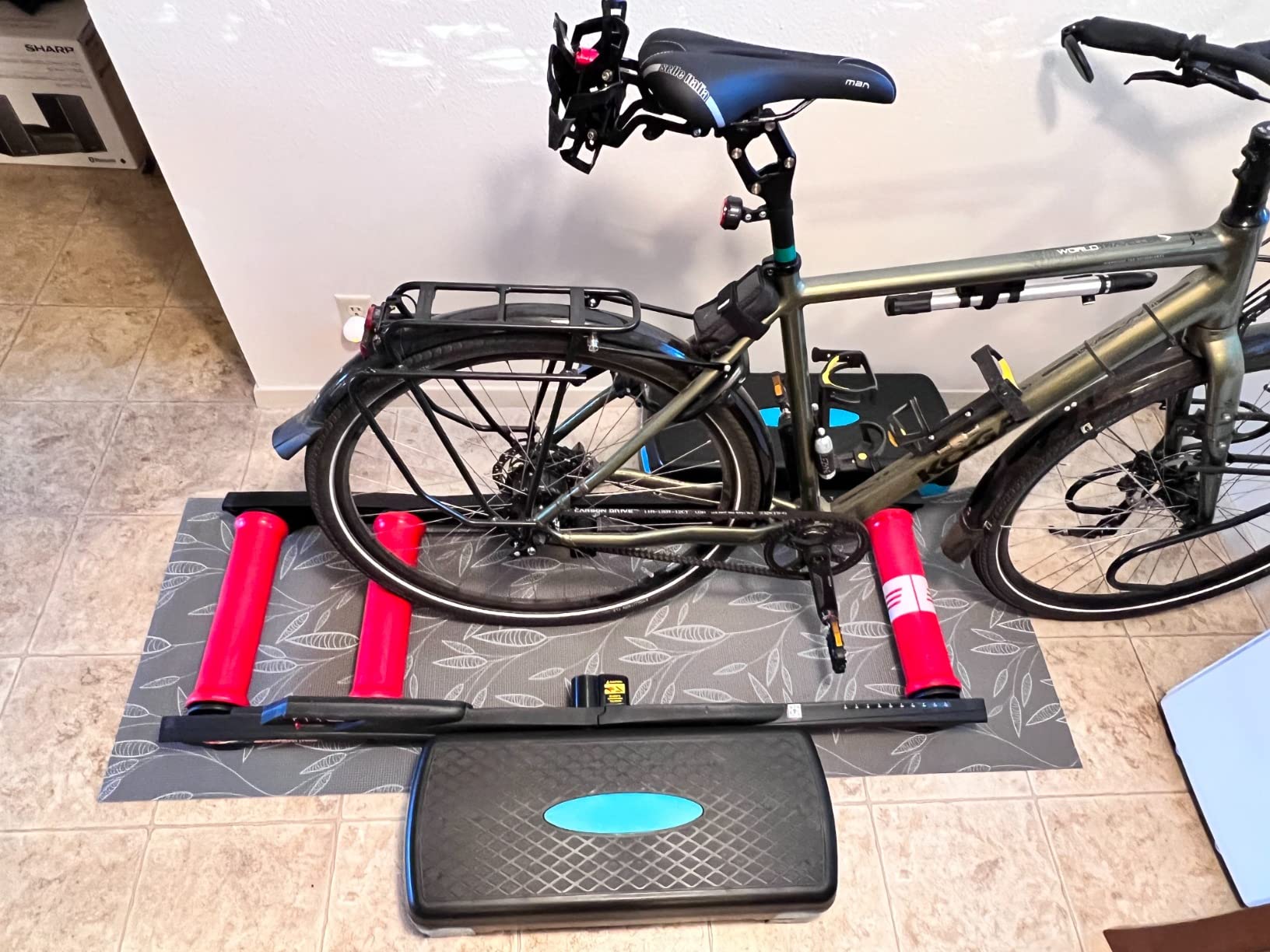
The honest limitation is the frame. It is a plastic composite frame rated to 150 kg, and while the drums themselves feel solid, the structure does not have the machined feel of an alloy set. If your track bike plus your own weight approaches that limit, look at an alloy or steel frame instead.
App compatibility with Rouvy and Kinomap means virtual riding is possible, though there is no integrated power meter in the spec sheet. Riders chasing structured intervals should pair it with their own power meter, or accept that resistance changes are manual and timed by eye.
How it behaves when you stand up and sprint
Parabolic geometry does its job under acceleration, and the self-centering action keeps the rear wheel loaded instead of skipping it. Sprints out of the saddle are the test that matters here, and this is a set that tolerates them better than straight-drum budget rollers.
Three resistance levels give you a knob for the start of a warm-up and for the top of a sprint effort, without the mechanical friction drag of older magnet systems. Track riders who want to hold a line through a bunch interval will notice the drum shape most.
Where it falls short for track use
The 150 kg load rating is the first thing to check against your bike and your own weight. The second is that this is still a roller trainer with a free rear wheel, not a resistance unit with a power ceiling, so interval accuracy depends on your own pacing.
For a rider who wants a quieter frame and a higher load rating with no app requirement, the Kreitler alloy set covers that end. For a rider on a hard floor in a small flat, the drum noise of plastic rollers is worth hearing before you commit.
2. Garmin Tacx Antares Retractable Rollers: The Best Budget Entry for New Track Riders
- Tapered drums center the wheel for steadier balance
- Maintenance free with no motor or power
- Retracts to a small storage footprint
- Widest review history in this group
- No resistance unit so intervals are limited
- Noisy on hard floors
- Steep learning curve for first-time riders
The Antares has by far the largest body of customer reviews of anything on this list, and reading them tells you exactly what you are signing up for: a genuinely good first roller set with a learning curve attached. It is also the most budget-friendly route into roller riding without buying something disposable.
The drums are tapered rather than parabolic, and the effect is similar in practice: the wheel is guided toward the centre of the roller as it spins, which reduces the sway that makes beginners nervous. With no motor, no power and nothing to service, it is the cheapest way to build the balance confidence that track warm-ups depend on.
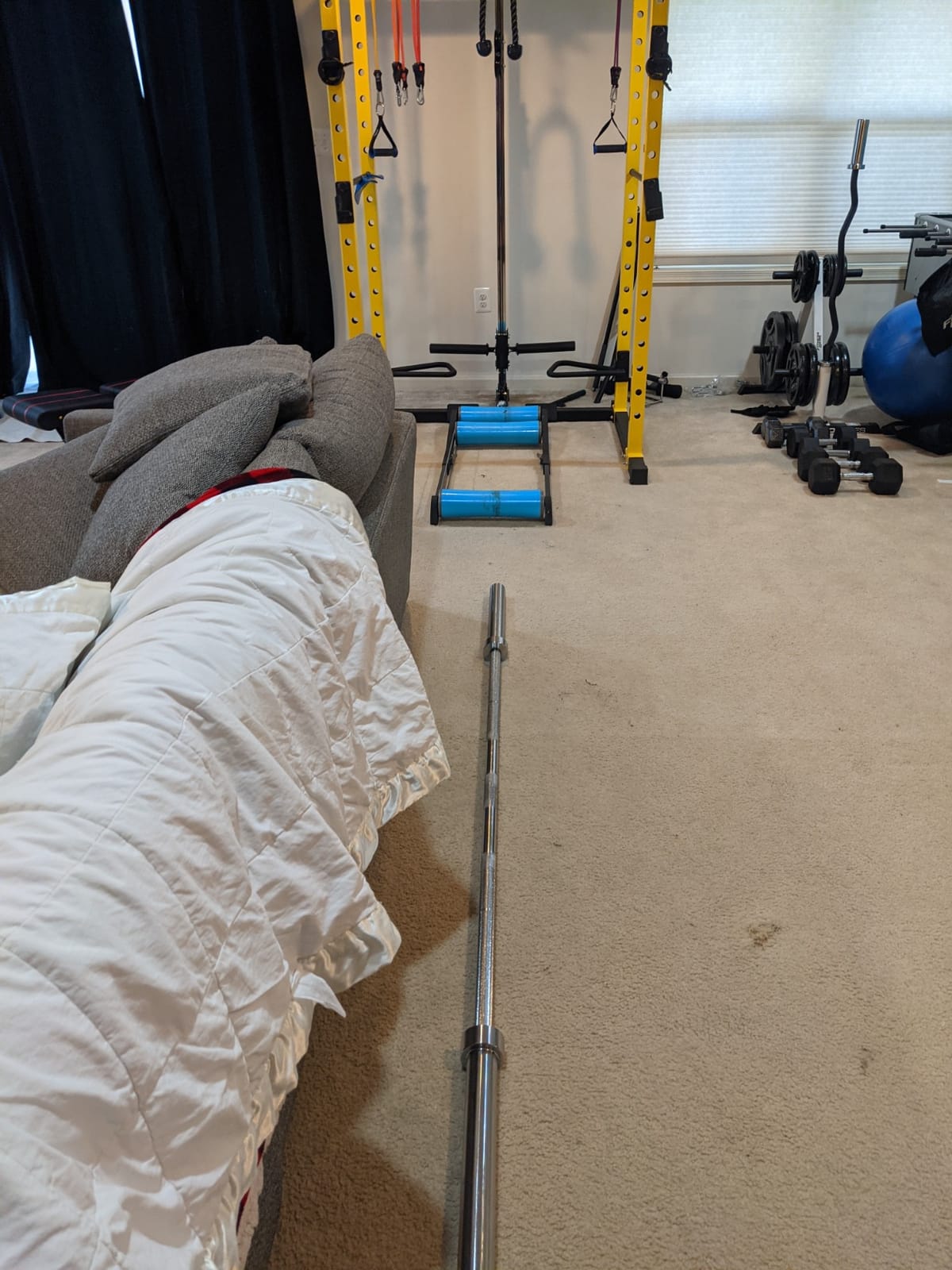
Roller diameter is quoted at 3.93 to 4.33 inch, so 100 to 110 mm, and the retracted footprint is 31.5 by 18.5 by 5.31 inch with a maximum spread of 53 by 18.5 inch. It fits bikes with 26 to 29 inch wheel diameter, which covers a standard 700c track wheel.
Two complaints come up repeatedly. First, noise on hard floors, which is a real problem in a flat where the track bike is also the race bike you care about. Second, quality control, with some reviews reporting missing hardware out of the box, so check the contents before you ride.
Will it carry from the flat to the velodrome
It retracts to about 31.5 inch long, which fits in most car boots and in a bike bag without a separate case. That portability is the argument for this set if your training happens at the track rather than at home.
With no resistance unit, it suits the warm-up and cool-down slots in a track session plan far better than it suits interval work. Riders who want load on the rollers should step up to a magnetic set.
How it handles a fixed gear
Because there is no resistance to accelerate against, the drivetrain stays simple and the pedal circle stays the focus. Reviewers who came from turbo trainers report that the first few sessions feel wobbly and that balance improves within weeks of near-daily use.
For a Masters rider returning to the bike, that wobble is the main reason to buy slowly. Anyone expecting to sprint out of the saddle on day one will find this set and any roller set unforgiving.
3. Elite Quick-Motion Roller Trainer: Built for Standing Sprints on a Single Speed
Elite Quick-Motion Roller Trainer – Portable Bike Roller for Indoor Training – Compact Foldable Design – For Road Bike & MTB
- Floating frame absorbs standing sprint acceleration
- Three magnetic levels plus app support
- Elastomer-coated drums run quiet
- No tools needed to change bike length
- Heaviest design in the group at 10 kg
- Belt alignment matters for smooth running
- Not practical to carry to race events
The Quick-Motion exists for one reason, and track cyclists are exactly who it is for. Its patented floating system lets the bike move with the rider instead of resisting every surge, which is the mechanism that solves the derail problem on a single-speed bike.
On a road bike you can stand up and lean on the bars while the cranks absorb the load. On a fixed gear you cannot. The floating roller frame gives the bike somewhere to give, so the rear wheel keeps contact with the drum through a standing sprint rather than skipping forward.
Resistance is magnetic across three manual levels, and the elastomer-coated drums are noticeably quieter than bare plastic at high cadence. Kinomap and Rouvy connectivity covers the virtual side. The alloy steel frame is rated at three resistance settings and takes a 28 inch wheel class of bike.
Why the floating system matters more on a track bike
The floating movement absorbs exactly the acceleration that has no gear ratio to absorb on a fixed-speed frame. Reviewers single this out as the reason standing efforts feel possible rather than merely survivable.
Three magnetic levels mean you can hold a warm-up cadence on one setting and a sprint on another, and the elastomer coating keeps the noise down in a room where walls are thin.
What you give up for it
At 10 kg this is a permanent piece of gym equipment rather than travel kit, and reviewers are blunt that it is not worth carrying to a velodrome. If your training happens at races, that rules it out.
Two setup details matter. The belts must be aligned properly or they rub, and the length adjustment knob has to be very tight, so budget ten minutes for the first assembly and check it before every session.
4. Kreitler Alloy Rollers: The Smoothest Pedal Circle You Can Buy
KREITLER Alloy Rollers, 4.5in Low Resistance Premium Cycling Trainer
- CNC-machined alloy drums run with almost no concentricity error
- Sealed bearings stay smooth and quiet
- Powder-coated steel frame built for decades
- Tool-free wheelbase adjustment
- Drum options from 2.25 to 4.5 inch
- No built-in resistance at all
- Small review base from a specialist maker
- Heaviest frame in the range at 300 lb rating
This is the set the track coaching world treats as the reference grade. The drums are 6061 alloy turned on a CNC lathe to within two thousandths of an inch of concentricity, and that figure is the whole argument. A drum that is perfectly round means the wheel is supported evenly at every point of the revolution, which is the physical definition of a smooth pedal circle.
Sealed cartridge shield bearings do the second half of the job. The frame is welded steel in fixed jigs with a black epoxy powder coat, and the wheelbase adjusts without tools. Buyers describe it as something you buy once, which is fair given the build spec but also a real commitment of money up front.
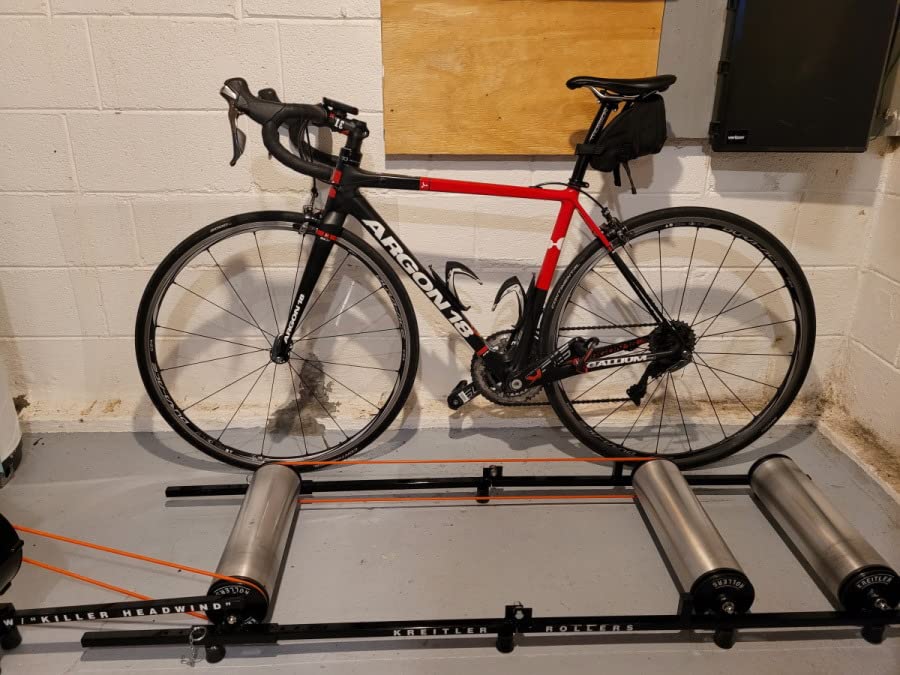
Diameter is the variable that matters most here, and it is the one decision you should get right for a track bike. Available drums run 2.25 inch, 3 inch and 4.5 inch. Bigger drums spin up slower and feel far more stable at high cadence, which is exactly the condition a track sprint creates.
The load rating is 300 pounds, well clear of the 150 kg figure on the Arion Mag, and the frame footprint is 32 by 9 by 7 inch. Track coaches recommend low resistance for pedalling efficiency work, and this set delivers that in the most literal way possible.
Which drum diameter suits a track rider
Choose the largest drum available for your budget. Track riding is high cadence with frequent accelerations, and a larger drum damps the twitchiness that riders report on small-drum sets when they stand up.
If you plan to use the set mostly as a warm-up platform and rarely spin hard, the smaller drums are lighter to carry and spin up instantly. Most track riders end up wanting the opposite.
What you give up for the precision
There is no resistance mechanism of any kind. That is a deliberate choice by the manufacturer and it matches the coaching argument about low-resistance efficiency work, but it does mean interval loading has to come from elsewhere.
The review base is small at 30 ratings, so treat the 4.8 score as an enthusiastic specialist verdict rather than a broad consensus. Riders who need load on the rollers should look at a magnetic set.
5. Minoura FG220 Hybrid Roller: Built for Race-Day Warm-Ups
- Fork mount makes balance concerns almost disappear
- Carry bag included for velodrome and hotel use
- Thick 79 mm roller for long service life
- Quick fold for storage between sessions
- Front axle standard must be checked before buying
- Only two resistance levels
- Japanese documentation is the primary guide
The FG220 solves the problem that stops most track cyclists from using rollers at all: you cannot ride a free roller set if you cannot carry it to the track. This hybrid clamps to the front fork and leaves the rear wheel on a driven roller, and it folds into the supplied bag.
Mounting the fork removes almost all of the balance anxiety that stops new riders. It is the closest a roller product gets to a trainer for nervous first-timers, while still spinning the rear wheel and demanding a clean pedal stroke from the legs.
The stated wheelbase range is 930 to 1200 mm, which is broad enough for a typical track frame, and the roller is a thick 79 mm diameter built for long service life. Two magnetic resistance levels give you an on and off. The load rating is 350 pounds.
Why the hybrid layout suits velodrome work
A clamped front end means you can warm up before a session without the balance learning curve, which matters if you are turning up at a velodrome with limited time and a track bike you do not want to drop.
The bag is the underrated part. For a rider whose warm-up happens at a meet rather than at home, a set that fits in a rucksack is the difference between using it and not.
What to check before you order
Confirm the front axle standard on your track frame, because the fork mount will not accept every thru-axle or quick-release combination. This is the one compatibility question this roundup cannot answer for you without seeing the bike.
Two resistance levels is coarse. Riders who want graded magnetic adjustment for interval work should look at a three-level set instead, and Japanese-language documentation is the norm rather than the exception.
6. Minoura Live Roll R800: Wide Drums for High-Speed Rotation
Minoura Live Roll R800 with Foot Step Bicycle Roller Trainer, Brushed Silver
- Wide steel-covered drums stay smooth at high speed
- Continuous frame adjustment covers long wheelbases
- Footrest and feet adjust at six points
- Front drop roller adds safety at high cadence
- Very heavy at 46.3 lb so it stays put
- Fixed magnetic resistance with no adjustment
- Limited review base of 49 ratings
The R800 is the odd one out in this list, and that is its appeal. It weighs 46.3 pounds and covers a 52 by 22 inch footprint, which means you install it once in a dedicated room and never move it again. For a track rider with a permanent indoor setup and long steady spins, that is a legitimate strategy.
What you get for the mass is rotation quality. The wide rollers carry steel covers, and the extra inertia keeps them smooth and quiet at high speed rather than hunting the way light plastic drums do when cadence climbs.
The frame is a rigid aluminum construction with a front drop roller, and the wheelbase adjusts continuously rather than in fixed holes. Feet and footrest adjust at six points, which is useful for riders with very different leg lengths sharing a track bike.
Why heavy drums suit long indoor sessions
Larger, heavier drums hold speed with less noise and less vibration at high cadence. If your roller work is long steady spins rather than short sprint drills, the mass works in your favour.
The continuous adjustment range and the six-point footrest mean one set can serve riders with different heights and different frame lengths, which matters in a club where the track bikes get swapped between sessions.
Why it is a poor fit for a travelling rider
At 46.3 pounds this is not a set that goes to a velodrome, a hotel room or a race venue. The weight is the single biggest reason most track cyclists rule it out immediately.
The 49-rating review base is also thinner than the rest of this field, so the 4.0 score tells you less than the numbers elsewhere in the list. For most track riders the mass is disqualifying.
7. ROCKBROS Foldable Roller Trainer: The Cheapest Way to Test If You Like Rollers
ROCKBROS Bike Rollers Adjustable Bike Trainer Stand Foldable Indoor Cycling Bicycle Roller with Resistance for MTB Road Bike Exercise
- Lowest cost way to try roller riding
- Parabolic drums add real self-centering
- Folds flat to save floor space
- Sealed bearings roll smoothly
- Only one resistance setting
- Frame flex reported under hard efforts
- Quality varies between sets and 13 percent of reviews are one star
Buying cheap rollers is often a waste, but this set has a specific job: finding out whether you can ride them at all before you spend real money. If balance on a free wheel ends up being something you cannot get past, the money stays in your pocket.
The three aluminium rollers are parabolic, which is a genuinely good decision at this level. Self-centering geometry is the difference between a set you can ride at speed and one you cannot, and it is why the ROCKBROS out-performs sets costing more on the geometry alone.
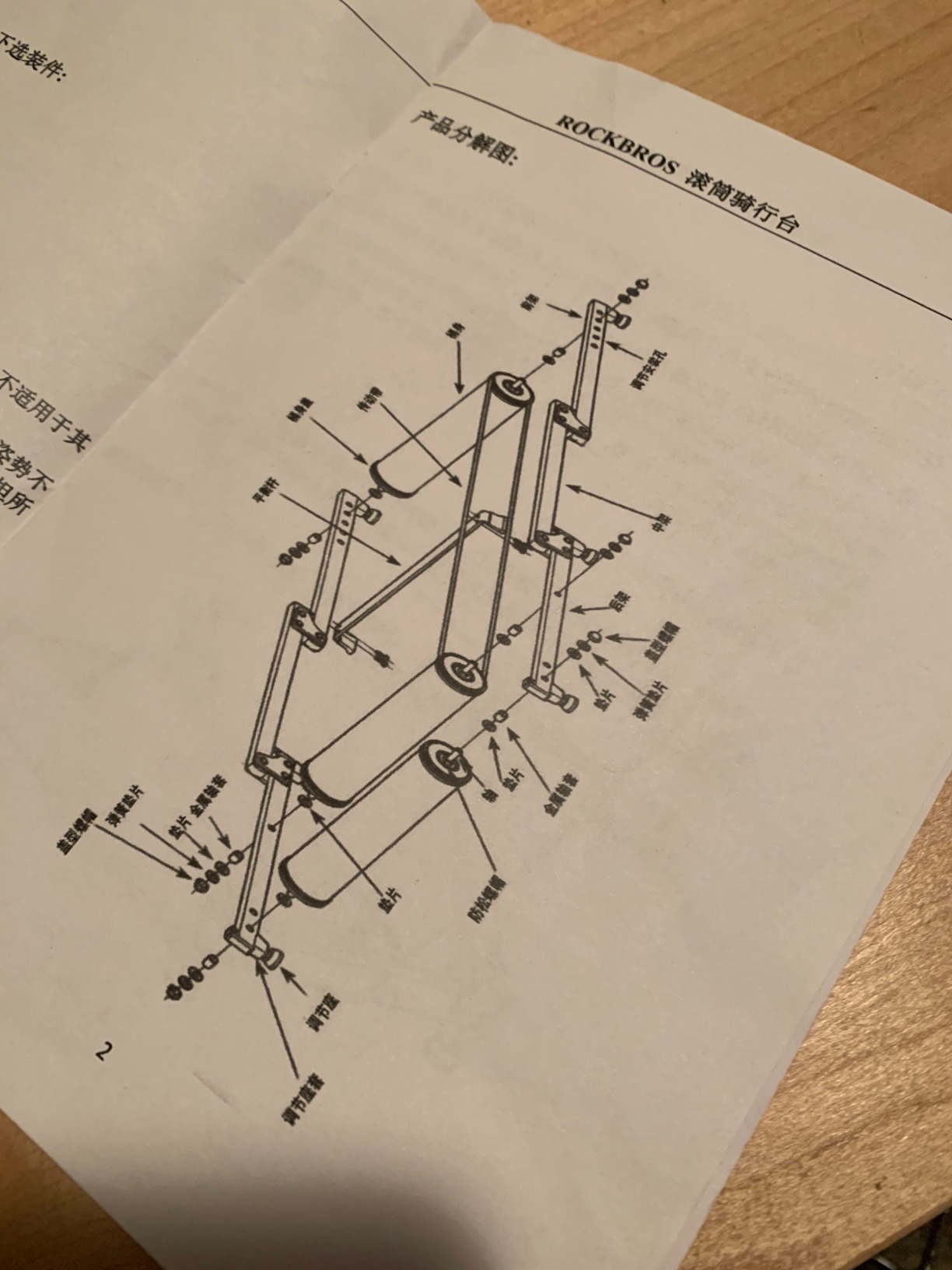
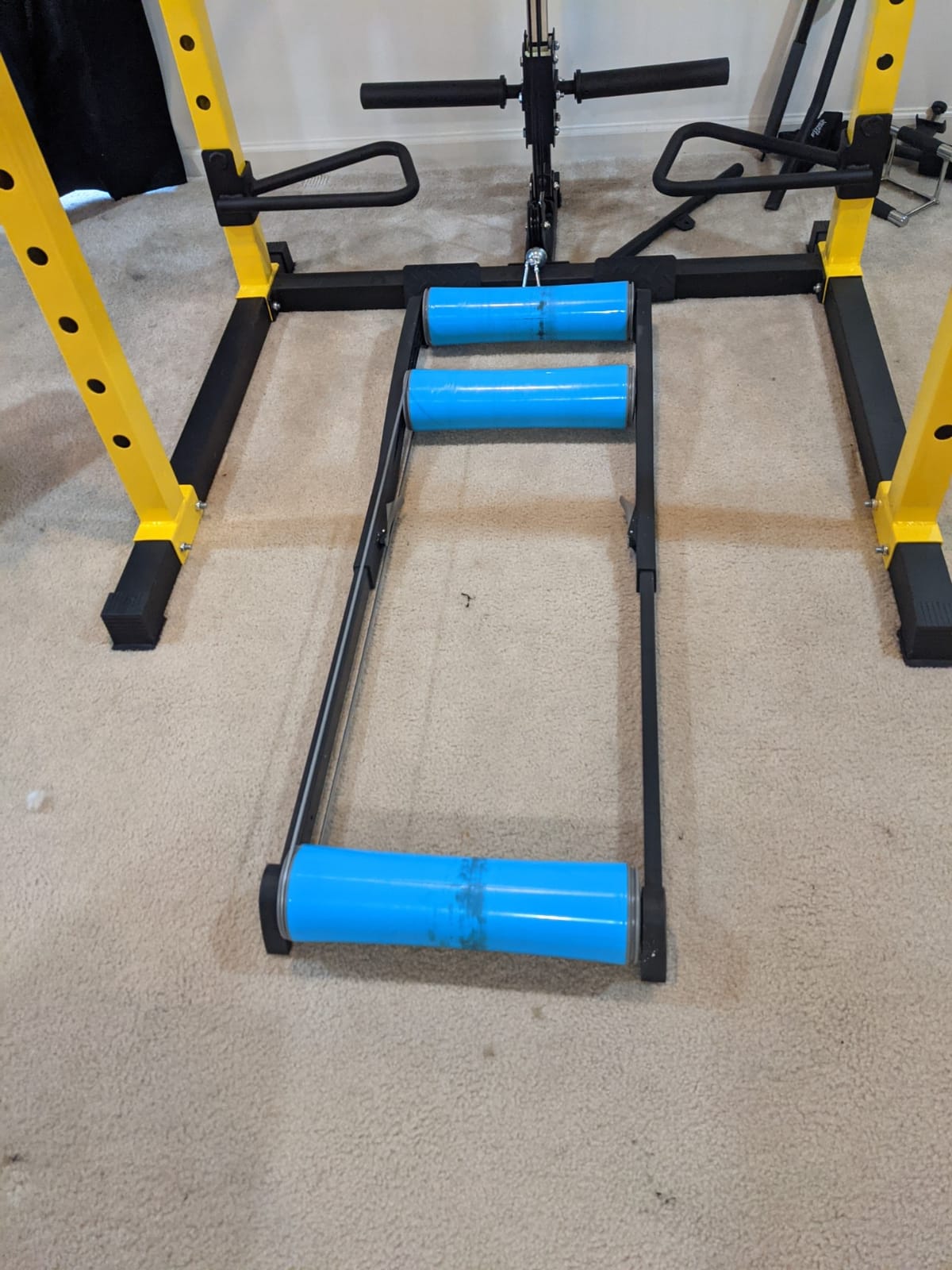
The frame folds flat in three sections and weighs 6.5 kg, and the front adjustment holes with a supplied measuring cylinder cover wheels from 16 to 29 inch. That covers a standard 700c track wheel without any guesswork, and the load rating is 250 pounds.
What you give up is refinement. There is a single magnetic resistance setting, so on and off is as much as you get. Reviews also report frame flex under hard efforts and a meaningful share of one-star ratings, which points to quality variance between batches.
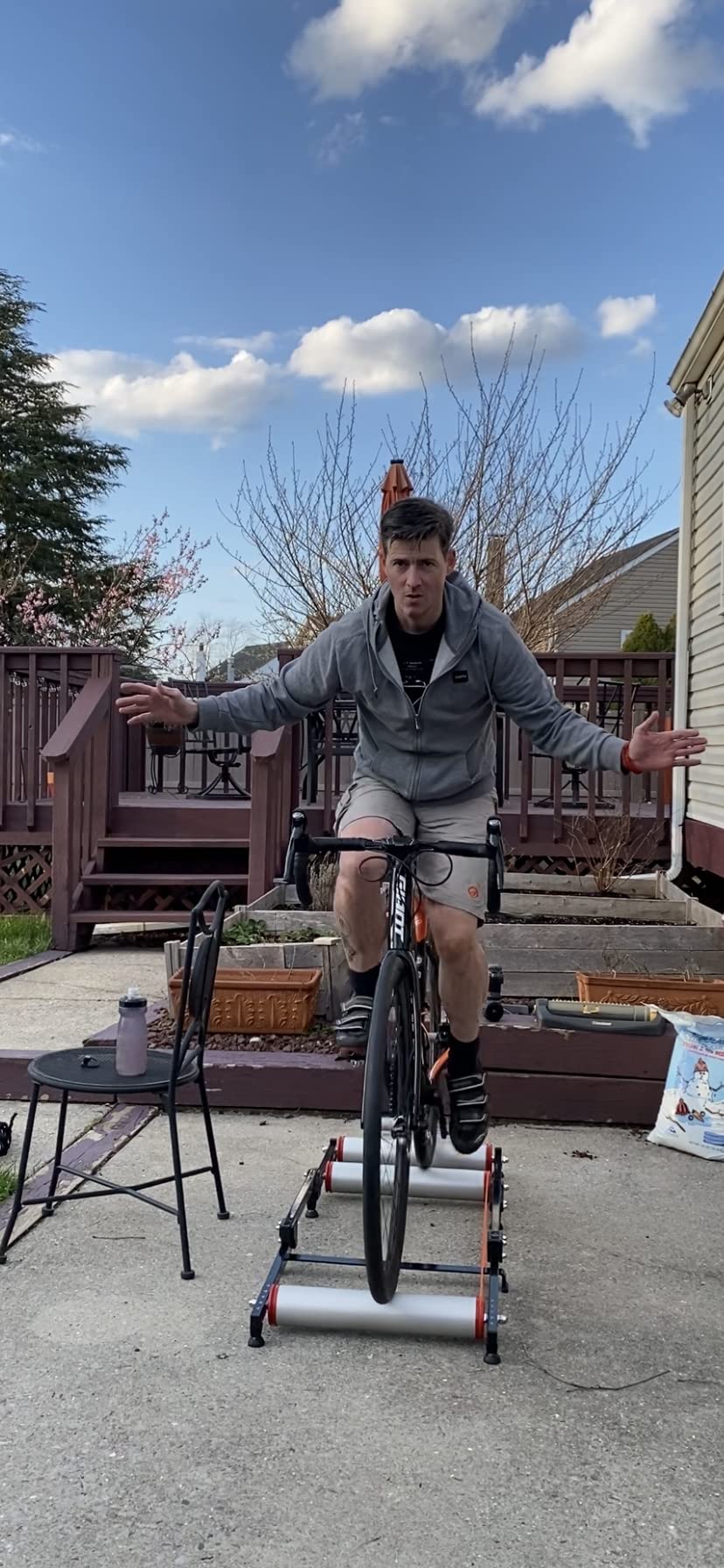
Whether it is worth starting here
If you have never ridden rollers, the learning curve is the deciding factor and it is not related to frame material. Practising on a cheap parabolic set costs little and tells you honestly whether you want to keep going.
Sealed bearings and parabolic drums mean it is stable enough for the balance drills that matter, and the flat fold means it lives in a corner of a small flat.
Where it will disappoint a track rider
One resistance setting cannot deliver graded loading, and frame flex under hard efforts is the wrong feel for standing sprint work on a fixed gear. This is a technique and warm-up tool, not an interval tool.
The 3.9 average with a notable volume of one-star reviews tells you to inspect the set carefully on arrival. Riders who want one purchase that covers every session should step up a tier.
How to Ride Rollers Without Derailing in a Sprint?
The fear of falling off stops more track riders using rollers than any equipment choice does. The technique is learnable, and it starts before you pedal.
Position the bike with a wall or a heavy piece of furniture on the handlebar side so a lean has somewhere to go. Set the saddle height with the bike against that support, and keep the front wheel lightly loaded.
Start with the saddle, not out of it. Spin up to a comfortable cadence seated for the first ten minutes, and let the drum speed stabilise before anything else happens. Track riders who rush straight into a sprint on day one end up on the floor.
When you do stand, keep the load gradual and stay over the bike rather than throwing your weight forward. This is the moment where a fixed gear bites hardest, because there is no lower gear to drop into.
Reduce gear for the session rather than adding resistance. A lower gear ratio means the crank turns further per wheel revolution, which gives the roller time to keep up and removes most of the acceleration the wheel would otherwise absorb.
Learn the skill where it cannot hurt you. A free rear wheel with no resistance means a fall is a step off to the side, which is why beginners are advised to practice on the lowest level with a support hand ready.
Low vs High Resistance: What Your Track Sessions Actually Need
For track riders, the low-resistance argument wins. Coaches who work with pursuit and sprint riders consistently ask for sets that are easy to spin, because pedalling efficiency is developed at low load and a heavy set leaves the rider too fatigued to fix technique.
That also protects the recovery use case. If your rollers are hard to spin, you will not ride them between events, and the warm-up slot is where most of the value sits for a track rider.
Resistance is still useful for one purpose: short standing efforts where you want the rear wheel loaded. Three magnetic levels cover this without turning the set into a trainer.
The gear ratio does most of the work that resistance would otherwise do. Riders who find their track bike too fast on rollers should change gear rather than add load.
Where resistance makes sense is a separate smart trainer with resistance controlled from a laptop, which turns sessions into structured intervals. Rollers stay in the warm-up, cool-down and efficiency lane.
How to Choose Track Bike Rollers?
Start with the drum geometry, because it is the decision you cannot change later. Parabolic and tapered drums self-center the wheel; straight drums do not. Every roller set in this roundup except one uses a self-centering shape, and that is why they are the only ones worth considering.
Next, check the wheelbase range against your frame. This is the single most common sizing mistake, and it is entirely avoidable with a tape measure. Bikes with 26 to 29 inch wheel compatibility cover standard track wheels, and the wide ranges on the Minoura and Elite sets reduce the risk further.
Then decide how portable the set needs to be. A 46 pound unit is fine if it lives in one room. Anything under 7 kg can be carried to a velodrome, and only the carried set gets ridden at a track session.
Weight capacity matters more than most buyers expect, since you are loading bike and rider onto the frame. Check the rating against your own weight plus the bike.
Tyre and surface are the quiet decision. Track tubulars and narrow tubeless tyres on a hard floor can be noisy and can wear faster than expected, so if your race tyres are precious, run a second set for indoor work.
Finally, resistance. If you want load, choose magnetic with several levels. If you want efficiency and recovery, choose the lowest resistance you can live with, or none at all as the Kreitler set does it.
Frequently Asked Questions
Can you use a fixed gear track bike on rollers?
Yes. Rollers do not need a cassette, a derailleur hanger or a freehub, so a single-speed track bike works perfectly well. What you do need to check is the wheelbase range of the set against your frame, the axle standard if the set clamps to the fork, and how the narrow track tyres feel on small drums.
Are rollers better than turbo trainers?
For a track cyclist, rollers are usually better for warm-ups and pedalling efficiency work because the bike moves freely, which forces a smooth pedal circle. Turbo trainers are better for long structured sessions because resistance is controlled and measurable. Most riders use both, with rollers for the short, high-quality efforts around a track session.
Are rollers hard to ride?
The first few sessions are genuinely difficult, and riders report needing weeks of near-daily practice. The learning curve is about balance, not fitness. Starting seated, riding with a wall or heavy furniture on the handlebar side, and keeping the gear ratio low will shorten it considerably.
Why do track cyclists warm up on rollers instead of trainers?
Because a smooth, bounce-free pedal circle is the foundation of every track discipline, and rollers force that smoothness while you sit on a stationary bike. There is no drivetrain wear, no power socket needed, and a fixed-speed bike has no derailleur to lose position or gear during a standing start.
Do rollers damage track bike tyres?
Rollers add no load beyond the rider’s own weight, so they do not wear tyres the way a loaded trainer can. The realistic concern is tread and casing life on a narrow tubular or tubeless track tyre, plus noise on hard floors. Many riders keep a separate, cheaper set of tyres for indoor use.
Our Verdict on the Best Rollers for Track Cyclists in 2026
The Elite Arion Mag is the set we would put a track bike on first. Parabolic drums give the self-centering a fixed-speed sprint needs, three magnetic levels cover warm-up and hard efforts, and it folds flat enough to travel with.
Buy the Elite Quick-Motion instead if standing sprints out of the saddle are the whole point of your roller work, and the Kreitler alloy set if pedal-stroke smoothness matters more than any kind of resistance. For race-day warm-ups at the velodrome, the Minoura FG220 and its carry bag solve a problem nothing else on this list does.
Whatever you choose, measure the wheelbase first and practise seated. The best rollers for track cyclists are the ones you can carry to the track and actually ride between sessions.