
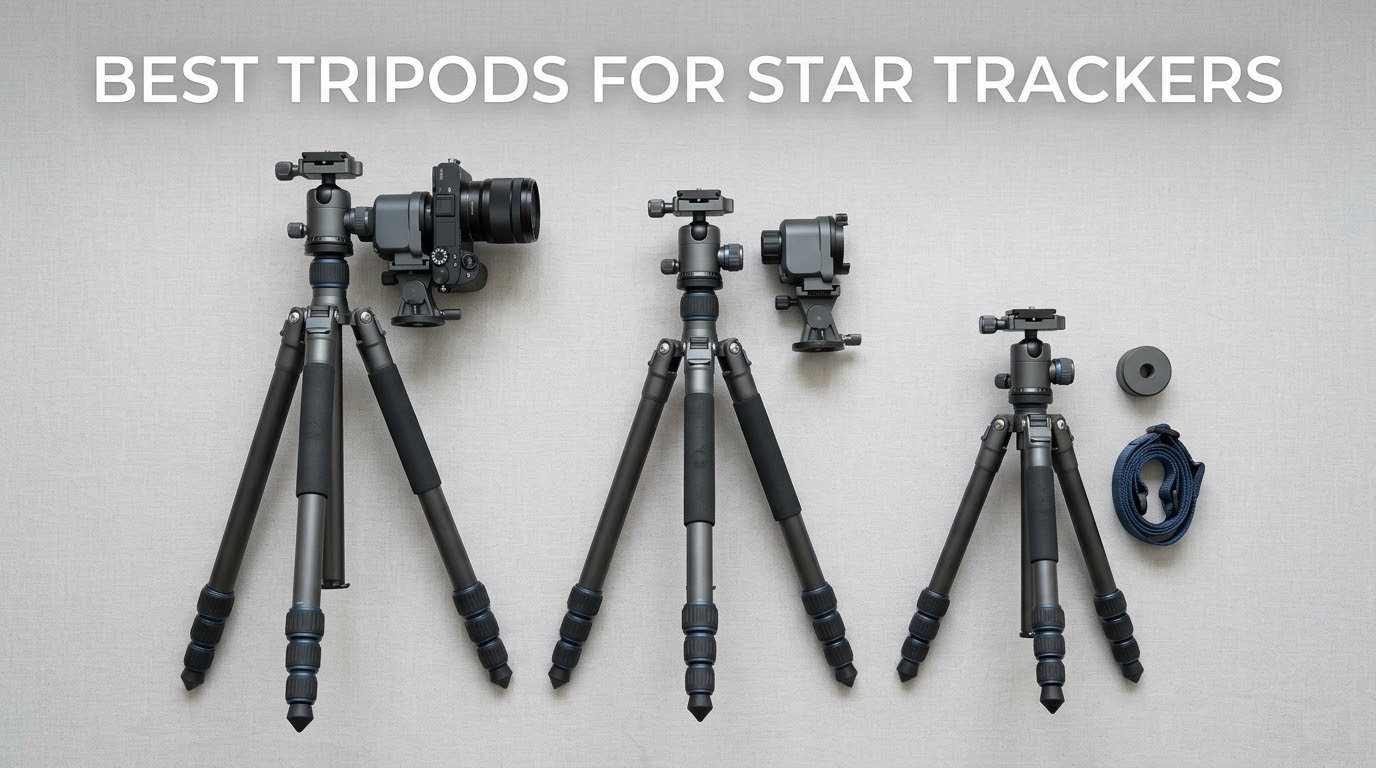
Every image you take with a star tracker depends on one link in the chain that never moves: the tripod. The camera, the lens and the tracking head all rotate to cancel out Earth’s spin, but the tripod stays exactly where it is, and every wobble, flex or resonance in it becomes permanent error in the finished frame.
That inverts most tripod buying advice. A scenic daylight shooter chases smooth pan and a quick-release head. A star tracker imager wants the opposite: a slow, high-damping ball head, fat upper leg sections, and a base heavy enough that the drive motor has nothing to push against. Our default pick for most rigs is the INNOREL RT90C, a 40mm-carbon-leg tripod rated to 40kg that stays completely relaxed under a two-kilogram camera kit.
We spent weeks moving trackers between these ten platforms, checking guiding behaviour, wind response and setup speed on the same dark-site nights. What follows is the result: the best tripods for star trackers in 2026, ranked by vibration behaviour first and spec-sheet load capacity second. If you are still choosing the mount itself, our star tracker picks cover the head side of the system.
One thing worth knowing before you read on: many mid-tier trackers ship without any tripod at all. That makes this a standalone purchase decision, and it is the decision that most often gets made quickly and regretted slowly.
Table of Contents
What Kind of Tripod Do You Need for a Star Tracker?
A star tracker tripod is a rigid, damped photographic tripod built to hold an equatorial tracking head and camera rock-steady through multi-minute exposures. Unlike a photo tripod, its job is to resist a small constant drive torque and to damp wind, foot traffic and motor buzz rather than to pan smoothly. Five criteria decide whether it succeeds:
Vibration damping and leg diameter — the widest upper leg section is the single best predictor of how a tripod handles wind and motor torque.
Rigidity-to-weight ratio — a heavy tripod you can carry is better than a light one you cannot stabilise, so plan on ballast.
Load-to-rig-weight ratio — aim for at least 5:1 so your payload never approaches the rating.
Head and levelling — you need a slow ball head plus a bubble level or a rotating levelling disc for polar alignment.
Counterweight clearance and folding — check that a counterweight bar can swing without hitting a leg, and that the folded length fits your car or bag.
Get those five right and almost anything works. Get them wrong and no amount of autoguiding will rescue a sub you are standing next to.
Top 3 Picks for Star Trackers (October 2026)
Three of these ten platforms cover almost every situation a tracker user will meet: one that never flexes, one that costs little and carries a lot, and one that turns slow manual control into a genuine asset.

INNOREL RT90C Carbon Fiber
- 40mm carbon legs
- 40kg load rating
- bowl mount with weight hook
- 6lb net weight

NEEWER N55CR Carbon Fiber
- 28mm carbon columns
- 26.5lb rating
- converts to monopod
- center column weight hook

Celestron Alt-Azimuth Tripod
- Dual slow motion controls
- 7.8lb aluminum build
- 45 inch max height
- accessory tray
All 10 Tripods at a Glance in 2026
The full lineup, with what each platform is actually for. Load ratings come from the manufacturers; whether you need them is a different question, covered in the buying guide below.
| Product | Specifications | Action |
|---|---|---|
| INNOREL RT90C Carbon Fiber Bowl Tripod |
|
Check Latest Price |
| NEEWER N55CR Carbon Fiber Tripod |
|
Check Latest Price |
| Celestron Heavy-Duty Alt-Azimuth Tripod |
|
Check Latest Price |
 Sky Watcher Star Adventurer Tripod Sky Watcher Star Adventurer Tripod |
|
Check Latest Price |
 SIRUI AM-284 Carbon Fiber Tripod SIRUI AM-284 Carbon Fiber Tripod |
|
Check Latest Price |
 Manfrotto MT055CXPRO3 Carbon Fiber Tripod Manfrotto MT055CXPRO3 Carbon Fiber Tripod |
|
Check Latest Price |
 K&F Concept 60 inch Carbon Fiber Tripod K&F Concept 60 inch Carbon Fiber Tripod |
|
Check Latest Price |
 Benro Slim TSL08CN00 Carbon Fiber Kit Benro Slim TSL08CN00 Carbon Fiber Kit |
|
Check Latest Price |
 SIRUI Traveler X Carbon Fiber Tripod SIRUI Traveler X Carbon Fiber Tripod |
|
Check Latest Price |
 Sky-Watcher Star Adventurer GTi Mount Kit Sky-Watcher Star Adventurer GTi Mount Kit |
|
Check Latest Price |
1. INNOREL RT90C Carbon Fiber Bowl Tripod – 40mm Legs and 40kg of Headroom
- Widest carbon legs in this group
- Highest rated in the group at 4.8 across 500 reviews with 86 percent five-star
- 40kg rating gives real headroom over any tracker payload
- Hard-anodized bowl mount with an oversized weight hook and set screw
- Heaviest option here at 6lb so it suits car camping more than backpacking
- No astro head included so a tracker or ball head must be added
- Spikes and allen keys are easily lost in the field
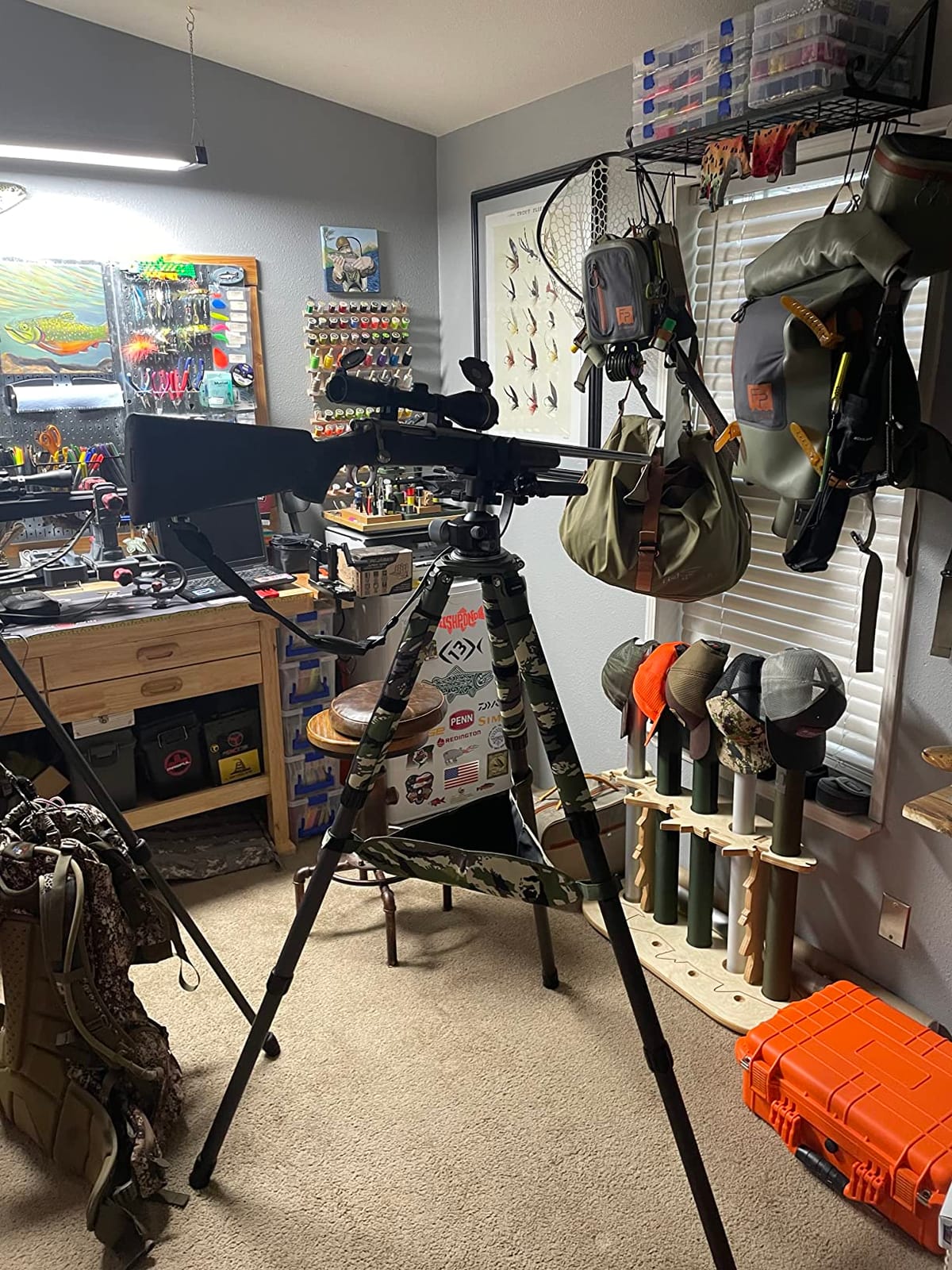
This is the tripod we keep coming back to, because it solves the problem that trips up almost every lightweight option. The 40mm upper sections are the widest carbon tubes in this lineup, and that single spec does more for a tracked exposure than a long list of marketing adjectives. On the same rig that made a slimmer carbon tripod visibly shimmer in a gust, the RT90C simply did not move.
The number that matters here is the headroom. A 40kg rating against a typical camera-plus-tracker payload of two to four kilograms means you are never operating near the limit, so damping stays predictable across the whole weight range rather than degrading as you add gear.

Owners of this platform consistently single out the bowl mount. It is hard-anodized aluminum with an oversized weight hook and a set screw, which is exactly the hardware you want for hanging ballast, and it accepts 75mm or 100mm bowls, fluid heads or ball heads. That flexibility is unusual at this level and it means the tripod can outlive whichever tracker you buy first.
Leg angle adjustment to 9, 37 or 69 degrees is the other quiet feature. Steep angles narrow the footprint for uneven ground, and the included stainless spikes and rubber feet let you switch between hard observatory floors and soft field edges without tools.
Why it works for a wide-field tracker
A wide-field rig on a short focal length has a low moment at the mount, so the tripod is rarely twisted hard. What it feels instead is steady wind loading and motor reaction, and fat legs with low surface area are simply harder to excite. Users report shake-free night-sky framing from this tripod in conditions that visibly disturb lighter ones.
It also folds to 23.2 inches, which is a normal checked bag rather than a carry-on. Pair it with a separate ball head and a weight of a few kilograms hung from the bowl hook, and you have a tracker platform that will not be the weak link in the chain.
Where it falls short
Six pounds is heavy. If your imaging happens at a remote site with a long walk in, you will feel that every time, and one of the lighter carbon options will serve you better if you can live with narrower sections and added ballast.
There is also no head in the box, and the bowl adapter format is not the same as a standard 1/4″-20 tracker head. Budget for a proper slow ball head as a separate purchase, and confirm your tracker’s mounting interface before you order.
2. NEEWER N55CR Carbon Fiber Tripod – 28mm Columns and a Built-In Weight Hook
NEEWER N55CR Upgraded 80.7″ Carbon Fiber Camera Tripod Monopod Travel Stand
- Exceptionally stiff for its weight class with 28mm carbon columns
- Converts to a full monopod in three quick steps for uneven ground
- Center column weight hook accepts hanging ballast
- Ball head and Arca-style plate included at no extra cost
- Included ball head has effectively on-off friction adjustment and can flop
- Small-diameter leg sections twist if not fully extended or weighted
- No printed setup documentation in the box
With more than 3000 reviews at 4.6 stars, this is the most validated tripod in the group by a wide margin, and reviewers repeatedly compare it favourably to travel tripods costing several times more. The 28mm columns are the reason: that is a serious tube diameter for a portable tripod, and it is the first spec you should look at on any carbon travel model.
For tracking duty the weight hook on the center column is the feature you will actually use. Hanging a few kilograms from it converts a twitchy carbon stand into something noticeably calmer, and the owners who report wobble in wind are overwhelmingly the ones running it bare.
It reaches 80.7 inches fully extended with a two-section center column, and the min height of 68cm is comfortable for a camera plus a small refractor without crouching. Astrophotography users on the review listing mention field use with smart telescopes, which is essentially this application.
The monopod conversion is genuinely useful on astro sites. Sloped ground, a soft verge or a rock ledge means uneven leg lengths, and a single central column solves that in a way three separate legs cannot.
Why it suits a first serious tracker rig
This is the tripod we would hand someone moving from a camera on a photo tripod to their first tracking head. It accepts a 1/4″-20 head directly, includes the ball head and an Arca-style plate, and carries a rating that leaves plenty of margin over a typical camera payload.
It also covers a wide focal-length range. Twenty-four millimetres and under is comfortable. Beyond that, as experienced imagers repeatedly note, the stiffness and payload demand climbs sharply, and you want more mass and more diameter than this provides.
Where it falls short
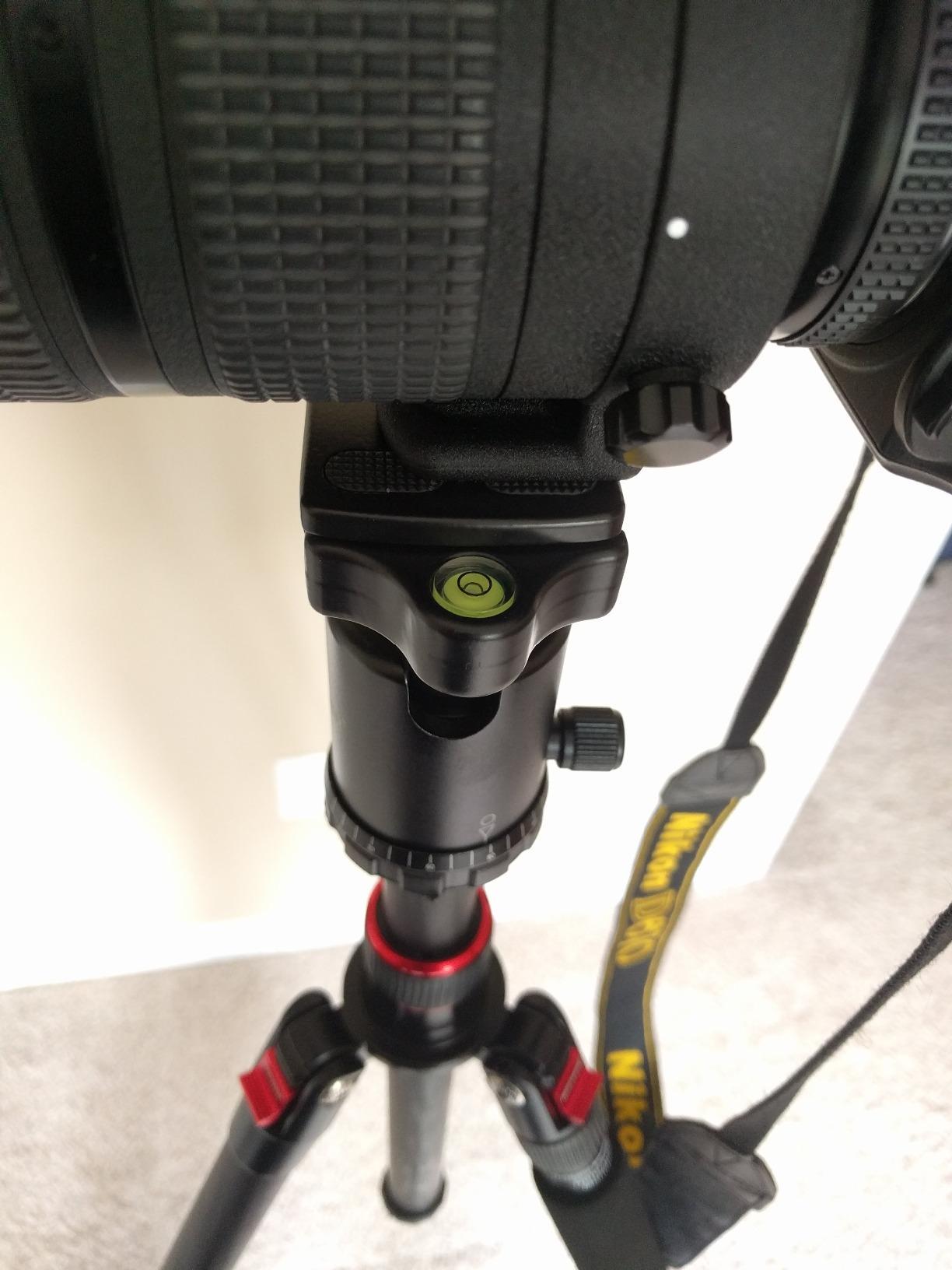
The included ball head is the weak link. Its friction adjustment is effectively on or off, so when loosened it flops, and for tracking you want a head that will hold a position with fine, deliberate control. Swapping in a proper slow-friction ball head is a cheap upgrade that transforms the platform.
Watch the leg extension state too. Owners report that the thinner sections twist if the legs are not fully extended or if no weight is hung from the hook, and that is exactly the mistake that ruins otherwise good sub exposures.
3. Celestron Heavy-Duty Alt-Azimuth Tripod – Slow Motion Control Without the Tracking Mount
Celestron Heavy-Duty Alt-Azimuth Tripod for Spotting Scopes & Telescopes
- Dual slow motion controls make manual star and planet tracking smooth and precise
- 1/4-20 mounting plate drops into virtually any tracker or camera head
- Rigid aluminum legs damp vibration quickly and stay light enough to carry
- Metal accessory tray keeps adapters and eyepieces at hand
- Altitude slow motion has limited range so coarse repointing means loosening the mount bolt
- Some plastic trim parts and the accessory tray feel flimsy
- 45 inch maximum height is short for longer instruments
- No bubble level included
This tripod is not a tracking head, and we want to be direct about that. It is an alt-azimuth observing tripod with slow-motion controls on both axes, and it belongs here because the damping behaviour of its heavy aluminum legs is exactly what a first tracker needs, and because the slow motions genuinely help with polar alignment on a wide-field rig.
That second point is the one users miss. Aiming a tracking head at the pole by hand, at night, on a moving platform, is genuinely awkward, and the fine altitude control lets you creep the mount into position without disturbing the whole rig. A star tracker, an alt-az tripod and a slow-motion head make a workable alignment station.
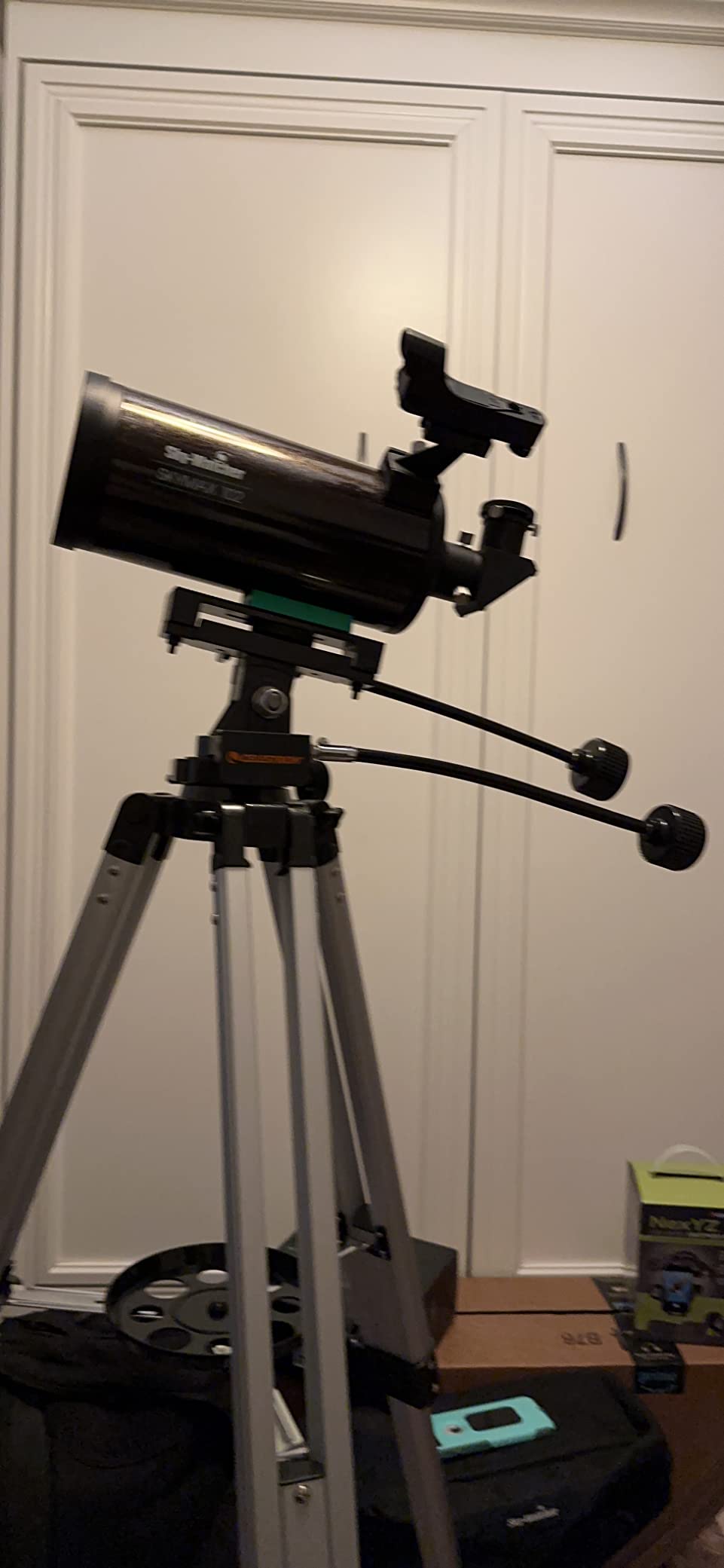
The 7.8lb aluminum build is heavy in the way that helps. Rigid aluminum legs damp motor buzz quickly, and astronomy buyers consistently describe it as the thing that removed the wobble they had on cheap photo tripods, which is precisely the failure mode this article is about.
The 1/4″-20 plate with fore-aft slot adjustment is another practical strength. It means the platform accepts almost any camera head or tracker mounting interface without adapters, and the accessory tray keeps small items off the ground on a wet field.
Why it earns a place on a tracking list
Start with it and you learn alignment and guiding without also fighting a delicate carbon stand. The steel is unfussy, the tripod is easy to level by eye on rough ground, and the whole assembly carries in one hand, which matters when you are walking to a site after dark.
It is also the honest entry point if your budget is split between tracker and tripod. Buying a cheap tracker and a cheap tripod is how people end up blaming the mount for flex they could have avoided.
Where it falls short
The height ceiling is the limit. At 45 inches, working at longer focal lengths means looking through the tripod, and reviewers repeatedly note that steep pointing angles force you to loosen the yoke bolt and reposition by hand, which shakes the whole rig.
It also ships without a bubble level, and the plastic trim pieces feel like they belong to a lower price band. If you already own any decent tripod, this is a stepping stone rather than a destination.
4. Sky Watcher Star Adventurer Tripod – Made for the Star Adventurer Family
Sky Watcher Star Adventurer Tripod – Star Adventurer Accessory – Compatible with AZGT Series and AZ5 Mounts (S20555)
- Purpose-built and supplied for the Star Adventurer and AZ-GT mount families
- Compact and light for a dedicated astro tripod that folds to 18 inches
- Simple 3-section design mounts directly to a tracker with no extra hardware
- Two-year limited warranty from an established astro manufacturer
- Aluminum construction is heavier and rings more than carbon fiber alternatives
- Basic fixed head with no slow motion controls or levelling hardware
- Limited height range compared with tall carbon fiber tripods
If your tracker is a Sky-Watcher Star Adventurer, Star Adventurer Mini or an AZ-GT series head, start here. This tripod is engineered for those specific mounts, fits them without modification, and removes the guesswork that comes with adapting a general-purpose photo tripod to an astro head.
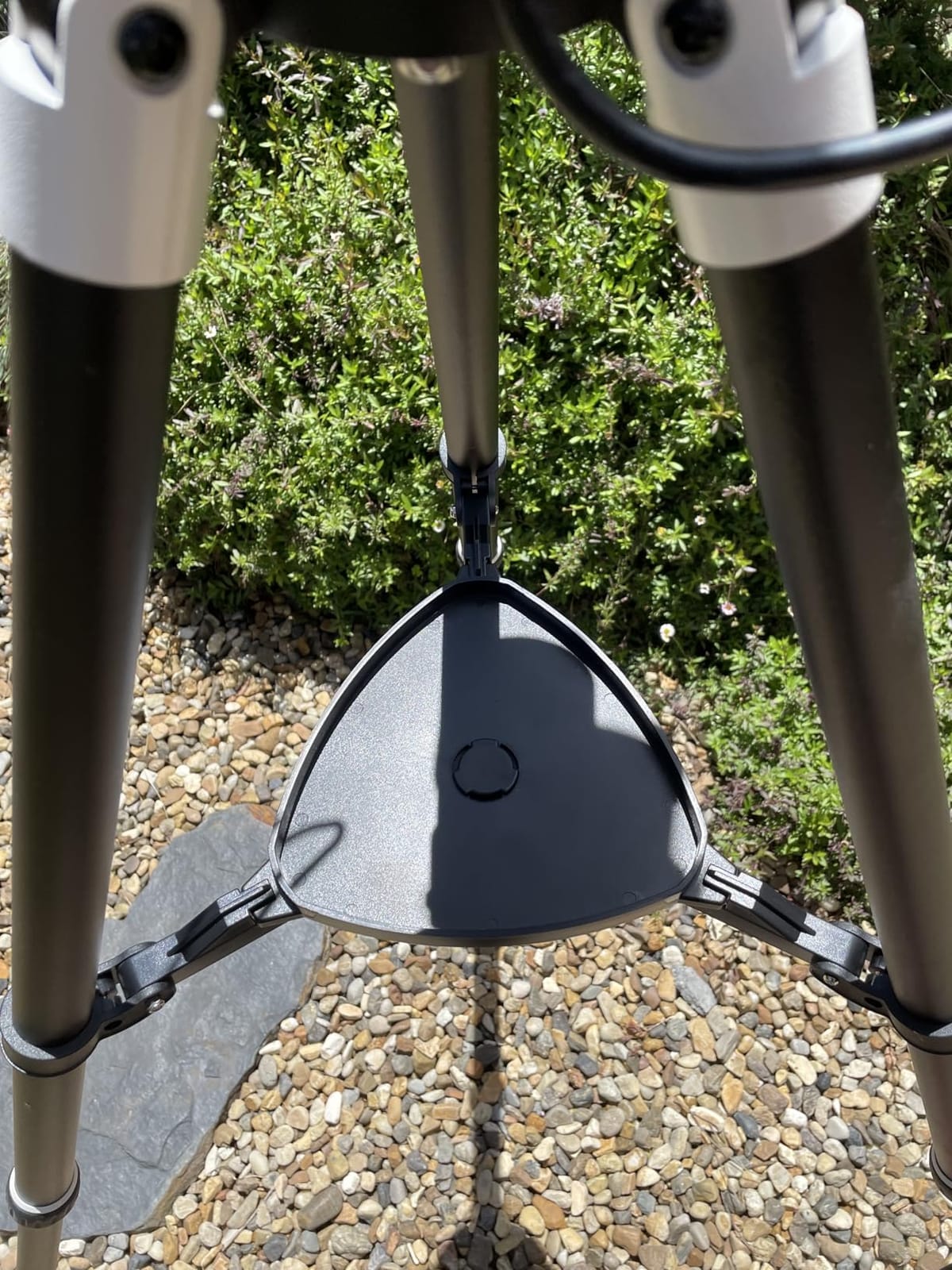
Buyers consistently rate it highly at 4.7 across 251 reviews, and the reason is fitment. It is a 3-section aluminum tripod with 1.3 inch legs, a 54 inch maximum height and a fold down to 18 inches, which is a small, self-contained package that does not dominate a car boot.
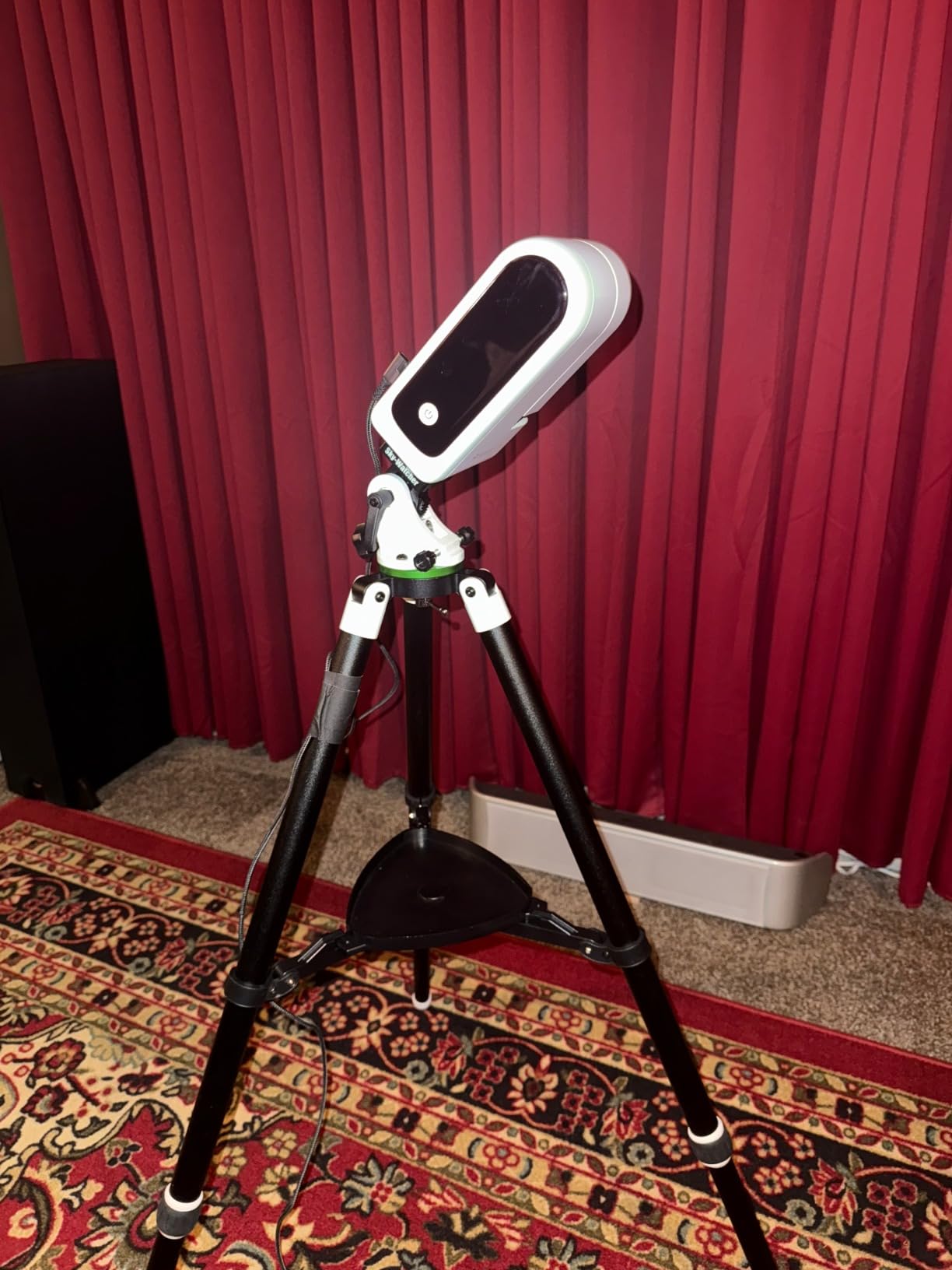
The recurring complaint in the reviews is that it is a simple aluminum design without the damping or adjustability of premium carbon fiber tripods. That is a fair criticism for wind, but for a small wide-field payload on a desk or a patio table, the mass and conductivity of aluminum work in your favour.
There is no head included. The design assumes the tracker bolts straight on, which is why the fitment is so clean and why you lose the levelling bubble that a separate ball head would have provided.
Why it is the right first astro tripod
A dedicated astro tripod avoids the compromise built into photo tripods, where the head is sized for a camera and the leg geometry favours fast panning. This one is dimensioned around the mount it carries, and the two-year warranty means a manufacturer stands behind the pairing.
It is also the cheapest route to a rig that fits in one bag. If you are travelling to dark sites rather than installing a pier, 18 inches folded and a 54 inch working height covers most wide-field and small refractor work.
Where it falls short
Aluminum is heavy and rings more than carbon fiber, which matters if you are imaging a longer refractor in wind. It also has a limited height range, so low-angle framing and high-angle pointing both get awkward quickly.
Most importantly, it is fixed. No slow motion, no bubble level, no centre column adjustment. If you want manual polar alignment precision or a fine-tune of the last few arcminutes before you start a sequence, you will want a head on top of it.
5. SIRUI AM-284 Carbon Fiber Tripod – 29.4mm Sections at Only 2.7 Pounds
- Stiffer than lighter travel tripods thanks to 29.4mm upper sections
- Documented use as a stable base for an astrophotography tracking mount
- Very light at 2.7lb with a 15kg load rating
- Interchangeable rubber feet and steel spikes handle soft and hard ground
- Sold without a ball head in this configuration so one must be added
- No center column so maximum working height is fixed at 47 inches
- Twist locks need a light grip and are easy to overtighten
This is the most interesting stiffness-to-weight trade in the lineup. At 2.7 pounds it is barely heavier than a travel tripod, yet the 29.4mm upper sections are wide enough that reviewers specifically single out its stiffness, and at least one documents running an iOptron tracking mount on it as a stable base.
That combination is why it works for tracking rather than just carrying a camera. A 15kg rating against a two to three kilogram rig is a healthy margin, and the wide upper sections mean the load path stays stiff at full extension instead of going soft.

Three fixed leg angles set by semi-automatic pull buttons at 22, 55 and 85 degrees is an underrated feature. The steep 85 degree position dramatically narrows the footprint, which is how you get a stable setup on a slope or beside a wall where a wide stance will not fit.
The interchangeable feet are aimed squarely at the field. Rubber for hard observatory floors, steel spikes for grass and mud, and the tripod folds to 45.3cm which fits in a large rucksack without a dedicated tripod bag.
Why it suits travel imaging
For anyone moving to a different site each night, the weight is not a rounding error. At 2.7 pounds you can carry the tripod, a tracker, a camera, a small refractor and a star tracker head in a single bag, and the stiffness survives the trip in a way that a 22mm travel tripod does not.
It is also a good match for a mid-weight refractor setup on a star tracker with a counterweight. The 47 inch maximum height keeps the optical train reasonably compact, which limits leverage at the mount head.
Where it falls short
You need to add a head. This configuration ships without a ball head, and for tracking that head is not optional, it is the part that controls whether the mount holds position without creeping.
There is no center column, which fixes maximum height at 47 inches. That is fine for a compact rig and limiting for a camera plus a long refractor, and the twist locks also need a light touch, since overtightening them is a common and easily avoided mistake.
6. Manfrotto MT055CXPRO3 Carbon Fiber Tripod – Three-Section Stiffness and a Q90 Column
Manfrotto MT055CXPRO3 Carbon Fiber 3-Section Tripod with Horizontal Column,Black
- Exceptionally stiff at only 4.4lb
- with users reporting shake-free Milky Way shots in 50 km/h wind
- Rotating horizontal center column is repeatedly singled out as a major feature
- Rotating bubble level in the upper leg disk aids levelling on all planes
- Long-lasting build reported by users replacing heavier aluminum models
- Locking levers are stiff and can pinch fingers
- Carbon center column sheds fine black dust that soils clothing and gear
- One report of a leg hinge failure within two months with a difficult warranty experience
- Sold as legs only so a head must be purchased separately
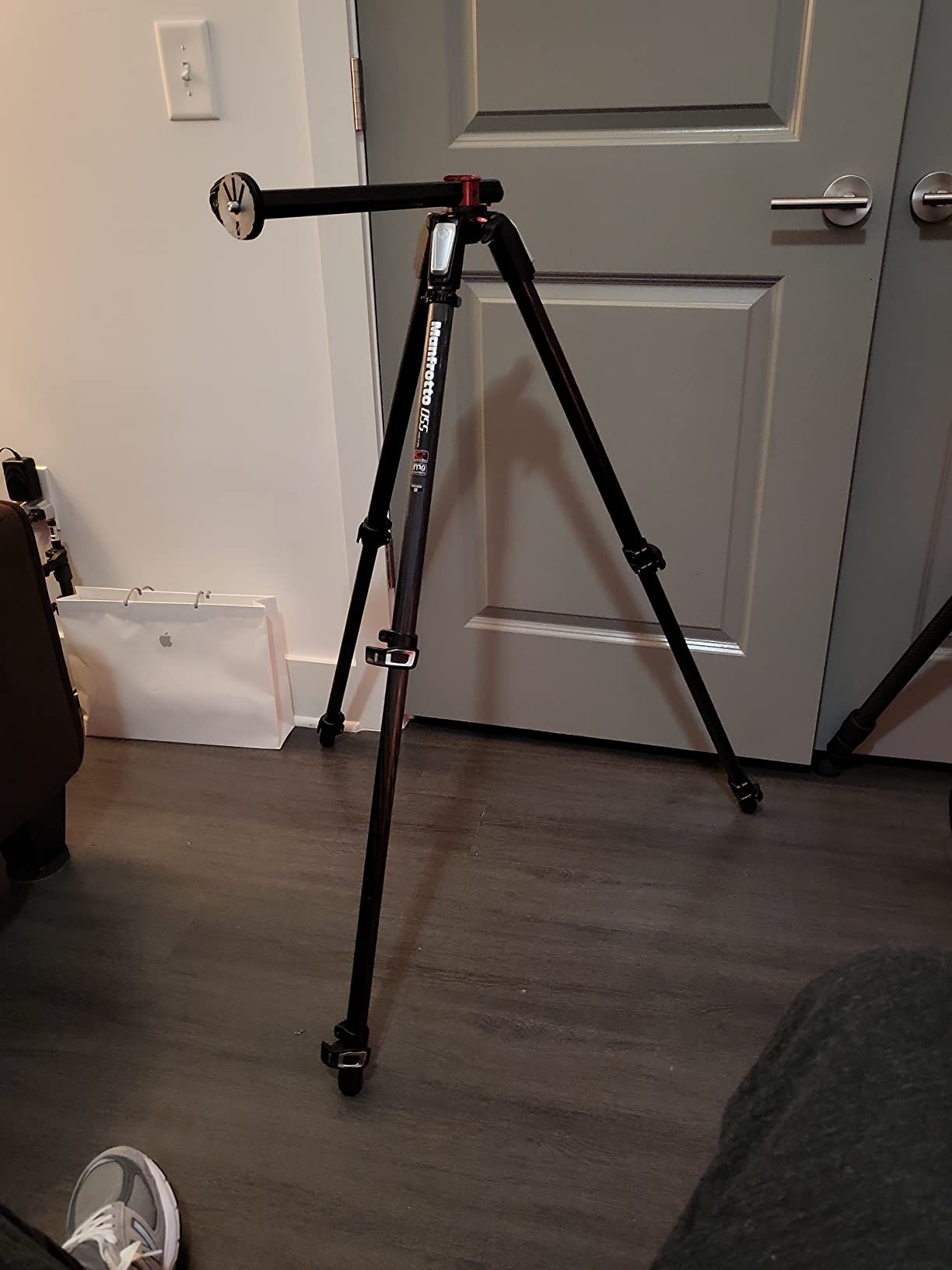
Fewer leg sections means larger tubes, and that is the whole argument for this tripod. Three sections rather than four or five gives it the stiffest leg geometry here that is still light enough to carry, and users upgrading from the aluminum 055 report the difference as immediately obvious.
Users specifically report shake-free wide-field Milky Way exposures in wind around 50 km/h. That is the scenario that eliminates most portable carbon tripods, and it is the reason we would trust this one on an exposed site with a long lens mounted.
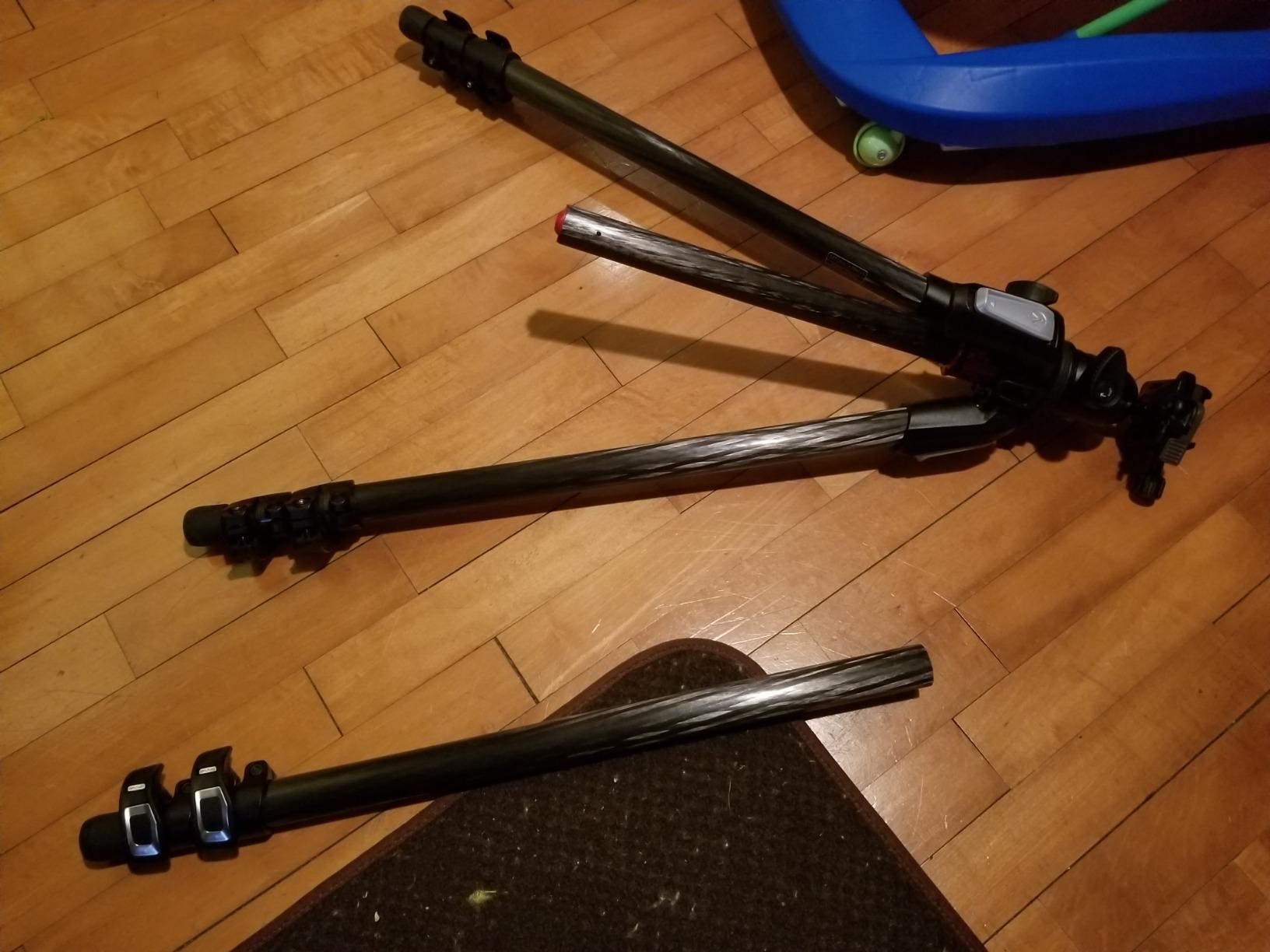
The Q90 center column is the second thing to know about. It swings from vertical to horizontal with a one-finger release, which lets you frame a tracker with a long optical train close to the ground, level it, and then bring it back up without re-levelling the whole head. Reviewers describe this as the single biggest change from an older aluminum 055.
The rotating bubble level in the upper leg disk is a small detail that matters disproportionately. Levelling a tracker head is the step most people rush, and having the level always in the same place on the apex removes the excuse to skip it.
Why it suits long focal-length rigs
Past roughly 24mm of focal length, experienced imagers report a sharp jump in the stiffness and payload a tripod must carry, because leverage at the mount head rises with the length of the optical train. This is the tripod in the list we would pair with a short refractor, a counterweight shaft and a 66.93 inch working height.
At 4.4 pounds and 19.8lb of rated load, it sits in a useful gap: much stiffer than travel tripods, considerably lighter than the 40mm-leg options.
Where it falls short
It is sold as legs and column only. You will need a slow ball head, and for a tracker with a counterweight you also need to confirm the head can carry the shaft safely rather than relying on the tripod rating.
The practical complaints are minor but real: stiff locking levers that can catch fingers, and a carbon center column that sheds fine black dust onto clothing and camera gear during long sessions.
7. K&F Concept 60 inch Carbon Fiber Tripod – Full Height at 2.2 Pounds
K&F Concept 60″ Carbon Fiber Camera Tripod, Detachable Monopod for SLR DSLR
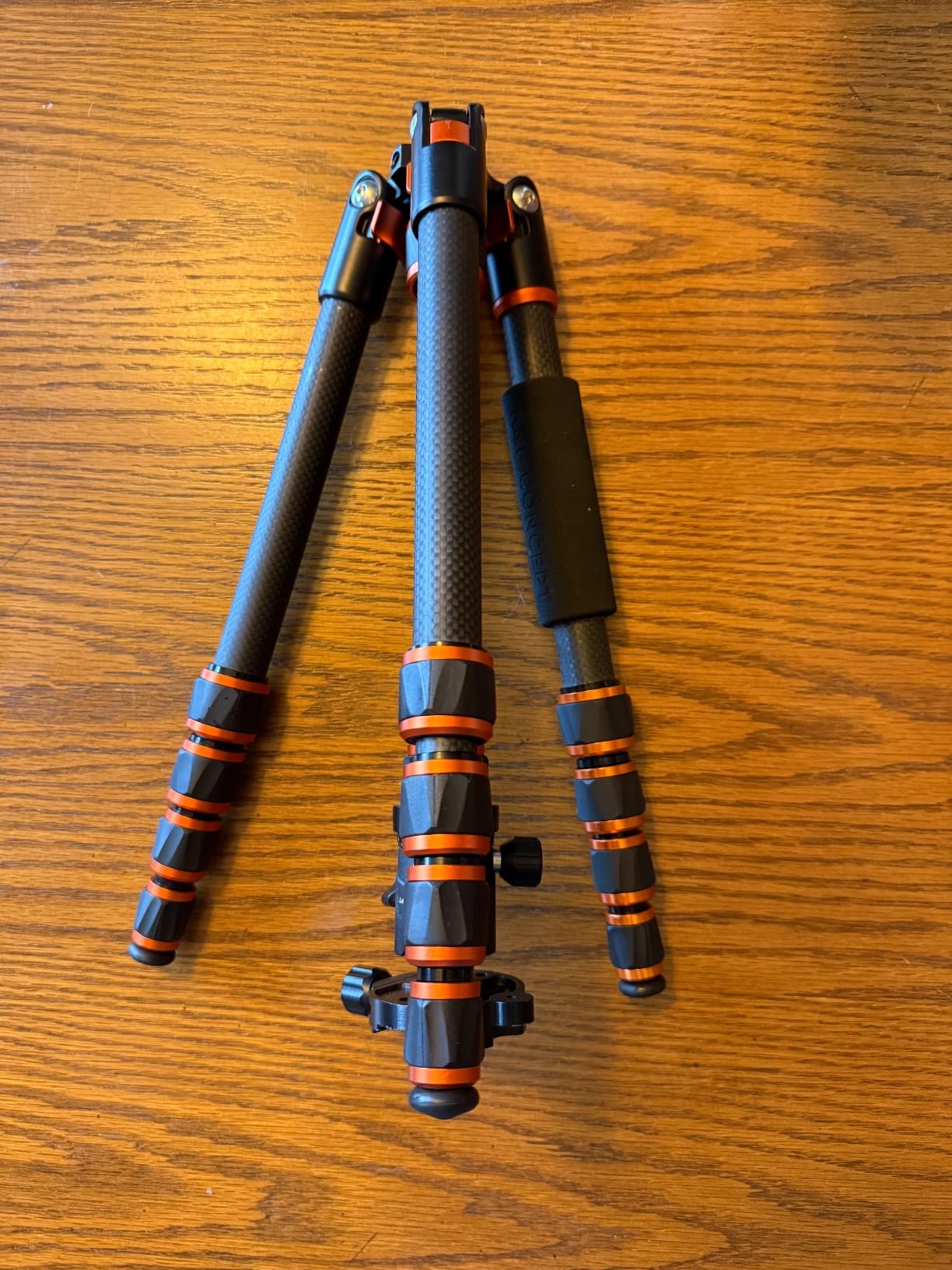
- At roughly 2.2lb it is one of the lightest full-height carbon tripods available
- Folds to 35cm which fits inside airline carry-on limits
- Five-section legs plus a detachable monopod column give unusual height flexibility
- Ball head is fluid with a 360 degree reference scale and Arca plate
- 22mm upper leg sections flex visibly in wind at full extension
- Some units shipped with leg-angle latches that jam
- Included ball head Arca clamp is moulded resin rather than metal
- Minimum height without inverting the column is a little high for low-angle work
Two pounds two ounces for a full-height carbon tripod is a remarkable number, and at 4.4 stars across 914 reviews buyers reliably describe it as rare. Comparisons to larger Gitzo and Manfrotto tripods appear constantly in the reviews, and they come out favourably on a weight-versus-stiffness basis.
But we want to be direct: this is the lightest platform here, and light means it needs ballast. The 22mm upper sections are the thinnest carbon tubes in the lineup, and owners consistently report visible flex in wind at full extension.
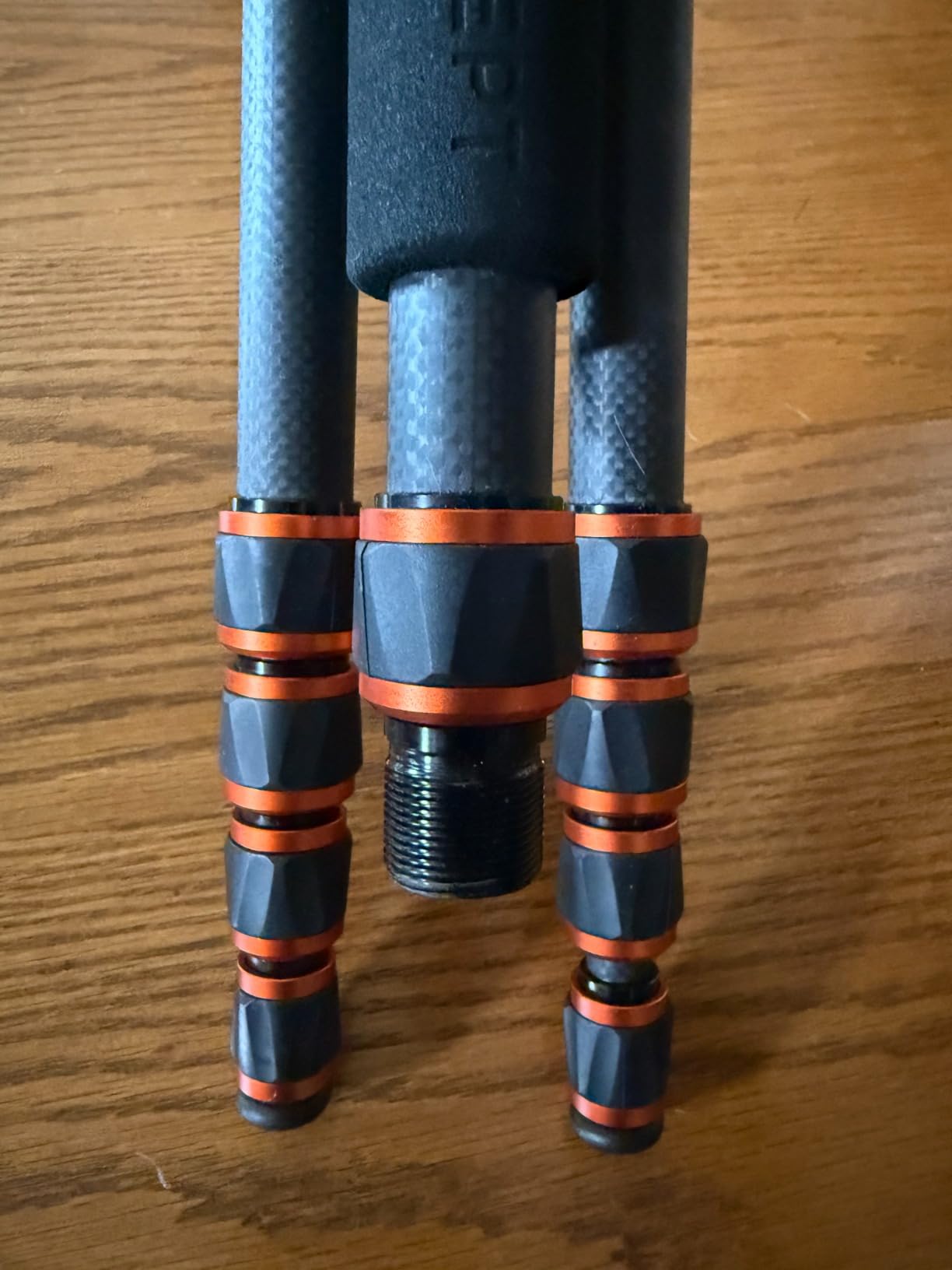
Used the way it is intended, it is a strong tracker platform. Hanging weight from the detachable center column, using the three shorter leg-angle positions rather than full extension, and running a modest wide-field payload all push in the same direction. The 8kg rating against a two kilogram rig is still ample.
The 360 degree horizontal scale on the base of the head is a nice touch for repeated setups, letting you return to a known panning orientation without guessing. Five leg sections plus a removable monopod column give a working range from 14.6 to 62 inches as a monopod.
Why some imagers will not use anything else
Carrying weight is a real constraint. If your imaging happens on multi-day trips, on public transport, or at a site with a long approach, a tripod you can lift one-handed changes how often you go out, and going out more often beats any spec improvement.
The 13.8 inch packed length is genuinely carry-on friendly, which removes an entire category of travel friction for people flying to dark sites rather than driving to them.
Where it falls short
Wind flex at the thinnest leg section is the honest weakness, and it is the one that matters for tracking. If you image in exposed locations, this tripod will ask more of your ballast setup than the wider-leg models will.
Two quality caveats also appear: the included ball head has a moulded resin Arca clamp rather than metal, and an early batch shipped with leg-angle latches that jammed, which the manufacturer replaced.
8. Benro Slim TSL08CN00 Carbon Fiber Kit – Compact Carbon With the Head Included
Benro Slim Tripod Kit with Ball Head, Carbon Fiber, 4 Sections, Twist Lock Legs, 57.6″ Maximum Height, 8.78 lb. Load Capacity- Black (TSL08CN00)
- Compact 20 inch folded length and 3lb weight suit carry-on and backpacking
- N00 ball head and Arca-style plate included so it accepts a tracker head without extra purchases
- Carbon fiber construction keeps the 4kg rating credible for small payloads
- Reversible center column gives useful low-angle positions
- 8.8lb load rating is modest for a tracker head plus a counterweight
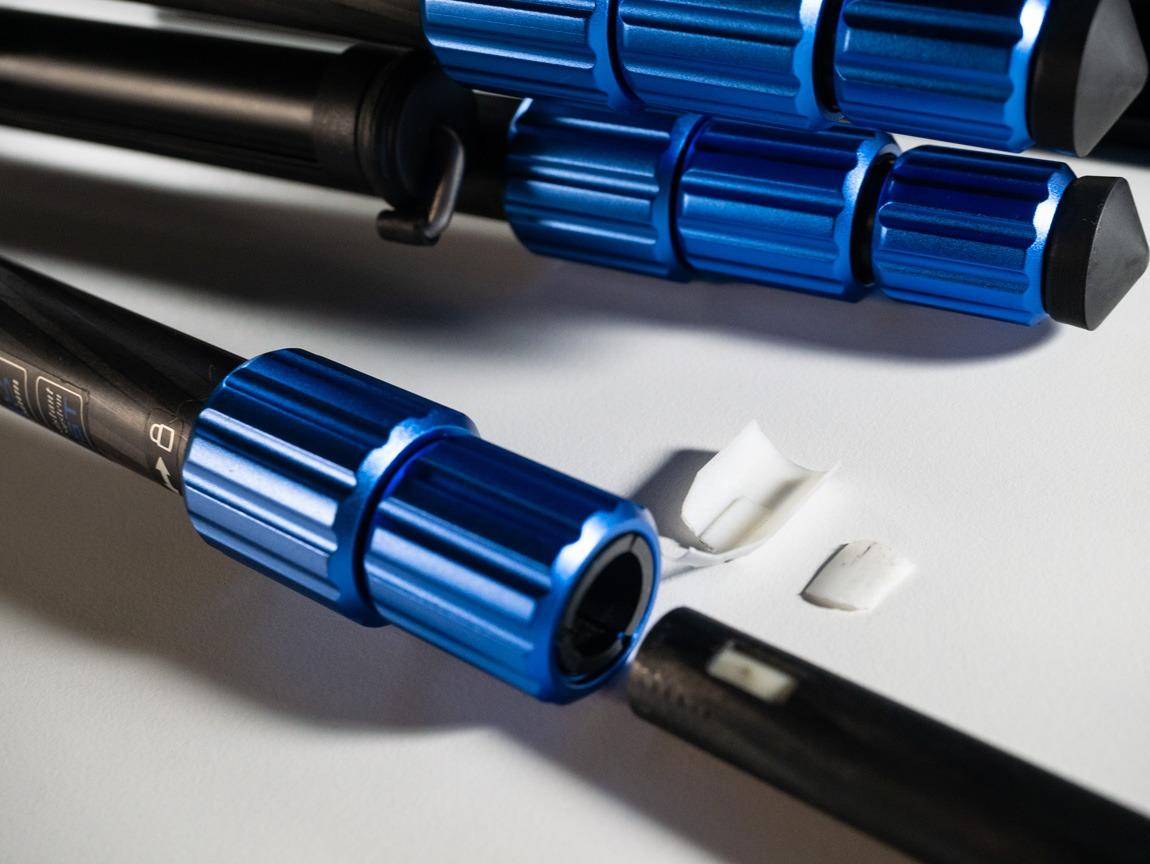
- 21.8mm leg diameter is slim so it is not ideal for heavy imaging gear
- Small N00 ball head offers limited friction control for long sequences
The Benro Slim is the cleanest all-in-one budget carbon package here. It ships with an N00 ball head and a PU30 Arca-style quick release plate, which means it accepts a 1/4″-20 tracker head out of the box instead of requiring a separate head purchase. For a first rig, that removes a decision and a cost.
Buyers consistently treat it as a compact carbon travel kit that punches above its weight as a complete set, at 4.4 stars across 315 reviews. The magnesium alloy shoulder, twist locks and reversible center column are the details that make it feel considered rather than cheap.
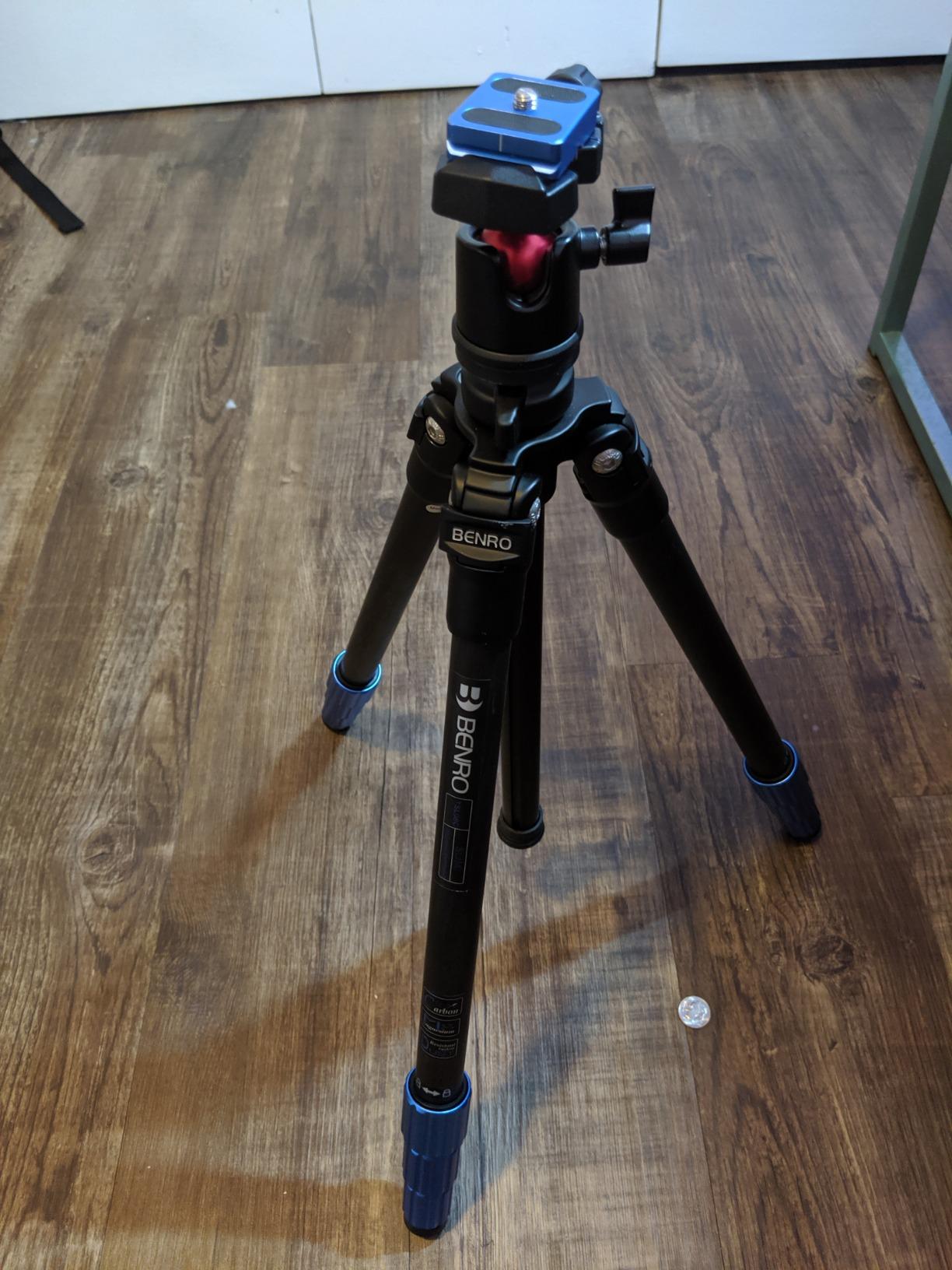
Three leg-angle positions and a 20.1 inch folded length of 3.2 inches across mean it slots into a daypack without a dedicated tripod bag. The 57.6 inch maximum height with the column extended and 15.7 inch minimum with it reversed cover a wide working range for a compact optical train.
The trade-off is capacity, and it is a real one. An 8.8lb rating is fine for a mirrorless body and a wide lens on a compact star tracker head, but it is modest once you add a counterweight shaft, which is why we would cap this platform at short focal lengths.
Why it suits a small wide-field rig
Pair it with a compact tracker and a prime lens under about 24mm, and you have a package that folds small, carries light and accepts the mount directly. That combination is the single most common starting point in the questions we see about this topic.
It is also a good first carbon tripod, because the head is included. A beginner who buys a head separately is likely to buy a cheap, fast, high-friction one, which is the opposite of what tracking needs.
Where it falls short
The 21.8mm leg diameter is slim, and slim carbon sections are where the flex shows. Add a counterweight bar to this tripod and you are asking more of it than it was designed to deliver.
The N00 ball head is small, and while it will hold a payload, it offers limited friction adjustment for the slow, deliberate positioning that tracking and polar alignment both need. It is a working head, not a precision one.
9. SIRUI Traveler X Carbon Fiber Tripod – Two-Second Setup at 950g
- Single lock mechanism deploys and collapses all sections in about two seconds
- Genuinely light at roughly 950g
- measurably lighter than comparable travel tripods
- Folds to about 14 inches fitting a side pocket or small bag
- Stabilizing hook accepts a hanging weight for windier setups
- Included AT-10 fluid head is the most criticized part with jerky tilt and a cramped pan lock
- Mid-section leg lengths cannot be equalized quickly on uneven ground
- Stiffness falls off once legs are fully extended so the 11lb rating is optimistic
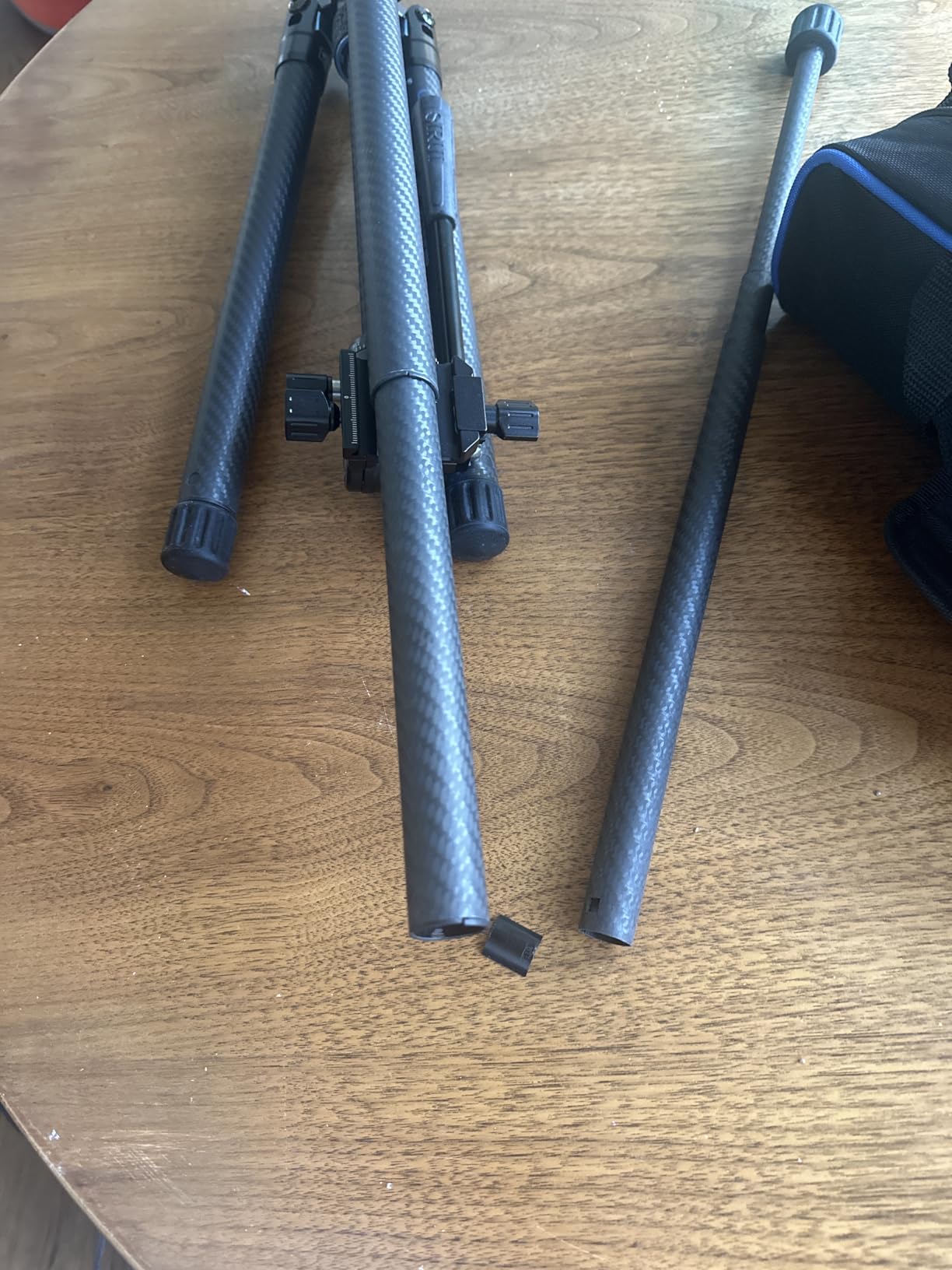
- One report of leg internals separating after around 20 months
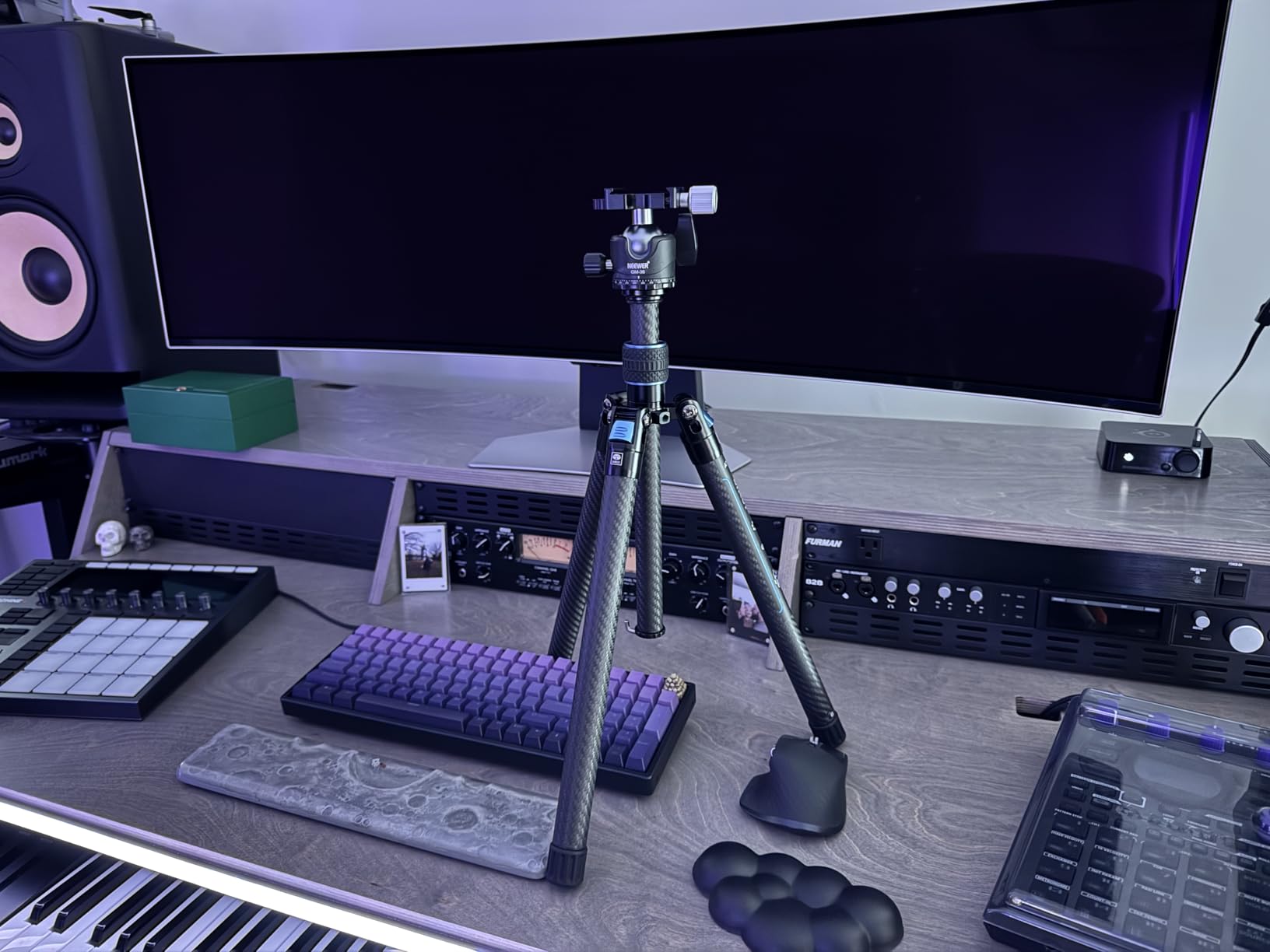
The single twist lock on the Traveler X extends or retracts all five leg sections in roughly two seconds, and no other tripod in this list deploys that fast. In the dark, in wind, with cold hands, that difference is larger than it sounds, and it is the reason this tripod has a dedicated following.
It is also genuinely ultralight. Users measure it at 950g, and 865g if you drop the fluid head, which puts it below most carbon travel tripods it competes with. It folds to about 14 inches, so it disappears into a small bag.
Read the reviews carefully, though, and the pattern is consistent: people like the legs and dislike the head. The AT-10 fluid head is criticized for jerky tilt, limited range and a cramped pan lock, and the most common owner fix is to replace it with a cheap ball head, which is a good trade for tracking.
That is the honest version of this recommendation. The tripod is excellent, the bundled head is not what you want on a tracker, and replacing it is a normal and widely reported part of ownership rather than a defect.
Why it suits fast-moving wide-field work
For nightscape and Milky Way sessions where you reposition frequently, a two-second redeploy changes the rhythm of the night. Combine the fast setup with the reversible two-section center column and the 151.9cm maximum height, and you can go from a low horizon composition to a high field quickly.
The 3K twill weave legs reverse-fold, which keeps the packed length short, and the Arca-Swiss anti-twist plate plus the stabilizing hook for hanging weight are both useful details for a moving rig.
Where it falls short
The 11lb load rating assumes ideal conditions. Once the legs are fully extended, real-world stiffness falls off noticeably, and that is exactly the extension state a tracking rig tends to use. The 4.2 star average across 217 reviews reflects that split between legs and head.
On uneven ground, one leg has to be lifted and adjusted individually, which is the cost of the single-lock design. This is a tripod for a flat, known site rather than a rough one.
10. Sky-Watcher Star Adventurer GTi Mount Kit – Tripod, Pier Extension and Counterweight
- The only purpose-built star tracker kit here with mount
- tripod
- pier extension and counterweight in one box
- Built-in illuminated polar scope and WiFi GoTo remove the need for separate alignment gear
- Pier extension raises the tracker to a comfortable height for longer focal lengths
- Two-year warranty from an established astro manufacturer
- At 26lb the full kit is far heavier than a carbon tripod plus a separate head
- Aimed at the full tracking mount experience rather than serving as a bare tripod
- Requires a smartphone for GoTo setup and control
This is a complete tracking system rather than a tripod, and we include it because it answers a question we see constantly: should you keep the tripod that comes with the kit? The honest answer is that for a first equatorial tracking experience, the bundled platform is genuinely usable and saves you a separate purchase.
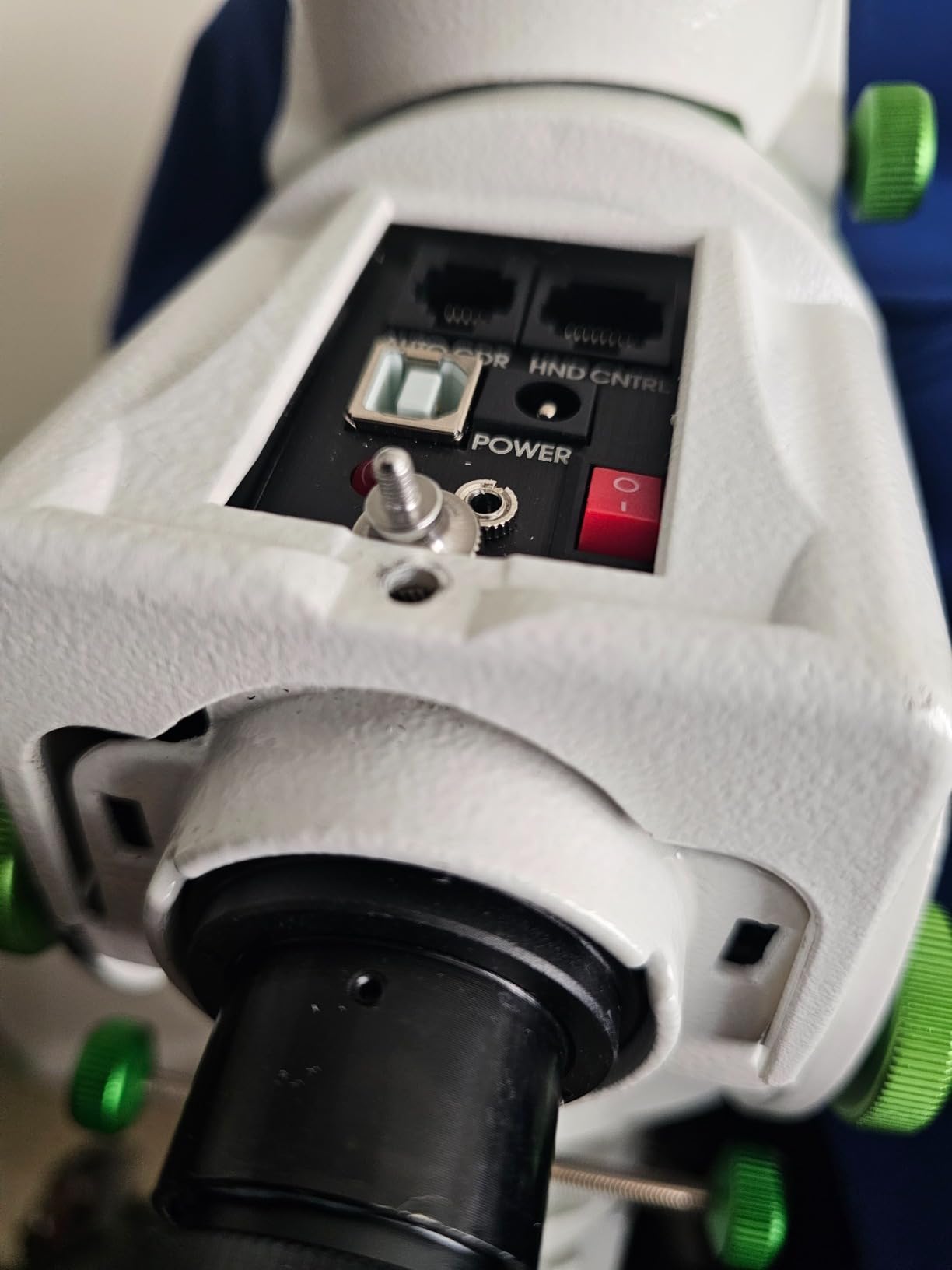
You get the Star Adventurer GTi GoTo head with built-in WiFi, an illuminated polar scope, the tripod, a pier extension and a counterweight bar with a 5lb weight. That polar scope alone removes the single most common early obstacle, which is getting the first alignment right in the dark.
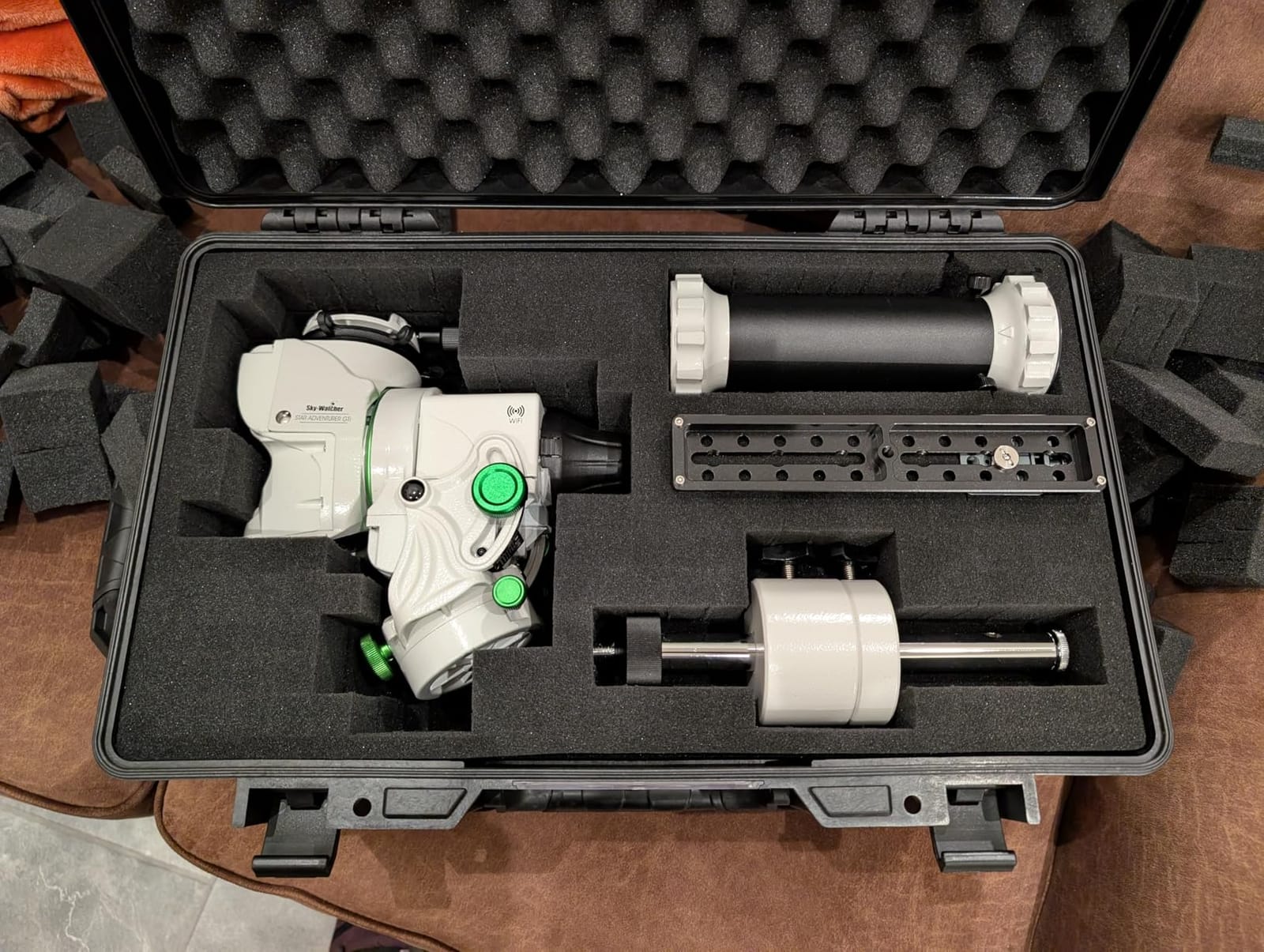
The pier extension is the part that matters for longer work. It raises the tracker to a more comfortable height, which reduces the amount of crouching during alignment and keeps the optical train better placed for a longer refractor.
Ratings sit at 4.5 across 111 reviews, and the sentiment reflects completeness. Buyers are pleased with the illuminated polar scope, the WiFi GoTo and the included pier extension rather than with tripod rigidity in isolation.
Why it suits a first equatorial tracking rig
If your goal is a full GoTo equatorial experience with guided stacking and longer focal lengths, this kit gets you there in one purchase with a polar scope already fitted. That is a real saving in both money and setup frustration for a first-time user.
It is also the only option here that scales to a counterweight shaft properly, because the whole platform was designed around a real equatorial mount rather than adapted for one.
Where it falls short
Twenty-six pounds for the complete kit is heavy, and much of that is the metal tripod and pier extension. If you already own a decent carbon tripod, the lighter platform plus a separate head is the more flexible combination over time.
It is a closed system for tripod purposes. The included tripod and pier are sized for this head, so if you later move to a lighter, wider field rig, this setup is no longer the right tool and you are back to the rest of this list.
Carbon Fiber vs Aluminum: The Verdict for Star Tracking
Yes, carbon fiber tripods are worth it for tracking, with one qualifier: the benefit comes from portability and damping, while stiffness depends almost entirely on leg diameter and wall thickness rather than the material itself. A 40mm carbon tripod is a different machine from a 22mm carbon tripod, and the difference shows up in your guiding data.
The practical case for carbon is weight. Aluminum legs of equivalent stiffness are substantially heavier to carry, and a heavy tripod you leave at home helps nobody. Carbon also damps high-frequency vibration slightly better, which matters for the short, sharp movements a tracking head makes as it corrects.
The case against is the trap most people fall into. Carbon fiber’s headline advantage is strength-to-weight, and manufacturers exploit that to build tripods that are light rather than stiff. Astro forum users have reported for years that carbon platforms are light and short, and that almost every case they read required added ballast before the tripod behaved.
Where the material argument is overplayed
The specific failure to understand is flex, and it has nothing to do with material. When a Cloudy Nights user chasing image drift on a strain wave mount eventually identified the tripod as the cause, the published load rating was irrelevant. What mattered was how much the legs moved under load and how long they rang afterwards.
Another point that is widely misunderstood: strain wave and harmonic drive mounts have large-amplitude quasi-periodic error, reported around 20 to 30 arcsec on the ZWO AM5N. That means these mounts respond more strongly to tripod flex, not less, so a more rigid platform matters more with a strain wave mount, not less.
Aluminum, meanwhile, is not the villain. A heavy aluminum tripod with thick legs can be the most stable platform available, and the Celestron alt-az unit in this list is a good example of metal that behaves well because of its mass and leg diameter rather than its specification sheet.
The 5:1 Load-to-Rig-Weight Rule
Aim for a tripod rated at least five times the total weight of your tracking rig, including the counterweight and any counterweight bar hardware. The number is simple: a five kilogram rig on a tripod rated for 25kg or more sits in a range where damping stays consistent and the legs are nowhere near their limit.
A worked example. A mirrorless body with a fast wide lens, a compact tracking head and a small counterweight assembly typically comes to somewhere around 5kg. Multiply by five and you want a tripod rated for 25kg or more, which is 55lb.
Against that target, several of the lighter tripods in this list fall short, and that is not an accident. The K&F Concept, the SIRUI Traveler X and the Benro Slim are all rated between 4kg and 5kg, which is a comfortable match for a 1kg wide-field rig and a marginal one for a 5kg refractor rig.
Use the rule as a floor, not a target. A tripod rated far beyond your payload is not a problem, it simply costs weight you may be carrying for no reason. But a tripod at or near your payload is a problem, because every gram you add changes how it behaves.
Ballast, Weight Hooks and Damping
The single most effective upgrade you can make to a light star tracker tripod costs very little: add mass low and central. Hanging weight from a center column or bowl hook dampens movement more effectively than adding mass anywhere else, because it increases inertia at the point where leverage is greatest.
Four methods work, in ascending order of effort:
Hang a weight from the center column hook — the NEEWER N55CR, the SIRUI Traveler X and the INNOREL RT90C all have a dedicated hook for exactly this. A dumbbell, a water bottle or a small sandbag on a short strap is enough.
Use the bowl weight hook on the mount plate — on heavier platforms such as the RT90C, hanging weight under the bowl mount is the fastest route to a noticeably calmer platform.
Retract one or more legs — the fix that surprised the most people. A Cloudy Nights user running a strain wave mount found the tripod was the cause of drift, and retracting the legs removed the vibration entirely. Shorter extension means stiffer leg sections.
Add a sandbag on the ground — placing a weight on the ground between the legs increases the effective footprint mass and helps in gusty conditions without changing the tripod itself.
One caution when weighting a carbon tripod. Do not hang so much that you overload the hooks or unbalance the head, and keep the weight symmetrical so you do not introduce a lean. Two or three kilograms is a sensible starting point for a two to five kilogram rig.
Leg retraction deserves special attention because it runs against instinct. People extend legs to gain height, but extension is exactly what introduces flex in carbon sections. If you can work at a lower height without bending at the waist, retract first and extend only where you must.
How to Test a Tripod for Vibration Before You Buy
You do not need a dark site to evaluate a tripod for tracking. Three checks, ten minutes, and a phone camera will tell you more than any spec sheet.
Step 1, the tap test. Set the tripod up at working height with your heaviest realistic payload on top. Push firmly on the side of the head, then release. A stiff tripod stops dead. One that keeps moving, oscillates or visibly rings is going to produce guiding noise all night, and you want to know that before you commit.
Step 2, the flex check. With the payload fitted, push gently down on the camera or lens and watch the legs from below. You are looking for visible bend in the upper sections. If you can see the legs curve, the leg diameter is too small for the load and any added ballast will only partly compensate.
Step 3, the sixty-second sub. Mount your camera, set a 60 second exposure at your normal focal length, and take a test frame. Wave patterns in star trails point to flex or resonance. Wavy trails in one axis usually mean the tripod is resonating at a frequency close to your exposure length, which is a leg diameter problem, not an alignment problem.
Do the test at full working height, not at minimum height. Tripods feel solid in their shortest configuration and behave very differently with the top section extended, which is where most tracking rigs actually sit.
You can also learn a lot by watching your existing setup. Autoguiding through PHD2 or a similar tool shows a guiding graph whose shape tells you where the error is coming from: a smooth curve points to periodic error or alignment, while a fast scatter points to flex or wind.
Which Tripod Goes With Which Tracker?
Compatibility is less about brand and more about three mechanical details: the mounting interface, the payload including any counterweight, and the working height you need at your longest focal length. Here is how the trackers most often discussed map onto the tripods above.
Sky-Watcher Star Adventurer, Mini and AZ-GT series. The Sky Watcher Star Adventurer Tripod is designed for these heads and fits them directly, with no adapter. The GTi version also has its own bundled tripod and pier extension inside the full kit, and the pier raises the mount for longer work.
ZWO AM5, AM5N and AM3N. These strain wave mounts respond strongly to flex, which makes rigidity the priority. The INNOREL RT90C or the Manfrotto MT055CXPRO3 are the safest choices, and whatever you choose, plan on retracting legs and adding ballast rather than extending to maximum height.
iOptron SkyGuider Pro and similar mid-tier heads. These are frequently sold without a tripod, which is why this purchase gets treated as a standalone decision. A carbon option with at least 28mm upper sections and a weight hook fits the typical payload comfortably.
iOptron 8061a and other wide-field EQ heads. These want height and a slow ball head. The Manfrotto’s Q90 column makes levelling at height straightforward, and its 66.93 inch maximum height gives room for a short refractor.
Whichever tracker you own, confirm the 1/4″-20 interface and check that a counterweight shaft can swing through its full range without contacting a leg before you commit to a platform.
Five Mistakes That Wreck Tracked Exposures
Most ruined star tracker subs are not caused by a bad mount. They are caused by one of five avoidable things.
Over-extending the legs. Reaching for height by extending a light carbon tripod is the single most common cause of flex, and it is why retracting legs removes vibration that no amount of guiding can correct. Extend only the sections you need.
Using a fast, high-friction ball head. This advice runs opposite to ordinary scenic and video work, where a stiff head keeps the frame where you put it. During a tracked exposure the mount performs small continuous corrections, and a high-friction head resists them, which shows up as guiding error. You want a slow head.
Skipping the bubble level. Polar alignment is dramatically easier on a level platform, and a cheap bubble or a rotating levelling disc costs almost nothing. An unlevelled head is also more likely to creep during a long sequence.
Ignoring wind and site choice. A tripod that is stable on a calm night can be useless in a gust, and a gusting tripod produces guiding noise that autoguiding cannot fully remove. Choose an exposed-site tripod with wide legs, and consider a lower profile if the wind is the deciding factor.
Standing next to the tripod. Foot traffic transfers directly into the image. If you need to check the laptop, walk to the far end of the imaging run, not past the tripod.
Frequently Asked Questions
What kind of tripod do I need for astrophotography?
A rigid, damped photographic tripod with a slow ball head, at least three leg sections for wider tubes, and a load rating of five times your total rig weight. Leg diameter matters more than the spec-sheet load number, and you should plan on adding ballast weight if the tripod is light carbon fiber.
What is the best tripod for tracking?
The INNOREL RT90C is our default pick for most rigs, because its 40mm carbon legs give real stiffness headroom over a typical two to five kilogram tracker payload. For travel, the NEEWER N55CR offers 28mm columns and a weight hook at a fraction of the weight. If you own a Sky-Watcher Star Adventurer, the matching Sky Watcher Star Adventurer Tripod fits it directly.
Are carbon fiber tripods worth it?
Yes, with a qualifier. Carbon fiber cuts the weight you have to carry and damps high-frequency vibration well, but its stiffness depends on leg diameter and wall thickness rather than the material. Wide carbon legs at 30mm or more are excellent tracker platforms, while narrow carbon legs around 22mm flex in wind unless you retract them and hang ballast weight.
Do star trackers come with a tripod?
It depends entirely on the model and how it is sold. High-end GoTo kits often bundle a tripod and pier extension, but mid-tier trackers such as the Star Adventurer 2i and the iOptron SkyGuider Pro are frequently sold without one. That makes the tripod a genuine standalone purchase, and it is worth choosing on vibration behaviour rather than simply taking whatever is closest.
Why do my star tracker images show trailing or waves?
Wavy trails in one direction usually mean the tripod legs are resonating, which points to leg diameter rather than mount quality. Straight trailing usually means polar alignment error, while periodic wave patterns come from periodic error in the drive. Retracting the legs, adding ballast to the center column hook and using a slow ball head are the three fixes to try first.
How do I make a tripod more stable for astrophotography?
Add mass low and central, because a weight hung from a center column or bowl hook dampens movement more effectively than weight added anywhere else. Retract your legs rather than extending them for height, since extended thin sections are where flex appears. A sandbag on the ground between the legs adds mass without changing the tripod, and a slow-friction ball head prevents the mount from creeping during a sequence.
The Best Tripod for Your Star Tracker
The best tripods for star trackers in 2026 are not the ones with the biggest load ratings. They are the ones with the widest upper leg sections for the weight you actually carry, and a base heavy enough that the drive motor has nothing to push against.
Start with the INNOREL RT90C if your rig stays put or travels by car, because 40mm carbon legs and a 40kg rating remove flex from the equation entirely. Choose the NEEWER N55CR if you move between sites and want stiffness at a fraction of the weight, and add ballast. Pick the Sky Watcher Star Adventurer Tripod if you own a Sky-Watcher tracker and want guaranteed fitment with no adaptation.
Whatever you choose, check it against your rig weight with the 5:1 rule, buy a slow ball head if one is not included, and run the tap and 60-second sub test before your first clear night. The tripod is the one part of the system that cannot correct itself, so it deserves the attention. Our broader camera tripod roundup covers the general-purpose options if your imaging is mostly nightscapes rather than tracked deep sky work.