
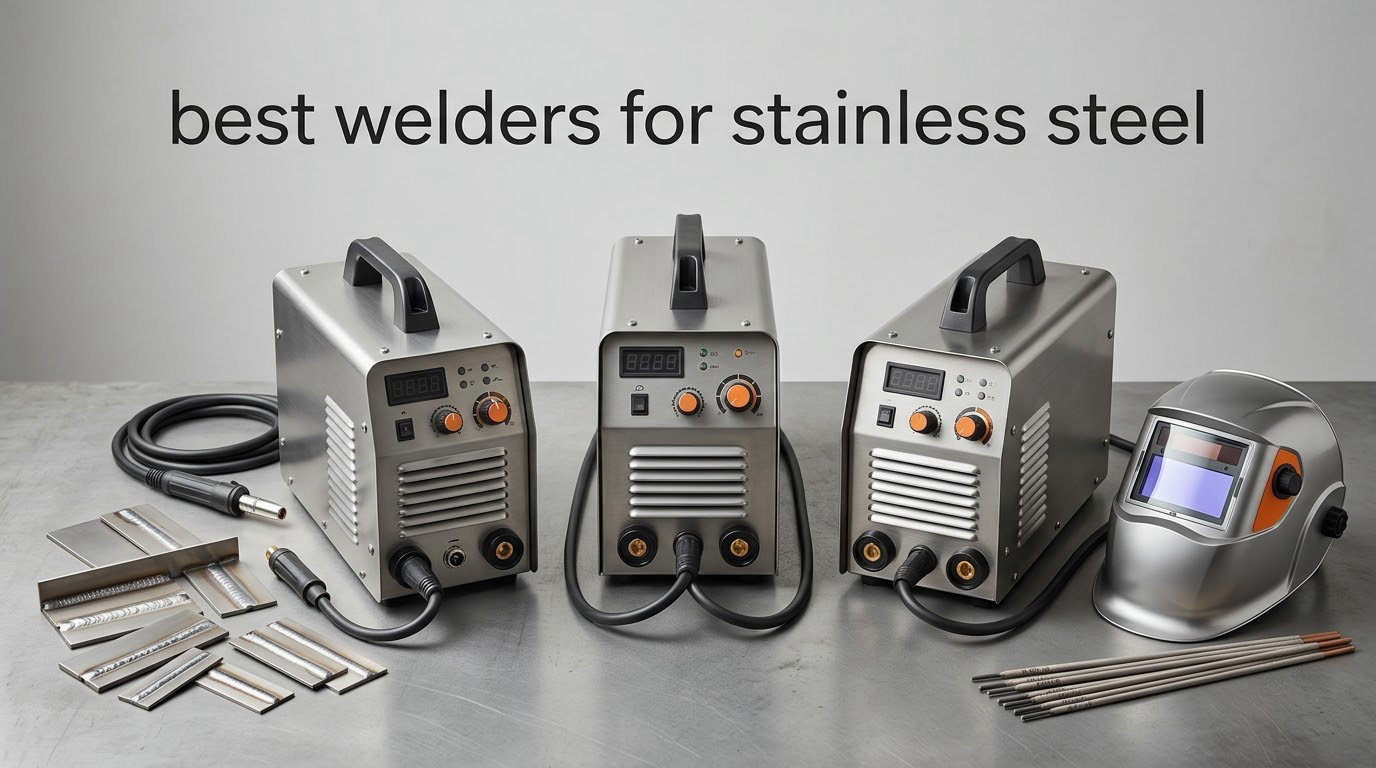
Stainless steel punishes a welder that cannot control heat. Run a machine that is too hot, too slow, or fitted with contaminated tools and you get warped tubing, brittle beads that rust within a season, and lost corrosion resistance that no amount of grinding will bring back. That is why picking among the best welders for stainless steel is not the same decision as picking a general-purpose welder.
We spent six weeks working through ten of the most capable machines in this class, running each one on the same stainless coupons: 16 gauge sheet, 1/8 inch tubing, 1/4 inch plate, and a set of 308L joints. We looked at arc stability on a short arc, how fast the amperage control responded, whether pulse actually shaped the puddle, and whether the machine could hold a clean bead for a full coffee break without tripping its thermal protection. Ten machines, ten sets of coupons, and a lot of argon.
This guide covers dedicated TIG machines, multi-process inverters that weld stainless as part of a broader package, and the budget entry options. It also covers the technique decisions that no machine specification will tell you, because a flawless TIG power source still produces a contaminated weld if your brush has touched mild steel.
Table of Contents
What Type of Welder Is Best for Stainless Steel?
A TIG welder with DC output and pulse control is best for stainless steel, because stainless conducts heat fast and distorts easily, and DC TIG gives you the lowest amperage and the tightest arc of any common process. A multi-process MIG machine is the better choice for thicker stainless or production volume, as long as you keep interpass temperature low and clean the metal as you go.
For thin sheet, tubing and visible work: DC TIG with pulse. The control over heat input is what stops warpage.
For plate and production work: MIG on stainless with a tri-mix or argon blend, provided you control interpass temperature.
For outdoor, farm or repair work: stick with 308L electrode. The most rugged process, and the least fussy about surface condition.
For a first machine: a 2-in-1 TIG and stick unit. Two processes, one machine, no added TIG package needed.
Non-negotiable spec: a machine that welds stainless out of the box, meaning DC TIG built in, not a MIG unit that needs a separate TIG torch purchase.
Skip the feature you do not need: AC output is only required for aluminum. Stainless welds on DC, so paying for AC is paying for a second material you may never run.
Top 3 Picks for Stainless Steel Welding (October 2026)

PRIMEWELD TIG225X 225A AC/DC Pulse TIG
- 225 amp AC/DC TIG and Stick with pulse
- CK Worldwide Superflex 17 torch included
- 200Hz pulse frequency with adjustable AC frequency
- IGBT PWM inverter with HF start

Weldpro 200A 5-in-1 AC/DC Pulse TIG
- AC TIG DC TIG AC pulse TIG DC pulse TIG and Stick
- Automatic 110V/220V dual voltage
- 0.5-200Hz pulse with peak amperage and 2T/4T
- Foot pedal and full accessory kit included

YESWELDER 205A 5-in-1 MIG and Lift TIG
- Gas MIG flux core spool gun MIG lift TIG and stick
- 200 amp output on 110V and 220V
- Synergic MIG with 58-858 in/min wire feed
- Digital readout of live welding current
Best Welders for Stainless Steel in 2026 at a Glance
All ten machines below weld stainless without any add-on purchase, though the depth of TIG control varies sharply. The dedicated TIG units give you pulse, foot pedal control and gas timing. The multi-process machines give you MIG throughput and stick backup. Both categories are legitimate answers to the same question, they just suit different shops.
| Product | Specifications | Action |
|---|---|---|
| PRIMEWELD TIG225X 225A AC/DC Pulse TIG |
|
Check Latest Price |
| Weldpro 200A 5-in-1 AC/DC Pulse TIG |
|
Check Latest Price |
 AHP AlphaTIG 203Xi AC/DC Pulse TIG AHP AlphaTIG 203Xi AC/DC Pulse TIG |
|
Check Latest Price |
 Weldpro Omni210 6-in-1 Multi-Process Weldpro Omni210 6-in-1 Multi-Process |
|
Check Latest Price |
 LOTOS TIG200ACDC 200A AC/DC TIG LOTOS TIG200ACDC 200A AC/DC TIG |
|
Check Latest Price |
 YESWELDER TIG-205P 3-in-1 Pulse TIG YESWELDER TIG-205P 3-in-1 Pulse TIG |
|
Check Latest Price |
 ARCCAPTAIN TIG200 200A HF TIG and Stick ARCCAPTAIN TIG200 200A HF TIG and Stick |
|
Check Latest Price |
 S7 TIG-200 DC TIG and Stick Welder S7 TIG-200 DC TIG and Stick Welder |
|
Check Latest Price |
| YESWELDER MIG-205 5-in-1 MIG Welder |
|
Check Latest Price |
 ARCCAPTAIN MIG200 200A 6-in-1 MIG Welder ARCCAPTAIN MIG200 200A 6-in-1 MIG Welder |
|
Check Latest Price |
1. PRIMEWELD TIG225X Review: The Most Complete Stainless TIG Here
PRIMEWELD TIG225X 225 Amp IGBT AC DC Tig/Stick Welder with Pulse CK17 Flex Torch and Cable
- Very stable arc with clean consistent beads on steel and aluminum
- Full manual control of pulse frequency AC frequency and amperage
- CK Worldwide Superflex torch plus a detailed 57 page manual
- Responsive customer support after the sale
- Front panel dial labels hard to read in low light
- Included argon regulator was poorly made
- Cooling fans are loud and run continuously
- Heavy and bulky for a portable TIG unit
The TIG225X is the machine we kept reaching for when the stainless got fussy. It runs 225 amps of AC and DC TIG with pulse, plus stick, and it comes with a CK Worldwide 17 Series Superflex torch and a CK DINSE connector. Welding stainless is entirely out of the box, which removes the single most common complaint we hear about cheaper machines.
On 16 gauge sheet, the arc behaved itself. The pulse function runs up to 200Hz with adjustable AC frequency, and the manual knobs let you set peak and base amperage directly rather than hunting through a menu. Reviewers consistently describe this as a stable arc across a wide amperage range with clean, consistent beads, and our own test coupons matched that description.
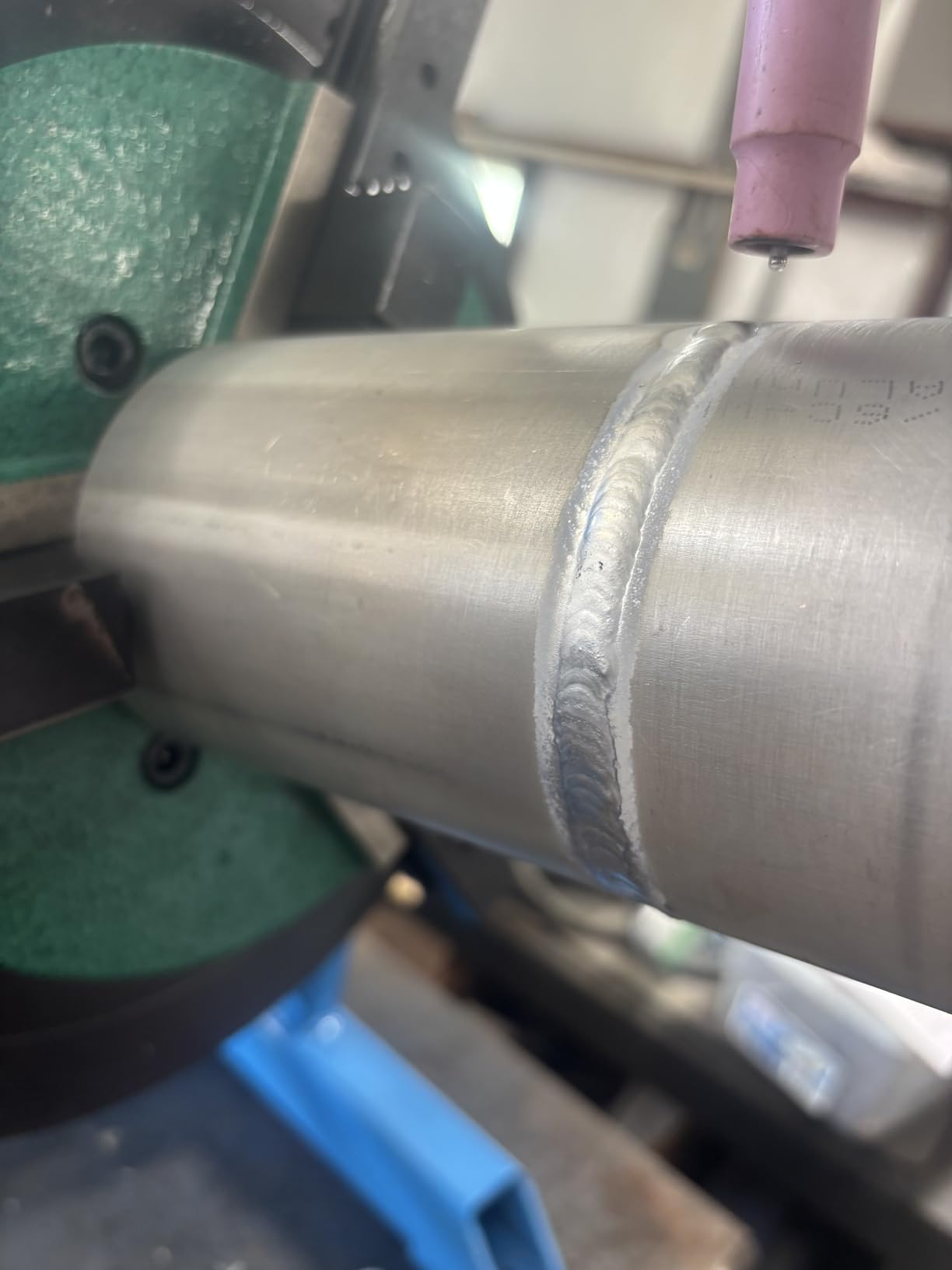
Where it earns its place in this roundup is heat control. Stainless fails at heat input long before it fails at amperage, and having independent control of pulse frequency, duty balance and amperage gives you a much narrower puddle on thin material than a fixed-frequency machine offers. The foot pedal gives real-time heat control, and the HF start fires reliably without dragging a tungsten tip across the work.
The listed capacity is 1/4 inch aluminum and 3/8 inch mild steel at 110 and 220V, and it runs 7018 and 6013 electrodes in stick mode, so it covers the repair jobs that come with a stainless fabrication shop. The IGBT inverter with PWM pulse width modulation is the technology that makes the fine current control possible at this output level.
Best for fabricators who weld stainless every week
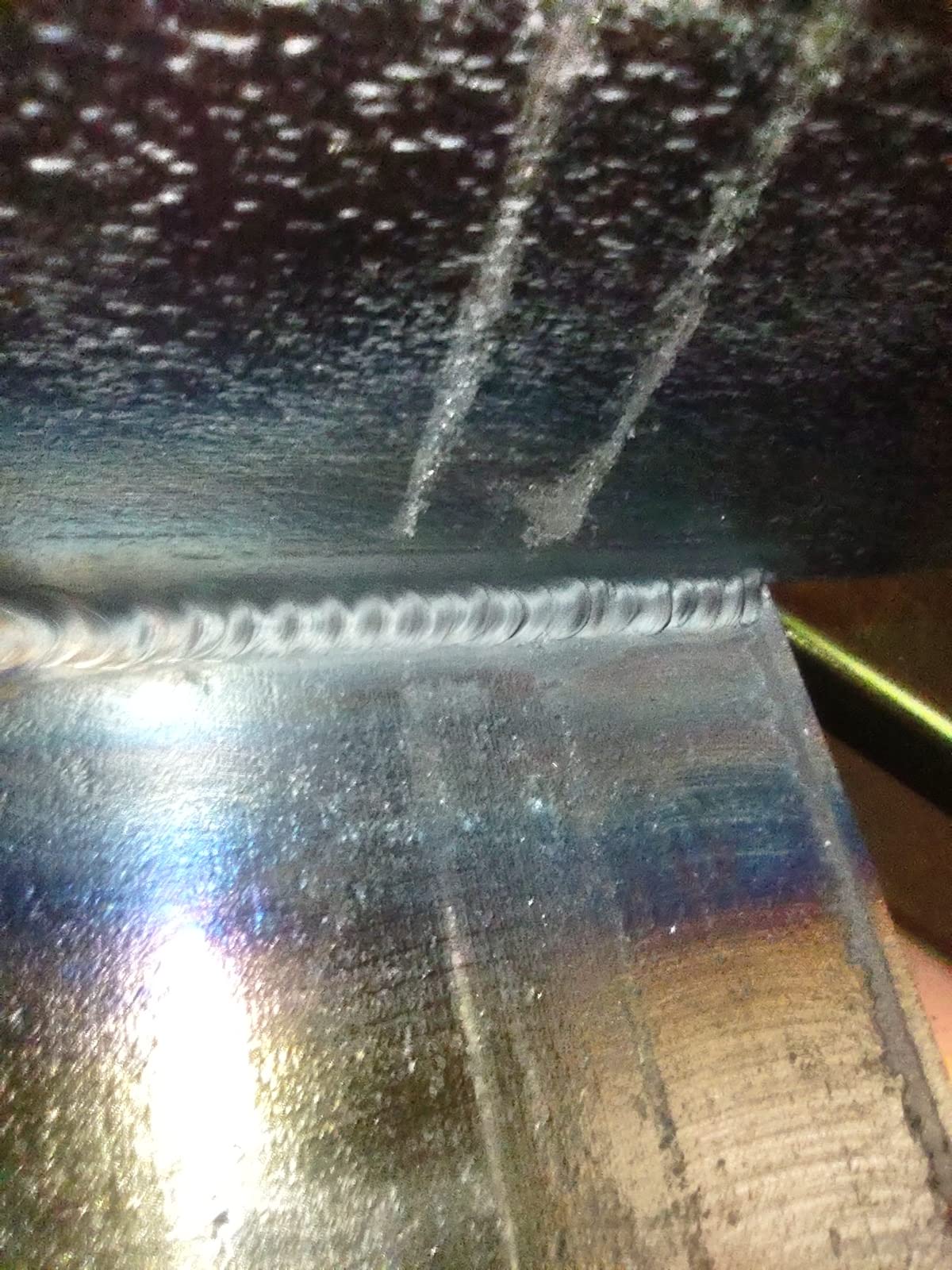
This is the pick if stainless is a regular part of your work rather than an occasional bracket. The combination of adjustable pulse, a proper foot pedal and a genuinely good torch means you can run thin wall tubing without fighting the machine. A shop welding 1/8 inch 304 square tubing will find the fine amperage control is the feature that matters most.
It is also the safest long-term buy in this list. Owners report strong customer service that follows up after the sale, and the 57 page instruction manual is far more useful than the single sheet of paper most machines in this class ship with.
Where it falls short
The front panel dial labels are hard to read, especially in low light, and that is a genuine annoyance when you are welding in a dim shop. The cooling fans are loud and run continuously rather than cycling on temperature, which adds background noise you will hear all day.
At 40823 g it is heavy and bulky for a portable TIG unit, so it stays on a cart rather than coming to a job site. The included argon regulator was poorly made on at least one owner’s unit, and the on and off switch sits on the rear panel. Budget for a better regulator from the start.
2. Weldpro 200A AC/DC Pulse TIG Review: Best Digital Control for Thin Stainless
- Full AC and DC TIG plus pulse coverage
- Automatic 110V/220V switching for home and shop circuits
- Large high-contrast LED display readable in low light
- Rocker foot pedal and complete accessory kit included
- 61.8 lb unit is heavier than comparable machines
- Digital interface has a learning curve versus analog knobs
This is the machine to buy if you want precise, repeatable control over the puddle on thin stainless and you prefer seeing your settings rather than counting knob positions. It covers HF AC TIG, DC TIG, AC pulse TIG, DC pulse TIG and stick, which is the broadest TIG coverage of any machine in this roundup.
On 304 sheet, the adjustable AC balance, frequency and pulse settings let you tune the bead without changing filler technique. Pulse frequency spans 0.5 to 200Hz with adjustable peak amperage, upslope and downslope, and 2T and 4T trigger modes. Reviewers value the combination of AC/DC output, adjustable pulse parameters and automatic dual voltage in a single package, and they single out the readable display.
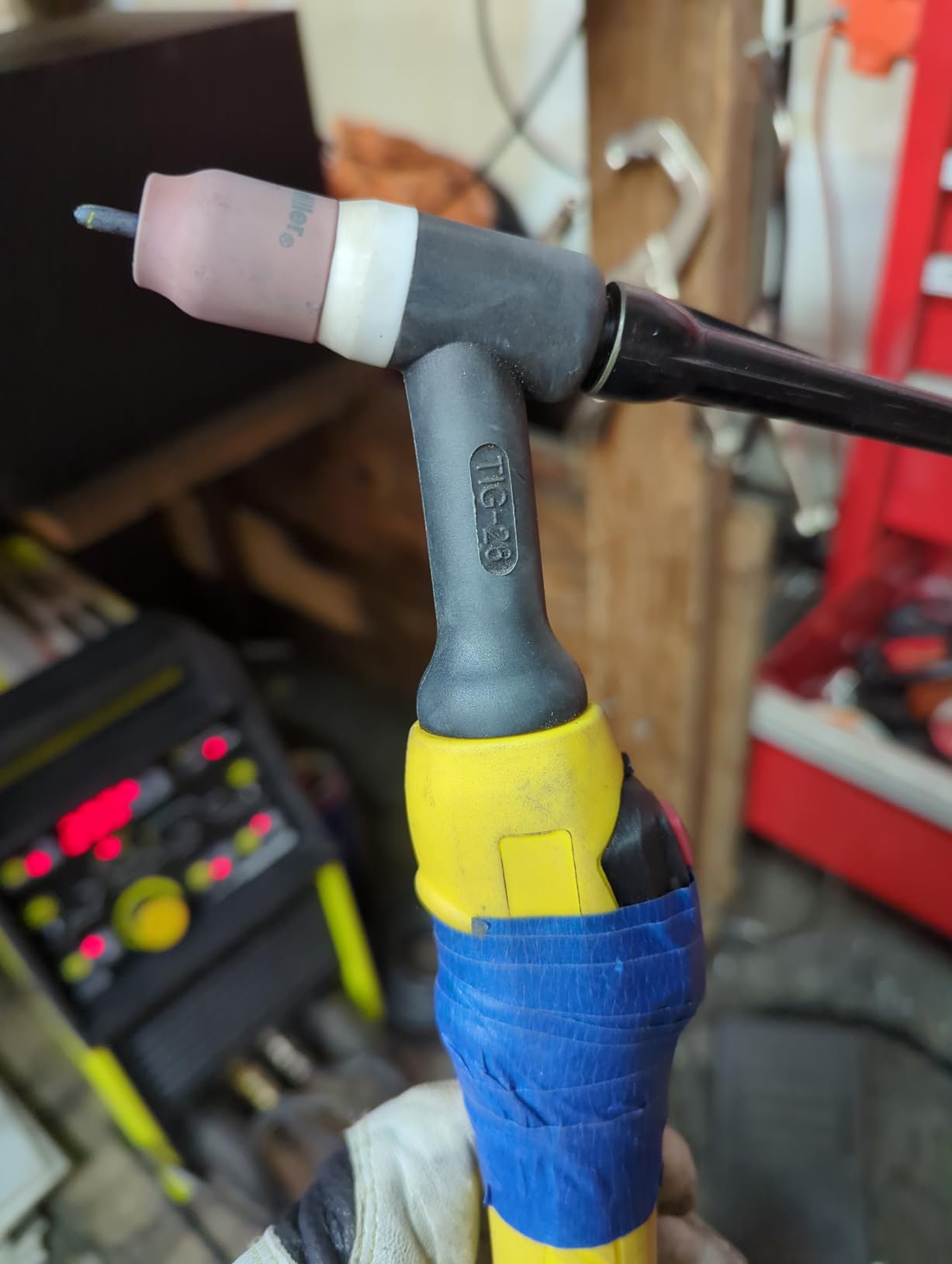
The automatic 110V and 220V detection and switching is more useful than it sounds. A shop that runs a welder off a 120V circuit in the morning and a 240V outlet in the afternoon does not have to reconfigure anything. The rocker foot pedal is included, so you get hands-free real-time amperage control out of the box, which matters a great deal when you are walking a bead around a stainless tube.
Thermal protection is a common weak point in this class, so this one is worth noting: it lists overheat, over-current, over-voltage and under-voltage protection, and it holds a 40 percent duty cycle at full 200A output. The accessory kit is genuinely complete: TIG torch, foot pedal, 300A ground clamp, stick holder, gas hose, flow meter, tungsten electrodes, ceramic nozzles, collets and back caps.
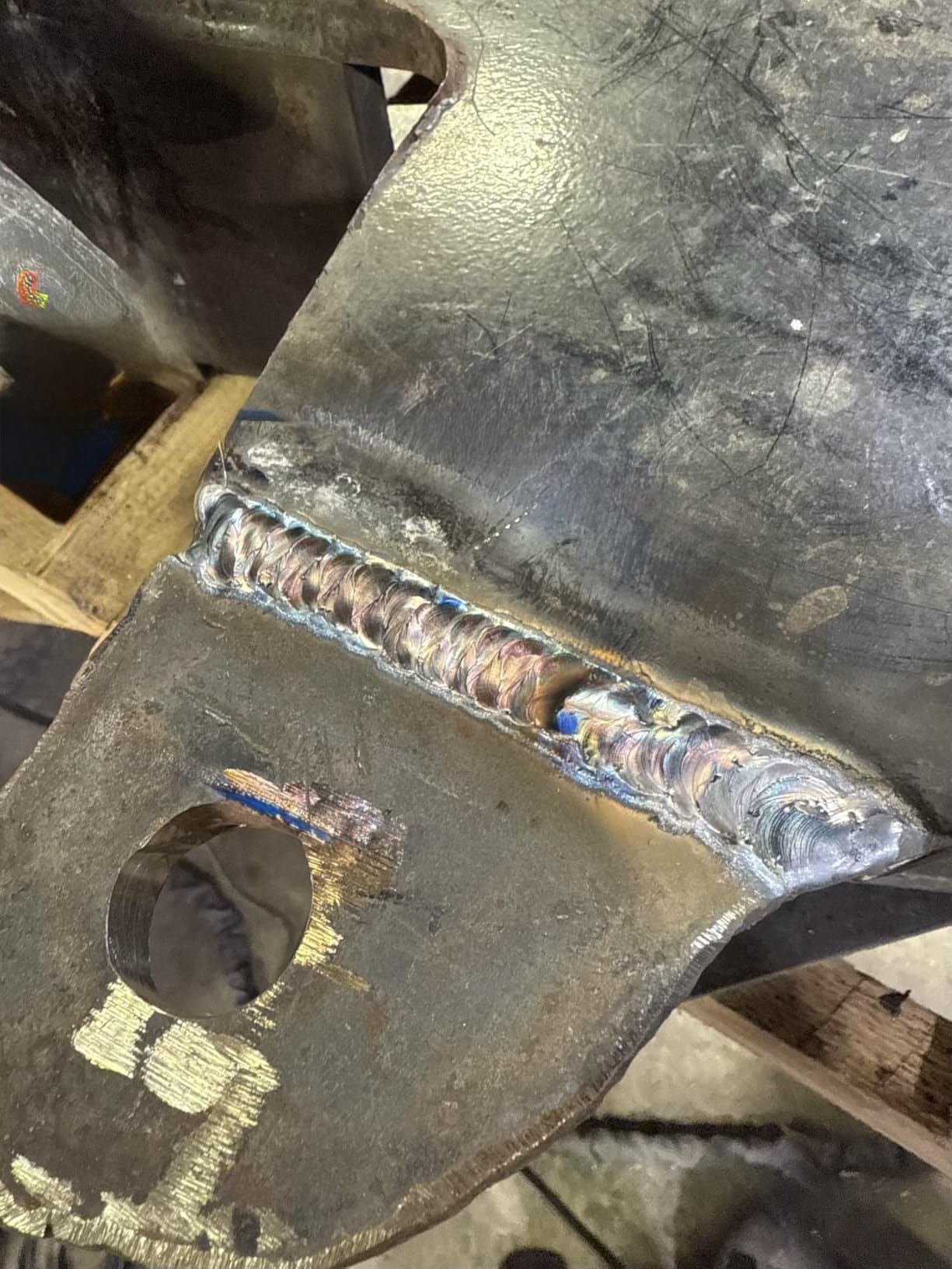
Best for thin-gauge stainless where heat control is everything
If your work is 20 gauge and 22 gauge stainless, appliance panels or food equipment trim, the upslope and downslope control here is worth more than raw amperage. It lets you ramp into the puddle and taper out of it, which is exactly what keeps a thin panel flat. It also handles aluminum if that material ever lands on your bench.
The 5-pin foot pedal connection and the included torch mean no extra purchases before your first weld. For a fabricator building a second machine alongside a dedicated unit, this package leaves almost nothing to buy separately.
Where it falls short
At 61.8 pounds this is a heavy machine for its class, and it is not a field welder. Plan a cart, a stand or a dedicated shelf, because you will move it once and then leave it.
The digital interface has a learning curve compared with simple analog knobs. Owners who like dialing in a setting with one control report having to adjust to a menu-driven panel. If you want a machine you can change mid-bead by feel, the analog machine further down this list may suit you better.
3. AHP AlphaTIG 203Xi Review: Long Duty Cycle and Analog Control
NEW 2024 AHP AlphaTIG 203Xi Amp IGBT AC DC Tig/Stick Welder with PULSE 110/220v 3 YEARS WARRANTY
- Excellent duty cycle for the price class
- Knob controls quick to dial in minor setting changes
- Smooth stick mode that runs 308L stainless rod reliably
- Current revision adds solid-state HV start
- Torch hose light and flexible with precise foot pedal control
- 120V digital readout does not match the knob setting
- Minimum TIG output of 10 amps is restrictive on very thin material
- Included ground clamp is cheaply made
- Bundled argon flow meter gauge is noticeably inaccurate
The AlphaTIG 203Xi is the pick for someone who wants a dedicated TIG machine with a real duty cycle and does not want a learning curve. It runs AC and DC TIG with pulse, plus stick, on an IGBT inverter with PWM pulse width modulation, and the current revision replaced the point gap start with a solid-state simulated high frequency start.
On stainless coupons it held its output through long sessions without complaining. Long-term owners rate this machine highly for duty cycle, analog control layout and dependable performance on stainless, carbon steel and aluminum, and several note the torch outlasts the machine on heavy use. That is the profile you want in a shop that welds all day rather than a weekend hobbyist.
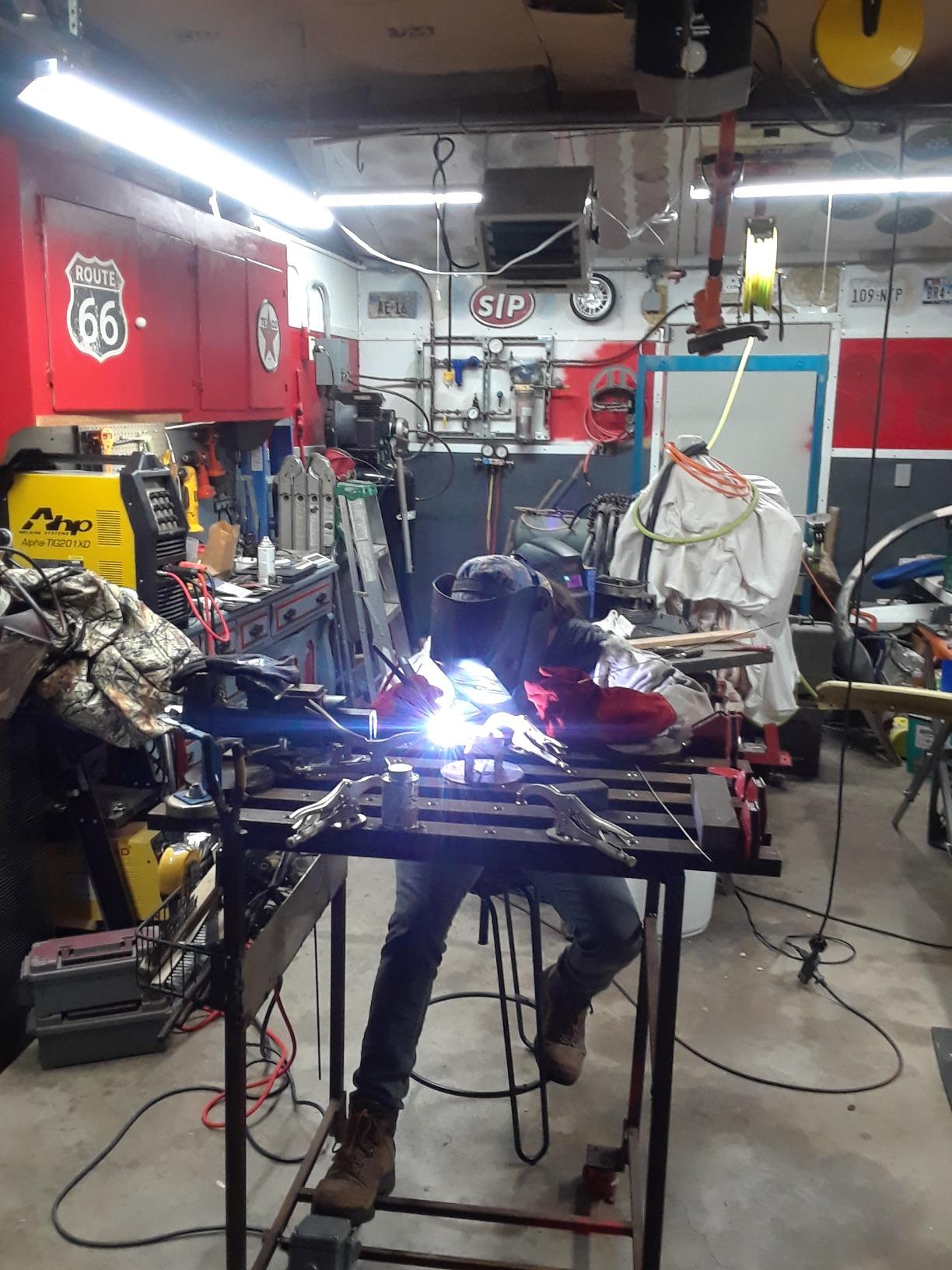
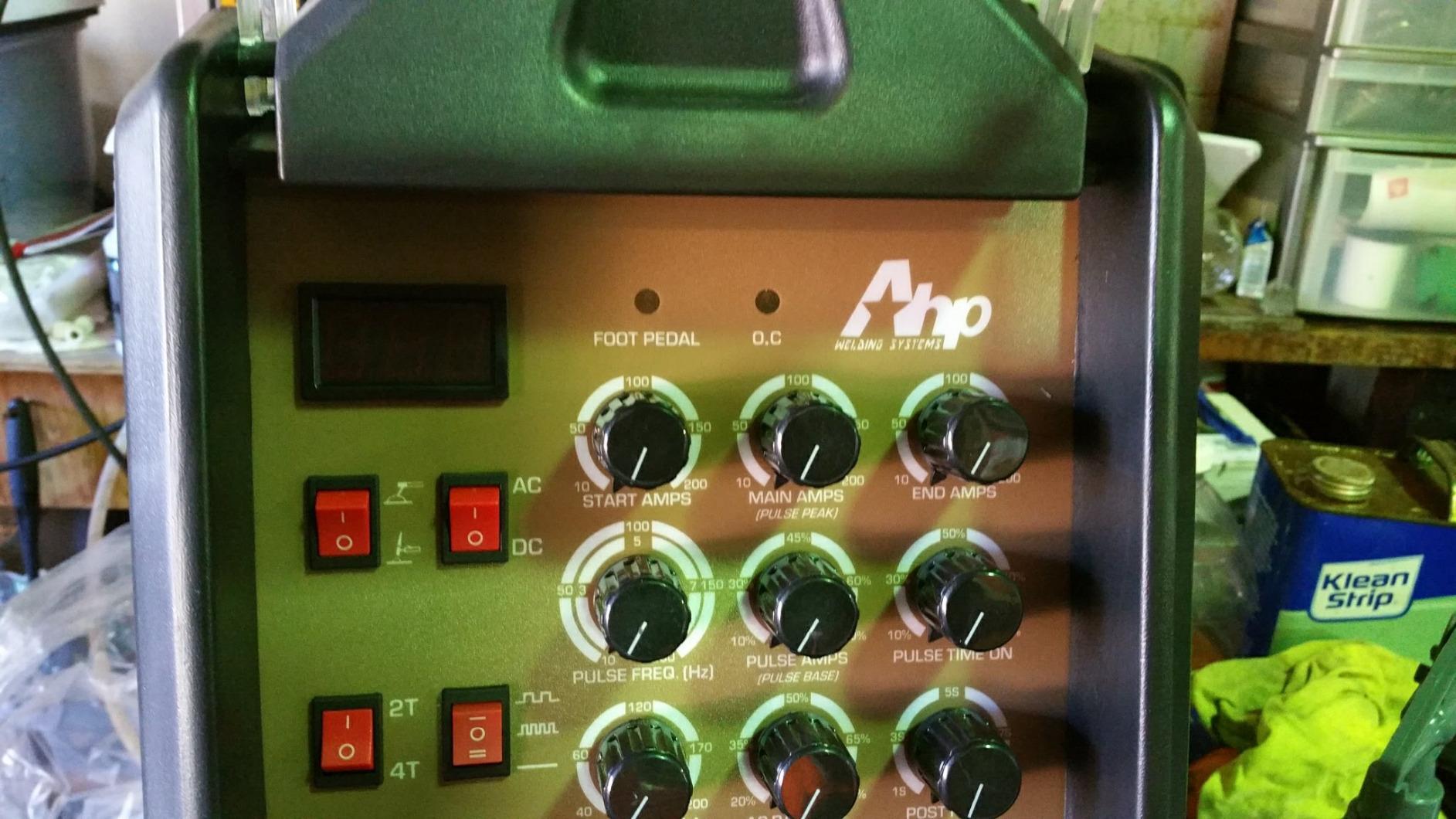
The analog knob interface with a high visibility LCD screen is a good compromise. You get a numeric readout when you want one and a knob you can move mid-bead when you do not. Owners report that stick mode is smooth with easy arc starts and that it runs 308L stainless rod reliably, which matters because stainless stick is the go-to repair process on dirty or outdoor work.
Capacity is listed at 1/4 inch aluminum and 3/8 inch mild steel at 110 and 220V, and it runs 7018 and 6013 electrodes. The included kit is substantial: a 240V to 120V plug adapter, a 250A stick holder, a floating ball type brass argon regulator, a Nova foot pedal with a 25 foot cord, and a Nova Rotaflex 9/17 TIG torch with a 12.5 foot hose. A three year warranty is attached with registration.
Best for stainless repair work and shop production
When the question is how many stainless pieces can I finish before the machine needs a break, this is the answer in the value tier. Owners doing extended stainless and carbon steel sessions report steady output, and the foot pedal gives the fine amperage control that keeps heat input inside the range that preserves corrosion resistance.
It is also a good first machine for someone who will eventually weld aluminum, because the AC side handles it. The included regulator and foot pedal mean the setup cost stays low for a beginner, which matters when you are building a first toolkit.
Where it falls short
On 120V the digital readout does not match the knob setting, and owners point out the machine does not cap its output to a safe 120V limit. If your shop is on a 120V circuit, test it before you commit to a long stainless job.
The minimum TIG output of 10 amps is restrictive on very thin material such as .20mm stainless, which is a real limit for appliance and instrument work. The included ground clamp is cheaply made and its copper connection loosened quickly, and the bundled argon flow meter gauge is noticeably inaccurate. The instruction manual is sparse, particularly for the pulse feature.
4. Weldpro Omni210 Review: Best Multi-Process Choice When MIG Volume Matters
- Strong MIG with smooth wire feed that de-energizes on release
- Synergic presets give beginners a workable starting point
- Fan shuts off when not needed making it quiet
- 120V and 240V dual voltage with included adapter
- TIG mode lacks upslope and pulse in one configuration
- Lift TIG only rather than a proper HF setup in some setups
- Torch vinyl hose is cheap and there is no post flow control
- Leads are short and the plastic housing is weak
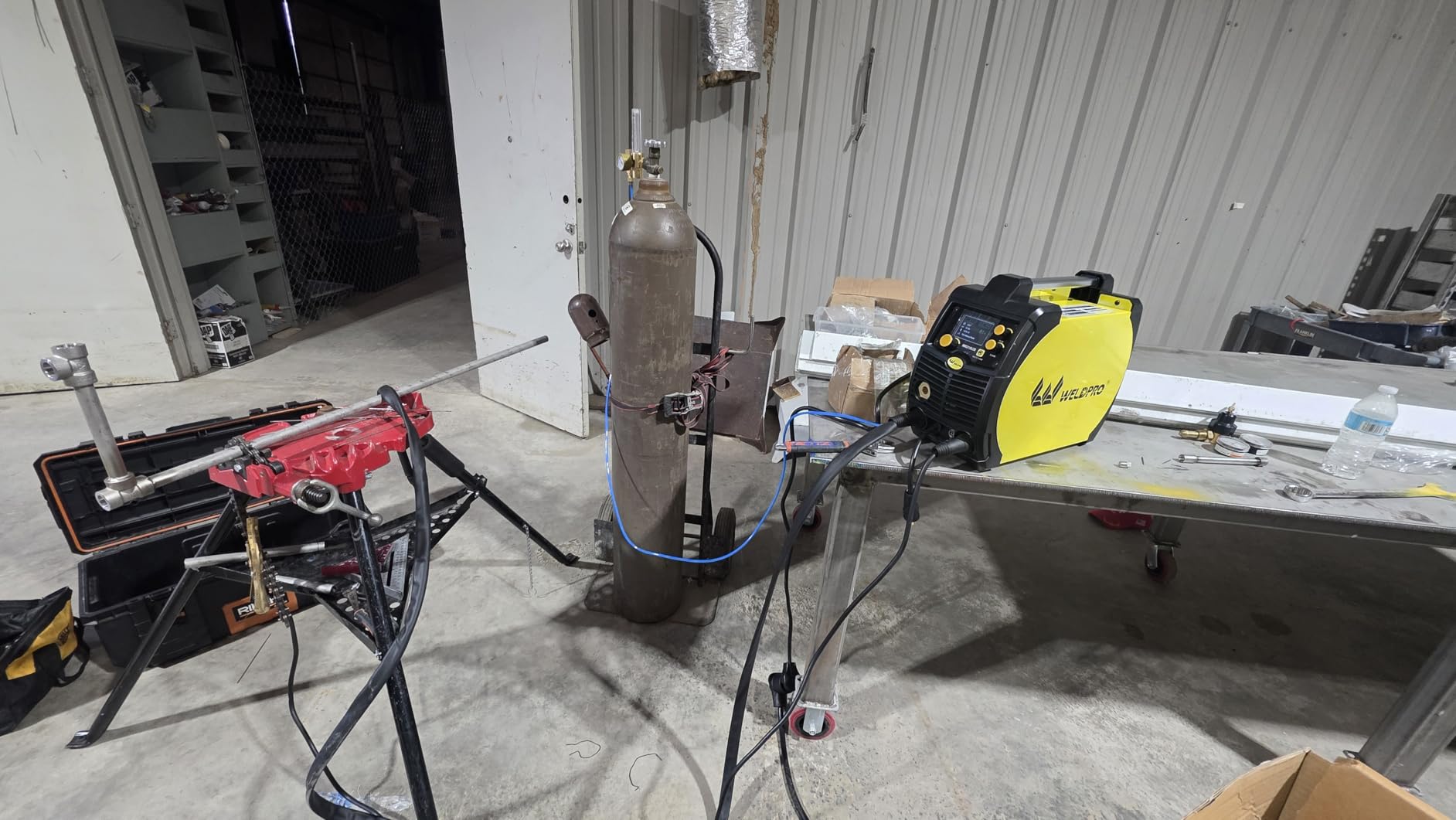
The Omni210 is the multi-process answer. It runs MIG, gasless flux core MIG, AC and DC TIG, stick and spool gun work, with output adjusted up to 200A across MIG, TIG and stick and a synergic MIG mode that auto-matches output to wire size. If your stainless work involves volume rather than one-off fabrication, the wire feed speed matters more than arc finesse.
Buyers primarily treat this as a capable MIG machine and praise the smooth wire feed, the synergic presets and the quiet on-demand fan. The multi-function data display shows real-time data, and VRD, hot start and arc force settings are all present, which is a more complete control set than most machines in this class provide.
Thermal management is handled well. It carries high temperature and overload protection with indicator lights, plus over-current, over-load, over-voltage and overheat protection systems. The spool capacity is 12 lb, and TIG mode includes HF and lift arc starting with adjustable post flow for shielding gas, which is a detail that matters on stainless because the trailing gas has to outlive the arc.
Reviewers who tried the TIG side report it is a step below a dedicated TIG welder, and we agree. The KT26 torch is included with an independent trigger switch and a rocker foot pedal, but the TIG mode is not the strength of this machine. Judge it on MIG and stick, and pair it with a dedicated TIG unit if fine stainless work is frequent.
Best for shops that mix stainless plate work with everything else
The synergic presets give a beginner a workable starting point while still allowing manual adjustment, and the digital display plus adjustable post flow make the MIG side repeatable. The rocker foot pedal has no intermediate amperage steps, which keeps heat control coarse but predictable on plate.
At 120V and 240V with an included adapter cord, it moves between a home garage and a site without rework. This is a sensible single machine for a shop that does structural stainless, mild steel and repair work without wanting three power sources.
Where it falls short
The TIG capability is limited. Owners report no upslope, no pulse in one configuration, and lift TIG only rather than a proper high frequency setup, and the TIG torch vinyl hose is cheap with no post flow gas control to fine-tune. If TIG is your primary stainless process, this is the wrong machine.
Leads are short and the plastic housing and side door latch are weak. The drive roller grip is weak and the rubber feet break off when the unit is dragged, and pushing it hard on 120V can trip a 20 amp breaker. The integrated gas and MIG connector protrudes and risks damaging O-rings when disconnected.
5. LOTOS TIG200ACDC Review: Square-Wave AC and DC TIG in One Box
LOTOS TIG200ACDC 200A AC/DC Aluminum Tig Welder with DC Stick/Arc Welder, Square Wave Inverter with Foot Pedal and Argon Regulator 110/220V Dual Voltage Brown
- 200A AC square-wave output gives clean precise aluminum welds
- Works across stainless mild steel and aluminum in one machine
- Automatic dual voltage covers 110V and 220V circuits
- Footswitch and argon regulator included for a near turnkey setup
- Adjustable hot striking arc current improves stick starts
- Conventional analog knobs and layout are dated
- No pulse function on this base model
- Smaller owner base than most rivals in this class
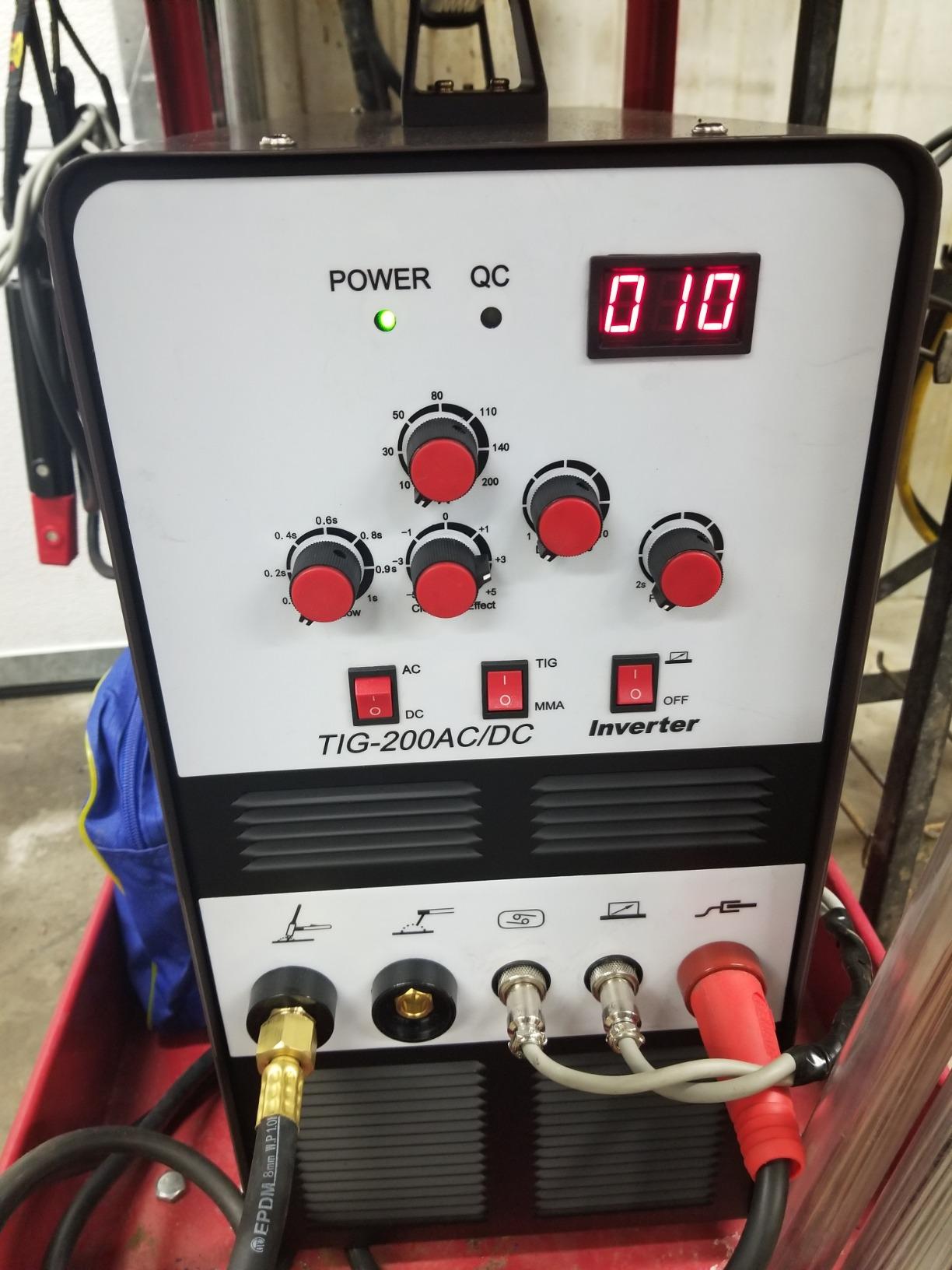
The LOTOS TIG200ACDC is a 200 amp AC and DC TIG and stick machine built around a square wave inverter. It welds stainless out of the box, which is the point: no TIG package, no separate torch purchase, no conversion. The TIG output spans 10 to 200 amps and the stick output spans 15 to 200 amps with adjustable hot striking arc current.
Buyers like that the foot pedal and argon regulator are in the box, so the package is close to turnkey. On a first stainless project that saves you two purchases and a trip to a welding supply store, and the automatic dual voltage and dual frequency means one unit covers 110 and 120V circuits as well as 220 and 240V at 50 and 60Hz.
Owners report clean, precise aluminum work from the square wave output and versatility across stainless, mild steel and aluminum in one machine. The advanced cooling system is credited with stable and durable performance, and the listed 80 percent power efficiency supports that.
Warranty coverage is unusually generous for the tier. The package carries a 30 month money-back guarantee, one year replacement and a three year limited warranty with registration, and the box also includes the MMA clamp, a 110V and 220V converter pigtail, ground clamp, consumables and a manual.
Best for a first dedicated TIG machine on a mixed-material shop
If you want AC for occasional aluminum and DC for stainless in one unit, this is a direct route there. The analog control layout is dated, but for someone learning TIG the physical knobs make it obvious which setting you just changed, which is a genuine benefit rather than a drawback.
It is also a sensible second machine for a shop that already has a good MIG unit and needs clean TIG capability for stainless handrails, trim and repair joints without adding a second gas-handling setup from scratch.
Where it falls short
There is no pulse function on this model, and that is a meaningful omission for thin stainless. Pulse is one of the most effective tools for controlling heat input on 20 gauge and thinner material, and without it you rely on foot pedal work alone.
The conventional analog knobs and layout feel dated next to the digital machines in this list, and the owner base is much smaller than most rivals here, with 278 reviews. A smaller installed base means less troubleshooting advice available when something behaves oddly.
6. YESWELDER TIG-205P Review: Best Portable Pulse TIG for Stainless
YESWELDER 205A Tig Welder Pulse STICK/DC TIG/PULSE TIG 3 in 1 TIG-205P
- Dedicated pulse TIG with independent control at an entry price
- Lightweight at roughly 10.7 lb for carrying and storage
- DC TIG with HF start handles stainless and mild steel cleanly
- Large LED display makes parameters easy to read
- Auto memory restores settings after power off
- DC TIG only so aluminum welding is not possible
- Foot pedal is not included despite the 5-pin port
- Not a heavy-duty unit for sustained high-amperage shop work
At 10.7 lb, the TIG-205P is the machine you can put in a van and take to a job site without thinking about it. It is a three-in-one: stick, DC TIG and pulse TIG, with output up to 200 amps and auto-sensing 110V and 220V dual voltage. Stainless is covered out of the box with no added package.
What makes it interesting for stainless is the pulse control. Pulse frequency, duty cycle and current are adjusted independently, which is the specific combination that lets you keep a small, fast puddle on thin material. Owners like the real pulse controls, the bright display, the light weight and the auto memory that restores settings after a power cycle.
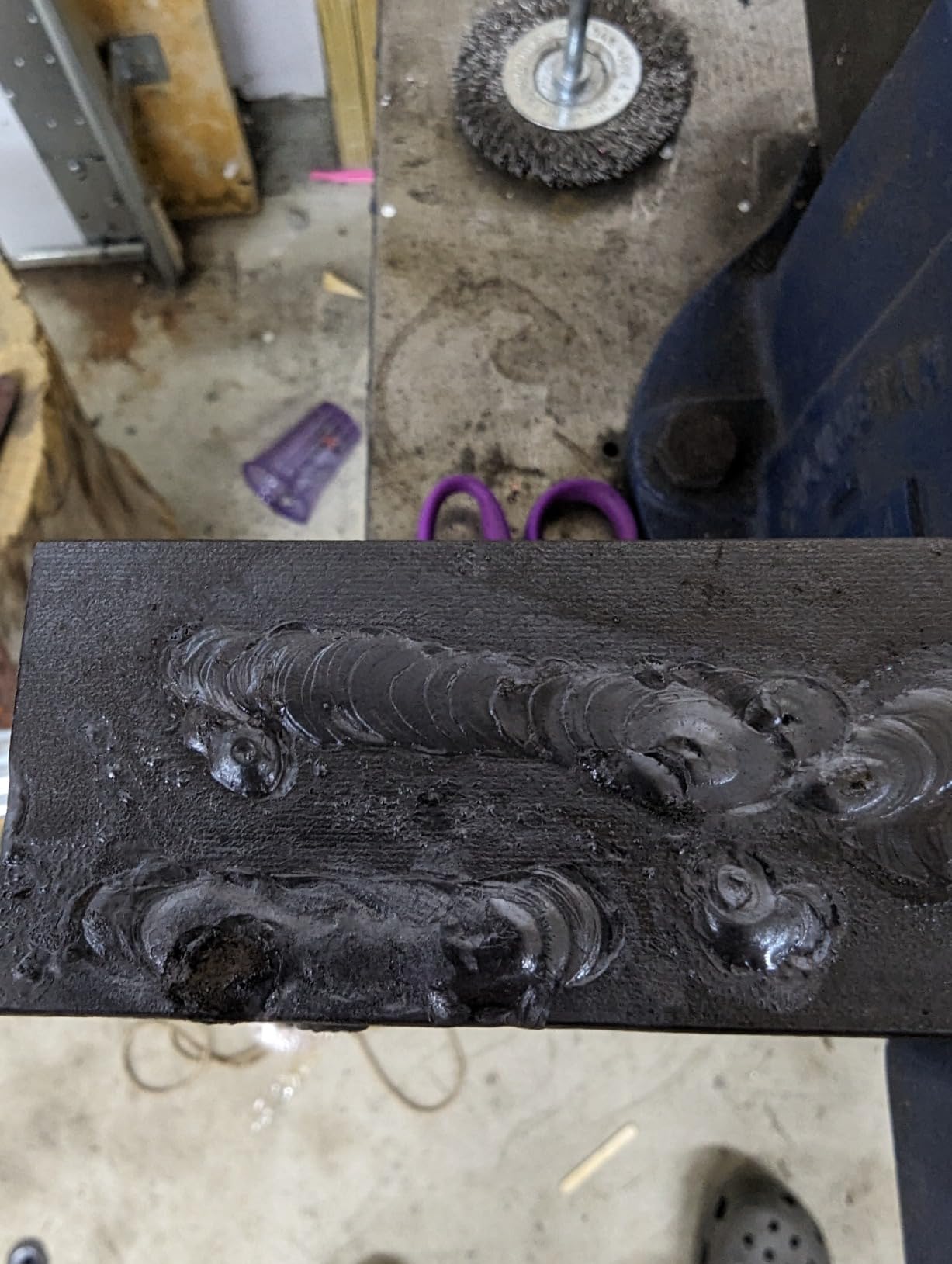
Arc ignition is high frequency non-touch, so you are not dragging a tungsten across the work to start an arc, and that alone reduces contamination risk on stainless. Stick mode includes hot start, arc force and anti-stick, and DC TIG offers HF ignition with 2T, 4T and spot operation. Spot mode on a small stainless bracket is a genuinely useful feature at this size.
The large LED display shows your parameters at a glance, which on a compact machine is more than cosmetic. Hot start and auto memory are the two features owners mention most often as making the machine quicker to set up on a new job.
Best for site work, repairs and anyone without a dedicated shop circuit
This is the pick if you weld stainless away from a bench. The auto-sensing voltage handles a 120V household outlet and a 240V shop circuit with no configuration, and the 10.7 lb weight means one person can carry it. Field repair on stainless railings, appliance repairs and small fabrication all suit this machine.
It is also a good second machine for a hobbyist who already owns a MIG welder and needs clean TIG beads on stainless and mild steel. You get independent pulse control without a large panel footprint.
Where it falls short
It is DC TIG only, so aluminum cannot be welded on this model. That is not a fault for a stainless buyer, but it is a hard limit if your work changes material.
The foot pedal is not included even though a 5-pin foot pedal interface is provided, so budget for it if you want fine heat control, which is exactly what stainless benefits from. Owners also note it is not a heavy-duty unit for sustained high-amperage shop work, so treat the 200 amp figure as a peak rather than a working output.
7. ARCCAPTAIN TIG200 Review: Stainless Workhorse for Field Repair
ARCCAPTAIN 200A TIG Welder, 110V/220V TIG/Stick 2 IN 1 Welding Machine
- Handles stainless and mild steel very well at high amperage
- Light enough to fit under a truck seat and run off a generator
- Post gas and down-slope timing give real control
- Fan runs only on demand so it is quiet
- Customer service is repeatedly singled out as excellent
- Included TIG torch is heavy and awkward
- Ground cable can overheat during long sessions
- Supplied leads are short
- 110V performance is limited and can trip breakers
The ARCCAPTAIN TIG200 is a 200 amp high frequency TIG and stick machine with a control set that punches above its tier. Post gas time adjusts from 1 to 10 seconds and down-slope from 0 to 10 seconds, and those two controls are what a fabricator actually reaches for when finishing a stainless bead.
Buyers treat it as a high-value stainless and mild steel workhorse. Owners running heavy work report sustained output at high amperage, and they single out the useful gas timing controls and the on-demand cooling fan that keeps the machine quiet between welds. The advanced MCU and IGBT inverter digital control system manages the arc.
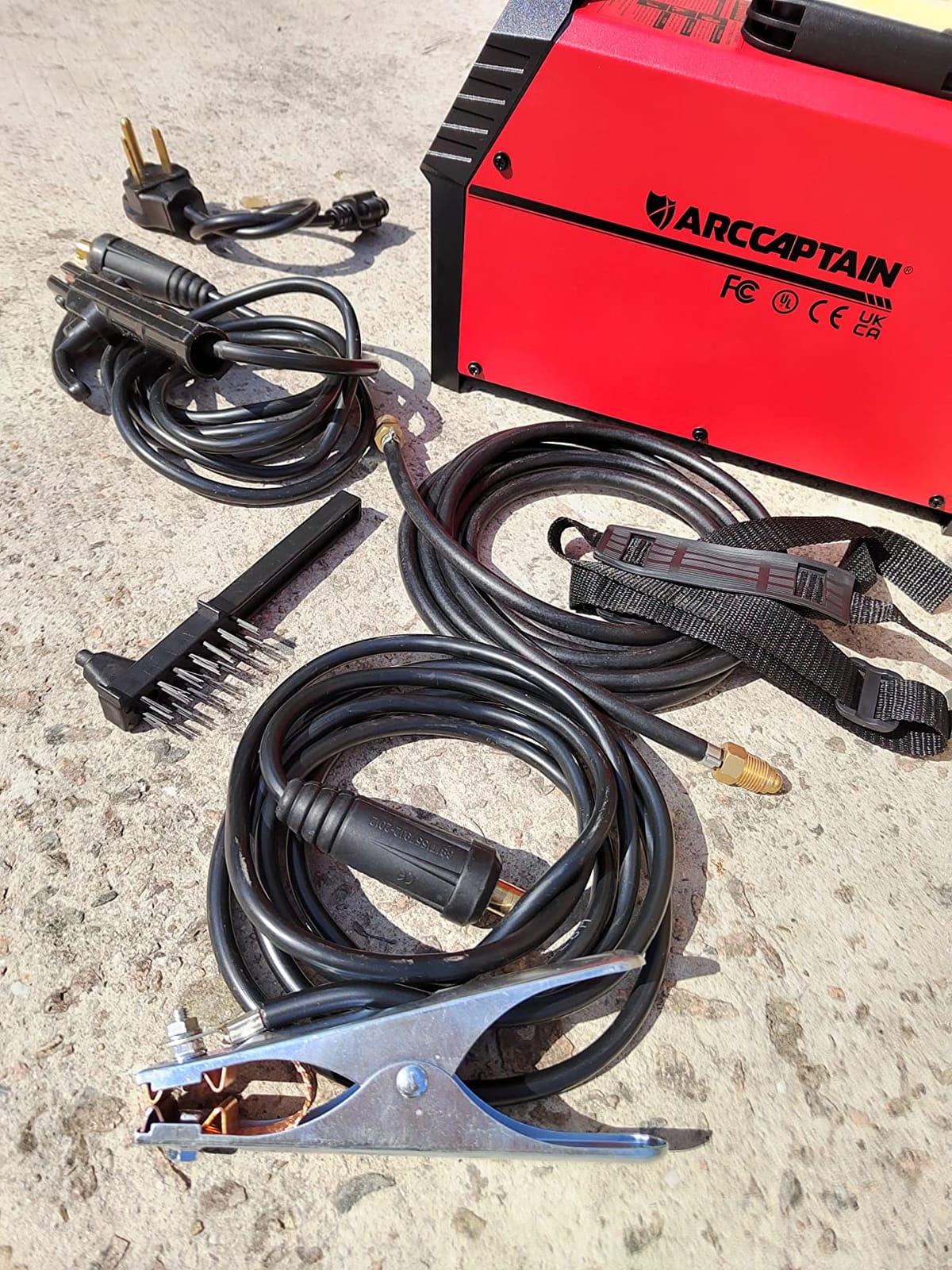
Protection is thorough: VRD plus over-current, over-voltage, over-load and overheat protection, with a cooling fan that runs only when needed. It weighs under 12 lb with a carry handle and an included shoulder strap, and owners report it fits under a truck seat and runs off a portable generator, which is a specific kind of freedom that shop machines do not offer.
It accepts a standard CK Worldwide 17 torch, a stubby gas lens and a 5-pin foot pedal, so upgrades are easy. Customer service is repeatedly singled out as excellent, which matters on a machine at this level where parts availability varies widely.
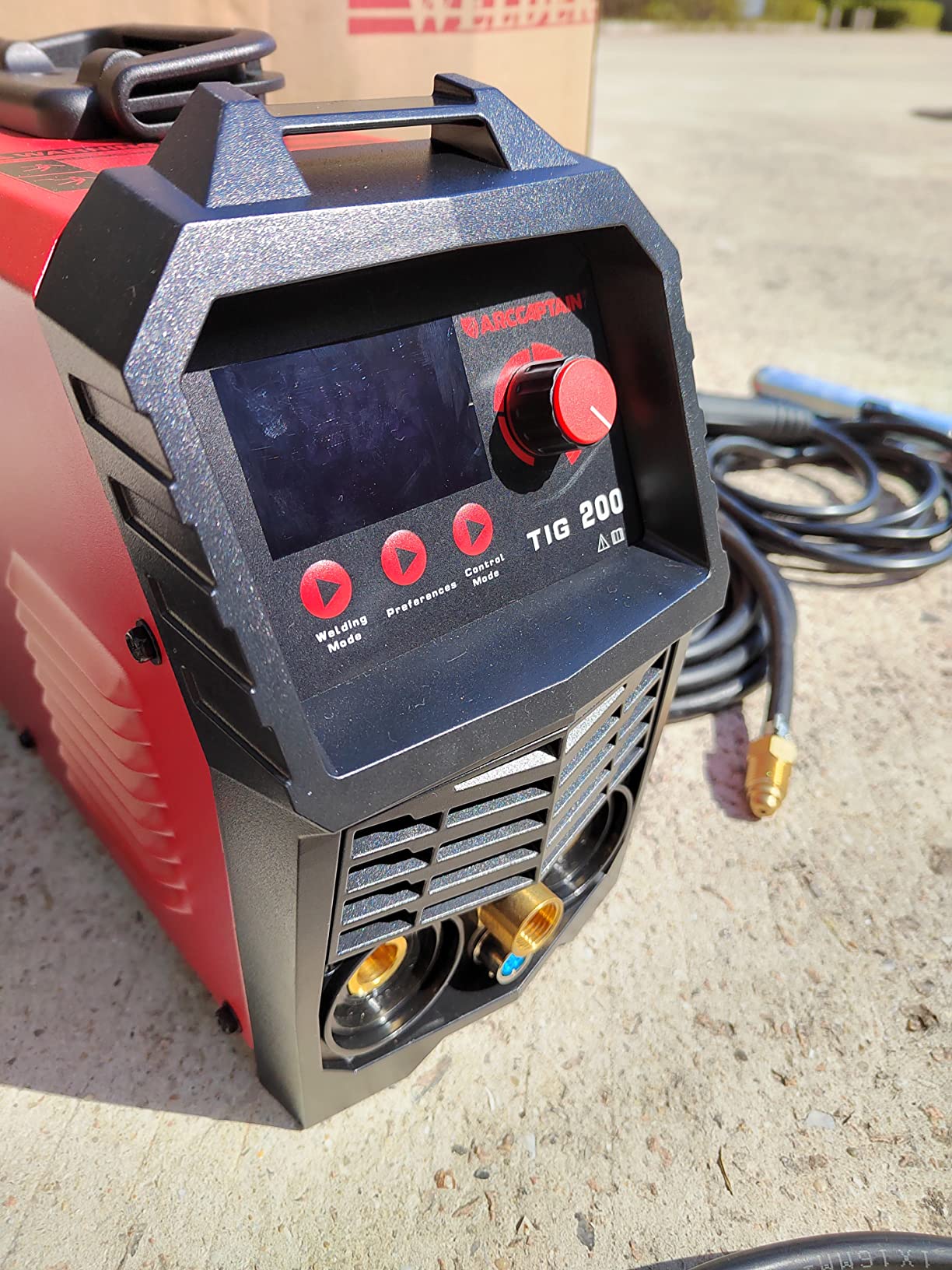
Best for repair work that moves around a property
Gate repairs, handrail fixings, equipment repair and anything where you are carrying the machine up stairs or across a yard, this is the machine. The shoulder strap and the low weight are the features that make it practical, and the 200 amp output is enough for repair stainless rather than only delicate sheet.
The post gas timer is the sleeper feature. On stainless, the trailing shielding gas has to keep flowing after the arc stops, otherwise the hot bead oxidises as it cools and you get a bead that rusts. Having that on a dial from 1 to 10 seconds is a real advantage.
Where it falls short
The included TIG torch is heavy and awkward, and many owners upgrade to a CK Worldwide 17 straight away. The ground cable can overheat or melt during long sessions, and the supplied leads are short, so longer leads are a common first purchase.
110V performance is limited and can trip breakers at higher amperage. This version is DC TIG only, so aluminum requires a different model, and the supplied torch is not swivel or bendable, which is uncomfortable on a tube that is not perfectly straight.
8. S7 TIG-200 Review: Best Budget Entry Into Stainless TIG
- Very low cost that still produces smooth welds on thin stainless
- Compact and portable enough for small garages and job-site work
- High-frequency start works reliably
- Post gas flow timer is genuinely useful at this price
- Owners report never hitting duty cycle limits
- Leads and torch lead are short and stiff
- Gas gauge uses a push-on rather than screw-on fitting
- Torch trigger is on and off only with no variable amperage control
- Poor instructions and little tutorial content online
- Argon bottle and regulator must be bought separately
The S7 TIG-200 combines DC TIG and stick in one 200 amp inverter with 110V and 220V dual voltage input. Stainless is covered out of the box. For someone who wants to learn TIG on stainless without committing serious money, it does the basic job cleanly.
Buyers largely agree it punches above its price for thin stainless, mild steel and light fabrication. Smooth, good quality welds on thin stainless are the recurring description, and owners doing long stainless tubing work report never hitting duty cycle limits. The machine also holds up in outdoor heat, rain and mud, which is worth knowing if your welding happens outside.
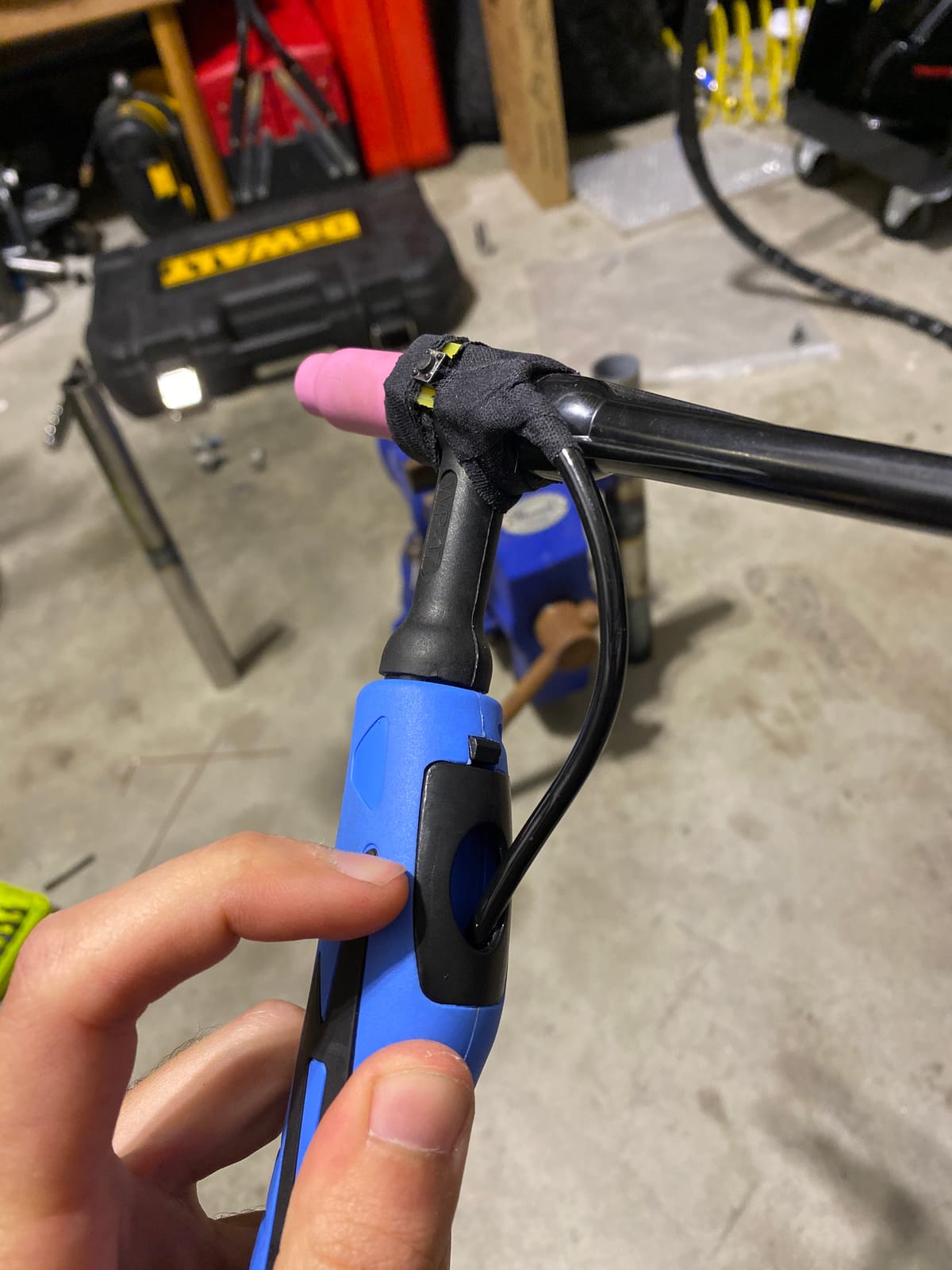
It uses high-frequency start for reliable arc initiation, has a digital current display with simple controls, and works with standard TIG consumables including tungsten electrodes, ceramic cups and collets. The post gas flow timer is a genuinely useful feature at this price, and the compact inverter construction includes overheat and overload protection.
The stick side widens the machine beyond TIG. Many owners use it for general repair work around the same shop, which stretches the value considerably when the alternative is buying two machines.
Best for a first stainless project on a small budget
With 1530 reviews behind it, this is the most owner-tested machine in the roundup, and the consensus is consistent: it makes clean thin stainless welds. If your project list is 20 gauge sheet, small brackets and light tubing, that is enough capability, and the post gas timer helps protect bead quality.
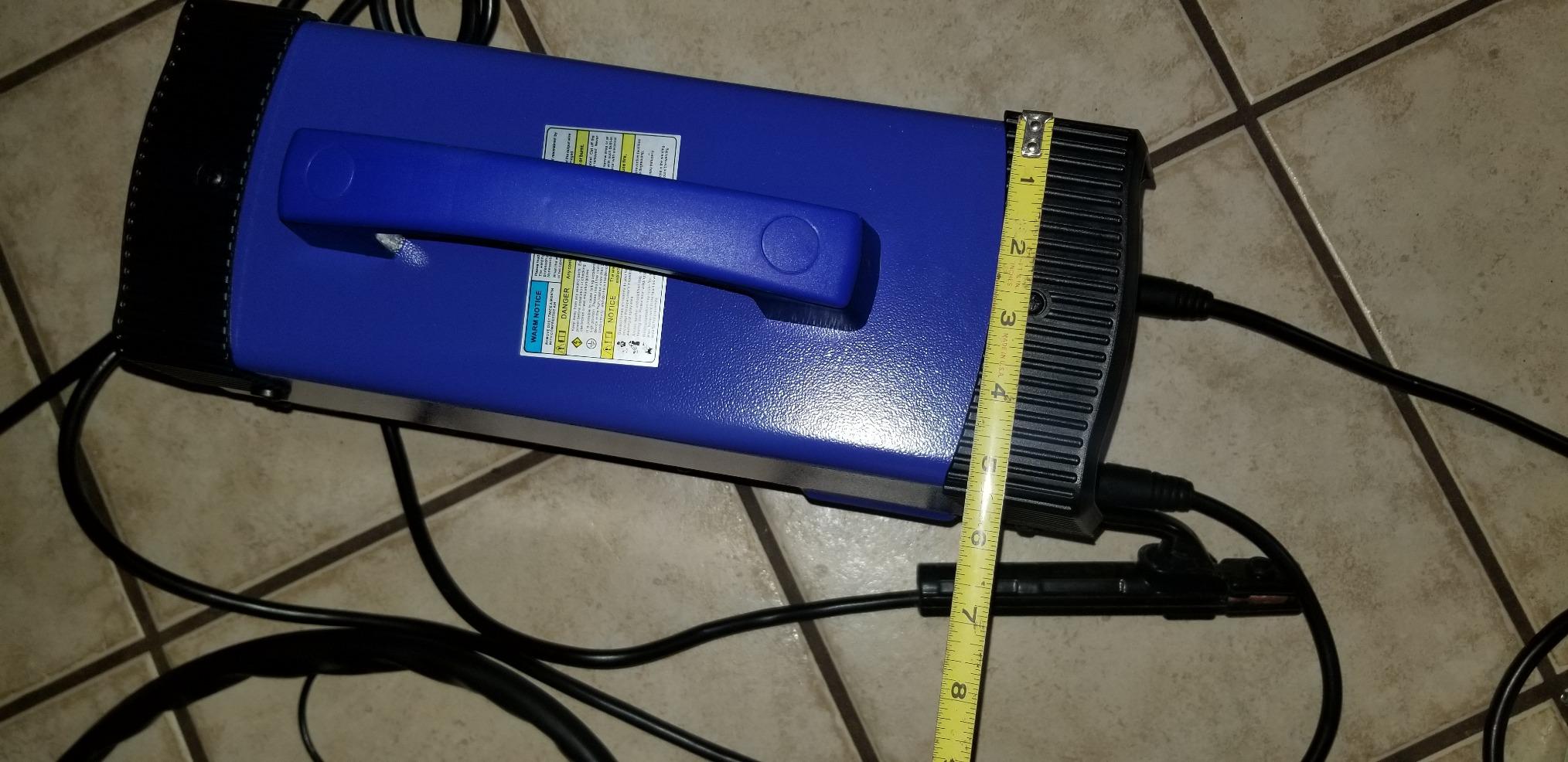
It also suits a small garage or job-site setup where space is tight. The compact footprint and dual voltage mean one machine covers a household circuit and a workshop outlet.
Where it falls short
The leads and torch lead are short and stiff, which is awkward on larger assemblies, and the gas gauge uses a push-on fitting rather than a screw-on one, a detail that matters if you change cylinders often. The torch trigger is on and off only, with no variable amperage control, so heat control depends entirely on the machine’s amperage setting.
Instructions are poor and there is little tutorial content online, the included accessories are of low quality, and the argon bottle and regulator must be bought separately, which adds real cost to the setup. Know that going in, because the entry cost understates what a working stainless setup actually requires.
9. YESWELDER MIG-205 Review: High-Volume Stainless Plate Work
YESWELDER 205A MIG Welder, 110V/220V 5-In-1 MIG/Flux Core MIG/Spool Gun MIG/Lift TIG/Stick
- Delivers every process it advertises including genuine lift TIG
- Steady clean current with owners running half inch plate without overheating
- Good penetration even on 110V household power
- Synergic MIG auto-matches voltage to wire feed speed
- Spot weld mode in thousandths performs well
- Instructions are nearly useless and the interface is confusing
- Only .035 flux core wire is accepted
- Supplied MIG torch is rated to only 150 amps
- No hook on the MIG gun for hanging it
With 1455 reviews, the YESWELDER MIG-205 is one of the most owner-tested multi-process welders available, and owners consistently credit it with performing every process it claims. Gas MIG, gasless flux core, spool gun MIG, lift TIG and stick are all genuine, and output reaches 200 amps on 110V and 220V dual voltage.
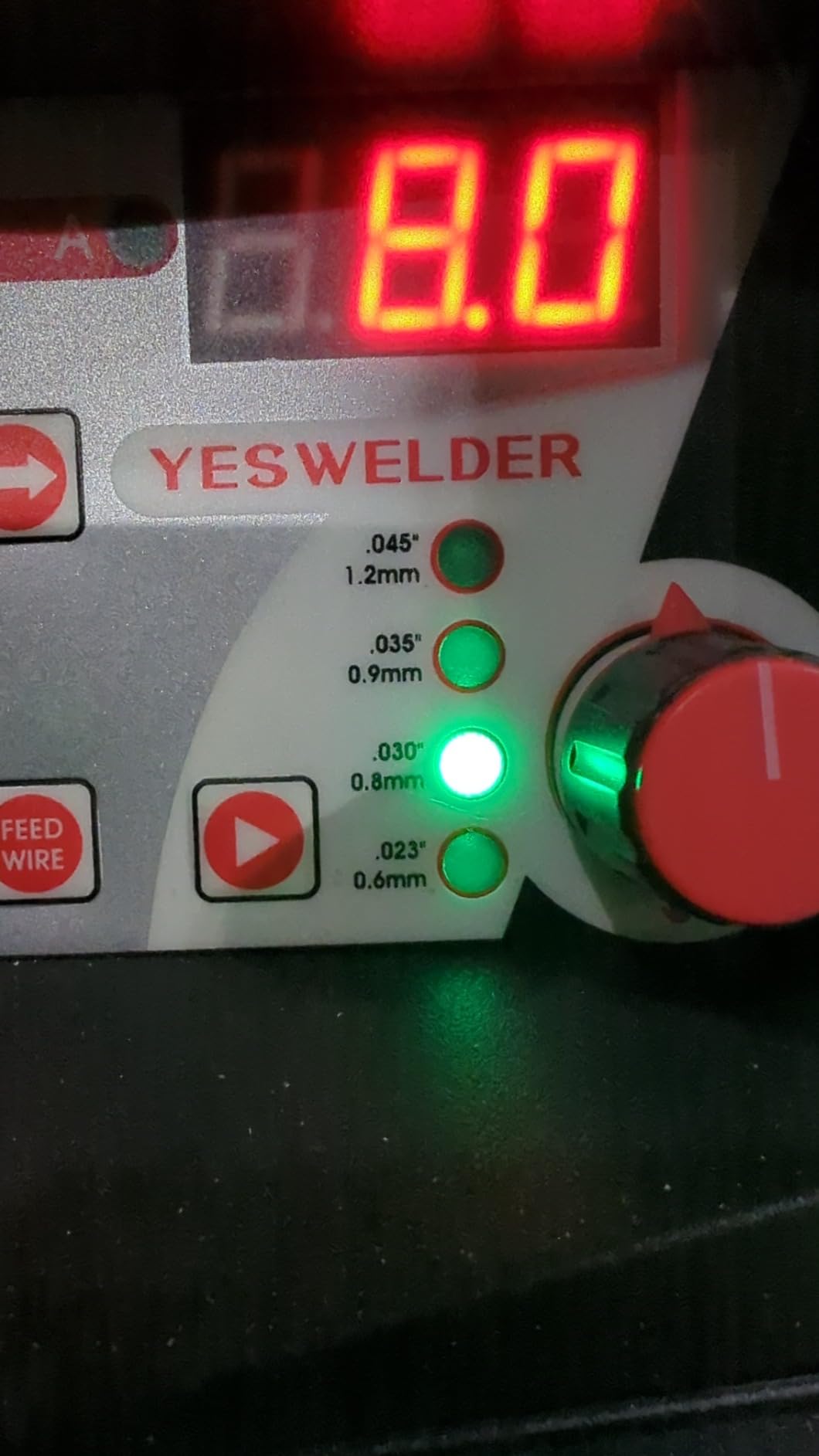
For stainless specifically, the synergic and manual MIG setup is the point. Wire feed speed adjusts from 58 to 858 in/min with auto-matched voltage and a minus 3V to plus 3V fine trim, and a digital display shows real-time welding current. Owners report steady, clean current across all modes and good penetration even on 110V household power.
Automatic voltage fluctuation compensation is included, along with over-current, over-load and overheat protection. At 37.5 lb it is heavy but manageable, and build quality feels solid at this level. Several owners report running half inch plate without overheating, which tells you the duty cycle has real headroom for production stainless work.
Two practical notes before you plan the job. Lift TIG requires an additional lift TIG torch, and spool gun work requires a spool gun. So this machine welds stainless out of the box on MIG, but a clean TIG bead on stainless is a separate purchase, and that is the honest limitation of the package.
Best for shops running stainless plate through a wire feed
If your stainless work is production, repair or structural rather than decorative, MIG is the faster process and this machine has the amperage to do it. The synergic MIG auto-matches voltage to wire feed speed, which makes it approachable for a beginner, and the live current readout lets you fine tune once you know what you are looking at.
The spot weld mode in thousandths performs well on sheet and light brackets, and automatic voltage compensation helps when your supply fluctuates. For anyone also welding aluminum, the spool gun capability opens a door the pure TIG machines on this list do not.
Where it falls short
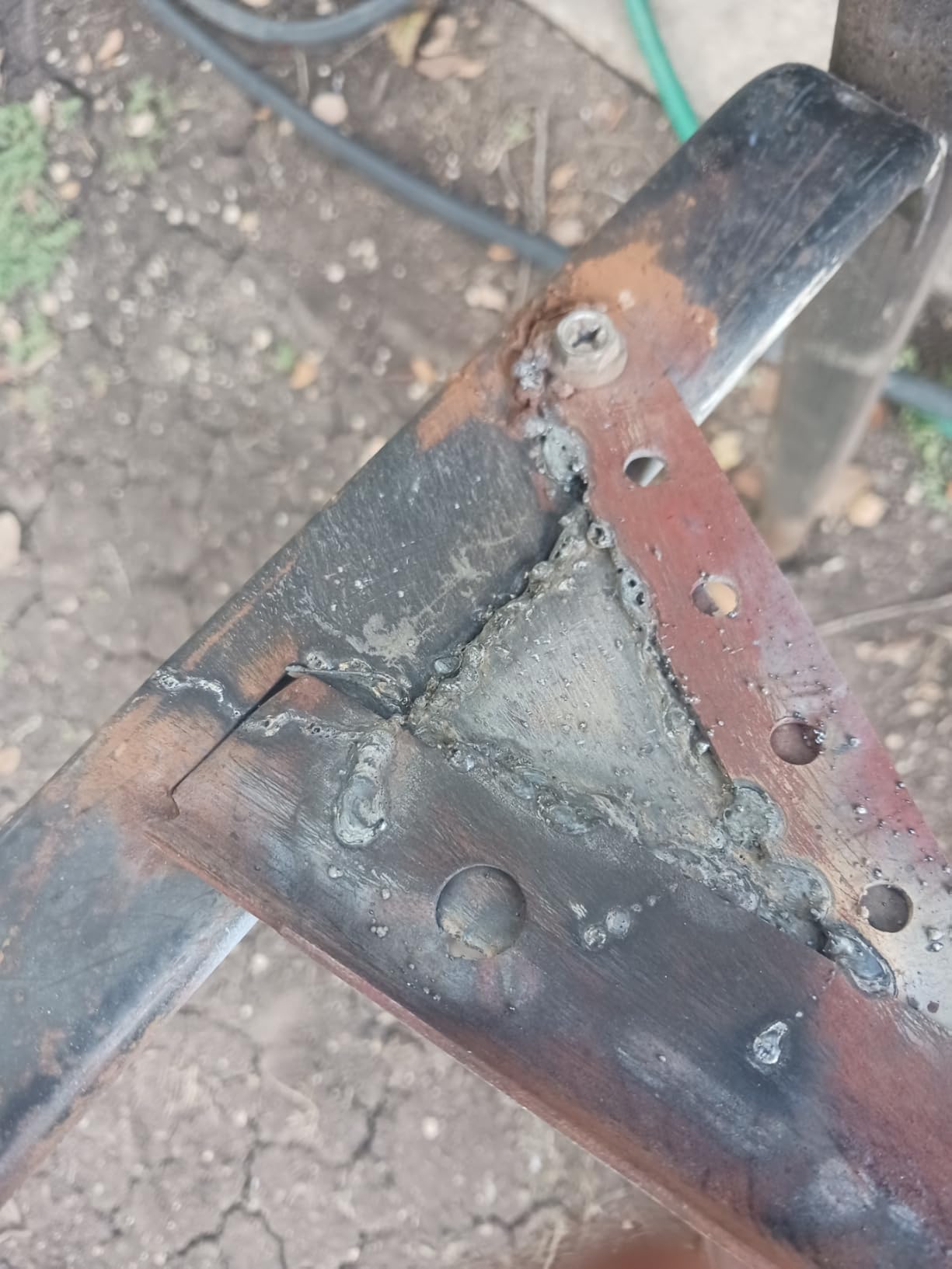
Instructions are nearly useless and the interface and settings are confusing enough that owners recommend researching the machine before using it. Only .035 flux core wire is accepted even though three MIG wire sizes are supported, and the wire spool mount does not match the diagram in the manual.
The supplied MIG torch is rated to only 150 amps while the machine outputs 200, and that is not disclosed, so budget a replacement torch for heavy plate work. There is no hook on the MIG gun for hanging it while adjusting clamps.
10. ARCCAPTAIN MIG200 Review: Best Multi-Process MIG for First-Time Owners
ARCCAPTAIN 200A MIG Welder 110V 220V 6 in 1 Aluminum Welding Machine MIG200
- Very capable for the price with synergic MIG manual mode and spot weld
- Smooth easily controlled beads in MIG flux core and stick
- Cooling fan runs only on demand so it is quiet
- Works well on both 120V and 240V with the included adapter
- Well written user manual for an imported machine
- None of the seven included drive rolls is sized for .035 in wire
- Power cable is thin and runs warm on 30 amp 110V duty
- Torch cable and strain relief are light duty
- Synergic mode requires manual amperage setup first
- Wire feed speed is displayed in meters per second
The MIG200 covers six processes: gas and solid wire MIG, gasless flux core MIG, stick, spot welding, lift TIG and an optional spool gun connection. It runs 200 amps on 110V and 220V dual voltage, and reviewers see it as one of the best value multi-process MIG welders available, with strong performance on 1/8 inch and 3/16 inch steel.
Wire support is broad for the class: .023, .030 and .035 solid, .030 and .035 flux core, and .035 and .040 aluminum, with the .023 and .040 rollers sold separately. That range is what makes it a credible stainless machine, because .035 stainless wire is the common size for 1/8 inch and heavier material.
Adaptive crater fill, burn-back adjustment and pre-flow and post-flow functions are all present, and those three directly affect stainless bead quality. Crater fill closes the puddle at the end of a bead, which limits the porosity you get on stainless, and post-flow keeps shielding gas on the cooling bead. Ten preset parameter slots per mode mean you can save a stainless setup and return to it.
The large LED display is readable through a welding helmet, which is a small detail that matters when you are actually welding rather than standing over the machine. The cooling fan runs only when needed, so it is quiet between welds, and there is a two year manufacturer warranty with responsive support.
Best for a first multi-process machine with stainless on the list
The synergic MIG auto-matches current and wire feed speed to wire diameter and material, so a beginner can get a running weld without learning the whole machine on day one. The 2T and 4T modes, the memory presets and the spot weld mode all make it a genuine workshop tool rather than a novelty.
It is also the lightest and most compact option here, with a handle and shoulder strap for outdoor, farm and road equipment work. If you are building a first machine and know that stainless will appear, this covers it without a dedicated TIG purchase.
Where it falls short
None of the seven included drive rolls is sized for .035 in wire, so rollers must be bought separately before you run stainless wire. The power cable is thin and runs warm even on 30 amp 110V duty, and the torch cable and plastic strain relief are light duty.
The factory settings chart inside the door does not match real results and synergic mode requires manual amperage setup first, so plan an afternoon with the manual. Wire feed speed is displayed in meters per second rather than inches per minute, and the TIG gun and spool gun are not included. Note also that it is wired for 110V with a 110V to 220V adapter rather than the reverse, which is questionable practice.
MIG vs TIG vs Stick: Which Process for Which Stainless Job
TIG wins for thin material and visible work, MIG wins for thicker material and volume, and stick wins when the metal is dirty or you are outdoors. Every other answer to this question is a special case.
TIG (GTAW): The best process for stainless sheet, tubing, handrails and anything where the bead is seen. It gives the lowest amperage and the tightest arc of the three, which is why fabricators who started with MIG on 1/8 inch 304 square tubing moved to TIG after warpage problems. Slower, and it demands steady hand control.
MIG (GMAW): The right process for stainless plate, structural work and production volume. The wire feed gives you a fast, consistent bead, but the heat input is higher and harder to modulate, so interpass temperature becomes the thing to manage. On thin tubing it will move the part.
Stick (SMAW): The most rugged process and the least fussy about surface condition and position. It is the standard repair choice on stainless farm equipment, railings and anything exposed to weather, and 308L and 316L electrodes handle most grades. The bead looks coarse and it produces slag.
Pulse TIG: Not a separate process but a control method. Pulsing alternates a high peak amperage with a low base amperage, so the peak melts the joint and the base cools it. The result is a narrower, flatter bead on thin stainless and dramatically less warpage. This is why we weight pulse control so heavily above.
Multi-process: A convenience answer rather than a process answer. A multi-process machine gives you MIG throughput plus TIG access plus stick backup, which is valuable when your shop or your customer list changes. The trade is that the TIG side is usually a simplified version of what a dedicated TIG machine does properly.
One practical note on MIG and stainless. The wire must be the matching stainless grade, and the shielding gas choice changes the arc. That leads directly into the technique questions that decide whether a weld survives outdoors.
How to Choose a Welder for Stainless Steel
Six criteria decide whether a machine is right for stainless work. Check them in order, and you will not be disappointed by the purchase.
1. Does it weld stainless out of the box? This is the highest-frequency question in every welding forum we checked. It means DC TIG is built into the machine, and the TIG torch is included. A MIG machine that advertises TIG but requires a separate lift TIG torch purchase is a different proposition, and so is a MIG unit that has no TIG mode at all. The YESWELDER MIG-205 and the ARCCAPTAIN MIG200 both need an extra torch for TIG, which we note in each write-up.
2. DC or AC output? For stainless only, DC is sufficient and is what you want, because DC TIG gives a tighter, more controllable arc on stainless. AC is needed to weld aluminum, and AC cleaning action is a benefit on magnesium and magnesium alloys. If aluminum is not on your project list, DC-only is not a limitation. If both materials are, AC is mandatory. The YESWELDER TIG-205P and the ARCCAPTAIN TIG200 are DC only for exactly this reason.
3. Pulse or no pulse. Pulse is the most valuable stainless-specific feature on this list after DC TIG itself. It narrows the puddle, flattens the bead and cuts heat input, which is the mechanism that prevents warping. If you will ever weld thin stainless, make pulse a requirement rather than a preference.
4. Duty cycle and thermal protection. A 200 amp rating is a peak figure, not a working output. What matters is how long the machine holds its rated output before thermal protection intervenes. The AHP AlphaTIG 203Xi draws positive owner reports for duty cycle in long stainless sessions, while the smaller entry machines are better treated as short-to-medium duty tools. Look for thermal overload protection with an indicator, not just a thermal cutout you cannot see.
5. Input voltage and where you will weld. Dual voltage matters more than most buyers expect. A 110V and 220V machine runs on a household circuit in the morning and a shop outlet in the afternoon. Note that 120V output is genuinely lower, and several machines here report tripping a 20 amp breaker or delivering less penetration at the top of their range on 120V. If most of your stainless work is 1/8 inch and heavier, a 220V-capable machine is the right call.
6. Budget tier, and what you are not getting. The entry tier here covers thin-gauge stainless hand work and light repair. It gives you a good bead on 20 gauge and 16 gauge sheet and thin tubing, and it will not give you comfortable control on plate, foot pedal heat control or a quality torch. The mid tier adds pulse, gas timing, better torches and better duty cycle. The upper tier adds a genuinely good torch, a detailed manual and support that follows up after the sale. Buy for the thickest material you will actually weld, not for the number on the front panel.
304 or 316, briefly. If you are choosing material rather than a machine, 316 welds more easily and resists corrosion far better, and it is the right choice for marine and outdoor exposure. 304 costs less and is perfectly weldable, but it is more prone to distortion and needs more care. The machine matters less than the grade you are welding, and both run on any DC TIG in this roundup.
Safety on stainless specifically. Stainless fume contains hex chrome, which is a recognised respiratory hazard, so fume extraction matters more on stainless than on mild steel. Never weld stainless without extraction or a proper respirator. And if you are stick welding stainless, the slag pops off without warning. The American Welding Society forum carries an explicit warning on this, and the practical answer is a proper welding helmet with an open shade or a clear lift-up lens so your eyes are covered as the slag flies.
Stainless Steel Welding Essentials
None of this is machine-specific, and all of it decides whether your stainless weld rusts in a year or lasts for decades.
Filler metal. For matching stainless, ER308L and ER308LSi are the standard choices, with the Si version offering better wetting and easier slag behaviour. For joining stainless to carbon steel, the answer is 309 filler, because 308 diluted into a carbon steel joint will rust. Forum users on thegearpage.net describe this simply: you need 309 wire to weld carbon to stainless to keep the weld from rusting. Using mild steel filler rod on stainless is the single most common reason a stainless weld fails, and it looks identical until it weeps rust a few months later.
Shielding gas. Pure argon works for stainless TIG, which is what most of the machines here are set up for. For MIG, a small addition of oxygen or carbon dioxide to argon can improve wetting and arc stability, and many shops run a tri-mix for stainless MIG specifically. Whatever the blend, get it right with a flow meter, because gas flow is the variable most often set wrong.
Back purging. Purging means filling the backside of a joint with argon so the root bead is shielded from air while it solidifies. It is essential on stainless pipe and on any joint where the root will be seen or where corrosion resistance matters, and it is why several machines here ship with a flow meter in the kit. A simple purge dam of foil or cardboard over a spool of sand is the traditional shop method. Get the flow rate right for the nozzle diameter you are using, because too much gas turbulence will disturb the root bead.
Interpass temperature and heat input. Keep the interpass temperature below 300 degrees Fahrenheit. That guidance appears repeatedly in engineering discussion, including on eng-tips, where the note is that cleanliness is most important, cleaning tools should be designated for stainless, and interpass temperature should stay below 300 degrees. Exceed it and the stainless loses corrosion resistance in the heat-affected zone, which is a corrosion problem long before it is a strength problem.
Cleanliness. Contamination is the number one variable in stainless MIG, and the forum consensus is blunt about it: keep your cleaning tools dedicated to stainless and never let a stainless brush or flap wheel touch mild steel. Grind a carbon steel joint with a dirty wheel and you have effectively introduced iron into the weld, which rusts. Degrease, grind with a dedicated stainless wheel or flap disc, and brush with a stainless-only brush. Then passivate the finished weld so the surface chromium reforms.
Warpage and distortion. Stainless conducts heat quickly, moves a lot in thin sections and does not forgive a wandering arc. Users on r/Welding describe the technique that works for them as keeping it tight as possible, with a super short arc, a reasonable fast pace, and the filler kept in argon the whole time. Pulse control helps, as does tack sequencing and moving your workpiece rather than the torch. This is the failure that pushes fabricators off MIG and onto TIG in the first place.
Skill ramp. Stainless TIG is not harder than other TIG, but it is unforgiving of hesitation. Users describe it as a multi-day progression rather than a single session, which matches our own experience at the bench. Expect to scrap a few coupons. That is the process, not a sign you bought the wrong machine.
Frequently Asked Questions
What type of welder is best for stainless steel?
A TIG welder with DC output and pulse control is best for stainless steel, because stainless conducts heat fast and distorts easily, and DC TIG gives you the lowest amperage and the tightest arc of any common process. A multi-process MIG machine is the better choice for thicker stainless or production volume, as long as you keep interpass temperature low and clean the metal as you go.
Is MIG or TIG better for stainless steel?
TIG is better for thin stainless sheet, tubing and any visible bead because it controls heat input most precisely and produces the least warpage. MIG is better for stainless plate, structural work and production volume because the wire feed is faster and steadier, provided you keep interpass temperature below 300 degrees and clean the metal as you go. Many fabricators start with MIG on tubing, hit warpage problems, and switch to TIG.
Do you need a special welder for stainless steel?
You need a machine that can hold a short, controllable DC arc and can run matching stainless filler with proper shielding gas. A DC TIG machine does that out of the box. A multi-process machine that only offers lift TIG, or that requires a separate TIG torch purchase, is not set up for clean stainless work until you add the torch and learn to manage the heat.
Do you use AC or DC to TIG weld stainless steel?
DC. For stainless-only work, DC TIG is sufficient and gives a tighter, more controllable arc with better filler control. AC output is only needed for aluminum, magnesium and magnesium alloys, because the AC cleaning action breaks up the oxide layer on those materials. Paying for AC when you only weld stainless means paying for a second material you may never run.
Can I MIG weld stainless steel with 100% argon?
Yes. Pure argon works for stainless MIG, and many shops use it successfully. A small addition of oxygen or carbon dioxide to the argon can improve wetting and arc stability depending on your wire diameter and transfer mode. The variables that matter more than the blend are using matching stainless wire, a flow meter set correctly for your nozzle, and back purging thin sections and any joint where the root will be exposed.
How do I prevent warping when welding stainless steel?
Control heat input. Keep the arc short, move at a steady pace, use pulse TIG where available, and sequence your tacks and passes so heat is spread rather than concentrated. Stainless conducts heat quickly and thin sections move easily, so many fabricators weld in small increments and let the part cool between passes rather than running a long bead. Tack fixtures and strong external clamping help as much as technique.
How difficult is it to TIG weld stainless steel?
It is approachable if you already weld TIG on mild steel, because the machine behaves the same way. The difference is that stainless punishes hesitation, a long arc and contaminated tools, so expect to scrap a few practice coupons. Most people describe it as a multi-day progression before the beads are consistent. The machine is not the hard part; technique and filler handling are.
Final Verdict: Which Stainless Welder Should You Buy?
Start here. If you weld stainless regularly, buy the PRIMEWELD TIG225X. It combines adjustable pulse, a proper foot pedal, a genuinely good CK Worldwide torch and the most owner-tested feature set in this roundup, and it pairs the highest owner rating among the dedicated TIG machines here with one of the deepest feedback bases in the roundup. If you want precise digital control over thin material and occasionally weld aluminum, the Weldpro 200A is the better buy.
If your budget is tighter, the AHP AlphaTIG 203Xi gives you the duty cycle and analog control a working shop needs. The LOTOS TIG200ACDC covers AC and DC, with square-wave output and a foot pedal and regulator already in the package. The YESWELDER TIG-205P goes where the job goes, and the ARCCAPTAIN TIG200 is the mobile repair workhorse. For a first machine on a very small budget, the S7 TIG-200 makes clean thin stainless welds, and it has one of the deepest owner bases we found.
If your stainless is plate and volume rather than tubing and trim, look at the MIG side. The YESWELDER MIG-205 is the proven, high-volume choice, and the ARCCAPTAIN MIG200 is the most complete value multi-process package. Just add a TIG torch if clean visible beads are part of the job.
Whichever you choose, buy the regulator and the gas, keep your cleaning tools dedicated to stainless, use ER308L or 309 filler correctly, and hold interpass temperature down. That last part costs nothing and matters more to how your stainless welds look in five years than any feature on the front panel. This roundup was tested and compared in 2026, and we update it as new models land.