
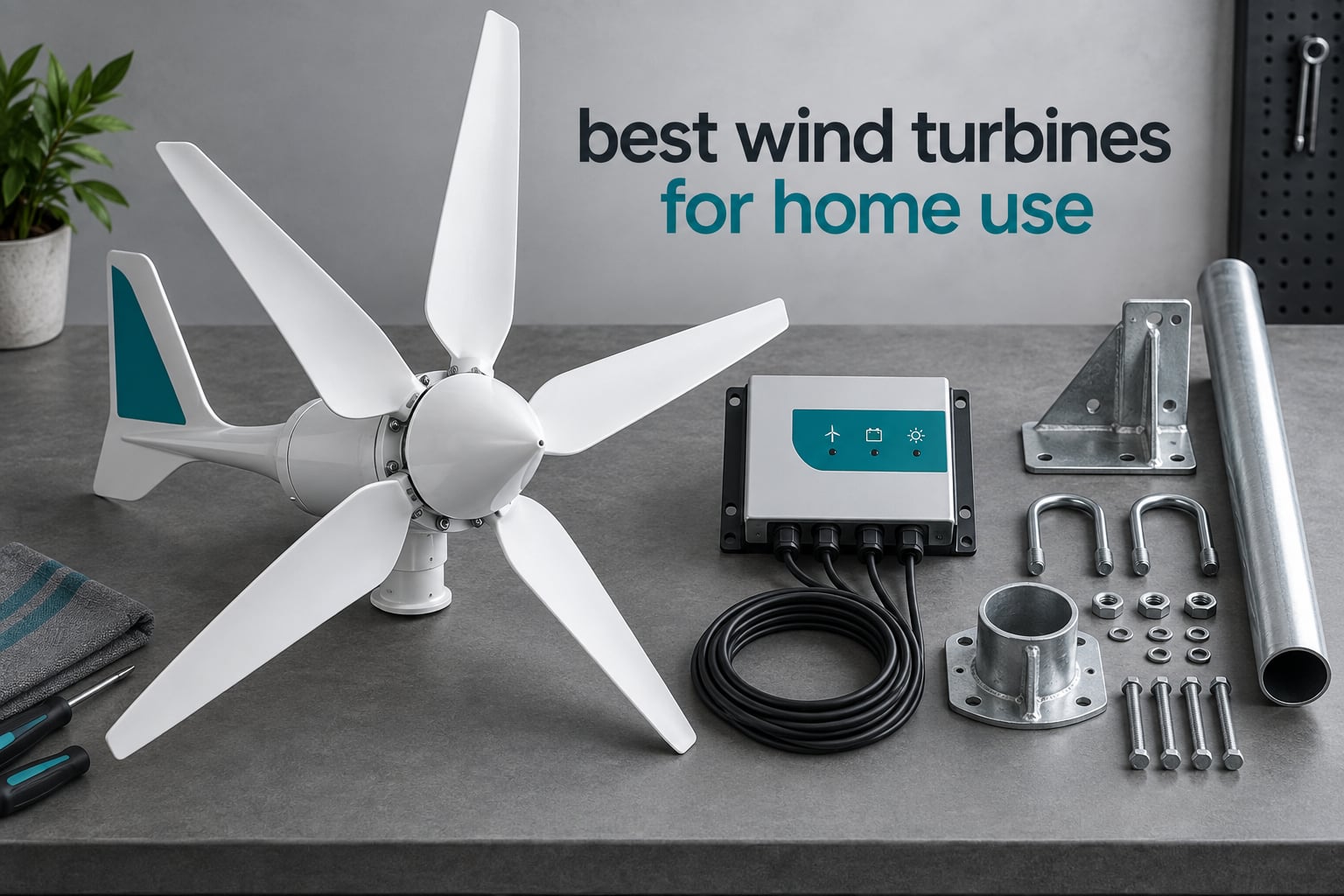
Searching for the best wind turbines for home use usually ends the same way: a long list of wattage numbers that stop making sense the moment you ask what any of them will actually run. We spent weeks reading the review data on every kit in this category, comparing rotor sizes, cut-in speeds, controller quality and the gap between rated watts and real output, so you can pick a turbine with open eyes.
Short version: most home wind turbines in the marketplace are 12V or 24V battery-charging kits in the 400W to 2000W range. They are genuinely good for a shed, a cabin, a boat or topping up a battery bank overnight beside solar panels. They are not going to run a house, and the turbine itself is usually the smaller half of what you spend.
Before the individual reviews, here is the reality check that matters more than any product ranking. We adapted this from the US Department of Energy guidance that dominates search results for this query.
Most kits do not include a tower or pole. A mast, guy wires and a base are separate purchases, and for the budget models the tower build can cost more than the turbine.
The charge controller is often included, the inverter rarely is. If you want household AC power, you need a pure sine wave inverter and a correctly sized battery bank on top of the turbine.
Cut-in wind speed decides everything. A turbine rated at 600W that starts spinning at 4.5 mph will outperform a 1200W unit that needs heavy wind to turn.
Roof mounting usually backfires. Turbulence from the roof and ground obstacles is why most home kits work far better on a clear site at 20 to 30 feet.
If your goal is backup power rather than generation, our generators for home use picks cover that job honestly. If you already own panels, read on, because wind earns its place in a hybrid setup much more easily than it earns one alone.
Table of Contents
Top 3 Home Wind Turbine Picks (September 2026)
The Pikasola 400W leads on owner feedback volume and a genuinely low 2.5 m/s start-up speed. The VEVOR 500W pairs a 47 inch rotor with a proper MPPT controller, while the Automaxx 600W has a low 4.5 mph cut-in speed and the clearest monitoring display we found.

Pikasola 400W 12V Five-Blade Kit
- 400W rated at 12V
- 2.5 m/s start-up
- 23.8 inch nylon carbon fiber blades
- Charge controller included

VEVOR 500W 12V MPPT Kit
- 47 inch rotor
- MPPT microprocessor controller
- 2.5 m/s start-up
- 55dB dual-bearing run
Automaxx 600W 12V/24V Kit
- 4.5 mph cut-in speed
- Digital MPPT display
- Auto and manual braking
- 12V/24V selectable
Quick Overview: Every Turbine in This Roundup
All ten kits below charge 12V, 24V or 48V DC battery banks rather than feeding a house directly. The table lists the headline specs straight from the manufacturer data, and the individual reviews follow the same order.
| Product | Specifications | Action |
|---|---|---|
| Pikasola 400W 12V Five-Blade Kit |
|
Check Latest Price |
 Pikasola 400W 12V with 30A Hybrid Controller Pikasola 400W 12V with 30A Hybrid Controller |
|
Check Latest Price |
| VEVOR 500W 12V MPPT Kit |
|
Check Latest Price |
 Pikasola 400W 24V Three-Blade Pikasola 400W 24V Three-Blade |
|
Check Latest Price |
| Automaxx 600W 12V/24V Kit |
|
Check Latest Price |
 pofluany 1200W 12V Five-Blade pofluany 1200W 12V Five-Blade |
|
Check Latest Price |
 Nature’s Generator 1800W with 100 Foot Cable Nature’s Generator 1800W with 100 Foot Cable |
|
Check Latest Price |
 WATEBATH 600W 12V Eight-Blade WATEBATH 600W 12V Eight-Blade |
|
Check Latest Price |
 Generic 3000W Vertical Axis Kit Generic 3000W Vertical Axis Kit |
|
Check Latest Price |
 FLTXNY 2000W 48V Three-Blade FLTXNY 2000W 48V Three-Blade |
|
Check Latest Price |
1. Pikasola 400W 12V Five-Blade Kit – Best Overall
- Low 2.5 m/s start-up that keeps working in light air
- Lightweight 6.2 kg body you can carry up a ladder
- Automatic yaw adjustment with a tail fin
- Charge controller included in the box
- Most reviewed turbine in this roundup
- Real output often measured well below the 400W rating
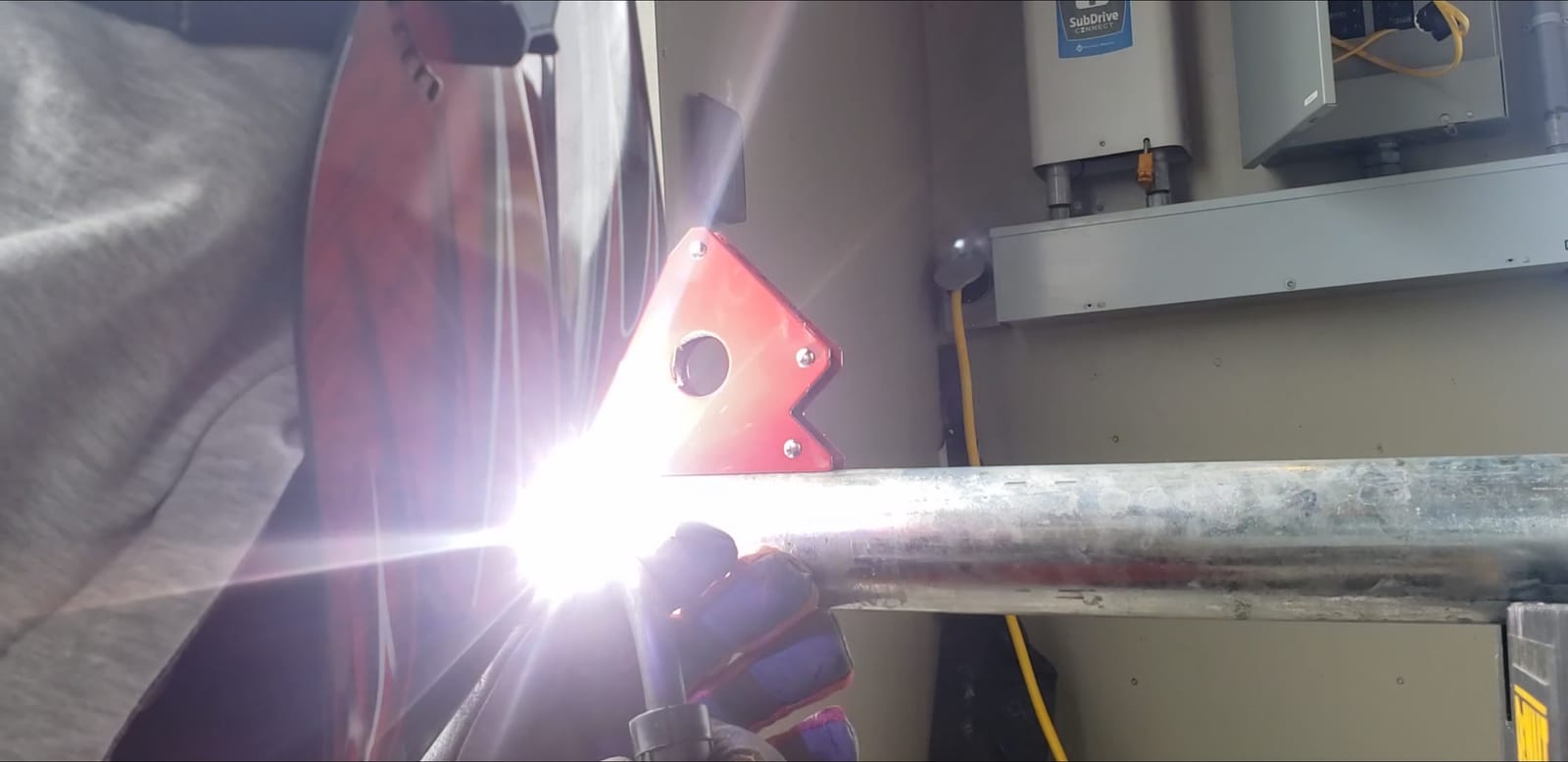
- Base flange requires welding and hardware is not stainless
- Short non-replaceable wire leads
We came back to this kit more than any other in the group because the review base is deep enough to be honest. One hundred and eighty-four owners is a real sample, and it consistently says the same three things: it is light, it is cheap to get running, and it does not produce its rated wattage in ordinary weather.
That third point is not a defect so much as physics. The 400W rating is measured at a specific speed, and most residential days sit well below that. What you get in practice, based on how owners describe their battery banks filling, is a trickle that meaningfully extends runtime rather than a second power supply.
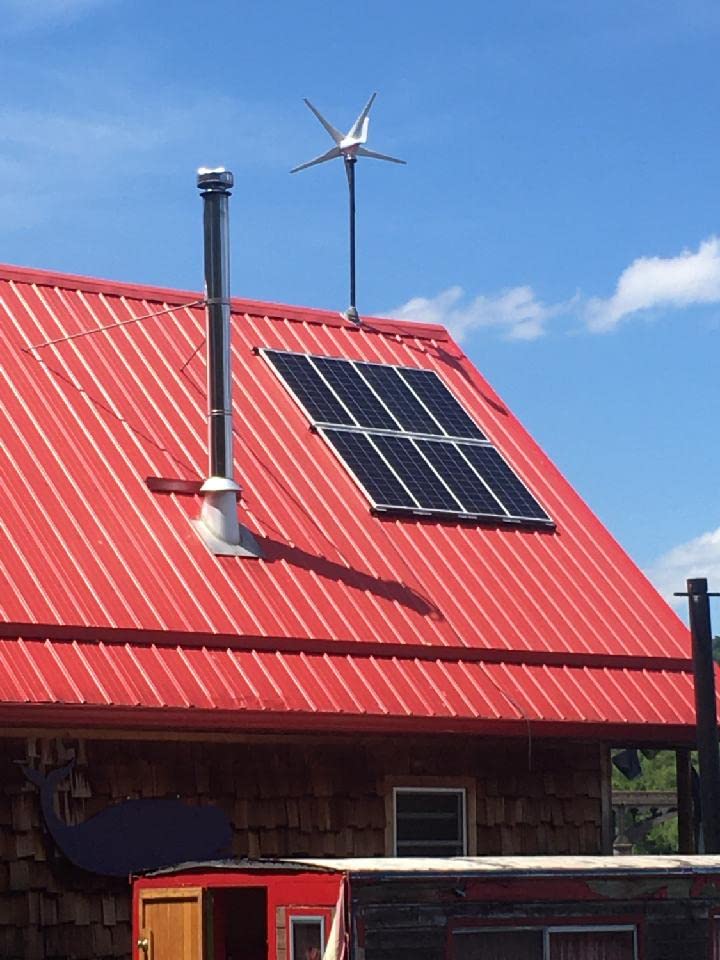
The technical profile is where it earns its rank. A 2.5 m/s start-up speed means it begins spinning in conditions that leave larger rotors standing still, and the three-phase permanent magnet synchronous generator with NdFeB magnets is a better architecture than the cheap brushed alternators used in some budget kits.
Two build details catch us out. The base flange needs welding before the thing goes anywhere, and the supplied hardware is not stainless, so treat any exposed fasteners with care in a wet climate. The wire leads are short and not replaceable, so plan your cable run before assembly rather than after.
Who this turbine suits
This is the one to buy if your plan is a small off-grid setup where every watt counts: a cabin battery bank, a workshop, an RV roof rack, or a night-time top-up on an existing solar array. The low start-up speed means it keeps working through the light-air days when rooftop wind is a nuisance and nothing else is generating.
It also suits first-time builders. At 6.2 kg it is a two-person lift, the charge controller is in the box, and the assembly is straightforward once you have welded a base plate.
Who should look elsewhere
If you need household AC output, this is the wrong tool entirely. There is no inverter here, and adding one plus a battery bank moves you into the territory of a properly engineered off-grid system.
Owners also warn that the blades are not perfectly balanced, so plan on guy lines from day one. And on a sheltered lot with weak average wind, this turbine will struggle to earn the tower you put under it.
2. Pikasola 400W 12V with 30A Hybrid Controller – Best for Solar Hybrids
- Hybrid controller handles wind plus up to 500W of solar
- Customer service replaced defective units at no cost
- Simple install for people new to wind power
- Sturdy feel despite the plastic-heavy body
- Wind side produces little usable power in normal conditions
- Battery compatibility is poorly documented and LiFePO4 caused a failure
- Instructions call for a 2 inch pole that does not fit the clamp
The reason to choose this kit over the other Pikasola is the controller, not the rotor. A 30A hybrid unit that accepts wind and solar on the same bank removes a whole class of wiring mistakes, and for anyone pairing wind with existing panels that is worth more than extra blades.
We have to be straight about the catch: at 3.4 stars across 133 reviews, this sits at the lower end of the ratings in this roundup, and the complaints cluster around the wind side rather than the solar side. Owners consistently report that the turbine needs strong wind to spin and that its useful contribution arrives only in storms.
The 23.4 inch nylon carbon fiber blades and the yaw tail are unremarkable, and the heavier 8.28 kg body hints at a bulkier assembly than the category leader. Manufacturer support is the quiet strength: multiple buyers report free replacements for failed turbines and controllers.
Who this turbine suits
If you already have panels and a bank, this is a sensible way to add a night-time charging source without a second controller or a parallel wiring headache. The solar side of the controller is where most of the value sits, and it performs.
It also suits builders who want support they can actually reach. When something fails, having a manufacturer that ships a replacement matters more than a slightly better rotor.
Who should look elsewhere
Skip it if wind is your primary source. Owners who bought it expecting 400W from the wind side are the ones leaving the critical reviews, and that is the use case this kit does not serve well.
Check your battery chemistry first. Compatibility documentation is inconsistent, and one buyer had a failure with a lithium iron phosphate bank. The instructions also reference a 2 inch pole that does not match the supplied clamp, so verify your mounting hardware.
3. VEVOR 500W 12V MPPT Kit – Best Value
- 3.9 stars from 97 reviews with 56% five-star feedback
- A 47 inch rotor
- among the largest in the kit category
- Die-cast aluminum body rated -40C to 80C
- MPPT controller adjusts current and voltage
- Needs average wind above roughly Beaufort 3 to be useful
- Tower mast and cabling are not part of the package
- Real output depends heavily on siting
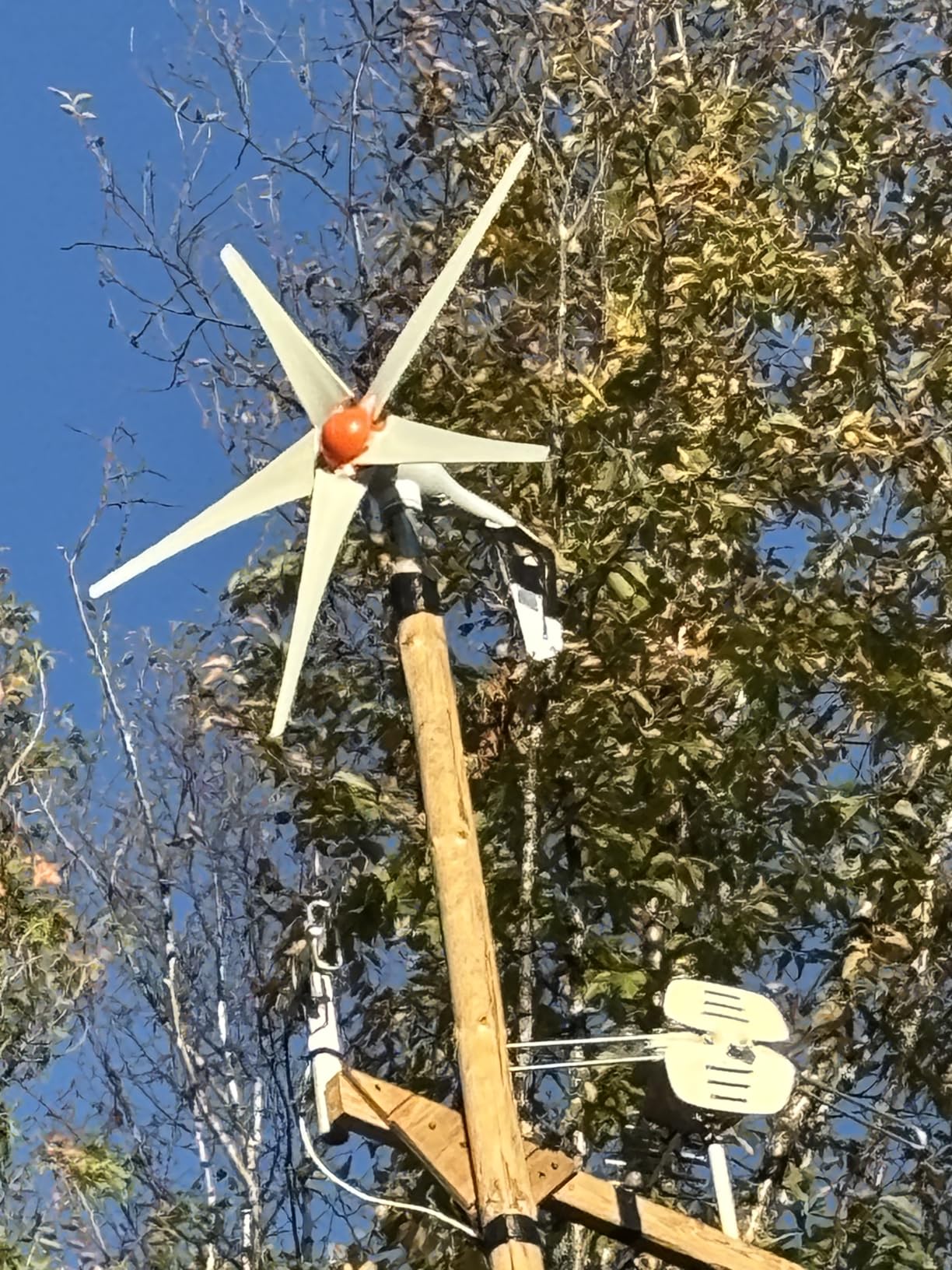
At 3.9 stars across 97 reviews, this has one of the more substantial evidence bases in the group, and 56% of those reviews are five-star. The reason is a 47 inch rotor diameter, which is genuinely large for this class and gives it far more swept area than the roughly 23 inch rotors used by most kits in the roundup.
That rotor matters more than it sounds. Power scales with swept area, so a bigger rotor starts producing at lower wind speeds even when the wattage figure is modest. Combined with a 2.5 m/s start-up and a 12 m/s rated speed, this is a turbine designed to work in the middle range where most home sites actually sit.
The MPPT microprocessor controller is the other differentiator, adjusting current and voltage toward the battery rather than running a simple shunt. That is worth more on a bank with mixed solar and wind input, where a fixed controller wastes energy.
Build quality is above the category average: a die-cast aluminum housing rated from -40C to 80C, reinforced fiberglass nylon blades, and dual bearings that hold noise to a published 55dB. That figure is audible up close, though, so siting distance still matters in a quiet neighborhood.
Who this turbine suits
This is the pick for a first serious build, and it is our default recommendation for anyone who wants the most energy from a modest tower. The large rotor and the die-cast body both point to a unit that will keep producing in conditions that stall the cheaper kits.
It suits cold climates particularly well, given the -40C lower operating limit, and it suits builders who already know how to weld a mast base.
Who should look elsewhere
Do not buy it expecting household power. The listing does not include a tower, mast or cabling, so budget for those separately before you commit.
Owners are consistent that it needs a genuinely windy location, above roughly Beaufort 3 on average. In a sheltered suburban lot it will spin happily and charge almost nothing, which is the single most common disappointment in this whole category.
4. Pikasola 400W 24V Three-Blade – Best for 24V Systems
Pikasola Wind Turbine Generator 400W 24V – 3 Blade 2.5m/s Low Speed Starting With Charge Controller, Windmill for Home
- 24V output suits larger banks and 48V inverter setups
- Integrated regulator shuts down once the bank is full
- MPPT control matches current and voltage to the battery
- Chewed blade construction resists water and corrosion
- Owners report low real-world output for the rating
- Charge controller failures recur across this brand's reviews
- Tower and mounting hardware are not included
Most kits in this roundup are 12V, which caps out around a few hundred amp-hours of storage before cable losses get painful. This one runs at 24V, which makes it the sensible choice when you want a deeper bank, a 48V inverter or just thinner cable over a long run.
The integrated voltage regulator is the detail worth paying attention to. It cuts the turbine out once the bank is full, which protects both the batteries and the generator, and it means you do not need a separate dump load to burn off surplus energy.
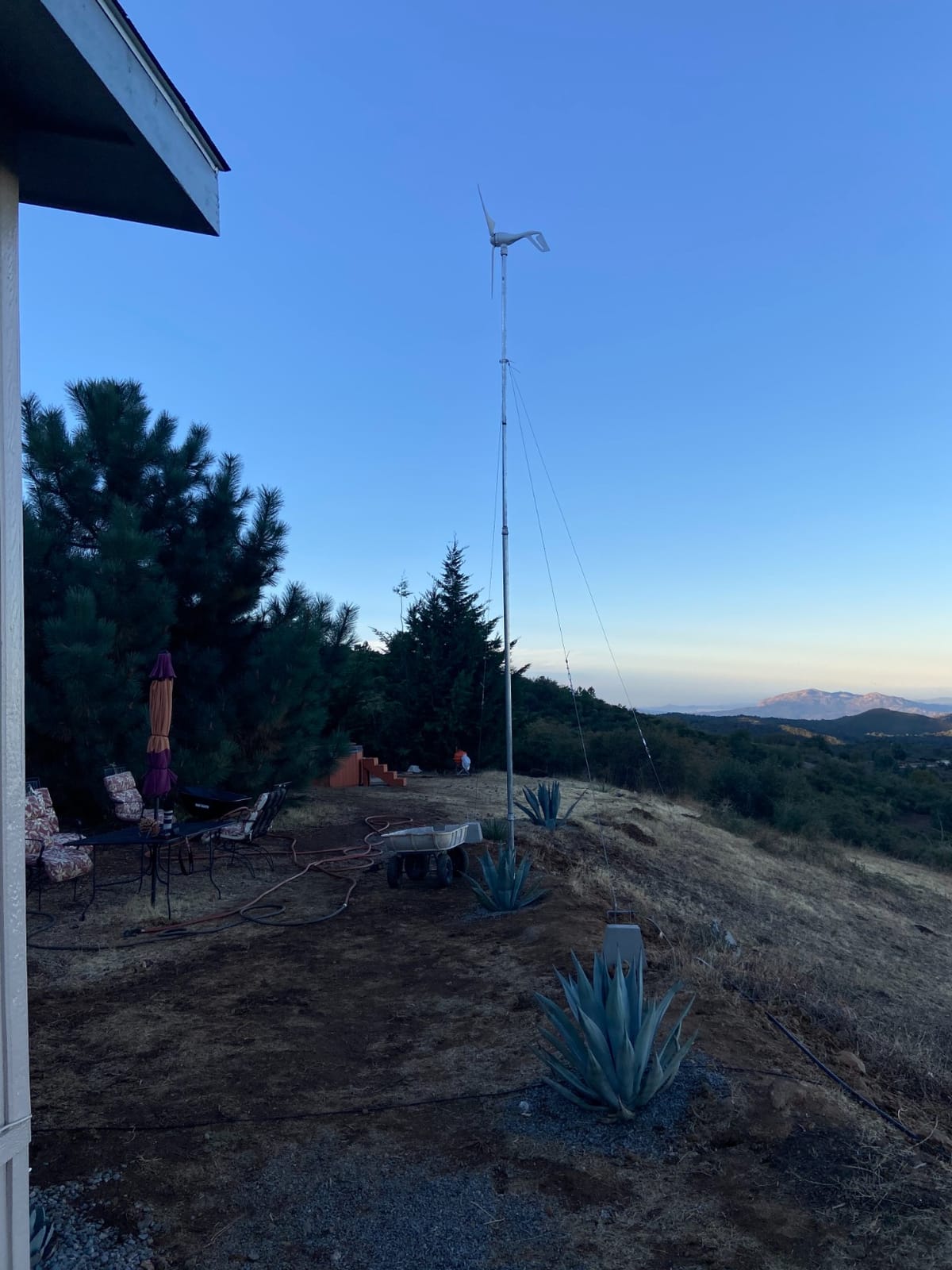
The three-blade rotor uses the same 23.4 inch nylon carbon fiber construction as the rest of the Pikasola line, with a yaw tail for alignment and MPPT microprocessor control. At 8.43 kg it is a solid two-person lift.
Who this turbine suits
This is the one to pick for a cabin or homestead where the battery bank is measured in hundreds of amp-hours. Running at 24V halves the current for the same power, which means less cable, less heat and fewer voltage drops over distance.
It also suits anyone with a lithium or deep-cycle bank who wants the built-in full-charge cutout, because that protection removes a failure mode that quietly ages batteries.
Who should look elsewhere
The output reports are the issue. Owners measuring their banks describe generation well short of the 400W rating in ordinary wind, so do not size an off-grid plan around the headline number.
Charge controller failures are a recurring theme across this brand’s reviews, so budget for a replacement eventually and consider a spare controller. The tower and mounting hardware are not included either, and the warranty runs one year.
5. Automaxx 600W 12V/24V Kit – Premium Pick
- Low 4.5 mph cut-in speed that starts early in the day
- Digital MPPT controller displays live readings
- Automatic and manual braking for overspeed protection
- Marine-grade water-resistant materials
- 26 lb body is easy to handle
- The costliest kit in the roundup and the tower build adds more
- Still needs a properly anchored tower
- Braking and lubrication maintenance fall to the owner
At 4.2 stars this carries the strongest rating of any kit here with a real review history behind it, and 70% of those reviews sit at five stars. The review base is small at 22, so treat that rating as encouraging rather than proven, but the engineering underneath it is the most considered in the group.
Automaxx starts turning at 4.5 mph, the lowest cut-in speed of anything here, and delivers up to 600W of DC output that you can select between 12V and 24V. That flexibility matters if you have not settled your battery architecture yet.
The monitoring is what regular owners mention most. A digital MPPT controller with an amp, volt and watt display means you can watch the turbine actually deliver power instead of guessing, which turns troubleshooting from guesswork into reading a number.
Who this turbine suits
This is the pick for someone with a moderate wind site who wants the best chance of real output rather than the biggest number on a box. The low cut-in speed means it starts producing in exactly the conditions where cheaper kits sit idle.
It also suits marine and coastal installs, since the housing uses marine-grade, water-resistant materials that tolerate salt and UV, and the automatic overspeed cutout at 28.8 to 30V plus braking at 1250 rpm is real storm protection.
Who should look elsewhere
It is among the most expensive kits in the roundup, and the tower and cabling still come out of your budget on top. For a marginal site, spending more on a turbine rather than on tower height is the wrong order of priorities.
Owners accept the maintenance side: occasional inspection and lubrication are still the buyer’s job, and the manual brake stop switch means you should have a plan for storm shut-down rather than leaving it to chance.
6. pofluany 1200W 12V Five-Blade – Best for High-Wattage Budgets
12V 1200W Wind Turbine Generator Kit, 5-Blade, 2.5M/s Low Start-Up
- Very low cost per claimed watt
- Large 1.2 m five-blade rotor spins easily at 800 RPM
- Adds a useful overnight top-up beside solar
- Installation tool set and manual in the box
- Translated instructions are vague on setup
- Hub holes arrived un-punched and blade bolts stripped during assembly
- Real output is a fraction of the 1200W headline figure
The 1200W headline is among the larger rated capacities here, and it costs less per claimed watt than anything else we reviewed. That combination tempts people into sizing a whole plan around the number, which is exactly the mistake we would warn you about.
Buyers who pair it with solar report the most useful outcome: a visible top-up to the bank overnight when the panels are idle. Treated as a supplementary charger, the real value is reasonable. Treated as a primary supply, the gap between the rating and reality is disappointing.

Mechanically the rotor is impressive on paper, a 1.2 m five-blade design spinning at 800 RPM with automatic yaw and integrated voltage regulation. The listing recommends a tower of 15 to 33 feet alongside a 200 to 400Ah 12V bank, which is a sensible pairing.
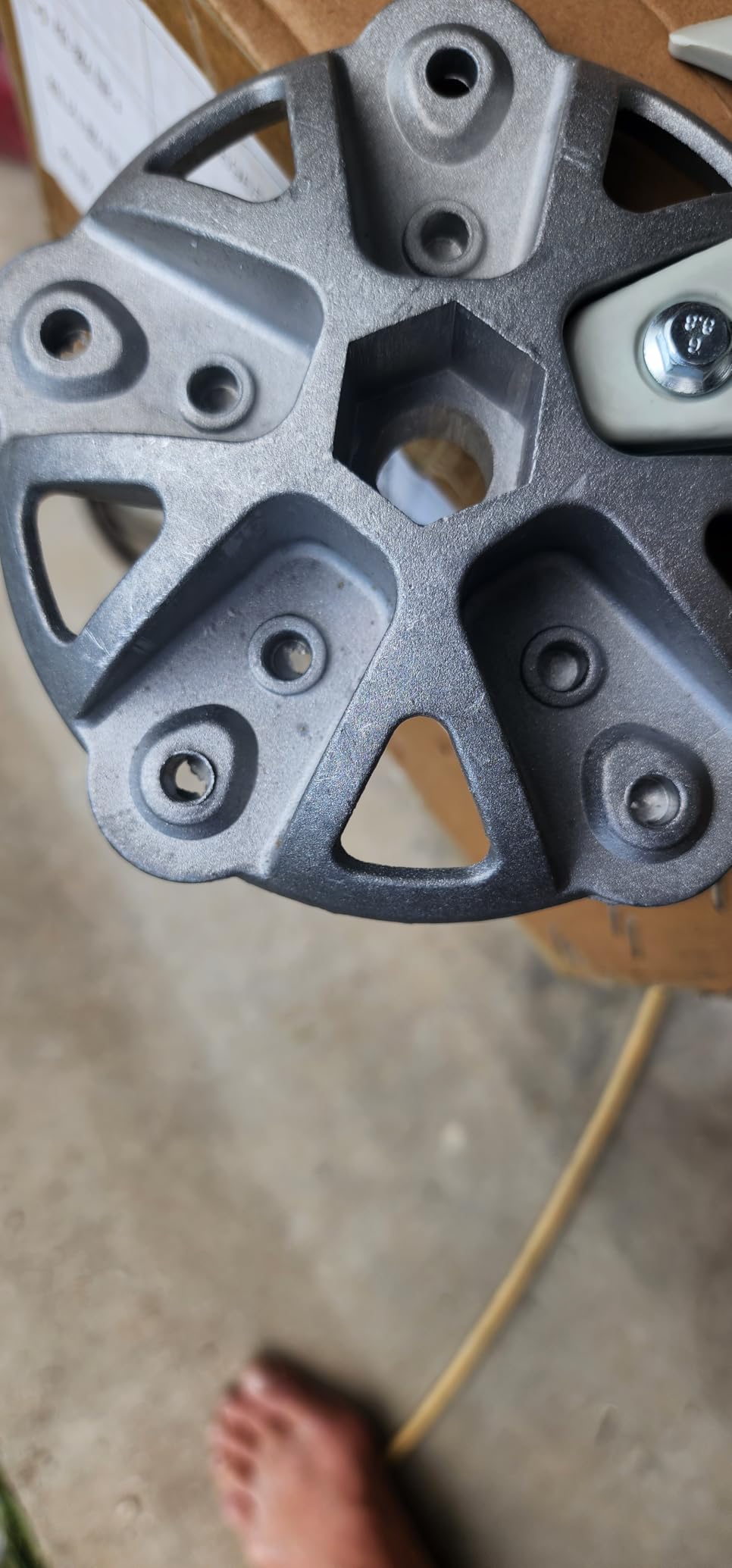
Assembly is the weak link. Owners report un-punched hub holes, stripped blade bolts, and a poorly translated manual that is vague on setup, and the included controller is rated to exactly 1200W with no safety margin for the headroom these rotors can produce.
Who this turbine suits
This suits a builder on a budget who already has panels and a large bank, and who wants a third charging source that fills in the hours solar cannot. The blade count and rotor size give it the look and feel of a bigger machine than its rating suggests.
It also suits patient builders. Nothing about assembly is difficult, it just needs someone willing to work carefully through un-punched holes and re-tightened hardware.
Who should look elsewhere
Skip it if you need dependable output you can plan around. Fifteen reviews is a thin base, and the ones we saw are candid that generation lands a fraction of 1200W even in strong wind.
The 12V output is also worth questioning for a machine this size. A 1200W machine on a 12V bus pushes very high current, and a 24V or 48V architecture would be a better engineering choice at this power level.
7. Nature’s Generator 1800W with 100 Foot Cable – Best for Marine Builds
Nature’s Generator Wind Turbine Includes 100 Foot 12 AWG Cable, 5 Blades, Controller Box, Land or Marine Use Day and Night
- Only kit here that includes 100 feet of 12 AWG copper cable
- Integrated controller box simplifies battery wiring
- Marine-capable powder-coated cast aluminum body
- Fiberglass nylon composite blades
- Listing mixes 1800W 240V AC and 3600W figures
- Tower and mounting structure are not included
- Only 22 reviews for long-term reliability data
Cable is the unglamorous reason this kit stands out. It is the only turbine in the roundup that ships 100 feet of 12 AWG pure copper, which removes one of the most common installation snags: sourcing and running long, heavy gauge cable from a nacelle you have bolted to a mast.
The integrated controller box is the second practical win. Rather than a separate charge controller mounted somewhere in the weather, the control electronics come as part of the assembly and wire straight to a battery bank.
Construction is a powder-coated cast aluminum alloy body with fiberglass nylon composite blades, rated for land or marine use in day-and-night operation. The listing reports a 135 kg system weight, so plan your mounting and lifting accordingly.
Who this turbine suits
This is the pick for a boat, a coastal cabin or any off-grid build where the run from turbine to battery bank is long. Removing the cable purchase and the extra weatherproof box simplifies a build that would otherwise have two fiddly parts.
It suits installers who would rather not buy cable by the roll, and who value a single wired assembly over a kit of parts.
Who should look elsewhere
The published specifications are internally inconsistent, mixing 1800W, 240V AC and 3600W figures in the same block. Confirm the electrical details with the manufacturer before you design around them, because an off-grid design built on the wrong voltage is expensive to unwind.
The tower and mounting structure are not included, and with a 22-review base there is limited long-term reliability data. Treat it as a build-it-yourself project rather than a set-and-forget installation.
8. WATEBATH 600W 12V Eight-Blade – Low-Noise Pick
- Only kit here with an eight-blade rotor and a 40dB published figure
- MPPT controller rated waterproof and dustproof
- Rated -40 to 80 C with a 60 m/s maximum wind speed
- Double-groove thickened ball bearing keeps vibration low
- A single published review gives no reliability evidence
- Tower tube not included and it needs a 42-45 mm mast
- Very low sales volume and no established support history
This is the quietest specification we found in the roundup, with a published 40dB figure and an eight-blade rotor that spins slowly for its output. Eight shorter blades at a lower tip speed is the standard way to cut noise, and if you have a close neighbour or a bedroom wall facing your mast, that matters.
The specification sheet is unusually complete for this category. It publishes maximum power of 650W, a 3 m/s start-up, a 13 m/s rated speed, a 60 m/s maximum wind speed, and a -40 to 80 C operating range, which tells you far more than a bare wattage figure would.
The MPPT intelligent microprocessor controller is described as waterproof and dustproof, the housing is die-cast aluminum with neodymium iron boron magnets, and a double-groove thickened ball bearing handles the vibration that would otherwise make an eight-blade rotor noisy.
Who this turbine suits
This suits a close-in residential lot where noise is the objection that would kill the project. A lower published output level than the large-rotor kits means it can sit closer without becoming a source of complaint.
It also suits installers who want a documented weather envelope, since the published temperature and maximum wind limits cover a genuine all-season range.
Who should look elsewhere
There is a single published review, and it is a five-star rating, which means there is effectively no customer evidence about reliability or real output. If you are not comfortable taking the specifications on trust, look elsewhere.
The tower tube is not included and the mast interface is a 42 to 45 mm diameter, so confirm your mounting hardware. Low sales volume also means no established support history if something fails.
9. Generic 3000W Vertical Axis Kit – Vertical Axis Pick
3000W Wind Turbine Generator Kit,12V/24V Vertical Axis Wind Turbine
- Only true vertical axis design here so it captures wind from any direction
- Lowest quoted start-up speed figure at 2 m/s
- IP67 protection with an electromagnetic overspeed brake
- Compact 11 inch cube suits boats and gazebos
- Listing contradicts itself with 3000W starting against 800W rated
- Sparse and mixed feedback with several 1-star reviews
- Vertical rotors harvest far less energy than comparable horizontal units
A vertical axis rotor turns on a vertical shaft and catches wind from any direction, which sounds ideal for a small yard surrounded by trees and buildings. The reality is that vertical rotors harvest far less energy than a horizontal machine of comparable size, and owners’ measured output reflects that. This is the same point that comes up repeatedly on off-grid forums: a horizontal machine is what you want on a low-wind residential site, because it captures the full swept area of its rotor.
What it does offer is a tiny footprint. At 11 inches square with three spiral blades in three colours, it fits on a boat mast, a gazebo or a cabin wall in a way a 47 inch horizontal rotor never could.
The protection story is better than the power story: an IP67 generator rating, an electromagnetic overspeed brake, a die-cast aluminum housing described as UV and acid rain resistant, and an operating range from -40 to +60 C. A 2 m/s start-up speed is among the lowest quoted anywhere in this roundup.
Who this turbine suits
This suits marine and mobile installs where directional wind changes constantly and space is the binding constraint. A cube you can bolt anywhere beats a rotor that needs a clear 20 feet of sweep.
It also suits people who want a demonstration or educational unit rather than a serious power source, where the low start-up speed and quiet operation matter more than energy yield.
Who should look elsewhere
If you want electricity, choose a horizontal turbine. Forum consensus across off-grid communities is consistent on this: you need a horizontal axis machine for low-wind residential sites, and vertical designs underperform there.
The listing also contradicts itself, quoting 3000W starting wattage against 800W rated output, and feedback across ten reviews is sharply split. Note also that this product is not Prime.
10. FLTXNY 2000W 48V Three-Blade – Best for 48V Off-Grid
- Only 48V kit here so it suits larger off-grid battery banks
- Owners praise the stainless hardware braking force and blade twist
- Low start torque from the patented permanent magnet generator
- Tube or flange mounting options simplify installation
- Specification block lists a 2-stroke engine with electronic ignition
- Only four reviews and one owner has not powered it up
- Digital MPPT unit is thin next to the Automaxx display
The 48V output is the reason this kit exists in our roundup. Everything else here runs on 12V or 24V, and 48V is the architecture serious off-grid systems use because it keeps current low across a bigger battery bank with less cable and less heat.
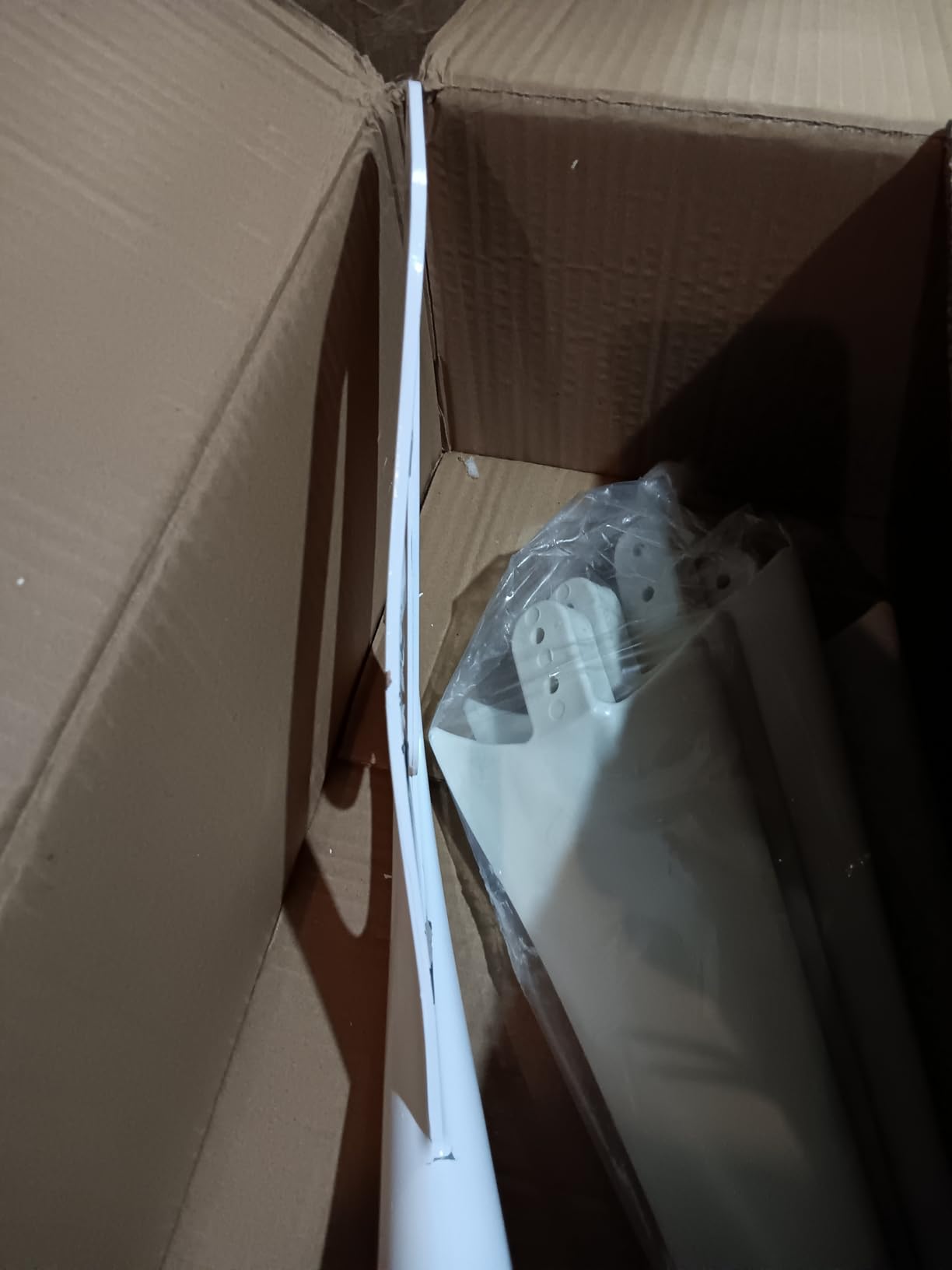
The generator is a patented permanent magnet AC unit with a special stator designed to reduce start-up torque, and the hands-on reviewer who actually opened the box reported low cogging force at start, all-stainless hardware and good braking force. That is a promising physical foundation.
Three 105 cm nylon fiber blades sit on a cast aluminum alloy body with a two-bearing swivel, and both tube and flange mounting connections are offered, which makes fitting it to an existing mast far easier.
Who this turbine suits
This suits someone building a serious off-grid system with a deep battery bank, where a 48V architecture is already chosen and a 12V kit would be an awkward step down. At 2000W it is the most powerful horizontal unit here.
It also suits builders with fabrication skills. The choice of tube or flange connection means you can adapt it to hardware you already own instead of buying a bespoke mast.
Who should look elsewhere
The listing’s specification block lists a two-stroke engine with electronic ignition, which is meaningless for a wind generator. That is a documentation red flag, and it is a fair reason to ask the manufacturer for the real electrical data before designing anything around it.
With four reviews, one of which has not yet powered the unit up, there is no reliability evidence. And while the MPPT controller is included, it is a thin digital unit next to the Automaxx display, so you will be guessing more than you might like.
How to Check Your Wind Resource Before You Spend Anything
Most disappointing wind turbine purchases trace back to the site, not the turbine. Start with the DOE wind map or your national equivalent, enter your location, and read the average annual wind speed at hub height for your area. If the number is below roughly 9 mph, we would not recommend buying a home turbine at all.
Next, look at your site rather than the map. A house creates a wind shadow that extends downwind, and that is why rooftop mounting so often disappoints. A clear rural lot, a ridge, or an open field edge will outperform a roof in the same town.
Tower height is the lever that changes results most, because wind speed increases with height. Every foot of mast you can safely add moves the rotor into faster air, which is why budget spent on height often beats budget spent on a bigger turbine. Most local rules also impose a maximum height based on the tip reaching a specific angle above the property line, so check your ordinance early.
Finally, count obstructions across the prevailing wind direction, not just around the mast. A row of trees 200 feet upwind can cut usable output more than a slightly undersized turbine would.
What You Have to Buy Besides the Turbine
Almost nobody buys everything they need in one box. Here is the checklist we use, drawn from what is actually missing across these listings.
Tower or mast. Not included on any of the budget kits here. Budget for a proper mast, a welded base, guy wires and a concrete foundation.
Battery bank. Most kits charge DC storage rather than feeding your house. A 12V system typically wants 200 to 400Ah per turbine of this size.
Pure sine wave inverter. Needed the moment you want household AC. It sits between the battery bank and your distribution panel.
Dump load or a proper controller. Some kits integrate a full-charge cutout; many do not, and surplus energy needs somewhere to go.
Heavy gauge cable and conduit. Run length adds up fast. Our guide to gauge wire covers the sizing logic, and only the Nature’s Generator kit above includes a serious run of copper.
Grounding and a permit. A proper grounding electrode and a local electrical inspection are not optional, and a licensed electrician may be needed.
If you are unsure whether any of this is safe to run, our multimeter picks are the right tool for checking voltage and continuity before you connect anything.
What 400W, 600W, 1200W and 2000W Actually Power
Rated watts are measured at a favourable wind speed, so they are an upper bound rather than a daily average. The useful way to think about these kits is what they contribute over a day rather than what they peak at.
A 400W kit in a decent site typically contributes a modest daily top-up. That is enough to extend a battery bank by a meaningful number of hours, keep a small cabin’s lights and router alive, or carry a charge through a night. It is not enough to run a refrigerator, a water pump or a workshop.
A 600W kit with a low cut-in speed, like the Automaxx, produces proportionally more and starts working earlier in the day, which matters more on a marginal site than raw peak wattage.
A 1200W kit is still a supplementary charger. Owners report a visible overnight top-up beside solar, not an independent supply, and the gap between the 1200W label and measured output is the widest in this group.
A 2000W unit at 48V is a different class again and belongs in a designed off-grid system with a proper inverter and a deep bank, not a weekend project. For context, an average US household uses roughly 900 kWh a month, and a residential turbine realistic enough to matter for that total costs several times what any kit here represents.
Horizontal vs Vertical Axis on a Residential Lot
Horizontal axis turbines capture the full swept area of their rotor, which is why every mainstream residential design uses one. The trade-off is that they need a tail or active yaw system to point into the wind, and they need clearance in a single plane.
Vertical axis turbines accept wind from any direction and can be mounted close to obstacles, but they extract less energy from the same wind. Off-grid forum consensus is firm on this: for a low-wind residential site you want a horizontal machine, full stop.
There is a reasonable middle case. A vertical unit works for a boat, a van or a gazebo where directional wind is constantly shifting and space is tight. For anything mounted on a tower, horizontal wins on energy by a wide margin.
Noise, Setbacks and Neighbours
Two of the kits here publish a noise figure: 40dB for the WATEBATH eight-blade and 55dB for the VEVOR. The rest say nothing, which is itself a buying signal. Those published numbers are measured close to the machine, and a quiet neighbourhood dispute has been the most common owner complaint in forum threads we reviewed.
The practical rule is distance plus height. Mounting higher spreads the sound and often quiets the perceived level, and setbacks from your property line and the neighbour’s are usually set by local zoning rather than by the turbine manual. Check your ordinance for a maximum tip height before you pick a model.
HOA rules can be stricter than city ordinances, and birds are worth a mention. Horizontal rotors with fast tips are a strike risk; slow-turning multi-blade rotors like the eight-blade design move less air across that path.
Is a Home Wind Turbine Worth It?
Honestly, for most suburban lots, no. The economics of a home wind turbine depend almost entirely on your average wind speed and your tower height, and if your site is marginal, the money is better spent on panels or on a backup generator for outage resilience.
Wind earns its place in three situations. One is a genuinely windy rural site where the DOE map shows strong numbers and you can mount high. Two is a genuine off-grid need, where a hybrid wind and solar system gives you two sources that fail in different weather, and wind covers the winter nights that panels cannot.
Three is a site with no other option, such as a cabin with a long grid connection run. There, wind can be the cheapest way to close the distance.
Forum owners consistently report the same three regrets: too many moving parts needing more maintenance than expected, more noise than expected, and output that matched the rating only in perfect conditions. If you go ahead, measure your wind first and size the tower before the turbine.
Frequently Asked Questions
What is the most effective wind turbine for a home?
For the plug-and-play kits in this roundup, the VEVOR 500W is the most effective all-round choice because its 47 inch rotor gives it far more swept area than the roughly 23 inch rotors used by most kits here, and the MPPT controller captures more of what the rotor produces. For a low-wind site, the Automaxx 600W wins on its 4.5 mph cut-in speed. A true whole-home system is a different category entirely and costs many times more than any kit here.
How big of a wind turbine would you need to power a house?
None of the kits in this roundup will power a house. A typical home uses roughly 900 kWh a month, which means a turbine in the 1kW to 5kW range on a tall tower with a grid-assist inverter. The 400W to 2000W kits here are built for battery banks, sheds, cabins, boats and RV use, and they feed a pure sine wave inverter rather than your distribution panel directly.
Are wind turbines worth it for home use?
They are worth it on a genuinely windy rural site with a tall tower, for an off-grid cabin that needs a second charging source alongside solar, or where a long grid connection run makes wind the cheapest way to close the distance. On an average suburban lot the answer is usually no, and the money is better spent on panels. Check your local wind map for an average of at least 9 mph before buying anything.
What is the downside of wind turbines?
The recurring downsides are noise, maintenance and a gap between rated watts and real output. Most units in this class also exclude the tower, cabling and often the inverter, so the turbine is only part of the cost. Output depends on cut-in wind speed and tower height far more than on the wattage printed on the box, and a poorly sited turbine can sit idle through most of the year.
What can a 500 watt wind turbine realistically power?
A 500W turbine on a good site typically delivers enough to extend a battery bank by several hours a day, keep a small cabin’s lighting and electronics running, or top up a solar bank overnight. It will not run a refrigerator, a water pump, a space heater or a workshop on its own. The wattage on the box is a peak figure measured at a favourable wind speed rather than a daily average.
The Verdict for 2026
The best wind turbines for home use in 2026 are not the ones with the biggest number on the box. Our pick for most people is the Pikasola 400W 12V kit, because it has the deepest owner feedback in the category and one of the lowest start-up speeds in the roundup, which means it works in more conditions than its rating suggests. Buy the VEVOR 500W if you want more swept area per unit of tower, and the Automaxx 600W if your site is marginal and you need it to start early.
Before any of them, check your wind resource and commit to a tower height. A well-sited 400W turbine will beat a badly sited 1200W one every single year.