
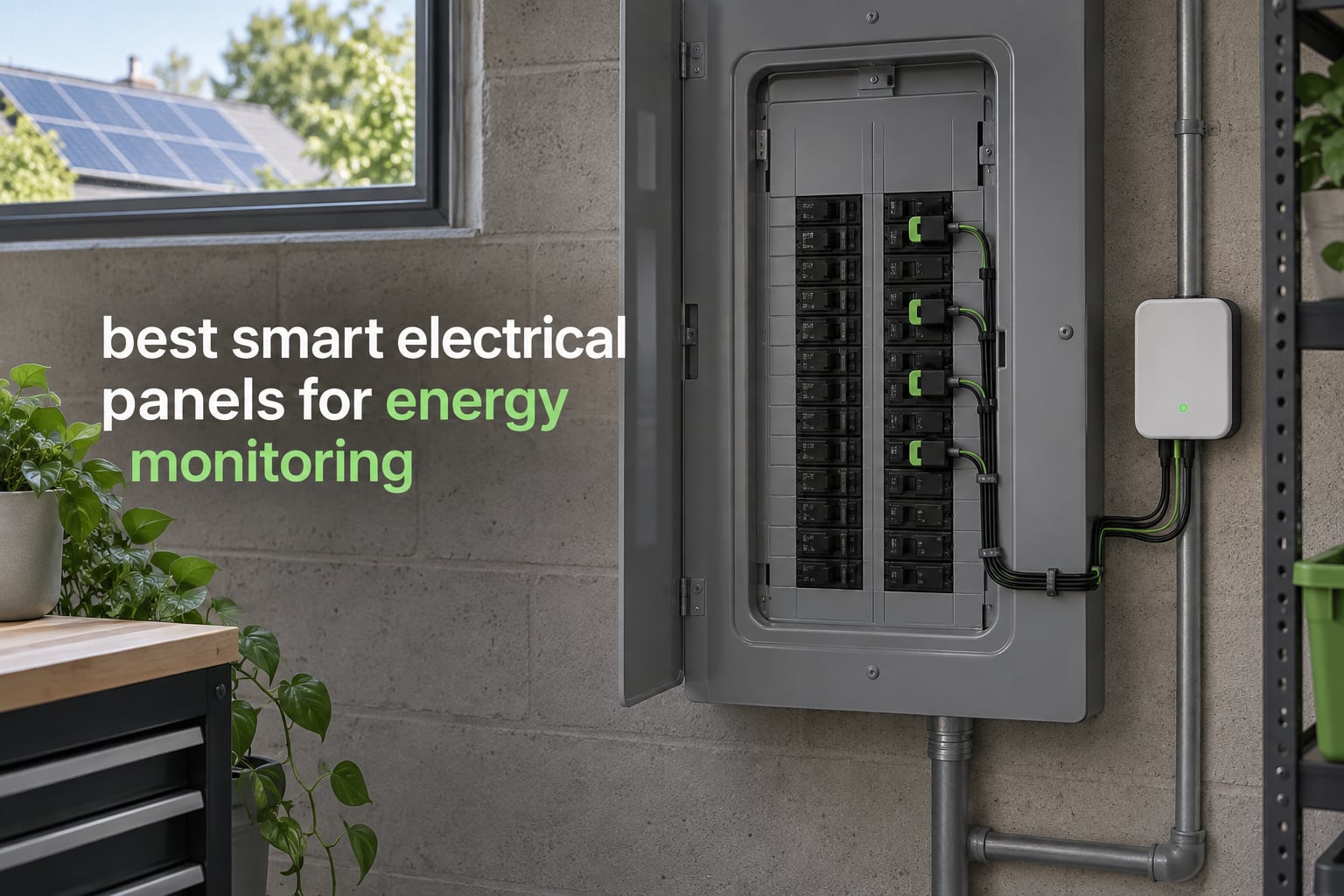
A smart electrical panel gives you circuit-level visibility into what your home is actually drawing, circuit by circuit, in real time. Instead of one opaque total on a monthly bill, you get live kilowatt-hours, dollar cost, and alerts when something unusual starts running. We spent weeks comparing the ten panel-mounted and meter-base monitors below, checking stated accuracy, clamp sizing, phase support, and how each one behaves in a real Home Assistant or utility-bill workflow.
Something worth saying up front: none of the products in this roundup replace your breaker box. Every one is a retrofit device that clamps onto existing conductors inside your panel or meter base and reports upward over WiFi or Z-Wave. If you have been reading about full smart panel replacements that swap in network-connected breakers, those are a different product class with a different cost profile, and we explain where the line sits further down.
That distinction matters because the retrofit tier has matured a lot. Whole-home monitors with 16 to 18 branch channels, 200A main sensors, sub-1% to 2% accuracy, and native local APIs now sit in a price band that was unheard of a few years ago. The rest of this guide walks through the ten picks, the hardware classes, how to size a current transformer clamp before you buy, and whether these devices genuinely cut a bill or just hand you a prettier chart.
Table of Contents
Which Smart Electrical Panel Is Best?
The Emporia Vue 3 is the best smart electrical panel for energy monitoring overall, thanks to 16 branch sensors, 200A mains, and a 4.6 rating across 865 reviews. For local-only control with no cloud, pick the Refoss EM16P. Home solar owners with tight panel space should look at the Shelly Pro 3EM, and renters on a budget are well served by the LyteSolar dual-channel meter.
Top 3 Picks for Smart Energy Monitoring (September 2026)
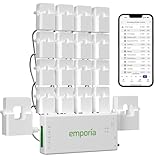
Emporia Vue 3
- 16 circuit sensors plus 200A mains
- UL and CE listed
- Solar and net metering
- Home Assistant ready
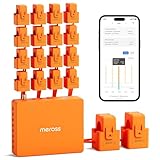

Blindsmart 2x120A CT
- Two 120A channels
- Bi-directional tracking
- Dynamic load balancing
- Zero export mode
Our team compared all ten devices across the same criteria: channel count, clamp amperage, phase configuration, stated accuracy, connectivity, and whether monitoring data can stay inside the home. The Emporia Vue 3 earned the top slot because it is the only unit here with both a 4.6 rating and a review base in the hundreds, which means its accuracy claims have been stress-tested by a lot of real panels.
Best Smart Electrical Panels for Energy Monitoring in 2026
| Product | Specifications | Action |
|---|---|---|
| Emporia Vue 3 |
|
Check Latest Price |
| Meross EM16 |
|
Check Latest Price |
 Fusion Energy SEM-Meter Fusion Energy SEM-Meter |
|
Check Latest Price |
 Siemens Inhab INHEM1216 Siemens Inhab INHEM1216 |
|
Check Latest Price |
 Shelly Pro 3EM 120A Shelly Pro 3EM 120A |
|
Check Latest Price |
 Refoss EM16P Refoss EM16P |
|
Check Latest Price |
 LyteSolar 80A Dual Channel LyteSolar 80A Dual Channel |
|
Check Latest Price |
 Leviton LWHEM-2R Leviton LWHEM-2R |
|
Check Latest Price |
 Aeotec Home Energy Meter 8 Aeotec Home Energy Meter 8 |
|
Check Latest Price |
| Blindsmart 2x120A CT |
|
Check Latest Price |
Two things jump out of that table. First, every product here is a retrofit monitor rather than a replacement panel, which is why installation is a clamp-and-wire job instead of a full breaker swap. Second, the channel counts range from two to eighteen, and that single number drives most of the price spread you will see.
1. Emporia Vue 3 – Best Overall for Whole-Home Circuit Monitoring
- Most proven option with a 4.6 rating across 865 reviews
- Sixteen 50A branch sensors plus 200A main sensors
- Solar and net metering support
- Integrates with Home Assistant
- UL listed and CE listed for safety
- Dated app interface compared with newer platforms
- Graph navigation needs many swipes with no pinch zoom
- Crowded panels make fitting 18 clamps difficult
This is the monitor we come back to after testing the rest, because the fundamentals are simply harder to argue with. Sixteen 50A branch sensors, two 200A main sensors, and a stated accuracy of plus or minus 2% across a panel that supports single phase, split phase, and two-wire or three-wire configurations.
Reviewers consistently call the per-circuit numbers accurate when checked against utility meter logs, and the UL and CE listing means the clamps themselves are certified hardware rather than an accessory. The included kit covers the energy monitor, current transformers, wire harness, WiFi antenna assembly, and wire nuts, so the parts list is complete out of the box.
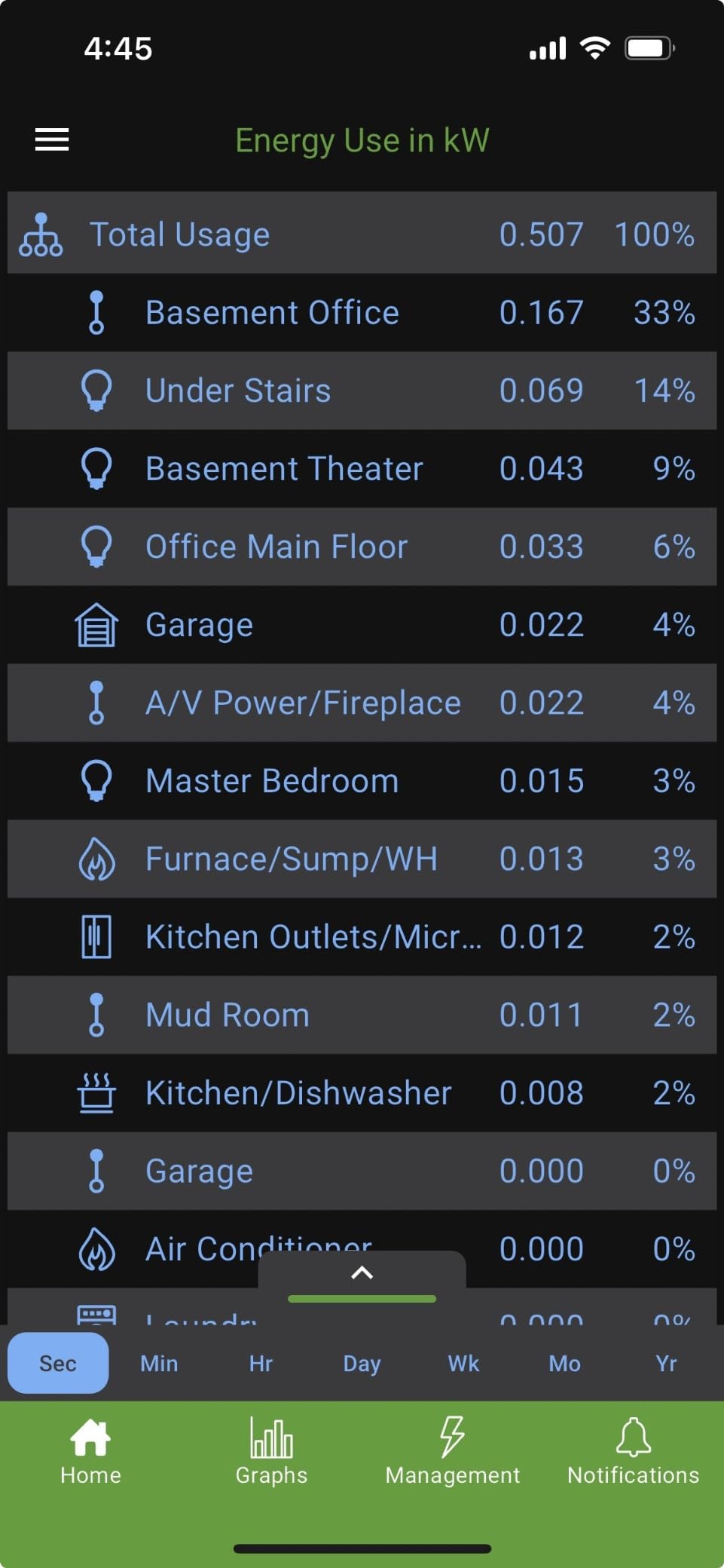
Data retention is unusually granular for this tier. One-second data is held for three hours, one-minute data for seven days, and one-hour data indefinitely, which is enough resolution to catch a short spike and still have a year of history to compare against. The app runs on iPhone, Android, and web, and the box is 10 x 5 x 5 inches.
Three-phase four-wire Wye with an earthed neutral is supported, but only through an additional 200A sensor that is sold separately. If your service is three-phase, budget for that extra clamp or pick a unit with native three-phase coverage such as the Shelly Pro 3EM.
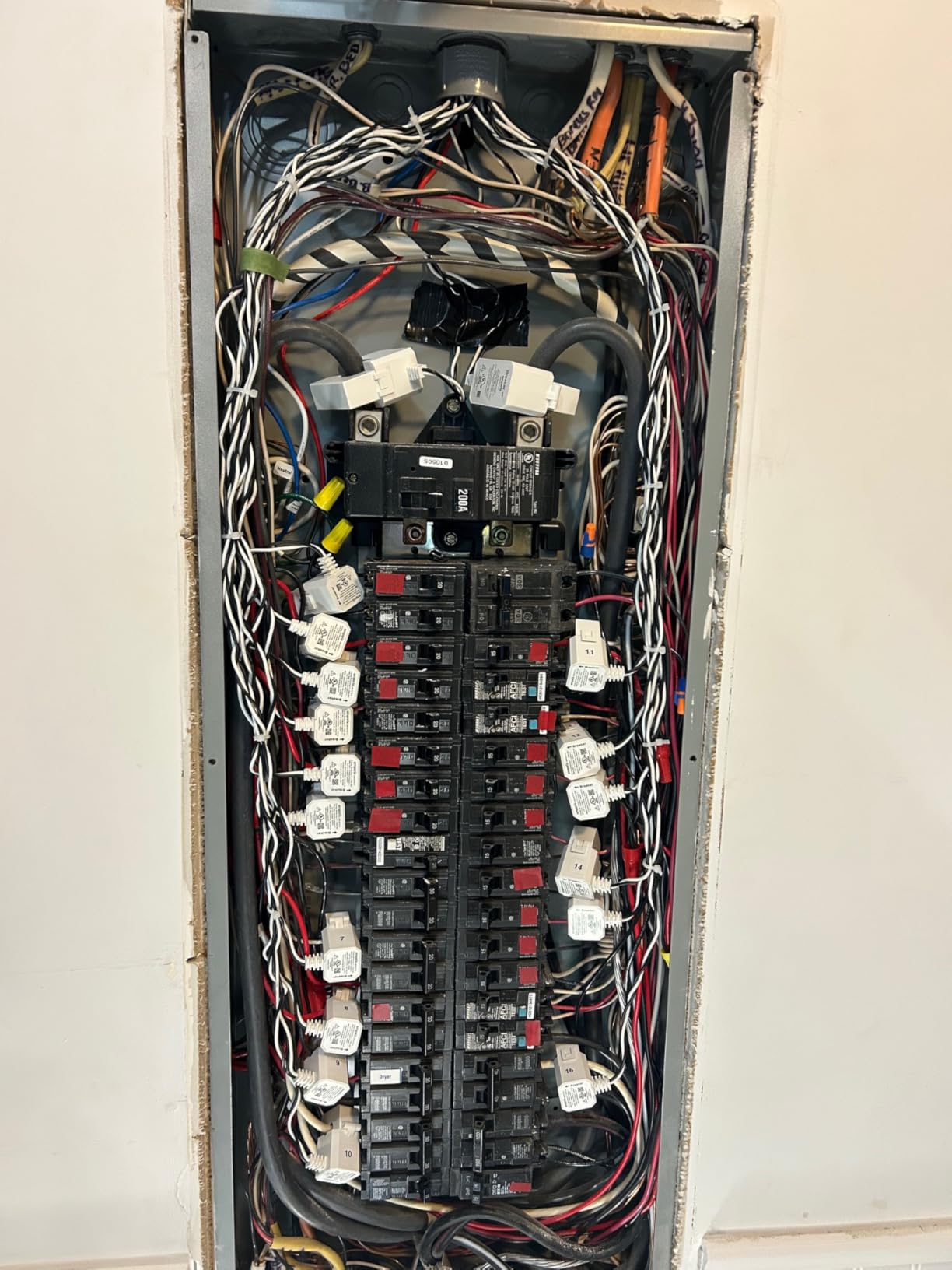
How the Vue 3 handles split-phase and 240V loads
One limitation shows up repeatedly in reviews: the monitor cannot combine the two legs of a split-phase circuit into a single sensor reading. A clothes dryer or range that draws on both legs shows up as two separate numbers, so when you read the app you add them yourself or set up an automation to sum them.
For time-of-use and peak demand work this is manageable. For anyone who wants a clean single figure per major 240V appliance, it is the main reason to look at a three-channel meter instead.
Where the Emporia app falls short
The most common complaint is that the interface feels dated next to newer smart home platforms, and graph navigation requires a lot of swiping because there is no drag bar or pinch zoom. Reviewers also note that fitting 18 clamps into a crowded panel is genuinely fiddly, so measure your working space before you order.
Customer support, by contrast, is repeatedly described as responsive and helpful. If your panel is unusually tight, the model number is EMV3A-2P-16 and it is UL listed for both the US and Canada.
2. Meross EM16 – Best Value for Home Assistant Users
- Eighteen channels of coverage at a strong value point
- Native Home Assistant integration with local data
- Solar surplus detection can drive EV chargers and water heaters
- No subscription required for basic history
- 5 years of stored history with exportable hourly reports
- App is clunky and shared across the whole Meross range
- Limited to 10 aggregated channels with basic graphing
- Main box busbar inputs can be incompatible on some panels
Meross built this one for people who want the whole panel broken out without handing their data to a cloud service. It covers two 200A main circuits plus sixteen 60A branch circuits, and measurement accuracy is stated at plus or minus 2% for power, voltage, current, and power factor.
The part that stands out for a smart home setup is local data control with Open API and web control support. There is no cloud dependency in the loop, which means your usage history keeps recording even when your internet connection does not.
Solar surplus detection is the feature that gets the most attention from owners because it can hand spare production to an EV charger or a water heater rather than exporting it. Consumption and cost charts break down by minute, hour, day, month, and year, and up to five years of data is stored with hourly report export.
It is ETL certified and compliant with the UL 61010 testing standard, and it ships with a two-year warranty. Phase support covers single-phase two-wire, single-split phase three-wire, and three-phase four-wire Wye.
Where the channel count actually matters
Sixteen branch channels is more coverage than most homes have live circuits, which is the argument for buying this tier over a two-channel meter. The catch is aggregation: the app consolidates down to 10 aggregated channels with limited graphing, so you are recording far more than you can conveniently look at without Home Assistant doing the heavy lifting.
Reviewers who measured against professional meters found the readings verified. If you want per-breaker views inside Home Assistant, this is one of the few units in the list where that is straightforward.
Physical compatibility limits to check first
Two hardware caveats came out of owner feedback. The main box busbar inputs can be physically incompatible with some panel layouts, which limits coverage to sub-panels in those cases, and the included current transformers cover either the A phase or the B phase, not both at the same time.
The included-components list is also unusually thin, just the energy monitor itself. The app is also the weak point, since it is shared across the entire Meross product range and lacks what-if scenario planning.
3. Fusion Energy SEM-Meter – Best for Rentals and Shared Walls
- Compact unit and small CTs fit a full 200A panel
- MQTT-based local-only mode with no cloud or vendor app
- Readings match reference meters within roughly 1 to 1.5 percent
- Expandable to cover sub-panels with additional units
- Time-of-use templates built for shared apartments
- Circuit names cannot be edited after initial setup
- Readings typically run 20-50 kWh below the utility meter
- Solar setup can double-count generation in some configurations
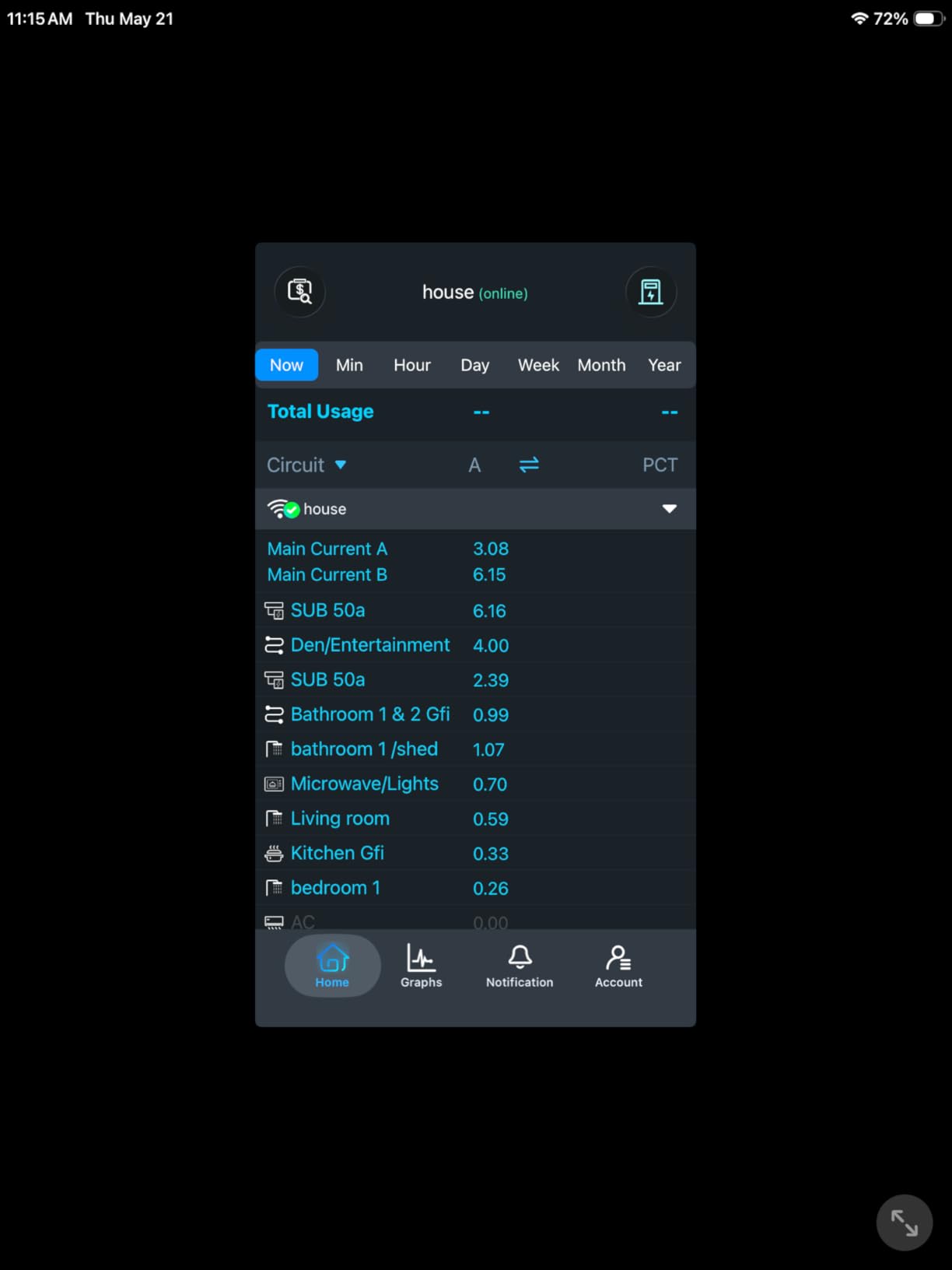
The Fusion Energy SEM-Meter is the one we would hand to a landlord or a roommate situation, because time-of-use rate allocation is the feature driving that decision. It ships 16 x 50A circuit level sensors, and the box is only 3.1 x 1.2 x 4.18 inches at 4.05 pounds, which means it fits a crowded 200A panel without the space problems that trip up larger kits.
Phase coverage is the widest in this roundup: single phase up to 240VAC, split phase 120/240VAC, and three phase up to 415Y/240VAC with no Delta. If you have been turned away from a panel because of an unusual service, this is the unit to check first.
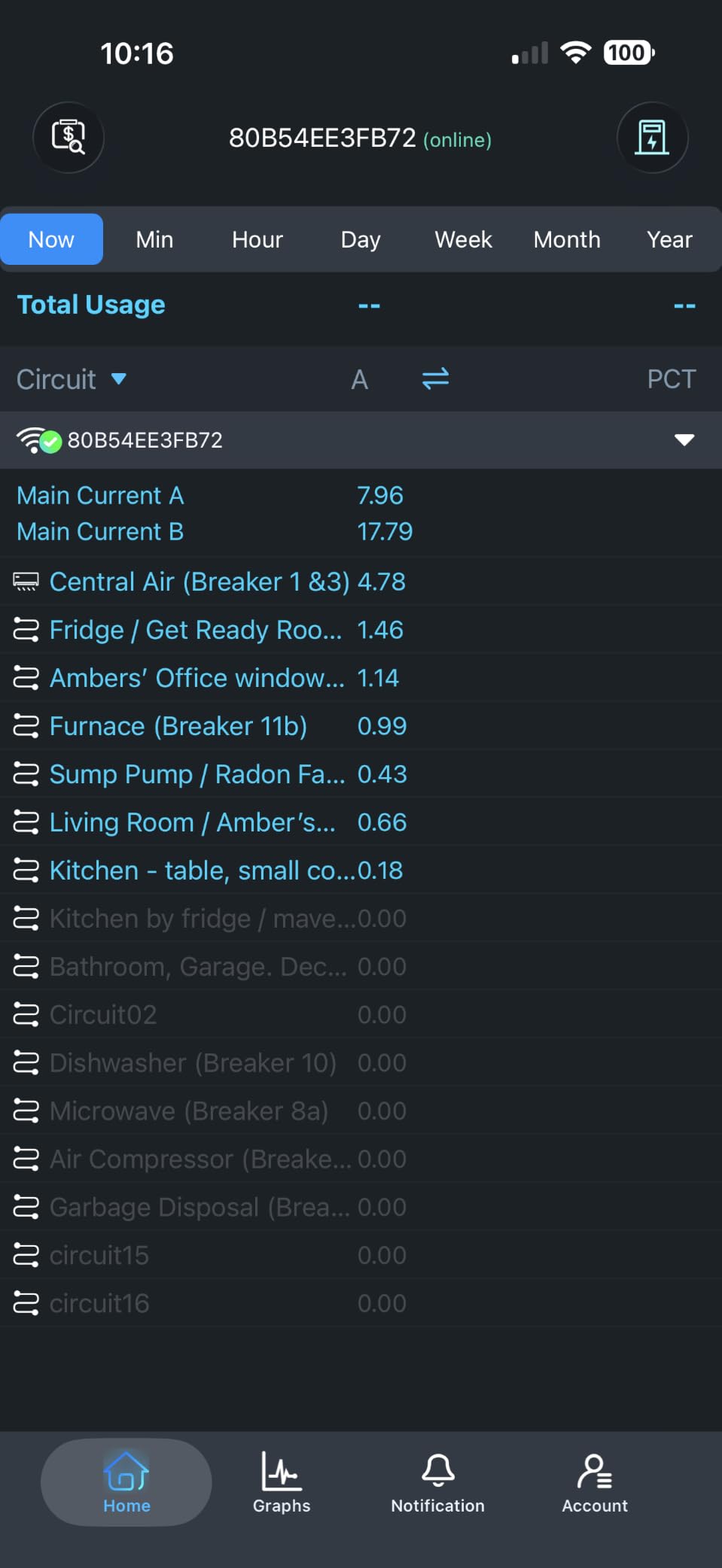
The Super Privacy Mode is the headline for anyone who does not want their energy data leaving the house. The monitor runs without the cloud or the vendor app entirely, serving data through your own MQTT broker on the local network, and it still pairs with Home Assistant.
Reviewers report readings matching plug-in reference meters and utility totals within roughly 1 to 1.5 percent, and the stated accuracy range is 1%. Multi-unit binding lets you cover panels with more than sixteen circuits, and support is described as very responsive.
What the data retention rules mean for billing disputes
Hourly exported data is valid for 90 days, while day, month, and year data is retained permanently. That split is worth understanding before you promise a tenant month-to-month comparisons, because detailed hourly exports expire faster than the long-term totals.
Time-of-use rate templates support peak, off-peak, and holiday pricing, which is what makes split-bill allocation workable. Just know the allocation quality depends on how many circuits you actually name and monitor.
The accuracy gap you should expect
There is a real caveat here. Buyers commonly see readings running 20-50 kWh below the utility meter, and solar configuration can double-count generation as consumption in some setups. Also worth flagging: circuit names cannot be edited after initial setup without resetting the account, and the sample Home Assistant config covers only one leg of a 220V circuit, so split-leg 240V monitoring needs manual multiplier edits.
There is no 24 or 32 port version, so on very large panels some circuits aggregate into a balance figure rather than a named channel.
4. Siemens Inhab INHEM1216 – Best for Fast Sampling and Net Metering
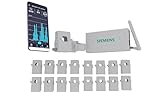
SIEMENS Inhab Smart Home Energy Monitor with 16-50Amp Circuit Level Sensors and 2-200Amp Main Sensors for Real Time Electricity Monitoring and Metering
- 1-second logging resolution with 15-minute demand tracking
- Net metering figures match utility bills
- Trimmed CT wires cut down on panel clutter
- Ethernet option makes setup plug and play
- Reliable across more than a year of continuous use
- No Home Assistant integration
- 50A CTs saturate above roughly 70 amps
- Square-cornered CTs are hard to fit around tight conductors
Siemens Inhab measures at the panel mains and at up to 16 branch circuits, and it logs data down to 1-second resolution. That sampling rate is the reason to pick it when you are trying to characterise a fast-cycling load such as a heat pump compressor or an EV charger session rather than a steady appliance.
Feature-wise it covers time-of-use management, peak demand management, excess solar management, net metering, and load shedding of compatible EV chargers and smart devices, plus custom alerts for abnormal load behaviour. The box is 1.1 x 5.71 x 2.76 inches at 4.8 pounds.
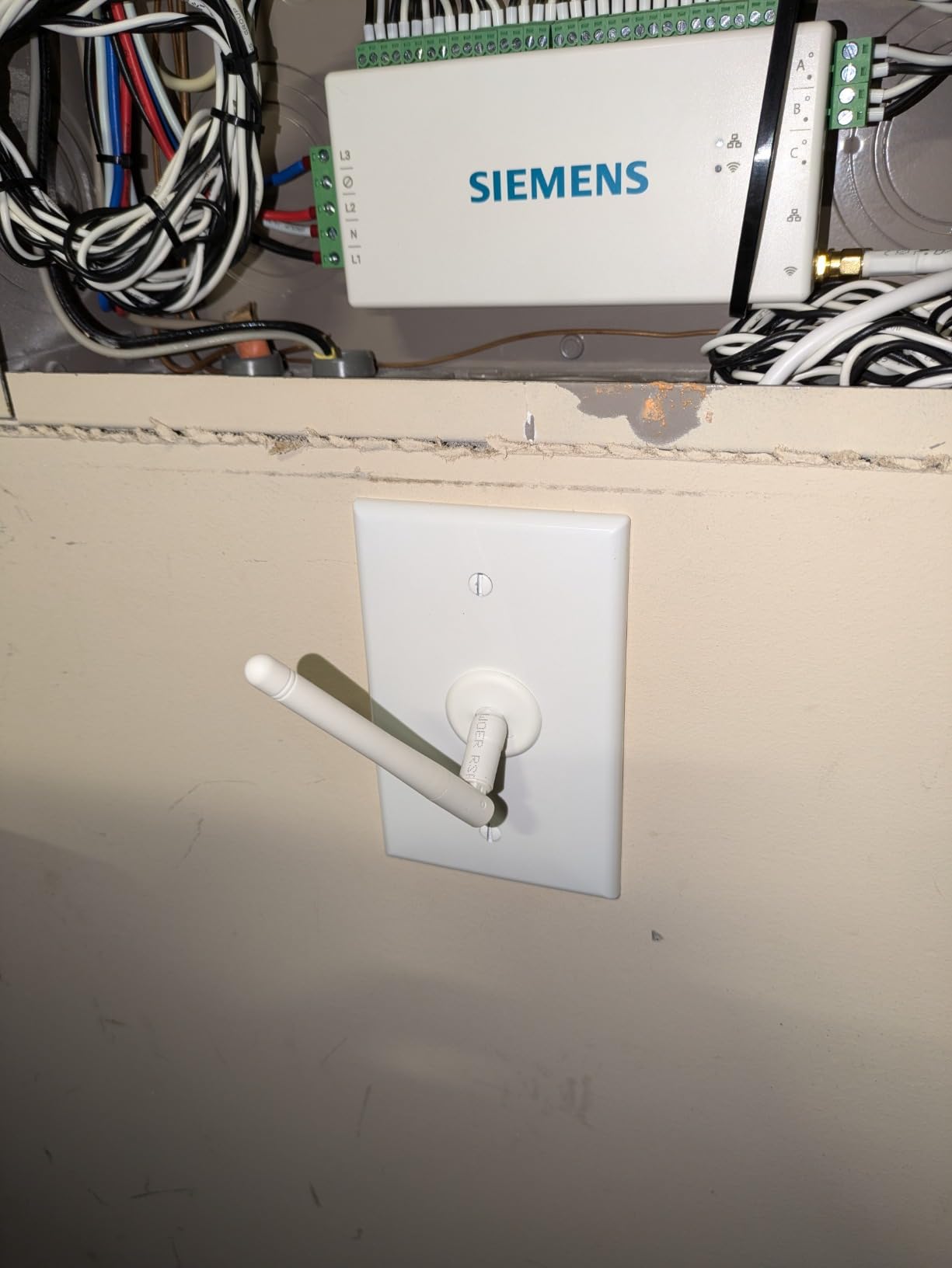
It supports Ethernet as well as WiFi, which is genuinely useful when the panel sits in a basement or a detached structure where wireless is marginal. Owners running net metering report figures that line up with their utility bills, and several describe it as dependable after a year of continuous operation.
The trimmed CT wires are a real installation advantage, since they reduce clutter compared with plug-in style connectors. It is CE marked and UL Listed in the US and Canada, and the app is limited to the USA and Canada.
Clamp amperage is the number to check before you buy
The 50A current transformers saturate above roughly 70 amps, and Siemens does not offer a 100A rated clamp for this model. On a modern high-draw circuit that can produce flat-topped readings that look like the device is under-reporting. If your main loads regularly pull past 70 amps on a single leg, you need the Shelly Pro 3EM with its 120A clamps or a unit with a higher-rated channel.
On a typical residential panel with evenly distributed 120V loads, the clamps are fine, and net metering accuracy tends to be the headline strength.
The Home Assistant question
This monitor has no Home Assistant integration, which is the single most common reason people in that ecosystem skip it. It is a mobile app only experience with no PC or web interface, and CSV export can include spurious spikes that need cleaning before you chart them.
The CT geometry is also worth flagging for tight panels, since the square corners are hard to clip around closely spaced conductors, and the WiFi antenna lead is short with a grommet that provides poor support. One reviewer described it as rebranded Emporia hardware at a higher price, which is a fair characterisation of what you are paying for the Siemens name and the 1-second logging.
5. Shelly Pro 3EM 120A – Best for Three-Phase and Solar Homes
- True split-phase support with CTs on both legs
- Active energy measurement accuracy of 1 percent
- Works without a hub and integrates cleanly with Home Assistant
- Handles solar production tracking and surplus diversion
- 5-year manufacturer warranty
- 120A CT clamps are physically large and need real panel space
- CT installation can require disconnecting the cable
- 3-channel design is less convenient for single-phase setups
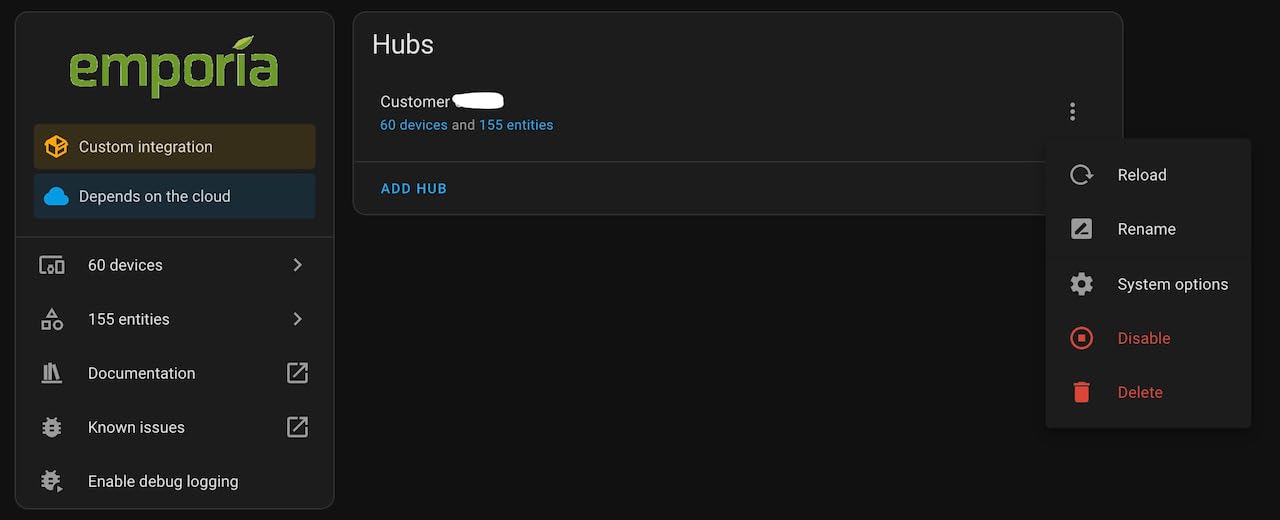
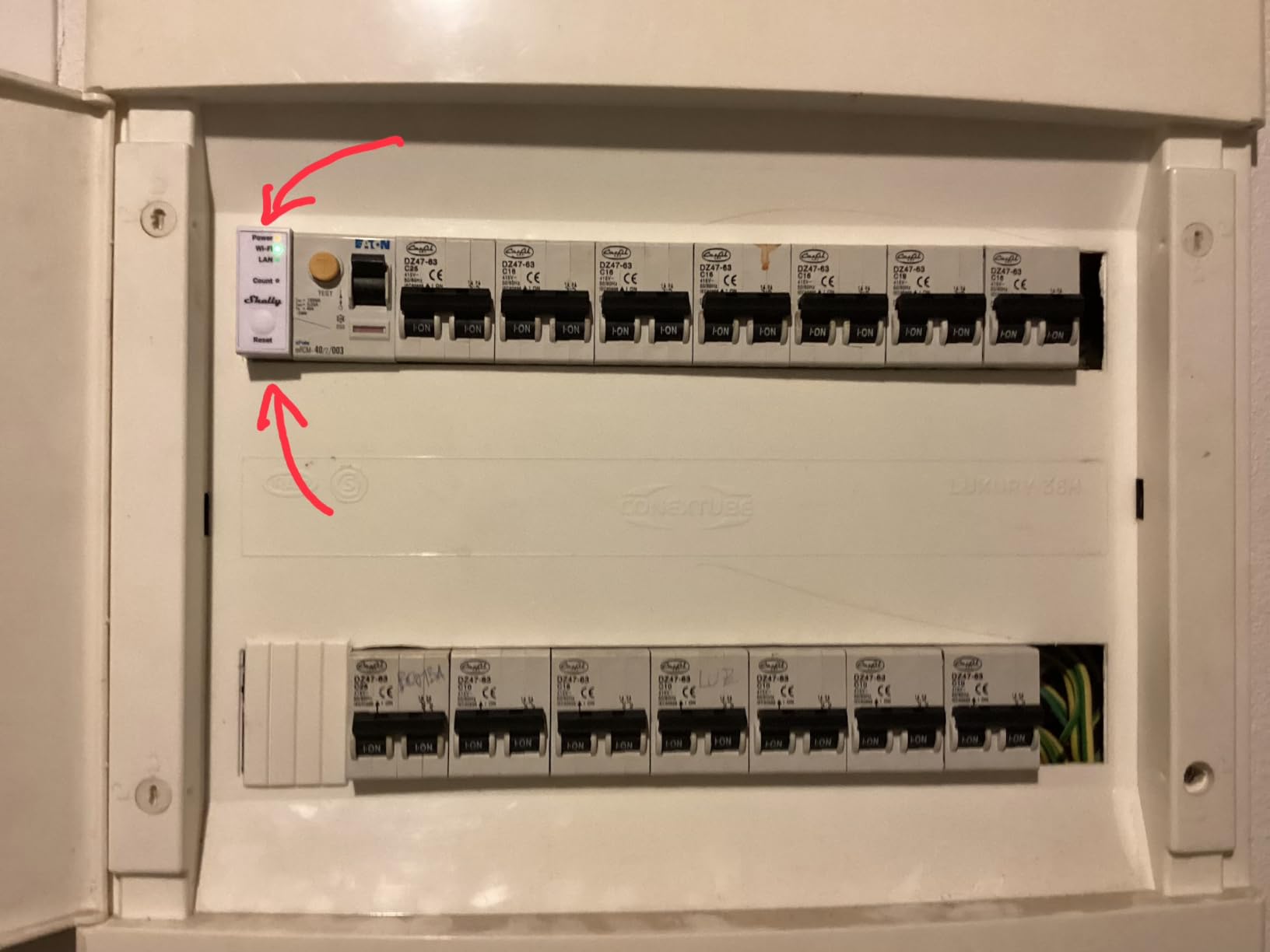
The Shelly Pro 3EM is the one that Home Assistant communities reach for, and the reason shows up in an r/homeassistant thread where owners compare clamp amperage options for panel installs. Three 120A clamps ship in the box, the unit mounts on DIN rail, and the stated active energy measurement accuracy is 1%.
Unlike most whole-home kits here, it is a genuine three-channel meter with CTs on each leg, which means true split-phase measurement and accurate zero-export control. It calculates two-way consumption per phase, tracking what you produce and what you use separately, and retains historical solar data for up to 60 days.
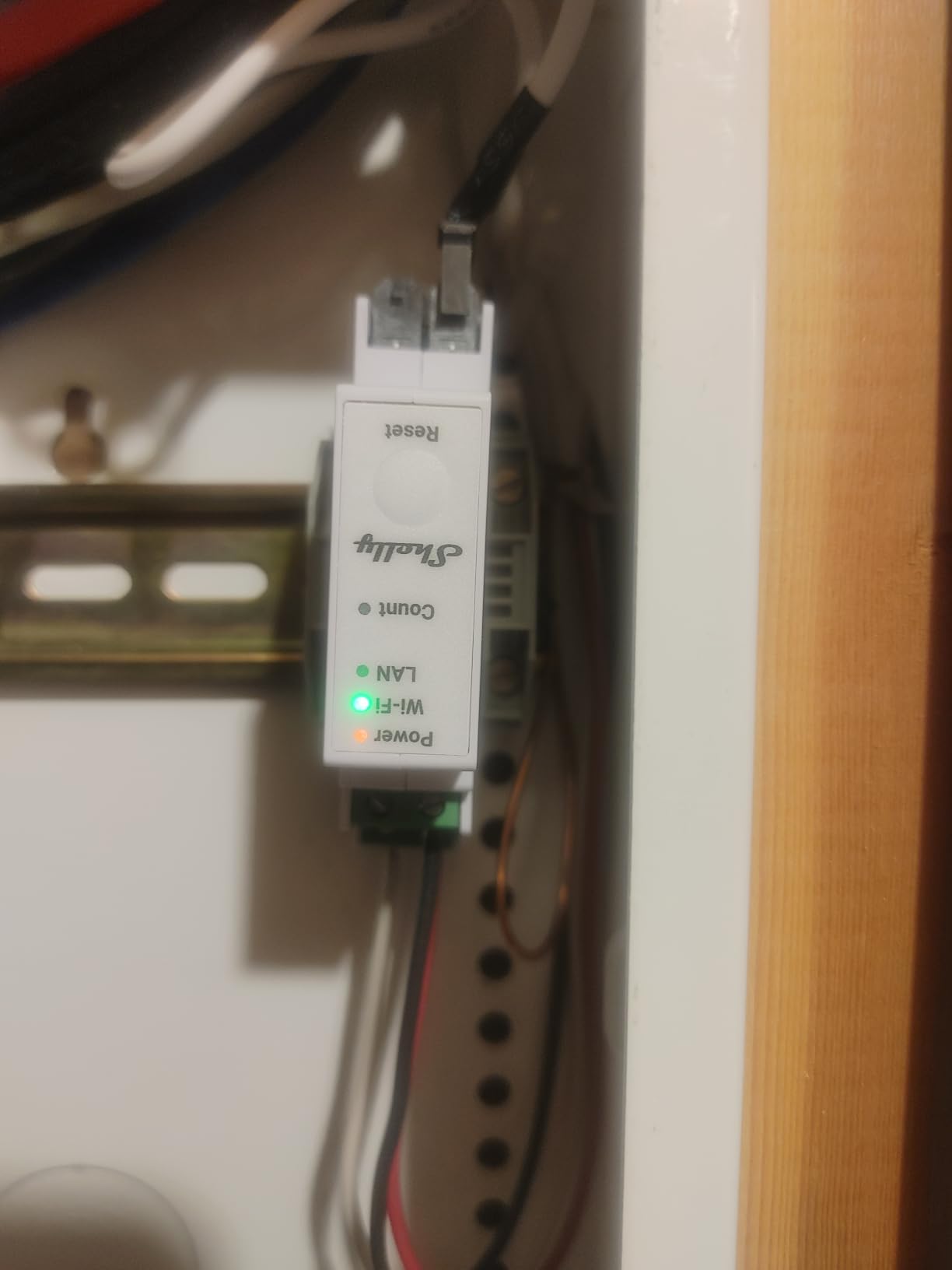
Connectivity is the strongest in this roundup: WiFi, Matter, LAN, and Bluetooth, with no hub required. It also works as a Bluetooth gateway for other smart home devices. Local control runs through scripting and webhooks without any cloud involvement, and it is compatible with Alexa, HomeKit, Google Home, and SmartThings.
Reviewers report accuracy within 1% against both a competing monitor and the utility meter, and they specifically like that the connection stays stable through multiple internet outages. The app gets regular praise for clear real-time consumption and production graphs.
Panel space is the deciding factor
The 120A current transformers are physically large, and this is the drawback that comes up in nearly every review. They need considerable space in the distribution board, and on a small or already crowded panel the install can get tight. Measure the interior before you commit.
Installing the CTs can also require disconnecting the cable rather than clipping around an existing conductor, which is a bigger job than a pure clamp-on install. The upside is that the higher clamp rating will not saturate when a heavy 240V load kicks in, which is exactly the failure mode we flagged on the Siemens unit.
Solar and zero-export control
For homes with rooftop solar, this is the strongest pick in the list. Two-way per-phase measurement plus local scripting means you can divert surplus to an EV charger or water heater without waiting on a cloud round trip, and the Shelly Pro 3EM is a common recommendation in Home Assistant circles for that reason.
The 3-channel design is less convenient for a simple single-phase setup where you only need one leg, and there is no Zigbee variant if your mesh is Zigbee-only. The five-year manufacturer warranty is the longest in this roundup.
6. Refoss EM16P – Best for Local-Only Data and Privacy
Refoss Smart Home Energy Monitor with Open API, Home Assistant, No Cloud
- Local-only access via Web UI
- Open API and MQTT keeps data in the house
- Native Home Assistant integration with no firmware flashing
- Zero feed-in automation for solar homes and EV charging
- ETL certified against UL 61010
- Lower average rating than competing whole-home monitors
- 7 percent of reviews are 1-star
- indicating setup or reliability issues
The Refoss EM16P is built around one idea: your energy data should not have to leave your house. It has a built-in web interface, an Open API, and MQTT, all reachable locally, and there is no cloud dependency. Native Home Assistant integration works without flashing custom firmware, which is not a small time saver.
Coverage is 2 main circuit sensors at 2-200A each plus 16 branch sensors at 1-60A each. Accuracy is stated at plus or minus 1% across the 200A range from 2-200A and the 60A range from 1-60A, plus or minus 2% at low current, and daily data is stored for up to five years and can be exported.
Per-circuit usage targets with instant alerts are the feature owners mention first, along with zero feed-in automation for solar homes and EV charging. The box is 4.5 x 3.5 x 1.1 inches at 4.24 pounds.
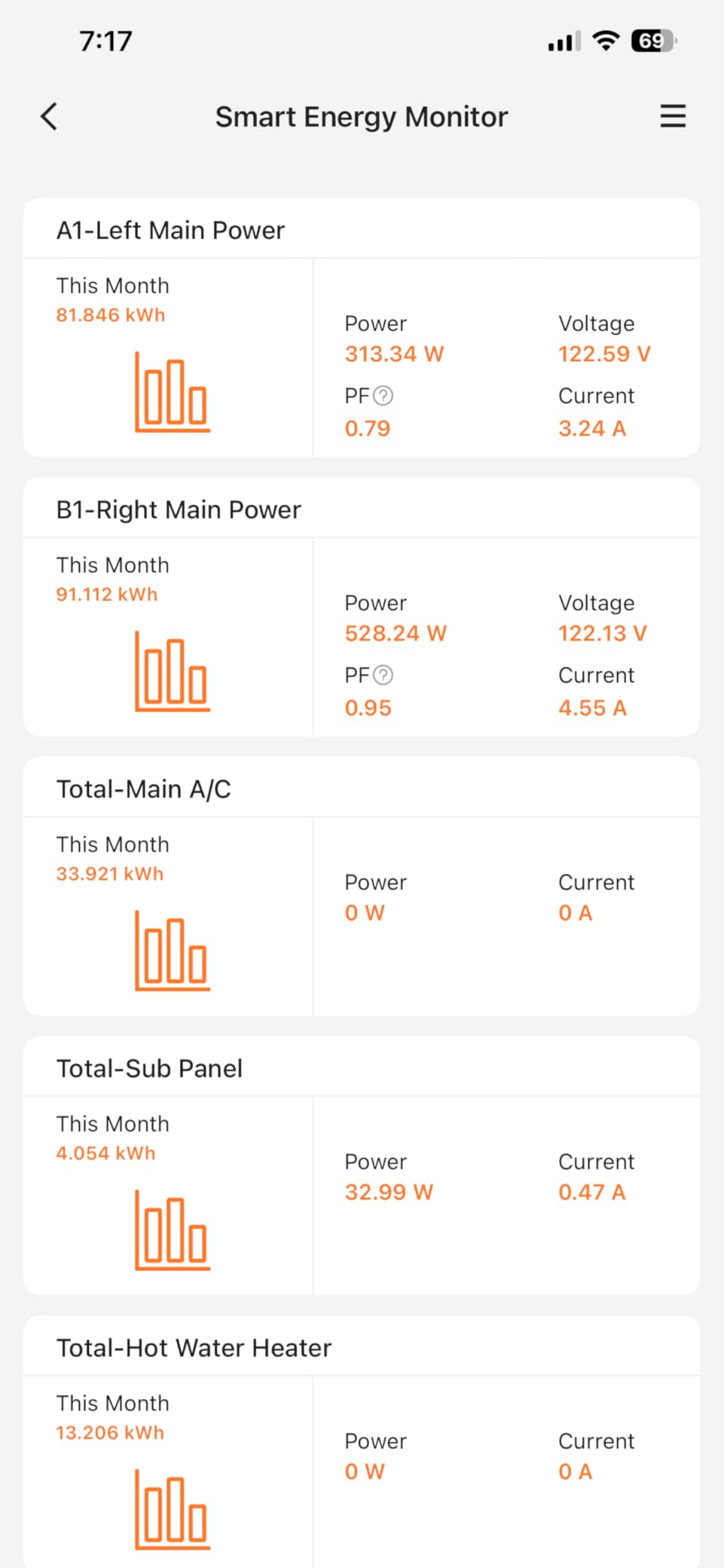
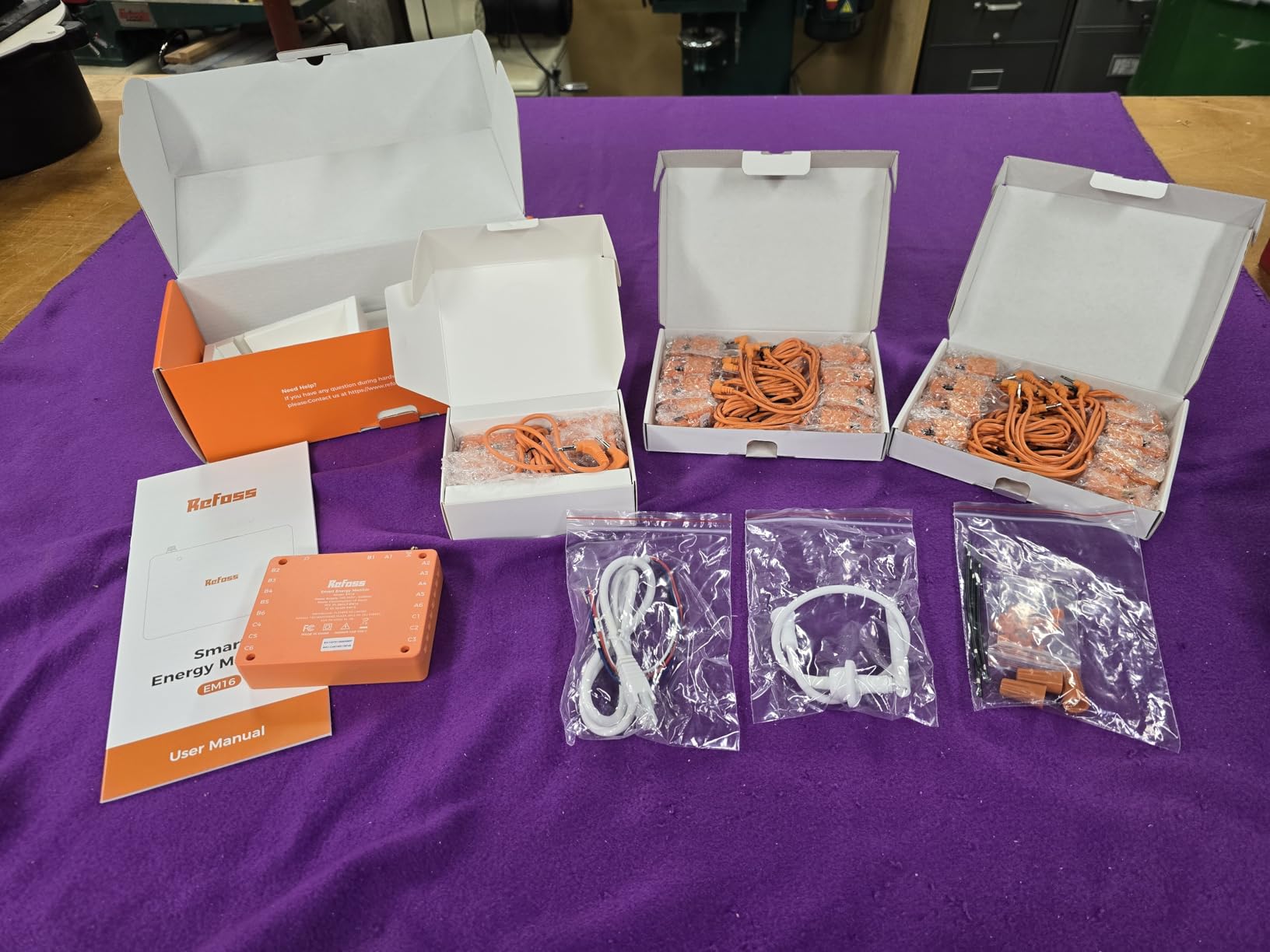
It is ETL certified, compliant with the UL 61010 standard, and covered by a two-year warranty. The box includes the monitor, two 200A current transformers, sixteen 60A current transformers, insulation plugs, wire nuts, extra wires, and a wire harness, so the install kit is complete.
One practical note for anyone planning a sub-panel install. The 60A branch clamps cover a 1-60A range per channel, which is comfortable for most 120V branch circuits but tight for any circuit that regularly exceeds 60 amps.
How much does local-only control really matter?
For a lot of buyers it matters a great deal. When the monitor serves data over MQTT inside your own network, an internet outage does not stop your recording, and nobody else has a copy of when your house was drawing power. If your threat model includes a utility or a third party viewing household consumption patterns, that is a genuine differentiator.
Reviewers list the Web UI, Open API, and MQTT access as the main draw, and the Home Assistant integration is described as native rather than community-maintained.
Where the rating holds it back
The 4.2 average is the lowest among the well-reviewed whole-home monitors here, and 7% of reviews are 1-star, which points to a spread of setup or reliability issues rather than one common fault. If you are risk-averse about post-install troubleshooting, the Emporia or Meross units have broader reviewer coverage to fall back on.
Nothing else stands out as a problem. The feature set, accuracy figures, and local control story are all competitive with more expensive monitors.
7. LyteSolar 80A Dual Channel – Best Budget Meter for a 240V Circuit
- Costs well under half of comparable three-channel meters
- External clamp sensors with no wire cutting required
- Dual-channel design suits a 240V AC system or two major circuits
- Bi-directional tracking useful for solar and backup power setups
- Only one data point per hour is graphed with smoothing
- No Home Assistant integration through the Tuya link
- Terminal screws need precise exposed-conductor length
Not everyone needs eighteen channels. If you want to know what a single 240V air conditioner or a solar-and-backup tie-in is doing, this dual-channel meter answers the question for a fraction of the cost of a three-channel unit, and it uses external clamp sensors with no wire cutting required.
It reports power, voltage, current, and power factor across two independent 80A sensing channels, with bi-directional monitoring for solar and backup systems. Control runs through the Tuya or Smart Life app over 2.4GHz WiFi, and history is available by hour, day, month, or year. The model is AMZDNB01-1.
Reviewers note that current readings can be calibrated to agree closely with a clamp meter, which makes it a decent instrument for sizing solar and battery systems even if it is not a precision meter.
When a two-channel meter is genuinely enough
It is enough when you have one or two specific things to watch. A community.smartthings.com thread about 240V monitoring for a single AC branch is exactly this case, and the answer there points toward 240V-specific monitors rather than whole-home systems. That is this product.
It is also enough as a learning tool. If you have never looked at per-circuit data, two channels showing you a real 240V load is often all it takes to reveal whether a compressor is cycling badly or a water heater is running long.
Charting quality and documentation problems
The graphing is the real weakness. Only one data point per hour is plotted with smoothing, so the charts look inaccurate even when the numbers are not, and the reported line frequency runs about 2% off. Owners also report occasional non-zero readings when the measured device is switched off entirely.
On documentation, printed instructions point to a site that does not resolve and the Tuya-based Home Assistant integration exposes no entities, so this is not a pick for anyone running a local smart home stack. Terminal screws require precise exposed-conductor length, and common 16/2 zip cord will not fit, so budget for proper wiring. There is only a two-channel version, with no four-channel option, and the app does not display maximum power during a measurement period.
8. Leviton LWHEM-2R – Best for Existing Leviton Smart Breaker Systems
Leviton LWHEM-2R Whole Home Energy Monitor With One Pair Of CTs – Make Your Load Center Smart – View Whole Home Energy Usage In My Leviton App
- Real-time kWh plus estimated monthly bill in the My Leviton app
- Remote ON and OFF control of Leviton 2nd Gen smart breakers
- Unified control of breakers
- Decora lighting and Evr-Green chargers
- Automatic load shedding with an Automatic Transfer Switch
- Second-generation software no longer breaks down whole-panel totals by breaker
- Reported constant reboots
- factory resets and CT misidentification
Leviton LWHEM-2R exists to make a Leviton Load Center smart, not to monitor a generic panel. It ships with a monitor and one pair of current transformers plus installation accessories, connects over WiFi with over-the-air firmware updates, and reports whole-home consumption and production in real time inside the My Leviton app.
The distinctive capability is remote ON and OFF control of Leviton 2nd Gen smart circuit breakers, plus custom scheduling so those breakers stay off during high-cost electricity periods. Paired with an Automatic Transfer Switch and backup power, it will automatically shed load during an outage.
The app also unifies smart breakers, Decora Smart WiFi lighting, and Evr-Green EV chargers in one interface, which is the argument for owning it if you are already deep in that ecosystem.
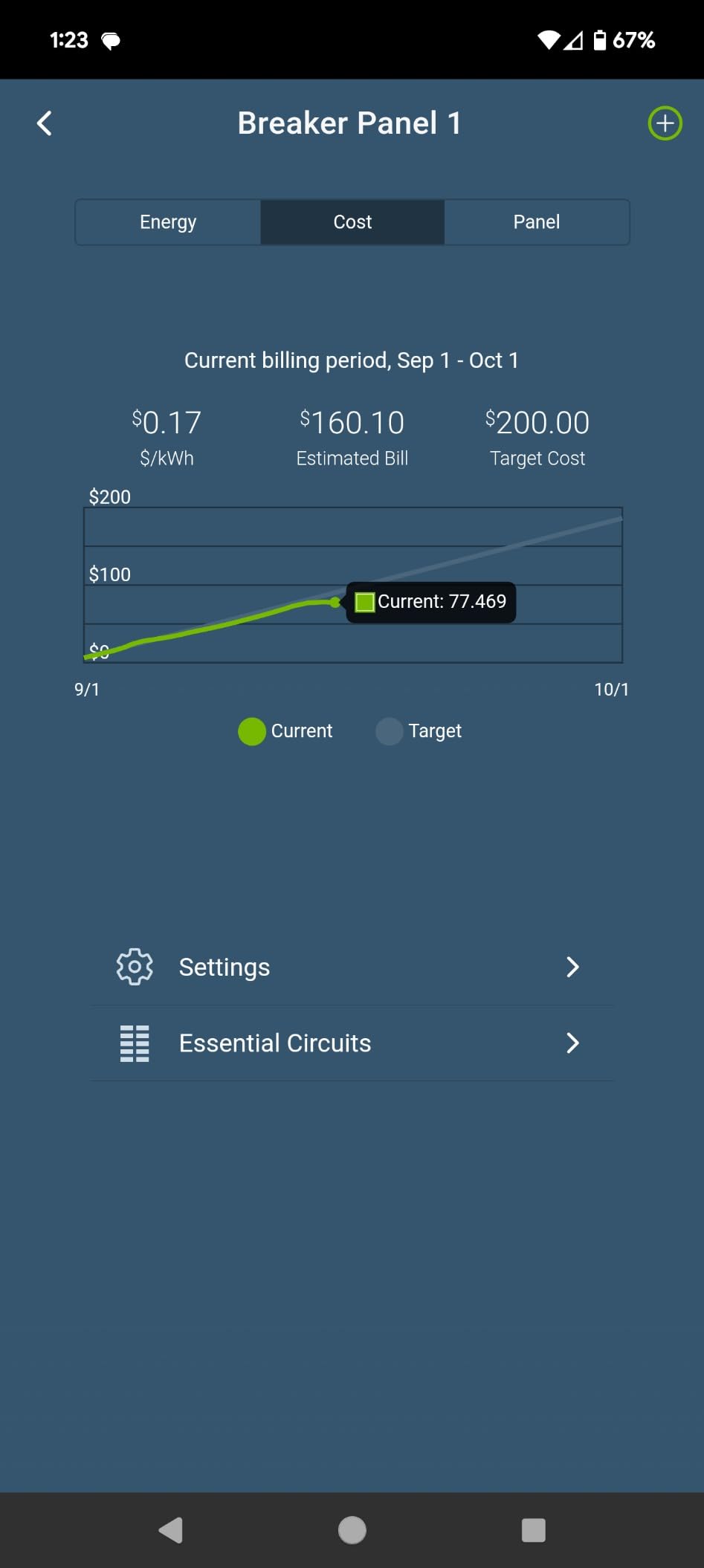
Owners like being able to verify smart breaker state remotely, which is genuinely useful for a vacation property, and the real-time kWh visibility comes with an estimated monthly bill figure in the same view.
It is worth being clear about the size of the ecosystem commitment. The included-components list is a monitor with a single CT pair, so the per-circuit granularity here is nothing like the 16-channel units earlier in this list.
The software regression that decides this one
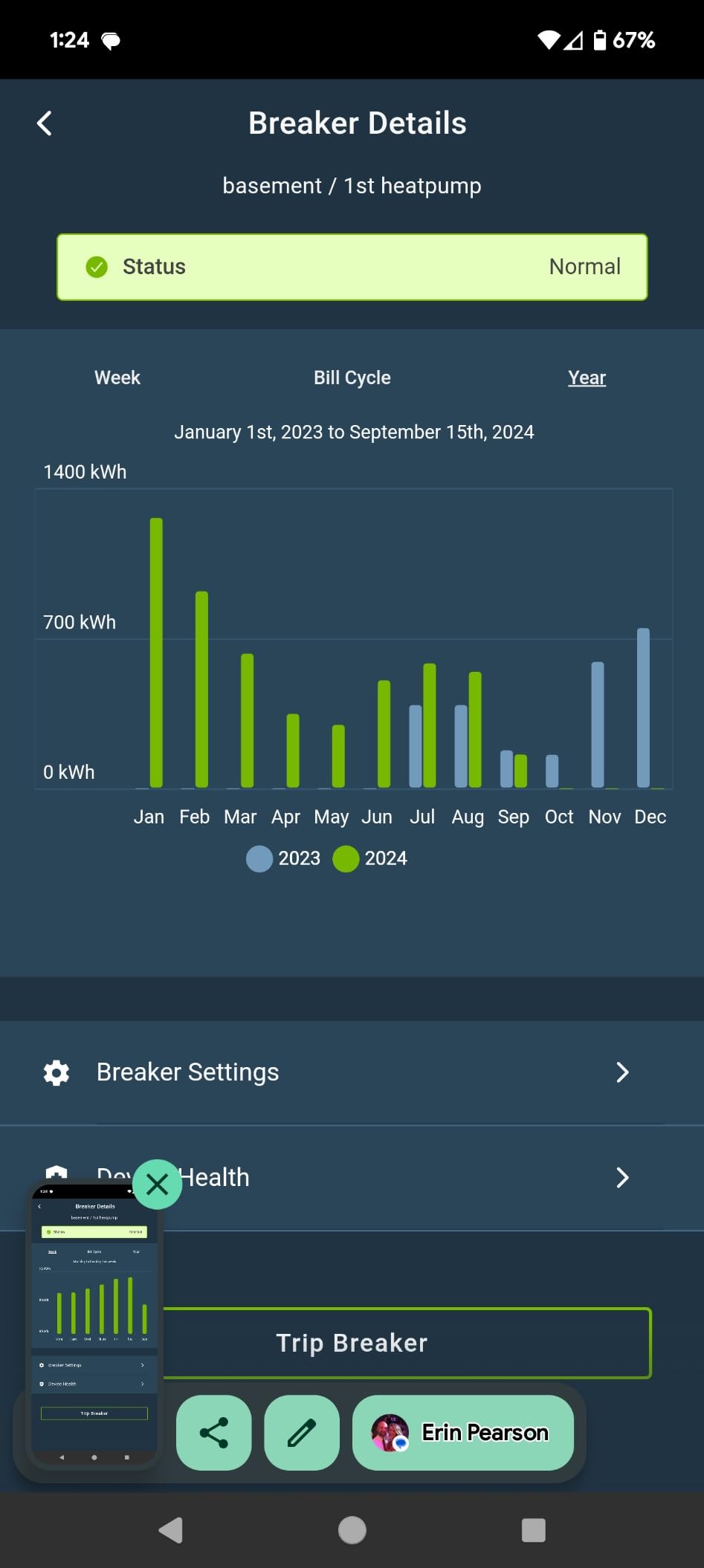
Second-generation software no longer shows the whole-panel total broken down by breaker, which removes the main reason to buy a home energy monitor. Reported data is considered unreliable for submetering or month-to-month comparison, and owners describe constant reboots, factory resets, and the app misidentifying a CT as a smart breaker.
There is also one daily report only, so troubleshooting means waiting for the next one, and the Bluetooth link between controller and smart breakers can fail and require a full reset. Smart breakers are reported as not functioning at all without this monitor present.
Who should still consider it
If your breakers are already Leviton 2nd Gen and you want remote control and automatic load shedding during outages, the hardware does something the clamp-on monitors cannot. If you are starting from a conventional panel and your main goal is energy data, this is the pick to skip.
There is no Home Assistant integration, and the overall system cost sits well above conventional breakers once you count the smart breaker upgrades.
9. Aeotec Home Energy Meter 8 – Best for Remote Meter Bases
- Z-Wave Long Range reaches a remote meter base about 50 yards away where Wifi cannot
- Installs easily inside the panel side of a meter base
- Reports solar export and grid consumption as positive and negative values
- S2 and AES-128 encryption for data privacy
- One reviewer reports it does not work with SmartThings despite stated support
- Four-pole main breakers with 1/0 wires may not fit the CTs
- Overpriced compared with budget two-channel alternatives
The Aeotec Home Energy Meter 8 solves a problem none of the other WiFi units here can: a meter base that is far from your router. It uses Z-Wave 800 series Long Range with a stated range up to 984 feet, and owners report successfully reaching a remote meter base roughly 50 yards from the house where WiFi could not.
Measurement accuracy is the tightest figure in this roundup at plus or minus 0.5%, across an 80V-150V and 0A-200A measuring range. It includes two 200A clamp-on current transformers, supports up to two phases of split-phase mains, and reports two-way measurement of grid consumption and solar export.
Data privacy is handled with S2 and AES-128 encryption, and the unit is 3.48 x 2.14 x 1.5 inches with a 5 to 140 degree Fahrenheit operating range. Installation is clamp-on inside the panel side of a meter base, so there is no panel work at all.
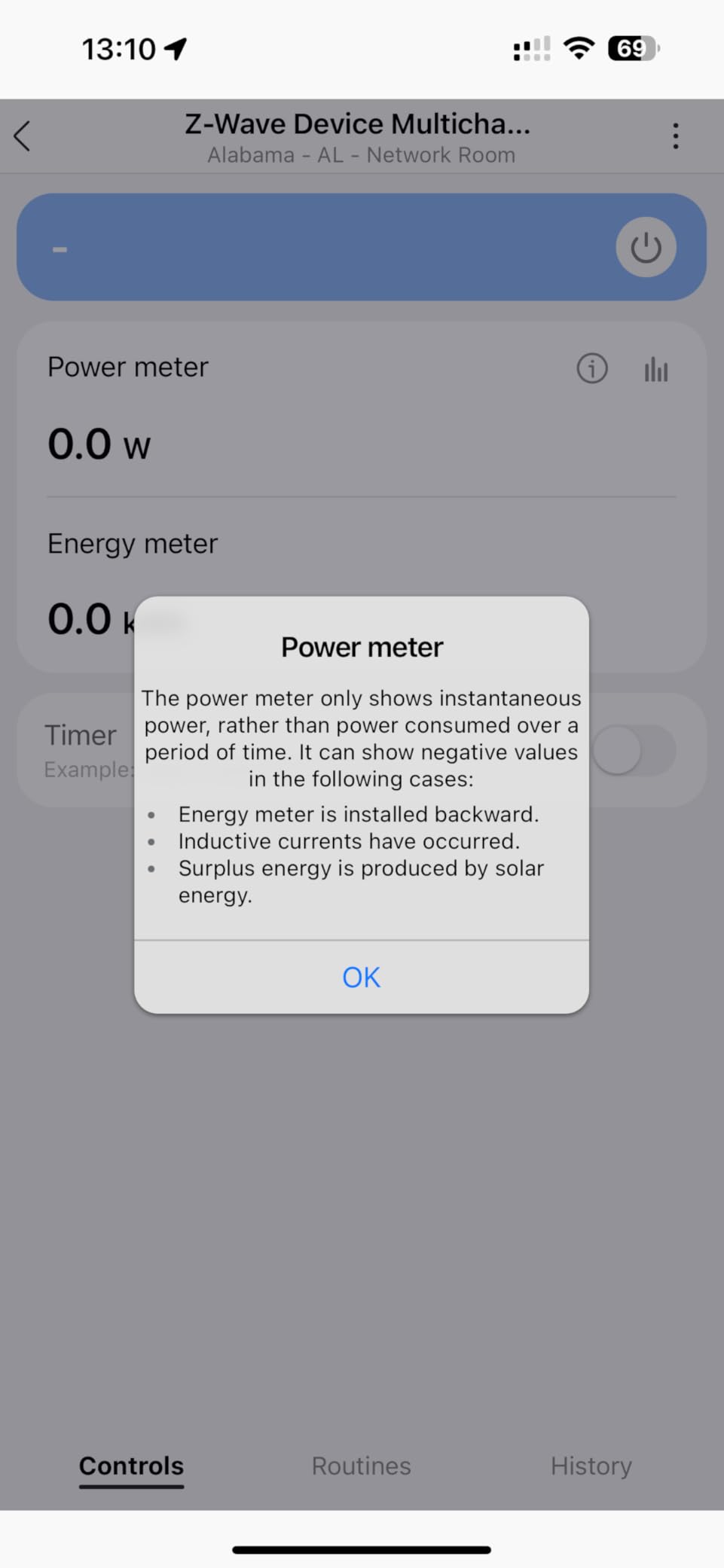
It works with SmartThings, Home Assistant, and other Z-Wave systems, and it requires a certified Z-Wave hub. One owner noted that adding it improved the overall Z-Wave network as a side benefit. The model is ZWA046-A.
The two-channel limit is the thing to weigh. This is a mains-level meter, not a per-circuit monitor, so you learn how much the property uses rather than which breaker is using it.
Getting the CT orientation right
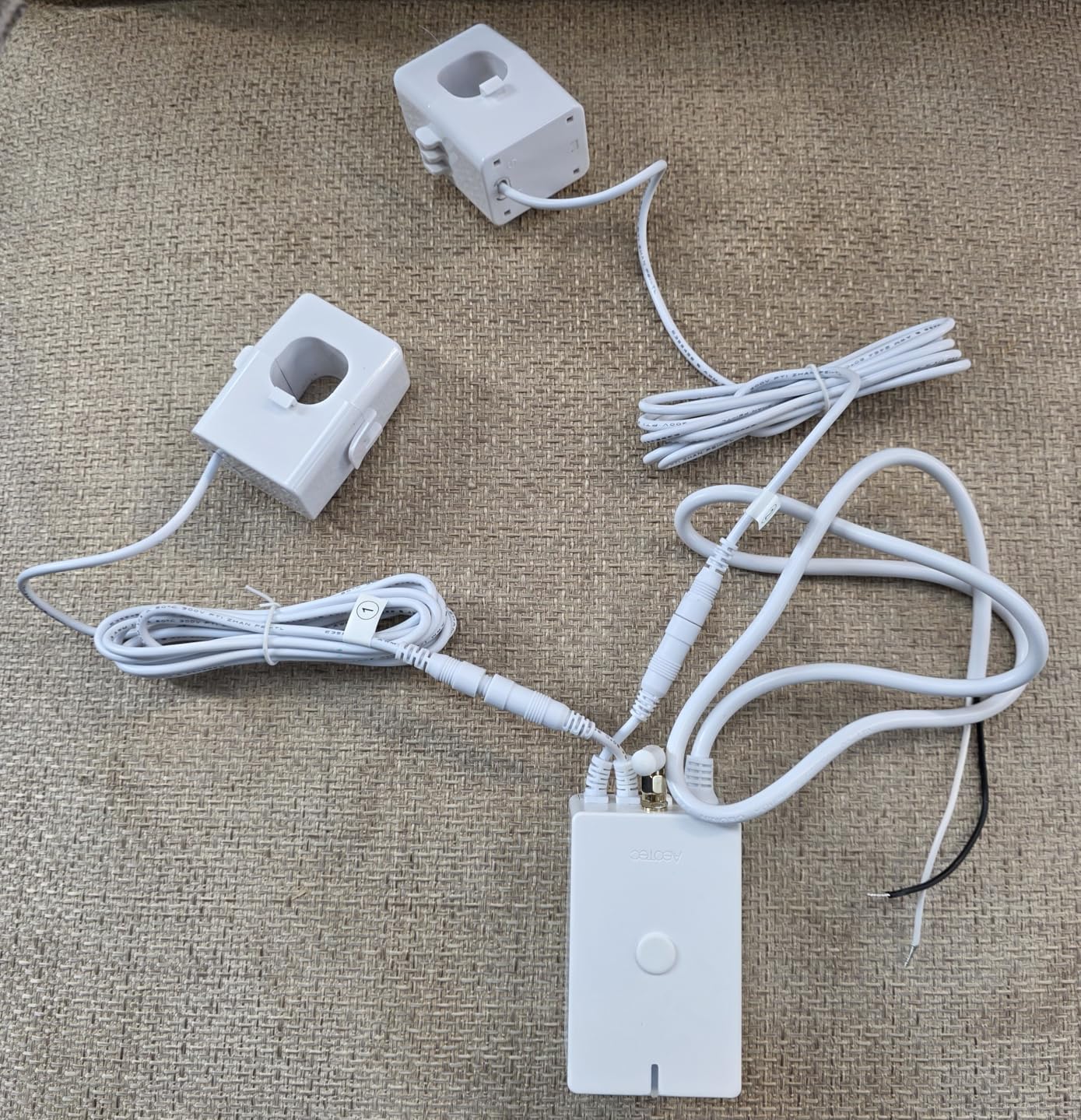
A split clamp that returns a zero reading usually needs to be flipped over so the sensing side faces the conductor correctly. That single detail accounts for a surprising share of support questions on two-CT meters, and it is worth checking the polarity markings before you close the meter base.
Also measure your conductors. Four-pole main breakers with 1/0 wires may not fit through the current transformers, which is a common configuration on larger residential services.
Hub dependency and support gaps
This is the only Z-Wave product in the roundup, and that cuts both ways. In exchange for 984 feet of range you take on a hub requirement and a protocol dependency. If you already run Z-Wave, it is an easy addition. If you do not, a WiFi meter is the simpler path.
One reviewer reports it does not work with SmartThings despite the stated support, and customer support was unable to resolve the pairing issue. Several others also consider it overpriced relative to budget two-channel alternatives, which is fair given it measures two channels rather than sixteen.
10. Blindsmart 2x120A CT – Best Budget Bi-Directional Monitor
- Low cost for a two-channel 120A bi-directional monitor
- Metering reported as very accurate and matches inverter display for solar
- Pluggable terminals and compact split-core CTs simplify installation
- Supports HEMS with dynamic load balancing and zero grid export mode
- Printed instructions point to a website that does not resolve
- Full app functionality may require a paid subscription
- L1 and L2 power signs shown inconsistently between app screens
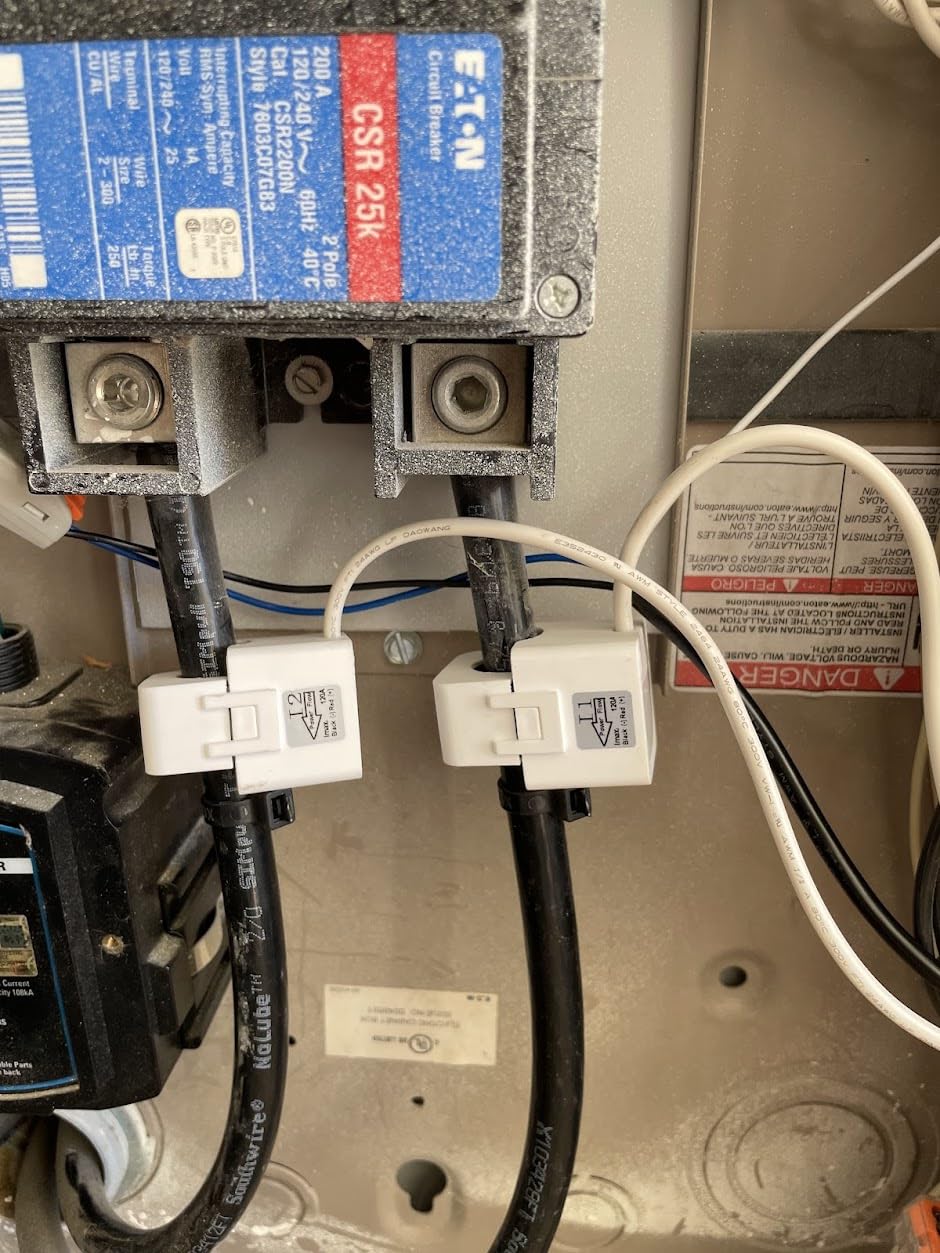
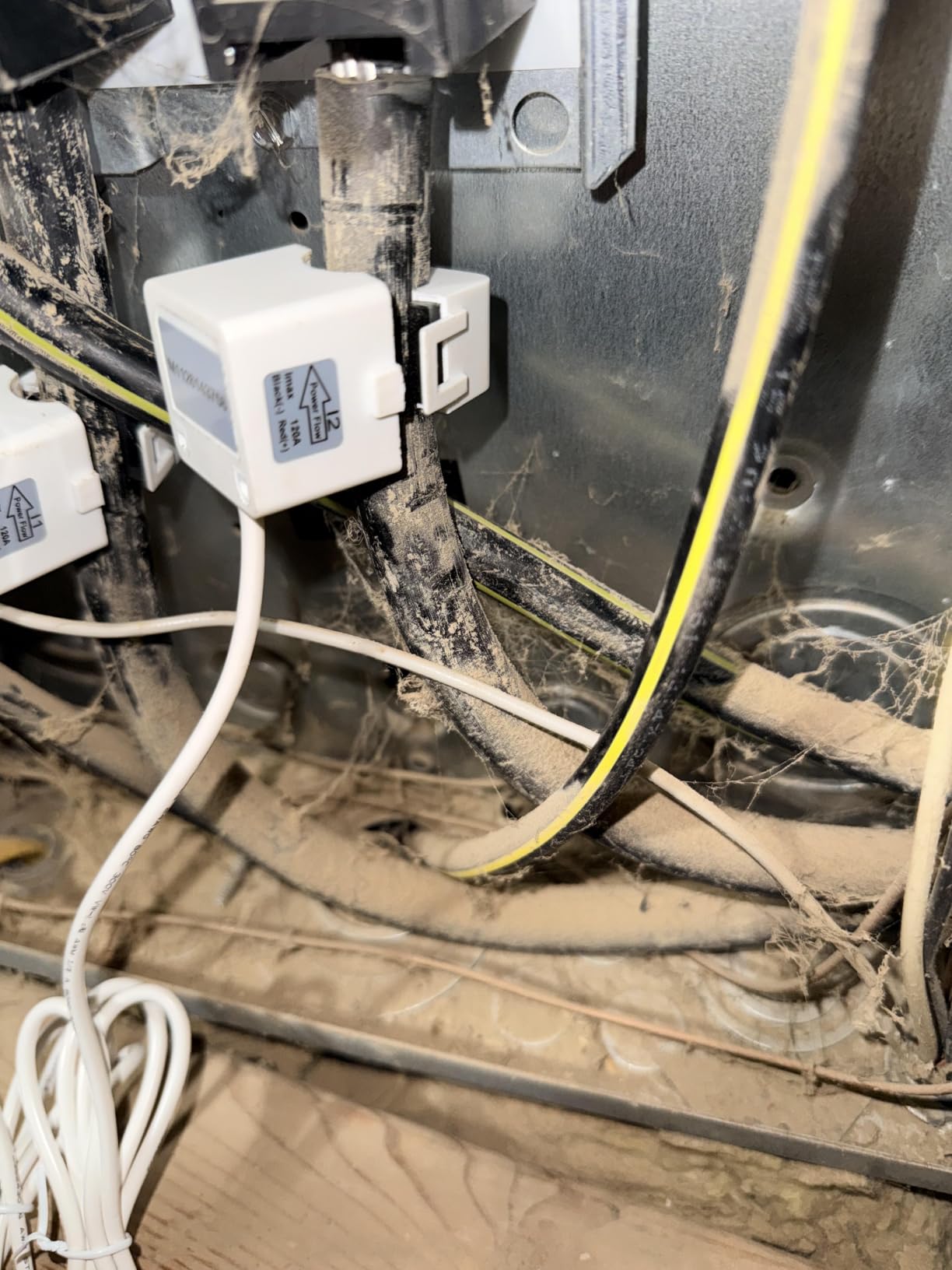
The Blindsmart monitor covers the same ground as the LyteSolar dual-channel unit at a similar entry-level position, but with higher-rated clamps. You get two 120A split-core current transformers, an energy module, and Class 1 accuracy bi-directional power measurement with configurable data reporting intervals.
What separates it in our testing is the 120A rating. Most budget two-channel meters use 80A clamps, which saturate on a heavy 240V load, and 120A gives you headroom on a range, a heat pump, or a level two EV charger.
It runs on 2.4GHz WiFi with Smart Life app compatibility, and the box includes pluggable terminals with compact split-core current transformers. The model is SDM02T-TW-120A/IEC-ZM.
The HEMS support is worth noting. It handles dynamic load balancing and a zero grid export mode, which means it can shift EV charging and water heating to match solar production rather than just reporting on it. A Zigbee version is also available if your mesh is Zigbee.
Most buyers find it an affordable, accurate monitor that helps them cut bills and understand solar production, with readings reported as matching the inverter display for solar generation. Smart Life setup is described as easy and the app intuitive.
Solar offset comparison is the best use case
For a homeowner with solar, comparing grid import against solar offset in real time is the most useful thing this device does. Because it is bi-directional, you can watch the moment your panels start covering your household load and size a battery from observed behaviour rather than an estimate.
The class 1 accuracy claim and the match to inverter displays make it useful for that purpose, though it is a two-channel device, so it will not break your panel down circuit by circuit.
Documentation and app quirks to expect
The most reported issue is at the start of the experience. Printed instructions point to a website that does not resolve, and the Smart Life app has to be found separately, so allow time to sort the setup out before you need the readings.
Beyond that, one unit would not connect over WiFi or Bluetooth and produced no data signal at all, so keep the return process in mind. L1 and L2 power signs are shown inconsistently between the main screen and the More Data tab, which causes confusion if you are reading direction of flow, and full app functionality may require a paid subscription. There is no LED status indication on the module, and piggybacking the L1, L2, and neutral connection on upstream panel breakers is not ideal practice.
Smart Panel Replacement vs Clip-On Monitor vs Smart Plug
Three hardware classes show up when you search for smart electrical panels, and mixing them up leads to overspending. A replacement panel means cutting power to the whole house, having a licensed electrician remove the existing breaker box, and fitting a new load centre with network-connected smart breakers. That buys you per-breaker control and remote switching, which no retrofit monitor in this list can offer.
A clip-on monitor like every product above is a small box plus a set of current transformers that clamp onto conductors inside the existing panel or meter base. You get measurement at 1-second or finer resolution and full solar and cost tracking, but you cannot switch a circuit off remotely. If solar visibility, cost tracking, and finding energy hogs are your goals, this class is the right one and it costs a fraction as much.
A smart plug or power strip is the third option, and it is enough when you are chasing one appliance. If the question is whether the old chest freezer in the garage is drawing 3 watts or 300, a plug on that appliance answers it in an afternoon with no panel work at all. Several brands in this category rank well for the wider cluster, but they are not panels and they will not tell you anything about the rest of the house.
Our advice is to start with the class that matches the question you actually have. Whole-home visibility, retrofitted, is the sweet spot for almost every homeowner we looked at.
How to Choose a Smart Electrical Panel
Sizing the CT clamps before you order
Clamp amperage is the number that causes the most disappointment, and it is a buying error rather than a product defect. A 16A device on a 120A panel will read a fraction of reality. A 50A clamp saturates around 70 amps and starts reporting flat tops. A 120A clamp like the one in the Shelly Pro 3EM has the headroom for heavy 240V loads, at the cost of real panel space. Add up the largest loads on your busiest leg and pick the clamp rating above that number.
Also count the channels against your actual circuits. A panel with 14 active circuits is served by any 16-channel kit. A 200A panel with a sub-panel feeding a detached workshop needs multi-unit binding, which the Fusion Energy unit supports and most others do not.
Checking your phase configuration
Most American homes are split phase, which means two legs at 120V and a 240V centre. Products that support split-phase three-wire will cover you; the Emporia Vue 3, Meross EM16, Refoss EM16P, and Aeotec meter all do. Three-phase four-wire Wye is far less common in residential service, and the Fusion Energy SEM-Meter is the only unit here with native coverage up to 415Y/240VAC. Shelly Pro 3EM handles three phases natively as well, but as a three-channel device rather than a per-circuit monitor.
Local API versus cloud-only
If you run Home Assistant, decide this before you buy rather than after. Local units with an Open API or MQTT include the Meross EM16, the Refoss EM16P, the Fusion Energy SEM-Meter in its Super Privacy Mode, and the Shelly Pro 3EM. The Emporia Vue 3 integrates with Home Assistant as well, though through its own app layer. The Siemens Inhab, Leviton, and the Tuya-based budget meters have no Home Assistant path at all.
Home Assistant users consistently favour clamp-based panels for local control and API access over cloud-first brands, and the Z-Wave route through the Aeotec meter is a third option for anyone already running that protocol.
Verifying accuracy against your utility bill
Mainstream monitors are accurate to within about 1-3% of your utility meter, and a 1-3% tolerance is accepted as good. Cross-checking takes one billing cycle: read your monitor’s total kilowatt-hours for the month, compare it against the billed usage, and note the percentage difference. If it is under 3%, your install is good. If it is far off, the usual cause is clamp placement rather than the device.
Two installation errors account for most bad readings. A split-phase circuit monitored on only one leg reads half of its true draw, and a clamp that is not fully closed around the conductor reads low. Seat each CT until the click engages and confirm it is around the wire, not the insulation.
For solar and battery work, compare your monitor’s export figure against the inverter display over a clear day, which is a faster check than waiting for a bill. If you are adding generation, a dedicated portable solar panel setup is a different purchase decision with its own sizing maths.
Do Smart Energy Monitors Actually Lower Your Bill?
Honest answer: mostly not on their own. One r/solar discussion cites research suggesting smart panels can cut energy bills by roughly 10-20%, and that real-time visibility alone can reduce usage by about 12%, but the same thread asks the right question, which is whether that translates into real bills. In most households we looked at, the honest answer is no on a straight payback basis, and yes as an enabler.
Think about total cost of ownership instead. A retrofit monitor adds hardware, possible electrician labour if you are not comfortable working inside a panel, and sometimes a subscription for full app functionality. The savings side is whatever you change after you can see it: shifting the EV charging to solar hours, cutting a standby load you did not know about, or rescheduling the water heater off peak pricing.
Where payback does work is on the products with automation built in. Zero-export control and surplus diversion on the Shelly Pro 3EM, Refoss, and Blindsmart units directly reduces purchased kilowatt-hours when you have solar. Load shedding, supported by the Siemens Inhab and Leviton, has value if you are sizing backup power, because it can keep essential circuits live on a smaller inverter.
Forum consensus treats smart panels as valuable for visibility and solar and battery optimisation more than for direct bill reduction, and after working through all ten of these that framing held up. Buy the monitor that answers your question, and treat any savings as a bonus rather than the business case.
One electrical note before you buy anything. Every product in this roundup installs inside a live panel, and that work involves conductors that will kill you if you are careless. Forum complaints about inaccurate readings almost always trace back to rushed installation. If you are not confident working inside a panel, hire a licensed electrician, and check UL or ETL listing before you buy, which every certified unit here carries.
For grounding and electrical noise questions on adjacent hardware, we have covered how to ground equipment to prevent electrical noise, which uses the same current-measurement principles. If your load is industrial rather than residential, energy chain options for industrial robots cover cable management where high current draw is constant.
Frequently Asked Questions
Are smart energy monitors worth it?
Worth it for visibility, less certain for direct bill savings. Research cited in solar forums suggests real-time visibility alone can reduce usage by about 12 percent and total bills by 10-20 percent, but most households in our comparison got better returns from automation such as zero-export control and surplus diversion than from watching charts. Treat the monitor as an enabler of changes, not a savings device on its own.
How accurate is Sense energy monitoring?
Sense is a cloud-based panel monitor that requires installation by a licensed electrician, and it uses machine learning to identify individual appliances, which means it needs to learn your home’s baseline before detection is useful. The monitors in this roundup state accuracy of 1 to 2 percent against a utility meter. Sense was not part of our tested set this cycle, so we do not publish a measured figure for it.
What happened to the Sense energy Monitor?
Buyer uncertainty around Sense is a live concern, and it is a reasonable question given how many people relied on it for appliance-level detection. Sense was not in our tested lineup for this roundup, so we can only say that the whole-home category it popularised has many strong alternatives now. Every product in this guide is independently purchased and supportable, and the local API models give you a clearer long-term path.
What is the best smart energy monitor for home use?
The Emporia Vue 3 is the best overall for home use, with 16 branch sensors, 200A mains, a 4.6 rating across 865 reviews, and UL and CE listing. If your priority is keeping data inside the house, the Refoss EM16P offers an Open API and MQTT with native Home Assistant support. For a three-phase or heavily loaded service, the Shelly Pro 3EM with 120A clamps is the stronger choice.
What is the best smart plug to monitor electricity usage?
If you only need to know what one appliance draws, a smart plug is faster and cheaper than any monitor here, and it needs no panel work at all. It cannot tell you anything about the rest of the house, which is the limit. For whole-home data you need a clamp-on monitor, and for the tightest budget a two-channel unit such as the Blindsmart or LyteSolar covers a 240V circuit well.
Which Smart Electrical Panel Should You Buy in 2026?
Buy the Emporia Vue 3 if you want proven whole-home circuit monitoring with the deepest review base in the category. Choose the Meross EM16 for local Home Assistant control with five years of history, the Refoss EM16P if keeping your data off the cloud is the priority, and the Shelly Pro 3EM if you have solar, a three-phase service, or 240V loads that saturate smaller clamps.
For a single 240V circuit or a remote meter base, the two-channel units and the Aeotec Z-Wave meter cover the job for a fraction of the cost. Whatever you pick, buy on the clamp rating and the phase configuration of your actual panel, and give yourself one full billing cycle to validate the readings before you trust the data.