
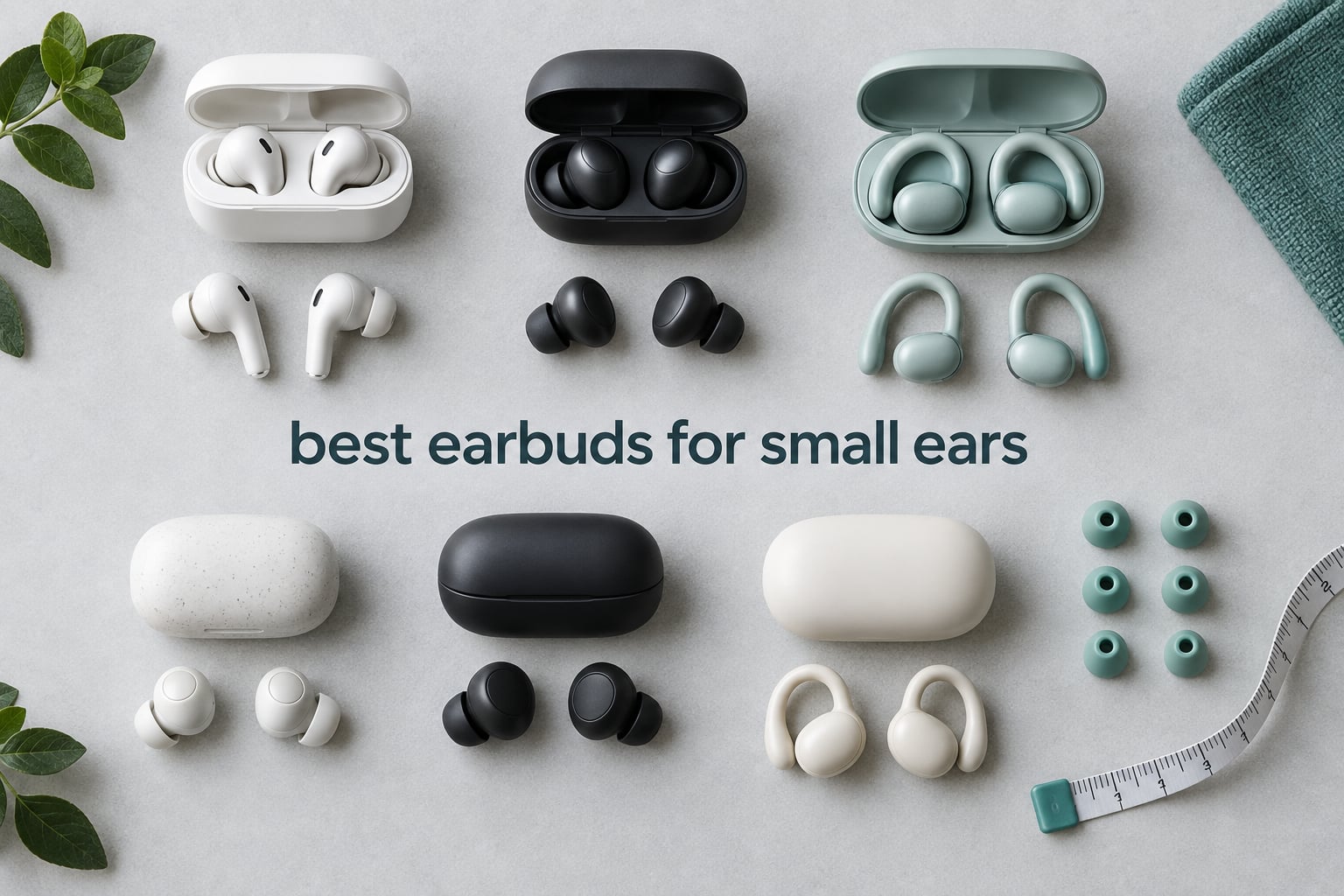
If your ears are on the small side, the best earbuds for small ears in 2026 are compact in-ear models that weigh under 4 grams a bud and ship with three or more tip sizes, plus clip-on open designs that skip the ear canal entirely. Our best overall pick is the JLab JBuds Mini at 3.3 g per earbud, and the best budget answer for anyone who cannot wear anything inserted is the UGREEN HiTune S3 open-ear clip.
That is the short version. The long version is that fit failure on small ears is rarely about tip size alone. In the r/Earbuds thread that tops this query, owners describe buds that “fall out extremely easily and quickly” even when the tips fit, and Head-Fi members with narrow canals settle on tiny-housing wired IEMs because most sealed buds simply press on them.
We compared 10 earbuds for this guide, weighing three things the forums agree on: how much the housing fills the concha bowl, how light each bud is, and whether the smallest included tip seals without pressing. Every pick below also notes where it is honest about isolation, bass, and connectivity, because a poor seal on small ears quietly forces you to turn the volume up.
Table of Contents
Top 3 Picks for Small Ears (October 2026)
All 10 Earbuds Compared for Small Ears
| Product | Specifications | Action |
|---|---|---|
 JLab JBuds Mini JLab JBuds Mini |
|
Check Latest Price |
 Back Bay Audio Mini Back Bay Audio Mini |
|
Check Latest Price |
 King Lucky Clip-On Gen 3 King Lucky Clip-On Gen 3 |
|
Check Latest Price |
 UGREEN HiTune S3 UGREEN HiTune S3 |
|
Check Latest Price |
 Soundcore C50i Soundcore C50i |
|
Check Latest Price |
 AMAFACE Kids Earbuds AMAFACE Kids Earbuds |
|
Check Latest Price |
 JLab Flex Open JLab Flex Open |
|
Check Latest Price |
 Belkin SoundForm Nano 2 Belkin SoundForm Nano 2 |
|
Check Latest Price |
 iClever OWS01 iClever OWS01 |
|
Check Latest Price |
 Yihou Invisible Sleep Earbuds Yihou Invisible Sleep Earbuds |
|
Check Latest Price |
Why Earbuds Fall Out of Small Ears
Four things cause the fall-out, and only the first one is about ear tips.
1. The housing is too big for the concha. The concha is the bowl at the entrance of your ear. Most earbuds are designed around a medium concha, so on a small one the body overhangs and rests on the tragus and anti-tragus, the two small flaps at the front. That contact is what turns into soreness after five or ten minutes rather than immediately.
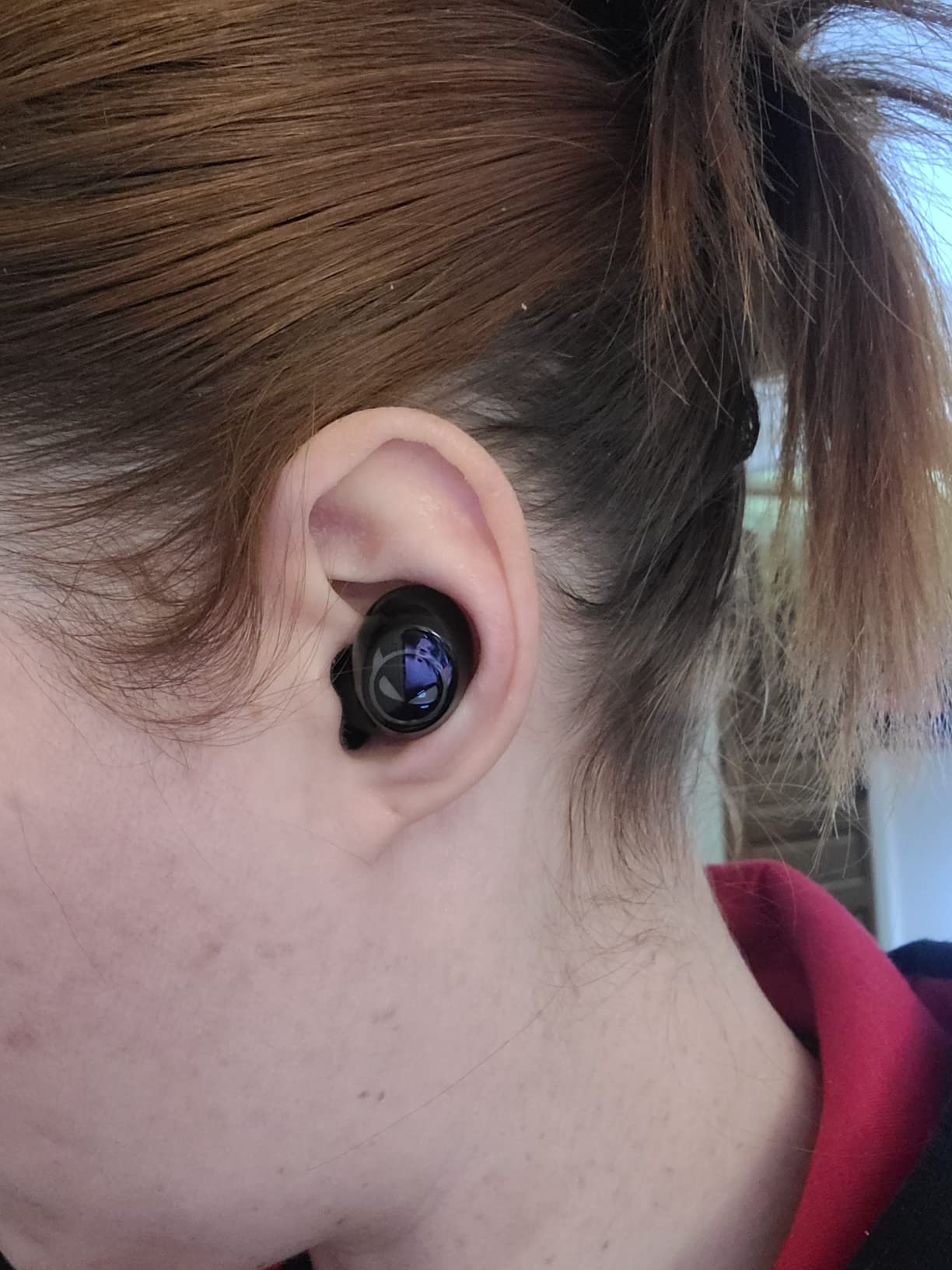
2. The bud is too heavy. Mass is what pulls a bud down and out when you tilt your head or lie down. A bud at 3.3 g behaves very differently from one at 6 g in the same ear, and this is why the JBuds Mini is the first pair small-ear owners in the forums tend to name.
3. The tip is the wrong size or the wrong material. A silicone tip that is too large presses on the canal wall; one that is too small loses the seal. Memory foam compresses to fit a narrow canal where silicone pushes against it, which is why foam is the fallback when even the smallest supplied tip hurts.
4. The ear moves and the tip does not. Chewing, talking, a hat, or a glasses arm pushing the upper ear can lever a bud out that a still head would have held.
This also explains the three-way dilemma people describe in r/Earbuds: the large buds will not go in, the small buds lose bass and any noise cancelling, and the medium ones hurt. When that happens, changing tips on a bulky housing rarely helps. Moving to a lighter or lower-profile design does.
One consequence deserves a line of its own. A poor seal kills bass, so the same music at the same volume sounds quieter, so you raise the volume, so you listen longer and louder than you meant to. Fit is a hearing-safety issue, not just a comfort one.
1. JLab JBuds Mini: Best Overall for Small Ears
- 3.3 g per earbud is the lightest mass on our list
- Sits flush without pressing the tragus
- IP55 handles gym and outdoor use
- Multipoint connects two devices
- JLab app adds EQ and a safe volume limiter
- Bluetooth drops intermittently with a phone in a pocket
- Touch controls trigger accidental mode changes
- Sound is good rather than premium with light bass
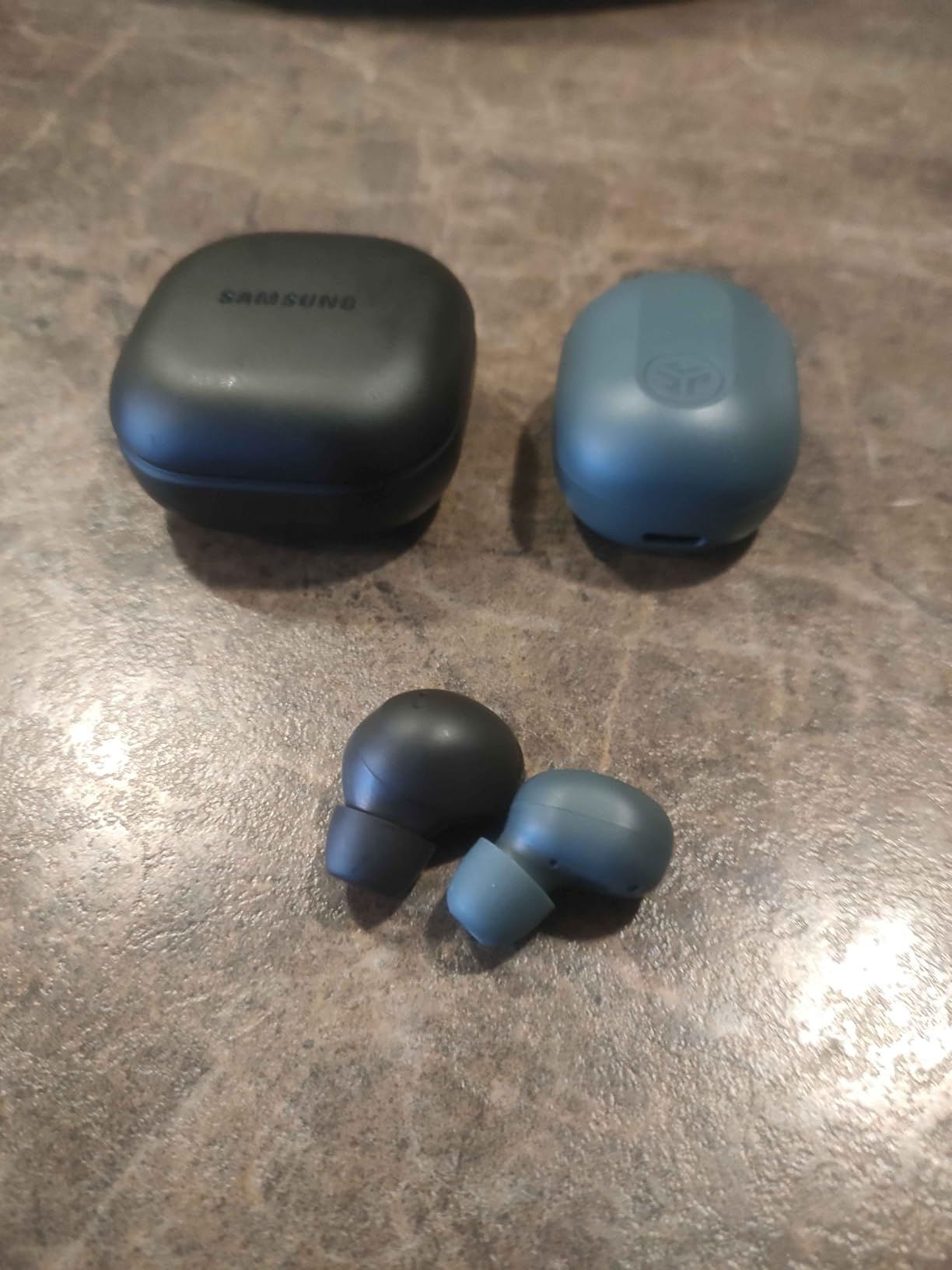
The weight figure is the whole argument. At 3.3 g per earbud and 30% smaller than JLab’s previous smallest model, this is the pair I would hand to someone with the smallest ears I know. Nothing else in this roundup is lighter, and on a small concha that low mass is the difference between an earbud you forget you are wearing and one you keep adjusting.
Owners with small ears consistently report these as the first pair that fits and stays in all day. That is the same sentiment repeated in the forum threads, where people say the deciding factor is comfort rather than sound, and here the fit story comes with a proper app behind it. Four EQ presets plus custom tuning, touch-control remapping, and a safe hearing volume limiter are all in the JLab app.
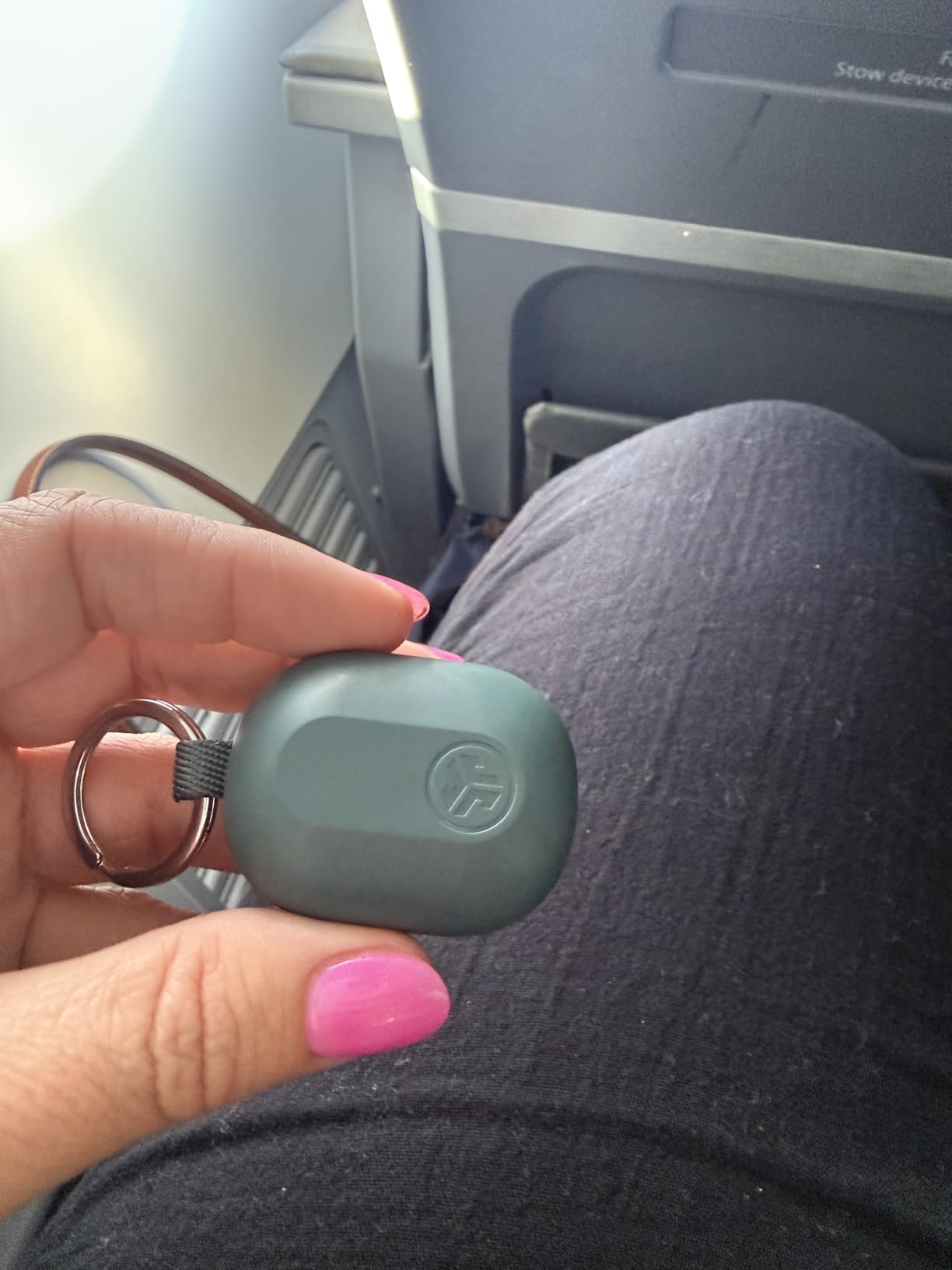
Each bud runs 5.5 hours and the compact case takes that to 20 hours total. That is enough for a work week of commutes, and because the case is small it lives in a jacket pocket rather than a bag. Bluetooth Multipoint means the same two buds serve a laptop and a phone, which is the single most requested feature in work-eardbud threads.
The honest weaknesses are worth hearing. Connection dropouts are the most common complaint, particularly with a phone in a pocket or a watch on the wrist. The touch controls are over-sensitive enough that re-seating a bud in bed can change tracks, and the sound is balanced and clear rather than exciting, with light bass. If you want a sealed, thumping sound you will need a bigger bud, and a bigger bud is exactly what you do not want.
Who the JBuds Mini suits
It suits anyone whose ears are small enough that a normal bud overhangs the tragus, and anyone who wears earbuds for a full working day. Glasses wearers get on with it because there is no over-ear hook competing for space. The IP55 rating makes it a safe pick for gym sessions and light rain.
It also suits anyone who wants app-level control without paying premium-brand money. Remapping the touch controls alone fixes the accidental-track problem for most people.
Where the JBuds Mini disappoints
It disappoints anyone who wants a deep, powerful low end or active noise cancelling. The noise control here is passive, so it helps with steady hum but not with voices. Call quality on a windy street is also a fair criticism, and the 20-hour total is short by modern standards.
If your ears are small but you love bass, the Back Bay Audio Mini below is the more interesting compromise.
2. Back Bay Audio Mini: Best Value With Six Tip Sizes
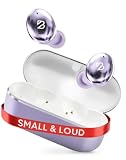
Back Bay Audio Mini Wireless Earbuds for Small Ears, Award-Winning Sound
- Six ear tip sizes is the widest fit kit in the group
- Slim body sits flush in a small concha
- Sound rated well above its tier
- 32 h total with 8 h per charge
- Strong passive isolation from the tight seal
- Tap controls fire when you reseat a bud
- Bluetooth fades in pockets
- Some early-life single-bud failures reported
- Magnets are strong and hard to pull apart
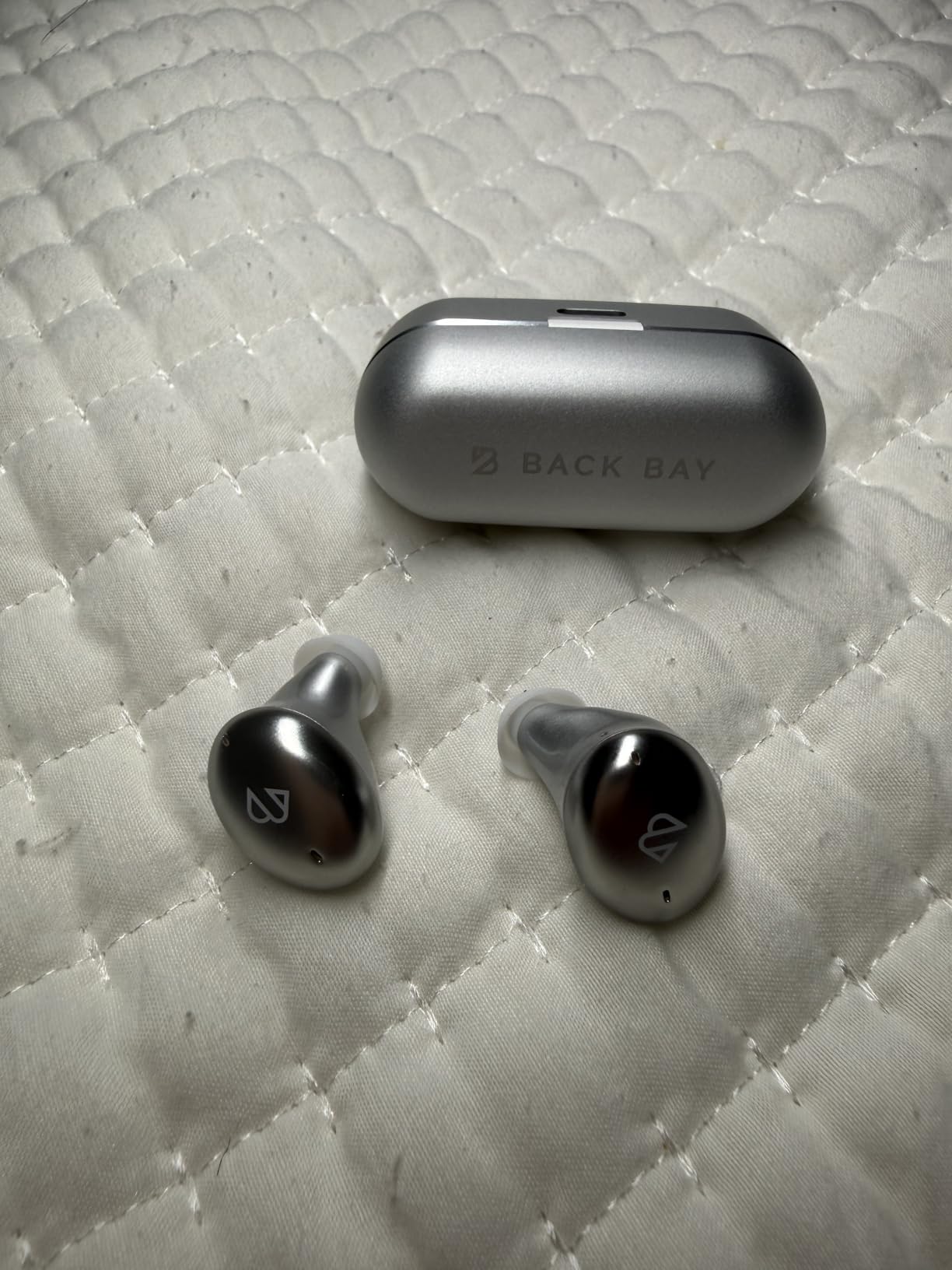
This is the pick for anyone who has already failed at tip sizing. Six ear tip sizes in the box, plus a slim low-profile body designed to sit flush rather than stick out, means the odds that nothing on the sizing ladder fits you are low. For an adult with genuinely small ear canals, that is worth more than any feature list.
Fit is the dominant theme in the reviews, and it is not a polite one: wearers with small or deformed ear canals say these are the only buds that stay put, including while running and while lying on one side. Audio is rated well above what the tier would suggest, with an 8 mm dynamic driver and a seal tight enough to deliver real passive isolation.
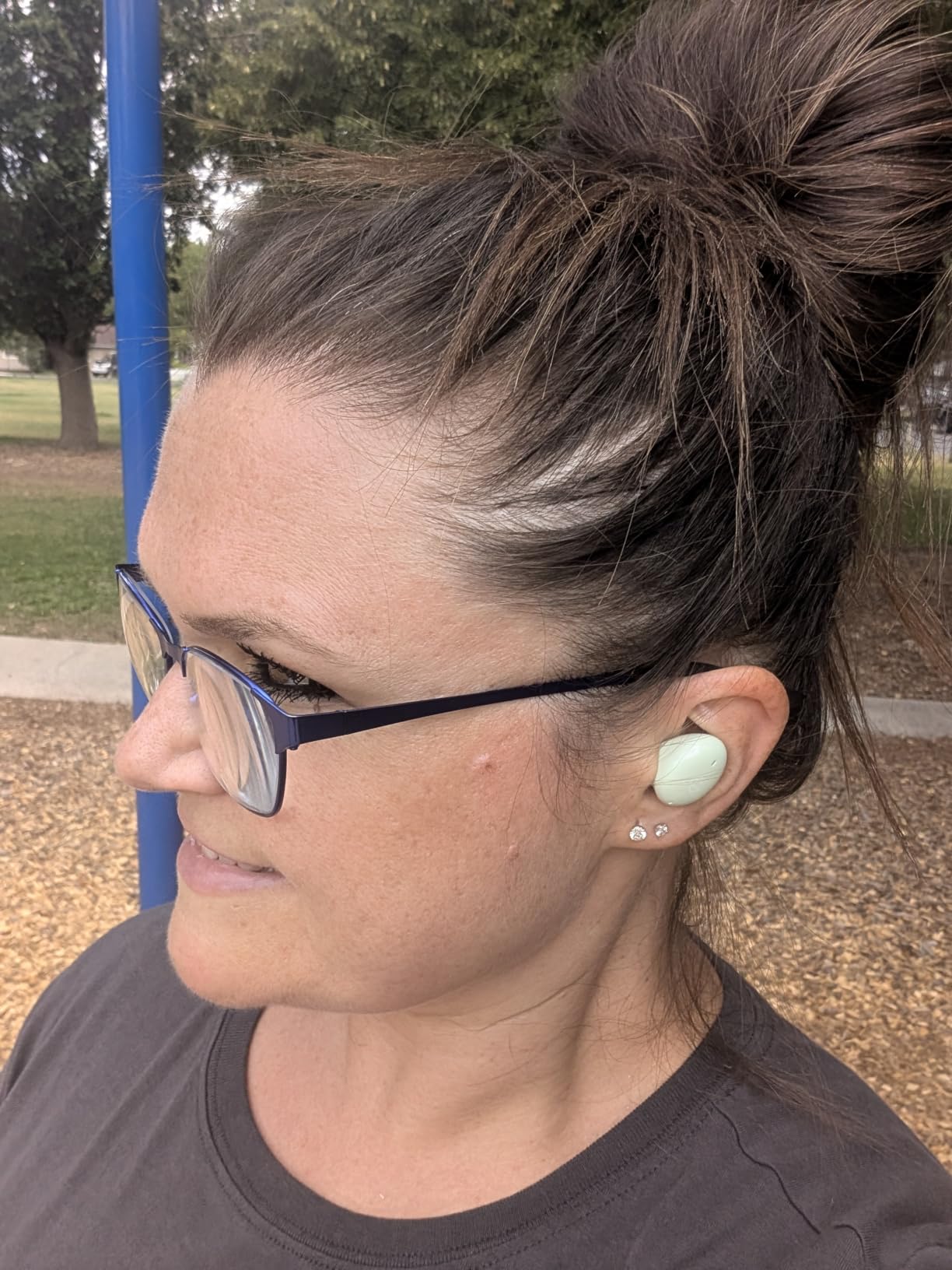
Battery is a genuine strength here. You get 8 hours per charge and 32 hours from the aluminum case, which is the longest total in this roundup, and the case has a four-LED charge indicator. That matters if you are the person who loses buds and needs a case that can bring them back quickly.
The criticisms are consistent enough to plan around. The tap controls are very sensitive, so reseating a bud can change modes. Bluetooth stability is weaker than some competitors, with audio fading in a pocket. A small share of owners report a single bud losing volume or failing after a few months, though the brand’s support response is fast.
Who the Back Bay Audio Mini suits
It suits anyone whose smallest supplied tip on other earbuds still presses. Six sizes in a slim body solves the sizing problem empirically rather than by marketing. It also suits sleepers and side sleepers, who report the fit does not shift overnight.
Because the seal is good, it is also the pick for people who care about passive isolation in a shared office or a plane cabin.
Where the Back Bay Audio Mini disappoints
It disappoints anyone whose ears are so small that even a slim housing still feels large, and anyone who needs active noise cancelling in a loud environment. Some owners also find them no smaller than ordinary in-ear buds, which is a fair expectation to reset.
It has no 3.5 mm jack and no wireless charging, which are the two things people miss first.
3. King Lucky Clip-On Gen 3: Best Open-Ear Clip for Running
- Zero ear-canal pressure in any ear size
- Works with small ears and with glasses or piercings
- 5.2 g per earbud with skin-friendly silicone
- Environmental awareness suits running and cycling
- IPX5 and a 33 foot range
- Bass is weaker than sealed in-ear designs
- Case has no charge percentage display
- Touch controls are confusing and swap sides
- Some feel pressure behind the ear when worn long
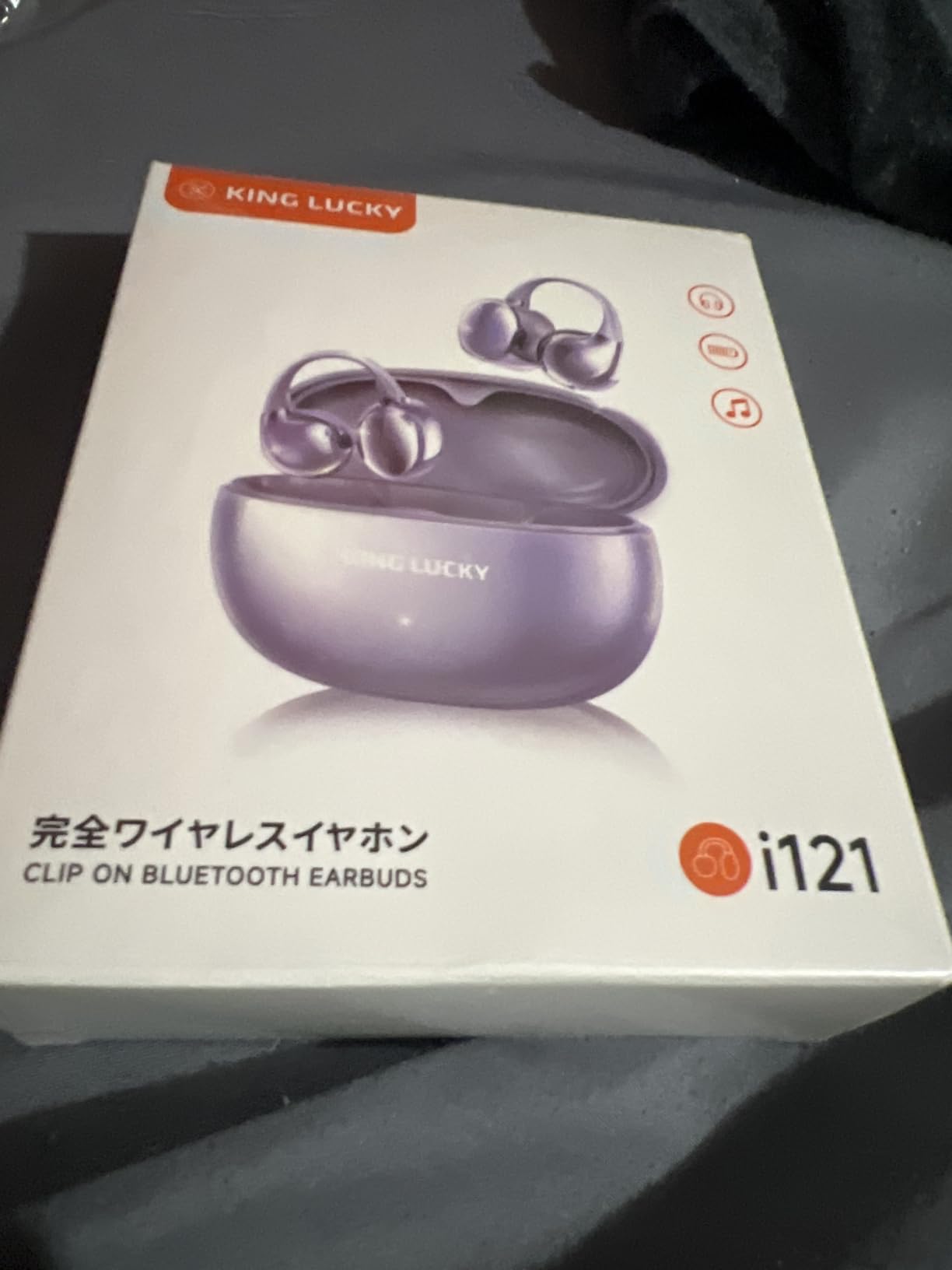
Clip-on designs sidestep the entire problem. Nothing enters the canal, so a small ear is not a problem to be solved, it is simply not the issue. That is why open-ear and clip-on models generate so much interest in the small-ear threads, and why they come with an honest caveat: bass is thinner and sound leaks.
This particular clip went back to the drawing board on the part that matters for small ears. The Gen 3 hook is longer and thinner than the original, which removes the pinch behind the ear that clip-on designs are notorious for. Reviewers with small ears, cartilage piercings, and glasses all single out the pressure-free fit as the reason it works for them.
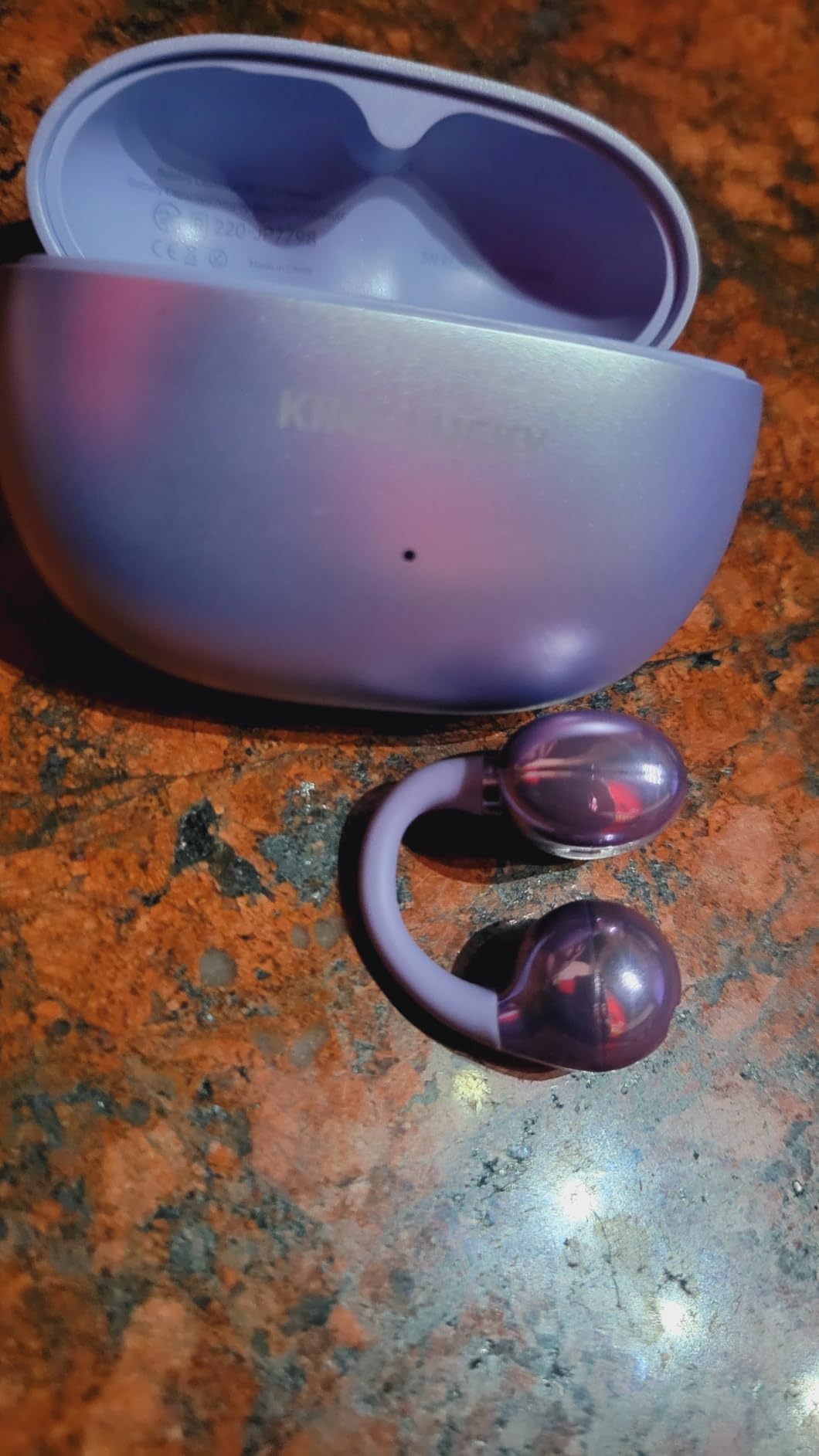
The engineering claims are modest and mostly true. Balanced armature drivers with 13 mm units, dual-mic ENC for calls, IPX5 water resistance, and 50 hours of total playtime from 7 hours per charge. The silicone is skin-friendly and the structure is described as breathable, which is what makes all-day wear possible.
Where it loses ground: the fit can read as slightly loose to some, bass is not what a sealed bud delivers, and a few owners report pressure behind the ear after extended wear even with the slimmer hook. The case has no battery percentage display, and the touch controls are not intuitive, with directional buttons swapping when you change ears.
Who the King Lucky Clip suits
It suits runners, cyclists, and anyone who wants to hear traffic and training partners. It suits small ears, pierced cartilage, glasses wearers, and people who wear a hat, because nothing occupies the canal or the upper ear fold.
It is also a reasonable choice for sensory-sensitive listeners. The channel that describes open-ear listening as pressure-free is describing exactly what a lot of people with sensory sensitivity are looking for.
Where the King Lucky Clip disappoints
It disappoints anyone who wants noise cancelling or isolation. There is none, by design, and the open architecture leaks sound in both directions. If your main environment is a noisy office, this is the wrong tool.
Call quality outdoors in wind is only adequate, and the confusing touch controls take a week to learn.
4. UGREEN HiTune S3: Most Versatile for Tiny Ears
UGREEN HiTune S3 Open Ear Earbuds, Bluetooth 5.4, Clip on Earbuds, Black
- 5.3 g per earbud with an adjustable C-shape clip
- 30 h total with a 15 minute fast charge
- 12 mm drivers with solid bass for the tier
- IPX5 and 0.08s game mode latency
- No app needed and no drivers to install
- No companion app so no EQ control
- Maximum size of 2.5 cm may not suit larger ears
- 10 m Bluetooth range without obstacles
- No noise control at all
The cheapest route out of the fit problem is also the simplest. At 5.3 g per earbud with a C-shaped clip that adjusts to the edge of the ear, nothing touches the canal and nothing needs to be sized. Buyers treat this as the budget open-ear option, and for small ears the fit argument alone carries it.
Sound is better than the tier suggests. Twelve millimetre drivers with balanced tuning and strong bass for the price, plus AI noise cancelling on the microphone for cleaner calls in traffic. The manufacturer claims 98% less sound leakage, which is the right claim for a shared office even if the open design never eliminates it.
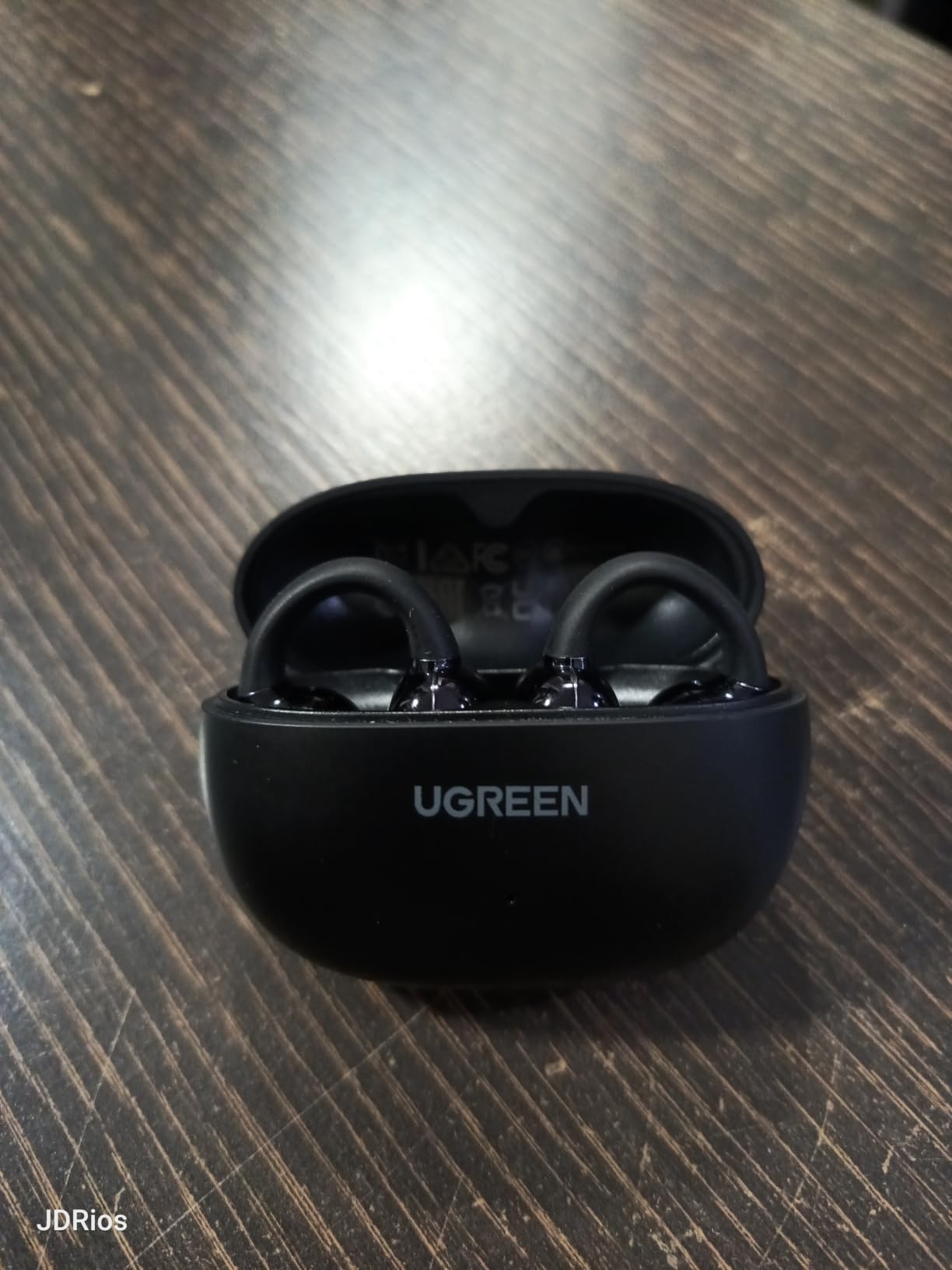
Battery is the sleeper feature. You get 30 hours total from about 7.5 hours per charge, and a 15-minute fast charge gives 120 minutes of playback. IPX5 handles sweat and rain, and a 0.08-second game mode makes the audio delay a non-issue.
Know the limits before you buy. There is no companion app, so no EQ, and the 2.5 cm maximum size is a genuine constraint that cuts against people with larger ears. Bluetooth range is 10 metres without obstacles, and there is no noise control of any kind.
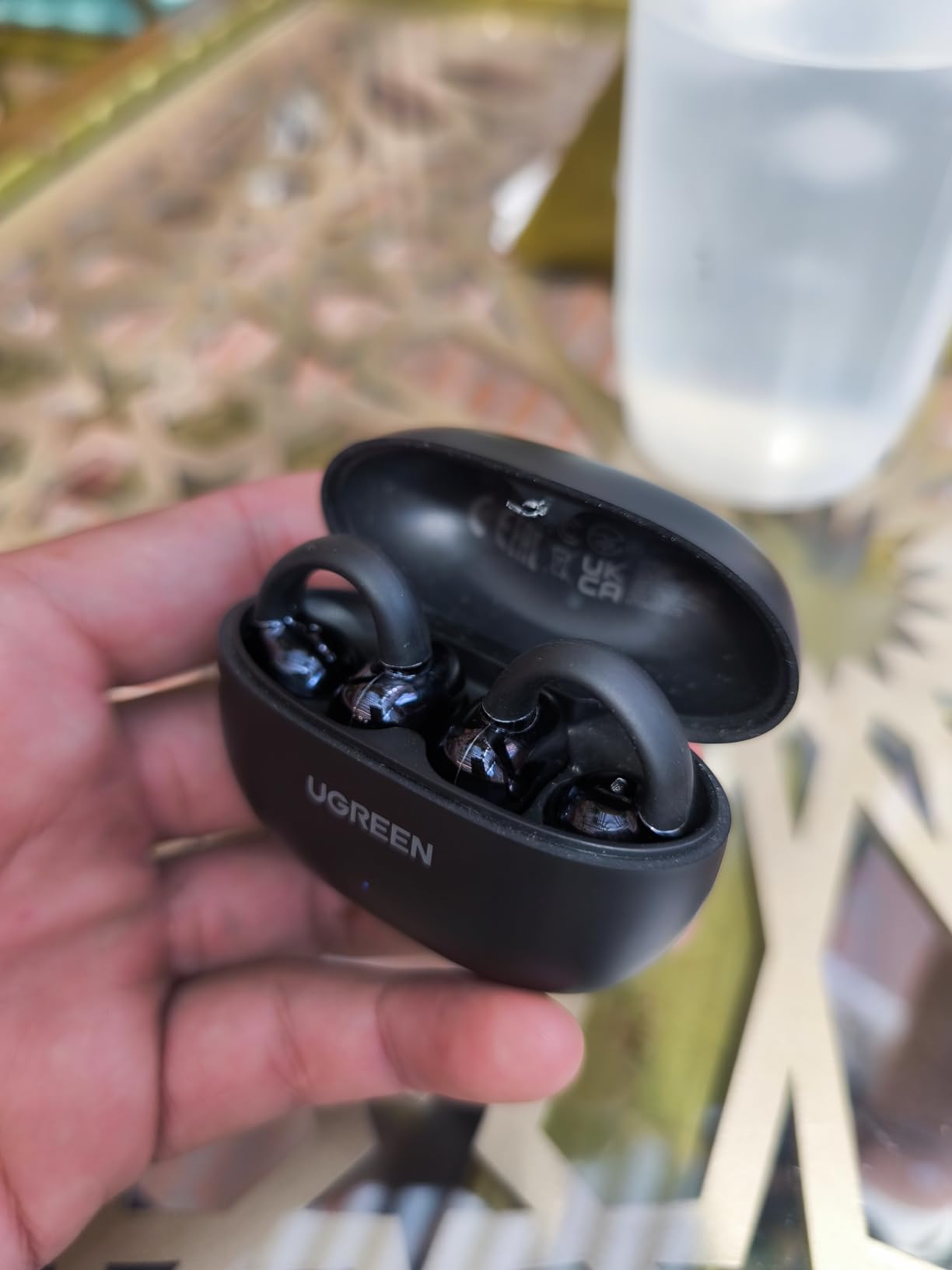
Who the UGREEN HiTune S3 suits
It suits anyone who wants zero canal contact at the lowest cost, including cyclists and hikers who need situational awareness. Small ears and glasses are both fine, and the nano-coated shell shrugs off rain.
It is also a safe first pair for a child or a teenager who is not ready to handle app menus and touch controls.
Where the UGREEN HiTune S3 disappoints
It disappoints anyone who wants to tune the sound, since there is no app and only touch control. It is not a fit for larger ears because of the 2.5 cm ceiling, and it does nothing about ambient noise.
If you are very sensitive to button misfires, the Soundcore C50i further down solves that with physical buttons.
5. Soundcore C50i: Best Clip-On for Glasses Wearers
Soundcore C50i by Anker Open Ear Earbuds, Clip On Earbuds, Clip Headphones
- FlexiClip adapts to the ear shape and holds when shaken
- Physical buttons instead of unreliable touch controls
- Sound compared favourably to pricier clip-ons
- Compact case fits a small pocket
- IP55 holds up over months of running
- Battery falls short of the advertised 8 hours for heavy use
- No wear detection so no auto pause
- Microphones struggle in wind outdoors
- Speaker cannot be moved closer to the canal
The defining feature is a memory titanium FlexiClip that adapts to the shape of the ear rather than pressing on it. Owners with small ears call the fit the deciding factor, and glasses wearers in particular benefit because the clip wraps the ear edge instead of competing with the frame arm for the same millimetres.
Physical push buttons on both buds are a small decision with an outsized effect in this category. Accidental touch misfires are the most common complaint about open-ear earbuds, and buttons eliminate the category entirely. The case is genuinely pocketable, which matters when you are carrying nothing else.
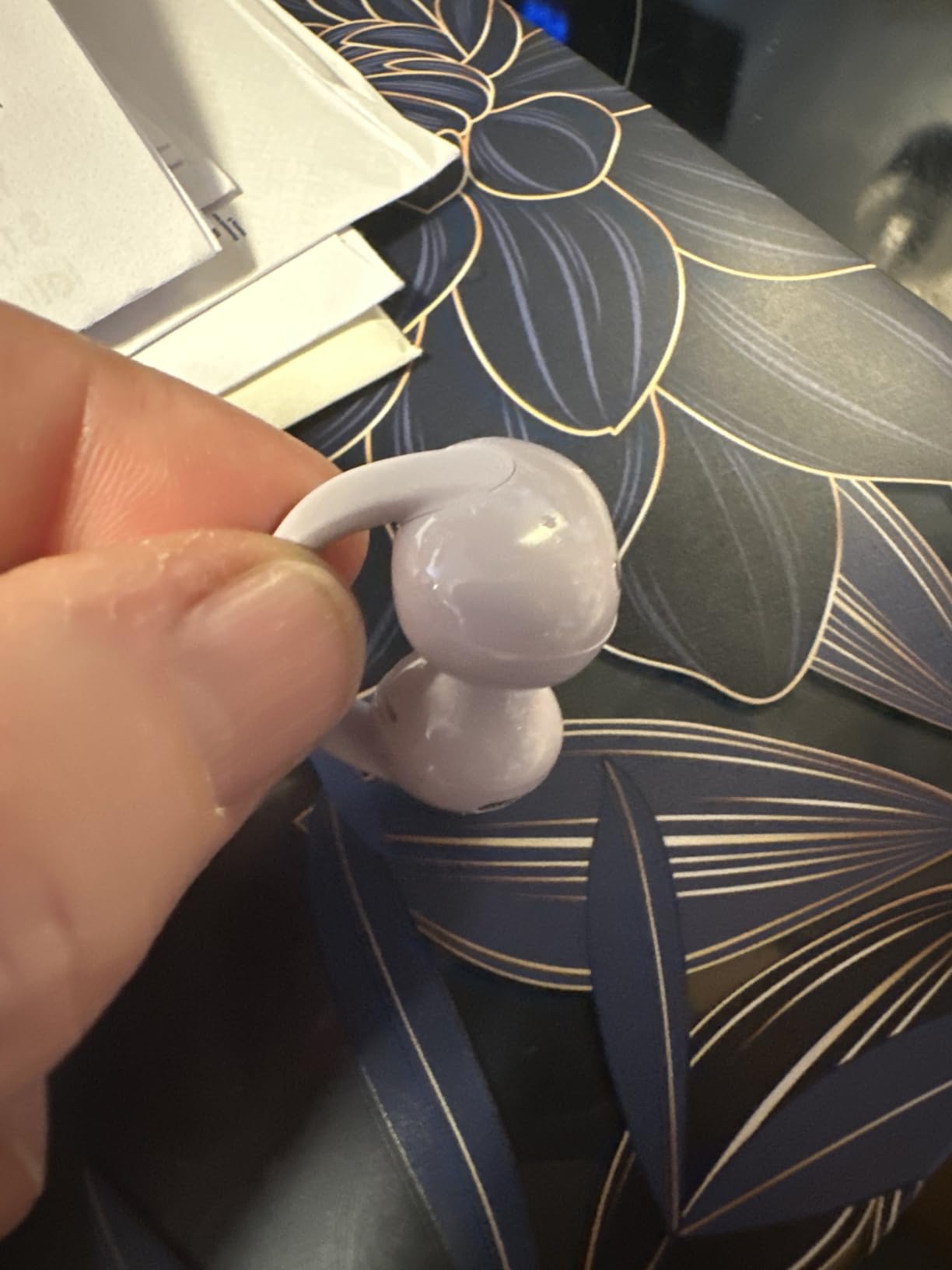
Sound punches above the tier with custom 12 mm drivers rated at 86 dB maximum output, and reviewers compare it favourably to earbuds costing two or three times more. Battery is 8 hours per charge and 28 with the case, Bluetooth 6 handles dual-device switching, and IP55 has survived months of running for several owners.
The reservations cluster around real-world gaps. Heavy listeners report battery shorter than the advertised figure. There is no wear detection, so nothing auto-pauses when you remove a bud. Wind ruins call quality outdoors, and because the speaker cannot be adjusted closer to the canal, maximum volume is modest.
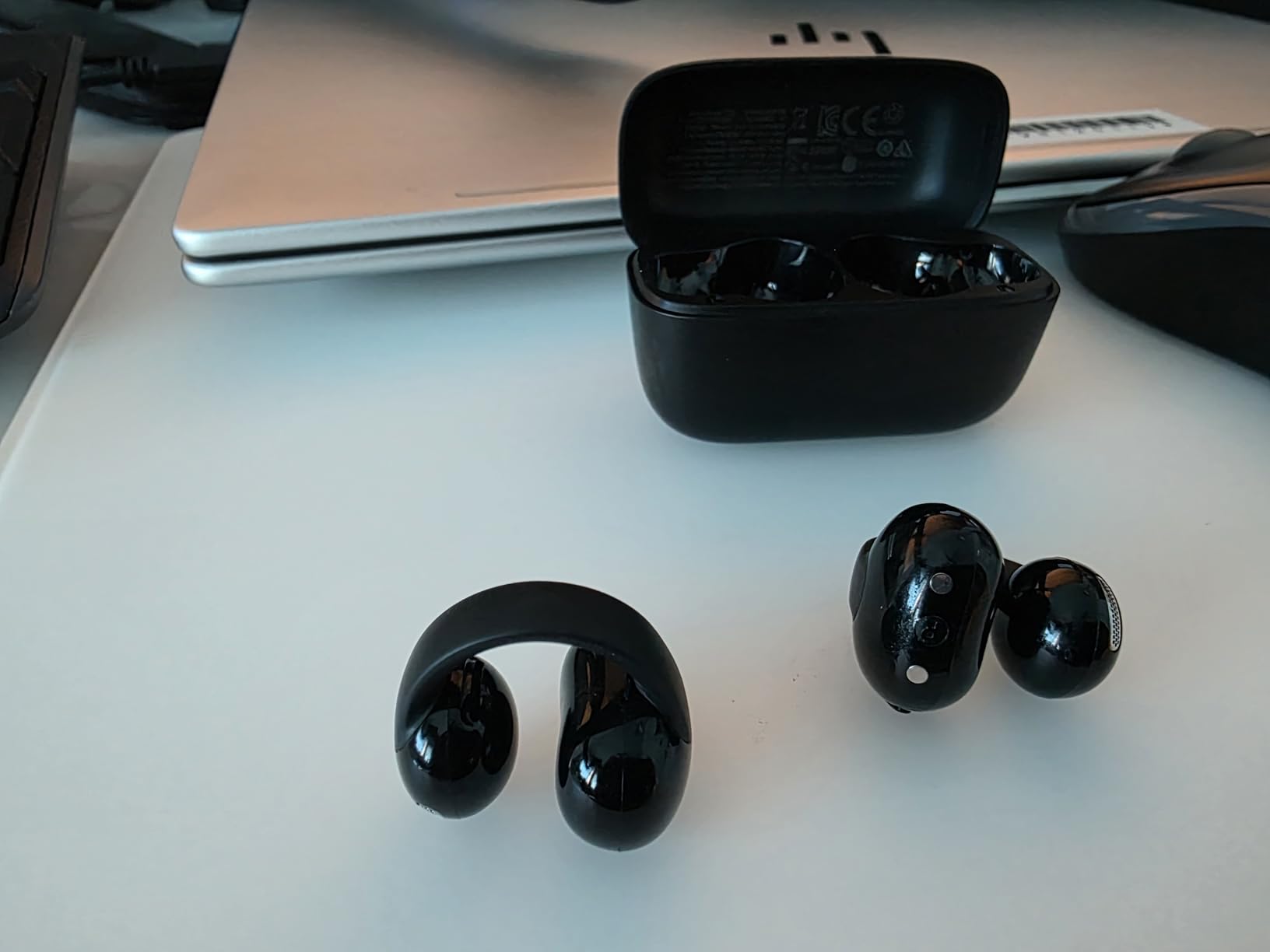
Who the Soundcore C50i suits
It suits glasses wearers, small-eared runners, and anyone who hates accidental touch activation. It suits people who share earbuds between a phone and a laptop, since dual-device switching is quick and seamless.
It is the one clip in this group I would consider for all-day work wear, because the fit adapts and the buttons are predictable.
Where the Soundcore C50i disappoints
It disappoints anyone calling from a windy street, and anyone who relies on auto-pause. The build reads as cheap plastic to some buyers, and there are scattered reports of a unit staying connected in the case instead of charging.
There is no ANC and no wear detection, so it is a comfort-first choice, not a feature-first one.
6. AMAFACE Kids Earbuds: Best for Children With Small Ears
- Smallest-in-class fit that works for children's ears
- Three sizes of flexible silicone tips
- Cartoon case with blinking animated eyes
- Case recharges three to five times
- Fits kids aged roughly 6 to 11 well
- Sound is tinny with weak bass
- Touch pads fire when a bud is reseated
- Build feels cheap with a wobbly lid
- Buds are tiny and easy to lose
Parents buying for children with small ears report that this is where the fit finally worked after bigger name-brand buds failed. The housing is genuinely small, the silicone is soft, and three tip sizes let you dial the fit without guessing. It is the same underlying physics as the JBuds Mini, applied to smaller ears still.
Satisfaction is the highest of any product in this roundup, which says something about what small-eared buyers actually value. Parents are not reviewing sound quality. They are reviewing whether the earbuds stayed in, hurt less, and were not lost down the sofa in a week.
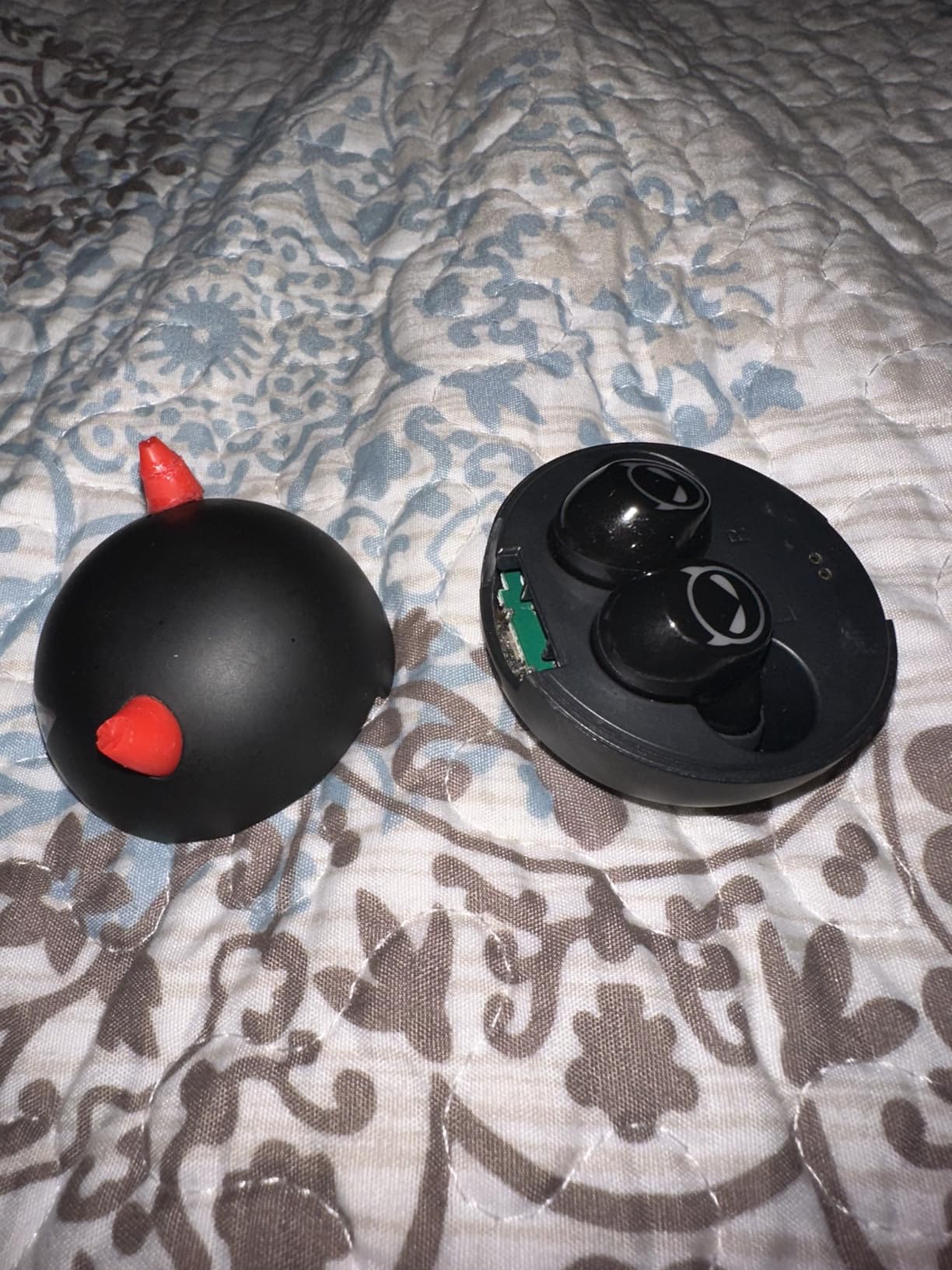
The cartoon charging case with blinking animated eyes is the feature that gets bought, and it works as a retrieval aid as much as a toy. Touch controls handle pause, play, volume, and track skipping, and pairing takes about five seconds across phones, tablets, and handhelds. The case recharges three to five times, and five minutes of charging gives roughly two hours of playback.
The trade-offs are honest but not severe. Sound is tinny with weak bass, so this is not for bass-heavy listening. The touch pads are extremely sensitive and will pause or skip when a child reseats a bud. Some units feel cheaply built, and the earbuds are small enough to vanish.
Who the AMAFACE Kids Earbuds suit
They suit children roughly six to eleven, and any adult whose ears are small enough that a normal bud overhangs. The three tip sizes and the soft silicone make the fit forgiving, and the light housing reduces the pressure complaint parents report most.
They also suit anyone who wants earbuds for short, casual sessions rather than all-day critical listening.
Where the AMAFACE Kids Earbuds disappoint
They disappoint on sound. Bass is weak and the tuning is thin, so adults should not expect an adult listening experience. The over-sensitive touch pads cause constant interruptions for younger children, and the earbuds are genuinely easy to lose.
If you want better sound for a child and can accept a firmer build, the Belkin SoundForm Nano 2 is the stronger pick.
7. JLab Flex Open: Best for Sensory Sensitivity
JLab, Flex, Open Ear Earbuds, Clip On True Wireless Bluetooth Earbuds, Teal
- No ear tips and no canal pressure whatsoever
- Stays on for small ears and glasses wearers
- Bass boost algorithm gives more low end than most open designs
- Multipoint and Google Fast Pair
- Mic is praised for calls
- Bluetooth stability is the top complaint
- Clip can slip down the ear over long sessions
- Bass is weak unless the speaker sits near the canal
- Touch settings sometimes revert to default
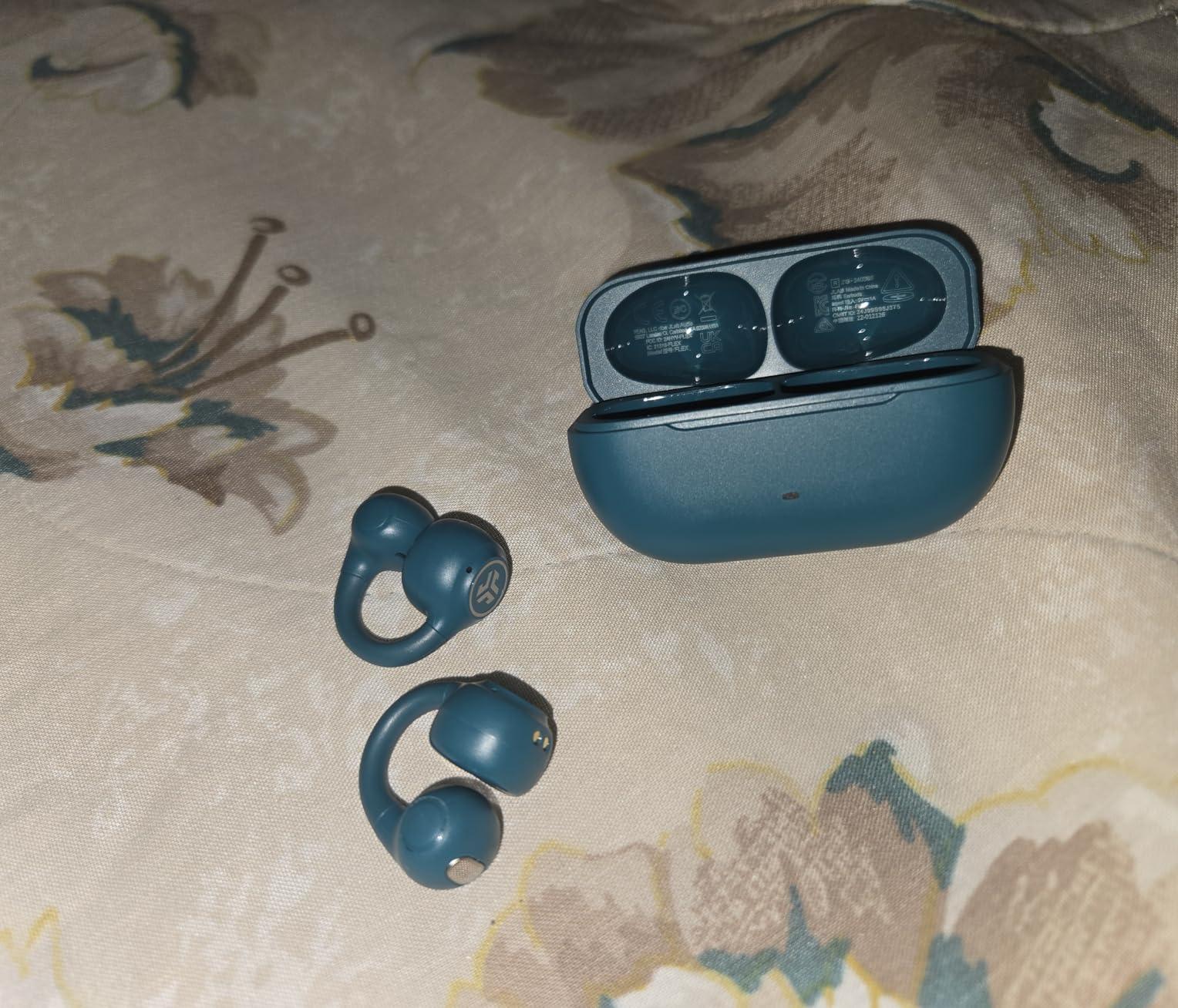
The Flex uses a clip-on cuff that wraps the outer ear rather than sitting in it. There are no tips at all, which is the cleanest possible answer for someone whose small ears react to any inserted pressure. For sensory-sensitive listeners who find in-ear pressure uncomfortable rather than merely annoying, that is not a compromise, it is a different product category.
Fit is reported as dependable for small-eared wearers, glasses users, and people who bend over for work, and one owner still uses a pair bought over a year ago after losing it in the rain. That durability track record is unusual in this category.
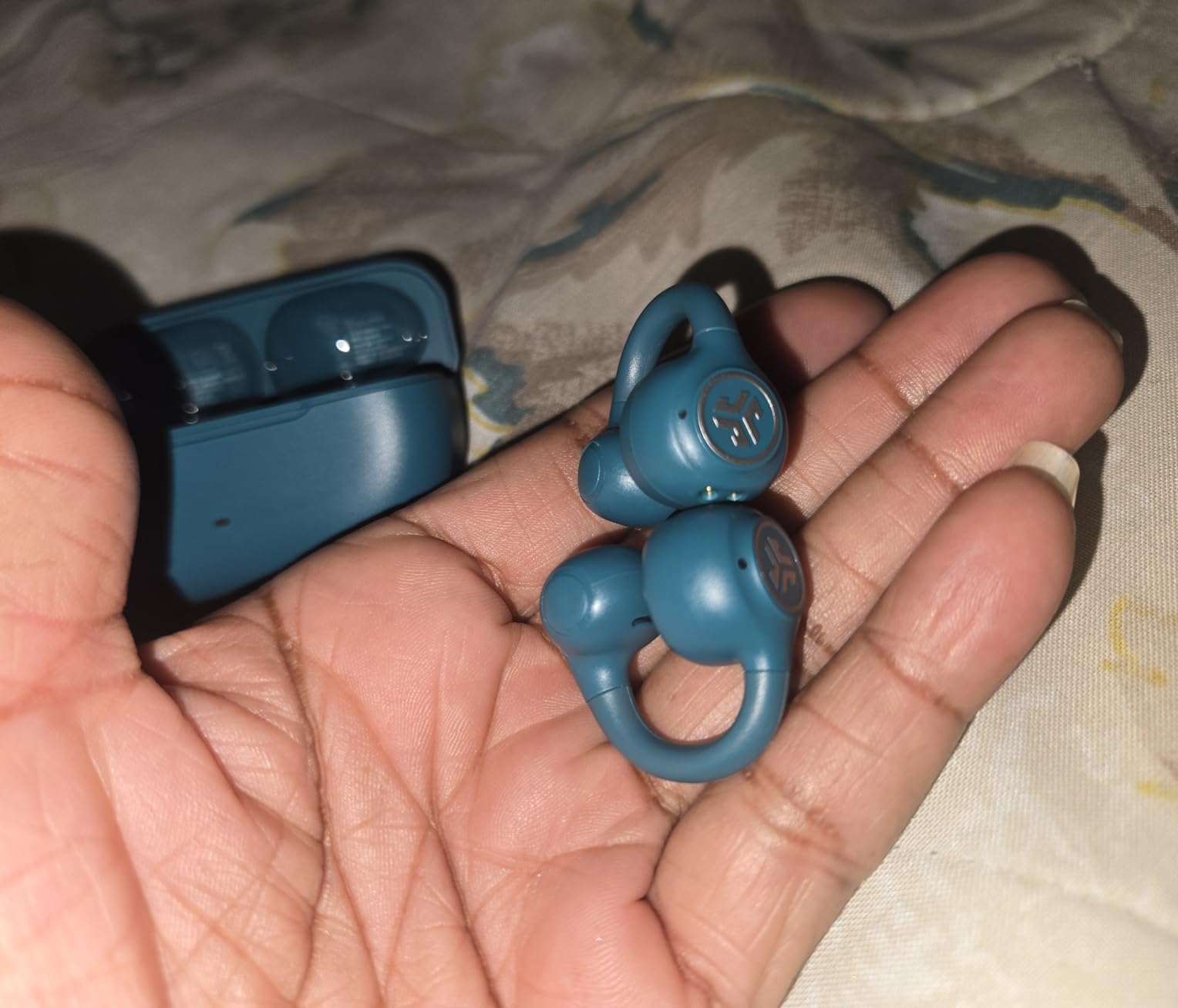
Sound is crisp, and there is more bass than most open-ear designs manage, helped by a bass boost algorithm across dual 12 mm speakers. You get 7 hours per bud and 21+ with the case. Bluetooth Multipoint, Google Fast Pair, and the JLab app with EQ and touch-control disabling round out a feature set most open designs lack.
Bluetooth stability is the most common complaint by a distance, with dropouts, out-of-sync audio, and short range. Some units slip down the ear after extended wear, bass weakens unless the speaker sits close to the canal, and the touch settings sometimes revert to defaults unprompted.
Who the JLab Flex Open suits
It suits people with sensory sensitivity who cannot tolerate anything inserted, and it suits small-eared wearers who want app-based EQ. Glasses wearers and anyone working bent over will find the cuff holds where in-ear buds pop out.
It is also a good low-pressure option for long listening sessions where any sense of being plugged up becomes distracting.
Where the JLab Flex Open disappoints
It disappoints on connectivity. If you are switching between devices all day, the dropout rate is a real annoyance. It also leaks sound in both directions and plays at a lower volume than sealed buds, so it is not a choice for a loud environment.
The slip after long wear is a minority report but worth knowing if your sessions run past a few hours.
8. Belkin SoundForm Nano 2: Best With a Safe Volume Limit
- Five tip sizes give a reliable seal in small ears
- 85 dB safe listening limit is genuinely useful
- 28 h total with 10 minute fast charge
- Antimicrobial ear tips and durability tested case
- Clear microphone for classes and video calls
- Volume capped at 85 dB so no high-volume listening
- Case cracks after a handful of drops
- Cheap-feeling plastic and an awkward shape
- Occasional auto-connect failures to tablets
Belkin built these for small ears and then added the feature parents keep asking for elsewhere. Five ear tip sizes make a reliable seal easier, and the 85 dB volume limit means a child cannot turn it up past a safe ceiling, so you can hear them talking from another room.
Parents buying for small ears report a good fit across ages roughly six to eleven, and the improvement over the first-generation SoundForm is real: the earlier model’s connection problems are largely resolved. Environmental Noise Cancellation on the microphone helps you hear your child over a noisy background.
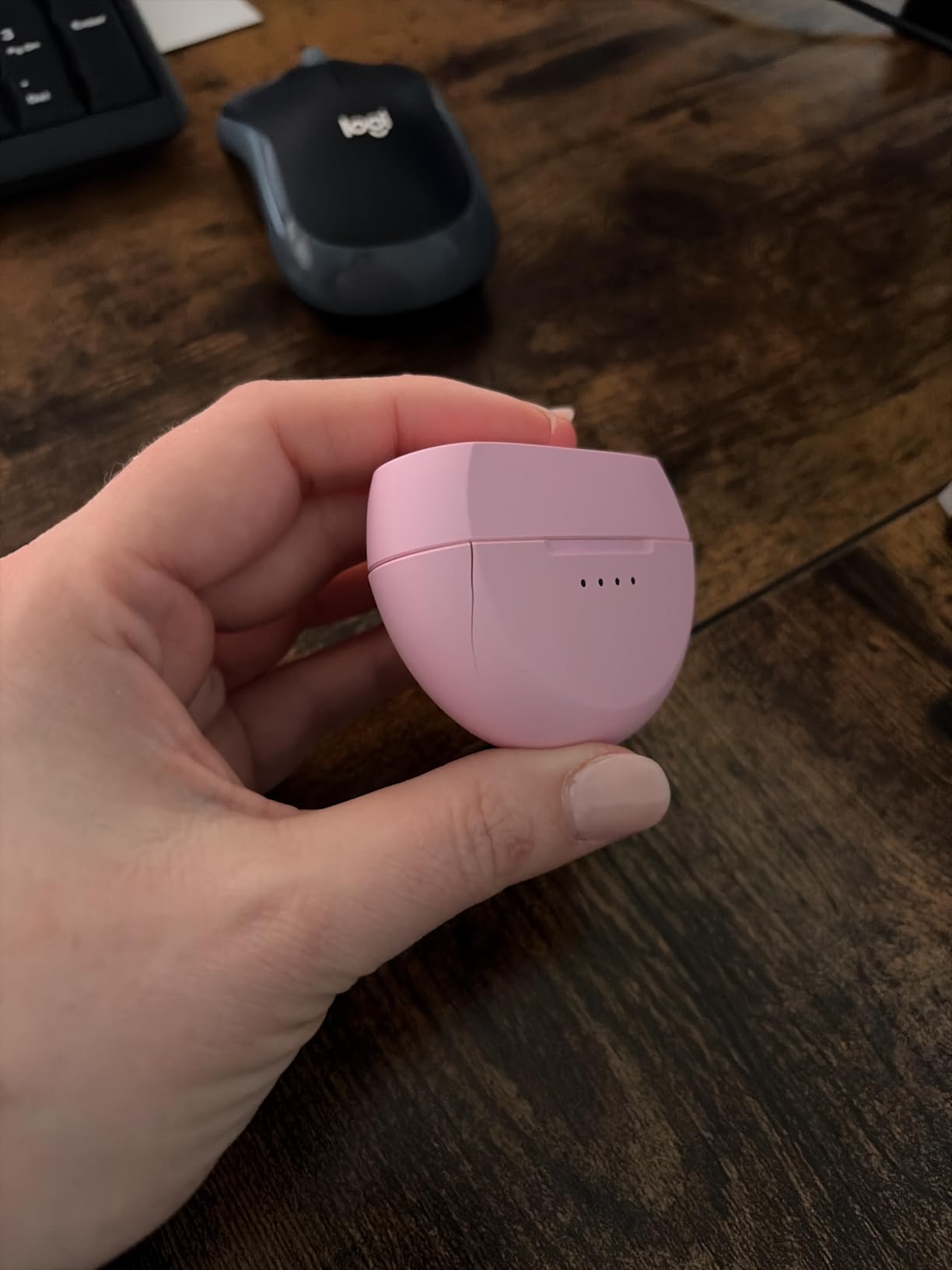
Battery totals 28 hours, with 8 per earbud and 20 in the case, and a 10-minute USB-C charge gives 90 minutes of play. The ear tips are antimicrobial, the earbuds and case are durability tested against drops, and IPX5 covers sweat and water. Bluetooth 5.3 reaches 30 feet.
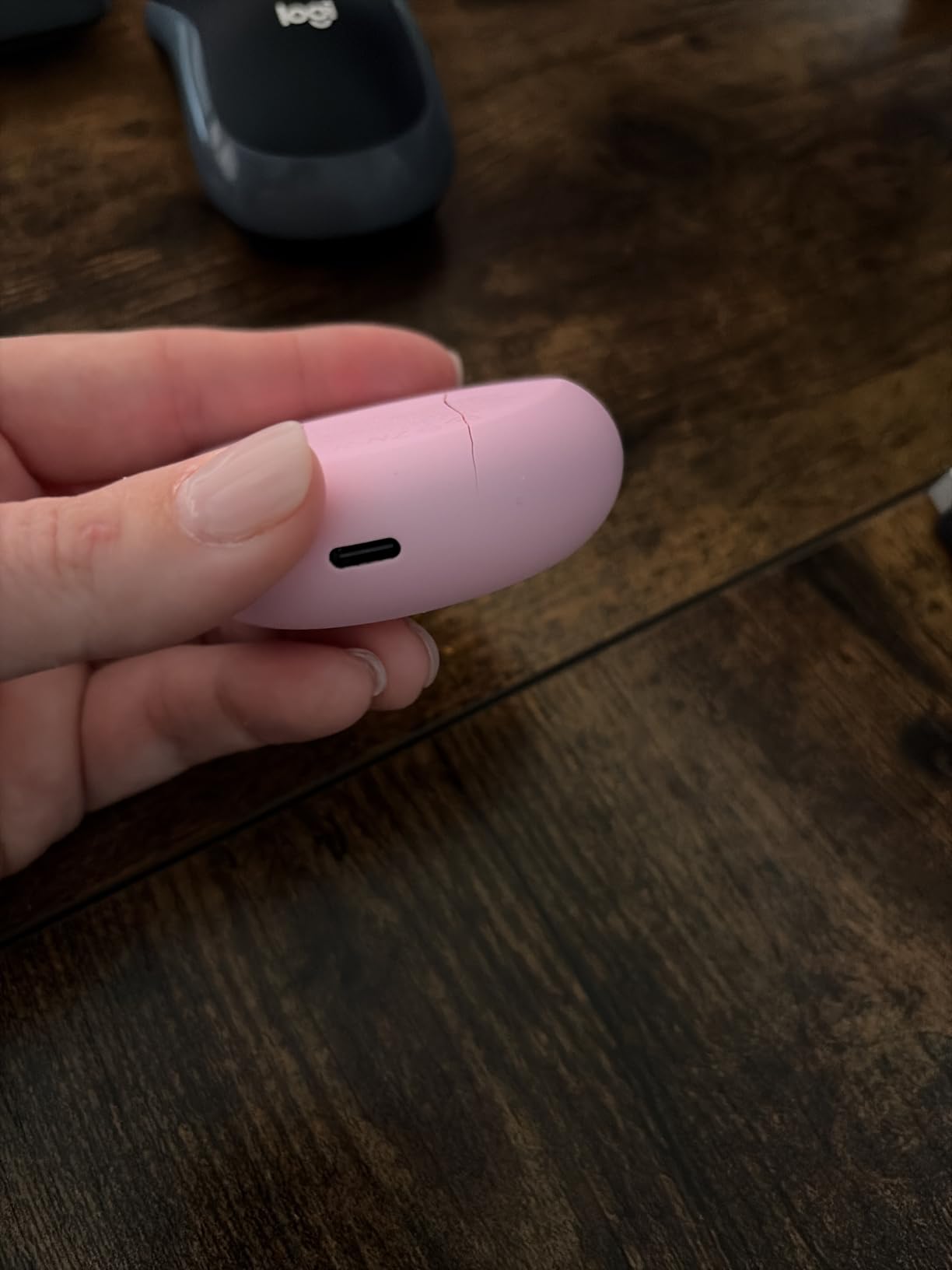
Build quality is the weak point. Owners describe cheap-feeling plastic, an awkward shape for fitting in smaller ears, and a case that cracked after a handful of drops. There are occasional failures to auto-connect to a tablet, a small number of hardware failures, and the 85 dB cap rules the earbuds out entirely for high-volume listening.
Who the Belkin SoundForm Nano 2 suits
It suits parents buying for a child aged six to eleven who has struggled with larger buds. The five tip sizes and the volume ceiling are the two features that decide it, and the microphone quality suits online classes and video calls.
It also suits adults with very small ears who want a sealed in-ear fit and never listen above moderate volume.
Where the Belkin SoundForm Nano 2 disappoints
It disappoints anyone who wants to listen loudly, because 85 dB is a hard ceiling rather than a default. The case durability is a genuine concern for a product that lives on a bedroom floor, and the shape is not the most natural for the smallest ears.
Auto-connect failures are uncommon but annoying enough to mention, and there is no wireless charging.
9. iClever OWS01: Best Pressure-Free Open-Ear for Kids
iClever OWS01 Kids Bluetooth Headphones, Air Conduction Open Ear Headphones
- Nothing enters the ear canal at all
- Three-point pressure dispersion avoids squeezing
- 0.8 oz is genuinely light for all-day wear
- Works with glasses and hats
- Physical buttons are easy for children
- Microphone captures very little and fails with some apps
- Sound is audible to people nearby in quiet rooms
- Band can run large on some 8-year-old heads
- No carrying case included
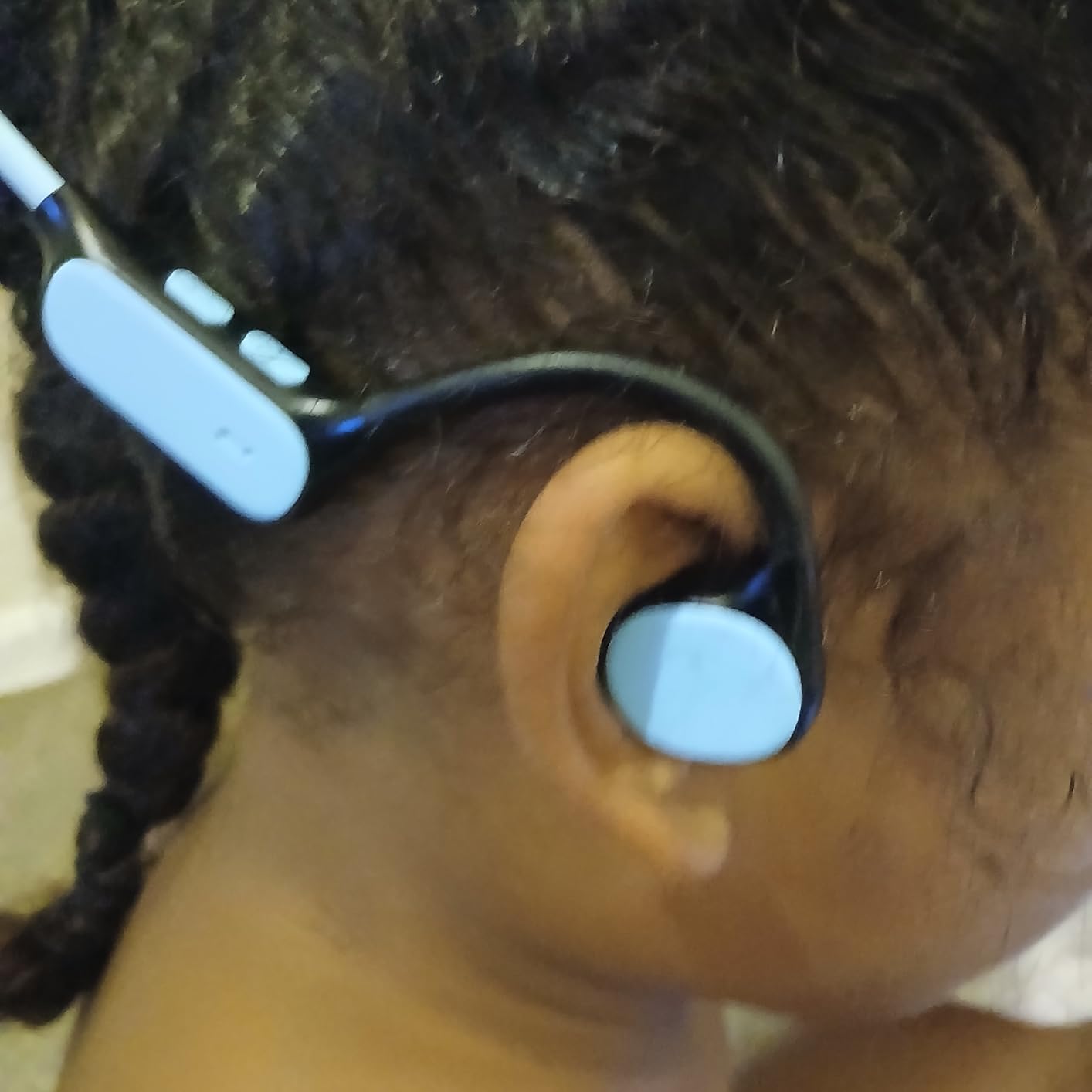
This is the most pressure-free option in the roundup, and for some small ears that is the entire requirement. The drivers sit outside the canal on a band that wraps behind the head, and a three-point pressure dispersion system spreads what little contact there is across the ear rather than pressing on it.
Owners include small adults who bought it for themselves, and they highlight the same two things parents do: no canal pressure, and 0.8 oz of total weight. It works with glasses, works with hats, and the 74 dBA and 85 dBA volume limits protect young ears.
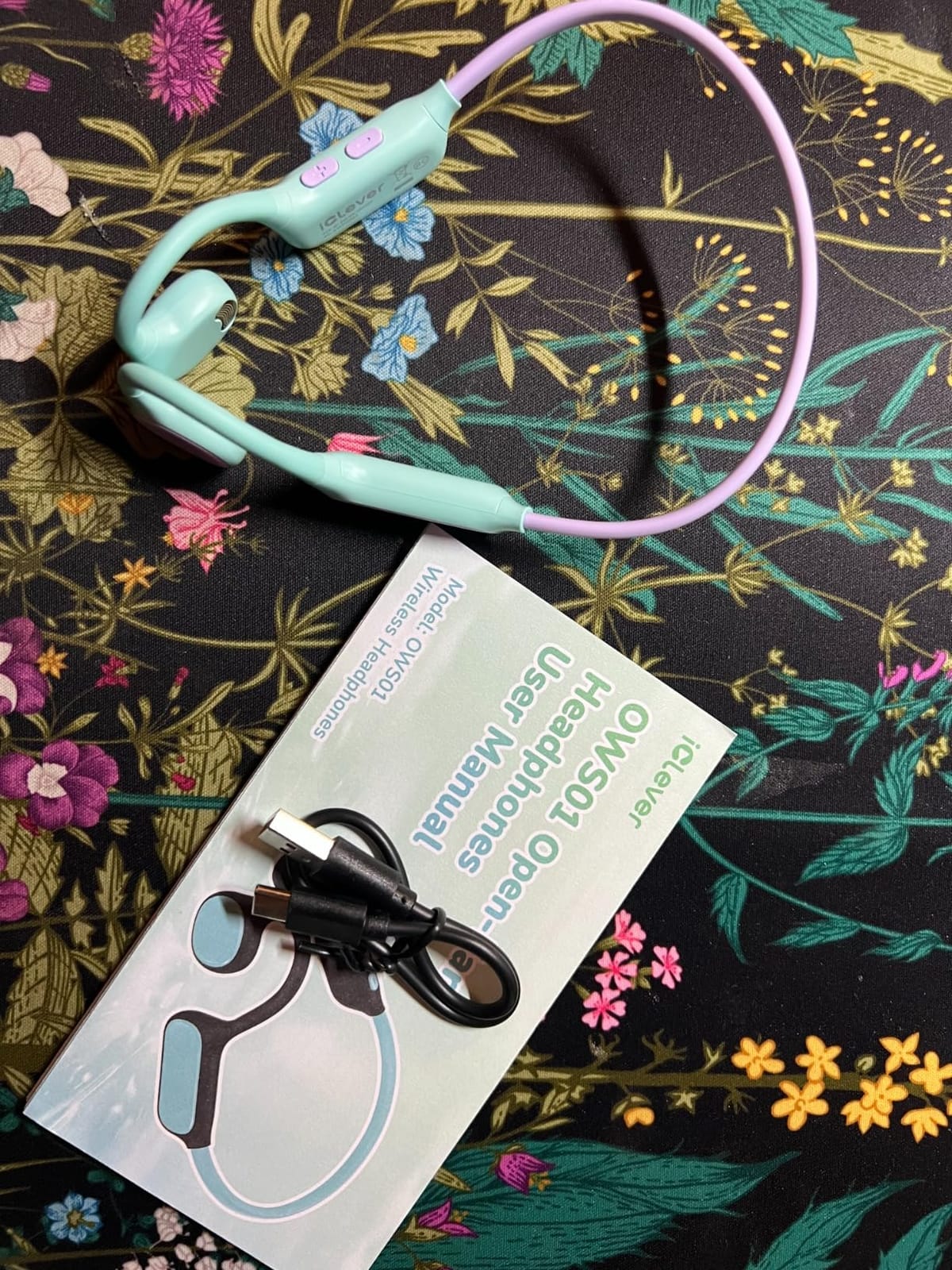
Sound is better than the price suggests, with 14.2 mm drivers and Dynamic Range Control giving a fuller presentation than most open designs at this level. Battery is 11 hours, Bluetooth 5.4 connects to phones, laptops, tablets, and PCs, and the memory steel wire neck band bends 360 degrees without deforming.
There are real compromises. The microphone captures very little audio and does not work with every app, which is a problem for online classes. Sound is audible to people sitting nearby in a quiet room. The band runs large on some eight-year-old heads, and there is no carrying case included.
Who the iClever OWS01 suits
It suits children who refuse inserted earbuds and adults whose small ears cannot tolerate tips. It suits glasses and hat wearers, and anyone who needs to stay aware of their surroundings on a walk or at school.
It is the easiest pair here to put on one-handed, which matters for a child who is getting them in and out on their own.
Where the iClever OWS01 disappoints
It disappoints anyone taking calls or doing online classes, because the microphone is the weakest aspect. It is not isolating, so it is ineffective in a loud environment, and sound leakage is a real issue in a quiet room.
The headband sizing is the other catch. If your child is on the smaller end, check that before you commit.
10. Yihou Invisible Sleep Earbuds: Best for Side Sleeping
Ear Buds Invisible Small Mini Sleep Earbuds Headphones Wireless Bluetooth
- 0.08 oz per earbud causes no ear fatigue
- Does not poke when sleeping on your side
- Essentially invisible when worn
- Case stands upright and shows battery level
- Clear sound with no heavy bass
- Only about 4 to 4.5 hours per charge
- Buds pop out of the case and are easy to lose
- Round case does not fit a pocket and its lid does not lock
- Touch buttons are sometimes over-sensitive or unresponsive
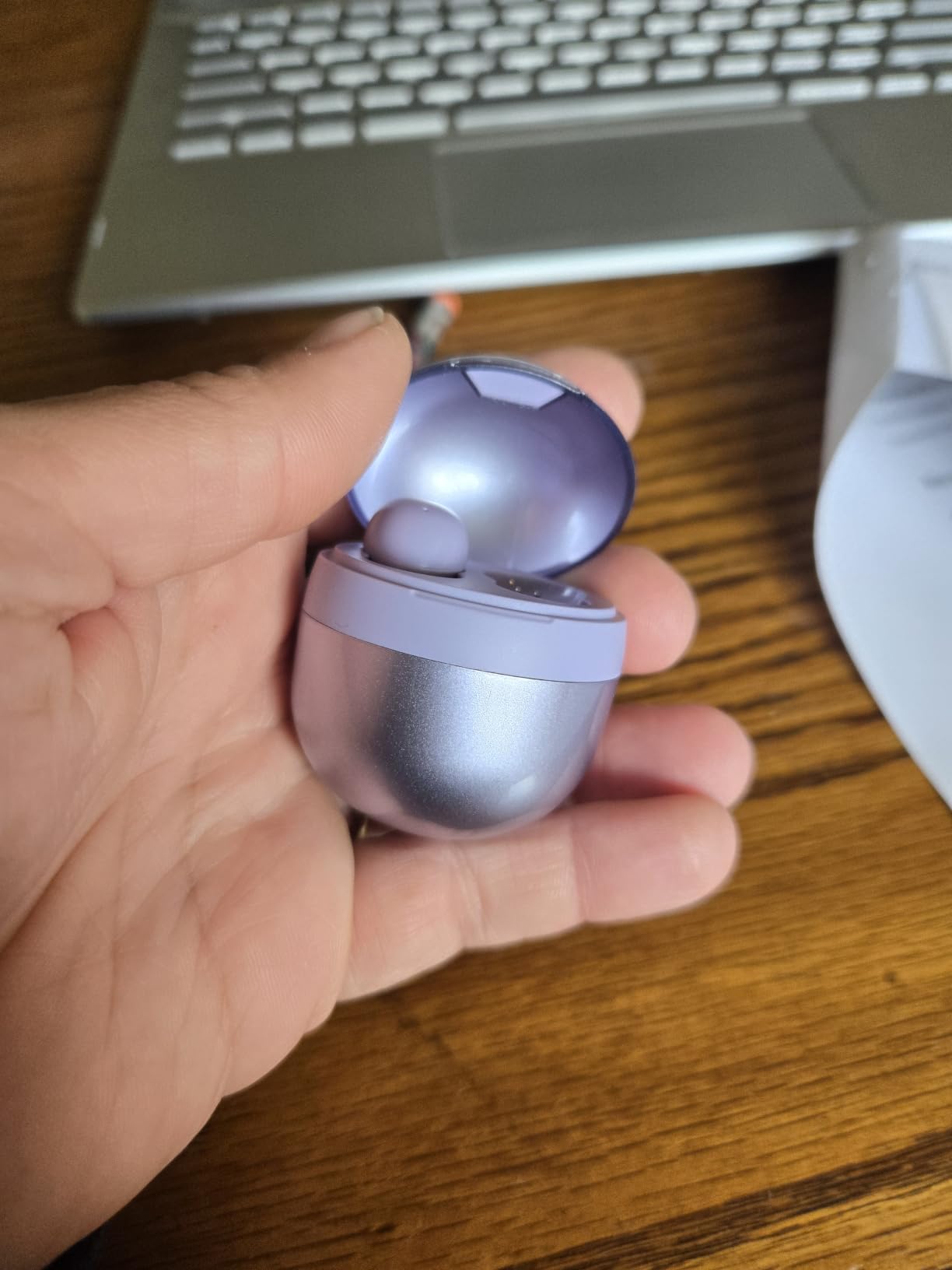
At 0.08 oz and roughly half an inch long, bent at about 80 degrees, this is the smallest bud in the roundup by a wide margin. Side sleepers are the reason it exists, and owners confirm it stays put through a night and does not dig into the ear against a pillow.
The invisibility is a genuine feature in an office, where a visible earbud reads as a meeting invitation. At this weight you genuinely forget you have them in, and the sound is clear rather than bass-heavy, which is the right trade for a device you wear to fall asleep.
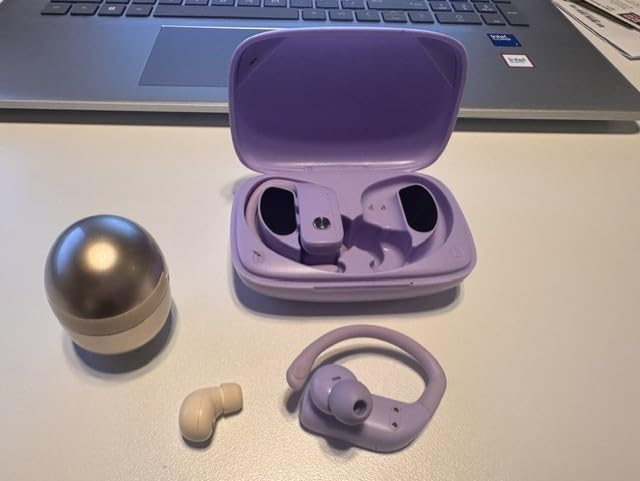
The case stands upright like a tumbler and displays remaining battery on an LED, which is a small design choice that removes the anxiety of a four-hour runtime. Bluetooth 5.3 gives a stable connection with low latency, pairing is automatic, and Siri voice assistant support is included.
The drawbacks are all consequences of being this small. Battery runs down in roughly four to four and a half hours, which is not enough for all-day wear. The buds pop out of the case when dropped and owners report losing them repeatedly. The round case does not fit a pocket, its lid does not lock, and the buds can fall out of a bag.
Who the Yihou Invisible Sleep Earbuds suit
They suit side sleepers above all, and anyone whose small ears make larger buds genuinely painful over hours. They suit students and office workers who want audio that cannot be seen, and travellers who want a case that stands up on a nightstand.
They also suit anyone who wants to sleep with audio, since the low mass means no pressure points at all.
Where the Yihou Invisible Sleep Earbuds disappoint
They disappoint anyone who wants all-day battery, and they are the most losable earbuds in the group. Bass is thin compared with conventional earbuds, so music loses its weight, and the case design is genuinely awkward in a pocket.
If losing buds would bother you, stay with the JBuds Mini, which is easier to handle despite being light.
How to Make Any Earbud Fit Small Ears
If you already own earbuds, or if you want to improve a pair that nearly works, this is the sequence that fixes most fit problems. It takes about three minutes and costs nothing.
1. Pull up before you insert. Pull the outer ear up and back, gently, and hold it. This straightens the ear canal so a small tip can seat instead of pressing outward. Insert the bud while you hold, then release. This single change fixes a surprising share of “too small” complaints.
2. Rotate to lock in. Once seated, rotate the bud a quarter turn back and slightly outward until you feel it settle. Most in-ear designs are shaped for a slight forward angle, and inserting straight in leaves the bud without a mechanical stop.
3. Run the seal test. With the buds in and music playing, press gently on the bud to seal, then release. If the bass noticeably jumps when you press, your seal is leaking. Repeat on both sides, because ear asymmetry is normal and most people have one smaller ear.
4. Downsize with foam if silicone still presses. If the smallest supplied tip hurts, memory foam is the answer rather than a smaller silicone. Foam compresses to fit a narrow canal instead of pushing against it. Comply is the best-known range, and SpinFit makes pivoting tips that angle the nozzle so a longer tip can fit a shallow canal.
5. Match the design to the ear. If steps one to four do not solve it, the housing is the problem, not the tip. Switch to a lighter or lower-profile model, or move to an open-ear clip that never enters the canal. More tip sizes will not fix an oversized body.
6. Check the return window before you commit. Fit is the one thing you genuinely cannot predict from a spec sheet, which is why people in r/HeadphoneAdvice would pay more for a real return window. Note the return deadline, wear the pair for a full working day, and decide before it closes.
How to Choose Earbuds for Small Ears
Weight per bud is the number to compare first. Anything under 4 g is meaningfully better for a small concha than a 6 g bud, because mass is what levers a bud out when you move. Where you want a second opinion on how much a housing matters, our guides to the [best robot vacs for small apartments](https://www.smashingrobotics.com/best-robot-vacuums-for-small-apartments/) apply the same principle: the footprint that suits a small space is the constraint that decides the product.
Count the included tip sizes, not the advertised range. Three sizes is the minimum worth accepting. Five or six, as on the Back Bay Audio Mini and Belkin SoundForm Nano 2, is better because it means the brand considered small ears at the design stage.
Decide between in-ear and open-ear early. In-ear gives isolation, bass, and lower volume. Open-ear and clip-on designs give zero pressure, awareness, and glasses compatibility, at the cost of leakage and thinner bass. If any inserted pressure is unpleasant rather than merely disappointing, open-ear is not a compromise, it is the correct answer.
Check glasses, hats, and hair. On a small ear, a glasses arm and an earbud are competing for the same few millimetres. Open-ear clips handle this best, and low-profile in-ears with no stem or hook handle it better than stem designs. If you wear a hat, expect to reseat after putting it on.
Check the water rating for exercise. IPX5 and IP55 cover sweat and rain, which is all running and gym use needs. For swimming, look for a higher rating and accept that sound quality usually drops underwater.
Use the total battery number, including the case. Per-bud marketing figures assume moderate volume; total hours including the case is the number that predicts whether you will be hunting for a charger mid-week.
Treat volume carefully. A poor seal makes everything sound quieter, so you turn it up. The 60-60 rule is the common-sense version of that advice: keep volume below 60 percent for no more than 60 minutes at a stretch. Two products here, the Belkin SoundForm Nano 2 and the iClever OWS01, include hard volume ceilings for that reason.
Where Wired Earbuds and Custom-Molded IEMs Fit In
Wired earbuds are a live search for this query and deserve a straight answer. Head-Fi members with small ears consistently recommend small-housing wired IEMs, and r/iems users with very small canals tend to settle on shallow-fit Etymotic-style designs, describing deeper nozzles as anywhere from uncomfortable to painfully so.
Custom-molded IEMs are the long-term answer when nothing else works, because the shell is shaped from a scan of your own canal. It is a bigger commitment with a moulding appointment and a much higher outlay, and most people with small ears do not need it if they move up in housing size or drop to an open design first.
The mindset behind a custom shell is the same one that drives tight-tolerance work elsewhere, where a few tenths of a millimetre decides whether a part fits. If you enjoy that level of precision, our picks for the [best CNC machines for small shops](https://www.smashingrobotics.com/best-cnc-machines-for-small-shops/) cover the same obsession in a different category, and our [best laser engravers for small businesses](https://www.smashingrobotics.com/best-laser-engravers-for-small-businesses/) go through the equivalent accuracy checks.
Frequently Asked Questions
Which earbuds are least likely to fall out of small ears?
Open-ear and clip-on designs are least likely to fall out, because nothing enters the ear canal and there is no tip to lose a seal. The JLab Flex Open and the Soundcore C50i are the strongest secure-fit choices here. Among sealed in-ear models, the JLab JBuds Mini at 3.3 g per bud and the Back Bay Audio Mini are the most reliable.
Why do earbuds fall out of my ears so easily?
It is usually one of four things: the housing is too big for a small concha bowl, the bud is too heavy, the tip is the wrong size or material, or the ear moves and the tip cannot follow. Weight and housing size cause most fall-outs, which is why swapping to a smaller tip alone often does not fix it.
How do I make earbuds fit in small ears?
Pull the outer ear up and back before inserting, rotate the bud a quarter turn to seat it, then press it gently while playing music to check whether bass jumps, which tells you the seal is leaking. If the smallest included silicone tip still presses, switch to memory foam tips. If the housing itself feels oversized, move to a lower-profile or open-ear design.
What are the best earbuds for very small ear canals?
Look for the lightest housing you can find and the widest range of tip sizes. The JLab JBuds Mini weigh 3.3 g per earbud, the Back Bay Audio Mini ships with six tip sizes, and the Yihou Invisible Sleep Earbuds weigh 0.08 oz per bud for the smallest profile. If even the smallest tip hurts, memory foam tips or an open-ear clip will remove the pressure entirely.
What is the 60-60 rule for earbuds?
The 60-60 rule says to listen at no more than 60 percent volume for no more than 60 minutes at a time, with a break in between. It matters more for small ears because a poor seal makes music sound quieter, which pushes the volume up without you noticing.
The Best Earbuds for Small Ears in 2026
The JLab JBuds Mini is our pick for the best earbuds for small ears in 2026. At 3.3 g per earbud they are the lightest sealed option we tested, and the light mass is what keeps them from levering out of a small concha rather than any clever tip design.
For the best value, the Back Bay Audio Mini covers the sizing problem with six tip sizes and adds the best isolation in the group. If you cannot wear anything inserted at all, the King Lucky Clip-On and the Soundcore C50i remove the pressure entirely, and the Yihou Invisible buds are the answer for side sleeping.
Whatever you choose, give the pull-up insertion method a week before judging the fit, and keep the return window in your calendar. If you also need compact audio gear for a small space, our [best robot lawn mowers for small yards](https://www.smashingrobotics.com/best-robot-lawn-mowers-for-small-yards/) guide covers the same constraint in a different category.