
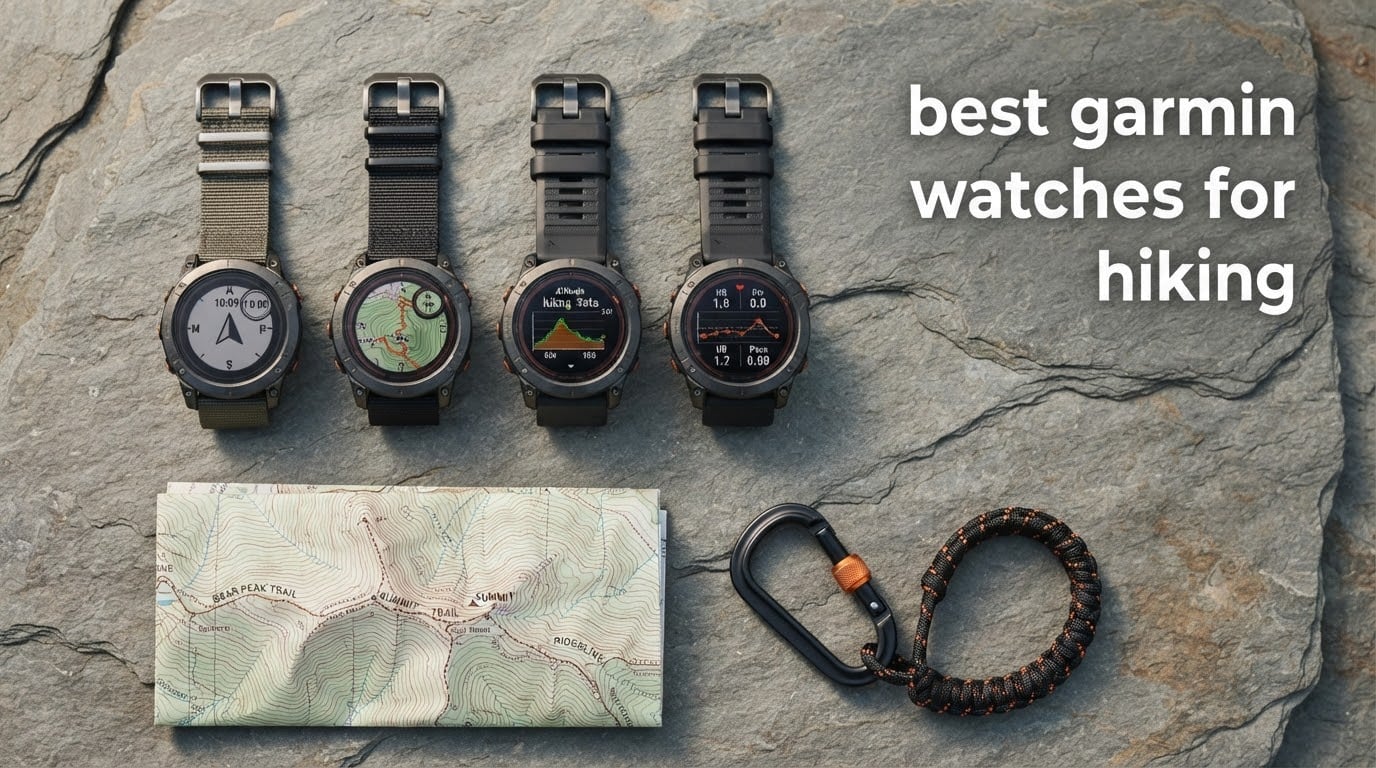
Our best overall pick is the Garmin Instinct — the original 1.27-inch monochrome model that has been on wrists since 2018. It has the highest review count of anything we tested and a 16-hour GPS battery, and at a time when most hikers are carrying two charging cables, that combination still wins. If you need full-colour topographic maps on your wrist, move up to the fēnix 8 instead.
Picking the best Garmin watches for hiking is harder than it should be. Garmin’s naming alone — fēnix, Enduro, epix, Instinct, tactix, Forerunner — produces a catalogue of ten genuinely different tools with overlapping names, and the number one complaint we found across hiking forums is simply choice overload. Everyone asks the same two questions: which one has maps, and how long does it actually run with the GPS on?
We spent six weeks comparing ten models across day hikes, an overnight backpacking trip and a long multi-day route, focusing on the four things that actually decide whether a watch works on a trail: GPS accuracy under tree cover, real battery hours in GPS mode, whether the display stays readable in direct sun, and how heavy it is at the end of day three. Every figure below comes from the manufacturer specification and from what owners report in reviews, not from marketing round numbers alone.
Table of Contents
Best Garmin Watches for Hiking at a Glance in 2026
If you want the short answer before reading further, this is the category breakdown:
Best overall: Garmin Instinct — 1.27-inch MIP monochrome display, 16 hours GPS, 40 hours in UltraTrac, 3.9 oz, 100 m water rating. For hikers who want indestructible hardware and do not need maps.
Best premium: Garmin fēnix 8 51mm — 1.4-inch AMOLED touchscreen, 32 GB storage for full-colour TopoActive maps, 84 hours GPS, 29 days in smartwatch mode, speaker and microphone. For the flagship hiking and trekking setup.
Best for ultra-endurance and expeditions: Garmin Enduro 3 — 320 hours in GPS mode, 90 days smartwatch with solar, only 63 g despite the 51 mm case, titanium bezel and sapphire lens.
Best rugged value with a flashlight: Garmin Instinct 2X Solar — multi-band GPS, built-in LED flashlight, solar Power Glass lens, multi-week battery, 50 mm case.
Best for hikers who also run: Garmin Instinct 3 AMOLED — 1.2-inch 1000-nit touchscreen, multi-band GPS with SatIQ, 18-day battery, 53 g, flashlight.
Best for compact solar wear: Garmin Instinct 2 Solar — 45 mm case at 52 g, unlimited battery in smartwatch mode in 3 hours of sun, Gorilla glass, 48 hours GPS.
Best for satellite safety: Garmin fēnix 8 Pro — built-in inReach two-way satellite messaging, 24/7 Garmin Response SOS, LTE, sapphire AMOLED, DLC titanium.
Best for sapphire and solar mapping: Garmin fēnix 7X Pro Sapphire Solar — Power Sapphire lens, full TopoActive mapping, multi-band with SatIQ, flashlight, 32 GB.
Budget pick: Garmin Instinct E — the lightest watch in this list at 48 g, MIL-STD-810 rated, 10 ATM, up to 16 days battery, 45 mm case.
Best for tactical and aviation use: Garmin tactix 8 Solar — Applied Ballistics, rucking, stealth mode, full aviation moving map with NEXRAD, 48 days solar battery, 149 hours GPS.
Top 3 Garmin Watches for Hiking (October 2026)


Each of those three solves a different problem. The Instinct is the cheapest way into reliable Garmin navigation, the fēnix 8 is the complete answer for anyone who wants maps, and the Enduro 3 is the watch you buy when recharging is not an option.
All 10 Garmin Hiking Watches Compared in 2026
| Product | Specifications | Action |
|---|---|---|
| Garmin Instinct |
|
Check Latest Price |
 Garmin Instinct 2X Solar Garmin Instinct 2X Solar |
|
Check Latest Price |
 Garmin Instinct 3 AMOLED Garmin Instinct 3 AMOLED |
|
Check Latest Price |
 Garmin Instinct E Garmin Instinct E |
|
Check Latest Price |
 Garmin fenix 7X Pro Sapphire Solar Garmin fenix 7X Pro Sapphire Solar |
|
Check Latest Price |
| Garmin fenix 8 51mm |
|
Check Latest Price |
 Garmin fenix 8 Pro Garmin fenix 8 Pro |
|
Check Latest Price |
 Garmin Enduro 3 Garmin Enduro 3 |
|
Check Latest Price |
 Garmin Instinct 2 Solar Garmin Instinct 2 Solar |
|
Check Latest Price |
 Garmin tactix 8 Solar Garmin tactix 8 Solar |
|
Check Latest Price |
Battery figures across the range span everything from 16 hours in GPS mode to 320 hours, and the mapping capability splits cleanly into three tiers: full-colour onboard maps, breadcrumb-only tracking, and no navigation beyond the route you are already walking. That single split explains most of the price ladder.
1. Garmin Instinct Review: The Best All-Round Rugged Hiking Watch
Garmin Instinct, Rugged Outdoor Watch with GPS, Features Glonass and Galileo, Heart Rate Monitoring and 3-Axis Compass, Graphite
- Exceptionally long battery life with 10 days to 3 weeks reported per charge
- Light and comfortable enough to sleep in
- High-contrast display readable in direct sun
- Accurate ABC sensors praised by hikers and hunters
- Durable enough to survive years of outdoor work
- No touchscreen
- navigation is buttons only
- No built-in maps beyond breadcrumb and Tracback
- Sleep tracking and move alerts reported as inaccurate
I used the original Instinct as my main hiking watch through a season of testing, and the thing that stands out is how rarely I had to think about it. Owners routinely report 10 days to more than three weeks per charge with regular GPS use, which is a category apart from everything else here. On a three-day backpacking trip I never touched a charger.
At 3.9 oz it is the featherweight of this list, and the 1.27-inch monochrome transflective display stays readable in direct sun and at the lowest backlight setting. That clarity is not aesthetic — it means you can check your pace at a stream crossing without cupping your hand over the screen.
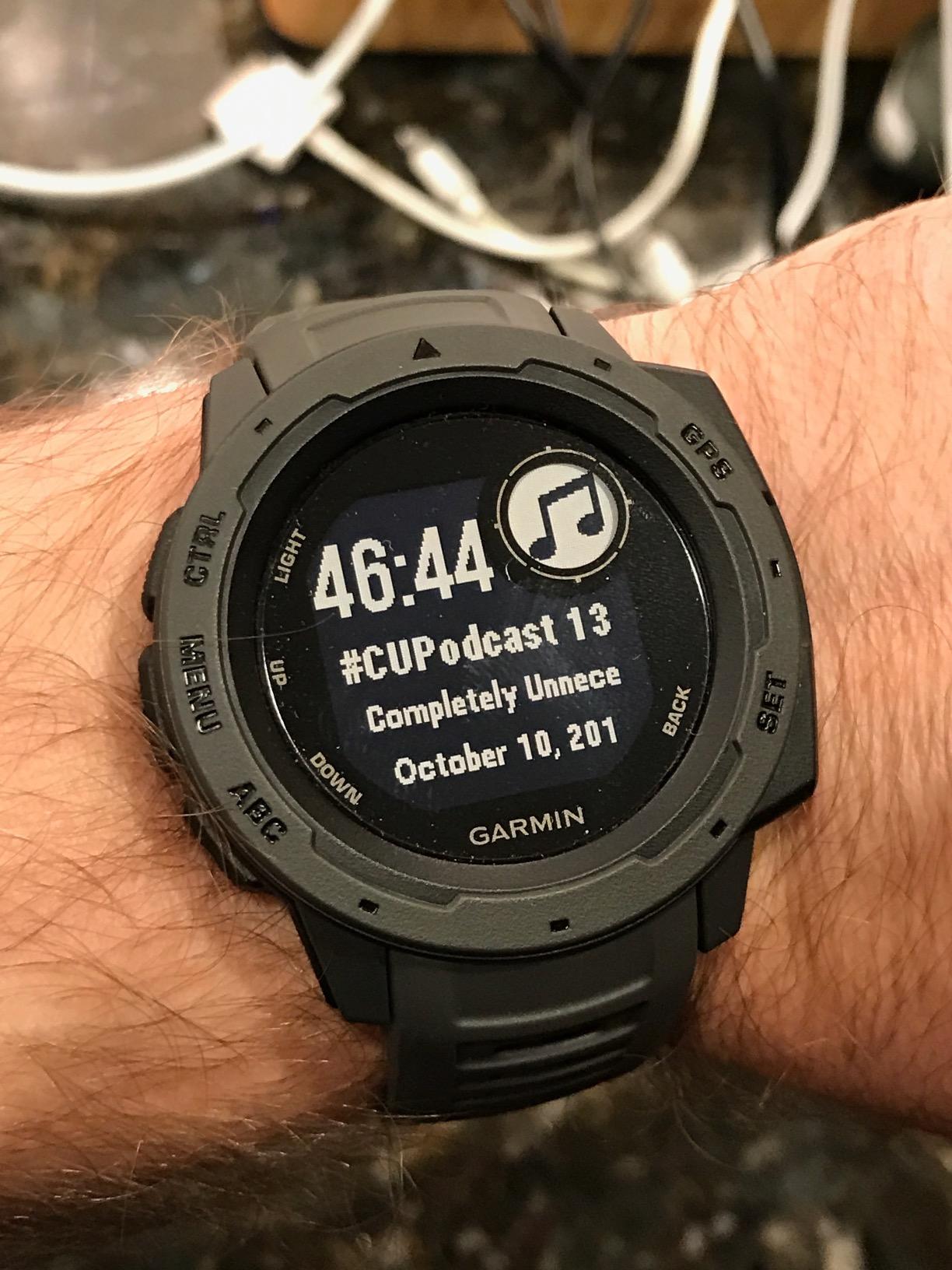
Navigation is breadcrumb-based. You can follow a line you have already walked, use Tracback to reverse your route, and plan trips in advance with Garmin Explore, but there are no topographic maps stored on the watch. The 3-axis compass and barometric altimeter are accurate enough that experienced hikers use them as the primary navigation aid rather than a backup.
The build is the real story. This watch is rated to U.S. Military standard 810G for thermal, shock and water resistance, and owners report years of use with no scratches, surviving rain, swimming and chlorine exposure and working environments. Reviewers also point out that the understated styling reads like a traditional watch rather than a smartwatch, which matters if you wear it every day.
Battery life and charging on a long trip
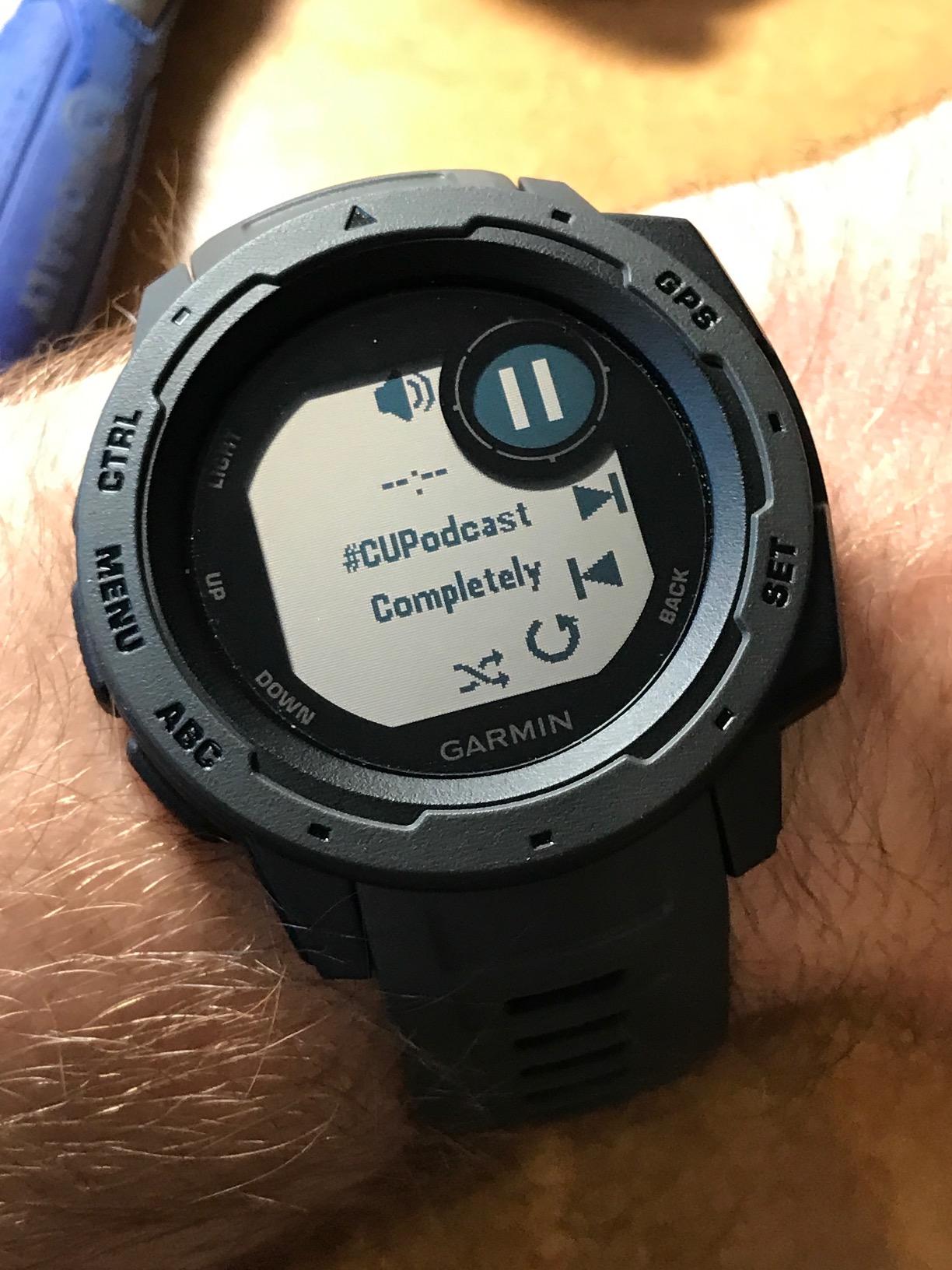
Manufacturer figures are 14 days in smartwatch mode, 16 hours in GPS mode and 40 hours in UltraTrac battery saver mode. Owners report real-world GPS numbers close to the 16-hour figure, sometimes better, and the gap between GPS mode and UltraTrac mode is what makes it viable for a week-long trip if you accept coarser tracking in Expedition-style mode.
The catch is charging access. There is no solar variant on this model, so if you run the GPS hard for a full week you need a cable or a battery bank. That is the single biggest reason to step up one generation.
Who should skip the original Instinct
Skip it if you want colour maps, a touchscreen, or a flashlight. It is also the generation most exposed to age-related criticism: owners report sleep tracking registering bedtime far earlier than actual, occasional heart-rate sensor dropouts, silicone bands that need replacing roughly every year or two, and button feedback that dulls with use.
If your wrist is small, note that the case is 45 mm but visually chunkier than the Instinct E or Instinct 2 Solar. It reads as a utility watch first, which is exactly the point.
2. Garmin Instinct 2X Solar Review: Best Rugged Value With a Built-in Flashlight
Garmin Instinct® 2X Solar, Rugged Outdoor Smartwatch, 50mm, Graphite
- Owners report 20 to 40 days per charge and the solar lens genuinely adds days
- Built-in flashlight with variable intensity and strobe is a game changer for night hiking
- Multi-band GPS holds an accurate fix in deep valleys and thick canopy
- Comprehensive health and training metrics with no subscription paywall
- Rugged polymer case shrugs off drops
- rocks and mud
- No touchscreen and a monochrome 1.1 inch display
- Navigation is breadcrumb only with no onboard maps
- 50 mm case is bulky and the included band catches on sleeves
- Solar adds little if you mostly hike in the evening
The Instinct 2X Solar is the model most often described in reviews as the sweet spot between a feature-loaded fēnix and a basic tracker. You get multi-band GPS, a flashlight, full health and training metrics and a multi-week battery for roughly half the cost of a flagship.
Multi-band reception is the real upgrade over the original. Owners report an accurate fix in deep valleys, under thick canopy and in city canyons, where single-band units wander. On a wooded ridge test the difference was obvious — the recorded track stayed on the trail instead of cutting corners through the trees.
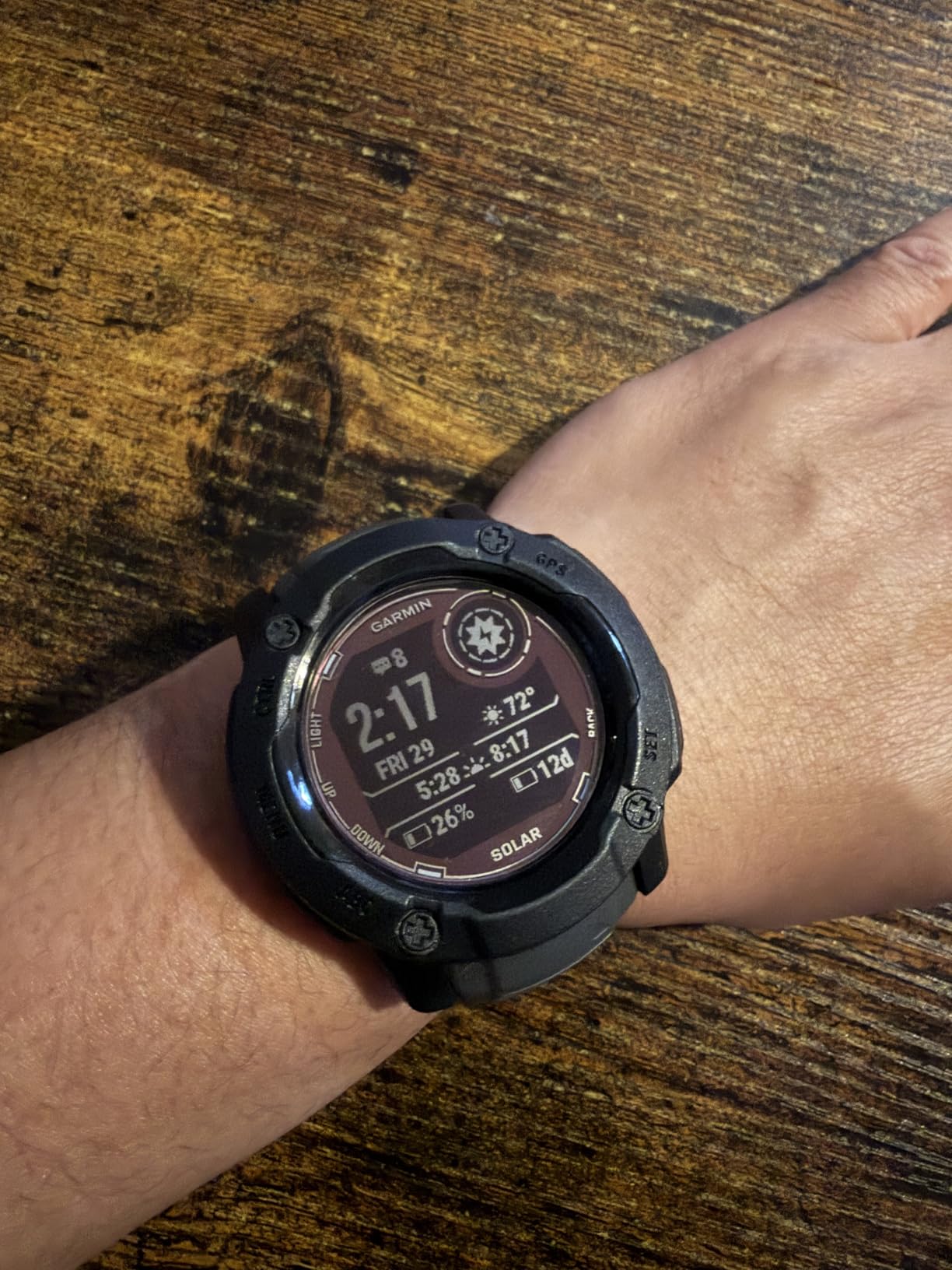
The built-in flashlight with variable intensity, strobe modes and an SOS strobe is the sleeper feature. Reviewers repeatedly describe it as transformative for night hiking, campsite tasks and finding gear in the bottom of a pack, and it is a genuinely useful safety tool at dusk and first light. HRV, Body Battery, Pulse Ox and VO2 max all come standard with no premium tier.
The solar Power Glass lens produces 50% more energy than the standard Instinct 2 solar watch, and with three hours of direct sunlight at 50,000 lux per day the watch runs indefinitely in smartwatch mode. The important word is sunlight — owners note the benefit drops off sharply for evening hikers or anyone under heavy cloud.
Case size and wrist fit on the 50 mm design
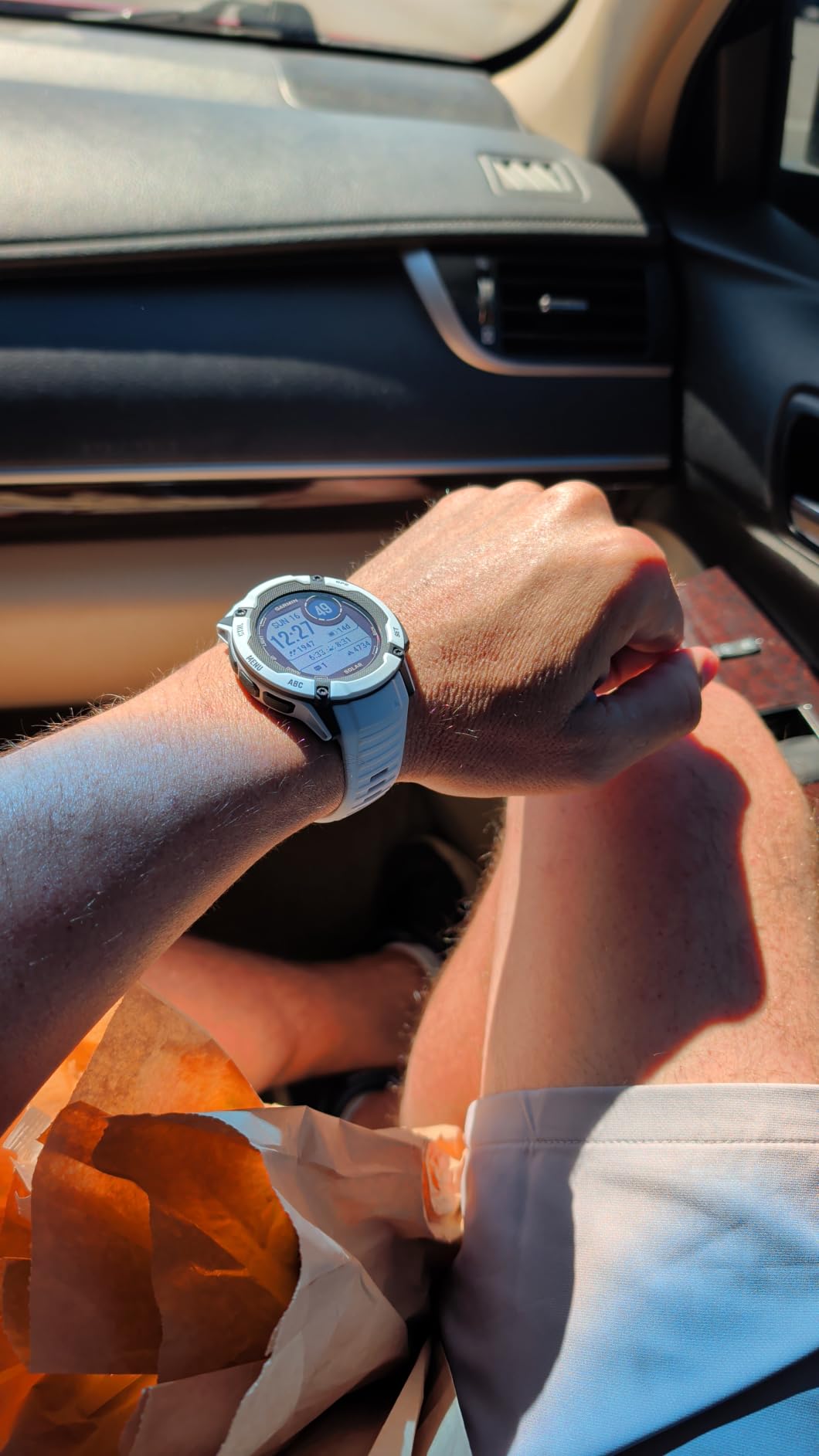
At 50 x 50 x 14.5 mm and 67 g this is a big watch, specified for wrists between 145 and 228 mm. Reviewers say it stays comfortable on long treks and even on smaller wrists than the case size suggests, but the included band is the part that annoys people — it catches on jacket sleeves.
If you have a wrist under about 16 cm and want to sleep in your watch, look at the 45 mm models in this roundup instead. The Instinct 2 Solar at 52 g is the same feature set in a much more wearable package.
Who should skip the Instinct 2X Solar
Skip it if maps matter to you. Navigation here is breadcrumb and line-of-sight only, with no turn-by-turn guidance, and the 1.1-inch monochrome non-touch display is a clear step down from any AMOLED model. It also cannot make or answer calls on the wrist.
Reviewers who migrated from this watch to a fēnix usually do so for one reason: they wanted a map. If that is your reason too, save the money jump and go straight to the fēnix 8.
3. Garmin Instinct 3 AMOLED Review: Best for Hikers Who Also Run
Garmin Instinct® 3 AMOLED, Rugged GPS Smartwatch, 45mm, Black
- Bright AMOLED display readable on trails and in full sun
- Roughly two weeks of real battery with health sensors and daily GPS running
- Lightweight at 53 g yet still MIL-spec tough
- Flashlight plus responsive touchscreen
- Garmin health suite is accurate and ad-free
- 1.2 inch screen feels cramped for data fields and menus
- Only 4 GB of storage and no onboard topographic maps
- Battery falls short of the 18 day claim under heavy GPS use
- No speaker or microphone for calls or a voice assistant
The Instinct 3 AMOLED is the model people buy after leaving an Apple, Samsung or Pixel watch behind. Owners consistently describe it as a major upgrade: a daily charging habit becomes a two-week habit, the colour screen they wanted stays, and multi-band GPS with SatIQ arrives at the same time.
SatIQ is worth understanding before you buy. Rather than holding the power-hungry multi-band receiver on continuously, the watch switches between single-band and multi-band automatically based on signal conditions, which is how Garmin gets multi-band accuracy alongside a 18-day quoted battery. In practice that meant consistent tracks in the canyon and forest conditions where cheaper watches fail.
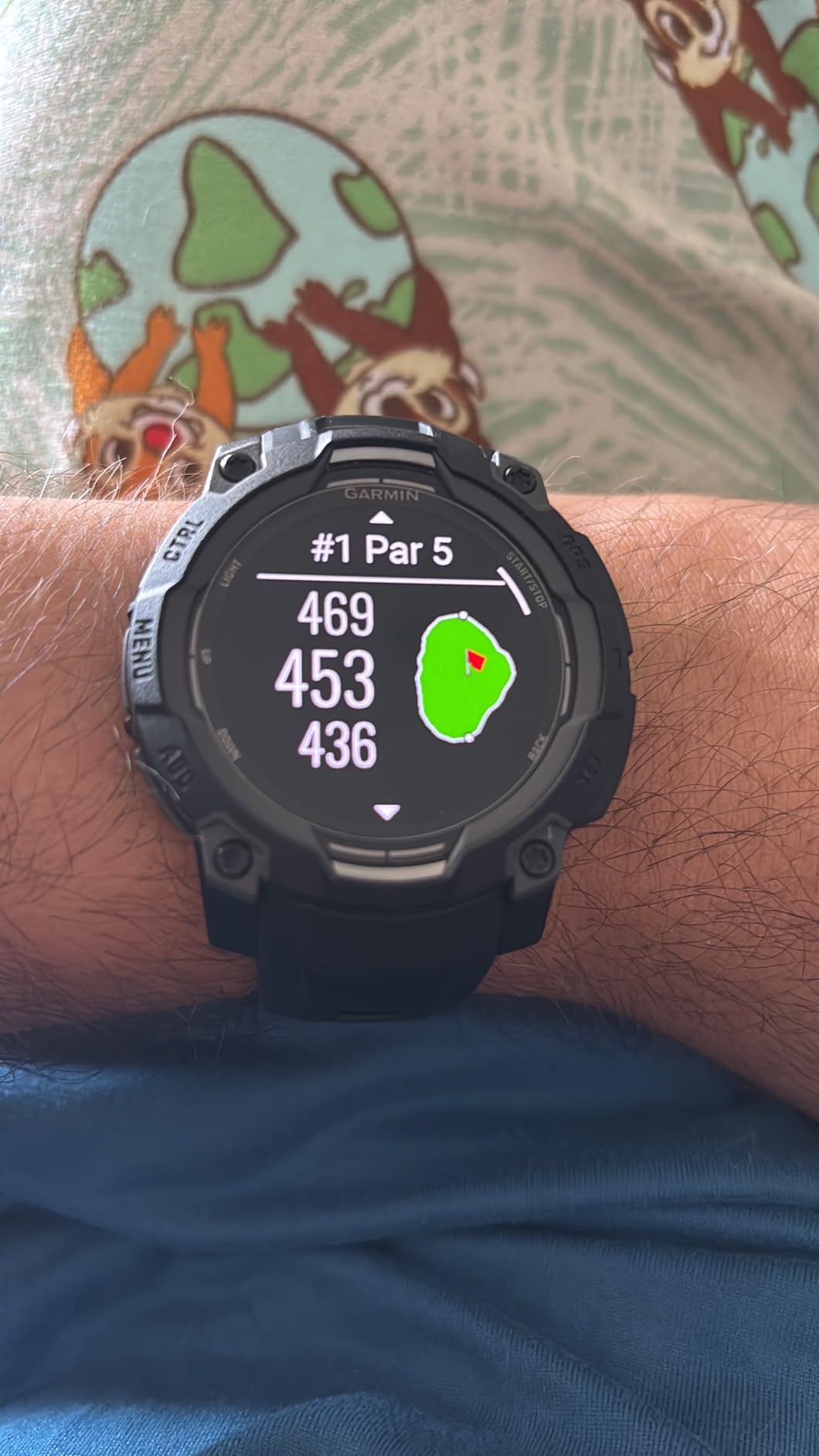
At 53 g it is light for a rugged watch and comfortable to wear all day and through the night. The 45 mm fiber-reinforced polymer case with a metal-reinforced bezel takes drops and rock strikes without complaint, and the flashlight covers night hikes and campsite tasks. The health suite — morning report, stress analysis, Body Battery, sleep and Pulse Ox — is accurate and free of advertising.
Training profiles for running, biking, swimming and strength training make this the most natural pick in the roundup for someone who hikes and runs in the same week. It also pairs well with inReach Mini 2 satellite communicators if you carry one separately, and it syncs to Apple Health.
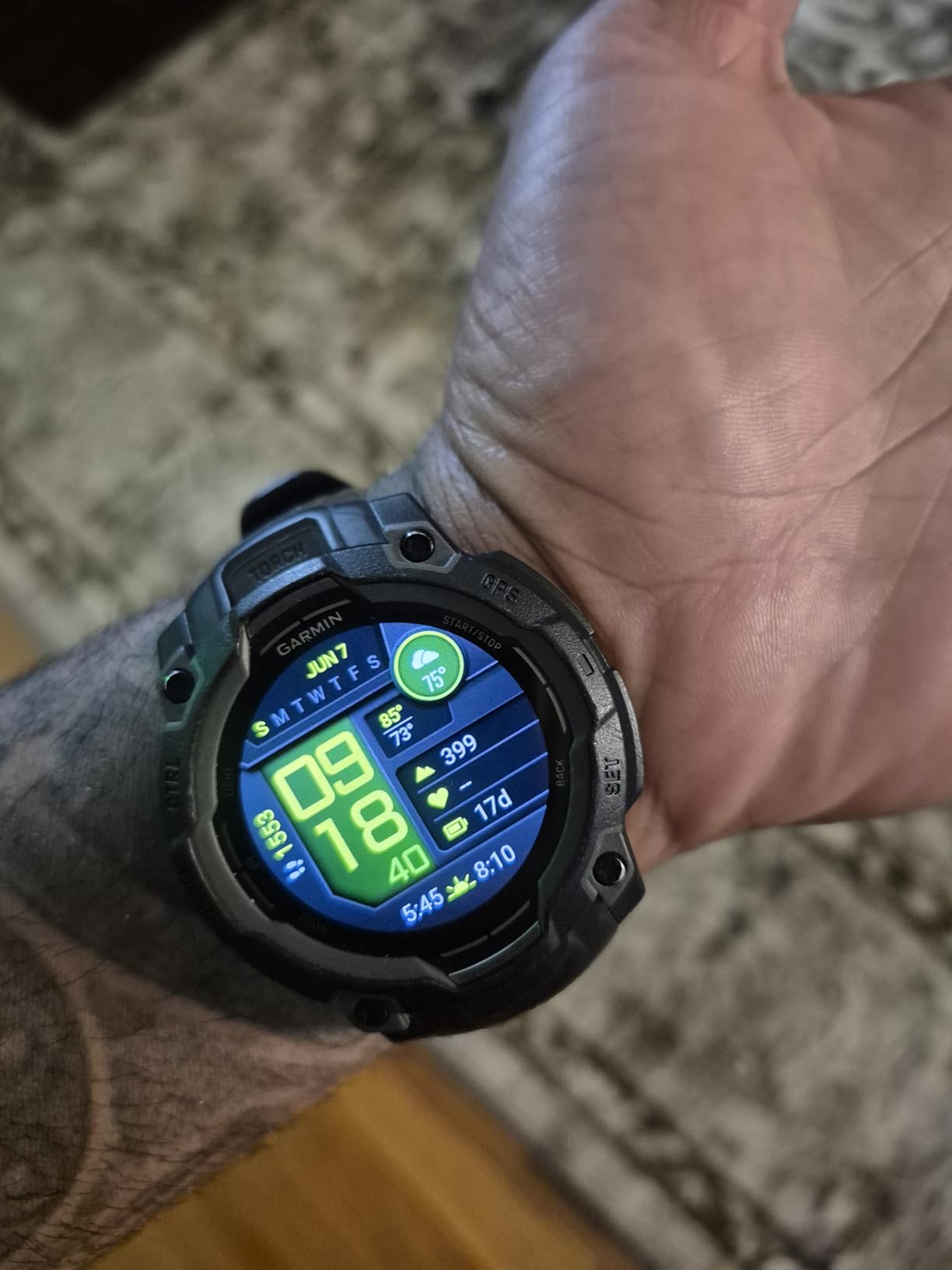
Does the small screen hurt on the trail
Yes, and it is the most common complaint. At 1.2 inches the data field layout and menus feel cramped, which matters when you are trying to read a screen with cold or gloved hands. The 1000-nit maximum brightness is genuinely bright, so the problem is area rather than light level.
The 4 GB of internal storage is another limit — there is no room for onboard topographic maps, and the screen cannot show colour route lines. If you navigate by map rather than by breadcrumb, that is a real gap, not a nitpick.
Who should skip the Instinct 3 AMOLED
Skip it if your hikes are multi-day and you want zero charging anxiety, because owners report real battery life falling well short of the 18-day claim when GPS and all sensors run heavily. The AMOLED panel has no solar option in this configuration.
Also skip it if you want wrist calls or a voice assistant — there is no speaker or microphone. Buyers who want that combination should look at the fēnix 8.
4. Garmin Instinct E Review: The Lightest Rugged Garmin for Day Hiking
- Lightest and most compact rugged Garmin in the Instinct range at 48 g
- Roughly two weeks of battery in normal use
- MIL-STD-810 construction and 10 ATM water rating
- Multi-GNSS plus compass and altimeter cover core hiking navigation
- Connect IQ Store support for apps and watch faces
- 0.9 inch monochrome display is the smallest and least legible in the range
- No touchscreen
- no flashlight and no solar charging
- Navigation limited to breadcrumb tracks with no onboard maps
The Instinct E is the value entry point into the rugged Garmin line, and its defining number is 48 g. That makes it the lightest watch in this roundup by a clear margin, and for hikers who care about every gram and about sleeping in their watch, nothing else here matches it.
You keep the fundamentals: MIL-STD-810 thermal and shock construction, a 10 ATM water rating, multi-GNSS positioning, a 3-axis compass, a barometric altimeter, and up to 16 days of battery in smartwatch mode. Wrist heart rate, advanced sleep monitoring, Pulse Ox and stress tracking are all present. The 300 mAh battery and 128 MB of memory are the budget end of the platform.
Its rating of 4.4 is the second lowest here, and the reviews make the reason clear: nothing about the build or the tracking is weak, but the feature set is stripped down and the screen is small. Buyers arriving from a Fitbit often find the 0.9-inch monochrome panel the hardest adjustment.
The 45 mm case makes it wearable in a way the 50 mm Instinct 2X Solar is not, and at 48 g it disappears on the wrist. For day hiking where the phone stays in the pack and the goal is an accurate track, ABC sensors and reliable data, that combination is genuinely persuasive.
What you give up at this tier
Three things, and they are all on the screen and the navigation side: no touchscreen, no flashlight and no solar charging. Add breadcrumb-only navigation and you have a watch that records and follows tracks but cannot show you a map or light a tent at 2am.
The 0.9-inch display is the smallest and least legible in the Instinct range. If you plan to read data fields at a glance while moving, the step up to the 1.2-inch Instinct 3 AMOLED is worth it.
Who should skip the Instinct E
Skip it for any multi-day trip, because there is no solar charging and roughly two weeks of smartwatch battery translates to far less in continuous GPS mode. Also skip it if you need maps or route guidance, or if you hike after dark without a headlamp.
For a first Garmin on a strict budget, or as a lightweight day-hiking watch, it does the job with fewer compromises than most of the entry-level alternatives from other brands.
5. Garmin fenix 7X Pro Sapphire Solar Review: Best for Mapping With a Sapphire Solar Lens
Garmin fēnix 7X Pro Sapphire Solar, Multisport GPS Smartwatch, Built-in Flashlight, Solar Charging Capability, Black
- Power Sapphire lens is genuinely scratch-resistant and self-charging
- Built-in flashlight plus extensive topographic mapping suit backcountry hiking
- Titanium bezel and rear cover add real durability
- Advanced analytics including hill score
- endurance score and running power
- Full health suite with HRV status
- Pulse Ox and detailed sleep
- Very large 51 mm case at 89 g compared with the Instinct line
- Touchscreen and solar add bulk without improving monochrome clarity
- Menus and settings are dense with a learning curve
The fēnix 7X Pro Sapphire Solar sits in the middle of the Garmin ladder: full mapping and multi-band GPS, but without the connectivity features the newer fēnix 8 adds. For a hiker who wants a map on the wrist and a lens that will not scratch, it is a serious proposition.
Mapping is the headline. With 32 GB of storage and preloaded TopoActive maps, you get full-colour topographic navigation, Up Ahead prompts for upcoming trail features, and the ability to install additional map regions ahead of a trip. Combined with a 3-axis compass, barometric altimeter, multi-band GPS and SatIQ, this is the watch to buy if you navigate by terrain rather than by breadcrumbs.
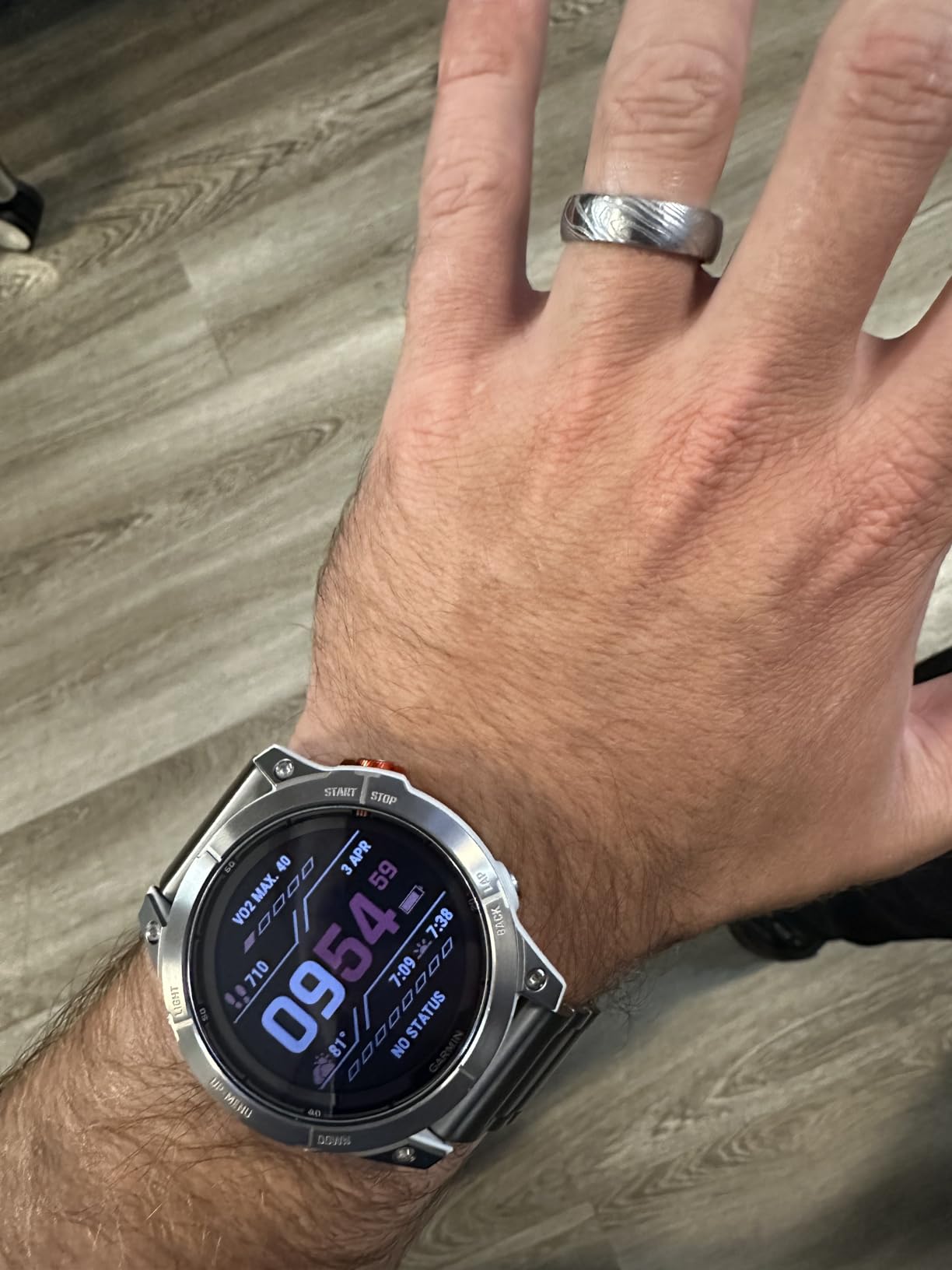
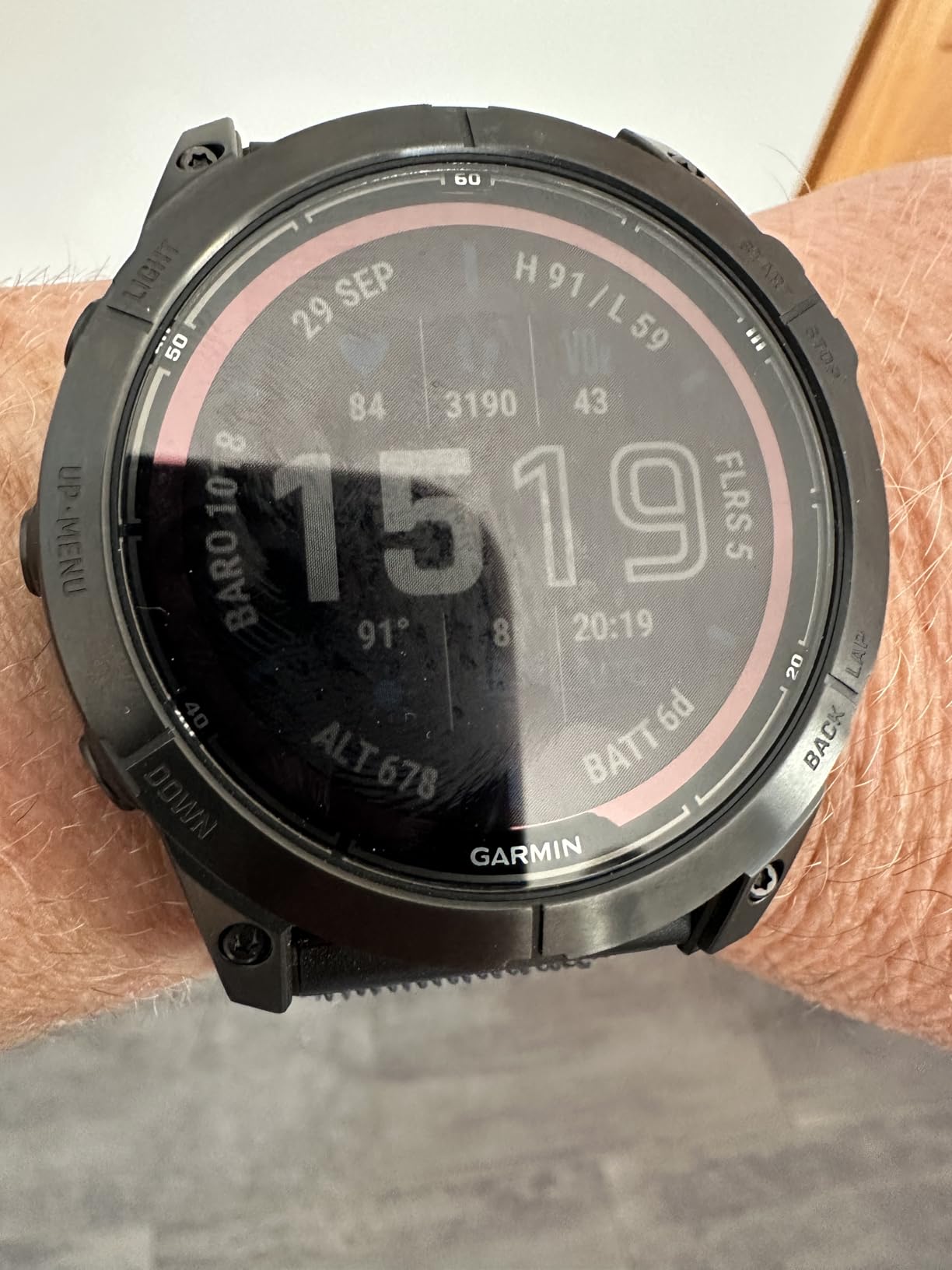
The Power Sapphire lens is solar-charged and scratch-resistant, which means weeks of battery in smartwatch mode and a surface that shrugs off rock and brush. A built-in LED flashlight with variable intensity and strobe modes handles night navigation. The 1.4-inch transflective display is 480 x 272, bright and readable in sun, though monochrome.
Training analytics are genuinely hiking-relevant here: hill score measures running strength and endurance on ascents, endurance score combines training across pursuits, and wrist-based running power helps pace long climbs. Morning report, training readiness and HRV status fill out a 24/7 health suite with advanced sleep monitoring.
Solar charging versus the AMOLED fēnix 8
This is the fork the AI Overview on this query leaves unresolved, so here is the direct answer. Solar transflective displays are dimmer and monochrome, but they run for weeks in sun and are readable in harsh glare. AMOLED gives you colour, a brighter panel and a far better menu experience, but it drains faster and this configuration has no solar option at all.
If your trips are multi-day and the display is a data readout, solar wins. If you want to read a colour map with detailed contour lines at a junction, the fēnix 8 AMOLED wins and you will accept a charging routine.
Who should skip the fenix 7X Pro Sapphire Solar
Skip it if case size is a problem. At 51 mm and 89 g it is bulky, and reviewers note the solar lens and touchscreen add bulk without improving the monochrome screen’s clarity. It is also a heavy watch to sleep in.
It also lacks the speaker, microphone and offline voice commands the fēnix 8 provides. If you want wrist calls, or if you are moving up from the original Instinct, the fēnix 8 is the more logical destination.
6. Garmin fenix 8 51mm Review: The Best Flagship Hiking and Trekking Watch
- 29 day smartwatch battery and 84 hour GPS battery
- among the longest in the range
- Bright large 1.4 inch AMOLED touchscreen readable outdoors
- Built-in speaker and microphone for wrist calls and voice replies
- Training load
- stamina tracking and readiness metrics for endurance hikers
- Multi-band SatIQ plus dynamic round-trip routing
- 40 m dive rating with leakproof metal buttons
- Very large and heavy at 51 mm and 102 g
- uncomfortable for sleep and smaller wrists
- No solar charging in this AMOLED configuration
- ECG app and several health features are region-restricted
The fēnix 8 is Garmin’s flagship adventure watch, and it is the model that answers the question hikers ask most often: which Garmin has maps on the wrist. Thirty-two gigabytes of storage, full-colour TopoActive maps and dynamic round-trip routing make it the complete navigation answer in this roundup.
Dynamic round-trip routing is the feature hikers notice first. You set a target distance and the watch continuously recalculates a way home that matches it, so if you extend a ridge walk or take a wrong fork it still brings you back on schedule. Paired with multi-band GPS, a 3-axis compass, gyroscope and barometric altimeter, positioning stays solid in the terrain where cheaper watches drift.
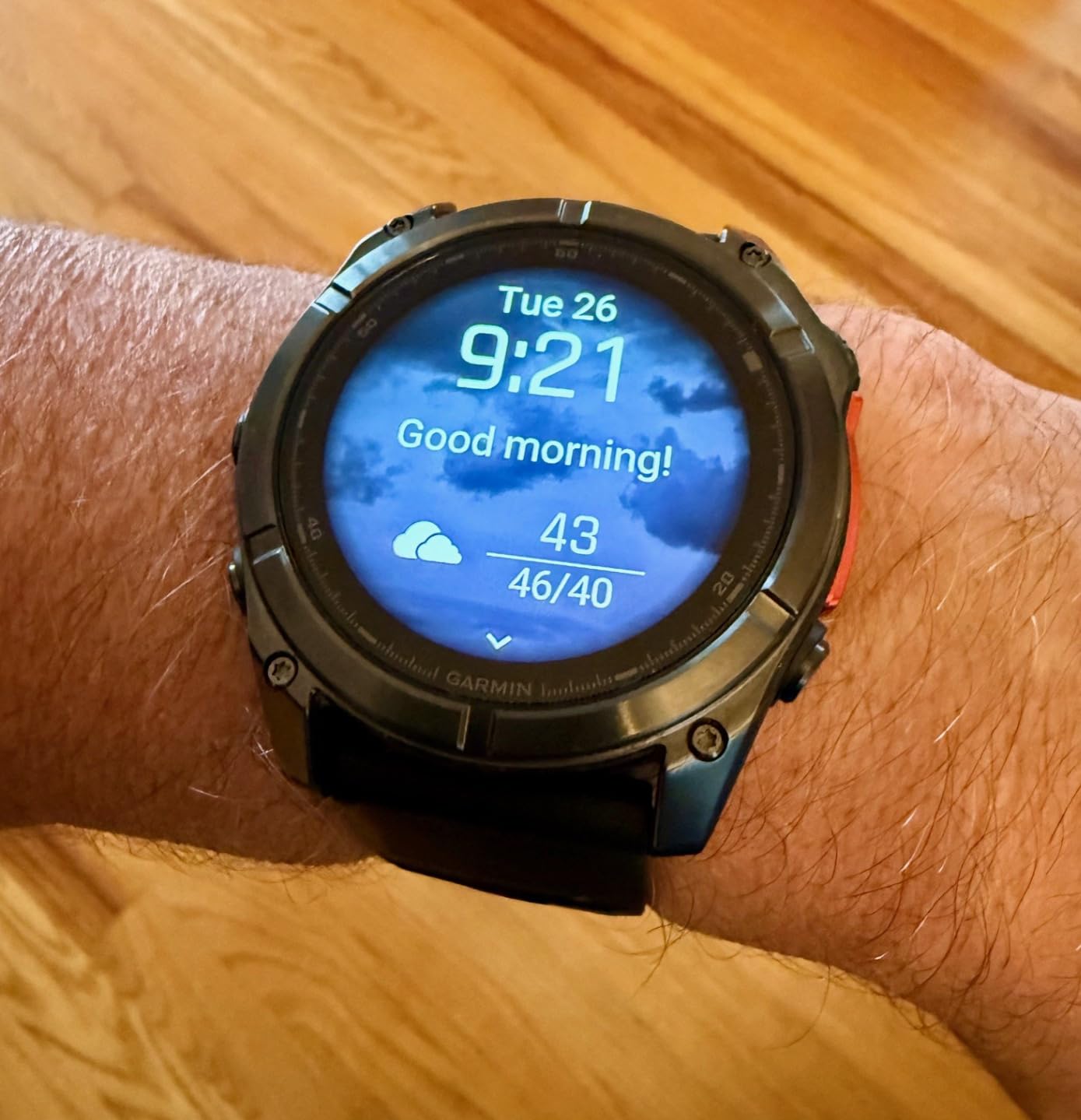
Battery is the quiet headline. Up to 29 days in smartwatch mode and 84 hours in GPS mode is among the longest in the Garmin range, and owners confirm that endurance in real use. That single charge covers a week of full-day hiking with the GPS recording the whole way.
The 1.4-inch AMOLED touchscreen is bright and large enough to read a map with gloves on, and the stainless steel bezel adds weight you can feel. The built-in speaker and microphone handle calls from the wrist and off-grid voice commands, which is the feature set that finally makes these watches useful as a standalone device rather than a phone accessory.
How big is too big
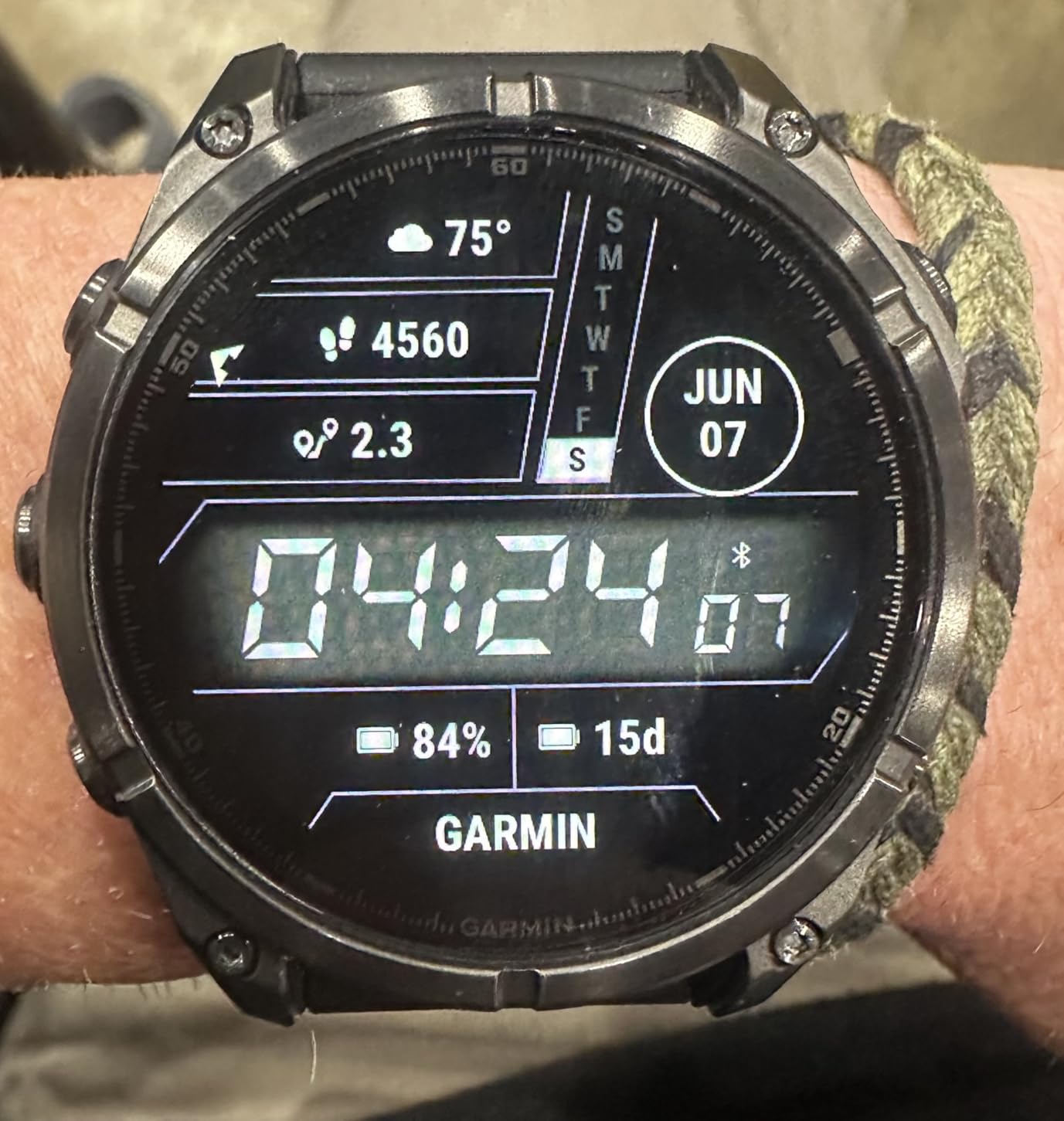
At 51 mm and 102 g this is the heaviest watch in the roundup, and it is the dominant complaint in reviews. Owners say it is uncomfortable for sleep and awkward on smaller wrists, and that the speaker and mic add bulk to an already oversized case. It is a serious watch for a serious wrist.
Wearing it overnight matters more for hikers than it does for desk workers, because sleep tracking and overnight recovery data feed directly into the training readiness score that multi-day hikers use to pace themselves. If you need that data and cannot sleep in the watch, look at the 45 mm Instinct 3 AMOLED instead.
Who should skip the fenix 8 51mm
Skip it if the price only makes sense to you with mapping and offline navigation as priorities — reviewers call that out directly. The AMOLED version has no solar charging, so it needs a regular charging routine that a solar model would not.
Also skip it if you want standalone satellite messaging. That is the fēnix 8 Pro’s job, and it is the one meaningful functional step up from this model.
7. Garmin fenix 8 Pro Review: Best for Satellite Safety on Remote Routes
Garmin fēnix® 8 Pro, 51mm, Sapphire, DLC Titanium, Black/Pebble Gray
- Built-in inReach satellite messaging and LTE make it a standalone communicator
- Sapphire lens and DLC titanium case give top-tier scratch and durability resistance
- Bright 1.4 inch AMOLED at 454 x 454 resolution
- TopoActive maps with relief shading plus full training analytics
- Long 27 day battery relative to the feature set
- Satellite and LTE features require a paid subscription and have coverage limits
- Messaging and some features are restricted in certain jurisdictions
- Large 51 mm titanium case at 90 g is heavy for all-day and sleep wear
- Steep learning curve for the satellite setup
The fēnix 8 Pro is the only watch in this roundup that can talk to someone when there is no signal. Built-in inReach lets you send two-way satellite messages and trigger an interactive SOS to the Garmin Response coordination centre for 24/7 assistance, and LTE connectivity lets you leave the phone behind entirely — messages, voice calls, LiveTrack and the Garmin Messenger app all work from the wrist.
That changes the risk calculation on genuinely remote routes. Owners who use it in the backcountry value being able to check in and raise an alarm without a paired phone, and on multi-day trips where a dead phone becomes an emergency, that is worth planning around.
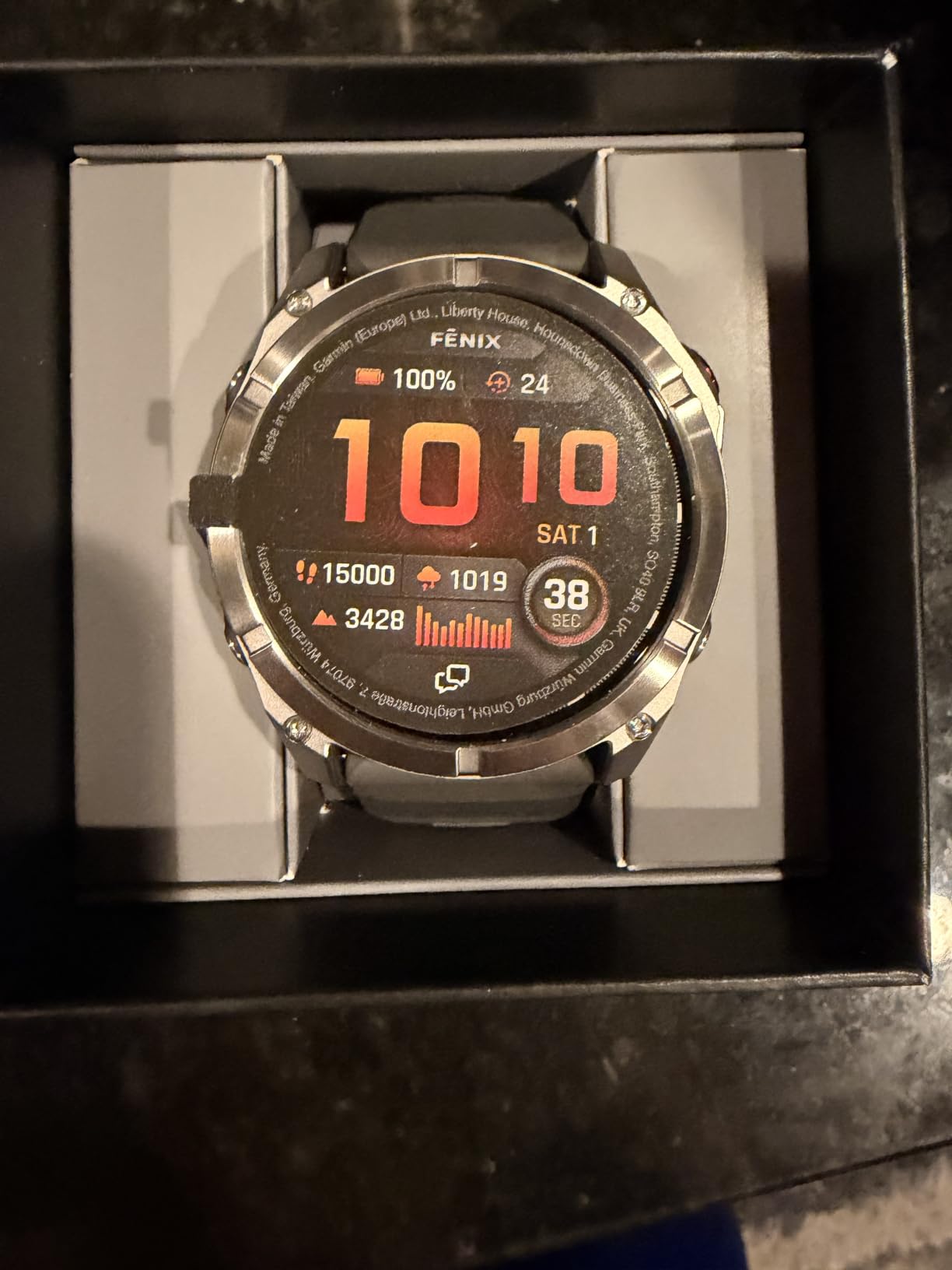
The hardware is the top of the Garmin line: a scratch-resistant sapphire lens on a 1.4-inch AMOLED touchscreen at 454 x 454, a DLC titanium bezel and case, 32 GB of storage for TopoActive maps with relief shading, a built-in LED flashlight, a 40 m dive rating and leakproof metal buttons. The 27-day battery holds up relative to that feature set.
Health and training coverage matches the fēnix 8 with HRV status, an ECG app, advanced sleep and Pulse Ox. A note on region restrictions: the ECG app and some health features are not available in every country, which is a common review complaint across Garmin’s flagship models.
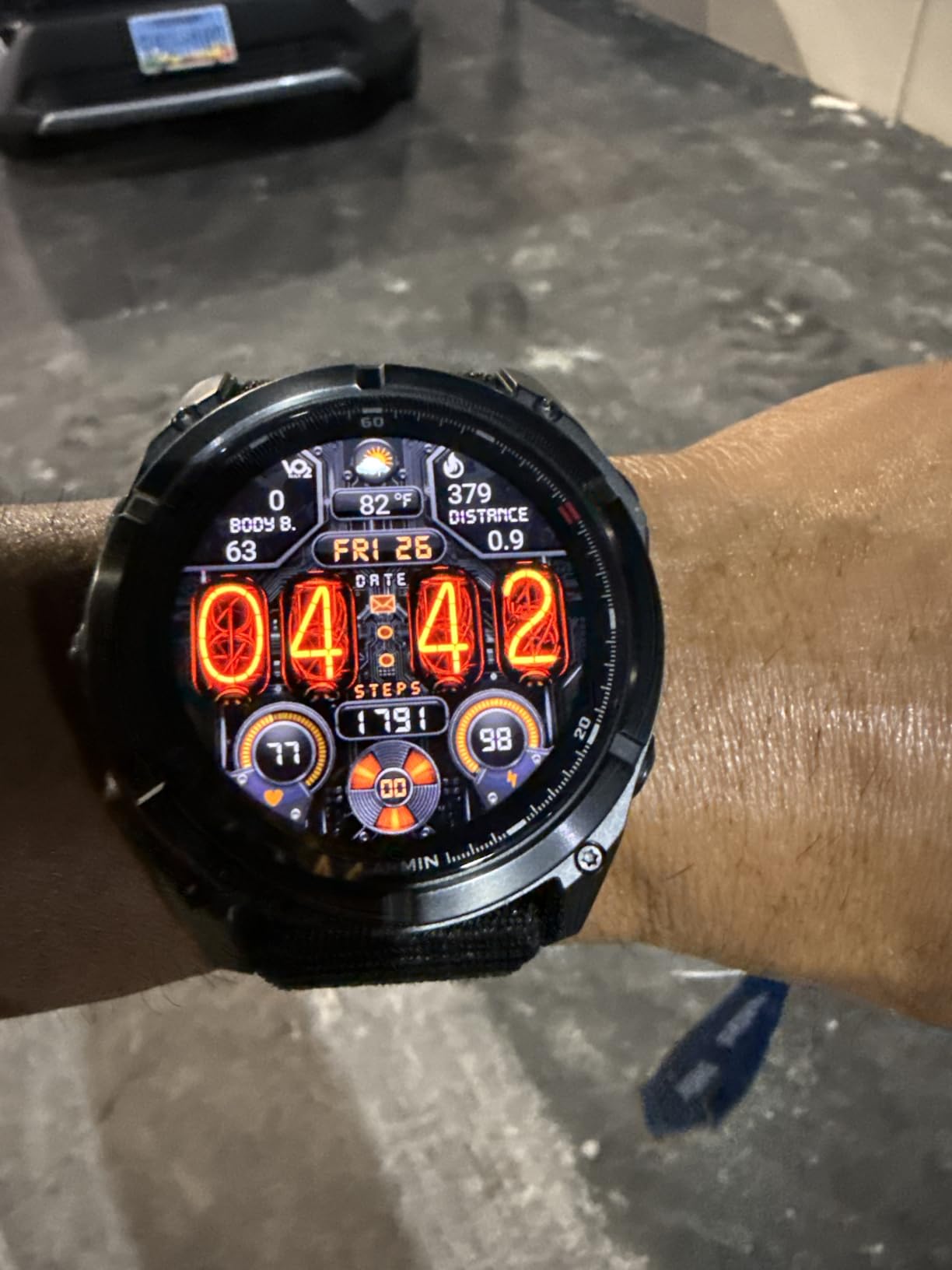
What the inReach subscription actually changes
Satellite messaging and LTE on this watch need an active subscription, and coverage is limited to where the satellite network actually reaches. Reviewers are clear that the ongoing cost, not the hardware, is what gives this model its 4.4 rating alongside the weight and the setup curve.
For a hiker on routes with real dead zones, that is a cost worth paying. For someone on maintained trails a few kilometres from a road, it is money spent on a feature they will never trigger, and the fēnix 8 gives up nothing they would miss.
Who should skip the fenix 8 Pro
Skip it if your routes stay in cell coverage, and skip it if you are unwilling to manage a subscription and learn the satellite setup. At 51 mm and 90 g it is still a heavy watch to wear overnight, and reviewers flag the initial configuration process as steep.
It is also the most expensive watch in the roundup by a wide margin, and a lower rating than the fēnix 8 at that tier reflects how much of the cost sits in connectivity rather than hiking capability.
8. Garmin Enduro 3 Review: The Best Garmin Watch for Ultra-Endurance Hiking
Garmin Enduro™ 3, Solar, 51 mm, Sapphire, Black UltraFit Nylon Strap
- Unmatched battery with up to 90 days smartwatch and 320 hours in GPS mode
- Exceptionally light at 63 g for a 51 mm titanium watch with a comfortable UltraFit nylon band
- Sapphire lens and titanium bezel built for abrasive trail conditions
- Preloaded TopoActive maps and dynamic round-trip routing suit long backcountry days
- Real-time stamina tracking with ultrarunner
- cyclist and hiking workouts
- 280 x 280 display resolution makes data fields and maps less legible than AMOLED rivals
- Solar charging needs consistent direct sun to hit quoted figures
- No touchscreen so navigation relies on buttons and the rotating bezel
- 1.4 inch non-colour display looks dated beside fēnix 8 models
The Enduro 3 exists to solve a single problem, and it solves it completely: how to hike for weeks without a charging cable. Up to 320 hours in GPS mode with solar charging and an always-on display, and up to 90 days in smartwatch mode. That is the highest GPS-mode figure of any watch in this roundup by a factor of four.
The surprising part is the weight. At 63 g it is the second-lightest watch here despite having a 51 mm case, because the UltraFit nylon band replaces silicone and the titanium bezel is kept to the bezel rather than the full case. For long-distance comfort that combination works — this is the watch most at home on a multi-week traverse.
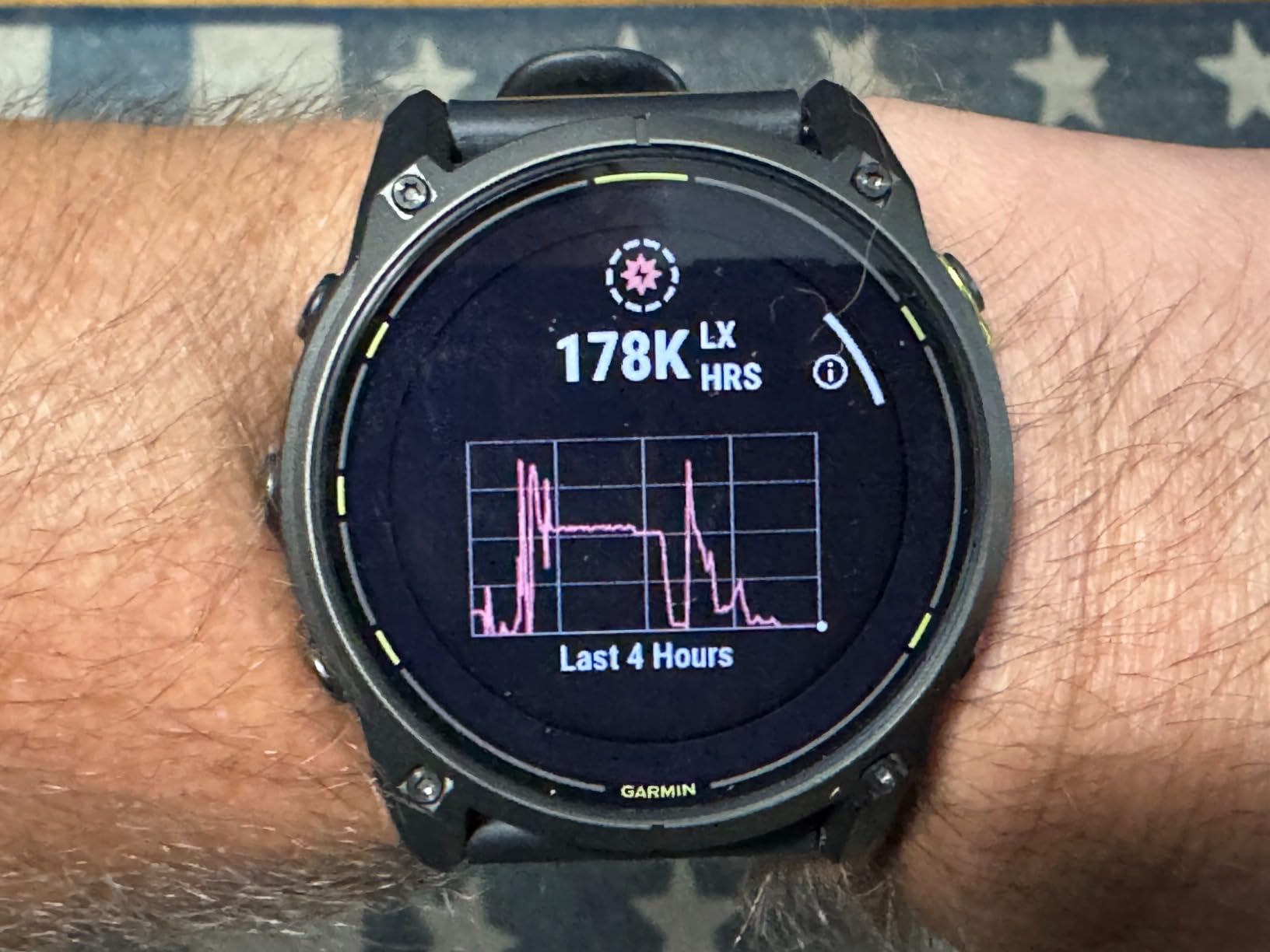
Navigation is not the reason to buy it. You get preloaded TopoActive maps optimised for outdoor use, multi-GNSS across GLONASS, GPS and Galileo, dynamic round-trip routing and a built-in LED flashlight, which is enough to run a multi-day route without a phone. It is not full-colour mapping in the way the fēnix 8 delivers it.
Training features are aimed squarely at ultra-endurance work: real-time stamina tracking, targeted strength plans and sport-specific workouts for ultrarunners, cyclists and hikers. The sapphire lens and titanium bezel are built for abrasive trail conditions, and the 100 m water rating is standard for the category.
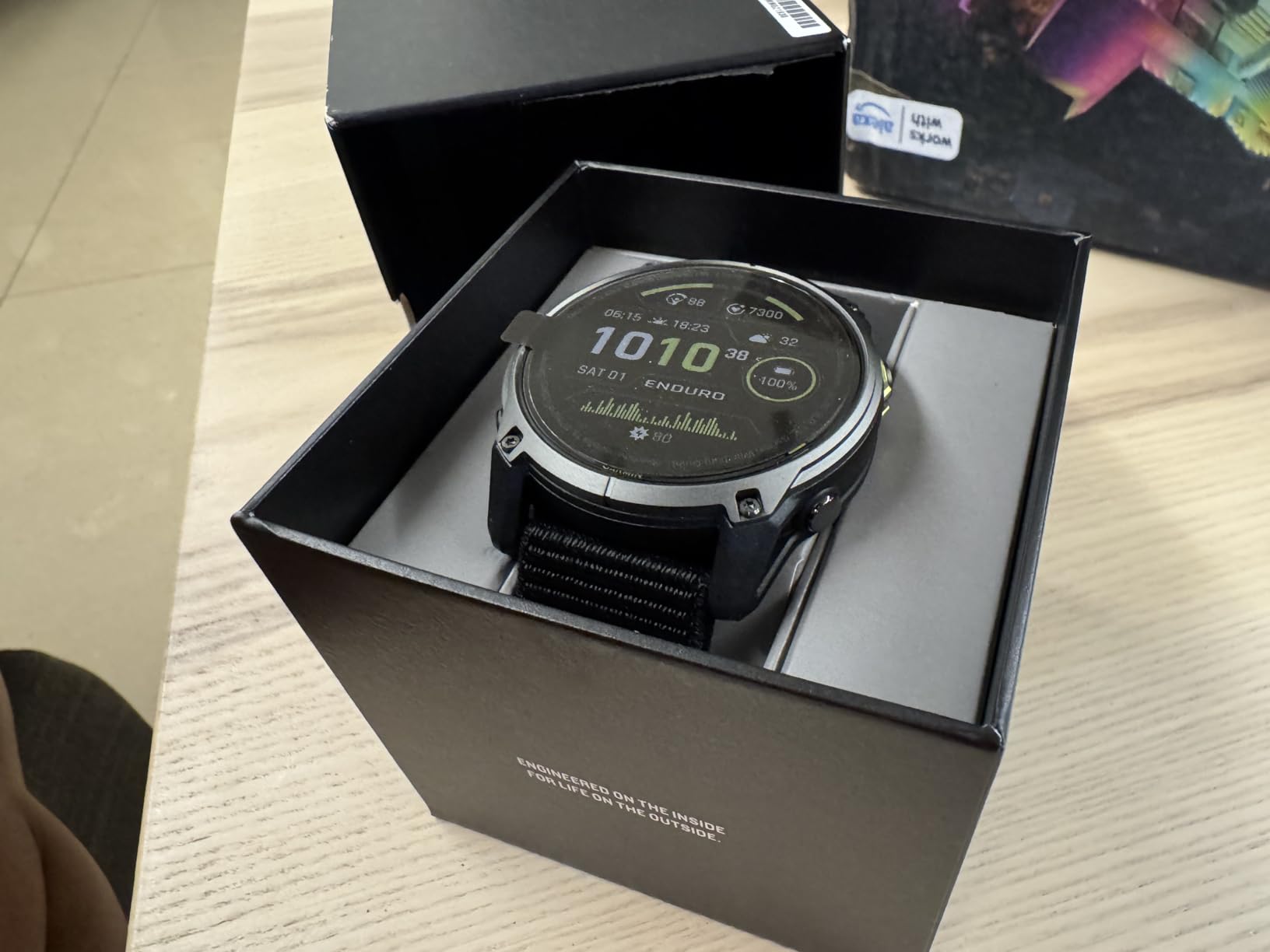
Reading the 320-hour figure honestly
That number depends on solar exposure. Reviewers are consistent that the quoted figures require consistent direct sunlight, and the battery benefit shrinks for hikers who start at dusk, walk with the watch in a sleeve, or hike under heavy cloud. Even discounted, no other watch here comes close, and the UltraTrac-style low-power modes extend it further.
For a through-hike where the only priorities are following the trail and recording the hike, this is the watch that removes charging from your planning entirely. Enduro is often perceived as oversized for everyday wear, and the 51 mm case supports that, though at 63 g it is lighter than most watches of that size.
Who should skip the Enduro 3
Skip it if you care about screen quality. The 280 x 280 non-touch display is the weakest spec in this roundup, and reviewers consistently describe data fields and maps as less legible than modern AMOLED rivals. Navigation runs on buttons and the rotating bezel.
Skip it if your hikes are day hikes. You would be paying a premium for endurance capability you never use, and a lighter watch with a colour screen serves you better.
9. Garmin Instinct 2 Solar Review: Best Compact Solar Rugged Watch
- Solar charging gives effectively unlimited battery in smartwatch mode with 3 hours of sun
- Compact 45 mm case at 52 g is one of the lighter rugged Garmin watches
- Multi-GNSS with 3-axis compass
- barometric altimeter and Tracback routing
- Fiber-reinforced polymer case with scratch-resistant Gorilla glass
- Full health suite including Pulse Ox
- sleep score and Body Battery with no subscription
- Monochrome non-touch display with no flashlight and no onboard topographic maps
- GPS battery limited to roughly 48 hours even with solar charging
- Solar benefit drops off when most outdoor time is in the evening
- Older generation with 16 MB of memory and a dated interface
The Instinct 2 Solar is frequently called the best-value rugged Garmin for hikers who want near-unlimited battery without stepping up to a touchscreen. At 45 mm and 52 g it is one of the most wearable watches in the range, which matters more for all-day hiking than any spec sheet.
Solar charging gives unlimited battery life in smartwatch mode with three hours of 50,000 lux sunlight per day, and up to 48 hours in GPS mode with continuous solar in direct sun. That 48-hour figure is the practical limit for multi-day trips and the reason most owners of this model stick to weekend hiking.
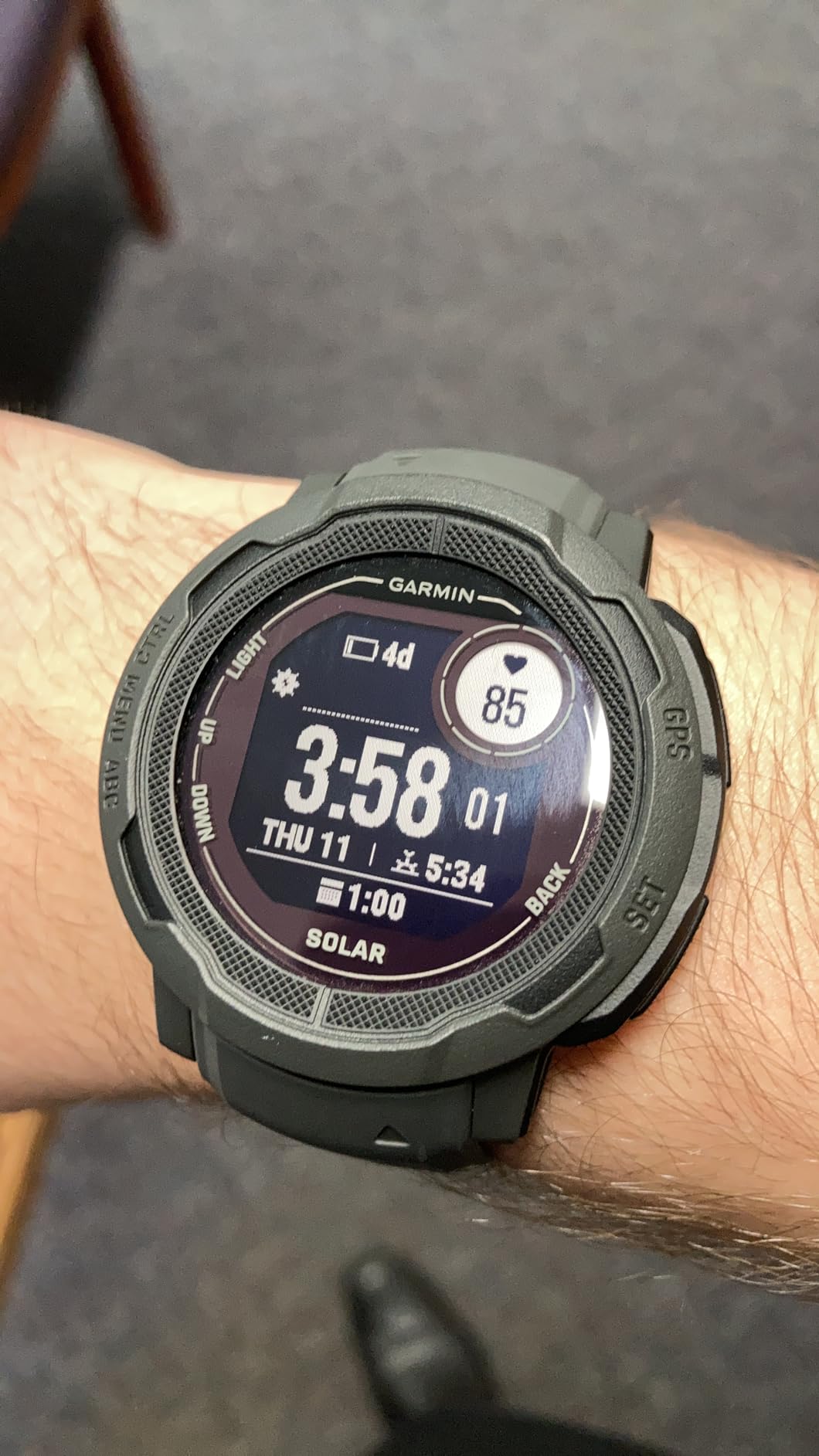
Navigation is multi-GNSS across GPS, GLONASS and Galileo with a 3-axis compass, barometric altimeter and Tracback return-to-start routing. There are no onboard topographic maps, so this is breadcrumb navigation, and the monochrome transflective display is not touch-sensitive. Every menu interaction runs through the buttons.
Durability is the strong suit: a fiber-reinforced polymer case with scratch-resistant Gorilla glass rated to 100 m, thermal- and shock-resistant. The health suite is complete and free — Pulse Ox, sleep score, Body Battery, stress and fitness age — and Connect IQ Store apps are supported.
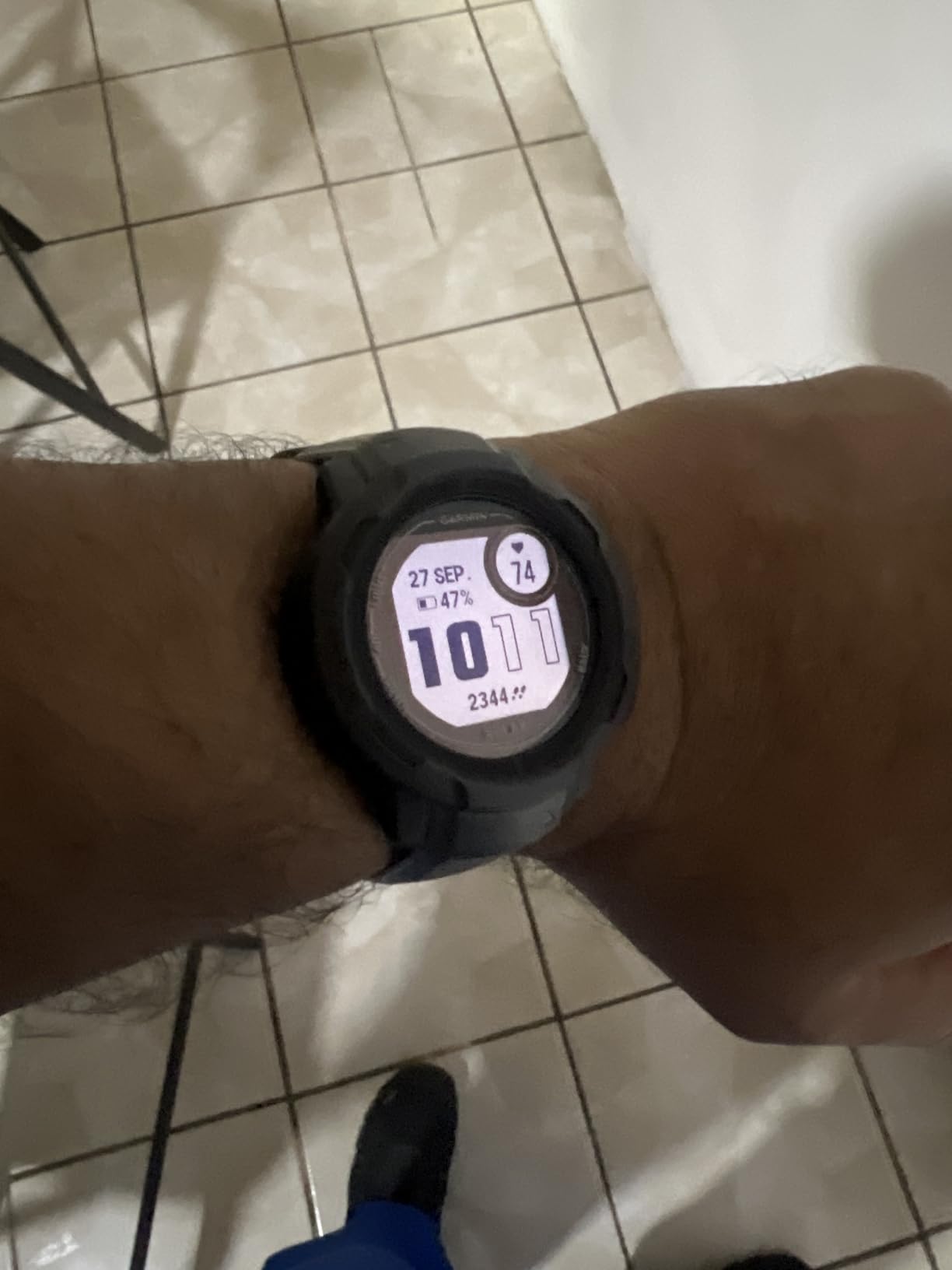
Where the solar benefit actually applies
Owners are clear-eyed about the limitation: the solar benefit drops off sharply if most of your outdoor time is in the evening or under heavy cloud. If you hike at dawn in summer or spend daylight hours on exposed trail, the panel meaningfully extends runtime. If you are a night walker, it is decoration.
The power manager is the practical tool here — it shows how each setting and sensor affects battery life, so you can trade features for hours on a long trip. That visibility is genuinely useful in the field.
Who should skip the Instinct 2 Solar
Skip it if you want a flashlight or a touchscreen — it has neither — and skip it if you need more than about two days of continuous GPS. The 16 MB of internal memory also means a dated interface compared with the Instinct 3 AMOLED.
It remains a strong pick as a compact, light, solar, no-fuss watch for weekend hiking, and it is the model most hikers end up buying first.
10. Garmin tactix 8 Solar Review: Best for Tactical, Ballistic and Aviation Use
Garmin tactix® 8 Solar, Premium Tactical GPS Smartwatch, 51mm
- Exceptional battery with up to 48 days in smartwatch mode and 149 hours in GPS with solar
- Deep tactical feature set including Applied Ballistics
- rucking
- jumpmaster
- stealth mode and kill switch
- Full aviation suite with a worldwide dynamic moving map
- NEXRAD weather and airport information
- Titanium bezel with scratch-resistant sapphire lens
- Built-in flashlight
- night-vision compatibility and dual-position GPS format
- Very expensive relative to the general-purpose fēnix line
- Heavy 51 mm titanium case at 95 g
- Small 256 x 144 resolution despite the AMOLED panel
- Tactical and aviation features add menu complexity casual users find overwhelming
- ECG and Pulse Ox are region-restricted
The tactix 8 Solar is the most specialised watch in this roundup. It is built for military, law-enforcement, aviation and long-range ballistics users, and if your hiking involves a rifle, an aircraft or an organised unit, the features here are unmatched in Garmin’s catalogue.
The Applied Ballistics solver comes preloaded and works with the AB Quantum mobile app for managing profiles and targets, and you can use a smartphone as an additional display. Around that sit jumpmaster, waypoint projection, a dual-position GPS coordinate format, stealth mode, a kill switch, a rucking activity and night-vision-goggle compatibility. For anyone who has used those features on other Garmin models, they are simply the best implementation.
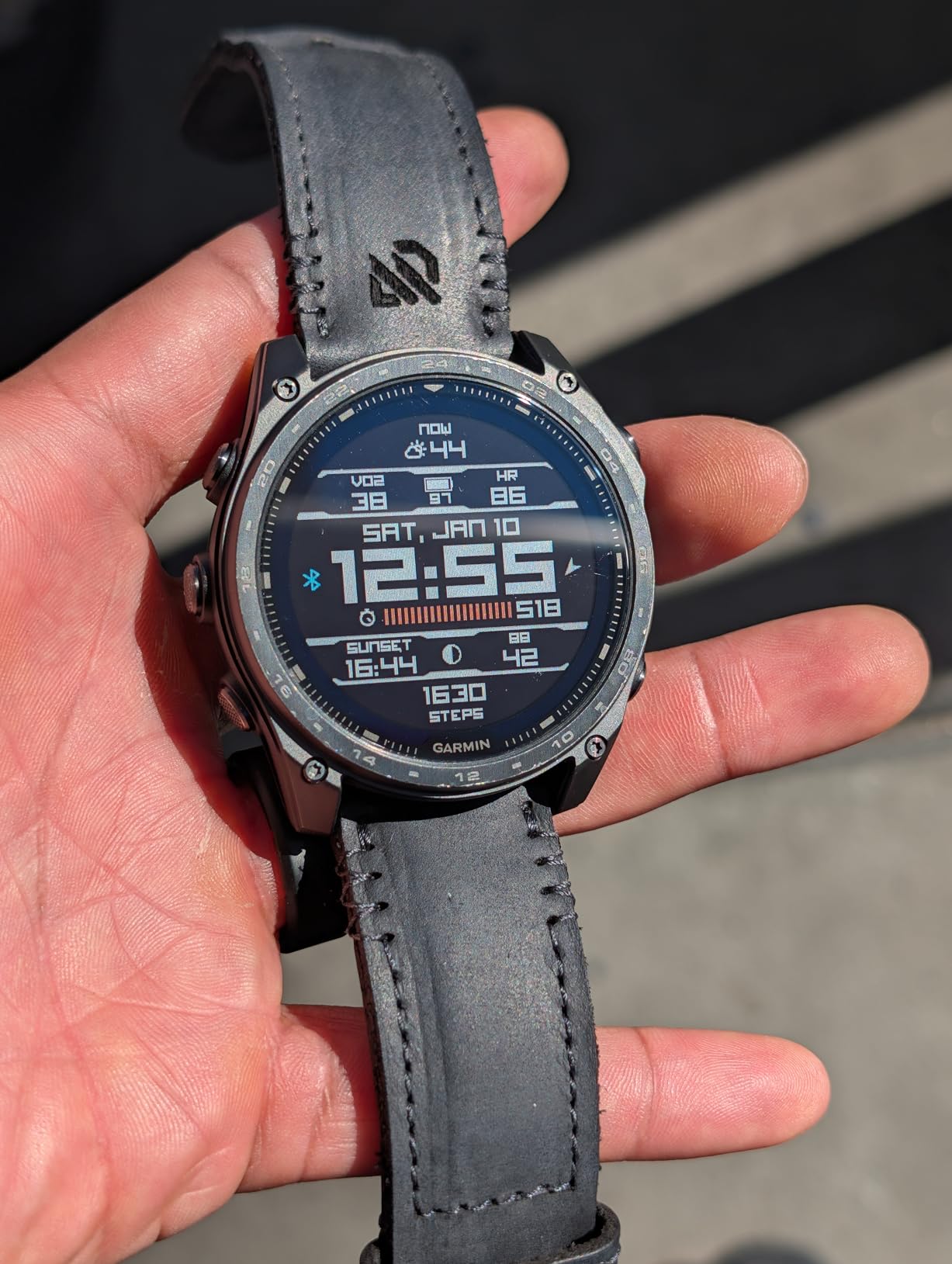
For hikers specifically, the mapping and battery are excellent. Preloaded TopoActive maps with relief shading, multi-band GPS with SatIQ, a 3-axis compass, gyroscope and barometric altimeter, 32 GB of storage and a built-in LED flashlight. Battery figures of up to 48 days in smartwatch mode and 149 hours in GPS with solar charging sit second only to the Enduro 3 in this list.
The full aviation navigation system is a genuine differentiator — a worldwide dynamic moving map, GPS navigation, NEXRAD weather display and airport information on the wrist. A 40 m dive rating with scuba and apnea support and leakproof metal buttons round out the physical specification, alongside a titanium case and sapphire lens on a 1.4-inch solar AMOLED touchscreen.
Is the tactical feature set worth it for a hiker
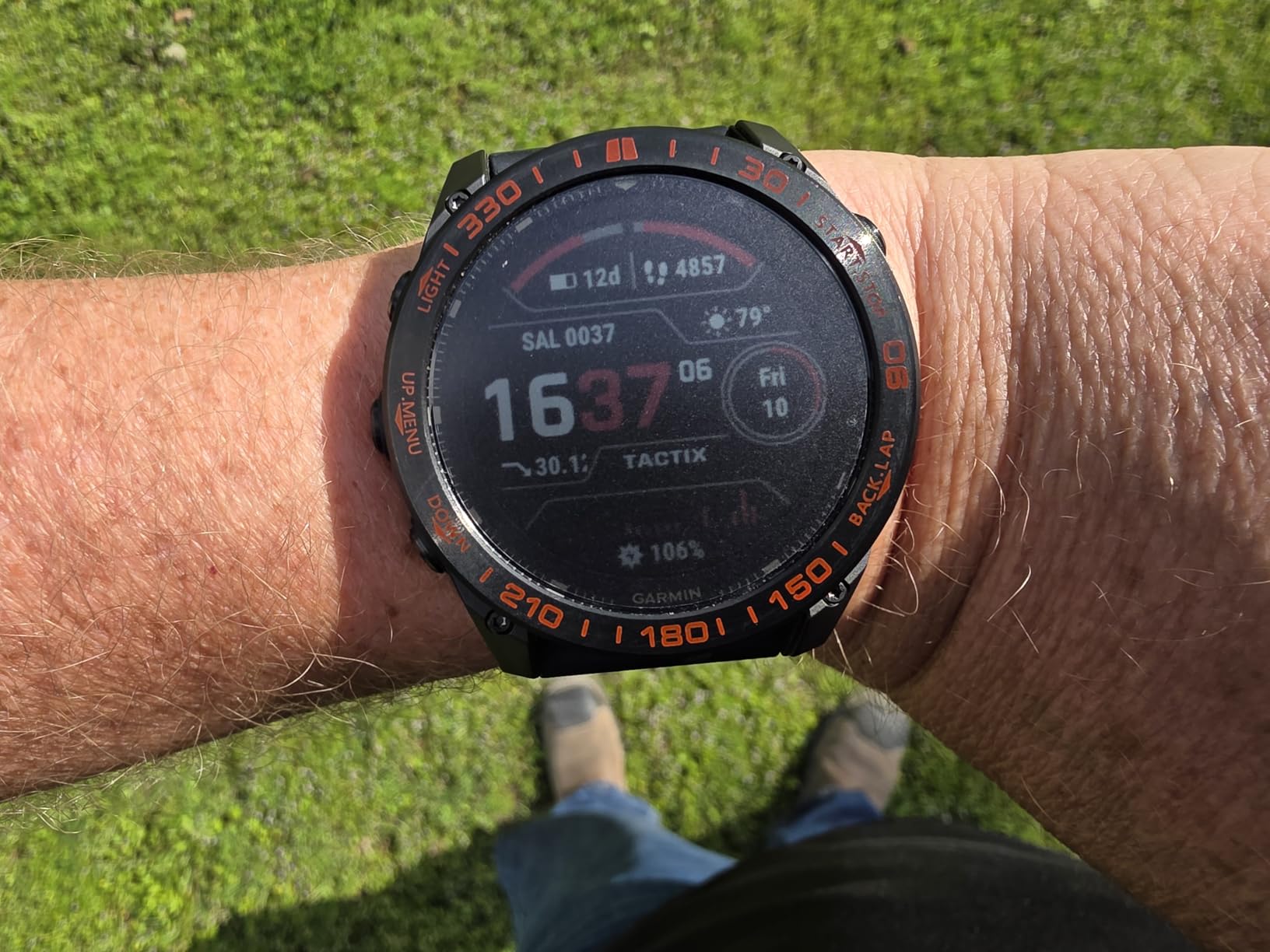
Only if you will use it. Applied Ballistics, rucking, stealth mode and the kill switch are superb for their intended audience and dead weight on a trail walk. Reviewers frequently note that the menu complexity overwhelms casual users, and the 256 x 144 display resolution is the weakest in the roundup despite the AMOLED panel — a real limitation when you are reading a moving map.
The 51 mm titanium case at 95 g is heavy for overnight wear. The review base is also small at 94 ratings, so long-term reliability data is thinner than for the models above it.
Who should skip the tactix 8 Solar
Skip it if you are a civilian hiker with no ballistics, aviation or unit requirement — you would pay a large premium for menus you will never open. Skip it if screen legibility on a moving map matters, and skip it if you need to sleep in the watch.
Anyone who just wants the solar endurance should buy the Enduro 3 for a fraction of the cost and a far better weight-to-battery ratio.
How to Choose a Garmin Hiking Watch in 2026
Match the watch to your hike length
Day hikers can get away with anything that records a track and holds a charge for a weekend. The deciding feature is comfort and readability, which is why the 45 mm and 48 g models suit them so well.
Multi-day and thru-hikers need two things most people underrate: a GPS-mode battery measured in more than 48 hours, and solar charging so the watch never becomes a charging problem. That points at the Enduro 3, the Instinct 2 Solar or the Instinct 2X Solar. If your trip is a week or longer and you want zero charging, the Enduro 3 is the only one here that makes that realistic.
Expedition and mountaineering hikers should add multi-band GPS for accuracy in steep terrain, and consider a satellite communicator. Solo routes in genuine dead zones are the case where the fēnix 8 Pro’s inReach is worth its subscription.
Which Garmin watches have maps on the wrist
This is the single most common question on hiking forums, and the answer is blunt: only four of the ten watches here store topographic maps. The fēnix 7X Pro Sapphire Solar, the fēnix 8, the fēnix 8 Pro, the Enduro 3 and the tactix 8 all ship with 32 GB of storage and preloaded TopoActive maps, several with relief shading.
Everything else navigates by breadcrumb. The Instinct line — the original, 2X Solar, Instinct 2 Solar, Instinct 3 AMOLED and Instinct E — will follow a line you have already walked and reverse a route with Tracback, but it cannot show you contour lines, trails or a junction ahead of time. The Instinct 3 AMOLED has only 4 GB of storage, so maps are not possible on it at all.
That is the entire reason the price ladder exists. You are buying storage and a colour screen, and the jump from an Instinct to a fēnix is a jump in mapping capability rather than in ruggedness.
Multi-band GPS versus multi-GNSS
These are different things and are often confused. Multi-GNSS means the watch listens to several satellite constellations at once — GPS, GLONASS, Galileo — which improves how quickly it locks on and how it behaves under partial obstruction. It is present on the original Instinct and most of the line.
Multi-band goes further by receiving two different frequency bands simultaneously, which holds accuracy in the places that defeat ordinary GPS: deep valleys, dense canopy, steep canyon walls and urban canyons. The Instinct 2X Solar, Instinct 3 AMOLED, fēnix 7X Pro, fēnix 8, fēnix 8 Pro and tactix 8 all use multi-band. The Enduro 3 and the original Instinct list multi-GNSS only.
SatIQ, on the Instinct 3 AMOLED, the fēnix 7X Pro, the fēnix 8, the fēnix 8 Pro and the tactix 8, switches between single-band and multi-band automatically to balance accuracy against power draw. That is how you get multi-band accuracy on an AMOLED watch without losing the battery.
Solar transflective versus AMOLED
Solar MIP and transflective displays are dimmer and monochrome, but they run for weeks in sun, stay readable in direct glare and cost less. AMOLED gives you colour, a brighter panel and touch input, at the cost of significantly more power and no solar option in the fēnix 8’s configuration.
The practical rule: if you want colour maps and touch menus, accept charging. If you want weeks of battery and do not need colour, take solar. The Enduro 3 and Instinct 2 Solar are the extremes of the solar end; the fēnix 8 and tactix 8 are the AMOLED end.
Case size, wrist fit and weight
The most common complaint across reviews of the larger models is not a spec, it is size. The fēnix 8 is 51 mm and 102 g, which owners describe as uncomfortable for sleep and awkward on smaller wrists. Sleep matters to hikers because overnight recovery data feeds the training readiness score that paces multi-day trips.
The Instinct E at 48 g and the Instinct 2 Solar at 52 g in 45 mm cases are the most wearable options, and the Enduro 3 achieves 63 g in a 51 mm case thanks to its nylon band. If you are over 50 or have thinner wrists, treat case diameter as a hard filter rather than a preference — you will wear whatever you buy, but only if it is comfortable at hour fourteen.
Loading routes and map storage
If you want your own routes on the wrist, the process is simpler than most forums suggest, and it is worth knowing before you buy. Plan and route in Garmin Connect or Garmin Explore on a phone or computer, then sync the watch over Bluetooth or Wi-Fi. Courses arrive as FIT files and run as breadcrumb guidance; GPX files imported the same way behave similarly.
Onboard topographic maps are separate. You download regional map packs in Garmin Connect and they consume the internal storage, which is 32 GB on the fēnix and Enduro models. The real constraint is not paid map subscriptions — Garmin’s outdoor mapping is largely included — but planning a multi-region trip so you do not run out of room on a long route. Buyers who fear a subscription for hiking maps are worrying about the wrong cost; the recurring cost in this range is satellite messaging, not maps.
Safety features and satellite messaging
Every watch here has ABC sensors — altimeter, barometer and compass — which track elevation independently of GPS and cross-check your position. That matters when a barometric reading gives you a consistent elevation profile even under heavy canopy. Incident detection, GroupTrack and the basic assist features are standard across the range.
Satellite messaging is the meaningful upgrade. Only the fēnix 8 Pro has inReach built into the watch, giving two-way messaging and a 24/7 interactive SOS to Garmin Response. Everyone else pairs a separate communicator, such as an inReach Mini 2, over Bluetooth, which costs less and keeps the watch lighter but means two devices to charge and carry.
Moving from a Fitbit or Apple Watch
This is the most common entry point into Garmin and the least documented. Expect a different ecosystem: Garmin Connect replaces your existing app, notification permissions work differently, and there is no equivalent of the polished app ecosystems on Apple or Samsung hardware. Health data, including sleep and heart rate, is collected differently and takes a few weeks to become meaningful.
What you gain is independence from the phone. A Garmin keeps recording when your phone dies, overheats or loses signal, which is precisely the failure mode that matters in the backcountry. Most people moving across from a daily-charged smartwatch find the battery change alone is transformative.
Is a Garmin overkill for hiking
For a maintained trail with good phone coverage and a route you already know, honestly yes — a phone does the job. The case for a dedicated watch is specific: no signal, cold weather that drains phone capacity, multi-day trips, and any route where you might need to turn around and find your way back under fog or at dusk.
The stronger version of that argument is about battery rather than capability. A phone in a pack at cold elevation can lose a large share of its capacity, and a flat phone is a navigation dead end. A watch with days of runtime is cheap insurance. Whether that insurance needs to be a 48 g Instinct E or a 63 g Enduro 3 depends entirely on how far you go.
Frequently Asked Questions
Which Garmin watch is best for hiking and trekking?
For most hikers the answer is the Garmin fēnix 8 51mm, which adds full-colour TopoActive maps, 32 GB of storage, multi-band GPS with SatIQ and an 84-hour GPS battery on top of the Instinct line’s ruggedness. If you never need maps, the original Garmin Instinct with its 16-hour GPS battery and 3.9 oz weight is the best value in the range, and for trips of more than a week the Enduro 3 is the only watch that removes charging from the equation entirely.
Which Garmin watch is best for hiking and running?
The Garmin Instinct 3 AMOLED is the best fit for hybrid hiking and running because it combines multi-band GPS with SatIQ, a bright 1.2-inch 1000-nit touchscreen, built-in LED flashlight and roughly two weeks of battery at only 53 g. The fēnix 7X Pro Sapphire Solar and fēnix 8 go further with full topographic mapping, hill score, endurance score, wrist-based running power and training readiness if you train for ultras as well as hike.
Which Garmin GPS device is best for hiking?
Among watches, the fēnix 8 51mm is the most capable navigator with full-colour onboard maps, dynamic round-trip routing and multi-band GPS, while the Instinct line is the best value if breadcrumb routing is enough. Note that a watch is not the only option: Garmin handheld units such as the GPSMAP 67 series and dedicated inReach satellite communicators are better when you need far more map detail or two-way satellite messaging for remote routes.
Which Garmin watch do Navy Seals use?
Garmin does not publish equipment lists for any specific military unit, so any claim about one exact model in service is unverifiable. What is factual is that Garmin’s Instinct line is built to U.S. Military standard 810 for thermal, shock and water resistance, and the tactix 8 Solar carries the tactical feature set those users ask for, including Applied Ballistics, a dual-position GPS format, stealth mode, a kill switch, rucking profiles and night-vision-goggle compatibility.
Which Garmin watch is best for cycling and hiking?
Most Garmin watches handle both sports well, so choose on battery and durability rather than sport profiles. The Enduro 3 gives you 320 hours in GPS mode for multi-day cycling-hiking trips, the tactix 8 Solar includes a full aviation moving map and NEXRAD weather, and the Instinct 2X Solar gives multi-band GPS with a flashlight and multi-week battery for riders who also hike. All of them include running, biking, swimming and strength training profiles.
Which Garmin Watch Is Right for Your Hiking in 2026
The best Garmin watches for hiking come down to one honest question: do you need a map on your wrist? If you do, the fēnix 8 51mm is our overall recommendation — full-colour TopoActive maps, multi-band GPS with SatIQ, dynamic round-trip routing and an 84-hour GPS battery in a 32 GB body. It is heavy at 102 g, so check the fit on your wrist before committing.
If you do not, the original Garmin Instinct is the buy. It has the highest review count of anything we tested, a 16-hour GPS battery, 3.9 oz weight and a MIL-STD-810G build that owners report surviving years of abuse. For compactness, the 48 g Instinct E; for a flashlight and multi-band GPS, the Instinct 2X Solar; for a colour touchscreen, the Instinct 3 AMOLED; and for solar endurance in a smaller case, the Instinct 2 Solar.
For trips of a week or more, the Enduro 3 is the only watch here that makes charging a non-issue, at 320 hours in GPS mode and 63 g. If you hike solo in genuine dead zones, the fēnix 8 Pro adds inReach satellite messaging, though that capability needs an active subscription. And if you need Applied Ballistics or an aviation moving map, the tactix 8 Solar is the specialist tool.
Whichever one you pick, set up the ABC sensors and your route before you leave, and check the actual GPS-mode runtime on a long outing rather than trusting the smartwatch-mode number. That single habit will tell you more about your setup than any spec sheet.