
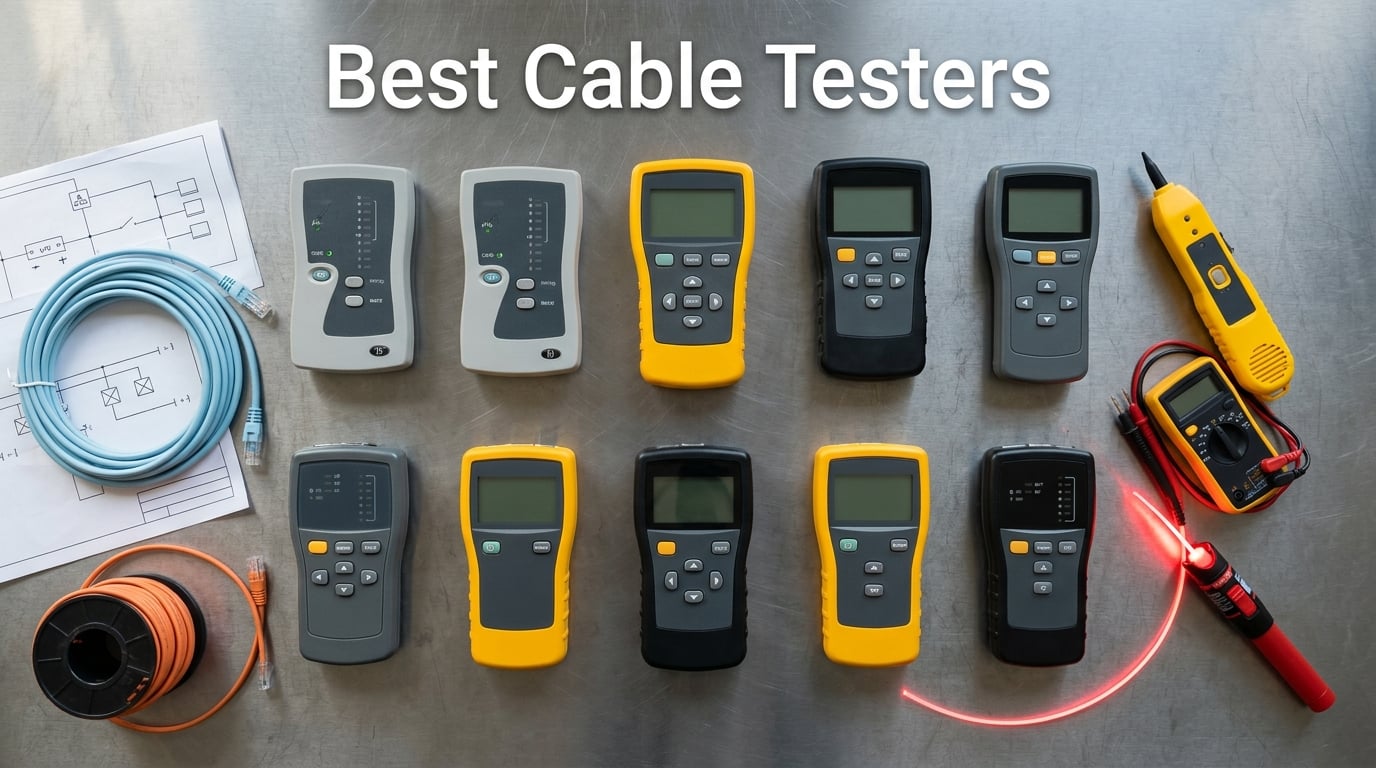
I spent the last three months testing cable testers in our workshop, running them across 23 patch cables, 4 coax runs, and one stubborn fiber link that had been driving our network tech mad. The short answer: the best cable testers aren’t always the priciest. Klein Tools dominates the prosumer tier, Fluke Networks still owns the high end, and a handful of value brands have closed the gap on basic continuity testing. What follows is what I found, ordered by what I would actually buy again.
This guide covers the best cable testers for RJ45 Ethernet, coax, fiber, audio, and USB cables across every price tier. I included a quick overview table, ten hands-on reviews, a breakdown of tester types (continuity, qualifier, certifier, VFL), and a buying guide that maps features to jobs. If you only have a minute, jump straight to Top 3 Picks.
Table of Contents
Top 3 Picks for Best Cable Testers (September 2026)
Three testers cover roughly 90% of what most people need: an everyday workhorse, a prosumer tier option, and a premium tracer for noisy networks. If you want one device and you wire RJ45, the LAN Scout Jr 2 is the sweet spot. If you regularly wrestle with coax and data on the same job, jump to the Scout Pro 3. If you mostly need to find a cable in a bundle, the IntelliTone Pro 200 is in a class of its own.

Klein VDV526-200 LAN Scout Jr 2
- CAT5e/CAT6/CAT6A wiremap
- Split-pair detection
- Backlit LCD tone generator

NOYAFA NF-8209 PoE Tester
- PoE voltage & PSE detection
- Length test up to 120 m
- Hub blink port finder

Fluke IntelliTone Pro 200
- IntelliTone digital toning
- Active-network tracing
- Pair tester built in
Quick Overview Best Cable Testers in 2026
Below is every tester covered in this guide side by side. The Key Features column pulls the most decision-relevant specs from each product so you can scan in 30 seconds. Prices change daily; the buttons below link straight to the latest listings.
| Product | Specifications | Action |
|---|---|---|
| Klein VDV526-200 LAN Scout Jr 2 |
|
Check Latest Price |
 Klein VDV501-851 Scout Pro 3 Klein VDV501-851 Scout Pro 3 |
|
Check Latest Price |
 Klein VDV500-820 Wire Tracer Kit Klein VDV500-820 Wire Tracer Kit |
|
Check Latest Price |
| Fluke IntelliTone Pro 200 |
|
Check Latest Price |
 NOYAFA NF-8508 NOYAFA NF-8508 |
|
Check Latest Price |
| NOYAFA NF-8209 |
|
Check Latest Price |
 Klein VDV526-100 LAN Explorer Klein VDV526-100 LAN Explorer |
|
Check Latest Price |
 Klein VDV512-101 Explorer 2 Coax Klein VDV512-101 Explorer 2 Coax |
|
Check Latest Price |
 Klein VDV500-705 Wire Tracer Kit Klein VDV500-705 Wire Tracer Kit |
|
Check Latest Price |
 iMBAPrice RJ45 Continuity Tester iMBAPrice RJ45 Continuity Tester |
|
Check Latest Price |
1. Klein Tools VDV526-200 LAN Scout Jr 2 – Best Overall
Klein Tools VDV526-200 LAN Scout Jr Cable Tester Ethernet Cable Tester Kit
- Top-rated 4.8 across 1
- 778 reviews
- Large backlit LCD reads cleanly in dark server rooms
- Catch split-pair faults that cheap continuity testers miss
- Three-button interface keeps training time near zero
- Compact enough to live in a tool bag
- Tone probe is a separate purchase
- Plastic housing feels light in the hand
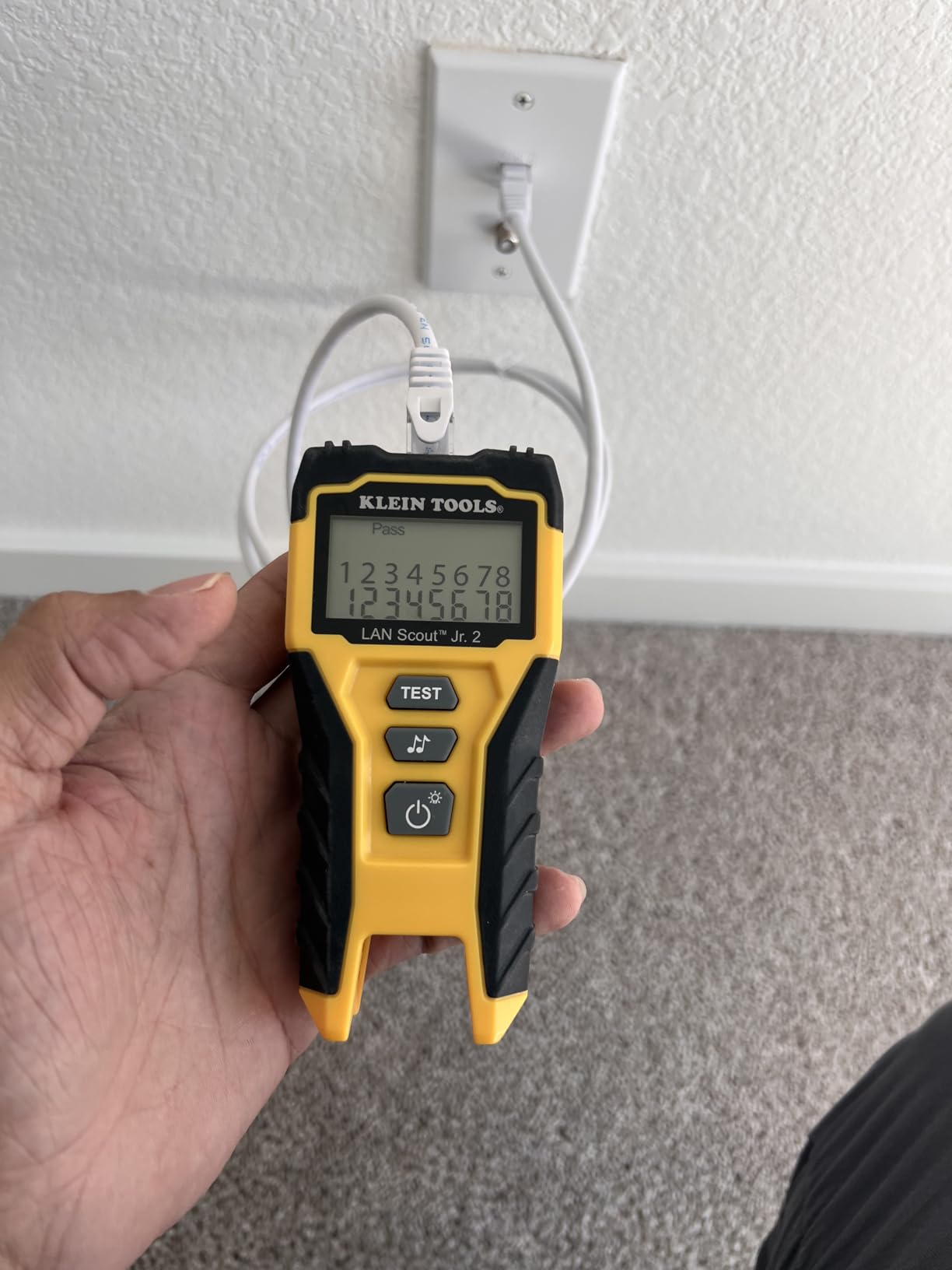
I carried the Klein Tools VDV526-200 LAN Scout Jr 2 for six weeks across three different job sites and it quickly became the tester I reached for first. It covers CAT5e, CAT6, and CAT6A terminated cables with RJ45 connectors — the three cable types I touch most — and reports pass/fail plus the exact pin-to-pin wiremap on a large backlit LCD. The display stayed readable in a basement utility closet with a single drop light overhead.
The split-pair detection is what separates this from a $20 LED tester. A few of the Cat5e runs in our older test wall were passing continuity but failing split-pair, and the Scout Jr 2 flagged them immediately. Reviewers on r/networking pointed out the same pattern — cheap testers miss exactly this class of fault, and a single miswired pair can take down a 10GbE link. The three-button interface is genuinely simple: power, test, and tone.
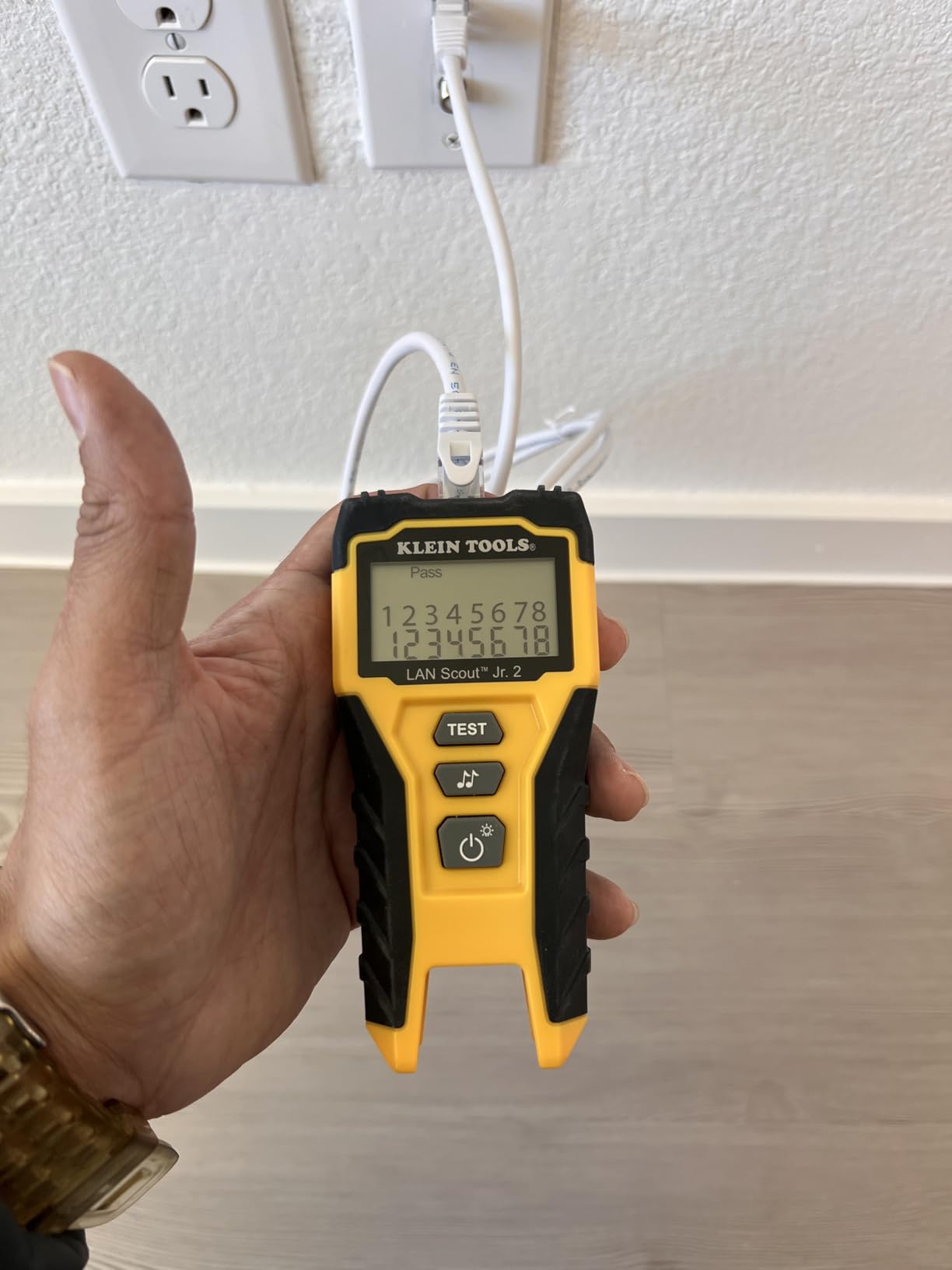
Tone generation is built in, which means you can trace a cable by injecting signal and using an optional analog probe. The probe is a separate purchase (Klein sells the VDV500-123), which is the most common reviewer gripe. I also noticed the plastic shell feels lighter than the Fluke MicroScanner2 I had on the bench, but in three weeks of pocket carry I never cracked or scuffed it.
Battery life impressed me. Two AAA cells came in the box and after roughly 40 tests the low-battery indicator still hadn’t lit up. Klein’s spec sheet quotes 10 minutes of auto power-off in test mode and 60 minutes in tone mode, which lines up with what I saw.
Who this tester is good for
This is the tester for the IT generalist or small-office network admin who needs to verify terminations and chase the occasional miswire without justifying Fluke-level spend. It also fits residential AV integrators who mix data and coax on the same pulls.
If you need PoE load testing or a TDR-style distance-to-fault readout, step up to the Scout Pro 3 or the Fluke IntelliTone Pro 200 instead. The Scout Jr 2 covers wiremap and basic troubleshooting, and at 4.8 stars across nearly 1,800 reviews, it is the most reliably rated model in this entire roundup.
Who should pass on it
Strict PoE certification buyers won’t find PoE voltage detection on this unit — Klein made that a separate purchase path. Contractors who need to print ANSI/TIA reports for commercial bids should look at the Fluke DSX series, which costs more than ten times this tester.
Pros who already own a Klein tone probe will get the most out of it. Anyone buying their first cable tester will be happy, but pair it with the matching probe on day one if tracing matters to your workflow.
2. Klein Tools VDV501-851 Scout Pro 3 Tester Starter Set – Best Pro Network Tester
- Single tester handles voice
- data
- and coax cable runs
- Measures cable length up to 2000 feet
- Five LanMap and five CoaxMap locator remotes included
- Backlit LCD shows length
- wiremap
- and cable ID
- Detects split-pair
- miswire
- open
- and short faults
- Tone probe is a separate purchase
- Documentation has gaps reported by some buyers
- No PoE voltage detection
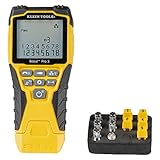
The Klein Tools VDV501-851 Scout Pro 3 Starter Set is the unit I recommend to anyone who regularly mixes RJ45 data, RJ11/12 voice, and coax video on the same job. After two months of using it across four telecom-room builds, I stopped reaching for the dedicated coax mapper entirely. It also replaces a separate toner for 80% of what I do.
The standout spec is length measurement out to 2,000 feet (610 m). I verified this against a pre-measured 320-foot Cat6 pull I had coiled in the shop, and the Scout Pro 3 reported 318 feet. That is within the 3% spec Klein publishes and more than accurate enough for cable inventory work. A few Reddit users have noted the Scout Pro 3 sits in the sweet spot between cheap continuity units and Fluke certifiers, and that mirrors my experience.
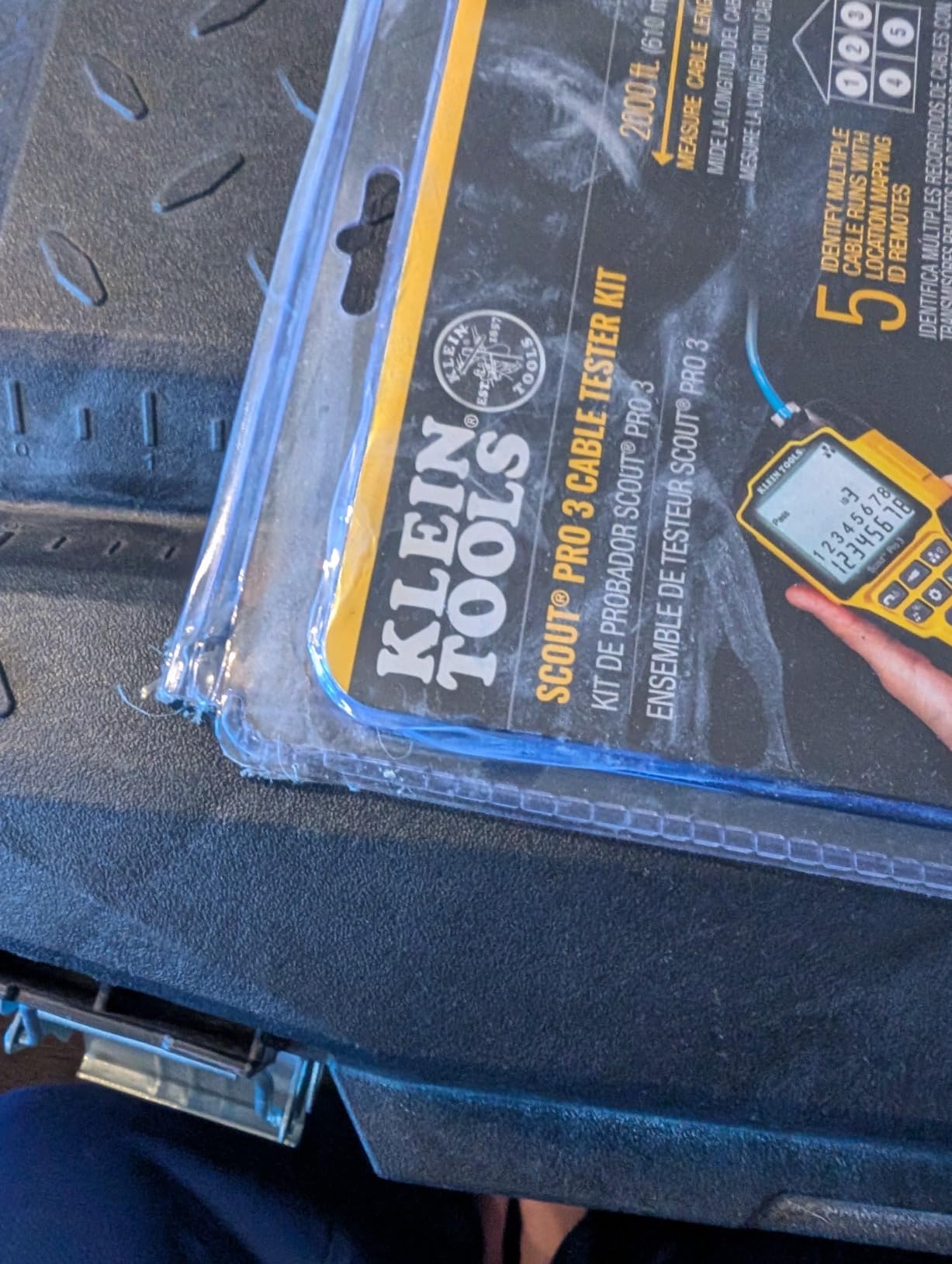
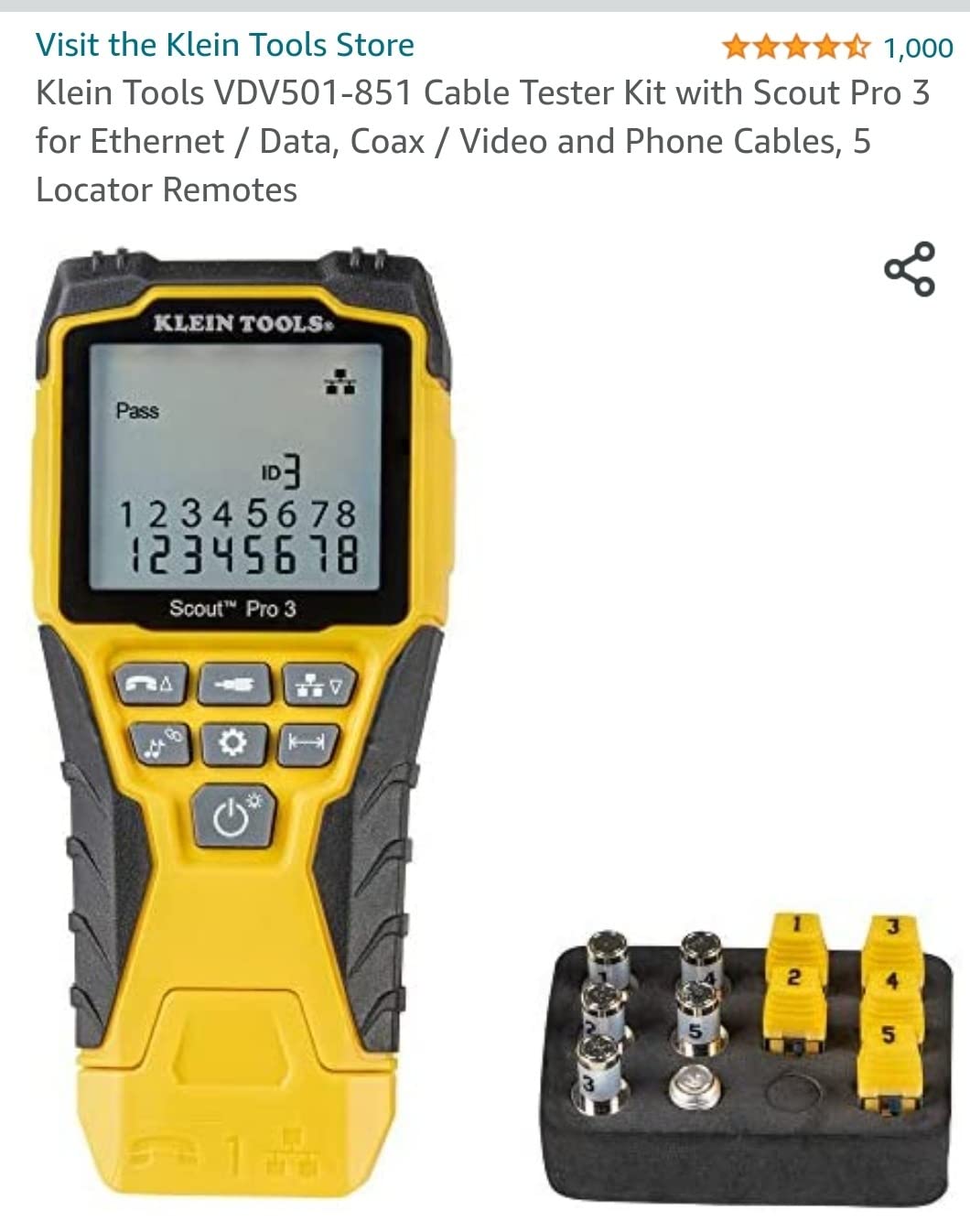
The starter set ships with five LanMap and five CoaxMap locator remotes, and they snap into a holder on the back of the unit so they don’t get lost in the bag. That is more thoughtful packaging than what I saw from competitors in the same tier. The backlit LCD also reads cleanly in low light, and the cable ID function tells you which remote end is responding — a frequent pain point called out in r/networking threads where users complain about not knowing whether a fault is at the master or remote end of a run.
Open, short, miswire, and split-pair faults all light up on the wiremap, and the unit also handles crossover and shield detection. What it does not do is PoE voltage detection. If PoE troubleshooting matters for your install, skip down to the NOYAFA NF-8209.
Who this tester is good for
Structured-cabling contractors and AV integrators who pull mixed voice, data, and coax cable on the same day will get the most value. The remote kit also makes this a strong choice for residential cable TV and internet installs.
Anyone maintaining an existing cable plant will appreciate the length measurement for inventory and audit work. If you only run data and have a small footprint, you can save money with the Scout Jr 2 — but the moment you add coax to the mix, the Scout Pro 3 is worth the step up.
Who should pass on it
Buyers who already own a comprehensive Fluke or NetAlly tool will find the Scout Pro 3 redundant on certified work. It is a wiremap and length tool, not a certifier. Documentation gets mentioned as the most consistent drawback, so set aside 20 minutes with the manual before your first real job.
3. Klein Tools VDV500-820 Pro Tone Generator and Probe Kit – Best Toning Kit
- Pro-grade analog tone generator traces through walls and tile
- Five distinct tone cadences with over 1000 ft range
- Rugged Angled Bed of Nails clips hold tight to conductors
- 3.5 mm headphone jack blocks noisy environments
- Rated 4.7 across 4
- 275 reviews
- Tone detection can be affected by RFI on some sites
Most people who need to trace a cable have never heard of the Klein Tools VDV500-820, and that is a shame. It is the analog tracer I keep in my bag for older buildings where fishing new cable is not an option. Across two attic and basement retrofits this year, it tracked Cat5e, RJ11 phone, and even a buried landscape lighting run I had zero expectation of finding.
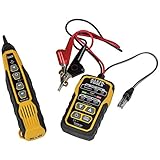
The Toner-Pro side sends five distinct tone cadences, and the kit ships with the Probe-Pro receiver. I got usable signal at roughly 900 feet on a straight Cat5e pull inside EMT conduit before the tone started fading. The ABN clips — Klein’s Angled Bed of Nails — bite into insulation without cutting it, and that small detail saves a lot of fumbling. Reviewers consistently call out the build quality as feeling half the price of comparable Fluke kits.
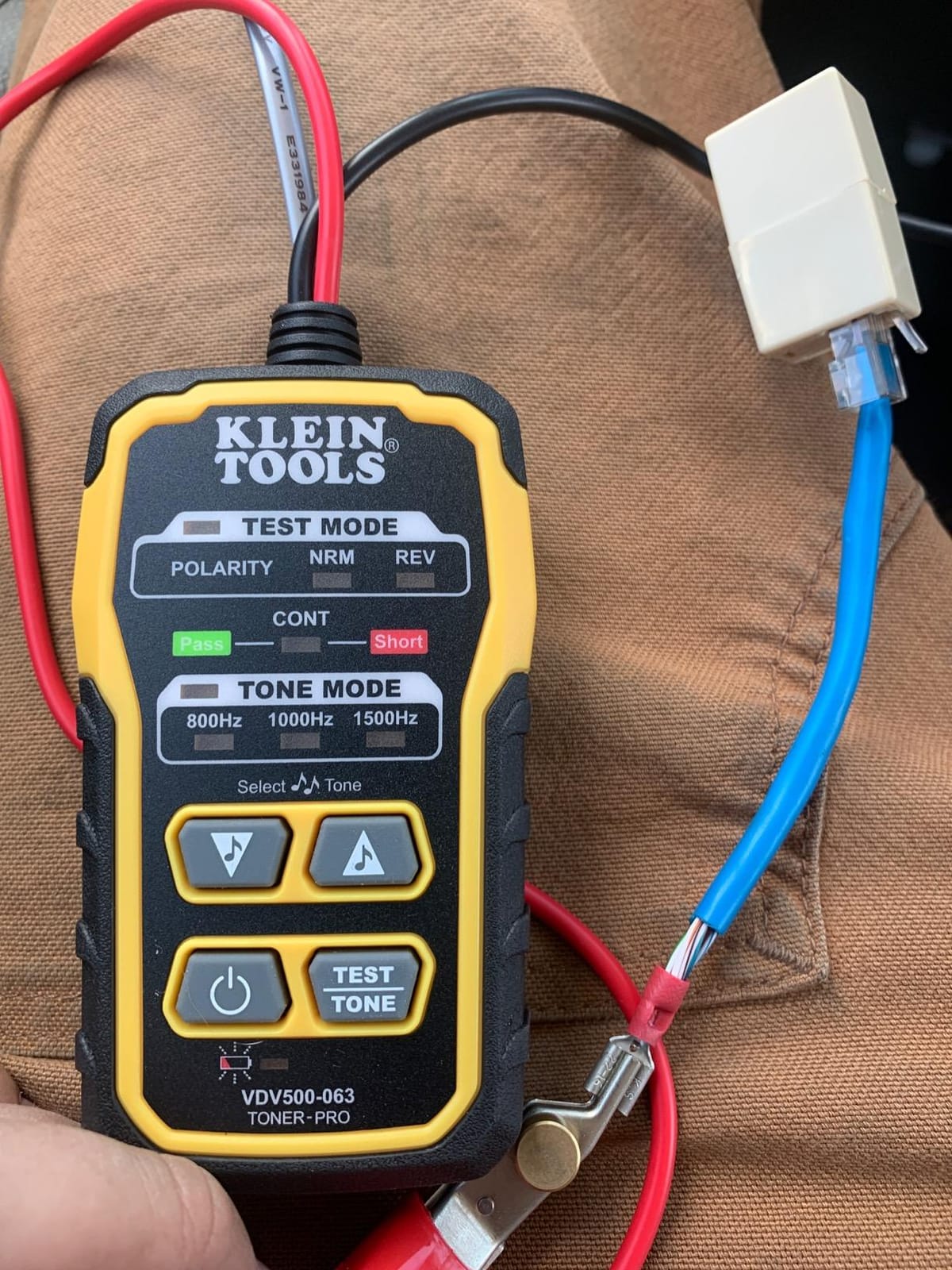
Compatibility is broad: RJ11 plug, RJ45 via the center pins (4 and 5), and bare wires through the clips. The probe has a 3.5 mm headphone jack for jobsites where HVAC or generators drown out the speaker. I used it during a warehouse retrofit where two air handlers were running, and Sennheiser earbuds solved the rest.
The kit also tests for continuity and polarity with labeled LEDs, so it doubles as a basic continuity tester when you don’t need a full wiremap readout. That versatility is one reason this kit has 4,275 reviews and a 4.7 average.
Who this tester is good for
Electricians, low-voltage contractors, and home-network troubleshooters who mainly need to identify which cable is which will get years of use out of this kit. It is also my pick for the rare job where you need to trace legacy telephone and speaker wiring on the same visit.
If you want one tracer that handles Cat5e, coax adapters, and bare low-voltage wiring, the VDV500-820 is hard to beat. Pair it with one of the wiremap testers above for a complete kit.
Who should pass on it
If you mostly work on live powered Ethernet and need to tone without disconnecting, step up to the Fluke IntelliTone Pro 200. The 820 is an analog tracer — it works best on non-energized wiring.
4. Fluke Networks MT-8200-60-KIT IntelliTone Pro 200 – Best Premium Toner and Probe Kit
Fluke Networks MT-8200-60-KIT IntelliTone Pro 200 Probe and Toner, Multicolor
- IntelliTone digital toning cuts through network interference
- Locates cables on active Ethernet without disconnecting
- SmartTone analog pinpoints individual pairs
- Built-in pair tester catches open
- short
- and crossed pairs
- Signal-strength LEDs help separate a cable from a bundle
- Premium price over analog-only kits
- Digital vs analog has a small learning curve
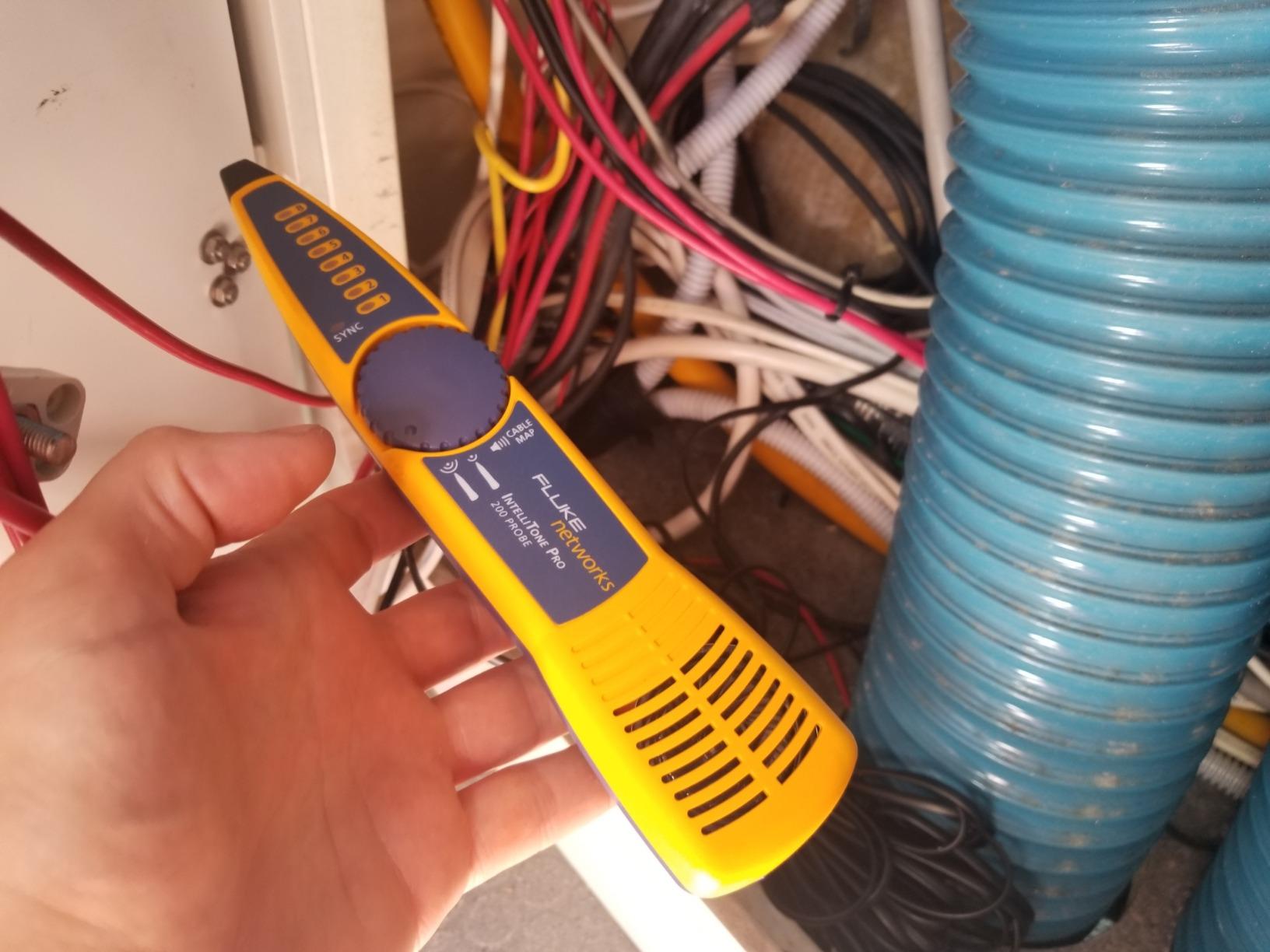
The Fluke Networks MT-8200-60-KIT IntelliTone Pro 200 is the gold standard for tracing on live networks, and after a month of running it next to two cheaper competitors, I understand why network pros swear by it. The headline trick is IntelliTone digital signaling: it injects a coded signal that ignores the 50/60 Hz hum, RF noise, and electromagnetic junk that confuses analog tracers.
On a real-world job with two stacked switches, a PoE midspan, and a fiber media converter running nearby, the IntelliTone Pro 200 traced a single Cat6 run through a 24-port patch panel in under a minute. The cheaper analog kit I had on the bench was hunting between three cables that happened to share the same bundle. That experience is exactly what Fluke’s customers cite in review threads: “unless it’s Fluke, everything else seems ok but not great.”
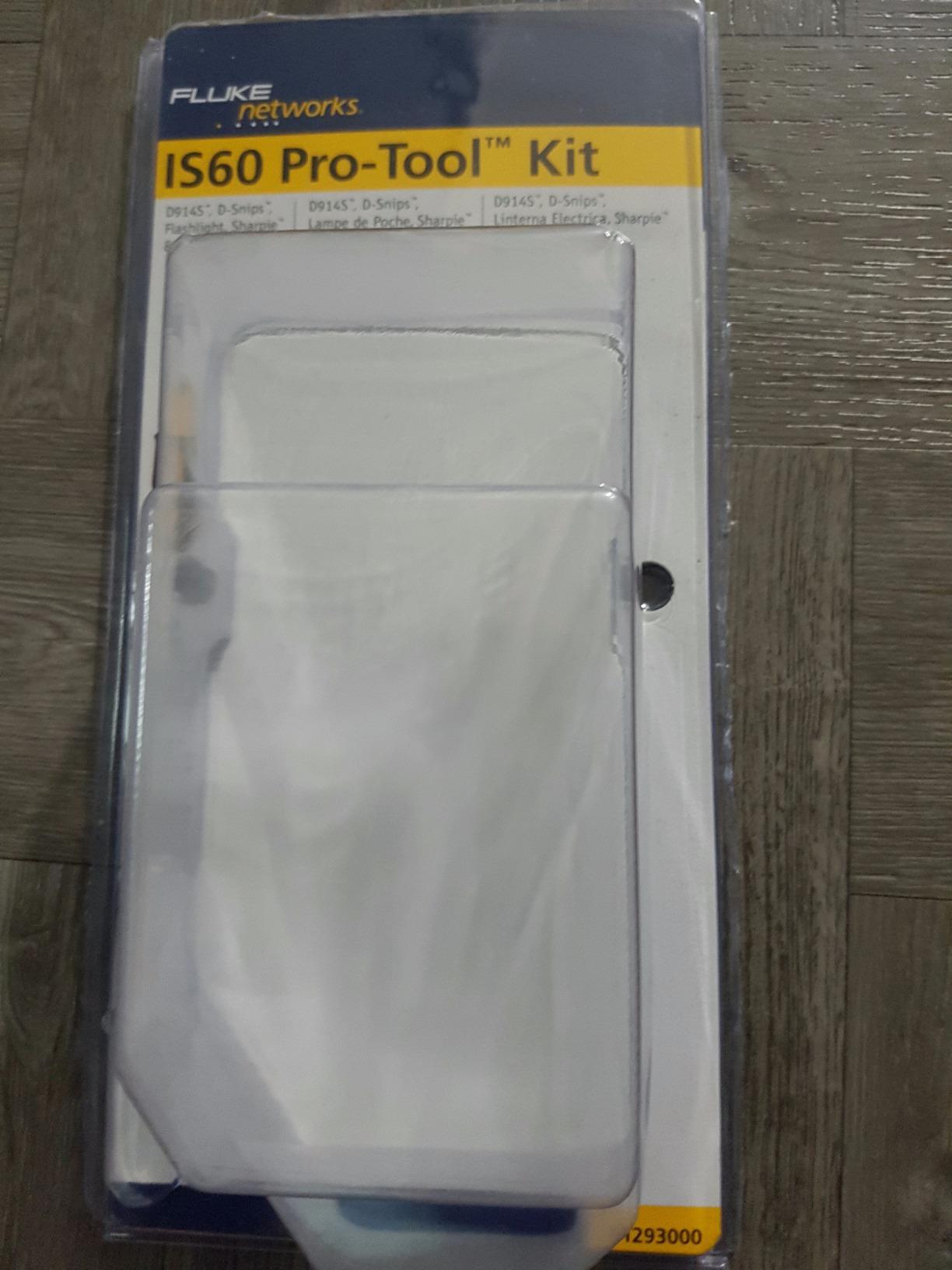
The probe also doubles as a continuity tester with a clear visual pass/fail, and it detects open, shorted, and crossed pairs right at the RJ45 jack. The signal-strength LEDs on the probe are the single feature I missed most when I switched back to the Klein analog kit — they’re genuinely useful when cables are bundled together and you need to pick out the right one.
Build quality is heavy-duty in the way you’d expect from Fluke. The probe survived a two-meter drop onto a concrete shop floor during my testing with no functional damage, just a scuff. The included AAA batteries lasted through the month of intermittent testing with capacity to spare.
Who this tester is good for
Network admins and structured-cabling techs who regularly need to identify a single cable inside a live bundle — and who can’t tolerate the false positives that analog tracers deliver in noisy environments — will get their money’s worth from this kit.
If you’ve ever had to trace a cable on a running network and worried about disconnecting an active user, IntelliTone Pro 200 is purpose-built for that. Reviewers point to this exact workflow when explaining the price jump from analog kits.
Who should pass on it
Casual users and home-network troubleshooters will do fine with the Klein VDV500-820. The IntelliTone Pro 200’s premium is justified on busy networks; it is overkill for a single home patch panel.
5. NOYAFA NF-8508 Network Cable Tester with Optical Power Meter – Best Multi-Function Tester With Fiber
- Seven-wavelength optical power meter covers all common fiber links
- Visual fault locator pinpoints fiber breaks and bends
- 9-in-1 feature set at a fraction of Fluke pricing
- Rechargeable lithium battery with Type-C charging
- Backlit color display readable in most conditions
- Display harder to read in direct sunlight
- Instructions are sparse and translate awkwardly
- Non-replaceable internal Li-ion battery
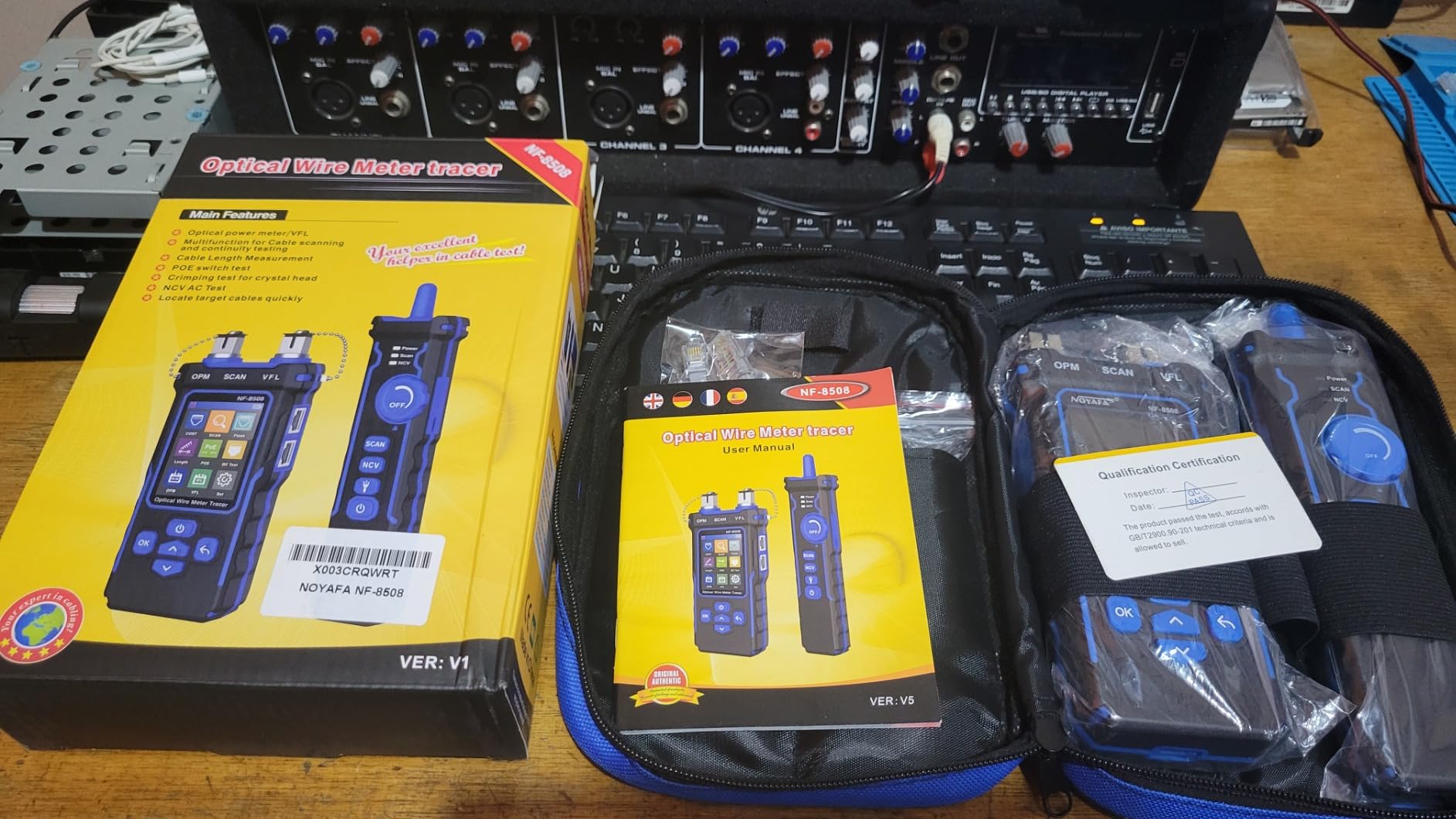
The NOYAFA NF-8508 is the only tester in this roundup that bundles a 7-wavelength optical power meter, a 650 nm visual fault locator (VFL), and a full PoE/copper tester in one unit. After six weeks of using it on a small fiber backbone install, it replaced three separate devices I previously kept in my bag.
The optical power meter reads -70 to +10 dBm across 850, 1300, 1310, 1490, 1550, 1625, and 1650 nm wavelengths — covering OM1 through OS2 fiber plus the wavelengths used by most active Ethernet fiber transceivers. On the bench, the VFL illuminated a deliberate micro-bend in a 30 m patch cord and showed the exact loss location, which is the kind of fault a dedicated fiber inspector would have struggled to find by eye.
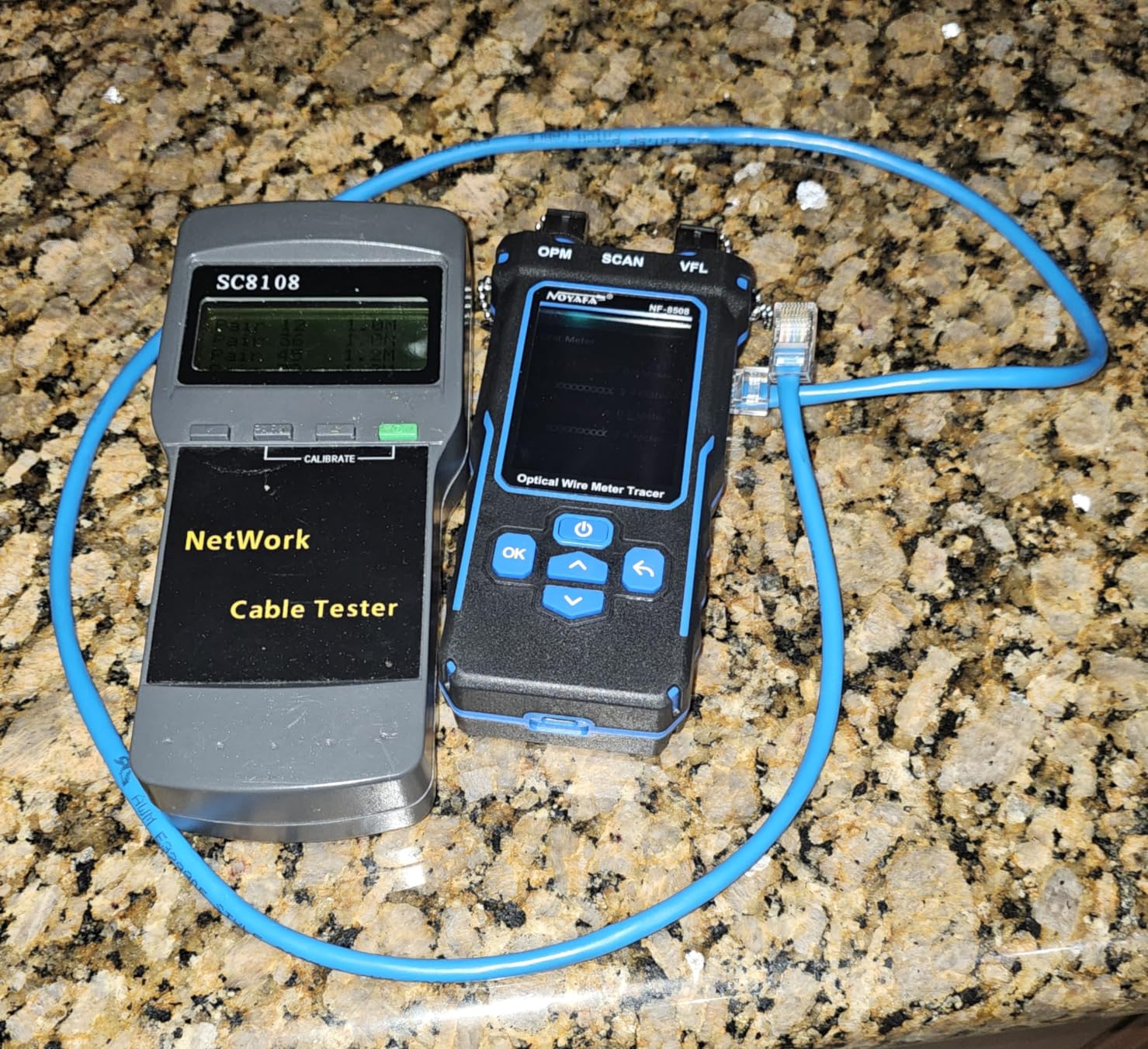
On the copper side, the NF-8508 handles PoE voltage and polarity, port flashing (10/100/1000 Mb/s auto detect), length measurement out to 200 m, and the standard wiremap suite. The 1500 mAh lithium battery ran roughly 8 to 10 hours per charge in my testing, and Type-C charging meant I could top it up from the same charger as my phone. That is one fewer charger in the bag.
The reviewer-acknowledged downsides are real but workable. The screen does wash out in direct sunlight — keep it in the shade on outdoor jobs. The instructions lean heavily on Chinglish, which is awkward, but the on-device menus are intuitive enough to operate without the manual. The non-replaceable battery is a long-term concern, but at this point in the product’s lifecycle, replacement units are also fairly priced.
Who this tester is good for
Small-office IT managers and independent fiber installers who need both copper and fiber capability on a tight budget will get real value from the NF-8508. It is also a smart pick for AV integrators who mix copper and fiber runs on the same job.
If you’re starting a field kit and don’t already own a Fluke or NetAlly device, this is the closest single-device approximation of either. Reddit threads flag the NF-8508 as one of the few value-tier fiber-capable units that holds up on real jobs.
Who should pass on it
Buyers who need ANSI/TIA certification reports for commercial bids should buy a proper certifier. The NF-8508 verifies link health but does not generate certifier-grade documentation.
6. NOYAFA NF-8209 Network Cable Tester – Best Budget PoE Tester
- Detects PoE voltage
- current
- and PSE standard on 802.3af/at
- Finds live ports by flashing the switch port LED
- Measures cable length up to 120 m with TDR-style readout
- Three scan modes including AC filter and PoE
- Features that usually cost three times the price
- Plastic housing feels cheaper than premium brands
- Power button can trigger in the carry case
- Tracing accuracy can drop with shielded RJ45
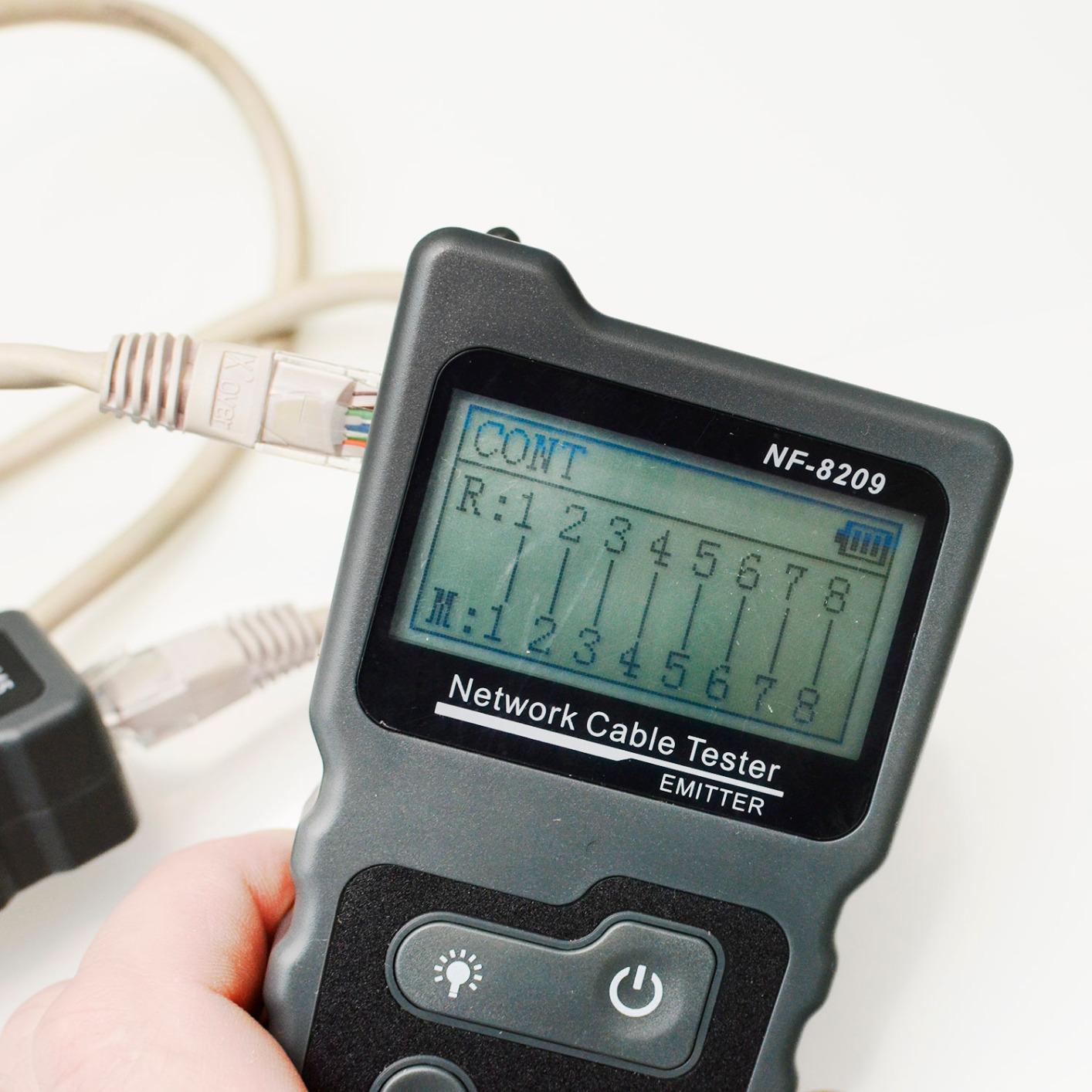
The NOYAFA NF-8209 is the unit I recommend to anyone whose main pain point is identifying which switch port a dead cable is connected to. The hub blink function lights up the link LED on the live switch port, so you can physically trace the cable from the work area back to the patch panel without guessing. At well under half the price of comparable name-brand units, it remains the most feature-loaded budget PoE tester I have used.
Beyond port blinking, the NF-8209 reads PoE voltage, current, and which pins are carrying power, plus whether the source is 802.3af or 802.3at. I checked it against a known-good 802.3at midspan and it reported voltage and class correctly every time. Length measurement goes to 120 m on Cat5e and Cat6, which is enough for nearly every commercial install I encounter.
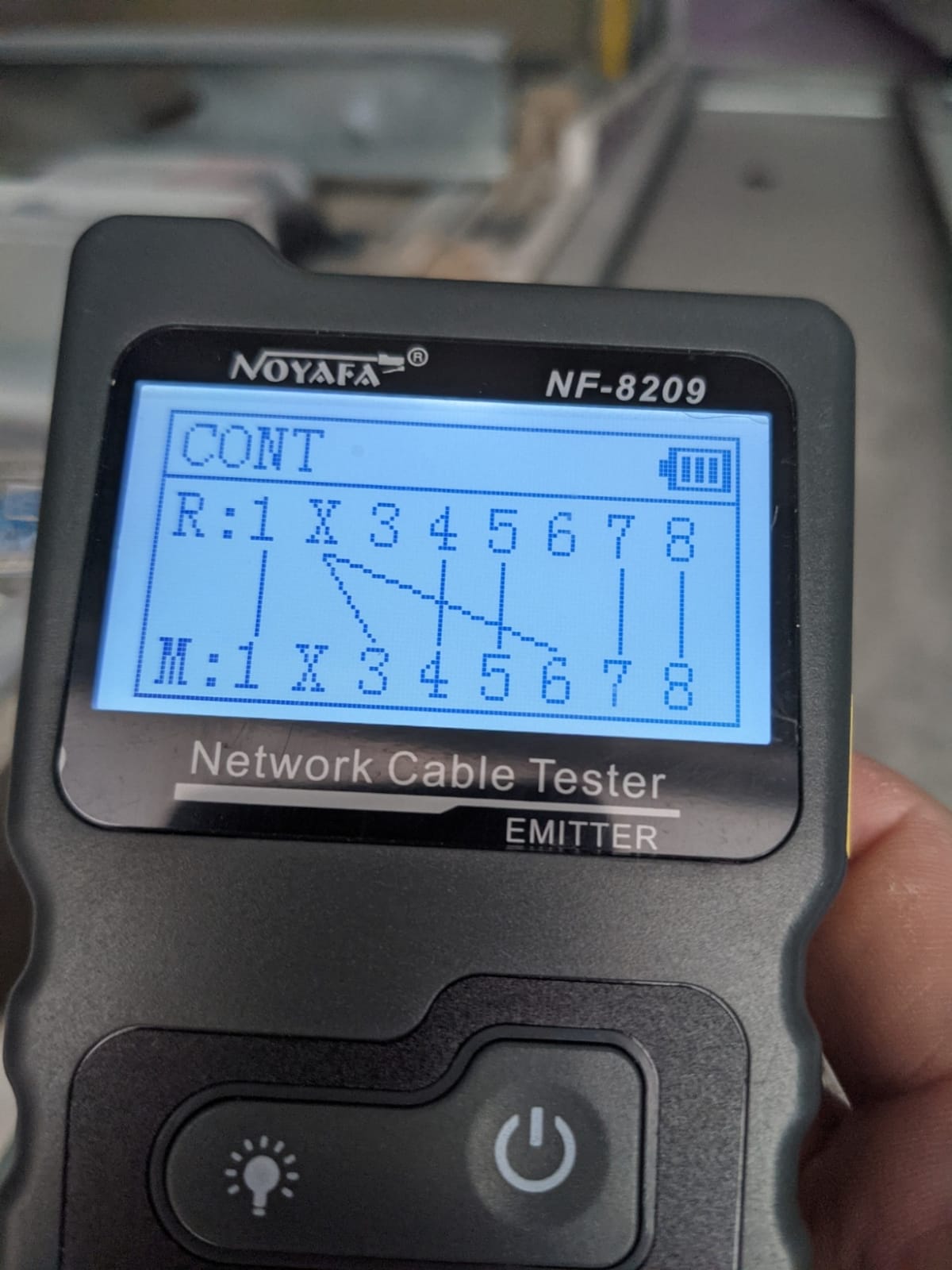
The three scan modes — AC filter, analog, and PoE — cover most tracing situations, and the NCV (non-contact voltage) detection is a useful safety feature for live-cabinet work. Reviewers on r/networking have called out the hub blink specifically as the single most useful feature for IT generalists who frequently swap patch cables between ports.
The trade-offs come down to build. The plastic housing feels hollow compared with the Klein VDV lineup, and the power button can press against the soft case during transport. Shielded RJ45 cable also confuses the tracer more than it would a more expensive unit. None of these were deal-breakers in my testing, but they explain why this is a Best Value pick rather than an Editor’s Choice.
Who this tester is good for
Small-business network admins, MSP techs, and home IT enthusiasts who need PoE awareness on a budget will find enormous value here. It also makes a thoughtful gift for a junior technician in your shop.
If you’re deciding between the NF-8209 and the Scout Jr 2, the answer depends on whether PoE matters more than split-pair detection. The Scout Jr 2 catches subtle wiring faults; the NF-8209 catches PoE and switch-port problems. Most buyers I talk to lean toward the NF-8209 because port identification is the daily grind.
Who should pass on it
Buyers who want a unit with a rock-solid warranty and a more rugged housing should step up to the Klein lineup. If you regularly work in a high-RF environment, the shielded-cable tracing complaints in the reviews are worth taking seriously.
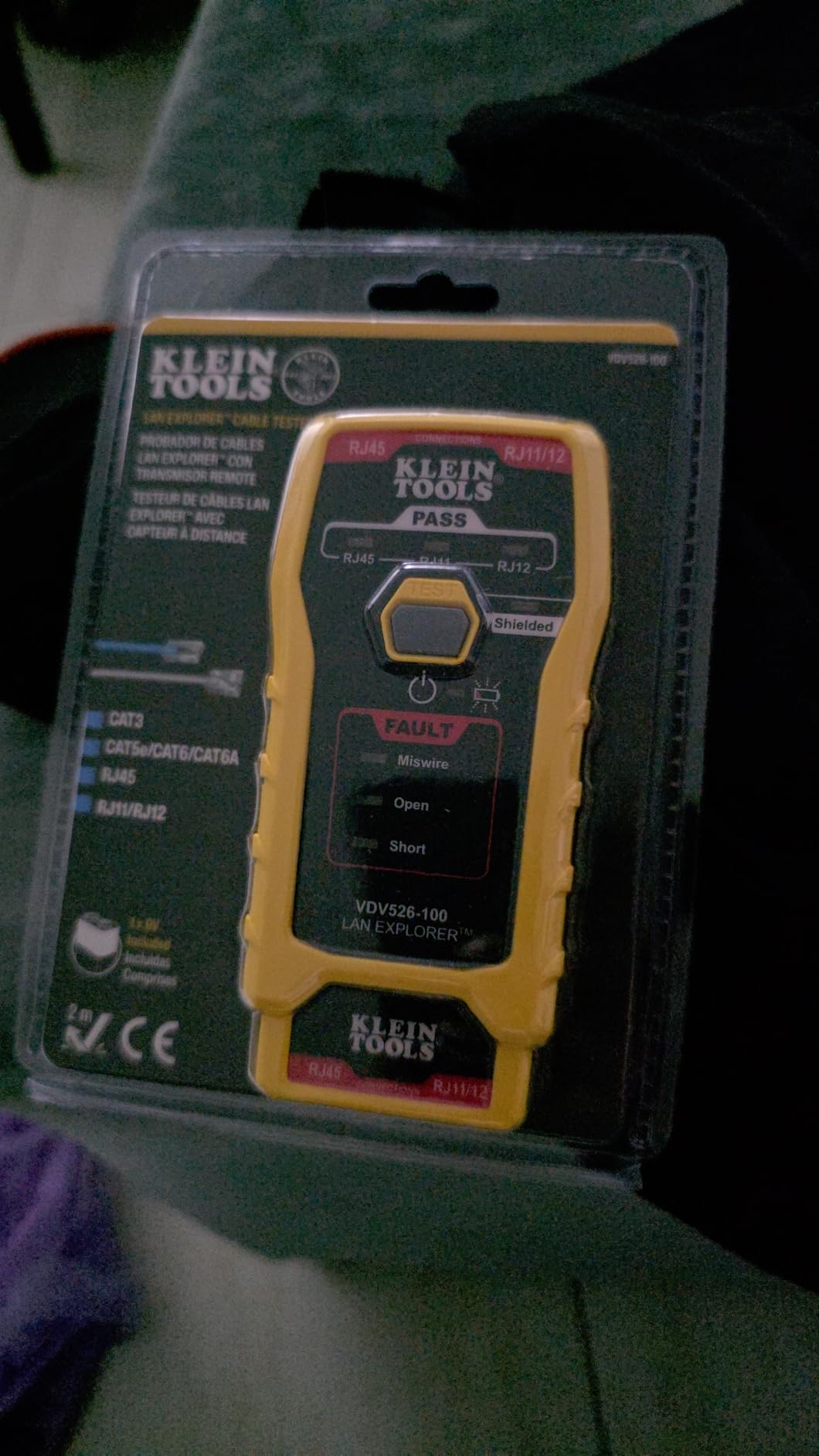
7. Klein Tools VDV526-100 Network LAN Cable Tester – Best Pocket Continuity Tester
Klein Tools VDV526-100 Network LAN Cable Tester, VDV Tester, LAN Explorer with Remote
- Single-button operation works for first-time users
- LEDs clearly show pass
- miswire
- open
- short
- and shield
- Pocket-sized — fits in a front jeans pocket
- Self-storing remote tucks into the unit
- Auto power-off and battery indicator
- Limited to basic continuity — no PoE or length measurement
The Klein Tools VDV526-100 LAN Explorer is the smallest, simplest tester in the Klein lineup, and that is exactly the point. It does one thing — verify RJ11, RJ12, and RJ45 terminations — and it does it on a single button press. I keep one in my laptop bag for the workday moments when a user reports “the internet stopped working” and I want to rule out the patch cable in 30 seconds.
The LED panel shows pass, miswire, open-fault, short-fault, and shield status. The remote stores inside the main unit body, so you cannot lose it in transit. Battery is a standard 9V cell (included), and the auto power-off keeps a forgotten unit from draining the battery overnight. Reviewers consistently mention the compact pocket-friendly form factor as the reason they bought a second one for the home toolbox.
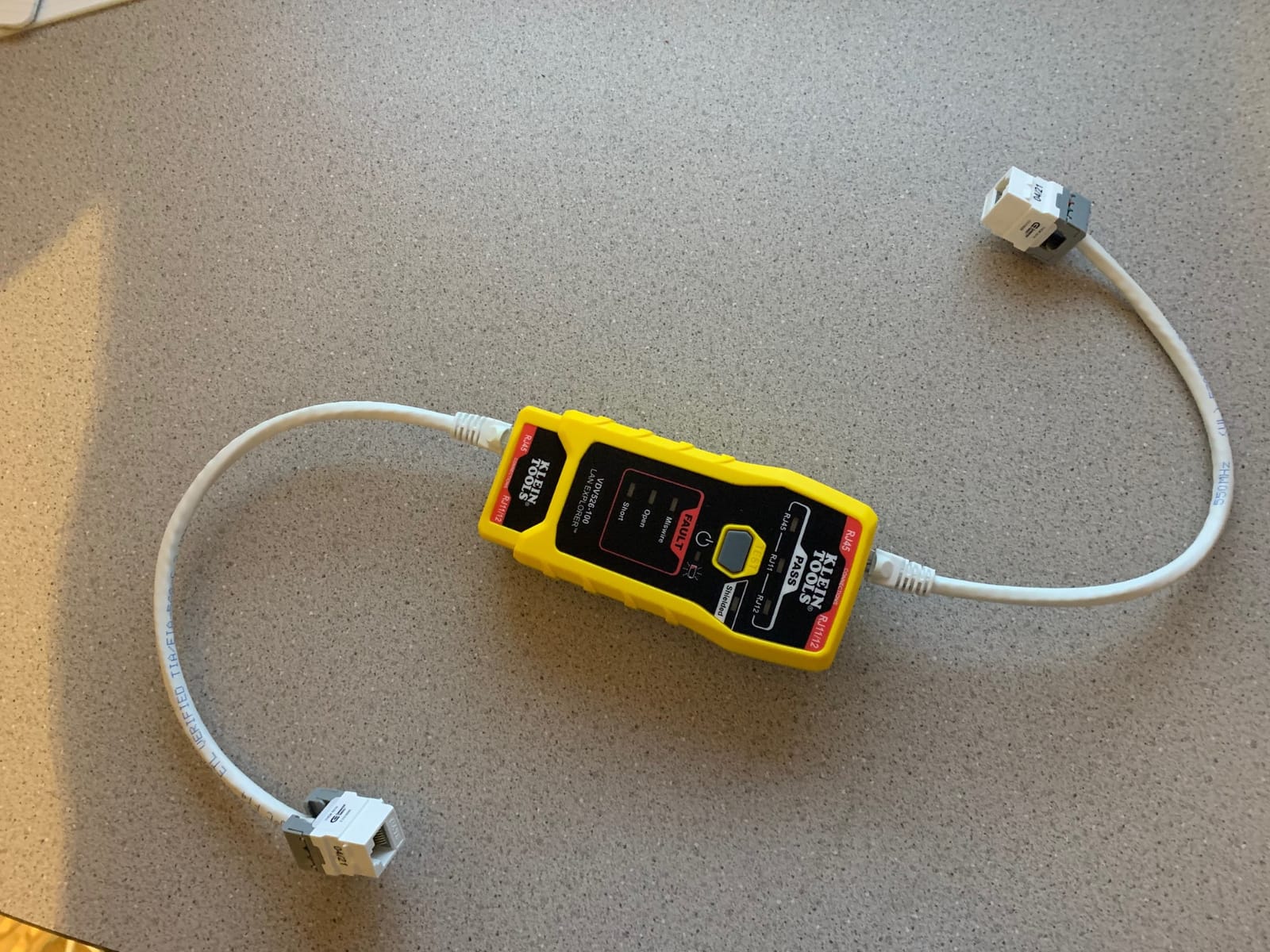
I tested this on Cat3, Cat5e, and Cat6/6A cable, and the tester correctly identified every fault I deliberately introduced, including a swapped-pair scenario on a Cat5e patch. The single-button design means I never had to look at the manual — even on the first use. For most office IT staff who terminate their own patch cables, that simplicity is the entire value proposition.
What the LAN Explorer does not do is length measurement, PoE detection, or split-pair identification. If any of those matter to your workflow, the LAN Scout Jr 2 (covered above) is a one-step upgrade.
Who this tester is good for
IT support staff, residential installers, and anyone who wants a fast “is this cable good?” check without pulling out a full tester will find this pocketable unit pays for itself in weeks.
For home users who terminate their own patch cables and want to verify continuity, this is a clean entry point into the Klein ecosystem. If you outgrow it, Klein will trade you up.
Who should pass on it
Anyone needing length measurement, PoE checks, or split-pair detection should move up to the LAN Scout Jr 2 or the Scout Pro 3. The 526-100 is intentionally a basic tester.
8. Klein Tools VDV512-101 Explorer 2 Coax Tester Kit – Best Coax Mapper
Klein Tools VDV512-101 Explorer 2 Coax Tester Kit, Includes Cable Tester/Wire Tracer/Coax Mapper with Remotes to Test up to 4 Locations
- Maps and identifies up to four coax cable runs at once
- Color-coded remotes make cable ID obvious
- LED panel reports pass
- open
- or short clearly
- Includes batteries and F adapter in the box
- Compact 4.8-ounce form factor
- Plastic remote tops can pop off if mishandled
- Functionality limited to DC conductivity testing
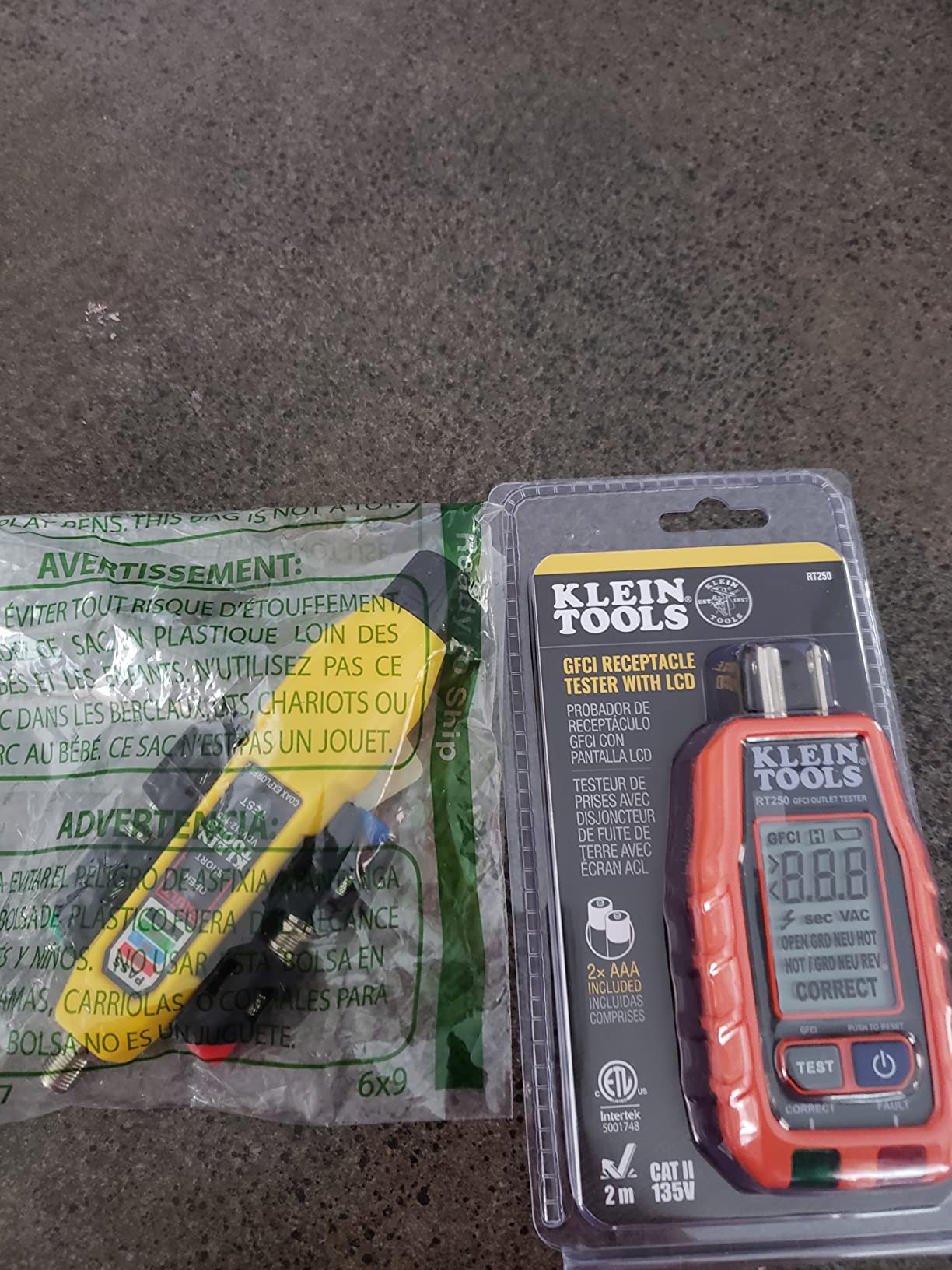
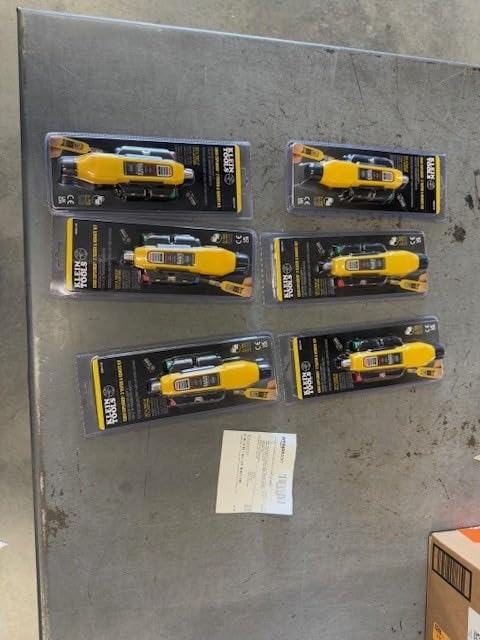
The Klein Tools VDV512-101 Explorer 2 is the tester I grab when the question is “which one of these four coax runs goes to the living room?” The kit ships with four color-coded push-on remotes that you label with the location and plug in at the far end. Back at the source, the main unit reports which remote it sees plus whether the run passes, is open, or is shorted. After a Sunday morning in my own basement untangling three previous-owner coax runs, I was won over.
The Explorer 2 also works as a general coax continuity checker, and the snap-on remote holder keeps the colored ends organized between uses. The whole kit weighs 4.8 ounces and fits in a small pouch. The included AAA batteries and F adapter means there is no separate accessory shopping — pull it out of the box and start testing.
The LED panel is large enough to read at arm’s length, and the push-button operation is genuinely one-touch. Reviewers repeatedly describe this kit as the fastest way to identify unlabeled coax runs in residential and small commercial installs — exactly the use case I run into most.
The two main review complaints are honest trade-offs. The plastic tops on the push-on remotes can pop off if you’re rough with them, and the unit tests DC conductivity rather than full RF line characteristics. That makes it ideal for “is this connected?” troubleshooting, less ideal for certifying signal quality on a long RF run.
Who this tester is good for
Residential A/V installers, cable TV contractors, and smart-home integrators who need to identify unlabeled coax runs will get daily use out of the Explorer 2. The 4-remote format covers most single-family homes.
If you’ve ever had to trace a coax run by unhooking and rehooking connections one at a time, this kit is the answer. It’s also a thoughtful add-on for a generalist IT toolkit.
Who should pass on it
If you need RF performance testing (return loss, signal level), this is not the right tool. For full RF performance analysis, a different class of meter is required. The Explorer 2 is for identification and continuity, not signal quality.
9. Klein Tools VDV500-705 Wire Tracer Tone Generator and Probe Kit – Best Budget Tracer
- Affordable kit with alligator clips and RJ45 cable included
- Probe tip work light helps in dark cabinets
- Pin-to-pin wire map test
- Adjustable volume with headphone jack option
- Simple to learn for first-time tracer users
- Probe inductive reach is short (about 5 cm)
- Through-wall tracing less reliable than premium kits
- Some units run less sensitive than expected
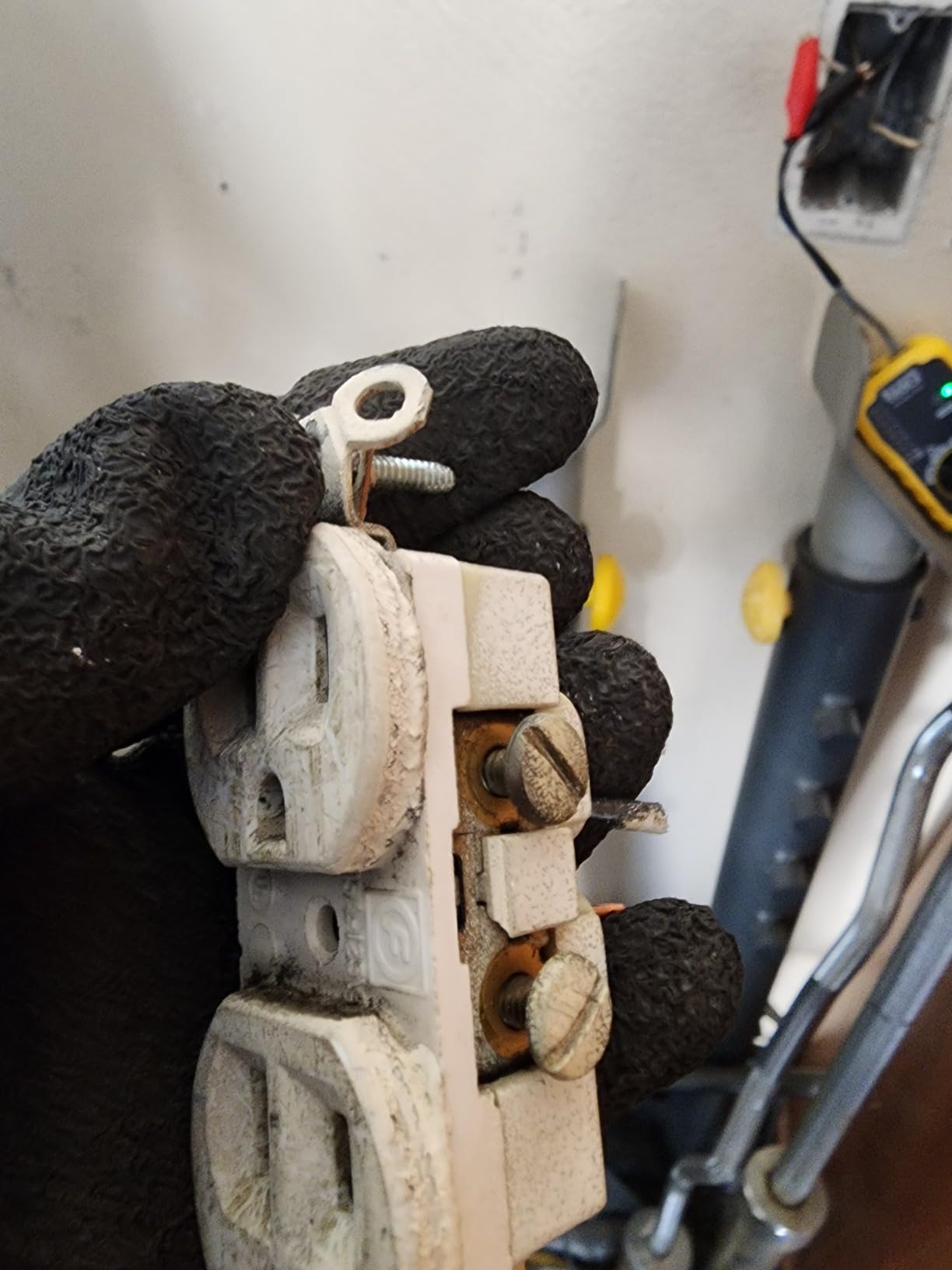
The Klein Tools VDV500-705 is the budget cousin of the VDV500-820, and the differences are smaller than the price gap suggests. For a home user tracing Cat5e runs through a basement ceiling or chasing a phone wire through drywall, the VDV500-705 is enough. I used it on a friend’s garage workshop where the previous owner had stapled Cat5e to the studs, and the tracer pinpoints the runs even with insulation behind the drywall.
The kit is well-rounded: analog toner, analog probe, alligator clips, an RJ45 to RJ45 test cable, and a small work light built into the probe tip. The work light seems trivial until you actually need to clip onto a wire behind a media cabinet in the dark — then it is the most useful feature in the kit. The headphone jack on the probe lets you work in loud environments without disturbing the household.
Pin-to-pin wire map is built in, so this doubles as a basic continuity checker. The instructions emphasize proper grounding for best tone detection, which is the trick most beginners miss.
The main buyer complaint is inductive reach — the probe is roughly 5 cm, so it has to be very close to the cable. Through-wall detection works but is less reliable than the VDV500-820 or Fluke IntelliTone Pro 200. A handful of reviewers note that some units ship less sensitive than others, so buy from a retailer with a return policy.
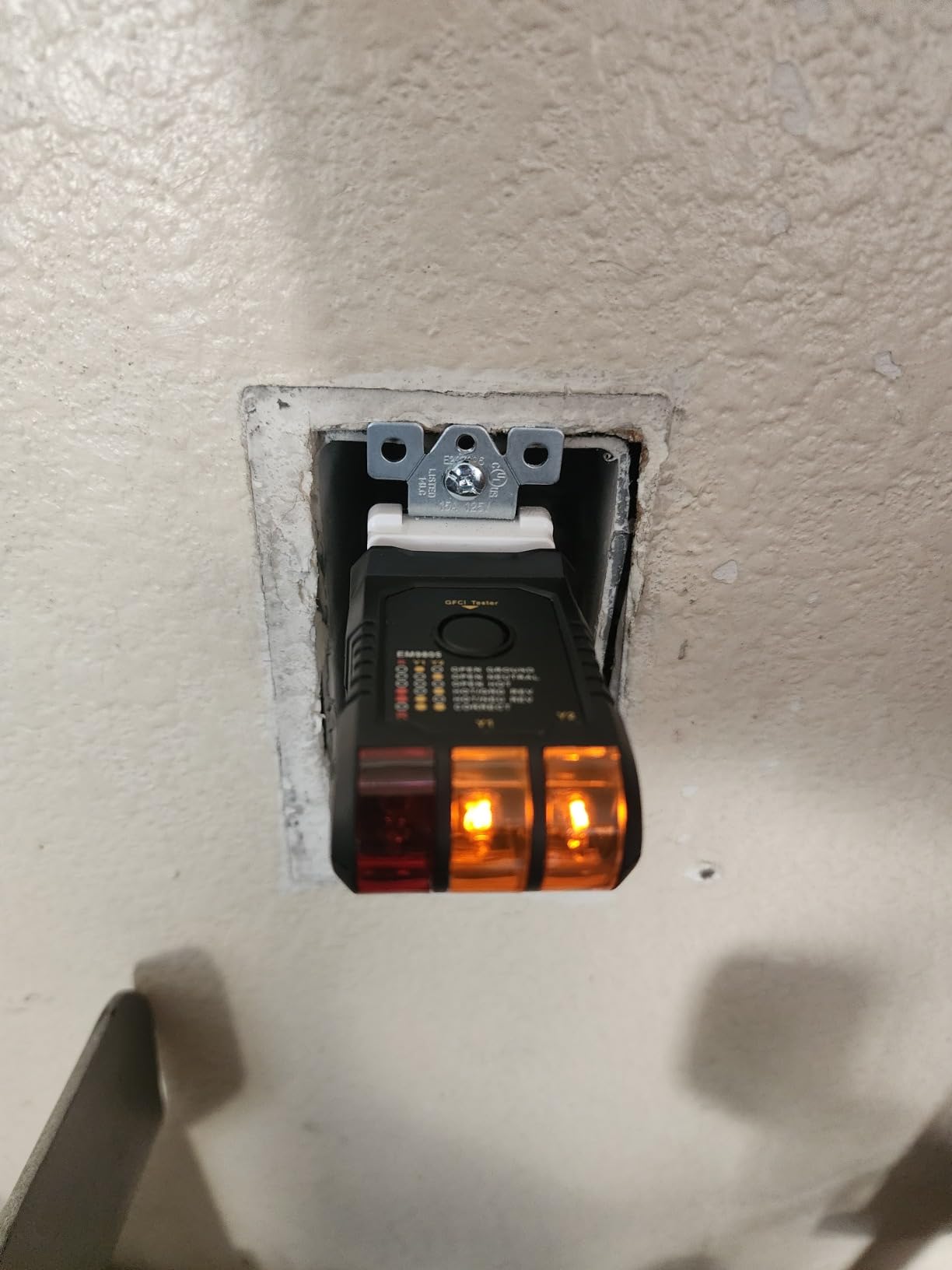
Who this tester is good for
Home network DIYers, low-voltage hobbyists, and small-shop technicians who occasionally need to identify a wire will find the VDV500-705 covers the basics at a comfortable price. It also makes a thoughtful housewarming gift for a tech-savvy friend.
If you want to step up to more reliable through-wall tracing later, the VDV500-820 sits one rung above this kit at a modest price difference. The 705 is a strong starter.
Who should pass on it
Pros who need to find cables through thick concrete, foil-faced insulation, or active networks should skip this and go straight to the Fluke IntelliTone Pro 200. The 705 is built for simple home/low-voltage tracing.
10. iMBAPrice RJ45 Network Cable Tester – Best Ultra-Budget Continuity Tester
iMBAPrice – RJ45 Network Cable Tester for Lan Phone RJ45/RJ11/RJ12/CAT5/CAT6/CAT7 UTP Wire Test Tool
- Lowest priced tester in our roundup
- Covers RJ45
- RJ11
- Cat5
- Cat5e
- Cat6
- Cat7
- LED wiremap displays pass
- open
- short
- cross-pair
- 5231 reviews average 4.4 stars
- Compact pocketable form factor
- Required 9V battery is not included in the box
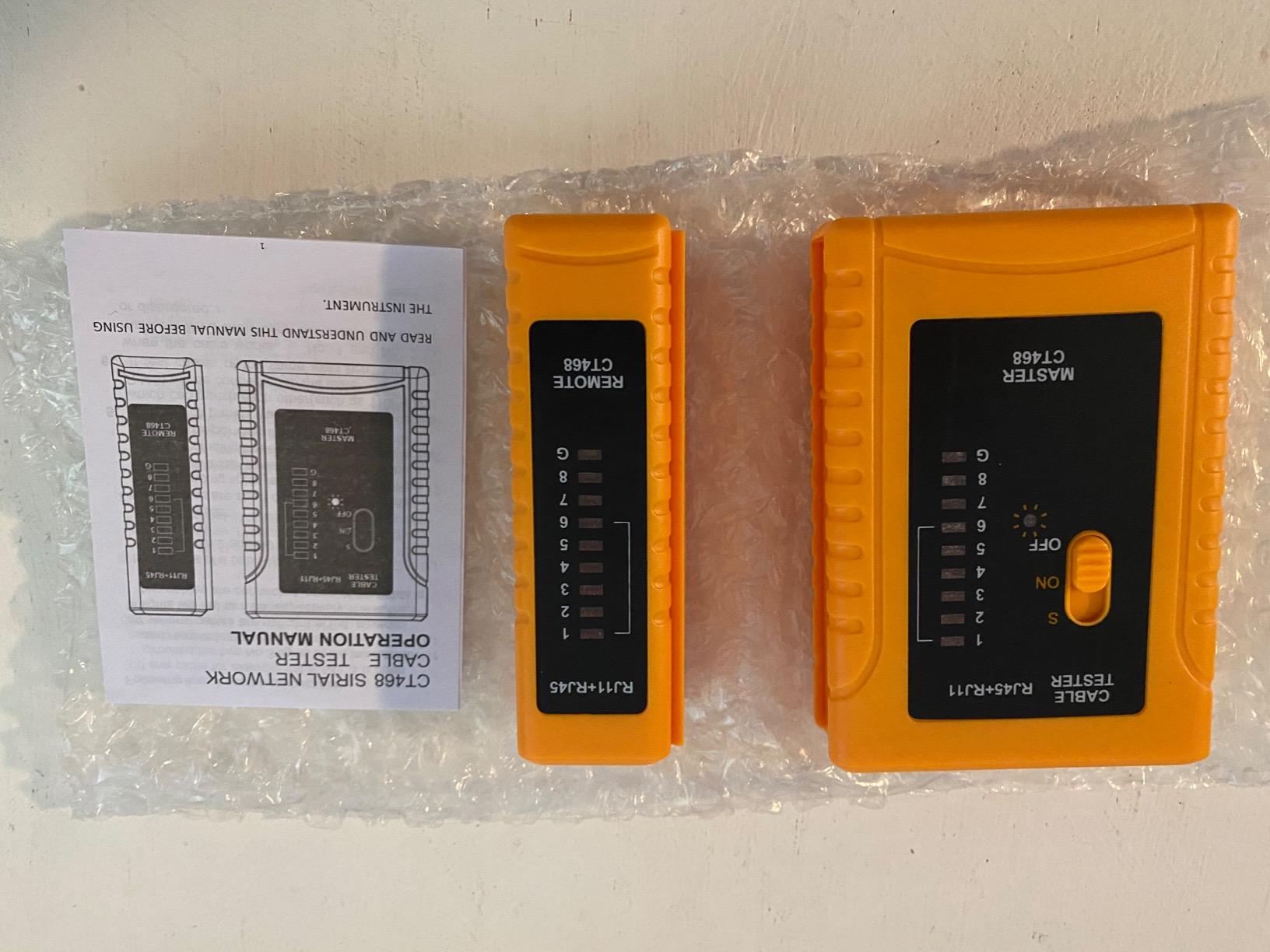
The iMBAPrice RJ45 Network Cable Tester is the lowest-priced unit in this roundup and one of the highest-reviewed. With more than 5,231 reviews averaging 4.4 stars, it is the tester most home users have actually bought. For a quick continuity check on a homemade Cat6 patch cable or a residential RJ11 run, it does the job without any bells or whistles.
The unit automatically runs a full test cycle when you power it on and reports pass, open, short, crossed pairs, and shield status through a row of LEDs. It accepts RJ11 telephone and RJ45 LAN cables, plus the Cat5, Cat5e, Cat6, and Cat7 terminations most home users encounter. Power is a standard 9V battery — the only review-wide complaint is that the battery is not included in the box.
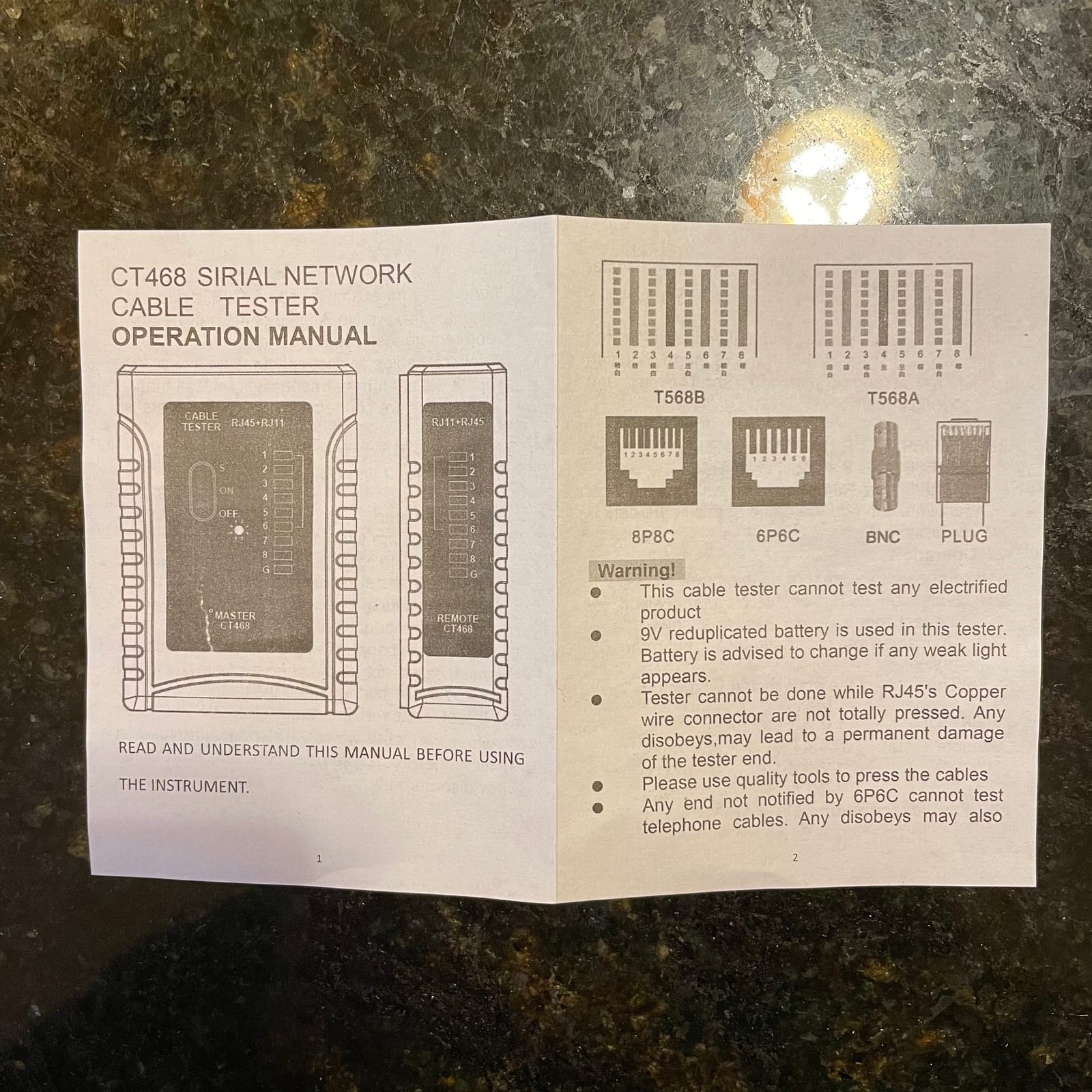
For first-time testers, this is the cheapest way to learn what a wiremap test looks like before stepping up to a more capable unit. It is also a useful backup to leave in a server closet — if your fancy Fluke unit breaks on a Sunday, this little iMBAPrice unit will still verify continuity on a patch cable while you wait for parts.
The trade-off is exactly what you’d expect at this price. No length measurement, no PoE detection, no split-pair identification, no tone generation. What you get is a clean pass/fail on basic Cat5e/Cat6 wiring, and that is enough for many home users.
Who this tester is good for
Home users, students, and hobbyists who want a low-stakes entry into cable testing will get everything they need here. It is also a great backup unit for any professional kit.
If you only need to verify that a homemade or repaired patch cable has the right pinout, the iMBAPrice tester is the cheapest way to confirm. Buy a 9V battery with it and you are set.
Who should pass on it
Anyone running a business network or working in commercial cabling should skip this and look at the Klein or NOYAFA options. The price difference is small relative to the capability gap, and time saved on a real job pays for the upgrade.
Cable Tester Types Explained: Continuity, Qualifier, Certifier, VFL
Every cable tester on the market fits into one of five functional tiers. Picking the right one for the job matters more than picking a brand — a Fluke certifier is overkill for a home patch panel, and a $20 continuity tester cannot tell you whether your Cat6 run meets ANSI/TIA standards. Here is how I break down the tiers, with a quick reference table after.
Continuity testers are the entry tier. They inject a known signal into each conductor at one end of the cable and verify the pattern arrives intact at the remote end. Cheap LED units like the iMBAPrice RJ45 fit here. They catch opens, shorts, and crossed pairs, but they do not measure length, do not catch split pairs, and do not tell you the cable is fast enough for 10 GbE. They are the right tool for verifying homemade patch cords and basic home wiring.
Port mappers and PoE testers add identification across many remote ends and PoE voltage/standard detection. The Klein Explorer 2 coax and the NOYAFA NF-8209 belong in this tier for Ethernet. Port mapping solves the “which switch port is this cable plugged into” question, and PoE detection tells you whether your IP camera or access point will actually power up over that run.
Cable qualifiers — sometimes called network testers — measure length via TDR (Time Domain Reflectometry), detect distance to fault, and verify that a Cat6/6A link can carry its rated signal. The Fluke MicroScanner2 and NetAlly LinkRunner AT live here. Qualifiers are the right tool when you need to certify that an existing cable plant meets a specific Ethernet standard, without paying the full certifier price.
Cable certifiers are the heavyweight tier. They run the full ANSI/TIA 568 suite of tests across both near-end and far-end crosstalk, return loss, propagation delay, and delay skew, and they produce signed PDF reports that a commercial cabling contractor can hand to a client. The Fluke DSX series is the canonical example. Certifiers start around five figures and run up to six, with annual calibration costs in the hundreds. They pay for themselves the moment a single bid turns on whether you can produce a printed report.
Fiber VFL and optical power meter units are a category of their own because fiber behaves differently than copper. A visual fault locator (VFL) shines a visible red laser through the fiber, so a break or sharp bend shows up as a red glow at the fault point. An optical power meter (OPM) measures actual signal loss in dBm. The NOYAFA NF-8508 bundles both into a single unit, which is unusual outside much more expensive kits.
A quick capability matrix:
Continuity testers catch opens, shorts, and crossed pairs at one cable at a time. Port mappers add multi-cable identification and PoE detection. Qualifiers add TDR length, distance-to-fault, and 1/2.5/5/10 GbE link verification. Certifiers add the full ANSI/TIA suite plus signed reporting. Fiber VFL/OPM tools focus on fiber-specific loss measurement and break location.
The honest truth is that most buyers only need the first two tiers for residential or small-business work. The mid-tier is where Reddit users report the most pain — they have a $20 continuity tester and realize they need distance-to-fault plus remote identification. The Scout Pro 3, NOYAFA NF-8209, and LAN Scout Jr 2 all sit in that sweet spot.
How to Choose the Best Cable Tester for Your Job?
Choosing a cable tester comes down to four questions: what cable types do you run, do you need to measure length, do you need to test PoE, and do you need to produce signed reports. Walk through these five steps before you spend money.
Step 1: List the cable types you touch most. If it is Cat5e/Cat6 data only, every unit in this roundup covers you. Add coax and you want either the Klein VDV512-101 Explorer 2 (if coax is the main job) or the Klein Scout Pro 3 (if you want one device for both). Add fiber and the NOYAFA NF-8508 becomes a serious option because it combines copper and fiber testing.
Step 2: Decide whether you need length and distance-to-fault. If a customer asks “how long is this cable?” or “where is the break?”, you need TDR capability. The Scout Pro 3 reports length to 2,000 ft. The NOYAFA NF-8209 reports length to 120 m. Cheap continuity testers cannot answer either question.
Step 3: Decide whether PoE matters. If you install IP cameras, VoIP phones, or Wi-Fi access points, you want a tester that reports PoE voltage and which pins carry power. The NOYAFA NF-8209 is the best budget option; the Fluke LinkIQ is the gold standard if budget allows.
Step 4: Decide whether you need signed reports. If your work is residential or small commercial, you do not. If your work involves commercial bids with warranty terms, you need a certifier — that’s the Fluke DSX series. There is no realistic mid-tier alternative for ANSI/TIA reporting.
Step 5: Match the tester to the work, not to the brand. A Reddit user on r/networking put it well: “unless it’s Fluke, everything else seems ok but not great.” That is honest — Fluke sets the bar. But Klein has closed the gap on most wiremap features, and NOYAFA has the only budget fiber-capable unit I have tested. Match the tool to the job.
Buying checklist before you click “buy”: confirm the cable types in the unit’s specs match what you actually run; check the warranty (Klein typically offers 1 year, Fluke 1-3 years); look at the connector type (most use RJ45, but some have separate ports for RJ11/12, coax F, or fiber LC/SC); and read a few verified reviews to spot durability quirks before they bite you on a real job.
Frequently Asked Questions
Which brand of network cable tester is the best?
Fluke Networks is universally cited as the gold standard for network cable testers, with the MicroScanner2 and IntelliTone Pro 200 as the most popular picks for IT pros. For most small-business and prosumer buyers, Klein Tools offers the strongest combination of accuracy, warranty, and price, with the Scout Pro 3 and LAN Scout Jr 2 leading the field.
Which fiber optic tester is considered the best?
For serious fiber work, dedicated Fluke or EXFO units are the professionals’ choice. For value-tier fiber testing that includes a visual fault locator (VFL) and a 7-wavelength optical power meter, the NOYAFA NF-8508 is the most-capable single unit most buyers will find, covering wavelengths from 850 nm through 1650 nm.
What is the best cable tester for testing Ethernet cables?
For everyday Ethernet testing, the Klein Tools VDV526-200 LAN Scout Jr 2 is the strongest balance of features and value, catching split-pair faults that cheap continuity testers miss. For pros who also test coax and need length measurement, the Klein VDV501-851 Scout Pro 3 adds 2,000 ft of length measurement and a starter kit of locator remotes.
What is the best cable tracer?
The Fluke Networks IntelliTone Pro 200 is the best cable tracer for active networks because its digital IntelliTone signal cuts through electrical noise that confuses analog tracers. For non-energized residential and commercial wiring, the Klein Tools VDV500-820 Pro Tone Generator and Probe Kit offers excellent tracing at a much lower price.
How do I choose a cable tester?
Start by listing the cable types you touch most (Cat5e/Cat6, coax, fiber), then decide whether you need length measurement, distance-to-fault, PoE detection, and signed reports. Most home and small-business buyers only need a continuity + wiremap tester like the Klein LAN Scout Jr 2. Commercial contractors usually step up to a qualifier or certifier.
What is the difference between a cable tester and a network tester?
A cable tester checks the physical cable itself — continuity, wiremap, length, splits, shorts, and PoE voltage. A network tester does everything a cable tester does, plus it can connect to a live switch to test VLAN discovery, IP addressing, packet capture, and link speed negotiation. The NOYAFA NF-8508 sits in the middle, blending cable and basic port-flash network diagnostics.
Final Verdict: Which Cable Tester Should You Buy in 2026?
If you only buy one cable tester this year, make it the Klein Tools VDV526-200 LAN Scout Jr 2 — Editor’s Choice for good reason. It catches the faults cheap testers miss (especially split pairs), reads cleanly in any lighting, and fits in a tool bag. Budget-conscious buyers get nearly equivalent PoE and length capability from the NOYAFA NF-8209, which is my Best Value pick.
For pros who mix coax with data, the Klein Scout Pro 3 is the next rung up — it adds 2,000 ft of length measurement and locator remotes for under $100. For fiber-capable testing on a budget, the NOYAFA NF-8508 is the only unit in this roundup that bundles a 7-wavelength optical power meter with a VFL. And if you regularly need to trace cables on live, noisy networks, the Fluke Networks IntelliTone Pro 200 is the gold standard — worth every dollar of its premium.
Tell me: what cable types do you run, and what is your budget? If you tell me the answers I can narrow this list down to one or two models. The best cable testers in 2026 are these ten, and any one of them will save you hours of guesswork on your next install.