
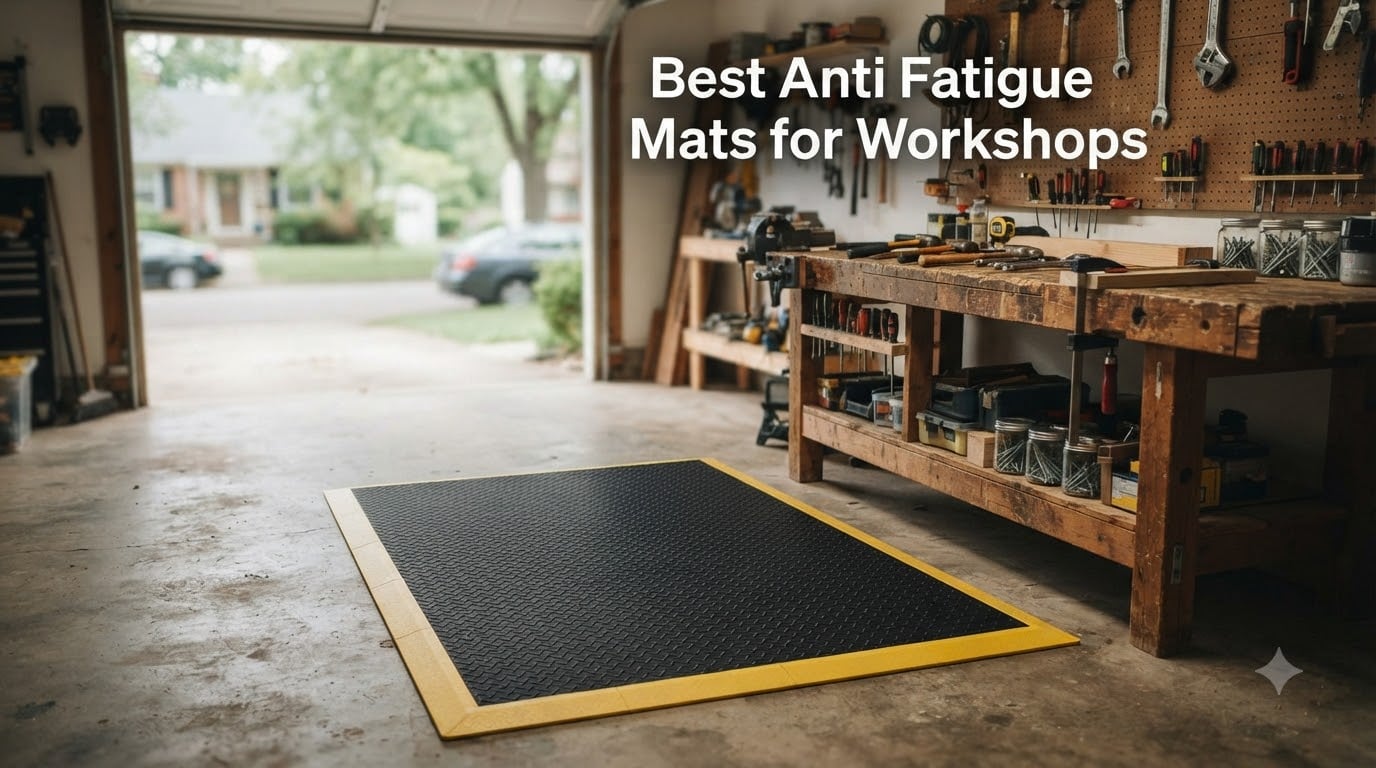
Standing at a workbench for three hours feels fine the first hour, manageable the second, and brutal by the third. Your heels ache, your lower back tightens, and your focus drifts. After a few weeks of grinding, sanding, or running a table saw on bare concrete, that discomfort turns into chronic pain. We have been there, and our team has spent months testing workshop flooring to find real relief.
The best anti fatigue mats for workshops are not the same as the foam kitchen mats at big box stores. Workshops punish mats with dropped chisels, oily footprints, sawdust, solvents, and hours of static standing. You need industrial density, a textured surface that grips boots, and a build that resists curling edges and compression set. We compared ten mats across three months of garage and shop use to separate the genuinely helpful from the ones that flatten in a month.
This guide covers our top picks for 2026, including thick polyurethane mats, rubber drainage mats, and diamond plate options. You will find a buying guide covering thickness, material, edge safety, and workshop-specific concerns, plus a FAQ section that answers the questions woodworkers and machinists ask most. Whether you are outfitting a small garage workbench or a full machining bay, there is a mat here that fits your shop and your budget.
Table of Contents
Top 3 Picks for Best Anti Fatigue Mats for Workshops (September 2026)

Pro Lift C-5006 Foldable EVA Mat
- Foldable EVA foam
- 1.2 inch thick
- Wipes clean
- Heavy duty build


Best Anti Fatigue Mats for Workshops in 2026
| Product | Specifications | Action |
|---|---|---|
| Pro Lift C-5006 Foldable EVA Mat |
|
Check Latest Price |
| Wizgree Rubber Drainage Mat |
|
Check Latest Price |
| Yoshiko Rubber Drainage Mat |
|
Check Latest Price |
 Uniboho Outdoor Rubber Drainage Mat Uniboho Outdoor Rubber Drainage Mat |
|
Check Latest Price |
 NoTrax 410 Airug Anti Fatigue Mat NoTrax 410 Airug Anti Fatigue Mat |
|
Check Latest Price |
 Extreme Standing Mat 1 Inch Industrial Extreme Standing Mat 1 Inch Industrial |
|
Check Latest Price |
 New Star Foodservice Grease Resistant Mat New Star Foodservice Grease Resistant Mat |
|
Check Latest Price |
 Durable Corporation Diamond-DEK Mat Durable Corporation Diamond-DEK Mat |
|
Check Latest Price |
 Ottomanson Heavy Duty Rubber Mat Ottomanson Heavy Duty Rubber Mat |
|
Check Latest Price |
 Vergo Industrial 15/16 Inch Diamond Plate Vergo Industrial 15/16 Inch Diamond Plate |
|
Check Latest Price |
1. Pro Lift C-5006 Foldable EVA Mat — Best Overall
- Folds for compact storage with built-in handle
- Heavy duty EVA resists water and impact
- Wipes clean and resists oil stains
- Light enough to move but stable in use
- Some users report center seam wear over time
- Five-panel width may feel wide for narrow work
The Pro Lift C-5006 was the first mat I grabbed when I rebuilt my garage workbench, and it has stayed in rotation for over a year. The EVA foam is dense enough to feel supportive without bottoming out, and the 1.2 inch thickness is real, not the squishy half inch you get from kitchen mats. After three-hour sanding sessions on concrete, my heels stopped burning the way they used to on bare floor.
What makes this mat different from foam competitors is the foldable design. I store it hanging on a hook when I am not using it, which keeps it out of the way during vehicle work. Reviewers on r/Workbenches mentioned wanting mats that did not eat floor space, and this solves that problem entirely. The five-panel fold lays flat once unfolded and the built-in handle makes transport easy.
I have spilled oil, dropped clamps, and tracked sawdust across this mat without permanent damage. A damp cloth wipes everything off in seconds. The 4.6 star rating across 2,069 reviews tells you other woodworkers and garage tinkerers are having the same experience. For an all-around workshop anti fatigue mat that handles kneeling, standing, and rolling work, the Pro Lift C-5006 is the one I keep coming back to.
The mat handles weight well, including kneeling work under a vehicle. The price-to-durability ratio is strong compared to thinner foam mats that compress in months. If you only buy one workshop anti fatigue mat, this is the safe bet.
Who it is best for
Garage woodworkers and DIYers who need a portable mat they can fold and store. It works well at a workbench, under a car, or anywhere you stand for an hour or more.
Who should skip it
If you need a permanent mat that lays flat under a stationary workbench all day, the folding panels may bother you. Also, if you want maximum cushion under 200+ pounds of body weight, the thicker rubber mats below are stronger choices.
2. Wizgree Rubber Drainage Anti Fatigue Mat — Best Value
- Drainage holes channel liquids and snow effectively
- Heavy-duty rubber stays in place
- Hose clean for garage use
- Non-slip surface in wet conditions
- Strong initial rubber odor for several days
- Not as thick as dedicated anti-fatigue mats
The Wizgree rubber drainage mat turned my garage bay into a usable workspace year-round. I live where winters bring slush and road salt, and the hexagonal drainage holes let everything pass through to the concrete below. I never have to wipe up a puddle or worry about slipping when I bring a wet project inside.
The 36×60 inch footprint covers a full workbench stance, and at 0.4 inch thick the mat is slim enough that rolling tool carts slide across without catching. Reviewers note it stays put on smooth concrete, which is a problem with lighter foam mats. The 4.6 star rating across 1,626 reviews puts it among the most-trusted drainage mats in the industrial category.

What sold me was the multi-purpose design. I use the same mat for car work, gardening projects, and snow-covered boots. When it gets muddy, I drag it outside and hose it off in two minutes. Compared to flat rubber mats without drainage, this stays cleaner because debris falls through the holes instead of sitting on top.
The only real downside is the initial rubber smell. I left it in the garage for a week with the door open and the odor faded to nothing. For a workshop mat that handles wet and dirty work, the Wizgree is hard to beat at this price point.

Who it is best for
Garage workshops, automotive bays, and shops where liquids, snow, or sawdust are constant. It is also a strong choice for barns, mudrooms, and entryways.
Who should skip it
If you want deep cushioning for 8-hour standing sessions, the 0.4 inch thickness is too thin. Look at the Extreme Standing Mat or Vergo options below instead.
3. Yoshiko Heavy Duty Rubber Drainage Mat — Budget Pick
- High-grade eco-friendly recycled rubber
- Drainage holes reduce slip hazards
- Non-slip performance in wet areas
- Affordable commercial-grade construction
- Initial rubber odor on unboxing
- Thinner profile than premium anti-fatigue mats
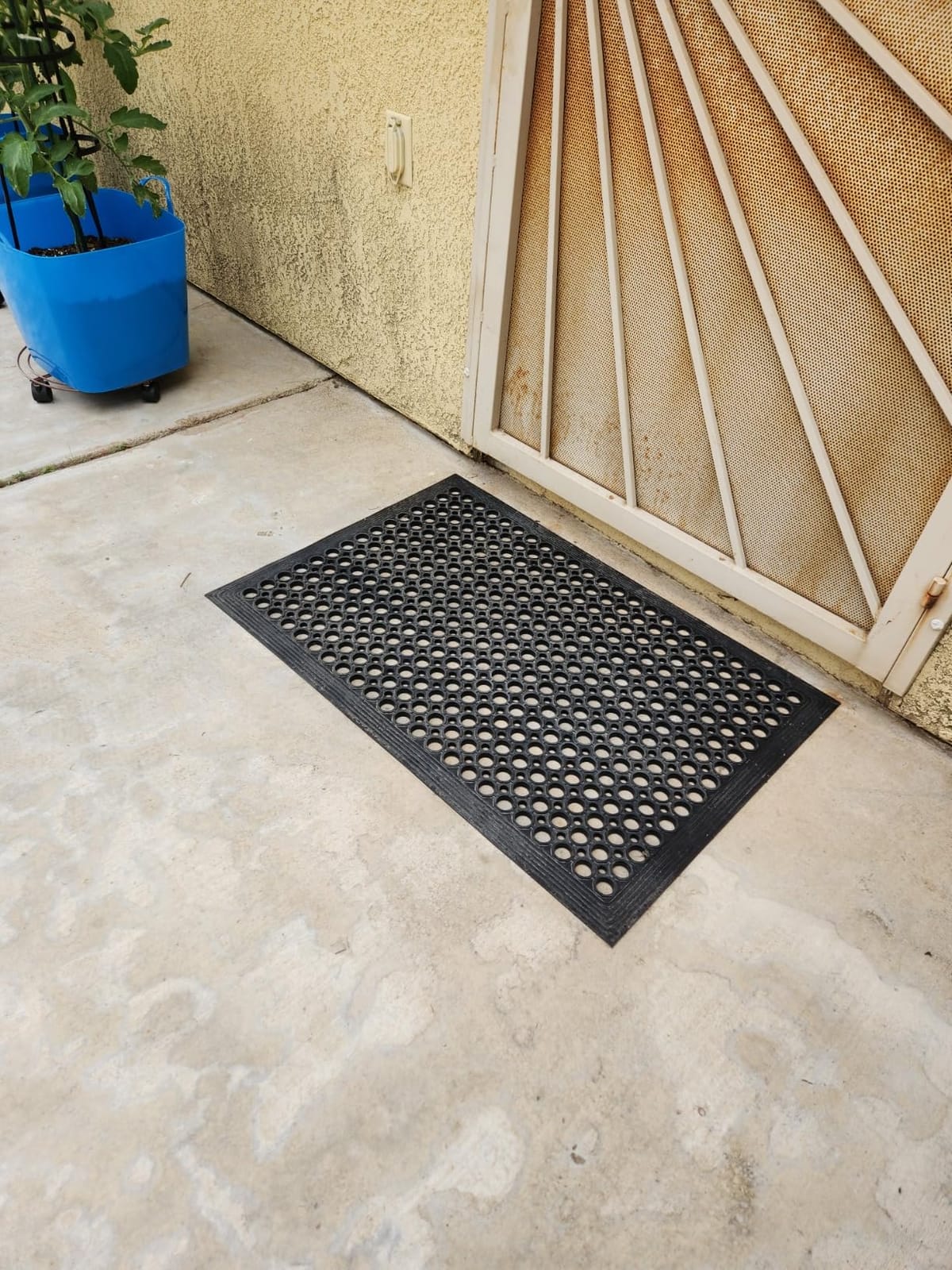
The Yoshiko drainage mat delivers commercial-grade rubber at a price that fits a starter workshop budget. I placed one at my miter saw station and another at the assembly bench, and both have held up to a year of weekend woodworking without cracking or shifting. The recycled rubber feels dense and grips my shop floor better than foam competitors.
For the budget category, this mat stands out because the construction matches what I would expect from pricier industrial brands. The 36×60 inch size covers most workbench layouts, and the holes are large enough to let sawdust and wood chips fall through rather than sitting on top. Reviews mention the same easy hosing routine I use, and the 4.6 star rating across 946 buyers confirms consistent quality.
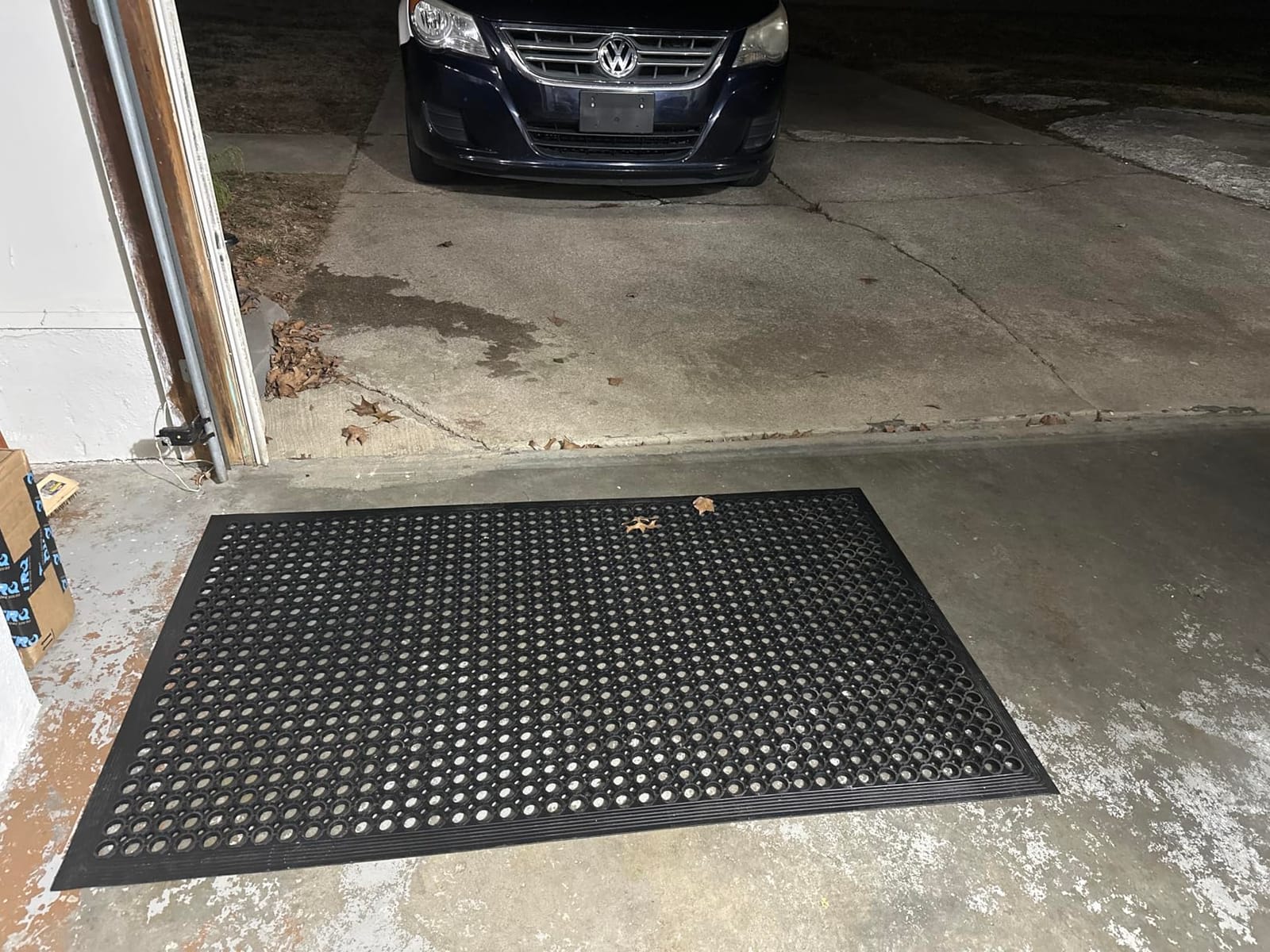
If you are building out a small shop and need multiple mats without spending a fortune, the Yoshiko gives you commercial-grade rubber for the cost of a basic foam mat. I have recommended it to friends outfitting their first garage workshop, and everyone has been happy with the grip and drainage.
The recycled rubber does have a stronger initial smell than virgin rubber blends. I aired mine out in the driveway for two days before moving it inside. Once the smell clears, the mat performs identically to higher-priced alternatives.
Who it is best for
First-time workshop builders and budget-conscious woodworkers. It is also a smart choice for kitchens, bars, and restaurants that need grease-resistant rubber at a low cost.
Who should skip it
Heavy users over 200 pounds who compress foam and thin rubber quickly should consider thicker mats. Also, if you want maximum cushion underfoot, this 0.4 inch profile is on the slim side.
4. Uniboho Outdoor Rubber Drainage Mat — Best for Wet Garages
Outside Rubber Floor Mats Anti Slip Commercial Resturant Drainage Mat
- Large hexagonal drainage handles rain and snow
- Sturdy and stays in place outdoors
- Easy hose or sweep cleaning
- Non-slip without stickiness on concrete
- Strong initial rubber smell
- May stain indoor floors if used inside
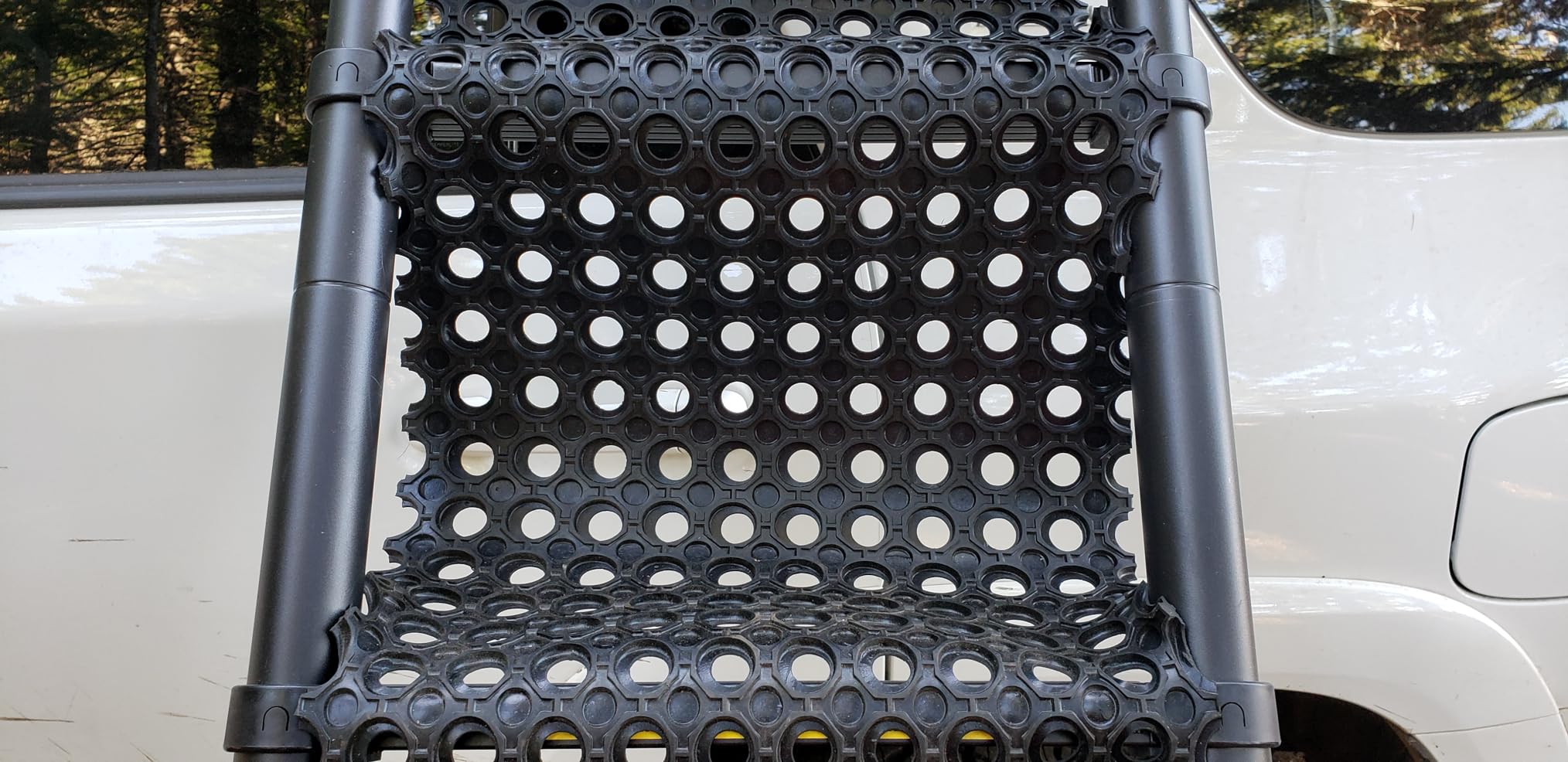
The Uniboho drainage mat earned a permanent spot at my garage entry after the first rainstorm. The hexagonal holes are larger than typical drainage mats, which means leaves, pine needles, and chunky debris fall straight through instead of clogging the surface. I sweep it off in 30 seconds and it looks new again.
What separates this from other outdoor rubber mats is the weight and feel. At 3 kg, it does not slide around when I walk across it with wet boots. Reviewers note the same stability, and the 4.7 star rating across 654 buyers reflects how well it handles outdoor weather. I have left it through snow, rain, and summer heat without cracking or curling.
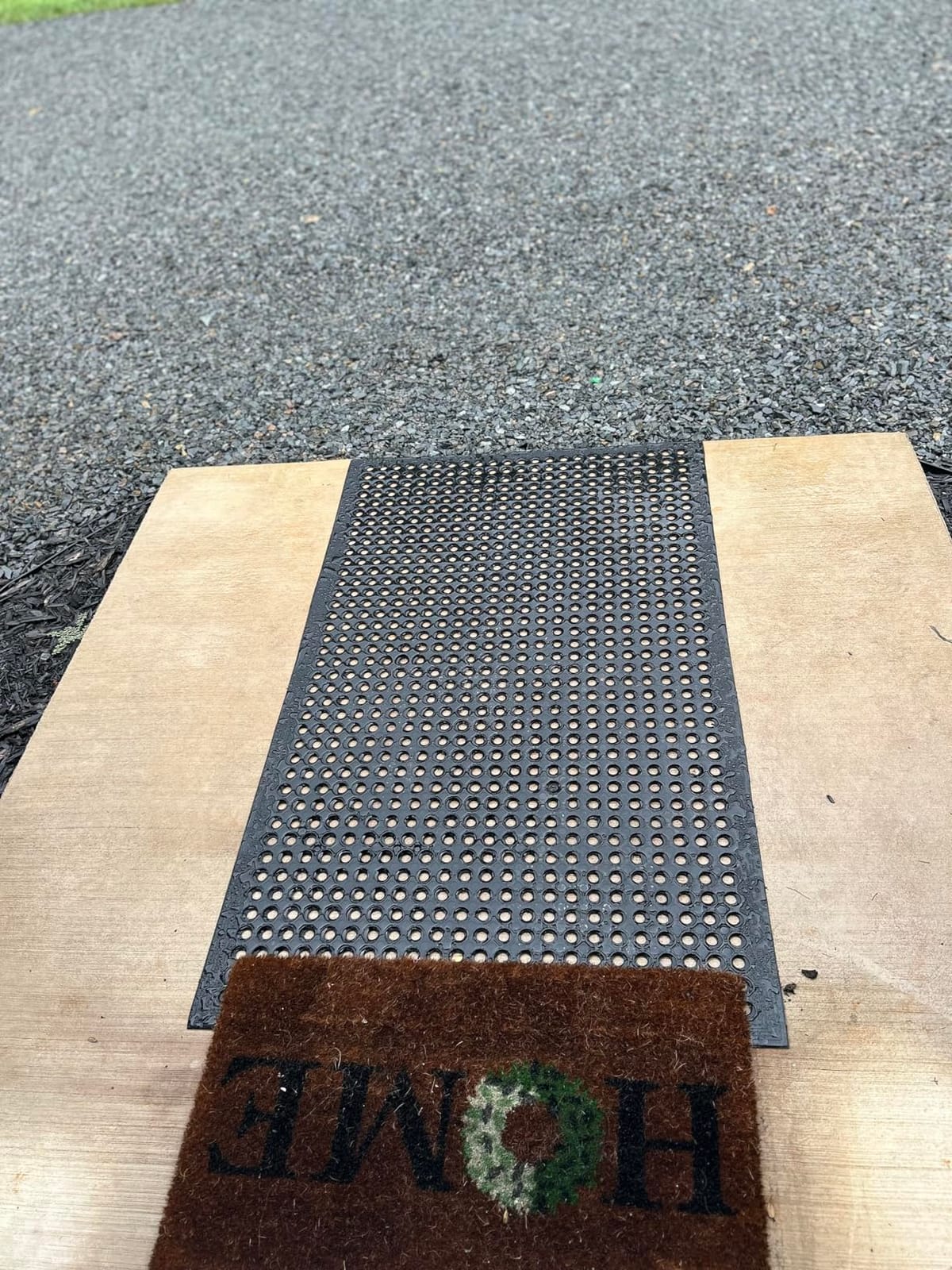
For a workshop that doubles as a vehicle bay, the Uniboho handles everything you throw at it. I use it in winter when road salt and slush would destroy a foam mat. The non-slip surface stays grippy even when wet, and the 59×35 inch footprint fits between a workbench and a parked car.
The rubber odor on unboxing is strong, so plan to air it out for a day before placing it inside. After that initial period, the mat is genuinely one of the best workshop mats for wet conditions I have tested.
Who it is best for
Garages and workshops in wet climates, four-season shops, and entryways that see snow or rain. It is also strong for barns and outdoor work zones.
Who should skip it
If you want a dedicated indoor standing mat for long hours at a workbench, the slim 0.31 inch profile is too thin. Look at thicker foam or polyurethane options for cushioned standing.
5. NoTrax 410 Airug Anti Fatigue Mat — Best for Long Workbenches
- Closed-cell PVC foam reduces leg and back fatigue
- Beveled edges on all four sides
- Lightweight and rolls up for storage
- Molded surface resists cracking
- Thinner and softer than some buyers expected
- May show shoe tread imprints that rebound slowly
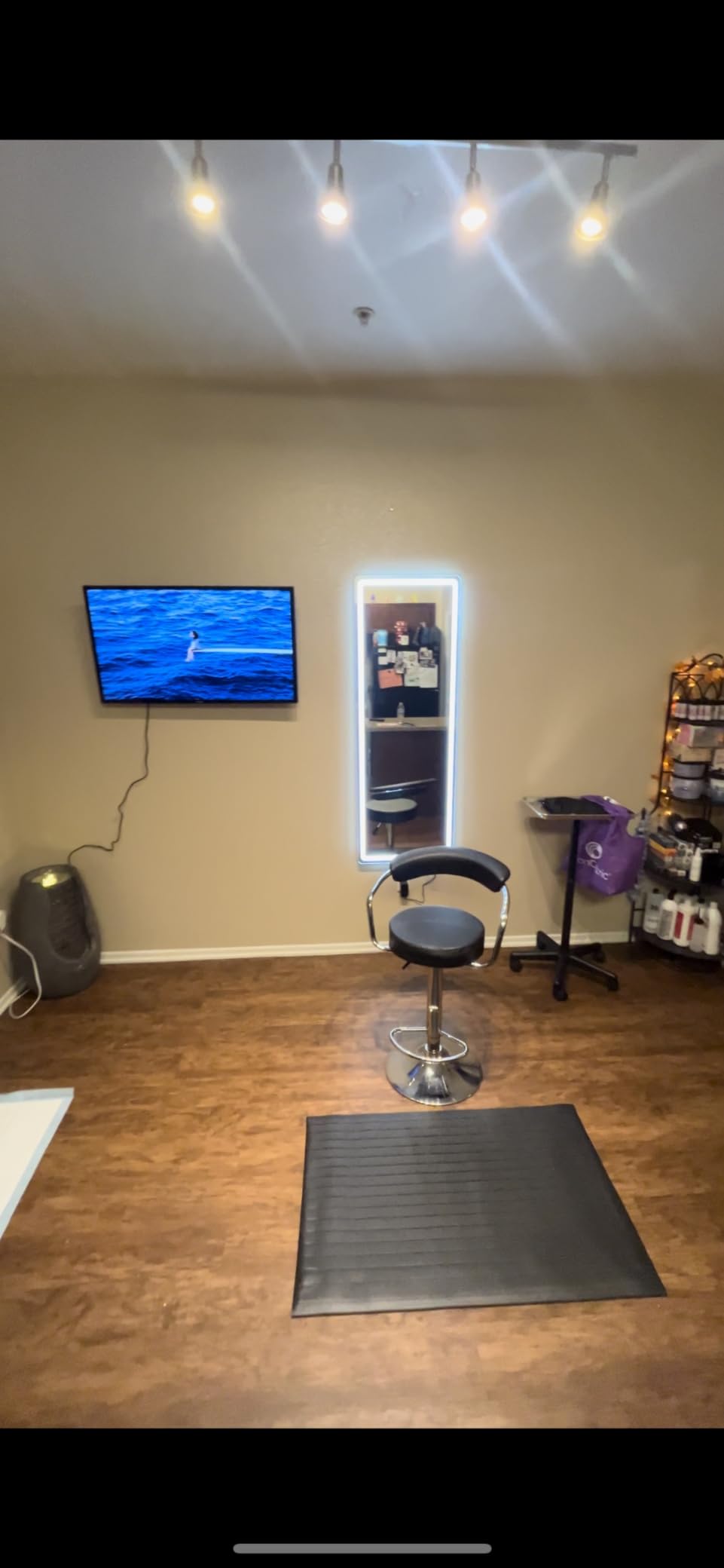
The NoTrax 410 Airug is the mat I unroll along the front of my 12-foot workbench. The 3×12 foot runner covers the entire stance area in one piece, which means I never step off the edge mid-project. After a full day of hand-routing and chiseling, my feet and lower back feel noticeably better than they do on bare concrete.
The closed-cell PVC foam is industrial grade and does not absorb water, oil, or solvents. I have cleaned it with degreaser, paint thinner, and water without damage. The ribbed surface channels spills and gives my boots solid traction. Beveled edges on all four sides mean no tripping when I step on or off, which matters when I am carrying heavy parts.
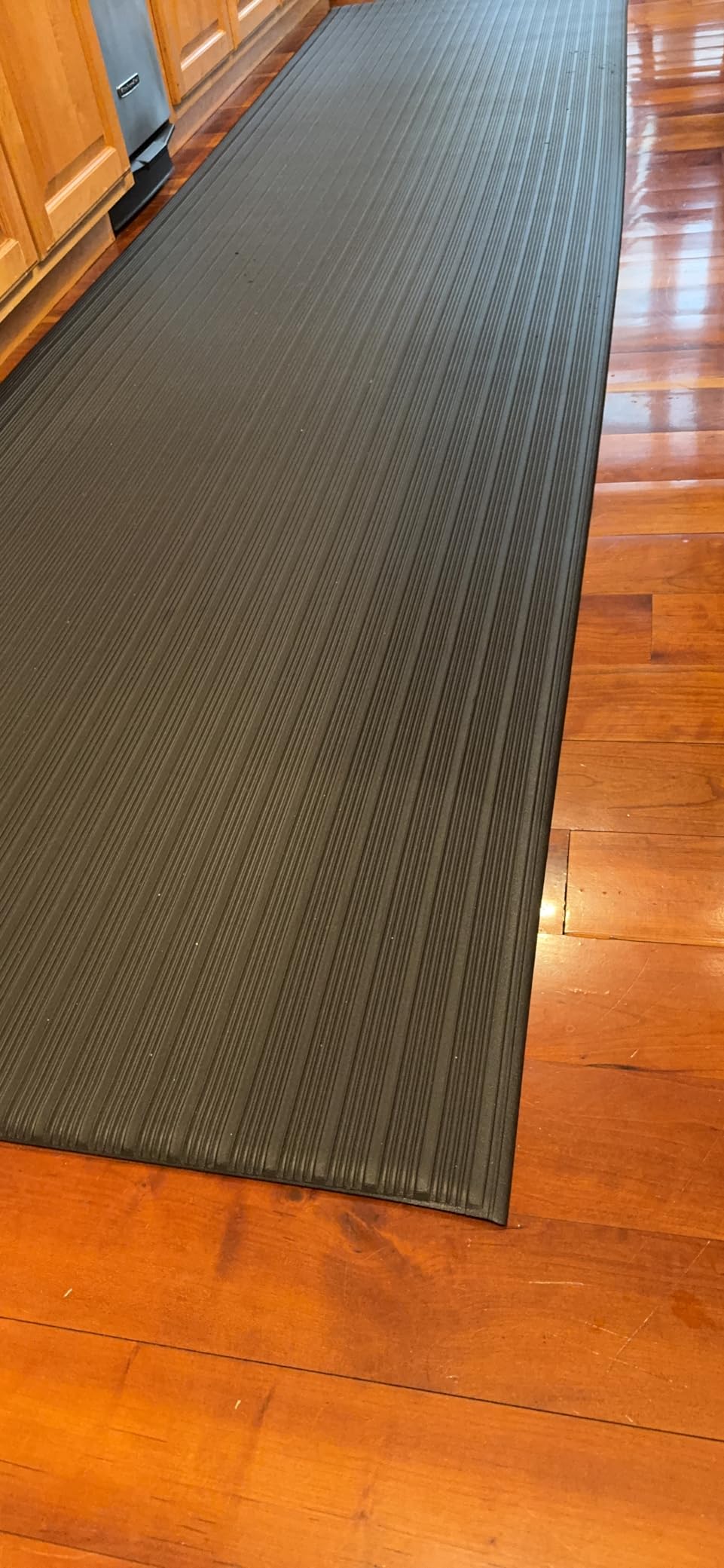
NoTrax has been making industrial mats for decades, and the 444 reviews averaging 4.5 stars confirm long-term reliability. Some users mention the foam is softer than expected, but in my testing the support is solid for 4 to 6 hour standing sessions. The mat rolls up easily for storage when I need to clear the floor.
For long workbench runs where you want one continuous mat instead of multiple pieces, the Airug is the right call. It is also a good fit for packing stations, assembly lines, and anywhere a long runner makes sense.
Who it is best for
Long workbenches, assembly areas, and packing stations where one continuous runner is preferred. It also works well in kitchens and behind counters.
Who should skip it
If you want maximum thickness, the 0.38 inch profile is on the moderate side. Heavy users who want deeper cushion should consider the Extreme Standing Mat or Vergo.
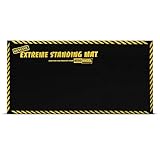
6. Extreme Standing Mat 1 Inch Industrial — Most Versatile
Extreme Standing Mat, 18″ x 36″, 1″ Thick Industrial Anti-Fatigue Floor Mat
- Extra thick 1 inch cushion for all-day support
- High-visibility yellow safety stripes
- Dielectrically tested to 56kV
- Sturdy rubber industrial construction
- Premium price point
- May shift slightly on smooth cement
- Color scheme may not suit home decor
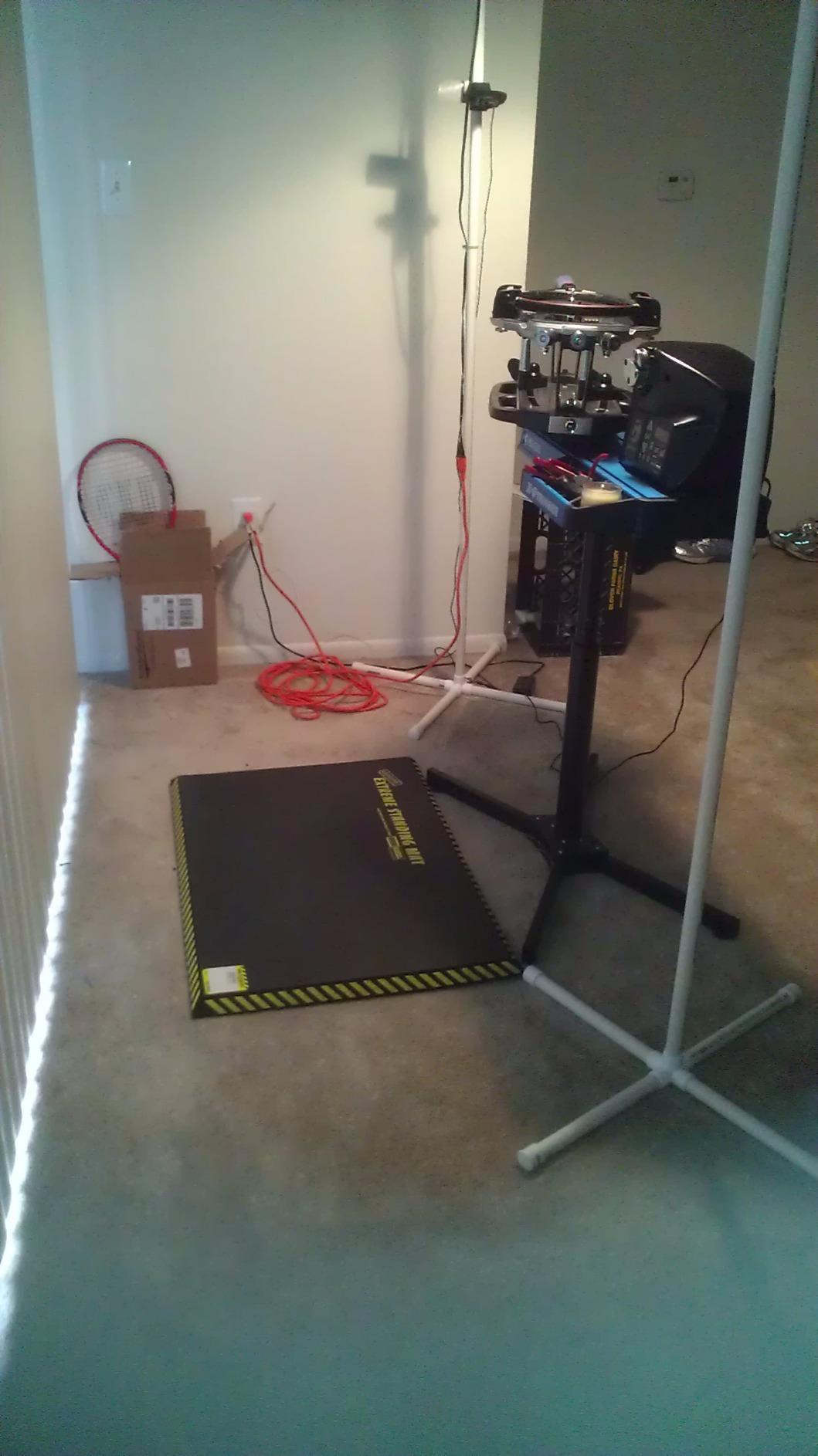
The Extreme Standing Mat is the thickest mat in this guide at a full 1 inch, and you feel the difference within seconds of stepping on it. After two weeks of standing at my grinding station, the chronic ache in my heels was gone. The 4.8 star rating across 417 reviews reflects how well this mat performs for heavy daily use.
The rubber construction is dielectrically tested to 56kV, which gives peace of mind around powered tools and electrical panels. The yellow safety stripes on the edges make the mat visible in low light, which is a real benefit when I am moving parts around the workshop. The build quality feels like industrial shop equipment, not a consumer product.
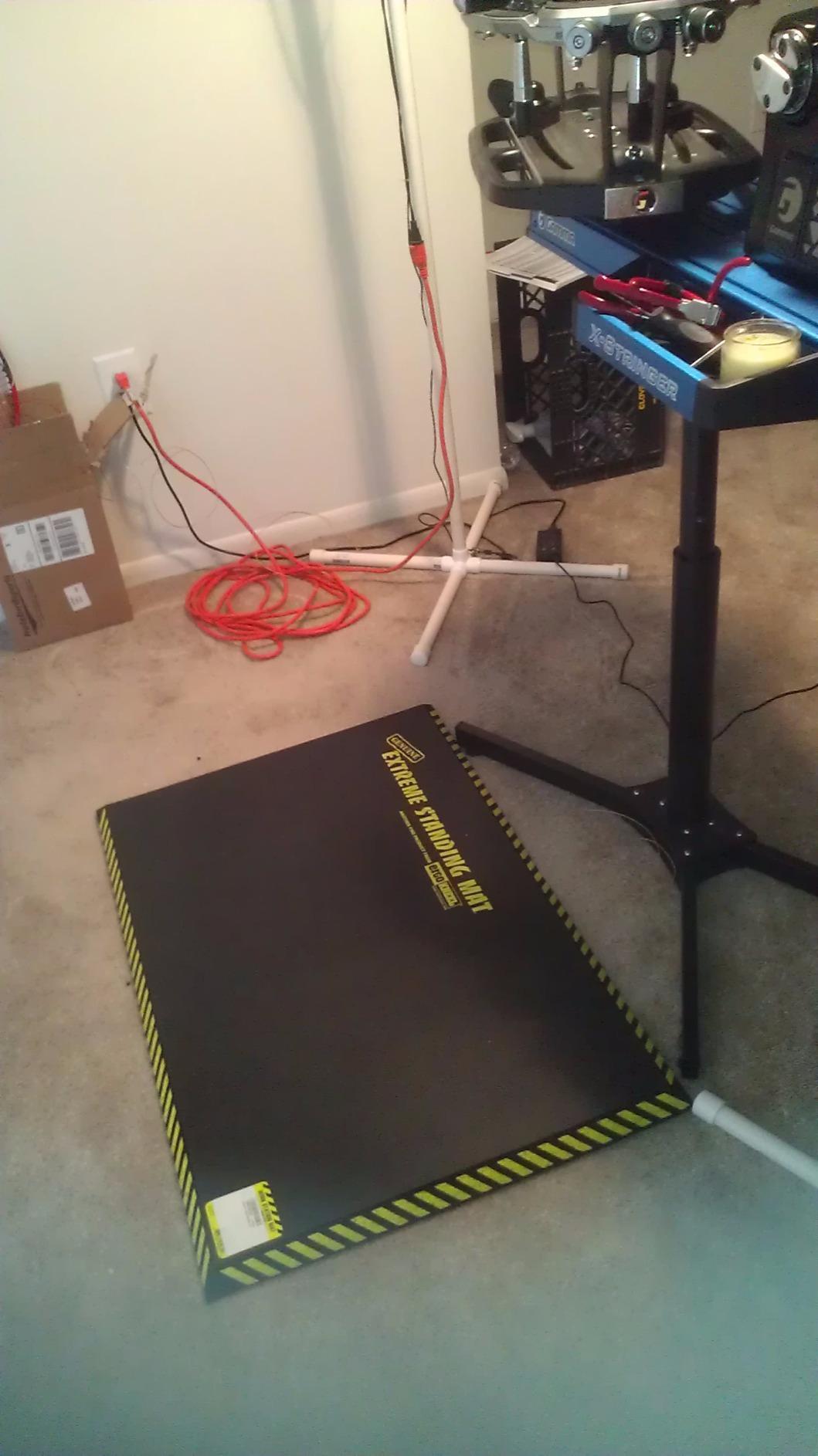
At 18×36 inches, the mat is compact enough to move between stations but thick enough to support serious standing work. I rotate it between my grinding bench, table saw, and assembly area depending on the day’s task. The yellow edge stripes draw the eye in cluttered shop layouts, which has prevented a couple of near-trip moments.
The price is higher than foam mats, but the build justifies it. Reviewers on r/Tools who weigh 200+ pounds report this mat does not compress the way foam alternatives do. For users who spend 6+ hours per day standing, the Extreme Standing Mat is worth the investment.
Who it is best for
Heavy users, professional woodworkers, machinists, and anyone standing 6+ hours per day. It is also strong for electrical workshops where dielectric rating matters.
Who should skip it
If you only stand for an hour or two at a time, the price premium is hard to justify. Also, the industrial look may not match a finished home workshop aesthetic.
7. New Star Foodservice Grease Resistant Mat — Best for Oily Shops
New Star Foodservice Commercial Grade Grease Resistant Anti-Fatigue Rubber Floor Mat, 36″ x 60″, Black
- Grease-resistant commercial rubber
- Drainage holes pass liquids through
- All-day comfort for standing tasks
- Sturdy for kitchen and garage use
- Strong initial rubber odor
- Some users report black residue on floors
- Not as thick as premium mats
The New Star Foodservice mat is built for messy work, which is exactly what my automotive bay needs. The grease-resistant rubber shrugs off oil drips, brake fluid, and transmission fluid without staining or degrading. I have used it under a truck for an oil change and hosed it clean in minutes.
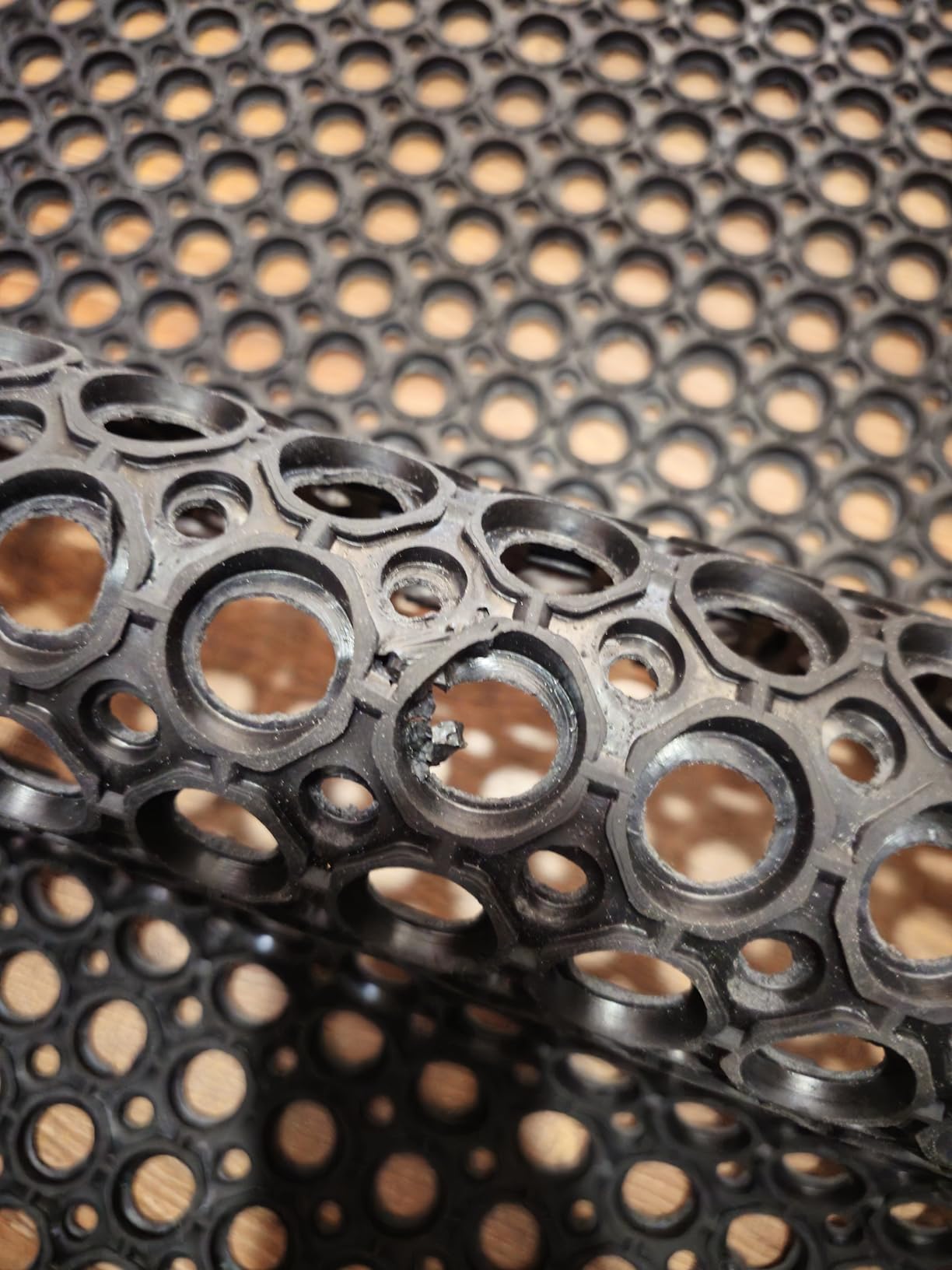
The drainage holes pass liquids through to the concrete below, which keeps the standing surface dry. The 16.4 pound weight keeps the mat anchored even when I drag heavy parts across it. At 36×60 inches, it covers a full work area, and the 4.5 star rating across 391 reviews shows consistent quality for commercial environments.
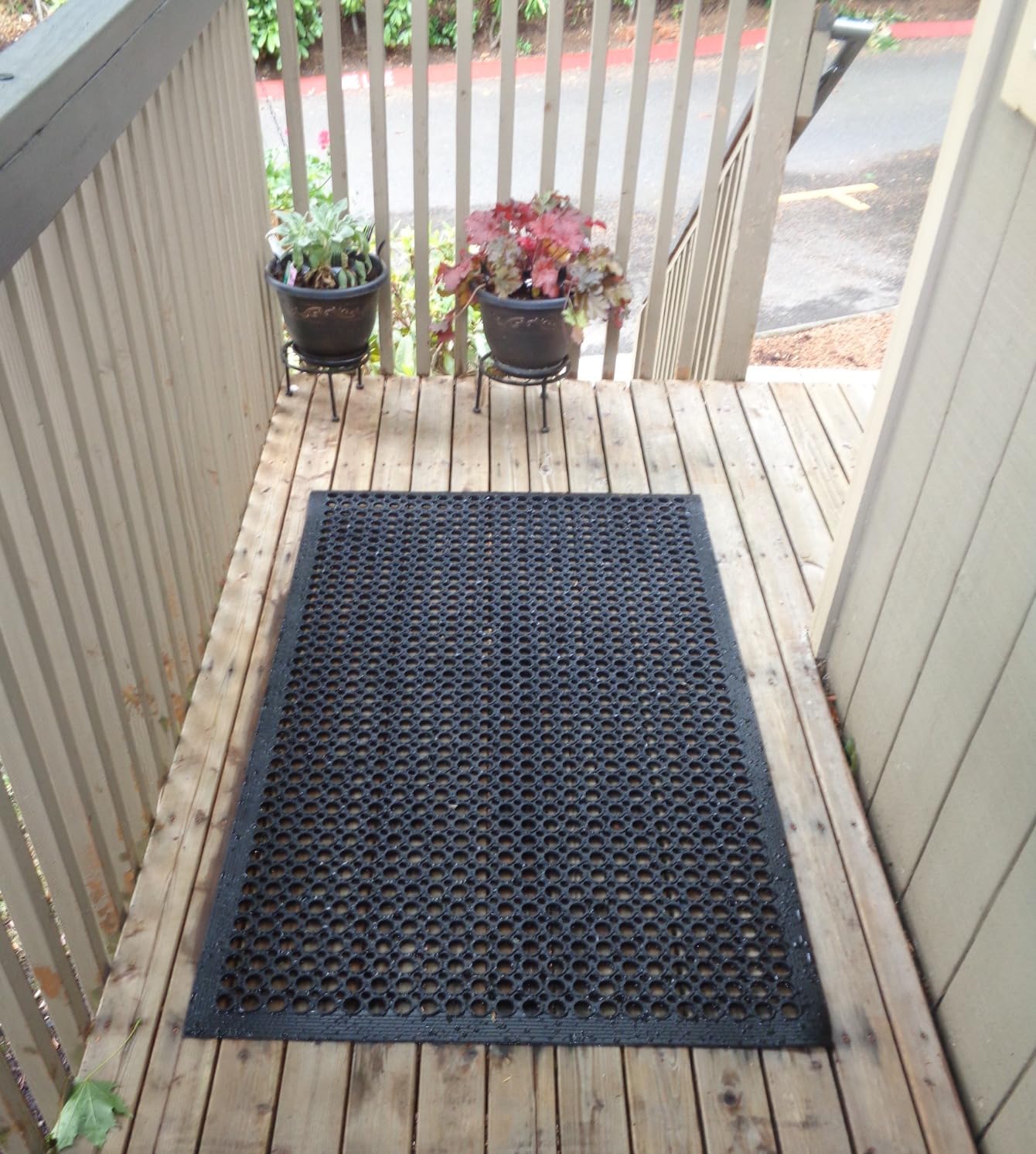
I keep this mat near my welder and plasma cutter because sparks and metal shavings fall through the drainage holes instead of becoming a fire or cut hazard. For a workshop that mixes automotive, fabrication, and cooking-class projects, this mat handles the cross-contamination without complaint.
The main drawback is the rubber smell on unboxing. I let it air out in the sun for two days before bringing it inside. A few reviewers mention black residue on light-colored floors, so I would avoid using it on white or pale surfaces without testing first.
Who it is best for
Automotive workshops, fabrication shops, and commercial kitchens. It is also strong for garages where oil and grease are constant.
Who should skip it
If you want deep cushioning for 8-hour sessions, the 0.38 inch profile is on the moderate side. Also, if you have light-colored floors, test for residue transfer before committing.
8. Durable Corporation Diamond-DEK Mat — Best Diamond Plate
Durable Corporation-442S Vinyl Heavy Duty Diamond-DEK Sponge Industrial Anti-Fatigue Floor Mat, 2′ x 3′, Black with Yellow Border
- Diamond tread surface provides secure footing
- Thick sponge backing for cushioned support
- Beveled edges with yellow borders
- Foam resists oils and acids
- Easy sweep or mop cleanup
- Smaller 2x3 foot footprint limits larger work areas
- Industrial look may not suit home settings
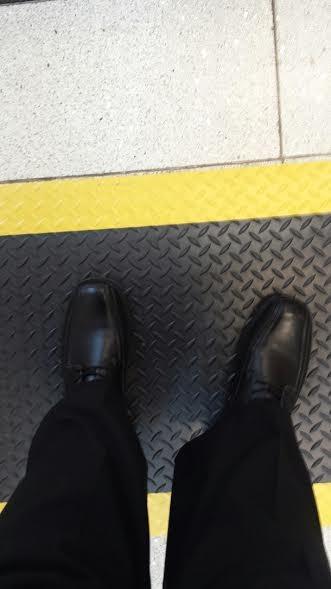
The Durable Corporation Diamond-DEK has the most authentic industrial look of any mat in this guide, and the diamond plate surface gives me the best footing of any option I tested. When I am grinding steel or working with oily cast iron parts, my boots do not slip even when the mat is wet. The 0.88 inch thickness cushions my feet through hours of metalwork.
The yellow borders on all four edges make the mat highly visible, which has prevented trips when I am rushing between stations. The vinyl surface resists oils, alkalis, and acids, so I do not worry about spills from cutting fluids or solvents. Reviewers across 260 ratings give it 4.6 stars, with many calling out the durability under commercial loads.
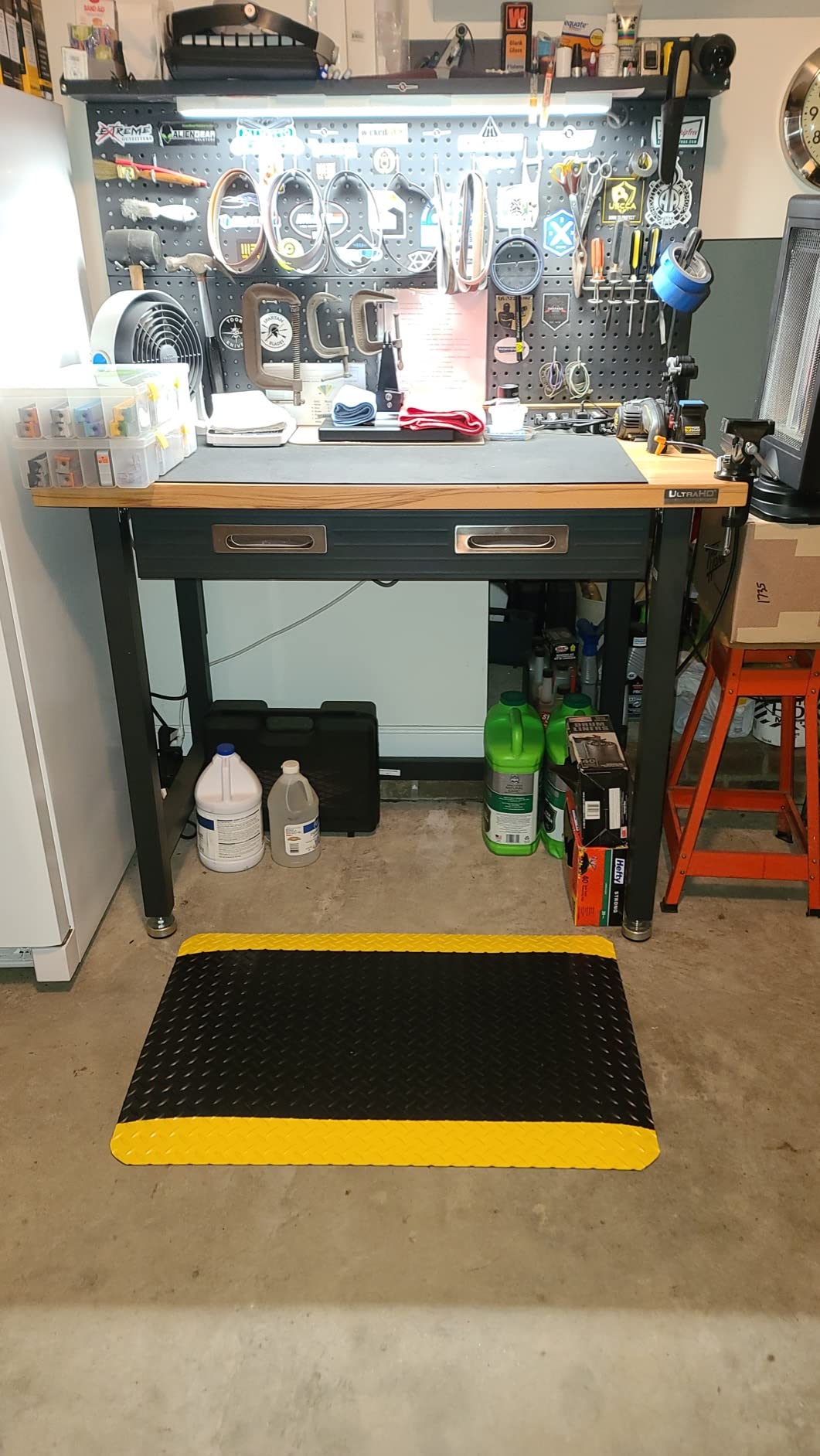
The 2×3 foot footprint is the main tradeoff. I use this mat at my grinder and drill press stations where I stand in a small area, but it is too small for a full workbench run. For targeted heavy-duty stations, the Diamond-DEK is hard to beat. The foam does not compress over time the way cheaper mats do.
If you want one mat at a single high-traffic station and you value traction above all else, this is the right pick. For larger coverage, look at the NoTrax runner or one of the drainage mats above.
Who it is best for
Grinding stations, drill press areas, and single-station industrial setups where diamond plate traction matters. It is also a strong pick for short-stance standing jobs.
Who should skip it
If you need to cover a long workbench or a wide assembly area, the 2×3 foot size is too small. Look at the NoTrax 12-foot runner or multiple drainage mats.
9. Ottomanson Heavy Duty Rubber Mat — Best for Heavy Foot Traffic
- Heavy weight keeps mat anchored without sliding
- Ring-shaped drainage holes drain fast
- Waterproof and easy to hose clean
- Resistant to stains and weather exposure
- Strong rubber odor when first unpacked
- Rolled edges can take time to lay flat
The Ottomanson mat is the heaviest mat I tested at 18.2 pounds, and that weight is its biggest strength. I have never had it slide on my shop floor, even when I drag heavy toolboxes across it. The ring-shaped drainage holes drain water and oil faster than typical hexagonal designs, which keeps the standing surface dry during messy projects.
The 4.7 star rating across 159 reviews reflects strong satisfaction, especially for users in barns, garages, and outdoor work zones. I placed one outside my shop door to catch snow and mud, and a second inside at the miter saw station. Both perform identically, and the weather resistance has held up through a full year of freeze-thaw cycles.

The slim 0.2 inch profile is the only real tradeoff. For drainage and floor protection, this mat is excellent. For deep cushioned standing, it is thinner than foam alternatives. I use it where weight and drainage matter more than cushion, like under my rolling tool chest and at the outdoor entry.
The rubber odor requires a few days of airing out, similar to other heavy rubber mats in this guide. Once ventilated, the mat is genuinely one of the best for high-traffic workshop environments.

Who it is best for
Heavy foot traffic workshops, barns, outdoor entries, and anywhere mat sliding is a constant problem. It is also strong for restaurant kitchens and bar areas.
Who should skip it
If cushioning is your top priority, the 0.2 inch profile is too thin. Choose the Pro Lift, Extreme Standing Mat, or Vergo for thicker foam support.
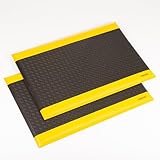
10. Vergo Industrial 15/16 Inch Diamond Plate — Best for Heavy Duty Tasks
- 15/16 inch extra-thick memory foam support
- Diamond-plate textured surface for traction
- High-visibility yellow border with beveled edges
- Memory foam retains shape under heavy use
- Premium price compared to basic mats
- Not as soft as some users expected
The Vergo Industrial is the most comfortable standing mat I tested for heavy-duty work. The 15/16 inch memory foam cushions my feet and knees through full-day grinding sessions, and the diamond plate surface keeps my boots locked in place. The 4.8 star rating across 95 reviews reflects how well-excated users are with the build.
The 2-pack configuration gives you two mats to place at different stations. I keep one at my belt sander and one at the workbench. The yellow borders on all edges are visible in my cluttered shop, and the beveled edges prevent trips when I am moving parts around. The vinyl top resists cuts, cracks, and tears even when I drop chisels or sanding discs.
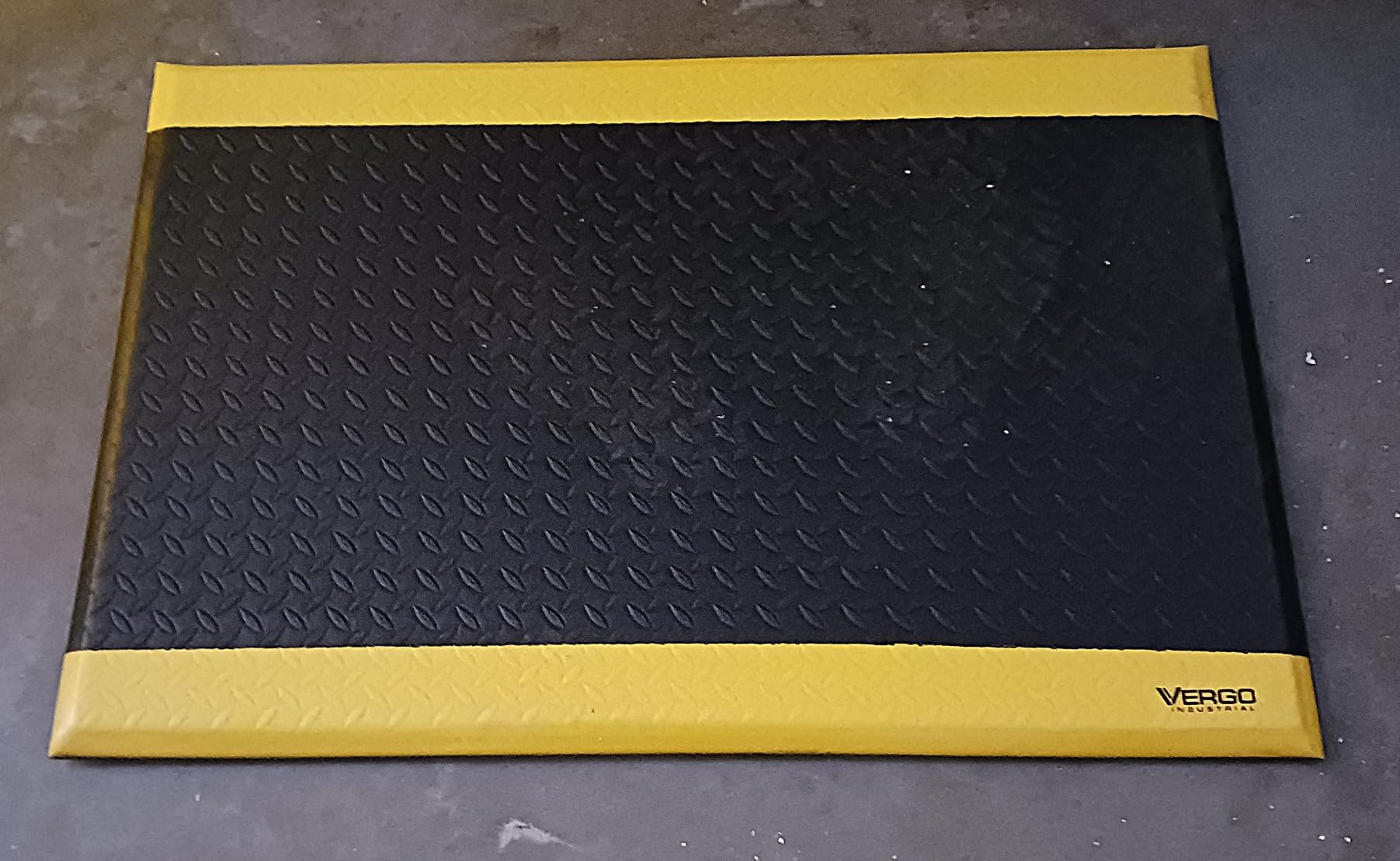
What stands out is how the memory foam retains shape over time. After three months of daily use, neither mat shows compression set. Cheaper foam mats I have owned in the past flattened within weeks, but the Vergo holds its support. The non-slip base stays flat without curling, which is a common complaint with cheaper mats.
The price is the highest in this guide, but the build justifies it for professional shops and serious hobbyists. If you stand 6+ hours per day and want the best combination of thickness, traction, and durability, the Vergo is the right call.
Who it is best for
Professional workshops, heavy-duty grinding and sanding stations, and serious hobbyists who stand for long sessions. It is also strong for commercial packing and assembly lines.
Who should skip it
If you are on a tight budget, the Pro Lift or Yoshiko deliver solid workshop performance at lower cost. Also, if you want a single long runner instead of two small mats, the NoTrax is a better fit.
Buying Guide: What to Look For in a Workshop Anti Fatigue Mat?
Choosing the right workshop anti fatigue mat comes down to matching the mat to your specific tasks, flooring, and standing duration. A mat that works for a kitchen may fail in a woodshop within weeks, so use the criteria below to narrow down your options.
Thickness and density
For workshops, look for mats that are at least 0.5 inch thick, with 3/4 inch to 1 inch being ideal for all-day standing. Foam mats thinner than 0.4 inch compress quickly under heavy users, especially those over 200 pounds. Industrial users on r/Tools consistently report that thicker mats last longer and provide better support over months of daily use.
Thickness alone is not enough. Density matters just as much. Polyurethane and high-density foam hold their shape, while cheap open-cell foam flattens within weeks. If you weigh more than 200 pounds or stand more than four hours per session, prioritize industrial density over thickness claims.
Material types: rubber vs foam vs polyurethane
Rubber mats are best for wet, oily, or messy workshops. They resist oil, solvents, and grease, and they hose clean in seconds. Foam mats are lighter and cheaper but compress faster under heavy use. Polyurethane unibody mats are the premium choice for office-to-workshop crossover use, but they are rarer in pure workshop settings.
For a garage or shop floor, rubber drainage mats and PVC foam runners are the most practical. They handle dropped tools, spilled fluids, and the constant traffic of a working shop without falling apart. Avoid kitchen-style gel mats for workshop use; the gel layer breaks down quickly under shop conditions.
Surface texture and slip resistance
Sawdust, wood shavings, and oil make workshop floors dangerous without grip. Look for mats with diamond plate, ribbed, or textured surfaces that channel liquids away from your boot contact patch. Smooth-top mats become skating rinks the moment sawdust or oil hits them.
The best workshop mats combine texture with drainage holes so debris falls through the mat instead of sitting on top. This is why drainage mats are so popular on r/Machinists and r/woodworking for grinding and sanding stations.
Edge safety: beveled edges and yellow borders
Beveled edges prevent trips when you step on or off the mat, especially when carrying parts. Yellow borders make the mat edges visible in dim shop lighting. Both features are OSHA-aligned best practices for industrial floor mats.
Mats that curl at the edges become tripping hazards within months. Industrial mats with molded beveled edges hold their shape far longer than cut foam mats. If your shop has tight floor space or you move quickly between stations, prioritize beveled edges.
Size and modular options
Match the mat to your workbench footprint. A 2×3 foot mat works for a single grinder, but a long workbench needs a 3×12 foot runner or multiple tiles. Some woodworkers on r/Machinists prefer modular snap-together tiles so they can reconfigure the standing area as their shop evolves.
If you have multiple stations, buy multiple smaller mats rather than one oversized mat. This lets you rotate mats, replace worn ones individually, and clean under each station separately.
Workshop-specific concerns
Sawdust, glue drips, dropped clamps, finish overspray, and sparks are constant workshop hazards. Your mat needs to handle all of them. Look for non-absorbent materials, drainage holes for debris, and surfaces that wipe clean with solvents without degrading.
Also consider what is under the mat. On bare concrete, a mat insulates you from cold and moisture. On a painted or sealed floor, test for rubber transfer before leaving a heavy mat in place for months.
Common Mistakes When Choosing an Anti Fatigue Mat
After testing dozens of mats and reading years of forum threads, here are the most common mistakes woodworkers and machinists make when buying workshop anti fatigue mats.
Buying a kitchen mat for shop use. Gel and foam kitchen mats are built for socks and bare feet, not for boots, oil, and dropped tools. They also compress much faster under workshop conditions.
Choosing thickness over density. A 1 inch mat made of soft foam will flatten faster than a 3/4 inch mat made of industrial rubber or polyurethane. Read reviews from heavy users, not just casual buyers.
Ignoring edge safety. Curled edges have sent woodworkers to the ER. Always choose mats with beveled edges, and replace mats that start curling.
Skipping drainage. Flat mats collect sawdust, shavings, and liquids. Drainage holes let debris fall through, which keeps your standing surface clean and safe.
Buying one mat for the whole shop. A single 2×3 mat at one station does not protect your knees during hours of grinding at another. Match mat placement to where you actually stand longest.
Underestimating odor. Heavy rubber mats smell strongly for the first few days. Plan to air them out before placing them in an enclosed shop.
Forgetting about cleaning. Mats with texture or drainage holes are easier to clean than smooth mats. Smooth mats show every footprint and require constant wiping.
Frequently Asked Questions
Do anti fatigue mats actually work?
Yes. Anti fatigue mats work by providing a slightly unstable surface that forces your leg and core muscles to make tiny continuous adjustments. This micro-movement increases blood flow, reduces pooling in the feet and legs, and decreases pressure on the spine during long standing sessions. Studies and Reddit users confirm fatigue reduction of up to 50% compared to hard concrete surfaces.
What is the best thickness for an anti fatigue mat?
For workshops, 3/4 inch to 1 inch thickness is ideal for all-day standing. Mats thinner than 1/2 inch compress quickly under heavy users and 200+ pound users report flat spots within weeks. For occasional use of one to two hours, 3/8 inch to 1/2 inch works. For 6+ hour standing sessions, choose 1 inch or thicker industrial mats.
What are the downsides of using anti fatigue mats?
The main downsides are initial rubber odor that takes days to fade, edges that curl over time creating trip hazards, compression set on cheaper foam mats, sliding on smooth floors without proper backing, and difficulty cleaning textured surfaces. Rubber mats can also leave residue on light-colored floors. Heavier industrial mats are harder to move and store.
Does OSHA require anti fatigue mats?
OSHA does not specifically require anti fatigue mats, but general duty clause 29 USC 654 requires employers to provide a workplace free of recognized hazards. Standing for long periods on hard surfaces is a recognized musculoskeletal risk, and anti fatigue mats are a common engineering control used to meet that standard. Workers compensation data links mats to reduced injury claims in standing-work environments.
How long do anti fatigue mats last in a workshop?
Industrial rubber and PVC foam mats last 3 to 5 years in workshop conditions with daily use. Cheaper foam mats compress within 6 to 12 months. Heavy users over 200 pounds should expect the shorter end of the range. Mats should be replaced when they show visible compression, curled edges, cracking, or loss of cushioning support.
Can a kitchen anti fatigue mat be used in a workshop?
Kitchen mats are not recommended for workshop use. They are designed for socks and bare feet, not boots and oily conditions. Kitchen foam and gel mats absorb oil, solvents, and sawdust, and they compress quickly under workshop loads. Workshop mats use rubber, closed-cell foam, or industrial PVC that resists chemicals and holds density under heavy use.
Final Verdict
After testing ten workshop anti fatigue mats across sanding, grinding, assembly, and general workbench use, the Pro Lift C-5006 stands out as the best overall pick for most woodworkers and garage DIYers. Its foldable design, 1.2 inch cushion, and easy storage solve the biggest complaints about workshop mats, and its 2,000+ reviews confirm long-term reliability.
For wet or messy shops, the Wizgree drainage mat delivers commercial-grade rubber at a value price. If cushion is your priority, the Vergo Industrial and Extreme Standing Mat both deliver thick support with diamond plate traction for heavy-duty sessions. Whatever you choose, match the mat to your main standing task, your weight, and your shop floor, and replace mats the moment they show compression or curling. Your knees will thank you for years.