
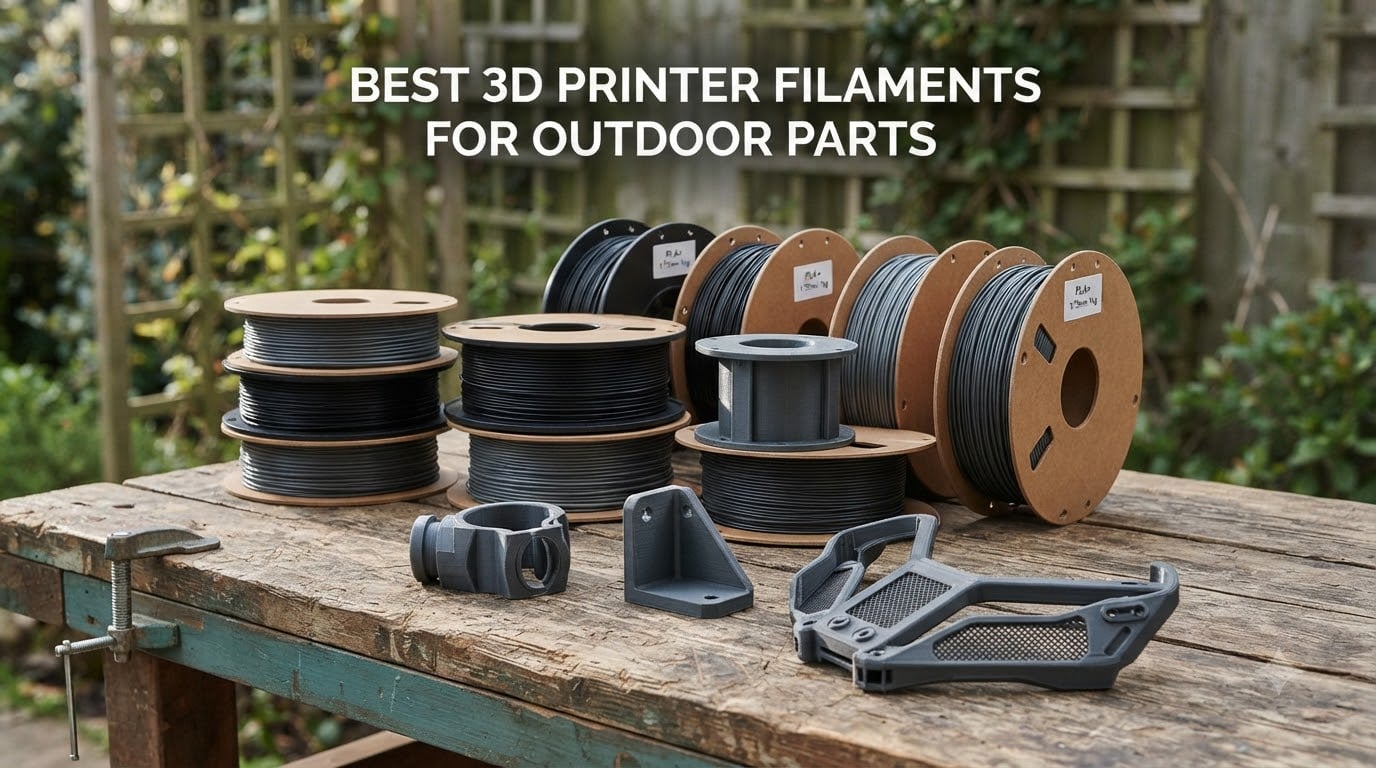
Most printed parts that live outside do not fail because the filament was cheap. They fail because the material was never designed for ultraviolet exposure, standing water and repeated thermal cycling, and because the weakest plane in the print happened to point at the sky. Field observations from Qidi’s print lab put plain PLA garden clips failing consistently within 6 to 12 months in temperate climates, shattering once the chains embrittle.
That is why searching for the best 3d printer filaments for outdoor parts produces the same short answer every time: ASA is the default, PETG is the forgiving alternative, and fibre-reinforced grades are where stiffness and heat resistance actually live. But material name alone is not a decision. Printer capability, exposure level, colour, and print orientation decide whether a part survives one season or a decade.
We ran these twelve spools through the same five filters used to rank outdoor filament: UV resistance, water resistance, heat deflection temperature, printability, and stiffness. Our short version: Polymaker ASA is the pick we would buy first, IEMAI PETG-CF is the pick we would buy when there is no enclosure, and the PA6-CF and PA612-CF nylons are the answer when a part sits near engine-bay temperatures. Last reviewed for 2026.
If your parts are robot mounts, rover chassis pieces or drone arm guards rather than garden hardware, our guide to 3D printing materials strong enough for robot parts covers the mechanical side in more depth.
Table of Contents
Top 3 Picks for Outdoor Filaments (October 2026)

Polymaker ASA 1.75mm Black 1KG
- UV and weather resistant
- High heat resistance to 100C
- Reliable layer adhesion
- 250C nozzle 90C bed

IEMAI Carbon Fiber PETG 1.75mm
- 20% chopped carbon fiber
- Stiff and dimensionally accurate
- Matte finish hides layer lines
- No enclosure required
SUNLU ASA Filament 1.75mm 1KG
- UV rain and heat resistant
- Accuracy plus or minus 0.02mm
- AMS and AMS Lite spool
- Vacuum sealed with desiccant
Best 3D Printer Filaments for Outdoor Parts in 2026 at a Glance
| Product | Specifications | Action |
|---|---|---|
| Polymaker ASA Filament 1.75mm Black 1KG |
|
Check Latest Price |
| IEMAI Carbon Fiber PETG Filament 1.75mm |
|
Check Latest Price |
 ELEGOO PETG-CF 3D Printer Filament ELEGOO PETG-CF 3D Printer Filament |
|
Check Latest Price |
| SUNLU 3D Printer ASA Filament 1.75mm 1KG |
|
Check Latest Price |
 iSANMATE ASA Filament 1.75mm Black 1KG iSANMATE ASA Filament 1.75mm Black 1KG |
|
Check Latest Price |
 FLASHFORGE ASA Filament 1.75mm Black FLASHFORGE ASA Filament 1.75mm Black |
|
Check Latest Price |
 OVERTURE ASA Filament 1.75mm 1kg Black OVERTURE ASA Filament 1.75mm 1kg Black |
|
Check Latest Price |
 Creality ASA Filament 1.75mm 1kg Spool Creality ASA Filament 1.75mm 1kg Spool |
|
Check Latest Price |
 SUNLU PA6-CF20 Carbon Fiber Nylon SUNLU PA6-CF20 Carbon Fiber Nylon |
|
Check Latest Price |
 Polymaker Fiberon PA612-CF15 Nylon Polymaker Fiberon PA612-CF15 Nylon |
|
Check Latest Price |
 ANYCUBIC ASA Filament 1.75mm 1KG ANYCUBIC ASA Filament 1.75mm 1KG |
|
Check Latest Price |
 FLASHFORGE Carbon Fiber PETG Filament FLASHFORGE Carbon Fiber PETG Filament |
|
Check Latest Price |
1. Polymaker ASA Filament 1.75mm Black 1KG – The All-Round Outdoor Pick
- UV and weather resistant for functional outdoor parts
- Withstands temperatures up to 100C with good toughness
- Strong layer adhesion in an enclosed heated chamber
- Prints cleanly at 50mm/s with no tangles
- Cardboard spools are easily damaged in transit and can jam AMS units
- Limited specialty and multi-color shades
This is the spool we hand to anyone who asks for the best 3d printer filaments for outdoor parts and does not want a lecture about enclosures first. ASA is the acrylonitrile styrene acrylate cousin of ABS, and the part that matters outdoors is the acrylate rubber grafted onto the backbone, which is what buys the UV and weathering resistance ABS never had. Polymaker’s version carries a listed heat ceiling of 100C and layers that hold together unusually well once the chamber is warm.
Owners describe it as low-odor for a styrenic, which matters more than any datasheet number when the printer lives in a garage or a workshop. It also runs at ordinary speeds without special profiles, which shortens the learning curve for a first ASA part. If you have read our ABS filament roundup, the practical difference is that ABS yellows and goes chalky while ASA does not.
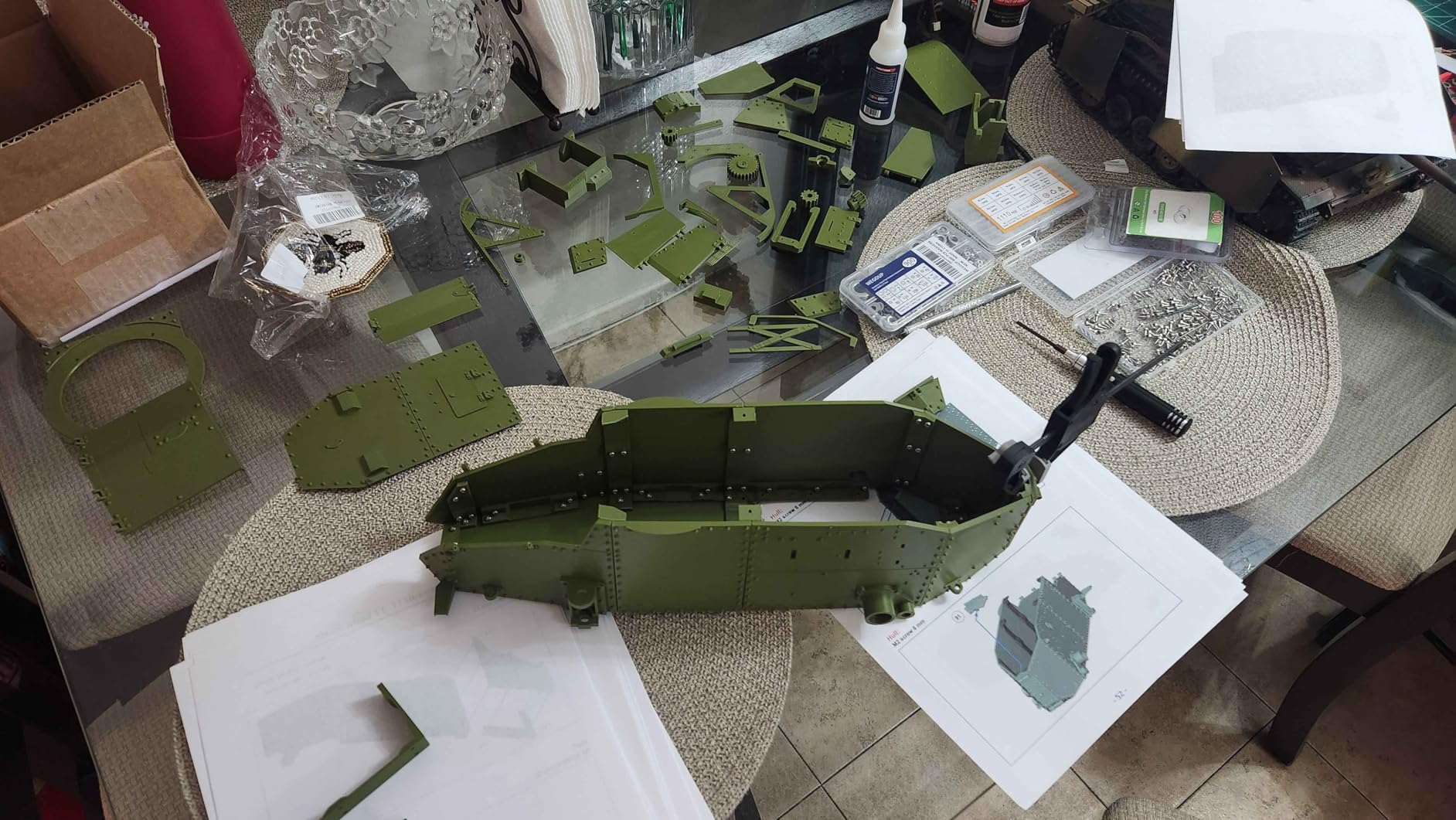
What the spec sheet cannot tell you is that this is a 1.75mm filament with 2321 reviews behind it, and that consistency across thousands of spools is itself an outdoor feature. A garden hose guide printed from a spiky, diameter-inconsistent spool develops stress risers at the layer lines, and stress risers are where freeze-thaw cycles find their crack. The most repeated complaint has nothing to do with the resin at all. It is packaging.
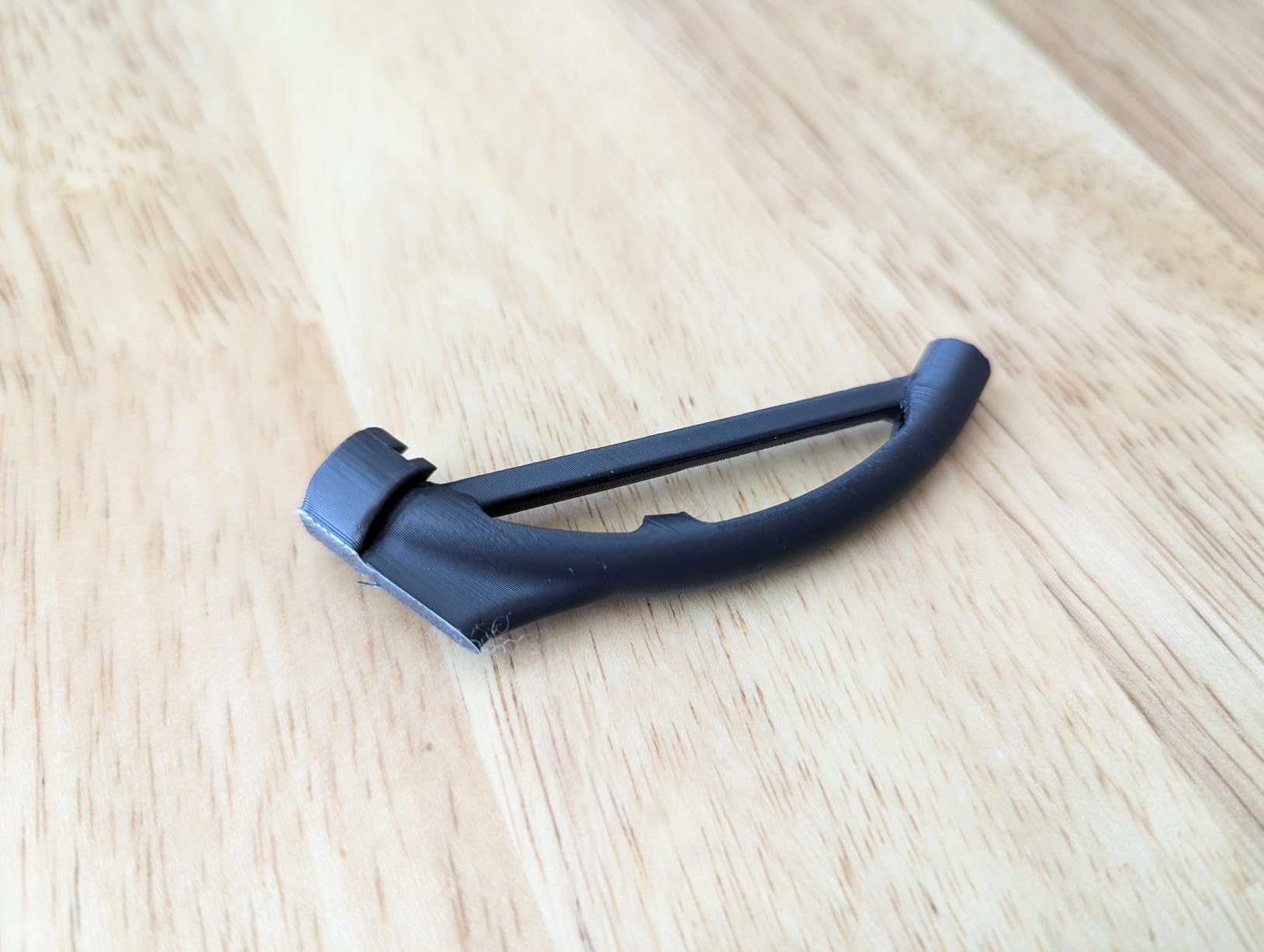
What makes it hold up outside
Two properties do the work. First, the UV stabilization means sunlight attacks the surface far more slowly than it does in PLA, so the part does not turn brittle and shatter under a clip load. Second, the high heat resistance keeps the part from softening and creeping on a hot afternoon, which is what ruins brackets and clips before UV ever gets to them. Print it in black or another dark pigment if you want more UV blocking, a trick that recurs in maker advice for good reason.
Print at 250C nozzle, 90C bed and around 50mm/s, inside an enclosure if you possibly have one. Dry the spool before use if it has been open, because ASA is hygroscopic enough that moisture will show up as popping and rough surfaces that people usually misdiagnose as bad filament.
Where it falls short
The cardboard spool is a genuine annoyance if you run a multi-material unit, because the hub design jams in some AMS-style feeders and the rim degrades in transit. Budget for a separate plastic spool holder and treat the cardboard tube as disposable. Expect the usual styrenic off-gassing too, so print with ventilation and this becomes an easy-to-love part of the roundup rather than a compromise.
2. IEMAI Carbon Fiber PETG Filament 1.75mm – Best Stiffness Without an Enclosure
- Serious stiffness and load stability
- Clean matte surface that hides layer lines
- Good bed adhesion with minimal warping
- Improved heat resistance over standard PETG
- Carbon fiber can reduce interlayer adhesion versus unfilled PETG
- Very stiff prints shatter rather than flex
- Needs a hardened nozzle and thorough drying
If your printer has no chamber, PETG-CF is the honest answer to what to use outdoors, because it prints on an open frame without the warping drama that ASA generates. This IEMAI spool is 20 percent chopped carbon fiber in a PETG matrix, held to plus or minus 0.03mm diameter tolerance. That filler does three useful things outdoors: it stiffens the part so thin clips stop flexing, it raises heat resistance above plain PETG, and it gives the surface a matte finish that hides layer lines on a raw functional part.
It is also the value entry in this roundup when your project is a camera mount, a sensor bracket or a cable guide rather than a planter. Reviewers repeatedly report clean extrusion with good bed adhesion and no enclosure strictly required, and the manufacturer lists compatibility across Bambu, Creality, Anycubic, Elegoo, Prusa, Flashforge and AnkerMake machines.
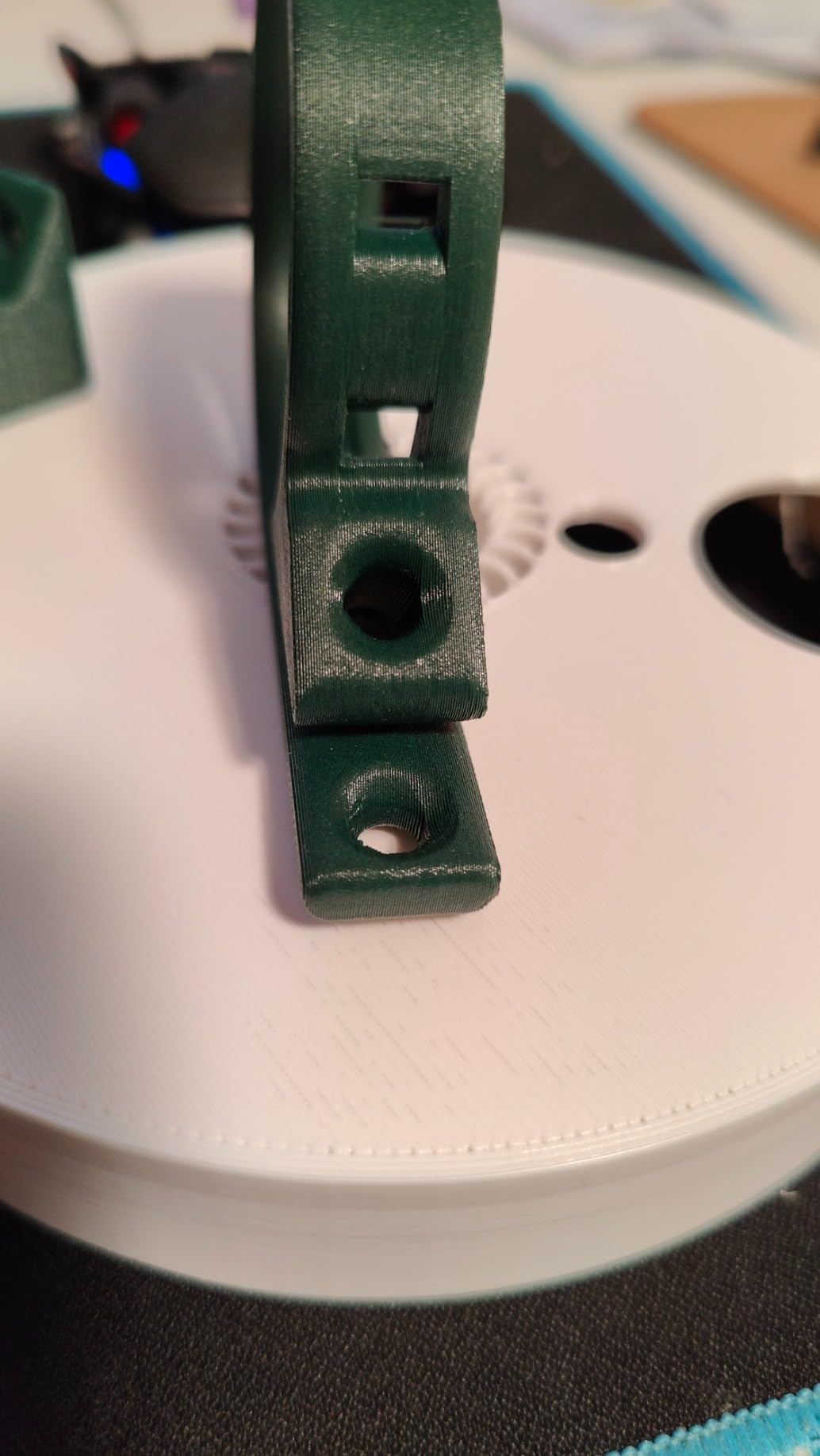
The stiffness has a cost, and the cost is toughness. Carbon fiber is a contaminant at the melt interface, so interlayer bonding drops relative to unfilled PETG, and a very stiff print tends to fracture rather than flex. For a bracket that takes a static load year-round, that is a fair trade. For a snap-fit clip that will be flexed open a hundred times, choose a tougher filled PETG further down this list instead.
What to check before you buy
A hardened steel or ruby nozzle is not optional here, and neither is drying. The fiber is abrasive and will wear a brass nozzle flat, and wet chopped fiber produces blobs and zits that look like a hardware fault. Run 230 to 250C nozzle, 60 to 80C bed, and keep speed at or below 100mm/s. Printers that can feed it reliably also include Bowden setups, which matters if your machine routes filament through a tube.
Note the spool weight listed at 1.15kg for a 1kg product, which is normal gross weight including the hub. Some users report recurring nozzle clogs, so clear the nozzle and re-seat the filament path if flow drops mid-print.
Where it falls short
This is not a UV champion. It beats standard PETG outdoors, but it does not match the long-run UV stability of ASA, and the carbon fiber surface actually absorbs more solar energy than a light-colored part would. If the part sits in full sun with no shade, ASA is the better long-term answer. If it sits in a shaded garden corner, on a pole, or on a robot chassis, this is the stronger pick.
3. ELEGOO PETG-CF 3D Printer Filament – Best Impact Resistance
ELEGOO PETG-CF 3D Printer Filament 1.75mm Black 1KG
- Tough and impact resistant with less fracture risk
- Excellent dimensional accuracy and abrasion resistance
- Fine matte texture that reduces visible layer lines
- Tangle-free winding that works in AMS units
- Can clog at very fine layer heights at or below 0.12mm
- Slight corner lifting on some prints
- Cardboard spool suits AMS use poorly
Impact strength is the property that matters most for the classic outdoor 3D printed parts, the drip-line clip and the hose guide that gets kicked, bumped and frozen. ELEGOO’s PETG-CF rates highest in our set at 4.7 across 305 reviews, and the reason is toughness rather than stiffness. Where the IEMAI spool above fractures, this one has more give before it lets go, which is exactly the behavior you want from a clip that snaps on and off.
The listed operating window is 240 to 270C with a 65 to 75C bed, and a hardened steel nozzle of 0.4mm or larger is recommended. Buyers describe the surface as a fine matte texture that reduces visible layer lines, which matters if the part is visible on a robot frame or an irrigation manifold. Tangle-free winding is a quiet but real quality-of-life win for anyone with an automatic feeder.
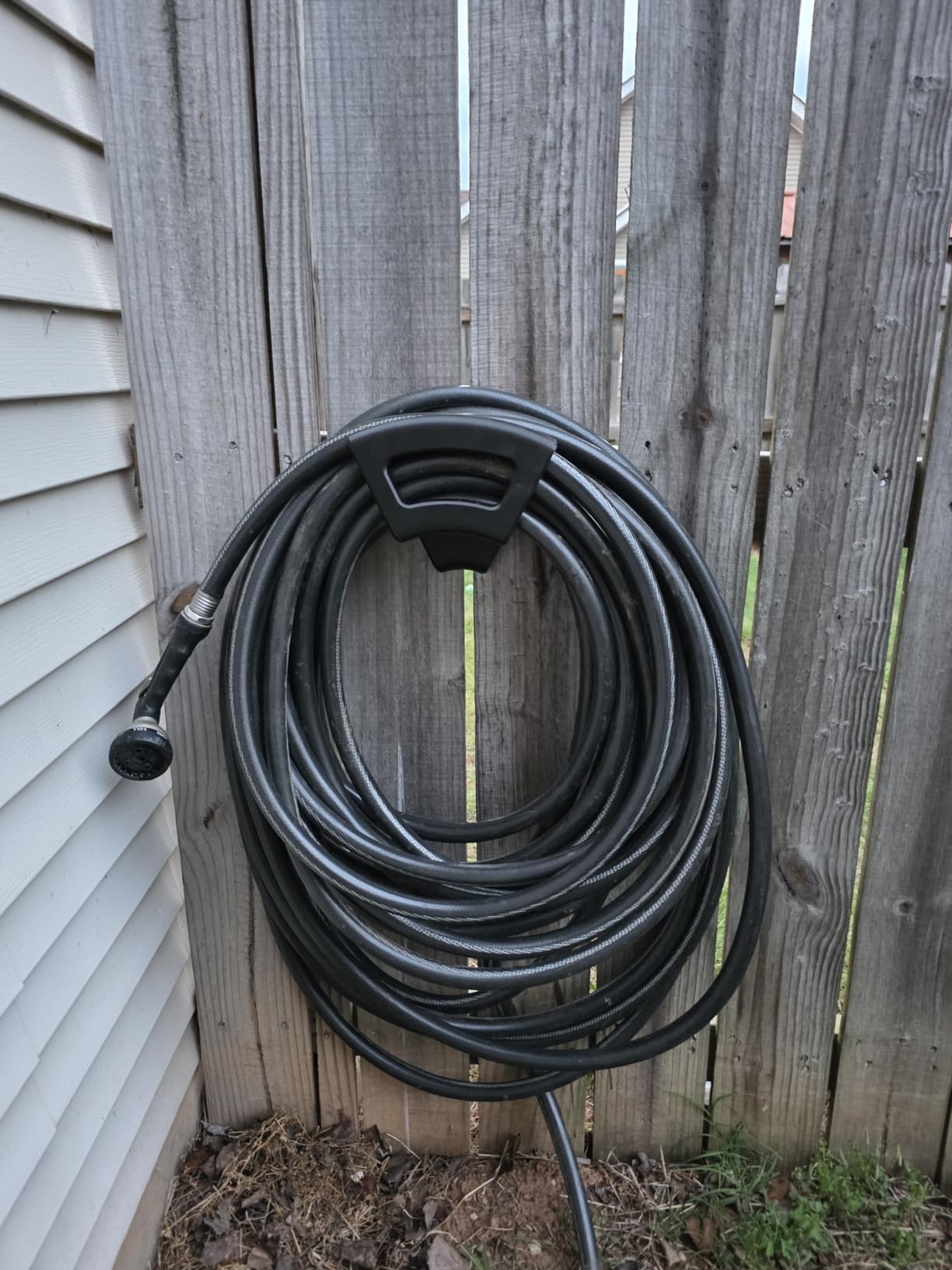
Abrasion resistance is the other half of the outdoor case for this material. Gears, bearing blocks, sliders and anything that rubs against another printed part will wear slowly instead of melting into shape, and the dimensional accuracy means a sliding fit still slides after a season outside. Our printer upgrade guide covers the hardened extruder path these materials assume you already have.
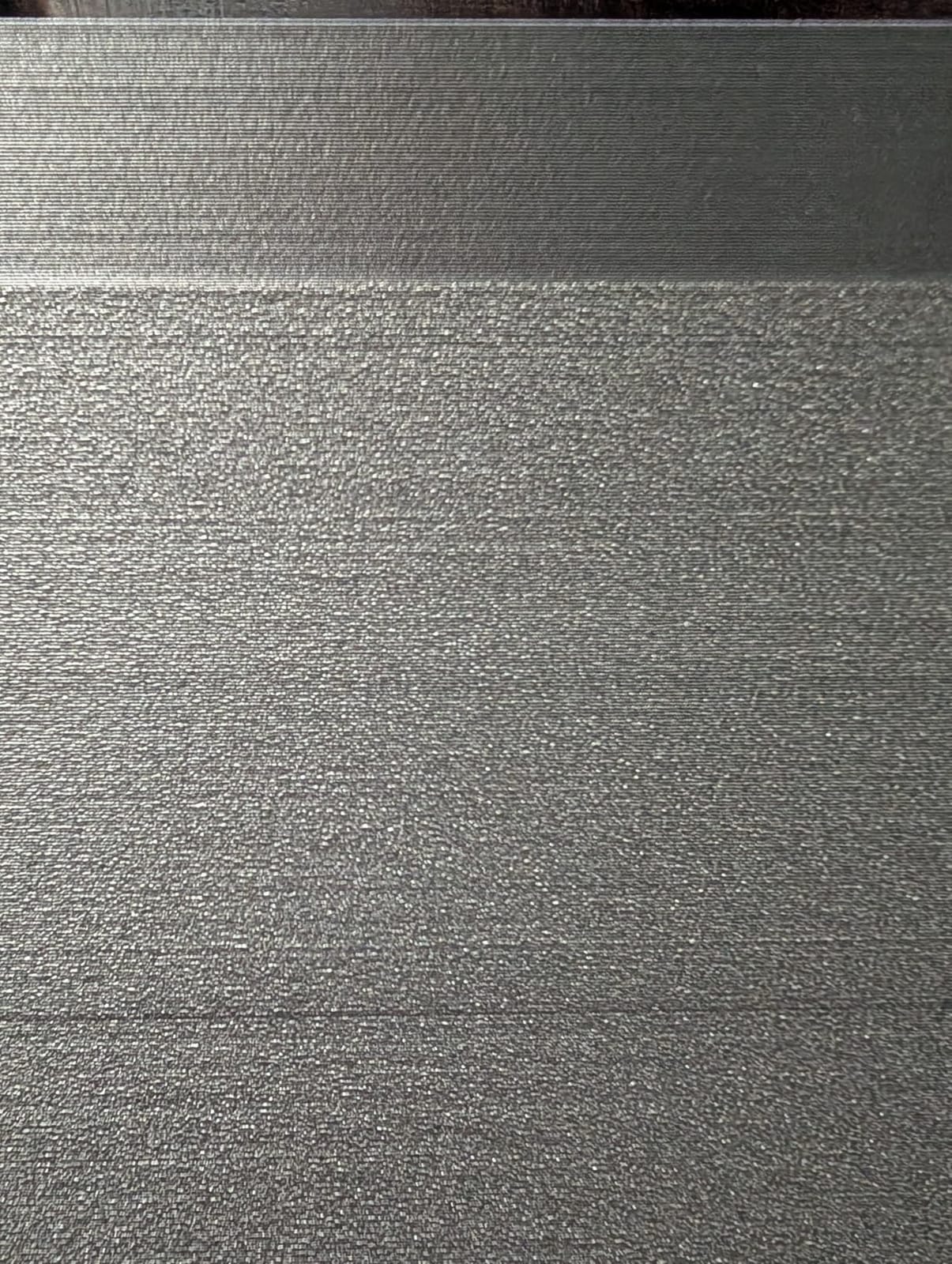
How to print it well
Treat this as a high-temperature material. Preheat thoroughly and give it time, because the failure mode users report is clogging rather than poor flow, and clogs at fine layer heights usually mean the melt temperature is not where the profile thinks it is. Keep the layer height at 0.16mm or above and you will avoid most of that. Bed adhesion is generally good, but some prints show slight corner lift, so a brim on larger flat footprints is cheap insurance.
Dry before printing and store sealed. The carbon fiber is a filler that wicks moisture along the filament path more than unfilled resin does, and wet fiber prints look rough and weak at the same time.
Where it falls short
It still shares the PETG family’s ceiling, which is well below ASA and far below the polyamides on heat. Do not put it in a hot engine bay or anywhere the part could sit above roughly 70C for extended periods. Like all filled filaments it needs an abrasive-resistant nozzle, and the cardboard spool is another weak point if you use an AMS-style unit.
4. SUNLU 3D Printer ASA Filament 1.75mm 1KG – Best Spool Design for AMS Users
- Strong UV rain and heat resistance for outdoor parts
- Clean winding with no tangles clogs or bubbles
- Third generation spool fits AMS and AMS Lite
- Vacuum sealed with desiccant
- Off-gasses like other ASA so ventilation matters
- Can warp and needs brims on long parts
- Lower maximum volumetric flow than premium ASA
SUNLU’s ASA earns its place here for the boring reason that matters in a dry room full of printers: the spool. This is a third-generation high-temperature spool with a multi-hole hub design, upgraded specifically for AMS and AMS Lite fit. Owners report prints that work from default slicer settings, with clean winding and no clogs or bubbles straight out of the vacuum-sealed packaging with desiccant inside.
The material side matches the claim on the label, with strong UV, rain and heat resistance and a listed dimensional accuracy of plus or minus 0.02mm. Recommended settings are a 230 to 260C nozzle, an 80 to 120C bed, and 50 to 100mm/s. Buyers specifically mention garden hardware, bike accessories and car parts as the projects this spool has been used on successfully.
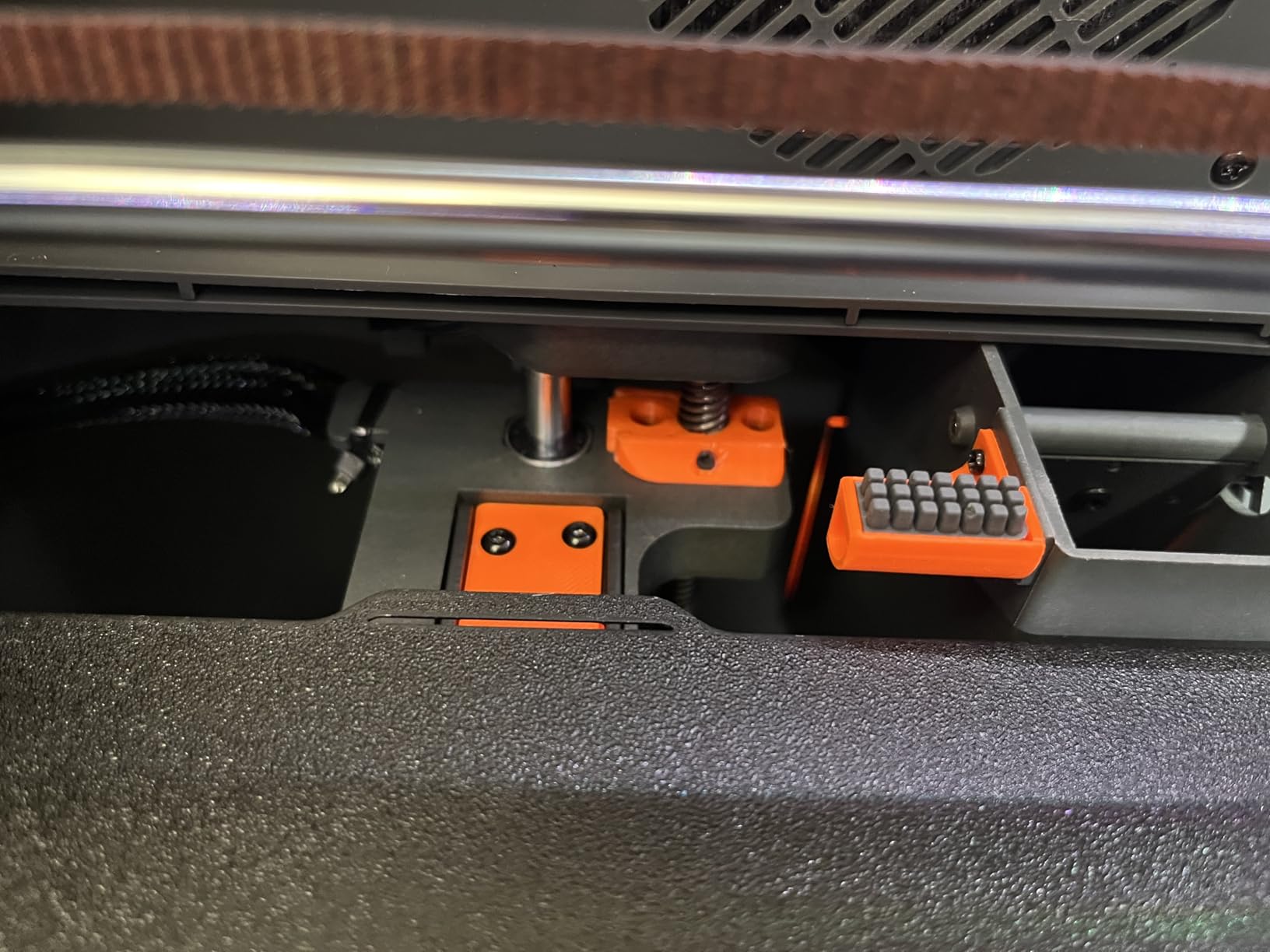
One practical note for anyone printing parts that live on a robot: the lower volumetric flow ceiling means you should not chase speed. Slower, well-bonded layers matter more outdoors than a fast print, because interlayer bonding is what determines whether a thermally cycled part splits along its seams. On r/3Dprinting this is the single most reported outdoor failure across all materials, and the fix is always settings and orientation rather than a different resin.
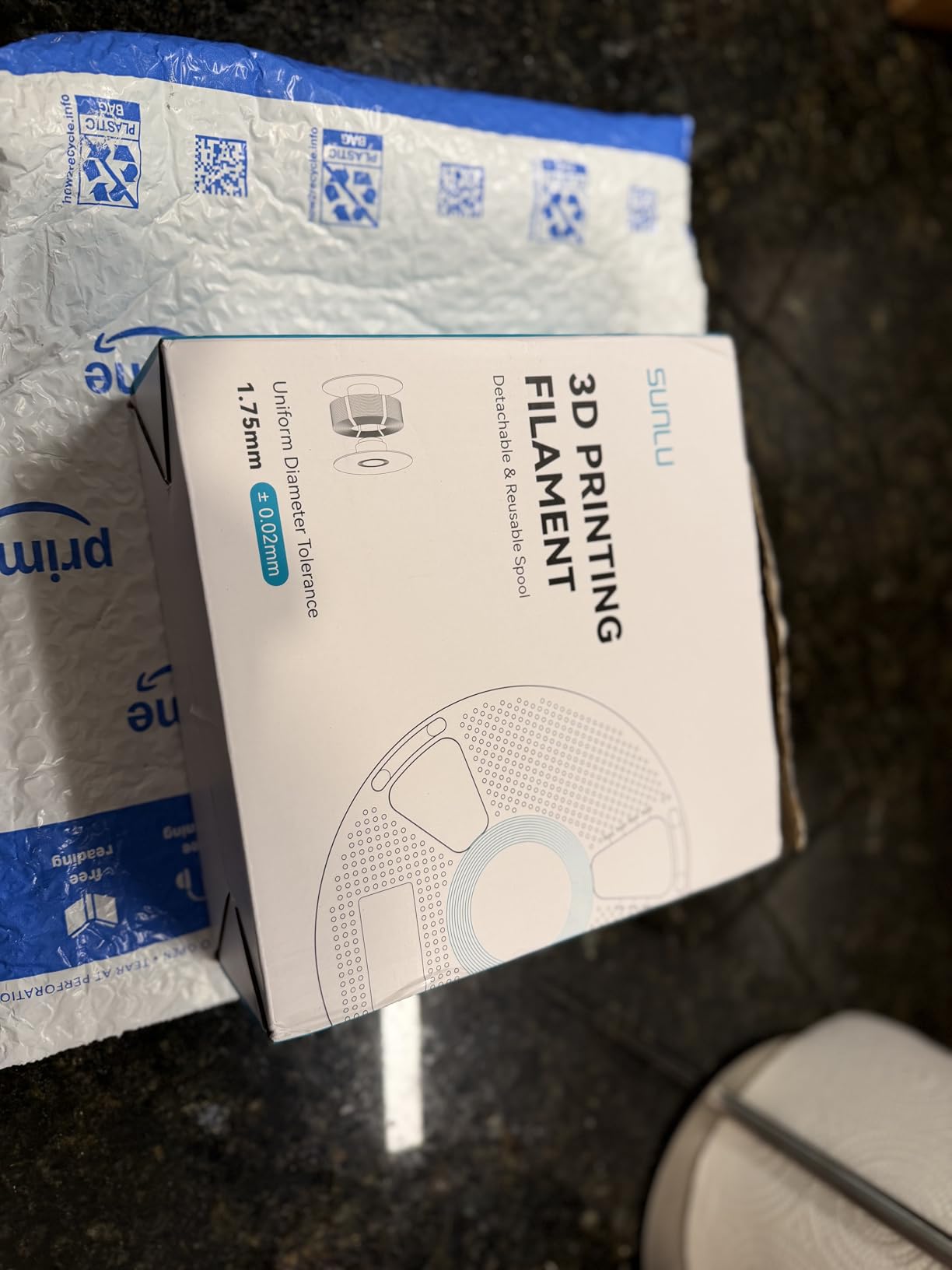
What makes it a good first ASA
Two things. The vacuum packaging with desiccant means a sealed spool arrives ready to print, which removes the most common beginner failure of an ASA print that pops and strings because the filament was damp. And the AMS-compatible spool means a multi-material machine does not need modification, which removes the second most common beginner failure. Dimensional accuracy of plus or minus 0.02mm holds consistently across spools per buyer reports.
Ventilation still applies. ASA off-gasses, and the honest framing is that an enclosure for thermal control and a filtration or exhaust system for emissions are two different pieces of equipment solving two different problems.
Where it falls short
Long parts can warp, and you will need a brim or mouse ears to hold the corners down at the higher end of that bed temperature range. The volumetric flow ceiling means a large flat part will take longer than a premium ASA would. And there is at least one report of poor layer consistency and uneven extrusion, so verify a short calibration part before committing a full spool to a part you cannot reprint.
5. iSANMATE ASA Filament 1.75mm Black 1KG – The Straightforward Budget ASA
- Strong UV and weather resistance for long-term outdoor use
- Good thermal and mechanical stability across temperature changes
- Low entry cost for a 1kg ASA spool
- Wide color selection including filled variants
- Requires an enclosed printer and bed adhesive to print reliably
- Typical ASA off-gassing and warping behavior
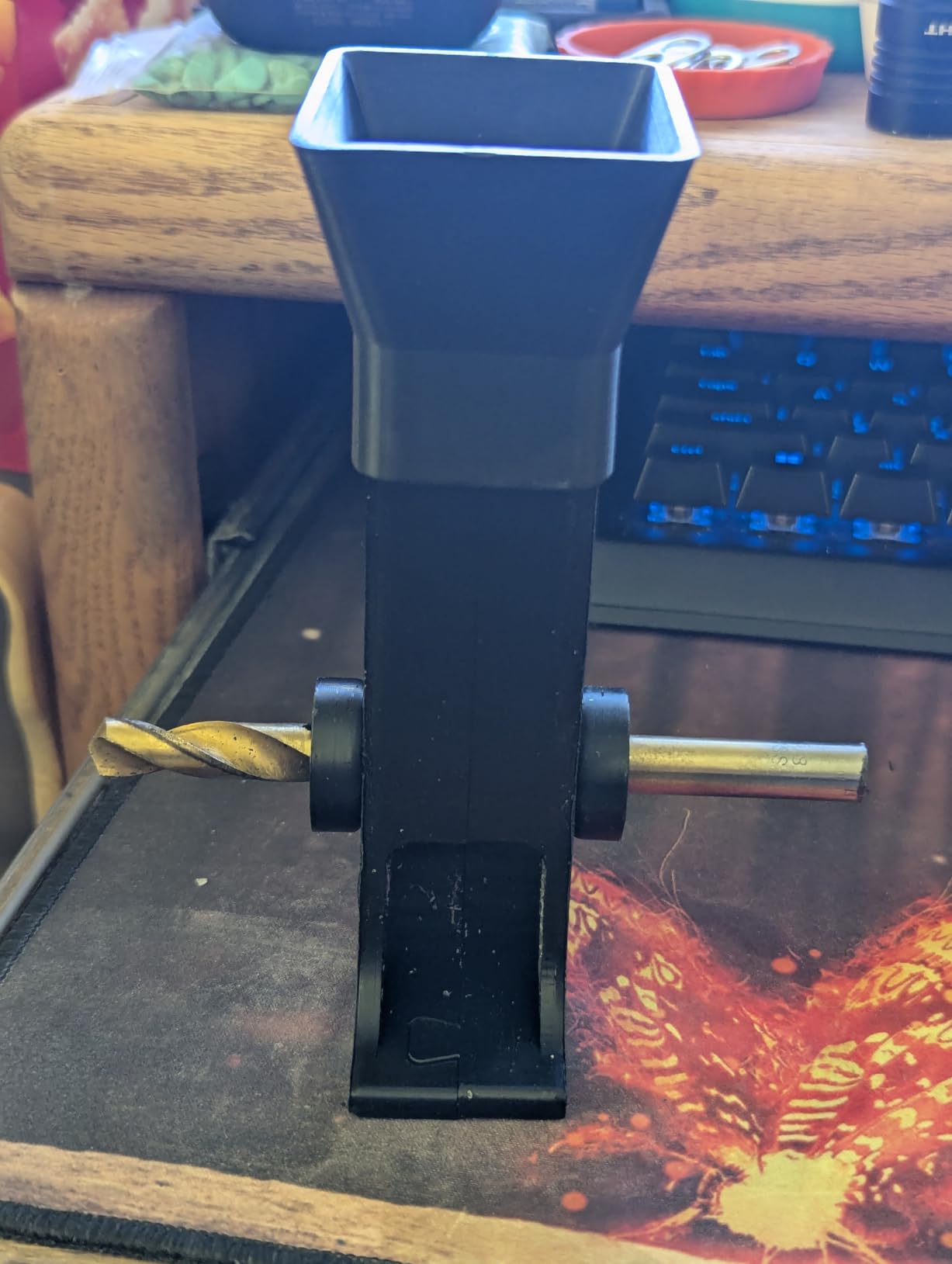
The simplest way to describe this spool is that it does the one thing outdoor duty demands and does not try to be clever about it. iSANMATE ASA is black 1.75mm with a listed dimensional accuracy of plus or minus 0.02mm, vacuum-sealed with desiccant, and recommended printing at 240 to 270C on an 80 to 100C bed at 30 to 100mm/s. Buyers rate the UV and weather resistance as delivering what the label promises, with good thermal and mechanical stability across temperature changes.
That makes it the sensible choice for a batch of identical garden parts, trellis connectors or fence clips, where you need volume rather than a single hero component. A 927-review history also makes it one of the better-evidenced spools on this list, which matters when the failure mode is a part breaking outdoors a month after you installed it.
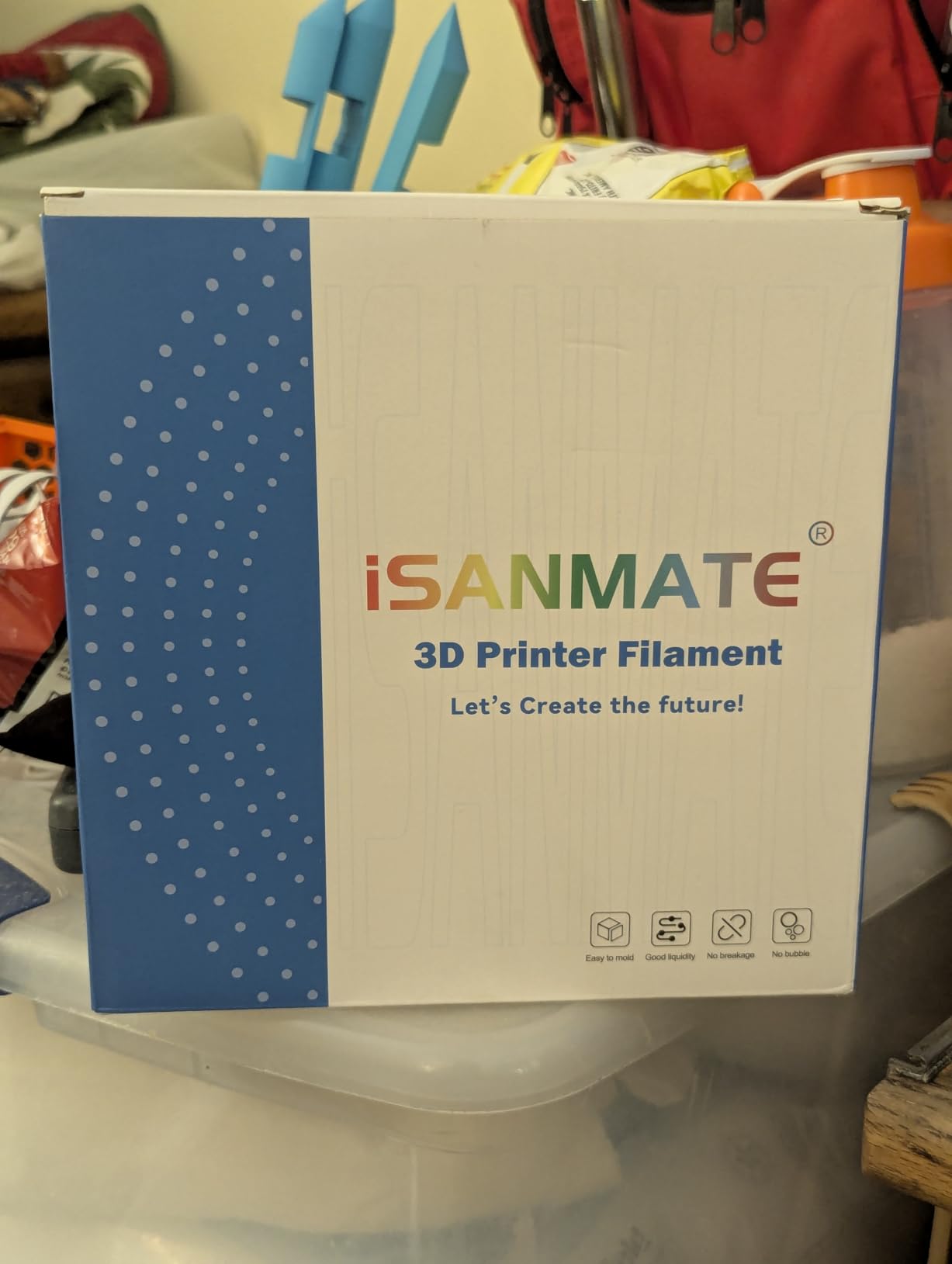
The wide color selection is worth a mention, including glass fiber and carbon fiber filled variants from the same maker. If you plan to move up a tier later, staying with a brand whose feed and winding you already trust saves a lot of troubleshooting. Black is the sensible default for any exterior part, since dark pigment blocks more of the UV that drives embrittlement.
What to expect on the bench
Plan for an enclosure. The manufacturer recommendation is a closed chamber with adhesive on the bed, and buyers describe the learning curve as exactly that. If your printer is an open frame, the same project will be far less painful in a filled PETG from earlier in this list, and you lose little in practice for shaded or semi-sheltered installations.
Once it is printing, ASA behaves well: predictable extrusion, low stringing, and no corner lift once the bed is hot and the chamber is warm. The parts that come out look matte and slightly soft-edged, which suits functional garden hardware.
Where it falls short
It is a budget spool, and the compromises are in consistency rather than chemistry. Nothing in buyer reports suggests surface quality or UV stability trailing the premium ASA options by much, but the 4.4 rating sits below the top of this roundup, and off-gassing plus warping are the two practical annoyances you should plan around. If you print visible parts, or parts where cosmetics matter, spend a tier up.
6. FLASHFORGE ASA Filament 1.75mm Black – Best for Chemical and Oil Exposure
FLASHFORGE ASA Filament 1.75mm Black, 3D Printer Filament 1kg (2.2lbs) Spool, Dimensional Accuracy +/- 0.02mm, Durable, High UV-Resistant, Perfect for Printing Outdoor Functional Parts
- Good UV stability that resists yellowing outdoors
- Holds shape and integrity to around 93C
- Strong layer adhesion once temperatures are dialled in
- Good chemical resistance to oils and solvents
- Some rolls are brittle and can snap mid-print
- Spool winds loosely and can unravel
- Needs a hot nozzle and high bed temperature
Outdoor parts often meet more than weather. They meet motor oil, hydraulic fluid, fertilizer salts, irrigation water and the chemical film that settles on an automotive bracket, and that is where the chemical resistance claim on this spool earns its place. Buyers specifically praise resistance to oils and solvents, which is the property that decides whether a printed part survives contact with a greasy chassis or a leaking manifold.
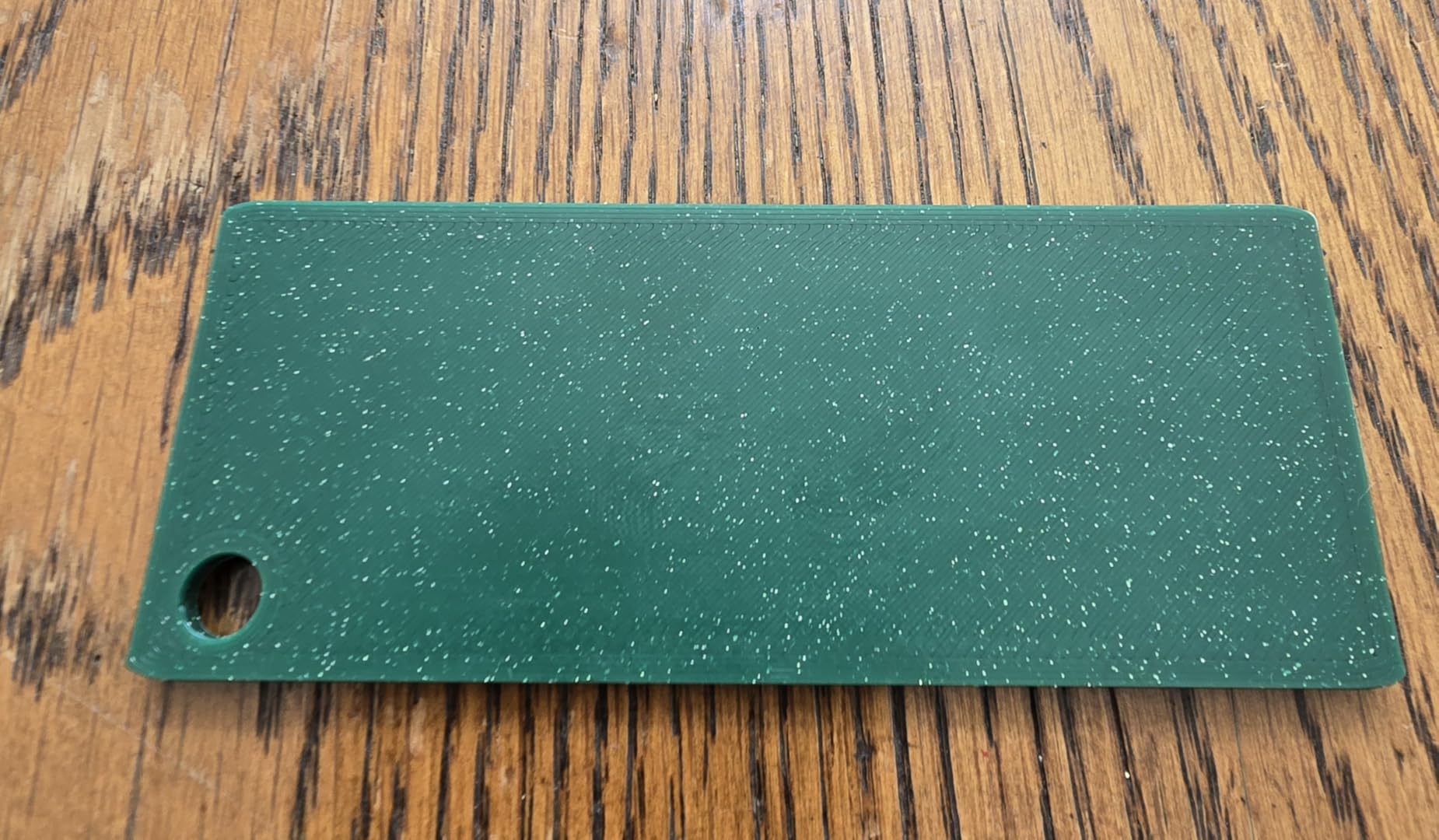
The thermal figure here is a listed 93C shape retention point, and the UV performance shows up in reports of parts that resist yellowing and surface degradation after extended exposure. Filament is dried for 24 hours and vacuum sealed before shipping, and 99 percent of measured filament falls within plus or minus 0.02mm, which reduces the stress risers that start cracks.
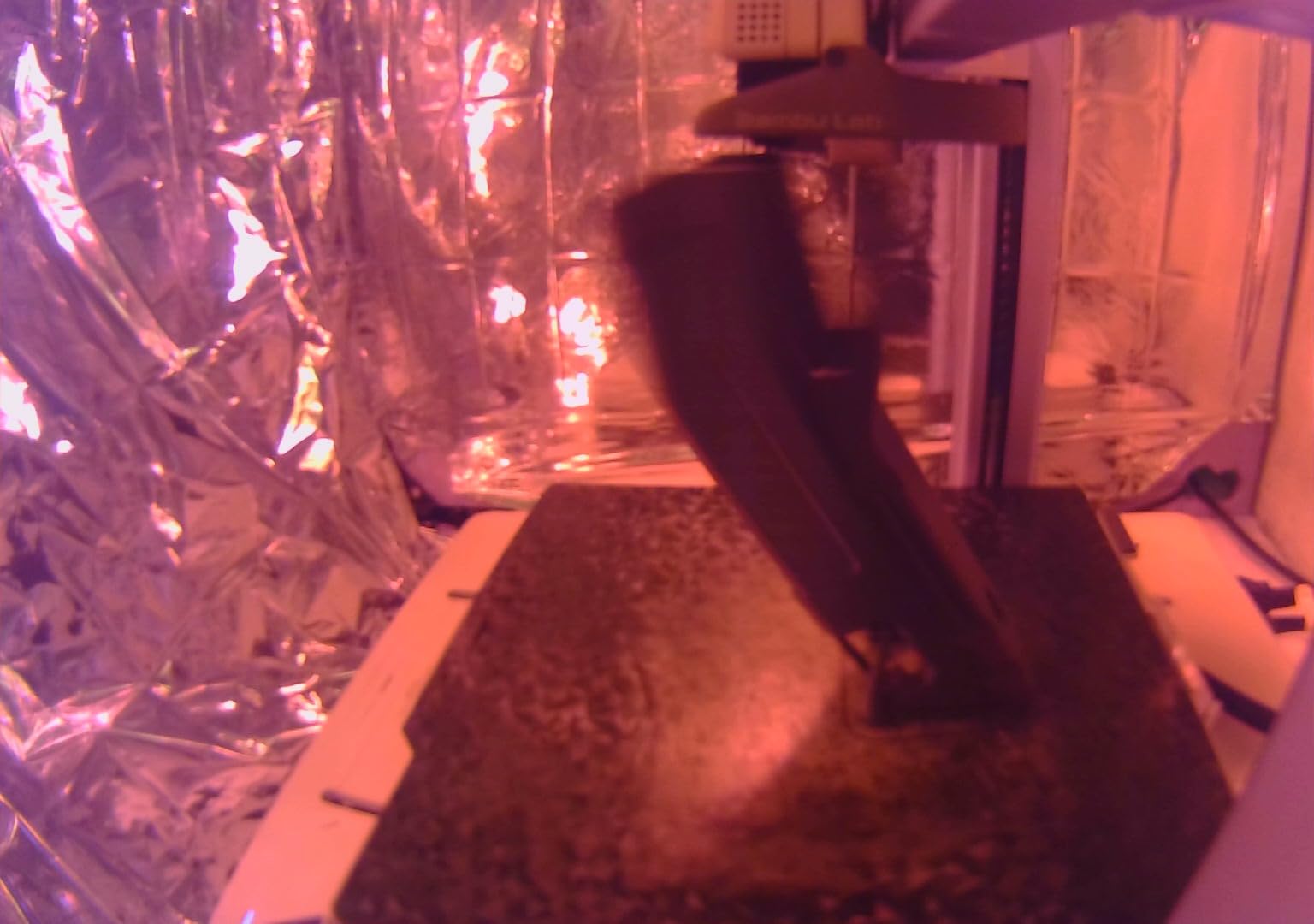
This is the lowest-rated product in the set at 4.1 across 937 reviews, and the reason is worth understanding rather than skipping. A notable minority report brittle filament that snaps mid-print, particularly when there is extra drag in the extruder path, plus layer adhesion that reads as weaker than competing ASA. For a large, visible, load-bearing part, that is a fair reason to pick a different spool. For a small oil-resistant clip or spacer, the chemical resistance is the thing that matters.
Getting a good print from it
Run it hot. The combination of high nozzle and high bed temperature is not optional with this material, and prints that bubble or delaminate are almost always a temperature problem rather than a filament problem. If you see popping or bubbling, raise the nozzle temperature before you do anything else, and make sure the spool is dry. Loose winding is also a real issue, so guide the filament gently and keep the spool from unwinding on the floor.
The extra care pays off once the part is out in the weather. Chemical tolerance plus a listed 93C ceiling covers the majority of real outdoor duty better than cheaper ASA does.
Where it falls short
Brittleness in the spool is the deal-breaker for automated feeders and for anyone routing filament through a tight path, since a mid-print snap wastes the whole print. Combined with looser-than-average winding, this spool is best handled on a direct drive extruder where the filament path is short. It also demands more setup time than the other ASA options here.
7. OVERTURE ASA Filament 1.75mm – Best for Hot Vehicle Interiors
OVERTURE ASA Filament 1.75mm, UV & Weather Resistant, 1kg Black
- Holds up under heat and UV
- Prints with little to no stringing
- Clog-free and bubble-free from a 24-hour dried spool
- Wide color selection
- Needs a high bed temperature often 95-110C
- Brittle parts if printed faster than 30-50mm/s
- Cardboard spool packaging
A parked car interior is the hardest realistic outdoor-adjacent environment a printed part will meet. Glass magnifies sunlight, dark upholstery turns a dashboard into an oven, and thermal cycling happens twice a day in summer. OVERTURE’s ASA carries a listed heat resistance of 96C, and at least one buyer reports a car interior mount holding up in conditions above 140F, which is the kind of field report that matters more than a datasheet number.
The rest of the profile is unremarkable in the best way: clog-free and bubble-free, 24-hour dried and vacuum sealed, plus or minus 0.02mm diameter, and little to no stringing on normal profiles. Extrusion quality is consistent enough that the part is not the weak link in the assembly, which is the whole point when it is bolted to a windscreen mount.
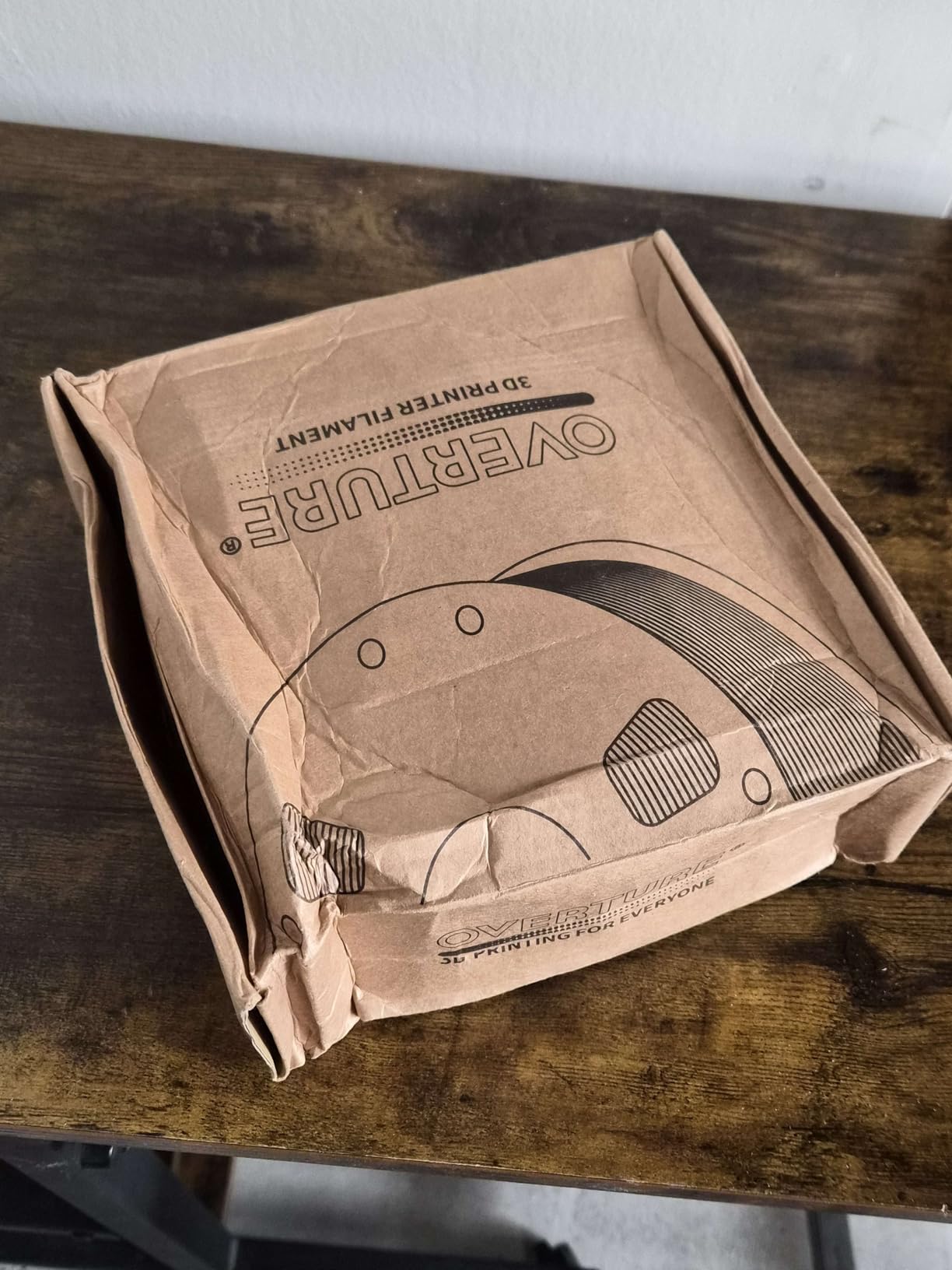
Wide color selection is a genuine buying factor for automotive work, where a black-on-black bracket is invisible and a grey one is not. The listed one-year shelf life for unopened spools is a useful data point too, since ASA degrades in storage if it absorbs moisture and older stock is a common cause of the popping that gets blamed on the printer.
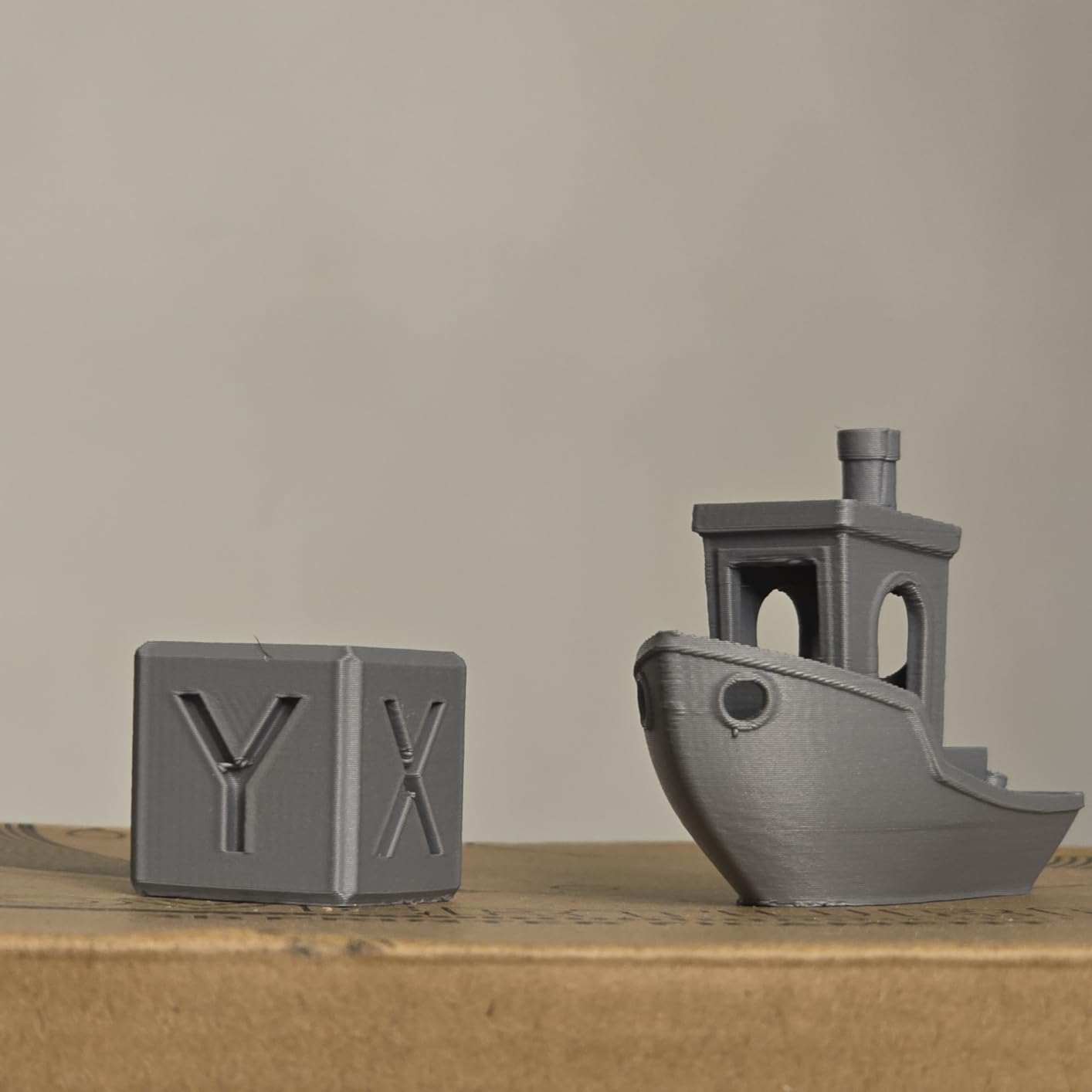
Settings that matter here
The bed temperature is the headline requirement, often 95 to 110C, so plan a bed surface that can take it without warping itself. Print speed matters more than usual as well, because buyers report brittle parts when printing faster than the recommended 30 to 50mm/s. A slow, well-bonded ASA part in a hot cabin is the difference between a mount that lasts and one that cracks across a layer line in July.
Dry the spool before first use even if it is sealed, especially if you bought it and it sat for a while. The material is a styrenic, so ventilate the room while it runs.
Where it falls short
Cardboard spool packaging again, plus the general ASA profile: an enclosure and ventilation are not optional, and warping is the constant background noise. The listed 96C figure is also a shape-retention point under specific test conditions, not a promise that a loaded part will behave the same at that temperature. Keep a safety margin for anything that carries real load in a hot vehicle.
8. Creality ASA Filament 1.75mm 1kg Spool – Best for High-Speed Printers
- Good UV aging and corrosion resistance for long-term exposure
- Tough with high impact strength
- Prints at high speeds up to 300mm/s without clogging
- Little to no stringing on textured PEI plates
- Requires a closed chamber and roughly 100C bed temperature
- Emits an odor during printing
- Limited color selection
Most ASA is a slow material, and on a high-speed machine that becomes a throughput problem. This Creality spool is specified for speeds up to 350mm/s and is listed as suitable for the K1 and K1 Max as well as the Ender-5 S and other high-speed FDM printers, with a listed form retention point of 100C. Buyers report it printing at high speeds without clogging, with good adhesion on textured PEI plates and little to no stringing.
The weathering claims are conventional for ASA and check out in reviews: good UV, aging and corrosion resistance for long-term outdoor exposure, plus toughness and high impact strength. That combination makes it a sensible choice for someone producing several outdoor parts a week, where a garden clip at 300mm/s changes the economics of the project.
One reviewer reported repeatedly receiving spools with badly wound filament that bound in the extruder and caused print failures. That is a handling complaint rather than a material complaint, but it is the kind of thing worth considering if you print unattended. Inspect the spool end before committing a long job.
How to get the speed advantage
High-speed ASA lives or dies on temperature stability and cooling. Set part cooling low, because premature cooling between layers is exactly what weakens interlayer bonding, and keep the chamber closed so the part sees a consistent thermal environment from first layer to last. The listed closed-chamber requirement and roughly 100C bed temperature are not optional extras here; without them the part will corner-lift before the first layer is halfway done.
The textured PEI plate recommendation is worth following for outdoor parts because the texture becomes a surface that hides wear marks and dirt over time rather than a glossy face that shows every scuff.
Where it falls short
Limited color selection narrows the choice for anyone matching an existing exterior trim or wanting something other than black, and the odor during printing is a real consideration in a shared space. The chamber requirement also rules it out for open-frame printers, where a filled PETG is the practical alternative.
9. SUNLU PA6-CF20 Carbon Fiber Nylon Filament – Best for High-Heat Duty
SUNLU PA6-CF20 Carbon Fiber Nylon 3D Printing Filament 1.75mm, 1KG, Black
- Very strong rigid parts with excellent layer adhesion
- Outstanding heat resistance for demanding parts
- Surface finish hides layer lines
- No warping even on long parts
- Must be dried thoroughly or blobs and zits appear
- Brittle in the feed path and not AMS compatible
- Loose winding can bind
- Abrasive so a hardened nozzle is required
When outdoor means hot, this is the spool that changes the conversation. A listed heat resistance of up to 209C puts it in a different class from every other filament in this roundup, and buyers describe it as a capable engineering material for automotive and mechanical work. The formulation is 80 percent polyamide with 20 percent carbon fiber, black, and it holds its properties where plain ABS or ASA would have already crept and distorted.
Printed parts come out very strong and rigid with excellent layer adhesion, and the finish is rough and slightly glossy in a way that conveniently hides layer lines. Reviewers also report no warping even on long parts at a relatively low 50 to 70C bed, which removes one of the classic failure modes for large functional prints. Typical applications listed include gears, screws, fan blades and bicycle frames.
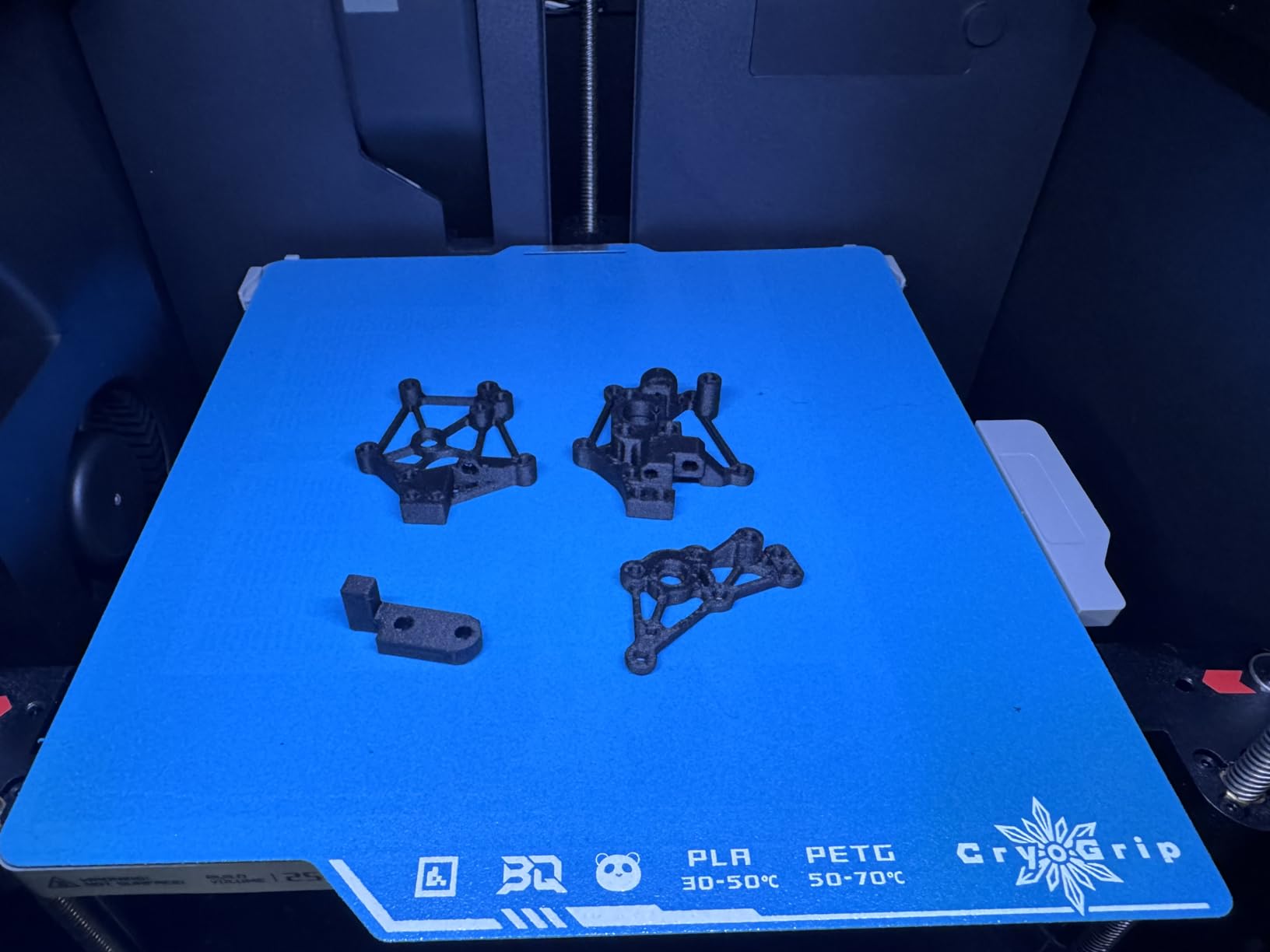
Nylon is hygroscopic in a way that ASA is not, and that single fact explains most of what people struggle with here. Drying is not a recommendation, it is a requirement: the listing calls for 80C for 24 hours or 110C for 4 hours. Skipping it produces blobs, zits and a rough surface that gets misdiagnosed as a temperature problem. Our nylon filament guide goes deeper on the moisture science.
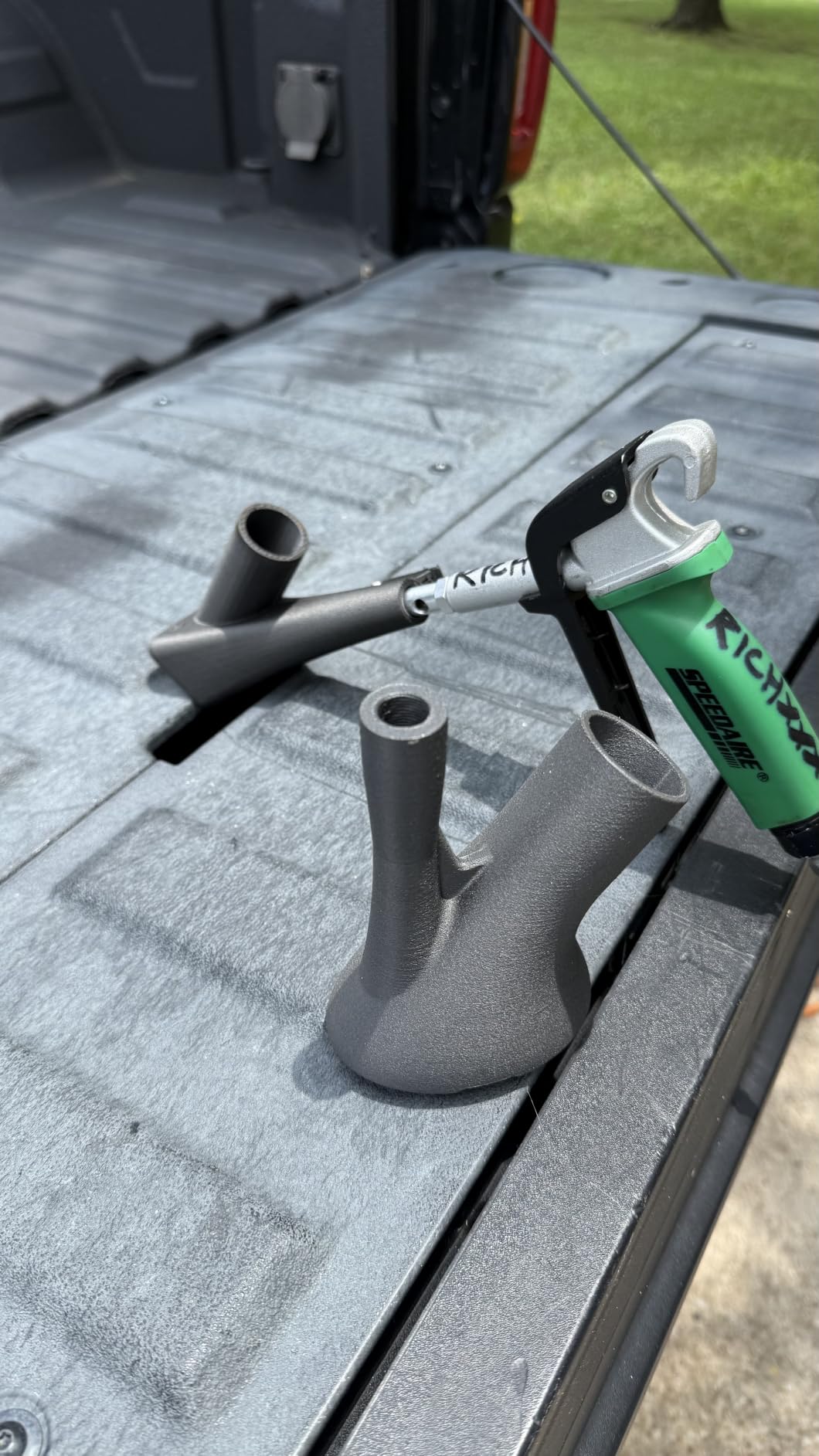
Settings and handling
Plan for 270 to 290C nozzle, 50 to 70C bed, 50 to 150mm/s, and fan off. If your part needs the maximum dimensional stability, annealing at 80 to 130C for 5 to 12 hours is the step that unlocks it. The nozzle requirement is a hardened steel one, because the carbon fiber will wear a brass nozzle flat in a way PETG-CF will not.
Note that this filament is specifically not recommended for AMS or AMS Lite use because of its brittleness. That is not a deal-breaker for a workshop, but it does mean a manual spool holder and a careful filament path.
Where it falls short
It is an engineering material with engineering-material handling. If your project is a garden ornament or a house number, this is far more than you need and much more frustrating to print. Loose spool winding is reported by some users and can bind, and the strict drying discipline means a filament dryer is close to a prerequisite rather than an accessory. The 4.3 rating reflects a material people love once they learn it and struggle with before that.
10. Polymaker Fiberon PA612-CF15 – Best for Dimensional Stability
Polymaker Fiberon PA612-CF15 Carbon Fiber Nylon Filament 1.75mm, Black, 0.5kg
- Less moisture sensitive than PA6 while staying strong
- Minimal warping and good adhesion on low-temp plates
- Strong stiff parts that hold dimensions after annealing
- Arrives dry and tightly wound with low stringing
- Needs an all-metal hotend and an abrasive-resistant nozzle that wears quickly
- Does not feed through AMS or AMS Lite without modification
- The 0.5kg spool size makes it costly per kilogram
Long-chain PA612 is a smarter base than PA6 for outdoor duty because it takes on less water, and water is the enemy of long-term dimensional stability. The listing here is 15 percent carbon fiber by weight in PA612, with a dry tensile strength of 91.9 MPa and a heat deflection temperature of 175C at 0.45 MPa after annealing at 100C for 16 hours. Those are engineering numbers on a spool that still prints on a normal FDM machine.
Buyers value the minimal warping and good bed adhesion even on low-temperature plates, the stiff parts that hold their dimensions after annealing, and the fact that the filament arrives dry and tightly wound with low stringing. For a mounting bracket that has to keep a bolt tension over a year, or a bearing housing that has to stay round, that combination is the point.
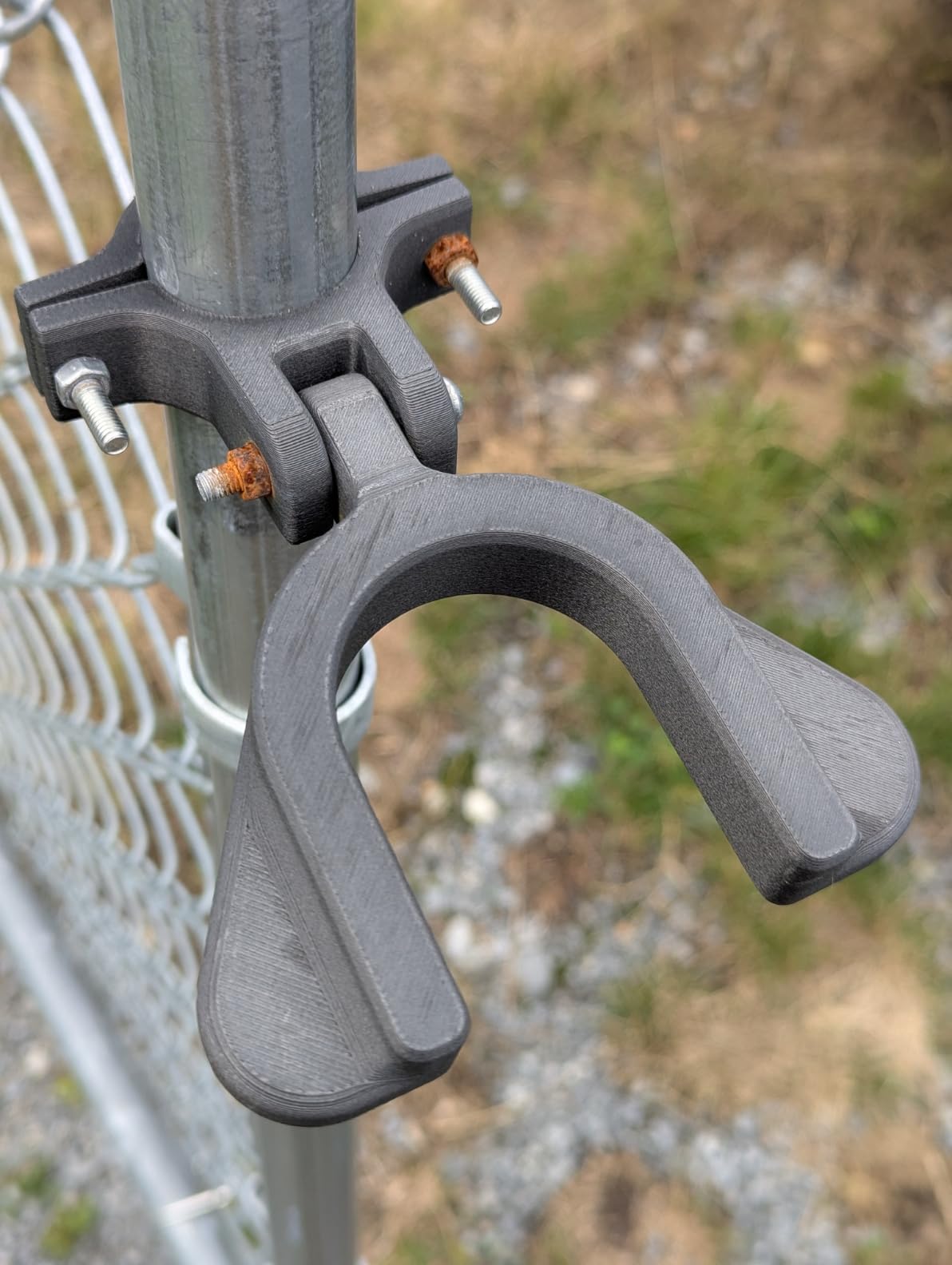
The hardware list is explicit: an all-metal hotend, a 250 to 300C nozzle, a 40 to 50C build plate, a hardened steel or ruby nozzle, and the fan off. A PTFE-lined hotend will not survive these temperatures, and a brass nozzle will not survive the fiber. Reviewers flag the nozzle wear honestly, and that wear is the ongoing operating cost of this material rather than a defect.
Where this beats the rest of the list
Two clear fronts. The first is moisture: PA612 absorbs less than PA6, so a part in a humid greenhouse or a splash zone holds its properties with less babysitting. The second is heat, where 175C HDT after annealing puts it ahead of every other product here for anything that sees sustained warmth. Speed is also competitive, with speeds up to 300mm/s on a tuned profile.
Because it is half the spool size, budget accordingly. A 0.5kg spool is convenient for prototyping but works out expensive per kilogram if you are producing batches, so plan a small number of high-value parts rather than a run of garden clips.
Where it falls short
It will not feed through an AMS or AMS Lite without modification, the 0.5kg spool is small, and some buyers report diameter inconsistency plus cardboard spool quality problems. It also needs the most capable printer in this roundup. Choose it when the part genuinely has to be stiff, stable and hot, not as a general-purpose outdoor filament.
11. ANYCUBIC ASA Filament 1.75mm 1KG – Best Starter ASA
ANYCUBIC ASA Filament 1.75mm, Weather & Heat Resistant, 3D Printer Filament Suitable for Printing Outdoor Functional Parts, Dimensional Accuracy +/- 0.02mm, 1KG Spool, Black
- Resists sunlight water and aging with minimal fading
- Handles moderate impact without deforming
- No blockage or bubbles with low shrinkage
- Diameter held within plus or minus 0.02mm
- ASA off-gassing means printing in a ventilated space is advisable
ANYCUBIC’s ASA publishes the most useful comparison number on this list: a heat deformation temperature of up to 90C, against 75C for ABS, 63C for PETG and 53C for PLA. That single line is the whole outdoor argument in four figures, and it is worth remembering when a listing makes vague claims about durability.
In practice buyers confirm the claim, reporting resistance to sunlight, water and aging with minimal fading, plus the ability to take moderate impact without deforming or breaking. Extrusion is clean, with no blockage or bubbles, low shrinkage, and reduced cracking and warping, and the diameter tolerance of plus or minus 0.02mm is maintained for consistent extrusion. Planters, tools and car accessories are the projects owners report using it for.
For someone printing their first outdoor part, this is the least intimidating ASA on the list. The only complaint that appears in the reviews is odor, which is the material class talking rather than this spool in particular. Wind up thinking about ventilation before you start rather than after the first hour of fumes.
Why it suits a first outdoor build
There is not much to tune and not much to get wrong. The winding is neat for most FDM printers, extrusion is consistent, and the reduced cracking and warping means your first attempt is not likely to end in a curled corner in the bin. If you are printing signage numbers, a birdhouse fitting or a set of planter feet, this is a low-stakes way to learn how ASA behaves before you commit to a full spool of something more specialized.
Keep the same discipline you would keep with any ASA: an enclosed chamber if you have one, a hot bed, low cooling, and ventilation. Our TPU filament guide covers the other common material people reach for when they need flexibility rather than weather resistance.
Where it falls short
The 90C figure is a heat deformation rating under test conditions, not a service temperature, and a loaded part in direct sun will see more than that. Beyond the odor, there is little else on the complaint list, which is unusual for a material with ASA’s reputation. Just do not expect the long-run UV performance of the most expensive engineering grades on this list.
12. FLASHFORGE Carbon Fiber PETG Filament – Best Finish and Easiest Print
FLASHFORGE Carbon Fiber PETG Filament 1.75mm Black, Reinforced 3D Printer Filament 1kg, Lightweight & High-Strength PETG-CF Filament, Strong & Easy to Print
- No clogging stringing or blobbing on default profiles
- Good layer adhesion and bed adhesion with no corner lift
- Slight sheen gives parts a premium look
- Excellent wear resistance for gears bearings and sliders
- Needs thorough drying for consistent results
- Best results require slower print speeds
- Limited color range
This is the highest-rated spool in the roundup at 4.8, and the reason is consistency rather than any single headline property. Users describe no clogging, stringing or blobbing even on stock PETG-CF profiles on Bambu machines, with good layer adhesion and bed adhesion and no corner lifting even on larger prints. For a first filled-PETG attempt, that reliability is worth more than a spec sheet advantage.
The material is carbon fiber reinforced PETG with improved heat and abrasion resistance over standard PETG, reduced warping and improved dimensional accuracy. The slight sheen gives parts a finished look while masking layer lines, which is why it is the pick here for visible parts such as robot covers, camera housings and drone guards. For wear parts, the listing calls out gears, bearings and sliders specifically.
Note the contrast with the higher-numbered products in this list. The 196-review count is the second smallest here, and no filament should be bought on rating alone. What that rating does tell you is that people who bought it had a good first experience, and for a material that many users approach warily, that is the signal that matters.
How to get the good result
Two requirements, both simple. Dry the filament thoroughly, because the carbon fiber filler wicks moisture and wet fiber prints rough. And slow the print speed down from whatever the default profile suggests, which is what converts a good part into a great-looking part. Drying is the step people skip, and it is the step that decides whether the surface is matte and even or blotchy.
You will want a hardened nozzle. The abrasion resistance that makes this material good for sliders and bearings is also what wears out a brass extruder, so budget for replacement rather than treating it as a surprise.
Where it falls short
It is a PETG-family material, so its heat ceiling sits well below ASA and far below the nylons in this roundup. Do not put it in an engine bay or a hot vehicle interior. The limited color range is also a real constraint if you need a light color, and remember that light pigments block less UV than black, which matters for a part in full sun.
What Actually Breaks a Part Outdoors?
Outdoor failure is not one thing. It is three mechanisms acting on the same part, plus one printing decision that determines where the damage starts. Understanding the three pillars is what separates a filament choice made from a spec sheet from one made for the part’s actual job.
Ultraviolet degradation. UV photons break polymer chains, and broken chains mean a lower molecular weight, which means embrittlement. PLA has no UV stabilization, which is why garden clips in PLA shatter within 6 to 12 months in temperate climates rather than fading gracefully. ASA’s acrylate rubber phase absorbs and disperses the energy that would otherwise do this, and a black or dark pigment blocks more of the radiation in the first place.
Water and hydrolysis. Not all polymers suffer equally. PET and especially polyamide ester bonds can hydrolyse in the presence of water, and hydrolysis accelerates sharply with temperature, which is why a garden part that is fine in spring fails after a warm wet summer. This is the least discussed pillar and the one that decides between PA6 and PA612 for a permanently damp location.
Heat cycling and creep. A part on a fence sees a full thermal cycle every sunny day. Above its glass transition temperature, thermoplastics creep: they deform under a constant load and do not return. Creep is why heat deflection temperature matters more than tensile strength for a bracket under sustained load, and why a listed 90C or 96C figure is a limit to design against rather than a service-life promise.
And the fourth factor, which is not a material property at all. Layer adhesion and print orientation decide where any of the above damage begins. Across maker forums, the most reported outdoor failure is a part splitting along its Z seams under thermal cycling and constant load, regardless of material, and the deciding factor is consistently orientation rather than resin. Parts printed in the XY plane survive far longer than parts printed upright. For hardware that has to flex rather than crack, a filled TPU is the alternative worth looking at in our TPU filament roundup.
Material Tier List – Where ASA, PETG, ABS, PLA, PC and Nylon Fit
Ranked purely for outdoor duty, the order is ASA, then fibre-reinforced ASA and PETG variants, then unfilled PETG, then ABS, then nylon grades for heat, then PLA. The short version answer to which 3D printer filament is best for outdoor use: ASA first, always, with PETG as the practical alternative when your printer cannot enclose a chamber.
ASA over ABS, and the reason is chemistry. ABS yellows and degrades under sustained UV because the butadiene rubber phase is exactly the part that UV attacks. ASA replaces butadiene with acrylate, which does not have that weakness. Prusa describes ASA as suited to outdoor use thanks to UV and temperature resistance, up to 93C. The practical difference on a printed bracket is that ABS goes chalky and brittle within a couple of seasons while ASA largely does not, and if ABS is your only option, paint and UV varnish extend its life considerably.
PETG lasts outside, with conditions attached. Makers split on this with no hard data to settle it, but the honest position is that unfilled PETG at a listed 63C heat deformation temperature is a shaded or semi-sheltered material, not a full-sun one. The community consensus favours PETG for weatherproof electronics enclosures when post-processing is layered on top, with priming and painting doing part of the work. Adding carbon fiber, as several spools on this list do, moves it materially closer to ASA for outdoor use without the enclosure requirement.
What is stronger than PETG. ASA is stronger and far more heat resistant. So are the polyamides on this list, and so is polycarbonate, which is the strongest common FDM material but also the hardest to print and the most demanding on the hotend. Nylon and its carbon fiber grades win on stiffness and heat, lose badly on printability, and demand the most hardware. For a first outdoor part, the strength ladder is not the deciding factor; UV resistance and printability are.
One more material worth knowing: go black to block UV. Dark pigments absorb and block more of the radiation than light ones, which is a cheap and effective way to extend the life of any part in this list, and it is a piece of advice that recurs constantly in maker communities and rarely appears in buying guides.
How to Print Outdoor Filaments Without Wasting a Spool?
Most filament is not wasted by bad settings; it is wasted by people giving up on a material their printer cannot hold at temperature. Six habits cover the large majority of outdoor print problems, and three of them take less than five minutes to set up.
Enclose the chamber, and heat it. ASA and ABS warp when the upper layers cool faster than the lower ones, so the part contracts unevenly and lifts at the corners. A closed chamber with a warmed bed holds a consistent thermal environment from the first layer to the last. On open-frame machines this is the deciding factor between a usable outdoor part and a bin of warped ones, which is why the filled PETG options in this roundup exist.
Turn the cooling fan down. Cooling between layers is the enemy of interlayer bonding, and interlayer bonding is what determines whether a part splits along its seams after a winter of thermal cycling. Part cooling at zero to ten percent is the common recommendation for ASA and ABS. Raise the nozzle temperature before you raise the fan speed.
Dry the filament first. ASA, PETG and every polyamide in this roundup are hygroscopic to some degree, and wet filament shows up as popping, stringing, rough surfaces and weak layers. People consistently misdiagnose this as bad filament when it is simply wet filament. A dryer or a heated dry box with fresh desiccant solves it, and the vacuum-sealed spools listed here arrive ready to print.
Print in the XY plane. Layer adhesion is far stronger between walls printed side by side than it is between stacked layers, so orient a clip or bracket so the load runs in-plane. This single decision has a larger effect on outdoor part life than swapping between two grades of the same material.
Design for the stress, not the surface. Generous fillet radii at every corner remove the stress concentrator where cracks start, and a shell-dominant print with three or four perimeter walls at moderate infill outlasts a sparse solid print. Print the part in the orientation that puts the load in the walls, and add radii where the load changes direction.
Ventilate, separately from enclosing. An enclosure controls temperature; it does not contain emissions. Styrene from ASA and ABS is the reason experienced makers warn beginners against starting with those materials in a bedroom. Run the printer in a garage, a shed, or through an exhaust with HEPA and carbon filtration, and treat the two pieces of equipment as solving two separate problems.
How to Choose the Right Filament for Your Outdoor Project?
Start with exposure level, because it eliminates most options in one step. A part in full sun all day is ASA, ASA-CF, or a polyamide if heat is involved. A part in shade, under an eave or inside a weatherproof enclosure is PETG, and PETG-CF if it needs stiffness. A part in a wet, warm, permanently damp location moves you toward polyamide over PETG because of hydrolysis.
Then be honest about the printer. If you have an open-frame machine with no chamber, PETG and PETG-CF are the filaments that will actually produce a good part, and the difference in realized outdoor life is far smaller than the difference between a good print and a warped one. If you have a closed chamber, an all-metal hotend and a hardened nozzle, the whole list is open to you, including the polyamides for anything hot.
Next, match the failure mode to the load. A snap-fit clip that flexes repeatedly needs toughness and elongation at break, which is where ELEGOO PETG-CF earns its place. A bracket under constant load in heat needs creep resistance, which is where the 175C and 209C figures on the nylons matter. A thin, stiff, sensor mount needs modulus and dimensional accuracy, which is where the carbon fiber grades shine.
Finally, learn to spot a spool worth buying. Brands that publish a quality report per spool earn disproportionate trust in the community, and that is a real feature rather than marketing. Look for stated diameter tolerance, vacuum-sealed packaging with desiccant, a spool design that fits your feeder, and a published operating temperature window. Community-maintained settings profiles for your exact printer model are worth more than any badge, and they are a genuine product feature.
One last piece of advice that saves money across every tier: buy black, dry your filament, and print slowly. Those three habits will outlast any upgrade to a more expensive grade.
Frequently Asked Questions
What is the best UV-resistant filament for 3D printing outside?
UV stabilized ASA is the best UV-resistant filament for outdoor 3D printing. The acrylate rubber phase in ASA resists the chain scission that makes PLA brittle and yellow, and it holds its properties far longer in direct sun. Carbon fiber reinforced ASA and PETG grades are the next step up, while unfilled PLA is the material to avoid for any exposed part.
Is ASA or ABS better for outdoor use?
ASA is better for outdoor use in every practical sense. Both share the acrylonitrile styrene backbone, but ASA replaces the butadiene rubber phase in ABS with acrylate, which does not degrade under UV the same way. ABS yellows and goes chalky outdoors within a couple of seasons, and Prusa rates ASA for outdoor use thanks to UV and temperature resistance up to 93C. Printing and handling are otherwise near-identical.
Will PETG last outside?
PETG lasts outside in shade and semi-sheltered locations, and less reliably in full sun. Its listed heat deformation temperature of around 63C is well below ASA, so it softens and creeps sooner in heat, and it blocks less UV. Carbon fiber reinforced PETG is meaningfully better than unfilled PETG, and painting or priming an enclosure-grade PETG part extends its life further.
What 3D filament is stronger than PETG?
ASA is stronger and far more heat resistant than PETG, with a heat deformation temperature near 90C against 63C. Polyamides such as carbon fiber reinforced PA6 and PA612 are stronger again, reaching HDT figures of 175C and beyond, at the cost of much harder printing. Polycarbonate is the strongest common FDM material but also the most demanding on your hardware.
Do I need an enclosure to print ASA?
You need one for reliable results. ASA warps when upper layers cool faster than lower ones, and a closed chamber with a heated bed keeps the thermal environment consistent from first layer to last. Without an enclosure, use a brim or mouse ears, keep the bed at 90C or above, and drop part cooling to 10 percent or less. On an open-frame machine a filled PETG is the more realistic choice.
How long does a 3D printed PLA part last outdoors?
Field observations from Qidi’s print lab report that standard PLA garden clips consistently fail within 6 to 12 months even in temperate climates, shattering once the material embrittles under UV. That is short enough that PLA is only sensible for indoor parts or for temporary prototypes. Printed in black with a UV-resistant paint or varnish on top, PLA life can be extended considerably.
Conclusion
The best 3d printer filaments for outdoor parts come down to one honest question: what is the part exposed to. Full sun and heat means ASA, and among the twelve spools here, Polymaker ASA is the one we would buy first for its combination of UV resistance, a listed 100C ceiling and the most review history on the list. No enclosure means carbon fiber PETG, and the IEMAI spool is the value pick that will actually print on an open frame.
For stiff, hot or dimensionally critical parts, the polyamides on this list open a different tier entirely, with HDT figures that no styrenic approaches, at the cost of an all-metal hotend, a hardened nozzle and strict drying discipline. Whatever you print, print it in the XY plane, print it black, and dry the spool first. Those three habits will carry a part further than any grade upgrade, and they are the reason the best filament for outdoor use is the one you can print well rather than the one with the longest spec sheet.