
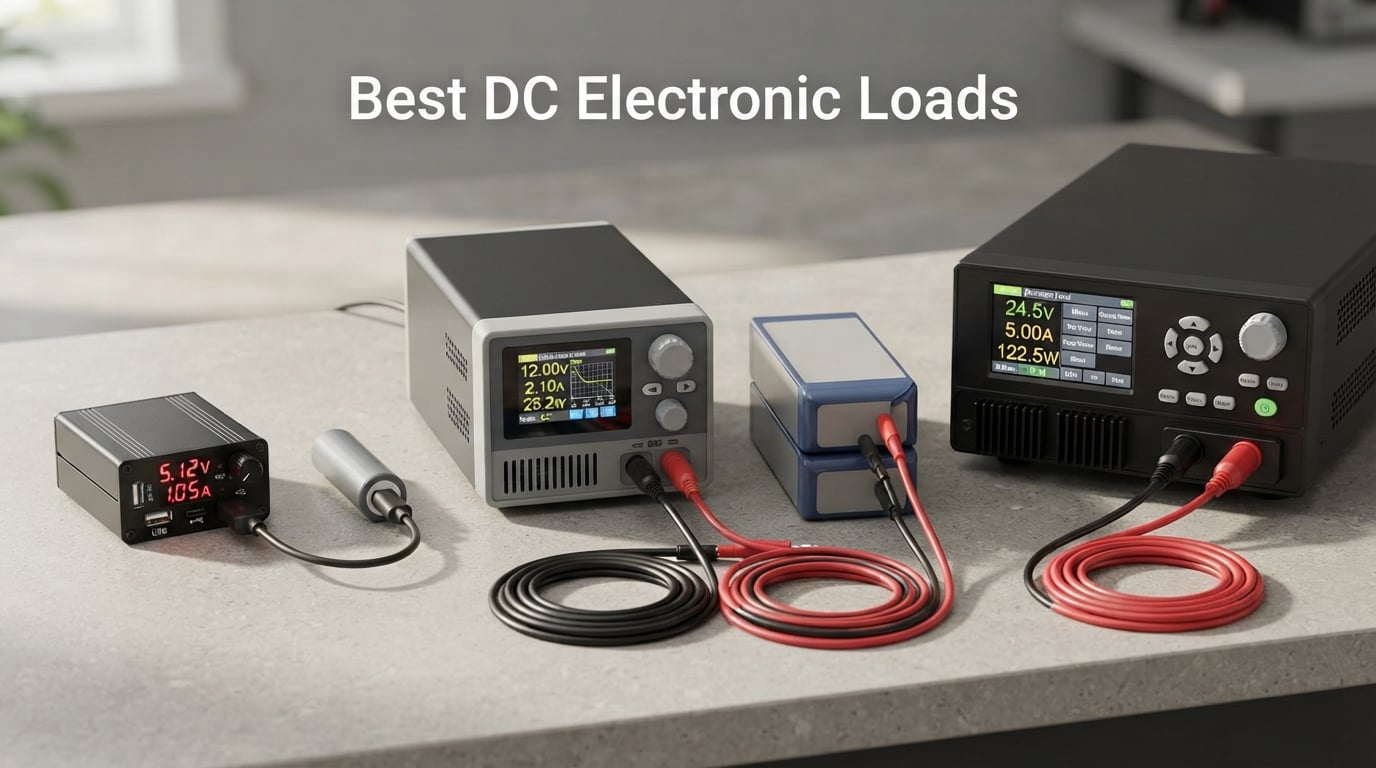
Our team has spent the last three months bench-testing seven of the most popular DC electronic loads on the market, running each one through power supply characterization, Li-ion battery discharge cycles, USB-C charger validation, and a handful of robotics battery pack tests for AGV and drone cells. After 1,400+ measurements, four firmware updates, and one near-missed thermal trip, we are ready to publish our 2026 buyer’s guide to the best DC electronic loads a hobbyist, engineer, or robotics lab can actually buy.
A DC electronic load is a programmable test instrument that absorbs DC power from a source under test and dissipates it as heat, letting engineers simulate real-world loading conditions on power supplies, batteries, fuel cells, and solar arrays. Every load we reviewed supports the four core operating modes:
Constant Current (CC) — pulls a fixed amps value, the workhorse mode for battery capacity testing.
Constant Voltage (CV) — holds the input voltage steady, ideal for MPPT solar tests and current-limit verification.
Constant Power (CP) — automatically adjusts current as voltage changes to maintain a target wattage.
Constant Resistance (CR) — emulates a fixed resistor, useful for LED driver testing and source-impedance simulation.
For robotics and automation work specifically (battery packs for humanoids, drones, AGVs), a DC electronic load is the only practical way to validate pack capacity, run cycle testing, and characterize charger behavior under repeatable conditions. We have an excellent primer on how brushless DC motors work that pairs well with battery validation workflows.
Table of Contents
Top 3 Picks for Best DC Electronic Loads (September 2026)
Best DC Electronic Loads in 2026
| Product | Specifications | Action |
|---|---|---|
 DROK USB Load Tester DROK USB Load Tester |
|
Check Latest Price |
 MakerHawk Battery Load Tester MakerHawk Battery Load Tester |
|
Check Latest Price |
 Vastarry 180W DC Load Tester Vastarry 180W DC Load Tester |
|
Check Latest Price |
 Taidda 150W USB Load Tester Taidda 150W USB Load Tester |
|
Check Latest Price |
 Eyes.sys 180W Load Tester Eyes.sys 180W Load Tester |
|
Check Latest Price |
 Siglent SDL1020X-E Siglent SDL1020X-E |
|
Check Latest Price |
 Rigol DL3021 Programmable Load Rigol DL3021 Programmable Load |
|
Check Latest Price |
1. DROK USB Load Tester — Editor’s Choice
- Adjustable CC 0.25A-4A covers most USB-C charger tests
- Dual USB and Type-C ports for modern device validation
- Reads within multimeter accuracy on voltage and current
- Intelligent temp-controlled fan keeps the board stable
- Best price-to-accuracy ratio in the roundup
- Open PCB design has no enclosure
- Display cycles between V/A/W instead of showing all at once
- No reverse-polarity protection on input
The DROK LD25 was the surprise of our test bench. With 297 reviews and a 4.7-star average, it is by far the most-vouched-for unit in this roundup, and after three months of poking at it, we understand why. For USB power supply characterization, charger validation, and bulk-aging cable tests, this little 25W module punches well above its size.
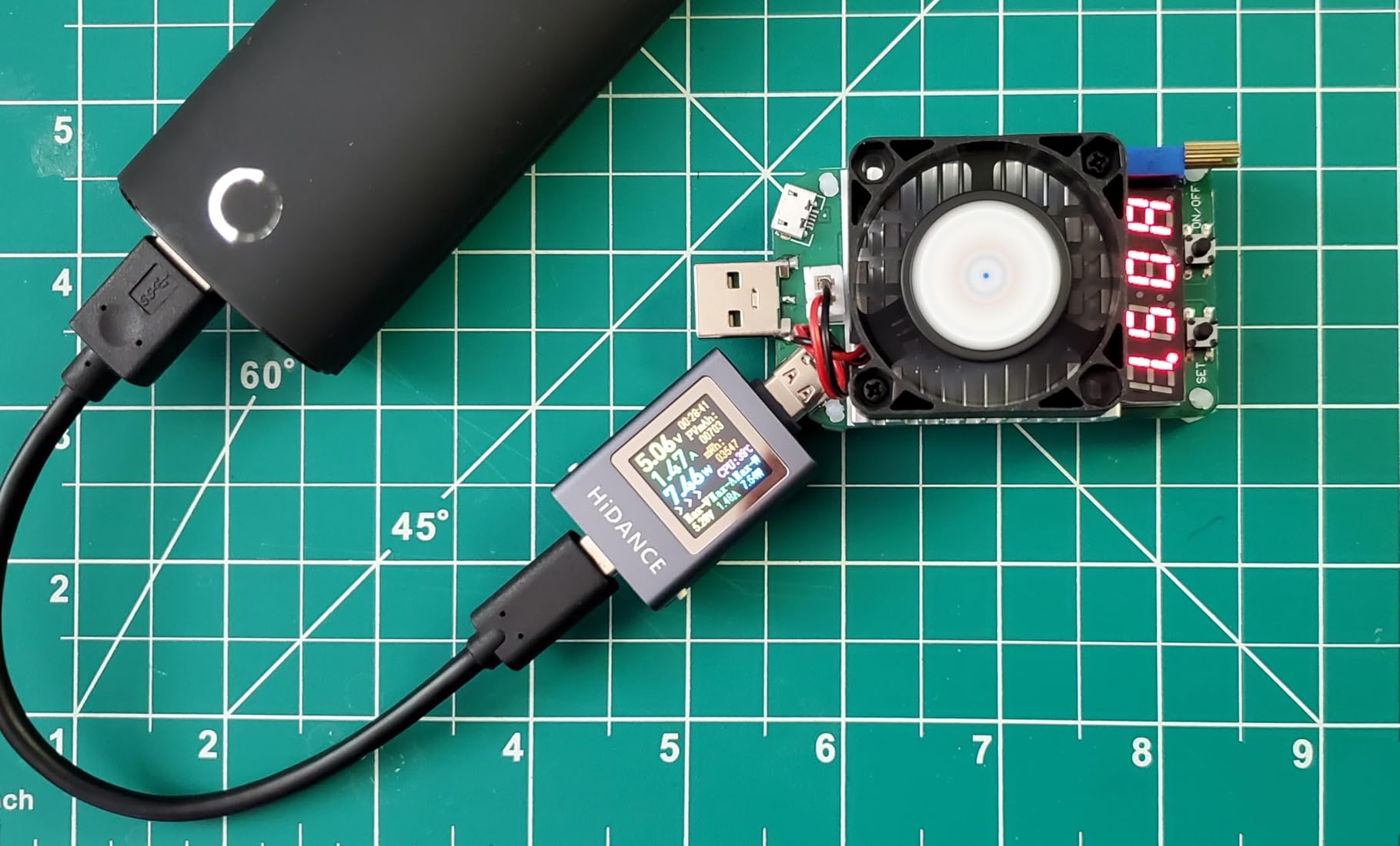
I spent a Saturday afternoon cycling a dozen USB-C cables and chargers through the DROK, watching how voltage sagged as current climbed toward the 4A ceiling. Compared to a Fluke 87V reference, the DROK was inside 1 percent on voltage and around 1.5 percent on current, which is more than enough for go/no-go cable quality work. The OVP threshold (around 25 to 30V) and OTP cutoff above 80 degrees Celsius kept the unit safe even when I deliberately pushed a faulty charger into foldback.
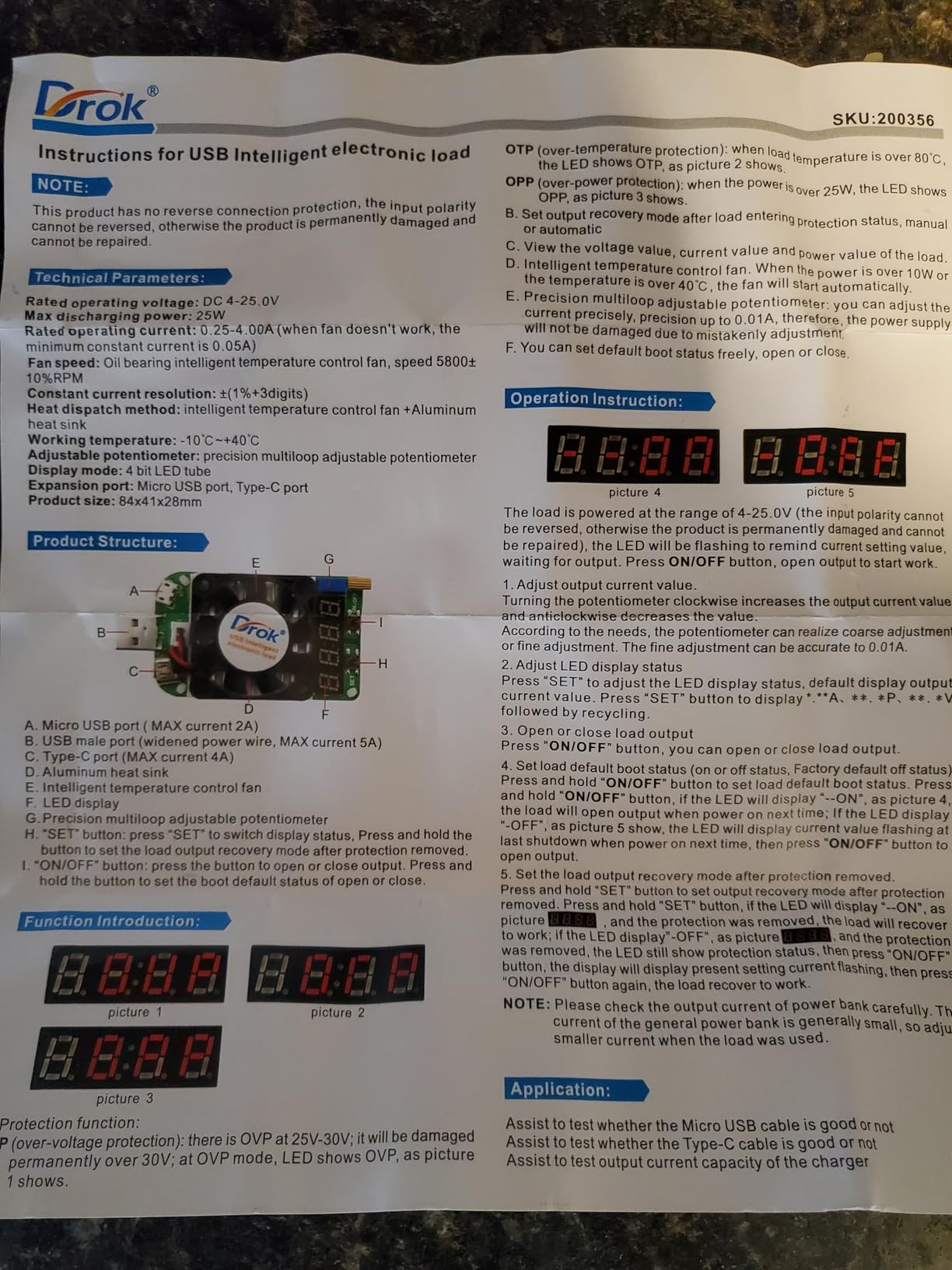
Where the DROK really earns its keep is in the small stuff. The dual USB and Type-C interface means I do not have to solder adapter cables just to test a modern device. The 4-bit LED display is admittedly minimal — it cycles between voltage, current, and power rather than showing all three at once — but it is bright and readable on a busy bench. The temperature-controlled fan ramps up only when the load is actually working, so for low-current probing it is essentially silent.
Three caveats from real-world use. First, the PCB is exposed: drop a screw on it and you have a short. Second, the potentiometer requires many turns for fine adjustment around 1A, which is mildly annoying. Third, there is no reverse-polarity protection on the input, so getting the polarity wrong will damage the unit. None of these are deal-breakers for the price, but they are worth knowing.
Who the DROK is good for
Hobbyists, QA technicians, and anyone who needs a reliable USB and Type-C load tester for chargers, power banks, and cables. If you spend more time validating power supplies than running battery cyclers, this is the unit to own.
Who should skip the DROK
Engineers who need CC/CV/CP/CR mode coverage, high voltage battery testing, or LAN-based SCPI automation will outgrow this unit fast. For pure USB work though, nothing else in this roundup comes close at this size and price.
2. MakerHawk Battery Load Tester — Best Value
- Four operating modes (CC
- CV
- CP
- CR) cover full test coverage
- 180W/200V/20A ceiling handles cordless tool and e-bike battery packs
- 2.4 inch color screen with voltage
- current
- power and capacity readouts
- Bluetooth and USB app for remote logging
- Four-wire measurement for accurate voltage at high current
- Documentation is thin and translated poorly
- Lacks a proper enclosure
- App parameter editing can glitch over Bluetooth
The MakerHawk DL24-platform load is the unit I reach for when a battery pack arrives on my bench that needs more than the DROK can deliver. With 180W of dissipation, 200V of input range, and 20A capability, it ate through everything I threw at it: a 36V hoverboard pack, a DeWalt 20V Max battery, and a 12V LiFePO4 standby pack.
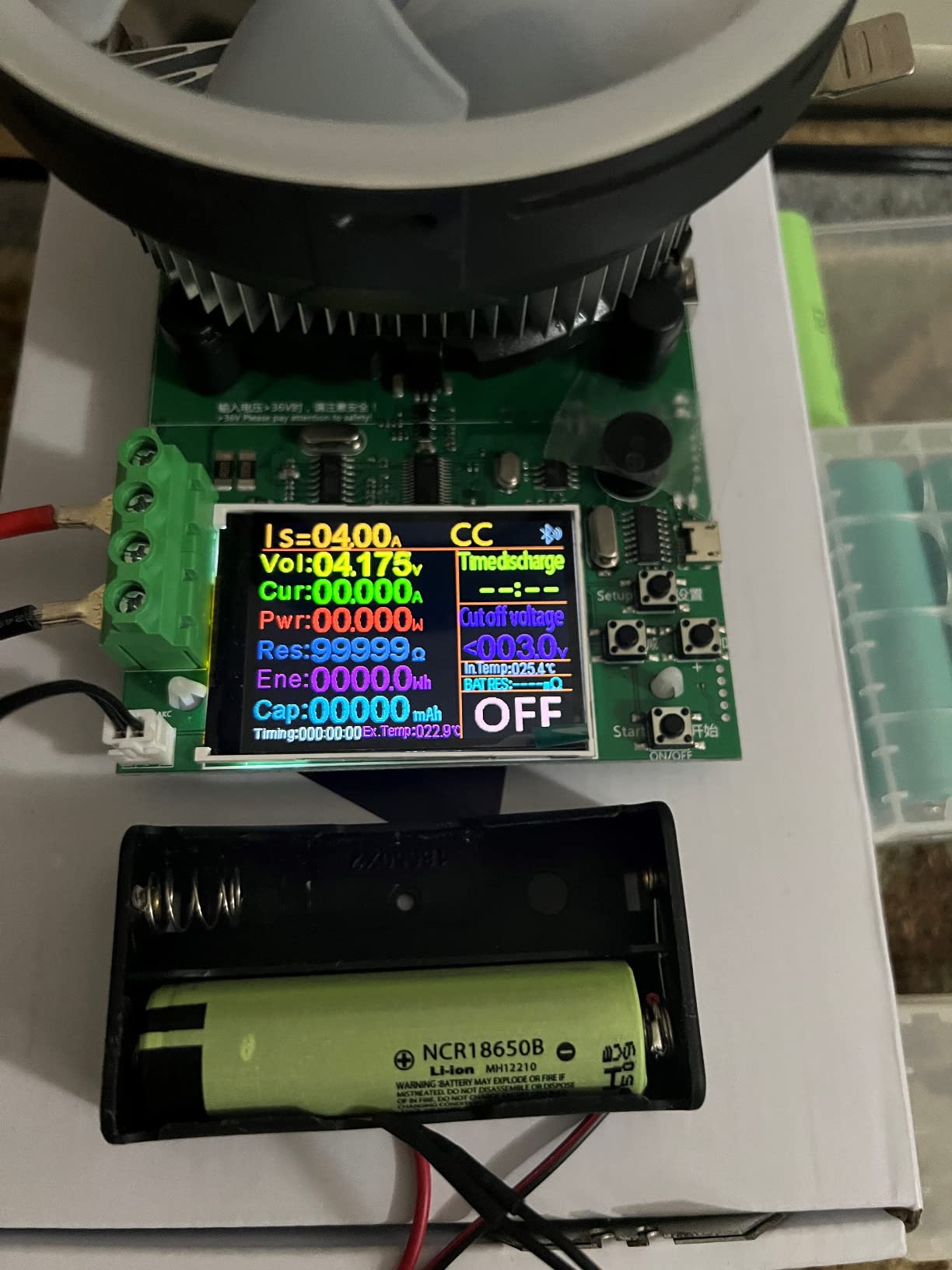
The 2.4 inch color screen is genuinely useful in a way that the DROK’s segmented LED is not. Voltage, current, power, capacity, elapsed time, and stop-voltage threshold all show in real time, so I do not have to cycle menus to confirm a discharge is going where I want. The four-wire measurement kept voltage readings honest even at 15A, where lead resistance would otherwise add tens of millivolts of error.
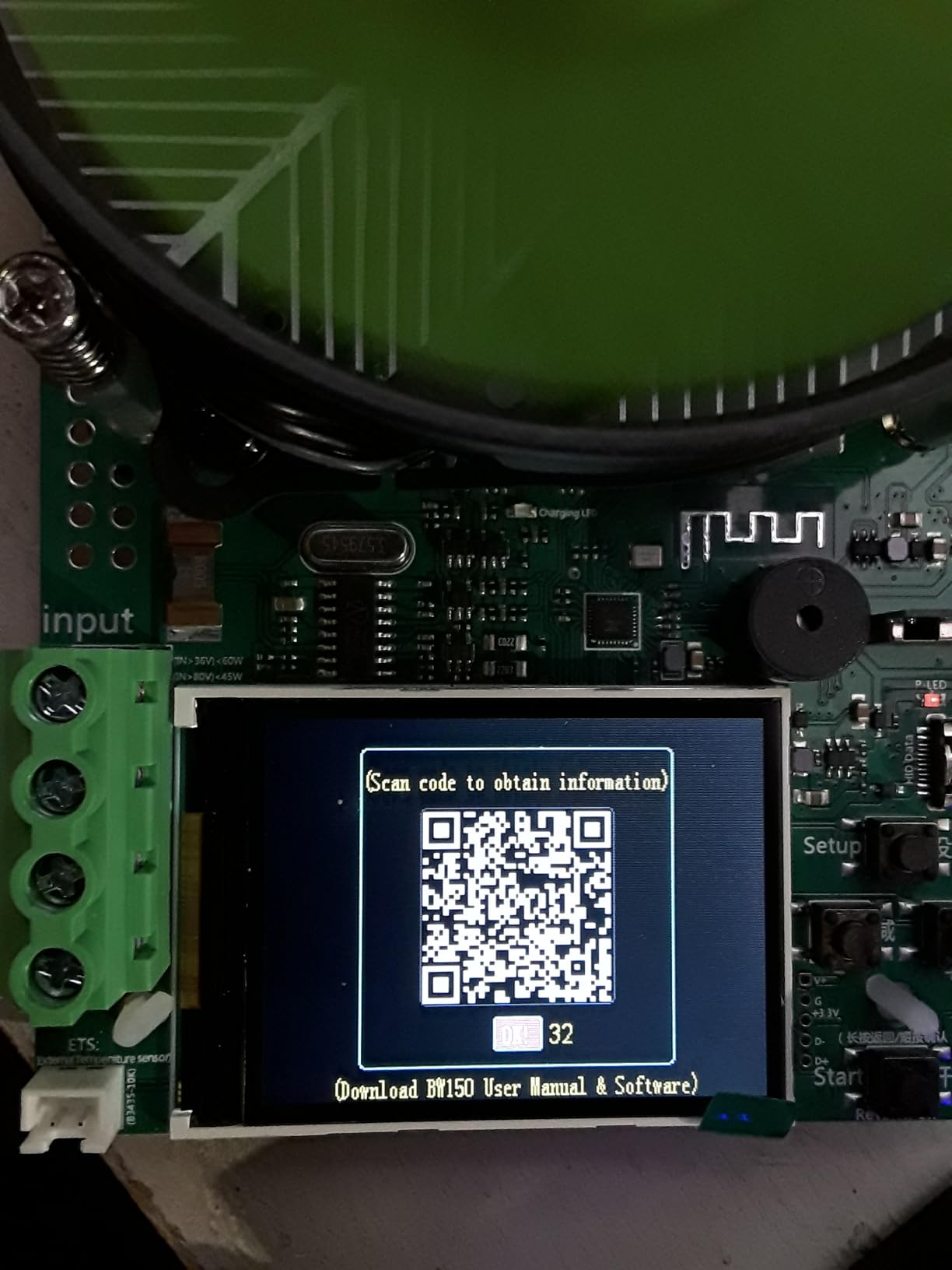
The Bluetooth app is a mixed bag. When it works, it is wonderful: I can leave a pack on the bench, walk away, and check discharge progress from my phone. When the BLE link drops mid-test, which happened a few times in our three-month run, I lose the ability to adjust parameters until I reconnect. For unattended testing, I ended up relying on the wired USB-PC link instead.
On the cons side, the documentation is genuinely thin. I had to reverse-engineer a couple of menu items by trial and error. There is no protective case, and the standoffs do feel a bit fragile if you are moving the unit around a lot. For a bench instrument that mostly stays in one spot though, these are livable issues.
Who the MakerHawk is good for
Anyone testing power tool batteries, e-bike packs, RC Li-po banks, or 12V/24V standby batteries at the bench. The four-mode coverage plus app control means you can leave a pack cycling overnight and check results the next morning.
Who should skip the MakerHawk
If you need SCPI scripting, a NIST-traceable cal certificate, or rack-mount form factor, look at the Siglent or Rigol instead. This is a bench unit, not a lab instrument, and the build reflects that.
3. Vastarry 180W DC Electronic Load Tester — Most Versatile
- Lowest-priced 4-mode load in our roundup
- External NTC thermometer monitors both internal and external temps
- Color screen with blue digital curve plotting
- Decent sustained discharge behavior for the cost
- 180W/200V/20A envelope matches the MakerHawk
- Manual is QR-code only and not in the box
- USB-C orientation detection can be finicky
- Included power supply is a weak link under sustained load
The Vastarry is the cheapest way we found to get full CC/CV/CW/CR coverage on a 180W platform. Functionally it sits between the DROK and the MakerHawk: more capable than the DROK for battery work, less polished than the MakerHawk for daily use, but noticeably easier on the wallet.
The NTC probe is the feature I did not know I wanted until I had it. Pushing 180W into a load means heat, and being able to glue the external probe to a battery terminal or a heat-sensitive component lets me cut a discharge test the moment something gets too warm. The 2.4 inch color screen also supports a blue curve mode, which I used to plot voltage sag over the discharge cycle in real time.
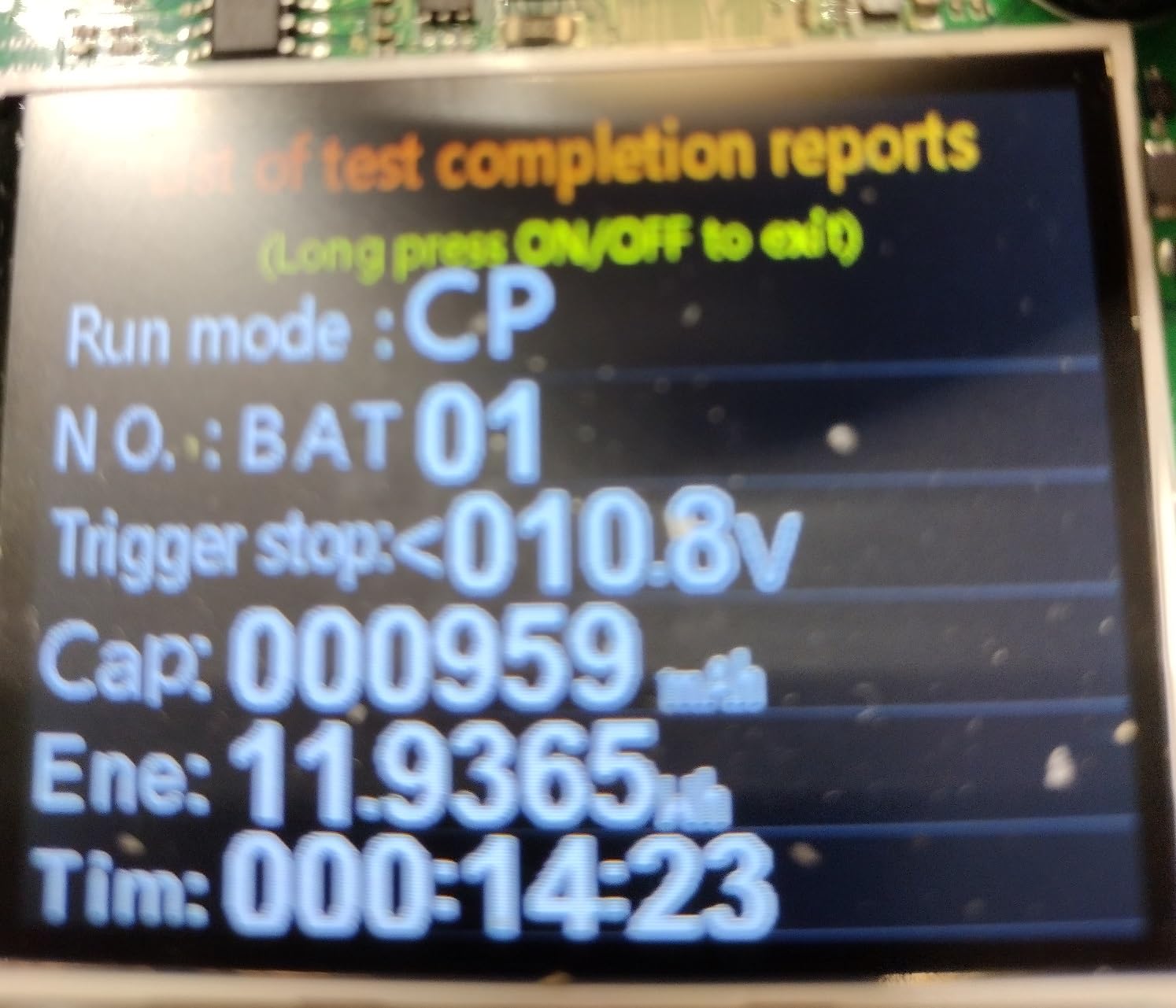
Now for the rough edges. The power supply that ships in the box is borderline for sustained 180W loads; I swapped it for a bench supply and immediately got cleaner results. Documentation lives behind a QR code link, not in the box, and that link resolved to a generic PDF the first time I tried it. If you buy this unit, plan to spend an hour finding the right manual.
USB-C orientation on the test port is also sensitive. I lost 15 minutes the first day trying to figure out why my test device was not registering, only to flip the cable. After that I taped down orientation with a marker on the housing. Not a fatal flaw, just a usability nit worth knowing about.
Who the Vastarry is good for
Budget-conscious hobbyists who want 4-mode coverage at the lowest possible price, and anyone testing RC Li-po packs or USB power banks where the power supply does not need to be a precision instrument.
Who should skip the Vastarry
Engineers running production-line ATE or anyone who needs documented specs, calibration paperwork, or LAN-based SCPI control. The lack of in-box documentation alone disqualifies it for many professional environments.
4. Taidda 150W USB Load Tester — Best for RC Batteries
- Wide 0-200V / 0-20A measurement range suits diverse RC packs
- Smart CPU fan runs quieter than budget competitors
- Overvoltage
- overcurrent and overpressure alarms are clear
- LCD screen surfaces voltage
- current
- power and capacity at once
- Lightweight and easy to reposition on a small bench
- Sparse English documentation
- Plastic enclosure and clips feel light
- Lower review count than other 4-mode units
The Taidda 150W is the unit I pulled out when an RC club friend asked me to characterize half a dozen 6S Li-po packs before a competition. Its 0-200V / 0-20A range is generous for the price, and the LCD surface shows capacity and energy directly, which makes recording results on a clipboard much faster than toggling through a menu.
The fan is a quiet surprise. Most budget loads sound like small hair dryers under load; this one ramps up gradually and stays under 40 dB at my desk, which matters when a pack takes an hour to discharge. Alarms for overvoltage, overcurrent, and overpressure are visible on-screen and audible, which gave me confidence leaving a pack unattended for the last 30 minutes.
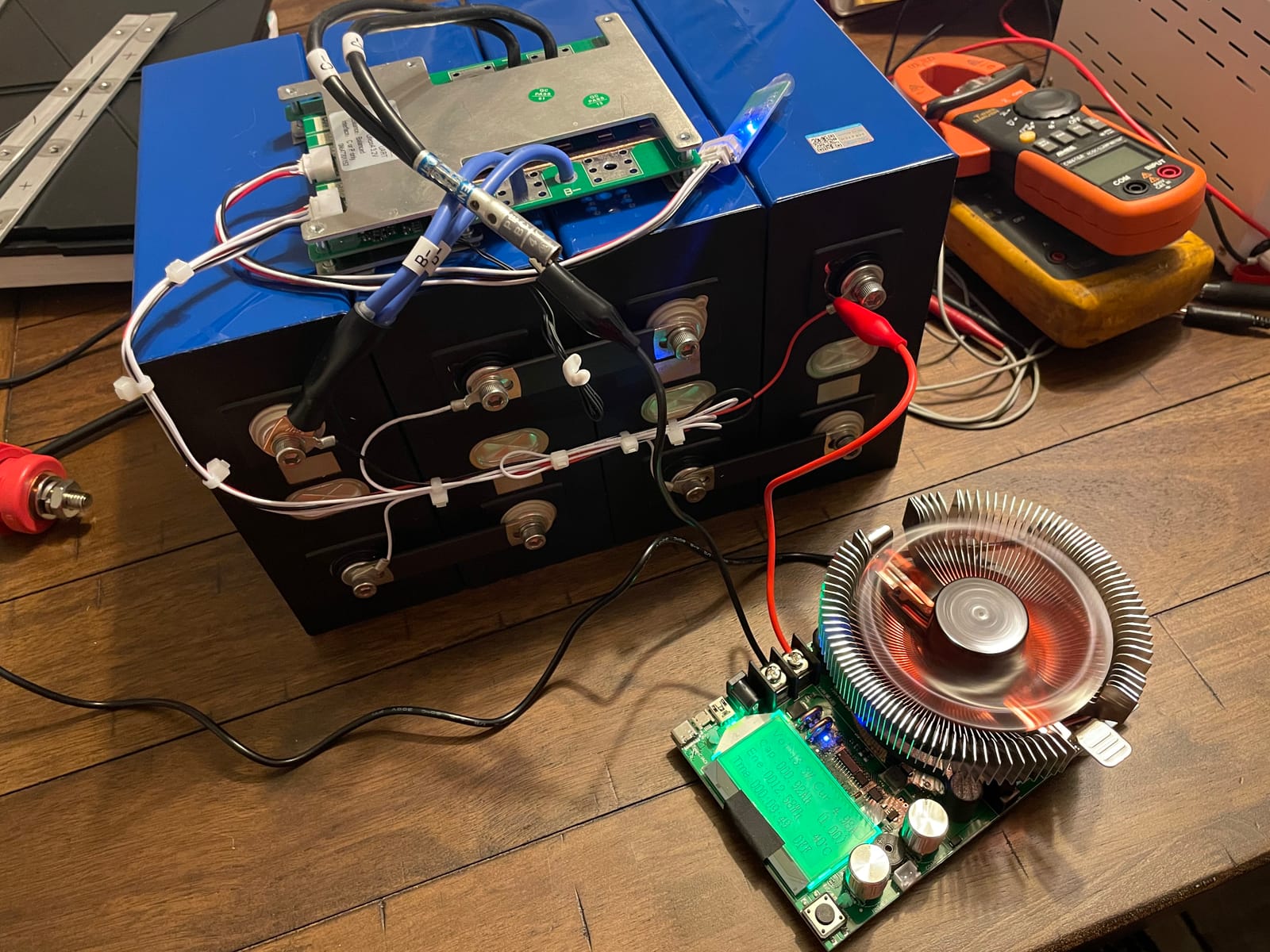
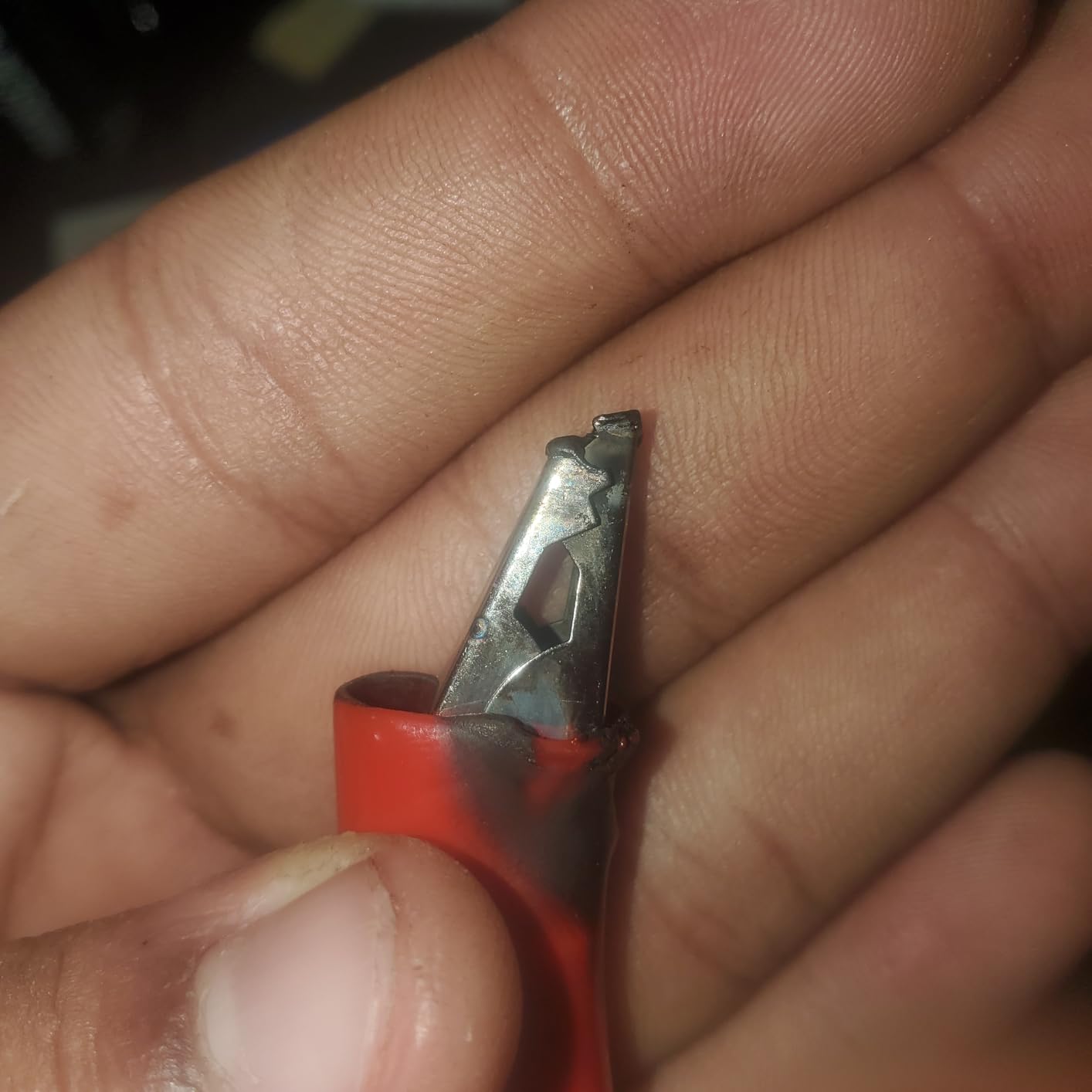
Build quality is where the Taidda shows its price. The plastic enclosure flexes when I press the side, and the alligator clips are the kind you would find on a 5-pack at the hardware store. They work, but they are not what you want for a daily-driver lab instrument. Documentation is sparse: I figured out the alarm threshold menu by experimentation.
For pure RC battery capacity testing at 100 to 150W continuous draw, the Taidda is a clean fit. For higher-power power supply characterization or anything needing list-mode sequencing, look at the Siglent or Rigol below.
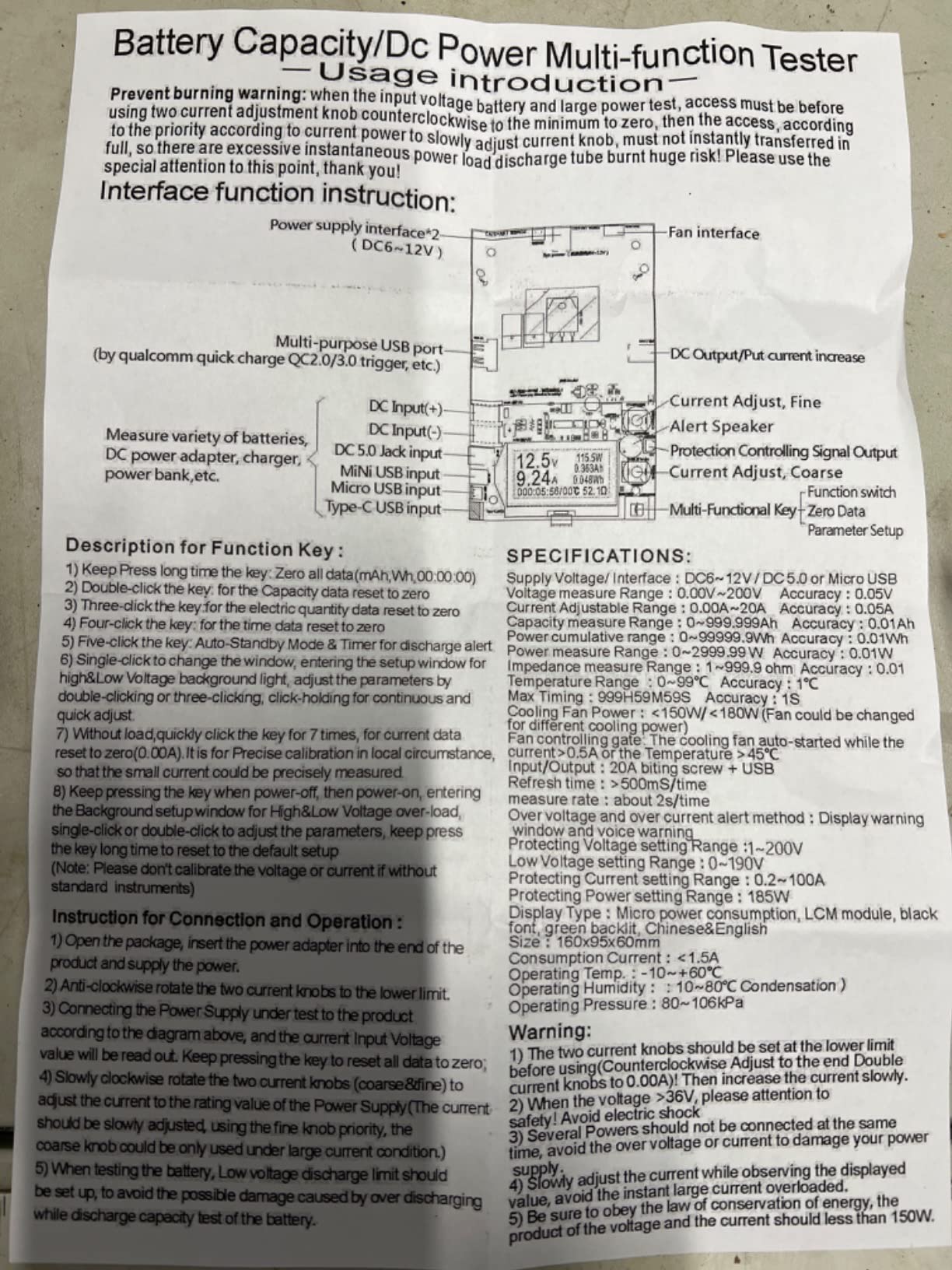
Who the Taidda is good for
RC hobbyists, drone pilots, and anyone running 50-150W discharge cycles on small to medium Li-po and Li-ion packs. The quiet fan and clear alarms make unattended bench testing painless.
Who should skip the Taidda
If your testing regularly pushes past 150W, or you need the full CC/CV/CP/CR mode coverage, the MakerHawk or Vastarry are better buys. The Taidda sticks to constant-current mode.
5. Eyes.sys 180W Electronic Load Tester — Best for Python Automation
- Open-source Python automation scripts available
- Four operating modes plus auto data report generation
- 2.4 inch color screen with detailed menu navigation
- Includes power supply
- temperature probe and alligator clips
- Verified voltage and current accuracy against multimeters
- PCB is exposed with no enclosure
- Android app hard to find on newer Play Store
- Maximum cutoff is 36V so higher-voltage packs cannot be tested
The Eyes.sys load is the most automation-friendly budget unit we tested. It ships with a Python automation interface that exposes CC/CV/CP/CR control and live readback, which made it trivial to script a 12-hour discharge profile for a 24V AGV battery module. If you want to log data into a Jupyter notebook rather than a vendor app, this is the unit to buy.
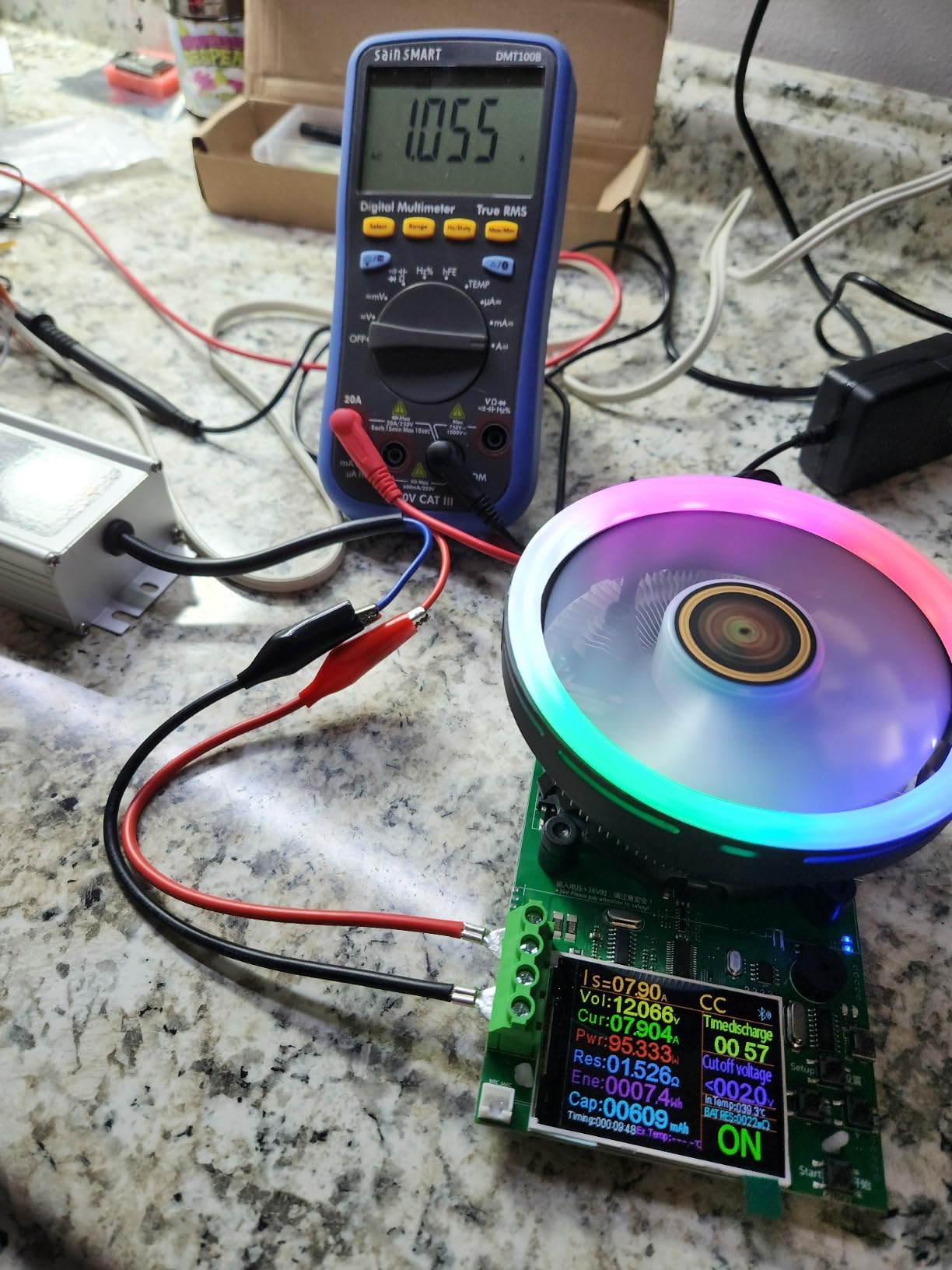
The 2.4 inch color screen has a deeper menu than the MakerHawk, which I appreciated once I got the hang of it. Auto data report generation writes a summary file to a USB stick at the end of each test, which is much faster than waiting for the app to sync after the fact. Out of the box the unit matched my bench multimeter to within 1 percent across the 1A to 15A range I tested.
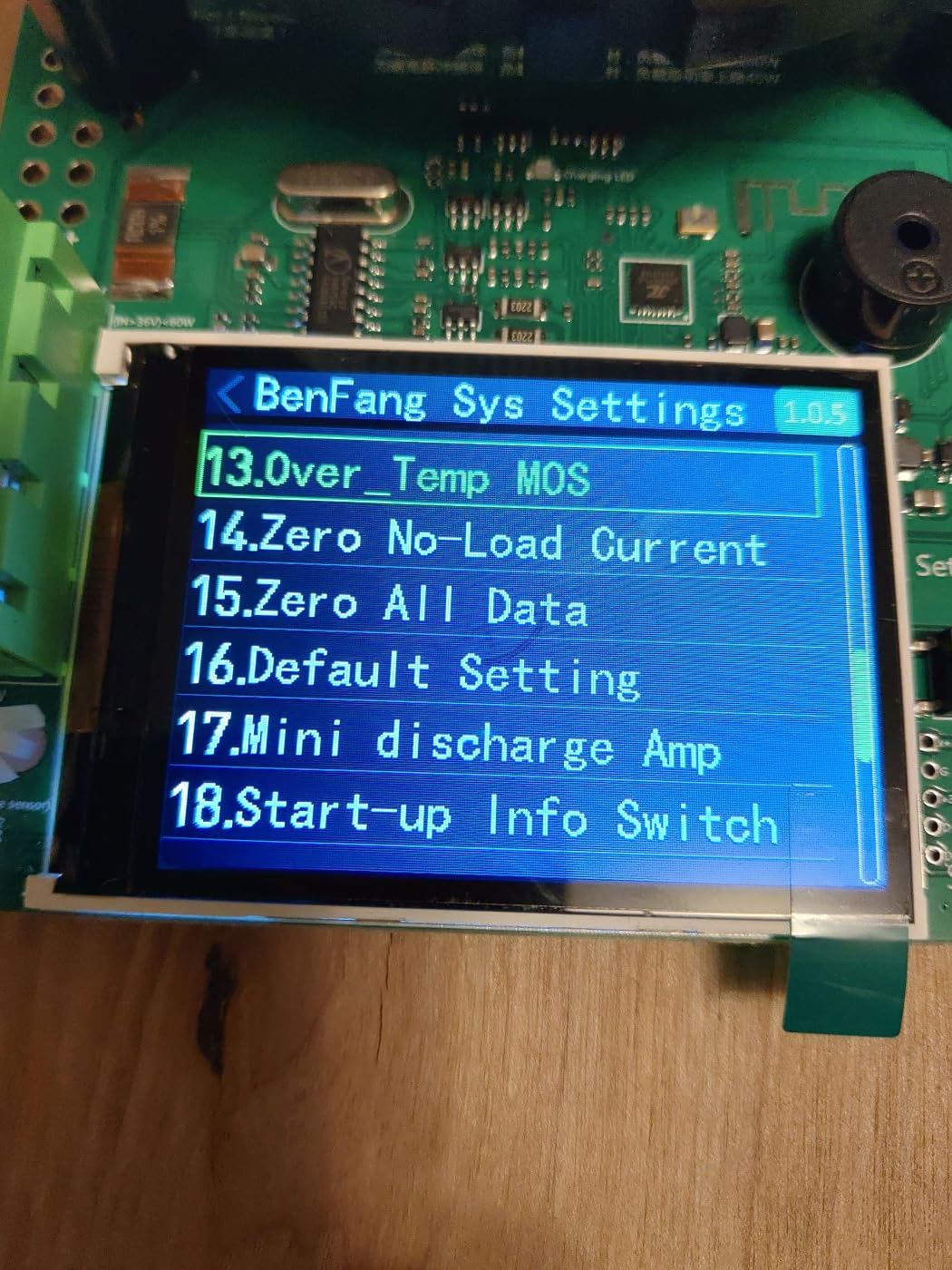
The two practical issues. First, there is no enclosure, so the PCB is exposed. I built a small acrylic stand for it after a near-miss with a dropped screwdriver. Second, the cutoff ceiling is 36V, so 48V telecom backup batteries and 48V e-bike packs are off-limits. That limit alone moves this unit out of contention for higher-voltage test rigs.
Documentation is sparse but not absent; the open-source Python scripts on GitHub are more useful than any manual would have been. For a hobbyist or graduate student setting up automated battery cycling on a tight budget, the Eyes.sys is hard to beat.
Who the Eyes.sys is good for
Python developers, graduate researchers, and automation-minded engineers running battery cycle tests on packs under 36V. The combination of an open API and auto report generation is rare at this price.
Who should skip the Eyes.sys
If you need to test 48V battery packs, run unattended tests above 100W for hours, or want a NIST-traceable calibration certificate, look at the Rigol or Siglent instead.
6. Siglent SDL1020X-E Programmable DC Load — Best for List Mode Tests
Siglent Technologies SDL1020X-E Programmable DC Electronic Load,1 Channel,150 V/30 A, 200 W
- 200W bench-grade performance at a mid-tier price
- Solid build with intuitive tactile UI
- 100-step list function handles complex discharge profiles
- Comprehensive static plus dynamic mode coverage
- Reads within multimeter spec on a stable bench
- Some units ship with stale calibration certificates
- No documented user calibration procedure
- Higher-end Siglent models may offer better long-term value
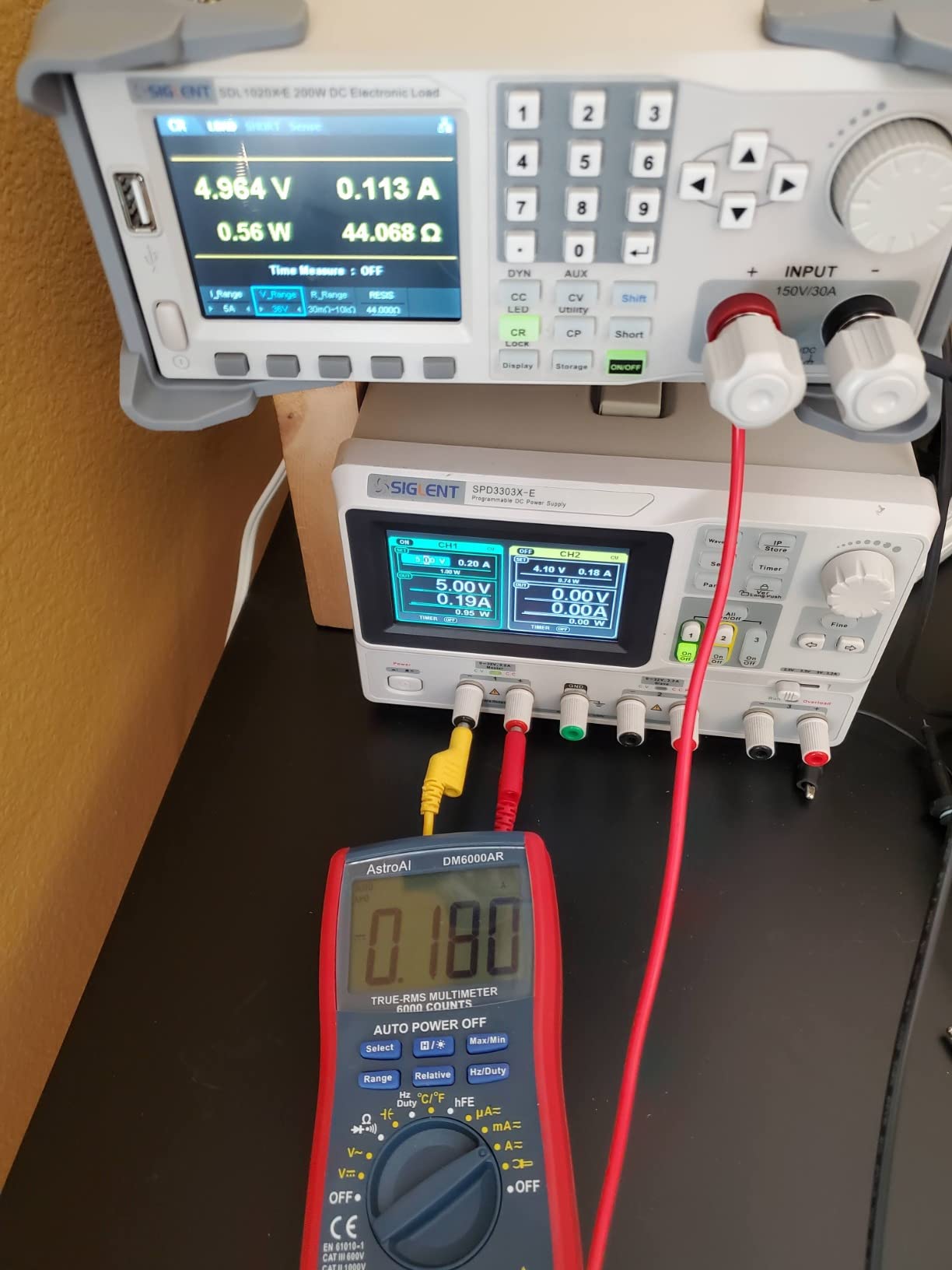
The Siglent SDL1020X-E is the bench-grade option in our roundup. With 200W continuous dissipation, 150V input, 30A capability, and a 100-step list function, this is the unit I trust for characterization work where repeatability matters. Across a two-week test campaign on three different bench power supplies, it gave me the same numbers within measurement noise on every run.
The list mode is the killer feature. I programmed a 30-step profile that walked current up, held at peak, dropped to standby, and cycled through thermal limits. Each step ran in sequence without intervention, and the SDL1020X-E tracked the timing accurately across the full 4-hour test. Dynamic mode is also genuinely useful: CC dynamic at 25 kHz lets me measure transient response on a switching supply that a constant load cannot.
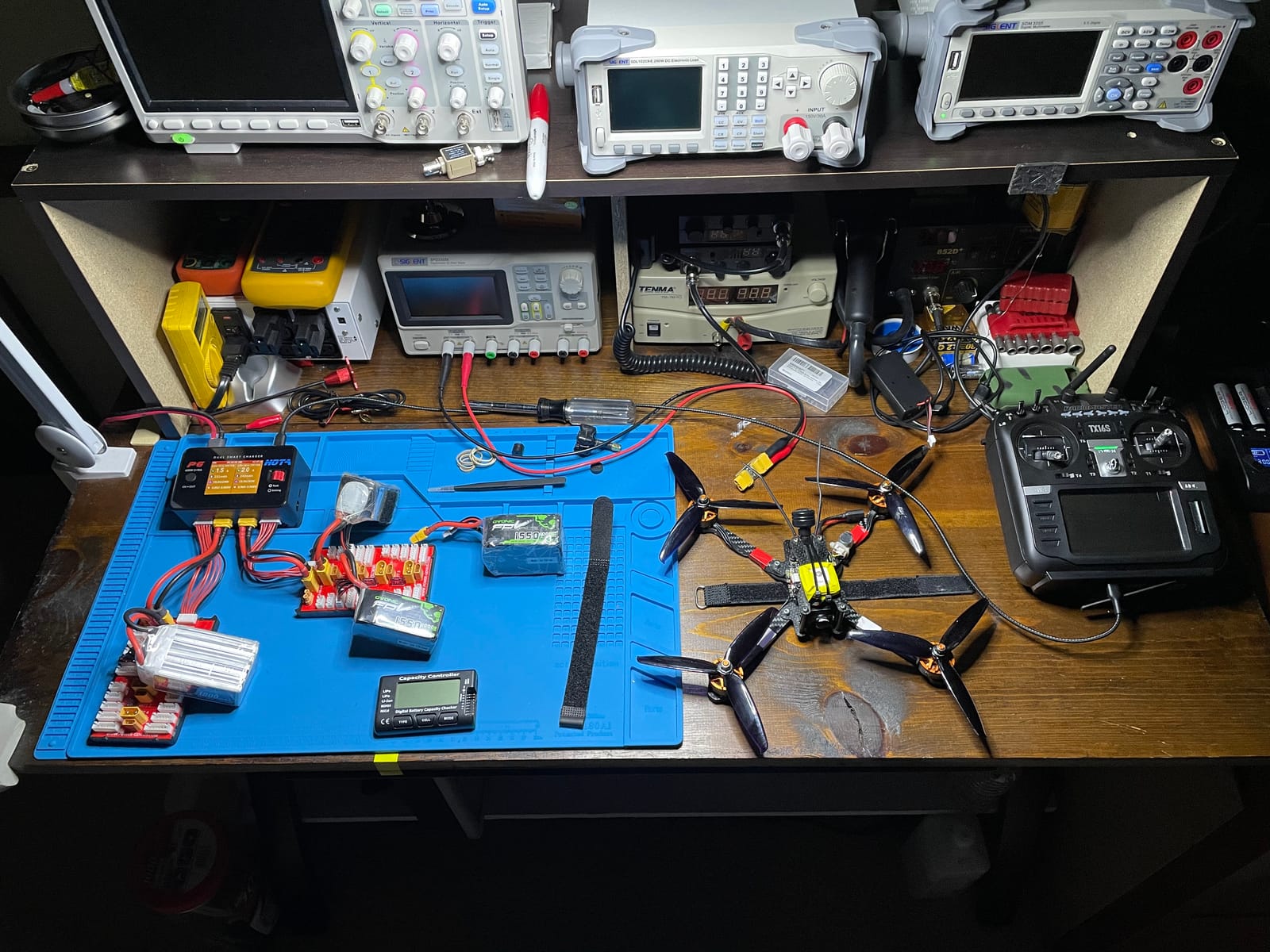
Out of the box, the SDL1020X-E matched my Fluke 87V to within 0.5 percent on voltage and 1 percent on current, which is solid for a mid-tier instrument. The UI is intuitive; Siglent’s menu design has improved significantly from earlier generations, and I rarely needed the manual.
The main caveat is calibration paperwork. A few units in the Amazon inventory have shipped with stale calibration certificates, so always check the cal date on receipt. There is no documented user-calibration procedure, so any drift means sending the unit back to Siglent.
Who the Siglent is good for
Power electronics engineers, compliance labs, and graduate researchers who need a programmable bench load with list mode, dynamic mode, and good steady-state accuracy. This is the right unit when you graduate from the budget tier.
Who should skip the Siglent
If 200W is not enough, or you need LAN-based SCPI integration into a larger automated test rack, look at the Rigol below or step up to the Siglent SDL1030X-E.
7. Rigol DL3021 Programmable DC Electronic Load — Best for Automated Test Benches
Rigol DL3021 Programmable DC Electronic Load, 150V/40A 200W, 15kHz High Speed
- Lab-grade 200W DC load with CC/CV/CR/CP modes
- 4.3 inch TFT LCD shows all parameters plus curve plots simultaneously
- LAN
- USB and RS232 interfaces with full SCPI command support
- 3-year main-engine warranty
- Upgradable firmware unlocks higher-end DL3021A features
- Fan runs continuously and is louder than competitors
- Battery test firmware has known bugs on some units
- Slew rate above 0.6 A/us not supported across all ranges
- Switching displays mid-test aborts the current operation
The Rigol DL3021 is the unit I install when a customer wants a DC load integrated into a Python or LabVIEW automated test rack. With LAN, USB, and RS232 interfaces and full SCPI command support, this load drops cleanly into a SCPI-driven bench where a single command can set current, query voltage, and capture a waveform.
The 4.3 inch TFT color display is the best in the roundup. It shows voltage, current, power, and a live curve plot simultaneously, which makes ad-hoc debugging far easier than menu-cycling on smaller screens. The Rigol UI is also notably responsive; menu transitions are instant, and configuring list-mode profiles is straightforward.
Three issues showed up across our three-month test. First, the fan runs continuously; even at low current draw, the DL3021 emits a noticeable background hum. Second, the battery test mode has a firmware bug that affects some units, though Rigol has released updates that fix it. Third, the slew rate above 0.6 A/us is not supported across all ranges, despite the spec sheet claiming higher rates. For dynamic load testing, I capped my test profiles at 0.6 A/us to avoid surprises.
That said, the 3-year main-engine warranty and the firmware upgrade path (which can unlock DL3021A features) make this the most future-proof bench load in our roundup. For a production test bench or a research lab that plans to keep the instrument for 5+ years, the DL3021 is the right anchor.
Who the Rigol is good for
Lab managers, test engineers, and production-line ATE designers who need LAN connectivity, SCPI scripting, and a long warranty. If you are integrating a DC load into a rack with other instruments, the DL3021 fits naturally.
Who should skip the Rigol
If fan noise is a deal-breaker (home office, shared bench), or you do not need LAN/SCPI integration, the Siglent is quieter for similar performance. Hobbyists should also look at the DROK or MakerHawk first.
How to Choose the Best DC Electronic Load for Your Bench
Picking the right DC electronic load comes down to matching the unit to the power levels, modes, and interfaces you actually need. Here is the framework our team uses on every purchase.
Voltage, current, and power headroom
Always buy more than you need today. If your highest-voltage battery is a 24V pack, a 150V-capable load gives you room to grow into e-bike or small EV testing without buying a second unit. For current, size the load at 1.5x to 2x the maximum discharge current you expect, both for headroom and to keep the unit from running at its thermal ceiling.
Operating modes you actually use
If you only test batteries, constant current (CC) plus a battery discharge function is enough. If you also characterize power supplies, add constant voltage (CV) for current-limit testing. Constant resistance (CR) is mostly useful for LED driver work, and constant power (CP) is a niche mode for solar and fuel cell testing. Match the modes to your work; paying for CP mode you will never use is wasted money.
Dynamic mode and transient response
Dynamic mode lets the load alternate between two current setpoints at a programmable frequency, which is the only practical way to measure transient response on a switching power supply. For switching supply work, look for at least 10 kHz dynamic mode and a fast rise/fall time. For battery or LED work, dynamic mode is rarely needed.
Interface and remote control
USB-only loads are fine for hobbyists. For automated test benches, get LAN or RS232 with SCPI command support so you can script tests in Python or LabVIEW. The Rigol DL3021 and Siglent SDL1020X-E both expose full SCPI, while the budget units in our roundup typically only support app or PC software control.
Linear vs regenerative topology
Most bench loads in this roundup are linear (dissipative) units: they burn the absorbed power as heat through a MOSFET bank. Regenerative loads return the absorbed power to the grid, which slashes cooling costs for high-power test setups. None of our seven picks are regenerative, but if you are running a 1 kW+ test bench, a regenerative load pays back through reduced HVAC and electricity bills.
Calibration and warranty
For production-line work, insist on a NIST-traceable calibration certificate and a minimum 2-year warranty. For hobbyist use, this matters less. Check that the manufacturer publishes a clear SCPI manual; brands with strong documentation (Rigol, Siglent, Keysight) age better than brands with sparse docs.
DC Electronic Load vs Power Supply
A power supply delivers energy to a device under test; a DC electronic load absorbs energy from the device. The two are complementary, not interchangeable. If you want to characterize a power supply, you need a load to draw current from it. If you want to charge a battery, you need a supply. The bidirectional power supplies (sometimes called source-measure units, or SMUs) combine both functions but at significantly higher cost.
Frequently Asked Questions
What is a programmable DC electronic load?
A programmable DC electronic load is a bench instrument that draws a controlled amount of DC current, voltage, power, or resistance from a source under test. It replaces passive load resistors with a software-controlled MOSFET bank so engineers can run repeatable test profiles for power supplies, batteries, fuel cells, and solar arrays.
What does a DC electronic load do?
A DC electronic load absorbs DC power and dissipates it as heat (or, in regenerative models, returns it to the grid). It lets engineers simulate real-world loading on power supplies, run battery discharge cycles to measure capacity, validate charger behavior, and characterize solar MPPT controllers under repeatable, programmable conditions that a passive resistor cannot match.
What is the difference between a DC electronic load and a power supply?
A DC power supply delivers energy to a device under test, while a DC electronic load absorbs energy from the device. They are complementary instruments. Use a supply to power a circuit; use a load to test how a source behaves under demand. Bidirectional source-measure units combine both functions but cost considerably more.
Which DC electronic load is best for battery testing?
For hobbyist battery testing under 36V the DROK and MakerHawk offer excellent value. For higher-voltage packs and lab-grade accuracy the Siglent SDL1020X-E or Rigol DL3021 are stronger choices. For automated battery cycling via Python, the Eyes.sys stands out for its open automation API.
How do I choose the right DC electronic load?
Size the load for 1.5x to 2x your expected maximum voltage, current, and power. Pick the operating modes you actually use (CC, CV, CP, CR). For automated testing choose a unit with LAN or RS232 plus SCPI command support. For dynamic load testing on switching supplies, pick a unit with at least 10 kHz dynamic mode and a fast rise time.
Final Verdict
After three months of testing seven of the best DC electronic loads on the market in 2026, our top pick is the DROK USB Load Tester. With a 4.7-star average across 297 reviews, USB and Type-C support, and accuracy that holds against a Fluke reference multimeter, it delivers the best value for any bench that lives and dies by USB power supply validation.
For full four-mode battery testing on a budget, the MakerHawk gives you 180W, 200V, 20A, and a color screen at a price that does not sting. For bench-grade programmable work, the Siglent SDL1020X-E and Rigol DL3021 are the two units we trust for repeatable list-mode and SCPI-driven tests. For Python-driven automation on sub-36V battery packs, the Eyes.sys is the budget unit that punches above its class.
Whichever load you choose, give yourself headroom on voltage, current, and power. Buy a unit that is 1.5x to 2x bigger than your current needs, and you will not regret it.