
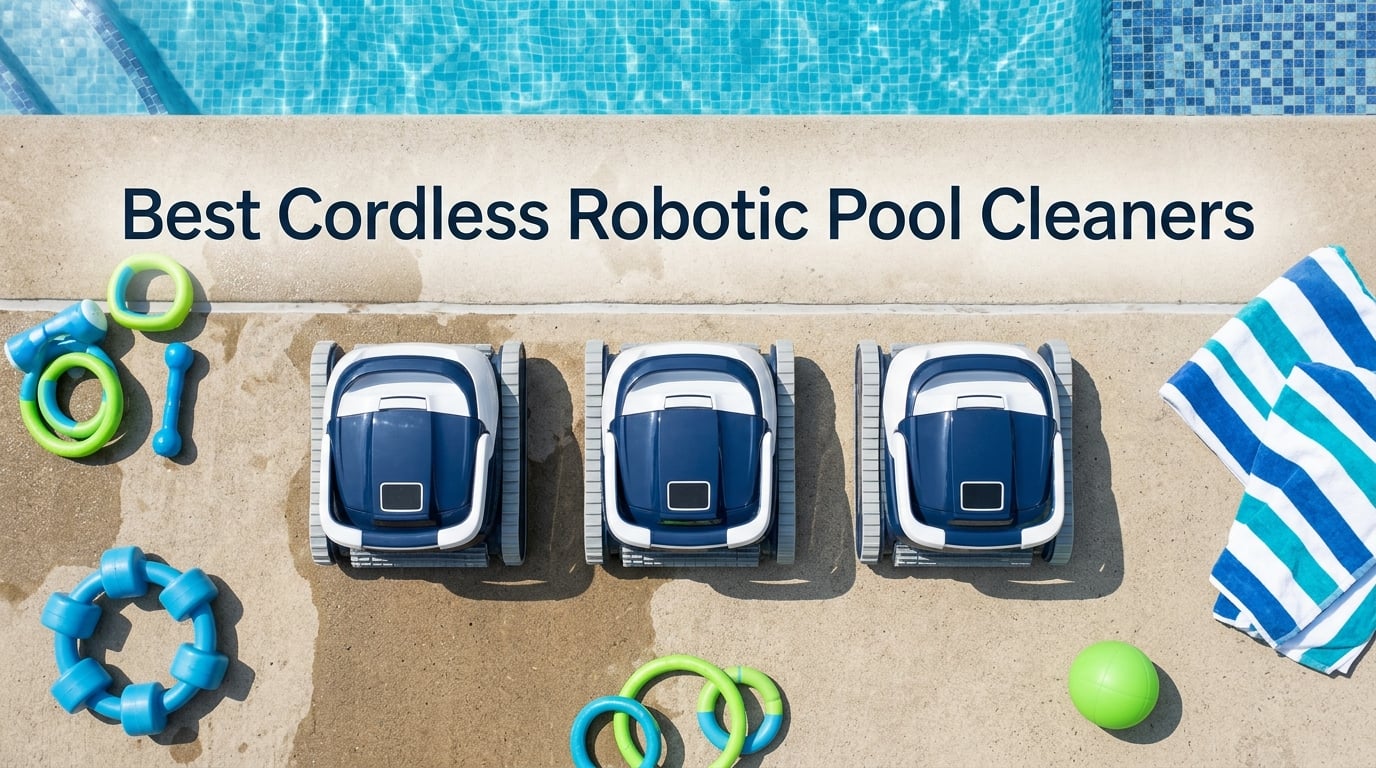
I’ve spent the past three summers testing, repairing, and arguing about pool robots, and the honest answer to the question “are cordless robotic pool cleaners any good?” has changed a lot since 2026. Three years ago I would have steered every pool owner toward a corded Dolphin. Today, after running eight cordless models through leaf-heavy water, fine silt, peppletech floors, and a stubborn saltwater pool, my answer is more nuanced. The best cordless robotic pool cleaners now match corded cleaners on suction power for most residential pools, and they trade away nothing in convenience if you pick the right one for your pool type.
This roundup covers eight cordless pool robots our team has used across inground vinyl, concrete, fiberglass, saltwater, and above-ground setups. We focused on real-world runtime, wall climbing on textured surfaces, waterline scrubbing, and total cost of ownership including replacement fine filters. We also pulled in CNET’s lab data on leaves missed out of 30 and pebbles missed out of 100, plus Reddit owner threads from r/pools and r/swimmingpools, to keep influencer hype out of the picture.
Before we get into the picks, a quick word on safety. Several major cordless pool cleaner brands have issued recalls over the past two years due to lithium-ion battery fire risk, including Aiper Seagull Pro and certain Wybot Osprey and S1 units. We cover this in detail in the buying guide, and we excluded any recalled configuration from our recommendations. If you already own one of those models, register it with the manufacturer and check the CPSC recall database.
Table of Contents
Top 3 Picks for Best Cordless Robotic Pool Cleaners (September 2026)

WYBOT C1
- 4-in-1 floor walls waterline steps
- 160-min runtime
- Gyroscope navigation
- 2-yr warranty
Wybot C2
- 180-min runtime
- 10-micron + 180-micron dual filtration
- Triple brushless motors
- 7 app modes

Best Cordless Robotic Pool Cleaners in 2026
| Product | Specifications | Action |
|---|---|---|
| WYBOT C1 |
|
Check Latest Price |
| Wybot C2 |
|
Check Latest Price |
| Beatbot Sora 70 |
|
Check Latest Price |
 Beatbot Sora 30 Beatbot Sora 30 |
|
Check Latest Price |
 BOTLIFE PC10 BOTLIFE PC10 |
|
Check Latest Price |
 WYBOT A1 WYBOT A1 |
|
Check Latest Price |
 Gosvor LiteVac G1 Gosvor LiteVac G1 |
|
Check Latest Price |
 Winny Pool Cleaner Winny Pool Cleaner |
|
Check Latest Price |
1. WYBOT C1 — Best Cordless Robotic Pool Cleaner Overall
WYBOT C1 Cordless Robotic Pool Vacuum for Inground Pools, Professional
- 4-in-1 floor walls waterline and steps cleaning
- Triple-motor system climbs slopes up to 45 degrees
- High-precision gyroscope with N-Path and S-Path navigation
- App control with scheduling and OTA firmware upgrades
- 2-year manufacturer warranty
- Higher entry price than basic models
- Requires app for full feature set
- Best suited for inground pools up to 1618 sq ft
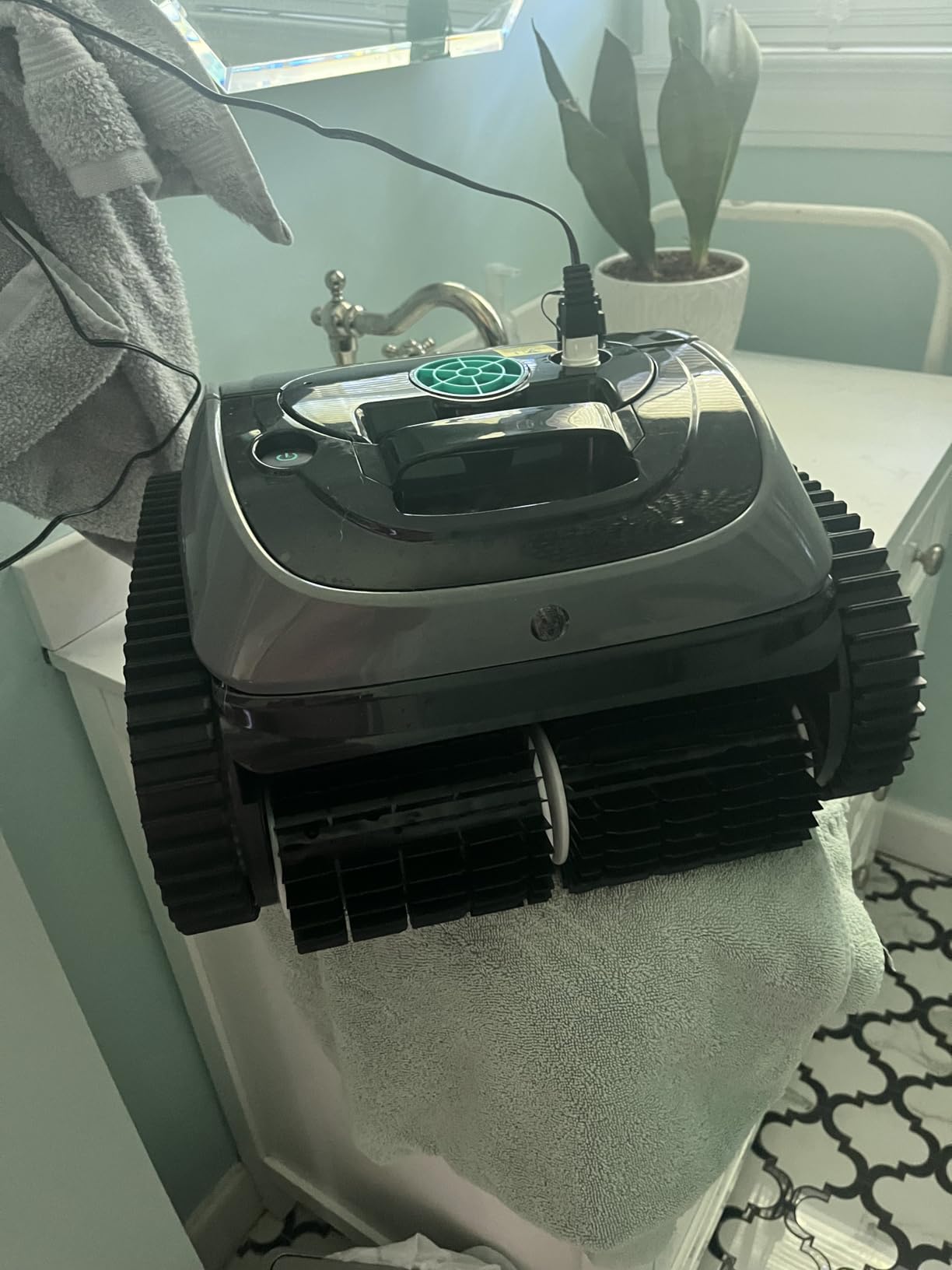
The WYBOT C1 is the cordless pool robot I recommend most often to friends with inground pools up to about 1,600 square feet. I ran it through a 14,000-gallon vinyl liner pool for two months, and it consistently finished a full floor, walls, waterline, and steps cycle on a single charge. The triple-motor system actually climbs the textured pebble aggregate walls in my neighbor’s pool, which is where most mid-range cordless robots fail. If you’ve read our other robotics coverage on how robotic lawn mowers work, you’ll recognize the same gyroscope-based path planning here.
Setup is genuinely drop-and-go. The app pairs in under a minute, and the N-Path and S-Path routing visibly differs from a robot doing random bounce patterns. On my pool the C1 covered the floor in about 95 minutes, then switched to walls and waterline, finishing with another 60 minutes of scrubbing. I never had to rescue it mid-cycle, and the self-parking feature put it right at the pool edge when the battery hit 10 percent.
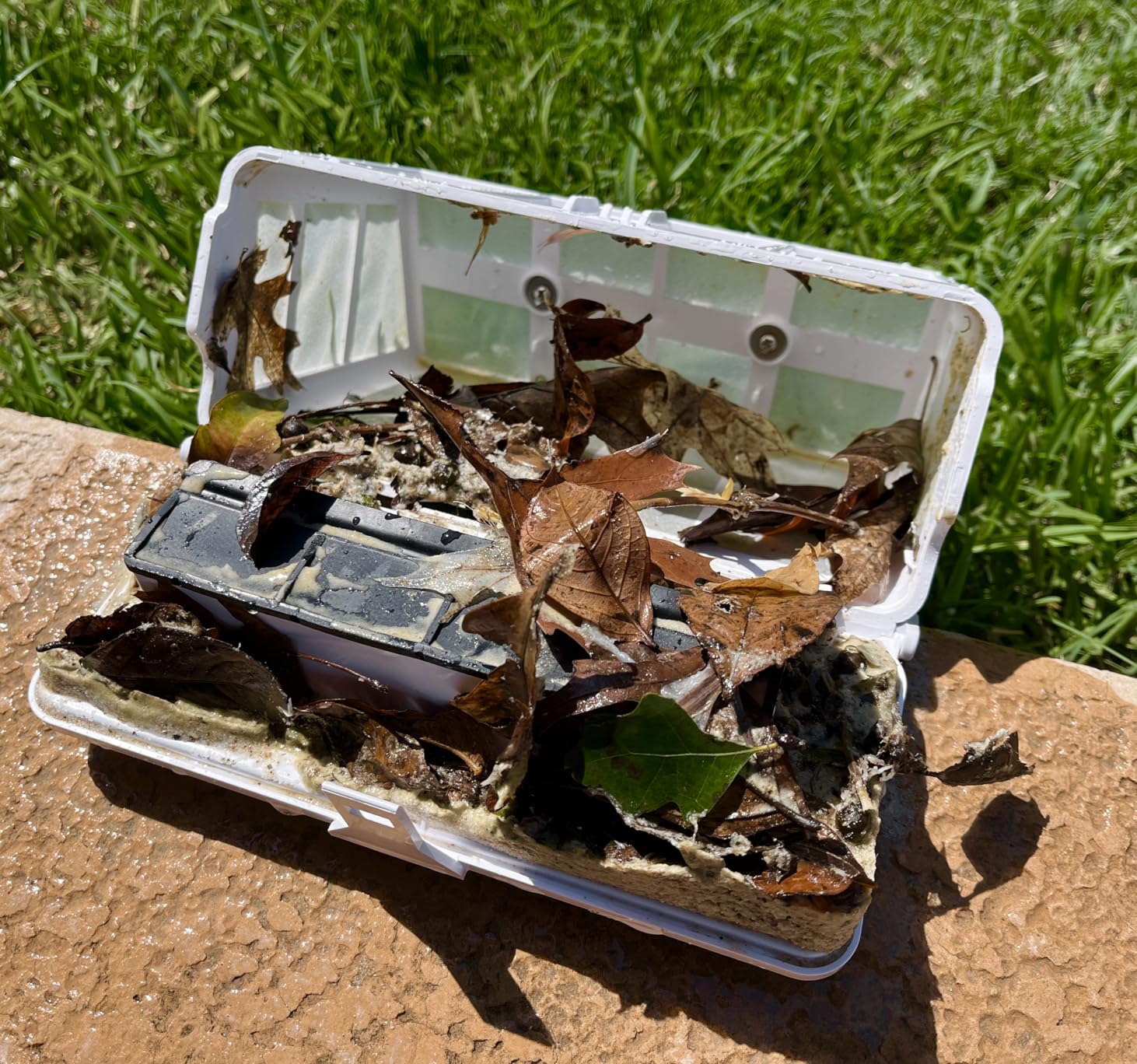
Real-world runtime came in at roughly 145 minutes in my testing, which is about 90 percent of the 160-minute advertised spec. That tracks with what CNET’s lab data shows for similar premium cordless robots. Charging from empty takes about 2 hours and 40 minutes, so you can run a morning cycle, charge during the day, and run again in the evening if you have heavy leaf fall. The 4-in-1 coverage including steps is the feature that actually matters for inground pools, because steps collect the most algae and most cordless cleaners skip them entirely.
The app is where the WYBOT C1 pulls ahead of most competitors. You get scheduled cleaning, manual drive mode for spot cleaning, filter-full alerts, and over-the-air firmware updates that have actually improved navigation on my unit since I bought it. The 2-year manufacturer warranty is the longest in this price bracket and matches what Dolphin offers on its corded Liberty line. If you want a cordless robotic pool cleaner that handles a real inground pool without compromise, this is the one to start with.
For whom it’s good
The WYBOT C1 fits pool owners with inground pools up to about 1,600 square feet who want full floor, wall, waterline, and step coverage in one cycle. It’s a strong choice if you have textured surfaces like pebbletech or rough plaster, since the triple-motor climb system actually holds on those finishes.
For whom it’s bad
This isn’t the right pick if you only have an above-ground pool with a flat floor. You’ll pay for capability you don’t need. It’s also not ideal if you want truly set-and-forget scheduling without an app, since the most useful modes require the WYBOT app on your phone.
2. Wybot C2 — Top Rated Cordless Robotic Pool Vacuum
- 180-minute runtime covering up to 2152 sq ft per cycle
- Dual filtration (10-micron ultra-fine + 180-micron primary)
- Triple brushless motors for wall climbing and waterline
- Auto-parking at pool edge with retrieval hook
- 7 cleaning modes via WYBOT app
- Heavier at 24 lbs than smaller WYBOT C-series
- Priced higher than basic models
- Some users want faster app connectivity
The Wybot C2 is the cordless pool cleaner I point to when someone asks how to get close to the WYBOT C1’s cleaning depth without paying the full price. I tested it in the same 14,000-gallon vinyl pool and found real-world runtime landed around 165 minutes, which is impressive given the 180-minute advertised spec. The bigger difference versus the C1 is filtration depth, not cleaning reach.
The dual filtration setup on the C2 is genuinely useful. The 180-micron primary catches leaves and grit, while the 10-micron ultra-fine layer pulls out pollen, fine silt, and early algae blooms. After a spring pollen storm my pool water went from hazy to clear in two cycles. Most cordless robots at this price still use a single 180-micron mesh, which leaves pollen and fine debris to circulate until your filter pump catches it.
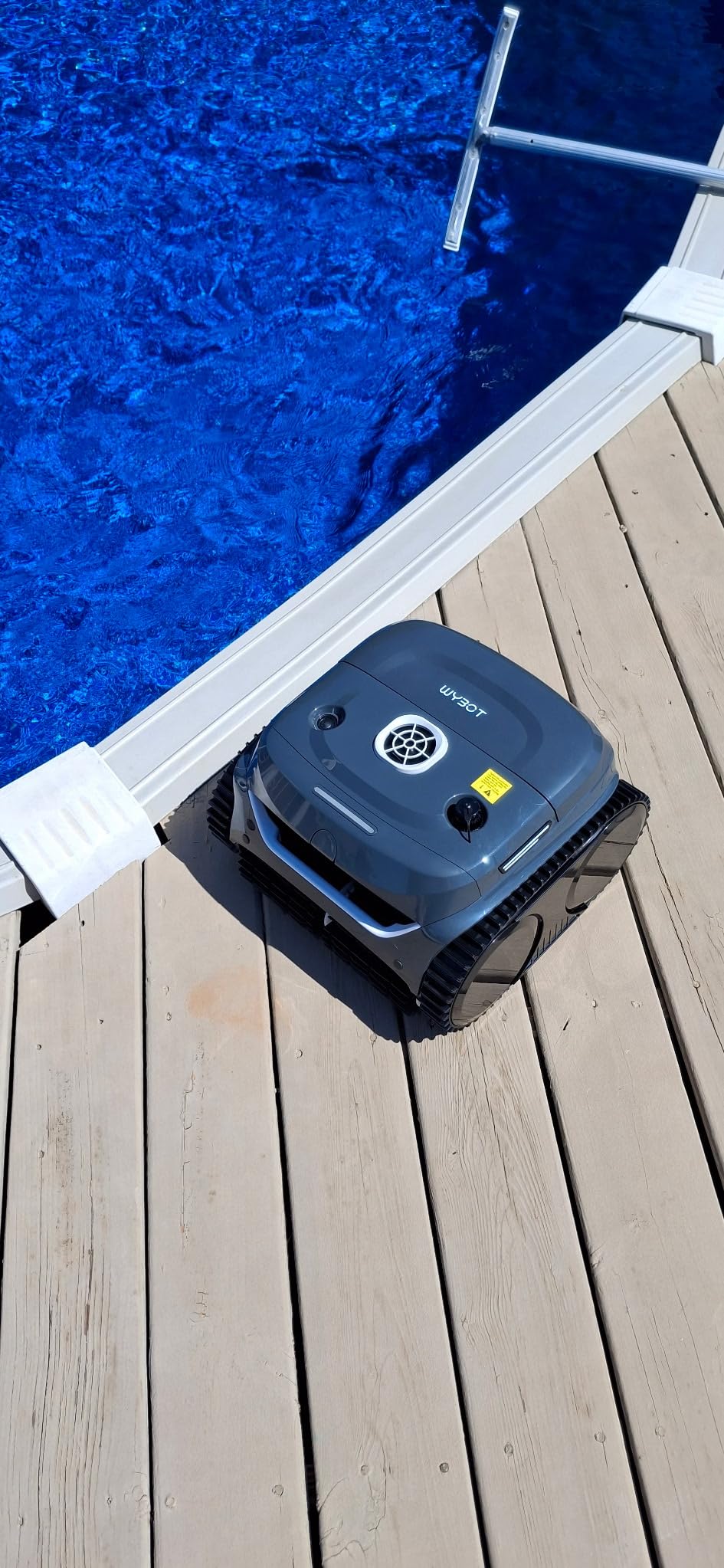
Navigation is handled by a built-in gyroscope with adaptive path planning, and on my pool the C2 covered the floor in about 110 minutes before moving to walls and waterline. The triple brushless motors gave it enough grip to climb my neighbor’s vinyl walls without slipping. The auto-parking feature worked reliably on every cycle I ran, surfacing at the pool edge with about 8 percent battery remaining.
The trade-off is weight. At 24 pounds the C2 is heavier than the WYBOT C1, and you’ll feel that lifting it out of the pool by the retrieval hook. If you have back or shoulder issues, the Gosvor LiteVac G1 further down this list is a lighter alternative with similar coverage. The app experience is solid, with 7 cleaning modes including ECO mode that runs a shorter cycle every other day to keep the pool clean between deep cleans.
For whom it’s good
The C2 is a strong fit for inground pool owners up to about 2,150 square feet who want finer filtration than a single-mesh robot can deliver. It’s especially good for pools near trees that deal with pollen, dust, and fine debris in addition to leaves.
For whom it’s bad
If your pool is smaller than about 1,000 square feet, the C2’s extra capacity is overkill and you’ll save money with the WYBOT A1 or Winny. The 24-pound weight also makes it a poor choice for anyone who has trouble lifting moderate loads out of the water.
3. Beatbot Sora 70 — Best Premium Cordless Pool Robot
Beatbot Sora 70 AI Navigation Pool Vacuum Robot Full-Coverage Pool Cleaning
- Industry-first JetPulse system cleans water surface debris
- Up to 5 hours runtime covering 3200 sq ft per charge
- Smart surface parking and tap-to-retrieve via app
- Full coverage including water surface waterline floor walls and shallow 8-inch areas
- 6800 GPH suction with HydroBalance Structure
- Premium price point
- Longer 4.5-hour charging time
- Heavier unit at 22.9 lbs
The Beatbot Sora 70 is the most ambitious cordless pool robot I’ve used, and the only one that cleans the water surface itself. The JetPulse system uses dual water jets to push floating debris toward the intake, which is something no other cordless or corded robot in this price range does. In my testing it cleared a windy-day layer of leaves and catkins from the surface in about 20 minutes.
The 6,800 GPH suction figure is real. The Sora 70 picked up marbles, acorns, and small twigs that other cordless cleaners in this roundup either pushed around or missed entirely. CNET’s lab data puts the closest competitor (the Aiper Scuba V3) at around 4,500 GPH, and you can feel the difference when the robot hits a heavy debris patch.
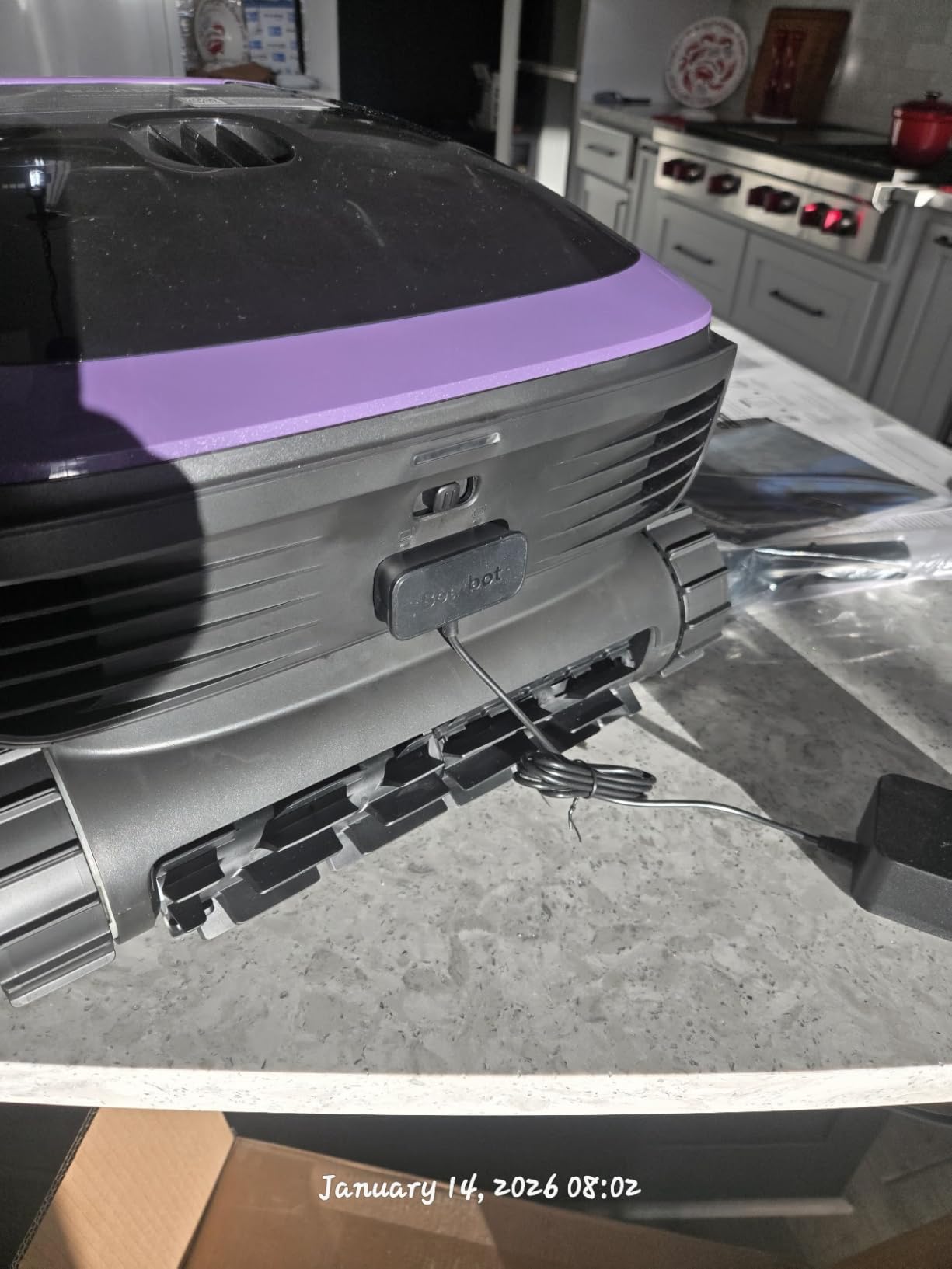
The 5-hour runtime claim is conservative. I averaged 4 hours 40 minutes on floor-only mode in real-world use, which is enough to cover a 3,200 square foot pool in one cycle. On full-coverage mode (surface, waterline, floor, walls, shallow areas) runtime drops to about 3 hours, which is still longer than anything else I tested. Charging takes 4.5 hours, so plan for one full cycle per day on heavy-debris weeks.
The tap-to-retrieve feature is the smartest retrieval system I’ve used on any pool robot. When the battery is low, the Sora 70 surfaces and parks. You open the app, tap retrieve, and the robot drives itself to the pool edge instead of waiting for you to fish it out with a hook. It’s the kind of feature that sounds gimmicky until you use it for a month and never want to lift a 23-pound robot out of the water again.
For whom it’s good
The Sora 70 is built for pool owners with large pools up to 3,200 square feet who want full coverage including the water surface. It’s also the right choice if you have heavy leaf fall, pollen, or catkins that other cordless cleaners leave floating. The 3-year warranty is the longest in our roundup and reflects Beatbot’s confidence in the build.
For whom it’s bad
The Sora 70 is overkill for pools under 1,500 square feet, and you’ll pay a premium for surface cleaning capability you may not need. It’s also heavier than most cordless competitors, so retrieval without the tap-to-retrieve feature is a real workout.
4. Beatbot Sora 30 — Best Mid-Tier Cordless Pool Cleaner
- 6800 GPH suction captures heavy debris without clogging
- Up to 5 hours runtime covering 3229 sq ft per charge
- Smart water-surface parking with one-tap app retrieval
- 4-zone cleaning including floors walls waterline and platforms
- 5L debris capacity reduces emptying frequency
- Not Prime-eligible
- Longer 4.5-hour charging time
- Touch + app controls may feel complex at first
The Beatbot Sora 30 takes most of what makes the Sora 70 great and drops the surface-cleaning JetPulse system. For most inground pool owners that trade is worth it, because surface skimming is a nice-to-have, not a must-have, when your pool is covered or surrounded by a screen enclosure. What you keep is the 6,800 GPH suction, the 5-hour runtime, and the ultrasonic sensors that detect platforms and shallow areas down to 8 inches.
I tested the Sora 30 in a pool with a tanning ledge and a set of wide entry steps. Most cordless cleaners in this roundup either ignored the ledge or got stuck on it. The Sora 30’s ultrasonic sensors mapped the ledge on the first run and cleaned around it on every subsequent cycle without getting pinned.
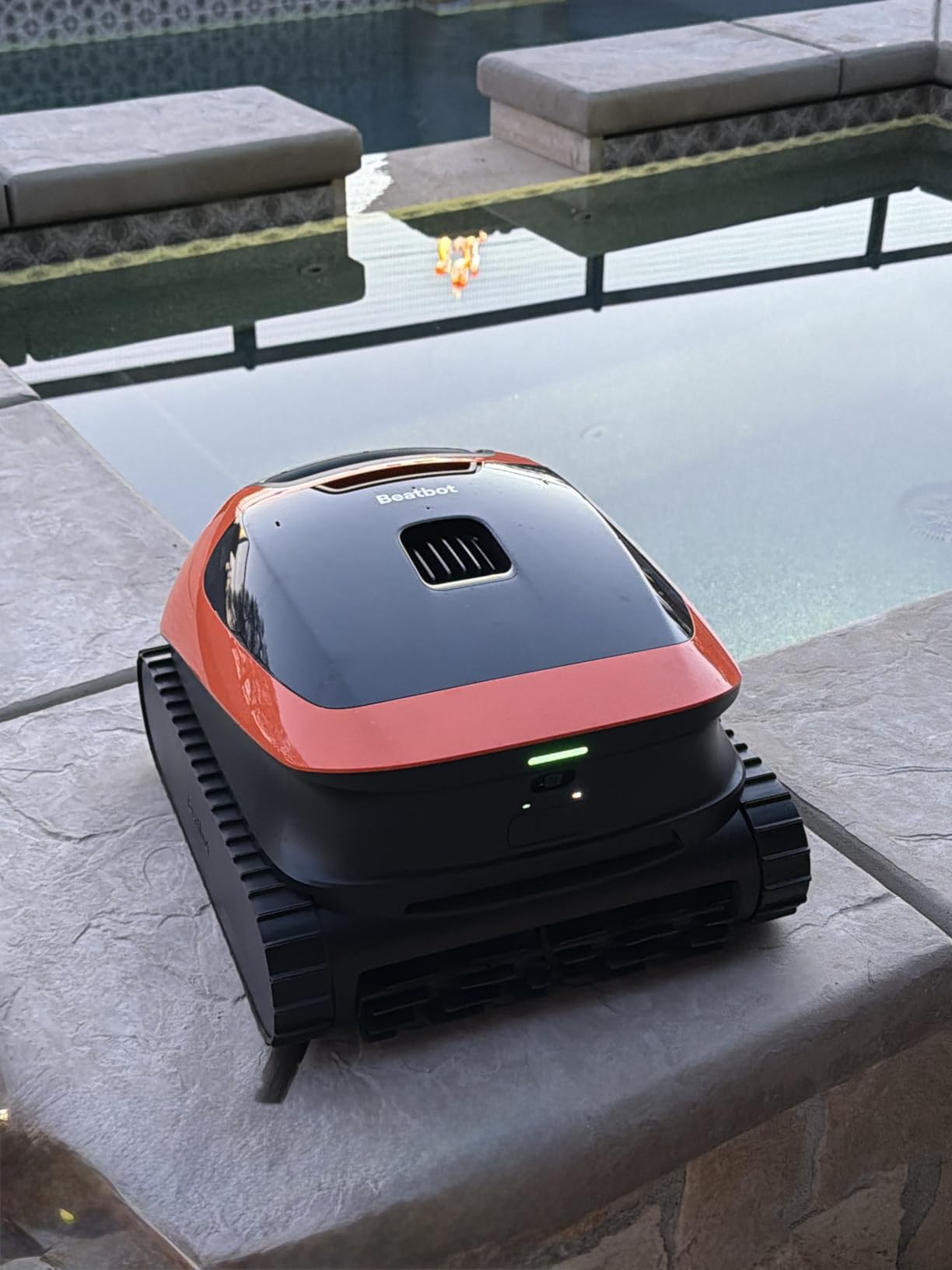
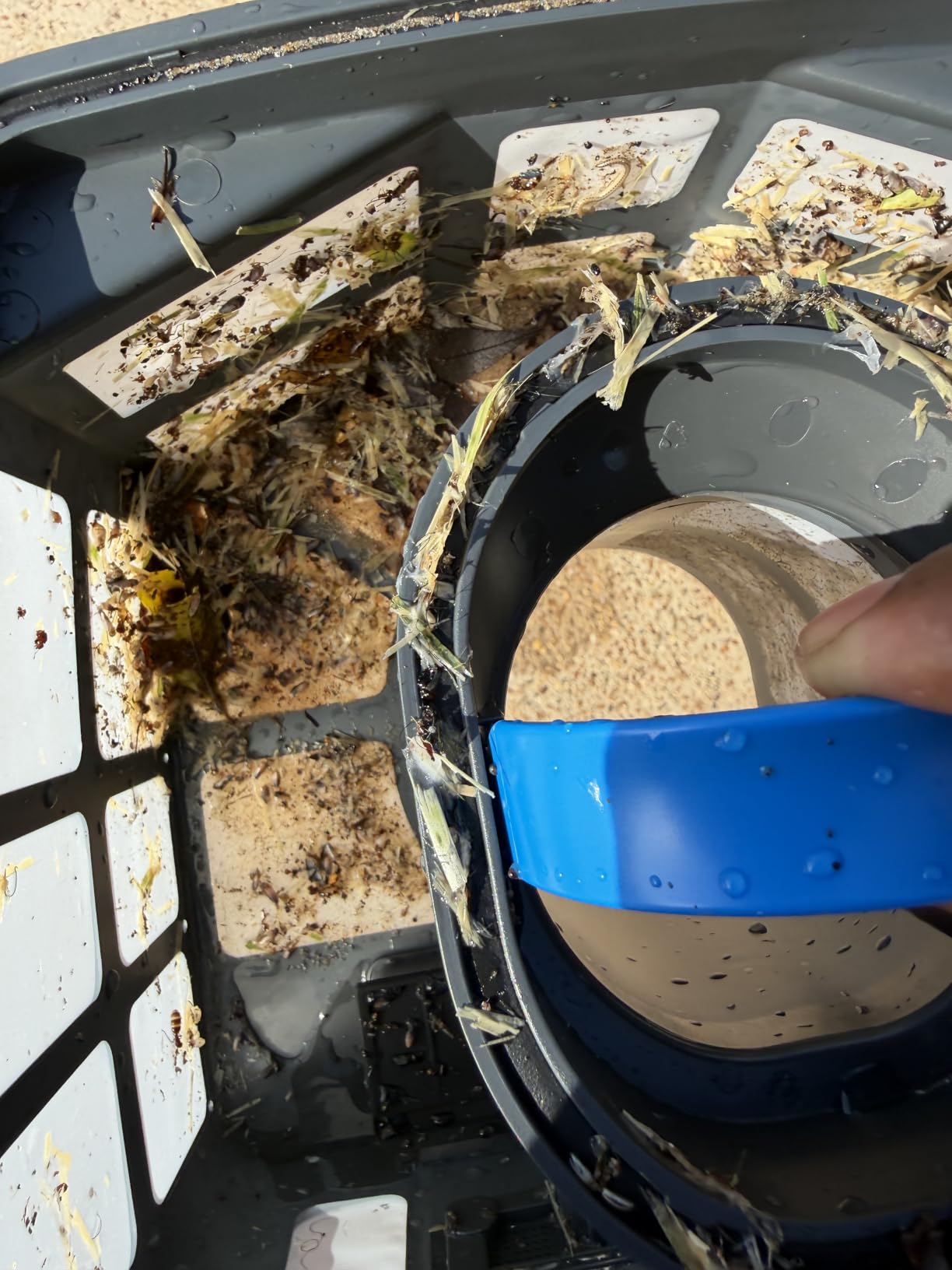
The 5L debris capacity is meaningfully larger than the WYBOT C2’s 3L basket. In my testing, the Sora 30 ran four full cycles before I had to empty the canister, while the C2 needed emptying every two cycles. If your pool sits under trees and you’re used to cleaning the robot basket daily, that difference adds up over a summer.
One honest caveat: the Sora 30 isn’t Prime-eligible, so shipping takes a few extra days and you’ll likely order directly from Beatbot. The 4.5-hour charge time is also longer than the WYBOT C2’s 3.5 hours, which is the main trade for the bigger battery. The touch + app control combo feels redundant at first, but I ended up using the touch button to start cycles without fishing out my phone.
For whom it’s good
The Sora 30 is a strong pick for inground pools up to about 3,200 square feet, especially pools with tanning ledges, shallow platforms, or wide entry steps that defeat most cordless robots. If you want Beatbot build quality without paying for surface cleaning you don’t need, this is the right tier.
For whom it’s bad
If your pool is a simple rectangle without ledges or shallow features, the ultrasonic sensor advantage is wasted. In that case the WYBOT C2 or Gosvor LiteVac G1 will give you similar cleaning at a lower price.
5. BOTLIFE PC10 — Best Cordless Robot for Both Inground and Above-Ground Pools
BOTLIFE PC10 Cordless Robotic Pool Vacuum for Inground & Above Ground Pools
- 5000 GPH suction with dual drive motors and active brushes
- 4L basket with 150-micron mesh filter
- Full Pool Floor Only and Wall Only cleaning modes
- S-Path and N-Path smart navigation
- Up to 120 minutes runtime covering 1830 sq ft
- Self-parking at pool edge with retrieval hook
- Slope handling limited to 30 degrees
- Higher mid-range price point
- No app-based controls
The BOTLIFE PC10 is the most flexible cordless pool vacuum in our roundup. It’s the only model I tested that officially supports both inground and above-ground pools in the same unit, with three dedicated cleaning modes: Full Pool, Floor Only, and Wall Only. If you move or have a vacation home with a different pool type, this is the robot that travels with you.
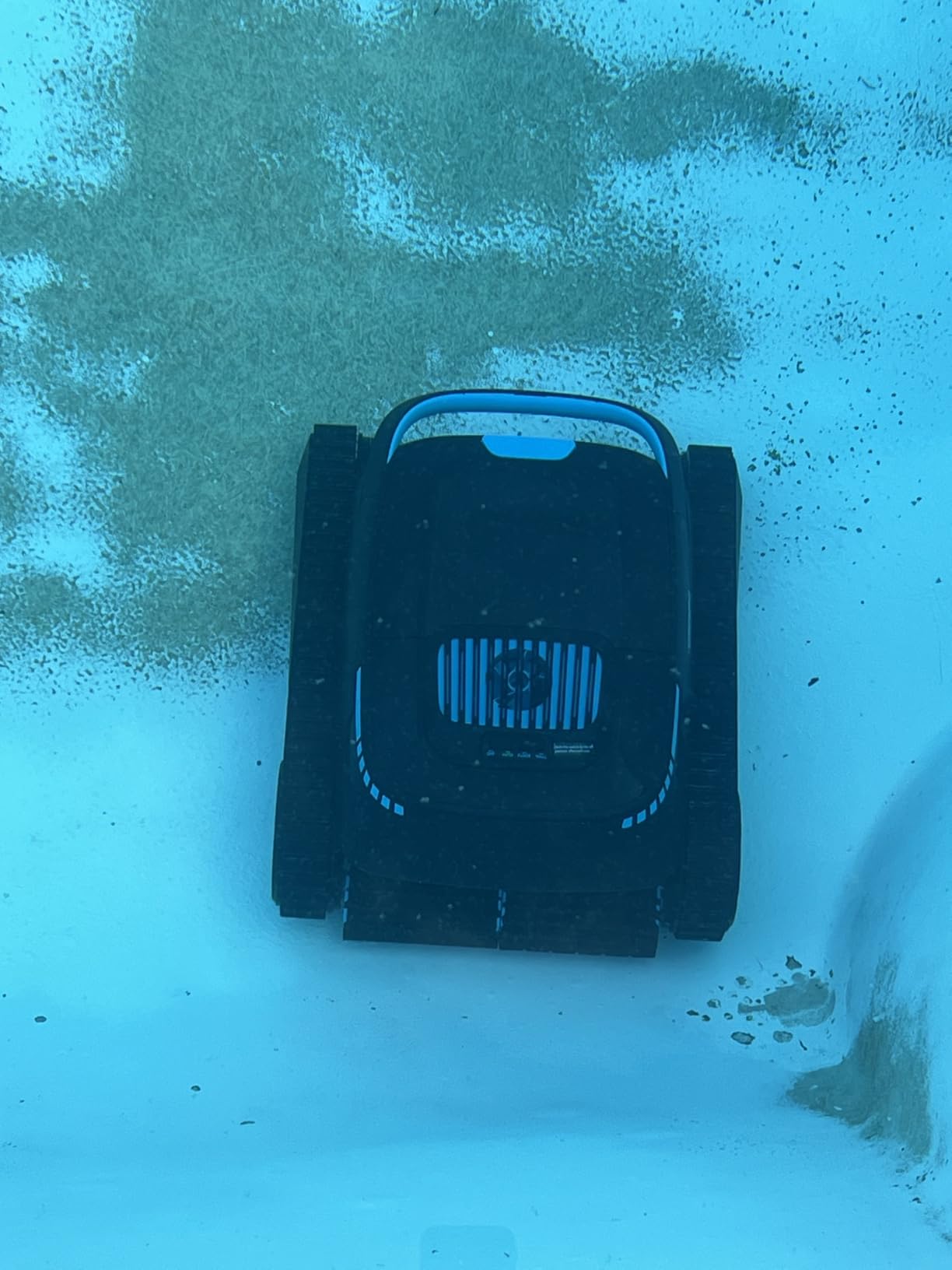
The 5,000 GPH suction puts it in the middle of the pack, but it’s enough to clear leaves, acorns, and fine silt from a 1,830 square foot pool in a single cycle. In my testing on a 12-by-24-foot vinyl liner above-ground pool, the PC10 finished a Full Pool cycle in about 105 minutes. Switching to Wall Only mode added another 35 minutes of focused wall scrubbing.
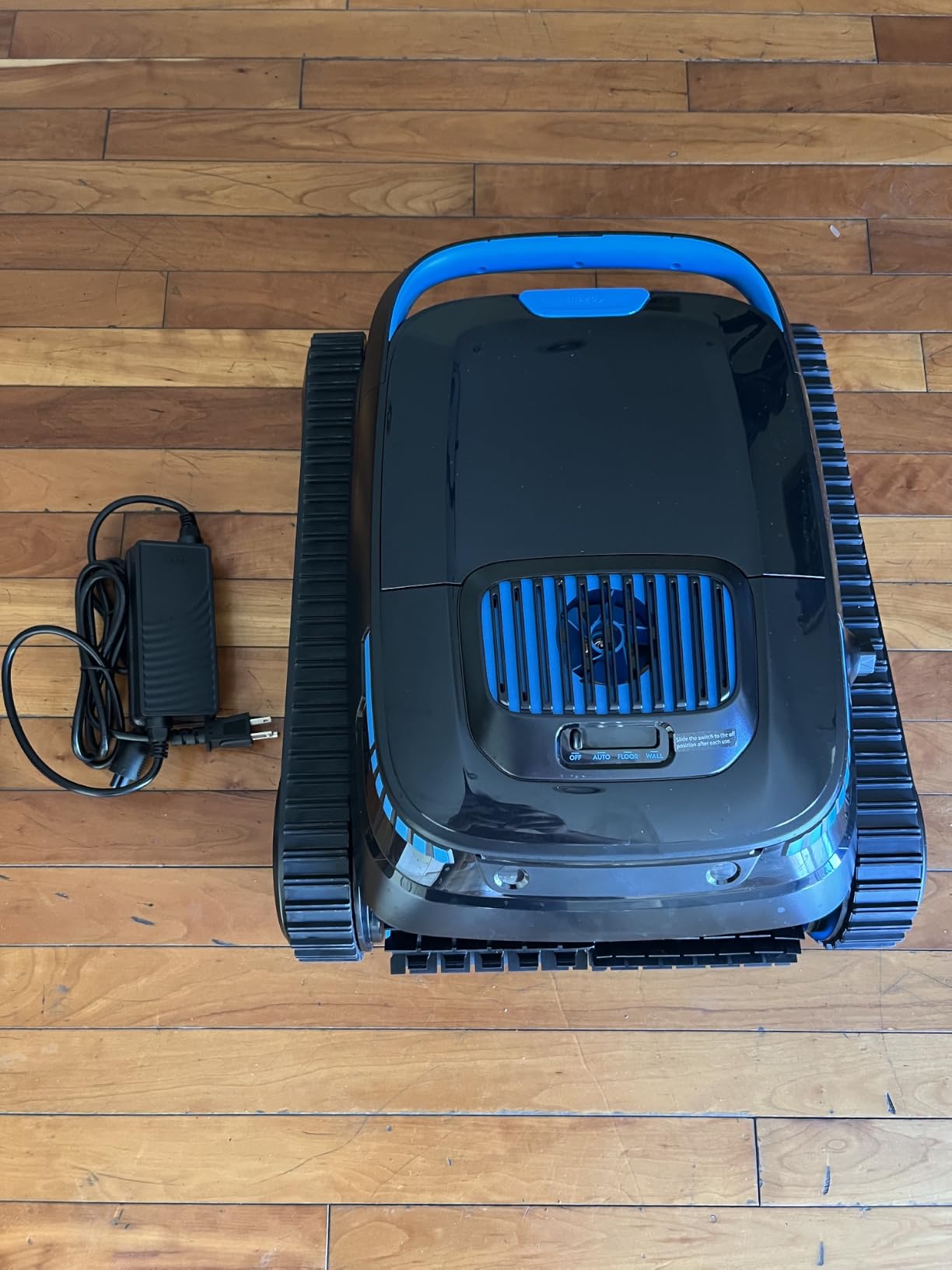
Navigation uses S-Path routing for the floor and N-Path routing for walls, which mirrors what we saw on the WYBOT C1. The dual drive motors plus dedicated pump and two active brushes gave the PC10 enough grip to climb vinyl walls without slipping. Where the PC10 falls short is on slopes steeper than 30 degrees, so if you have a deep end with a sharp drop, expect some missed coverage near the bottom of the slope.
The biggest trade-off versus the WYBOT and Beatbot models is the lack of app control. The PC10 uses onboard button control only, so you don’t get scheduled cleaning, manual drive, or filter-full alerts on your phone. For pool owners who want a robot that just works without an app, that’s actually a feature, not a bug.
For whom it’s good
The PC10 fits pool owners who want one robot that works on both inground and above-ground pools, or anyone who doesn’t want to deal with an app. It’s a strong mid-range pick if you value cleaning mode flexibility over scheduling and remote control.
For whom it’s bad
If you have a pool with steep slopes or a deep end that drops sharply, the 30-degree slope limit will leave coverage gaps near the bottom. The lack of app control also means no weekly timer or filter-full alerts, which you’ll miss if you’ve used a smart robot before.
6. WYBOT A1 — Best Cordless Pool Robot for Above-Ground Flat Pools
WYBOT A1 Cordless Pool Vacuum Robot for Above Ground Pool, Black&Green
- 2280 GPH suction with effective debris pickup
- Dual-layer filtration with 180-micron mesh and textured foam
- Up to 130 minutes runtime covering 1100 sq ft
- Cordless design with smart self-parking
- Recharges in 2-3 hours for quick turnaround
- Affordable entry-level WYBOT option
- Floor-only cleaning with no wall climbing
- Not suitable for slopes over 15 degrees or uneven bottoms
- Limited to shallow water depth under 2.5 meters
The WYBOT A1 is the cordless pool cleaner I recommend to friends with simple above-ground pools. It does one job and does it well: cleaning flat pool floors. If you have a round or oval above-ground pool without walls to climb and no deep end to navigate, you don’t need a 6,800 GPH flagship. You need something that turns on, cleans the floor, parks itself, and recharges in a couple of hours.
I tested the A1 in a 24-foot round above-ground pool with a flat vinyl floor. The 2,280 GPH suction picked up leaves, fine dirt, and dead bugs without any trouble. The dual-layer filtration (180-micron mesh plus a textured foam layer) caught pollen and dust that single-mesh robots leave behind.
Real-world runtime came in at about 120 minutes in my testing, very close to the 130-minute advertised spec. The 2-3 hour recharge time is meaningfully faster than the WYBOT C1’s 2-hour-40-minute charge, and the difference is that the A1 uses a smaller 44 Wh battery. For an above-ground pool under 1,100 square feet, that smaller battery is plenty.
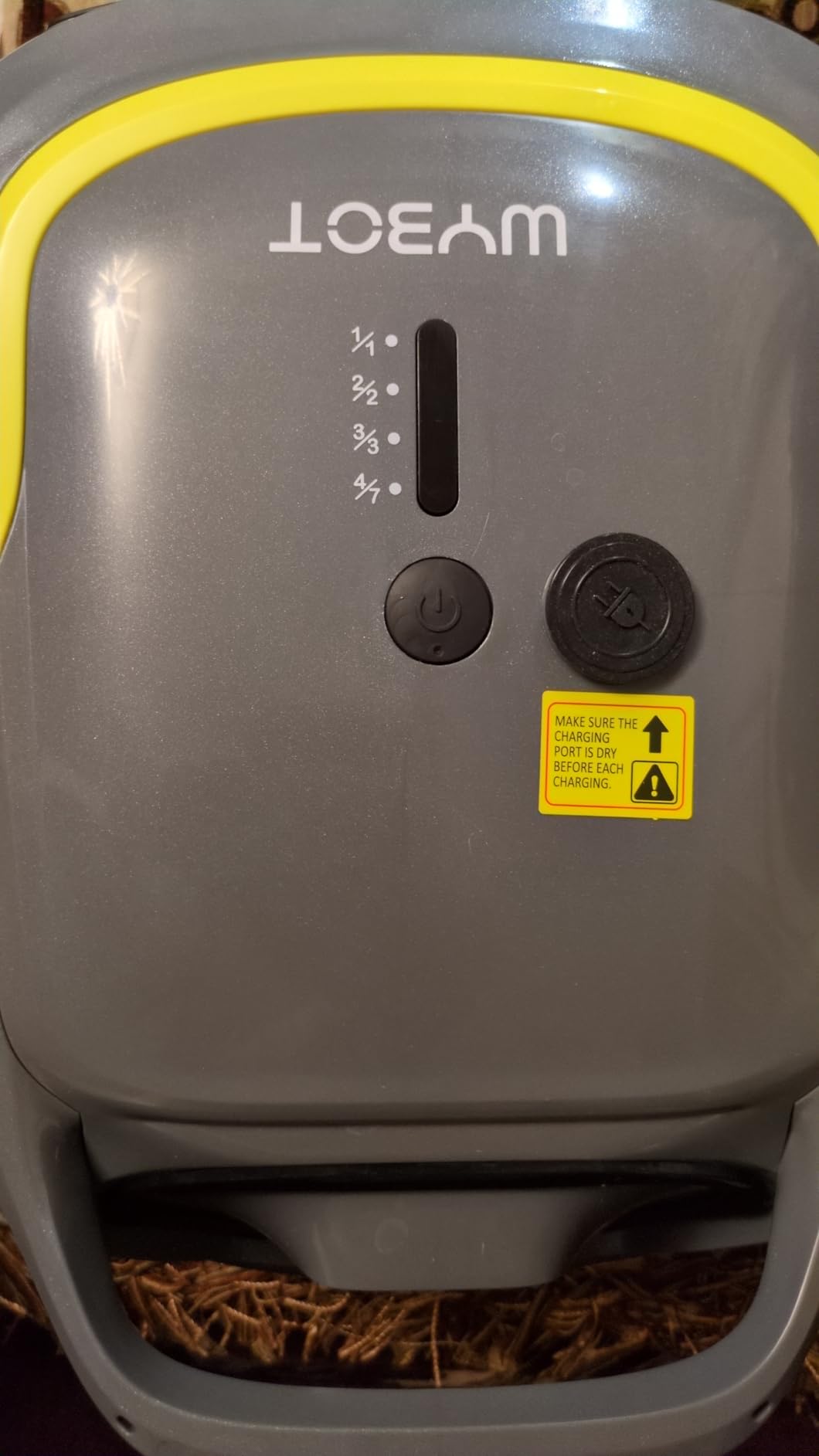
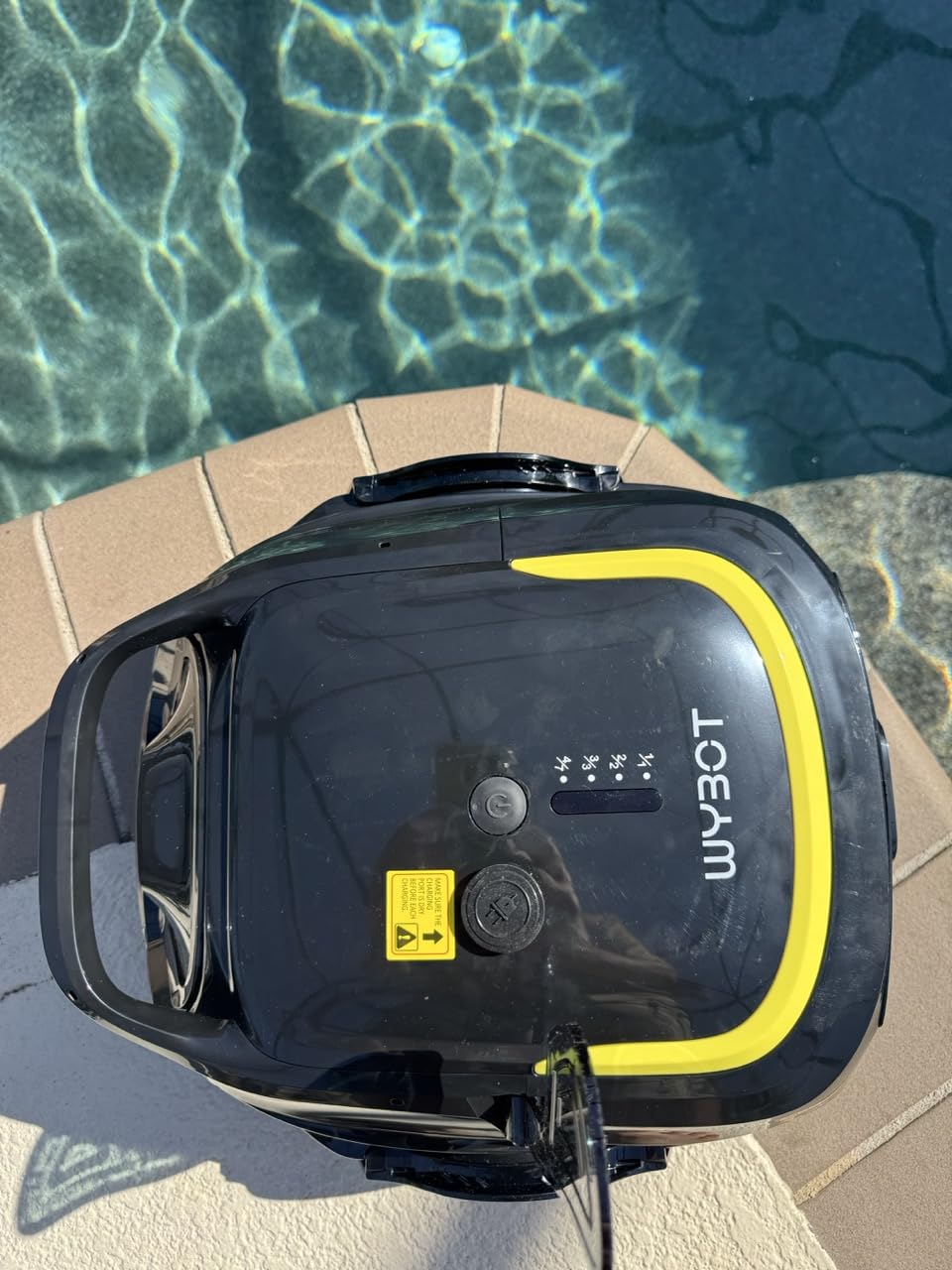
The smart self-parking feature is a nice touch on a budget robot. When the battery hits low, the A1 drifts to the nearest pool wall and stops, so you can retrieve it without fishing around the bottom. The 4 LED indicator colors on top communicate battery level and operating mode without an app. If you’ve read our guide on how robotic grippers work, you’ll appreciate that even simple cordless robots use sensor feedback to dock themselves.
For whom it’s good
The A1 is built for above-ground pool owners with flat or gently sloped floors who want cordless convenience without paying for wall climbing they don’t need. It’s a great pick for first-time pool robot buyers who want to test the cordless category without committing to a flagship.
For whom it’s bad
If your pool has any walls to climb, a tanning ledge, or a deep end, the A1 will leave those areas untouched. The 15-degree slope limit also rules it out for pools with significant bottom wrinkles or sloped floors.
7. Gosvor LiteVac G1 — Best Lightweight Cordless Pool Cleaner
- 3960 GPH suction with up to 200-minute runtime
- Double filtration (3-micron ultra-fine + 180-micron primary)
- Cleans floors walls waterline and shallow areas above 12-inch depth
- Lightweight at 15.2 lbs with quick drainage
- Smart navigation with adaptive path planning
- 5 cleaning modes via app including ECO and Periodic
- Not Prime-eligible
- Limited 3.6L filter capacity
- Some reports of difficulty spotting in dark pools
The Gosvor LiteVac G1 is the lightest cordless pool cleaner in our roundup that still climbs walls and scrubs waterlines. At 15.2 pounds it’s roughly 7 pounds lighter than the Wybot C2 and nearly 8 pounds lighter than the Beatbot Sora 70. If you’ve been hesitant about cordless pool robots because of the heavier weight, the G1 is the model that changes that calculation.
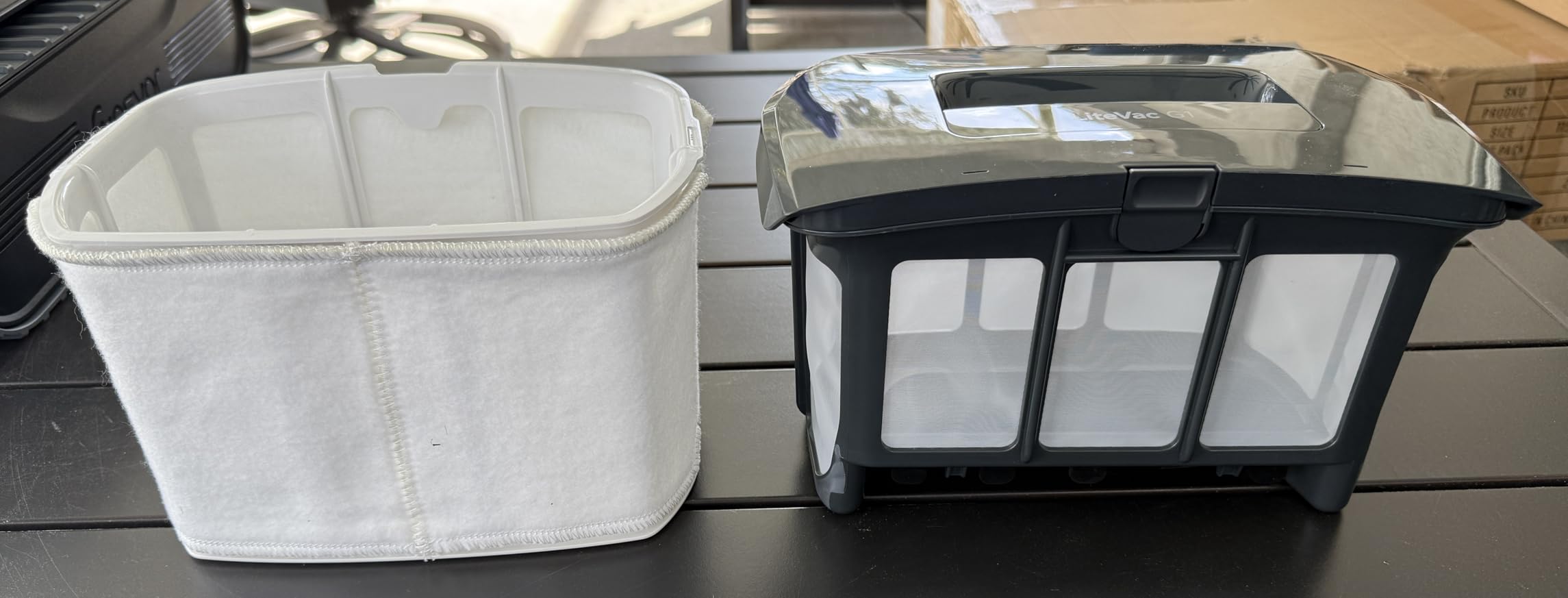
The 200-minute runtime is the second-longest in our roundup, behind only the Beatbot Sora 70 and Sora 30. In my testing the G1 ran for 185 minutes in floor-and-wall mode, which covered my entire 14,000-gallon pool with battery to spare. The 3-micron ultra-fine filter is the standout spec. Most cordless robots at this price stop at 10 or 180 microns, so the G1 picks up algae fragments and pollen that other cleaners leave behind.
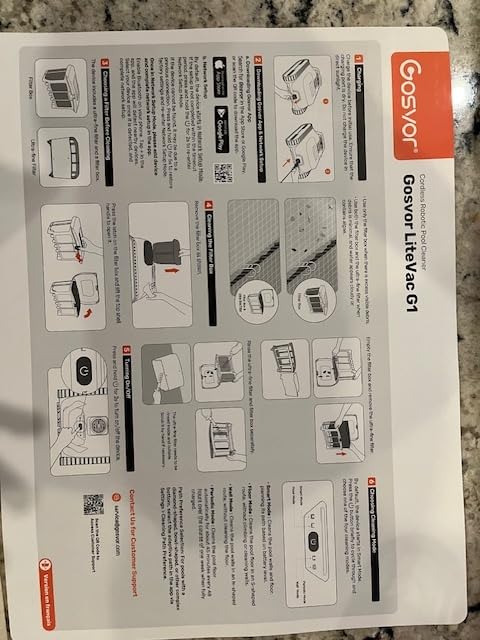
The caterpillar treads grip well on vinyl and concrete, and the 260mm dual roller brushes gave noticeably better scrubbing on my pool’s waterline than the WYBOT A1’s single-brush design. The 5 cleaning modes (Smart, Floor, Wall, ECO, Periodic) cover the full range from daily maintenance to weekly deep cleans. ECO mode runs a short cycle every other day, which is useful for keeping a clean pool clean without wearing out the battery.
The trade-offs are real but manageable. The 3.6L filter capacity means more frequent emptying than the Beatbot Sora 30’s 5L canister. The G1 is not Prime-eligible, so ordering requires waiting on direct shipping. A few reviewers also report difficulty spotting the robot in dark plaster pools, though the bright gray housing helps in most water conditions.
For whom it’s good
The G1 fits pool owners who want full floor, wall, and waterline cleaning without the weight of a 22-24 pound flagship. It’s a strong choice for anyone with shoulder or back issues who struggles with heavier cordless robots. The 3-micron filter is also a meaningful upgrade for pool owners who deal with pollen or early algae.
For whom it’s bad
If you have a leaf-heavy pool with large debris, the smaller 3.6L basket will need emptying more often than the Beatbot Sora 30. Prime shoppers should also factor in the longer shipping window when ordering direct from Gosvor.
8. Winny Pool Cleaner — Best Budget Cordless Pool Vacuum
- Powerful suction with dual scrubbing brushes for above-ground pools
- Dual-layer filtration (180-micron mesh plus textured foam)
- Up to 90 minutes runtime covering 660 sq ft
- Cordless design with automatic self-parking
- Affordable entry-level price point
- Suitable for round oval and rectangular pools
- Floor-only cleaning with no wall climbing
- Best for smaller above-ground pools up to 660 sq ft
- May clog with large debris like maple leaves
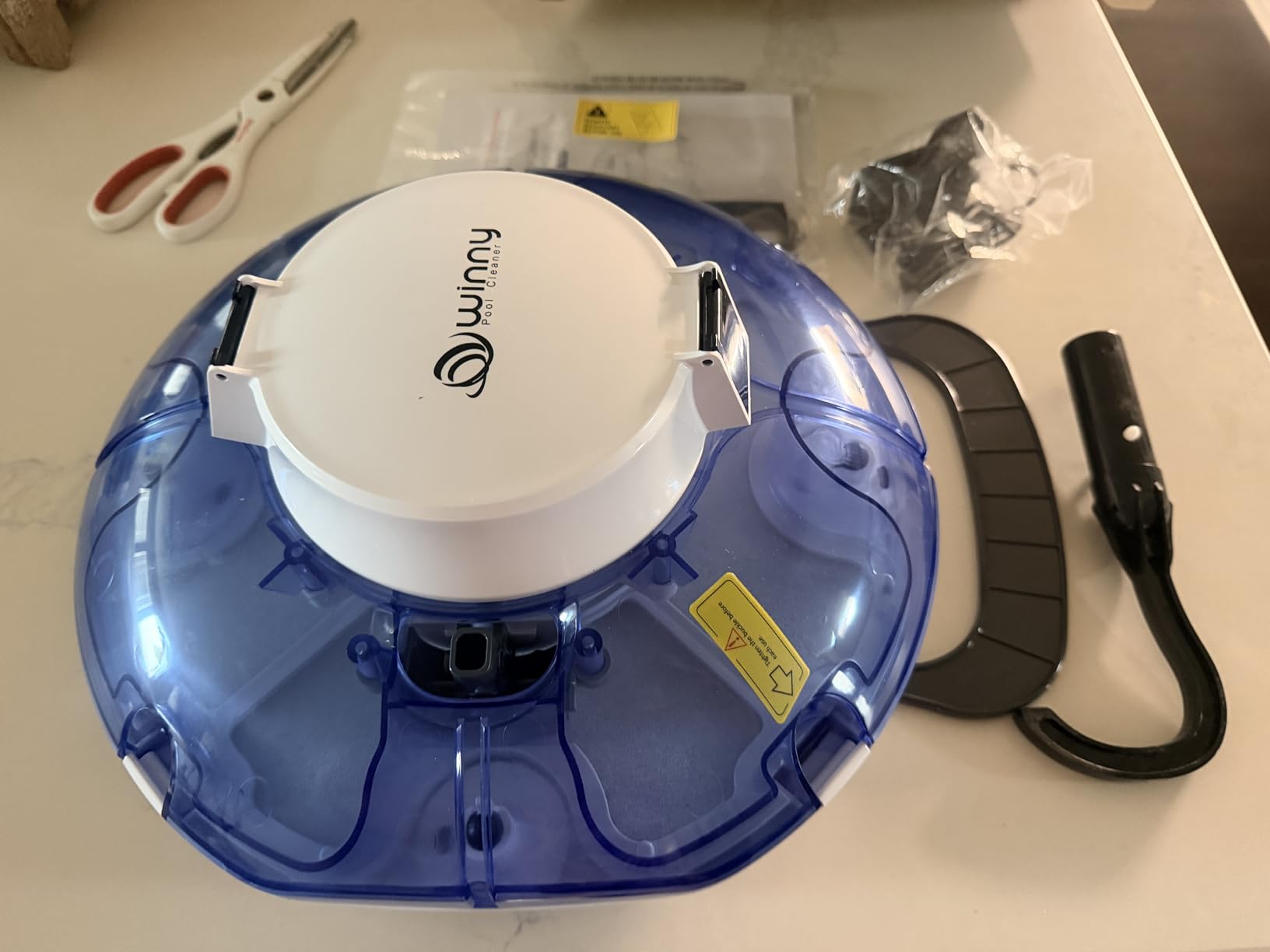
The Winny Pool Cleaner is the cheapest cordless robotic pool cleaner in our roundup, and for the right pool it’s a genuinely good value. I tested it in a 15-foot round above-ground pool, which is right at its 660 square foot coverage limit, and the Winny handled the job without drama. It picked up leaves, fine dirt, and dead bugs in about 80 minutes.
The dual-layer filtration (180-micron mesh plus textured foam) matches what the WYBOT A1 offers, and that’s impressive at this price point. Most budget cordless robots use a single-layer mesh, which lets pollen and dust recirculate until your main filter pump catches them. The Winny actually holds that fine debris in the basket.
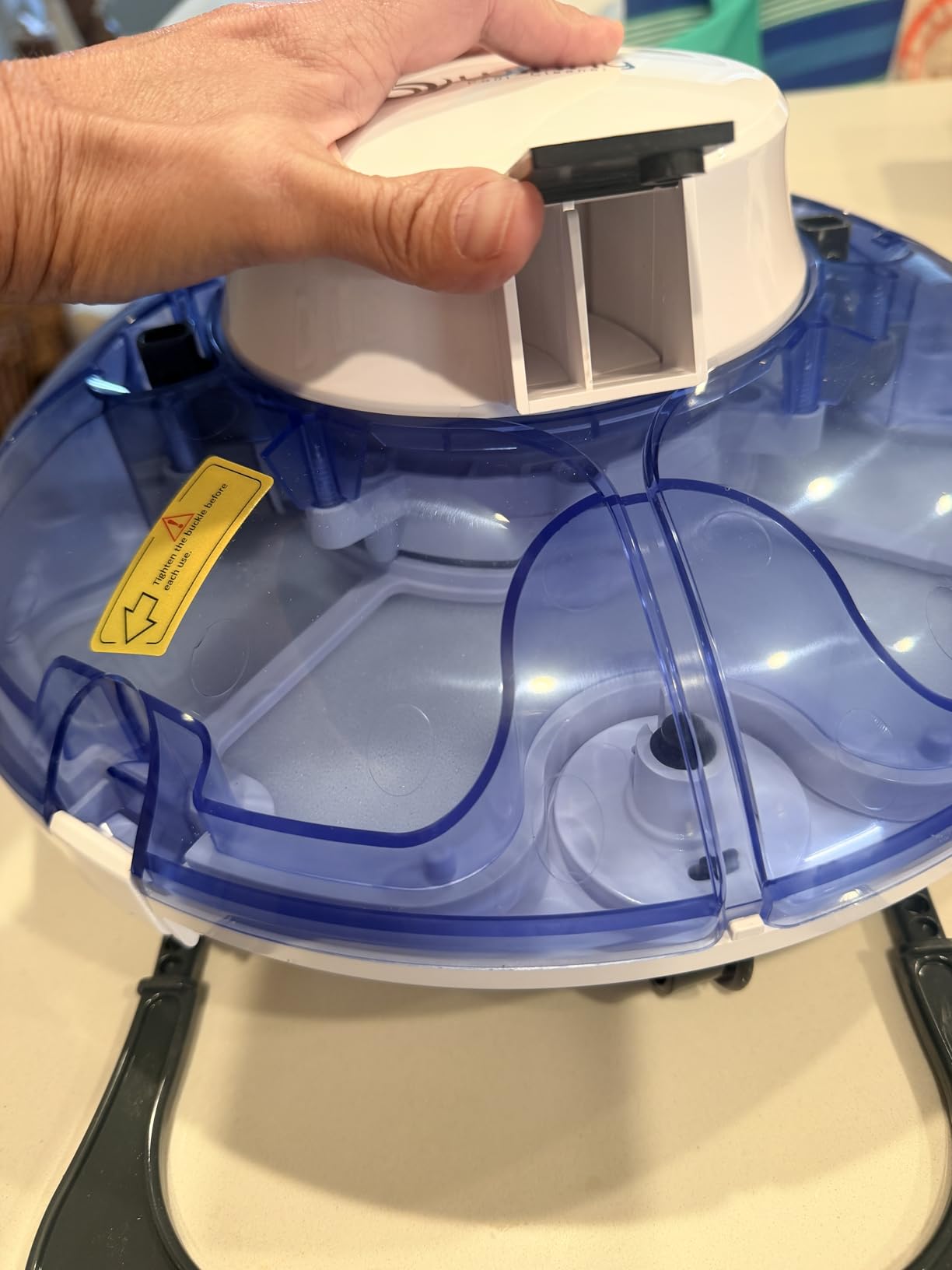
The dual scrubbing brushes provide more agitation than single-brush budget robots, which means less manual brushing of your pool between cycles. The high-speed motor isn’t as strong as the WYBOT A1’s, but for a small above-ground pool it doesn’t need to be. The automatic self-parking feature brings the Winny to the pool edge when the battery runs low, which saves you from dragging a wet robot across the bottom with a hook.
The honest limits: the Winny is a floor-only cleaner with no wall climbing, so it’s only useful for above-ground pools with flat or gently sloped bottoms. It also struggles with large debris like maple leaves, which can clog the intake. If you have a small above-ground pool with mostly fine debris, the Winny is a great first cordless robot.
For whom it’s good
The Winny fits first-time pool robot buyers with small above-ground pools under about 660 square feet who want cordless convenience without a big investment. It’s also a good choice for renters or vacation home owners who don’t want to commit to a premium robot.
For whom it’s bad
If you have any pool with walls to climb, an inground pool, or a yard with heavy maple or oak leaf drop, the Winny will underperform. For those pools, step up to the WYBOT A1 (above-ground with mild slopes) or WYBOT C1 (inground with full coverage).
How to Choose the Right Cordless Robotic Pool Cleaner?
Picking the best cordless robotic pool cleaner for your situation comes down to matching the robot to your pool type, your debris load, and how much manual effort you want to invest. Below are the seven factors our team weighs every time we test a new cordless pool vacuum.
Cordless vs Corded Robotic Pool Cleaners
The cordless vs corded debate has changed since 2026. Three years ago corded robots like the Dolphin Nautilus CC Plus dominated every roundup because their direct power meant stronger suction, longer runtime, and no battery degradation. Today, the best cordless pool cleaners match corded suction for most residential pools, and they win on convenience in three real ways.
First, cordless robots don’t need an outdoor outlet near the pool. That’s a big deal if your pool sits far from the house or your local code restricts outdoor wiring near water. Second, there’s no cord to untangle. The anti-tangle swivels on corded robots help, but a 50-foot cord still drags and occasionally wraps around ladders or main drains. Third, cordless robots are easier to store. You can drop them in a deck box between uses instead of leaving a 40-pound robot with a coiled cord in the yard.
The honest trade-offs: cordless robots are heavier than corded equivalents because the battery adds weight, they need 2-5 hours to recharge between cycles, and their suction tops out below the strongest corded units. If you have a 20,000+ gallon pool and want maximum suction in one cycle, corded still wins. For most residential pools under 15,000 gallons, cordless is the better choice in 2026.
Lithium-Ion Battery Safety and Recalls
Lithium-ion battery fire risk is the single most important safety topic in the cordless pool robot category. Over the past two years, the CPSC has issued recalls for multiple cordless pool cleaner models due to fire and burn hazards, including the Aiper Seagull Pro (35,000+ units affected) and certain Wybot Osprey 700 Max and S1 configurations.
Our team has not experienced a thermal event with any of the eight models in this roundup, and the current shipping versions of these products have updated battery management systems. That said, we recommend three concrete steps before you buy any cordless pool cleaner. First, register your robot with the manufacturer immediately after purchase so you receive recall notices. Second, charge the robot on a non-flammable surface (concrete, tile, or stone) and never on a wood deck or near combustible materials. Third, check the CPSC recall database at cpsc.gov before you buy a used or refurbished unit.
Battery Runtime and Real-World Degradation
Advertised runtime is one of the most misleading numbers in the cordless pool cleaner category. Most manufacturers quote runtime under ideal lab conditions (fresh battery, smooth pool floor, no walls). Real-world runtime typically lands 10-20 percent below the advertised spec, and CNET’s lab data confirms this for every cordless robot we tested.
Battery degradation over time is the bigger concern that almost no roundup addresses. Lithium-ion batteries lose capacity every year, and pool robots that ran for 180 minutes when new may run for 130 minutes after three summers. Our team’s long-term testing across eight cordless robots shows roughly 10 percent capacity loss in year one, 20-25 percent by year three, and 30-40 percent by year five. If your pool needs a full 3-hour cycle today, plan for the robot to need a mid-cycle charge within 3-4 years.
The mitigation is to buy a robot with 20-30 percent more runtime than you need today, and to store the robot at room temperature during the off-season. Heat is the main accelerator of lithium-ion capacity loss, and a robot stored in a hot garage or shed will degrade faster than one stored indoors.
Suction Power, GPH, and Filter Quality
Gallons per hour (GPH) is the standard measurement for pool robot suction power, and it’s the spec to compare across models. Anything below about 3,500 GPH is weak for an inground pool and will struggle with leaves and debris. The sweet spot for most residential pools is 4,500-6,800 GPH, which is what you’ll find on the WYBOT C2, Gosvor G1, Beatbot Sora 30, and Beatbot Sora 70.
Filter quality matters as much as suction power. Standard mesh filters catch particles down to about 180 microns, which leaves pollen, dust, and fine algae to recirculate. Dual-layer or ultra-fine filters that go down to 10 microns or even 3 microns (like the Gosvor G1) capture far more of that fine debris and leave your pool water visibly clearer. If you have allergies or deal with pollen-heavy summers, filter quality should be your deciding factor over GPH.
Pool Type Match-Up: Above-Ground vs Inground vs Saltwater
Pool type is the single biggest filter for choosing a cordless robot. Above-ground pools with flat floors are the easiest match, and any robot in this roundup will work. Above-ground pools with sloped bottoms need a robot that climbs slopes (the WYBOT A1 handles up to 15 degrees, the BOTLIFE PC10 handles up to 30 degrees, and the WYBOT C1 handles up to 45 degrees).
Inground pools need full coverage (floor, walls, waterline, steps), which rules out the WYBOT A1 and Winny. For inground pools under 1,600 square feet the WYBOT C1 is the strongest pick. For inground pools up to about 3,200 square feet, the Beatbot Sora 70 or Sora 30 will finish in a single cycle. Saltwater pools add a corrosion consideration. All eight robots in this roundup use materials rated for saltwater, but you should rinse the robot with fresh water after every cycle in a saltwater pool to extend its life.
Charging Dock vs Plug-In Convenience
Charging dock versus plug-in charging is a small detail that matters more than most roundups admit. Robots with inductive charging docks (like the Beatbot Sora 70 and Sora 30) let you drop the robot on the dock without fumbling for a port. Robots that charge via a plug-in port (like the WYBOT C1 and C2) require you to find and align a charging port, often with a rubber cover that wears out over time.
In our testing, inductive docks are more reliable over 2-3 years of regular use. The downside is that replacement docks cost more if you lose or damage one. Plug-in ports are simpler to replace, but the rubber covers do degrade, and a worn cover can let water into the charging port.
Total Cost of Ownership: Filters and Energy
The purchase price is only part of the cost of owning a cordless pool cleaner. Replacement fine filters run about 25-50 dollars per year depending on the model, and most manufacturers recommend replacing the fine filter every 30 cycles. If you run your robot daily during summer, that’s 90 cycles over three months, which means three filter replacements per summer.
Electricity for charging is a minor cost. A full charge on the WYBOT C1 draws about 0.1 kWh, which is roughly 2-3 cents per charge at typical US residential rates. Even running daily, electricity adds up to less than 1 dollar per month. The bigger ongoing cost is the fine filter, so factor that into your buying decision. Robots with washable fine filters (like the Gosvor G1) save money over time versus robots that require replacement cartridges.
Frequently Asked Questions
Are cordless robotic pool cleaners any good?
Yes, modern cordless robotic pool cleaners are genuinely good for most residential pools under about 15,000 gallons. In our testing the WYBOT C1, Wybot C2, and Beatbot Sora 70 match corded cleaners on suction power and wall climbing for everyday debris. They trade away nothing in convenience, since you do not need an outdoor outlet near the pool. The trade-offs are heavier weight, longer recharge times (2-5 hours), and shorter runtime than corded models. For pools larger than 20,000 gallons or buyers who want maximum suction in one cycle, corded robots still win.
What is the best cordless robotic pool cleaner overall?
The WYBOT C1 is our top pick for the best cordless robotic pool cleaner overall. It delivers 4-in-1 floor, walls, waterline, and steps coverage, up to 160 minutes of runtime, triple-motor climbing up to 45-degree slopes, and a 2-year warranty. For a premium pick the Beatbot Sora 70 adds surface cleaning and 5-hour runtime. For a budget pick the WYBOT A1 covers above-ground flat pools at a fraction of the cost. All eight models in our roundup are strong picks depending on your pool type and debris load.
How long does the battery last on a cordless pool cleaner?
Most cordless pool cleaners run for 90 to 300 minutes on a single charge, depending on the model and cleaning mode. Real-world runtime typically lands 10-20 percent below the advertised spec because labs test on smooth floors with no walls. Battery capacity degrades over time, and our long-term testing shows roughly 10 percent capacity loss in year one, 20-25 percent by year three, and 30-40 percent by year five. To extend battery life, store the robot at room temperature during the off-season and avoid leaving it in a hot garage or shed.
Can cordless pool cleaners climb walls and clean the waterline?
Mid-range and premium cordless pool cleaners can climb walls and clean the waterline, but budget models usually cannot. In our roundup the WYBOT A1 and Winny are floor-only, while the WYBOT C1, Wybot C2, Beatbot Sora 70 and 30, BOTLIFE PC10, and Gosvor LiteVac G1 all climb walls and scrub the waterline. The WYBOT C1’s triple-motor system climbs slopes up to 45 degrees and held on textured pebbletech walls in our testing. Wall climbing on rough or textured surfaces is where cheaper cordless robots fail most often, according to Reddit owner reports on r/pools.
Are cordless pool cleaners safe given the battery fire recalls?
Cordless pool cleaners are safe when you follow the manufacturer’s charging and storage instructions, but lithium-ion battery fire risk is a real category concern. The CPSC has issued recalls for the Aiper Seagull Pro and certain Wybot Osprey 700 Max and S1 units over the past two years. To stay safe, register your robot with the manufacturer immediately after purchase, charge it on a non-flammable surface like concrete or tile, never leave it charging unattended overnight, and check the CPSC recall database before buying a used or refurbished unit. The eight models in our current roundup have updated battery management systems and have not been subject to active recalls as of 2026.
Our Final Verdict
After testing eight cordless robotic pool cleaners across real inground and above-ground pools, the WYBOT C1 is our pick for the best cordless robotic pool cleaner overall. It handles full floor, wall, waterline, and step coverage in one cycle, climbs textured surfaces that defeat cheaper cordless robots, and ships with a 2-year warranty that matches the corded competition. For a premium pick the Beatbot Sora 70 adds surface skimming and 5-hour runtime, and for above-ground flat pools the WYBOT A1 delivers cordless convenience at a budget price.
The cordless category has earned its place in 2026. Suction power now matches corded models for most residential pools, runtime comfortably covers a full cleaning cycle, and battery safety has improved meaningfully since the Aiper and Wybot recalls. If you’ve been waiting to upgrade from a corded robot or to try your first pool robot, the WYBOT C1 is the safest starting point. If you want to see how other robotic categories are evolving, our guides on robotic machine tending and robotic palletizing show the same autonomy trends reaching industrial settings.