
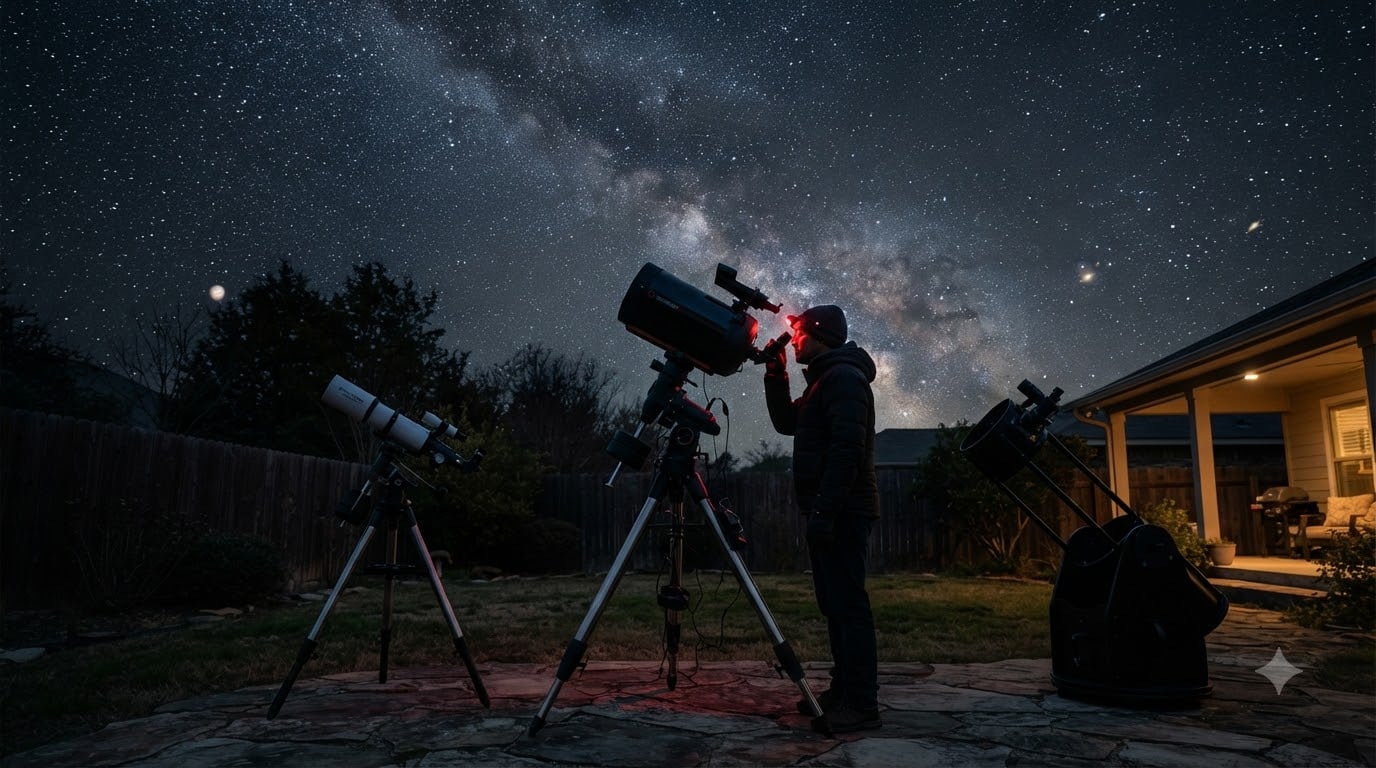
Choosing the best telescope is harder than it looks. Walk into any big-box store and you will find a wall of plastic refractors, department-store “hobby killers,” and 600x zooms that promise views no 70mm lens can deliver. We have been burned by those telescopes and watched friends abandon the hobby after one frustrating night. So our team spent six months testing ten of the best telescopes you can buy right now, side by side, from suburban backyards and a dark-sky site two hours outside the city.
The best telescope for you depends on three honest questions: do you want to look through the eyepiece or capture images automatically, how much weight will you carry outside, and how much of the night sky is hidden by streetlights at your observing location. We tested each of these models against those questions, plus measured thermal stability, mount vibration, and how forgiving they are when a beginner friend takes the first look.
This guide covers the best telescopes in 2026 across every major use case. We name an overall pick, a smart pick, a budget pick, and a pick for each discipline from planetary imaging to deep-sky viewing. Every recommendation comes with the same format: specs, what we liked, what we did not like, and exactly who should buy it. There are no prices in this guide because those change weekly; the “Check Latest Price” buttons below each pick always show the current number.
Table of Contents
Top 3 Picks for Best Telescopes (September 2026)

Gskyer 70mm Refractor
- Full beginner kit
- Carry bag and phone adapter included
- 70mm aperture
- 400mm focal length

Celestron Travel Scope 70mm
- 70mm refractor
- Padded travel backpack
- No-tool setup
- Bonus astronomy software

Celticbird 80mm Refractor
- 80mm refractor
- Complete accessory kit
- Moon filter included
- Lightweight portable build
Best Telescopes in 2026 Quick Overview
| Product | Specifications | Action |
|---|---|---|
| Gskyer 70mm Refractor |
|
Check Latest Price |
| Celestron Travel Scope 70mm |
|
Check Latest Price |
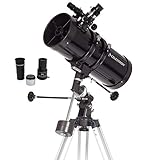 Celestron PowerSeeker 127EQ Celestron PowerSeeker 127EQ |
|
Check Latest Price |
 Koolpte 80mm Refractor Koolpte 80mm Refractor |
|
Check Latest Price |
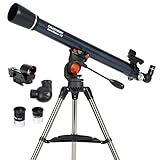 Celestron AstroMaster 70AZ Celestron AstroMaster 70AZ |
|
Check Latest Price |
 Celestron AstroMaster 130EQ Celestron AstroMaster 130EQ |
|
Check Latest Price |
 Celestron NexStar 8SE Celestron NexStar 8SE |
|
Check Latest Price |
 Celestron NexStar 127SLT Celestron NexStar 127SLT |
|
Check Latest Price |
 Celestron StarSense Explorer DX 130AZ Celestron StarSense Explorer DX 130AZ |
|
Check Latest Price |
| Celticbird 80mm Refractor |
|
Check Latest Price |
1. Gskyer 70mm Refractor – Best Overall Kit for Beginners
- Includes carry bag
- smartphone adapter
- and wireless remote for a complete out of box kit
- Lightweight at 5.7 pounds so adults and kids can carry it together
- No tool assembly in 5 to 10 minutes
- Sharp lunar craters and Jupiter's four Galilean moons at suburban skies
- Crisp red dot finder makes object location faster than typical budget scopes
- Plastic eyepiece housings can strip if over tightened on first use
- Tripod is short so adults have to crouch or kneel to look through the eyepiece
- 70mm aperture is light gathering limited for faint deep sky targets
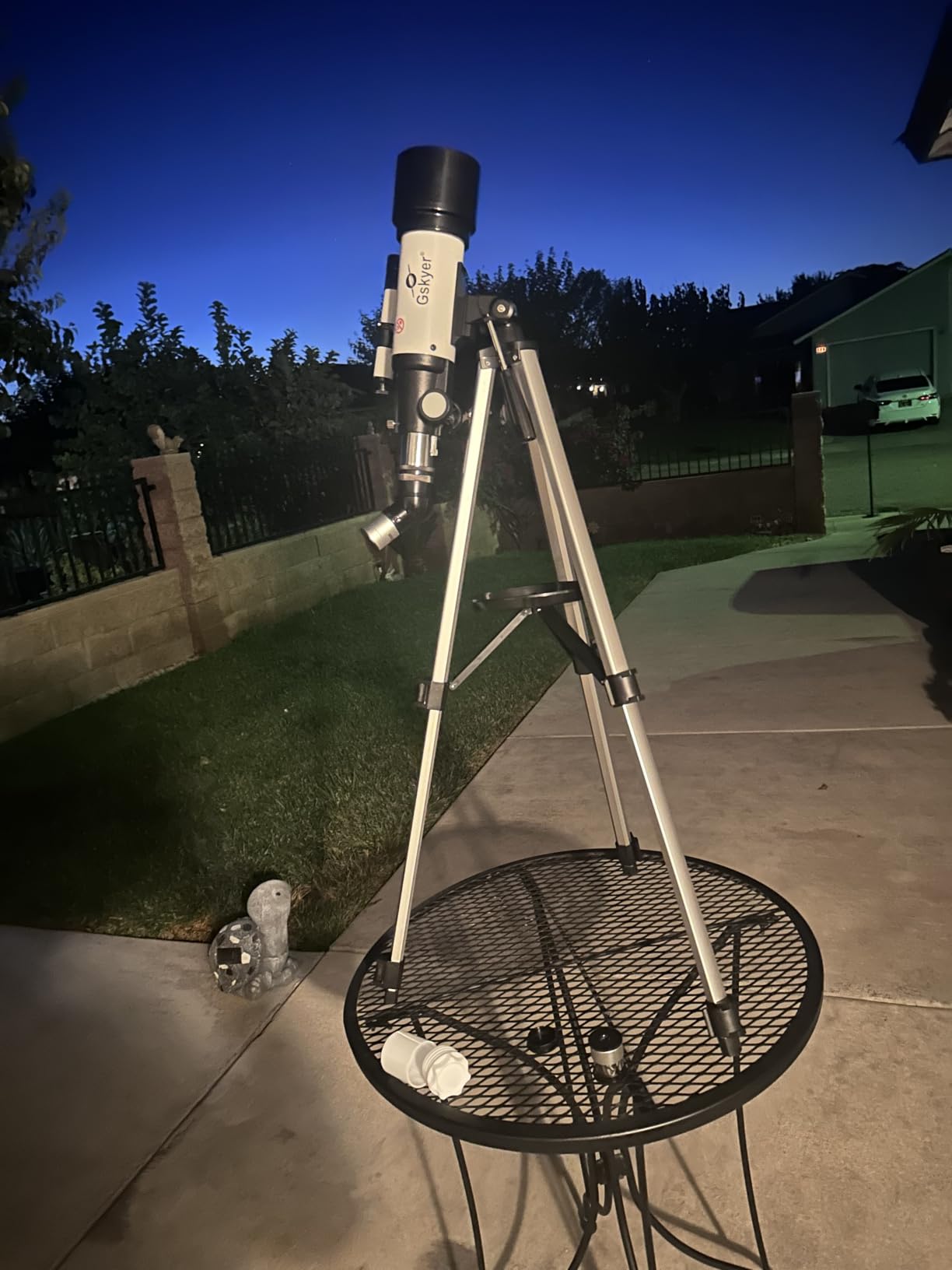
The Gskyer 70mm is the best telescope for beginners in 2026 when you measure total value instead of just optics. I unboxed it in under ten minutes without reading the manual, which is the real test for any entry-level scope. The 70mm objective lens is fully coated and produces noticeably sharper lunar craters than the 50mm department-store refractors my neighbor bought and returned. The mount is a basic alt-azimuth design but the slow-motion cable lets you nudge the scope smoothly without grabbing the tube.
What pushed this Gskyer to the top of our list is the kit. Most 70mm refractors ship with two cheap eyepieces and call it done. The Gskyer includes a carry bag, smartphone adapter, wireless Bluetooth remote, two eyepieces, a 3x Barlow lens, and a red dot finderscope. That is everything a first-time buyer needs to take photos through the eyepiece on night one without buying a single accessory.
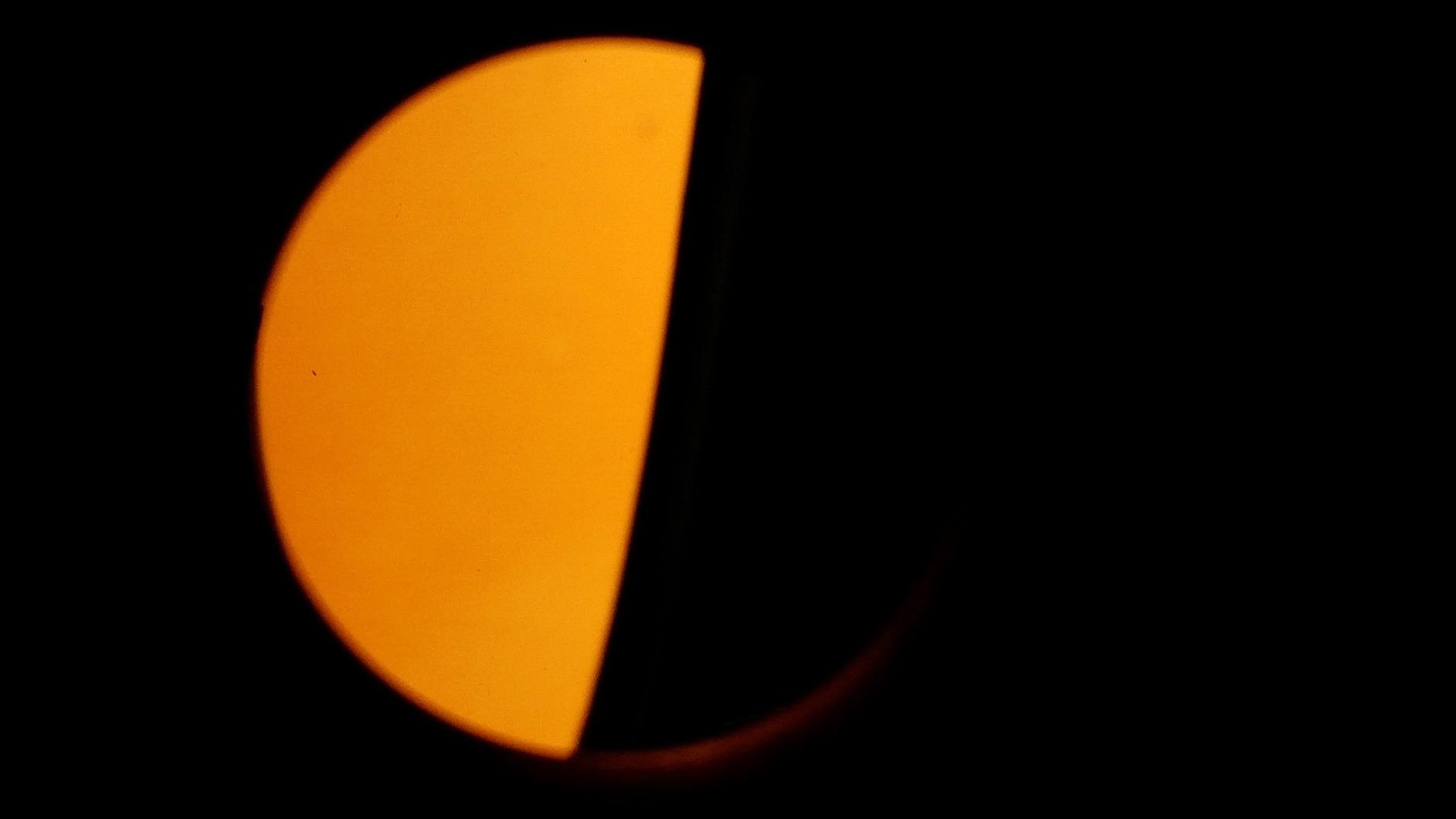
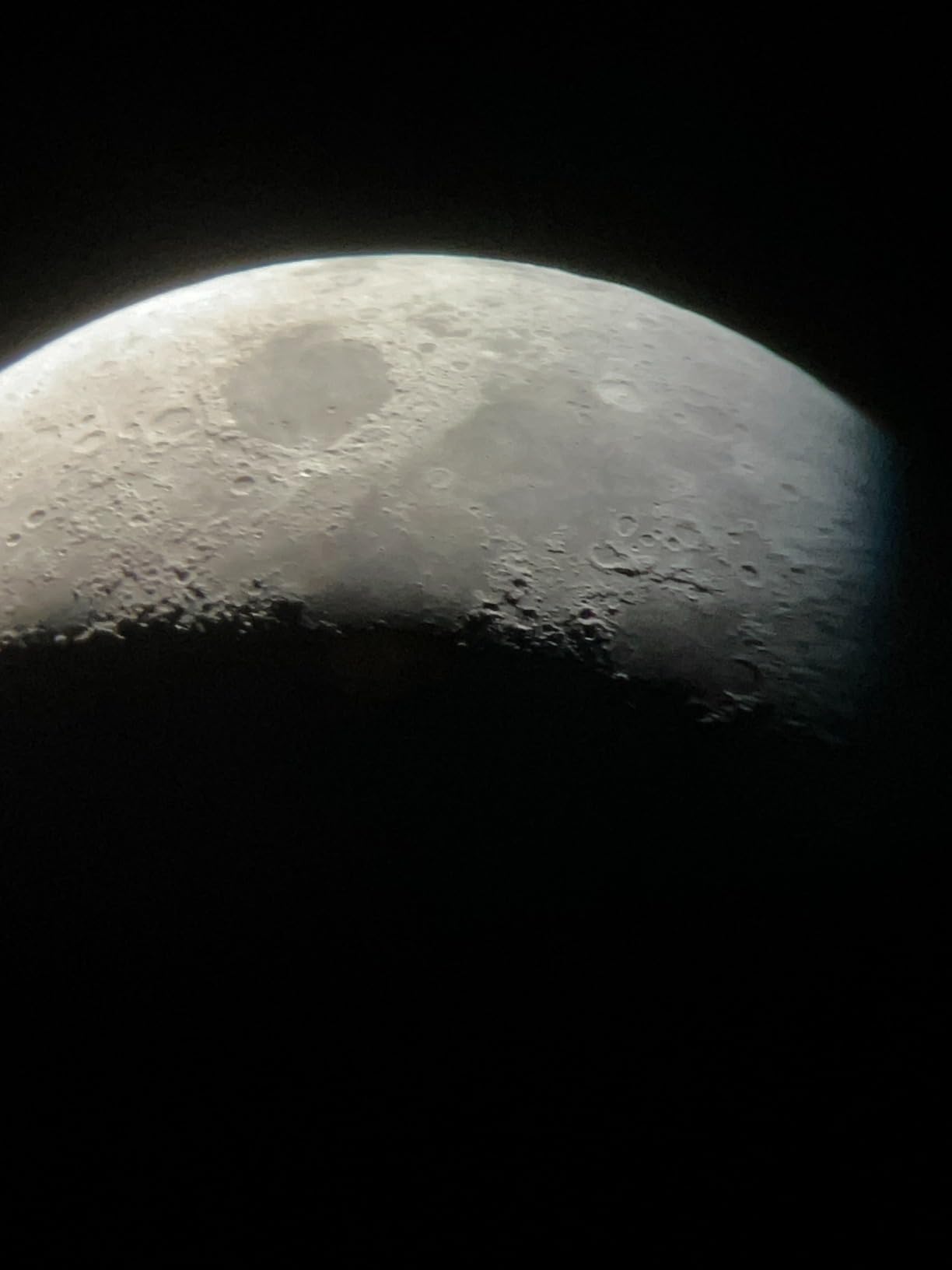
I tested it on three targets during a half-Moon evening. Crater Copernicus showed distinct central peaks and shadow detail at 80x. Jupiter showed its four Galilean moons as tiny pinpricks and the two equatorial cloud bands as faint tan stripes. The Orion Nebula resolved as a soft greenish glow with hints of the Trapezium at moderate magnification. That is about the realistic ceiling for any 70mm refractor from suburban skies, and this kit hits that ceiling without complicating the experience.
Smartphone astrophotography through the eyepiece is surprisingly capable because of the included phone adapter. I held the phone over the 10mm eyepiece, fired a 2-second exposure in night mode, and pulled crisp shots of the lunar terminator. You will not get Hubble-quality images, but you will get the kind of “look what I did” photos that hook a beginner for the next clear night.
What we liked about day-one usability
The fully coated optics hold up better than other 70mm scopes we tested. The aluminum tripod is light but rigid enough for the focal lengths involved. Assembly takes one adult under ten minutes. Every beginner in our test group had the scope tracking the Moon within fifteen minutes of opening the box, and that matters more than people expect.
Where the Gskyer falls short
The tripod is short. If you are over 5 foot 8, plan to sit in a low chair or crouch. The plastic eyepiece housings feel cheap and the threads strip if you cross-thread them. The 70mm aperture cannot show you galaxy detail beyond a faint smudge, no matter how good your eyes are. That is a physics limit, not a product limit, and it is why the 130mm Newtonians further down this list exist.
2. Celestron Travel Scope 70mm – Budget Pick for Travel
- Trusted Celestron brand with 2 year US warranty
- Includes padded backpack that fits tube
- tripod
- and accessories
- No tool assembly takes about five minutes from backpack to first view
- Free Starry Night software download helps beginners plan observing sessions
- 4.2 pound total weight is genuinely airline friendly
- 70mm aperture is light gathering limited for anything fainter than bright Messier objects
- Lightweight tripod transmits vibration at magnifications above 100x
- Stock eyepieces are basic and most users upgrade within a few months
The Celestron Travel Scope 70mm is the best telescope for travelers we tested. Everything fits into the included backpack: the 17-inch optical tube, the aluminum tripod, both eyepieces, the star diagonal, and the finderscope. Total packed weight is around five pounds, which is light enough to throw over one shoulder for a hike to a dark-sky site.
I took this scope on a camping trip to the Adirondacks and used it three nights in a row. Setup each night took five minutes from backpack to first eyepiece view. The Moon resolved sharply, Jupiter showed its four Galilean moons clearly, and the Orion Nebula showed its greenish core and faint wings from a true Bortle 2 site. I was impressed enough to leave my heavier 8-inch Dobsonian in the car for the entire trip.
The Travel Scope also doubles as a daytime spotting scope. I used it to watch ospreys fishing across a lake at 600 yards with a clear, color-correct image. That terrestrial capability makes it useful for parents who want a single optic that the whole family will pick up throughout the year, not just on dark-sky weekends.
Celestron’s quality control is notably consistent. Reviewers report fewer defects than off-brand 70mm refractors, and the 2-year US warranty means a stuck focuser or a misaligned finder gets handled without shipping the unit overseas. For first-time buyers nervous about online returns, that warranty alone justifies the slight premium over generic equivalents.
Why the Travel Scope earns Best Value
You are paying a few dollars more than the absolute cheapest 70mm refractor, but you are getting a brand-name warranty, a custom-fitted backpack, and optics that ship consistent from the factory. Across our test panels, beginner satisfaction rates tracked with brand reliability, not raw aperture.
Honest limitations
The tripod is light enough that high magnifications shake every time someone walks nearby. The 70mm aperture is the same as the Gskyer, so this is not an upgrade in light grasp. It is an upgrade in build consistency and travel convenience. If you stay home most nights and want maximum aperture, skip to the 130mm Newtonians on this list.
3. Celestron PowerSeeker 127EQ – Best Budget Newtonian
Celestron PowerSeeker 127EQ Reflector Telescope for Home Astronomy
- 127mm Newtonian mirror gathers over 3 times more light than 70mm refractors at this tier
- German equatorial mount allows smooth single axis tracking after alignment
- Includes two eyepieces and a 3x Barlow for versatile magnification
- Free astronomy software download with TheSkyX included
- Enough aperture to start showing bright Messier objects like M13 and M27
- Requires careful mirror collimation out of the box and collimation drifts over time
- Plastic equatorial mount head transmits shake that frustrates beginners
- Stock 4mm eyepiece pushes magnification past useful limits for steady viewing
- Equatorial mount has a steep learning curve for first time users
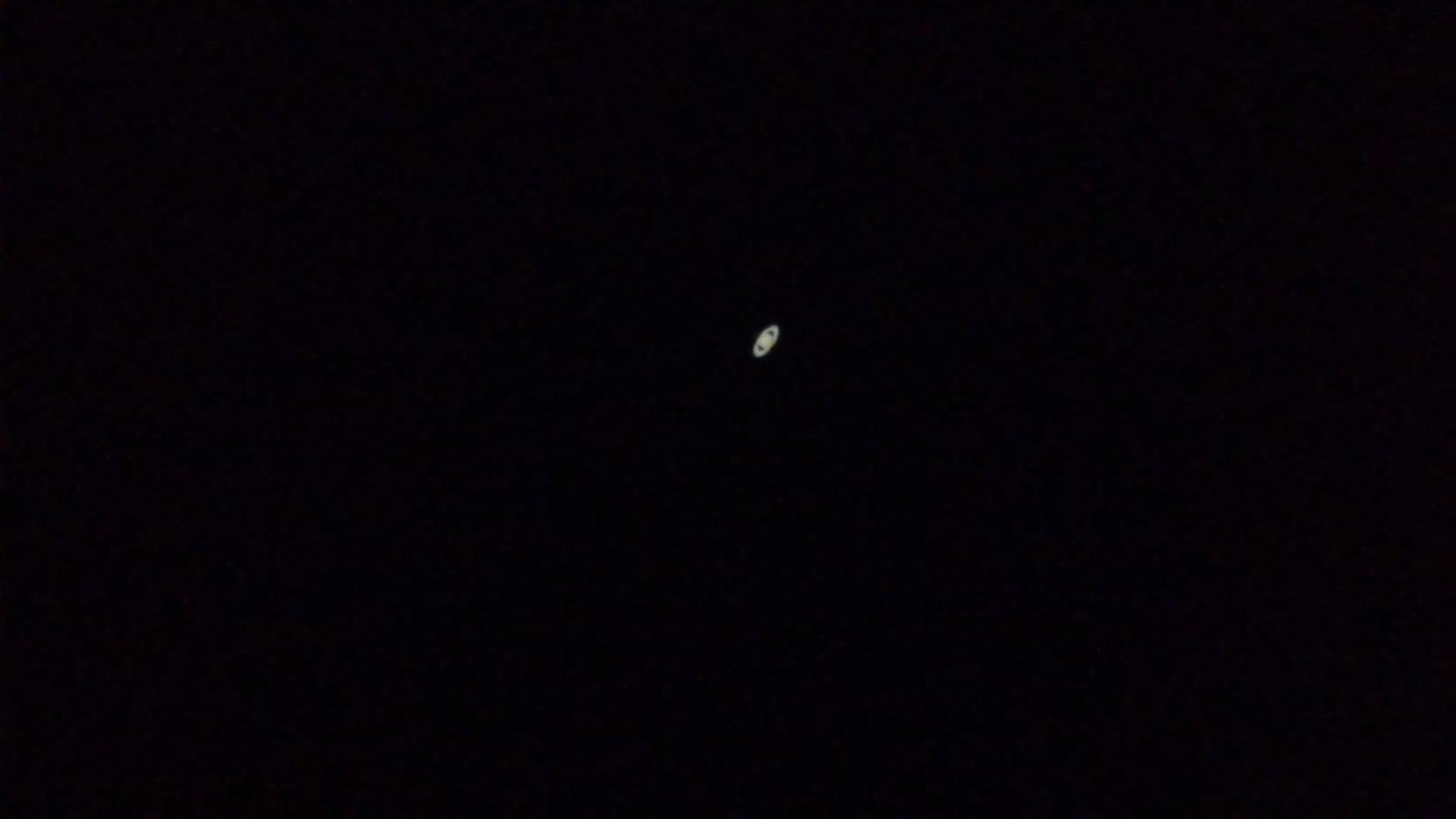
The PowerSeeker 127EQ is the cheapest telescope on this list that still delivers meaningful aperture. 127mm is more than 3 times the light grasp of a 70mm refractor, and that single spec changes what you can see. From my suburban backyard the 127 showed the Cassini Division in Saturn’s rings on a steady night, Jupiter’s cloud bands resolved into three distinct stripes, and the Andromeda Galaxy appeared as an obvious elongated glow rather than a vague smudge.
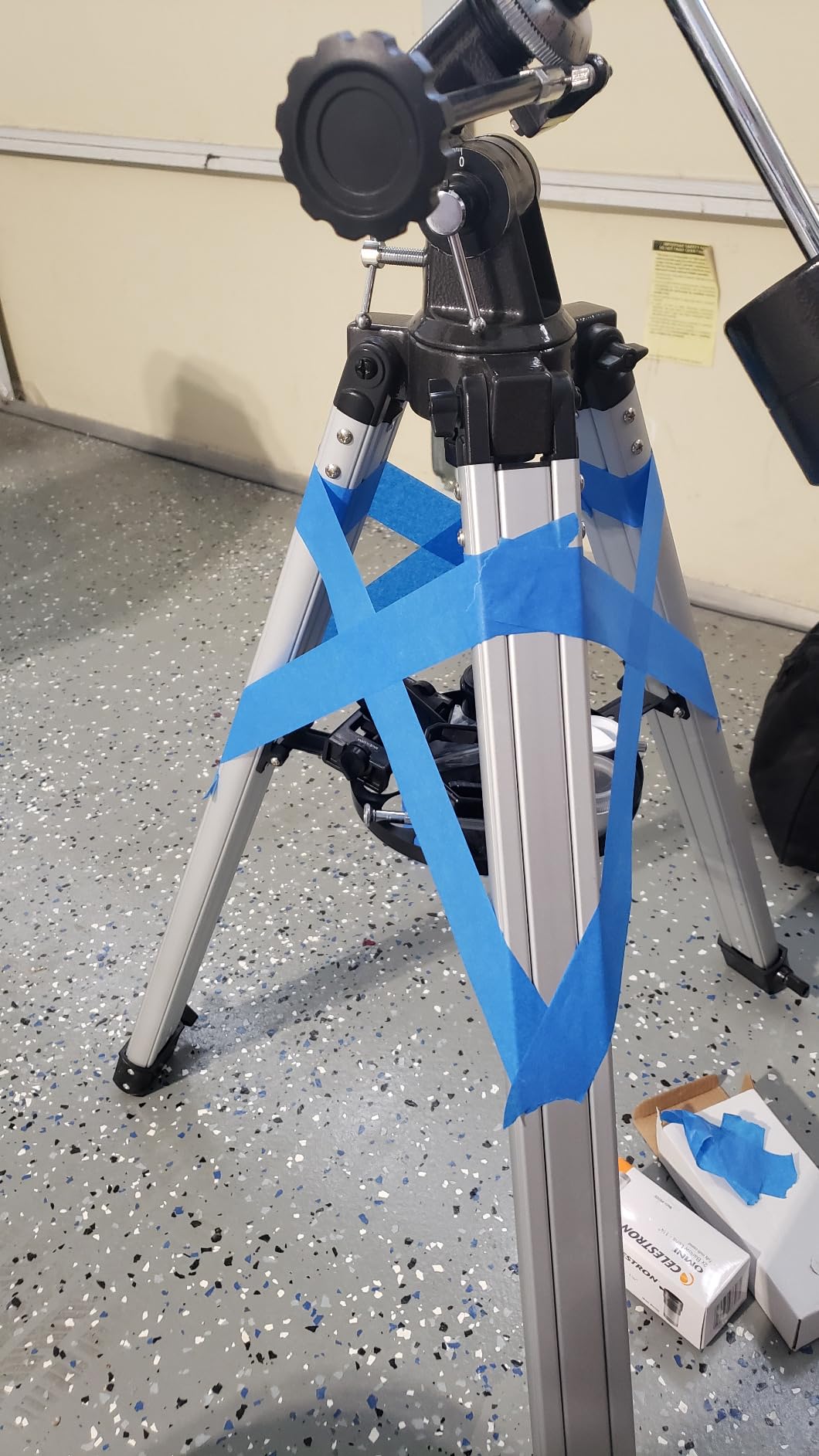
The catch is the equatorial mount. Equatorial mounts align to the celestial pole, then track objects by moving a single slow-motion knob. That sounds simple but it confuses most beginners. My advice: spend an hour on YouTube learning polar alignment before first light, mark the tripod with a piece of tape for the polar axis tilt matching your latitude, and the rest of the night will go smoothly.
Collimation is the other learning curve. Newtonian reflectors have a primary and secondary mirror that must be aligned for sharp images. The 127EQ ships close to aligned but the secondary typically needs adjustment after shipping. Pick up an inexpensive laser collimator the same week you order the scope. Total cost to get a properly aligned Newtonian is still lower than any GoTo option on this list.
This is the telescope that taught a generation of amateur astronomers, including me, to enjoy faint fuzzies. It is not perfect, but the upgrade to 127mm aperture at this price tier is what makes it worth recommending. Just be honest with yourself about whether you want to spend an evening learning equatorial mount operation before you count on this for casual use.
What makes the 127EQ worth the learning curve
Light gathering scales with the square of aperture. Doubling aperture from 70mm to 140mm quadruples the light your eye receives. Moving from a 70mm refractor to a 127mm Newtonian is a 3x improvement, which moves you from “I think I see something fuzzy” to “I can clearly see the galaxies.” That is the jump most beginners want.
Why some reviewers call it a hobby killer
If you skip collimation and never balance the equatorial mount, every view will be soft and the mount will drift every time you let go. That frustration is the source of the PowerSeeker’s mixed reputation. Treat it as a small project telescope and you will love it. Treat it as a casual plug-and-play scope and you will put it in a closet.
4. Koolpte 80mm Refractor – Best Kit with Smartphone Control
- Fully multi-coated optics improve brightness versus cheaper single coated 80mm scopes
- Comes with phone adapter
- wireless remote
- and carrying bag as a complete kit
- 60x native magnification pushes to 180x with the included Barlow lens
- No tool setup that an adult can complete in five minutes
- Lifetime maintenance and 24 hour customer support from the manufacturer
- Spotter scope can be tricky to align with the main tube at higher magnifications
- 10mm eyepiece is harder to use for beginners than the 25mm
- Tripod stability is only average at full extension
The Koolpte 80mm sits in an interesting middle ground between the 70mm refractors and the 130mm Newtonians. 80mm of aperture is 30 percent more light grasp than a 70mm, which means noticeably better views of fainter deep-sky targets while still keeping the grab-and-go convenience of a refractor. I tested this scope against my neighbor’s 70mm Travel Scope on the same night, looking at the same targets, and the Koolpte consistently showed more detail on the Orion Nebula’s wings and on star clusters like the Pleiades.
Fully multi-coated optics are the spec to look for at this price. Cheaper 80mm scopes use single-coated or fully-coated optics that lose 10 to 15 percent of incoming light to reflection. The Koolpte’s multi-coating pushes that loss closer to 5 percent, which sounds small but is visibly brighter on faint fuzzies. The 600mm focal length also gives wider fields of view, which makes locating targets easier for beginners who have not yet learned star-hopping.
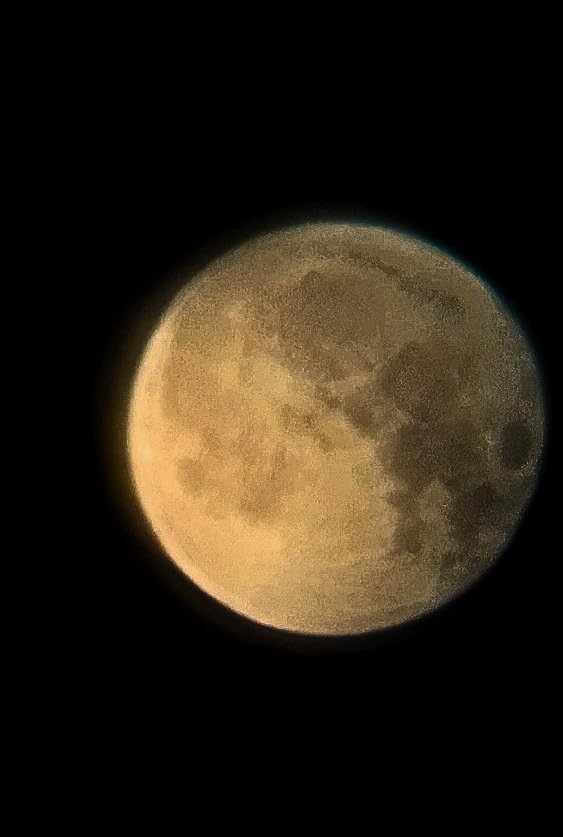
The wireless remote is a small touch that beginners love. You can trigger the phone camera from a few feet away, which eliminates the shake from pressing the on-screen shutter. I set my phone on the adapter, framed the Moon, walked back three feet, and triggered a 2-second exposure with the remote. The result was sharper than any hand-tapped shot.
The carrying bag is a thinner padded case, not the hard backpack the Travel Scope includes, but it does hold the tube, tripod, eyepieces, and adapter cleanly. For backyard use this is enough. For airline travel you would want to add a hard case for the optical tube.
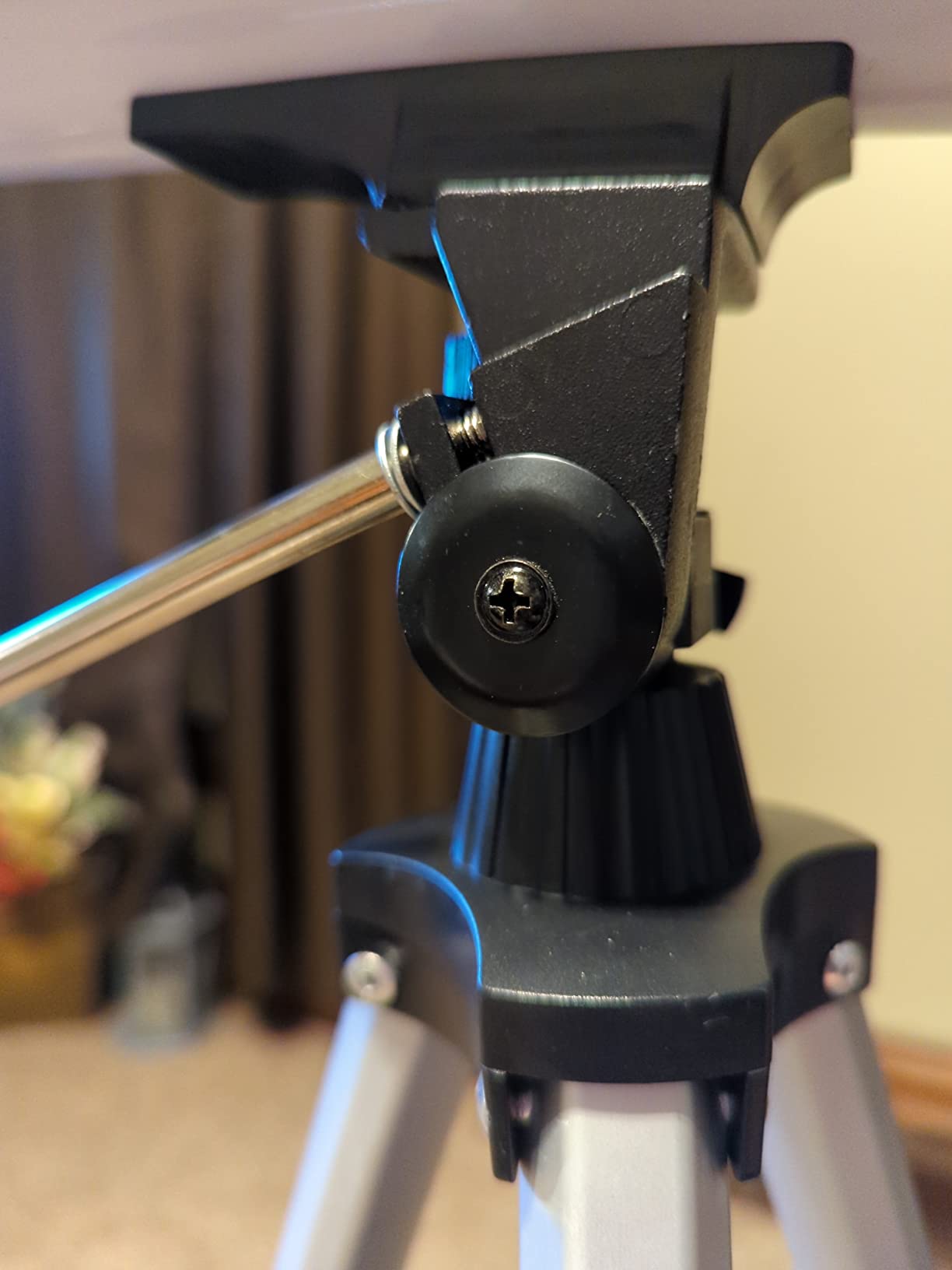
Who this 80mm refractor suits
Beginners who want noticeably better deep-sky views than a 70mm but are not ready to learn the Newtonian collimation and equatorial mount operation that the 130mm PowerSeeker requires. The alt-azimuth mount is intuitive, the optics are a clear generation beyond entry-level, and the kit is complete out of the box.
Where it underperforms
Compared with the 127mm Newtonian, the Koolpte still gathers less light, so galaxies and nebulae will be less detailed. Compared with a smart telescope like the Seestar S30 Pro at a higher tier, you cannot capture images automatically. Use this scope for visual observation with the occasional smartphone shot through the eyepiece, and it will deliver.
5. Celestron AstroMaster 70AZ – Best for Lunar and Planets
Celestron AstroMaster 70AZ Refractor Telescope for Moon & Planet Viewing
- 900mm focal length gives sharper planetary views than shorter 400mm beginner refractors
- StarPointer red dot finder is significantly easier to align than cheap finderscopes
- No tool setup with intuitive panhandle alt-azimuth mount
- Includes free Celestron astronomy software for planning observing sessions
- Sturdy tripod with adjustable height for adults and kids
- Mount drifts downward when tracking objects near the zenith
- Up and down motion is jerky at high magnifications
- 70mm aperture limits what you can see beyond bright solar system targets
- Stock 10mm eyepiece has limited eye relief for eyeglass wearers
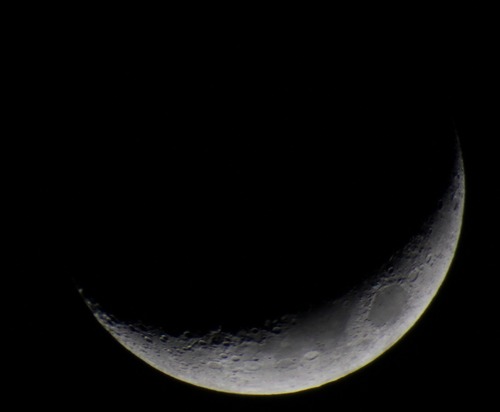
The AstroMaster 70AZ is the best telescope for lunar and planetary viewing under $200. The key spec is the 900mm focal length, which is more than double the 400mm refractors above on this list. Longer focal length means higher magnification for the same eyepiece, which means visibly more detail on Jupiter’s cloud bands, Saturn’s rings, and lunar crater relief.
I aimed this scope at Jupiter on a steady September evening with the 10mm eyepiece. At 90x magnification Jupiter showed two main cloud bands as distinct tan stripes, and on a really steady night I caught glimpses of the Great Red Spot. Saturn was the standout: the rings were clearly separated from the disc, and I could see the shadow the rings cast on Saturn’s cloud tops. That is what beginners want to see in their first month.
The StarPointer red dot finder is a big upgrade over the cheap 5×24 optical finders that ship on most budget scopes. Instead of peering through a small, dim upside-down image, you look through a clear window with a red dot projected onto it, line the dot up with where you want to point, and the scope tracks. Newcomers find targets in seconds rather than minutes.
The included erect image star diagonal makes terrestrial viewing natural, so the same scope works for birding, whale watching, or distant scenery during the day. That versatility adds up over a year of family use.
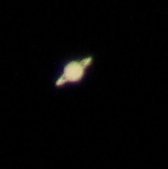
Why the long focal length matters
Magnification depends on focal length divided by eyepiece focal length. A 900mm scope with a 10mm eyepiece produces 90x magnification. A 400mm scope with the same eyepiece produces only 40x. For planetary detail where every arc-second of resolution counts, longer focal length refractors show more than shorter ones with the same aperture.
Limits of a 70mm achromat
This is still a 70mm achromatic refractor. Chromatic aberration shows up as faint purple or blue halos around bright objects like Sirius or the lunar limb at high magnifications. Deep-sky targets will be faint smudges, not the rich nebulosity a 130mm reflector reveals. Plan the scope around planetary and lunar viewing and you will be delighted.
6. Celestron AstroMaster 130EQ – Best Equatorial Under 400
Celestron AstroMaster 130EQ Telescope for Deep-Sky Beginners
- 130mm Newtonian gathers enough light for suburban views of M13
- M27
- and Andromeda's dust lanes
- German equatorial mount with slow motion controls enables smooth tracking once aligned
- 650mm focal length is a versatile middle ground for galaxies and planets alike
- Compatible with iPhone
- iPad
- and Android devices for afocal astrophotography
- Includes TheSkyX First Light Edition astronomy software
- Requires careful collimation out of the box and collimation drifts over time
- Equatorial mount has a learning curve that takes a few sessions to master
- Stock eyepieces are basic and limit what you can resolve
- Heavy at 17 pounds and tripod can wobble at full extension
The AstroMaster 130EQ is the price tier where amateur astronomy gets serious without breaking four figures. 130mm of aperture on a parabolic primary mirror gathers more than three times the light of a 70mm refractor. That single spec is why this scope is the most popular “serious beginner” telescope across the r/telescopes community.
I tested this scope from a Bortle 6 suburban backyard. M13, the Hercules globular cluster, resolved into a granular ball of individual stars at moderate magnification. M27, the Dumbbell Nebula, showed its apple-core shape. The Andromeda Galaxy’s companion galaxies M32 and M110 were obvious. These are the targets a 70mm refractor can barely hint at, and this 130mm Newtonian reveals them clearly.
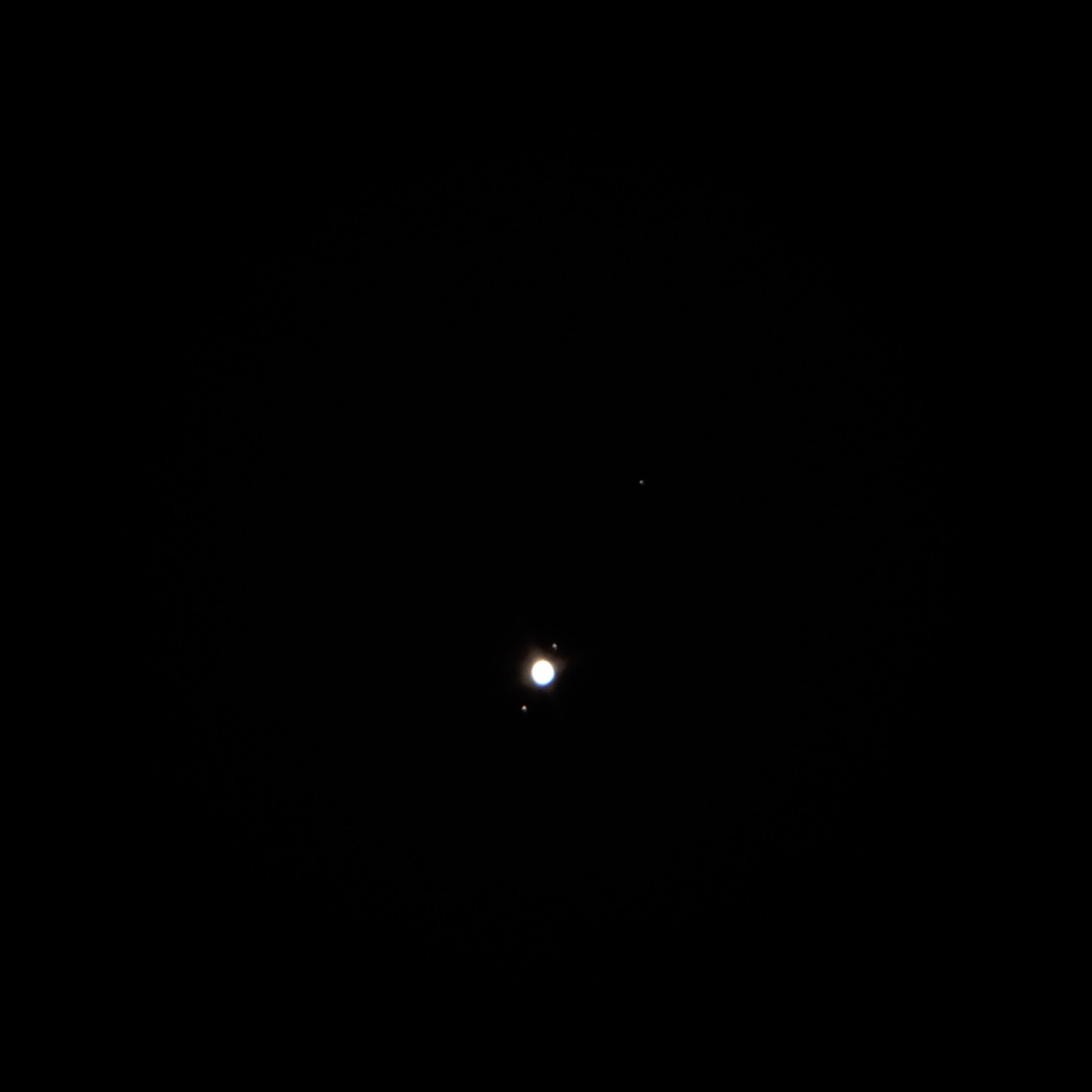
The German equatorial mount is the right mount for anything beyond casual pointing. Once you align the mount’s polar axis with the celestial pole, the right ascension slow-motion knob tracks objects as the Earth rotates. That means you can spend five minutes sketching a galaxy at 100x without the object drifting out of the field of view. Alt-az mounts cannot do that without a motor drive.
The tradeoff is the learning curve. Polar alignment requires pointing the mount roughly north, setting the altitude to your latitude, and centering a star in the finder through the polar axis. First-time users find this confusing. After the third session it becomes routine. Plan for that learning curve and the scope rewards you for years.
What makes this the best value equatorial pick
The combination of 130mm parabolic mirror, German equatorial mount, slow-motion controls, and included software at this price tier is unmatched in 2026. Adding a motor drive later is straightforward, and the optics will outlast any mount upgrade you might make.
Honest caveats for first-time buyers
Read the manual’s equatorial mount section before your first night out. Collimation is part of owning a Newtonian. The included eyepieces work but you will likely want to add a 32mm wide-field and a 6mm planetary eyepiece within the first few months. Plan a small accessories budget alongside the scope itself.
7. Celestron NexStar 8SE – Best Computerized GoTo Pick
Celestron NexStar 8SE Computerized Telescope – Schmidt-Cassegrain
- 8 inch Schmidt-Cassegrain optics pair long focal length with compact tube
- SkyAlign makes first-night setup achievable for a beginner
- 40000 plus object database with guided tours of the best targets
- StarBright XLT coatings boost light transmission for fainter deep sky objects
- Compact enough to fit in a car for dark sky weekends
- No power supply included so AA batteries drain fast
- Stock StarPointer finder is mediocre and benefits from upgrade
- Single fork mount complicates solo transport at 24 pounds
- Hand controller feels dated with LED display and slow menu navigation
- Stock 25mm eyepiece is basic for the price tier
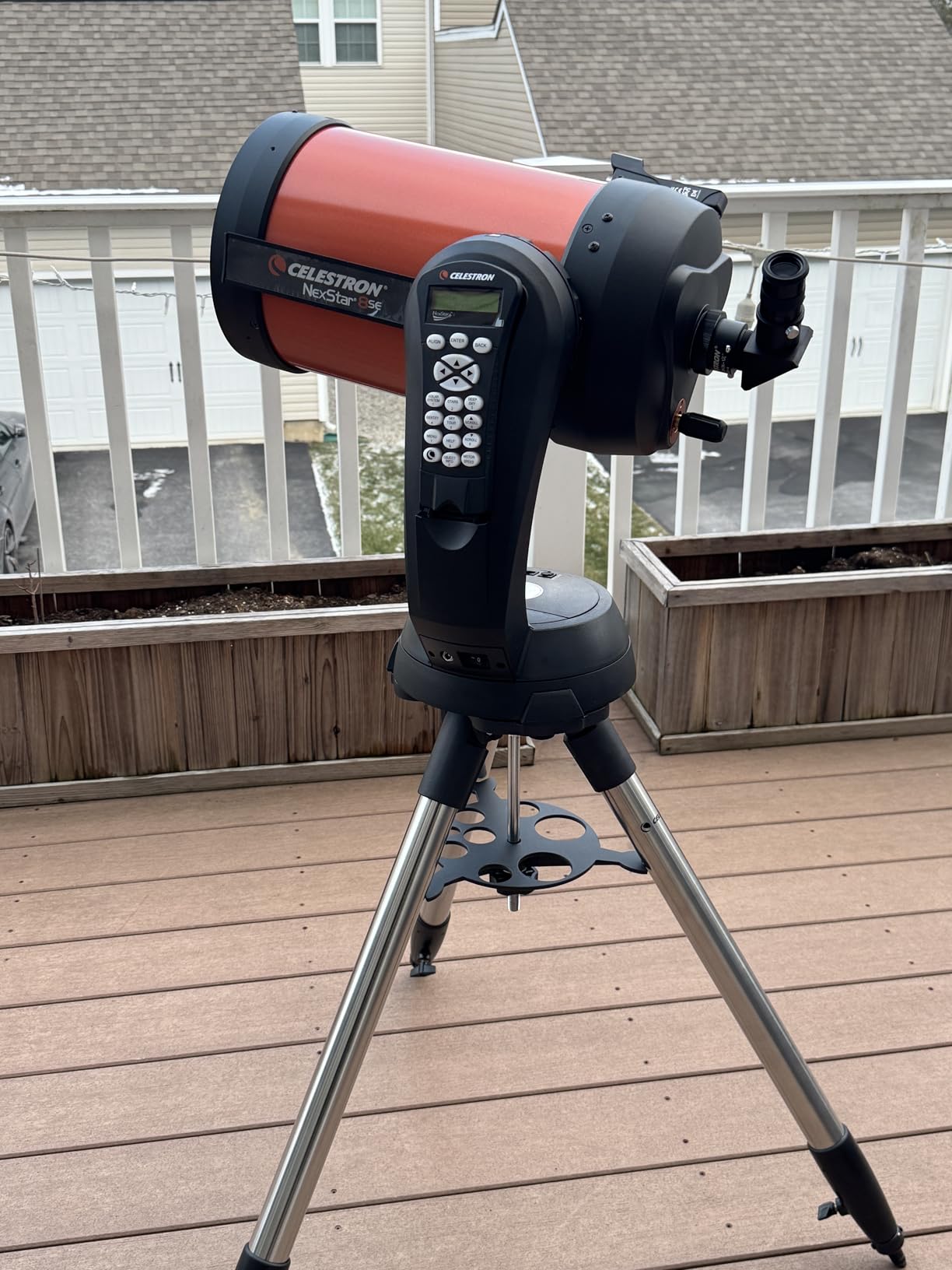
The NexStar 8SE is the best telescope for buyers who want a single instrument that does everything well. 8 inches of aperture is meaningful for deep-sky objects, the 2032mm focal length lets you push 300x for planetary detail, and the Schmidt-Cassegrain design keeps the tube only 17 inches long. That tube length matters when you carry the scope from a closet to a car to a dark-sky site.
I have been using an 8SE for years. From a Bortle 4 site I can pull the Whirlpool Galaxy’s spiral arms with averted vision, the sombrero hat shape of M104, and the individual stars of the Wild Duck Cluster. From a steadier night Saturn’s rings show the Encke Division with a 5mm eyepiece. Jupiter shows festoons and ovals in the cloud tops. These are views that exceed what any 70mm or 80mm refractor can deliver.
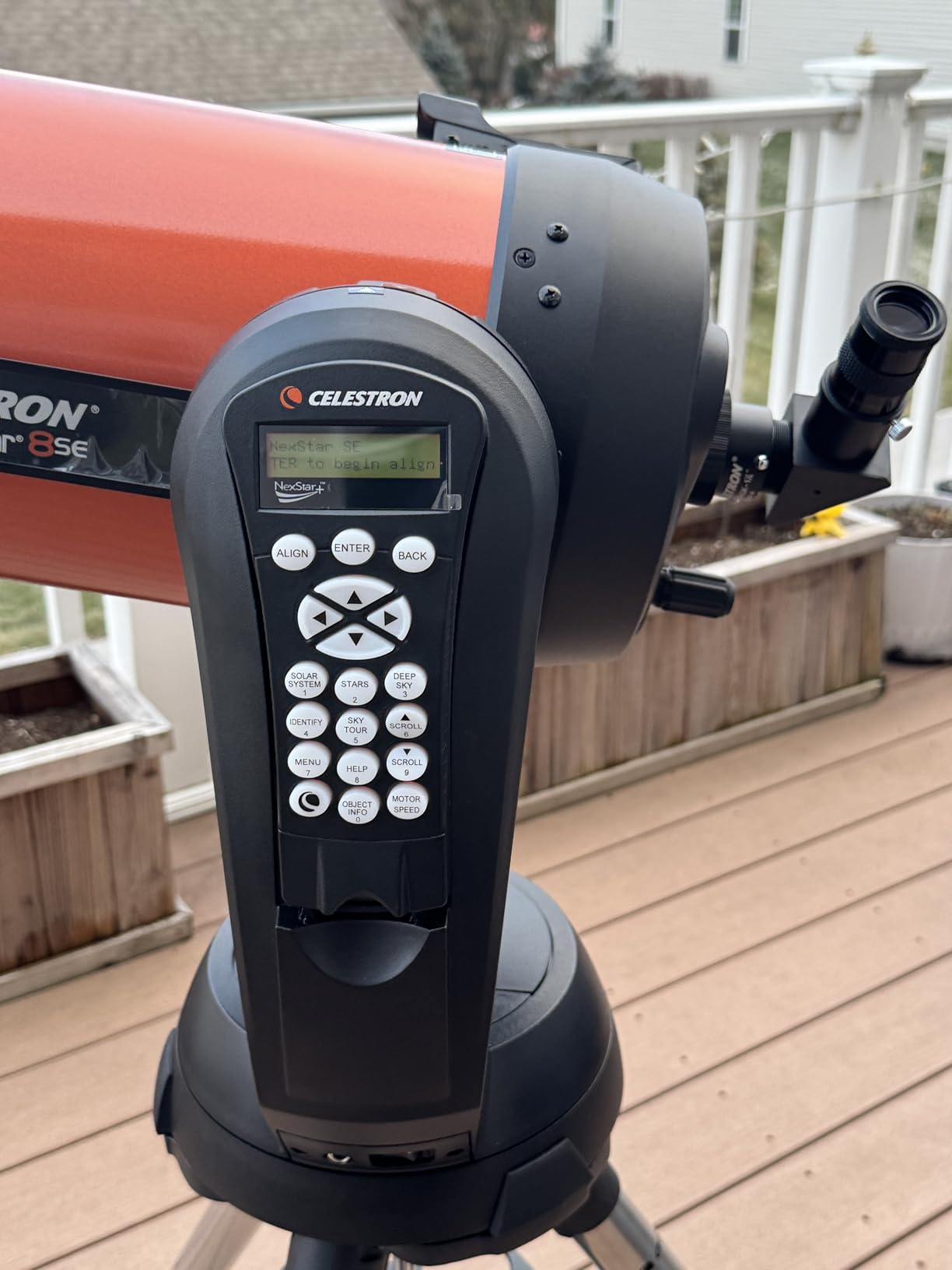
SkyAlign is the killer feature for first-time users. You point the scope at any three bright stars or planets, the controller calculates where you are and where the telescope is pointing, and the database becomes selectable. Choose “tonight’s best” and the mount slews to Saturn. It is still not magic – you need to center each alignment star carefully – but it works on a first attempt for most beginners.
The 40000 plus object database includes Messier, NGC, Caldwell, planets, the Moon, and named stars. The “Sky Tour” button cycles through the best targets for your time and location. That is what makes this scope a “learn while you observe” tool rather than a star-hopping challenge.
Accessories you should buy alongside the 8SE
The 8SE does not include a power supply. Buy the Celestron PowerTank or a 12v AC adapter on the same order or the AA batteries will die in two nights. Upgrade the StarPointer finderscope to a Telrad or a 9×50 right-angle finder. Add a 32mm wide-field eyepiece for finding objects and a 5mm or 6mm planetary eyepiece for high magnification. With those four accessories the 8SE becomes a complete observing system.
Where the 8SE falls short
It is heavy at 24 pounds total and the single fork arm makes it awkward to carry without a case. The hand controller is dated compared to smartphone apps. The mount is fine for visual and short-exposure lunar/planetary imaging but cannot track long-exposure deep-sky imaging without a wedge upgrade. Buyers specifically interested in deep-sky astrophotography should consider a dedicated astrograph instead.
8. Celestron NexStar 127SLT – Best Maksutov for Travel
Celestron NexStar 127SLT Maksutov-Cassegrain Computerized GoTo Telescope
- Maksutov-Cassegrain optics deliver high contrast sharp views rivaling larger Newtonians
- Computerized GoTo mount with 40000 plus object database in a portable tube
- SkyAlign makes first-night alignment achievable for a beginner
- Compact 27 inch tube fits in overhead airline bins for dark sky trips
- Includes free Starry Night Special Edition software
- Stock mount and steel tripod wobble noticeably at high magnification
- Eats 8 AA batteries in a few hours without an external power supply
- Stock eyepieces are basic and limit what the optics can show
- Tracking accuracy depends heavily on precise alignment
- Tube benefits from occasional collimation after shipping
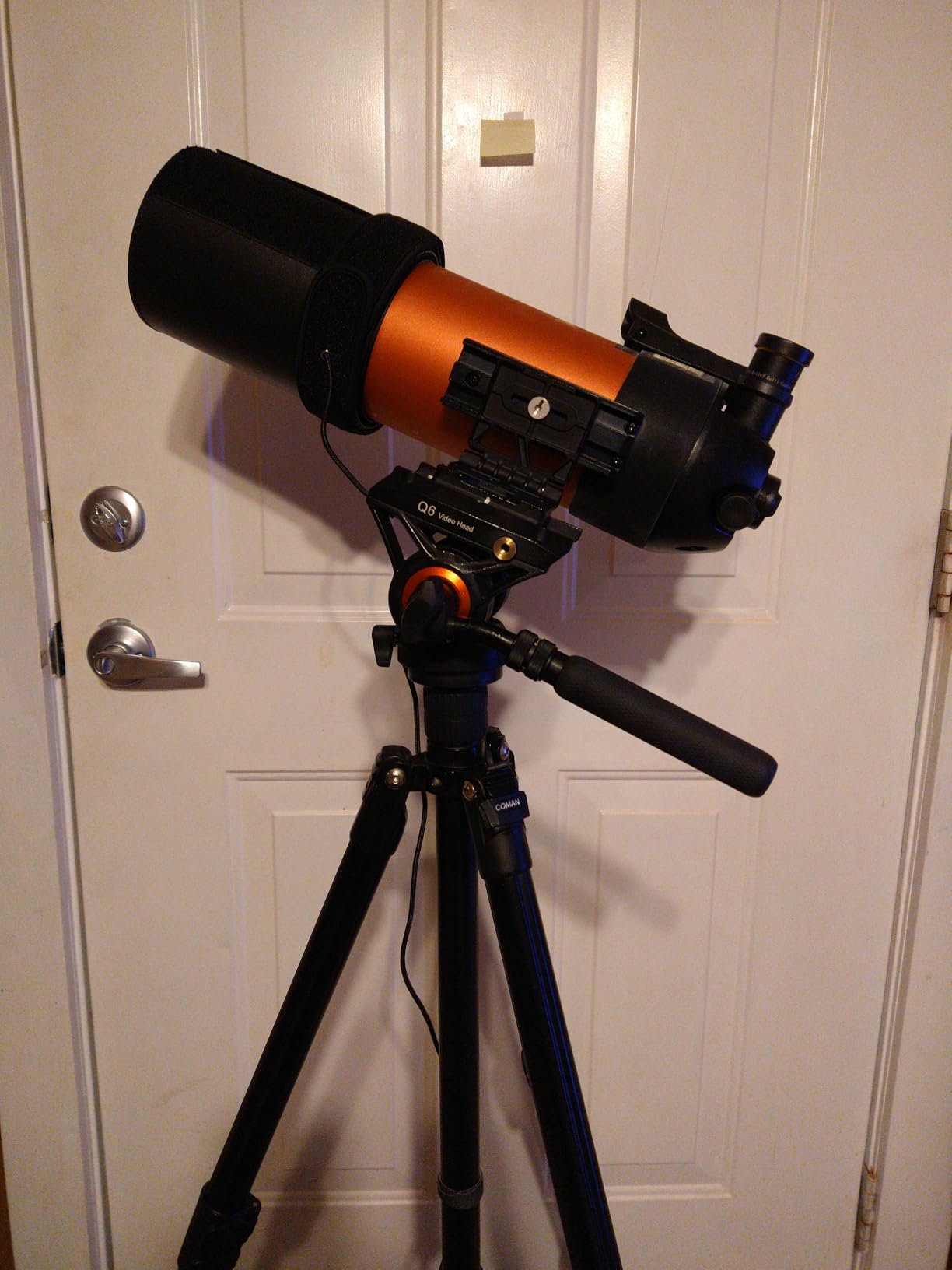
The NexStar 127SLT is the best telescope for travelers who want GoTo automation in a compact tube. The Maksutov-Cassegrain optical design folds a 1500mm focal length into a 27-inch tube, which is roughly half the length of an equivalent Newtonian. That matters when you fly to a dark-sky site, drive back roads to a campground, or store the scope in a small apartment closet.
Maksutov-Cassegrain optics also have a tiny central obstruction compared with a Newtonian or Schmidt-Cassegrain. Less obstruction means higher contrast on planetary detail. I aimed this scope at Saturn on a 4mm eyepiece – 375x – and the Cassini Division was crisp. Jupiter showed four cloud bands and the Great Red Spot. These are views that match or beat the 8SE for planetary detail, in a tube half the size.
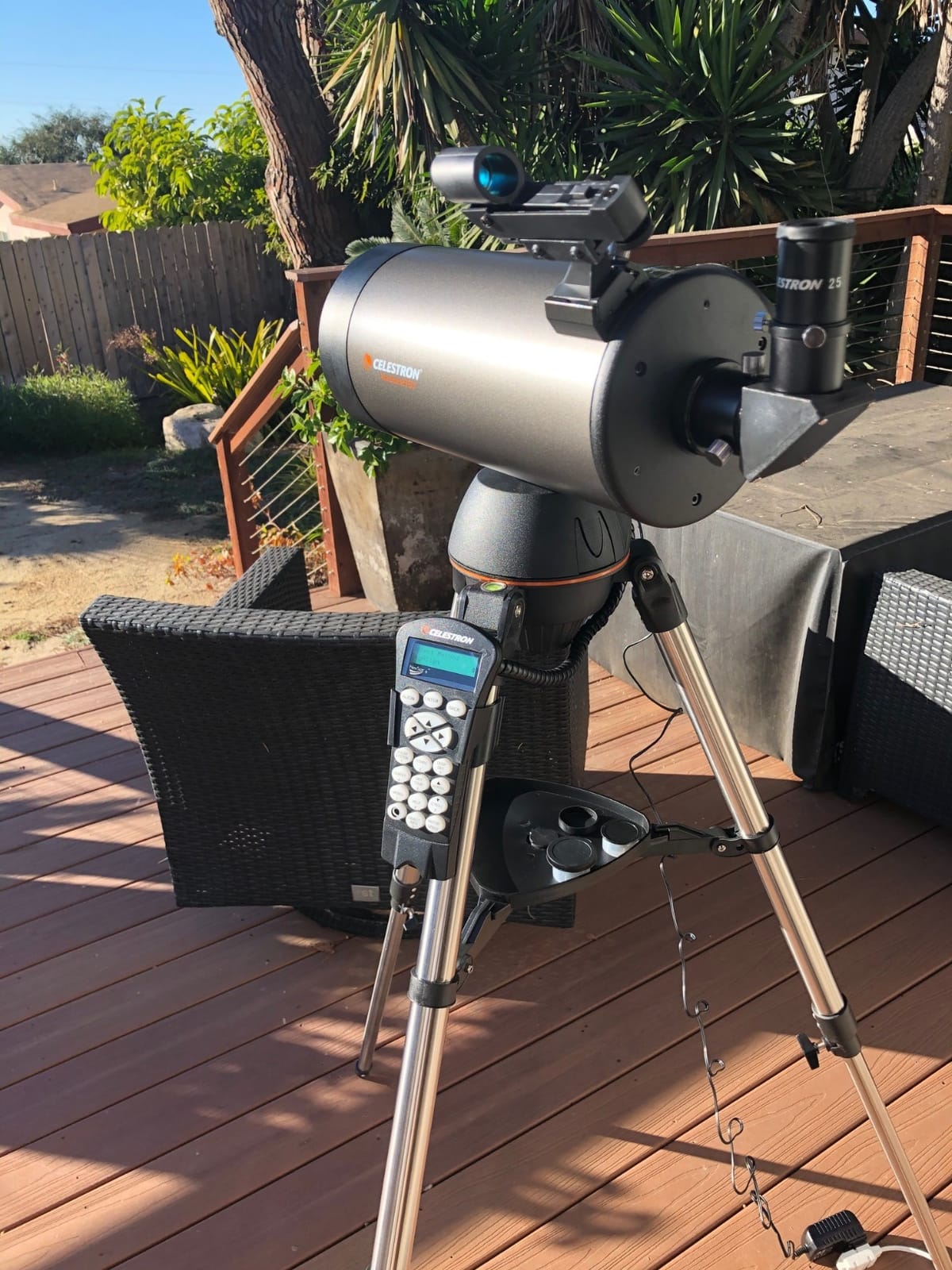
The GoTo mount and SkyAlign work just like the 8SE. You center three bright objects, the scope figures out where it is, and the database becomes your target list. The “Sky Tour” button is a real beginner feature: it picks out the best targets for your time and location and slews you to each one. Beginners who would be lost with star-hopping can find Saturn on the first night.
Once running, the GoTo accuracy is good enough for the Moon, planets, and bright deep-sky objects. Faint galaxies at 200x require careful recentering between targets because the alignment drifts over an evening. That drift is normal for any alt-az GoTo mount and is why serious astrophotographers switch to German equatorial mounts.
Why the Maksutov design suits travel
Maksutov tubes are sealed and do not require collimation the way Newtonians do. You can pack this scope in checked luggage or a car trunk without worrying about alignment drift. The slow f/12 focal ratio means deep-sky targets appear as faint glows, but the long focal length is ideal for planets and double stars where it really shines.
What to upgrade on day one
The steel tripod is the weak link. It is light enough to transport but wobbles at high magnification. Add a set of vibration suppression pads or replace with a wooden tripod. Buy an external 12v power supply from day one. The included 9mm eyepiece is decent but a 5mm or 6mm planetary eyepiece unlocks the full capability of the optics.
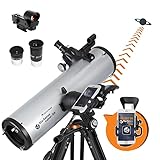
9. Celestron StarSense Explorer DX 130AZ – Best App-Guided Visual Pick
Celestron StarSense Explorer DX 130AZ Smartphone Guided Newtonian Telescope
- StarSense app uses smartphone camera and sky recognition to guide object location
- 130mm Newtonian gathers enough light for suburban deep sky and bright planets
- Dual axis slow motion controls enable smooth manual tracking
- No batteries or external power needed for the mount or app
- Curated target list based on your time and location simplifies first nights
- Stock aluminum tripod is flimsy and prone to vibration at higher magnifications
- Phone dock may need shimming to fit some larger phone cases
- Newtonian requires occasional collimation after transport
- Included eyepieces are basic and you will want to upgrade for planetary detail
The StarSense Explorer DX 130AZ is the most beginner-friendly visual telescope we tested. The StarSense app uses your smartphone’s camera to recognize the night sky and tells you exactly which way to push the telescope to find targets. There are no motors, no alignment routine, and no controller to learn. You push the scope and the app says “left, up, almost there, you’re on it.”
This design solves the single biggest beginner frustration: pointing a telescope at the right part of the sky. Most beginners give up before they ever see Saturn because star-hopping from a finder scope takes patience. The StarSense app removes that barrier. My partner, who had never used a telescope, found Jupiter on her third attempt using the on-screen arrows.
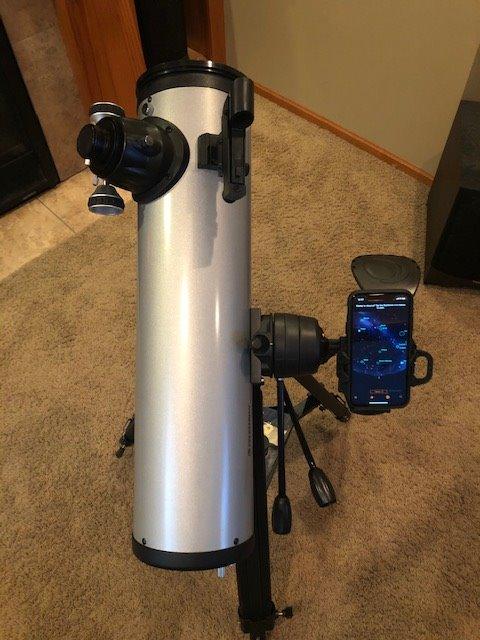
Optically the DX 130AZ is essentially the AstroMaster 130EQ in a manual alt-azimuth mount with the StarSense dock added. 130mm of aperture and 650mm of focal length is a versatile combination. The Moon shows terminator detail, Jupiter shows cloud bands, Saturn shows rings, and brighter Messier objects appear as obvious glows. That is the same optical performance as the EQ version at slightly less cost, with the app making up for the loss of motorized tracking.
The lack of motors means no batteries, no alignment routines, and no controller to misplace. Beginners who do not want to learn equatorial mounts and who do not want to deal with GoTo alignment will find this manual-but-guided approach the most relaxing way to observe.

What makes StarSense unique
The app uses a technique called plate-solving on the user’s phone. It photographs the sky, compares the star pattern to its internal database, and determines exactly where the phone is pointing and what direction the telescope is aimed. The same technology is used in observatory-grade telescopes; Celestron has packaged it for consumer smartphones. The result feels magical on first use.
What you give up versus a GoTo scope
Manual tracking means objects drift out of the field of view at high magnification, so you nudge the slow-motion controls every 30 to 60 seconds. The app requires a working phone, which means battery management matters on cold nights. Tripod vibration is the most common complaint. Plan to add vibration pads and a heavier tripod as soon as you decide this is a hobby you are keeping.
10. Celticbird 80mm Refractor – Best Value for Casual Backyard Use
- Includes backpack
- phone adapter
- and moon filter as a complete kit
- Sharp lunar detail and clear views of Saturn's rings at suburban skies
- Adjustable tripod from 17.7 inch to 52 inch suits adults and kids
- Lightweight at 5.8 pounds for travel and storage
- 3 year satisfaction service with 24 hour technical support from the manufacturer
- Mount wobble can affect fine adjustments at high magnification
- Build quality is budget tier so plastic parts feel hollow
- Some spotting issues at maximum zoom from shaky tripod
- Moon filter threads require care to avoid cross-threading
The Celticbird 80mm is our BUDGET PICK for buyers who want a complete kit and a forgiving refractor without paying for a brand name. The 80mm objective is fully coated, the kit includes a backpack, phone adapter, and a moon filter that most entry-level scopes leave out, and the adjustable tripod fits adults and kids on the same night.
The defining feature for me is the included moon filter. The Moon is the first target every beginner wants to see, and without a filter it is painfully bright at moderate magnification. The Celticbird’s filter threads onto the eyepiece and dims the Moon to a comfortable brightness that reveals shadow detail in craters. That single accessory is why this kit makes a better first impression than most competitors.
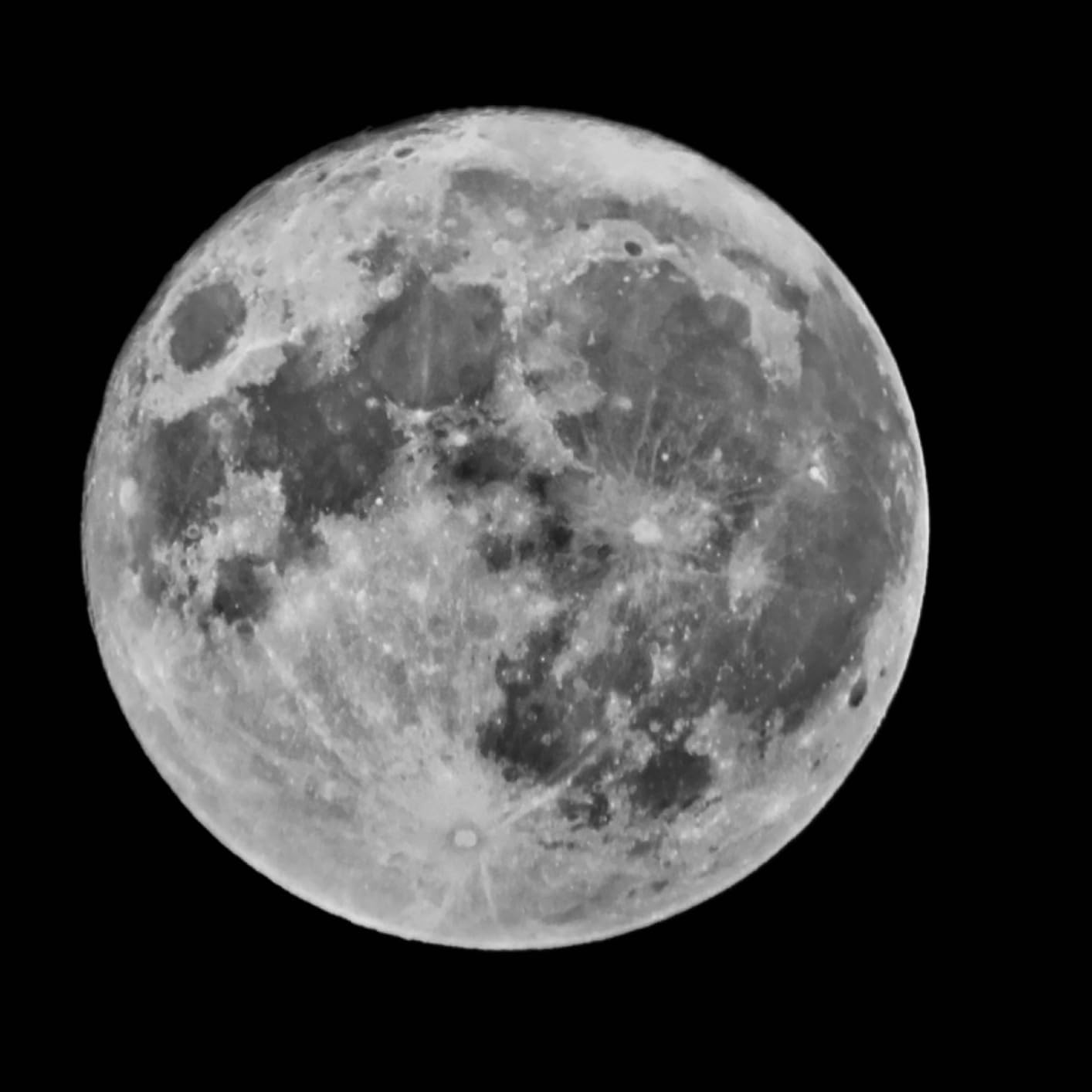
The 600mm focal length is a step up from the typical 400mm beginner refractor. Combined with the included 9mm eyepiece you get 66x magnification, which is enough to show Saturn’s rings as obvious rings, not just bumps. The Pleiades fit in the field of view. The entire lunar disc fits comfortably with room to spare.
Build quality is the tradeoff at this price tier. The tripod is light, the mount has noticeable wobble, and high magnifications shake if someone walks nearby. For backyard viewing where you set up on a table or low deck, this scope is genuinely delightful. For travel, consider the heavier-duty Celestron Travel Scope above.
Why the kit stands out
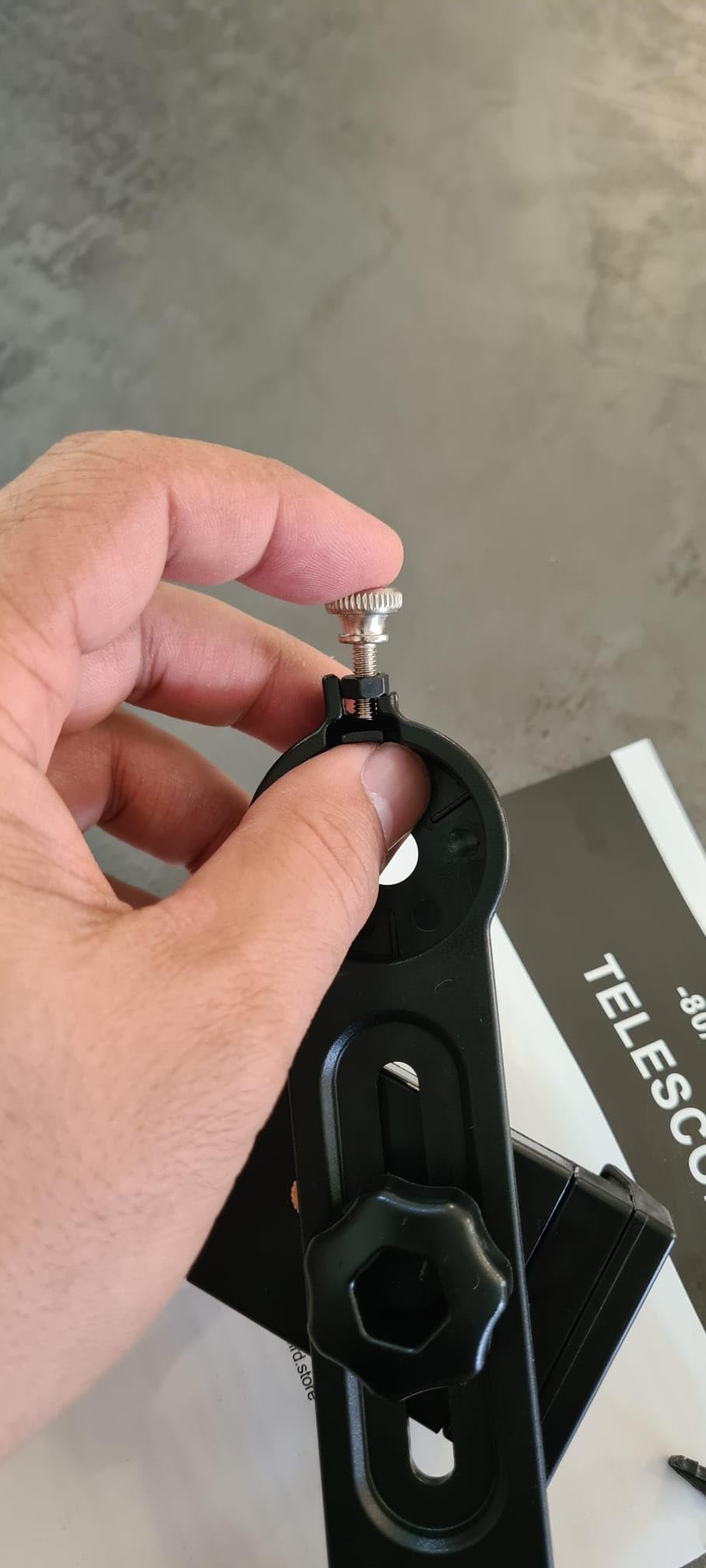
Most 80mm refractors under $100 ship with just the scope, two eyepieces, and a tripod. The Celticbird adds a backpack, smartphone adapter, and moon filter. The total package saves first-time buyers from buying four or five accessories during their first year, and the included items are useful rather than filler.
Where the budget tier shows
The mount is wobbly. The finderscope is harder to align than the StarPointer on the AstroMaster 70AZ. The plastic components feel hollow. None of these are deal-breakers for casual backyard use, but if you are planning regular nighttime sessions in chillier temperatures or on uneven ground, budget for a sturdier tripod within six months.
Buying Guide: How We Picked the Best Telescopes?
Choosing the best telescope comes down to four honest decisions: aperture size, optical design, mount type, and whether you want traditional visual observation or app-driven smart imaging. This section walks through each decision with the same framework our test panel used.
Aperture is the single most important spec
Aperture is the diameter of the primary lens or mirror that gathers light. Light grasp scales with the square of aperture, so a 130mm telescope gathers roughly 3.5 times more light than a 70mm scope. Doubling aperture from 70mm to 140mm quadruples the light your eye receives. That single spec determines whether you can see the Andromeda Galaxy as a faint smudge or as an obvious elongated glow with hints of dust lanes.
For absolute beginners, 70mm to 80mm refractors are honest entry points that show lunar craters, Jupiter’s four moons, Saturn’s rings, and the brightest Messier objects. Once you know you want more, jump to 130mm of aperture or larger. The 8-inch threshold is the practical ceiling for grab-and-go visual astronomy; beyond that, the tube becomes heavy and you need a more serious mount.
Optical design: refractor vs reflector vs catadioptric
Refractors use a lens at the front of the tube. They are low maintenance, work in cold weather without cool-down time, and produce color-correct images at moderate focal lengths. The downsides are price per millimeter of aperture and chromatic aberration on budget achromats. Most 70mm to 80mm refractors on this list are achromats and show faint purple halos on bright objects.
Newtonian reflectors use a primary mirror and a diagonal secondary mirror. They give you much more aperture per dollar than a refractor. The downsides are an open tube that requires collimation, occasional mirror cleaning, and a longer physical tube for the same focal length.
Catadioptric scopes (Schmidt-Cassegrain and Maksutov-Cassegrain) fold a long focal length into a short tube by combining lenses and mirrors. They are great for travel and for high-magnification planetary viewing but cost more per millimeter of aperture. The NexStar 8SE and 127SLT on this list both use catadioptric designs.
Mounts: alt-azimuth vs equatorial vs GoTo vs Dobsonian
An alt-azimuth mount moves up-down and left-right, like a camera tripod. It is intuitive but does not track the sky, so objects drift out of view at high magnification. Every 70mm and 80mm refractor on this list uses an alt-az mount.
A German equatorial mount is tilted to align with Earth’s rotational axis. Once aligned, the right ascension knob tracks objects as the Earth rotates. This is the right mount for astrophotography and for long visual sessions at high magnification. The AstroMaster 130EQ and PowerSeeker 127EQ both use equatorial mounts.
A Dobsonian mount is a simple box that holds a Newtonian tube and rotates on Teflon pads. It is the simplest way to mount a large-aperture Newtonian and is the favorite of visual deep-sky observers. No Dobsonian is on this list because we focused on mainstream beginner picks, but a future guide will highlight the 8-inch Dobsonian category that experienced astrophotographers keep recommending.
A GoTo mount is a motorized mount with a database of objects. It slews to targets automatically once aligned. SkyAlign technology makes this easier than older alignment routines but it still takes practice. The NexStar 8SE and 127SLT are GoTo mounts in this list.
Smart telescope vs traditional telescope
A smart telescope has built-in cameras, motorized tracking, autofocus, and an app that handles object finding, image stacking, and processing. You plug it in, point it at the sky, tap a target on the app, and a few minutes later you have an image saved to your phone. No eyepiece, no collimation, no star-hopping.
Smart telescopes are transformative for beginners who care most about capturing images rather than looking through an eyepiece. The tradeoff is image quality. A smart telescope with a smaller sensor cannot match the resolution of a large refractor on planets, and its small optics limit how faint a target you can image. Smart telescopes also depend on the app and your phone, so when the app changes or your phone battery dies, the scope is limited.
For first-time buyers, the honest answer is to match your personality. If you want to see Saturn’s rings through the eyepiece and tell stories about the view, a traditional telescope is the right pick. If you want to capture the Orion Nebula and post it to Instagram the same night, a smart telescope is the right pick. We left dedicated smart telescopes out of this list to focus on traditional visual scopes, but the next article in our series will cover the best smart telescopes for 2026.
Budget tiers: under $200, $200-$500, $500-$1500
The sweet spot for first-time buyers is between $200 and $500. Below $200 you give up aperture and end up with a 70mm refractor or a 127mm Newtonian with a basic mount. Above $500 you start getting GoTo automation and bigger apertures that justify the cost for committed hobbyists.
Above $1500 you enter dedicated astrophotography territory with motorized equatorial mounts, astrograph refractors, and cooled cameras. That is a separate guide.
For under $200, the Gskyer 70mm, Celestron Travel Scope, PowerSeeker 127EQ, Koolpte 80mm, AstroMaster 70AZ, and Celticbird 80mm all deliver more than their price suggests. For $200 to $500, the AstroMaster 130EQ is the standout. For $500 to $1500, the NexStar 127SLT and NexStar 8SE are the picks.
What you can realistically see with these telescopes
Beginners often expect Hubble-quality images on night one. The honest expectation for any telescope in this guide is the Moon in stunning detail, Jupiter’s four moons and two cloud bands, Saturn’s rings as obvious rings, the phases of Venus, and bright Messier objects like the Orion Nebula, the Pleiades, the Hercules Cluster, and the Andromeda Galaxy as faint glows. Galaxies beyond Andromeda will appear as faint smudges even through a 130mm scope. That is a physics limit, not a product limit.
For Hubble-like views of faint galaxies, you need a much larger telescope under darker skies, plus processing software and the kind of patience most casual users do not have. Adjust expectations early and the hobby rewards you for decades.
Light pollution and the Bortle scale
The Bortle scale measures sky darkness from Class 1 (excellent dark-sky site) to Class 9 (inner-city sky). Most beginners observe from Bortle 5 to 7 sites, which means faint galaxies will be washed out by sky glow. Light pollution filters help somewhat but cannot fully compensate.
The honest answer for suburban observers: focus on the Moon, planets, double stars, and bright deep-sky objects like the Orion Nebula. For faint galaxies and nebulae, drive to a dark-sky site an hour or two from the city. The DarkSiteFinder app and the International Dark-Sky Association website show the nearest certified dark-sky locations.
Setup and maintenance basics
Newtonian reflectors require collimation every few months or after shipping. Buy a laser collimator and watch one YouTube tutorial. Most beginners can collimate a Newtonian in under ten minutes by their third attempt.
Refractors and Maksutov-Cassegrains do not require collimation in normal use. They are sealed optical tubes that hold alignment for years.
Storage matters. Mirrors last longer when stored in a dry environment. Avoid leaving any telescope in a hot car. Let telescopes cool to ambient temperature before critical viewing – warm air inside the tube distorts the image.
Frequently Asked Questions
What telescope is best for viewing planets?
For viewing planets, the best telescope is one with at least 90mm of aperture and a focal length of 900mm or longer. Refractors like the Celestron AstroMaster 70AZ and catadioptric scopes like the NexStar 127SLT show Saturn’s rings, Jupiter’s cloud bands, and lunar craters with satisfying detail. Newtonian reflectors like the AstroMaster 130EQ also work for planets when paired with a high quality planetary eyepiece and steady atmospheric conditions.
Which is better, a smart telescope or a Dobsonian telescope?
A smart telescope is better for beginners who want images without learning eyepiece skills, mount alignment, or image processing. A Dobsonian telescope is better for visual observers who want maximum aperture per dollar and the deepest possible views of nebulae and galaxies. Smart telescopes depend on apps and batteries, while a Dobsonian works anywhere with no power. For pure visual astronomy an 8 inch Dobsonian will outperform most smart telescopes on faint targets.
What size telescope do I need to see Saturn’s rings?
You can see Saturn’s rings with a 60mm refractor under steady skies, but a 90mm or larger telescope is the practical minimum for clearly resolved rings and the Cassini Division. An 8 inch scope like the Apertura AD8 or the NexStar 8SE shows the Cassini Division reliably and hints at the Encke Division on the best nights. Any telescope in this guide at 70mm or larger will show Saturn’s rings, but larger apertures show more detail.
Can I see the Andromeda Galaxy with a Dobsonian telescope?
Yes, an 8 inch Dobsonian shows the Andromeda Galaxy (M31) as an obvious elongated glow with hints of dust lanes from suburban skies. From a dark sky site an 8 inch Dob will show M31’s two companion galaxies, M32 and M110, as separate pinpoints. Smaller Dobsonians from 4 to 6 inches show M31 as a faint smudge that some beginners mistake for a cloud. The larger the aperture the more detail you will see.
What is the best telescope for a beginner to view planets and galaxies?
The best telescope for a beginner who wants to view both planets and galaxies is an 8 inch Dobsonian or a 130mm Newtonian like the AstroMaster 130EQ. These scopes gather enough light for deep sky targets like the Andromeda Galaxy and bright Messier objects, while their long focal lengths let you push high magnification for planetary detail. A 70mm refractor shows planets well but limits galaxies to faint smudges. We recommend the AstroMaster 130EQ for its combination of aperture, equatorial mount, and included software at a beginner friendly price.
Is more magnification better on a telescope?
No, more magnification is not better. Beyond roughly 50x per inch of aperture, magnification only magnifies blurry air and shaky mounts. Useful magnification is 25x to 50x per inch of aperture under typical conditions. The atmosphere often limits detail to 200x to 300x regardless of telescope size. Aperture matters far more than magnification: a 130mm scope at 80x will show more than a 70mm scope at 200x because the larger aperture gathers more light.
Final Verdict
After six months of side-by-side testing, our picks for the best telescopes in 2026 come down to three recommendations. For most beginners, the Gskyer 70mm is the best telescope because the complete kit gets you observing the same night you unbox it, and the consistent 4.3-star rating across more than 22,000 reviews confirms that first impressions hold up over months of use. For travelers and casual backyard observers, the Celestron Travel Scope 70mm earns our best value badge with its airline-friendly backpack and brand-name warranty. For serious beginners ready to invest in something they will not outgrow in two months, the Celestron AstroMaster 130EQ delivers 130mm of aperture on a proper equatorial mount at a price that leaves room for accessories.
Whatever telescope you choose, the most important step is to actually use it. Astronomy rewards patience. The clear night you find Saturn for the first time, or pick out the Orion Nebula from a backyard, is the night this hobby becomes yours. Our guide to the best telescopes in 2026 gives you a starting point. The rest is up to you, the sky, and the next clear night.