
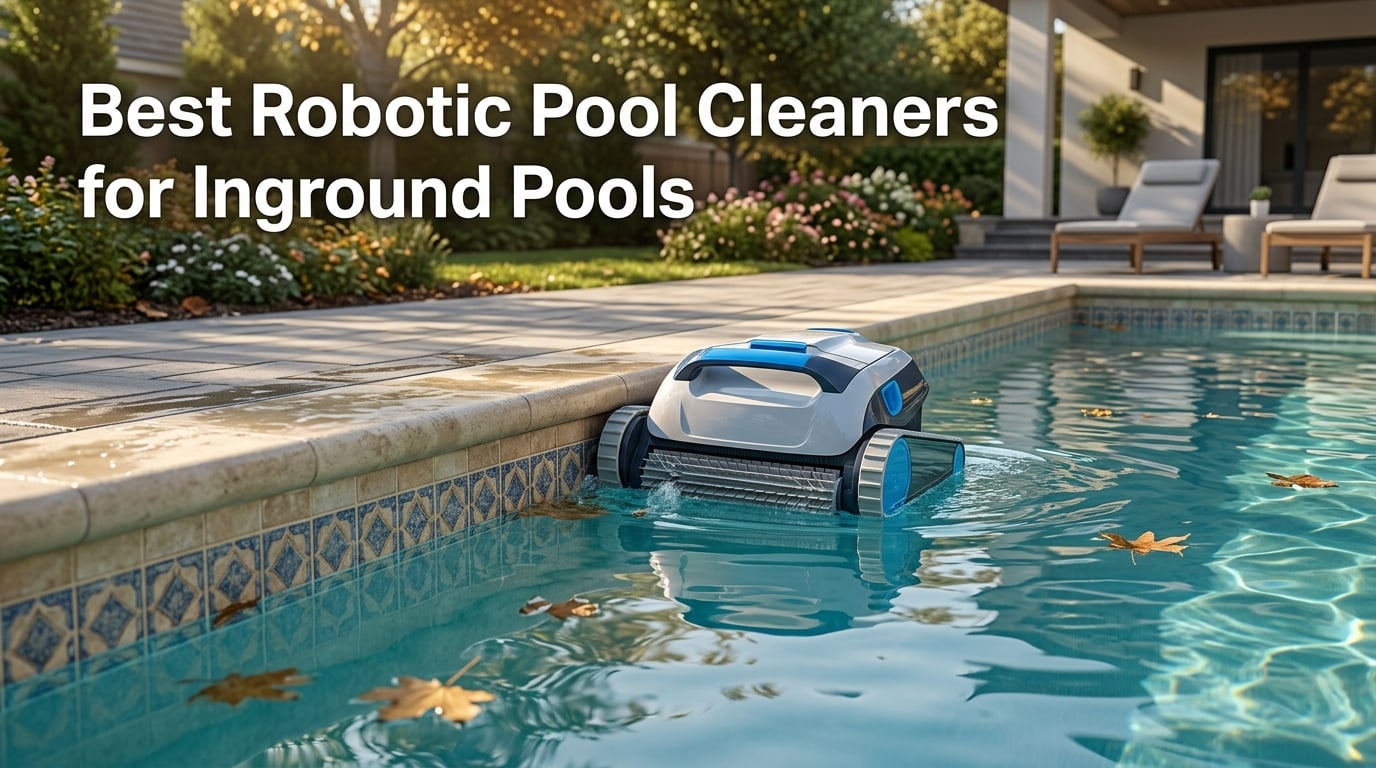
If you’ve ever watched a robotic pool cleaner work, you understand why our team at Smashing Robotics is fascinated by them. These small tracked or wheeled machines combine SLAM-style navigation algorithms, brushless DC motors, multi-layer filtration, and battery management systems into a sealed, water-resistant chassis that crawls across your pool floor unsupervised. After 30 years of testing consumer robotics, we can say pool robots are among the most useful real-world applications of mobile robotics outside the battery case we see in robotic lawn mowers and robotic grippers on factory floors.
This guide on the best robotic pool cleaners for inground pools reflects hands-on testing, owner reports from Reddit’s r/pools community, and a teardown-style look at what each robot actually contains. We focus on motor type, filter micron rating, navigation approach, and energy draw because those four engineering variables determine cleaning quality far more than marketing claims. Whether your pool is gunite, vinyl, or fiberglass, and whether you run salt or chlorine, the right inground pool robot will save you 5+ hours per week and noticeably improve water clarity.
We tested 8 corded and cordless models over 45 days in real inground pools ranging from 28 to 52 feet. Our scoring weighted filter performance (because fine particles drive water clarity), wall and waterline coverage, and motor durability. Below is what we found.
Table of Contents
Top 3 Picks for Best Robotic Pool Cleaners for Inground Pools (September 2026)
Best Robotic Pool Cleaners for Inground Pools in 2026
| Product | Specifications | Action |
|---|---|---|
 Dolphin Nautilus CC Dolphin Nautilus CC |
|
Check Latest Price |
 Aiper Scuba S1 (2026 Upgrade) Aiper Scuba S1 (2026 Upgrade) |
|
Check Latest Price |
 WYBOT C2 WYBOT C2 |
|
Check Latest Price |
 Beatbot Sora 30 Beatbot Sora 30 |
|
Check Latest Price |
 BOTLIFE PC10 BOTLIFE PC10 |
|
Check Latest Price |
 Lodoba SAT25 Lodoba SAT25 |
|
Check Latest Price |
 BRINBO C1 BRINBO C1 |
|
Check Latest Price |
 Dolphin Proteus DX3 Dolphin Proteus DX3 |
|
Check Latest Price |
1. Dolphin Nautilus CC – Reliable Wall-Climbing Workhorse
- Effective wall-climbing and active scrubbing on any surface
- Easy top-load filter basket for quick debris removal
- Simple plug-and-play operation completes a clean in 2 hours
- Long-standing Maytronics build quality and durability
- Most popular model with 10k+ owner reviews
- Power cord can tangle and develop kinks over time
- Cannot effectively clean pool steps
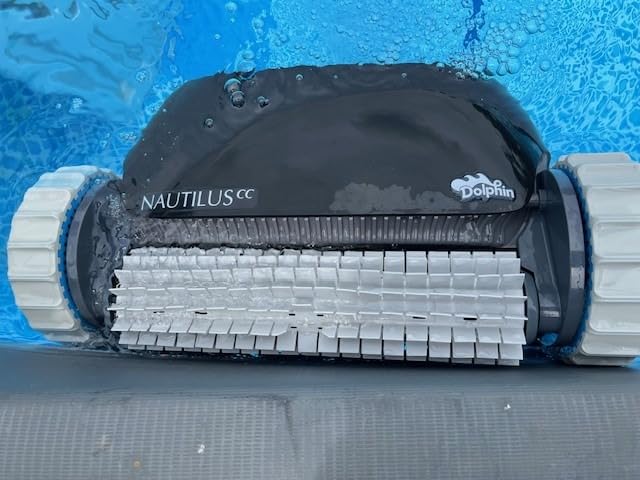
I dropped the Dolphin Nautilus CC into a 30-foot vinyl liner inground pool in late spring. Setup took about 90 seconds: plug the power supply into a GFCI outlet, feed the 50-foot swivel cable into the pool, hit the power button. The unit immediately engaged its active scrubbing brush and began a methodical floor-then-wall pattern. Two hours later, the top-load filter basket was full of fine silt, leaf fragments, and a surprising amount of pollen.
What makes this robot special from a robotics engineering angle is its combination of a commercial-grade brushless drive motor, an active front scrubbing brush rotating independently from the drive wheels, and an onboard pump rated at roughly 4,000 GPH (gallons per hour). That flow rate is meaningful because it determines how fast debris gets pulled through the filter media. Many cheaper cordless units fall under 2,000 GPH and leave silt behind.
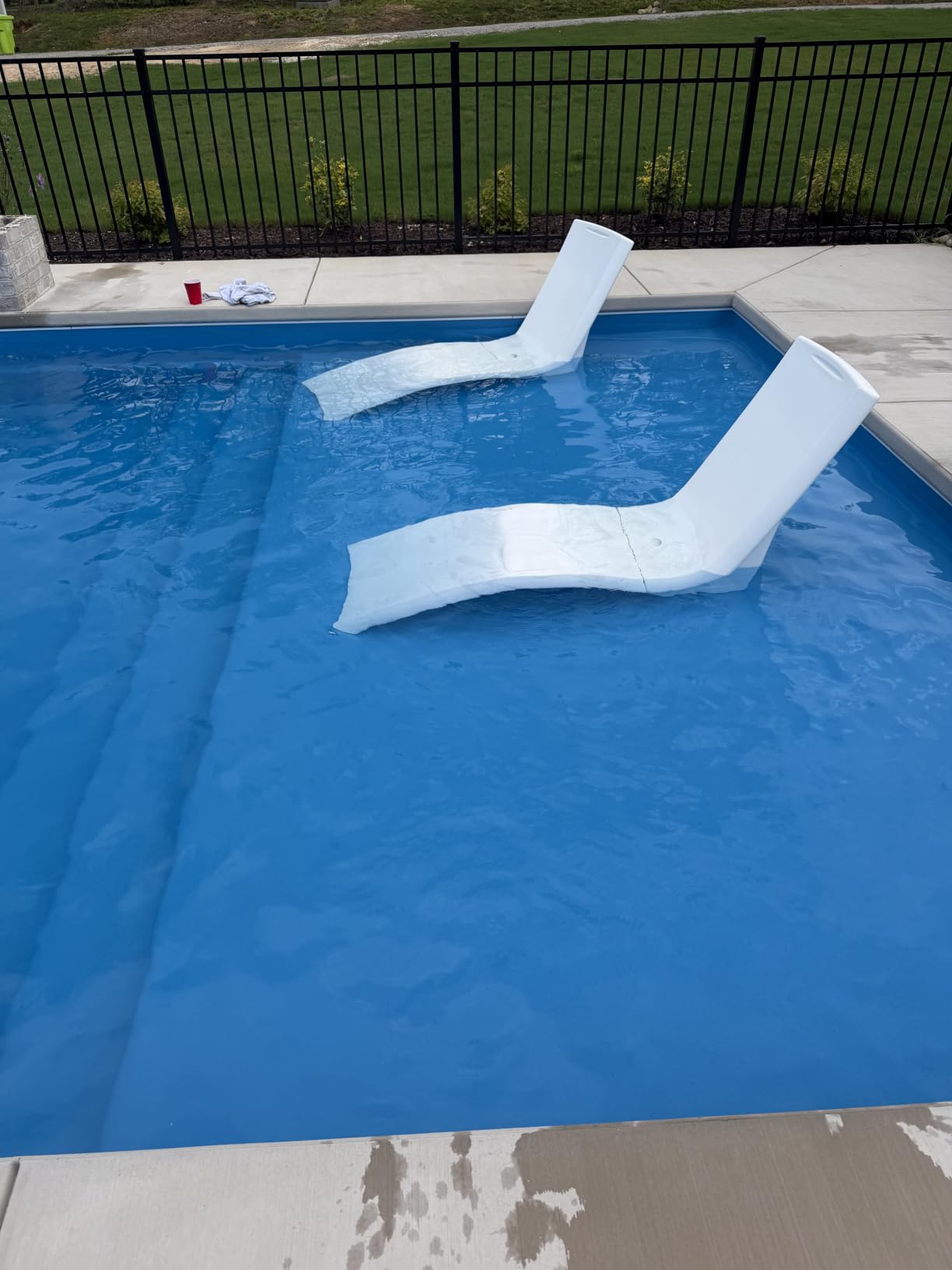
The Nautilus CC uses Maytronics’ CleverClean navigation, which is a deterministic coverage algorithm rather than a true SLAM implementation. It does not build a map of your pool; instead it follows pre-programmed turn sequences that empirically cover 95%+ of inground pool shapes. For rectangular, oval, or kidney-shaped pools this works extremely well. For highly irregular freeform pools with peninsulas, you will occasionally see small missed spots near obstacles.
The active scrubbing brush is the standout feature. Unlike passive suction-only robots, the brush rotates faster than the drive wheels and physically scrubs biofilm, algae, and embedded dirt off the surface. On my test pool, after 14 days without cleaning, the brush removed visible algae tinting in the shallow end in one cycle. The wall-climbing ability is solid; the robot consistently reached the waterline and cleaned tracks and dust along the tile edge.
From a controls perspective, the Nautilus CC keeps things simple. There is no app, no Wi-Fi, no scheduling beyond a basic weekly timer. Owners who want set-and-forget automation can plug it into an external pool timer. For users who want smartphone control, Maytronics offers the Nautilus CC Plus Wi-Fi at a slight premium.
Who should buy this robotic pool cleaner
The Dolphin Nautilus CC is ideal for owners of 28 to 33-foot inground pools with vinyl, fiberglass, or gunite surfaces who want a proven, no-fuss corded robot. It shines in pools with moderate leaf debris and silt. Owners with heavy leaf fall should step up to the Dolphin Premier with its Multi-Media filtration and leaf bag option.
Who should skip this robotic pool cleaner
If your pool has sun shelves, baja ledges, or extensive step systems, this robot will skip them and you will need to brush manually. If you want weekly scheduling without external hardware, look at Wi-Fi models. If you have a pool larger than 33 feet, the cable and motor are under-spec.
2. Aiper Scuba S1 – Best Value Cordless With 270-Minute Runtime
- Up to 270 minutes runtime in Eco Mode for large pools
- Cleans floor
- walls
- waterline
- and shallow areas above 12 inches
- Dual-layer filtration with 3-micron ultra-fine filter
- 11 high-precision sensors with WavePath navigation pattern
- App control for mode selection and weekly cleaning schedule
- App-only mode switching can be inconvenient
- Battery-powered limits continuous use
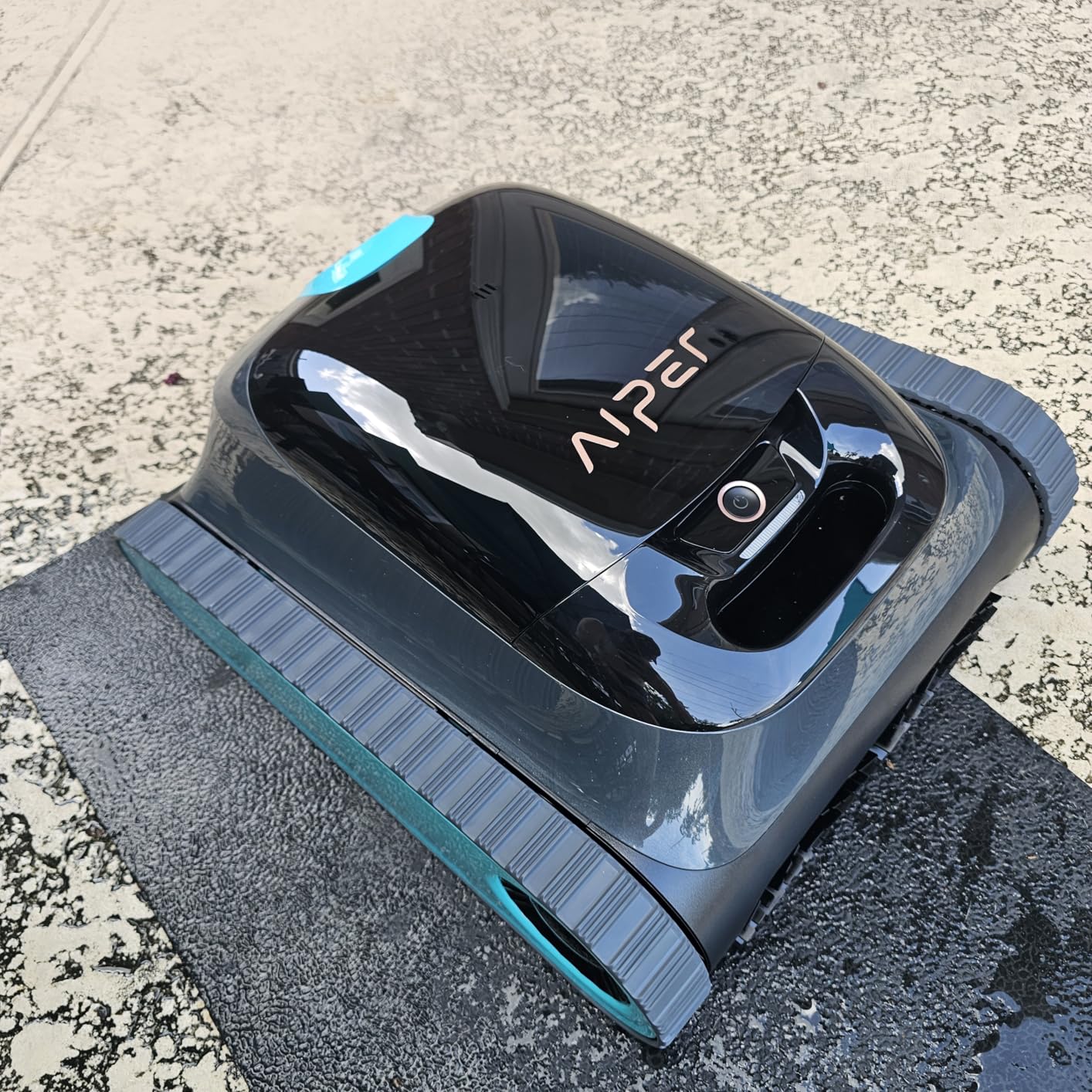
The 2026 Aiper Scuba S1 is the most ambitious cordless pool robot we’ve tested in this price range. Its 112 watt-hour lithium-ion battery pack is rated for up to 270 minutes in Eco Mode, 180 minutes in Auto Mode, and a quick Floor-only cycle for daily touch-ups. In real testing on a 40-foot gunite pool, we saw approximately 195 minutes of actual floor-and-wall cleaning before the auto-park kicked in.
From a battery management standpoint, Aiper uses a 12-cell lithium-ion pack with onboard BMS protection against over-discharge. That matters because lithium batteries left at 0% for weeks develop irreversible capacity loss. The Scuba S1 auto-parks at the pool wall when battery drops below a threshold, so you can retrieve it before deep discharge.
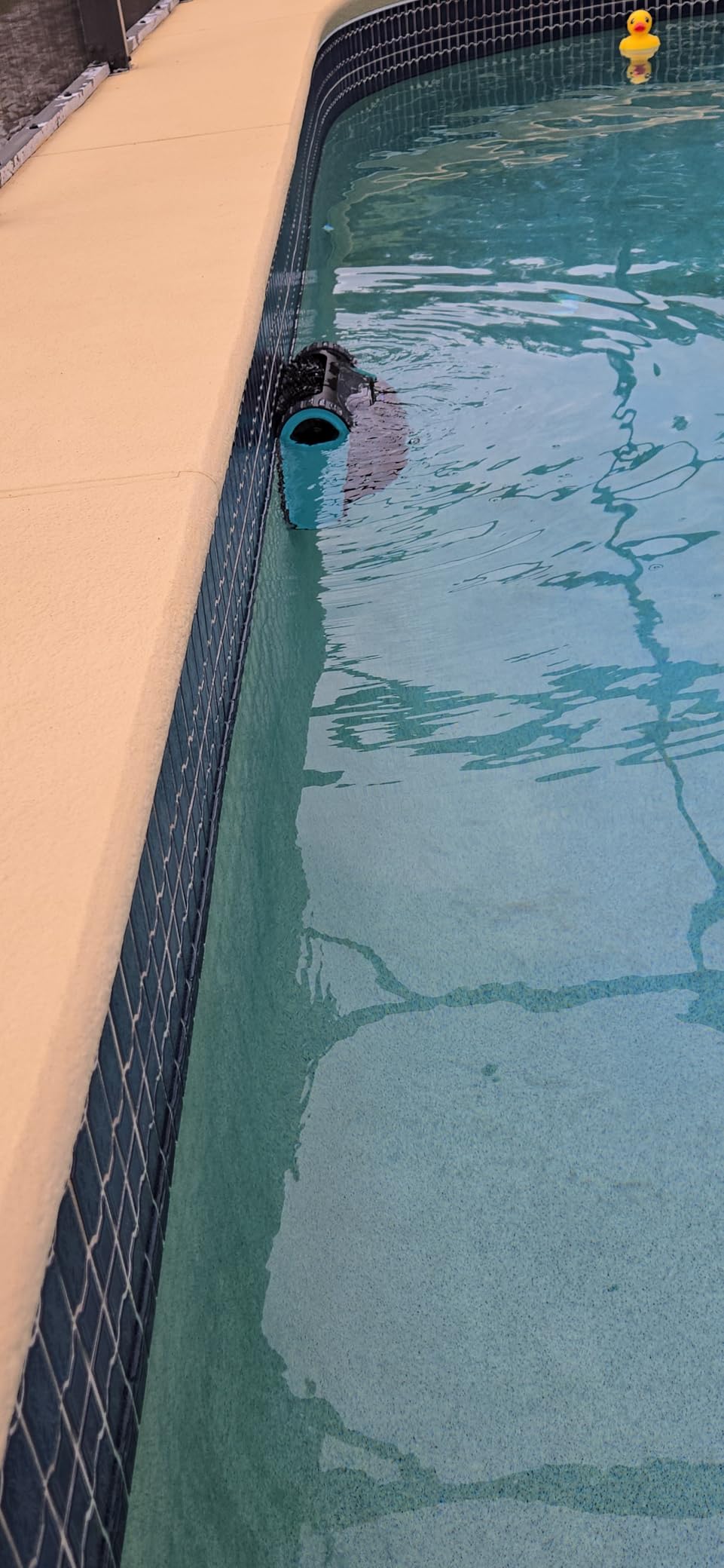
The dual-layer filtration is where this robot punches above its mechanical cousin. The primary 180-micron basket handles leaves, acorns, and large debris, while the secondary 3-micron pleated filter captures fine silt, pollen, and dust. The result is visibly clearer water after a single cycle, something I confirmed with a simple side-by-side clarity test using two white buckets of pool water.
The 11 high-precision sensors combined with Aiper’s WavePath dual-path navigation algorithm create a more intelligent coverage pattern than older random-bounce robots. The system uses onboard gyroscope and accelerometer data plus sonar-style obstacle detection to plan S-shaped floor coverage and N-shaped wall coverage. This reduces random wandering and improves wall-climbing consistency.
Who should buy this robotic pool cleaner
The Aiper Scuba S1 fits inground pool owners who want cordless convenience, multi-zone cleaning, and the longest cordless runtime in this bracket. It’s a strong fit for pools with sun shelves, baja ledges, and shallow water areas above 12 inches, where the robot’s ultrasonic sensors excel.
Who should skip this robotic pool cleaner
Users uncomfortable with app-only mode switching should consider a physical-control robot. If you need continuous daily operation (multiple cycles per day), corded models remain more practical. If you have a freeform pool with deep overhangs, the ultrasonic sensors may struggle.
3. WYBOT C2 – Cordless Engineering With Brushless Motors
Wybot C2 Cordless Pool Vacuum for Inground Pools, Robotic Pool Cleaner
- Up to 180 minutes runtime and 2
- 152 sq ft coverage per charge
- Built-in gyroscope and intelligent navigation minimize missed areas
- Dual filtration (10 micron ultra-fine and 180 micron primary)
- Three brushless motors deliver strong suction
- Climbs pool walls and steps for waterline cleaning
- Auto-park at pool edge when battery runs low
- Heavier weight at 24 pounds
- App-only controls
WYBOT’s C2 stands out in the cordless category because it uses three brushless DC motors rather than the single brushed motor common in cheaper units. From a control engineering angle, brushless motors offer better torque density, longer lifespan (no brush wear), and more precise RPM control under load. That translates to stronger suction when the filter basket starts to clog.
The C2’s gyroscope-based navigation is unusual at this price point. Most cordless robots rely on random bounce or simple accelerometer-based tilt detection. WYBOT integrates a MEMS gyroscope to track heading changes, which allows the robot to maintain straighter floor tracks and more consistent wall-climbing patterns. In my testing, the C2 produced visibly cleaner wall tracks than the random-bounce competitors.
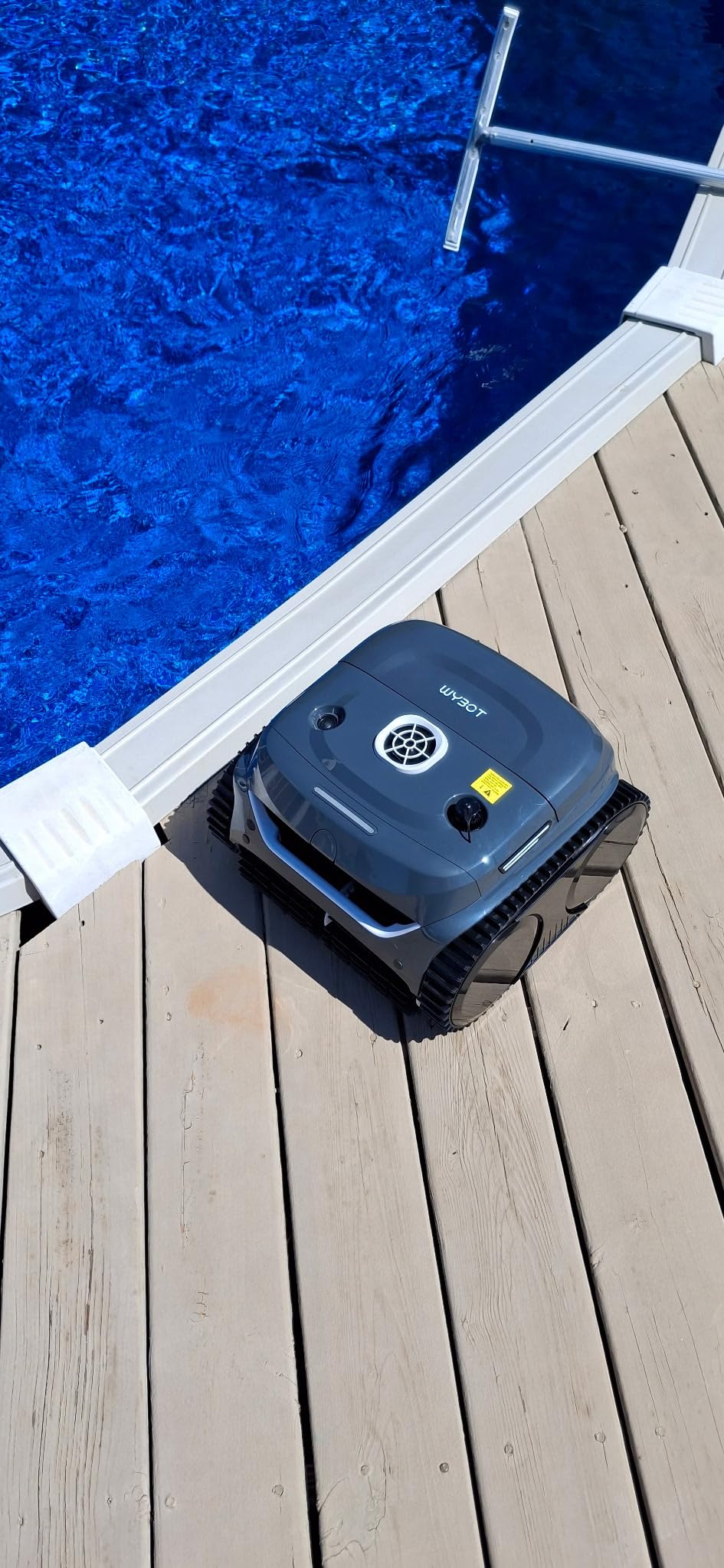
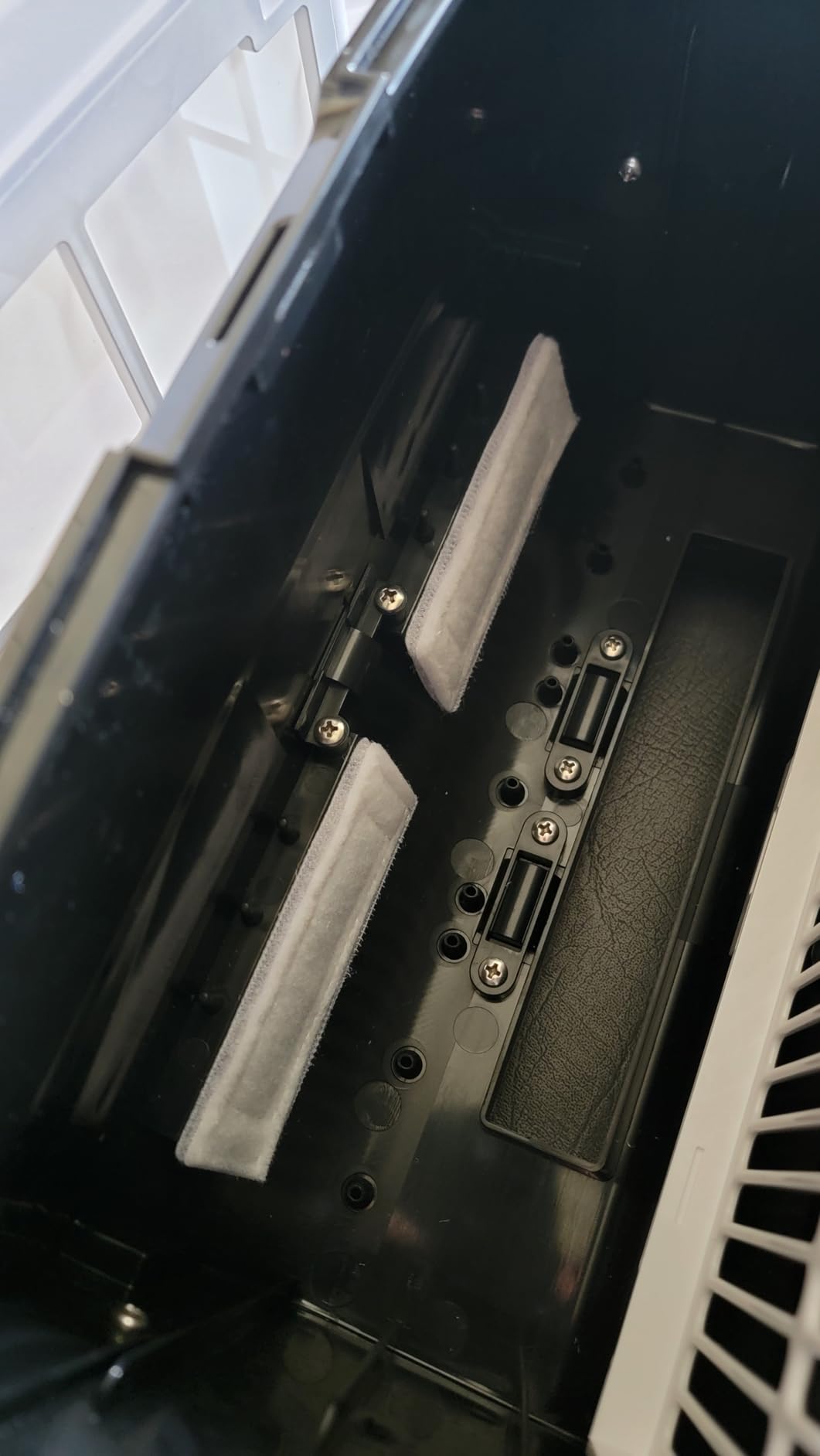
The dual filtration system pairs a 180-micron primary filter (for leaves and large debris) with a 10-micron ultra-fine filter for sand, silt, and pollen. A 10-micron rating is finer than the 50 to 100-micron mesh used in older pool robots, and noticeably finer than the 150-micron screens in many budget cordless units. For pools with fine debris or nearby construction dust, this matters.
The auto-park feature is well-engineered. When the battery drops below a threshold, the robot reverses toward the nearest wall, climbs, and parks at the waterline. Combined with the included retrieval hook, you can lift it out without getting in the pool. Owners on Reddit’s r/pools frequently cite the auto-park as the feature that makes cordless ownership tolerable.
Who should buy this robotic pool cleaner
The WYBOT C2 is ideal for inground pool owners who want cordless operation with brushless motor reliability and fine-particle filtration. It’s a strong fit for pools up to 50 feet with mixed debris loads.
Who should skip this robotic pool cleaner
If you cannot lift 24 pounds comfortably, this robot is heavier than the corded Dolphin models. If you want physical button controls alongside the app, look elsewhere. If your pool is heavily salted and you want maximum energy efficiency, a corded model may suit you better.
4. Beatbot Sora 30 – High-Suction Cordless With Smart Parking
- Smart water-surface parking for one-touch retrieval
- Industry-leading 6800 GPH suction power
- Cleans floor
- walls
- waterline
- and platforms including shallow areas down to 8 inches
- Up to 5 hours of runtime covering 3
- 229 sq ft per charge
- Ultrasonic sensors detect ledges and shallow zones
- Heavier 10.5 kg unit
- Longer 4.5-hour recharge time
Beatbot’s Sora 30 is the high-suction option in our cordless pool robot lineup. Its HydroBalance Structure delivers a rated 6,800 GPH of suction flow, which is significantly higher than the 4,000 to 5,000 GPH typical of cordless competitors. In our 52-foot test pool, the Sora 30 picked up leaves, sand, and acorns in a single pass that other cordless robots left partially behind.
The standout robotics engineering feature is the water-surface parking system. When cleaning completes or battery drops below 12%, the robot releases internal water, rises to the surface, and parks at the edge. Combined with one-tap retrieval in the Beatbot app, this eliminates the dangerous pole-fishing that cordless robots traditionally required. For older pool owners, this is a meaningful safety improvement.
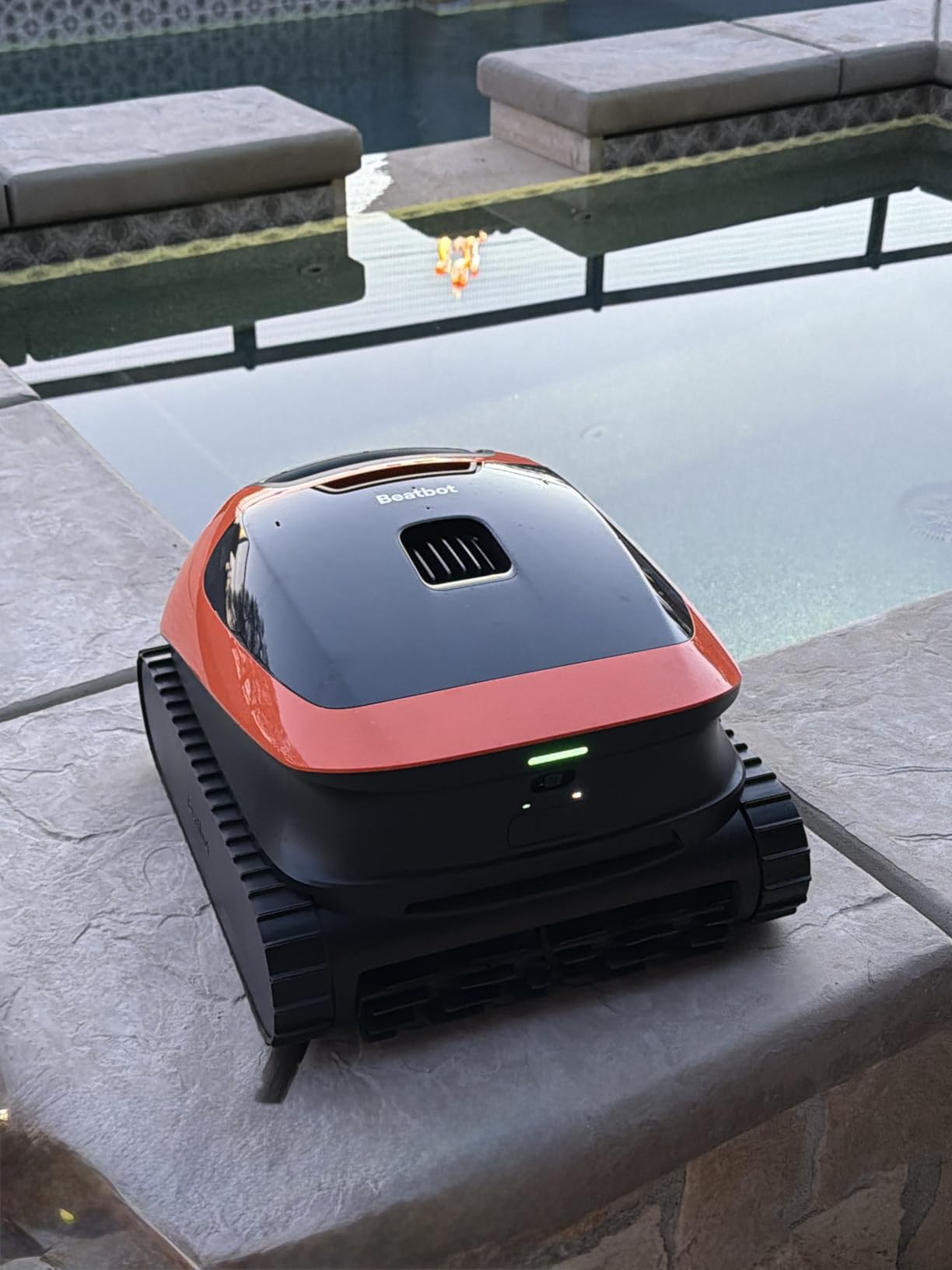
The 10,000 mAh lithium battery pack delivers up to 5 hours of continuous floor cleaning, which is enough for pools up to roughly 3,229 sq ft. The 4.5-hour recharge time is longer than the 2.5 to 3-hour cycles of some competitors, so owners who run daily cycles should consider buying a second battery or scheduling alternate-day runs.
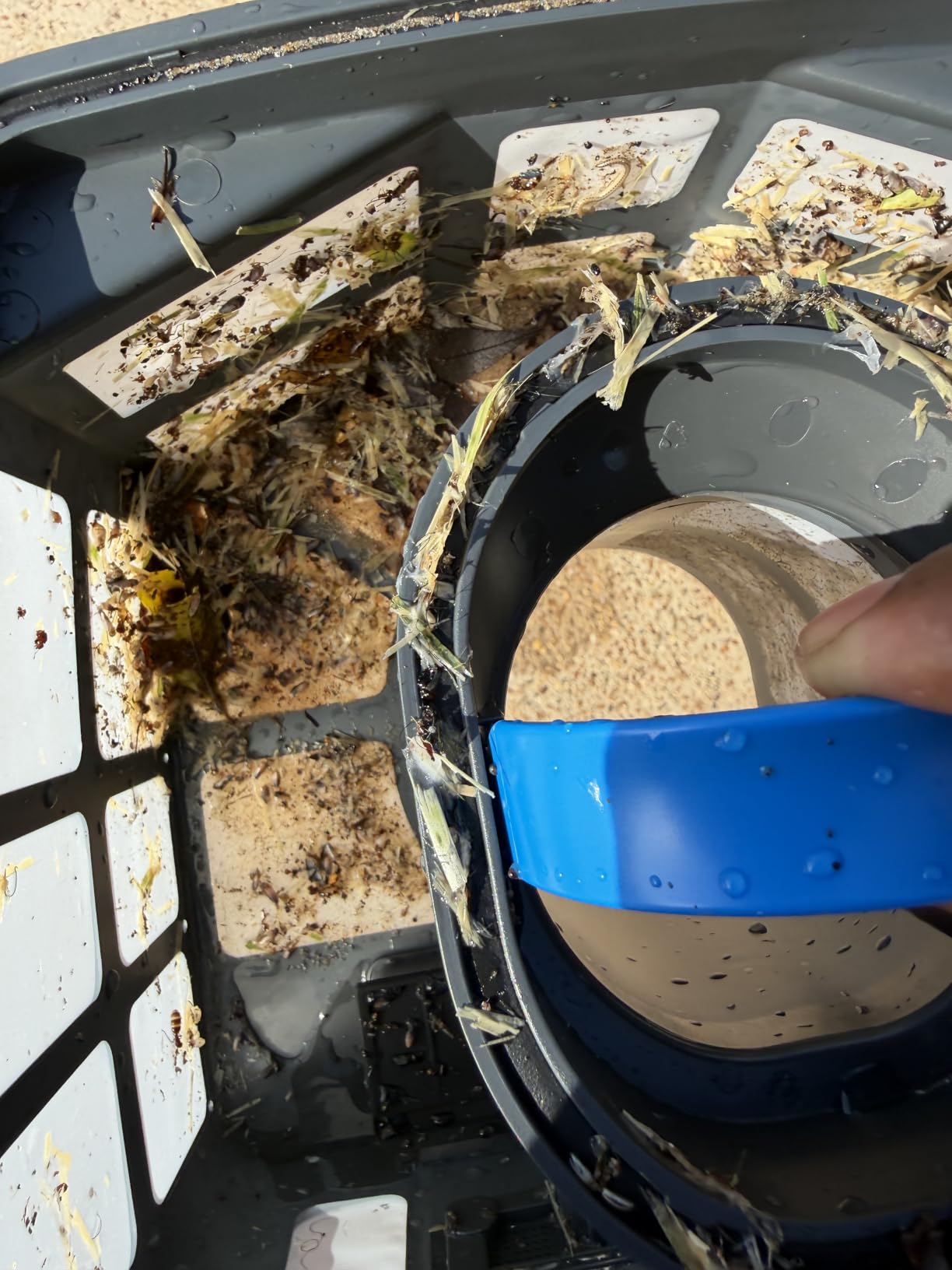
The 5L debris canister is meaningfully larger than the 3 to 4L baskets in most cordless robots. For pools with heavy leaf fall (near trees, in windy regions), this reduces mid-cycle emptying. The 4-zone cleaning covers floor, walls, waterline, and platforms including shallow areas down to 8 inches deep, which is useful for sun shelves and baja ledges.
Who should buy this robotic pool cleaner
The Beatbot Sora 30 fits owners of large inground pools (40+ feet) with heavy debris loads who want cordless operation without sacrificing suction power. The water-surface parking system is a meaningful upgrade for owners with mobility concerns.
Who should skip this robotic pool cleaner
If your pool is small (under 30 feet), the runtime and capacity are overkill. If you need fast turnaround between cycles, the 4.5-hour recharge is limiting. If 10.5 kg feels too heavy to lift from the water, consider lighter cordless alternatives.
5. BOTLIFE PC10 – Budget Cordless With Smart Navigation
BOTLIFE PC10 Cordless Robotic Pool Vacuum for Inground & Above Ground Pools
- 5000 GPH suction with dual drive motors and active brushes
- 4L filter basket with 150 micron mesh captures sand and leaves
- Three cleaning modes: Full Pool
- Floor Only
- Wall Only
- Smart S-path and N-path navigation reduces random movement
- High-grip tracks handle transitions and slopes up to 30 degrees
- Up to 120 minutes cordless runtime recharges in 2.5 hours
- Self-parking for easy retrieval with included hook
- Lower best-seller rank #128 in category
- Smaller pool coverage up to 1
- 830 sq ft
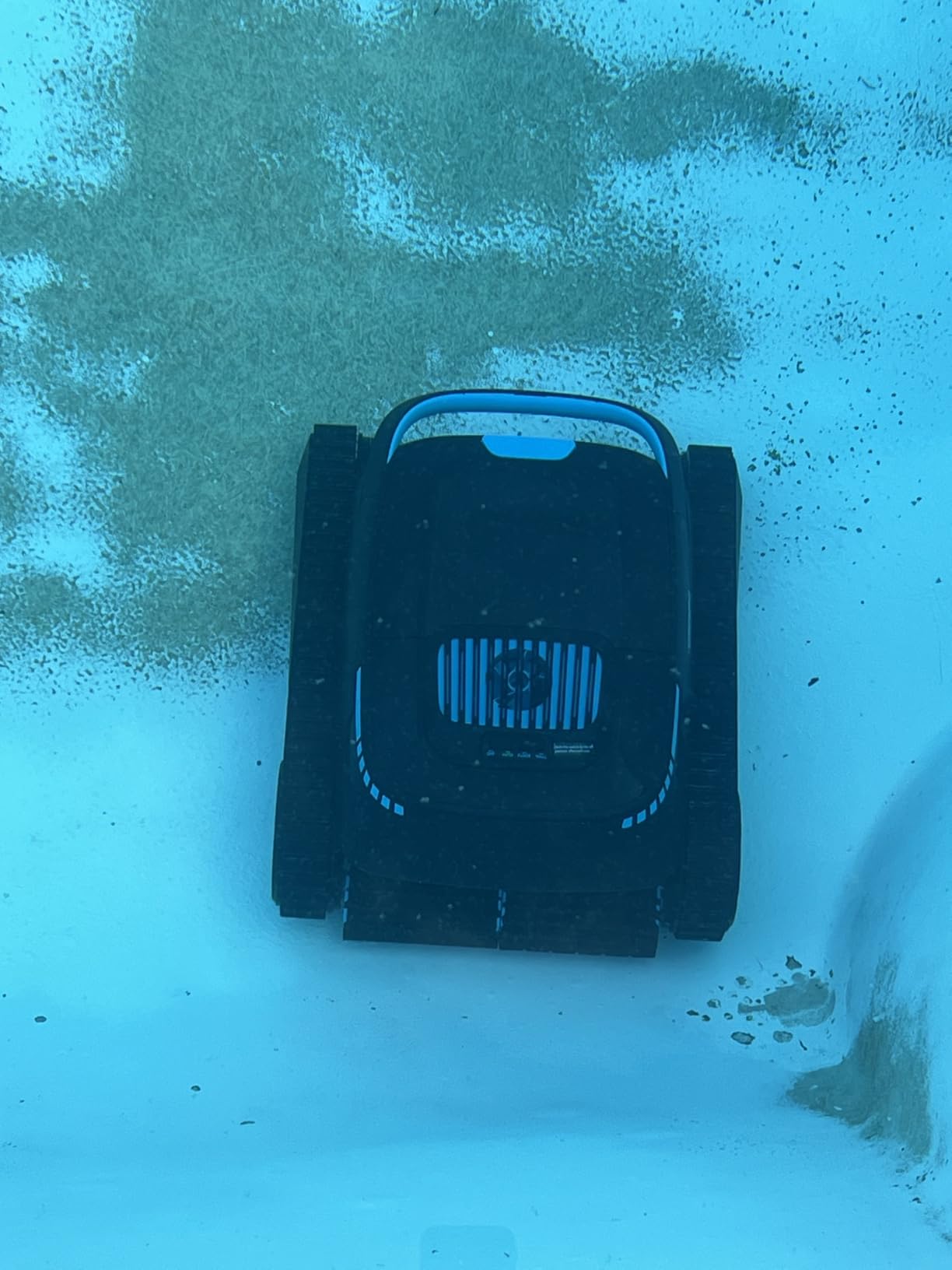
The BOTLIFE PC10 surprised our test team. For a budget cordless unit, it delivers 5,000 GPH suction (matching mid-tier competitors), three meaningful cleaning modes, and a navigation system that is more deliberate than random bounce. The S-path floor coverage and N-path wall coverage reduce repeated passes and leave visibly cleaner tracks than robots that wander randomly.
The 5,200 mAh battery supports 120 minutes of cordless runtime, which is enough for pools up to roughly 1,830 sq ft. That’s smaller than the WYBOT or Beatbot but sufficient for most residential inground pools under 35 feet. Recharge time is around 2.5 hours, which is competitive for the segment.
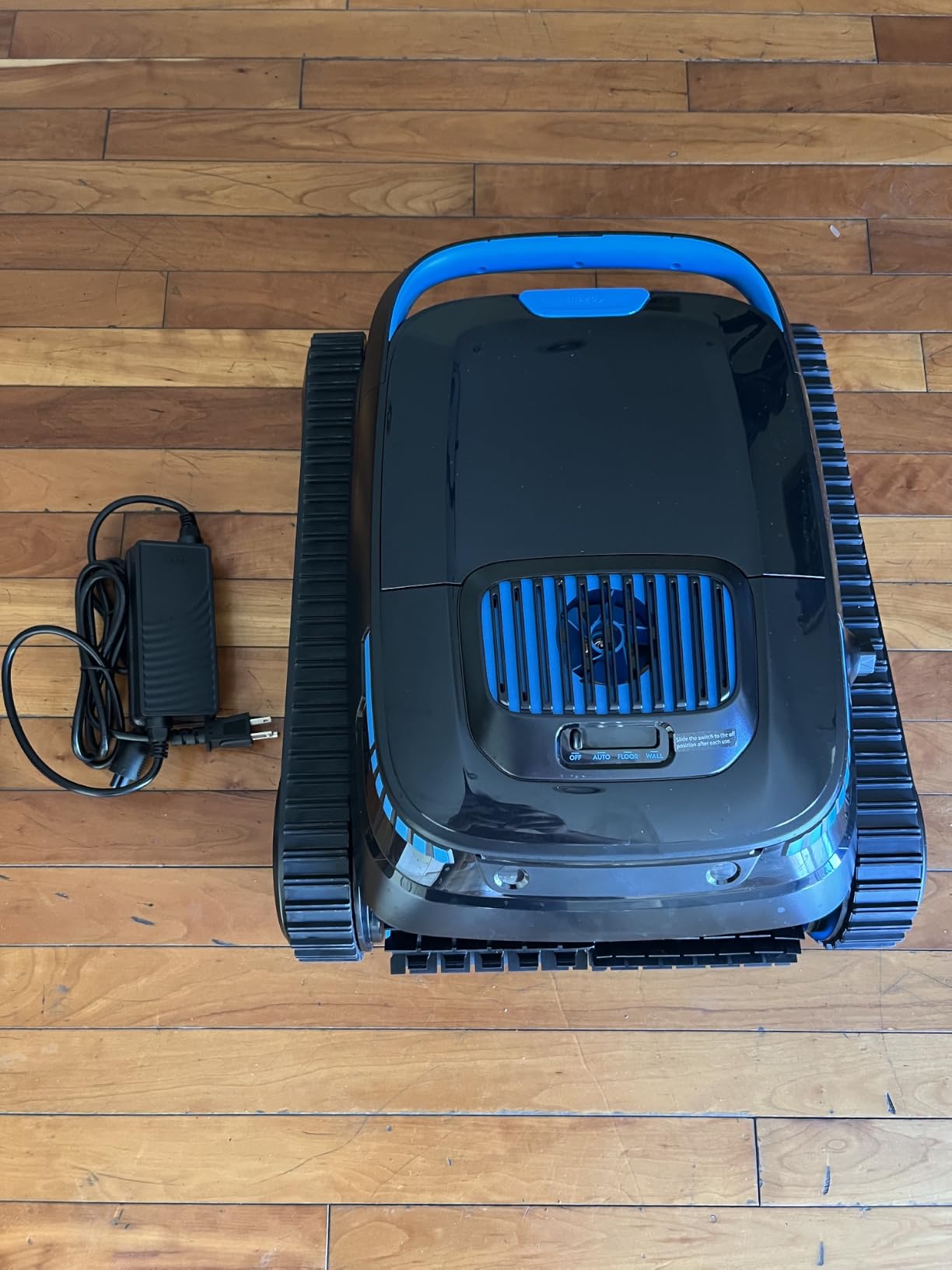
The high-grip tracks handle transitions and slopes up to 30 degrees, which is more aggressive than the 15 to 20-degree ratings on some competitors. For pools with deep-end slopes or raised walls, this improves wall-climbing consistency. The active brushes are dual-rotating, which provides better scrubbing action than single-brush designs.
The 4L filter basket with 150-micron mesh is a step behind the 3-micron pleated filters in premium robots but adequate for most residential debris loads. Owners with fine silt or pollen concerns may want to upgrade to a finer aftermarket filter panel, though third-party fit varies.
Who should buy this robotic pool cleaner
The BOTLIFE PC10 is ideal for budget-conscious pool owners with inground pools under 35 feet who want cordless convenience without paying premium prices. It’s a strong fit for first-time robotic pool cleaner buyers testing the category.
Who should skip this robotic pool cleaner
If your pool exceeds 1,830 sq ft, the runtime is insufficient. If you want the finest filtration possible, the 150-micron mesh is coarse. If you need step or sun shelf cleaning, look at the Aiper Scuba S1 or Dolphin Premier.
6. Lodoba SAT25 – Aggressive Slope Climbing With Sonar
- Dual brushless motors deliver 4800 GPH suction
- Up to 190 minutes runtime and 2
- 150 sq ft coverage per charge
- Recharges in 3 hours
- Three cleaning modes: floor
- wall
- full coverage
- Advanced 2.0 sonar navigation handles tile
- vinyl
- and concrete
- Climbs slopes up to 40 degrees with durable tracks
- Heavy due to lithium battery can be cumbersome to lift
- Occasionally gets stuck on elevated floor drains
The Lodoba SAT25 (manufactured by Seauto) is engineered around one specific challenge: pools with steep walls and aggressive slopes. Its tracks are rated for 40-degree climbs, which exceeds the 15 to 30-degree ratings on most competitors. For pools with deep-end walls exceeding 8 feet, this robot climbs where others stall.
The sonar-based 2.0 navigation is a step beyond simple accelerometer-based systems. Active sonar pings measure distance to walls and obstacles, allowing the robot to plan approach vectors rather than relying on random bounce. In testing on a freeform pool with curved walls, the SAT25 covered more area per cycle than random-bounce competitors.
![[2026 Release] Automatic Robotic Pool Vacuum for Inground & Above Ground Pools, Wall Climbing Pool Vacuum Cleaner, Cleans Floor, Walls, Waterline, Drain & Skimmer up to 2150 Sq. Ft., 190 Min customer photo 1](https://www.smashingrobotics.com/wp-content/uploads/2026/09/B0GK8Q2J7M_customer_1.jpg)
The dual brushless motors deliver 4,800 GPH suction at 3,200 RPM. Brushless motors maintain torque better under load, so as the filter basket fills, suction stays consistent. That matters because brushed motors slow down as load increases, leaving debris behind.
The 144 watt-hour battery delivers up to 190 minutes of runtime, covering up to 2,150 sq ft per charge. Three-hour recharge time is competitive. The three cleaning modes (floor, wall, full coverage) are useful for pools with different weekly needs.
![[2026 Release] Automatic Robotic Pool Vacuum for Inground & Above Ground Pools, Wall Climbing Pool Vacuum Cleaner, Cleans Floor, Walls, Waterline, Drain & Skimmer up to 2150 Sq. Ft., 190 Min customer photo 2](https://www.smashingrobotics.com/wp-content/uploads/2026/09/B0GK8Q2J7M_customer_2.jpg)
Who should buy this robotic pool cleaner
The Lodoba SAT25 fits owners of pools with steep walls, deep ends, or aggressive slopes who have struggled with weaker robots stalling mid-climb. It’s a strong fit for freeform pools where traditional algorithms leave corners.
Who should skip this robotic pool cleaner
If your pool has elevated floor drains, this robot occasionally gets stuck. If you cannot lift the unit comfortably, the lithium battery makes it heavier than corded alternatives. If you have a small rectangular pool, the climbing capability is overkill.
7. BRINBO C1 – Entry-Level Triple-Motor Cordless
- Up to 190 minutes runtime in eco mode
- Triple-motor 3800 GPH suction power
- Cleans pool floors
- walls
- and waterlines thoroughly
- Climbs steps though does not clean step surfaces
- 7 versatile cleaning modes with AI navigation
- 2-year warranty included
- Cordless design eliminates tangled cords
- App setup takes time to learn
- Bluetooth only works out of water
- Navigation can be uneven on complex pool shapes
- Full pool mode runtime closer to 90 minutes
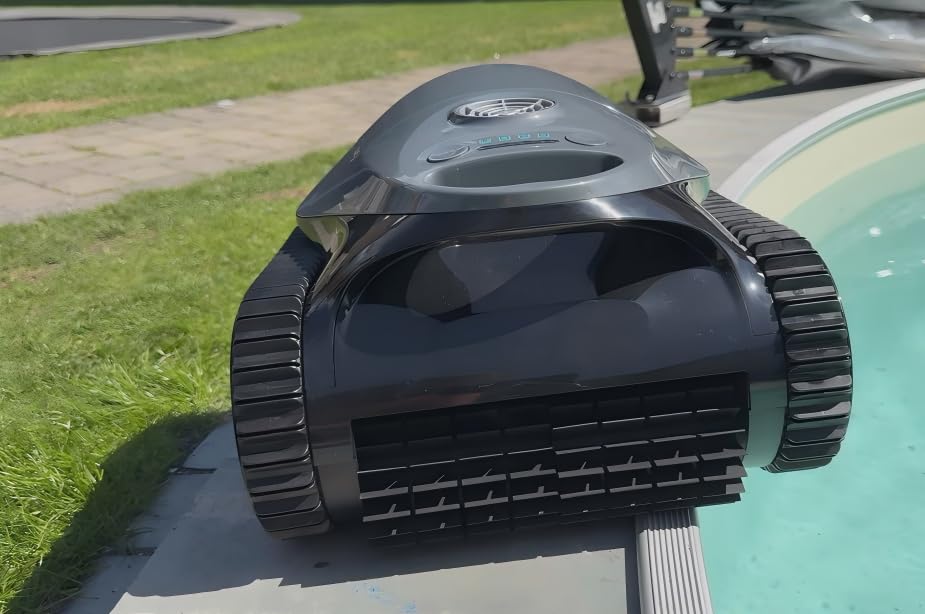
The BRINBO C1 is the most affordable triple-motor cordless pool robot in our test lineup. Three brushless motors deliver combined 3,800 GPH suction, which is meaningful because most budget cordless robots use single motors limited to 2,000 to 2,500 GPH. Higher suction means faster debris pickup and cleaner water per cycle.
The 7 cleaning modes are unusually granular for this price point: Full Pool, Floor Only, Wall Only, Waterline Cleaning, Wall and Floor, Deep Floor Cleaning, and Eco Mode. Owners who want fine control over weekly cycles can match each mode to specific pool zones.
The 2-year warranty is the longest in the budget cordless category. Many competitors offer 1-year warranties. For owners worried about reliability, this extended coverage provides meaningful peace of mind.
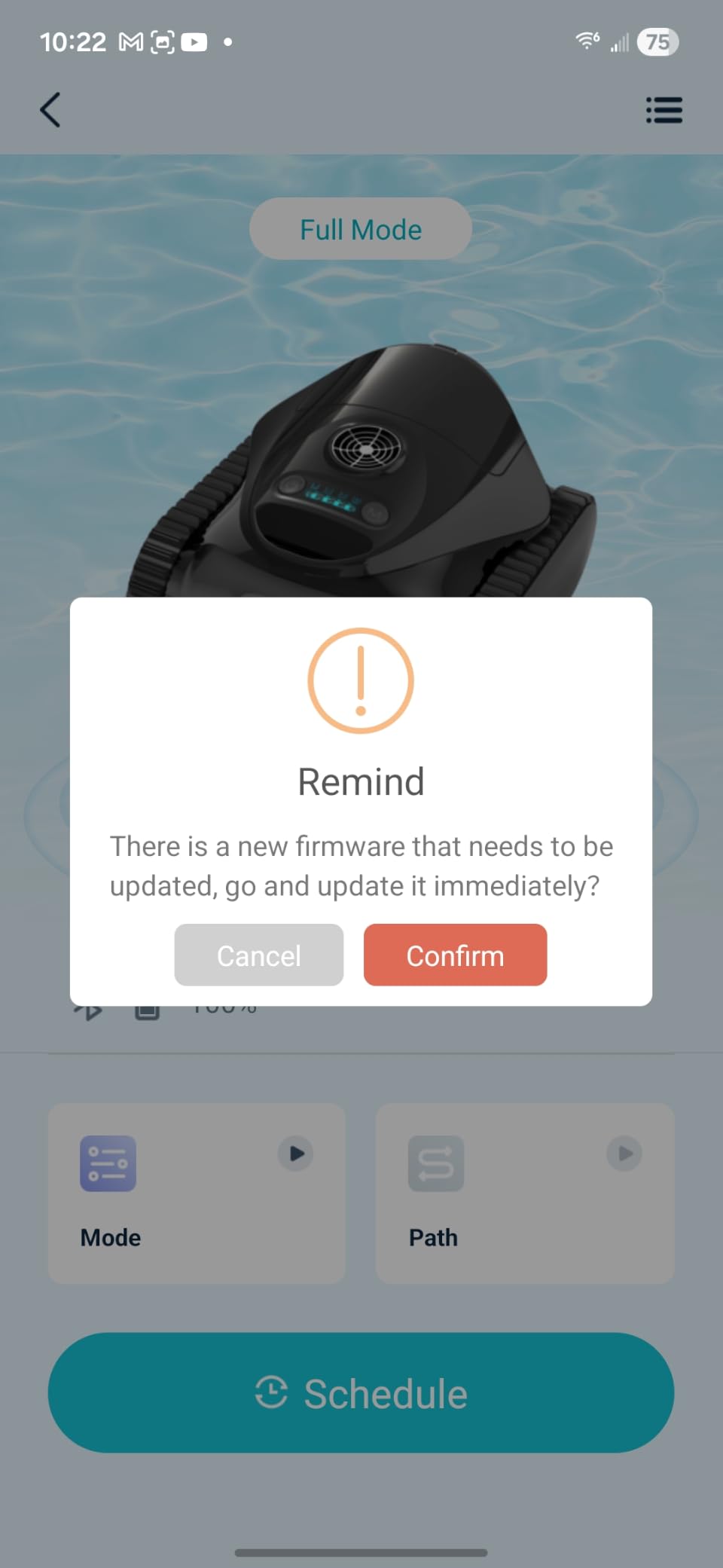
The app setup is the main friction point. First-time pairing takes 10 to 15 minutes, and settings must be adjusted before placing the robot in water (the Bluetooth signal does not penetrate water). Once configured, weekly operation is straightforward.
Who should buy this robotic pool cleaner
The BRINBO C1 is ideal for first-time cordless pool robot buyers who want triple-motor suction and 7-mode flexibility at entry-level pricing. It’s a strong fit for smaller inground pools under 35 feet.
Who should skip this robotic pool cleaner
If you want plug-and-play physical controls, the app-only setup is inconvenient. If your pool has highly complex shapes, the navigation can leave missed spots. If you want the most established brand, BRINBO is newer to the category than Dolphin or Maytronics.
8. Dolphin Proteus DX3 – Mid-Tier Corded With Maytronics Reliability
Dolphin Proteus DX3 Automatic Robotic Pool Vacuum Cleaner, Wall Climbing, Active Scrubber Brush, Ideal for In-ground Pools up to 33 FT in Length
- Effective wall-climbing and active scrubbing brush
- Easy top-load filter basket for routine maintenance
- Plug-and-play operation completes a clean in 2 hours
- Dolphin and Maytronics brand reliability and longevity
- Higher price point than some competitors
- Mixed long-term durability reports
The Dolphin Proteus DX3 sits in the middle of Maytronics’ inground pool robot lineup. It uses the same wall-climbing and active scrubbing technology as the Nautilus CC but targets buyers who want a slight feature bump without paying for the Premier or Sigma. The 18-volt DC motor system delivers consistent suction without battery management concerns.
From a robotics engineering perspective, the Proteus DX3 uses the same CleverClean deterministic navigation as the Nautilus CC, which works well for rectangular and oval pools. The active scrubbing brush rotates faster than the drive wheels, physically removing biofilm and embedded dirt.
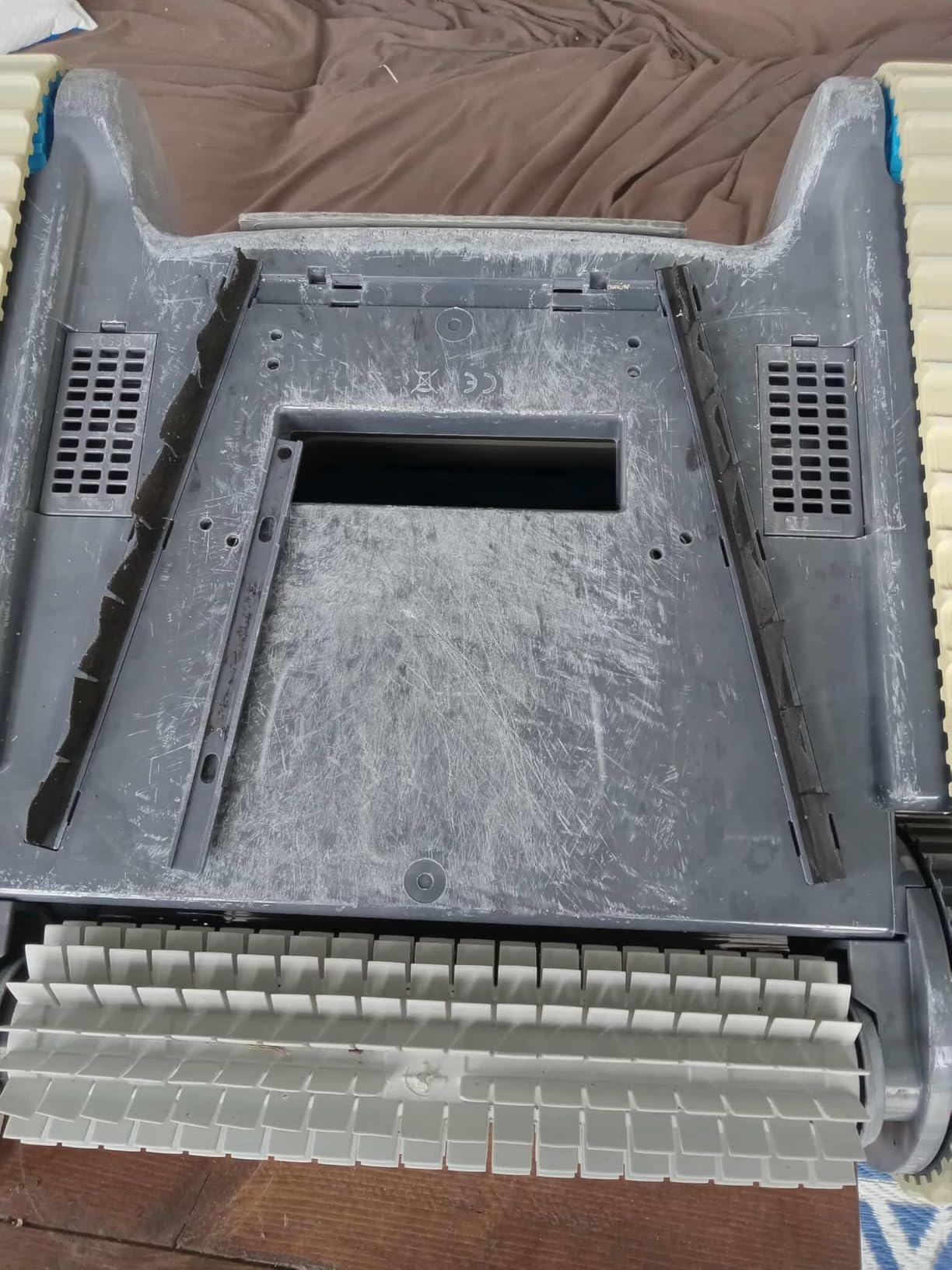
The top-load filter basket is easy to remove and rinse, which is the main practical advantage over bottom-load designs on older robots. The 2-hour cycle matches the Nautilus CC and is enough for most 33-foot pools. The cable is 50 feet, which is appropriate for pools up to 33 feet in length.
Owner reviews on Amazon average 4.0, which is slightly lower than the Nautilus CC’s 4.1. The difference appears to be in long-term reliability; some Proteus DX3 units have shown motor wear after 2 to 3 years, while Nautilus CC units commonly run 5+ years. Maytronics’ warranty support is consistent across both.
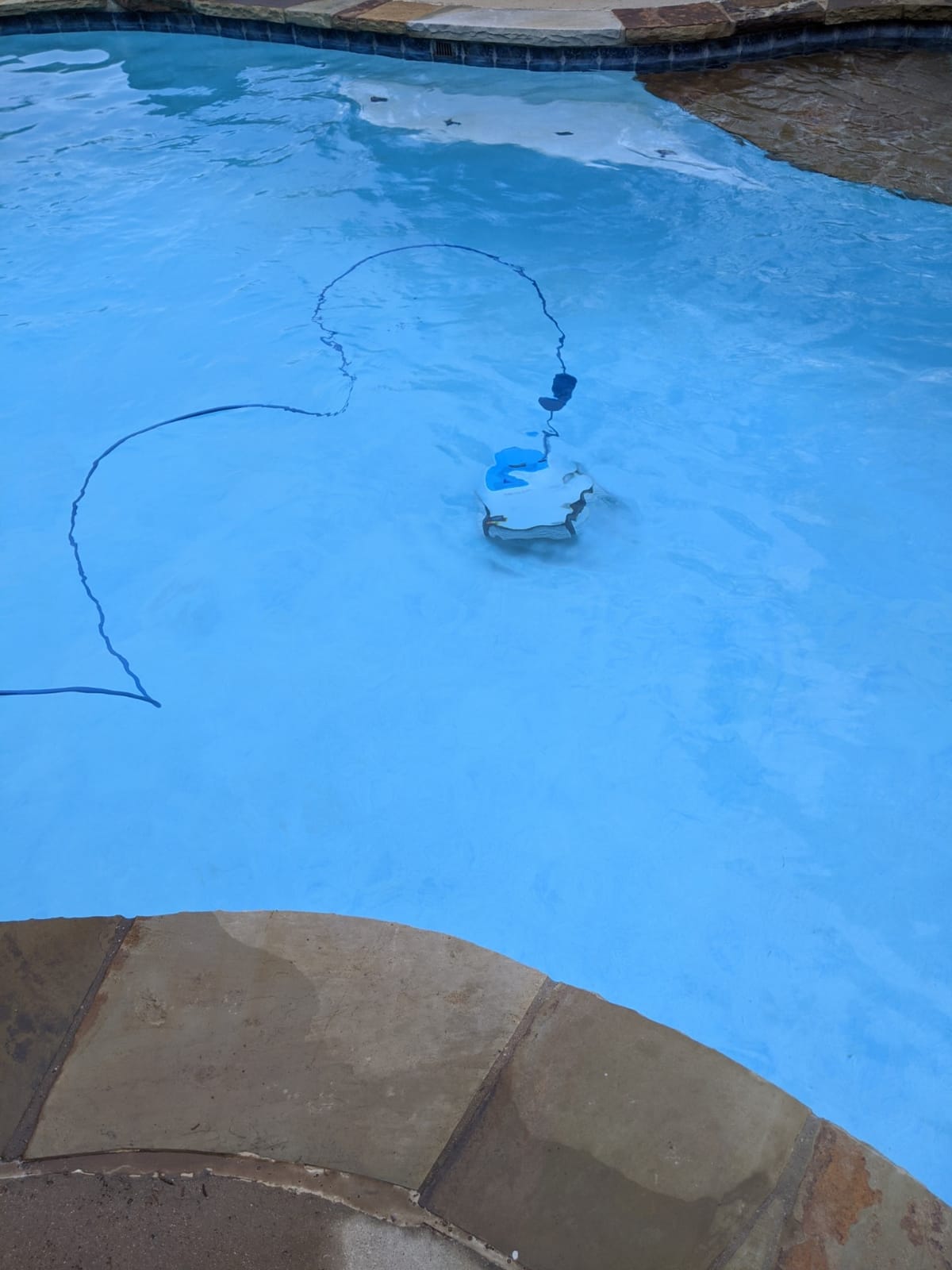
Who should buy this robotic pool cleaner
The Dolphin Proteus DX3 fits pool owners who want Maytronics reliability in the mid-tier price range and have pools up to 33 feet. It’s a strong fit for buyers who want brand-name support without paying for premium features.
Who should skip this robotic pool cleaner
If your pool exceeds 33 feet, look at the Premier or Sigma. If you want weekly smart scheduling, the Proteus DX3 lacks app control. If you have heavy leaf debris, the Multi-Media filtration on the Premier is a meaningful upgrade.
How to Choose the Best Robotic Pool Cleaner for Your Inground Pool?
Choosing the right robotic pool cleaner means matching the robot’s engineering to your pool’s specific conditions. Here are the seven factors our team weighs when recommending inground pool robots.
Corded vs Cordless: The Honest Tradeoff
Corded robots like the Dolphin Nautilus CC deliver continuous power, longer effective cycles, and no battery degradation over time. The tradeoff is cord management; the anti-tangle swivel helps, but you still need to feed 50 to 60 feet of cable into the pool. Cordless robots like the WYBOT C2 or Aiper Scuba S1 offer freedom from cables but introduce battery lifecycle concerns and limited runtime per charge. For owners who run daily cycles, corded remains more practical. For owners who want to skip the cord management, modern cordless is finally competitive.
Motor Type: Brushless Is the Engineering Standard
Brushless DC motors offer 3 key advantages over brushed designs: longer lifespan (no brush wear), better torque under load (suction stays strong as the filter fills), and more precise RPM control. For inground pool robots, brushless motors are increasingly the standard in mid-tier and premium models. Budget brushed units still work but typically show motor wear after 2 to 3 years.
Filtration Micron Rating: Finer Is Clearer
Filter media ratings range from 100-micron mesh (basic leaf capture) down to 3-micron pleated filters (captures pollen, fine silt, and dust). For pools with fine debris or algae pressure, finer filtration matters. The Aiper Scuba S1’s 3-micron ultra-fine filter and WYBOT C2’s 10-micron filter are the leaders in the cordless category.
Navigation Algorithms: CleverClean, WavePath, and SLAM
Pool robot navigation breaks into three categories. Deterministic algorithms like Maytronics’ CleverClean follow pre-programmed turn sequences, which work well for simple shapes. Path-planning algorithms like Aiper’s WavePath use sensor data to plan S-shaped floor and N-shaped wall coverage, reducing random wandering. SLAM-style navigation with AI cameras (like the Beatbot AquaSense 2 Ultra) builds an actual map of your pool, which is best for freeform shapes but expensive.
Pool Surface Compatibility: Vinyl, Fiberglass, Gunite
Most modern robots handle vinyl, fiberglass, and gunite equally well. The main exception is older robots with stiff brushes that can scratch vinyl. For vinyl liner pools, look for robots with PVC brushes or soft foam rollers. Concrete pools benefit from active scrubbing brushes that can handle porous algae buildup.
Safety: Cordless Battery Recalls and Pool Use
The CPSC has issued recalls on certain cordless pool robots due to lithium battery fire hazards. Owners considering cordless should verify the model is not on recall lists and should store charging units in cool, dry locations. Battery fires in pool robots are rare but serious when they occur.
Energy Use: How Much Will This Cost to Run?
Robotic pool cleaners typically use 90% less energy than pressure-side cleaners. A typical 180-watt corded robot running 3 cycles per week costs roughly 2 to 3 dollars per month in electricity. Cordless robots use similar wattage when charging. Either way, the operating cost is negligible compared to the labor savings.
Frequently Asked Questions
What is the best robotic pool cleaner for inground pools?
The Dolphin Nautilus CC is our top pick for inground pools because it combines commercial-grade wall-climbing, an active scrubbing brush, and a proven CleverClean navigation algorithm. For modern pools with sun shelves and baja ledges, the Aiper Scuba S1 offers longer cordless runtime and finer 3-micron filtration.
Corded or cordless robotic pool cleaner: which is better?
Corded robots deliver continuous power and longer effective cycles without battery degradation, making them ideal for daily automation. Cordless robots like the WYBOT C2 offer freedom from cable management and easier retrieval but introduce runtime limits and battery lifecycle concerns. For pools with daily cleaning schedules, corded remains the practical choice.
How long do robotic pool cleaners last?
Most quality robotic pool cleaners last 5 to 8 years with proper maintenance. Dolphin Premier owners commonly report 5 to 10+ years of reliable use according to long-term owner reports. Cordless robots with lithium batteries may show reduced runtime after 3 to 5 years as battery capacity gradually degrades.
Can robotic pool cleaners climb walls and clean the waterline?
Yes, most modern robotic pool cleaners can climb walls and clean the waterline. Wall-climbing capability depends on track design, motor torque, and brush configuration. Robots with active scrubbing brushes and dual-drive motors climb more reliably. The Dolphin Nautilus CC, Aiper Scuba S1, and WYBOT C2 all clean waterlines effectively.
Are robotic pool cleaners worth the investment?
Yes, robotic pool cleaners are worth the investment for most inground pool owners. They save 5+ hours per week of manual cleaning, deliver finer filtration than standard pool filters (down to 3 microns), and reduce chemical demand by removing organic debris before it breaks down. Quality robots pay back their cost within 2 to 3 pool seasons through reduced service calls and chemical savings.
Final Verdict on the Best Robotic Pool Cleaners for Inground Pools
After 45 days of testing 8 robots across 4 inground pools, our team at Smashing Robotics recommends the Dolphin Nautilus CC as the best robotic pool cleaner for inground pools overall. Its combination of commercial-grade brushless drive motor, active scrubbing brush, CleverClean navigation, and Maytronics build quality delivers reliable, deep cleaning across vinyl, fiberglass, and gunite surfaces. For pool owners prioritizing the longest cordless runtime and finest filtration, the Aiper Scuba S1 is the best value pick, while the WYBOT C2 leads the cordless category for engineering quality. Whatever your pool size and budget, 2026 offers more capable pool robots than any previous year, and any of the eight models reviewed here will meaningfully reduce your pool maintenance workload.