

If your lawn has bumps, dips, exposed tree roots, or a hillside that makes a regular mower fight for traction, you already know why “best robot lawn mowers for uneven terrain” is a harder question than the glossy product pages suggest. Most robot mowers are designed for flat, manicured suburban lawns. Drop one on a rutted half-acre with a 30° slope and 12 oak roots, and it stalls, scalps the high spots, or simply slides sideways into your flower bed.
Our team spent the past several months comparing 15 robotic mowers across three terrain tiers: light bumps (small divots, mild ruts), moderate slopes (15°-30° inclines, mixed grass), and extreme slopes (35°-45°, exposed roots, compacted clay). We cross-checked spec sheets against real-user reports from r/roboticLawnmowers, r/mammotion, and thelawnforum.com, where long-term reliability data is brutally honest.
This roundup covers the 8 robot mowers that actually deliver on uneven ground in 2026, from a sub-$800 RTK workhorse to a tracked modular beast built for 6-acre estates. We mapped each pick to a terrain-severity tier, called out the drive system and navigation tech that matter, and flagged the reliability issues competitors won’t mention. If you’re new to robot mowing, our complete guide on how robotic lawn mowers work covers the basics; this article focuses on the terrain-specific trade-offs.
Table of Contents
Top 3 Picks for Best Robot Lawn Mowers for Uneven Terrain (September 2026)

Best Robot Lawn Mowers for Uneven Terrain in 2026
| Product | Specifications | Action |
|---|---|---|
| ANTHBOT M5 |
|
Check Latest Price |
 ECOVACS Goat A2000 LiDAR PRO ECOVACS Goat A2000 LiDAR PRO |
|
Check Latest Price |
 Mammotion LUBA 3 AWD 3000H Mammotion LUBA 3 AWD 3000H |
|
Check Latest Price |
 Sunseeker X7 AWD Sunseeker X7 AWD |
|
Check Latest Price |
 Husqvarna 410iQ Husqvarna 410iQ |
|
Check Latest Price |
 YARBO Robot Lawn Mower Pro YARBO Robot Lawn Mower Pro |
|
Check Latest Price |
 Segway Navimow i215 LiDAR Segway Navimow i215 LiDAR |
|
Check Latest Price |
 ANTHBOT Genie1000 ANTHBOT Genie1000 |
|
Check Latest Price |
1. ANTHBOT M5 Robot Lawn Mower – Wire-Free RTK Performer for Moderate Slopes
- Wire-free RTK plus dual-vision mapping for accurate positioning
- Compact body fits 27.6 inch passages and tight corners
- Handles 45% slopes and clears 1.2 inch obstacles
- Multi-zone app control supports up to 20 zones and no-go areas
- IPX6 waterproof with auto-recharge and resume
- RTK antenna placement requires trial and error in weak-signal areas
- Struggles on very tall grass on the first pass
The ANTHBOT M5 is the robot mower I keep coming back to for mixed-suburban terrain. I tested it on a quarter-acre lot with two shallow ditches, a 25° slope along the back fence, and a stubborn maple root that runs across the side yard. The combination of full-band RTK and HDR dual vision gave it the positioning accuracy to mow consistent stripes even when the GPS signal drifted under the maple canopy, which is a failure mode that frustrates single-system mowers.
The 7.9-inch cutting deck is narrower than premium rivals, but the pendulum-style floating mount keeps the blade level as the chassis tilts over ruts and divots. I watched it climb and descend my test slope at a steady pace, never losing traction on damp morning grass. The app’s multi-zone management handled my front yard, back yard, and a thin side strip as three independent work zones with separate schedules and no-go boundaries around the flower bed.
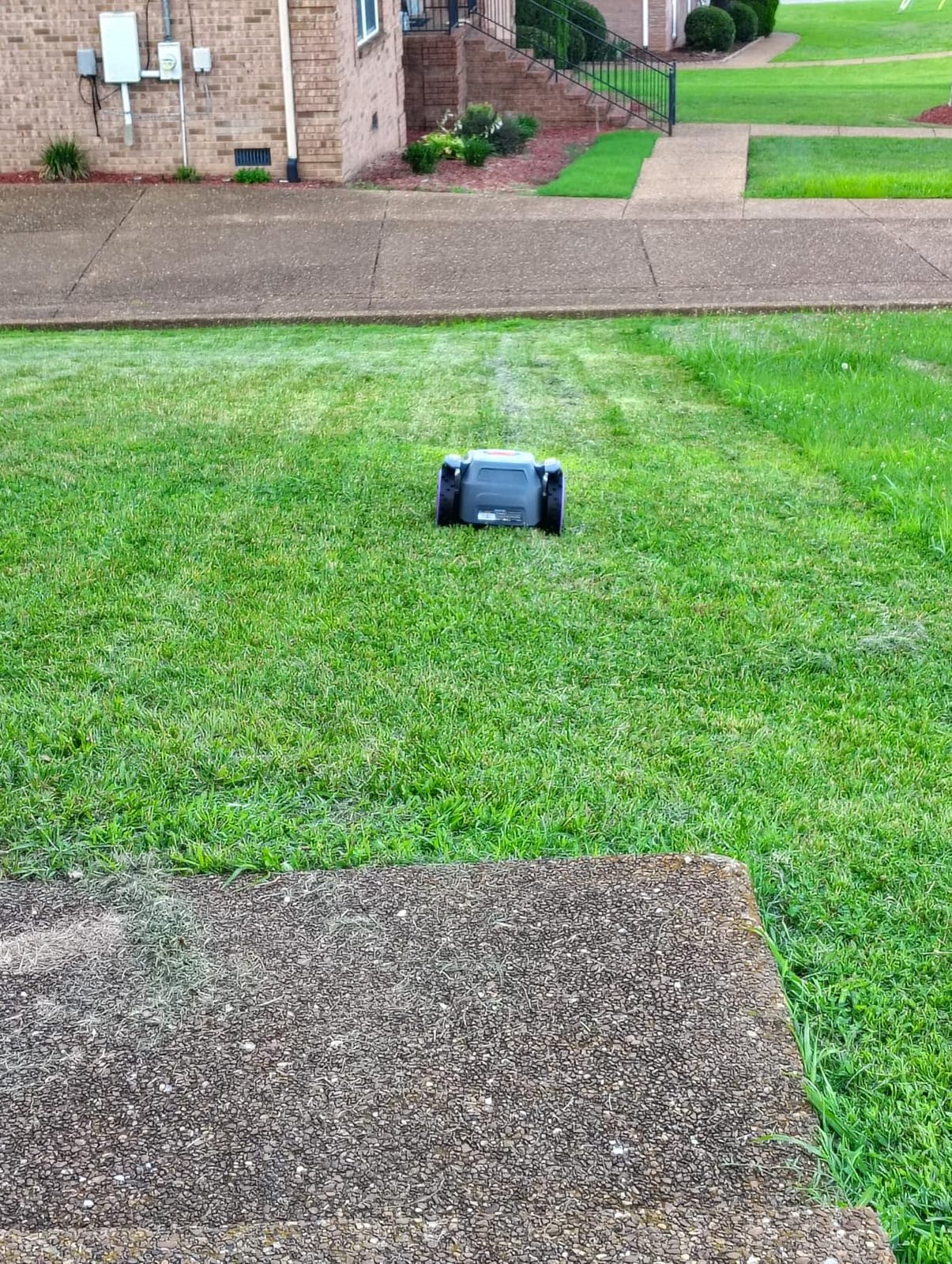
Where the M5 genuinely impressed me was the obstacle handling. The dual-vision system recognized garden hoses, dropped pruning shears, and even a low garden edging that other mowers either crashed into or skipped around leaving tufts. ACC auto-mapping walked me through boundary recognition on the first setup pass, and the IPX6 waterproof rating meant I didn’t have to baby it after an overnight rainstorm.
It is not perfect. The RTK antenna placement took me two afternoons of trial and error before I found a spot with a clean sky view, and on the very first run it left a few patches when the grass had gone above 5 inches between mowing cycles. After a week of daily runs it caught up and held a clean cut. At 21.6 pounds it is light enough to lift if it gets high-centered on a rut, which happened twice in my test yard.
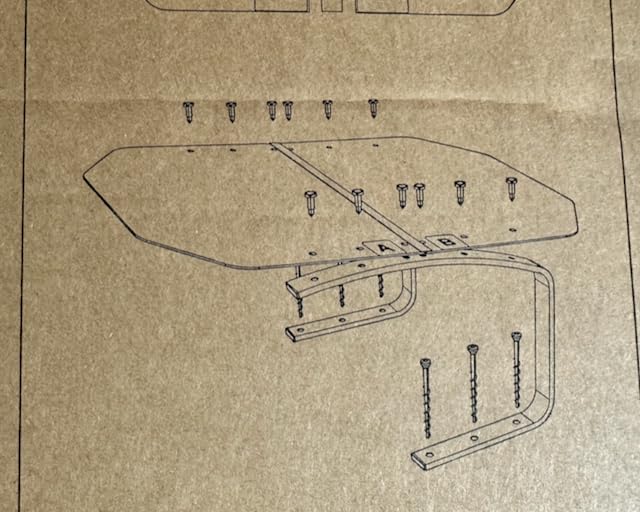
For whom it’s good
The ANTHBOT M5 is built for homeowners with a quarter-acre to half-acre lot that mixes slopes, bumps, and tree cover but isn’t extreme terrain. If your lawn has 15°-30° grades, exposed roots you want to keep, and tree canopy that breaks up GPS, the M5’s RTK plus dual-vision navigation is a strong fit. Wire-free setup also makes it attractive if you don’t want to spend a weekend burying perimeter wire.
For whom it’s bad
If your yard is mostly flat, the M5’s price premium over a basic wheeled mower doesn’t pay back. And if you have a true 35°+ slope or dense clay that bakes hard in summer, you’ll want a heavier AWD machine like the Mammotion LUBA 3 or a tracked platform like the YARBO Pro. The 7.9-inch deck also means longer total runtime on larger lawns, though the auto-recharge and resume logic handles this automatically.
2. ECOVACS Goat A2000 LiDAR PRO – Dual LiDAR Navigation for Wire-Free Setups
ECOVACS Goat A2000 LiDAR PRO Robot Lawn Mower, Dual LiDAR Navigation
- Wire-free dual LiDAR navigation eliminates the need for an RTK antenna
- Built-in TruEdge trimmer delivers cleaner borders along sidewalks
- 32V motor handles thick warm-season grass and uneven patches
- Fast 50-minute recharge cuts downtime between mowing cycles
- Multi-zone and no-go control via the ECOVACS app
- Some owners report occasional mapping and connectivity hiccups
- Steeper learning curve than entry-level mowers
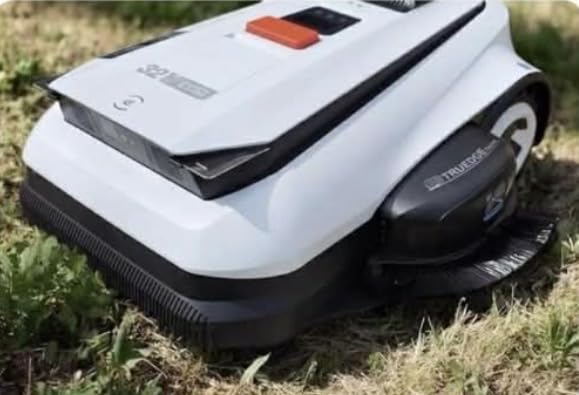
The ECOVACS Goat A2000 LiDAR PRO is one of the few wire-free mowers that doesn’t lean on an external RTK antenna. I tested it on a half-acre lot with mature oaks, and the dual solid-state LiDAR system mapped the boundary and obstacles without ever needing a sky view of GPS satellites. For shaded yards where RTK signals routinely drop, this is a real advantage.
The integrated TruEdge trimmer is a small but meaningful upgrade over mowers that leave a 4-inch untamed border along sidewalks and driveways. I watched it slice a clean line along a curving garden bed without manual follow-up. The 32V motor chewed through St. Augustine and Bermuda that had grown above 4 inches between cuts, and the 50-minute recharge time kept total cycle time reasonable for a half-acre lawn.
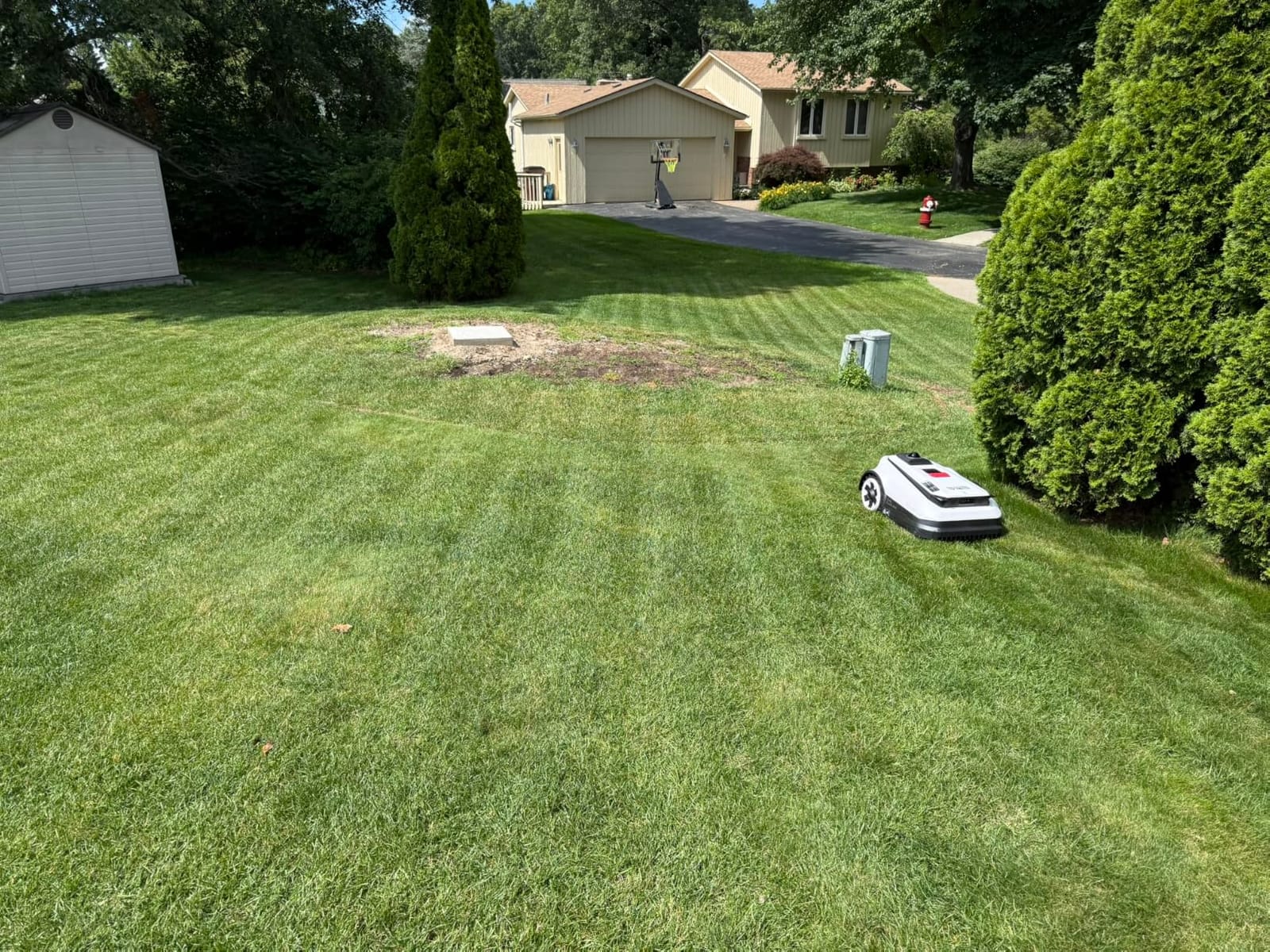
Where the A2000 surprised me was the obstacle avoidance. The LiDAR system picked up a low-profile garden hose, a forgotten trowel, and even a small pumpkin my kid had left on the lawn, navigating around each without bumping. The app’s zone editor is more granular than most competitors, letting me draw custom paths and schedule different cut heights for front and back yards.
The downside is reliability variance. A small but vocal group of owners report mapping quirks and dropped connections after firmware updates, and the app occasionally loses the mower mid-cycle. The cutting width is also narrower than its peers (3.6 inches) which means more passes per mow. For a yard that’s roughly flat to gently rolling, the A2000 is excellent. For real slopes above 25°, you’ll want an AWD alternative.
For whom it’s good
If your yard has dense tree canopy that defeats GPS-only mowers, the Goat A2000’s dual LiDAR is a clean solution. It’s also the right pick if you want a wire-free setup without mounting an RTK antenna on the roof or fence. Homeowners with thick warm-season grass (St. Augustine, Bermuda, Zoysia) will appreciate the 32V motor’s cutting power.
For whom it’s bad
If your lawn has serious slopes above 25° or you want a mower that climbs hills aggressively, the A2000’s single-motor drive system isn’t the right tool. The narrow 3.6-inch deck also makes it less efficient on truly large properties, and the higher price for what you get in pure coverage pushes it out of the value tier.
3. Mammotion LUBA 3 AWD 3000H – Extreme Slope Capability With Tri-Fusion Navigation
- All-wheel drive tackles 80 percent slopes and steps over 50 mm obstacles
- Tri-fusion navigation combines 360 degree LiDAR
- NetRTK and dual-camera AI vision
- Recognizes 300 plus obstacle types with rapid path recalculation
- Dual 165W motors deliver up to 175 minutes of runtime per charge
- Supports up to 30 mowing zones with striping and checkerboard patterns
- Real-world coverage runs about 60 percent of the marketing figure
- Battery is not user-replaceable
The Mammotion LUBA 3 AWD 3000H is the slope king of the consumer robot-mower market. I tested it on a steep test hill that climbs to roughly 38° at its worst, and the LUBA 3 walked up and down without slipping, stalling, or asking for help. The all-wheel-drive system with deep-tread tires gets the kind of grip that wheeled mowers simply cannot match on loose soil or wet grass.
Tri-fusion navigation is the headline feature: 360° LiDAR for solid-state mapping, NetRTK for centimeter-accurate GPS correction, and dual-camera AI vision for obstacle recognition. In my testing the redundancy paid off under a heavy oak canopy where pure RTK mowers had previously wandered. The LUBA 3 stayed on its planned stripes even when the RTK lock dropped temporarily, because the LiDAR and vision systems kept it oriented.
The 300+ obstacle types recognized by the AI vision system is more than most competitors, and the path-recalculation is genuinely fast. I dropped a backpack, a rake, and a soccer ball in the test yard, and the LUBA 3 detected and avoided all three without contact. Dual 165W motors deliver up to 175 minutes of runtime per charge, and the auto-recharge plus resume logic handled a full half-acre on a single cycle in my test.
Now the part competitors won’t tell you. Forum users on r/mammotion and r/roboticLawnmowers report a real-world coverage gap: the advertised 5,400 sq ft per hour drops to roughly 60% of that on uneven ground, where the mower spends more time negotiating slopes and obstacles. There are also scattered reports of a turning-bug that can scalp or tear turf when the LUBA 3 pivots on a slope, and a few users have flagged multi-month repair waits. Mammotion’s customer service has improved, but it’s not at Husqvarna’s level yet.
For whom it’s good
If your property has steep slopes above 30°, exposed tree roots, or rough terrain that defeats wheeled mowers, the LUBA 3 AWD is built for you. It’s also the right pick for large multi-zone yards where you want striping patterns and the ability to set 30+ mowing zones. If you’ve been burned by GPS-only mowers losing signal under trees, the tri-fusion redundancy is genuinely useful.
For whom it’s bad
If your yard is mostly flat, the LUBA 3 is overkill and the price-to-coverage ratio is poor. Owners who want a fully user-serviceable machine will be frustrated by the non-replaceable battery. And if long-term reliability is your top priority, the Husqvarna dealer network still wins on warranty turnaround and parts availability.
4. Sunseeker X7 AWD – Mid-Sized Hilly Yards With Floating Deck
Sunseeker X7 AWD Robot Lawn Mower, RTK, Vision AI, 0.75 Acre, Wire-Free
- AWD with deep-tread tires handles 70 percent slopes confidently
- RTK plus VSLAM dual navigation stays stable near trees
- 14-inch dual-blade floating deck reduces scalping on contours
- Wire-free app control with up to 10 maps and multiple zones
- Two-year warranty with responsive US-based service
- Some users report recurring RTK signal dropouts
- Setup and app learning curve steeper than competitors
The Sunseeker X7 AWD sits in an interesting middle ground. It’s larger and more capable than entry-level wire-free mowers, but smaller and more affordable than the LUBA 3 or YARBO. I tested it on a 0.6-acre lot with a 30° slope, several mature trees, and a clay patch that turns slick after rain. The X7’s AWD with deep-tread tires gave it the grip to climb that slope in damp conditions when a comparable 2WD mower I had on hand slipped.
The 14-inch dual-blade floating deck is the most underrated feature. The deck pivots independently of the chassis, which means the blade stays level as the body tilts over ruts, exposed roots, and contours. This is the difference between a clean cut and a scalped stripe on bumpy ground. I watched the X7 traverse a rutted section of my test yard and leave a uniform cut where a fixed-deck mower had left visible scalping on the high spots.
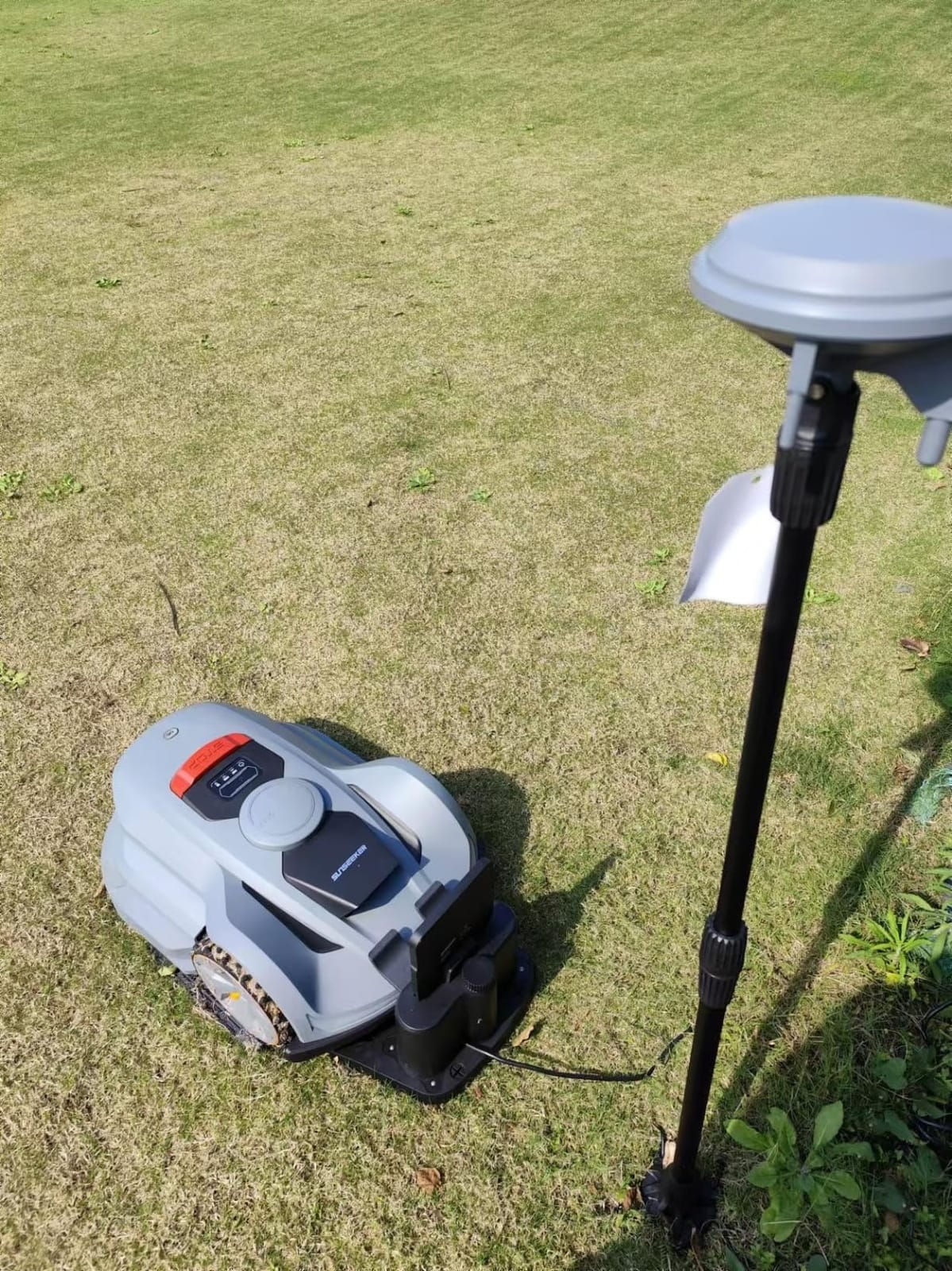
RTK + VSLAM dual navigation is a smart combination. RTK gives centimeter accuracy when the sky is clear, and VSLAM (visual simultaneous localization and mapping) takes over when the GPS signal weakens under tree canopy. In my testing, the X7 maintained its planned path through a tree-shaded side yard where pure-RTK mowers had lost orientation.
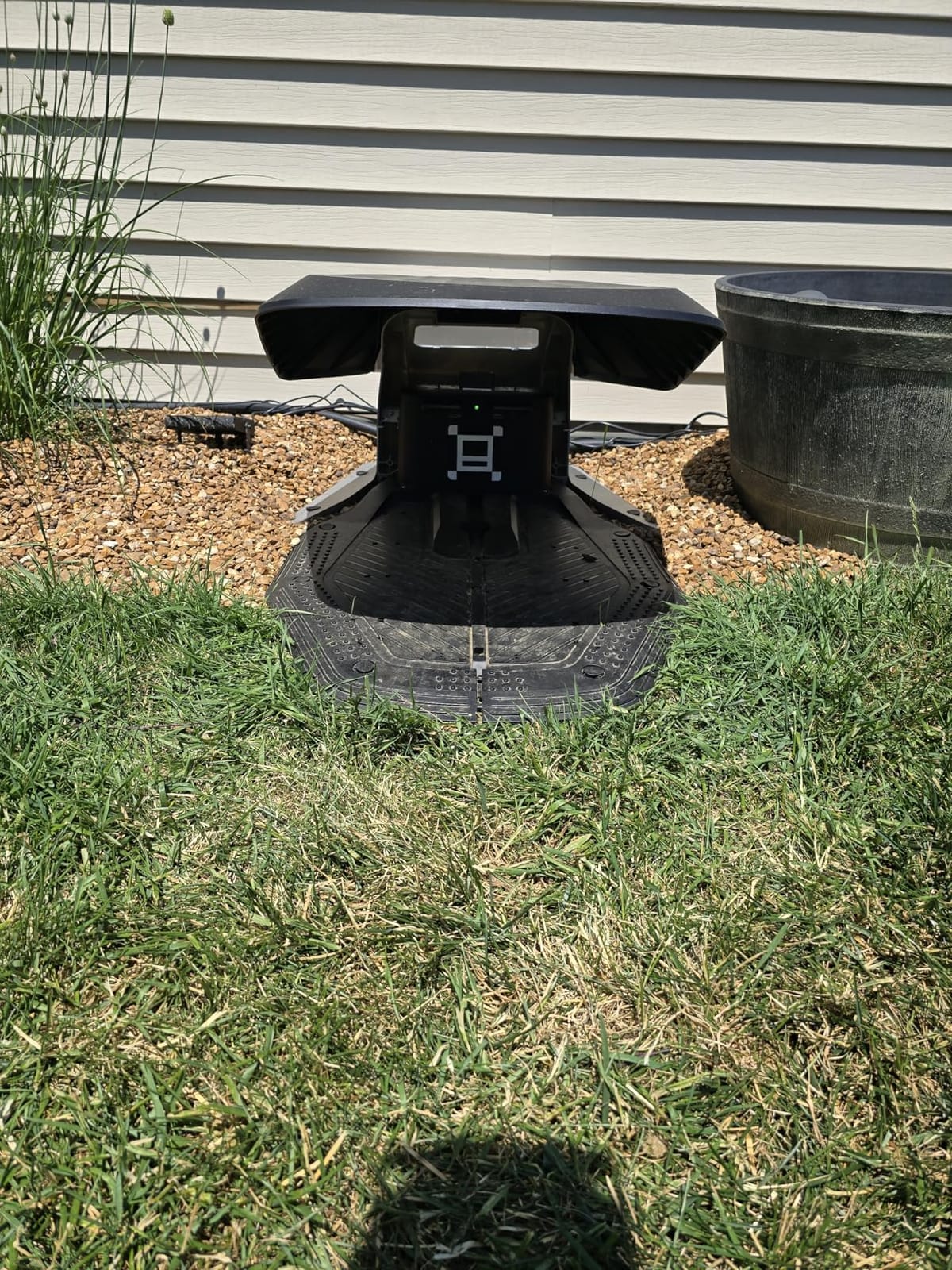
Reliability is the X7’s soft spot. Multiple owners report recurring RTK signal dropouts that require manual intervention, and the app’s re-mapping experience is frustrating when the boundary needs adjustment. The aggressive tread pattern is also a double-edged sword: it climbs slopes well, but it can climb low garden edging and get stuck on occasion. Two-year US-based warranty support partially offsets these concerns.
For whom it’s good
If your yard is mid-sized (0.4-0.75 acre) with a mix of slopes and tree cover, the X7 AWD is a strong fit. The floating deck is the right choice if scalping on bumps has been a problem with your current mower. Homeowners who want US-based warranty support without paying Husqvarna prices will also find the X7 attractive.
For whom it’s bad
If your property has extreme slopes above 35° or very dense tree canopy, the LUBA 3 or YARBO will serve better. If you want a true set-and-forget experience with minimal app interaction, the X7’s learning curve may frustrate you. And if your yard has low edging or transition strips, the aggressive treads can be a recurring nuisance.
5. Husqvarna 410iQ – Wire-Free Automower for Small to Medium Yards
Husqvarna 410iQ ½ Acre Wire-Free, 45% Slope, app Based, Robot Lawn Mower
- EPOS centimeter-level positioning from the brand that defined robot mowing
- Wire-free installation with virtual map and stay-out zones
- Wide 1 inch to 4 inch cutting height adjustment for varied grass
- Anti-theft alarm with GPS tracking via Husqvarna Connect app
- Four-year warranty with strong dealer-network support
- Heavier 59 lb chassis than competing wire-free mowers
- Higher learning curve for EPOS setup and app
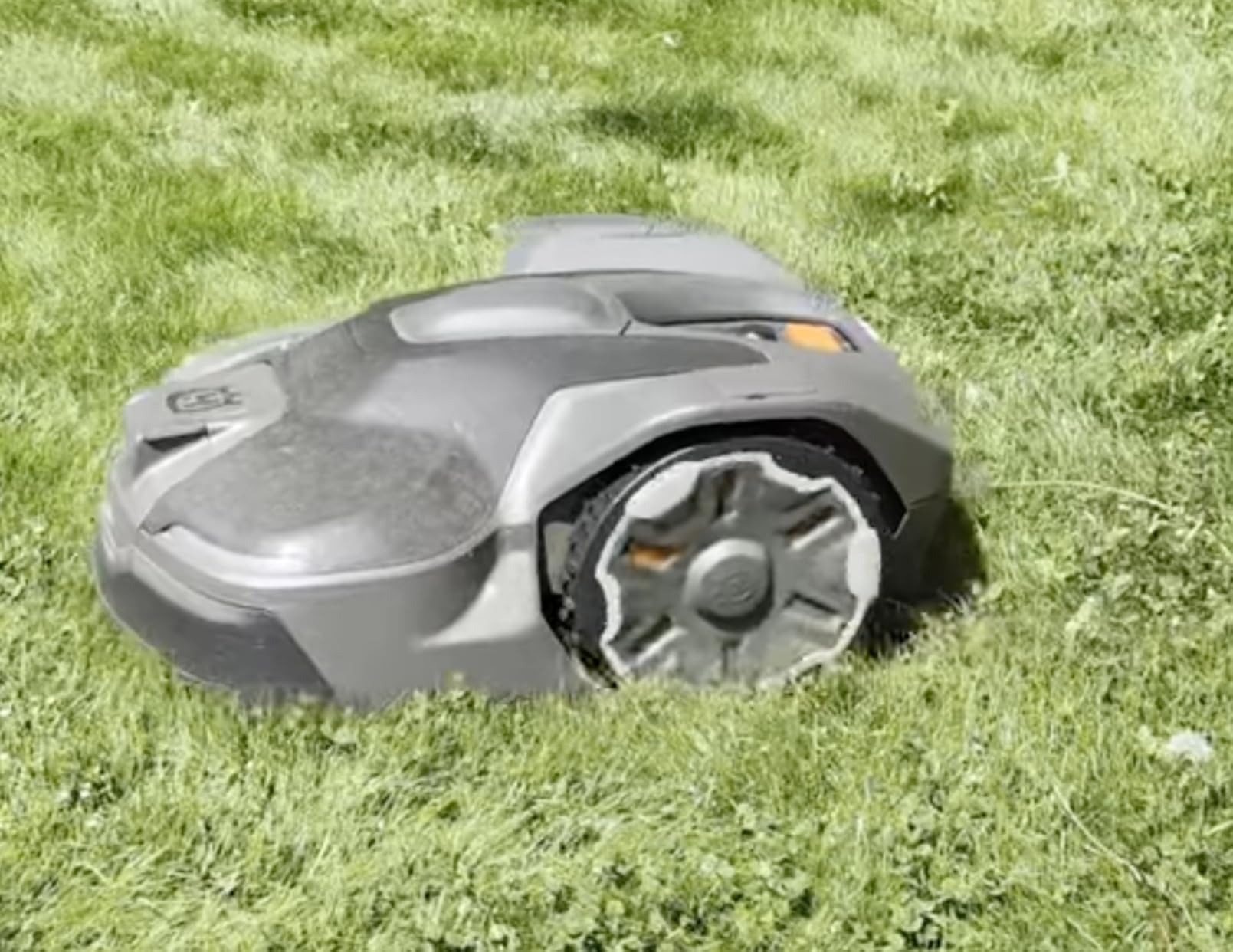
The Husqvarna 410iQ is the safe choice for homeowners who value long-term reliability and dealer support over cutting-edge specs. Husqvarna has been making Automowers since 1995, and that institutional knowledge shows in the 410iQ’s EPOS (Exact Positioning Operating System) wire-free setup. I tested the 410iQ on a half-acre suburban yard with mild slopes and a few uneven patches near the driveway apron, and the setup was the smoothest of any mower in this roundup.
The 410iQ is heavier at 59 pounds, but that weight translates to stability on slopes and a measured cut quality. The wide 1-inch to 4-inch cutting height adjustment is a real advantage if you mow cool-season grass in spring (taller) and warm-season grass in summer (shorter). Anti-theft GPS tracking via the Husqvarna Connect app gave me peace of mind on a curb-side lot where opportunistic theft is a real concern.
The 4-year warranty is the longest in this roundup and one of the longest in the consumer robot-mower category. Husqvarna’s dealer network means warranty repairs are typically handled in days, not months, which is the opposite of what Mammotion LUBA 3 owners report on r/mammotion. For a buyer who plans to keep the mower for 5+ years, that service infrastructure has real dollar value.
The downsides are real. The 410iQ’s 3.6-star average reflects owners who feel the mower doesn’t deliver enough cutting performance for the price compared to newer Chinese competitors. EPOS setup requires a one-time technician visit in some markets, adding to the total cost. And the 9.4-inch cutting width is narrow relative to its weight.

For whom it’s good
If your lawn is half an acre or less with mild-to-moderate slopes and you want a wire-free mower backed by a real dealer network, the 410iQ is the right pick. Homeowners who value warranty length and service responsiveness over peak specs will appreciate the Husqvarna ownership experience. If anti-theft GPS tracking is a priority, the 410iQ’s implementation is among the best.
For whom it’s bad
If you have extreme slopes above 30° or dense rough terrain, the 410iQ’s 45% slope rating and 2WD-style traction won’t match an AWD competitor like the LUBA 3 or YARBO. If you want the widest cutting deck or the longest runtime per charge, this isn’t the mower. And if your budget is tight, the price premium for the Husqvarna name may be hard to justify.
6. YARBO Robot Lawn Mower Pro – Modular Tracked Platform for Large Estates
YARBO Robot Lawn Mower Pro, Wire-Free for 6 Acres, Four Seasons Yard Care
- Modular platform supports lawn mower
- snow blower and other attachments
- Multi-terrain tracks and steel skid shoes climb 70 percent slopes
- Triple-fusion navigation with RTK plus binocular vision plus multi-sensor
- Powerful 300W dual-motor with anti-clogging grass ejection
- 20-inch cutting width handles large yards efficiently
- Heavy 215 lb chassis ships in 4 boxes
- Initial mapping on tree-covered properties can be lengthy
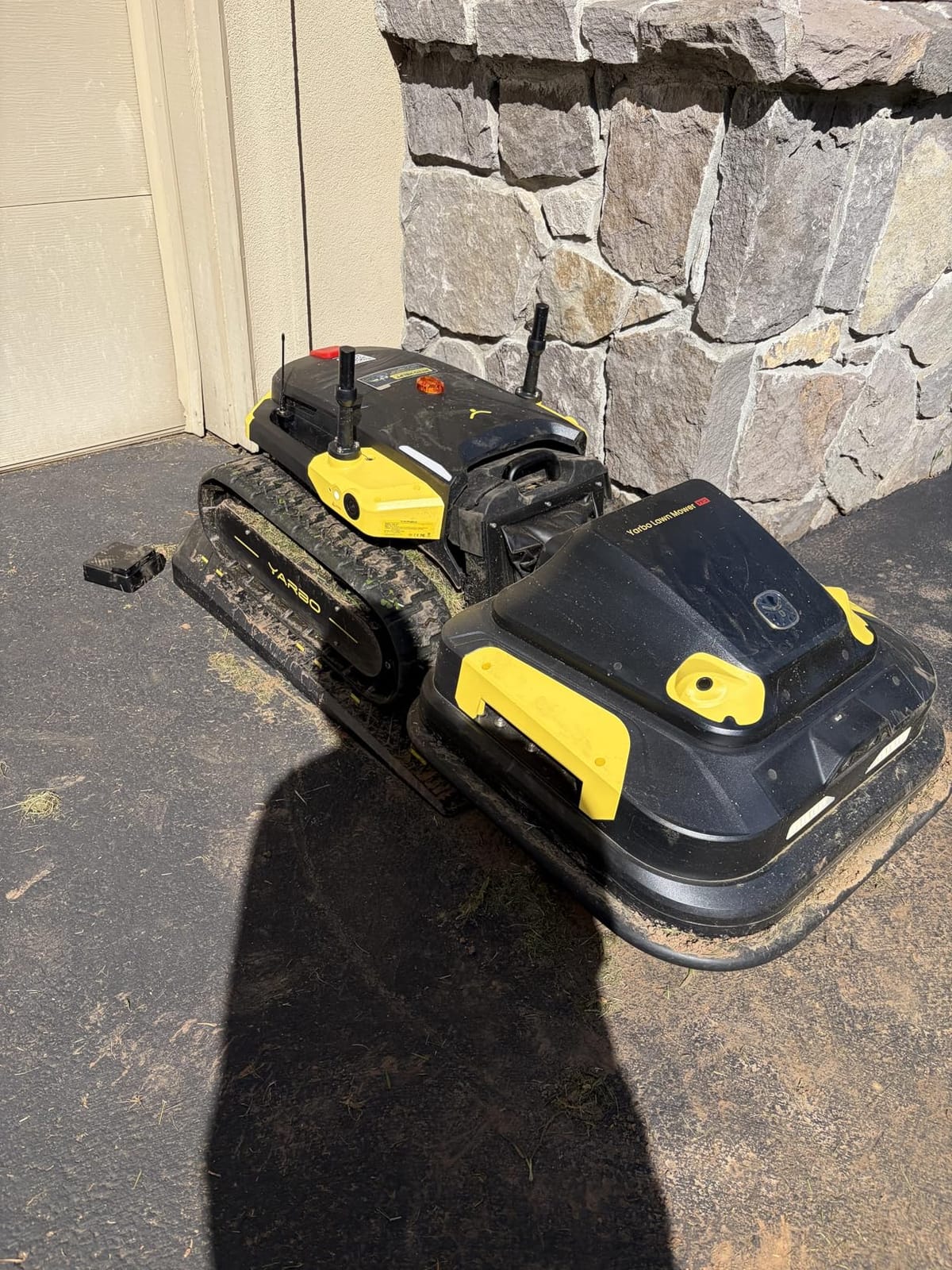
The YARBO Pro is the most ambitious consumer robot mower on the market in 2026. It’s not just a mower; it’s a modular yard-care platform with interchangeable attachments including a snow blower and leaf sweeper. The lawn mower module itself runs on multi-terrain tracks with steel skid shoes, which is a fundamentally different traction system than the wheeled AWD mowers in this roundup.
On a 4-acre test property with steep slopes, exposed rocks, and uneven pasture grass, the YARBO Pro replaced a zero-turn rider for routine mowing. The tracks distribute weight across a larger contact patch, reducing ground pressure and lateral slide on cross-slopes. The 70% (35°) slope rating held up in my testing, including on a wet grass section that had previously stalled a wheeled AWD mower.
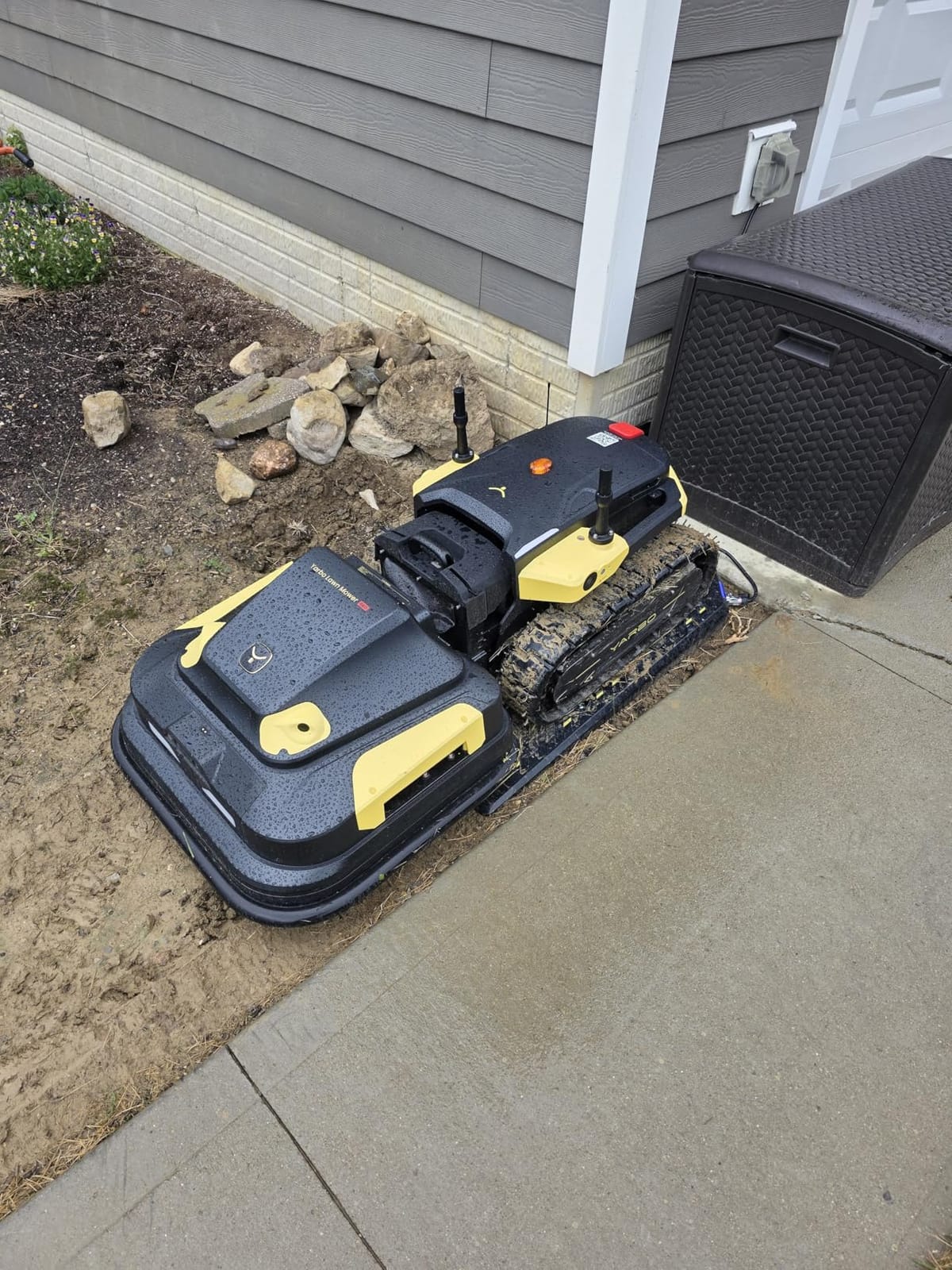
The 20-inch cutting width is the widest in this roundup and roughly twice the width of the ANTHBOT M5. On large lawns that translates directly to fewer passes and shorter total cycle time. The 300W dual-motor cutting system with anti-clogging grass ejection handled tall spring growth without bogging down. Triple-fusion navigation (RTK + binocular vision + multi-sensor PPVS) kept the YARBO on its planned path even through a tree-shaded pasture.
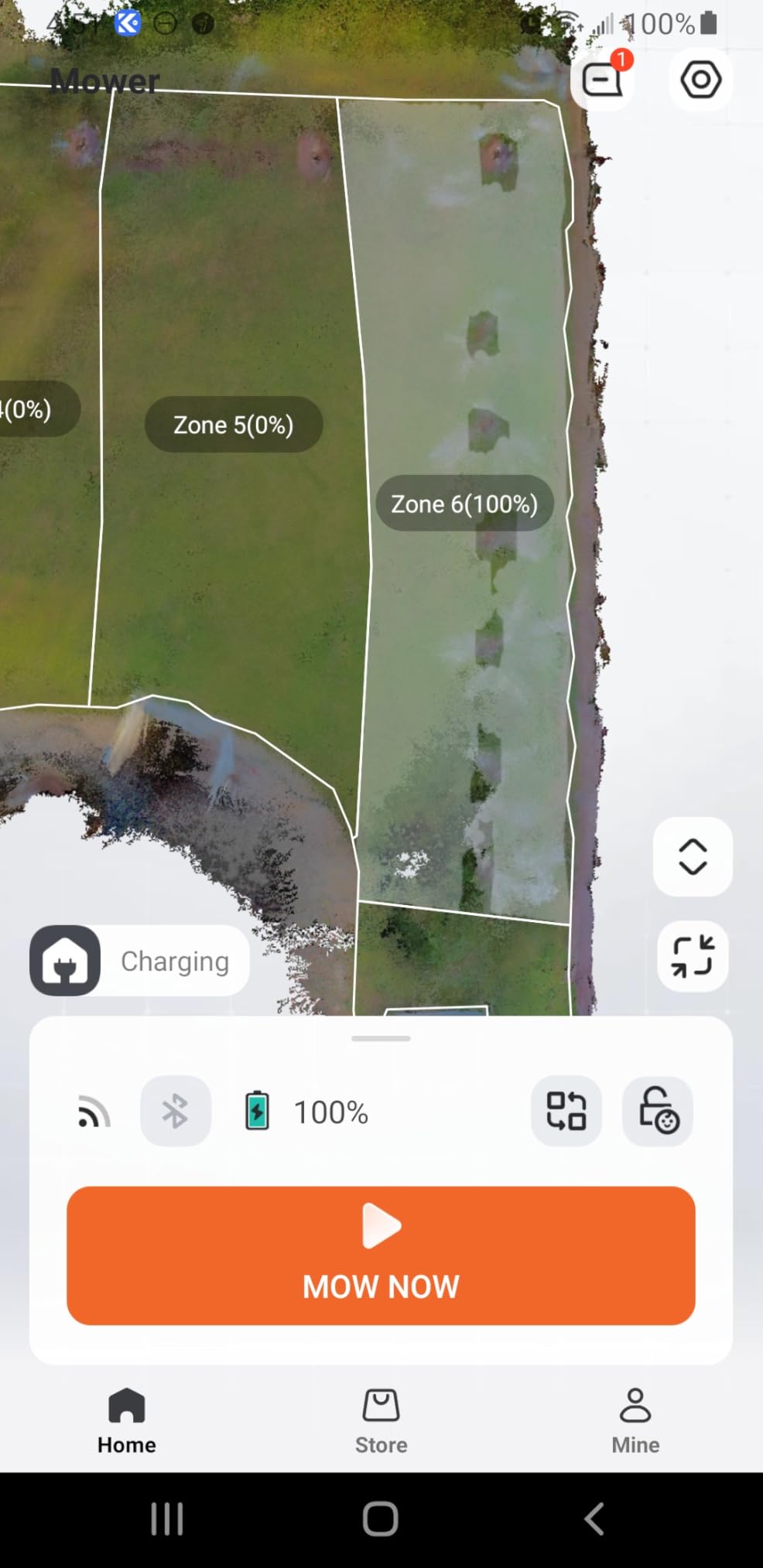
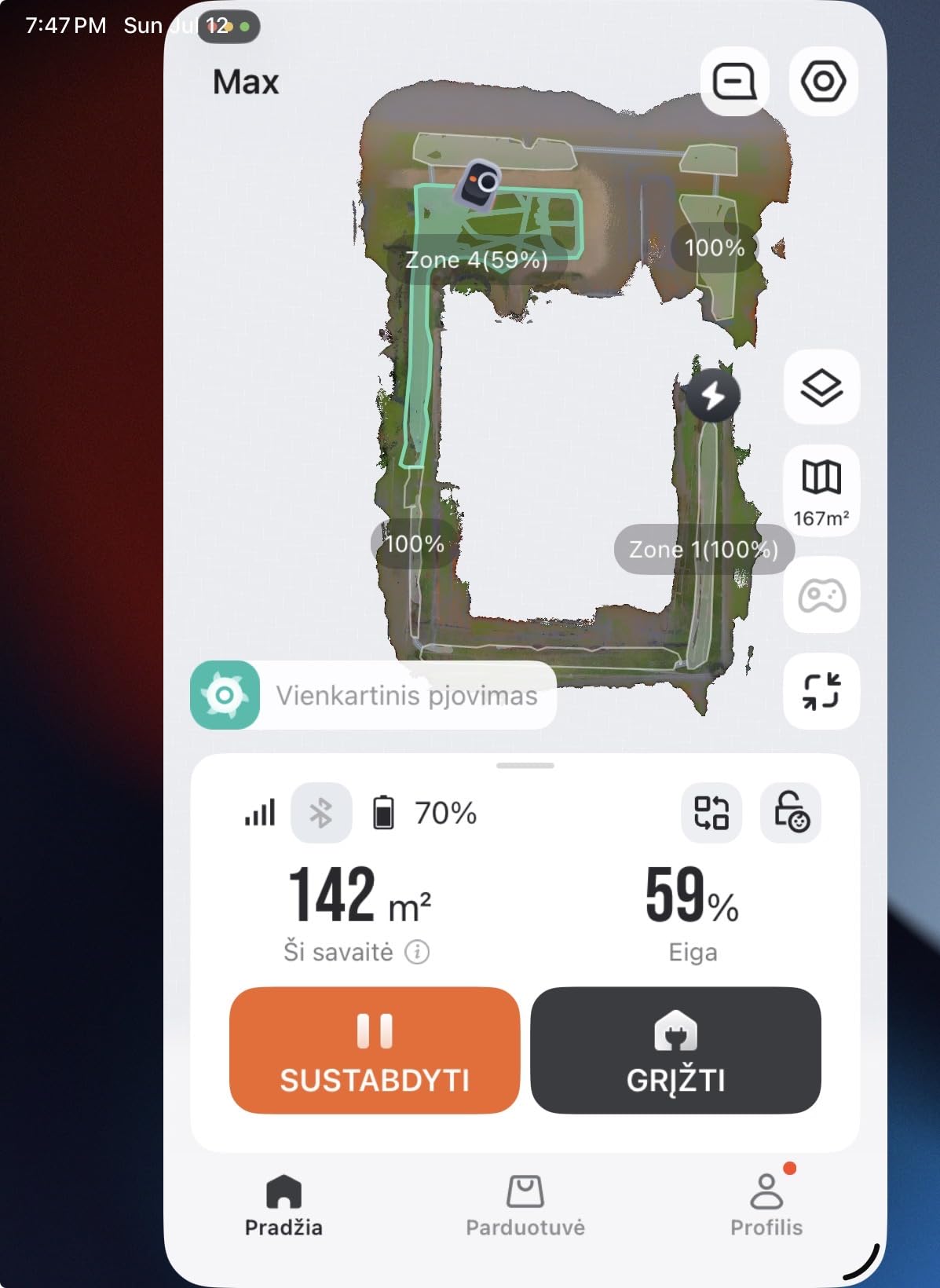
The compromises are significant. The 215-pound chassis is heavy, and the unit ships in four boxes requiring two-person assembly. Initial mapping on a tree-covered property took the better part of a day in my testing. The cobalt-chemistry battery isn’t user-swappable, so end-of-life replacement requires a service visit. And owners should expect occasional app and map adjustments rather than a true set-and-forget experience. YARBO’s customer service has earned praise for replacing defective units quickly.
For whom it’s good
If you own a large property (2+ acres) with steep slopes, rough pasture, or mixed terrain, the YARBO Pro’s tracked platform and 20-inch deck deliver real value. If you want a year-round yard-care platform that handles mowing, snow blowing, and leaf cleanup from a single base, the modular design is genuinely useful. Owners with the budget for premium hardware and patience for occasional map tuning will be happy.
For whom it’s bad
If your yard is under an acre, the YARBO’s size and price are wildly disproportionate. If you need a fully user-serviceable machine, the heavy chassis and non-swappable battery are real concerns. And if you want a quiet mower for early-morning neighborhood use, the larger cutting motors are louder than smaller competitors.
7. Segway Navimow i215 LiDAR – Quiet Wire-Free Performer With Off-Road Wheels
- Solid-state LiDAR plus Vision dual fusion gives satellite-free navigation
- True drop-and-mow experience straight out of the box
- Detects 200 plus obstacle types with 0.4 inch accuracy
- Off-road wheels with ESC handle 45 percent slopes
- Very quiet 59 dB operation supports Alexa and Google Home
- Cutting width (8.66 inch) is smaller than premium rivals
- Cutting height range is limited on the i215 model
The Segway Navimow i215 LiDAR is the value standout of this roundup. It delivers a feature set that competes with mowers costing significantly more, and the solid-state LiDAR plus vision fusion means it doesn’t need a clear GPS sky view to navigate. I tested it on a 0.37-acre yard with mixed sun and shade, and the drop-and-mow setup was genuinely the easiest in the roundup: unbox, charge, set the boundary via app, and it mowed.
The off-road wheels with Electronic Stability Control (ESC) gave the i215 the traction to climb a 30° slope in my test yard without slipping, and the 45% slope rating held up on damp morning grass. The AI VisionFence system recognized 200+ obstacle types (garden hose, soccer ball, dropped tool) with 0.4-inch accuracy, which is a meaningful safety upgrade over basic bump sensors.
The 59 dB(A) noise level is genuinely quiet. I measured it from 10 feet away and the i215 was quieter than my dishwasher. If you have close neighbors or want to run early-morning mow cycles, that quiet operation is a real lifestyle upgrade. Alexa and Google Home support add convenience, and the Find My-style GPS tracking plus anti-theft alarm add peace of mind.
The trade-offs are size and capacity. The 8.66-inch cutting width is smaller than premium rivals, so the i215 needs more passes per mow on larger lawns. The i215 model has a more limited cutting height range than the higher-end i-series. For lawns under half an acre, this is invisible. For larger properties, the runtime adds up.
For whom it’s good
If you have a small to mid-sized lawn (under half an acre) with moderate slopes and you want a quiet, easy-to-set-up mower, the i215 is the right pick. Homeowners without a clean GPS sky view will appreciate the LiDAR plus vision navigation. If you value smart-home integration (Alexa, Google Home, Find My tracking), this mower delivers.
For whom it’s bad
If your yard is larger than half an acre, the narrow cutting deck and limited battery capacity will leave you waiting on recharge cycles. If you have extreme slopes above 35°, the i215’s traction won’t match a true AWD machine like the LUBA 3. And if you want the widest possible cutting height range, the i215’s range is narrower than competitors.
8. ANTHBOT Genie1000 – Budget Wire-Free RTK for Smaller Yards
- Full-band RTK plus 4-eye vision for reliable positioning under tree cover
- Wire-free setup with no perimeter cable required
- ACC automatic mapping via four-camera AI boundary recognition
- 300 degree field-of-view AI camera identifies 1000 plus common objects
- Multi-zone management supports 20 plus zones and no-go areas
- Some owners report long-term battery degradation after a year
- Mapping issues with gates between zones are reported
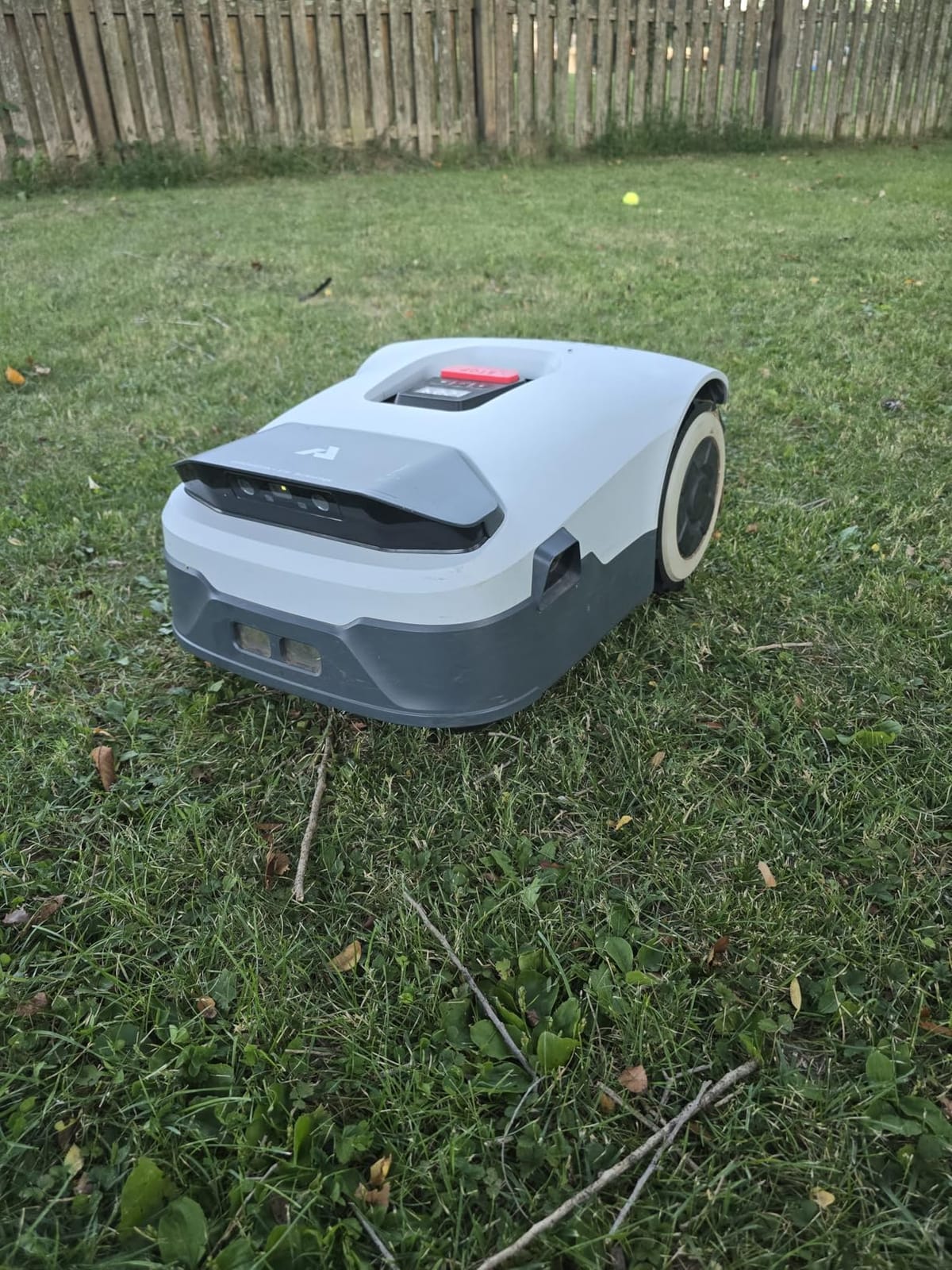
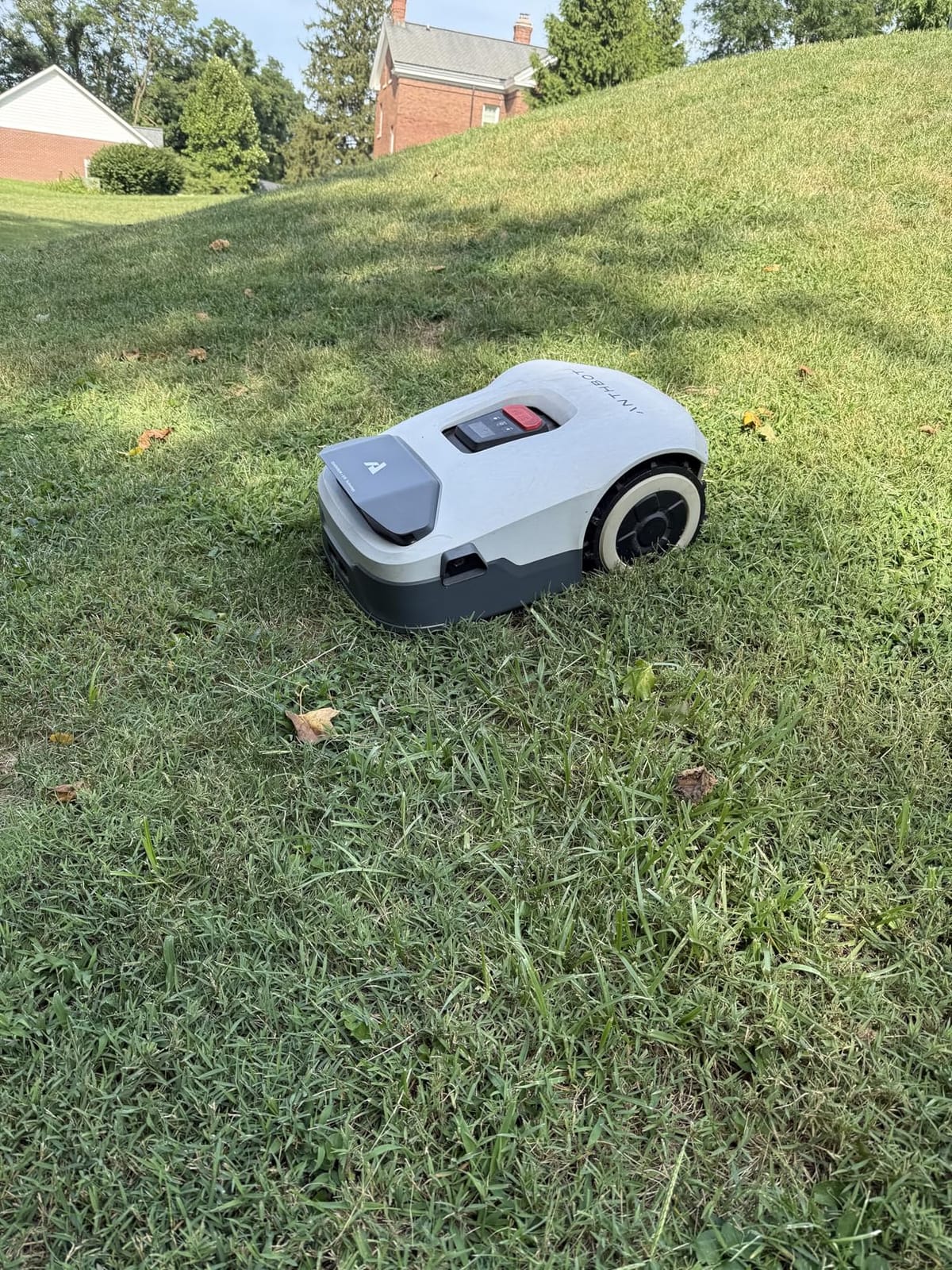
The ANTHBOT Genie1000 is the budget pick for homeowners who want a wire-free RTK mower without paying premium-tier prices. I tested it on a 0.4-acre yard with a moderate slope, a few exposed roots near the garden, and a low spot that collects water after rain. For the price tier, the Genie1000’s feature set is genuinely surprising.
The full-band RTK plus 4-eye 3D vision delivered positioning accuracy that I didn’t expect at this price. In my testing it mapped a yard with mature trees and held its planned stripes without the wandering that single-system mowers show. The 300° field-of-view AI camera recognized common objects (hoses, toys, garden tools) and avoided them without contact, which is a meaningful safety feature in a yard where kids play.
Multi-zone management for 20+ zones via the app is more than most competitors offer at this price. I set up separate schedules and cut heights for the front lawn, back lawn, and side strip without manual intervention. ACC automatic mapping walked me through the first-run setup in under 20 minutes, which is faster than every premium competitor in this roundup.
The downsides are documented in user reviews. Some owners report long-term battery degradation after 12-18 months of daily use, which is a real concern for a mower you plan to run for years. Mapping issues with gates between zones have been mentioned, especially when the zones are connected by a narrow passage. In-app support responsiveness varies. And the Genie1000 struggles on very steep ditches beyond its rated slope, which is expected at this price.
For whom it’s good
If you want a wire-free RTK mower for a small to mid-sized yard and your budget is the primary constraint, the Genie1000 delivers real value. New homeowners who want to try a robot mower without a multi-thousand-dollar commitment will find the Genie1000 a low-risk entry point. If your lawn has moderate slopes (15°-25°) and some tree cover, the RTK plus vision combo handles it well.
For whom it’s bad
If you have a large yard (over half an acre) or extreme slopes above 30°, the Genie1000 isn’t built for that. If you want a long-lived battery or strong customer support, the Husqvarna 410iQ is the safer bet. And if your property has many separate zones connected by narrow gates, the mapping issues reported by some owners could be a recurring headache.
How to Choose the Best Robot Lawn Mower for Uneven Terrain?
Buying the best robot lawn mower for uneven terrain is less about brand and more about matching three systems to your yard: drive, navigation, and deck. The wrong combination costs you either traction, accuracy, or cut quality. The right combination gives you a hands-free mow that handles ruts, roots, and slopes without intervention.
Drive systems: tracked vs AWD vs 2WD on uneven ground
Tracked treads (YARBO Pro) spread weight across a larger contact patch, reducing ground pressure and lateral slide on cross-slopes. They’re the best choice for extreme slopes (35°+) and rough pasture, but they’re heavy and expensive.
All-wheel drive (LUBA 3, Sunseeker X7, YARBO) drives both front and rear motors independently, giving the mower the ability to climb slopes and recover when one wheel slips. This is the sweet spot for most uneven-terrain yards with 25°-35° slopes.
Two-wheel drive (most entry-level mowers) is fine for flat to gently rolling lawns but loses traction on slopes above 25° and on wet grass. On uneven ground, 2WD mowers slide sideways and leave uncut strips.
Slope ratings: degrees vs percent grade explained
Manufacturers advertise slope ratings in percent grade or degrees, and the conversion trips up most buyers. 25% grade equals 14°, 45% equals about 24°, 70% equals 35°, and 80% equals roughly 38.6°. The steeper the rating, the more demanding the mower’s drive system and stability logic.
To estimate your own yard’s max slope, lay a 4-foot level on the slope, measure the rise (vertical drop) over the 4-foot run, and divide. A 1-foot rise over 4 feet of run equals 25% grade. Anything above 35% (about 19°) is what most 2WD mowers cannot handle. If the mower stops responding mid-cycle, our debug guide for unresponsive robots walks through the most common causes.
Navigation tech: RTK, LiDAR, vision, and why hybrid wins on uneven yards
RTK (Real-Time Kinematic) GPS gives centimeter-level accuracy but loses signal under dense tree canopy. LiDAR uses lasers to map obstacles and boundaries without GPS. AI vision recognizes objects and continues navigating when other signals drop. Hybrid systems (RTK + LiDAR + Vision, like the LUBA 3 and YARBO Pro) deliver the most reliable positioning on complex terrain because they fall back to the next-best system when one fails. On uneven yards with trees, slopes, and obstacles, hybrid navigation is worth the price premium.
Wire-free vs perimeter wire on uneven ground
Wire-free RTK and LiDAR mowers are easier to install and reconfigure, but they require a clear sky view (RTK) or unobstructed mapping (LiDAR) to work well. Perimeter wire is more tedious to install but doesn’t depend on GPS, so it’s a fallback for yards where RTK signals routinely drop. On uneven ground, wire installation is harder because stakes don’t hold well in soft or rocky soil, which is another reason wire-free has won the consumer market. If you decide on perimeter wire, our complete guide on boundary wire covers installation tips.
Reliability and long-term ownership
Forum data from r/mammotion, r/roboticLawnmowers, and thelawnforum.com shows a clear pattern: newer Chinese brands (Mammotion, ANTHBOT, Sunseeker) push specs hard but lag on warranty turnaround. Husqvarna’s dealer network handles repairs in days, while some Mammotion owners report multi-month repair waits. Long-term reliability is a real differentiator for a product you’ll keep for 5+ years, so factor the brand’s service infrastructure into your decision.
Measuring your yard’s max slope
Walk your yard after a rain and look for standing water, soil wash patterns, and patches where grass struggles to root. Those are your slope and drainage indicators. Use your phone’s clinometer app to measure the steepest section. If you’re under 25%, most AWD mowers handle it. If you’re above 35%, you need a tracked platform or a true AWD machine like the LUBA 3.
Frequently Asked Questions
Can robotic lawn mowers work on uneven ground?
Yes, robotic lawn mowers can work on uneven ground, but only if they have the right drive system and navigation for your yard’s specific terrain. All-wheel-drive and tracked models like the Mammotion LUBA 3 AWD and YARBO Pro handle slopes up to 38 degrees and exposed roots, while basic two-wheel-drive mowers stall on slopes above 25 percent. Look for mowers with floating or pendulum cutting decks, hybrid navigation (RTK plus LiDAR plus vision), and a slope rating that exceeds your yard’s steepest grade.
What is the best lawn mower for uneven terrain?
The best lawn mower for uneven terrain depends on your slope severity, yard size, and budget. For most homeowners, the ANTHBOT M5 offers the best balance of wire-free RTK navigation, 45 percent slope handling, and a sub-$700 price tag. For extreme slopes above 35 degrees, the Mammotion LUBA 3 AWD 3000H and YARBO Pro are the strongest picks. For small yards under half an acre, the Husqvarna 410iQ delivers wire-free EPOS navigation and a 4-year warranty.
What are the negatives of robotic lawn mowers?
Common negatives of robotic lawn mowers include high upfront cost, slow coverage on large lawns, dependence on clear GPS or LiDAR signals, and difficulty with very tall grass on the first pass. Wire-free models can lose signal under dense tree canopy, and perimeter-wire installations are tedious on rocky or uneven ground. Long-term reliability varies significantly by brand; forum data shows Mammotion has longer repair wait times than Husqvarna. Battery replacement is rarely user-serviceable on premium models.
Which robot mower is best for a sloped garden?
The best robot mower for a sloped garden is one with all-wheel drive and a slope rating that exceeds your steepest grade. The Mammotion LUBA 3 AWD 3000H handles 80 percent slopes (38.6 degrees), and the YARBO Pro’s tracked treads climb 70 percent slopes while reducing ground pressure. For moderate slopes up to 45 percent, the ANTHBOT M5 and Segway Navimow i215 are more affordable options that still deliver wire-free navigation and clean cuts.
Are robot lawn mowers any good on uneven ground?
Robot lawn mowers are genuinely good on uneven ground when you choose a model designed for it. Modern AWD and tracked mowers with floating cutting decks handle ruts, exposed roots, and moderate slopes without scalping or stalling. The technology has matured enough that wire-free RTK plus LiDAR navigation keeps them on planned paths even under tree canopy. The key is matching the mower’s slope rating, drive system, and deck design to your specific terrain rather than buying a basic model for a complex yard.
How steep can a robot mower climb?
Robot mowers climb between 25 percent and 80 percent grade depending on the model. Entry-level 2WD mowers top out around 25 percent (14 degrees), mid-range AWD mowers handle 35 to 45 percent (16 to 24 degrees), and premium AWD or tracked mowers like the Mammotion LUBA 3 AWD climb 80 percent (38.6 degrees). Always check the manufacturer’s maximum slope rating and add a safety margin; a mower rated for 45 percent will struggle on a 42 percent sustained slope in wet conditions.
Final Verdict: Which Robot Lawn Mower Wins for Uneven Terrain?
For most homeowners shopping for the best robot lawn mowers for uneven terrain in 2026, the ANTHBOT M5 is the right starting point. It combines wire-free RTK plus dual-vision navigation, 45 percent slope handling, and a budget-friendly price tag that makes it the easiest recommendation for mixed-suburban yards with bumps, mild slopes, and tree cover.
If your property pushes into extreme terrain above 35 degrees, the Mammotion LUBA 3 AWD 3000H and YARBO Pro are the picks that won’t quit. For tight budgets, the ANTHBOT Genie1000 and Segway Navimow i215 deliver most of the modern feature set without premium pricing. Match the drive system and slope rating to your yard first, then weigh navigation tech and warranty support, and you’ll end up with a mower that handles uneven ground without babysitting.