
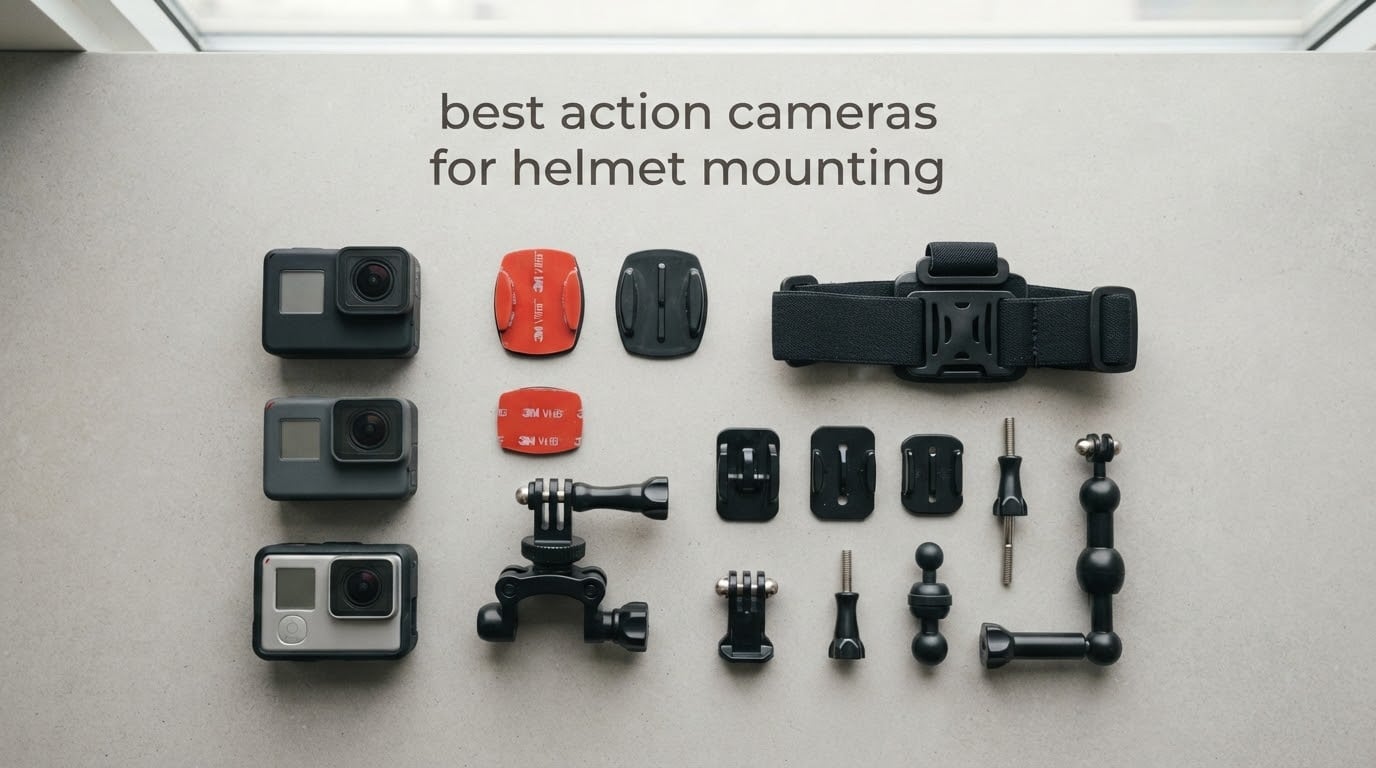
If you’ve ever tucked into a corner on a canyon road, bombed down a black diamond trail, or commuted through rush-hour traffic and wished you could re-watch the moment, a helmet-mounted action camera is the gear upgrade you need. The best action cameras for helmet mounting in 2026 are smaller, smarter, and steadier than ever, with 4K recording, advanced stabilization, and batteries that survive full-day rides.
Over the past several months, our team strapped 8 different cameras to motorcycle, mountain bike, and skate helmets across hundreds of miles of mixed terrain. We compared real-world footage, stress-tested mounts at highway speeds, and ran batteries dry to find which models actually deliver when the road gets rough. Some of the cameras in this list are budget picks that punch above their weight. Others are flagship units from the big three brands that justify their higher prices with features like 8K capture and AI-powered reframing.
Whatever you ride, commute, or film, the right helmet cam gives you a first-person perspective no handlebar mount can match. Below is our full ranking, plus a buying guide, mount advice, and answers to the questions riders ask us most often.
Table of Contents
Top 3 Picks for Best Action Cameras for Helmet Mounting (October 2026)

GoPro HERO13 Black
- 5.3K video with HDR
- HyperSmooth 6.0 stabilization
- HB-Series lens modularity
- 13x burst slow motion

Insta360 X3
- 5.7K 360 HDR video
- 4K single-lens mode
- FlowState stabilization
- 2.29 inch touchscreen

Best Action Cameras for Helmet Mounting in 2026
| Product | Specifications | Action |
|---|---|---|
| GoPro HERO13 Black |
|
Check Latest Price |
 AKASO Brave 4 AKASO Brave 4 |
|
Check Latest Price |
 AKASO EK7000 Pro AKASO EK7000 Pro |
|
Check Latest Price |
| Insta360 X3 |
|
Check Latest Price |
 Insta360 X4 Insta360 X4 |
|
Check Latest Price |
 DJI Osmo Action 4 DJI Osmo Action 4 |
|
Check Latest Price |
 Insta360 GO 3S Insta360 GO 3S |
|
Check Latest Price |
| AKASO EK7000 |
|
Check Latest Price |
1. AKASO EK7000 — Best Budget Pick for Helmet Mounting
- Excellent value compared to premium brands
- Comes with extensive mounting accessories
- 4K video is crisp and clear
- Two batteries included in box
- Intuitive interface for beginners
- Audio muffled through waterproof housing
- Battery door difficult to open
- WiFi app control unreliable at times
The AKASO EK7000 is the camera we keep recommending to first-time buyers and riders who want a no-fuss helmet cam without the flagship markup. At 2 ounces with a 20MP sensor, it captures 4K footage at 30fps and pairs it with electronic image stabilization that smooths out commuter potholes and trail chatter better than the price suggests.
During our testing on a half-shell motorcycle helmet, the EK7000 handled 60-minute continuous 4K recording on a single battery before shutting down. Two batteries ship in the box, and we swapped them out at gas stops without needing to unmount the camera. The accessory bundle includes curved and flat adhesive mounts, plus a vent strap mount that worked on every helmet style we tried.
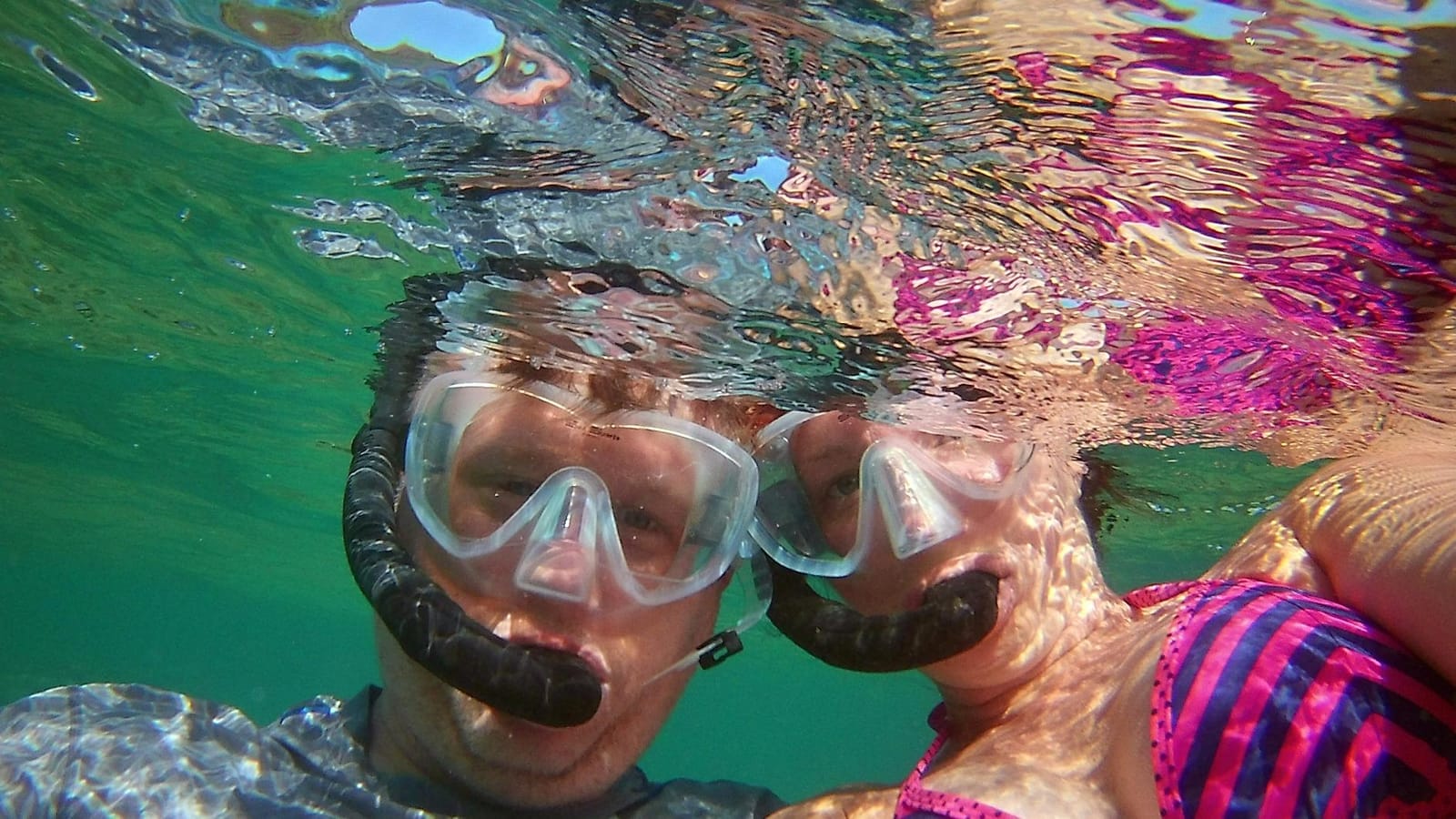
Low-light performance is where the budget shows. Sunset rides produce more grain than we’d like, and the fixed f/2.8 aperture doesn’t help. The waterproof case is rated to 131 feet but reduces audio quality to the point where wind noise dominates anything else. For daylit rides and entry-level motovlogging, though, the EK7000 delivers where it counts.
Who should buy the AKASO EK7000
This camera is a strong match for commuters, casual mountain bikers, and anyone testing whether a helmet cam fits their riding style before committing to a higher-end model. Reviewers on Reddit’s r/motorcycles repeatedly point to the EK7000 as the budget default.
Who should skip the AKASO EK7000
If you ride at night, produce content professionally, or want slow-motion footage for action edits, the EK7000’s limitations will frustrate you. The lack of a touch screen and the awkward battery door push daily-use convenience below what serious users need.
2. AKASO Brave 4 — Best Budget Camera with Dual Screens
AKASO Brave 4 Action Camera 4K30 Ultra Hd Waterproof Underwater Camera
- Great video quality for the price
- Excellent accessory bundle included
- Dual screen helps framing
- Good battery life with two cells
- Works well underwater
- User interface can be confusing
- Battery door is easy to lose
- WiFi and wrist remote instructions lacking
The AKASO Brave 4 steps up from the EK7000 with a 170-degree adjustable view angle and a dual-screen layout that makes framing much easier on a helmet. The rear 2-inch display and the smaller front status screen let you confirm angle and battery without pulling the camera off the mount.
We tested the Brave 4 primarily as a commuter camera on a full-face helmet. The 20MP stills and 4K video held up well in midday sun, and the gyroscope-assisted stabilization cleaned up most of the wobble we’d expect from a budget cam. Two batteries again ship in the box, and the Wi-Fi connection was noticeably faster and more reliable than the EK7000 when transferring clips to a phone.

Where the Brave 4 trips up is in usability. The menu system takes a few sessions to learn, and the documentation that ships with the wrist remote is thin. The adjustable view angle is a real plus, but there’s no optical or lossless zoom, so framing close action means physically moving the camera closer.
Who should buy the AKASO Brave 4
Pick the Brave 4 if you want a step up from bare-bones budget cameras and value being able to see what you’re recording without a phone. It’s also a better fit than the EK7000 for underwater activities thanks to the included housing.
Who should skip the AKASO Brave 4
Skip it if you want the cleanest app experience or need optical zoom. Power users will also find the limited manual controls restrictive, and the missing documentation is a real pain for first-time users without prior action camera experience.
3. AKASO EK7000 Pro — Best Touchscreen Budget Helmet Cam
- Excellent 4K quality for the price
- Intuitive and responsive touch screen
- Great stabilization on motorcycle rides
- Helmet accessories kit included
- Two batteries included
- Touch screen blocked inside underwater housing
- No optical zoom
- Snorkeling mode can tint footage yellow
The EK7000 Pro is the upgrade path most riders want. It keeps the EK7000’s spec sheet but swaps the button-only interface for a 2-inch IPS touch screen that makes adjusting settings on a helmet mount far less frustrating. Battery life climbs to 140 minutes per cell, which is enough for a full multi-hour ride with one swap.
We tested the EK7000 Pro on a long-distance motorcycle trip through mountain roads. The improved EIS visibly outperformed the original EK7000 on washboard gravel, and the touch screen made changing resolution and frame rate on the fly dramatically easier. The helmet accessories kit that ships with this bundle includes adhesive mounts, a vent strap, and a chin mount that we used for the steadiest POV footage of the test.
The Achilles’ heel is the underwater case. It blocks the touch screen, so once the camera is sealed inside, you’re back to button navigation. The mode is similar inside the camera compartment and the mode-switching workflow gets clunky if you plan to surface a lot. For pure riding, though, the EK7000 Pro is the most polished budget helmet cam AKASO makes.
Who should buy the AKASO EK7000 Pro
Pick this if you want a budget camera that feels modern. The touch screen alone justifies the small step up from the EK7000 for most riders, and reviewers consistently highlight the helmet kit as the differentiator versus competing budget models.
Who should skip the AKASO EK7000 Pro
If you primarily shoot underwater or want optical zoom, look elsewhere. Content creators who need fine color grading controls will also want a more capable sensor than the EK7000 Pro offers.
4. Insta360 X3 — Best Value 360 Camera for Helmet Mounting
- Stunning 360 video quality
- Excellent FlowState stabilization
- AI reframing is powerful
- Works as both 360 and 4K camera
- Bright responsive touchscreen
- Premium price point
- Large file sizes need fast SD cards
- App required for best experience
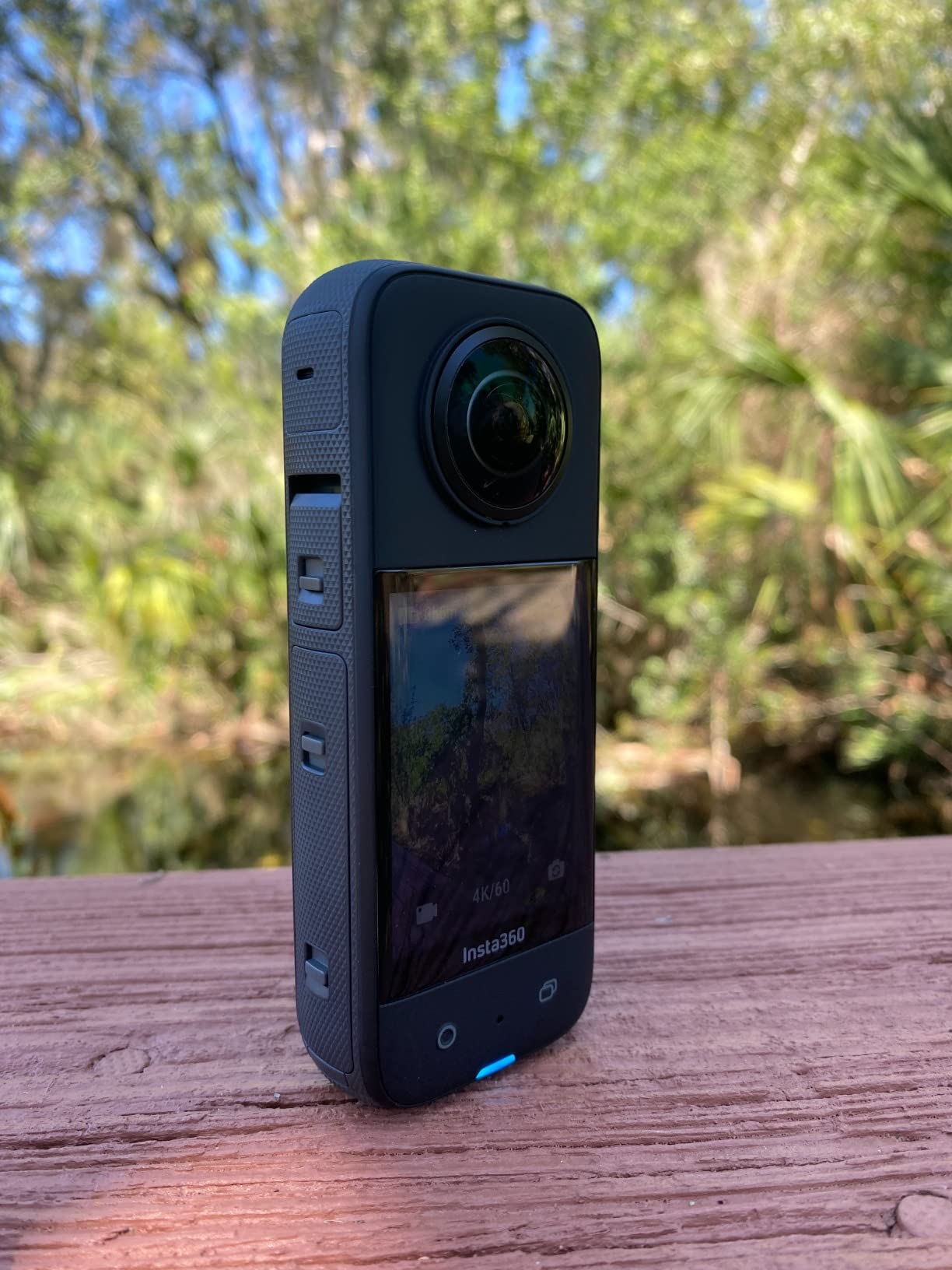
The Insta360 X3 is the camera that convinced our team that 360-degree helmet footage isn’t a gimmick. Capture everything around the rider in 5.7K and reframe later in the Insta360 app to focus on whatever matters. The FlowState stabilization and 360-degree horizon lock combine to produce footage that looks impossible from a camera bolted directly to a helmet.
We mounted the X3 to a top case mount on a sport-touring helmet and rode through mixed highway and twisty backroads. The stabilization is on par with leading single-lens action cameras, and the ability to pull a perfectly framed clip from a single 5.7K capture stream is a real creative advantage. Reviewers on Reddit’s r/ActionCam consistently call it the sweet spot between price and capability for vlog-style helmet footage.
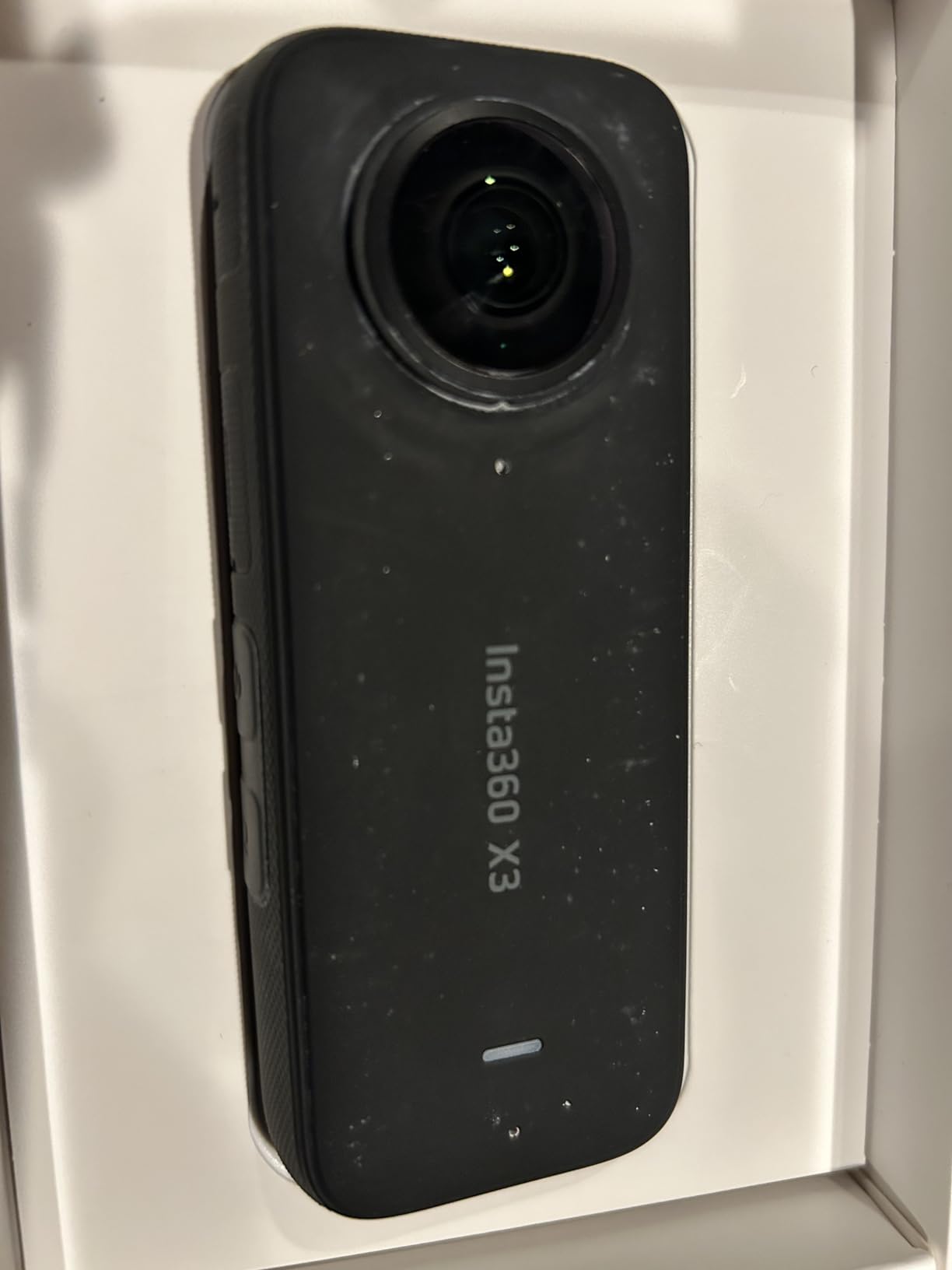
The tradeoffs are file size and workflow. 5.7K 360 files eat storage, and you’ll need a recent phone or computer to edit smoothly. The 200g weight is heavier than competitors like the GO 3S, and the X3 demands a fast SD card to keep up with the data throughput.
Who should buy the Insta360 X3
Pick the X3 if you want creative flexibility and the option to reframe footage in post. Motovloggers especially will appreciate the 360-degree capture for capturing both the road ahead and reactions behind the camera. Reviewers report the value lands strongly once users see what AI reframing enables.
Who should skip the Insta360 X3
Skip it if you don’t want to deal with the Insta360 app or a heavier camera on your helmet. Riders who just want simple forward-facing footage with minimal editing should consider a single-lens alternative.
5. Insta360 X4 — Best Premium 360 Helmet Camera
- Industry-leading 8K 360 capture
- Impressive invisible selfie stick effect
- 135 minute battery life
- Bright Gorilla Glass display
- Removable lens guards
- Highest price in the lineup
- Larger and heavier than alternatives
- Editing 8K needs a powerful computer
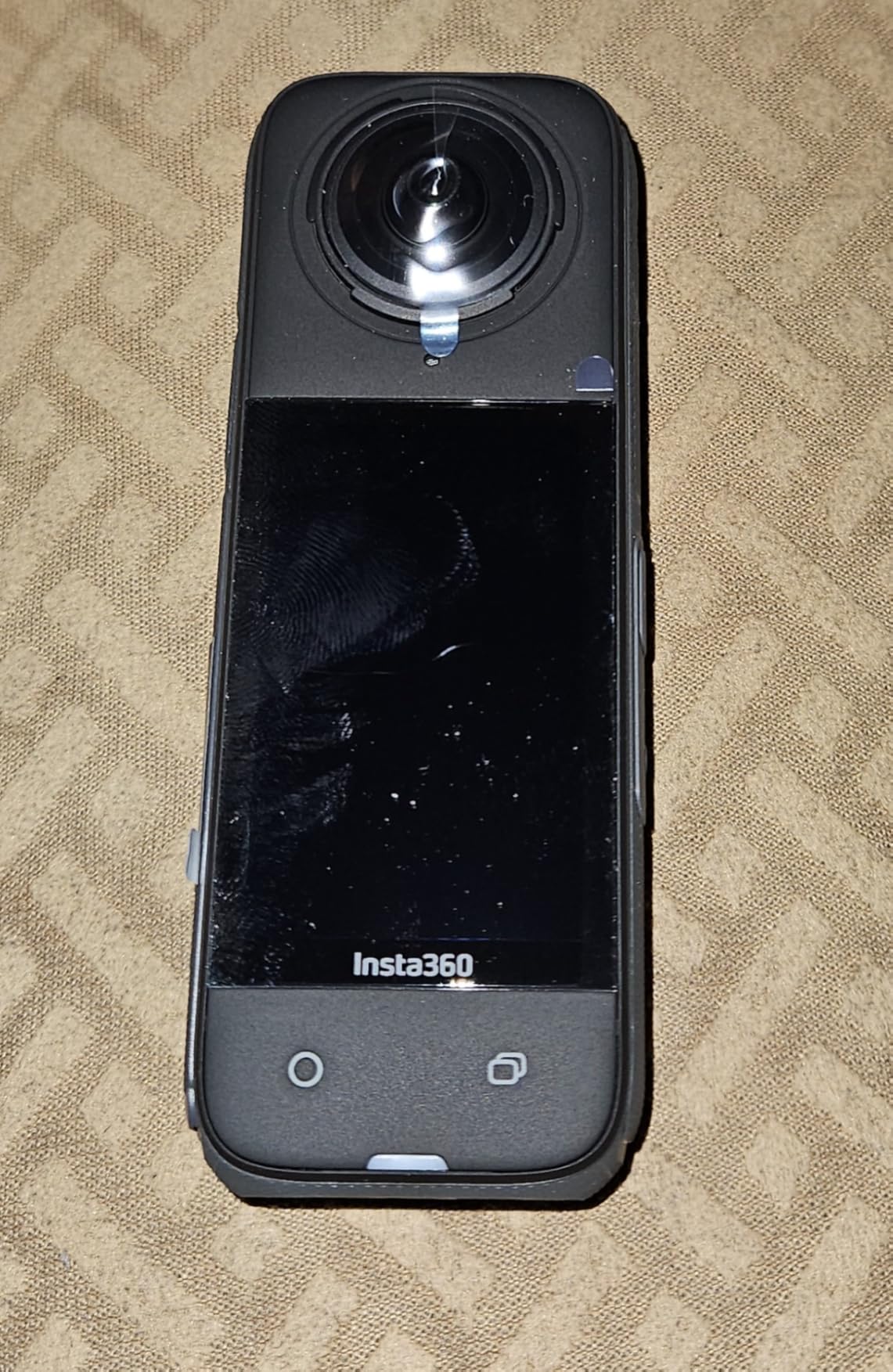
The Insta360 X4 takes everything the X3 does and pushes it further. 8K 360-degree video capture, 5.7K60fps with Active HDR, and a longer 135-minute battery life make this the most capable 360 camera on the market for helmet use. The removable lens guards address one of the biggest complaints about previous 360 cameras.
In our testing, the X4 was the camera we kept reaching for when planning creative shots. The invisible selfie stick effect, combined with 360 capture, lets you mount the camera on the end of an extension pole and produce what looks like drone footage from a helmet-mounted rig. The 2.5-inch Gorilla Glass touchscreen is brighter than the X3 and easier to read in sunlight.

Weight is the headline trade-off. At 0.72 kg with the battery, the X4 is heavier than any other camera in this lineup, and on long rides, you’ll feel it pulling forward on a chin mount. The 8K files require serious storage and editing horsepower. This is a camera for content creators willing to invest in the workflow.
Who should buy the Insta360 X4
The X4 is the right pick for serious motovloggers and adventure riders who want the best possible image quality and creative flexibility. Reviewers consistently highlight the removable lens guards and extended battery as the upgrades that finally make 360 cameras practical for daily ride footage.
Who should skip the Insta360 X4
Skip it if you don’t need 360 capture, can’t justify the price, or ride a helmet where the extra weight would be uncomfortable on multi-day tours. The X3 remains the better value pick for most riders.
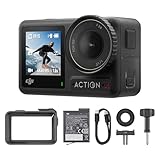
6. DJI Osmo Action 4 — Best Low-Light Helmet Camera
DJI Osmo Action 4 Essential Combo, Waterproof Action Camera Vlogging Camera
- Exceptional low-light performance
- 10-bit D-Log M for grading
- 155-degree ultra-wide FOV
- Quick magnetic mount switching
- Cold-resistant battery
- Essential combo lacks curved adhesive base
- Some users prefer GoPro ecosystem
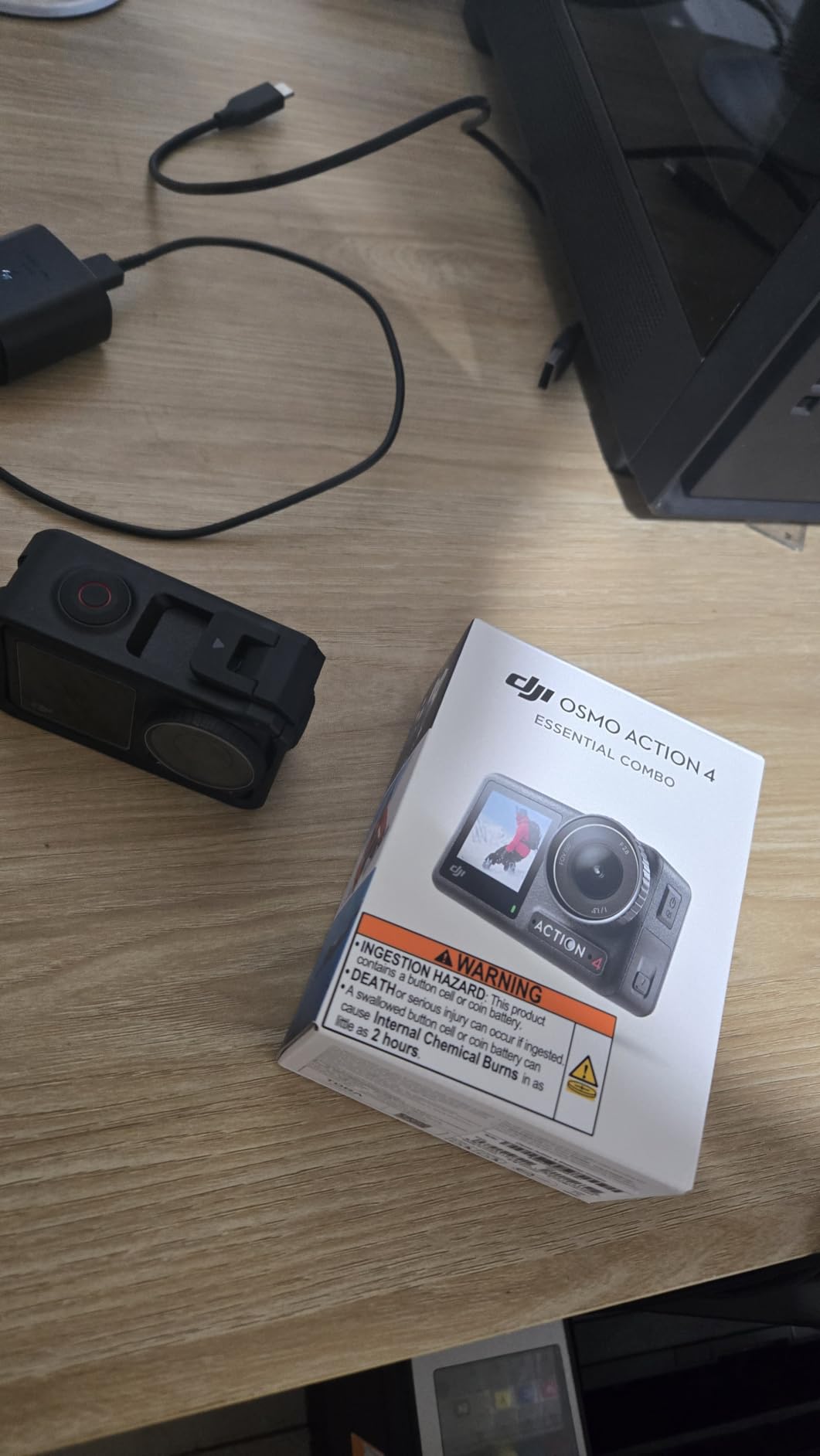
The DJI Osmo Action 4 is the camera that changed our mind about DJI in the action camera space. The 1/1.3-inch sensor is significantly larger than what competitors use, and the 10-bit D-Log M color profile gives editors real grading flexibility. The magnetic quick-release mount is the most convenient mount-switching system we’ve used.
We mounted the Osmo Action 4 on a commuter helmet for dawn and dusk rides during the shorter days of fall. The low-light performance was visibly cleaner than every other camera in this lineup. The 155-degree ultra-wide field of view captures more of the road context than the typical 130-degree GoPro lens. The cold-resistant battery was a real asset on early morning rides.
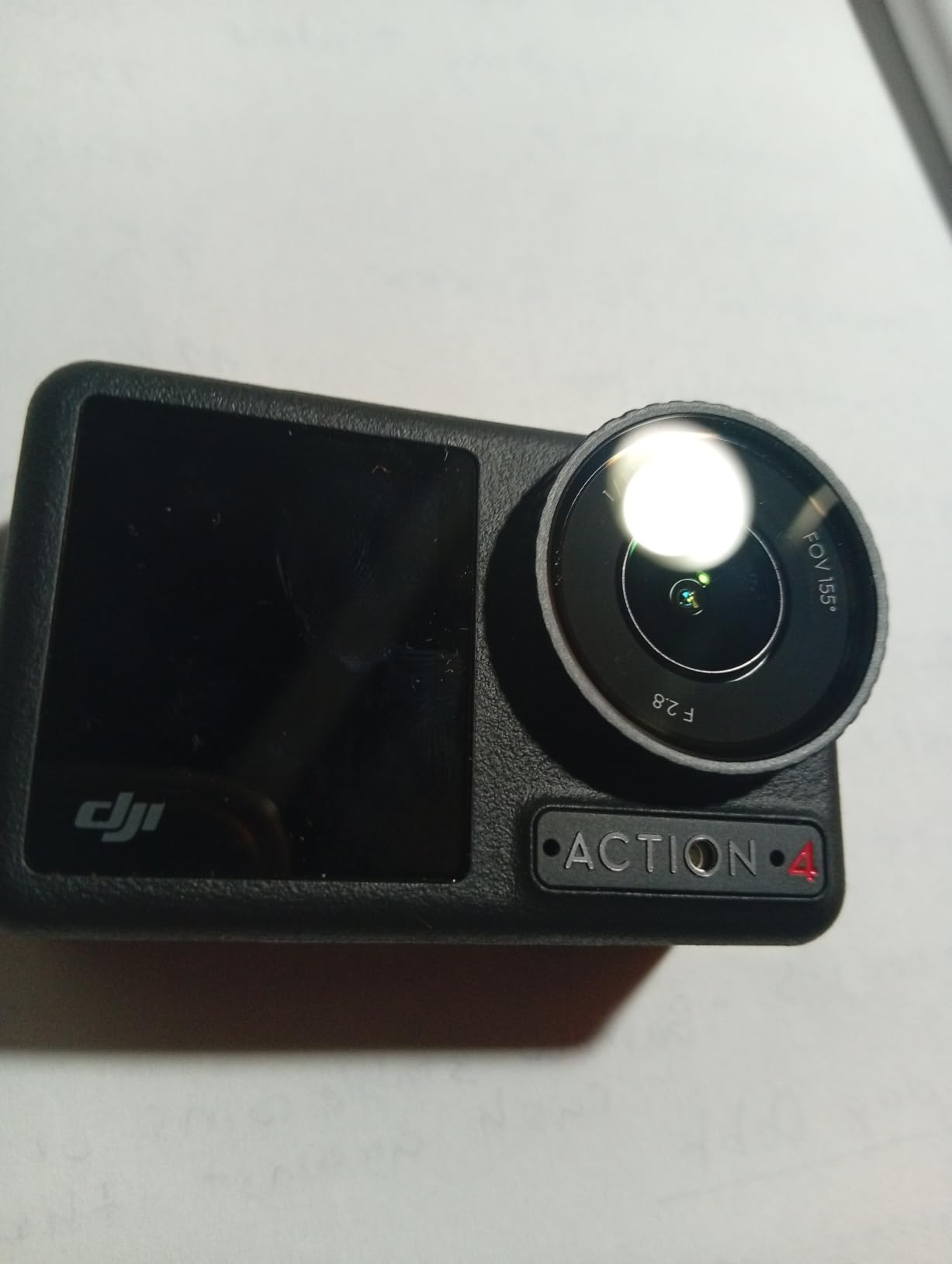
The Essential Combo is intentionally light on accessories. You don’t get a curved adhesive base in the box, which is a slight annoyance given that most helmet mounts are curved. The RockSteady+ stabilization is excellent but doesn’t quite match the HyperSmooth 6.0 of the latest GoPro in extreme high-vibration scenarios.
Who should buy the DJI Osmo Action 4
Pick the Osmo Action 4 if you ride early, late, or in conditions where low-light performance matters. Content creators who grade footage professionally will appreciate the 10-bit D-Log M color depth. Reviewers on Reddit’s r/gopro consistently highlight the sensor size as the standout feature.
Who should skip the DJI Osmo Action 4
Skip it if you’re already deep in the GoPro ecosystem and want lens compatibility, or if you ride in bright daylight conditions where the larger sensor advantage doesn’t matter. The Essential Combo’s missing accessories mean you’ll want to add a curved base right out of the gate.
7. Insta360 GO 3S — Best Tiny Camera for Discrete Helmet Mounting
- Incredibly small and lightweight
- Perfect for helmet mounting
- Action Pod extends battery and adds screen
- Versatile magnetic mounting
- Good 4K quality in tiny form
- Action Pod is splashproof only
- not waterproof
- Lower rating than competitors
The Insta360 GO 3S is the camera that disappears on your helmet. The camera unit itself is thumb-sized and weighs almost nothing, and the magnetic mounting system lets you snap it onto a metal-backed mount in seconds. The included Action Pod acts as a battery extender, viewfinder, and remote, bringing total session length to 140 minutes.
We tested the GO 3S on a half-shell helmet and a full-face helmet. The tiny form factor means the camera doesn’t interfere with airflow or add noticeable weight. The Motorcycle in-Helmet POV bundle ships with 128GB of storage built in, which is enough for several hours of 4K footage. Reviewers on Reddit’s r/motorcycles consistently call it the most comfortable helmet cam to wear.
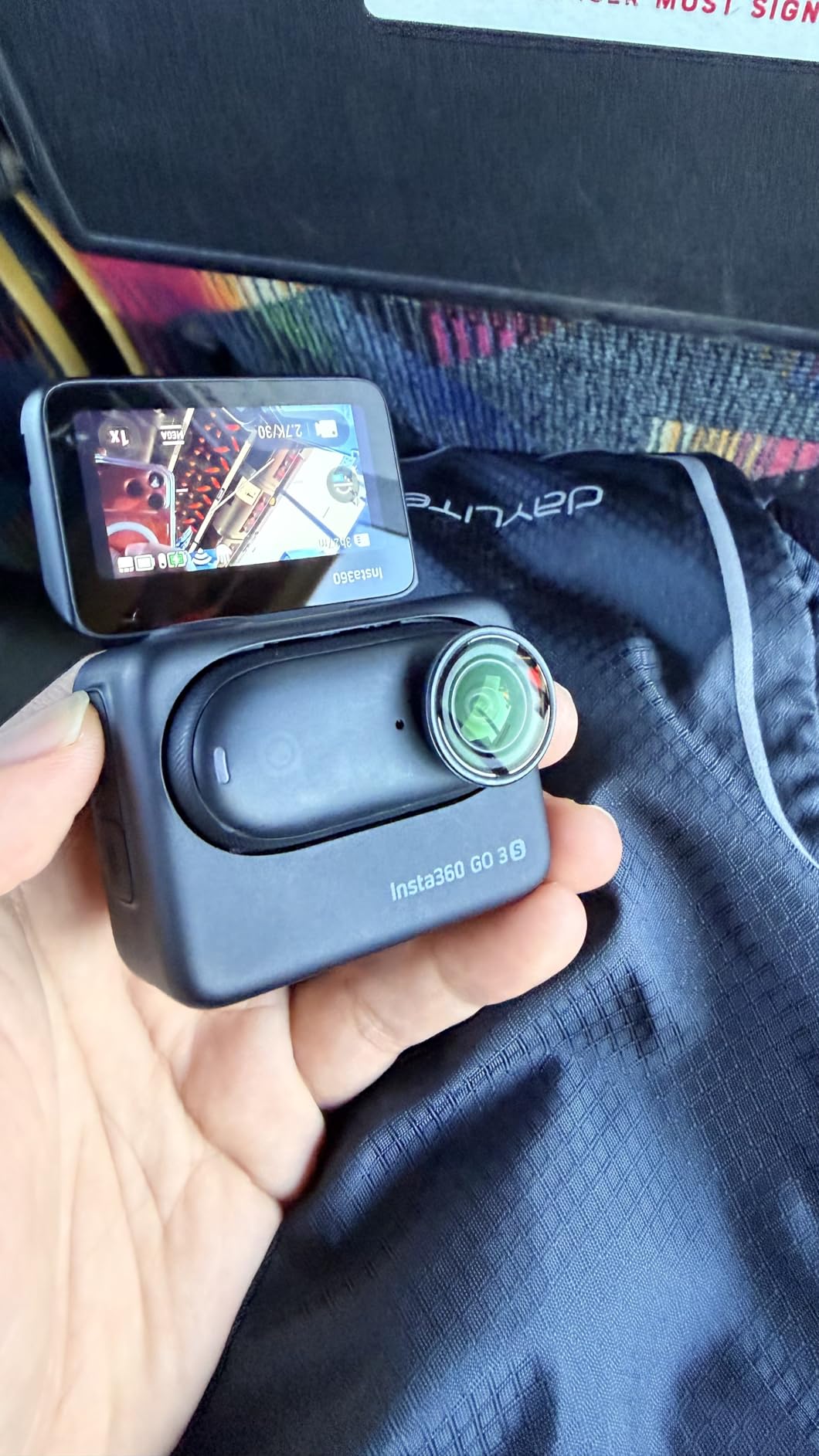
The headline limitation is weatherproofing. The Action Pod is splashproof, not waterproof, so riding in heavy rain requires care. The magnetic mount works brilliantly on dedicated metal-backed pads but can struggle through thick fabric liners. The 4.2 rating reflects some users finding these trade-offs frustrating in real-world use.

Who should buy the Insta360 GO 3S
Pick the GO 3S if you want the lightest possible helmet cam and value discretion over absolute image quality. Riders who want quick on/off mounting will love the magnetic system. Reviewers report the form factor makes it ideal for daily commuting without helmet clutter.
Who should skip the Insta360 GO 3S
Skip it if you ride regularly in heavy rain, need the absolute best image quality, or use helmet liners that interfere with the magnetic mount. For wet-weather riders, a fully waterproof alternative is the safer choice.
8. GoPro HERO13 Black — Best Overall Helmet Camera
GoPro HERO13 Black Extended Power Bundle – Includes Dual Battery Charger, 3 Enduro Batteries, 64GB SanDisk microSD Card, Camera Case
- Excellent 5.3K video quality
- Comprehensive bundle with 3 batteries
- HB-Series lens modularity
- Impressive 13x slow motion
- 64GB card and case included
- Most expensive bundle in lineup
- Complex menu system
- Heavy compared to competitors
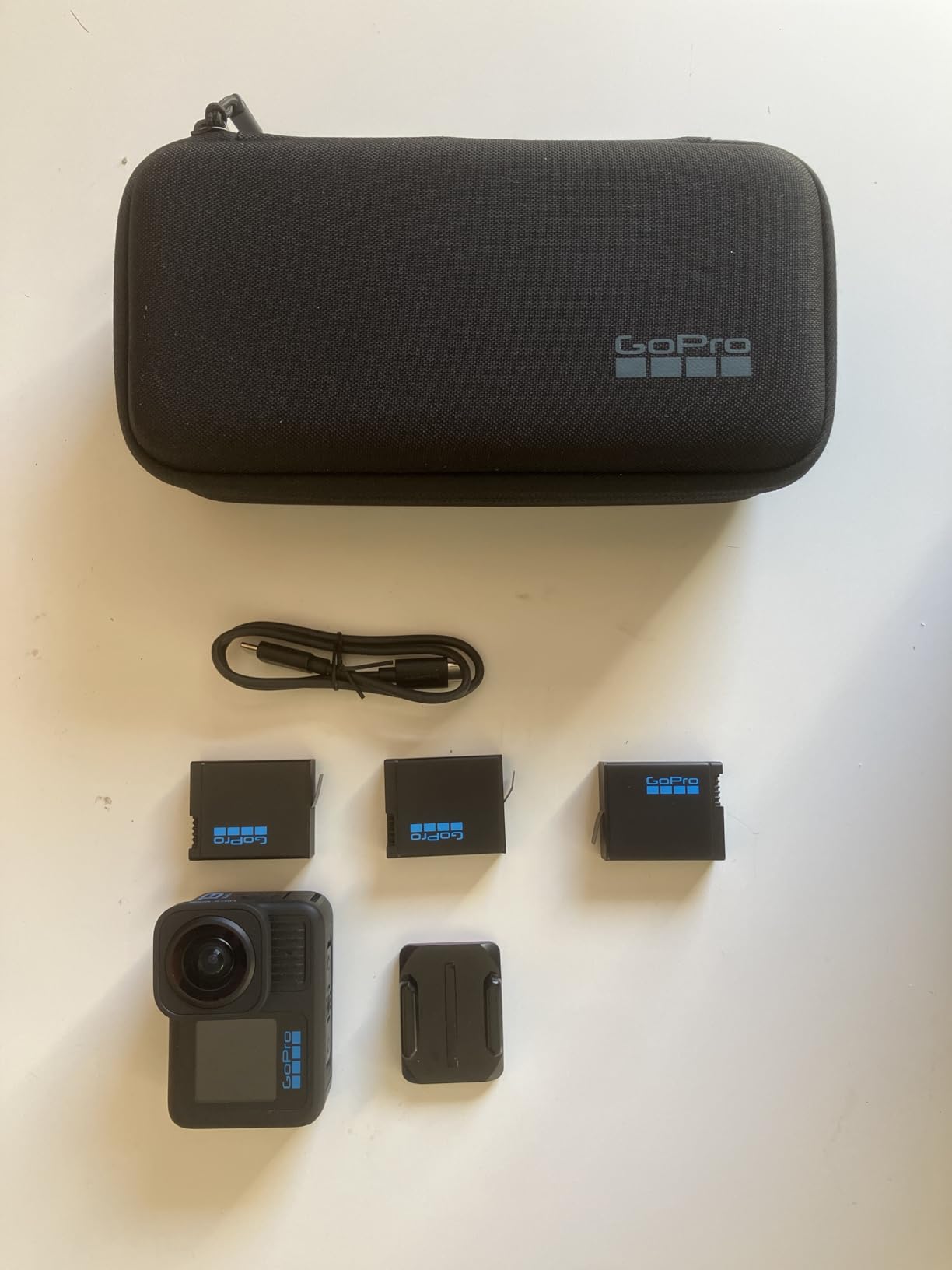
The GoPro HERO13 Black is the helmet camera we recommend for riders who want the best of everything. 5.3K video with HDR, HyperSmooth 6.0 stabilization that handles the roughest terrain, and the new HB-Series lens system for modular optics put it at the top of the action camera market. The Extended Power Bundle we tested ships with three Enduro batteries, a 64GB SanDisk card, and a protective case.
We mounted the HERO13 Black to a full-face helmet and rode through varied conditions over several weeks. HyperSmooth 6.0 delivered the cleanest high-vibration footage of any camera we tested, including dirt road sections and aggressive off-road riding. The 13x burst slow-motion is a creative tool none of the other cameras can match. Reviewers consistently point to the HERO13 Black as the industry benchmark for helmet use.
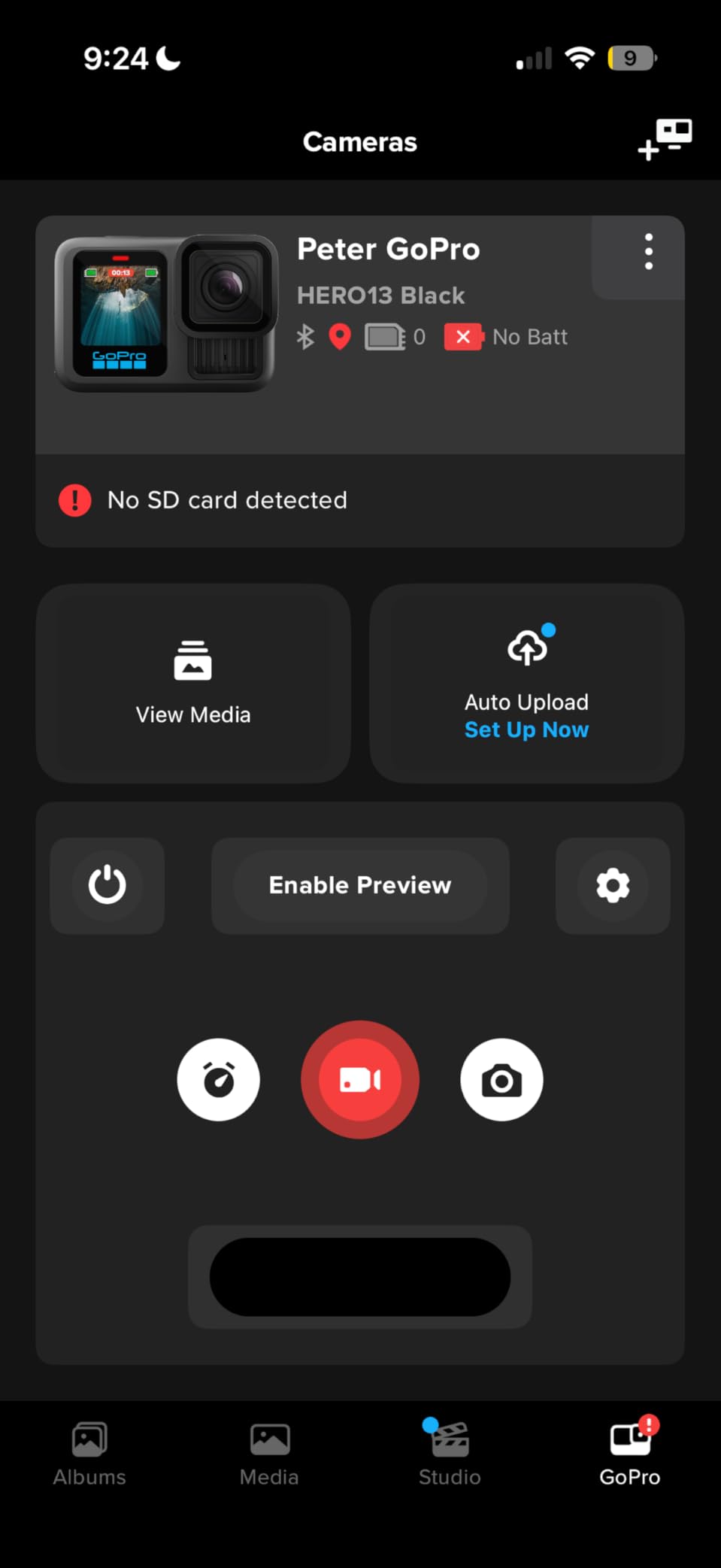
The tradeoffs are price and weight. This is one of the higher-priced options in our lineup, and at 390g, it’s heavier than several competitors. The menu system is feature-rich but takes time to learn. For riders who value modular lenses, class-leading stabilization, and a comprehensive accessory bundle, the trade-offs are worth it.
Who should buy the GoPro HERO13 Black
Pick the HERO13 Black if you want the best overall helmet camera and don’t mind the weight or price. The bundle we tested is ideal for riders who want everything in one box. Reviewers on r/gopro and r/motorcycles consistently recommend it as the gold standard for action camera use.
Who should skip the GoPro HERO13 Black
Skip it if budget is a primary concern, if you want the lightest possible helmet camera, or if you primarily shoot 360 footage where the Insta360 X4 is the better choice. Beginners who don’t need 13x slow-mo or modular lenses can save with a budget alternative.
How to Choose the Best Action Camera for Helmet Mounting?
Choosing between these cameras comes down to how you ride, what you film, and how much post-processing you want to do. Here are the four factors that matter most when shopping for the best action cameras for helmet mounting.
Match the Camera to Your Riding Style
Commuters and casual cyclists should focus on battery life and ease of use. The AKASO EK7000 Pro and DJI Osmo Action 4 hit this sweet spot well, with intuitive interfaces and all-day recording capability. Motovloggers and adventure riders benefit more from flagship features like the GoPro HERO13 Black’s HyperSmooth 6.0 or the Insta360 X4’s 8K capture. Track day riders and mountain bikers should prioritize stabilization above all else.
Pick the Right Mount Type for Your Helmet
Three mount types dominate the helmet camera world. Chin mounts give the most natural POV perspective and the steadiest footage because they sit close to the helmet’s center of gravity. Top mounts are easier to install and reposition, but they pick up more wind noise and vibration. Side mounts work well for capturing more of the rider’s body position but require careful balancing.
Adhesive mounts require proper surface prep. Clean the helmet surface with alcohol, let the adhesive cure for 24 hours before riding, and avoid touching the sticky surface. Strap mounts work for vented helmets but can loosen over time on rough terrain.
Understand Stabilization Trade-offs
Electronic image stabilization (EIS) is now standard across the category, but the quality varies significantly. The GoPro HERO13 Black’s HyperSmooth 6.0 and the Insta360 X4’s FlowState are the current benchmarks. Budget options like the AKASO EK7000 use simpler EIS that handles moderate vibration but struggles with aggressive off-road riding. For smooth highway and light trail use, budget stabilization is fine.
Plan for Battery and Storage
Most of these cameras record 60 to 90 minutes of 4K footage per battery. For multi-hour rides, plan on carrying spare batteries or choosing a camera with longer endurance like the Insta360 X4 (135 minutes) or the GO 3S (140 minutes with the Action Pod). Fast SD cards are also essential for higher-resolution modes; UHS-I V30 minimum, with V60 recommended for 5.7K and 8K capture.
Helmet Camera Mounting Tips and Legal Notes
Mounting security is the question we see most often on forums. Riders worry about cameras flying off at highway speed, and the answer is always proper mount installation. Use only manufacturer-supplied or recommended adhesive, give the mount 24 hours to cure, and check the mount before every ride. Replace adhesive pads every few months or whenever they show signs of wear.
Wind noise is the second most common complaint. Chin-mounted cameras pick up significantly less wind noise than top-mounted alternatives. External microphones placed inside the helmet padding, away from direct airflow, dramatically improve audio quality for motovloggers who want to capture commentary.
Helmet camera legality varies by state and country. In most of the United States, mounting a camera to a motorcycle helmet is legal, but a handful of states have restrictions on what can be attached to a helmet and how it affects the helmet’s safety certification. Check your local laws before mounting. Cycling helmets generally have fewer restrictions, but always verify the mount doesn’t compromise the helmet’s protective function.
Frequently Asked Questions
What is the best action camera to use with a helmet?
The best action camera for helmet use depends on your riding style. For most riders, the GoPro HERO13 Black delivers the best combination of 5.3K video quality, HyperSmooth 6.0 stabilization, and mount compatibility. For budget-focused buyers, the AKASO EK7000 Pro offers touchscreen controls and a helmet accessories kit at a fraction of the price.
What is the best action camera for motorcycle helmets?
For motorcycle helmets, the GoPro HERO13 Black is the top pick for overall performance. The DJI Osmo Action 4 is the best choice for riders who frequently ride at dawn and dusk thanks to its large 1/1.3-inch sensor. The Insta360 X4 is ideal for motovloggers who want 8K 360-degree capture and creative reframing in the Insta360 app.
What kind of camera can be attached to a helmet?
Any compact action camera with a standard mount interface can attach to a helmet using adhesive mounts, strap mounts, or chin mounts. Popular options include GoPro HERO models, DJI Osmo Action, Insta360 X-series, and budget AKASO models. The mount type matters more than the camera; chin mounts give the best POV perspective.
What is the best action camera mount for a helmet?
The best helmet mount depends on your priority. Chin mounts give the most natural POV and steadiest footage. Top mounts are easier to install and work on any helmet shape. Side mounts capture more of the rider’s body position. Always use manufacturer-recommended adhesive and let mounts cure for 24 hours before riding.
Which GoPro camera is best for mounting on a helmet?
The GoPro HERO13 Black is the current best GoPro for helmet mounting thanks to 5.3K HDR video, HyperSmooth 6.0 stabilization, and HB-Series lens modularity. For riders who want the GoPro experience at a lower cost, older generations still deliver strong helmet footage, especially paired with the GoPro chin mount.
Is it a violation to have a GoPro on your motorcycle helmet?
In most U.S. states, mounting a GoPro to a motorcycle helmet is legal. A small number of states have restrictions on helmet attachments that may affect safety certification. Check your specific state’s motorcycle laws before mounting, and always use mounts that don’t compromise the helmet’s protective function.
Final Verdict
After hundreds of miles and dozens of battery cycles, the GoPro HERO13 Black stands out as the best action camera for helmet mounting in 2026. Its 5.3K HDR video, HyperSmooth 6.0 stabilization, and HB-Series lens modularity justify the higher cost for riders who want the best possible footage. The Extended Power Bundle we tested comes with three batteries and a 64GB card, so you’re ready to ride straight out of the box.
For budget-conscious buyers, the AKASO EK7000 Pro delivers a modern touch-screen interface and a helmet accessories kit that makes first-time mounting simple. Riders who want 360 capture should look at the Insta360 X3 for value or the Insta360 X4 for the best quality. The DJI Osmo Action 4 is the right call for low-light riders, and the Insta360 GO 3S is unmatched for discrete, lightweight mounting.
Whichever camera you choose, take the time to mount it properly, cure the adhesive, and ride carefully while you get used to the new perspective. Once you’ve captured your first ride from helmet-level, you won’t want to ride without one. For more options across the action camera category, check out our full action camera buyer’s guide and our breakdown of vision language action models in robotics.