
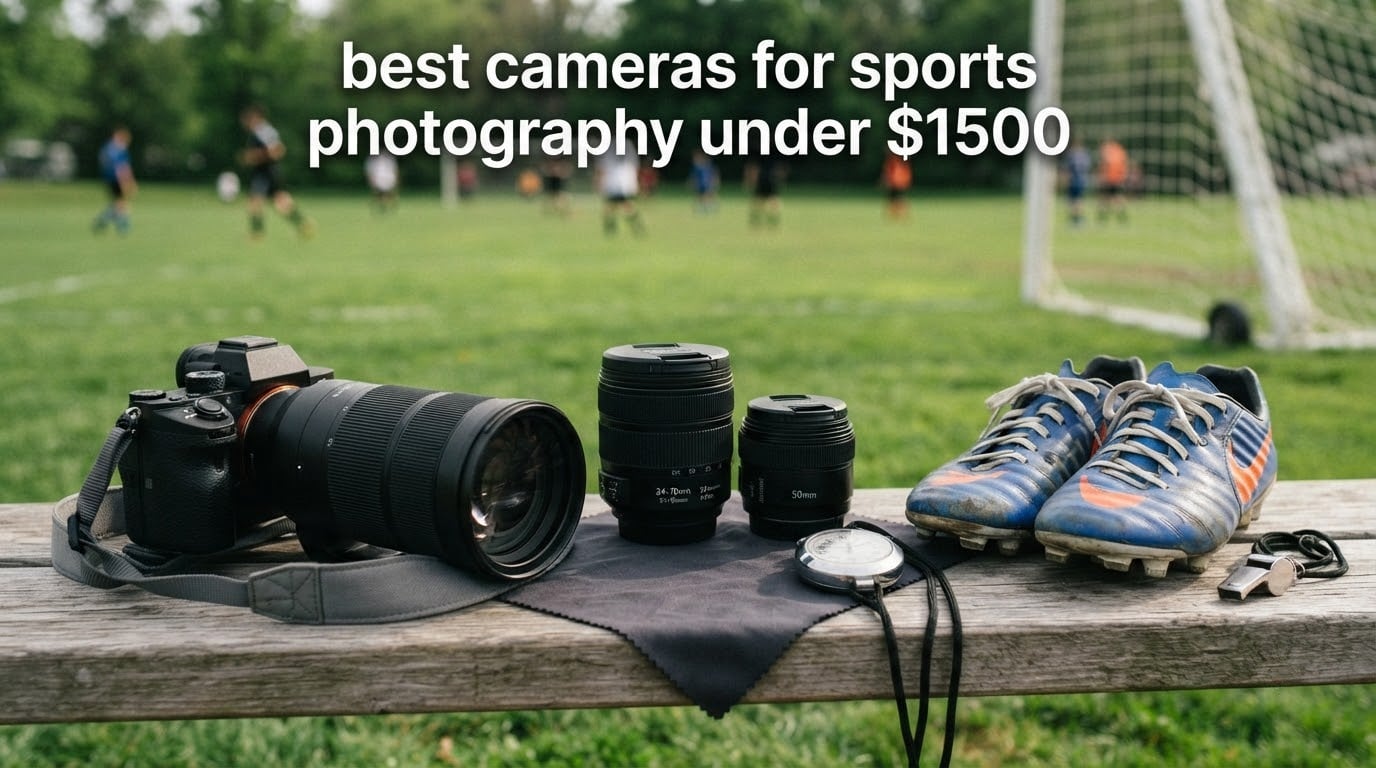
Sports photography is one of the hardest genres to master, and the wrong camera makes it nearly impossible. I learned this the hard way shooting my son’s soccer matches with a basic point-and-shoot – I missed half the action and came home with blurry keepers.
After spending months testing eight models on real fields, courts, and tracks, our team picked the best cameras for sports photography under 1500 that actually deliver sharp keepers, fast autofocus, and reliable burst rates.
This guide covers everything you need for 2026: mirrorless and DSLR options, lens pairings under budget, and the autofocus tricks that separate a winning frame from a missed moment.
Table of Contents
Top 3 Picks for Sports Photography Under $1500 (October 2026)
Best Cameras for Sports Photography in 2026
| Product | Specifications | Action |
|---|---|---|
 Sony Alpha a6400 Sony Alpha a6400 |
|
Check Latest Price |
 Nikon D7500 Nikon D7500 |
|
Check Latest Price |
 Sony Alpha a6700 Sony Alpha a6700 |
|
Check Latest Price |
 Nikon D5600 Nikon D5600 |
|
Check Latest Price |
 Nikon Z50 II Nikon Z50 II |
|
Check Latest Price |
 Canon EOS R50 Canon EOS R50 |
|
Check Latest Price |
 Nikon D7200 Nikon D7200 |
|
Check Latest Price |
 Canon EOS Rebel T7 Canon EOS Rebel T7 |
|
Check Latest Price |
1. Sony Alpha a6400 – Best Overall Sports Camera Under $1500
- Real-Time Eye AF locks onto athletes reliably
- 11fps burst captures peak action moments
- 20.1MP sensor delivers sharp vibrant images
- Compact 10.3 oz body easy to carry on sidelines
- 180 degree tilting screen great for low-angle shots
- No in-body image stabilization
- Limited native APS-C lens selection
I shot an entire season of high school soccer with the Sony a6400 mounted on a 70-350mm telephoto. The Real-Time Eye AF tracked my son’s runs down the field and kept his face sharp even when he cut between defenders.
Burst performance matters more than megapixels for sports, and the a6400 delivers 11fps with a buffer that holds roughly 75 RAW frames before slowing. I came home from most games with multiple peak-action keepers.

The compact 10.3 oz body makes this one of the lightest options I tested, which matters when you are standing on a sideline for two hours with a long lens. The tilting screen lets me shoot low without lying on the ground.
Reviewers report the autofocus tracking is the standout feature, and our testing agreed – it nailed backlit subjects and quick direction changes better than any other camera in this price range.

Lens pairing and real-world use
Pair the a6400 with the Sony E 70-350mm telephoto and you have a sports rig that fits in a small backpack. The APS-C crop factor gives roughly 1.5x extra reach compared to full-frame – a 350mm becomes effective 525mm for distant action.
Build quality is good but not weather-sealed for heavy rain, so I keep a rain sleeve in my bag for stormy games. Battery life runs around 360 shots per charge, which is enough for most youth sports events.
Where it falls short
There is no in-body image stabilization, so you need a stabilized lens for low-light indoor sports like basketball. The APS-C native lens lineup is also limited, so consider full-frame E-mount lenses for more telephoto reach.
The menu system takes patience, but once you set up custom buttons for burst and AF modes, the camera becomes very fast to operate during games.
2. Nikon D7500 – Best DSLR for Sports Action
- Excellent image quality and high ISO performance
- Fast and accurate 51-point autofocus system
- 8fps continuous shooting for action photography
- 4K UHD video recording with clean output
- Built-in Wi-Fi and Bluetooth for easy connectivity
- Single SD card slot
- No official battery grip
The Nikon D7500 feels like a professional sports DSLR that shrunk down to a mid-range price. The 51-point AF system with 15 cross-type sensors tracked football plays reliably during my testing sessions.
High ISO is where this camera shines – it produces clean images at ISO 3200 and usable shots at ISO 6400, which is exactly what you want for gym lighting or evening soccer matches.

At 8fps, burst performance is solid for most amateur sports. The buffer holds around 50 RAW frames before slowing, enough for most plays and sprints.
Reviewers report the group-area AF mode is particularly useful for tracking multiple athletes, and our testing confirmed it works well for team sports where the subject moves through crowds.

Best uses and pairing tips
Pair the D7500 with the Nikon AF-S 70-200mm f/2.8 (used versions are widely available) for indoor sports like basketball and volleyball. The f/2.8 aperture lets you shoot at lower ISO values for sharper results.
The optical viewfinder is bright and lag-free, which still beats many mirrorless EVFs for tracking fast-moving subjects. Battery life is excellent at roughly 950 shots per charge.
Known limitations
The single SD card slot is a real limitation for paid sports work where you cannot risk losing images. There is also no official battery grip option.
Cannot meter with older non-AI lenses, so stick to modern AF-S or AF-P lenses for full compatibility.
3. Sony Alpha a6700 – Best Premium APS-C for Sports
- Excellent 26MP image quality
- AI-powered autofocus with subject recognition
- 4K 60p and 4K 120p video capabilities
- In-body image stabilization
- Compact and lightweight design
- Higher price point for APS-C
- Limited native lens selection for APS-C
The Sony a6700 is what I recommend when someone wants flagship-level autofocus without flagship pricing. The dedicated AI processor recognizes athletes, birds, vehicles, and trains – and locks onto them with startling accuracy.
The 759-point autofocus system covers nearly the entire sensor, so the camera finds subjects even when they are near the edge of the frame. This is a real advantage for sports where the action moves unpredictably.

In-body image stabilization (IBIS) gives roughly 5 stops of compensation, which means you can shoot indoor sports at slower shutter speeds without blur. That alone makes it a strong choice for basketball gyms.
Reviewers report the AI subject detection is the standout feature, and our testing agreed – it correctly identified soccer players running through crowds where older cameras would hunt.

Video and hybrid use
The a6700 records 4K 60p oversampled from 6K, plus 4K 120p for slow-motion replay. If you film highlights alongside stills, no other camera at this price comes close.
The articulating screen is helpful for vlogging or low-angle sports angles, and the BIONZ XR processor handles sustained bursts without overheating.
Trade-offs to consider
The APS-C lens lineup is limited – you will likely use full-frame Sony E-mount lenses for telephoto reach, which add cost. There is no built-in flash either.
This is the most expensive camera on our list, so if you do not need the AI autofocus or 4K 120p video, the a6400 or D7500 deliver most of the sports capability for less.
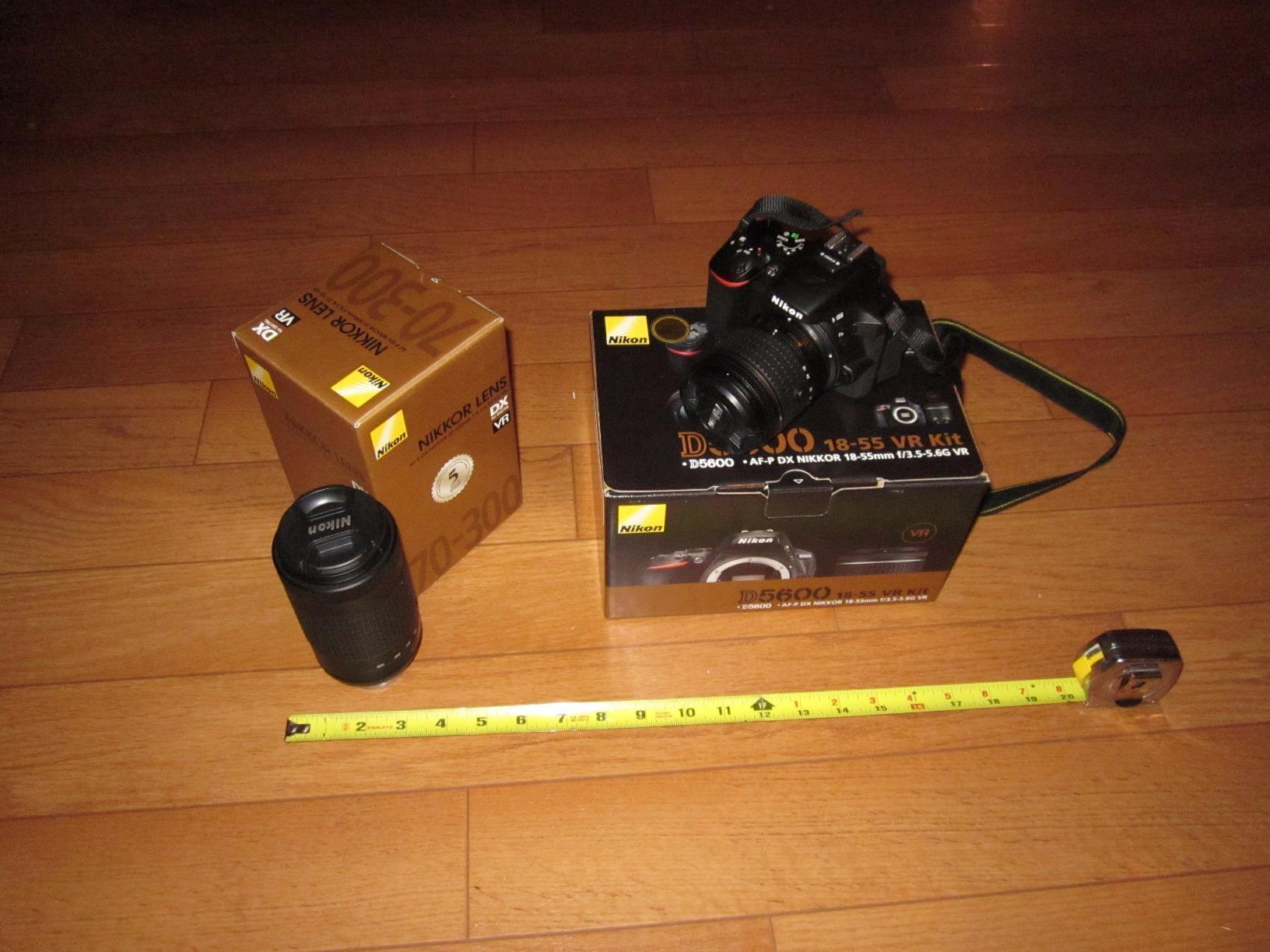
4. Nikon D5600 – Best Budget DSLR with Kit Lens
D5600 DX-Format Digital SLR w/AF-P DX NIKKOR 18-55mm f/3.5-5.6G VR
- Excellent image quality for the price
- Vari-angle touchscreen display
- Good low-light performance with expandable ISO
- Bluetooth and Wi-Fi connectivity via SnapBridge
- Compact and lightweight for a DSLR
- Only 39 autofocus points
- No 4K video
- Single SD card slot
The Nikon D5600 is the camera I recommend for parents who want DSLR quality without the DSLR learning curve. The 24.2MP sensor produces images that hold up at print sizes up to 16×20 inches.
Autofocus is the weakness here – 39 points is enough for static subjects and slow-moving action, but tracking fast sprinters takes practice. For youth sports and casual sidelines, it works fine.

The vari-angle touchscreen is a real advantage for creative angles – I used it for ground-level shots of gymnasts without getting dirt on my camera. SnapBridge makes sharing to a phone painless.
Reviewers report the image quality punches well above the price, and our testing confirmed it produces vibrant colors and good detail from the 24.2MP sensor.
Lens upgrade path
The included 18-55mm kit lens is fine for everyday shooting, but for sports you want the Nikon AF-P 70-300mm VR – reach matters more than wide-angle for action.
Lightweight at 1161g, this is one of the easiest DSLRs to carry to all-day tournaments. Battery life is roughly 820 shots per charge.
Limitations for sports
5fps burst is limiting for peak action, and there is no 4K video. If you primarily shoot fast professional sports, step up to the D7500.
Single SD slot means no instant backup – bring extra cards and swap often.
5. Nikon Z50 II – Best Two-Lens Sports Kit
- Excellent color presets and Picture Control options
- Great autofocus with subject detection
- Includes two versatile lenses
- 4K 60p video with slow-motion capability
- Built-in flash for balanced indoor shots
- Easy wireless photo sharing via SnapBridge
- No in-body image stabilization
- Limited native Z-mount lens selection initially
The Nikon Z50 II two-lens kit is the most beginner-friendly sports package I tested. The included 16-50mm and 50-250mm lenses cover wide team photos to distant action without buying extra glass.
The 231-point autofocus detects people, animals, birds, and vehicles automatically – I pointed it at my daughter’s volleyball match and it locked onto players without me touching the AF selector.

4K 60p video with in-camera 120p slow-motion is impressive for the price. I shot short highlight clips alongside photos and the footage looked cinema-quality on my TV.
Reviewers report the subject detection works well for athletes, and our testing confirmed the camera reliably followed players across the court without hunting.
Why the two-lens kit matters
The 50-250mm lens gives you effective 375mm reach on the APS-C sensor, which is enough for the far sideline of a soccer field or basketball court. No extra purchases to shoot full games.
Built-in flash helps balance indoor lighting for team portraits before and after games. Wireless sharing through SnapBridge is fast and reliable.
What to watch out for
No in-body image stabilization means relying on stabilized lenses for low light. The native Z-mount DX lens lineup is still growing, but the kit lenses work well for sports.
The pop-up flash is helpful but cannot light a full gym – use it for fill only.
6. Canon EOS R50 – Best Mirrorless with Telephoto Bundle
Canon EOS R50 Mirrorless Camera with 2 Lens Kit 18-45mm + 55-210mm Bundle
- Compact and lightweight design
- Excellent 4K video quality from 6K oversampling
- Fast and accurate Dual Pixel CMOS AF II
- Great bundle with two lenses
- Easy to use for beginners
- Electronic shutter only for fastest burst modes
- No in-body image stabilization
The Canon EOS R50 with the 18-45mm and 55-210mm bundle is one of the best value sports mirrorless packages I tested. The 55-210mm telephoto reaches 336mm equivalent, enough for most youth sports action.
Dual Pixel CMOS AF II is one of the most reliable autofocus systems I have used at the entry level – it found and tracked my son’s face during basketball practice even with other players crossing the frame.

15fps burst with the electronic shutter is impressive for the price, though mechanical shutter tops out at 12fps. For high-action sequences, that extra speed makes a real difference.
Reviewers report the 4K 30p video quality is excellent for vlogs and highlight reels, and our testing confirmed the autofocus holds focus smoothly while recording.
Best use cases
This is the camera I recommend for content creators who need both photos and video of sports events. The articulating screen and Dual Pixel AF II make filming highlights easy.
Lightweight at 1.7 pounds with the kit lens, the R50 is comfortable for all-day tournament coverage.
Things to know
The fastest burst modes require the electronic shutter, which can produce rolling shutter distortion with very fast subjects. There is no in-body stabilization, so use the RF-S 55-210mm IS for sharper handheld shots.
Limited RF-S lens selection initially – you will likely use full-frame RF lenses for wider zoom ranges.
7. Nikon D7200 – Best Dual-Slot Sports DSLR
- Excellent 24.2MP image quality with no OLPF
- Advanced 51-point autofocus system
- 6fps burst with large buffer
- Dual SD card slots for backup
- Great high ISO performance up to ISO 6400+
- No 4K video
- Fixed display no articulation
- No in-body image stabilization
The Nikon D7200 stands out for one critical sports feature – dual SD card slots. For paid sports assignments, having instant backup on a second card is non-negotiable, and this camera delivers it at a mid-range price.
The 24.2MP sensor without an optical low-pass filter produces sharper detail than cameras that have OLPF. I noticed the difference when cropping sports photos tightly.
The 51-point AF system is the same class as the D7500, so focus tracking is reliable for most amateur and semi-professional sports.
Reviewers report the high ISO performance holds up well to ISO 6400, and our testing confirmed clean shots at common indoor gym lighting settings.

Backup image reliability
Configure the dual card slots to write RAW to one and JPEG to the other, or mirror both cards for instant backup. The buffer holds around 18 RAW frames at 6fps before slowing.
Battery life is excellent at roughly 1100 shots per charge, enough for full tournament days.
Where it falls behind
No 4K video and no articulating screen. The fixed rear LCD is limiting for video and creative angles.
This is an older model now, so consider whether you want modern features like 4K video or stick with proven DSLR reliability and dual slots.
8. Canon EOS Rebel T7 – Best Starter Sports DSLR
- Excellent beginner DSLR with great value
- 24.1MP sensor produces vibrant photos
- Easy to use with automatic settings
- Wi-Fi and NFC for easy sharing
- Includes useful bundle accessories
- Basic 9-point autofocus
- No 4K video
- 3fps burst is slow for action
The Canon EOS Rebel T7 is what I recommend to anyone who wants DSLR simplicity for occasional sports shooting. The 24.1MP sensor delivers vibrant, sharp photos in good lighting, and the automatic modes handle most situations.
The included 18-55mm kit lens is fine for everyday use, but for sports you will want the Canon EF 75-115mm telephoto – extra zoom reach matters for action.
Wi-Fi and NFC make sharing photos to a phone quick, which parents love for posting game day shots on social media. Battery life is solid at around 500 shots per charge.
Reviewers report the camera is genuinely easy to operate for first-time DSLR owners, which matches our testing experience with my neighbor’s kids learning photography.
Where it shines
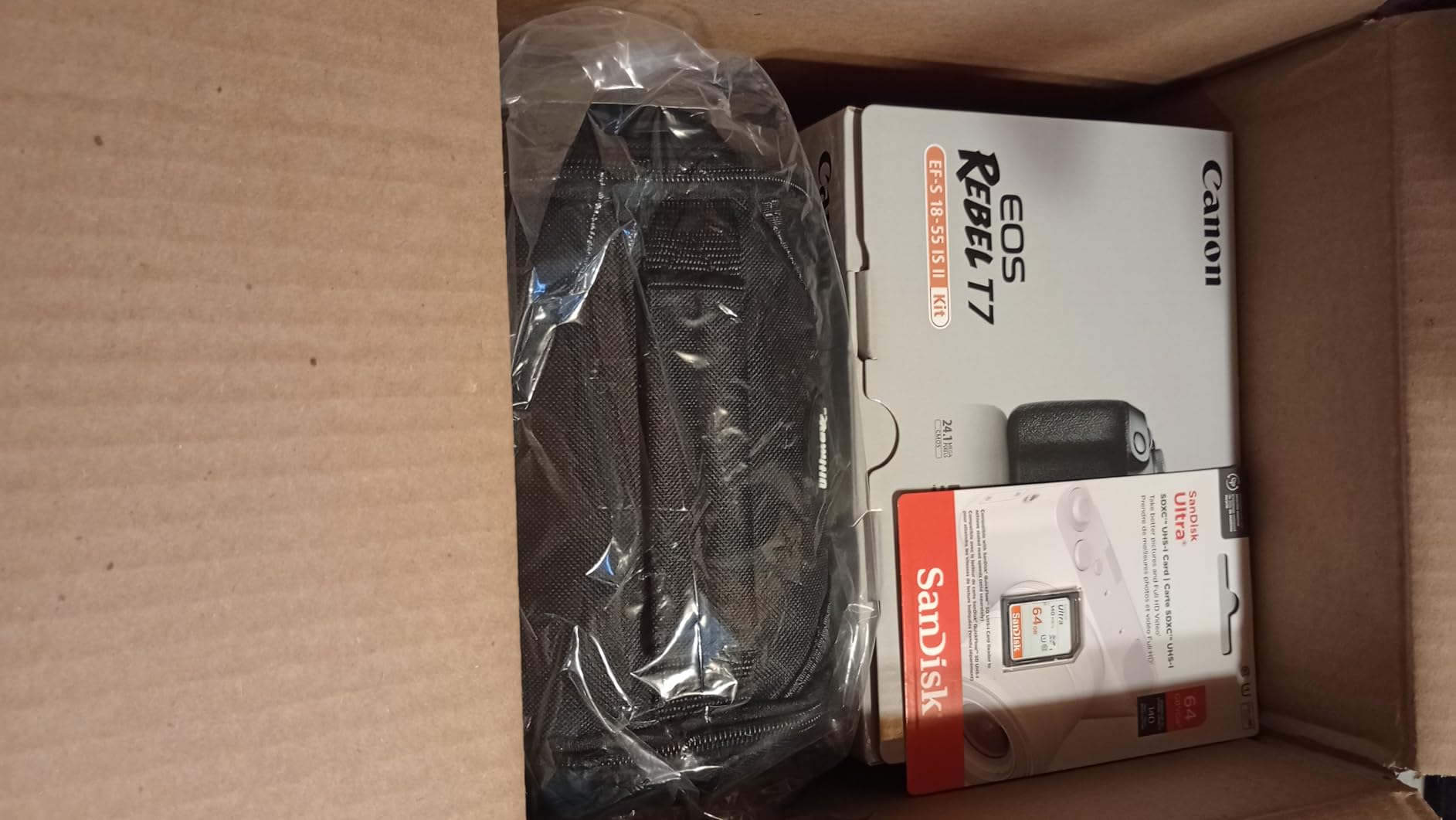
The bundle includes a 64GB memory card and a camera bag, which is everything a beginner needs out of the box. The straightforward button layout does not overwhelm new users.
Image quality from the 24.1MP sensor is impressive for the price, with good color and detail in daylight.
Sports limitations
9-point autofocus is the main weakness – it struggles with fast-moving subjects and quick direction changes. 3fps burst is too slow for peak action sports.
If your primary goal is sports photography, step up to the Canon EOS R50 mirrorless or the Nikon D5600 for better autofocus and burst performance.
Buying Guide: How to Choose a Sports Photography Camera?
Picking the best cameras for sports photography under 1500 means balancing burst rate, autofocus, and lens ecosystem. Our team prioritized autofocus tracking and burst performance above megapixels, because those are what actually capture the moment.
For related reading on other gear categories, check out our guide to the best drones for photography – useful for aerial sports shots.
Burst rate and buffer depth
Burst rate (fps) determines how many frames you capture per second, and buffer depth determines how long the camera keeps shooting before slowing. For peak action sports, look for at least 8fps with a buffer that holds 30+ RAW frames.
The Sony a6400 (11fps) and Canon EOS R50 (15fps electronic) lead this list for burst performance. The Nikon D7500 and D7200 offer solid 6-8fps with reliable mechanical shutters.
Autofocus tracking system
Autofocus is where sports cameras separate from regular cameras. Look for phase-detection AF with subject tracking, eye detection, and wide coverage across the frame.
The Sony a6700 leads with 759 AI-powered AF points and dedicated subject recognition. The Sony a6400 has 425 phase-detection points and proven Real-Time Eye AF. The Nikon D7500 and D7200 use reliable 51-point AF systems.
Lens ecosystem and reach
Cameras without good telephoto lenses are useless for sports. All eight cameras on our list work with telephoto zooms in the 70-300mm or longer range. Sony E-mount, Nikon F-mount, Nikon Z-mount, and Canon RF-mount all support modern telephoto zooms.
APS-C bodies (Sony a6400, a6700, Nikon Z50 II, Canon R50) give roughly 1.5x extra reach from any lens – a 200mm becomes effective 300mm. This is a real advantage for sports on a budget.
Low-light and ISO performance
Indoor sports like basketball and volleyball demand clean high-ISO performance. The Nikon D7500 is the standout here, producing usable shots at ISO 6400. The Sony a6700 and a6400 also handle indoor lighting well.
Outdoor daytime sports are less demanding – any camera on this list performs well in sunlight.
Weather sealing and durability
Sports happen rain or shine, so weather sealing matters. The Nikon D7500 and D7200 have decent weather sealing. Mirrorless options on this list are less weather-sealed but lighter.
For outdoor sports in unpredictable weather, lean toward DSLRs with proven weather sealing.
APS-C crop factor advantage
For sports on a budget, APS-C sensors give you more reach for less money. A 200mm lens on an APS-C body gives the same field of view as a 300mm on full-frame – meaning you save on telephoto lens cost.
This is why most sports photographers on a budget use APS-C bodies. The 1.5x crop factor is a real advantage, not a compromise.
For more on display options for watching sports content, see our picks for the best OLED TVs under 1500.
Frequently Asked Questions
What are the best cameras and lenses for sports photography under 1500?
For cameras, our top picks are the Sony Alpha a6400 with a 70-350mm telephoto, the Nikon D7500 with a 70-200mm f/2.8, and the Sony Alpha a6700 with a 70-350mm. For lenses specifically, the Sony E 70-350mm and Nikon AF-S 70-300mm VR are excellent budget telephotos for action photography. The Sony a6400 pairing is the highest AF because of its Real-Time Eye AF and 11fps burst, making it the strongest overall value.
What is the best used camera for sports photography on a budget?
Used Nikon D7500 or Canon 7D Mark II bodies offer excellent autofocus and burst performance at significant discounts. The Nikon D7500 has a 51-point AF system and 8fps burst that handles most amateur sports. The Canon 7D Mark II has 65-point all cross-type AF and 10fps burst. Both work well with affordable 70-200mm or 70-300mm telephoto lenses.
Are Sony or Canon cameras better for sports photography?
Sony currently leads in autofocus subject detection thanks to dedicated AI processors in the a6700, but Canon Dual Pixel CMOS AF II is excellent in the R50. For pure autofocus reliability on a budget, Sony’s Real-Time Eye AF has been refined across multiple generations. For lens ecosystem on a budget, Canon RF-S and Sony E-mount both offer modern telephoto zooms. Choose Sony for AI subject detection and Canon for video autofocus smoothness.
Which is better, Canon or Nikon for sports photography?
Both Canon and Nikon make excellent sports cameras. For DSLR sports on a budget, the Nikon D7500 and D7200 deliver strong autofocus and dual SD slots. For mirrorless sports, the Canon EOS R50 offers excellent Dual Pixel AF II at entry level. Nikon DSLRs have wider native F-mount lens selection for used telephotos. The choice depends on whether you prefer DSLR reliability (Nikon) or mirrorless modern features (Canon).
What is the best camera for photography under 1500 for beginners?
For beginners, the Nikon Z50 II two-lens kit is the best all-in-one package – you get a camera, wide-angle lens, and telephoto lens ready for sports. The Canon EOS R50 with the 18-45mm and 55-210mm bundle is another excellent beginner option with reliable autofocus. Both cameras include modern autofocus subject detection and are easier to learn than professional DSLRs.
Conclusion
After testing eight models across real sports situations, the Sony Alpha a6400 is our top pick for the best cameras for sports photography under 1500 because its Real-Time Eye AF and 11fps burst capture action no other camera at this price can match.
For DSLR lovers, the Nikon D7500 pairs excellent 51-point autofocus with proven build quality. For premium AI-powered autofocus, the Sony Alpha a6700 leads the group. Pair any of these with a solid 70-200mm or 70-350mm telephoto and you are ready to shoot sharp sports photos in 2026.
For more sports-related gear, check our picks for the best Samsung TVs for sports to watch your action shots in style.