
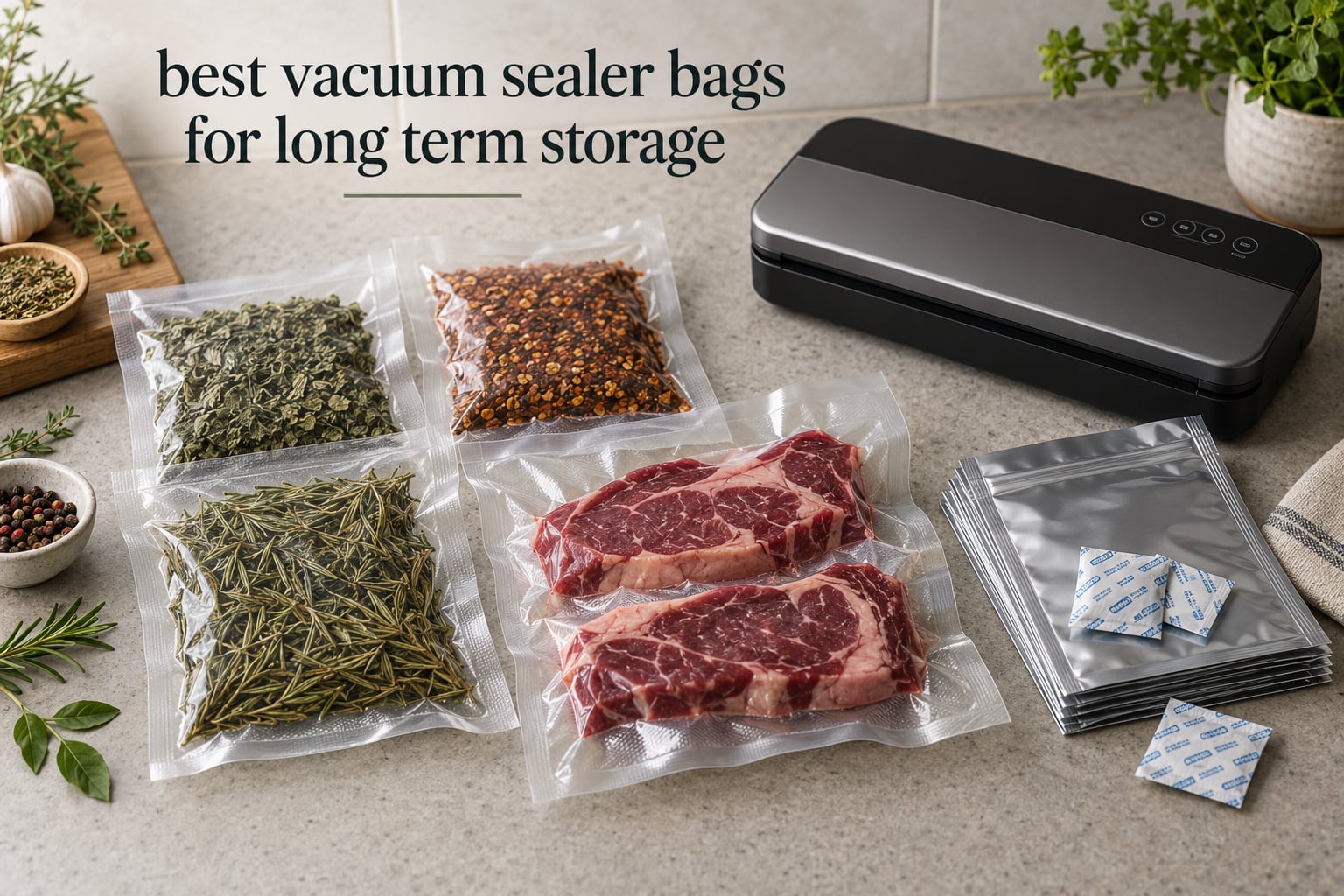
Vacuum sealing works because removing oxygen slows oxidation, moisture loss and pest access. The bags do most of that work, so the wrong film undermines the whole system months before you open the pantry.
Our team compared 12 bag listings against what long-term storage actually demands: stated thickness rather than “heavy duty” wording, a real embossed air channel, BPA-free construction, and seal reliability over time. We also cross-checked against forum complaints about sealers that orphan your bags and about mylar that will not vacuum at all.
Table of Contents
What Are the Best Vacuum Sealer Bags for Long-Term Storage?
Textured, BPA-free vacuum sealer bags at 3 mil minimum, 4 mil for sharp or crunchy food, are the best vacuum sealer bags for long term storage. Our top pick is the O2frepak 200-count quart bag pack: 4 mil embossed back panel, bone guards, and the largest review base we found at nearly 18,000 ratings. For multi-year pantry storage, add a foil laminate layer with an oxygen absorber.
One decision matters more than any other feature: match film thickness to what you are storing. Soft produce and leftovers are fine at 3 mil. Jerky, nuts, bones and freeze-dried shards puncture thinner film within weeks.
Top 3 Picks for Long-Term Storage (October 2026)

O2frepak Quart Bags
- 200 precut 8x12 inch bags
- 4 mil embossed back panel
- Bone guards for puncture prevention
- Works with all clamp-style sealers

Wevac Quart Bags
- 200 precut 8x12 inch bags
- 4.8 star average
- Embossed channels for suction
- Hygiene keeper box included

Bonsenkitchen Quart Bags
- 200 precut 8x12 inch bags
- 4 mil construction
- Deep embossed air passages
- Sous vide safe to 195F
All 12 Bags at a Glance (October 2026)
| Product | Specifications | Action |
|---|---|---|
| O2frepak Quart 200-Count Bags |
|
Check Latest Price |
| Wevac Quart 200-Count Bags |
|
Check Latest Price |
| Bonsenkitchen Quart 200-Count Bags |
|
Check Latest Price |
 Syntus 150 Mixed-Size Pack Syntus 150 Mixed-Size Pack |
|
Check Latest Price |
 O2frepak Gallon 100-Count Bags O2frepak Gallon 100-Count Bags |
|
Check Latest Price |
 POTANE 6-Roll Pack, 120 Feet POTANE 6-Roll Pack, 120 Feet |
|
Check Latest Price |
 Home Sensei 30 Mylar Gallon Bags Home Sensei 30 Mylar Gallon Bags |
|
Check Latest Price |
 Wevac 8 and 11 inch 100-Foot Rolls Wevac 8 and 11 inch 100-Foot Rolls |
|
Check Latest Price |
 EverFresh 11 x 25 Foot 4-Pack EverFresh 11 x 25 Foot 4-Pack |
|
Check Latest Price |
 MEGAWISE 110-Count Quart Bags MEGAWISE 110-Count Quart Bags |
|
Check Latest Price |
 FoodSaver Heavy Duty Quart 44-Pack FoodSaver Heavy Duty Quart 44-Pack |
|
Check Latest Price |
 SteelPak Mylar Quart 50-Pack SteelPak Mylar Quart 50-Pack |
|
Check Latest Price |
1. O2frepak Quart 200-Count Bags: Best Overall for Long-Term Storage
- Largest review base at nearly 18000 ratings
- 4 mil embossed back panel resists punctures
- Bone guards protect against bone and shell edges
- Embossed channels give strong suction
- Pre-cut format saves time on batch sealing
- Front panel is 3.5 mil so bone-in cuts may need a heavier bag
- Fixed size leaves film unused on small portions
Nearly 18,000 ratings at 4.7 stars is the deepest evidence base in this roundup, and it holds up under long-term conditions rather than only first-week impressions. Reviewers doing bulk meat and bulk vegetable runs report bags that still hold compression months later.
Construction is a 3.5 mil front panel with a 4 mil embossed back, built from food grade PA+PE. That asymmetry is deliberate. The thicker embossed side is the air channel your pump pulls air through, so the part doing the work is the stronger part.
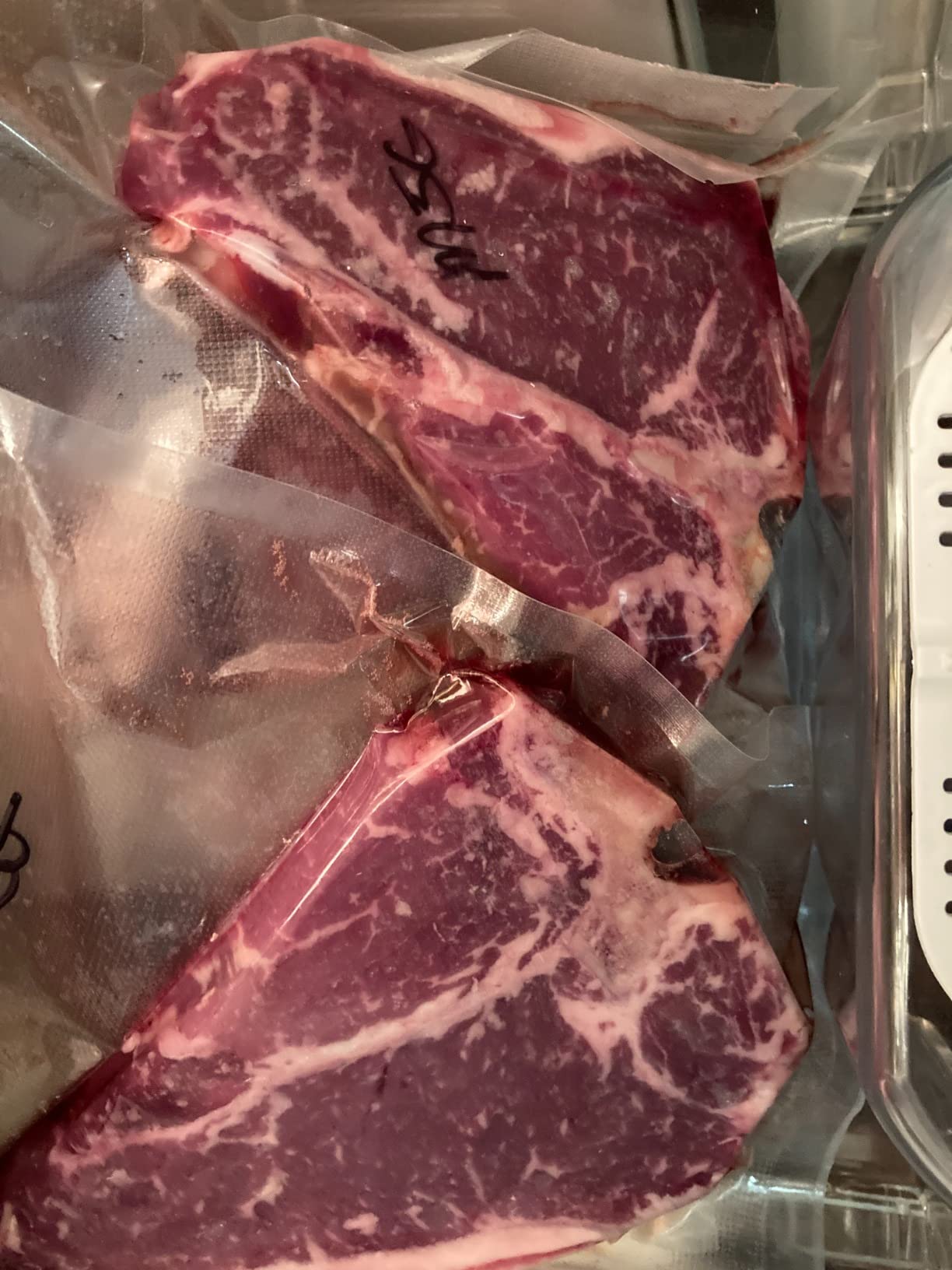
The bone guards along the seal edges are the detail that matters for meat, ribs and roasts. Without them a sharp bone edge can nick the film inside the bag, and a pinhole reads as a bag that mysteriously re-inflates on the shelf.
Fit is simple too: these run on all clamp-style vacuum sealer machines, so there is no channel-width guesswork. Microwave, boil, freezer and dishwasher safe, which covers most kitchen workflows in a single bag.
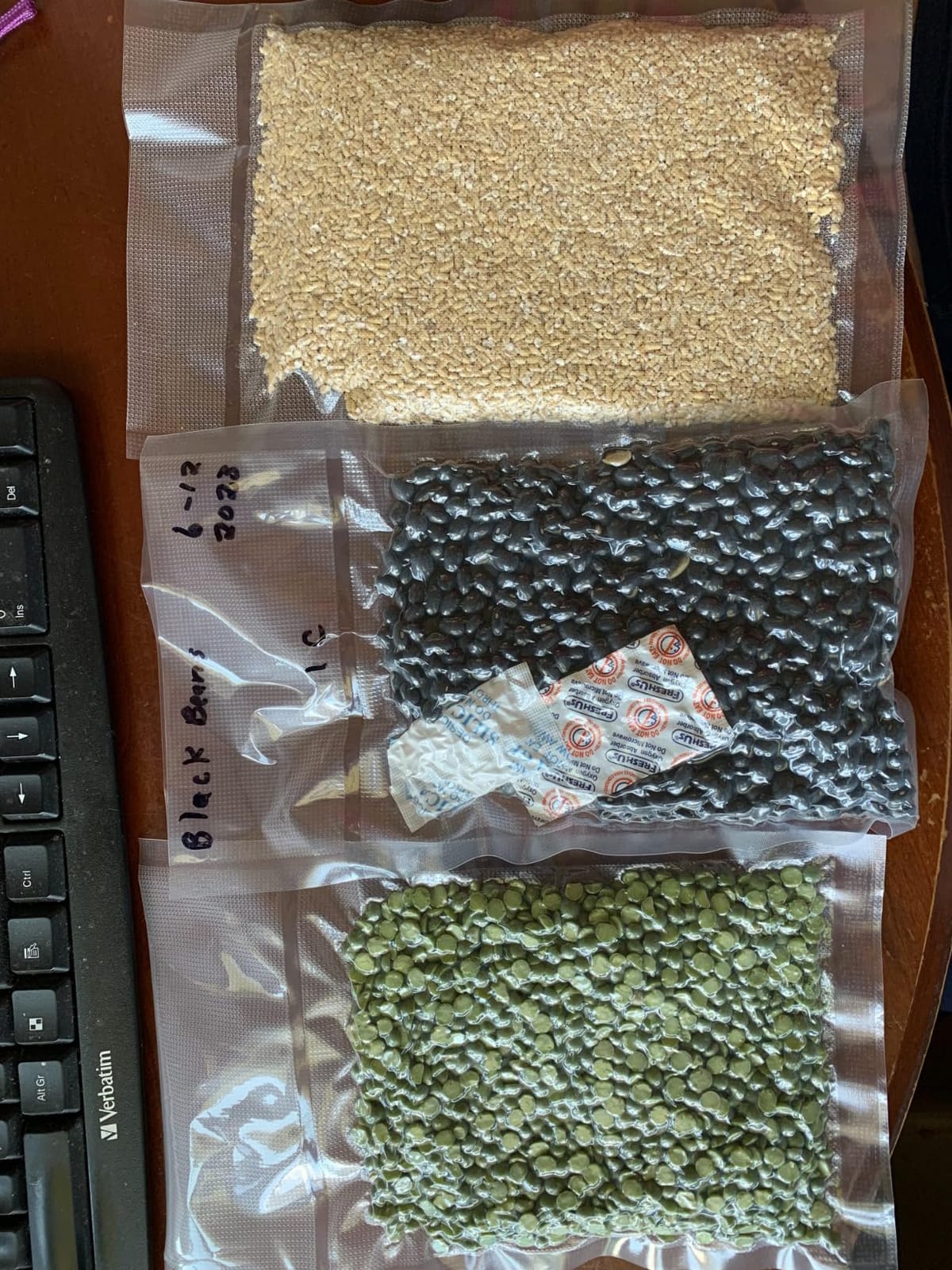
What long-term users confirm after months of storage
Repeat buyers describe consistent sealing across multiple orders rather than a single good batch. That consistency is what separates a bag that works from one you can plan a pantry around.
The stated 3.5 mil front is the honest limitation here. Buyers reserving heavier film for bone-in cuts and using these for vegetables, leftovers and portioned meals get the best result.
Where it falls short
At 8×12 inch precut, the size is locked. Small single portions leave unused film in the seal zone unless you cut and reseal the bag yourself.
If your priority is oxygen exclusion over a multi-year horizon rather than freezer or fridge storage, film thickness alone is not enough. Pair it with a foil laminate layer.
2. Wevac Quart 200-Count Bags: Highest Rated Quart Pack
Wevac 8″x12″ Vacuum Sealer Bags for Food, 200 Precut Quart Bags, Keeper Box
- 4.8 star average with 86 percent five-star ratings
- Keeper box keeps unused bags clean and organized
- Embossed channels deliver airtight seals
- Works with FoodSaver
- Seal-a-Meal
- Weston and Ziploc machines
- Fixed 8x12 precut size with no custom length
- Small items often need cutting to reduce waste
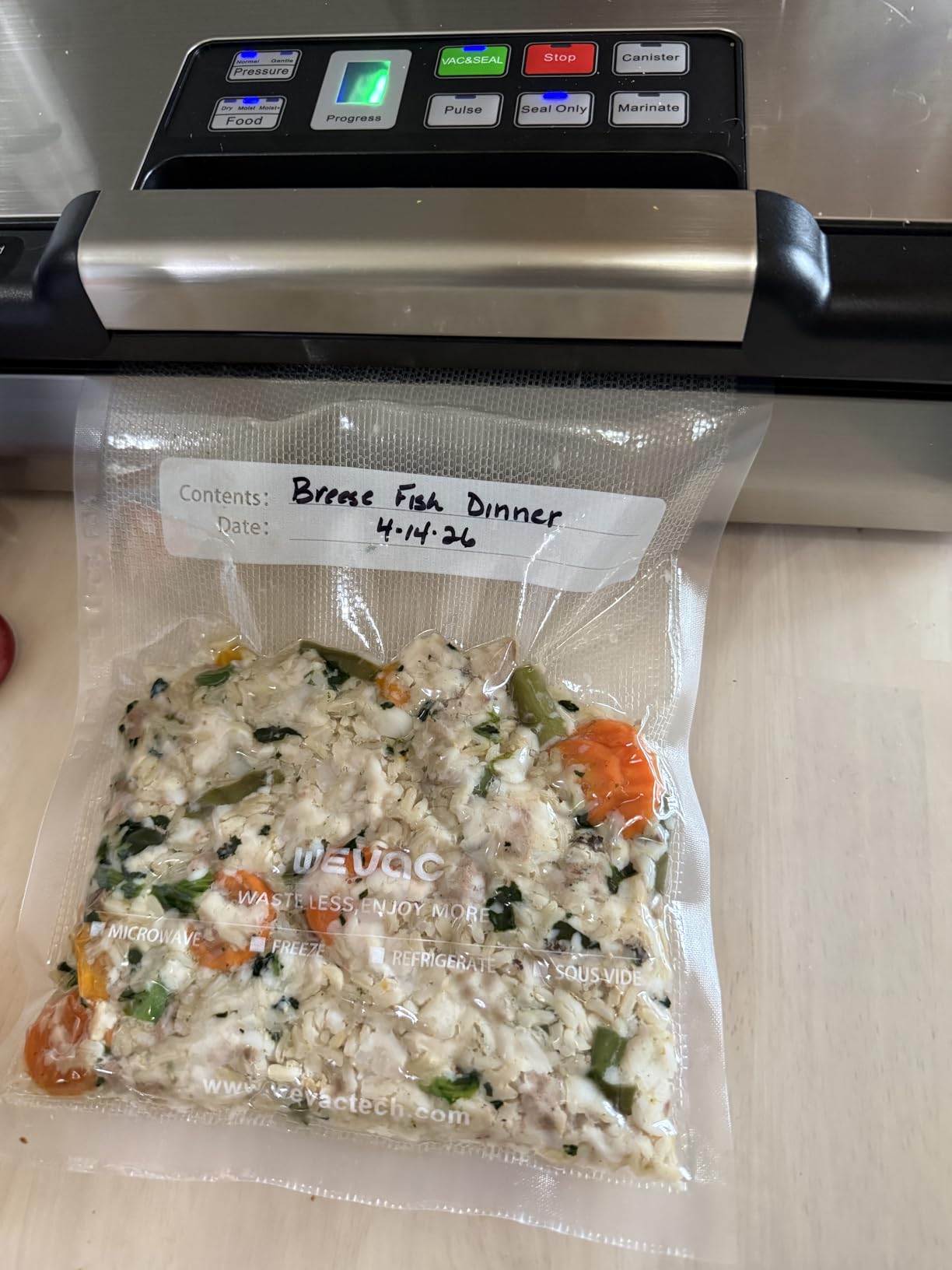
A 4.8 average with 86 percent five-star ratings from more than 9,000 reviews puts this at the top of the quart precut group on consistency. The seal reliability is what gets repeated in reviews, not the price.
Embossed channels run the length of the bag and pull air toward the valve, which is what stops freezer burn on long frozen holds. The material is BPA free plastic and works with suction vacuum heat sealers including FoodSaver, Seal-a-Meal, Weston, Cabela’s and Ziploc units.
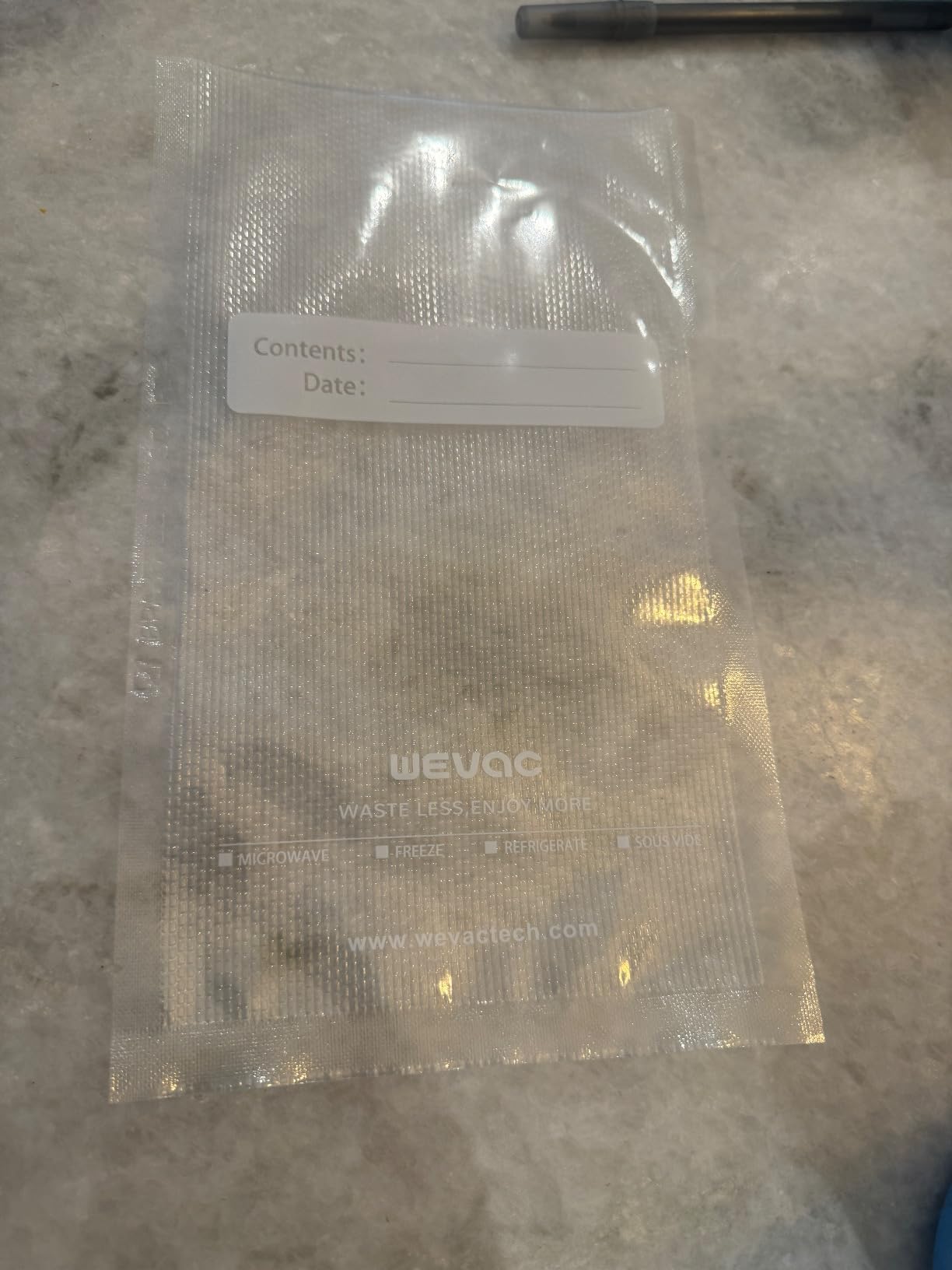
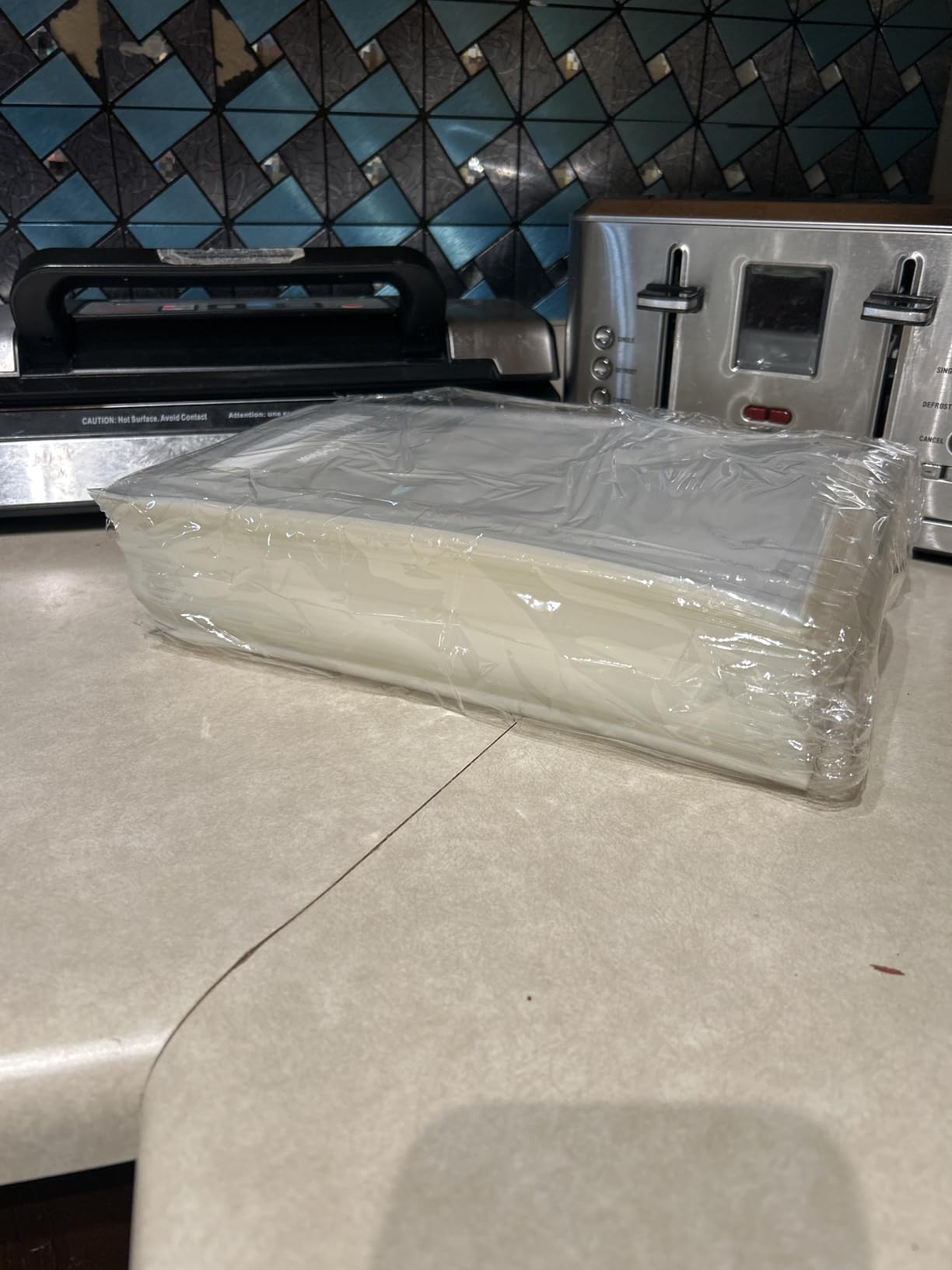
The hygiene keeper box is a small feature that matters more than it looks. Vacuum bags stacked loose in a drawer pick up dust, grease and pet hair on the sealing surface, and any contamination there becomes a leak path later.
A useful trick from buyer reviews: cut a bag in half and reseal to create two smaller bags when you are portioning herbs or spices. That turns wasted film into a working small size.
Why reviewers rate it so high
People use this bag across categories, from sous vide and freeze-dried meals to tea leaves, gardening seed and electronics. Versatility tends to produce repeat purchases, and repeat purchases produce large review bases.
The stated seal reliability across mixed food types is the deciding factor for anyone storing more than one kind of thing over a long window.
Where it falls short
There is no roll format here, so you cannot size a bag to an odd-shaped item. If your storage list includes long narrow packages, a roll option in the same brand family covers it.
Cut-in-half resealing means two heat seals per bag, which adds time to very large batch days. Plan for it rather than discovering it mid-session.
3. Bonsenkitchen Quart 200-Count Bags: Best Value for Everyday Batching
- Lowest cost per bag among the 200-count quart options
- Deep air passages create a strong seal
- Reusable across microwave
- boil
- sous vide and dishwasher
- Sous vide rated to 195F
- Only the 8x12 inch size in this listing
- Custom sizes require manual cutting and resealing
About 9,300 reviews at 4.7 stars, with 83 percent five-star. The pitch is straightforward: 4 mil heavy-duty film at the lowest cost per bag in the 200-count quart group.
The technical claim worth noting is depth of air passage. Deeper embossed channels move more air per pump cycle, which shows up as a stronger heat seal and less freezer burn over a long frozen hold.
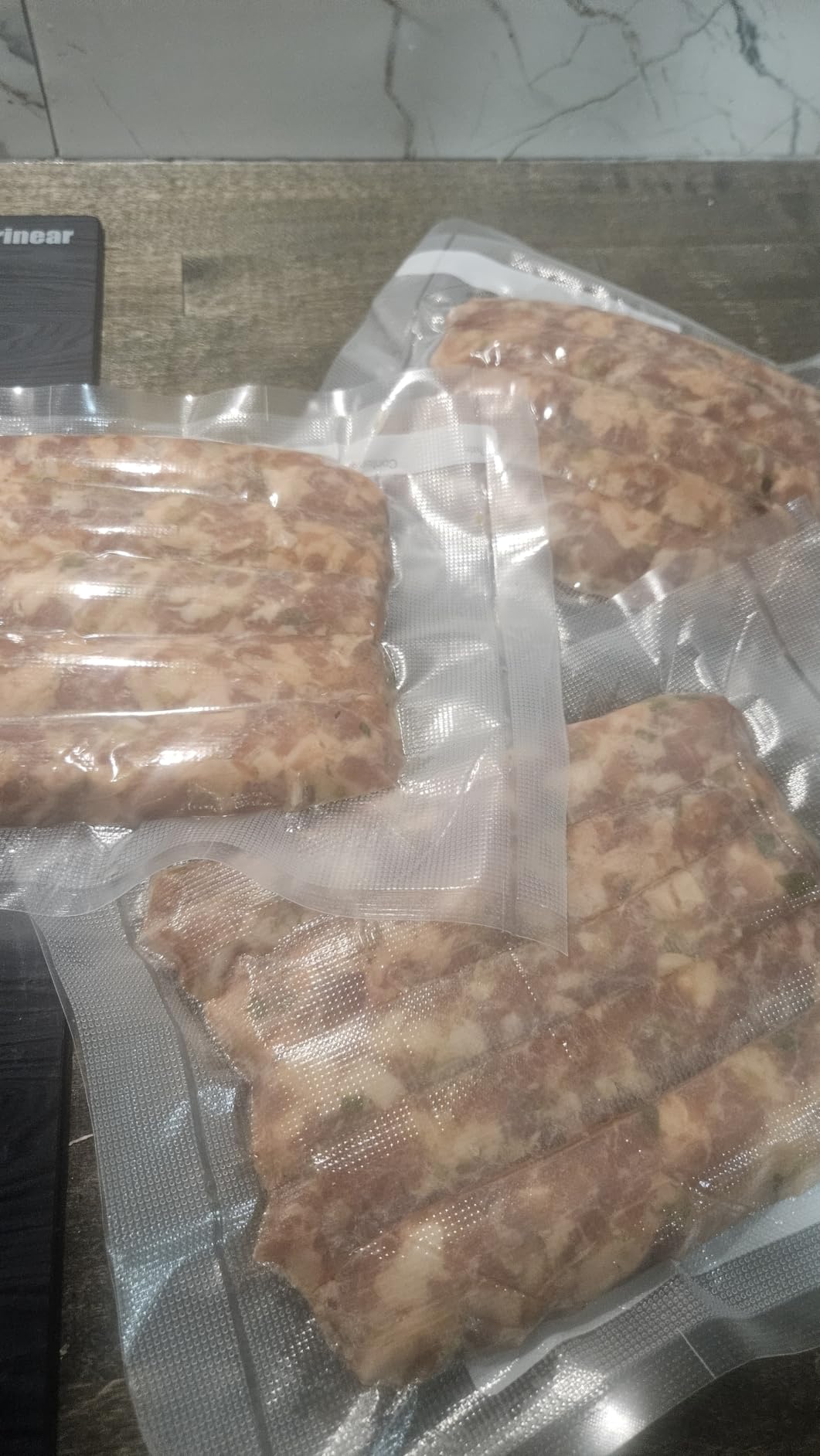
This bag is reusable across cooking methods, including microwave, boiling, dishwasher and sous vide up to 195F. That range is unusual for a bag at this price point and it lets one bag follow a meal from freezer to plate.
Compatibility is broad: all major vacuum sealer brands are supported, so it works whether your machine is a FoodSaver, a Nesco or a basic clamp unit.
Where the value shows up
If you seal weekly or in bulk, the per-bag math dominates everything else. At this count, a normal household goes a long stretch before restocking.
Reusability extends that further. Washing and drying a bag lets you reuse it for dry goods, which changes the effective cost per seal substantially.
Where it falls short
This listing is 8×12 inch only. There is no pint or gallon option, so mixed-size households end up buying a second product anyway.
Some buyers prefer roll formats precisely because of that. If you mostly store one item type, the fixed size is an advantage rather than a limitation.
4. Syntus 150 Mixed-Size Pack: Best for Three Sizes in One Buy
Syntus 150 Pcs Vacuum Sealer Bags for Food, 8×12+11×16+6×10, BPA Free
- Three sizes in one pack removes separate size purchases
- Textured dots resist punctures from ribs and ham bones
- Reviewers report seals comparable to Weston brand bags
- Pre-cut design removes measuring and cutting
- Does not work with handheld sealers because there is no air valve
- Material slightly thinner than top-tier commercial bags
This pack holds 150 bags split evenly across 11×16 inch gallon, 8×12 inch quart and 6×10 inch pint sizes. That solves the most common complaint about precut bags, which is buying only one size and still needing the other two.
Material is 4 mil high-tenacity PA+PE with a single-side textured dot pattern. Reviewers who butcher, harvest and bulk-store meat specifically mention that the dot pattern holds up against ribs and ham bones.
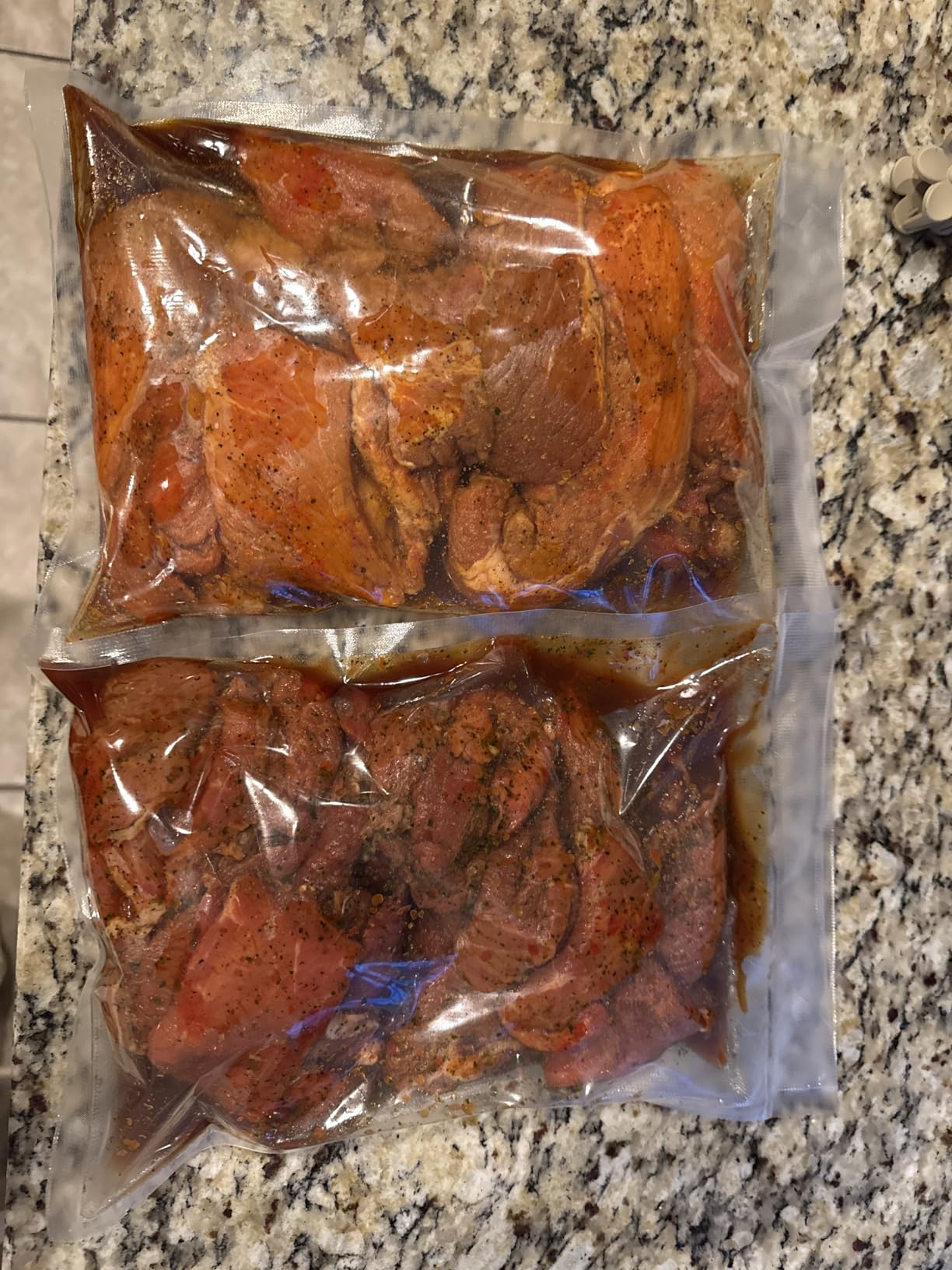
At roughly 6,900 reviews and 4.7 stars, this has enough long-term owner feedback to be useful. Buyers running hundreds of sealed packages report no leaks or tears, which is the pattern you want from a food preservation bag.
Safe for fridge, freezer, microwave, boiling and sous vide. That covers raw meat, seafood, ribs, beans, vegetables and pills in the same bag type.
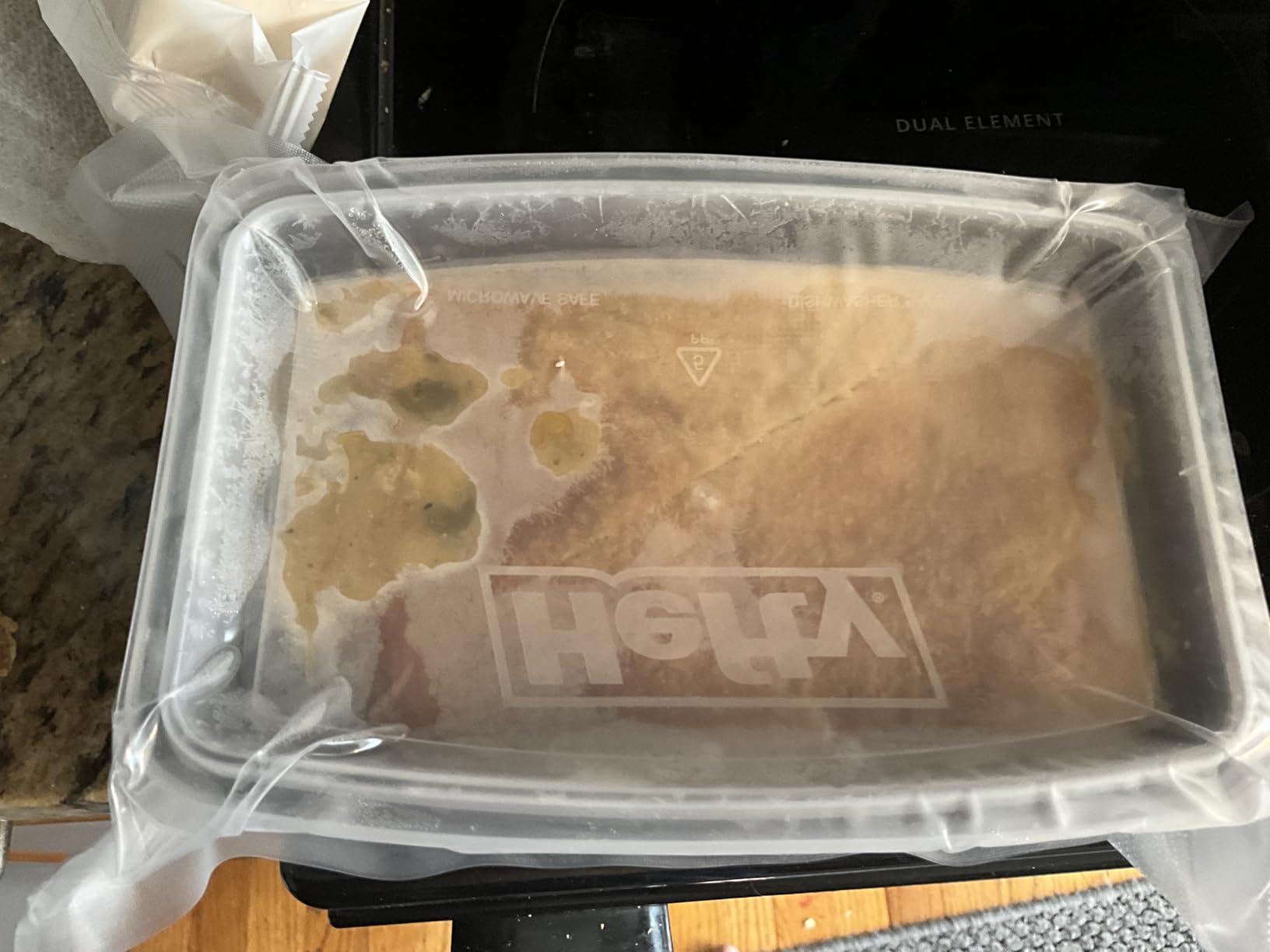
Best fit for varied kitchens
Single-person portions, family-sized meals and whole cuts all have a bag in the pack. You stop improvising with cut-down bags, which is where wasted material and failed seals usually begin.
The pocket-sized 6×10 inch bags are the one people underrate. Spices, seeds, small portions and hardware all fit without a second purchase.
Where it falls short
Handheld vacuum sealers are excluded, because these bags have no air valve. If your machine is a handheld or pump-only unit, this pack will not draw down at all.
A few buyers describe the film as slightly thinner than premium commercial options. For very brittle items such as freeze-dried shards or sharp nut edges, step up in thickness.
5. O2frepak Gallon Bags: Best for Bulk Meat and Game
O2frepak Gallon 4mil 11″x16″ Vacuum Sealer Bags 100ct for Food Storage
- Gallon size fits turkey breasts and large game cuts
- 4 mil on both panels resists punctures
- Pre-cut avoids cutting and pre-sealing roll film
- Repeat buyers report consistent sealing across orders
- Bulky for single portions and leftovers
- Larger bags take more freezer space
When the storage unit is a chest freezer and the contents are whole cuts, bag size is the constraint. These 11×16 inch gallon bags hold a turkey breast or a large game cut with room left for headspace, which is what the pump needs.
Both panels are 4 mil, so there is no thin side to worry about with sharp bone edges. Bone guards along the seal edge do the rest of the work on deer, ribs and shoulder roasts.
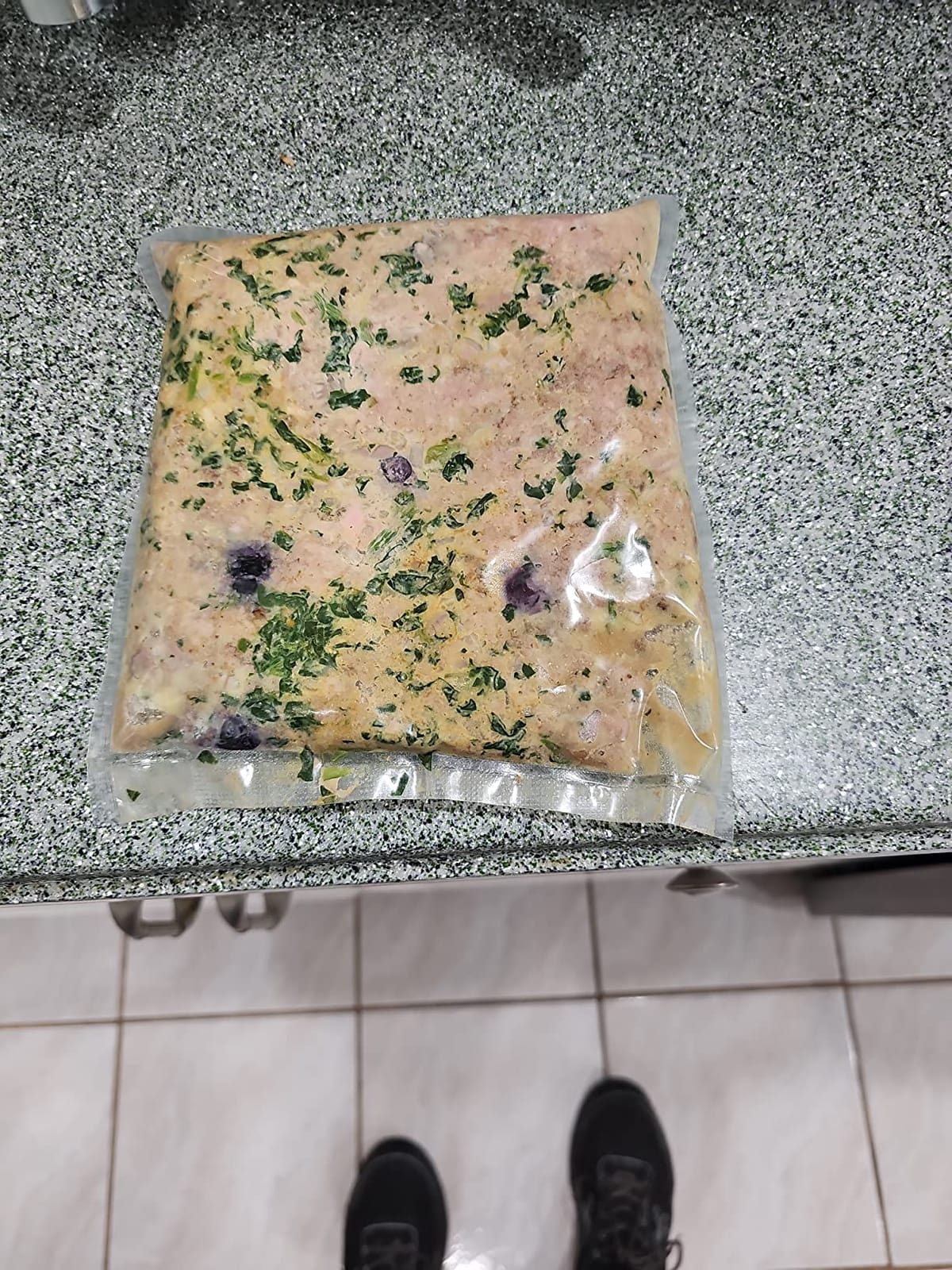
Over 4,300 reviews at 4.7 stars with 82 percent five-star. Buyers focused on bulk meat processing talk about sealing strength and how long freshness holds in the freezer, which is the actual point of a gallon bag.
Compatible with all clamp-style vacuum sealer machines, and safe for freezing, microwaving, boiling and the dishwasher.
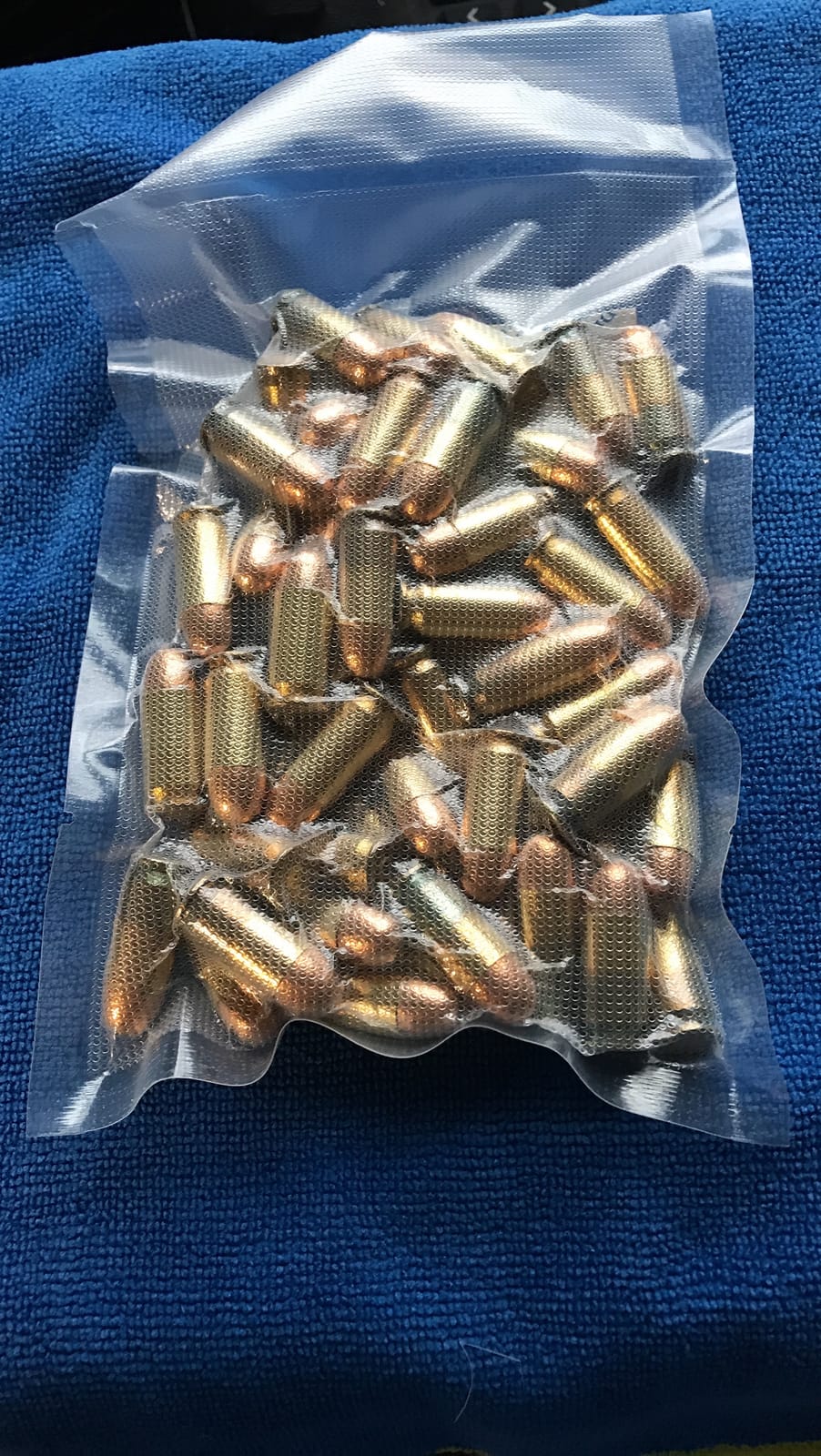
When a gallon bag is the right call
Seasonal game, whole pork shoulder, holiday turkey and bulk beef all benefit from the headspace. A bag packed completely full leaves the pump nothing to pull air from, which is a common cause of weak seals.
Freezer burn drops noticeably once air is removed from around a large cut, and that difference widens over a six-month hold.
Where it falls short
Gallon bags are wasteful for leftovers and single meals. Many buyers cut them down and reseal for smaller portions, which works but doubles the sealing work.
They are also heavy and occupy more freezer space than the food needs. A mixed pack is often the more efficient choice for a household that does both.
6. POTANE 6-Roll Pack: Best for Custom-Cut Bag Lengths
- Roll format cuts to exactly the length needed
- Thickened 7-layer build resists punctures on bone-in cuts
- Smell-proof with no off-odour transfer
- Works with FoodSaver
- Nesco
- Weston and Potane sealers
- Thick material may need machine settings adjusted
- Rolls may not fit the sealer storage compartment
- No write-on label panel
Rolls solve the problem precut bags cannot: bag length matched to the item. Six rolls totaling 120 feet, split across three 11×20 foot and three 8×20 foot rolls, cover everything from a single spice serving to a spatchcocked bird.
The construction is a thickened 7-layer design with a stripe texture to increase suction. That extra thickness is what holds up when you are sealing bone-in cuts and brined meat.
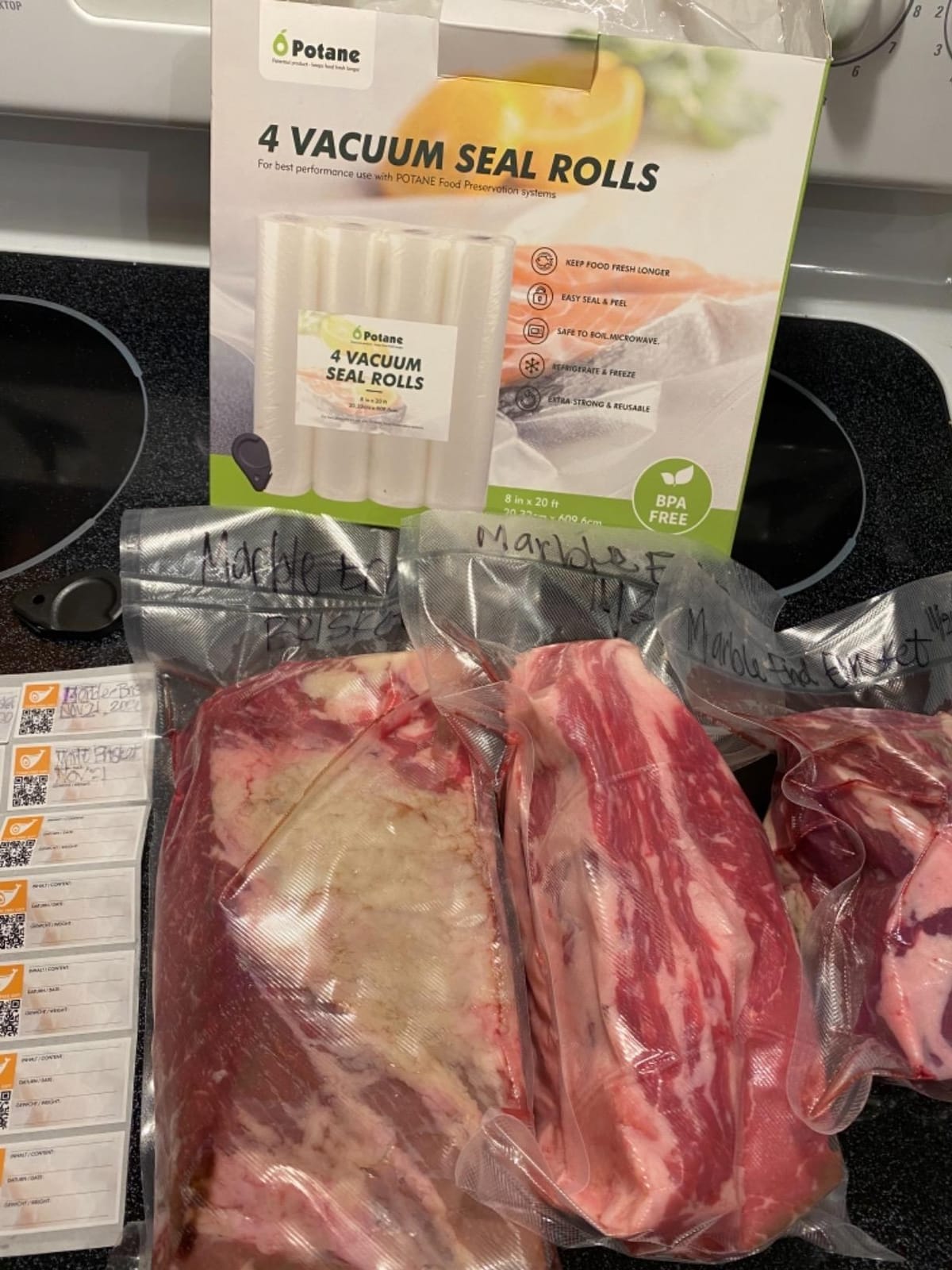
Sous vide and deep freezer users report no failures across many months of use. Smell-proofing is also consistent in reviews, meaning stored food does not pick up a plastic note over a long hold.
Material is BPA, BPS, PVC and phthalate free, and works with suction vacuum heat sealers including FoodSaver, Nesco, Weston and Potane units.
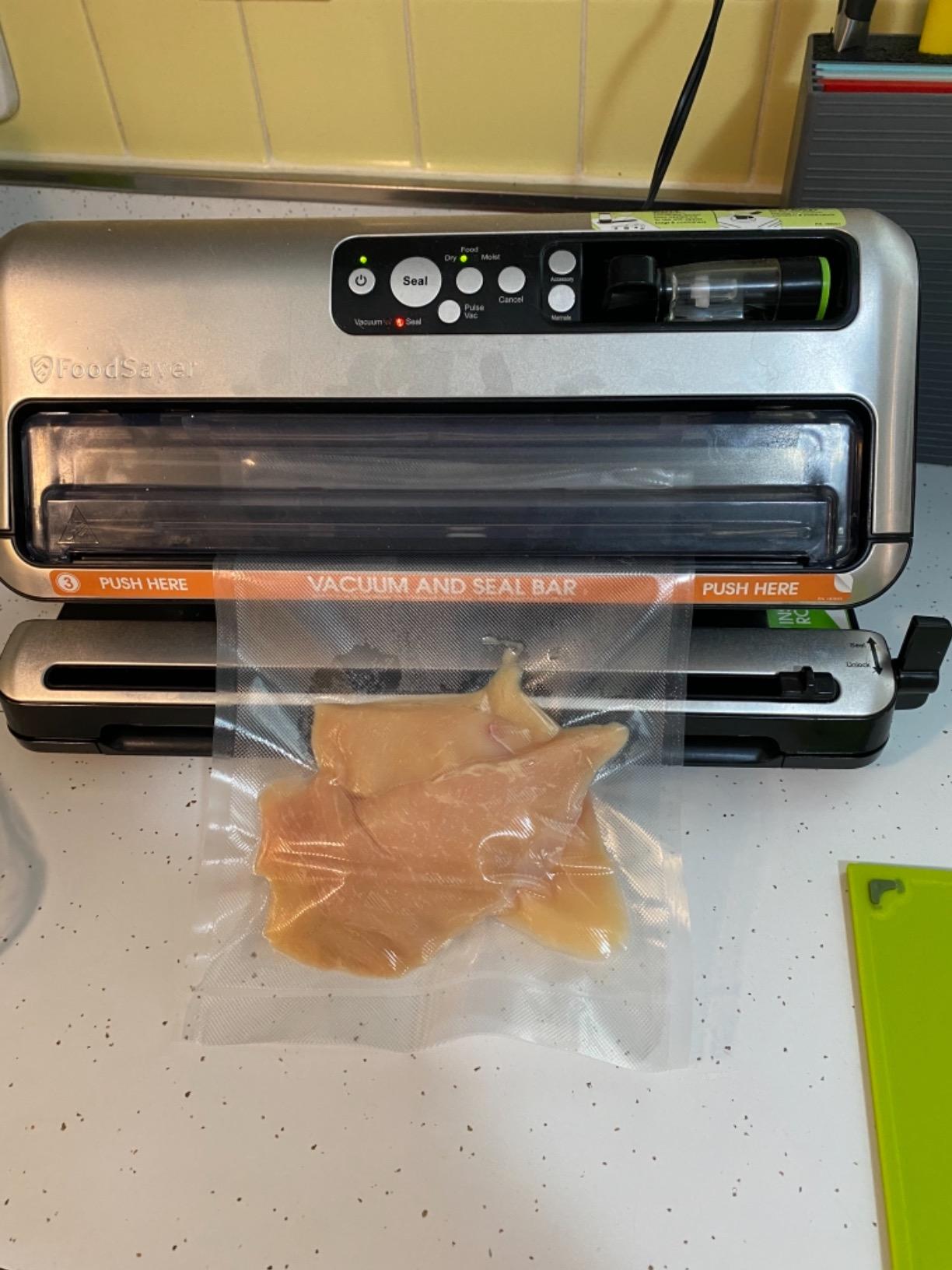
Why roll format wins on waste
With precut bags you either waste film or make a second seal by cutting one down. A roll lets you draw off exactly 10 inches for a small item and 24 inches for a large one.
That flexibility matters most for irregular shapes: long vegetable, brined meat, and portions that do not fit a standard quart footprint.
Where it falls short
Thicker material can require adjusting your machine settings, especially on thin items or entry-level sealers. A too-hot setting can crease the film and weaken the seal.
Rolls also tend not to fit inside a sealer storage well, and there is no white write-on panel. Plan to label bags before sealing rather than after.
7. Home Sensei 30 Mylar Gallon Bags: Best for Multi-Year Pantry Storage
30 Mylar Bags for Food Storage 1 Gallon – Extra Thick 15 Mil – Long Term & Food Grade – Mylar Bags with Oxygen Absorbers 400cc- Zipper, Resealable, Stand-up Gousset – Bolsas Mylar con Abosrbentes
- Only listing here designed for multi-year pantry and emergency storage
- Oxygen absorbers included in the same count as bags
- 4.3 inch gusset lets bags stand upright for filling and labelling
- Handles 2 to 4 pounds of pasta or flour per bag
- Not a vacuum sealer bag
- needs a separate heat sealer
- Not intended for liquid storage
This is the odd one out in the roundup, and deliberately so. It is a foil laminate pantry bag with an oxygen absorber in every unit, not a machine vacuum bag. For long-term dry food storage it outperforms plastic on a longer horizon.
Thickness is 14.8 mil total, 7 mil per side in a PET and Mylar foil laminate. Oxygen is blocked by the foil itself rather than by a pump, which is why the shelf-life ceiling here is measured in years rather than months.
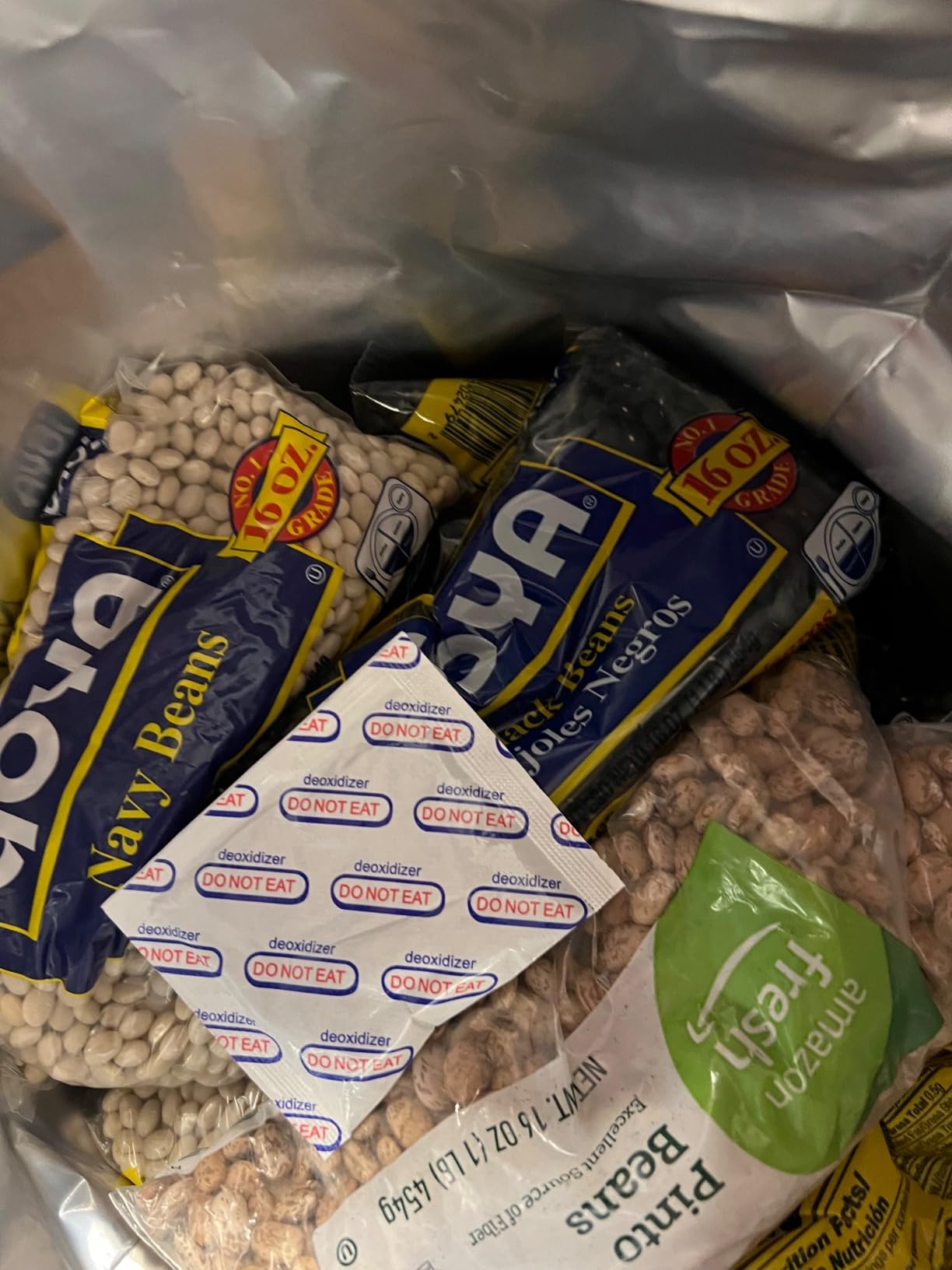
Thirty bags ship with thirty 400cc oxygen absorbers and thirty stickers. Matching counts remove the most common failure in home food storage, which is running out of absorbers before you run out of bags.
A 4.3 inch gusset lets each bag stand upright, so filling and labelling is far easier than with a flat pouch. Temperature range is 0F to 183F, and the material is FDA compliant and BPA free.
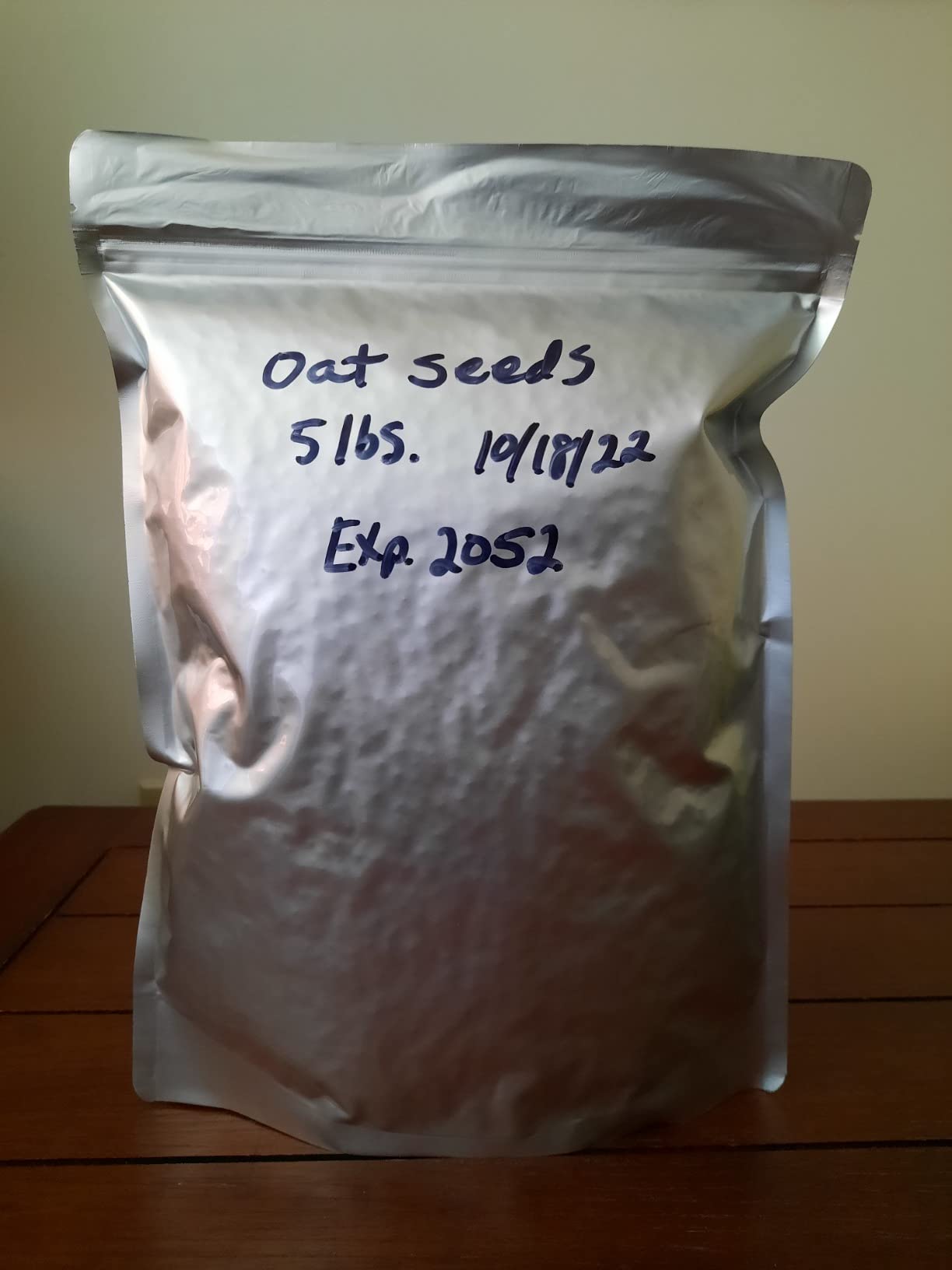
When this belongs in your system
Grain, beans, oats, dried fruit, candy, coffee beans and tea are the use cases reviewers report. Everything in that list is dry, which is exactly what foil laminate storage handles best.
Zipper top plus heat seal gives you two barriers. Zipper for short-term holding, heat seal for the long-term archive.
Where it falls short
You cannot vacuum seal these. The smooth interior has no embossed air channel, so a pump has nothing to pull air through. Heat sealing is the sealing method, and a dedicated heat sealer is required.
Liquids are out. One reviewer on a larger variant also reported fewer absorbers than bags, so count them before a long storage run.
8. Wevac 100-Foot Rolls: Best for High-Volume Freezing
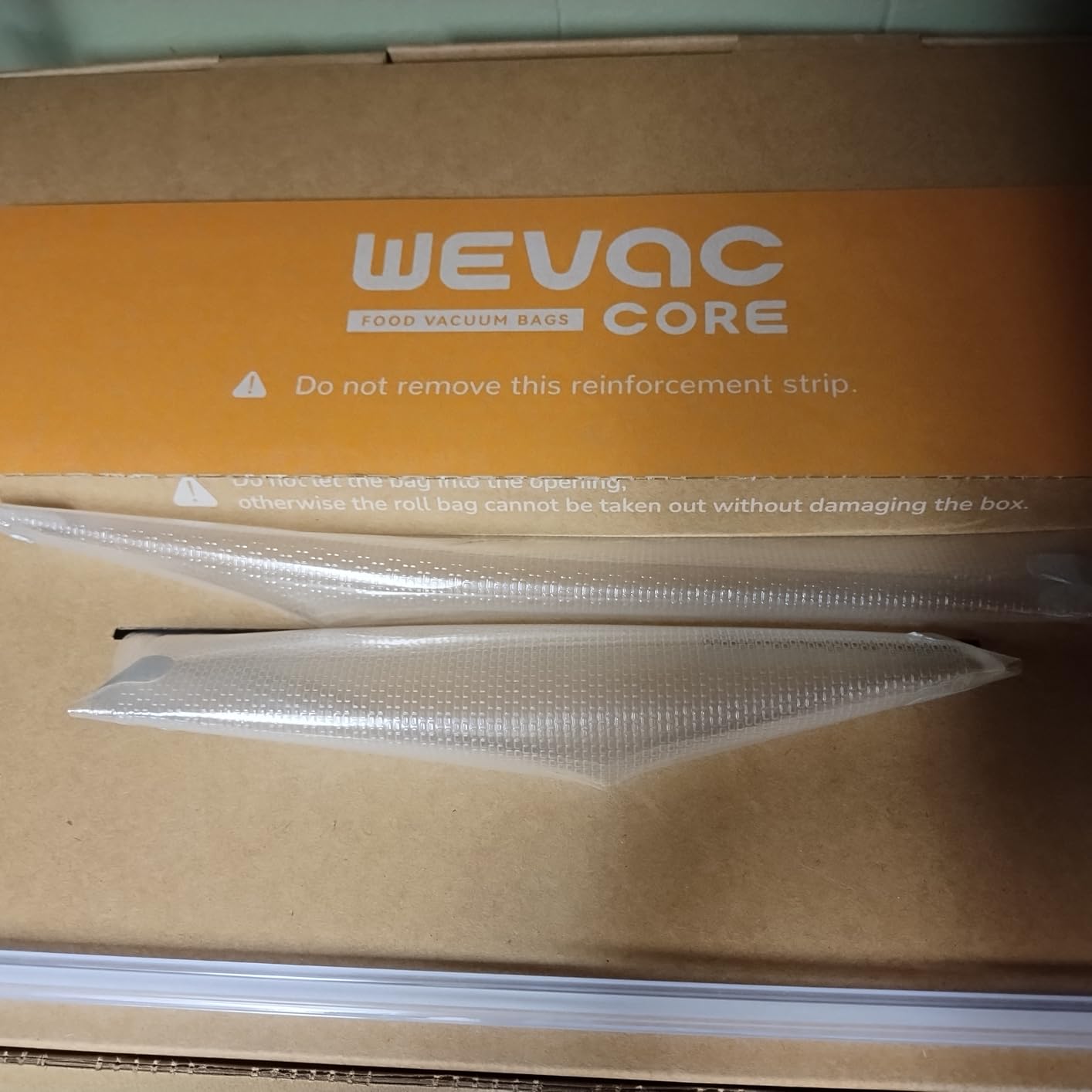
Wevac Vacuum Sealer Bags for Food, 8″x100′ & 11″x100′ Rolls with Cutter Box
- 200 total feet far exceeds typical 20 foot rolls
- Custom cutting removes waste on small portions
- Built-in cutter is more accurate than a sealer-mounted cutter
- 4.8 star average with 86 percent five-star ratings
- Rolls can be stiff and awkward to unroll by hand
- Not clear whether used rolls can be replaced in the dispenser box
At 200 total feet across two rolls, this is the volume pick. One 8 inch wide roll handles portions and one 11 inch wide roll handles larger cuts, so a single box covers both jobs.
A 4.8 average from more than 2,600 reviews with 86 percent five-star puts it level with the best-rated quart packs here. Bulk meat and vegetable freezers are where the reviews are most enthusiastic.
The built-in cutter box is the part that earns its keep. It dispenses and cuts accurate bag lengths without relying on the sealer-mounted cutter, which is the usual source of diagonal or short bags.
Embossed channels increase suction and reduce freezer burn. Works with all suction vacuum heat sealers including FoodSaver, Seal a Meal, Weston and Cabela’s, and the film is BPA free.
Best fit for heavy weekly use
If you seal every week, the reseal-a-box convenience matters more than it does for occasional users. Long-term owners report the box lasting years of weekly bulk freezing.
Custom lengths mean small portions do not require cutting a quart bag in half, which removes an extra heat seal from every small batch.
Where it falls short
Two 100 foot rolls are heavy and bulky to store away. The box is large, so plan shelf space before you start filling it.
Stiffness is the recurring complaint. Expect the first few cuts to need a firm pull, and keep the film flat when feeding it into the sealer channel.
9. EverFresh 11 x 25 Foot 4-Pack: Best for Smaller Storage Spaces
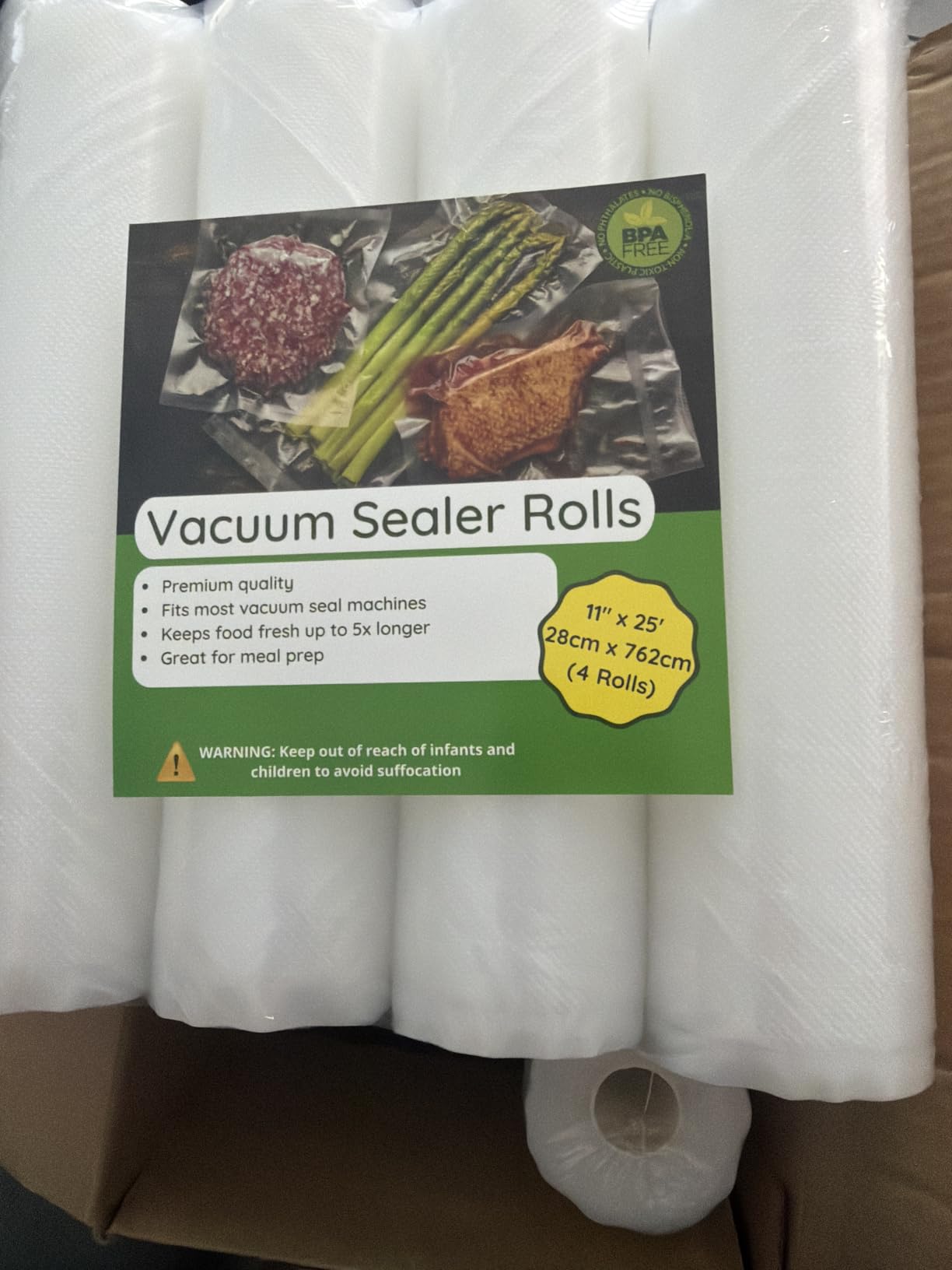
EverFresh 11″ x 25′ Vacuum Sealer Rolls, 4 Pack | 15% THICKER Embossing | Compatible with FoodSaver Machines, BPA Free, Commercial Grade Food Sealer Bags
- Four rolls at a low per-foot cost
- 25 foot length suits sealers with a small storage well
- Seals reliably with FoodSaver machines
- Reusable
- washable and recyclable
- Lowest average rating in this roundup at 4.5 stars
- 25 foot rolls may not fit some sealer storage wells
- Some buyers describe the plastic as thinner than other rolls
This is the compact roll option: four 11×25 foot rolls rather than two 100 foot rolls. That shorter length suits people whose machine has a small built-in storage well, which is a common constraint on compact sealers.
Construction is a 15 mil embossed layer paired with a 3.5 mil smooth layer in food grade PA/PE. BPA and phthalate free, and usable for sous vide, boil-in-the-bag and microwaving after puncturing.
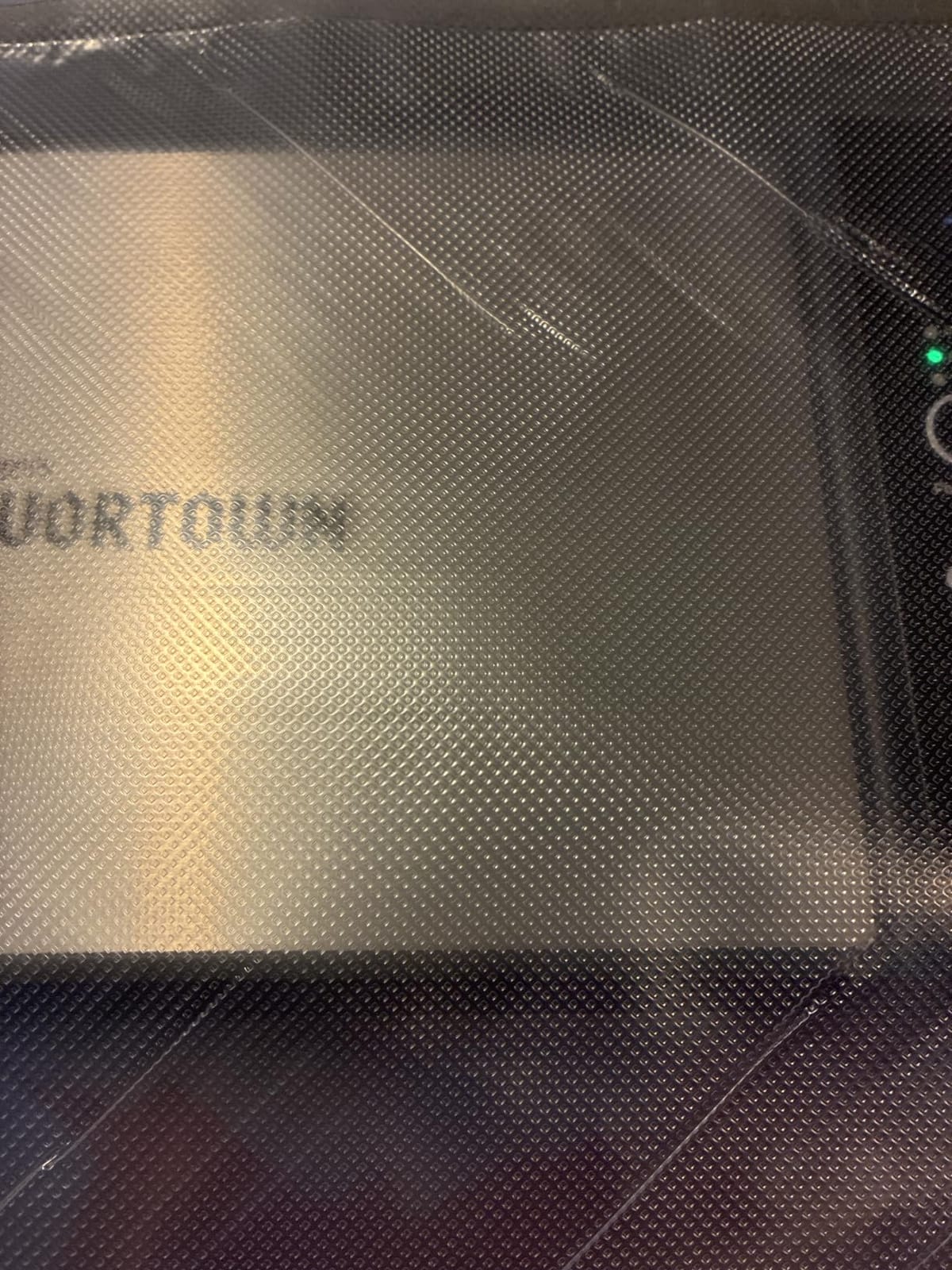
Buyers confirm reliable sealing with FoodSaver machines, and at 4.5 stars with 78 percent five-star this sits mid-pack on consistency. The rating gap versus the 4.8 packs is worth noticing if your priority is maximum reliability.
Bags are reusable and recyclable. Wash and dry between uses, which matters more for long-term storage than most listings admit.
Where the shorter roll genuinely helps
If your sealer has a narrow storage compartment, a 25 foot roll is the difference between a tidy counter and a roll leaning against the toaster. Handling also improves, since stiff long film is awkward to feed.
Cutting to custom length still removes waste, so the main argument for longer rolls is refill frequency rather than precision.
Where it falls short
At 4.5 stars with 5 percent one-star reviews, this has the widest spread of negative feedback in the roundup. Several buyers describe the plastic as thinner than competing rolls.
It also will not fit some sealer storage wells. Check your compartment before buying 100 feet of film you have nowhere to put.
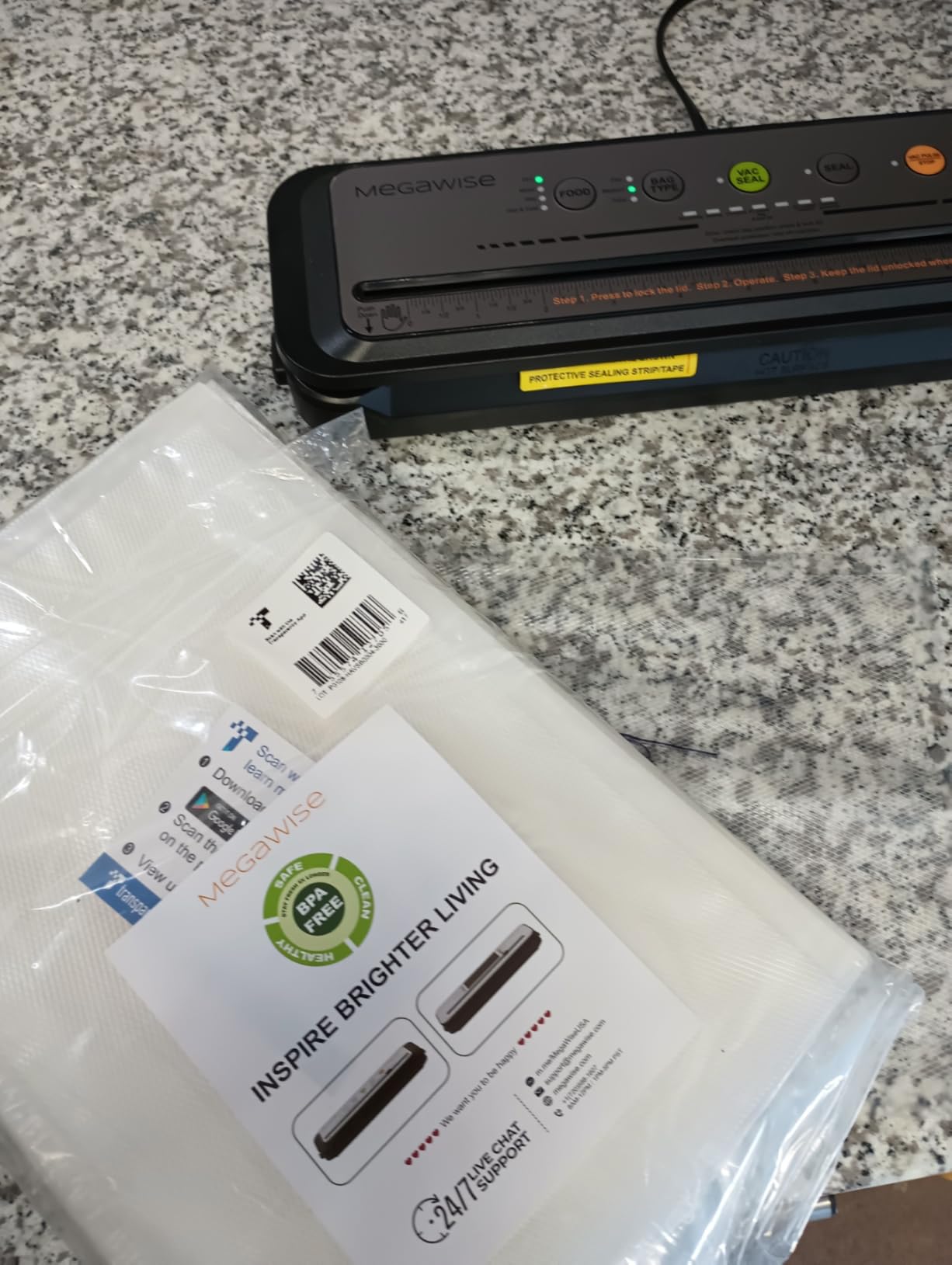
10. MEGAWISE 110-Count Quart Bags: Best for Sous Vide Batch Cooking
- Lowest cost per bag in this roundup
- Lightest shipping weight among the precut quart bags
- Double-sided embossing supports air removal and heat sealing
- Suitable for freezer storage and sous vide
- No thickness figure published in the listing
- Smallest review base at about 1400 ratings
- Handheld sealer compatibility not specified
A 110-count pack of precut 8×12 inch bags at the lowest cost per bag we found. For sous vide batch cooking, where you might seal 40 portions in an afternoon, per-bag cost is the whole calculation.
Both sides are embossed rather than one. Double-sided channels support air removal and heat sealing from either orientation, which reduces the number of times you seal a bag backwards.
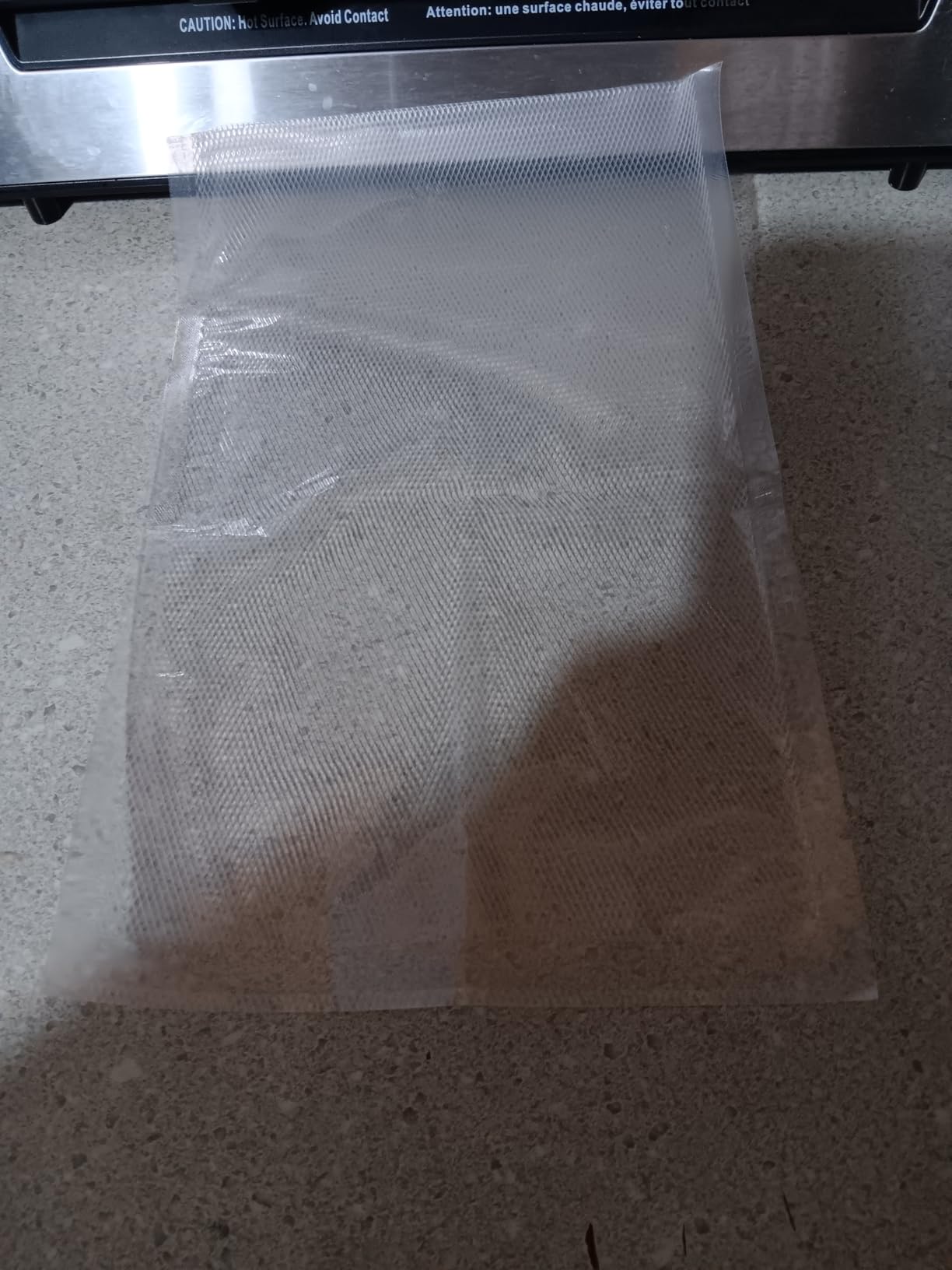
Rated 4.7 across roughly 1,400 reviews with 84 percent five-star. The feedback centres on precut convenience, BPA free material and suitability for freezer and sous vide use.
Works with most external-suction heat-seal vacuum sealer machines, which covers the mainstream desktop sealers most people own.
Best fit for volume cooking
Batch sous vide and weekly freezer meal prep both favour cheap precut bags over premium film, because the bags go into hot water or a freezer rather than a pantry shelf.
The 2 pound listed weight also matters when you are ordering a case, and the precut format removes measuring and cutting from a busy evening.
Where it falls short
No thickness figure is published. That is exactly the ambiguity that makes forum users nervous, since heavy duty wording without a mil number tells you very little about puncture resistance.
With about 1,400 reviews there is less long-term durability data behind these bags than behind the 200-count packs. Handheld sealer compatibility is also unstated.
11. FoodSaver Heavy Duty Quart 44-Pack: Best for FoodSaver Owners
FoodSaver Heavy Duty Quart Vacuum Seal Bags, 44 Pack with 30% Extra Thickness, Compatible with All FoodSaver Appliances
- Highest five-star share in the roundup at 89 percent
- 30 percent thicker construction than standard FoodSaver precut bags
- Designed and guaranteed for FoodSaver appliances
- Resistant to leaks
- punctures and tears
- Only 44 bags
- far fewer than the 150 to 200 count competitors
- Highest cost per bag in this group
- Not compatible with handheld vacuum sealers
If you own a FoodSaver appliance, this is the guaranteed-fit option. The listing states it fits all FoodSaver appliances excluding handheld vacuum sealers, which removes the compatibility guesswork that trips up a lot of third-party rolls.
Thickness is stated as 30 percent greater than regular FoodSaver precut bags, and the film is BPA free multi-ply plastic. Microwave safe and rated for sous vide cooking.
A 4.8 rating with 89 percent five-star is the highest five-star share in the roundup, from a smaller base of 777 reviews. Buyers who already own the appliance value the guaranteed fit and the extra thickness.
Claims cover leak, puncture and tear resistance, and keeping food fresh up to five times longer than unsealed food. Freezer, fridge and pantry storage are all within scope.
Why brand-matching pays off here
Forum users frequently worry about whether third-party bags will physically work in the machine they already own. A guaranteed fit ends that uncertainty, and channel-width mismatch is a common reason rolls go unused.
The extra thickness also gives more margin when sealing items with sharp edges, which is where standard precut film tends to fail first.
Where it falls short
Forty-four bags is a small pack next to competitors offering 150 or 200. For weekly sealing, restocking arrives sooner than you would like.
It also works out as the highest cost per bag here. That is a deliberate trade for fit certainty and stated thickness, but it is a trade.
12. SteelPak Mylar Quart Bags: Best Oxygen Barrier of the Set
- Foil laminate blocks oxygen and moisture far better than plastic bags
- Works in vacuum sealers that reject other foil-laminate bags
- Textured side and smooth side aid maximum air removal
- Suitable for long term freezer and refrigerator storage
- Lowest rated with the smallest review base at 4.5 stars and 382 ratings
- Not microwave safe
- Only 50 bags per pack
Most plastic bags rely on a good mechanical seal and a dry interior. Foil laminate bags add a barrier layer that blocks oxygen and moisture regardless of how good the seal is, and that is a meaningful difference on a multi-year horizon.
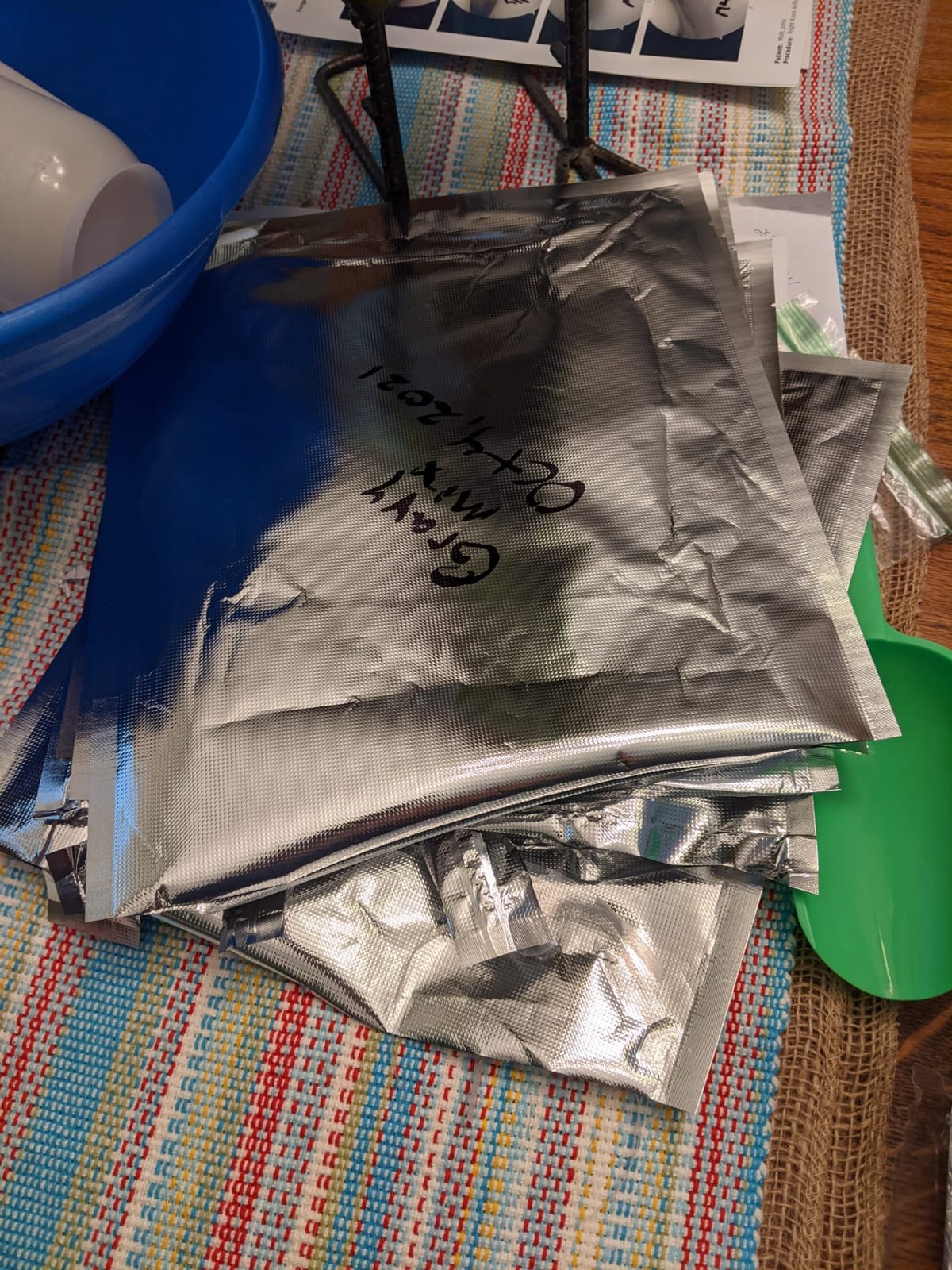
This is 4 mil metallized Mylar, textured on one side and smooth on the other. The texture is what allows a vacuum sealer to pull air down, which is unusual in a foil laminate and is why these work in machines that reject other foil bags.
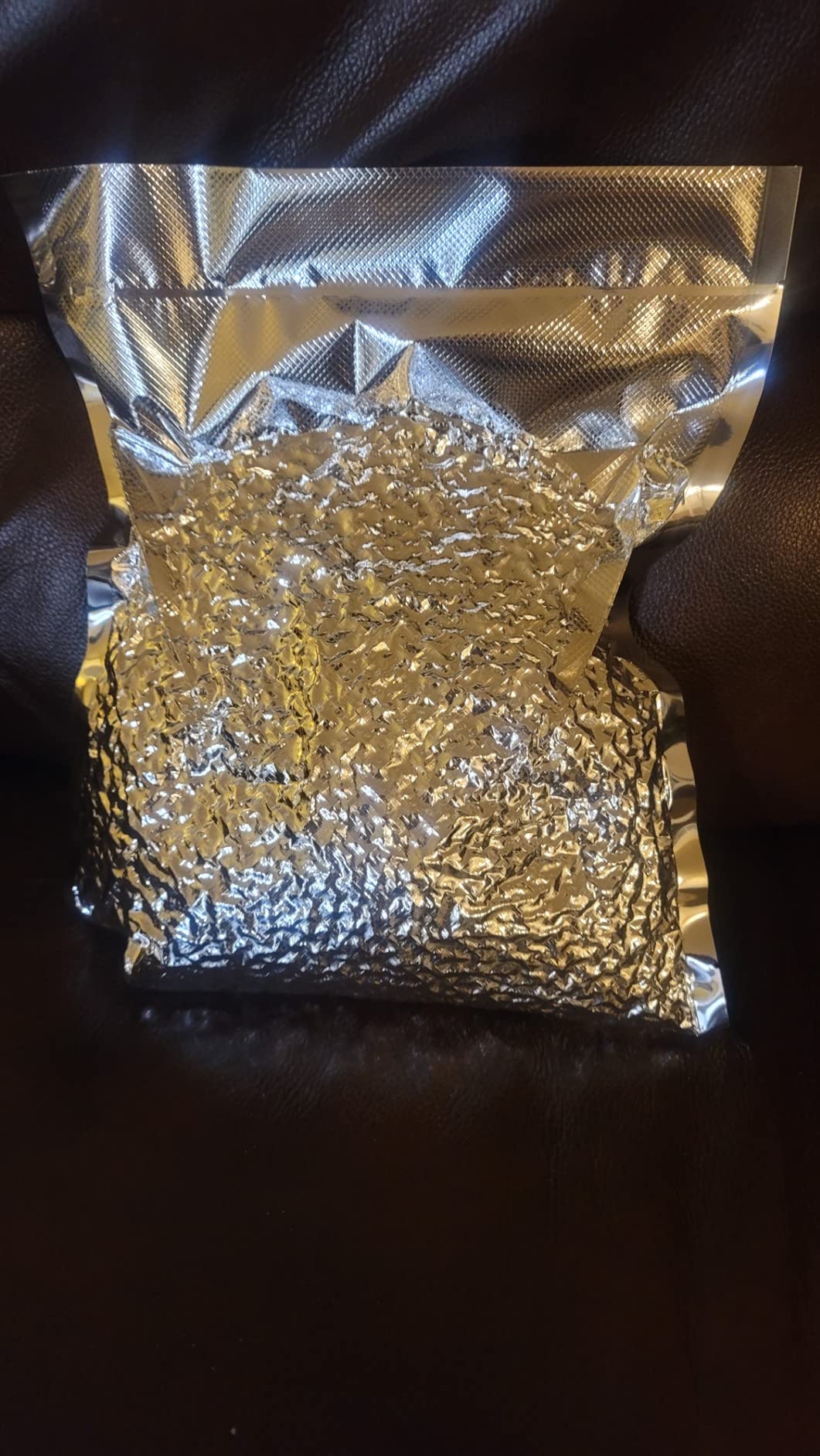
Compatible with VacMaster and Cabela’s Game Saver high-end sealers, and with most major vacuum sealers without added attachments. Suitable for sous vide, boiling, refrigeration and freezing.
Rated 4.5 across 382 reviews with 75 percent five-star. That is the smallest and lowest-rated sample in the roundup, so treat the barrier claims as promising rather than proven at scale.
When a foil laminate earns its place
If you are storing dehydrated or freeze-dried food for a year or more, an oxygen barrier is the feature that matters. Plastic bags get slower and slower to fail as the seal weakens, while foil keeps its barrier.
Forum storage practice supports this: preppers widely use a vacuum bag as an inner layer inside a foil pouch, rather than treating plastic as the long-term barrier on its own.
Where it falls short
Not microwave safe. Bags with a metal layer cannot go in a microwave, which rules out a workflow the plastic bags support.
Fifty bags is a small pack, and the thin review base means less evidence about long-term reliability than the plastic options have.
How to Choose: Mil Thickness, Material and Texture
Mil thickness is one thousandth of an inch, and it is the single most useful number on a bag listing. Ignore “heavy duty” and look for a figure.
At 3 mil, bags handle soft, low-abrasion contents: vegetables, cooked meals, leftovers and pantry staples. At 4 mil, they handle harder or sharper items such as nuts, jerky, ribs and freeze-dried shards. Foil laminate at 14.8 mil total is a different category entirely, aimed at multi-year dry storage.
Material matters next. PA+PE constructions combine nylon and polyethylene layers for strength and aroma resistance. All 12 products here are BPA free, and some also exclude BPS, PVC and phthalates.
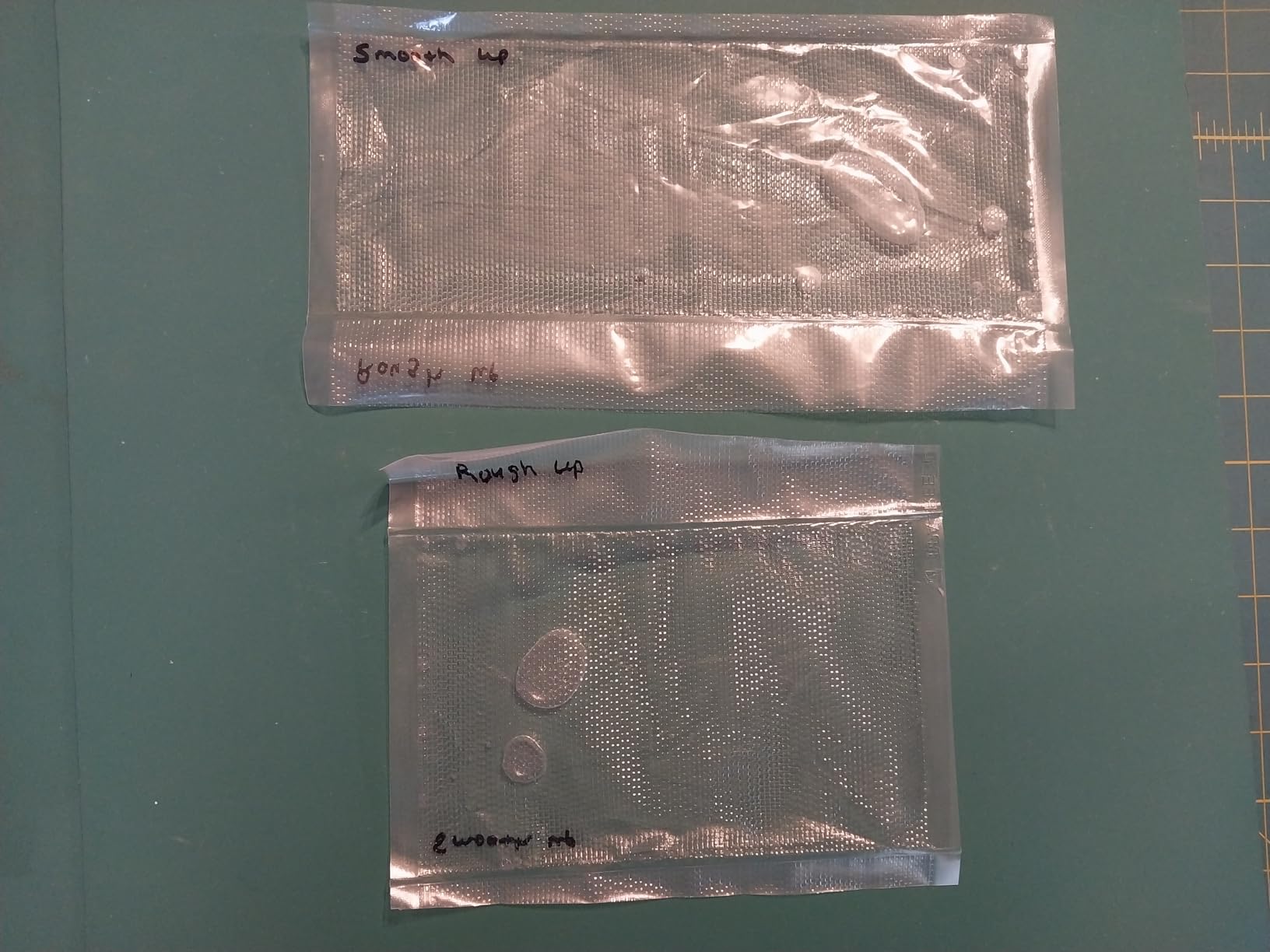
Texture is the feature users overlook. Every bag that actually vacuums has embossed channels on at least one side. Those channels are the air path. A bag sealed smooth-side-in gives you a weak, inconsistent draw every time.
Vacuum Bags vs Mylar for Multi-Year Storage
You cannot fully vacuum seal a standard mylar bag. The interior is smooth foil laminate with no embossed channel, so a pump has no air pathway to pull air through. Mylar is heat sealed instead, and an oxygen absorber does the work the vacuum would otherwise do.
The workaround people use in forums is a two-layer system: a vacuum bag inside, a foil pouch outside. The vacuum bag removes bulk air and keeps the food portioned; the foil pouch plus absorber provides the long-term barrier.
Absorber dosing follows bag volume. Common sizing is 50cc for a small pouch, 100cc for a quart-sized bag and 300cc or more for a gallon pouch holding several pounds of dry food. Desiccant handles a different problem, and moisture rather than oxygen, with 5g packets for small bags and 20g for larger ones.
When choosing bags for storage, the [best robot vacuum replacement parts guide](https://www.smashingrobotics.com/best-robot-vacuum-replacement-parts/) follows the same logic we apply here: match the part to the machine rather than buying the cheapest option and hoping it fits.
How Long Vacuum Sealed Food Actually Lasts
Vacuum sealing removes oxygen, so the limits come from fat oxidation, moisture and temperature rather than from the seal alone. Cold and dark storage always beats a warm pantry, whatever the bag.
Fresh raw meat, poultry and seafood: keep frozen, and expect quality for 6 to 12 months. Vacuum sealing mainly prevents freezer burn, and it does not make frozen food safe indefinitely.
Cooked meals and leftovers: 2 to 4 weeks refrigerated in a sealed bag, or 2 to 3 months frozen. Vacuum slows spoilage but does not replace refrigeration.
Dehydrated fruit, vegetables and herbs: 6 to 12 months in a cool dark room, and considerably longer with an oxygen absorber inside a foil pouch.
Dry grains, beans, rice, flour and pasta: 1 to 2 years sealed and cool, extending toward multi-year storage with foil laminate plus an absorber.
Whole spices, coffee beans and tea: 6 to 12 months sealed, because oils oxidise even in the absence of air, and a longer horizon needs freezing.
Check stored bags on a schedule. A monthly glance for anything sealed for a season catches condensation, soft spots and insect damage before they spoil a whole batch.
Why Vacuum Bags Lose Suction and How to Fix It
Slow seal loss is the most common complaint in storage forums, and it has a short list of causes. Five cover the large majority of cases.
First, contamination in the seal zone. Crumbs, oil, flour or moisture between the film layers stop a heat seal from bonding. Wipe the channel and the bag mouth before every seal.
Second, overfilling. A bag packed solid gives the pump nothing to pull air from, and a wrinkled top edge folds the film away from the heating element.
Third, pinholes. Sharp edges, bone fragments and brittle freeze-dried shards pierce thin film invisibly. Submerge a suspect bag in water and watch for bubbles to find the leak in seconds.
Fourth, heat on the shelf. Film stored in a hot car, attic or sunlit pantry becomes brittle and cracks around the zipper track. Cool and dark is not advice, it is a requirement.
Fifth, channel mismatch. A bag wider than the sealer channel sits at an angle, and the top edge never reaches the seal temperature. Check the bag width against your machine channel before buying rolls.
If you want to see whether a bag model is holding up on your machine, our notes on [why a robot vacuum keeps stopping mid-run](https://www.smashingrobotics.com/why-does-my-robot-vacuum-keep-stopping/) use the same diagnostic logic: isolate the cause before replacing the part.
Will These Bags Fit Your Sealer?
Most bags here state compatibility with all clamp-style vacuum sealer machines, which covers FoodSaver, Seal-a-Meal, Weston, Cabela’s, Nesco and Potane machines. That covers the mainstream desktop sealers most households own.
Handheld and pump-only sealers are the exception. Bags without an air valve, including the Syntus mixed-size pack, will not draw down on a handheld unit. Check whether your model has a valve requirement before buying precut bags.
Chamber systems use a different bag style entirely, typically open on one wide edge. None of these precut or roll bags are chamber bags, and forcing them into a chamber is how bags get ruined.
Foil laminate bags like the SteelPak are the pick if your machine struggles with plastic, and the Home Sensei mylar bags are not machine bags at all. They need a separate heat sealer, and running them through a vacuum sealer wastes a bag.
Popular machines are covered in our [robot vacuum battery lifespan guide](https://www.smashingrobotics.com/how-long-do-robot-vacuum-batteries-last/), where knowing your exact model before buying parts is the same rule.
Preventing Mold and Moisture in Stored Bags
Mold needs three things: moisture, warmth and time. Removing two of the three through sealing and cool storage makes sealed storage a poor environment for it.
Dry contents fully before sealing. Residual moisture trapped in a bag has nowhere to go, and it condenses on the film until it becomes a mold site.
For dry goods, add desiccant sized to the bag, then let the sealed bag rest 24 to 48 hours before moving it to storage. That rest period lets condensation fall away from the seal and the contents.
Wash and fully dry any bag you reuse, and wait the same 24 to 48 hours before sealing food into it. Residual oil on film interferes with the next seal.
Do not reuse a bag that held raw meat for ready-to-eat food. Forum guidance is consistent on this point, and it is not worth the risk over the cost of a bag.
How We Picked
We ranked on stated thickness first, because listings that avoid a mil figure give you nothing to compare. Embossed channel construction, BPA free declaration and confirmed sealer compatibility came next, followed by review volume as a proxy for long-term durability evidence.
Where a listing contradicts itself on reuse or compatibility, we treated the constraint as the deciding factor. That is why two bags that seal well end up with lower placements.
What we did not test: we did not run our own seal-hold trials over months, and we did not measure oxygen transmission. Every durability claim here comes from manufacturer specifications and review patterns, and we flag the products with the thinnest evidence base.
Our picks are weighted toward bags that state their numbers plainly. That is a deliberate bias, and forum users reading listings benefit from the same approach.
Frequently Asked Questions
Which vacuum sealer bags are best for long term storage?
Textured, BPA-free bags at 3 mil minimum, and 4 mil for sharp or crunchy food, work best for long-term storage. The best overall is the O2frepak 200-count quart pack, which pairs a 4 mil embossed back panel with bone guards and fits all clamp-style sealers.
What thickness vacuum bags do I actually need?
Match the mil figure to what you store. Three mil suits vegetables, cooked meals and leftovers. Four mil handles nuts, jerky, ribs, bones and freeze-dried shards. Anything thicker is usually a foil laminate meant for multi-year dry storage rather than everyday vacuum sealing.
Can you vacuum seal mylar bags?
Not properly. Standard mylar has a smooth interior with no embossed air channel, so a vacuum pump has no pathway to remove air. Mylar is heat sealed instead, and an oxygen absorber sized to the bag does the work a vacuum would otherwise do.
Do vacuum sealed bags need oxygen absorbers?
Not inside a vacuum bag, because the vacuum already removes the air. Absorbers matter when food goes into a heat-sealed mylar pouch instead, where 50cc suits a small pouch, 100cc a quart and 300cc or more a gallon pouch of dry food.
Why is my vacuum bag slowly re-inflating?
Five causes cover almost every case: crumbs or oil in the seal zone, an overfilled bag with no headspace, pinholes from sharp or brittle food, heat brittleness from warm storage, or a bag wider than the sealer channel. Submerging the bag in water reveals pinholes immediately.
Will these bags work with my FoodSaver or handheld sealer?
All clamp-style machines are covered, including FoodSaver, Seal-a-Meal, Weston, Cabela’s, Nesco and Potane. Handheld and pump-only sealers need bags with an air valve, so packs without one will not draw down. Chamber systems need a different open-edge bag style entirely.
Conclusion
The O2frepak 200-count quart bags are our pick for the best vacuum sealer bags for long term storage, with the largest review base and a 4 mil embossed back panel. Wevac’s quart pack is the equal-rated alternative for consistent seals, and Bonsenkitchen covers high-volume batching at the lowest per-bag cost.
Beyond that, match your bag to the job: gallon sizes for bulk meat and game, rolls for custom lengths, and a foil laminate plus oxygen absorber for anything you want to keep for years. Above all, match thickness to food hardness, because that is the decision that determines whether a bag still holds a seal in month three.
Whatever you choose, seal dry, leave headspace, label before sealing and store cool and dark.