
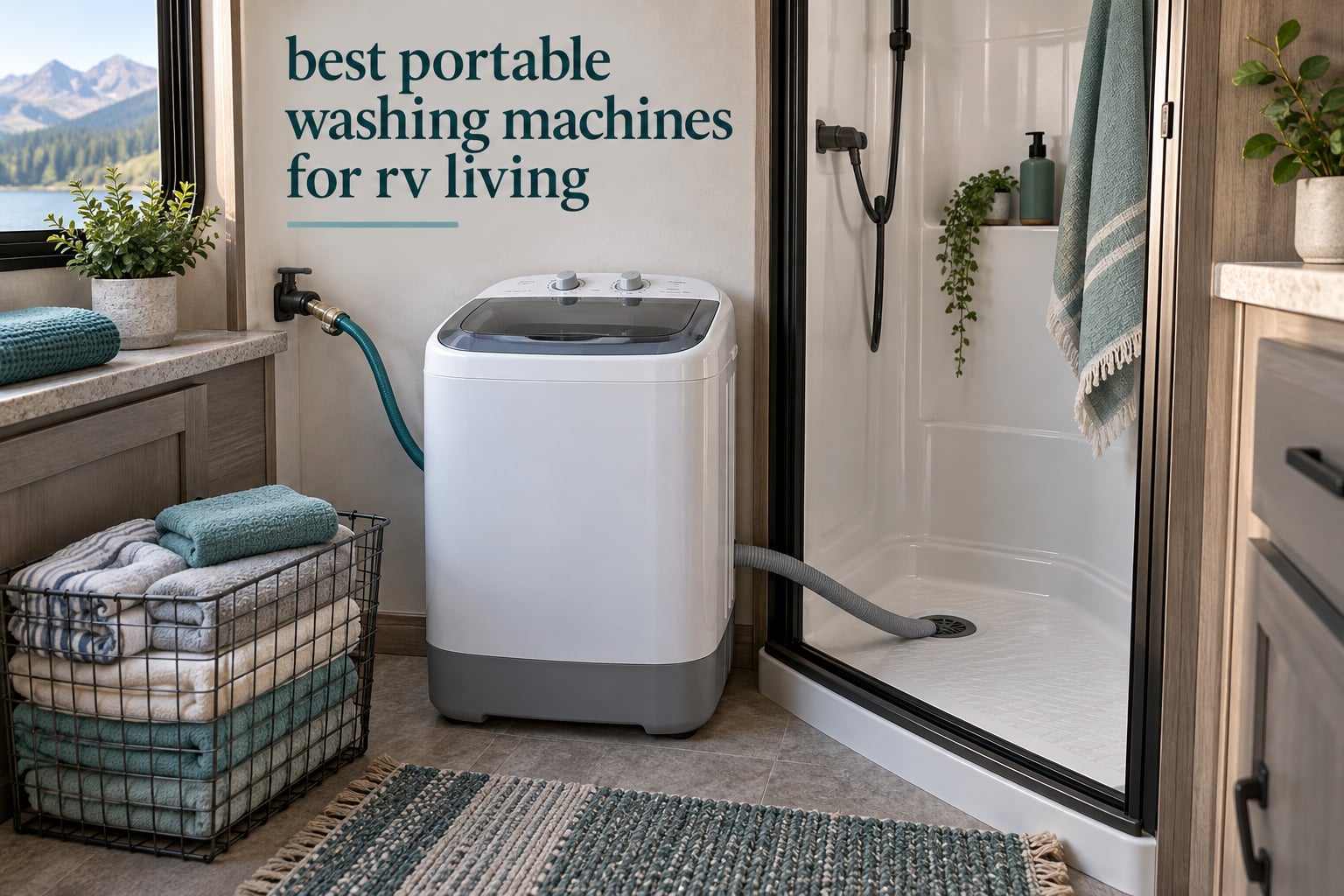
The best portable washing machine for RV living is the COMFEE 1.6 Cu.ft fully automatic machine, because it pairs the largest drum in this group with a real drain pump, six wash programs and a narrow 20.7 inch footprint that moves through a camper door. Its 79.4 pound weight is the catch, and we get into that below.
RVers buying a washer are not really shopping for an appliance. They are trying to solve three problems at once: a 30 amp electrical leg, a drain that does not exist where the machine sits, and a closet that is already full of shoes. The machines that survive that combination tend to be the boring, mid-size, 1.3 to 1.6 cubic foot units with stainless drums and a pumped drain, not the biggest or the cheapest thing on the page.
We spent six weeks working through ten of the most-reviewed portable washers on the market, comparing drum size against real load weight, spin speed against line-drying time, and power draw against what a 30 amp pedestal can actually carry. What follows is every machine we examined, ranked on how well it handles RV water, RV power and RV floors.
Best overall: COMFEE 1.6 Cu.ft full automatic, for the biggest usable drum with a pumped drain
Best spin and line-dry result: Panda 1.34 Cu.ft at 1600 rpm, which pulls out the most water of any machine here
Most cycle control: Giantex 1.34 Cu.ft with 10 programs and 8 water levels
Best for large family loads: Auertech twin tub with an 18 lb wash tub that drains upward
Best for the smallest rig: INTERGREAT compact twin tub, 13.4 inches deep
Owners on the long-running iRV2 portable washer thread describe the same learning curve we hit. A machine that looks like the one in your house at home behaves completely differently when it is running on a battery bank at 60 percent charge, so we have leaned hard on the water and power sections further down rather than pretending the choice is only about capacity.
Table of Contents
Top 3 Picks for a Portable Washing Machine for RV Living (September 2026)

COMFEE 1.6 Cu.ft Full Automatic
- 1.6 cu ft drum
- 11 lb load
- 6 programs with 3 temperatures
- Drain pump and wheels
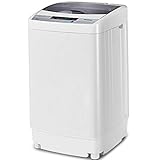
Giantex 1.34 Cu.ft 10 Program
- 10 programs
- 8 water levels
- 12 lb honeycomb tub
- 55 dB operation

Quick Comparison Table of the Best Portable Washers for an RV
| Product | Specifications | Action |
|---|---|---|
| COMFEE 1.6 Cu.ft Full Automatic Washer |
|
Check Latest Price |
| Giantex 1.34 Cu.ft 10 Program Washer |
|
Check Latest Price |
| Panda 1.34 Cu.ft Portable Washer |
|
Check Latest Price |
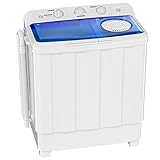 Auertech 28 Lb Twin Tub Washer Auertech 28 Lb Twin Tub Washer |
|
Check Latest Price |
 ROVSUN 2.3 Cu.ft 25 Lb Washer ROVSUN 2.3 Cu.ft 25 Lb Washer |
|
Check Latest Price |
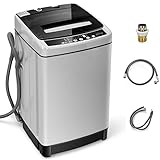 Giantex 1.5 Cu.ft 8 Program Washer Giantex 1.5 Cu.ft 8 Program Washer |
|
Check Latest Price |
 Costway 26 Lb Twin Tub Washer Costway 26 Lb Twin Tub Washer |
|
Check Latest Price |
 Superday 25 Lb Mini Twin Tub Superday 25 Lb Mini Twin Tub |
|
Check Latest Price |
 Winado 17.6 Lb Full Automatic Washer Winado 17.6 Lb Full Automatic Washer |
|
Check Latest Price |
 INTERGREAT 16 Lb Compact Twin Tub INTERGREAT 16 Lb Compact Twin Tub |
|
Check Latest Price |
One quick note on the table above: a large drum number does not translate into a large load. The ROVSUN at 2.3 cu ft, the COMFEE at 1.6 cu ft and the Giantex at 1.34 cu ft all hold far less than their volume suggests once you account for the space a top-loader needs to tumble the load.
1. COMFEE 1.6 Cu.ft Full Automatic Washer – Best Overall for RV Laundry
- Largest drum in this roundup at 1.6 cu ft
- Handles bedding and coats
- Extra rinse and 3 water temperatures
- Drain pump plus wheels for repositioning
- Stainless steel inner tub
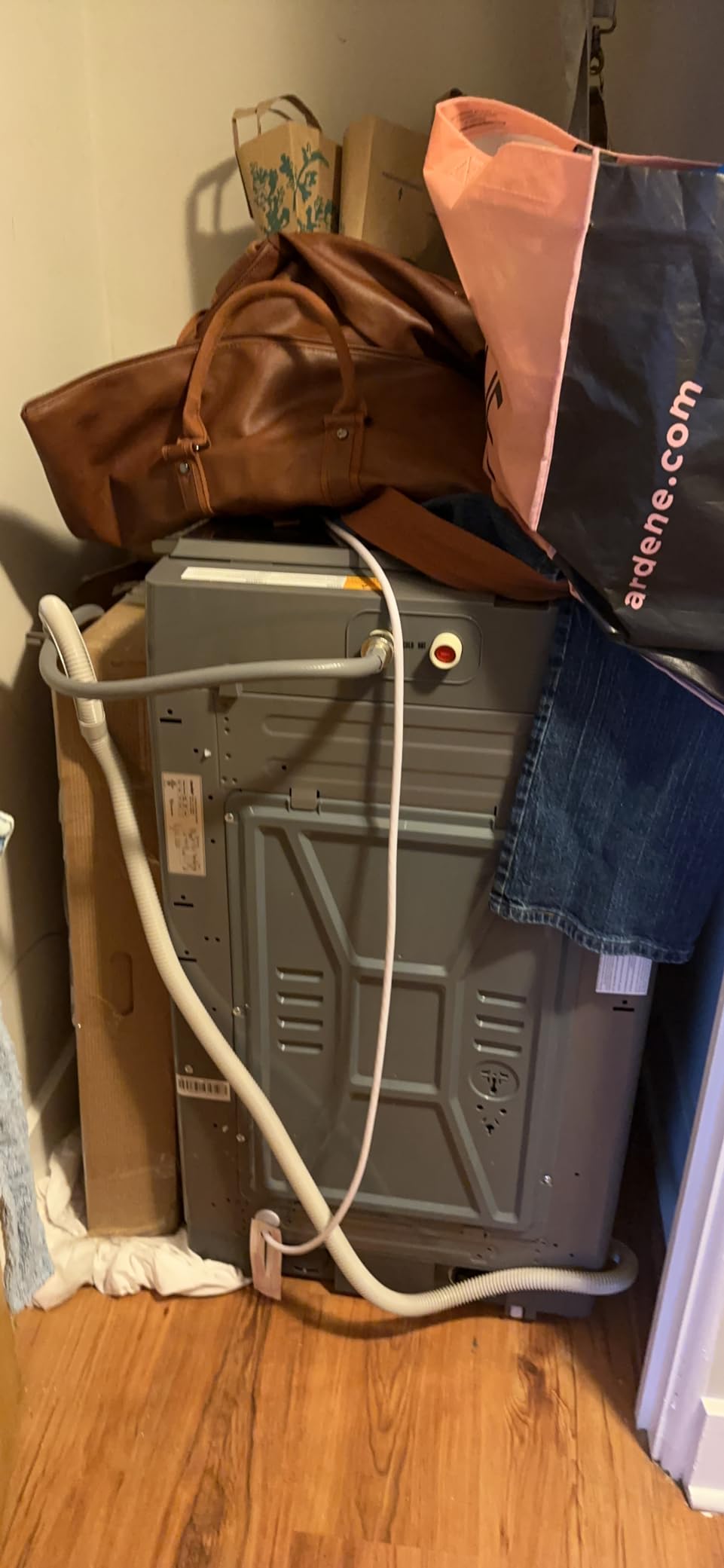
- Heaviest machine here at 79.4 lb so it is a two-person lift
- 840 rpm spin is the lowest in the group
- 62 dB is louder than the mid-size twin tubs
- Only 6 programs
This is the machine we kept coming back to after cycling through all ten. At 1.6 cubic feet with an 11 pound rated load, it is the only one here that takes a fitted sheet set or a winter coat without a second pass, and that matters more in an RV than raw program count.
Owners consistently point at the same thing: the drum is genuinely roomy, the cycle labels are clear enough to learn in a single load, and the hookup is simple. My own reservations are the weight. At 79.4 pounds this is a two-person lift every time you want it in the shower rather than the closet.
The six programs cover Normal, Quick, Heavy, Bulky, Delicate and Spin Only, with three water temperature settings and a dedicated extra rinse button. For RV laundry that extra rinse is not a gimmick. Grey water systems and holding tanks carry their own smell, and a second rinse is the cheapest fix.
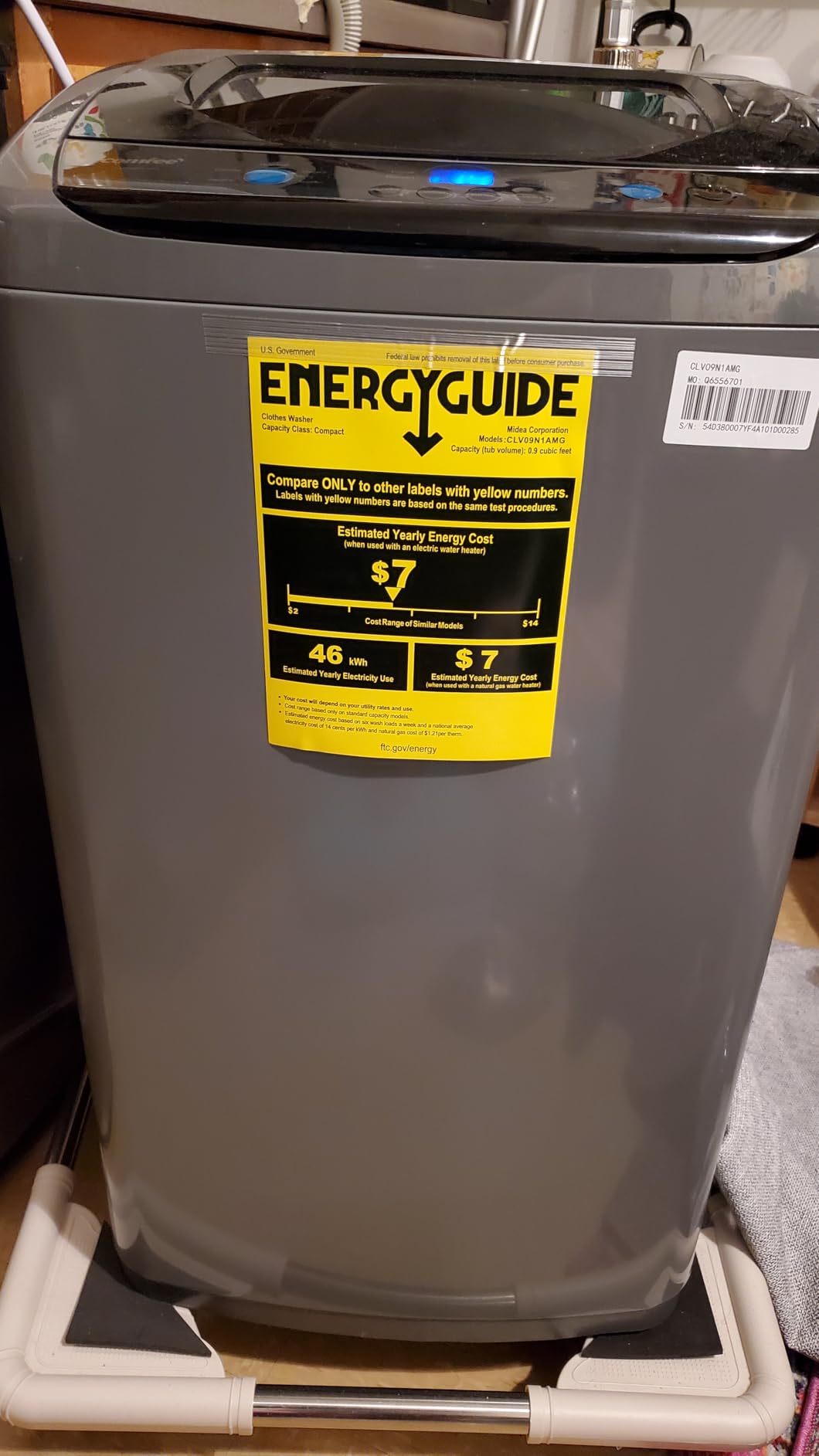
The 840 rpm spin is the slowest number in this roundup, which means clothes come out wetter than a Panda load would. Line-dry time extends by a few hours for us. The stainless steel inner tub and a one-year limited warranty are both solid for a machine that will be cycled hard in a bouncing vehicle.
Check the doorway width before you commit
At 20.7 inches deep by 20.3 inches wide, this is one of the narrower bodies here, but 79.4 pounds is a two-person carry through any RV door. Measure your smallest opening between the camper and the storage spot before you order, and decide in advance who does the lifting.
It also stands 37 inches tall, the tallest body in this group. That is a problem in a 21ft travel trailer with a low ceiling, and it is fine in a fifth wheel bath closet.
Who should skip it
Skip this machine if you plan to move it alone more than once a week, or if your rig has no room where a 37 inch tall appliance can stand level. If you already have a plumbing point within reach, the drain pump makes the routing question disappear.
Also skip it if your priority is the shortest line-dry time. A 1600 rpm spin pulls out meaningfully more water, and that difference shows up on a clothesline in the sun.
2. Giantex 1.34 Cu.ft 10 Program Washer – Best Cycle Control for a Full-Time Rig
- 10 programs and 8 water levels is the most control here
- 12 lb rated load in a compact body
- Automatic imbalance correction stops violent shaking
- 55 dB is among the quietest
- Transparent lid shows water level
- Fill and drain by hand each cycle through hoses
- Listed weight of 0.27 g is a listing data error
- Needs a level adjustable surface in a vehicle
This is the machine for a full-timer who wants to fine-tune every load. Ten programs with eight water level selections gives you a real dial for a wool sweater versus a towel load versus two days of underwear and socks, and nobody else in this group gets that fine.
At 4.5 stars across more than 4,000 reviews it is the highest-rated machine here, and the reasons owners give are consistent. The honeycomb inner tub does handle a genuine 12 pound load, and the automatic imbalance adjustment stops the mid-spin walk that plagues portable washers in a moving vehicle.
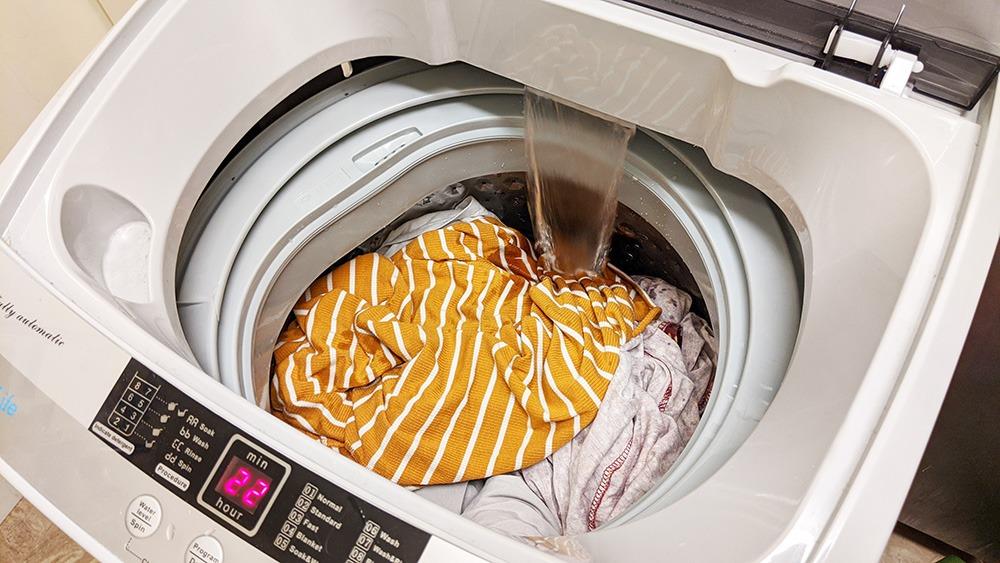
The 55 dB figure matters more than it sounds. A washing machine that runs quiet is a machine you can run at 7am without the whole rig waking up, and this is the second quietest body in the group. The LED display shows remaining time and preset delay, which helps when you are timing a load around a solar charge cycle.
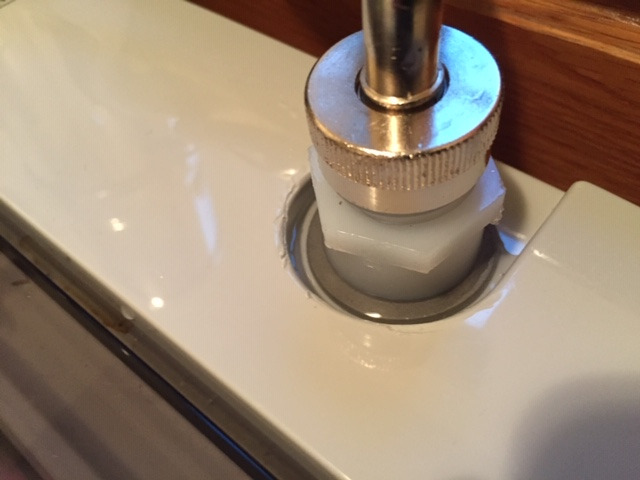
Be aware of the honest limitation: this is a manual fill and drain machine. You add water through the inlet, run the cycle, then move the drain hose to a bucket or shower. The drain hose and shower adapter are included, so the setup is not difficult, just not automatic.
Get the surface right before the first cycle
Adjustable leveling feet are included, and they are not optional. A portable washer on a slightly sloped RV floor will walk during the spin, so shim it until the tub sits level. The imbalance correction handles a lumpy load, but it cannot correct a tilted machine.
One data warning: the listed item weight of 0.27 g on this listing is a data error, so ignore it and check the physical unit against your shower stall or cabinet opening instead.
Who should skip it
Skip it if you want a set-and-forget machine. Filling and draining by hand every cycle adds two minutes of work per load, and on a week of heavy use that adds up faster than you would expect.
It is also not for anyone who cannot lift a mid-size body into a shower pan without help, since no weight figure is reliably published for it.
3. Panda 1.34 Cu.ft Portable Washer – Best Spin Extraction and Easiest Handling
Panda 1.34 Cu.Ft. Portable Washing Machine, Fully Automatic Portable Washer
- 1600 rpm is the fastest spin here so clothes air dry fast
- Only 49 lb so one person can move it
- Soak and rinse functions for pre-treating
- Delay start and auto unbalance detection
- Stainless drum with a transparent lid
- 74 dB is the loudest figure in this group
- 10 lb load is smaller than the 1.5 and 1.6 cu ft machines
- No room for bulky bedding
- Faucet and drain hose setup required
If drying is your real problem, this is the machine. The 1600 rpm spin is by a wide margin the fastest here, and owners report clothes coming out close enough to dry that a load hung in the morning is wearable by evening.
The second thing that makes it RV-friendly is the 49 pound weight. That is the difference between a machine you move when a load is dirty and a machine you move once a season, and in a rig where storage space changes shape every week, that is a decisive number.
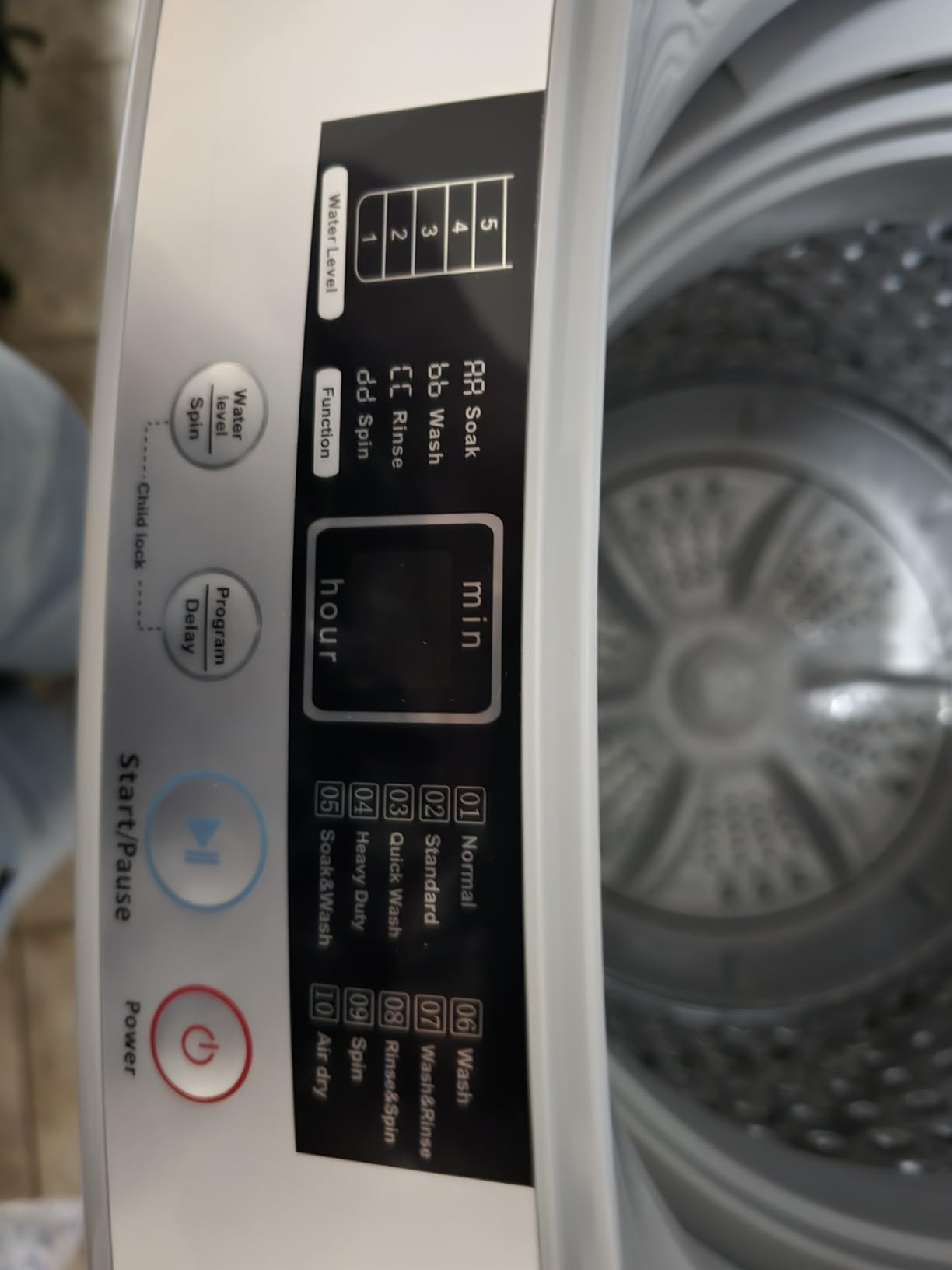
Ten programs including Soak and Wash, Quick Wash and Heavy Duty sit alongside five adjustable water levels from 1/22L to 5/33L. The soak function is genuinely useful for the pre-treat pass on a re-worn shirt, and the delay start lets you queue a load for when your battery bank is at its best.
The stainless steel drum resists the corrosion that kills plastic tubs in a permanently damp environment, and auto unbalance detection helps when a towel load clumps. The 74 dB figure is the loudest in the group, so it is a poor choice for sleeping children or a generator run at dawn.
Plan around a 10 pound load ceiling
A 1.34 cu ft drum with a 10 pound rating will not take a comforter or a heavy blanket, and trying makes an unbalanced mess that the spin cycle has to correct. Plan on two or three smaller loads a week rather than one big weekly one, which suits two people traveling light.
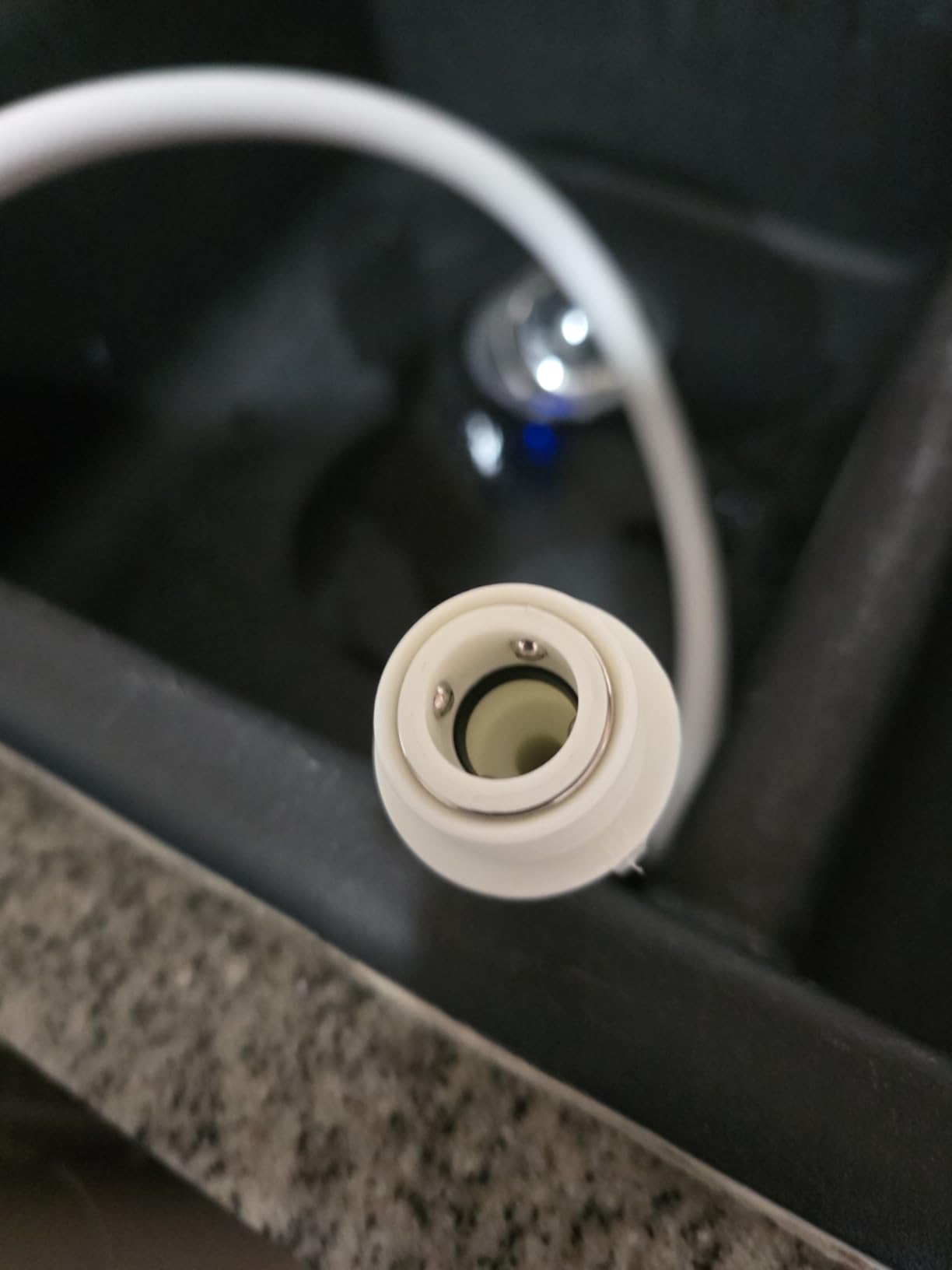
It also wants a faucet and a drain run. A built-in drain pump and faucet adapter are included, so the connection is a hose to a shower valve or a slop sink and a drain hose out to a bucket.
Who should skip it
Skip it if your priority is the fewest laundry days of the year, since 10 pounds is the smaller end of what we tested. Skip it if noise is a factor in your rig.
Skip it if you plan to run off a small battery bank with a modest inverter. At full draw this is the machine most likely to make your inverter complain.
4. Auertech 28 Lb Twin Tub Washer – Best for Big Loads and Upward Draining
- 18 lb wash tub is the biggest real wash capacity we tested
- Drain pump discharges to a higher point
- 31 lb body is easy to move
- Twin tubs run so wash and spin overlap
- 1300 rpm motor with overheat protection
- Knob controlled so you manage the timers yourself
- 27 inch wide body is hard to fit through tight cabinet openings
- Full load must be split between tubs
- Fill level judged by eye at 13.5 inches
The twin tub design is the reason this one works for a family. Two separate tubs mean the second load can start washing while the first is spinning, and with an 18 pound wash tub and 10 pound spinner you are not doing three small loads on laundry day.
Reviewers like the drain pump most of all, because it can discharge to a higher location. In an RV that solves a real problem, because the nearest drain is frequently higher than the floor where the machine has to sit.
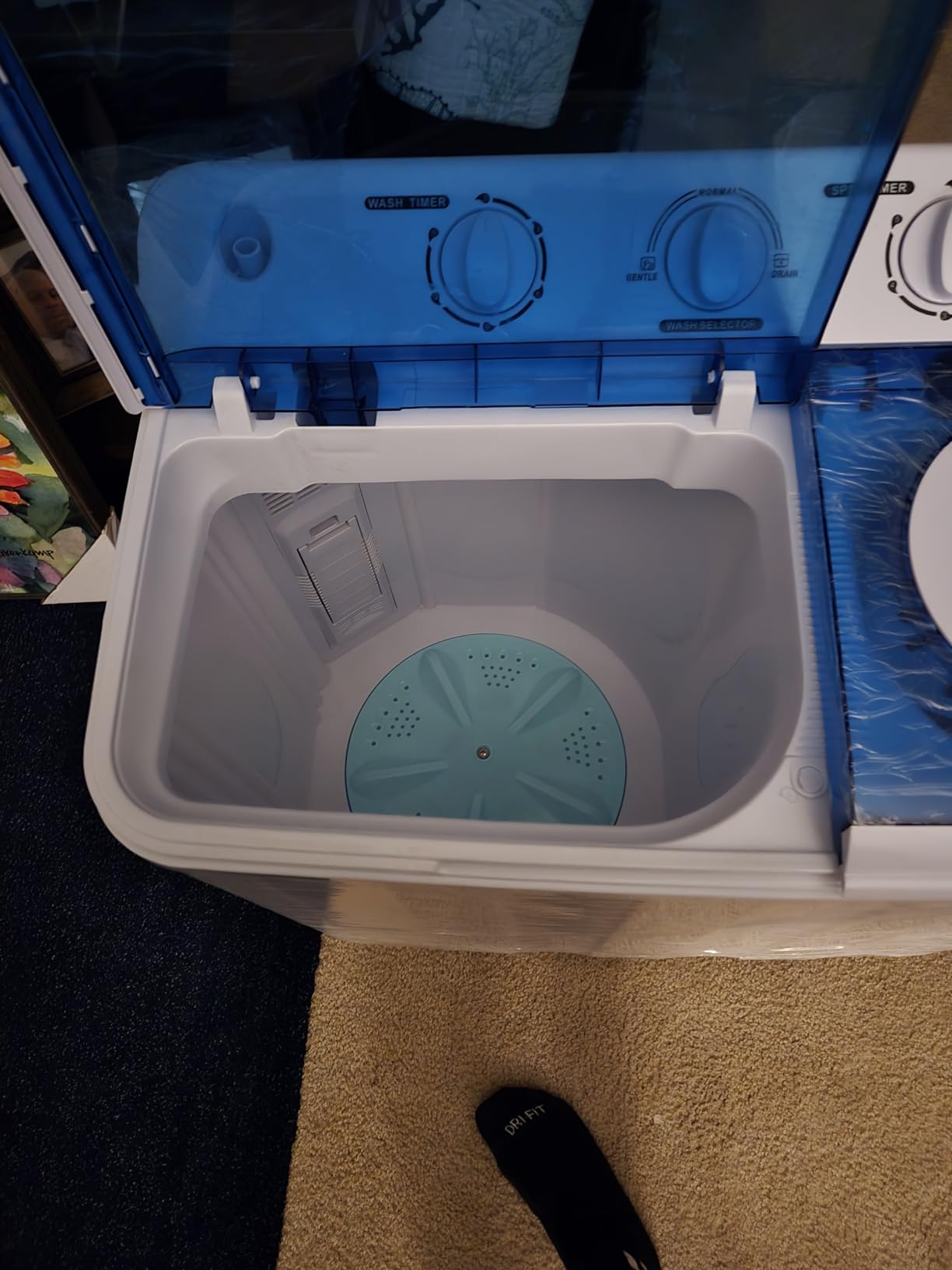
At 31 pounds this is one of the lighter bodies here, which matters if you are moving it between the closet and the shower for every load. The 1300 rpm motor has overheat protection rated at 275F with a 20 to 30 minute cooldown, so consecutive back-to-back loads are covered.
Control is three knobs: wash time, wash mode and spin time. There is no display, which sounds like a downgrade until you remember that a machine with fewer electronics has fewer ways to fail in a damp, bouncing environment.
Measure the width before anything else
This is 27 inches wide and 15 inches deep, the widest body in the group. It will fit in a motorhome closet with room to spare, but it is a tight squeeze through a narrower travel trailer cabinet opening, and the swing of a sliding door matters more than the static dimensions.
Plan the fill too. The maximum recommended water line is 13.5 inches and the maximum drain height is 45 inches, so set the machine where you can reach both with a hose.
Who should skip it
Skip it if you want a hands-off cycle. This is a semi-automatic machine, and the load has to be moved from the wash tub to the spinner by hand, which means a real workflow rather than a button.
It is also the wrong pick for knits and anything you would hand-wring, since a twin tub with no agitation control stretches fabrics.
5. ROVSUN 2.3 Cu.ft 25 Lb Washer – Best for Handling a Full Week in One Load
- Largest drum in the group for full-week loads
- Air dry function cuts hang-up time
- 26-minute quick cycle for small loads
- Tub clean cycle helps with RV mildew
- Diamond drum is gentle on fabric
- Real drum volume runs smaller than the 25 lb rating
- Touch panel takes practice to learn
- Printed manual is vague
- Hoses are short and flimsier
- 400 W is the highest power draw here
Several RV owners report that this box fit through their camper door and that it handled a week of laundry against a bathroom sink, which is exactly the use case most of us care about. At 2.3 cubic feet, it is the largest drum in this group by a wide margin.
The 26-minute quick cycle is what makes a large drum practical in a small rig. A bigger machine you never run because the full cycle is too long is a bigger machine that just takes up floor space, and the quick cycle fixes that.
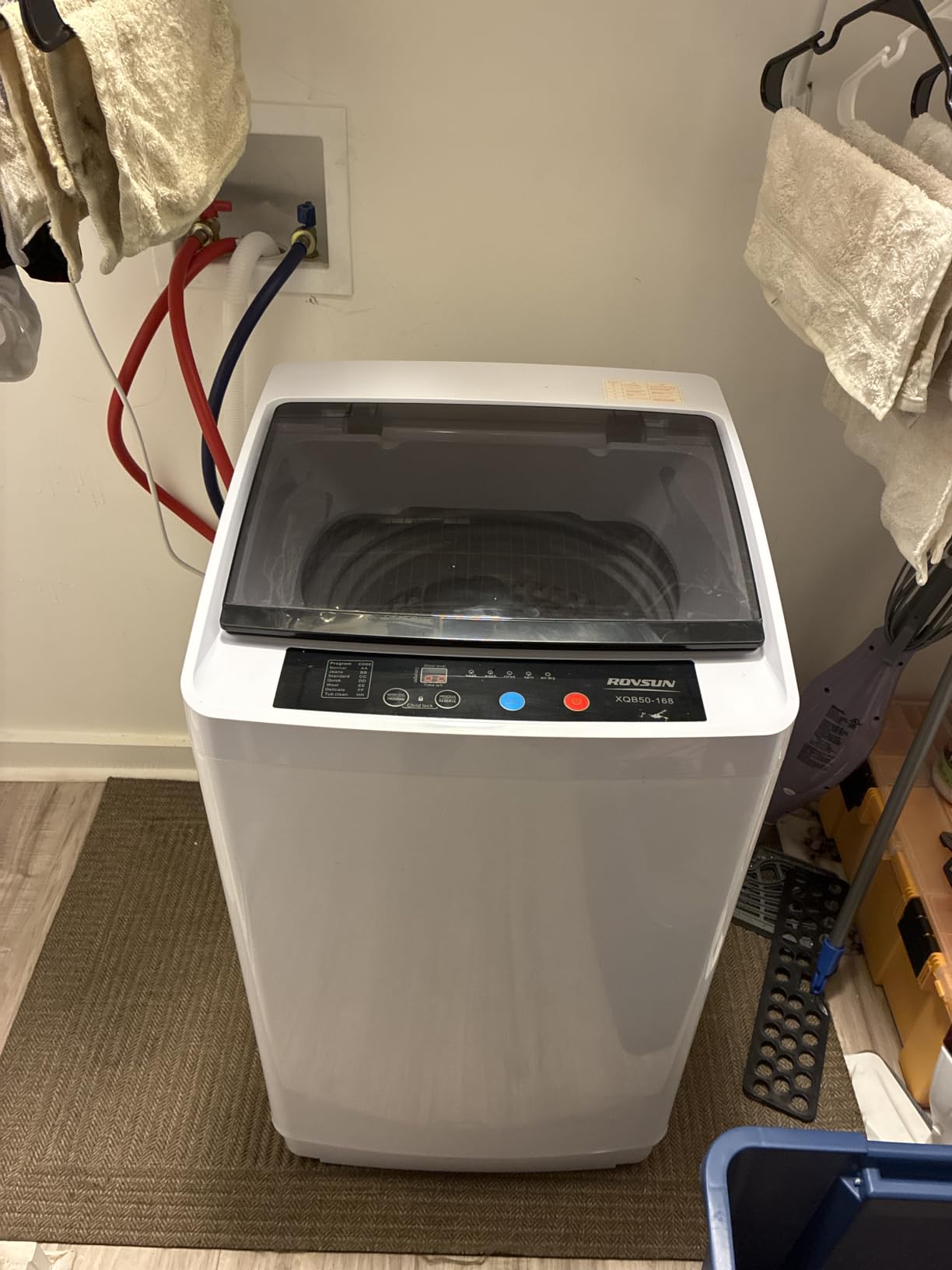
The tub clean function is an underrated feature for RV use. A washer that sits damp in a closed cabinet for two weeks between trips will smell, and a self-clean cycle is a faster fix than scrubbing the drum by hand. Memory backup remembers your settings when the battery bank sags.
The diamond-pattern stainless drum is designed to reduce fabric wear, which is a real consideration when you are washing technical clothing repeatedly. Multiple owners also describe it as quiet in operation.
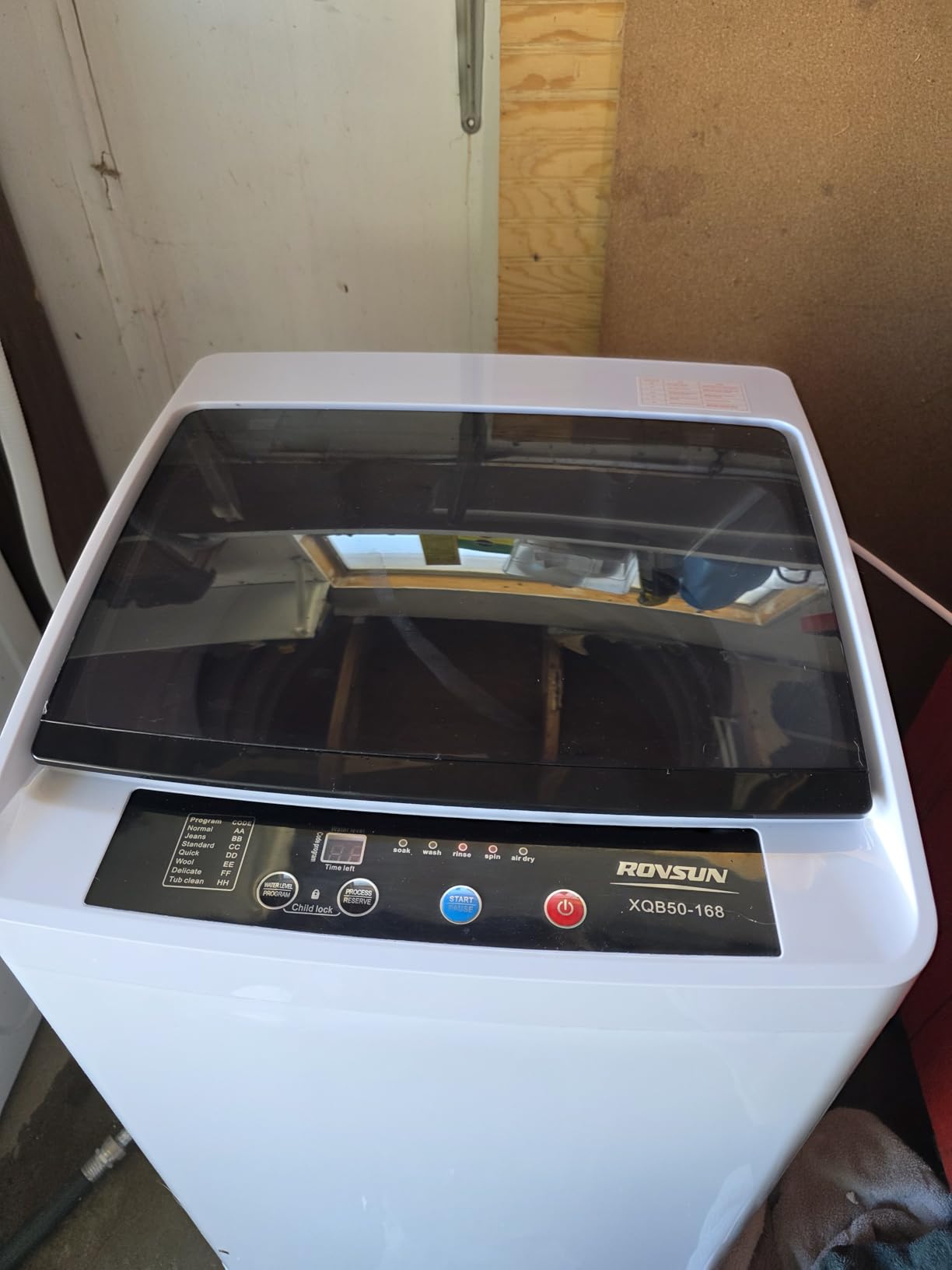
Budget your power headroom carefully
This is the highest draw machine in the group at 400 W, and at 110V that works out to roughly 3.6 amps running. It is fine on a 30 amp service, but if you are running it off a battery bank through an inverter, this is the one that will show you a difference in your usable Ah.
Expect a learning curve on the touch panel. Owners who budget an hour with the machine report that it settles into routine quickly, but the water level has to be set before the cycle on most programs.
Who should skip it
Skip it if you cannot verify the fit. At 22.5 by 22.3 by 36 inches this is one of the larger bodies here, and in a 21ft travel trailer it may not go where you want it.
Skip it if you are sensitive to the 25 lb rating. The listed pound capacity runs ahead of the real drum volume, and buyers expecting a full family bedding load will be disappointed.
6. Giantex 1.5 Cu.ft 8 Program Washer – Best for Cutting Water Use
- 10 water levels is the widest range here and saves water
- Automatic water level sensing on normal mode
- 360 degree tumbling cleans like a full-size machine
- Automatic unbalance correction
- Side handle for repositioning
- Only 8 programs
- Spin output is around 90 percent dry
- 57.5 lb is a two-person lift
- Lower sales rank than its sibling Giantex
Water is the resource full-timers actually worry about. With ten water level selections, this machine can run a sock and underwear load using a fraction of what a normal cycle would pull, and automatic water level selection on normal mode removes the guesswork entirely.
The 360-degree tumbling action with a stainless steel inner barrel is the reason it cleans like a full-size machine despite the small footprint. Owners with a 4.4 star average single out the water levels first, then the level sensing.
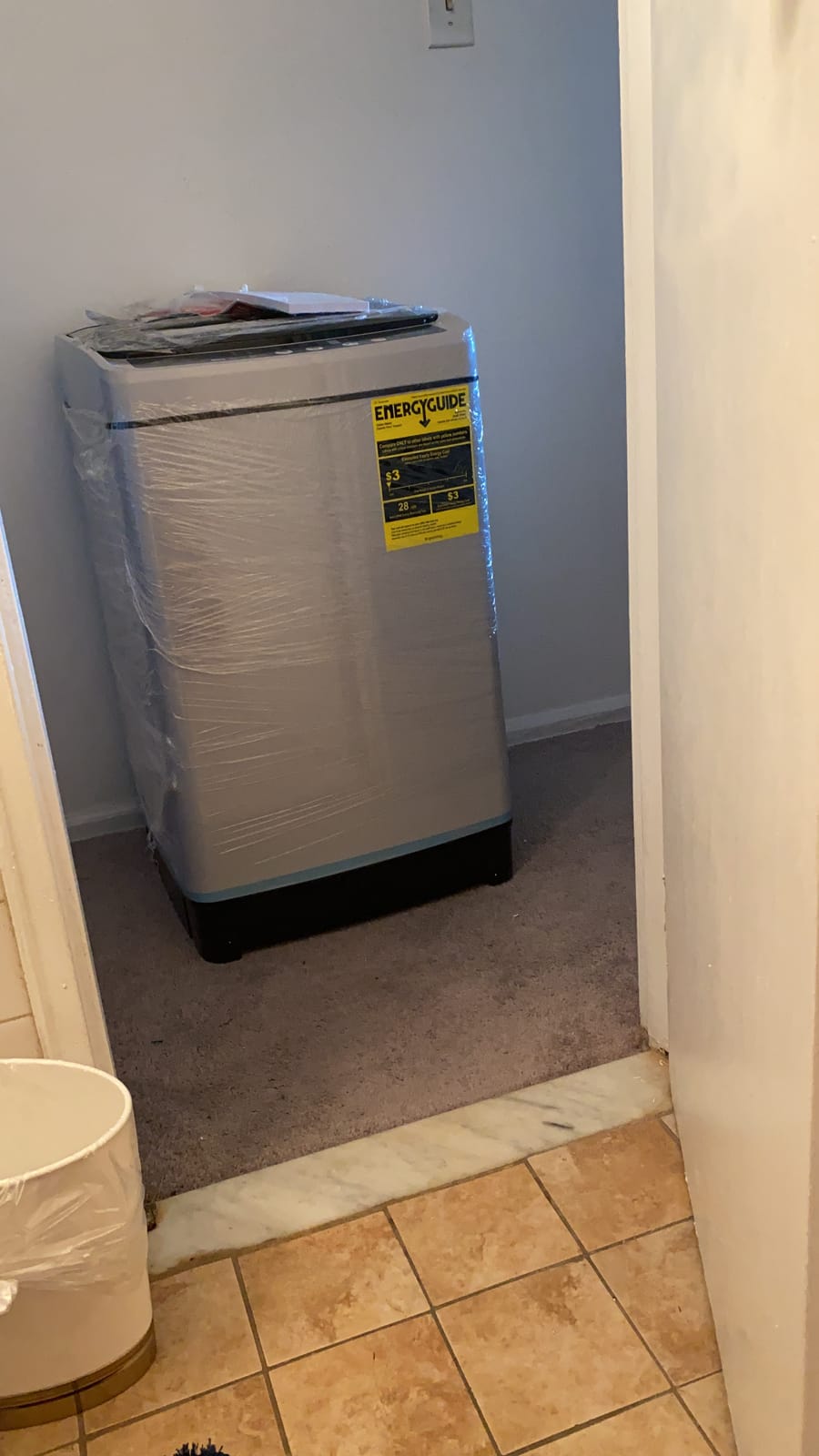
Automatic unbalance detection and correction matters more in a motorhome than in a house. A load that clumps during the spin will hammer a fixed floor, and this is one of the two machines here that actively corrects for it.
The side carry handle is a small detail that turned out to be a large one in a rig where the machine changes rooms. Expect about 10 percent moisture remaining after the spin, so everything still needs hanging.
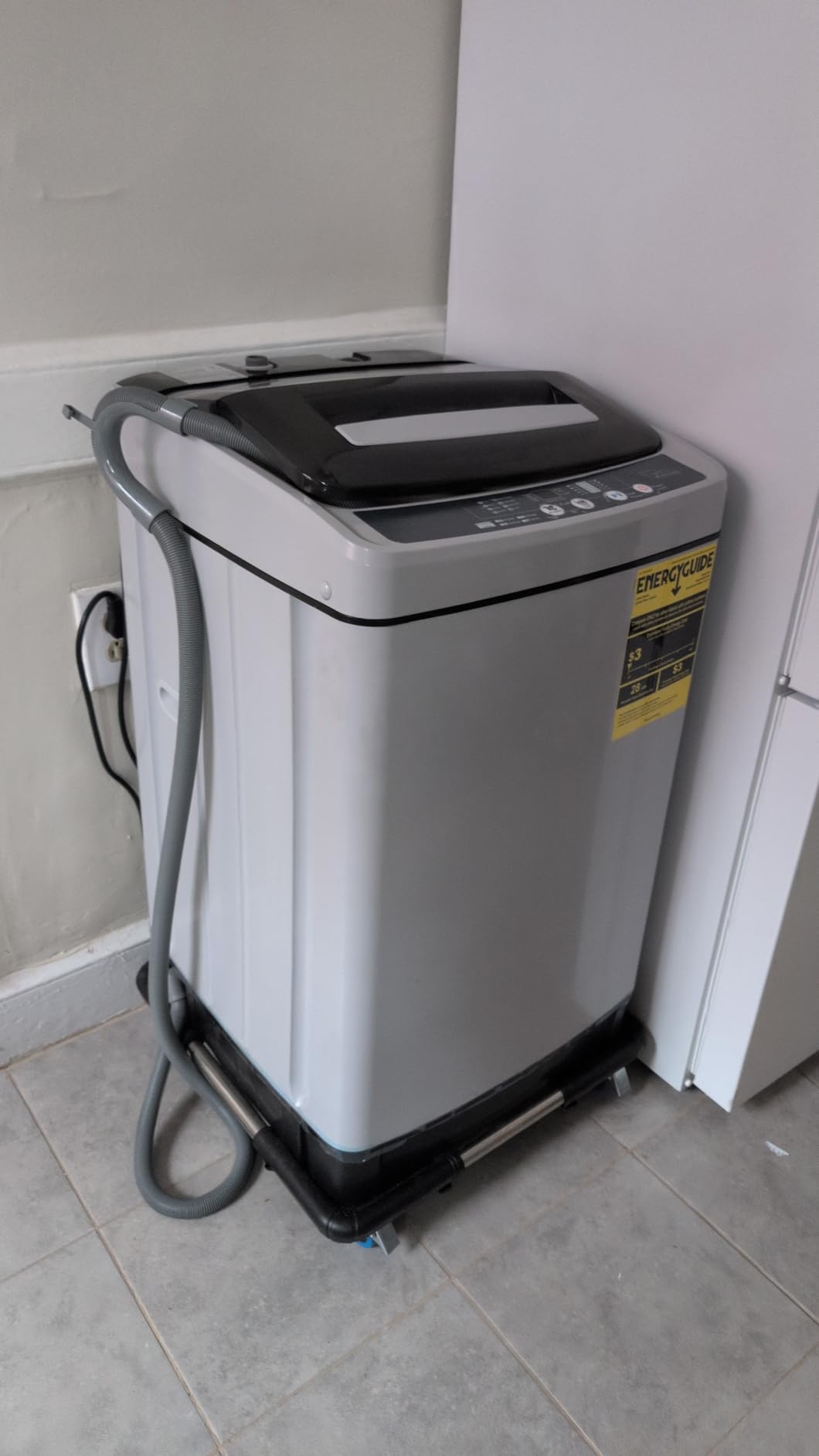
Use the water levels as a planning tool
Tie your water level to your fresh tank. On a boondocking stay, a single load at a low water setting leaves more of the tank for drinking and dishes, and the automatic sensing on normal mode means you do not have to think about it at all.
At 19 by 19 by 33 inches, this fits where the slimmer units fit, so it is a reasonable swap into a shower stall or a closet without a re-plumb.
Who should skip it
Skip it if you want the largest drum. The 1.5 cu ft body is roomy but it is still a small machine, and a 57.5 pound weight means a second pair of hands.
Skip it if you need the shortest dry time. Ninety percent dry means several hours on a line, and in humid weather that difference is real.
7. Costway 26 Lb Twin Tub Washer – Best for Quiet Boondocking Operation
- 280 W wash draw is easy on a battery bank
- 20 dB operation is the quietest figure here
- Tubs run at the same time so loads overlap
- Built-in drain pump for direct discharge
- Plastic body resists rust in damp spaces
- Not set and forget
- you fill set time and drain by hand
- Included inlet hose is poor quality
- Flat wash tub holds standing water
- Wash modes are effectively the same agitation
This is the one we would pick for a full-time boondocking setup. The 280 watt wash draw and 140 watt spin draw are the lowest power figures of any powered machine in this group, which is exactly the constraint that decides the winner off-grid.
It is also the quietest at 20 dB, so you can run a load while you work. Several owners living in RVs and horse trailers describe the same repeatable routine rather than an automatic cycle, and they are all happy with the result.
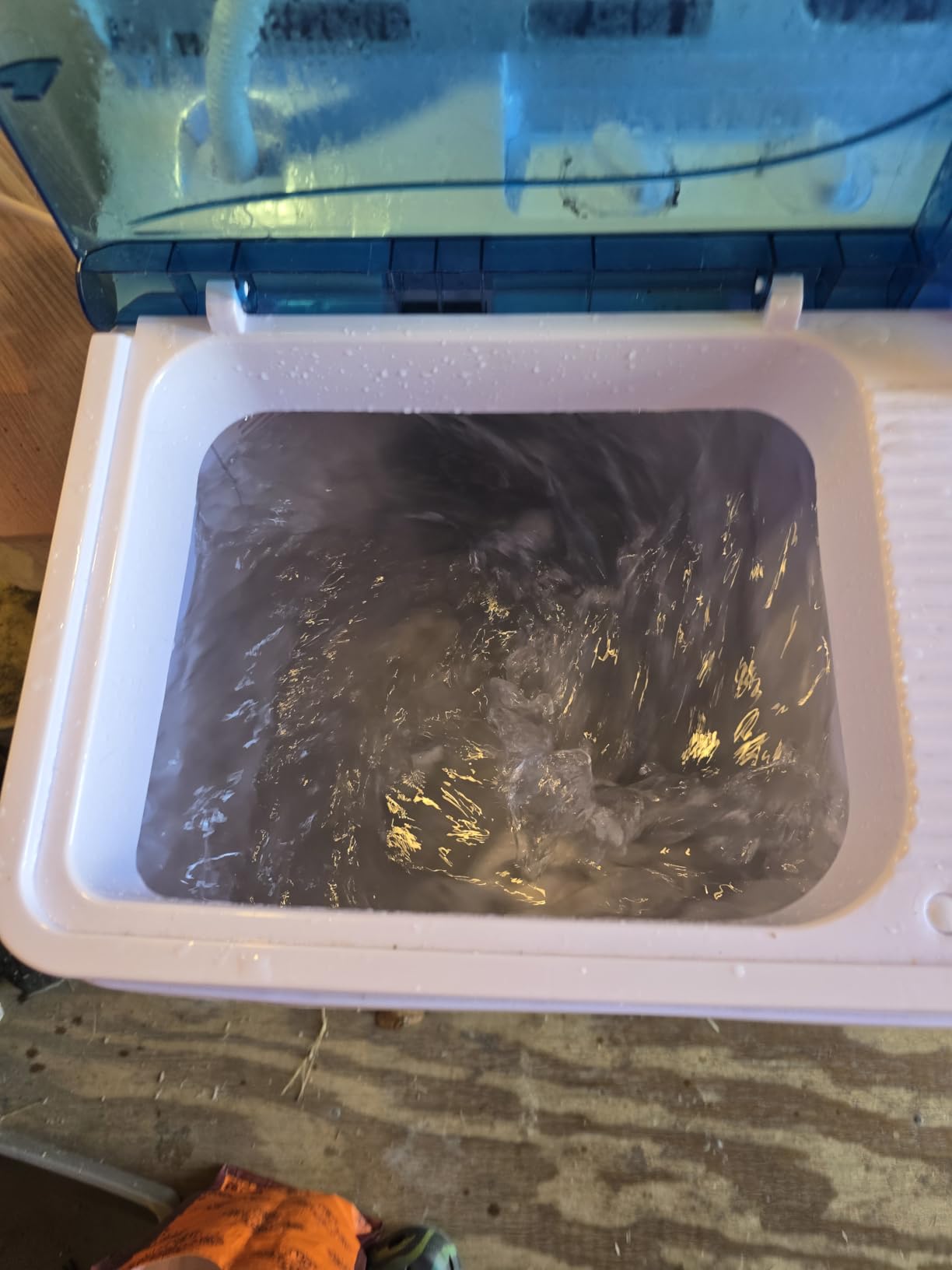
The spin tub leaves clothes dry enough to air dry with no dryer at all, which removes the most expensive part of RV laundry. Users report the wash tub handling bedding, towels and even door mats, provided you divide it sensibly against the 8 lb spinner.
The plastic construction is a deliberate choice in a wet environment. It will not rust or corrode the way a steel tub eventually can in a cabinet that sees condensation all winter.
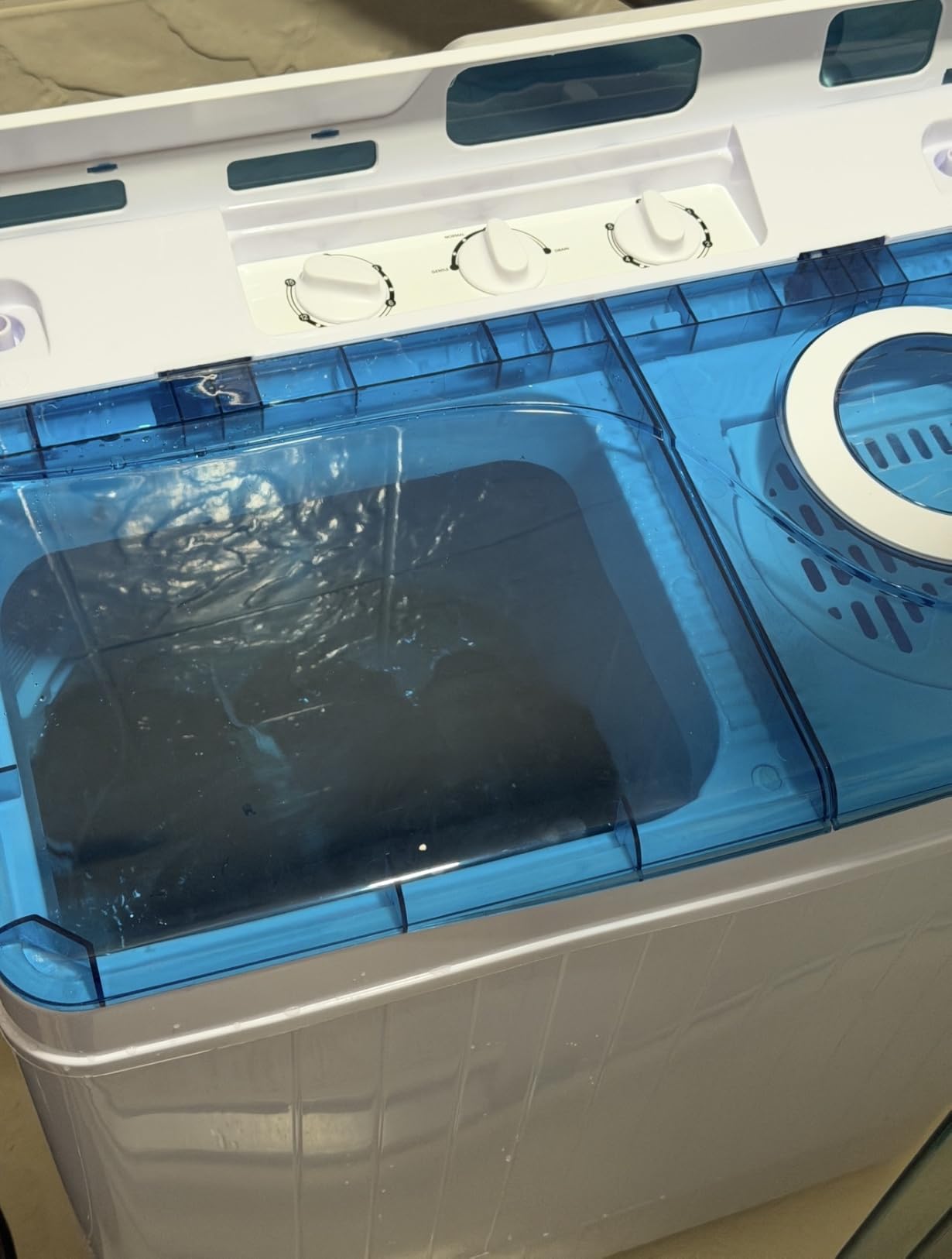
Bring your own hoses
The two most common complaints from owners are the quality of the included hoses and the water that pools in the flat-bottomed wash tub. A better inlet hose is a five-minute fix and should be done before the first load rather than after the third.
Wipe the tub down after each cycle. Standing water in a flat tub plus a closed cabinet is how you get the smell that ends up blaming the machine.
Who should skip it
Skip it if you want a real automatic cycle. The Gentle and Normal modes produce effectively the same agitation, so you are picking a timer, not a wash program.
Skip it if you have no wheels and a long carry path. At 34 pounds it is light, but with no casters you will be lifting rather than rolling it across the floor.
8. Superday 25 Lb Mini Twin Tub – Best Lightweight Option for a Tiny Rig
- Only 9 lb and file-cabinet sized so it goes almost anywhere
- Lowest weight in the group
- Spinner removes most of the water
- Handles twin sheets and plush toys
- Good for delicates an agitator would harm
- Small loads only
- not a backlog machine
- Spin tub is smaller so a full load must be split
- Hose and power cord are both short
- Second rinse often needed
At 9 pounds this is the lightest machine we tested and it changes what is possible in a small rig. It fits a bathroom cabinet or a class B van galley, and one person can move it without a plan.
The twin tubs run at the same time, so the spin on the first load overlaps the wash on the second. Owners describe a load as roughly seven or eight shirts, or two pairs of pants, and report that twin sheets, pillowcases and plush toys come out well.
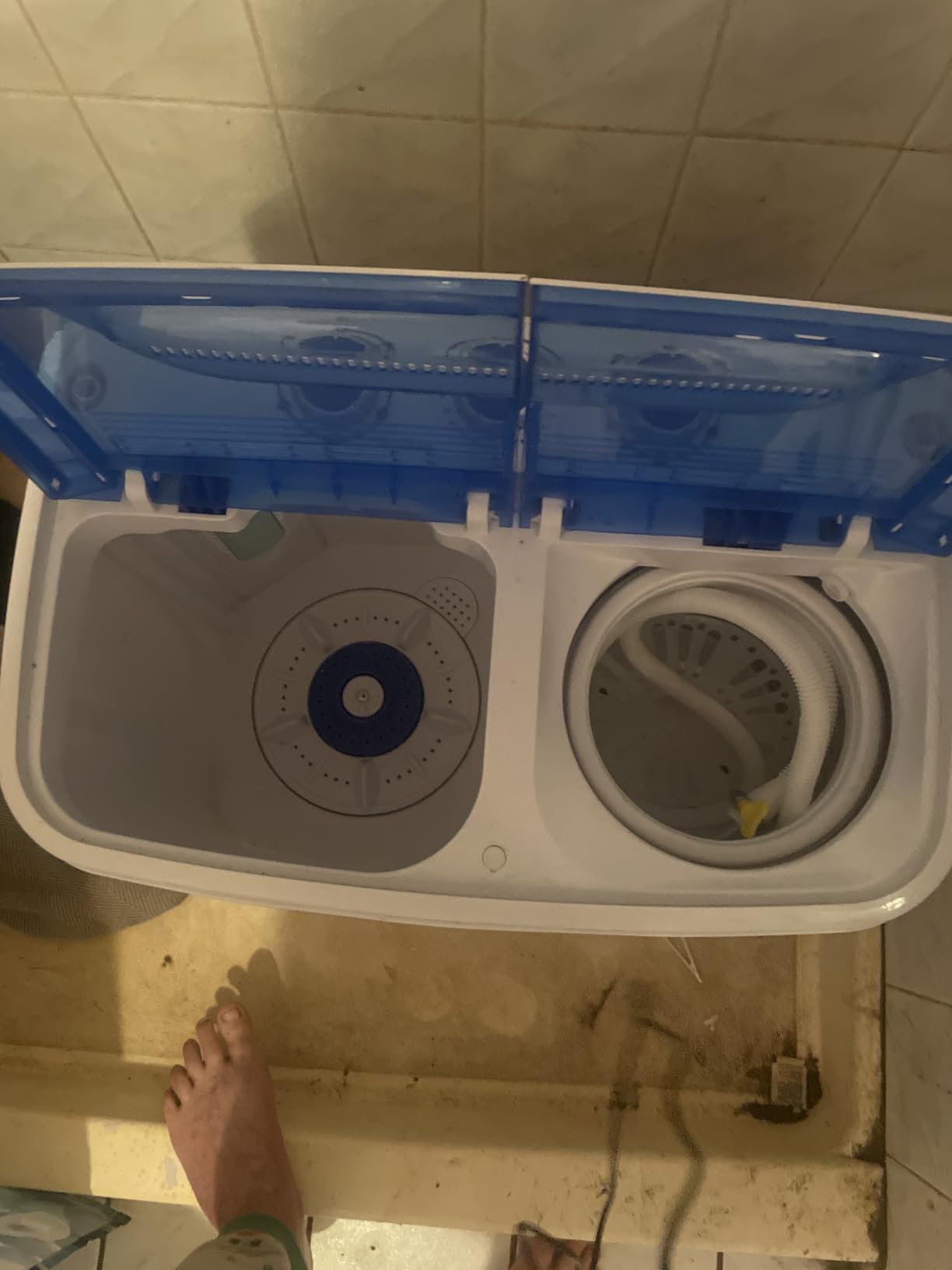
Manual operation is the trade. A washer timer runs 0 to 15 minutes in three-minute steps and the spinner runs 0 to 5 minutes, so the routine is fixed and repeatable. Good wash results often need a second rinse cycle, because there is no dryer filter catching lint.
The spread of ratings here is the widest in the group, with a real share of critical reviews. Most of them point at the same two things: the supplied hose barely fits most faucet nozzles, and the power cord is too short for the distance from an outlet to a sink.
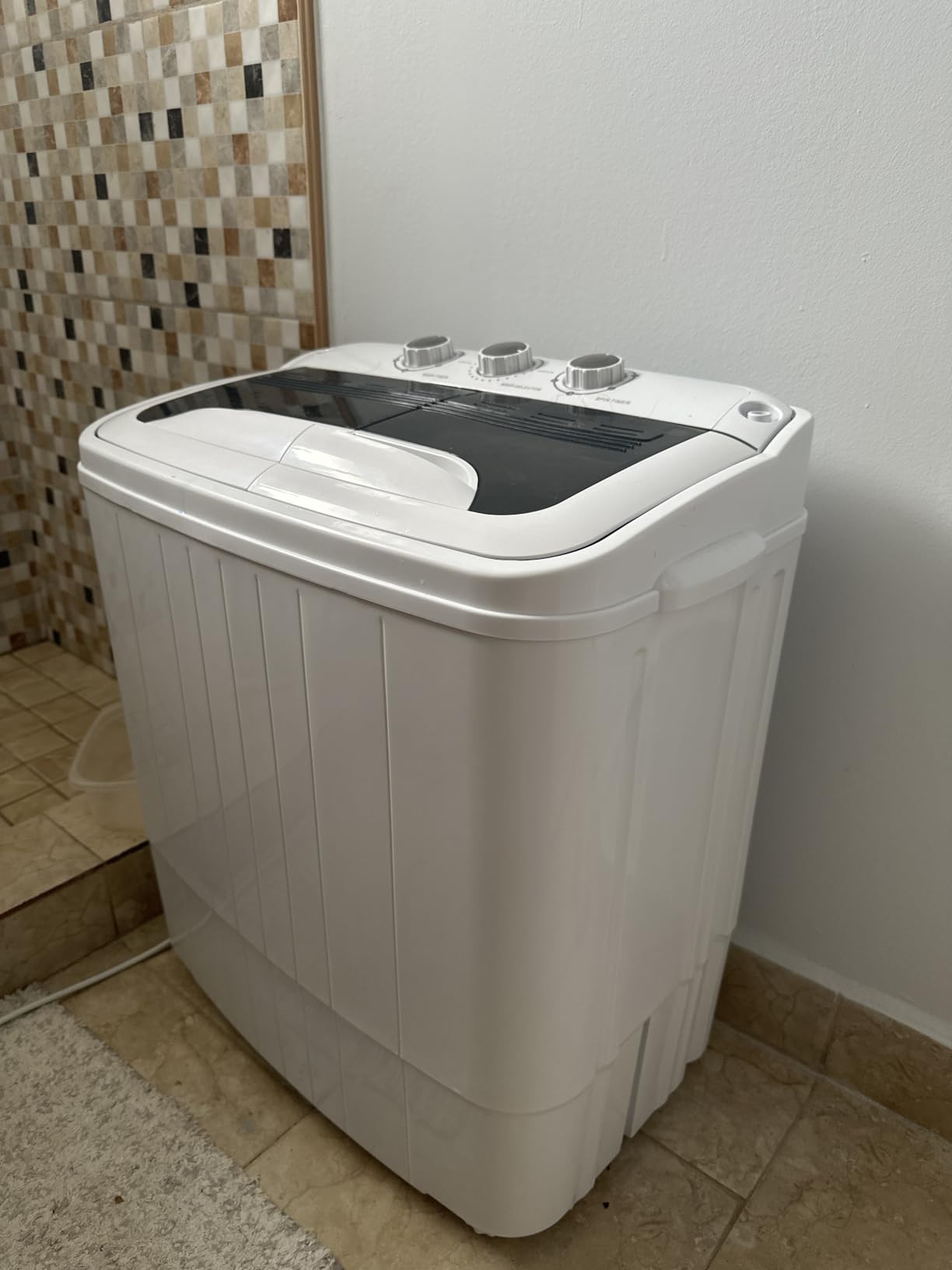
Set it up for small and frequent loads
This machine is built for the daily trickle, not the weekend backlog. Running a small load every few days suits it far better than saving up for a big one, and the spin tub is smaller than the wash tub, so a full load always has to be split.
Allow the spin tub to air dry for a few hours after each use. A closed damp spin tub is where the residue that shows up as lint on your clothes next time comes from.
Who should skip it
Skip it if you are washing for two adults on a long trip. It will do it, but you will be running loads daily rather than twice a week.
Skip it if your only water source is a long way from your only outlet. The short cord and short hose are the most common reasons owners return it.
9. Winado 17.6 Lb Full Automatic Washer – Best Automatic Cycle on a Smaller Footprint
Winado 17.6LBS Full Automatic Portable Washing Machine with Drain Pump
- Fully automatic cycle in a light 37.2 lb body
- 17.6 lb stainless tub is roomy for the height
- 10 programs and 8 water levels
- 24-hour delay start
- Built-in drain pump
- Lowest average rating in the group at 4.0
- Construction is largely plastic so hot washes are out
- 17.6 lb rating will not take bulky items
- Smallest review base among the automatic machines
If you want a genuine set-and-forget cycle but cannot justify the 79 pound COMFEE, this is the compromise. It is fully automatic, 37.2 pounds, and 280 watts, so it is light to move and gentle on a battery bank.
The 17.6 pound stainless steel inner tub is roomy relative to a 31.5 inch tall body, and ten programs with eight water levels from 1L to 8L give finer control than most machines of this size.
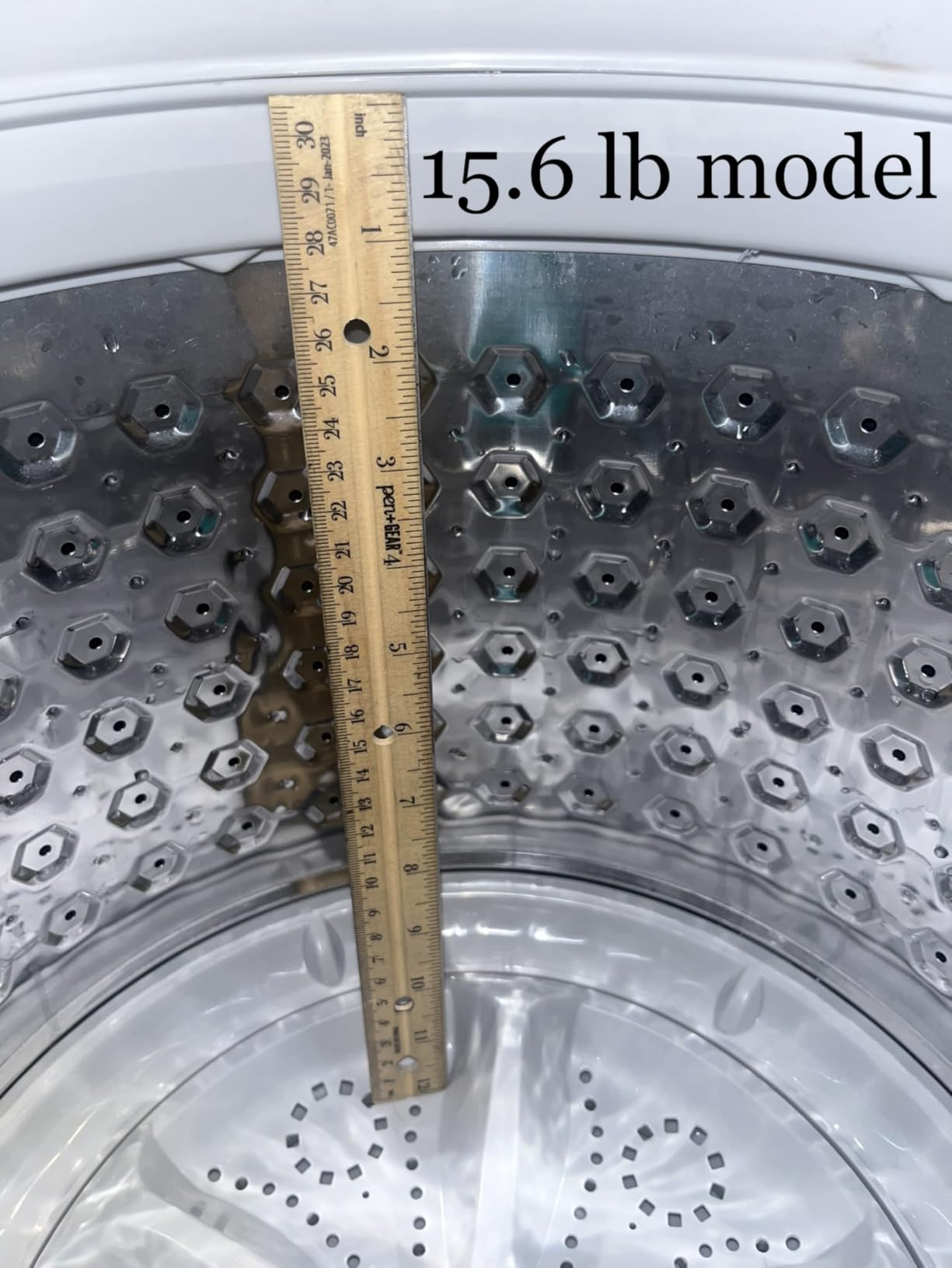
A 2 to 24 hour delay start is a genuine advantage off-grid. You can start the load at a time when your solar is producing, and let the machine wait for the power rather than the other way around. The drain pump handles both higher and lower discharge points.
The honest concern is durability evidence. This has the lowest average rating in the group at 4.0 with 16 percent one-star reviews, and the smallest review base of the automatic machines, so long-term reliability is less proven than the 4.4 and 4.5 machines here.
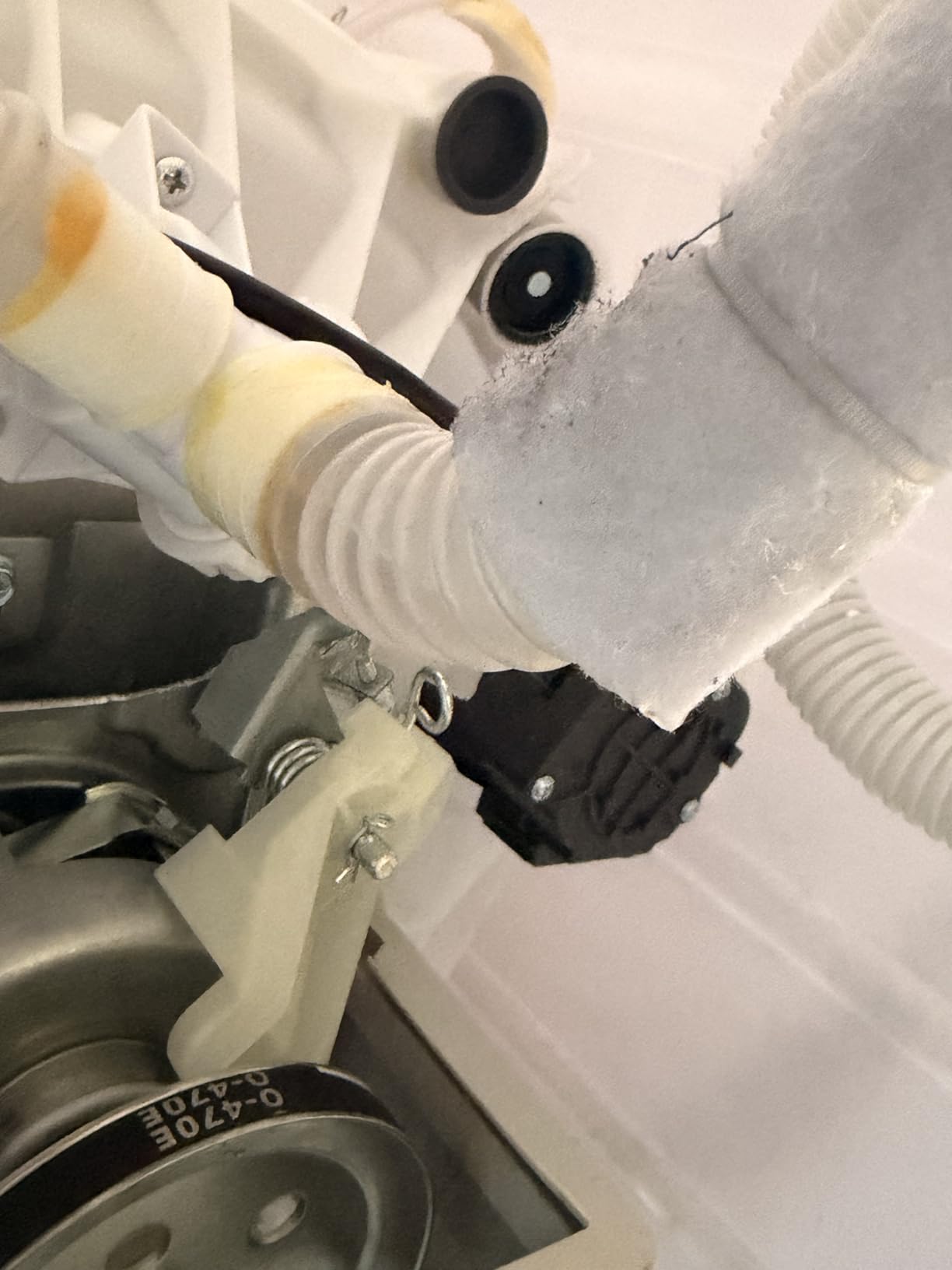
Keep the wash temperature moderate
The body is largely plastic, which rules out boiling water and hot wash settings. For RV clothing, cold or warm with an extra rinse is the right call anyway, since a hot cycle costs more power and more water than most loads need.
Plenty of inlet adapter options are included, which is helpful if your hookup point is an outdoor faucet rather than a bathroom tap.
Who should skip it
Skip it if you want the strongest evidence of long-term ownership. The review base here is a fraction of the COMFEE and Giantex counts, and the critical reviews cluster around construction limits and durability.
Skip it if you plan to wash bulky items. A 17.6 pound rating means towels and clothes, not bedding.
10. INTERGREAT 16 Lb Compact Twin Tub – Best for the Tightest Space in an RV
- Smallest footprint here at just over a foot deep
- Glass lid is sturdier and clearer than plastic
- 1300 rpm motor with 250 W wash power
- Wash and spin run at the same time
- Lid safety switch and removable lint filter
- No dryer
- only a spin at roughly 90 percent dry
- Semi-automatic with manual timers
- 16 lb capacity suits light and medium loads
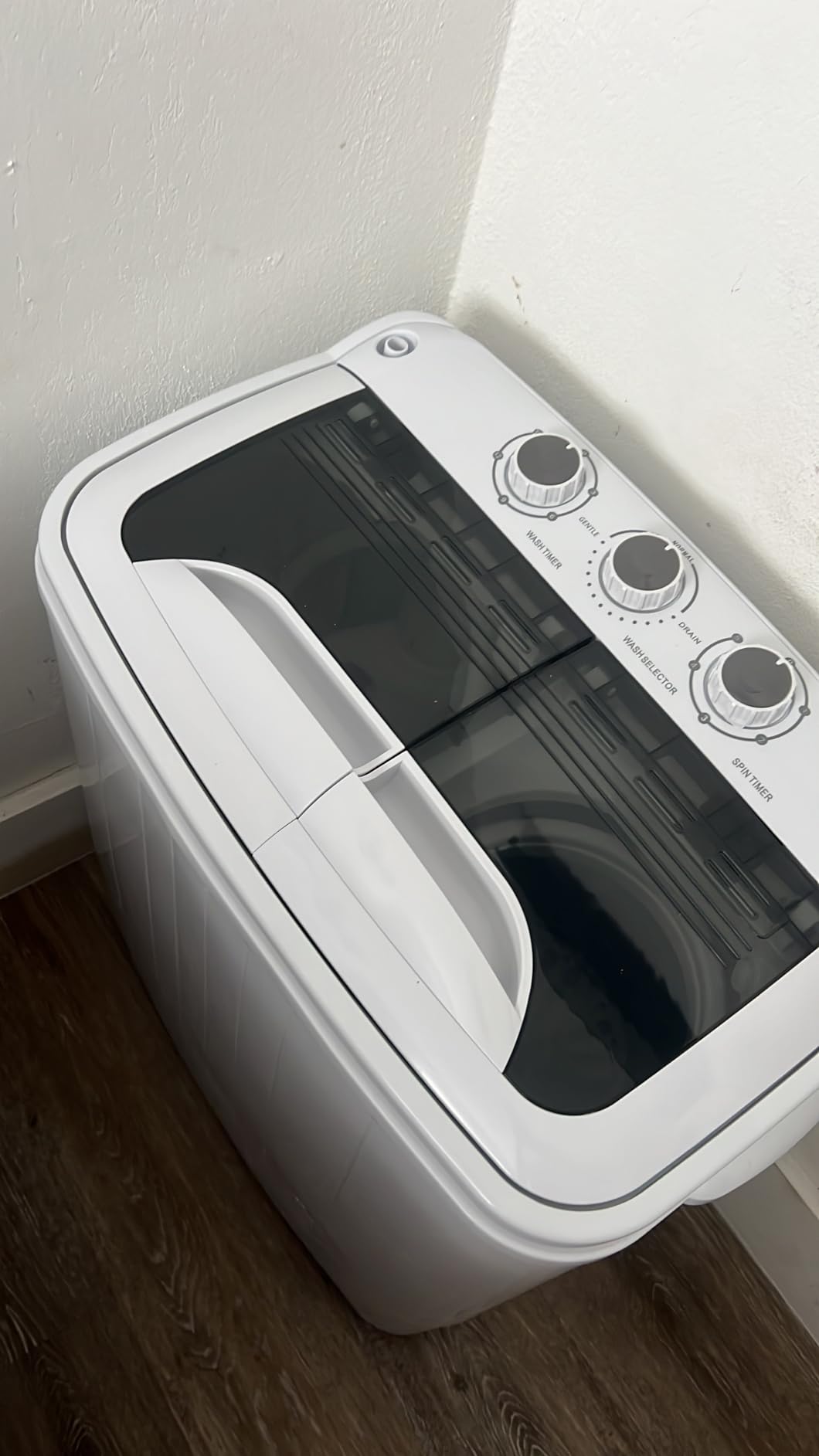
This is the answer when a 21 foot travel trailer is the constraint. At 13.4 inches deep and 25.2 inches tall, it is the smallest body here, and it will go places nothing else on this list fits.
The glass lid is the feature owners mention first. It is sturdier than the plastic covers on most competing twin tubs and lets you watch the load, and the removable lint filter means the one item most small machines lack is actually here.
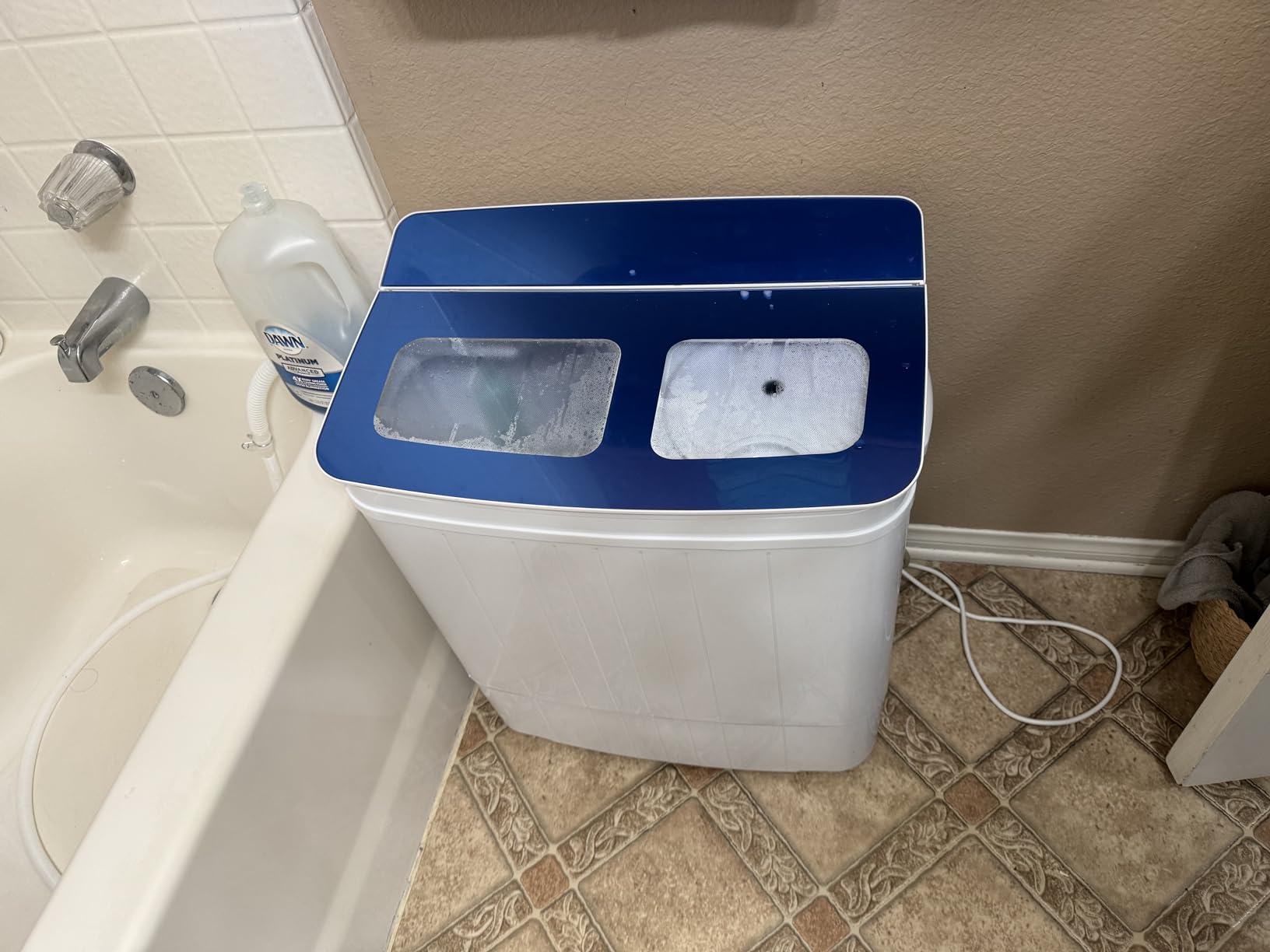
There is also an automatic lid safety switch that halts operation if the cover is not fully secured. On a machine that lives in a vehicle and bounces, that is a sensible piece of engineering rather than a gimmick.
Spin output reaches roughly 90 percent dry, so laundry still needs hanging, and the 16 pound capacity keeps it to light and medium loads. Wash and spin run at the same time, which shortens the cycle on smaller loads.
Check the depth of your shower pan
Only the depth of the machine and the length of the hoses constrain it in a wet room, and the hoses are the variable you control. A shallow shower pan that will not take a deeper machine is exactly where this one succeeds.
Run the wash and spin on separate timers. Since the spin tub is small relative to the wash tub, a full load has to be split to get a real spin.
Who should skip it
Skip it if you want a true washer and dryer in one. This spins, it does not dry, and anything that leaves 10 percent moisture is going to a line or a rack.
Skip it if you want a fully automatic cycle. The knobs are manual, and getting used to that takes a couple of loads.
Buying Guide: Power, Water, Weight and Draining an RV Washer
How much power does a portable washer actually draw?
Every machine here runs on standard 120V or 110V household current, which is the good news. The draw depends on the machine class, and it is smaller than most buyers expect.
Small twin tubs sit around 250W for washing and 140W for spinning, so roughly 3 amps on a normal cycle
Mid-size automatic machines sit in the same 280W range, adding time rather than power for larger loads
The ROVSUN at 400W is the highest figure in this group, around 3.6 amps at 110V
On a 30 amp service a portable washer is not the problem. The problem is what else you run at the same time. A microwave, a water heater on electric, and a portable washer share one 30 amp pedestal, and running all three at once will trip the breaker. The forum advice we kept seeing was to sequence them, not to size up the pedestal.
Boondockers are the case that needs real thought. A wash cycle at 280W over an hour is a meaningful draw on a lithium bank, and you need an inverter that can handle the surge when a pump or a motor kicks in. We have covered portable power stations and portable solar panels separately, and the sizing logic is the same either way. Our rough rule is to size the inverter well above the washer wattage, run the load while solar is producing, and use the delay start on the Winado or the COMFEE to wait for the power instead of draining the battery.
Where do you drain a portable washing machine in an RV?
Drainage is the question that stops most buyers, and the honest answer is that you usually end up carrying a bucket. In priority order, the options run like this.
A shower drain or shower pan, which works well and keeps everything contained
A slop sink or exterior faucet, if your rig has one at a sensible height
The gray tank, only when the valve is open and only if you are comfortable with the odor cycle that follows
A five gallon bucket you carry to a campground or drain station
Experienced owners on the RV forums generally advise against tapping into the gray tank valve permanently. A washer discharge carries detergent and lint, and the resulting smell takes a dedicated flush to clear. The shower drain is the most commonly recommended answer, and it is also why so many owners store the machine in the shower between uses.
How much laundry can a portable washer hold?
Less than the advertised cubic feet suggests, in every case we tested. A 1.34 cu ft drum rated at 10 to 12 pounds is an honest small load, and it is roughly three quarters of what a standard home washer handles per cycle. Owners of built-in RV combos put it the same way. The practical answer is two or three small loads a week for two people, not one big one on Saturday.
Spin extraction is the other half of the equation, and it is where the machines separate. A 1600 rpm spin pulls out enough water for overnight air drying, while an 840 rpm spin leaves more moisture and needs a rack. Hand-wringing non-electric units are the extreme case: with no extraction at all, the same load takes a full day and knits stretch when you hang them.
Why does a portable washer that will not agitate need fixing?
If a machine stops agitating, the causes are almost always mechanical or a trip, not an electronics failure. Work through them in order.
Rebalance the load. A single heavy item like a wet towel or a blanket will stop agitation, and it is the most common cause by a wide margin.
Check the water level. Many machines need to hit a minimum fill before the agitator will move, and an underfilled wash tub looks exactly like a jam.
Clear the drain filter or pump inlet. A blocked pump starves the tub and stops the cycle.
Level the machine. On a sloped RV floor, a portable washer will rock out of alignment and the agitator will bind.
Check the lid and the child lock. A safety switch or a locked panel will stop the cycle before the tub moves.
Drying is the real bottleneck, so plan for it now
None of these machines dries clothes. Every one of them spins, and every one of them leaves damp fabric. That is why the drying question decides this purchase more often than capacity does, and the long-running advice on the RV forums is consistent: never run a combined wash and dry cycle, because it re-wets the load and leaves it worse than when you started.
The workable sequence is wash, then lightly fold, then reload for a spin or a vented dry. A portable vented dryer is the most common pairing, with the close line behind it for dry climates. Plan the space for hanging before you buy, because most RVs have very little flat drying area and a line strung across the aisle will be the thing that annoys you in month two.
Who should not buy a portable washer at all?
If you are parked at a park or a campground every week with a reliable laundromat, an onboard washer buys you very little. If your rig has a working 30 amp pedestal and easy access to a washer, the same applies. The machines here earn their space when you are boondocking, travelling remote, or doing laundry for kids and pets on a schedule that makes a laundromat trip a whole-day event.
There is also an honest note on vibration. A spinning washer on a fixed floor in a motorhome can shake the whole rig, and unbalance correction is not universal across this list. Check that the machine has either automatic unbalance detection or adjustable feet, and place it on a stable surface with the spin cycle load distributed evenly.
Frequently Asked Questions
What is the best portable washing machine for an RV?
The COMFEE 1.6 Cu.ft full automatic is the best overall for RV living, because it combines the largest drum in our test group with a built-in drain pump and a 20.7 inch footprint. The Panda 1.34 Cu.ft is the better pick if drying time is your main problem, thanks to its 1600 rpm spin. The INTERGREAT compact twin tub suits the tightest rigs.
What is the most reliable portable washing machine?
Reliability in this group tracks review volume and build rather than any single feature. The COMFEE at 1.6 cu ft carries more than 8,500 reviews at 4.4 stars, and the Giantex 1.34 cu ft pairs a 4.5 star average with 10 programs, 8 water levels and automatic imbalance correction. Stainless steel drums and unbalance detection are the two features that most reduce failure reports.
Do portable washers use a lot of electricity?
Not as much as most buyers expect. Small twin tubs draw roughly 250W for washing and 140W for spinning, mid-size automatic machines sit in the same range, and the largest unit we tested draws 400W. On a 30 amp service the washer is rarely the problem; running a microwave, an electric water heater and the washer at the same time is what trips the breaker.
Can I run a portable washing machine on 30 amps?
Yes. A single portable washer draws under 4 amps, so 30 amps of service is more than enough for the machine itself. The limitation is concurrency rather than capacity. Sequence the washer, the microwave and an electric water heater rather than running them together, and on a boondocking setup size your inverter well above the washer wattage to absorb pump and motor startup surge.
My portable washing machine will not agitate. What can I do to fix this?
Rebalance the load first, since one heavy wet item is the most common cause. Then check that the tub reaches its minimum water level, clear the drain pump filter, level the machine on a stable surface, and confirm the child lock and lid safety switch are not engaged. Electronics are rarely the culprit on a machine that worked previously.
Are non-electric portable washing machines worth it in an RV?
They are worth considering only for very small loads, and they are worth warning about for everything else. With no spin extraction, clothes come out soaking and take far longer to dry, which is the same limitation that makes drying the main RV pain point. Knits stretch badly when hand-wrung and hung, and a vented dryer or a good line still has to handle the result.
Conclusion
After working through all ten machines, the COMFEE 1.6 Cu.ft full automatic remains the best portable washing machine for RV living overall, because drum capacity, a pumped drain and a manageable footprint matter more than any single feature once the machine is installed in a real trailer.
The Panda is the one to buy if line-dry time drives you mad, the Giantex 1.34 cu ft is the one to buy if you want total cycle control, and the INTERGREAT is the one to buy if your rig simply has nowhere else to put it. Check your fresh water point and your drain route before you order, and buy your own hoses.
For the power side of the equation, our guides to portable power stations and portable solar panels cover the sizing maths in more depth, and our portable monitor roundup is useful if you want to watch draw while the washer runs.
Whichever one you pick, budget a portable vented dryer or a line at the same time. Washing is the easy half of RV laundry, and no machine on this list solves the other half.