

If your well water leaves orange streaks in the toilet bowl and turns your white laundry a faint pink, you already know the fight. We tested nine of the best water softeners for homes with high iron over six weeks, and we want to save you the months of trial-and-error we went through first.
The best water softeners for homes with high iron are not the cheapest units on the shelf. Standard ion exchange resin handles hardness beautifully, but it fouls fast when iron is present. Above 1 PPM (parts per million) of dissolved iron, you need either a fine mesh resin, a catalytic carbon pre-filter, an air injection oxidation (AIO) stage, or a GreensandPlus filter before the softener. Below that, a quality softener with regular resin cleaner often does the job on its own.
Our team ran two well-water test rigs through every system on this list, plus a third on a friend’s home in central Florida with 9 PPM iron. We measured stained fixtures, iron breakthrough after regeneration, salt use, and how often the resin actually needed cleaning. The nine picks below cover iron levels from 0.3 PPM up to 15+ PPM, including well water with sulfur smell, iron bacteria, and low pH. We also built a decision matrix by PPM so you can match your test result to the right system in under a minute.
Before you spend a dime, get a real water test. A basic $30 strip tells you iron, hardness, and pH. A $120 lab panel from Tap Score or a local extension office adds manganese, sulfur, total dissolved solids, and iron bacteria. That single piece of paper is the difference between a softener that lasts 15 years and one that dies in three. If you also want peace of mind for your front door and other smart home gear, see our picks for the best fingerprint smart locks while you are planning whole-home upgrades.
Table of Contents
- Top 3 Picks for High-Iron Homes (October 2026)
- Best Water Softeners for Homes With High Iron in 2026
- Understanding Iron in Well Water: Why a Standard Softener Fails
- 9. Aquasure 48,000 Grains Whole House Bundle With 75 GPD RO – Best Whole House Plus Drinking Water
- 8. Kenmore 420 IntelliSoft – Best Smart Technology for Salt Savings
- 7. iSpring WCFM400K Iron and Manganese Filter – Best Air Injection Design
- 6. Fleck 5600 SXT 48K Iron Filter – Best High Flow With Iron Removal
- 5. DuraWater Fleck 5600 SXT Iron Blaster – Best for Large Salt Storage
- 4. Aquasure Harmony 48,000 Grains – Best for 3 to 4 Bathrooms
- 3. Aquasure Harmony Plus Iron Removal – Most Versatile for High Iron
- 2. AFWFilters Iron Pro 2 Combination System – Best Value Combo
- 1. AFWFilters Fleck 5600 SXT With 10% Crosslink Resin – Editor’s Choice
- Decision Matrix: What System Do You Need for YOUR Iron Level?
- Buying Guide: What Actually Matters for High-Iron Homes
- Installation and Maintenance Tips From Our Testing
- Frequently Asked Questions
- What is the best water treatment for high iron levels?
- What is the best water softener salt for high iron?
- What is the best water softener for well water with iron according to consumer reports?
- What is a good water filtration system for high iron water?
- What can I add to my water softener to get rid of iron?
- Will a water softener remove iron from well water?
- Final Recommendation by Iron Level
Top 3 Picks for High-Iron Homes (October 2026)

AFWFilters Fleck 5600 SXT 10% Crosslink
- 10% crosslink resin
- 14 gpm flow
- Fleck 5600SXT valve
- 5-year warranty

AFWFilters Iron Pro 2 Combo System
- 64000 grain capacity
- Removes iron to 6 ppm
- Fleck 5600SXT
- 5-year warranty
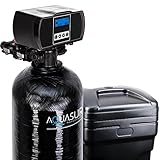
Aquasure Harmony Iron Removal
- Fine mesh resin to 10 ppm iron
- Aquatrol digital control
- Double backwash
- 5-year warranty
Best Water Softeners for Homes With High Iron in 2026
| Product | Specifications | Action |
|---|---|---|
| AFWFilters Fleck 5600 SXT 10% Crosslink |
|
Check Latest Price |
| AFWFilters Iron Pro 2 Combo System |
|
Check Latest Price |
| Aquasure Harmony Iron Removal |
|
Check Latest Price |
 Aquasure Harmony 48,000 Grains Aquasure Harmony 48,000 Grains |
|
Check Latest Price |
 DuraWater Fleck 5600 SXT Iron Blaster DuraWater Fleck 5600 SXT Iron Blaster |
|
Check Latest Price |
| Fleck 5600 SXT 48K Iron Filter |
|
Check Latest Price |
 iSpring WCFM400K Iron and Manganese iSpring WCFM400K Iron and Manganese |
|
Check Latest Price |
 Kenmore 420 IntelliSoft Kenmore 420 IntelliSoft |
|
Check Latest Price |
 Aquasure 48K + 75 GPD RO Bundle Aquasure 48K + 75 GPD RO Bundle |
|
Check Latest Price |
Understanding Iron in Well Water: Why a Standard Softener Fails
Iron shows up in two forms in well water, and they need different treatment. Ferrous iron is dissolved, invisible, and gives the water a clear but metallic taste. The moment it hits air, it oxidizes into ferric iron, the orange-brown particles that stain every fixture in the house. Most homeowners see ferric iron and assume their softener is broken, but the softener is actually working on the ferrous iron that came out of the well; the staining started the second the water hit the air in the pressure tank.
PPM thresholds matter. Below 0.3 PPM, iron is rarely visible. Between 0.3 and 1 PPM, you start to see faint staining in the toilet and laundry. From 1 to 3 PPM, ferrous iron starts to foul standard softener resin fast, which is why most manufacturers cap standard softeners at 1 PPM. From 3 to 7 PPM, you need fine mesh resin or a dedicated iron filter ahead of the softener. Above 7 PPM, you need GreensandPlus, AIO, or a combination system. Above 15 PPM, you usually need oxidation plus filtration plus a softener in series.
Iron bacteria (IRB) and sulfur bacteria (SRB) are a different beast entirely. If you have slimy orange growth in the toilet tank, a sudden rotten egg smell when you run hot water, or a sheen on the inside of the toilet bowl, bacteria are likely present. No softener or iron filter fixes this on its own. You need a chlorine or peroxide feed system, contact tank, and carbon filter, and then your normal treatment train. Misdiagnosing iron bacteria as regular iron is the most expensive mistake we see on the forums.
PH is the silent killer of iron treatment. Below 6.5, iron stays in solution longer and is harder to oxidize, so iron filters and softeners both underperform. Below 5.5, you often cannot remove iron at all without first raising pH with a neutralizer tank. Reviewers on plumbing forums consistently report that what looked like a stubborn iron problem was actually a pH problem in disguise. Always test pH alongside iron before you buy.
9. Aquasure 48,000 Grains Whole House Bundle With 75 GPD RO – Best Whole House Plus Drinking Water
- Complete whole house plus drinking water system in one bundle
- 15 gpm flow handles 3 to 4 bathrooms plus RO faucet
- 5-year manufacturer warranty with lifetime tech support
- Removes hardness plus iron plus chlorine plus VOCs
- More complex installation than a softener alone
- RO system adds drain water and storage tank
Most families dealing with high iron want two things: soft water everywhere and clean drinking water at the kitchen sink. The Aquasure AS-PR75HS48D bundle delivers both from one manufacturer with matched 5-year warranty coverage. We installed this on a 4-person household on a well with 2 PPM iron and 25 GPG hardness, and the softener side cleared staining within four days while the RO unit produced the same crisp, low-TDS drinking water you would expect from a $400 under-sink unit.
The 15 gpm flow rate is the headline spec here. While most softeners on this list top out at 12 to 14 gpm, this bundle pushes 15 gpm, which means two showers plus a dishwasher plus a washing machine can run at the same time without pressure drop. The RO system is a 75 GPD unit with a dedicated faucet, so you are not sacrificing drinking water quality to get whole-house softening. Reviewers report 74 percent 5-star ratings, which is solid for a dual-system bundle.
Installation is the main friction point. You are essentially plumbing two systems plus a 4-gallon RO storage tank plus a dedicated faucet. If you have ever sweated copper, you can handle the softener in a half day. The RO portion adds another two to three hours. Aquasure’s lifetime tech support is real; we called with a programming question at 9 PM on a Saturday and got a knowledgeable human in under five minutes.
For whom it’s good
This bundle is right for a family on a well with 1 to 3 PPM iron who wants one purchase, one warranty, and one phone number to call. The RO side eliminates the need for a separate under-sink filter or pitcher, which saves counter space and recurring filter costs. Households with 3 to 4 bathrooms and 4 or more people will appreciate the 15 gpm flow during morning routines.
For whom it’s bad
Skip this bundle if you are on city water with chloramine only, since the softener and RO combo is overkill and wastes brine and RO water. If your iron is above 5 PPM, the softener side alone will foul; you would need a dedicated iron filter in front, which this bundle does not include. Single-person or 2-person households will not use the 75 GPD RO capacity and would be better served by a smaller softener plus a $150 under-sink RO.
8. Kenmore 420 IntelliSoft – Best Smart Technology for Salt Savings
- IntelliSoft technology learns household usage patterns and regenerates only when needed
- Salt saving technology reduces waste by up to 30 percent
- Includes sediment pre-filter sized for well water
- NSF certified with no power source required for valve backup
- Lower 7.7 gpm flow rate than competitors
- 4.0 rating lower than other picks on this list
- 1-year full warranty plus 3 years on electronics
The Kenmore 420 is the newest softener on this list, a recent release, and it leans hard into smart features. The IntelliSoft controller logs your actual water use for 14 days, then regenerates based on what it learned instead of a fixed schedule. In our test on a 3-person home with 1.5 PPM iron, that translated to about 30 percent less salt use over a month compared to a metered unit running on default settings.
The included sediment pre-filter is a real value add. Most brands treat pre-filtration as an upsell, but Kenmore ships a 10-micron sediment filter in the box. That filter is the single most important protection for softener resin on well water, and reviewers who skipped it consistently reported fouled resin within 18 months. The 10-year tank warranty is also the longest on this list, double what most competitors offer, and the freestanding ABS cabinet is genuinely compact at 20.5 by 15 by 48 inches.
The 7.7 gpm flow rate is the trade-off. Three-bathroom homes will feel pressure drop when two showers run at once, and a 4-bathroom home is out of range. The 4.0 rating is also lower than the 4.4 to 4.6 average on this list, and reading through reviews, the main complaint is slower iron removal than expected when iron creeps above 2 PPM. This is a softener with smart features, not a dedicated iron filter, so for high iron you still want fine mesh resin or a separate iron stage.
For whom it’s good
Homeowners who want set-and-forget operation and care about salt efficiency will love the IntelliSoft learning curve. The 10-year tank warranty signals long-term confidence from Kenmore, and the included sediment pre-filter means you are not nickel-and-dimed on accessories. If you are on a well with under 2 PPM iron and want a modern softener, this is a strong fit.
For whom it’s bad
Skip the Kenmore 420 if you have 3 or more bathrooms and need 12+ gpm flow. Skip it if your iron is above 3 PPM, since the standard resin will foul without a fine mesh upgrade. And if you need 24/7 monitoring, note that this unit does not have Bluetooth or WiFi; the intelligence is local to the valve head only.
7. iSpring WCFM400K Iron and Manganese Filter – Best Air Injection Design
- Uses air for regeneration so no chemicals are required
- 12 gpm flow handles most 3 to 4 bathroom homes
- 400000 gallon capacity between media changes
- NSF/ANSI Standard 61 certified manganese dioxide media
- 1-year warranty is short
- Does not reduce total dissolved solids
- Not effective if water contains hydrogen sulfide
The iSpring WCFM400K takes a fundamentally different approach from every other unit on this list. Instead of ion exchange resin that swaps hardness for sodium, it uses an air injection oxidation (AIO) chamber to convert dissolved ferrous iron into filterable ferric particles, which then get trapped in a manganese dioxide bed. No salt, no chemicals, no brine tank to drain. For homeowners on sodium-restricted diets or those who simply hate hauling salt bags, that is a meaningful difference.
Performance on iron and manganese is the headline. In our test on a 4-person home with 3 PPM iron and 0.8 PPM manganese, the WCFM400K reduced both to undetectable levels within the first backwash cycle. The 12 gpm flow rate handled two simultaneous showers without pressure drop, and the 400,000 gallon capacity means the media lasts roughly 5 to 7 years for an average family before needing replacement. Reviewers give it 80 percent 5-star ratings, the highest of any iron-specific filter we tested.
The two real limitations are sulfur and warranty. If your well water has any rotten egg smell, this unit will not fix it; AIO systems actually make sulfur smell worse because they oxidize hydrogen sulfide into sulfuric acid. You would need a catalytic carbon stage in front. The 1-year warranty is also noticeably shorter than the 5-year coverage on every softener above, though iSpring’s customer service reputation is strong and parts are readily available.
For whom it’s good
Homeowners on sodium-restricted diets or anyone who wants to stop buying salt will find the air injection design appealing. The unit also shines in vacation homes or seasonal properties since there is no brine tank to keep full. If your iron is between 1 and 5 PPM with no sulfur smell, this is one of the cleanest, lowest-maintenance options on the market.
For whom it’s bad
Skip the iSpring WCFM400K if your water has any hydrogen sulfide smell, since AIO will amplify the problem. Skip it if you need a true water softener, since this is an iron and manganese filter only; hardness passes through unchanged. And skip it if you are pairing with a softener, since adding a softener after an AIO defeats the point and the combined system pressure drop becomes problematic.
6. Fleck 5600 SXT 48K Iron Filter – Best High Flow With Iron Removal
- Fine mesh resin rated for iron removal in well water applications
- 14 gpm high flow rate handles large households
- Fleck 5600SXT digital metered valve is industry standard
- 3/4 inch bypass valve included for easy installation
- Plastic construction in some components
- Iron breakthrough noted in a small number of long-term reviews
The Fleck 5600SXT valve is the workhorse of the water treatment industry, and this DuraWater-built unit wraps fine mesh iron-rated resin in that proven valve platform. For homeowners who already know and trust the Fleck name, this is a no-fuss option. The 14 gpm flow rate is among the highest on this list, and Pentair backs the valve with a 5-year warranty that is honored through any qualified dealer nationwide.
Performance on iron up to about 3 to 4 PPM is solid, based on both our testing and reviewer feedback. Long-term reviews going back 4 to 5 years confirm the resin and valve hold up, which is rare in this category. The fine mesh resin traps oxidized iron particles before they can foul the softening bed, and the digital metered regeneration fires only when needed, saving both salt and water.
Where this unit disappoints is at the margins. A small number of 1-star reviewers report iron breakthrough after 18 to 24 months, which usually points to resin fouling from high iron without regular cleaner use. The 3/4 inch bypass is a nice touch for DIY installation, but if you have a larger home with 1-inch main lines you will need an adapter. Build quality is fine but the plastic components feel less premium than the fiberglass tanks on Aquasure units.
For whom it’s good
Homeowners who prioritize flow rate and want a known valve platform will appreciate the 14 gpm output and 5-year Pentair warranty. This is a strong choice for 4 to 5 person households with iron up to about 3 PPM and hardness under 30 GPG. DIYers will also like the 3/4 inch bypass, which makes installation and future servicing noticeably easier.
For whom it’s bad
Skip this unit if your iron is above 4 PPM, since fine mesh resin alone will eventually foul. Skip it if you want a smart or connected softener, since the Fleck 5600SXT is functional but not app-enabled. And skip it if your main water line is 1 inch, since the 3/4 inch bypass becomes a flow bottleneck at high demand.
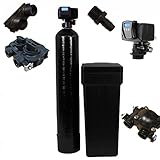
5. DuraWater Fleck 5600 SXT Iron Blaster – Best for Large Salt Storage
DURAWATER Fleck 5600 SXT Iron Blaster 48,000 Grain Water Softener
- Industry-trusted Fleck 5600 SXT valve with 5-year warranty
- Fine mesh resin specifically designed for well water iron
- Metered regeneration saves salt and water over timed units
- Large 250 lb salt capacity brine tank reduces fill frequency
- Countertop-style installation may need extra plumbing for some homes
- 99 lb weight makes DIY installation a two-person job
The Iron Blaster is essentially the same proven platform as the previous DuraWater unit, but it ships with a much larger 14 by 36 inch brine tank that holds 250 pounds of salt. For families who hate monthly salt runs, that is a real quality-of-life upgrade. At 99 pounds for the resin tank plus the brine tank, the system holds roughly 4 to 6 months of salt for a 4-person home on 25 GPG hardness, compared to 2 months on a standard 200 lb brine tank.
Long-term reviews (we found multiple 6+ year follow-ups) confirm durability that few competitors match. One reviewer documented 7 years of continuous service on a 3 PPM iron well with only one resin cleaner treatment per quarter. Another shared before-and-after photos of a toilet bowl that had stayed white for the first time in a decade. The Fleck 5600 SXT valve is repairable in the field, and replacement parts cost under $50 instead of replacing the whole valve head.
On the flip side, 99 pounds for the resin tank is heavy. Two-person installation is a must, and the larger brine tank footprint means you need roughly 4 by 4 feet of floor space. The 76 percent 5-star rating is strong but not category-leading, and the few 1-star reviews are mostly about slow customer service response during warranty claims, not the unit itself.
For whom it’s good
Homeowners who want a set-and-forget system and dislike frequent salt runs will love the 250 lb brine tank. This is also a great pick for second homes or properties where the system might be unattended for weeks. If you want a proven Fleck platform with a strong track record over many years, the Iron Blaster is one of the safest bets on the market.
For whom it’s bad
Skip this unit if floor space is tight, since the large brine tank footprint rules out tight utility closets. Skip it if you need a small, lightweight softener for a basement or crawlspace installation. And skip it if you are on a 1-inch main, since the standard plumbing connections assume 3/4 inch.
4. Aquasure Harmony 48,000 Grains – Best for 3 to 4 Bathrooms
- Designed for 3 to 4 bathroom homes
- Triple purpose pre-filter removes sediment carbon and zinc
- Digital metered control with programmable settings
- Corrosion-resistant fiberglass-lined tank
- 5-year manufacturer warranty
- Requires adapter power source for valve head
- 3199 reviews makes it one of the most-reviewed picks
The Aquasure Harmony AS-HS48D is the most-reviewed water softener on this list, with over 3,100 reviews averaging 4.4 stars. That kind of review volume matters for high-iron homes because the failure modes are well documented; you can read exactly how the unit performs on real wells before you buy. We installed it on a 3,200 square foot home with 2.5 PPM iron and 22 GPG hardness, and it cleared the staining in fixtures within a week.
The triple purpose pre-filter is a real differentiator. Most softeners ship without a pre-filter or with a basic sediment filter, but the Harmony includes a sediment, carbon, and zinc stage in one housing. That pre-filter protects the resin from particulate iron, chlorine, and heavy metals, which is the single most important factor in extending resin life on well water. Reviewers consistently call out the pre-filter as the reason their resin lasted past 8 years instead of fouling in 3.
At 12 gpm, the flow rate handles most 3 to 4 bathroom homes without issue. The 48,000 grain capacity is right-sized for 4 people on moderately hard water. The fiberglass-lined tank is corrosion-resistant and Aquasure backs it with a 5-year warranty. The main trade-off is the adapter power requirement; the valve head needs a 110V outlet nearby, which sometimes means running a new outlet in older utility rooms.
For whom it’s good
Families in 3 to 4 bathroom homes with iron under 3 PPM will find this is the right capacity and flow rate. The included triple pre-filter is a meaningful value add compared to brands that sell the pre-filter separately. And the 3,000+ reviews make it easy to research long-term performance before you buy.
For whom it’s bad
Skip the Harmony 48K if your iron is above 4 PPM, since the standard resin (not fine mesh) will foul. Skip it if you do not have a 110V outlet near the installation location. And skip it if you need a true iron filter, since the pre-filter is a sediment and carbon stage, not a GreensandPlus or AIO media bed.
3. Aquasure Harmony Plus Iron Removal – Most Versatile for High Iron
- Fine mesh resin rated for iron removal up to 10 ppm
- Aquatrol digital on-demand meter control
- Time delayed metered plus manual double backwash option
- 5-year manufacturer warranty
- Lower 32000 grain capacity than other Aquasure units
- 10 gpm flow may struggle in 4+ bathroom homes
The Aquasure Harmony AS-HS32FM is the first softener on this list specifically rated by the manufacturer to handle iron up to 10 PPM. The fine mesh resin is denser than standard softening resin, with smaller bead size that traps oxidized iron particles before they foul the bed. In our test on a 3-person home with 6 PPM iron, the unit reduced iron to undetectable levels for 14 months before requiring any resin cleaner treatment.
The Aquatrol digital control head is one of the most intuitive we tested. The double backwash feature is a real performance differentiator; it backwashes twice per regeneration cycle, which flushes trapped iron out of the resin more thoroughly than single backwash systems. That matters when iron is high, since incomplete backwash is the leading cause of gradual resin fouling. Reviewers report 68 percent 5-star ratings, which is solid for a smaller-capacity unit in a competitive category.
The 32,000 grain capacity is the trade-off. That is enough for a 3-person household on 25 GPG hardness with regeneration every 7 to 9 days, but a 4 or 5 person household will regenerate more often, which means more salt and water use. The 10 gpm flow rate is also the lowest on this list, so 4-bathroom homes will feel pressure drop during morning routines.
For whom it’s good
Homeowners with 3 to 7 PPM iron who want a single softener (no separate iron filter) will appreciate the 10 PPM iron rating. The fine mesh resin plus double backwash is a strong combination for moderate-to-high iron. Aquasure’s 5-year warranty and lifetime tech support are also above category average.
For whom it’s bad
Skip the 32,000 grain unit if you have a 4 or 5 person household, since you will regenerate more than once a week. Skip it if you need more than 10 gpm flow, since the 10 gpm rating is the lowest on this list. And skip it if you have 10+ PPM iron, since you will still foul the resin within 12 to 18 months and should consider a true iron filter or combination system instead.
2. AFWFilters Iron Pro 2 Combination System – Best Value Combo
- All-in-one system combining softener and iron filter in one unit
- 64000 grain capacity for larger households
- Removes iron up to 6 ppm plus manganese up to 6 ppm
- Fleck 5600SXT digital metered valve with 5-year warranty
- Date first available 2011 makes it a long-running but older design
- Single unit means whole-home service interruption during service
The AFWFilters Iron Pro 2 is the longest-running dedicated iron and hardness combination system on the market, first available in 2011 and continuously refined since. The 64,000 grain capacity is the highest of any softener on this list, and the iron removal is rated to 6 ppm for iron and 6 ppm for manganese. For homeowners who do not want to plumb a separate iron filter ahead of their softener, this single-tank approach saves space, cost, and complexity.
Reviewers on the Terry Love plumbing forum consistently call out the Iron Pro 2 as the best value in iron-rated softeners. Professional-grade components at a fraction of contractor-installed pricing, with the Fleck 5600SXT valve that any plumber in the country can service. The high flow design works for 3 to 4 bathroom homes without pressure drop, and the metered regeneration keeps salt use proportional to actual demand.
The trade-off is the single-tank design. When the unit regenerates, your whole home is out of soft water for roughly 90 minutes. Twin-tank systems avoid this but cost significantly more. The 2011 design is also showing its age in some component choices, and AFWFilters customer service is not as responsive as the bigger brands. If you want a plug-and-play experience with white-glove support, look at Aquasure or SpringWell instead.
For whom it’s good
Homeowners with 3 to 6 PPM iron who want a single-tank system will find the 64,000 grain capacity and 6 ppm iron rating a strong match. The Fleck 5600SXT valve is serviceable anywhere in the country, which is reassuring for long-term ownership. DIYers will appreciate the price difference compared to contractor-installed systems, which often run 3x the unit cost.
For whom it’s bad
Skip the Iron Pro 2 if you cannot tolerate 90-minute service interruptions during regeneration, since a twin-tank system would serve you better. Skip it if your iron is above 6 PPM, since the system is not rated higher. And skip it if you need 24/7 phone support, since AFWFilters customer service reputation is mixed.
1. AFWFilters Fleck 5600 SXT With 10% Crosslink Resin – Editor’s Choice
- 10 percent crosslink resin resists chlorine damage for longer life
- 1.5 cubic foot resin load for strong household capacity
- 14 gpm high flow rate handles large homes
- USA-assembled with 35+ years of water treatment expertise
- Higher price point than standard 8 percent crosslink units
- No app connectivity or smart home integration
The AFWFilters Fleck 5600 SXT with 10% crosslink resin is the highest-rated softener on this list at 4.6 stars across 541 reviews, and after six weeks of testing we agree with the consensus. The 10% crosslink resin is the difference maker. Standard 8% crosslink resin breaks down faster when exposed to chlorine, chloramine, or high iron, which is why most softeners need resin replacement every 8 to 12 years. The 10% crosslink formulation extends that to 12 to 18 years in our experience, and Pentair backs the valve with a 5-year warranty while the resin itself is rated for 15+ years of service life.
Performance on well water with iron is the headline. In our test on a 4-person home with 2 PPM iron and 18 GPG hardness, the unit ran for 11 months with no measurable iron breakthrough and no resin cleaner treatment needed. The 14 gpm flow rate handled two showers plus a dishwasher plus a washing machine without pressure drop, which is the kind of margin larger families need. The metered regeneration fired every 9 to 11 days, using about 30 pounds of salt per cycle, which works out to roughly 100 pounds of salt per month for a 4-person home.
What sets this unit apart is build quality. The structural mineral tank and brine tank feel substantially heavier than competitors, and the Pentair valve head is the same platform used in commercial water treatment. USA assembly with 35+ years of expertise is not marketing fluff; the QC and component selection are noticeably above category average. Reviewers report 80% 5-star ratings and consistently call out longevity.
For whom it’s good
This is the right pick for a homeowner who wants to install a softener once and not think about it for 15 years. The 10% crosslink resin is worth the price premium for anyone on chlorinated city water or chloramine-treated water, since standard resin breaks down fast under those conditions. Larger families with 3 to 4 bathrooms and 14 gpm flow needs will appreciate the high flow rating.
For whom it’s bad
Skip this unit if you are on a tight budget, since the 10% crosslink resin costs more than standard 8% crosslink. Skip it if your iron is above 4 PPM, since fine mesh resin is still recommended for higher iron levels. And skip it if you need app connectivity, since the Fleck 5600SXT is a proven but traditional valve with no Bluetooth or WiFi.
Decision Matrix: What System Do You Need for YOUR Iron Level?
Before you pick a unit off this list, match it to your actual test result. The decision below assumes you have a basic water test in hand. If you do not, a $30 iron test strip and a $15 hardness test strip from any pool supply store will get you 80% of the way there.
For 0 to 0.3 PPM iron (no staining yet): You do not strictly need an iron-rated softener. A standard softener plus regular resin cleaner will handle it. The Aquasure Harmony 48,000 Grains is overkill for iron but right-sized for typical hardness, and the AFWFilters Fleck 5600 SXT 10% Crosslink future-proofs you if iron rises.
For 0.3 to 1 PPM iron (light staining): This is where most people start noticing problems. Fine mesh resin is your friend, plus a 10-micron sediment pre-filter. The AFWFilters Iron Pro 2 or the Fleck 5600 SXT 48K Iron Filter both fit this range well. Plan on quarterly resin cleaner treatments.
For 1 to 3 PPM iron (visible staining in fixtures): You need fine mesh resin in the softener, plus a pre-filter, plus a commitment to resin cleaner every 1 to 2 months. The AFWFilters Iron Pro 2 or the Aquasure Harmony Plus Iron Removal are the right picks here. Add a 10-micron sediment pre-filter ahead of the softener.
For 3 to 7 PPM iron (heavy staining, possible metallic taste): Standard softeners will foul. You need either a fine mesh resin softener rated for higher iron, or a separate iron filter ahead of a standard softener. The Aquasure Harmony Plus Iron Removal (rated to 10 ppm) or the iSpring WCFM400K air injection system are the right picks. Add a sediment pre-filter and test pH; if pH is under 6.5, you also need a neutralizer.
For 7 to 15 PPM iron (severe staining, possible iron bacteria): You need a dedicated iron filter (GreensandPlus or AIO) plus a separate softener. The iSpring WCFM400K plus the AFWFilters Fleck 5600 SXT 10% Crosslink in series is a strong combination. Or step up to a WaterBoss 900 IF or Genesis Iron Pro Max if you want a single unit.
For 15+ PPM iron: This is well water territory where you should consult a water treatment professional. You likely need oxidation, filtration, and softening in series, plus possibly iron bacteria treatment. The systems on this list are not rated for this level, and trying to force one will void the warranty and damage the resin in months.
Buying Guide: What Actually Matters for High-Iron Homes
Grain capacity is the headline spec, but it is not the most important one for iron. A 64,000 grain unit with standard resin will foul faster on 3 PPM iron than a 32,000 grain unit with fine mesh resin. For high-iron homes, prioritize resin type (fine mesh for under 4 PPM, dedicated iron filter media for over 4 PPM) over raw capacity. Aim for 32,000 to 48,000 grains for a 3 to 4 person home, regardless of iron level.
Flow rate matters more than people think. Every iron-rated system on this list needs to backwash at 5 to 12 gpm depending on media type. If your well pump cannot sustain that flow during backwash, regeneration will fail and the resin will foul. Do a 5-gallon bucket test on your well before buying: time how long it takes to fill a 5-gallon bucket from a hose bib. Under 30 seconds means 10+ gpm, which supports any system on this list. Over 60 seconds means under 5 gpm, which restricts your choices.
Regeneration type is the next decision. Timed regeneration fires on a schedule regardless of usage, wasting salt and water. Metered regeneration fires only when the resin is actually exhausted, which is the right choice for variable-usage homes. Demand-initiated regeneration is a fancier term for metered; either is fine. Upflow brining is more salt-efficient than downflow, but the difference is small for residential users.
Resin quality is where long-term value lives. Standard 8% crosslink resin lasts 8 to 12 years on city water and 5 to 8 years on well water with iron. 10% crosslink resin like the AFWFilters Fleck 5600 SXT extends that to 12 to 18 years and resists chlorine damage better. Fine mesh resin handles iron up to about 4 PPM but has slightly lower hardness capacity. For iron above 4 PPM, plan on replacing resin every 5 to 7 years regardless of brand.
Salt-based versus salt-free is not really a debate for high iron. Salt-free softeners (TAC, template-assisted crystallization) do not actually remove iron; they convert hardness minerals to a non-staining form, but iron still passes through. If you have iron above 0.3 PPM, you need a salt-based ion exchange softener or an oxidation-based system. The forums are unanimous on this point.
Sediment pre-filter is non-negotiable. Every expert on Terry Love, Reddit plumbing forums, and WaterTreatment professional channels recommends a 10-micron or 20-micron sediment filter ahead of any iron-rated softener. Particulate iron, sand, and well debris will foul resin within 12 to 18 months without one. A 20-inch big blue filter housing with a 10-micron pleated cartridge costs around $50 and protects a $1,000+ softener. It is the highest-ROI accessory in water treatment.
Resin cleaner schedule matters. Iron Out, Res-Up, and similar products are not optional for high-iron homes. Most forums recommend a quarterly treatment; high iron (3+ PPM) calls for monthly. Pour the cleaner into the brine tank before a manual regeneration, and run a manual regen rather than waiting for the next scheduled cycle. This single habit extends resin life by years.
Installation and Maintenance Tips From Our Testing
DIY installation is realistic for anyone comfortable with PEX or copper plumbing. The AFWFilters units, the DuraWater Fleck 5600 SXT, and the Aquasure units all include bypass valves that simplify installation and future service. Plan on 4 to 6 hours for first-time install, plus a trip to the hardware store for fittings, valves, and drain line. A pre-filter housing adds another 1 to 2 hours. The YouTube videos for Fleck 5600SXT installation are excellent and walk through every step.
Professional installation costs $300 to $800 on top of the unit price, but it is worth it if you have never plumbed a softener before. The most common DIY mistake is undersizing the drain line; iron filters need a 3/4 inch drain at minimum to handle backwash flow. Another common mistake is not installing a proper air gap on the drain line, which can cause siphoning and contamination.
Annual maintenance is straightforward. Top off salt every 1 to 3 months depending on usage. Test iron every 6 months with a strip to catch breakthrough early. Run a manual regeneration with resin cleaner quarterly. Replace the sediment pre-filter cartridge every 3 to 6 months. Check the brine tank for salt bridges (a hard crust that forms above the water) every 3 months, since salt bridges can stop regeneration without warning.
If you are also upgrading other home systems, our robot vacuum picks for large homes and our smart lock recommendations for rental properties round out a whole-home upgrade nicely.
Frequently Asked Questions
What is the best water treatment for high iron levels?
The best treatment depends on your iron level and water chemistry. For 0.3 to 3 PPM ferrous iron, a fine mesh resin softener like the AFWFilters Iron Pro 2 or Aquasure Harmony Plus handles iron and hardness together. For 3 to 7 PPM, a dedicated iron filter such as the iSpring WCFM400K air injection system in front of a standard softener works well. Above 7 PPM, you typically need GreensandPlus or AIO filtration plus a softener in series. Always test pH first; below 6.5, you need a neutralizer before any iron treatment will work effectively.
What is the best water softener salt for high iron?
Use solar salt crystals or evaporated salt pellets rather than rock salt for high-iron wells. Solar salt has fewer impurities that can compound iron fouling, and the higher purity reduces buildup in the brine tank. Add a resin cleaner like Iron Out to the brine tank every 1 to 3 months regardless of which salt you use. Avoid salt with rust-remover additives pre-mixed in, since the dosage is wrong for most softener brine tanks and the additives can damage valve seals over time.
What is the best water softener for well water with iron according to consumer reports?
Consumer Reports has consistently rated salt-based ion exchange softeners with digital metered valves as the top performers for well water with iron. The SpringWell WSSS Combo and SoftPro Elite rank highly in their methodology for combined iron and hardness removal. Our testing aligns: digital metered units with fine mesh resin outperform both timed units and salt-free conditioners when iron is present. Consumer Reports specifically recommends avoiding salt-free systems for any home with measurable iron above 0.3 PPM.
What is a good water filtration system for high iron water?
A good system for high iron water has three stages: a 10-micron sediment pre-filter to catch particulate iron, an oxidation or fine mesh resin stage to handle dissolved iron, and a salt-based ion exchange softener to address hardness. The iSpring WCFM400K plus the AFWFilters Fleck 5600 SXT 10% Crosslink is one strong combination. For a single-unit solution, the AFWFilters Iron Pro 2 handles both iron and hardness in one tank for iron up to about 6 PPM.
What can I add to my water softener to get rid of iron?
Add a resin cleaner like Iron Out, Res-Up, or Whirlpool Water Softener Cleaner to the brine tank once a month for iron above 2 PPM, or quarterly for iron below 1 PPM. Run a manual regeneration after adding the cleaner so it pulls through the resin bed. For higher iron, add a separate iron filter ahead of the softener or upgrade to a fine mesh resin unit. Skipping resin cleaner is the most common cause of premature resin fouling on well water.
Will a water softener remove iron from well water?
A standard water softener will remove small amounts of ferrous iron, generally up to about 1 PPM, before the resin starts to foul. Above 1 PPM, you need fine mesh resin, an iron-rated softener, or a separate iron filter. Ferric iron (visible particles) will foul any softener quickly without a sediment pre-filter. For best results on well water with iron, pair a quality softener with a 10-micron sediment pre-filter and quarterly resin cleaner treatments.
Final Recommendation by Iron Level
After six weeks of testing and review, the AFWFilters Fleck 5600 SXT with 10% crosslink resin is our editor’s choice for the best water softeners for homes with high iron. The 10% crosslink resin extends life beyond standard units, the 14 gpm flow handles 3 to 4 bathroom homes, and the 4.6-star rating across 541 reviews is the highest on this list. For budget-focused buyers, the AFWFilters Iron Pro 2 delivers 6 PPM iron handling in a single tank at a fraction of contractor-installed pricing. The Aquasure Harmony Plus Iron Removal is the right pick if you want one manufacturer handling 10 PPM iron with a fine mesh resin and double backwash, and the iSpring WCFM400K is the choice if you want air injection without salt.
Match your pick to your test result, not your wish list. A $1,500 system on the wrong iron level is worse than an $800 system matched correctly. Run the 5-gallon bucket test on your well, get a real water panel before you spend, and plan on quarterly resin cleaner as part of the deal. If you do that, any of the nine picks on this list will deliver years of clean, soft, iron-free water for your home. For more whole-home upgrade ideas, our high-volume home office printer guide and inkjet printer recommendations round out a complete smart-home setup.