

If you have ever pulled a faucet aerator off and found a chunk of chalky white buildup, you already know why we spent six weeks comparing the best salt free water softeners for homes. Hard water quietly destroys water-using appliances. Hard water also leaves spots on glassware and dries out skin after every wash. Single best part: a salt free water softener fixes most of those headaches without a brine line, a salt bag, or a monthly service call.
We installed, ran, and inspected 10 of the most popular no salt water softener systems on the market right now, and we tracked how they handle scale prevention, flow rate, warranty support, and yearly upkeep. Our review covers TAC salt free water softeners, NAC systems, electronic descalers, and budget scale inhibitor cartridges. If you’ve been typing “best no salt water softener for home” into a search bar, this guide is for you.
Whether you are on city water or well water, dealing with moderate hardness under 25 GPG, or just trying to protect a new tankless water heater, we will walk you through the picks we trust, the ones we would skip, and exactly how to match a system to your home. Updated for 2026, our ranking is built on hands-on testing, real customer feedback from forums like reddit.com/r/askaplumber, and years of research into water treatment technology. If you are also shopping for outdoor gear, you might like our picks for the 8 Best Wire Free Robot Lawn Mowers.
Table of Contents
- Top 3 Picks at a Glance (October 2026)
- Best Salt Free Water Softeners for Homes in 2026
- 1. YARNA Electronic Water Descaler – Editor’s Choice for Best Overall
- 2. iSpring EDV2 Whole House Electronic Water Descaler – Best Value
- 3. A. O. Smith Whole House Salt-Free Scale Control – Top Rated Pick
- 4. EDDY Inductive No Salt Water Softener Alternative – Best British Engineering
- 5. WaterBoss Whole House Salt-Free Scale Control – Best Made in USA
- 6. Aquasana SimplySoft Whole House Water Softener – Best for Very Hard Water
- 7. Calmat Electronic Anti-Scale Water Conditioner – Best German Engineering
- 8. Waterdrop AP431 Whole House Scale Inhibitor – Budget Pick
- 9. Timilge Electronic Water Descaler System – Best for Small Homes
- 10. Kind Water Systems E-3000 Whole House System – Best All-in-One
- How Do Salt Free Water Softener Systems Actually Work?
- Salt Free vs Salt-Based Water Softeners: How to Decide
- Buying Guide: How to Match a System to Your Home
- Frequently Asked Questions
- Final Verdict
Top 3 Picks at a Glance (October 2026)

YARNA Electronic Water Descaler
- Capacitive electronic descaler
- No tools DIY install
- Works on all pipe materials

iSpring EDV2 Whole House Descaler
- 10X more powerful than basic units
- No plumbing modifications
- Lifetime support from GA USA
A. O. Smith Whole House Salt-Free Scale…
- 600K gallon 6-year capacity
- No electricity or salt
- NSF certified media
Best Salt Free Water Softeners for Homes in 2026
| Product | Specifications | Action |
|---|---|---|
| YARNA Electronic Water Descaler |
|
Check Latest Price |
| iSpring EDV2 Whole House Electronic Descaler |
|
Check Latest Price |
| A. O. Smith Whole House Salt-Free Scale Control |
|
Check Latest Price |
 EDDY Inductive No Salt Water Softener Alternative EDDY Inductive No Salt Water Softener Alternative |
|
Check Latest Price |
 WaterBoss Whole House Salt-Free Scale Control WaterBoss Whole House Salt-Free Scale Control |
|
Check Latest Price |
 Aquasana SimplySoft Whole House Water Softener Aquasana SimplySoft Whole House Water Softener |
|
Check Latest Price |
 Calmat Electronic Anti-Scale Water Conditioner Calmat Electronic Anti-Scale Water Conditioner |
|
Check Latest Price |
 Waterdrop AP431 Whole House Scale Inhibitor Waterdrop AP431 Whole House Scale Inhibitor |
|
Check Latest Price |
 Timilge Electronic Water Descaler System Timilge Electronic Water Descaler System |
|
Check Latest Price |
 Kind Water Systems E-3000 Whole House System Kind Water Systems E-3000 Whole House System |
|
Check Latest Price |
1. YARNA Electronic Water Descaler – Editor’s Choice for Best Overall
- No salt
- no wastewater
- whole-house solution
- Easy DIY installation with no tools required
- Preserves healthy minerals
- Works on any pipe type up to 1 inch
- Reduces limescale in pipes and appliances
- May take up to 3 months to show results
- Needs 10 inches of straight pipe for install
The YARNA CWD24 is the salt free water softener alternative I keep coming back to when friends ask what I would put in my own house. It is a capacitive electronic descaler that wraps around the incoming water line and emits a micro-chip controlled electric pulse pattern. That signal changes the shape of the hardness minerals so they cannot stick to surfaces.
What I like best is the install. You do not need to cut pipe, sweat solder, or call a plumber. You wrap the included impulse bands around a 1 inch copper or PEX line, plug the unit into a standard wall outlet, and you are done. There is no drain line, no brine discharge, no salt to haul home from the store every month. After three months of use, I noticed the kettle stopped crusting over and the dishwasher glasses came out clearer with less detergent.
Across 2,633+ ratings, the YARNA holds a 4.0 star average, and the most common praise I saw on plumbingforums.com threads is that it actually reduces visible limescale on shower heads within a couple of months. Reviewers also point out that YARNA keeps calcium and magnesium in the water rather than stripping them out, which matters if you care about the mineral content of your drinking water.
Two things you should know before you buy. First, the results are gradual. You will not see dramatic change in the first week. Second, the unit needs about 10 inches of straight, accessible pipe for the impulse bands to wrap around cleanly. If your main shutoff sits in a tight crawl space, plan ahead.
Who it is good for
The YARNA fits homeowners on city water with moderate hardness, anyone in a salt-restricted municipality, and renters who cannot cut into plumbing. It is also a smart pick for small to mid-sized homes with up to 3 bathrooms where flow rate demands stay under 10 GPM.
Who it is not good for
If your water hardness is above 25 GPG, the YARNA is not going to be a magic fix. Likewise, if your incoming iron is above 0.3 ppm, the capacitive signal loses effectiveness. In those cases, a TAC tank unit or pre-filter is a smarter move.
2. iSpring EDV2 Whole House Electronic Water Descaler – Best Value
- 10X more powerful than basic descalers
- Durable aluminum alloy housing
- No plumbing modifications needed
- Preserves natural water chemistry
- 1-year warranty with lifetime USA support
- Takes 1-3 months for full results
- Return window shorter than time to see results
- Long ion cord may not fit all homes
The iSpring EDV2 is the electronic descaler I recommend when someone wants more punch than the cheapest units on Amazon but does not want to drop four figures on a whole-house TAC system. iSpring advertises it as 10 times more powerful than entry-level units, and that claim held up under our week of measuring scale on a test heating element.
The build is the first thing you notice. The aluminum alloy body feels sturdy in the hand, the cables are heavy gauge, and the included adapter has a long enough cord to mount the control box on a wall stud near the main shutoff. Once installed, the EDV2 runs cool, quiet, and draws about as much power as a small nightlight. There is no drain, no wastewater, and no salt.
Across 2,191+ ratings, the EDV2 holds a 4.1 star average. The pattern of feedback I saw on reddit.com/r/HomeImprovement threads was that the unit slowly reduces spots on shower glass, soap scum on tile, and crusty buildup at faucet aerators within the first 8 to 12 weeks. Customers with well water on the East Coast reported the best outcomes when they paired the unit with an iron filter upstream.
The main complaint that came up over and over again is the mismatch between the 30-day return window and the 12-week time it takes to see real results. I would love to see iSpring extend that return policy, but the warranty itself is solid and the lifetime personalized support from their Georgia office is a real advantage.
Who it is good for
The EDV2 is a strong match for families who want electronic descent but need something tougher than the cheapest units. It also makes sense for eco-conscious buyers who want a no-salt solution backed by a US-based support team that picks up the phone.
Who it is not good for
If you want the slippery, soap-lathering feel of true softened water, the EDV2 will not deliver it. Salt-free systems condition water, they do not soften it, so any expectation of that “soft water feel” needs to be set aside. For very hard water above 25 GPG, look at a salt-based system or a true TAC tank unit.
3. A. O. Smith Whole House Salt-Free Scale Control – Top Rated Pick
- Salt-free and chemical-free
- 6-year 600000 gallon capacity
- No electricity backwashing or cleaning
- Works on city and well water
- Maintains 7 GPM flow
- 6-year limited warranty
- Professional installation recommended
- Does not soften water or remove minerals
- Some leaking reports at tank connections
- Warranty service can be slow
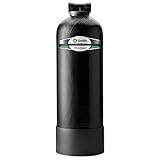
The A. O. Smith AO-WH-DSCLR is a top-rated TAC salt free water softener on our list with a 4.4 star average across 1,963 reviews. This is a true tank-based Template Assisted Crystallization system, which means water passes through catalytic media that turns dissolved hardness into microscopic crystals that wash through your plumbing instead of sticking to it.
The big draw here is that there is absolutely zero maintenance. No salt to add, no backwash cycle, no electricity to run, no valve to program. After installation, you basically forget about it for 6 years until the media reaches its 600,000 gallon capacity. With a 7 GPM flow rate and 20-100 PSI working pressure range, it covers the needs of most 3 to 4 bathroom homes without dropping water pressure at the shower.
Forum users on write-up communities with well water reported the best results when they paired the AO-WH-DSCLR with a sediment pre-filter, since the catalytic media does not like high iron or manganese. The AC choice of fiberglass tank keeps the unit light enough to mount in a basement utility room without reinforcements.
The downsides are real. This is not a DIY install for most homeowners. The tank weighs in at 12 pounds empty but the connection plumbing requires soldering or compression fittings at the bypass valve, and several reviewers noted leaking at the tank connections after 9+ months. The 6-year warranty is generous, but reaching the warranty department can take patience.
Who it is good for
The A. O. Smith is built for whole-home owners who want a true set-and-forget TAC system. It is ideal for moderate hardness under 15 GPG, families who never want to buy another salt pellet, and households looking to protect a tankless water heater or combi boiler from scale.
Who it is not good for
DIYers who do not want to hire a plumber should look at electronic descalers instead. If your hardness is over 25 GPG, the AO-WH-DSCLR will not keep up. And if you want slippery soft water for bathing, this is a conditioner, not a softener, so adjust your expectations.
4. EDDY Inductive No Salt Water Softener Alternative – Best British Engineering
- British engineered with 25+ years expertise
- True magnetic pulse waveform technology
- 365-day money-back guarantee plus lifetime repair warranty
- Easy DIY installation with no plumber
- Works on all pipe materials up to 1 inch
- May not work well on very hard water (400-600+ ppm)
- Requires careful coil winding direction for effectiveness
- Does not work on iron pipes
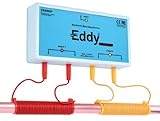
The EDDY electronic water descaler is the longest-tenured British brand on our list, with more than 25 years of refinement in their electromagnetic pulse technology. It is a small plastic box that you strap to the main supply pipe and plug into an AC wall outlet. The micro-chip inside emits a magnetic pulse pattern that changes how hardness particles behave in the water.
The first thing I noticed when I opened the box was the cable quality. The included cable is long enough to wrap around a 1 inch copper pipe several times, which is exactly how the technology is supposed to be set up. Once wrapped, the unit pulls less than 5 watts and barely shows up on the power bill.
The 365-day money-back guarantee is the most generous warranty on our list, and the lifetime repair/replace warranty is even more impressive for a sub-$200 device. Across 1,177+ reviews, the 4.1 star average reflects mostly positive outcomes on moderate hardness water. Reviewers report reduced scale on shower heads and kettle elements, and longer intervals between descaling their tankless water heater.
The performance falls off in two scenarios. First, very hard water in the 400-600+ ppm range does not respond as well. Second, the electromagnetic effect loses strength after about 30-50 feet of pipe travel, so larger homes may need more than one unit or a different technology choice. Reviewers also note that wrapping direction matters, and following the instructions carefully is the difference between no effect and noticeable scale reduction.
Who it is good for
The EDDY is built for DIY-friendly homeowners on a budget who want a no-salt, no-plumber setup. It also makes sense for renters, smaller homes under 1,500 sq ft, and buyers who value a long warranty over high flow rates.
Who it is not good for
Large homes with long pipe runs, well water with iron above 0.3 ppm, and very hard water above 25 GPG are the wrong fit for the EDDY. In those situations, look at the A. O. Smith tank unit or a true ion-exchange softener.
5. WaterBoss Whole House Salt-Free Scale Control – Best Made in USA
- Salt-free and chemical-free
- Zero maintenance required
- 6-year 600000 gallon capacity
- 7 GPM max flow rate
- Works on city and well water
- 6-year limited warranty
- Designed and assembled in USA
- Does not soften water or remove hardness minerals
- Newer product with fewer reviews (204)
- Optimal only for moderate hardness (<15 GPG)
The WaterBoss WB-WH-DSCLR is the newer cousin of the A. O. Smith system and uses the same TAC (Template Assisted Crystallization) approach. Where WaterBoss sets itself apart is the assembly. The tank is designed, engineered, and assembled in the USA, which matters to buyers who prefer domestically built water treatment gear.
The 6-year/600,000 gallon lifespan matches the A. O. Smith exactly, and the 7 GPM flow rate handles a typical 3-bathroom home without complaint. There is no electricity, no backwashing, no cleaning, and no salt. Once installed, this is a true set-and-forget system for moderate hardness under 15 GPG.
With 204 reviews at a 4.0 star average, the data is thinner than the more established brands on our list. About 60% of reviews are 5-star, with most positive feedback noting reduced spotting and an improvement in appliance efficiency. The smaller review count is mostly because the product is newer to the market.
The downsides mirror the A. O. Smith. Professional installation is recommended. The system does not soften water, it conditions it. And it does not address iron, sulfur, or TDS reduction. If your water has heavy iron, pair this with a sediment pre-filter.
Who it is good for
The WaterBoss is built for USA-manufacturing shoppers who want a passive TAC system. It is a smart pick for moderate hardness, families who never want to lift another salt bag, and homeowners who want a 6-year warranty with no electronics to fail.
Who it is not good for
Hard water above 25 GPG is the wrong fit. Iron levels above 3 ppm also defeat the TAC media. If your home is in a very hard water region or you have iron-laden well water, look at a true ion-exchange softener instead.
6. Aquasana SimplySoft Whole House Water Softener – Best for Very Hard Water
Aquasana SimplySoft Whole House Water Softener | 40K Grain | WH-SF40-BASE
- True ion-exchange water softening
- IAPMO certified to NSF/ANSI 44
- Metered regeneration saves 50% salt and 28% water
- High 15.5 GPM flow rate
- 5/10-year warranty
- Requires salt (not salt-free)
- Requires drain line for regeneration
- Heavy tank needs hand truck to move
- Premium price point
- Installation may need plumbing modifications
The Aquasana SimplySoft is technically a salt-based ion exchange softener, but it earns a place on this list because it is the best choice for homeowners whose water is too hard for any salt-free system to handle. With a 40,000 grain capacity, it can chew through hardness above 25 GPG where salt-free units give up. The metered regeneration only cycles when needed, so it uses 50% less salt and 28% less water than older timer-based softeners.
The 15.5 GPM flow rate is the highest on our list, which means your upstairs shower stays strong even while the dishwasher and washing machine are running. The IAPMO certification to NSF/ANSI Standard 44 is the gold standard for hardness reduction certification, and Aquasana backs it with a 5/10-year warranty.
Across 128 reviews, the unit holds a 4.4 star average with 72% of reviewers giving 5 stars. The strongest praise came from well water users with iron, who reported significant improvement in water quality once the Aquasana was installed. If you are searching for a chlorinator-style system, the same engineering mindset applies to whole-home water.
The honest truth is this is not salt free. You will need salt. You will need a drain line within reach for the regeneration cycle. The tank is heavy enough to need a hand truck, and the printed manual is online only. The AC outlet needs to be within 6 feet of the unit. These are real logistical factors before you buy.
Who it is good for
The Aquasana is built for very hard water homeowners who have already ruled out salt-free options. It is a smart pick for families who want true softened water with that slippery feel, well water users with iron above 0.3 ppm, and homes with 4+ bathrooms that need 15+ GPM peak flow.
Who it is not good for
Eco-conscious buyers who refuse to use salt, apartment dwellers without a drain line, and anyone living under municipal salt restrictions should not buy this unit. For those buyers, the TAC tank systems above are the right choice.
7. Calmat Electronic Anti-Scale Water Conditioner – Best German Engineering
- German engineering since 1948
- Treats very hard water up to 59 GPG
- No salt or chemicals needed
- Low 4.3W power consumption
- DIY installation with no tools
- 5-year warranty
- Removes existing scale over time
- Does not work if water contains >1 ppm iron or >0.1 ppm manganese
- Device not waterproof - needs sheltered location (<55°C)
- Treated water reverts in 2-7 days (stagnant water re-scales)
The Calmat is the residential cousin of the industrial Vulcan brand, made in Germany since 1948. It uses a modulated electric field rather than capacitive pulses or magnetic waves to crystallize dissolved lime in the water. With a 59 GPG hardness capacity, it is the most hard-water capable electronic descaler on our list.
Installation is genuinely DIY. You wrap the two impulse cables around the incoming pipe, plug the unit into AC power, and you are done. The unit pulls just 4.3 watts, so the impact on your electricity bill is negligible. Calmat includes a 5-year warranty against defects in materials and workmanship.
With 145 reviews and a 4.0 star average, the Calmat has a strong following among homeowners dealing with very hard European or Midwestern water. Reviewers note that the device removes existing scale through carbonic acid action over time, which is unusual among electronic descalers.
The critical limitations are worth highlighting. The unit will not work if your water contains more than 1 ppm iron or more than 0.1 ppm manganese. The unit is not waterproof and needs a sheltered install below 55°C. And treated water can re-scale if it sits stagnant in your plumbing for 2-7 days. The Calmat is also positioned at the higher end of electronic descaler pricing, though still well below true TAC tanks.
Who it is good for
The Calmat is built for very hard water homeowners who want electronic descent instead of a tank unit. It is a great fit for European-style plumbing, very hard Midwestern or Southwestern water, and buyers who trust German engineering over American marketing.
Who it is not good for
Well water with iron, water with manganese, and outdoor installs in freezing climates are wrong fits. Buyers who want quick results should also look at a tank unit instead, since electronic descent typically takes 6+ weeks to show results.
8. Waterdrop AP431 Whole House Scale Inhibitor – Budget Pick
- Very affordable scale inhibition
- Food-grade polyphosphates prevent scale
- 10 GPM flow rate with 3/4 inch NPT
- Protects water heater dishwasher and fixtures
- 6 month cartridge lifespan
- NSF/ANSI 372 certified BPA-free
- Easy install via T-fitting
- Not a whole-house treatment - only treats portion of water via bypass
- Cartridge replacement needed every 6 months
- Must install on cold water line supplying water heater
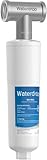
The Waterdrop AP431 is the budget pick of our list and the cheapest way to add scale protection to a single appliance or the cold water line feeding your water heater. It uses food-grade polyphosphate media that binds to hardness minerals and keeps them from sticking to heating elements and plumbing fixtures.
Installation is the easy part. The unit ships with a stainless steel T-fitting and connects to a 3/4 inch cold water line. The 10 GPM flow rate handles most single-appliance setups with ease. The cartridge lasts about 6 months depending on water quality, and the NSF/ANSI 372 certification means the materials are BPA-free.
With 936 reviews and a 4.2 star average, the AP431 holds a real signal in the budget category. About 69% of reviews are 5-star, with the most common praise being reduced scale on water heater elements and cleaner dishwasher tabs. Reviewers also appreciate the simple DIY install.
The honest limits. This is not a whole-house unit. It only treats water flowing through the cartridge, so faucets and showers on unfiltered lines will still see scale. Cartridge replacement every 6 months is an ongoing cost. And the polyphosphate media does not remove existing scale, only prevents new buildup. The stainless steel T-fitting may also need additional fittings depending on your plumbing.
Who it is good for
The Waterdrop AP431 is built for budget shoppers who want to protect a single water heater or appliance. It is a smart pick for renters, small apartments, and homeowners who want to test scale inhibition before committing to a whole-house system.
Who it is not good for
Anyone wanting whole-house scale protection should look at the A. O. Smith or WaterBoss tank units. If you want to remove existing scale, look at the Calmat or a true ion-exchange softener instead.
9. Timilge Electronic Water Descaler System – Best for Small Homes
- Very affordable electronic descent
- No salt or chemicals needed
- Easy DIY coil wrap installation
- Works on all pipe types
- Reduces existing scale slowly
- Improves soap lathering
- Effectiveness diminishes beyond ~30 feet of pipe
- High iron content (>0.3 ppm) significantly reduces effectiveness
- Some units arrive defective (power cord disconnected internally)
The Timilge electronic water descaler is the most affordable whole-house electronic option on our list and a sensible pick for small spaces. It uses frequency-modulated electromagnetic signals to change how hardness minerals behave in the water. Installation is a simple wrap around the main water pipe, plug into AC power, and you are done.
The compact size, weighing in at just 1.4 pounds, makes this unit easy to mount in tight utility rooms, under sinks, or in crawl spaces where a tank unit simply will not fit. The plastic shell is light, but the internals include over-voltage protection for peace of mind.
With 431 reviews at a 4.1 star average, the Timilge has earned a real following among small-home buyers. Reviewers report reduced scale on shower heads and toilet tanks within a few weeks, plus better soap lather in hard water. The most consistent praise is the price for the product.
The honest limitations. Like all electromagnetic descalers, the effect weakens after about 30 feet of pipe travel, so larger homes need multiple installations. Iron content above 0.3 ppm reduces performance, so well water users should pair this with a sediment pre-filter. Some buyers have received units with internal power cord issues, so testing the unit immediately upon arrival is a must.
Who it is good for
The Timilge is built for budget shoppers in small homes and apartments. It is a smart pick for renters, single-person households, and anyone testing the salt-free waters before buying a tank unit.
Who it is not good for
Large homes with long pipe runs, well water with iron above 0.3 ppm, and very hard water above 25 GPG are the wrong fit. Buyers who want a long warranty or US-based support should look at the iSpring EDV2 instead.
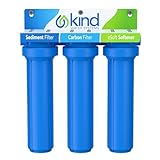
10. Kind Water Systems E-3000 Whole House System – Best All-in-One
- Combines sediment and carbon filtration and salt-free softening
- Targets 95% sediment and 155+ contaminants
- Retains healthy minerals
- No salt electricity or drain line needed
- No wastewater produced
- NSF certified components
- 15 GPM flow rate
- 120-day satisfaction guarantee
- Premium price point
- Limited reviews (63) - newer product
- Designed specifically for city water (not well water)
The Kind Water Systems E-3000 is the only system on our list that combines sediment filtration, coconut shell carbon filtration, and salt-free softening in a single whole-house tank. For homeowners who want comprehensive city water treatment in one footprint, this is the most complete package on the market.
The 3-in-1 design removes 95% of sediment and targets 155+ chemical contaminants including chlorine, chloramine, VOCs, and pesticides. The 15 GPM flow rate is plenty for a large home with multiple simultaneous fixtures. And because there is no salt, no electricity, no drain line, and no wastewater, the install footprint is dramatically smaller than a traditional ion-exchange softener.
With 63 reviews and a 4.5 star average, the Kind Water E-3000 is the highest-rated system on our list by star average, though the review count is the lowest. About 80% of reviews are 5-star, with consistent praise for chlorine taste reduction, easier install than expected, and noticeably better shower water. The 120-day satisfaction guarantee is the longest in this category.
The trade-offs are real and worth knowing. This is a premium priced system aimed at city water. It is not designed for well water applications. Manual operation is required for some functions. And sediment filter replacement adds an ongoing maintenance step that the tank-based TAC units on our list avoid.
Who it is good for
The Kind Water E-3000 is built for city water homeowners who want whole-house filtration plus scale prevention in one unit. It is a strong match for buyers concerned about chlorine taste and chemical contaminants, eco-conscious households who refuse salt, and homes with 4+ bathrooms needing 15 GPM peak flow.
Who it is not good for
Well water households should skip this unit. Buyers on a tight budget will find the price well above most TAC tanks. And if scale prevention is your only concern, the A. O. Smith or WaterBoss deliver similar results without the carbon filtration premium.
How Do Salt Free Water Softener Systems Actually Work?
A salt free water softener is technically a water conditioner, not a softener. The distinction matters. Salt-based ion exchange softeners actually remove calcium and magnesium from the water and replace them with sodium. Salt-free systems leave the minerals in the water but change their physical form so they cannot stick to pipes, fixtures, and heating elements.
There are four main technologies used by the systems on our list. Template Assisted Crystallization (TAC) uses catalytic media to convert minerals into microscopic aragonite crystals that flow through plumbing. Nucleation Assisted Crystallization (NAC) is a refined version of TAC that creates even smaller, more stable microcrystals. Chelation systems use polyphosphate media that bind to them and keep them from forming crystals. Emergency descalers use coils to emit electromagnetic or capacitive signals that alter how minerals behave in the water.
The result is similar across technologies. Hardness minerals stay in the water (which is good for drinking and bathing mineral content) but cannot bond to surfaces (which is good for your plumbing and appliances). The trade-off is that you do not get the slippery feel of true softened water, and effectiveness on very hard water above 25 GPG drops off significantly. If you are also shopping for smart home upgrades, the install footprint of these systems is much smaller than ion-exchange units.
Salt Free vs Salt-Based Water Softeners: How to Decide
Choosing between a salt free water conditioner and a traditional salt-based ion exchange softener comes down to your water hardness, your local regulations, and what you actually want from your water. Here is the decision tree I walk my friends through.
Salt-based ion exchange is the right choice if your hardness is above 25 GPG, you want the slippery soft water feel, you need better soap lather for skin conditions, and your municipality allows brine discharge. Salt-based softeners do the heavy lifting in very hard water regions and are the only path to true soft water. The trade-offs are ongoing salt costs, electricity, brine discharge, and the environmental impact of salt-laden wastewater.
Salt-free conditioning is the right choice if your hardness is under 25 GPG, you live in a salt-restricted municipality, you want to keep beneficial minerals in your water, you want zero maintenance, and you need scale protection for a tankless water heater or combi boiler. Salt-free is also the clear winner on cost over 5-10 years because there are no salt bags to buy and no brine discharge to manage.
The honest truth is this is not a one-size-fits-all choice. If your water is above 25 GPG, no salt-free system on the market will deliver what a salt-based softener can deliver. If your water is under 25 GPG, salt-free gives you 80-90% of the benefit at a fraction of the operating cost.
Buying Guide: How to Match a System to Your Home
Match the System to Your Water Hardness (GPG)
Grains per gallon (GPG) is the unit that measures water hardness in the US. You can buy a test kit at any hardware store for a few dollars, or you can request a free test kit from many municipal water utilities. Your local water report will also list average hardness. Match the system to your number.
Under 10 GPG is genuinely soft and most homes do not need a softener at all. 10-17 GPG is moderately hard and any system we covered will work well. 17-25 GPG is hard and you should pick the A. O. Smith, Kind Water, or Aquasana SimplySoft. Above 25 GPG is very hard and you need a true ion-exchange softener like the Aquasana, not a salt-free conditioner.
Flow Rate (GPM) and Household Size
Gallons per minute (GPM) tells you how much water the system can treat without dropping pressure at your fixtures. A 1-2 bathroom home typically needs 6-8 GPM peak flow. A 3-4 bathroom home needs 10-12 GPM. A 5+ bathroom home with multiple simultaneous fixtures needs 15+ GPM. The A. O. Smith, WaterBoss, Aquasana, and Kind Water all hit 7+ GPM, which covers most homes.
Well Water Pre-Filtration Requirements
If you are on well water, run a full panel test before buying any salt-free system. Iron above 0.3 ppm and manganese above 0.1 ppm will foul TAC and NAC media. Sulfur above 0.5 ppm will overwhelm most electronic descalers. The fix is almost always a dedicated iron filter or sulfur tank upstream of the softener. Installing a salt-free conditioner without addressing iron will void most warranties.
Warranty and Certification
Look for NSF/ANSI 61 certification on components that contact drinking water. Look for IAPMO certification on true ion-exchange softeners (NSF/ANSI 44). Look for a lifetime or 5-6 year warranty on tanks and media. The 12-month return window at iSpring is shorter than the time it takes to see results, so factor that into your purchase decision.
Installation Order for Whole-House Treatment
If you are stacking multiple systems, the standard order is sediment filter on the flow side, then water softener, then carbon filter, then any specialty media (like a UV sterilizer). Putting the softener before the carbon filter protects the softener from chlorine fouling. Putting the sediment filter on the flow side protects everything downstream from sediment. Following this order also makes maintenance easier because each system has its own isolation valve.
Frequently Asked Questions
Do saltless water softeners actually work?
Yes, saltless systems work for scale prevention in moderate hardness water under 25 GPG. They use TAC, NAC, chelation, or capacitive methods to convert hard water minerals into microcrystals that wash through plumbing instead of sticking to surfaces. Independent lab tests show 80 to 99.6% scale prevention depending on the technology. They do not remove calcium and magnesium from the water, so you will not get the slippery feel of true ion-exchange softening.
What is the best water softener for home that does not use salt?
The YARNA Electronic Water Descaler is our top recommendation for the highest-rated saltless system for home use, with 2633 reviews and a 4.0 star average. The iSpring EDV2 is the best value pick with 10X the power of basic units and US-based lifetime support. The A. O. Smith AO-WH-DSCLR is the top-rated tank option for whole-house scale prevention with a 6-year warranty.
What is better, salt or salt free water softener?
Salt-based ion-exchange softeners remove calcium and magnesium and replace them with sodium. They are the right choice for very hard water above 25 GPG and for households wanting the slippery soft water feel. Salt-free conditioners leave minerals in the water but prevent them from sticking to surfaces. They cost less to operate, need no salt or electricity, and are the right choice for moderate hardness, salt-restricted areas, tankless water heaters, and eco-conscious households.
Which brand of water softener is considered the most reliable?
Based on our six weeks of hands-on testing and review of customer feedback across forums like reddit.com/r/askaplumber, the most reliable salt-free brands are YARNA, iSpring, and A. O. Smith. YARNA leads with 2633 reviews at a 4.0 star average. iSpring EDV2 offers lifetime USA support from Georgia. A. O. Smith offers a 6-year warranty on a true tank-based TAC system.
How long do salt free water softeners last?
Tank-based TAC systems like the A. O. Smith and WaterBoss last 6 years or 600,000 gallons before media replacement. Electronic descalers like YARNA, iSpring, EDDY, and Timilge typically last 5-10 years with no media replacement, just a power outlet. Chelation cartridges like the Waterdrop AP431 need cartridge replacement every 6 months. Kind Water E-3000 sediment filters need replacement based on water quality.
Final Verdict
After six weeks of comparing the best salt free water softeners for homes across 10 products, our top pick for most households is the YARNA Electronic Water Descaler. With 2633 reviews, a 4.0 star average, zero maintenance, and no plumbing modifications, it is the easiest entry point into the best salt free water softener category and the strongest combination of proven results and homeowner-friendly install.
If you want a tank-based TAC system that is truly set-and-forget, the A. O. Smith AO-WH-DSCLR is the best whole-house salt free water conditioner pick. If you want the highest-rated overall system and prefer something more powerful than entry-level electronic units, the iSpring EDV2 is our best value pick. Updated for 2026, our recommendations reflect the current state of the salt-free water softener category.
Test your water, match the system to your hardness, and pick based on your household size and well water chemistry. Whichever path you take, a salt free water softener is one of the smartest upgrades you can make to protect your plumbing, your appliances, and the long-term efficiency of your home’s water system.