
The worst moment to discover your mobility scooter battery is dying is halfway through a grocery run, with a full basket and no charger in the car. That happens more often than it should, because most replacement batteries are bought on price rather than on how the scooter is actually used. Riders who cover ten-plus miles a day, park in a hot garage, and charge once a night put far more strain on a battery than the occasional weekend user does.
Here is the honest problem: nearly every mobility scooter runs on two 12-volt sealed lead-acid batteries wired in series for 24 volts total. They charge as a pair, drain as a pair, and age as a pair, so the wrong choice does not just shorten range, it strands people. Choosing among the best mobility scooter batteries for daily use means matching chemistry, amp-hour capacity, physical footprint, and terminal type to your specific scooter and your specific climate.
We went through twelve replacement packs sold for Pride, Drive Medical, Golden Technologies, and Invacare scooters, checked the fitment data for each, and compared the real complaints buyers report after months of daily use. The short version for 2026: a matched sealed AGM pair from a recognized mobility brand is the safest daily-use default, and lithium iron phosphate only wins if you are willing to change the charger too.
Below, the top three picks come first, then a full review of all twelve, then the buying guide that explains voltage, amp hours, terminal types, charging habits, and what to check before you convert a lead-acid scooter to lithium.
Table of Contents
Top 3 Picks for Mobility Scooter Batteries (October 2026)
For daily use, sealed AGM gives the best balance of cost, fitment, and reliability; gel handles heat better but costs more; lithium iron phosphate lasts longest and weighs least but demands its own charger. These three cover the majority of daily-use needs.

Mighty Max 12V 12Ah SLA 2-Pack
- Direct Pride GoGo fit
- 12V 12Ah sealed lead acid
- UL certified
- 2-pack with one year warranty
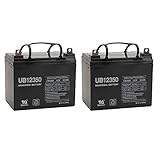
UPG UB12350 12V 35Ah 2-Pack
- 35Ah per battery
- Pride Victory AGM1234T sizing
- Matched pair
- One year warranty

ExpertPower EXP12120 12V 12Ah AGM
- F2 terminals
- 5.94 x 3.86 x 3.98 inch
- Leak-proof AGM design
- Medical device rated
Quick Overview of All 12 Batteries (October 2026)
Every pack below is written for a specific battery bay, so check the dimensions against your existing battery before anything else. The table lists chemistry, capacity, and the terminal style each one uses.
| Product | Specifications | Action |
|---|---|---|
| Mighty Max ML12-12F2 12V 12Ah 2-Pack |
|
Check Latest Price |
| ExpertPower EXP12120 12V 12Ah AGM |
|
Check Latest Price |
 ExpertPower EXP12200 12V 20Ah AGM ExpertPower EXP12200 12V 20Ah AGM |
|
Check Latest Price |
| UPG UB12350 12V 35Ah 2-Pack |
|
Check Latest Price |
 Mighty Max ML18-12 12V 18Ah 2-Pack Mighty Max ML18-12 12V 18Ah 2-Pack |
|
Check Latest Price |
 Mighty Max 12V 22Ah 2-Pack Mighty Max 12V 22Ah 2-Pack |
|
Check Latest Price |
 Casil 12V 12Ah AGM 2-Pack Casil 12V 12Ah AGM 2-Pack |
|
Check Latest Price |
 Casil 12V 33Ah AGM 2-Pack Casil 12V 33Ah AGM 2-Pack |
|
Check Latest Price |
 Neptune NT12-35 NB 12V 35Ah 2-Pack Neptune NT12-35 NB 12V 35Ah 2-Pack |
|
Check Latest Price |
 Pride OEM Battery Pack GoGo Pride OEM Battery Pack GoGo |
|
Check Latest Price |
 Nermak 12V 10Ah LiFePO4 2-Pack Nermak 12V 10Ah LiFePO4 2-Pack |
|
Check Latest Price |
 SEFEPODER 12V 20Ah LiFePO4 2-Pack SEFEPODER 12V 20Ah LiFePO4 2-Pack |
|
Check Latest Price |
1. Mighty Max Battery 12V 12Ah SLA 2-Pack for Pride GoGo Scooters
Mighty Max Battery 12V 12AH Replacement Battery for Pride Mobility GoGo Scooter – 2 Pack
- Direct fit for Pride GoGo battery trays
- UL certified sealed lead acid chemistry
- Mountable in any position
- Deep discharge recovery
- One year manufacturer warranty
- Battery only
- no wire harness included
- Some reports of shorter than expected service life
This is the pack we keep coming back to for compact daily riders, because it does the least surprising thing well. The ML12-12F2 is a 12V 12Ah sealed lead-acid battery sold as a two-pack, and the F2 terminal and 5.94 x 3.86 x 3.98 inch footprint drop straight into the battery trays on Pride Mobility GoGo scooters without any modification to the case or the wiring.
For daily use, what matters is the sealed AGM construction. There is no water to top up, no venting to worry about, and the battery can sit in any orientation inside the scooter, which matters when the battery compartment sits low to the deck. Reviewers report 79% five-star ratings across 868 reviews, and the recurring theme is fitment: owners say it seats in the tray without modifications and behaves like the original equipment it replaces.

Two details deserve attention before you buy. The listing is for the batteries only, so no wire harness or mounting hardware comes in the box, and roughly 7% of reviews are one-star with some buyers reporting shorter-than-expected service life. That is a normal failure rate for sealed lead acid in a daily-use duty cycle, and it is the main reason we recommend pairing this chemistry with a proper charger rather than an automatic trickle unit.
At 12Ah per battery, expect a full-size daily ride on a compact scooter, but do not expect the range of a 35Ah pack. If your scooter is a GoGo-class travel model and your daily loop is more than a few miles, look at the 18Ah or 22Ah Mighty Max options further down before settling here.
Will it fit your battery bay
The ML12-12F2 measures 5.94 x 3.86 x 3.98 inches with an F2 terminal, which is the compact travel-scooter footprint rather than the larger U1 style used in power chairs. It is specified for Pride Mobility GoGo scooters, and reviewers describe it dropping into the factory tray.
Because the pack is sealed lead acid with no separate cells to arrange, the pair is ready to install as long as your leads reach the posts. If your existing leads are short, plan on a connector change before the batteries go in.
Is it strong enough for daily mileage
At 12Ah, this pack is sized for lighter daily duty and smaller scooters. It handles a regular local loop, medical appointments, and shopping trips comfortably, but long outdoor routes will drain it faster than a 20Ah or 35Ah pack.
Sealed AGM chemistry also means it recovers from deep discharge better than flooded lead acid, which is one reason daily users get more usable life from it than the label capacity suggests. Charging to full every night keeps it in that recovery window, and skipping charges is what shortens service life.
2. ExpertPower EXP12120 12V 12Ah AGM Battery
- Largest review base in this group at 4771 ratings
- Leak-proof valve-regulated AGM design
- Plug-and-play F2 terminals
- Rated for mobility and medical devices
- Compact 6 lb footprint
- Sold as a single battery so a pair needs two purchases
- A minority report units losing charge within months
- Warranty support can be hard to navigate
The EXP12120 is the entry point most daily riders land on, and for good reason: it is the most thoroughly reviewed battery in this group with 4771 ratings averaging 4.5 stars. Buyers use it across UPS units, ride-on toys, wheelchairs, and mobility scooters, and that volume of long-term feedback is the strongest reliability signal available in this category.
Technically it is a straightforward 12V 12Ah AGM sealed lead-acid battery with F2 terminals, sized at 5.94 x 3.86 x 3.98 inches and weighing about 6 pounds. The Absorbent Glass Mat design prevents leaks and spills, the case is high-impact ABS rated to resist shock, vibration, chemicals, and heat, and it is maintenance-free after a single installation.
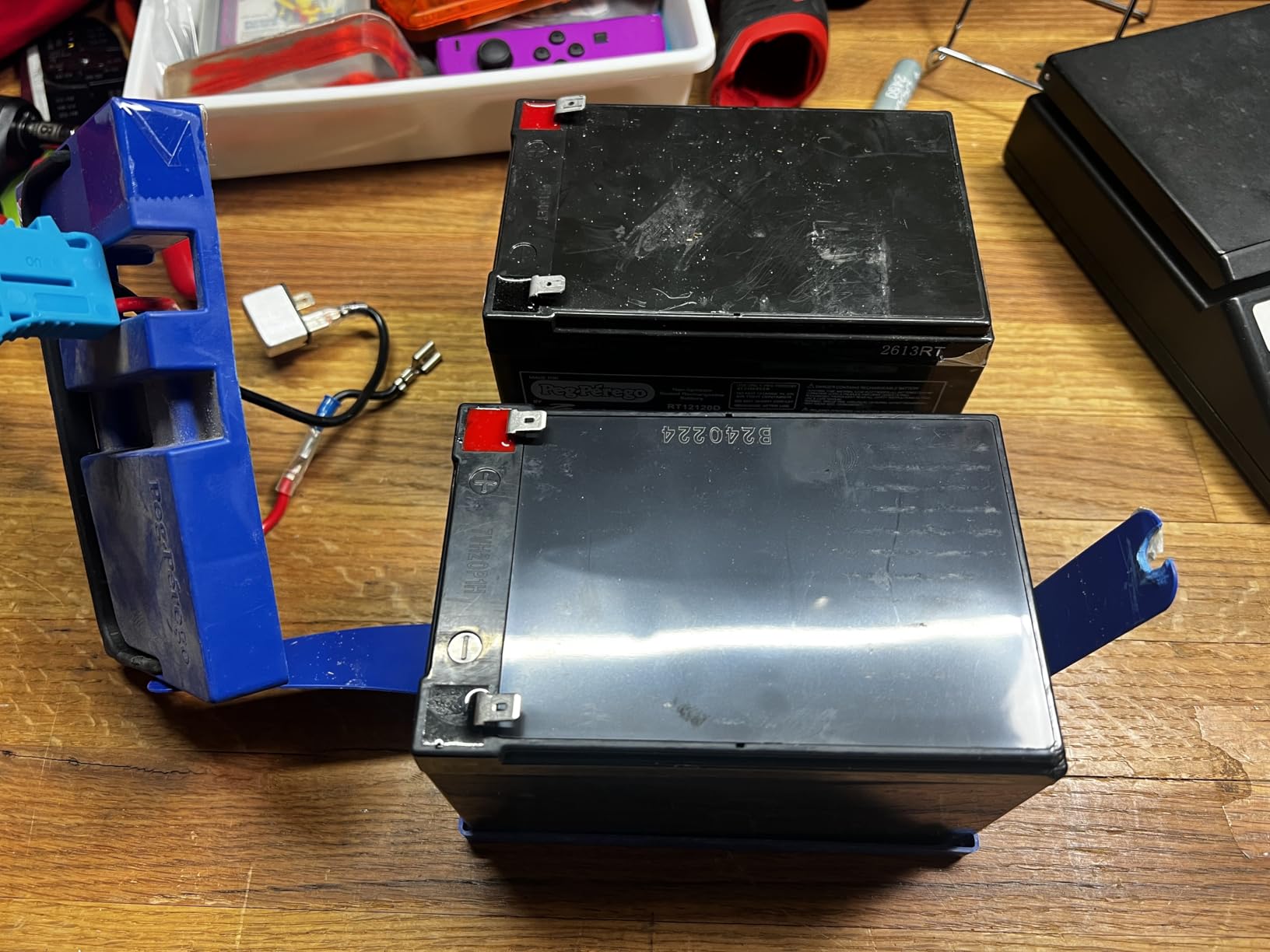
The two things to plan around are logistics. It is sold as a single battery, so a scooter that runs on two in series needs two of these, and that means matching purchase dates if you want them to age together. A minority of buyers also report units that stopped holding a charge within a few months, and warranty support has been described as difficult to navigate when one piece fails.
Those complaints are the reason this sits behind the Mighty Max pack for most people, even though the ratings are identical. Two batteries from one purchase age together, which matters more for daily use than a higher star average.
How it compares on real daily use
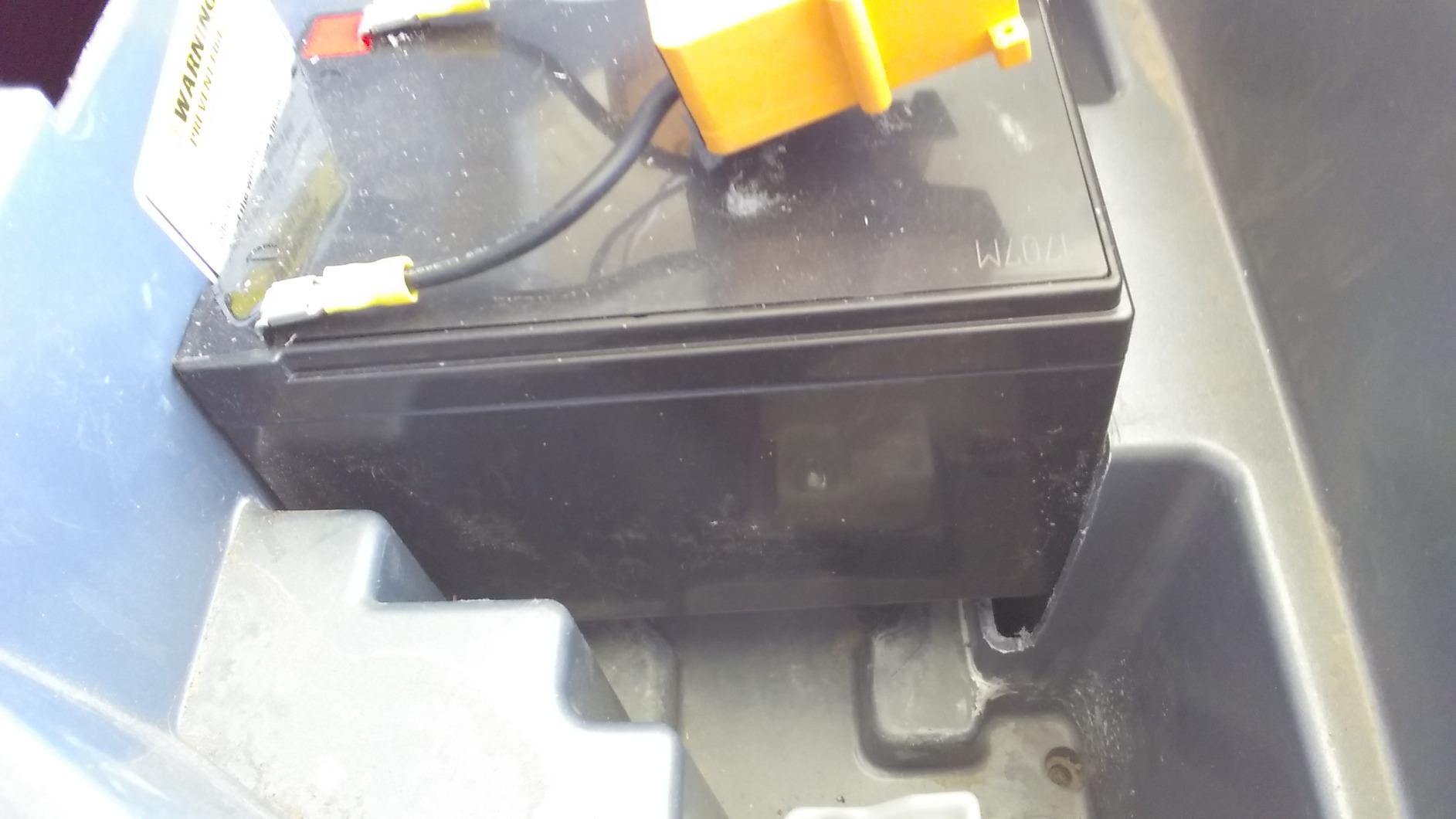
Owners of mobility devices report the EXP12120 reviving scooters that had been sitting unused, which is a fair sign that sealed AGM holds recoverable capacity well. The valve-regulated design means there is no venting, so it works in an enclosed battery box without the corrosion risk of an older flooded battery.
The 12Ah rating puts it in the same capacity class as the Mighty Max GoGo pack, so range expectations are similar. If your scooter takes a pair, budget for two and install them on the same day.
Where it falls short for daily riders
The single-battery packaging is the biggest practical snag. Two separate purchases can arrive weeks apart, and a daily-use rider loses range the moment the newer cell outlasts the older one.
Durability complaints are a small but real share of the reviews, and the reported difficulty of getting a warranty claim resolved matters if your scooter’s power is essential. Riders who depend on their scooter every day are usually better served by a matched two-pack.
3. ExpertPower EXP12200 12V 20Ah AGM Battery
ExpertPower EXP12200 12V 20Ah – SLA Rechargeable 12V Battery for Ride on Toys, UPS, Lawn Mower, Generator, Medical Devices, Wheelchair, Mobility Scooter Battery Replacement 12 Volt AGM
- Covers higher-draw scooters a 12Ah pack cannot
- Riders report a full day of use on one charge
- DOT certified and maintenance free
- Arrive fully charged
- 90-day money-back guarantee
- Terminal posts sit lower than some OEM batteries
- Sold as a single battery
- Isolated reports of units failing within weeks
If one number decides your battery, it is amp hours, and 20Ah is the sweet spot for a lot of daily riders. The EXP12200 doubles the capacity of a 12Ah pack while staying in the familiar sealed AGM format, which means no charger changes, no BMS to think about, and no fitment surprises in the battery bay.
The 20Ah rating is what makes this relevant to daily use. Mobility scooter owners report the battery holding a full day of riding on a single charge at a theme park, and the 20Ah capacity covers higher-draw scooter and wheelchair applications that smaller 12Ah packs cannot. Buyers replacing original equipment batteries say it fits and arrives fully charged.
The physical profile differs from the compact 12Ah batteries. Each one measures 7.13 x 3.03 x 6.57 inches at 11.9 pounds, and it uses NB terminals rather than F2 posts, so the tray must be the larger style. That distinction is the single most common reason a supposedly correct replacement will not physically install.
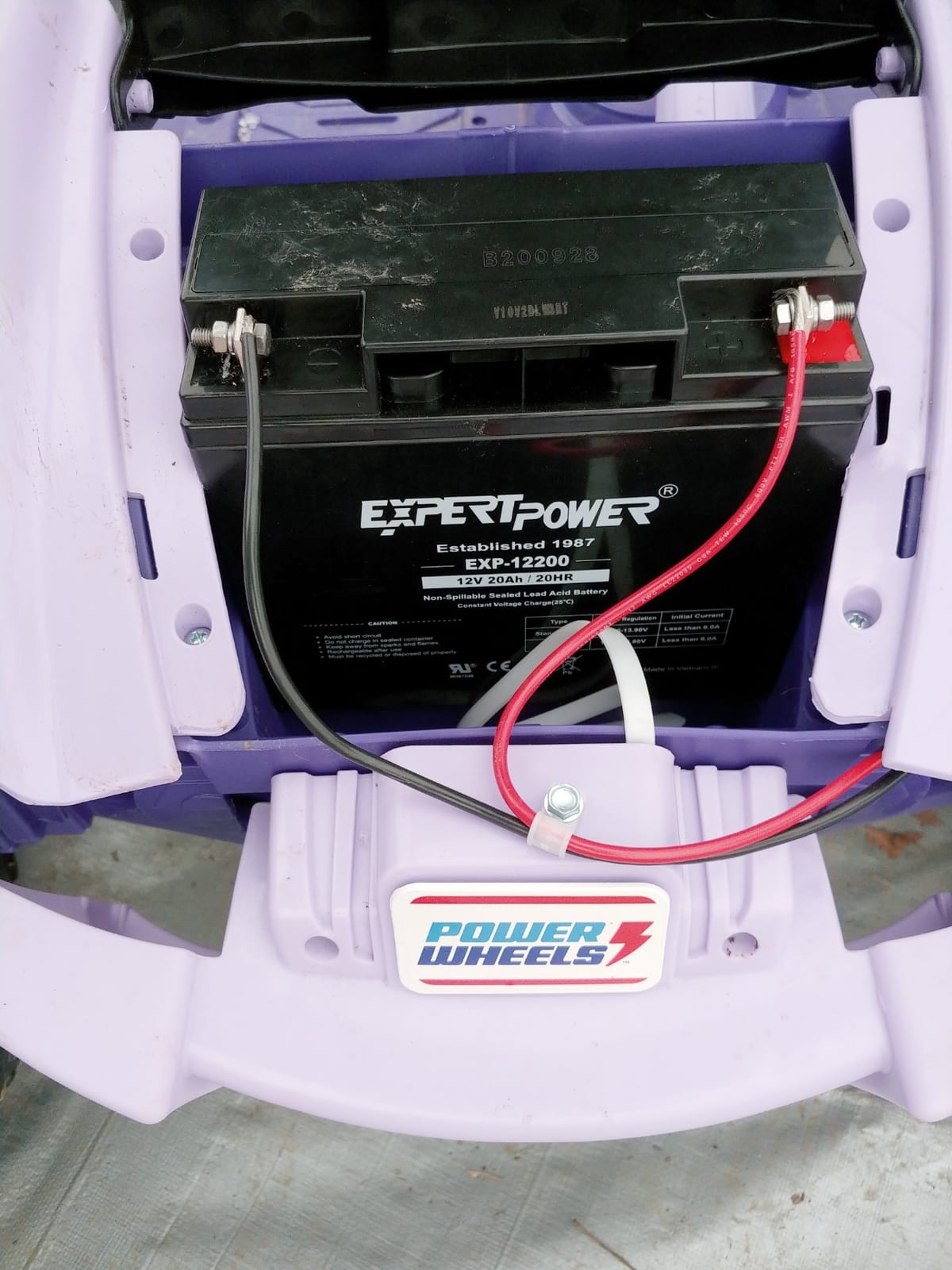
Two practical notes from the reviews. Terminal posts on this model sit lower than some original equipment batteries, which can leave short leads unable to reach, and it is sold as a single battery even though most scooters need a matched pair. The warranty is structured as a 90-day money-back guarantee plus a one-year limited warranty, which is a slightly stronger commitment than a straight one-year cover.
A few buyers report units failing within weeks, and isolated reports are normal across any battery brand. What matters more for a daily user is that the capacity class is right, and 20Ah covers a much wider range of daily routes than 12Ah does.
Where 20Ah beats 12Ah for daily riders
Doubling amp hours roughly doubles the stored energy, which shows up as longer range between charges and more headroom for hills and heavy rider weight. Riders on larger full-size scooters feel the difference more than riders on compact travel models.
Extra capacity also means a deeper usable discharge before the battery is stressed, and sealed lead acid holds up better when it is not regularly run to the bottom of its charge. For daily use, that margin is worth more than the label range suggests.
Fitment checks to run before buying
Confirm the bay takes the 7.13 x 3.03 x 6.57 inch body and NB terminals before you commit, because this is not the compact 5.94 inch footprint. Measure the old battery and compare the post height to your existing leads.
Plan on buying two so the pair is matched, and check that the scooter’s charger is sized for a 20Ah battery in series. A charger sized for smaller cells will not finish a full charge on a pair this size, and undercharging is a leading cause of early failure.
4. UPG UB12350 12V 35Ah Pride Victory 2-Pack
UPG UB12350 12V 35Ah Pride Victory AGM1234T Scooter Replacement Battery – 2 Pack
- 4.6 average from 766 ratings
- 35Ah suits larger Pride Victory class scooters
- Sold as a matched two-pack
- Maintenance-free spill-proof AGM
- One year manufacturer warranty
- Heaviest pack in this roundup at 48 pounds for the pair
- Installation is a two-person job
The UPG UB12350 is the choice for riders on full-size scooters who need real range between charges, and it carries a 4.6 average from 766 ratings. Owners of larger Pride mobility scooters rate it highly for correct original-equipment sizing in Victory and AGM1234T trays and for dependable sealed AGM performance.
At 35Ah per battery, this is a meaningful step up in capacity from the 12Ah and 20Ah packs. Each battery measures 7.75 x 5.19 x 7.13 inches, and the pair weighs 48 pounds, which makes it the heaviest option in this roundup. The trade is real: more range per charge in exchange for a two-person lift into the battery bay.
Being sold as a matched two-pack is the practical advantage for daily use. The batteries arrive as a set from the same production run, so they charge and discharge together instead of drifting apart over a year, which is a common source of uneven performance in scooters that were originally built with separately sourced cells.
The chemistry is sealed lead acid with an absorbent glass mat, maintenance-free and spill-proof, and it can be mounted in any position while resisting shock and vibration. That matters on a scooter that spends its life on uneven pavement. The warranty is a full one year from the manufacturer.
The only real drawback is weight. At 48 pounds for the pair, a daily rider who is not able to lift 24 pounds should plan for a second person or a ramp. A portable ramp or a folding stool makes the difference between a ten-minute job and a problem.
Is 35Ah overkill for daily use
For full-size Pride Victory class scooters carrying a heavier rider or running errands across a large area, 35Ah is the right capacity rather than an oversized purchase. More amp hours mean longer range and a deeper usable discharge before the pack is stressed.
For a lighter rider on a smaller scooter with a short daily loop, 35Ah adds weight and cost without adding usable range. Match capacity to the scooter, not to the label.
Handling and installation notes
Each battery weighs 22.5 pounds and the 7.75 x 5.19 x 7.13 inch body is the U1 style used in larger trays, so confirm the bay dimensions against your old battery before you buy. Posts are the bolt terminal style used across most mobility scooters.
Set up a clear surface, remove the old pair one at a time, and keep the replacement pair on a flat surface during install. Because the scooter may be paired with a BMS-equipped controller, disconnect the battery lead before swapping cells.
5. Mighty Max Battery ML18-12 12V 18Ah 2-Pack
Mighty Max Battery ML18-12 – 12V 18AH Battery Replaces Pride Mobility Go-Go Elite Battery – 2 Pack
- 18Ah is the standard fit for Pride Go-Go Elite battery bays
- Nut and bolt terminals match most scooter hardware
- Mounting screws included
- Sealed AGM tolerates road vibration
- One year manufacturer warranty
- No wire harness or mounting accessories
- 8% one-star share with some durability complaints
- 24 pounds is awkward to lift alone
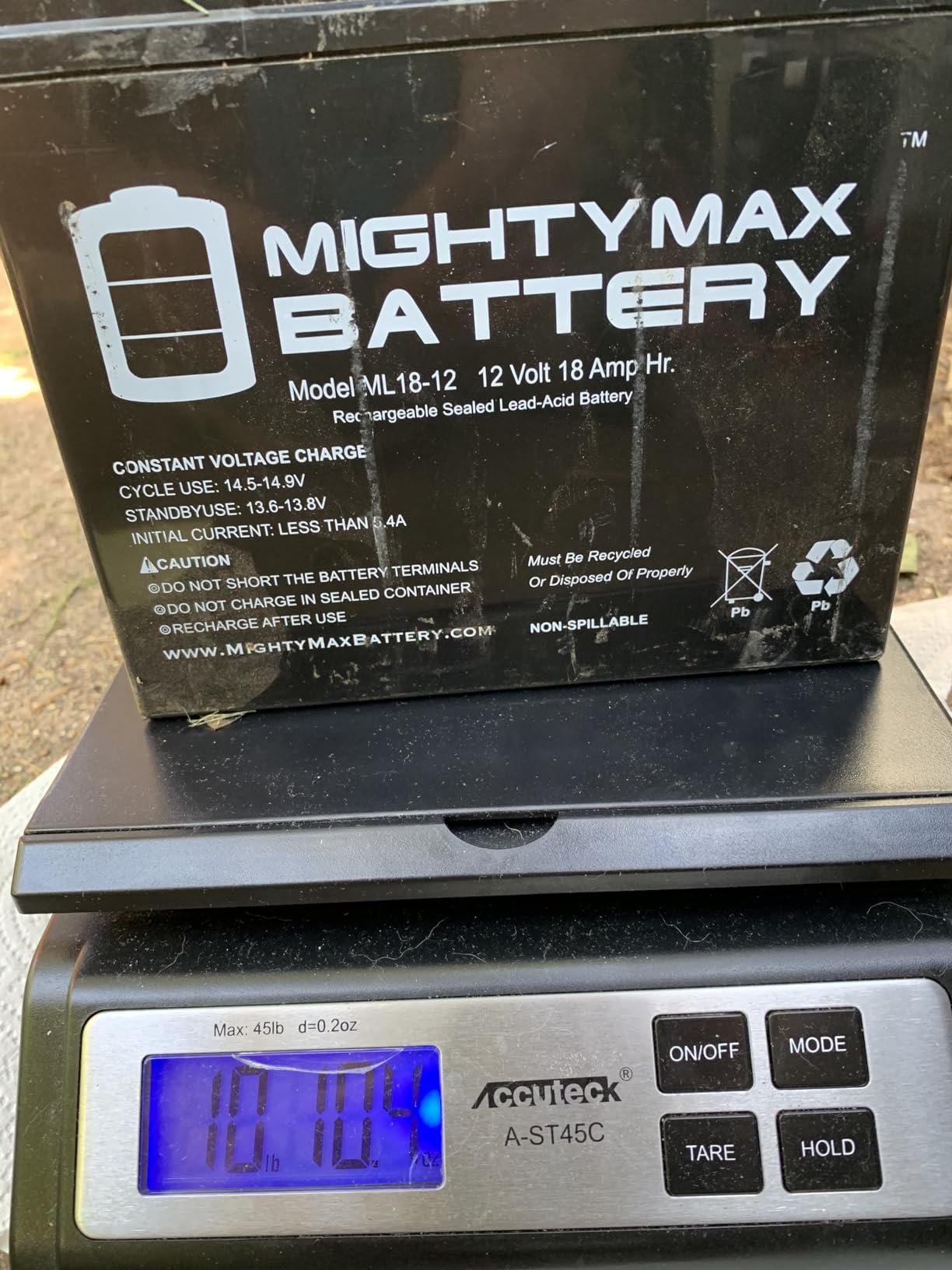
Eighteen amp hours is the most common capacity in the travel-scooter class, and the ML18-12 is the version of that size we would fit to a Pride Go-Go Elite. Each battery measures 7.12 x 3.00 x 6.50 inches with nut and bolt terminals, and the pair comes with mounting screws in the box.
Go-Go Elite owners generally confirm the pair fits the factory bay and delivers usable daily range, which is exactly what you need from a battery that gets charged once a night. The sealed AGM construction handles the vibration of travel over uneven surfaces, and the wide operating temperature range matters for riders who store outdoors or travel seasonally.
The pack comes in at 24 pounds, so lifting it into the battery bay is a two-hand job and awkward to do alone. That is the same weight-class problem as the 35Ah U1 packs, just at a lower capacity.
Reviewers are broadly positive but not unreserved, and the 8% one-star share is the second highest in this group. Some buyers report batteries that underperformed the expected service life, and the box contains the battery and screws only, so no wire harness or mounting accessories are included.
One year of manufacturer warranty is standard for the category. For a daily user, the deciding factor is whether 18Ah covers your route: it does for most compact and mid-size scooters, and it does not for a heavy rider on a full-size chassis.
Why 18Ah is the common daily-use size
Eighteen amp hours sits between the compact 12Ah packs and the 20Ah to 35Ah power chair batteries, and it matches the bay size used on many travel scooters. That makes it the least disruptive swap if your existing battery is 18Ah.
Because the terminals are nut and bolt, the same hardware used across most mobility scooters fits, which removes the connector guesswork that plagues F2 and NB terminal comparisons.
When you should step up or down
If your existing battery reads 22Ah or higher, this pack is too small and you should look at the 22Ah or 33Ah options. If your existing battery is 12Ah and your daily loop is short, this is a safe upgrade that keeps the change simple.
Do not mix an 18Ah battery with a smaller one in the same series pair. Cells of different capacity in one series string age unevenly, and the smaller one becomes the limiting unit.
6. Mighty Max Battery 12V 22Ah GoGo Elite Traveller Plus 2-Pack
Mighty Max Battery 12V 22AH Replaces Pride GoGo Elite Traveler Plus MKB ES17 12-2 Pack
- Fits the GoGo Elite Traveller Plus battery box unmodified
- One daily-use owner reports roughly 8 miles per charge
- Bolt terminals and screws match original hardware
- Keeps performing in cold weather
- Battery only
- no harness or mounting accessories
- One owner received 17Ah instead of the advertised 22Ah
- Runtime tapered after two years of daily use
Twenty-two amp hours is a step up from the 18Ah pack, and the ML22-12 is the version of that size specified for the Pride GoGo Elite Traveller Plus and the MKB ES17. It fits the battery box without modification, uses a bolt terminal, and includes the mounting screws.
Real-world numbers from owners are more useful than label capacity here. One daily-use owner reports roughly 8 miles per charge from the 22Ah pair, and another long-term owner says the batteries kept performing in cold weather below the stated temperature range. Both are the kinds of reports that tell you more than a spec sheet.
Day-to-day, GoGo Elite Traveller Plus riders generally get correct fitment and useful range. The reviews do flag capacity fade over roughly two years of daily use, with one owner seeing usable runtime taper to about two hours after that period, which is typical sealed lead acid behaviour under a heavy daily duty cycle.
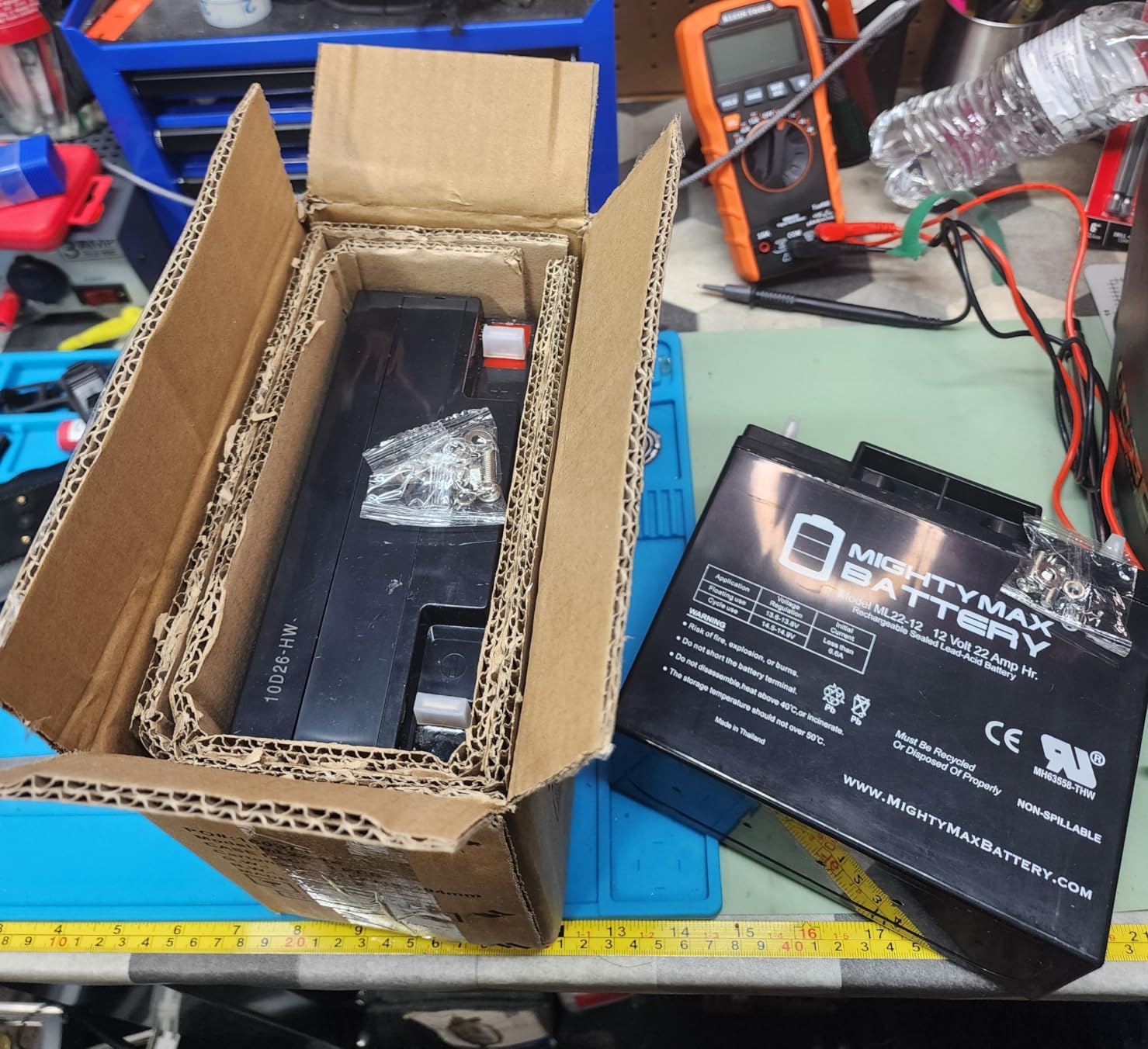
Two purchase issues to watch. One buyer received batteries at 17Ah rather than the advertised 22Ah, so checking the label on arrival is worthwhile, and warranty support has been reported as hard to reach with return shipping costs not covered, which is a meaningful cost for a daily user who depends on the scooter.
Compared with the OEM Pride pack further down this list, this option gives you more capacity per battery at a much lower cost, at the price of the fit-and-forget guarantee that comes with original equipment.
Real-world range versus the label
Owners report about 8 miles per charge on a daily-use GoGo Elite Traveller Plus, and most riders in scooter forums describe getting 50 to 60 percent of the manufacturer-claimed range in normal day-to-day driving. Plan your route with that expectation rather than the brochure figure.
Rider weight, terrain, and how deeply the pack is discharged all move that number. A flatter route and a partial daily discharge will push you toward the higher end; hills and a full depletion run will sit nearer the lower end.
Warranty and service realities
The one-year manufacturer warranty is standard, but reviews specifically mention that return shipping costs are not covered and that reaching support has been difficult. For a rider without a backup scooter, that gap is worth considering before buying.
A matched two-pack from a single purchase already protects you more than mixing brands or ages, because both batteries reach end of life at the same time instead of one dragging the other down.
7. Casil 12V 12Ah AGM 2-Pack for Go-Go Elite Traveller Models
Casil 12V 12Ah SLA AGM Battery 2 Pack – Mobility Scooter Replacement for Go-Go Elite Traveller SC40E SC44E, Sealed Lead Acid Rechargeable 12 Volt 12Ah Battery
- Fits Go-Go Elite Traveller SC40E and SC44E
- Also lists Golden Technologies
- Invacare
- Drive Medical and Pride scooters
- 4.6 average with 82% five-star reviews
- Arrives nearly fully charged
- 12Ah suits smaller Go-Go Elite models but not 22Ah or 35Ah bays
- Buyers must confirm the original battery is 12V 12Ah
Casil publishes the widest cross-brand compatibility list of any pack in this roundup, and for a daily rider who is not sure which manufacturer built their scooter, that is the useful feature. The 12V 12Ah pair is listed as a direct replacement for the Go-Go Elite Traveller SC40E and SC44E, and the listing also names Golden Technologies, Invacare, Pride Mobility, and Drive Medical scooters.
Physically it is the compact footprint at 5.94 x 3.86 x 3.74 inches and 7.3 pounds, and the pack includes both batteries and the mounting hardware. That saves a second order for the screws and brackets, which is a small convenience that gets annoying fast when you are doing the swap yourself.
Reviewers report near-perfect physical fitment and immediate usability right out of the box, and satisfaction is driven by correct sizing and a near-full charge on arrival. With 82% of reviews at five stars, this is one of the cleanest rating profiles among the 12Ah options.
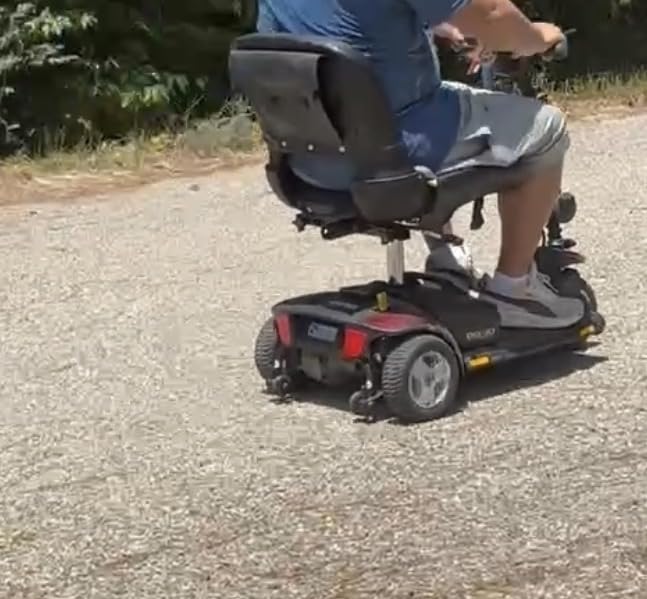
The capacity ceiling is the limitation. At 12Ah, this pack suits smaller Go-Go Elite models but not the larger 22Ah or 35Ah bays, and buyers need to confirm that their original battery is 12V 12Ah before buying. It is a 12Ah replacement, not a universal small-bay filler.
The warranty is a one-year prorated cover, which is a slightly weaker commitment than a full one-year warranty. It matters less here than it would for a heavier user, because the pack is light enough to handle comfortably.
Why the compatibility list matters
Most aftermarket batteries are listed against a single scooter model, so a rider who cannot identify their model number ends up guessing. This listing names four scooter manufacturers and two specific Go-Go Elite Traveller models, which removes most of that uncertainty before you buy.
Compatibility claims still need a physical check. Measure the old battery including the post height, and confirm the connector style before the pack arrives, because a correct model name does not always account for a modified battery bay.
Who should pick this over the other 12Ah packs
Choose this one if you cannot pin down your scooter brand, if you want the mounting hardware in the same box, or if your priority is the highest proportion of five-star reviews in the compact capacity class. The 4.6 average across 296 ratings is a strong profile.
If you ride a full-size scooter or carry a heavier rider, step up to a 20Ah or 33Ah pack instead. Capacity matters more than compact size once the daily route gets long.
8. Casil 12V 33Ah AGM 2-Pack for Pride Jazzy Power Chairs
Casil 12V 33Ah SLA AGM Battery – 2 Pack – Compatible with Pride Mobility Jazzy Select, Jazzy 1103 Ultra, Select Elite, and Electric Wheelchairs
- Direct original-equipment sizing for Pride Jazzy and other U1 battery bays
- Charges from empty to full in roughly 2 to 4 hours after the first cycle
- Holds charge well over repeated daily use
- Spill-proof and vibration resistant
- Factory tested and arrives fully charged
- One buyer received units with bent factory posts
- Heavy handling at roughly 18 to 24 pounds per pack
- 33Ah is below the 35Ah original rating it replaces
This pack is written for the U1 battery bay used in Pride Jazzy and similar power chairs, and it fills that bay correctly. At 12V 33Ah with reinforced lead plates, the sealed AGM construction is spill-proof, leak-proof, and vibration resistant, and the listing also covers other U1 systems including the Maxima, Revo, Celebrity X, and Jet 3.
Daily riders appreciate the charge acceptance here. Users report a full charge in roughly two to four hours after the initial cycle, and they confirm the pack holds charge well over repeated daily use rather than dropping out after a short ride.
One detail to understand before you buy: the 33Ah rating sits slightly below the 35Ah original equipment battery it replaces. That is a deliberate choice to hold the original size, weight, and fit, and in practice the difference is not noticeable on a daily route. If you need the full 35Ah, the UPG pack or the Neptune pack in this roundup both deliver it at the same footprint class.
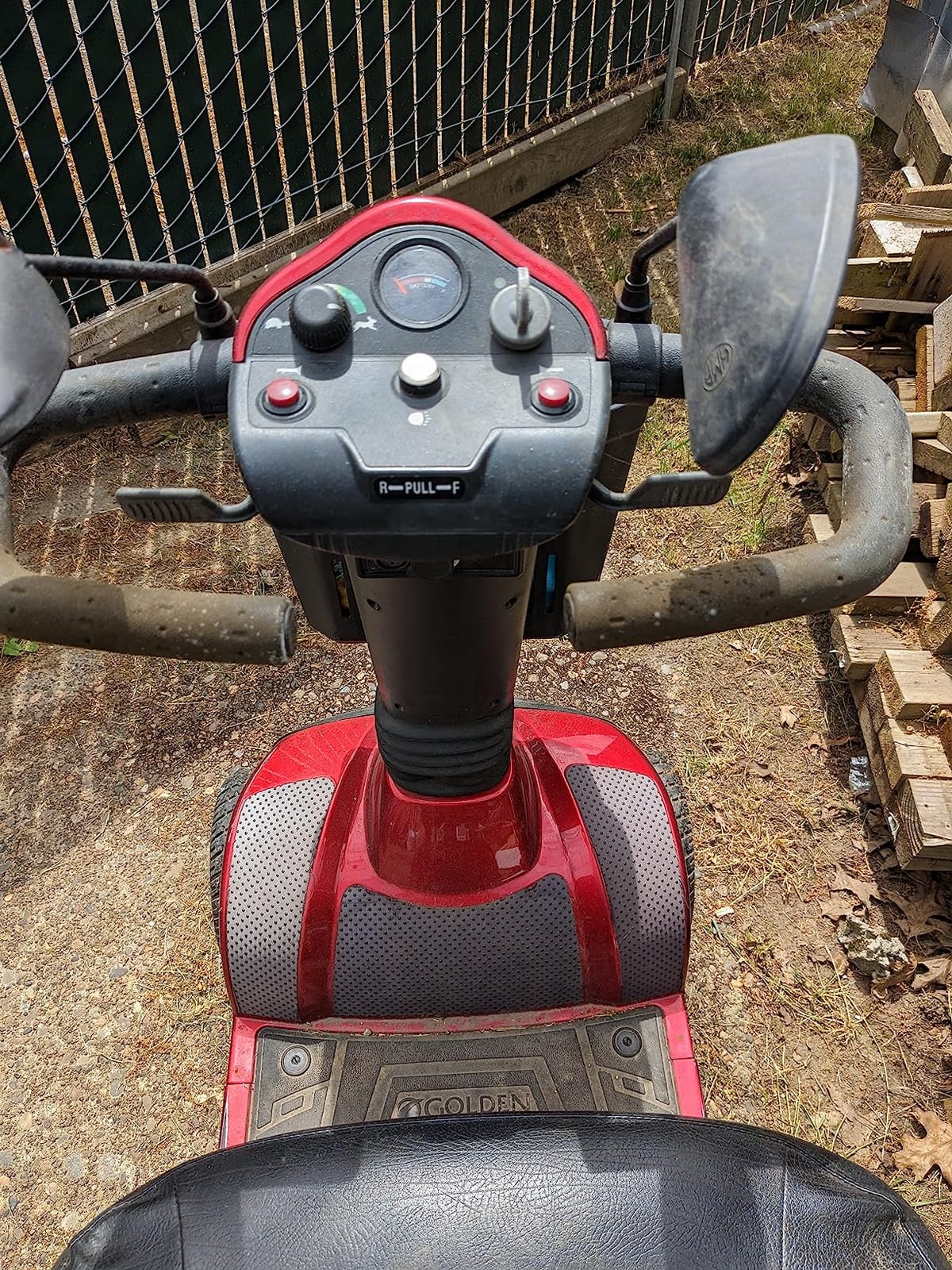
Two drawbacks show up repeatedly. One buyer received units with bent factory posts that had to be replaced, so inspect the terminals the moment the box opens, and the pack is heavy, roughly 18 to 24 pounds per pack, so help is needed to lift it into position.
The one-year prorated warranty is shorter in effect than a full one-year cover. It is listed as also suitable for lift chairs, stair lifts, and patient transport equipment, which is a useful sign that the cell is a general deep-cycle part rather than a scooter-only design.
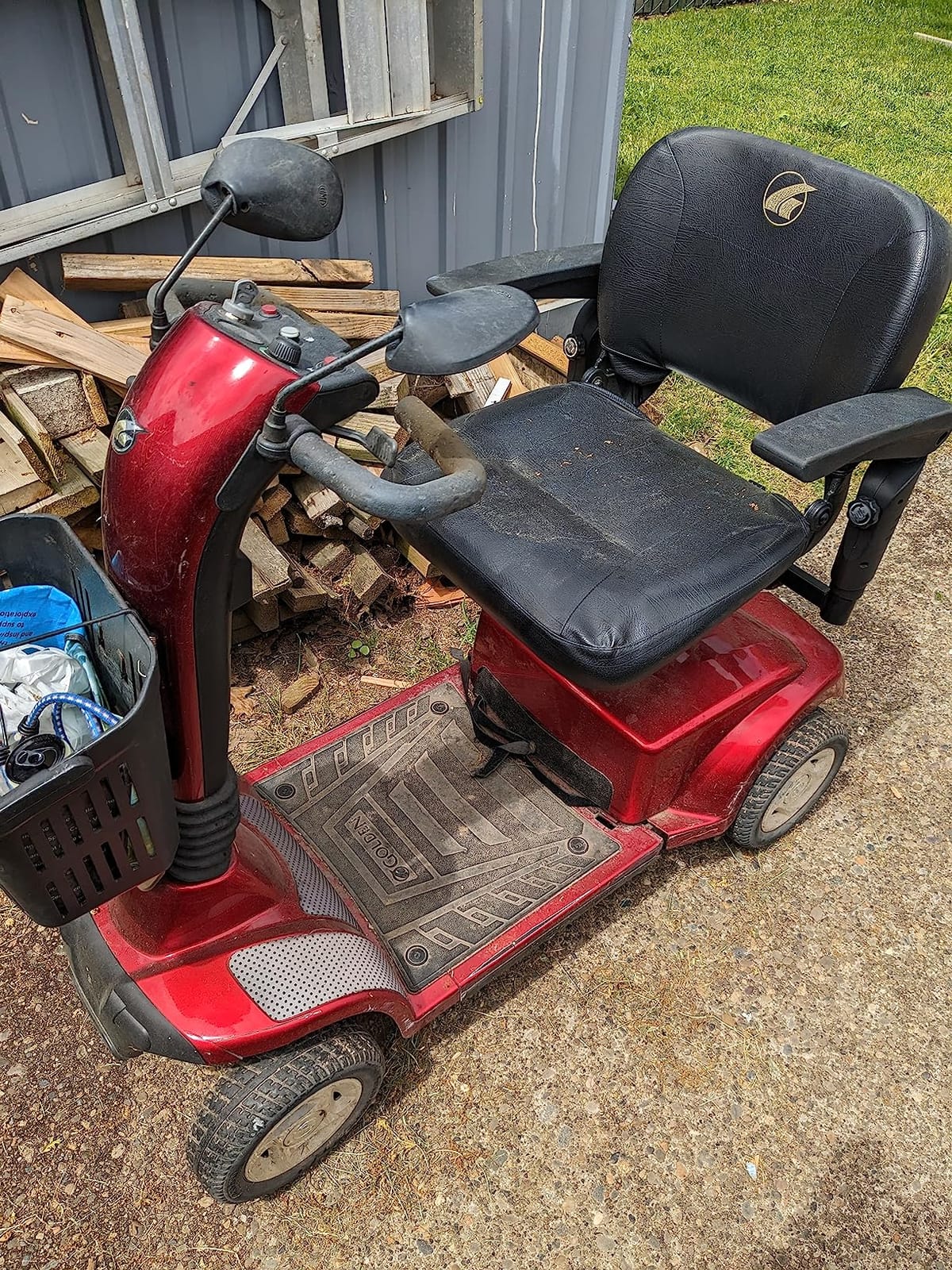
What a Jazzy daily rider should verify
Check the battery case marking before buying, because U1 bays are used across several models and the group number on your original battery should match what the listing replaces. Jazzy 1103, 1107, and 1113 models are named explicitly.
Confirm the post style and the cable length as well. Bent posts arriving in the box are the most common avoidable problem, and a five-minute inspection on arrival catches it before installation.
How 33Ah compares with a true 35Ah
The gap between 33Ah and 35Ah is about six percent of capacity, which in daily driving translates to a slightly shorter final leg of the day rather than a different experience. Most riders will not feel it.
What you do feel is the weight. Both capacities land in the same U1 size class, so the lighter pack does not let you skip the second pair of hands when installing.
9. Neptune Power Products NT12-35 NB 12V 35Ah 2-Pack
Neptune Power Product Brand NT12-35 NB 12V 35Ah Sealed Lead Acid Battery Compatible with Scooter Replacement for Pride Jazzy Select Electric Wheelchair by Neptune – 2 Pack
- Replaces 31Ah to 36Ah MX-123
- ES33-12
- PS33-12D
- U1-35 and similar models
- Arrive fully charged so the chair is usable immediately
- True 35Ah capacity with a heavy build
- Nut and bolt terminals match most chair hardware
- Recurring reports of bent or damaged battery posts in the box
- Seller handles warranty outside Amazon returns
- 4.3 average with a 10% one-star share
The NT12-35 NB is the most explicitly cross-referenced battery in this roundup, and that is a genuine advantage for daily riders replacing an unusual original. It replaces 31Ah, 32Ah, 33Ah, 34Ah, 35Ah, and 36Ah batteries including the MX-123, MX-12310, ES33-12, PS33-12D, CSB GP12340, BP35-12, CLTXPA1235C, TR35-12, U1-35, PS12350, and PS12330 group numbers.
At 7.68 x 5.12 x 6.54 inches and 23.2 pounds per battery with nut and bolt terminals, it fits the same U1 trays as the Casil 33Ah pack. Wheelchair owners confirm the fit and that the batteries arrive fully charged, so the chair can go back into service immediately.
It is also the only pack here that can be paired in series for 24V wheelchair applications, which matters if your chair runs a higher voltage than a scooter. That flexibility makes it a reasonable fit for bariatric and heavy-duty power chairs with a 24V system.
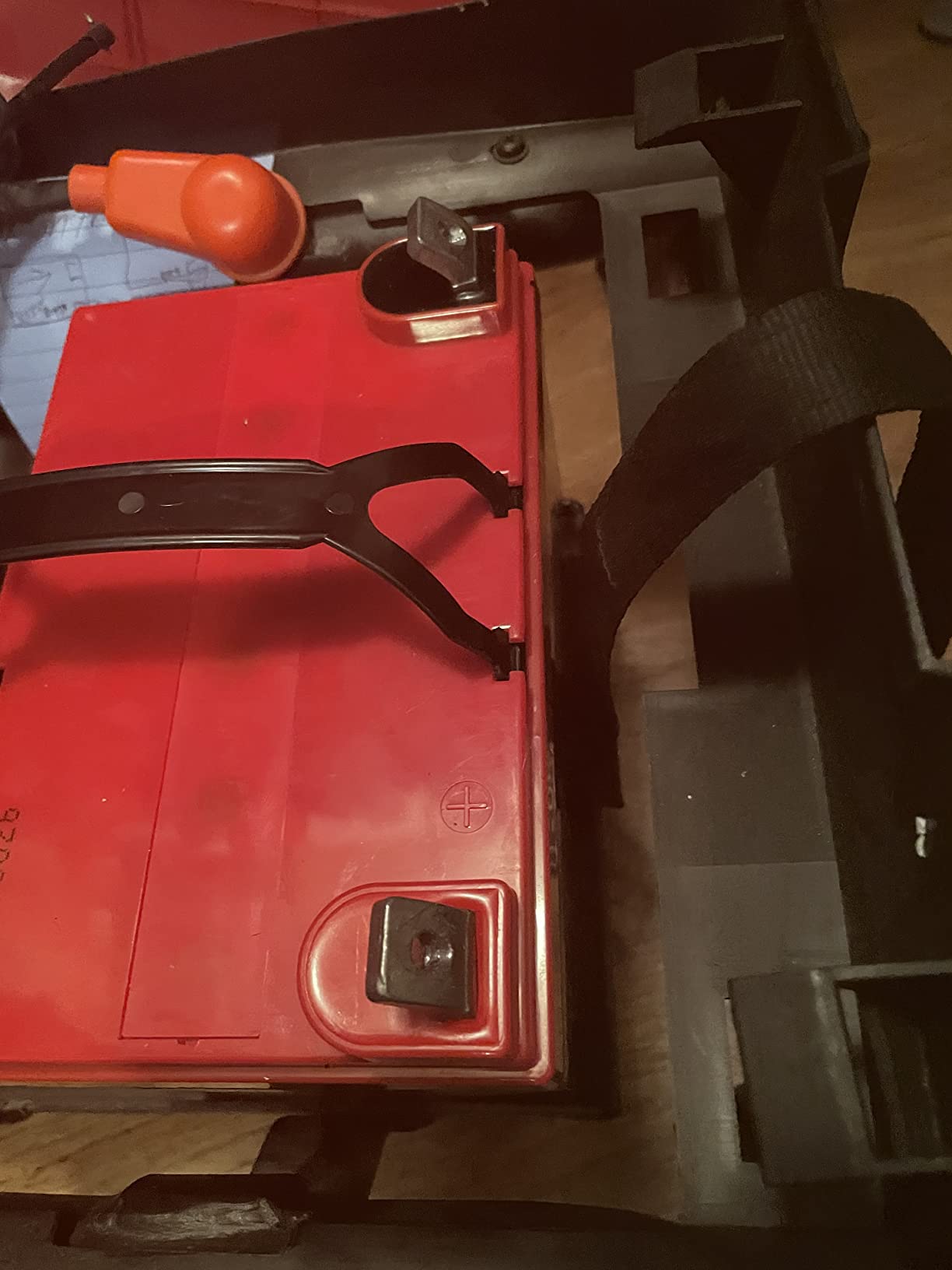
The dominant complaint across the reviews is shipping damage to the battery posts, and it recurs. Inspect both units on arrival before installing anything. A second issue is that the seller handles warranty outside Amazon returns, so a claim means contacting the seller directly rather than going through the normal return path, and one buyer reports much shorter life than the original equipment despite expecting an upgrade.
With a 4.3 average and a 10% one-star share, this is the lowest-rated pack among the twelve sealed lead-acid options here. The capacity and cross-reference list are genuinely good, and the arrival charge is convenient, but the shipping and service experience is the weakest of the twelve.
When the cross-reference list saves you money
Matching a replacement battery by group number rather than model name is more reliable, because OEMs change model names far more often than battery group numbers. This listing names eleven common group numbers, so a daily rider can match the marking on the old case directly.
Measure the old batteries and check the marking before buying, as the listing advises. That one step prevents most of the fitment problems that show up later as short-range complaints.
What the 4.3 rating reflects
The rating is not about capacity. Buyers who received intact units report correct fit and good charge retention. The score reflects the damaged posts on arrival and a warranty process that bypasses the normal return route.
If you buy this pack, inspect the terminals immediately, photograph any damage, and raise it before installation. That single habit turns the most common complaint into a five-minute resolution.
10. Pride Mobility OEM Battery Pack for GoGo Elite Traveller Plus and Go-Go Sport
Battery Pack for Pride Go-Go Elite Traveller Plus & Go-Go Sport Scooters
- Genuine original equipment pack removes the guesswork of matching cells
- 18Ah capacity with about 15 miles of riding range
- Arrives fully charged and ready to install
- One owner reported a full-charge meter after two full days at Disneyland
- Seller replaced a transit-damaged unit
- Most expensive option in this roundup by a wide margin
- Fits only GoGo Elite Traveller Plus and Go-Go Sport models
- One buyer reports capacity dropping sharply within about six months
Sometimes the simplest daily-use answer is the original equipment pack. This is a genuine Pride Mobility battery pack for the GoGo Elite Traveller Plus and Go-Go Sport, covering models SC53, SC54, SC73, and SC74, and it arrives fully charged so the scooter is usable immediately.
The 18Ah capacity is quoted at about 15 miles of riding range, which is the highest stated range figure in this roundup. One owner reported a full-charge meter reading after two full days of running at Disneyland, which is the kind of heavy-use data point most listings never carry. Pride owners value the fit-and-forget experience, and the seller replaced a transit-damaged unit quickly.
What you give up is flexibility. This pack fits only those four GoGo models, so it is not a general replacement, and it is the most expensive option here by a wide margin. For a rider on a different chassis, the money is better spent on a matched aftermarket pair.
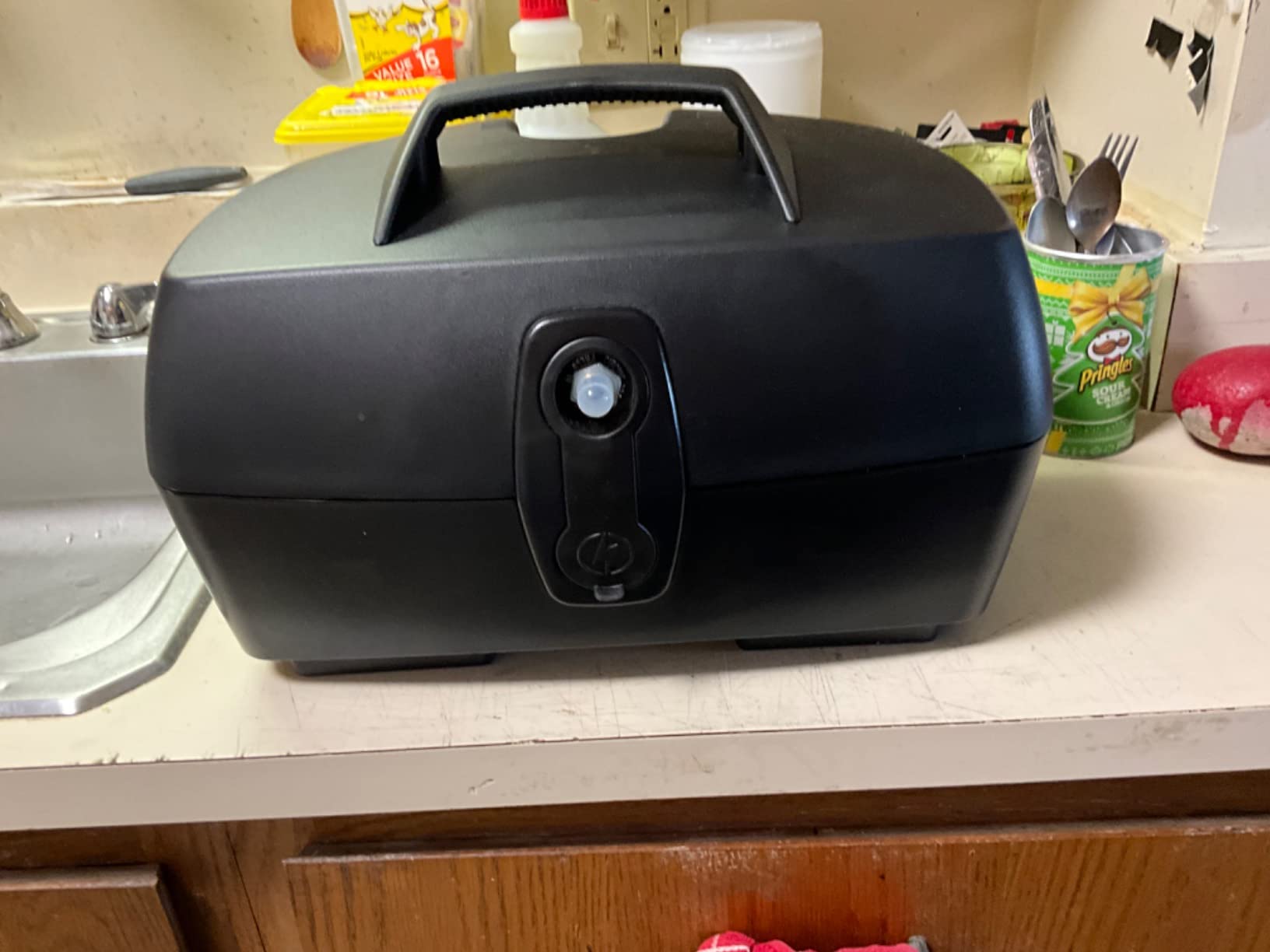
Durability is the split point in the reviews. A few buyers report capacity dropping sharply within about six months of purchase, which is a short life for a daily-use battery, while the majority describe normal original-equipment behaviour. If you have no backup scooter and cannot absorb an early failure, a matched aftermarket pair is the lower-risk choice.
The listing places the pack at 18 x 14 x 12 inches, and it comes as a complete plug-and-play pack rather than individual cells. That means one purchase instead of two, and the correct capacity pairing decided for you by the manufacturer.
What OEM fit and forget actually buys you
An original equipment pack removes the terminal, dimension, and capacity guesswork. There is no need to measure the bay, identify the post style, or confirm the charger will finish a full charge on the pack.
The trade is cost and range. You pay more for the same chemistry class and do not get the higher capacity options that aftermarket pairs offer in the same bay.
Is the stated range realistic
The 15 mile figure is the manufacturer’s claim. Owners in scooter forums commonly report 50 to 60 percent of claimed range in everyday driving, so a realistic expectation for this pack is closer to 8 to 9 miles per charge on a typical flat daily loop.
Terrain, rider weight, and how deeply the pack is discharged will move that figure, and partial daily use sits at the higher end while hills and full depletion sit at the lower end.
11. Nermak 12V 10Ah LiFePO4 Deep Cycle Battery 2-Pack
- 2000+ charge cycles versus 200 to 300 for lead acid
- Built-in 10A BMS with overcharge and short circuit protection
- Low self-discharge supports up to one year of storage
- Series or parallel linking of up to four batteries
- Light at 1.2 kg for the two-pack
- Requires a LiFePO4-specific charger
- 10A continuous discharge is low for high-draw scooters
- 1-star reviews at 11%
This is where the chemistry conversation changes. The Nermak 12V 10Ah pack is lithium iron phosphate at 12.8 volts, and the headline number is cycle life: 2000+ charge cycles against the 200 to 300 that lead acid typically manages. For a daily user charging every night, that difference compounds into years of extra service.
It is also dramatically lighter. The two-pack weighs 1.2 kg, which is the single biggest practical advantage of lithium and the reason folding and travel scooters get easier to load into a car. The built-in 10A BMS protects against overcharge, over-discharge, over-current, and short circuit, and low self-discharge means the pack can sit for up to a year without maintenance.
Batteries of this type can be linked in series or parallel, up to four identical units, with 10A continuous output and 2C pulse discharge. That flexibility makes it easy to scale capacity without changing chemistry, which lead acid does not allow cleanly.
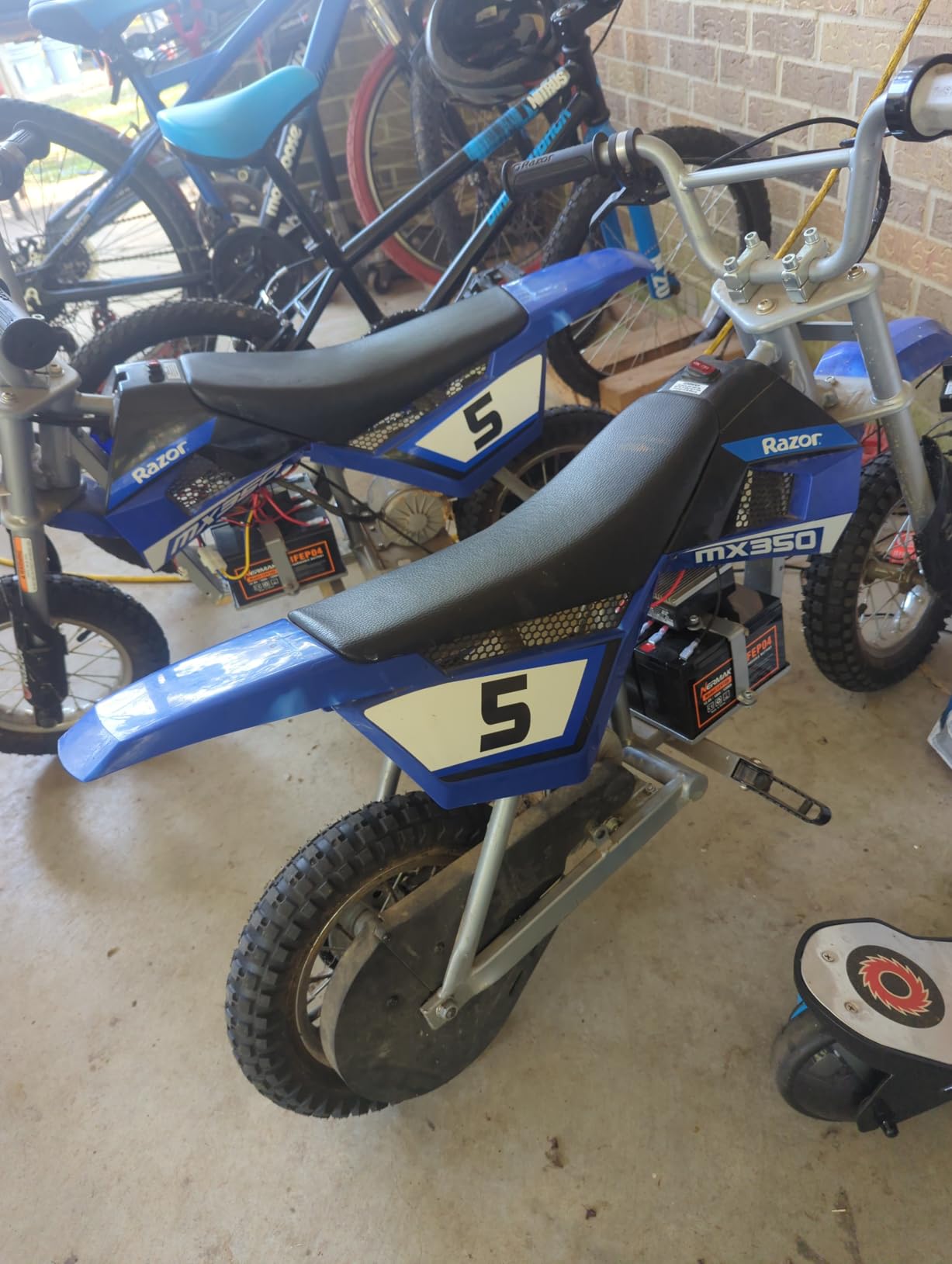
Two constraints decide whether this pack works for you. It requires a LiFePO4-specific charger, because a fully automatic sealed lead-acid charger may not bring the pack to a full charge. And the 10A continuous discharge limit is genuinely low for a full-size scooter drawing a heavy start-up current, so this is a better fit for lighter travel scooters and power wheels than for a heavy-duty bariatric model.
The 11% one-star share in the reviews is the highest of any pack here, and the complaints concentrate on the charger requirement and limited output rather than on outright failure. That is a knowledge gap rather than a quality signal, and it is fixable with the right charger.
What lithium changes for a daily rider
Two things change materially. Service life extends because the cells tolerate thousands of cycles, and weight drops to roughly a third of an equivalent lead-acid pack, which makes the scooter far easier to lift into a vehicle or lift through a step.
Everything else depends on equipment. A lithium pack is only as good as the charger feeding it, and a mismatched charger is the most common reason people report disappointing results. Our LiFePO4 battery guide covers the chemistry differences in more detail.
Is a conversion worth it for daily use
For a rider who charges nightly and stores the scooter indoors, the arithmetic favours lithium: fewer replacements over the life of the scooter and far less lifting weight. For a rider on a hot-climate daily schedule, lithium also tolerates heat better than sealed AGM.
Against that, you need a LiFePO4-compatible charger and you need to confirm the continuous and peak current your controller draws. Our deep cycle battery guide walks through the charger sizing and discharge ratings that apply to both chemistries.
12. SEFEPODER 12V 20Ah LiFePO4 Deep Cycle 2-Pack with 40A BMS
SEFEPODER 12V 20Ah Lithium LiFePO4 Deep Cycle Battery 2 Pack with 40A BMS
- Rated 4000+ cycles
- roughly double comparable 12V 20Ah packs
- 4.4 average with 80% five-star reviews
- About one third the weight of an equivalent lead-acid battery
- 20A continuous discharge with 3C pulse output
- Requires a LiFePO4-specific charger
- 1-star reviews at 10%
- Wider at 3.85 inch than the more compact 10Ah lithium pack
If a lithium conversion is on the table and your scooter is a full-size daily driver, this is the pack to look at. The SEFEPODER 12V 20Ah LiFePO4 pack is rated for 4000+ cycles, roughly double the claimed life of comparable 12V 20Ah lithium packs, and it carries a 4.4 average with 80% of reviews at five stars.
The electrical headroom is what separates it from the 10Ah pack. A 40A BMS with 20A continuous discharge and 3C pulse capability suits electric scooters properly, and owners highlight steady scooter performance alongside the low weight relative to lead acid. The pack measures 5.94 x 3.85 x 3.74 inches and weighs 7.9 pounds for the two, so it fits a bay that also takes the compact 12Ah sealed lead-acid packs.
Because 12.8 volts is the lithium equivalent of a 12V lead-acid cell, capacity comparisons translate directly: 20Ah here is the direct lithium counterpart to a 20Ah lead-acid battery, with the same nominal voltage and roughly a third of the weight.
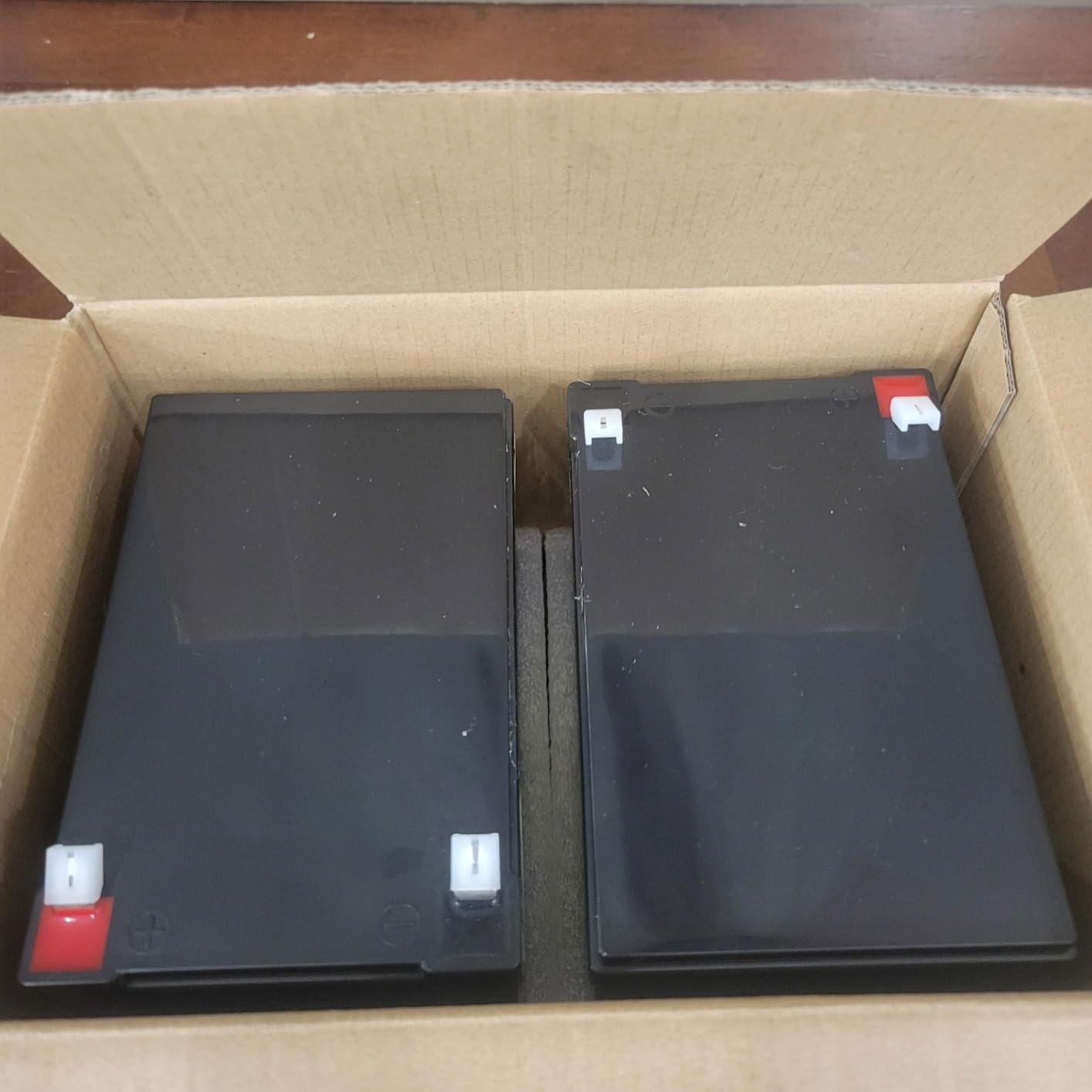
The recurring comment in the reviews is the charger. Owners repeatedly note needing a LiFePO4-specific charger because an automatic sealed lead-acid charger may not reach a full charge, and that single mismatch is the most common reason a lithium upgrade disappoints. The 10% one-star share reflects some failures and capacity shortfalls alongside that charger frustration.
The footprint is also wider at 3.85 inches than the more compact 10Ah lithium pack, so measure the bay if you are moving between the two. Series or parallel connection works with up to four identical batteries, and the warranty is 12 months.
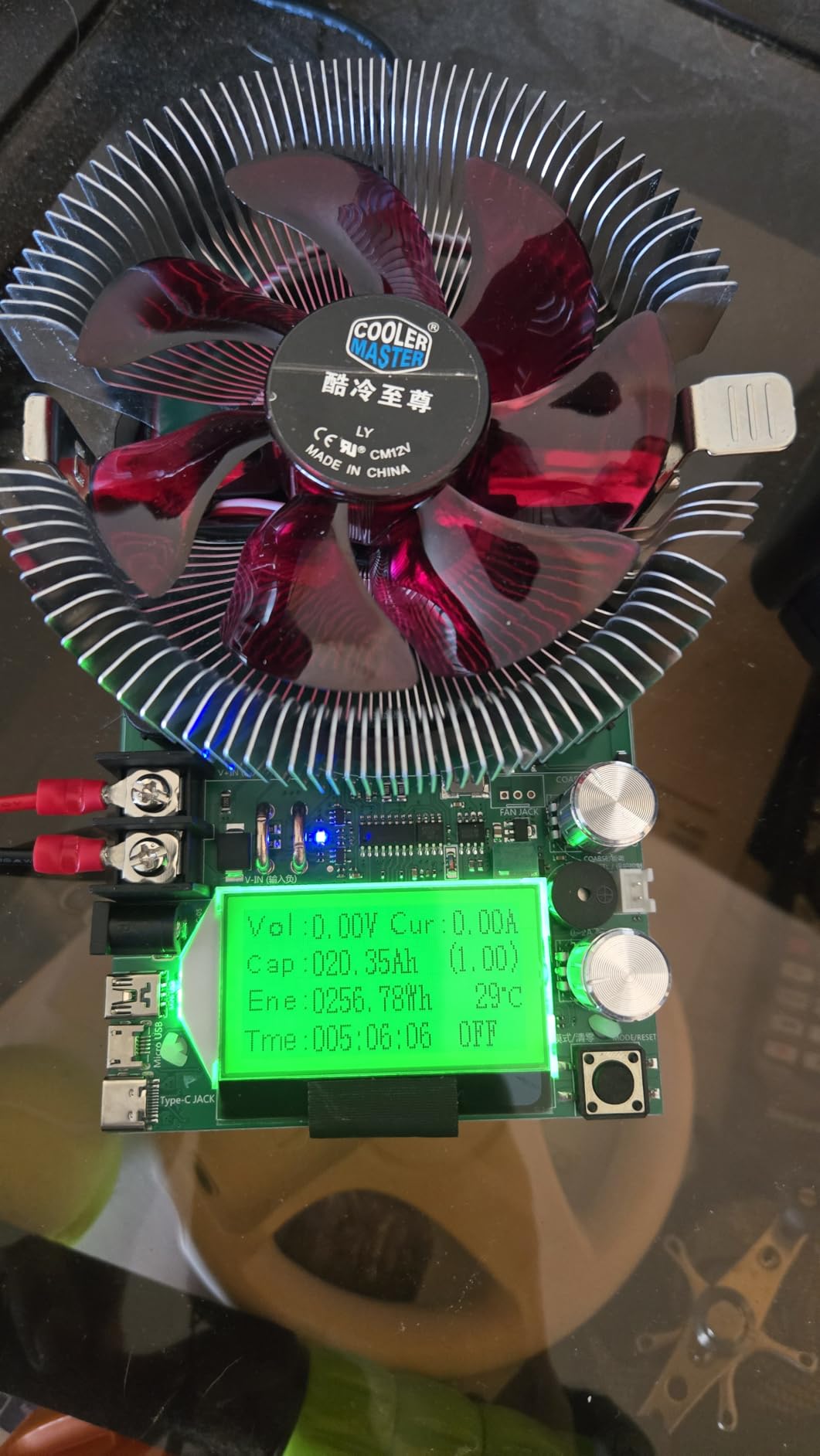
Is 4000+ cycle life realistic for daily charging
Cycle ratings vary with depth of discharge and temperature, and no lab figure transfers directly to daily riding. What the number does tell you is that the chemistry is not the limiting factor here, unlike lead acid where the cell chemistry sets a much lower ceiling.
At a nightly charging schedule, even a fraction of the rated cycle life puts this pack well beyond the point where a lead-acid pair would be replaced. That is the core argument for the chemistry.
What to check before installing
Confirm three things: that your charger supports lithium iron phosphate, that your controller’s continuous and peak current fall inside the 20A and 3C figures, and that the bay accepts a 5.94 x 3.85 x 3.74 inch body with an F2 terminal.
If your daily use includes airline travel, check the airline’s rules first, since lithium packs have watt-hour limits that lead acid does not. Our drone battery guide covers the same watt-hour limits and airline paperwork in more depth.
AGM vs Gel vs Lithium for Daily Scooter Use
Sealed AGM is the best default for daily use because it is the format your scooter was designed around, gel is the better answer in sustained heat at a higher cost, and lithium iron phosphate wins on cycle life and weight if you replace the charger. The chemistry decision matters less than matching capacity and fitment, but it matters for how long the pack lasts.
Absorbent Glass Mat batteries use a glass fibre separator with electrolyte held in the mat rather than free liquid, which makes them spill-proof and mountable in any position. Gel cells use a silica gel electrolyte that resists heat better and recovers from deep discharge well, and they typically need 20 to 25 break-in cycles before reaching full capacity. Lithium iron phosphate is a different family entirely, with a built-in BMS, no memory effect, and cycle counts in the thousands.
The gap between claimed and real range is the thing daily riders notice first. Forum discussions among scooter owners consistently report getting 50 to 60 percent of the manufacturer-claimed range in everyday driving, and a large share report falls below 10 miles after a year of daily use. Budget for the real figure when you plan trips, and treat the brochure number as a best case under ideal conditions.
How climate changes the answer
Heat is the fastest way to shorten battery life. Riders in hot climates report 18 to 24 months of service from sealed AGM and two to three years from gel, and storing a scooter in a non-air-conditioned garage ages the pack two to three times faster than a climate-controlled space.
Lithium tolerates heat better than sealed lead acid, which makes it a strong choice in hot regions, but the terminals still corrode faster in coastal and humid air. A thin film of dielectric grease on the posts after installation pays for itself.
Cycle life in daily use
Sealed lead-acid packs in this roundup carry cycle counts in the 200 to 300 range, which lines up with the 18 to 36 months daily riders report. The lithium packs listed here claim 2000+ and 4000+ cycles, a difference that shows up as years rather than months. The same capacity fade pattern shows up across other devices too, as our robot vacuum battery lifespan guide explains.
One more reality: deep discharge permanently reduces capacity in sealed lead acid, and forum guidance is blunt about never running it below 20 percent charge. Daily riders who return home below that level shorten the life of the pack every time it happens.
How to Choose the Right Battery for Your Scooter
Match voltage first, then capacity, then the physical fit, and only then the chemistry. Most scooters run two 12V batteries in series for a 24V system, so you need a matched pair of the same age and capacity, and swapping just one is the fastest route to uneven performance.
Voltage is the one thing you cannot negotiate. A 24V system will not work with two 12V lithium packs unless the charger and controller are designed for it, and a controller expecting a specific voltage will not tolerate a mismatch. Depth of discharge and ambient temperature decide how a pack ages, and the comparison in our deep cycle battery guide covers the long-run numbers. Capacity is the one figure you can change without touching any other part of the scooter.
Dimensions and terminal type are where most failed purchases happen. The compact F2 style measures about 5.94 x 3.86 x 3.98 inches, the larger U1 style runs around 7.7 x 5.2 x 7.1 inches, and NB terminals sit on yet another footprint. A pack can have exactly the right voltage and capacity and still be physically too tall for the bay or have posts your leads cannot reach.
Terminal types you will meet
F2 terminals are the small push-on style found on compact 12Ah packs, and they are the reason many replacements are a five-minute job. Nut and bolt or bolt terminals are the round posts used across most mid and large mobility scooters, and they accept the standard mounting hardware.
NB terminals are the intermediate style on 20Ah packs, and they are a common mismatch: the battery is the right size but the posts sit lower or higher than the originals, so short leads fail to reach. Measure post height against your existing leads before buying.
Scooter brand compatibility
Pride Mobility models are the most specifically documented in this roundup, covering GoGo, Go-Go Elite, GoGo Elite Traveller Plus, Go-Go Sport, Victory, and Jazzy power chairs. The Casil 12Ah pack also lists Golden Technologies, Invacare, Pride Mobility, and Drive Medical scooters, which makes it the broadest cross-brand option here.
Drive Medical, Golden Technologies, Zip’r, Shoprider, Merits, and FreeRider scooters use the same core 12V sealed lead-acid format, so the deciding factors are bay dimensions, terminal style, and required amp hours rather than brand. Read the group number on your old battery case and match that first.
What to check before you buy
Write down four things from your existing battery: the voltage stamped on the case, the amp hour rating, the physical dimensions including post height, and the terminal type. If the group number is legible on the case, record that too, since it is more reliable than a model name.
Then confirm the charger. A charger sized for smaller cells will not finish a full charge on a larger pack, and a fully automatic sealed lead-acid charger may not bring a lithium pack to full charge. Undercharging is one of the leading causes of early battery failure in daily-use scooters.
Charging and Storage Habits for Daily Users
Charge overnight on a flat, hard, non-flammable surface, plug the scooter into the charger last, and unplug it first the next morning. Daily riders who follow a fixed routine get far more life out of the same pack than those who charge opportunistically, because sealed lead acid is happiest when it is taken through full cycles rather than left partially charged for weeks.
Avoid charging immediately after a long ride while the pack is hot, and never leave a charging scooter in direct sun or in an enclosed space with poor ventilation. Sealed batteries vent less than flooded ones, but charging still generates heat, and heat is the enemy of battery life.
Storage is where most damaged batteries are lost. Forum users report storing scooters in a vehicle and finding the previous batteries dead without notice, and a non-air-conditioned garage ages a pack two to three times faster than a climate-controlled room. If you are not riding for weeks, keep the pack on a maintenance tender and check it monthly.
A daily charging routine that works
End of day: park on level ground, connect the charger, and let it run a full cycle rather than topping off for ten minutes. Overnight charging at a controlled temperature is better than repeated short top-ups in a warm garage.
Morning: unplug the charger before moving the scooter, and check the terminal posts for corrosion. A quick wipe and a light film of dielectric grease prevents the buildup that causes hard starts later.
What overcharging and deep discharge do
Yes, you can overcharge a mobility scooter battery. Leaving a pack on a charger for days after it is full, or using a charger with the wrong voltage, drives excess current into the cells, boils off electrolyte in sealed lead acid, and shortens service life sharply. Modern automatic chargers taper off, which is why using the charger that came with your scooter matters.
The other half of the damage is running the pack flat. Never take sealed lead acid below 20 percent charge, because deep discharge permanently reduces capacity rather than being something the battery recovers from. If you routinely get home near empty, the pack is undersized and a higher amp hour rating is the fix.
Long-term storage
Park the scooter where temperature stays moderate, connect a maintenance tender if the battery will sit more than a few weeks, and top up the charge monthly. Checking the terminals for corrosion while they are disconnected prevents the majority of storage-related starting failures.
For lithium packs, the storage burden is lighter. Low self-discharge on the pack in this roundup supports up to a year of maintenance-free storage, though a monthly glance at the charge indicator is still sensible.
Signs Your Mobility Scooter Battery Needs Replacing
Replace the pair when range drops noticeably, the scooter’s charge meter no longer holds a reading, or the pack gets stranded mid-trip. Waiting until you are stuck is the most common regret among daily riders, because a battery that fails without warning often follows a long stretch of reduced capacity that was easy to ignore.
Because batteries age as a pair, replace both at once even if the second one seems fine. A new battery beside an old one in the same series string will absorb the charge cycles for both, and you will be replacing the new one sooner than you expect.
Shortened range is the earliest signal and the one most often explained away. A drop from a full day of errands to half a day is the standard trigger, and forum discussion suggests treating that as a battery problem before it becomes a breakdown problem.
Failure signs in order of urgency
The order runs from early to serious: noticeably shorter range per charge, slow acceleration or a sluggish start, a charger that runs unusually long, a charge meter that no longer reaches full, visible swelling or bulging cases, corrosion eating into the posts, and finally a pack that will not hold any charge at all.
Swelling and heavy corrosion are stop-use signals. A bulging sealed case is under internal pressure, and continuing to charge it risks damage to the scooter.
Why batteries die faster than expected
Common causes are all behavioural: charging in a hot space, deep discharge below 20 percent, long storage without a tender, a mismatched pair with different ages or capacities, an undersized charger, and mixed brands in the same series string.
Heat, deep discharge, and neglected storage account for most early failures. Fixing any one of the three typically extends pack life by months before you spend anything on a replacement.
Leading a Lithium Upgrade Without Voiding Your Setup
Yes, you can replace an AGM battery with a lithium-ion pack, but only if you treat it as a system change rather than a battery swap. Voltage, capacity, continuous and peak current, charger type, physical dimensions, connectors, BMS communication, and low-voltage cutoff all have to line up, and the charger is where most conversions go wrong.
The chemistry itself is forgiving. A 12.8V lithium iron phosphate cell is the nominal equivalent of a 12V lead-acid cell, so a 24V scooter pair maps cleanly onto a 24V lithium pair at the same nominal voltage. What does not map cleanly is charging behaviour, and a fully automatic lead-acid charger may never bring a lithium pack to a full charge.
Weight is the payoff. Packs in this roundup come in at roughly one third the weight of an equivalent lead-acid battery, which turns an awkward two-person lift into a one-person job and makes folding travel scooters far easier to load into a car. For a daily user with a heavy scooter, that is often the deciding benefit.
Conversion checklist before you buy
Work through the list in order: confirm the system voltage, confirm capacity in amp hours, confirm the controller’s continuous discharge current and peak current, confirm the charger supports lithium iron phosphate, confirm the physical dimensions fit the bay, confirm the connector and terminal type match, confirm the built-in BMS handles protection, and confirm the low-voltage cutoff will not strand you below a critical level.
If the controller uses a battery management system for balancing or communication, a generic pack with a basic protection BMS will not be interchangeable with it. That single question has ended more lithium conversions than the charger question.
Airline travel and shipping rules
Lithium packs have watt-hour limits that lead-acid batteries do not, and airlines enforce them. Check the watt-hour rating printed on your pack and confirm it with the airline before booking, because mobility scooters are also subject to the airline’s own battery handling rules.
Shipping carries its own requirement. UN38.3 certification is the standard for transporting lithium batteries, and a reputable seller will list it. Lead-acid packs avoid that paperwork entirely, which is part of why the sealed AGM option stays the default for daily riders.
When a lead-acid swap is the better call
Stay with sealed AGM if your scooter is on a tight budget, if you cannot source a lithium-compatible charger, if you store the scooter somewhere you cannot control the temperature, or if you need a part listed against your exact scooter model with no electrical unknowns.
Move to lithium if you lift the scooter regularly, if you charge it every single day, if heat is a constant factor in your climate, or if you are planning to keep the scooter for several more years and replacement labour is a hassle you would rather not repeat.
Frequently Asked Questions
What is the best battery to use in a mobility scooter?
For daily use, a matched pair of sealed AGM 12V batteries is the safest choice because it fits the charger and bay your scooter already uses. Gel cells handle sustained heat better, and lithium iron phosphate lasts the longest and weighs least but requires a lithium-compatible charger. Match the voltage, amp hours, and terminal type to your scooter before choosing the chemistry.
What is the average life of a mobility scooter battery?
Daily users in hot climates report 18 to 24 months of service from sealed AGM batteries and two to three years from gel. Lithium iron phosphate packs last far longer, with rated cycle counts of 2000+ to 4000+. Storage in a non-air-conditioned garage can age a pack two to three times faster than a climate-controlled space.
Can I replace an AGM battery with a lithium-ion battery?
Yes, but treat it as a system change rather than a swap. Confirm the system voltage, amp hour capacity, the controller’s continuous and peak current, the charger type, the physical dimensions, the connector and terminal style, the built-in BMS, and the low-voltage cutoff. A standard automatic lead-acid charger may not bring a lithium pack to a full charge.
Why are my mobility scooter batteries going dead so quickly?
The usual causes are charging in a hot space, deep discharge below 20 percent, long storage without a maintenance tender, a mismatched pair with different ages or capacities, an undersized charger, and mixing brands in the same series string. Forum riders also report batteries failing without notice after storage in a vehicle, and getting only 50 to 60 percent of the claimed range in normal daily driving.
Can you overcharge mobility scooter batteries?
You can, and it shortens service life. Leaving a pack on a charger for days after it reaches full, or using a charger with the wrong voltage, drives excess current into the cells and boils off electrolyte in sealed lead acid. Modern automatic chargers taper off, which is why using the charger supplied with your scooter matters. The opposite error, deep discharge below 20 percent, causes permanent capacity loss.
Final Verdict on the Best Mobility Scooter Batteries for Daily Use
For most daily riders, the Mighty Max Battery 12V 12Ah SLA 2-Pack is the pick. It is UL certified, sized for the compact Pride GoGo battery bay, sold as a matched pair, and carries an 868-review history at 4.5 stars. Riders needing more capacity per charge should step up to the UPG 12V 35Ah pair, and riders who can swap the charger should look seriously at the SEFEPODER lithium pack.
Whatever you choose, buy both batteries at once, match voltage, amp hours, dimensions, and terminal type, and never let a sealed lead-acid pack drop below 20 percent charge. Those three habits account for most of the difference between a pack that lasts two years and one that lasts four.
All twelve packs in this roundup of the best mobility scooter batteries for daily use were checked against their published fitment data, and every one of them is a battery you can fit without guessing. Follow the markings on your own case, and you will not go wrong.
This roundup was reviewed for 2026, and every fitment note above is worth re-checking against the marking on your own battery before you buy.