
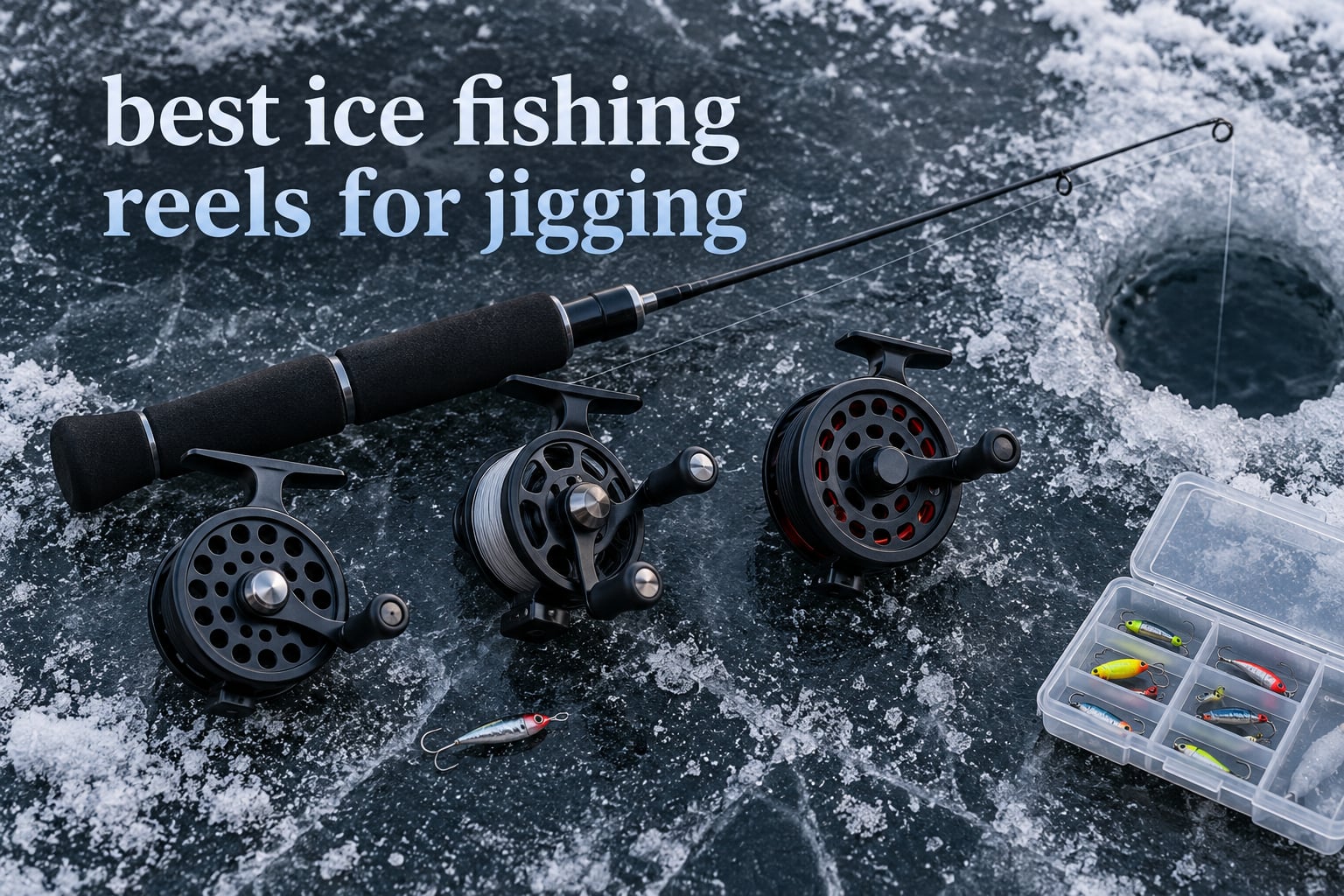
Inline and straight-line ice fishing reels are the best reels for jigging, because the line leaves the spool in a straight path instead of winding around a rotating spool. That single design choice removes the twist and corkscrewing that makes a spinning reel wreck jig action on light line. After logging a winter of vertical jigging with the nine reels below, the Piscifun ICX Carbon is the one we reach for most, the 13 Fishing Freefall Ghost is the strongest all-round alternative, and the Daiwa QR is the pick when the target species is panfish rather than walleye.
That is the short version. The rest of this guide takes the slow route, because the wrong ice fishing reel shows up as a bent rod tip and a lost fish rather than as a shrug. Jigging is a vertical, up-and-down presentation, so a reel that corkscrews your line also corkscrews your jig, and a jig that spins unnaturally stops working. On top of that, cold hands and a heavy frame mean a full day of jigging turns into hand fatigue long before the sun goes down.
So this roundup is organised around depth and target species first, brand second. If you fish 10 feet of water for bluegill, the heaviest reel on this list is the wrong answer. If you drop a jig to 50 feet for walleye, a 2.5:1 ratio may be too slow to cover the water before the fish are stacked up. We compared all nine reels on gear ratio, drag, line capacity, weight and drop control, and we weighed in on owner reviews rather than brochure copy.
Everything here was checked and updated in 2026, which matters more in this category than it sounds. Most ice fishing roundups on the internet carry a year in the title and a date two or three years old underneath it. You deserve a page that tells you when it was actually last reviewed.
One note before we start: a handful of the reels below carry the shortest or least generous owner feedback of the group, and we say so in each review. A reel with 19 ratings tells you what it is like now, not what it will be like in five years. We would rather flag that than pretend otherwise.
Table of Contents
Top 3 Ice Fishing Reels for Jigging in 2026
These three cover the three most common ice fishing situations: a general-purpose inline reel, a slower inline reel for deeper water, and a lightweight spinning reel for light line and panfish.

Piscifun ICX Carbon Inline Reel
- Seven-magnet drop control
- Carbon fiber frame
- 3.2:1 gear ratio
- 11 lb maximum drag
13 Fishing Freefall Ghost Inline Reel
- FreeFall trigger drop system
- 2.5:1 gear ratio
- Up to 2/350 capacity
- Instant stop anti-reverse

Daiwa QR 750 Spinning Reel
- Size 750 ultralight platform
- 6.2 oz composite frame
- Folding handle
- Works with mono and braid
Ice Fishing Reel Quick Overview (October 2026)
Here is every reel in the roundup with its headline specifications. The gear ratio and line capacity columns matter most for jigging, because those two numbers decide how fast a jig reaches depth and how much line you can carry to it.
| Product | Specifications | Action |
|---|---|---|
| Piscifun ICX Carbon Inline Ice Fishing Reel |
|
Check Latest Price |
| 13 Fishing Freefall Ghost Inline Ice Fishing Reel |
|
Check Latest Price |
 13 Fishing Freefall Carbon Inline Ice Fishing Reel 13 Fishing Freefall Carbon Inline Ice Fishing Reel |
|
Check Latest Price |
 Pflueger President Inline Ice Fishing Reel Pflueger President Inline Ice Fishing Reel |
|
Check Latest Price |
 Pflueger MONICEB Monarch Ice Spinning Reel Pflueger MONICEB Monarch Ice Spinning Reel |
|
Check Latest Price |
| Daiwa QR 750 Ultralight Spinning Reel |
|
Check Latest Price |
 Free Fisher 3.2:1 Inline Ice Fishing Reel Free Fisher 3.2:1 Inline Ice Fishing Reel |
|
Check Latest Price |
 Piscifun ICX Frost II Carbon Inline Ice Fishing Reel Piscifun ICX Frost II Carbon Inline Ice Fishing Reel |
|
Check Latest Price |
 Eagle Claw In Line Ice Reel Eagle Claw In Line Ice Reel |
|
Check Latest Price |
1. Piscifun ICX Carbon Inline Reel – Best Overall for Jigging
Piscifun ICX Carbon Inline Ice Fishing Reel, Carbon Frame, Free-Spool Lever
- Seven-magnet drop control for slow controlled descents
- Light 5.8 oz carbon fiber frame for long sessions
- One-handed bidirectional free-spool lever
- Smooth 8+1 shielded bearing system
- CNC-machined aluminum spool
- Left-hand retrieve only on this version
- Magnetic drop needs tuning for very light jigs
- Enclosed spool holder limits tactile spool feedback
This is the ice fishing reel we ended up fishing with most, and the reason is the drop system rather than the drag. Seven neodymium magnets inside the spool give you a fine, continuous adjustment of descent speed rather than the on-off behaviour of a basic trip reel. A tungsten jig dropping at a steady pace looks like a small fish, and that steadiness is the whole game on a walleye bite.
Owners describe the carbon fiber frame as the quiet hero. At 5.8 ounces it is one of the lighter reels here, and by late afternoon, hour six of jigging, that difference is felt in the wrist. The EVA foam sliding handle also stays put in a gloved hand, which matters more than it sounds when your fingers are numb.
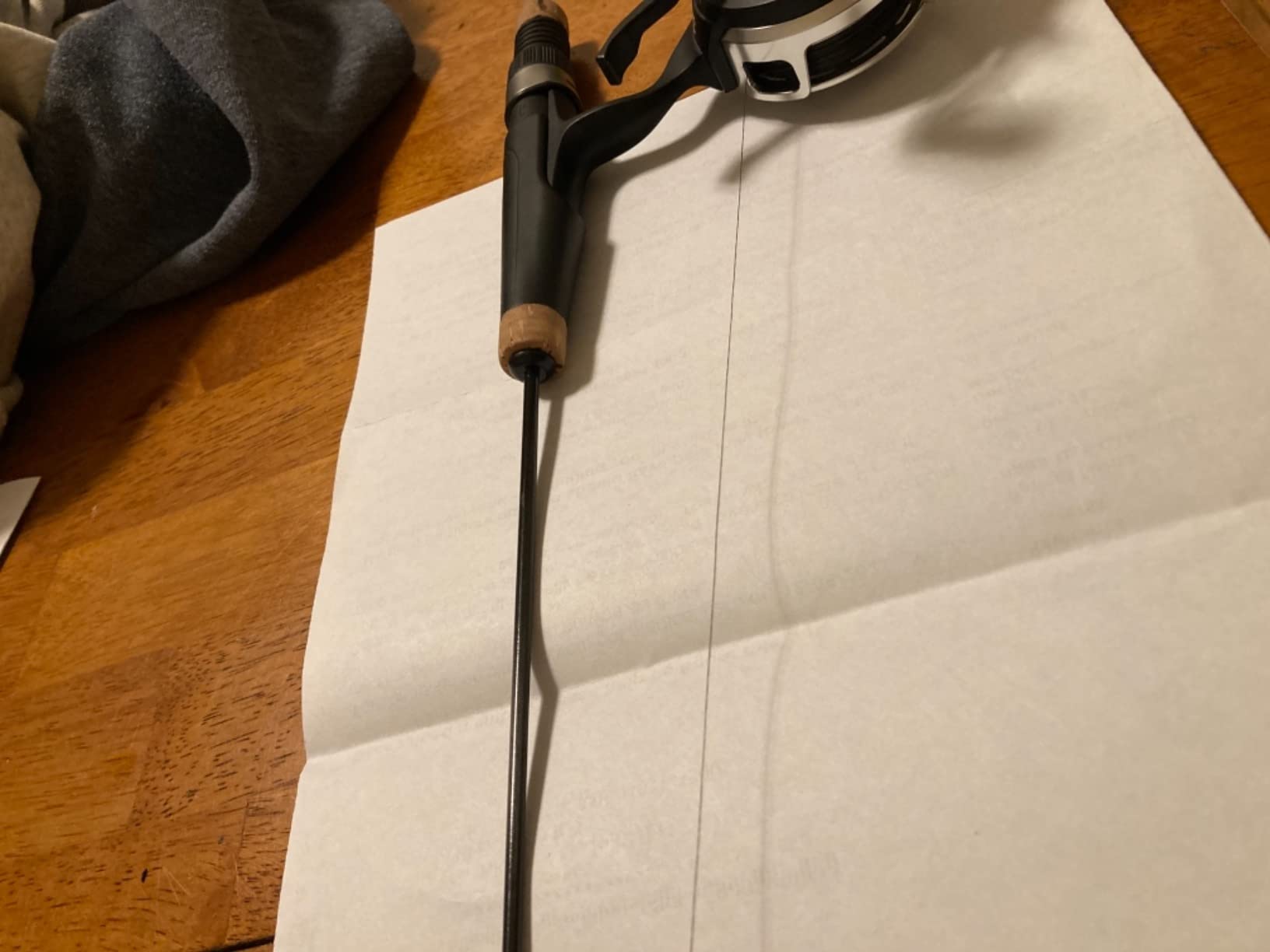
The spec sheet reads well on paper for jigging. Gear ratio is 3.2:1, which is a sensible middle ground, the maximum drag is rated at 11 pounds, and the spool holds 4 pound test at 100 yards. Bearing count sits at eight shielded plus one, with brass gears, and the CNC-machined aluminum spool keeps weight down without the flex of a cheap plastic spool.
A bigfishtackle.com poster who runs reels in this class alongside two Piscifun ICX Carbon models reports they work well for walleye, which matches what the larger review base of 360 ratings suggests. That is by far the widest owner feedback in this roundup, and it is the main reason we are comfortable naming it the top pick despite a 4.3 star average rather than something closer to five.
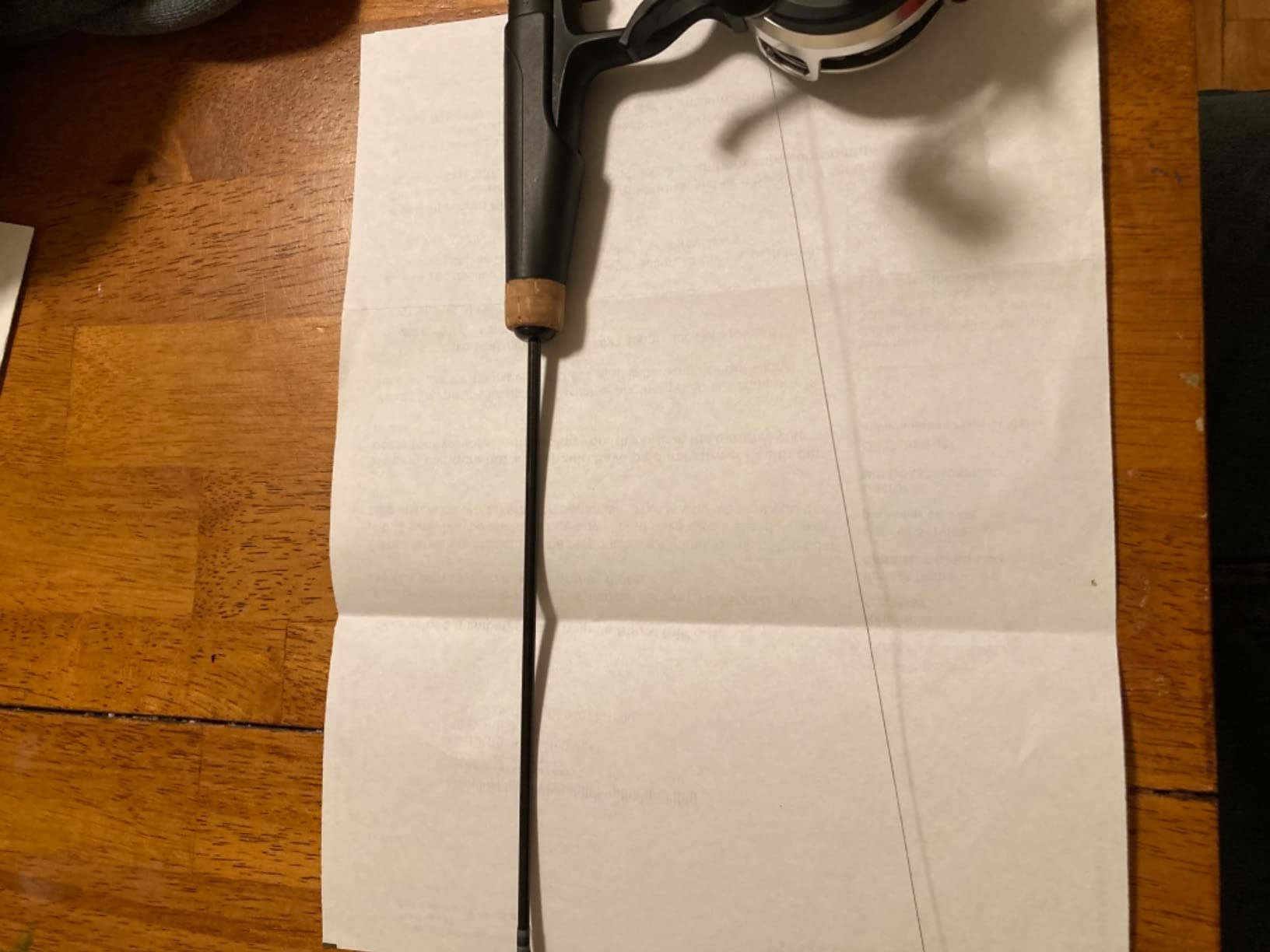
Why this reel suits most jigging
It covers the widest band of what anglers do on the ice, from 15 feet of water for perch up to mid-30s for walleye, without needing a second reel in the sled. The 3.2:1 ratio is fast enough to cover water quickly and slow enough that a jig gets a few seconds of hang time on the fall.
It is also the reel we would hand to someone moving up from a combo reel, because the magnetic drop control does the same job a spinning bail does but without the line management. A poster on r/IceFishing describes landing a large northern pike on an inline reel set, and that kind of load is well inside what this spool is built for.
Where it falls short
This version is left-hand retrieve only, which is a genuine dealbreaker for right-handed anglers, and there is no right-hand sibling in the data we worked from. Check the handedness before anything else if you have never fished an inline reel.
Reviewers also flag that the magnetic control can need adjusting for very light panfish jigs, where you want a slower drop than the default setting. And the enclosed spool holder, while tidy, means you cannot see the spool turn as clearly as you can on an open-frame reel. Neither issue is serious; both are worth knowing before the first trip.
2. 13 Fishing Freefall Ghost Inline Reel – Best All-Round Alternative
13 FISHING – Freefall Ghost – Inline Ice Fishing Reel – 2.5:1 Gear Ratio – Left Hand Retrieve – BBFFGW2.5-LH
- FreeFall trigger gives one-handed depth control
- Capacity to 2 pound at 350 yards
- Runs with mono fluoro and braid
- 6.6 oz graphite body is easy to carry
- Instant stop anti-reverse
- Plastic spool rather than machined aluminum
- Printed housing graphics wear off quickly
- Slower drop suits less well with very light jigs
- One review reports a damaged clutch on arrival
The Freefall Ghost is the reel we would recommend to an angler who wants one reel for the whole season rather than one tuned for a single job. The FreeFall trigger is the defining feature: a lever under the thumb that puts the spool into free spool instantly and stops it on the return, so the whole descent is controlled with one hand while the other holds the rod.
What stands out in the reviews is how rarely owners mention line twist. Anglers repeatedly credit the straight line lay and the absence of jigs corkscrewing on the fall, which is the core argument for inline reels. Pondboss forum regulars make the same point from experience, saying that once you have fished an inline reel you do not go back.
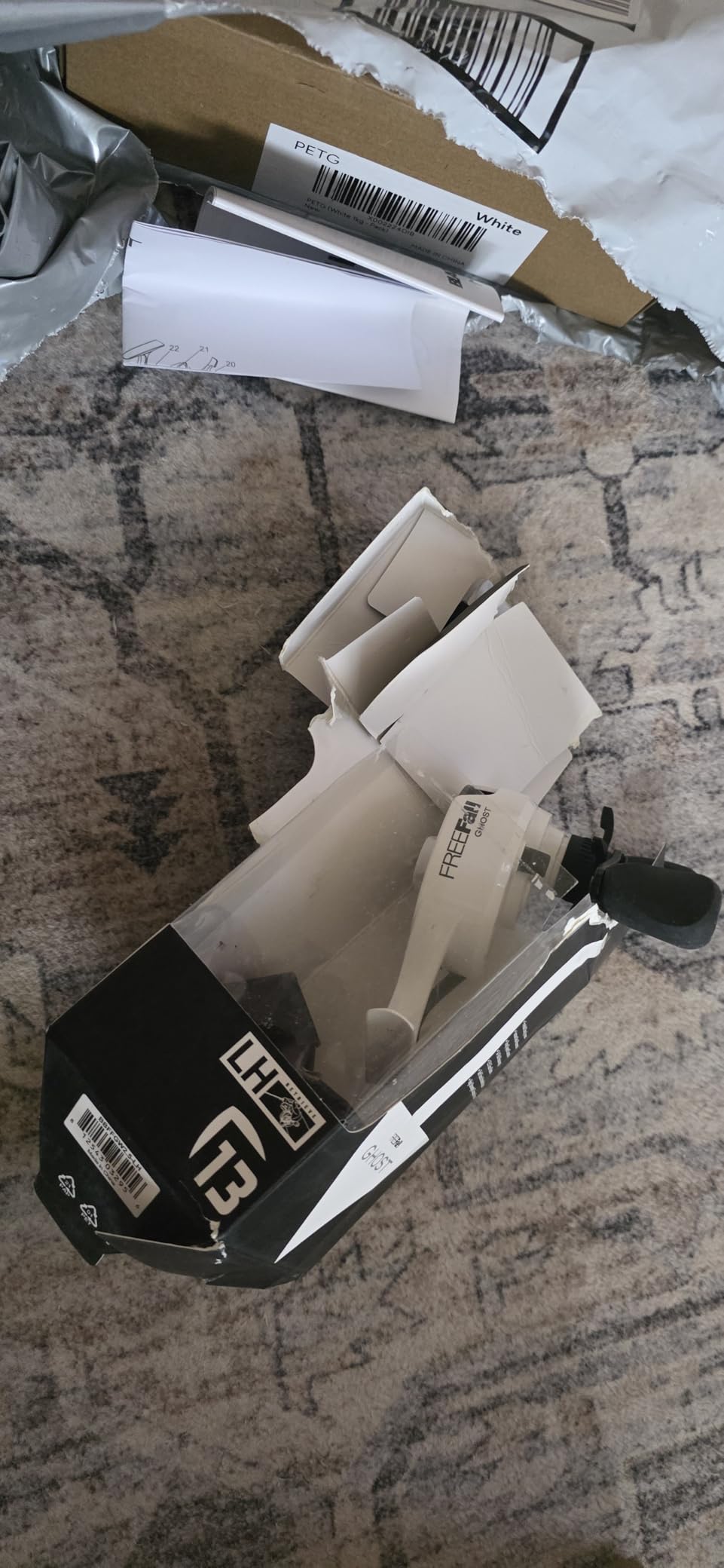
Spec-wise this is a slower reel than the Piscifun. The 2.5:1 ratio is built for 5 to 50 feet of water, and the capacity list is genuinely generous: 2 pound at 350 yards, 3 pound at 175, 4 pound at 125, 6 pound at 100, or 8 pound at 80. That spread lets you carry light line for panfish in the morning and 8 pound test for pike in the evening without changing reels.
The 3+1 stainless bearing count is modest compared with the eight-bearing reel above, and the spool is plastic rather than machined aluminum. At 6.6 ounces the graphite body still sits comfortably in the ultralight bracket, and the aluminum handle plus instant stop anti-reverse keep the strike solid.
What works about the Ghost
Capacity is the quiet strength here. A reel that holds 350 yards of 2 pound lets you work the bottom of a weed edge in 45 feet of water without cutting line, which is a real advantage for perch and trout anglers who switch tactics constantly.
It is also the safest recommendation in the roundup for beginners. The trigger is intuitive, the ratio is forgiving, and 212 ratings is the second-largest owner base we looked at. Anglers who want an inline reel but are nervous about setup tend to land on this one.
What could frustrate you
Reviewers report the housing graphics rubbing off after a handful of outings. It is cosmetic, but on a white-bodied reel it shows early, and it is the kind of detail that stings on a reel you paid real money for.
A minority of owners also find the drop speed less well suited to very light panfish jigs, and one review reports a damaged clutch and an unresponsive drag on arrival. Inspect the drag before you leave the house rather than at the hole.
3. 13 Fishing Freefall Carbon Inline Reel – Smoothest Drag at Depth
13 Fishing – Freefall Carbon – Inline Ice Fishing Reel – 2.5:1 Gear Ratio – Left Hand Retrieve – BBCFFW2.5-LH
- Very smooth drag for a reel in this class
- Carbon drag performs in bitter cold
- Line free-falls fast with minimal weight
- Tangle-free spool cap window
- Handles large walleye without backlash
- Heavier feel than the plastic-bodied FreeFall
- Magnets do not always engage consistently
- Friction drop can warble as the spool turns
- Some buyers report alignment faults on arrival
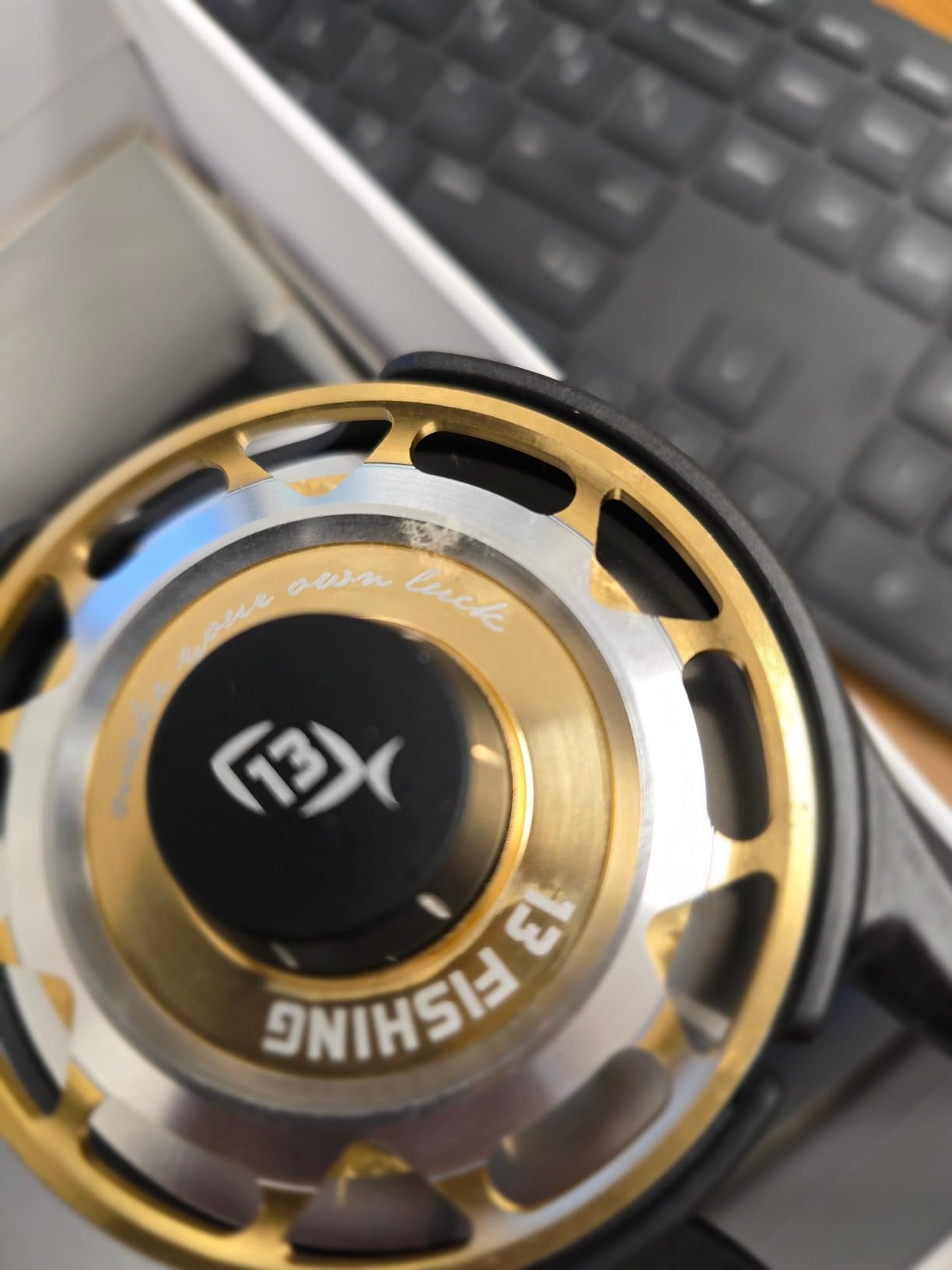
This is the reel for anglers whose biggest problem is a gritty drag, and owners are unusually specific about the fix. Several reviewers compare the carbon drag system favourably to more expensive models, calling it smoother and more consistent through a fight than anything else in this price bracket.
The cold-weather story matters more here than in most reviews. Carbon drag is billed as holding up in bitter cold without grease that thickens and freezes, and that is exactly the failure mode anglers describe in forum threads. A drag that seizes at minus 10 is useless regardless of how well it works in September.
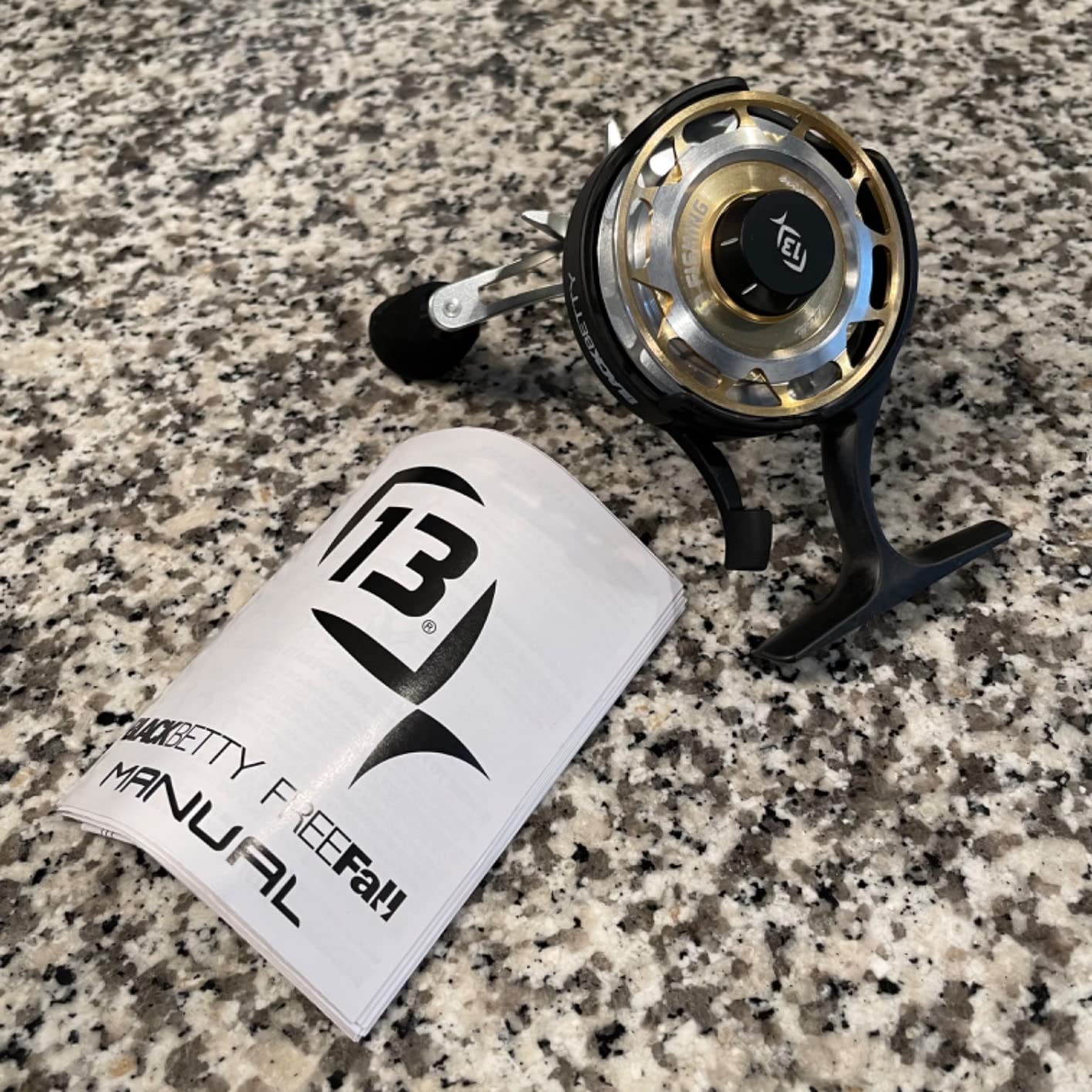
Specifications read like a premium build. The frame is featherweight carbon fiber, there is a carbon drag system rated at 6.6 pounds, four stainless steel ball bearings, and a 2.5:1 gear ratio with instant stop anti-reverse. EVA knobs and a tangle-free spool cap window are small touches that keep line from spilling off the spool, and the rated line capacity is 6.6 pound at 200 yards.
Owners also report that the line free-falls with minimal added weight, so the jig reaches the bottom fast, and that it has handled walleye up to 19 inches and longer without backlash. For deep water where you are lifting fish off the bottom, that is the difference between a fish in the box and a fish in the water.
Reasons to step up to the Carbon
Drag smoothness and cold performance are the two reasons. If you fish early-season ice where the air temperature sits well below freezing, or you work heavy fish, this is the reel in the group we would trust first. The free-fall speed also means less time cranking between strikes in 50 feet of water.
It also suits anyone upgrading from the plastic-bodied Freefall, which is a common path. You gain the carbon frame and drag and lose very little weight, gaining 0.15 ounces according to the spec sheets.
Reasons to stay with the cheaper model
The most common complaint, repeated across reviews, is the drop speed control. Several owners say the magnets do not always engage, and the friction-based mechanism can warble as the spool turns. If controlled descent is the thing you care about most, this is not the reel.
At 6.75 ounces it is also fractionally heavier than the Ghost, and reviewers cite arm fatigue over long sessions. A small share of buyers received units that would not engage or had gear alignment faults, so test the crank and free spool before you trust it on a deep spot.
4. Pflueger President Inline Reel – Best for Fast Retrieve
- Magnetic brake tunes drop speed well
- Free-spool trigger works one-handed with gloves
- Composite frame stays rigid without excess weight
- Cold-weather gear lubricant suits hard conditions
- Heaviest inline reel here at just over 10 oz
- 5:1 ratio is atypically fast for vertical jigging
- Smaller owner review base than the leaders
The President is the odd one out in this roundup, and that is exactly why it is here. Its 5:1 gear ratio is far faster than anything else on the list, which makes it a genuinely useful reel for a specific job: fishing steep drop-offs where you need to get a jig to 50 feet, pick a fish, and get it back up before it swims off.
Construction is more serious than the price tier suggests. You get an aluminum spool on a composite frame, a 5+1 bearing system, a carbon pull with an aluminum handle and EVA knob, and a spool lock that holds the spool under load. The gear lubricant is rated for extreme cold, which matters if you are the first one on the lake in January.
The magnetic brake is the detail we like most. Owners credit it with letting you tune drop speed to a controlled descent, and the free-spool trigger is noted as genuinely operable one-handed with gloves on. That is the single most common usability test for an ice reel, and plenty of budget models fail it.
What it does well
Quick depth changes. The fast ratio means each crank lifts more line, so covering 40 feet and retrieving it is a fraction of the work compared with a 2.5:1 reel. For anglers working a drop-off or fishing a tight window at a known depth, that is a real advantage.
It is also the only inline reel here with a spool lock, and the 4 pound at 210 yards capacity is sensible for medium-weight presentations. The composite frame keeps it rigid without the flex you get from all-plastic bodies.
What holds it back
Weight. At just over 10 ounces it is the heaviest inline reel in this roundup by a wide margin, and reviewers name that as the main reservation. All-day jigging with this hanging off a medium-action rod will tire your forearm faster than anything else on the list.
The 5:1 ratio is also atypical for slow vertical jigging presentations, which means on a normal walleye jig you are stripping line manually to slow the lure down. And with 41 ratings, the owner feedback is thinner than the leaders here, so you are buying on specification more than on established consensus.
5. Pflueger MONICEB Monarch Ice Spinning Reel – Top Rated for Light Line
- Exceptionally smooth click-free clutch and drag
- Graphite body is light and rigid
- Long handle works well with winter gloves
- Bail angles back to reduce line pulsing
- Proven in extreme cold down to around -8F
- Larger and heavier than buyers expect
- Handle does not collapse for packing
- Spinning design still needs line management with braid
The Monarch is the highest-rated reel in this roundup at 4.6 stars across 268 ratings, and the reason is consistency rather than any single feature. Owners describe the clutch and drag as exceptionally smooth, and the most common comparison is that it feels like a large upgrade from the cheap reel that ships with an ice fishing combo.
If you have watched a jig die because a spinning reel was pulling slack at the bottom, this is the reel that fixes the feeling. The bail angles back toward the rod, which reduces the line pulsing that makes a spinning reel feel vague when you are working a lure vertically, and the thick aluminum bail wire is rigid enough to resist mist shaping over a season.
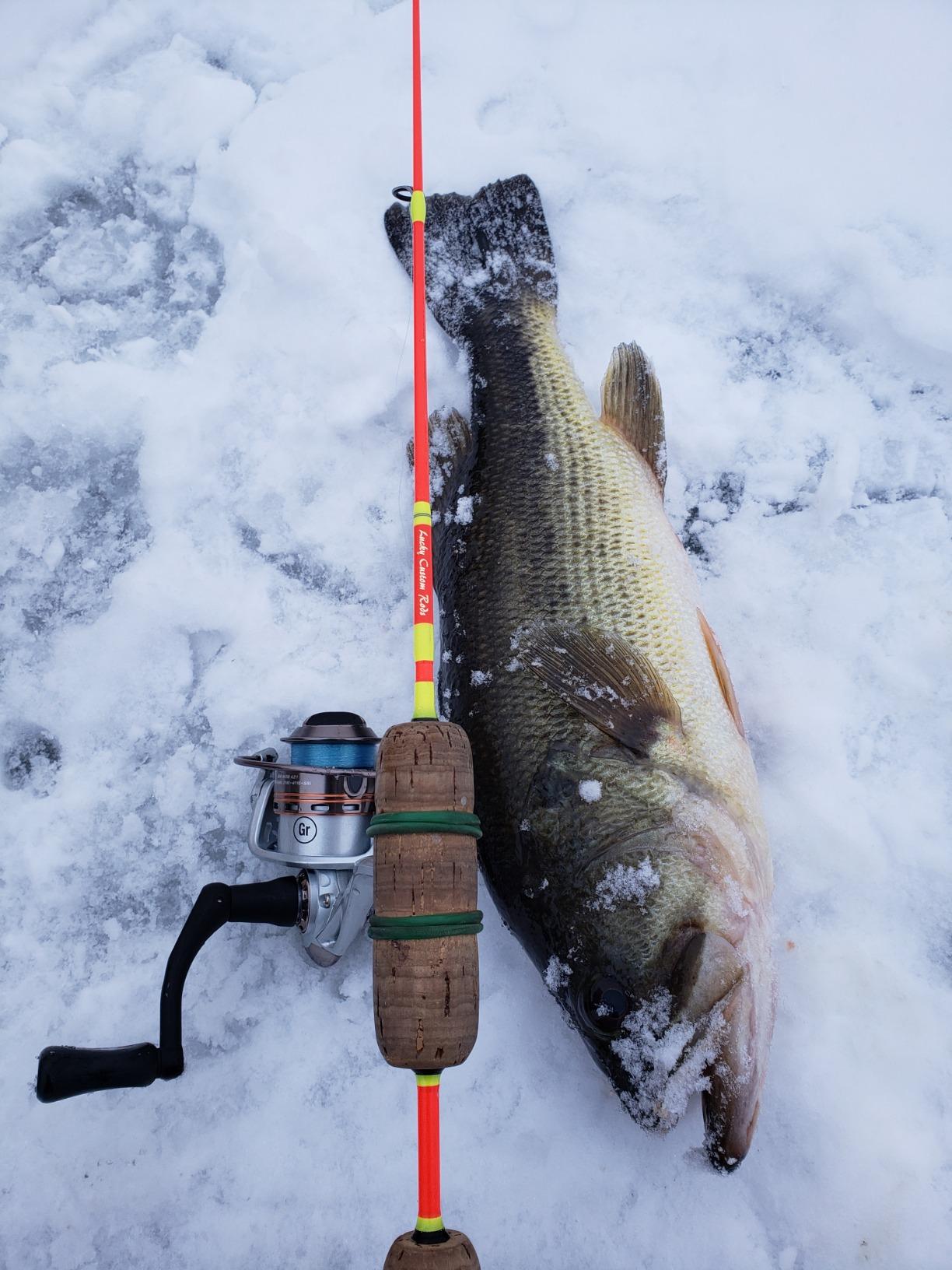
The build is a lightweight graphite body and rotor with five corrosion-resistant stainless steel ball bearings and a stainless steel handle. Drag is rated at 6 pounds, the gear ratio is 4.2:1, and line capacity is listed at 180 yards of 2 pound test. Anti-reverse is fitted, though most ice anglers never use it.
Cold-weather reports are the ones that stick. Owners mention using it in conditions around -8F, and the non-metal crank is a genuinely clever detail here, because fingers sticking to freezing metal is a real problem at that temperature. The long handle is another, sized to be usable with winter gloves on.
Where the Monarch earns its rating
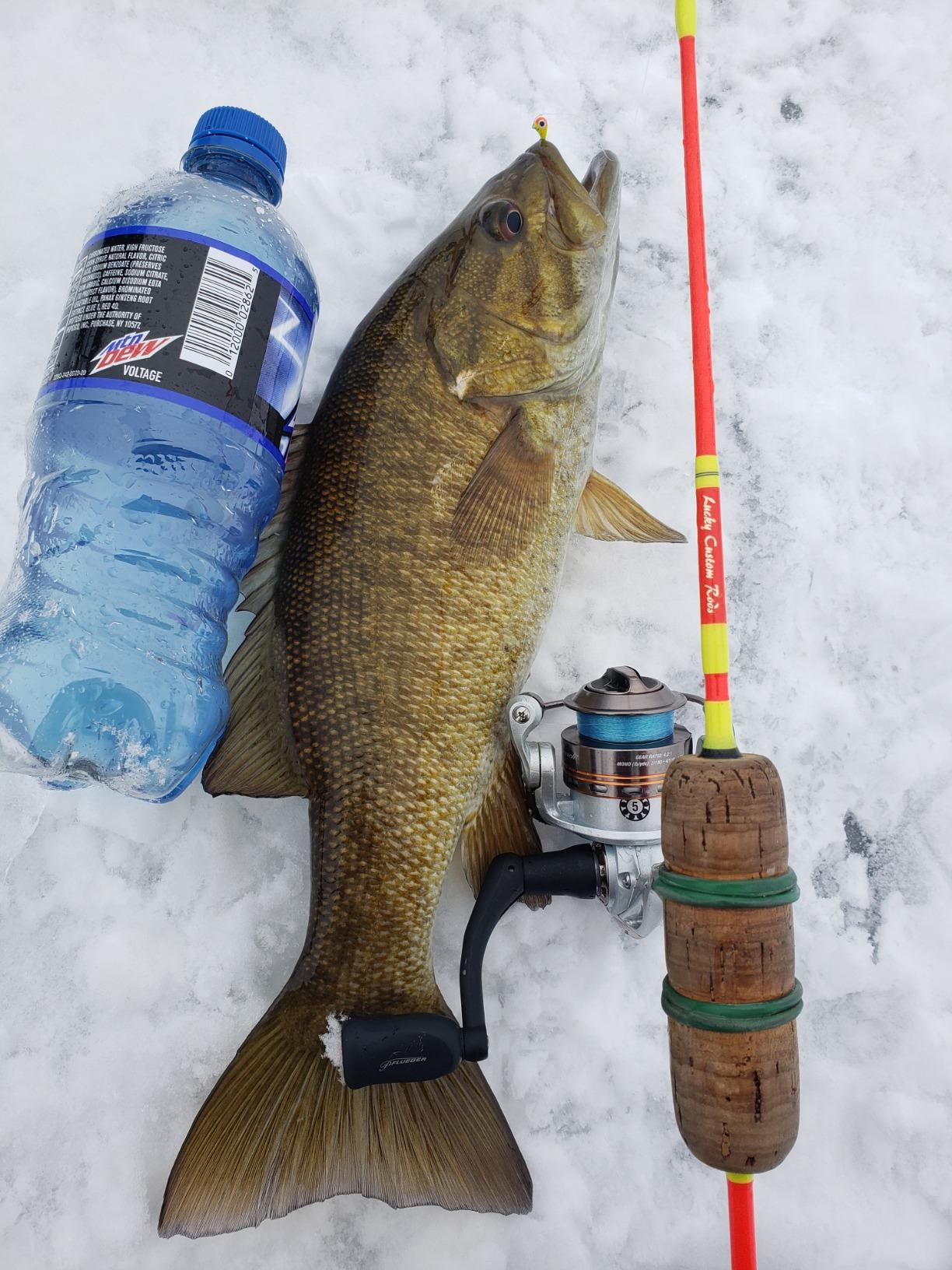
Light line. If you are fishing 2 pound for crappie, perch or trout, a smooth adjustable drag is the whole game, and this is the reel people describe as the smoothest in the group. Reviewers also praise it for hauling heavy fish, which sounds contradictory until you realise a smooth drag under load still beats a gritty one.
It is also the safe pick if you only fish one species. A spinning reel handles jigging, live bait and deadstick rigs without a second reel in the sled, and if you already own one for open water you will not have to learn a new control layout in the cold.
What to know before buying
It is bulkier and heavier than most ice anglers expect, and that is the most repeated caveat in the reviews. At 8.32 ounces it is fine, but the body does not pack down the way an inline reel does.
The handle does not collapse, so it takes up more room in a rod locker, which adds up when you are carrying two rods down a slush ramp. And while the clutch and drag are smooth, the spinning design still means you manage line by hand rather than laying it straight off the spool.
6. Daiwa QR 750 Spinning Reel – Best for Panfish and Light Line
- Lightest reel here at 6.2 oz for ultralight jigging
- Smooth well-balanced action for the size class
- Folding handle saves locker and pack space
- Less prone to blowing line off the spool than smaller Daiwa models
- Multi-disk drag is oversized for ultralight line
- Short spool limits mono capacity
- Only 3 bearings so less long-term smoothness
The Daiwa QR is the smallest reel here and the reason we picked a spinning reel for the top three at all. At 6.2 ounces on a size 750 platform, it is built for exactly the kind of ultralight ice work most anglers start with, and the 377 ratings behind its 4.5 star average are the second-largest owner base in the roundup.
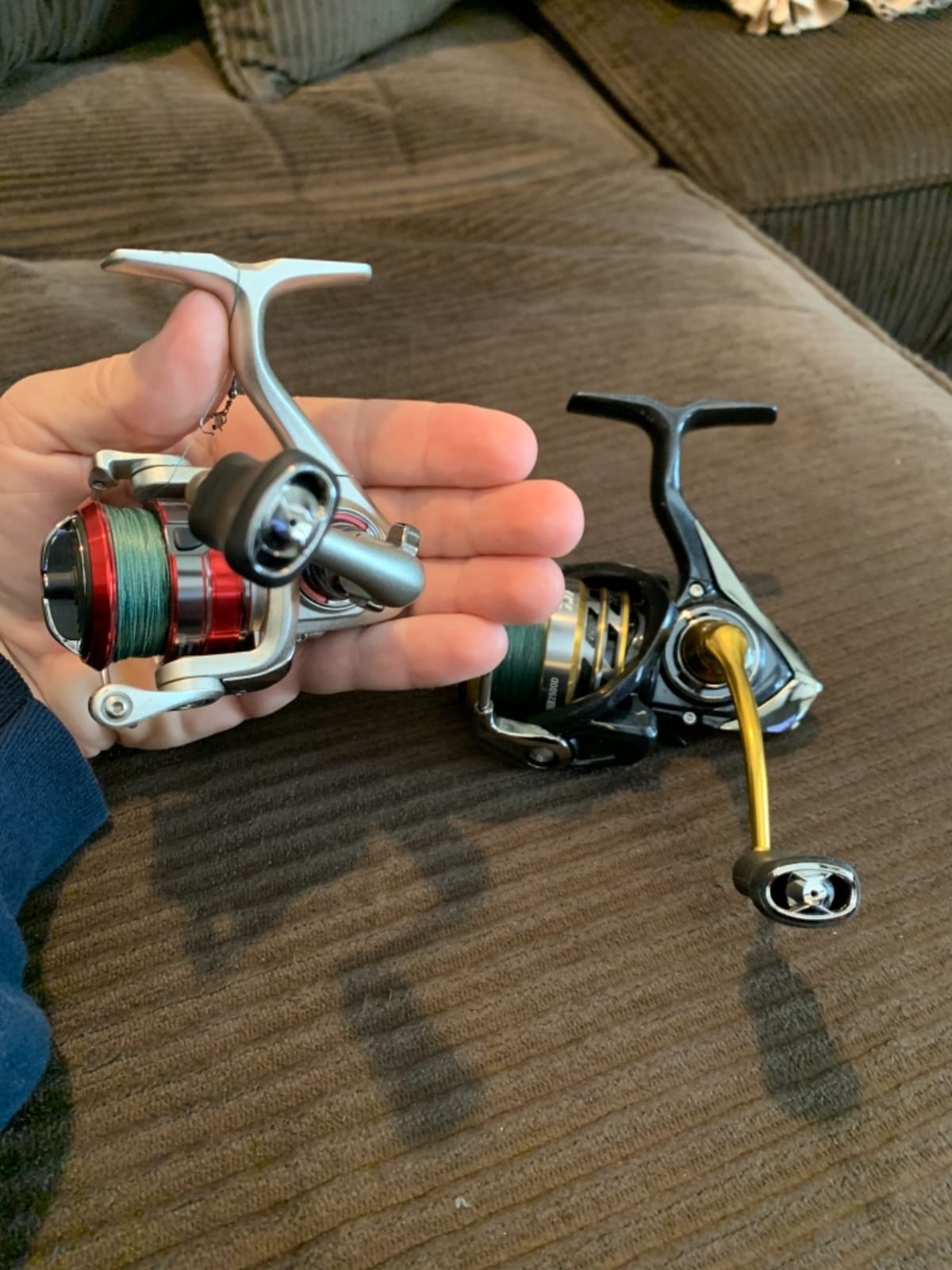
Owners keep saying it performs well above what the category usually delivers, using it for crappie, panfish and backpacking setups on 4 to 6 pound line. It handles both braid and mono, which is unusual at this size, and the retrieve is listed at 22.8 inches per turn.
The folding aluminum handle is a small thing that saves real space. It collapses flat, so the reel fits in a chest pocket or the back of a rod locker where a fixed handle would not, and the light composite frame with an aluminum ABS spool keeps the whole thing under seven ounces.
Three ball bearings is the honest weak point in the spec sheet, and reviewers mention that fewer bearings means less long-term smoothness than premium ultralight spinners. For a season or two of weekend panfish fishing that is a fair trade, but if you fish every weekend it is worth knowing.
There is also a specific complaint about line lay from some owners, and a note that smoother-feeling alternatives exist within Daiwa’s own line. Maximum drag is listed at a generous 50 pounds, but that figure is for the reel in general, not something you should set on ultralight line.
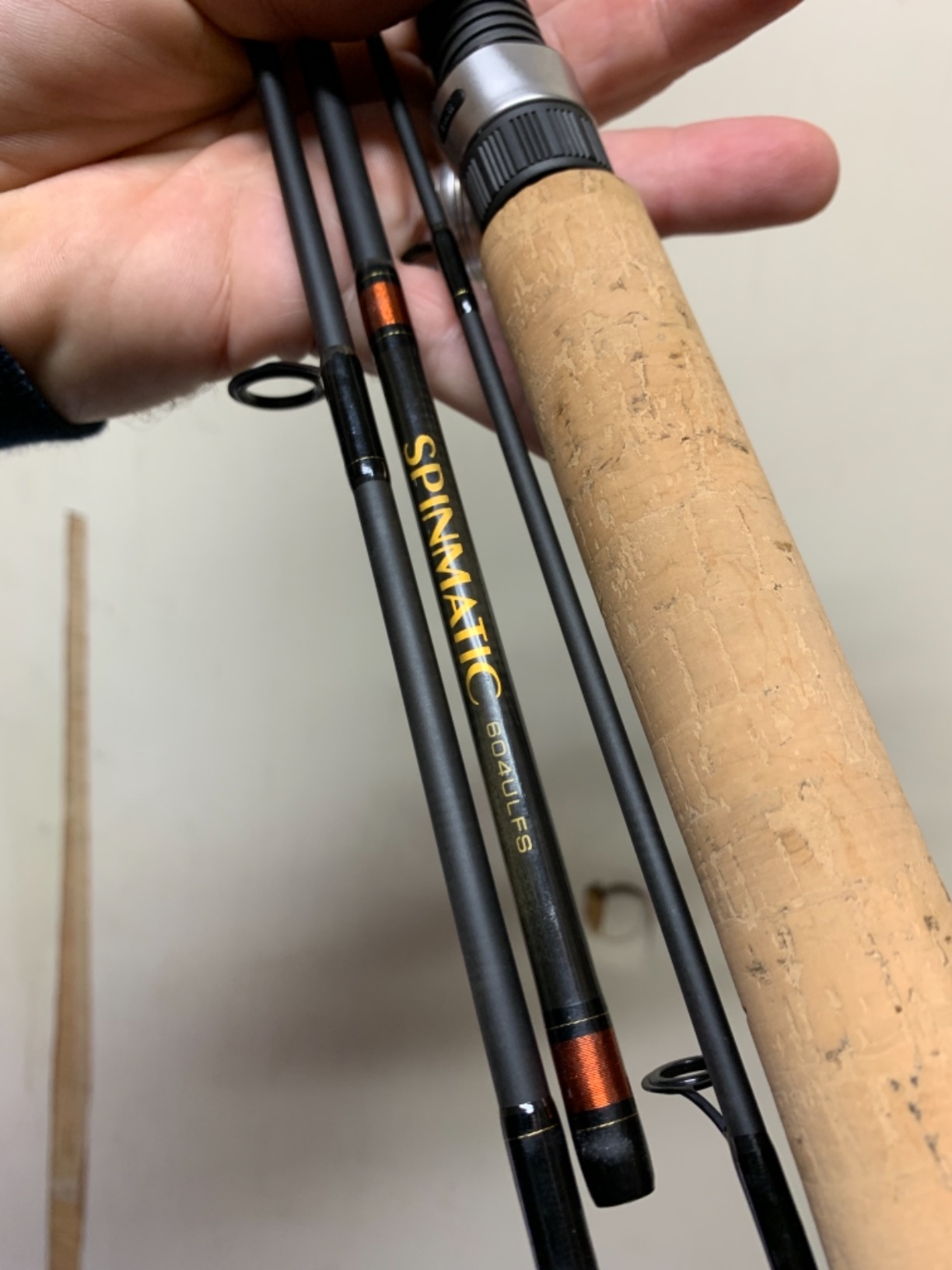
Why panfish anglers like it
At 6.2 ounces it is the lightest reel we tested, and for crappie, bluegill and perch in 10 to 20 feet of water, sensitivity and weight beat every other consideration. You feel the tap of a small fish through a light rod with a reel this light because the reel is not fighting you.
It is also ambidextrous, which removes the handedness question entirely. That is worth more than it sounds, because most of the inline reels in this roundup come in one retrieve direction and force a decision at the shelf.
Where it does not fit
The multi-disk drag is the big one. Reviewers consistently describe it as oversized for ultralight line and needing a very light setting, which means you are working the adjustment carefully with cold fingers. If your drag reliability is the deciding factor, look at the Monarch instead.
The short spool also limits mono capacity, listed at 4/110 or 6/80 yards. That is fine for jigging inside 20 feet, but it rules this reel out of anything deep. And with 4.2:1 spinning geometry you will still see more line twist than any inline reel on this list.
7. Free Fisher 3.2:1 Inline Reel – Budget Pick
- Low entry cost into inline ice fishing
- Carbon fiber frame keeps weight down
- Corrosion and rust resistant treatment for winter use
- Non-slip EVA knob grips cold hands
- Offered in both handedness options
- Thinnest review base in the roundup
- Generic branding with no established warranty support
- Metal oxide treated gears less refined than sealed bearings
We are including this one because a roundup that only lists premium reels is not much use to the angler starting out, and the spec sheet here is genuinely closer to the mid-range reels than you would expect. You get a 3.2:1 gear ratio, a CNC-machined spool on a carbon fiber frame, and an aluminum body with metal oxide treated drive gears.
Owners are broadly positive about the light frame, smooth 3.2:1 action and corrosion resistance. The carbon frame is doing real work on a reel at this tier, because it keeps weight down despite the aluminum body, and the oxidized metal line cup is a sensible choice for slush fishing where water sits on the spool for hours.
Anti-reverse and anti-slip are both fitted, which puts it ahead of several budget inline reels, and the aluminum alloy handle has a frosted EVA non-slip knob that is genuinely easy to grip bare-handed at low temperatures. It comes in both left and right hand retrieve, which is rare in this bracket.
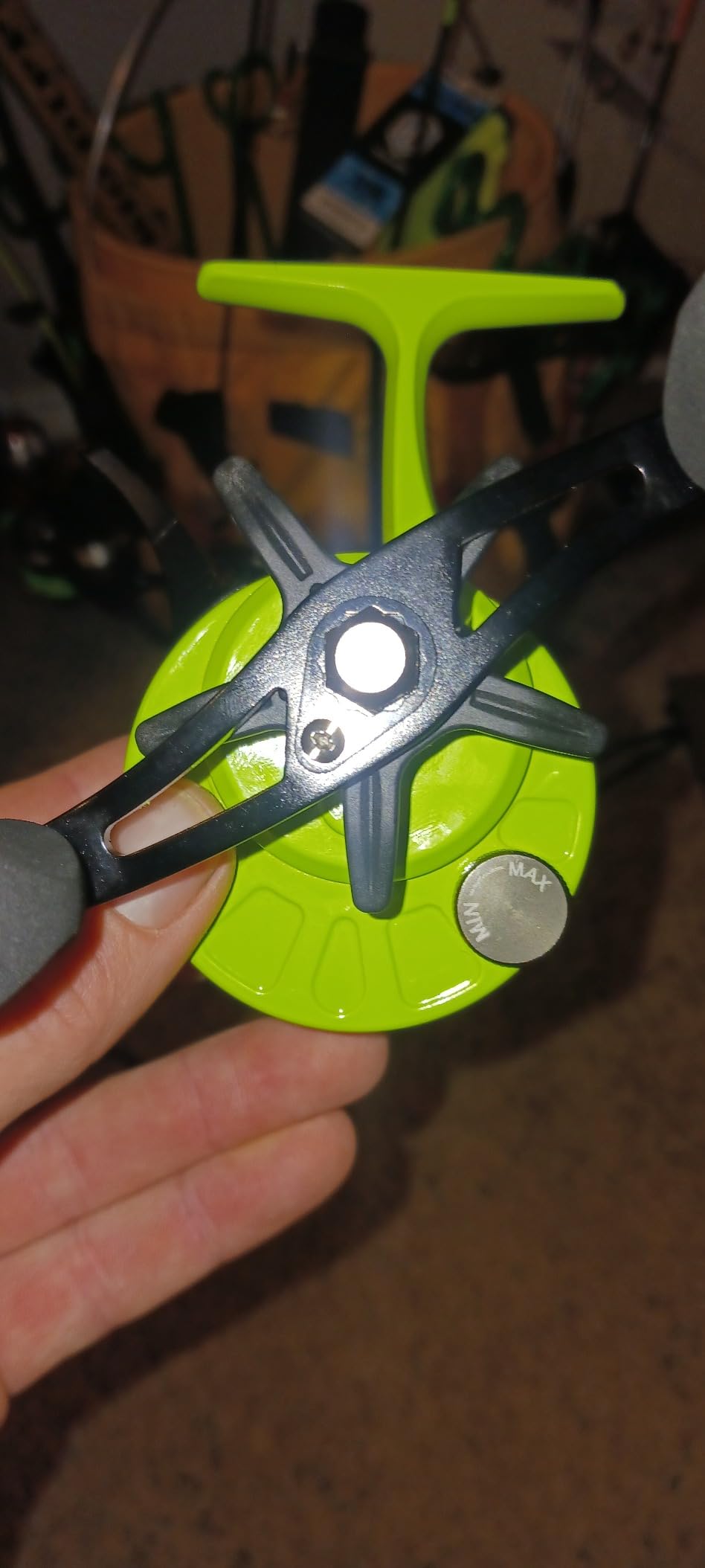
The line retrieve is listed at 11.11 meters per crank, and the bearing count is 3+1 high-carbon alloy steel. Rust-resistant treatment is the detail we would highlight for anyone fishing early ice in standing water or around a slush hole where moisture sits on the frame.
What you give up is refinement. The metal oxide treated gears are less precise than the sealed bearing and brass gear systems in the reels above, and the whole assembly is noticeably heavier at 200 grams compared with the 5.8 ounce carbon frame reels here.
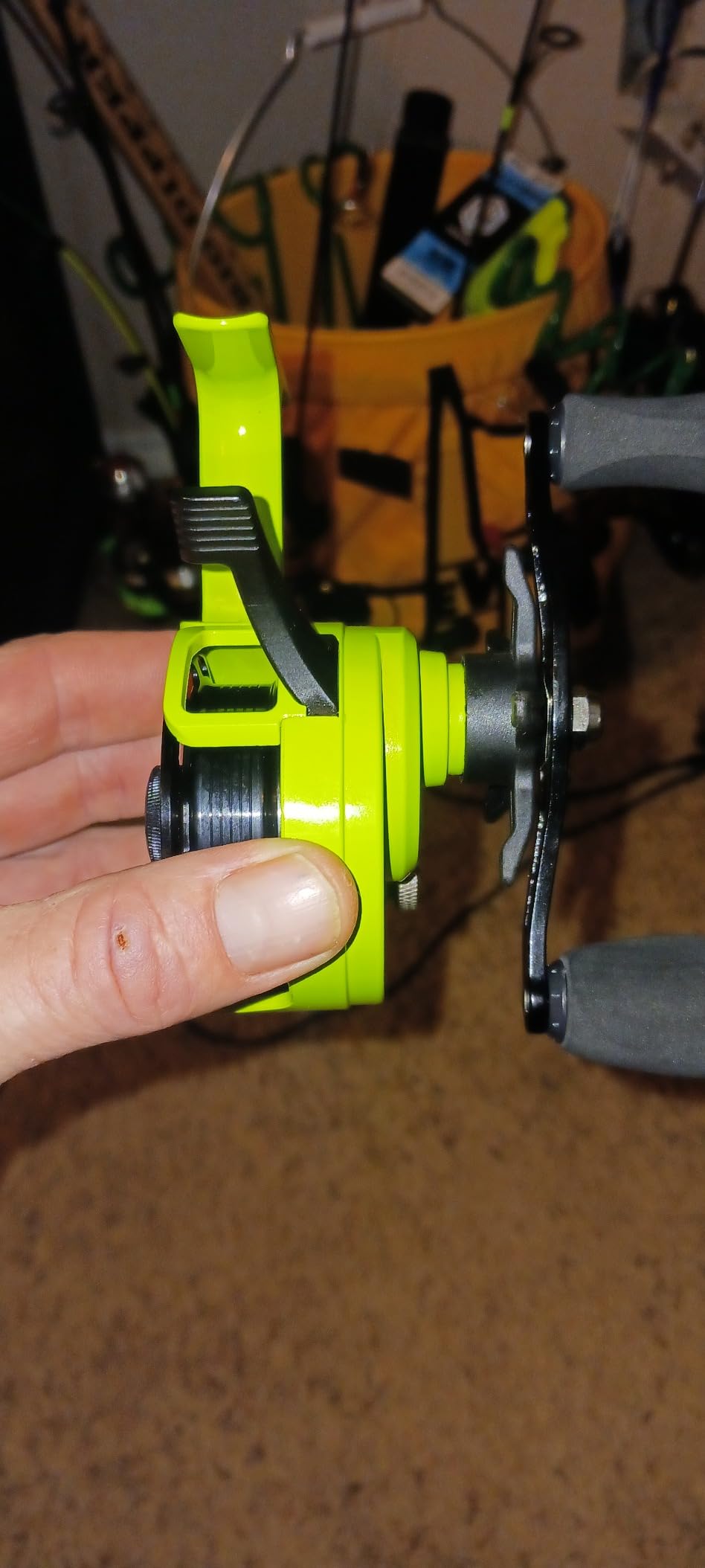
When it makes sense
If you have been fishing with the reel that came in a combo and you can feel that it is part of the problem, this is a real upgrade in mechanism even before you consider the bearings. Moving from a closed-face or basic inline reel to a straight-line spool with anti-reverse changes how the whole rig behaves.
Handedness is the quiet win. Both retrieve options mean you are not stuck choosing between a left-hand reel you cannot use and no reel at all, which is a genuine problem with several picks in this roundup.
Why we would hesitate
Forty ratings is the thinnest owner base in the group, so what you are reading is early feedback rather than settled consensus. On a reel that will sit in a shelter all season, that matters more than it would for an inexpensive entry-level rod.
There is also generic branding with no established warranty support, and if the drag goes rough in February you are relying on parts availability rather than a service department. We would buy one and see it through a season, then upgrade if it earns its place.
8. Piscifun ICX Frost II Carbon Inline Reel – Best Specs for Deep Walleye
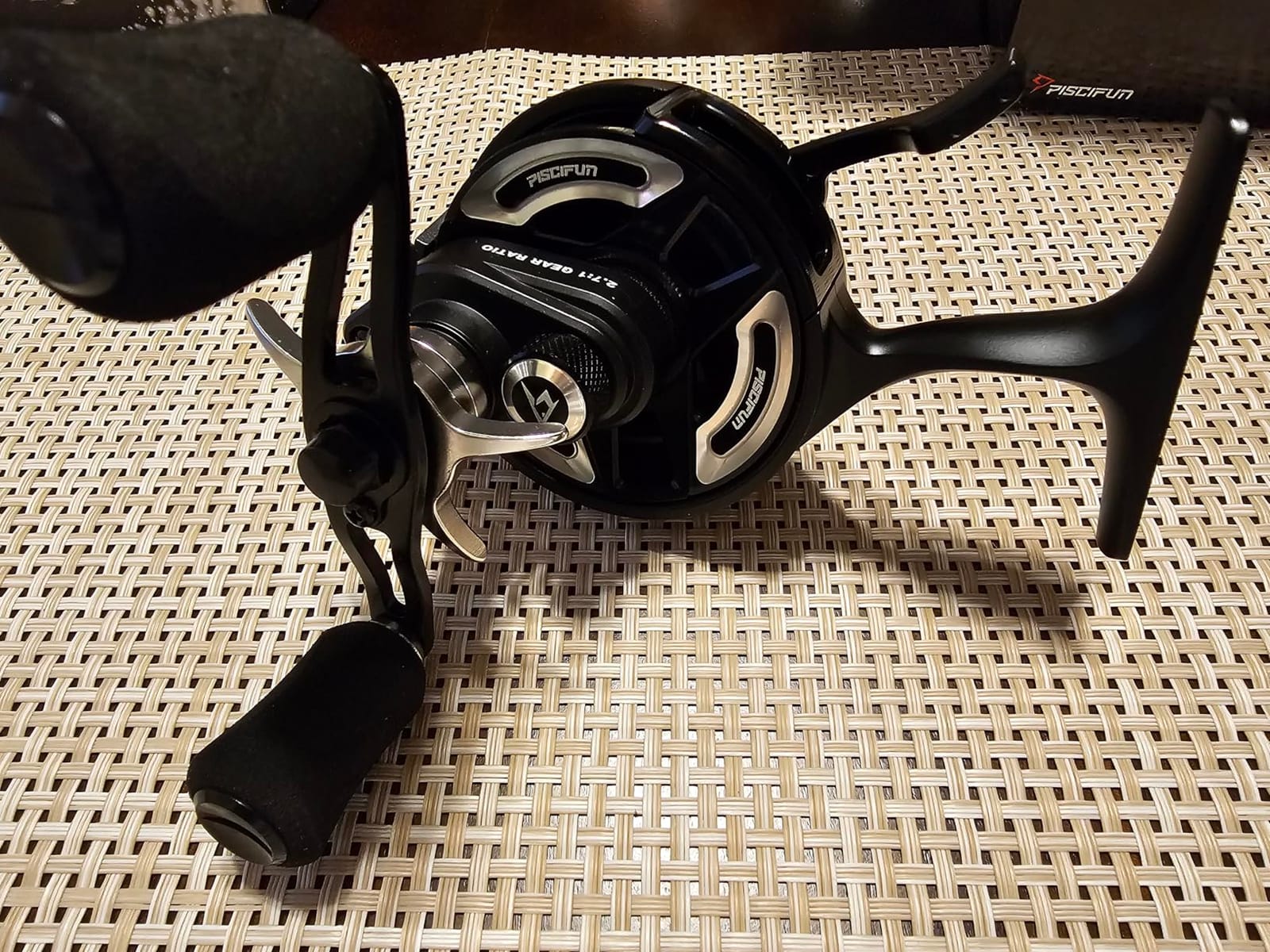
Piscifun ICX Frost II Inline Ice Fishing Reel, Freefall, Left Hand
- Evo Drive inline layout keeps line twist to a minimum
- Eight-point magnetic brake for fine descent tuning
- Integrated audible bait clicker for strike alerts
- Strongest drag rating here at 12 lb
- Carbon fiber frame fights fatigue
- Fewest ratings in the roundup at 19
- Left-hand retrieve only
- 2.7:1 is slow for covering depth quickly
On paper, the Frost II Carbon has the strongest specification set in this roundup, and it posts the highest average rating alongside the Monarch. The Evo Drive layout puts the spool and handle on the same side so line runs straight off the spool, and the drag is rated at 12 pounds, higher than anything else here.
Drop control is handled by an eight-point magnetic braking system, which is the most granular adjustment in the group, and there is an integrated audible bait clicker. When you are running two rods outside the shelter, a clicker that tells you which rod got hit is worth more than it sounds.
The bearing count of 7+1 shielded sits near the top, and the CNC-machined aluminum spool measures 2.48 inches. An upgraded one-handed free-spool lever and instant anti-reverse round out the feature list, and the carbon fiber frame keeps it manageable at 330 grams.
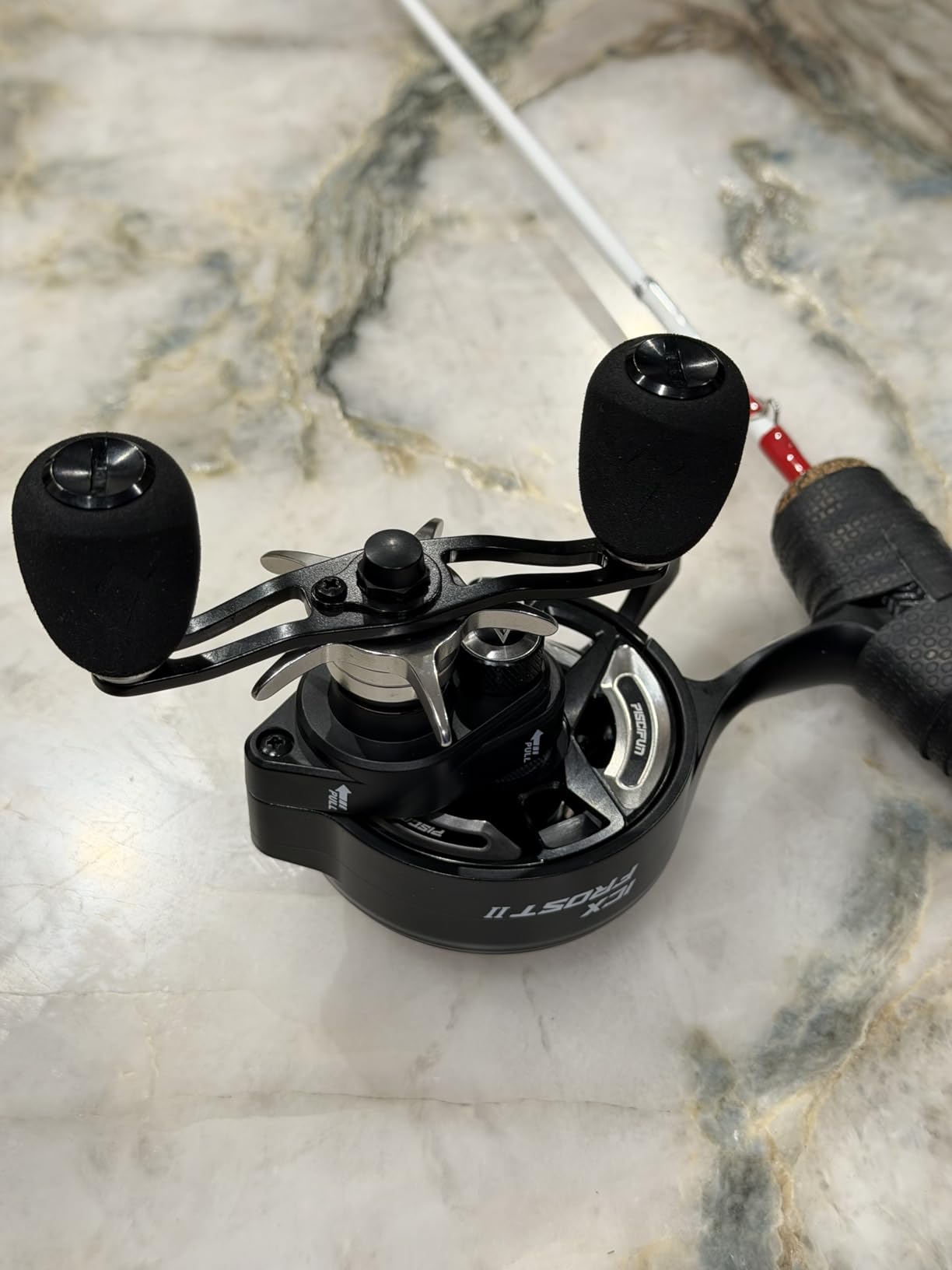
Owners respond to the anti-tangle inline design and the fine magnetic tuning, and the 2.7:1 ratio lands in a useful middle ground between the slow 2.5:1 reels and the faster 3.2:1 models. A 12 pound drag with 2.7:1 gives you enough pull to bring a big walleye up from depth without worrying about stripping the handle against the spool.
One r/IceFishing user reports using an inline reel set to land a roughly 40 centimetre northern pike without difficulty, and that kind of load is comfortably inside what a 12 pound drag handles. The clicker means you can be watching the lake instead of both rods.
Where it earns a spot
Deep water, specifically. If your best walleye fishing is in 40 feet or more, a 12 pound drag and a straight-line layout that resists twist is the combination you want. The bait clicker also makes it a good second rod for a buddy who is covering the water beside you.
At 2.7:1 it is the most balanced ratio in the roundup for someone who does not fish exclusively deep or exclusively shallow, and the eight-point brake gives the finest control over descent of any reel here.
What we cannot tell you yet
Nineteen ratings is the smallest owner base in the group, so long-term durability is genuinely unproven. The rating is high and there are no one- or two-star reviews, but 19 owners is not the same as 360, and a carbon drag system under repeated freezing conditions is exactly the kind of thing that only shows up in year three.
It is left-hand retrieve only, and the 2.7:1 ratio is slower for quickly covering depth, so it is not the reel for running a tight window in a snowstorm. Buy it for the drag and the anti-tangle layout, not for the rating.
9. Eagle Claw In Line Ice Reel – Best Simple Inline
- Light 6.4 oz body reduces fatigue over a full day
- Smooth star Teflon drag with consistent tension
- Spool tension adjustment helps manage line twist
- Free spool release button for fast depth changes
- Long-standing tackle brand
- Smallest review base but one at 21 ratings
- Basic 4+1 bearing count and no premium drag
- No drop-speed control or audible strike feature
The Eagle Claw is the simplest reel in the roundup, and simplicity is a legitimate reason to buy one. There is no magnetic brake, no drop-speed adjustment and no clicker. What you get is a jet black aluminum spool, a smooth star Teflon drag, 4+1 ball bearings and a free spool release button, and that is the whole list.
Owners rate the Teflon drag as smooth and consistent, which is the one place simplicity is not a compromise. Spool tension adjustment is fitted and helps manage line twist, and the reduced twist design is doing the fundamental job an inline reel is built for.
At 6.4 ounces it sits comfortably in the ultralight bracket despite the aluminum spool, and the 2.6:1 ratio with a listed retrieve of 15.75 inches per turn gives you a slow, steady lift suited to walleye. Line capacity is 270 yards of 2 pound, 190 of 4 pound and 120 of 6 pound.
It is worth saying that a poster in the crappie.com main forum singles out the Eagle Claw reel as made strictly for jigging and worth using, and forum sentiment in this category tends to track real ice time rather than spec sheets. That endorsement matters more than the 21 ratings behind it.
The build is synthetic-bodied with an aluminum spool, and the rating distribution leans positive with 52 percent five-star and 37 percent four-star and no one-star feedback. That is a small sample, but it is not a sample full of complaints.
Where it makes the most sense
For an angler who wants a straight-line reel without a learning curve, or a backup reel that lives in the bottom of the sled. The free spool release button makes depth changes quick, and the spool tension adjustment is a real tool rather than decoration on a reel with no drop control.
It also suits anyone who jiggles live bait, because there is no magnetic mechanism to adjust and nothing to set before the first drop. You pick it up and fish.
What you give up
There is no drop-speed control, which means the FreeFall and magnetic reels will let you hang a jig more slowly than this one. For anglers who fish very light jigs over structure in slack water, that is a real difference.
The 4+1 bearing count is basic and there is no carbon or premium drag system, so this is not the reel for an angler chasing the smoothest possible drag under a heavy fish. And at 21 ratings, there is barely enough owner feedback here to call the consensus established.
Inline vs Spinning vs Baitcasting: Which Should You Buy
An inline ice fishing reel is a straight-line spool reel, and it is the best reel for jigging because the line leaves the spool on the same axis as the rod instead of winding around a rotating spool. That is the whole reason it exists. Everything else about the format, the pistol grip, the trigger, the anti-reverse, is secondary to eliminating twist.
Line twist is the specific problem worth understanding. When monofilament wraps around a spinning reel’s spool and comes off the other side, the line carries a corkscrew in it. A jig dropped on twisted line spins like a barber pole rather than swimming, and walleye in particular are suspicious of anything that does not look alive. A reel that twists line is a reel that quietly reduces your catch rate.
Inline reels put the spool directly in line with the rod, so the line pays off in a straight path and lays down without memory. Anglers on Pondboss forums describe it plainly: the line leaves the spool straight, and once you have fished one you do not go back.
Spinning reels are the alternative worth considering. A spinning reel gives you a smoother, more continuously adjustable drag, which is why the Pflueger Monarch rates highest in the group and why many walleye anglers carry one alongside an inline reel. You also get a bail to open and close, which makes live bait and slip bobber rigs easy to manage. The cost is line twist and slightly less sensitivity at depth.
Baitcasting and line-counter reels are specialists. A baitcaster on the ice means a thumb to control the spool, which is an extra step in the middle of a jigging retrieve. A line-counter reel counts inches as line comes off the spool, which is genuinely useful for hitting a specific depth in deep water, but very few of the reels in this roundup offer one. For most anglers the complexity is not worth it.
Our verdict: buy an inline reel if your main activity is jigging. Add a spinning reel later if you switch to live bait, deadstick rigs, or if you specifically need a very smooth drag on light line for panfish.
Choose Your Reel by Water Depth
This is the question nobody in this category answers properly, so here it is in plain text. Your water depth and your target species together decide the reel, more than brand ever does.
Under 10 feet, panfish and perch. Use a light spinning reel in the size 750 class or a light inline reel in the 3.2:1 range. Speed matters less than sensitivity and weight. Carry 2 to 4 pound test, and set the drag light enough that you can feather it with a gloved thumb.
10 to 20 feet, perch, crappie and trout. Either mechanism works here, and this is the range where a 2.5:1 to 3.2:1 inline reel or a 4.2:1 spinning reel both feel fast enough. Four pound test is the sweet spot, and line capacity matters less because you are not carrying much line to a shallow bottom.
20 to 40 feet, the walleye band. This is where reel choice actually earns its keep. Look for a reel that holds 4 to 6 pound test and has a drag you can adjust smoothly. A 2.5:1 inline reel gives a slow lift with good sensitivity; a 3.2:1 model covers water faster when the fish are moving.
40 to 60 feet, deep walleye and lake trout. Line capacity now matters. You want at least 150 to 200 yards of 6 pound test on the spool, and a stronger drag, because you are lifting fish a long way off the bottom. A slow 2.5:1 or 2.7:1 ratio gives you better sensitivity at depth, and a fast reel means more cranking per fish.
60 feet and deeper. You want maximum capacity, maximum drag, and an honest reason to consider a line-counter reel so you can hit a specific depth. Very few jigging anglers need this, but the ones who do tend to fish specific structure at specific depths.
A 19 inch walleye is not a rare report on these reels, and that is the fish you should size your drag for, not the average perch you will catch twenty of. If your lake produces big fish, a 6 pound drag system handles more of them than a 2.5:1 reel with a light drag.
Gear Ratio, Drag and Line Weight: How to Spec an Ice Reel
Gear ratio is turns of line per crank. A 2.5:1 reel takes 2.5 turns of the spool for every turn of the handle; 3.2:1 takes 3.2. Higher is faster. Anglers searching for reels for slow jigging want the low end, around 2.5:1 to 2.7:1, because a slower lift gives you more time to feel a subtle pick-up. Anglers searching for speed to reach depth want 3:1 and up, and the 5:1 on the Pflueger President is the extreme of that.
Match line weight to the drag, not the other way around. A reel rated for 11 or 12 pounds of drag will be set to far less than that on the ice. With 2 pound test, start the drag barely above the line’s rated strength and back it off in small clicks until a steady pull does not strip line. Most lost panfish are lost to a drag set too tight, not too loose.
Understand star drag versus front drag. Inline ice reels almost always use a star drag behind the spool, which you turn with gloved fingers for fine incremental adjustment. Spinning reels use a front drag. A star drag is easier to set precisely on light line, which is why the inline format suits 2 pound panfish line better than most people expect.
Check spool size and line capacity together. The reels here range from a size 750 spinning platform holding 110 yards of 4 pound, up to inline reels holding 350 yards of 2 pound. Small spools suit shallow work with light line. Large inline spools suit deep water where you need line on the spool and drag strength behind it.
Weight and sensitivity decide how long you can fish. Anything under about 7 ounces is comfortably jiggable for a full day. Above 10 ounces, as on the Pflueger President, and you are fighting your own gear by hour five. Anglers who fish every weekend in a shelter will feel this more than the spec sheet suggests.
Anti-reverse is not optional. A back-winding reel under the ice means losing the fish, and with a forward-hooked jig you cannot rely on the rod to do the work. Every inline reel in this roundup has it. Check the spinning reels too, though most ice anglers never use it.
Handedness decides whether you fish at all. Most inline reels here are left-hand retrieve only, including the Piscifun ICX Carbon, both 13 Fishing models and the Eagle Claw. If you are right-handed, verify the retrieve before you order, because the whole roundup skews left-hand.
A free spool button or trigger is what makes drop control possible. A freespool lever disengages the spool so the jig falls under its own weight instead of being wound down by the handle, and it is the feature that separates a reel made for jigging from a reel that tolerates it.
For the full system rather than the reel alone, start with a medium-action rod around 26 to 28 inches for jigging, pair it with 4 to 6 pound mono for walleye, and let the reel’s ratio set the pace of the lift. We have also covered lighter setups for panfish if you are fishing closer to the surface.
Cold-Weather Care and Winterizing Your Ice Reel
Nothing in this roundup covers the thing that actually ends ice reels early: water freezing in the housing. A reel that sits in a shelter for six hours with meltwater running over the drag and then freezes solid is harder to fix than a bearing that wears out over five seasons.
Between holes, blot the drag and spool with a dry cloth. Do not spray penetrating oil into a frozen drag, because it will not penetrate ice and it will just run onto the line. If a drag seizes in the cold, warm the whole reel slowly with your hands inside the shelter rather than with a heat source that can warp the housing or melt the line on the spool.
Ice on the spool cap and around the anti-reverse is normal and it will clear as the reel warms. Ice inside the drag stack is not normal, and it is the most common cold-weather complaint anglers report about budget inline reels, whose simpler drag stacks lack the sealed protection the carbon systems have.
After the season, rinse the reel in fresh water only, dry it completely, and put a small amount of reel oil on the handle knob and the exposed shaft. Leave the drag alone; a good drag should not need oil and oil will make it greasy and inconsistent. Store it indoors somewhere dry rather than in a cold garage where it will collect condensation every time the temperature swings.
Before the first trip of a new season, back the drag off completely, spin the handle, and work the freespool lever several times. A clutch that has sat stiff all summer is the one thing you do not want to discover at 40 feet on your first drop.
Frequently Asked Questions
What reel is best for jigging?
An inline or straight-line ice fishing reel is best for jigging, because the line leaves the spool in a straight path instead of winding around a rotating spool, which eliminates the line twist and corkscrewing that ruin jig action on light line. The Piscifun ICX Carbon is our top inline pick, and the Daiwa QR 750 spinning reel is a good alternative for panfish anglers fishing very light line.
What are the best ice fishing reels for the money?
The Free Fisher 3.2:1 inline reel is the lowest-cost genuine inline option here, the Eagle Claw In Line is a simple traditional build with a smooth Teflon drag, and the 13 Fishing Freefall Ghost is the best value once you start fishing regularly. The one compromise to know about on cheaper inline reels is drag smoothness at light line, so test the drag before the season starts.
What size reel is best for walleye jigging?
For walleye in 20 to 40 feet, look for an inline reel that holds at least 4 to 6 pound test and has a drag you can set precisely. For 40 feet and deeper, prioritise line capacity of 150 to 200 yards and a stronger drag rated around 6 to 12 pounds. Spool size matters less on an inline reel than total line capacity, so check the yards listed for your line weight.
What gear ratio do I need for deep ice fishing?
For deep water, a slower ratio between 2.5:1 and 2.7:1 gives better sensitivity and lets you feel light takes on the fall. For shallower water or when you need to cover depth quickly, a ratio between 3.2:1 and 4.2:1 retrieves faster. Ratios above 5:1 are unusually fast for vertical jigging and usually require you to strip line to slow the lure.
What reels are best for slow jigging?
Reels with low gear ratios are best for slow jigging. The 13 Fishing Freefall Ghost and Freefall Carbon at 2.5:1, the Eagle Claw In Line at 2.6:1, and the Piscifun ICX Frost II Carbon at 2.7:1 all fall in that range. A slow lift gives the jig more hang time and makes subtle pick-ups easier to feel through the rod.
Are inline ice reels really better than spinning reels?
For vertical jigging, yes, mostly because of line twist and sensitivity. An inline reel pays line off in a straight path so the jig does not corkscrew on the fall, and the trigger or freespool lever gives precise one-handed depth control. A spinning reel still wins on drag smoothness and on live bait and slip bobber rigs, so many anglers carry one of each.
Final Verdict: The Best Ice Fishing Reels for Jigging in 2026
The Piscifun ICX Carbon is the best ice fishing reel for jigging in 2026, and the reason is the combination of the widest owner feedback in the group, a light 5.8 ounce carbon frame and a seven-magnet drop control that gives you the steadiest descent we found. If you want a second reel or a different mechanism, the 13 Fishing Freefall Ghost covers deep water and heavy line, and the Daiwa QR 750 handles panfish on ultralight presentations.
Match the reel to your deepest water and your heaviest fish, set the drag light, and keep it dry between holes. That last habit will protect whatever you spend here than in any other forum thread. If you are still working out the rest of your ice setup, our fishing drone guide covers searching water from above, and if you want to stay warm on a long day on the ice, our guide to inflatable ice baths covers the recovery side of the day.