
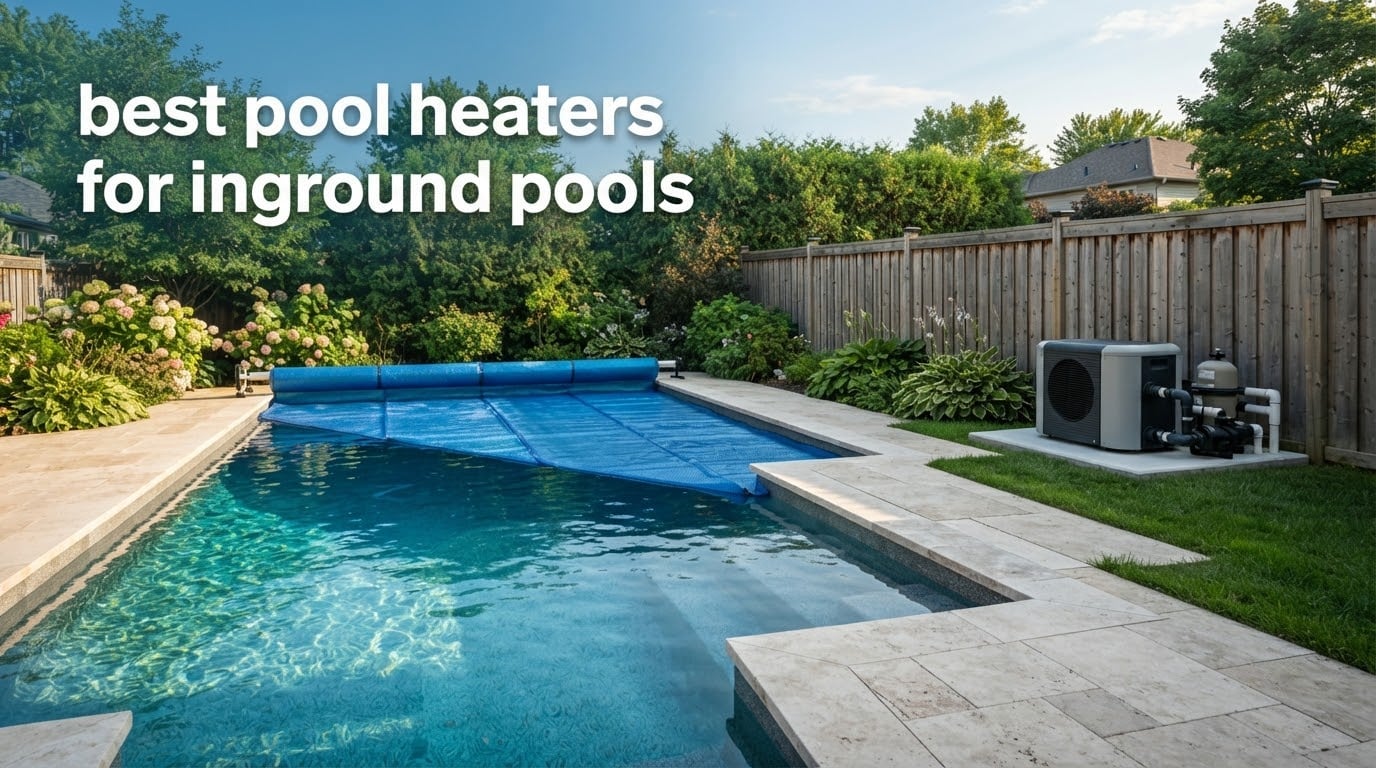
Short answer: the AQUASTRONG HEX100 inverter heat pump is the best pool heater for inground pools overall in 2026, the Hayward H-Series 250,000 BTU is the pick when you want heat in hours rather than days, and the Hayward HeatPro 140,000 BTU is the one to buy if your pool is salt water or you live on a coast. We spent weeks reading the service data on ten of the highest-reviewed heaters in the category and comparing them on the only three things that really matter: heat output, what it costs to run, and what it does to your water chemistry over ten years.
There are only two heaters worth arguing about. A gas heater burns fuel and moves heat into the pool fast, adding two to five degrees an hour in any weather. A heat pump pulls warmth out of the outdoor air with a compressor and adds two to five degrees a day at a fraction of the running cost. Everything else in this list is a variation on those two ideas, and picking between them comes down to your winter air temperature and how much patience you have.
We also found one number that changes a lot of buying decisions: heat pumps in this category top out around 140,000 to 150,000 BTU, while pool and spa gas combos routinely run 400,000 BTU. If you have a large pool with a raised spa and you want the spa at 104 degrees, that ceiling is the whole argument for gas.
Before you read further, note that every unit below is a real model with a substantial review history behind it, and we have put the pricing behind the buttons so you can see today’s actual figure for your region. If you also need a cover to make any of these work efficiently, our guide to the best solar pool covers for inground pools is worth reading first, because a cover changes the running cost more than most buyers expect.
Table of Contents
Top 3 Pool Heaters for Inground Pools (October 2026)


All 10 Heaters At a Glance in 2026
The table below is the short version. Every row is a unit we cover in depth further down, and the type column tells you whether you are buying speed or economy before you read a single spec.
How Each Heater Type Heats an Inground Pool
Gas heaters light a burner, run it through a copper or stainless heat exchanger, and dump that heat into the water. It is the least efficient method on paper and the fastest in practice, and it works identically in July and January. Efficiency is measured as a percentage of fuel energy converted to pool heat, and federal rules set a floor of 78 percent for residential heaters sold in the United States.
Heat pumps reverse an air conditioner. A refrigerant compressor takes heat from the outdoor air and pushes it through a titanium or cupro nickel exchanger into the pool. Efficiency is measured as COP, the coefficient of performance, meaning how much heat you get per unit of electricity. A COP of 12.3 means 12.3 parts of pool heat for every one of electricity, and that gap is why running costs differ so sharply between the two types.
Solar is the third option. Water circulates through unglazed polypropylene collectors on a sunny roof, costs nothing to run, and does nothing at all on a cloudy February afternoon. For an inground pool, solar works best as a supplement that feeds a heat pump rather than as the only heat source.
One limit worth understanding before you shop: heat pumps lose output as air temperature falls, and they need roughly 50 to 60 degrees of ambient air to work well. Below that they cycle into defrost, which cuts their output further. That is why forum discussions about heat pumps split so evenly, and it is also why a heat pump in a cold climate is a shoulder-season device while a gas heater is a month-one device.
There is a second limit that only shows up with spas. Gas pool and spa heaters are sold at 400,000 BTU because they have to bring a raised spa to 104 degrees quickly. Heat pumps in this category cap out around 140,000 to 150,000 BTU. Owners on pool forums raise this gap more than any other sizing question, and it is a real constraint rather than a marketing detail.
1. AQUASTRONG HEX100 Inverter Heat Pump – Best Overall Inground Pool Heater
Swimming Pool Heater for Above Ground and Inground Pool 20’*43’*48″
- Heats and cools from 47F to 104F
- COP 15.8 efficiency
- Quiet 55 dB operation
- WiFi app with scheduling
- Auto-defrost every 40 minutes
- Needs a 220-240V circuit installed
- Larger footprint than most competitors
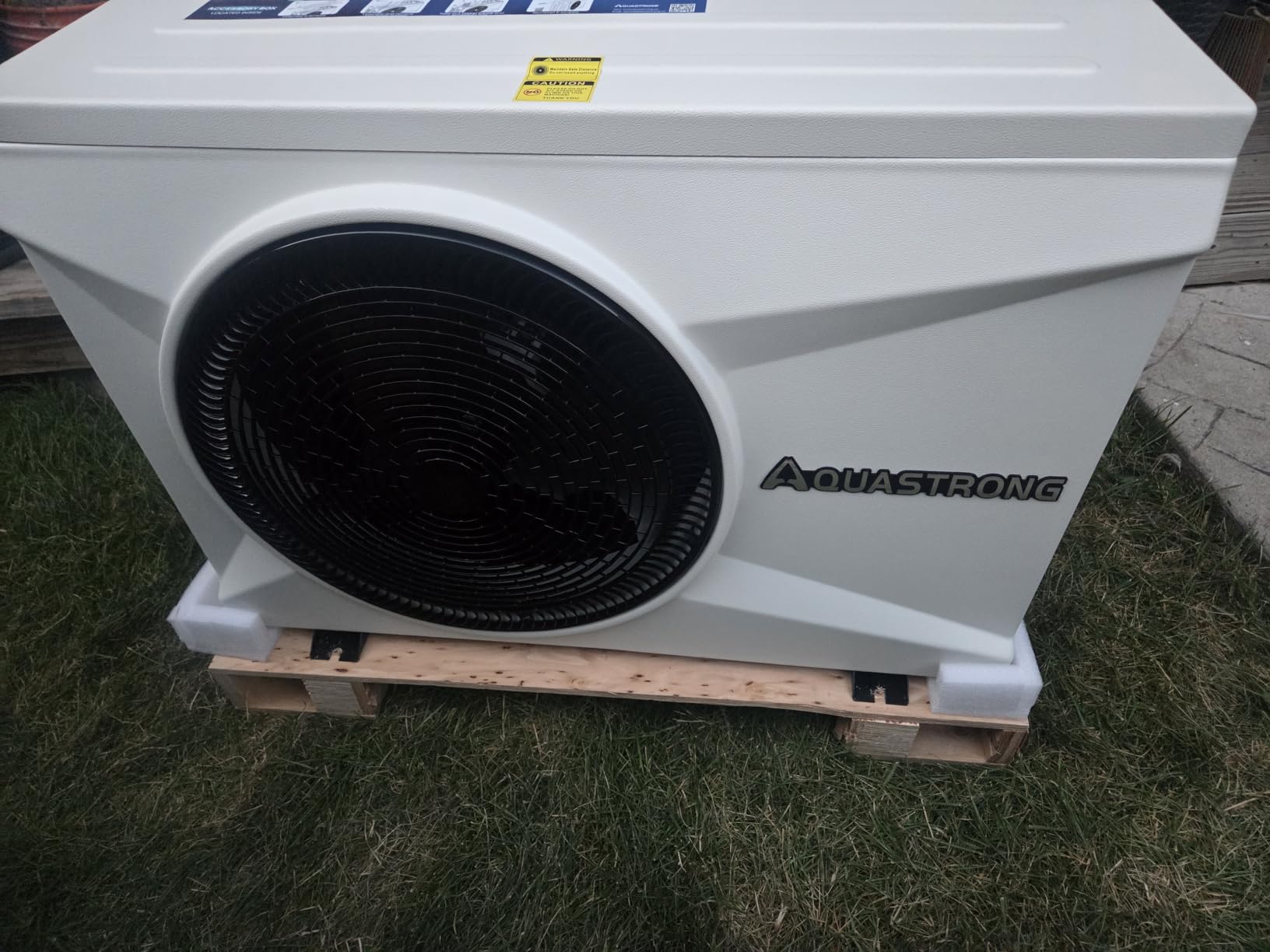
This is the unit we kept coming back to. With 534 reviews behind it, the HEX100 has more real-world history than anything else in this roundup, and the review pattern is unusually consistent. Owners describe a unit that holds temperature, runs quietly enough to sit next to the house, and does not need babysitting through a shoulder season.
The technical headline is a COP of 15.8, which is high even among inverter-driven heat pumps. In plain terms, for every unit of electricity the compressor consumes, it moves roughly 15.8 units of heat into the pool. That figure is measured at peak conditions, so expect less in a real cold morning, but even discounted it puts this unit near the top of the category for running cost.
It also does both jobs. The heating range runs from 47 to 104 degrees and the cooling range from 47 to 83 degrees, which means the same machine can pull your pool down on a hot August afternoon and warm it back up in October. For most inground pools that dual mode is a genuine convenience rather than a gimmick, because it removes the seasonal decision about whether the heater stays connected to the plumbing.
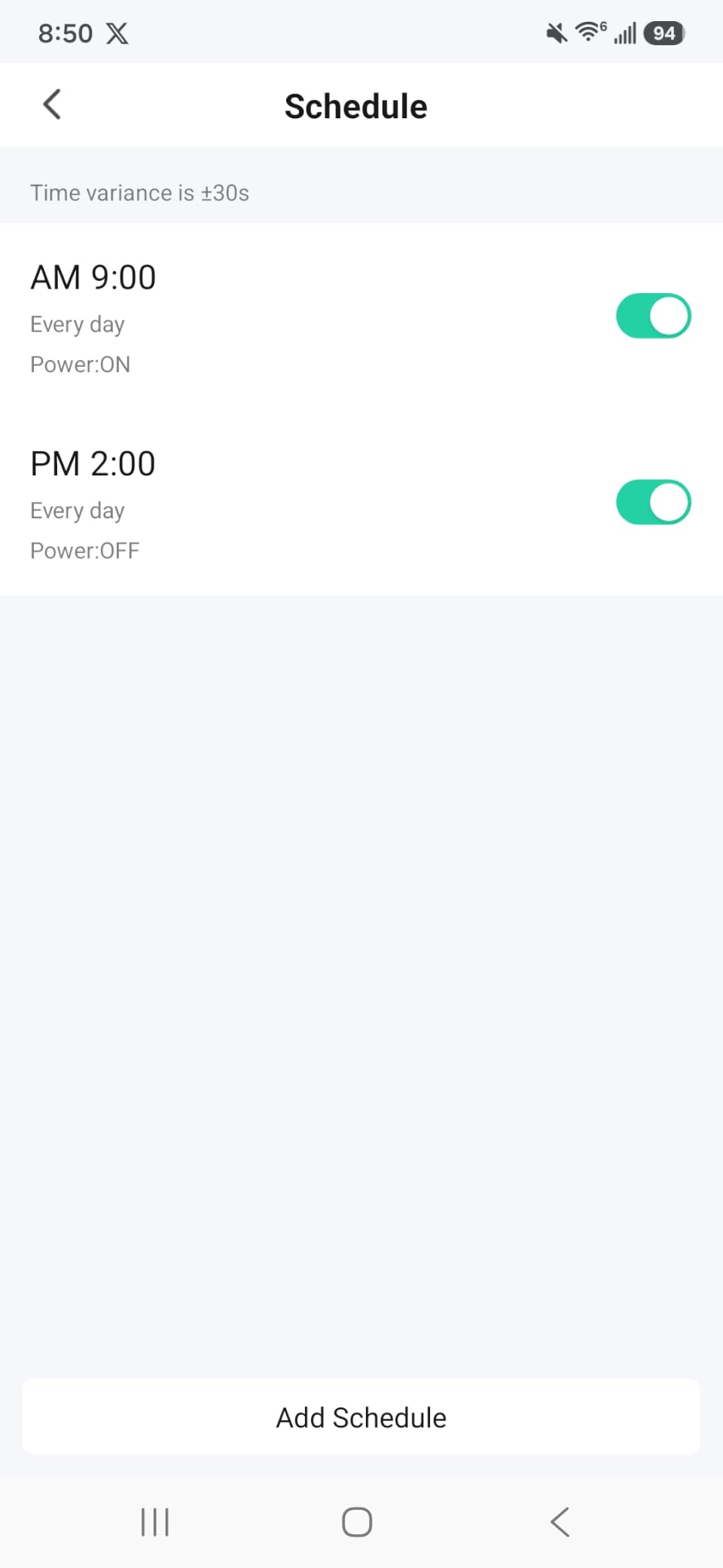
The app control is better than the norm. Reviewers mention scheduling, remote temperature adjustment, and energy tracking, and the auto-defrost cycle runs every 40 minutes and finishes in five minutes, which keeps the outdoor coil from icing over during a wet cold snap.
There is one physical drawback that owners consistently raise. The unit measures 39 by 17.32 by 25.6 inches and weighs 116.8 pounds, so it needs real space on the equipment pad and a firm, level surface. It also needs a 220 to 240 volt circuit, which in older homes can mean an electrician before the heater ever leaves the box.
At 55 decibels it is quiet enough for most yards. The connection side is unusually flexible, with 1.25 inch and 1.5 inch hose adapters, a conversion kit, and a PVC pipe converter all covered, which reduces the fittings you need to source yourself.
Do buy a cover with it. A heat pump works by moving heat rather than generating it, and a large share of what it moves is lost straight to the air overnight. A solar blanket closes that leak, and you can read our picks for the best solar pool covers for inground pools to match one to this unit.
Who this heater suits
This is the right pick for most inground pools between roughly 12,000 and 20,000 gallons in a climate where winter nights sit above 50 degrees. If your main goal is a pool that is warm when you get home rather than a pool that heats from 60 to 86 degrees in a single afternoon, the running cost profile is where this unit wins.
It also suits anyone who wants heating and cooling from one appliance, and anyone who has a salt system and wants a covered heat exchanger rather than bare copper.
Who should buy something else
If your winter nights drop into the 30s and you want to swim through January, look at a gas heater instead. This unit will run, but it will spend much of its life in defrost, and the COP advantage shrinks as air temperature falls.
Skip it if your electrical panel has no room for a new 240 volt breaker. Check that first, because the panel upgrade and the heater purchase are separate conversations and the panel is usually the expensive one.
2. Hayward H-Series 250,000 BTU Natural Gas Heater – Best for Fast Heating
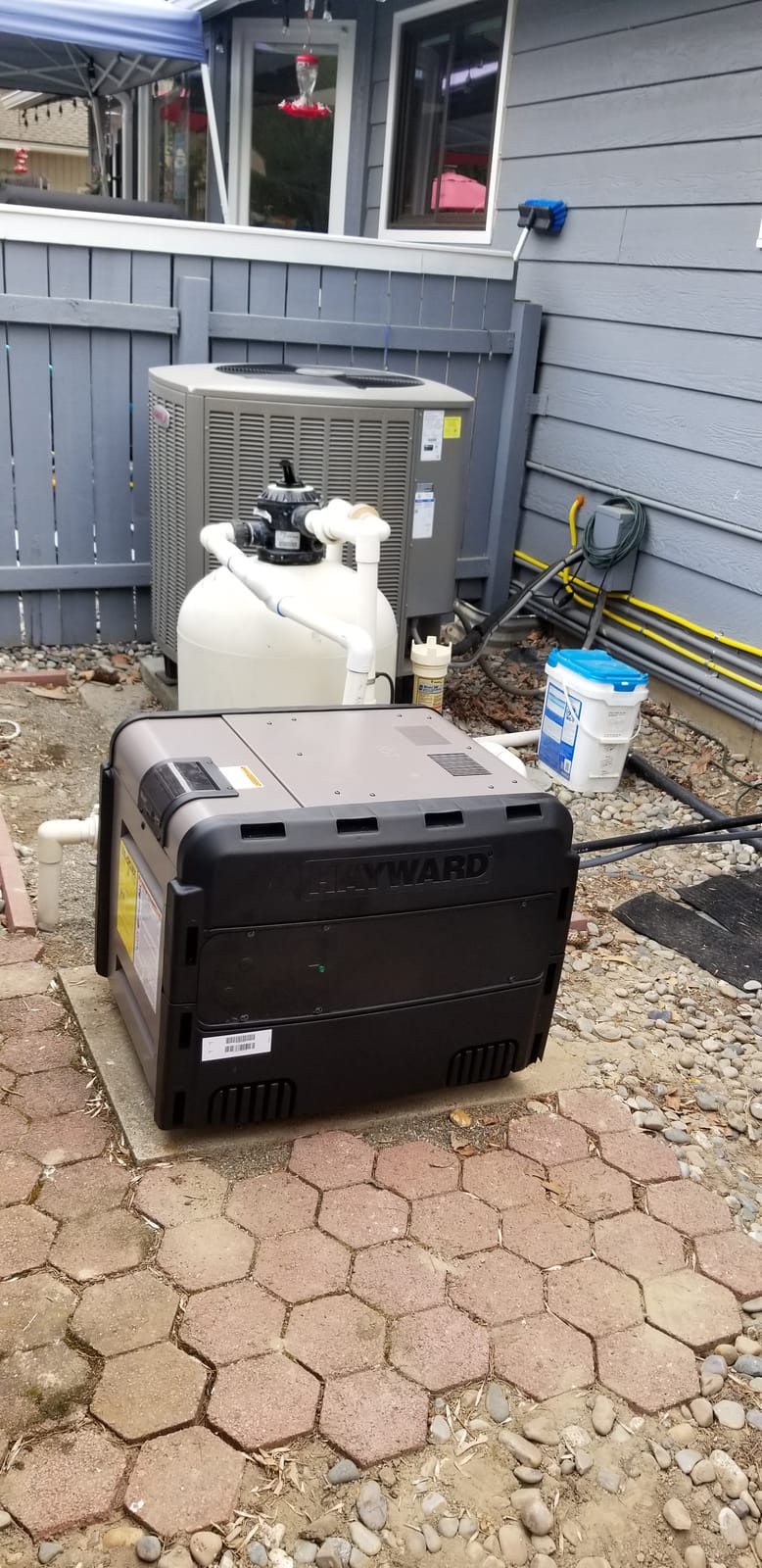
Hayward H-Series Natural Gas Pool Heater for Inground Pools 250,000 BTU
- Heats the pool overnight
- Low-NOx certified for code compliance
- Digital panel with self-diagnostics
- Connections on either side
- Built for pools up to 750 sq ft
- Professional gas line work required
- Heat exchanger leaks reported at elbow joints
When people ask for the best pool heaters for inground pools in cold states, this is the shape of answer they want. A 250,000 BTU burner is a different order of magnitude from a heat pump in this category, and owners report being able to raise pool temperature significantly overnight after a cold swim.
The unit is rated for in-ground pools and spas up to 750 square feet of surface area, which covers the majority of residential inground pools. If your pool is larger than that, you are pushing this model past the design point and should step up rather than stretch it.
It is low-NOx certified, which matters more than most buyers expect. A growing number of jurisdictions, California included, restrict emissions from pool heaters, and buying a low-NOx model up front avoids a conversation with a local code official later.
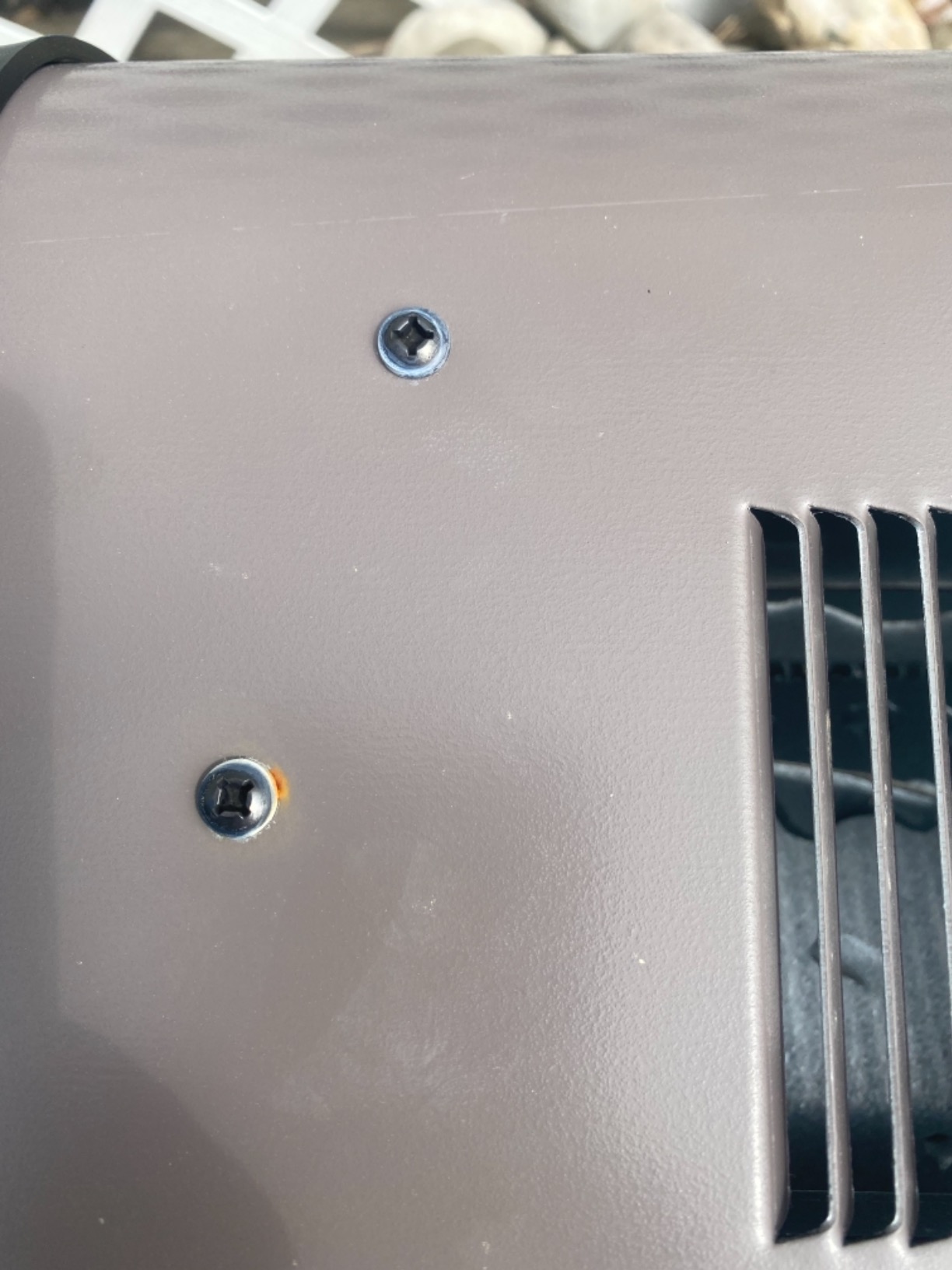
The digital LED control panel with self-diagnostics is the feature that separates this from a basic burner. When something faults, the panel tells you what rather than leaving you to guess, and reviewers generally describe the interface as straightforward.
Installation is flexible in a way that helps on a crowded equipment pad. Gas and electrical connections can enter from either side, and the 3/4 inch gas connection is built in rather than supplied separately, which simplifies the plumber’s work.
The most common complaint across reviews is heat exchanger leakage at the elbow joints where the tubes meet the header. It is not a widespread failure pattern, but it is the one to watch, and it is worth having a technician inspect the joints during the first year of service.
Reviewers also mention the LO error code that sometimes needs a backwash to clear, and the fact that the warranty is easier to honour when a professional did the installation. Both are minor, both are real, and both are avoidable with a competent installer.
What you need before this one goes in
Two things. First, a properly sized gas line run to the equipment pad by a licensed fitter, because the installation is not a homeowner job. Second, a total-project budget rather than a unit budget, since reviews consistently report all-in project figures well above the heater alone once labor, the gas line, and any pad work are counted.
If your home is on propane rather than natural gas, this specific model is the wrong fuel type. Check what your utility actually supplies before you start shopping.
Where it earns its place
This is the heater for a pool that gets used hard and quickly. A family that wants Saturday at 84 degrees, a rental property where the pool must be ready when a guest arrives, or a cold-climate owner extending the season into November all get value that a heat pump cannot deliver at any price.
It also remains the correct choice for a pool with a raised spa that needs to hit 104 degrees, because of the 150,000 BTU ceiling that applies to heat pumps.
3. Raypak 266,000 BTU Digital Gas Heater – Best for Pool and Spa Combos
Raypak 266,000 BTU Digital Electronic Ignition Natural Gas Pool Heater
- Largest BTU output in this group
- Electronic ignition with no standing pilot
- Easier to service than most rivals
- Existing Raypak plumbing compatibility
- Temperature sensor failures within 1-2 years
- Warranty depends on professional installation
The Raypak is the highest-output heater we tested, and at 266,000 BTU it has the headroom to handle a pool and raised spa combination without a two-stage compromise. Reviewers running a 32 by 16 inch inground pool report roughly three degrees an hour, which is fast enough to make a cold evening recoverable before bedtime.
Ignition is intermittent spark with pilot safety controls, so there is no standing pilot burning all night. On a unit this size that saves a meaningful amount of fuel over a season, and it is also the reason the housing does not retain residual heat the way some older burners do.
Serviceability is the underrated advantage. Reviewers consistently call out that the components are accessible and that parts are more readily available than on competing brands, and if you already have Raypak plumbing and electrical in place, this model can drop into that arrangement with less rework.
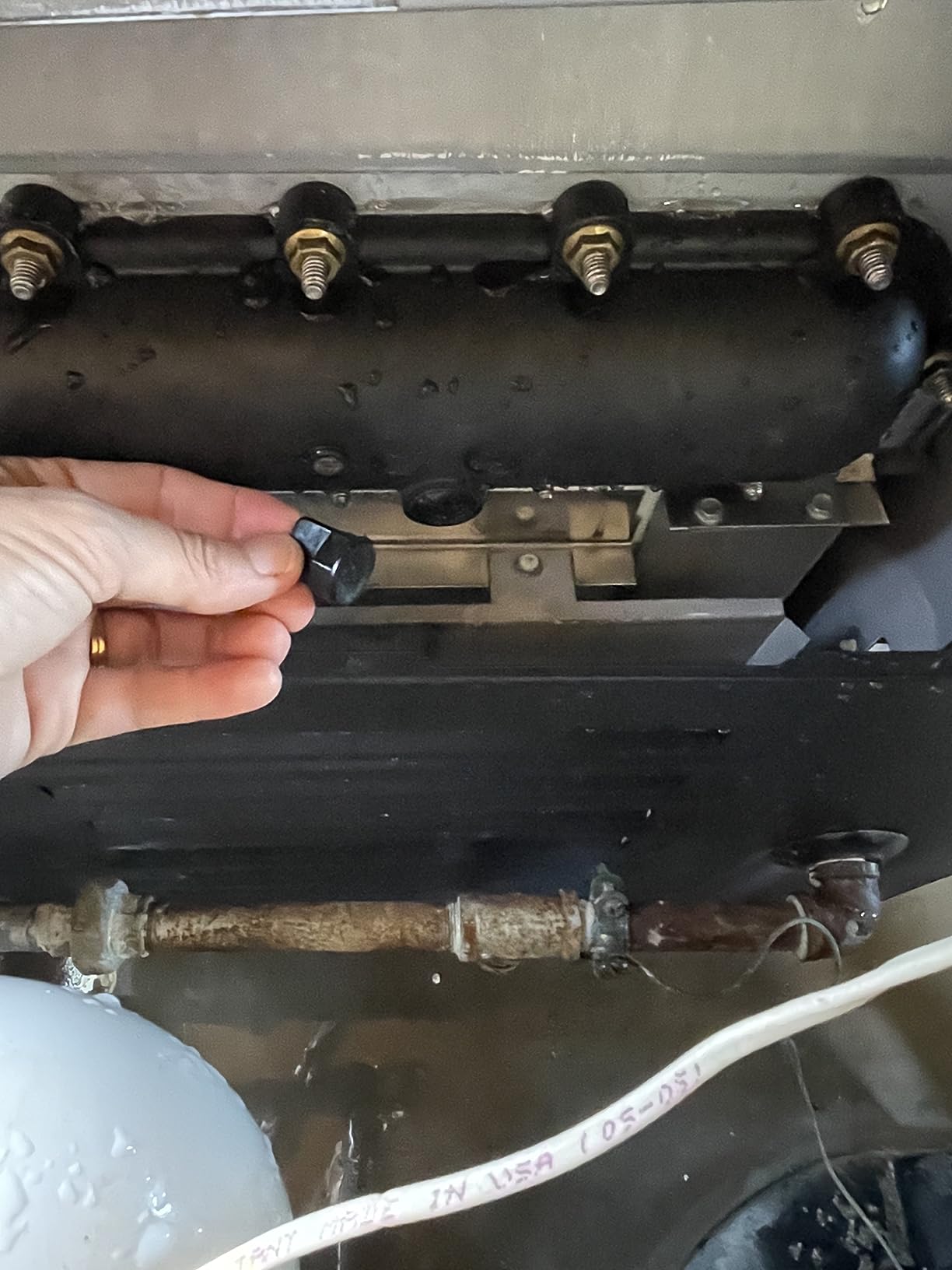
Build quality is mixed in the reviews. Owners report broken drain plugs and loose internal screws on some examples, which is the kind of thing a five-minute inspection at delivery catches and a warranty claim later does not.
The more consistent complaint is temperature sensor failure inside the first year or two. When it happens the unit still heats but loses accurate control of the setpoint, and the part is a straightforward replacement for a pool tech.
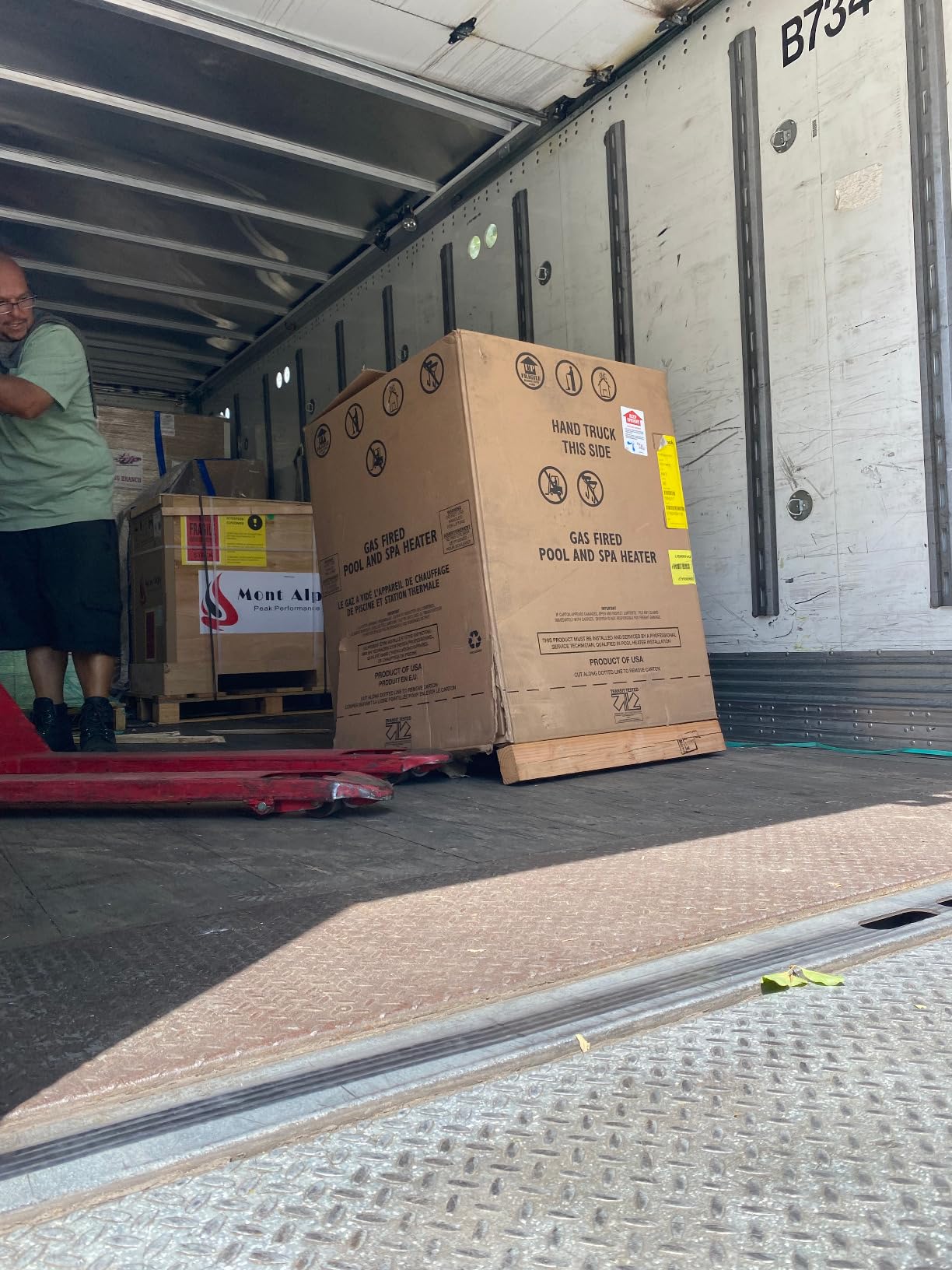
Two practical notes. The inlet and outlet are positioned close together on this chassis, so bypass plumbing is needed to get proper flow through the heat exchanger, and the unit weighs 210 pounds, which means plan the placement before it arrives rather than after.
The warranty is conditional on professional installation. Have the installer document the work, because that paperwork is what a service center asks for when a claim comes up.
Why this one for a spa combination
Heat pumps in this category top out around 140,000 to 150,000 BTU, which owners of pool and spa setups describe on forums as the number that decides the argument. A 266,000 BTU gas heater is one of the few ways to get a raised spa to spa temperature quickly and then hold it while the pool stays swimmable.
For a pool with no attached spa, the extra capacity mostly means faster recovery rather than higher steady-state temperature, which is still worth something but not everything.
What to watch
Check the sensors on arrival and again at the first annual service, and ask your installer about the bypass plumbing in writing. Both are small tasks now and annoying ones later.
This model needs a 3/4 inch gas line, which is the standard residential run but worth verifying before you commit to the purchase.
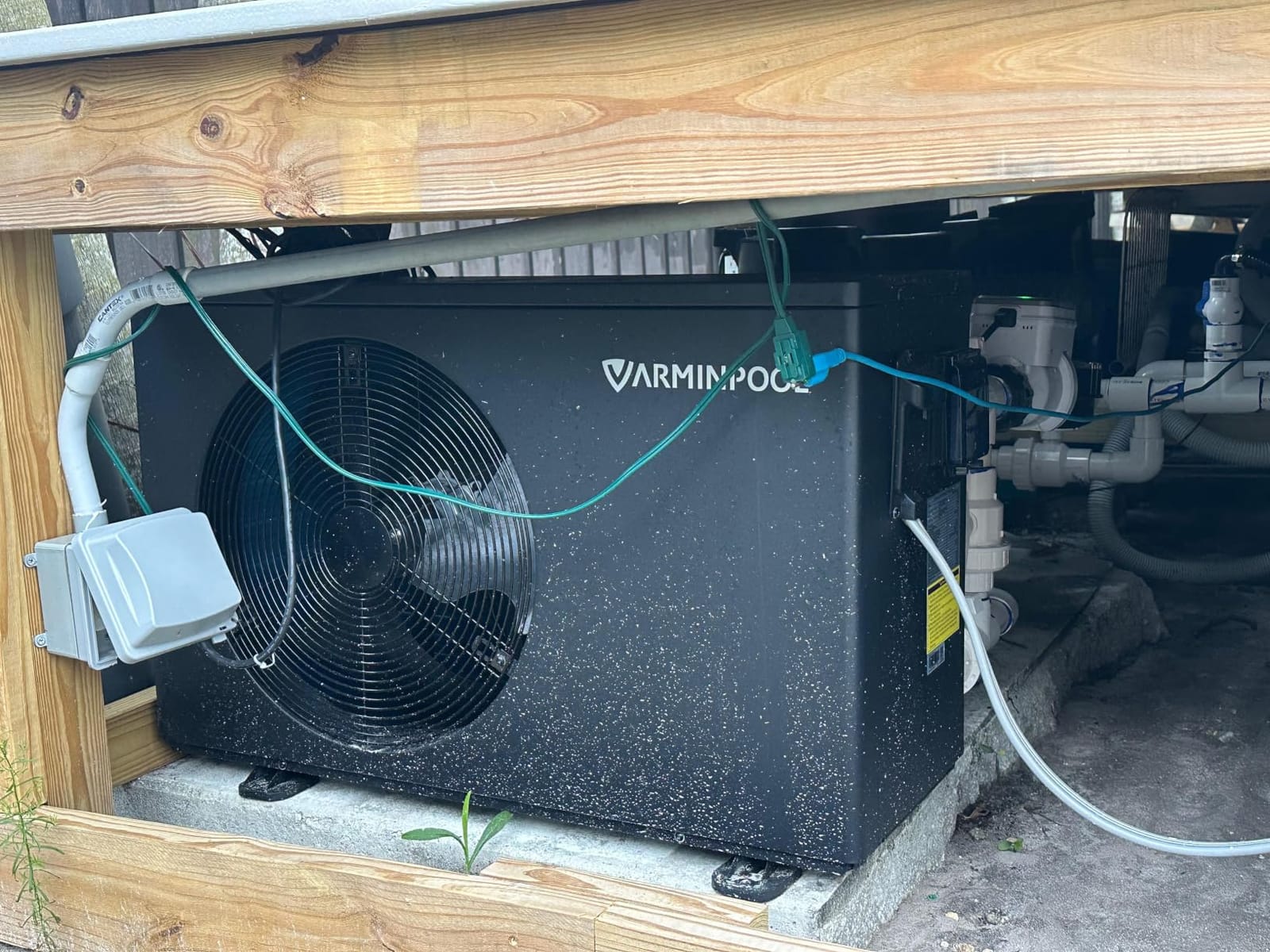
4. VARMINPOOL 58000 BTU Heat Pump – Best for Quiet Operation

VARMINPOOL Swimming Pool Heater for Inground Pool 58000BTU
- Quietest model here at 43 dB
- Works down to 10F ambient
- Three inverter modes
- IPX4 rated
- Responsive support
- WiFi connectivity issues
- Needs 240V and a variable speed pump
At 43 decibels this is the quietest heater in the roundup, and for a pool next to a bedroom wall or a patio conversation, that is a real selection criterion rather than a nice-to-have. The number sits below typical household background noise.
Capacity is 58,000 BTU, rated for pools up to 19,000 gallons, and the heating range runs from 46 to 104 degrees with cooling from 46 to 82. For many mid-size inground pools, that is more than enough to hold a comfortable temperature through a shoulder season.
What separates this unit from a basic heat pump is inverter control with three modes. Eco, Smart, and Boost let you trade heating speed against electricity use, and in shoulder weather Eco alone often keeps the pool where you want it for a fraction of the energy.
The manufacturer rates this unit for operation down to 10 degrees ambient, which is far below the 50 to 60 degree comfort zone most heat pumps occupy. Reviewers note it does work in cold weather, though like any compressor it loses output as air temperature drops.
Safety specification is solid for a residential install. It carries an IPX4 waterproof rating, water-electric isolation, a flow switch, and temperature protection, which covers the failure modes that cause most heat pump service calls.
Customer support comes up repeatedly and favorably. Owners describe responsive service that follows up daily and sends replacement controllers and winter covers at no charge, which matters on a device that runs outdoors year round.
The recurring weak spot is the WiFi connection. Connectivity dropouts are reported, and the resolution in most cases was a replacement controller from support rather than a software fix.
Two setup requirements. It draws 17.5 amps on 220 to 240 volts, so a dedicated circuit is needed, and a variable speed pump is required for the performance the manufacturer claims. The unit weighs 129.7 pounds and connects with 2 inch PVC.
Where it makes sense
This is the heat pump for noise-sensitive yards and for smaller to mid-size inground pools up to about 19,000 gallons. It is also a good fit if you want a unit that keeps running through a cold shoulder season without a lot of babysitting.
If your household includes shift workers or you run the pool at odd hours, the low noise level and the three inverter modes make scheduling straightforward.
Where it falls short
At 58,000 BTU it is not the answer for a 30,000 gallon pool or for anything with a spa. It is also the wrong choice if you have no variable speed pump, because the manufacturer requires one.
Buyers who want app control as a headline feature should weigh the app complaints against the noise advantage, since the two rarely appear in the same unit at this level.
5. Varpoolfaye 120,000 BTU Inverter Heat Pump – Best for Mid-Size Pools
Varpoolfaye 120,000 Btu Inverter Pool Heat Pump for Inground Pools 220V
- Salt water and fresh water compatible
- COP 12.3 efficiency
- Heats pools up to 33000 gallons
- 1.5 inch connectors included
- 118 inch power cord included
- Heavy at 238 lb
- Factory fittings may weep before retightening
This is the capacity sweet spot for a lot of inground pools. At 120,000 BTU with a COP of 12.3, it covers substantially more gallons than the small heat pumps without reaching the weight and price of the biggest units on this list, and it is rated for pools up to 33,000 gallons.
The saltwater compatibility is stated directly by the manufacturer, and reviewers with salt systems report no corrosion problems over multiple seasons. That is a meaningful filter for anyone running a salt-chlorine generator, because it is a purchase decision rather than a footnote.
Inverter technology is the other headline. Rather than cycling a fixed-speed compressor on and off, the inverter modulates output to match demand, which reduces start-up wear and cuts the electricity used when the pool is close to setpoint.
It runs at 47 decibels, quiet enough for most yards and in line with the other premium heat pumps here. The control side is an intelligent touch panel with a one-button fast heat function, plus app control for temperature, scheduling, and modes.
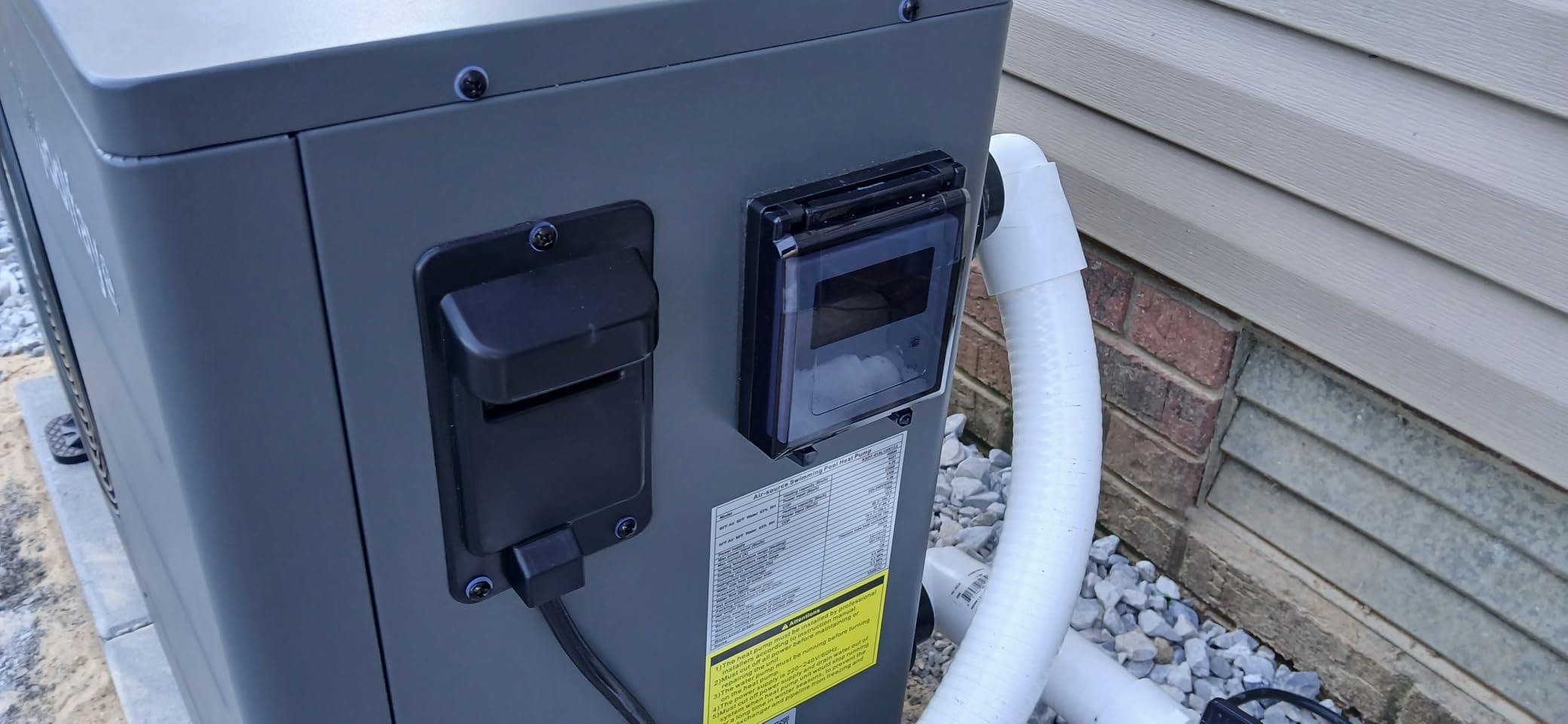
Installation details are unusually complete for a retail unit. The 1.5 inch connectors and a 118 inch power cord both ship in the box, which removes two things you would otherwise have to source before the installer arrives.
The most common early complaint is a weeping water adapter straight out of the factory. Owners report that retightening by hand resolves it in a few minutes, and it is worth doing before the unit goes into permanent service.
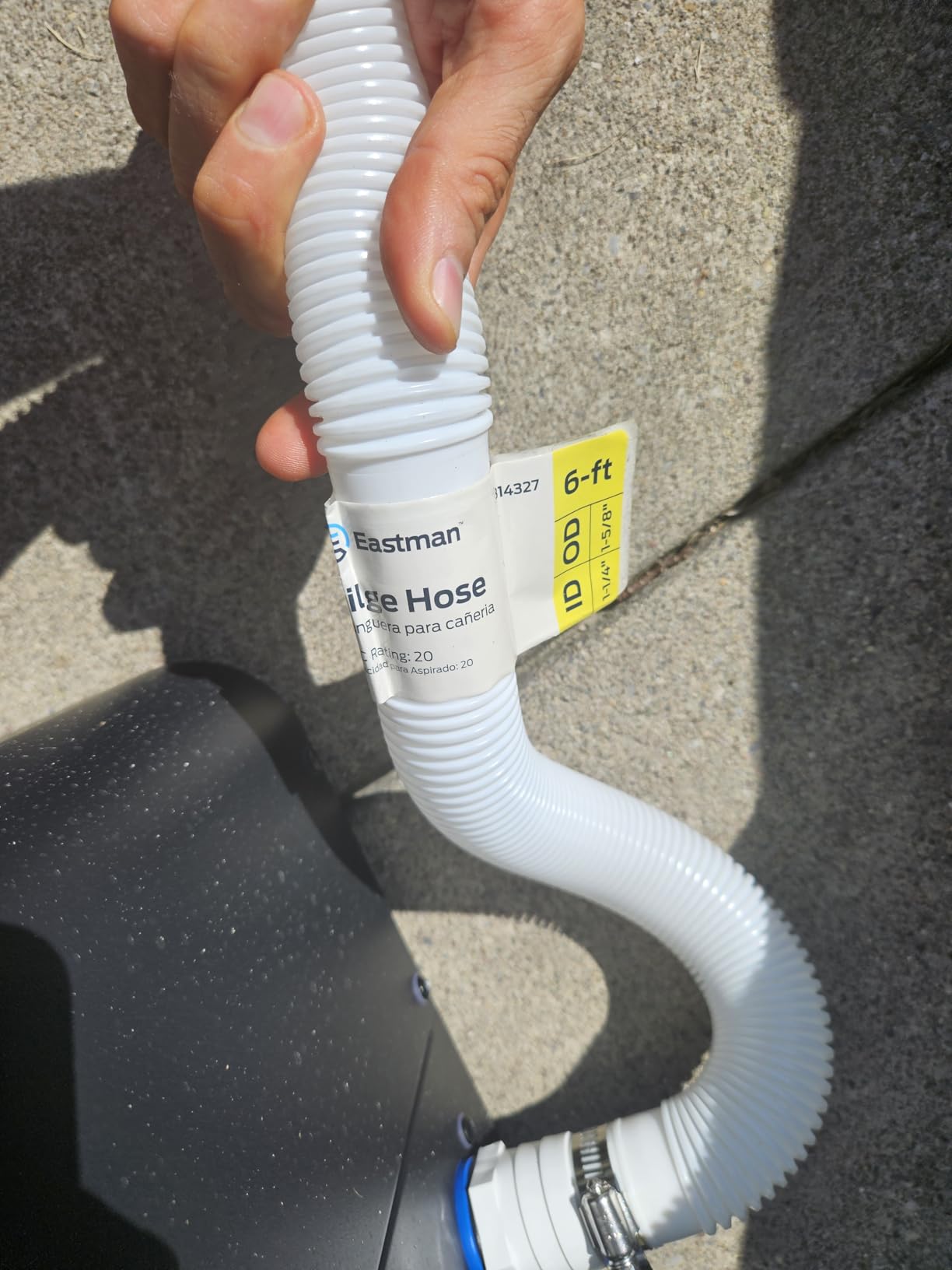
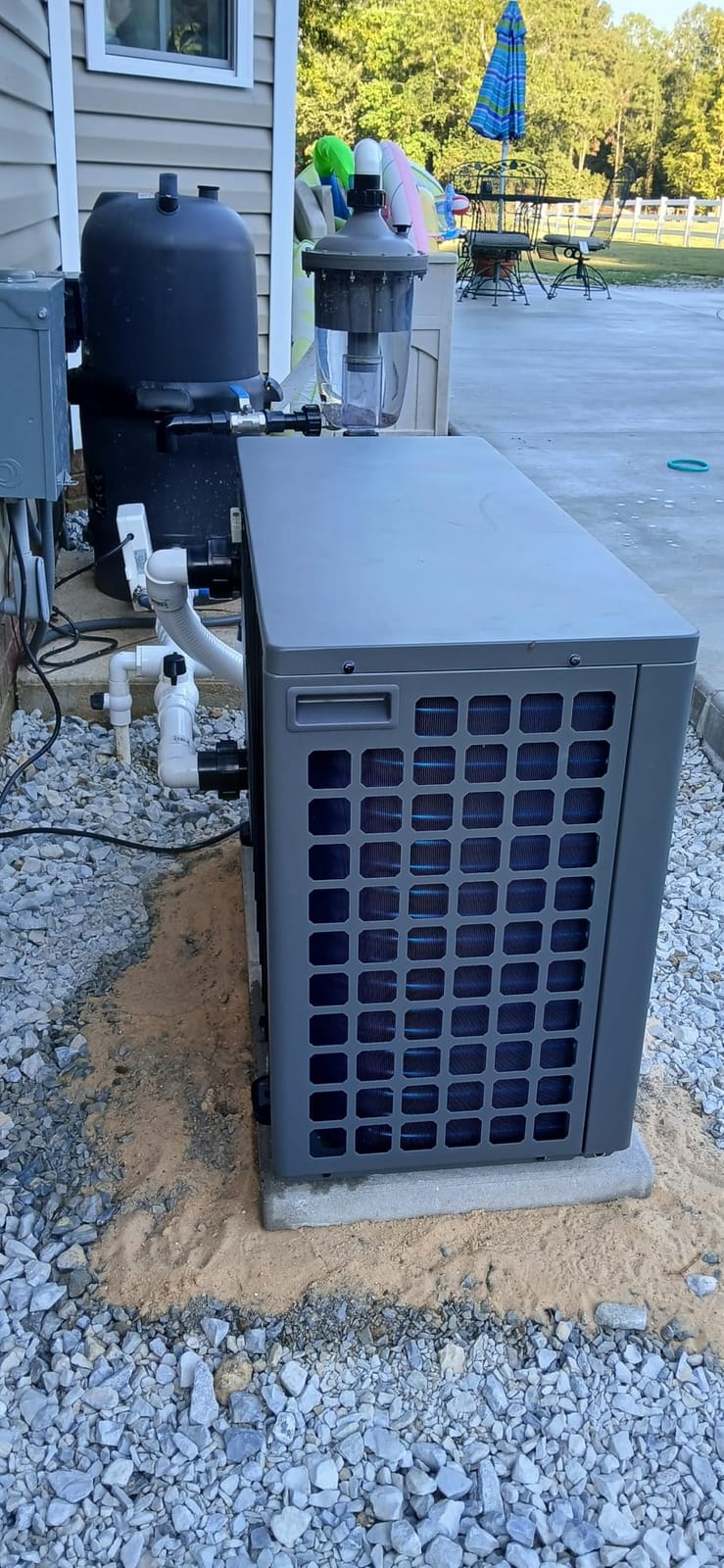
Condensation draining from the base is normal for a heat pump and needs a planned path rather than a fix. If your pad does not drain away from the unit, that water will find somewhere to go that you did not choose.
At 238 pounds, plan the move with a second person or a dolly. The package measures 49 by 40 by 38 inches, so check your equipment pad clearance before delivery day.
Why this is the middle-of-the-road answer
Owners with 20,000 to 30,000 gallon pools are exactly the group this unit was built for. It is big enough to recover a cool pool in a weekend without a gas line, and small enough that two people can position it.
For salt water owners who want something between a compact unit and a commercial-grade machine, the 120,000 BTU tier is where we would start.
What to plan for
Use a cover. Reviewers specifically note that a pool cover is required for best efficiency, which makes sense given how a heat pump loses stored heat overnight through the water surface.
The app is not the manufacturer’s own software, and owners say it works but could be better. Treat remote control as a convenience here rather than a selling point.
6. WARMBLU Inverter Heat Pump – Best for Lowest Running Cost

WARMBLU 23,000 Gallons Inverter Pool Heat Pump for Inground Pools 220V
- Highest COP in this roundup at 16.0
- Pure titanium exchanger resists corrosion
- Heating and cooling modes
- 12-month warranty with lifetime support
- Smart Life app setup is fiddly
- Needs flow control valves
The COP of 16.0 is the number that makes this unit interesting. Nothing else in this roundup reaches that figure, and because COP is the direct measure of how much heat you get per unit of electricity, it translates into the lowest running cost of anything we evaluated.
Capacity is 23,000 gallons, which covers a large share of residential inground pools, and the unit both heats and cools. The inverter is driven by an intelligent chip running a dynamic algorithm rather than a fixed duty cycle, which is how it modulates output.
The heat exchanger is pure titanium, and that material choice is why we recommend this unit for coastal yards. Titanium will not corrode in salt water or in salt-chlorine pools, and it is the standard we look for when water chemistry is a concern.
Owner-reported performance lines up with the spec sheet. One reviewer reports taking a 13,000 gallon pool from 70 to 86 degrees in 24 hours, which is a strong result for a unit in this class and gives a realistic picture of what a full heat pump day looks like.
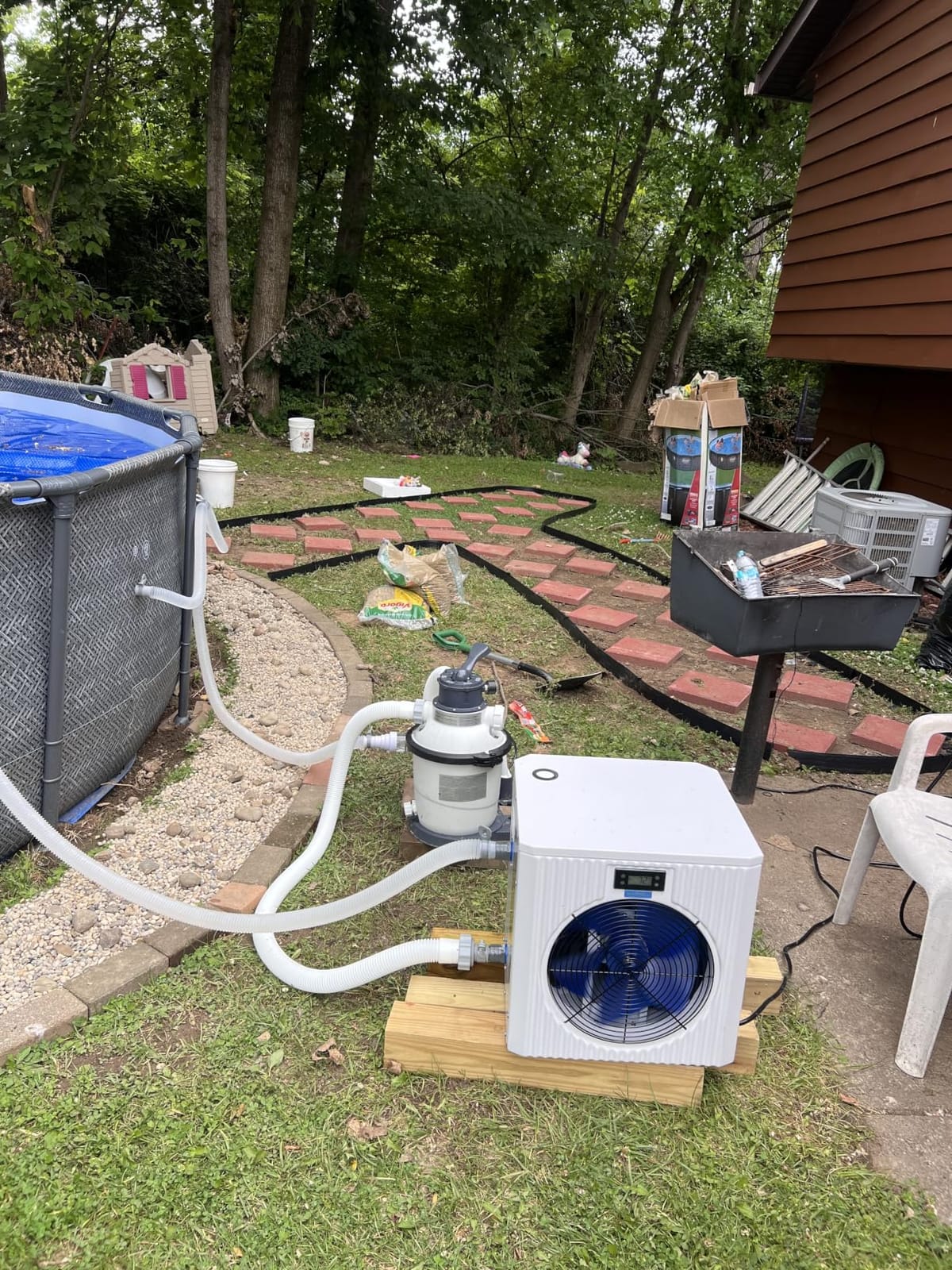
Noise is quoted at under 50 decibels, and reviewers describe it as quieter than a refrigerator. That is a fair comparison for a compressor running continuously, and it is the reason this unit works next to a house.
The app is the weak point. Setup runs through Smart Life and requires connecting to the heater’s own WiFi network first, which owners describe as frustrating, though it does work once configured.
Plumbing needs care. A valve on the discharge to regulate water flow is required, and reviewers recommend three-way valves for proper installation. Skip that and the unit will not reach its rated output.
High water flow also produces more condensation than you might expect, so drain routing matters. The unit weighs 175.6 pounds and stands 43 inches tall, so check vertical clearance under a deck or a low patio cover.
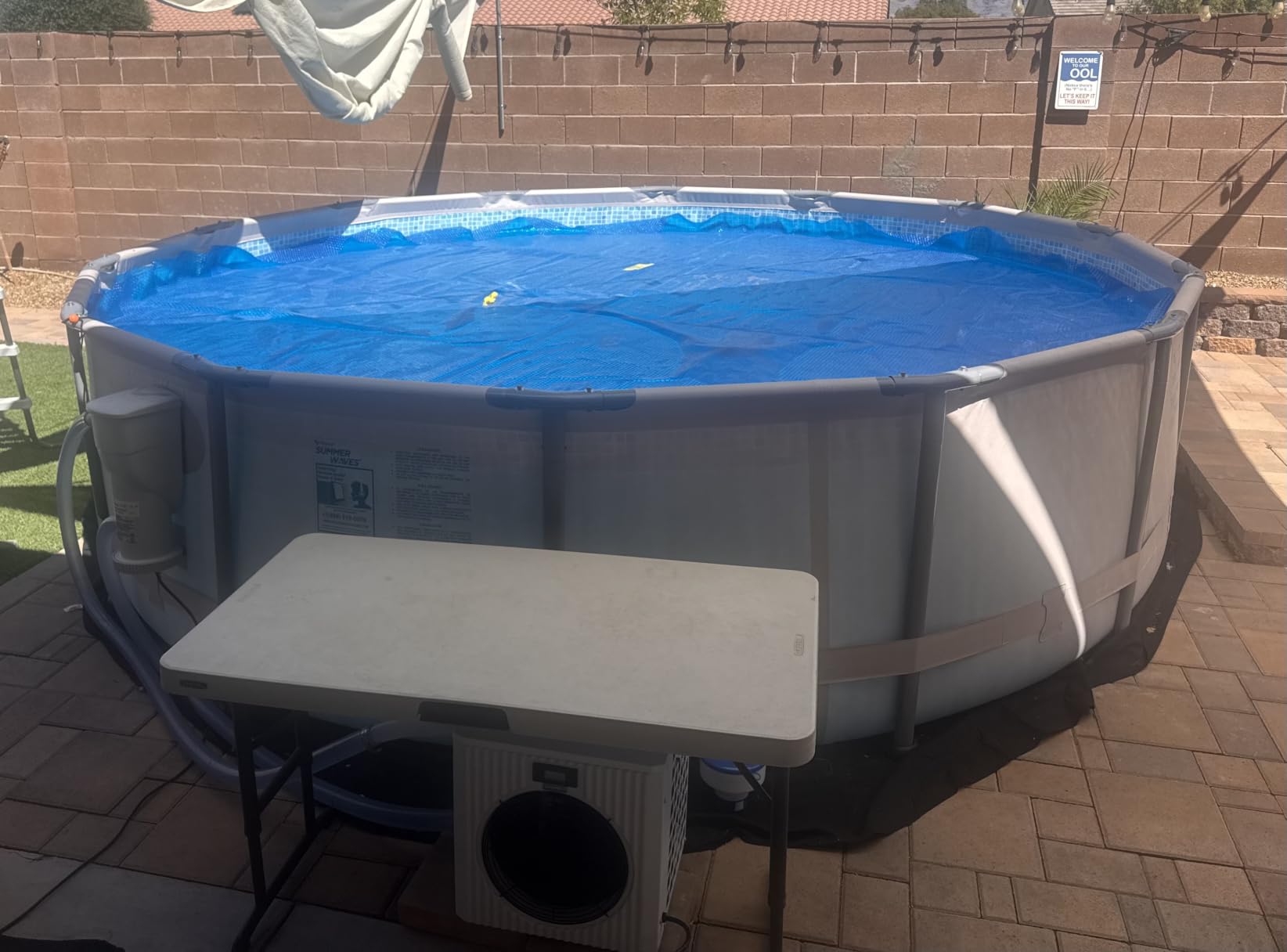
Who this is for
Buyers who intend to heat the pool most days of the shoulder season and who care most about the utility bill. At this COP, a heat pump becomes far easier to justify as a primary heater rather than an occasional supplement.
It is also a strong pick for anyone with a salt system who wants a titanium exchanger without moving to the top of the price range.
What gives buyers pause
The 12-month warranty is short by comparison with established gas brands, and coverage is paired with lifetime customer support rather than a longer parts commitment. That is a real difference in how long you are covered.
If you are not comfortable setting up flow control valves and WiFi provisioning, budget for an installer who is, because both affect performance more than the purchase itself.
7. Hayward HeatPro 140,000 BTU Heat Pump – Best for Coastal and Salt Pools
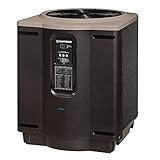
Hayward HeatPro Pool Water Heat Pump Heater for Inground Pools, 140,000 BTU
- Titanium exchanger resists salt and chemicals
- Ultra Gold corrosion protection
- Heating and cooling modes
- Spa mode for attached spas
- Established brand service network
- Very heavy at 320 lb to position
- Needs a 50 AMP dedicated circuit
Hayward has been in pool equipment for more than 80 years, and that matters most when a warranty claim requires a technician who already knows the machine. This is the pick we would make for a saltwater pool in a coastal climate, where heat exchanger material decides how long the heater lasts.
The heat exchanger is titanium, described by the manufacturer as delivering maximum heat transfer with salt water and chemical resistance. The cabinet adds UV-resistant panels and Ultra Gold corrosion-resistant technology, which is aimed squarely at salt air and coastal humidity.
At 140,000 BTU this is at the top of the heat pump output range, and it handles real inground pool volumes. Owners report heating a 20,000 gallon pool from the 60s to 86 degrees in roughly 25 hours, which is the kind of overnight-to-next-day result that makes a heat pump usable rather than marginal.
Spa mode is the feature that separates it from pure pool heaters. If you have a raised spa, the mode brings it up to temperature faster, and combined with the titanium exchanger it makes this the only heat pump on the list with a dedicated spa mode.
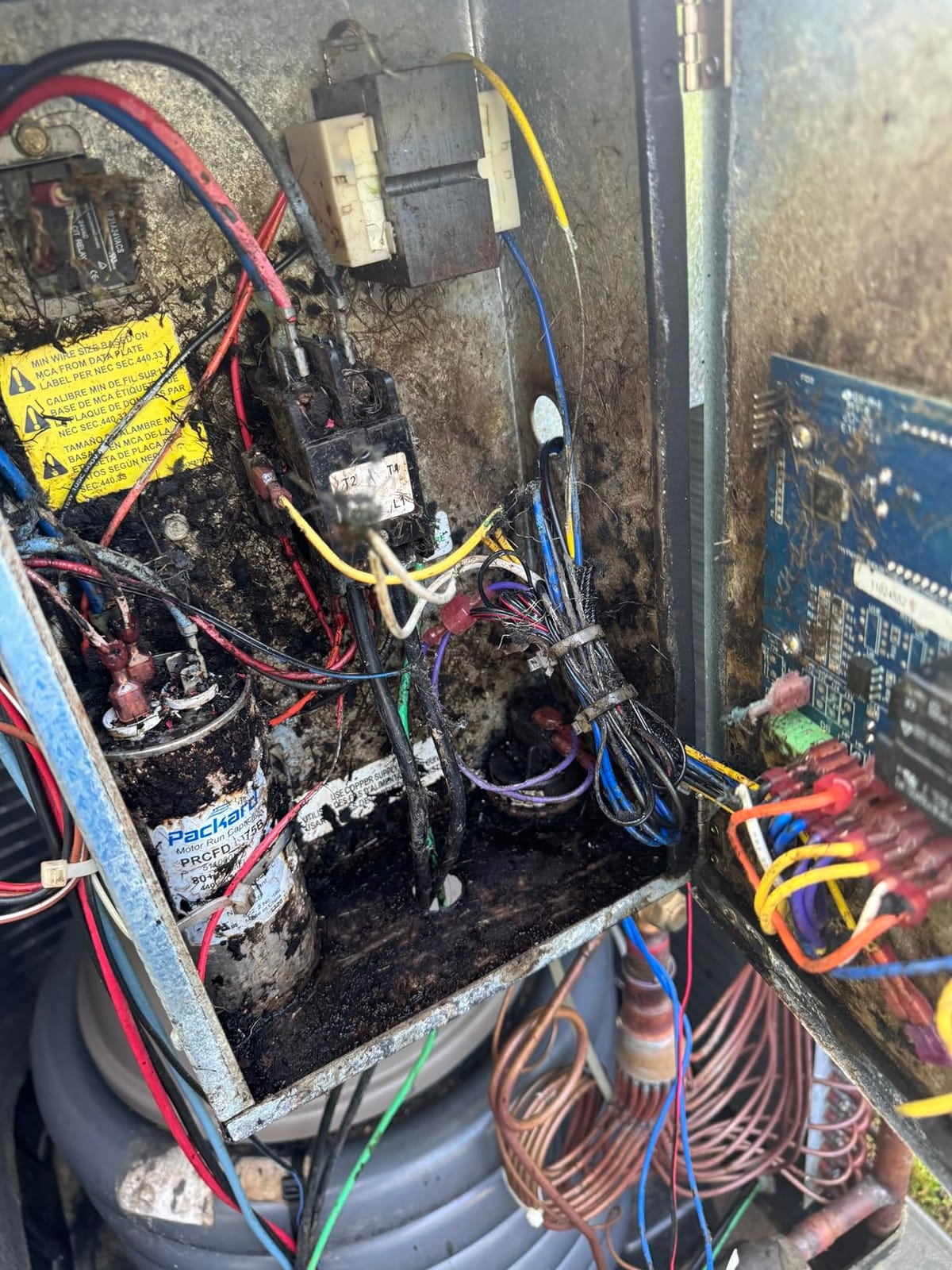
Running costs are considerably lower than gas or propane, which is the entire premise of a heat pump and the reason most buyers who switch from gas say they switched for the bill rather than the speed.
The physical requirements are the first thing to check. It runs on 220 volts with a 50 AMP breaker required, connects with 2 inch PVC at both inlet and outlet, and weighs 320 pounds, which is the second heaviest unit here behind the 337 pound Varpoolfaye.
Sensor failures on new units appear in the reviews, so have the installer walk through the diagnostics before they leave. If your dealer can only offer a 90,000 BTU version of this same line for a smaller pool, that is a legitimate step-down rather than a compromise.
The warranty requires an authorized technician and does not cover labor, which is worth pricing into your long-term math. Confirm that an authorized technician exists within a reasonable drive of your home before you buy, not after the failure.
Why coastal and salt owners should look here first
Forum advice is consistent on this point. Salt systems corrode metal hardware, and heat exchanger material is the component that decides whether you are doing a five-year or a fifteen-year repair. Titanium is the material that does not care.
Coastal air attacks the cabinet and fasteners as well as the exchanger, which is why the UV-resistant body panels and corrosion coating matter as much as the titanium in a humid location.
The practical catch
This is the biggest single commitment in the roundup and the heaviest thing you will lift onto a pad. A 50 AMP circuit and a 320 pound unit both need planning before delivery, and the labor exclusion in the warranty means service costs stay with you.
If your pool is under 15,000 gallons, a smaller titanium-equipped unit will serve the same purpose at a fraction of the effort.
8. FibroPool FH255 55000 BTU Heat Pump – Best for Compact Installations
FibroPool FH255 Pool Heat Pump – 240V Electric – 55,000 BTU – Metal
- Lightest unit here at 98 lb
- Titanium exchanger handles salt water
- Enamel coated all-weather cabinet
- Digital control panel
- Single-speed rather than inverter
- Smallest capacity in the roundup
This is the unit to buy when the equipment pad is already crowded. At 98 pounds and 38 by 15 by 26 inches it is the lightest heater in the roundup by a wide margin, and for a small inground pool it does the job without asking you to redesign your pad layout.
Capacity is 55,000 BTU for pools up to 10,000 gallons. That covers a compact inground pool comfortably in a moderate climate, and it is the honest upper limit of what this class of unit can do.
The heat exchanger is titanium, so it holds up in salt water, and the chassis is an enamel coated metal cabinet rated for all-weather outdoor operation. That combination of materials is what you want on a unit that will sit through wet winters and salt spray.
Control is a straightforward digital panel with precise temperature adjustment. There is no app and no inverter, which is exactly the trade you make for the compact size and the lower entry point.
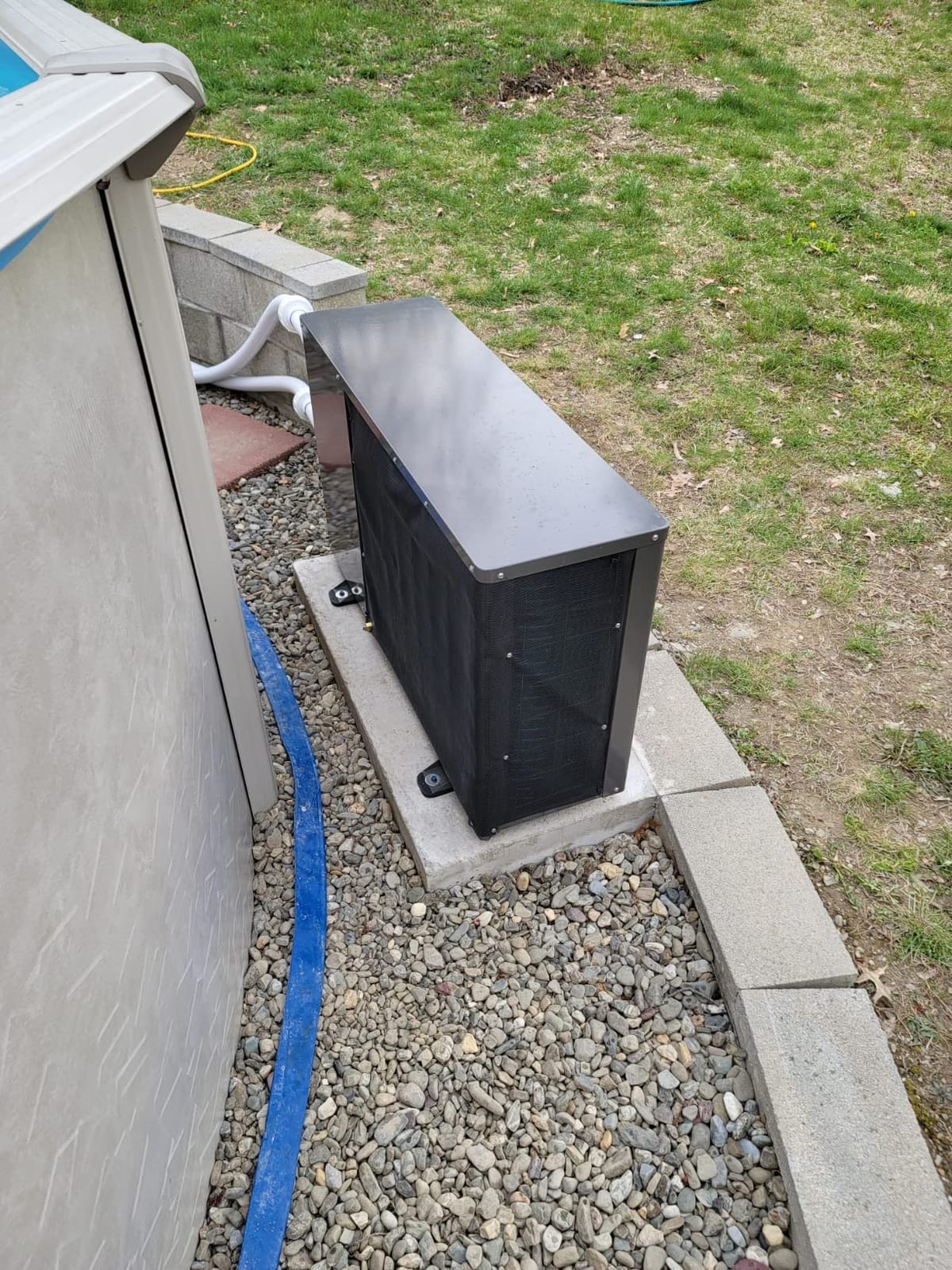
Reviewers consistently treat this as the sensible option rather than the exciting one, and the consensus is that it works as advertised. It is described as good value, easy to place, and unobtrusive on a pad where every square foot counts.
The titanium exchanger is the standout feature at this capacity, because many competing small heat pumps use cupro nickel or steel. In a salt pool, that difference decides whether you are doing a minor repair or a major one five years from now.
Complaints are proportionate to the class. The metal cabinet can dent and scratch over time, which is cosmetic, and the unit has less review history than the larger models simply because fewer people buy it.
It runs on 240 volts, so the dedicated circuit requirement applies here too, just at a lower capacity than the Hayward 50 AMP unit. The same panel capacity check is worth doing before you order.
When this is the right size
Compact inground pools in the 8,000 to 10,000 gallon range, particularly in climates where you want maintenance heating rather than a full seasonal lift. This is a hold-the-temperature unit, not a rescue unit.
It is also the answer for a salt pool on a tight budget, because a titanium exchanger is the non-negotiable part and everything else on this model is deliberately simple.
What you give up
Single-speed compressors cycle harder than inverters, so expect more noise during startup cycles and a little more electricity than a variable-speed equivalent. There is no remote control, which matters if you travel or heat on a schedule.
For a pool above 12,000 gallons, step up to the 58,000 or 120,000 BTU class instead of overworking this one.
9. Varpoolfaye 140,000 BTU Heat Pump – Best for Large Pools

Varpoolfaye 140000BTU Swimming Pool Heat Pumps Up to 42000 Gallons 220v
- Handles pools up to 42000 gallons
- COP 12.8 at full capacity
- Salt and fresh water compatible
- Quiet at 47 dB
- Heaviest unit here at 337 lb
- Newer model with a thinner review record
This is the only heat pump in the roundup rated for a 42,000 gallon pool, which makes it the answer for the large inground pools that owners keep telling us no heat pump can handle. At 140,000 BTU it sits right at the practical ceiling of the category.
Efficiency holds up at full size. The COP of 12.8 is close to the mid-size 120,000 BTU unit in this same line, which means capacity did not come at the cost of efficiency, and that is unusual in this category.
Rated at 47 decibels, it runs at the same noise level as much smaller heat pumps, so a large pool does not mean a loud yard. Fresh water and salt water are both supported, and inverter technology is included for modulated output.
Its star rating of 4.7 is the highest in this group. The reason it is not our top pick is simply evidence volume, with 59 reviews rather than several hundred, and a newer model tends to carry early-adopter bias in both directions.
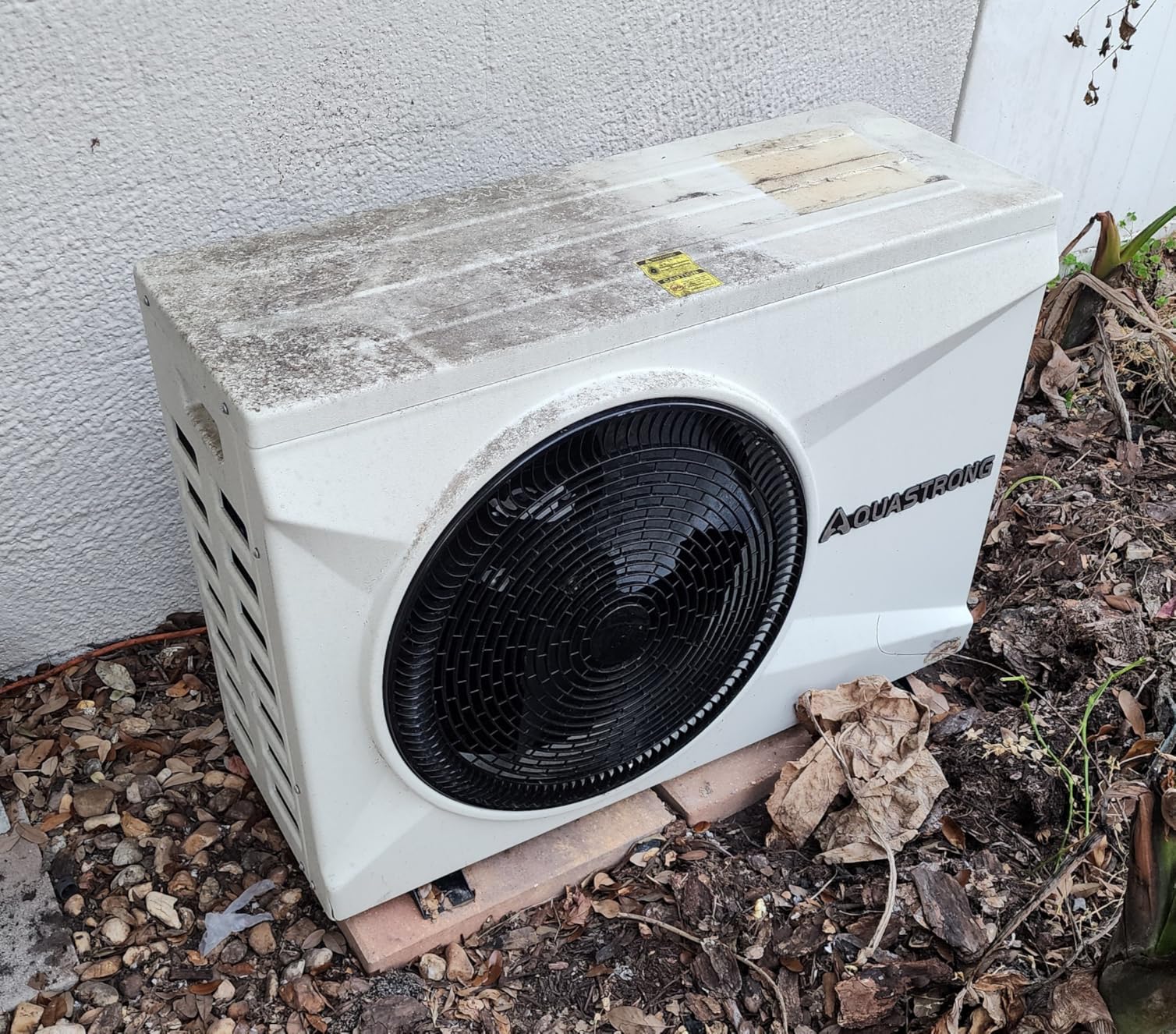
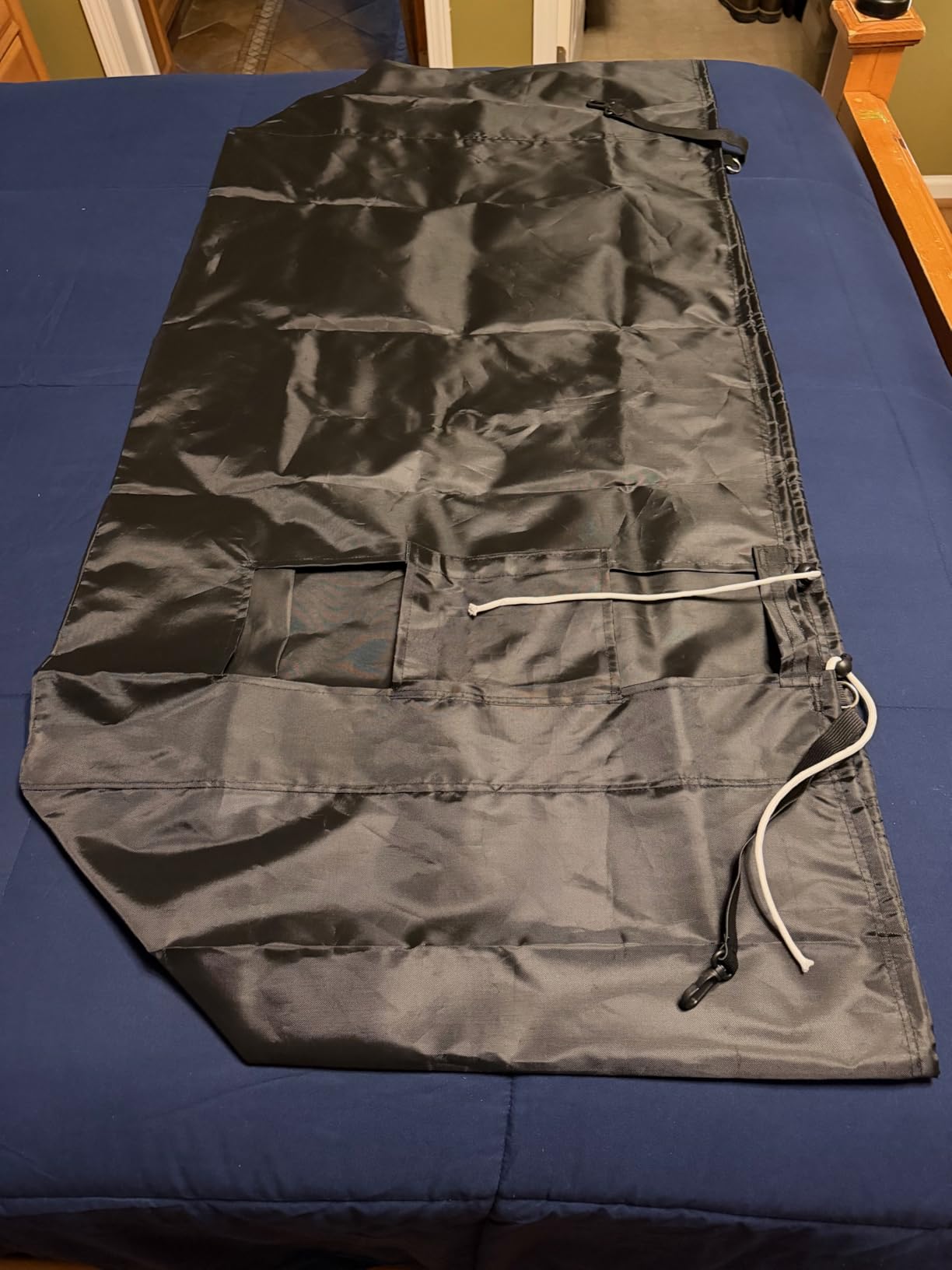
Owners of large pools are the ones who care about the cover. At this pool volume, an uncovered surface loses enormous amounts of stored heat overnight, and reviewers specifically flag that a pool cover is needed for the efficiency numbers to hold.
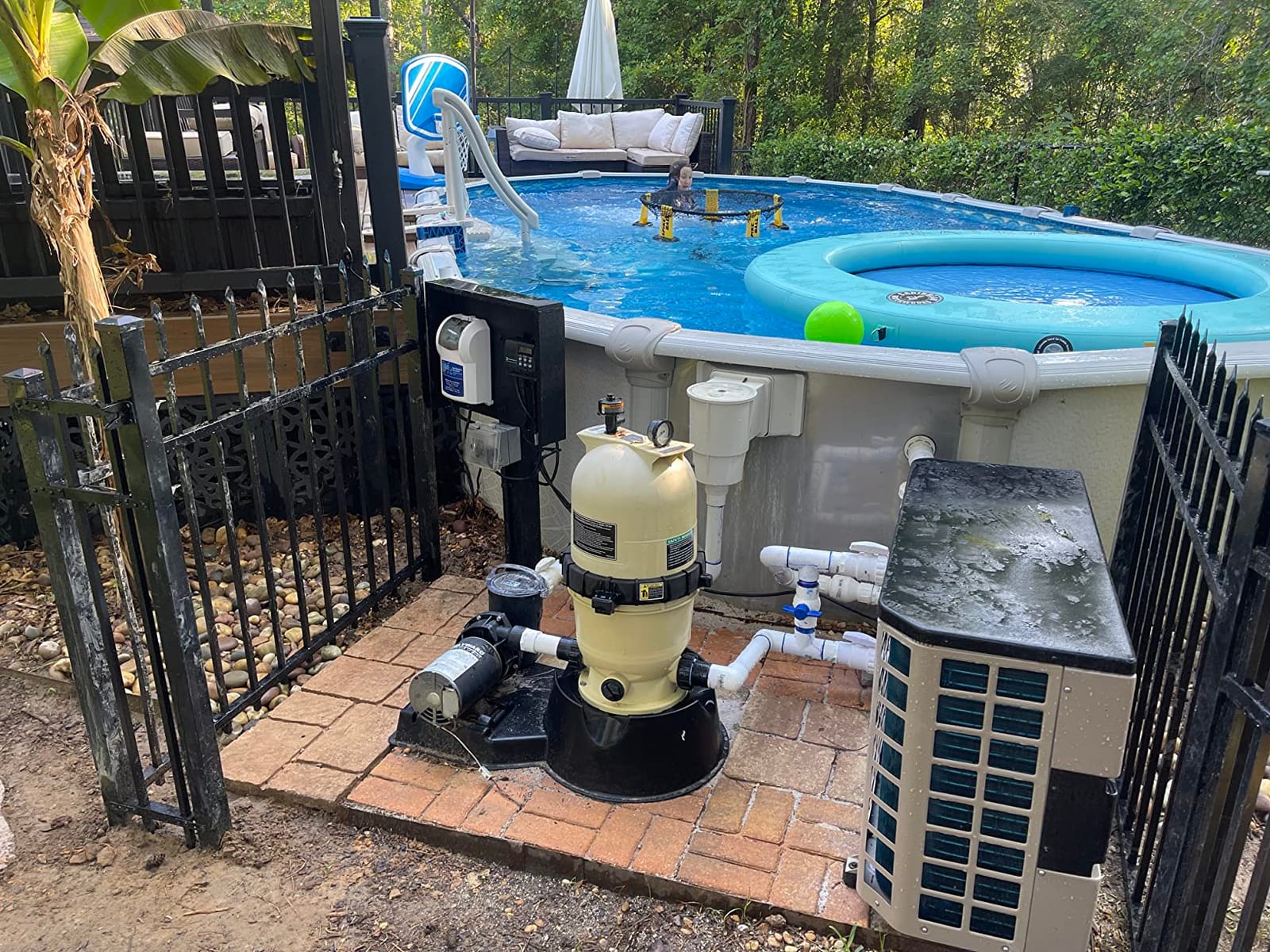
Condensation drainage needs planning as with the other heat pumps here. At 337 pounds, this is the heaviest unit in the roundup and needs either a second person or mechanical help to position.
App control covers temperature, scheduling, and modes, and 1.5 inch connectors are included so the plumbing interface is not a special order. The control panel is described as intelligent rather than merely digital.
Because the model is newer, parts availability and long-term serviceability are less proven than they are for the Hayward and Raypak lines. That is a reasonable thing to accept for capacity, and an unreasonable thing to accept for a tight budget.
Where the 150,000 BTU ceiling actually bites
Owners running 35,000 to 42,000 gallon pools have historically had two options: a large gas heater, or two smaller heat pumps. This unit gives you a single electric machine for a pool in that band, which simplifies both the plumbing and the electrical side.
It still does not replace a 400,000 BTU gas pool and spa heater. If the pool has a raised spa that must reach 104 degrees quickly, gas remains the only realistic path.
What to weigh before buying
Fewer reviews means less long-term data, so budget for a slightly higher likelihood of a component issue in year two. Buy from a seller with a straightforward return policy, because that is your main protection on a newer model.
Confirm pad space and a clear delivery path. At 337 pounds in a 28.7 by 28.7 by 38.6 inch footprint, getting it into position is a planning problem, not a surprise.
10. Hayward W3HP50HA2 HeatPro Heat Pump – Best for Independently Certified Performance

- AHRI certified and lab tested
- Titanium exchanger resists corrosion
- Rotary compressor runs quietly
- Uses less energy than gas or propane
- Single-stage rather than inverter
- Cabinet finish offered in one colour
This is the pick for buyers who want a third-party efficiency number rather than a manufacturer claim. The W3HP50HA2 is AHRI certified and independently lab tested, which means its performance has been verified outside the factory.
It runs on an advanced heat pump cycle that uses less energy than natural gas or propane heaters, and reviewers confirm it maintains water temperature even in poor weather. It is a heat and cool appliance, so it handles the warm months as well as the cold ones.
The titanium heat exchanger provides corrosion protection, and the rotary compressor drives a low-noise fan that owners describe as quiet in operation. At 159.7 pounds and 17 by 43 by 30 inches it is lighter and smaller on a pad than the three heaviest heaters here.
The digital control panel displays temperature with simple settings, which is the right level of interface for a heater most owners touch twice a season. There is no app, and that is a deliberate simplification rather than an omission.
Compared with the inverter units elsewhere in this list, the single-stage compressor cycles on and off rather than modulating. That means a little more noise at startup and slightly less fine-grained temperature control, and it is the main reason we rated this below the inverters on efficiency.
The cabinet is offered in a single beige finish, which sounds trivial until you are trying to match an existing equipment pad.
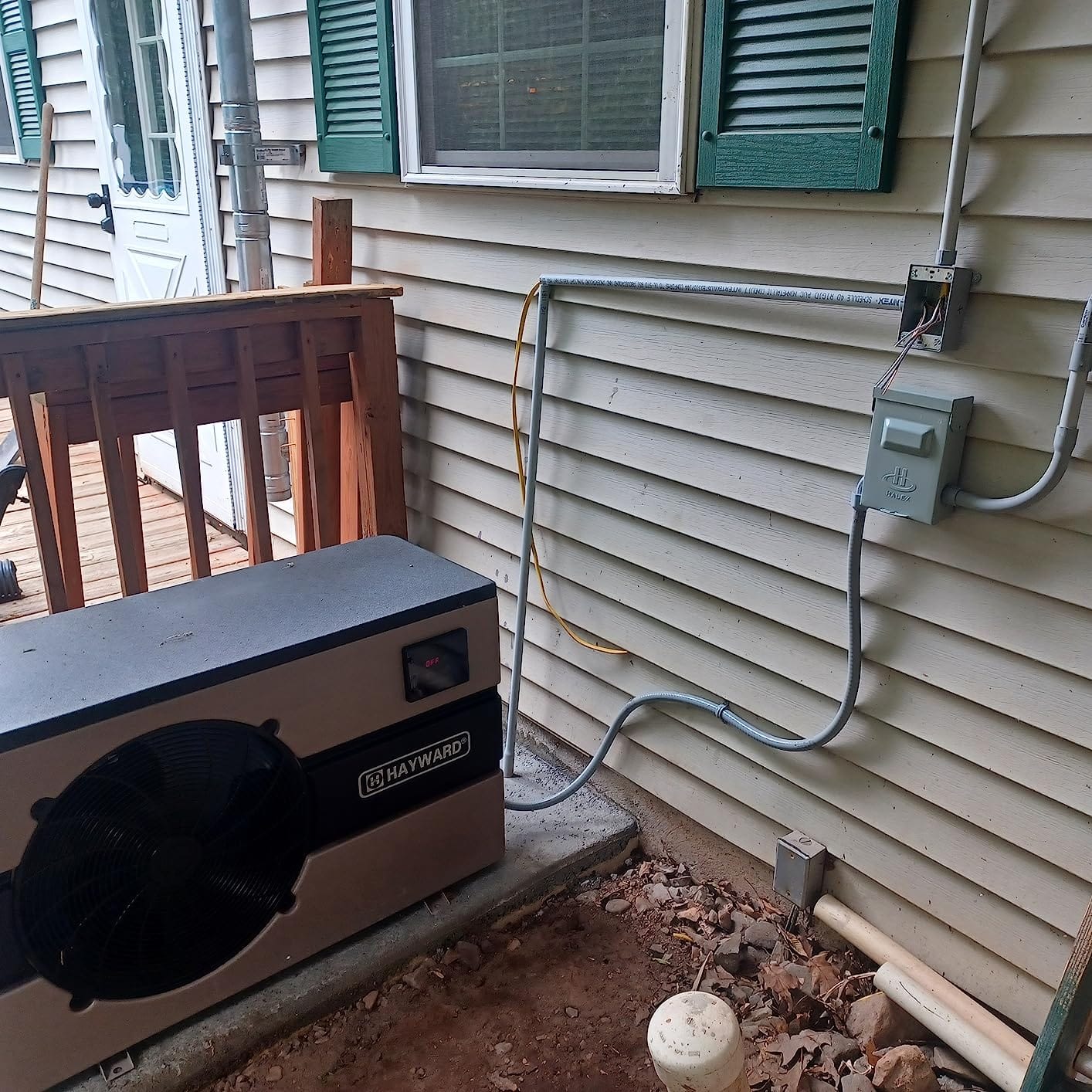
A dedicated electrical circuit is required, as with any of the heat pumps here, and that is the point at which the buying decision should pause for a panel check.
Review volume is lower at 76, which is worth keeping in mind. There is no published gallon rating in the data we reviewed, so confirm the sizing for your specific pool with the manufacturer before you commit.
Why certification matters more than a high COP
A COP of 16 is impressive on a spec sheet but is measured at a specific laboratory condition. An AHRI certification means the unit’s output and efficiency have been independently verified, which is a firmer basis for sizing and for comparing against a gas heater’s thermal efficiency percentage.
For buyers doing a long-term fuel-cost comparison, a verified number beats an unverified one, and this is the only unit in the roundup where that verification is documented.
Who should choose it
Owners who want the lowest-effort decision: an established brand with a service network, a corrosion-resistant exchanger, and a published efficiency standard. It suits mid-size pools in climates where winter air stays above the heat pump comfort floor.
Travelers and seasonal owners who want set-and-forget temperature control without an app to provision will find the simple panel a genuine advantage.
How to Size a Pool Heater for Your Pool?
Sizing starts with gallons, and gallons are the number most buyers never calculate. The short version of the industry formula is surface area in square feet multiplied by your desired temperature differential, multiplied by 12. For a gas heater you then multiply by the degrees per hour you want to climb, which is what produces the 250,000 or 266,000 BTU figures you see on the nameplates.
For heat pumps the math is different. You size on gallons and on how many hours a day you are willing to run, because a heat pump adds two to five degrees a day. A pool that needs to be warm by 8 am gets 12 hours of run time, and that is the number to size against.
A practical ladder, using the capacity ratings published for the units in this roundup:
Under 10,000 gallons means a FibroPool FH255 class unit, which is rated to 10,000 gallons on the titanium exchanger. Between 12,000 and 19,000 gallons means the AQUASTRONG HEX100 or the VARMINPOOL 58000 BTU, both of which sit comfortably in that band.
Between 20,000 and 26,000 gallons means the 120,000 BTU class, which covers pools up to 33,000 gallons. Between 27,000 and 33,000 gallons means the WARMBLU at 23,000 gallon capacity, which is genuinely at the top of its range here, or the 120,000 BTU unit.
Above 35,000 gallons means the 140,000 BTU class, either the Varpoolfaye rated to 42,000 gallons or the Hayward HeatPro. Beyond that, a gas heater or a second heat pump is the realistic answer.
One forum insight worth repeating because no competitor covers it: many owners report heating faster with a variable speed pump at medium speed, around 60 GPM, than at high speed around 90 GPM. Higher flow means the heater runs for shorter, more frequent cycles, while lower flow gives it longer runtime per cycle and steadier heat transfer. If your heater is undersized for your pool, dropping pump speed a notch is a free improvement.
Choosing by Climate, Water Chemistry and Panel Capacity
Climate is the first filter, and it is more decisive than any feature list. If your average winter low sits above about 55 degrees, a heat pump is a primary heater and a gas heater is a backup you will rarely touch. If winter lows sit in the 30s and 40s, gas is effectively required to extend the season, because heat pump output collapses in that range and defrost cycling takes a further bite out of it.
Dry desert air is a specific penalty that most guides skip. Heat pumps pull moisture out of the air as they condense, so in a climate running 10 to 20 percent relative humidity, output drops for the same reason it drops in the cold. Humid coastal air actually suits a heat pump better than desert air does.
Water chemistry is the second filter. If you run salt water or a salt-chlorine generator, the heat exchanger material decides your repair history. Titanium is the answer in both cases, and that recommendation applies to the Hayward HeatPro, the FibroPool FH255, the WARMBLU, and both Varpoolfaye models. Cupro nickel is adequate for chlorine pools, and bare copper in a salt pool is a decision you will revisit.
Panel capacity is the third filter, and it is the one people forget until it stops the purchase. A 240 volt heat pump needs a dedicated breaker, and a 140,000 BTU model like the Hayward HeatPro needs 50 amps. Older homes frequently lack both the breaker slot and the service capacity. Check the panel before you choose the model, not after.
A cover is the fourth filter, and it is the one that pays back fastest. Because heat loss scales with surface area, an uncovered inground pool can lose most of the heat you added during the day overnight. If you are choosing between two otherwise similar heaters, buy the one you will pair with a cover. Our guide to the best solar pool covers for inground pools covers the pairing in detail, and our robotic pool cleaner roundup for inground pools covers the equipment that keeps water chemistry stable enough for a titanium exchanger to last.
Finally, a repair-versus-replace gate. Common pool heater repairs land in the range of a few hundred dollars, while a new heater fully installed runs into the thousands. If the failure is a straightforward part replacement on an otherwise sound unit, repair it. If the heat exchanger itself has failed, or the cabinet and exchanger are both original, replacing it is usually the better economic call.
On lifespans, plan on 10 to 20 years for a well-maintained gas heater, a similar window for a quality heat pump with a titanium exchanger, and 10 to 20 years for solar collectors. The variable that shortens all three is not age, it is water chemistry and freeze damage from a unit left un-winterized.
Frequently Asked Questions
How do you heat an inground pool?
Gas heaters burn natural gas or propane through a burner tray and move that heat into the water through a copper or stainless heat exchanger, adding 2 to 5 degrees per hour in any weather. Heat pumps use a refrigerant compressor to pull heat from outdoor air and transfer it through a titanium or cupro nickel exchanger, adding 2 to 5 degrees per day and working best above roughly 50 to 60 degrees ambient. Solar systems circulate pool water through unglazed collectors on a sunny roof and cost nothing to run.
What is the life expectancy of a gas pool heater?
A well-maintained gas pool heater typically lasts 10 to 20 years. Gas heaters are generally the most mechanically durable heater type because they have no sealed refrigerant system, but their lifespan is shortened by corrosion in salt water, scale inside the heat exchanger, and freeze damage if the unit is not winterized. Annual service of the burners, heat exchanger, and gas pressure is what separates a 15-year heater from a 7-year one.
Which brand of pool heat pump is the most reliable?
Reliability tracks the heat exchanger material and the availability of parts more than the logo. Hayward heat pumps use a titanium exchanger with a large established service network, which is why we recommend the HeatPro line for coastal and salt pools. Pentair, Raypak, and Jandy are the other established names in the category. Among newer inverter units, titanium exchangers and documented warranty coverage are the two features we would weight most heavily.
Is a heat pump or gas heater better for a pool?
A heat pump is better for steady running cost and is the right primary heater when your winter nights stay above roughly 55 degrees. A gas heater is better when you need heat quickly, when winter temperatures drop into the 30s and 40s, or when you have a raised spa that must reach 104 degrees, since heat pumps cap near 140,000 to 150,000 BTU while gas pool and spa heaters run to 400,000 BTU. Many owners run both for shoulder seasons.
Do I need an electrical upgrade for a pool heat pump?
Almost always a dedicated circuit, and sometimes a service upgrade. A 240 volt heat pump needs its own breaker, and larger models such as the 140,000 BTU Hayward HeatPro need 50 amps. Older homes frequently lack a spare breaker slot or the panel capacity to carry it. Check your electrical panel capacity and gas line run before selecting a model, because the panel work is usually the more expensive half of the project.
How expensive is it to fix a pool heater?
Common pool heater repairs typically land in the range of a few hundred dollars, covering things like a failed temperature sensor, a blower motor, an ignition module, or a failed defrost cycle sensor. Replacing a heat exchanger is the exception, since a copper exchanger replacement approaches the cost of a new unit. The practical rule is to repair sensor and control faults and replace the unit when the heat exchanger or the cabinet has reached the end of its life.
Final Verdict for 2026
The best pool heaters for inground pools divide cleanly by two questions. If your winter nights stay above 50 to 55 degrees and you want the lowest running cost with heating and cooling in one appliance, the AQUASTRONG HEX100 inverter heat pump is our pick, backed by more owner history than anything else on this list. If you need heat now, live somewhere cold, or run a raised spa, the Hayward H-Series 250,000 BTU is the honest answer, and the Raypak 266,000 BTU is the stronger version of that same idea when the spa has to hit 104.
For salt water or coastal yards, go straight to a titanium exchanger and do not compromise on it. The Hayward HeatPro 140,000 BTU is the most established option, and the WARMBLU is the more efficient one. For pools above 35,000 gallons, the Varpoolfaye 140,000 BTU is the only single-machine heat pump in this roundup rated for the job.
Before any of them goes in, check two physical things: your electrical panel capacity and your gas line run. Then add a cover from our solar pool cover roundup, because an uncovered pool will spend your fuel budget losing heat to the night sky. If your pool has steps that complicate cleaning between heat cycles, the robotic cleaners for pools with steps guide will keep water chemistry steady enough to protect whatever exchanger you choose.