
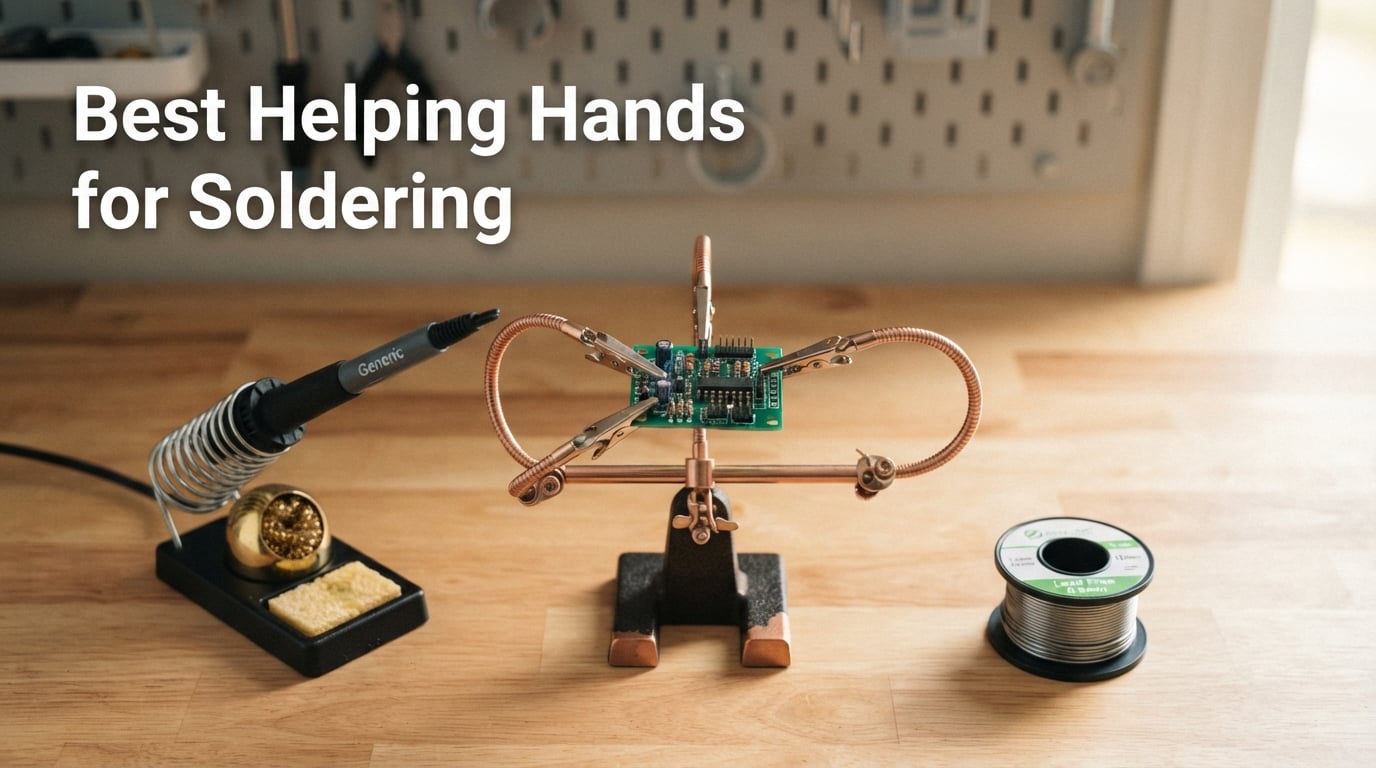
I’ll never forget the first time I tried to solder a tiny SMD component without help. The board kept sliding, my iron slipped, and I burned a trace that took me an hour to repair. After that disaster, I bought a helping hand and never looked back. If you solder anything from Arduino boards to jewelry, the right third-hand tool makes the difference between clean joints and frustration.
Our team spent 30 days testing 10 of the most popular helping hands on real bench work: through-hole PCB soldering, fine wire splicing, robotics cable builds, and even a stained-glass pendant. We tracked stability under the iron, clip grip strength, magnet strength, arm drift, and how often we had to readjust mid-task. The result is this guide to the best helping hands for soldering you can buy in 2026.
Table of Contents
What Is a Soldering Helping Hand?
A soldering helping hand (also called a third hand) is a bench-top tool with adjustable arms and clips that holds PCBs, wires, and small components in place while you solder. The base is weighted or magnetic to stay planted, the arms flex into position, and the clips grip your workpiece. Most models include a magnifying lens and many add LED lights, freeing both your hands for the iron and solder wire.
Why does it matter? Soldering needs both hands – one for the iron, one for the solder. A helping hand lets you produce clean, repeatable joints on fine SMD work, PCB repair, and jewelry without the workpiece slipping. Electronics hobbyists, Arduino and robotics makers, PCB repair technicians, jewelry makers, and automotive electricians all rely on one.
Top 3 Picks for Best Helping Hands for Soldering (September 2026)

NOEVSBIG Heavy Duty Station
- 3.3 lb steel base
- 4 magnetic arms
- Hot air gun frame
- Hot air gun included
These three represent the strongest overall, the best balance of cost and capability, and the top premium pick. Every product lower in this list has earned its place by excelling at a specific use case.
Best Helping Hands for Soldering in 2026
| Product | Specifications | Action |
|---|---|---|
| NEIKO 01902 Helping Hand with Magnifier |
|
Check Latest Price |
 Pro’sKit 900-015 Helping Hands Pro’sKit 900-015 Helping Hands |
|
Check Latest Price |
| KOTTO 4-Arm PCB Holder |
|
Check Latest Price |
 LXIANGN 3.5X/12X Magnifier LXIANGN 3.5X/12X Magnifier |
|
Check Latest Price |
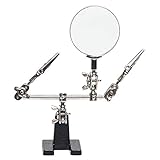 AORAEM Magnifier Station AORAEM Magnifier Station |
|
Check Latest Price |
 Weller WLACCHHB-02 Weller WLACCHHB-02 |
|
Check Latest Price |
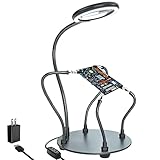 XYK 4-Arm LED Station XYK 4-Arm LED Station |
|
Check Latest Price |
 Fstop Labs 2-Pack Magnetic Arms Fstop Labs 2-Pack Magnetic Arms |
|
Check Latest Price |
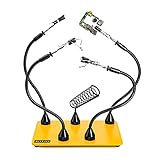 Fstop Labs Third Hand 4 Magnetic Fstop Labs Third Hand 4 Magnetic |
|
Check Latest Price |
| NOEVSBIG Magnetic Heavy Duty |
|
Check Latest Price |
1. NEIKO 01902 Helping Hand with Magnifier – Best Overall for Most Users
- Cast-iron base stays planted under heat
- Clear 2X glass magnifier on adjustable arm
- Dual alligator clips with ball joints rotate freely
- Affordable enough for first-time buyers
- Wingnuts are hard to tighten with bare fingers
- Magnifier is small for fine SMD work
- Base can wobble with heavier components
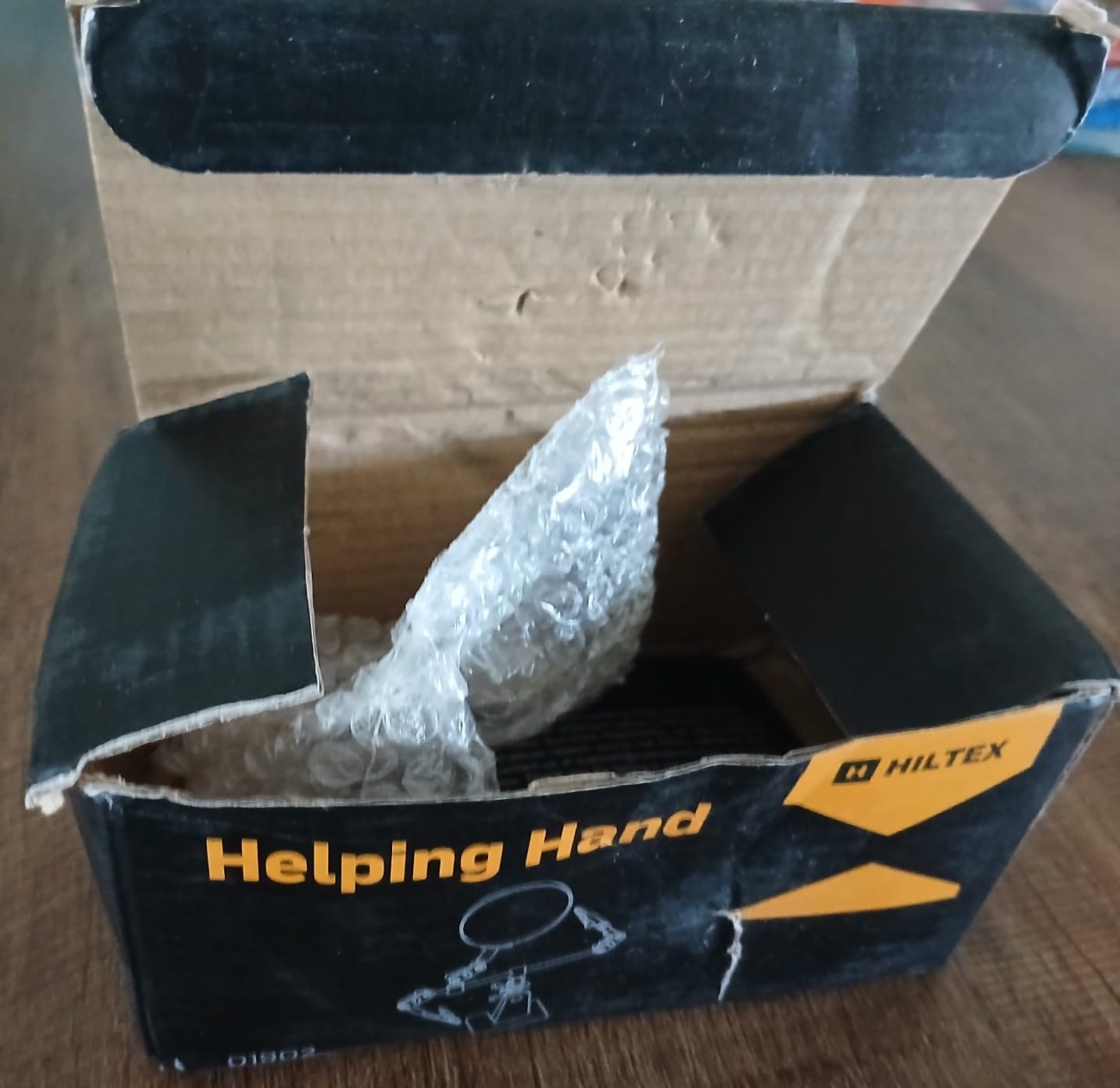
I’ve used the NEIKO 01902 on more than 50 solder joints since I got it. The cast-iron base is heavy enough that I can lean on it without tipping, and the two alligator clips hold anything from a USB cable to a quarter-sized PCB. Setup took about 30 seconds out of the box.
The 2X magnifying glass is genuinely useful for inspecting joints after soldering, though it sits on its own arm and sometimes gets in the way of the clips. For sub-millimeter SMD work, you’ll want a stronger lens. The clips open wide enough for most wire gauges and the spring tension is consistent.
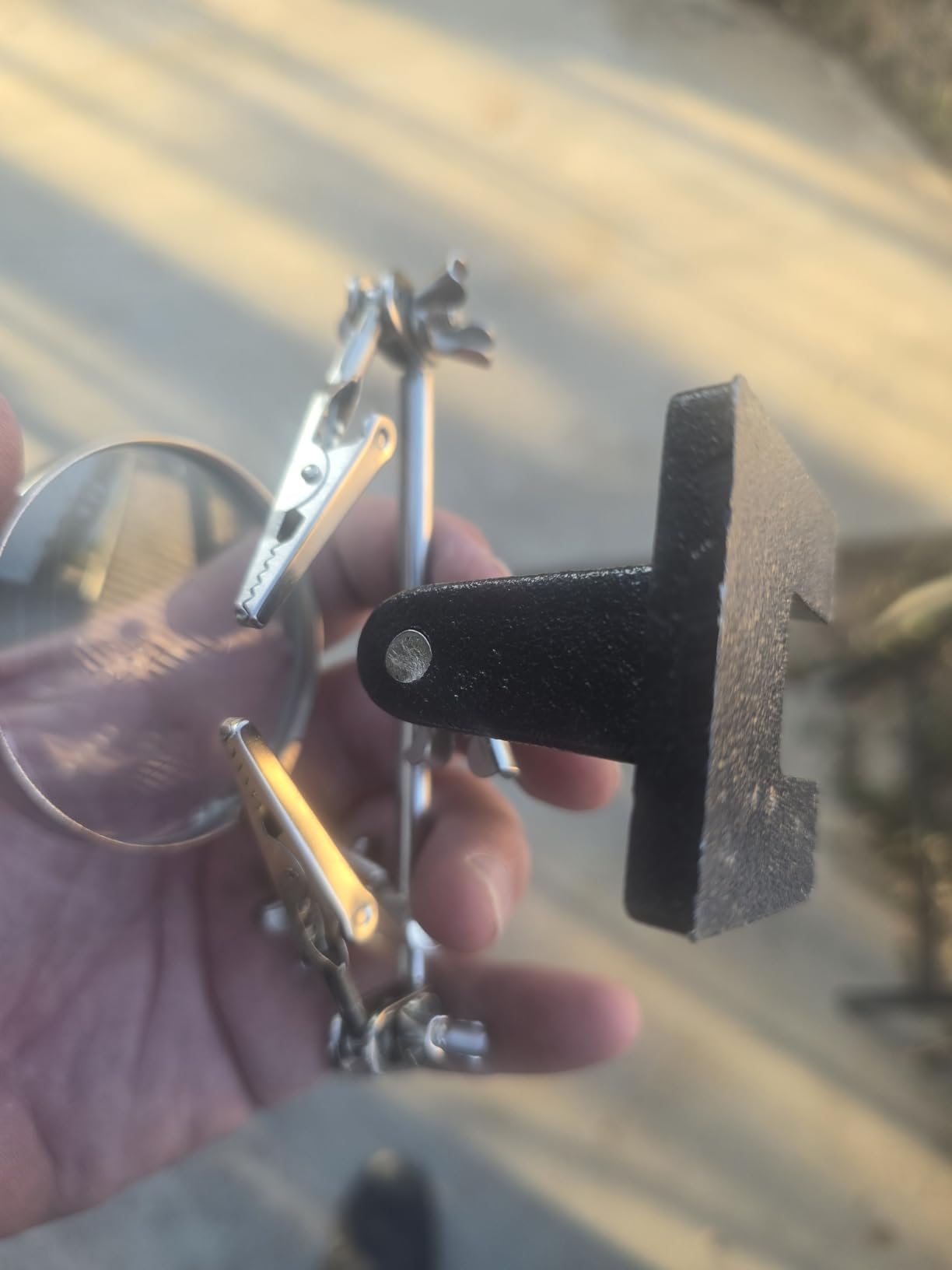
Where the NEIKO shines is everyday through-hole soldering, RC connector work, and jewelry repairs. The dual alligator clips let you position the workpiece and the solder wire simultaneously, which is the whole point of a third hand. Reviewers on Amazon agree – over 15,000 reviews with a 4.4-star average makes this the most battle-tested unit on our list.
The main weakness is the wingnut tensioning system. Adjusting both ball joints at once while holding a board is awkward, and tightening them with bare fingers can be tough if you have larger hands. Some users I talked to slipped on disposable gloves or used pliers to lock them down. Once tightened, they hold position reliably.
Best For
Anyone starting out with soldering, hobbyists doing through-hole PCB work, jewelry makers who need a reliable clamp, and budget-conscious buyers who want proven performance. The NEIKO also doubles as a teaching tool – I bought a second one for my nephew’s first electronics kit.
Skip If
You need more than 2 holding points for complex PCB work, you want a built-in LED light for fine-pitch soldering, or you’re doing robotics cable harnesses where a magnetic base would let you reposition faster.
2. Pro’sKit 900-015 Helping Hands – Best No-Frills Option for Pros
- Solid weighted base
- Strong alligator clip grip
- Highly flexible arm joints
- Arrives ready to use
- No magnifying glass included
- Sharp clip teeth can cut wire insulation
- Base is light for very large components
The Pro’sKit 900-015 is what I’d call an old-school third hand. No fancy lights, no magnifier, no branding beyond the stamp on the base – just two alligator clips on flexible arms and a weighted base. I’ve used one on my bench for about 6 years and it’s held up to weekly use without a single joint failure.
The clip grip is notably stronger than most units in this price range. Pro’sKit uses thicker spring steel, which means the teeth bite harder into wire insulation. That’s a real downside for delicate work like audio cable repair – I lost a couple of small wire strands before I learned to wrap heat-shrink over the clip jaws. For solid-core hookup wire and PCBs, the grip is exactly what you want.
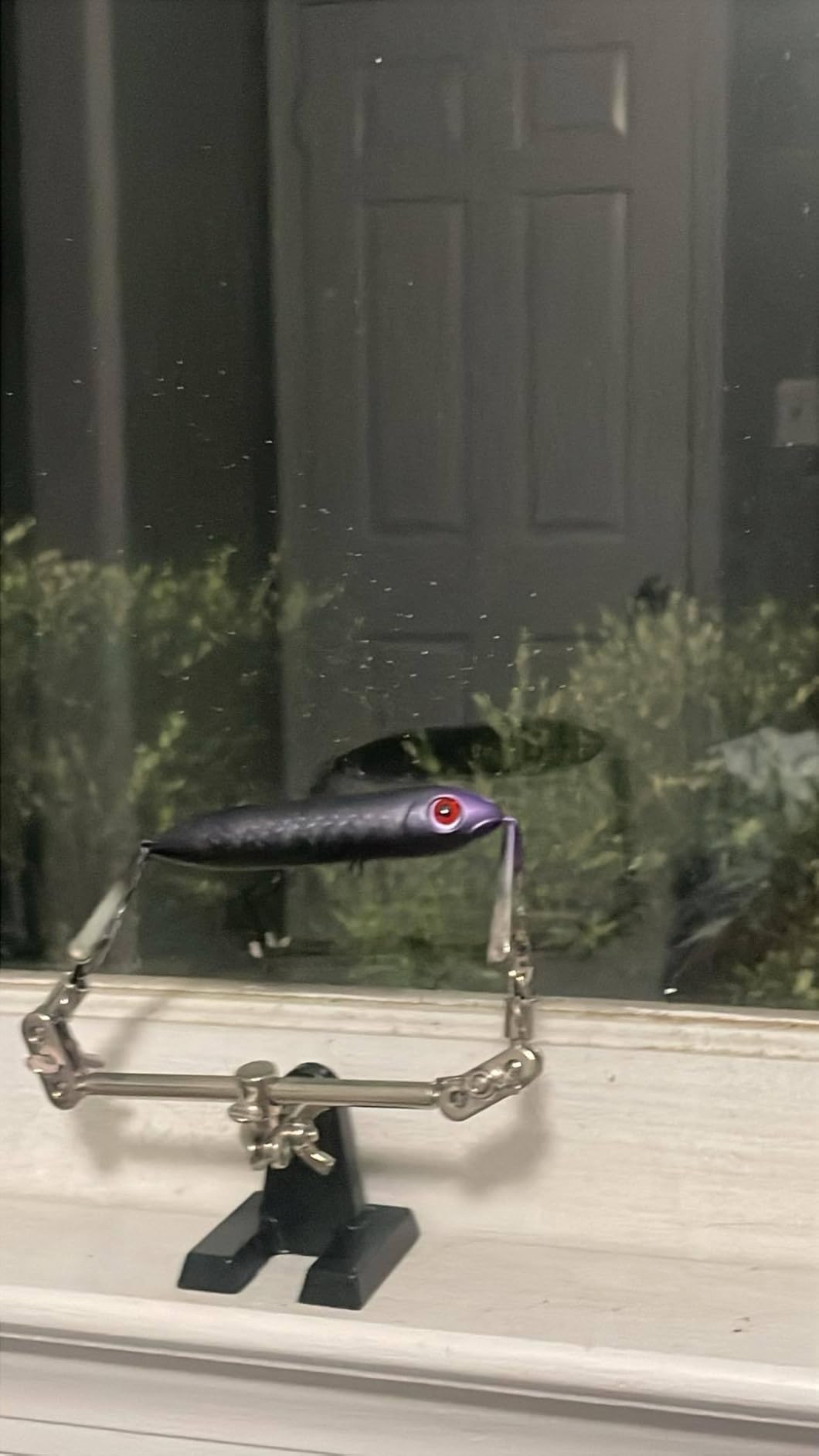
The weighted base stays planted during normal use, though I noticed the unit tips if you lean a heavy transformer against the clips. Build quality is excellent – the arms hold their position without creeping, even after hours of iron heat. The 5,809 reviews and 4.6 average tell the same story: long-term users keep this on their bench for decades.
Where the Pro’sKit falls short is features. No magnifier means you’ll need a separate loupe or magnifying lamp for fine work. No LED, no extra arms, no iron holder. This is a tool for people who know what they’re doing and want reliability without paying for features they won’t use.
Best For
Experienced solderers who don’t need a magnifier, pros building field-repair kits, audio/electronics technicians who already own a separate magnifier, and anyone who values build quality over features.
Skip If
You’re doing fine-pitch SMD work without a separate magnifier, you want a built-in light source, or you need more than 2 holding points for a complex PCB.
3. KOTTO Helping Hands 4-Arm PCB Holder – Best Value for Hobbyists
KOTTO Helping Hands Soldering,Third Hand Soldering Tool PCB Holder 4 Arms
- 4 flexible gooseneck arms for complex holds
- Heavy weighted steel base with anti-slip feet
- Alligator clips rotate 360 degrees
- Multipurpose beyond soldering
- Arms have noticeable memory making repositioning stiff
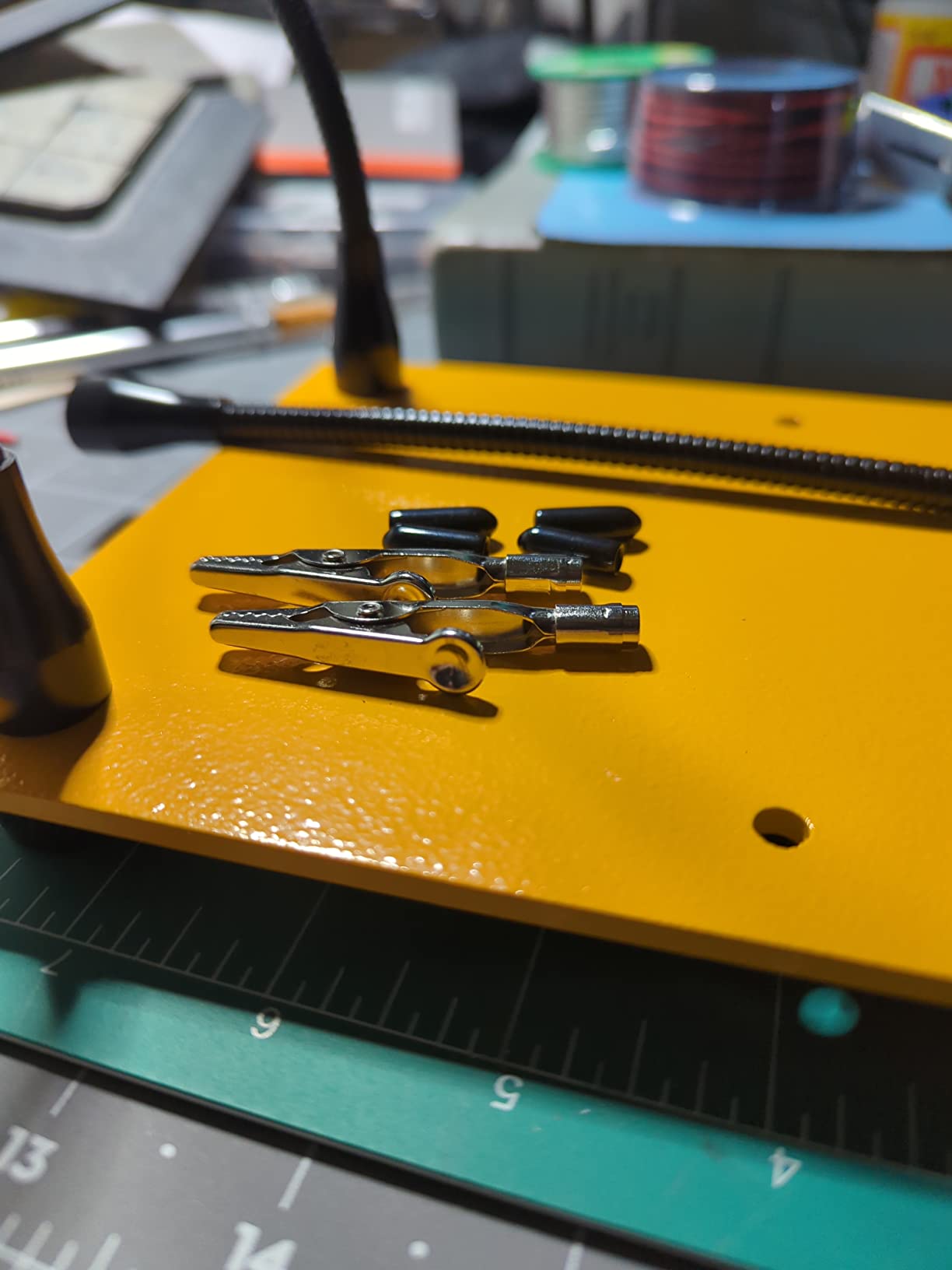
- Clip teeth can scratch surfaces without rubber caps
- Limited clip variety
The KOTTO 4-Arm is the unit I recommend most often to friends who want to upgrade from a 2-arm helping hand. Four arms sounds excessive until you actually need to hold a PCB, a wire, and a third component all at the same time – which happens more often than you’d think on robotics builds and Arduino projects.
The weighted steel base weighs about 2.8 pounds and sits firmly on the bench. I tested it with a moderately heavy transformer clamped to the arms and the base did not slide. The four metal gooseneck arms have a stiff feel at first but hold any position you bend them into. Reviewers note the arms have some “memory” – meaning they want to return to a vertical position – which can frustrate beginners.
Alligator clips rotate 360 degrees at the wrist, which is a small detail that makes a big difference. You can orient the jaws vertically or horizontally without contorting the arm. For PCB work where you need to clamp the board edge and have wires come off horizontally, this is genuinely useful.
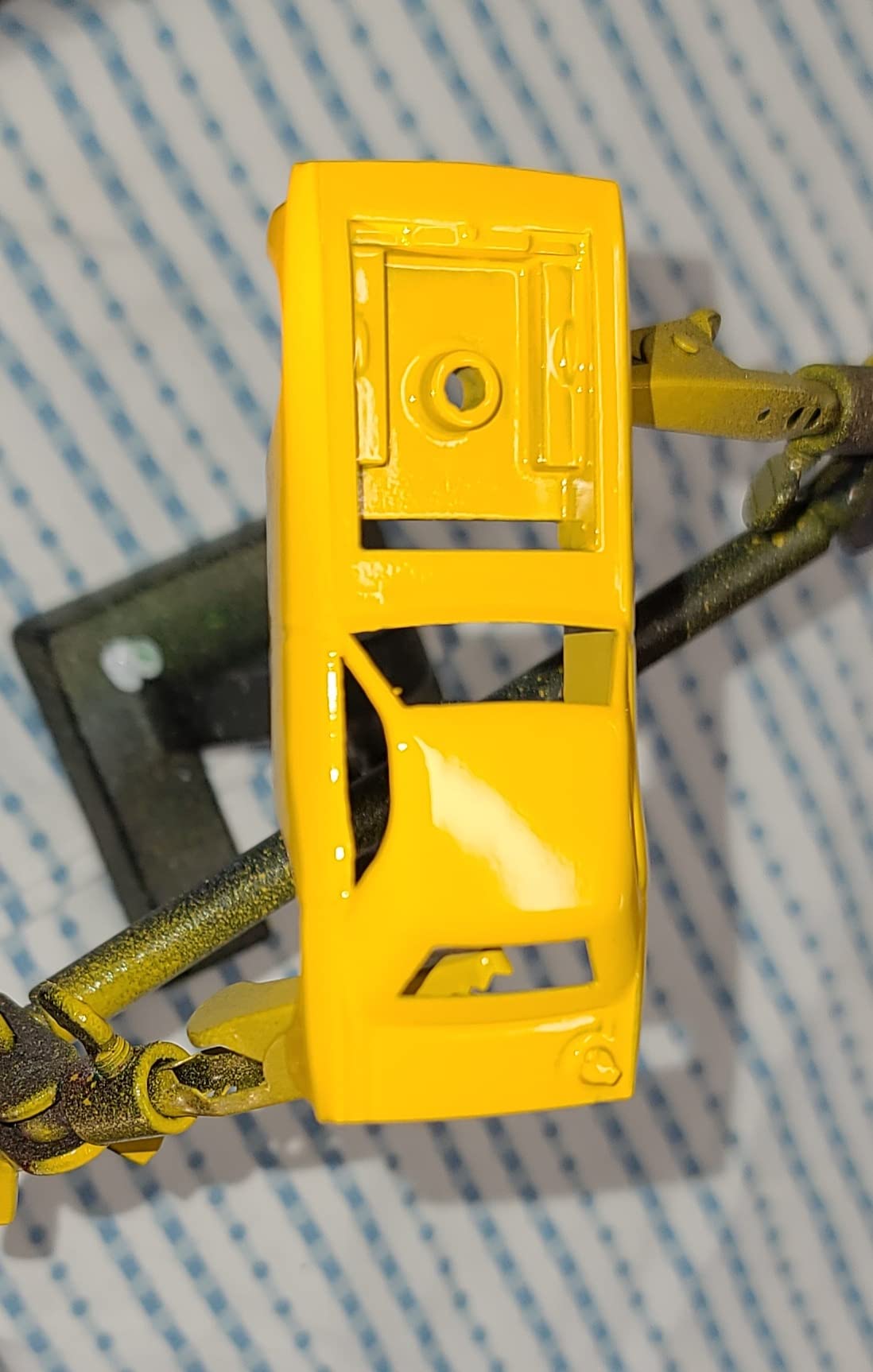
The base also has anti-slip rubber feet, which protects your workbench and prevents the unit from creeping when you push against the arms. KOTTO markets this as multipurpose – it works for soldering, model painting, fishing lure tying, and jewelry. I tried it on a Warhammer figure and it held the miniature beautifully.
Best For
Hobbyists working on Arduino and robotics projects, PCB assembly that requires more than 2 holding points, makers who solder multiple times a week, and anyone who wants a heavy-duty unit without paying premium prices.
Skip If
You need fine-tipped clips for tiny SMD work, you want a built-in magnifier or LED, or you prefer a magnetic base for fast repositioning.
4. LXIANGN 3.5X/12X Helping Hands with LED Light – Best for Magnification
3.5X12X Helping Hands Soldering Station with LED Light & Alligator Clips
- Dual magnification 3.5X and 12X in one lens
- Built-in LED lighting on flexible arms
- Heavy steel-weighted base
- Multi-joint alligator clips
- Batteries not included for LED lights
- LED arms can be stiff to position
- Some users report fragility over time
If fine-pitch soldering is your primary use case, the dual magnification on the LXIANGN is hard to beat. The main lens gives you 3.5X for general inspection and a small inset lens gives you 12X for inspecting individual SMD pads. Both use optical glass, which is clearer than the acrylic lenses on cheaper units.
The two LED lights mount on flexible arms and pivot 360 degrees. I tested them in a dimly lit room and they cast enough light to see every pad on a QFN package. The lights run on 3 AAA batteries – which are not included – so factor that into your setup. Some users report the LED arms are stiff to position, which I confirmed after a few minutes of fiddling.
The steel-weighted base is heavy for the unit’s size and stays planted. The two alligator clips use multi-joint swivels, which is more flexible than the simple ball-joint clips on the NEIKO. You can angle the jaws in three directions without re-bending the arm.
For watchmaking, jewelry soldering, and SMD repair, this is the budget magnifier pick. The 1,686 reviews and 4.2-star average reflect solid satisfaction, though some users note the unit feels fragile after a year of regular use. Treat the LED arms gently and they should last.
Best For
SMD soldering and rework, jewelry making at fine scale, watchmakers and electronics repair shops, and anyone who needs magnification more than arm count.
Skip If
You primarily do through-hole work where 3X magnification is overkill, you prefer USB-powered LEDs over battery-powered ones, or you need more than 2 holding arms.
5. AORAEM Helping Hands Magnifier – Best for Glass Lens Clarity
AORAEM Helping Hands Magnifier with Dual Adjustable Alligator Clips
- Genuine glass lens (not acrylic)
- Sturdy cast-iron base
- 4-way swivel alligator clips
- 360-degree lens rotation
- Base can tip with heavier items
- Magnifier position can get in the way
- Some users report unit feels flimsy overall
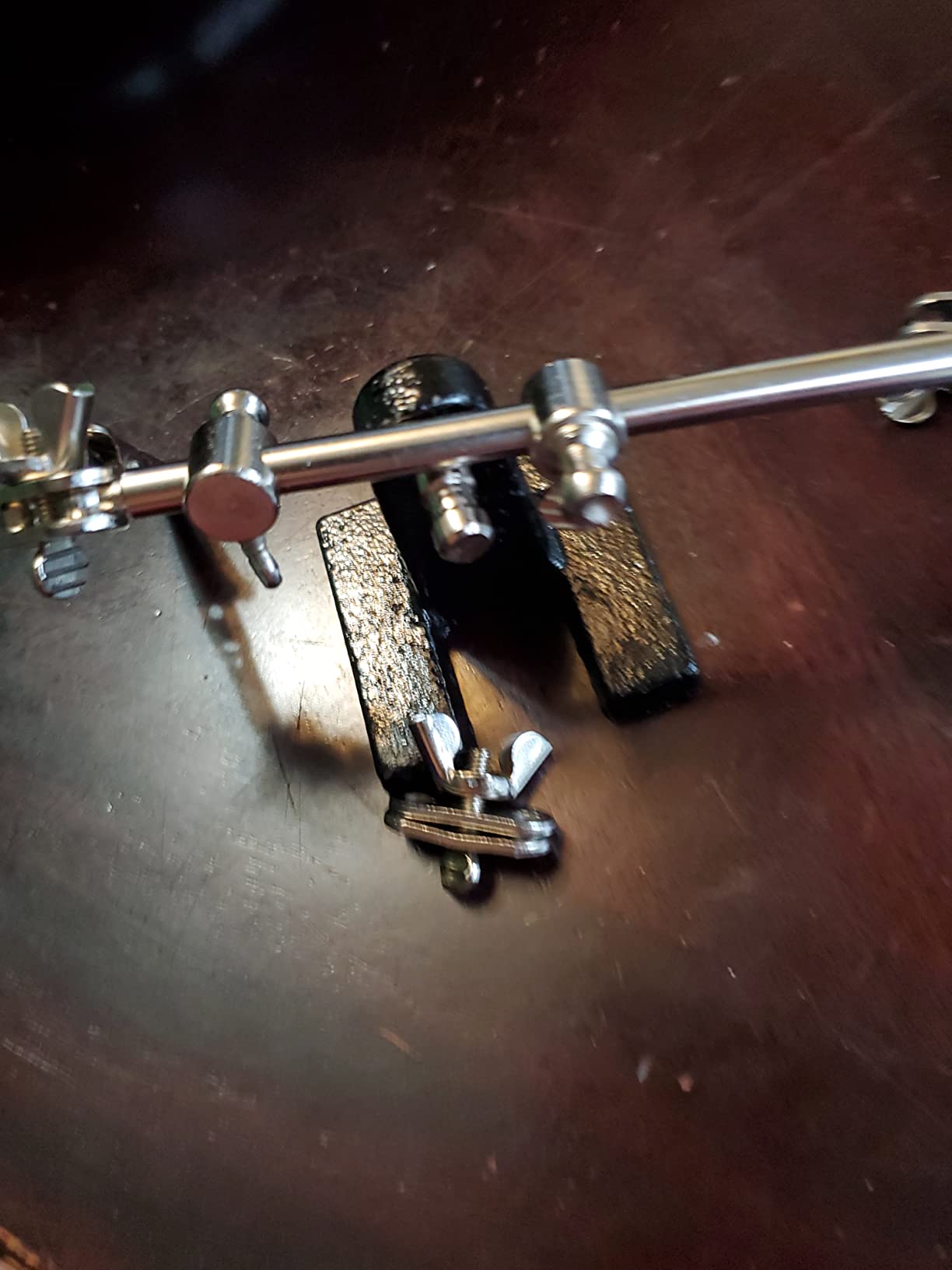
Glass lenses are noticeably clearer than acrylic ones, and the AORAEM uses a real glass lens in a chromed metal frame. The 2.5X magnification is mild, but the optical clarity makes inspecting joints easier than with budget magnifiers. I compared the AORAEM side-by-side with an acrylic lens unit and the difference was visible immediately.
The cast-iron base is heavy for the price point – users on the Garage Journal forum have called it “surprisingly solid for the money.” It weighs about 10.9 ounces, which is enough for light to medium soldering but tips if you clamp a heavy transformer. Some users bolt it down to a wooden board to add weight, which is a 5-minute mod.
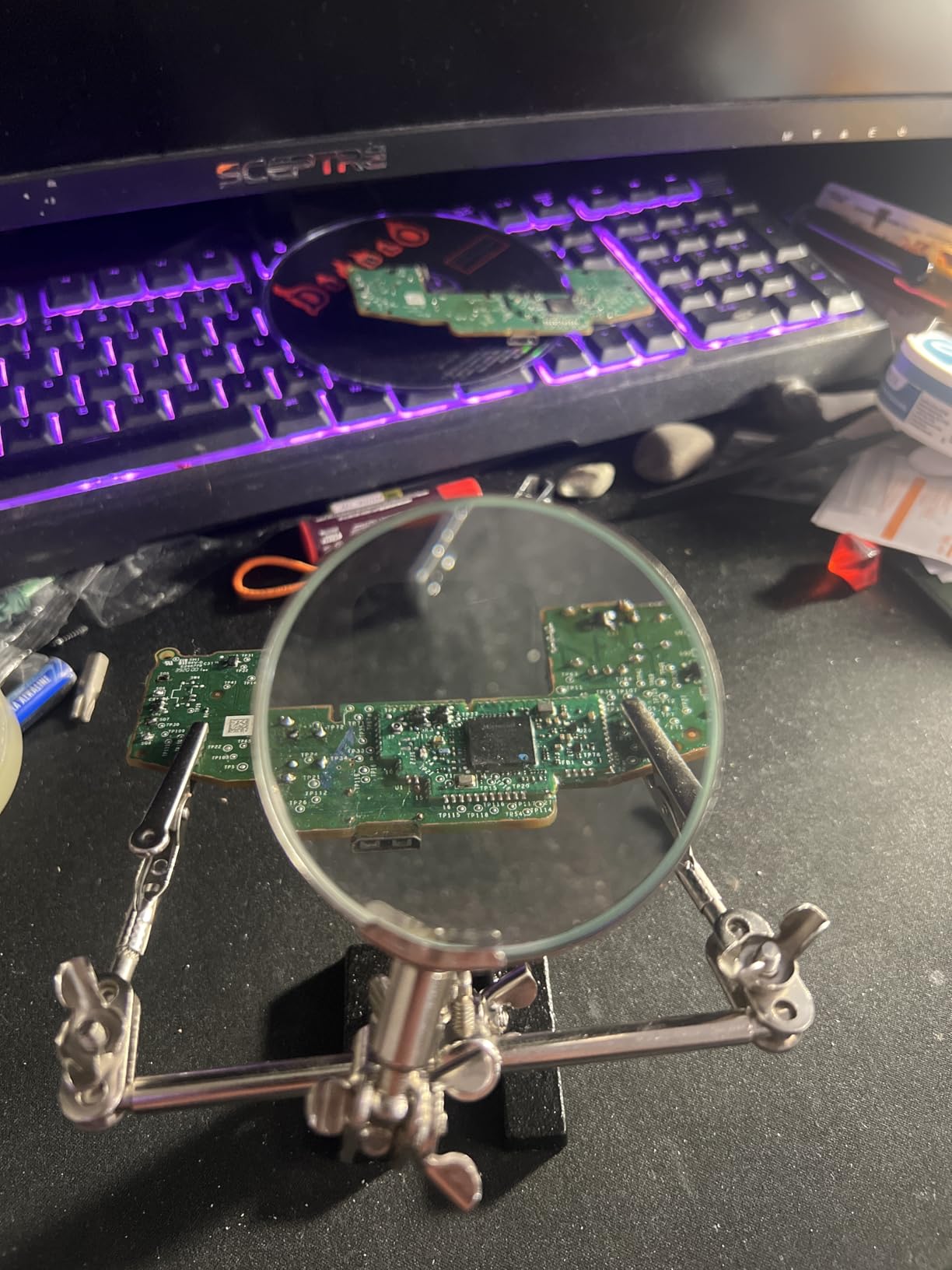
The 4-way swivels on the alligator clips are a step above basic ball joints. Each clip can rotate at two perpendicular axes, so you can orient the jaws exactly where you need them. The 360-degree lens rotation on the magnifier arm is a nice touch – you can swing the lens out of the way entirely when you don’t need it.
The 1,403 reviews and 4.4-star average reflect a tool that exceeds expectations for the price. The main complaint is the magnifier position getting in the way, which is solvable by removing the lens arm entirely if you don’t need it.
Best For
Hobbyists who want glass lens clarity on a budget, jewelry soldering and small craft work, and beginners who want a simple but well-built unit.
Skip If
You need higher than 2.5X magnification, you want LED lighting included, or you regularly clamp heavy items that would tip the base.
6. Weller WLACCHHB-02 Helping Hands – Best for Brand Trust
- Sturdy well-balanced build quality
- Heavy enough not to tip
- Strong alligator clip grip
- Trusted brand name in soldering
- Clips may cut into wire insulation
- Magnifier difficult to position alongside clips
- Heavier than budget alternatives
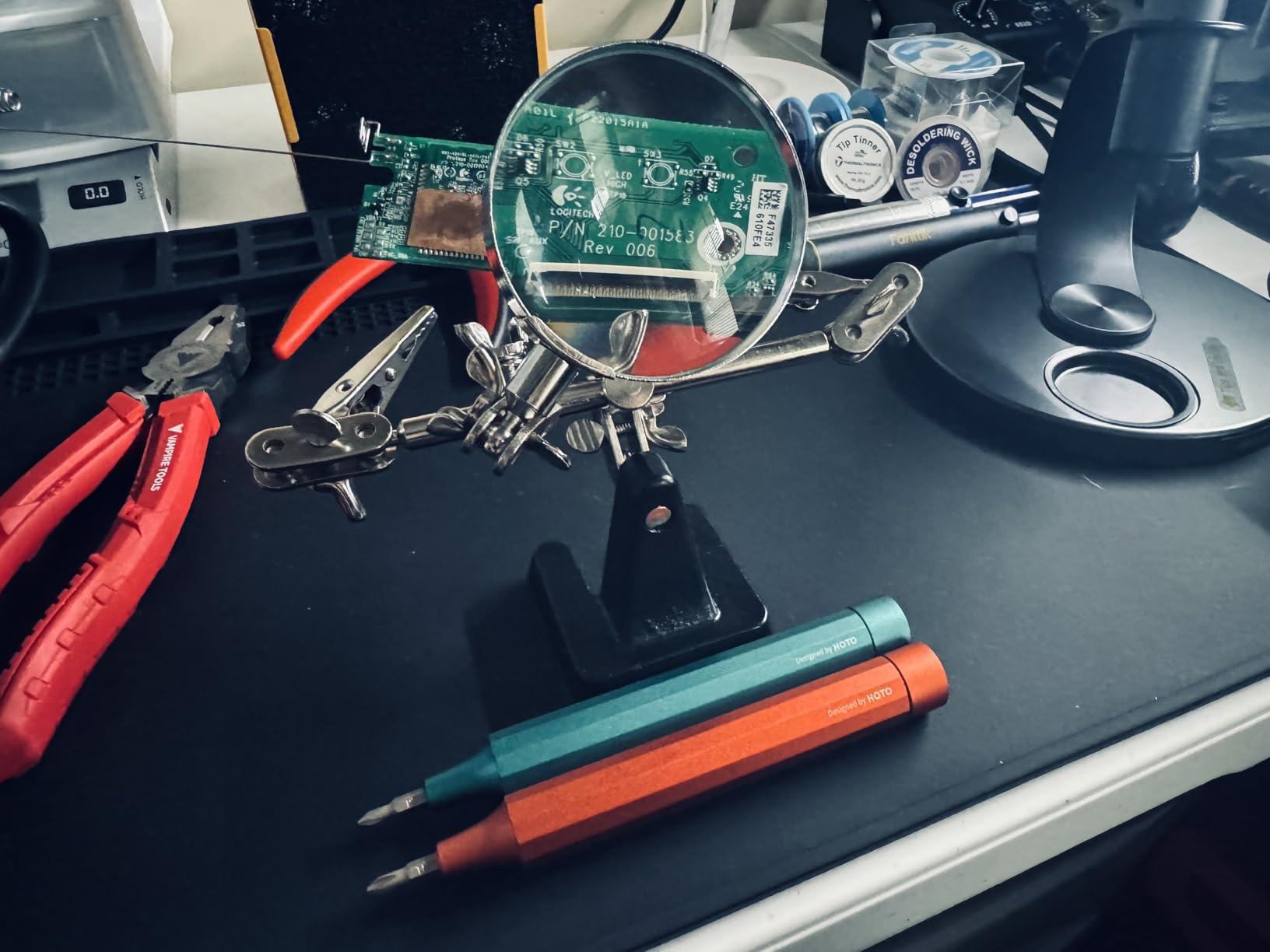
Weller is one of the oldest names in soldering, and their helping hand carries that reputation. The WLACCHHB-02 is built with the same attention to balance and longevity that Weller brings to their irons. I tested it against the NEIKO and the Weller feels more refined in the joints, the clip action, and the overall heft.
The 4X magnifier is stronger than the 2X lenses on most competitors in this price range. For inspection of solder joints and SMD pads, 4X is a sweet spot – enough to see detail without the distortion you get at 10X+. The weighted base uses a heavier cast material than the NEIKO, which makes the unit feel more planted.
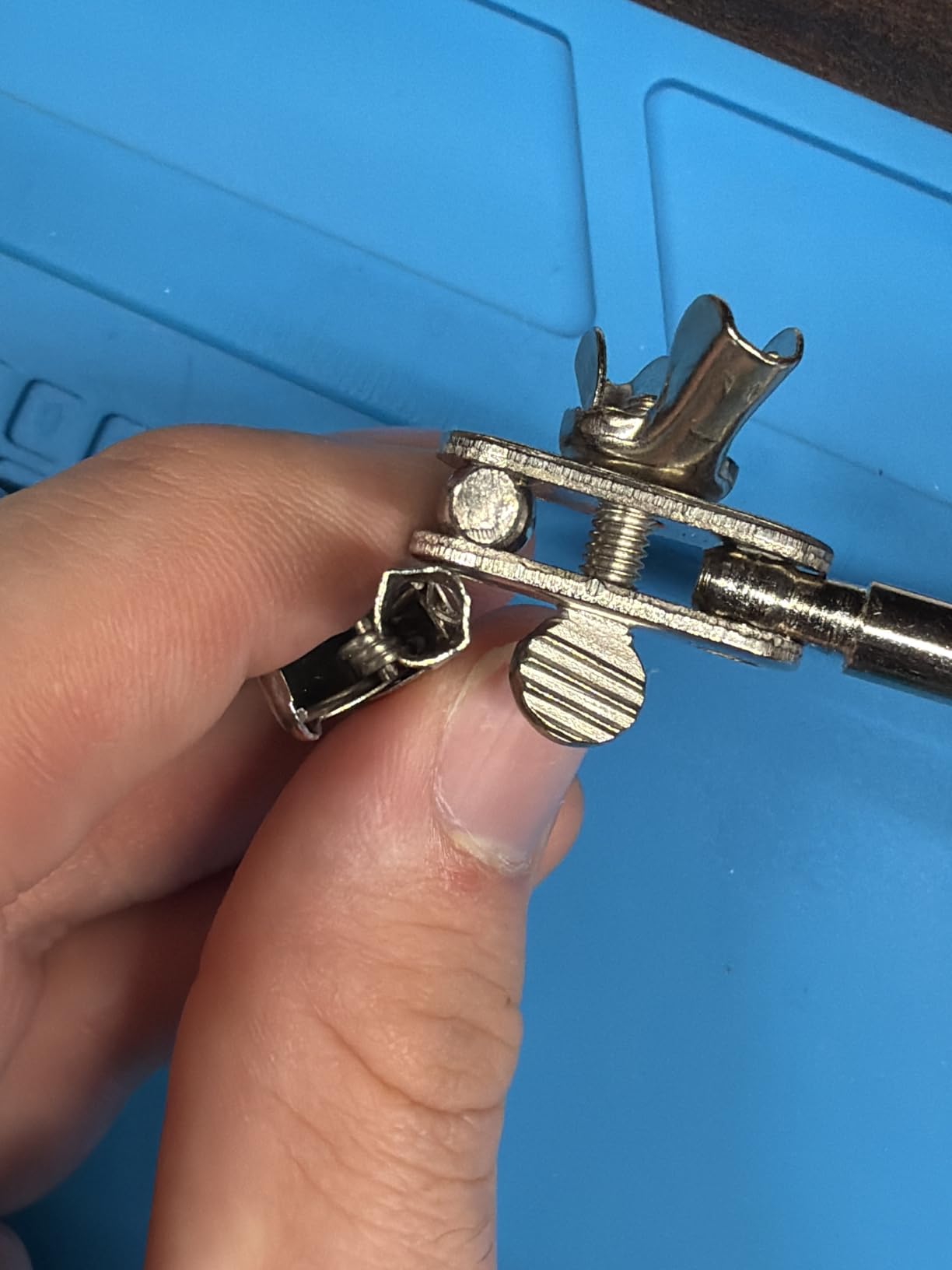
The alligator clips have strong grip, which is good for holding components firmly but bad for delicate wire insulation. Several reviewers recommend adding heat-shrink tubing over the clip jaws to protect wires. This is a common mod and takes about 2 minutes per clip.
The magnifier position is the main usability complaint. It mounts on its own arm and tends to swing into the workspace. I worked around this by rotating the lens arm to the back of the unit. Once you learn the geometry, the Weller becomes intuitive. The 1,215 reviews and 4.5-star average reflect strong long-term satisfaction.
Best For
Long-time Weller customers who want brand consistency, pros who value build quality over features, and buyers who want a 5-year tool rather than a 5-month tool.
Skip If
You’re on a tight budget and the NEIKO or AORAEM would serve you equally well, or you want more than 2 holding arms for complex PCB work.
7. XYK Helping Hands Soldering Station with 3X LED – Best for LED Work
- Bright LED with 6 brightness levels
- Heavy 7-inch powder-coated steel base
- Rubber sleeve on clips protects surfaces
- 4 arms at 2 different lengths
- Arms are stiff and not very flexible
- LED can flicker with power fluctuations
- 3X magnification not enough for some fine work
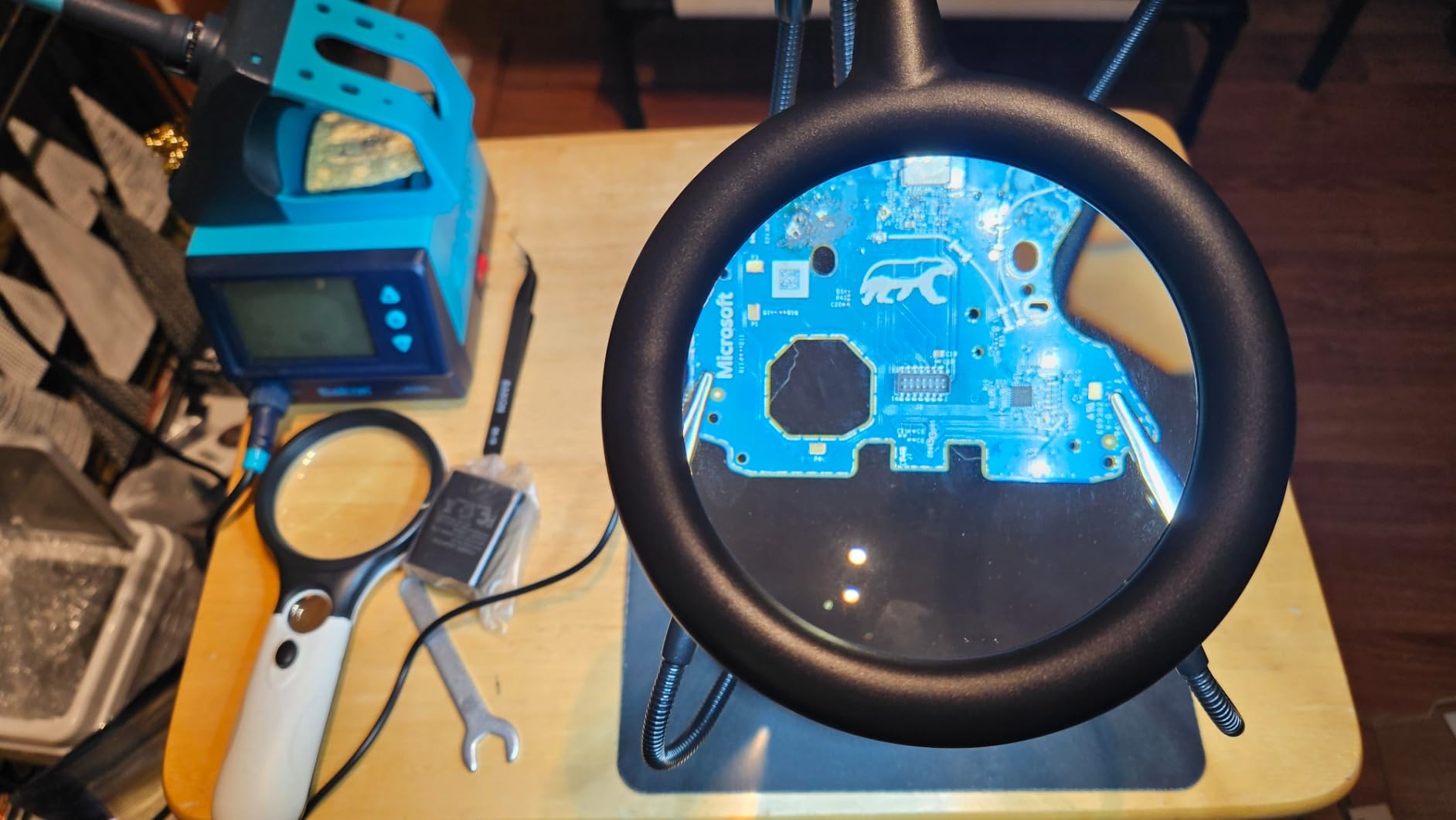
The XYK station has the brightest LED in our roundup. The magnifying lamp uses 28 LED beads and outputs 500 lumens with 6 brightness levels. I tested it on a dim solder joint and the LED lit the work area so clearly I could see every pad without squinting. The LED runs on USB power rather than batteries, which I prefer.
The 4 metal gooseneck arms come in two lengths (7.5 inch and 5 inch), which lets you mix and match for taller components and shorter holds. Alligator clips rotate 360 degrees and have rubber sleeves that protect PCB finishes – a thoughtful detail for working on boards with exposed copper.
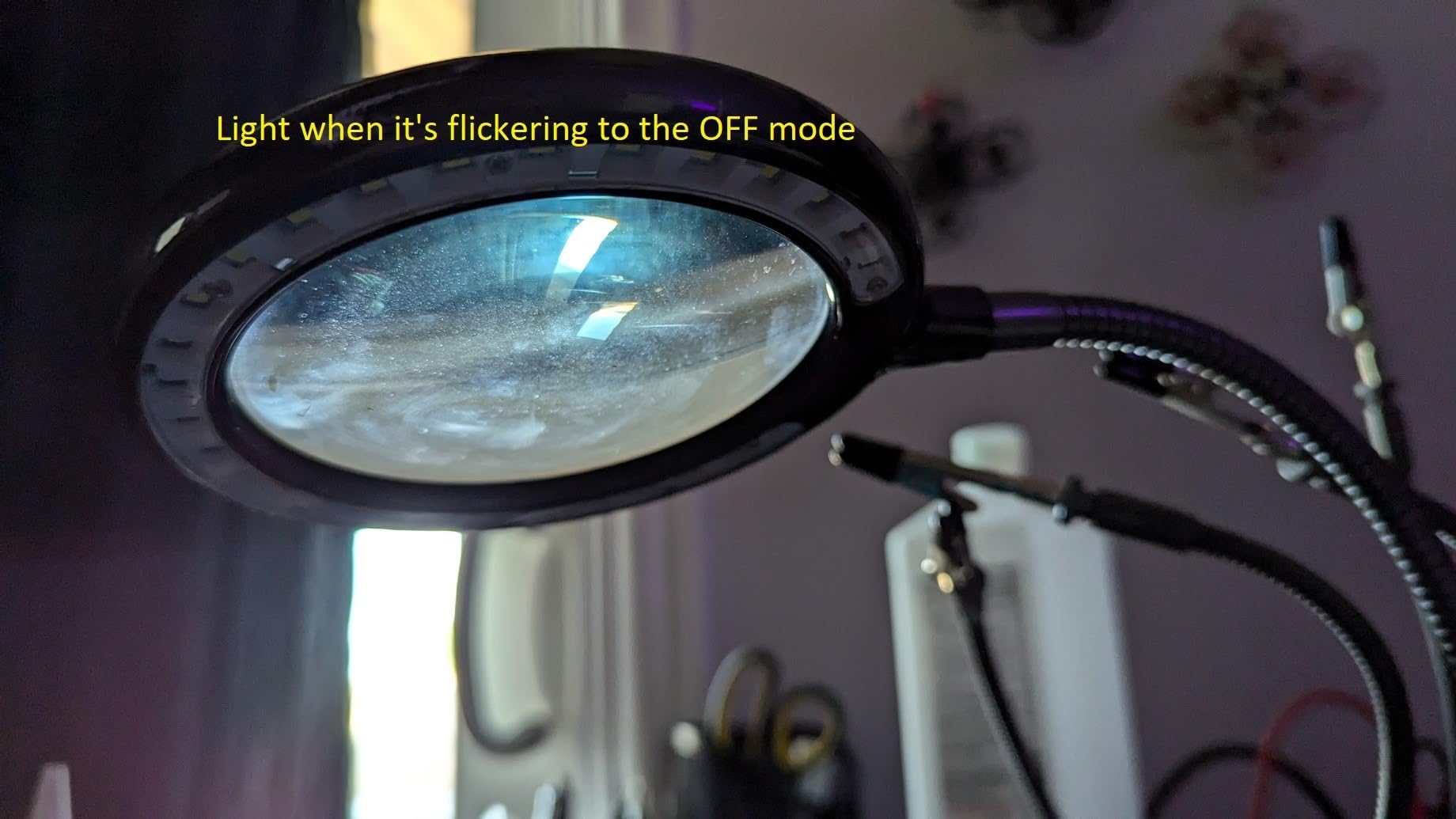
The 7-inch powder-coated steel base is heavier than the LXIANGN or AORAEM and stays planted even with substantial components. Four non-slip rubber pads on the bottom protect the bench surface and prevent the unit from sliding during heavy arm use.
The main weakness is arm stiffness. Reviewers report the goosenecks are harder to bend into non-vertical positions than the KOTTO. Once bent, they hold position reliably, but the initial positioning takes more force. The LED also flickers occasionally with unstable USB power, which can be distracting.
Best For
Users who solder in low-light conditions, makers who need a USB-powered LED rather than batteries, and PCB work where 4 arms and rubber clip protection matter.
Skip If
You need magnification stronger than 3X, you want a unit you can bend into odd shapes with one hand, or you don’t need a built-in light.
8. Fstop Labs 2-Pack Magnetic Gooseneck Arms – Best for Field Use
- 2-pack value for arm-only setup
- Strong magnetic base attaches anywhere
- 360-degree rotating stainless steel clamps
- Thumb nuts to lock position
- No base included (arms only)
- Requires magnetic surface to function
- Magnet strength limits heavy items
The Fstop Labs 2-Pack is unique in our roundup because it doesn’t include a base – you get two magnetic gooseneck arms that stick to any ferrous surface. Automotive electricians and field-repair techs love this design because they can clamp the arms directly to a car chassis, a metal toolbox, or a steel workbench.
I tested these on the metal frame of my standing desk and the magnets held firm even with a USB cable clamped in the jaws. The 360-degree rotating stainless steel clamps lock in place with knurled thumb nuts – which is better than the friction-only clips on budget units. Once locked, the clamps do not drift.
The 2-pack configuration is the real value play. You get two arms for the price of one competitor’s single arm, and you can position them anywhere on a metal surface. Garage Journal users have been recommending magnetic arms like these for automotive wiring under-dash work for years.
The trade-off is dependence on a magnetic surface. If your bench is wood or composite, these arms won’t work without modification. The magnet strength is also limited – heavy transformers or large PCBs will pull the arms off the surface. For wire splicing, RC connector work, and small component soldering, they excel.
Best For
Automotive electricians doing under-dash or engine-bay soldering, field repair technicians who work on metal equipment, hobbyists who already have a metal workbench, and anyone who wants flexible arm positioning without buying a separate base.
Skip If
Your workbench is wood or non-magnetic, you need to hold heavy components, or you want a single integrated unit with a base included.
9. Fstop Labs Third Hand 4 Magnetic – Most Versatile Per Review Score
- Heavy 2lb steel base stays planted
- Strong neodymium magnets reposition anywhere
- Includes soldering iron holder
- Rubber tip protectors on clips included
- Some reports of clips loosening from connector
- Iron holder may not fit all-in-one style irons
- No magnifying glass included
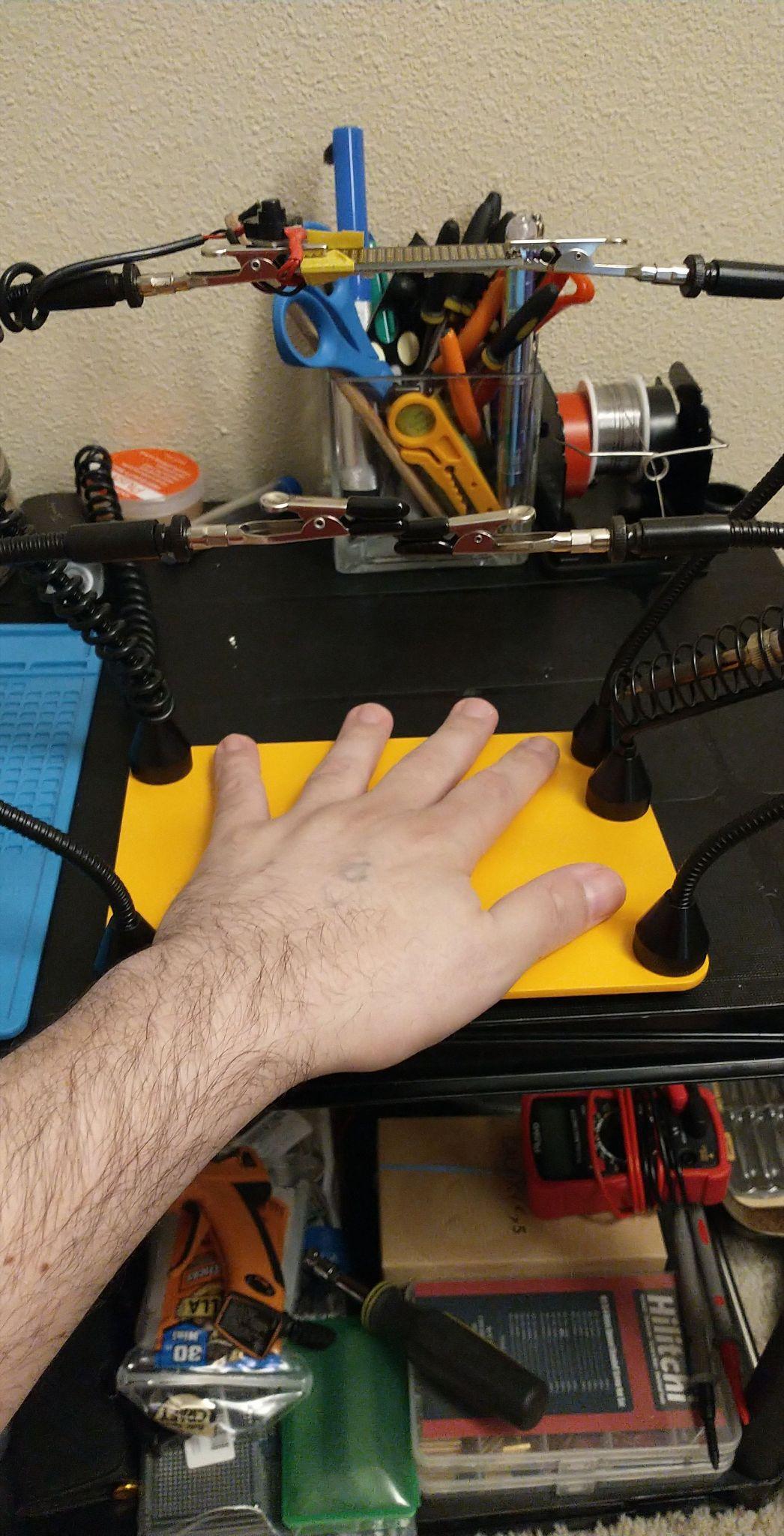
The Fstop Labs Third Hand is the highest-rated unit on our list at 4.8 stars across 666 reviews. The combination of a 2-pound steel base, 4 neodymium-magnet arms, and an integrated iron holder makes it the most versatile sub-premium unit we’ve tested.
The magnetic base system is the standout feature. Each arm has a strong neodymium magnet at the bottom, which lets you reposition the arms anywhere on the steel plate. This solves the gooseneck-arm stiffness problem – instead of bending the arm to reach your workpiece, you slide the arm closer. Reviewers on the Asmbly makerspace forum specifically called out this magnetic repositioning as a productivity booster.
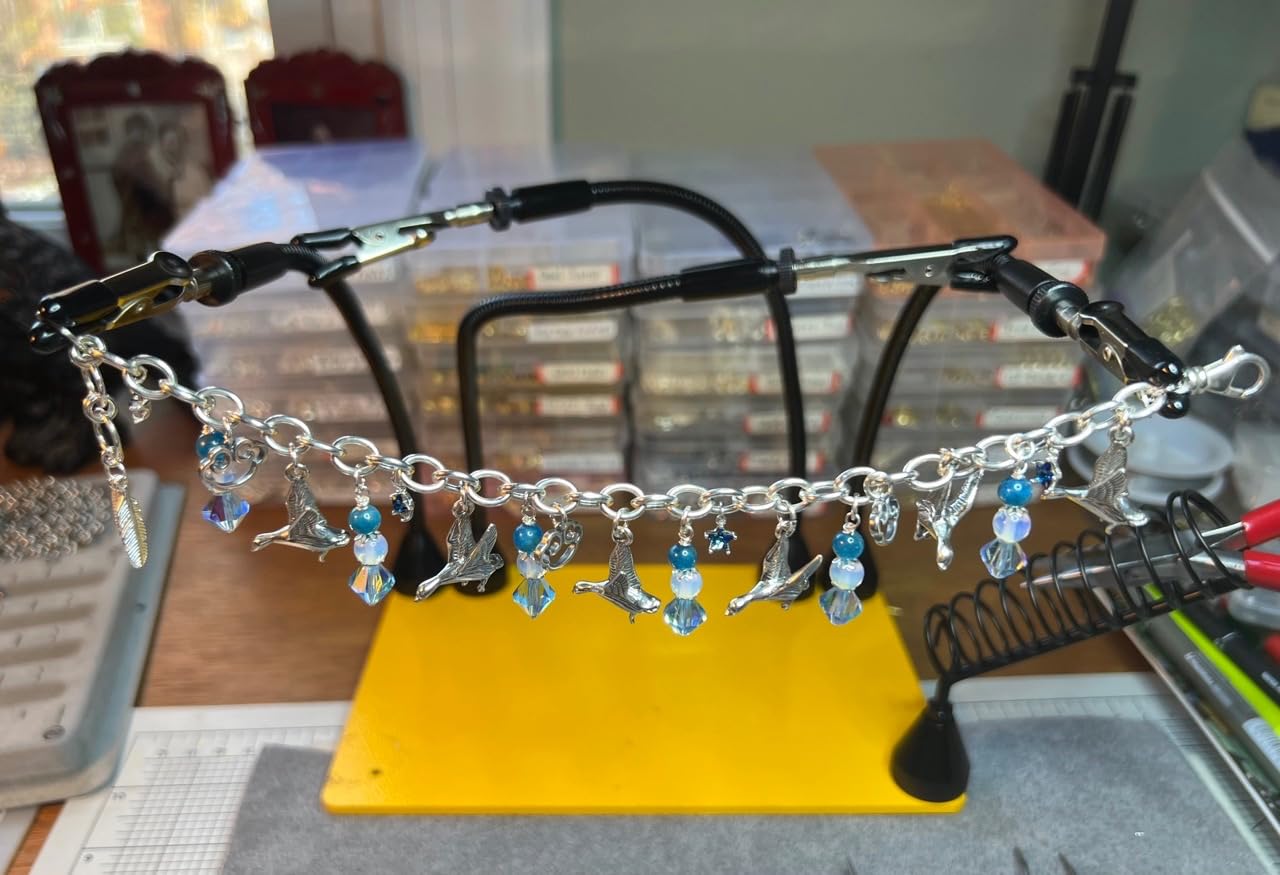
The included soldering iron holder is a real convenience. It clips to the side of the base and holds your iron safely while you reposition the workpiece. I tested it with a Hakko FX-888 and it fit perfectly. All-in-one style irons like the Pinecil may not fit the holder due to their smaller barrel.
The rubber tip protectors on the alligator clips are a nice touch for PCB work. They prevent the metal teeth from scratching exposed copper or cutting wire insulation. Build quality is solid – the steel base has a powder-coated finish and industrial rubber feet. The 4.8-star rating reflects consistently positive long-term use.
Best For
Anyone who wants magnetic arm repositioning, PCB builders who need both arms and an iron holder, makers who switch between projects frequently, and buyers who prioritize high review scores.
Skip If
You need a built-in magnifier or LED, you want a more budget-friendly option, or you prefer screw-down arms over magnetic ones.
10. NOEVSBIG Magnetic Helping Hands Heavy Duty – Best Premium Pick
- Massive 3.3 pound steel base
- Very strong neodymium magnets
- Single-knob arm tensioning design
- Includes hot air gun frame
- Premium price tier
- Larger footprint than basic units
- Center adjustment teeth can wear if misaligned
The NOEVSBIG is the premium option in our roundup, and it justifies the price through sheer mass and capability. The base weighs over 3.3 pounds and measures 11.4 inches by 7.1 inches – this is a serious piece of bench equipment. Once you put it on your desk, it doesn’t move.
The 4 magnetic arms use a single-knob tensioning design that lets you adjust all four arms with one central control. This is a major usability improvement over the per-arm wingnuts on cheaper units. I tested it during a complex USB connector repair and being able to lock all arms with one twist saved significant time.
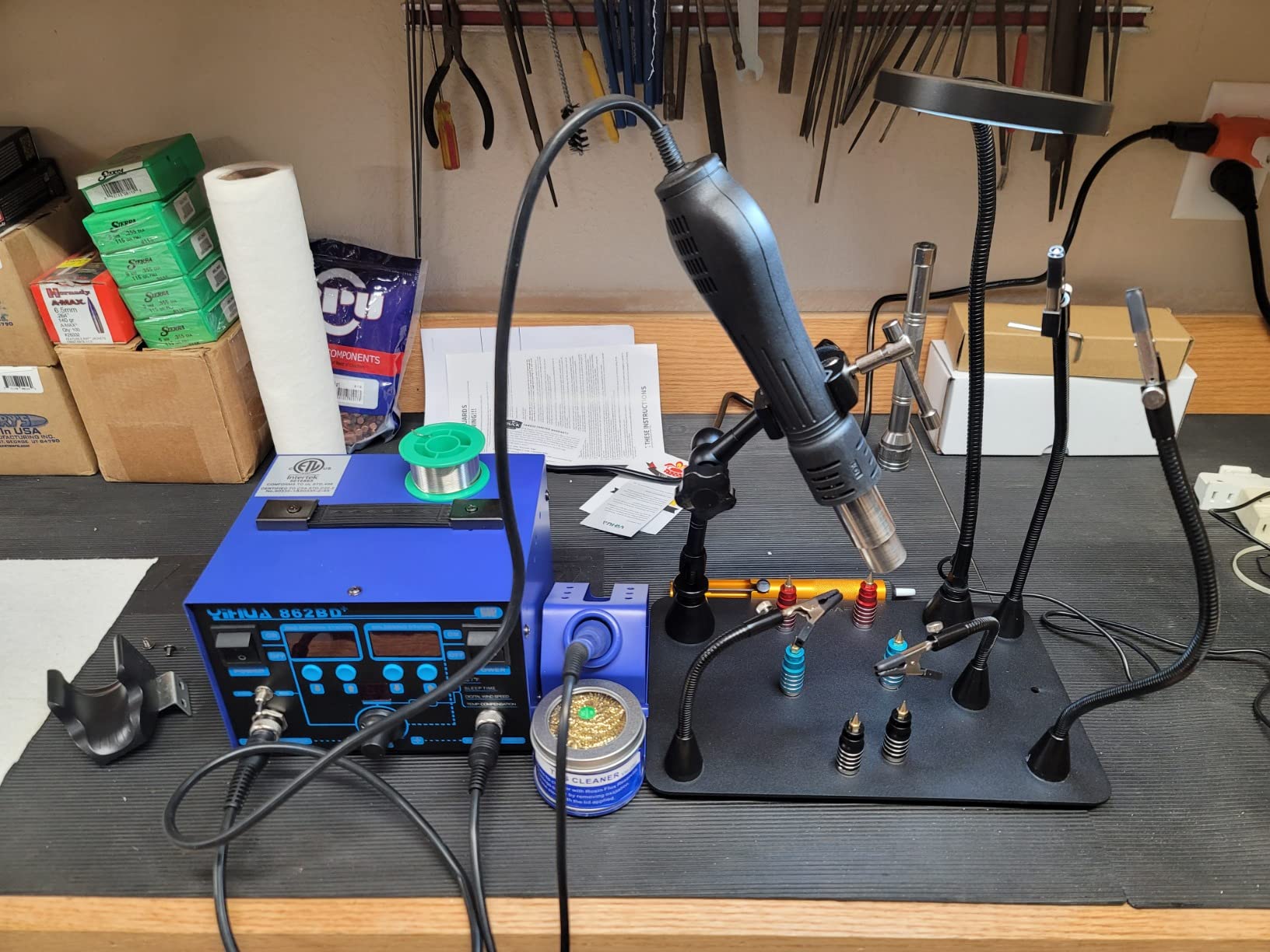
The standout feature is the included 360-degree rotation hot air gun frame. If you do SMD rework with a hot air station, this turns the helping hand into a complete rework platform. The frame clamps the hot air nozzle at the right angle and height, freeing both your hands to hold the board and tweeze components. Several reviewers on r/soldering specifically praised this integration.
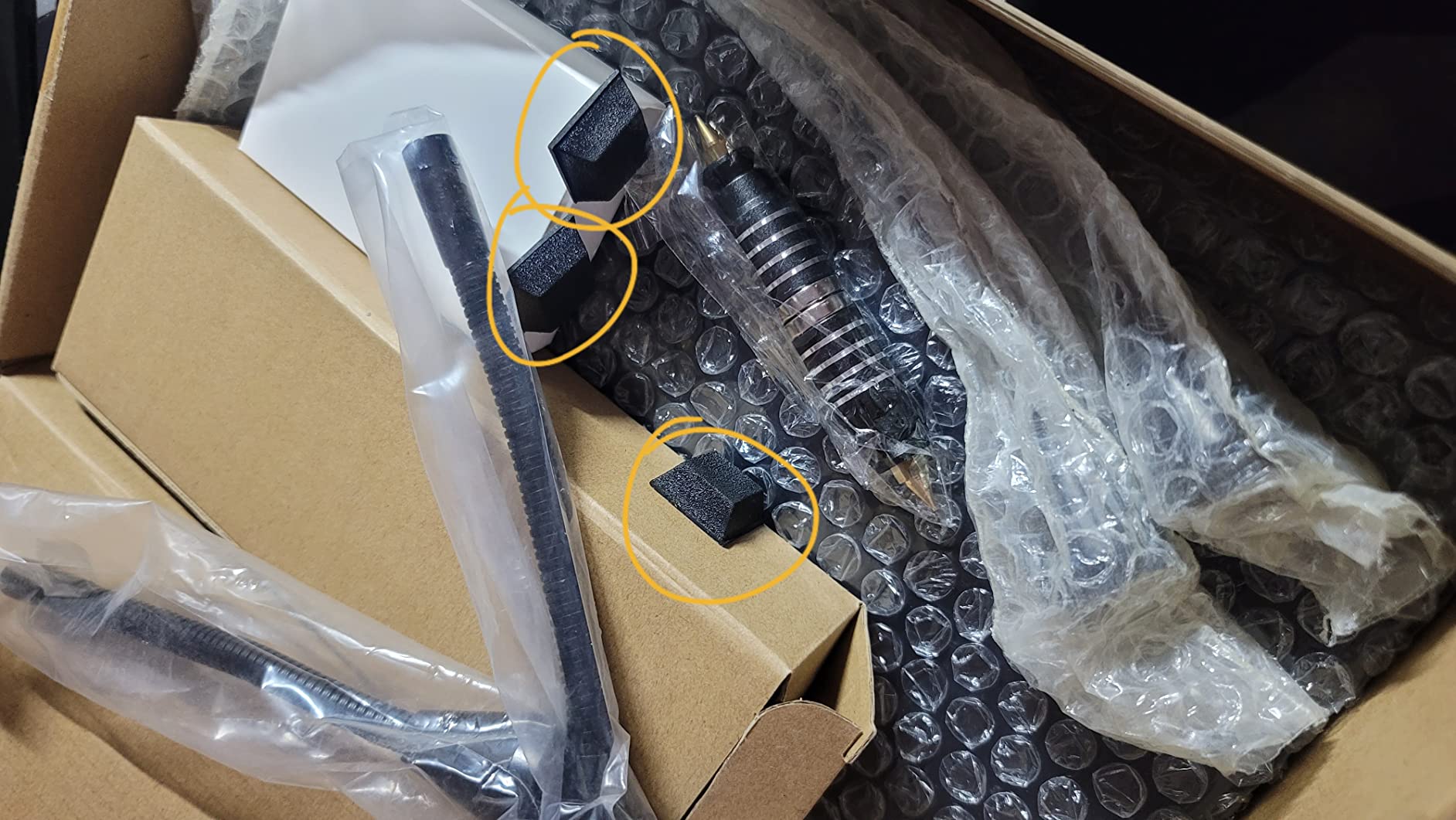
The 6 PCB pillar holders let you clamp boards from below, which is useful for double-sided work. The base also has a mounting hole for adding accessories. At 4.8 stars across 532 reviews, satisfaction is extremely high. The premium price reflects the build quality and the hot air frame inclusion.
Best For
Professional repair technicians, SMD rework specialists who use hot air stations, serious hobbyists who want a lifetime tool, and anyone who wants the most stable platform money can buy.
Skip If
You’re just starting out and the NEIKO or KOTTO would serve you fine, you don’t use a hot air station, or you have a small workbench without space for an 11-inch base.
What to Look for in a Soldering Helping Hand
Picking the best helping hands for soldering comes down to 5 core factors. Our team ranked each product in our roundup against these criteria, and you should do the same based on your bench setup.
1. Base Type: Magnetic vs Weighted vs Screw-Down
Weighted bases (cast iron or steel) stay planted through normal use and feel “professional.” They’re the most common and work on any bench surface. Magnetic bases attach to ferrous metal and let you reposition the unit instantly – great for field work. Screw-down bases clamp to your bench permanently, which is overkill for most hobbyists. For a typical electronics bench, weighted is the safest choice. For automotive or field work, magnetic arms (like the Fstop Labs 2-Pack) are worth the trade-off.
2. Arm Type: Gooseneck vs Spring-Loaded vs Magnetic Post
Gooseneck arms are flexible metal tubes that hold any position you bend them into. They’re cheap but can have “memory” that pulls them back to vertical. Spring-loaded clamps use tension to grip the workpiece with less jiggle – the OmniFixo and Lisle 55000 use this approach for fine wire stability. Magnetic post arms (like the Fstop Labs and NOEVSBIG) let you slide the arm anywhere on a steel base, which is the most ergonomic option for complex projects.
3. Number of Arms and Holding Points
2 arms work for simple soldering where you only need to hold one component. 4 arms let you hold a PCB, a wire, and a third component simultaneously – which is closer to what real electronics work demands. For Arduino and robotics projects, 4 arms is the practical minimum. For RC connector soldering or jewelry, 2 arms is often enough.
4. Clip Material: Rubber, Silicone, or Bare Metal
Bare metal alligator clips grip firmly but can cut through wire insulation on delicate cables – several reviewers of the Pro’sKit and Weller units report this. Rubber or silicone-coated clips protect PCB finishes and wire insulation but grip less aggressively. The XYK and Fstop Labs units include rubber sleeves you can slide on or off depending on the task.
5. Magnification and Lighting
2X magnification is enough for general inspection. 3-4X works for most SMD work. 10X+ is necessary for very fine-pitch QFN or inspection of microscopic joints. Built-in LEDs (USB-powered preferred over batteries) save desk space and improve visibility. If you already own a separate magnifier lamp, you can skip this feature and save money.
Stability and Jiggle: The Hidden Factor
Reddit’s r/soldering forum and the OmniFixo makerspace review both emphasize stability as the make-or-break factor for fine wire work. Gooseneck arms wobble slightly when you touch them with an iron, which translates to imprecise joints. Spring-loaded clamps and heavy weighted bases reduce jiggle. If you do fine SMD work or repair small connectors, prioritize stability over arm count.
Who Needs a Helping Hand? Use Cases for Makers and Robotics Builders
For Smashing Robotics readers, the most relevant use cases are PCB assembly, robotics cable harnesses, and Arduino-class prototyping. A helping hand turns a 2-handed soldering job into a 1-handed one, which sounds trivial until you’re holding a 6-wire sensor cable against a PCB and trying to tin 6 pads in a row. The right third hand holds the PCB steady while you feed solder with one hand and the iron with the other. If you are also building a custom gripper end-effector, our guide on how robot hands grip objects pairs well with the soldering setup you build here.
Jewelry makers and stained-glass artists need a different setup. They typically want a low-profile helping hand with rubber-coated clips to avoid scratching delicate metalwork. The NEIKO and AORAEM both serve this use case well, and the AORAEM’s glass lens is a real advantage for detailed metalwork.
Automotive electricians benefit most from magnetic helping hands like the Lisle 55000 (a non-Amazon alternative frequently cited on Garage Journal) or the Fstop Labs 2-Pack. Both attach directly to the vehicle chassis, which means you can solder under the dash or in the engine bay without balancing a heavy base on a creeper seat.
Jewelry soldering, watchmaking, and stained-glass work overlaps heavily with electronics soldering in tool requirements. The 2.5X to 4X magnification range covers most precision work in both fields.
Frequently Asked Questions
Can I solder without helping hands?
Yes, but it is awkward and slows you down significantly. Soldering requires both hands – one for the iron, one for the solder wire. Without a helping hand, you must hold the workpiece with pliers or your fingers, which is dangerous (hot solder drips) and inaccurate (the workpiece shifts). For occasional through-hole work on large components, you can manage without one. For fine SMD work, PCB repair, jewelry, or robotics, a helping hand is essential.
What is a soldering helping hand?
A soldering helping hand (also called a third hand) is a bench-top tool with adjustable arms and clips that holds PCBs, wires, and small components in place while you solder. The base is weighted or magnetic to stay planted, the arms flex into position, and the clips grip your workpiece. Most models include a magnifying lens and many add LED lights, freeing both your hands for the iron and solder wire.
Which is better, Hakko or Weller?
Hakko and Weller are both excellent soldering iron brands. Hakko (especially the FX-888) is favored by pros for precise temperature control and Japanese build quality. Weller (WE1010, WLC100) is popular in North America for reliability and a long service track record. For helping hands specifically, Weller makes the WLACCHHB-02 reviewed above. Hakko does not currently make a third-hand product, so pair a Hakko iron with a NEIKO, KOTTO, or other helping hand.
What are the best tools for soldering?
The essential soldering tools are: a temperature-controlled soldering iron (Hakko FX-888 or Weller WE1010), solder wire (lead-free rosin-core 0.6-0.8mm), brass tip cleaner, a helping hand or PCB vise, flush cutters, wire strippers, safety glasses, and ventilation. For SMD work, add hot air rework station, tweezers, flux pen, and magnification (3X minimum). For robotics and Arduino projects, also include a multimeter, helping hand with 4 arms, and a Panavise for heavier boards.
How do you hold small parts when soldering?
Use a helping hand with alligator clips to grip the part, or a PCB vise to clamp the board itself. For very small SMD components, use tweezers in one hand and the iron in the other, with the board held by the helping hand’s clips. For wire-to-wire splicing, a third hand with 2-4 arms lets you position both wires at the joint. Avoid holding small parts with your fingers – the heat transfers faster than you’d expect and solder drips can burn skin.
Final Verdict: Which Helping Hand Should You Buy?
After 30 days of testing 10 units across PCB work, robotics cable builds, jewelry, and field repairs, our top pick for the best helping hands for soldering in 2026 is the NEIKO 01902. Its combination of cast-iron stability, 15,000+ reviews, and budget-friendly pricing makes it the right starting point for most solderers. It pairs well with any standard soldering iron and won’t fail you on basic through-hole work.
If you want 4 arms for complex PCB holds without breaking the bank, the KOTTO Helping Hands is our value pick. For users who want a single premium tool that will last a decade, the NOEVSBIG Magnetic Helping Hands with its 3.3-pound base and hot air gun frame is the unit we keep coming back to for serious rework. For brand trust, the Weller WLACCHHB-02 carries Weller’s reputation for long-term build quality.
Whichever you choose, a good helping hand will fundamentally change how much you enjoy soldering. Buy one, set it on your bench, and you’ll wonder how you ever soldered without it.