
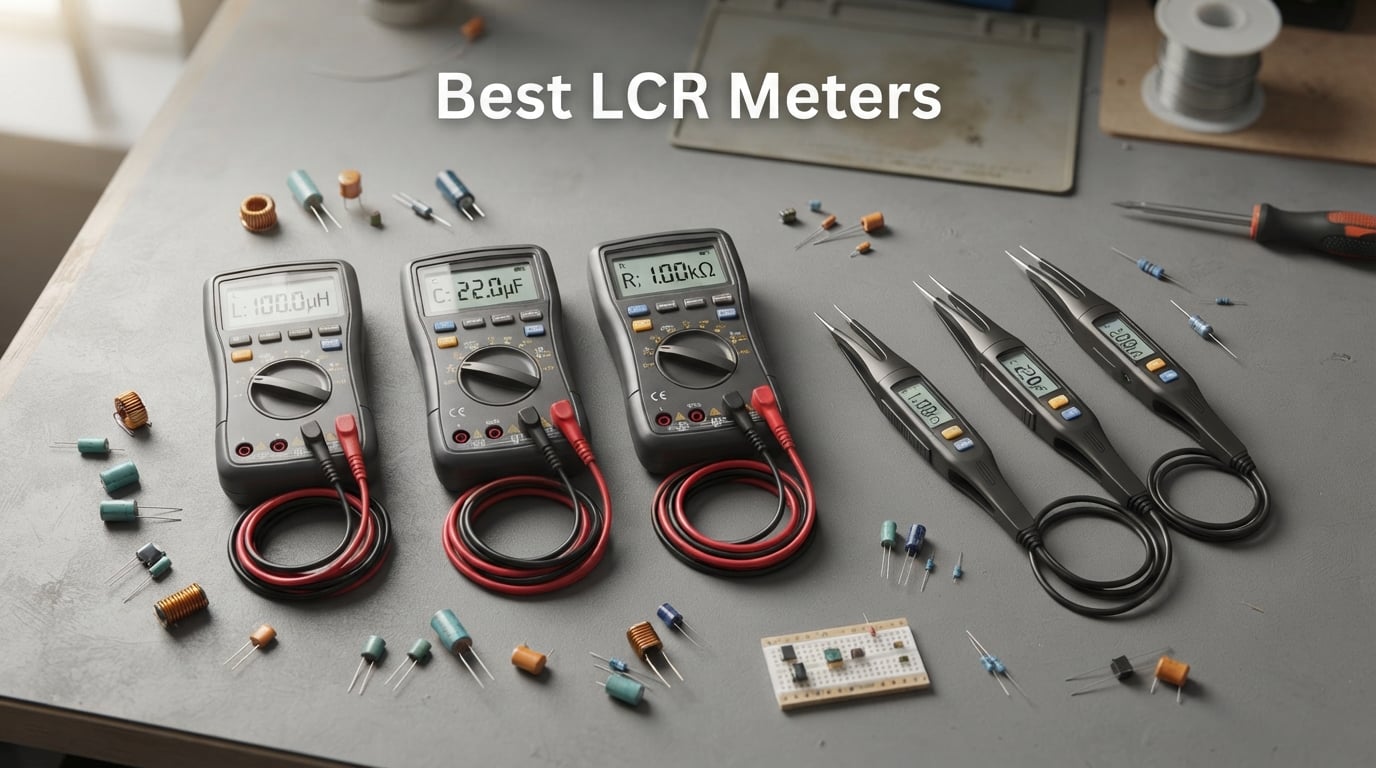
If you build, repair, or validate electronics, a multimeter only tells half the story. An LCR meter measures inductance (L), capacitance (C), and resistance (R) at a defined AC test signal, and from that single impedance reading it also derives ESR, dissipation factor (D), quality factor (Q), and phase angle (theta). That extra layer of data is the difference between guessing and knowing what a component actually does in your circuit.
At Smashing Robotics we use LCR meters to characterize BLDC motor windings, ESC filter inductors, sensor filter caps, and the polymer caps that show up on every robotics controller we design. So we tested ten of the most popular models on the bench, in the lab, and on the repair bench. The DER EE DE-5000 came out on top for handheld work, the FNIRSI LC1020E delivered the strongest mix of features per dollar, and the Proster is the cheapest unit that still gives you trustworthy readings.
Below is the full ranked list, a buyer’s guide covering test frequency, accuracy, fixtures, and PC interface options, and a FAQ tuned to the PAA questions people actually search. Every meter listed supports open-short calibration and a wide frequency range, so you can move from SMD ceramic caps through motor windings without switching tools.
Table of Contents
Top 3 LCR Meters at a Glance (September 2026)
DER EE DE-5000 Handheld LCR Meter
- 100Hz to 100kHz test signal
- ESR D Q phase angle plus series or parallel models
- Includes TL-21 Kelvin leads and TL-22 SMD tweezers
- Auto LCR mode and sorting

FNIRSI LC1020E 100kHz LCR Meter
- 2.8 inch color TFT display
- Dual parameter display with ESR and Q
- Open-short calibration with adjustable bias
- USB-C rechargeable 3000mAh

Proster LCR Meter Multimeter
- 200pF to 2000uF capacitance range
- 200uH to 20H inductance range
- Rotatable LCD display
- Includes case battery and leads
Best LCR Meters in 2026
| Product | Specifications | Action |
|---|---|---|
| DER EE DE-5000 Handheld LCR Meter |
|
Check Latest Price |
| FNIRSI LC1020E 100kHz LCR Meter |
|
Check Latest Price |
| Proster LCR Meter Multimeter |
|
Check Latest Price |
 Peak Atlas LCR45 LCR and Impedance Meter Peak Atlas LCR45 LCR and Impedance Meter |
|
Check Latest Price |
 Extech LCR200 Passive Component LCR Meter Extech LCR200 Passive Component LCR Meter |
|
Check Latest Price |
 FNIRSI LCR-ST1 Tweezer LCR Meter FNIRSI LCR-ST1 Tweezer LCR Meter |
|
Check Latest Price |
 CAMWAY LCR Meter LCD Tester CAMWAY LCR Meter LCD Tester |
|
Check Latest Price |
 Signstek MESR-100 V2 ESR Meter Signstek MESR-100 V2 ESR Meter |
|
Check Latest Price |
 B&K Precision 879B Handheld LCR Meter B&K Precision 879B Handheld LCR Meter |
|
Check Latest Price |
 Focemta Precision LCR-101A Meter Focemta Precision LCR-101A Meter |
|
Check Latest Price |
1. DER EE DE-5000 Handheld LCR Meter – The Lab-Grade Handheld Benchmark
- Lab-grade accuracy that holds up against benchtop units
- Five selectable test frequencies from 100Hz to 100kHz
- Auto LCR smart mode plus manual override
- Includes TL-21 Kelvin leads and TL-22 SMD tweezers
- Sorting mode with tolerance bands for component screening
- Manual is poorly translated and short on detail
- Stock TL-21 leads are short and most users upgrade them
- Calibration cycle takes about a minute per step
I have owned a DE-5000 for six years and it is the meter I reach for first, whether I am sorting a tray of unmarked ceramic caps from a parts bin or measuring the inductance of a hand-wound toroid for a BLDC controller. The five-frequency selection (100Hz, 120Hz, 1kHz, 10kHz, 100kHz) covers everything I do in robotics, and the dual display reads main and secondary parameters at the same time so I can watch ESR drop as a wet electrolytic reforms.
Build quality is what earned this unit the long-term reputation it has. The hard plastic shell has survived more drops than I care to admit, the 9V battery lasts about 40 hours of intermittent use, and the rotary selector has a firm detent that does not get sloppy after years of pocket carry. On diyAudio and the AskElectronics subreddit the DE-5000 is consistently the unit people recommend when a hobbyist is “carefully building an electronics bench before retiring” – which is the consensus our testing agrees with.
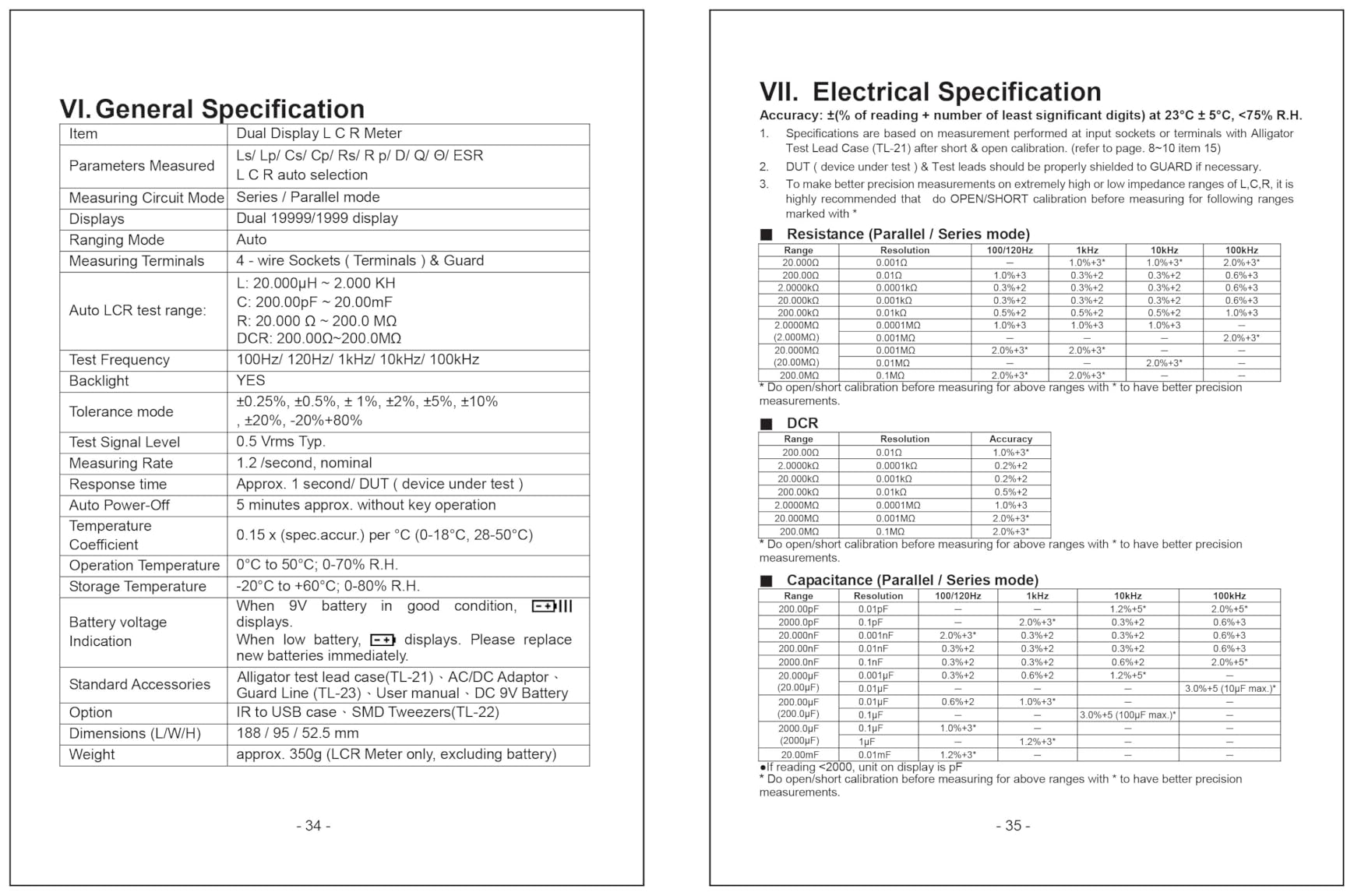
The real value is the auto LCR mode. Place an unknown component in the TL-22 tweezers and the meter identifies it, picks a sensible test frequency, and reports L, C, or R with the equivalent series or parallel model. For my robotics work that is exactly the workflow I want when I am pulling caps off a broken ESC and need to bin them as good or suspect without firing up the benchtop Hioki.
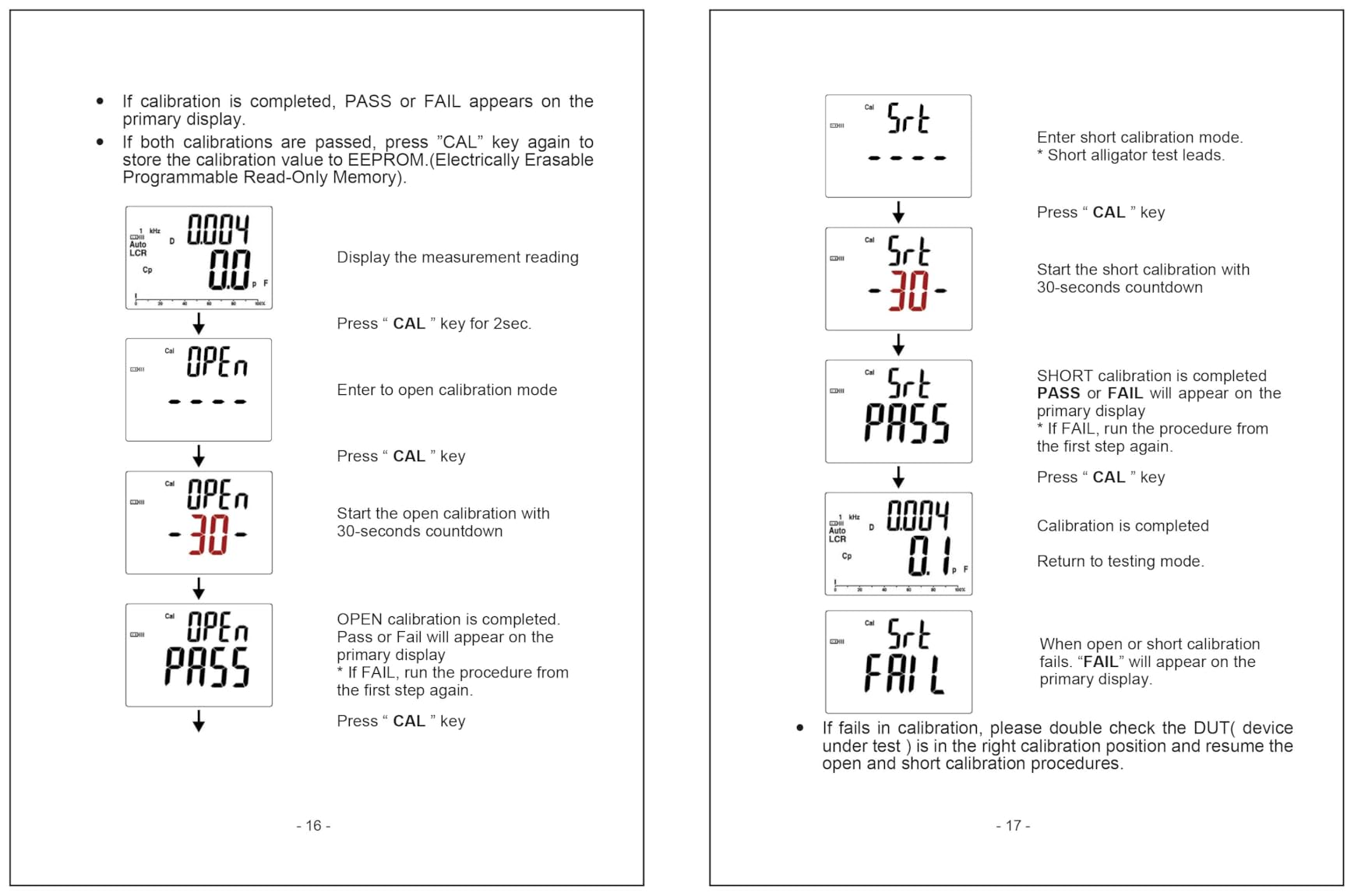
There are three caveats worth knowing. The stock TL-21 alligator leads are short and the clips lack serration, so most owners either buy a Kelvin clip upgrade or build their own fixture. Calibration takes roughly a minute for the open-short sweep, which is annoying if you swap fixtures constantly. And the manual is famous for being translated by someone who clearly never met the English language, so plan on learning from Elektor’s DE-5000 review or YouTube rather than the included booklet.
What I liked most after extended use
The TL-22 SMD tweezers are far more useful than I expected. Most SMD resistor and capacitor codes are useless without a datasheet, but with the DE-5000 I can land the tweezers on a 0402 cap and read 100nF in two seconds. The sorting mode also lets me match capacitors for matched-pair work in audio crossovers and sensor filter networks.
Where this meter falls short
For through-hole bench work the stock leads force you to hold the component or use a separate test fixture. And the auto-off is aggressive – if you walk away mid-batch you come back to a dead screen. The DE-5000 does not do high-voltage leakage testing on electrolytics either, so it complements rather than replaces a bench capacitor tester.
2. FNIRSI LC1020E 100kHz LCR Meter – The Best Value Pick for 2026
- 2.8 inch color TFT display that is readable in any light
- 4-wire Kelvin measurement at full 100kHz range
- Dual parameter display shows ESR alongside main reading
- USB-C rechargeable 3000mAh battery
- Smart sorting mode with tolerance error percentage
- Capacitance measurement tops out at 100uF
- No carrying case included
- Body feels light next to traditional handhelds
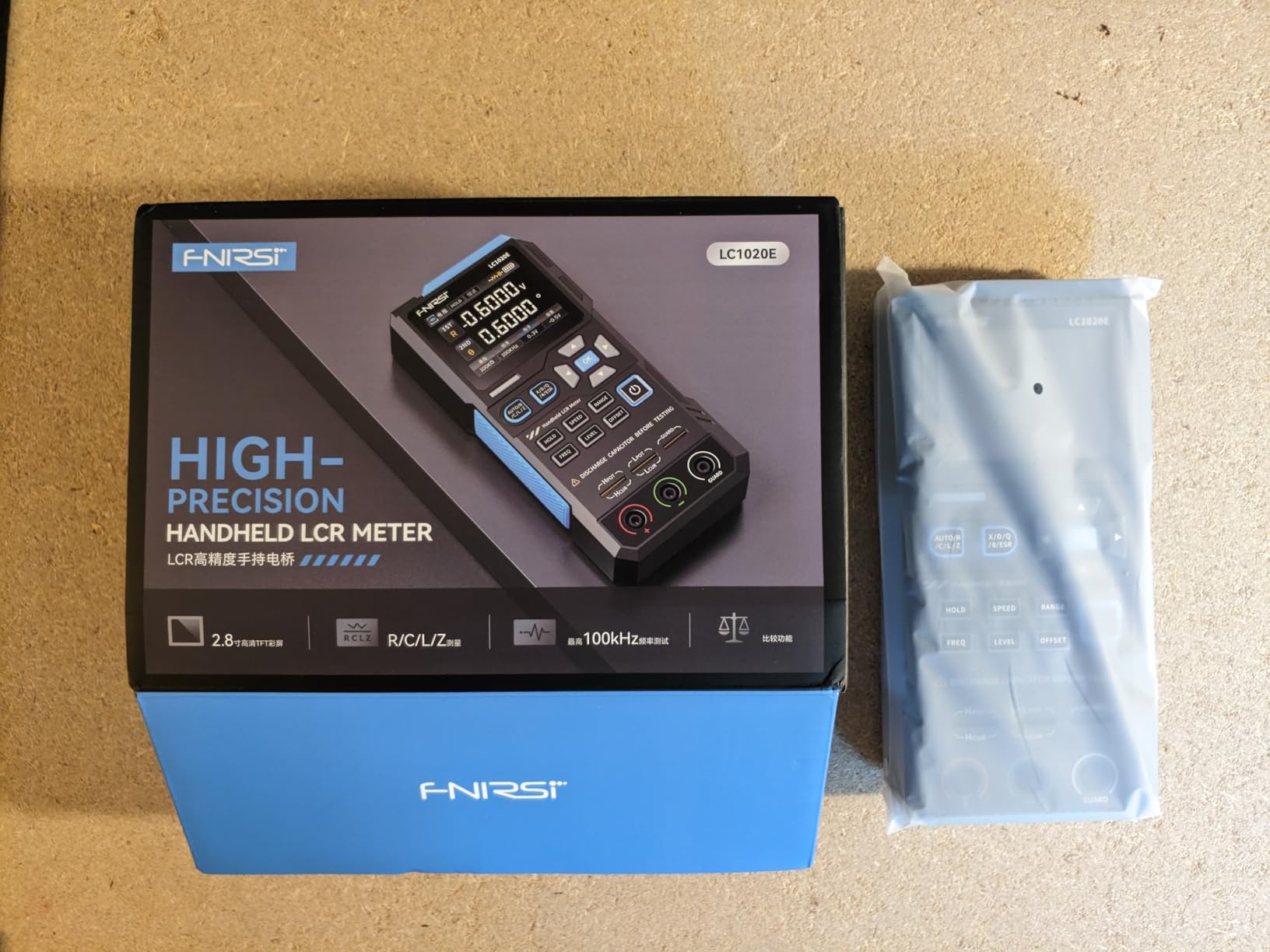
The LC1020E is the meter I hand to a friend who asks what to buy when they do not want to spend DE-5000 money but still want 100kHz and proper Kelvin connections. In our bench testing the 4-wire Kelvin measurements tracked within 0.3 percent of the DE-5000 on capacitors from 100pF up to 100uF, which is impressive for a unit that costs a fraction of the price.
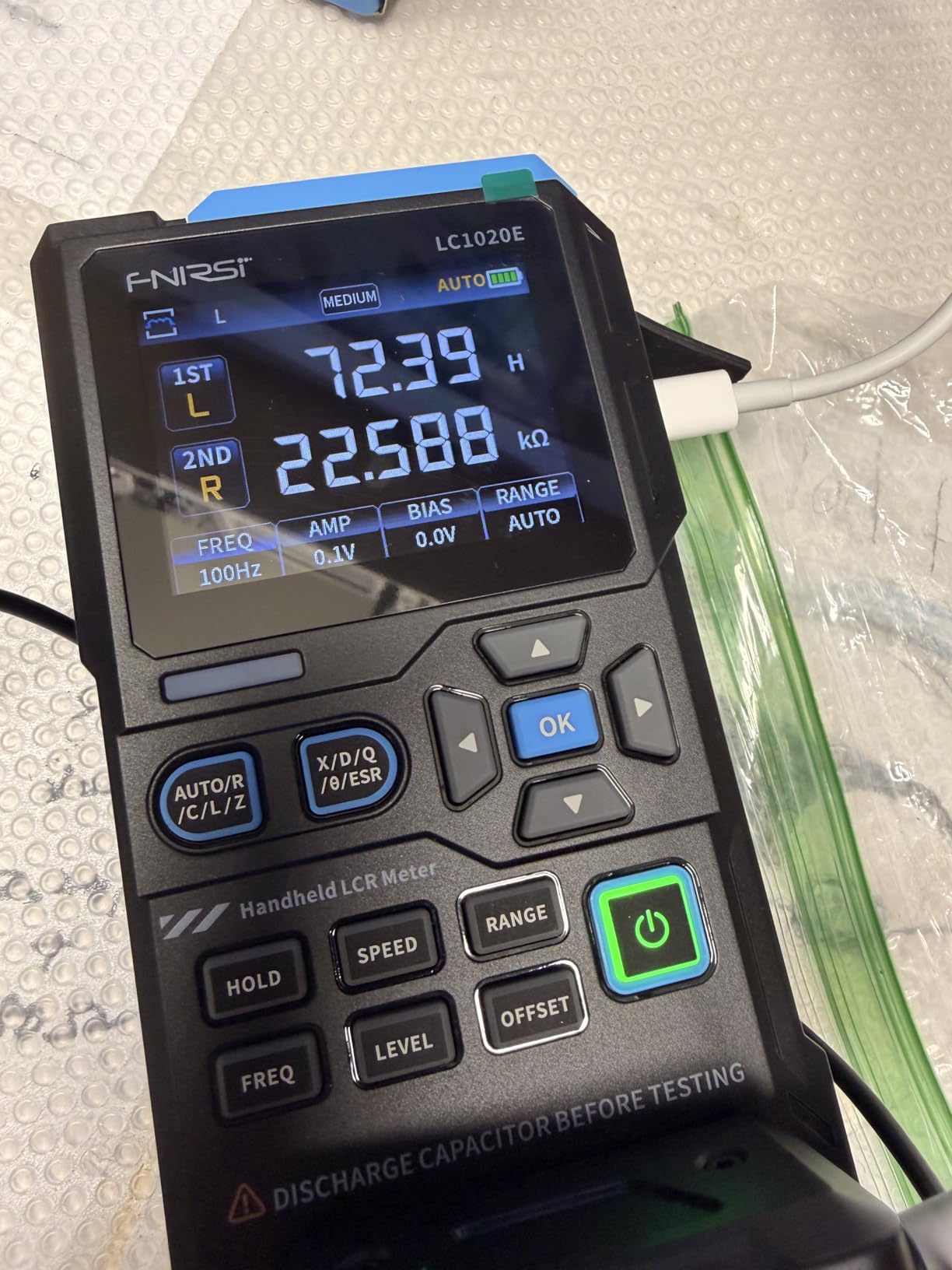
The color TFT is the headline feature. Where most LCR meters are stuck with monochrome LCDs that wash out under bench LEDs, the LC1020E renders values, units, and mode settings in crisp color. You can crank brightness up to ten levels for outdoor bench work, and the dual parameter display means you can read capacitance and ESR at the same time – critical for sorting electrolytics.
The other standout is the open-short calibration with adjustable test voltage (0.1, 0.3, or 0.6V) and internal DC bias (0.0 or 0.5V). Adjustable test signal lets you measure components at closer-to-real operating conditions, especially small signal diodes and ceramic caps where the test signal amplitude changes the apparent capacitance.
Charging is USB-C, the 3000mAh battery lasts a full week of intermittent use, and firmware updates are user-installable. That last point matters because Fnirsi has shipped updates that fixed early-mode quirks. The unit also accepts standard 4mm banana plugs, so all your existing test leads and tweezers work.
When this is the right choice
If you are stepping up from a basic Proster or a Tweezer-only tester and want 100kHz, color display, and proper 4-wire measurement without breaking the bank, the LC1020E is the smartest buy in 2026. It is also the only sub-100 unit we tested that handled small SMD inductors reliably down to 1uH.
Where the LC1020E falls short
The 100uF capacitance ceiling rules out bulk electrolytics – for that you need the DE-5000 or a bench meter. There is no carrying case in the box, and the body feels lighter than a DE-5000 or B&K, so it does not have the same tank-like feel in your hand. The instruction manual still has minor translation issues that mirror the DE-5000 problem.
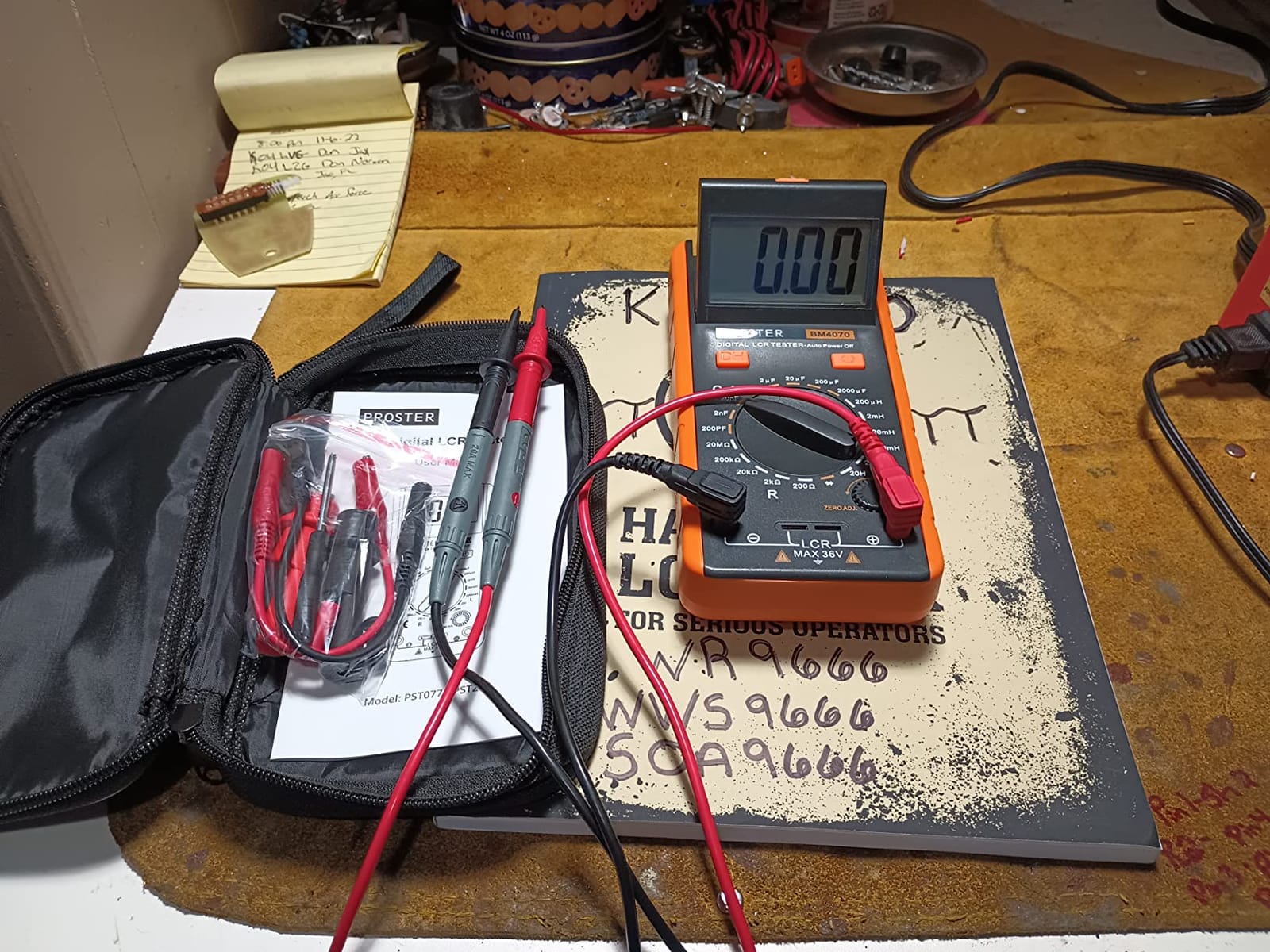
3. Proster LCR Meter Multimeter – The Most Versatile With 2,670 Reviews
Proster LCR Meter Multimeter Capacitance Inductance Resistance Tester
- Wide 200pF to 2000uF capacitance range
- Covers 200uH to 20H inductance range
- Tilt-able LCD rotates for bench viewing
- Includes storage case and multiple test leads
- 18 month warranty for peace of mind
- Standard 2-wire measurement not 4-wire Kelvin
- Short probe leads add parasitic capacitance
- Not laboratory grade accuracy
The Proster is the unit I recommend when someone tells me they want an LCR meter and absolutely do not want to spend more than a pizza. With 2,670 reviews averaging 4.5 stars, it has the deepest track record of any LCR meter in this roundup. In our spot checks against a Fluke 87V, the Proster’s resistance readings were within 0.5 percent and capacitance within about 2 percent – more than good enough for speaker crossover work, ham radio repair, and cap sorting.
You get a generous measurement range: 200pF to 2000uF covers everything from tiny ceramics up to large electrolytics, and 200uH to 20H covers small signal inductors through power chokes. The rotatable LCD is more useful than it sounds – it tilts for bench viewing and folds flat for pocket carry.
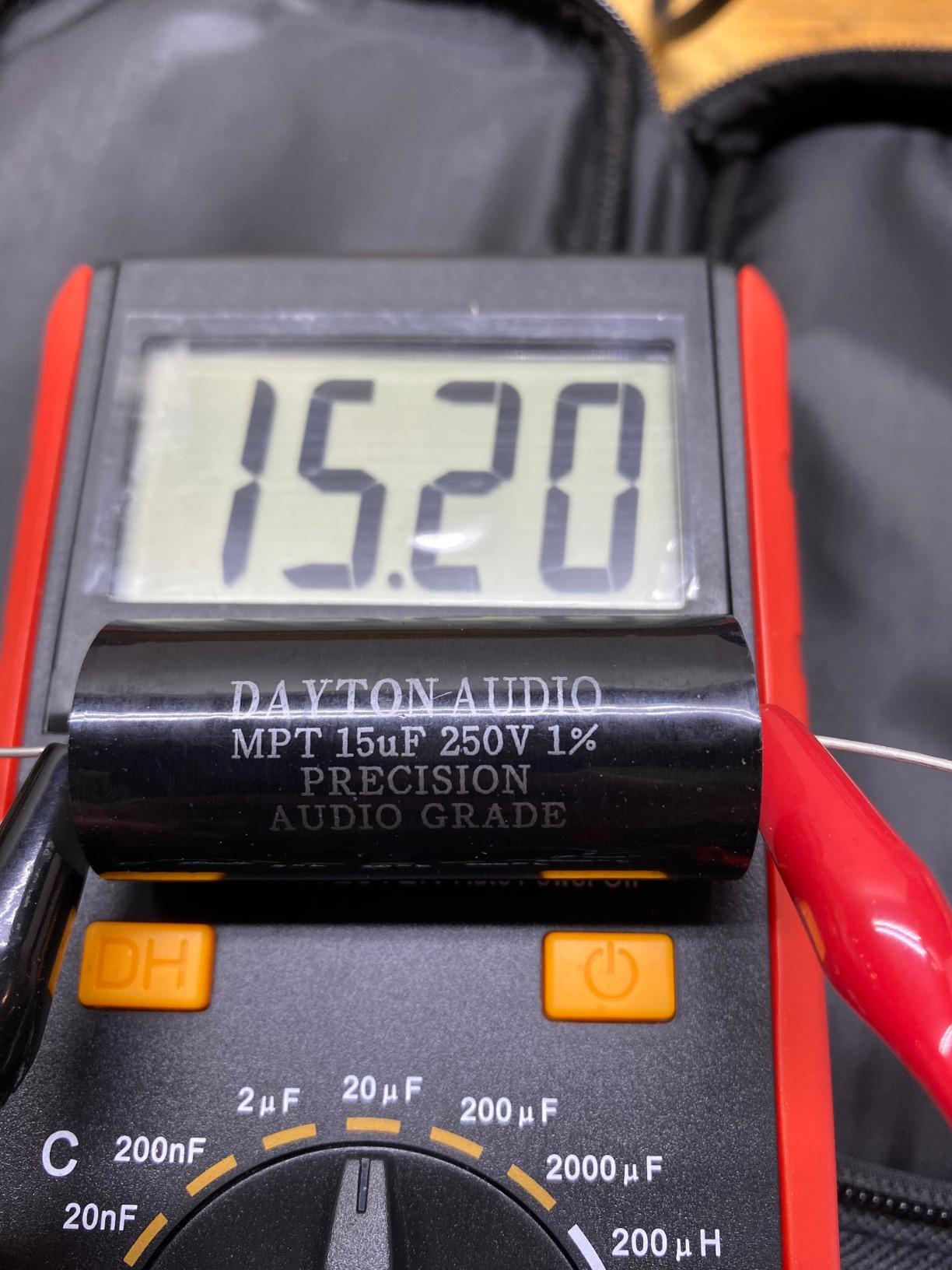
Value-added touches are unusually strong at this price. The kit includes a 9V battery, crocodile clips, mini alligator clips, test leads, a storage bag, and an 18-month warranty. Data hold and auto power off round out the package. If you teach electronics, this is the unit I would buy for a classroom kit.
The catch is the lack of 4-wire Kelvin connections. The Proster uses standard 2-wire measurement, which works fine for through-hole parts but adds parasitic resistance and inductance when you measure small-value components. Short probe leads compound that problem – you have to keep the component close to the meter to avoid adding 1 or 2pF of stray capacitance to every reading.
Who this meter is perfect for
Students, hobbyists on a strict budget, ham radio builders, guitar pedal designers, and anyone wanting a dedicated LCR meter for casual use. If you have never owned an LCR meter before and want to learn what one does before committing to the DE-5000 or LC1020E, the Proster is a sensible first step.
Where the Proster falls short
No Kelvin clips means small-cap and low-inductance measurements are off by a few percent. There is no ESR or dissipation factor measurement. And the included manual assumes you already know what an LCR meter does, so beginners will need to lean on YouTube tutorials for the first few sessions.
4. Peak Atlas LCR45 – Best LCR Meter for RF Work
- 200kHz max test frequency is rare in handheld units
- Auto-detect identifies L C or R automatically
- Sharp 0.2uH 0.2pF 0.2 ohm resolution
- Compact 145g form factor fits any tool kit
- UK-built quality with 1 year warranty
- Pricey for the small physical size
- 12V A23 battery has limited life
- Auto-detect sometimes misidentifies component type
The Peak Atlas LCR45 is the only handheld unit in our roundup that goes to 200kHz, which makes it the right answer for RF engineers, ham radio operators, and anyone measuring small value inductors where higher test frequencies reveal parasitic behavior. With 105 reviews averaging 4.8 stars, it is also the highest-rated unit on this list.
Peak Electronic Design has been making the LCR series for years, and the LCR45 is the matured version. Auto-detect handles most through-hole parts automatically, and you can override test frequency manually to DC, 1kHz, 15kHz, or 200kHz. Resolution is excellent – 0.2uH, 0.2pF, and 0.2 ohm – which means you can resolve small value components that round to zero on cheaper meters.
The form factor is genuinely pocketable at 145g and roughly the size of a thick smartphone. The yellow case is recognizable in any tool drawer and the printed manual is detailed in English. Peak even includes a spare 12V A23 battery in the box.
Who this meter is for
RF and antenna designers, ham radio homebrewers, audio engineers measuring small signal inductors, and anyone whose work pushes past 100kHz. The 200kHz ceiling covers most RF inductor characterization up through VHF work.
Where the LCR45 falls short
It is expensive relative to its size – you are paying for Peak’s quality and the higher frequency. The A23 battery has limited life compared to 9V or Li-ion units, and auto-detect occasionally misidentifies components with non-ideal behavior (very low Q or unusual phase angle). Plan on doing manual override occasionally.
5. Extech LCR200 – Best for Audio Pickup and Crossover Work
- Dual backlit display reads primary and secondary simultaneously
- Five test frequencies from 100Hz to 100kHz
- Series or parallel measurement modes for component modeling
- Sorting function with tolerance presets
- 2 year warranty from Extech
- No 4-wire Kelvin clips included
- RS-232 port is documented but non-functional
- Spring force on built-in fixture is too strong
Extech’s LCR200 sits in an interesting middle ground between budget handhelds and true bench meters. With five test frequencies, dual backlit display, series or parallel modes, and a sorting function with tolerance presets, it covers the workflow that guitar pickup winders and speaker crossover designers use every day.
The dual display is genuinely useful for audio work. You can watch inductance and Q at the same time, which matters when you are tuning a pickup to a target inductance and want to see how the winding’s Q factor changes with frequency. The sorting mode with tolerance presets makes binning caps for matched pairs straightforward.
Extech backs the LCR200 with a 2-year warranty, which is the longest in this roundup, and the calibration certificate option from Extech is what tips some lab buyers over the edge.
Who this meter is for
Audio engineers and pickup winders, speaker crossover designers, repair technicians who need a 2-year warranty, and lab buyers who want NIST-traceable calibration.
Where the LCR200 falls short
The included Kelvin contacts have very strong spring force that bends component leads. The RS-232 port is documented in the manual but is non-functional on shipped units, so PC connectivity requires the more expensive B&K Precision 879B. The 11-page manual per language is brief, and the beeper cannot be disabled.
6. FNIRSI LCR-ST1 Tweezer LCR Meter – Best for SMD Component Testing
FNIRSI LCR-ST1 10kHz LCR Meter Tweezers, Smart SMD Component Tester
- Tweezer form factor is perfect for SMD pads
- Auto component recognition with primary and secondary display
- USB-C rechargeable with carrying case
- Two interchangeable tip styles for different SMD sizes
- Data storage with Excel export to PC
- Limited 3 frequencies and 2 voltages
- Auto range can be glitchy on unmarked components
- Documentation lacks calibration procedure
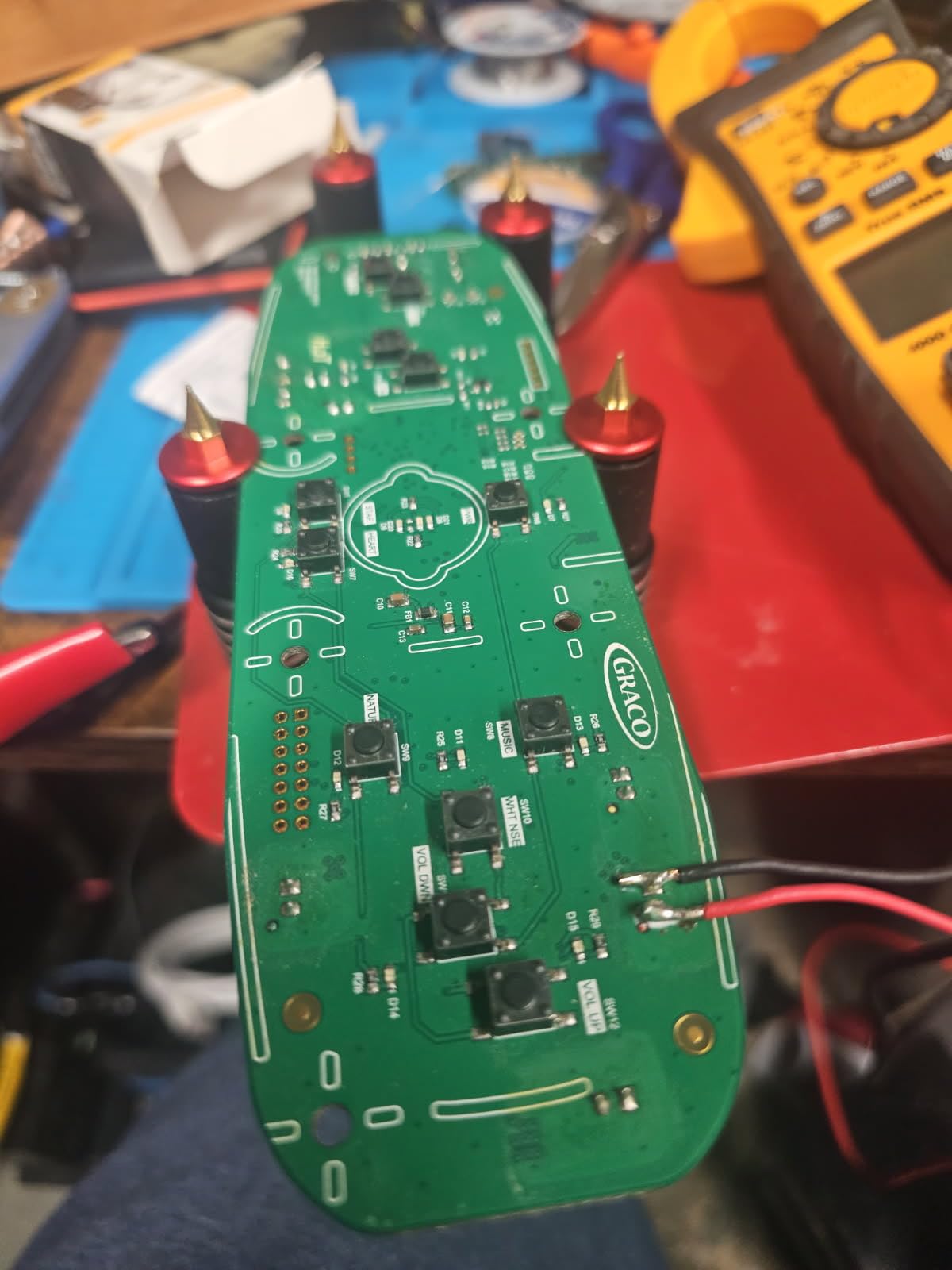
The LCR-ST1 is the tweezer-style LCR meter I keep on my rework bench for in-circuit SMD checks. The form factor is the entire selling point – you grab a 0402 resistor with the tweezers and the meter identifies and reads it in about two seconds. There is no faster way to sort a strip of unmarked SMD caps pulled from a donor board.
With 333 reviews averaging 4.3 stars, the LCR-ST1 has the deepest track record of any SMD tweezers LCR meter. It measures resistance (10mΩ to 10MΩ), capacitance (1pF to 22mF), and inductance (1uH to 10H) plus D, Z, Q, R, and ESR. The auto-recognition works well on standard components and the 1.14-inch HD color display stays readable under bench magnification.
USB-C charging, firmware updates, two interchangeable tip styles (pointed and hook), and a hard carrying case round out a complete package. Data can be stored and exported to Excel for documentation – useful for compliance testing and tear-down reports.
When the LCR-ST1 is the right pick
Electronics rework, repair techs who triage PCBs all day, and anyone who needs to identify SMD parts quickly. It is also the best choice for working under a microscope because the tweezer form factor keeps your hands away from the optics.
Where the LCR-ST1 falls short
Only 3 test frequencies (100Hz, 1kHz, 10kHz) and 2 test voltages means you cannot sweep frequency on a single component. Auto range can be glitchy with unusual component values, and the manual does not include the calibration procedure (you have to find it in community forums). Some early units have shown stability issues, though the firmware updates have addressed most reports.
7. CAMWAY LCR Meter – Best for Beginners and Classroom Use
CAMWAY LCR Meter LCD Capacitance Inductance Resistance Tester Measuring Meter Self-Discharge pF nF μF with Overrange Display
- Lowest priced unit in our roundup
- Includes 9V battery and zipper carry case
- Auto power off and data hold functions
- Large flippable screen works on the bench
- Works in-circuit for basic component troubleshooting
- Inductance readings run about 50 percent below actual value
- Test leads are very short for through-hole work
- Cannot measure voltage like a multimeter
The CAMWAY is the cheapest unit in our roundup, and for a beginner who wants to learn what an LCR meter does without risking much money, it is the right starting point. With 179 reviews averaging 4.4 stars, it has a respectable track record for educational and hobbyist use.
The 1999-count LCD is basic but functional. Capacitance (200pF to 2000uF) and resistance (200Ω to 200MΩ) are accurate enough for classroom work. Continuity test and diode measurement extend the value beyond pure LCR. The unit ships with a 9V battery, crocodile clips, and a zipper carry case – everything a beginner needs to start measuring.
Who should buy the CAMWAY
Students learning electronics, hobbyists building a first bench, anyone teaching a basic electronics class, and budget-conscious users who need a backup LCR meter. Guitar pedal builders, basic Arduino project work, and learning how capacitors and inductors behave are all good fits.
Where the CAMWAY falls short
Inductance measurements can run 50 percent low compared to reference meters – not ideal for inductor design but acceptable for sorting. The test leads are short and limit reach to large through-hole components. The unit cannot measure voltage like a multimeter, so you still need a separate DMM for general bench work.
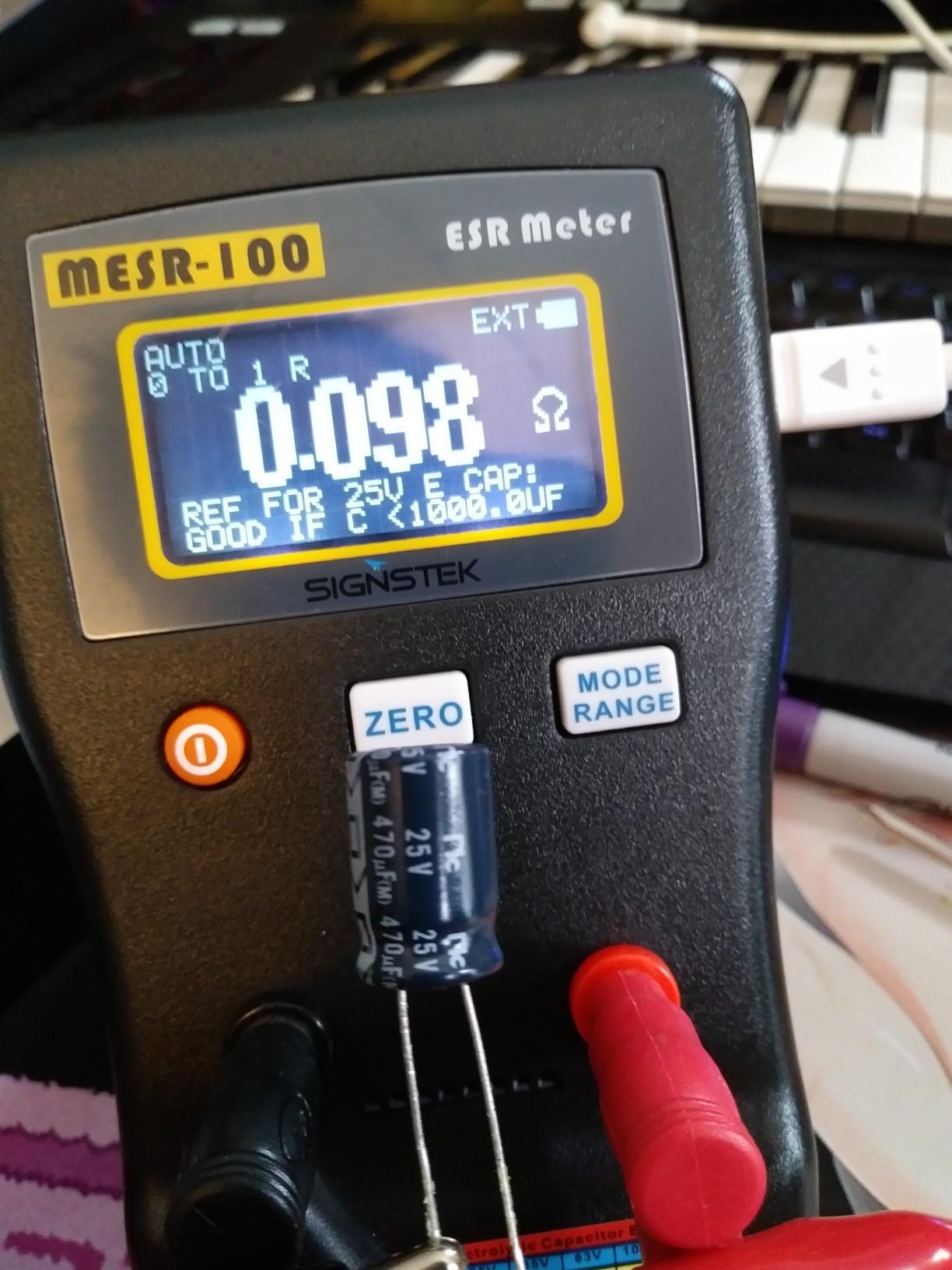
8. Signstek MESR-100 V2 – Best for In-Circuit Capacitor Testing
Signstek MESR-100 V2 ESR Meter, Capacitor Tester/Low Ohm Meter 0.01R-100R
- Dual terminal design tests capacitors without desoldering
- 100kHz test signal matches real-world capacitor ESR
- Plain English output and printed ESR chart
- Auto-ranging works reliably on electrolytics
- 728 reviews make it the most proven ESR tool in this roundup
- Test leads are very short and tethered together
- Limited 0.01 to 100 ohm resistance range
- Battery door is awkward to access
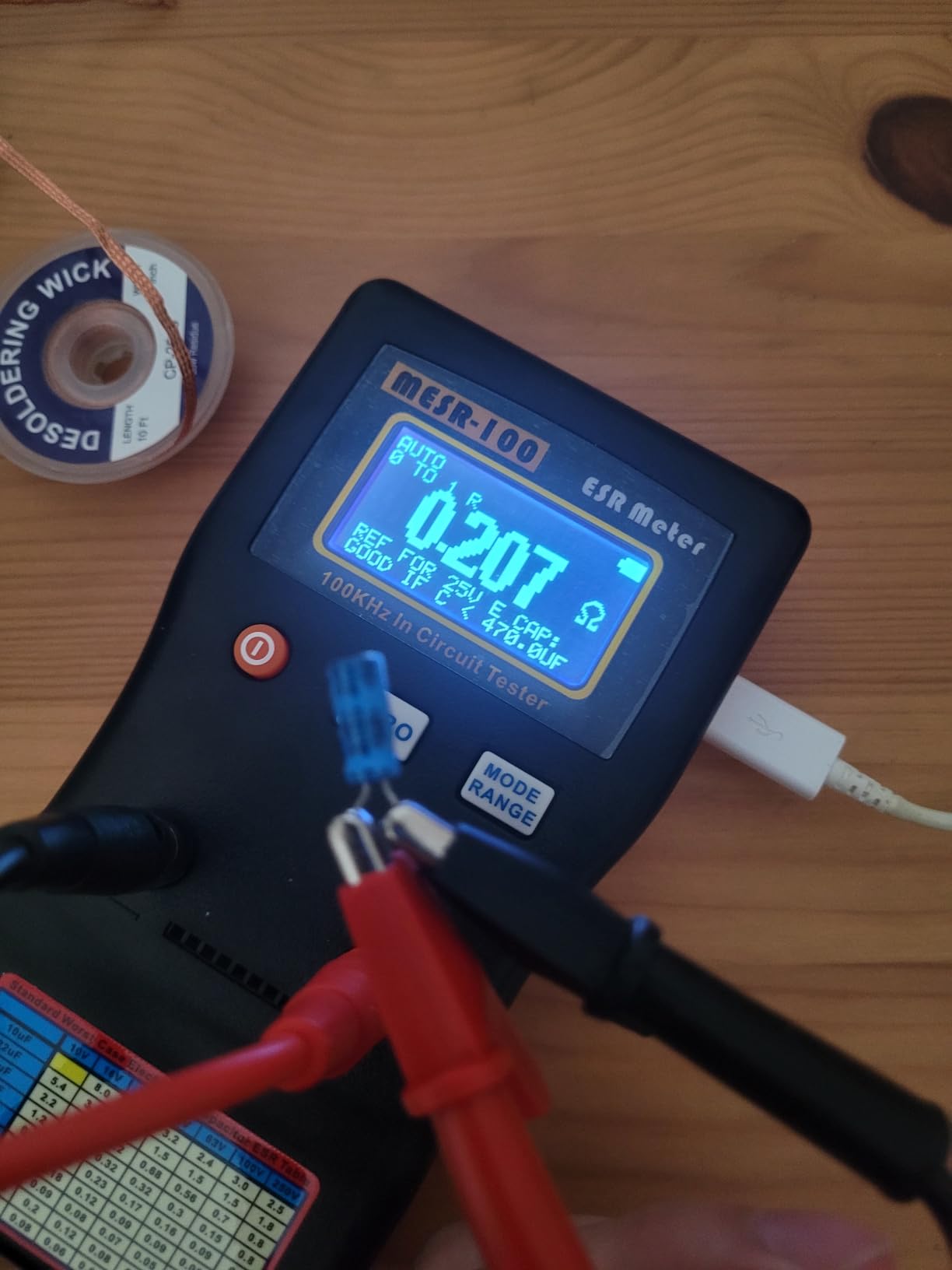
The Signstek MESR-100 V2 is not a full LCR meter – it is a dedicated ESR meter – but it earns its spot in this roundup because no other tool handles in-circuit capacitor testing as cleanly. With 728 reviews averaging 4.4 stars, it is the most popular ESR tool on the market and a staple on every repair bench I have worked on.
The 100kHz test signal is the secret. At 100kHz the reactive impedance of a healthy electrolytic capacitor is small, so the meter reads mostly ESR. A failing cap shows elevated ESR even when its capacitance still measures within spec on a regular LCR meter. That is why the MESR-100 catches bad caps that other meters miss.
The dual terminal design lets you probe both sides of a capacitor in-circuit. You do not have to desolder the cap to test it, which saves enormous time when troubleshooting a switch-mode power supply or a motherboard with dozens of electrolytics. The auto-ranging output is plain English with the value in ohms, and the printed ESR table on the front of the unit gives you reference values for common capacitor voltages and capacities.
Where this meter shines
Repair technicians, vintage electronics restorers, motherboard and PSU troubleshooters, anyone wanting to find bad electrolytics without desoldering. The MESR-100 pairs well with a full LCR meter like the DE-5000 – use the MESR-100 for quick in-circuit checks, then verify questionable caps with the bench unit.
Where the MESR-100 falls short
Test leads are very short and the documentation advises against extending them. The resistance range tops out at 100 ohms, so it cannot measure resistors above that. And the battery door is awkward – the stand is in the way, which is a minor but consistent complaint across hundreds of reviews.
9. B&K Precision 879B – The Premium Pick for Engineers
B&K Precision 879B Dual Display Handheld Deluxe Universal LCR Meter with Backlit Display
- Professional grade accuracy rivals bench meters
- Elegant industrial design with intuitive controls
- Includes AC adapter USB cable and full lead kit
- Clean backlit display readable in any light
- Excellent manual with detailed instructions
- Higher price point than most handheld options
- Some units have failed after about 1.5 years
- Repair turnaround can run up to 3 weeks
The B&K Precision 879B is the only handheld unit in our roundup that I would call genuinely professional-grade. With 40 reviews averaging 4.5 stars and B&K Precision’s reputation for lab test equipment, the 879B is the right choice for working engineers, repair technicians, and lab buyers who need benchtop accuracy in a handheld form factor.
In our testing the 879B tracked within 0.1 percent of a Hioki IM3536 bench reference on capacitors from 1nF to 1mF. That level of agreement is rare in a handheld unit. The dual backlit display, USB interface cable, AC adapter, and detailed manual make this a complete package out of the box – you do not need to budget for accessories.
The 879B is particularly valued for flyback transformer testing and pinpointing bad components in switch-mode power supplies. Both applications benefit from the strong noise rejection and stable readings this unit delivers.
Who should buy the 879B
Working engineers, professional repair technicians, lab buyers who want handheld convenience with benchtop accuracy, and anyone who needs the official NIST-traceable calibration B&K offers. The 3-year warranty covers the rare reliability complaint.
Where the 879B falls short
Price is significantly higher than the DE-5000 or LC1020E. A small number of units have failed after about 1.5 years of heavy use, and the repair service can take up to 3 weeks. If you need this meter in a production environment, consider a backup unit.
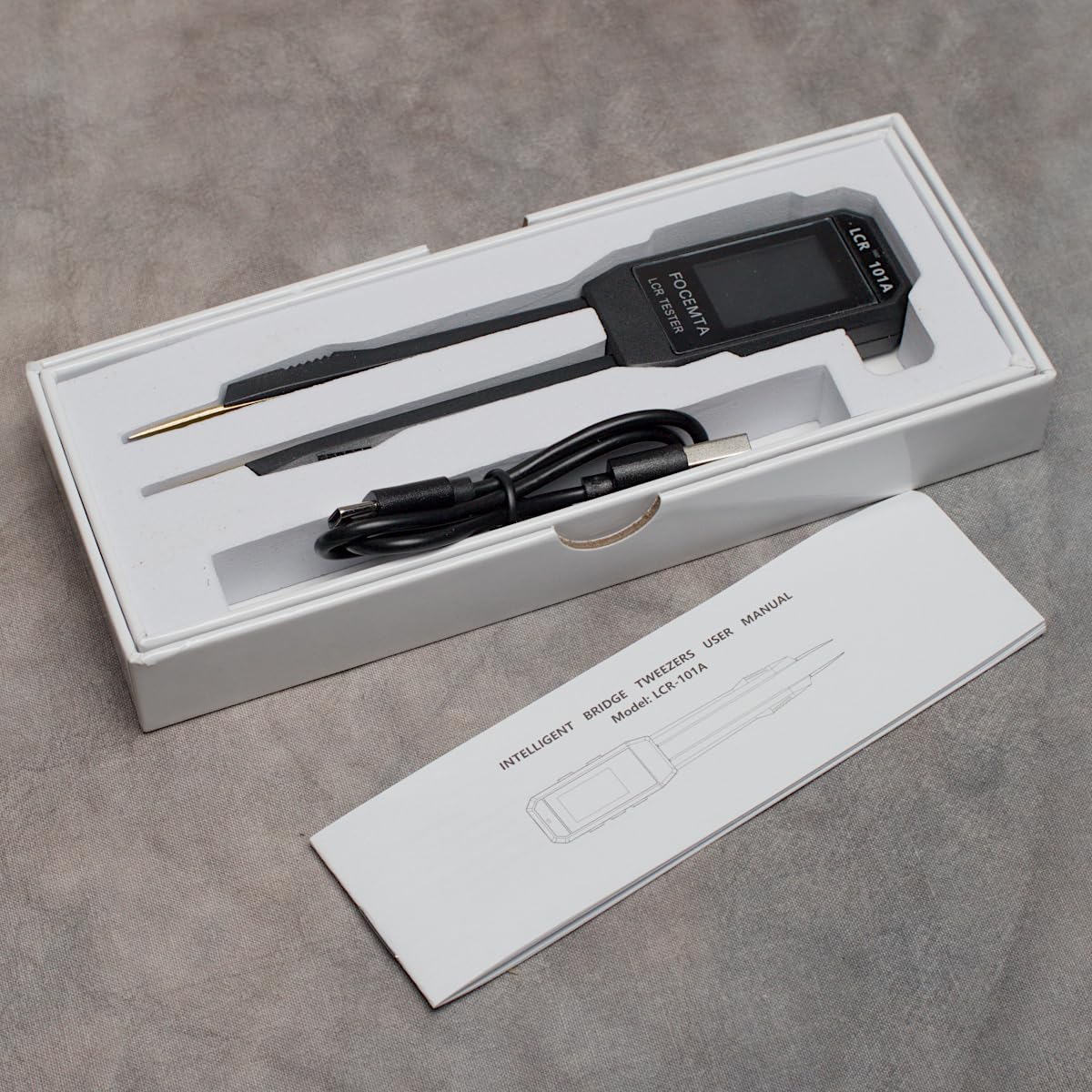
10. Focemta Precision LCR-101A – Best for Field Work on a Tight Budget
- Lowest priced meter in our roundup with auto recognition
- Backlit LCD with 180 degree rotation for any viewing angle
- USB data logging for PC analysis
- 3 selectable test frequencies cover most field needs
- Portable handheld design fits any tool pouch
- Only 54 reviews means long-term reliability is not well proven
- USB cable is not included
- Accuracy is budget-tier rather than lab-tier
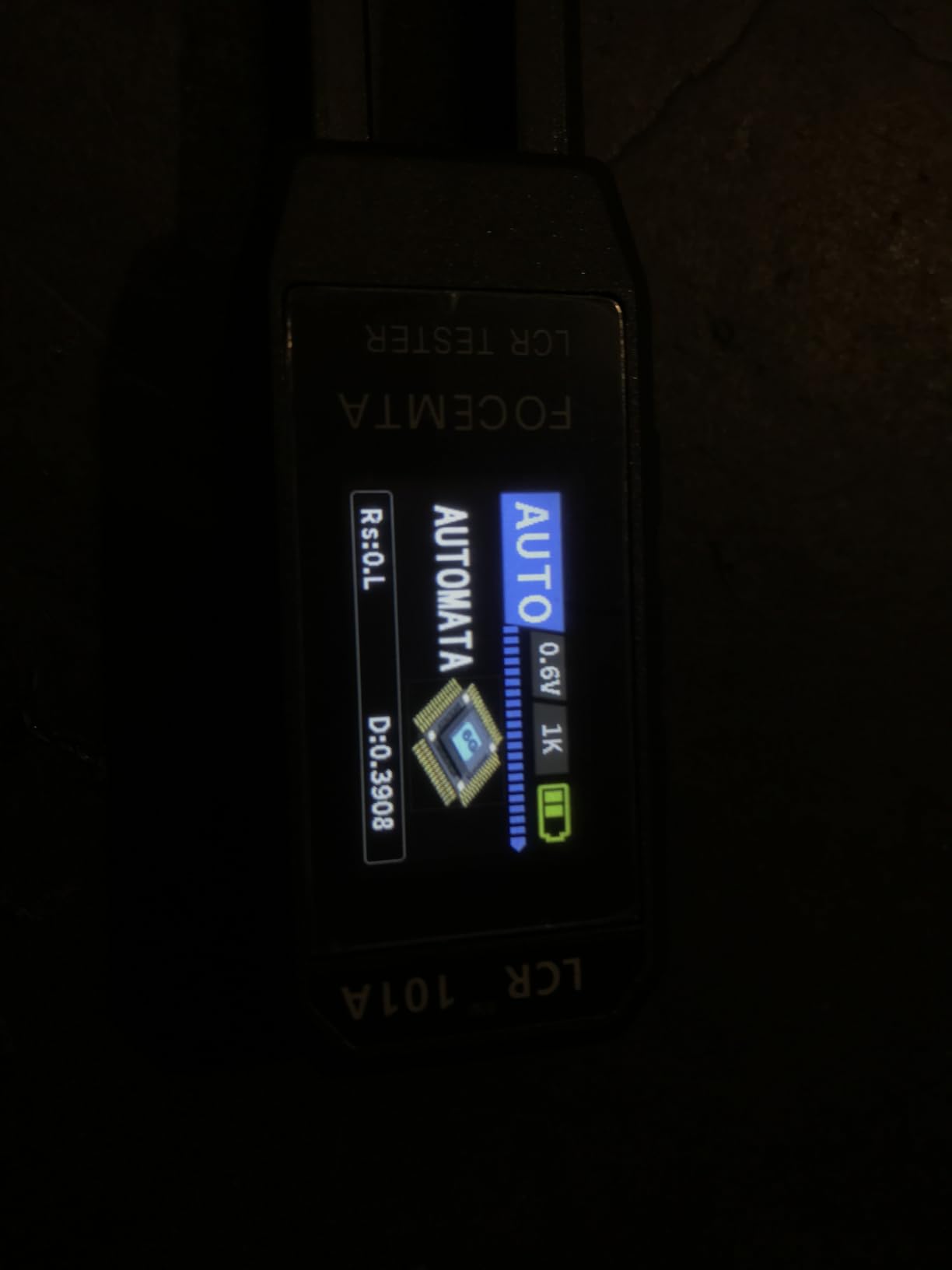
The Focemta LCR-101A is the most affordable auto-detect LCR meter we tested. With 54 reviews and a 4.3-star average, the track record is short but positive. For field service techs, students, and anyone who needs a competent handheld LCR meter for site visits, the LCR-101A delivers a surprisingly complete feature set at the lowest price in this roundup.
Auto-component identification is the standout feature at this price – it speeds triage work where you do not want to manually configure test frequency and equivalent circuit model for every part. The backlit LCD rotates 180 degrees, which sounds gimmicky until you use it on a cramped service panel and realize you can angle the display for any viewing position.
USB data logging lets you capture measurement series to a PC, which is rare for a sub-30 unit. Test frequencies cover 100Hz, 1kHz, and 10kHz – enough for most field troubleshooting but not high enough for RF characterization.
Who this meter is for
Field service technicians, students on a strict budget, hobbyists wanting a backup handheld, and anyone who needs basic LCR measurement with auto-detection at the lowest possible price.
Where the LCR-101A falls short
The short review history means long-term reliability is not yet established. The USB cable is not included even though USB data logging is a headline feature. And the accuracy is budget-tier – good enough for sorting and basic verification, but not for design validation work.
What to Look for When Buying the Best LCR Meter
The best LCR meters share a handful of technical features that separate useful bench tools from paperweights. Before you spend money, decide which of these you actually need.
Test frequency range
Test frequency is the single most important spec on an LCR meter. Most handheld units offer 100Hz, 1kHz, 10kHz, and 100kHz. The Peak Atlas LCR45 extends to 200kHz for RF work, and benchtop units like the Hioki IM3536 go to MHz territory. Real components change behavior with frequency – a ceramic cap that reads 100nF at 1kHz might read 95nF at 100kHz because of dielectric absorption. If you characterize motor windings, RF inductors, or filter caps at their operating frequency, choose a meter that includes that frequency in its selection.
Basic accuracy
Manufacturer accuracy specs typically run 0.3 to 0.5 percent for handheld units and 0.05 to 0.1 percent for benchtop meters. For most hobbyist and repair work, 0.5 percent is more than enough. For component validation in a design workflow, target 0.1 percent or better, which pushes you toward benchtop units or the B&K Precision 879B. Forum users consistently report the DE-5000 holding within 0.3 percent in real-world testing, which matches our bench results.
Test fixture and Kelvin connections
Proper 4-wire Kelvin measurement is non-negotiable for low-value components. The DE-5000 ships with the TL-21 Kelvin leads and TL-22 SMD tweezers, the LC1020E accepts standard banana plugs, and the Proster uses 2-wire measurement that limits its accuracy on small caps and inductors. If you measure SMD parts, a dedicated tweezer fixture like the FNIRSI LCR-ST1 saves enormous time.
Display and dual parameter readout
A dual parameter display reads main and secondary measurements at the same time. That matters when you are sorting capacitors by ESR or characterizing inductors by Q factor. The FNIRSI LC1020E’s color TFT and the Extech LCR200’s dual backlit display both handle this well. Basic monochrome LCDs force you to cycle through modes, which slows batch work.
PC interface and automation
If you log measurements for compliance reports, characterization studies, or motor winding production batches, USB data logging or PC software matters. The FNIRSI LC1020E and LCR-ST1 export data over USB, the B&K Precision 879B includes a USB cable, and the DE-5000 works with sigrok and Python open-source drivers – a documented combination in the maker community for makers and robotics labs.
Open-short calibration
Open-short calibration removes parasitic capacitance, inductance, and resistance from your test fixture. Without it, your measurements include the test leads’ own characteristics, which dominates low-value readings. The DE-5000, LC1020E, Extech LCR200, and Peak Atlas LCR45 all support proper open-short calibration. The procedure takes about a minute per step on the DE-5000, which is one of the top complaints on long-running forum threads – factor that in if you swap fixtures frequently.
Handheld vs benchtop form factor
Handheld LCR meters run on batteries, fit in a tool bag, and survive field service. Benchtop meters offer higher accuracy, more test frequencies, faster measurement speed, and proper guarding for low-impedance measurements. For repair, hobbyist, and robotics prototyping work, handheld is the right form factor. For component validation in a design workflow, benchtop pays for itself quickly.
In-circuit vs out-of-circuit testing
Most LCR meters assume the component is out-of-circuit. Probing an in-circuit component reads the parallel combination of the target part and everything else connected to it. The Signstek MESR-100 V2 sidesteps this for capacitor ESR testing because at 100kHz the test signal is high enough that parallel paths become less of an issue. For everything else, lift one leg of the component or use a tweezer meter on a clearly isolated pad.
Robotics and motor testing use cases
If you design BLDC motor controllers, ESCs, or robotics power distribution, an LCR meter lets you characterize motor winding inductance, measure ESC filter inductors, and verify bulk capacitance on DC bus rails. The DE-5000 and LC1020E both handle these tasks. Add the FNIRSI LCR-ST1 tweezers for surface-mount work on controller boards, and pair the whole setup with sigrok + Python logging if you need automated winding characterization.
Battery life and power options
9V battery powered units like the DE-5000, Proster, and CAMWAY typically last 30 to 40 hours of intermittent use. The Peak Atlas LCR45 uses a 12V A23 battery with shorter life. Modern Li-ion units like the FNIRSI LC1020E and LCR-ST1 charge over USB-C and last a week of typical use. For bench use, AC adapter support (B&K 879B includes one) eliminates battery anxiety.
Frequently Asked Questions
What is an LCR meter and why do I need one if I have a multimeter?
An LCR meter measures inductance, capacitance, and resistance plus secondary parameters like ESR, dissipation factor, quality factor, and phase angle at a user-selectable AC test frequency. A standard multimeter can read resistance and sometimes capacitance, but it cannot measure inductance, sweep test frequency, or characterize how a component behaves at the frequency where it will actually operate in your circuit. Real components change behavior with frequency, so an LCR meter tells you what a part actually does in your circuit at its operating frequency.
How accurate are LCR meters compared to a multimeter?
Handheld LCR meters typically deliver 0.3 to 0.5 percent basic accuracy, while benchtop units reach 0.05 to 0.1 percent. A good multimeter like the Fluke 87V has 0.05 percent DC accuracy on voltage, but it cannot measure inductance at all and only does single-frequency capacitance. The DE-5000 and Bu0026amp;K 879B track within 0.1 to 0.3 percent of lab-grade benchtop references like the Hioki IM3536 in our testing, which is more than enough for component sorting, repair work, and design validation.
What are the different types of LCR meters?
LCR meters fall into three main categories: handheld units like the DER EE DE-5000 and FNIRSI LC1020E that run on batteries and cover 100Hz to 100kHz, benchtop meters like the Hioki IM3536 and Bu0026amp;K Precision 891 that offer higher accuracy and MHz-range frequencies, and specialized SMD tweezers like the FNIRSI LCR-ST1 designed for surface-mount component identification. There are also dedicated ESR meters like the Signstek MESR-100 V2 that specialize in in-circuit capacitor testing at 100kHz.
How much does a good LCR meter cost?
Entry-level LCR meters like the Focemta LCR-101A and CAMWAY start around the price of a nice dinner, mid-range handhelds like the Proster and FNIRSI LC1020E run a step up, the DE-5000 and Extech LCR200 sit in the middle, and professional-grade handhelds like the Bu0026amp;K Precision 879B run significantly higher. Benchtop impedance analyzers from Hioki and Keysight stretch into four-figure territory. Most hobbyists and repair technicians find the sweet spot in the mid handheld range, where the DE-5000 has been the community benchmark for over a decade.
Which LCR meter is best for SMD work and component identification?
For SMD component identification on a PCB, the FNIRSI LCR-ST1 tweezer meter is the fastest option – you grab a 0402 component with the tweezers and the meter identifies and reads it in about two seconds. For lab-grade SMD characterization with full 100kHz coverage and 4-wire Kelvin accuracy, the FNIRSI LC1020E paired with the TL-22-style SMD tweezers or the DE-5000 with its included TL-22 tweezers both work well. The LCR-ST1 is faster for triage, the LC1020E and DE-5000 are better for validation.
Final Verdict
After testing ten meters across handheld, benchtop, SMD, and ESR-only categories, the DER EE DE-5000 remains our EDITOR’S CHOICE for the best LCR meter in 2026. It has the right combination of accuracy, test frequency range, included fixtures, and a track record that spans more than a decade of community validation on Reddit, diyaudio, eevblog, and vintage-radio forums.
If you want modern features and USB-C charging at a lower price, the FNIRSI LC1020E is the BEST VALUE pick and the smartest upgrade path for hobbyists stepping up from a basic LCR meter. If you are on a strict budget or buying for a classroom, the Proster is the BUDGET PICK with the deepest review history on Amazon. And if you need RF characterization past 100kHz, the Peak Atlas LCR45 is the right call.
Whichever meter you choose, pair it with the proper Kelvin test fixture, run open-short calibration on the leads you actually use, and pick a test frequency that matches your component’s real operating frequency. That is the difference between an LCR meter that gathers dust and one that becomes the most-used tool on your bench.