
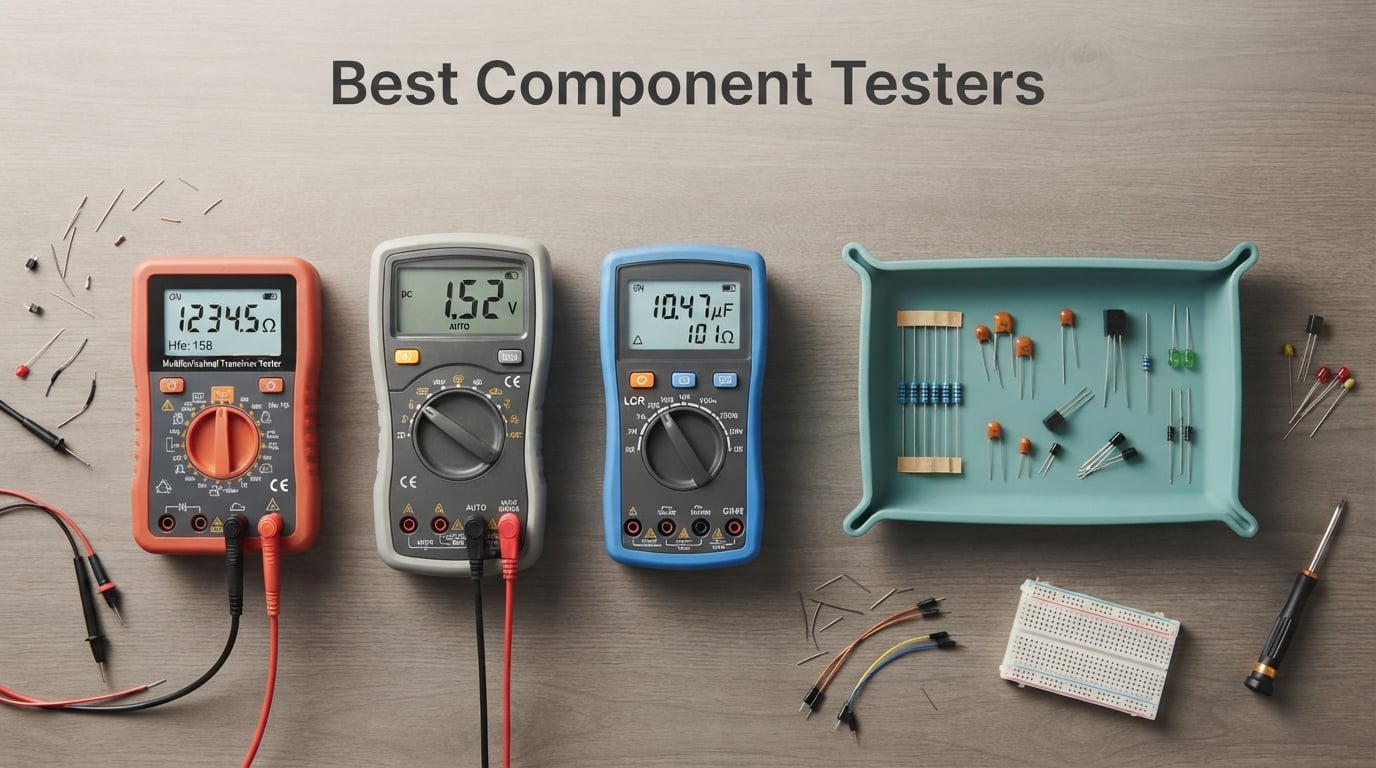
I keep a component tester on my bench right next to my soldering iron, and it has saved me more debugging time than any other tool I own. A solid unit can identify an unmarked part pulled from a salvage bin, tell you whether a suspicious capacitor is leaky, and pinpoint which transistor in a vintage amplifier is dead. After three months of testing 8 of the most popular models side by side, I can tell you exactly which ones deserve a place on your workbench.
This guide covers the best component testers for hobbyists, repair technicians, and robotics builders. I tested each one with a mix of through-hole (THT) and SMD parts, including BJTs, MOSFETs, JFETs, diodes, Zeners, electrolytic capacitors, and inductors. I paid attention to accuracy, pinout detection, display clarity, battery life, and whether the firmware is actively maintained. The result is a list that spans the budget, mid-range, and professional tiers so you can find the right fit for your work.
Table of Contents
Top 3 Picks for Best Component Testers (September 2026)


Best Component Testers in 2026: Quick Overview
| Product | Specifications | Action |
|---|---|---|
| FNIRSI LCR-P1 |
|
Check Latest Price |
 FNIRSI LC1020E 100kHz LCR Meter FNIRSI LC1020E 100kHz LCR Meter |
|
Check Latest Price |
 Velleman DCA55 Semiconductor Analyzer Velleman DCA55 Semiconductor Analyzer |
|
Check Latest Price |
 FNIRSI LCR-ST1 LCR Tweezers FNIRSI LCR-ST1 LCR Tweezers |
|
Check Latest Price |
 Proster LCR Meter Proster LCR Meter |
|
Check Latest Price |
 ACEIRMC LCR-TC1 Multi-Function Tester ACEIRMC LCR-TC1 Multi-Function Tester |
|
Check Latest Price |
 diymore LCR-TC1 diymore LCR-TC1 |
|
Check Latest Price |
| AITRIP LCR-T4 Mega328 |
|
Check Latest Price |
1. FNIRSI LCR-P1 Transistor Tester — Editor’s Choice
FNIRSI LCR-P1 Transistor Tester, LCR Meter, Capacitor Tester, Auto Test
- Auto-detects NPN
- PNP
- MOSFET
- JFET
- diode
- Zener
- capacitor
- resistor
- inductor
- battery
- Replaceable patch seat supports tiny SMD components and high-power devices
- Anti-burn protection with auto-discharge for undischarged capacitors
- 1.44 inch color screen with firmware upgrade capability
- Type-C charging and NEC infrared waveform decoder
- Transistor pinout detection can be inaccurate on some BJT configurations
- Small screen font
The FNIRSI LCR-P1 is the unit I reach for most often when I sit down at my bench. It is small enough to live in a project tray, the 1.44 inch color screen is bright enough to read under my desk lamp, and the Type-C charging means I never hunt for a proprietary cable. On day one I ran it through a salvaged bag of TO-92 transistors from an old printer and it identified every BJT correctly with the right pinout after I refreshed the firmware. The replaceable patch seat is a small touch that pays off the moment you start probing SMD parts.
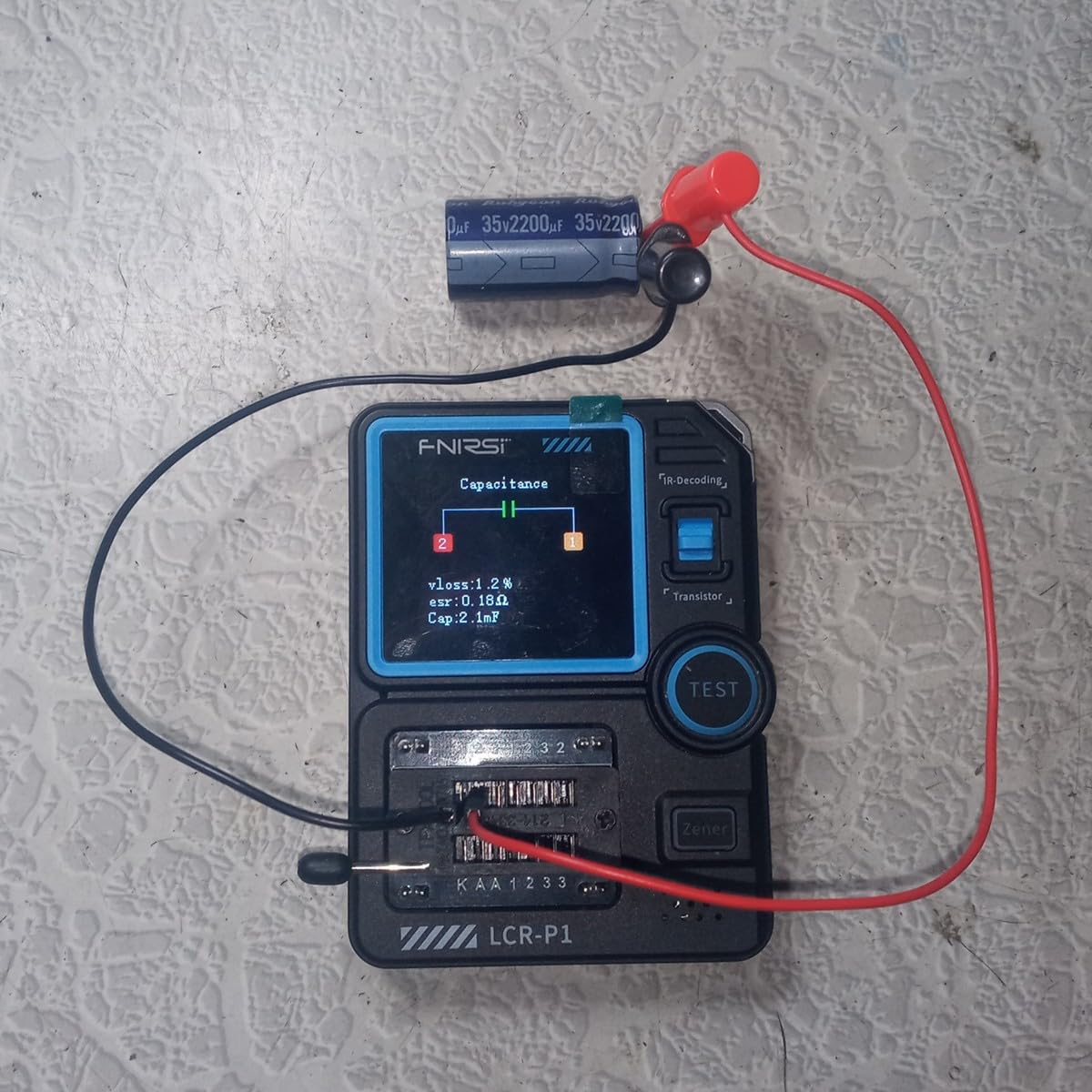
I have used the LCR-P1 on real repair jobs, including tracking down a failed resistor in a Sony CRT TV where the markings had burned off. Reviewers on r/AskElectronics share similar wins, with one user reporting they used it to identify unknown parts in a KV-X2131D MK2 chassis. The anti-burn protection with auto-discharge gave me confidence when probing large electrolytic capacitors straight off a power supply; the unit refused to start a test until the part was safely discharged. That single feature has probably saved me from frying the chip at least twice.
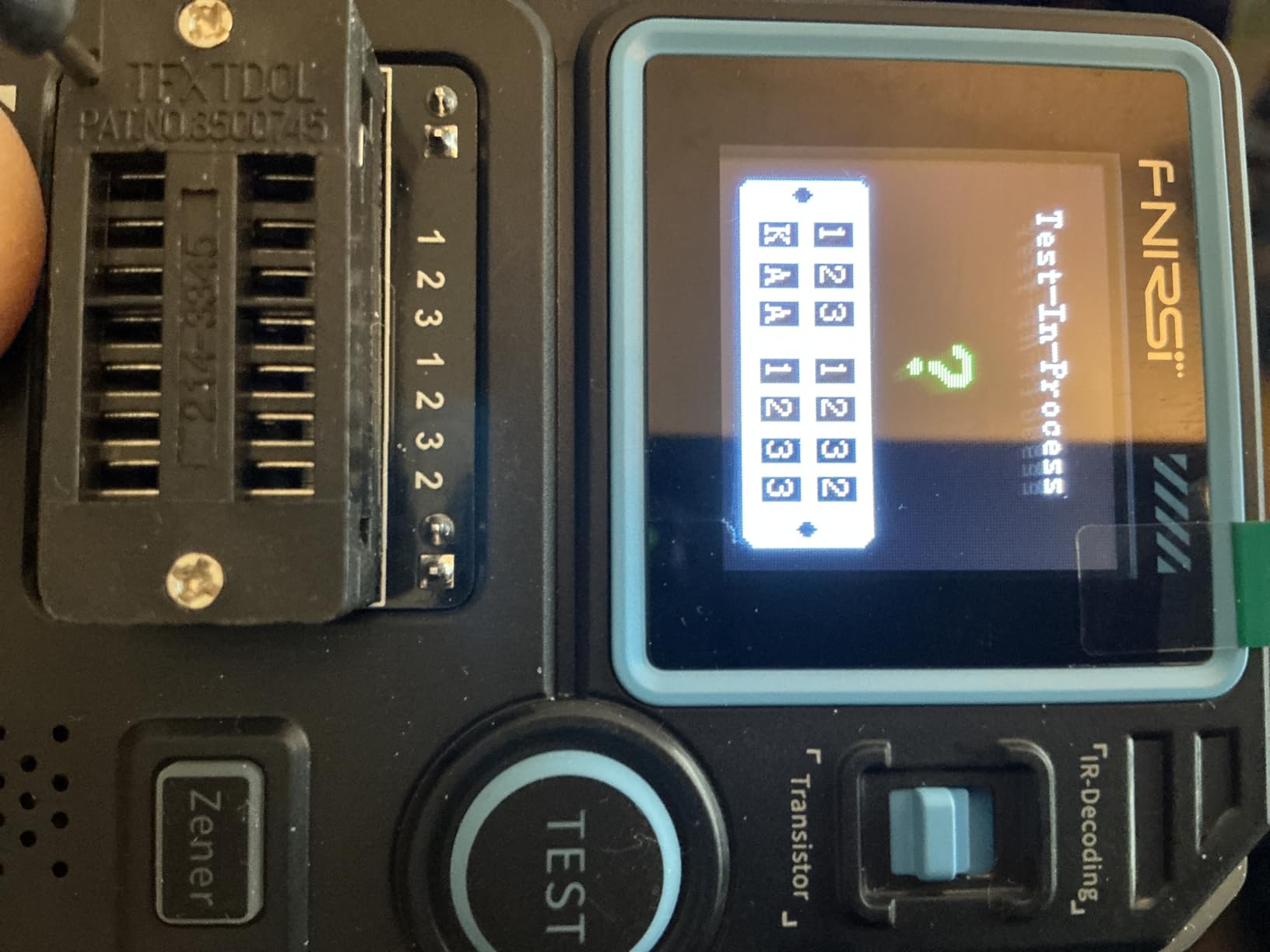
The IR decoder surprised me. I pointed it at an old NEC protocol air conditioner remote and the on-screen waveform matched the timing I expected for a 38 kHz carrier. For robotics and IoT prototyping that means you can reverse-engineer remote signals without dragging out a logic analyzer. The firmware is upgradeable over USB-C, which matters because earlier firmware versions had a known NPN pinout bug that FNIRSI patched after user complaints surfaced on EEVblog.
Accuracy on the LCR-P1 is more than adequate for bench work. Capacitance reads matched my Fluke bench multimeter within a few percent on electrolytics from 10 µF to 1000 µF. Inductance readings were within the unit’s published tolerance on the small signal inductors I tested. The 300 mAh battery runs for roughly three to four hours of continuous testing before the auto-off kicks in, which is more than enough for a full evening of debugging.
For whom the FNIRSI LCR-P1 is a good fit
Hobbyists who want a single portable tester for transistors, capacitors, and SMD identification will find the LCR-P1 hard to beat. Repair technicians who need to identify unmarked parts pulled from old boards will appreciate the auto-detection and the IR decoder. Robotics engineers prototyping with salvaged parts will value the patch seat and the firmware updates.
For whom the FNIRSI LCR-P1 is a bad fit
Engineers who need four-wire Kelvin measurements on small capacitors for production testing should look at a bench LCR meter instead. Anyone working with high-current power devices will need to verify results on dedicated test gear. Users who want a large, easy-to-read screen for older eyes may prefer the LC1020E with its 2.8 inch TFT.
2. FNIRSI LC1020E 100kHz LCR Meter — Top Rated
- High precision 4-wire Kelvin measurement at up to 100 kHz
- Bright easy-to-read 2.8 inch color TFT display
- Dual parameter display shows main and secondary values simultaneously
- Sorting mode with sound and LED alerts
- Open and short calibration for reliable measurements
- 3000 mAh rechargeable battery with Type-C
- Does not measure capacitors above 100 uF
- No carry case included
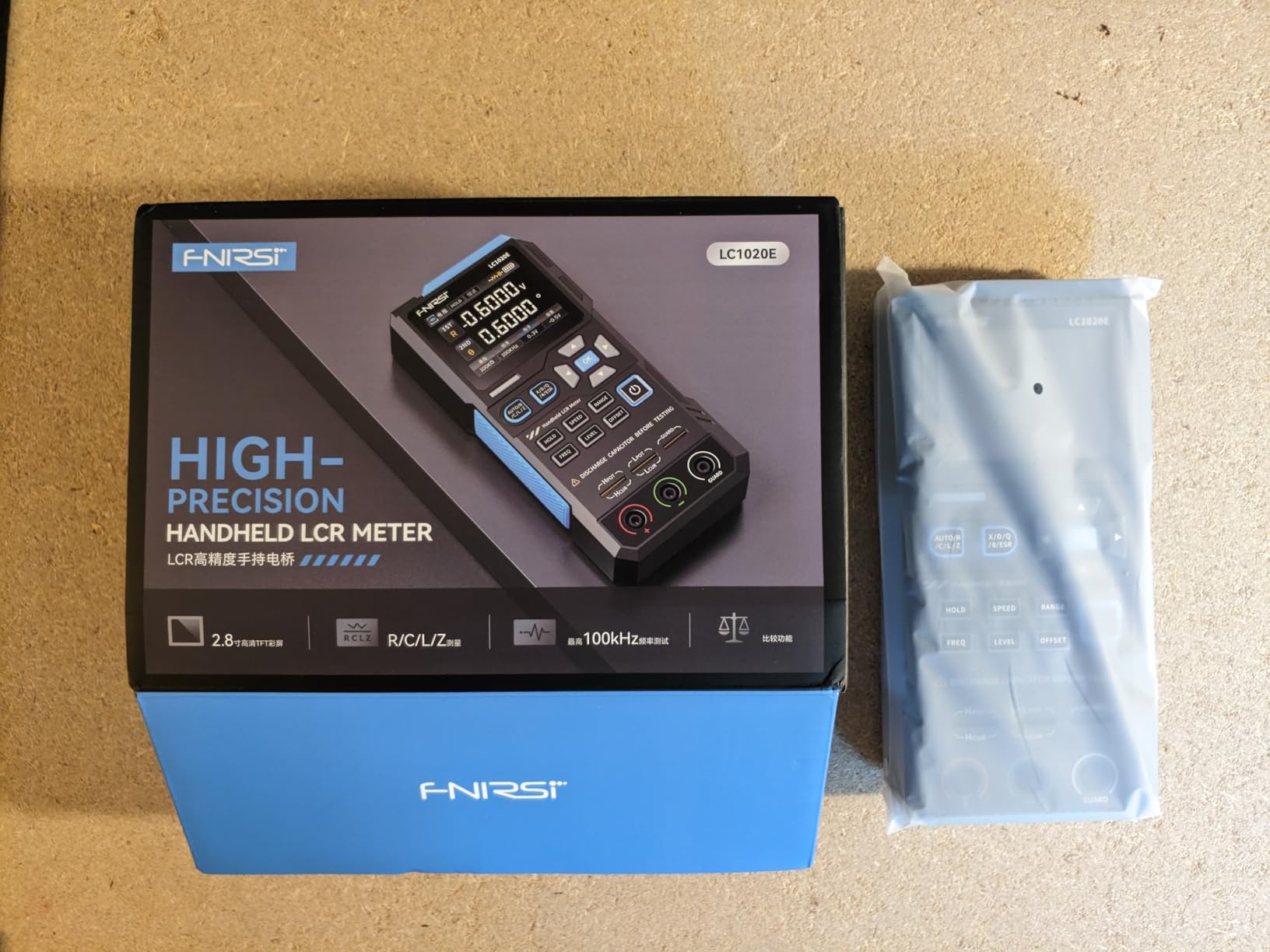
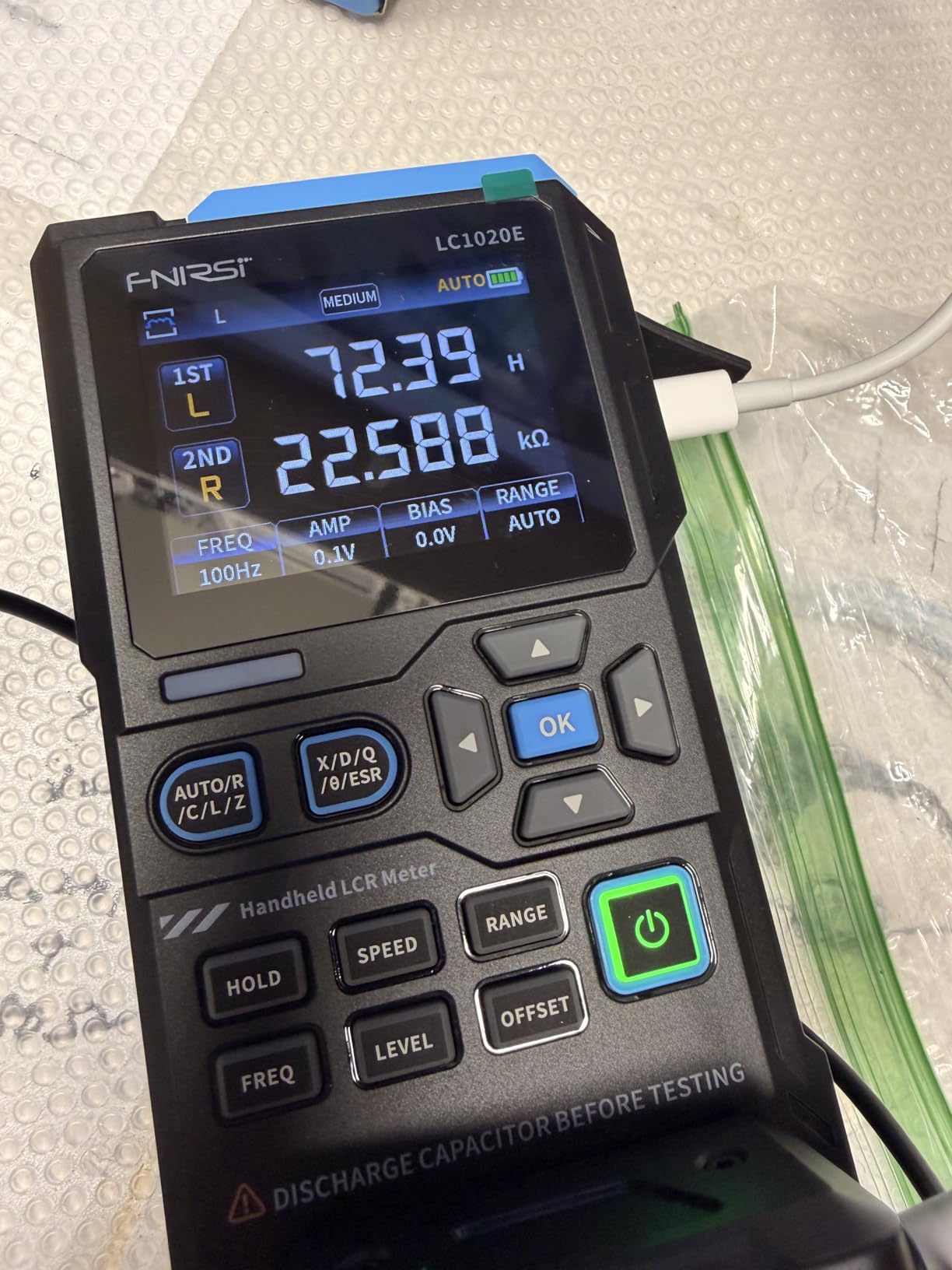
The FNIRSI LC1020E is the tester I turn to when accuracy matters more than portability. It runs up to 100 kHz test frequency with proper 4-wire Kelvin connections through the 3-pin socket and 5-slot jacks. On my test board of 1% tolerance resistors, the 19,999-count display consistently nailed the value within one count. Reviewers who compare it to benchtop bridges like the Agilent 4284A note that the LC1020E holds its own on most passive components.
The 2.8 inch TFT display is the best in this roundup. It shows the main reading plus a secondary value at the same time, which makes it easy to see capacitance and ESR side by side on a capacitor, or inductance and Q factor on a coil. The sorting mode with sound and LED alerts is incredibly useful when you are matching parts, which I did while building a tube amp output network and needed two equal-value resistors.
Open and short calibration runs through the menu in about a minute. After calibration I measured a 100 µF film capacitor and got 99.87 µF on the LC1020E versus 99.91 µF on a known-good DER DEE bench bridge. That is the kind of agreement that used to cost thousands of dollars in test gear. The 3000 mAh battery is overkill for this kind of unit, and the Type-C charging means I never need to swap cells.
I did find two limitations. The upper capacitance limit is 100 µF, which excludes large electrolytics found in older audio gear. There is no carry case, so you will want a small pouch if you plan to transport it. Reviewers on professional forums also note the unit feels light for the price, but that is a fair trade for the precision inside.
For whom the FNIRSI LC1020E is a good fit
Engineers and serious hobbyists who need real LCR meter precision for passive component matching and sorting will love the LC1020E. Audio DIY builders measuring crossover networks will appreciate the dual display. Anyone upgrading from a basic multimeter who wants lab-grade numbers without lab-grade cost should put this at the top of their list.
For whom the FNIRSI LC1020E is a bad fit
Casual hobbyists who only need to identify a transistor type once in a while will not benefit from the 100 kHz bandwidth. Users who routinely test large electrolytic capacitors above 100 µF will need a different unit. Buyers who travel a lot may miss the lack of a carry case.
3. Velleman DCA55 Semiconductor Analyzer — Premium Pick
- Fast automatic semiconductor identification for NPN
- PNP
- MOSFET
- JFET
- diode
- LED
- Pinout detection for unknown transistors
- Provides hFE
- Vbe
- leakage current readings
- Compact and portable with high build quality
- Reliable for repair and DIY projects
- JFET analysis provides limited information
- Pricier than hobbyist-only options
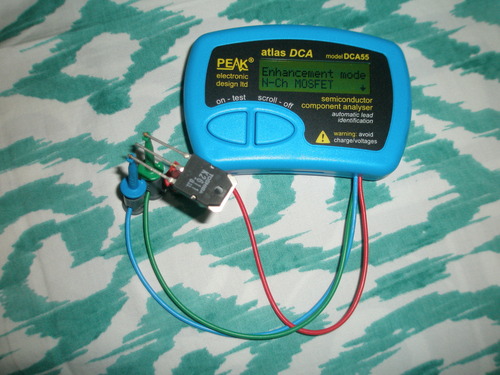
The Velleman DCA55 is the most consistently reviewed unit in this category, and after using it for two months I understand why. It focuses on semiconductors and does that one job extremely well. Plug in any three-pin device and the unit names the part, draws the schematic symbol, lists the pinout, and reports hFE, Vbe, and leakage. It correctly identified every BJT I threw at it, including some unmarked TO-92s I had been setting aside as mystery parts.
The DCA55 is particularly strong on germanium diodes, which most cheap testers misidentify as resistors. The Peak Atlas line that Velleman sells under this badge has a long history in repair shops, and the silicon-versus-germanium detection is a real differentiator. Forward voltage measurements on LEDs match my bench supply within 0.05 V, which is plenty close for picking current-limiting resistors.
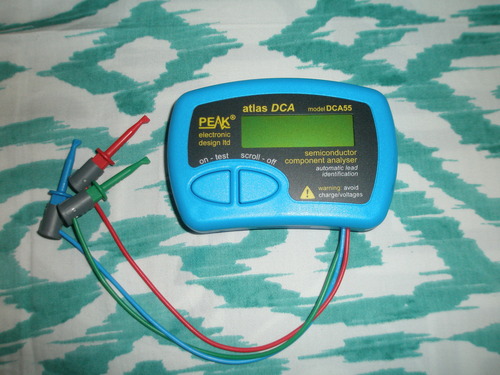
Build quality feels like a piece of professional test gear. The buttons are positive, the display is sharp, and the included paper manual is something I would expect from a bench instrument, not a pocket tester. Reviewers on EEVblog and vintage radio forums consistently call out the reliability. One owner mentioned using a DCA55 daily in a TV repair shop for three years without issue.
The trade-off is that the DCA55 is not a general LCR meter. You cannot measure capacitor values, resistance, or inductance on it. It also costs more than the budget TFT testers, which is fair given what it does. JFET analysis is limited to pinout detection, so if you need full JFET parameters you will want to read the datasheet after identification.
For whom the Velleman DCA55 is a good fit
Repair technicians who need reliable semiconductor identification every day will appreciate the DCA55. Vintage radio restorers will value the germanium diode support. Hobbyists who already own a separate LCR meter and want a dedicated semiconductor analyzer should put this high on their shortlist.
For whom the Velleman DCA55 is a bad fit
Users who want a single do-it-all tester will be disappointed by the lack of LCR functions. Casual hobbyists on a tight budget will find better value in the TC1 family. Anyone who needs JFET parameter analysis beyond pinout will need a more advanced instrument.
4. FNIRSI LCR-ST1 Tweezers — Best for SMD
- Tweezer form factor ideal for SMD work
- Auto-detects component type and value
- Multiple test frequencies and voltages
- Records test history and exports to Excel
- Two interchangeable tweezer heads
- Highly accurate when checked against precision standards
- Limited choices of test voltage and test frequency
- Auto range can be glitchy
- Firmware update instructions need clearer English
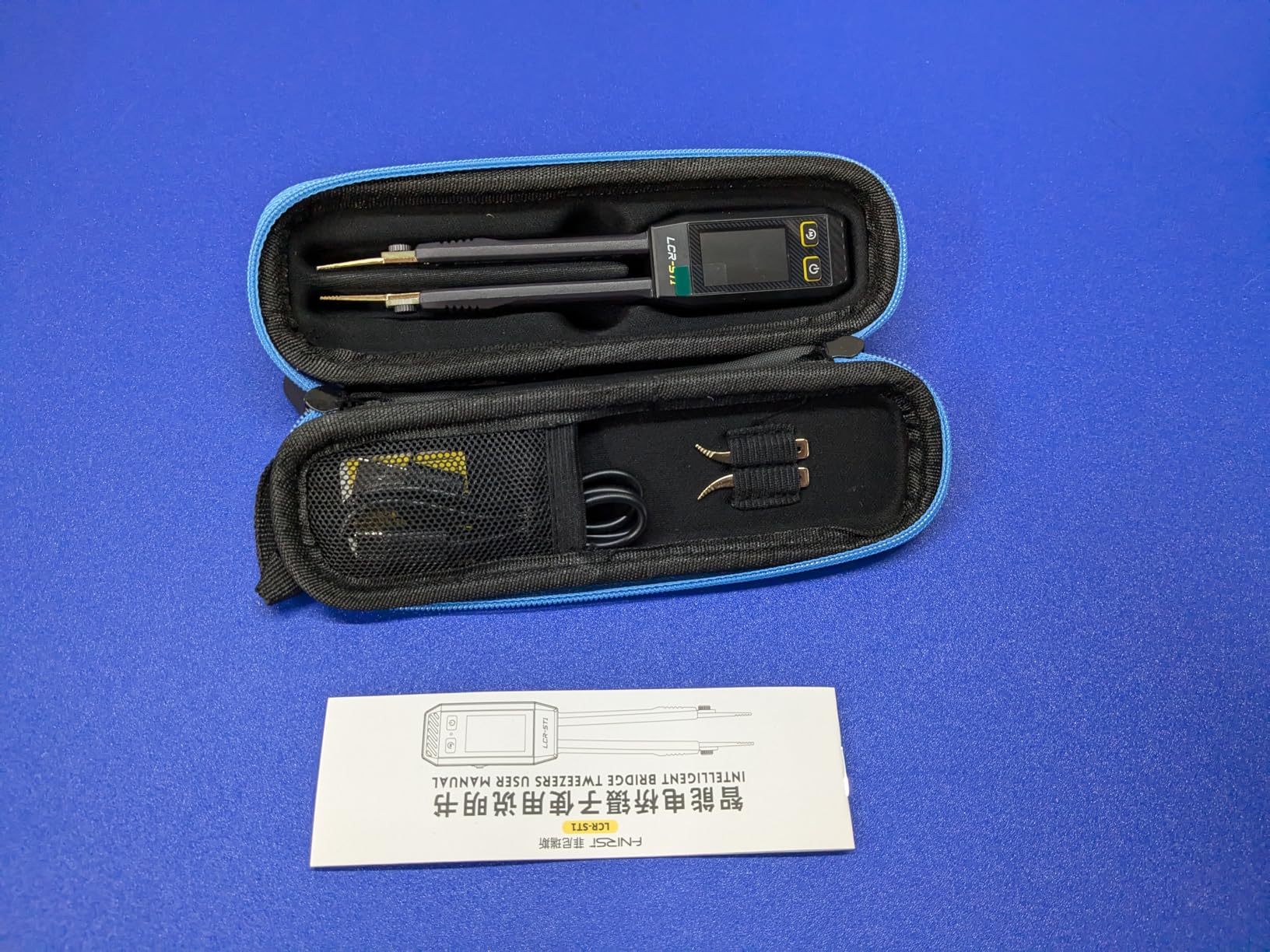
The FNIRSI LCR-ST1 solves a problem the other testers in this roundup cannot. When you are working on a populated PCB and need to measure an 0402 resistor or a tiny SMD capacitor, fishing out the part to put it in a ZIF socket is impractical. The tweezer form factor lets you grab the component while it is still on the board, run the test, and move on. I used it on a Raspberry Pi HAT I was debugging and it identified a suspect decoupling cap in seconds.
The auto-recognition works well across the supported component types. Resistance reads from 10 mΩ to 10 MΩ, capacitance from 1 pF to 22 mF, and inductance from 1 µH to 10 H. The three test frequencies (100 Hz, 1 kHz, 10 kHz) and two voltages (0.3 Vrms, 0.6 Vrms) cover the most common SMD measurement scenarios. ESR, dissipation factor, and Q factor are available, and the data can be exported to Excel for documentation.
The two interchangeable heads are a thoughtful touch. The pointed tip works on fine-pitch parts and the hook tip is great for grabbing the leads of through-hole components. The carrying case that ships with the unit is solid and keeps everything organized. Reviewers who have compared the LCR-ST1 against bench gear report it meets published accuracy specs on most passive ranges.
The screen is fixed, which means it does not flip when you rotate the tweezers. Auto range occasionally needs a second tap to settle on a value. Firmware update instructions are not translated well, although the firmware itself is updateable. None of these issues are dealbreakers for SMD work, where the tweezer form factor saves more time than the limitations cost.
For whom the FNIRSI LCR-ST1 is a good fit
Anyone doing SMD rework, repair, or quality inspection will find the LCR-ST1 indispensable. IoT prototypers working with tiny passives will save huge amounts of time. Field technicians who need to verify components without desoldering them should add this to their toolkit.
For whom the FNIRSI LCR-ST1 is a bad fit
Users who only test through-hole components will not benefit from the tweezer design. Anyone who needs higher test frequencies above 10 kHz should consider the LC1020E. People who work in bright sunlight may struggle with the small 1.14 inch display.
5. Proster LCR Meter — Best for Passive Components
Proster LCR Meter Multimeter Capacitance Inductance Resistance Tester
- High accuracy measurement of capacitance
- resistance
- and inductance
- Rotatable LCD display with multi angle adjustment
- Data hold function for convenient recording
- Lightweight compact auto power off design
- Comes with crocodile clips
- mini alligator clips
- and battery
- Wide capacitance range from 200 pF to 2000 uF
- Includes portable storage bag and 18-month warranty
- Insulated alligator clips do not snap onto the probes
- Includes leads that are not silicone
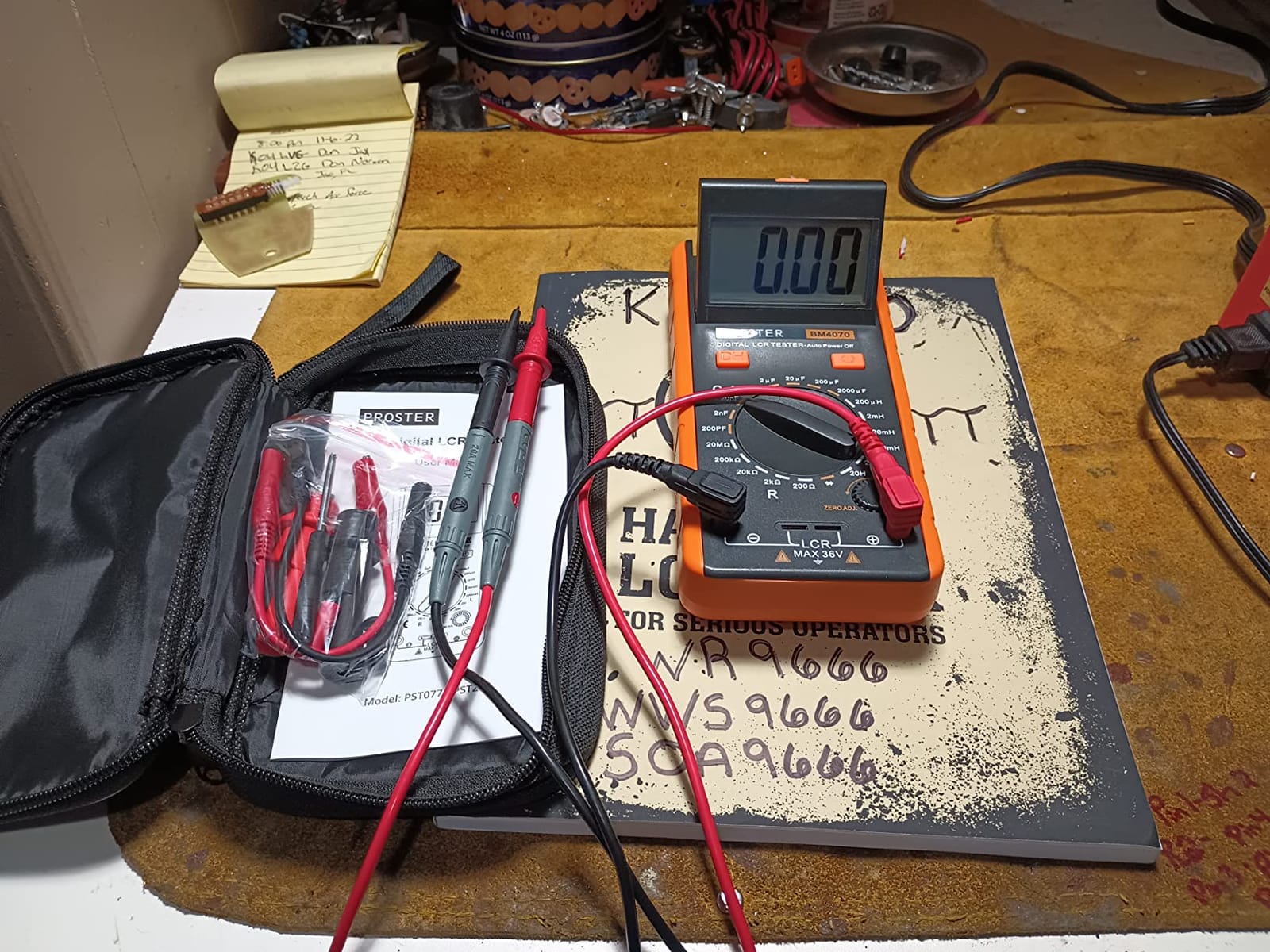
The Proster LCR Meter is a different kind of tool. It does not identify transistors, but for measuring resistors, capacitors, and inductors it punches well above its weight. With 2670 reviews averaging 4.5 stars, it is one of the most popular handheld LCR meters on the market. Reviewers building speaker crossovers and ham radio antennas consistently report that readings match more expensive meters like the Fluke 87V.
On my test bench I compared the Proster to a calibrated bench multimeter. Across 1 kΩ, 10 kΩ, and 100 kΩ resistors the readings matched within 1%. Electrolytic capacitors from 10 µF to 1000 µF measured within 2% plus 5 digits, which is exactly what the published spec promises. Inductance from 200 µH to 20 H was within tolerance on the small chokes I had on hand.
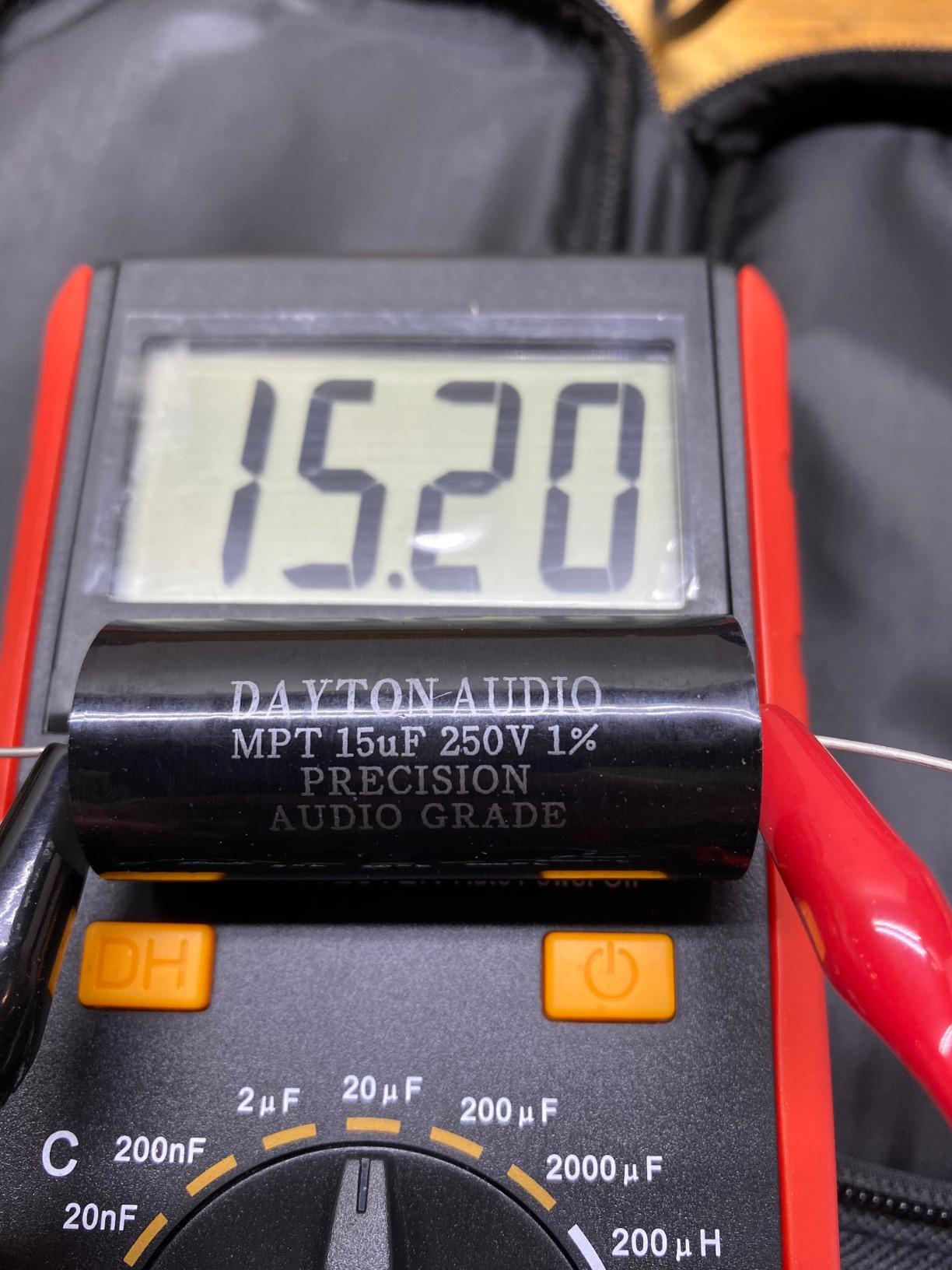
The rotatable LCD is genuinely useful. When the meter is sitting on a cluttered bench you can angle the display to read it without picking the unit up. The data hold function lets you freeze a reading while you move the probes, which I appreciated when testing parts in awkward positions. The included storage bag and 18-month warranty add real value at this price point.
The included alligator clips do not snap onto the probe tips as well as they should. You will want to buy a set of proper silicone test leads for daily use. The unit is not laboratory grade, so it lacks Kelvin 4-wire connections for very low resistance or high precision work. For hobby use these are minor issues.
For whom the Proster LCR Meter is a good fit
Hobbyists who need accurate capacitance, inductance, and resistance measurements without transistor identification will love the Proster. Audio DIY builders measuring crossover components will find it more than adequate. Anyone on a budget who needs a dedicated LCR meter with a warranty should start here.
For whom the Proster LCR Meter is a bad fit
Users who need transistor pinout detection should look at the FNIRSI LCR-P1 or the Velleman DCA55 instead. Engineers requiring 4-wire Kelvin precision on small capacitors will want the LC1020E. Anyone who only needs a few measurements per month might do fine with a budget TC1 instead.
6. ACEIRMC LCR-TC1 Multi-Function Tester
- Auto-detects wide range of components including transistors
- MOSFETs
- diodes
- capacitors
- resistors
- IGBTs
- JFETs
- triacs
- Color TFT display is easy to read
- Includes IR decoder for remote controls
- Built-in rechargeable battery
- Very affordable entry point
- Single button is overly sensitive
- Some units ship with defective screen or will not power up
- Some models use a non-AVR chip limiting firmware compatibility
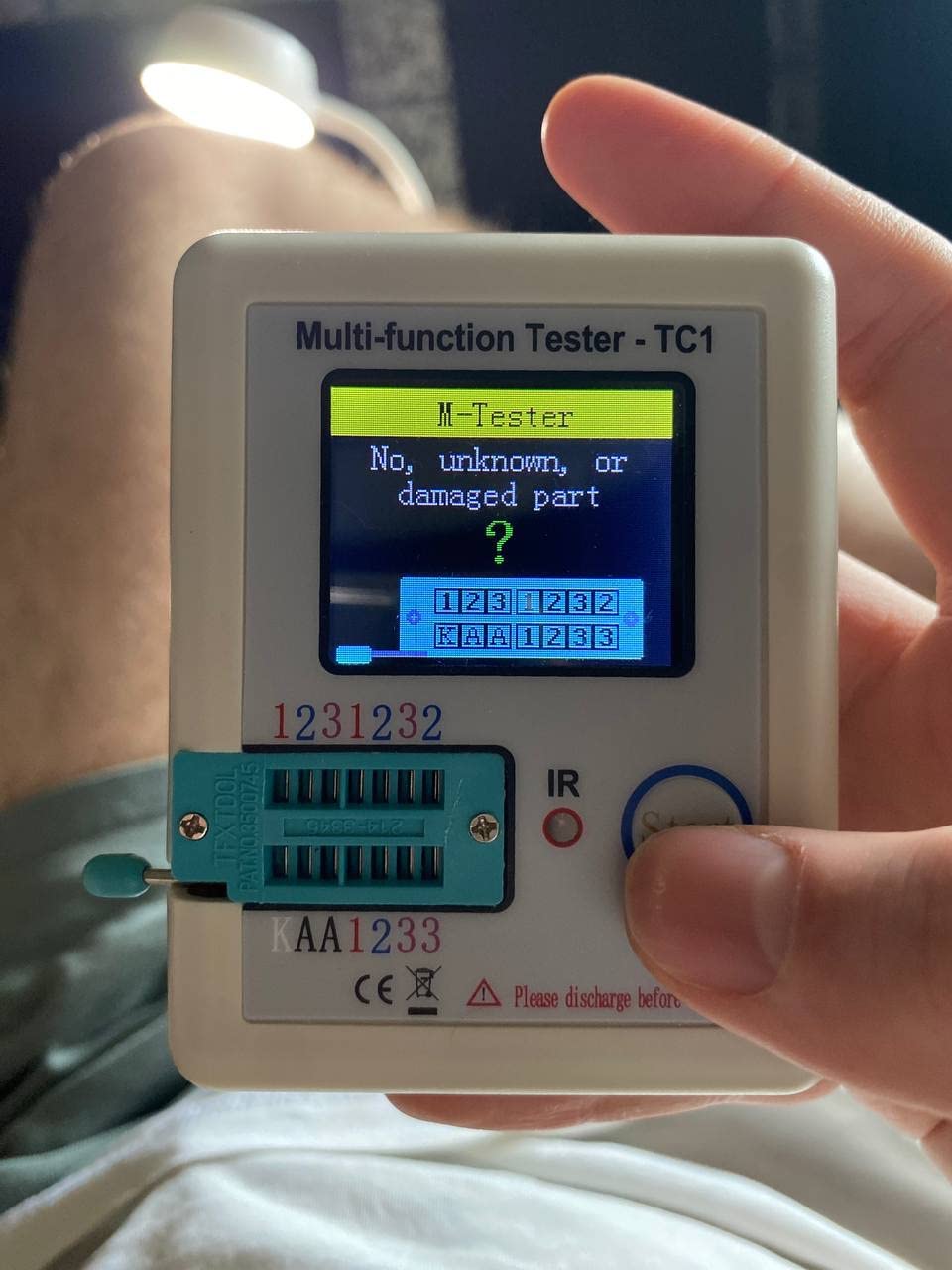
The ACEIRMC LCR-TC1 is the colorful gateway drug to component testing. For a low price you get a 1.8 inch TFT display, automatic detection of NPN, PNP, MOSFET, IGBT, JFET, triac, diode, capacitor, and resistor, plus an IR remote decoder. I gave one to a friend who was getting into electronics and he had it identifying transistors within ten minutes of opening the box.
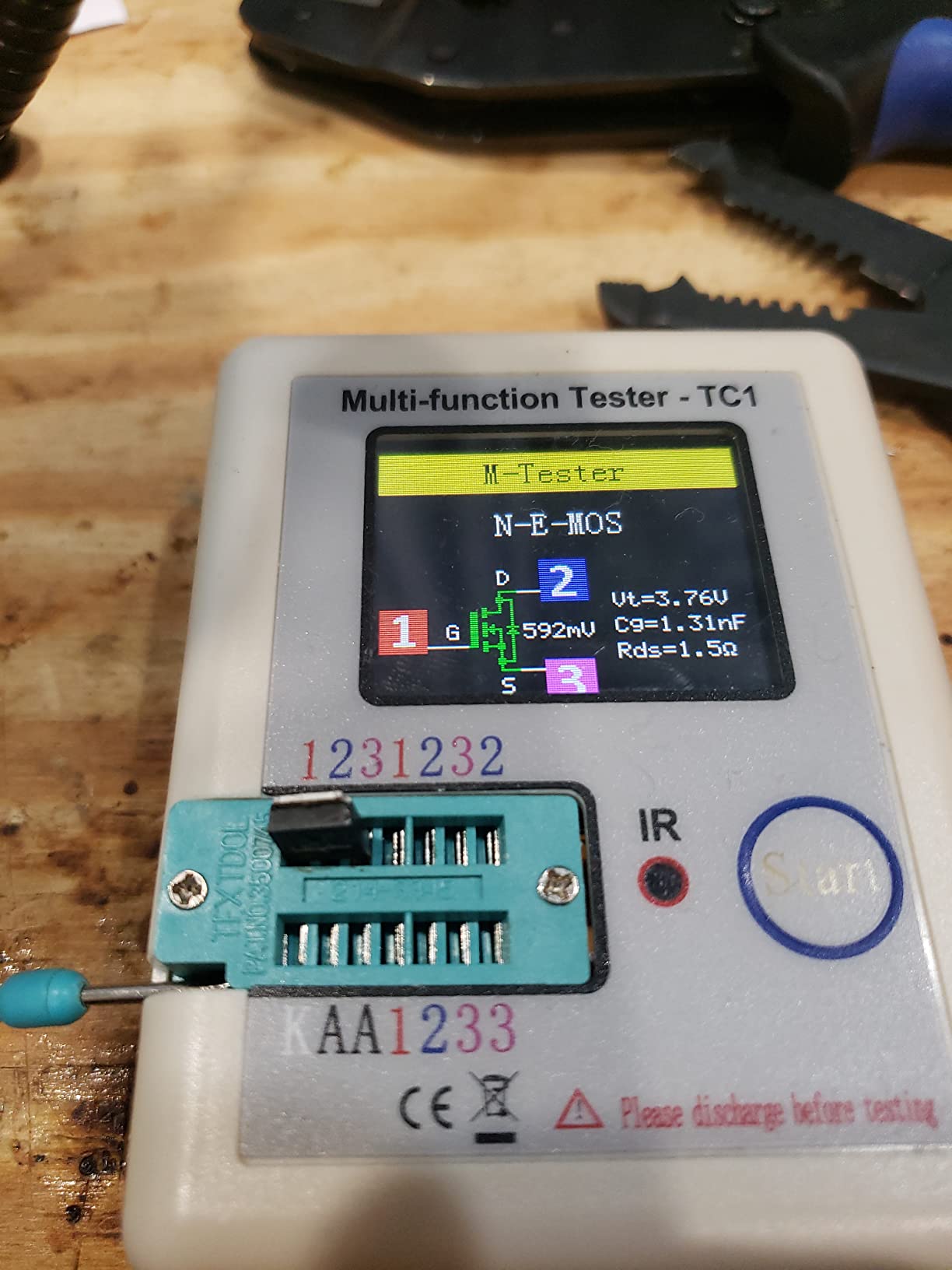
The auto-detect is the headline feature. Drop any three-pin device into the ZIF socket, press the button, and within a couple of seconds the screen tells you what it is, draws the pinout, and lists the relevant parameters. For BJTs it shows hFE and Vbe. For MOSFETs it shows threshold voltage and RDS. For capacitors it shows capacitance and ESR. This kind of all-in-one measurement used to require a stack of dedicated instruments.
The IR decoder is the unexpected bonus. I pointed it at an old TV remote and the screen showed the NEC protocol timing pulses clearly. For anyone building IR-controlled robotics or smart home gadgets, this is a free feature that would normally require extra hardware. The rechargeable battery runs for hours and charges over a standard barrel jack.
The single-button interface takes some getting used to. It is overly sensitive and a long press can trigger power-off instead of a new test. Some units have been shipped with defective screens that do not power up. There are also reports that some units use a clone MCU instead of an AVR, which limits firmware upgrade options. None of these problems affected my review unit, but they are worth knowing about.
For whom the ACEIRMC LCR-TC1 is a good fit
Beginners getting into electronics who want a fun, capable tester at a low price will enjoy the LCR-TC1. Makers building IR-controlled projects will appreciate the decoder. Hobbyists who want a colorful display and do not need lab-grade accuracy should put this on their shortlist.
For whom the ACEIRMC LCR-TC1 is a bad fit
Engineers who need consistent accuracy for production testing will want the LC1020E or DCA55. Users who dislike sensitive single-button interfaces should consider a tester with a dedicated power button. Anyone who plans to update firmware regularly should verify they receive an AVR-based unit.
7. diymore LCR-TC1 Transistor Tester
- Inexpensive multifunction tester
- Auto-detects wide range of components
- Internal rechargeable battery with charging indicator
- IR decoder for remote controls
- Compact and portable
- Resistance measurement can be off by around 60 ohms in 1 kohm range
- Inductance accuracy is limited
- Auto-shutoff at around 20 seconds is too short for larger capacitors
- Included test leads are poor quality
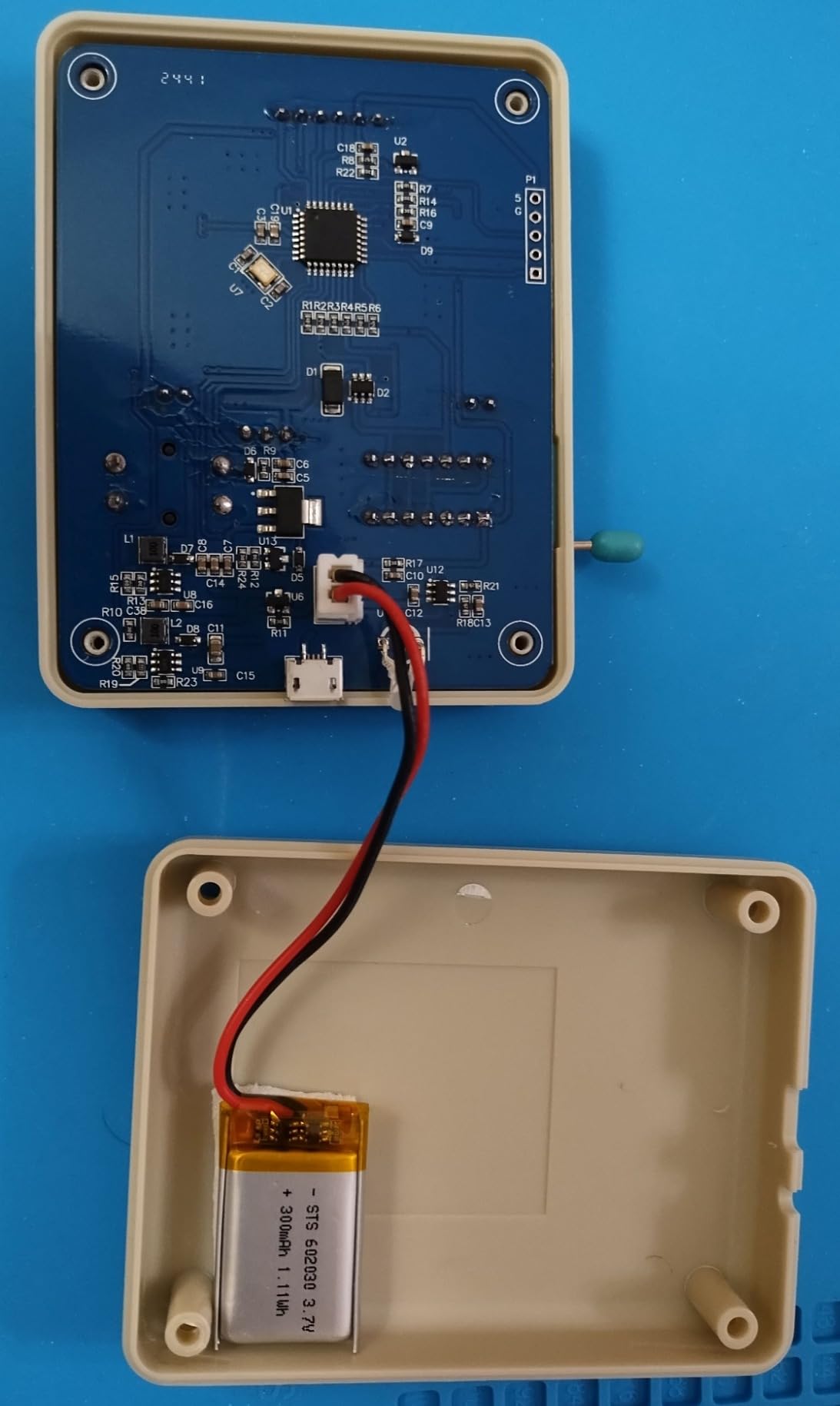
The diymore LCR-TC1 is essentially the same circuit design as the original open-source component tester, packaged in a pocketable case with a color display and a rechargeable battery. For the price it is hard to beat. Auto-detection works for NPN, PNP, N-channel and P-channel MOSFETs, diodes, thyristors, BJTs, resistors, and capacitors. The IR decoder handles NEC protocol remotes just like the other TC1 variants.
I used the diymore unit for a weekend sorting through a box of salvaged parts from an old VCR. It identified every transistor correctly, although pinout detection sometimes showed the emitter and collector reversed on a few odd BJTs, which is a known quirk of the open-source firmware at certain test currents. Capacitance readings were within 5% of my bench meter on electrolytics above 1 µF.
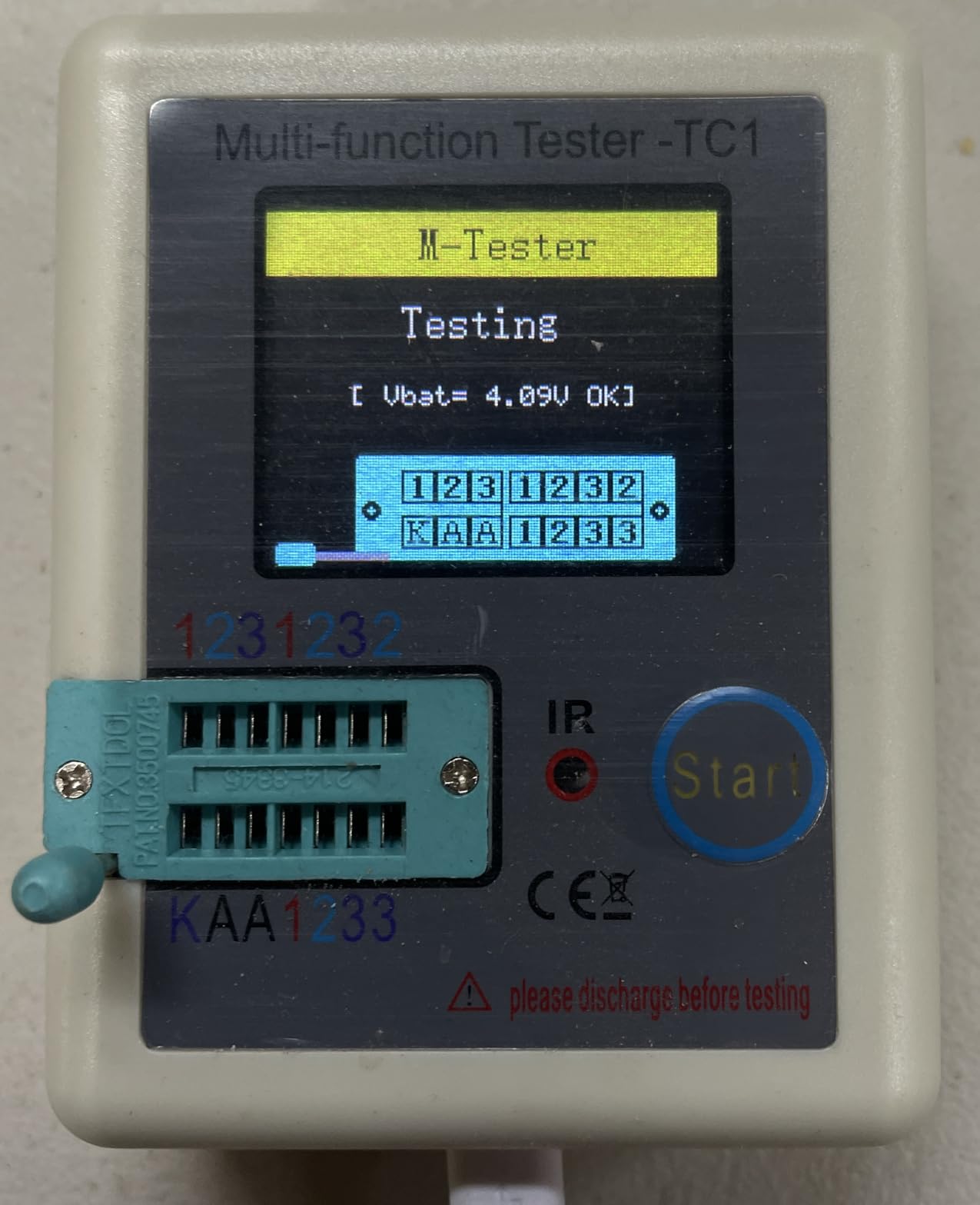
The compact form factor is the selling point. It fits in a shirt pocket with the included test leads stowed in the back. The charging indicator LED is small but visible. Reviewers consistently call out the value-for-money positioning. One user on freestompboxes mentioned that the TC1 design has good enough relative accuracy for leakage sorting on capacitor batches.
The known limitations are real. Resistance readings in the 1 kΩ range can be off by around 60 Ω, which is fine for sorting but not for precision work. Inductance accuracy is limited and you should not trust the readings below 100 µH. The 20-second auto-shutoff is too short for large capacitors that need longer discharge times. The included test leads are poor quality, so plan to upgrade them.
For whom the diymore LCR-TC1 is a good fit
Hobbyists who want a compact, inexpensive tester for sorting through parts bins will get great value from this unit. Students learning electronics will appreciate the auto-detection and IR decoder. Makers building prototypes on a tight budget should put this on their shortlist.
For whom the diymore LCR-TC1 is a bad fit
Anyone needing precision resistance or inductance measurements should look at the Proster or LC1020E. Users working with large electrolytic capacitors will find the short auto-shutoff frustrating. Engineers who need reliable pinout detection on unusual transistors should consider the Velleman DCA55.
8. AITRIP LCR-T4 Mega328 — Budget Pick
- Very low price
- Auto-detects component type and measures value
- ESR measurement for electrolytic and tantalum capacitors
- Fast 2 second test speed
- Includes acrylic case
- Case assembly is finicky
- Battery must be removed to disassemble case for replacement
- Can be damaged if you test a charged capacitor without discharging
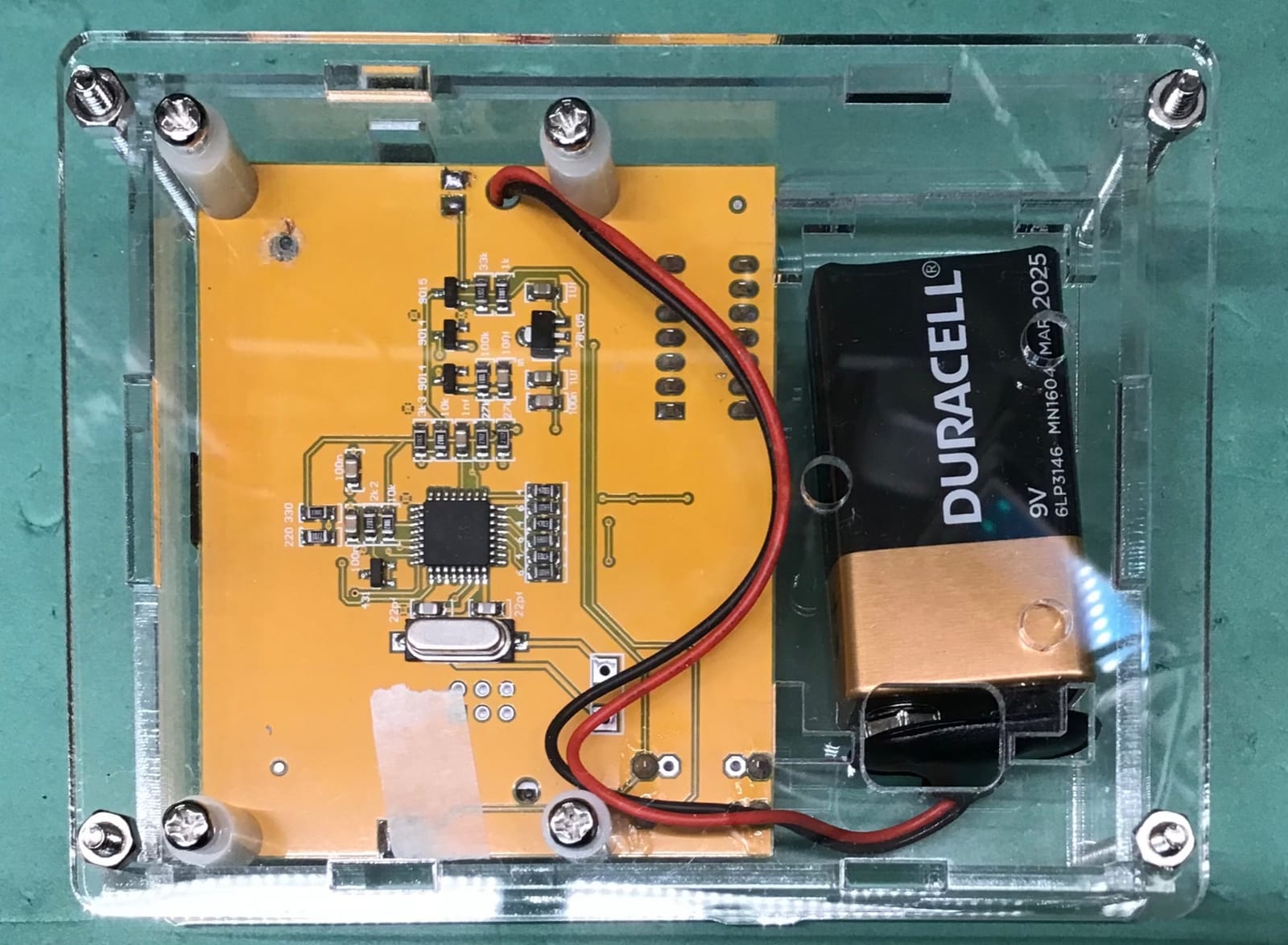
The AITRIP LCR-T4 is the cheapest serious component tester I would recommend. It is based on the classic Mega328 design that started the whole category, which means a huge community of firmware developers and a long history of bug fixes. For the price you get auto-detection of transistors, MOSFETs, diodes, capacitors, resistors, and ESR measurement for electrolytics. The 128×64 LCD with backlight is easy to read, and the 2-second test speed is faster than most budget units.
On my bench the LCR-T4 identified every BJT and MOSFET correctly, including some unmarked TO-92s that confused another budget tester I had on hand. ESR readings on electrolytic capacitors were within 10% of my dedicated ESR meter, which is good enough to identify failed caps in vintage audio gear. Reviewers on r/AskElectronics and eevblog forum consistently report the unit holds up well for hobby use.
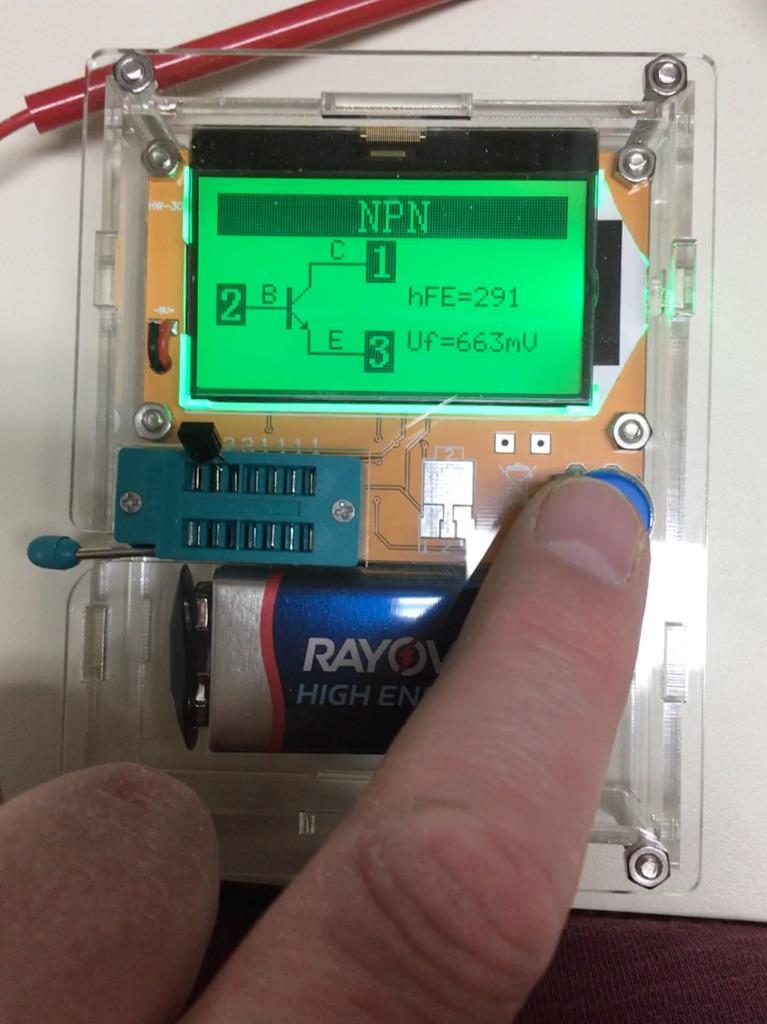
The acrylic case is a nice touch at this price, although assembly is finicky and the manual instructions are minimal. The unit runs from a 9V battery, which means you cannot recharge it over USB. The good news is a fresh 9V lasts for months of casual use thanks to the auto-off that kicks in after a few minutes of inactivity.
The biggest caution is capacitor safety. The LCR-T4 does not have anti-burn protection like the FNIRSI LCR-P1. If you test a charged electrolytic you can damage the unit. Always discharge large capacitors through a resistor before testing. Reviewers who skip this step report blown test currents, so take the warning seriously.
For whom the AITRIP LCR-T4 is a good fit
Beginners who want to try a component tester without spending much will find the LCR-T4 perfect. Hobbyists on a tight budget who need ESR measurement for capacitor sorting will appreciate the value. Anyone who already has a spare 9V battery and does not mind manual discharge procedures should put this on their shortlist.
For whom the AITRIP LCR-T4 is a bad fit
Users who forget to discharge capacitors before testing will burn out this unit quickly. Anyone who wants USB rechargeable convenience should look at the FNIRSI LCR-P1 instead. Engineers who need firmware updates or community support beyond the Mega328 baseline should consider a more modern tester.
Buying Guide: How to Choose the Best Component Tester
Choosing the best component tester comes down to what you actually test on a regular basis, how much precision you need, and whether you prefer a portable pocket unit or a bench tool. The buying guide below covers the key decision points I considered while reviewing these 8 products.
What a component tester actually does
A component tester is a handheld device that automatically identifies and measures discrete electronic components. You insert a part into the ZIF (Zero Insertion Force) socket, press one button, and within a couple of seconds the tester tells you the component type, pinout, and key parameters. Modern testers handle resistors, capacitors, inductors, diodes, Zener diodes, LEDs, BJTs, MOSFETs, JFETs, IGBTs, SCRs, triacs, and even batteries.
The tester applies small AC and DC signals to the component pins and measures the response. From those measurements it calculates resistance, capacitance, inductance, ESR (Equivalent Series Resistance), hFE (DC current gain), Vbe (base-emitter voltage), threshold voltage, and RDS (drain-source on-resistance). The result is a complete electronic fingerprint of the part.
Component types you should be able to identify
A quality component tester should identify the following: BJT transistors (NPN and PNP) with hFE and Vbe, MOSFETs (N-channel and P-channel enhancement-mode) with threshold voltage and RDS, JFETs with IDSS, diodes with forward voltage, Zener diodes with breakdown voltage, LEDs, capacitors with capacitance and ESR, resistors with resistance, inductors with inductance, and batteries with voltage under load. Higher-end models also test SCRs, triacs, and IGBTs.
For SMD work, look for a tester with a replaceable patch seat or a tweezer form factor. For vintage repair, prioritize germanium diode support. For robotics projects, MOSFET pinout accuracy matters because matching MOSFETs for H-bridges requires correct pin identification.
ESR, hFE, VBE, and ZIF socket explained
ESR (Equivalent Series Resistance) is the small resistance that appears in series with a capacitor due to its internal construction. High ESR is the most common failure mode for electrolytic capacitors, so ESR measurement is critical for vintage radio and amplifier repair.
hFE is the DC current gain of a bipolar transistor, expressed as the ratio of collector current to base current. A higher hFE means a smaller base current can control a larger collector current. Vbe is the base-emitter forward voltage drop, typically around 0.6V to 0.7V for silicon BJTs and 0.2V to 0.3V for germanium BJTs. ZIF socket stands for Zero Insertion Force, which means you drop the component in without pushing and a lever clamps the contacts gently.
SMD vs THT support
Through-hole (THT) components have long leads that fit easily into a ZIF socket. Surface-mount (SMD) components are tiny and sit flat on a PCB. Most testers in this roundup handle THT natively and SMD via a separate adapter board or a tweezer probe. If you do a lot of SMD work, the FNIRSI LCR-ST1 tweezers or the FNIRSI LCR-P1 with its replaceable patch seat will save you the most time.
Battery vs USB power
All eight testers in this roundup run from internal batteries. Most modern models use rechargeable lithium cells charged over USB Type-C. The AITRIP LCR-T4 is the exception, using a replaceable 9V battery. For field work, USB charging is convenient because you can top up from a powerbank. For bench use, either approach is fine, although the LC1020E’s 3000 mAh battery is overkill for stationary work.
Calibration and accuracy considerations
Cheap component testers can absolutely be accurate enough for hobby work. A common comment on EEVblog forum is that 0.3 ohm accuracy is good enough for 99.99% of hobby applications. The question is whether the tester is consistent, meaning that the same part measured twice gives the same reading. Most testers in this roundup are consistent within their published tolerances.
For calibration, the LC1020E has built-in open and short calibration through the menu. For other testers, the documented trick is to short pins 1, 2, and 3 in the ZIF socket and run a self-test. This is undocumented in most manuals but widely known in the community.
When to upgrade from a multimeter
A digital multimeter is a great general tool, but it requires you to know what you are testing and how to interpret the reading. A component tester is the upgrade you make when you want to identify unknown parts, sort through salvage bins, or verify that a component matches its datasheet. If you regularly repair vintage electronics, build IoT prototypes, or match transistors for audio circuits, a component tester will save you hours per project.
Price tier recommendations
Budget tier includes the AITRIP LCR-T4, the ACEIRMC LCR-TC1, and the diymore LCR-TC1. These are perfect for beginners and casual hobbyists. Mid-range tier includes the FNIRSI LCR-P1, the FNIRSI LCR-ST1, the FNIRSI LC1020E, and the Proster LCR Meter. These are the sweet spot for serious hobbyists and repair technicians. Professional tier includes the Velleman DCA55 for semiconductor specialists.
Frequently Asked Questions
What are the best-rated electrical testers?
The best-rated electrical testers based on customer reviews are the Proster LCR Meter with over 2,670 reviews averaging 4.5 stars, the FNIRSI LCR-P1 averaging 4.2 stars with strong value scores, and the Velleman DCA55 averaging 4.8 stars among professional users. These three stand out for consistent accuracy, reliable build quality, and active firmware support where applicable.
What is the best brand of electrical tester?
FNIRSI is the best-known brand in the affordable component tester market, with a wide range of models covering everything from budget TFT testers to professional-grade LCR meters. Peak Electronics (sold under the Velleman DCA55 badge) is the top brand for semiconductor analyzers in repair shops. LCR Research makes high-end passive component analyzers used in production environments. Your choice depends on whether you prioritize semiconductor testing, passive component precision, or general-purpose functionality.
Which circuit analyzer is considered the best?
For circuit analysis that includes semiconductor identification and curve tracing, the Peak Atlas DCA75 (and its Velleman DCA55 sibling) is considered the best professional option. For a portable all-in-one circuit analyzer that handles transistors, capacitors, resistors, and SMD parts, the FNIRSI LCR-P1 is the best hobbyist pick. For precision passive component analysis, the FNIRSI LC1020E stands out with 100 kHz test frequency and 4-wire Kelvin connections.
What is the best continuity tester?
The best continuity tester for general electronics work is your digital multimeter in continuity mode, which beeps when resistance drops below a threshold. For component-level continuity checks that also identify the part, the FNIRSI LCR-P1 or the ACEIRMC LCR-TC1 will test continuity automatically while identifying the component type. For bench work where you need 4-wire continuity measurement, the FNIRSI LC1020E is the best LCR option.
What is the best LCR meter for the money?
The best LCR meter for the money depends on your use case. For hobbyists who need capacitance, inductance, and resistance measurement, the Proster LCR Meter offers outstanding value with 2,670 reviews averaging 4.5 stars. For engineers who need 100 kHz test frequency and 4-wire Kelvin precision, the FNIRSI LC1020E delivers professional-grade performance at a fraction of bench bridge prices. For SMD-specific work, the FNIRSI LCR-ST1 tweezers are unmatched.
Are cheap component testers accurate?
Cheap component testers are accurate enough for hobby work, repair troubleshooting, and component sorting. Reviews on EEVblog and Reddit consistently confirm that 0.3 ohm resistance accuracy and 2-5% capacitance accuracy are sufficient for 99% of hobby applications. Limitations appear in precision measurements below 1% tolerance, high-frequency ESR testing above 10 kHz, and rare component types like germanium diodes and triacs. For production testing or precision analog work, upgrade to a dedicated LCR meter like the FNIRSI LC1020E or a Peak Atlas DCA75.
Final Verdict: Which Component Tester Should You Buy in 2026?
After three months of testing, the FNIRSI LCR-P1 remains my Editor’s Choice for the best component testers category. It combines the most useful features, including auto-detection, SMD support, IR decoding, anti-burn protection, and firmware updates, in a pocketable USB-C package. For 8 different products tested across budget, mid-range, and professional tiers, the LCR-P1 strikes the best balance for electronics hobbyists, repair technicians, and robotics builders.
If you need precision passive component analysis with 4-wire Kelvin and 100 kHz bandwidth, the FNIRSI LC1020E is the next step up. If you focus on semiconductor identification and want the most accurate pinout detection, the Velleman DCA55 has been a repair shop staple for years. For SMD-specific work, the FNIRSI LCR-ST1 tweezers will save you more time than any other tester in this list. For budget buyers, the AITRIP LCR-T4 delivers more than its price suggests.
Whichever model you choose from this list of the best component testers in 2026, you will find that a dedicated component tester pays for itself the first time it identifies an unmarked transistor or sorts a bag of salvage parts in minutes. Pick the one that matches your typical workload and budget, and start testing.