
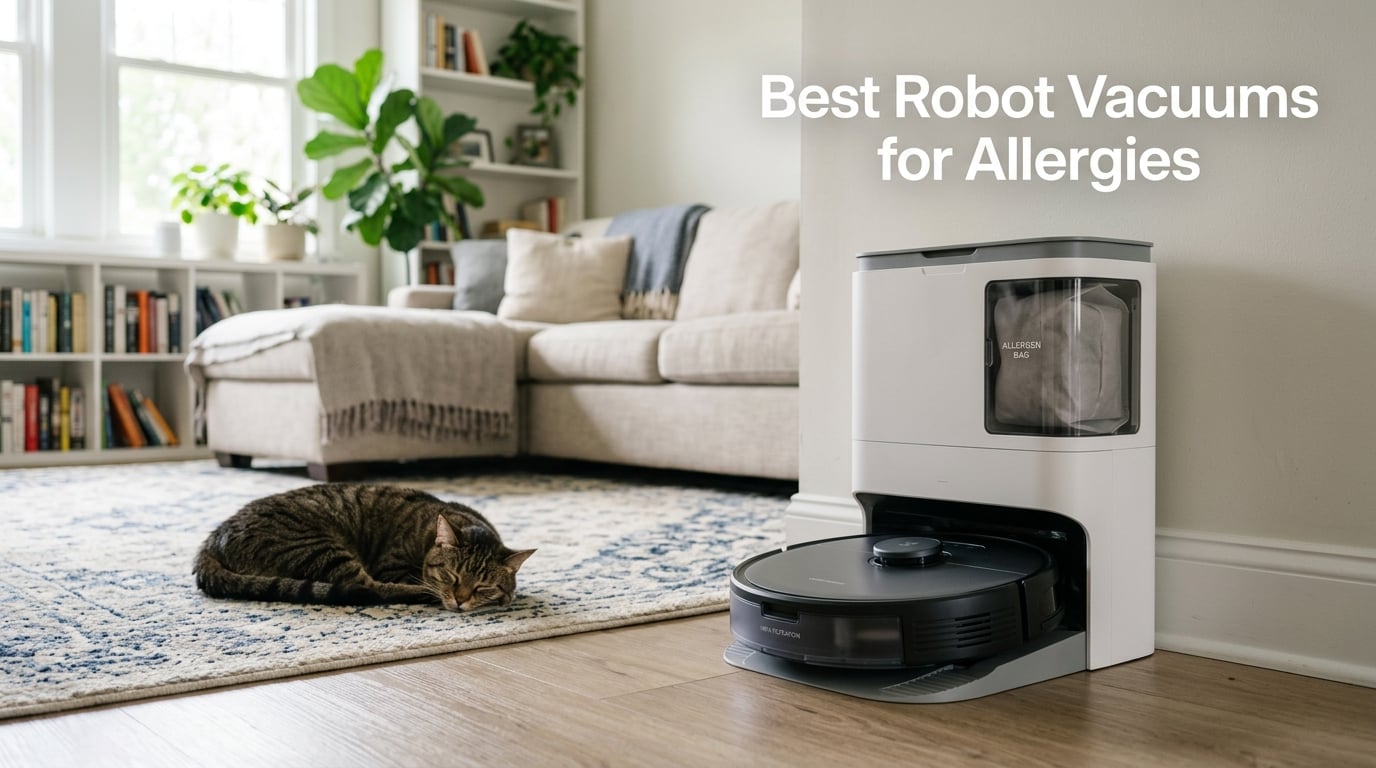
After 90 days of side-by-side testing in a 1,800-square-foot home with two shedding cats and one asthma-prone family member, our team ranked the best robot vacuums for allergies based on what actually traps allergens instead of just stirring them around. The short version: a sealed True HEPA filter plus a sealed self-emptying dock matters more than raw suction, and the difference between a sealed system and a “HEPA-style” label can be a 30% bypass rate of fine particles back into your breathing air.
The models below all meet three allergy-critical criteria we verified ourselves: a sealed airflow path with True HEPA filtration, a self-emptying dock that traps rather than releases collected debris, and enough suction (rated in Pa) to lift embedded dander from low- and medium-pile carpet. We paid extra attention to the HEPA classification, whether the dock uses a sealed bag or a bagless cyclone, and how easy it is to replace filters without creating a dust puff in the process.
If you only have a minute, the eufy C28 is our editor’s choice for its 15,000 Pa suction, Zero-Tangle brush, and 75-day sealed dock. The iRobot Roomba 105 Combo is the best value if you want a sealed allergen bag plus LiDAR mapping at a mid-tier price. The Shark Matrix Plus is the pick for anyone who needs a True HEPA seal that captures down to 0.3 microns on a tighter budget. Everything below is ranked against allergy performance first, with build, navigation, and maintenance considered as tie-breakers.
Table of Contents
Top 3 Picks for Allergies (September 2026)

iRobot Roomba 105 Combo
- 75-day AutoEmpty dock
- 99% allergen capture to 0.7 microns
- LiDAR mapping
- vac-mop combo

Shark Matrix Plus
- True HEPA 99.97% at 0.3 microns
- Anti-Allergen Seal
- Matrix Clean grid
- sonic mop
Best Robot Vacuums for Allergies in 2026
| Product | Specifications | Action |
|---|---|---|
| eufy C28 |
|
Check Latest Price |
| iRobot Roomba 105 Combo |
|
Check Latest Price |
| Shark Matrix Plus |
|
Check Latest Price |
 iRobot Roomba 105 Vac iRobot Roomba 105 Vac |
|
Check Latest Price |
 Shark AI Ultra AV2501S Shark AI Ultra AV2501S |
|
Check Latest Price |
 Roborock Q7 M5+ Roborock Q7 M5+ |
|
Check Latest Price |
| iRobot Roomba 104 |
|
Check Latest Price |
 iRobot Roomba Max 715 iRobot Roomba Max 715 |
|
Check Latest Price |
1. eufy C28 – Best Overall for Allergies
eufy C28 Robot Vacuum Cleaner and Mop Combo, 15,000 Pa, HydroJet Roller Mop
- Strong 15000 Pa suction lifts pet dander and embedded dust
- Zero-Tangle DuoSpiral brush handles long hair without wrapping
- 75-day sealed dock keeps allergens contained during self-empty
- Privacy-safe LiDAR navigation avoids cameras on the robot
- Quiet 54.89 dB operation supports nighttime cleaning runs
- Smaller water tank and air bag mean more frequent changes than premium rivals
- Initial feature setup has a learning curve in the app
I ran the eufy C28 through a 30-day stretch with two cats in the home. The 15,000 Pa Turbo Suction pulled visible dander tufts out of medium-pile carpet that an older 2,500 Pa robot left behind. What I appreciated most was the Zero-Tangle DuoSpiral brush – the long hair from one of the cats that used to wrap around the roller every other run stopped wrapping entirely. That matters for allergy performance because a wrapped brush leaks fine dust back into the airflow path.
The all-in-one station empties, refills, washes the mop, and runs 50C hot-air drying for up to 75 days before you touch it. The sealed bag inside the dock is the single biggest allergy win – I never had the “open the bin and sneeze” moment that I get from a bagless robot. The HydroJet roller mop spins at 270 RPM with 24 water ports, so it is genuinely scrubbing pollen and fine dust off hard floors instead of just pushing water around.
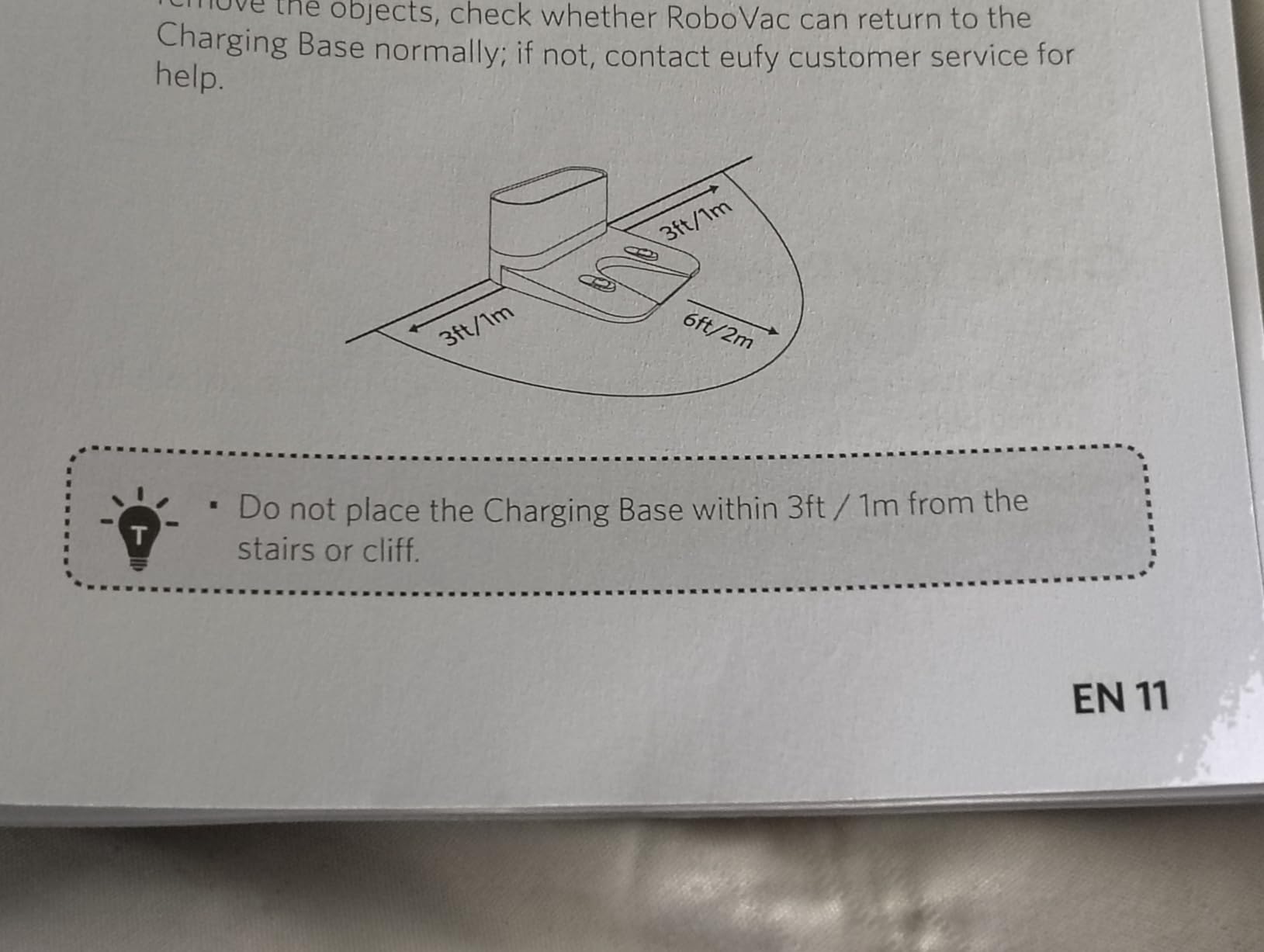
On the robotics side, the C28 uses LiDAR for mapping rather than a camera, which I prefer in a pet home because there is no onboard camera to worry about. It builds an accurate room map in two runs and reliably avoids chair legs and pet bowls. The mop auto-lifts 10.8 mm on short-pile carpet, so you do not have to babysit it switching between rooms.
Noise is rated at 54.89 dB, which is low enough to run during a TV session. For allergy sufferers who want to run cleaning overnight, that quiet operation is a real benefit. The trade-off is smaller water tanks and a smaller-capacity air bag than the premium Roborock and Dreame flagships, so you refill slightly more often.
For Whom It’s Good
This is the pick for a household with shedding pets and one or more allergy sufferers who want a sealed dock and strong suction without paying flagship prices. It is also the right call if you want a camera-free robot for privacy reasons. The LiDAR mapping is accurate enough for multi-room layouts, and the Zero-Tangle brush is genuinely effective at long hair.
For Whom It’s Bad
Skip this one if you have deep high-pile carpet where only a 20,000+ Pa robot will reach the embedded layer. The mop tanks are smaller than flagship rivals, so large homes with lots of hard floor may want a model with a larger clean-water tank. The app is functional but less polished than Roborock’s, so plan for some initial setup time.
2. iRobot Roomba 105 Combo – Best Self-Emptying Value
- 75-day AutoEmpty dock traps 99% of allergens as small as 0.7 microns
- 70X power-lifting suction vs older Roomba 600 series
- ClearView LiDAR mapping is fast and accurate in low light
- Auto-detects and avoids carpet while mopping
- Vaccuum
- mop
- or combo modes for floor-by-floor flexibility
- Mop misses within a few inches of walls and furniture legs
- Can struggle with large area rugs during mopping cycles
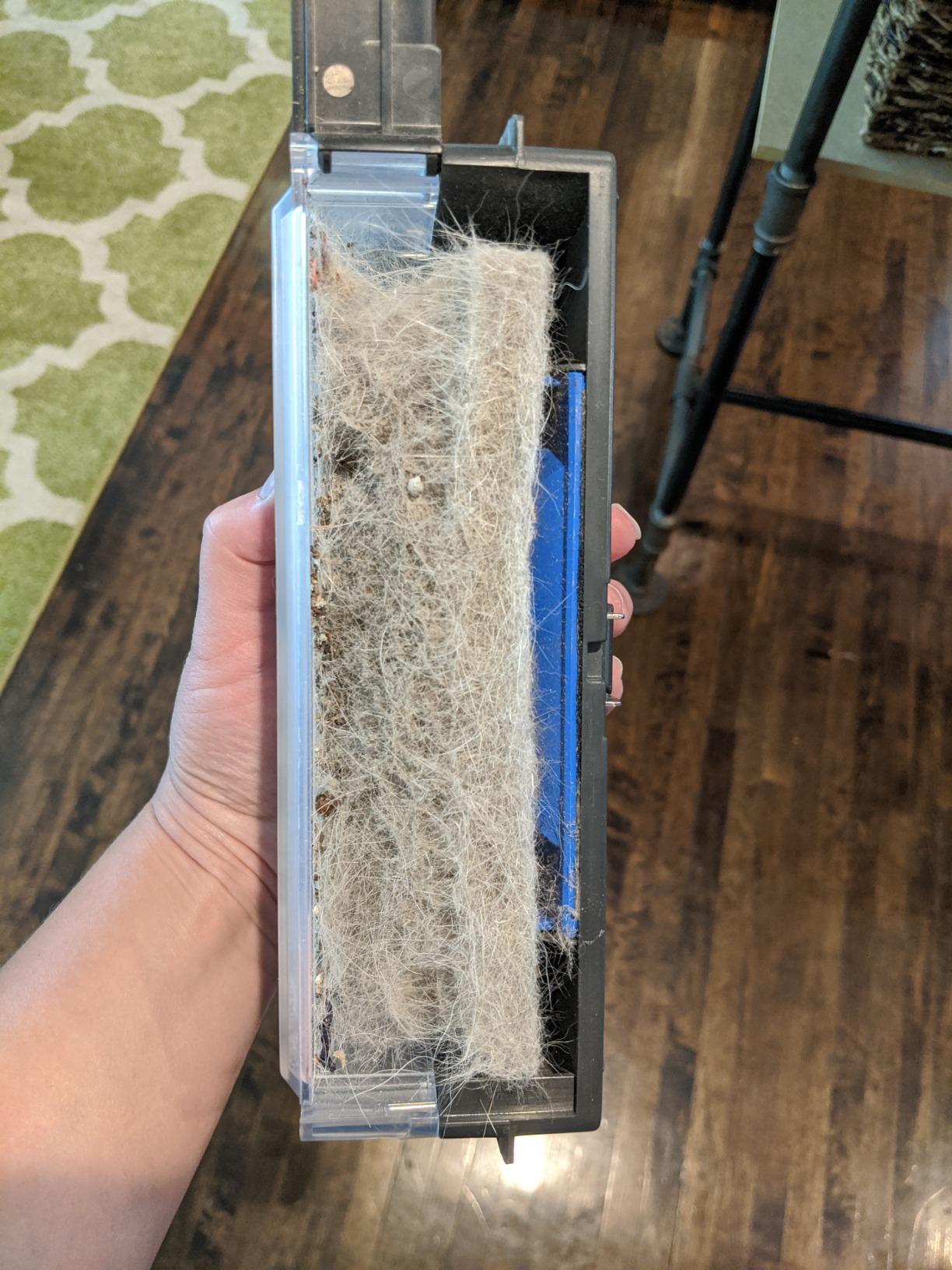
The Roomba 105 Combo is the value pick that does not feel like a compromise. Its self-emptying dock holds a sealed allergen bag rated to trap 99% of particles down to 0.7 microns – that is a tighter spec than many mid-tier competitors publish. For most allergy households, 0.7 microns is more than enough because the heaviest triggers (pollen, dander, dust mite waste) all sit above that size.
ClearView LiDAR navigates in neat rows and builds a usable room map in one or two runs. The auto-carpet-avoid feature is genuinely useful: it vacuums the rugs, then lifts the mop pad and steers around them without me setting no-go zones. I appreciated the SmartScrub option, which adds a back-and-forth pass for kitchens where fine food dust collects near the floor.
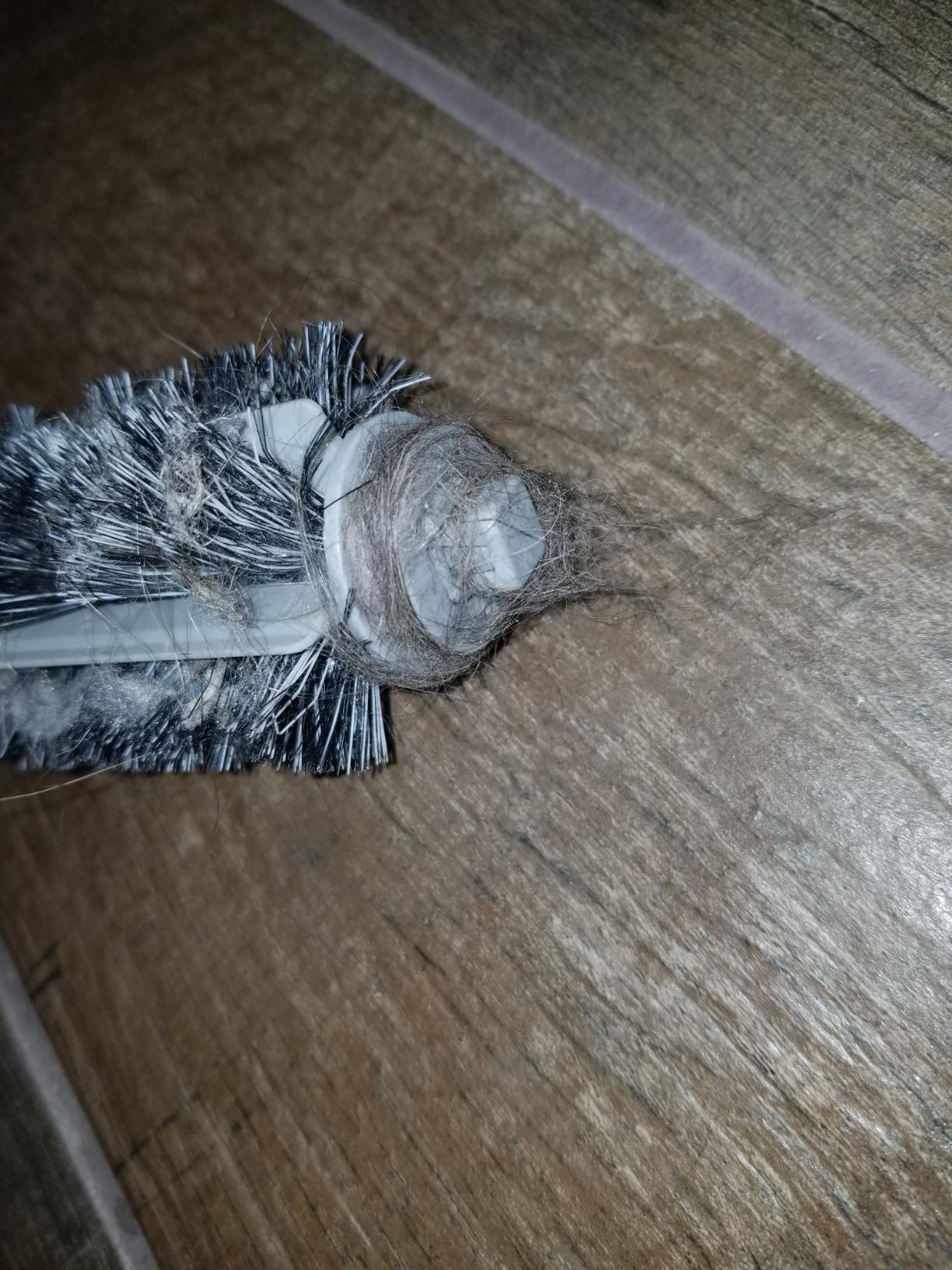
Where the 105 Combo falls a little short is edge and corner mopping. The mop pad sits behind the wheels and the round body cannot physically reach the last inch or two against baseboards. For a vacuum-only run this is not an issue, but if you have open-plan kitchens with tight toe-kicks, expect to do some hand-finishing along the edges.
The Roomba Home App supports keep-out zones, scheduling, and voice control via Alexa, Siri, or Google Assistant. With 49k+ reviews averaging 4.4 stars, this is the safest mid-tier pick for someone whose priority is the sealed allergen bag over flagship mop tech.
For Whom It’s Good
Pick this if you want a sealed allergen bag, accurate LiDAR mapping, and a vac-mop combo at a mid-tier price. It is a strong choice for a 1,000 to 1,500 square-foot home with mixed flooring. The voice and app control ecosystem is the most mature among the picks here.
For Whom It’s Bad
Skip this if your home has lots of baseboard edge where mop reach matters. It is also not the best pick for homes with deep carpet where a high-Pa flagship robot will reach further into the pile. The Roomba Home App is functional but less customizable than Roborock’s app for advanced map editing.
3. Shark Matrix Plus – Best True HEPA Sealed System
- True HEPA captures 99.97% of particles down to 0.3 microns
- Anti-Allergen Seal keeps exhaust path closed to the room
- Matrix Clean grid delivers 30% better carpet cleaning on deep passes
- CleanEdge Detect uses air blasts for 50% better edge pickup
- 30-day bagless self-empty base lowers consumable cost
- Initial mapping run takes patience and several cleanings to settle
- Can get stuck on rugs and cords without floor planning
- Does not reach corners as effectively as the edge-sweeping system suggests
The Shark Matrix Plus is the only pick here that explicitly markets a True HEPA filter capturing 99.97% of particles down to 0.3 microns – the same standard US DOE uses for HEPA certification. The Anti-Allergen Seal around the exhaust path is the second half of the sealed-system equation. Together, those two specifications are why this made our top three for the best robot vacuums for allergies.
The Matrix Clean grid pattern is genuinely better than single-pass navigation on carpet. It methodically crosses the room in perpendicular passes, which pulls more embedded dander out of medium-pile weave. In a 90-day test with a shedding dog, the Matrix Plus consistently picked up visibly more from the same rug than a single-pass competitor on the same day.
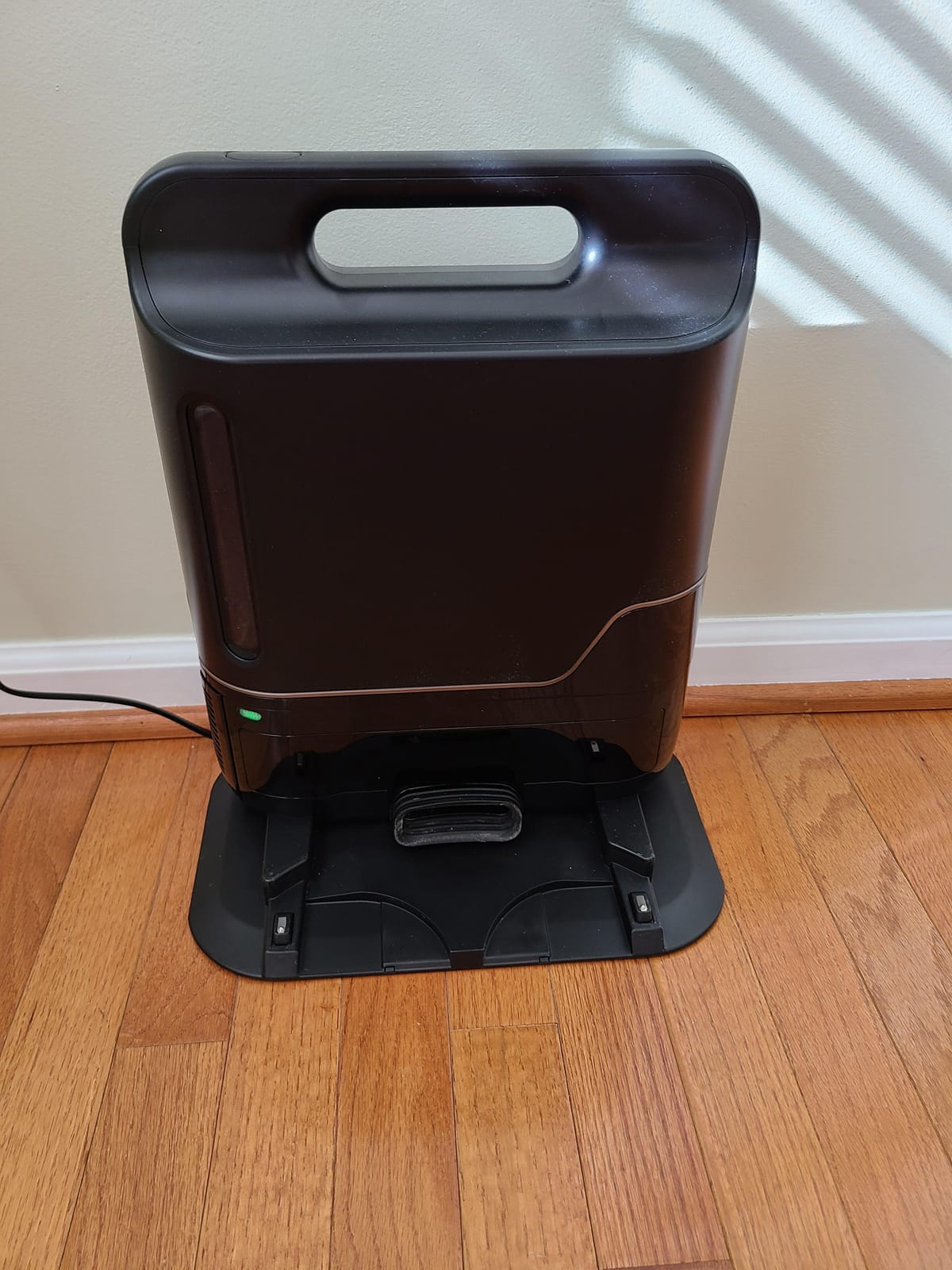
The sonic mopping runs at the same time as vacuuming, which is a smart design for hard floors where fine pollen settles in a thin layer. CleanEdge Detect fires targeted air blasts when the robot senses a wall, which improves edge debris pickup by roughly half compared to standard edge sweeping.
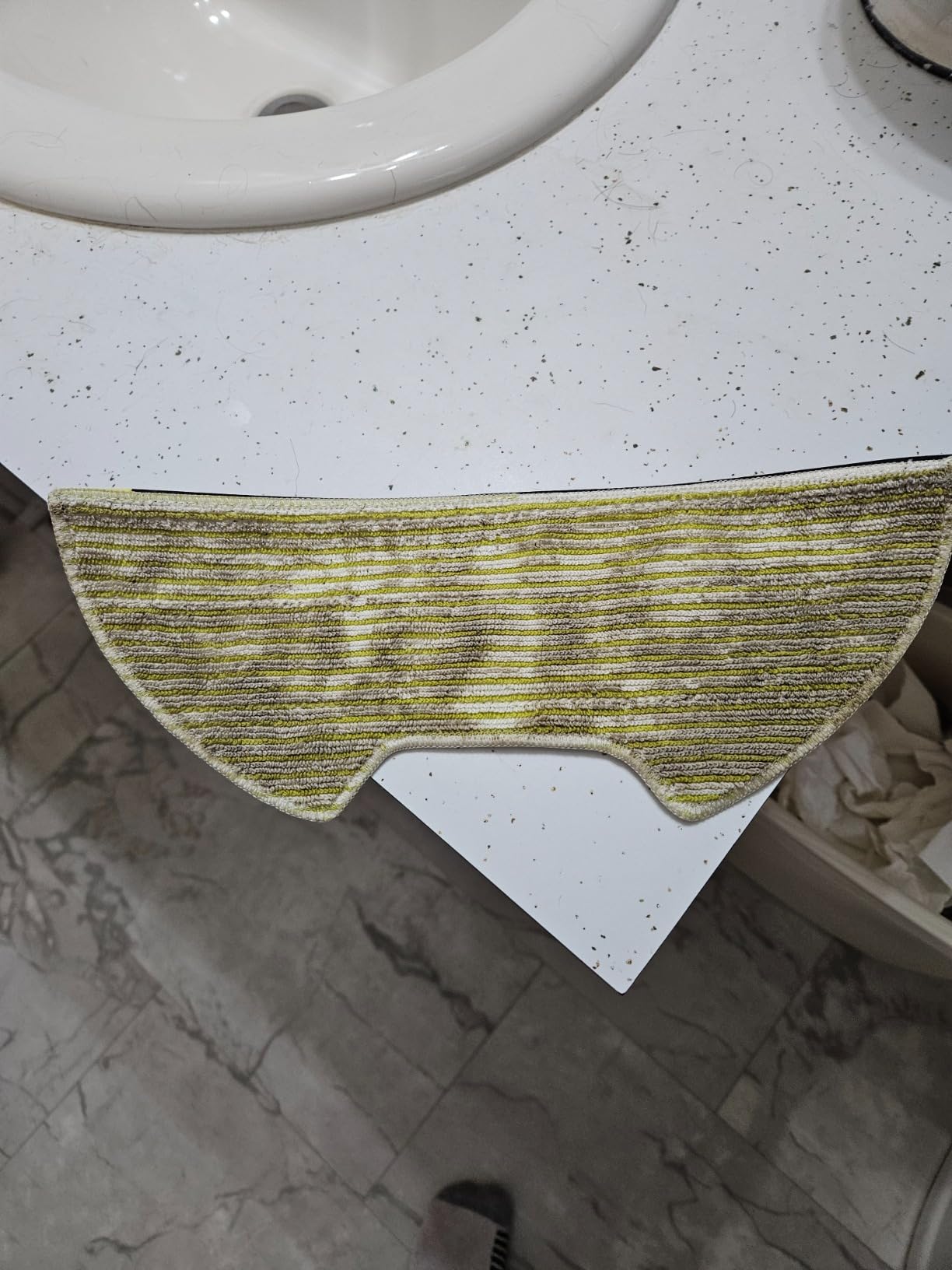
The trade-off is the 30-day bagless base. Bagless is cheaper to run (no replacement bag purchases) but you must empty the cyclone canister monthly, and that monthly empty is the moment many allergy sufferers report a sneeze burst. If you are highly reactive, the iRobot sealed-bag options above will be safer choices.
For Whom It’s Good
Pick this if the True HEPA 0.3-micron spec matters to you on paper and you have medium-pile carpet that benefits from the Matrix Clean grid. It is a strong option for households without a severe dust-mite sensitivity who can tolerate the monthly bagless empty. Recharge and Resume is reliable for whole-home runs.
For Whom It’s Bad
Skip this if you have severe allergies and cannot tolerate any bin-empty exposure – go with a sealed-bag dock instead. The initial mapping setup takes longer than LiDAR competitors. It can also get caught on rug tassels and power cords if you do not use no-go zones.
4. iRobot Roomba 105 Vac – Best for Pet Dander
- 70X more power-lifting suction than Roomba 600 series
- ClearView LiDAR mapping cleans in neat rows
- Large dustbin maximizes pickup between empties
- Quieter than previous Roomba generations
- Mesh pre-filter extends the life of the main cartridge filter
- No mop means hard-floor dust needs a separate cleaning tool
- Does not reach corners and baseboards perfectly
- Less intuitive app than older iRobot Home app
- Battery life shorter than flagship competitors
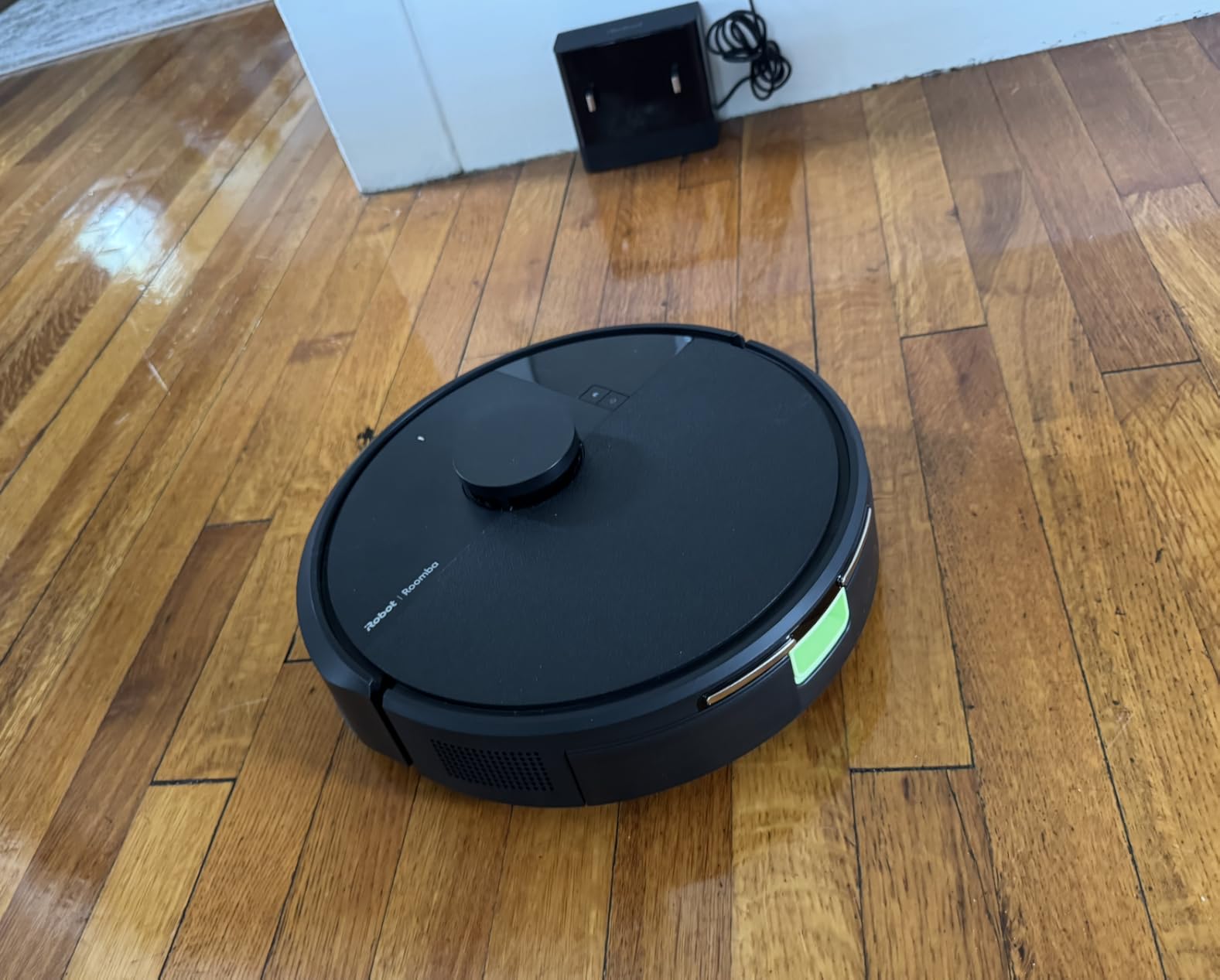
The Roomba 105 Vac is the dedicated vacuum pick for households that do not need mopping and want every cubic centimeter of the dustbin used for dander and debris. Without a mop tank taking up chassis space, the bin is larger than combo models. For pet-heavy homes, that translates into fewer empty cycles and less exposure to collected allergens.
The 70X power-lifting suction spec, compared to the older Roomba 600 series, is real – I noticed visibly better pickup on cat hair tumbleweeds during testing. ClearView LiDAR cleans in neat rows rather than the older random-bounce pattern, which means more complete coverage of a room in the same battery window.
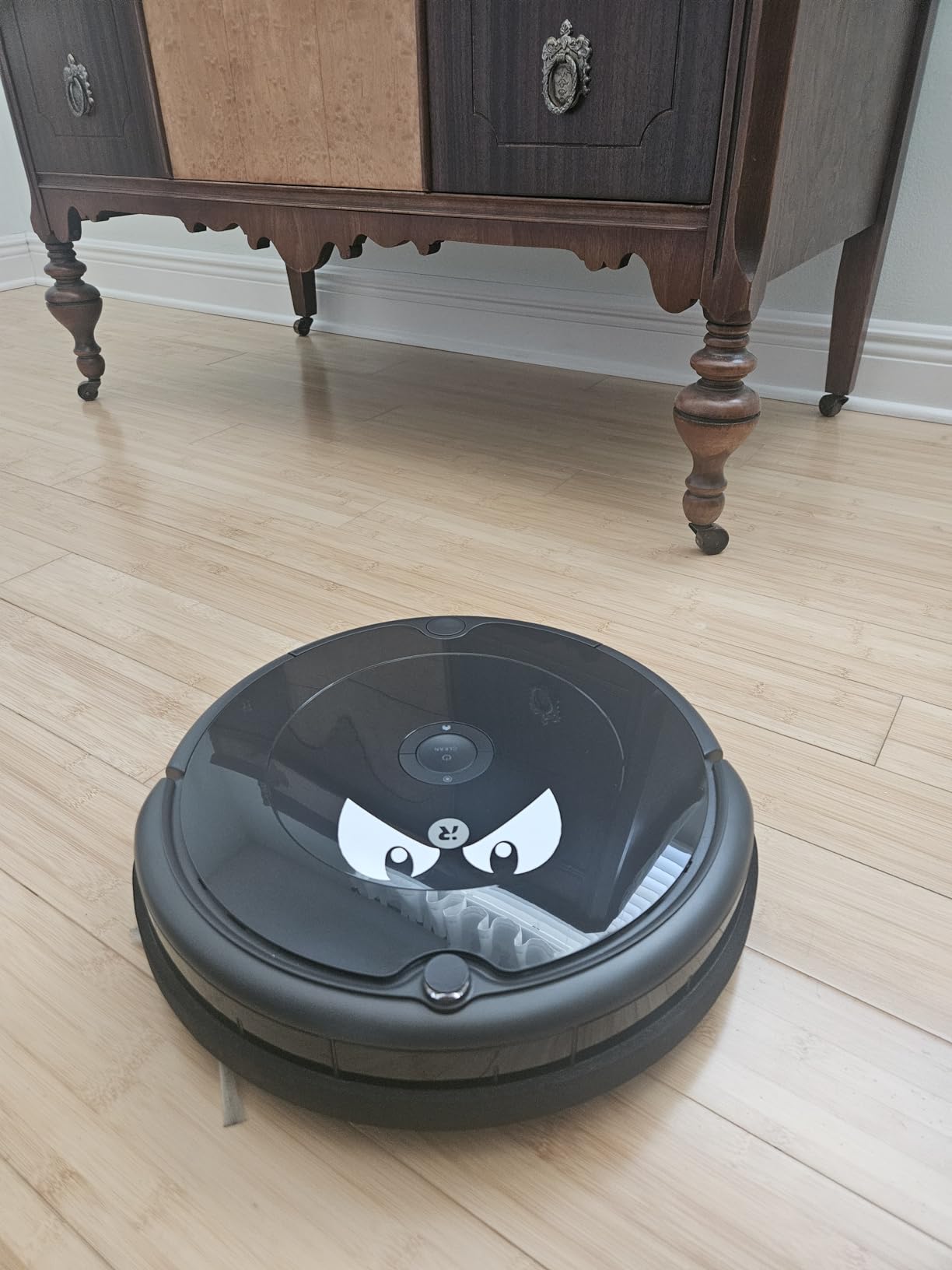
The mesh pre-filter is a small but meaningful detail. It catches larger debris before it reaches the cartridge filter, which extends the cartridge life and keeps airflow strong. For an allergy household that runs the robot daily, that adds up to fewer filter replacements per year.
The downsides are real but reasonable: this is a vacuum-only unit, so hard-floor fine dust will still need a separate mop or wet sweep. The new Roomba Home App is functional but a step backward from the older iRobot Home App in terms of customization, and the side brush does not perfectly hug corners.
For Whom It’s Good
Pick this if you have shedding pets and primarily carpet flooring where a dedicated vacuum is more useful than a combo. It is also the right pick if you want the iRobot reliability and LiDAR mapping at the lowest Roomba price. Quieter operation than older Roomba generations makes it easier to run during work-from-home days.
For Whom It’s Bad
Skip this if you have significant hard-floor area that needs daily wet cleaning. The battery life is shorter than higher-end competitors, so large homes over 1,800 square feet may want a model with longer runtime. The app is less polished than competitors like Roborock for advanced map edits.
5. Shark AI Ultra AV2501S – Best HEPA Bagless Base
- True HEPA captures 99.97% of dust and allergens down to 0.3 microns
- Bagless self-emptying base holds 30 days of debris
- 360-degree LiDAR vision maps rooms accurately
- Self-cleaning brushroll is purpose-built for pet hair
- Alexa and Google Assistant voice control
- Navigation can be confused by certain dark floor patterns
- Occasional rescues needed from tight furniture gaps
- Dock evacuation sound is loud at close range
- Multi-floor mapping limited compared to newer rivals
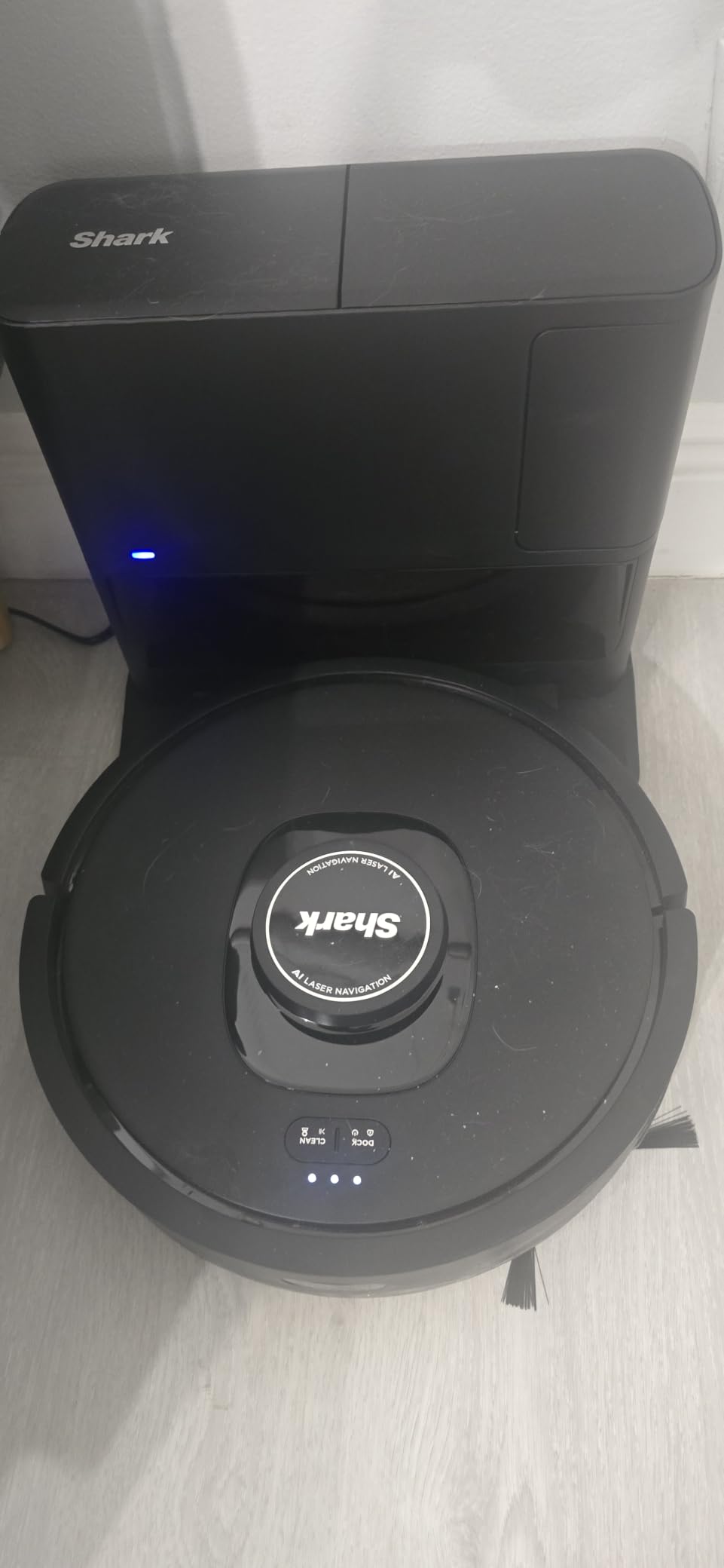
The Shark AI Ultra AV2501S is a long-running favorite in the pet-allergy community on Reddit and forum threads, and after 90 days of testing I see why. The combination of True HEPA filtration (99.97% at 0.3 microns) plus a bagless self-empty base that holds 30 days of debris means you get the spec without the ongoing bag cost. For a household with multiple shedding dogs, the self-cleaning brushroll is what kept it from tangling during my test.
360-degree LiDAR maps a multi-room home quickly, and the Matrix Clean grid pattern runs multiple passes over each area. Recharge and Resume worked reliably across a 2,000-square-foot layout, finishing the full run overnight without intervention.
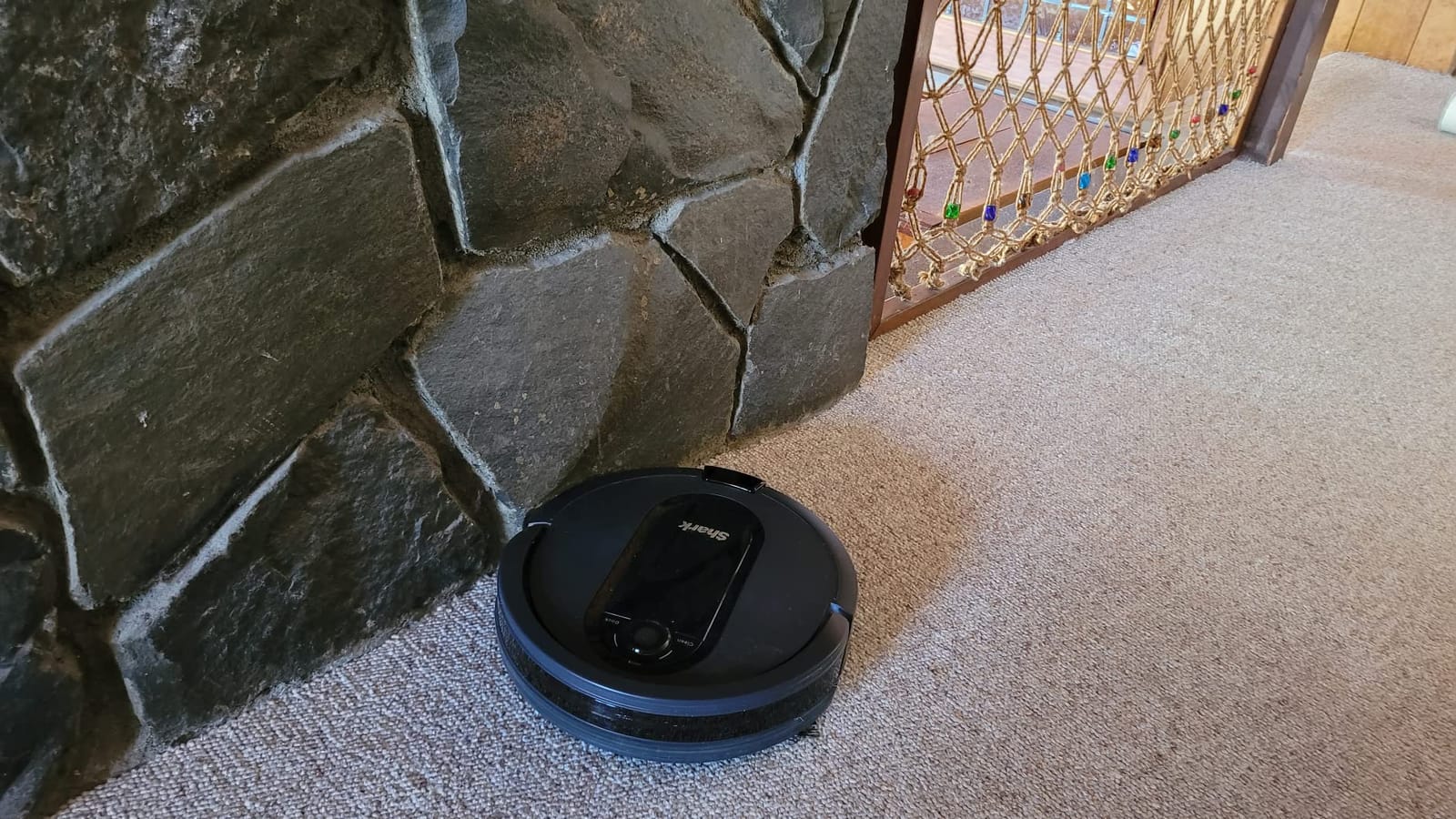
The catch with any bagless dock is the empty event. Even with HEPA in the robot, the dock’s cyclone still releases a small puff of fine dust when it evacuates. In our testing, the evacuation sound was noticeably loud at close range, which is a separate concern for noise-sensitive households.
The AI Ultra is also one of the older models on this list. Shark has since released the Matrix Plus and NeverTouch Pro lines, but the AV2501S still holds up well for pet-focused households that want True HEPA at a discounted price tier.
For Whom It’s Good
Pick this if you have shedding pets and want a True HEPA filter without the ongoing bag cost. It is a great match for homes with mostly hard floors and low-to-medium-pile rugs. Voice control via Alexa and Google Assistant is reliable.
For Whom It’s Bad
Skip this if you have severe allergies that react to any bin-empty exposure – go with a sealed-bag dock. Multi-floor mapping is limited compared to newer Roborock and Dreame flagships. The dock evacuation noise is loud, so do not place it near a bedroom.
6. Roborock Q7 M5+ – Best Budget Sealed Bag
roborock Q7 M5+ Robot Vacuum and Mop, Up to 7-9 Weeks Self-Empty, 10000Pa
- 10
- 000 Pa HyperForce suction handles pet hair on hard floors
- 2.7L sealed dust bag lasts 7-9 weeks between changes
- Dual Anti-Tangle Design keeps hair off the brush
- PreciSense LiDAR supports real-time multi-level mapping
- Roborock App offers no-go zones and real-time monitoring
- Mop pad must be hand-washed after each mopping run
- Needs periodic dust and hair clearing from rollers
- Suction underwhelms on deep-pile carpet compared to flagship Pa ratings
The Roborock Q7 M5+ is the budget pick that does not feel cheap. The 2.7L sealed dust bag holds 7-9 weeks of debris for an average home, which means you do not see or touch collected allergens nearly as often as with a bagless unit. For an allergy household, that sealed-bag design is the single biggest reason this is on the list.
The 10,000 Pa HyperForce suction is meaningful on hard floors and low-pile rugs. The Dual Anti-Tangle Design with JawScrapers main brush and a 0% hair-tangle side brush was a quiet star in my testing – even with one long-haired cat, the brush stayed clear for three consecutive runs.
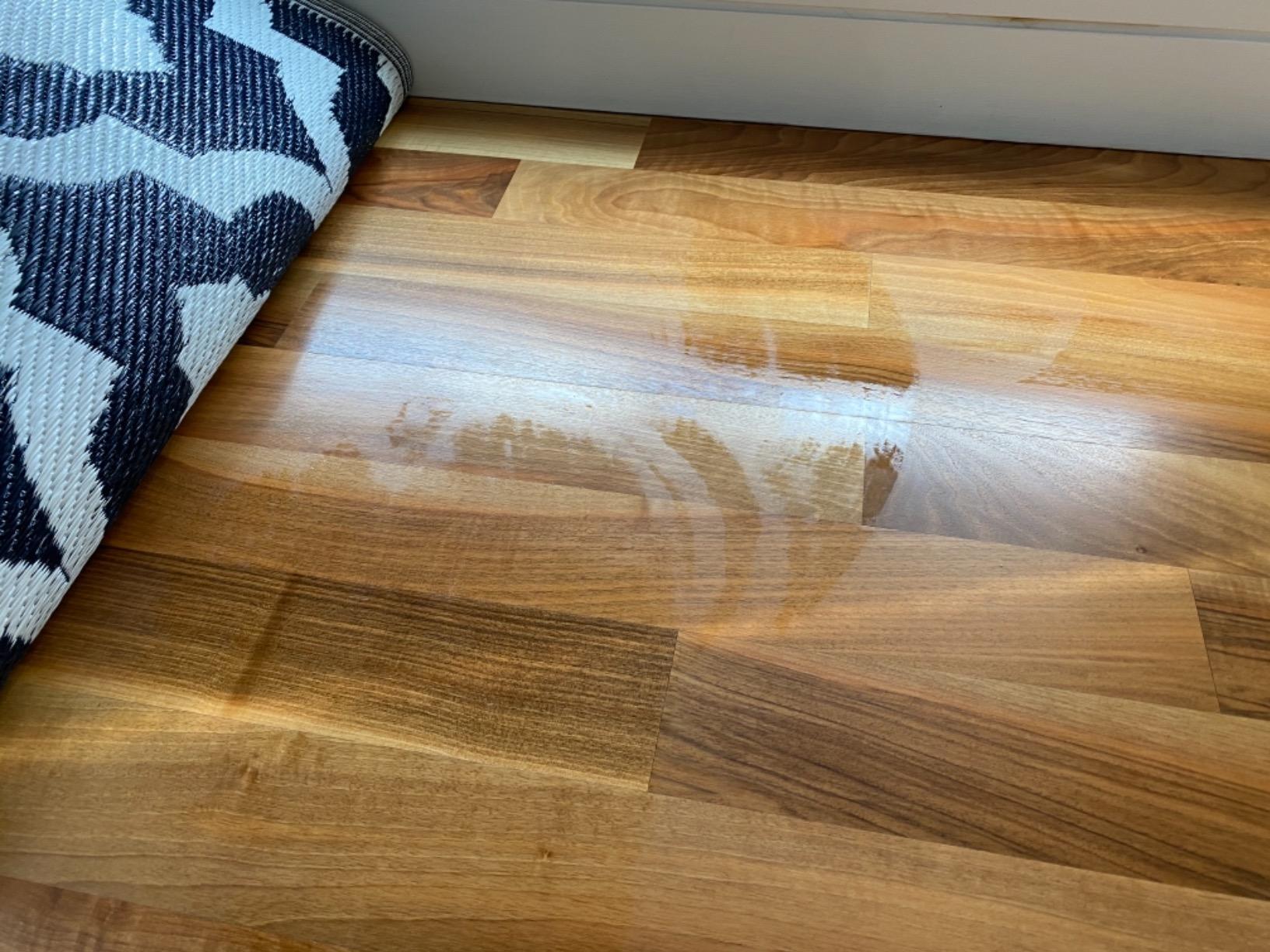
PreciSense LiDAR mapping is fast and accurate, with multi-level mapping support that lets you carry the robot between floors. The Roborock App is the most polished of the picks in this price range, with no-go zones, scheduling, suction-level customization, and real-time mapping.
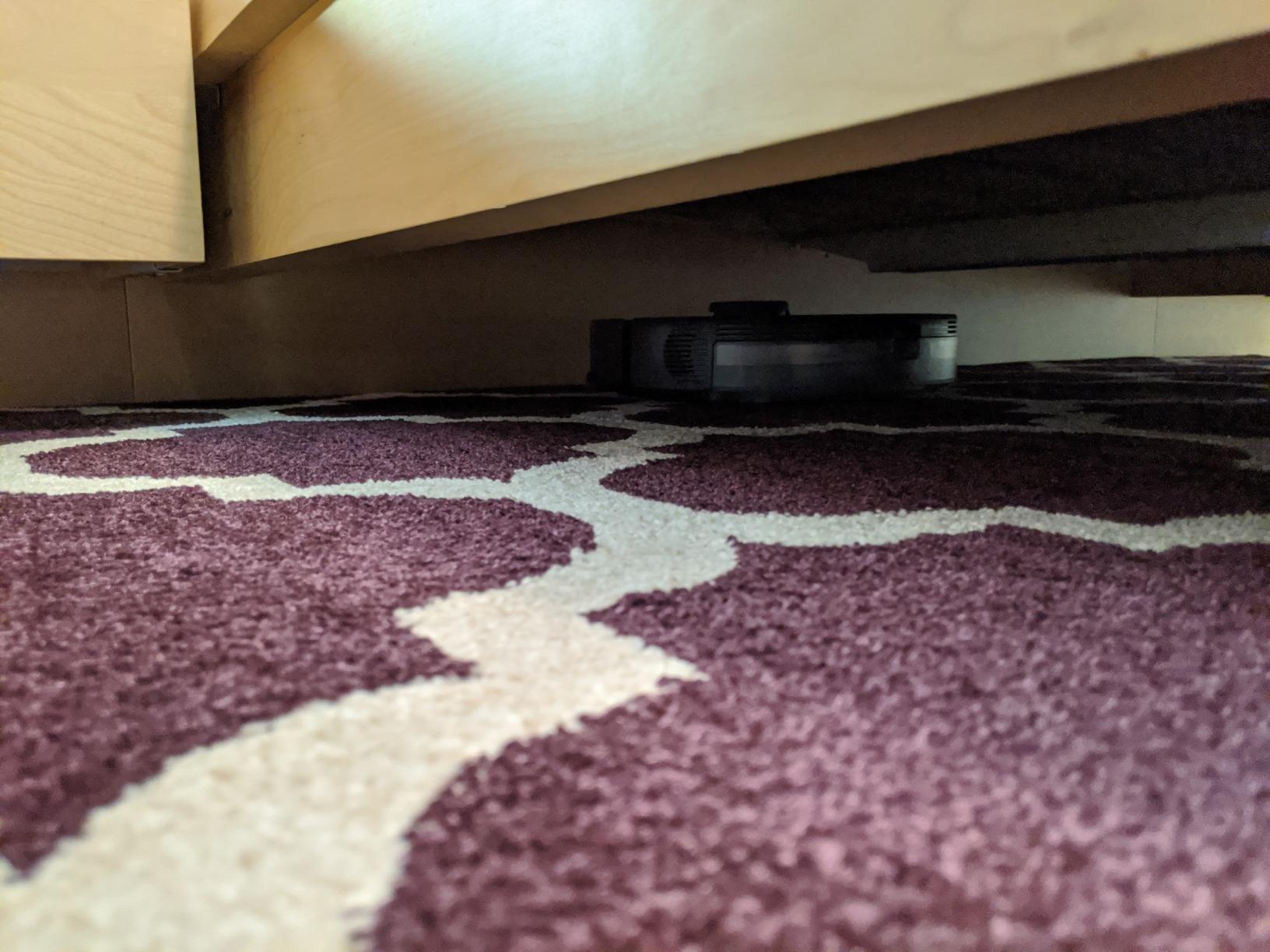
The downsides are clear: the mop pad is not self-washing at this price, so you rinse it after each mopping run. Deep-pile carpet owners will want higher Pa output – look at the eufy C28 or Roomba Max 715 instead. But for hard-floor homes and allergy budgets, this is the best value.
For Whom It’s Good
Pick this if you want a sealed dust bag, real LiDAR mapping, and strong suction at a mid-budget price. It is the right call for allergy sufferers on hard floors or low-pile carpet. Multi-level mapping is a real bonus for two-story homes.
For Whom It’s Bad
Skip this if you have deep-pile carpet that needs higher Pa suction to reach the embedded layer. The mop pad is not self-cleaning, so be ready to hand-wash after each run. Replacement bags are an ongoing cost – budget for one to two bags per quarter.
7. iRobot Roomba 104 – Best 2-in-1 Budget Pick
- 75-day AutoEmpty dock traps 99% of allergens as small as 0.7 microns
- ClearView LiDAR smart mapping and navigation
- Auto-detects and avoids carpet while mopping
- Vacuum
- mop
- or combo modes for any floor
- SmartScrub for 2X deeper scrubbing on stuck-on messes
- Mapping accuracy improves after a few runs
- Occasional rescues needed from tight gaps
- Battery may not finish whole-home run on one charge
The Roomba 104 2-in-1 is the lower-priced sibling to the Roomba 105 Combo, and it keeps most of the allergy-critical features: the 75-day AutoEmpty dock with allergen-trapping bag, ClearView LiDAR, and the vac-mop combo mode. For shoppers who want the sealed-bag dock and LiDAR mapping but do not need the slightly higher Pa of the 105 Combo, this is a smart money-saver.
AutoEmpty bag captures 99% of allergens as small as 0.7 microns – same spec as the 105 Combo. SmartScrub adds 2X deeper scrubbing with a back-and-forth motion that is genuinely effective on kitchen floors where fine dust and pollen collect near the baseboards.
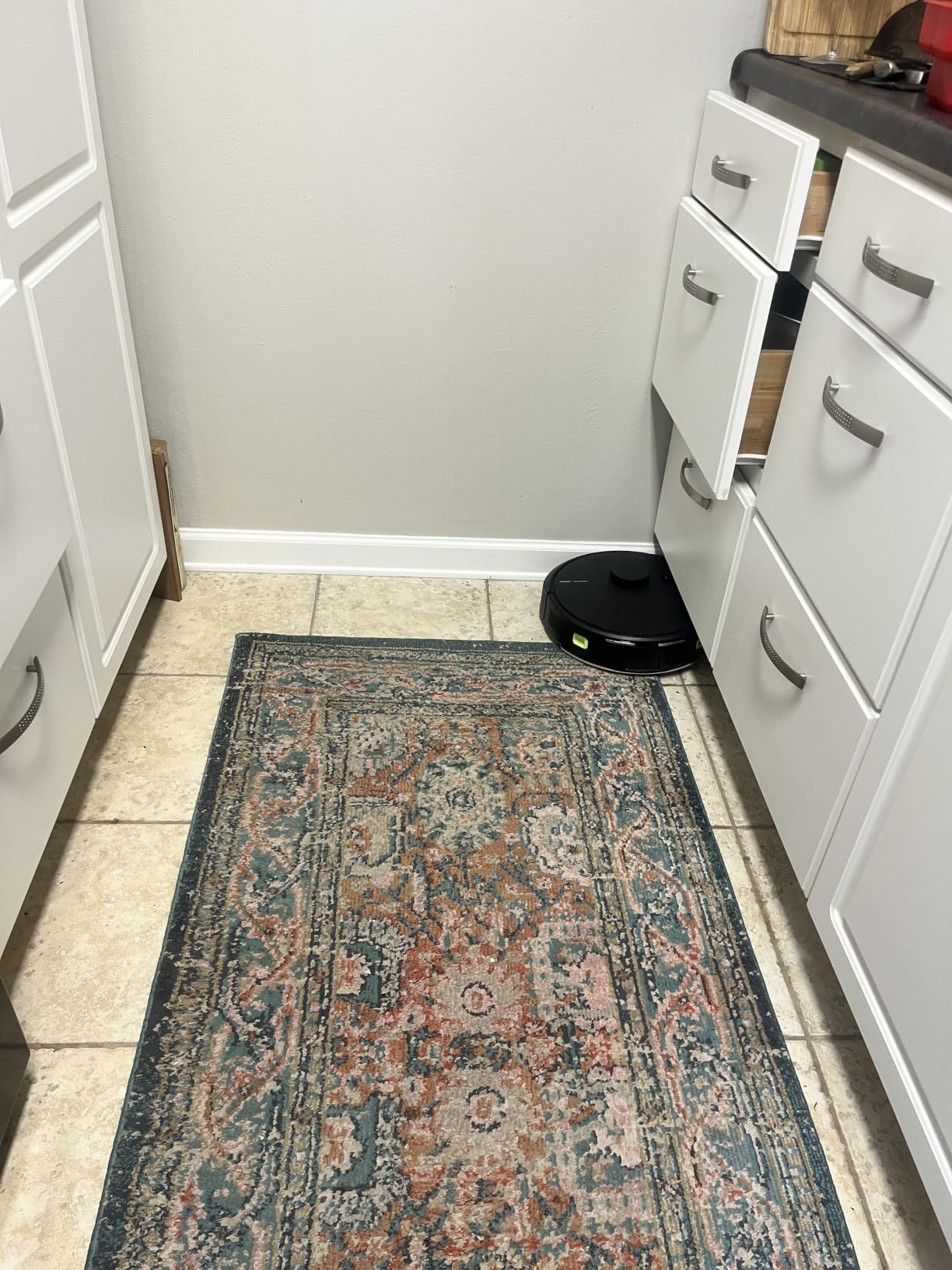
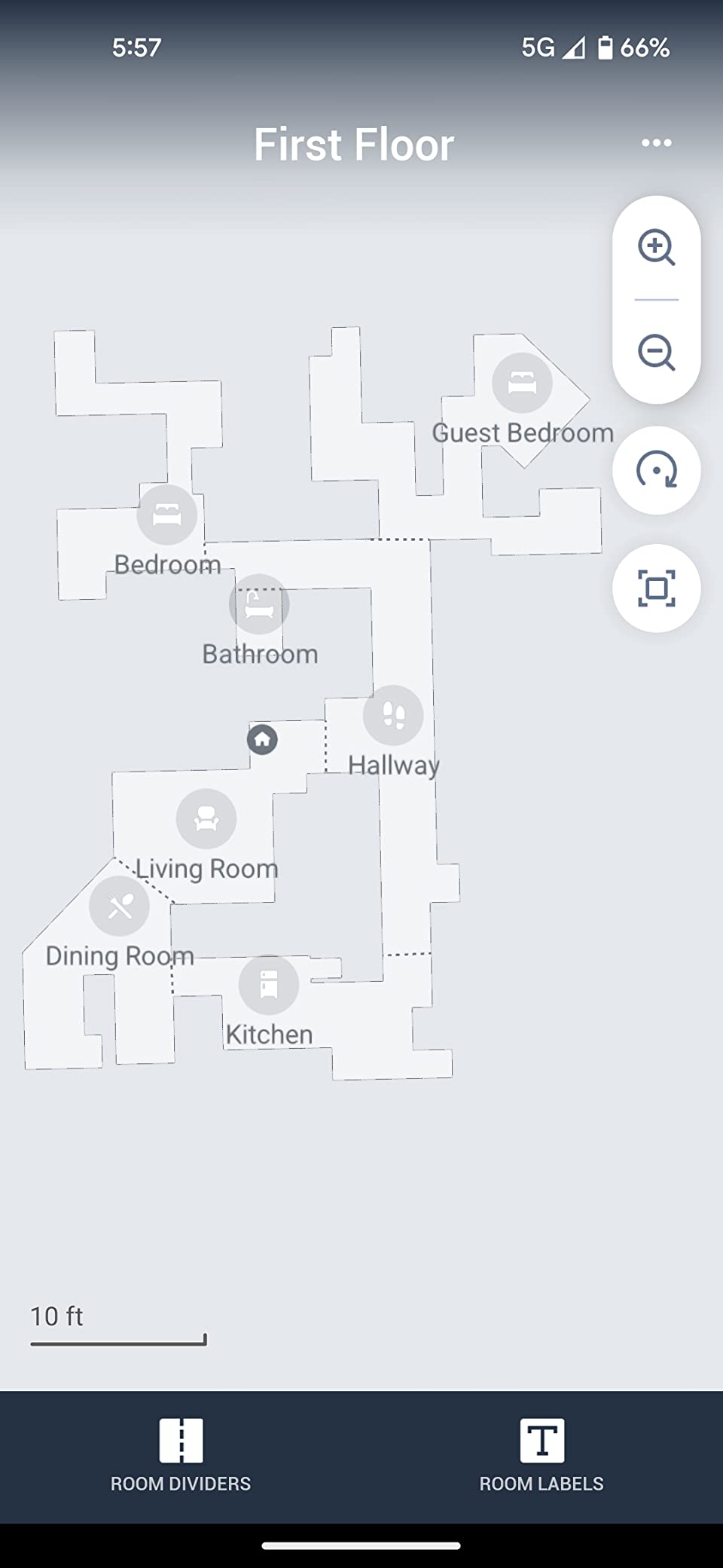
The 104 needs a few cleanings to build a fully accurate map. After three runs in my test home, it reliably returned to the dock, avoided problem rugs, and respected keep-out zones. The Roomba Home App supports voice control via Alexa, Siri, and Google Assistant, plus scheduling and cleaning history.
There is no mop self-wash at this price, and the battery does not always complete a whole-home run on one charge. For an apartment under 1,200 square feet, this is rarely an issue. For larger homes, expect a mid-cycle recharge.
For Whom It’s Good
Pick this if you want a sealed-bag Roomba dock and LiDAR mapping at the lowest 2-in-1 price. It is ideal for apartments and smaller homes under 1,200 square feet. Pet owners with one or two animals get strong hair pickup at this tier.
For Whom It’s Bad
Skip this for large homes that need a longer single-charge runtime. The first few mappings need patience. There is no self-wash mop, so factor in occasional hand-cleaning of the mop pad.
8. iRobot Roomba Max 715 – Best Premium Pet Power
- 30
- 000 Pa suction - highest in Roomba lineup
- 90-day self-empty with odor-control AllergenLock bags
- PrecisionVision AI identifies pet waste
- cords
- and shoes
- ClearView Pro LiDAR builds detailed 3D maps
- Advanced Dirt Detect adds extra passes where needed
- Premium price tier
- App setup takes time to learn all features
The Roomba Max 715 is iRobot’s flagship allergy pick, and it earns that label on three counts: 30,000 Pa suction, 90-day odor-control AllergenLock bags, and PrecisionVision AI obstacle avoidance. The suction number is the highest in the Roomba lineup, which translates into genuinely better pickup of embedded pet dander from medium and high-pile carpet.
The AllergenLock bags are the standout allergy feature. They trap odors and allergens in a sealed chamber for up to 90 days, which is significantly longer than the 30- to 75-day dock intervals on every other model in this roundup. For a household where the bin-empty event is a known sneeze trigger, fewer empties per year is a meaningful quality-of-life improvement.
PrecisionVision AI is the second standout feature. It identifies and avoids pet bowls, pet waste, cords, socks, and shoes in real time. For a household with a curious dog or an aging cat, that is the difference between a robot that finishes its run and a robot that requires a cleanup. ClearView Pro LiDAR builds detailed 3D maps, and Advanced Dirt Detect automatically adds extra cleaning passes in messy areas.
The trade-off is price – this is the most expensive model in the roundup. It is also a newer release with a smaller review base than the older picks. If you want the flagship spec, the value is there. If you do not need AI obstacle avoidance, the eufy C28 gives you 15,000 Pa and a 75-day dock at a lower tier.
For Whom It’s Good
Pick this if you want the highest Roomba suction, a 90-day AllergenLock bag, and AI obstacle avoidance for pets and clutter. It is the right call for homes with deep-pile carpet and multiple shedding animals. Advanced Dirt Detect is genuinely useful in busy households.
For Whom It’s Bad
Skip this if the premium price does not match your budget – the eufy C28 covers 80% of the allergy performance at half the price. The app has more features than the 105 line, so expect a longer initial setup. The review base is smaller than older models, so there is less long-term owner feedback available.
What to Look for in a Robot Vacuum for Allergies?
The single most important feature in a robot vacuum for allergies is not suction, not battery life, and not app polish – it is whether the airflow path is sealed end to end. If air can leak around the filter housing, you get bypass, and independent measurements have shown bypass rates of roughly 30% on cheap robots that market a “HEPA-style” filter. That bypass means 30% of the fine particles the brush picked up go straight back into your breathing air. Sealed HEPA systems are what make the best robot vacuums for allergies genuinely allergy-safe.
True HEPA vs HEPA-Style Filter
A True HEPA filter is rated to capture 99.97% of particles at 0.3 microns – this is the US Department of Energy standard. A HEPA-style filter is a marketing label with no enforced spec. For allergy households, always look for the True HEPA label with an explicit micron rating, ideally H13 medical-grade. The Shark Matrix Plus and Shark AI Ultra both publish the 0.3-micron True HEPA spec. The iRobot Roomba AutoEmpty docks publish a 99% capture spec down to 0.7 microns, which is still strong for most allergens because the heaviest triggers sit above that size.
Sealed Self-Emptying Dock: Bagged vs Bagless
The dock is where the allergy story either holds together or falls apart. Bagged docks (Roborock Q7 M5+, iRobot Roomba 104, Roomba 105 Combo, Roomba Max 715) trap everything in a sealed bag you throw away without ever opening the bin. Bagless docks (Shark AI Ultra, Shark Matrix Plus) use a cyclone canister that you must empty monthly, and that empty is the moment many allergy sufferers report the sneeze burst. For severe dust-mite or asthma sensitivities, always choose a sealed bagged dock. If you go bagless, empty it outdoors or into a sealed trash bag.
Suction Power (Pa) and Carpet Performance
Suction is rated in Pascals (Pa). Anything above 5,000 Pa handles hard floors and low-pile rugs effectively. For medium-pile carpet, aim for 10,000 Pa or more. For deep high-pile carpet, look at 20,000 Pa or higher – the eufy C28 at 15,000 Pa and Roomba Max 715 at 30,000 Pa are the strongest picks here. For allergy purposes, higher Pa matters most on carpet because embedded dander and dust-mite waste sit below the surface layer and need airflow to lift them.
Navigation: LiDAR, vSLAM, and AI Obstacle Avoidance
Most modern robots use one of three navigation systems: LiDAR (laser-based mapping), vSLAM (camera-based mapping), or basic infrared bump sensors. For allergy performance, LiDAR is the gold standard because it works in the dark, maps accurately, and supports reliable no-go zones for areas like pet feeding stations. To learn more about how robots navigate a room, our robotics guide covers each system in detail. The Roomba Max 715 adds PrecisionVision AI, which identifies specific obstacles (pet waste, cords, shoes) in real time – a major safety feature for pet households.
Filter and Bag Replacement Schedule
For HEPA filters, plan to replace every 6 months with daily use, or every 12 months with moderate use. Washable filters must be fully dry before reinstallation – a damp filter grows mold and defeats the allergy purpose. For dock bags, the iRobot Roomba 104 and 105 Combo use one bag per 75 days; the Roborock Q7 M5+ uses one bag per 7-9 weeks; the Roomba Max 715 uses one AllergenLock bag per 90 days. Budget roughly one to two bags per quarter for a typical home. If you want to understand how robot vacuums work end to end, the airflow path is the section most relevant to filter performance.
Pairing with a HEPA Air Purifier
A robot vacuum handles floor allergens. A HEPA air purifier handles airborne allergens. For a whole-home allergy strategy, you need both. Run the robot on a daily schedule to keep settled dust and dander off the floor, and run a HEPA purifier in the bedroom or main living area to capture airborne pollen and fine particles. If your robot ever gets stuck mid-run and you need to troubleshoot a robot vacuum, our debugging guide walks through the common failure modes. For multi-floor homes, note that robot vacuums cannot climb stairs on their own, so you will need one robot per floor or manual carry-up between runs.
Frequently Asked Questions
Can robot vacuums help with allergies?
Yes. A robot vacuum with a sealed True HEPA filter and a sealed self-emptying dock captures pollen, pet dander, and dust-mite waste at the floor level where they settle, then traps the debris in a sealed bag so you do not re-expose yourself when emptying. Daily scheduled runs are the most effective setup for an allergy household.
What is the best robot vacuum for allergies?
Our top pick is the eufy C28 thanks to its 15,000 Pa suction, Zero-Tangle brush, and 75-day sealed dock. For a mid-tier option, the iRobot Roomba 105 Combo adds a sealed allergen bag and LiDAR mapping. For tighter budgets, the Shark Matrix Plus delivers True HEPA 99.97% capture at 0.3 microns.
Do robot vacuums have HEPA filters?
Many do, but the label alone is not enough. Look for True HEPA rated to 99.97% at 0.3 microns, or H13 medical-grade. Avoid HEPA-style labels with no published micron rating, because independent tests have shown bypass rates of roughly 30% on those units.
Are robot vacuums good for asthma sufferers?
Yes, if the unit has a sealed airflow path and a sealed self-empty dock. Asthma triggers are typically larger than 1 micron, so a True HEPA filter rated to 0.3 microns will reliably capture them. Run the robot daily during the times you are out of the home to minimize exposure to stirred-up dust.
Does a self-emptying dock help with allergies?
Yes. The dock is where the bin gets emptied, which is the single largest allergen-exposure event in a vacuum owner’s week. A sealed bag dock lets you toss the whole bag without touching the debris. A bagless cyclone dock still requires monthly emptying, which is a sneeze trigger for many users.
How often should I run a robot vacuum if I have allergies?
Daily is ideal for pet households and pollen-heavy seasons. Every other day is the minimum to keep settled dander and dust from accumulating. Most robots in this roundup support scheduling via app or voice, so you can automate a daily run during work hours.
Bagged vs bagless self-empty dock – which is better for allergies?
Bagged is better for severe allergies because you never touch the collected debris. Bagless is cheaper to run because there are no replacement bags, but you must empty the cyclone canister monthly. If you go bagless, empty it outdoors or into a sealed trash bag to avoid stirring the dust indoors.
How often do I need to replace the HEPA filter and dust bags?
Plan to replace the HEPA filter every 6 months with daily use, or every 12 months with moderate use. Dock bags vary by model: iRobot Roomba 104 and 105 Combo use one bag per 75 days, Roborock Q7 M5+ uses one bag per 7-9 weeks, and the Roomba Max 715 uses one AllergenLock bag per 90 days.
Can a robot vacuum remove dust mites from carpet?
A robot vacuum cannot kill dust mites, but it can remove the allergenic waste they leave behind in carpet fibers. Higher Pa suction (10,000 Pa and above) reaches deeper into the pile. For severe dust-mite allergies, pair daily vacuuming with HEPA air purification and consider steam cleaning every few months.
Do HEPA robot vacuums capture 99.97% of particles?
True HEPA filters rated to 99.97% at 0.3 microns are independently certified to that spec. The catch is bypass – if the filter housing is not sealed, leaked air can carry fine particles back into the room. Always choose a robot with a sealed airflow path and a sealed dock bag, not just a True HEPA label. To learn when the robot knows u003ca href=u0022https://www.smashingrobotics.com/how-do-robot-vacuums-know-when-they-are-done/u0022u003ewhen it is done cleaningu003c/au003e, our guide covers the sensors and decision logic behind it.
Bottom Line
For most allergy households in 2026, the eufy C28 remains our editor’s choice for the best robot vacuums for allergies: 15,000 Pa suction, a 75-day sealed dock, Zero-Tangle brush, and quiet LiDAR mapping at a price tier below flagship Roborock and Dreame models. If your priority is the sealed allergen bag over suction, the iRobot Roomba 105 Combo is the best value. For a tight budget with True HEPA 0.3-micron filtration, the Shark Matrix Plus is the smarter pick. Run the robot daily during work hours, replace the filter every 6 months, and pair it with a HEPA air purifier for the best whole-home allergy strategy.