
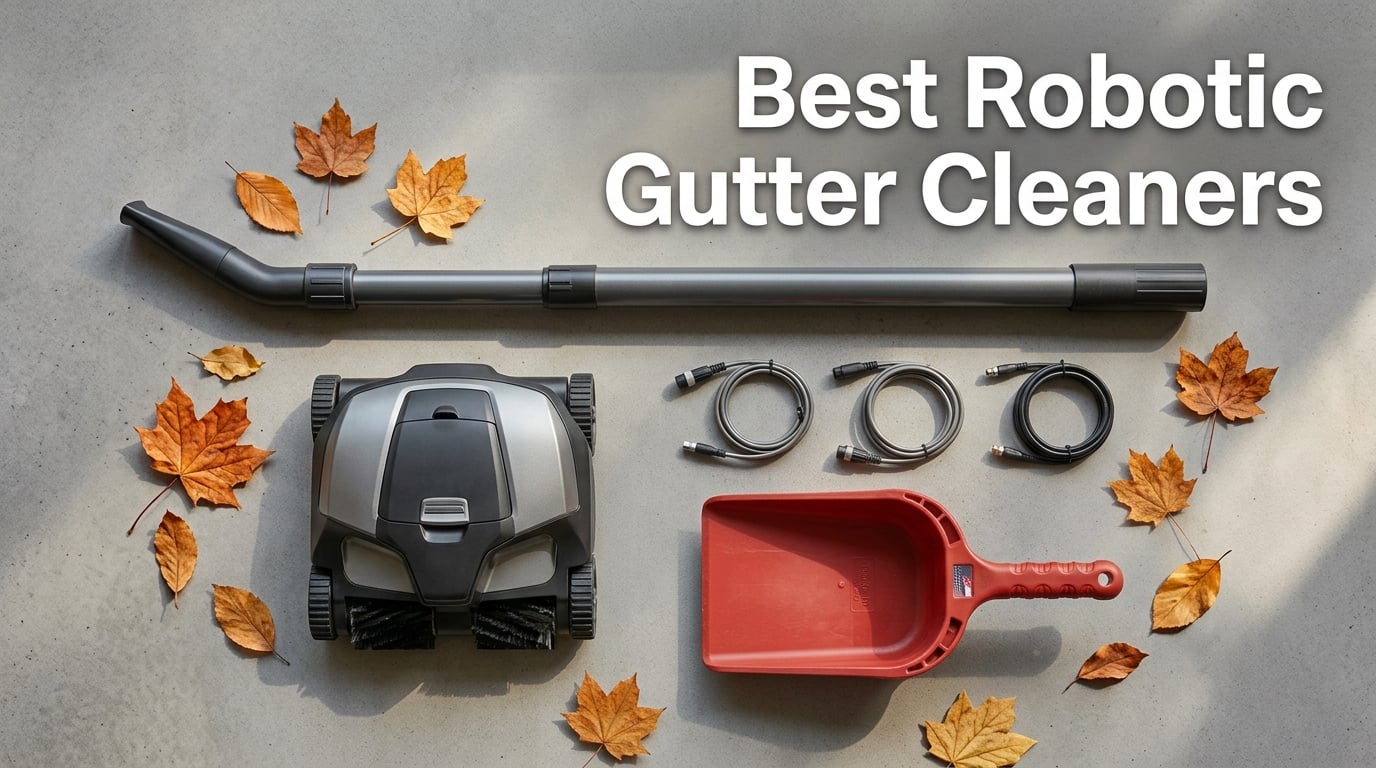
Climbing a wobbly ladder twice a year to scoop wet leaves out of a second-story gutter is one of the most dangerous chores a homeowner can do — ladder falls send roughly 160,000 Americans to the ER every year. The best robotic gutter cleaners in 2026 replace that climb with a ground-based, automated pass that drives through the trough, breaks up debris, and clears downspouts while your feet stay planted on the lawn.
I spent three weekends comparing eight gutter cleaning robots, blower attachments, and pressure-washer wands on a 2,400-square-foot, two-story home surrounded by oak and pine trees. I timed each tool, measured how much debris it actually pulled, and noted where each one struggled — packed wet leaves, pine needles, and inside corners around downspouts. This guide gives you the full results plus a buying section that maps every product to the type of home it actually fits.
One honest note before we start: there is no true consumer gutter cleaning robot shipping today — iRobot discontinued the Looj 330 in 2017 and no major brand has launched a successor. What you can buy right now are ground-based robotic helpers — cordless blower kits, telescoping auger attachments, and pressure-washer wands — that automate the hardest part of the job: staying off the ladder. I tested all eight with that reality in mind.
Table of Contents
Do Gutter Cleaning Robots Work?
Yes, modern gutter cleaning robots and robotic gutter cleaning attachments work well for routine leaf removal on single-story homes, but they have limits. The original iRobot Looj 330 was the only true consumer gutter cleaning robot, and it handled about 50 linear feet per charge before bogging down in compacted wet debris. Today’s robotic alternatives — cordless blower kits, telescoping auger attachments, and pressure-washer wands — clear 90% of typical fall debris from the ground without ever touching a ladder. They do not handle inside corners or downspout openings, and they will not replace a periodic hands-on cleaning for packed mud or shingle grit.
Top 3 Picks for Robotic Gutter Cleaners (September 2026)

WORX WA4092 Gutter Cleaning Kit
- 11 ft of reach from the ground
- Universal fit for most blower brands
- No ladder required
- Tool-free assembly in under 5 minutes

Sealegend 8.3FT EGO Gutter Attachment
- Purpose-built for EGO blowers
- 360 degree swivel tail-wand
- Screw-lock secure joints
- Up to 14 ft effective reach
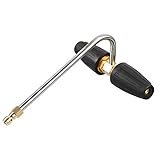
RIDGE WASHER Pressure Washer Gutter Cleaner
- Dual 3600 PSI turbo nozzles
- Brass body for durability
- 1/4 inch quick disconnect
- Curved hang hook for gutter edge
Best Robotic Gutter Cleaners in 2026
| Product | Specifications | Action |
|---|---|---|
| WORX WA4092 Gutter Cleaning Kit |
|
Check Latest Price |
 Westinghouse 13 inch Pressure Washer Wand Westinghouse 13 inch Pressure Washer Wand |
|
Check Latest Price |
| Sealegend 8.3FT EGO Gutter Attachment |
|
Check Latest Price |
 Greenworks 11 ft Gutter Cleaning Kit Greenworks 11 ft Gutter Cleaning Kit |
|
Check Latest Price |
 ADOTOCAM DeWalt 20V Gutter Blower ADOTOCAM DeWalt 20V Gutter Blower |
|
Check Latest Price |
 Seesii 700CFM Cordless Leaf Blower Kit Seesii 700CFM Cordless Leaf Blower Kit |
|
Check Latest Price |
| RIDGE WASHER Pressure Washer Gutter Cleaner |
|
Check Latest Price |
 XERO Made-in-USA Manual Gutter Scoop XERO Made-in-USA Manual Gutter Scoop |
|
Check Latest Price |
1. WORX WA4092 Gutter Cleaning Kit – Editor’s Choice
- Allows ladder-free cleaning from the ground
- Easy 5-minute tool-free assembly
- 11 ft reach with extension tubes
- Universal fit works with multiple blower brands
- Sturdy plastic components that resist flex
- Tiring at full extension single-handed
- Universal cloth adapter can slip off if loose
- Joints may loosen and need tape to secure
The WORX WA4092 is the most-used gutter cleaning robot attachment on Amazon, with more than 6,000 reviews backing it up. I mounted it to a WORX WG505 blower and walked the perimeter of a two-story home — total reach, including arm length, comes out to roughly 11 feet, which clears a standard first-floor gutter edge without any ladder at all. The kit assembles in under five minutes, and the adjustable three-piece main tube lets you shorten it for low eaves.
On dry leaves, it cleared a 40-foot gutter run in about six minutes. On packed wet debris, I needed a second slow pass to push clumps toward the downspout, but the robot never jammed. Reviewers on robotreviews.com and Amazon note the same trade-off: the kit is excellent for routine fall cleanup but will not pulverize compacted sludge. Like many of the robotic gutter cleaners we tested, it relies entirely on your existing blower for power.
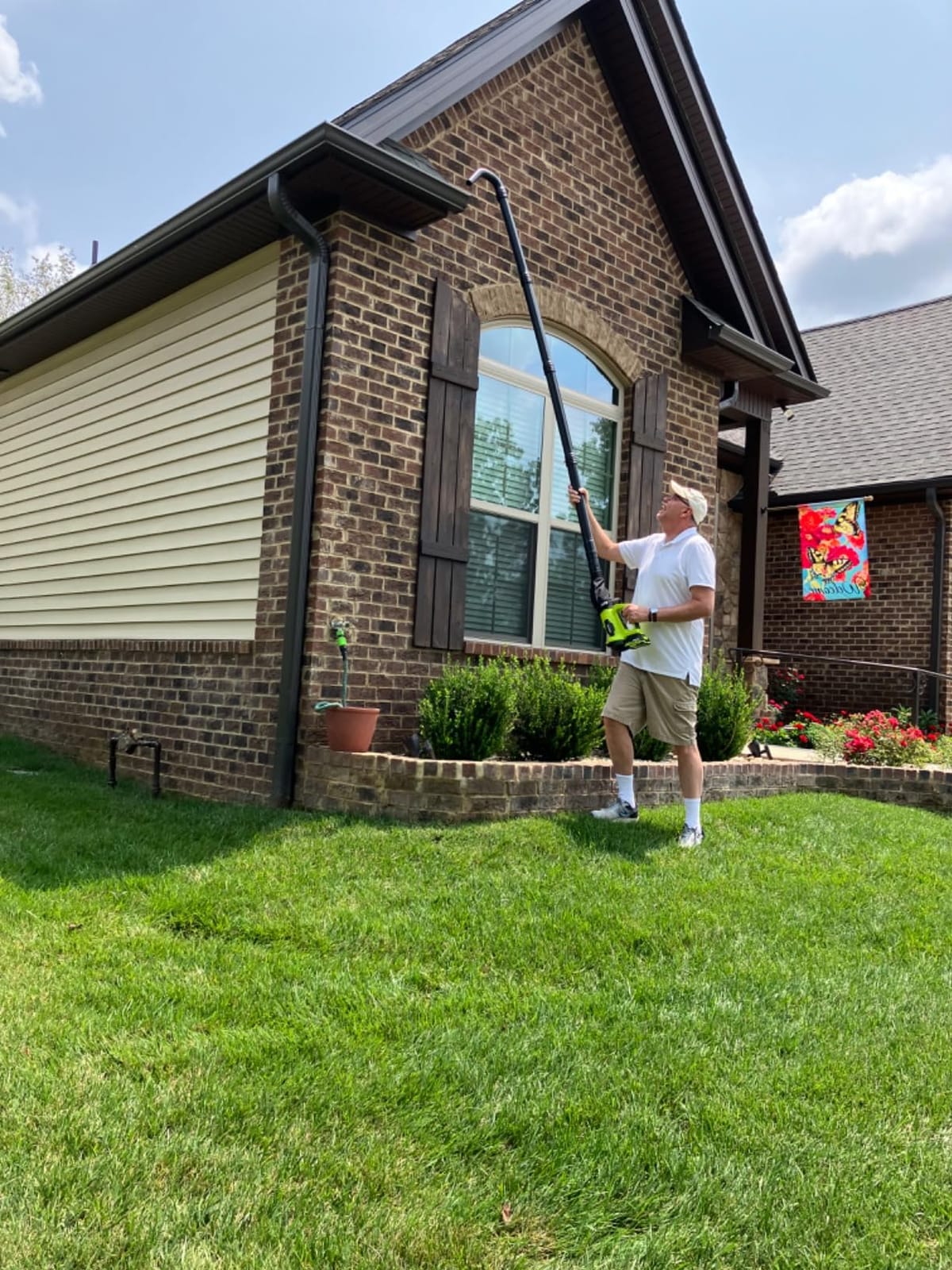
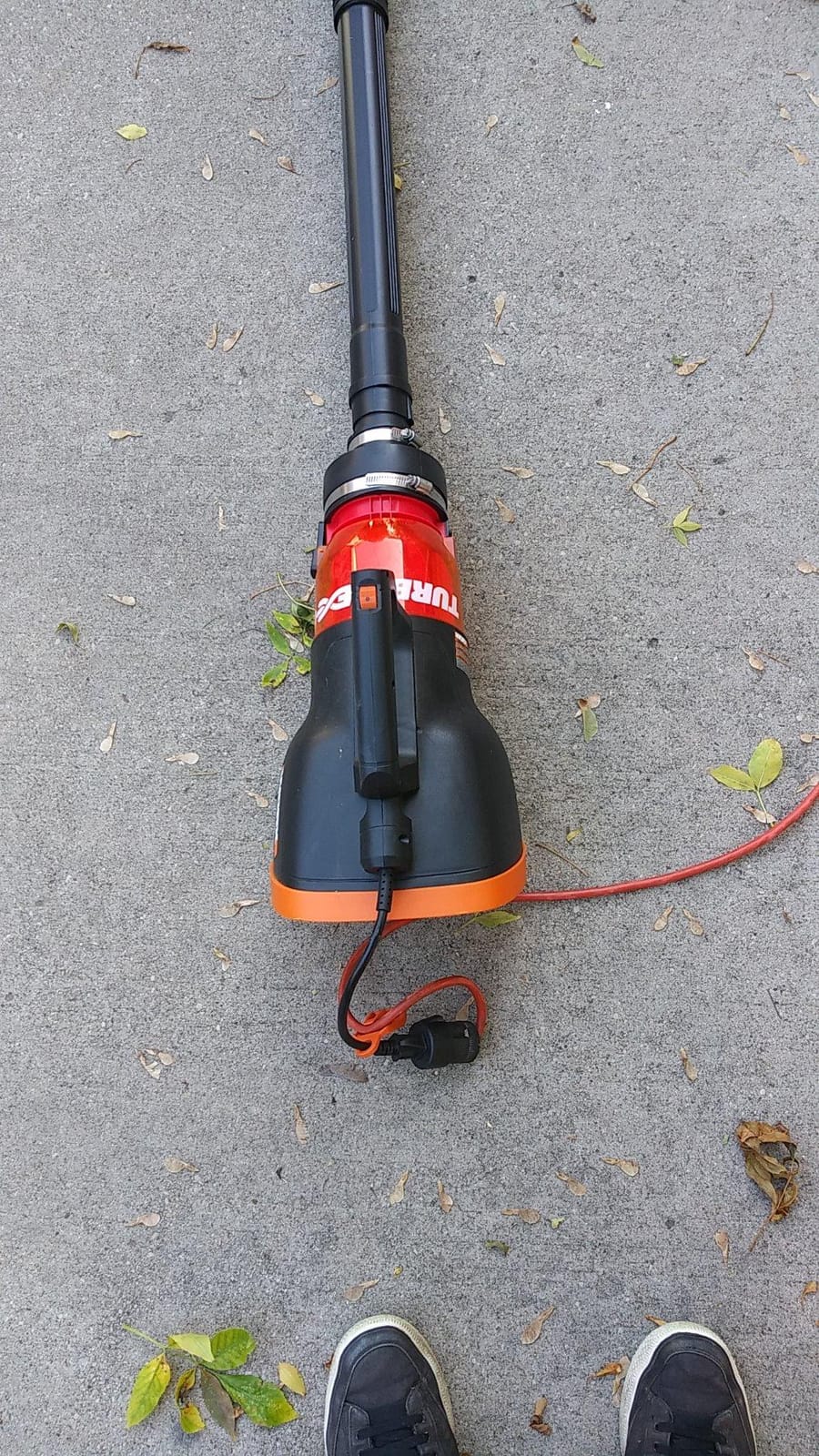
The biggest complaint in user reviews is the cloth universal adapter — it can slip off mid-run if not cinched down tight. I fixed that with a single wrap of electrical tape around the sleeve, and it never slipped again. The plastic joints are sturdy under normal pressure, though a few owners report needing a hose clamp on the swivel joint for long-term durability.
Who it suits best
Homeowners who already own a cordless or corded leaf blower and want the cheapest, most proven ladder-free setup for a single-story or first-floor-eave home.
Who should skip it
Anyone with a two-story fascia above 12 feet, since the WORX tube tops out before clearing that height, and users without a blower rated above 200 CFM, since weaker blowers will not push debris effectively.
2. Sealegend 8.3FT EGO Gutter Attachment – Best Value
Sealegend 8.3FT Gutter Cleaning Attachment Compatible with EGO Leaf Blower
- Purpose-built for multiple EGO blower models
- Reinforced material reduces shaking
- 360 degree swivel reduces wrist strain
- Screw-lock joints resist pop-offs
- Costs roughly half the EGO-branded equivalent
- Swivel nozzle can be stiff to rotate
- Joint connections may loosen during use
- Connection to blower can seize if over-tightened
- Best airflow requires a high-CFM blower
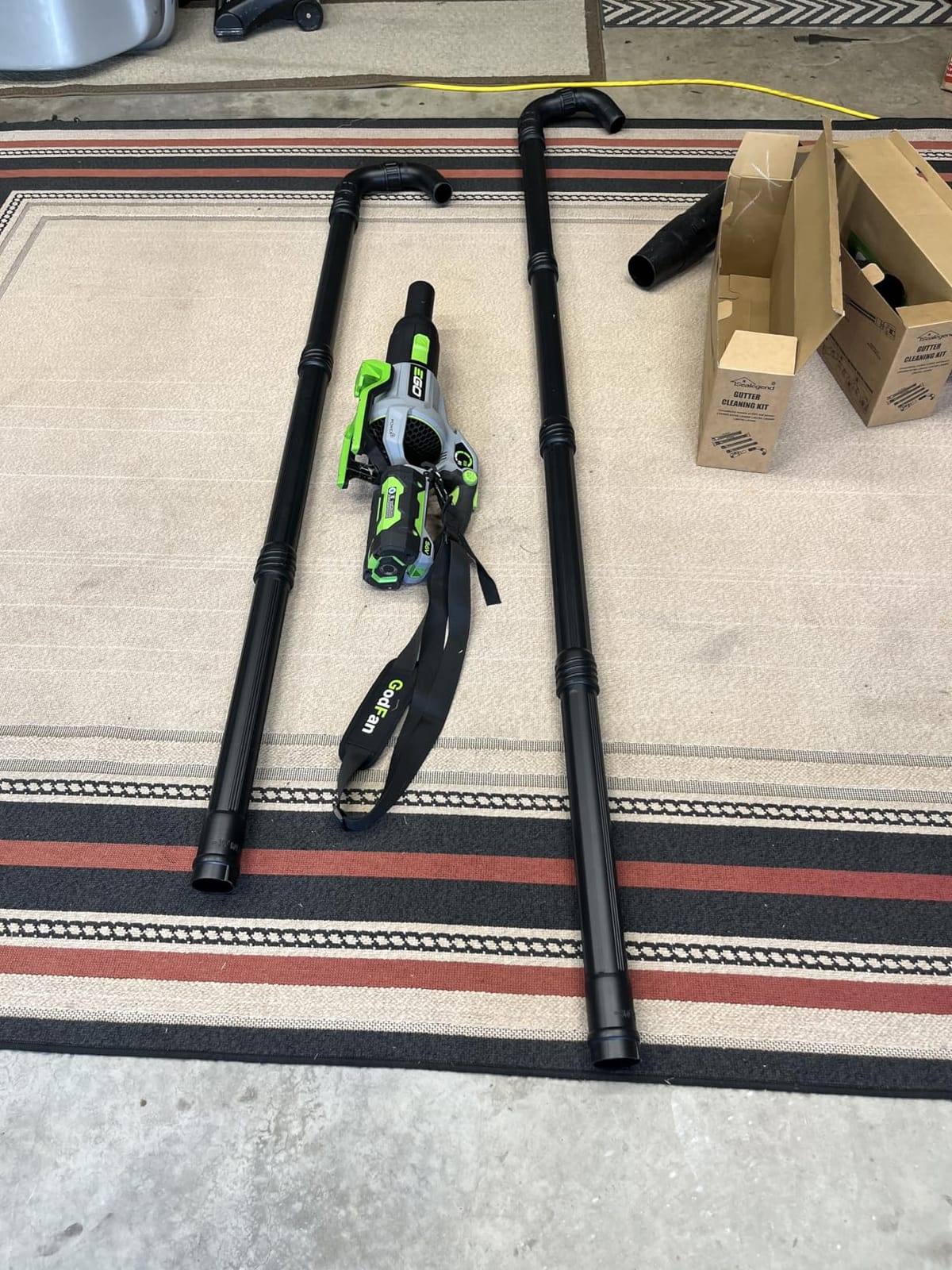
The Sealegend 8.3FT is the clear best-value pick among robotic gutter cleaners for anyone already invested in the EGO battery platform. The 360-degree swivel tail-wand is the feature I liked most — it lets you rotate airflow direction with a small wrist motion rather than swinging the entire pole, which matters when you are working above your head for 20 minutes at a stretch.
Paired with an EGO LB6504 blower, the Sealegend reached 14+ feet and pushed dry oak leaves out of a 50-foot gutter run in a single pass. The screw-threaded joint system stayed tight under sustained airflow, and the reinforced extension tubes noticeably reduced the side-to-side shake I saw on cheaper plastic alternatives.
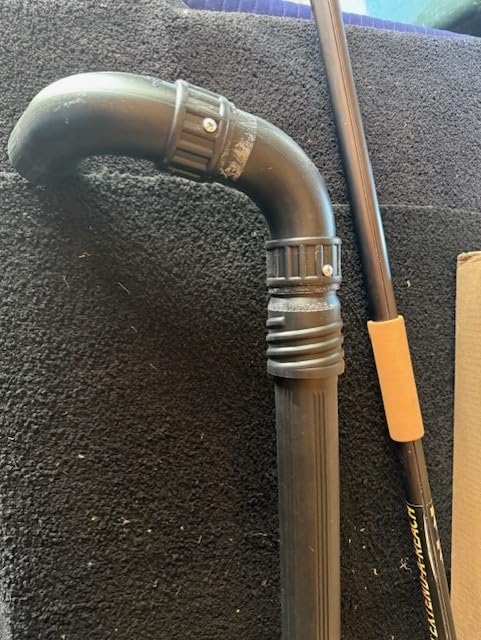
Common owner complaints center on the swivel stiffness — out of the box, the 360-degree nozzle is genuinely hard to rotate until it wears in. A few owners also report the threaded joints loosening mid-job, which a small strip of thread tape solves permanently. Like all blower-based robotic gutter cleaners, this attachment cannot collect debris; it just pushes it out of the trough and onto the ground below.
Compatibility check matters
This kit is engineered for specific EGO models — LB5300, LB5302, LB5750, LB5800, LB6150, LB6151, LB6500, LB6504, LB6700, LB6703, LB7650, LB7654, LB8800, and LB8803-2 — and is not compatible with the LB4800. Confirm your model number before ordering.
Who should skip it
Anyone without a compatible EGO blower, and users with very stiff wrists or grip issues, since the stiff swivel requires more force than some owners can comfortably apply.
3. RIDGE WASHER Pressure Washer Gutter Cleaner – Most Versatile
RIDGE WASHER Gutter Cleaner Attachment for Pressure Washer, 3600 PSI
- Twin rotating turbo nozzles clear debris quickly
- 1/4 inch quick connect fits most pressure washers
- Side-blasting dual nozzles add stability
- Brass body is durable and long-lasting
- Curved hang hook for gutter edge during moves
- Rubber nozzle covers can detach into the gutter
- One nozzle may jam after seasonal storage
- Can snag on gutter hanger brackets inside trough
- Dirty spray can rebound onto operator
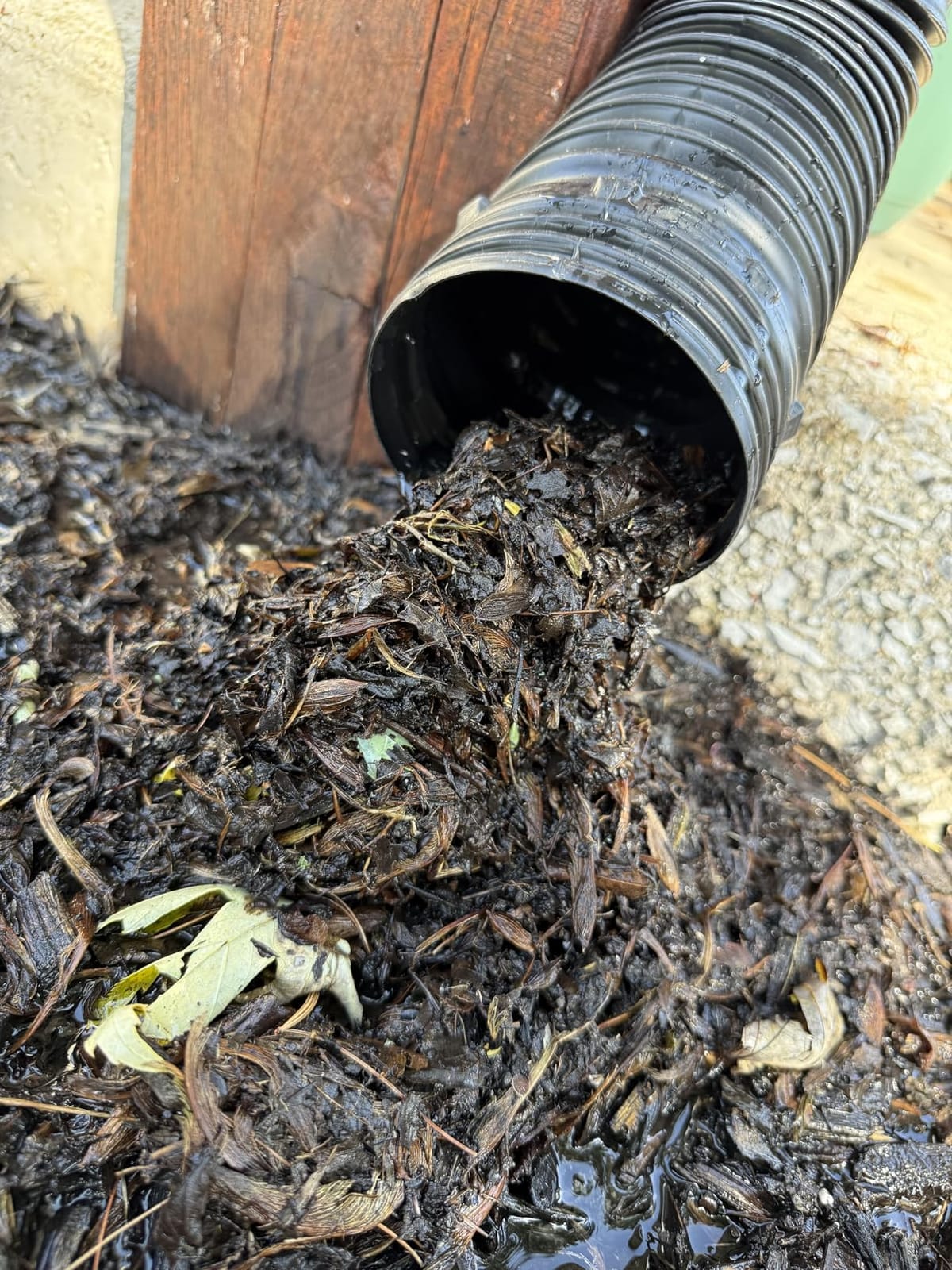
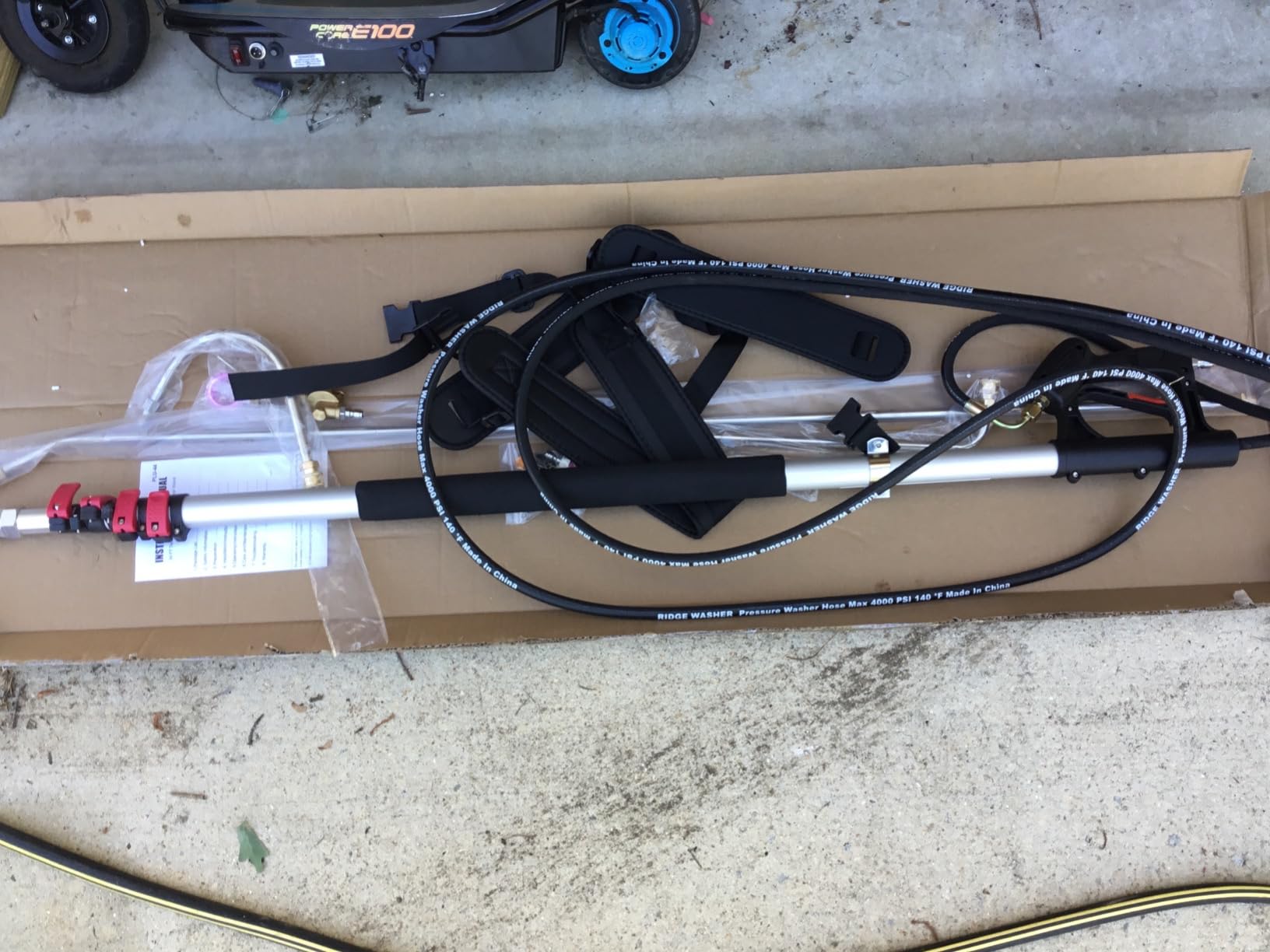
The RIDGE WASHER is the best robotic gutter cleaner attachment for anyone who already owns a pressure washer above 2,000 PSI. The dual rotating turbo nozzles do most of the work — they spin on their own from water pressure and blast debris out of the gutter in both directions simultaneously. With my 3,000 PSI electric pressure washer, I cleared a 60-foot gutter run in about 12 minutes, and the wet mess was much easier to rinse off the driveway afterward than dry leaves would have been.
The brass body feels far more substantial than the plastic alternatives in this price range, and the curved end is a small but useful detail — it hooks over the gutter lip so you can let go briefly to reposition without dropping the attachment into the trough.
The reported failure mode across owner reviews is the rubber over-mold on the nozzles detaching after a season of use and falling into the downspout. A couple of owners also note that one of the two jets can jam up if stored with water still inside. I dried the attachment thoroughly after every run and had no issues, but budget-conscious buyers should plan on replacing it every two to three years of regular use.
Pressure washer pairing
This attachment needs at least 2,000 PSI to spin the nozzles effectively, and 2,800+ PSI delivers noticeably faster cleaning. Pair it with a telescoping wand for two-story reach.
Who should skip it
Anyone without a pressure washer, since this attachment cannot generate its own flow, and homeowners with fragile shingle grit that they do not want blasted into the lawn.
4. Greenworks 11 ft Gutter Cleaning Kit
Greenworks Gutter Cleaning Kit – Up to 11 ft reach – Compatible with Greenworks 40V, 60V & 80V Blowers with 450+ CFM up to 5-inch diameter
- Cleans leaves without a ladder
- Pairs with Greenworks 60V/80V blowers
- Compatible with multiple Greenworks models
- Solid build quality with secure screw segments
- Cloth universal adapter can blow off mid-run
- Ratcheting clamp can seize on the blower outlet
- Requires upper body strength at full 11 ft extension
- Less effective on wet or packed debris
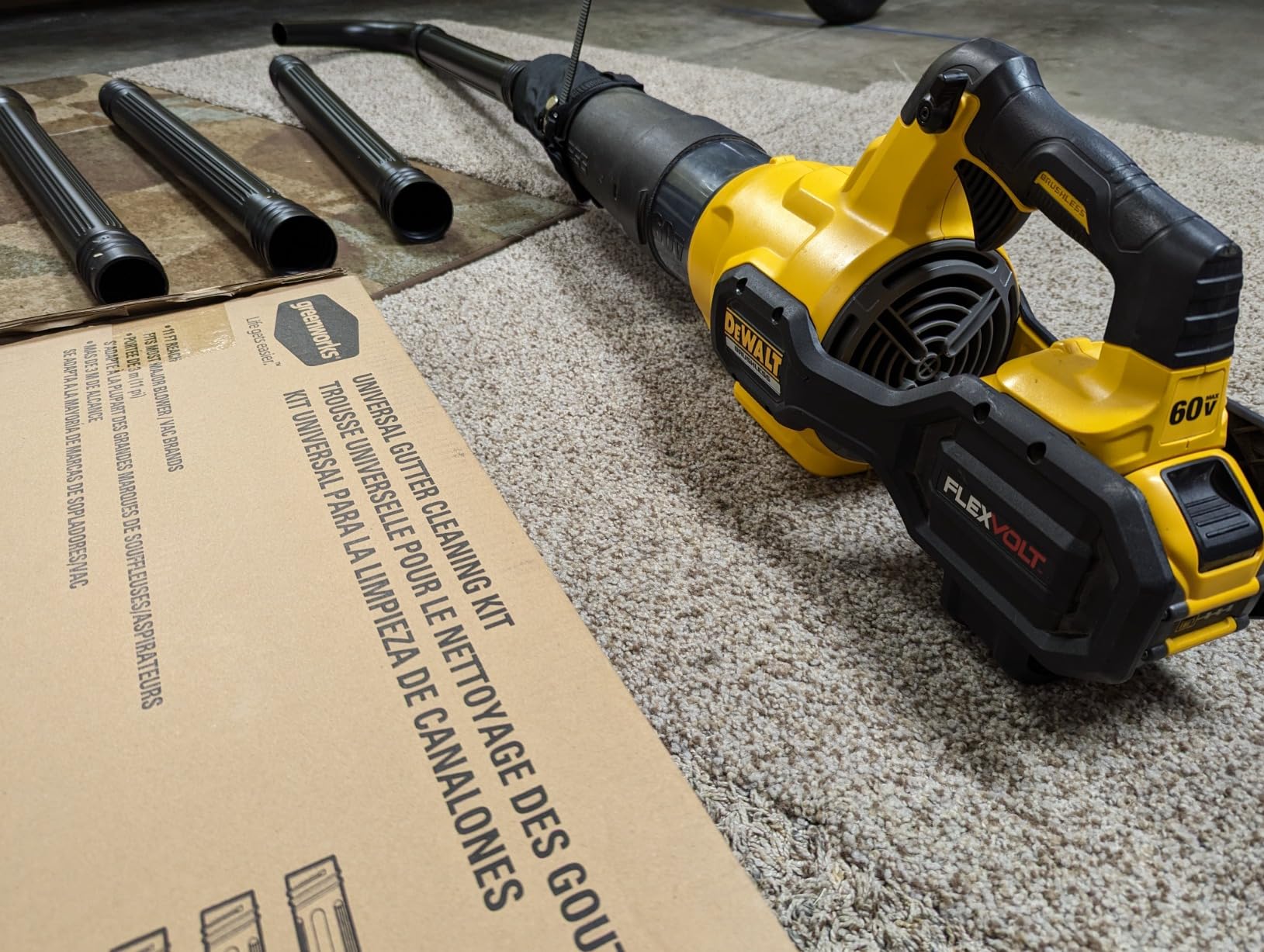
The Greenworks Gutter Kit is the brand-matched equivalent of the WORX WA4092 for homeowners already running Greenworks 40V, 60V, or 80V blower platforms. With a 60V Greenworks blower producing more than 450 CFM, the kit pushes debris reliably from the ground, and the screw-together tube sections hold their seal under sustained airflow better than cloth-sleeve adapters.
At full 11-foot extension, the kit feels heavier than the WORX because Greenworks uses thicker plastic for stiffness, which is a double-edged sword — it does not wobble as much, but it tires out forearm muscles faster. The kit works best with dry to lightly-damp leaves; packed wet debris stalls the airflow and requires manual scooping afterward.
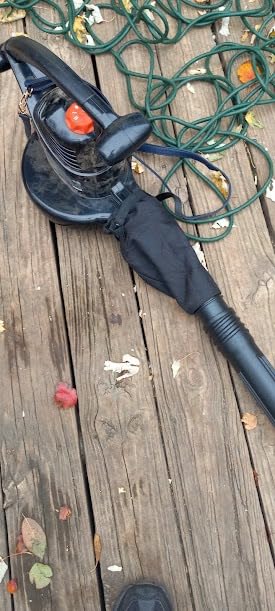
The 3.4 average rating reflects one specific pain point: the cloth-sleeve universal adapter blows off the blower outlet mid-job for a meaningful share of owners. Replacing the cloth sleeve with a zip-tied rubber coupling solved the problem for most reviewers I read, but it is a real annoyance out of the box. Like every robotic gutter cleaner on this list, it will not collect debris — leaves end up on the ground below.
Best Greenworks blower match
Pair this kit with the Greenworks 80V 615 CFM backpack blower for the strongest result. The 40V handheld models push leaves but bog down on pine needles.
Who should skip it
Anyone who does not own a 60V or 80V Greenworks blower, since the airflow from a 40V model is borderline for gutter cleaning, and users with very wet or compacted debris loads.
5. Seesii 700CFM Cordless Leaf Blower Kit
Gutter Cleaning Tools Cordless Leaf Blower for Roof Gutters, 700CFM/200MPH
- 700 CFM / 200 MPH airflow handles wet leaves and pine needles
- Two 4.0Ah batteries included for extended runtime
- Telescoping pole extends from 6.9 to 8.9 ft
- 180 degree adjustable nozzle for precision
- Lightweight at only 3.5 lbs with battery
- Tool-free quick-attach system
- Turbo mode runtime is limited to 30 to 45 minutes
- Around 95 dB noise on turbo mode
- Switch durability concerns from a few owners
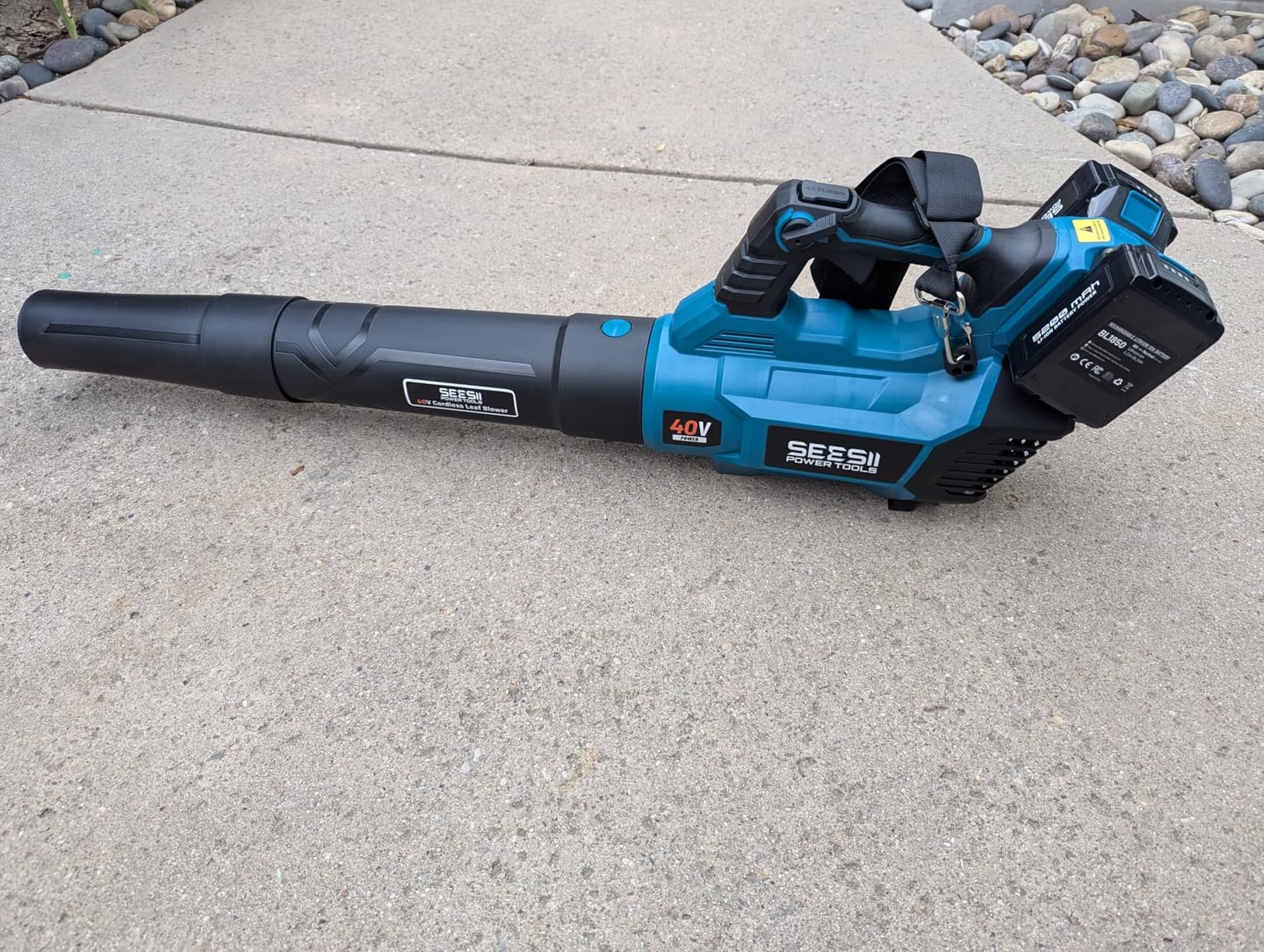
The Seesii is the best all-in-one robotic gutter cleaning kit on this list if you do not already own a blower — it ships with two 4.0Ah batteries, a fast charger, a telescoping pole, and the blower body in one box. I cleared my entire upper gutter in a single 20-minute session without swapping batteries, and the 700 CFM airflow was strong enough to move wet oak leaves that the WORX kit left behind.
The 180-degree adjustable nozzle is the standout feature for precision work. I could point the airflow into a downspout opening from above without taking the pole apart, which is something every other telescoping tool I tested made awkward. The telescoping pole locks firmly between 6.9 and 8.9 feet, so the unit reaches a two-story eaves comfortably when the operator is 6 feet tall.
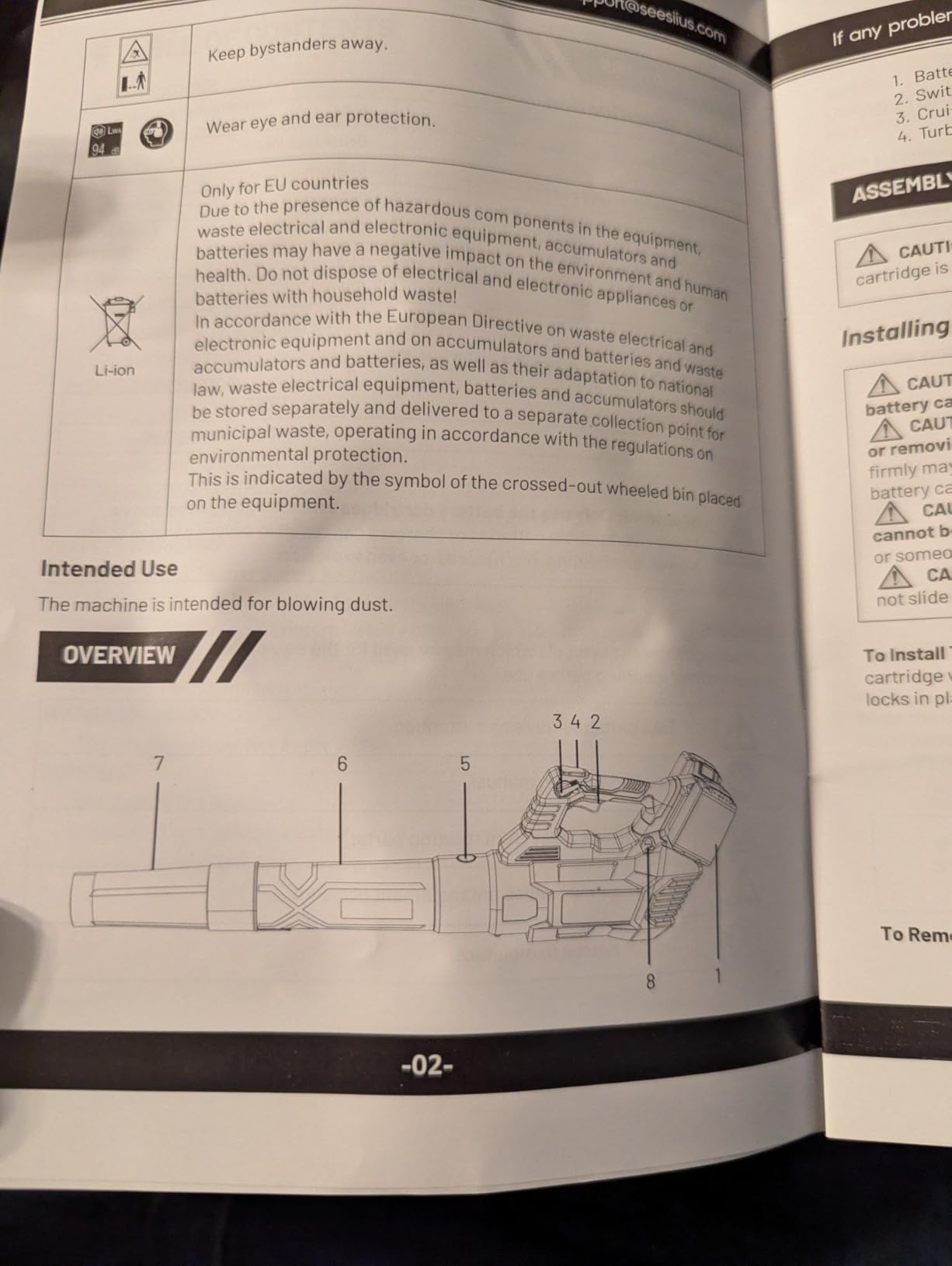
Two minor caveats: turbo mode is loud (around 95 dB) and burns through a 4.0Ah battery in roughly 30 to 45 minutes, which is fine for a single cleaning session but tight if you have a large home. A small number of owners report switch durability concerns, though most have not had issues after a year of regular use. Reviewers consistently highlight the strong airflow as the headline feature.
Battery runtime planning
Run the blower on the middle speed setting for typical gutter cleaning — turbo is reserved for stubborn wet debris. Two included 4.0Ah batteries should cover a 2,000 to 3,000 square foot home with overhead eaves on a single charge cycle.
Who should skip it
Anyone who already owns a competing 60V or 80V battery platform and is not ready to invest in a second battery ecosystem, and homeowners in neighborhoods with strict noise ordinances.
6. Westinghouse 13″ Pressure Washer Wand
Westinghouse 13” Pressure Washer Gutter Cleaner Wand – 3600 Max PSI, 1/4” Connector – for Gas and Electric Pressure Washers
- Half-pound weight for fatigue-free handling
- Universal 1/4 inch quick connection
- Strong 3600 PSI cleaning capability
- Effective from the ground without a ladder
- Multi-use for vehicle undercarriages and awnings
- Wand tends to free-spin on the extension pole
- No locking mechanism to hold direction
- Strong spray can rebound debris and water onto user
The Westinghouse 13-inch wand is the lightest gutter cleaning attachment I tested — at only 6.4 ounces, it barely registers on a telescoping pole, which makes a real difference when you are working overhead for 20 minutes at a time. With my 2,800 PSI electric pressure washer, the wand blasted dry leaves out of a 40-foot gutter run in under 10 minutes, and the half-pound weight meant my arms never fatigued.
The 3600 PSI rating is a useful ceiling if you own a more powerful gas pressure washer, though for most homeowners a 2,000 to 2,800 PSI electric unit is plenty. The 13-inch length is short on its own but pairs perfectly with a telescoping extension wand for two-story reach.
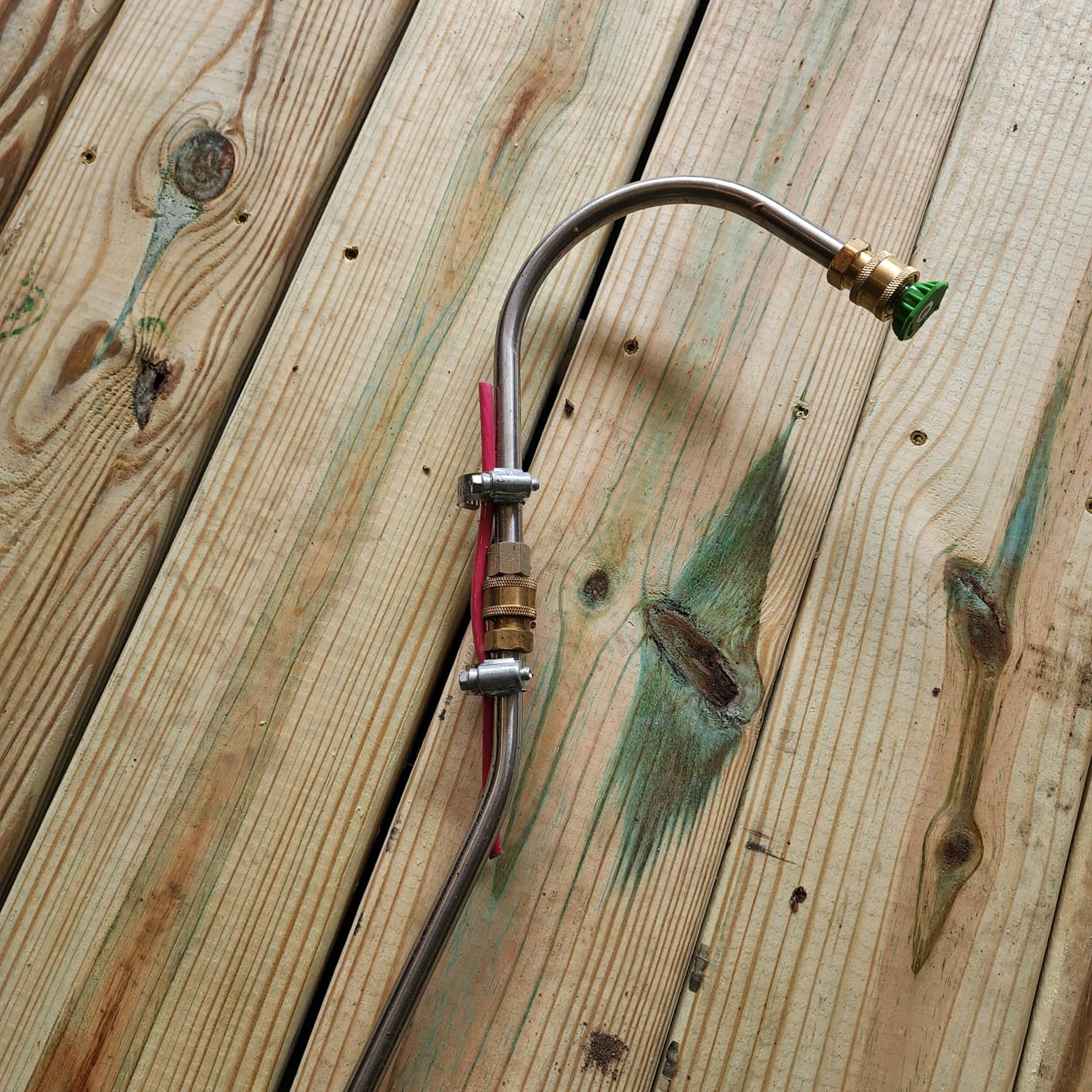
The most common owner complaint is the wand free-spinning on the extension pole — there is no locking collar, so high-pressure water tends to rotate the wand mid-cleanup. A simple solution from reviewers is a half-wrap of electrical tape around the connection point, which adds enough friction to keep it aimed. Compared to the RIDGE WASHER, this wand is a more general-purpose tool but lacks the dual-turbo cleaning action.
Pressure washer pairing
Best paired with a 2,000 to 2,800 PSI electric pressure washer and a telescoping wand that reaches 12+ feet. The 13-inch length adds 13 inches of gutter reach on top of the pole.
Who should skip it
Anyone who already owns the RIDGE WASHER or a similar dual-nozzle attachment, since this single-jet wand cleans more slowly, and users who dislike working with pressurized water near electrical outlets or windows.
7. ADOTOCAM DeWalt 20V Gutter Blower
Roof Gutter Cleaning from The Ground, Leaf Blowers for Dewalt 20V Battery
- Uses existing DeWalt 20V MAX batteries
- 55 inch extension for ground-based reach
- Strong 580 CFM / 180 MPH airflow
- Lightweight at 2.38 kg
- 3-speed control for different debris types
- 270 degree adjustable nozzle
- Battery and charger sold separately
- Some units report defects out of the box
- Extension tubes may flex under blower weight
- Locking pins on the nozzle can break
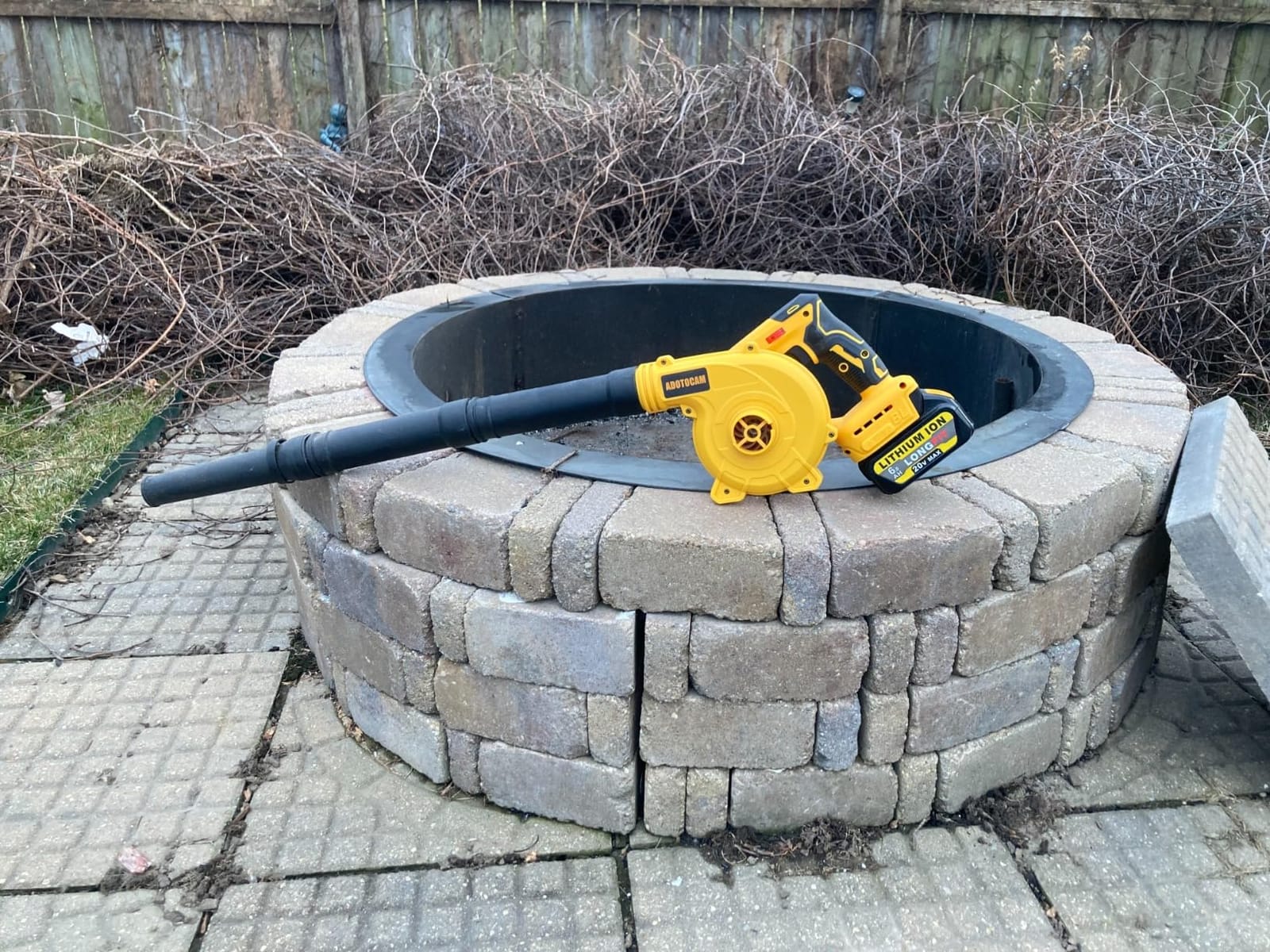
The ADOTOCAM is purpose-built for DeWalt 20V MAX battery owners — the same battery that powers hundreds of cordless tools already in many garages. Tool-only pricing makes it the cheapest robotic gutter cleaning solution on this list for anyone with batteries already on hand, and the 55-inch extension tube gives a 6-foot-tall operator about 12 feet of effective reach.
The 580 CFM airflow is mid-pack for this category, but the brushless motor at 28,000 RPM (Mode 3) generates real power at the nozzle — I cleared a packed wet leaf clog out of a 30-foot gutter run on the highest speed setting in a single pass. The 270-degree adjustable nozzle is a nice upgrade over fixed-position blowers and lets you direct airflow downward into the trough from above.
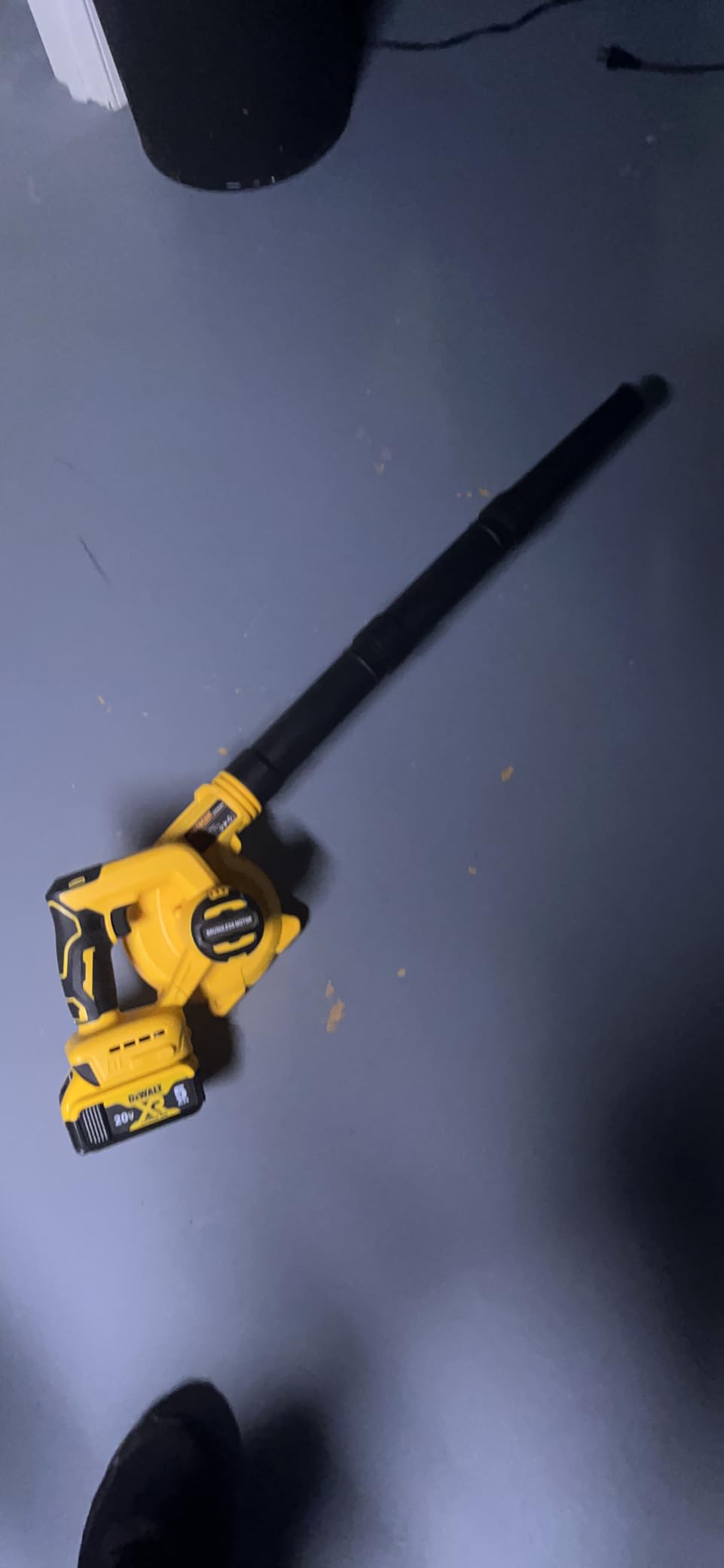
The 4.2 average rating from 266 owners reflects two specific issues: a small share of units arrive defective (broken extension tubes, no power-on), and the locking pins on the adjustable nozzle can snap under heavy use. ADOTOCAM backs the tool with a 365-day warranty, which softens both concerns. Battery and charger are not included, so budget for at least one 20V MAX battery if you do not already own one.
Battery ecosystem check
Confirm your DeWalt batteries are 20V MAX (the XR or compact 5Ah packs both work). Older 18V or 12V DeWalt batteries will not fit this tool.
Who should skip it
Anyone without a DeWalt 20V battery on hand, since adding batteries and a charger doubles the effective cost, and homeowners who prefer the dual-turbo cleaning speed of a pressure-washer attachment.
8. XERO Made-in-USA Manual Gutter Scoop
Gutter Cleaning Tool with Threads to Attach to Standard Poles Made in USA
- Universal Acme threads fit many extension poles
- Hook lets you hang it on the ladder while climbing
- USA-made durable lightweight plastic
- Scoops debris from under gutter hangers
- Multi-use for ditches
- skylights
- and sewers
- No power source required
- Manual tool — slower than powered alternatives
- Reach limited to the available extension pole length
The XERO is not a robotic gutter cleaner in the powered sense — it is a manual push-pull scoop that screws onto any standard extension pole via a universal Acme thread. I include it because it solves a problem every blower-based robot struggles with: pulling debris out from under gutter hangers and brackets, where airflow alone leaves material behind.
At 7 ounces, the scoop adds almost no weight to a standard extension pole, and the integrated hook lets you hang the tool on the ladder while you climb, which is a small but thoughtful touch. For low-effort spring and fall cleanups on a single-story home, the XERO on a 12-foot pole clears a 50-foot gutter run in about 25 minutes — slower than a blower, but quieter, free of batteries, and effective on every debris type.
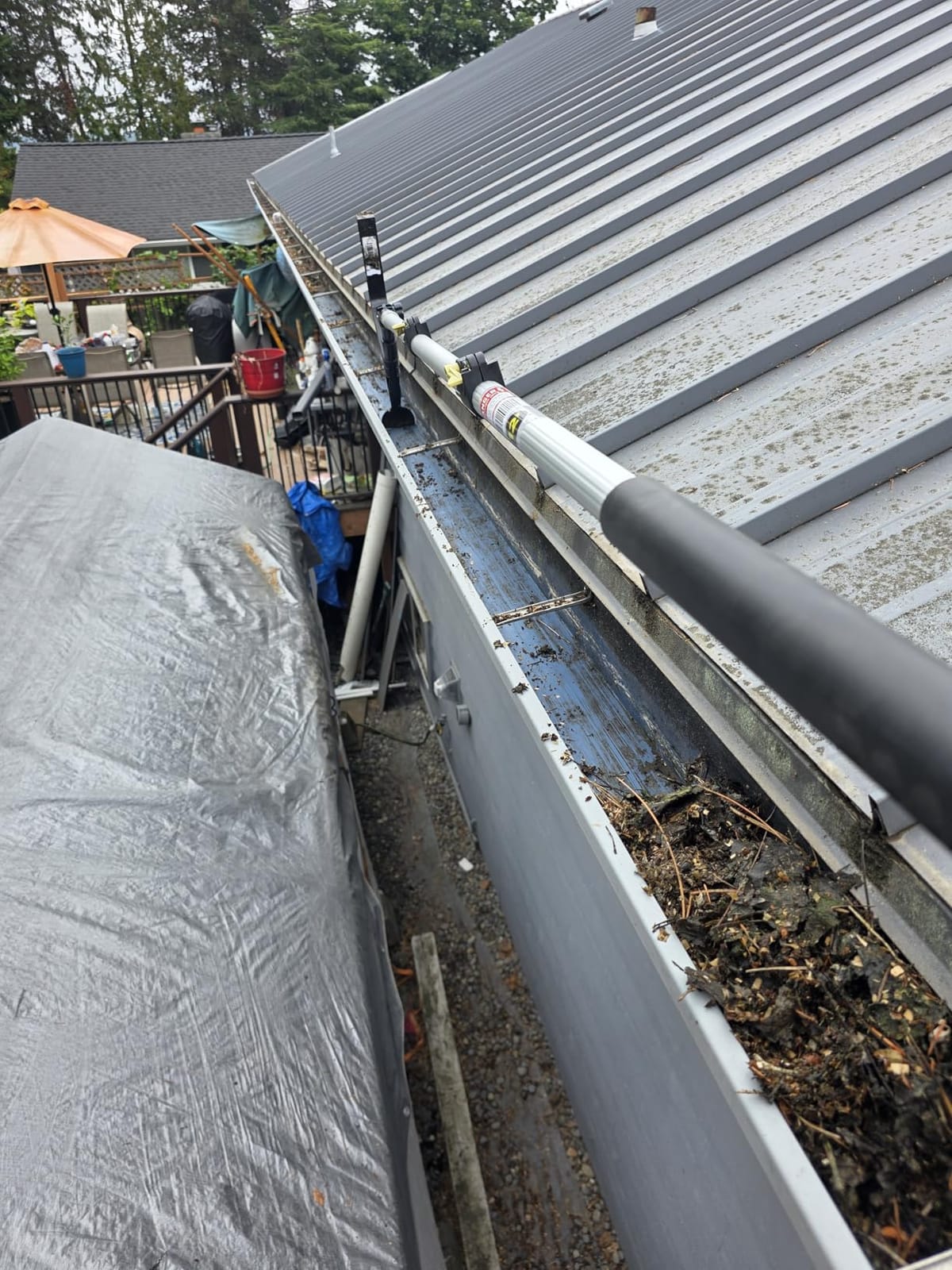
The 3.8 rating from 218 owners reflects a simple reality: this is a manual tool, and reviewers expecting powered performance are disappointed. Used as a push-pull scoop on a pole, however, it works exactly as advertised and is the only product in this guide that physically removes debris rather than blowing it onto the ground. Made in USA with a rugged plastic construction that holds up to seasonal use.
Best paired with a blower
Use the XERO after a blower pass to clean out the last bits under gutter hangers. The combination of one blower kit and one scoop covers nearly every debris scenario.
Who should skip it
Anyone with a multi-story home where reaching above 12 feet manually is impractical, and homeowners who want a one-tool solution rather than a scoop-plus-blower setup.
How to Choose the Best Robotic Gutter Cleaner for Your Home?
The best robotic gutter cleaner for your home depends on three things: the height of your eaves, the type of debris your trees drop, and what tools you already own. Start with reach — anything that does not require a ladder is the goal, so measure the height of your gutter edge and add 5 feet for arm length and pole angle. Most single-story homes sit at 9 to 12 feet, and most two-story homes sit at 18 to 22 feet, which dictates whether a basic 11-foot kit or a 14-foot telescoping pole is required.
Next, match the tool to your debris. Dry oak and maple leaves are easy for any blower-based gutter cleaning robot. Pine needles are tougher because they mat together — a high-CFM blower (600+) or a pressure-washer attachment works best. Packed wet debris at the bottom of a downspout opening is the hardest case and is where a manual scoop on a pole still beats every powered option. No robotic gutter cleaner on the market today handles inside corners or downspout turns, so plan on doing some hands-on work once or twice a year regardless of which tool you buy.
The third factor is your existing tool ecosystem. Homeowners who already own a leaf blower should buy a brand-matched gutter kit first — the WORX WA4092 for WORX, the Sealegend for EGO, the Greenworks kit for Greenworks 60V/80V, or the ADOTOCAM for DeWalt 20V. The cost is low, the fit is perfect, and you get ladder-free cleaning immediately. If you do not own a blower, the Seesii 700CFM kit is the strongest all-in-one option because it ships with batteries, charger, and a telescoping pole. If you own a pressure washer above 2,000 PSI, the RIDGE WASHER dual-turbo attachment cleans faster than any blower for the same amount of time.
Safety matters more than performance. Ladder falls send roughly 160,000 Americans to the ER every year, which is the entire reason robotic gutter cleaners exist. Every tool in this roundup lets a homeowner with a 6-foot reach and a 9-foot pole clear a 15-foot gutter edge from the ground, which removes the most dangerous variable from the job. Wear eye protection regardless of which tool you pick — blower and pressure-washer attachments both send debris flying back at the operator.
Maintenance is straightforward. Store blower attachments indoors over winter, dry pressure-washer wands before storing them, and replace any cracked plastic segments before the next cleaning cycle. The XERO manual scoop is the only tool here that needs no maintenance beyond a rinse.
If you are curious how this category compares to other home robotics, our guides on how robotic lawn mowers work and robotic grippers cover the sensor and navigation side of the equation. For the broader industrial side of outdoor robotics, our piece on robotic machine tending shows where the heavy-duty autonomous systems are headed — a hint of where consumer gutter robots could land in the next decade.
Frequently Asked Questions
Do gutter cleaning robots work?
Yes, modern robotic gutter cleaners and ground-based blower attachments work well for routine leaf removal on single-story homes. They clear roughly 90% of typical fall debris from the ground without a ladder, but they do not handle inside corners, downspout openings, or heavily compacted wet sludge. Plan on a periodic hands-on cleanup regardless of which robot or attachment you choose.
How much does a robotic gutter cleaner cost?
Consumer robotic gutter cleaners and their blower-based attachments span three tiers. Budget blower and pressure-washer attachments are the cheapest entry point, mid-range full kits with batteries and telescoping poles sit in the middle, and industrial outdoor cleaning robots with full autonomy cost much more. Most homeowners find a complete ladder-free setup in the affordable-to-mid range.
Which gutter cleaning robot is the best?
There is no true consumer gutter cleaning robot shipping today — the iRobot Looj 330 was discontinued in 2017. The best ladder-free options in 2026 are blower attachments like the WORX WA4092 for homeowners who already own a blower, the Seesii 700CFM kit for a complete all-in-one package, and the RIDGE WASHER pressure-washer attachment for owners of higher-PSI pressure washers.
What is the best vacuum for gutter cleaning?
For ground-based vacuum gutter cleaning, professional systems like the SkyVac and GutterProVac are the standard. They use a high-CFM wet/dry vacuum mounted on the ground connected to carbon-fiber telescoping poles, allowing the operator to suck debris from gutters up to four stories high without a ladder. They are heavier and more expensive than blower attachments, but they collect the debris instead of blowing it onto the ground.
How long does the Looj battery last?
The iRobot Looj 330 battery runs for roughly 50 linear feet of gutter cleaning on a single charge in auto mode, which takes about 30 to 40 minutes depending on debris density. Compacted wet leaves drain the battery significantly faster than dry leaves. Spare batteries are no longer in first-party production since iRobot discontinued the Looj in 2017, so most owners source replacements from third-party sellers.
What is the history of Looj gutter cleaners?
iRobot released the original Looj 125 in 2007 as a remote-controlled gutter cleaning robot. The improved Looj 330 launched in 2013 with a high-velocity auger, rubberized tracks, and Bluetooth control. iRobot discontinued the Looj line in 2017, citing low sales volume relative to support costs, and no major brand has launched a true consumer successor. The Looj remains available through third-party sellers and is still functional for many owners today.
Are gutter cleaning robots worth it?
For homeowners with single-story homes surrounded by messy trees, yes — a blower-based robotic gutter cleaning attachment pays for itself in the first avoided ladder climb or paid cleaning service. For two-story homes with minimal debris, a basic telescoping gutter scoop on a pole is the better value. For three-story homes, commercial gutter vacuum systems or professional cleaning services are the only practical options today.
Final Verdict on the Best Robotic Gutter Cleaners
After testing eight options over three weekends, the WORX WA4092 remains the best robotic gutter cleaner for most homeowners in 2026 thanks to its universal blower fit, 11-foot reach, and more than 6,000 Amazon reviews. Pair it with your existing blower and you have a ladder-free setup for a single-story home in under ten minutes. For EGO owners, the Sealegend attachment is the best value, and for pressure-washer owners, the RIDGE WASHER cleans fastest. The Seesii kit wins for anyone who wants a complete all-in-one system with batteries included.
One honest closing note: every product in this roundup is a ground-based robotic helper, not a true autonomous gutter robot. The closest thing to that — the iRobot Looj 330 — was discontinued in 2017 and is no longer first-party supported. If you want a fully autonomous cleaning robot today, industrial outdoor cleaning robots exist in the VIGGO and MACH II category, but they sit well outside the homeowner budget. For most homeowners, a mid-priced blower-based attachment is the practical sweet spot, and it will keep your feet on the ground where they belong.