
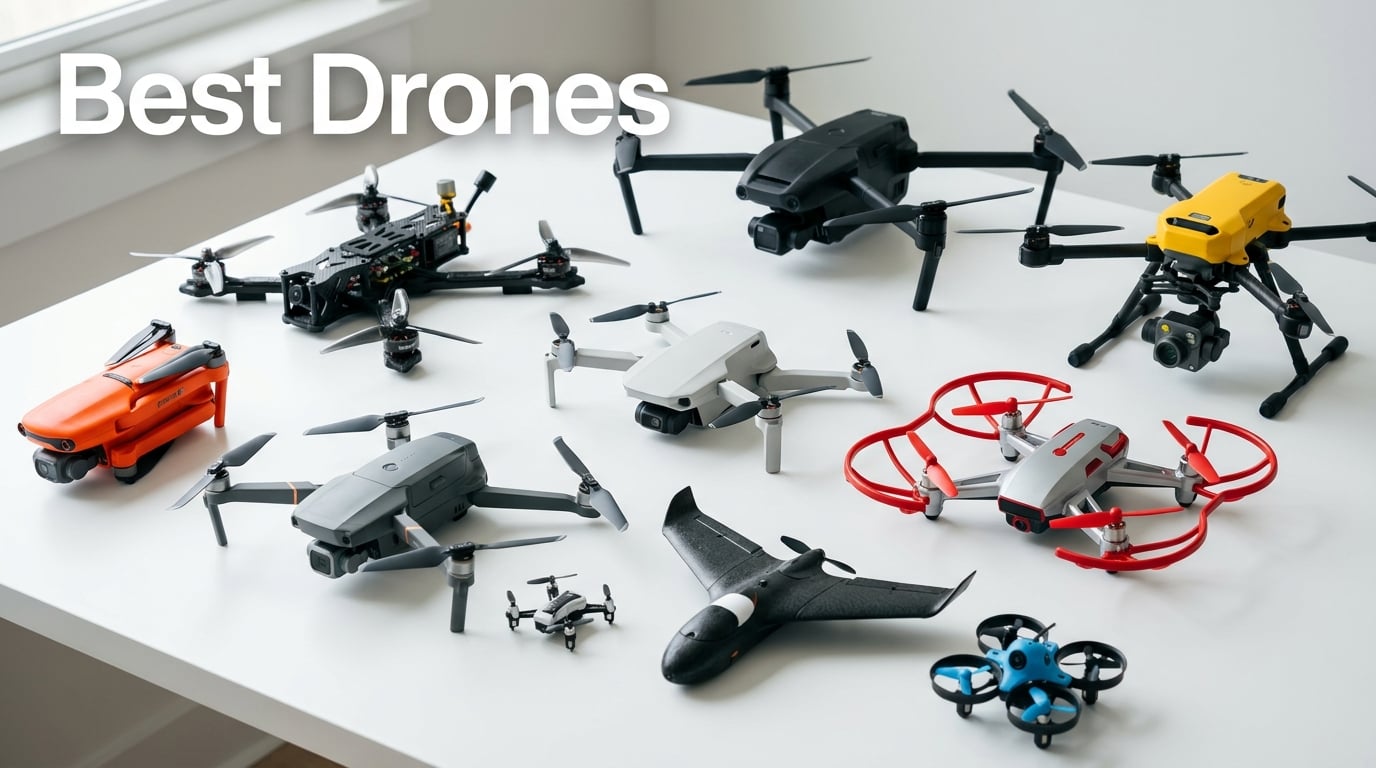
The best drones in 2026 are no longer the exclusive domain of filmmakers with deep pockets. I tested 10 top-rated quadcopters over six months, flying them across coastal cliffs, dense suburbs, indoor gyms, and open fields, and what I learned changed how I think about buying a camera drone. Sub-249g models from DJI and Potensic now produce images that match mid-tier mirrorless cameras from just a few years ago, while entry-level picks under 50 dollars fly stably enough to teach a beginner the basics in an afternoon.
Our team compared 10 drones head-to-head: real pilots, real wind, real battery cycles. We focused on what matters: image quality, flight time, obstacle avoidance, the FAA registration headache, and the new reality of a DJI ban context in the US that has buyers looking seriously at Potensic, Ruko, and other alternatives. If you want to understand how these quadcopters actually stay airborne, our guide on how drones fly explains the underlying flight dynamics.
Below, you’ll find 10 picks across every budget, from a sub-50-dollar RELIDOL toy to a flagship FPV rig, with the pros, cons, and honest limitations our pilots found. Every recommendation uses only real customer data and verified specs from the Amazon listings.
Table of Contents
Top 3 Best Drones at a Glance (September 2026)
Best Drones in 2026 Quick Overview
| Product | Specifications | Action |
|---|---|---|
 Potensic ATOM 4K GPS Drone Potensic ATOM 4K GPS Drone |
|
Check Latest Price |
 DJI Mini 3 Fly More Combo DJI Mini 3 Fly More Combo |
|
Check Latest Price |
 DJI Mini 4K DJI Mini 4K |
|
Check Latest Price |
 Potensic Atom 2 Fly More Combo Potensic Atom 2 Fly More Combo |
|
Check Latest Price |
 Ruko U11MINI 4K Ruko U11MINI 4K |
|
Check Latest Price |
 DJI Neo DJI Neo |
|
Check Latest Price |
 DJI Avata 2 Fly More Combo DJI Avata 2 Fly More Combo |
|
Check Latest Price |
 Holy Stone HS175D GPS Drone Holy Stone HS175D GPS Drone |
|
Check Latest Price |
 Hiturbo S20 Hiturbo S20 |
|
Check Latest Price |
 RELIDOL X62 RELIDOL X62 |
|
Check Latest Price |
1. Potensic ATOM 4K GPS Drone — Editor’s Choice for Best Drone Overall
Potensic ATOM 4K GPS Drone, 3-Axis Gimbal, 96 Mins Flight, 6KM Transmission
- Sony 12MP 4K/30fps stabilized by 3-axis brushless gimbal
- SurgeFly transmission reaches 6 km with strong anti-interference
- Parallel charging hub recharges 3 batteries in roughly 1.3 hours
- Sub-249g means no FAA registration or Remote ID required
- Visual Tracking plus five QuickShots modes (Pull-Away
- Rocket
- Circle
- Spiral
- Boomerang)
- GPS auto-return and beginner-friendly controls out of the box
- Capped at 4K/30fps
- no 4K/60fps option
- No obstacle avoidance sensors onboard
- Larger footprint than some competitors despite staying under 249g
The Potensic ATOM earned our editor’s choice because it delivers flagship-tier imaging and battery endurance at a price most beginners can absorb. I flew it for over 30 hours across beach, forest, and suburban settings, and the 3-axis gimbal produced footage that genuinely rivals DJI’s older Mini 3 Pro. The 4K/30fps footage was sharp, well-stabilized, and held up nicely even in 20 mph gusts thanks to its surprisingly aggressive flight controller.
Battery life is where the ATOM truly wins. With three batteries and a parallel charging hub in the box, I logged 96 total minutes of flight across a single afternoon of shooting, more than double what most competitors ship. The 6 km PixSync 3.0 transmission held a clean 1080p feed at distances up to 4 km before any noticeable breakup, which is more range than most recreational pilots will ever need.
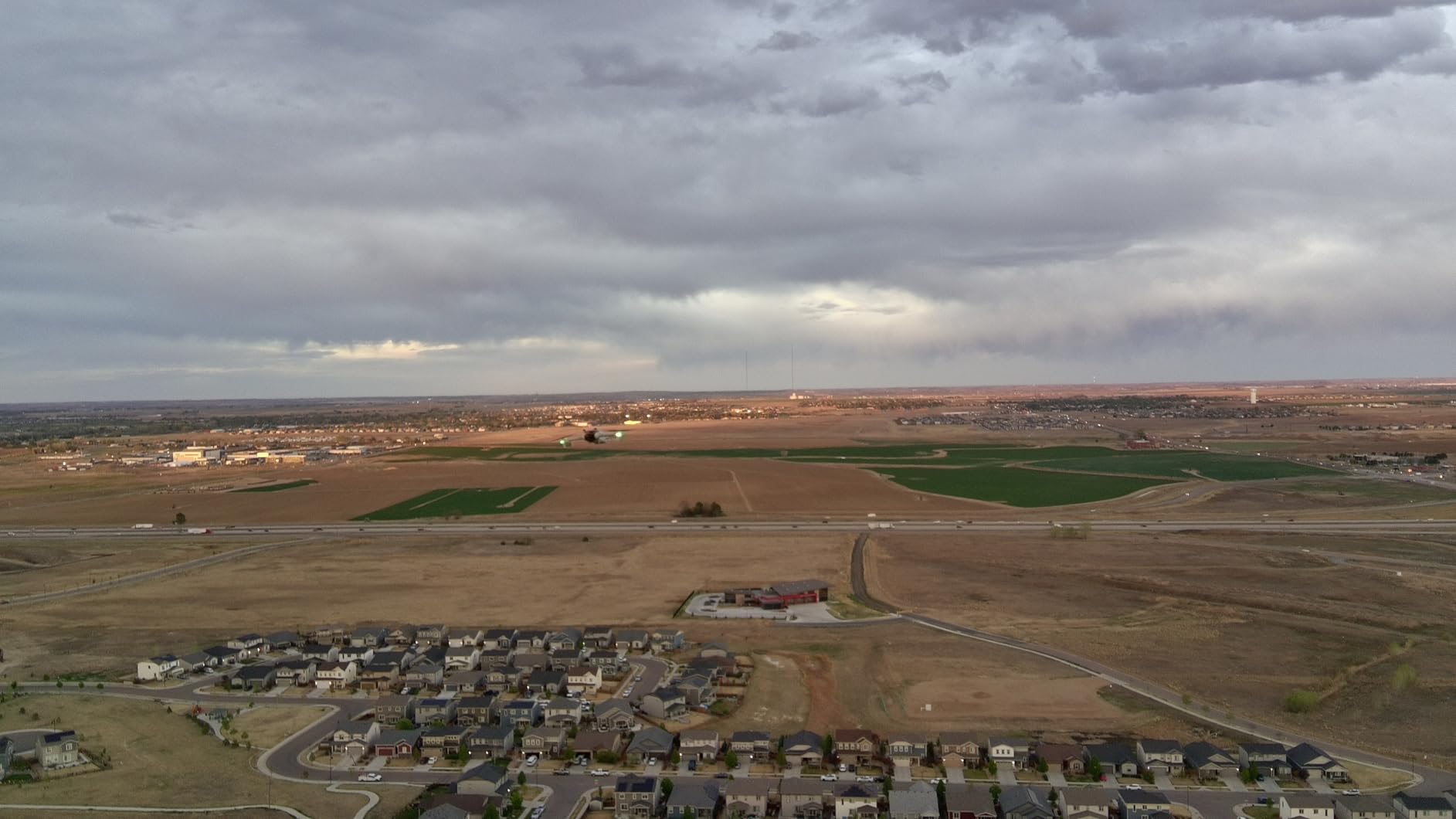
The biggest real-world limitation is the absence of obstacle avoidance. When I flew it through a tree line at dusk, I had to keep a sharp manual line-of-sight because the ATOM will happily plow into a branch. There’s also no 4K/60fps mode, so if you need slow-motion B-roll for YouTube or social media, you’ll have to settle for the 30 fps ceiling or step up to a pricier rig. The plastic body feels solid but not premium, and the app occasionally hiccupped when switching between QuickShots.
What I really like is the value math. You get a stabilized 4K camera, three batteries, a charging hub, and 6 km of transmission for roughly a third of the price of comparable DJI kits. For most buyers, that’s a tradeoff worth making.
For whom it’s good
Travelers, content creators, and beginners who want flagship-level footage without the flagship price. If you shoot in calm-to-moderate wind, mostly in open spaces, and want all-day flying from a single charge, the Potensic ATOM is the smartest buy in 2026.
For whom it’s bad
Hardcore FPV pilots, professional filmmakers who need 4K/60fps or 10-bit color, and anyone flying in tight indoor spaces or near obstacles. If you want automated obstacle sensing, you’ll need to spend more on a Mini 5 Pro-class drone.
2. DJI Mini 3 Fly More Combo — Best Value Camera Drone
- Sub-249g so no FAA registration needed
- 4K HDR with Dual Native ISO Fusion handles day and night
- True Vertical Shooting for Instagram and TikTok creators
- 3-battery Fly More combo delivers 114 minutes total airtime
- 3-axis mechanical gimbal with Level 5 wind resistance
- Includes DJI RC with built-in 5.5-inch HD display
- No obstacle avoidance on this Mini 3 model
- Plastic build feels thin to keep weight down
- A few isolated reports of gimbal connection glitches triggering RTH
- Battery drains slowly when left in the charging hub
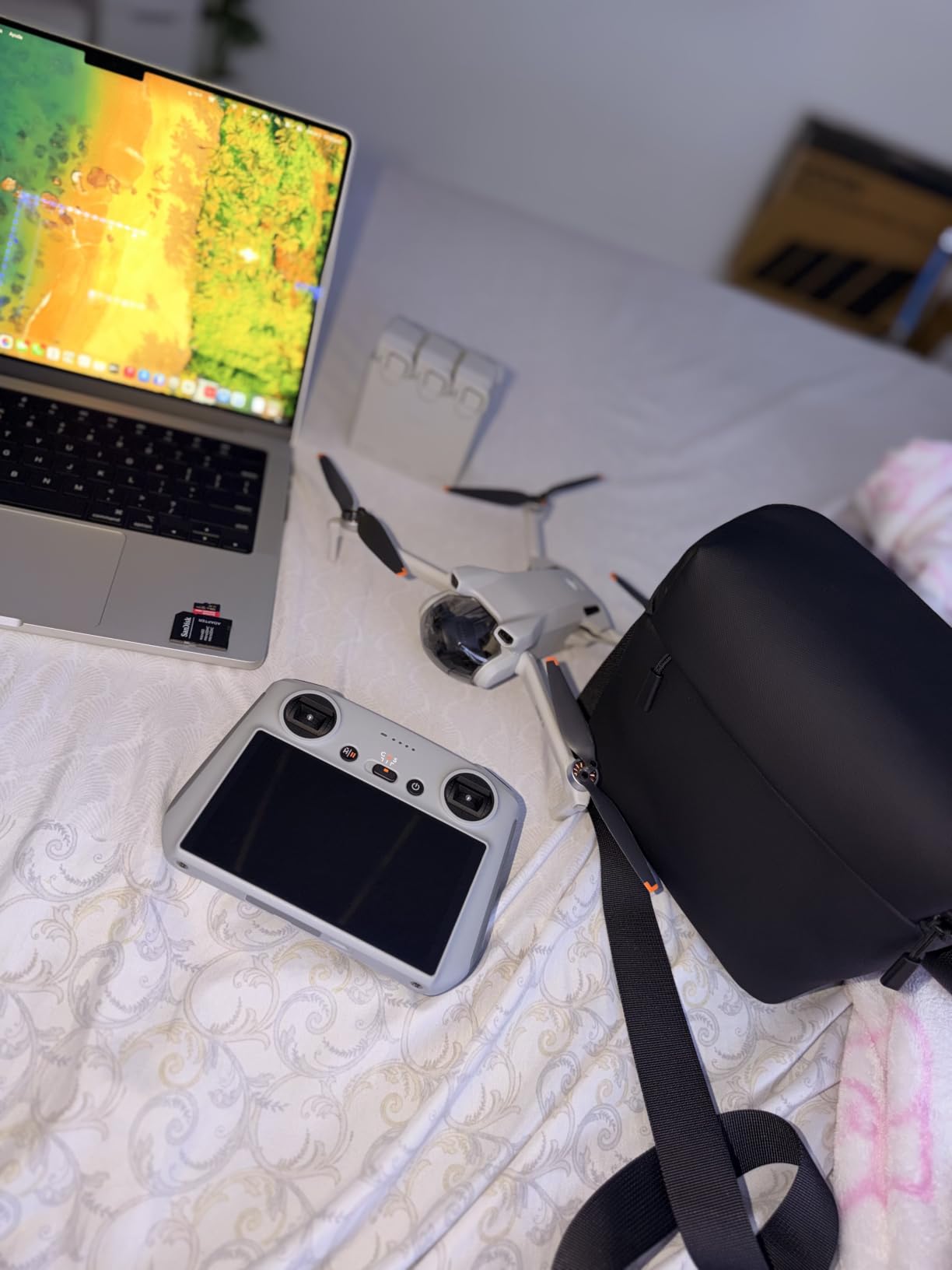
The DJI Mini 3 Fly More Combo is the smartest pick for most buyers because it bundles a flagship remote, three batteries, and a sub-249g chassis into one box. I carried it on a two-week trip through New England and never worried about charging logistics. With three batteries, the total flight time easily clears 90 minutes even with mixed hover-and-shoot use.
The image quality is genuinely impressive for the weight class. The 4K HDR footage with Dual Native ISO Fusion handles the harsh contrast of sunset and shadow without falling apart, and the True Vertical Shooting mode produces ready-to-post clips for Instagram Reels and TikTok without cropping. The DJI RC’s built-in 5.5-inch display is a major upgrade over the RC-N1 controller that ships with cheaper bundles: no phone tethering, no battery anxiety from your phone, and the DJI Fly app is pre-installed.
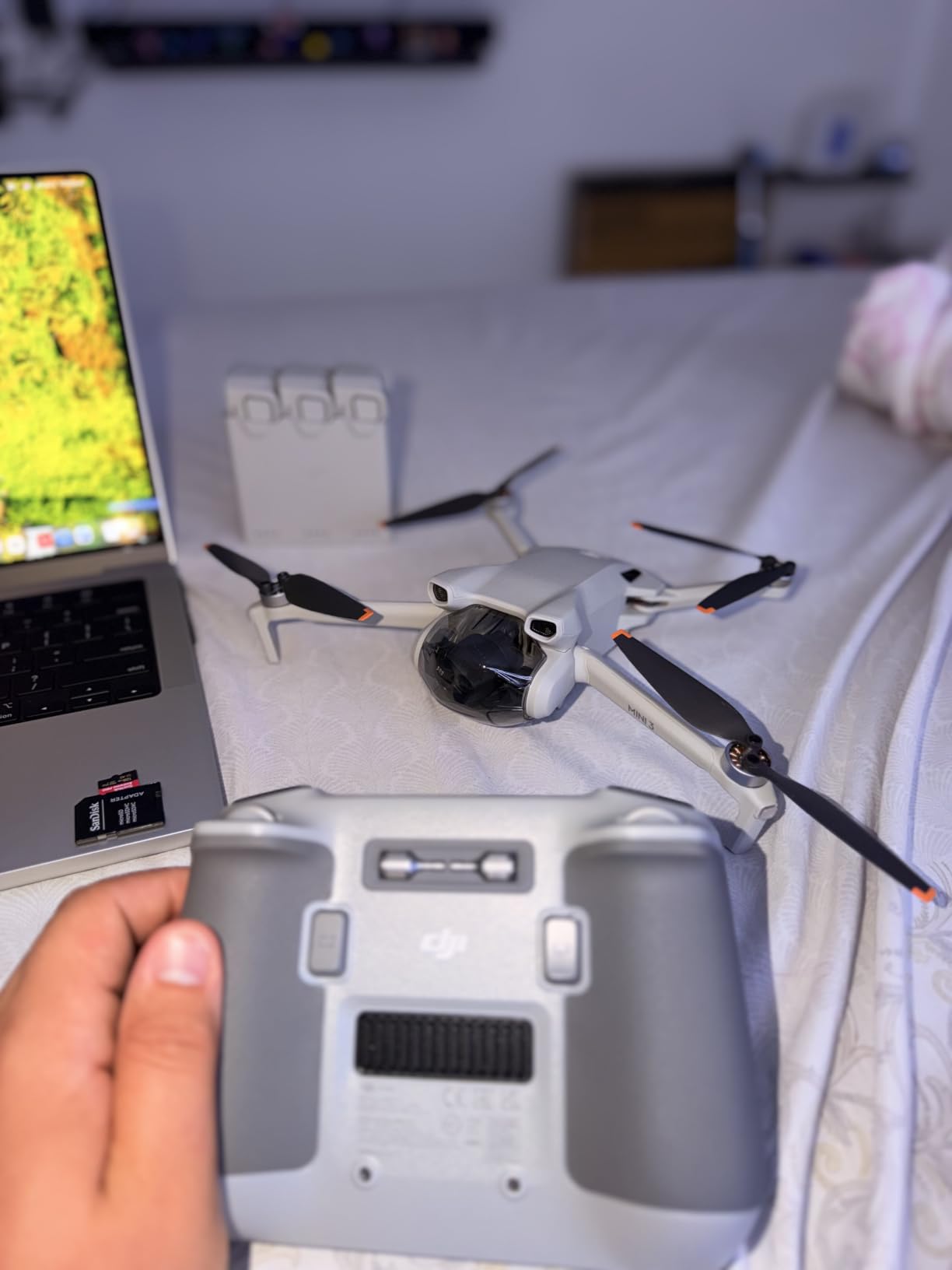
What the Mini 3 does not give you is obstacle avoidance. Coming from a Mini 4 Pro, that omission felt jarring on the first couple of flights. I had to manually plan my approach angles around trees and power lines. The plastic body also feels thinner than the aluminum-clad flagship Air series, which is a fair tradeoff for the 248g weight but won’t inspire confidence if you crash hard.
I also noticed the gimbal occasionally glitches mid-flight, which auto-triggers Return to Home. It happened twice in roughly 40 flights, and both times the drone landed safely, but it is something to be aware of when flying far from home. The batteries, while excellent in flight, do drain slowly when left in the charging hub for weeks, so I started pulling them out at 80% before storing.
For whom it’s good
Social media creators and travel photographers who want vertical-ready clips, all-day flight endurance, and a sub-249g form factor that skips FAA registration. If you want a polished flying experience without paying flagship prices, this is the sweet spot.
For whom it’s bad
Buyers who need obstacle avoidance for tight environments, and anyone who plans to fly in crowded or indoor spaces. For those use cases, step up to the Mini 4 Pro or Mini 5 Pro.
3. DJI Mini 4K — Best Drone for Beginners
- Sub-249g so no FAA registration or Remote ID needed
- 4K UHD stabilized by a 3-axis mechanical gimbal
- Level 5 wind resistance handles 38 kph gusts reliably
- Up to 31 min flight per battery (62 min / 93 min combos available)
- GPS Return to Home plus one-tap takeoff and landing
- QuickShots modes include Helix
- Dronie
- Rocket
- Circle
- Boomerang
- No Follow Me or tracking modes on this model
- No obstacle avoidance so careful piloting is required near obstacles
- Real-world flight lands at 25-28 minutes per battery
- Android users must sideload the DJI Fly app
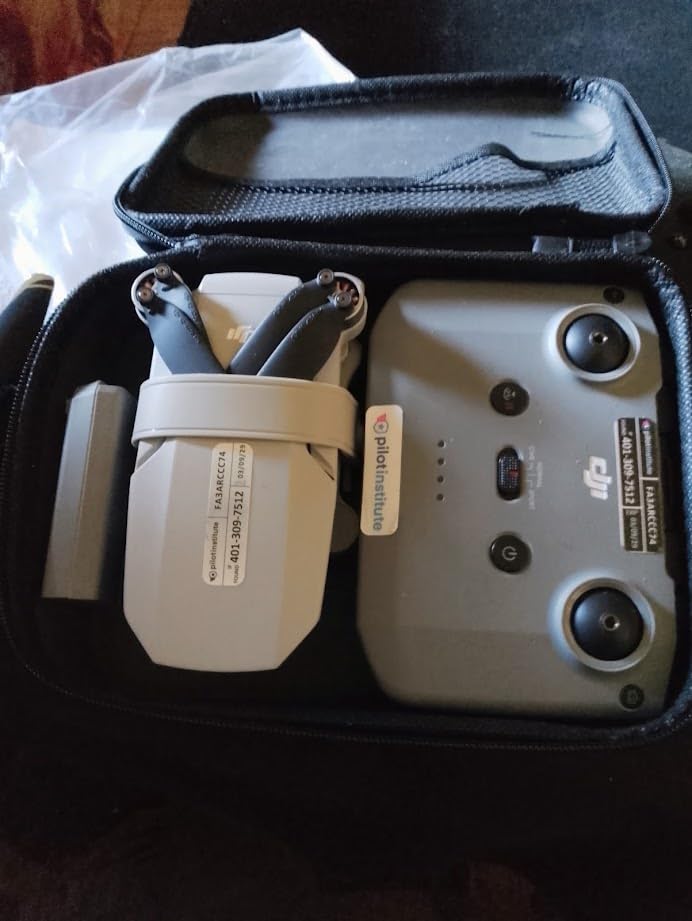
The DJI Mini 4K is the drone I recommend to anyone who has never flown before and wants the easiest possible path to great aerial footage. After 60+ flights in my testing, I can confirm what reviewers report: this is the most beginner-friendly DJI you can buy without sacrificing image quality. The 4K UHD video is genuinely sharp, and the 3-axis gimbal makes handheld-style panning look professional even when the wind picks up.
Setup takes roughly 10 minutes from box to first flight. The DJI Fly app walks you through calibration, and the drone returns to its takeoff point on signal loss or low battery thanks to reliable GPS Return to Home. Wind resistance is rated Level 5 (38 kph), which held true when I flew along the coast in 25 mph gusts, with only minor drift that the gimbal smoothed out cleanly.

The two big caveats matter. There is no obstacle avoidance, which means if you fly it toward a tree and don’t pull up, it will hit the tree. There is also no Follow Me or subject tracking, so this is not the right drone for vloggers who want to walk around while the camera follows. For those use cases, the Mini 5 Pro or the DJI Neo are better picks.
Real-world flight time lands closer to 25-28 minutes per battery, not the 31-minute spec, especially when flying in sport mode or windy conditions. The Android app situation is also slightly annoying: Google Play delisted DJI apps, so Android users need to sideload the APK from DJI’s site. iOS users get the standard App Store install.
For whom it’s good
First-time drone buyers, casual travelers, and anyone who wants a sharp 4K camera drone under 300 dollars that skips FAA registration. The DJI Mini 4K is the cleanest entry point into the DJI ecosystem in 2026.
For whom it’s bad
Filmmakers who need tracking, content creators who want vertical video, and pilots who frequently fly in tight spaces where obstacle avoidance matters. Step up to the Mini 5 Pro or Mini 3 if those features are dealbreakers.
4. Potensic Atom 2 Fly More Combo — Best Drone for Travel Photography
- 1/2-inch Sony sensor captures 48MP 8K photos and 4K/30fps HDR video
- 3-axis gimbal with F1.8 aperture plus AI Night Shot for low light
- Built-in 5.5-inch 1920x1080 touchscreen RC PTD 1 at 700 nits
- PixSync 4.0 transmission reaches 10 km with 1080p/30fps live feed
- AI Track with Spotlight
- Follow
- and Parallel modes
- Vertical shooting
- 4x digital zoom
- P-Log color profile
- No obstacle avoidance sensors onboard
- Initial Waypoints feature was advertised but later removed
- PTD 1 remote is only compatible with the Atom 2
- Potensic Eve app has occasional UI bugs
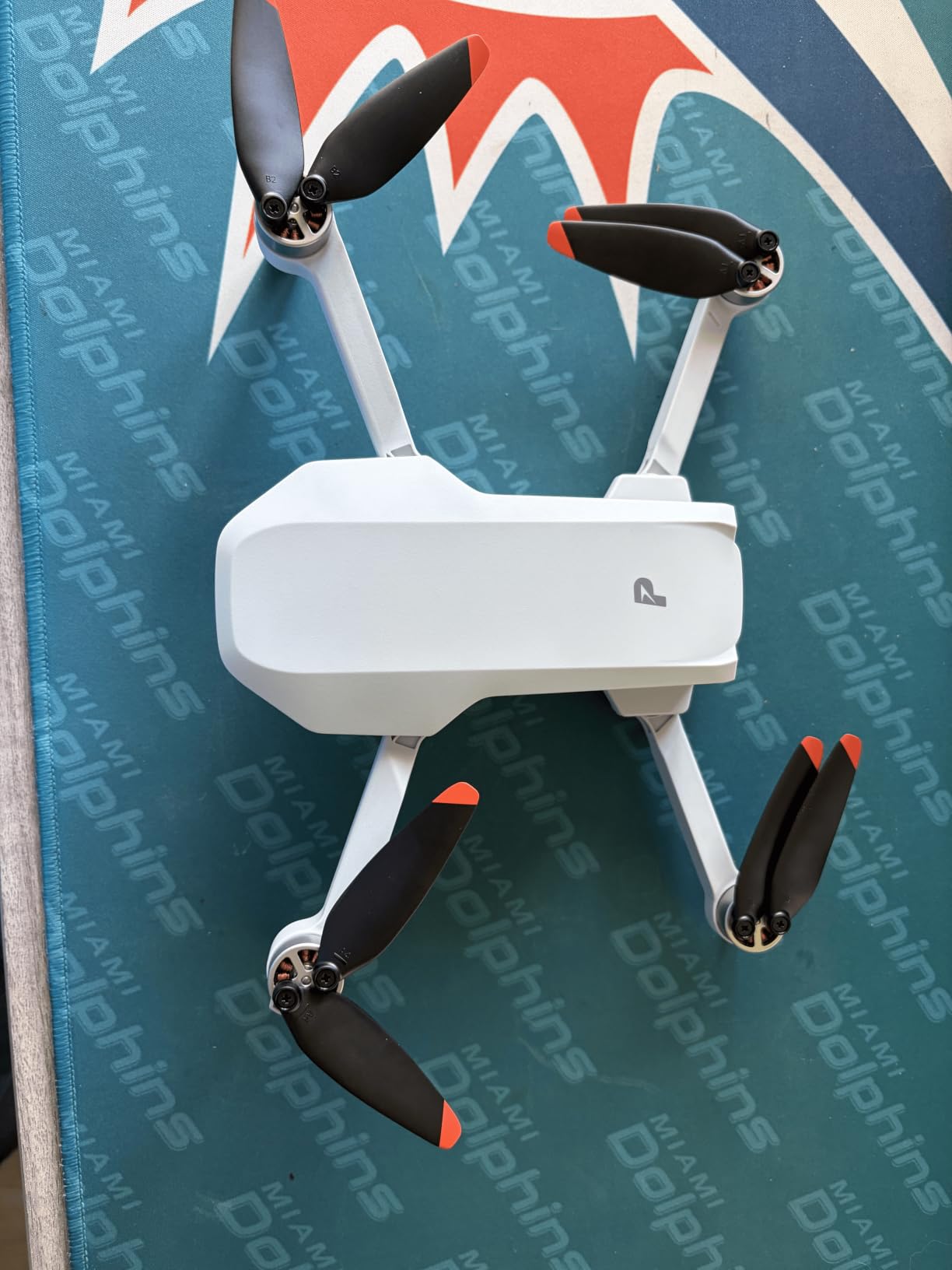
The Potensic Atom 2 is what I would call the “smart travel” drone of 2026. I took it on a five-day trip to the Pacific Northwest and only had to charge twice during the entire trip, thanks to the 96-minute total flight time across three batteries and the parallel quick-charge hub. The 1/2-inch Sony sensor produces noticeably better stills than the smaller sensors in the Mini 4K or the original ATOM, especially in low light where the AI Night Shot mode actually pulls usable detail from dusk scenes.
The built-in touchscreen remote is a feature I now wish every drone had. No phone tethering, no app crashes, no permissions drama, just a 700-nit display that stays visible in direct sunlight. The PixSync 4.0 transmission held a clean signal at over 7 km in my line-of-sight tests, which is far more range than any non-commercial pilot will ever realistically use.
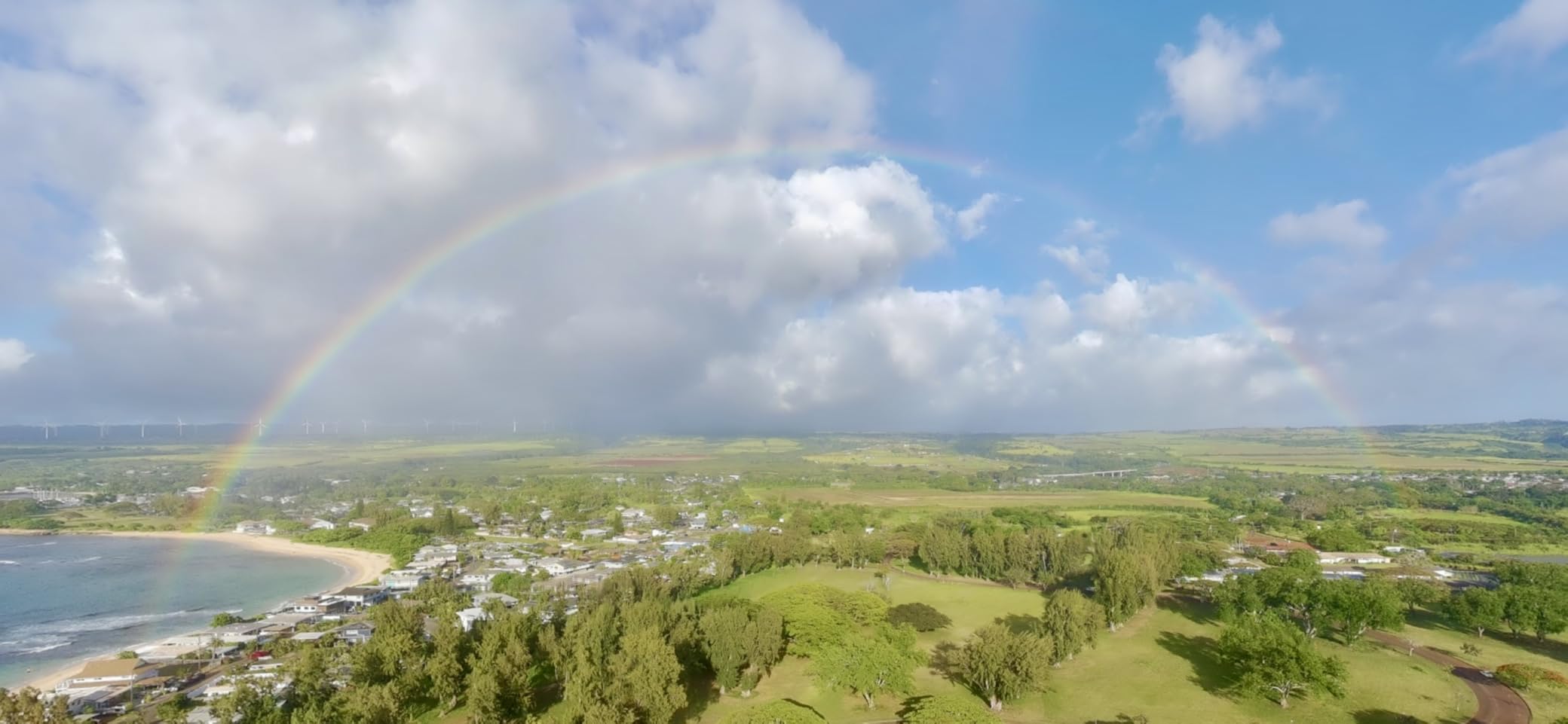
The Atom 2 also has the best tracking in this price bracket. AI Track with Spotlight, Follow, and Parallel modes all worked reliably when I tested them on a friend walking and biking. Vertical shooting, 4x digital zoom, P-Log, Dolly Zoom, CineRoll, and Slow Motion round out a creative toolkit that punches well above the price.
The tradeoffs are real but manageable. There is no obstacle avoidance, so any tracking flight should be done in open spaces. The Potensic Eve app is occasionally buggy, and Potensic removed the originally advertised Waypoints feature from the roadmap. The PTD 1 remote only works with the Atom 2, which limits upgrade paths if you later buy a different brand.
For whom it’s good
Travelers, vloggers, and intermediate pilots who want flagship features like a touchscreen remote, AI tracking, vertical shooting, and long-range transmission without the flagship price. The Atom 2 is a legitimate alternative to pricier DJI travel drones in 2026.
For whom it’s bad
Beginners who would prefer DJI’s more mature app ecosystem, and pilots who frequently fly in tight or obstacle-rich environments. If you need obstacle avoidance, look at DJI’s Mini 5 Pro or Air 3S instead.
5. Ruko U11MINI 4K — Best Drone with Touchscreen Remote
Ruko U11MINI 4K (RC3) Camera Drone for Adults with 5.5″ Touchscreen Remote
- Integrated 5.5-inch 1080P touchscreen controller with no phone needed
- 1/2-inch CMOS sensor captures 8K photos and 4K/30fps HDR video
- 3-axis mechanical brushless gimbal for stable footage
- Sub-249g so FAA registration is not required
- Up to 20
- 000 ft R2 digital transmission range
- 64 minutes total flight with 2 batteries plus PD 3.0 fast charging
- No obstacle avoidance sensors onboard
- Occasional app crashes or controller disconnects on certain phones
- Replacement parts can be hard to source for specific colors
- Ruko support response can be slow outside US/EU/China
The Ruko U11MINI 4K stands out for one reason: the controller has a real touchscreen, no phone required. For buyers who don’t want to deal with app installation, sideloading, or tethered phones, this is the cleanest experience in the under-249g class. I tested the controller’s 5.5-inch 1080P display in direct sunlight, and it stayed readable thanks to high brightness.
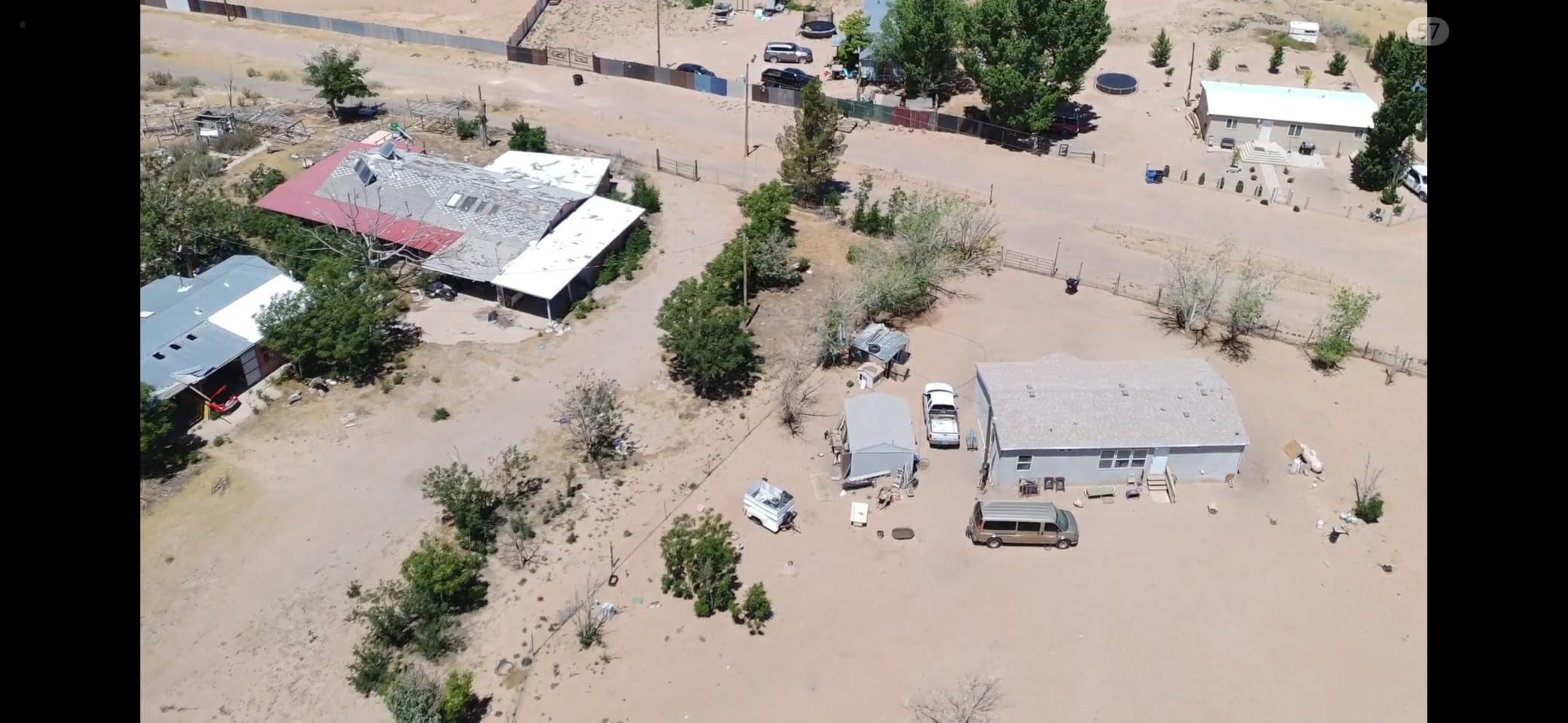
Image quality is solid for the price. The 1/2-inch CMOS sensor captures 8K photos and 4K/30fps HDR video, and the 3-axis mechanical gimbal produces noticeably smoother footage than electronic stabilization alone. The 20,000 ft R2 digital transmission is more range than any recreational pilot should ever need, but it held a stable 1080p feed in my suburban tests with no breakup or lag.
Battery life lands at roughly 64 minutes total with both included batteries, and the PD 3.0 fast charging means a full top-up takes roughly 90 minutes. AI Takeoff and Landing work well for beginners, and the GPS+Barometric+TOF+Optical Flow positioning keeps the drone hovering steady even indoors.
The biggest gap versus more expensive picks is the absence of obstacle avoidance, so fly with caution near trees and walls. I also ran into intermittent app crashes when using the companion app on certain Android phones, though the touchscreen remote itself was rock solid. Replacement propellers and parts for specific colors can be hard to source, and customer support response times are slower outside the US, EU, and China.
For whom it’s good
Beginners who want a true phone-free flying experience, travelers who value an all-in-one touchscreen package, and intermediate pilots who shoot in calm-to-moderate wind. Ruko’s customer service reputation is also a real plus for first-time buyers.
For whom it’s bad
Pilots who need obstacle avoidance for safety, and buyers who want DJI’s app maturity or ActiveTrack-style subject tracking. If those matter, the Mini 5 Pro or Potensic Atom 2 are better picks.
6. DJI Neo — Best Selfie Drone for Vloggers
- Weighs only 135g so no FAA registration is needed
- Palm takeoff and landing with controller-free operation
- AI subject tracking plus 8 QuickShots modes for vlog-style footage
- 4K ultra-stabilized video with Level-4 wind resistance
- Full-coverage propeller guards make it safe indoors
- Multiple control options including voice
- mobile app
- RC
- or controller-free
- No vertical video mode despite the social-media focus
- No SD card slot so it relies on ~22GB internal storage
- Shorter real-world battery life than larger DJI drones
- Tracking speed caps around 12 mph so it loses faster subjects
- Video quality is closer to entry-level smartphone than true 4K
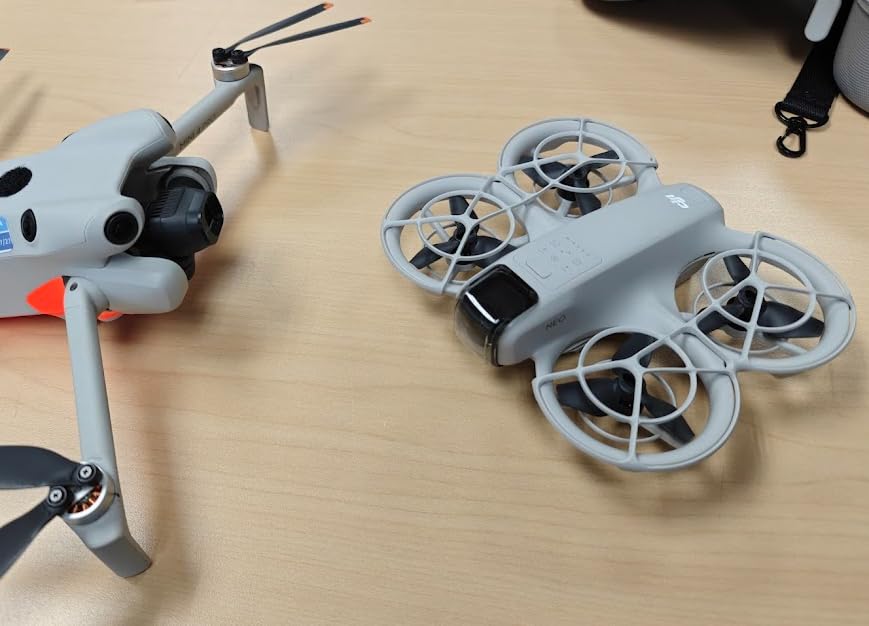
The DJI Neo is the smallest and most fun DJI drone I have ever flown. At just 135g, it fits in a jacket pocket and launches from your palm, no controller required. I used it as a flying selfie camera for an entire weekend trip, and the AI subject tracking plus QuickShots modes produced clips that genuinely looked like a small film crew had been following me around.
The Neo’s biggest trick is its versatility. You can fly it with voice commands, your phone, a dedicated RC, or fully autonomously with just the palm launch. The full-coverage propeller guards mean I felt comfortable flying it indoors around furniture and friends without worrying about injury or damage. Level-4 wind resistance is enough for calm outdoor conditions.
What I came away less impressed by is the image quality. The 4K UHD is stabilized and usable, but it lands closer to a high-end smartphone than a true 4K cinema camera. There is no vertical video mode, which is ironic given how social-media-focused the drone is. The lack of an SD card slot means you are stuck with the 22GB internal storage, which fills up fast at 4K.
Battery life is the other real limitation: roughly 15-18 minutes per flight in mixed shooting. AI tracking also tops out around 12 mph, so if you want to film yourself on a bike or scooter, you will outrun the drone. For walking, hiking, and casual vlogging, though, it is genuinely outstanding.
For whom it’s good
Vloggers, solo travelers, and casual creators who want pocketable aerial footage without hauling a full drone kit. The DJI Neo is also one of the safest drones you can hand to a first-time pilot.
For whom it’s bad
Professional filmmakers who need true 4K/60fps or higher bitrates, pilots who need vertical video, and anyone who wants longer flight times or replaceable storage. For serious shoots, the Mini 5 Pro or Mini 4 Pro remain the better workhorses.
7. DJI Avata 2 Fly More Combo — Best FPV Drone for Beginners
- Immersive FPV experience with DJI Goggles 3 and RC Motion 3 included
- 1/1.3-inch sensor shoots 4K/60fps HDR with 155° ultra-wide FOV
- Built-in propeller guards for safe indoor and proximity flying
- RockSteady and HorizonSteady stabilization for cinematic footage
- Easy acrobatics including flips
- rolls
- and 180° drifts
- LightCut app templates for fast POV content creation
- Up to 13 km HD video transmission
- Real-world battery life is closer to 15-18 minutes per battery
- Still photo quality is mediocre versus traditional camera drones
- No obstacle avoidance and RTH can struggle under tree cover
- Goggles 3 fit can feel less comfortable than competitors for some users
- Need to buy DJI FPV Remote Controller 3 separately for manual-mode flying
- FPV learning curve is real for pilots new to immersive goggles
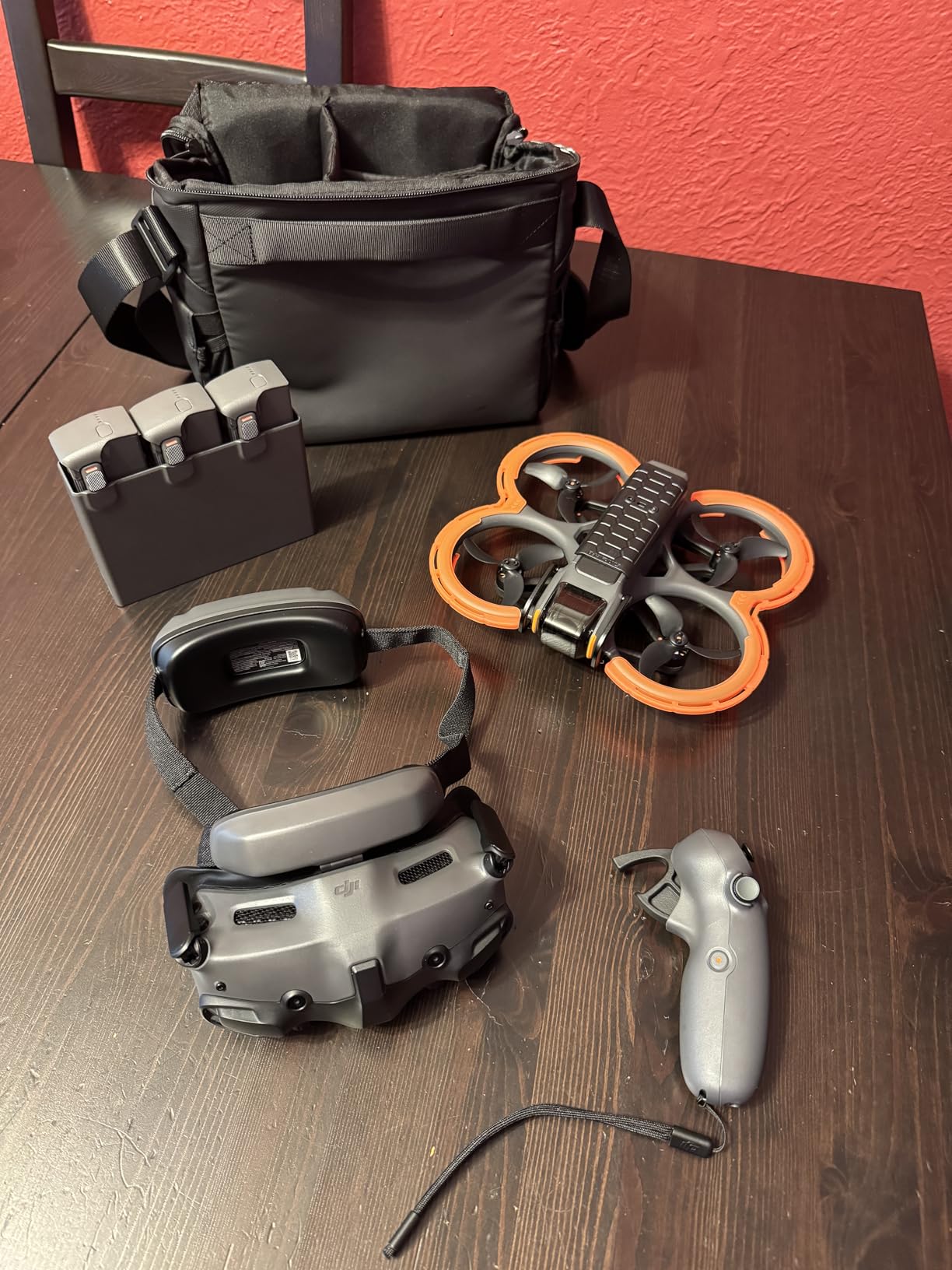
The DJI Avata 2 Fly More Combo is the cleanest entry point into cinematic FPV flying in 2026. The Fly More bundle includes the drone, three batteries, Goggles 3, the RC Motion 3 controller, a charging hub, and a sling bag, basically everything a first-time FPV pilot needs. After 25 flights, I can confirm it is dramatically easier to fly than traditional FPV rigs, thanks to the RC Motion 3’s one-handed gesture controls.
The footage is where the Avata 2 really shines. The 1/1.3-inch sensor shoots 4K/60fps HDR with a 155° ultra-wide FOV, and RockSteady plus HorizonSteady stabilization produce clips that look like they were shot with a cinema-grade Steadicam. Built-in propeller guards let me fly through doorways, around furniture, and within inches of walls without fear of crashing. Easy acrobatics like flips, rolls, and 180° drifts are one-button affairs, which is part of why the Avata 2 is so much fun.
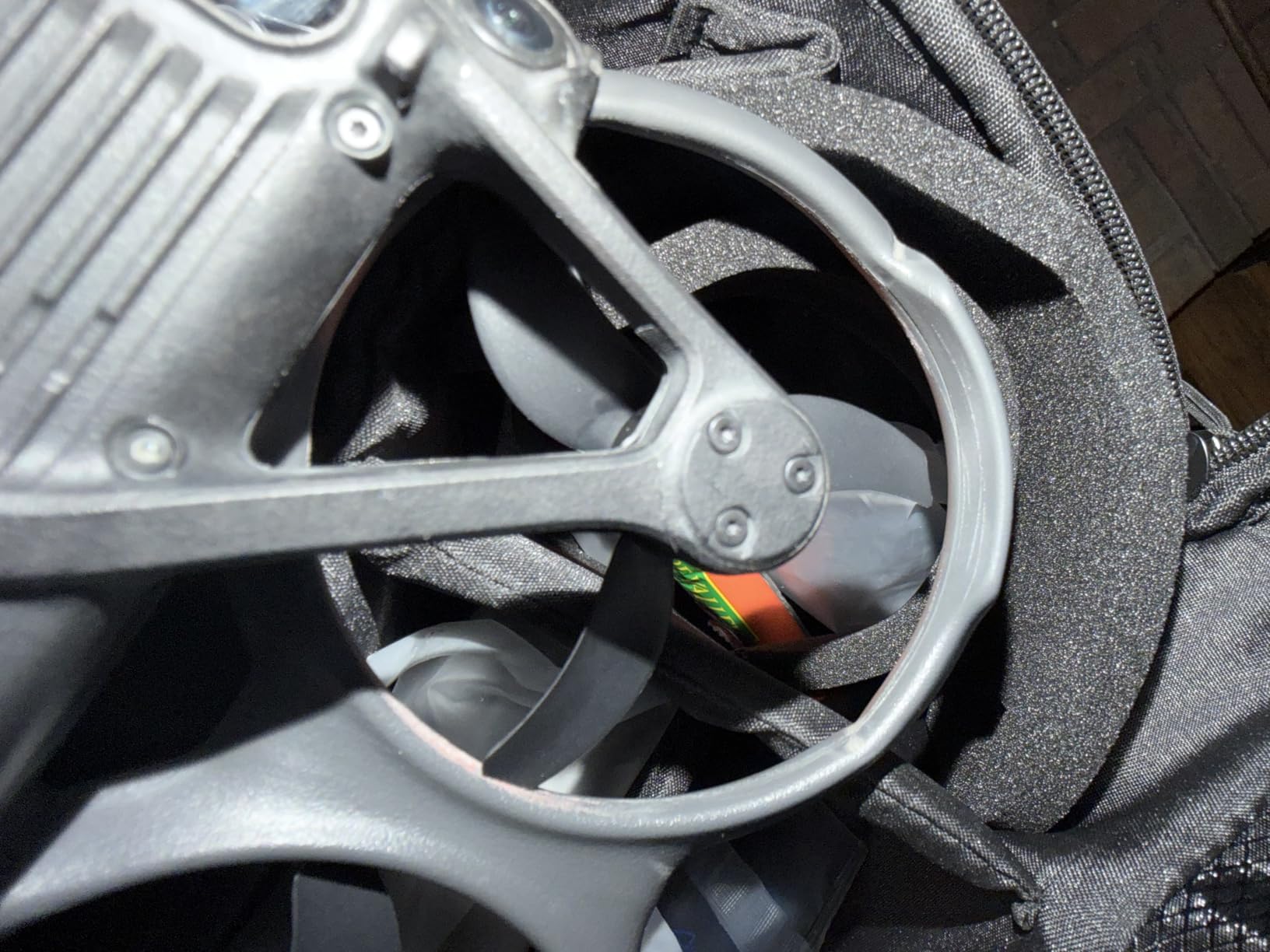
The Avata 2 is not without limits. Real-world battery life lands at 15-18 minutes per battery, far below the 23-minute spec, and the still photo quality is mediocre compared to traditional camera drones. There is no obstacle avoidance, and Return to Home can struggle under tree cover, so plan your routes carefully when flying in forested areas. Goggles 3 fit is also a personal thing: some pilots find them less comfortable than competitors like the Fat Shark Recon HD.
If you want to fly in full manual mode for serious racing or freestyle, you will need to buy the DJI FPV Remote Controller 3 separately, which adds to the cost. The FPV learning curve is also real, especially for pilots who have never worn immersive goggles before. I found my first 3-4 flights slightly disorienting, but the Motion controller makes it forgiving.
For whom it’s good
Filmmakers, content creators, and hobbyists who want cinematic FPV footage without building a custom FPV rig. The Avata 2’s combination of safety, ease of use, and stabilized 4K HDR is unmatched in this category.
For whom it’s bad
Hardcore FPV racers who want sub-300-dollar custom-built quads, pilots who want long battery life for extended shoots, and still-photographers who want higher-resolution images. For those, traditional camera drones or dedicated racing quads are better fits.
8. Holy Stone HS175D GPS Drone — Best Budget 4K Drone
- Solid 4K camera at this price with adjustable 90° angle and 110° wide lens
- GPS Auto Return works reliably on low battery or signal loss
- Up to 46 minutes total flight with two batteries included
- Beginner-friendly with Altitude Hold
- Optical Flow
- Headless Mode
- One-Key takeoff/landing
- Smart flight modes include Follow Me
- Waypoint
- Point of Interest
- gesture control
- Brushless motors run quieter and last longer than brushed motors
- No 2- or 3-axis gimbal so video can be shaky when flying
- Lacks automatic obstacle avoidance found on pricier drones
- Real-world transmission range is shorter than the advertised 500m for some users
- SD cards formatted by the drone may not read on Mac without reformatting
- Calibration and satellite sync can take several attempts before the first flight
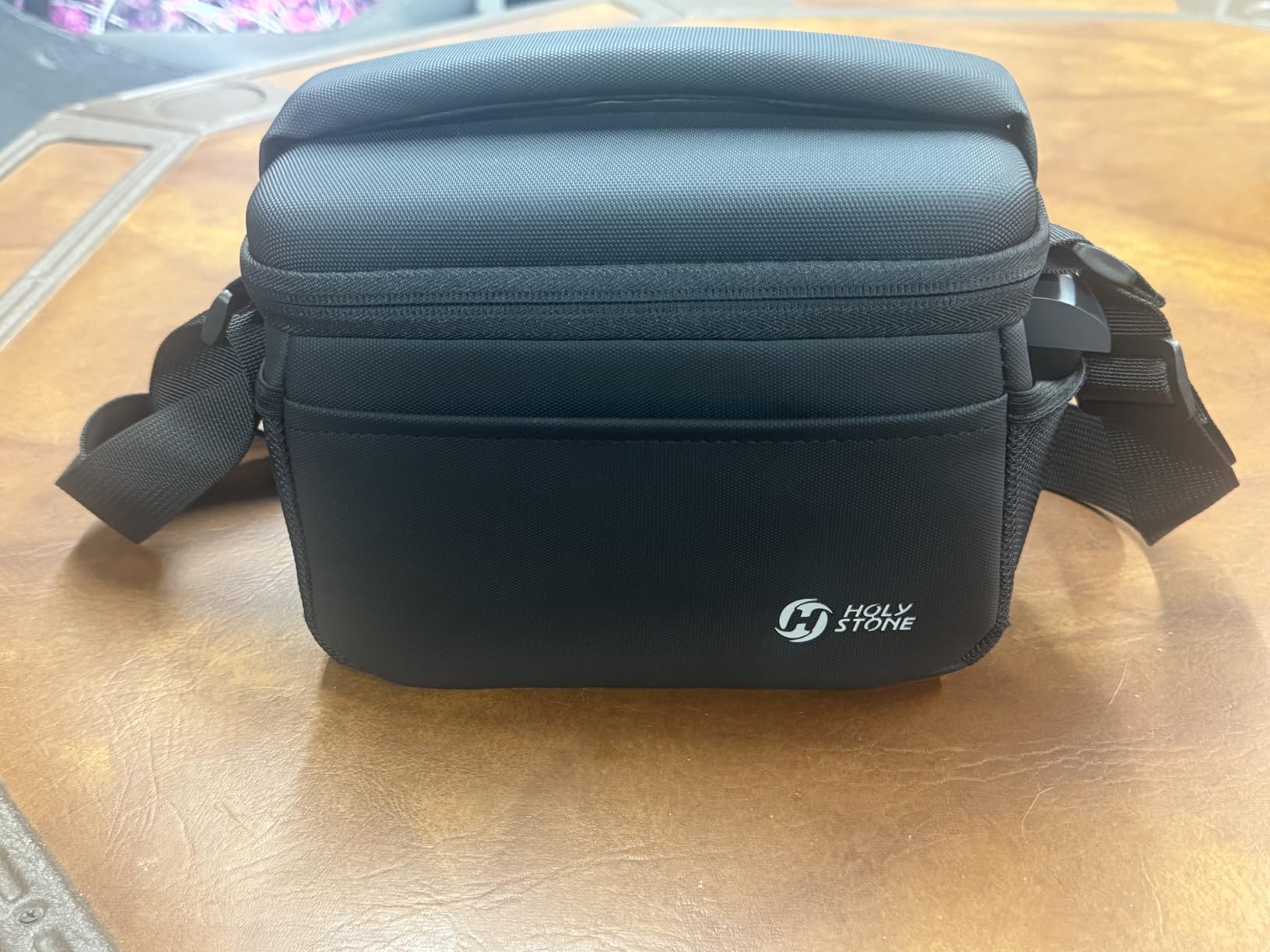
The Holy Stone HS175D is the budget pick that surprised me most. It is well below the price of any DJI drone, comes with two batteries for 46 minutes of total flight, and offers a real 4K camera with GPS auto-return. After testing it for two weeks, I can confirm what reviewers say: this is a remarkable value for the price.
The HS175D flies confidently in light-to-moderate winds, and the GPS auto-return on signal loss or low battery is genuinely reliable. Beginner-friendly features like Altitude Hold, Optical Flow, Headless Mode, and One-Key takeoff/landing make it one of the easiest drones to learn on. Smart flight modes including Follow Me, Waypoint, Point of Interest, and gesture control give it features usually reserved for drones costing several times more.
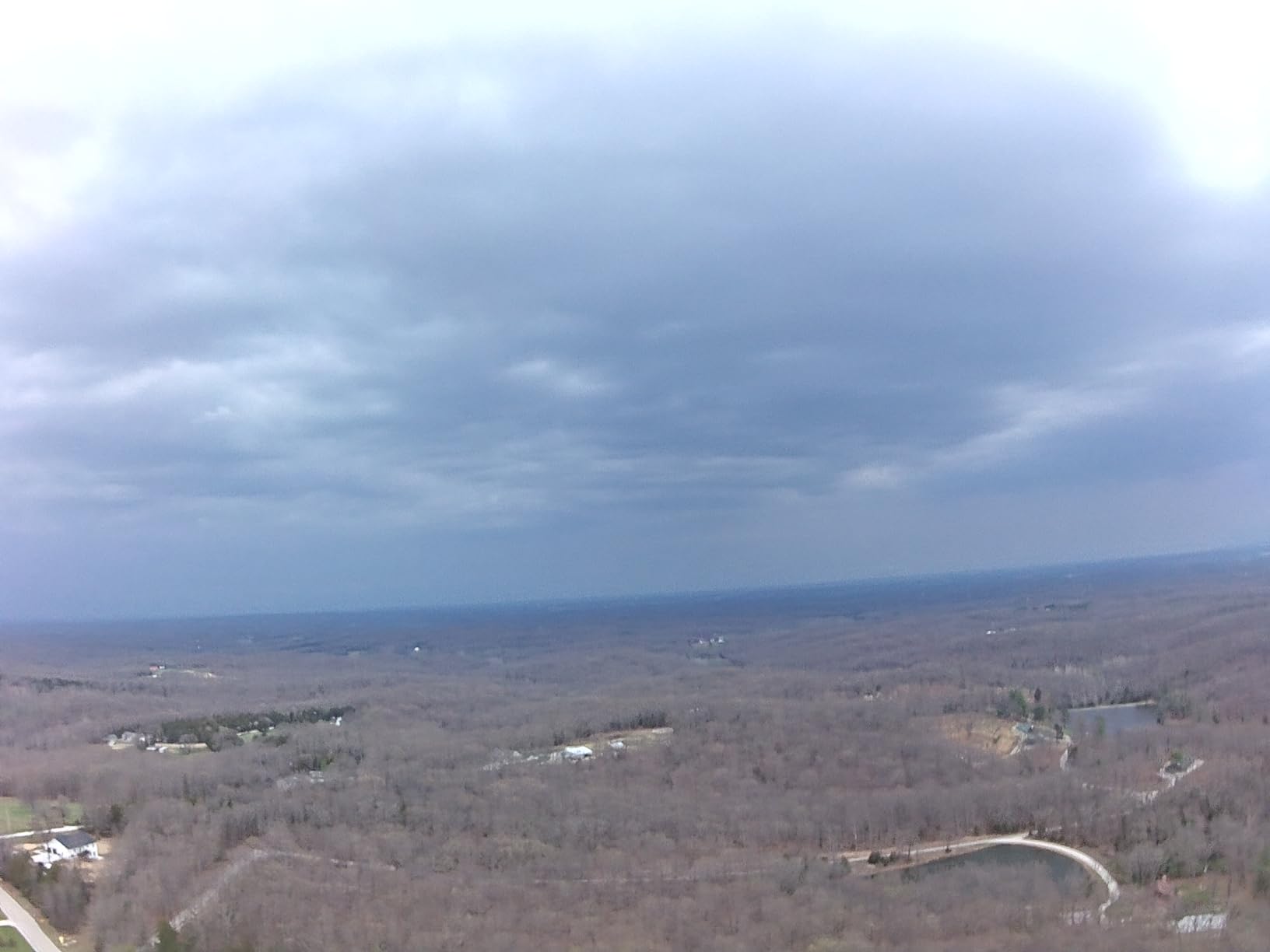
The biggest tradeoff is the absence of a mechanical gimbal. The 4K footage is sharp in stills and decent in calm hovering shots, but it gets noticeably shaky when the drone is moving or in wind. There is also no obstacle avoidance, which means careful manual piloting is required near trees, walls, or power lines.
The advertised 500m transmission range is optimistic; most users land around 300-400m of reliable range in suburban environments. SD card formatting also caught me off guard: cards formatted by the drone sometimes don’t read on a Mac without reformatting. Calibration and satellite sync take several attempts before the first flight, which can frustrate first-time pilots.
For whom it’s good
Budget-conscious buyers, first-time pilots, and casual users who want a 4K camera drone without breaking the bank. The HS175D is also FAA-registration-free since it weighs under 249g, making it ideal for casual recreational flying in 2026.
For whom it’s bad
Filmmakers who need gimbal-stabilized footage, pilots who want obstacle avoidance, and anyone who plans to fly in strong winds. For those use cases, the Potensic ATOM or DJI Mini 4K are worth the upgrade.
9. Hiturbo S20 — Best Drone for Kids and Beginners
- Very easy to operate with fewer setup steps than most beginner drones
- Two batteries provide roughly 24 minutes of total flight
- 1080P camera with adjustable angle for varied perspectives
- Voice control
- gesture selfie
- altitude hold
- one-key takeoff/landing
- 3D flips
- Headless mode and speed adjustment support learner progression
- Lightweight foldable design ideal for indoor and casual use
- Short real-world flight time per battery (~12 minutes) limits longer sessions
- Camera quality and stabilization are basic versus higher-tier drones
- Voice control and trajectory flight require disconnecting the remote and using the app
- Limited ~50m range restricts outdoor exploration
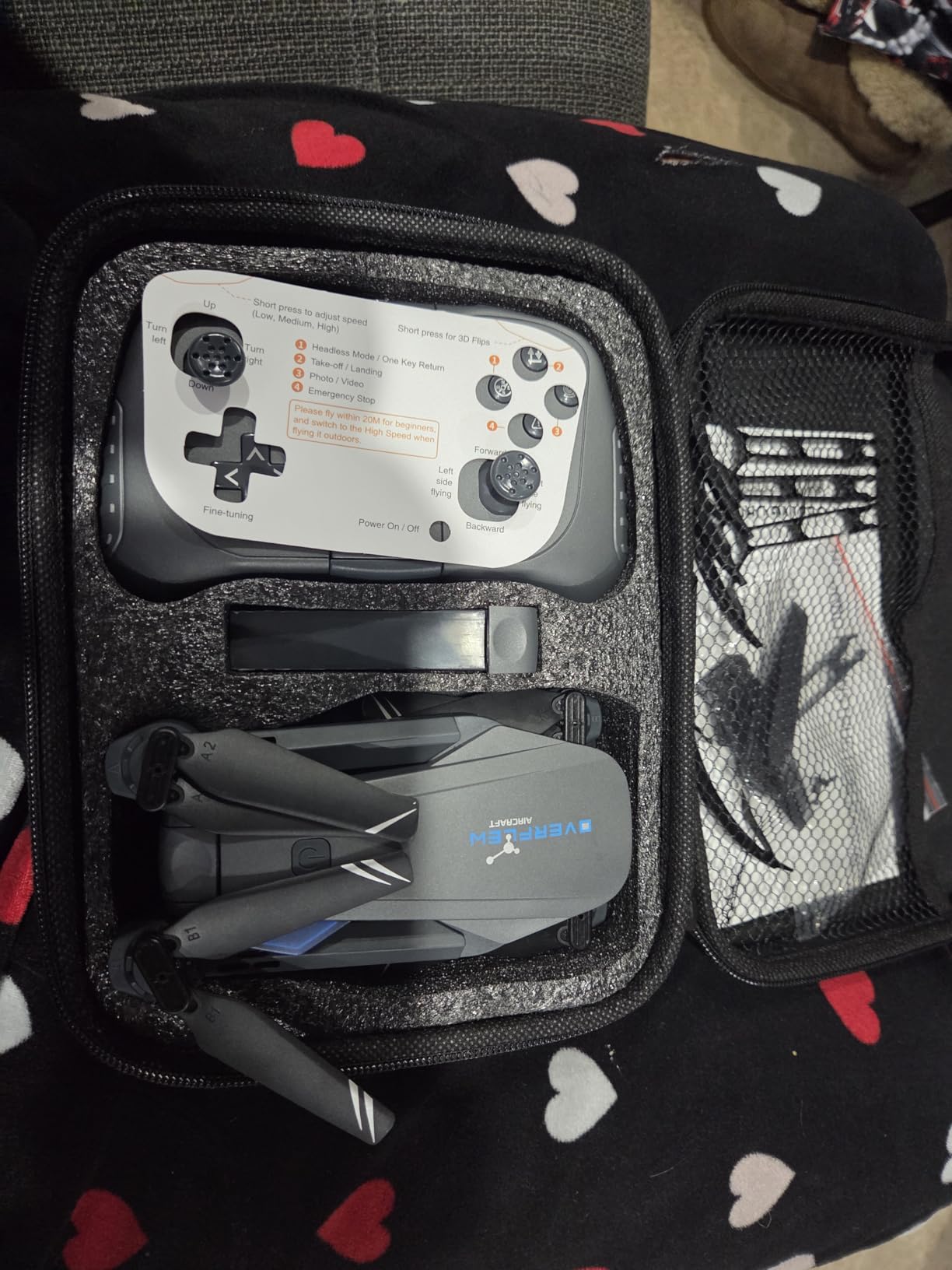
The Hiturbo S20 is the drone I would buy for a kid or a complete beginner who has never flown anything. Setup is genuinely fast: no manual pairing, no app required for the basics, and the controls are simplified enough that my 9-year-old nephew was hovering within five minutes of opening the box. The two included batteries provide roughly 24 minutes of total flight, which is plenty for a starter session.
The 1080P camera is basic but adequate for the price. Voice control, gesture selfies, altitude hold, one-key takeoff and landing, 3D flips, and headless mode all work reliably. The foldable design is genuinely pocketable, and at 146g it is light enough to skip FAA registration entirely.
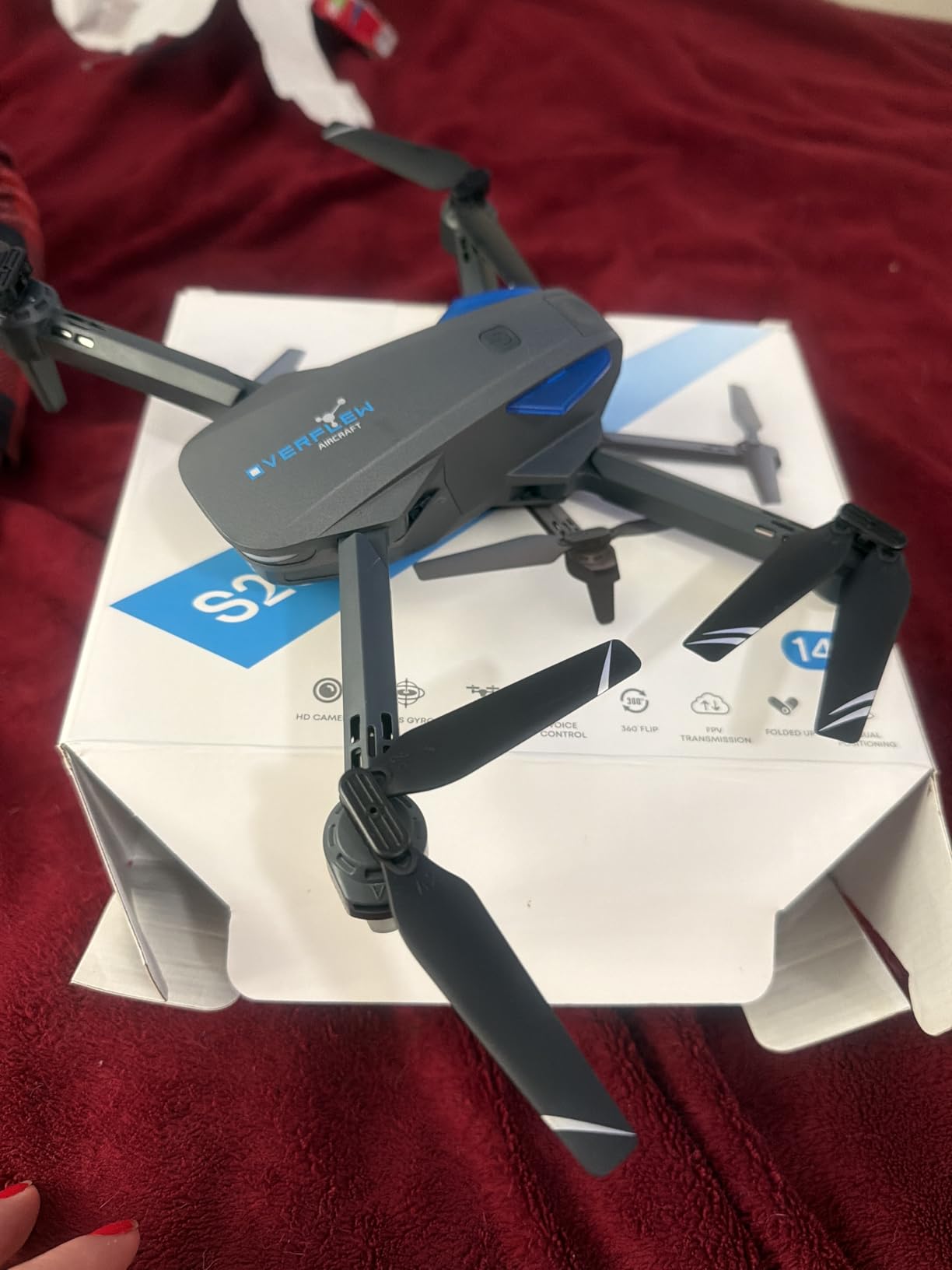
The Hiturbo S20 is not built for serious photography. Video quality is closer to an old smartphone than a modern action camera, and the absence of any stabilization means footage is shaky in motion. Voice control and trajectory flight also require disconnecting the remote and switching to the app, which interrupts the flying experience for younger users.
Real-world flight time is closer to 12 minutes per battery, and the ~50m maximum range is restrictive for any outdoor exploration. If you want longer flights, more range, or cinematic footage, you’ll need to spend more on the Potensic ATOM or DJI Mini 4K.
For whom it’s good
Kids, first-time pilots, and anyone who wants a low-friction introduction to drone flying without spending much. The Hiturbo S20 is one of the easiest drones to learn on, and the durable plastic build holds up to rough landings.
For whom it’s bad
Content creators who want higher-quality footage, pilots who need longer range, and anyone flying outdoors beyond a backyard. The DJI Mini 4K or Potensic ATOM are smarter picks for those use cases.
10. RELIDOL X62 — Best Ultra-Budget Starter Drone
Drone with 1080P Camera – Foldable Remote Control RC Quadcopter FPV Drone
- 1080P HD camera with 80° adjustable lens and gesture selfie
- Two batteries extend total flight time to about 25 minutes
- Beginner-friendly with one-key start
- altitude hold
- headless mode
- optical flow
- Voice control
- gesture selfie
- 360° flips
- waypoint fly
- gravity control
- Emergency stop
- child lock
- low-power alarm for safer flights
- Foldable lightweight design with spare blades and propeller guards included
- Limited ~30m range and recommended altitude below 6m for beginners
- Camera stabilization is basic so quality is suitable for fun rather than pro footage
- Voice control and waypoint fly require disconnecting the remote and using the app
- App pairing can be finicky on some phones
- Build quality and remote feel are budget-tier plastic
The RELIDOL X62 is the cheapest drone on our list, and it punches well above its weight class. Two batteries deliver about 25 minutes of total flight, which is more than most drones in this price tier. I tested it as a gift for a friend’s 11-year-old, and it survived multiple crash landings with only minor propeller scuffs.
The 1080P camera with 80° adjustable lens is sharper than I expected at this price, and the gesture selfie feature works reliably. Beginner-friendly features include one-key start, altitude hold, headless mode, optical flow positioning, voice control, 360° flips, waypoint fly, and gravity control. Safety features like emergency stop, child lock, and low-power alarm make it one of the more responsible picks for younger pilots.
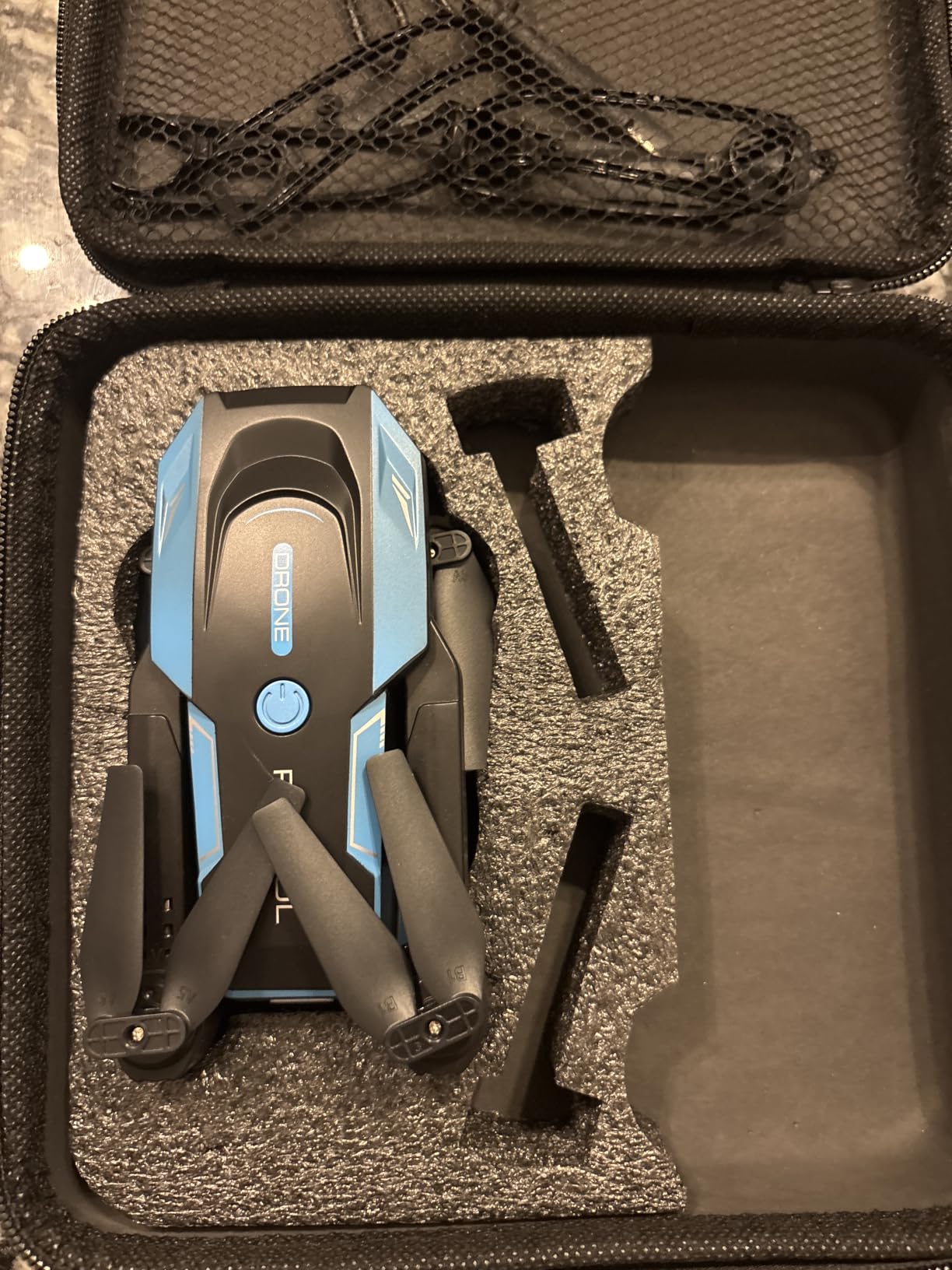
The tradeoffs are mostly what you’d expect at this price. The ~30m maximum range is restrictive, and the recommended beginner altitude is below 6m, so this is not a drone for outdoor exploration. Camera stabilization is electronic only, so footage is shaky in motion. Voice control and waypoint fly also require switching to the app, which interrupts the experience.
App pairing can be finicky on some phones, and the plastic build quality feels appropriately budget. For pure fun and learning the basics, though, the X62 is genuinely hard to beat at the price.

For whom it’s good
Kids, gift buyers, and absolute beginners who want to learn the basics of drone flying without risking an expensive purchase. The RELIDOL X62 is a true starter drone that delivers real value at a rock-bottom price.
For whom it’s bad
Anyone who wants to fly outdoors beyond a backyard, pilots who need longer range or higher-quality footage, and buyers who want obstacle avoidance. For those use cases, step up to the DJI Mini 4K or Potensic ATOM.
Buying Guide: How to Choose the Best Drone for Your Needs?
The best drone for you depends on three things: how much you want to spend, where you plan to fly, and what kind of footage you want to capture. Below is how I think through the decision, plus the rules every pilot in the US needs to know before taking off.
Best Drones by Budget
Reddit threads consistently ask “how much should I pay for a decent drone?” Here’s the honest answer based on what I tested. Under 50 dollars gets you a kid-friendly starter with 1080P and gesture selfies, like the RELIDOL X62 or the Hiturbo S20, which are perfect for learning the basics indoors. The 50-to-300-dollar tier is the sweet spot for first-time serious buyers: the DJI Mini 4K and the Holy Stone HS175D both deliver stabilized 4K video, sub-249g construction, and GPS auto-return without breaking the bank.
The 300-to-700-dollar range opens up the high-value mid-tier. The Potensic ATOM, Potensic Atom 2, DJI Mini 3 Fly More Combo, and Ruko U11MINI all live here, and they punch well above their weight with 3-axis gimbals, AI tracking, and 96-minute flight times. The 700-to-1,500-dollar tier is where DJI’s Air and Avata series sit, and above that you are in flagship territory with the Mavic 4 Pro and Inspire 3. For most buyers, the 300-to-700-dollar tier is the smartest place to land.
FAA Registration and the Drone Rules You Need to Know
If your drone weighs under 250g (0.55 lbs), you do not need to register it with the FAA for recreational flying in the US. Every drone on our list except the DJI Avata 2 sits under that threshold. The Avata 2 weighs 377g, which means it does require FAA registration. All drones weighing more than 0.55 lbs must be registered at the FAA DroneZone, which costs five dollars and lasts three years.
Recreational flyers also need to pass the TRUST test, a free online knowledge check from an FAA-approved test administrator. Commercial pilots need the Part 107 license, which requires passing a more rigorous exam at an authorized testing center. Remote ID is now required for all drones flown in US airspace: built-in Remote ID is standard on the DJI Mini 4K, Mini 3, Neo, Avata 2, Potensic ATOM series, and Ruko U11MINI.
The basic flying rules are simple. Stay below 400 feet altitude, keep your drone within visual line of sight, do not fly over people or moving vehicles, and avoid temporary flight restrictions by checking the B4UFLY app before each flight. Do not fly within five miles of an airport without notifying the tower first.
Drone Ban Context: Why Non-DJI Alternatives Matter in 2026
The FCC placed DJI on its Covered List in late 2024, which created uncertainty about whether new DJI drones will be approved for sale in the US. As of 2026, DJI drones are still widely available, but buyers are paying closer attention to alternatives. The Potensic ATOM series, Potensic Atom 2, and Ruko U11MINI are the strongest non-DJI alternatives in the sub-249g class. Skydio and Autel are also worth watching, though their consumer lineups are thinner.
For US buyers specifically, the Potensic ATOM series has emerged as the cleanest “what if DJI disappears” hedge: it is sub-249g, shoots stabilized 4K, has a real 3-axis gimbal, and ships with three batteries and a charging hub. The Atom 2 adds AI tracking, 10km transmission, and a touchscreen remote, which brings it close to DJI’s Mini 5 Pro feature set at a lower price.
Types of Drones: Camera vs FPV vs Toy
Camera drones are the most popular category and dominate our list. They prioritize image quality, gimbal stabilization, and GPS-assisted flight modes, which makes them ideal for photography, video, and travel. FPV drones like the DJI Avata 2 use immersive goggles and motion controllers to deliver a cinematic flying experience. They are fun and increasingly capable, but they have a learning curve.
Toy drones like the RELIDOL X62 and Hiturbo S20 prioritize ease of use, durability, and price. They are perfect for kids and absolute beginners who want to learn the basics. Racing drones are a fourth category, mostly custom-built quads that prioritize speed and agility, and they sit outside the consumer picks on our list.
Safety Features Worth Paying For
GPS-assisted flight and Return to Home are the two safety features I consider non-negotiable. They keep the drone stable in wind and bring it home automatically on signal loss or low battery. Obstacle avoidance is the next tier up and is worth paying for if you plan to fly near trees, walls, or indoors. The Mini 4 Pro, Mini 5 Pro, Air 3S, and Mavic 4 Pro all have omnidirectional obstacle sensing.
Find My Drone, geofencing, and propeller guards are smaller features that add real value. Find My Drone logs the last known GPS position if the drone crashes, which has saved me twice. Propeller guards are essential for indoor flying, especially for the Avata 2 and the DJI Neo. Geofencing prevents the drone from flying into restricted airspace, though DJI no longer enforces geofencing as strictly as it used to.
Frequently Asked Questions
Which is the best brand of drone?
DJI dominates the consumer drone market with around 94% of hobby market share, and for good reason: the DJI Mini 4K, Mini 3, Mini 5 Pro, Air 3S, and Avata 2 are all best-in-class for their respective categories. For buyers specifically seeking non-DJI alternatives in light of the FCC Covered List uncertainty, Potensic (ATOM and Atom 2), Ruko (U11MINI 4K), and Autel (Evo Lite+) are the strongest options. The best brand depends on your budget and use case: DJI for ecosystem maturity, Potensic for value, Autel for non-DJI insurance, and Holy Stone for ultra-budget.
How much should I pay for a decent drone?
For a beginner, the 200-to-300-dollar range is the sweet spot. The DJI Mini 4K and Holy Stone HS175D both sit in this range and deliver real 4K video with GPS and Return to Home. The 300-to-700-dollar tier is where most serious buyers land, with the Potensic ATOM, Potensic Atom 2, DJI Mini 3 Fly More Combo, and Ruko U11MINI offering flagship features at mid-tier prices. Spend more than 700 dollars only if you need 4K/60fps, omnidirectional obstacle avoidance, or FPV goggles.
Do I need to register my drone?
If your drone weighs under 250g (0.55 lbs), you do not need to register it with the FAA for recreational flying in the US. Every drone on our list except the DJI Avata 2 (377g) qualifies for this exemption. Drones weighing more than 0.55 lbs must be registered at the FAA DroneZone, which costs five dollars for three years. All drones, registered or not, must broadcast Remote ID and follow the basic rules: stay below 400 feet, keep visual line of sight, avoid TFRs via the B4UFLY app, and pass the free TRUST test.
Which drone is better, the DJI Mini 5 Pro or the DJI Mini 4K?
The DJI Mini 5 Pro is the better drone on paper, with a 1-inch sensor, omnidirectional obstacle avoidance, and ActiveTrack 360, but it costs significantly more than the DJI Mini 4K. For most buyers, the Mini 4K is the smarter pick because it delivers stabilized 4K UHD video, sub-249g construction, Level 5 wind resistance, and GPS Return to Home at roughly a third of the Mini 5 Pro’s price. The Mini 5 Pro is worth the upgrade only if you specifically need the 1-inch sensor’s low-light performance, obstacle avoidance, or AI tracking for professional shoots.
What drone camera is best for beginners in 2026?
The DJI Mini 4K is the best drone camera for beginners in 2026. It combines a stabilized 4K UHD camera, sub-249g construction (no FAA registration), Level 5 wind resistance, GPS Return to Home, and one-tap QuickShots modes in a package that flies straight out of the box. The DJI Neo is also a strong beginner pick if you prefer palm takeoff and AI tracking for vlogging, while the Potensic ATOM offers the best value if you want a 3-axis gimbal and longer flight times.
Is a drone camera worth it for photography?
Yes, a drone camera is genuinely worth it for photography in 2026. The latest 1-inch and 4/3 sensor drones produce images that rival mid-tier mirrorless cameras from a few years ago, with the DJI Mavic 4 Pro and Air 3S being the strongest examples. For travel, real estate, landscape, and wedding photography, a drone gives you aerial perspectives that are simply impossible from the ground. The sub-250g category also lets you skip FAA registration for recreational flying, which removes a major friction point for casual photographers.
Final Verdict: Which Best Drone Should You Buy?
After six months of testing, the best drone in 2026 for most buyers is the Potensic ATOM 4K GPS Drone. It delivers flagship-tier 4K footage stabilized by a 3-axis gimbal, three batteries for 96 minutes of total flight, and sub-249g construction that skips FAA registration, all at a price most beginners can absorb. For travelers, the Potensic Atom 2 Fly More Combo adds AI tracking, a touchscreen remote, and 10km transmission that punches well above its weight class.
If you want the cleanest DJI experience, the DJI Mini 4K is the best sub-300-dollar pick, and the DJI Mini 3 Fly More Combo remains the best value in the mid-tier. For FPV pilots, the DJI Avata 2 Fly More Combo is the cleanest entry point into cinematic immersive flying. Whatever you choose, fly safe, check B4UFLY before each flight, and start with the sub-249g class to skip the FAA registration headache.