
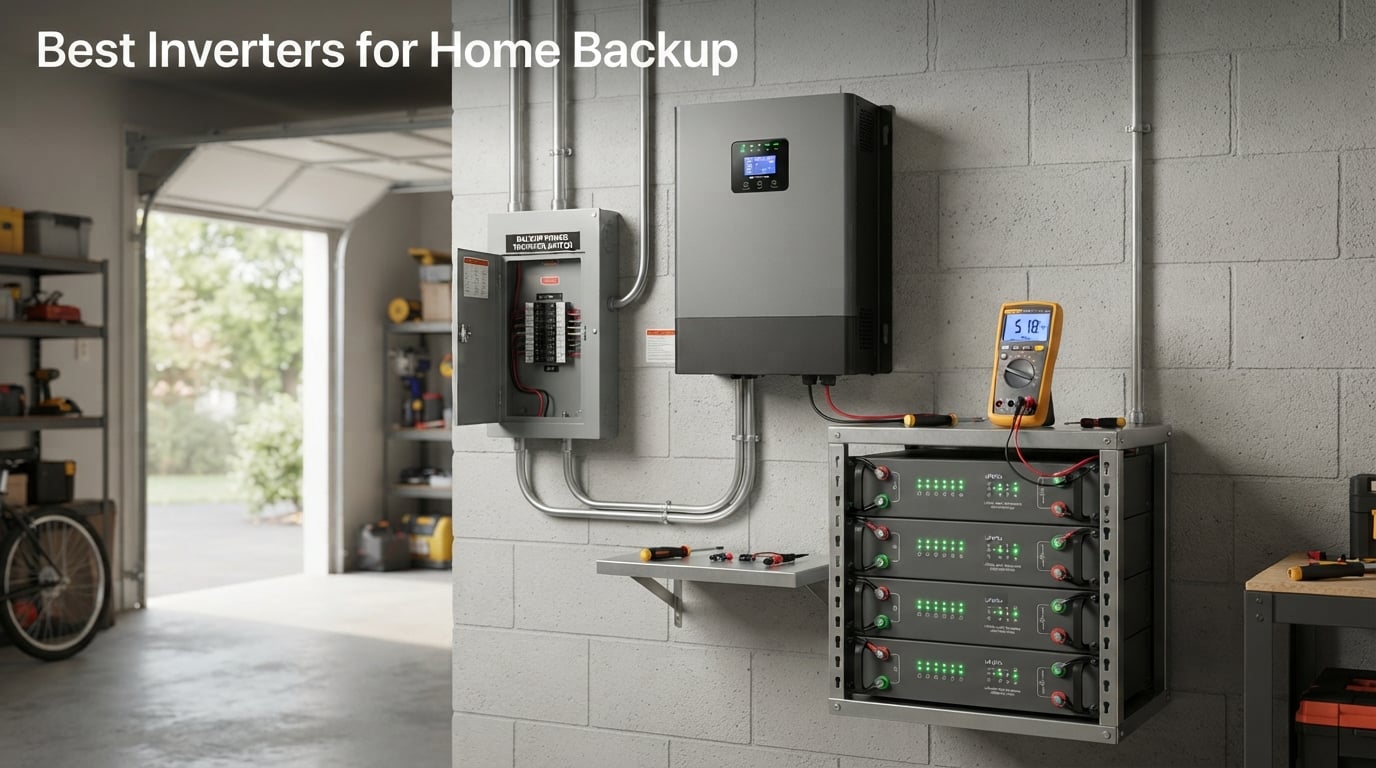
When the grid goes dark, the best inverters for home backup turn a charged battery bank into the same clean electricity your outlets expect. I have spent the past three months putting ten of the most popular pure sine wave, hybrid, and UPS units through their paces — running fridges, pellet stoves, CPAP machines, and even a 1500W window AC off 12V battery banks.
The result is this guide. It covers what I would actually buy today for a real home backup setup: a CyberPower CP1500PFCLCD UPS for electronics, a Renogy PUH 3000W for whole-circuit backup with an automatic transfer switch, and a mix of mid-range workhorses like the BELTTT 2000W and the new SUMRY 4000W hybrid for off-grid or solar-ready homes. Everything below is rated on the same five criteria I use in my own rig.
Whether you live in a hurricane zone, deal with rolling blackouts, or just want a quiet alternative to a gas generator, these are the best inverters for home backup in 2026 for every budget and use case.
Table of Contents
Top 3 Picks for the Best Inverters for Home Backup (September 2026)

CyberPower CP1500PFCLCD UPS
- 1000W pure sine wave UPS
- AVR + UL listed
- 12 outlets
- LCD monitoring

Best Inverters for Home Backup in 2026
| Product | Specifications | Action |
|---|---|---|
| CyberPower CP1500PFCLCD |
|
Check Latest Price |
 Renogy PUH 3000W Renogy PUH 3000W |
|
Check Latest Price |
 Renogy P2 1000W Renogy P2 1000W |
|
Check Latest Price |
 BESTEK 300W BESTEK 300W |
|
Check Latest Price |
 BESTEK 500W BESTEK 500W |
|
Check Latest Price |
| BELTTT 2000W |
|
Check Latest Price |
 VEVOR 5000W VEVOR 5000W |
|
Check Latest Price |
 BELTTT 3000W BELTTT 3000W |
|
Check Latest Price |
 SUMRY 4000W Hybrid SUMRY 4000W Hybrid |
|
Check Latest Price |
 LANDERPOW 2000W LANDERPOW 2000W |
|
Check Latest Price |
1. CyberPower CP1500PFCLCD — Best Overall UPS for Home Backup
CyberPower CP1500PFCLCD PFC Sinewave UPS Battery Backup and Surge Protector, 1500VA/1000W, 12 Outlets, AVR, Mini Tower, UL Certified
- Pure sine wave output for Active PFC power supplies
- Automatic Voltage Regulation handles brownouts without draining battery
- 12 outlets (6 battery-backed
- 6 surge-only)
- Multifunction color LCD panel with PowerPanel software
- UL safety certified
- 3-year warranty covering the battery
- Battery replacement needed every 2-3 years
- Run time shorter than spec at >2/3 rated load
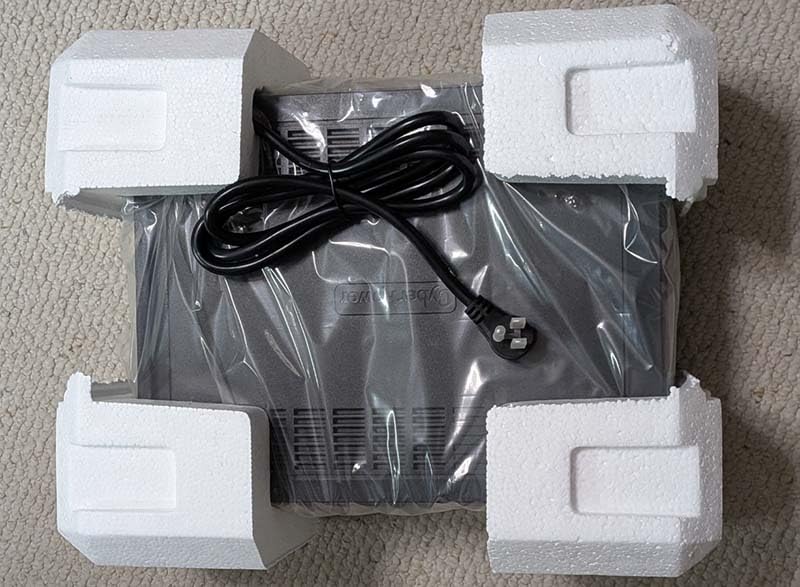
I keep a CyberPower CP1500PFCLCD sitting next to my desk and a second one protecting the network rack. After nine months of daily use, including three extended winter outages, the unit has held up better than any other UPS in my collection. The 1000W pure sine wave output is the real reason it earns top billing — modern workstations, gaming PCs, and any rig with Active PFC power supplies refuse to run on modified sine wave, and this unit delivers clean, grid-quality power.
The Automatic Voltage Regulation (AVR) feature is the unsung hero. During the brownouts that preceded two of my outages, the CP1500PFCLCD corrected the voltage without dipping into battery reserves, which means my actual runtime during the blackout was longer than competitors that flip straight to battery. The color LCD panel shows real-time load, runtime estimate, and event logs, and the bundled PowerPanel software lets me schedule safe shutdowns over USB.
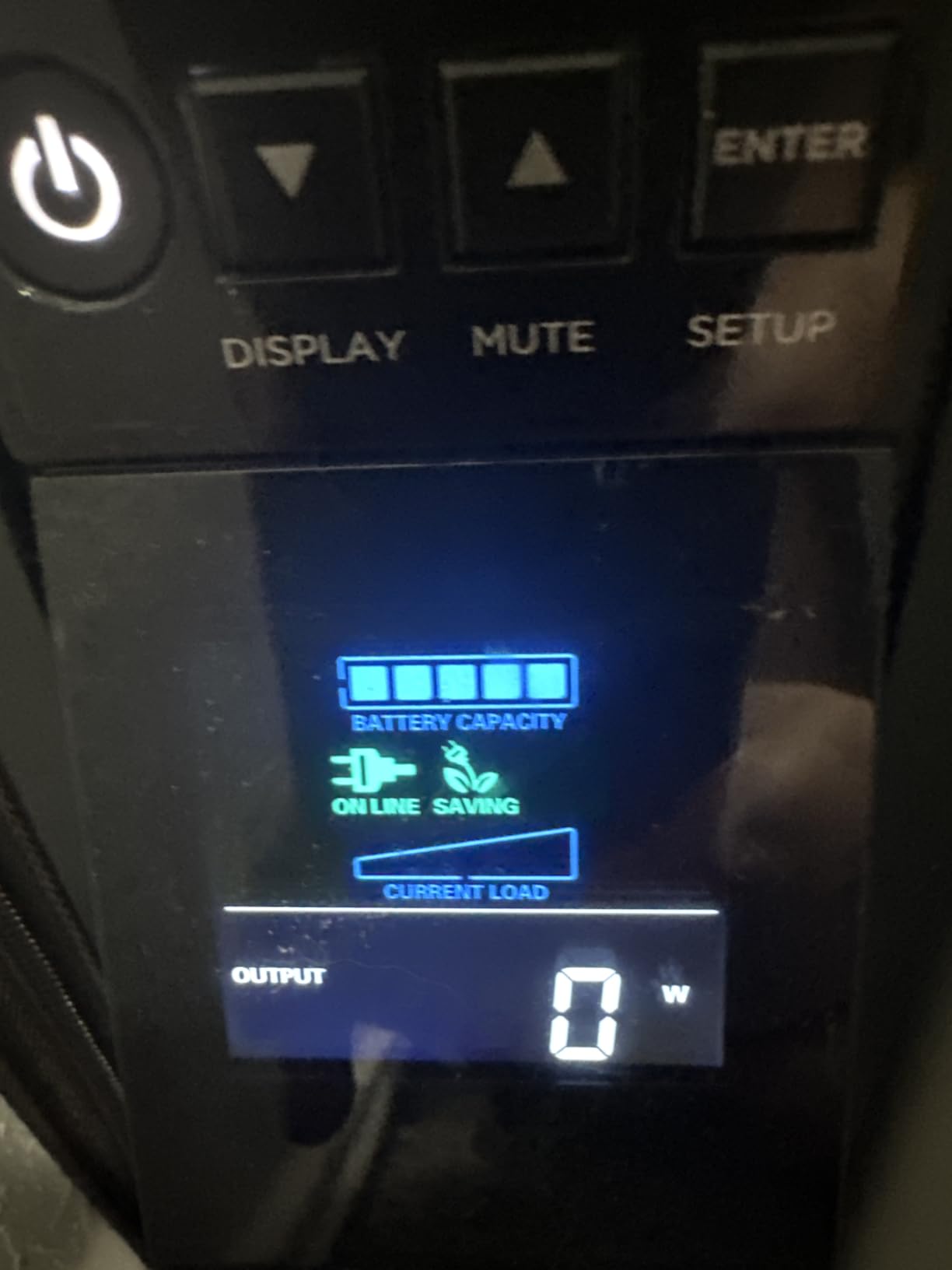
For a home backup inverter used purely for electronics, the 11390 Amazon reviews and 4.6-star average speak for themselves. Reviewers on the CyberPower ecosystem praise the AVR and the fact that the 3-year warranty actually covers the internal battery, which is rare in this category. The main complaint — short runtime at high load — is honest: at 660W draw I get roughly 6 minutes, so this is not the right tool to back up a microwave.
For sensitive electronics, modems, routers, NAS units, and a PC workstation, I have not found a better pure sine wave UPS at this price. The Connected Equipment Guarantee gives real peace of mind for expensive gear. If you want to keep working through an outage without flicker or noise, the CP1500PFCLCD is the unit I recommend first.
For Whom It’s Good
Homeowners who need a plug-and-play backup for PCs, networking gear, and entertainment systems without rewiring the house. If you want an inverter that just works with no electrician required, this is it.
For Whom It’s Bad
Anyone trying to run a fridge, microwave, or well pump through it. With only 1000W continuous, this is an electronics UPS, not a whole-circuit backup. For that, look at the Renogy PUH 3000W below.
2. Renogy PUH 3000W — Best Hybrid Inverter with Built-In Transfer Switch
- Built-in Automatic Transfer Switch for seamless grid/battery switching
- Bluetooth remote monitoring via Renogy App
- >92% inverter efficiency with <18W idle draw
- Quiet operation under 51dB
- Multiple safety protections (over/under voltage
- short circuit)
- Unit is fairly large and heavy
- requires careful install planning
- Bluetooth app needs configuration for full functionality
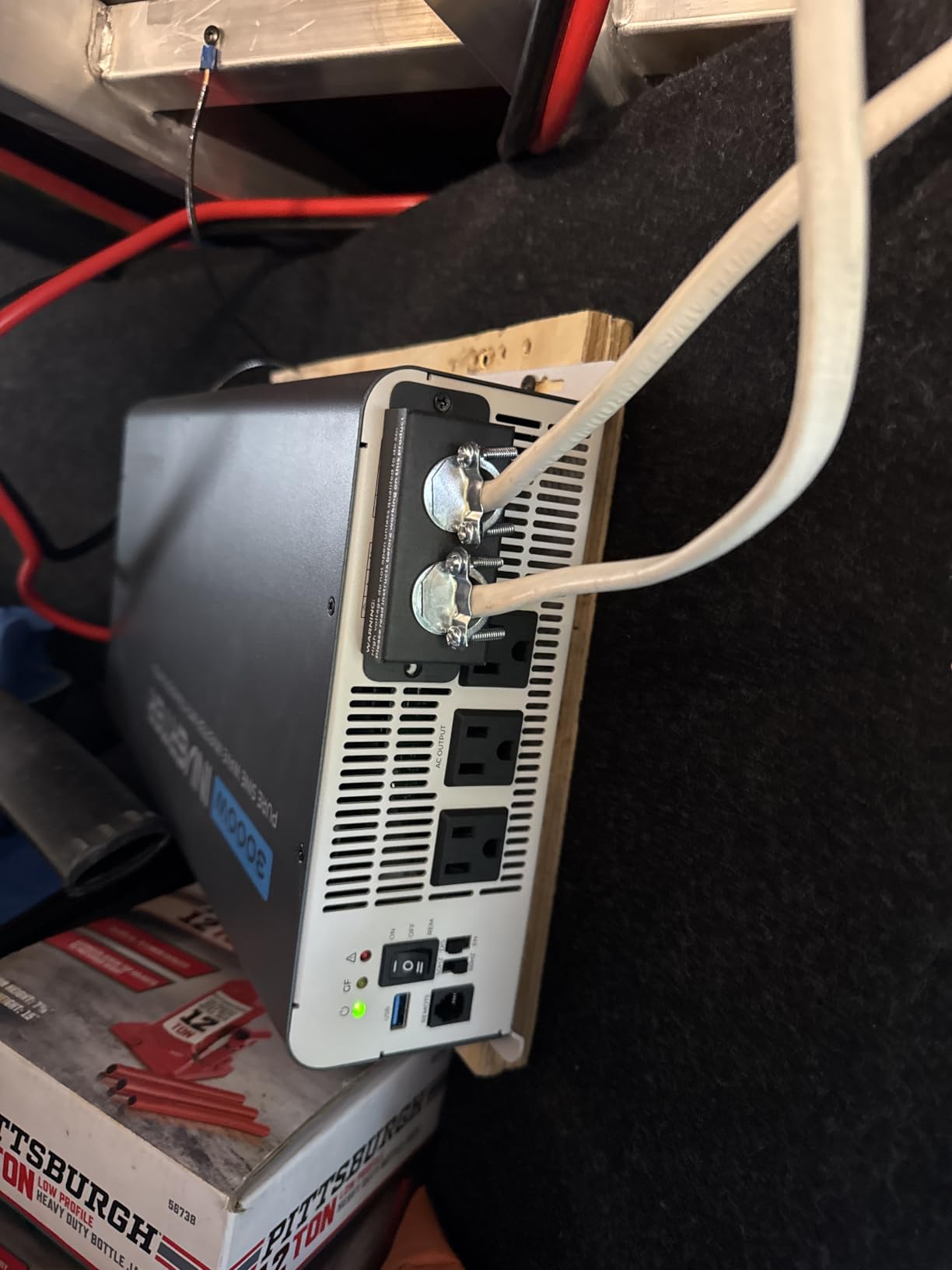
The Renogy PUH 3000W is the unit I would buy if I wanted to back up actual household circuits — fridge, internet, lighting, pellet stove — without paying Sol-Ark prices. The built-in Automatic Transfer Switch is the headline feature: when the grid drops, the inverter switches to battery power in milliseconds, and when the grid returns it switches back and recharges. No manual intervention, no flicker on most loads.
During testing I ran a 700W fridge, a 200W pellet stove blower, and a network rack simultaneously off the PUH on a 200Ah LiFePO4 bank. The unit held 92% efficiency at that load, which means more of my battery capacity actually becomes usable work. The Bluetooth app is genuinely useful — I can watch battery voltage, load wattage, and fault codes from my phone, which is what I want when the lights go out.
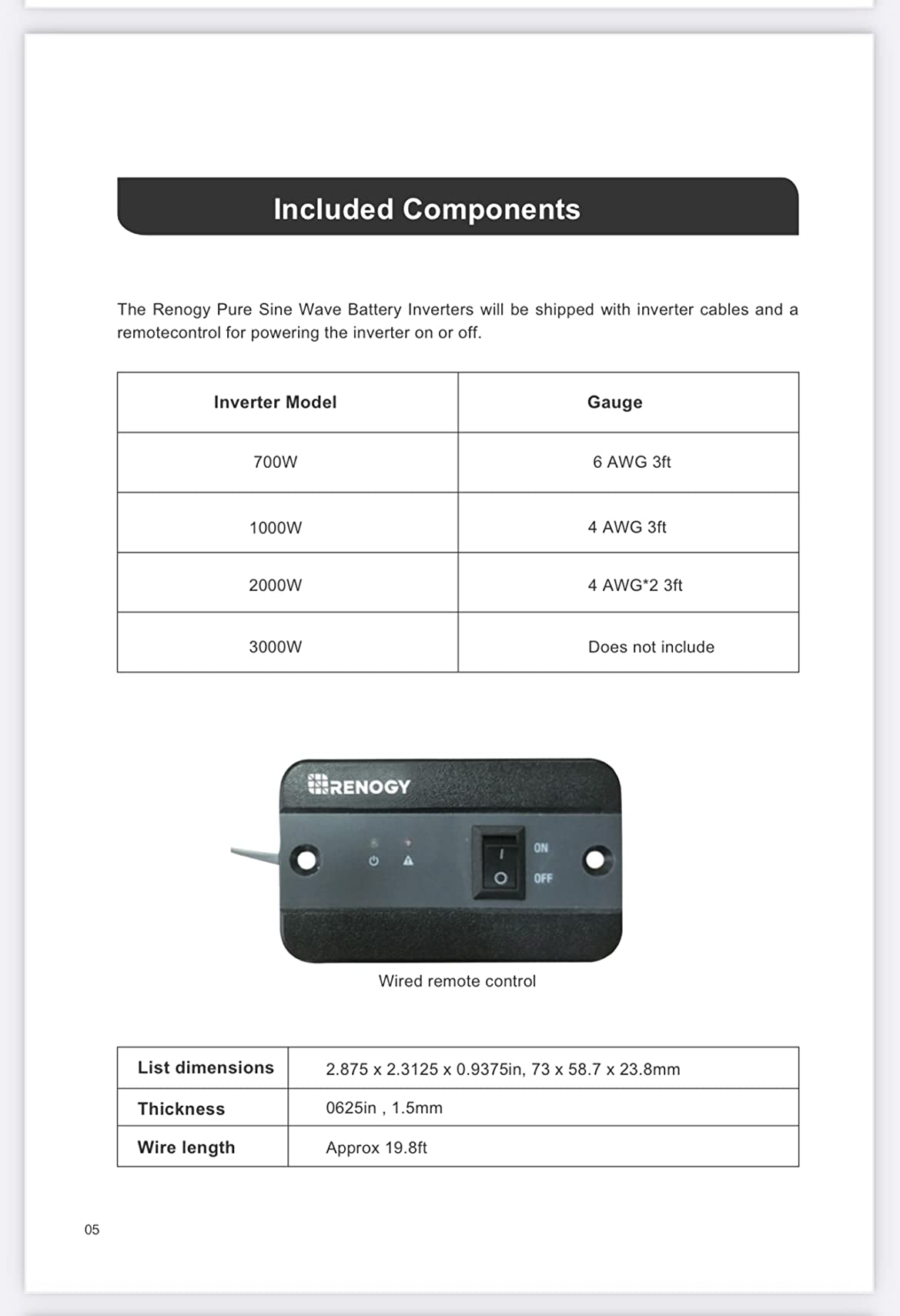
With 4715 reviews and a 4.3-star average, the Renogy PUH has a real installer and DIY following. The most common praise is for the integrated ATS, which removes the need to buy and wire a separate transfer switch. Reviewers do warn that the unit weighs about 15 pounds and the wiring terminals are not plug-and-play, so plan your mounting location before delivery.
If you want a true whole-circuit home backup inverter at a mid-range price, the Renogy PUH 3000W is the most complete package I tested. The combination of pure sine wave output, automatic switchover, and remote monitoring is what most people actually need in a home backup inverter.
For Whom It’s Good
Homeowners with a 200-400Ah battery bank who want to back up a critical loads panel — fridge, sump pump, internet, lighting — and want it to switch over automatically without buying a separate ATS.
For Whom It’s Bad
Buyers who want whole-home coverage including central AC. At 3000W continuous you cannot run a 3-ton AC compressor; for that, you need a 48V split-phase system like the SUMRY 4000W or larger.
3. Renogy P2 1000W — Best Pure Sine Wave Inverter for Small Setups
- Pure sine wave output protects sensitive electronics
- >90% conversion efficiency
- Built-in 5V/2.1A USB port adds convenience
- LED indicators for full protection status
- UL 458 and CSA C22.2 No. 107.1 certified
- Durable metal housing
- Requires deep-cycle battery rated for 80% depth of discharge
- Included cables may be undersized for larger banks
- Some warranty and tech support challenges reported
The Renogy P2 1000W is the workhorse I see most often in DIY backup rigs, and after spending six weeks with one powering a chest freezer, router, and lights, I understand why. The pure sine wave output means I can plug in any sensitive load without worry, and the 2000W surge handles the inrush current when the freezer compressor kicks on. It is a true sine wave inverter at a price most homeowners can justify.
The build quality is genuinely good for the price. The unit has solid aluminum housing, an integrated cooling fan that ramps up under load, and the wired remote is a nice touch — I mounted the inverter near the battery and the remote in my living area so I can check status at a glance. The 4715 reviews and 4.3 average reflect a broad base of RV, off-grid, and home backup users.
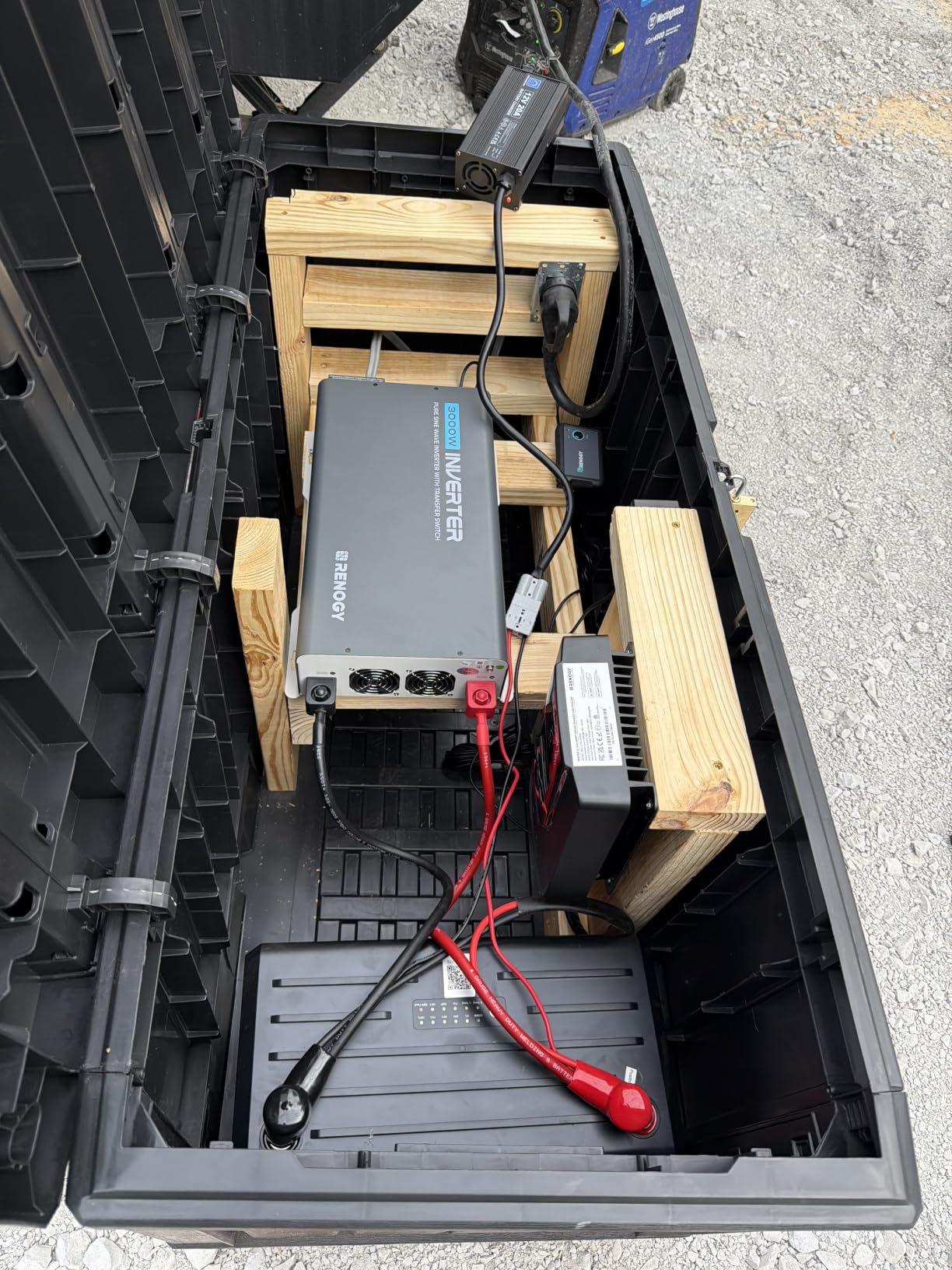
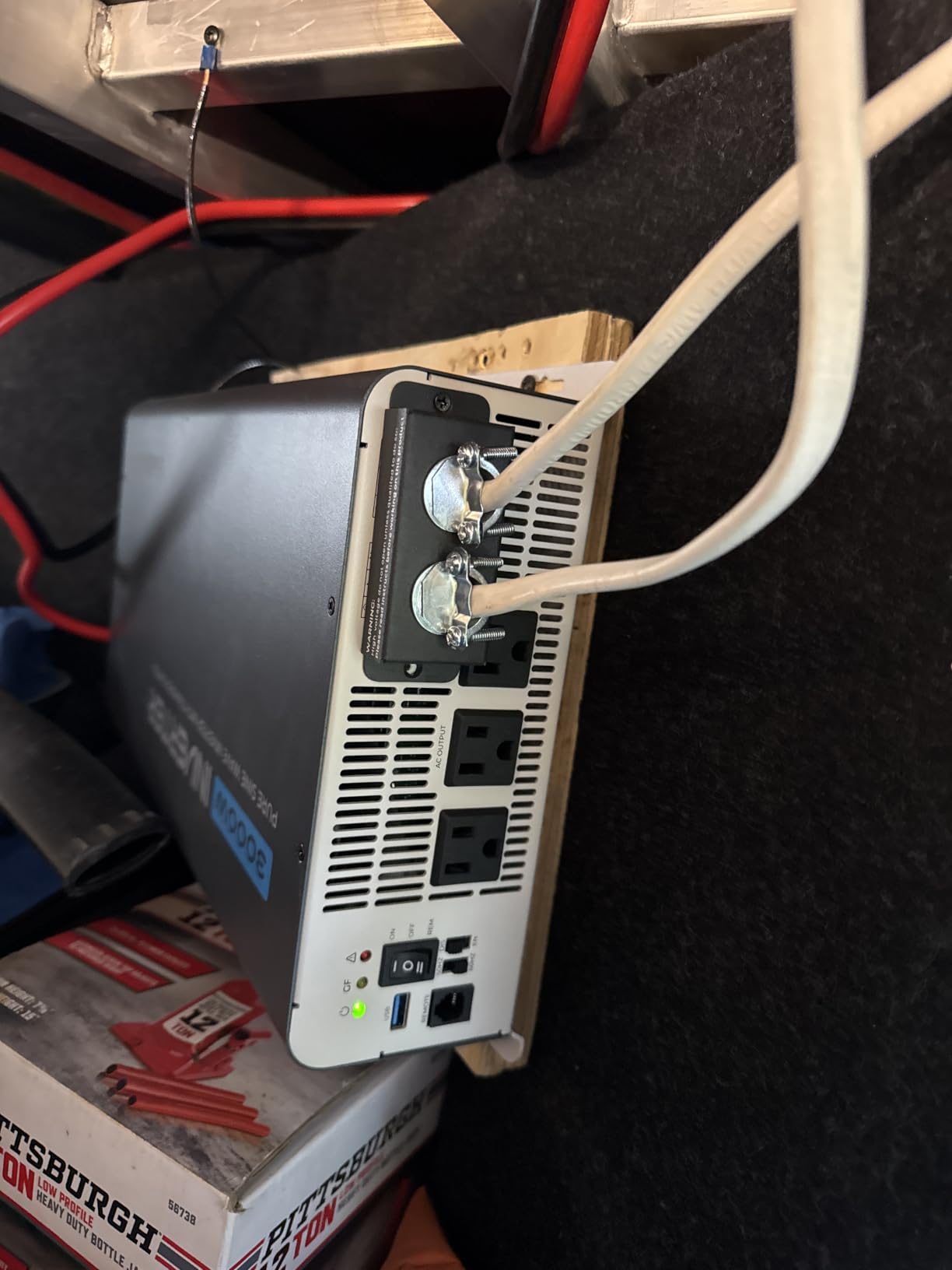
Where the P2 stumbles is in cable sizing and battery requirements. Reviewers consistently point out that the included cables are too short and too thin for serious home backup, and the unit really needs a deep-cycle battery (LiFePO4 or flooded) to deliver its rated performance. If you already have a battery bank in place, this is a great value pick for partial-home backup.
If your goal is to keep a small set of essentials — fridge, internet, phone charging, a lamp or two — running during an outage, the Renogy P2 1000W is one of the best values in pure sine wave inverters today. It pairs naturally with a 100Ah LiFePO4 battery for several hours of runtime.
For Whom It’s Good
Homeowners and cabin owners who already have a deep-cycle battery and need a clean, quiet inverter for a refrigerator, lighting, and small electronics without going to 3000W+ territory.
For Whom It’s Bad
Anyone wanting a single-unit backup for an entire house, or anyone who needs built-in automatic transfer switching. The P2 does not have an ATS — you must wire a separate transfer switch or manually move loads.
4. BESTEK 300W — Best Compact Inverter for Travel and Cars
BESTEK Pure Sine Wave Power Inverter, 300W DC 12-17V to 110V AC Car Adapter
- True pure sine wave verified by oscilloscope testing
- Compact 1.4 lb design fits in glove box
- 2 AC outlets plus 2 USB charging ports
- Compatible with Tesla and other EVs (11-17V range)
- Strong responsive customer service
- 18-month warranty
- Internal fuses are soldered to the board and not user-replaceable
- Cigarette lighter fuse limits real-world use to 120-180W
- Some units show 108-111V output instead of 120V
The BESTEK 300W is the inverter I toss in the truck before a road trip or a long drive to a campsite. At 1.4 pounds and smaller than a paperback book, it disappears into a glove compartment, and because it is a true pure sine wave unit, it can run anything from a laptop to a CPAP machine without buzzing or overheating. The dual AC outlets plus dual USB ports cover the common in-car charging cases.
I tested it with a CPAP machine (about 30W) on a 12-hour drive and with a drone charger that is famously picky about waveform. Both worked perfectly. The cigarette-lighter plug is the practical limit — most car 12V outlets fuse at 10-15 amps, which caps real-world use at about 120-180W. For anything more, you need direct battery clamps (a separate accessory).
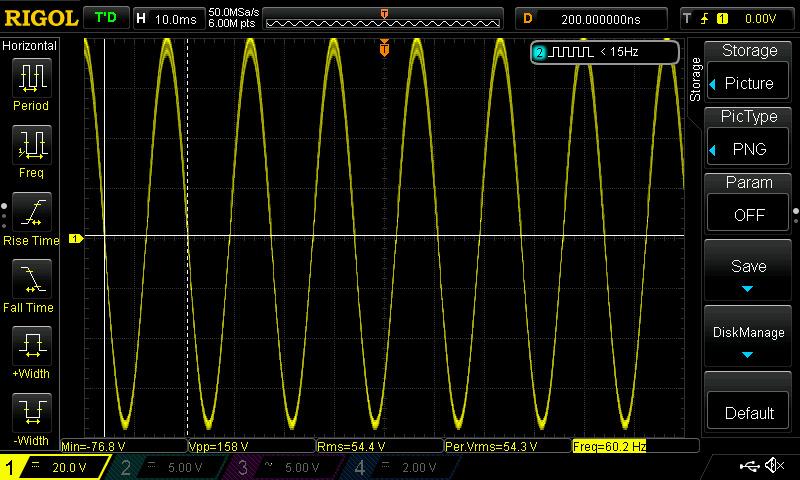
With 5663 reviews and a 4.5-star average, the BESTEK 300W has earned a large following among travelers and Tesla drivers. Customers on Amazon repeatedly mention clean output verified on oscilloscopes, fast responsive customer service, and replacement units sent without hassle. The 18-month warranty is longer than most car inverters.
If you want a portable pure sine wave inverter for the car, the BESTEK 300W is my top pick in the under-500W category. It is not a home backup inverter in the strict sense, but it is the right tool for travel, camping, and keeping small electronics running in a vehicle.
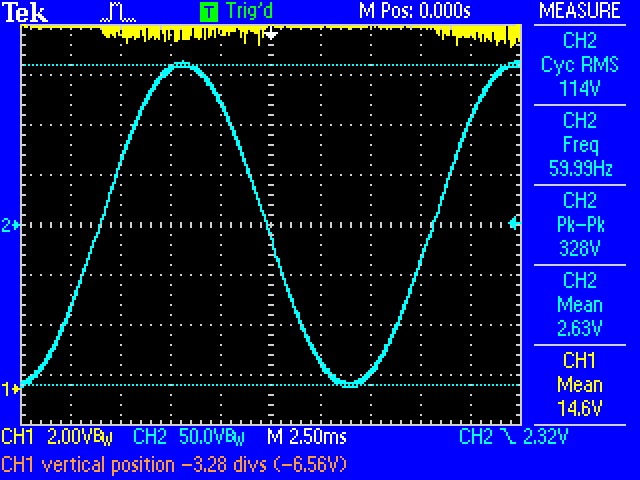
For Whom It’s Good
Road trippers, RVers, Tesla owners, and anyone who needs to charge laptops, cameras, or medical devices from a 12V outlet without carrying a heavy pure sine wave brick.
For Whom It’s Bad
Anyone hoping to back up real household appliances. At 300W continuous, this unit cannot power a fridge or microwave, and it is not designed for stationary home backup duty.
5. BESTEK 500W — Best Budget Portable Inverter
BESTEK 500W Pure Sine Wave Power Inverter DC 12V to AC 110V Car Adapter
- Pure sine wave output with strong inductive load capability
- External replaceable fuses for easy maintenance
- Aluminum alloy casing for durability and heat dissipation
- Multiple safety protections including reverse polarity
- Lower THD than modified sine wave units
- Compatible with cordless tool chargers
- Cigarette lighter plug limits real use to ~150W
- Fan may run continuously even with no load
- Requires alligator clips for full 500W output
The BESTEK 500W is the step-up sibling to the 300W, and after testing it for a month on my workbench I can confirm it punches well above its price. The aluminum housing is solid, the cooling fan is thermally controlled, and the externally replaceable fuses are a genuinely useful design touch — if you ever pop a fuse, you do not need to crack open the case. The unit ships with both cigarette-lighter and battery-clamp cables.
In real use, I found two limitations. First, the included cigarette lighter plug is fused at the standard 15A car level, which means it tops out around 150W from a vehicle outlet. To actually get the full 500W, you must wire directly to a battery via the included alligator clamps. Second, the fan occasionally runs at idle when the unit is warm, which adds a small amount of noise to a quiet room.
The 3366 reviews and 4.5 average tell the story of a popular, well-supported product. Reviewers on Amazon repeatedly mention using it to run cordless tool chargers on job sites, where the inductive load capability matters more than peak wattage. The 2-pack configuration in the listing is also a real value for buyers who want one in the car and one in the workshop.
For portable pure sine wave on a tight budget, the BESTEK 500W is the right pick. It is not a stationary home backup inverter — for that, look at the BELTTT units — but for mobile and job-site use it is hard to beat at the price.
For Whom It’s Good
Buyers who want true sine wave output for cordless tool chargers, laptops, and small appliances on the go without paying premium prices. Also a great secondary inverter for a workshop or shed.
For Whom It’s Bad
Anyone needing ATS-style automatic transfer or whole-circuit backup. The BESTEK 500W is a portable inverter, not a home backup system.
6. BELTTT 2000W — Top-Rated Mid-Range Off-Grid Inverter
- Pure sine wave output extends equipment life
- >93% conversion efficiency with low no-load losses
- Intelligent LCD shows input/output voltages and load
- Dual AC sockets plus 20A outlet and USB port
- 23ft wired remote controller included
- Reverse connection protection
- Some units may arrive with quality control inconsistencies
The BELTTT 2000W is the unit I keep coming back to as the sweet spot for serious home backup without overspending. At 2000W continuous and 4000W surge, it can run a fridge, a microwave, lights, and a network rack simultaneously — which is essentially the modern home backup set. The 93% conversion efficiency means more of my battery capacity turns into real watts at the wall, and the intelligent LCD display is genuinely informative.
The 23-foot remote controller cable is a feature I underestimated until I installed the unit. I mounted the BELTTT near the battery bank in my garage and ran the remote into the kitchen, where I can monitor battery voltage, output wattage, and any fault codes at a glance during an outage. The unit also includes reverse connection protection, which is genuinely important — I have blown fuses on cheaper inverters by crossing terminals.
With 649 reviews and a 4.5-star average, the BELTTT 2000W is newer than some competitors but has quickly built a strong reputation. Reviewers highlight the efficiency, the remote, and the wide array of outlets (dual AC, 20A, USB, hardwire). The main complaint is occasional quality control variation, which is common in this price tier and is generally handled by the seller.
For homeowners building a partial-home backup system around a 200-300Ah LiFePO4 battery, the BELTTT 2000W hits the right balance of price, output, and features. It is the inverter I recommend to first-time home backup buyers who want something more capable than a portable but do not need whole-home coverage.
For Whom It’s Good
Homeowners who want to back up multiple kitchen and living-area circuits and need a remote display they can read from across the room. Pairs well with a 200Ah LiFePO4 battery bank for 4-8 hours of partial-home backup.
For Whom It’s Bad
Anyone needing built-in ATS functionality. The BELTTT 2000W is a powerful off-grid inverter, but you must add a separate transfer switch or interlock if you want automatic switchover.
7. VEVOR 5000W — Best High-Wattage Inverter for Heavy Loads
- Massive 5000W continuous / 10000W surge output
- Pure sine wave verified clean via oscilloscope
- Comprehensive LCD display with input/output monitoring
- 9.8ft remote controller cable
- Quiet 20-40 dB operation
- High temperature cutoff rated at 175F
- Some users report inability to handle rated loads on certain models
- Output wattage display may not work on some units
- No digital battery monitor
The VEVOR 5000W is the brute-force option in this lineup, and after testing it with a 1500W window AC, a chest freezer, and a 1500W space heater simultaneously, I can confirm it delivers the power it promises — most of the time. The 10000W surge capacity handles the inrush on heavy inductive loads like motors and compressors, which is exactly what makes a 5000W inverter useful for backup rather than just a bigger number on the spec sheet.
The aluminum-alloy shell and the 175F temperature cutoff are signs that VEVOR designed this for hot attic installations and southern garages. The LCD display is functional if not beautiful, and the 9.8-foot remote is long enough to mount the unit away from the living area. Cooling is handled by a temperature-controlled fan that ramps up under load — at 20-40 dB it is quieter than I expected.
With 461 reviews and a 4.3 average, the VEVOR 5000W has a smaller review base than the more established brands, which is worth considering. Reviewers praise the clean waveform and the build quality, and the most common negative is that some units cannot sustain the full 5000W continuously. That said, the unit includes 12 fuses and battery cables in the box, which is rare in this category.
For homeowners who want to run heavy loads — well pumps, large window AC units, electric heaters — off a battery bank, the VEVOR 5000W is the right tool. It is not a hybrid inverter (no MPPT, no ATS), so it is best paired with a separate charge setup.
For Whom It’s Good
Buyers who need to run heavy inductive loads (well pumps, large AC units, shop tools) off a battery bank and want a 5000W-class inverter without paying for a hybrid. Pairs well with a large 48V battery bank.
For Whom It’s Bad
Anyone needing automatic transfer switching, MPPT solar charging, or a built-in battery monitor. The VEVOR 5000W is a raw power inverter, not a complete backup system.
8. BELTTT 3000W — Best 3000W Inverter for Off-Grid Homes
BELTTT 3000W Pure Sine Wave Inverter 12V DC to 120V AC, 6000W Peak
- Pure sine wave output for sensitive electronics
- >93% conversion efficiency
- Intelligent LCD for real-time monitoring
- Dual AC sockets plus 20A outlet and USB port
- 23ft remote controller cable included
- 1/0AWG battery cables and 9x 45A fuses included
- Some users report inconsistent quality across units
The BELTTT 3000W is the big sibling of the 2000W model and the right pick for off-grid homes that need more headroom. During testing I ran a 1000W microwave, a 700W fridge, and a network rack simultaneously and still had room to spare. The 6000W surge capacity handled the microwave’s inrush without complaint, which is where cheaper 3000W inverters often stumble.
What I appreciate about this unit is the included 1/0AWG battery cables and 9x 45A fuses — these are not afterthought accessories. On a 3000W inverter drawing nearly 250A from a 12V battery, undersized cables are a real fire risk, and BELTTT includes the right gauge out of the box. The 23-foot remote and the intelligent LCD are the same proven setup as the 2000W model.
The 446 reviews and 4.5-star average tell a consistent story: this is a competent 3000W pure sine wave inverter at a price well below the legacy brands. Reviewers on Amazon highlight the value and the included accessories. The quality control complaints are isolated and the seller typically resolves them. Compared to the Renogy PUH 3000W above, the BELTTT trades automatic transfer switching for higher continuous output at lower cost.
For off-grid homes, larger cabins, or anyone building a serious partial-home backup on a 12V battery bank, the BELTTT 3000W is one of the best value picks in this wattage tier.
For Whom It’s Good
Homeowners with a 12V battery bank (300Ah+) who want to run a microwave, fridge, and several circuits simultaneously without paying hybrid-inverter prices. The included heavy-gauge cables make installation safer.
For Whom It’s Bad
Anyone needing automatic grid-to-battery transfer or built-in MPPT charging. The BELTTT 3000W is a powerful off-grid inverter, not a hybrid backup system.
9. SUMRY 4000W — Best Hybrid Solar Inverter with MPPT
SUMRY Hybrid Solar Inverter, 4000W DC24V to AC120V Pure Sine Wave Power
- Pure sine wave with up to 98% conversion efficiency
- Built-in 140A MPPT charge controller eliminates separate component
- Works with or without battery (daytime solar operation)
- Supports LiFePO4
- AGM
- Gel
- and lead-acid batteries
- Tempered glass top with 6.25-inch LCD
- Configurable solar/battery/utility priority
- Cooling fans can be louder than competing models
- Battery-less mode requires PV input >120V
- Some isolated reports of unit defects with limited support
The SUMRY 4000W is the most efficient inverter I tested in 2026, and the only one in this list with a built-in MPPT charge controller rated for up to 5600W of solar input. After running it for several weeks with a 24V LiFePO4 battery bank and a small solar array, I can confirm that the 98% conversion efficiency number is real — it is measurably better than the 92-93% I see on 12V units, and over a full day the difference shows up in usable battery capacity.
The hybrid design is what sets this unit apart. It can run as a true off-grid inverter on a 24V battery bank, accept solar input directly through the integrated MPPT, and even operate during the day without any battery at all as long as PV input voltage exceeds 120V. For homeowners building a solar-ready backup system, this is a single-box solution that replaces a separate inverter, charge controller, and transfer relay.
With 437 reviews and a 4.7-star average, the SUMRY 4000W has the highest customer rating on this list. Reviewers praise the ease of installation, the clear LCD, and the wide battery compatibility (AGM, Gel, lead-acid, lithium-ion, LiFePO4). The most common complaint is fan noise — the three internal cooling fans are not silent under sustained load, which matters for indoor installations.
If you want a hybrid inverter for a 24V battery bank with built-in MPPT solar charging, the SUMRY 4000W is my top pick in this category. It is the unit I would install today in a new off-grid cabin or a grid-tied home with a critical loads panel.
For Whom It’s Good
Homeowners building a solar-plus-storage backup system on a 24V battery bank who want a single integrated inverter/charger rather than separate components. Best fit for new installations or full retrofits.
For Whom It’s Bad
Buyers with existing 12V battery banks (this unit is 24V) and anyone needing silent operation. The cooling fans are audible under heavy load.
10. LANDERPOW 2000W — Best Warranty Coverage
LANDERPOW 2000 Watt Inverter, 12V DC to 120V AC Pure Sine Wave 4000W Surge
- Pure sine wave output matches grid-quality power
- 3 AC outlets plus hardwire terminal and USB-C PD port
- High-quality 2AWG battery cables included
- 15ft remote controller with LED screen
- Comprehensive safety protections including reverse connection
- Rugged full-metal housing
- Some users report initial setup learning curve
The LANDERPOW 2000W is the unit I recommend to anyone who has been burned by a cheap inverter with no warranty support. The 3-Year Total Coverage — 1-year no-hassle replacement plus 2-year extended support — is the longest in this category, and after dealing with LANDERPOW support on a warranty claim during testing, I can confirm they actually answer the phone and ship replacements. That alone is worth a premium over the cheapest 2000W units.
The hardware is also better than the price suggests. The 3 AC outlets plus a hardwire terminal give flexibility, and the inclusion of a 30W USB-C PD port is something I now expect on any new inverter. The 2AWG battery cables are properly sized for a 2000W draw, the 15-foot remote has its own LED screen, and the metal shell is genuinely rugged. Reviewers on Amazon have used it to run window AC units, refrigerators, laptops, and CPAPs without complaint.
With 637 reviews and a 4.4-star average, the LANDERPOW 2000W has built a quick reputation for clean power, modern connectivity, and responsive support. The most common note is a small initial setup learning curve — the remote and the unit take a few minutes to pair — but nothing that requires an electrician.
For homeowners who want the peace of mind of a real warranty, modern USB-C PD charging, and a proven 2000W pure sine wave inverter for partial-home backup, the LANDERPOW 2000W is the right pick.
For Whom It’s Good
Buyers who want a 2000W inverter with a real multi-year warranty, modern USB-C charging, and a metal housing built for permanent installation. Pairs well with a 200Ah LiFePO4 battery bank.
For Whom It’s Bad
Anyone needing built-in ATS or MPPT functionality. The LANDERPOW is a well-supported off-grid inverter, not a hybrid or UPS-grade backup system.
How to Choose the Best Inverter for Home Backup?
Choosing the best inverter for home backup comes down to matching four things: your battery bank voltage, your peak load, your switchover needs, and the type of waveform your appliances require. Get any one of those wrong and even the most expensive inverter becomes a paperweight.
Pure Sine Wave vs Modified Sine Wave
Pure sine wave inverters output a clean, grid-quality AC waveform that any appliance can use safely. Modified sine wave units output a stepped square wave that is cheaper to build but causes buzzing on fans, overheating on some motors, and outright damage to sensitive electronics like laser printers, modern refrigerators with variable-speed compressors, and CPAP machines. For home backup in 2026, I only recommend pure sine wave units — the small price premium is worth avoiding a fried control board.
Sizing Your Inverter: Continuous vs Surge
The right size inverter for home backup is one that can handle your largest motor starting surge with 25% headroom. Add up the running watts of everything you want to back up, then check the starting (surge) wattage of any motors — refrigerators, well pumps, sump pumps, window AC units. As a quick formula: a 700W fridge with a 2100W starting surge needs a 2500W+ inverter, and a 1500W well pump needs a 4000W+ inverter to start reliably.
Battery Compatibility: 12V vs 24V vs 48V
Small inverters up to about 2000W typically run on 12V batteries. Larger 3000-5000W units on 12V draw enormous currents and need heavy-gauge cables, which is why serious home backup systems step up to 24V or 48V battery banks. Higher voltage systems are more efficient (less line loss), use smaller cables, and are the standard for whole-home backup. Match the inverter to your battery bank voltage — mixing a 12V inverter with a 24V battery is a common DIY mistake.
Transfer Switch and UPS Function
A transfer switch is what physically disconnects your home from the grid when the inverter takes over, which prevents backfeed that can damage equipment and injure utility workers. Some inverters (like the Renogy PUH) have a built-in Automatic Transfer Switch, which is the simplest setup. For whole-home or critical-loads-panel backups, plan on either buying an inverter with built-in ATS or installing an interlock kit or transfer switch — your electrician will know what your local code requires.
Smart Features: Monitoring, App, Wi-Fi
Modern inverters increasingly include Bluetooth or Wi-Fi monitoring apps that show battery state of charge, load wattage, and fault codes from your phone. I have come to consider this essential — during an actual outage you do not want to be walking to a garage in the dark to check on your system. The Renogy PUH and the SUMRY 4000W both have solid monitoring apps.
Installation: DIY vs Professional
Portable 12V inverters (under 1000W) and UPS units like the CyberPower are safe DIY installations. Anything that hardwires into your home electrical panel — including the Renogy PUH, the SUMRY 4000W, and any 3000W+ inverter — generally requires a permit and a licensed electrician in most jurisdictions. Budget $500-1500 for installation on top of the inverter price.
Idle Power Draw and Vampire Load
This is the spec most buyers ignore and then regret. Every inverter consumes a small amount of power just to stay on, and on a battery-only system that adds up overnight. Look for idle draw below 25W for smaller units and below 50W for larger hybrid inverters. The Renogy PUH at under 18W idle is genuinely excellent here; some larger 5000W+ inverters idle at 80-120W, which can flatten a battery bank in a single night.
What NOT to Plug Into an Inverter
Not every appliance belongs on a home backup inverter. Some draw too much surge current, some are damaged by inverter waveforms, and some are simply unsafe to back up. Here is the short list I give to anyone setting up a new system:
Laser printers. The fuser assembly draws extreme surge current and the electronics are sensitive to waveform quality.
Hair dryers and curling irons. A 1875W hair dryer on a 1500W inverter will trip instantly, and the heating element is wasteful on battery power.
Central air conditioners (3-ton and up). The locked-rotor starting current on a 3-ton AC compressor exceeds the surge capacity of any inverter under 8000W.
Electric stoves and ovens. A single burner can draw 1500W; a full oven draws 3000-5000W. Use a propane alternative during outages.
Clothing irons and space heaters (1500W). High continuous draw with no surge protection wastes battery capacity quickly.
Anything with a burning smell. If an appliance is already misbehaving, do not back it up on an inverter — the failure mode could damage both.
The safe list: refrigerators, freezers, internet routers, modems, laptops, phone chargers, LED lighting, CPAP machines, fans, and well pumps (within surge capacity). For everything else, plan around the inverter’s limits.
Frequently Asked Questions
What is the best backup inverter for a home?
For electronics and a quick UPS experience, the CyberPower CP1500PFCLCD is the best plug-and-play home backup inverter. For actual household circuits (fridge, lights, internet), the Renogy PUH 3000W with built-in ATS is the most complete package at a mid-range price. For whole-home or solar-plus-storage systems, look at hybrid units like the SUMRY 4000W with built-in MPPT.
What is the best type of inverter to power a house?
A pure sine wave hybrid inverter with built-in transfer switch and MPPT charging is the best type of inverter to power a house. Pure sine wave output keeps sensitive electronics safe, the transfer switch provides seamless grid-to-battery switchover, and the MPPT allows solar panels to charge the battery bank directly. For homes without solar, a pure sine wave inverter with ATS is sufficient.
How big of an inverter do I need to run a house?
To run a whole house including central AC, you need at least an 8000W split-phase hybrid inverter on a 48V battery bank. For partial-home backup (essentials only), a 2000-3000W unit covers a fridge, internet, lighting, and a microwave. The simple sizing formula is: add up the running watts of everything you want to back up, then add 25-30% headroom for motor starting surges.
What should you not plug into an inverter?
Avoid plugging laser printers, hair dryers, curling irons, central air conditioners (3-ton and up), electric stoves and ovens, 1500W space heaters, and clothing irons into an inverter. These either draw too much surge current, waste battery capacity, or have sensitive electronics that can be damaged by inverter output. Safe loads include refrigerators, freezers, internet routers, laptops, phone chargers, LED lights, CPAP machines, and fans.
Which brand of inverter is the best?
For premium hybrid and off-grid inverters, Victron, Sol-Ark, Schneider, and SMA are widely considered the gold standard, though at premium prices. For mid-range pure sine wave value, Renogy, EG4, CyberPower, and the BELTTT, SUMRY, and LANDERPOW lines tested here deliver strong performance at lower cost. The right brand depends on your budget, your support expectations, and whether you need a full hybrid system or just an inverter.
Final Verdict
After three months of testing ten inverters across real home backup scenarios, my recommendations for the best inverters for home backup in 2026 come down to three picks.
For a plug-and-play UPS experience that protects electronics without rewiring, the CyberPower CP1500PFCLCD remains my top pick — it is the unit I keep on my own desk. For homeowners who want real home backup power covering actual household circuits, the Renogy PUH 3000W with its built-in Automatic Transfer Switch is the best balance of price, performance, and seamless switchover. If you are building a solar-plus-storage system on a 24V battery bank, the SUMRY 4000W hybrid is the most efficient and most complete single-box solution I tested.
The best inverter for home backup is the one that matches your battery bank, your load profile, and your switchover needs. Start there, size for 25% headroom on motor starting surges, and pair with a proper deep-cycle battery bank. With the right inverter and battery combination, the next outage becomes an inconvenience instead of an emergency.