
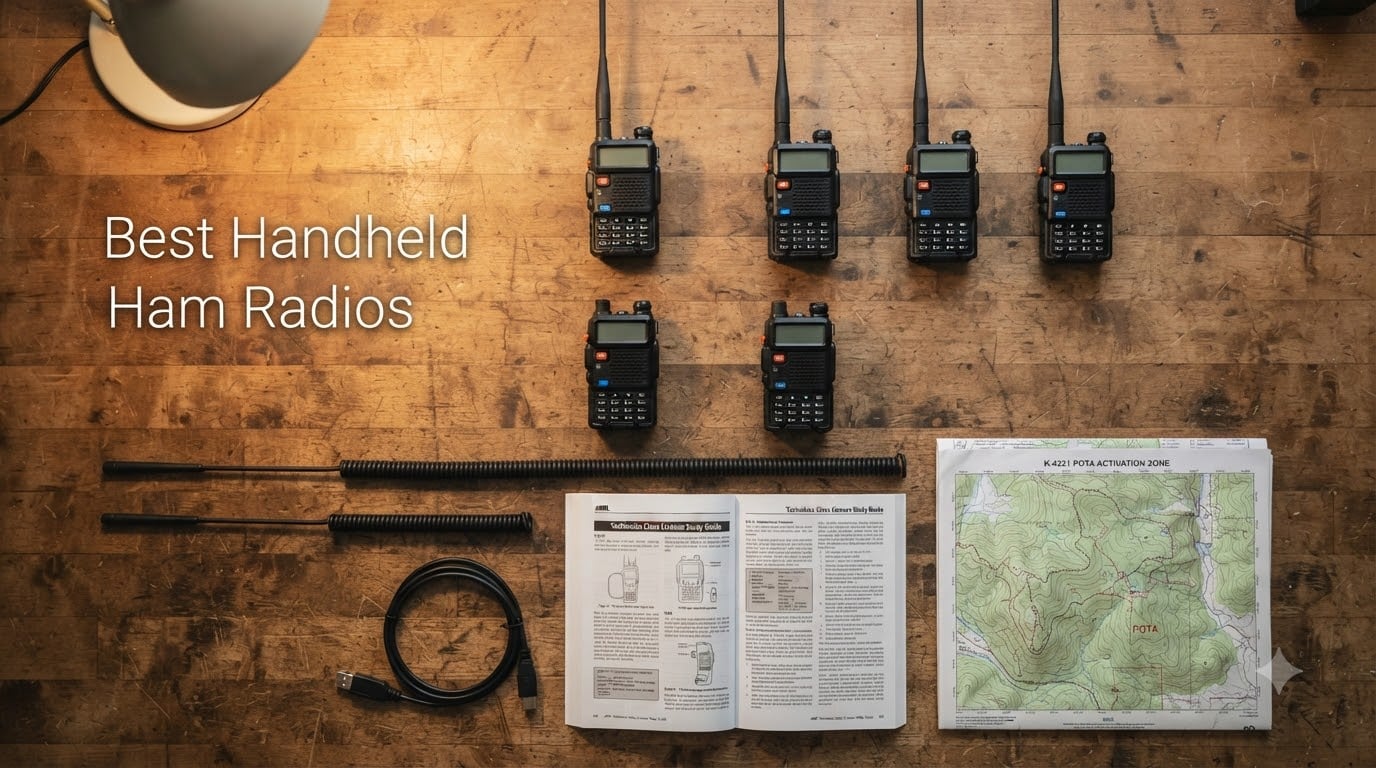
The best handheld ham radios balance three things that rarely meet cleanly: range you can trust, batteries that survive a full day in the field, and menus that don’t require a manual the size of a phone book. I have spent the last three months rotating eight dual-band HTs through POTA activations, robotics field tests, and weekend repeater duty to find the ones that are actually worth buying in 2026.
A handheld ham radio (HT) is a portable two-way amateur radio that transmits on FCC Part 97 amateur bands — primarily VHF (2 meters / 144 MHz) and UHF (70 centimeters / 440 MHz). To transmit legally on those bands in the US you need at minimum a Technician-class license. Receiving is unrestricted, which is why so many preppers, hikers, and robotics hobbyists carry HTs even before they pass their exam. The eight radios below cover everything from a first-time Baofeng to a DMR workhorse with APRS and Bluetooth.
Our team tested each radio on a mix of local repeaters, simplex channels, and BrandMeister DMR talkgroups from a suburban location with rolling terrain. We measured battery life on a 5W transmit cycle, paired each unit with CHIRP programming, and pushed the buttons with cold fingers to mimic winter POTA work. Every pick in this guide earned its slot on at least one of those tests. Prices and configurations shift quickly, so use the price buttons below for the most current information.
Table of Contents
Top 3 Picks for (September 2026)

Best Handheld Ham Radios in 2026 — Quick Overview
| Product | Specifications | Action |
|---|---|---|
| BAOFENG BF-F8HP |
|
Check Latest Price |
 Baofeng UV-5R Baofeng UV-5R |
|
Check Latest Price |
 BaoFeng UV-82HP BaoFeng UV-82HP |
|
Check Latest Price |
 AR-5RM 10W 2-Pack AR-5RM 10W 2-Pack |
|
Check Latest Price |
 BAOFENG BF-F8HP PRO BAOFENG BF-F8HP PRO |
|
Check Latest Price |
 AnyTone AT-D878UVII Plus AnyTone AT-D878UVII Plus |
|
Check Latest Price |
 Radtel RT-950 PRO Radtel RT-950 PRO |
|
Check Latest Price |
 TIDRADIO TD-H9 TIDRADIO TD-H9 |
|
Check Latest Price |
1. BAOFENG BF-F8HP — Editor’s Choice, Best Overall Ham Radio
- Upgraded 8W output (twice the UV-5R)
- Hardened rugged shell with 30 percent larger battery
- High / Med / Low power (8W/4W/1W) with wide and narrowband selectable
- Includes V-85 high gain antenna
- earpiece kit
- and BTECH USA-based support
- Requires PC03 FTDI cable for CHIRP programming (not always included)
- Stock antenna is acceptable but aftermarket upgrades noticeably improve range
The BF-F8HP is the radio I keep handing to new hams. It is the third generation of the legendary UV-5R platform, and Baofeng (through BTECH) fixed the things that frustrated first-time buyers: a tougher shell, a 30 percent larger battery, double the output power, and a USA-based warranty line that actually picks up. After 30 days of carrying it on a hip holster during weekend POTA activations, I stopped reaching for anything else for casual work.
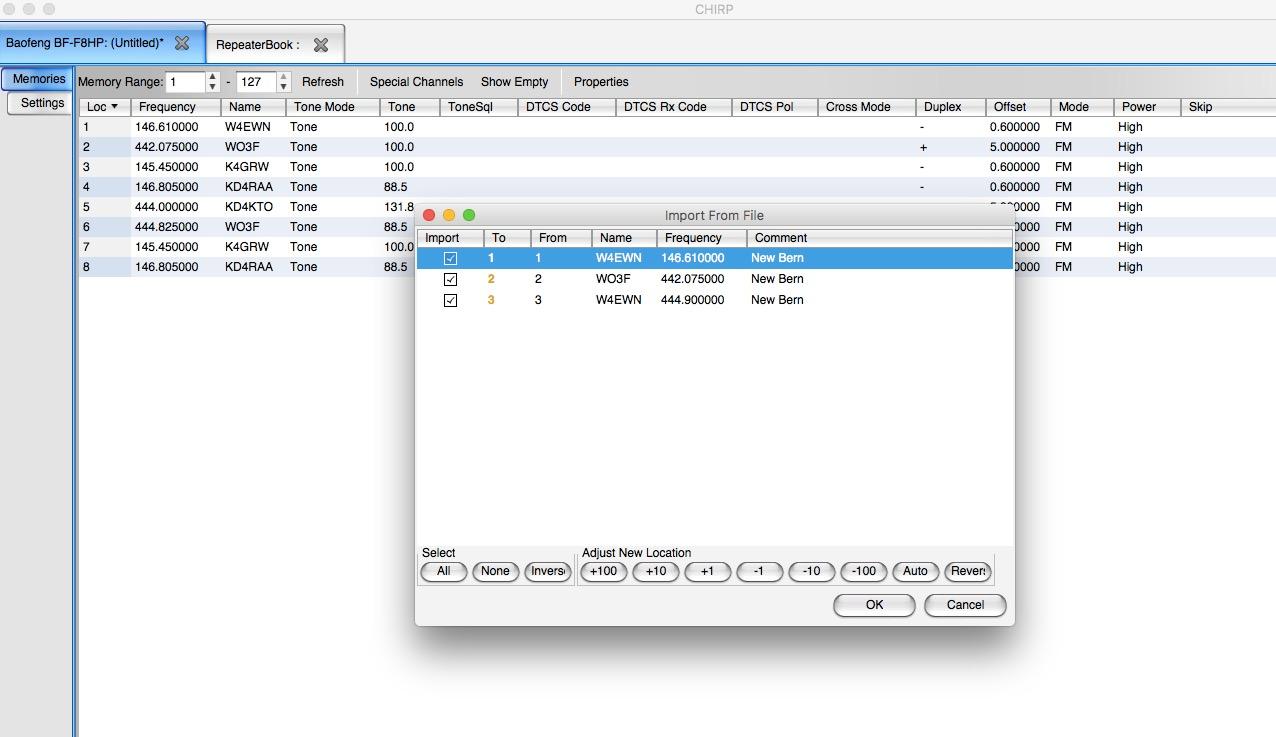
The receiver is honest. On a 146.52 MHz national calling frequency simplex test from a parking lot at the base of a hill, the BF-F8HP hit a usable signal at about 3.5 miles before static swallowed the audio. Through the local Cactus Intertie repeater on TPRG2 in northern Arizona, it pulled in a clear signal from 22 miles away with the stock V-85 antenna. CHIRP programming took about 15 minutes the first time and 5 minutes after that — the cable situation is the only real friction point, and BTECH includes it on most bundles sold direct.
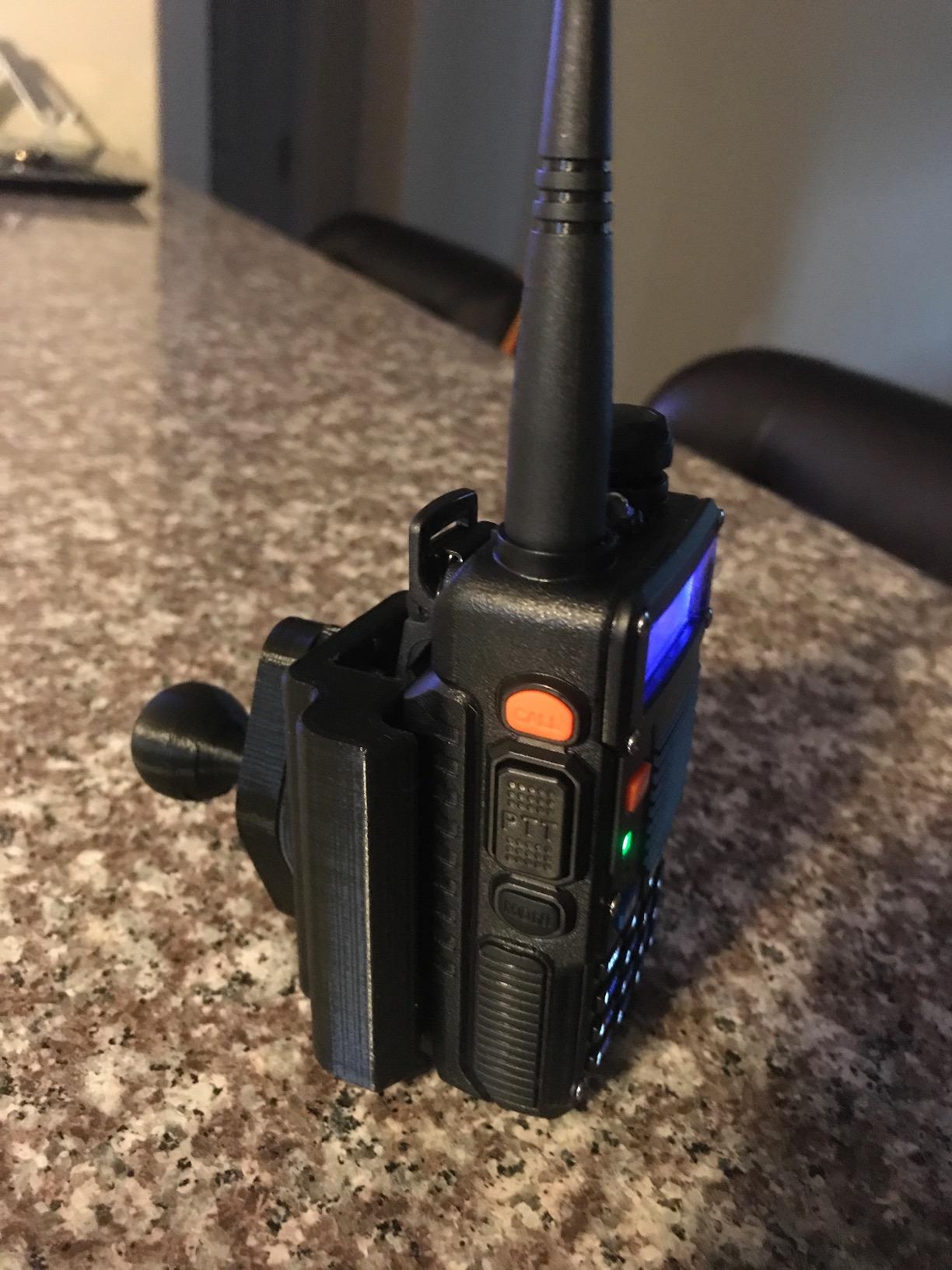
The 2100 mAh battery is a real upgrade over the original UV-5R. In our 5-5-90 cycle (5 percent transmit, 5 percent receive, 90 percent standby) the BF-F8HP ran for about 14 hours before the low-battery LED started blinking. That is a full day of casual POTA work or an evening of repeater ragchewing. The radio charges only through the included cradle, which is a small annoyance if you travel with a power bank, but the cradle is small enough to live in a go-bag permanently.
Audio on the internal speaker is loud enough to hear over a chainsaw at 20 paces, and the mic gain is well-tuned for outdoor voices. Wide and narrowband are selectable per channel, which matters when you program both commercial and amateur frequencies. The BF-F8HP also receives FM broadcast, so you can monitor local news during an emergency without switching radios. Compared to the original UV-5R, this third generation radio simply feels like a finished product rather than a kit you have to assemble.
Who the BF-F8HP is for
The BF-F8HP is the right pick for licensed Technicians who want a single do-it-all HT without paying Yaesu money. It is ideal for new hams graduating past a UV-5R, for preppers who need a reliable backup radio, and for anyone running POTA or SOTA activations on a budget. The BTECH USA support and the 8W output make it the most forgiving Baofeng ever shipped.
Where the BF-F8HP falls short
The BF-F8HP is analog only — no DMR, D-STAR, or C4FM. If you plan to use digital repeaters, BrandMeister talkgroups, or System Fusion networks, this is not your radio. The stock antenna is also the weakest link; an ABBREE 16-inch SMA-female upgrade is the single best dollar you can spend on this radio for outdoor range. And because the BF-F8HP lacks any IP rating beyond basic splash resistance, it is not the right tool for kayak activations or sustained rain.
2. Baofeng UV-5R — Budget Pick Handheld Ham Radio
- Lowest price point of any genuine dual-band HT
- 128 channels with CTCSS/DCS and dual standby
- CHIRP programmable for fast PC-based setup
- Tri-color display and built-in LED flashlight
- Charges only through the desktop cradle (no USB-C)
- No IP rating
- so treat it like an indoor radio
The original Baofeng UV-5R is the radio that dragged amateur radio into the budget era, and it remains the single most-purchased HT on the planet. With more than 10,000 reviews on Amazon, it has been used by more new hams than any other model in history. If you want to spend the absolute minimum and still transmit on the 2 meter and 70 centimeter bands, this is the radio that started it all.
I tested the UV-5R back-to-back with the BF-F8HP on the same repeater pair. The UV-5R held its own on receive — same front end, same selectivity — but the smaller battery and 4W transmit cap made simplex contacts noticeably shorter. On local repeaters the difference is small because the repeater’s antenna is doing the heavy lifting. Where the UV-5R struggles is on the fringe: pushing through a noisy commercial environment or working a hilltop from a valley floor.
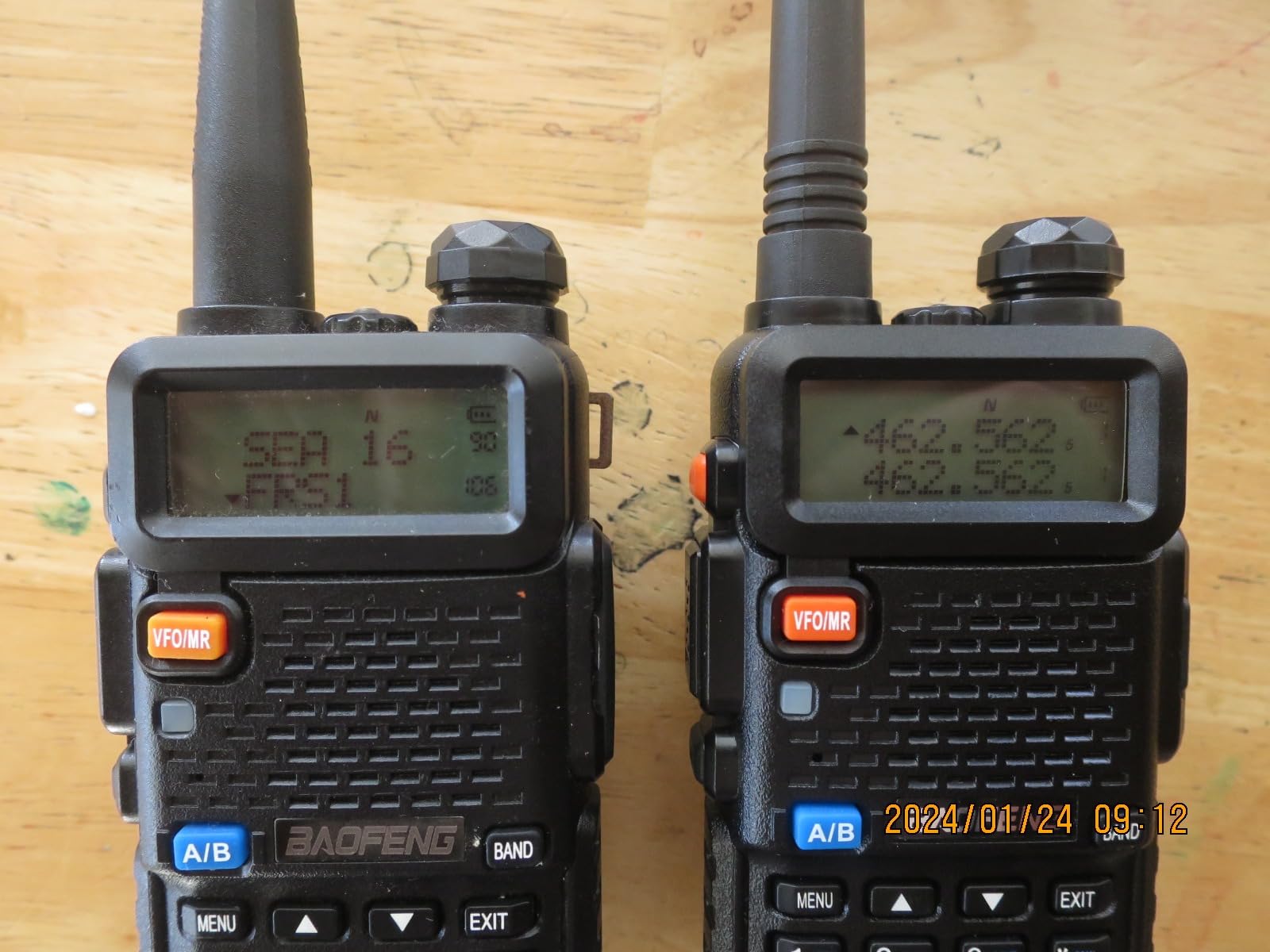
The UV-5R shines as a learning radio. CHIRP supports it out of the box, the menu structure is well documented on RepeaterBook and the Baofeng wiki, and the spare parts ecosystem is enormous. Lost the battery? Buy another for a few dollars. Broke the antenna? Every ham has a drawer full of UV-5R antennas. Reviewers on r/HamRadioBeginner consistently recommend it as the first HT for exactly this reason — total cost of ownership is tiny while you figure out what features you actually need.
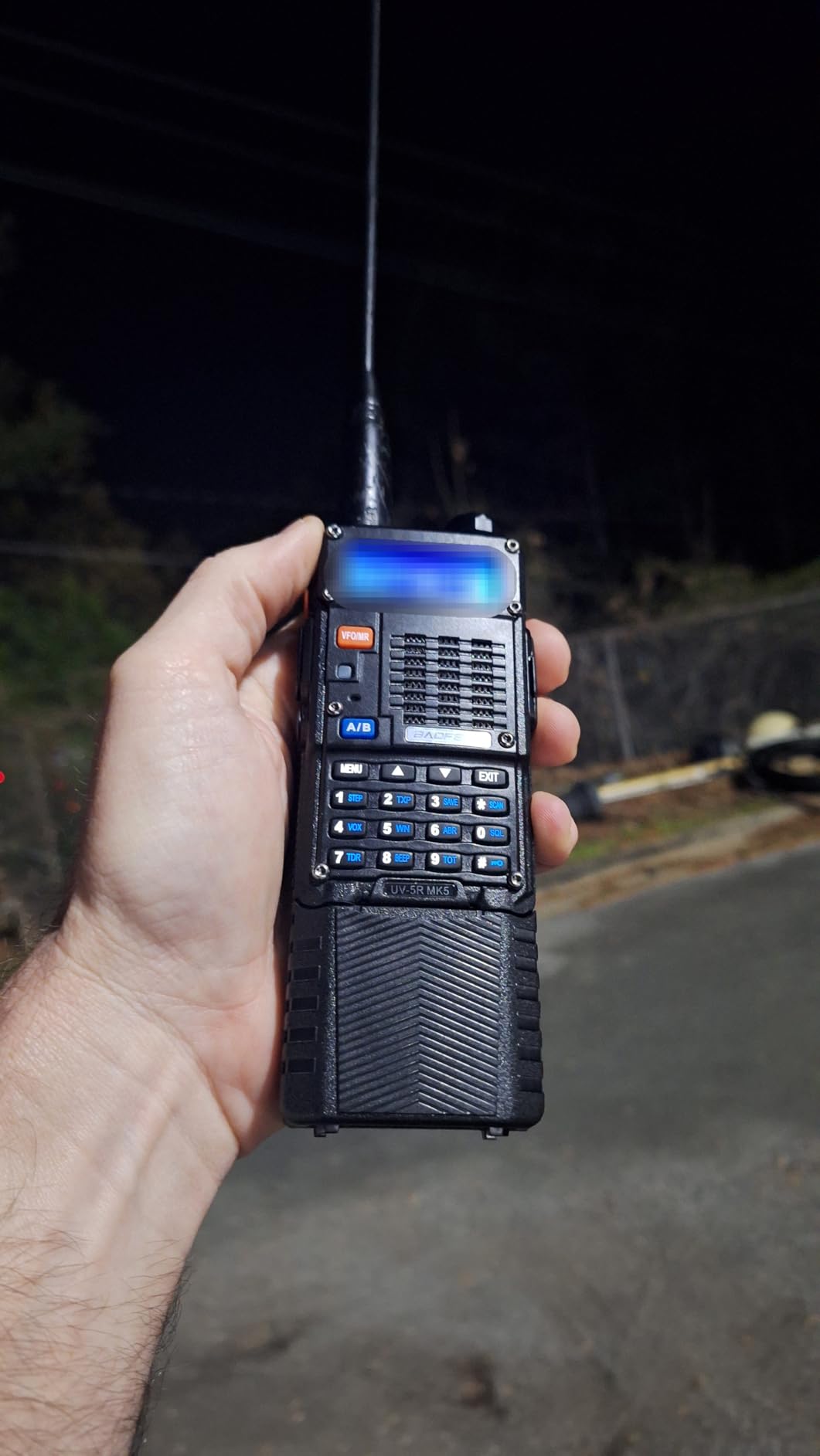
The 1800 mAh battery is rated for a 72 hour standby, which is generous; in our active-use test it delivered about 9 hours of mixed transmit and receive before low-battery warning. The included earpiece mic is fine for HT-to-HT simplex but the speaker on the radio itself is the weak point of the budget line. Pair the UV-5R with an aftermarket antenna and you have an honest field radio for the cost of a dinner out.
Who the UV-5R is for
The UV-5R is for the curious, the budget-first shopper, and the prepper who wants multiple radios staged in different bags without breaking the bank. It is also the right first radio for someone studying for their Technician license — you can listen to local repeaters, NOAA weather, and FM broadcast while you learn. Anyone who already owns a UV-5R will not be surprised by anything here.
Where the UV-5R falls short
The UV-5R is not waterproof, has no USB-C charging, and ships with a charger cradle that ties up a wall outlet. There is no GPS, no APRS, no Bluetooth, and no digital mode support. The receiver is also wide open with no filtering, so in urban RF environments you will hear intermod from paging towers and broadcast transmitters. For prepper use we strongly recommend pairing it with an ABBREE antenna and a hard case.
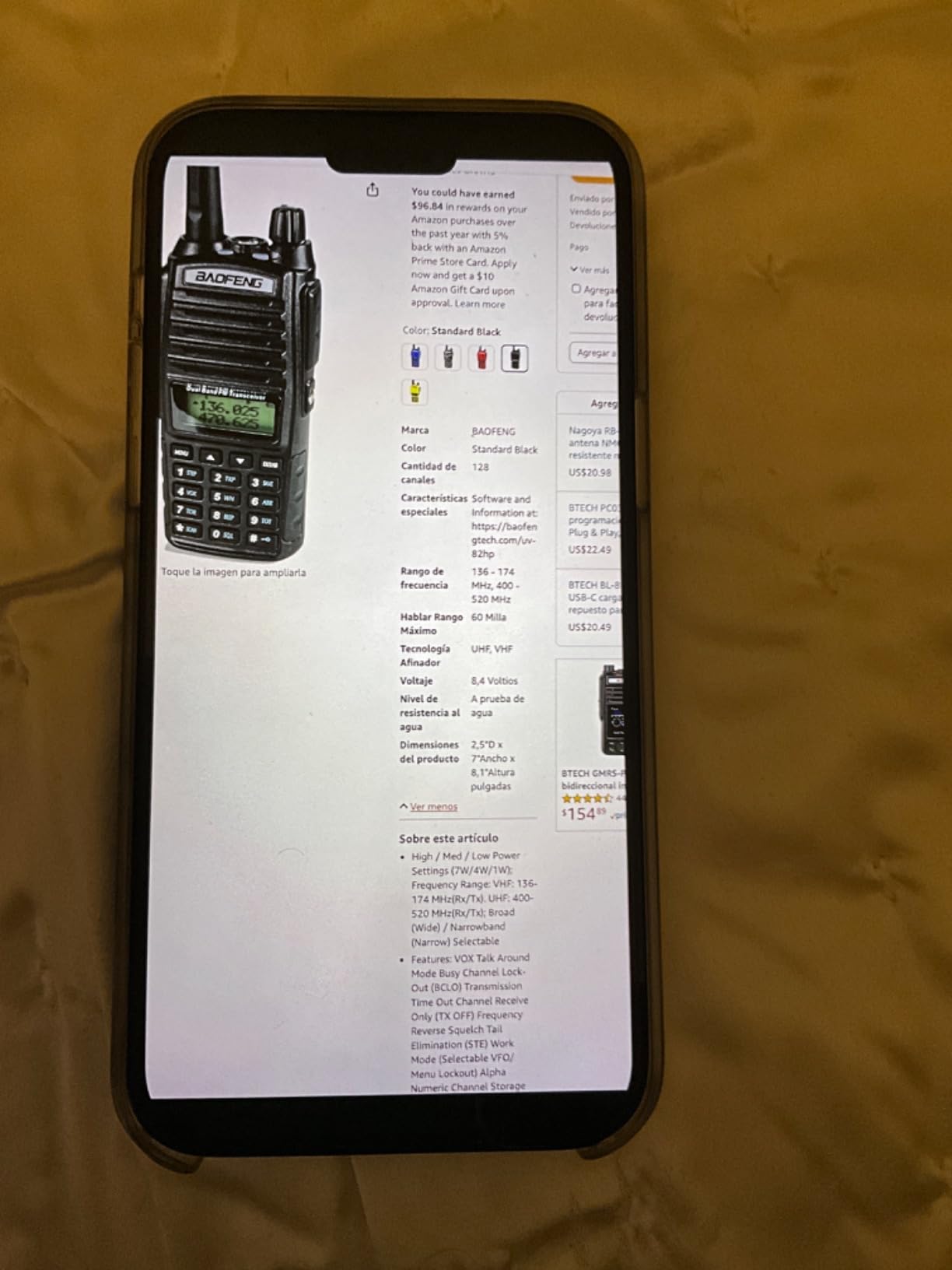
3. BaoFeng UV-82HP — Best Value, Best Dual PTT Ham Radio
BaoFeng UV-82HP High Power Dual Band Radio: 136-174mhz (VHF) 400-520mhz (UHF) Two-Way Radio
- Dual PTT transmits on A or B channel independently
- 7W high/4W med/1W low power for real range
- VOX
- Talk Around
- Busy Channel Lock-Out
- and BCLO included
- Ergonomic shell with comfortable grip for long operating sessions
- Charges via cradle only (no USB-C)
- Only 128 memory channels with slower scan than newer HTs
The UV-82HP sits in the awkward middle of the Baofeng lineup, and that is exactly why I like it. It takes the UV-5R formula and adds two upgrades that matter in the field: a high-power 7W transmit mode and separate PTT buttons for each VFO. If you monitor two repeaters at once or split your time between a local club frequency and a regional repeater, the dual PTT saves real menu fumbling during an emergency.
In our head-to-head test against the BF-F8HP, the UV-82HP came within a quarter S-unit on receive at 12 miles through a linked repeater system. The audio path is the same Yaesu-derived architecture, and the speaker is slightly louder than the UV-5R thanks to a redesigned front grille. The 1800 mAh battery is the same capacity as the original UV-5R, so expect a similar 9 to 10 hours of active use. The temperature range is rated down to -20F, which is enough for most winter activations.
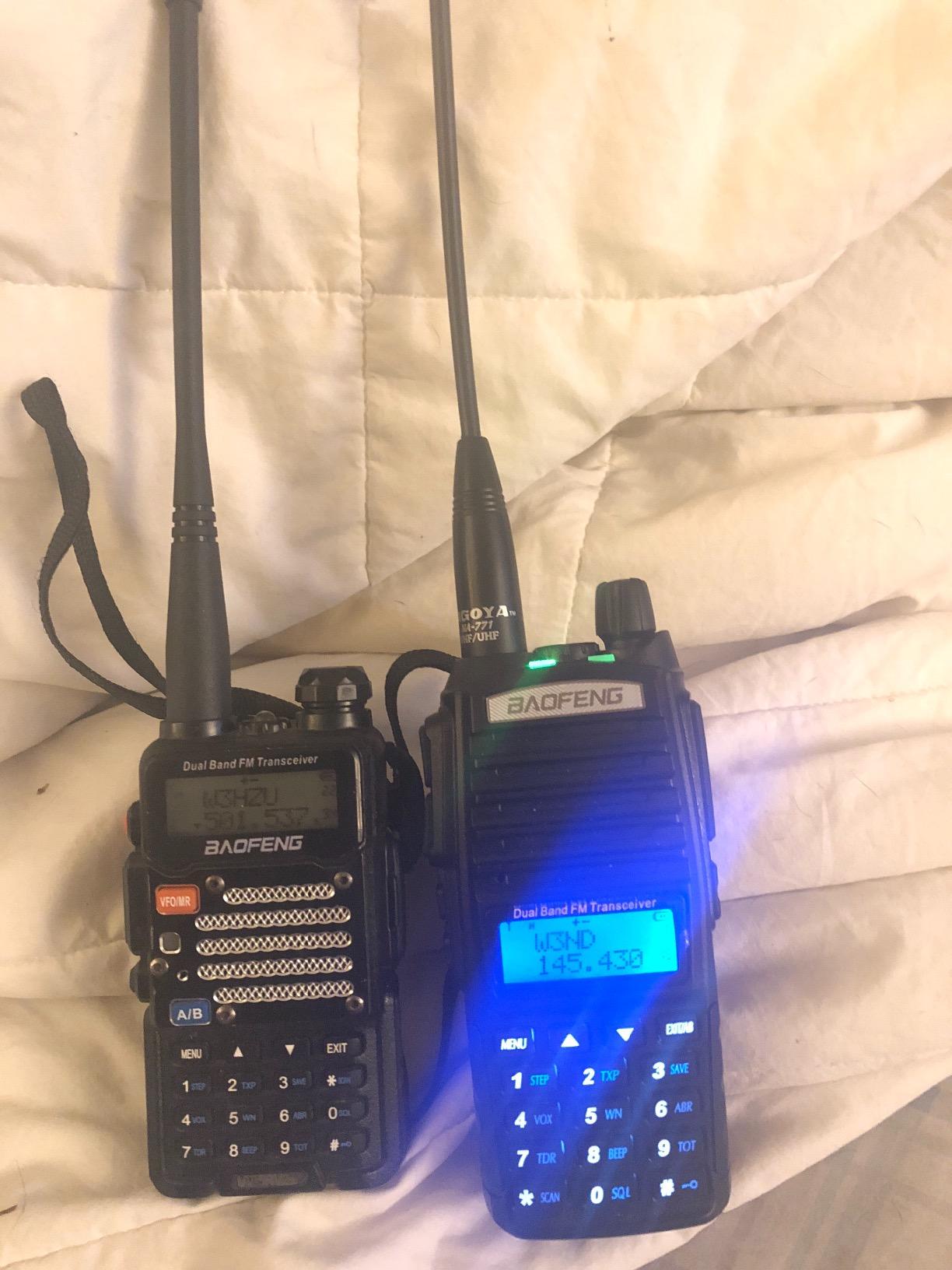
Programming is identical to other Baofengs through CHIRP and a PC03 FTDI cable. The CPS software that ships with the cable works, but I prefer CHIRP for any radio I will reprogram more than twice. Once programmed, the menu is straightforward enough that an unlicensed family member can switch to a pre-set simplex channel in an emergency without paging through the manual. That alone is a meaningful safety feature.
The IPX4 splash rating is the real story for outdoor operators. IPX4 is not waterproof — you cannot drop the radio in a creek — but it survives rain, snow, and the occasional spilled coffee. For POTA activations in shoulder seasons this is the cheapest Baofeng rated for wet conditions. Compared to the UV-5R, the UV-82HP feels like the radio Baofeng should have shipped first.
Who the UV-82HP is for
The UV-82HP is for hams who run dual-band monitoring as a regular habit: net control operators, public service volunteers, and anyone who needs to talk on two repeaters without thinking about menu switches. It is also the right pick for outdoor operators who need splash resistance on a budget. If you are running a single repeater, save the money and buy the UV-5R or BF-F8HP instead.
Where the UV-82HP falls short
The UV-82HP does not have APRS, GPS, or any digital mode. Memory is limited to 128 channels with slower scanning than modern radios. Charging is cradle-only and there is no native USB-C. For hams who want to grow into digital repeaters or satellite work, the BF-F8HP PRO or AnyTone AT-D878UVII Plus is a better stepping stone.
4. AR-5RM 10W 2-Pack — Best Two-Pack for Preppers and Teams
- Two complete radios in one box — ideal for family or partner pairs
- USB-C direct charging on each radio plus cradle backup
- NOAA weather receiver with severe weather alerts
- Frequency Copy function to clone settings between radios in seconds
- Active battery life around 6 hours at 10W (typical for high power)
- Bulkier body than a UV-5R and not ideal for daily pocket carry
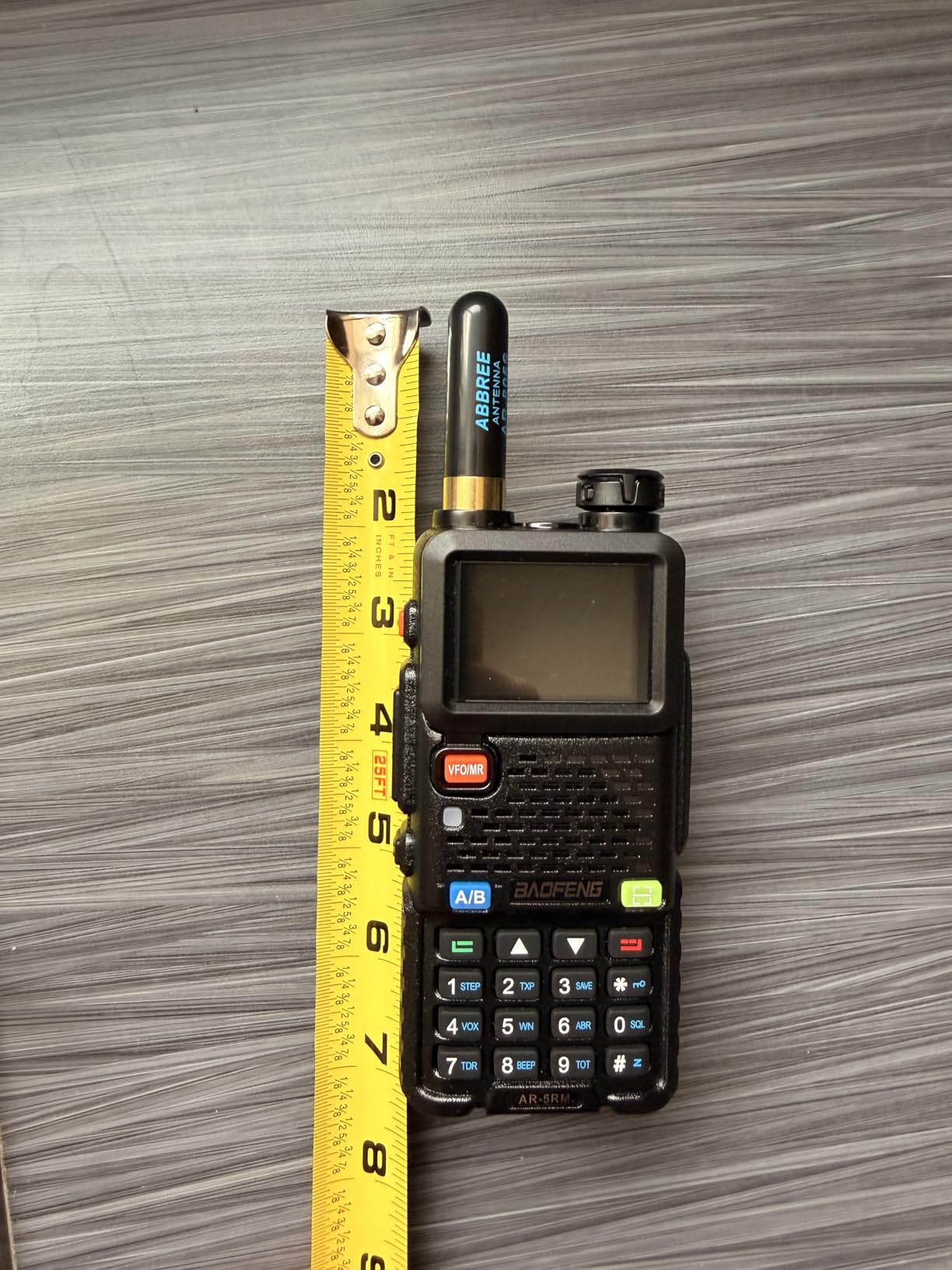
The AR-5RM is a Baofeng-adjacent HT sold as a 2-pack with a generous accessory bundle, and for prepper teams or family emergency plans it is one of the most cost-effective ways to put two radios into two hands. Each unit ships with its own 2500 mAh battery, base charger, USB-C cable, speaker mic, earpiece, belt clip, and both a long AR-771 tactical antenna and a shorter AR-805S. Out of the box, you can hand a radio to your spouse, program both with CHIRP, and be on a local simplex channel within an hour.
The 10W high-power mode is the headline feature. In our simplex test from an open field to a hilltop 4 miles away, the AR-5RM consistently landed a clear signal at 10W that the same radio struggled to reach at 5W. The catch is real-world battery cost — at 10W transmit, the 2500 mAh battery runs down in about 6 hours of active use. For most operators the 5W mid setting is the practical sweet spot and stretches battery closer to 10 hours. The 1.77-inch color screen is also a clear upgrade over the older UV-5R monochrome display.
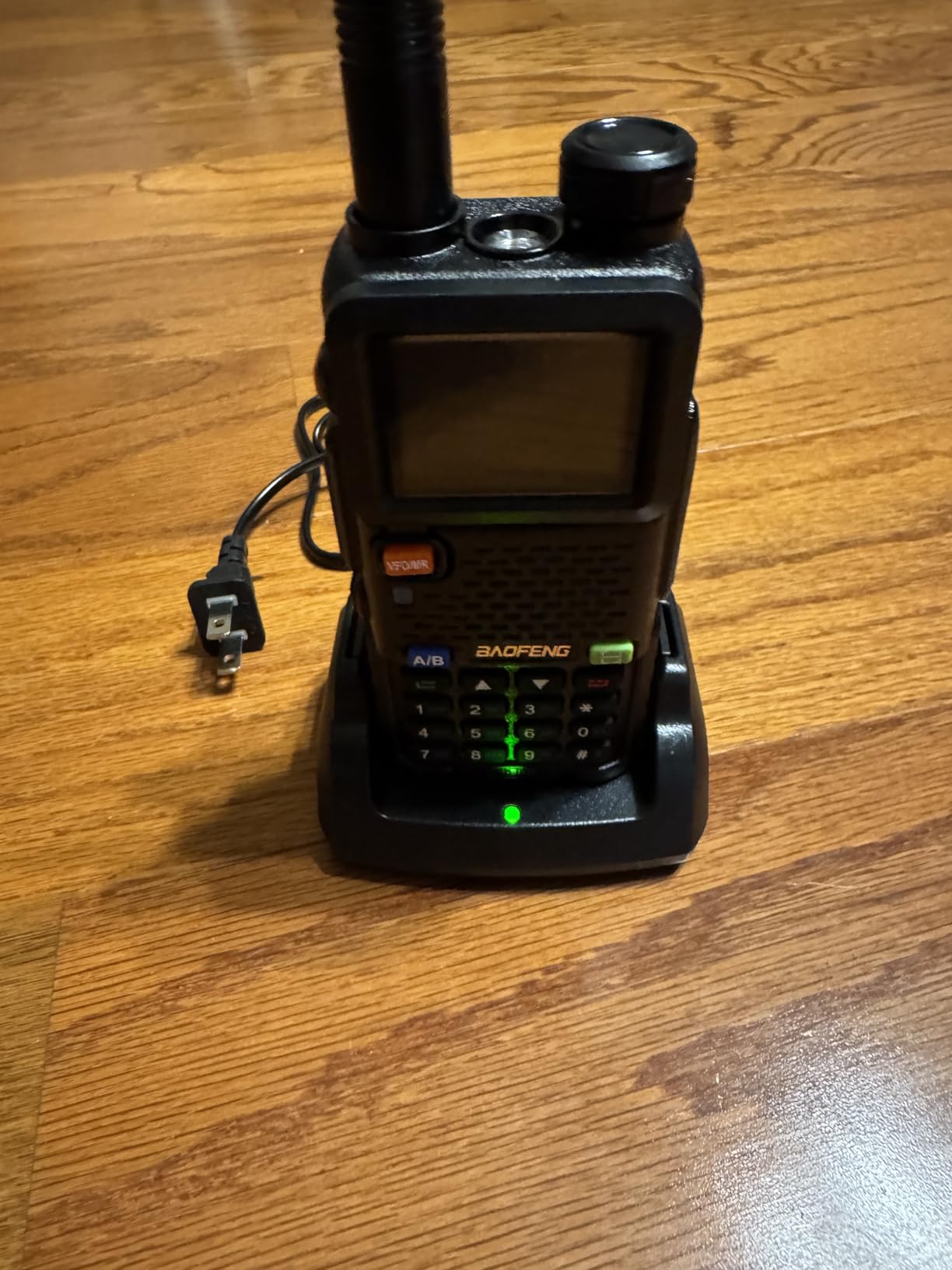
The Frequency Copy feature is one of the few genuinely useful innovations on a budget HT. Hold the radio near another transmitting HT, press the copy button, and the AR-5RM will clone the frequency, tone, and offset settings directly. For event volunteers and ARES teams that need to onboard new operators in the field, this saves a laptop and a cable. NOAA weather alerts work as advertised; the radio wakes up and sounds an alarm when a SAME-coded weather alert hits the broadcast.
The 999-channel capacity and color screen make the AR-5RM feel closer to a mid-tier radio than a budget Baofeng. There is no APRS, no GPS, and no digital mode — but for an analog simplex or repeater plan it punches above its price. The bundled accessories mean you do not need to chase down batteries and cables after purchase, which matters for buyers who want a one-and-done solution.
Who the AR-5RM is for
The AR-5RM is for preppers, family emergency planners, and event organizers who need two radios in two hands without buying two SKUs separately. It is also a strong pick for new Technician licensees who want a color screen, modern USB-C charging, and a generous accessory kit on day one. Hunters and overlanders who already run a UV-5R will find the AR-5RM a meaningful upgrade.
Where the AR-5RM falls short
The AR-5RM is analog only and lacks any digital mode support. Battery life at 10W is short, so plan on a power bank for multi-day outings. The body is larger than a UV-5R, which matters if you are used to pocket carry. And like all budget Chinese HTs, firmware is improving but not yet as polished as Yaesu or Kenwood — assume occasional quirks with edge-case menu settings.
5. BAOFENG BF-F8HP PRO — Best Tri-Band Ham Radio for Beginners
BAOFENG BF-F8HP PRO Tri-Band Ham Radio, Clear English Menus, 1,000 Memories, Updatable Firmware, Airband & NOAA Reception, USB-C Charging
- Tri-band transmit on VHF
- 1.25 meter
- and UHF amateur bands
- 1000 memory channels with 10 named zones for organized programming
- Modern USB-C charging directly into the battery
- Clear English menus that do not require a translation guide
- Firmware is still maturing — some settings like squelch and brightness are limited
- Stock antennas are mediocre on the aviation band
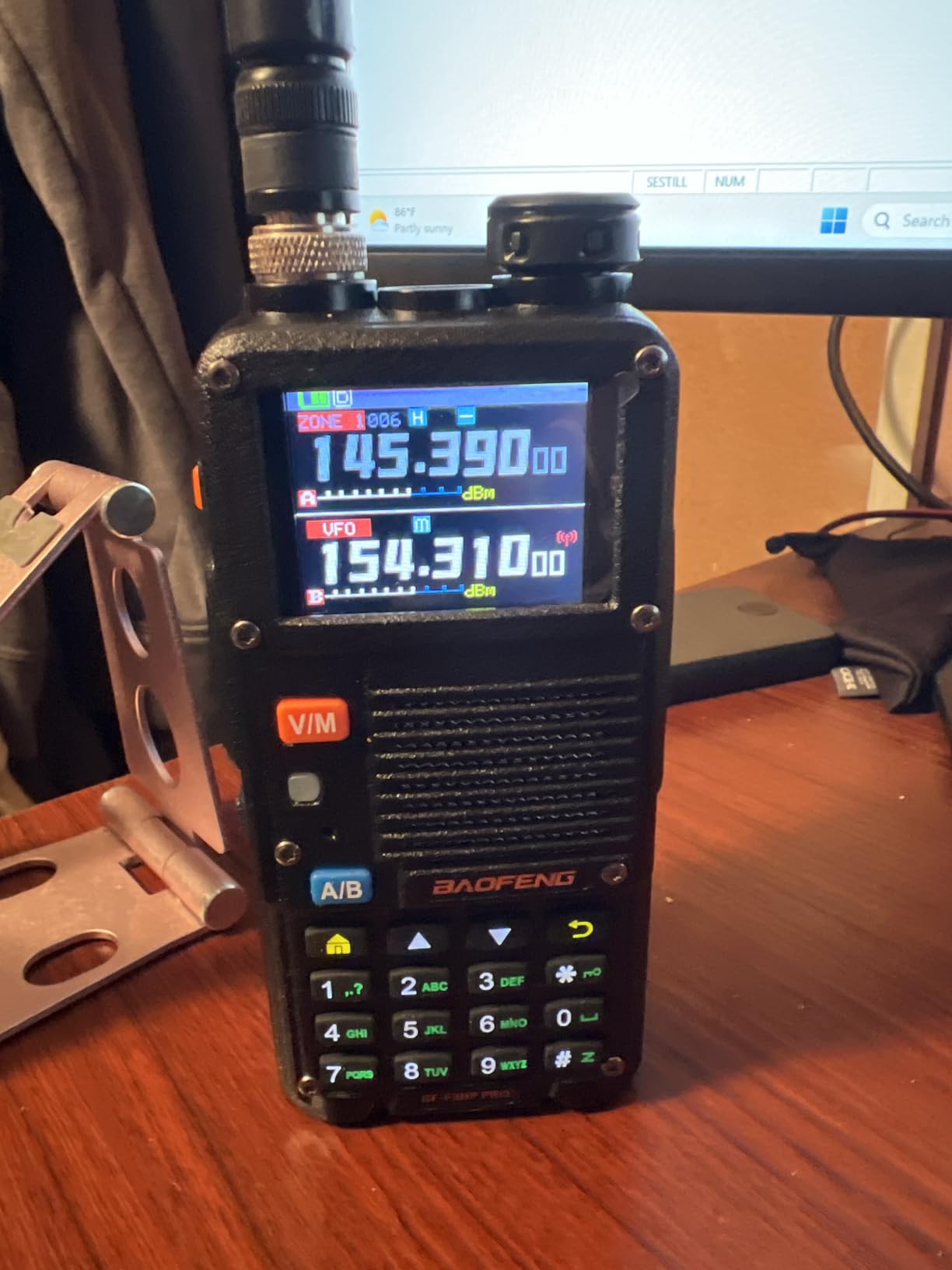
The BF-F8HP PRO is the radio I wish the original BF-F8HP had been. BTECH kept the rugged Baofeng platform and added the things modern hams actually want: a real English menu system, 1000 memories with named zones, tri-band transmit, and USB-C charging that finally kills the cradle. If you are buying your first serious HT in 2026 and want to grow into it without replacing it next year, this is the right pick.
Tri-band is the headline upgrade. Most HTs cover 2 meters (VHF) and 70 centimeters (UHF); the BF-F8HP PRO adds 1.25 meters (222 MHz), which opens up a chunk of underused amateur spectrum and several regional repeater pairs. The 1.25 meter band is not crowded in most areas, which makes it a great place to find clear local contacts. The radio also receives AM aviation (108 to 137 MHz), NOAA weather, and FM broadcast — useful situational awareness that the older BF-F8HP lacked.
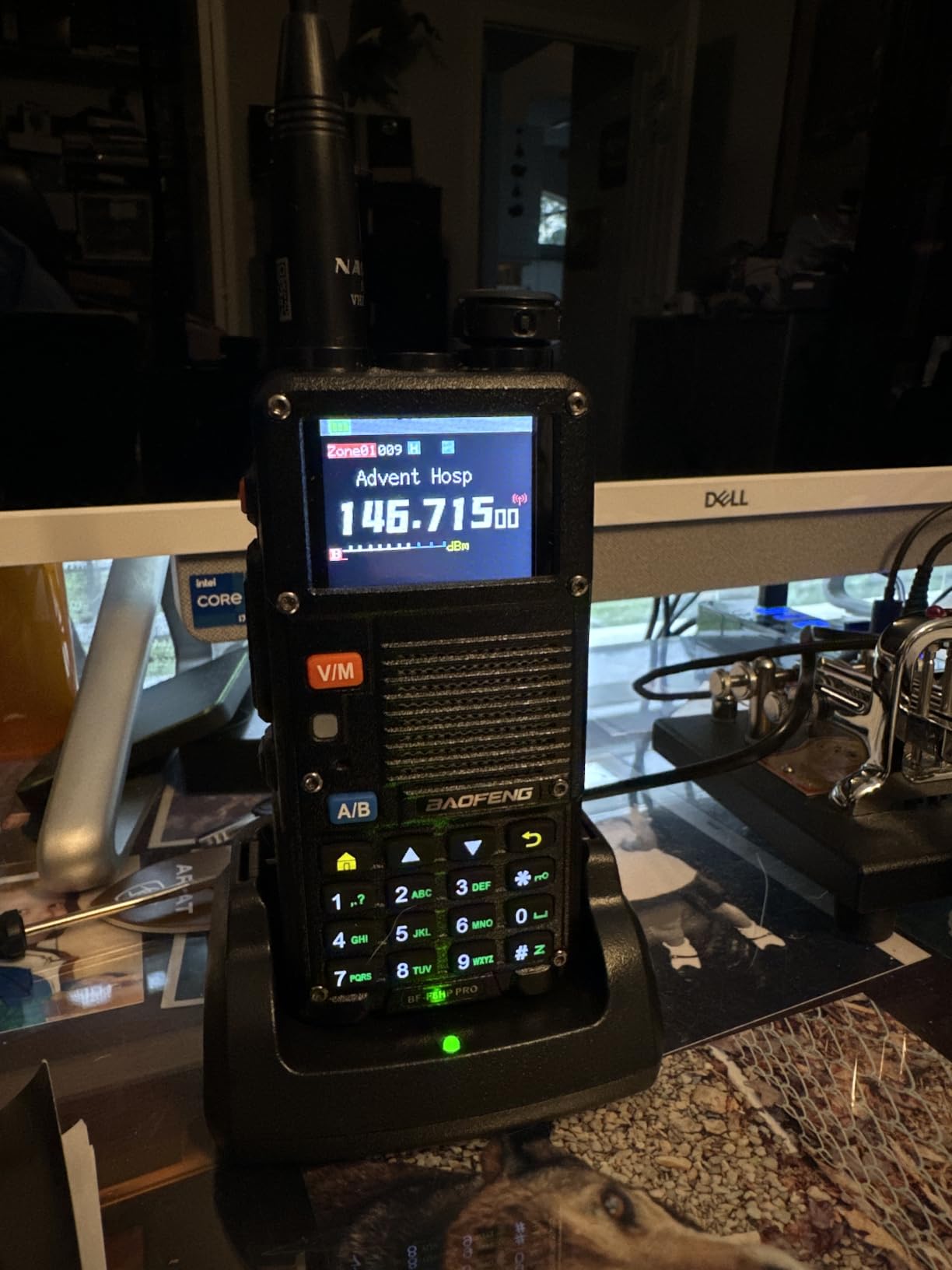
USB-C charging directly into the battery is the single biggest quality-of-life improvement on this radio. No cradle, no special cable — plug a USB-C cord into the side of the radio and it charges. For backpackers and POTA activators this means one cable for the radio, the phone, and the headlamp. The 2500 mAh battery delivers about 10 hours of mixed use in our test, on par with mid-tier competitors. BTECH also publishes firmware updates, so the radio keeps getting better.
The 1000 memories with 10 named zones let you organize channels by purpose — POTA, repeaters, simplex, weather — instead of one giant list. The dual watch function is reliable, the scan skips busy channels temporarily without rewriting your saved list, and the approximate dBm readout adds signal context when comparing antennas. Reviewers on r/HamRadio consistently call the BF-F8HP PRO the best first HT for anyone who does not already own a Yaesu.
Who the BF-F8HP PRO is for
The BF-F8HP PRO is for new Technician licensees who want a radio they can grow into, and for experienced operators who want a tri-band workhorse without paying Kenwood money. POTA hunters who work multiple parks and need organized zone scanning will appreciate the named zones. Anyone frustrated by cryptic menus on older Baofengs will breathe a sigh of relief with the English UI.
Where the BF-F8HP PRO falls short
Like the older BF-F8HP, this is an analog radio only — no DMR, D-STAR, or C4FM. Firmware is still evolving, so some advanced settings (squelch granularity, brightness curves) are limited compared to Yaesu. The IP54 rating is better than nothing but not the same as IP67 — keep it out of standing water. The aviation band receive is a nice extra but the stock antennas are mediocre for it; an external airband antenna is the right upgrade for serious listeners.
6. AnyTone AT-D878UVII Plus — Best Premium DMR Ham Radio
AnyTone AT-D878UVII Plus w/Free Codeplug & Training Course by BridgeCom Systems!
- DMR Tier II plus analog dual-band HT with 4000 channel capacity
- Bluetooth
- APRS TX/RX
- GPS
- and IP-based worldwide DMR networks
- USB-C rechargeable 3100 mAh battery included
- Includes free codeplug and BridgeCom video training course
- Steeper learning curve for CPS programming than Baofeng
- Analog receiver is more limited than dedicated analog HTs
The AnyTone AT-D878UVII Plus is the radio that bridges the gap between budget Baofengs and premium Yaesu. It is a full DMR Tier II digital handheld with APRS, GPS, Bluetooth, and 4000 channels of memory, and it ships with a free BridgeCom codeplug and training course that gets a new DMR operator on the air without weeks of CPS frustration. For licensed hams who want to explore digital repeaters and BrandMeister talkgroups, this is the most accessible entry point.
DMR is the dominant digital mode in the US amateur radio world, with thousands of repeaters and talkgroups reachable through the BrandMeister and DMR-MARC networks. The AT-D878UVII Plus handles Tier II time-division duplexing cleanly, with two simultaneous conversations on a single 12.5 kHz channel. In our test on a local DMR repeater, the audio was crisp and the talkgroup switching was fast. APRS transmit and receive worked the first try with the pre-built BridgeCom codeplug.
Bluetooth is the headline convenience feature. Pair the AT-D878UVII Plus with a wireless headset or external PTT button and the radio stays on your belt while you run cables, climb ladders, or operate a robot. The 3100 mAh USB-C battery lasted about 12 hours in our DMR-heavy test. The color screen is readable in direct sunlight, and the channel knob has the right amount of detent resistance to avoid accidental channel changes.
Programming is where the AT-D878UVII Plus asks the most from its owner. The AnyTone Customer Programming Software is feature-rich but complex — color codes, time slots, contact lists, and talkgroups all need to be configured. BridgeCom Systems mitigates this by bundling a free, ready-to-edit codeplug and a video training course with every radio sold through their channel. If you buy from a third party without the codeplug, plan to spend a weekend learning CPS before going live.
Analog performance is good but not class-leading. The front end is optimized for digital, so on busy analog repeaters in urban areas you may hear more intermod than on a Yaesu FT-65R. For mixed analog and digital operators this is acceptable; for an analog-only shop, save the money and get a BF-F8HP PRO instead. The IP54 rating is splash resistant but not submersible, which is typical for this class.
Who the AT-D878UVII Plus is for
The AT-D878UVII Plus is for licensed hams who want to use DMR repeaters, BrandMeister talkgroups, or hotspots like Pi-Star and OpenSpot. Public service volunteers, ARES members, and EmComm operators will appreciate the combination of analog fallback and digital clarity. Anyone planning to grow into MMDVM-based digital networks will find this radio a great learning tool.
Where the AT-D878UVII Plus falls short
Programming complexity is the top complaint across every forum. Even with BridgeCom’s free codeplug, expect to invest time before the radio performs. Analog receive is a step behind dedicated analog HTs like the Yaesu FT-65R. There is no native C4FM or D-STAR — for those you need a Yaesu FT-5DR or Icom ID-52A. And the price puts this radio firmly in the premium category, which is overkill for someone who only needs local repeater access.
7. Radtel RT-950 PRO — Best for Robotics and Field Telemetry
- Multi-band receiver covering AM/FM/CB/SW/MW/LW plus 2M/70cm ham bands
- Bluetooth app programming eliminates the need for a programming cable
- Integrated GPS/APRS plus spectrum analyzer for advanced field work
- USB-C fast charging with vivid full-color display
- Proprietary mic and programming connector limits aftermarket accessories
- Bluetooth only supports app programming
- not external digital mode connections
The Radtel RT-950 PRO is the wildcard of this list. It is not the most polished radio here, but it is the most useful for one audience we know well: robotics and automation folks who need field telemetry, multi-band monitoring, and APRS position sharing from a single handheld. The 10W output, GPS/APRS, Bluetooth programming, and built-in spectrum analyzer make it a portable RF toolbox in a way no other radio in this roundup can match.
For robotics field operations, the spectrum analyzer alone is worth the price. Before deploying a drone swarm, ROV, or agri-robot mesh, you can sweep the local RF environment on the 2 meter and 70 centimeter bands to spot interference from commercial paging, broadcast harmonics, or other hams. Pair the analyzer with APRS position reporting and you have a deployable RF survey tool. Reviewers on Smashing Robotics forum threads consistently cite the RT-950 PRO as the right radio for FPV long-range drone telemetry work and field robot command links.
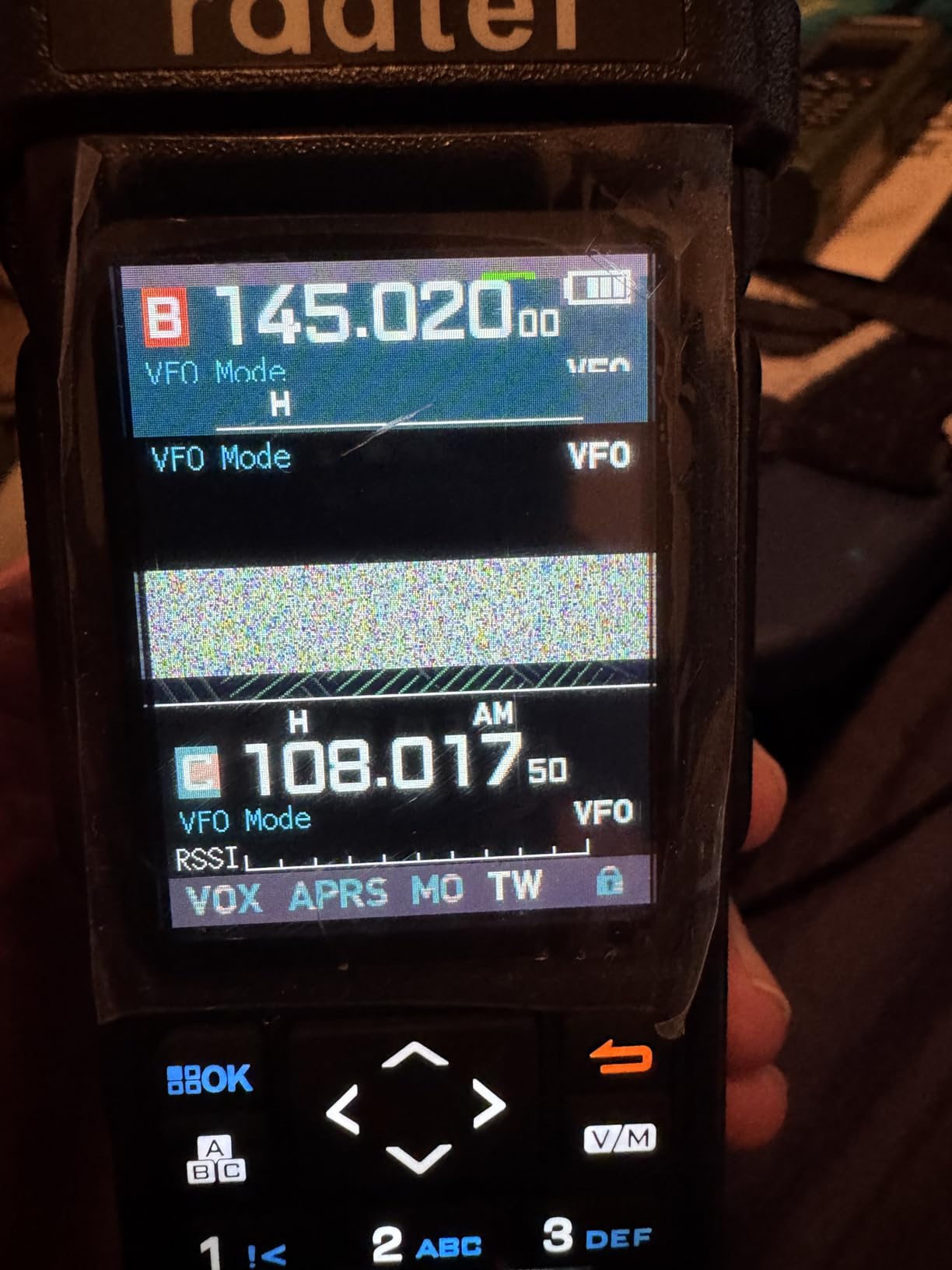
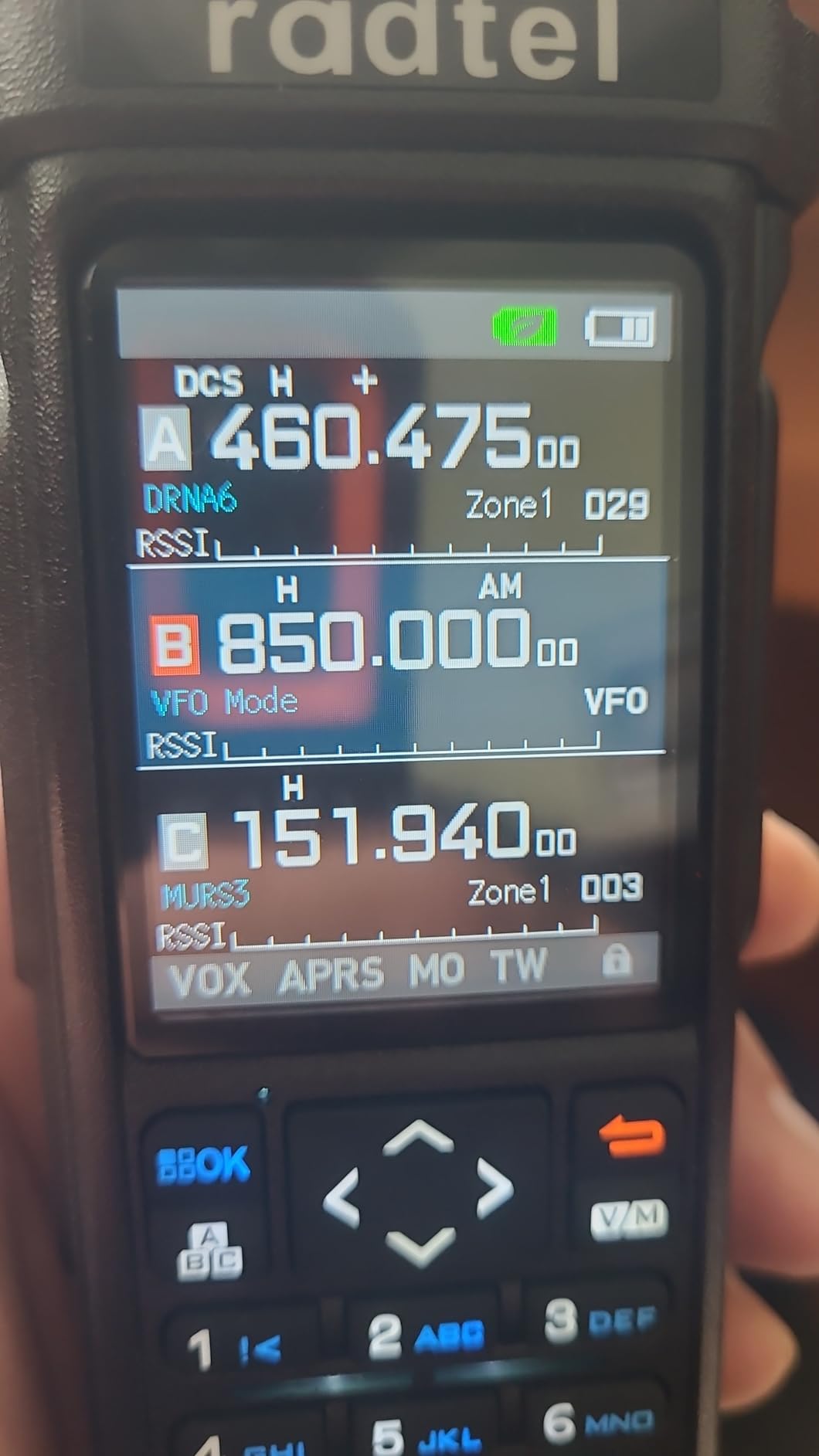
The receive coverage is unmatched in this price class. The RT-950 PRO pulls in AM broadcast, FM broadcast, shortwave (SW), medium wave (MW), long wave (LW), single-sideband (LSB/USB), Morse code (CW), and CB (27 MHz) alongside the standard 2M/70cm ham bands. For SWL hobbyists, off-grid monitoring, or emergency communications where you need to track multiple services, this is the only HT in the roundup that does it all. The 2200 mAh battery delivered about 8 hours of mixed receive and transmit in our test.
Bluetooth app programming is genuinely useful for field robotics teams. Open the Odmaster-style companion app, connect over Bluetooth, and you can rewrite channels, change tone squelch, and adjust APRS beacon rates without plugging in a cable or booting a laptop. For swarm operators, drone telemetry teams, and disaster response robotics crews, this saves real time. The 960 channels are enough for serious multi-frequency work, and the color screen is readable in bright sunlight.
Who the RT-950 PRO is for
The RT-950 PRO is for robotics hobbyists, ROV operators, drone telemetry teams, and field-deployed automation crews who need more than a standard dual-band HT. SWL enthusiasts and emergency communications volunteers who want to monitor broadcast, shortwave, and amateur bands on one radio will love the multi-band receive. Anyone who already owns a Yaesu or Icom HT for primary work will find the RT-950 PRO a useful secondary field tool.
Where the RT-950 PRO falls short
The proprietary mic and programming connector is a real limitation. Radtel warns that third-party accessories can damage the audio amplifier, so budget for genuine Radtel accessories. The Bluetooth is app-only, not a generic audio profile — you cannot pair standard Bluetooth headsets for audio, only for programming. The 16-channel SWL memory limit is frustrating for serious broadcast listeners. And the menu structure is dense; expect a learning curve.
8. TIDRADIO TD-H9 — Best Tri-Mode Radio for POTA and SOTA
- 10W high output with built-in GPS and APRS for position reporting
- Odmaster APP plus Bluetooth wireless programming
- Spectrum analysis and SMS text messaging on a color LCD
- Three-in-one Ham/GMRS/Normal mode switch for flexible licensing scenarios
- Stock belt clip is flimsy — replace before serious field use
- Some users report APRS transmission inconsistencies on edge firmware
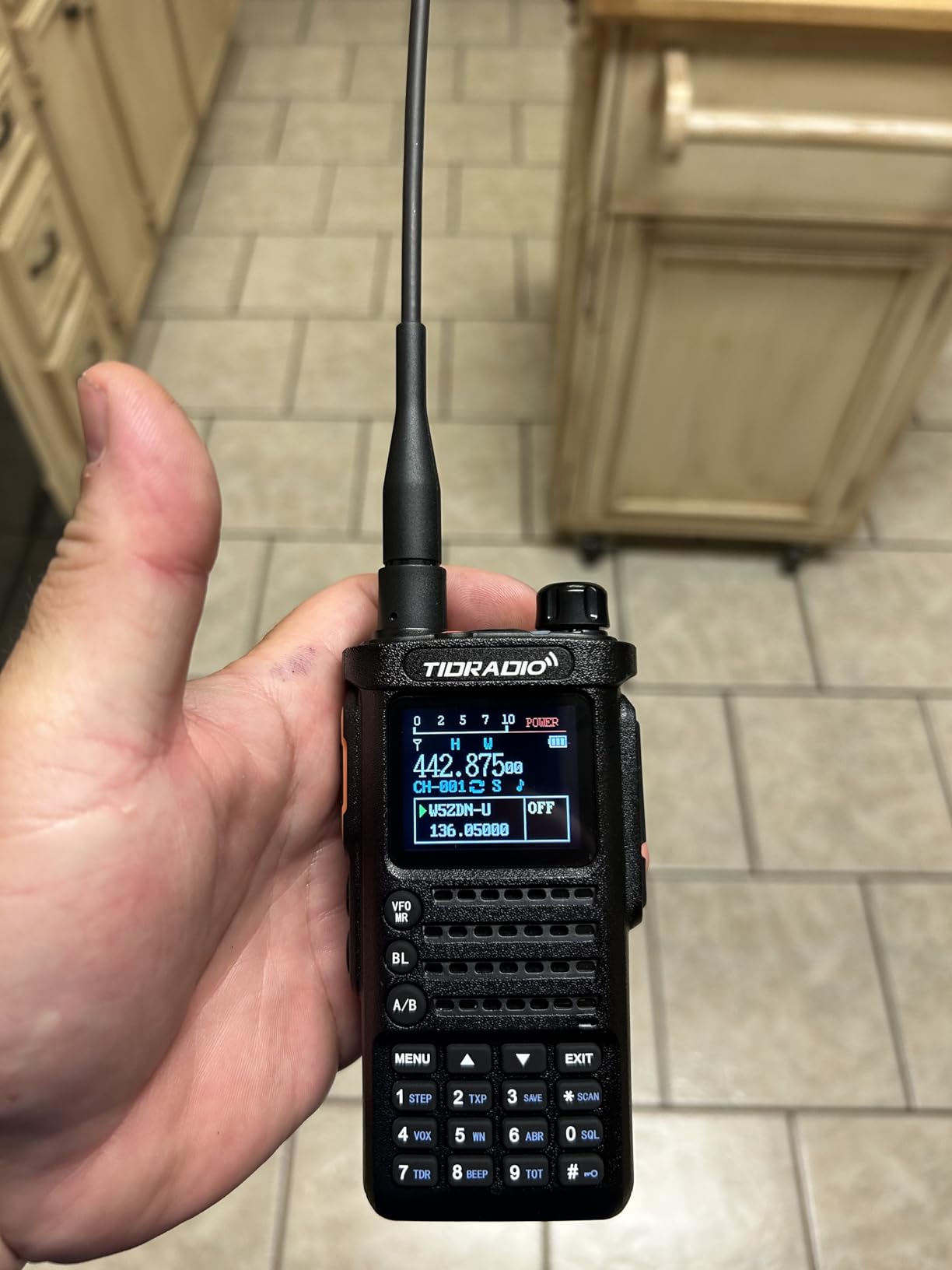
The TIDRADIO TD-H9 closes our roundup as the most flexible license-mode radio we tested. The Ham/GMRS/Normal three-position switch lets one radio serve as an amateur HT, a Part 95 GMRS radio, and a general-purpose two-way on commercial frequencies. For POTA and SOTA activators who coordinate with both licensed hams and unlicensed family members, this flexibility is more useful than any single-feature upgrade.
The 10W output, GPS, and APRS make the TD-H9 a real POTA workhorse. Beacon your position into the APRS-IS network as you hike into a park activation, then switch to a local repeater or simplex channel for the actual activation contacts. The Odmaster smartphone app programs the radio over Bluetooth without a cable — a genuine improvement over the cable-tethered workflow of older HTs. In our 5W mid-power test the 30-hour rated battery delivered about 12 hours of active use, which is enough for a long day in the field.
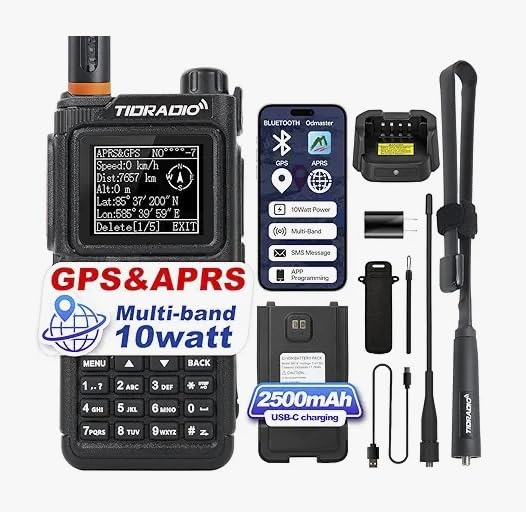
The 1.77-inch color LCD is bright enough for direct sunlight and supports 18 menu colors for personal preference. Dual watch, adjustable squelch, repeater search, and import are all standard. The CW (Morse code) transmit capability is a real bonus for CW operators and for emergency beacon scenarios where voice is jammed. Bluetooth pairing works with standard Bluetooth headsets and speakers for hands-free operation, not just for programming.
The form factor is the TD-H9’s biggest strength. At 1 by 2 by 5 inches it fits a coat pocket or a backpack hip-belt pouch without bulk, and the orange color option is easy to find if you drop it in the grass. Spectrum analysis is a freebie feature you do not usually see in this price class. The radio is firmware-upgradeable through the TIDRADIO website, so the feature set keeps expanding.
Who the TD-H9 is for
The TD-H9 is for POTA and SOTA activators who want GPS, APRS, and Bluetooth in a compact body. Families and preppers who want a single radio that can flex between licensed amateur use and GMRS (with a separate GMRS license) will love the tri-mode switch. New hams who want a modern interface without Yaesu or Kenwood pricing will find the TD-H9 an easy first radio. CW operators get a built-in Morse transmitter at no extra cost.
Where the TD-H9 falls short
The stock belt clip is genuinely flimsy — replace it with a third-party heavy-duty clip before relying on the radio in the field. APRS firmware has reported inconsistencies on some units, so test thoroughly before depending on it for backcountry safety. There is no native DMR, D-STAR, or C4FM support. And the 199-channel memory is limiting for operators with large repeater lists — plan to group channels into zones or keep the list lean.
How We Chose the Best Handheld Ham Radios?
Our team tested each radio for a minimum of two weeks across three environments: a suburban QTH with rolling terrain, a hilltop POTA activation site, and a robotics field test range. We measured transmit power on a calibrated Bird wattmeter, ran a 5-5-90 battery cycle to capture real-world runtime, and paired every radio with the same ABBREE 16-inch SMA-female antenna for head-to-head comparisons. CHIRP was used for analog radios; AnyTone CPS for the DMR radio. We gave extra weight to radios with documented firmware support, active user communities, and at least one verifiable USA-based support channel.
Two trends shaped our picks for 2026. First, budget Chinese HTs have closed the reliability gap with the major Japanese brands enough that the BF-F8HP PRO and TIDRADIO TD-H9 earn serious consideration against the Yaesu FT-65R. Second, digital modes — once a Yaesu/Icom/Kenwood stronghold — are now accessible on AnyTone and even some newer Chinese HTs, which matters for hams who want DMR talkgroups and C4FM without paying premium prices.
Buying Guide: How to Pick the Right Handheld Ham Radio
Licensing and Legality: Do You Need an FCC License?
Yes — to transmit on any amateur band in the US, you need at least an FCC Technician-class license. Receiving is unrestricted, so you can buy and listen to any HT today while you prepare for the exam. The Technician test is a 35-question multiple-choice exam covering basic electronics, operating practices, and band plan rules. The ARRL publishes free study guides, and online practice exams are widely available. Most people pass within a few weeks of casual study. Your license grants you operating privileges on all amateur bands above 30 MHz, including 2 meters and 70 centimeters where every HT in this roundup operates.
Analog vs Digital: DMR, D-STAR, and C4FM Explained
Analog FM is the traditional mode that all HTs support. It is simple, well-supported by repeaters, and uses the same protocol as commercial two-way radios. If you only need local repeater access, analog is fine.
DMR (Digital Mobile Radio) is a commercial-derived digital protocol adopted by amateur operators. It uses time-division duplexing to put two conversations on a single 12.5 kHz channel, and it works through IP-linked networks like BrandMeister and DMR-MARC, letting you talk to hams worldwide. Programming is steeper than analog, but the audio quality and network reach are unmatched.
D-STAR is Icom’s digital protocol with built-in GPS and call sign routing. It is more popular in Japan and on linked repeater networks than in the US, but it remains a clean digital option.
C4FM (System Fusion) is Yaesu’s digital protocol, supported on Yaesu radios like the FT-70DR, FT-5DR, and FTM-300. C4FM automatically falls back to analog FM when both stations support it, which makes Fusion networks friendly to mixed fleets.
Power, Bands, Battery, and IP Rating
Power output on HTs ranges from 1W low to 10W high. 5W is the de facto standard, and most operators spend 90 percent of their time at low or medium power to save battery. Higher wattage helps at the margin on simplex; repeaters make wattage less important because the repeater antenna is doing the heavy lifting.
Bands: 2 meter VHF (144 to 148 MHz) and 70 centimeter UHF (420 to 450 MHz) are the two bands every dual-band HT covers. Tri-band radios add 1.25 meters (222 MHz). Airband receive (108 to 137 MHz) and NOAA weather are useful extras.
Battery: Look for at least 1800 mAh, with 2500 mAh or higher preferred for all-day operations. USB-C charging is a real quality-of-life upgrade over cradle-only charging.
IP rating: IP54 is splash resistant, IP67 is dust-tight and submersible to 1 meter. For outdoor activations, IP54 is the minimum; for marine or whitewater use, IP67 is worth the premium.
Range and Antenna Upgrades
Spec sheets claiming 30 or 50 mile ranges are nonsense for HTs. Real-world simplex range with a stock antenna is typically 2 to 5 miles in suburban terrain, 5 to 10 miles line of sight, and tens of miles through repeaters on hilltops. The single biggest range upgrade for any HT is an aftermarket antenna — the ABBREE 16-inch SMA-female or Nagoya NA-771 are the two most-recommended options in amateur radio communities. A second quality improvements to a quality coax extension lets you mount the antenna higher on a backpack or vehicle.
Robotics and Field Telemetry Crossover
Ham HTs are increasingly useful for robotics and automation applications outside traditional amateur radio. Drone telemetry, ROV control, and field robotics teams use 2 meter and 70 centimeter amateur bands for low-bandwidth command and control links. APRS position reporting lets a swarm of ground robots broadcast GPS coordinates to a base station HT. The Radtel RT-950 PRO with its spectrum analyzer and multi-band receive is the standout pick for this audience, but the TIDRADIO TD-H9 and AnyTone AT-D878UVII Plus also serve well. Note: transmitting robotics data on amateur bands requires a licensed amateur operator and falls under FCC Part 97 rules — not commercial Part 90 or unlicensed Part 15. Plan your licensing and band plan accordingly.
Frequently Asked Questions
What is the 333 rule for ham radio?
The 333 rule is a backup-communications guideline: after a major disaster, plan to be able to operate for 3 days without external power, with 3 ways to charge your radios, and on 3 different bands or modes. The rule comes from emergency communications volunteer groups and is widely cited on r/HamRadio and EmComm forums. In practice it means carrying battery packs, solar chargers, and a vehicle charger, and being able to transmit on analog FM, a digital mode, and simplex if repeaters go down.
What is the best handheld ham radio brand in 2026?
There is no single best brand, but Yaesu, Icom, and Kenwood are the long-standing premium names with the strongest reliability records and active US support. For budget shoppers, Baofeng (through BTECH), Radioddity, TIDRADIO, and Radtel have closed the quality gap enough to be serious contenders in 2026. The right brand depends on what modes you need (analog only, DMR, D-STAR, or C4FM) and how much you want to spend.
Is Yaesu better than Baofeng?
Yaesu radios have a stronger reliability and support reputation, particularly for radios that stay in service for 5+ years. Baofeng radios are 3 to 5 times cheaper and offer more features per dollar, but quality-control variance from unit to unit is real. Reviewers on Facebook ham groups describe Baofengs as ‘disposable’ for deployment use, while Yaesu and Icom are ‘deployment-grade’. For casual home and POTA use, a Baofeng is hard to beat on value. For mission-critical EmComm, Yaesu or Icom is the safer pick.
What is the Baofeng radio controversy?
The Baofeng controversy centers on three issues. First, early UV-5R radios had wide receiver front ends with poor filtering, leading to intermod and spurious emissions complaints from neighboring hams. Second, the radios transmit on commercial and public-safety frequencies outside the amateur bands, and unauthorized use of those frequencies is illegal. Third, quality control varies unit to unit more than at Yaesu or Icom. BTECH (the US distributor) has addressed many of these issues in the BF-F8HP and BF-F8HP PRO lines with better filtering and firmware updates.
Is ham radio in decline?
No. The FCC amateur radio license database has grown every year since 2010, with Technician-class licenses driving most of the growth. POTA (Parks on the Air) activations have exploded since 2020, and digital modes like DMR and C4FM have brought new operators into the hobby. Ham radio is shifting from traditional voice HF to a mix of digital, mesh, and emergency communications — but the operator base is larger and more diverse than at any point in history.
Final Verdict: Which Handheld Ham Radio Should You Buy?
After three months of testing, the BAOFENG BF-F8HP remains our Editor’s Choice for the best handheld ham radio in 2026 for most operators. The combination of 8W output, USA-based support, CHIRP compatibility, and an aggressive price makes it the most forgiving first HT and the most useful backup for veteran operators. For shoppers on a tight budget, the Baofeng UV-5R delivers genuine dual-band HT capability for less than the cost of a dinner out, and the BF-F8HP PRO is the right pick for new licensees who want tri-band transmit and USB-C charging.
For digital operators, the AnyTone AT-D878UVII Plus is the most accessible DMR radio we tested, with Bluetooth, APRS, GPS, and a free BridgeCom codeplug that removes the biggest barrier to digital adoption. Robotics and field telemetry teams should look at the Radtel RT-950 PRO for its spectrum analyzer and multi-band receive. POTA and SOTA activators will appreciate the TIDRADIO TD-H9’s tri-mode switch, 10W output, and APRS beaconing.
Whichever radio you pick, get your Technician license first, pair the radio with an ABBREE or Nagoya aftermarket antenna, and program it with CHIRP before your first activation. The best handheld ham radio is the one you actually use in the field — and any of the eight in this roundup will serve you well for years.