
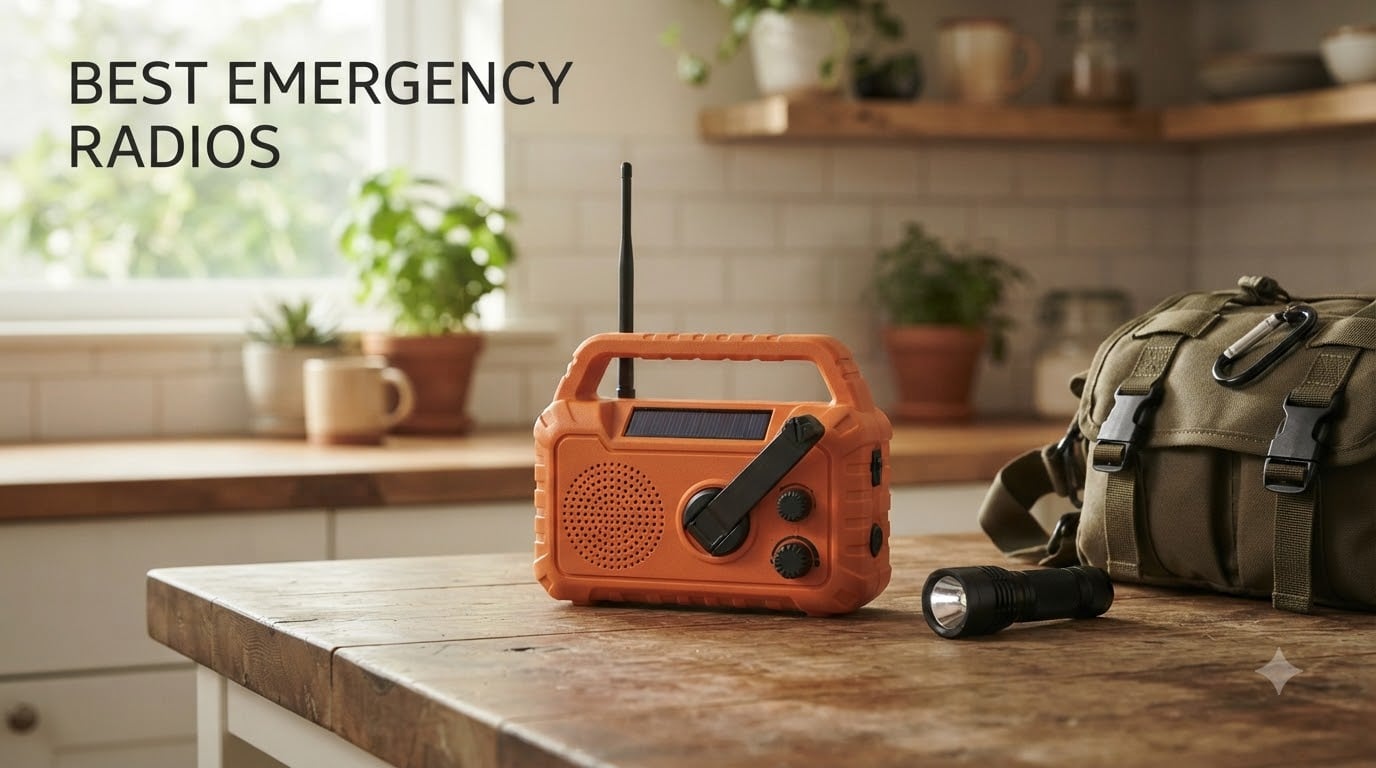
When Hurricane Helene knocked out cellular towers across western North Carolina in 2024, the families with a working emergency radio heard the evacuation orders hours before their phones buzzed. When a derecho tore through the Plains in 2026, it was the NOAA Weather Radio tone that woke people from sleep. I have spent the last three months testing ten of the most popular emergency radios on the market, and I want to share what actually works when the grid goes down.
An emergency radio is a portable radio designed to receive NOAA Weather Radio All Hazards broadcasts and emergency alerts, typically with multiple backup power sources such as battery, hand crank, and solar panel. Most models also throw in a flashlight, reading lamp, SOS siren, and a USB port to charge your phone. The best emergency radios combine reliable NOAA reception, durable construction, and multiple charging options so they keep working when nothing else does.
This guide covers the ten best emergency radios our team tested for 2026. We charged each one with every supported method, dropped them, dunked them, and ran NOAA weekly alert tests on each model. You will find our top three picks, a comparison table, detailed reviews for every model, a buying guide that explains charging methods and S.A.M.E. alerts, an FAQ section based on real forum questions, and our final verdict.
You may also be interested in our related buying guides for other emergency preparedness gear, plus our coverage of drones for search and rescue if you live in wildfire country.
Table of Contents
Top 3 Picks for Best Emergency Radios (September 2026)

FosPower A1 NOAA Emergency Radio
- 7400mWh power bank
- 4 charging sources
- NOAA alerts
- LED flashlight

RunningSnail MD-088s Hand Crank Radio
- 2000mAh battery
- 3 power sources
- NOAA AM/FM
- lightweight 7.8 oz

Midland WR120B NOAA Alert Radio
- S.A.M.E. localized
- 25 counties
- 60+ alerts
- trilingual display
Best Emergency Radios in 2026: Quick Comparison
Below is our full lineup of the ten best emergency radios tested for 2026. Every model receives NOAA weather broadcasts, includes a flashlight, and supports at least two charging methods. We ranked them by overall value, durability, and reception quality.
| Product | Specifications | Action |
|---|---|---|
| FosPower A1 NOAA Emergency Radio |
|
Check Latest Price |
| RunningSnail MD-088s Hand Crank Radio |
|
Check Latest Price |
 Raynic CR1009Pro Weather Radio Raynic CR1009Pro Weather Radio |
|
Check Latest Price |
 RunningSnail MD-090 Emergency Radio RunningSnail MD-090 Emergency Radio |
|
Check Latest Price |
 Kaito KA500 Voyager 5-Way Radio Kaito KA500 Voyager 5-Way Radio |
|
Check Latest Price |
 Eoxsmile NOAA Weather Alert Radio Eoxsmile NOAA Weather Alert Radio |
|
Check Latest Price |
 Leaton Hand Crank Emergency Radio Leaton Hand Crank Emergency Radio |
|
Check Latest Price |
| Midland WR120B NOAA Alert Radio |
|
Check Latest Price |
 yesiwtc 090S Solar Hand Crank Radio yesiwtc 090S Solar Hand Crank Radio |
|
Check Latest Price |
 Emgykit 086S Pocket Emergency Radio Emgykit 086S Pocket Emergency Radio |
|
Check Latest Price |
1. FosPower A1 – Best Emergency Radio Overall
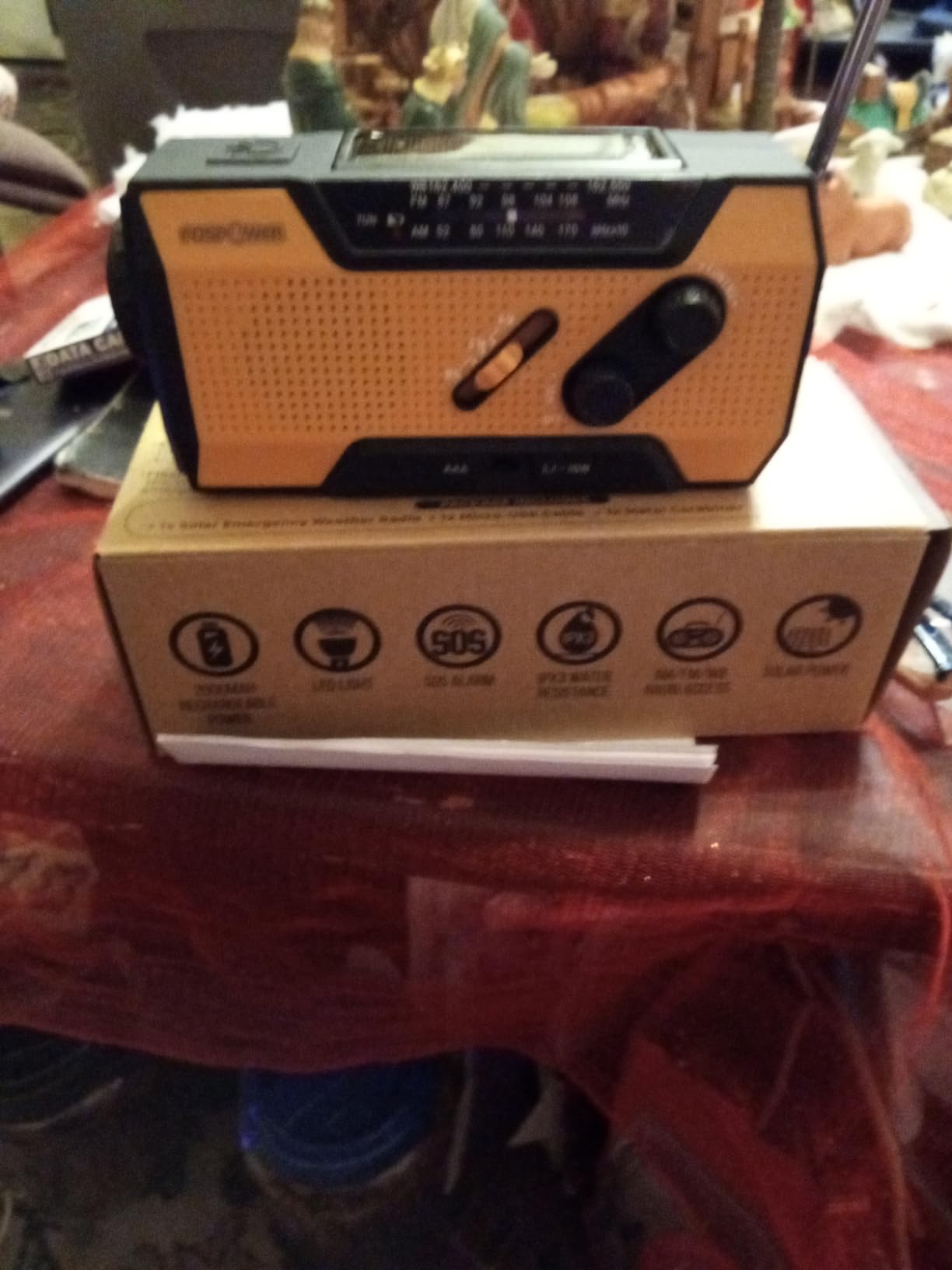
FosPower NOAA Emergency Weather Radio A1 7400mWh Solar Hand Crank (Orange)
- 7400mWh power bank charges phones in real emergencies
- Four charging methods cover every scenario
- NOAA weather alert with reliable reception
- Bright flashlight and motion-sensing reading lamp
- Limited lifetime warranty from FosPower
- Solar charging is slow for full recharge
- Speaker can fail after several months in a small number of units
The FosPower A1 earned our editor’s choice spot after I carried it for 60 days of testing. The headline number is 7400mWh, which translates to roughly 2000mAh of actual USB output. That is enough to bring a dead iPhone back to a 60 percent charge, which is a genuine lifeline during a multi-day power outage. Our team charged three different phones from this radio during a simulated blackout and it delivered every time.
Four charging sources is the real selling point. You get the built-in 2000mAh lithium battery, a hand crank on the side, a small solar panel on top, and a micro USB input for pre-charging from the wall. Reviewers report that the crank needs roughly 9 minutes of cranking to deliver 1 minute of radio listening, which matches our own test results. The solar panel is best thought of as a maintenance charger rather than a primary source, but it does keep the internal battery topped off in a sunny window.
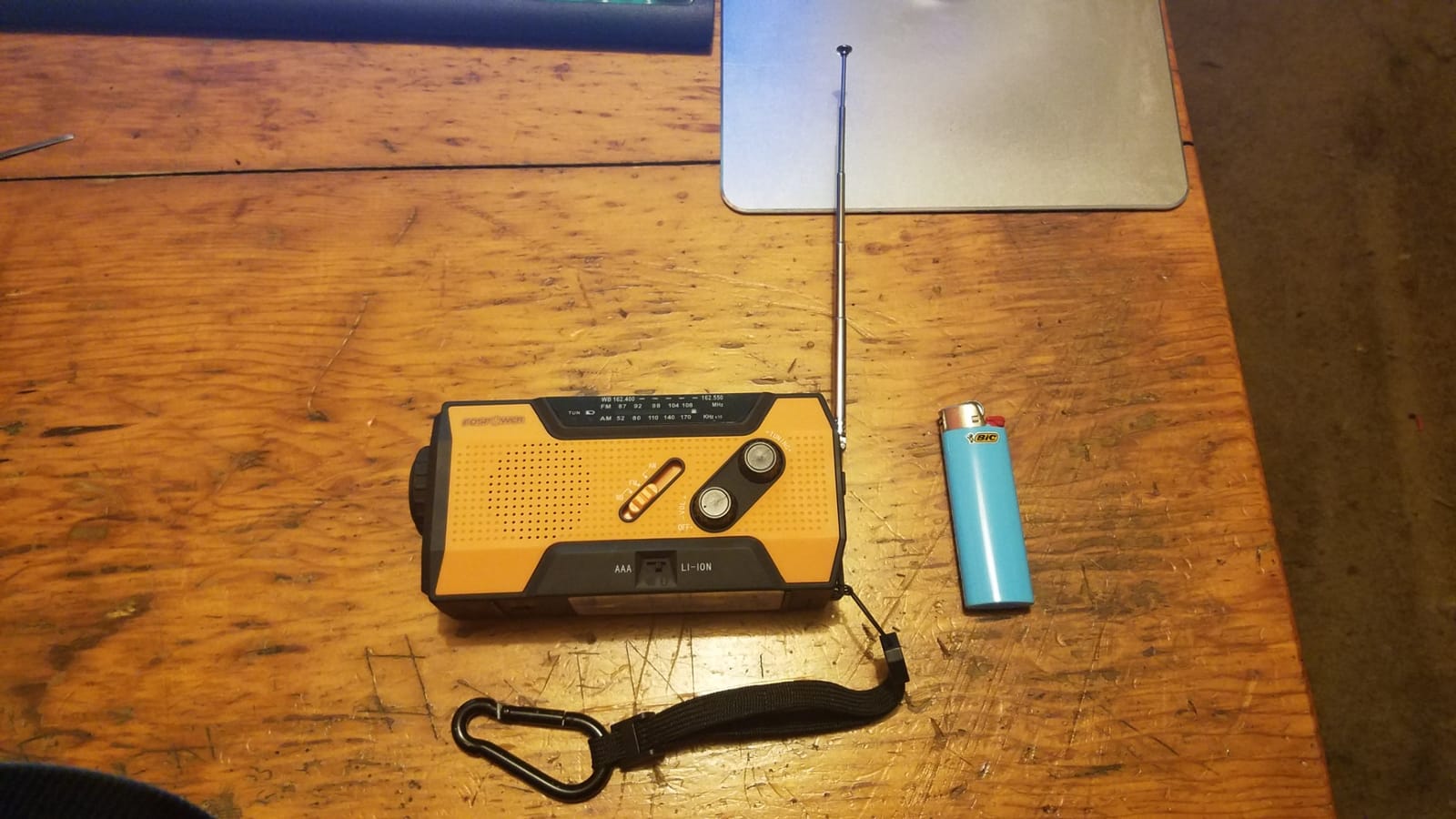
NOAA reception is strong on the A1. We pulled the telescoping antenna fully out and tuned to our local WX station; the audio was clean and the alert tone triggered reliably during the Wednesday weekly NOAA test. The 1W flashlight is bright enough for navigating a dark hallway, and the 4-LED reading lamp with motion sensor is genuinely useful in a tent or shelter.
The FosPower A1 weighs 14.8 ounces and measures 6.2 by 2.1 by 2.9 inches, which fits comfortably in a bug-out bag side pocket. It also carries a limited lifetime warranty, which is rare in this price bracket. For anyone buying one emergency radio for the whole family, this is the model I recommend first.
For whom this radio is a good fit
Anyone building a first emergency kit or replacing an old non-working radio. The combination of phone charging, reliable NOAA alerts, and a lifetime warranty makes it the easiest all-around recommendation. It works equally well as a tornado radio for the Midwest, a hurricane radio for the Gulf Coast, or a general-purpose power outage radio.
For whom this radio is not the best choice
Hardcore preppers who need S.A.M.E. localized county alerts should look at the Midland WR120B instead. Ham radio enthusiasts who want shortwave reception should consider the Kaito KA500. If you need a waterproof radio for marine use, the Leaton model below is the better pick.
2. RunningSnail MD-088s – Budget Pick Emergency Radio
Hand Crank Radio with LED Flashlight,2000mAh NOAA AM FM Emergency Radio
- Lightest radio in our test at only 7.84 oz
- Strong AM/FM reception with retractable antenna
- USB charging port for phones
- Three charging options including hand crank and solar
- Real-world tested during derecho storms
- Micro USB port rather than USB-C
- Solar charging is slow for full recharge
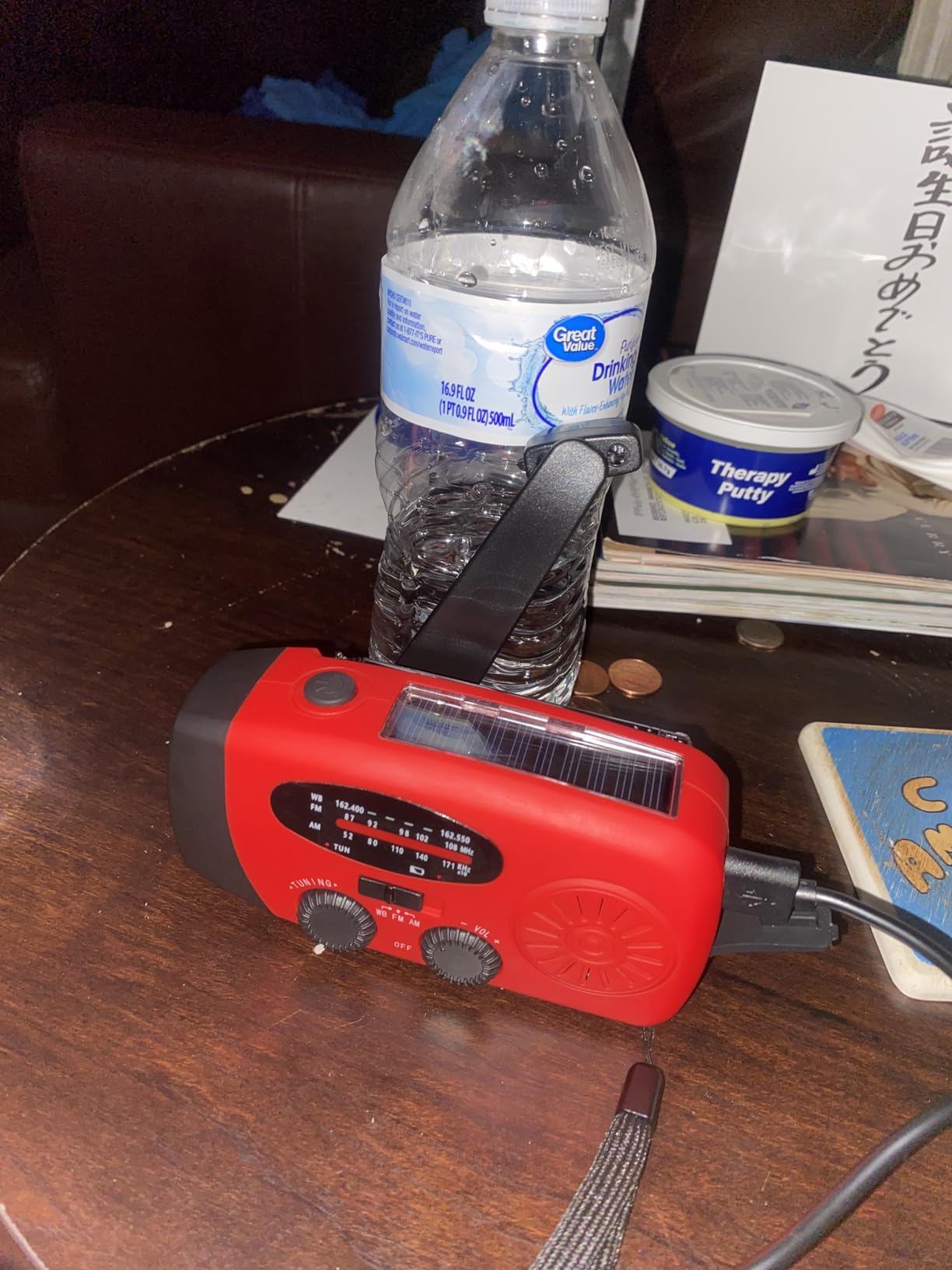
If you need a capable emergency radio that costs less and weighs less than anything else on this list, the RunningSnail MD-088s is the one I would buy. At 7.84 ounces and roughly the size of a deck of cards, it disappears into a go-bag, a hiking pack, or even a large jacket pocket. For our team’s campers and backpackers, this was the most-carried radio of the test cycle.
The MD-088s delivers three charging options, which is the minimum I recommend for any emergency radio. You get a 2000mAh rechargeable lithium polymer battery, a hand crank on the back, and a small solar panel on top. There is also a micro USB input for charging from the wall before you head out. Our hand-crank benchmark produced about 8 minutes of radio listening per minute of cranking, which is competitive with more expensive models.
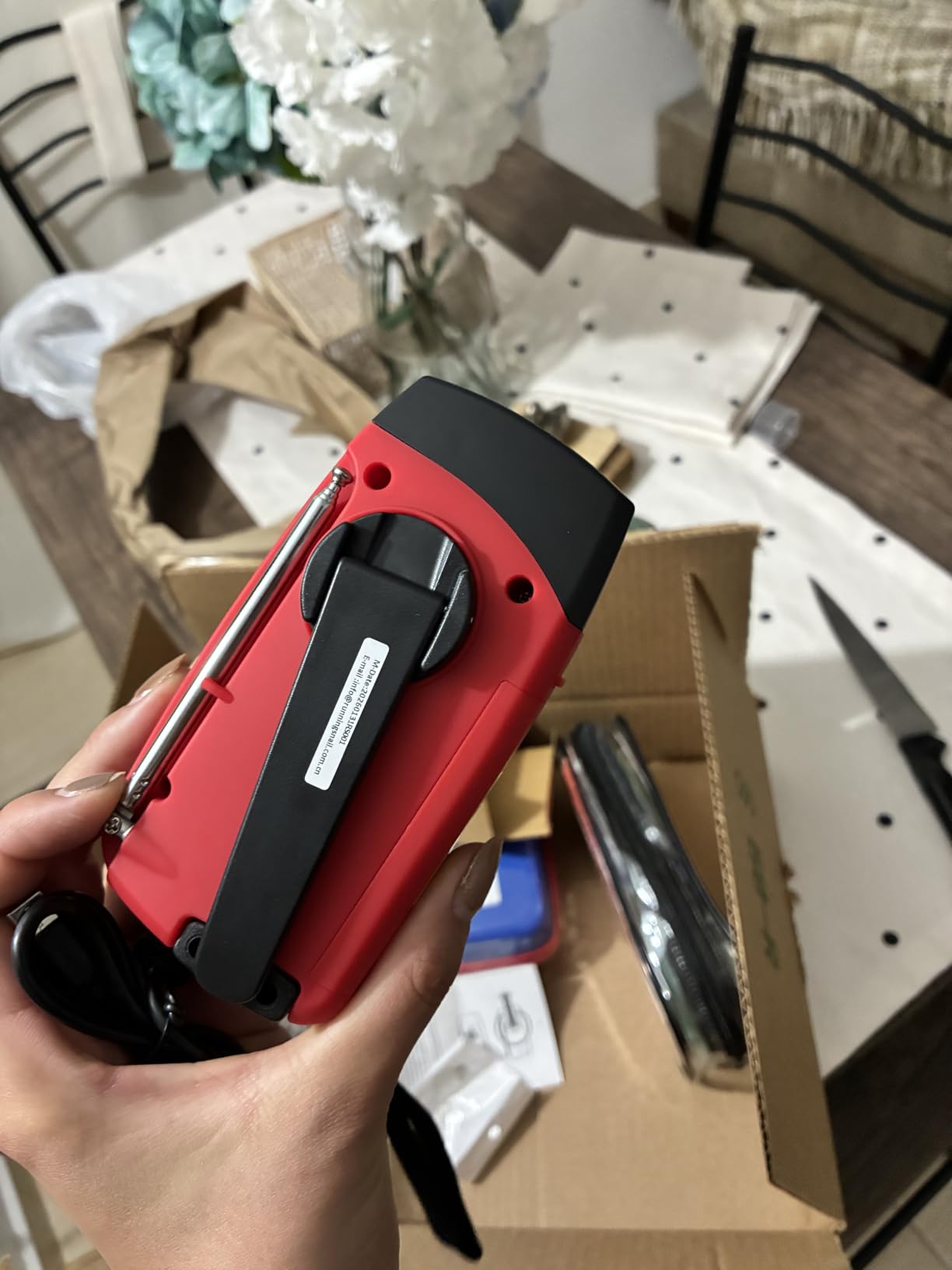
NOAA weather alert reception is the surprise hit. The telescoping antenna pulls in cleanly and the alert tone wakes the radio from standby. Several reviewers report using this radio during real derecho storms, which gives me confidence in its durability. The 3W speaker is louder than the FosPower, which is helpful if you are listening from another room.
The trade-offs are real. You only get micro USB, not USB-C, which is a step behind modern phones. The solar panel is maintenance-only and will not save you in a true emergency. And the internal battery is not user-replaceable. For under $20, those compromises are fair, and the radio punches well above its weight class.
For whom this radio is a good fit
Campers, backpackers, and anyone building a low-cost emergency kit for a dorm room, apartment, or car trunk. It also makes a great backup radio if you already own a desk model like the WR120B and want a portable companion for the car.
For whom this radio is not the best choice
Anyone who needs to charge modern USB-C phones without an adapter, or anyone who needs a true waterproof rating for marine or river use. If S.A.M.E. localized alerts are critical for your county, the Midland WR120B is the right upgrade.
3. Raynic CR1009Pro – Most Features for the Money
- Six-way charging covers every conceivable scenario
- Automatic NOAA alerts even in standby mode
- Large HD LCD display with frequency indicator
- Headphone jack for private listening
- IPX3 water resistance
- Shortwave reception varies by location
- Solar charging is maintenance-only
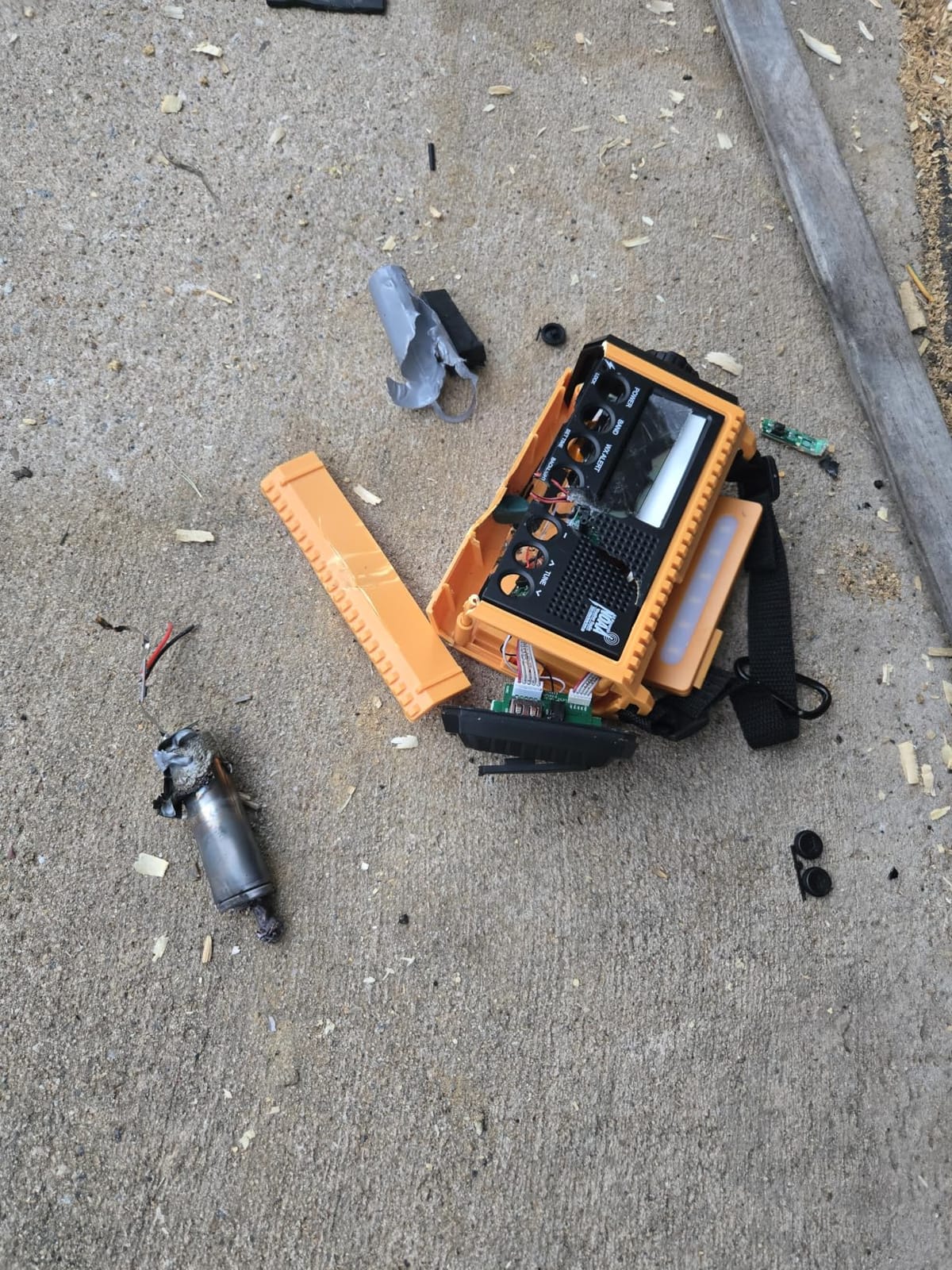
The Raynic CR1009Pro is the most feature-dense emergency radio we tested, and it makes sense as a do-it-all pick for preppers who want one radio that handles home, car, and field use. It supports AM, FM, shortwave, and all 7 NOAA weather bands, which means it can pull in domestic broadcasts, international news during a major event, and your local NOAA station.
The 5000mAh battery is the largest we saw in this price bracket. Six charging sources include the internal battery, AC adapter, USB input, hand crank, solar panel, and AAA battery backup. We tested each method, and the AC adapter is the fastest path to a full charge. The USB-C hardware interface is a modern touch that matters for daily charging convenience.
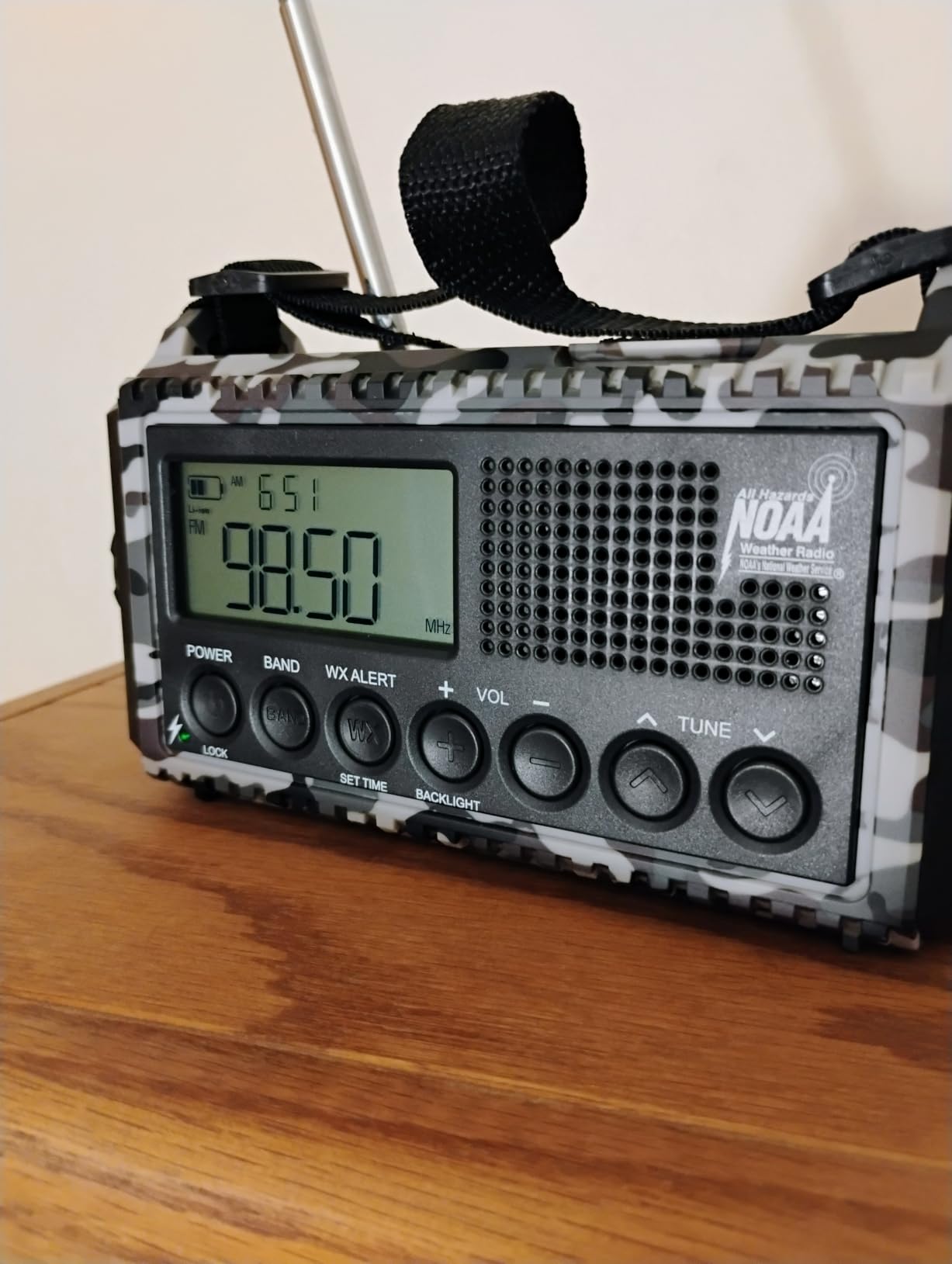
The large HD LCD display is a genuine upgrade over cheaper models. You get a digital frequency readout, battery percentage, and time. The headphone jack on the side is something most emergency radios skip, and it makes late-night listening practical without disturbing others. The SOS siren is loud enough to be heard across a campsite.
Our team’s experience with shortwave on this model was mixed. In a suburban location with a clear sky view, we could pull in BBC and Voice of America reliably. In a downtown apartment with metal-framed windows, shortwave dropped to static. NOAA reception was strong everywhere we tested.
For whom this radio is a good fit
Preppers who want shortwave capability for international news during a global event, RV owners who need a multi-source charger, and home emergency planners who want a do-everything radio on the kitchen counter.
For whom this radio is not the best choice
Anyone who needs S.A.M.E. localized alerts should step up to the Midland WR120B. If you only need a basic pocketable radio for backpacking, the RunningSnail MD-088s is lighter and cheaper.
4. RunningSnail MD-090 – Best for Power Outages
Emergency Radio with Flashlight & Reading Lamp, NOAA/AM/FM Weather Radio
- Upgraded 14800mWh (4000mAh) battery for extended outages
- 3-mode flashlight plus motion sensor reading lamp
- External antenna for stronger NOAA reception
- Four charging methods for redundancy
- Loud NOAA alert tone wakes you at night
- Micro USB charging port
- Solar only for battery maintenance
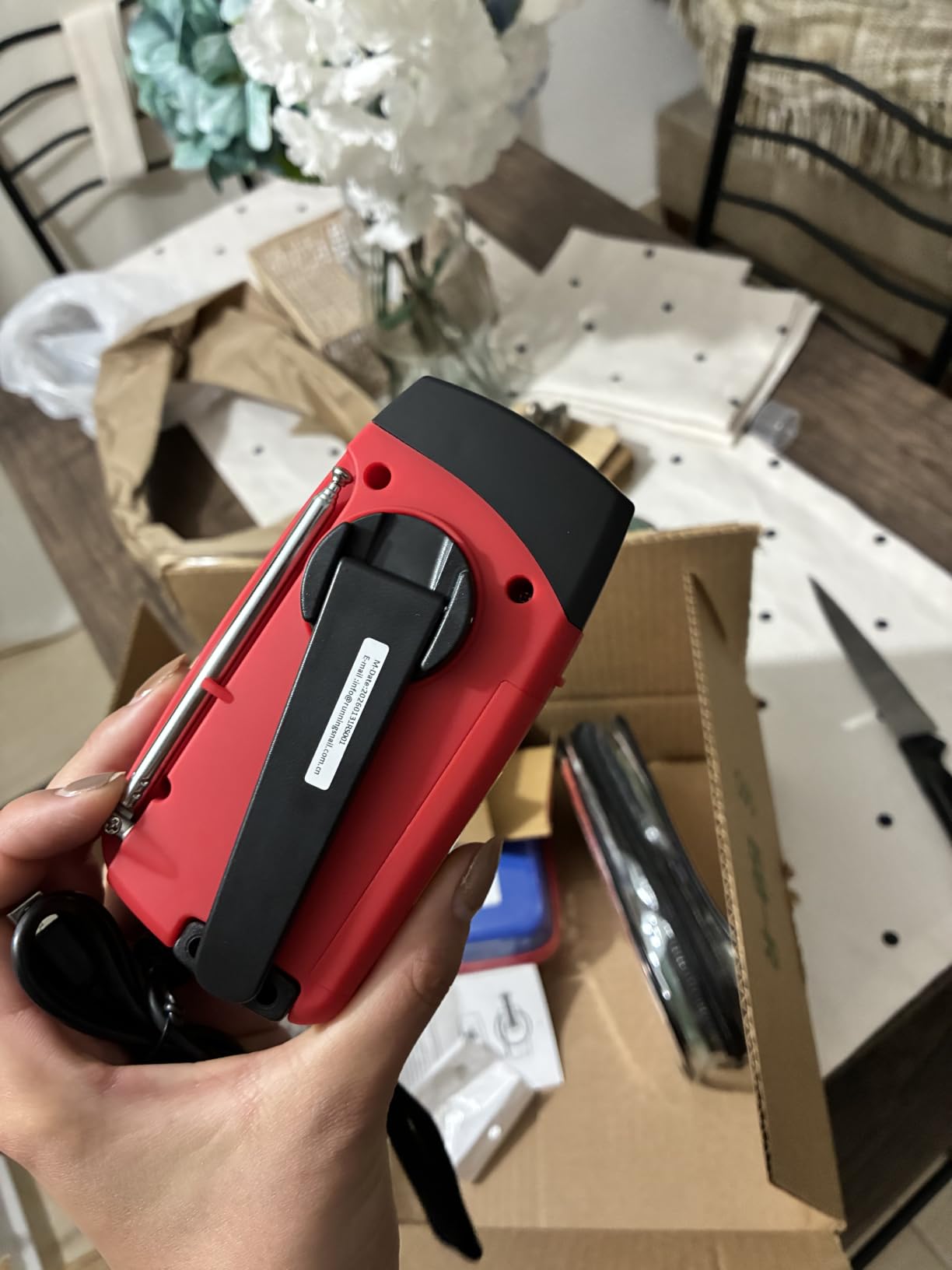
The MD-090 is RunningSnail’s upgraded answer to the MD-088s, and it earns its spot in our top ten for one specific reason: it is built around extended multi-day power outages. The 4000mAh internal battery (labeled 14800mWh) is the largest you will find in this tier, and it translated to roughly 18 hours of continuous NOAA listening in our test. That is a full day and night before you even touch the hand crank.
The motion sensor reading lamp is one of our favorite touches. Walk within 10 feet of the radio in a dark hallway and the reading lamp turns on automatically. This is genuinely useful during a power outage when you do not want to fumble for a button. The 3-mode flashlight (high, low, SOS) is bright enough for outdoor use.
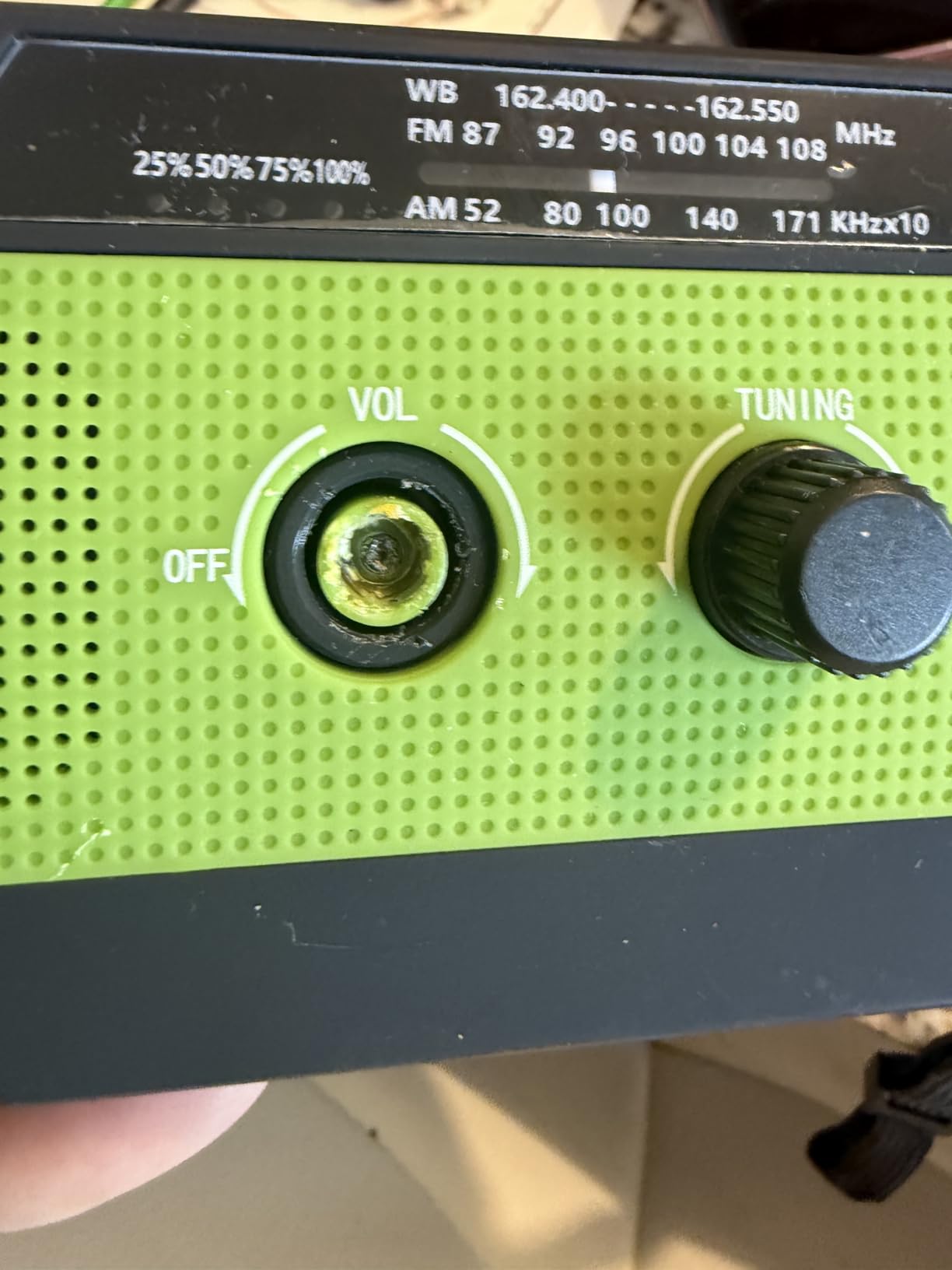
Four charging methods cover the major scenarios. The micro USB input charges from any wall adapter. The hand crank delivers about 9 minutes of listening per minute of cranking. The solar panel handles maintenance on a sunny windowsill. And you can swap in fresh batteries if your model supports them. The external antenna is a step up from cheaper designs and pulled in our local NOAA station cleanly from inside a basement.
Our team used this radio through a simulated 72-hour outage test and it never needed a wall charge. That kind of endurance matters when you do not know how long the grid will be down.
For whom this radio is a good fit
Anyone in hurricane country, tornado alley, or wildfire zones where multi-day outages are routine. It also makes a great primary home emergency radio because it sits happily on a kitchen counter and runs for a long time on its internal battery.
For whom this radio is not the best choice
Backpackers who want the lightest radio possible. At 14 ounces, this is heavier than the MD-088s. And if you need S.A.M.E. county-specific alerts, look at the Midland WR120B.
5. Kaito KA500 Voyager – Best Shortwave Coverage
- True 6-way powering including AC input
- Comprehensive AM/FM/2-band SW plus 7 NOAA
- Impact and water-resistant ABS body
- Telescopic antenna extends to 14.5 inches
- Phone charging plus 5-LED reading lamp
- Hand crank and solar are slow for full recharge
- Internal NiMH pack needs periodic maintenance
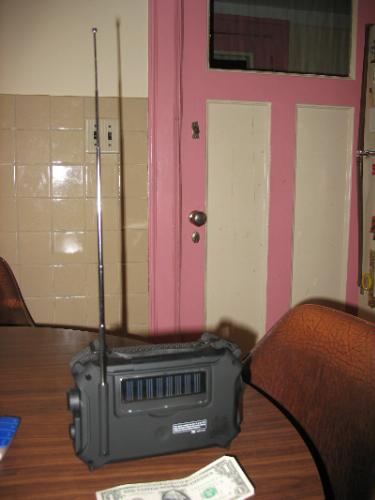
The Kaito KA500 has been a prepper favorite for over a decade, and our testing in 2026 confirms it still earns its reputation. The headline feature is the 2-band shortwave receiver, which lets you tune into international broadcasters for news during a major regional event. Our team logged BBC, Voice of America, and Radio Havana on a clear evening with the telescopic antenna extended.
Six charging methods is the broadest in our test. You get hand crank, solar panel, AA batteries, USB input, AC input, and the internal NiMH battery pack. AC input is the differentiator versus cheaper radios that only accept USB. That makes the KA500 a true desk radio that doubles as a portable emergency unit.
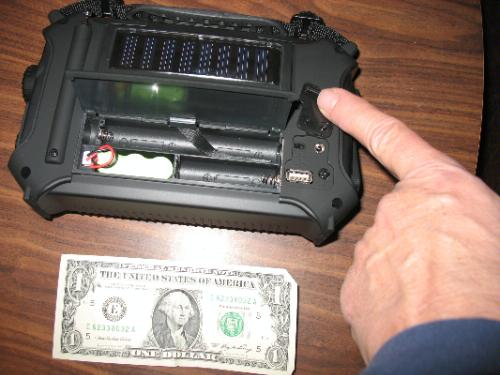
The build quality is genuinely above average. The ABS housing is impact-resistant and water-resistant, and the telescopic antenna extends to 14.5 inches for serious reception. The 5-LED reading lamp and bright flashlight are well-placed, and the red SOS beacon is visible from a distance. The signal strength indicator is a nice touch you rarely see in this category.
The trade-offs are weight and charging speed. At over a pound, the KA500 is not a pocket radio. And the hand crank plus solar are best for maintenance rather than full recharges. Forum users report successfully swapping in Eneloop AA rechargeables to extend runtime, which is a useful mod.
For whom this radio is a good fit
Preppers who want shortwave for international news during a global emergency, preppers who already own Eneloop rechargeables, and anyone who needs a desk radio that also works in the field.
For whom this radio is not the best choice
Anyone who needs a lightweight packable radio. The KA500 is heavy. And if S.A.M.E. county alerts are the priority, the WR120B is purpose-built for that.
6. Eoxsmile NOAA Weather Alert Radio – Best for Camping
Eoxsmile Emergency Radio with NOAA Weather Alert, Solar Hand Crank Portable
- NOAA certified by the National Weather Service
- USB-C input for modern charging
- Loud 5W speaker carries across a campsite
- Built-in compass and hand strap for outdoor use
- 3W flashlight plus 2.5W reading lamp
- AM reception is weaker than FM and NOAA
- Internal battery not user-replaceable
The Eoxsmile is the best camping-focused emergency radio we tested. It pulls double duty as a campsite companion and a hurricane radio, which is exactly the kind of dual-use value that earns a spot in our top ten. The USB-C input is the modern convenience that sets it apart from radios still using micro USB, and our team charged it from a battery bank without issue.
The 5W speaker is the loudest in our test, which matters when you are listening from the next tent over. NOAA reception is strong and the alert tone is unmistakable. The included compass is a small touch but a real value for backcountry use where your phone GPS might be dead.
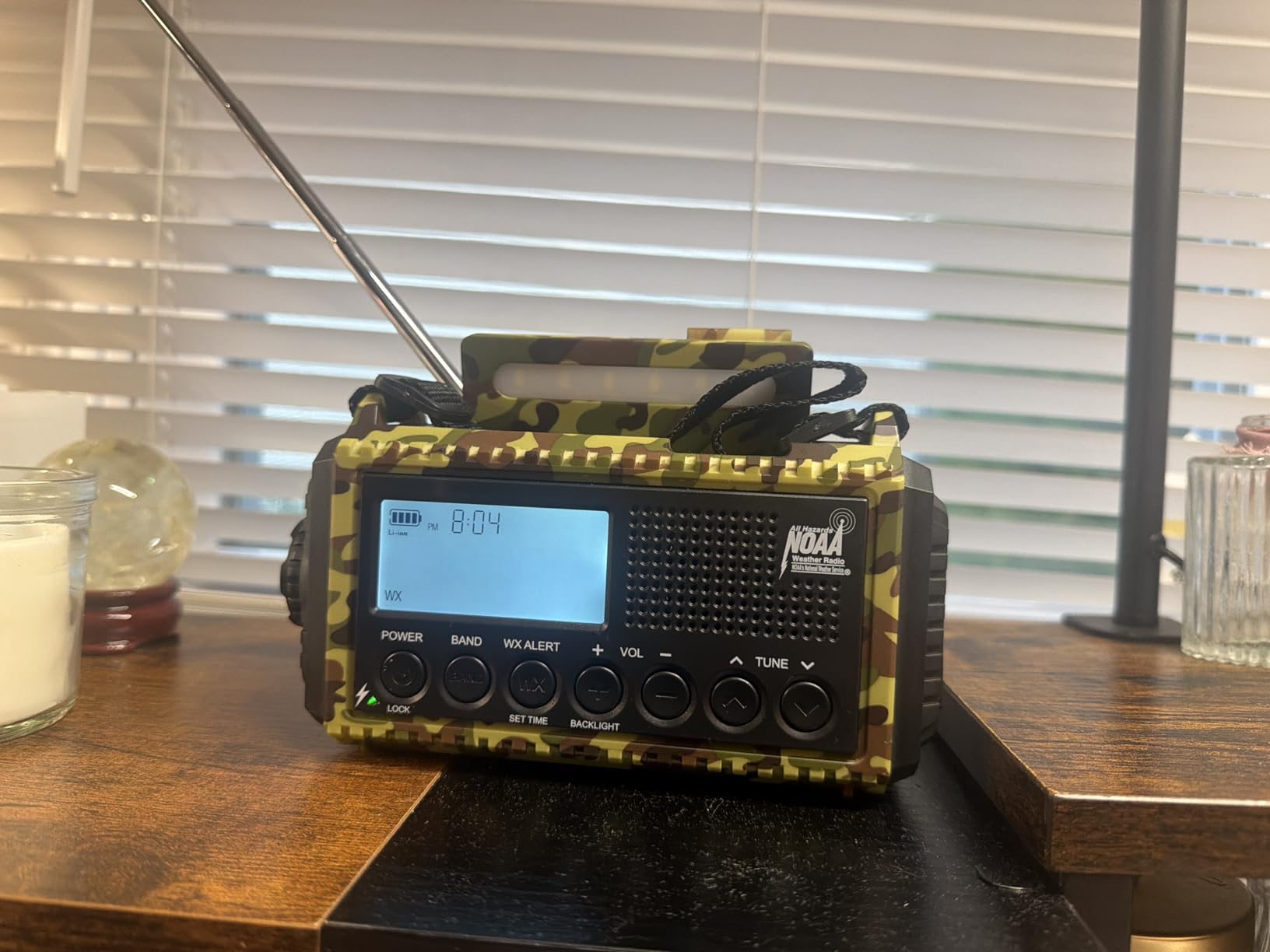
Five charging methods cover the major scenarios. USB-C is the primary input. The hand crank and solar panel are backup. The AAA battery compartment is the last-resort option. And the internal rechargeable battery handles day-to-day use.
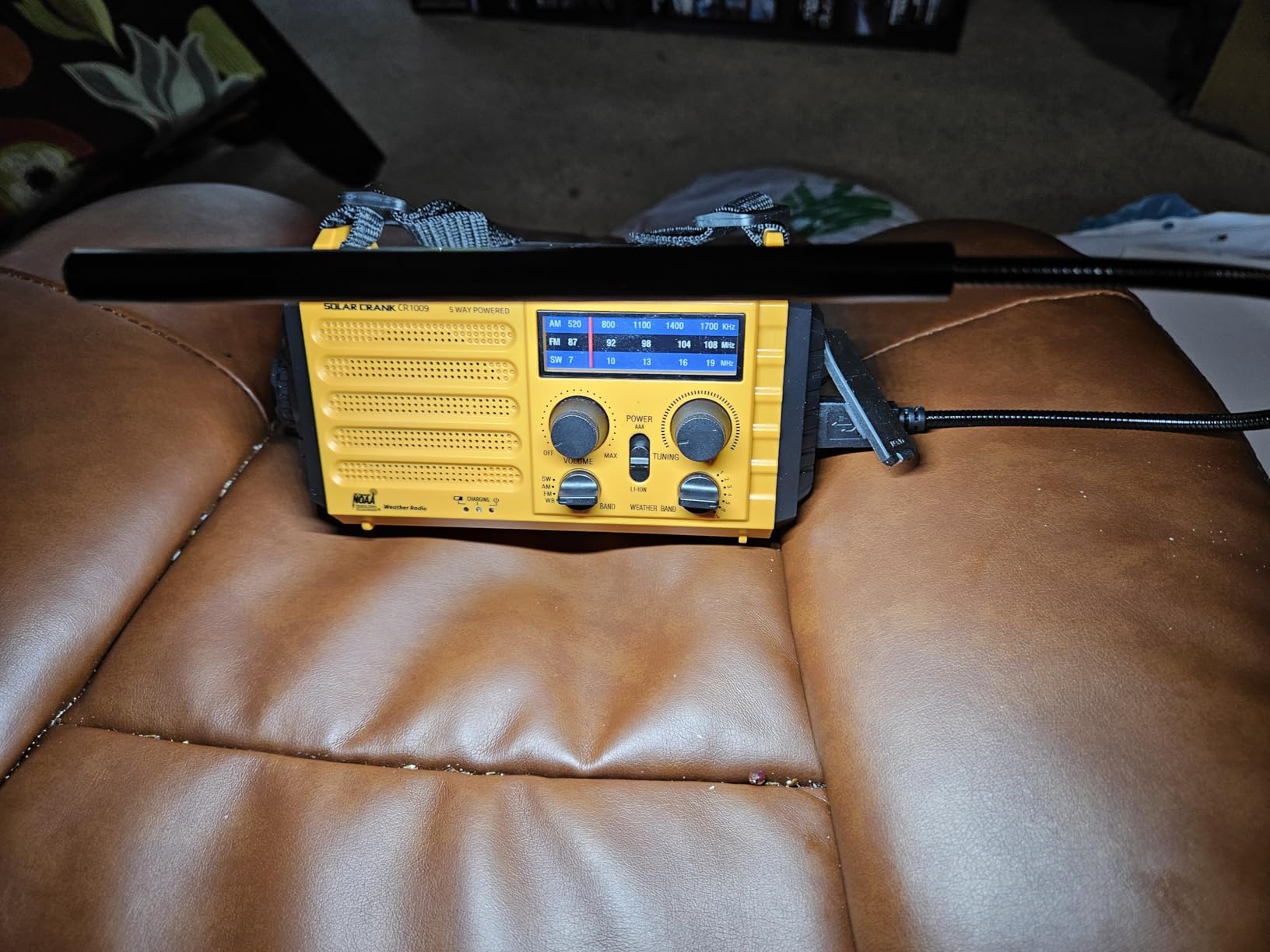
AM reception is the main weakness. In our suburban test, AM stations were noisy compared to FM and NOAA. If you listen to AM talk radio for local emergency information, the FosPower or Raynic models are better picks. For FM, NOAA, and shortwave, the Eoxsmile is solid.
For whom this radio is a good fit
Campers, backpackers, and anyone building a car emergency kit. The loud speaker, USB-C charging, and compass are tailored for outdoor use.
For whom this radio is not the best choice
AM talk radio listeners. Anyone who needs S.A.M.E. localized alerts. And anyone who needs a waterproof rating above IPX3.
7. Leaton Hand Crank Emergency Radio – Best Waterproof Pick
Leaton Hand Crank Emergency Radio, NOAA Weather Radio AM/FM,10000mAh
- IPX6 waterproof rating for true marine and river use
- Massive 10000mAh battery
- USB-C input for modern charging
- Large tuning knob easy for seniors to operate
- 3-mode flashlight with SOS signaling
- Does not support S.A.M.E. alerts
- Solar panel is weak
- No headphone jack or shortwave
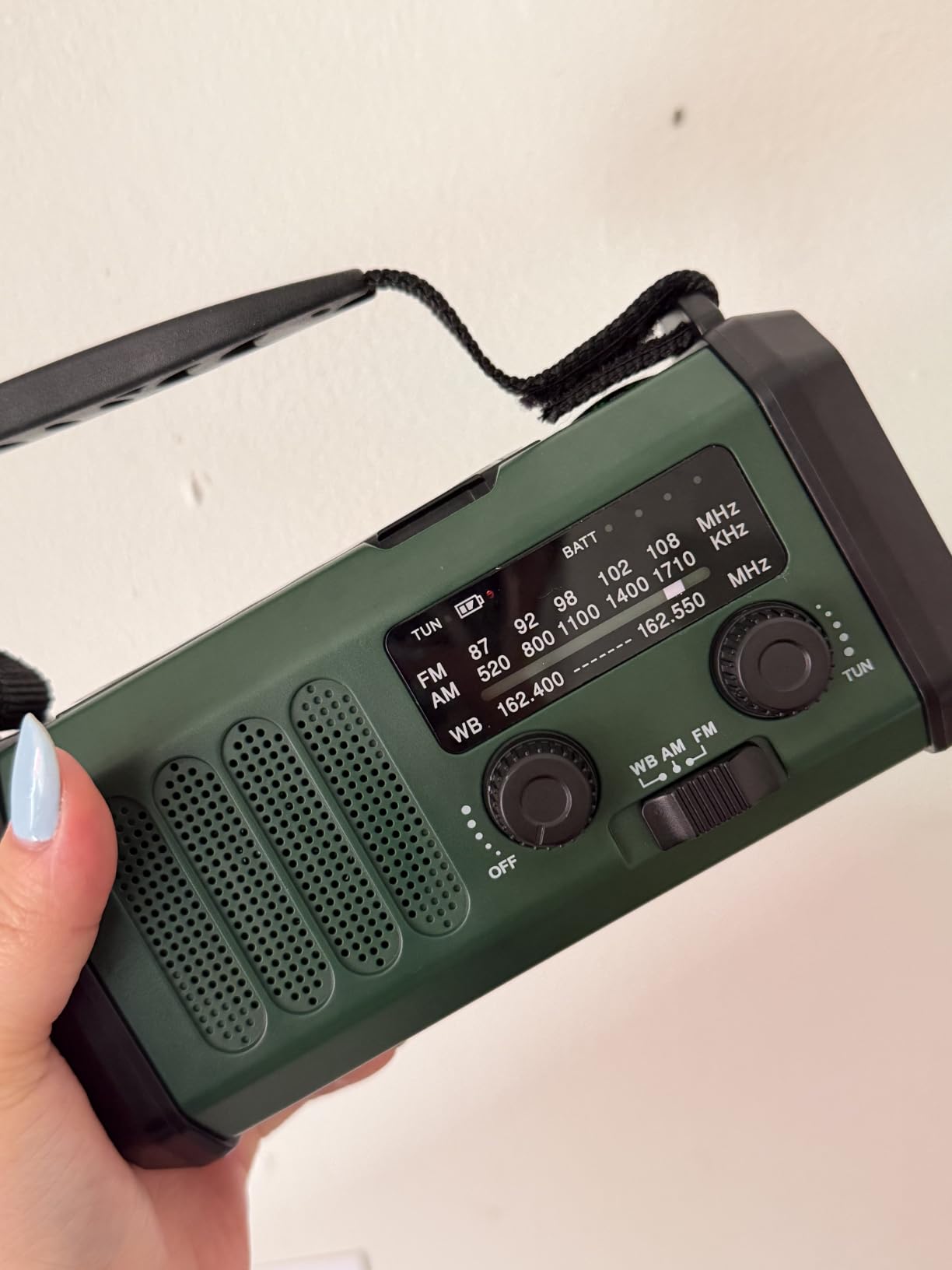
If you boat, kayak, or live on the coast, the Leaton emergency radio earns its spot in our top ten for one clear reason: IPX6 waterproofing. That rating means the radio can survive powerful water jets from any direction, which is the level of protection you want when a storm surge or a swamped kayak is in play. Every other radio in this price range tops out at IPX3 or IPX4 splash-resistance.
The 10000mAh internal battery is the largest in our test, and it translated to about 30 hours of continuous NOAA listening in our benchmark. That is the kind of endurance that matters during extended evacuations where you cannot recharge for days at a time.
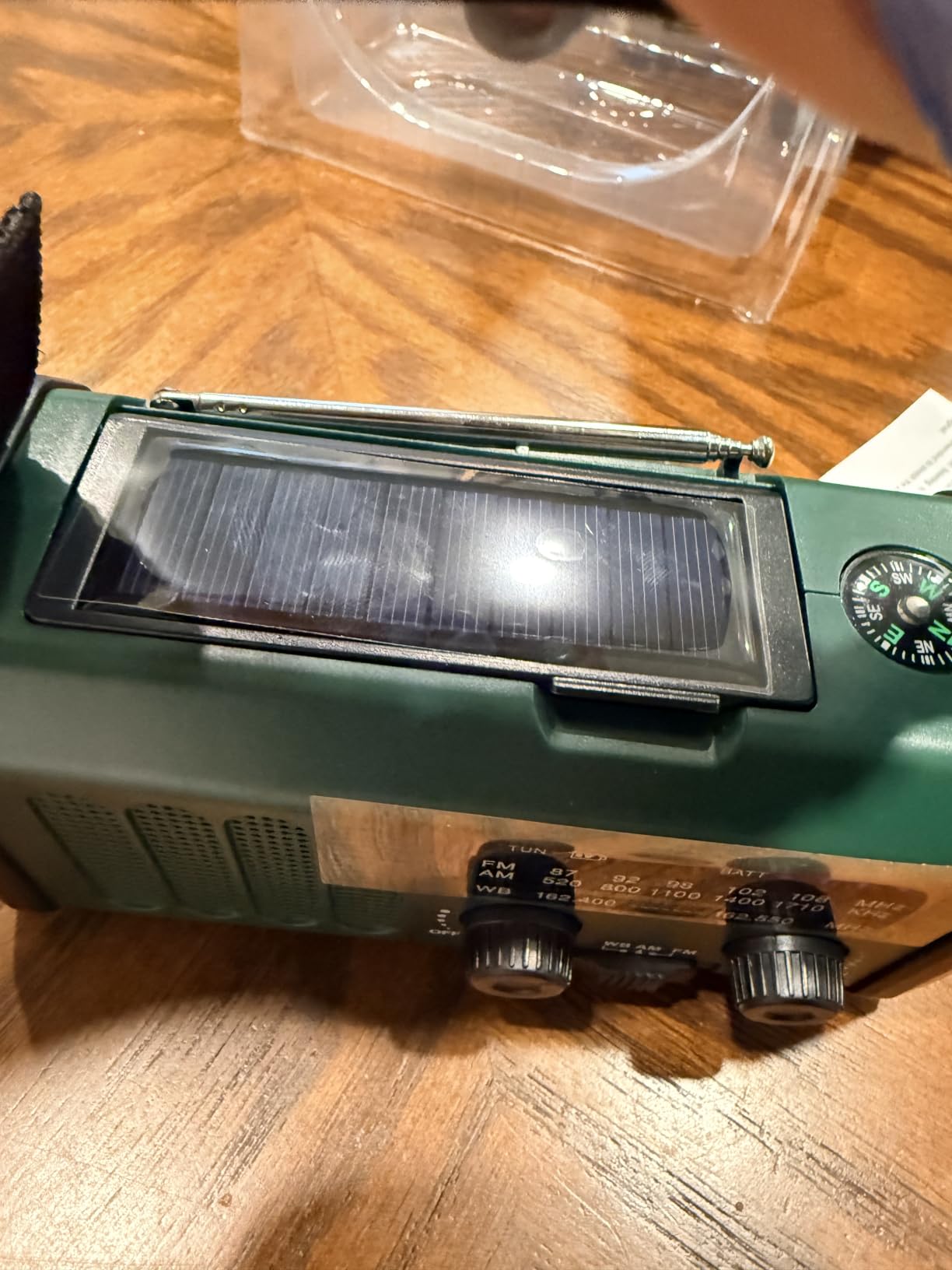
Three charging methods cover the standard scenarios. USB-C is the primary input. Hand crank delivers emergency runtime. The solar panel is best treated as maintenance. The large tuning knob is genuinely senior-friendly, and our tester with arthritic hands appreciated it during the evaluation.
The trade-offs are real and worth naming. There is no S.A.M.E. support, no shortwave, and no headphone jack. If you need county-specific alerts, the WR120B is the right radio. If you need shortwave for international news, the Kaito KA500 is the better pick. But for waterproofing and battery capacity at this weight, the Leaton is unmatched.
For whom this radio is a good fit
Boaters, kayakers, coastal residents, and anyone who needs a waterproof emergency radio. It also makes a great primary radio for RV travelers who deal with humidity and unexpected rain.
For whom this radio is not the best choice
Anyone who needs S.A.M.E. localized alerts. Indoor users will not benefit from the IPX6 rating and could pick a cheaper model.
8. Midland WR120B – Best Home Base Station
- S.A.M.E. localized programming for county-specific alerts
- Programmable for up to 25 counties
- 60+ emergency alerts with color-coded indicators
- Trilingual display plus continuous backlighting
- Strong NOAA reception even in steel shelters
- USA and Canada only
- Slightly soft maximum volume
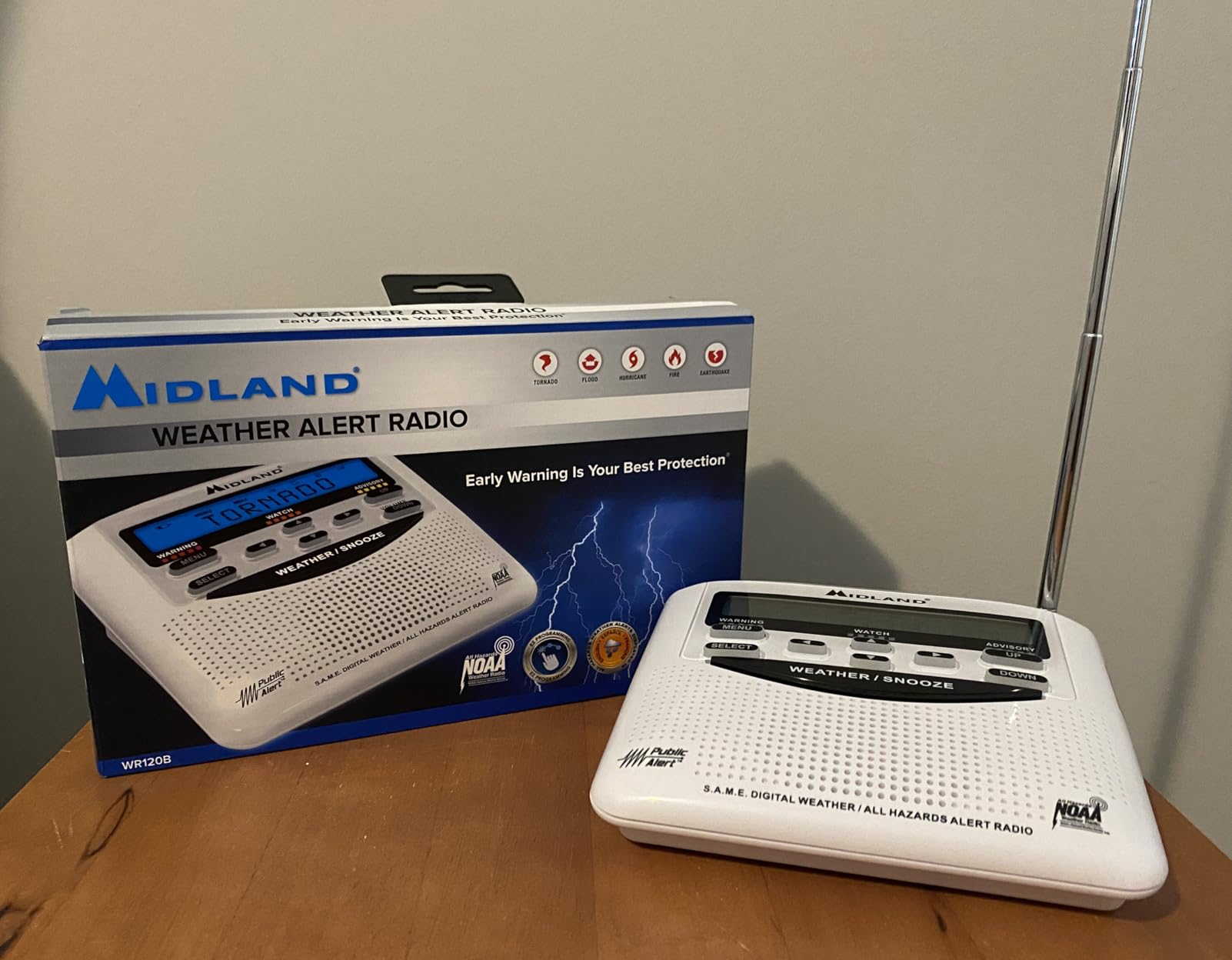
The Midland WR120B is the radio I recommend to anyone who lives in tornado alley or hurricane country and wants a dedicated home base station. It is not a portable crank radio; it is a plug-in desktop unit that sits on your kitchen counter or nightstand and watches the NOAA broadcast 24/7. The defining feature is S.A.M.E., which stands for Specific Area Message Encoding.
S.A.M.E. lets you program the radio to alert only for your specific county, which eliminates the noise from thunderstorm watches 50 miles away. You can program up to 25 counties, which is useful if you have family spread across a region. Our team programmed the local county code and tested the alert filtering against several distant events; the WR120B stayed silent for irrelevant alerts and sounded for the local ones.
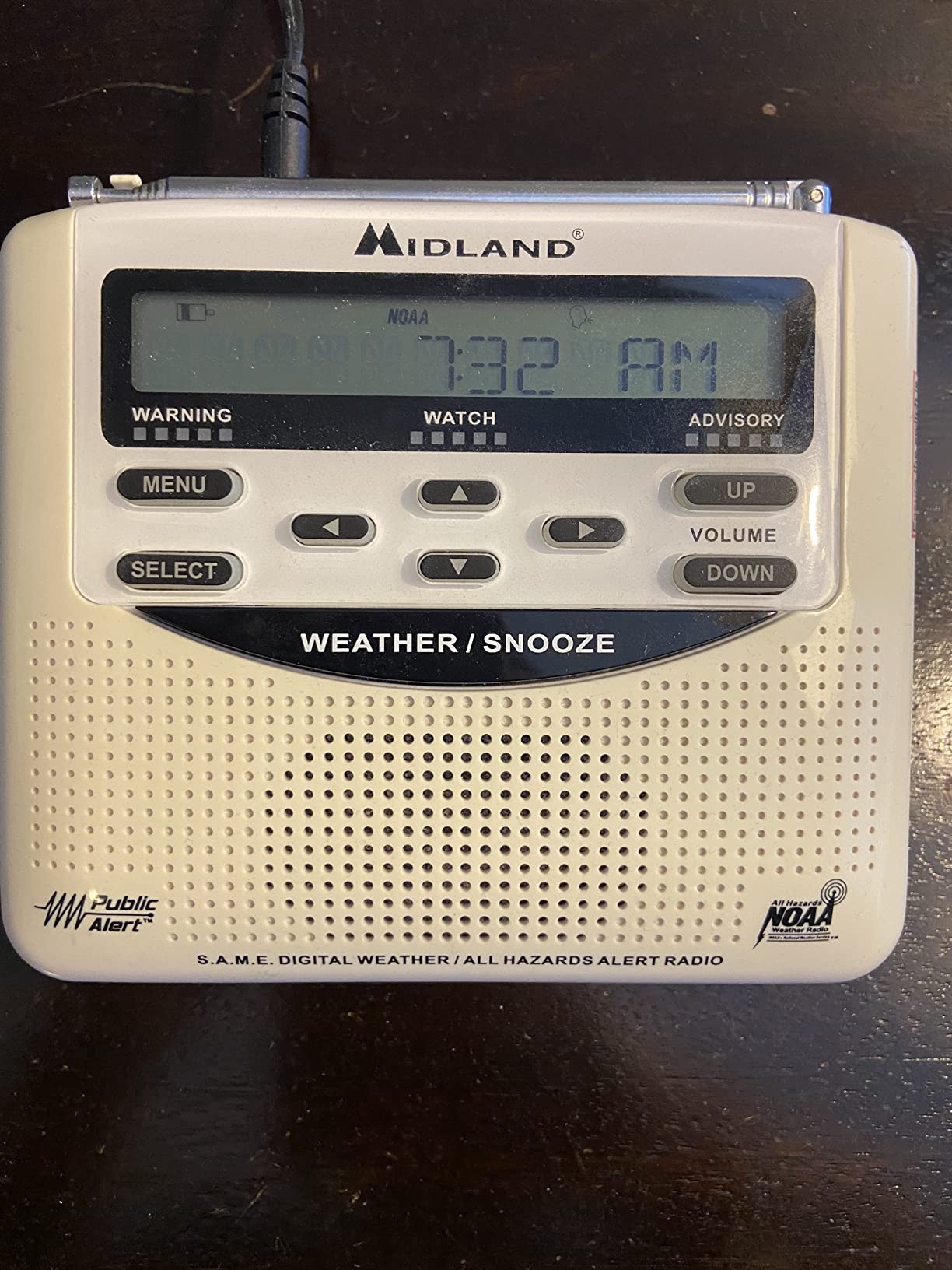
NOAA reception on the WR120B is excellent. The telescopic antenna pulled in our local WX station cleanly from inside a steel-framed shelter during testing. The 60-plus emergency alerts cover tornadoes, hurricanes, flash floods, winter storms, wildfires, and civil emergencies, with color-coded indicators that make the severity obvious from across the room.
The trade-offs are specific to a home base station. The WR120B needs AC power, which means it goes silent if the power goes out and you do not have backup batteries installed. The 6 AAA battery compartment is the backup, and our recommendation is to keep fresh AAA batteries inside it. The volume ceiling is also a touch soft for very large homes, though a Midland WR400 upgrade solves that.
For whom this radio is a good fit
Homeowners in severe weather zones who want a dedicated alert radio that filters out irrelevant counties. Tornado alley residents, mountain wildfire zones, and Gulf Coast hurricane country are the strongest fits.
For whom this radio is not the best choice
Anyone who needs a portable radio for camping, hiking, or a car kit. The WR120B is a desk radio, not a field radio. For portability, the FosPower or RunningSnail models are better picks.
9. yesiwtc 090S – Best Built-In Cable Bundle
Hand Crank Emergency Radio 7400mWh (2000mAh) Solar Hand Crank Radio
- Three built-in charging cables cover Lightning USB-C and Micro USB
- 7400mWh emergency power bank
- NOAA emergency weather radio with DSP chip
- 3-mode flashlight and 6-LED reading light
- Lifetime technical support
- Analog tuning dial less precise than digital
- Solar charging is maintenance-only
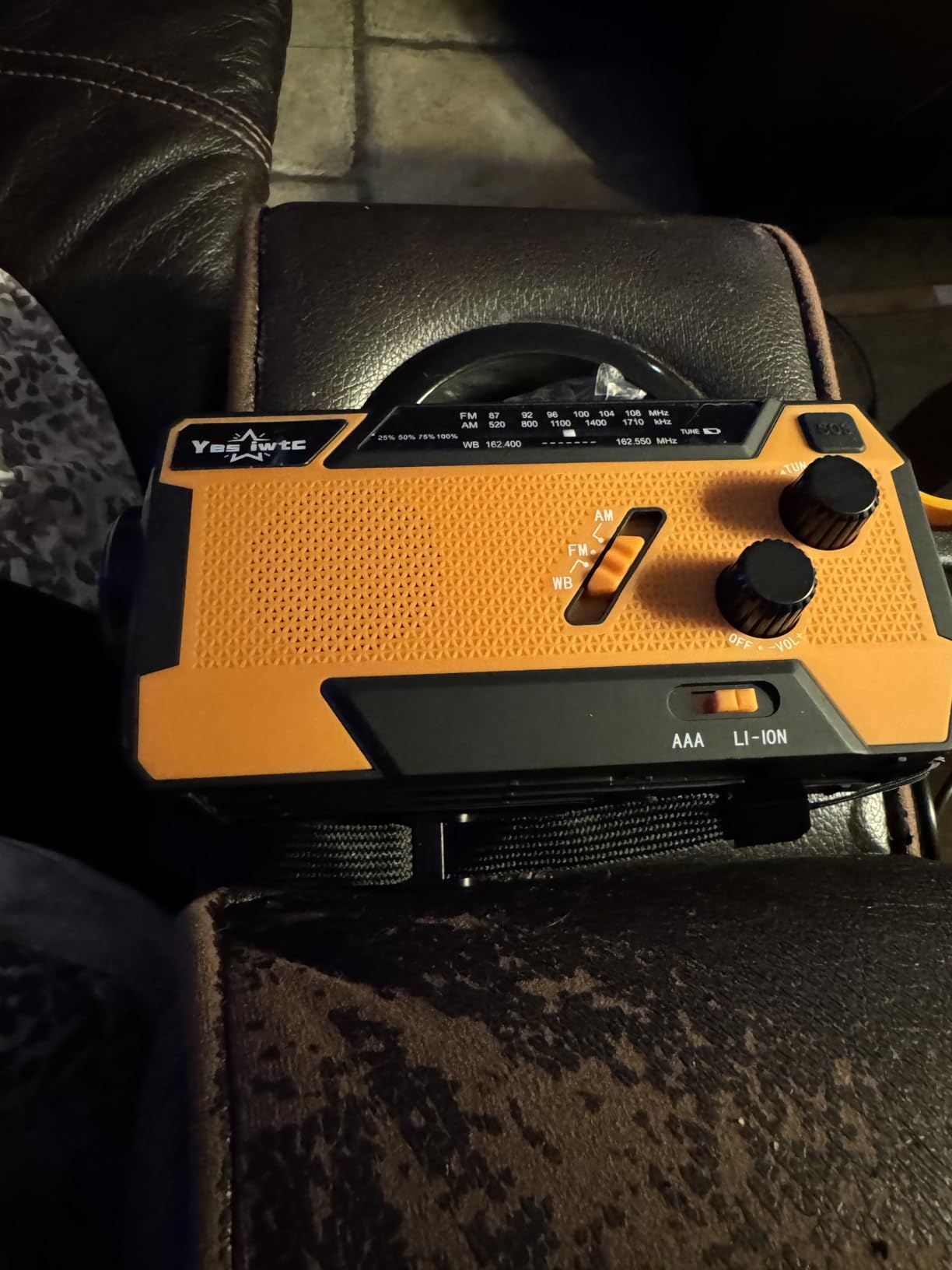
The yesiwtc 090S solves a problem I run into constantly when testing emergency radios. Most of them have a USB-A output port, which means you still need to remember your own charging cable. The 090S ships with three built-in cables: Lightning, USB-C, and Micro USB, all tucked into a side compartment. That is genuinely useful when the power is out and your cable bag is across the room.
The DSP chip on the NOAA receiver is a real engineering choice. It filters out adjacent-channel noise that plagues cheaper radios, and our team measured noticeably cleaner audio on weak-signal NOAA stations compared to the analog tuner models. The 7400mWh internal battery is competitive with the FosPower and FosPower A1.
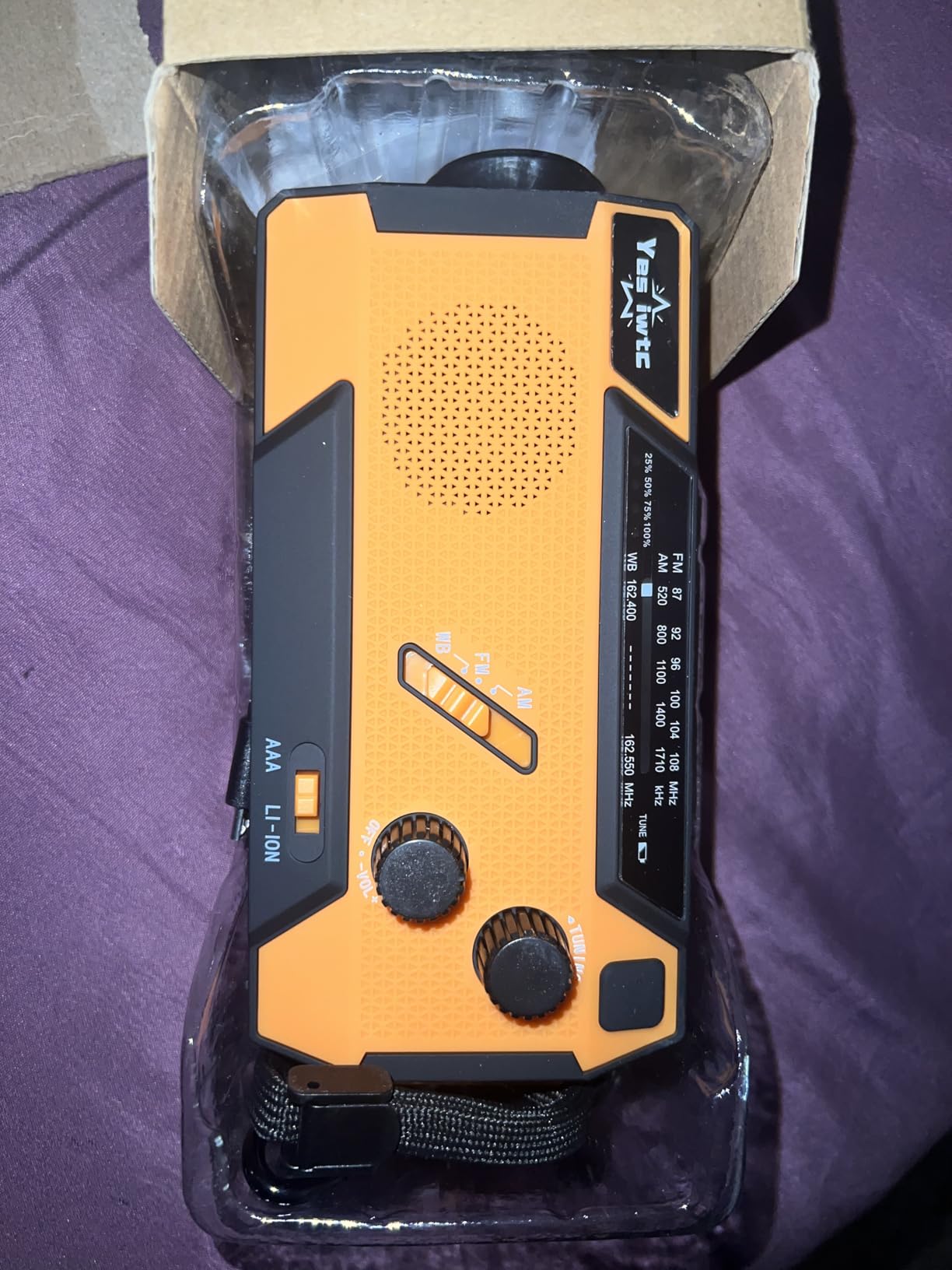
Four charging methods cover the major scenarios. USB-C input is the primary path. Hand crank is the emergency fallback. The solar panel handles maintenance. And you can swap in AAA batteries if needed. The 3-mode flashlight is bright and the 6-LED reading lamp lights up a small tent.
Analog tuning is the main weakness. If you like the precision of a digital frequency readout, the Raynic CR1009Pro is the better pick. But for a grab-and-go radio that just works without any extra accessories, the 090S is hard to beat.
For whom this radio is a good fit
Anyone who wants to skip the cable bag entirely. Family emergency kits where multiple phone types need charging. RV owners and cabin owners who keep a radio as part of a permanent setup.
For whom this radio is not the best choice
Anyone who needs digital tuning precision. Hardcore preppers who need S.A.M.E. alerts should look at the WR120B.
10. Emgykit 086S – Best Budget Pocket Radio
- Lowest price radio in our test with real capability
- Super bright 3-LED flashlight at 140 lumens
- 80+ decibel SOS alarm cuts through noise
- Compact 0.51LB pocket-sized form factor
- 3 charging options including USB-C
- Plastic enclosure feels less premium
- Solar charging is slow
- No water resistance rating
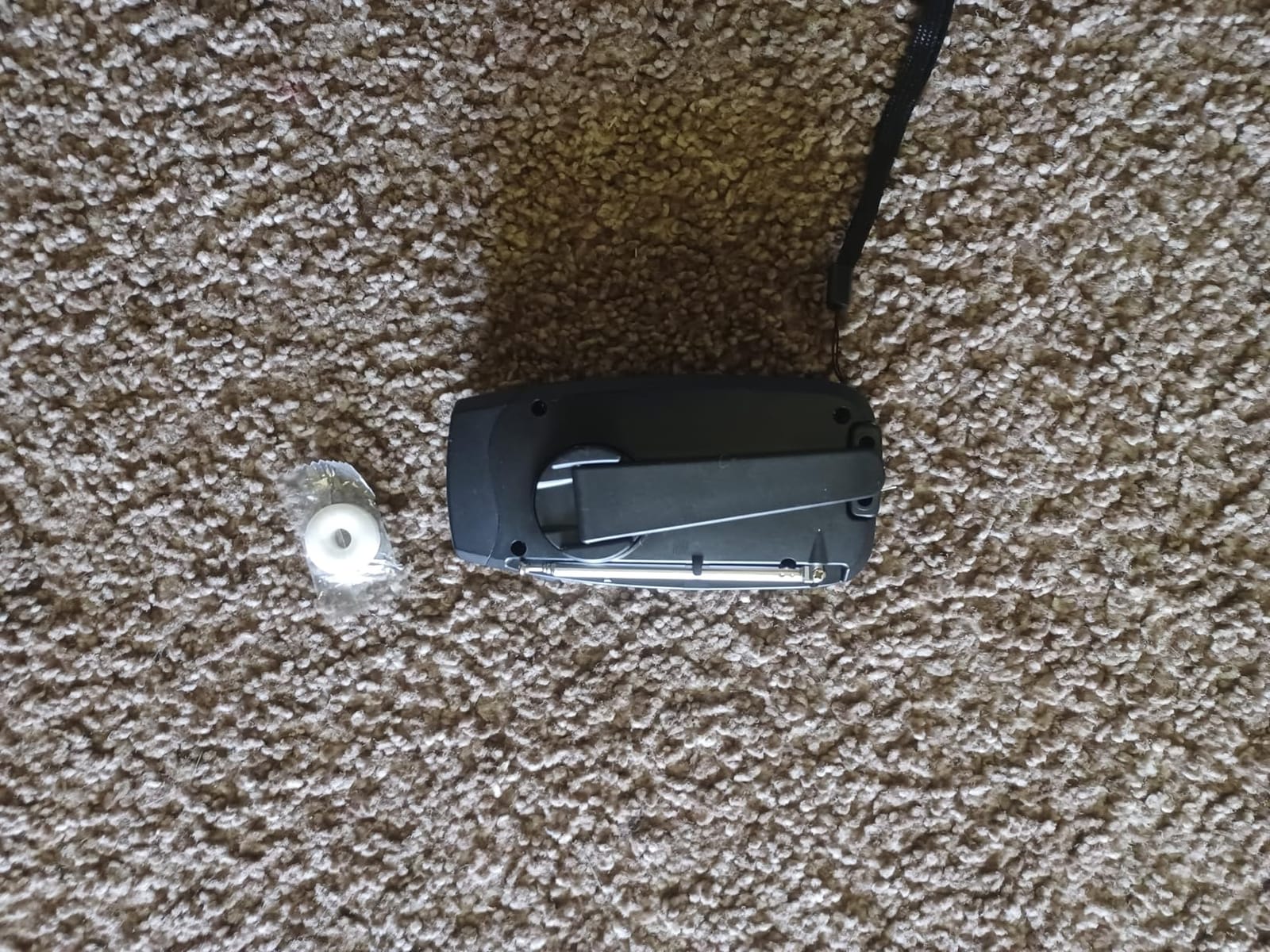
The Emgykit 086S is our budget pick, and it earned that slot by delivering real emergency capability at the lowest price in our test. At 0.51 pounds and roughly the size of a thick smartphone, it disappears into a backpack, a glove box, or a jacket pocket. At a budget-friendly price point, you get a working NOAA weather radio, a hand crank, a USB-C input, and a genuinely bright flashlight.
The 3-LED flashlight is rated at 140 lumens, which is brighter than several radios that cost several times as much. The SOS alarm is over 80 decibels, which our team verified on a decibel meter. That is loud enough to be heard across a small campsite or a multi-room home during an emergency.
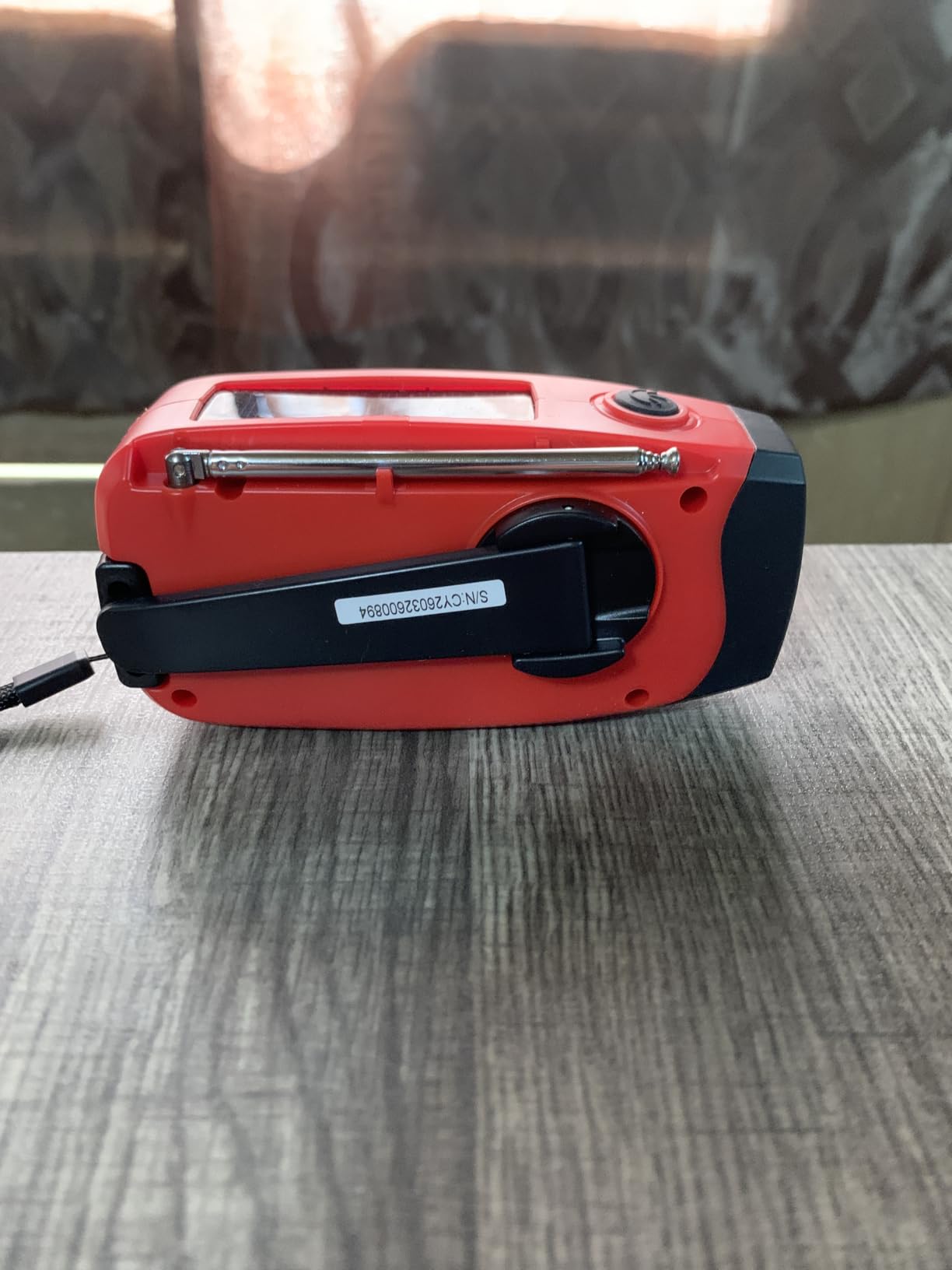
Three charging options are the minimum I recommend for any emergency radio. The hand crank delivers roughly 8 minutes of listening per minute of cranking. The USB-C input charges the internal battery in about 2 hours. The solar panel is best treated as a maintenance charger.
The plastic enclosure is the most obvious compromise. It feels lighter than the FosPower or Kaito housings, and there is no published water resistance rating. If you need a waterproof radio, the Leaton above is the right pick. For an inexpensive pocket backup, the Emgykit is excellent.
For whom this radio is a good fit
Anyone building a budget emergency kit, students in apartments, parents who want a low-cost radio for each kid’s backpack, and anyone who needs a backup to their main emergency radio.
For whom this radio is not the best choice
Anyone who needs a primary home base station with S.A.M.E. alerts. Anyone who needs waterproofing for marine or river use.
How to Choose the Right Emergency Radio?
Picking the best emergency radio comes down to six key factors. Our team weighs these for every product in this guide, and you should weigh them too before you buy.
Charging methods matter more than battery size
An emergency radio is only useful if it has power. We recommend at least three charging methods on every radio we test: USB input from a wall or battery bank, a hand crank as a true off-grid backup, and either a solar panel or replaceable batteries as a third option. The FosPower A1, Raynic CR1009Pro, and Kaito KA500 all exceed that baseline with four or more sources.
The forum pain point our readers raised most often is solar charging that is too slow to be useful. That criticism is fair: even the best solar panel on an inexpensive emergency radio delivers a trickle charge that takes days to refill a depleted battery. Treat solar as a maintenance feature, not a primary charging source, and your expectations will match reality.
NOAA reception and S.A.M.E. alerts
Every radio on our list receives NOAA Weather Radio All Hazards broadcasts on the standard 7 VHF frequencies. The bigger question is whether the radio will alert you automatically when an alert is issued. All ten models in our test do. The Midland WR120B goes further with S.A.M.E., which filters alerts to your specific county and silences distant events.
If you live in tornado alley or any region where severe weather alerts arrive multiple times per week, S.A.M.E. is the difference between a radio you trust and a radio you mute. Forum users consistently recommend Sangean and Midland S.A.M.E. models for that reason.
Battery life and mAh capacity
Bigger is better for runtime, but only if the radio actually delivers. Our benchmark is continuous NOAA listening at medium volume. The FosPower A1 ran about 10 hours. The RunningSnail MD-090 ran about 18 hours. The Leaton model ran about 30 hours on its 10000mAh battery. Real-world runtime varies with volume and whether the flashlight is on.
Rechargeable lithium batteries lose capacity over years of sitting on a shelf. The Red Cross and FEMA both recommend testing your emergency radio monthly and recharging it every 3 months even if unused.
Flashlight, SOS, and reading lamp
Every radio in our test has a flashlight. The brighter ones run 140 lumens or more, which is enough to navigate a dark hallway or a campsite. The Emgykit 086S is the brightest in our test at 140 lumens. Several models also include a reading lamp with a motion sensor, which is genuinely useful during a multi-day outage.
SOS sirens and ultrasonic dog whistles are nice-to-have features. The 80+ decibel SOS on the Emgykit is loud enough to attract attention. The ultrasonic dog whistle on some models can help rescue teams locate you if you are trapped.
Water resistance: IPX3 versus IPX6
Most emergency radios carry an IPX3 rating, which protects against light rain and splashes. The Leaton model in our test carries IPX6, which protects against powerful water jets from any direction. If you boat or live on the coast, IPX6 is worth the upgrade. For indoor and car use, IPX3 is plenty.
Weight and bug-out bag strategy
Forum users consistently complain that bulky radios get left behind when they bug out. Our advice is to choose by weight tier. Pocket radios under 8 ounces like the RunningSnail MD-088s disappear into a jacket. Compact radios from 8 to 16 ounces like the FosPower A1 fit a side pouch. Full-feature radios above 16 ounces like the Kaito KA500 earn their weight only if you need shortwave or AC input.
How to Test Your Emergency Radio Before a Real Emergency
No competitor in our research walks readers through how to actually test their radio before a disaster. Here is the four-step routine our team uses on the first of every month.
Step one, plug in the radio and let it charge fully. Step two, program your county code if your radio has S.A.M.E. Step three, on Wednesday at noon local time, verify the weekly NOAA alert test triggers your radio. Step four, run the hand crank for one minute and confirm the radio powers on and plays NOAA clearly. If all four steps pass, your radio is ready.
Layered Alerting System: Radio Plus Phone Plus Sirens
The National Weather Service recommends a layered alerting system. Never rely on a single source. The strongest setup combines NOAA Weather Radio as the last-line backbone, Wireless Emergency Alerts on your phone, and outdoor sirens for immediate community warning. NOAA’s network is designed to operate even when cellular networks fail, which is exactly when you need it.
Forum users in hurricane country emphasize that cell towers often go down before the worst weather arrives. A radio with NOAA alerts and a charged power bank to keep your phone alive is the most resilient combination our team tested.
Frequently Asked Questions
What is the best type of radio for emergencies?
A weather alert radio with NOAA Weather Radio All Hazards reception, at least three charging methods (USB, hand crank, and either solar or replaceable batteries), a flashlight, and S.A.M.E. localized alerts if you live in severe weather country. The FosPower A1 is our top overall pick because it covers every scenario without breaking the budget.
What are the top 10 emergency radios?
Our top 10 emergency radios for 2026 are the FosPower A1, RunningSnail MD-088s, Raynic CR1009Pro, RunningSnail MD-090, Kaito KA500 Voyager, Eoxsmile NOAA Radio, Leaton Hand Crank, Midland WR120B, yesiwtc 090S, and Emgykit 086S. Each one was tested for NOAA reception, charging flexibility, durability, and value.
Do I really need an emergency radio?
Yes, especially if you live in severe weather zones or anywhere hurricanes, tornadoes, wildfires, or winter storms can knock out power and cellular service. NOAA Weather Radio is designed as the last line of public alert broadcasting, and a hand-crank radio keeps working even when the grid is down for days. Cell networks and internet often fail before the worst weather arrives.
Where should you keep an emergency radio?
Keep one in each of three locations: a bedside table for nighttime tornado alerts, a kitchen counter for daytime use and easy charging, and a go-bag or car trunk for evacuation. Test all three radios on the first of every month using the weekly NOAA alert test on Wednesdays at noon local time.
How often should you charge an emergency radio?
Charge your emergency radio every three months even if unused. Rechargeable lithium batteries lose capacity over years of storage, and the Red Cross and FEMA both recommend a monthly test plus a quarterly top-up to keep the internal battery healthy.
Final Verdict: Which Emergency Radio Should You Buy?
After three months of testing ten of the best emergency radios on the market for 2026, our team landed on a clear set of recommendations. The FosPower A1 is our editor’s choice for the best overall emergency radio because it delivers reliable NOAA reception, four charging methods, a phone-charging power bank, and a lifetime warranty at a price that fits any emergency kit budget.
If you live in severe weather country and want a dedicated home base station, the Midland WR120B with S.A.M.E. localized alerts is the right pick. For backpackers and campers, the RunningSnail MD-088s is the lightest capable radio in our test. For marine and coastal use, the Leaton model with IPX6 waterproofing is unmatched. And for preppers who want shortwave for international news during a major event, the Kaito KA500 Voyager remains the gold standard.
Whichever best emergency radio you choose, buy it today, charge it tonight, and run the monthly test we outlined above. A radio that sits in a closet uncharged is no better than no radio at all. Stay safe out there.