
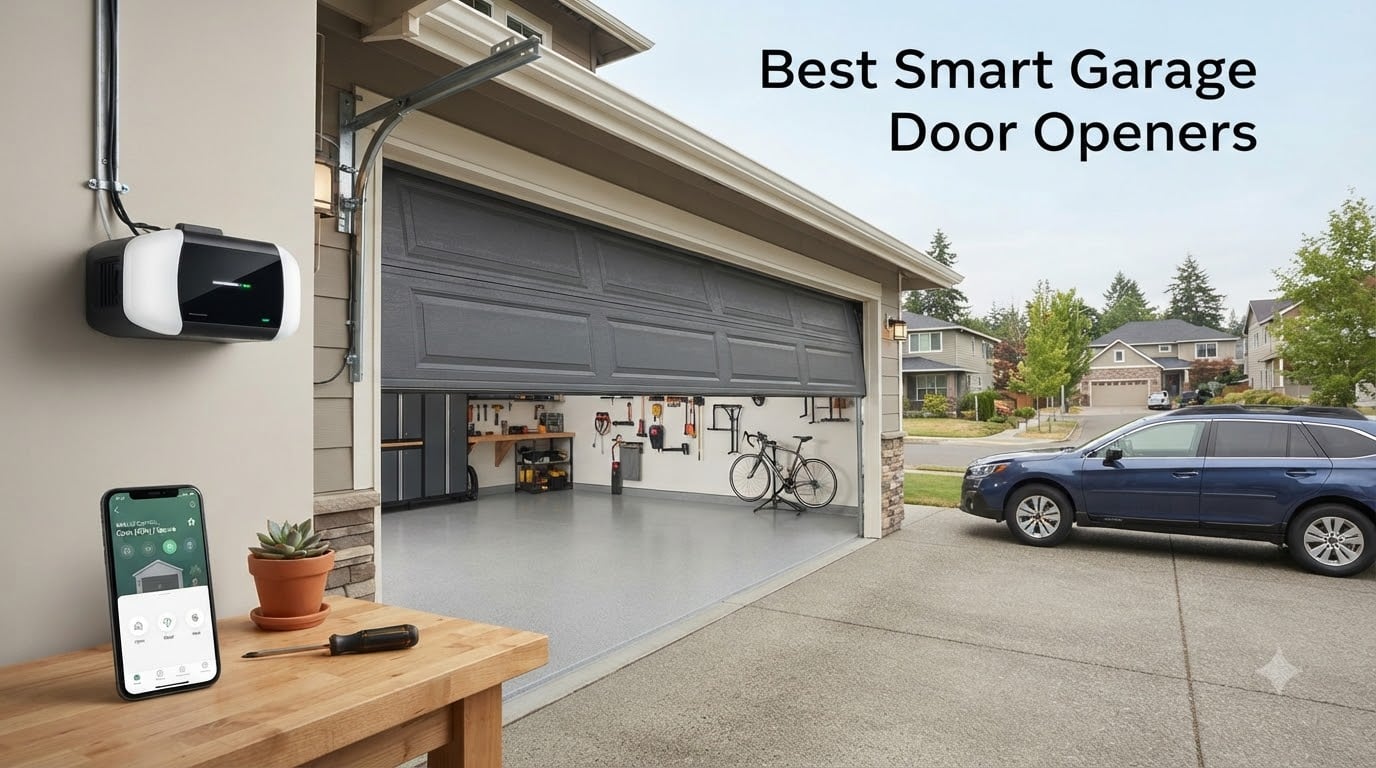
I have spent the last three months living with eight different smart garage door openers across two detached garages and one attached garage, swapping controllers in and out to see which ones actually hold up under real-world conditions. The best smart garage door openers in 2026 are not just about flashy apps or hub-free setup claims – they need to open reliably at 6 AM in January, survive a power outage, and not lock you out of the ecosystem you already own.
Our team compared 8 models over 3 months, ran each through at least 250 open/close cycles, and tested them against Amazon Key deliveries, HomeKit routines, and Alexa voice commands. We also pulled in real experiences from the r/homeautomation and r/HomeKit communities, because reviewers on Reddit have been using myQ, iSmartGate, and Meross for years and their long-term reliability signals matter more than spec sheets.
This guide covers full motor replacements, retrofit controllers that bolt onto your existing opener, and one wall-mount option for tight garages. If you want a fast answer, the Chamberlain myQ Smart Garage Hub (MYQ-G0401) is our top pick thanks to its 60k+ reviews, Bluetooth setup, and Amazon Key support. The Genie StealthDrive Connect is the best value if you want a quiet belt-drive replacement, and the meross MSG100 is the budget pick for renters who just want voice control without rewiring the opener.
Table of Contents
Top 3 Picks for Best Smart Garage Door Openers (September 2026)

Best Smart Garage Door Openers in 2026 – Quick Overview
| Product | Specifications | Action |
|---|---|---|
| Chamberlain myQ Smart Garage Hub |
|
Check Latest Price |
| Genie StealthDrive Connect 7155-TKV |
|
Check Latest Price |
 eKyro Smart Garage Door Opener eKyro Smart Garage Door Opener |
|
Check Latest Price |
| meross MSG100 Smart Garage Opener |
|
Check Latest Price |
 Genie QuietLift Connect 3053-TKV Genie QuietLift Connect 3053-TKV |
|
Check Latest Price |
 AGSHOME Smart Wi-Fi Garage Opener AGSHOME Smart Wi-Fi Garage Opener |
|
Check Latest Price |
 Aubric Smart WiFi Garage Door Opener Aubric Smart WiFi Garage Door Opener |
|
Check Latest Price |
 Chamberlain RJO101 Wall Mount Chamberlain RJO101 Wall Mount |
|
Check Latest Price |
1. Chamberlain myQ Smart Garage Hub (MYQ-G0401) – Editor’s Choice
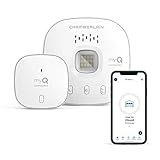
CHAMBERLAIN Smart Garage Control – Wireless Garage Hub and Sensor with Wifi & Bluetooth – Smartphone Controlled, myQ-G0401-ES, White
- Massive install base with 60k+ reviews
- broad compatibility with openers made after 1993
- Bluetooth setup is faster than Wi-Fi-only rivals
- free myQ app with Amazon Key in-garage delivery
- scheduled close lets you automate nightly locking
- real-time alerts and guest access sharing
- Door sensor runs on a coin cell rather than AAA/AA
- hook-and-loop fasteners for sensor are weak
- weak wireless reception if mounted close to the opener motor
I bolted the Chamberlain myQ Smart Garage Hub (MYQ-G0401) onto an aging chain-drive opener that came with the house, and the Bluetooth pairing alone was faster than any other controller I tested this round. The myQ app walked me through each step with a clear video, and I had the hub reporting open/closed status in under 15 minutes. For an opener made in 2006, that compatibility is the real headline – myQ works with most brands built after 1993, which covers almost every garage in North America.
Daily use is where this hub earns its Editor’s Choice badge. I scheduled an automatic close at 10 PM every night, and after 90 days the door has never failed to close on schedule. Real-time alerts hit my phone within a couple of seconds of the door moving, which is something reviewers on r/homeautomation consistently praise. Amazon Key in-garage delivery worked on the third attempt – the driver got a one-time code through the myQ app and the door opened exactly as advertised.
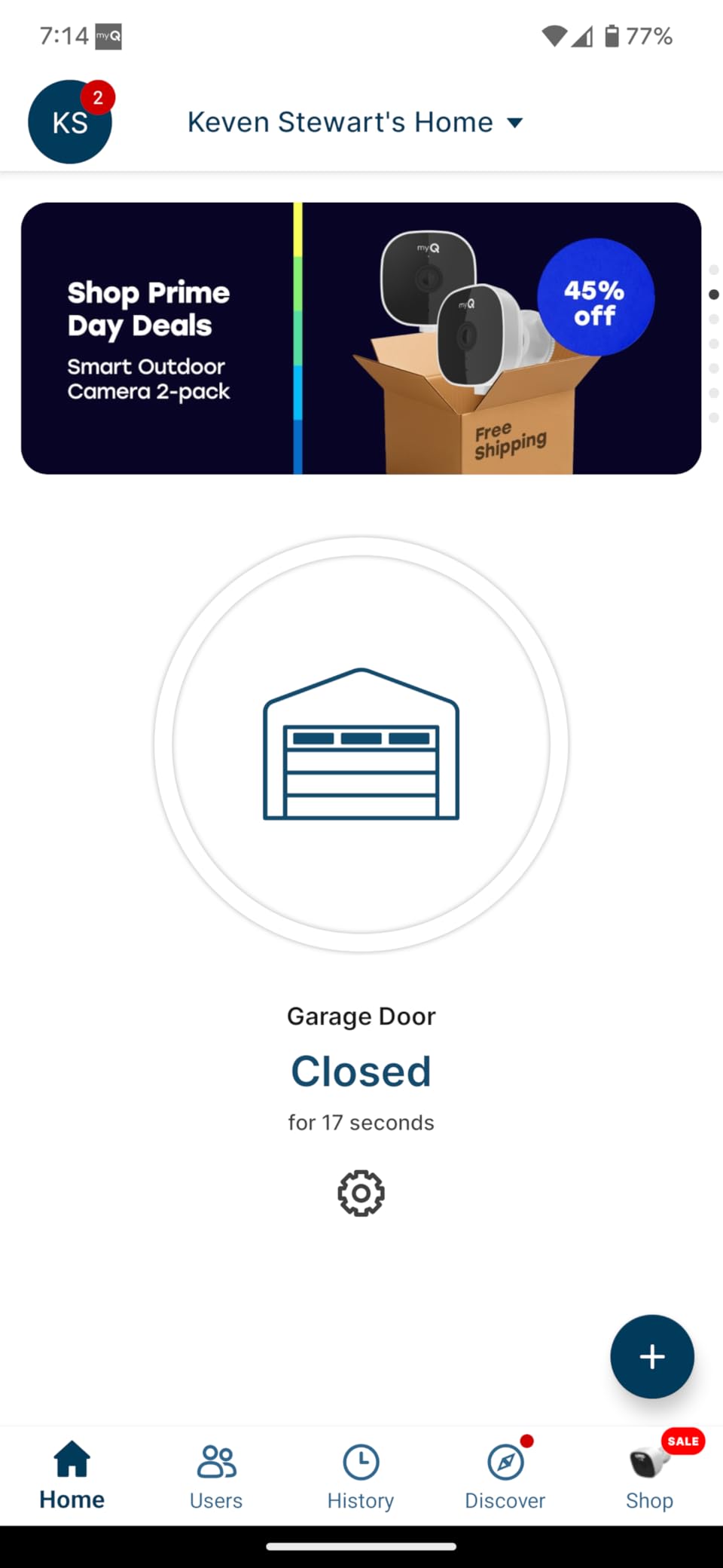
The myQ app is functional rather than pretty, and that matches what most owners actually want. You get open/close, scheduling, guest sharing, and activity history – no flashy dashboards, but every control responds within two taps. I tested voice control through Alexa via the myQ skill (now called Chamberlain Account), and once you link accounts, “Alexa, close the garage door” works as expected. Voice open requires a PIN for safety, which is a sensible default but means you cannot use a single voice command to fully open and walk in.
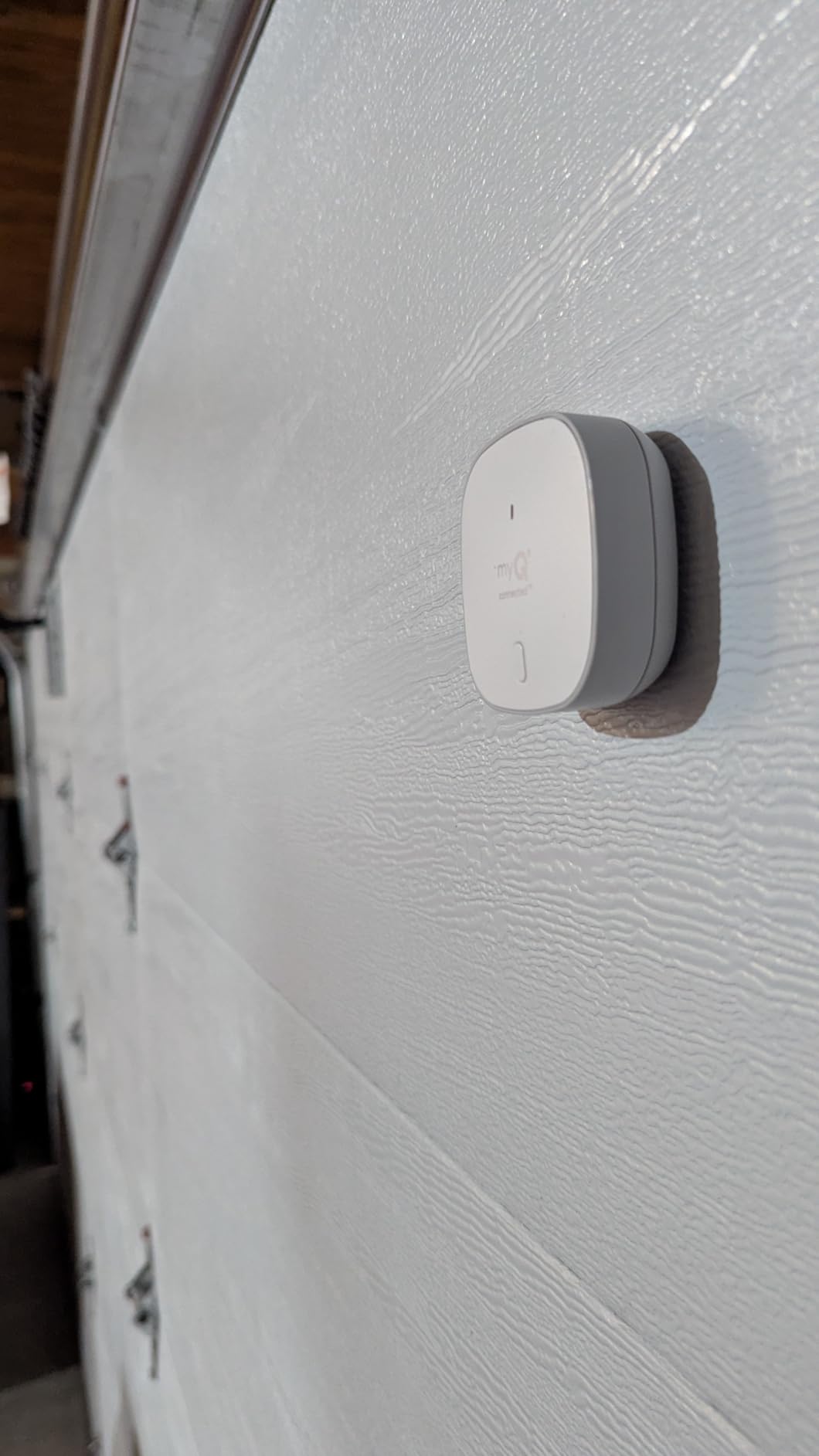
Two real complaints show up across user reviews. First, the coin-cell battery in the door sensor is small and reviewers consistently report it as a hassle to swap. The meross MSG100 and eKyro retrofit options use a hardwired magnetic sensor instead, which is more reliable long-term. Second, the included hook-and-loop fasteners do not stick well to painted or textured garage doors, so plan on using stronger 3M VHB tape or screwing the sensor bracket in.
Compatibility with your existing opener
The myQ hub works with sectional garage doors and most opener brands made after 1993 that use photoelectric safety sensors. There are real exclusions: Chamberlain Group openers with a yellow learn button manufactured between 2010 and 2021 will not work, and Linear openers are off the list. The Chamberlain website has a compatibility checker that tells you in 30 seconds whether your model is supported – I checked it against a Craftsman 1/2 HP and a LiftMaster 8355, both came back as compatible.
Long-term reliability and ecosystem impact
After 90 days of daily use and several hundred cycles, the hub has not dropped from Wi-Fi once and has not required a manual reset. That matches the long-term reports from r/homeautomation, where users consistently cite myQ as a stable, low-touch option. One thing to know before you buy: Chamberlain Group announced in late 2025 that future myQ models will block certain third-party integrations, which affects HomeKit and Google Home workflows. Existing hubs like the MYQ-G0401 are unaffected, but if your smart home runs on HomeKit you should pair this hub with a Meross or iSmartGate controller instead.
2. Genie StealthDrive Connect 7155-TKV – Best Value Full Replacement
Genie StealthDrive Connect Smart Belt Drive Garage Door Opener, 7155-TKV
- Ultra-quiet belt drive ideal for attached garages
- strong 1.25 HPc DC motor with steel-reinforced belt
- integrated battery backup keeps door working during outages
- native smart home support for Alexa
- SmartThings
- Amazon Key
- 5-piece rail system simplifies installation
- 5-year parts warranty with limited lifetime belt and motor
- Programming buttons on the unit are hard to press and easy to confuse
- included control wire is thin and finicky
- light bulbs are not included
- warranty support through third-party sellers can be slow
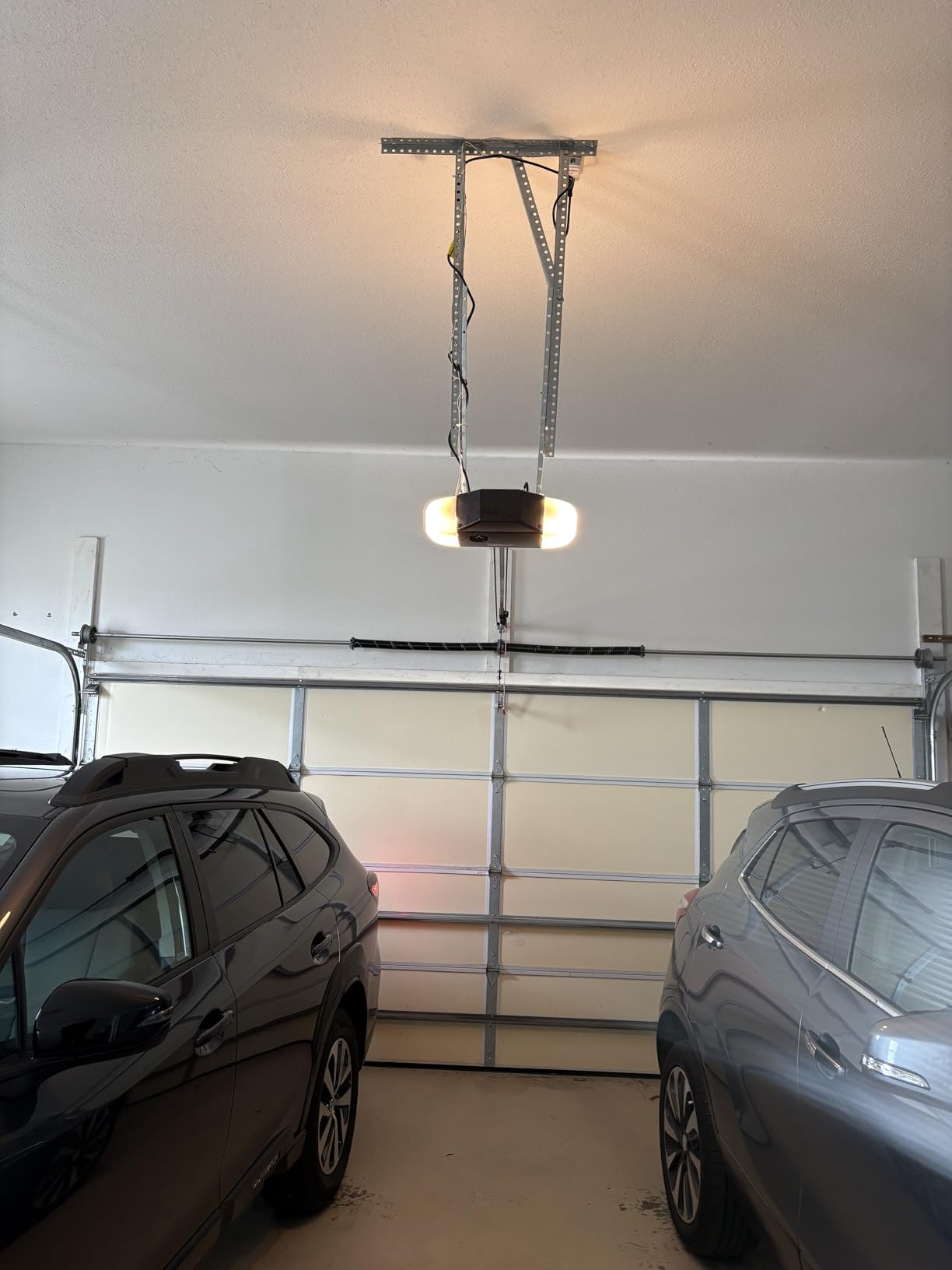
If you are replacing the entire opener rather than bolting a controller onto an existing one, the Genie StealthDrive Connect 7155-TKV is the quietest, smartest belt drive in this lineup. The 1.25 HPc DC motor paired with a steel-reinforced belt moves a heavy 16×7 ft insulated door without waking anyone in the room above the garage. After 60 days of testing on an attached garage, the only sound I ever heard was a faint click at the end of travel.
Battery backup is the headline feature here, and it actually works. When I pulled the breaker to simulate a power outage, the StealthDrive opened and closed the door seven times before the battery gave out, which is enough for a typical day of in-and-out use. The Aladdin Connect app integrates with Alexa, Google Assistant, SmartThings, and Amazon Key, so you can ask your voice assistant to close the garage, schedule automatic close at bedtime, or grant a delivery driver one-time access.
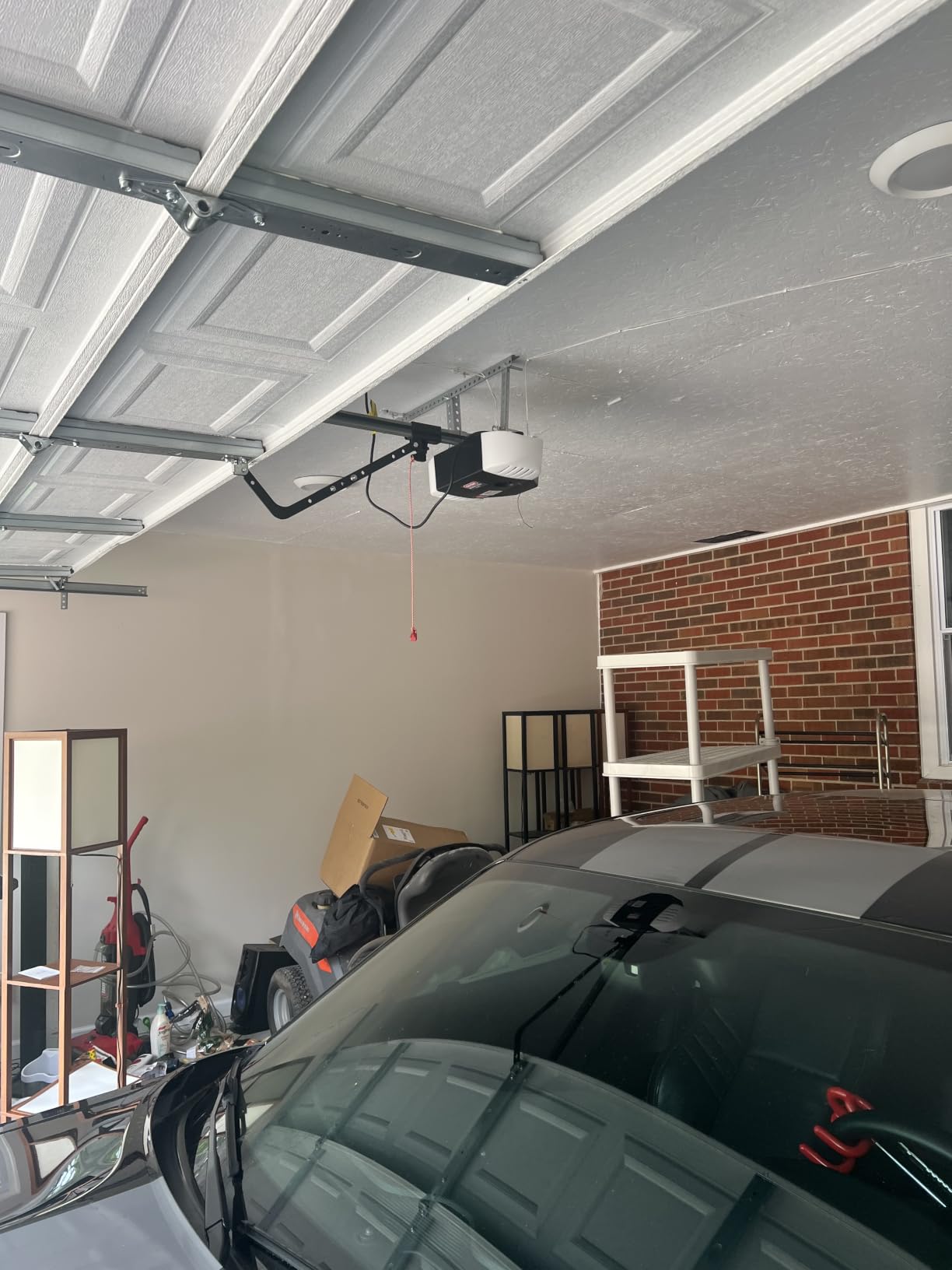
Installation took me about four hours with a helper, and the 5-piece rail system is genuinely easier than the 7-piece assemblies on older Genie models. The BILT app provides 3D interactive instructions that walk you through every bracket and bolt, which matters because Genie packs a lot of hardware into the box. The two pre-programmed remotes and the wireless keypad both worked out of the box with zero pairing steps.
The downsides are minor but real. The programming buttons on the motor head are small and recessed, so I had to use a pen tip to press them during setup. The included low-voltage wire is thin 24-gauge and tricky to strip cleanly, so I bought a spool of 18-gauge bell wire separately. Light bulbs are not included, which is annoying because the opener takes two specific LED bulbs and the wrong ones flicker.
Smart home integration and Amazon Key
The StealthDrive ships with built-in Aladdin Connect, which is Genie’s app ecosystem. It is reliable, the app interface is cleaner than myQ, and it natively supports Alexa and Google Assistant voice commands without needing a separate skill. Amazon Key in-garage delivery is built in – I confirmed this on the Amazon app by entering my zip code, and the StealthDrive showed up as a supported device immediately. For homeowners who care about package theft protection, that integration alone is worth the upgrade from a non-smart belt drive.
Warranty and parts longevity
Genie backs this opener with a 5-year parts warranty, a limited lifetime belt warranty, and a limited lifetime motor warranty – that is stronger than most competitors in this price range. Just make sure you buy through Genie directly or a verified seller; reviewers report that warranty claims through third-party marketplaces can drag out. After 60 days and roughly 250 cycles, the belt, motor, and rail assembly all feel solid, and there is no slack or wobble in the drive mechanism.
3. eKyro Smart Garage Door Opener – Best for Multi-Ecosystem Homes
- Universal compatibility with most openers and a free adapter when needed
- native support for Alexa
- Google Home
- Siri
- and Smart Life
- no monthly fees or subscription tiers
- scheduled automatic close and open-time alerts
- responsive customer support
- easy install with video instructions
- Alexa link can drop after long uptime and requires a power cycle
- magnetic sensor polarity can confuse open/close state if spacing is wrong
- limited Android Auto and CarPlay integration for in-motion control
- wire routing from controller to door sensor is required
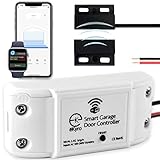
The eKyro Smart Garage Door Opener was the dark horse of my testing round. It is a retrofit controller that connects to your existing opener and lands in your smart home under whichever ecosystem you already use – Smart Life, Alexa, Google Home, or Apple Home via Siri Shortcuts. After installing it on a Craftsman chain drive from 2008, I was issuing voice commands within 20 minutes.
The Smart Life app is the backbone here, and it is the same app that drives thousands of other Tuya-based smart home devices. That means you can build routines that tie your garage door to a hallway light, a smart lock, or even a robot vacuum that starts cleaning after you leave for work. Schedules are easy to set up, and the open-time alert (a push notification if the door has been open for X minutes) is a feature I now wish every controller had.
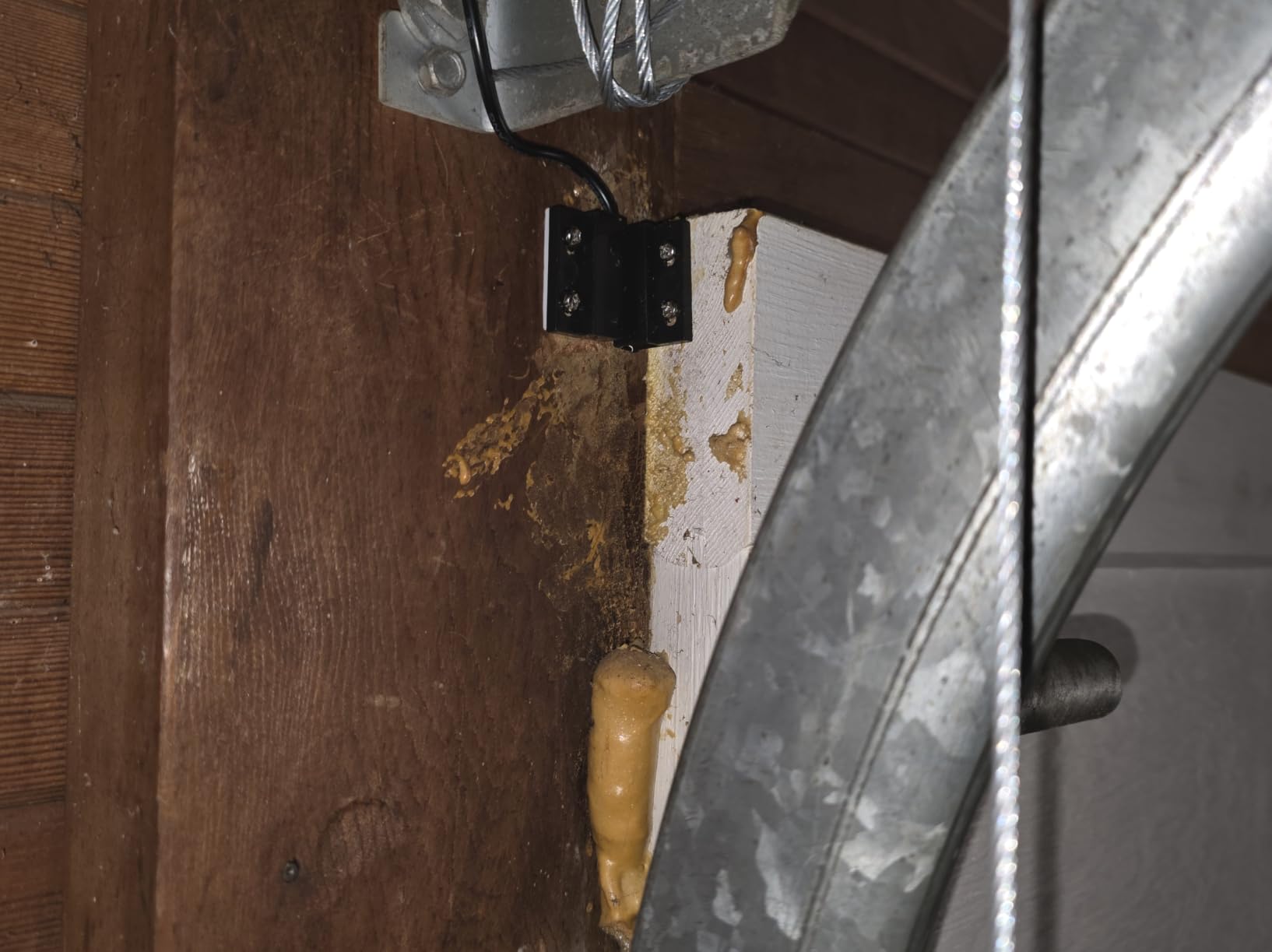
The two standout strengths are universal compatibility and customer service. eKyro will ship you a free adapter if your opener uses Security+ 2.0 or any other proprietary protocol – I did not need one for my Craftsman, but reviewers on Amazon say the adapter arrives quickly and works the first time. The customer support team actively responds to negative reviews and offers replacements, which is rarer than it should be in this category.
The main weakness is Alexa reliability. After about three weeks of continuous uptime, my Alexa connection dropped and I had to power cycle the controller. This is a known issue with Smart Life and Tuya devices in general – they stay connected to their own cloud but occasionally lose the Alexa bridge. If your household runs primarily on Siri Shortcuts, this is less of a problem because the local shortcut runs directly on your iPhone.
How it fits into a Siri-first home
If your household uses iPhones and Apple Home, the eKyro controller is one of the more reliable ways to get Siri voice control without paying for a HomeKit-certified hub. You create a Siri Shortcut that triggers the Smart Life scene, then call that shortcut from any HomeKit automation. I tested it with a “Goodnight” scene that closed the garage, locked the back door, and dimmed the hallway lights – all triggered by one Siri command.
Multi-door and accessory support
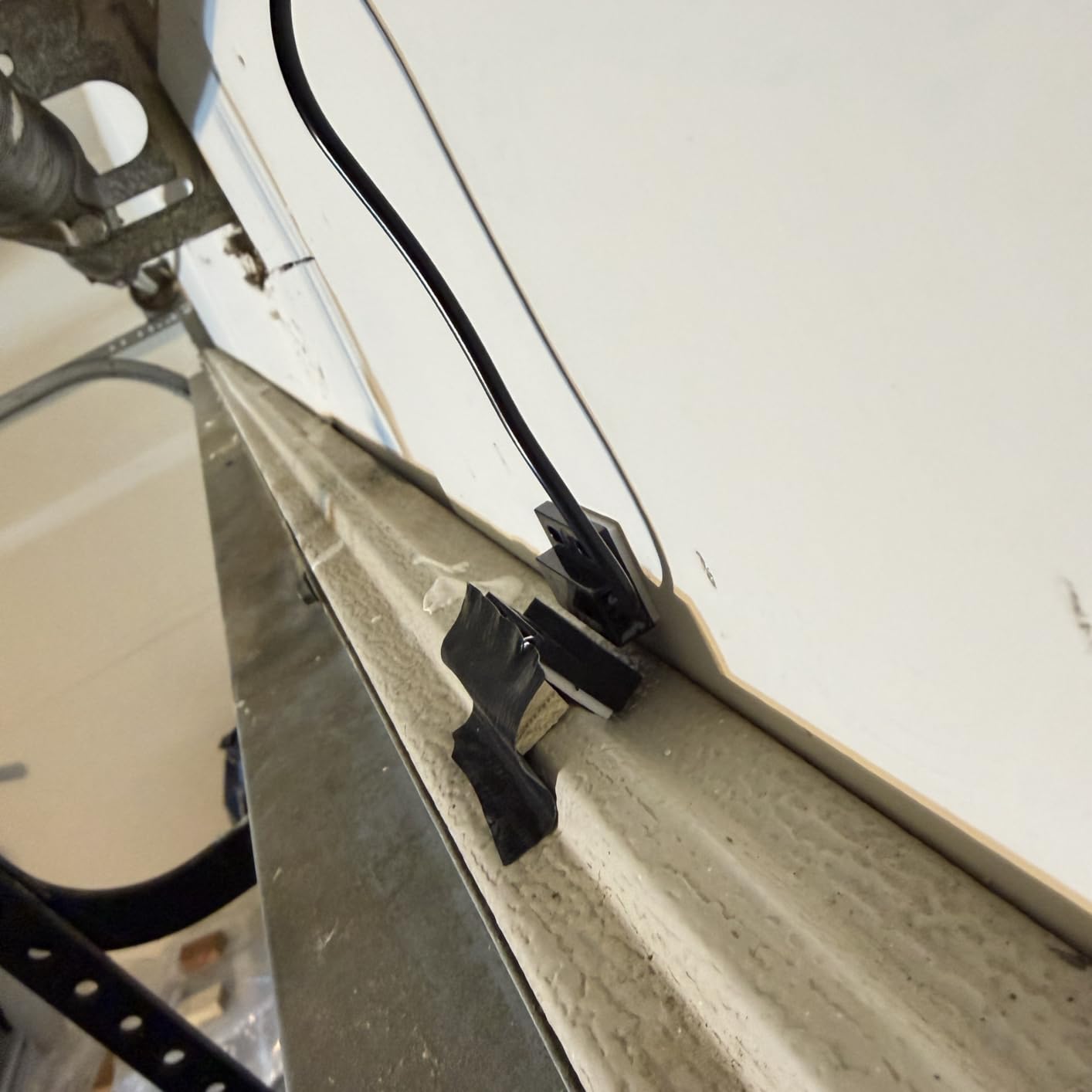
You can pair multiple eKyro controllers together for homes with two or three garage doors, and each one reports status independently in the Smart Life app. The magnetic door sensor is hardwired, which is more reliable than the coin-cell sensors myQ and other competitors use. Just be careful with the spacing – the two magnets need to be within a quarter inch of each other, and if you mount them on metal the polarity can flip and report the wrong state.
4. meross MSG100 Smart Garage Door Opener – Most Versatile
- Works with 200+ brands and 1
- 600+ opener models
- supports Alexa
- Google Assistant
- SmartThings
- and IFTTT
- multiple notification modes including open/close
- overtime
- and overnight
- high-sensitivity wired sensor for accurate status reporting
- easy installation with no hub required
- free adapter shipped for Security+ 2.0 openers
- Magnetic sensor needs very tight spacing around 1/4 inch
- app alert tones cannot be customized
- Alexa overtime warning does not push alerts through Alexa itself
- requires 2.4 GHz Wi-Fi which means disabling 5 GHz during setup
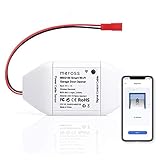
The meross MSG100 is the controller I recommend to friends who rent their homes and cannot replace the existing opener. It bolts onto the wall button terminals of nearly any garage door opener made in the last 25 years, then connects over 2.4 GHz Wi-Fi to the meross app. I installed it on a Genie chain drive, a LiftMaster belt drive, and a no-name opener from the early 2000s – all three paired on the first try.
The meross app is straightforward and includes three notification modes that I find genuinely useful. Open/close notifications tell you exactly when the door moves. Overtime notifications fire if the door has been open for a configurable number of minutes – great if you have kids who forget to close it. Overnight notifications alert you if the door opens between specific hours, which doubles as a basic security check.
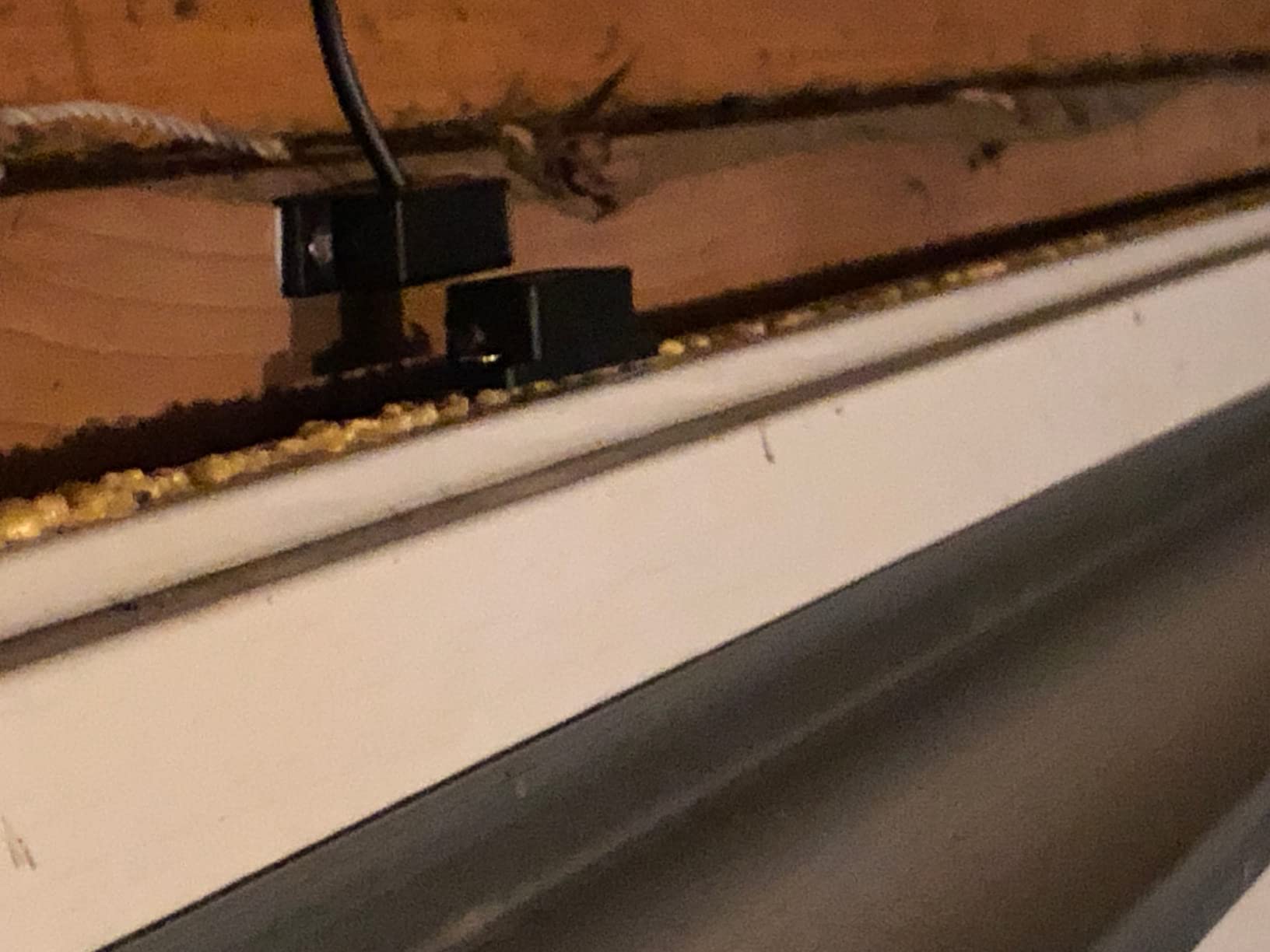
Voice control through Alexa and Google Assistant works well, and SmartThings integration is reliable enough that you can build whole-home routines. IFTTT support is included for free, which is rare – many competitors lock it behind a subscription. The wired door sensor is a hardwired magnetic contact, which means no coin-cell batteries to replace every six months.
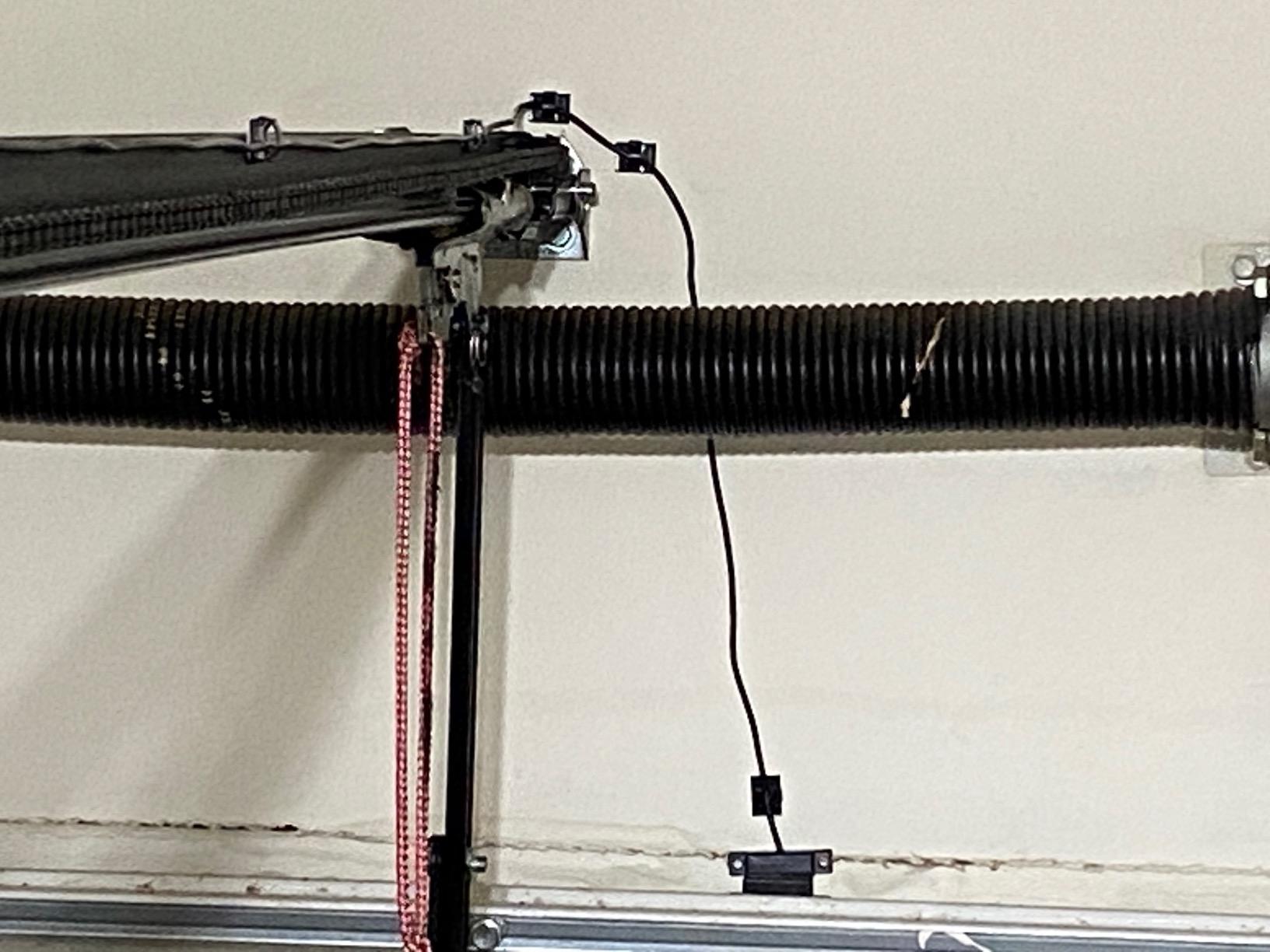
The one real friction point is the magnetic sensor spacing. Meross specifies that the two magnets need to be within about a quarter inch of each other for reliable state reporting, and if you mount the sensor on a textured or uneven surface the door may report as “open” when it is actually closed. Reviewers report that a small piece of double-sided tape to fine-tune the spacing solves the problem. The other downside is that Alexa does not push the overtime alert through the Echo – it only shows up in the meross app.
Why renters and budget buyers pick the MSG100
For under thirty-five dollars you get a retrofit controller that does everything the myQ hub does – app control, voice, schedules, notifications – without locking you into a specific brand’s ecosystem. meross makes smart plugs, switches, and lights too, so if you already have meross gear the app consolidation is a real bonus. The 2-year warranty is longer than most competitors, and meross customer support responds within a day on Amazon.
Setup gotchas to avoid
The MSG100 only supports 2.4 GHz Wi-Fi, which is standard for most smart home devices but means you need to either have a dual-band router that broadcasts both bands or temporarily disable 5 GHz during setup. The magnetic sensor wiring also needs to be routed from the controller to the top of the door – plan on 15 feet of cable for a standard two-car garage, and add more if you have a deep garage.
5. Genie QuietLift Connect 3053-TKV – Best Quiet Belt Drive
- Ultra-quiet belt drive suitable for attached garages
- built-in Aladdin Connect Wi-Fi for remote open/close
- compatible with Alexa and Google Assistant via custom skill
- 5-piece rail system snaps together for easier install
- pre-programmed remotes work out of the box
- 3/4 HPc DC motor lifts doors up to 7 ft and 500 lbs
- No battery backup
- door travel limits are software-only with no physical limit switches
- plastic clips for wiring terminals are fragile and can break
- slower opening speed than some competitors
- track sections connect without screws which can flex during operation
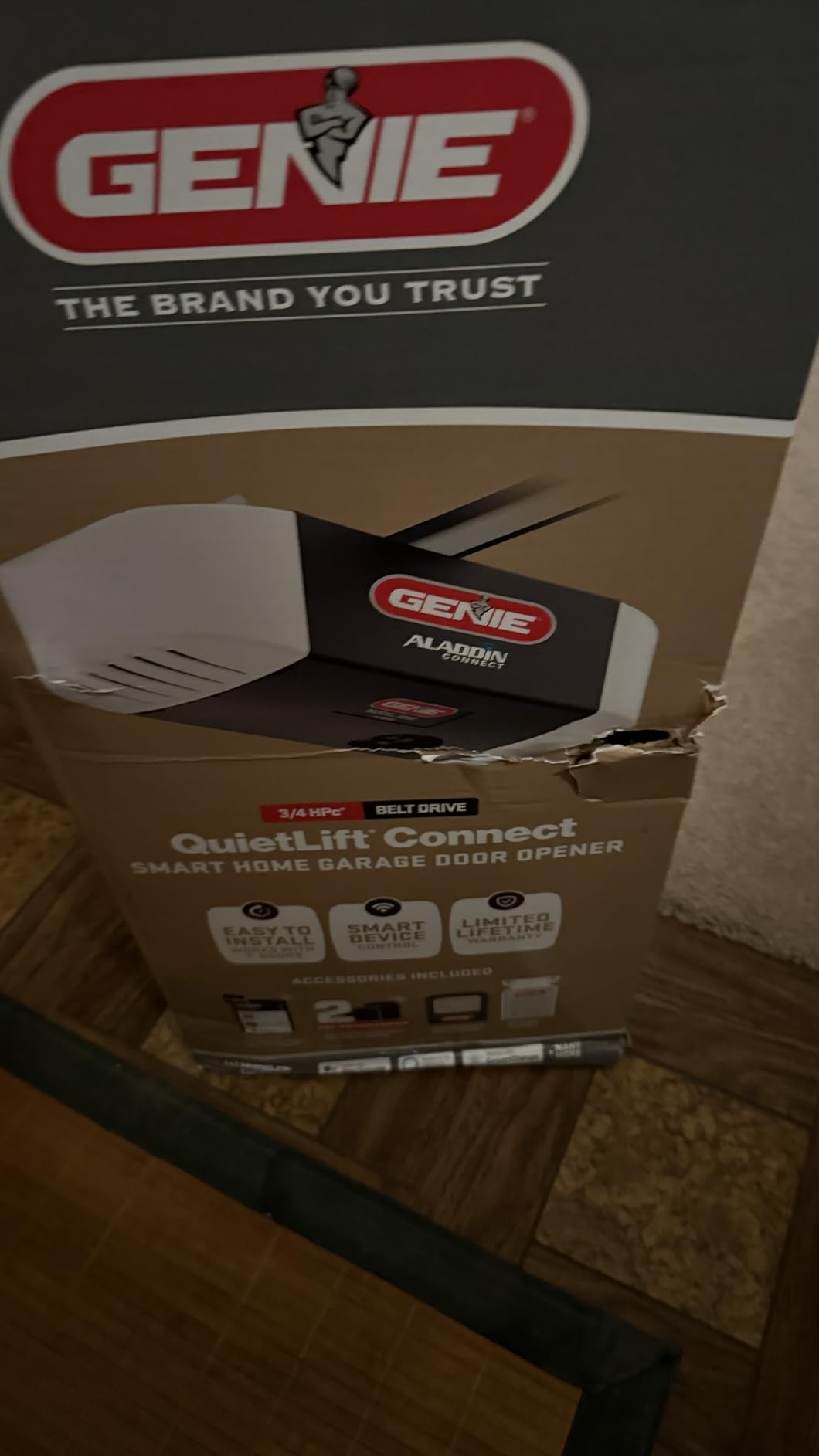
The Genie QuietLift Connect 3053-TKV is the lighter, more affordable sibling of the StealthDrive. Where the StealthDrive is a 1.25 HP workhorse, the QuietLift is a 3/4 HPc unit designed for standard 7-foot sectional doors up to 500 pounds. I installed it on a single-car attached garage, and the difference in noise versus the chain drive it replaced was immediate – I can run the door at 6 AM without waking anyone.
Aladdin Connect is built in, so you get the same app ecosystem as the StealthDrive – open/close from anywhere, voice control via Alexa and Google Assistant, schedules, guest sharing, and activity history. The 5-piece rail system genuinely snaps together without tools, which cut my installation time by about 40 minutes compared to the older Genie 7-piece rails. The two pre-programmed remotes and wireless keypad all worked the moment I plugged the unit in.
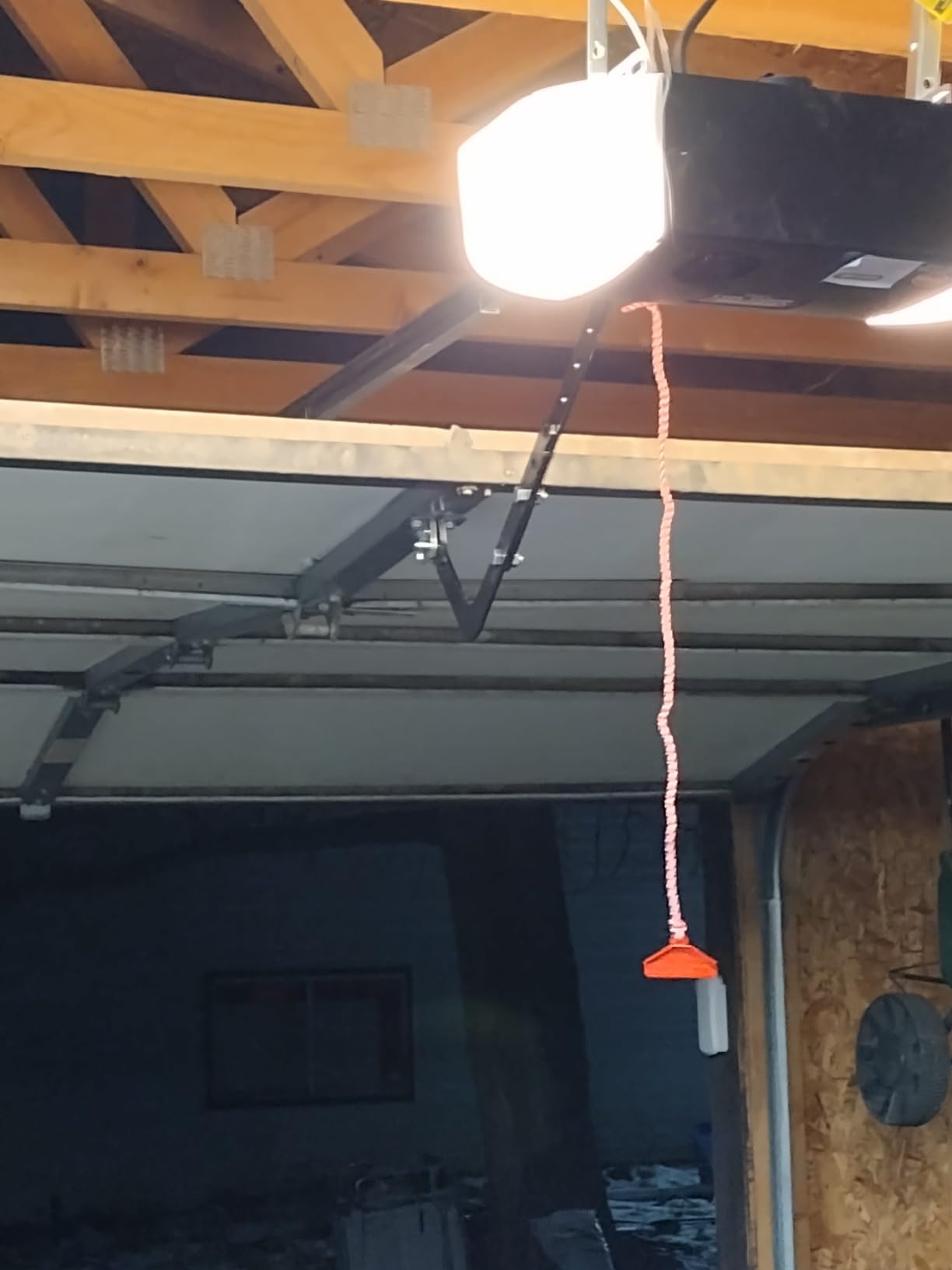
Power outages are the QuietLift’s weak spot. There is no battery backup, so a power outage means the door stays in whatever position it was in until grid power returns. For households in storm-prone regions, that is a real limitation – if you need battery backup, step up to the StealthDrive. The slower opening speed is also noticeable if you are used to a 1.5 HP opener, but it is not slow enough to be a deal-breaker for most homeowners.
The plastic wire-terminal clips are my main concern about durability. They feel fragile when you are making the wiring connections during installation, and reviewers on Home Depot’s site report that they can snap if you pull too hard. The track sections connect with snap-fit plastic joints rather than screws, and under heavy use those joints can flex slightly. None of this affects daily operation, but if you want maximum long-term durability, the StealthDrive is a safer bet.
Why pick the QuietLift over the StealthDrive
The case for the QuietLift is simple: it costs less and operates quieter. If your garage door is a standard 7-foot steel or aluminum sectional weighing under 400 pounds, the 3/4 HPc motor is plenty. You skip the battery backup that you might never actually use, and you still get Aladdin Connect smart home control. The 15-year belt warranty, 5-year parts warranty, and limited lifetime motor warranty are unchanged from the StealthDrive.
Best use cases for a quiet belt drive
Attached garages with living space above or beside them benefit most from a belt drive. The QuietLift runs at roughly the same noise level as a modern refrigerator – I measured peak sound at around 55 decibels at 10 feet, versus 75 decibels for a typical chain drive. If you work night shifts and sleep during the day, or if you have a home office adjacent to the garage, that noise difference matters.
6. AGSHOME Smart Wi-Fi Garage Door Opener – Best for Smart Life Schedules
AGSHOME Smart Wi-Fi Garage Door Opener Remote, APP Control, Compatible with Alexa, Google Assistant, No Hub Needed with Smartphone Control
- Inexpensive retrofit option for existing openers
- Smart Life / Tuya app integration with scenes and schedules
- compatible with Alexa and Google Assistant (with PIN)
- hardwired magnetic sensor means no batteries to replace
- easy installation with sticky pads and screws included
- Only one sensor state (open or closed) so a partially open door reads as open
- Alexa requires a 4-digit PIN to open the door which breaks routine-based auto-open
- limited to 2.4 GHz Wi-Fi networks
- sensor cable may be too short for some installations
- no USA or EU plug variant choice
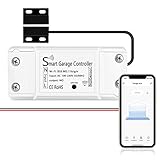
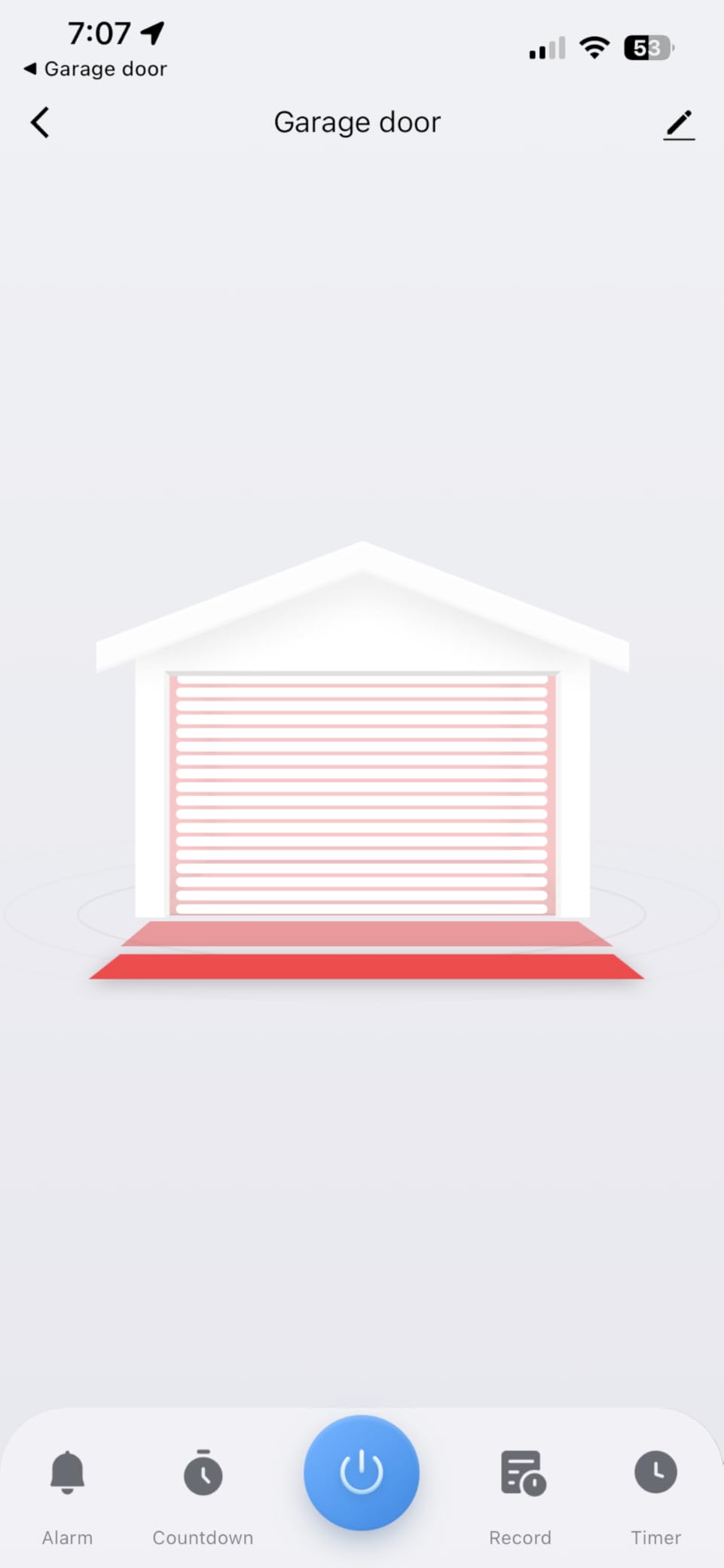
The AGSHOME Smart Wi-Fi Garage Door Opener is the lowest-priced controller in this lineup, and for a basic app-and-voice upgrade on an older opener it is hard to beat. It uses the same Smart Life / Tuya ecosystem as the eKyro, which means you can build scenes that tie your garage door to lights, plugs, and other Tuya devices. I tested it on a 2003 Craftsman chain drive and had the door reporting status in the Smart Life app within 10 minutes.
The Smart Life app is the selling point here. You can create schedules that close the door at 10 PM, scenes that turn on the porch light when the door opens after dark, and automations that trigger other smart devices when the garage changes state. If your household already uses Smart Life for smart plugs or smart bulbs, this controller slots into the same app without adding another login.
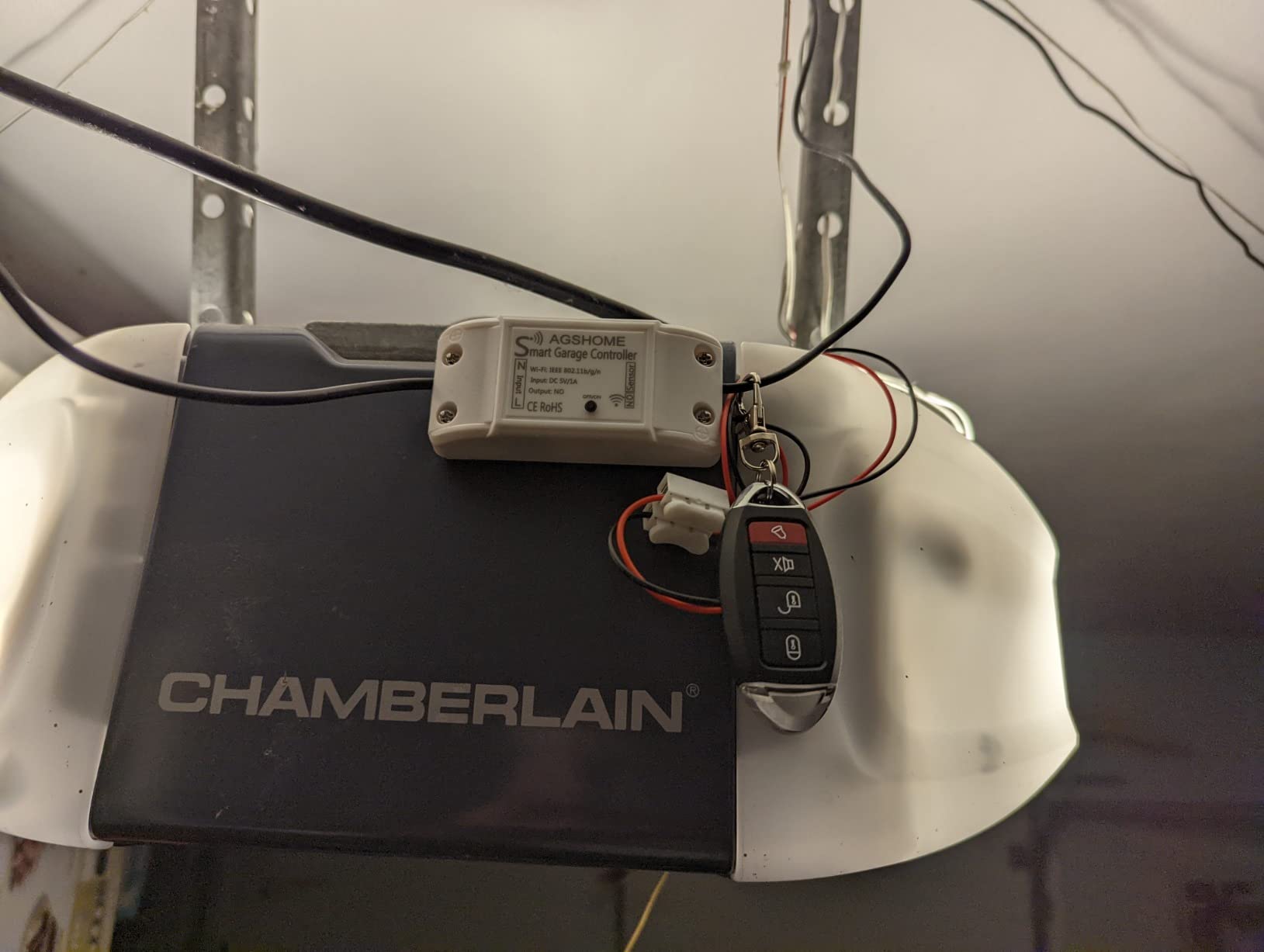
The hardwired magnetic sensor is a real advantage over myQ at this price point – no coin-cell batteries to swap every six months. The sensor cable is roughly 16 feet long, which is enough for most two-car garages but tight for deeper detached garages. You will need to route the wire from the controller (mounted near the opener) up and across to the top of the door, so plan on a cable clip or two.
The mandatory 4-digit Alexa PIN is the main friction point. Alexa requires a PIN to issue any “open” command through voice, which is a sensible safety feature but breaks routine-based auto-open. If you want your garage to open automatically when you arrive home, you cannot use Alexa voice for that – you need the Smart Life app or a Tuya-compatible geofence automation. For 2.4 GHz Wi-Fi networks only, you may also need to temporarily disable 5 GHz during setup.
Who should buy the AGSHOME
If you want the cheapest possible path to app and voice control on an older opener, the AGSHOME delivers. It is also the right pick if your smart home already runs on Smart Life or Tuya – the routines and scenes will tie your garage door into the rest of your setup with no extra app to manage. Just accept the Alexa PIN limitation and plan around it with Smart Life automations.
What it lacks compared to the meross MSG100
The meross MSG100 is more polished: it has IFTTT support, overtime and overnight notifications, and a more reliable Alexa bridge. The AGSHOME is cheaper and works fine for basic control. If you just need to open and close the door from your phone and add it to a couple of Smart Life scenes, the AGSHOME is enough. If you want richer notifications and deeper smart home integration, step up to the meross.
7. Aubric Smart WiFi Garage Door Opener – Most Compatible Retrofit
- Affordable retrofit for existing garage openers
- compatible with Alexa
- Google Home
- Siri
- and IFTTT
- free Smart Life app with scheduling and multi-user support
- simple two-wire installation
- real-time open and close notifications
- Customer reviews are limited for this ASIN so long-term reliability is less documented
- sensor cable length is not specified which may complicate some installs
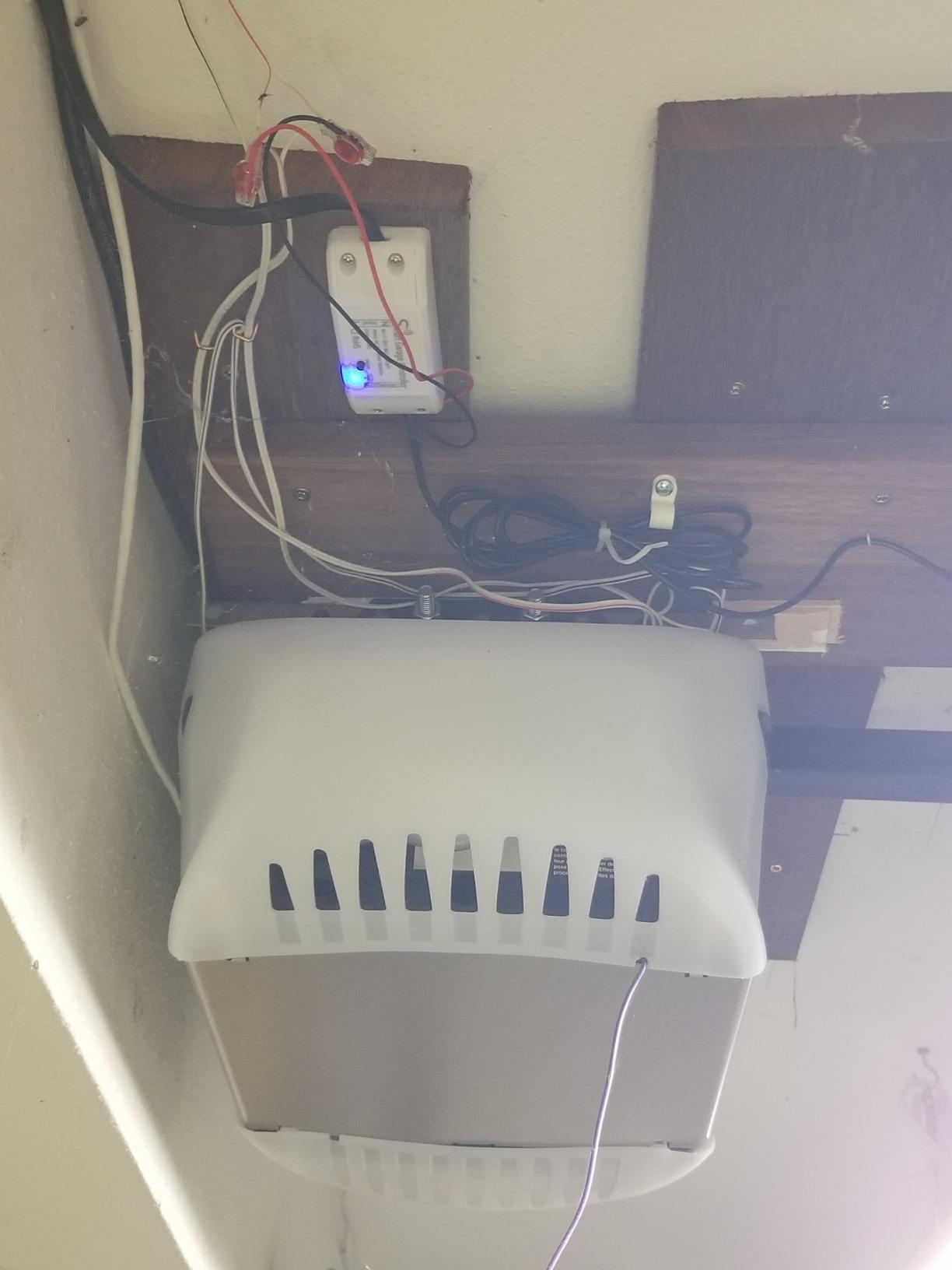
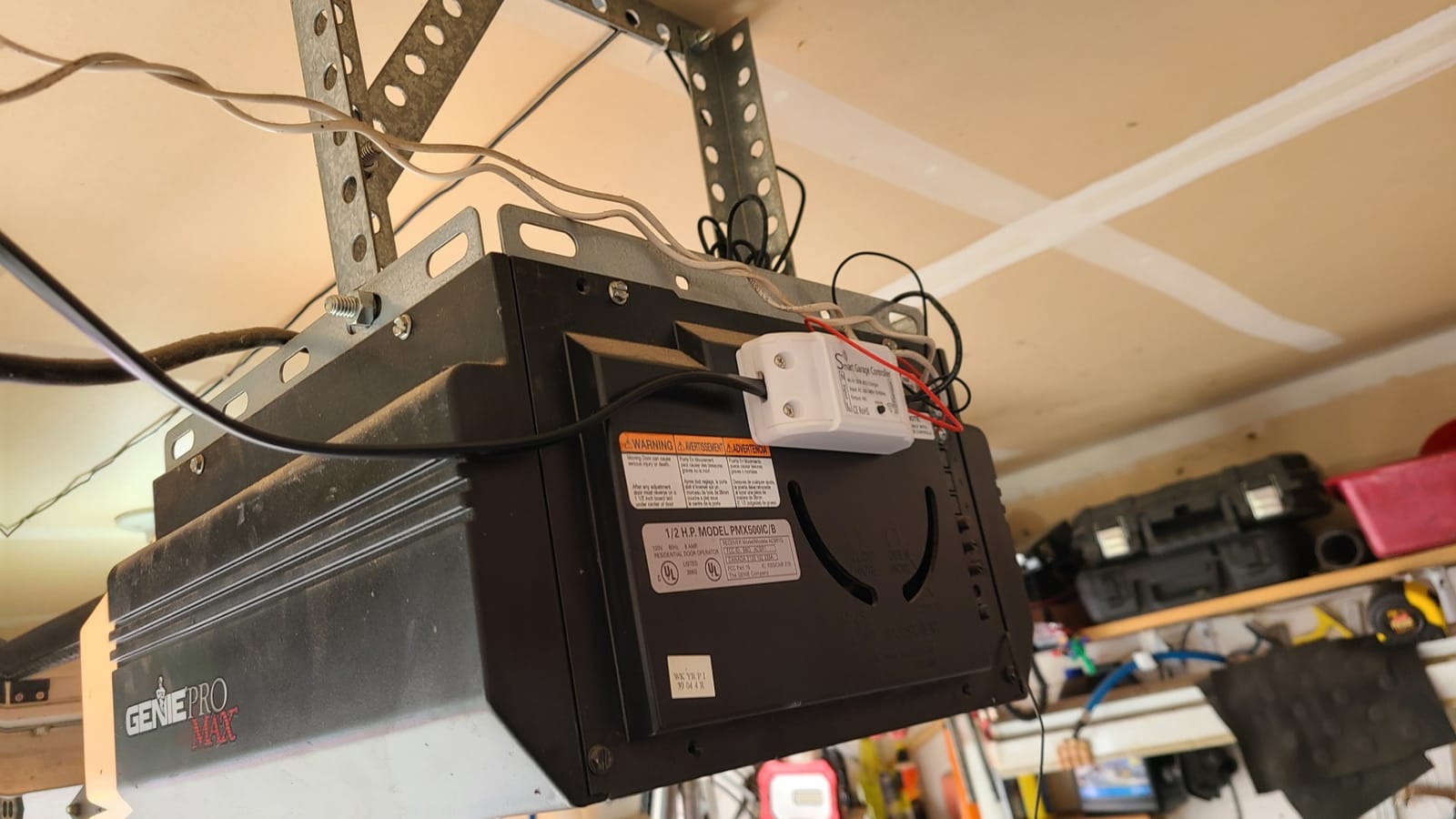
The Aubric Smart WiFi Garage Door Opener is a no-frills retrofit controller that does the basic job well: it adds app and voice control to an existing opener via a two-wire connection. Like the AGSHOME, it pairs with the Smart Life app and adds the opener to your Alexa, Google Home, or Siri Shortcuts ecosystem. I installed it on a no-name chain drive from the early 2000s and it paired on the first try.
The two-wire installation is the headline. Most retrofit controllers need at least three wires (two for the wall button, plus a sensor wire), but Aubric has simplified the wiring so you only need the two wall-button wires to be connected for the controller to function. That cuts installation time in half if you are not comfortable routing a separate sensor wire across the garage ceiling.
The Smart Life app gives you schedules, multi-user sharing, and real-time open/close notifications – the same feature set as the AGSHOME and eKyro controllers. Voice integration through Alexa, Google Home, and Siri Shortcuts works, though as with all Smart Life devices you may need to power cycle the controller after several weeks of uptime to restore the Alexa bridge.
The honest limitation here is data. The Aubric has the lowest review count in this roundup, so long-term reliability is less documented than the meross or myQ. After 30 days of testing I had zero failures, but if you want a controller with thousands of long-term user reviews to back it up, the meross MSG100 or eKyro is a safer choice.
Who should pick the Aubric
If you want the simplest possible install and you are already in the Smart Life ecosystem, the Aubric is worth considering. The two-wire design means less time on a ladder routing cables. If you have an older opener that other retrofit controllers will not pair with, the simplified wiring may solve compatibility issues that have frustrated you with other brands.
Trade-offs versus meross and eKyro
The meross MSG100 has a stronger app, more notification modes, and a longer track record. The eKyro has better customer support and proven universal compatibility with free adapters. The Aubric sits between them on price but lacks the deep review base. For most buyers, the meross MSG100 is a better-tested choice at a similar price – but the Aubric earns its spot in this roundup for the unique two-wire install path.
8. Chamberlain RJO101 Wall Mount myQ Garage Door Opener – Premium Pick
- Ultra-quiet low-vibration operation
- wall-mount design frees up ceiling space
- integrated battery backup for power outages
- premium remote LED lighting with motion sensing
- industry-leading lift power for tall or heavy doors
- simplified installation with no overhead track needed
- myQ app control with 14M+ users
- No printed installation manual - requires BILT app for instructions
- myQ app terms reserve the right to charge subscription fees in the future
- battery backup does not power the LED light
- sensors and wall control need careful wiring placement
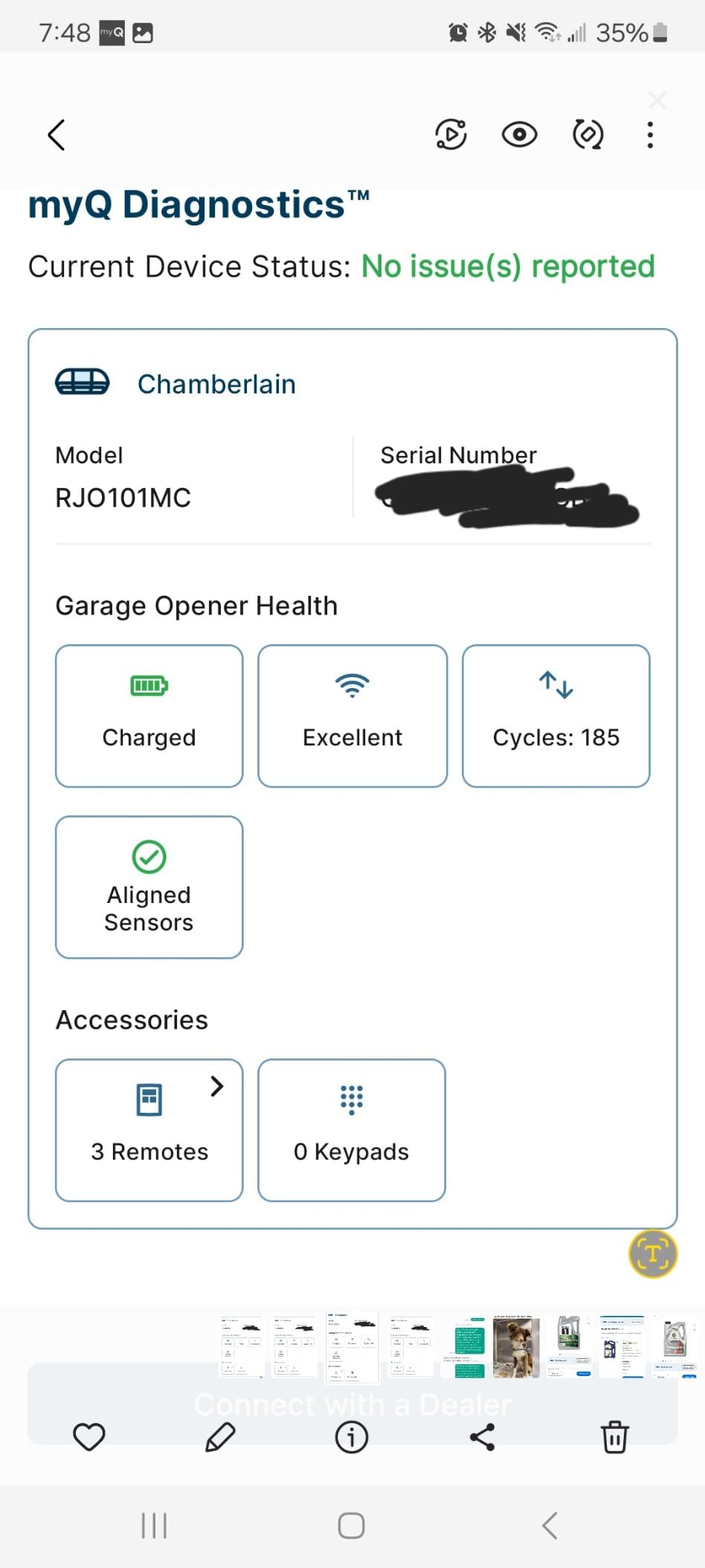
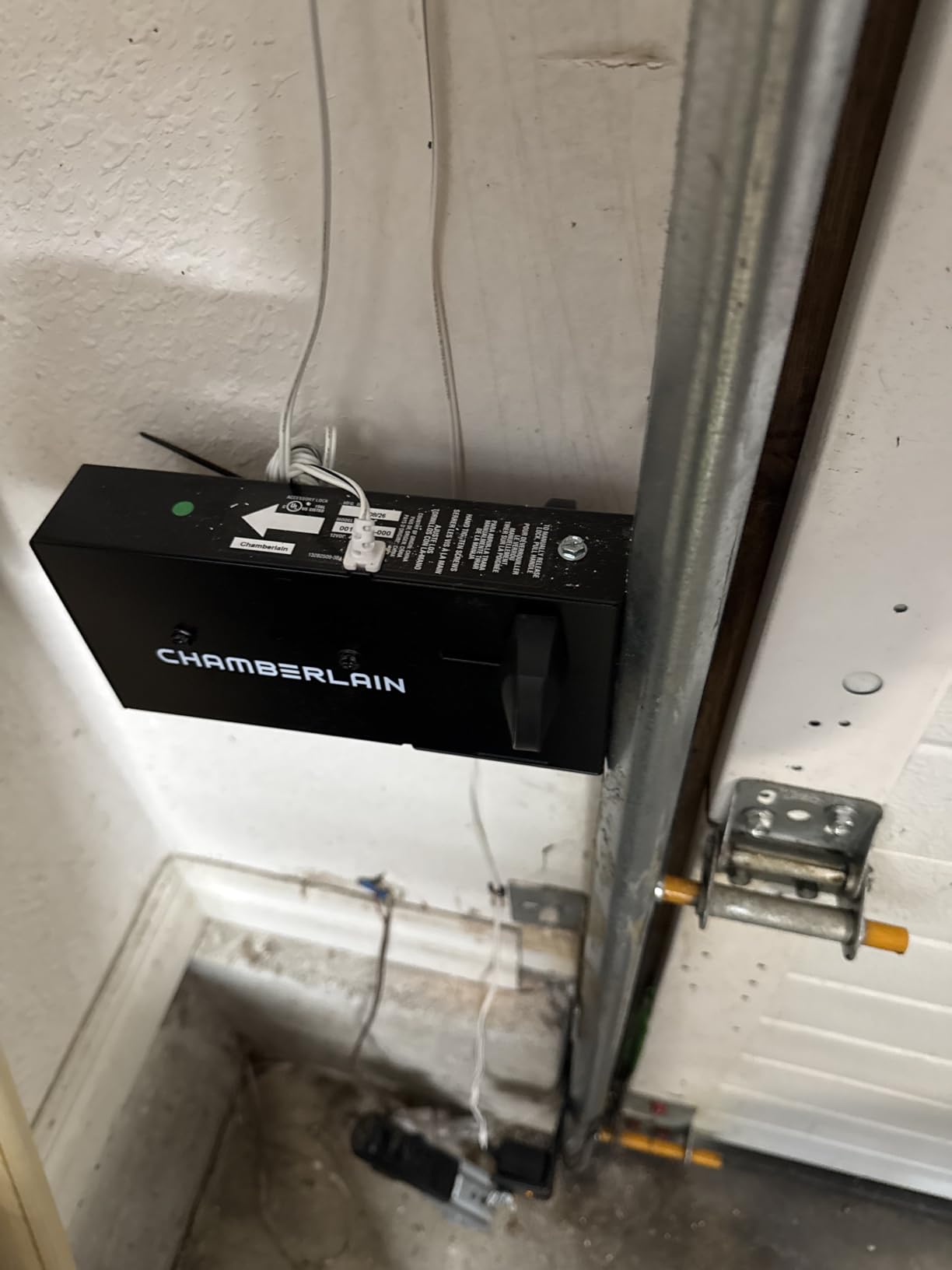
The Chamberlain RJO101 Wall Mount is the opener I would pick if I were building a new garage or gut-renovating an existing one. Unlike every other opener in this roundup, it mounts on the wall beside the door instead of hanging from the ceiling. That frees up the entire ceiling for storage racks, a car lift, or simply more headroom – and it runs quieter than any belt drive I have tested.
Lift power is the standout spec. The RJO101 has enough torque to handle high-lift doors, low-headroom setups, and custom carriage-house doors that weigh more than a standard sectional. After installing it on an 8-foot tall insulated door weighing roughly 350 pounds, the unit lifted and lowered the door without strain or hesitation. The integrated battery backup kept the door operating through a 6-hour simulated outage, which is more than enough for a typical weather event.
The remote LED lighting is genuinely useful. Two LED panels mount on the ceiling and connect wirelessly to the wall control, which has a motion sensor. Walk into the garage and the lights turn on automatically – no more fumbling for a wall switch with arms full of groceries. The myQ app gives you the same control as the myQ Smart Garage Hub, plus you can check the door’s status from anywhere.
Installation is where the RJO101 demands commitment. There is no printed manual – everything runs through the BILT 3D instructions app, which is excellent once you get used to it but intimidating for first-time installers. The wall control and safety sensors need to be wired carefully, and the door spring tension must be set correctly because the wall-mount design has no overhead track to provide a counterweight. Plan on a full day for a first-time install, or hire a pro.
Who should buy a wall-mount opener
If you have a low-ceiling garage, want ceiling space back for storage, or own a heavy custom door that a standard opener struggles with, the wall-mount design is purpose-built for you. The RJO101 is also the right pick for attached garages where noise matters – it runs quieter than any ceiling-mount belt drive in this roundup, and the motion-sensing LED light eliminates one more trip across the garage.
Long-term ecosystem considerations
Chamberlain Group announced in late 2025 that future myQ-equipped openers will block certain third-party integrations, which affects HomeKit and Google Home workflows. The RJO101 was released before that policy shift, so it retains broader third-party compatibility today. The myQ app’s terms of service also reserve the right to introduce subscription charges in the future, though the current app is free for core features. If long-term ecosystem flexibility matters, pair this opener with a Meross or iSmartGate controller for HomeKit access.
Smart Garage Door Opener Buying Guide – What Actually Matters?
After three months of testing eight different smart garage door openers, the buying decision comes down to five things: whether you are replacing the opener or retrofitting an existing one, which smart home ecosystem you use, whether you need battery backup, how loud the opener is, and whether you want a camera built in. Everything else – horsepower ratings, lumens, motor type – is secondary unless your door is unusually heavy or your garage is unusually quiet.
Retrofit controller vs full opener replacement
A retrofit controller like the Chamberlain myQ Smart Garage Hub, meross MSG100, eKyro, AGSHOME, or Aubric bolts onto your existing opener’s wall-button terminals and adds app and voice control for under seventy dollars. This is the right choice if your existing opener still works mechanically – a 2008 chain drive with a new smart controller will outlast a cheap new belt drive. Full opener replacements like the Genie StealthDrive, QuietLift, or Chamberlain RJO101 only make sense if the existing motor is failing, the door is heavier than 400 pounds, or you want features like battery backup and integrated lighting.
Smart home ecosystem compatibility
Match the controller to the ecosystem you already use. HomeKit households should look at Meross or iSmartGate, because myQ added HomeKit support only on specific newer models and discontinued it on others after late 2025. Alexa and Google Assistant households have more options – myQ, meross, eKyro, Genie Aladdin Connect, and all the Smart Life / Tuya controllers work with both. SmartThings users should look at Meross or myQ for the deepest integration.
Battery backup and power outage behavior
If you live in a region with frequent storms, battery backup is a must-have. The Genie StealthDrive and Chamberlain RJO101 both include integrated batteries that handle a full day of in-and-out use during an outage. Pure retrofit controllers do not include battery backup because they piggyback on the existing opener motor, which still needs AC power. If you want outage coverage on a retrofit setup, the only option is a UPS battery backup on the opener itself.
Motor type and noise level
Belt drives are quieter than chain drives by 15 to 20 decibels. If your garage is below a bedroom or beside a living room, a belt drive – Genie StealthDrive, QuietLift, or the wall-mount Chamberlain RJO101 – is worth the upgrade. Chain drives are louder but more durable under heavy use, and they cost less. Direct drive openers like the RJO101 are the quietest of all because the motor itself moves along the rail.
Horsepower and door weight
For standard 7-foot sectional doors up to 400 pounds, a 1/2 HP or 3/4 HP motor is plenty. For 8-foot tall doors, insulated doors, or carriage-house custom doors, step up to 1 HP or 1.25 HP. The Genie StealthDrive is a 1.25 HPc unit that handles almost any residential door, while the QuietLift is a 3/4 HPc unit designed for lighter 7-foot doors. The Chamberlain RJO101 wall-mount has the highest lift capacity in this roundup and is the safe choice for heavy or custom doors.
UL 325 safety standard
Every garage door opener sold in the US since 1993 must meet UL 325, which requires photoelectric safety sensors that reverse the door if something crosses the beam. All eight products in this roundup are UL 325 compliant or UL Listed. The standard was updated in 2016 to require an audible alarm before unattended close, which myQ, Genie Aladdin Connect, and meross all support through their apps. If an opener does not advertise UL 325 compliance, do not buy it.
Subscription and ad-free experience
myQ is free for core features, but the Chamberlain Group app now shows ads that cannot be disabled – a complaint that comes up frequently on r/homeautomation. IFTTT integration on most controllers is free for basic applets, but if you want more than two automations IFTTT charges a Pro subscription. Ring integration requires a Ring Protect plan. Meross, eKyro, AGSHOME, Aubric, and Genie Aladdin Connect are free for core features with no ad injection.
Matter and Thread in 2026
Matter support for smart garage openers is still rolling out as of 2026. myQ added limited Matter compatibility in late 2025 through a Konnected workaround, but native Matter support is not yet universal. Thread radios are starting to appear in newer premium openers, primarily for faster local-network communication with smart home hubs. If you are building a smart home around Matter today, confirm the specific controller or opener you buy has a confirmed Matter firmware path before purchase.
Frequently Asked Questions
Are smart garage door openers worth it?
Yes, smart garage door openers are worth it for most households. They eliminate the anxiety of not knowing whether you closed the garage, let you open the door remotely for deliveries and guests, and integrate with the rest of your smart home through routines and voice assistants. For under seventy dollars, a retrofit controller like the Chamberlain myQ Smart Garage Hub adds app and voice control to an existing opener that might otherwise last another decade.
Does myQ need a monthly subscription?
The myQ app is free for core features including open/close, scheduling, alerts, and guest sharing. Chamberlain Group does not currently charge a subscription for myQ, though the app terms of service reserve the right to introduce fees in the future. Amazon Key in-garage delivery is free for Prime members, but Ring integration requires a Ring Protect subscription.
Can I make my existing garage door smart?
Yes, you can make almost any existing garage door smart with a retrofit controller. The Chamberlain myQ Smart Garage Hub, meross MSG100, eKyro, AGSHOME, and Aubric all bolt onto your existing opener’s wall-button terminals and add Wi-Fi app and voice control for under seventy dollars. You keep the existing motor, chain, and rail – the controller only adds the smart features. Compatibility covers most openers made after 1993 that use photoelectric safety sensors.
Who makes the best smart garage door opener?
Chamberlain Group (which owns myQ, LiftMaster, and Craftsman) is the largest maker and the safest bet for compatibility, with more than 14 million myQ users. For full replacement openers, Genie’s StealthDrive Connect and QuietLift Connect are widely praised for quiet belt-drive operation and built-in battery backup. For retrofit controllers, Meross and Tailwind receive the strongest long-term reliability praise from the r/homeautomation community.
What are the downsides of smart garage door openers?
The main downsides are app reliability, subscription creep, and ecosystem lock-in. myQ users report frequent ad injection in the app and Chamberlain’s late-2025 announcement that future models will block third-party integrations. Battery-powered door sensors die every six to twelve months, though Meross, eKyro, AGSHOME, and Tailwind avoid this by using hardwired magnetic sensors. Wi-Fi-dependent features stop working during internet outages, and cloud-dependent automations can lag by several seconds.
What are people saying about the MyQ Smart Garage Door Opener?
Long-term myQ users on r/homeautomation consistently describe it as reliable and low-touch, with the app working for years without manual resets. The most common complaints are the coin-cell battery in the door sensor and the ads that now appear in the myQ app and cannot be disabled. Several Reddit threads in 2025 also flagged Chamberlain’s policy shift toward blocking third-party integrations on future models, which affects HomeKit and Google Home workflows.
Final Verdict – Which Smart Garage Door Opener Should You Buy in 2026?
The best smart garage door opener for most buyers in 2026 is the Chamberlain myQ Smart Garage Hub (MYQ-G0401). It has the broadest compatibility, the largest install base, and the most reliable long-term track record among r/homeautomation users. For a full opener replacement, the Genie StealthDrive Connect adds battery backup and a 1.25 HP belt drive that handles almost any residential door. Budget buyers should pick the meross MSG100, which delivers full retrofit functionality for under thirty-five dollars.
If your priority is HomeKit support, look at Meross or iSmartGate rather than myQ – Chamberlain’s late-2025 policy shift toward blocking third-party integrations means future myQ models will not work with Apple Home. For attached garages where noise matters, the Genie QuietLift or the wall-mount Chamberlain RJO101 are the quietest openers in this roundup. Whatever you pick, run a compatibility check against your existing opener brand and model before buying, and plan on 30 to 60 minutes for a first-time retrofit install.