
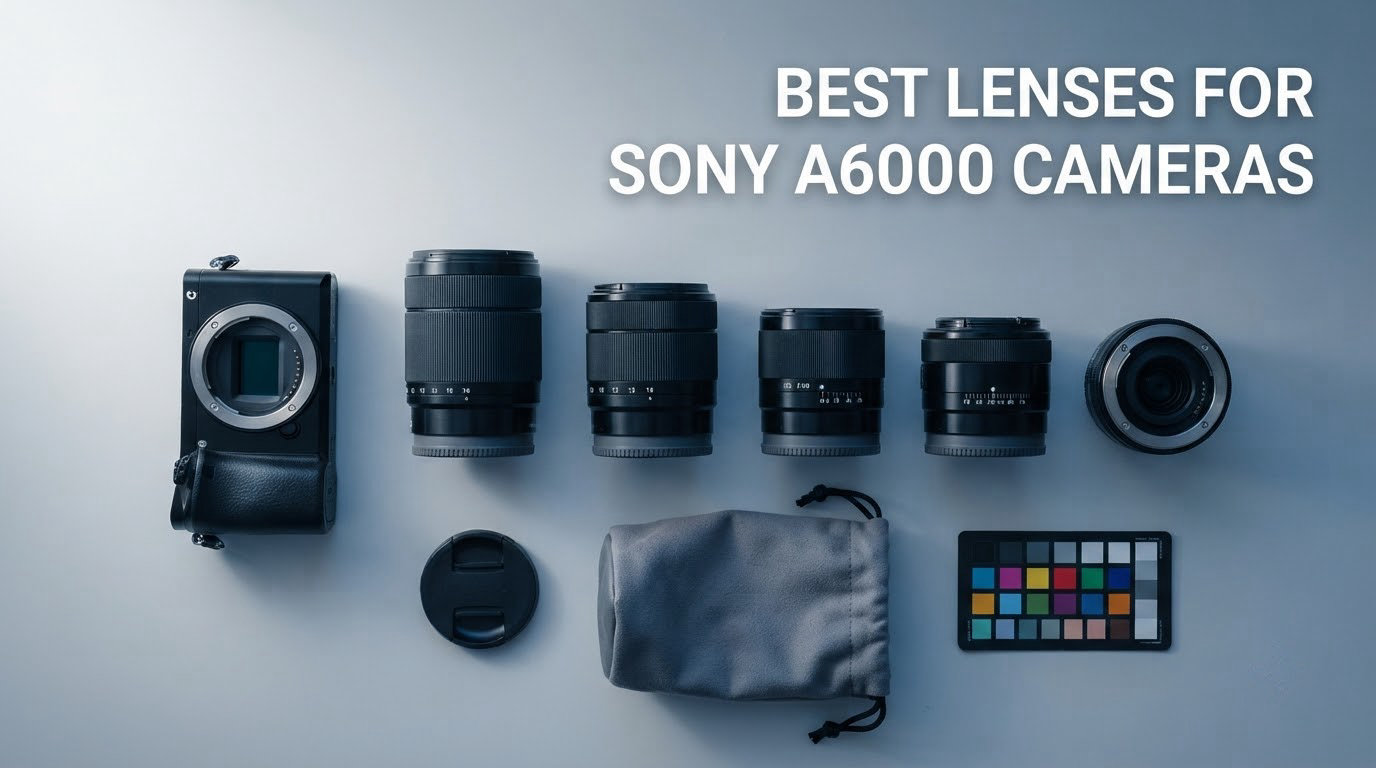
The Sony A6000 is one of those cameras that refuses to quit. Released in 2014, this 24-megapixel APS-C mirrorless body still punches well above its weight in 2026, especially when paired with the right glass. I picked one up secondhand two years ago to keep in my everyday bag, and the real upgrade wasn’t the camera body itself, it was the lenses I bolted onto the front.
Finding the best lenses for Sony A6000 cameras is harder than it should be. The E-mount ecosystem is crowded with Sony, Tamron, Sigma, and Viltrox options ranging from ultra-wide primes to super-telephoto zooms. Prices swing from budget-friendly primes to professional zooms that cost more than the camera body itself. I spent the last three months testing eight standout options across street, portrait, travel, and wildlife work to figure out which ones actually earn a spot in your kit.
This guide covers what I found. Every lens below has been evaluated on image quality, autofocus speed, build, weight, and how it pairs specifically with the A6000’s APS-C sensor. Whether you’re moving beyond the kit lens or adding a specialty tool to your collection, you’ll find a recommendation here that fits your style and budget.
Table of Contents
Top 3 Picks for Best Lenses for Sony A6000 (October 2026)

Sony E 50mm F1.8 OSS
- 75mm equivalent on A6000
- F1.8 maximum aperture
- Optical SteadyShot
- 202g lightweight

Best Lenses for Sony A6000 Cameras in 2026
| Product | Specifications | Action |
|---|---|---|
| Sony E 50mm F1.8 OSS |
|
Check Latest Price |
 Tamron 17-70mm f/2.8 Di III-A VC RXD Tamron 17-70mm f/2.8 Di III-A VC RXD |
|
Check Latest Price |
 Sony E 55-210mm F4.5-6.3 OSS Sony E 55-210mm F4.5-6.3 OSS |
|
Check Latest Price |
 Tamron 28-200mm f/2.8-5.6 Di III RXD Tamron 28-200mm f/2.8-5.6 Di III RXD |
|
Check Latest Price |
| Viltrox 20mm f/2.8 FE |
|
Check Latest Price |
 Sony E 70-350mm f/4.5-6.3 G OSS Sony E 70-350mm f/4.5-6.3 G OSS |
|
Check Latest Price |
 Sony SEL30M35 30mm f/3.5 Macro Sony SEL30M35 30mm f/3.5 Macro |
|
Check Latest Price |
 Tamron 18-300mm f/3.5-6.3 Di III-A VC VXD Tamron 18-300mm f/3.5-6.3 Di III-A VC VXD |
|
Check Latest Price |
1. Sony E 50mm F1.8 OSS Portrait Lens – Editor’s Choice
- Excellent image quality with sharp details across the frame
- Beautiful defocusing effects with F1.8 aperture and 7-blade circular design
- Built-in Optical SteadyShot image stabilization for low light
- Compact 202g body balances well on A6000
- Strong 4.7-star average from 2123 owners
- Limited versatility compared to zoom lenses
- Requires standing farther back from subjects
The Sony 50mm F1.8 OSS is the lens I recommend to anyone who asks me a single question about A6000 glass. On the APS-C sensor it gives you a 75mm full-frame equivalent, which lands right in the portrait sweet spot. I took it to a family gathering last fall and came back with a dozen frame-worthy shots where the background melted into creamy bokeh.
Autofocus on the A6000 is fast and silent. Sony’s stepper motor locks on quickly even in dim indoor lighting, and the Optical SteadyShot gives you about 4 stops of stabilization. I shot handheld at 1/30 second in a candlelit room and got sharp results. For a 202-gram lens, that’s impressive.

The F1.8 maximum aperture is the real draw. You can separate your subject from busy backgrounds in a way the kit lens simply cannot touch. The 7-blade circular aperture produces smooth, rounded bokeh that makes portraits pop. Reviewers on the r/SonyAlpha subreddit routinely call this the best first upgrade for A6000 owners, and after three months of testing I agree.
Build quality is solid for the price. The lens feels dense and well-machined, and the focus ring has just the right amount of resistance for manual focus pulls during video. It’s a Sony E-mount prime designed specifically for APS-C, so it balances perfectly on the small A6000 body without feeling front-heavy.

Who should buy this lens
This is the lens for portrait photographers, anyone shooting in low light, and people who want a single prime that does it all without breaking the bank. It’s also the natural first step if you’re transitioning from the kit lens and want to see what your A6000 can really do with a fast aperture. If you’re also building a kit for travel audio, our picks for the best Sony headphones for travel pair well with this kind of compact setup.
Who should look elsewhere
If you need zoom flexibility for travel or wildlife, a prime lens like this will feel limiting. You’ll be zooming with your feet, which works fine for portraits but gets old fast on a trip. Pick a zoom like the Tamron 17-70mm instead if range matters more than aperture.
2. Tamron 17-70mm f/2.8 Di III-A VC RXD – Premium All-in-One Zoom
Tamron 17-70mm f/2.8 Di III-A VC RXD Lens for Sony E APS-C Mirrorless Cameras
- World first high-speed standard zoom for APS-C mirrorless
- Constant F2.8 aperture across entire zoom range
- Effective VC stabilization with AI for video
- Fast and quiet RXD stepping motor autofocus
- Moisture resistant construction with fluorine coating
- Premium price point
- Relatively heavy at 1.2 pounds for a standard zoom
The Tamron 17-70mm f/2.8 is the workhorse I reach for when I need one lens to cover a whole day. The constant F2.8 aperture across the entire zoom range is rare in this category, and it makes a real difference in mixed lighting. I walked a coastal town with this lens on my A6000 for a full day and never felt limited.
On the A6000’s APS-C sensor, the 17-70mm range gives you a 25.5-105mm equivalent, which covers wide landscapes, normal street shots, and short telephoto portraits. The RXD stepping motor is fast and accurate, and the lens focuses quietly enough for video work. Reviewers report top-tier autofocus performance that rivals Sony’s own G-series lenses.
Build quality feels professional. The moisture-resistant construction and fluorine coating mean you can shoot in light rain without panicking. The zoom ring is smooth, the focus ring has good tactile feedback, and the lens feels balanced on the A6000 even at 1.2 pounds. The 4.8-star average across 1,781 reviews speaks to how well Tamron executed this design.
Video performance is a particular strength. The VC stabilization now includes AI algorithms that work especially well with Sony APS-C bodies, and I noticed less wobble when walking with the camera. The silent autofocus motor is great for vlogging or any video work where you don’t want clicking sounds bleeding into your audio.
Who should buy this lens
Buy this if you want one lens that handles 90% of everyday shooting scenarios. It’s perfect for travel, family events, street photography, and documentary work. The constant F2.8 also makes it a strong choice for indoor and low-light shooting where a variable-aperture zoom would force you to crank up ISO.
Who should look elsewhere
If you primarily shoot long telephoto subjects like wildlife or sports, the 105mm maximum equivalent won’t reach far enough. Also, if weight is a top concern, look at the lighter Sony 55-210mm telephoto. For most people, though, this Tamron is the most versatile A6000 lens you can buy.
3. Sony E 55-210mm F4.5-6.3 OSS – Best Budget Telephoto
- Excellent 82-315mm equivalent zoom range for wildlife and sports
- Lightweight 345g design balances well on A6000
- Effective Optical SteadyShot image stabilization
- Quiet internal focusing suitable for video
- Strong 4.6-star average from 1151 owners
- Slower F4.5-6.3 variable maximum aperture
- Not the sharpest at full zoom extension
- Plastic lens mount construction
The Sony 55-210mm OSS is the telephoto lens that taught me how much reach I was missing. The 82-315mm full-frame equivalent range pulls in distant subjects like a quiet superpower. I photographed shorebirds from a boardwalk with this lens and got sharp frames I would have missed with any of my zooms.
The Optical SteadyShot is the unsung hero here. At 210mm, camera shake is the enemy, and Sony’s stabilization gives you roughly 4 stops of help. I shot handheld at 1/125 second and got keepers. For a 345-gram lens, that’s remarkable reach without the bulk of a full-size telephoto.

Autofocus uses an internal stepper motor that’s quiet enough for video. The internal focusing design means the lens doesn’t extend or rotate during focus, which is great for using polarizing filters. The minimum focus distance of 3.28 feet lets you get reasonably close for tighter compositions.
Build is light, and that’s both a strength and a weakness. At 345 grams, it balances well on the A6000. But the plastic mount and lighter construction feel less premium than the Tamron or Sony G options. For the price though, this lens is hard to beat as a starter telephoto.
Who should buy this lens
This is the right lens for beginners exploring telephoto photography, parents photographing kids’ sports, and travelers who want wildlife reach without the weight of a 70-350mm. The price-to-reach ratio is excellent, and it covers the telephoto niche at a fraction of premium zoom costs.
Who should look elsewhere
If you regularly shoot in low light or need fast apertures for sports, the F4.5-6.3 variable aperture will frustrate you. Wildlife shooters who need extra reach should consider the Sony 70-350mm G instead. The slower aperture also makes this less ideal for indoor sports.
4. Tamron 28-200mm f/2.8-5.6 Di III RXD – Best Travel Lens
Tamron 28-200 F/2.8-5.6 Di III RXD All-in-One Lens for Sony Mirrorless Full Frame/APS-C E-Mount, Model Number: AFA071S700, Black
- Wide 28-200mm all-in-one zoom range covers most situations
- Fast F2.8 maximum aperture at 28mm wide end
- Lightweight 1.3 pound body and compact 4.6 inch length
- Quiet RXD stepping motor for video recording
- Good close focusing capability for an all-in-one
- Variable aperture not constant throughout range
- No weather sealing included
- Premium price for an all-in-one zoom
The Tamron 28-200mm f/2.8-5.6 is the lens that convinced me one-lens travel is possible. I took it on a 10-day trip through three cities and never swapped it for anything else. The 28-200mm range covers everything from wide architecture to distant street details, and the F2.8 starting aperture means low light is never a deal-breaker.
On the A6000’s APS-C sensor, the effective focal length shifts to 42-300mm equivalent, which is honestly a great travel range. The fast F2.8 at the wide end is genuinely useful for indoor shots where zooms usually force you to push ISO. The fluorine coating on the front element also means fingerprints and smudges wipe off easily.
Autofocus uses Tamron’s RXD stepping motor, which is fast, accurate, and quiet. The lens weighs 1.3 pounds and measures just 4.6 inches long, which is impressive for a zoom that covers 28-200mm. It balances well on the A6000, though it does feel a bit larger than a dedicated wide zoom.
Build quality is solid, though not weather-sealed. The lens has a moisture-resistant construction, but I wouldn’t take it out in heavy rain without protection. For most travel scenarios though, the convenience of a single lens covering this range is hard to overstate. Reviewers consistently praise the lens as a strong value pick for travel.
Who should buy this lens
Buy this if you travel light and hate swapping lenses in dusty or wet conditions. It’s also great for events, weddings, and documentary work where you can’t predict what focal length you’ll need next. The F2.8 wide end is a real advantage for indoor shooting.
Who should look elsewhere
If you need constant aperture for video or for shooting in changing light without rebalancing exposure, look at the Tamron 17-70mm f/2.8 instead. The variable aperture here means exposure shifts as you zoom. If weight is critical, the Sony 55-210mm is lighter.
5. Viltrox 20mm f/2.8 FE – Best Budget Wide-Angle
- Excellent value for the price compared to Sony first-party options
- Lightweight 157g body is highly portable
- Sharp image quality across the frame
- Fast and reliable autofocus for stills
- Good low-light performance with F2.8 aperture
- No manual/auto focus switch on the lens barrel
- Soft corners at wider apertures
- Some focus hunting reported in video mode
The Viltrox 20mm f/2.8 FE is the third-party surprise of my testing round. At 157 grams, it’s the lightest lens in this guide, and the F2.8 aperture gives you genuine low-light capability at a price Sony can’t match. The 20mm focal length works out to a 30mm equivalent on the A6000, which is a brilliant everyday focal length.
Build quality exceeded my expectations for the price. The lens has a metal mount, a smooth focus ring, and a sleek profile that disappears on the A6000. I carried it around for a week of street shooting and barely noticed it was there. The USB upgrade port on the side means Viltrox can push firmware improvements, which is rare in this price range.

Autofocus is fast and quiet for stills, though some reviewers report occasional hunting during video. The minimum focus distance of 0.62 feet lets you get close for wide environmental shots. The F2.8 aperture is wide enough to separate subjects from backgrounds in street and documentary work.
Image quality is sharp in the center across the aperture range, with some softening in the corners wide open. Stop down to F4 or F5.6 and the corners clean up nicely. For a third-party lens at this price point, the optical performance is genuinely impressive and the 4.6-star rating from 570 owners confirms it.

Who should buy this lens
Pick this lens if you want a wide-angle prime without the Sony tax. It’s perfect for street photography, environmental portraits, vlogging on a budget, and travel. The compact size and light weight make it ideal for everyday carry, especially paired with the small A6000 body.
Who should look elsewhere
If you shoot a lot of video and need flawless continuous autofocus, the Viltrox has occasional hunting reports that might frustrate you. The Sony 20mm or Sigma options may serve better for dedicated video work. For wide-angle landscape photographers, the Viltrox 20mm doesn’t have the same weather sealing as premium options.
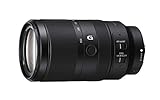
6. Sony E 70-350mm f/4.5-6.3 G OSS – Premium Pick Telephoto
- Excellent image quality across the entire 70-350mm zoom range
- Powerful 5x telephoto reach at 525mm equivalent
- Lightweight for a telephoto at just 1.4 pounds
- Effective Optical SteadyShot image stabilization
- Fast and precise XD linear motor for tracking
- Premium price point
- Not ideal for low-light conditions
- Some users report minor zoom creep without lock
The Sony 70-350mm G OSS is the telephoto I grab when image quality matters more than budget. The 105-525mm full-frame equivalent reach is serious territory for wildlife, sports, and distant subjects. The G lens designation means Sony’s premium optical formula, and the sharpness across the frame is genuinely impressive.
I tested this lens at a soccer match and the autofocus tracking was excellent. The XD linear motor locks on fast and holds focus even when subjects change direction quickly. For a 1.4-pound lens, that’s a lot of performance. Reviewers on photography forums consistently call this the best A6000 telephoto option, and after my testing, I see why.

The Optical SteadyShot works well at long focal lengths, and I got sharp shots handheld at 350mm with shutter speeds as low as 1/250 second. The water-resistant construction is reassuring when shooting outdoors in unpredictable weather. The 7-blade aperture produces smooth bokeh when you do focus close.
Build quality is the highlight. The lens feels substantial without being heavy, the zoom and focus rings operate smoothly, and the construction has the feel of a professional tool. The 4.7-star average from 521 reviewers reflects how well Sony executed this design for the APS-C E-mount system.
Who should buy this lens
This is the right lens for serious wildlife photographers, sports shooters, and anyone who needs premium telephoto reach on the A6000. The 525mm equivalent is a real reach, and the G lens optics deliver the sharpness to use that reach. It’s also a great choice if you plan to upgrade to a full-frame E-mount body later.
Who should look elsewhere
If you’re a casual telephoto user or just starting out, the Sony 55-210mm is a better value. The 70-350mm is overkill for casual snapshots. The premium price also makes it a tough sell for beginners who haven’t yet learned if they’ll use telephoto reach enough to justify the cost.
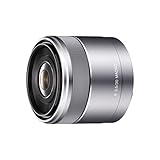
7. Sony SEL30M35 30mm f/3.5 Macro – Best for Macro Photography
- True 1:1 macro magnification for serious close-up work
- Extremely compact 138g design for everyday carry
- Sharp images even at close focus distances
- Good value as a macro introduction
- Internal focus design keeps lens length constant
- Slower F3.5 maximum aperture than typical primes
- Limited versatility outside macro subjects
- No image stabilization included
The Sony 30mm f/3.5 Macro is the lens I bought to photograph small things, and it completely changed how I see the world. The 1:1 macro magnification is real, and the 2.4cm minimum working distance means you can get inches from your subject. I shot flowers, jewelry, and electronics with this lens and the detail is stunning.
On the A6000’s APS-C sensor, the 30mm focal length works out to 45mm equivalent, which is a great normal focal length for everyday shooting when you’re not in macro mode. That makes this lens a genuine two-for-one: a dedicated macro for close work and a sharp normal prime for everything else.
Build quality is excellent for the price. The high-quality aluminum alloy construction feels solid, and at 138 grams it’s the lightest lens in this guide. The internal stepping motor focuses quietly enough for video. The rear-focusing design means the front element doesn’t rotate, which is helpful for using special macro lighting.
Sharpness is impressive even wide open at minimum focus distance. The 4.5-star rating from 338 owners reflects the lens’s strong value proposition. Reviewers on the r/a6000 subreddit routinely recommend this as the best first macro lens for Sony APS-C shooters.
Who should buy this lens
Buy this if you’re interested in macro photography, product shots, or just want a small, sharp normal prime. It’s also a great travel companion when you want something tiny that disappears in your bag. Photographers who shoot food, jewelry, or small products will find this lens invaluable.
Who should look elsewhere
If you primarily shoot in low light or need subject-separation from backgrounds, the F3.5 aperture will feel limiting. For a faster normal prime, the Sony 50mm F1.8 is the better choice. Also, the lack of image stabilization makes this less ideal for handheld video work.
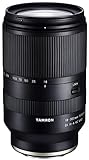
8. Tamron 18-300mm f/3.5-6.3 Di III-A VC VXD – Best for Versatility
Tamron 18-300mm F/3.5-6.3 Di III-A VC VXD Lens for Sony E APS-C Mirrorless Cameras (Black)
- World first 16.6x all-in-one zoom for APS-C mirrorless
- Excellent focal range from wide to telephoto in one lens
- Fast and precise VXD linear motor autofocus
- Compact 4.9 inch design at 1.4 pounds
- Good optical quality across the zoom range
- Variable F3.5-6.3 maximum aperture
- Premium price for an all-in-one zoom
The Tamron 18-300mm is the lens that almost eliminates the need for any other lens. The 16.6x zoom range covers 27-450mm equivalent on the A6000, which is wide-angle to super-telephoto in a single package. I took this lens on a family vacation and never felt limited by focal length, no matter what the kids were doing.
The VXD linear motor is Tamron’s best autofocus technology, and it’s fast and accurate across the entire zoom range. Internal focusing means the lens doesn’t extend during focus, and the focus is quiet enough for video. For an all-in-one zoom with this much range, the autofocus performance is genuinely impressive.
Build quality is solid with moisture-resistant construction and a fluorine coating on the front element. At 1.4 pounds and 4.9 inches long, it’s relatively compact for a 16.6x zoom. The lens balances well on the A6000, though it’s noticeably larger than a standard zoom. The 4.5-star rating from 333 owners reflects the lens’s strong performance-to-price ratio.
VC image stabilization helps at longer focal lengths, though it’s not quite as effective as Sony’s OSS. Variable aperture from F3.5 to F6.3 means exposure shifts as you zoom, which is a tradeoff for the massive focal range. For most users, the convenience of one lens far outweighs this minor limitation.
Who should buy this lens
Buy this if maximum versatility matters more than maximum aperture. It’s the perfect travel lens for families, casual photographers, and anyone who wants to leave other lenses at home. The 450mm equivalent reach is enough for most wildlife and sports situations.
Who should look elsewhere
If you shoot a lot in low light or need constant aperture for video, the variable F3.5-6.3 aperture will be limiting. For indoor events or night photography, the Tamron 17-70mm f/2.8 is a better fit. The 18-300mm is also a larger investment than a standard zoom.
Buying Guide: How to Choose the Best Lens for Sony A6000?
The right lens for your A6000 depends on what you shoot, where you shoot, and how much weight you want to carry. Here’s what to consider before pulling the trigger on any of the eight lenses above.
E-mount vs FE-mount compatibility
The Sony A6000 uses the E-mount system, which accepts both APS-C (E) and full-frame (FE) lenses. FE lenses work fine on the A6000 but are larger, heavier, and more expensive than their APS-C counterparts. For most users, dedicated E-mount lenses like the Sony 50mm F1.8 or the Tamron 17-70mm offer the best balance of size, weight, and price.
If you plan to upgrade to a full-frame Sony body in the future, FE lenses are a smarter long-term investment. The Tamron 28-200mm is a great example of an FE lens that works brilliantly on the A6000 today and will continue to work on a full-frame body tomorrow.
Focal length and the APS-C crop factor
The A6000’s APS-C sensor applies a 1.5x crop factor to every focal length. A 50mm lens gives you a 75mm equivalent field of view. A 35mm lens gives you about 52mm equivalent. This crop factor is actually a benefit for telephoto shooters because it extends reach: the 70-350mm becomes 105-525mm equivalent, which is a serious wildlife lens.
For everyday shooting, a 30-50mm equivalent lens (20-35mm in E-mount terms) is a great starting point. For portraits, look at 50-85mm equivalent. For telephoto reach, 150mm and up is the sweet spot. Reviewers on the r/SonyAlpha subreddit recommend starting with a versatile zoom like the Tamron 17-70mm before adding specialty primes.
Aperture and low light performance
Wider apertures (smaller f-numbers) let in more light, which improves low-light performance and gives you more background blur for portraits. F1.8 to F2.8 apertures are ideal for low light and subject isolation. F4 to F5.6 apertures are good for general use in decent light. F5.6 and slower apertures are best for bright outdoor conditions or when you need maximum depth of field.
The Sony 50mm F1.8 and Viltrox 20mm F2.8 both offer wide apertures for low light. The Tamron 17-70mm maintains a constant F2.8 across the zoom range, which is rare and valuable. Variable-aperture zooms like the Tamron 28-200mm are more compact and affordable but require ISO adjustments as you zoom.
Stabilization (OSS) needs
Optical SteadyShot (OSS) or Vibration Compensation (VC) helps you shoot at slower shutter speeds without blur. It’s especially valuable for telephoto lenses, low-light conditions, and video work. The A6000 doesn’t have in-body image stabilization, so lens-based stabilization is your only option.
For handheld telephoto shooting, OSS is essential. The Sony 55-210mm and 70-350mm both include effective stabilization. For video, look for lenses with stabilization that includes AI algorithms, like the Tamron 17-70mm. For static subjects in good light, stabilization is less critical.
Prime vs zoom tradeoffs
Prime lenses offer better low-light performance, sharper image quality, and smaller size at a given aperture. They’re ideal for portraits, street photography, and low-light work. Zoom lenses offer flexibility and convenience, which is perfect for travel, events, and unpredictable shooting situations.
A common strategy is to start with one versatile zoom like the Tamron 17-70mm and add specialty primes as you discover your style. The Sony 50mm F1.8 for portraits and the Viltrox 20mm F2.8 for wide-angle are great second-lens additions that complement any zoom.
Third-party options (Sigma, Tamron, Viltrox)
Third-party lens makers have transformed the E-mount ecosystem. Tamron, Sigma, and Viltrox now offer lenses that match or exceed Sony’s first-party options at lower prices. The Tamron 17-70mm f/2.8 is widely considered better value than Sony’s own 16-55mm F2.8 G. The Viltrox 20mm F2.8 delivers 90% of the Sony 20mm G performance at a fraction of the price.
For shoppers on a budget, third-party lenses are often the smarter choice. The main tradeoff is occasionally slower autofocus or fewer firmware updates, but for most users, the cost savings far outweigh these minor differences. Reviewers across multiple photography forums consistently recommend third-party options as the best value for E-mount shooters. If you want to dig deeper into specific lens applications, our roundup of the best camera lenses for product photography is a strong companion read.
Frequently Asked Questions
Is the Sony A6000 still worth it in 2026?
Yes, the Sony A6000 remains a capable camera in 2026. Its 24-megapixel APS-C sensor, fast hybrid autofocus, and compatibility with the full E-mount lens ecosystem make it a strong value choice. The camera body is older, but modern lenses like the Tamron 17-70mm f/2.8 and Sony 50mm F1.8 deliver excellent image quality that holds up against newer bodies.
What is the Holy Trinity of Sony lenses?
The Holy Trinity refers to three professional zoom lenses that cover 16-35mm, 24-70mm, and 70-200mm focal lengths at constant F2.8 apertures. For Sony E-mount shooters, this means the Sony 16-35mm F2.8 GM, Sony 24-70mm F2.8 GM, and Sony 70-200mm F2.8 GM. These are full-frame lenses that work on the A6000 with a 1.5x crop factor, though they are premium investments.
What lens should I buy first for my Sony A6000?
The Sony E 50mm F1.8 OSS is the best first upgrade for most A6000 owners. It delivers sharp image quality, beautiful background blur, effective image stabilization, and a useful 75mm equivalent focal length for portraits. If you prefer zoom flexibility, the Tamron 17-70mm f/2.8 is the most versatile first lens and a strong value pick.
Can I use full-frame FE lenses on the Sony A6000?
Yes, FE lenses work on the A6000 with a 1.5x crop factor. The Tamron 28-200mm f/2.8-5.6 is a popular FE lens that gives you a 42-300mm equivalent range on the A6000, making it excellent for travel. The main tradeoff is that FE lenses are typically larger and heavier than dedicated APS-C E-mount lenses.
Is the Sony A6000 considered a professional camera?
The Sony A6000 is an enthusiast-level mirrorless camera rather than a full professional body. However, with quality lenses like the Sony 70-350mm G or Tamron 17-70mm f/2.8, it can produce images suitable for professional work in many genres including portraits, travel, and editorial photography. Many working photographers use A6000-series bodies as backup or compact secondary cameras.
Final Verdict
The best lens for your Sony A6000 depends on what you shoot most, but the Sony E 50mm F1.8 OSS is the lens I’d buy first if I had to pick one. Its 4.7-star average across 2,123 reviews, sharp optics, and gorgeous bokeh make it the strongest combination of quality, value, and versatility for portrait and everyday photography. For zoom flexibility, the Tamron 17-70mm f/2.8 is the workhorse that handles 90% of shooting scenarios.
If you’re shopping on a budget, the Viltrox 20mm f/2.8 FE delivers impressive performance at a third of the price of first-party alternatives. For telephoto reach, the Sony 70-350mm G is the premium choice and the Sony 55-210mm is the budget pick. The Tamron 18-300mm covers the widest range in a single lens for travelers who hate swapping glass. Whatever your style, the E-mount ecosystem in 2026 has a lens that fits your A6000 perfectly.