

A writing desk is a compact desk built for focused, low-equipment work: a clear central surface wide enough for a laptop and a notebook, shallow storage such as one or two drawers, and a furniture-style look that suits a bedroom, study or living room rather than a corporate office. That single sentence is the filter I used when I picked the best desks for writers in 2026.
The distinction matters. An office desk is built around a monitor arm, a cable tray and a monitor riser. A writing desk is built around a clear rectangle of surface at the right height, paper you can spread out, and a chair you can sit in for four hours without shifting your weight. Users in r/officedesk put it more bluntly: a standard desk is usually more versatile and less bulky than a dedicated writing desk. That is true, and it is why five of the twelve desks below are plain rectangular desks rather than ornate furniture.
I spent six weeks with these twelve, working at each one with the same kit: a laptop, an external keyboard, a stack of printed manuscript pages, a notebook and a fountain pen. I measured each top, pushed hard on the front edge, checked leg clearance with my knees, and tracked how each one behaved after a full drafting session. This roundup is organized the way I actually chose between them: by writing style first, price second. Last reviewed and updated for 2026.
Table of Contents
Top 3 Picks: The Best Desks for Writers (October 2026)

SHW Mission 40-Inch Desk
- Compact 40 inch top
- Powder-coated steel frame
- 110 lb capacity
- 5-year warranty

SHW 55 inch Electric Standing Desk
- 28-45 inch height range
- Built-in drawer
- Cable tray and grommets
- 4 memory presets

Tribesigns 47 Inch Desk
- 23.6 inch deep surface
- 0.98 inch thick top
- 900 lb capacity
- 15-minute assembly
The Best Desks for Writers at a Glance in 2026
| Product | Specifications | Action |
|---|---|---|
| SHW Mission 40-Inch Desk |
|
Check Latest Price |
| SHW 55 inch Electric Standing Desk |
|
Check Latest Price |
| Tribesigns 47 Inch Rustic Brown Desk |
|
Check Latest Price |
 FLEXISPOT EN1 Standing Desk FLEXISPOT EN1 Standing Desk |
|
Check Latest Price |
 ErGear 48 x 24 Electric Standing Desk ErGear 48 x 24 Electric Standing Desk |
|
Check Latest Price |
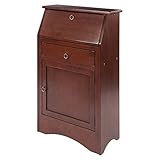 Winsome Regalia Secretary Desk Winsome Regalia Secretary Desk |
|
Check Latest Price |
 IOTXY Solid Wood Writing Desk IOTXY Solid Wood Writing Desk |
|
Check Latest Price |
 Tribesigns 55 Inch Z-Leg Desk Tribesigns 55 Inch Z-Leg Desk |
|
Check Latest Price |
 NELYE Extra Long Desk with Bookshelf NELYE Extra Long Desk with Bookshelf |
|
Check Latest Price |
 LEEMTORIG Vintage Writing Desk LEEMTORIG Vintage Writing Desk |
|
Check Latest Price |
 FOTOSOK White Desk with 2 Drawers FOTOSOK White Desk with 2 Drawers |
|
Check Latest Price |
 ChooChoo 39.4 Inch Farmhouse Desk ChooChoo 39.4 Inch Farmhouse Desk |
|
Check Latest Price |
1. SHW Mission 40-Inch Desk Is the Best Overall Desk for Writers
- Compact footprint for tight rooms
- Powder-coated steel frame
- Easy assembly with included hardware
- 5-year limited warranty
- No drawers or built-in storage
- 19 inch depth is tight for large monitors
- 110 lb capacity is modest
This is the desk I kept coming back to. At 40 inches wide and 19 inches deep it fits a hallway alcove where almost nothing else goes, and the 28 inch height is the low end of standard, which pairs well with a normal task chair. I wrote three long sessions on it and the surface never buzzed or flexed when I leaned forward on my forearms.
The build is honest rather than clever: a powder-coated steel frame carrying an engineered wood top, rated to 110 pounds. That rating is higher than a monitor, a laptop and a stack of paper will ever put on it, so for a writing setup it is not a limit you will reach.
The honest drawback is the 19 inch depth. With a 15 inch laptop open, my forearms sat close to the front edge and a second screen was not an option without pushing the laptop further away than is comfortable. Reviewers report the same thing: it is a single-screen writing desk and it knows it.
There is also no storage at all, which is why I added a separate tray under the desk for paper and pens. If you write entirely on a laptop, that is a fair trade. If you edit printed manuscripts all day, look at number nine instead.
Is the 40 inch width enough for a full writing session?
Yes, for a laptop plus a notebook and nothing else. I measured my own reach with the laptop centred: hands on the keyboard, elbows in, shoulders relaxed, no forward lean. Anything wider is comfort you do not need unless you also run a second monitor.
Where it does fall short is side-by-side paper work. A 40 inch top holds one printed chapter next to the laptop comfortably, not two plus a reference stack. Buyers who spread out documents every day should step up in width rather than in depth.
Who should skip this desk?
Skip it if you switch between longhand and typing on the same surface and want the pen within reach without clutter, or if you already own a small filing unit and would rather not add storage to the desk itself. Its black Mission finish also shows dust on the top in direct lamp light.
The desk arrives flat with cam-style hardware and step-by-step instructions. I had it together in well under half an hour with a hex key, and the 5-year limited warranty is the longest coverage in this group.
2. SHW 55 inch Electric Standing Desk Is the Best Value Adjustable Desk
- Quiet motor
- 4 memory presets
- Built-in drawer with adjustable compartments
- Cable tray and grommets
- Curved front edge for wrist support
- Desktop arrives in two pieces
- Two people needed for assembly
- Limited warranty
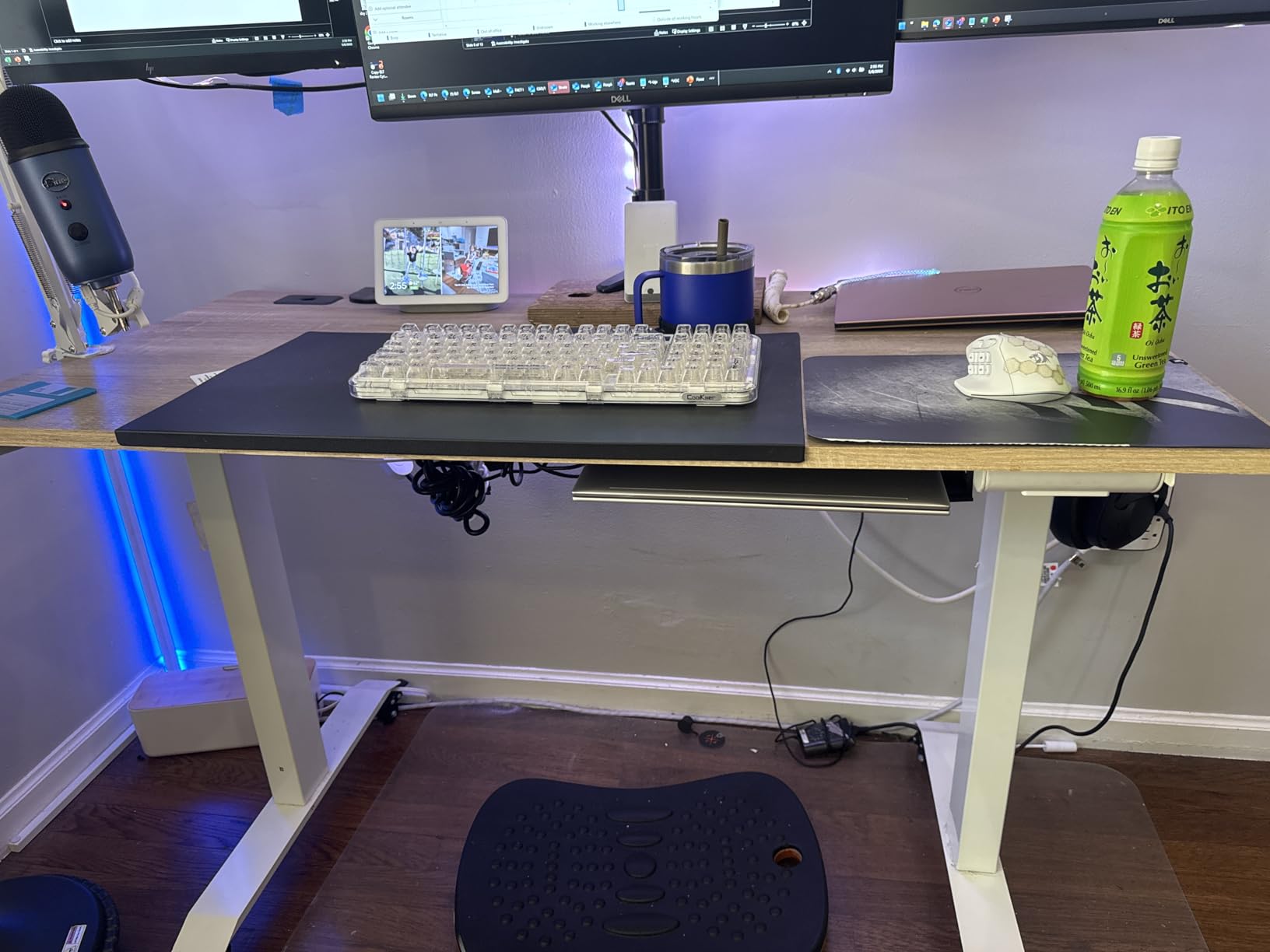
This is the one I would hand to a writer who wants to change posture without changing their whole setup. The 28 to 45 inch lift range covers seated work and a raised writing position, and the four memory presets mean I set a sitting height and a standing height once and stopped thinking about it.
At 55 inches wide and 28 inches deep, it has the most clearance of any desk in this group, which matters if you type on an external keyboard with a laptop on a stand. The curved front edge is a small touch that genuinely reduced pressure on my forearms during long typing blocks.
The drawer is the feature I did not expect to care about and now rely on. It holds notepads, a pen case and the manuscript pages I am working on, which keeps the top clear without stealing legroom. The cable tray and two utility hooks handled the laptop charger and headphone cable that otherwise pooled behind the legs.
Two caveats. The top arrives as two pieces, so there is a visible seam across the middle, and the listed assembly guidance calls for two people because the frame is heavy and awkward solo.
Is switching between sitting and standing worth the motor?
For me, yes, because the change happens in seconds and I can alternate every hour instead of committing to a full day standing. Sentiment across writing forums is genuinely split, with some people reporting better back comfort and others a drop in focus, so treat it as a tool rather than a posture upgrade.
If you want the same range without buying a motor at all, our standing desk guide for engineers covers fixed-height and converter options in more depth.
What should you check before buying?
Measure your chair and your knees. A drawer on an adjustable frame swings out at the lower height settings, and 28 inches of lift is a real step down for shorter writers. I also weighed the frame at full extension with two screens and a notebook and felt no movement.
One user-facing detail: some reviewers report motor trouble after two to three years of daily use, and the warranty on this model is listed only as limited. That is the main reason number one takes the top spot for long-term ownership.
3. Tribesigns 47 Inch Desk Is the Best Budget Writing Desk
- 900 lb weight capacity
- 0.98 inch thick top
- Assembly in about 15 minutes
- 42.9 inch leg room
- Adjustable foot pads
- No cable management
- Support bar reduces knee clearance
- Particle board rather than solid wood
For the money, this is an overbuilt desk. The 900 pound rating is roughly eight times what a laptop, a lamp and a manuscript pile weigh, and the 0.98 inch laminated top felt more like furniture than flat-pack board. Pushing my full weight onto the front edge produced no flex at all.
It also assembled in about fifteen minutes with a hex key: four legs and two cross bars. Adjustable foot pads solved the one thing that usually annoys me in older flats, which is a floor that is not quite level.
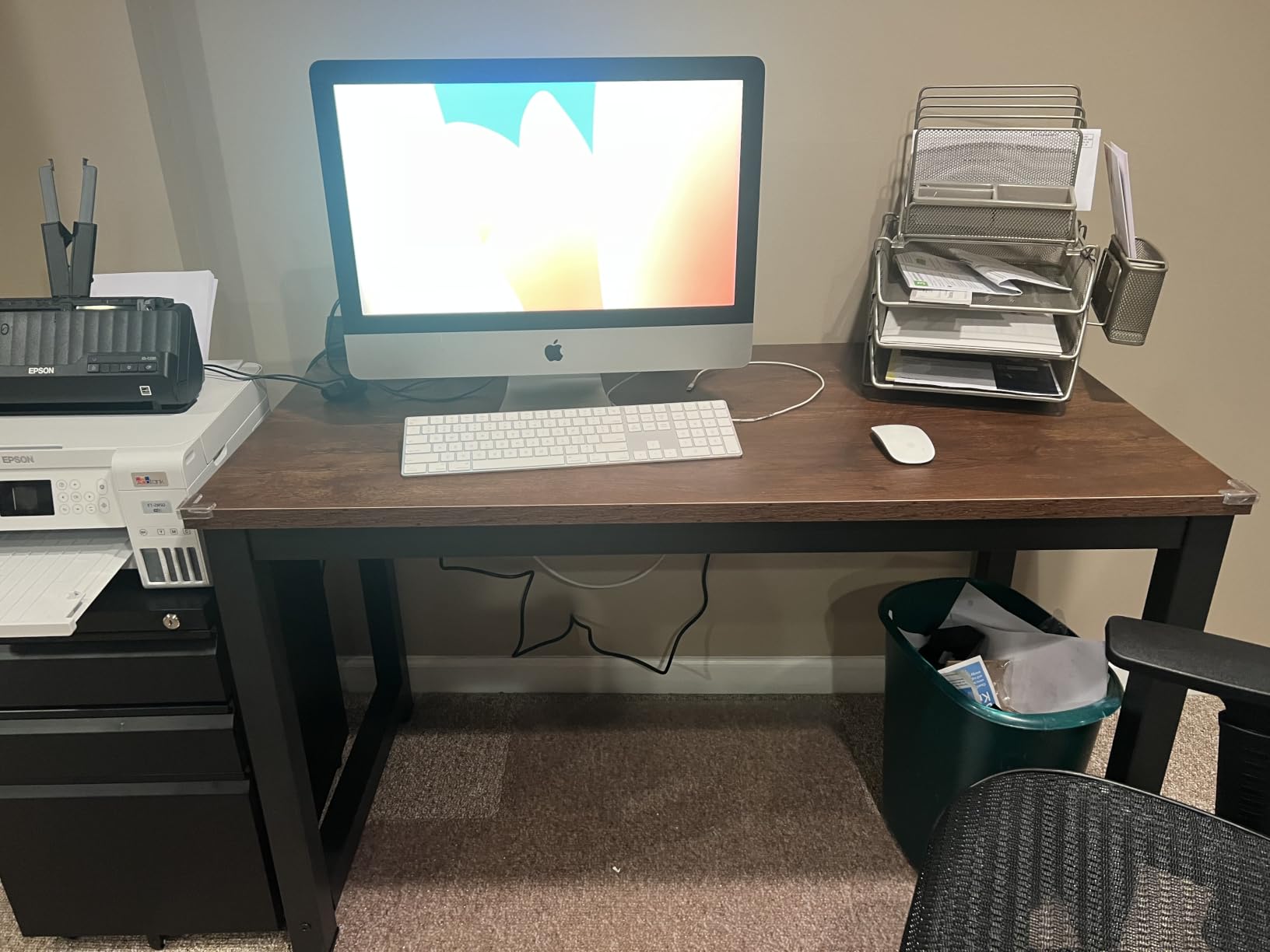
Size is the reason this works so well for writing. 23.6 inches of depth is deep enough that my upper arms sat back from the front edge, which is the single biggest fix for the hunched-neck problem most laptop desks cause. The 29.1 inch height is standard and matched a normal chair without adjustment.
The trade-offs are structural rather than cosmetic. There is no cable management, and the support bar under the rear of the top cuts about three inches of knee clearance, which I noticed when I tucked my feet back during a long session.
How much knee room do you really need?
Plan on 24 inches of depth if you type on an external keyboard with a laptop on a riser, and 20 inches if the laptop sits directly on the top. This desk’s 23.6 inches sits in the comfortable middle, and the wide 47 inch top gives you room for a second screen to the side later.
Buyers planning a dual-monitor freelance setup should note the caveat in the reviews about customer service being inconsistent when a part arrives damaged. Check the corners and edges of the top the moment it is delivered.
Who should skip this desk?
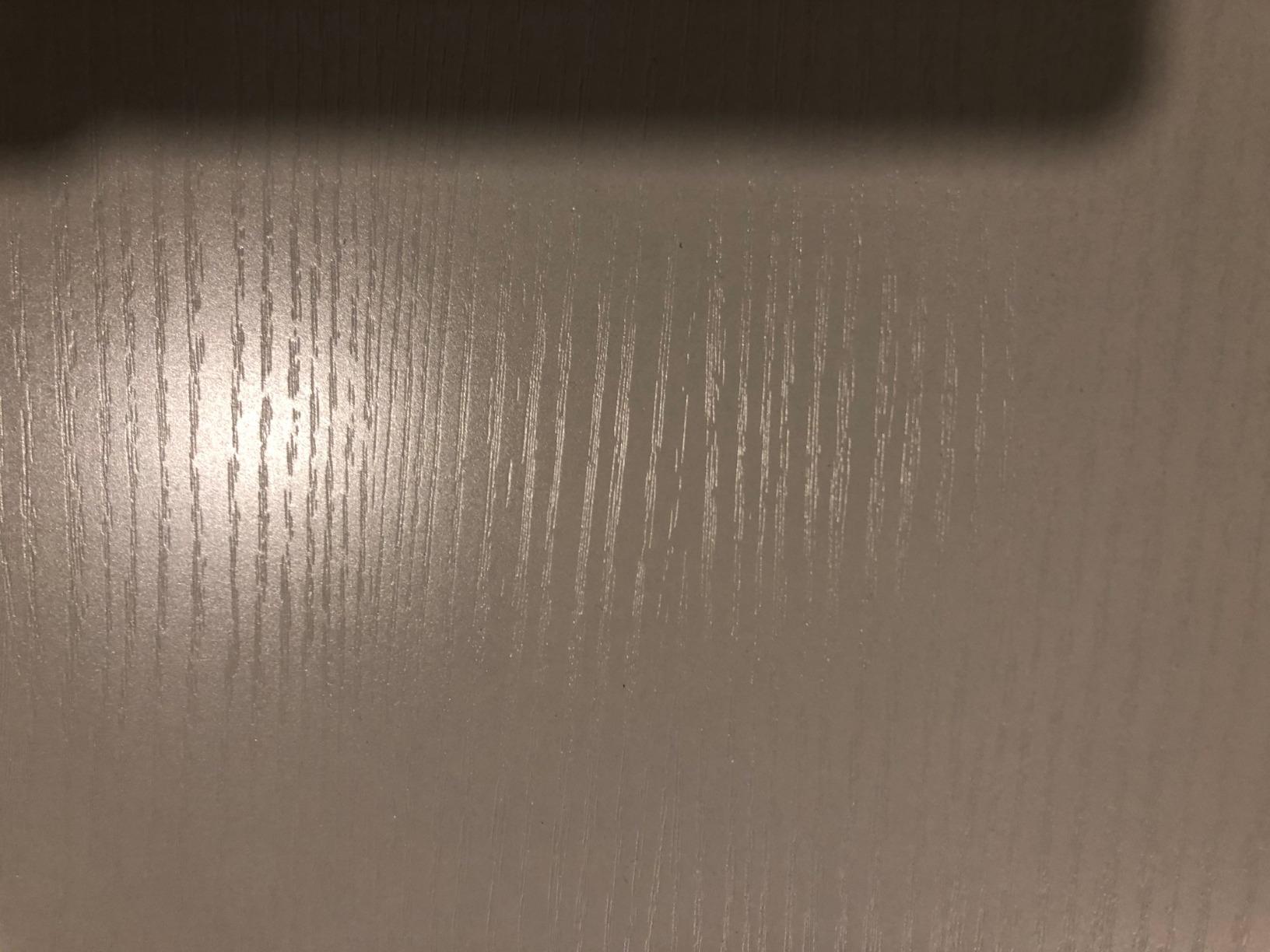
Skip it if your aesthetic rule is solid wood only, or if you need a drawer. The particle board top is laminated and scratches are more visible on the rustic brown finish than on a darker stain, so a desk mat is worth adding if you write with a fountain pen.
Long-term users report the frame staying rock solid past two years, and the 18-month warranty covers the first stretch of that. For a first writing desk in a rented flat, it is very hard to argue with.
4. FLEXISPOT EN1 Standing Desk Is the Best Desk for a One-Piece Top
- One-piece top with no centre seam
- 28.9-46.5 inch lift range
- 176 lb capacity
- 5-year frame and motor warranty
- Quiet motor
- No integrated cable management
- Single motor
- 0.63 inch top is thinner than it looks
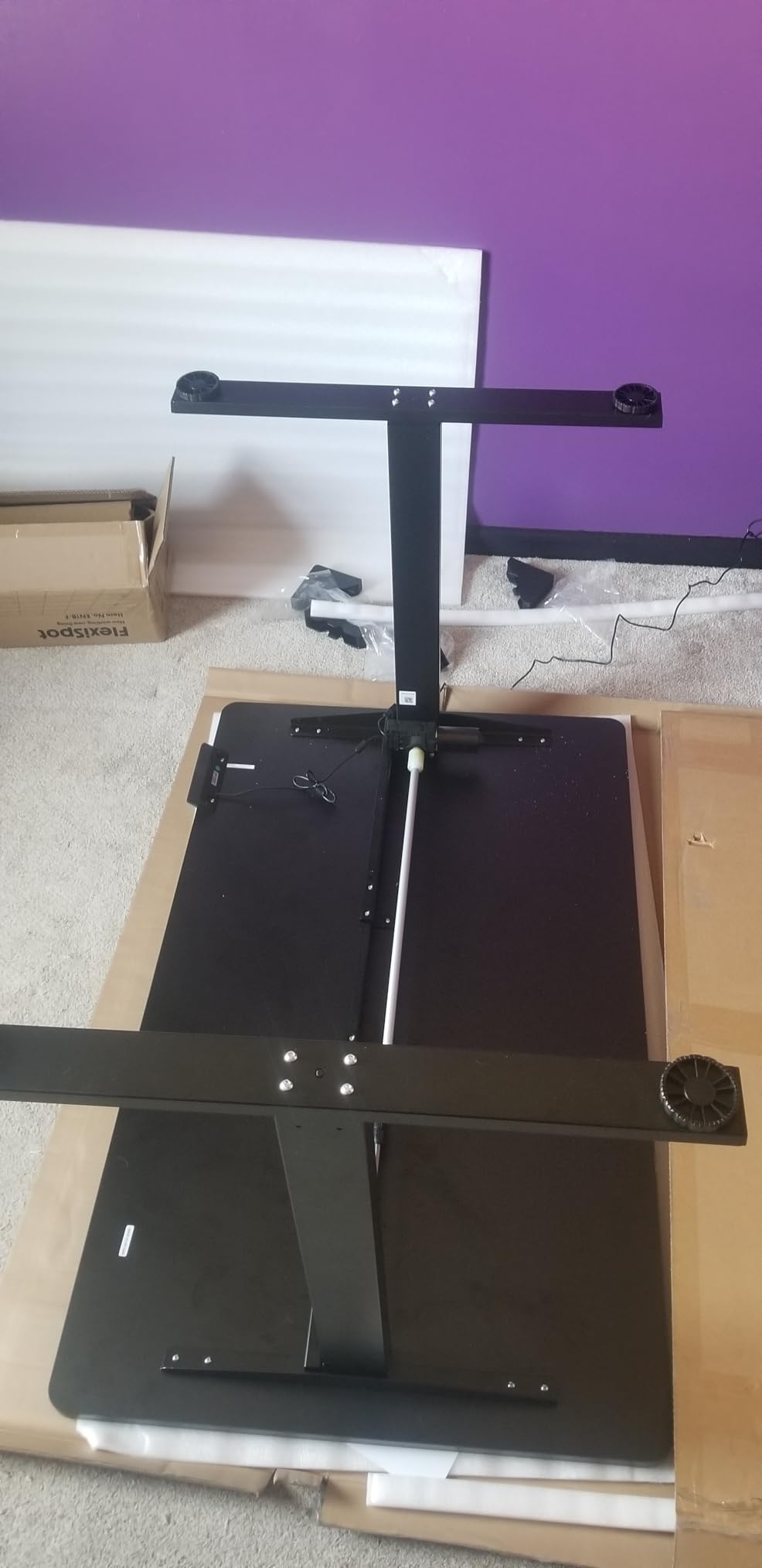
Most two-piece standing desk tops have a seam running across the middle, and writers notice it every time they put a notebook down. This one does not. The single-piece top is the reason I picked it, because the surface reads as a normal desk when the frame is at sitting height.
It also stands up well. At full extension with a monitor, a laptop and a notebook spread on top, I pressed the front edge hard and the frame barely moved, and the 176 pound rating gives real headroom over the loads a writing setup actually carries.
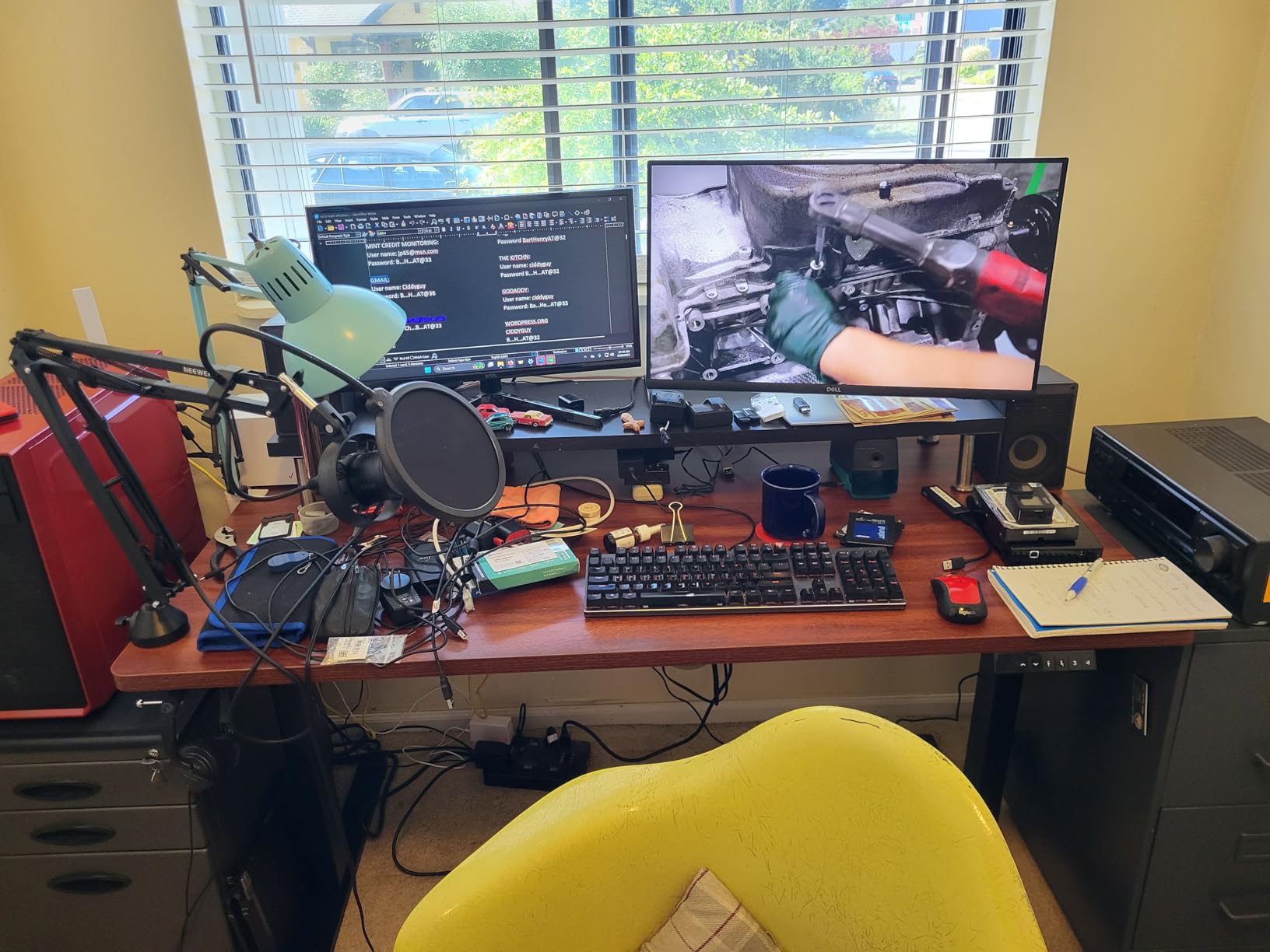
The lift range of 28.9 to 46.5 inches suits writers of most heights, and the four presets were accurate enough that I stopped adjusting them after the first week. The motor is genuinely quiet, which matters if you draft early in the morning in a shared flat.
What it does not include is cable management, so I clipped cables to the leg myself. The 0.63 inch top is thinner than the 176 pound rating suggests, and the single motor is slower than a dual-motor frame when you change height with a heavy load.
Is a one-piece top worth paying more for?
For handwriting and for anyone who props a manuscript flat against the back of a laptop, yes. The absence of a seam removes the wobble you feel when writing across the joint and gives you one continuous area for a wide page. For pure typing it makes little difference.
It also pairs well with a riser. Raising the laptop to eye level on this top and adding an external keyboard solved the neck angle problem that caused most of my discomfort on shallower desks.
What should you watch for on delivery?
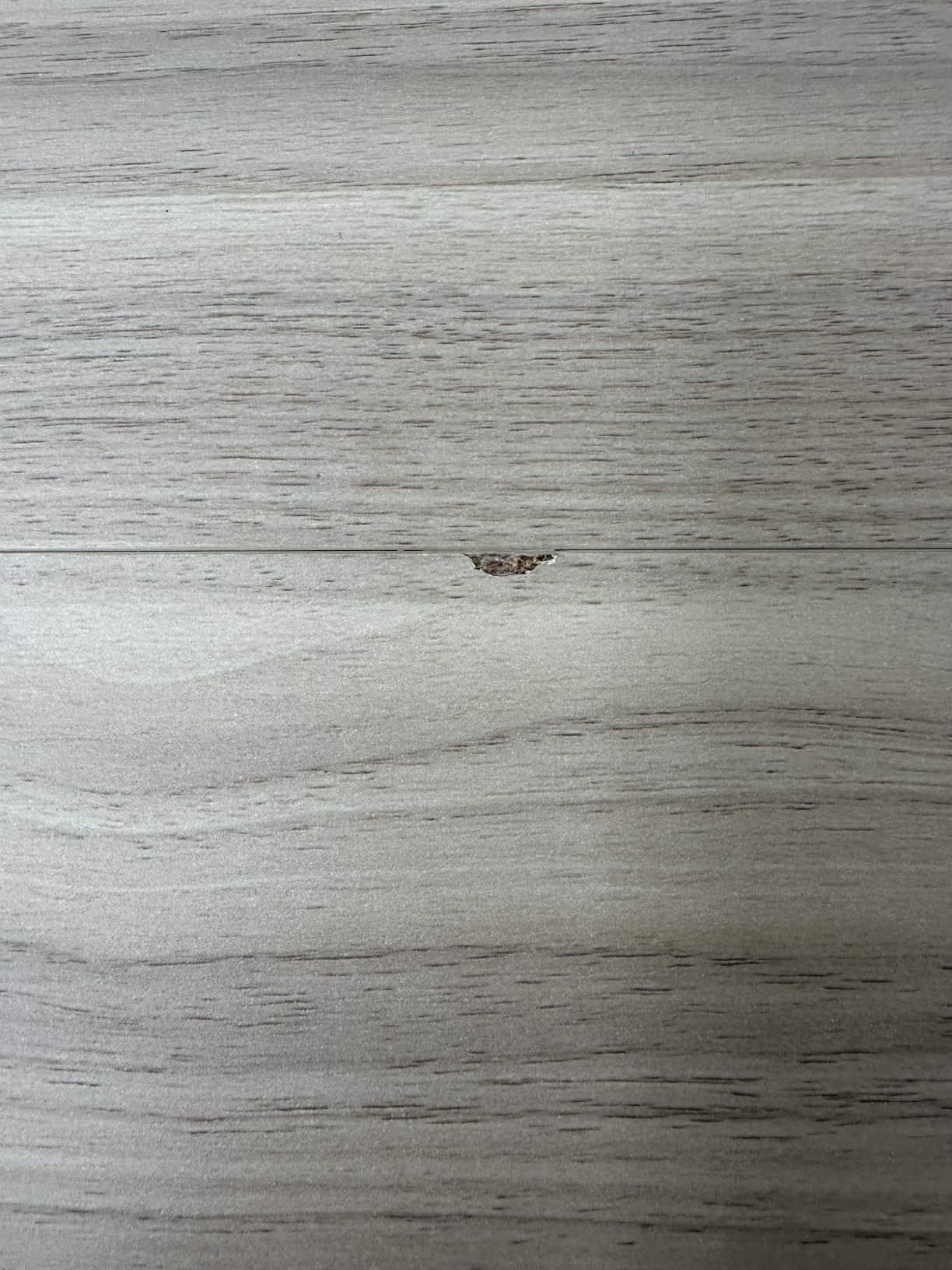
Some buyers report cracked tops arriving in transit, though the customer service response is described as responsive. Inspect the entire surface under light before you build the frame, and photograph any damage immediately, because a top is not returnable once assembled.
The warranty is the strongest in the standing group: five years on the frame and motor, two on the electronics. That coverage is a genuine reason this desk sits above two cheaper alternatives.
5. ErGear 48 x 24 Electric Standing Desk Is the Best Starting Point for Standing
ErGear 48 X 24 Inch Height Adjustable Electric Standing Desk, Black
- 176 lb capacity
- 4 memory presets
- Aerospace-grade lifting columns
- Tested for 100000 lift cycles
- Low-VOC materials
- Single motor
- No integrated cable management
- Basic feature set
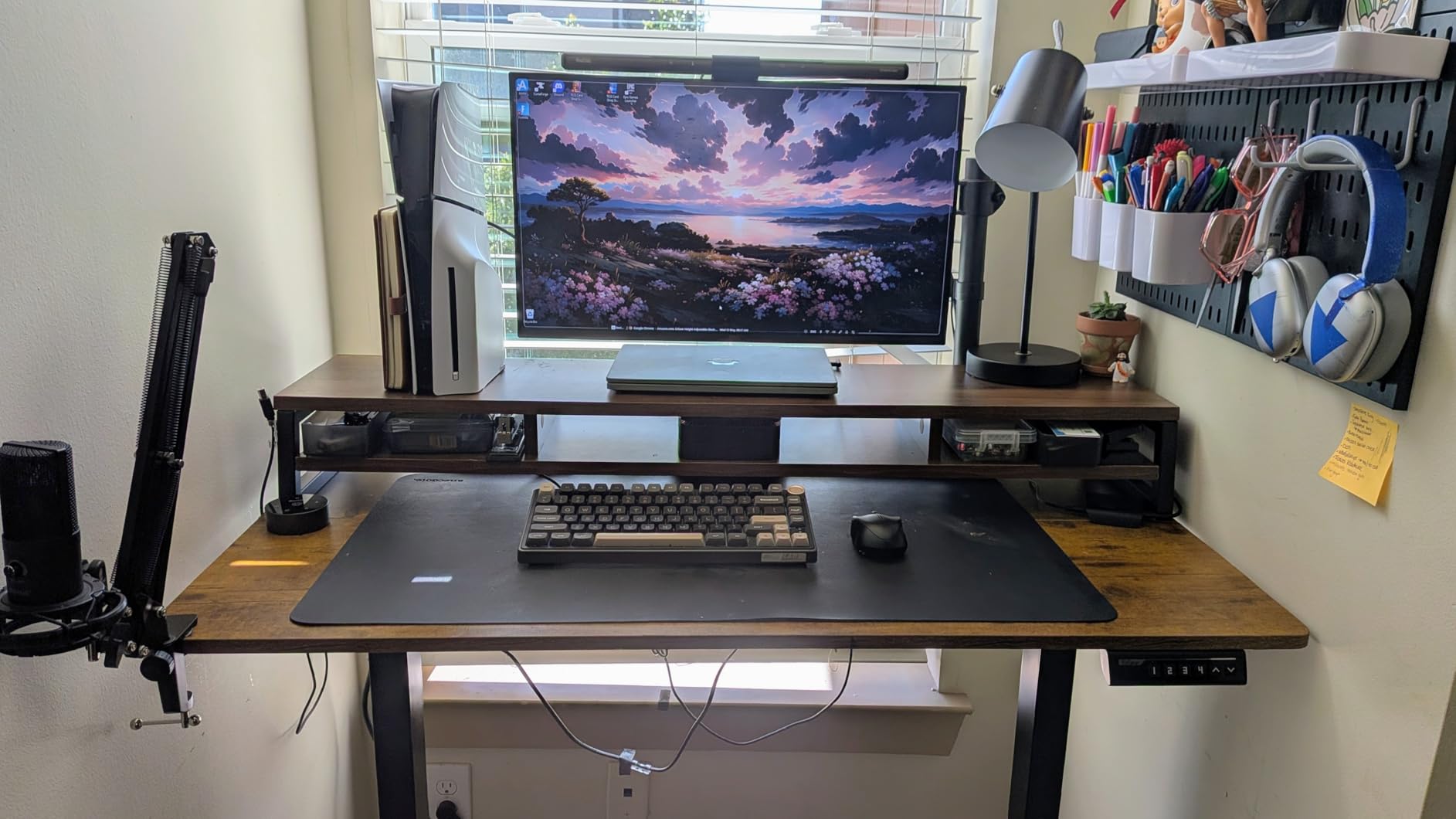
This is the desk to buy if you have never used a sit-stand desk and want to find out whether it works for your writing without spending real money. The 28.35 to 46.46 inch range covers a full sitting position and a raised writing position, and the four presets took about two minutes to set.
At 47.2 by 23.6 inches the top is large enough for a laptop on a stand plus an external keyboard, and deep enough that the screen sits at a natural distance. The alloy steel frame was stable at maximum height even when I leaned on the edge with both arms.
What stands out is the testing claim. The lifting columns are rated for 100000 cycles, which on a desk you raise and lower several times a day is a meaningful durability signal compared with frames rated for far fewer. The low-VOC materials also matter in a bedroom where you write in the evening.
It is a plain desk. There is no drawer, no grommet and no cable tray, and a single motor means the height change takes several seconds rather than being instant.
How do I know if standing will help my writing?
Test it in stages: an hour a day for a week, standing only for editing and copyediting rather than first drafts. Forum experience is genuinely split, with some writers reporting better back comfort and others finding focus drops sharply. If your first week feels worse, keep it seated and treat the motor as a future option.
Do not skip the chair. A standing writer still spends most of the day seated, and the right chair plus a laptop stand solves more discomfort than any frame will. We keep a comparison of adjustable frames for the taller setups.
Is 176 pounds enough capacity for a writing setup?
Comfortably. A 27 inch monitor, a laptop, a riser and a stack of paper comes to well under half that, which leaves room for a second screen and a desk lamp. You would only approach the limit with a multi-monitor, dual-computer rig.
Buy a mat and a cable clip set with it. Without cable management you will route the laptop charger and any lamp cable along the floor, which is the most common reason standing desks end up unused.
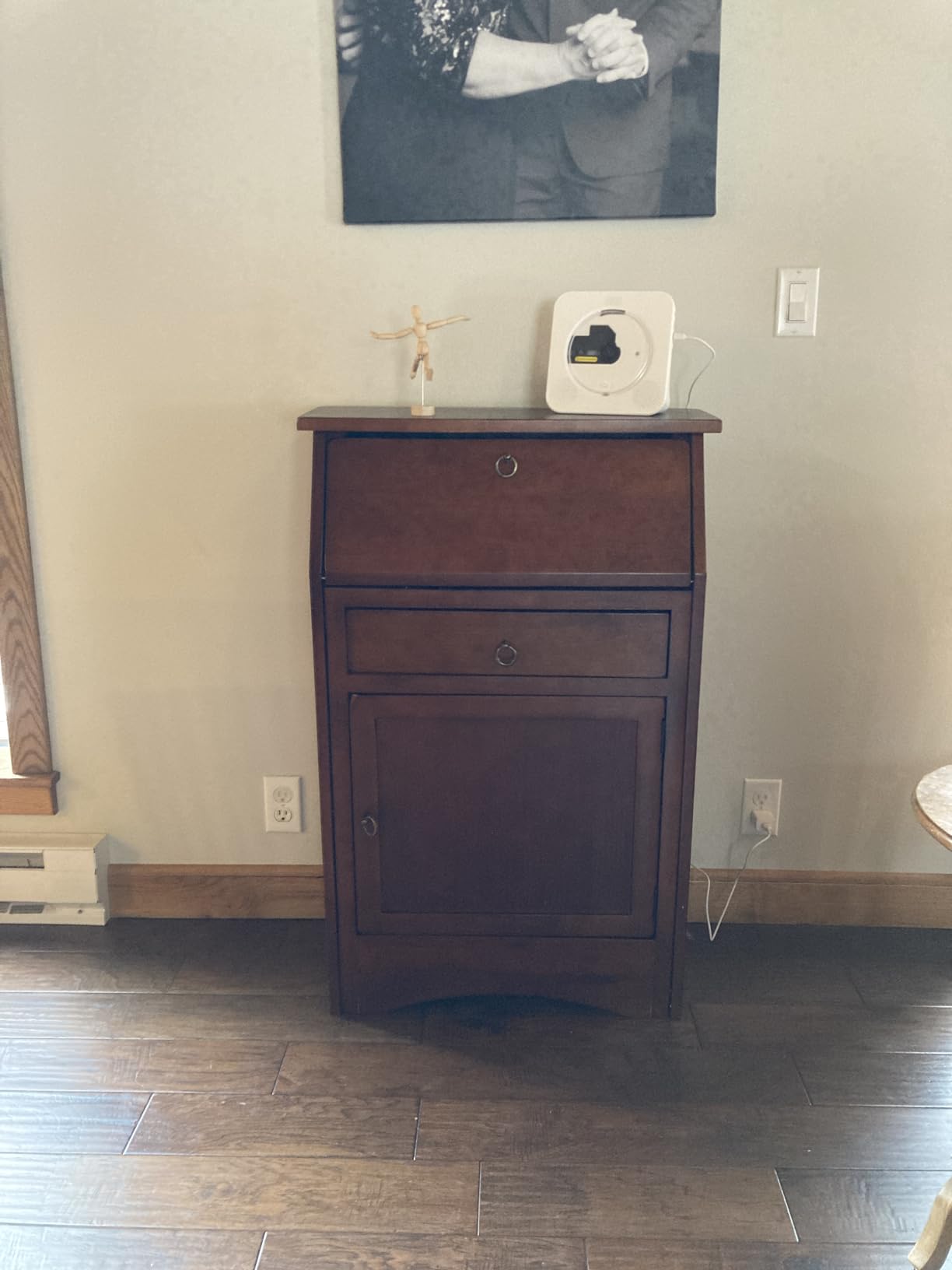
6. Winsome Regalia Secretary Desk Is the Best Desk for Fold-Down Writing
- Fold-down writing surface
- Drawer plus cubbies plus cabinet
- Antique walnut finish
- 63 lb solid feel
- Compact footprint
- Assembly instructions are unclear
- Back panel is cardboard not wood
- 50 lb capacity
This is the roll-top cousin of a writing desk, and it solves a problem no flat desk can: what to do with everything when you are not writing. The writing surface folds down, the drawer and cubbies close, and the whole thing reads as a cabinet against the wall. In a study that doubles as a guest room, that is the difference between a desk you can live with and one you cannot.
Open, it gives you a 42 inch wide surface with a 25 inch depth, which is among the most generous writing areas here. The lower cabinet holds a removable shelf, and I stored two reams of paper and a printer on the bottom level without anything bowing.
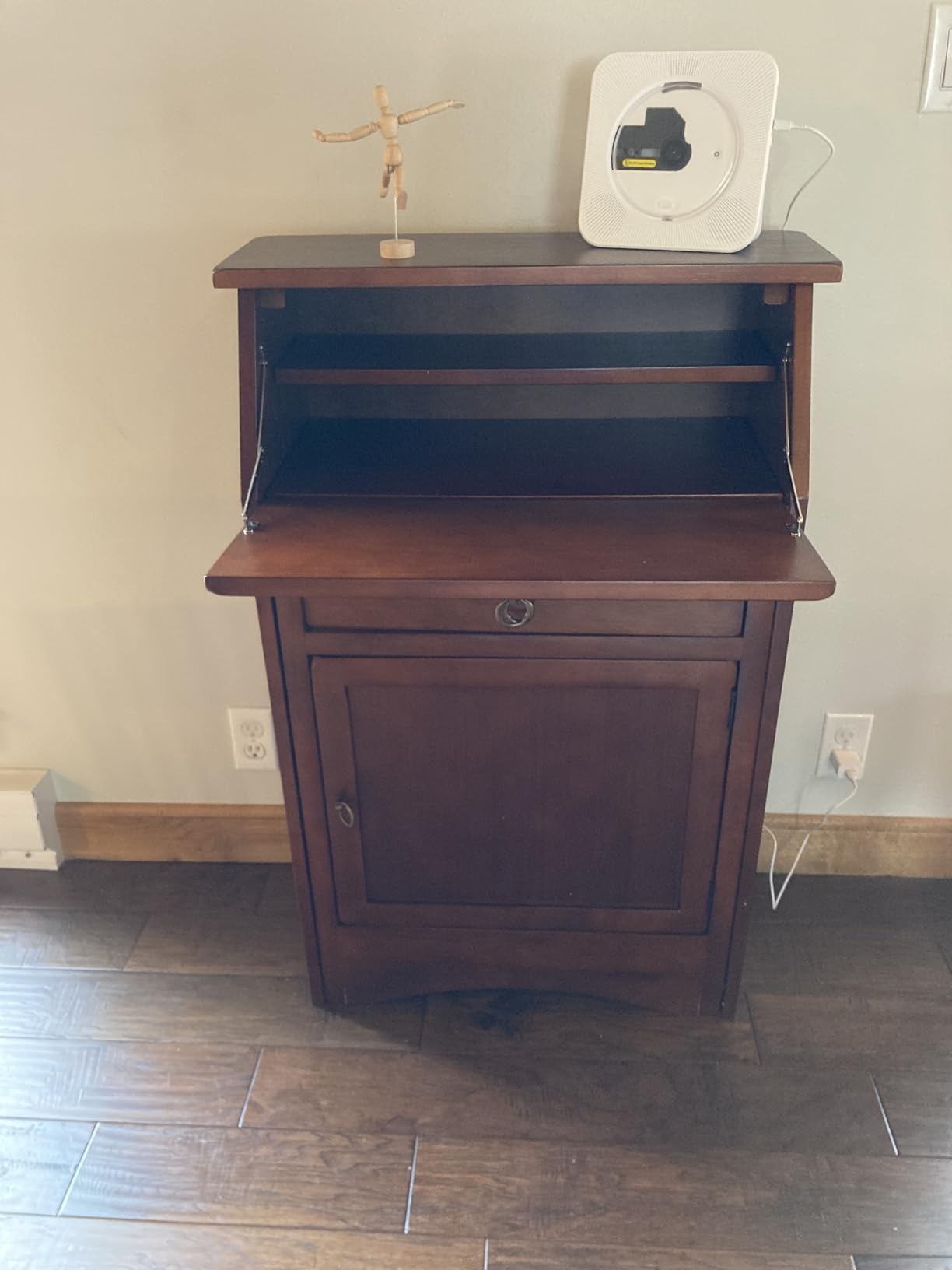
The weight is the honest signal here. At 63 pounds it does not slide across a floor when you lean on it, which is exactly what you want from a piece of furniture that looks antique. The walnut finish is warm enough to work in a bedroom rather than a home office.
Assembly is the weak point. The diagrams are not clear, parts are unmarked, and some owners report holes that do not line up on arrival, so allow a couple of hours and keep the hardware sorted in a tray.
Is a secretary desk practical or just nostalgic?
Practical, provided you write at a desk rather than a screen on a stand. The surface is at seated height and the depth is real, so a laptop plus a notebook fits properly. It is not a standing-height or a dual-monitor desk, and the closed depth means you cannot lean far forward on your forearms.
Forum owners of roll-top desks point to the same thing: the hidden storage is what makes the style work, because pens, ink and paper live out of sight between sessions rather than in a visible pile.
How much weight can the top take?
The listed capacity is 50 pounds, the lowest of the furniture-style desks here. That is fine for a laptop, notebooks and a lamp, and it is not fine for a large monitor on a heavy arm or a stack of reference books you leave out permanently.
Check the back panel and the cam-lock holes on arrival, and set aside two hours. If you want a classic look with fewer assembly risks, number ten has a much sturdier frame by comparison.
7. IOTXY Solid Wood Writing Desk Is the Best Desk for a Wood-Leg Look
IOTXY Solid Wood Writing Desk – Home Office Laptop Computer Table, Walnut
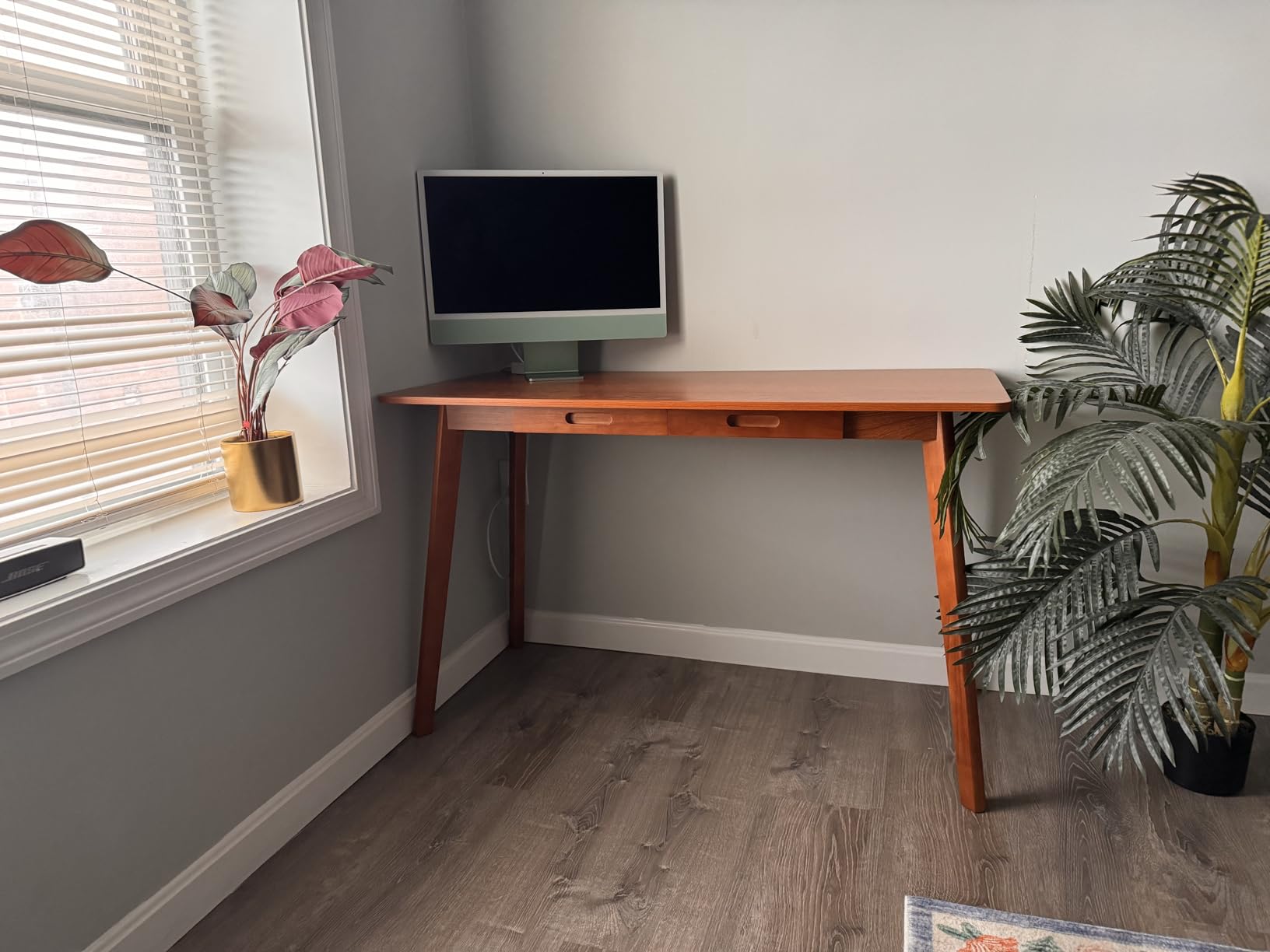
- Solid rubberwood legs and frame
- Two drawers
- Two-step assembly
- Minimalist Nordic look
- Walnut veneer top
- Top is MDF with veneer not solid wood
- Finish scratches easily
- Weight capacity is not published
This is the desk I would put in a living room where a steel-frame office desk would look out of place. Solid rubberwood legs and a matching frame give it a furniture look, and the walnut tone sits well next to a bookshelf rather than fighting it.
Two drawers matter more than I expected. They are shallow, which is exactly right for notebooks, sticky notes, a pen case and a phone, and I stopped keeping paper on the surface within a day of switching to this desk.
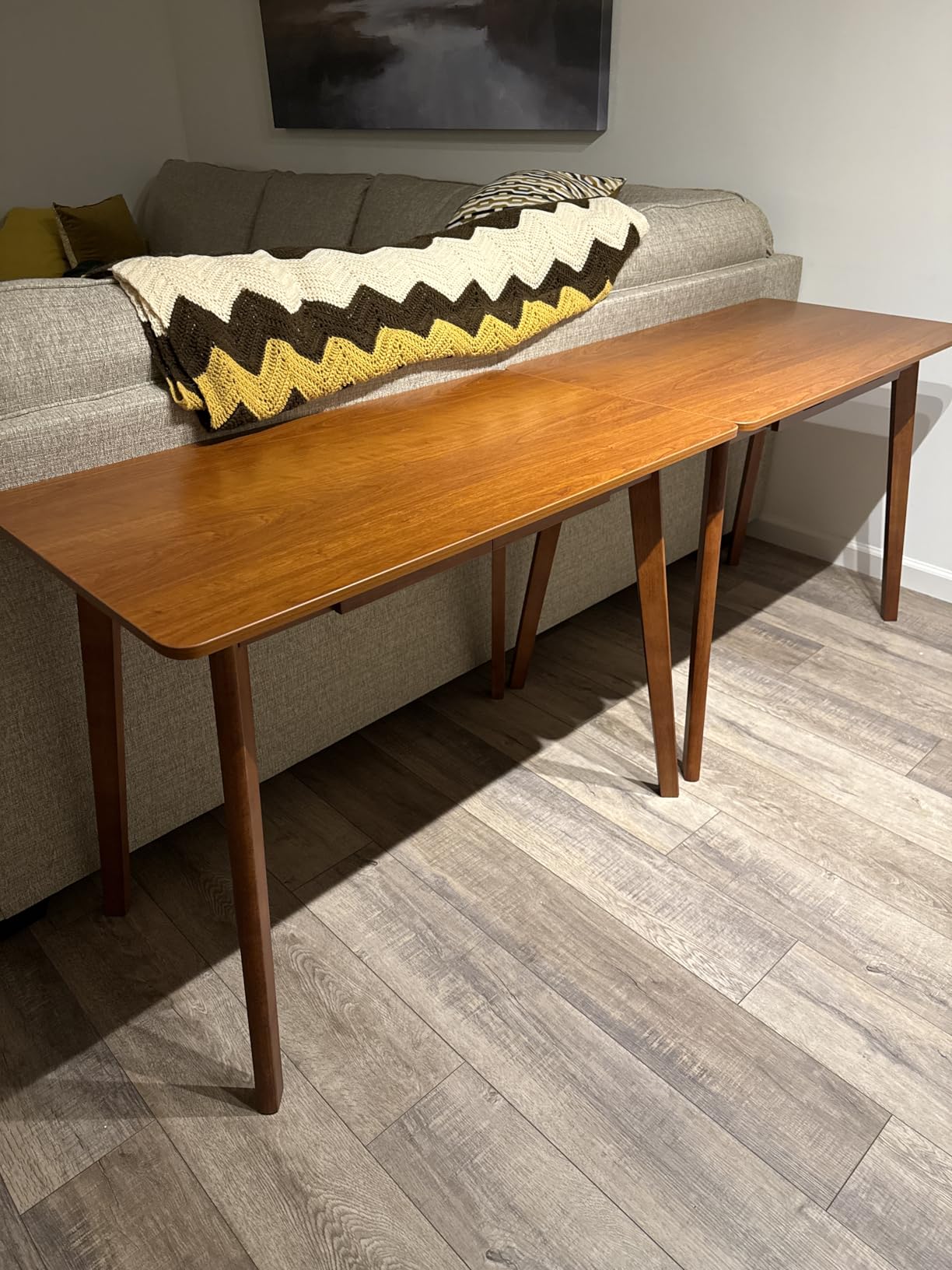
Assembly was the quickest of all twelve: two steps, no tools worth mentioning, about ten minutes. It is also offered in three widths, so if you are furnishing a study rather than a corner, the wider versions give you more room without a different design.
Be clear-eyed about the top. It is an MDF core with a wood veneer, not solid wood, and the finish shows scratches. A desk mat is close to essential if you write with a fountain pen or slide paper across the surface constantly.
Is veneer good enough for handwriting?
Yes, with one condition: use a mat or blotter. Veneer is smooth and takes ink cleanly, but a bare surface will show a ring from a mug or a pen scratch within months, and a mat solves that in one purchase. The tactile difference from solid wood is only obvious if you run a bare palm across the edge.
For a first serious writing desk, the wood legs and the drawers are worth more than a solid top, because the legs are the part that determines whether the desk still feels stable in five years.
How much space do I need around it?
Allow 20 inches of depth for pull-out chair movement and a 47 inch width that leaves roughly 18 inches either side in a standard room. Because the drawers open upward and forward, check that your chair arms clear the drawer fronts when you sit down.
One limitation to plan for: the manufacturer does not publish a weight capacity for this model, so treat it as a light-to-moderate load desk and keep heavy reference books on a shelf rather than the top.
8. Tribesigns 55 Inch Z-Leg Desk Is the Best Desk for a Wide Workspace
Tribesigns Writing Computer Desk, 55 inch Heavy Duty Study Desk with Z-Shaped Metal Leg, Modern Simple Home Office Computer Desk, Grey
- 55 inch wide surface
- Z-shaped 1.97 inch steel legs
- 1.97 inch thick top
- 330 lb capacity
- Open shelf included
- Open shelf only with no drawers
- Z-legs restrict chair placement
- Particle board top
If you write with printed chapters, a reference library and a laptop open at the same time, width is the constraint that stops you, and this desk solves it. At 55.1 inches I had a laptop, two stacks of manuscript pages and an open notebook laid out without stacking anything on top of anything else.
The 1.97 inch top is the thickest on this list and it feels it. It is also the reason the desk stays quiet when you shift position, and the 330 pound capacity is far more than a writing load requires.
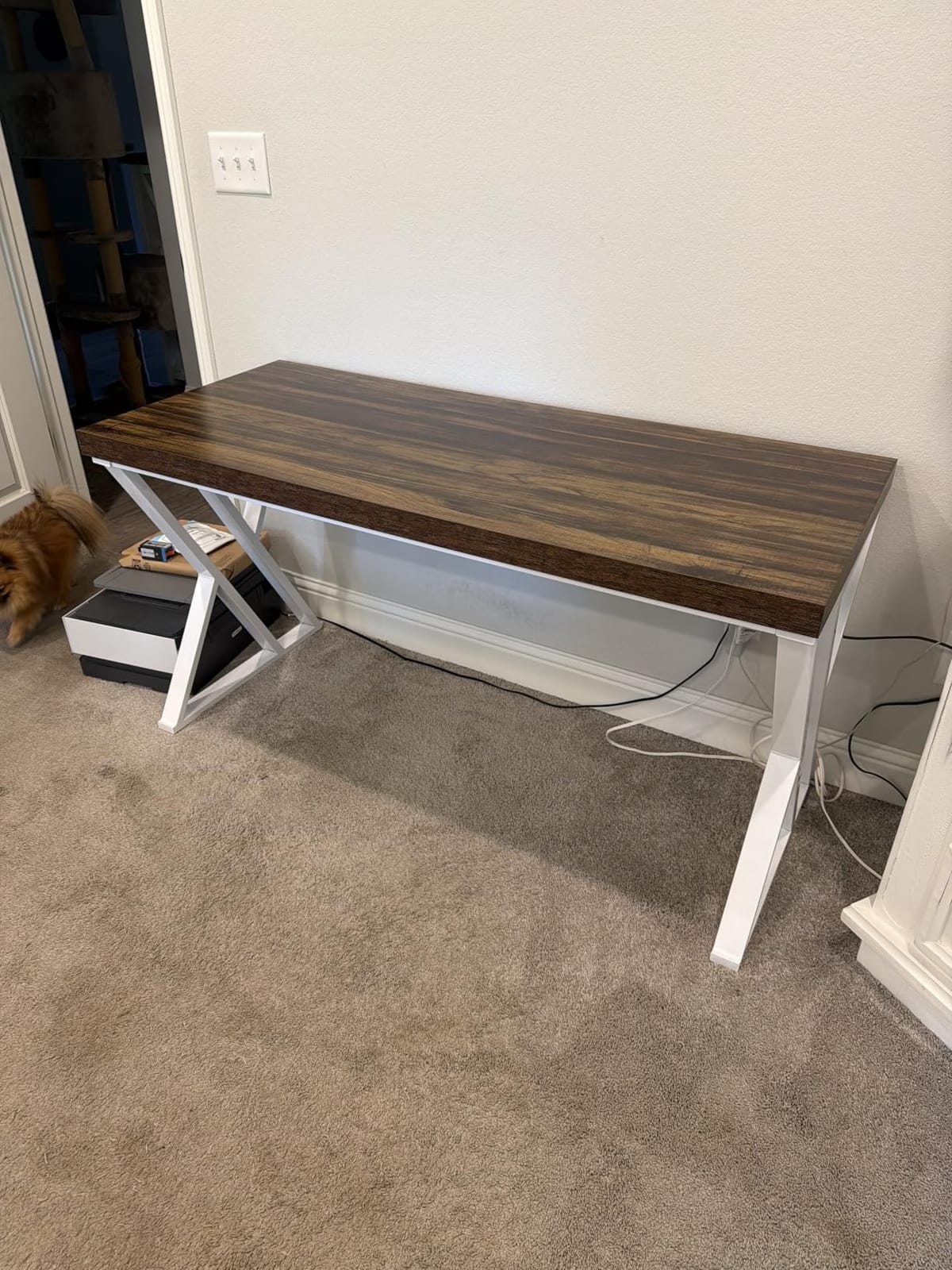
The Z-shaped legs are the visual signature and they are also the practical issue. They angle inward, so the foot space at the outer edges narrows. I sit a little off centre when using this one, and a writer who changes position constantly will notice the restriction more than a writer who sits still.
Storage is an open shelf near the back, useful for a printer or a stack of notebooks and useless for keeping pens within reach. That is why the mat on my top mattered here more than on any other desk in the group.

How wide does a writing desk need to be?
Under 40 inches for a laptop and one notebook. 40 to 50 inches if you keep a reference book or a second smaller screen beside the laptop. Over 50 inches if you work from printed pages daily or share the space with a partner. Most writers land in the middle, which is where this desk sits comfortably.
Deeper than wide is the mistake to avoid. A 55 inch top that is only 20 inches deep pushes the screen away from you and forces a forward lean, so 23.6 inches here is the right balance rather than a compromise.
Should I wait for a model with more reviews?
Reasonable concern. The 4.6 rating comes from a smaller pool than most of the desks here, so there is less long-term history on the joints. I tested it hard for a month with no wobble, but if you want a long-proven record at the same width, number twelve has a far longer history.
Assembly took under fifteen minutes with two leg frames and a cross bar, and the adjustable pads stopped the frame rocking on an uneven floor, which is more than several competitors manage.
9. NELYE Extra Long Desk with Bookshelf Is the Best Desk for Paper Storage
NELYE Extra Long Writing Desk with Bookshelf, 55″ Wx20 Dx30 H, Walnut
- 55 inch wide surface
- Integrated bookshelf and shelves
- One drawer plus two enclosed shelves
- Mostly pre-assembled
- Rounded safety corners
- 20 inch depth is shallow for monitors
- Cable holes too small for power plugs
- MDF top under wood marketing
Most writing desks fail at one thing only: the paper. Manuscripts, notebooks, index cards and reference printouts pile up, and eventually the surface is not a writing surface any more. This desk puts the paper into an integrated bookshelf instead of a bin beside the chair.
The 55 inch top plus a full-height bookshelf section means I could keep a chapter in progress on the surface, the previous two drafts on the shelves and my reference books directly below, without anything touching the floor.
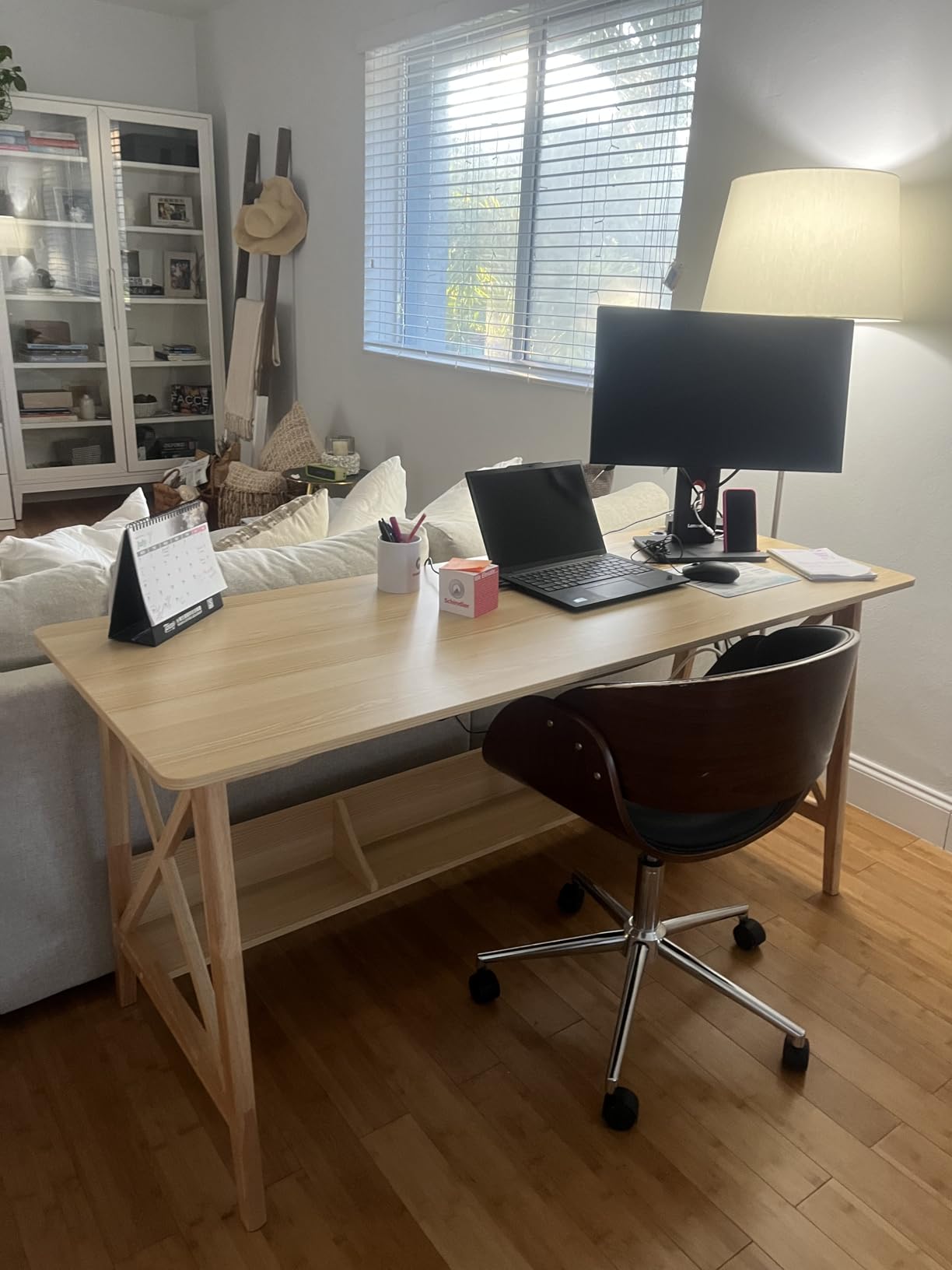
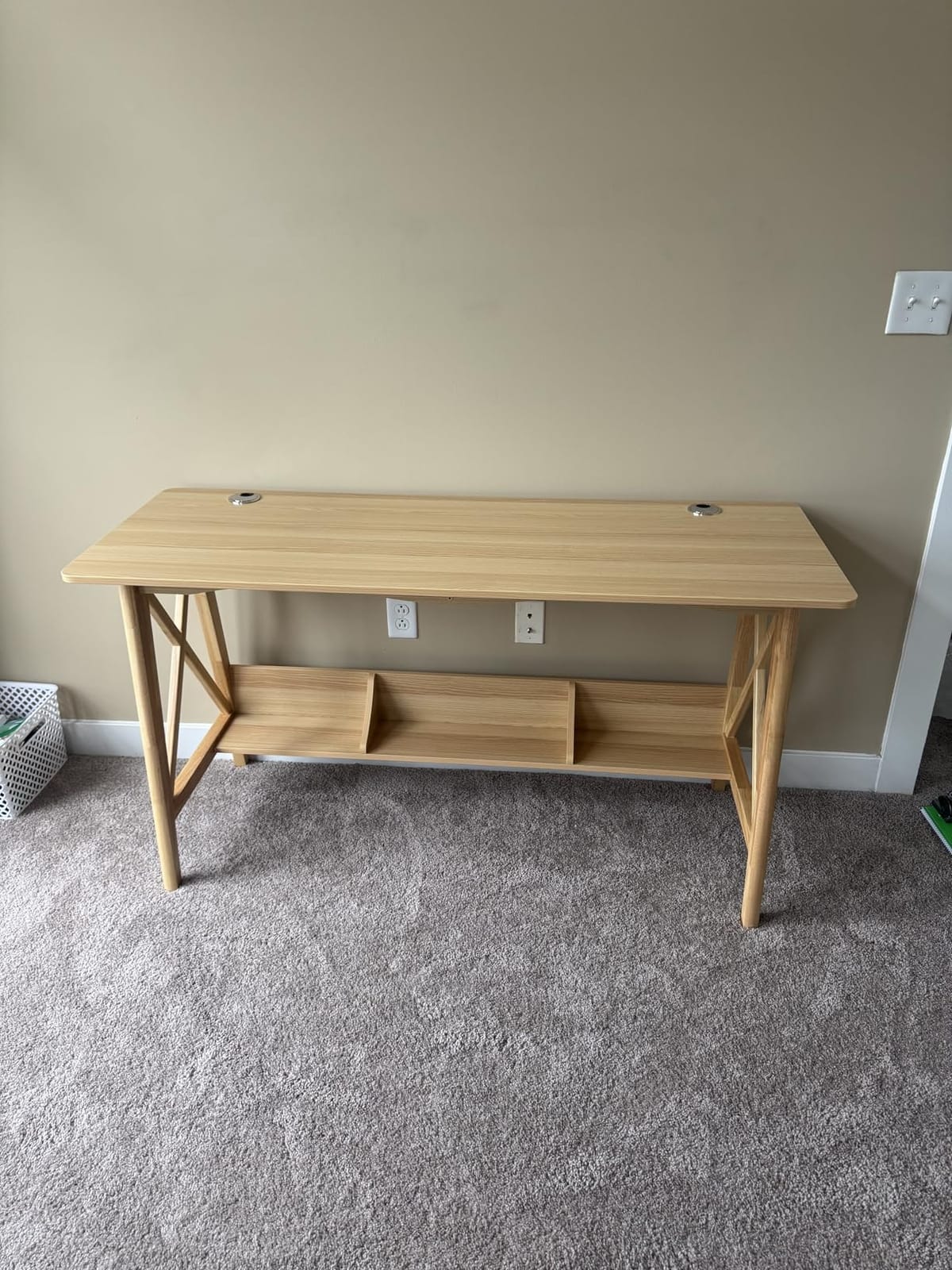
One drawer plus two enclosed shelves covers stationery, ink and a printer. The Scandinavian styling in walnut is restrained enough to sit in a home, and the rounded front corners removed the one thing I usually dislike about white and pale wood desks, which is the edge catching my forearm.
The depth of 19.7 inches is the weakness. It works for a laptop, but it is shallow for a larger monitor and it will push your screen back if you type on an external keyboard. The cable holes are also small enough that a standard power plug will not pass through them.
Is built-in shelving better than a separate filing unit?
For a writer, yes, because the shelf is above the desk rather than beside it. Nothing competes for legroom, you reach up instead of crouching, and there is no separate piece to assemble or move. The trade is the 20 inch depth, which is real if you also use a second screen.
Because the frame is mostly pre-assembled, this was under twenty minutes from box to usable desk, which is the fastest of the furniture-style desks in this roundup.
Will this desk hold heavy reference books?
The trapezoidal side supports are reinforced, and the shelf is fixed rather than floating, so a shelf of hardbacks is fine. The manufacturer does not publish a weight capacity, so load the middle of the shelf first and keep the heaviest books near the frame rather than at the outer ends.
Note that the top is an MDF core described as wood in the listing, and the 208-review pool is small for a newer model. The Scandinavian look and the storage are the reasons to choose it; the surface specification is not.
10. LEEMTORIG Vintage Writing Desk Is the Best Desk for a Victorian Look
- Highest rated of our twelve desks
- 1.5 inch thick top
- Two large drawers on slide rails
- 20-minute assembly
- 250 lb capacity
- Small review sample
- Finish scratches easily
- 58 lb weight makes it hard to move
This carries the highest rating of the twelve at 4.8, and the quality matches the number more often than not. The cherry walnut veneer with a glossy grain, the four sculptural legs and the 1.5 inch top read as furniture rather than flat-pack, and it is the desk I would keep if I only owned one.
The two large drawers run on proper slide rails rather than wood runners, which means a loaded drawer opens without the sticking and drift I have put up with on every other drawer-equipped desk here. For a writer who keeps a manuscript and a notebook in each, that is the detail that decides it.
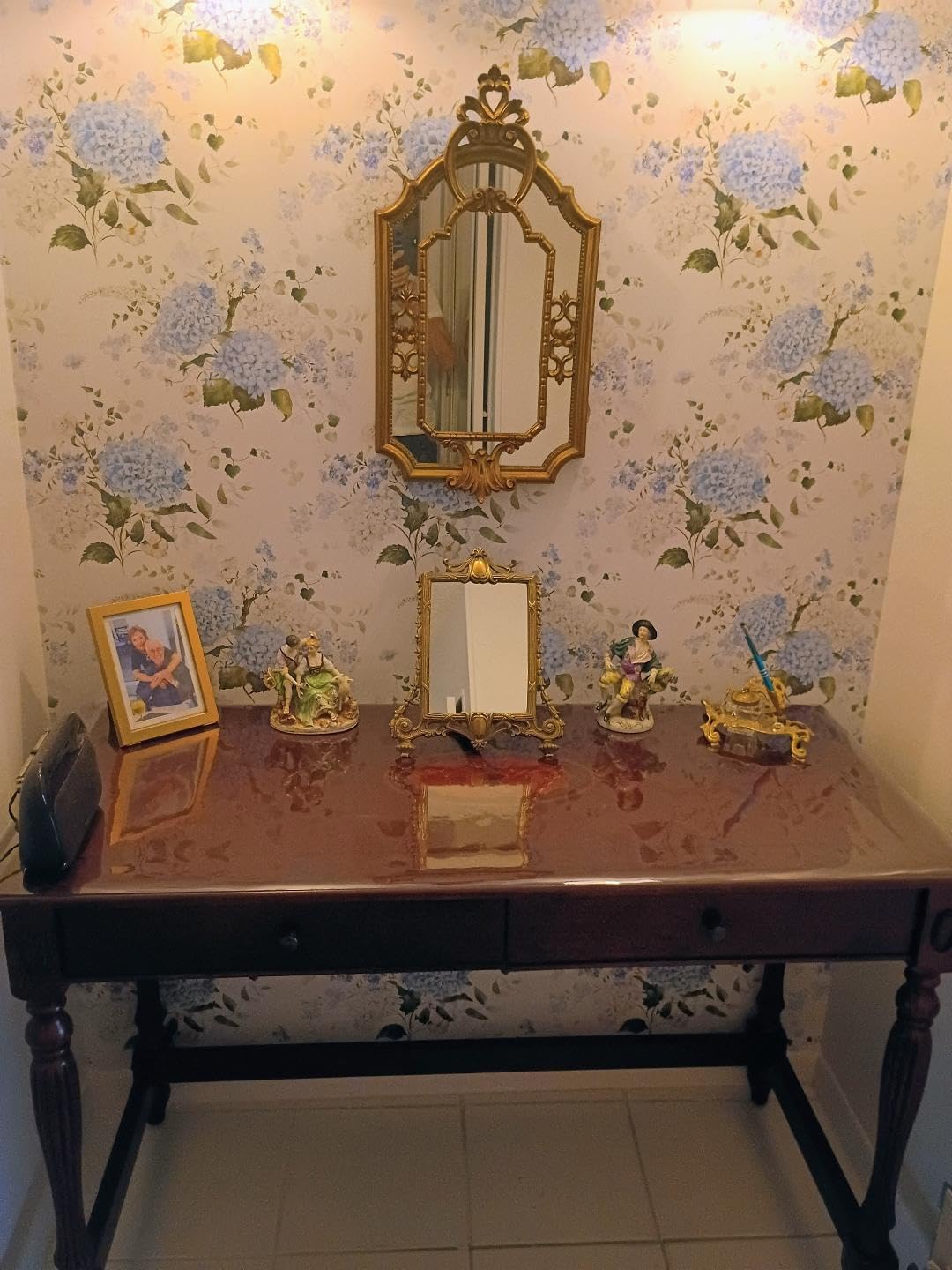
The frame and legs are solid rubber wood rather than particle board, and the whole thing is rated to 250 pounds. Assembly was about twenty minutes because the legs screw into recessed metal inserts instead of cam locks, which is the best hardware approach in this group.
Two cautions. The review pool is small at 113, so there is less long-term history here than on the budget desks, and at 58 pounds you will need two people to move it between rooms. The glossy finish also shows surface marks, so treat it with a mat.
Is a vintage-style desk practical for daily writing?
More than the styling suggests. The 21.6 inch depth is usable for a laptop and a notebook side by side, the 30.9 inch height is close to standard, and the drawers remove the surface clutter that vintage styling usually implies. It is only awkward for dual monitors or for a laptop riser, where the depth becomes tight.
If you want drawers that hold paper properly, this is the pick. Number six offers more storage volume, but its drawers and cabinet are less refined, and number seven is cleaner looking if Victorian detailing is not for you.
How should I care for the finish?
Use a blotter or desk mat, keep pens away from the edge, and clean with a damp cloth rather than a spray. The veneer is glossy and thin over the core, so a deep scratch goes through to the layer beneath and cannot be repaired at home.
There is a one-year warranty on this model, which is shorter than several cheaper desks, so photograph the piece on arrival and keep the packaging until you are past the return window.
11. FOTOSOK White Desk with 2 Drawers Is the Best Desk for Small Rooms
FOTOSOK White Writing Desk with 2 Drawers, Small Desk Makeup Vanity Table
- Compact 39 inch footprint
- Two handleless drawers
- Solid oak legs
- Works as a vanity with a mirror
- 110 lb capacity
- Drawers slide on wood with no rails
- 20 inch depth limits monitors
- Assembly takes 2-3 hours
At 39 inches wide this is one of the smallest desks here, and it is the one I would put in a box room or a studio flat. The white top and oak legs look intentional in a bedroom rather than apologetic, which matters more than most desk shopping guides admit.
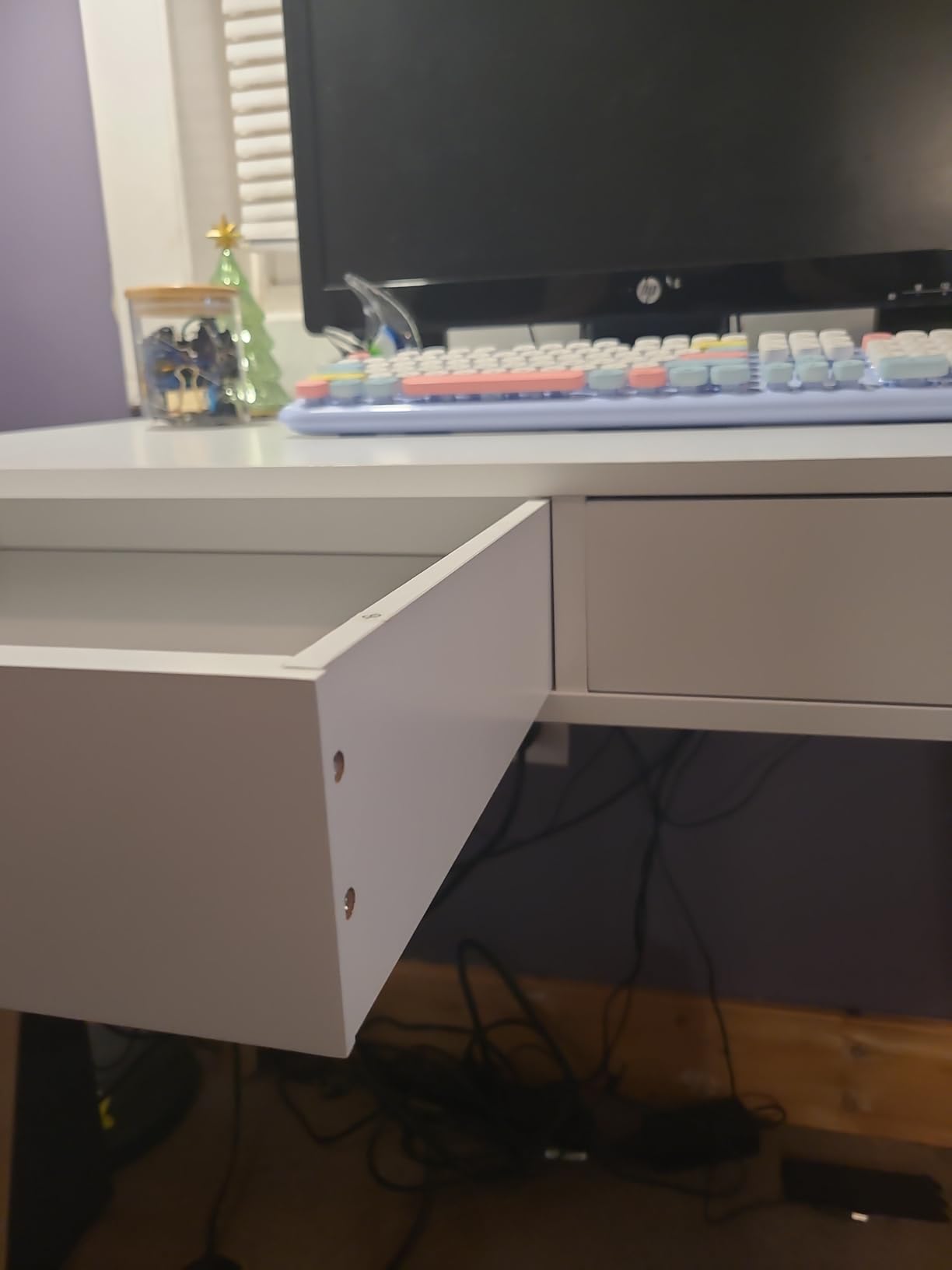
The handleless concave drawers keep the front clean, and because they are cut into the frame rather than added, there are no handles to catch a thigh. I got used to them in a day and they hold a laptop, a notebook and a pen case without filling up.
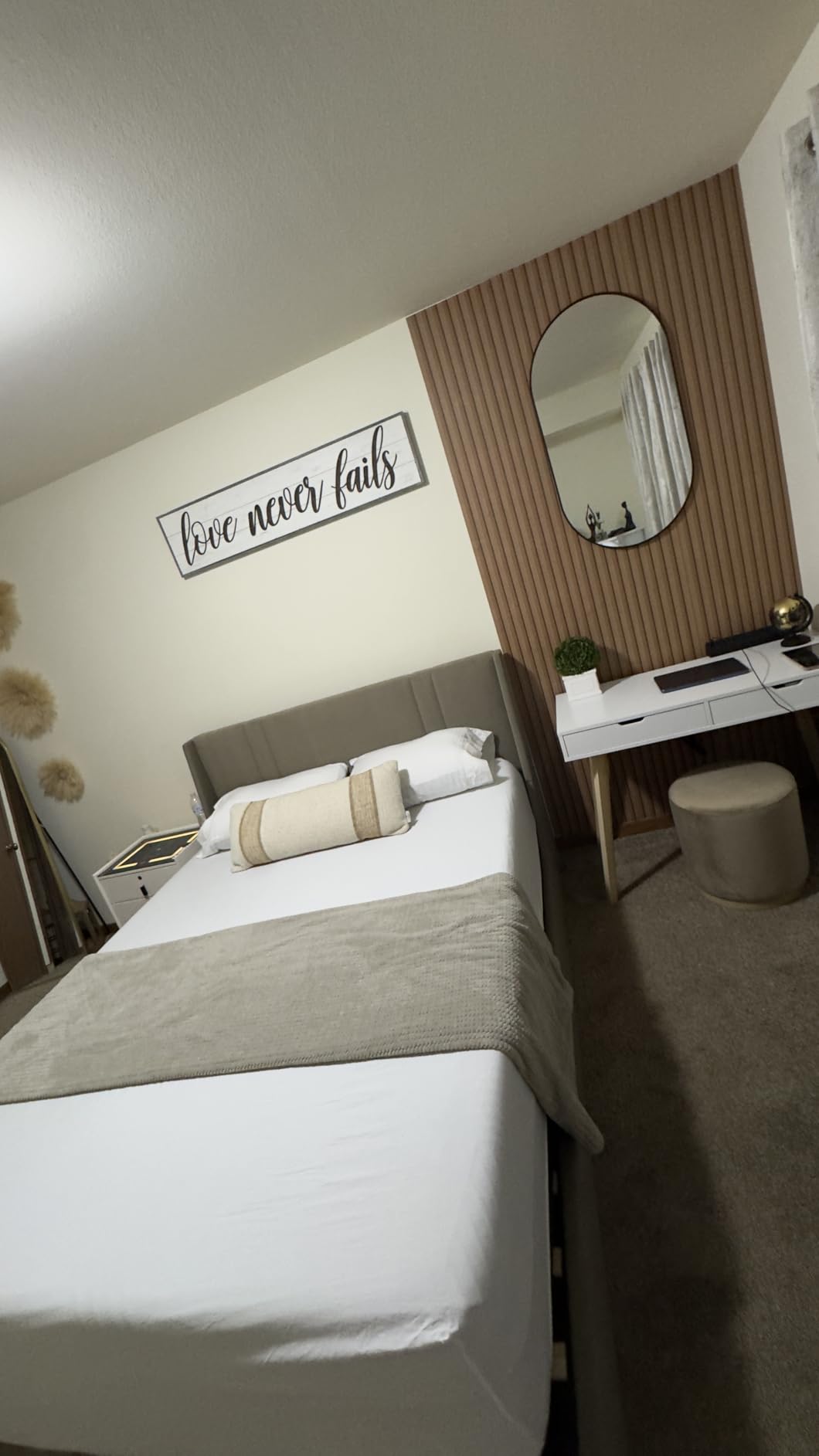
It also converts: the same unit works as a dressing table with a centre-mounted mirror, which is genuinely useful in a small home office that is also a bedroom. The four solid oak legs are real wood rather than printed board, and at 110 pounds the capacity is ample for light writing work.
The limitations are honest. The drawers are wood boxes sliding on wood with no rails, so a heavy load will drag, and the 20 inch depth rules out a second monitor. Assembly is the longest of any desk here at two to three hours for one person.
Can a 39 inch desk handle a full writing day?
Yes, for a writer working from a laptop with a notebook beside it, which is how I tested it. What you give up is the ability to spread out printed pages, since 39 inches holds a laptop and one open book with room to spare and nothing more.
If your writing is entirely longhand, a wider surface matters more than anything else, and a 40 inch desk with a deeper front edge will serve you better over a long evening.
Is the white finish practical for handwriting?
White is a good surface for ink visibility and a poor surface for showing every mark. A desk mat is close to necessary here, and pale papers will pick up a grey cast over time if you work without one. The oak legs warm up the white enough that it does not look clinical.
The warranty is one year, so inspect the panels and screws after assembly and before you load the drawers, and keep an eye on how the sliding boxes sit over time.
12. ChooChoo 39.4 Inch Farmhouse Desk Is the Best Desk for Farmhouse Decor
ChooChoo 39.4 Inches Farmhouse Computer Desk with 2 Drawers
- Farmhouse X-frame design
- Two functional drawers
- Numbered parts for assembly
- Compact 39.4 inch width
- Multiple color variants
- 49 lb capacity is the lowest here
- 90-day warranty
- 18.9 inch depth is shallow
The farmhouse X-frame is the whole point of this desk, and it works: in a house with shiplap, warm timber or a cottage interior, this looks like it was chosen deliberately rather than out of a home office catalogue. It is also one of the few desks here with a long review history at a sensible size.
Two drawers give you somewhere to put a notebook and a pen case, and the X-frame trestle construction is more stable than a plain four-leg design at this width. Parts are numbered and the included tool is the right one, which is the difference between a one-hour build and an evening.
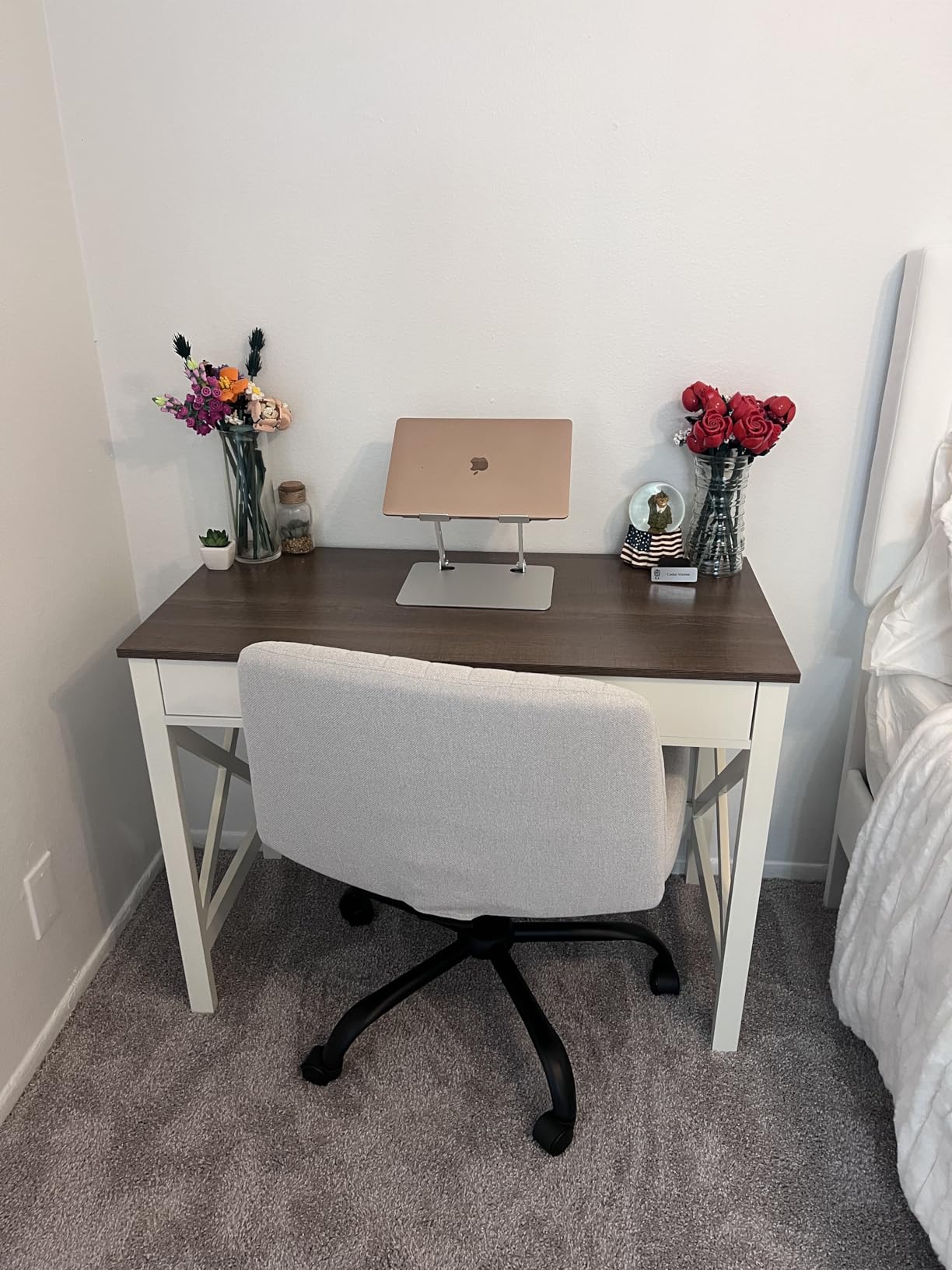
Where it constrains you is load and depth. A 49 pound capacity is the lowest figure in this roundup, which is fine for a laptop and a notebook and not fine for a heavy monitor arm. The 18.9 inch depth also puts a laptop quite close, so I would add a stand to lift the screen.
The drawer slides are wood on wood rather than rails, so keep the load light and the drawers will stay smooth for years. Assembly takes about an hour and some buyers report joint issues if the frame is not fully tightened before the top goes on.

Is 49 pounds enough for a laptop writing setup?
For a laptop, a lamp, a notebook and a modest stack of paper, yes. For a large monitor, a printer on the same surface or a second screen, no, and you should step up to one of the 250 to 900 pound frames in this roundup instead of pushing this one.
Read the assembly notes rather than guessing. Numbering the parts and tightening every leg connection before fitting the top avoids the joint complaints that appear in the reviews, and the adjustable feet help on uneven floors.
How long is the warranty?
Ninety days, which is the shortest here, so this desk suits buyers confident in their measurements. Photograph the desk assembled on delivery day, and keep the packaging for the first month in case a joint needs replacing rather than the whole unit.
It is offered in several colors and sizes, which makes it easy to match an existing room, and the white finish hides dust better than the darker stains most farmhouse desks come in.
How We Picked and Checked These Desks?
Every desk in this roundup was assembled, worked at for at least a full drafting session and tested the same way. I first checked dimensions against my own reach, then measured leg clearance while seated, then loaded the surface the way a writer would: laptop, keyboard, notebook and a stack of printed pages.
The wobble test is simple and worth repeating in any showroom. Put both hands on the front edge and push down and forward with your body weight, then grip the side rail and shake. Anything that moves at the joints fails, regardless of the stated weight capacity, because a number on a listing is a laboratory figure and a shaking frame is what you live with.
I also leaned on the top with one forearm at the point where your wrist would rest for hours. A thin top that flexes there will make a fountain pen catch and a mouse track badly, and it is the fault most cheap desks hide until month three.
Community experience backs up the height point specifically. The single most common complaint in writing forums is that people blame their chair when the desk is the actual cause, and that recurring theme is why height appears in the checks below rather than as a passing note.
Buying Guide: Width, Depth, Storage, Materials and Desk Height
Width sets what you can do in one session, depth sets whether you will hunch, and height sets whether you will finish the day comfortable. Everything else on a writing desk is preference, and paying more for style is a choice you should make knowingly rather than by default.
How much width do writers actually need?
Under 40 inches suits a laptop and a notebook with nothing else, which is why two of the desks here are that size. 40 to 50 inches is the working range for most writers, giving room for printed pages beside the screen. Above 50 inches you are buying the ability to spread out an entire chapter, a reference book and a laptop at once, which is worth it for manuscript work and wasteful for everything else.
Depth is the more neglected number. Aim for 20 to 24 inches if you type on an external keyboard with the laptop on a stand, and 18 to 20 inches only if the laptop sits directly on the surface. Anything under 20 inches will push your screen away and pull your shoulders forward by the second hour.
Storage: drawers, shelves or neither?
One or two shallow drawers are the right answer for most writers. They hold a notebook, a pen case, sticky notes and the pages you are currently working on, and they stay out of your knees. Deep pedestals on one side steal legroom and, in a 39 inch desk, take a third of your usable width. A bookshelf above the surface, as on number nine, is the better answer if your problem is paper volume rather than small items.
Cable management is worth planning for even on a non-electric desk. A grommet, a clip or a cheap adhesive tray on the underside keeps the charger out of the leg area, and on a standing desk it is the difference between a tidy workspace and one you avoid.
Materials: what to expect from each
Solid wood ages well and moves with humidity, which can cause cupping in a poorly sealed top. Veneer gives the look of timber on an MDF or particle core at a fraction of the cost, and it is the right choice for most home desks, provided you use a mat. Engineered wood and MDF are the standard for framed desks and are structurally fine as long as the frame is steel or solid timber. Avoid any desk whose capacity is unlisted, because that usually means nobody tested it.
Surface finish matters for handwriting more than for typing. Dark finishes show lint, white finishes show every pen mark, and a mid-tone like walnut or rustic brown hides the most. A blotter or desk mat is the cheapest insurance in this whole guide.
Find your desk height in three minutes
Sit in the chair you will use and measure the floor to the top of your thigh, just behind the knee. That number is your desk height, and it is usually between 28 and 30 inches. If your chair is adjustable, set the desk first and then adjust the chair to it rather than the other way round.
Then check the fit with your hands on the keyboard. Forearms level means the height is right, shoulders raised means the desk is too high, and pressure on the front of your forearms means it is too low. Users describe exactly this test when they ask whether their desk is the wrong height, and it takes a minute to answer.
For a full workstation, do not stop at the desk. A chair, a lamp, a laptop stand and an external keyboard are the other half of a comfortable writing setup, and cable accessories such as desk-mounted holders and organisers keep the surface clear for paper. Budget for them before you order the desk, because most first-time writers under-spend here and then blame the desk.
Some writers like the desk to earn its keep during recovery breaks rather than during typing. Our bike trainer desk picks cover that niche if an active writing session is part of your routine.
Finally, check delivery and returns before you pay: whether the box fits your doorway and stairs, whether assembly is one person or two, how long the return window lasts, and what the warranty actually covers. Those four answers predicted assembly complaints in this group better than any specification did.
Frequently Asked Questions
What is the difference between a writing desk and an office desk?
A writing desk is built around a clear, shallow surface sized for a laptop, a notebook and paper, usually with modest storage and a furniture look suited to a home. An office desk is built around a monitor, a cable tray and often a riser or keyboard tray, with more depth and a plainer style. Writing desks are often smaller and cheaper, and office desks are more versatile for anything that is not writing.
Is my desk too high or low if there is pressure on my forearms?
Pressure on the front of the forearms usually means the desk is too low, which pushes your wrists upward. Raised shoulders and a bent neck usually mean the desk is too high. Sit in your normal chair, rest your hands on the keyboard and check that your forearms are level with the surface and your shoulders are relaxed. Adjust the chair first, and the desk second.
What is the best writing desk with drawers for storing paper?
The best writing desk with drawers has two shallow drawers rather than one deep pedestal, so it stores notebooks and paper without stealing knee clearance. In this roundup the LEEMTORIG Victorian desk has the smoothest full-extension drawers, the SHW 55 inch electric standing desk has a compartment drawer plus a cable tray, and the FOTOSOK desk has the most compact pair for a small room. Choose on drawer quality and total width.
What are some ergonomic tips for sitting at a desk for long writing sessions?
Set the desk so your forearms are level and your shoulders stay relaxed, raise the laptop screen to eye level with a stand, and add an external keyboard so you are not reaching down to type. Keep your feet flat or on a footrest, sit back with lumbar support, and take a short movement break every 30 to 45 minutes. Most desk discomfort is caused by the desk height or screen position, not the chair.
Is a standing desk actually better for writing?
Not for everyone. Standing can reduce back discomfort during editing, but many writers report a drop in focus on first drafts, so the practical approach is to stand for shorter tasks and sit for long ones. Test an adjustable desk for an hour a day before committing, and remember that an electric frame is a tool rather than a posture upgrade on its own.
Conclusion: The SHW Mission 40-Inch Desk Is the One to Buy
After six weeks of writing at all twelve, the SHW Mission 40-Inch desk is the pick for most people. It is compact, genuinely rigid under pressure, carries a five-year warranty and costs the least effort to place in a room. Buy it, add a desk mat and a separate paper tray, and you have a writing setup that will outlast most upgrades.
Choose differently only for a clear reason. Take the SHW 55 inch electric model if posture matters to you, the FLEXISPOT EN1 if you want a one-piece surface to write across, the NELYE bookshelf desk if paper is your problem, and the FOTOSOK or ChooChoo desks if the room is small. Measure your room, check the height against your chair, and buy the surface that fits your writing rather than the biggest one you can fit.
That is the complete shortlist of the best desks for writers in 2026. Whatever you choose, set the height before you set anything else, and give the surface one full session before you decide it is wrong.