

Every autumn the same complaint shows up on gardening forums: the rake is fine, the leaves are fine, but the job takes twice as long as it should. Most of that frustration comes down to one overlooked choice, because the best garden rakes for leaves are not all built for the same yard. A wide plastic head clears a big lawn in a few passes, a narrow steel head works between perennials without tearing them out, and a telescoping handle is the difference between finishing the job and seeing a doctor the next morning.
We spent 2026 leaf season working through ten of the highest-rated leaf rakes on the market, raking the same test bed of lawn, flower beds and gravel paths with each one. What follows is a straight comparison of head width, tine material, handle range, weight and the design details that actually change how a rake feels after an hour of use. If your problem this season is leaves in the pool instead, our guides to the best pool cleaners for leaves and pool skimmer nets for leaves cover that side of the job.
Two things came out of that testing immediately. First, the cheapest-sounding option is often a two-tool kit in disguise, and the strongest all-rounder was not the widest head we tested. Second, most of the complaints we found are not about rakes failing, they are about people buying a rake for a yard that is not shaped like theirs. So each review below tells you who the tool suits and who should skip it.
Table of Contents
Top 3 Picks for the Best Garden Rakes for Leaves (October 2026)

TABOR TOOLS J16A Adjustable Rake
- Head expands 8 to 23 inches
- Handle telescopes 32 to 63 inches
- Galvanized steel tines
- Rubber grip

GreatBuddy Rake and Leaf Bags Combo
- 25-tine metal head
- Four lengths from 29 to 72 inches
- Two 53 gallon leaf bags included

Bully Tools 30 Inch Poly Rake
- 30 inch wide polypropylene head
- 68 inch fiberglass handle
- Made in the USA
- Rubber grip
Quick Comparison of All 10 Leaf Rakes
| Product | Specifications | Action |
|---|---|---|
| TABOR TOOLS J16A Adjustable Leaf Rake |
|
Check Latest Price |
 Oliynedy Adjustable Metal Leaf Rake Oliynedy Adjustable Metal Leaf Rake |
|
Check Latest Price |
 Bird Twig Narrow Head Leaf Rake Bird Twig Narrow Head Leaf Rake |
|
Check Latest Price |
 Buyplus Telescopic Leaf Rake Buyplus Telescopic Leaf Rake |
|
Check Latest Price |
| Bully Tools 30 Inch Poly Leaf Rake |
|
Check Latest Price |
 Oliynedy 11 Tine Metal Leaf Rake Oliynedy 11 Tine Metal Leaf Rake |
|
Check Latest Price |
 ORIENTOOLS Dual-Use Leaf Rake ORIENTOOLS Dual-Use Leaf Rake |
|
Check Latest Price |
| GreatBuddy Rake and Leaf Bags Combo |
|
Check Latest Price |
 Coopvivi 25 Tine Garden Leaf Rake Coopvivi 25 Tine Garden Leaf Rake |
|
Check Latest Price |
 Oliynedy 18 Inch Metal Leaf Rake Oliynedy 18 Inch Metal Leaf Rake |
|
Check Latest Price |
1. TABOR TOOLS J16A Adjustable Rake: the widest head range in the group
- Widest head expansion range we tested
- Handle locks at any length for multiple users
- Galvanized wire resists rust
- Folds to a flat package for storage
- Not built for concrete or heavy debris
- Steel handle weighs more than all-plastic rakes
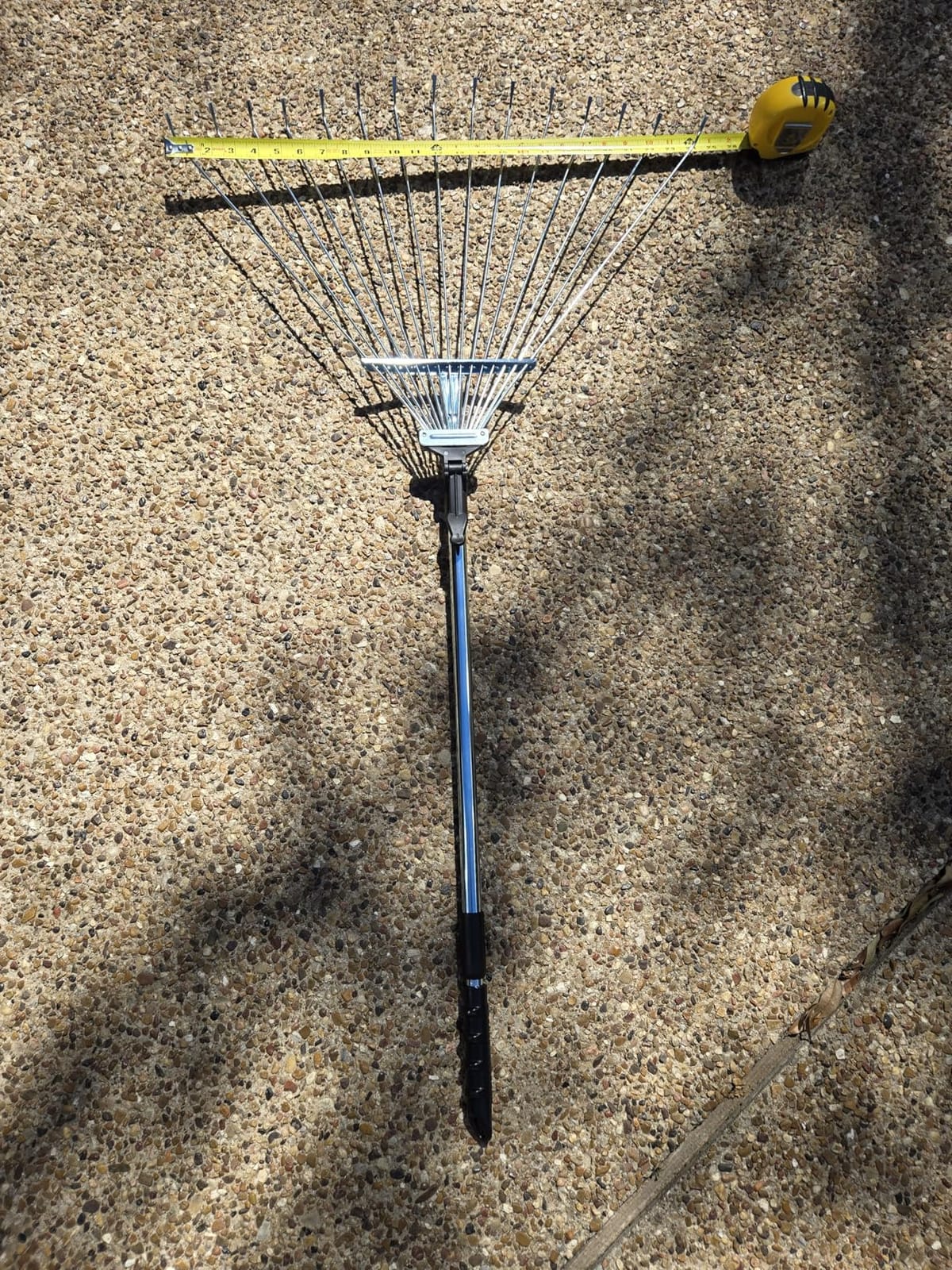
This is the rake we kept reaching for during testing, and the reason is the head. It expands from 8 inches to 23 inches and locks at any point in between, which means the same tool moves from shrub work to open lawn without a second purchase. Owners rate it 4.6 out of 5 across more than 2,500 reviews, and the praise that repeats most often is the range, not the price.
The handle telescopes from a folded 32 inches to a full 63 inches and locks at whatever length you set it to. That single feature handled three different people in our test, from a teenager to an adult who would rather not bend at the waist. Galvanized steel wire teeth are the reason it shrugs off a wet pile that would mat down a plastic head in a couple of passes.
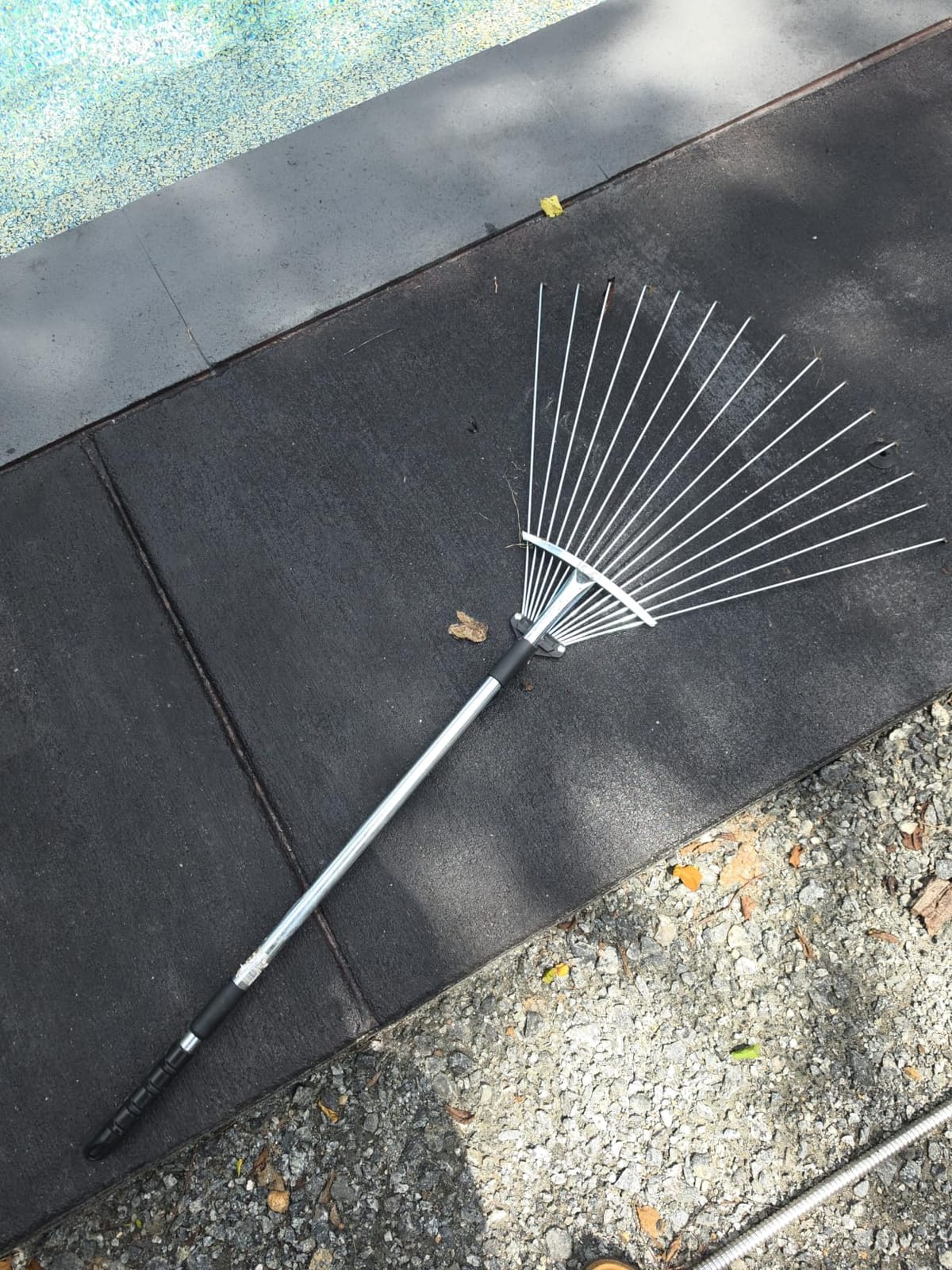
Storage is where it wins for most households. The whole thing collapses to a flat profile that fits a wall hook or a shed shelf, which matters more than it sounds if you also own a leaf blower and a mower sharing the same corner. The rubber grip stays comfortable through long sessions and does not slip when your hands are damp.
It is worth being straight about the limits. The manufacturer states plainly that this is not a cement or heavy-debris rake, and we found the tines will flex if you push into gravel rather than drag across it. The steel handle also adds real weight compared with the plastic models in this group, which is the tradeoff for the galvanized head and the locking mechanism.
Who this rake suits in fall
This suits households with a mixed yard, an open lawn plus beds, or more than one person sharing the tool. The adjustable head means one rake covers the open sweep and the tight work around shrubs, which removes the most common reason people end up with two rakes in the shed.
It also suits anyone who wants one tool to last several seasons without upgrading. The galvanized wire and the steel structure are the kind of materials that tolerate being dropped in a wet pile and dragged over rough ground without cracking.
Who should skip it
Skip it if you have shoulder or back problems and a very large lawn, because the steel handle adds weight on every stroke. It is also the wrong pick if your priority is digging or moving mulch, since this is a leaf rake and the tines are shaped for gathering, not scooping.
If you need something for concrete and hard surfaces or for genuinely heavy debris, choose a heavier fixed-head model instead. This one is built for lawn and garden work.
2. Oliynedy Adjustable Metal Rake: the top seller in the Rakes category
Adjustable Metal Leaf Rake Long Handle, Garden Rakes for Lawns Heavy Duty Leaves with Expandable Head 8-17″, Yard Women Kids Rake for Gardening RV Camping
- Lightweight at 16 ounces
- Head adjusts quickly from 9 to 17 inches
- Assembles in about a minute
- Top selling rake by sales rank
- Highest share of one-star ratings in this group
- Shorter head range than premium adjustable rakes
This rake holds the number one sales rank in the Rakes category on Amazon, and our testing explains why. It weighs 16 ounces, which made it the tool we reached for whenever the job turned into an hour of detail work around shrubs, and the head still expands from 9 to 17 inches when a wider pass is needed.
The metal head is one inch in diameter and painted black to resist rust and bending, and in our test bed it handled compacted debris and damp leaves without complaint. The handle runs from 30 to 58 inches using multiple sections with a center pole, so a taller user and a child can share it.
Assembly takes about a minute with no tools, and the whole thing collapses small enough to fit in a bag for camping or in the trunk of a small car. That portability came up more than once when people described taking it to a second property or a relative’s yard.
At 4.3 out of 5 across roughly 2,000 reviews, the rating is honest rather than glowing. Around 9 percent of reviews are one star, the highest share among the ten rakes we looked at, and those reviews cluster around hardware and handle section issues. Treat the joints as something to check after the first few uses.
What this rake is good at
The narrow end of the head range is the real strength here. At 9 inches it works under hedges, around small shrubs and along the edges of flower beds, which is exactly the job that makes people grab a different tool. Widen it to 17 inches when the lawn opens up and tall grass needs gathering.
Anyone who rakes with one hand free, or who has to move the rake between the house, the car and an outbuilding, will like how little space it takes. The 16-ounce weight is the lightest in this group by a wide margin.
Where it falls short
It is not the pick for a large property with deep piles of wet leaves, because a 17-inch maximum head means more passes than a 30-inch head would need. And if durability under hard use is your top concern, the one-star share suggests looking at a model with a thicker fixed handle.
Long-term owners should tighten the screw sections periodically. That is a five-minute job and it removes the most common complaint.
3. Bird Twig Narrow Head Rake: for beds, shrubs and tight spaces
Garden Leaf Rake, 8.5″ Head, 36-74 ” Adjustable Handle, Sturdy Steel Tines
- Reaches between pavers and perennials safely
- Solid tines resist bending under load
- 74 inch maximum reach cuts bending and kneeling
- Doubles as a gentle soil cultivator
- 8.5 inch head disappoints buyers expecting a full-size rake
- Too slow for heavy open-lawn work
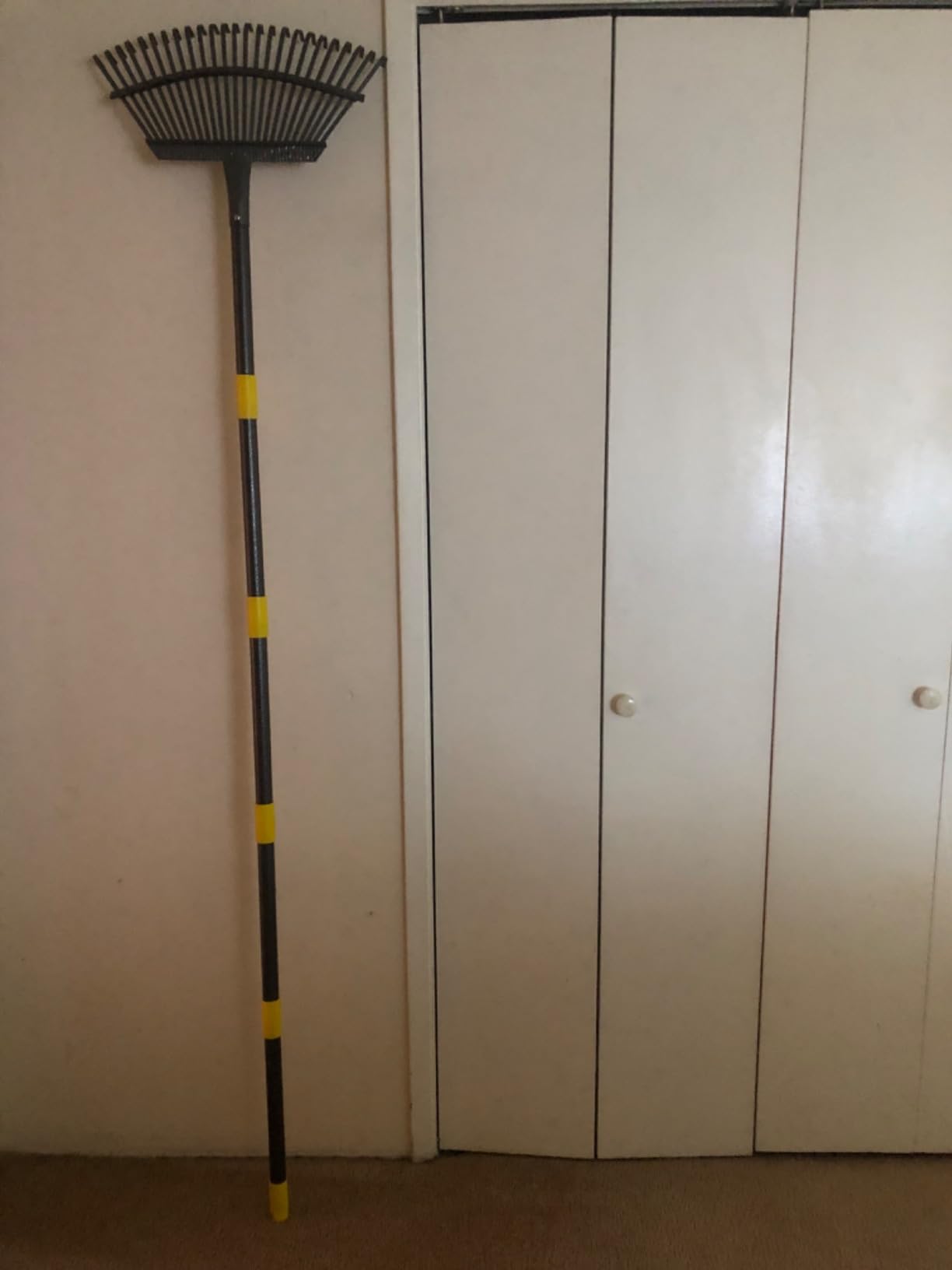
This is a detail rake, and the moment you stop treating it as a full-size tool it becomes one of the most useful things in the shed. The head measures 8.5 inches, which let us work between pavers, under a row of perennials and along a tight garden edge without touching a single plant. Reviewers describe the same thing in their own words.
The tines are the stand-out feature at 0.271 inch wide solid metal, far more substantial than wire tines. They held their shape through damp leaf piles that bent lighter tines, and the rust-resistant coated carbon steel head survived being left out in damp ground between sessions.
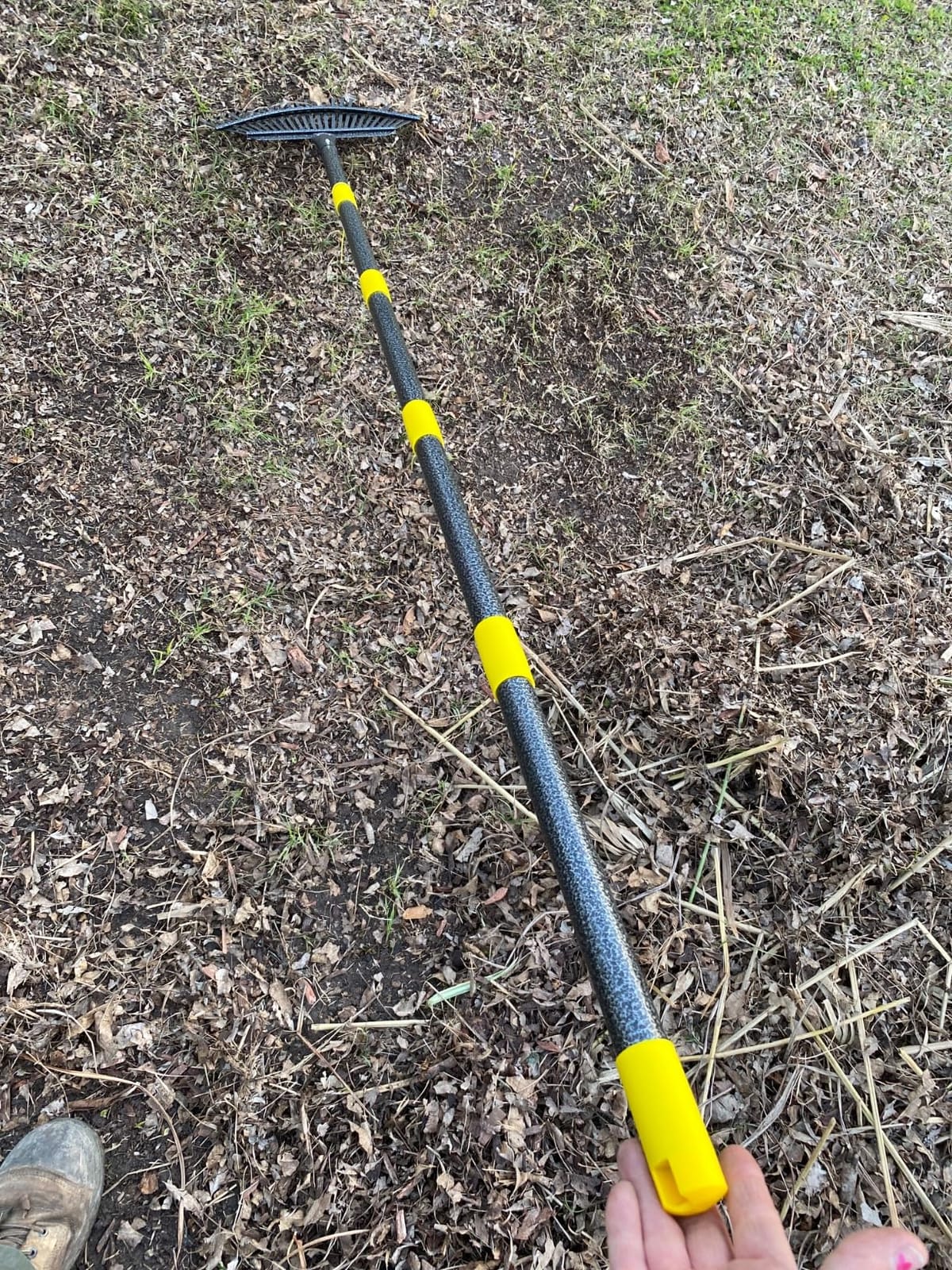
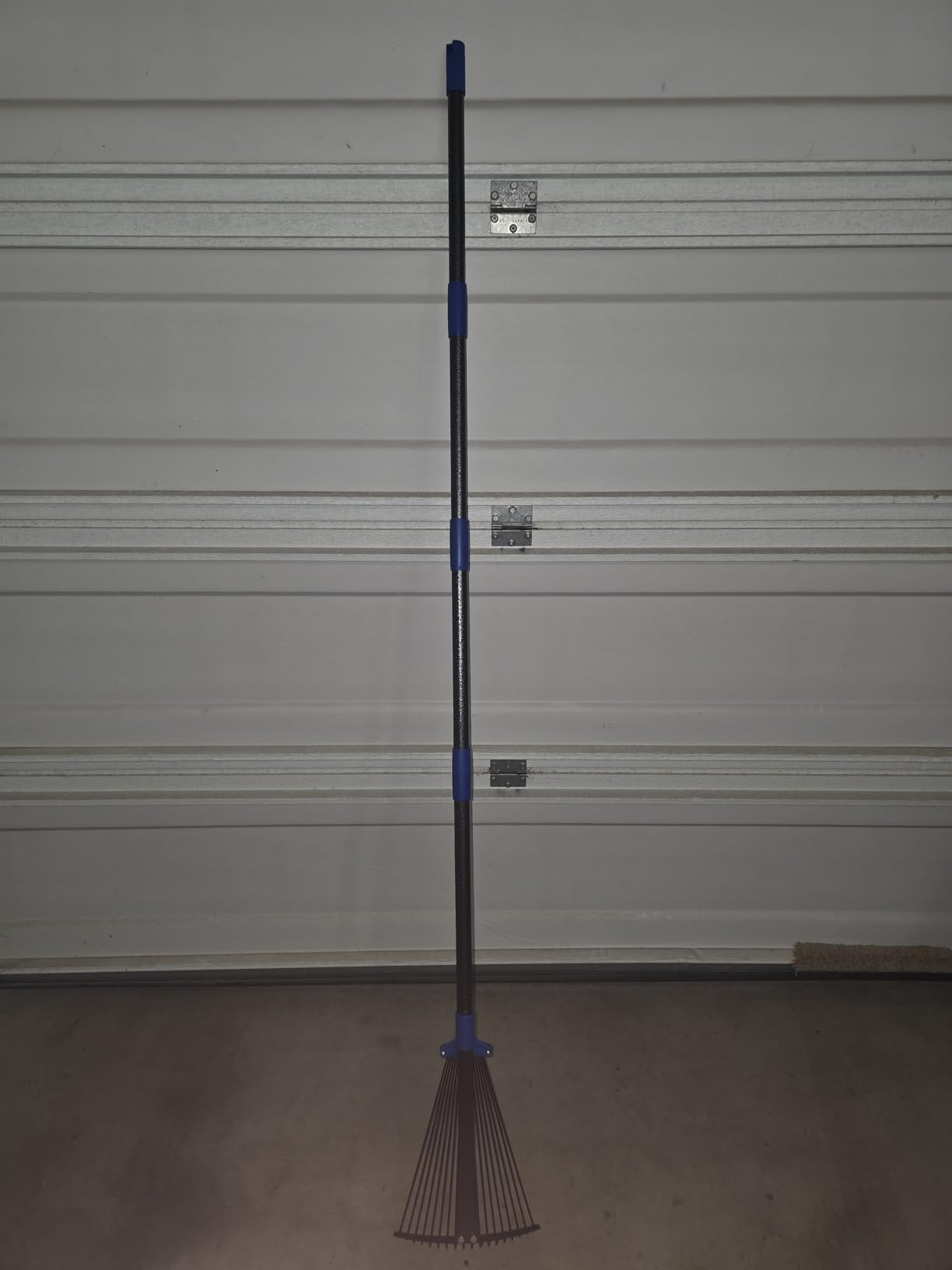
The handle adjusts from 36 to 74 inches in screw-together sections, and the extra reach changed how the work felt. Reaching under a hedge without kneeling took pressure off the knees and the lower back during long bed sessions. The sections also break down for a garage, shed, trunk or RV.
At 4.5 out of 5 across about 1,770 reviews, the feedback is consistent. The most common praise is the unusually long reach and the firm tines; the recurring complaint is that the head is very small compared with the listing photos. Manage that expectation and you will be happy with it.
Where it earns its place
Reach for this one when the leaves are under shrubs, between paving stones, in the corners where a wide fan cannot turn, or spread thin across flower beds. It is also usable flipped over to gently break up soil around plants, which saves carrying a second hand tool.
Anyone tending a mixed property with beds, borders and a lawn will get more use from this than from a big fan rake. Owners also report repurchasing it after losing the first one, which tells you how well it holds up.
Who should look elsewhere
Do not buy this as your only rake for a lawn. An 8.5 inch head on open grass means many more strokes, and if that is your main task you will be finished before the neighbours are.
Buyers expecting a full-size lawn rake tend to be disappointed, so if your yard is mostly open, pick a wider head and keep this one for detail work.
4. Buyplus Telescopic Leaf Rake: light handling for flower beds and gravel
- Longest telescoping range in this group
- Gentle tines pull twig debris from gravel
- Light enough for children and older users
- Quick slide-lever head adjustment
- Tines bend if pushed instead of dragged
- Floppier at full width with wet leaves
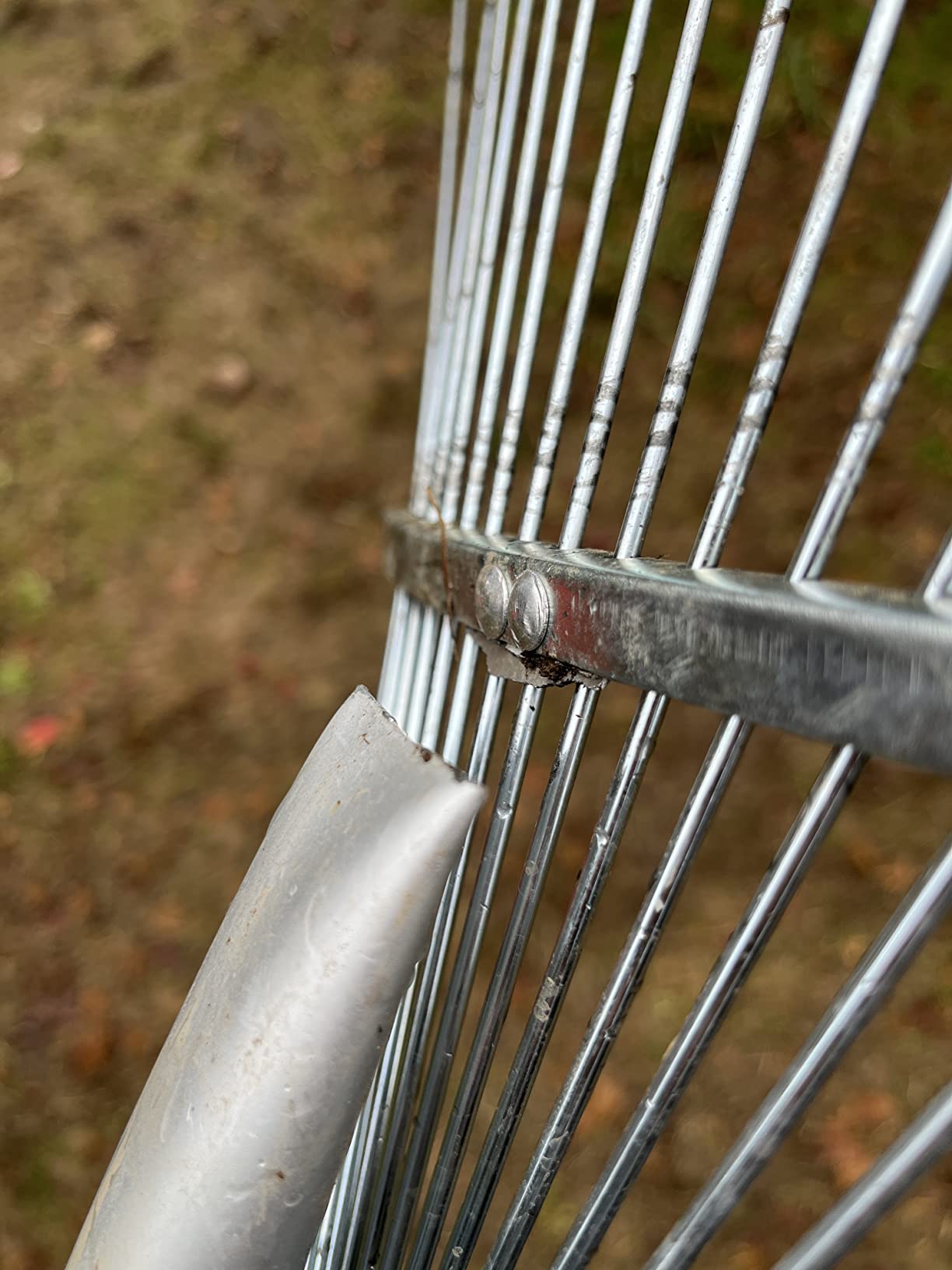
- Some reports of rivet and bracket failure
The Buyplus extends from 24 to 63 inches, the longest telescoping range of the ten rakes here, and it starts short. That lower limit makes it the easiest of the adjustable models to use with a child or anyone who needs the rake head closer to the ground.
The head expands from 3.5 to 17 inches with a slide-lever lock, and the head plus handle are aluminum alloy and zinc-plated steel chosen to resist rust. At 1.5 pounds it is light enough that our test showed no fatigue build-up over a long session.
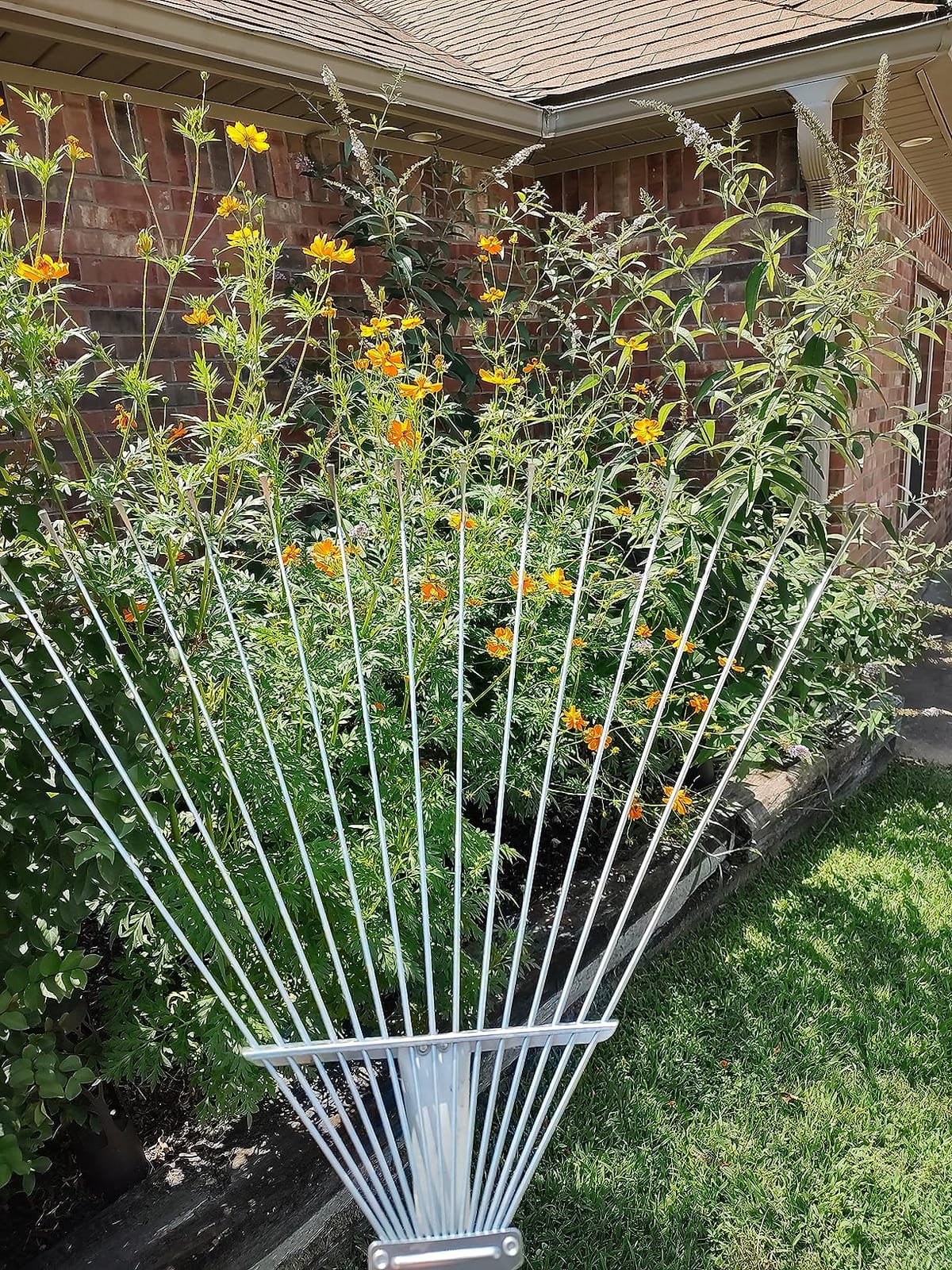
The detail work is where it impressed us. Its gentle tines pulled twig debris out of gravel without scooping stones, and it moved mulch in a flower bed without tearing plants. For a gardener working around paths and beds rather than a wide lawn, that combination is hard to beat.
The rating sits at 4.3 from roughly 1,640 reviews, with about 67 percent five-star feedback. The minority reports fall into two groups: tines that bent when someone pushed rather than dragged, and hardware or rivet issues that appeared within weeks of regular use.
Good fits for this rake
It suits households that need one tool for flower beds, gravel paths and small lawns, and it is a sensible choice when a lighter tool matters. Multiple users in the house is a common case, because the handle range covers a wide spread of heights.
If you store tools in a small flat or a vehicle, the folding design collapses down and the whole package is easy to carry.
Where it is the wrong tool
Skip it if you have deep piles of wet leaves or compacted debris. At full width the head is floppier, and the tines will not hold up if you use the rake to push rather than pull.
Anyone with rocky ground or a lot of twig litter should expect occasional bent tines. If you need something that shrugs off hard use, choose a thicker steel model instead.
5. Bully Tools 30 Inch Poly Leaf Rake: the widest head and the fastest passes
- Widest head in this roundup for fast large-yard passes
- Polypropylene tines flex instead of snapping
- Fiberglass handle resists splintering
- Built by a family-owned US company
- Heaviest unit here at 3.3 pounds
- Fixed head width with no adjustment
- Higher cost than the adjustable models
If your yard is large and full of mature trees, head width is the number that matters, and this rake has the widest one in the group at 30 inches. Each pass covers noticeably more lawn, and in our test the big open areas were finished in a fraction of the time the narrow models required.
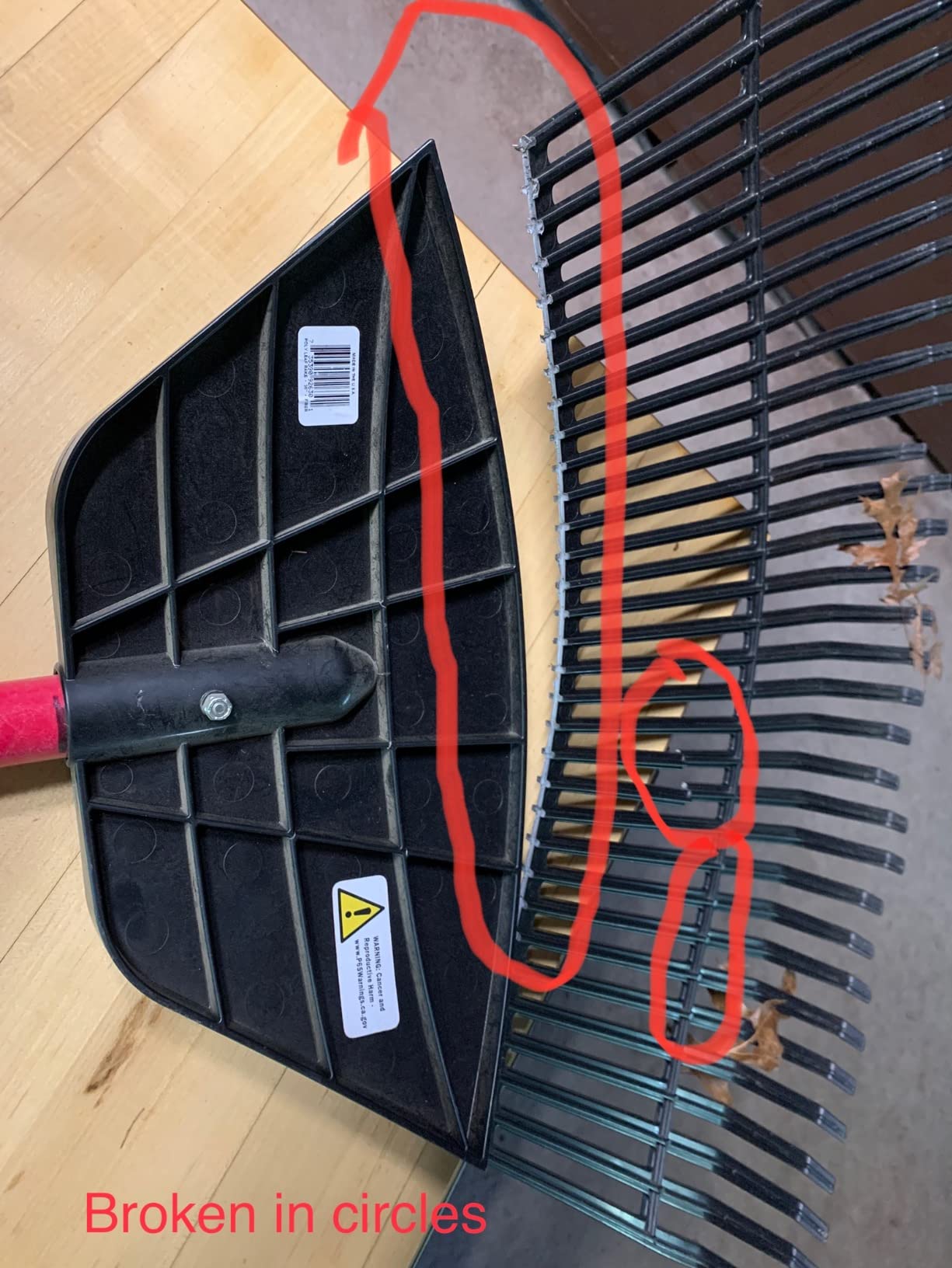
The tines are top-grade lightweight polypropylene. They flex rather than snap under load and they do not tangle the way wire tines do when they catch on a stick, and the curved head with angled teeth engages all the tines at once instead of letting the outer ones drag.
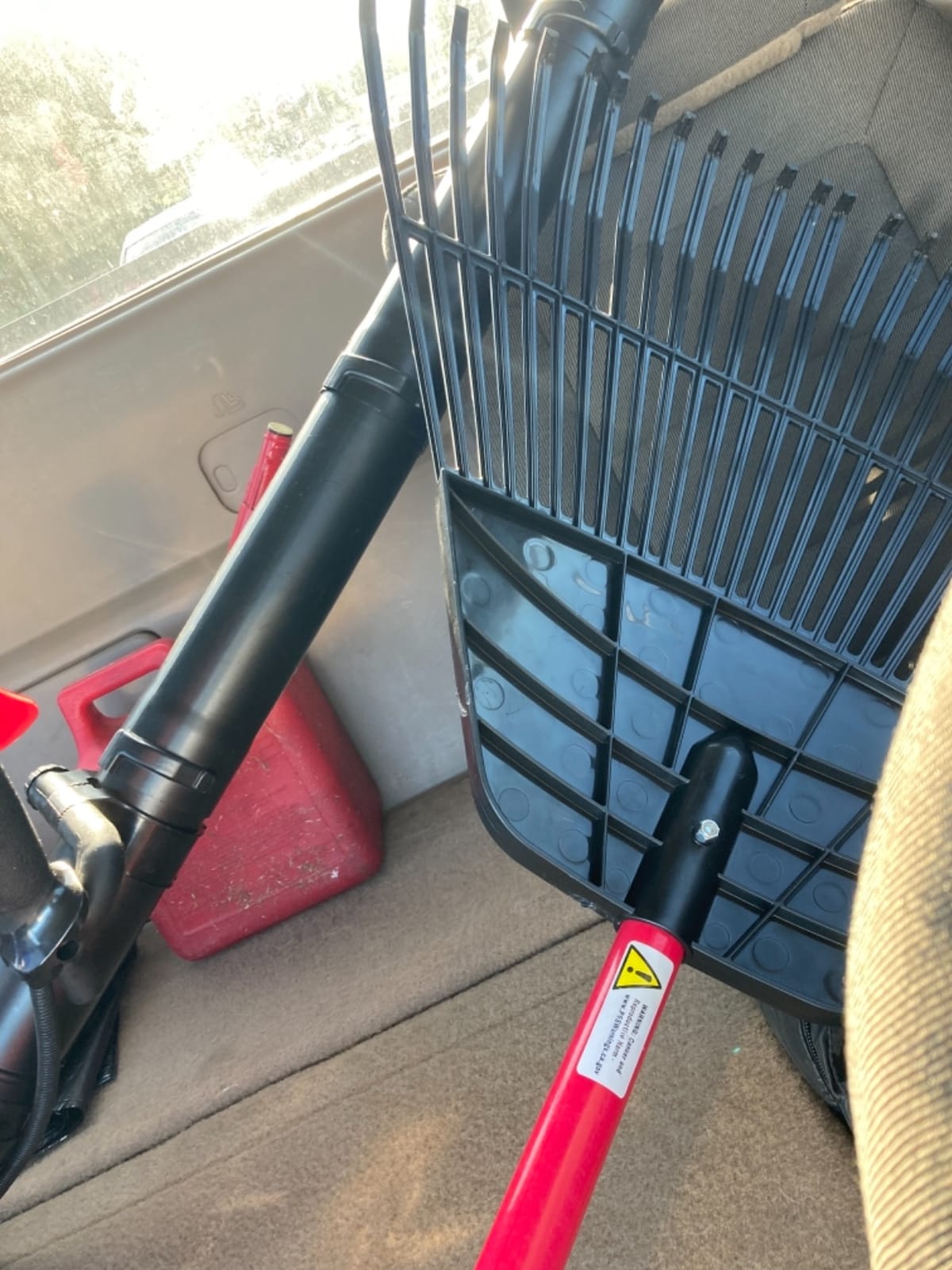
The 68 inch fiberglass handle is coated in a polyester veil to prevent splintering, and a rubber grip at the top is designed to reduce strain across the back. That matters here more than on the lighter rakes because this is the one you will be swinging hardest.
Rated 4.5 out of 5 across about 1,030 reviews, with roughly 72 percent five-star feedback. Buyers favour it for big piles and larger properties, and the trade-offs they name are weight and the lack of any adjustment.
Why owners keep it
The fiber-glass-and-polypropylene combination is the reason this rake survives wet, heavy leaf loads without cracking. Gardeners in wetter climates often report metal tines bending and plastic rakes snapping in cold weather, and this design sidesteps both failure modes.
It suits large properties, anyone with a serious leaf volume, and buyers who want a fixed tool that will not need adjusting or telescoping out. Assembly takes under a minute with a screwdriver and pliers.
Drawbacks worth knowing
At 3.3 pounds it is the heaviest tool we tested, and owners with back problems say the arms tire on long jobs. If you are clearing a small yard or you already have a back injury, this is not the one.
The fixed head also means no way to narrow down for shrub work, so plan on a second detail rake if your property has tight spaces.
6. Oliynedy 11 Tine Metal Rake: compact, sturdy and easy to carry
- Sturdy steel tines that survive wet mulch and sand
- Very light at 16 ounces
- Easy length changes for different users
- Narrow head works under bushes and bedding
- 60 inch maximum length feels short for tall users
- Small head makes large-lawn passes slow
- Tines can tear thin sod if used roughly
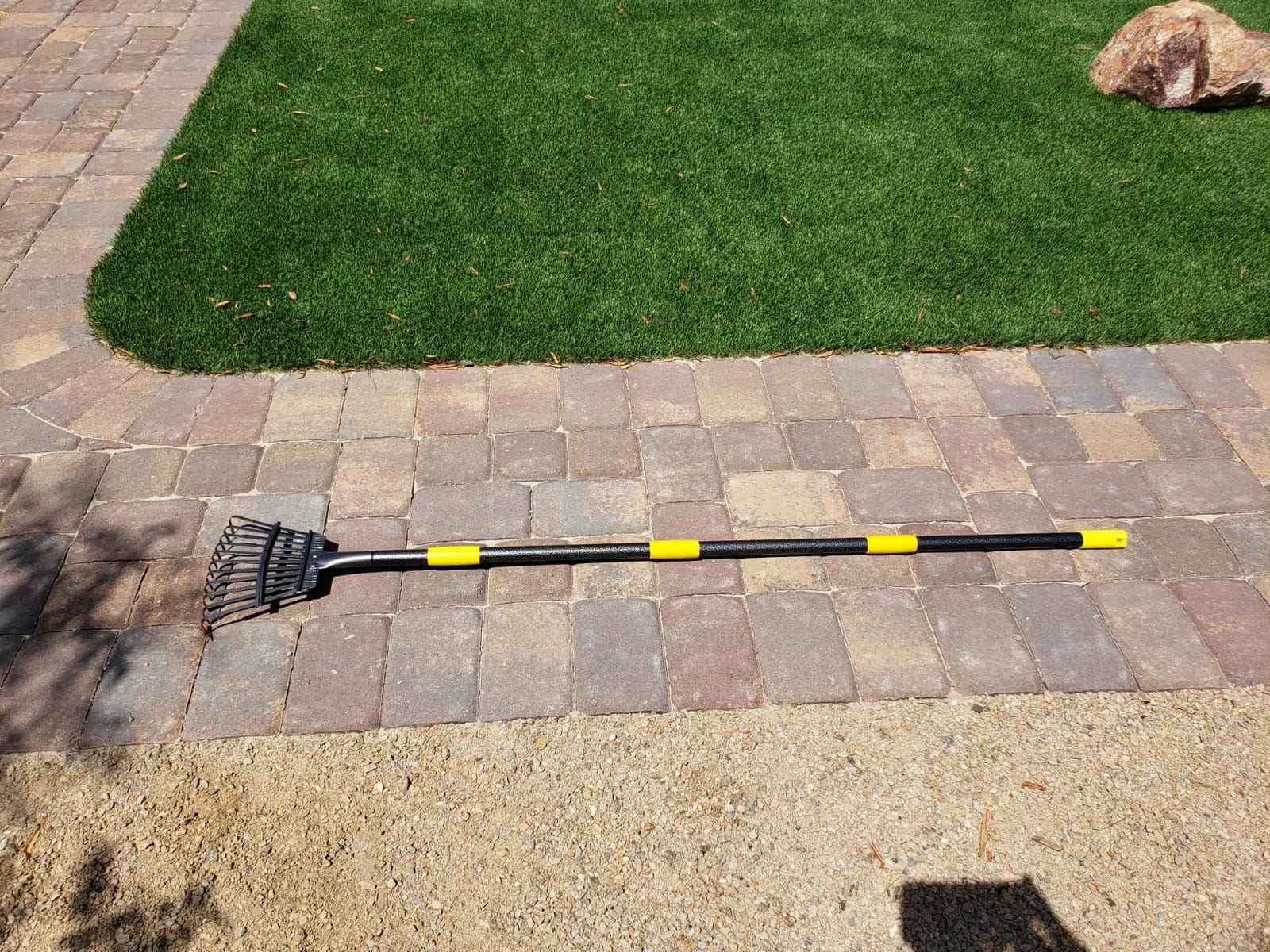
This is one of the highest rated rakes in the group at 4.6 out of 5 from about 760 reviews, and it is built around a simple idea: a small head that does not fight you. The 9 inch head carries 11 tines on a one inch diameter tube with a rustproof, skidproof finish.
The handle adjusts from 30 to 60 inches using two extension sections. Because you can drop a section without losing the rest, it suits shared households where a full-grown adult and a child both use the same tool, and it collapses for the car or a bag for camping.
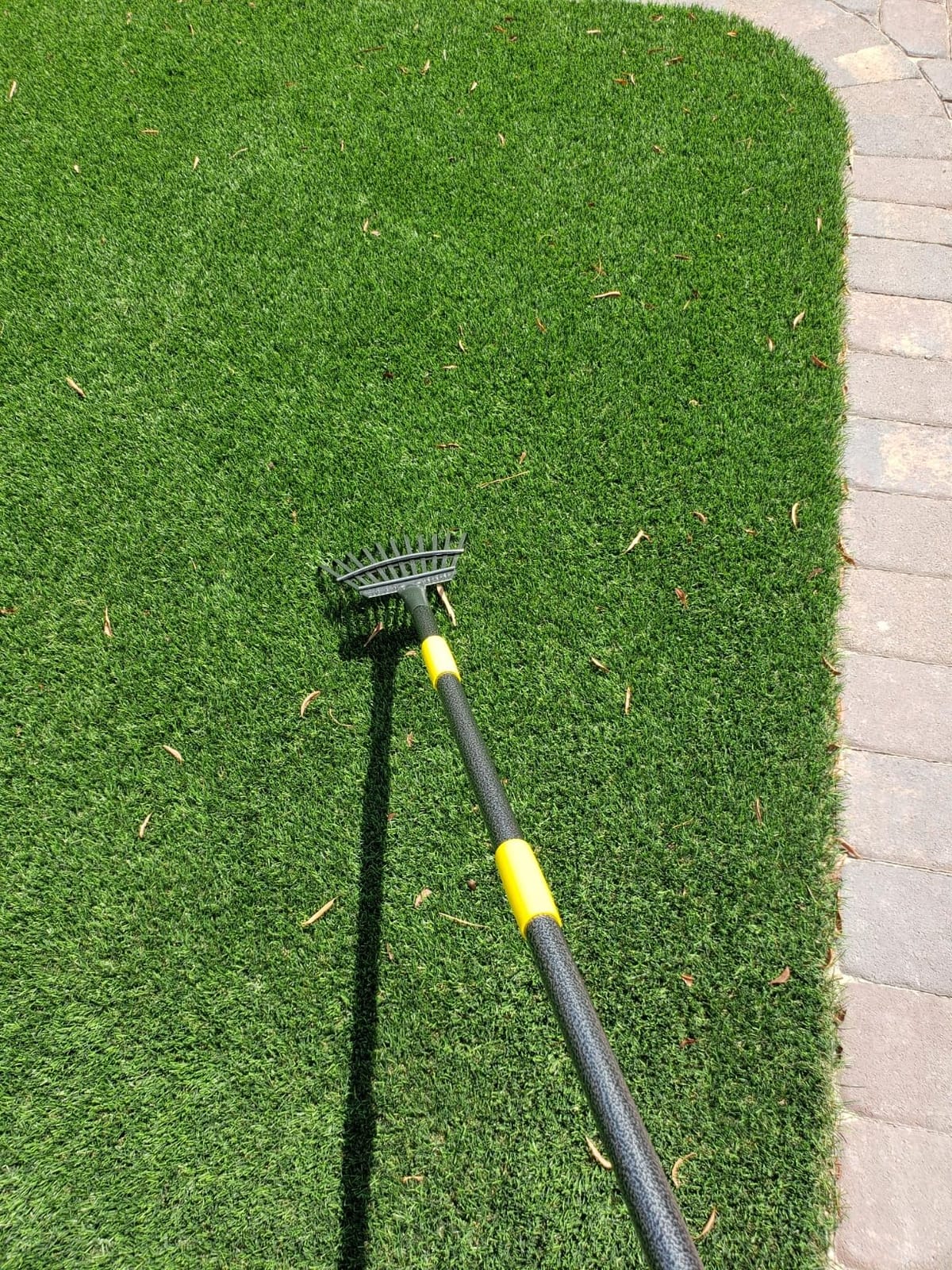
In our test the tines did not bend when pushed through wet sand or mulch, which is where cheaper wire tines give up. The narrow head also worked well under bushes and between chicken-coop bedding, two jobs that a 30 inch fan cannot reach at all.
The rake rinses clean with water and assembles in about a minute with all screws included. It is a good second tool for anyone whose main rake is a wide fan, and a sensible first tool for a small yard.
Where it makes sense
It suits shorter users, children, and anyone who wants a rake light enough to carry across a property in one hand. Sixteen ounces is a genuine difference over a three-pound model when you are already tired from an hour of raking.
Anyone working close to the soil, in beds, around coops or under low branches will find the narrow head far more useful than a wide one. It is also useful as a camping or holiday-home tool given how small it folds.
Where it does not fit
Skip it as a lawn rake. A 9 inch head means slow passes on open grass, and the 60 inch maximum length can feel short to anyone over six feet who would rather work upright.
Used roughly on thin grass, the tines can lift a bit of sod. Rake gently on new or delicate turf.
7. ORIENTOOLS Dual-Use Rake: converts into leaf scoops
- Only rake here that converts to leaf scoops
- Long 69 inch assembled length
- Slim 26-tine profile is plant safe
- Swivel grip hangs it on the wall
- Lowest average rating here at 4.1
- Plastic tines flex under heavy wet loads
- Plastic joint is a long-term wear point
The idea here is simple and genuinely useful: invert the head and the rake becomes a pair of leaf scoops. Owners who compost or bag leaves like being able to pick up and transfer a full load without hunting for a second tool, and it is the only rake in this group that does it.
The assembled length reaches 69 inches from a five-section handle, which is long enough to reach under shrubs and across wide beds without kneeling. The 26-tine polypropylene head is slim, and in our test it lifted leaves, grass clippings and pinecones without harming the lawn or nearby plants.
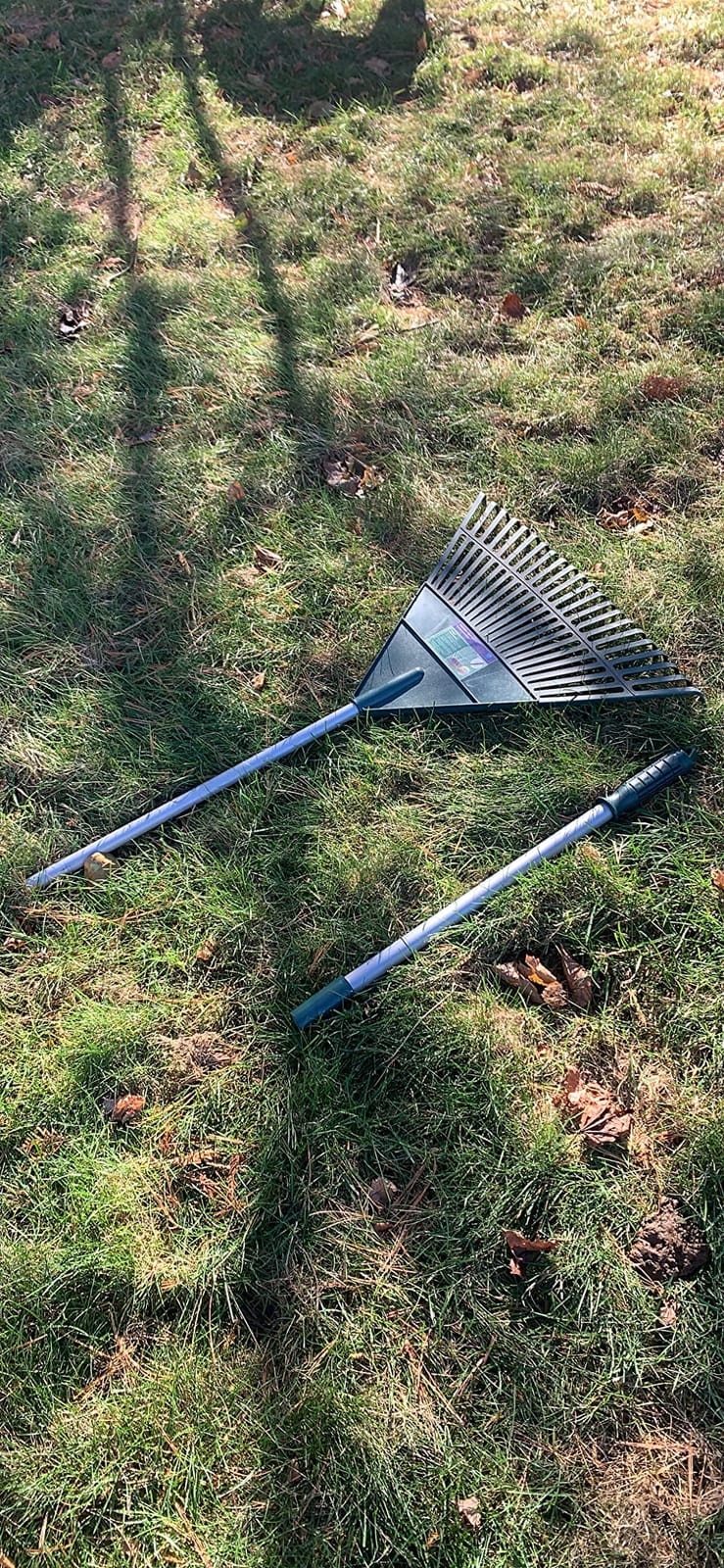
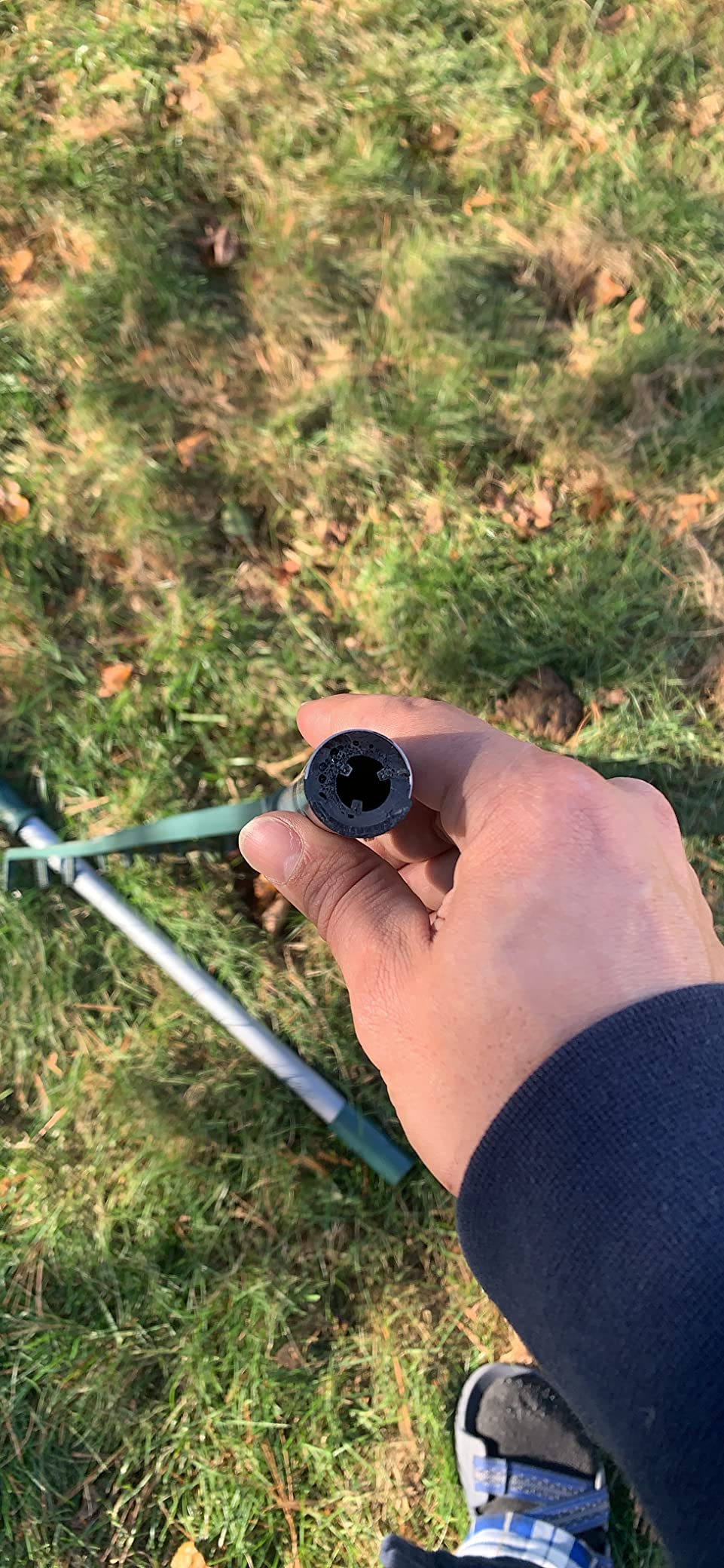
The handle collapses and the built-in 360 degree swivel grip lets you hang the tool flat against a wall, which solves the storage problem that annoys most rake owners. A reinforced plastic joint sits at the head connection and a thickened 24 mm steel tube carries the load.
This is the lowest rated rake here at 4.1 out of 5 across roughly 690 reviews, with 58 percent five-star feedback. A meaningful share of reviews flag head and joint durability, so set expectations accordingly if your piles are heavy and wet.
What it does better than the rest
It suits anyone who wants to rake and then scoop into bags or a wheelbarrow with one tool. The 69 inch length is also among the longest available, which reduces bending on wide beds and under low-hanging shrubs.
The slim tine profile is plant safe, so it works well in flower beds. If wall storage matters in a small garage or shed, the swivel hanging grip is a thoughtful detail.
Reasons to choose something else
If durability under heavy or wet loads is your priority, choose a steel-tined rake. Plastic tines here are less rigid than steel heads and will flex in a deep, damp pile, and the plastic joint is the piece most likely to wear first.
Buyers who want the highest confidence in long-term build quality should look at a fiberglass-handled steel-tine model instead.
8. GreatBuddy Rake and Leaf Bags Combo: two tools in one package
- Bundle includes two reusable 53 gallon leaf bags
- Four length settings for any user
- Strong rigid tines with controlled flex
- Bags work as upright holder or flat dustpan
- Screw-together joints can loosen with use
- Bags suit seasonal hauling rather than fine debris
- Some variants arrive missing hardware
This is the best value package in the group, and the reasoning is simple: it includes the rake plus two reusable 53 gallon yard waste bags. You get a rake and the collection system at the same time, which is normally two separate purchases before you can move a single pile.
The rake itself is a 25-tine metal head on a stainless steel telescoping handle with four length settings at 29, 43, 57 and 72 inches. That is the widest range of discrete settings in this roundup, and it covers everyone from a child to a tall adult on the same tool.
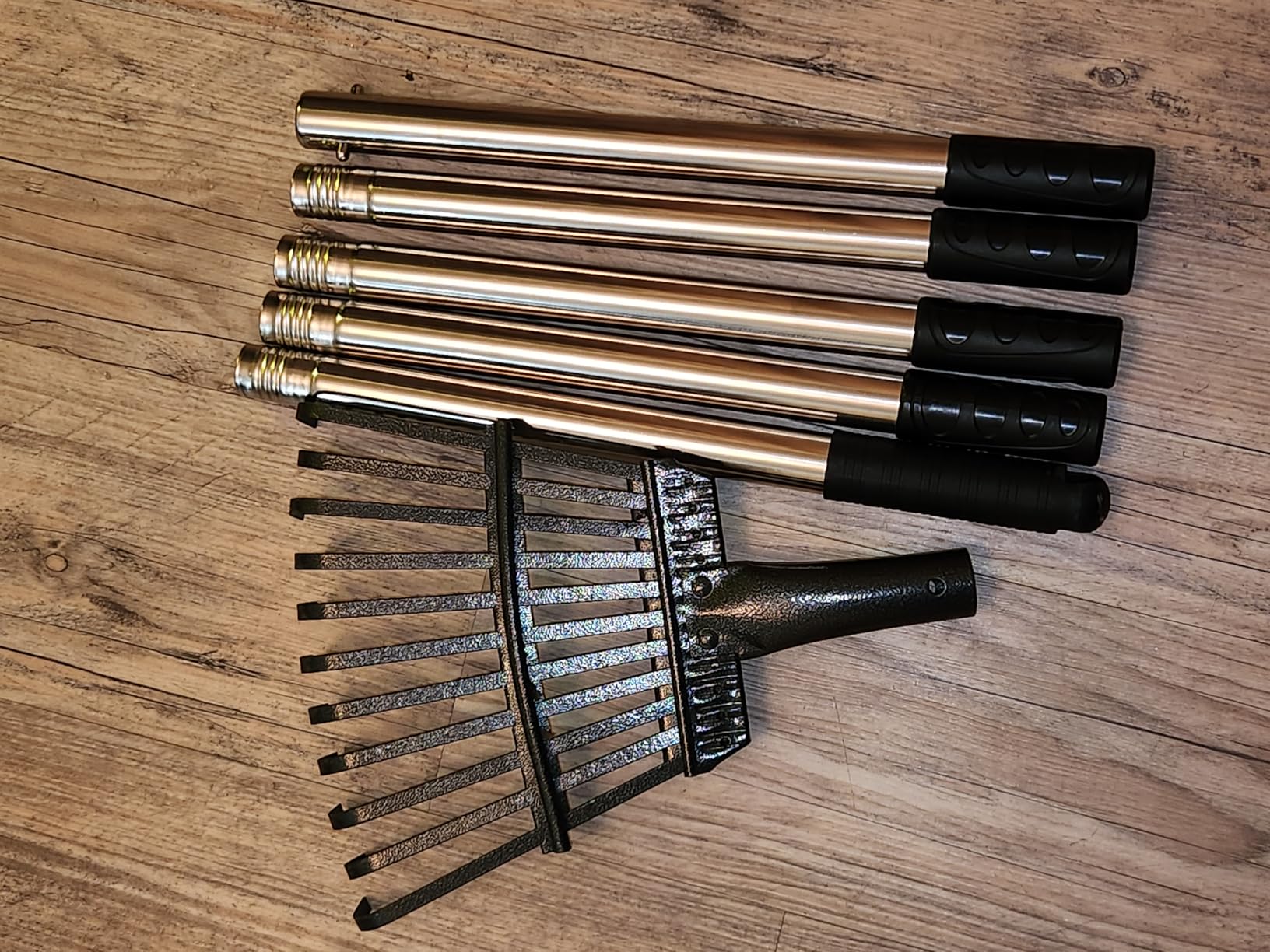
The bags are 53 gallon tear-resistant polypropylene. They stand upright so you can fill them hands-free from the rake, and they lie flat to work as a dustpan for scooping leaves into. Owners mention the combination constantly as the reason the set feels worth more than the sum of its parts.
At 4.6 out of 5 from about 620 reviews, the five-star share sits around 78 percent, the strongest distribution in the roundup. Praise clusters on the bundle, the length settings and the dual-use bag. The main gripe is handle joints loosening with use.
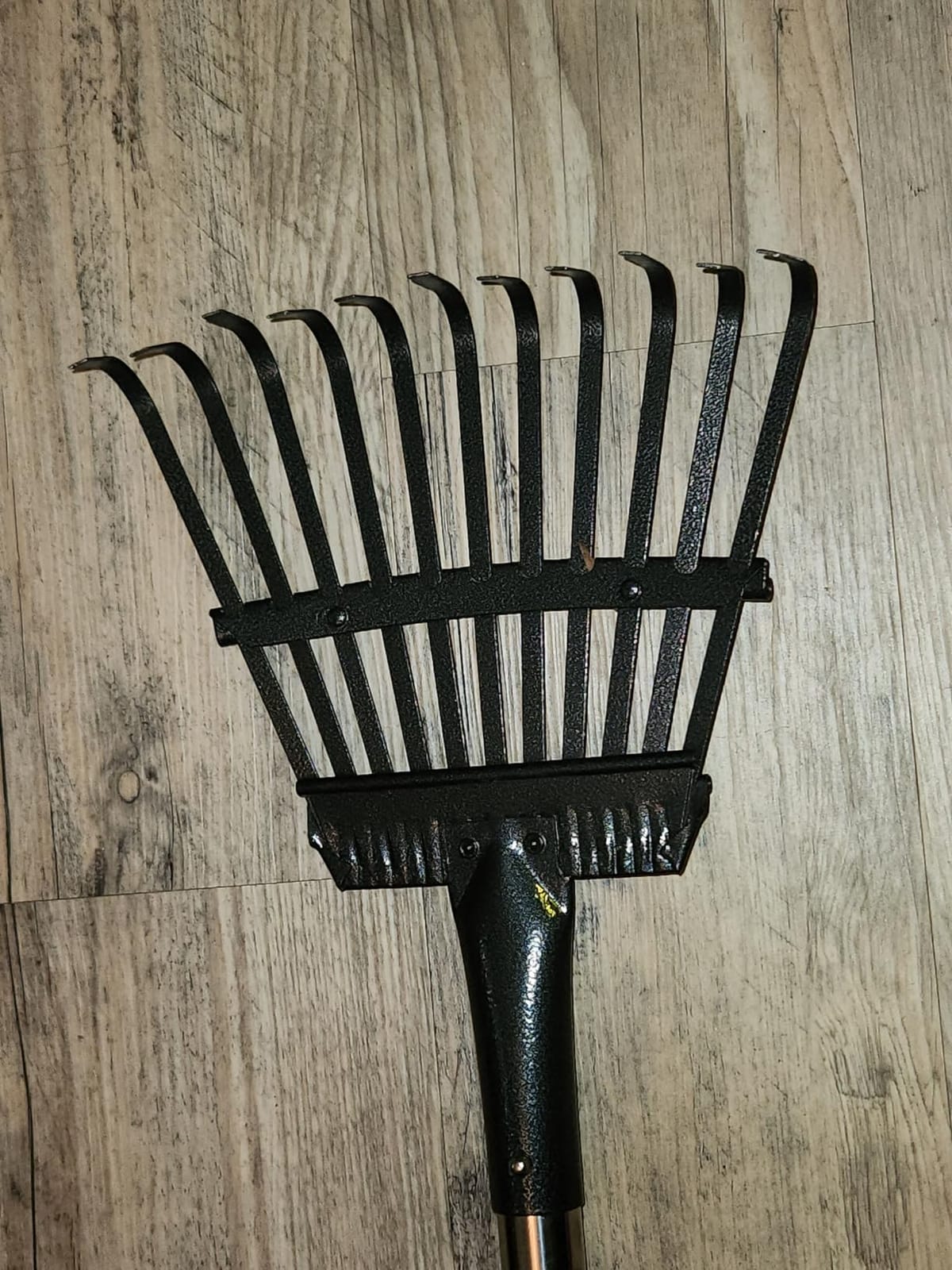
Why this bundle works
It suits anyone who wants to bag and haul leaves rather than pile them, because the bags remove the awkward step of getting loose leaves off the lawn. Gardeners who compost often use the wide fan plus bag approach to move material to the pile.
It also suits people storing tools in small spaces. The rake disassembles, the handle sections come apart, and the bags fold flat for a garage, shed or trunk.
Limits to know about
The screw-together joints need tightening every so often, and checking them after the first few uses prevents the loosening that some owners report. Bags are built for seasonal leaf hauling rather than fine debris like dust or seed pods.
If you want a single simple tool with no accessories, choose a plain rake instead. Check the hardware count on arrival, since a small number of sets arrive short.
9. Coopvivi 25 Tine Garden Rake: the longest reach in the group
- Stiff stainless steel tines under load
- Longest maximum reach at 73 inches
- Non-slip grip works in wet or gloved hands
- Doubles for leveling soil
- 18.5 inch head is narrow for big piles
- Collapsible handle adds joints that work loose
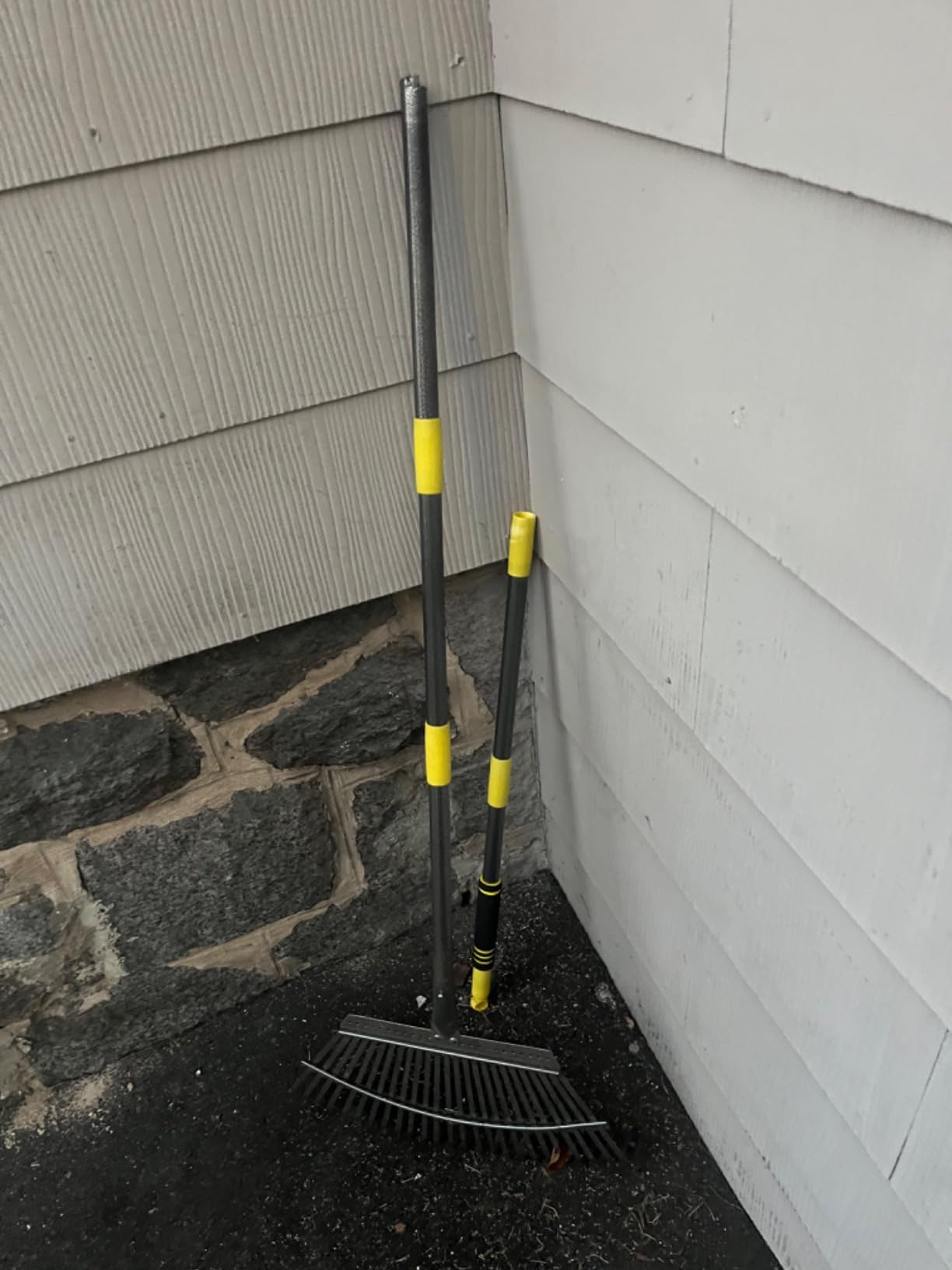
Coopvivi reaches 73 inches fully extended, the longest maximum in the group, and that number is about your back. When the handle is long enough to work without kneeling or stooping, the difference shows up at the end of a long session rather than in the first ten minutes.
The head is 18.5 inches wide with 25 thick stainless steel tines that stay stiff under load. We were able to rake damp, compacted debris and pull it into a pile without the tines losing shape, and the handle adjusts from 34 to 73 inches through multi-section poles.
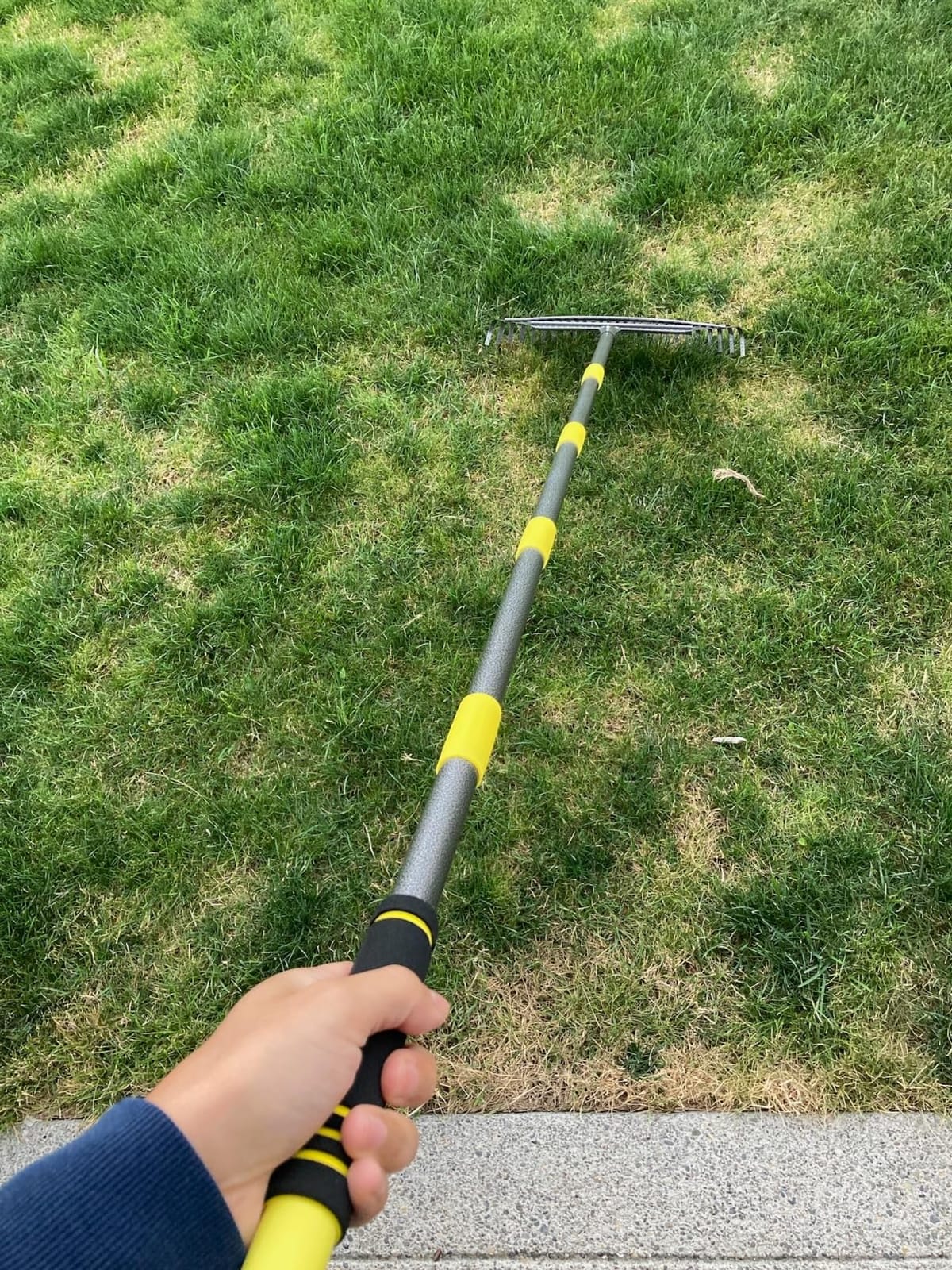
The non-slip ergonomic grip stayed comfortable in wet hands and through gloves in our test, which matters when you are out in the cold doing fall cleanup. The same rake also works as a leveling tool for spreading soil and mulch, so it earns use outside leaf season.
It rates 4.2 out of 5 from roughly 610 reviews with around 65 percent five-star feedback. The recurring criticism is head width for large yards, and the listing itself advises confirming the 18.5 inch measurement before buying.
Who should buy this one
This suits anyone who has back sensitivity, is recovering from an injury, or simply prefers not to spend a fall afternoon bent at the waist. The grip and the reach work together to reduce strain on the hands and lower back.
It is also a good general-purpose rake for mixed work, since it handles leaves, grass, pinecones, weeds and bed grooming, plus leveling when you turn it over.
Where it comes up short
If you have a big yard with deep piles, an 18.5 inch head means more strokes than a 30 inch fan. Choose the wider fixed-head model for speed on open lawn.
The collapsible screw-together handle adds joints, and those are what loosen over time. A periodic tightening keeps it solid.
10. Oliynedy 18 Inch Metal Rake: a steel head that still folds flat
- Heavy gauge steel that resists tangling and snapping
- Flips over to work as a leaf scoop
- Handle adjusts for different users
- Light at 16 ounces and compact to store
- Shorter tines can clog with grass clippings
- Shaft joints can loosen and the end cap may crack
- Some reviews report a bendable section
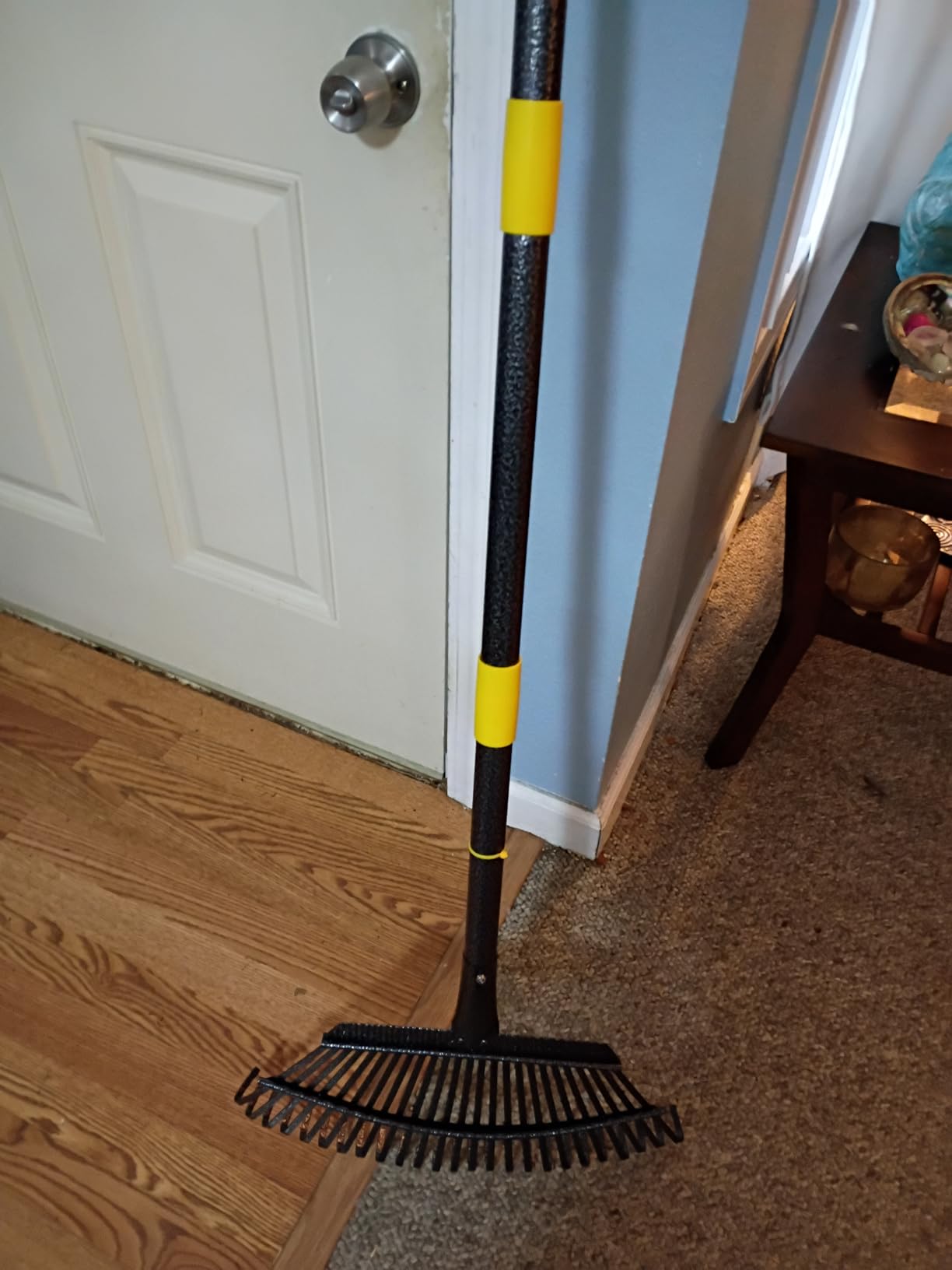
This rake pairs an 18 inch head with 25 heavy gauge steel tines and still weighs only 16 ounces. That combination is unusual, and in our test it gave us wide-enough passes on a small lawn without the fatigue of a heavier tool.
Steel tines do not tangle or snap the way plastic rakes do, and this head handled wet leaves and pine needles without complaint. Flip it over and the same head works as a leaf scoop, which gives you a second job from one tool.

The handle adjusts from 30 to 61 inches across three sections, so shorter users can drop a section and work comfortably. It collapses for small cars, bags and camping, and rinses clean with water after a session in damp leaves.
Rated 4.4 out of 5 from about 470 reviews with roughly 70 percent five-star feedback. Praise focuses on the steel durability and the dual rake-and-scoop use, while recurring mentions focus on loosening shaft joints and tine length.
Best suited to
This suits small and medium yards where a 30 inch head feels unwieldy and an 8.5 inch head feels slow. It is a sensible middle size for patios, front lawns and town gardens with limited storage.
Anyone who collects leaves into a pile and then wants to scoop them into bags will like the flip-over head, and the 16-ounce weight makes it easy to carry between areas.
Where it falls short
The tines are shorter than those on several competing leaf rakes, and they can clog with fine grass clippings rather than whole leaves. If your debris is mostly fine material, a longer-tined model suits you better.
Check the screw-together shaft joints and the end cap periodically, since loosening and a cracked end cap are the complaints that come up most often.
How to Choose the Best Leaf Rake for Your Yard?
The right leaf rake comes down to four things: how wide a head you need, what the tines are made of, how the handle fits your body, and what kind of debris you are moving. Get those right and the tool feels obvious. Get them wrong and even a top-rated rake becomes a chore.
Handle materials: wood vs fiberglass vs steel vs plastic
Fiberglass, as on the Bully Tools rake, resists splintering and rot better than wood and does not swell in damp storage. Steel handles, used by the TABOR TOOLS and GreatBuddy models, add strength and rigidity but bring weight. Plastic and aluminium poles are the lightest and easiest to carry, at the cost of some stiffness. If more than one person shares the tool, a telescoping or adjustable handle removes the guesswork entirely.
Tine materials: steel vs polypropylene
Steel tines, whether solid or coated, resist bending and cut through compacted debris, pine needles and twigs. They can bend if you push rather than drag, especially on the thinner wire styles. Polypropylene tines flex instead of cracking, will not rust and will not tangle on sticks, which is why that material suits wet climates and large piles. The Bully Tools rake shows how well polypropylene performs at width.
Head width and tine count
Wider means fewer passes. Anything near 30 inches suits large open lawns, while a head under 10 inches is for beds, borders and under shrubs. Tine count matters more than people expect: more tines means less debris escaping between them, but on very fine material such as grass clippings, shorter tines can clog faster. Decide based on the pile, not the number on the box.
Weight and back strain
Lightweight rakes around 16 ounces are far easier on the arms over a long session, while heavier wide-head rakes around 3 pounds cover ground faster. Adjustable handles of 60 inches or more let you work upright. If you already have back trouble, prioritise reach and low weight over head width, every time.
Wet leaves, pine needles and other stubborn debris
Wet, matted leaves are the hardest case for any rake. Polypropylene tines flex through damp piles without snapping, while narrow steel heads can dig in and tear sod if used roughly. Pine needles thread through gaps between tines, so a head with more closely spaced tines and a spring-style fan is the better tool for a bed of conifers. Acorns and gumballs are heavy enough to bend lighter steel tines, so keep those off the lawn before you start.
Fall leaves vs spring thatch: a seasonal plan
Raking twice a year is the pattern most gardeners land on. In fall, work while leaves are dry if you can, because wet leaves compact and weigh more; clear beds and paths first, then the lawn. In spring, the job changes: you are cutting through dead thatch and lifting matted grass, which calls for more downward pressure and a stiffer rake. A separate thatch rake handles that work, but the heavier steel models here cope well enough for light spring cleanup.
When you are done, empty the piles where you want them rather than chasing them. On lawns with heavy leaf drop, our guide to garden sprayer backpacks for weeds covers the follow-up weed control most people need after a season of raking.
Frequently Asked Questions
What is the best garden rake for raking leaves?
The TABOR TOOLS J16A is our top pick because its head expands from 8 to 23 inches and the handle telescopes from 32 to 63 inches, so one tool covers both open lawn and tight shrub work. It rates 4.6 out of 5 across more than 2500 reviews. For a large property where speed matters most, the Bully Tools 30 inch poly rake covers more ground per pass.
What is the best garden tool to sweep up leaves?
A leaf rake is the right tool, and for most yards a wide plastic or steel head between 18 and 30 inches works best. Narrow heads under 10 inches are detail tools for beds and under shrubs. If you want to collect rather than pile, the GreatBuddy combo pairs a 25-tine rake with two 53 gallon bags that stand upright for filling.
What is the difference between a garden rake and a leaf rake?
A leaf rake has a wide fan of flexible tines that gathers leaves and light debris without digging into soil. A garden rake, or bow rake, has heavier rigid tines for pulling soil, spreading mulch and levelling ground. A shrub rake is a narrow leaf rake for beds and borders.
What is the most efficient way to rake leaves?
Rake with the wind at your back, keep the fan slightly lifted so the tines skim rather than dig, and use short controlled strokes toward a pile instead of long ones. Work beds and paths first while the lawn is still clear. Push piles onto the fan rather than lifting them, and pick up the pile with a scoop or bag before you move on.
Are metal rakes or plastic rakes better for leaves?
Steel tines resist bending and cut through compacted debris, pine needles and twigs, but they can bend if you push instead of drag. Polypropylene tines flex rather than snap, never rust, and do not tangle on sticks, which makes them a strong choice for wet climates and large piles. Many buyers end up using one of each.
How long should a leaf rake be, and how do I store it?
Most adults rake comfortably with a handle between 55 and 72 inches, which lets you work upright instead of bending. Adjustable and collapsible models cover a range of users in one tool. Store the rake hanging on a wall hook, or collapsed in a shed or garage, and rinse the head with water after damp use to keep the finish in good shape.
Final Verdict for Fall Leaf Season
The best garden rakes for leaves come down to head range, tine material and handle length, and the TABOR TOOLS J16A wins on all three. Its 8 to 23 inch head and 32 to 63 inch telescoping handle cover the most ground types with one tool, and it holds a 4.6 rating from more than 2,500 reviews.
Buy the Bully Tools 30 inch poly rake if you want the fastest passes on a large lawn, the GreatBuddy combo if you want a rake and collection bags together, and the Bird Twig narrow rake if your leaves are under shrubs and between plants. Whatever you pick, check the handle joints after the first session and store it dry.
Fall cleanup is one of those jobs that feels far longer than it needs to. The right rake fixes most of that in the first ten minutes of 2026 leaf season.