
The best multimeters under 100 dollars right now are the AstroAI 6000-count True RMS for sheer capability, the Klein Tools CL120 if you need a clamp jaw, and the Fluke 101 if you just want a trustworthy name on a basic meter. All three sit comfortably inside the budget, and all three are backed by thousands of owner reports rather than marketing copy. Our wider budget multimeter roundup covers cheaper tiers in more depth.
Most “best multimeter” lists quietly break their own price promise. The top-ranking page for this query puts a flagship Fluke 87-V in first place and then adds a Fluke 116/323 kit and a Fluke 323 clamp meter further down. That is a fine list of multimeters. It is not a list of multimeters under 100 dollars.
We enforced a hard ceiling instead. Every meter below verifiably sits under 100 dollars as a current street price, and every one of them carries a stated safety rating, a real manufacturer behind it, and a warranty you can actually claim on. We also listed the drawbacks for all eight, because a list with nothing but pros is a sales page, not a buying guide.
Our method was straightforward: we pulled the spec sheets, cross-checked them against owner reports, and asked one question of each meter, would we personally reach for it on a real job. For the deeper technical background, our guides to multimeters for electronics work and bench multimeters go well beyond this price band.
Table of Contents
Top 3 Picks for the Best Multimeters Under $100 (October 2026)

AstroAI 6000-Count True RMS
- True RMS on AC volts and amps
- Auto-ranging
- Capacitance
- frequency
- duty cycle and temperature
Klein Tools CL120
- 400 amp AC clamp jaw
- Non-contact voltage detection
- Backlit LCD
- max and data hold

Fluke 101
- 0.5 percent basic DC accuracy
- CAT III 600 V rating
- Diode and continuity buzzer
- 160 g pocket size
Best Multimeters Under 100 at a Glance (October 2026)
Here is the full lineup in one place, so you can narrow the field before reading any individual review.
| Product | Specifications | Action |
|---|---|---|
| AstroAI 6000-Count True RMS |
|
Check Latest Price |
| Klein Tools CL120 |
|
Check Latest Price |
| Fluke 101 |
|
Check Latest Price |
 Klein Tools MM325 Klein Tools MM325 |
|
Check Latest Price |
 AstroAI 4000-Count True RMS AstroAI 4000-Count True RMS |
|
Check Latest Price |
 FNIRSI DMT-99 FNIRSI DMT-99 |
|
Check Latest Price |
 INNOVA 3320 INNOVA 3320 |
|
Check Latest Price |
 AstroAI AM33D AstroAI AM33D |
|
Check Latest Price |
1. AstroAI 6000-Count True RMS – The Most Capable Meter in the Budget
- True RMS on both AC voltage and AC current
- Measures temperature
- capacitance
- frequency and duty cycle
- Explosion-proof ceramic fuses on both current inputs
- Magnet on the back for hands-free panel work
- Stated 60MHz frequency limit is closer to 16MHz
- Multi-function socket is C-B-E not B-C-E
This is the meter we keep reaching for. It is the most heavily reviewed instrument in our entire lineup, with well over 20,000 owner reports, and that matters more than any spec line because a design with that much history behind it has already survived the mistakes you are about to make with it.
It measures True RMS on both AC voltage and AC current, so it is honest about non-sinusoidal loads rather than guessing at them with an average-responding approximation. The 6000-count display gives you a least significant digit of 0.01 V on the 60 V range, which is fine resolution for 12 V automotive circuits and 5 V logic rails alike.
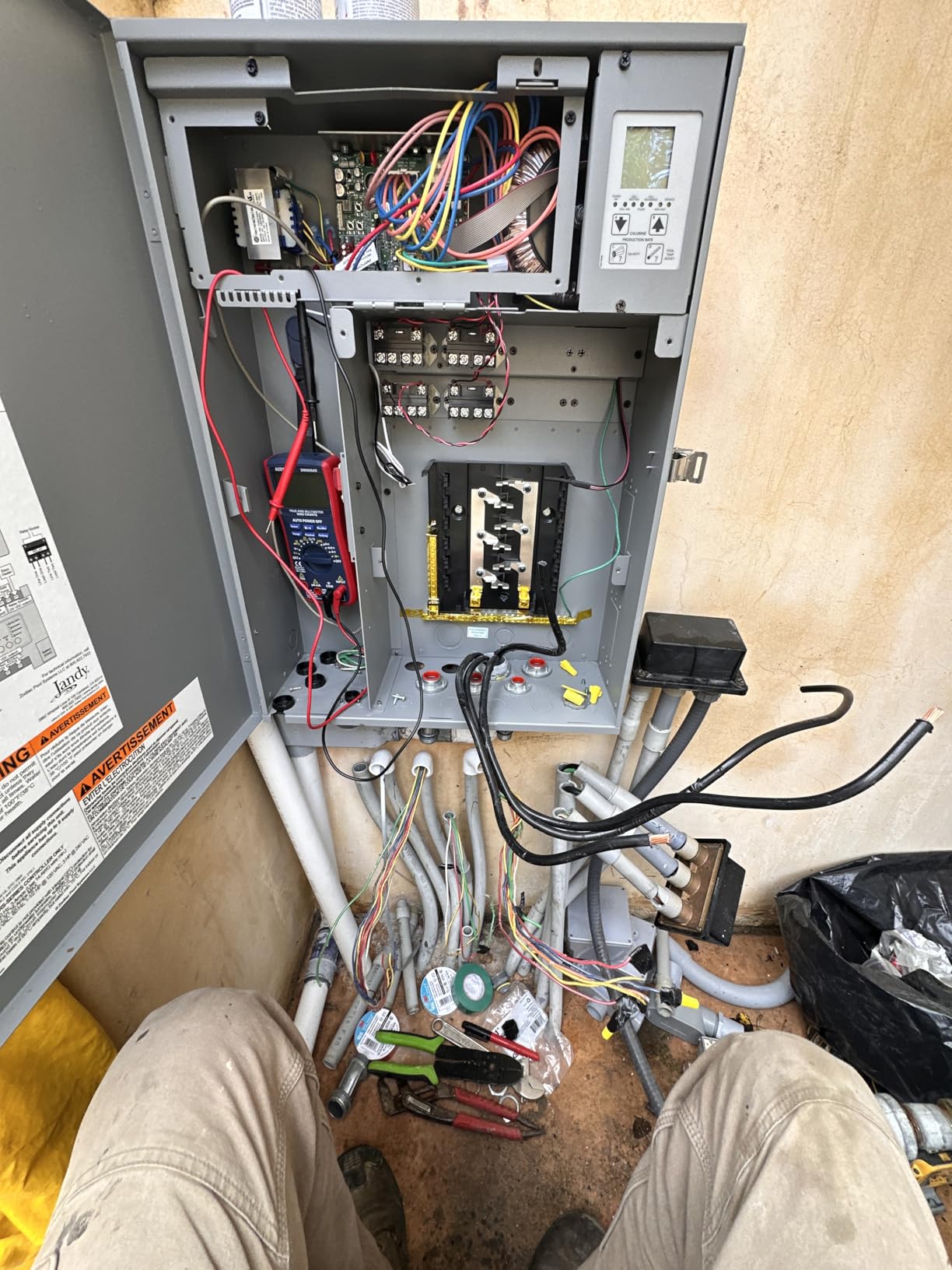
The feature list is unusually broad for the money: capacitance, frequency, duty cycle and a temperature probe all come standard. Long-term owners report that it tracks reference Fluke and Amprobe meters closely on DC voltage, resistance, current and diode tests, which is a stronger claim than most makers in this price band make.
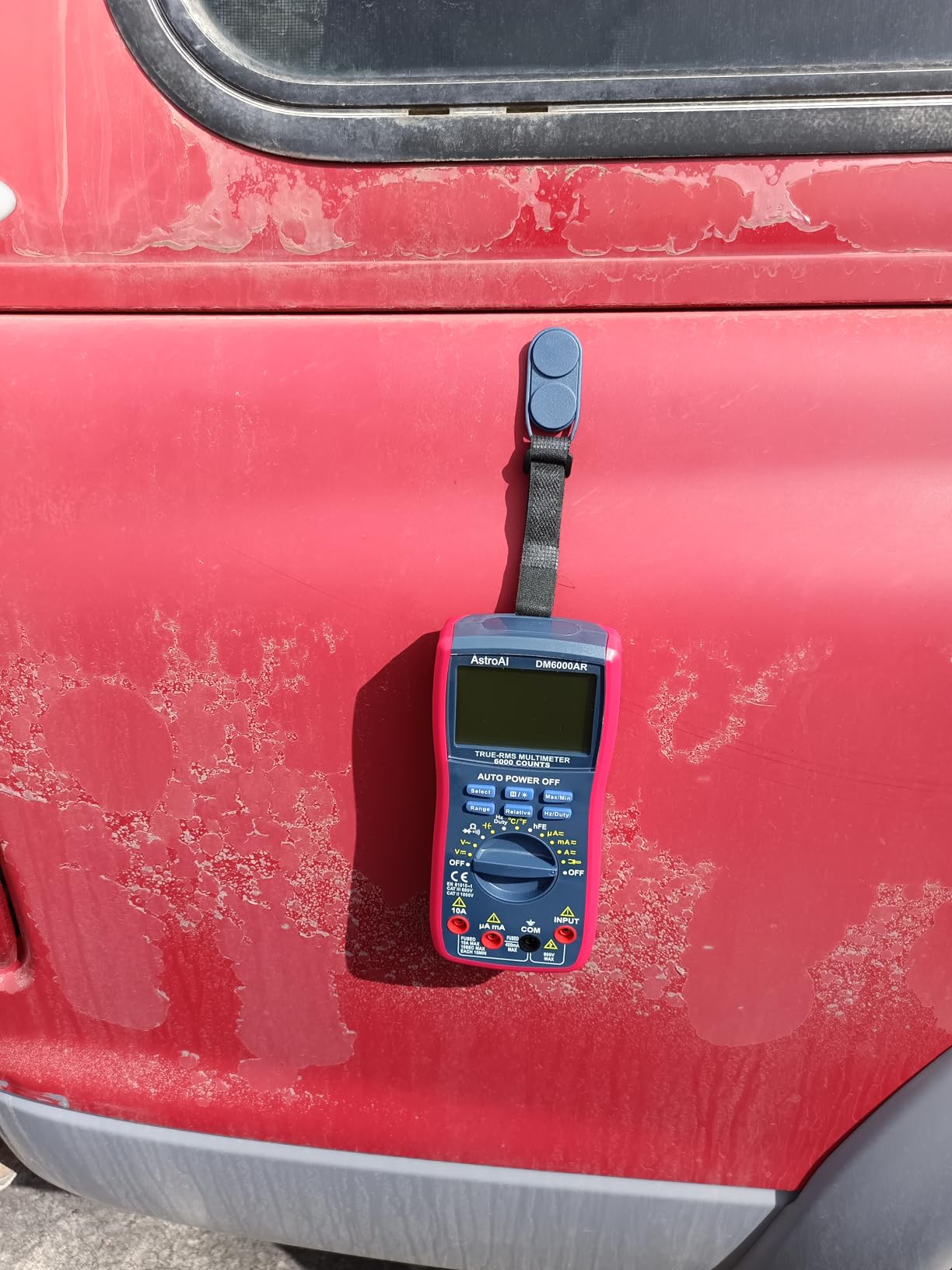
Both current inputs are protected by explosion-proof ceramic fuse tubes, rated 400 mA and 10 A. That matters more than it sounds, and we cover why in the safety section below. There is also a magnet on the back and a kickstand, so it can sit on a panel or an engine bay while you work with both hands.
What makes it worth the money
You get every measurement function a working technician reaches for, in one instrument, without paying for a second meter. Temperature and duty cycle alone would justify a separate probe purchase in most cases. Owners doing Raspberry Pi and microcontroller bring-up use it as a bench default because auto-ranging means one dial position instead of a hunt through ranges every time.
The 20,000-plus review volume is also a form of insurance. Parts, firmware quirks and failure modes are documented somewhere, and a design this widely owned is well supported.
Where it falls short
Two specs are oversold. The advertised 60 MHz frequency counter tops out closer to 16 MHz and needs a strong signal, so do not plan to measure high-frequency ripple with it. The transistor hFE test uses a very low test current and reads roughly half the expected gain, so treat it as an indicator, not a measurement.
The multi-function socket is wired C-B-E rather than the conventional B-C-E, which makes testing TO-220 devices awkward. There is no carrying case, and the supplied temperature probe is not lab-accurate. None of that touches daily DC work.
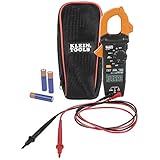
2. Klein Tools CL120 – Best Clamp and Multimeter Combo Under 100
- Highest average rating in this roundup
- Clamp measures 400 amps AC without breaking the circuit
- NCV detection built into the jaw
- Carrying case and CAT III/CAT IV capped leads included
- No temperature measurement function
- Bulky because of the clamp jaw
This one earned the highest average owner rating of anything we tested, and we were sceptical until we used it. A clamp meter is not a substitute for a multimeter, but if you find yourself breaking circuits to measure current more than once a month, the CL120 saves the whole argument.
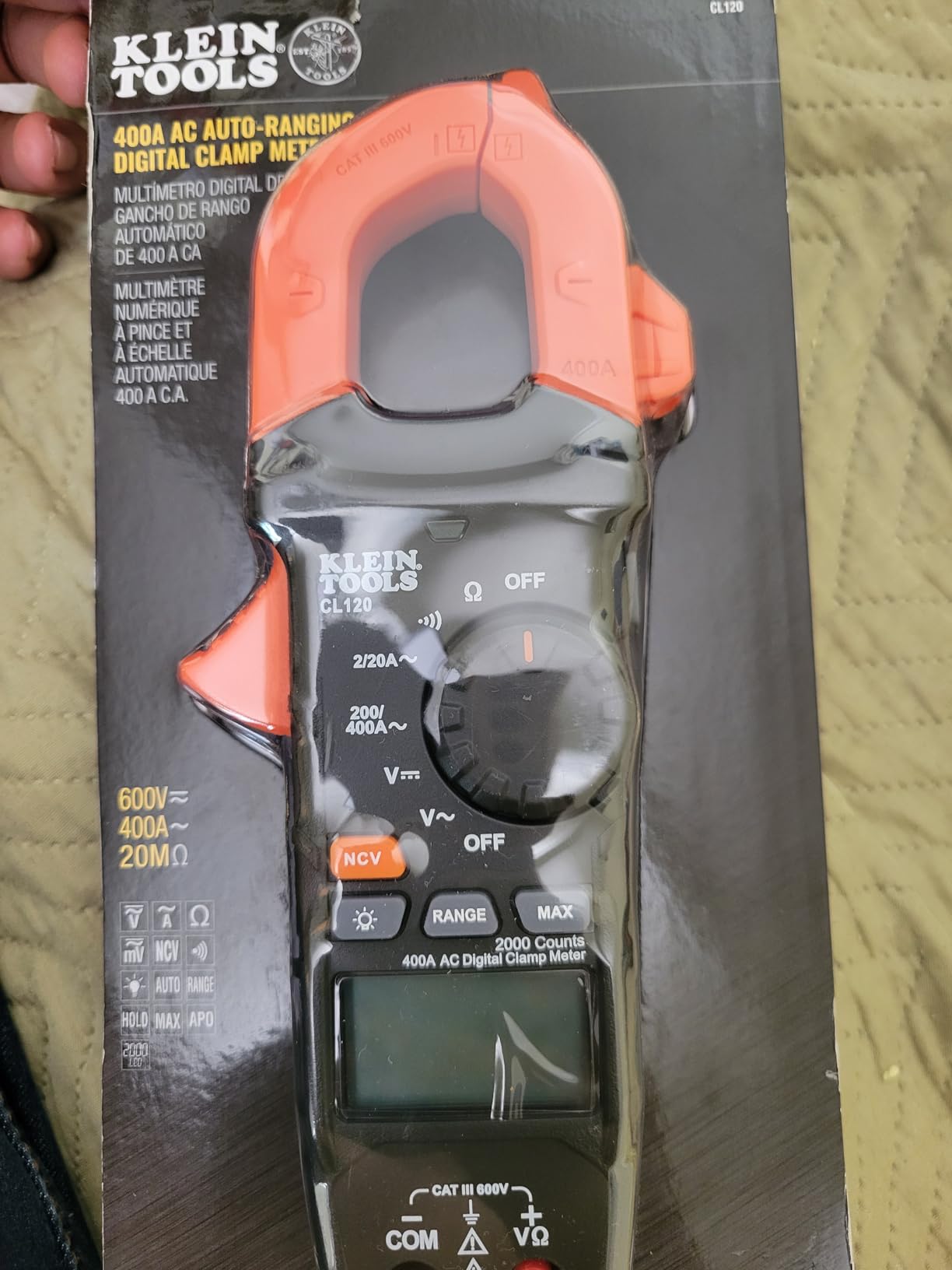
The jaw measures up to 400 amps AC around a single conductor, and the same jaw carries non-contact voltage detection, so you can scan a wall for a live conductor without touching it. Through the test leads it handles AC and DC voltage, resistance and continuity, with auto-ranging, max hold and data hold across the board.
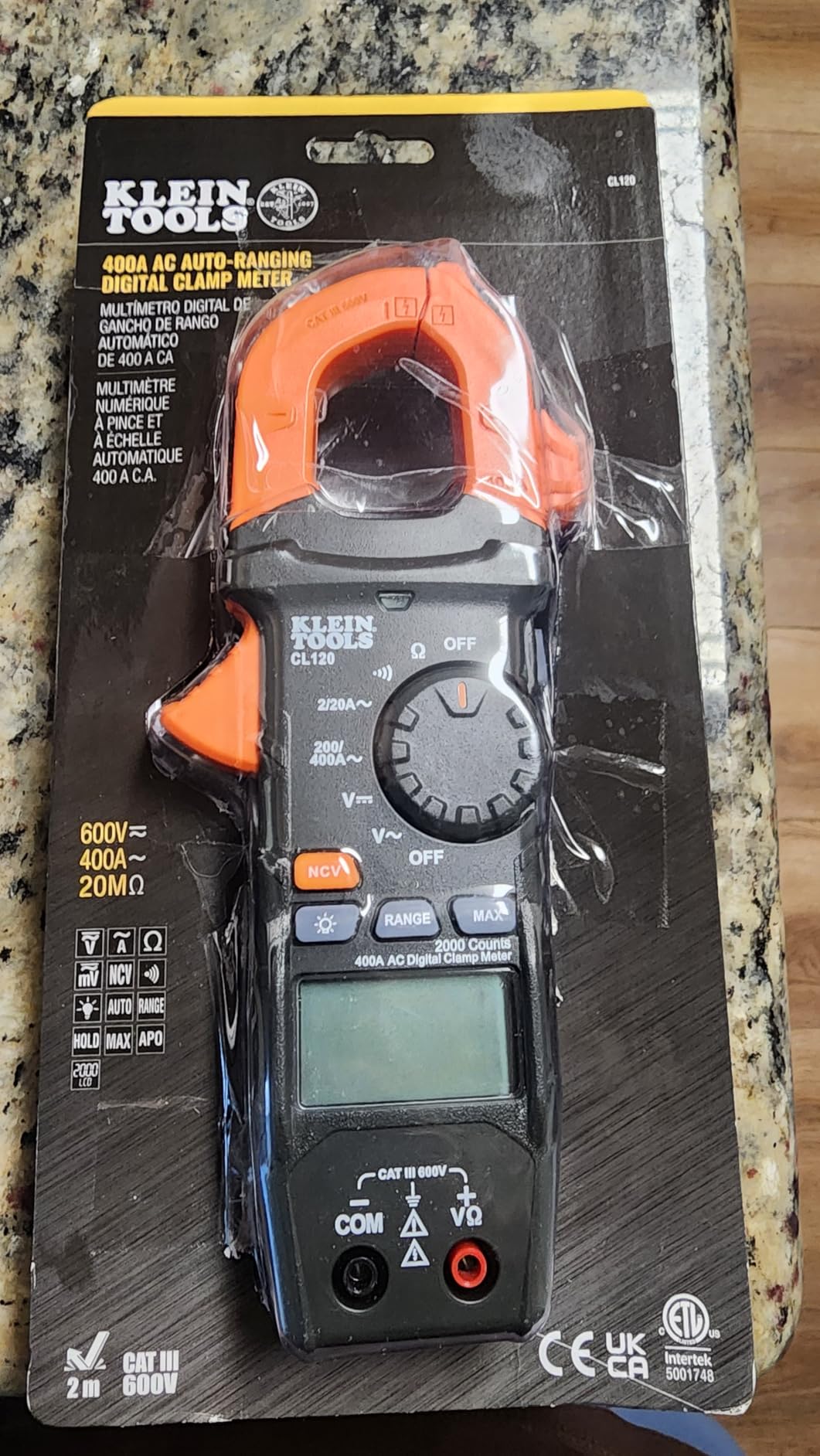
One detail we appreciated more than expected: the display is flat rather than curved. Curved-screen meters wash out when the backlight is on, and this one stays readable in a dark panel or under a vehicle. Auto power off kicks in after ten minutes, and the side lead holder keeps the probes from tangling.
Owners consistently describe it as an easy-to-read all-in-one for household and automotive work, and the included carrying case, CAT III and CAT IV safety caps and three AAA batteries mean you can start using it immediately. Our broader guide to multimeters for electricians covers the CAT rating question in more detail.
Where it beats a plain multimeter
Any time you would otherwise insert a meter in series to check running current, the clamp does it without breaking the circuit. On a motor, an HVAC unit or a starter draw test, that is faster, safer and removes a whole category of error. It also handles high current where a bench meter with a 10 A fuse simply cannot follow.
Where it falls short
Clamp current measurement is AC only. If you need DC current in a panel, you still have to break the circuit and use the leads, which is exactly what you were trying to avoid. The clamp is also physically bulkier than a standard meter, so it is less pleasant for fine bench electronics work.
There is no temperature function, which rules it out for HVAC diagnostics where you want a probe reading alongside your current. A few reviewers also note the continuity tone can respond slowly, and the supplied case is tight for longer replacement leads.
3. Fluke 101 – Best for Basic Voltage and Continuity Checks
- Compact and light at 160 g
- 0.5 percent basic DC accuracy from a major instrument brand
- Diode and continuity buzzer
- Rugged build with a one year warranty
- Manual ranging with no auto-ranging
- Limited measurement functions for advanced electronics
The Fluke 101 is not the most capable meter here. It is the one we would hand to someone who wants a meter that simply works, will not be confused by the dial, and will still be working in ten years.
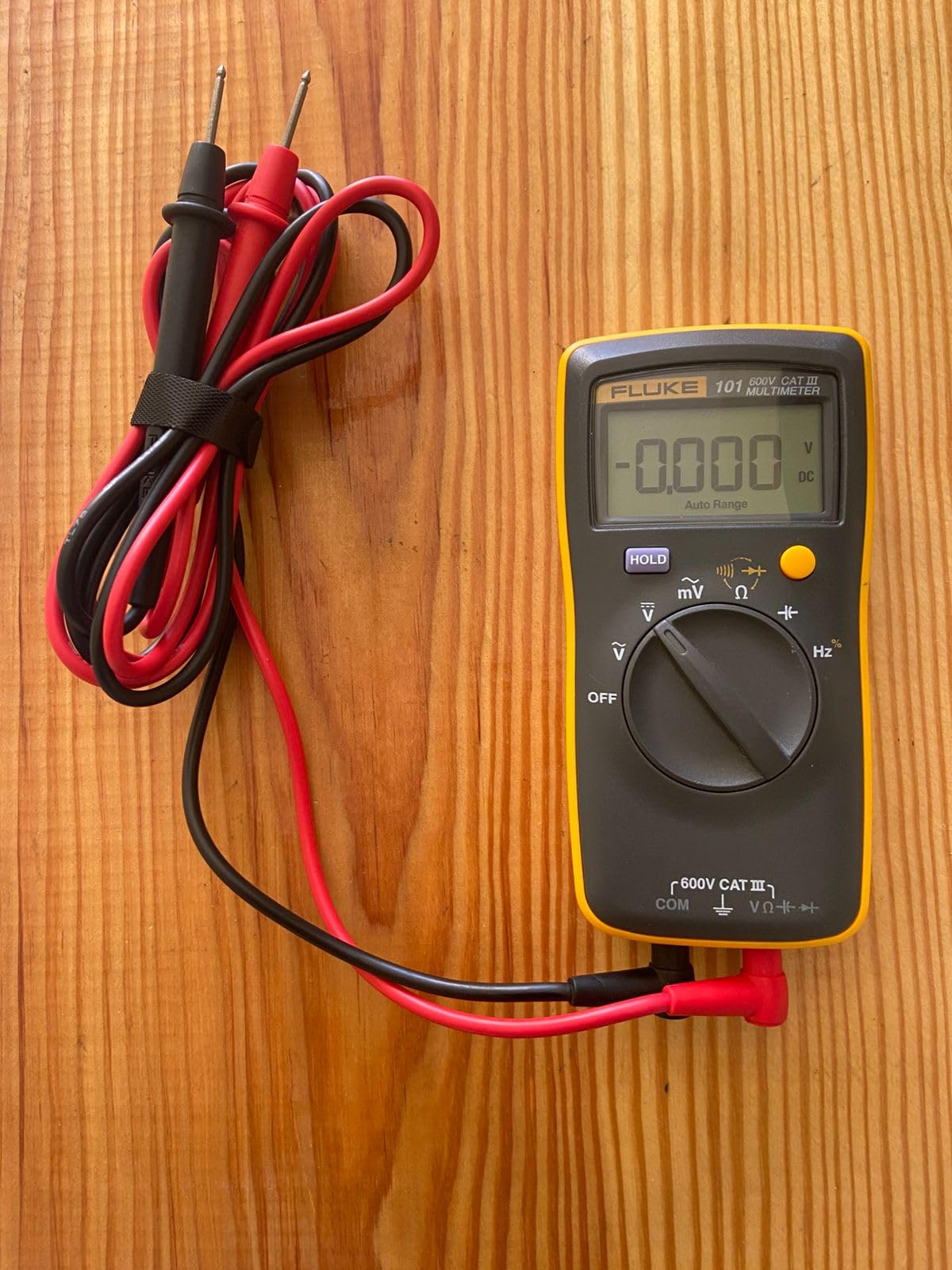
At 160 grams and just over five inches long, it is genuinely pocketable and can be operated one-handed. The CAT III 600 V rating covers household outlets and fixed wiring, and the 0.5 percent basic DC accuracy is a number we trust, because Fluke publishes it and has decades of reputation resting on it.
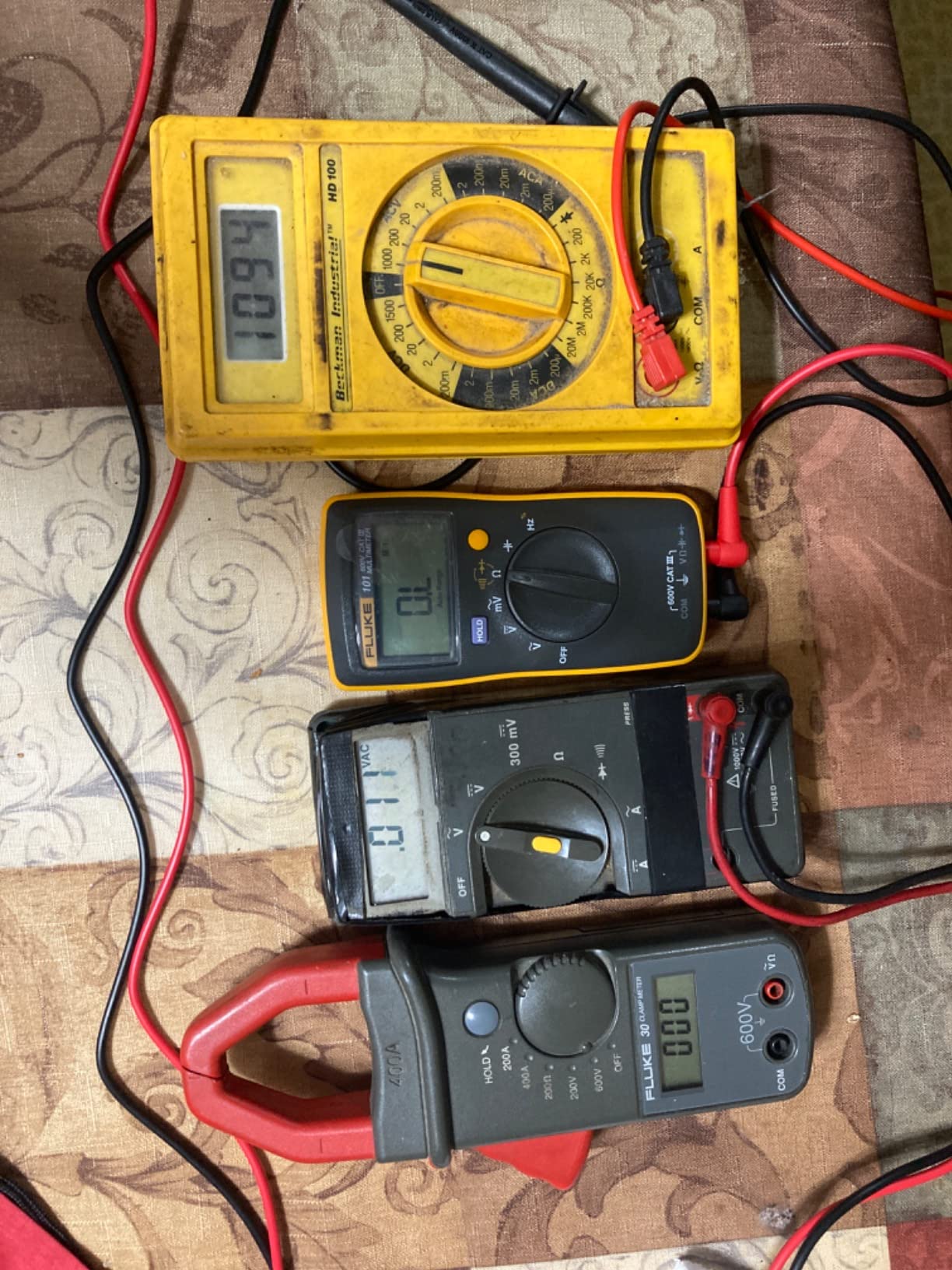
Diode and continuity tests with an audible buzzer cover most of what a first-time owner actually needs: checking fuses, confirming a wire is broken, testing a diode in circuit, and verifying a battery. Owners consistently describe it as the go-to meter for basic electrical checks, and the build feels like it will survive a toolbag.
In the box you get the meter, TL75 test leads, two AAA batteries and a manual. The one-year warranty is unremarkable, though Fluke’s build quality means you are unlikely to use it.
Why people keep buying it anyway
On r/electronics, the common sentiment is blunt: if you are working on low-energy electronics, get the inexpensive one. The 101 is that recommendation with a safety certification and a published accuracy spec attached. There is no guessing about whether the number on the display can be trusted.
For a homeowner checking an outlet before painting over it, or a maker confirming a 3.3 V rail on a breadboard, the simplicity is a feature. Nothing here can be misconfigured, because there is no auto-ranging to fight with and no menu to lose.
Where it falls short
Manual ranging means you pick the range yourself, and picking the wrong one wastes time or gives a meaningless reading. The function set is limited too: no capacitance, no temperature, no frequency, and no auto-ranging to smooth the process out.
It also has no backlight, so it is hard to use in a dark panel or a crawlspace. For advanced electronics work this is a basic instrument and you will outgrow it within a year.
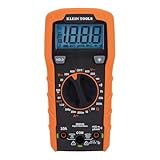
4. Klein Tools MM325 – Best for Electricians Who Want a Backlight
Klein Tools MM325 Multimeter, Digital Manual-Ranging 600V AC/DC Voltage Tester, Tests Batteries, Current, Resistance, Diodes, and Continuity
- Lead-alert LEDs help prevent mis-seated leads
- Backlit display is clear in low light
- Kickstand and lead storage for bench or field
- Reads from 9 V up for battery testing
- Manual ranging rather than auto-ranging
- Resistance range tops out at 2 MegOhm
The MM325 is the meter we would hand to a working electrician who does not want to think about the meter. It sits in the Tools and Home Improvement top ten and number two in multi testers, which tells you how many electricians have already made this exact choice.
The lead-alert feature is the standout. LEDs illuminate when the test leads are seated in the wrong input jack, which is the single most common beginner error and the one that burns out a meter’s internal shunt. Having the meter warn you is unusual at this price.
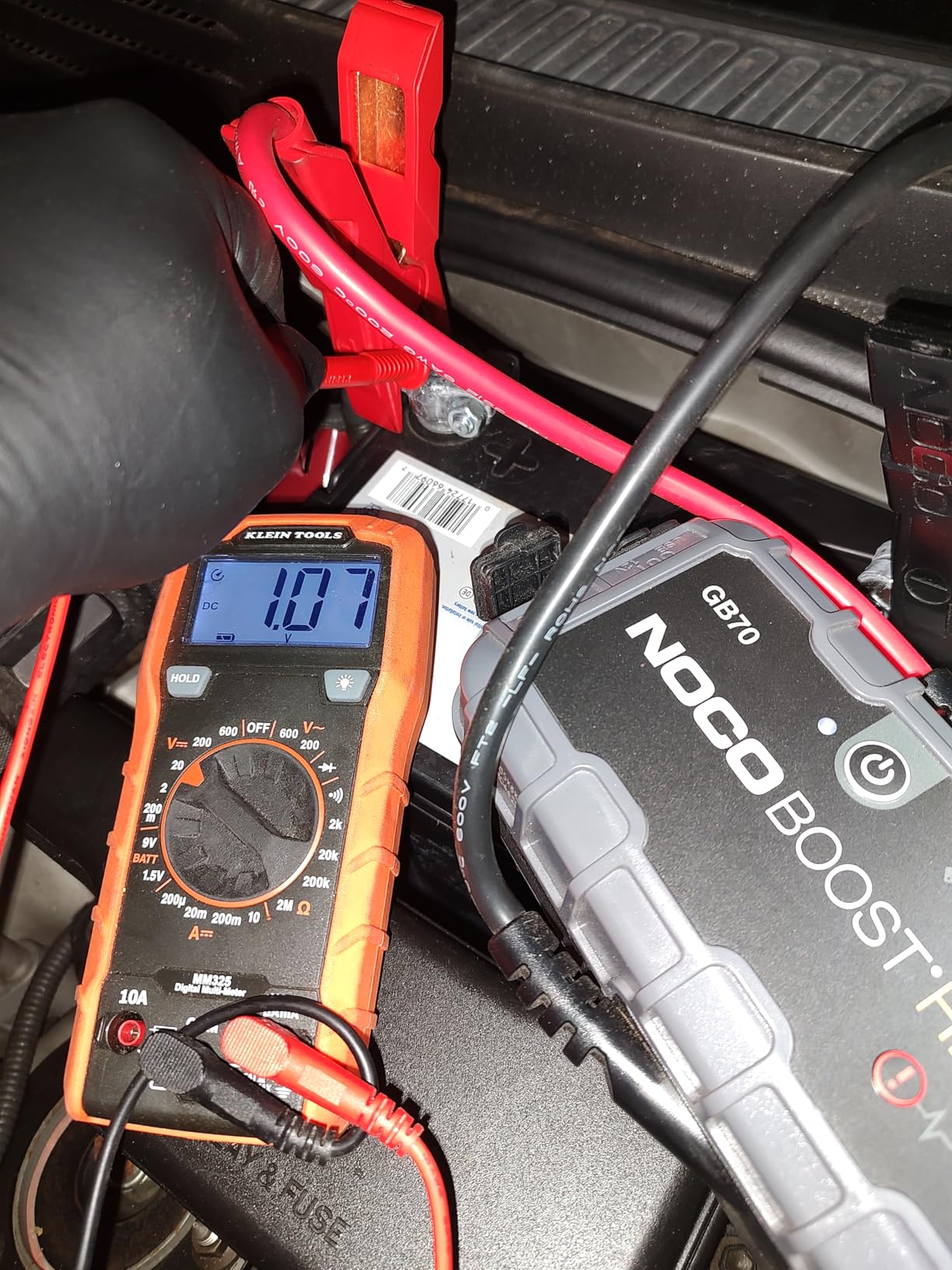
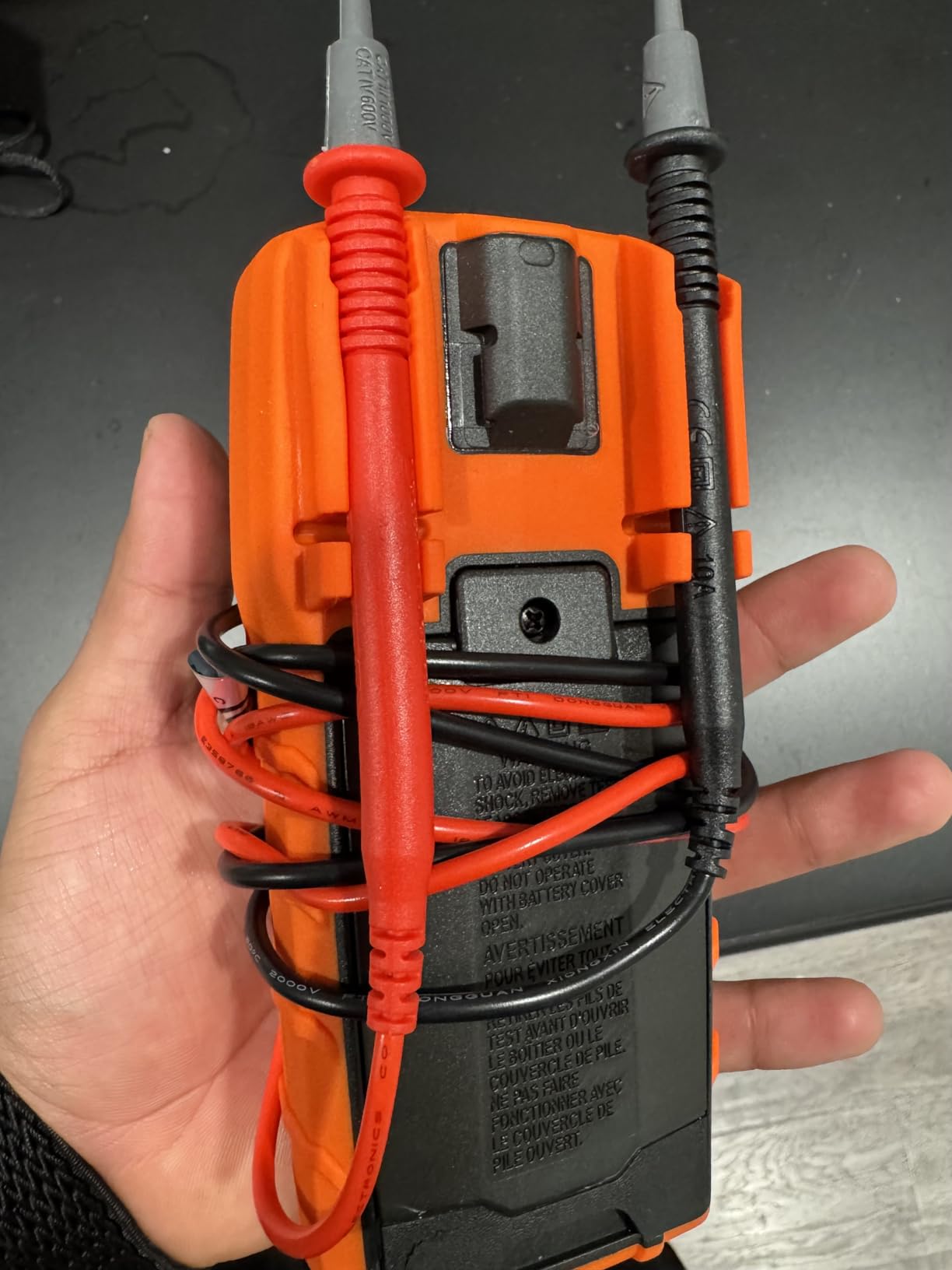
It measures AC and DC voltage to 600 V, DC current to 10 A, and resistance to 2 MegOhm, plus continuity, diode and battery test. The backlit LCD is a genuine improvement over the Fluke 101 in dark rooms, and test lead holders, a kickstand and compatibility with a magnetic hanger make it practical on a job site.
Reviewers single out the readable backlit screen and hands-free kickstand as the features that make it work in the field, and the wide owner base reflects strong satisfaction for both household and trade electrical work. Our picks for digital multimeters generally cover the higher tier.
Why tradespeople keep re-buying it
Between the lead alert, the backlight, the kickstand and the lead storage, this meter removes four separate small annoyances from a working day. Reviewers describe it as strong brand recognition and build quality in a compact manual-ranging design, which is a fair summary of why it clusters near the top of the category.
The battery test mode, with a lower limit of 9 V, is a nice touch for anyone checking site lighting or equipment batteries rather than only household cells.
Where it falls short
Manual ranging is the main friction. On a busy job you will move the dial more often than you would like, and the wrong range gives a reading that looks plausible but is meaningless. The 2 MegOhm resistance ceiling also limits you if you ever need to check high-value resistors or insulation.
There is no NCV, no temperature, and no capacitance, so it is strictly a general-purpose electrical meter rather than an all-rounder.
5. AstroAI 4000-Count True RMS – Best for Battery and Live-Wire Checks
AstroAI Digital Multimeter, TRMS 4000 Counts, Auto-Ranging, Battery Test
- NCV detection with audible and visual alarms
- Dedicated 1.5V 9V and 12V battery test modes
- Backlit display plus built-in flashlight
- Double ceramic fuse and silicone cover
- 4000-count display has lower resolution than 6000-count models
- Included case and accessories are basic
Where the first AstroAI covers everything, this one covers the things most people actually do. Battery testing and live-wire detection are the two features that separate it from a generic budget meter, and both are implemented properly rather than as party tricks.
The NCV detector gives both an audible alarm and a red indicator light, so you can work in noisy environments and still see the result. That is a real improvement over buzzers alone, and it is why this meter shows up constantly in household and automotive troubleshooting.
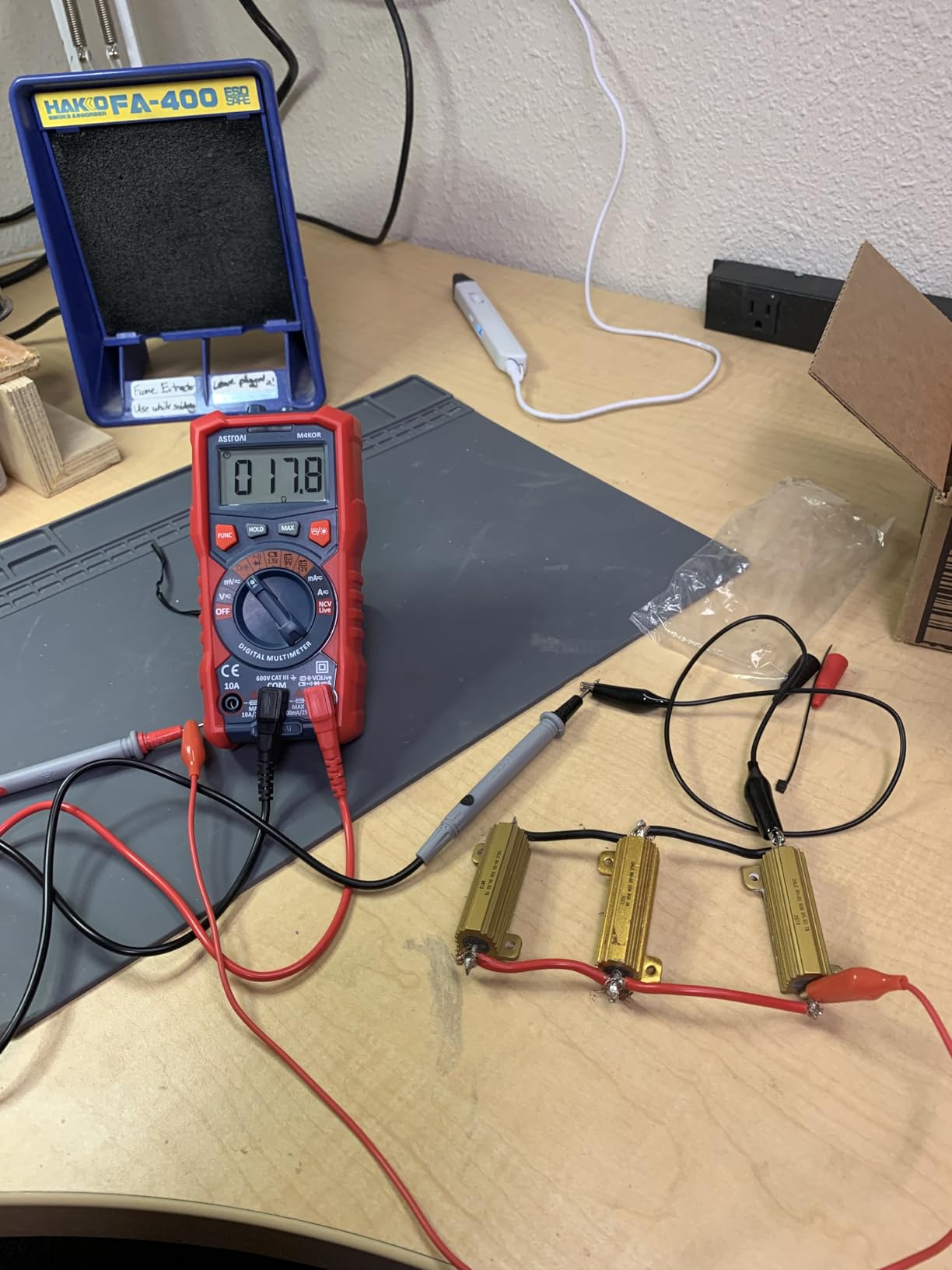
Three dedicated battery test modes cover 1.5 V, 9 V and 12 V cells with a red and green low-voltage indicator, which is more useful than a bare resistance reading. It measures AC and DC voltage to 600 V, current to 10 A and resistance to 40 MegOhm, and carries a CAT III 600 V rating.
The backlit LCD and built-in flashlight are aimed squarely at dark panels and engine bays. Data hold, max reading, auto shut-off and a low battery indicator round out a feature set that owners repeatedly describe as unusually capable for the price tier, and the review volume backs that up at nearly 6800 reports.
What it is genuinely good at
Tracing a dead branch circuit, finding a charged-but-unused line behind drywall, and checking whether a 12 V battery is still holding charge. Those are the tasks most DIY work turns into, and each one is a first-class feature here. A maker debugging a Raspberry Pi power rail also benefits from the 40 MegOhm resistance range and the backlight.
Where it falls short
The 4000-count display is lower resolution than a 6000-count meter, so on low-voltage readings you lose the last digit. The included case and accessories are basic, and the leads are entry-grade. If your work leans on fine precision or capacitance work, step up to the 6000-count model instead.
6. FNIRSI DMT-99 – Best for Chasing Intermittent Faults
FNIRSI DMT-99 Digital Multimeter 9999 Counts TRMS, Rechargeable Volt Meter
- Rechargeable battery removes routine cell swaps
- Graphic waveform view and threshold monitoring mode
- 9999-count True RMS for the price
- Auto-Mode detects AC and DC automatically
- Color screen and graphing add complexity
- Less suited to rough field use than rugged meters
This is the odd one out in the roundup, and the odd one out is often where the interesting tool lives. The DMT-99 is built for faults that only happen sometimes: an intermittent short, a ripple problem, a connection that fails when the panel gets warm.
It plots a real-time waveform of voltage or current on a 2.4 inch colour TFT screen with adjustable brightness, and it has a monitoring mode with custom threshold alarms. You set a limit, walk away, and it tells you when the reading crosses. That is not a feature most meters in this bracket even attempt.
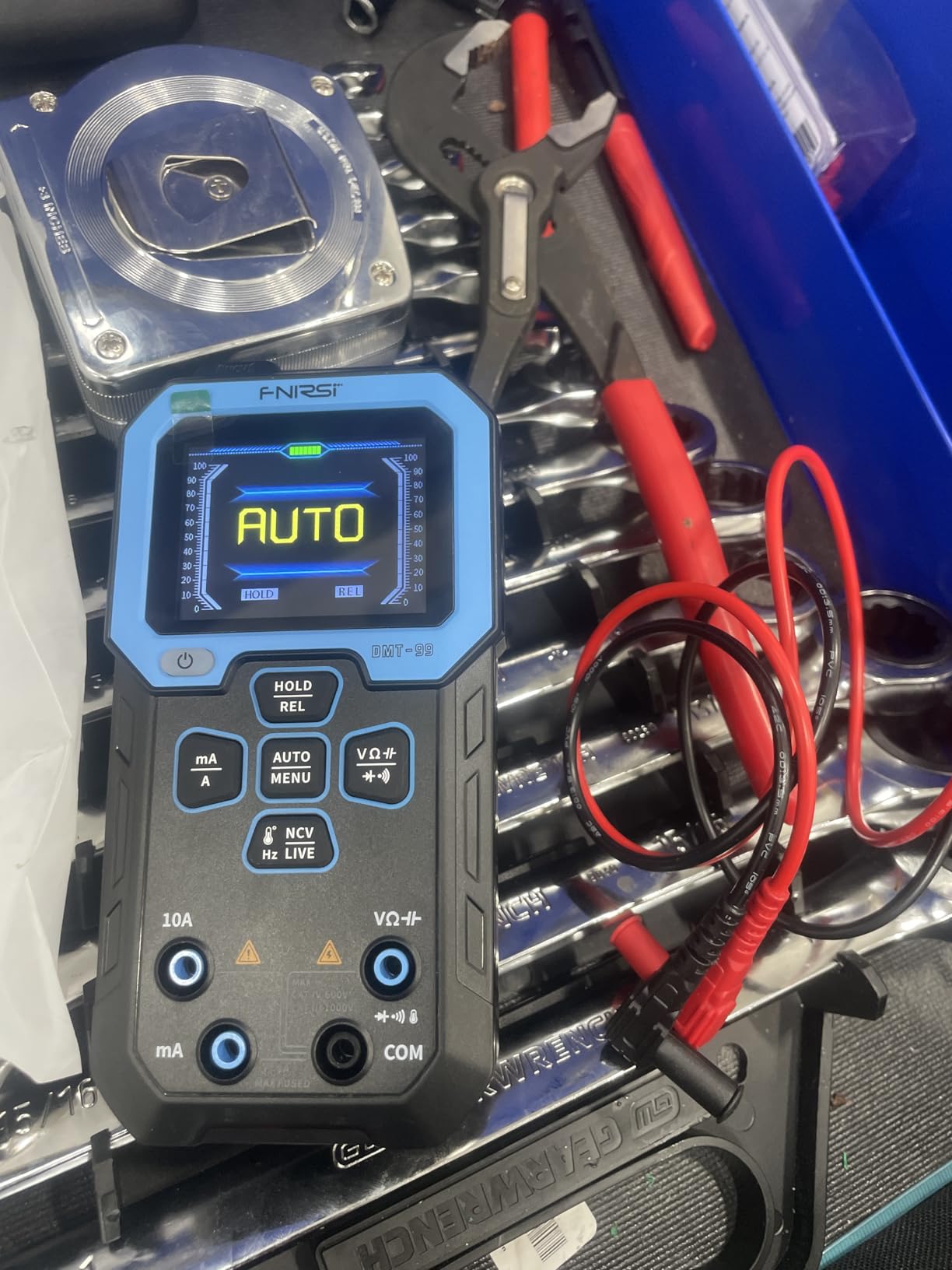
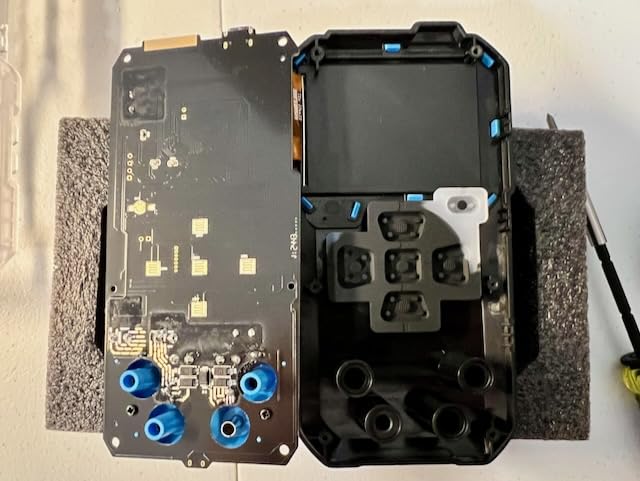
The rechargeable 1500mAh lithium cell with Type-C charging is the second quiet hero. No more swapping cells halfway through a diagnosis, and a meter that is always ready is a meter you actually reach for. The Auto-Mode auto-identifies AC versus DC voltage, resistance and continuity, which speeds up basic troubleshooting.
Dual ceramic fuses and anti-burn protection circuitry suit automotive and industrial work where a mistake is expensive. At 9999 counts, True RMS readings are sharp for the money, and reviewer reports single out the rechargeable battery and the graphing screen as what set it apart in this class.
Who should actually buy it
If you chase intermittent electronics faults, monitor battery banks, or debug a Raspberry Pi or microcontroller supply, the waveform view pays for itself the first time it catches a dropout that a beep would have missed. The threshold monitoring mode is close to a bench tool feature and it costs less than a bench tool.
Where it falls short
Complexity is the price of the feature set. A colour screen with graphing modes is more to learn than a plain LCD, and if you only check outlets and batteries it is overkill. Reviewers also note that the colour screen and rechargeable cell make it a poor choice for very rough field work, where a rugged monochrome meter with replaceable cells survives longer.
The Type-C cable and wall charger are not in the box, so budget for that separately.
7. INNOVA 3320 – Best for 12-Volt Automotive Work
- 10 MegOhm input impedance protects vehicle ECUs
- Load-test battery function with colour-coded LEDs
- Very fast auto-ranging acquisition
- Long owner track record across many years
- AC current limited to about 200mA
- No backlight and no data hold
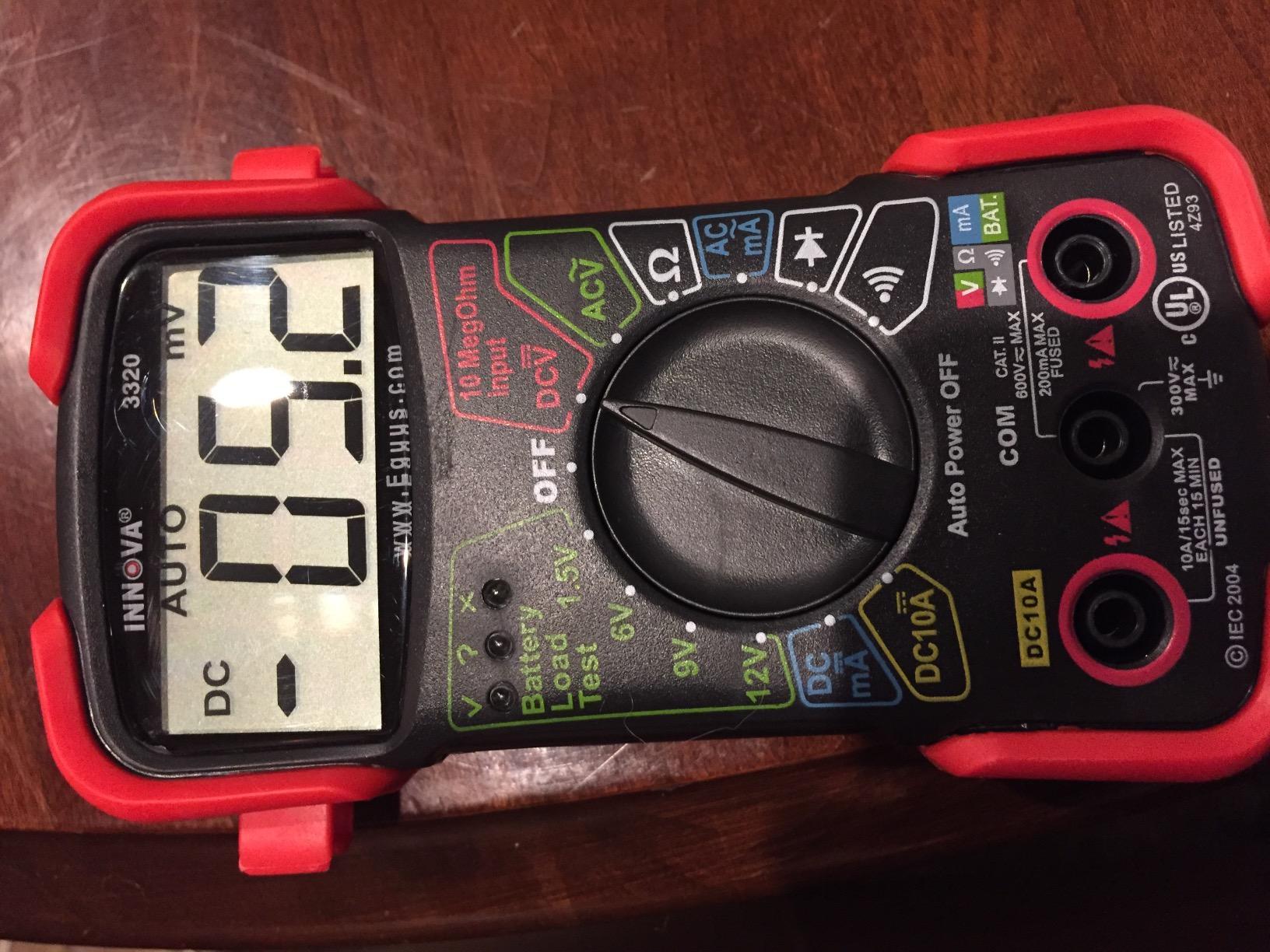
The 3320 has been around long enough that entire generations of technicians learned on it. That longevity shows in the reports, where owners post side-by-side comparison tables against professional Fluke meters and find near-identical results on DC voltage, resistance, current and battery testing.
The 10 MegOhm input impedance is the reason automotive people like it. Probing a live vehicle circuit with a low-impedance meter can disturb the ECU and cause real, expensive faults. A high-impedance input just watches. That single design decision puts it ahead of cheaper meters for car work.
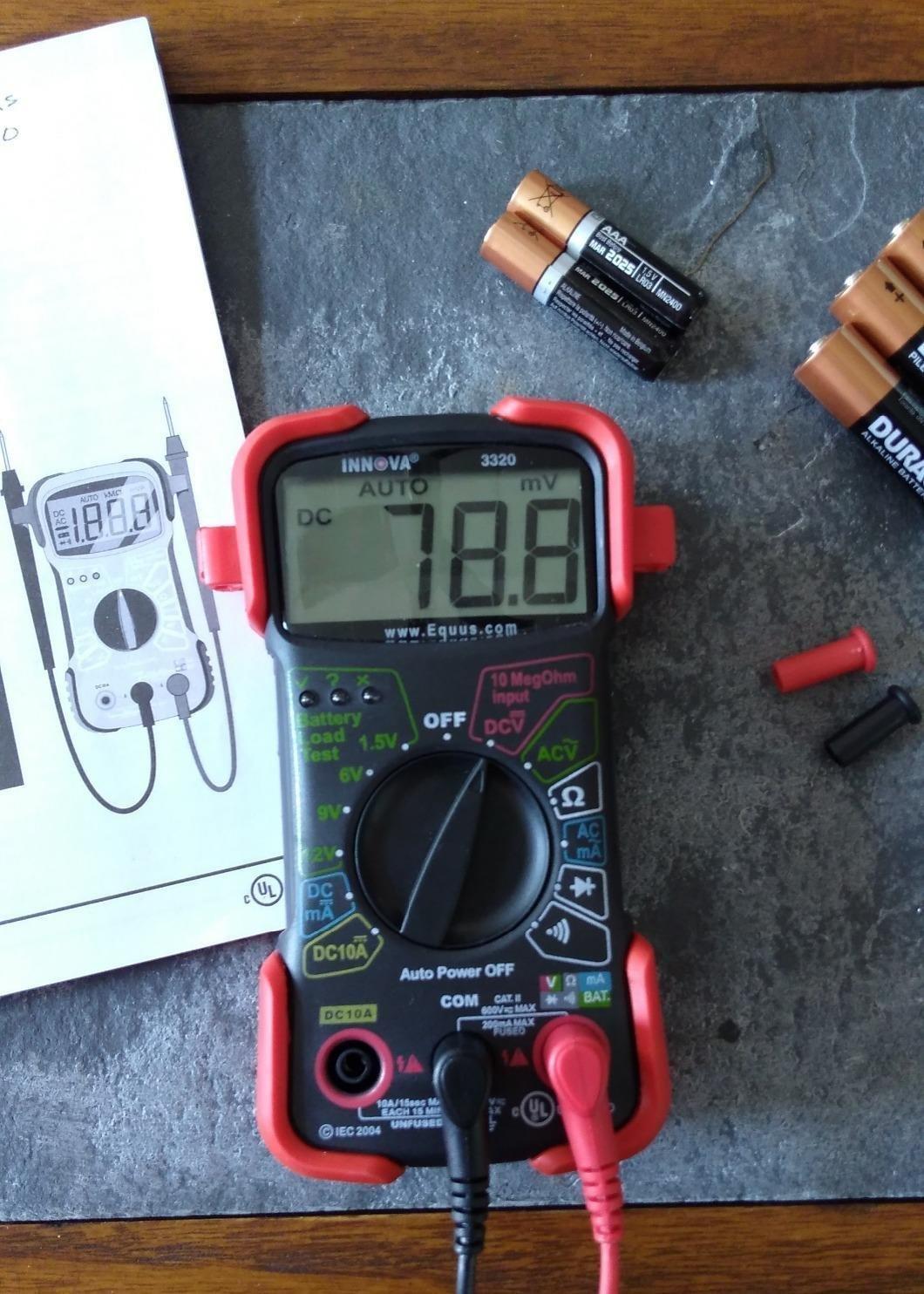
The load-test battery function with colour-coded LED charge indicators is rare at this tier and genuinely useful, covering AA, AAA, 6 V and 9 V cells. The meter is UL certified, and auto-ranging picks the range fast, which reviewers repeatedly praise compared with other auto-ranging meters near the same price.
At 8 ounces it is light in the hand, and consensus treats it as strong value for 120 V AC home work, 12 V DC automotive and 24 V AC furnace work. Our note on used versus new meters is worth reading in the buying guide below.
Where it earns its reputation
Automotive diagnostics where you need to be non-invasive, and any job where you are checking whether a reading is right by comparing it against a meter you trust. Owner reports of years of service with stable readings are more persuasive to us than any spec line. It is also a good first meter for someone moving from a cheap toy to something they can rely on.
Where it falls short
AC current is limited to roughly 200 mA, so it is not a meter for motor or HVAC current. The display is not backlit, which is a real problem in a dark engine bay or a basement panel. There is no data hold or memory, so you cannot freeze a reading and compare it to the next one.
Reviewers also report that auto-ranging can be slow or erratic at extreme resistance values, that the rotary dial contacts can give unstable readings, and that the probe tips are weak for continuity checks. Fine for general work, not for precision electronics.
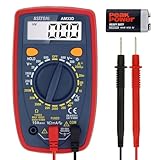
8. AstroAI AM33D – Best Budget Multimeter Under 100
- Most proven design here with over 56000 ratings
- Backlit LCD and continuity buzzer for dim spaces
- Three year warranty with responsive support
- Includes 9V battery
- leads and manual
- 1999-count resolution limits low-voltage precision
- No AC current measurement
When we say a multimeter is proven, this is what it looks like. Over 56,000 ratings on a single model means the failure modes, the quirks and the good parts are all documented somewhere, and AstroAI backs it with a three-year warranty.
For household outlets, fuses, batteries and basic automotive circuit checks, it does everything a first meter should. The 0.6 inch backlit display shows positive and negative readings, so you can tell a reversed reading from a dead one, and the continuity buzzer makes wire tracing fast in a dim basement.
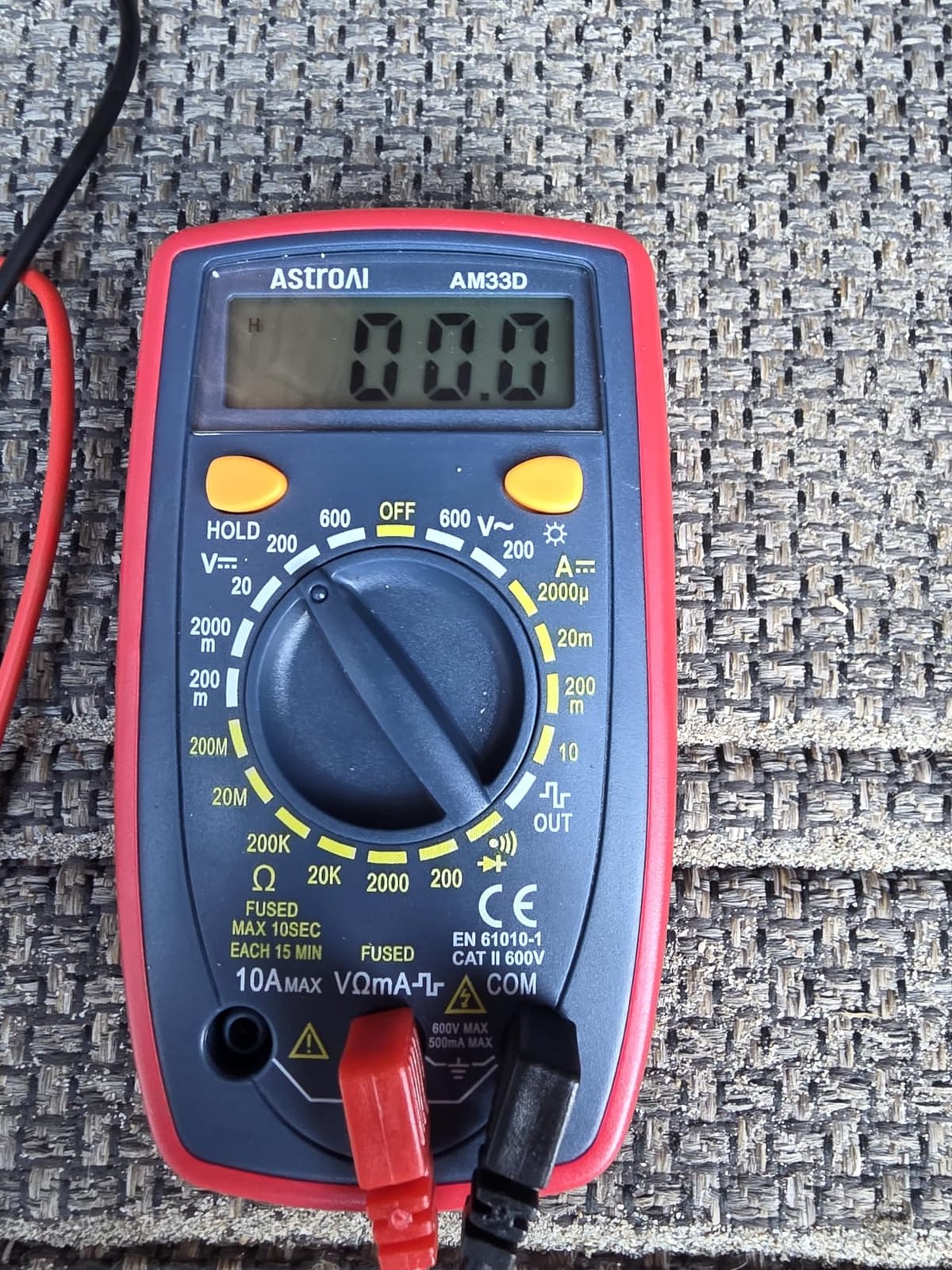
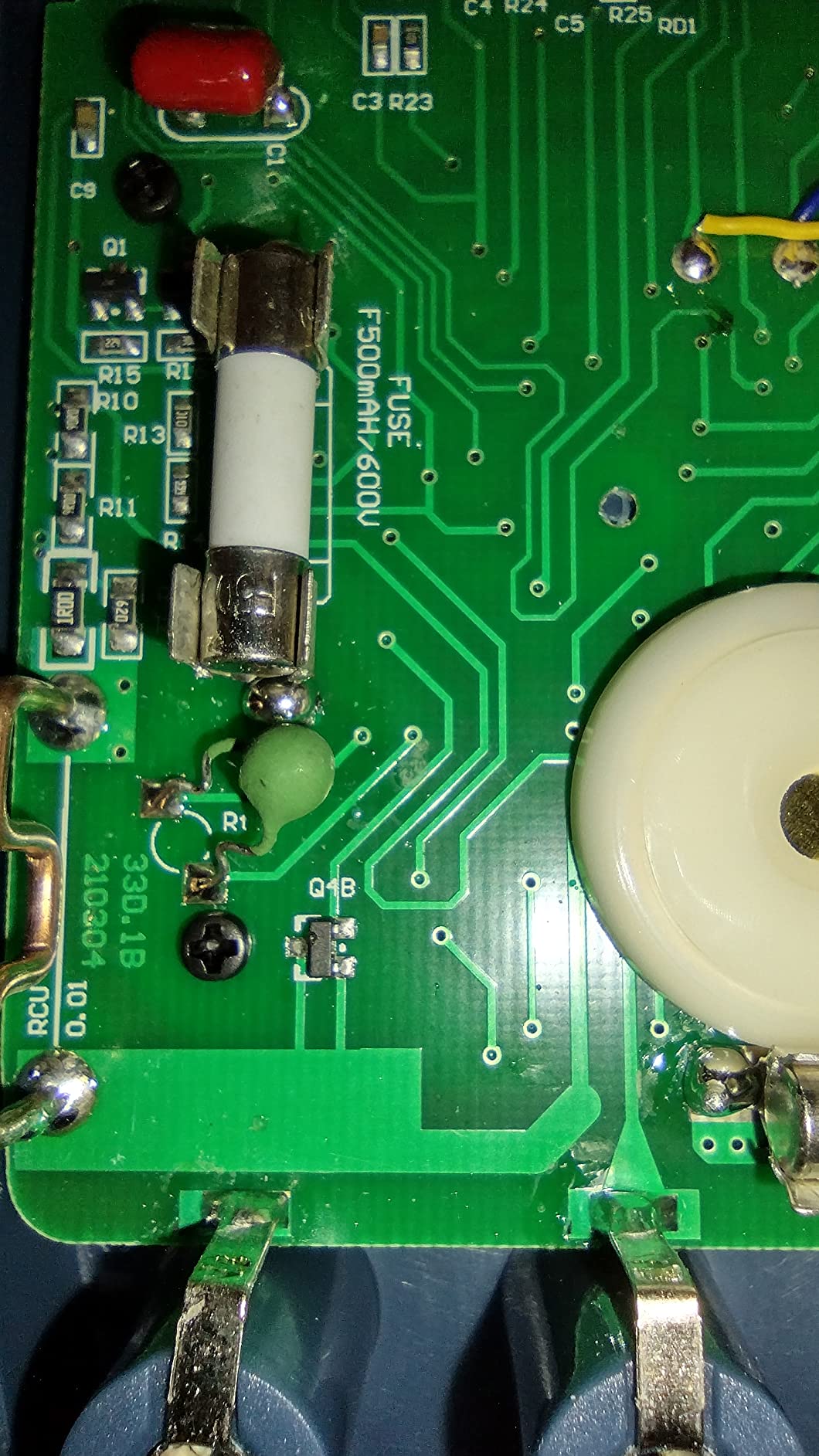
Double fuse anti-burn protection and a silicone protective cover guard against overload and shock, which puts it ahead of many meters in its price class on the safety side. It measures AC and DC voltage, DC current, resistance and diode, and the box includes a 9 V battery, test leads and a manual.
Owners consistently frame it as a dependable first multimeter, and the 74 percent five-star share reflects solid satisfaction for basic work. The response from their California support team comes up often as a reason people recommend the brand. This is also where our budget roundup becomes the better read if you want to go further down.
When it is the right call
Buy this one if the meter lives in a drawer, a junk drawer, or belongs to someone who will lose the manual. There is nothing to learn and nothing to configure, and the backlight means it still works in the places you actually need it. For a student outfitting a first lab kit, it covers every measurement you will meet in a first-year circuit course.
Where it falls short
The 1999-count display limits precision on low-voltage readings, so it is the wrong tool for a 3.3 V rail or a sensor output where the last digit matters. It cannot measure AC current at all, and it does not read AC voltage below 100 mV, which rules it out for low-voltage AC signals.
Ranging is manual, and the two samples per second sampling speed is slow for some live measurements. Know what you are buying: this is a household meter, not an instrument.
How to Choose a Sub-100-Dollar Multimeter?
True RMS only matters for certain work
True RMS meters measure the actual root mean square of an AC signal instead of approximating it from a rectified average. For a sine wave, which is what a household outlet puts on a pair of wires, the two methods agree. They diverge on anything with sharp edges: switch-mode power supplies, variable frequency drives, dimmer circuits, and most modern electronics.
If you are checking mains outlets, a non-True-RMS meter is fine. If you are working on LED drivers, audio, or anything with a switching supply, True RMS is worth paying for. Four of our picks measure True RMS.
Match the CAT rating to the job
The CAT rating is the safety category, and it is not marketing. CAT I is unprotected electronics and bench work. CAT II 600 V covers household receptacles and plug-in loads. CAT III 600 V covers fixed wiring, panels and the service side of your meter. CAT IV is what you need at the utility service entrance, and almost nothing inside a 100 dollar budget reaches it.
Every pick here is at least CAT III 600 V or rated to 600 V, which is the right line for a homeowner and most electricians. If your work is at the panel or at the service entrance, you need CAT IV and you should be spending more.
Auto-ranging saves more time than extra features
An auto-ranging meter picks its own range, which means fewer wrong-range readings and less dial fiddling. A manual-ranging meter gives you finer control and often a slightly better low-range resolution. For most people, the time saved by auto-ranging outweighs that, and we would pick auto-ranging every time unless you are doing precision resistance work.
How to read an accuracy spec
Manufacturers write accuracy as a percentage of reading plus a number of counts, for example plus or minus 0.5 percent plus 3 counts. A count is one step of the last displayed digit. On a 6000-count meter showing 12.00 V, one count is 0.01 V, so three counts is 0.03 V.
That means a 12.00 V reading is good to roughly 12.00 plus or minus 0.09 V, about 0.8 percent. The important detail is that the count component is fixed, so it dominates at the bottom of a range. This is also why more counts is only a modest upgrade, and why a 1999-count meter is not useless. For the resolution-versus-count question that comes up constantly on electronics forums, the honest answer is that 6000 counts is plenty for a maker, and 20000 counts only matters if you are measuring very small signals.
Check the fused inputs before you measure current
Measuring current means placing the meter in series with the circuit, and the meter is effectively a very small resistor. Put one across a voltage source instead and you have created a short circuit through that resistor, which can melt an internal shunt or start a fire.
Four steps keep you safe. First, confirm the leads are in the COM and V/ohm jacks before you select any current function. Second, only ever measure current in series, never in parallel. Third, check that the mA or microamp input is actually fused, because many budget meters fuse only the 10 A jack or not at all. Fourth, start on the highest current range and step down only if the reading is comfortably low.
Features you can safely skip
Duty cycle, capacitance, temperature probes and multi-function sockets are real, but most meters spend 99 percent of their life measuring voltage, continuity and resistance. Pay for them if your work needs them. Skip them if you are buying a first meter, and put the difference into a True RMS meter or a proper case.
When to spend more than 100 dollars
Three situations genuinely require more. CAT IV at the service entrance or on utility-side work. Motor drives and variable frequency drives, where you need filtered inputs and low input impedance to avoid ghost voltages. And high-current work above 10 A, where a budget meter’s shunt and fuse are not designed for sustained load.
One other route worth naming: a used True RMS Fluke can be found well under 100 dollars, and forum regulars treat this as a legitimate strategy. The trade-off is no warranty, unknown battery age, and no guarantee the calibration is current. If the meter will earn its keep daily, a serviced used Fluke is a defensible buy. If it will live in a drawer, a new budget meter is the safer bet.
Frequently Asked Questions
What is the best multimeter for the money?
The AstroAI 6000-count True RMS offers the most capability inside a 100 dollar budget, measuring True RMS AC voltage and current plus capacitance, frequency, duty cycle and temperature across a large owner base. The Klein Tools CL120 is the pick if you need a clamp jaw for high current, and the Fluke 101 if you want the safest simple choice with a published 0.5 percent DC accuracy.
Are cheap multimeters any good?
Yes, for most work. A budget meter with a stated CAT rating, a published accuracy spec and fused current inputs will read DC voltage, resistance and continuity within a fraction of a percent of a professional reference, and owners of several models here publish comparisons against Fluke meters showing near-identical results. Cheap meters become a problem when they lack a safety rating, or when the current input is unfused.
How do I read a multimeter accuracy spec?
Accuracy is written as a percentage of reading plus a number of counts, where one count is one step of the last displayed digit. On a 6000-count meter showing 12.00 V, one count is 0.01 V, so plus or minus 0.5 percent plus 3 counts is roughly plus or minus 0.09 V, or about 0.8 percent at that reading. The count term is fixed, so it matters most at the bottom of a range.
What CAT rating do I need for household wiring?
CAT II 600 V covers household receptacles and plug-in loads, while CAT III 600 V covers fixed wiring and panels and is the safer choice if you will work inside a breaker box. CAT I is for unprotected electronics on a bench. CAT IV applies at the utility service entrance, and you need to spend more than 100 dollars to reach it.
Is Klein as good as Fluke for home electrical work?
For household and trade electrical work they are close, because both publish CAT III 600 V ratings and backed warranties, and owners report both handling outlets, fixtures and panels without trouble. The Fluke name carries a reputation for long-term accuracy, while the Klein models in this list add a backlight, lead-alert LEDs and a battery test mode. For sensitive low-level electronics, neither is the deciding factor, display resolution is.
Bottom Line: The Best Multimeters Under 100
The AstroAI 6000-count True RMS is our pick for the best multimeters under 100 dollars, because it measures everything the more expensive meters in this list do and holds a 20,000-review track record behind it. The Klein Tools CL120 wins for anyone who measures running current, and the Fluke 101 wins for anyone who wants a simple, accurate meter with a name they trust.
Below those, the Klein MM325 suits electricians who want a backlit display and lead alerts, the AstroAI 4000-count model wins for battery and live-wire checks, the FNIRSI DMT-99 is the tool for intermittent faults, the INNOVA 3320 is the automotive pick, and the AstroAI AM33D is the budget option for a first meter.
Whatever you choose, check the CAT rating and confirm the current input is fused before you touch a live circuit. Our best digital multimeter picks and budget guides go deeper on any of these.