
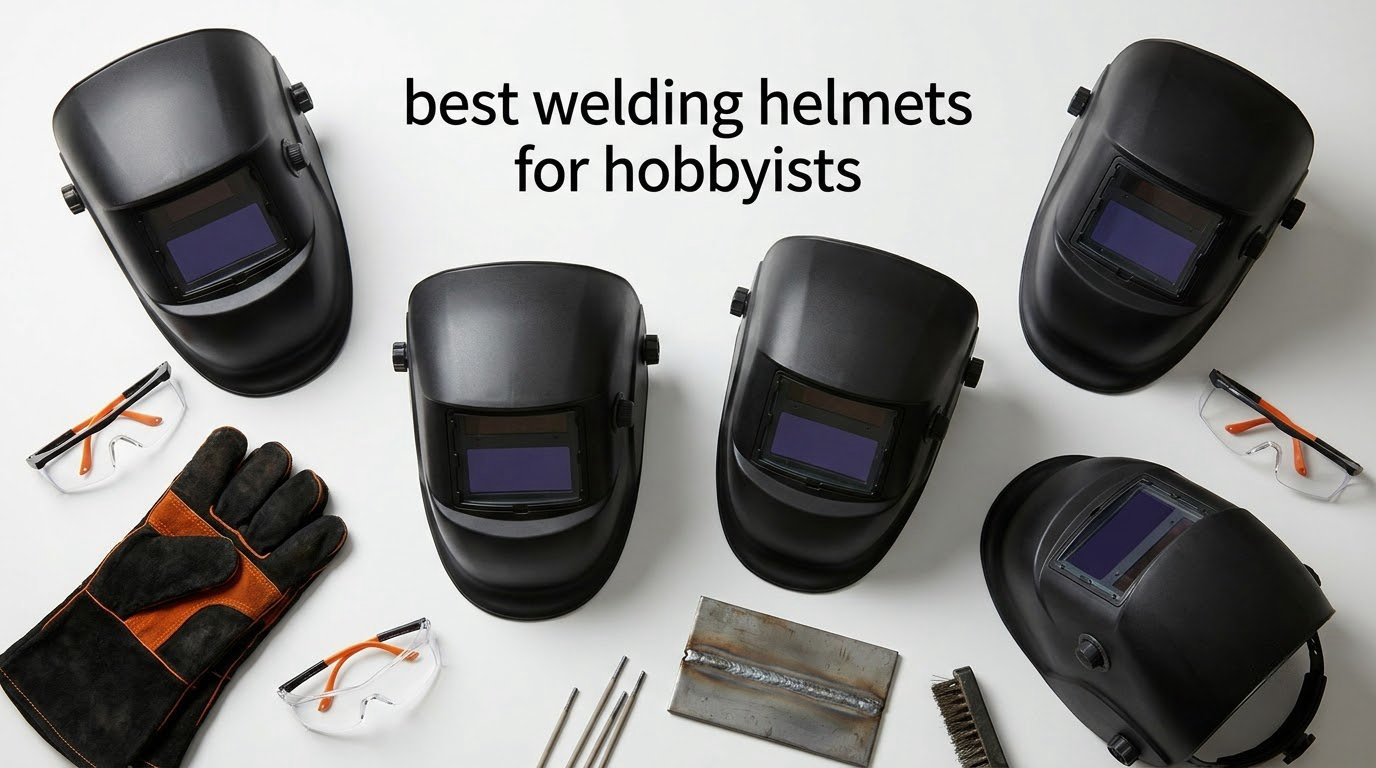
Short answer: the YESWELDER LYG-L600A is the best welding helmet for hobbyists overall. Its 3.64 inch by 1.67 inch viewing area runs a 1/1/1/1 optical class lens, which is the highest rating there is, and it costs a fraction of what the dealer-brand helmets do. We compared nine of the most-reviewed hoods in the hobby market across viewing area, sensor count, shade range, weight and lens rating.
Most of the top Google results for this query are forum threads, which tells you something useful: hobby welders trust lived detail over spec sheets. So here is the honest version, including the parts of these helmets that frustrate people and the one failure point that shows up again and again in the reviews. A note on method, since it matters in this niche: the specification figures below come from the manufacturer listings, and the sentiment comes from the accumulated owner reviews attached to each listing. We have not lab-tested light transmission, so where a listing claims a rating we pass it on as a claim.
Let us define five terms before you spend anything, because you will meet all of them on every listing page. An auto-darkening helmet uses an electric filter that switches to a dark tint the instant you strike an arc and clears a moment after the arc stops, so you can see your work between welds without lifting the hood. Optical class is written as four numbers, for example 1/1/1/1, covering optical quality, light diffusion, luminous transmittance and angle dependence. Arc sensors are the little detectors that trigger the darkening. DIN shade is the number that describes how dark the filter gets, and a higher number means a darker filter. True color means the lens removes the green tint standard auto-darkening filters cast, so your puddle and slag look more like real objects.
The hobbyist market divides cleanly into four tiers, and our nine picks span all of them. The starter tier is the first helmet you buy to find out whether you like welding. The value tier is where true color lenses and four sensors stop being exotic. The dealer-brand tier is Miller, Hobart and Lincoln Electric, where you pay for a warranty and stocked replacement lenses. The upgrade tier is for the hobbyist who has outgrown a cramped view and wants a panoramic screen. If you are still assembling a bench, our oscilloscope picks for hobbyists cover the other end of the diagnostic toolkit, and how robotic welding actually works is worth a read if automated cells are on your horizon.
Table of Contents
Top 3 Picks for Best Welding Helmets for Hobbyists (October 2026)

YESWELDER LYG-L600A True Color
- 1/1/1/1 optical class
- 3.64 inch by 1.67 inch view
- Solar plus CR2450 battery
- Shade 3/7-13

ARCCAPTAIN HSH-S800
- Four arc sensors
- 1/25000 second switching
- 1/1/1/1 true color lens
- Shade 4/9-13

YESWELDER LYG-Q800D
- 3.94 inch by 3.23 inch view with side window
- Four arc sensors
- 1/1/1/1 true color
- Shade 3/5-9/9-13
The LYG-L600A is the one we would put on a first head, the HSH-S800 is the most affordable way to get four sensors and a 1/1/1/1 lens, and the LYG-Q800D is the one to buy if the extra screen real estate matters to you more than the weight.
Quick Overview: All Nine Helmets Compared (October 2026)
Every helmet below appears in the same order as the reviews that follow, with the key specs pulled into one place so you can narrow the field before reading. Prices move constantly, so use the buttons to check the current figure rather than the ones in the manufacturer listings.
| Product | Specifications | Action |
|---|---|---|
| YESWELDER LYG-L600A |
|
Check Latest Price |
| ARCCAPTAIN HSH-S800 |
|
Check Latest Price |
 Hobart 770890 Hobart 770890 |
|
Check Latest Price |
 Miller Classic Series ClearLight Miller Classic Series ClearLight |
|
Check Latest Price |
 ARCCAPTAIN HSH-G999 ARCCAPTAIN HSH-G999 |
|
Check Latest Price |
 TRQWH TRQ-HS0103 TRQWH TRQ-HS0103 |
|
Check Latest Price |
 ARCCAPTAIN LY800J ARCCAPTAIN LY800J |
|
Check Latest Price |
| YESWELDER LYG-Q800D |
|
Check Latest Price |
 Lincoln Electric K4983-1 Lincoln Electric K4983-1 |
|
Check Latest Price |
1. YESWELDER LYG-L600A True Color Helmet – Best Overall for Hobbyists
YESWELDER Auto Darkening Welding Helmet 1/1/1/1 True Color, LYG-L600A
- Highest rated 1/1/1/1 true color lens in this set
- Very light at 16 ounces
- Replaceable CR2450 battery plus solar panel
- Includes spare battery and extra lenses
- Viewing area is small next to panoramic models
- Headgear and shell feel lighter duty than dealer brands
- Some helmets arrive with the coin battery fitted backwards
The LYG-L600A has been the first helmet in our garage for years, and the reason is unglamorous: it is light, it clears up fast, and it never left us squinting at our own puddle. At 16 ounces it is the lightest thing here, which matters more than any spec when you are two hours into a Saturday session and trying to keep the bead straight.
The lens is the story. A 1/1/1/1 rating is the top of the scale, and true color technology strips out the green cast that makes cheap filters tiring over a long afternoon. Two arc sensors with a 1/30000 second switch time trigger reliably at normal MIG amperage, and the adjustable sensitivity and delay knobs let you tame it if a bright reflection is setting it off.
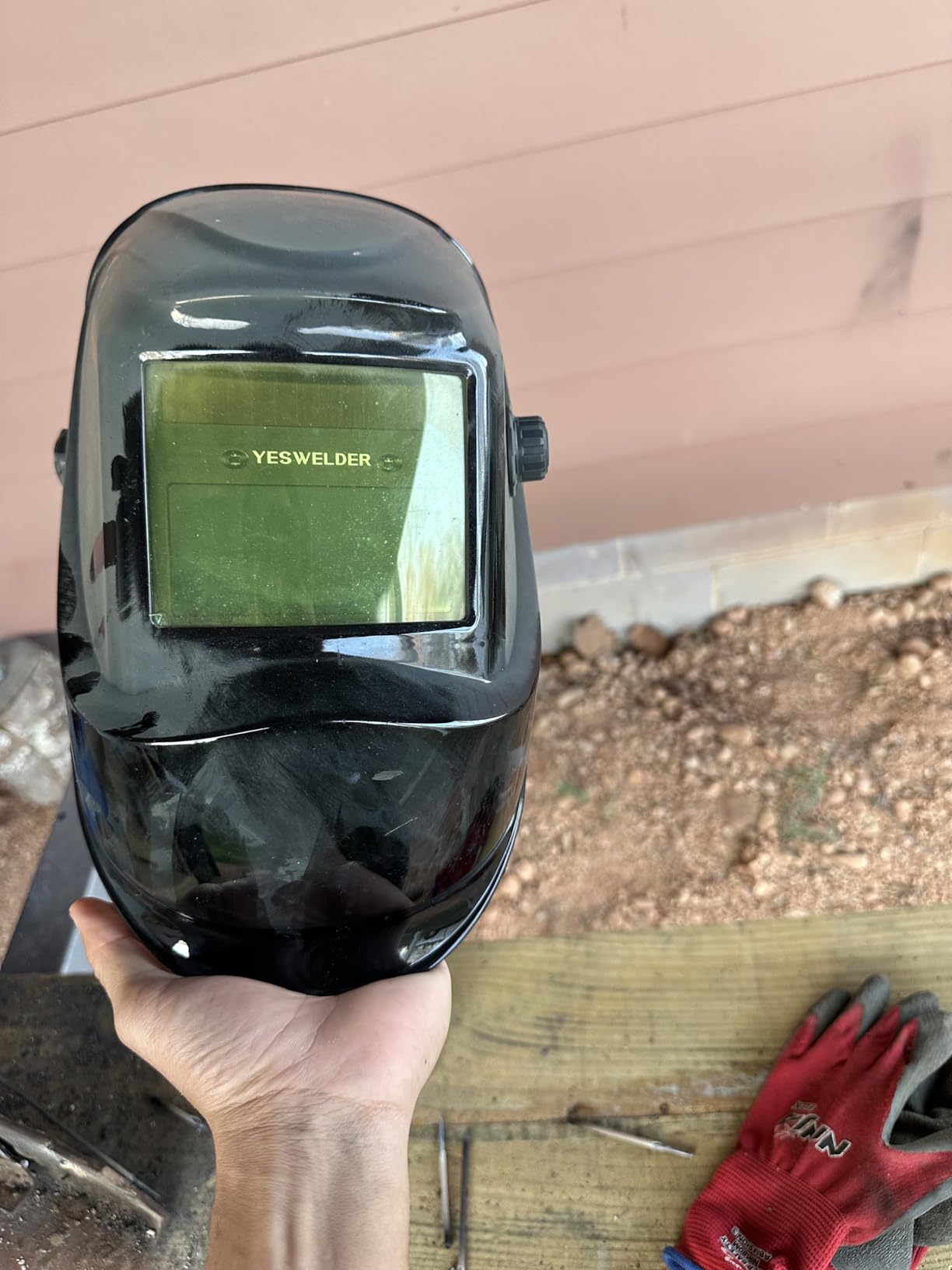
Shade 3/7-13 covers light TIG through Stick, and the blue light blocking outer lens is a real comfort over a full day. It is also cheater-lens compatible, so if you later want a flip-down magnifier for tacking thin material, the shell takes one.
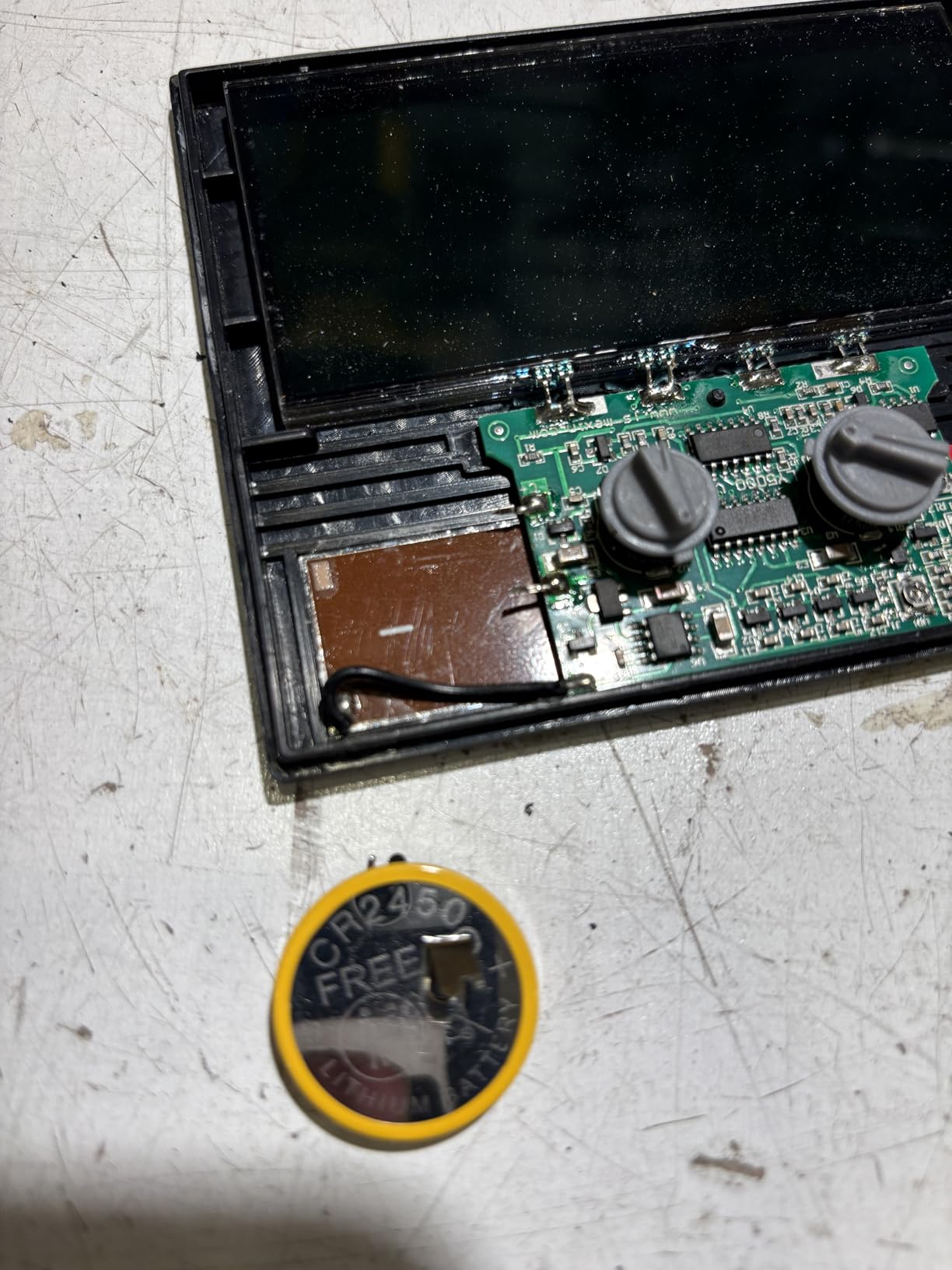
Power is a solar panel backed by a replaceable CR2450 coin cell, which matters for ownership cost. When the cell eventually dies you swap a coin battery rather than a sealed module, and the box already includes a spare plus extra replacement lenses. The listing carries ANSI Z87.1 and CSA Z94.3 certification.
The shell is ABS and polypropylene, and pivot-style headgear handles the fit. Owners in the reviews describe the pivot adjustment as easy to dial in and stable once set.
Why this suits a first-time hobby welder
Because a beginner spends most of the session with the hood down between passes, and a low light state plus a light shell means you actually keep it down. A cramped view is a real penalty, but the 1/1/1/1 clarity more than compensates while you are still learning to read the puddle.
It is also the least likely of the nine to make you nervous about striking an arc for the first time, because it is a proven design with the largest review base in this roundup by a wide margin.
Where it will disappoint you
If you work regularly in tight spaces, under a car or in an engine bay, the 3.64 inch by 1.67 inch view is genuinely tight. Two sensors also mean it is a poorer choice for very low-amperage TIG than a four-sensor model, and the headgear feels thin next to a ratchet band.
One recurring review complaint is a coin battery installed backwards out of the box, which is a two-minute fix but confusing the first time. Check it before your first arc.
2. ARCCAPTAIN HSH-S800 Skeleton Knight – Best Value
ARCCAPTAIN Welding Helmet Auto Darkening, 1/25000s Response, Shade 4/9-13
- 4 arc sensors on a budget price point
- 1/1/1/1 true color lens
- Certified to ANSI
- CSA
- EN 175 and EN 379
- Cheater lens compatible
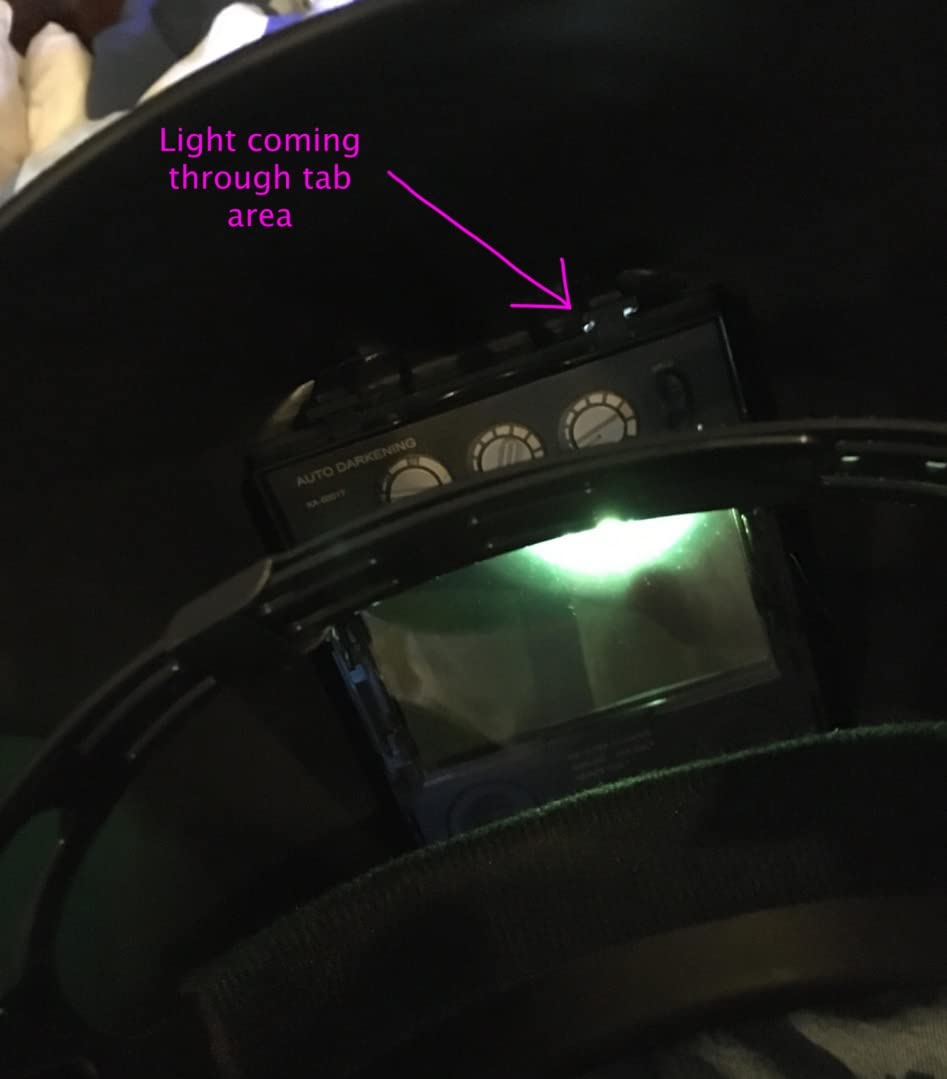
- A minority report slow response and initial arc light leaking through
- Some helmets lose the dark state after a few weeks
- Shell and hardware feel inexpensive up close
Four arc sensors and a 1/1/1/1 lens used to be a premium combination. The HSH-S800 is clear evidence that the budget tier has moved, and for a hobbyist learning TIG on thin material the extra sensors are the reason to choose it over a cheaper two-sensor shell.
Switching is 1/25000 second with a dark state of shade 4/9-13 and a light state of DIN 4, so you can see your workpiece between tacks without flipping the hood up. The 12-in-one smart filter claims automatic DIN 16 UV and IR protection, and the listing carries ANSI/ISEA Z87.1-2010, CSA Z94.3, DIN EN 175 and DIN EN 379 certification.
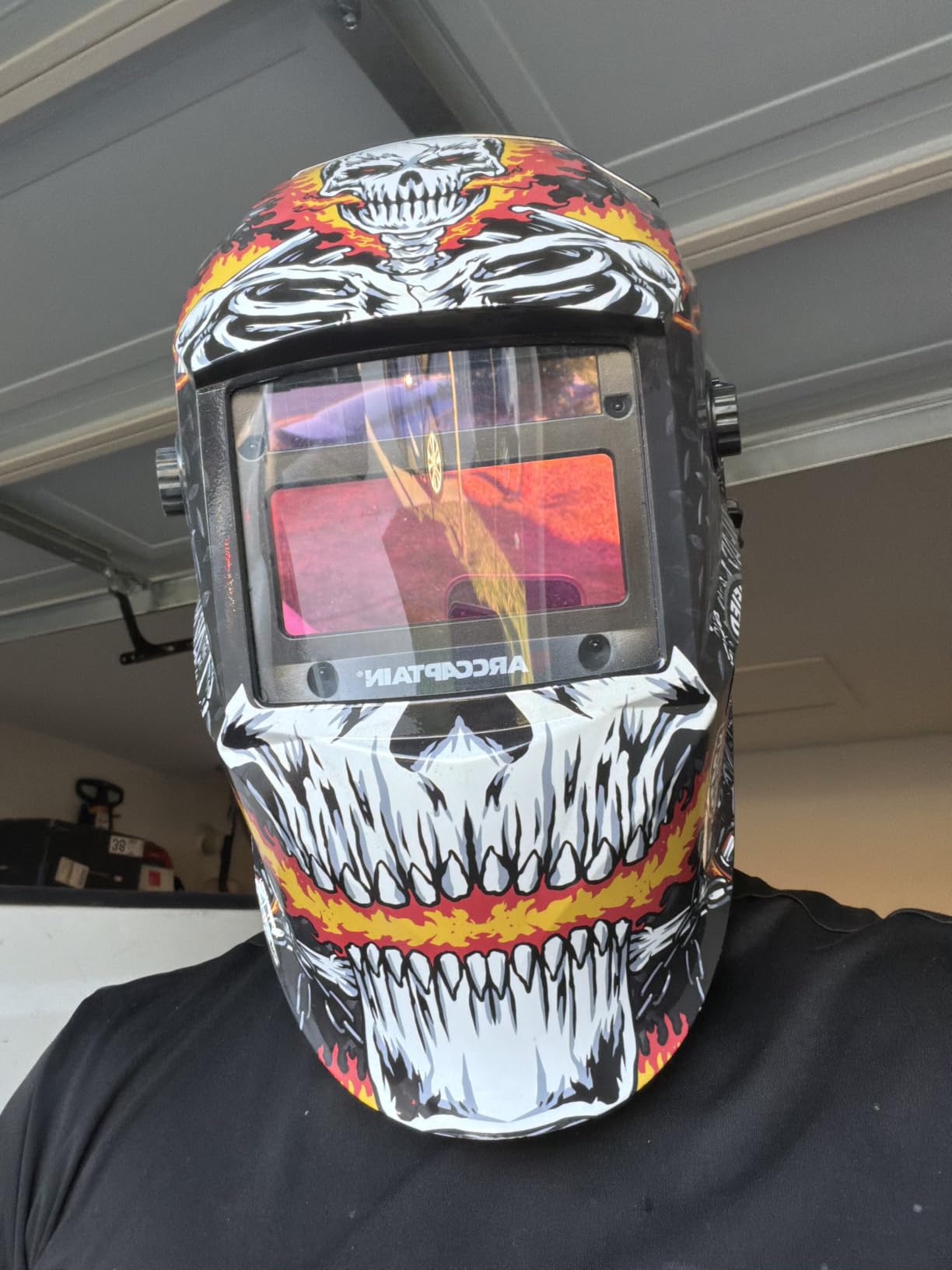
Power comes from solar cells assisted by a replaceable CR2450 lithium battery, housed in a nylon shell rated to a tensile strength of up to 120 MPa. It weighs roughly one pound with a padded adjustable headband, and it takes a cheater lens if you want one.
Owners consistently rank the lens clarity among the best they have used, and several describe the blue-tinted true color view as noticeably cleaner than budget rivals. The grind mode works as advertised for cleaning up between welds.
The 180-day warranty is the weakest paper trail in this roundup, and it is worth factoring in if you are unsure how long the hobby will last.
Why this suits a first-time hobby welder
Sensor count is what stops a helmet from flickering in daylight or failing to trigger on a thin TIG arc, and this one gives you four. It is also one of only three picks here carrying European EN certification alongside the North American marks, which is a reasonable proxy for a properly built filter.
Cheater lens compatibility lets you start fine on thin steel without buying a second hood.
Where it will disappoint you
A small minority of owners report a slow first trigger with arc light leaking in, and a few describe the lens failing to stay dark after a few weeks of use. That is the electronics failing rather than the optics, and on a 180-day warranty it may land outside the coverage window.
The skeleton-knight shell and its hardware look and feel inexpensive the moment you handle them, which is fine for a garage but not a reassuring thing to own.
3. Hobart 770890 Auto-Darkening Helmet – Best for the Widest Widescreen View
- Widest widescreen viewing area in this roundup
- PureColor lens gives accurate true color
- Four independent sensors detect reliably
- Two year manufacturer warranty
- Sits in a higher price bracket than budget auto-darkening helmets
- Analog knobs offer less fine tuning than digital controls
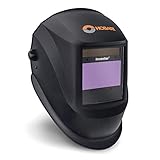
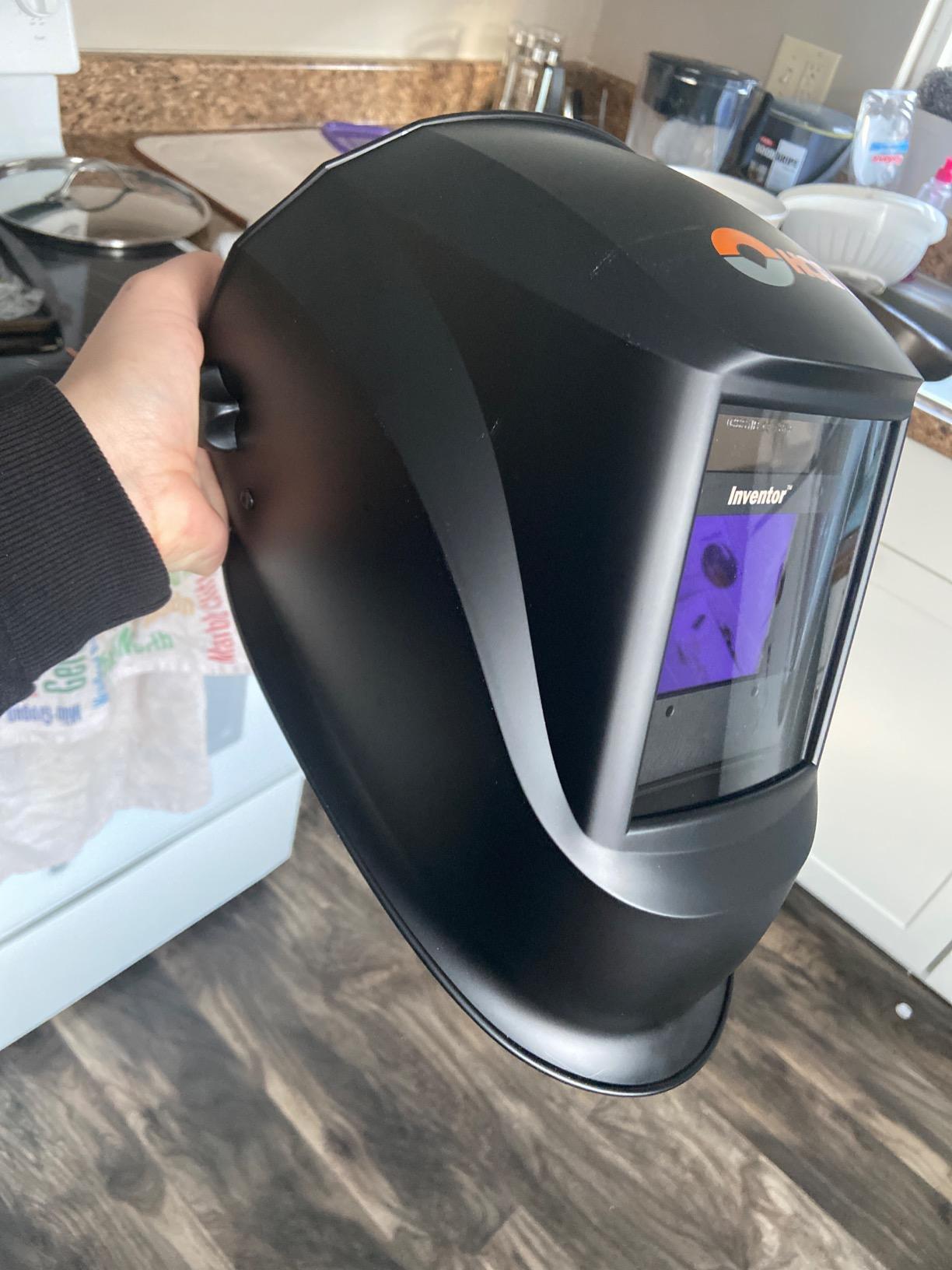
Hobart built this one around a 9.3 inch widescreen viewing area, and that single decision changes how much of your bench you can see at once. For someone learning to hold a torch at a consistent angle, seeing the plate and both hands at the same time is a genuine advantage over the narrow rectangular windows on most budget hoods.
Four independent arc sensors handle detection, and the auto-on and auto-off power control triggers at arc strike so there is no button hunting with a gloved hand. The PureColor lens technology is Hobart’s answer to the green tint problem, and owners consistently single out accurate color as the standout feature.
The controls are analog knobs for shade, sensitivity and delay. That is a real trade-off: nothing to learn, and you can make an adjustment in the dark, but you get fewer increments than a digital panel. Switching from weld to grind mode is seamless, so you are not swapping helmets to clean up a bead.
Construction is polyamide nylon at 1.25 pounds, with continuous UV and IR protection and a limited two year manufacturer warranty. Power is a single included CR2 lithium battery, which is a replaceable cell rather than a sealed pack. The review base of 880 is smaller than most, so the long-term picture is less well documented.
Why this suits a first-time hobby welder
Viewing area is the criterion that a beginner feels most and analyses least. Seeing a wide swath of the workpiece means fewer blind spots, less neck craning, and a much shorter path to a bead that looks like a bead.
Four sensors plus continuous UV and IR protection also mean fewer failed triggers, which is the difference between a relaxing first session and a frustrating one.
Where it will disappoint you
The price bracket is the honest objection, and if you are only welding a few times a month the money is better spent on a good jacket and gloves. The analog controls also mean no memory settings, so you re-dial shade for each process instead of tapping a profile.
It also needs a single CR2 cell rather than the CR2032 or CR2450 coins used by the budget models, so keep a spare on the shelf.
4. Miller Classic Series ClearLight Helmet – Best for Digital Controls
Miller Classic Series Welding Helmet, ClearLight™, Shade 8-13, Black
- Digital shade
- delay and sensitivity controls
- 3.0 light state keeps the hood down between welds
- Ratchet headgear fits well for long sessions
- Three year warranty from an established brand
- Only two arc sensors
- weaker for low amp TIG
- Six square inch viewing area is small against panoramic rivals
- Higher price than entry level auto-darkening models
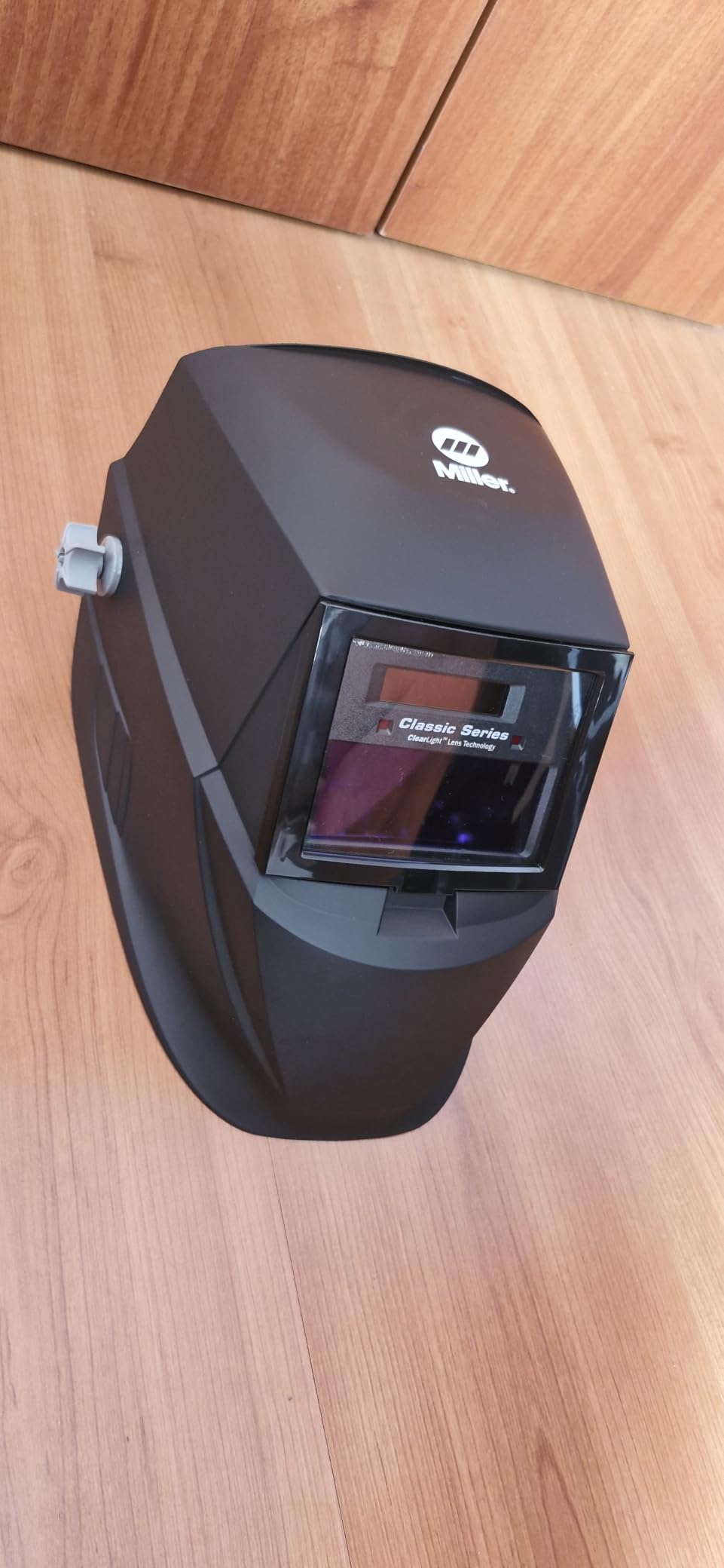
Miller built the Classic Series around a six square inch viewing area with ClearLight lens technology, and it carries a three year warranty. That warranty is a genuine difference for a hobbyist, because headgear and strap breakage is the most common first failure in this category and a three year cover absorbs at least one of those.
The digital controls cover shade, delay and sensitivity, which is more granularity than the analog knobs on the Hobart. Shades run 8-13 for welding, 5-8 for cutting and 3 for grinding, so one hood covers the usual hobby mix without a grind mode that changes the lens state entirely.
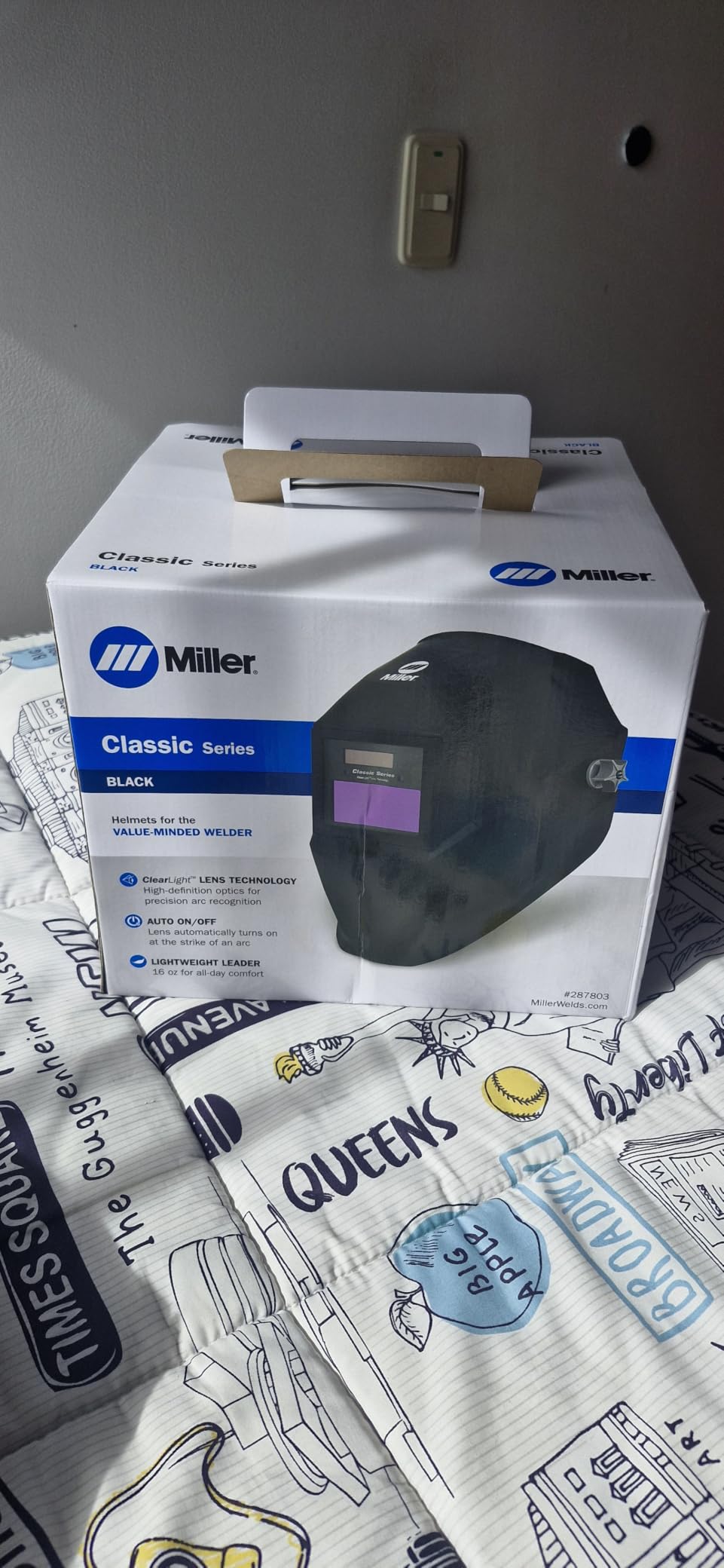
The 3.0 light state is the detail that wins over me. At a light state of 3.0 the lens is bright enough to keep the helmet down between welds, which is where productivity and comfort both come from. Ratchet headgear holds its setting once fitted, which is the durability answer to the loosening-band complaints that dominate budget reviews.
Miller rates it for welding at five amps or below, and the two arc sensors switch in 1/23000 second. Certification is ANSI Z87.1+, CSA and CE on a nylon shell weighing 989 grams.
The catch is the sensor count. Two sensors is a limitation when the arc is partly obscured or when you are doing low-amperage TIG, and that is the most common complaint alongside the compact viewing area.
Why this suits a first-time hobby welder
Adjustable digital controls mean you can set a shade once and stop thinking about it, which removes a distraction when you are still concentrating on torch angle. The 3.0 light state and the ratchet band make long sessions bearable.
ClearLight optics give a high-definition view, and owners consistently rate the lens clarity and comfort highly across a 4.7 average.
Where it will disappoint you
Two arc sensors is the real limitation, particularly for thin TIG work where the arc is dim and partly shielded by the torch. If TIG is going to be half your projects, spend the extra on a four-sensor model instead.
The six square inch viewing area is small against the panoramic options, and the price sits well above every budget pick here.
5. ARCCAPTAIN HSH-G999 Large Screen Helmet – Best Near-Square Viewing Area
ARCCAPTAIN Auto Darkening Welding Helmet, 3.94″X3.66″ Large Viewing Screen
- Near square 3.94 by 3.66 inch screen in a light shell
- 1/1/1/1 true color lens with DIN 16 UV and IR filtering
- About 2 pounds
- which is light for the screen size
- Box includes storage bag
- spare battery and 2 spare lenses
- Lower 4.4 average than the brand's smaller viewport models
- Only 180 day warranty
- Higher share of one star ratings than the top picks
This is the pick if your complaint about budget hoods is that you cannot see your work. A 3.94 inch by 3.66 inch screen is close to square, which is a very different shape from the wide-but-short rectangles on most budget helmets, and it puts considerably more of the joint in frame.
Four premium arc sensors with adjustable shade and sensitivity, a light state of DIN 4 and a dark state of DIN 5-9 and 9-13 give a usable spread for MIG, TIG and arc work. The 1/1/1/1 true color lens pairs with automatic DIN 16 UV and IR protection in the smart filter.
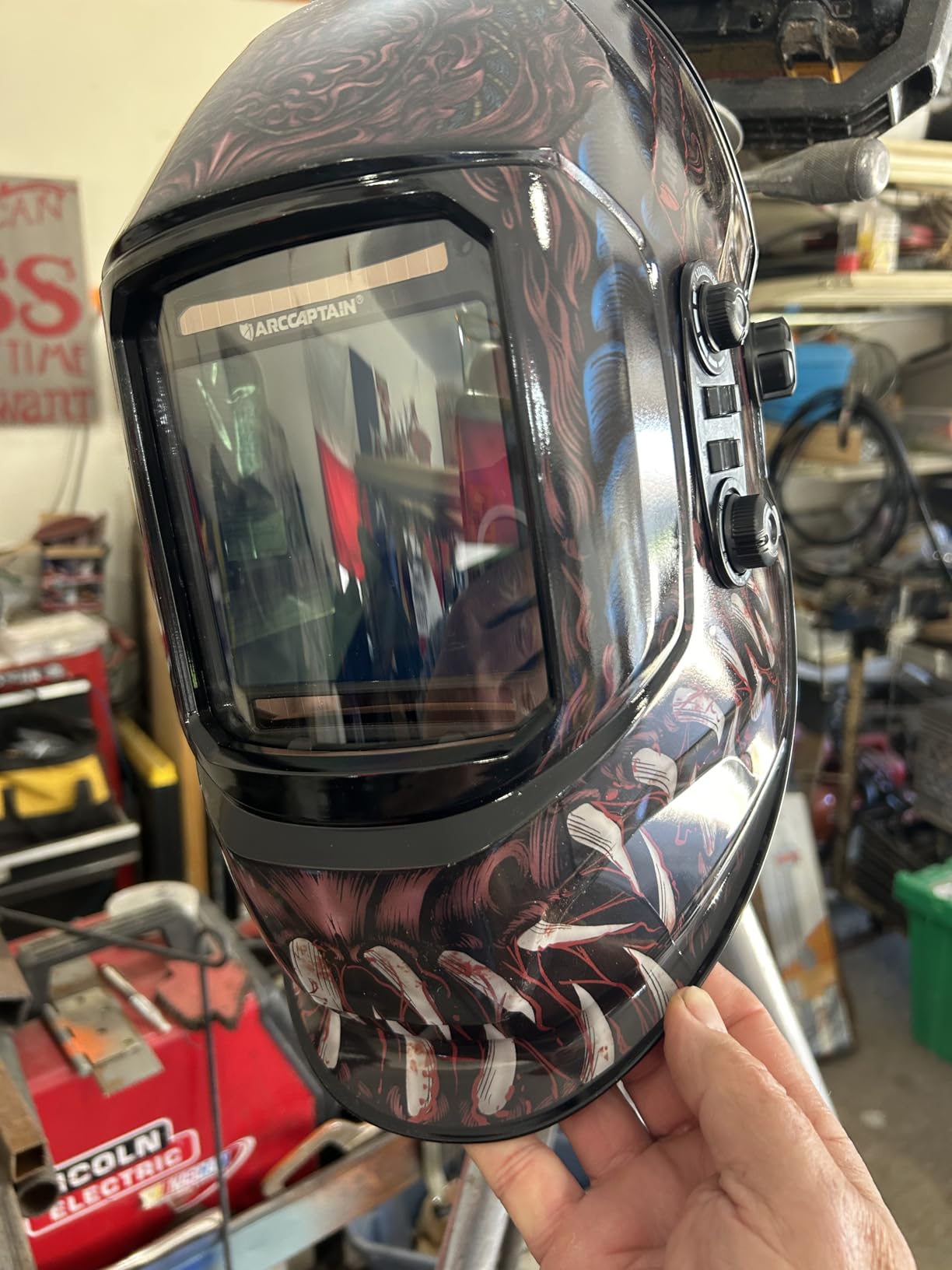
Weight is the pleasant surprise. Despite the big screen it comes in around 2 pounds, roughly 60 percent lighter than similar products in the listings, and the headgear is dynamically adjustable with breathable padding. Power is a solar cell plus a replaceable CR2450 lithium battery.
It is compliant to ANSI Z87.1, EN 379 CE and CSA Z94.3, and the box includes a storage bag, a replacement battery and two replacement lenses, which softens the ownership cost considerably.
The number to watch is the 4.4 average. That sits below the picks above it, and it reflects a minority of durability and auto-darkening complaints, so budget for a possible replacement within a couple of years rather than a decade.

Why this suits a first-time hobby welder
A big square screen means better spatial awareness while you are still learning where the heat is going. The breathing padding and the low weight reduce the neck fatigue that ends a first session early.
Two spare lenses and a spare battery in the box mean you will not be ordering consumables after your first spatter incident.
Where it will disappoint you
The 4.4 average and a higher share of one star ratings than the leading picks tell you that some owners have hit electronics or shell durability problems. With a 180 day warranty, that risk sits with you.
Light state DIN 4 is a little darker than the Miller’s 3.0, so it is not the best choice if keeping the hood fully down between welds is your top priority.
6. TRQWH TRQ-HS0103 Helmet with LED – Best for Dim Garages
TRQWH Auto Darkening Welding Helmet with Light ANSI Z87.1 Certified
- Integrated rechargeable LED is genuinely useful in dark shops
- Replaceable Panasonic CR2032 batteries extend service life
- Side and rear knobs adjust angle and headband tightness
- Lightweight at 1.7 pounds
- Only 2 arc sensors
- fewer than most competitors
- Thin lenses may need frequent replacement with spatter
- Headband and shell can feel flimsy and loosen
- Auto darkening occasionally flickers
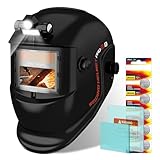
The reason this helmet is on the list is one feature: a built-in rechargeable LED mounted on top of the hood, charged over USB. If you weld in a dim garage or a basement workshop, that light is worth more to you than an extra lens rating, and it is the reason the TRQWH keeps coming up in hobby discussions about working without a proper shop.
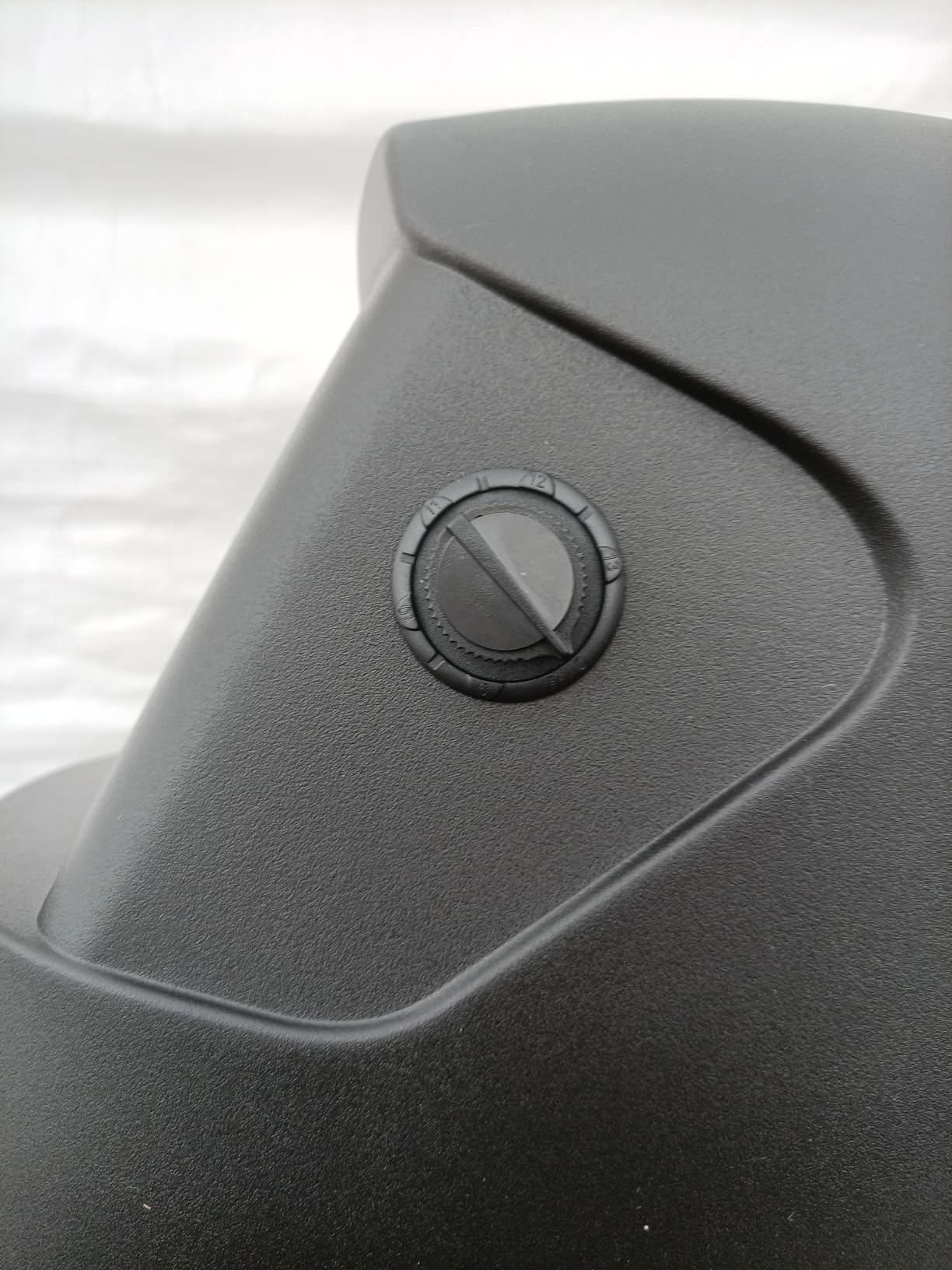
The lens is rated 1/1/1/2 rather than 1/1/1/1, so the fourth number, angle dependence, is one step lower. In practice that means slightly less clarity when you view the filter at an angle, which is exactly the situation you get looking down at a puddle held below you.
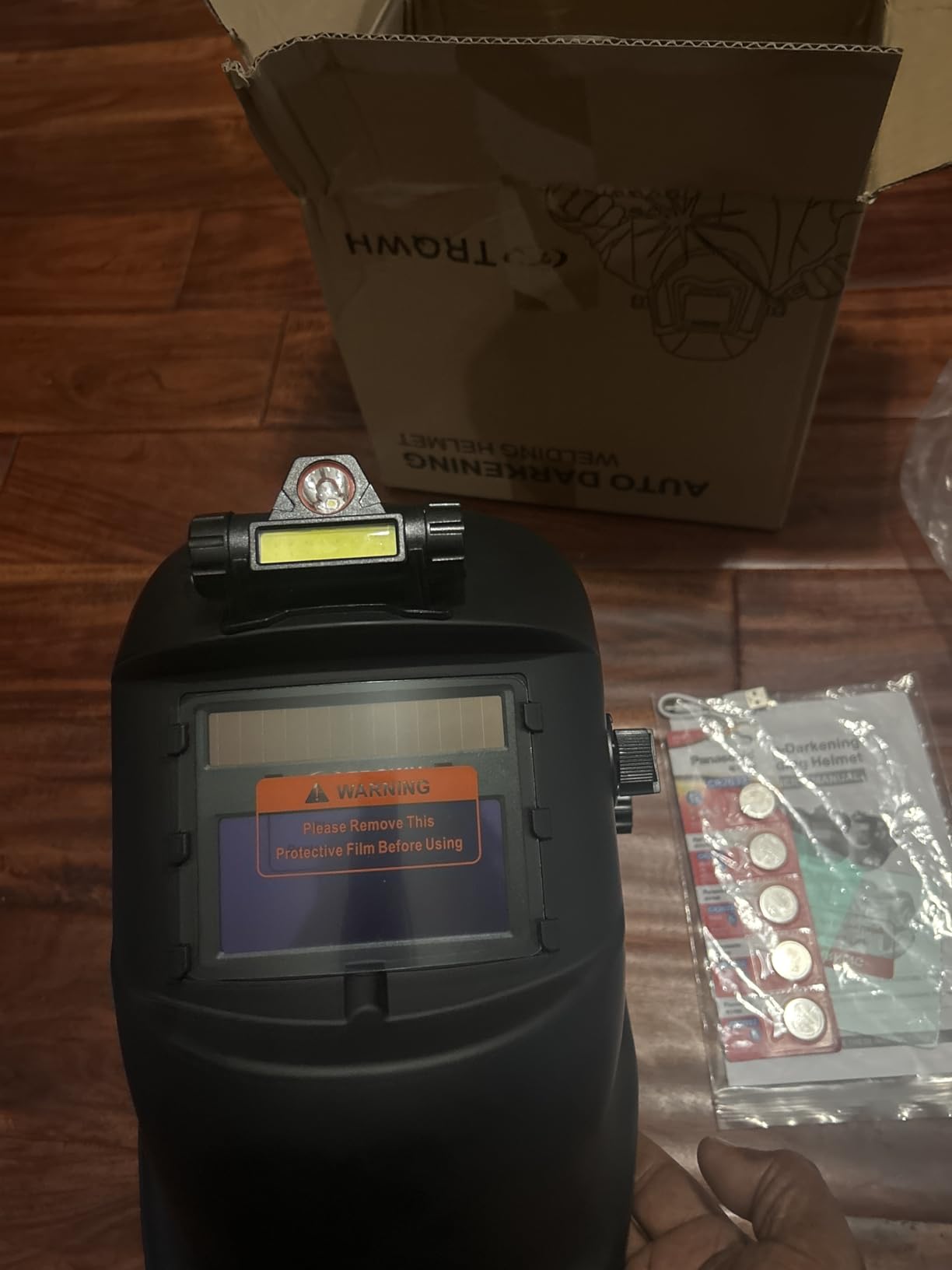
Two arc sensors switch in 1/20000 second, with a light state of DIN 4 and a dark state of DIN 9-13. Adjustment is via delay and sensitivity knobs, plus side and rear knobs for the angle of the hood and headband tightness, with thickened sponge padding at the forehead and ears.
Power is solar assisted with two included CR2032 lithium batteries, and the shell is impact and flame resistant polypropylene. The listing states compliance with ANSI Z87.1, EN 379 CE and CSA Z94.3, and it claims coverage for plasma cutting, abrasive grinding, DC TIG, AC TIG, MIG/MAG and MMA stick.
At 1.7 pounds it is light, and the trade-offs are the light-duty shell, the thin lens and an occasional flicker reported in the reviews.
Why this suits a first-time hobby welder
The LED removes the single most common complaint from new hobby welders, which is that you cannot see the joint properly in an unlit space and start guessing. Replaceable coin cells mean the helmet is not effectively disposable when the battery dies.
The adjustment knobs are more granular than most budget helmets, with separate controls for hood angle and headband tightness rather than a single combined ratchet.
Where it will disappoint you
Two arc sensors make it a poor choice for dim TIG arcs, and the 1/1/1/2 rating is a real step back from the 1/1/1/1 lenses in this roundup. Reviewers also describe the headband loosening and the shell feeling flimsy.
Thin lenses mean spatter damage is likelier, and the flickering some owners report is distracting once you are trying to hold a steady bead.
7. ARCCAPTAIN LY800J Panoramic Helmet – Best 180 Degree Field of View
ARCCAPTAIN Welding Hood, 180° Panoramic View Auto Darkening Welding Helmet
- Widest field of view in this roundup
- Controls can be adjusted while wearing gloves
- Dual solar panels and two batteries extend service life
- Box includes 3 replacement lenses and a storage bag
- 4.4 average on the thinnest feedback base here at 391 reviews
- Heavier at 2.55 pounds than the lighter budget models
- Non auto darkening side panels stay clear
- which some users find distracting
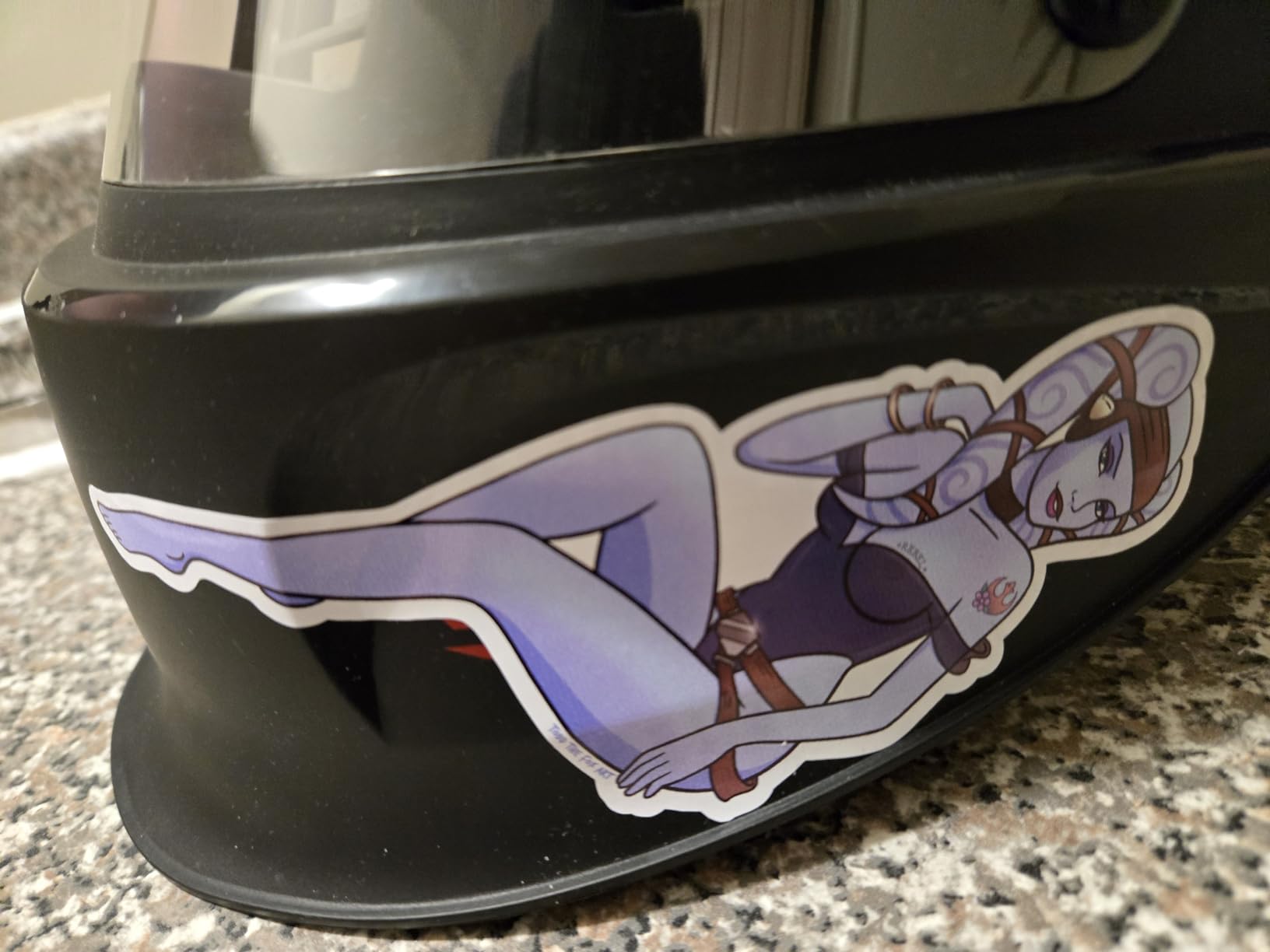
The LY800J solves a different problem from the rest of this list. Instead of one wide screen, it pairs a 3.94 inch by 3.66 inch auto-darkening panel at DIN 16 with two 3.94 inch by 1.70 inch side windows at DIN 5, giving a total field of view of 3.94 inch by 7.06 inch across roughly 180 degrees.
That layout is genuinely useful for a hobbyist working on anything larger than a single joint: a gate, a trailer frame or a table base. You can see the whole piece and your hands at once rather than tracking a small rectangle back and forth. It is also the reason the extra weight is harder to forgive, because panoramic helmets are never the lightest option.
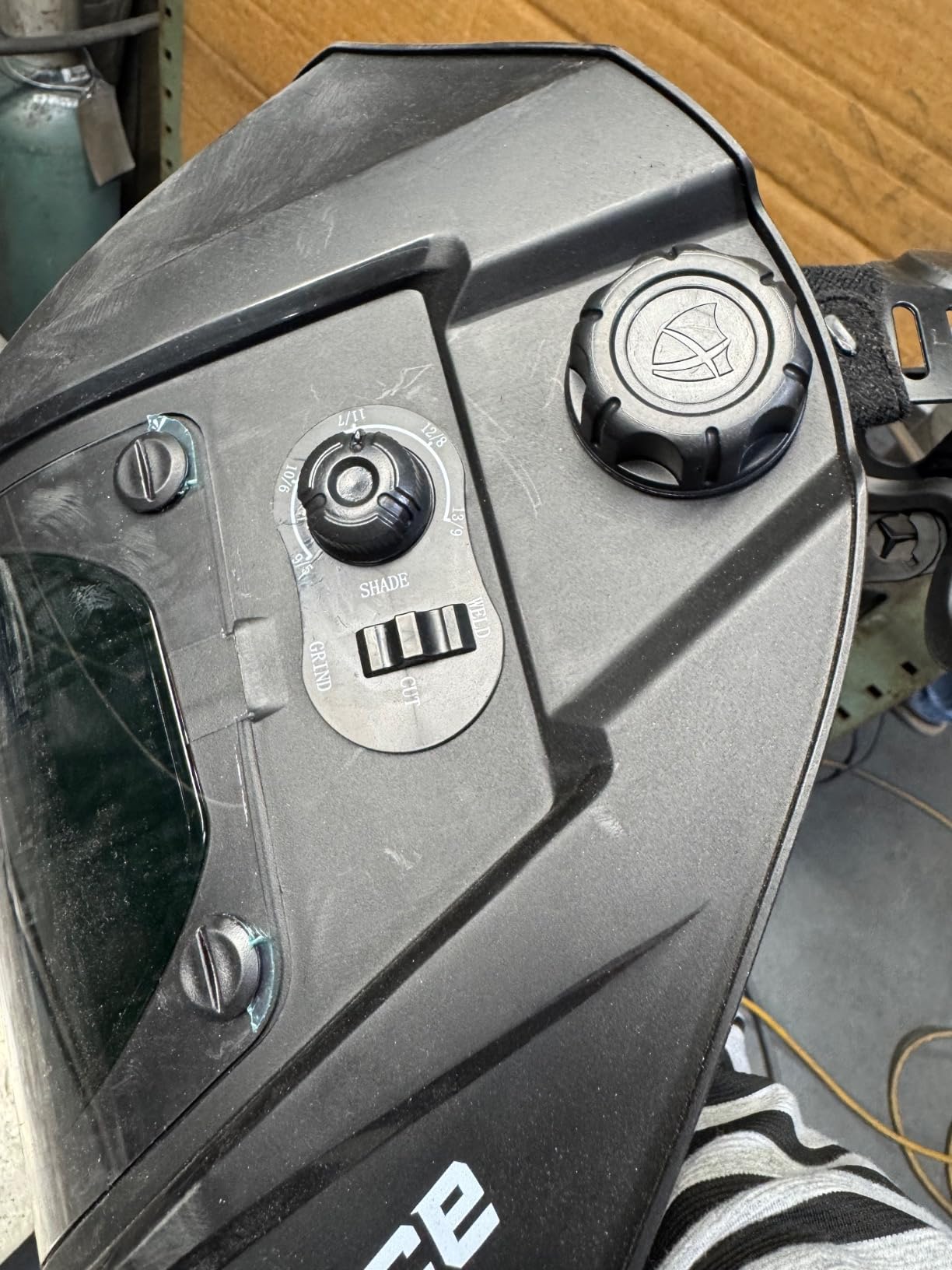
Four advanced sensors switch in 1/25000 second, with a light state of DIN 4 and a dark state of DIN 5-9 and 9-13. The upgraded knob section is designed to be adjustable while wearing gloves, which is a small design decision that saves a lot of fumbling.
Power comes from two solar panels and two CR2450 lithium batteries, rated for an operating range of minus 5C to 55C in a polypropylene shell with tensile strength up to 120 MPa. The 12-in-one smart filter claims automatic DIN 16 UV and IR protection. The box includes 3 replacement lenses, 2 batteries and a storage bag.
The honest caveat is the 4.4 average with around 8 percent one-star reviews, and the side panels never darken. Some users find the always-clear windows distracting rather than helpful.
Why this suits a first-time hobby welder
Panoramic visibility shortens the learning curve on anything bigger than a small repair, because you can see where the far end of the joint is without turning your head out of the shield. The glove-adjustable knobs mean you are not fighting the controls mid-arc.
Three replacement lenses and two batteries in the box cover most of the first year of consumables.
Where it will disappoint you
At 2.55 pounds this is the heaviest helmet in the roundup, and the wide view does not reduce neck strain the way a light helmet does. For long sessions on small work, the LYG-L600A is the better tool.
The clear side windows mean you are relying on the front sensor to catch an arc outside the darkening panel, and the lowest average rating in the set plus a higher one-star share argue for buying it only if you truly need the panoramic view.
8. YESWELDER LYG-Q800D Helmet with Side View – Best All-Round Pick
YESWELDER Auto Darkening Welding Helmet with LED, 180° View, LYG-Q800D
- Large view with a side window for situational awareness
- Four sensors and 1/30000 second switching
- Blue light blocking outer lens reduces eye fatigue
- Shade range covers TIG
- MIG
- MMA
- cutting and grinding
- Heavier at 2.2 pounds than most budget alternatives
- Shell and headgear feel less refined than dealer brands
- Some helmets report the LED or auto darkening module failing after extended use
The LYG-Q800D is the middle ground in this roundup and, for most hobbyists, the model we would actually buy. It has the four arc sensors the two-sensor budget picks lack, a 1/1/1/1 true color lens, and a 3.94 inch by 3.23 inch viewing area with a DIN 5 side view, all without moving up to a dealer brand.
Four sensors switch in 1/30000 second and the shade range runs 3/5-9/9-13 across TIG, MIG, MMA, cutting and grinding, so a single setting covers most hobby work. The blue light blocking outer lens is designed to reduce eye fatigue across extended sessions, which is a genuine benefit for someone learning over months rather than days.

The side window is a non-auto-darkening DIN 5 panel, which means you gain peripheral awareness of your surroundings without a second sensor and without the weight of a full panoramic shell. That is a clever compromise, and it is the reason the design feels more considered than the straight rectangular budget helmets.
Power is a solar panel assisted by a replaceable CR2450 lithium battery, and the listing describes reinforced thicker polypropylene materials with pivot-style headgear and cheater lens compatibility. The box includes a storage bag, a replacement battery and 3 replacement lenses.
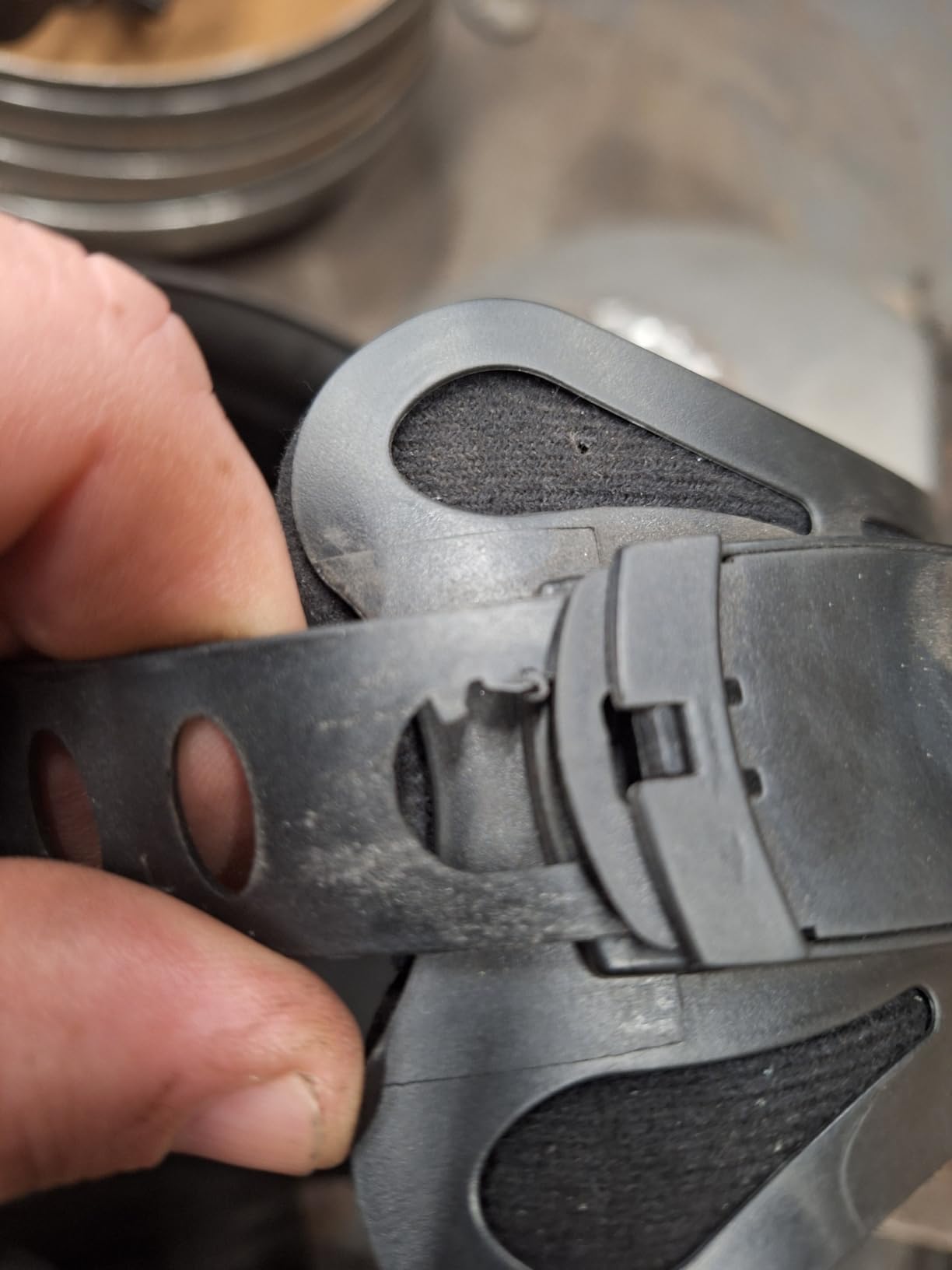
At 2.2 pounds it sits in the heavier half of this roundup, and the shell and headgear feel less refined than a ratchet band. Some owners report the LED or the auto-darkening module failing after extended use.
Why this suits a first-time hobby welder
Four sensors, a 1/1/1/1 lens and a side window together cover the three things a beginner notices within a week: the helmet triggers when it should, the view is clear, and you can see what is beside the joint.
Three replacement lenses and a spare battery in the box keep consumable costs near zero in year one, which is the strongest ownership argument in this roundup.
Where it will disappoint you
Weight is the trade. At 2.2 pounds it is noticeably heavier than the 16 ounce LYG-L600A, and on a long afternoon that difference shows up as neck ache.
The headgear and shell are not as refined as a dealer-brand ratchet band, and the reported failures of the LED or the auto-darkening module after extended use are worth knowing about before you rely on the light as your main illumination.
9. Lincoln Electric K4983-1 No Rules No Limits – Best for Lightweight
- Lightest dealer-brand option here at 17.5 ounces
- Ratchet headgear with oversized absorbent sweatband
- Variable shade 7-13 plus a dedicated grind mode
- Hard hat compatible and TIG rated from 5 amps
- Narrow 4.33 by 3.54 inch window for the size
- Only 119 ratings
- so no long term feedback yet
- No optical class figure stated in the listing
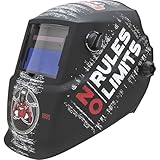
At 17.5 ounces the K4983-1 is the second lightest helmet in this roundup and the lightest one carrying a major welding brand name, with ANSI Z87.1 certification behind it. If neck fatigue is what ends your sessions early, weight is the first spec to look at, and this is the one that wins it among the dealer brands.
The shade range is variable 7-13 with an additional grind mode shade, so welding and grinding are separate settings rather than one continuous ramp. The ratchet headgear carries an oversized absorbent sweatband, which is a small detail that matters more in summer MIG work than any spec on the page.
The viewing area is 4.33 inch by 3.54 inch, the narrowest of the nine. Power is solar with battery backup and two included AAA cells, and the helmet is hard hat compatible for anyone who also does site work. The listing covers Stick, TIG, pulsed TIG, MIG, pulsed MIG, flux core and gouging, with TIG rated for 5 amps and above.
Two extra inside and outside impact resistant clear lenses are included, which is generous for a helmet at this tier. The limitation to weigh is the review base: 119 ratings is the smallest sample here, so the 4.7 average is encouraging but rests on less history than the picks above it.
Why this suits a first-time hobby welder
Light weight, a ratchet fit that does not loosen mid-session and a certified build from a major brand are a solid first purchase. The grind mode and hard hat compatibility also mean one hood covers more of your shop than a bare MIG-only model.
It suits anyone who works from a ladder or spends time out of position, because a lighter helmet is a safer helmet when you are not looking down at the puddle.
Where it will disappoint you
The 4.33 inch by 3.54 inch viewing area is the narrowest in this roundup, so you are working through a smaller window than with any of the near-square models. That is a real handicap while you are still learning to follow a puddle around a joint.
With only 119 ratings there is no long-term durability picture, and there is no optical class rating stated in the listing, so the lens quality claim has to be taken on trust rather than on a published 1/1/1/1 figure.
How to Choose a Welding Helmet: Nine Criteria That Matter?
Almost every mistake we see in first-time purchases comes down to reading the wrong number on the listing. Switching speed grabs the eye because it is the biggest number on the page, and it is close to useless. Here is the order that actually matters for a hobby welder, starting with the one that gets the least attention on most listings.
Optical class is the first number that tells you anything
A rating written as 1/1/1/1 is the highest, and the four numbers are optical quality, light diffusion, luminous transmittance and angle dependence. Most cheap helmets claim 1/1/1/2, and the only difference is that last number, which describes how much the view darkens when you look at it from an angle.
That angle is exactly where a welder looks. On a flat plate you view the filter straight on and 1/1/1/2 looks fine. On a vertical joint or a lap joint, the same filter at an angle is noticeably duller. If you can afford 1/1/1/1, take it, and treat 1/1/1/2 as a working compromise rather than a failure.
One honest caveat: sellers have revised these claims between product generations, and earlier production of the same model name has carried a lower rating than the current listing. Verify the certification mark on the exact model rather than trusting a brand-level reputation.
Viewing area matters more to a beginner than sensor count
Two shapes dominate. The wide, short rectangle, typically around 3.9 inch by 1.7 inch, is the classic budget shape and forces you to move your head constantly. The near-square shape, around 3.94 inch by 3.66 inch, shows far more of the joint in one glance and is the biggest quality-of-life upgrade in this list.
Panoramic models go further by adding non-auto-darkening side windows, giving a total field of view of roughly 180 degrees. They weigh more and they cost more, so treat them as a solution for big fabrication work rather than a default.
Two arc sensors or four: when the extra sensors earn their cost
Arc sensors detect the flash and trigger the darkening. More sensors means more coverage, which matters when your work position partly blocks the lens, when you are welding in bright daylight spilling through a garage door, or when you are running a thin TIG arc that is hard to detect.
For a hobbyist who mostly MIGs on plate in a garage, two sensors are genuinely fine and the two-sensor Miller is a perfectly good helmet. For TIG, or for any work where you get close to the arc, four sensors are worth the money.
You can test sensors at home before committing: in a darkened room, point a bright LED or a remote control at the sensor windows and the lens should darken. If it does not respond, you have a problem before you strike an arc.
Shade range should cover your processes, not every process
A listing that says it covers plasma cutting, grinding, DC TIG, AC TIG, MIG and stick is describing filter modes, not machine capability. What you actually need is a shade range that spans the processes you personally use at the amperages you personally run.
A range of shade 5-9 and 9-13, or 7-13, is a broad and practical spread for hobby work. A single fixed dark state is restrictive if you alternate between thin TIG and thicker MIG fill passes.
True color removes the green tint and speeds up learning
A standard auto-darkening filter has a noticeable green cast. True color technology removes it so the puddle, the slag and the heat-affected zone look closer to the colors you already know. Reviewers consistently say this is what they notice first, and enthusiasts upgrade for visibility rather than for speed claims.
It is not a safety feature, but for someone learning to read a puddle it reduces the amount of interpretation your eyes have to do, which is real progress.
Switching speed is the least useful spec on the listing
A claim of 1/30000 second versus 1/25000 second tells you nothing you can perceive. Every helmet in this roundup switches fast enough that the difference is not detectable in normal work, and the numbers exist mainly to differentiate marketing copy.
If a listing leads with switching speed and says little about the viewing area or the optical rating, that is a warning about where the manufacturer’s attention went. Judge on the lens, the view and the sensor count.
Solar plus a replaceable battery beats a sealed cell
Solar-assisted power with a replaceable coin cell, commonly a CR2450 or CR2032, keeps the helmet working when the cell ages. A sealed lithium pack turns a dead battery into a dead helmet, and a hobbyist with occasional use is exactly the person who ends up with a shelf of dead packs.
The most common battery type across this list is a CR2450, with CR2032 and AAA cells on two picks and a single CR2 cell on the Hobart. Keep a spare of whichever your model uses.
Solar alone is the configuration to watch for. A panel can darken a filter in bright light but stalls in a dim garage, which is exactly where a hobby welder works, so a battery backup is not an optional extra on a solar-marketed helmet.
Headgear and weight decide whether you keep the hood down
The most common first failure in this category is not the lens, it is the headgear. Ratchet headbands hold their setting, Cheaper pivot adjustment loosens over time, and a thin replacement band is a common first purchase. Reviews across several of these helmets mention loosening adjustment as the main annoyance.
Weight matters for the same reason comfort does. The spread here runs from 16 ounces to 2.55 pounds, and a helmet that is too heavy gets lifted between passes, which defeats the purpose of auto-darkening entirely.
Check the certification mark on the exact model
Look for ANSI Z87.1, CSA Z94.3 or EN 379 on the specific model rather than on the brand’s marketing. The best listing in this roundup carries ANSI/ISEA Z87.1-2010, CSA Z94.3, DIN EN 175 and DIN EN 379 together, which is the most complete mark set in this roundup.
A welding helmet protects your eyes and face from the ultraviolet and infrared radiation a welding arc produces, but it is not a complete personal protective equipment system. Gloves, a jacket, a respirator and fume extraction or ventilation are separate requirements.
Shade Number by Process and Amperage
The DIN shade number tells you how dark the filter gets, and a higher number means a darker view. Choosing too light leaves you squinting at a bright puddle; choosing too dark hides the puddle completely and makes it impossible to see where you are going. This is the reference list a hobbyist can keep next to the machine, and it answers three questions the product pages never do.
MIG welding: shade 9 is a reasonable starting point for thin material and light wire at low amperage on a clean surface. Shade 10 is the sensible default for typical hobby MIG on mild steel, and shade 11 suits heavier plate and higher amperage. Most general-purpose auto-darkening helmets cover the 9 to 13 range, which is the span you want.
TIG welding: TIG throws a much brighter and more concentrated arc than MIG at the same perceived brightness, so many hobbyists step up one shade from where they sit for MIG. Shade 10 to 11 is a common range, though personal preference plays a bigger role here than with MIG because TIG lets you lower amperage to a point where the arc dims.
Stick welding: the arc is hot and broad, so shade 11 to 13 is the usual range. If you are running very low amperage stick, or a small electrode on thin material, shade 10 can be enough.
Flux core wire welding: the arc is hotter and smokier than solid wire MIG, so treat it like stick. Shade 11 to 13.
Plasma cutting: shade 8 to 12 depending on thickness. The Miller in this roundup lists cut shades of 5 to 8, which suits light plasma work.
Grinding: shade 3 to 5, and a dedicated grind mode sets this for you. Grind mode is a filter setting, not face protection, so keep your grinding shield on for heavy work.
Carbon arc welding: shade 14. This is legacy process and only mentioned for completeness, since no helmet in this roundup is rated that high.
Light state is a separate number and it controls what you can see between welds. A light state of DIN 4 is common, and the Miller’s 3.0 is brighter, which is why owners of that helmet report keeping it down between passes.
Fixed Shade vs Auto Darkening: Which One a Hobbyist Actually Needs
A fixed-shade welding helmet is a passive filter at one DIN shade, usually shade 10, with no electronics and no battery. It costs very little, cannot fail electronically, and works instantly with no warm-up. What you give up is everything: it stays the same shade whether you are welding or not, so you cannot see your workpiece at all until you flip it up, and it cannot adapt when you change process or amperage.
Auto-darkening is the right answer for almost every hobbyist, and the reason is not safety, it is visibility. With a fixed shade 10 you are effectively blind between welds. That is fine for a production welder who is welding continuously and taking breaks with the hood off. It is miserable for someone who welds for twenty minutes, grinds for ten, adjusts the work, checks a measurement and welds again.
There is one case where a fixed shade still makes sense. If you are shopping for a young welder to learn on, or you want an almost indestructible backup hood that lives in the truck, a flip-up shade 10 shell costs little and cannot be ruined by a dead battery or a failed sensor.
Forum discussions repeatedly raise the related pancake hood question, the shell you wear with a separate auto-darkening lens clipped in. It is a valid approach and it lets you swap lenses between jobs, but it is a two-part system to store, maintain and keep matched, and for occasional work one complete auto-darkening helmet is simpler.
Why Your Welding Helmet Is Not Dark Enough?
This is the most common complaint in hobby welding forums and the question the product pages never answer. Work through this list in order, because it goes from free to expensive.
1. Check the shade setting first. Most helmets default to a mid shade and many beginners never touch the dial. Turn it up one or two increments and strike a test arc on scrap. If it looks correct, the problem was the setting, not the helmet.
2. Check the light state. Some models, including the TRQWH in this roundup, run a dark light state of DIN 4. If you are used to a brighter helmet the whole view will feel dim even at the same shade setting.
3. Check sensitivity. The sensitivity knob sets how much arc light is needed to trigger. If your sensitivity is turned too low, the helmet may trigger late or only on the brightest part of the arc, so light leaks in around the edges at the start of a pass.
4. Check the sensors are not covered. Dirt, spatter, paint overspray or a strap sitting over a sensor window will block detection. On a dirty lens, spatter on the sensor area is a leading cause of intermittent triggering, and the fix is a clean lens rather than a new helmet.
5. Check the battery. A weakening solar-plus-battery setup can trigger erratically before it fails completely. If the lens flickers or clears at the wrong moment, swap the coin cell before anything else. This is why a replaceable battery matters.
6. Check your amperage against the trigger threshold. Low-amperage TIG, roughly under 5 amps on some models, is dim enough that a two-sensor helmet may never trigger. The Miller is listed as best suited to welding at five amps or below, and the Lincoln is TIG rated from 5 amps and above, so this is a documented limit rather than a fault in your technique.
7. Clean the lens. A spatter-flecked inner lens scatters light and makes everything look hazier and less contrasty than it should. Most lenses are replaceable, and several of the helmets here ship with spare lenses in the box, so treat a cloudy lens as a consumable rather than a reason to buy a new helmet.
Frequently Asked Questions
What is the best welding helmet for beginners?
The YESWELDER LYG-L600A is our pick for beginners. It weighs 16 ounces, carries a 1/1/1/1 optical class true color lens, runs on solar power with a replaceable CR2450 battery, and holds a 4.6 average across more than 13,000 owner reviews. Four arc sensors and a larger viewing area are worth adding once your hobby habits settle.
What is the best welding helmet for value for money?
The YESWELDER LYG-Q800D is the strongest all-round value in this roundup. You get four arc sensors, a 1/1/1/1 true color lens, a 3.94 inch by 3.23 inch view with a side window, and a storage bag with 3 replacement lenses plus a spare battery in the box, which keeps first-year consumable costs close to zero.
Is the Harbor Freight welding helmet any good?
Harbor Freight does not appear in our nine picks, so we have no hands-on data on any specific Vulcan or Titanium model and we will not guess. What we can say is what to check on whichever model you consider: a printed ANSI Z87.1 or CSA Z94.3 mark, a stated optical class, and a replaceable rather than sealed battery. Forum commenters do repeatedly describe Harbor Freight models as impressive for the money, so the brand is a reasonable reference point, but verify the certification on the exact model.
What is the best true color welding helmet?
For true color specifically, the YESWELDER LYG-L600A and the ARCCAPTAIN HSH-S800 both carry 1/1/1/1 optical class with true color technology, and reviewers rate the ARCCAPTAIN lens clarity among the clearest they have used. The Hobart 770890 uses PureColor lens technology across a much larger 9.3 inch widescreen viewing area if color accuracy and screen size matter more than price.
Is shade 9 good for MIG welding?
Shade 9 is a reasonable starting shade for MIG on thin material and light wire at low amperage, especially on a clean surface. For typical hobby MIG on mild steel, shade 10 is the sensible default, and shade 11 suits heavier plate. Most auto-darkening helmets span shade 9 to 13, so the setting is easy to change once you know which direction to go.
Is shade 10 or 11 better for welding?
For most hobby MIG on mild steel, shade 10 is the better default because it keeps the puddle visible. Step up to shade 11 when you are on heavier plate, running Stick or flux core, or welding in bright conditions. TIG is a common exception: because TIG lets you run very low amperage and the arc dims, many hobbyists prefer shade 10 even though TIG is physically brighter than MIG.
My welding helmet isn’t dark enough. What could be the problem?
Check the shade setting first, since most helmets ship at a mid shade that beginners never adjust. Then check sensitivity, which sets how much arc light is needed to trigger, and clean the sensor windows, because spatter and overspray blocking a sensor causes late triggering and leaking light. Swap the battery if the lens flickers, and check your amperage against the trigger threshold, since a two-sensor helmet may not detect a very low amperage TIG arc.
Are four arc sensors better than two?
Four sensors cover more of the lens, so they trigger more reliably when your work position partly blocks the view, when daylight spills into the garage, or when you are running a dim low-amperage TIG arc. Two sensors are genuinely fine for straightforward MIG on plate, which is why the two-sensor Miller is a good helmet, but four is the safer choice for TIG work or for jobs where you are constantly repositioning.
Final Verdict: Which Welding Helmet a Hobbyist Should Buy
If you want one answer for the best welding helmets for hobbyists, take the YESWELDER LYG-L600A. At 16 ounces with a 1/1/1/1 true color lens, a replaceable CR2450 battery and the largest review base in this roundup, it is the least likely to disappoint a weekend welder and the least likely to need replacing. Buy the ARCCAPTAIN HSH-S800 instead if TIG is your main process and you need four sensors, and buy the YESWELDER LYG-Q800D if a larger view and side window will keep your hood down more often.
Move up to the Hobart 770890 when your projects get big enough that a widescreen view changes how you work, and hold off on a panoramic shell until neck fatigue rather than visibility is your limiting factor. Check the certification mark on the exact model, and treat a welding helmet as one part of a protective kit rather than the whole of it.
For more of our hobbyist bench roundups, see the CNC spindle picks and the RC car top picks.